
A gown with moons and stars on it can go two ways at a fitting: romantic, mystical, and still beautifully wearable, or a costume you regret by the reception. The difference is rarely the motif itself. It comes down to how the beading is placed, what the base fabric is, and how much of the theme you carry into the veil and accessories. The ideas below run from a single crescent at the waist to a skirt covered in constellations, across ball gowns, slips, capes and short hems. As you scroll, I’d pay attention to where the celestial detail sits on each dress, because that placement decides how it moves, how heavy it feels by evening and what you can pair with it.
Reading Celestial Beading Before You Fall for a Sample
Sample gowns are built to look magical on a hanger and under boutique lighting. Before I let a bride commit to a moon or star design, I go through a few checks that tell me how the embellishment will behave on the wedding day itself.
- Lift a section of skirt. Heavy beading on soft tulle pulls the fabric down and can make a flowing skirt hang flat by evening.
- Turn the embroidery over. Hand-sewn beads are usually knotted individually, so one broken thread costs you a bead, not a whole line.
- Look at the metallic thread under a phone flash. Some silver and gold threads look soft in person and turn harsh or brassy in flash photos.
- Sit, raise your arms and hug someone. Rigid appliqués at the waist, underarm or neckline rub skin over a long day.
- Ask what the alterations team can move. Motifs can often be lifted and re-placed during a hem or bodice alteration, but it adds time and cost.
Celestial detail also tends to look thinner once the gown is taken in, because the motifs spread or overlap at the seams. If the dress needs a lot of fitting, ask the seamstress to pin it to your size first and judge the pattern after that.
Lighting, Venue and Season Change How Shimmer Reads
Celestial gowns respond to light more than plain ones do, so I always ask about the venue before suggesting a finish. Silver beading and sparkle tulle come alive in candlelight, string lights and golden hour. In flat midday sun outdoors, the same sparkle can wash out and look gray, and a matte satin with pearl or embroidered detail often photographs better.
Season matters for comfort. Layered tulle and fully beaded bodices are warm, so a summer garden ceremony points me toward a slip, a sheer overlay or a short hem, with the theme carried in the veil. For a winter or evening wedding, sleeves, capes and heavier embroidery feel natural and keep you warmer during outdoor photos.
1. Moon Wedding Dress With Star Embroidery
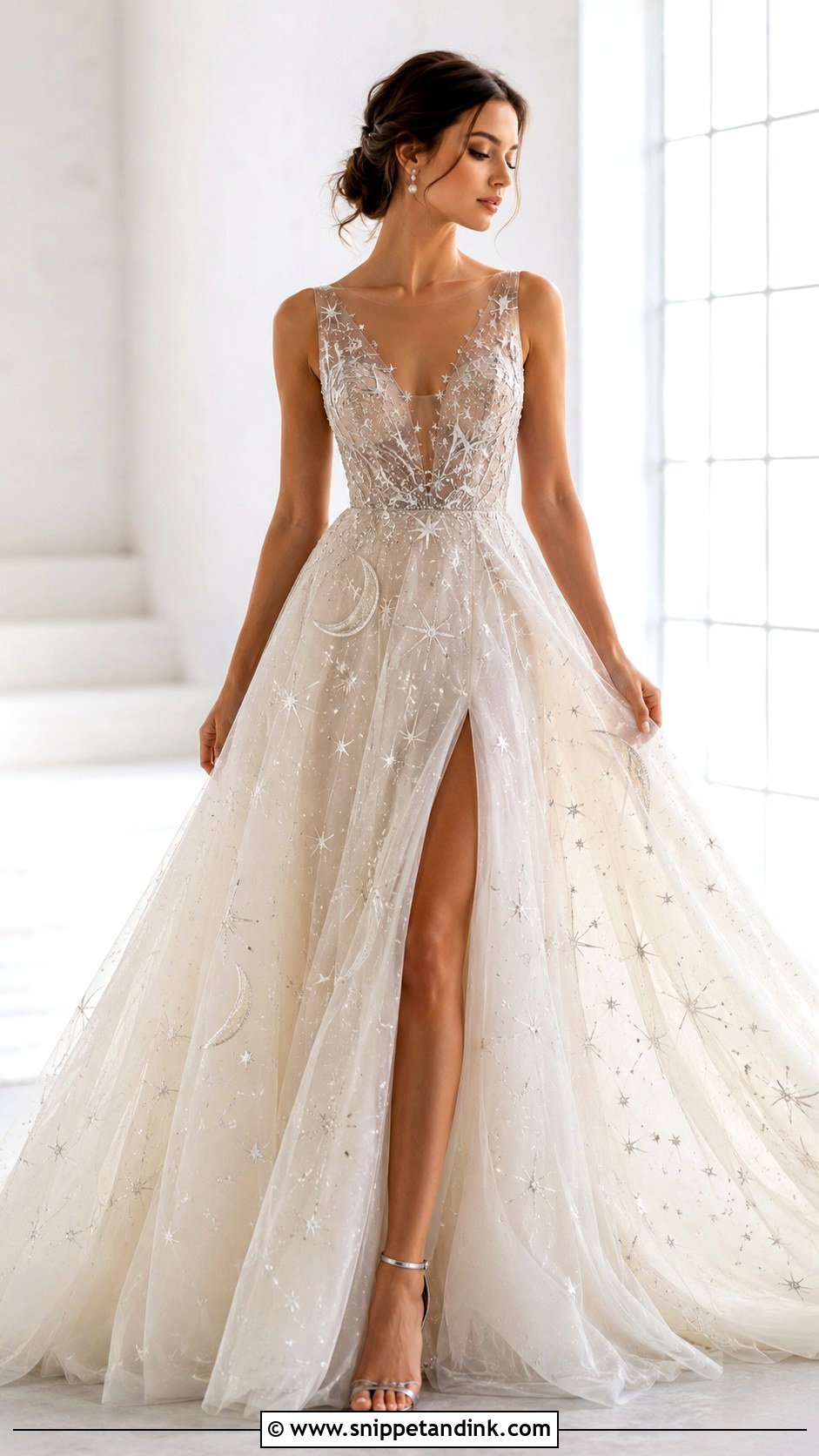
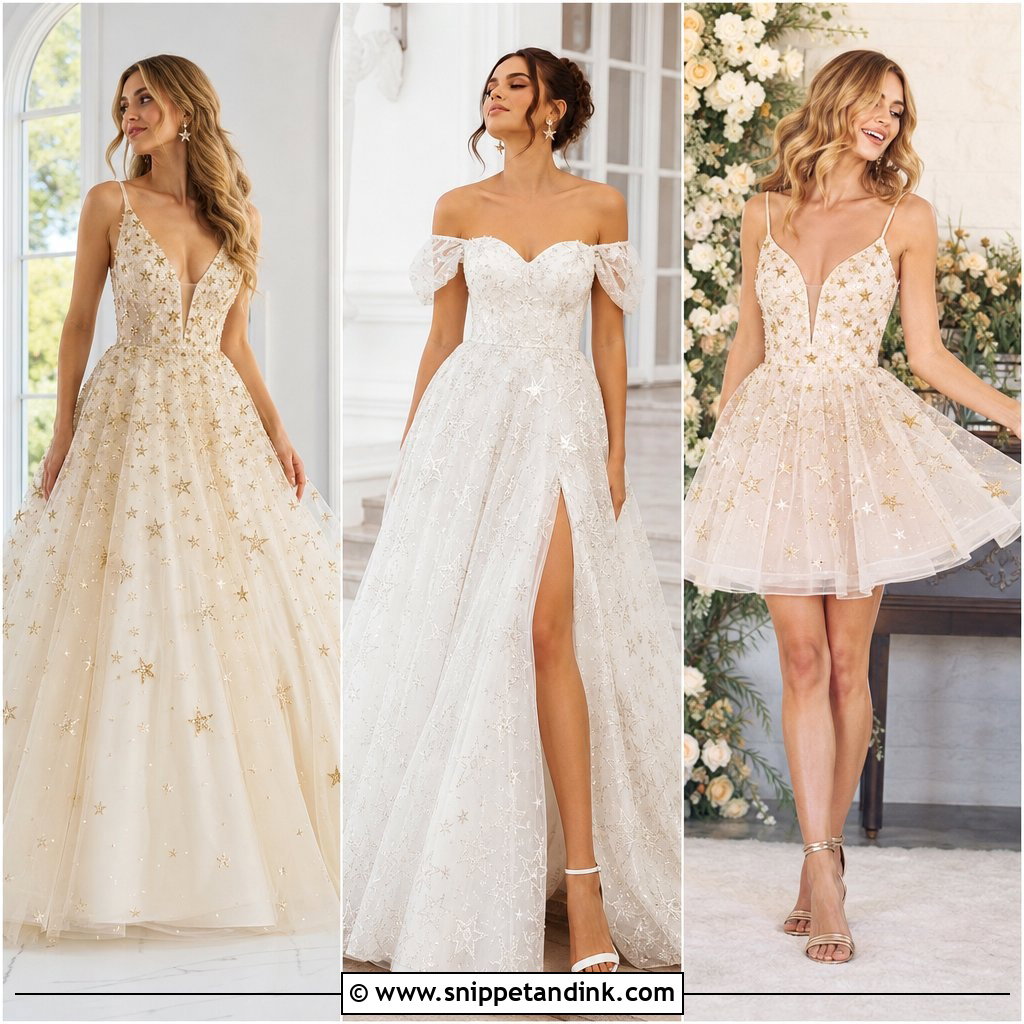
Scattered star embroidery is the version I reach for first when a bride is unsure how far to take the theme, and a moon wedding dress with star embroidery on a soft A-line or fit-and-flare is the easiest place to start. The trick is nude lining under the tulle, so the little silver stars and crescents look like they sit on your skin. Ivory tulle above that keeps it reading bridal. I’d keep the rest quiet: pearl studs, silver heels, a plain veil. One thing to check at the fitting is whether the embroidery continues onto the back of the skirt, because a lot of sample gowns stop the motif at the side seams.
2. Crescent Moon Wedding Dress
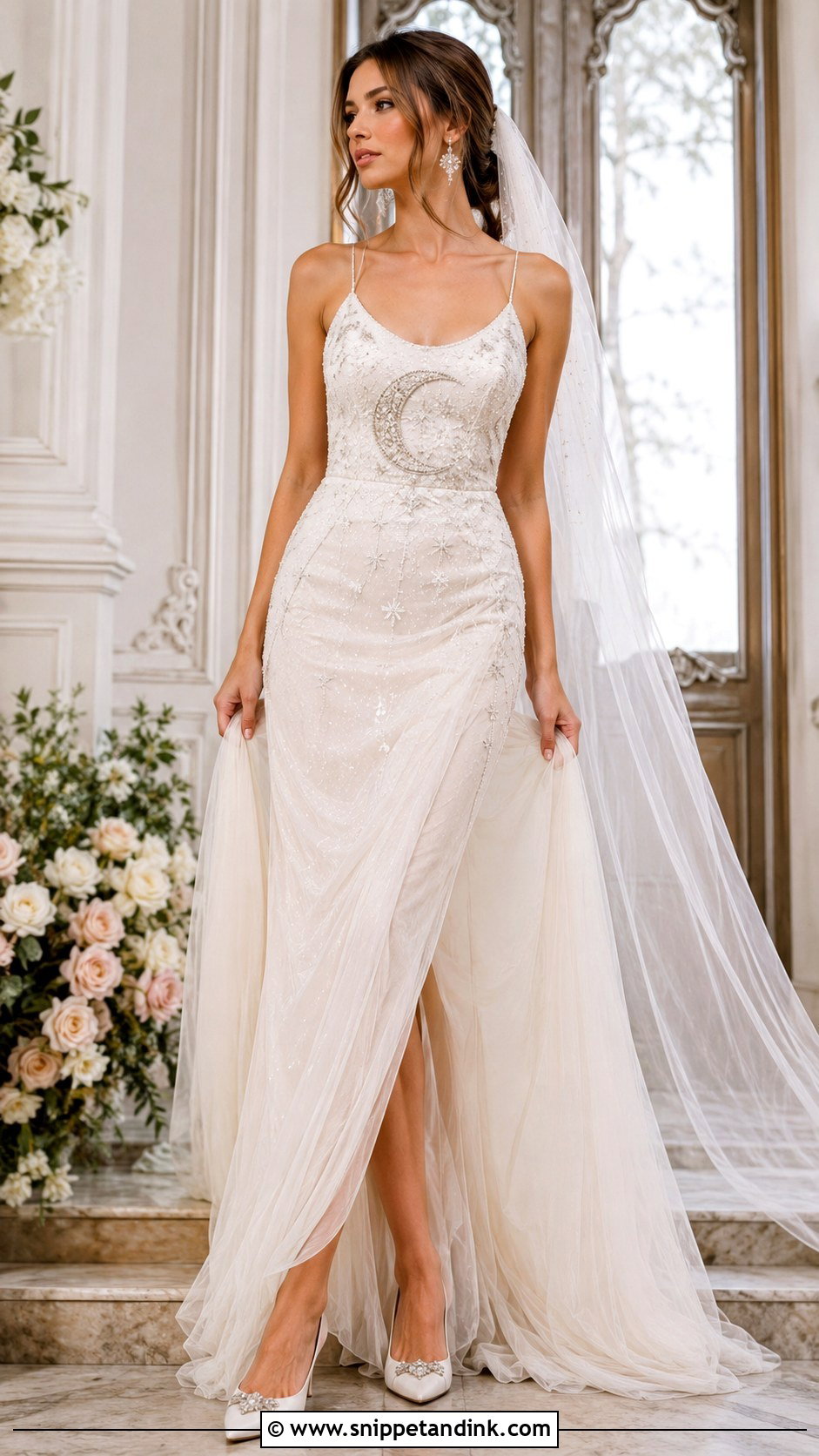
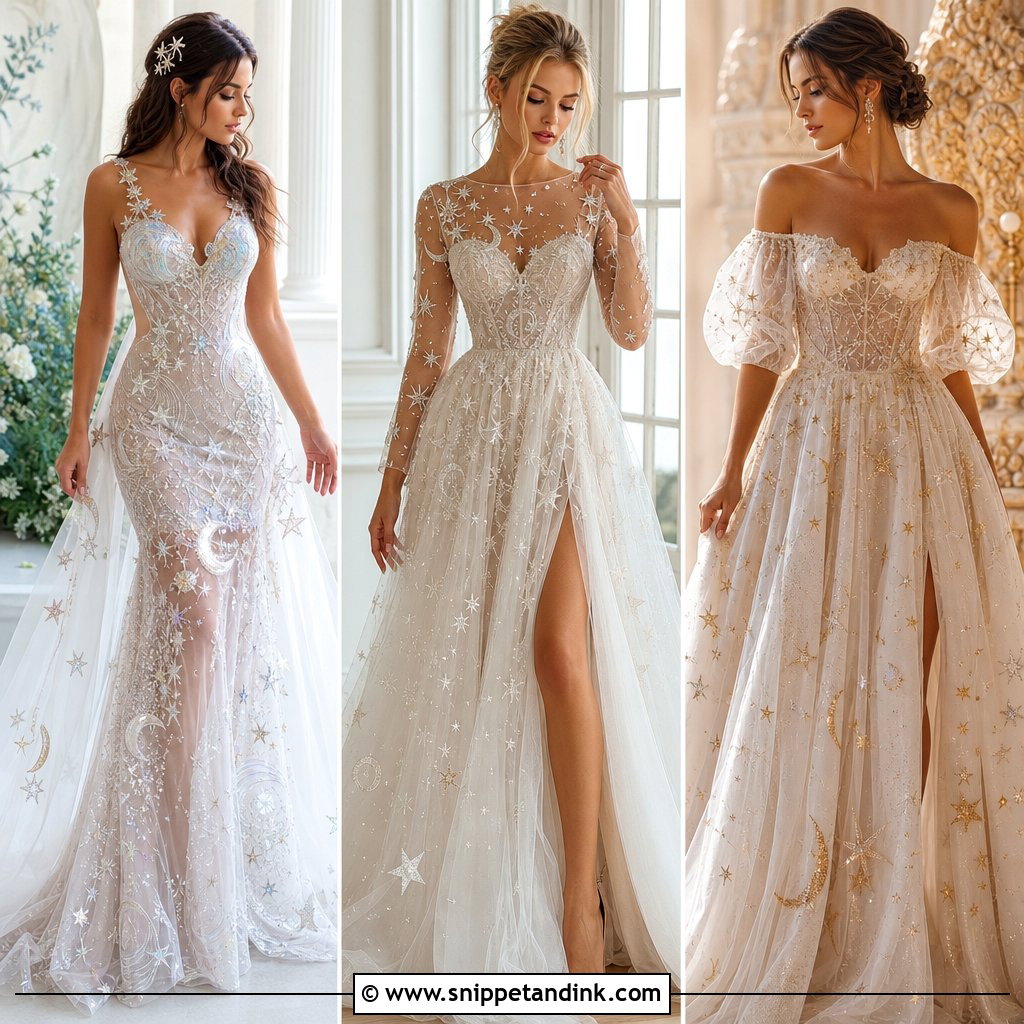
Here the moon appears once or twice instead of everywhere, which is why it tends to feel personal rather than themed. A crescent in beadwork on the bodice, a few appliqués drifting down a tulle skirt, or a single crescent at the waist of a satin dress all do the job. When the crescent sits at the waist, I always ask the bride to sit down in it, since a rigid beaded motif on a seam can dig in at the hip. Finish with a sleek low bun, crystal drops, pointed ivory heels and a sheer veil with two or three matching moons.
3. Moon And Stars Wedding Dress
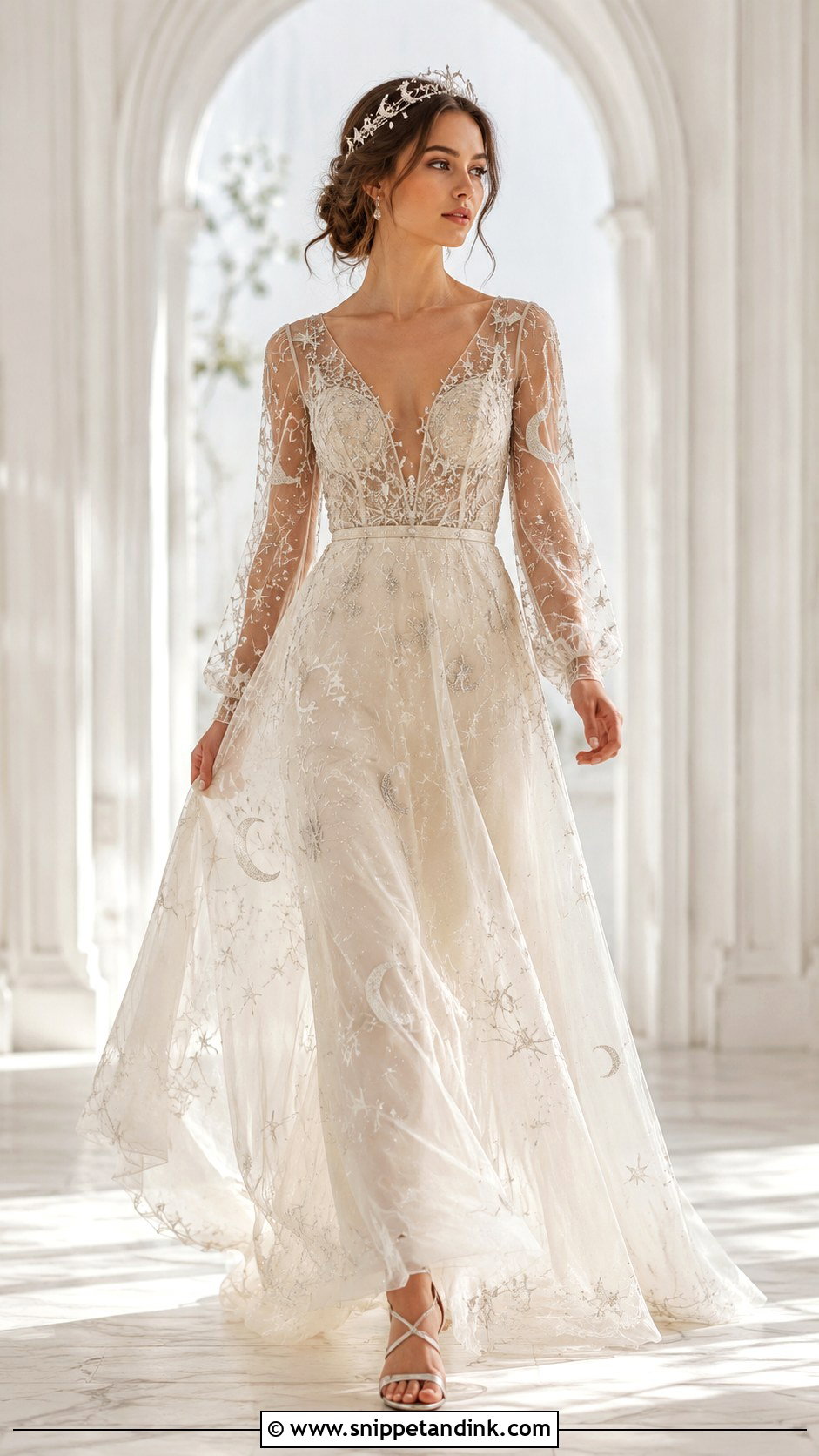
Mixing crescents, tiny stars and light-catching beads gives the most classic celestial bridal effect, usually across sheer sleeves, a corset bodice or a flowing skirt. Your thread color decides the mood. Ivory on ivory tulle stays soft and only shows up close; silver or gold thread reads from across the room and in wide shots. In my experience the balance goes wrong when stars cluster at the hem and the bodice is bare, so look for motifs that thin out gradually as they travel up. Metallic sandals, a fine headpiece and a soft veil are all it needs.
4. Moon Wedding Dress With Cape
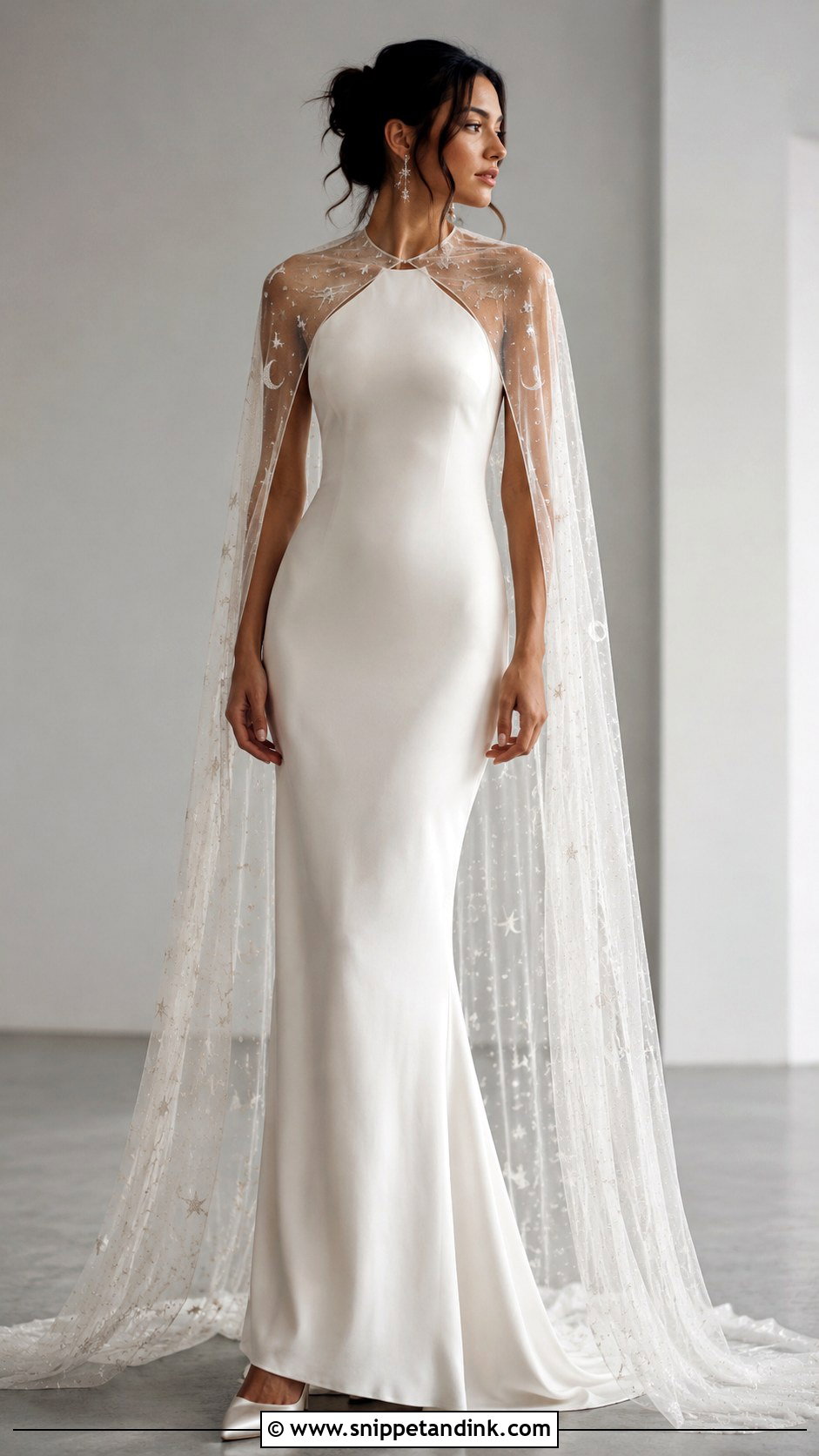
A sheer cape falling from the shoulders replaces the veil and moves every time you turn, which is where the drama comes from. Look for scattered star beading or a faint shimmer on the cape, then keep the gown underneath plain: crepe, satin or lace. Capes are heavier than they look once beaded, so I check how they attach. A cape that clips to the dress straps sits better than one tied at the neck, which tends to pull backward through a long ceremony. Clean hair and minimal jewelry let it lead, and you can unhook it before dinner.
5. Moon Wedding Dress With Sleeves
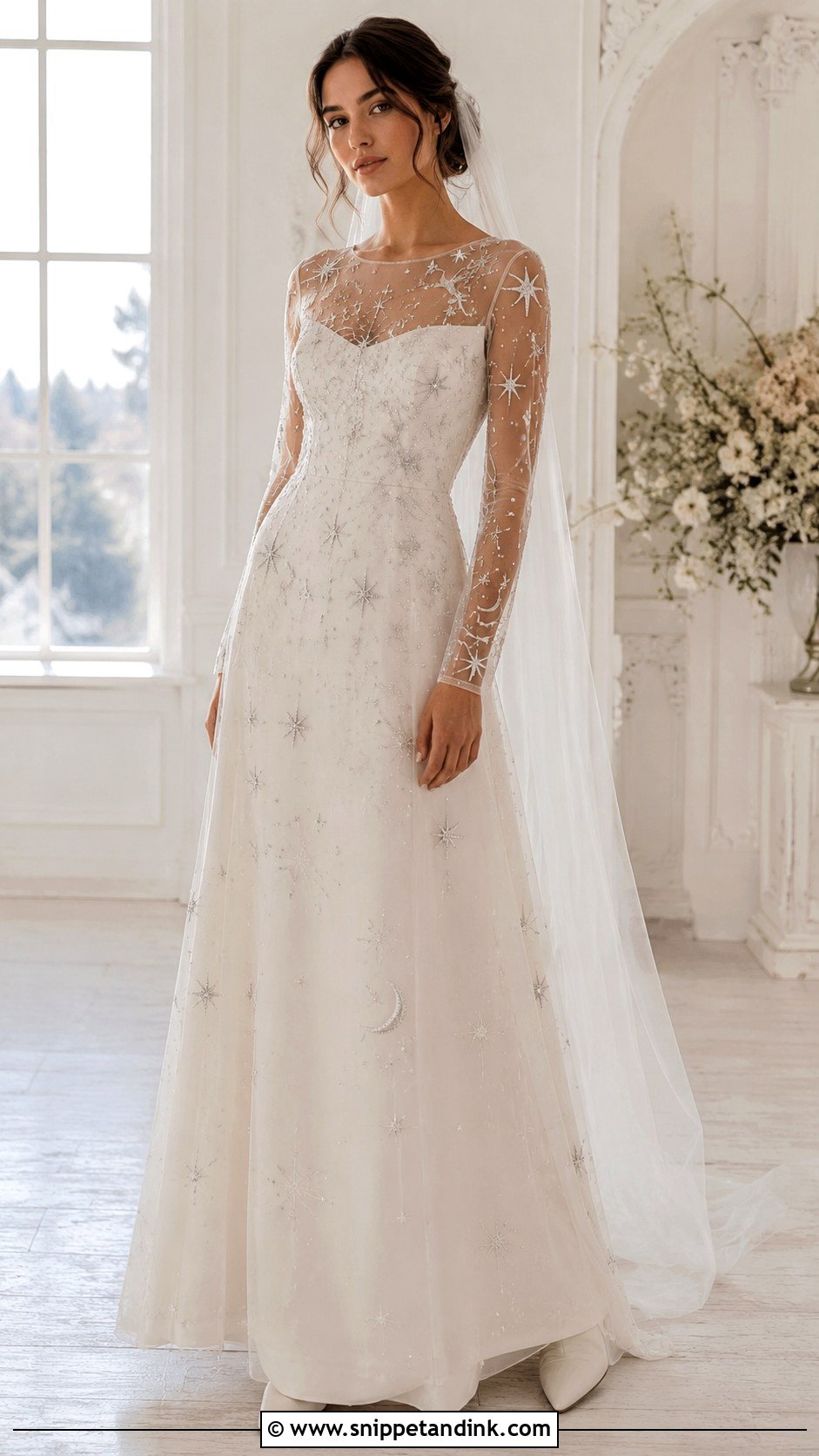
Sheer long sleeves carry celestial detail better than almost any other part of a gown, because the beading sits right where the camera lands in ring shots and hand-holding close-ups. Starbursts, crescents or soft silver beading on illusion mesh give coverage without hiding your shape. Lift your arms at the fitting: heavily beaded sleeves can ride up and pull the shoulder seam if the armhole is cut high. An A-line skirt makes this fairytale; a fitted shape keeps it refined. Pearl studs, a thin bracelet and a soft updo keep the sleeves in view.
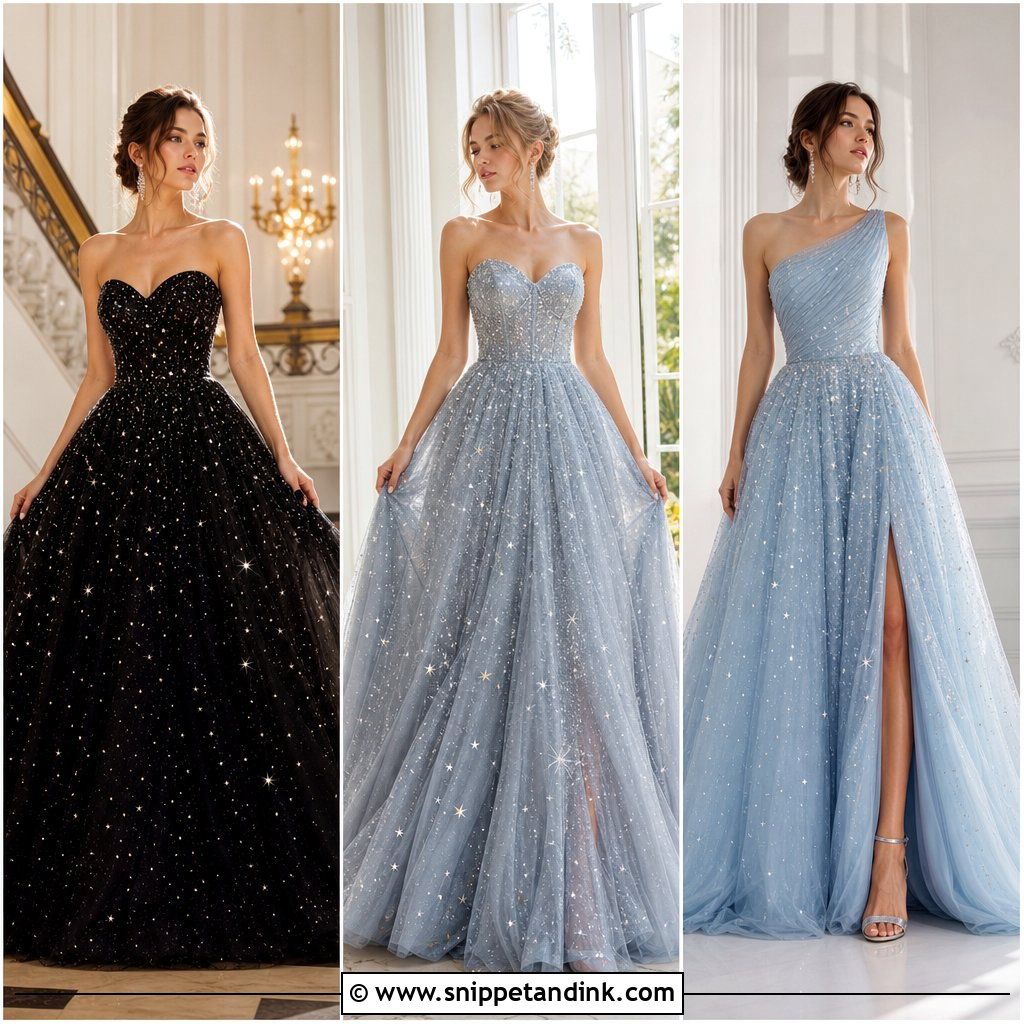
6. Blue Moon Wedding Dress
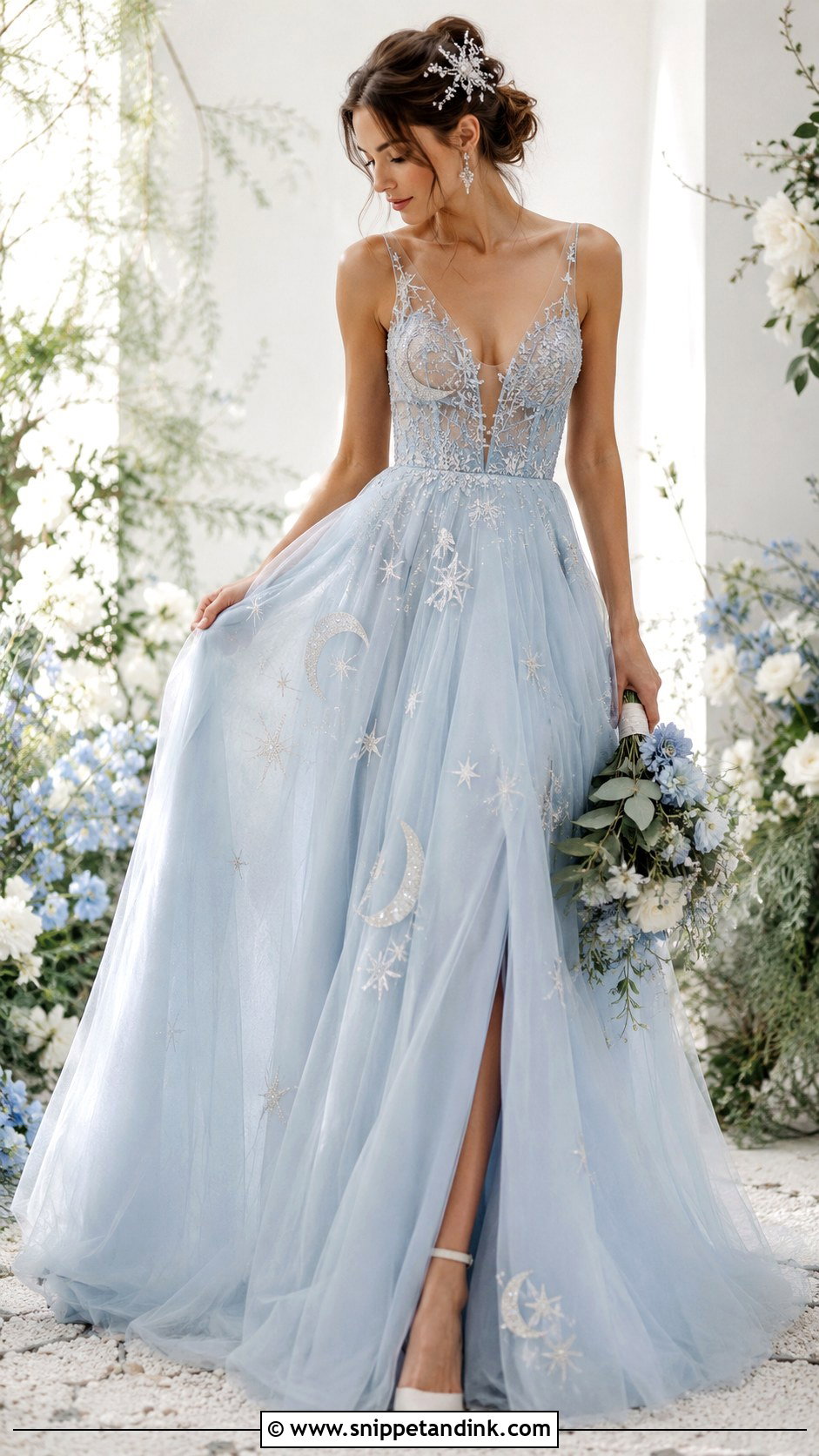
Pale blue, misty gray-blue or powder blue tulle gives a moonlit tint without leaving bridal tradition far behind. Color on tulle changes with the light, though. Under warm indoor bulbs a powder blue can turn almost gray, while outdoors in daylight it reads much bluer, so I always look at a swatch both inside and by a window. Silver stars, pearl beading or a sheer overlay keep it airy. Ivory shoes, crystal earrings and a silver hair comb tie the cool tones together.
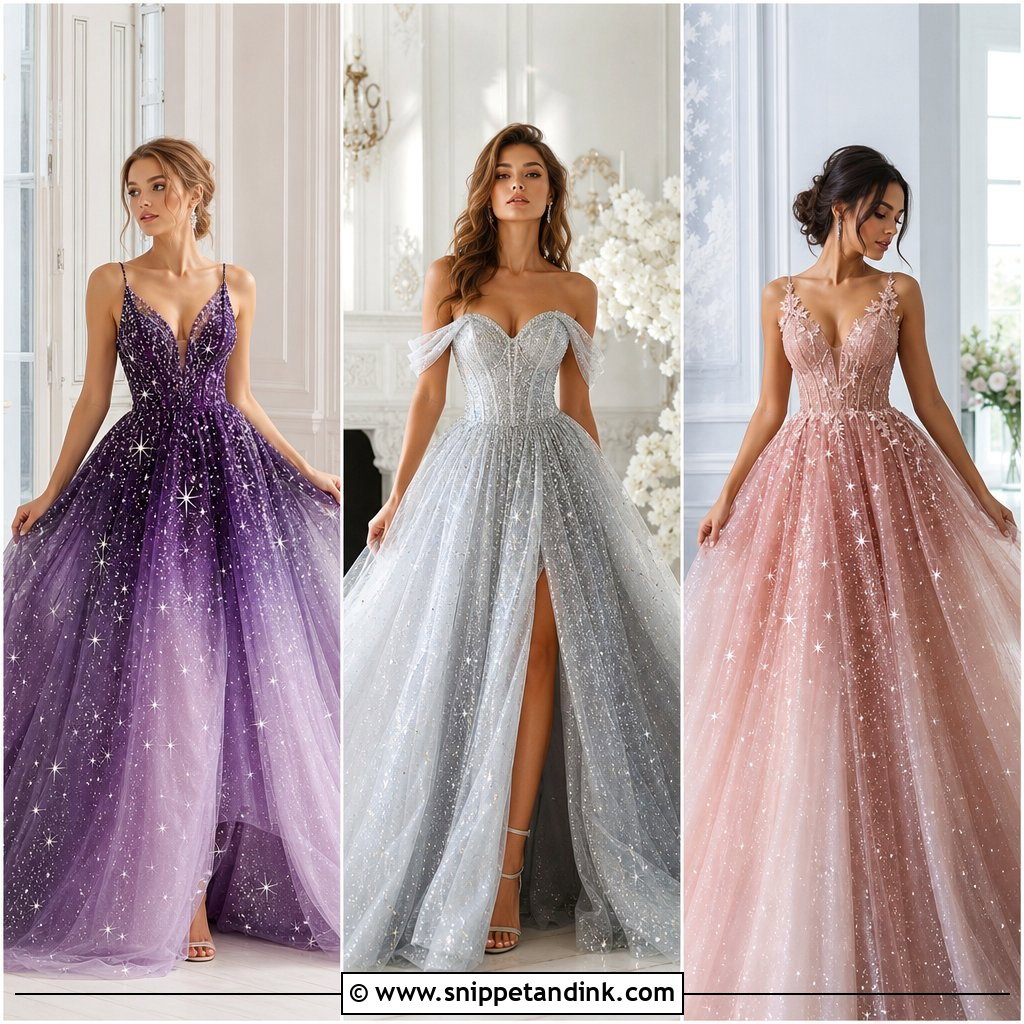
7. Silver Moon Wedding Dress
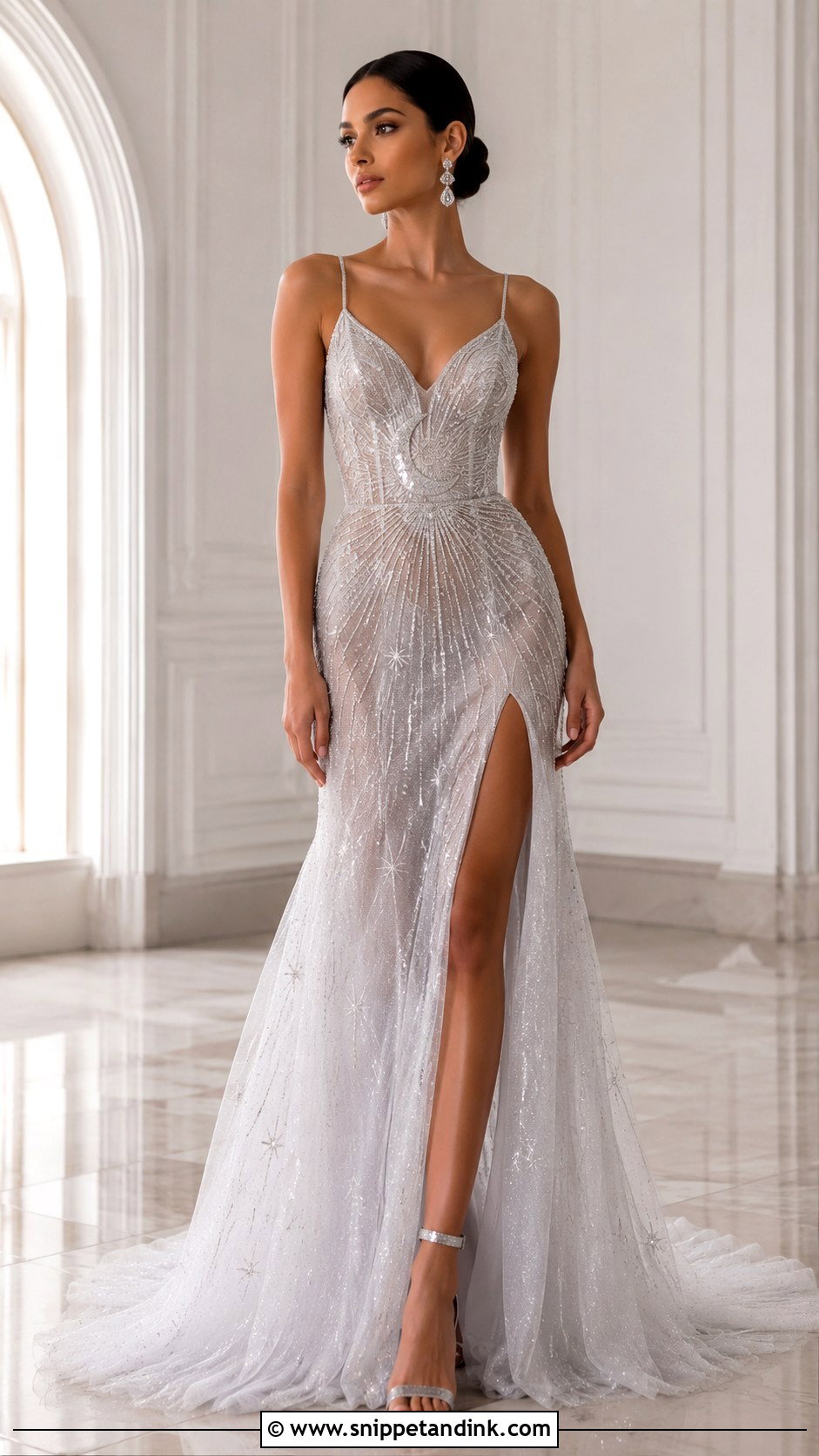
This one gets its moonlit effect from metallic thread, silver sequins, beaded tulle or a gray-silver underlayer rather than literal moons. A fitted bodice with a flowing skirt balances the shine with softness. Silver heels, crystal earrings and a clean veil with almost no edging are enough; extra decoration fights the finish. I’d point brides with very warm, golden skin toward a pewter or champagne-silver instead of a cold, bright silver next to the face, and test it in daylight before deciding. Sleek hair and luminous makeup suit its fashion-forward feel.
8. Gold Moon Wedding Dress
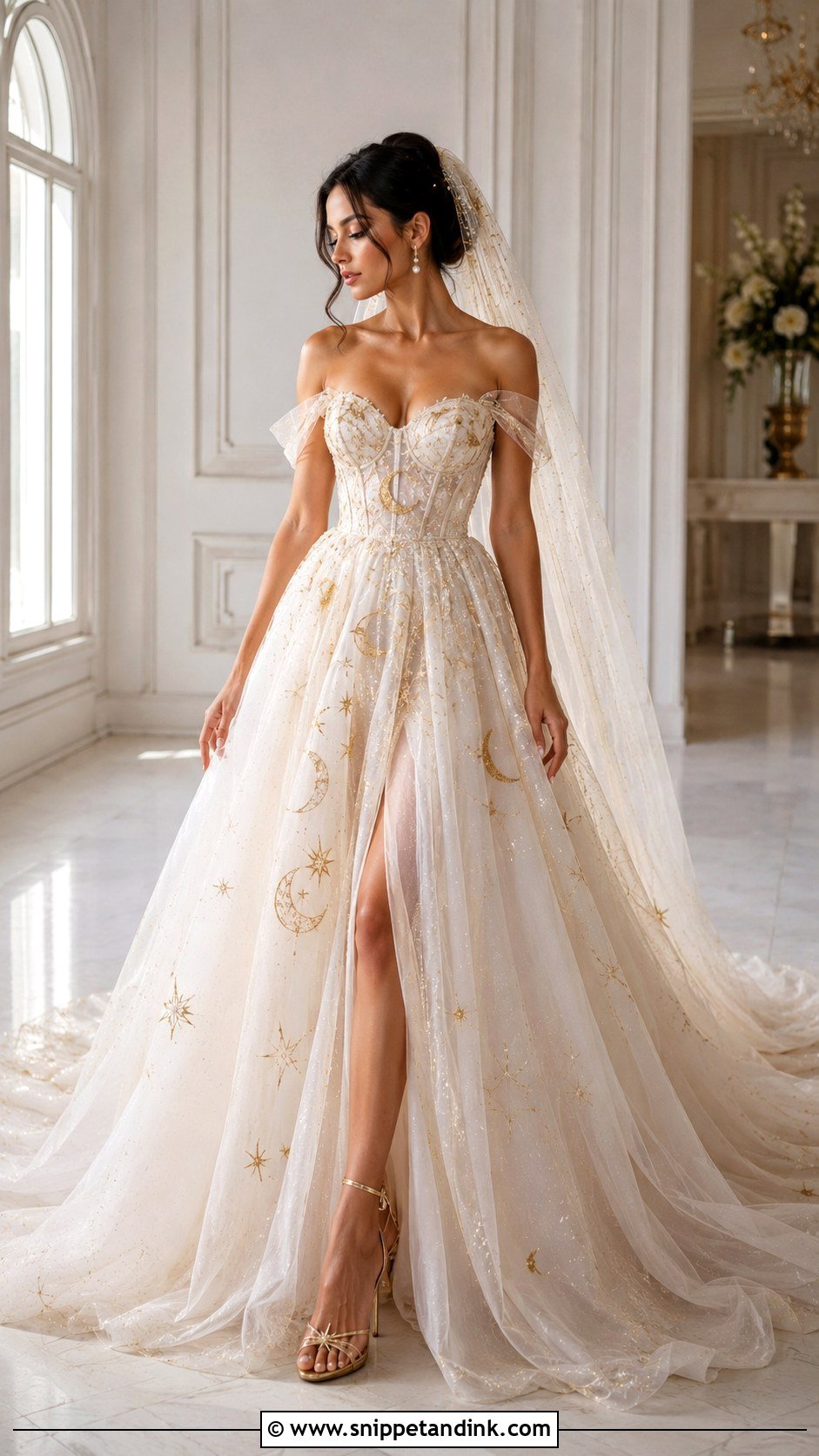
Gold swaps the icy feel of silver for warmth: champagne lining, gold embroidery, or metallic moon and star appliqués on an ivory base. It stays rich instead of costume-like as long as the gold is in the thread and appliqués, not the whole fabric. Something I check on gold metallic thread is how it reads in photos, because some cheaper threads go brassy under flash while better ones keep a soft glow. Gold heels, pearl drops and a veil with a light shimmer finish it, with a loose updo or soft waves.
9. Black Moon Wedding Dress
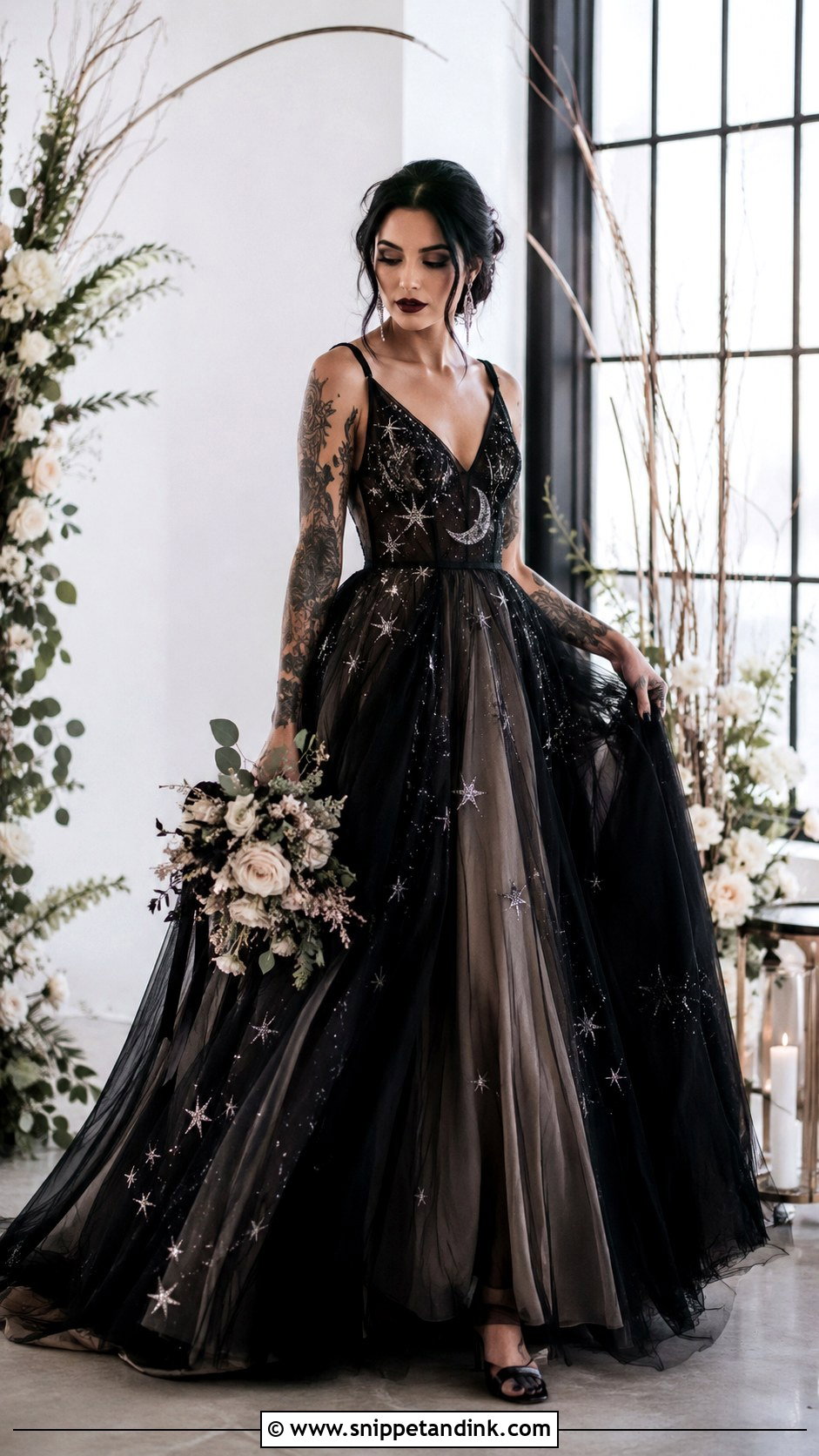
A black gown works for a bride when the black tulle is layered over nude, ivory or champagne lining, so it glows instead of absorbing light. Silver celestial embroidery, crescent appliqués or star beading show up sharply against the dark layer, which is the whole appeal. Black and silver heels, sleek earrings and a simple veil or cape follow. I’d keep the bouquet pale for contrast in photos. It suits anyone after a nontraditional gown with strong visual impact, but warn the photographer in advance so they expose for the dress detail, not your skin.
10. Moon Wedding Dress With Tulle Skirt
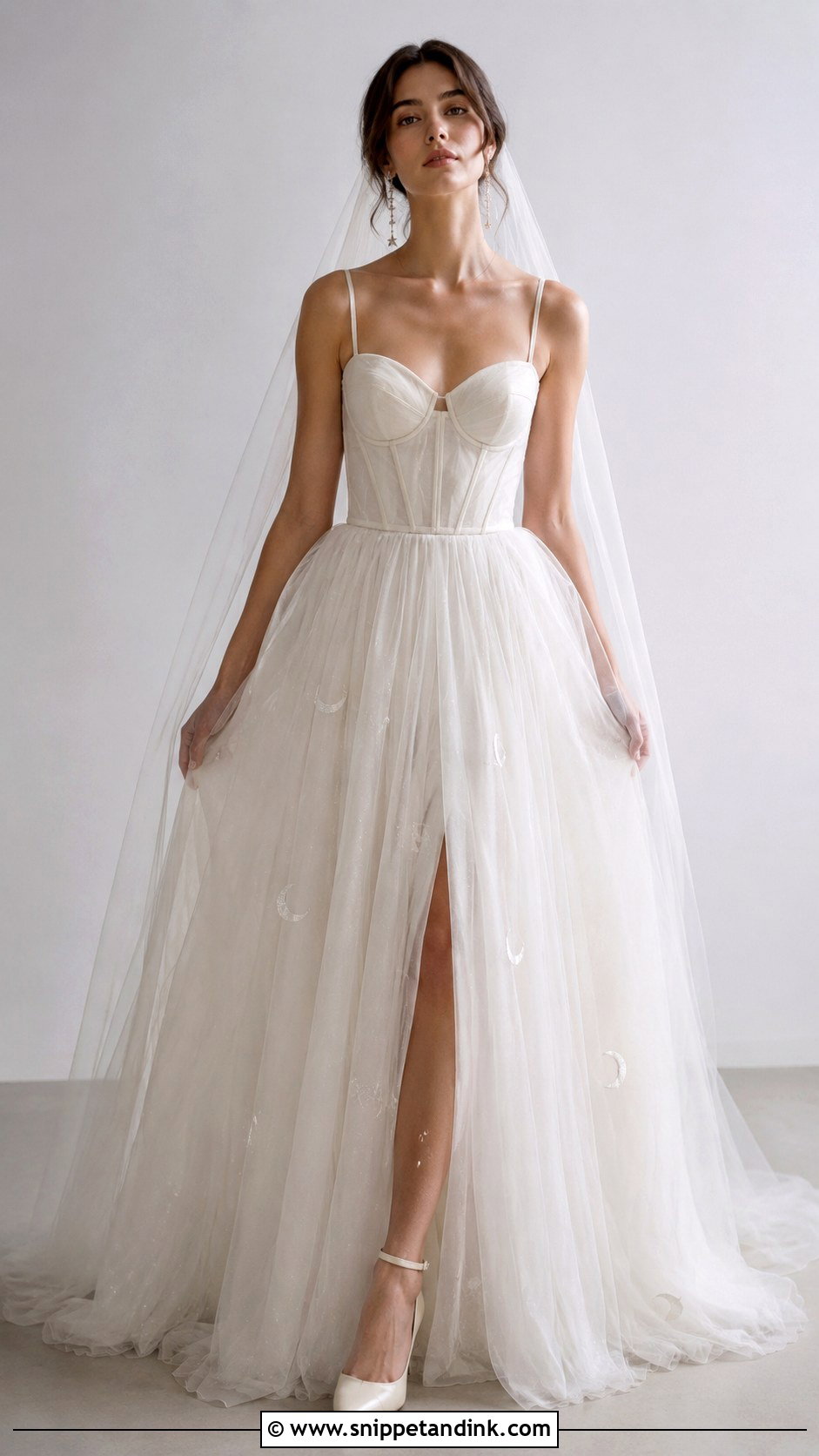
Tulle gives the floating quality this theme loves, especially with a little shimmer or tiny stars scattered through the layers. A structured bodice does the supporting while the skirt moves. Pick the waistline for comfort before style, since you will sit in this gown for hours. I follow a simple rule here: if the skirt carries the moon embroidery, the veil stays plain, and if the skirt is plain, a celestial veil adds the detail. Tulle catches on rough surfaces, so I also ask about the venue floor and any stone steps.
11. Moon Wedding Dress With Corset Bodice
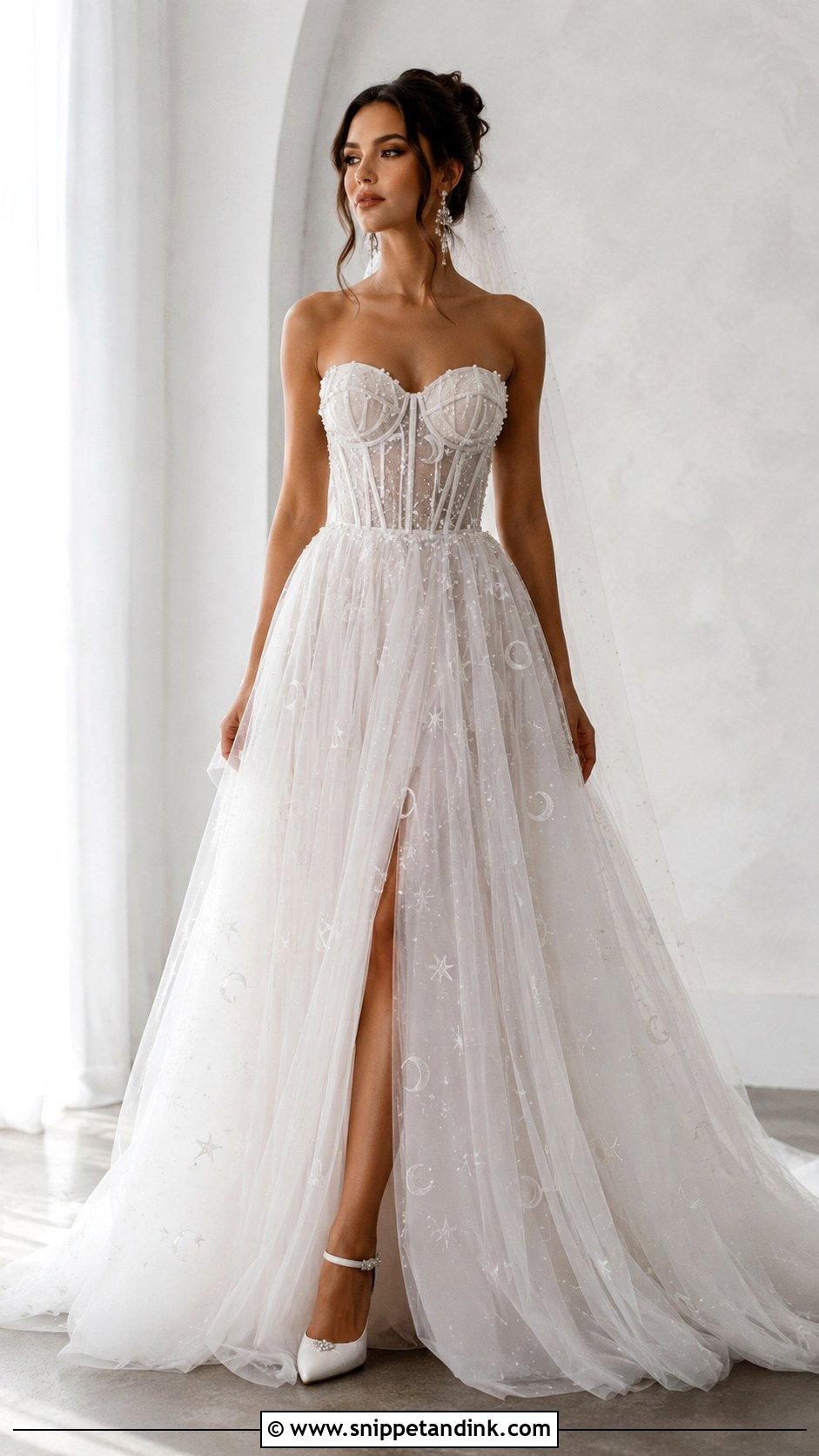
Boning gives shape and support while the moons and stars soften it. A sheer corset with pearl beading and fine celestial embroidery looks current, and the right lining stops it reading as too revealing. Get the corset fitted with the shoes and undergarments you will actually wear, because half an inch of heel or a different bra changes where the boning sits. Pair the structure with a flowing skirt or a sleek column, then add pointed heels, a soft veil and small crystal earrings.
12. Moon Wedding Dress With Pearl Details
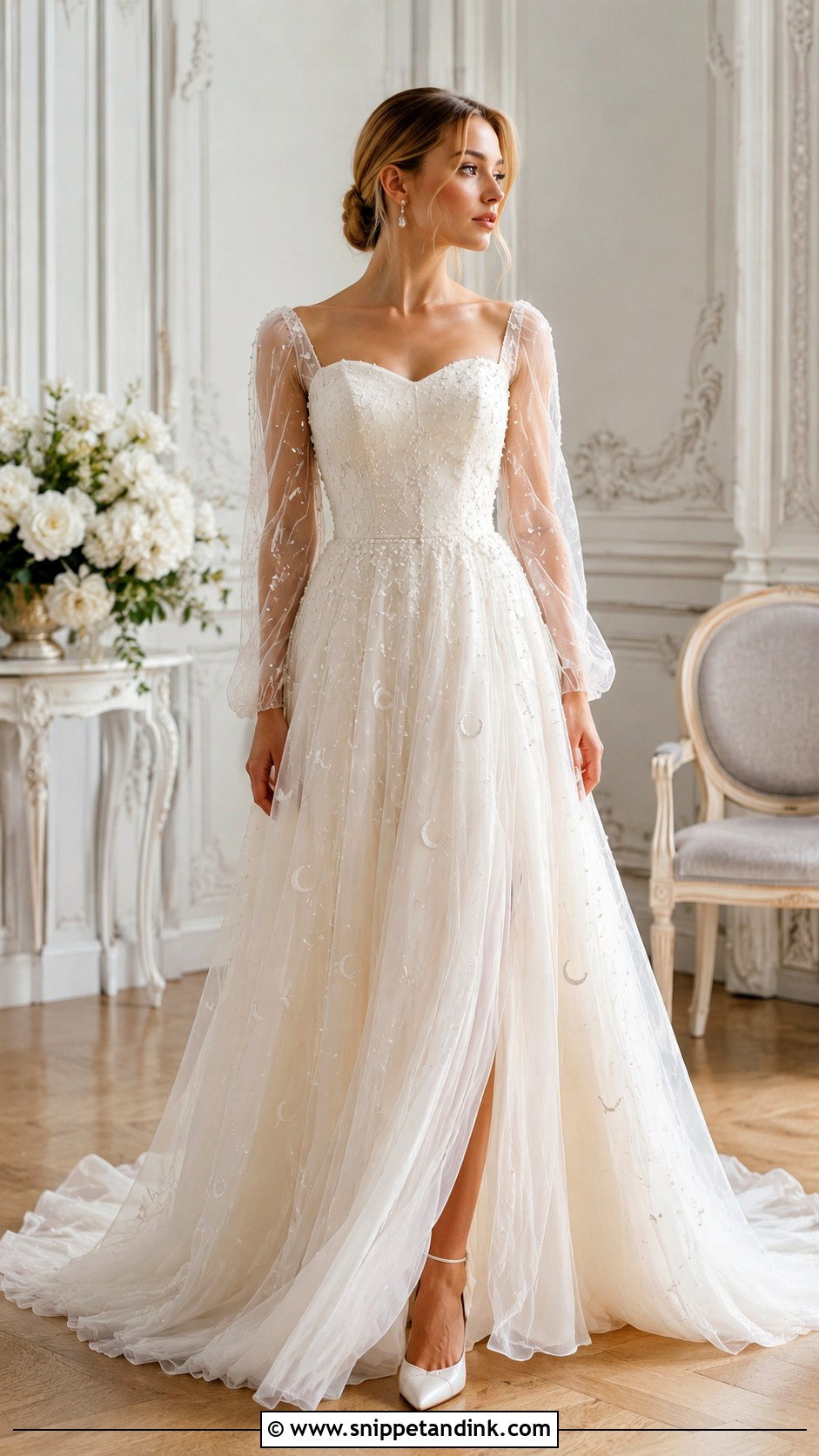
Pearls suit this theme better than most brides expect, since a scatter of them looks like tiny moons on the fabric. They show up as beading on sheer sleeves, trim along the neckline, or mixed in among star embroidery on an ivory or champagne base. I like this for anyone who wants the theme without shine, glitter, or metallic detail. Ask whether the pearls are glass or plastic: glass hangs better and doesn’t peel, while plastic is lighter on a big skirt. Pearl earrings, a low bun and satin heels complete it.
13. Moon Wedding Dress With Sparkle Tulle
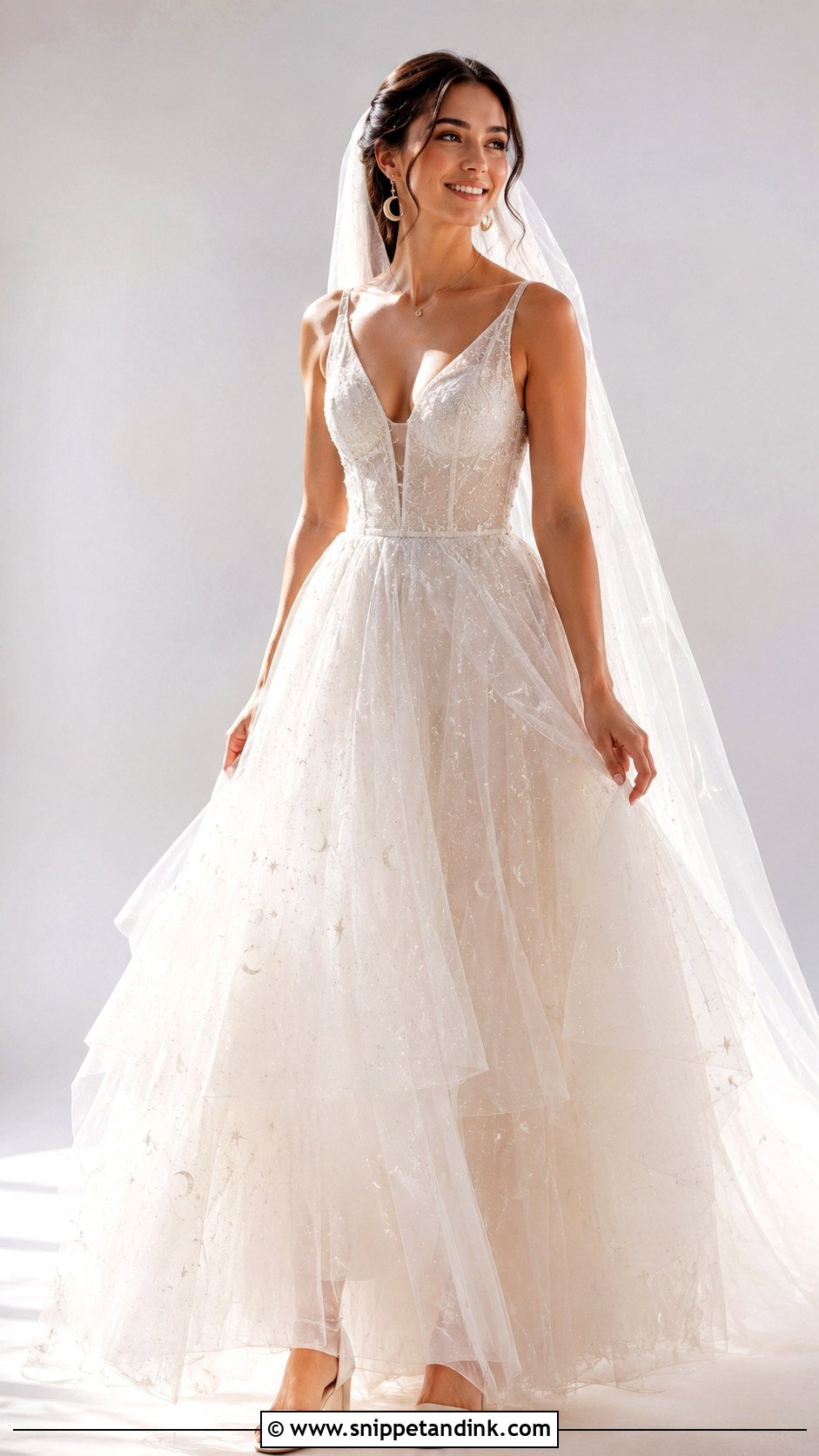
Sparkle tulle glows as you move, but only when the glitter is fine and scattered. Heavy glitter tulle feels stiff and can scratch your inner arms over a long day, so I always run my hand along the skirt and hold it against my wrist at the fitting. A layered A-line with a fitted bodice and fine straps keeps it light. Add crescent earrings or one celestial hairpin, then ivory block heels or silver sandals. Because the fabric catches light from every angle, you get the magic without a busy pattern.
14. Moon Wedding Dress With Detachable Overskirt
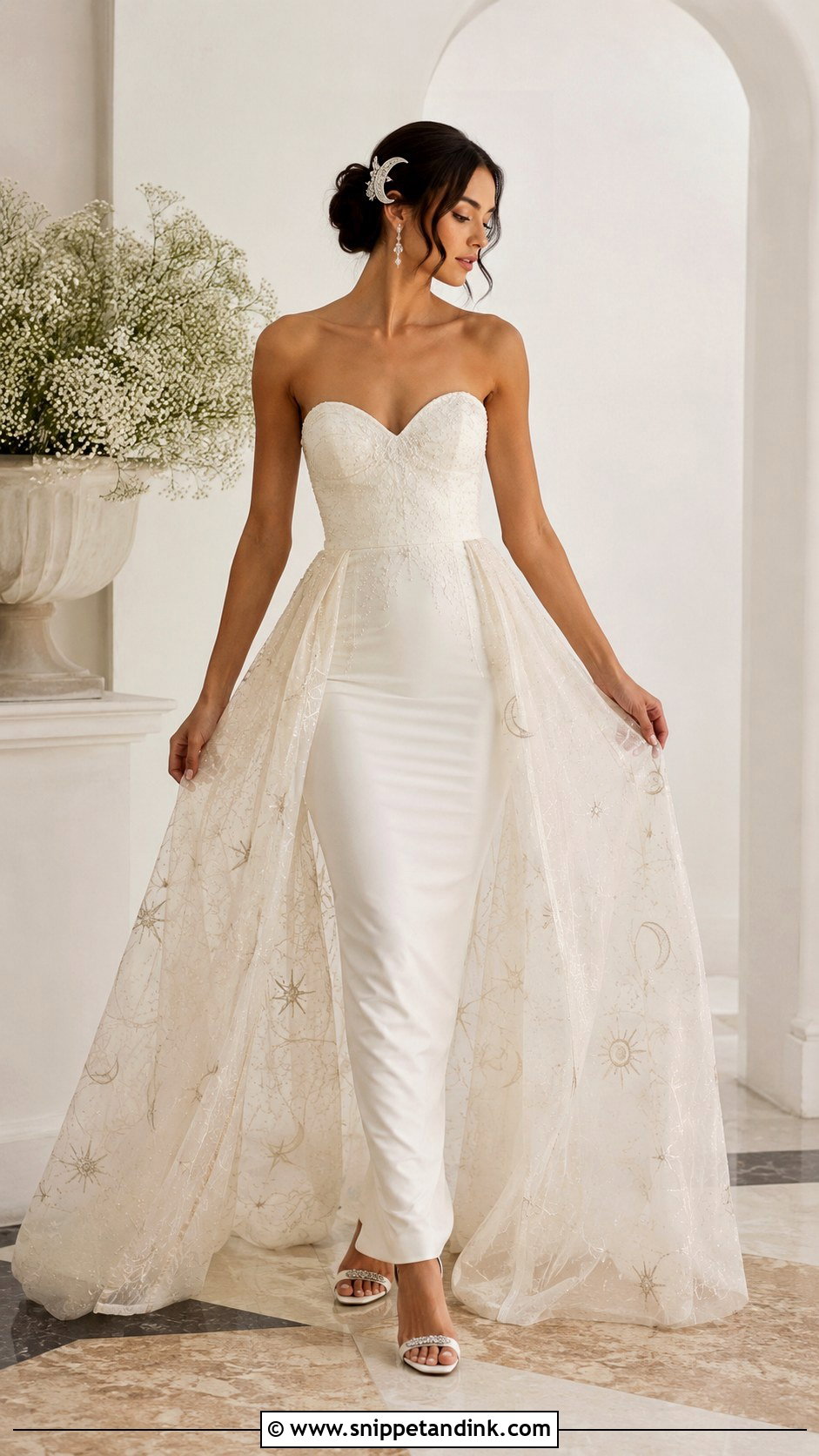
Two looks, one dress. For the ceremony, an overskirt embroidered with moons and stars adds volume and a grand entrance; underneath, a fitted crepe, satin or lace gown carries you through dinner and dancing. I make sure brides practice removing it with whoever will help, because hidden snaps and hooks are fiddly in a crowded room. Choose one strong accessory, like a moon hair comb or crystal earrings, and stable heels to manage the extra fabric early in the day.

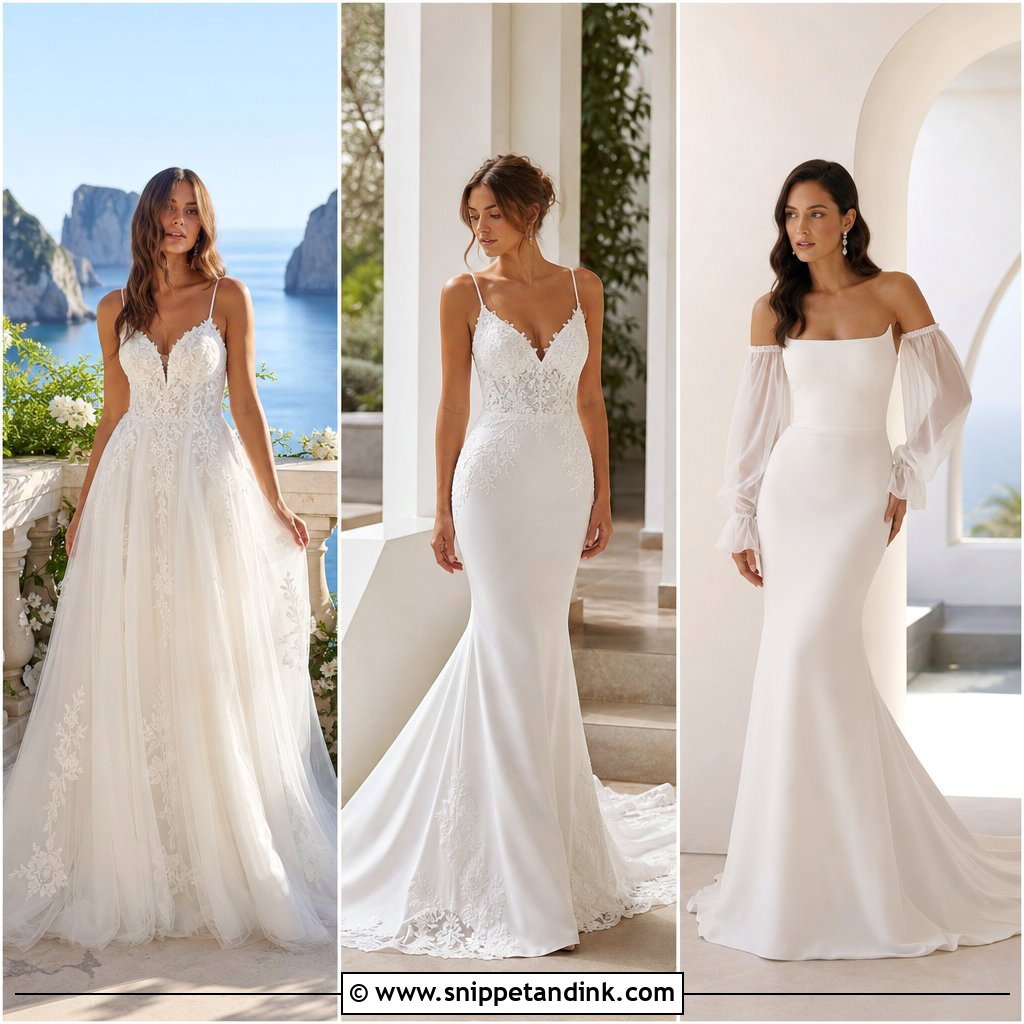

15. Moon Wedding Dress With High Neck
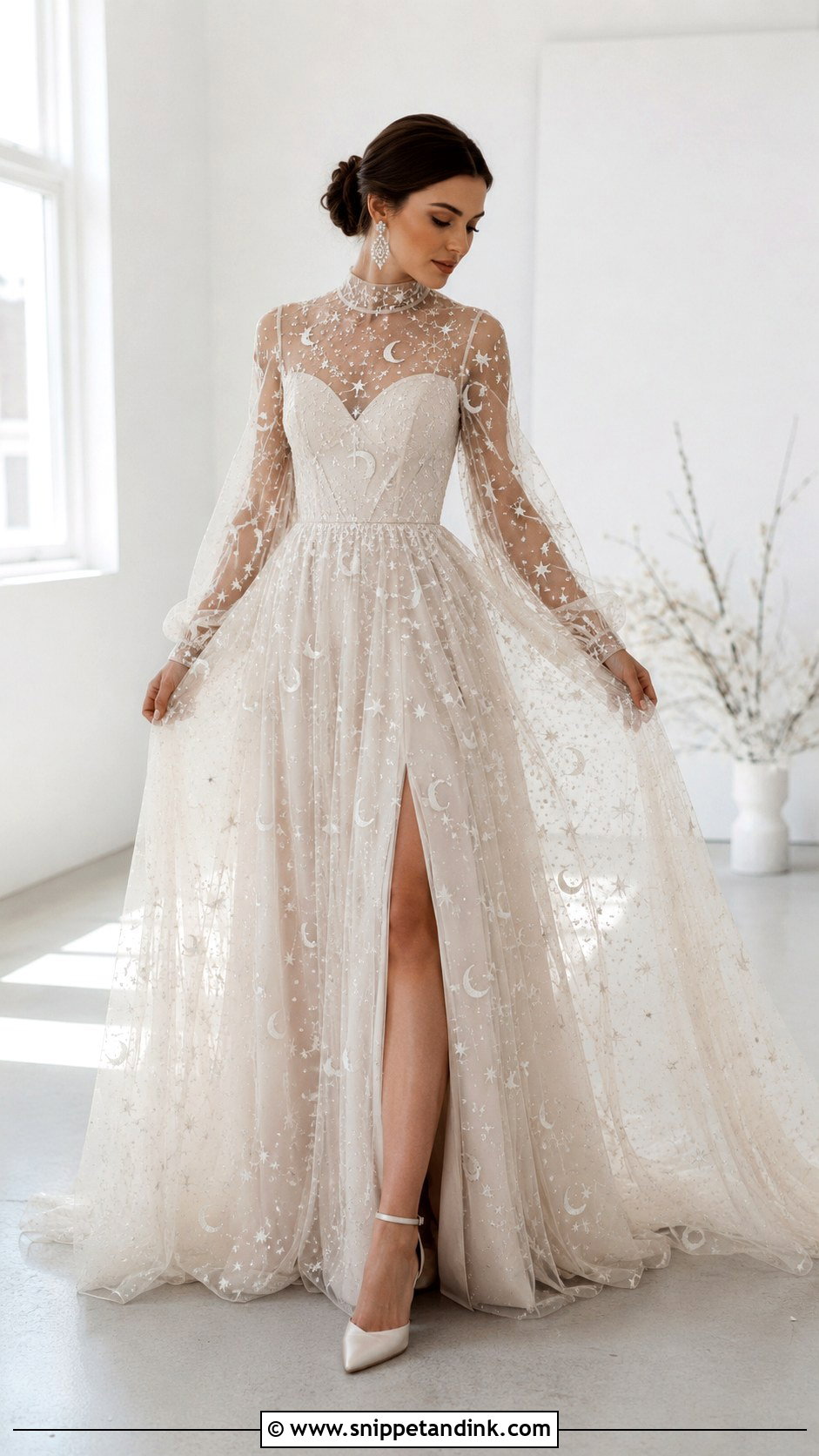
A high neckline frames the face neatly, and an illusion bodice with tiny stars and crescents stops it feeling plain. It pairs well with a soft skirt or long sleeves. Skip the necklace entirely, since the neckline already holds the detail, and let earrings do the work. The one fit issue I watch for is a high neck that sits too tight at the throat; you should be able to turn your head and swallow comfortably. A clean bun, satin heels and a light veil keep the coverage elegant.
16. Moon Wedding Dress With Off Shoulder Neckline
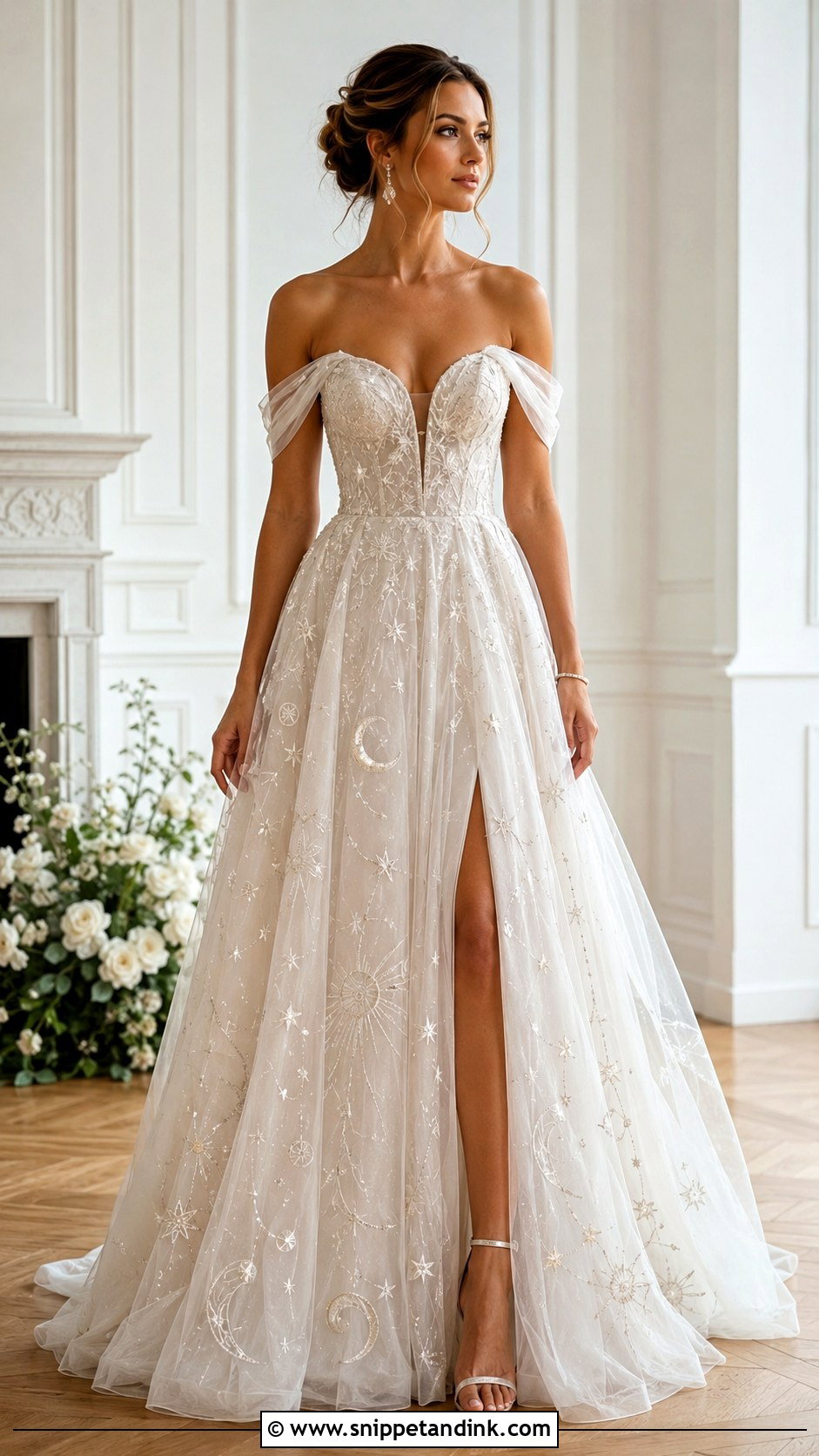
An off-shoulder neckline shows the collarbone and lets celestial embroidery or shimmer fabric frame it. It works with a fitted bodice and flowing skirt, and just as well in satin or crepe. Off-shoulder bands need a snug fit or they slide down as you hug guests, so I check them with the bride’s arms raised and crossed. Drop earrings, a slim bracelet and comfortable heels finish it. A star-scattered veil can work here, but keep it sheer so it doesn’t crowd the neckline.
17. Moon Wedding Dress With Open Back
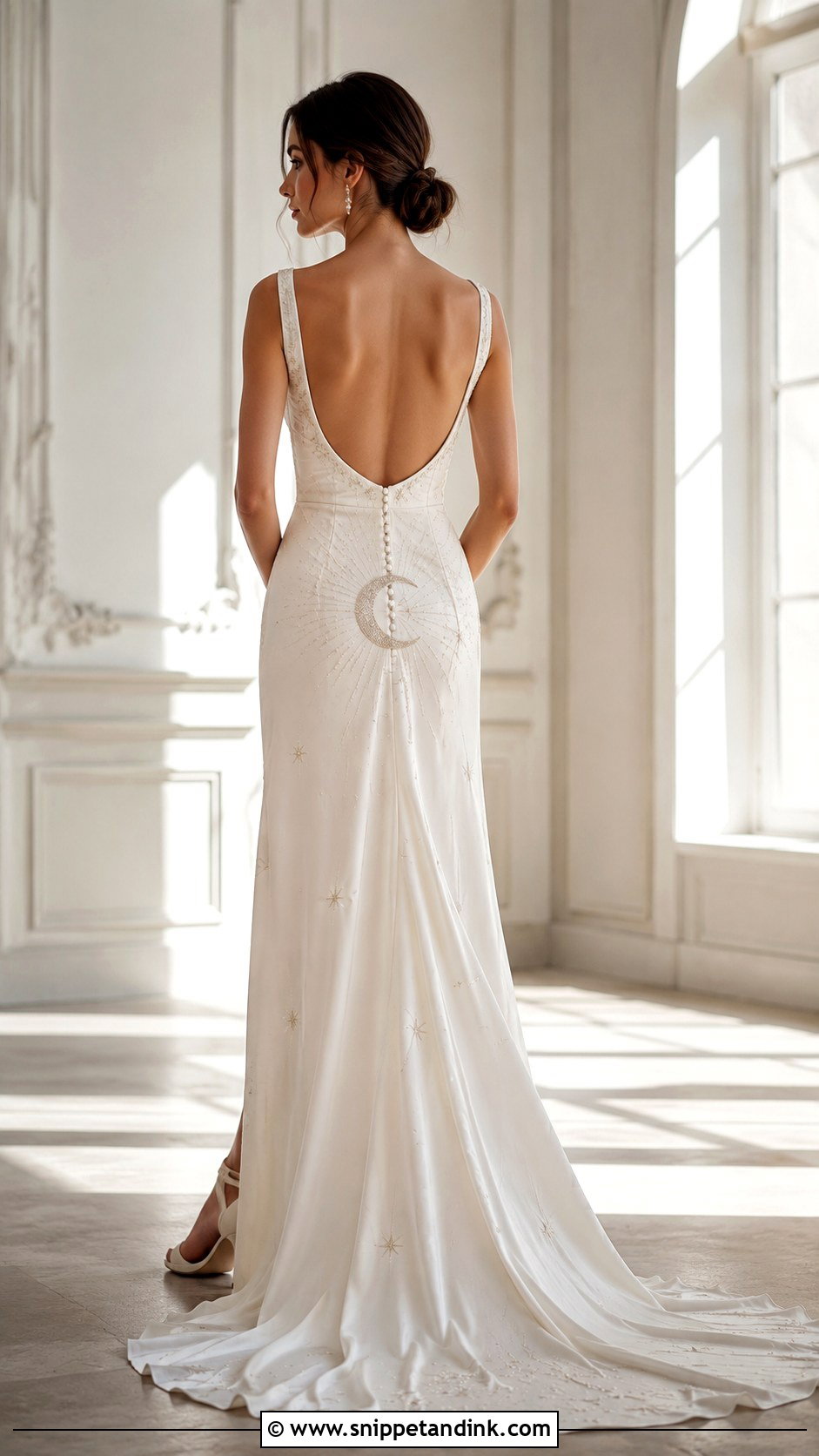
From the front the dress stays simple; the back carries the story with crescent embroidery, pearl buttons or sheer illusion fabric dotted with stars. That surprise matters most in walking shots, first looks and portraits taken from behind. A low bun or swept-up style keeps the design visible. When a back is very open, I ask about built-in cups and how the bodice is anchored, since that decides what you can comfortably wear underneath. Small earrings, a fine ring and slim heels are plenty.
18. Moon Wedding Dress With Sheer Overlay
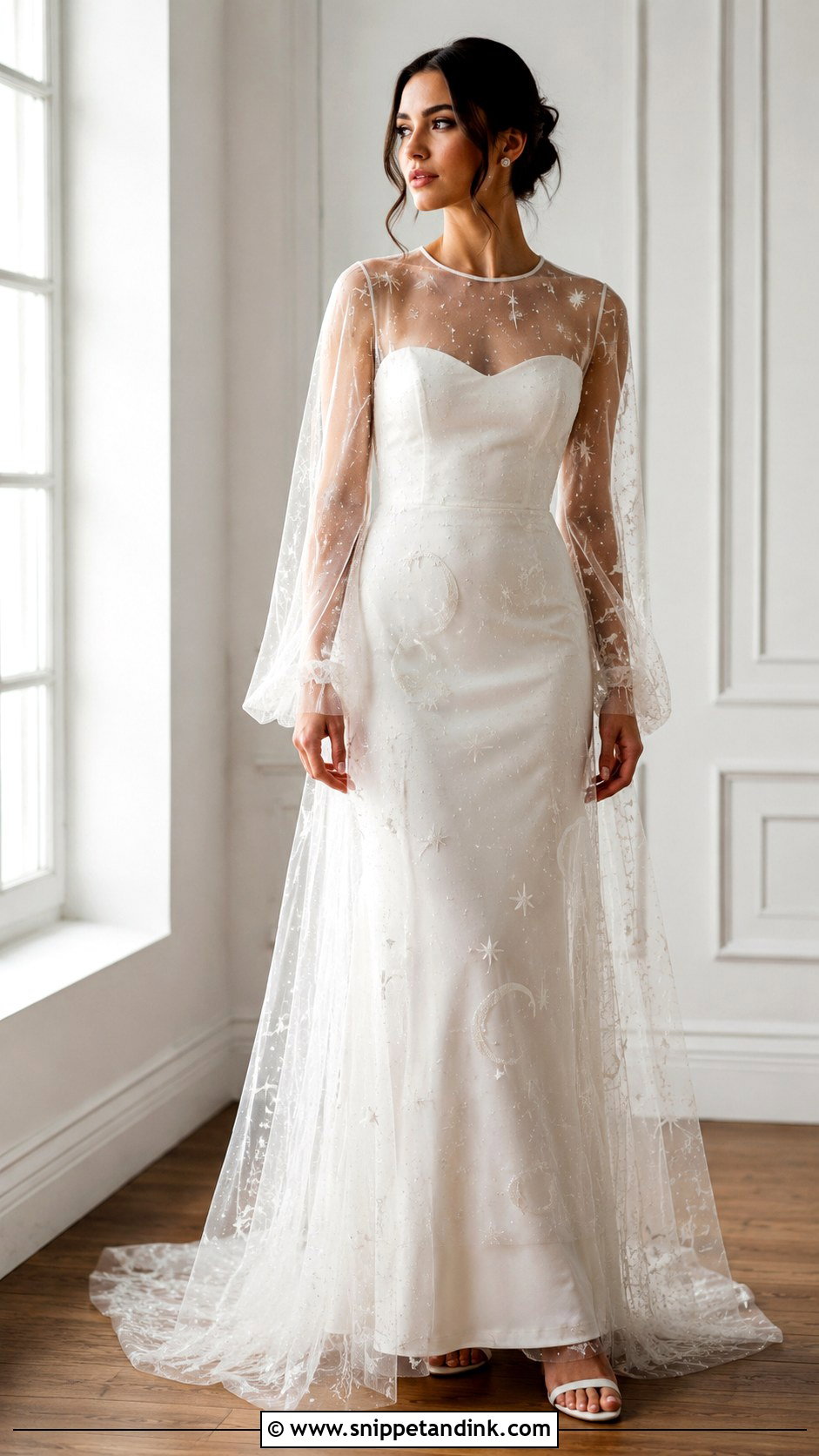
Layering gives depth: a simple satin, crepe or lace base with an overlay that carries the moon embroidery or shimmer. The gown ends up looking custom and dimensional without real weight. Choose an overlay that moves freely and does not hide your shape completely. If you want a celestial gown with texture, this is the most forgiving way to get it. I check that the overlay and base are hemmed at slightly different lengths, so the base doesn’t peek below. Crystal studs, ivory heels and a plain veil complete it.
19. Moon Wedding Dress With Celestial Veil
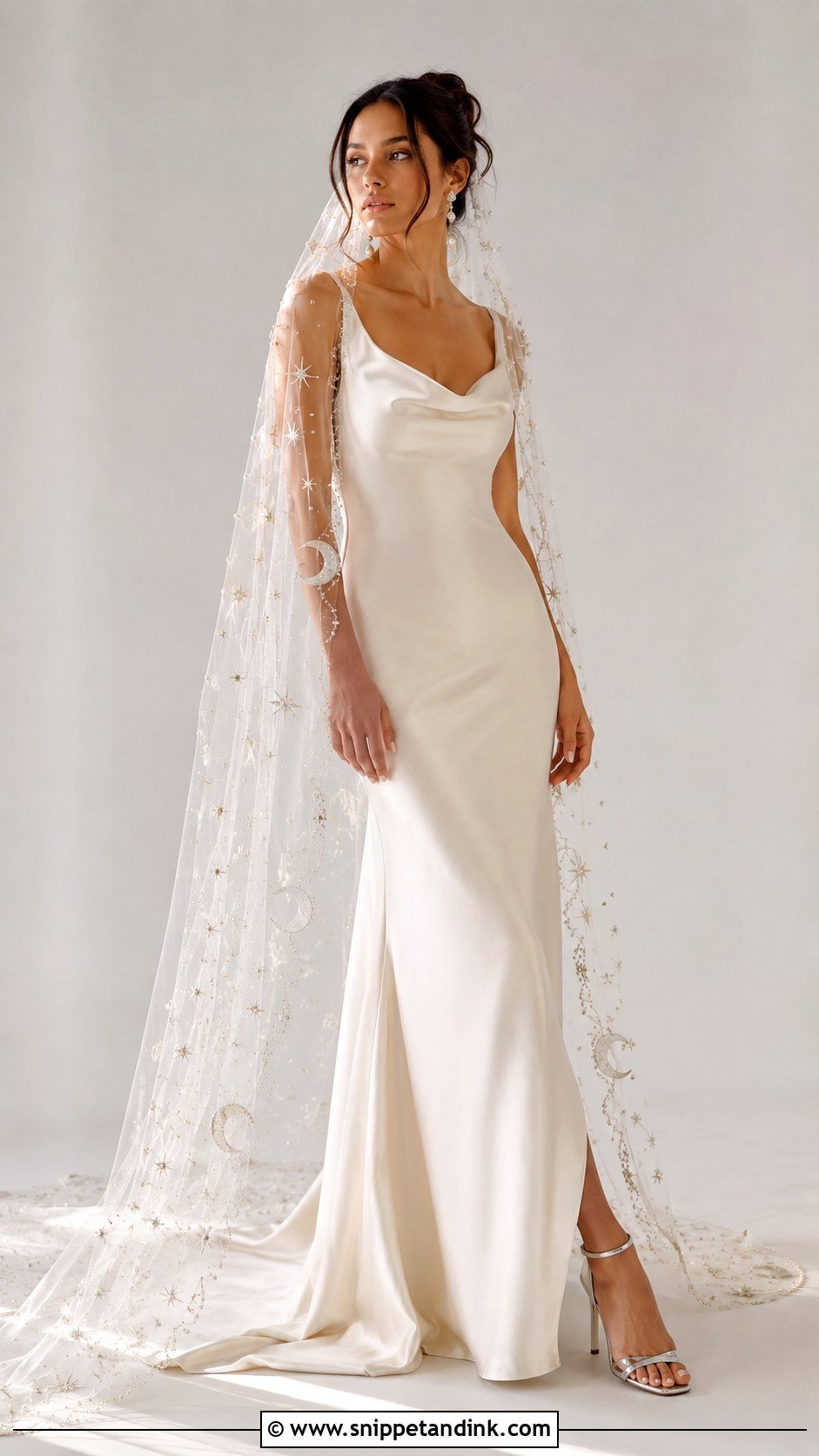
A clean satin, crepe or lace gown lets the veil carry the theme: crescents, stars, pearls or tiny crystals scattered across the tulle. It is easier to customize and often kinder to the budget than a fully embellished dress. Weight is the thing to watch. Beaded veils drag on the comb, so I anchor them with extra pins or a comb with longer teeth, and I keep heavier motifs toward the bottom edge. You can lift it off after the ceremony and still have strong portraits. Silver or pearl earrings and simple heels balance it.


20. Moon Wedding Dress With Satin Skirt
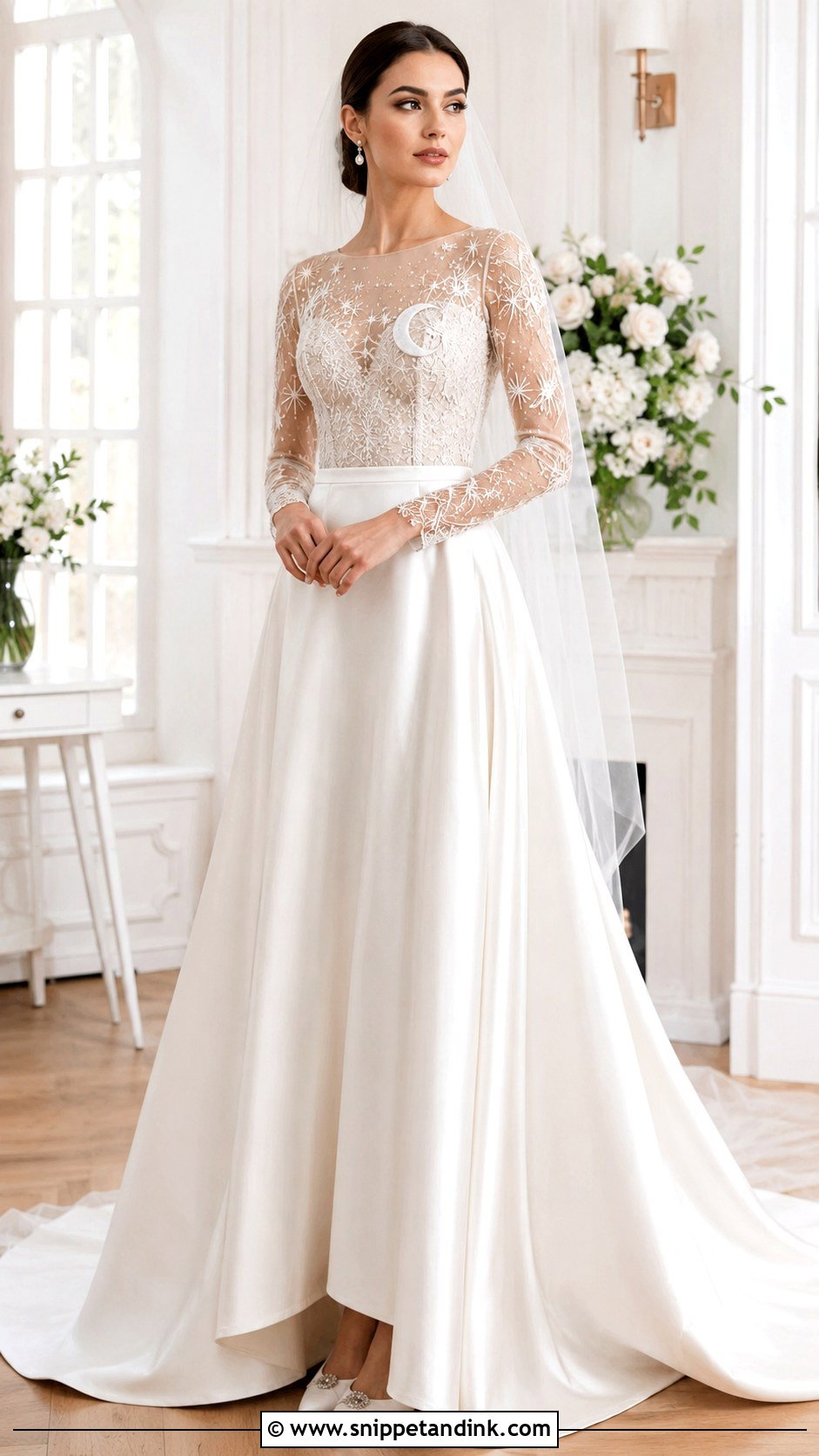
Satin has a natural glow that already suits a moon theme, especially in ivory, pearl or champagne. Pair the skirt with a celestial lace bodice, a beaded corset or sheer sleeves carrying moon details, and the contrast between smooth and textured keeps it balanced. Satin is honest about creases, though; it marks where you sit and where a seatbelt crosses. I ask brides to travel standing up or with the skirt lifted, and to have a steamer at the venue. Closed-toe heels, pearl earrings and a sleek veil polish it.
21. Moon Wedding Dress With Lace Details
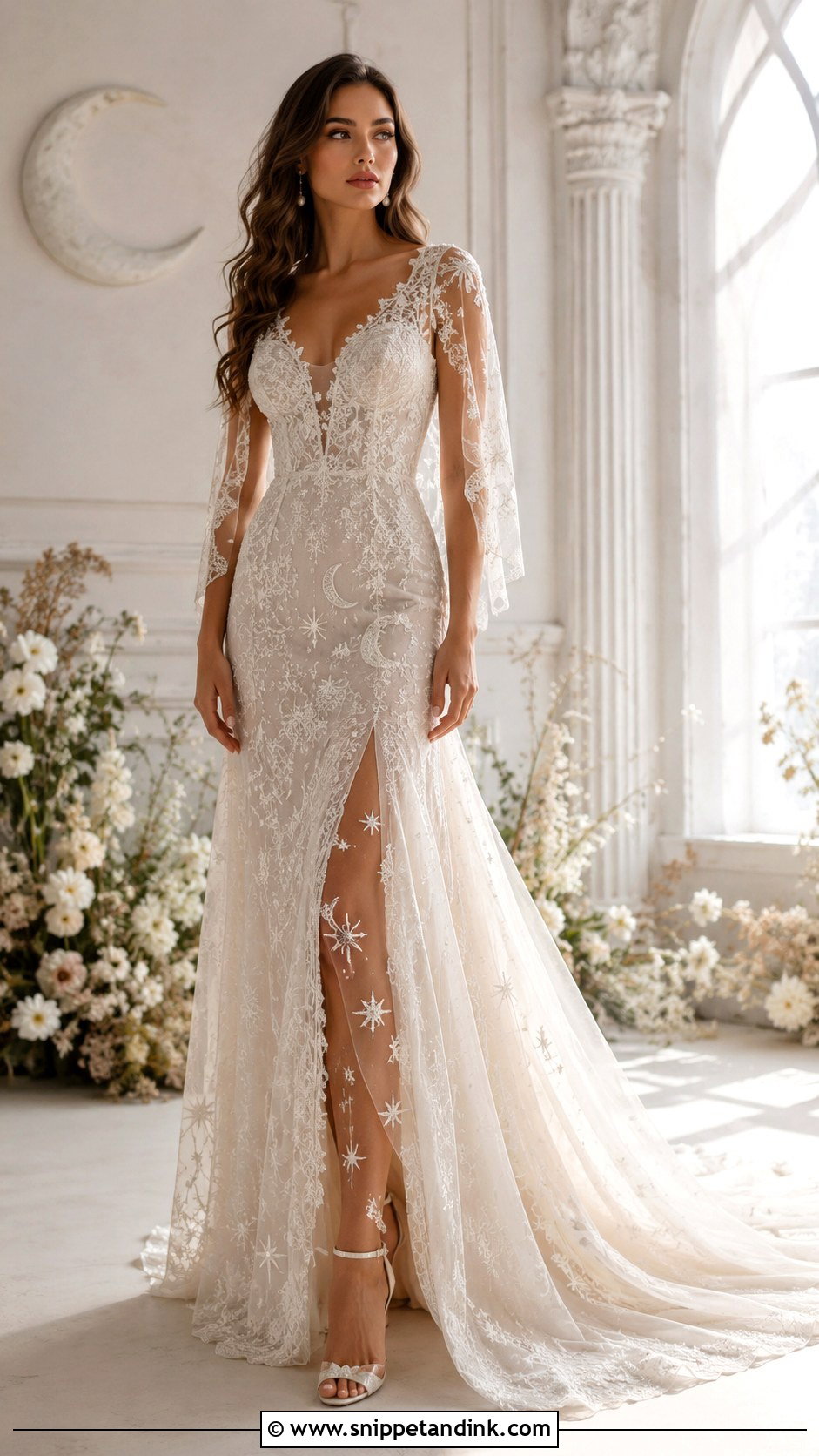
Swap traditional floral lace for patterns built from stars, moons, sunbursts or swirling constellations, and lace takes on a celestial twist that still feels soft. A lace bodice over a plain skirt is the balanced version; allover lace leans vintage. I check lace edges on the hem and sleeves, since raw-cut lace frays faster than scalloped edges if it drags. Soft waves, pearl earrings and ivory heels suit it, and a simple veil keeps attention on the lace rather than adding sequins.
22. Moon Wedding Dress With Short Hem
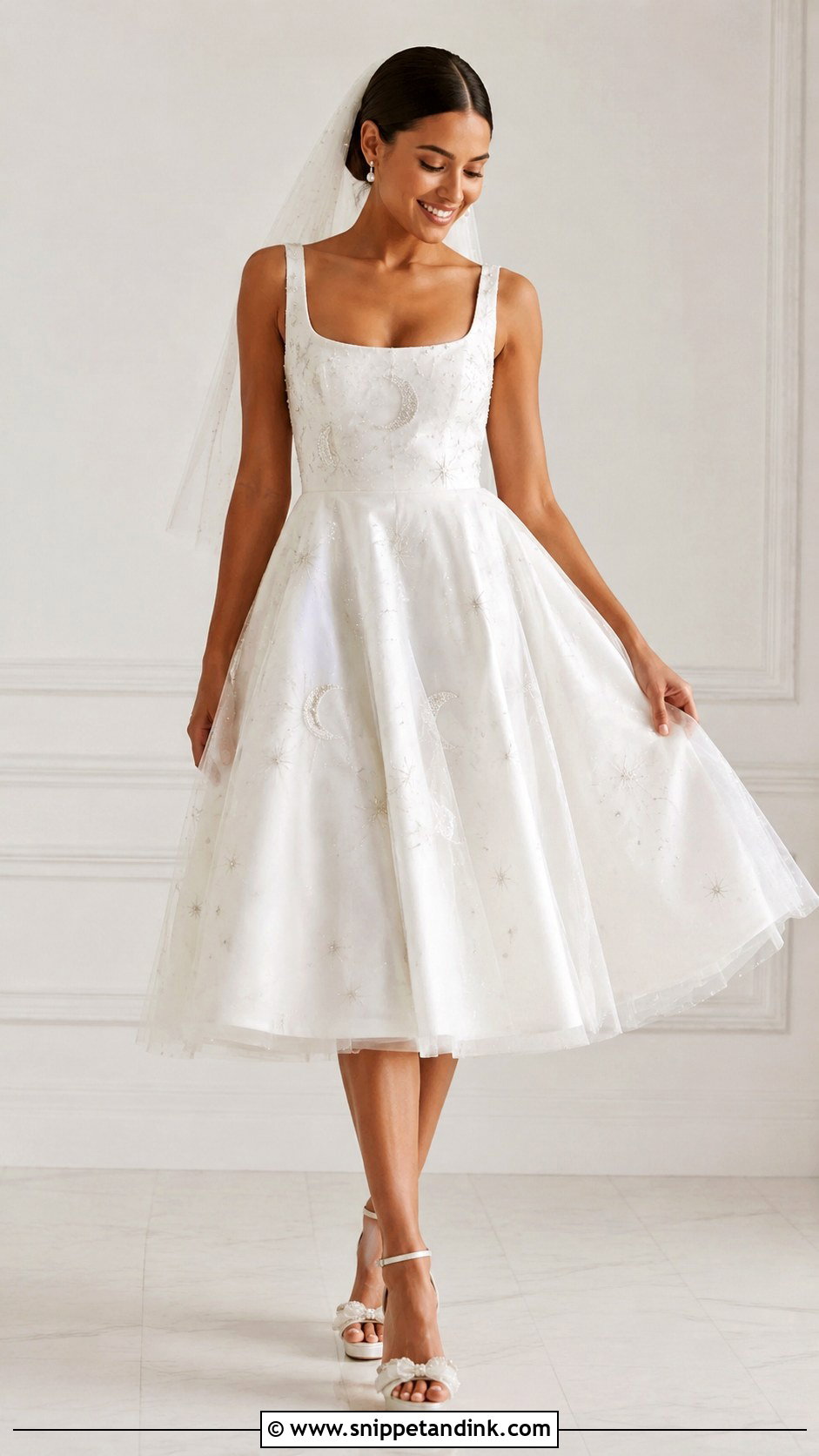
Short hems feel playful and modern, whether that means a mini, a tea-length gown or a high-low cut with moon and star beading. Choosing bridal-weight fabrics like satin, organza, tulle or embellished mesh is what keeps it from looking casual. Statement heels, pearl earrings and a short veil or hair bow carry it. I recommend this as a second look, for a courthouse ceremony, an after-party or a hot-weather celebration. Because legs and shoes are on show, I’d plan the shoe before the dress alteration so the hem length suits the heel.
23. Moon Wedding Dress With Ball Gown Skirt
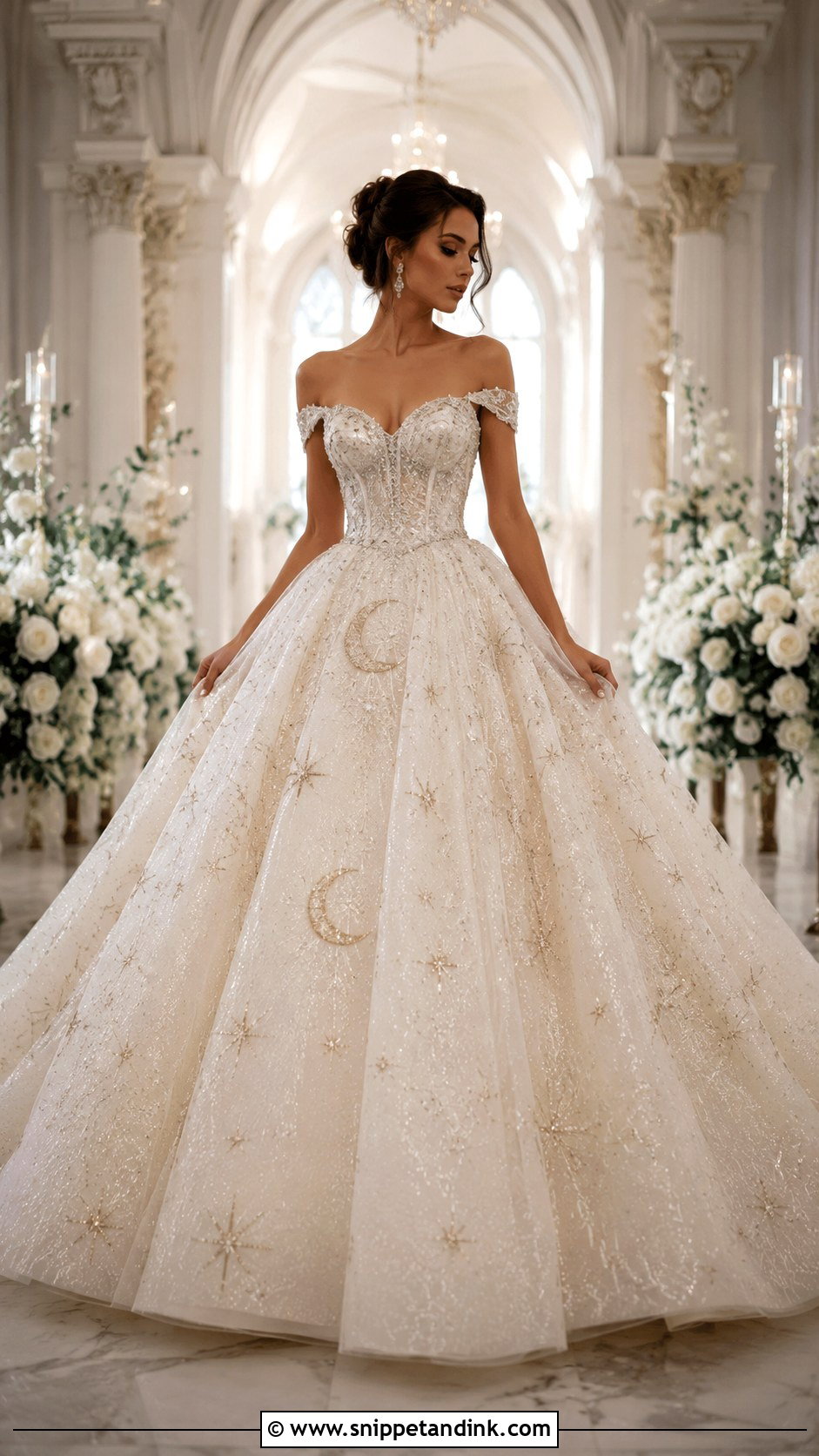
A full skirt gives the theme room to breathe: scattered stars, crescents, shimmer layers or pearl embroidery across all that volume. A fitted bodice defines the waist and balances it. Detailed skirt, simple neckline; detailed bodice, softer skirt with light sparkle. A ball gown is heavy, and the weight adds up through the evening, so I talk through the bustle early. Count how many hooks or ties it uses, and get your helper to practice it before the wedding. Delicate earrings, a structured hairstyle and comfortable shoes under the hem keep the drama manageable.
24. Moon Wedding Dress With Slip Silhouette
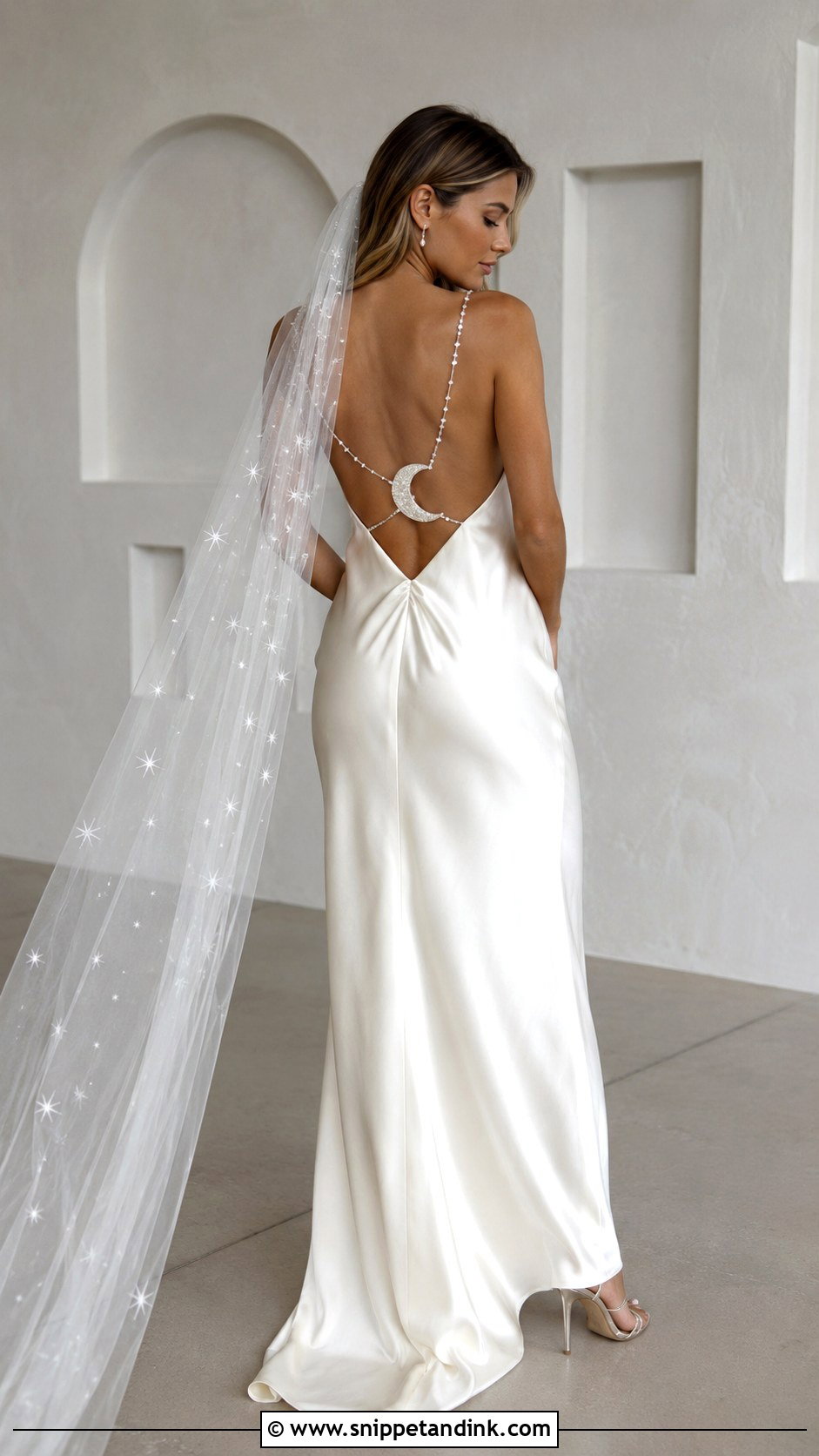
A bias-cut satin slip suits brides who like simple, modern gowns, and its clean line makes small celestial details look deliberate. Think a crescent at the back, tiny crystal straps or a sheer star veil. Bias cut is unforgiving over lumpy underwear, so smooth, no-line underwear is essential, and I’d steer you away from it if you want firm shaping through the middle. It moves easily for smaller celebrations. Strappy heels, sleek earrings and soft hair are all it takes, and a light cape can carry more of the theme if you want it.
25. Moon Wedding Dress With Matching Accessories
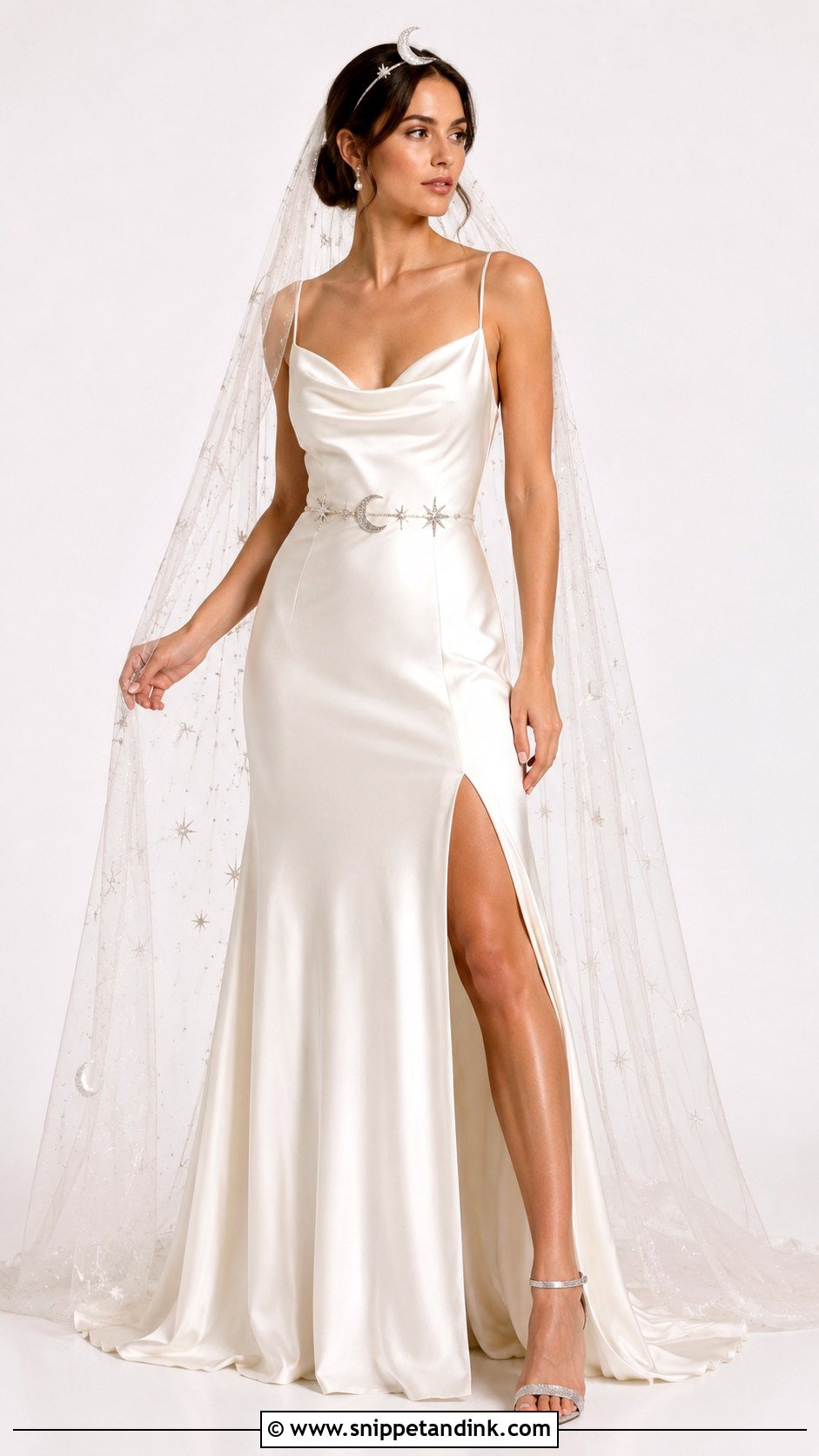
Start with a gown that has one moon-inspired detail, then repeat it in two or three places: the veil, earrings, shoes, belt or hairpiece. A simple ivory gown becomes a full moon look with a crescent headband, star veil, silver heels and pearl earrings. The restraint is the skill. When I lay a bride’s accessories out on a table before the wedding, I take one away if every piece has a moon on it, because the repetition starts to look like a set rather than a choice.
Caring for a Beaded Star Gown Before and After the Day
Embellished celestial gowns need a little more handling than a plain dress, and most of the damage I see happens in transport or storage rather than on the dance floor.
In the weeks before
Keep the gown in a breathable cotton bag, never sealed plastic, and hang beaded dresses by their inner loops so the beading doesn’t stretch the shoulders. Steam tulle from the inside and keep the steamer moving; direct heat can loosen glued crystals and dull metallic thread.
Once it is over
Take the gown to a cleaner who handles bridal embellishment within a few weeks, and point out any spills, because sugary drinks dry clear and turn brown later. Ask them to check for loose beads before cleaning. For storage, I prefer an acid-free box with tissue between the folds, kept somewhere cool and dark, so silver thread doesn’t tarnish and ivory tulle doesn’t yellow.
Where the Moon Should Sit on Your Gown
A moon theme can stay as quiet as one crescent on a veil or as bold as a black tulle gown covered in stars. Start from the venue, how long you’ll be on your feet, and how much detail you can live with up close. Then decide where the celestial element belongs: the bodice, the skirt, the sleeves or just the accessories. A-line gowns, satin slips, tulle skirts, corset bodices and capes all take this kind of styling. The right one is the dress you forget you’re wearing by the last dance.
You'll Like These Ideas:



Leave a Reply