
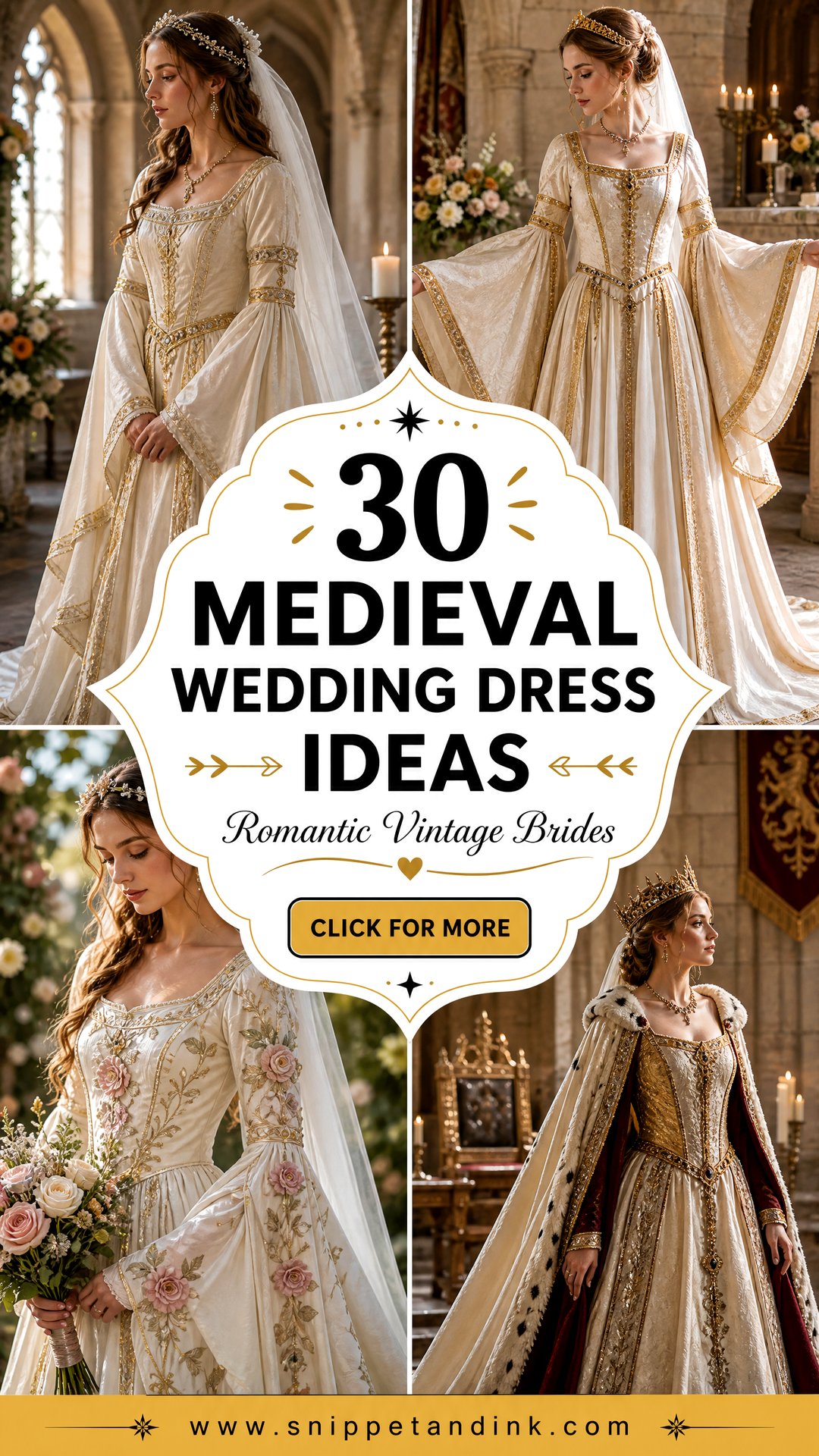
The line between a medieval-inspired wedding gown and a costume is thinner than most brides expect, and it’s usually crossed by stacking too many period details at once. When I style this look, I let one or two historical features lead (a sleeve, a corset, a cloak) and keep the fabric, fit and finish firmly bridal. Bell sleeves, high necks, velvet capes, embroidered bodices and lace veils all belong here. The style suits castles, gardens, woodland ceremonies, historic houses and fantasy-inspired celebrations, and it can lean soft, gothic or royal. Here are thirty versions with the practical notes I’d give at a fitting.
Stone Walls, Wet Grass and a Velvet Cloak
Medieval-style weddings tend to happen in places that are hard on a dress. Castles, old halls and woodland clearings look the part, and each has its own problems that I plan around at the first fitting.
Old buildings run cold
Thick stone walls keep interiors cool even in summer, so a sleeveless chiffon gown can leave you shivering through a long ceremony. Long sleeves, velvet, brocade or a cape are practical here, not just atmospheric. If your gown is light, plan a cloak for the ceremony and photographs.
Woodland and gardens are hard on hems
Grass, mud and leaves collect on a long skirt. Ask for the hem to be set so it just clears the ground in your shoes, and consider a slightly shorter hem for outdoor ceremonies. Flat boots or embroidered flats under a long skirt are more comfortable than heels on soft ground and won’t show in most photographs.
1. Medieval Wedding Dress With Bell Sleeves
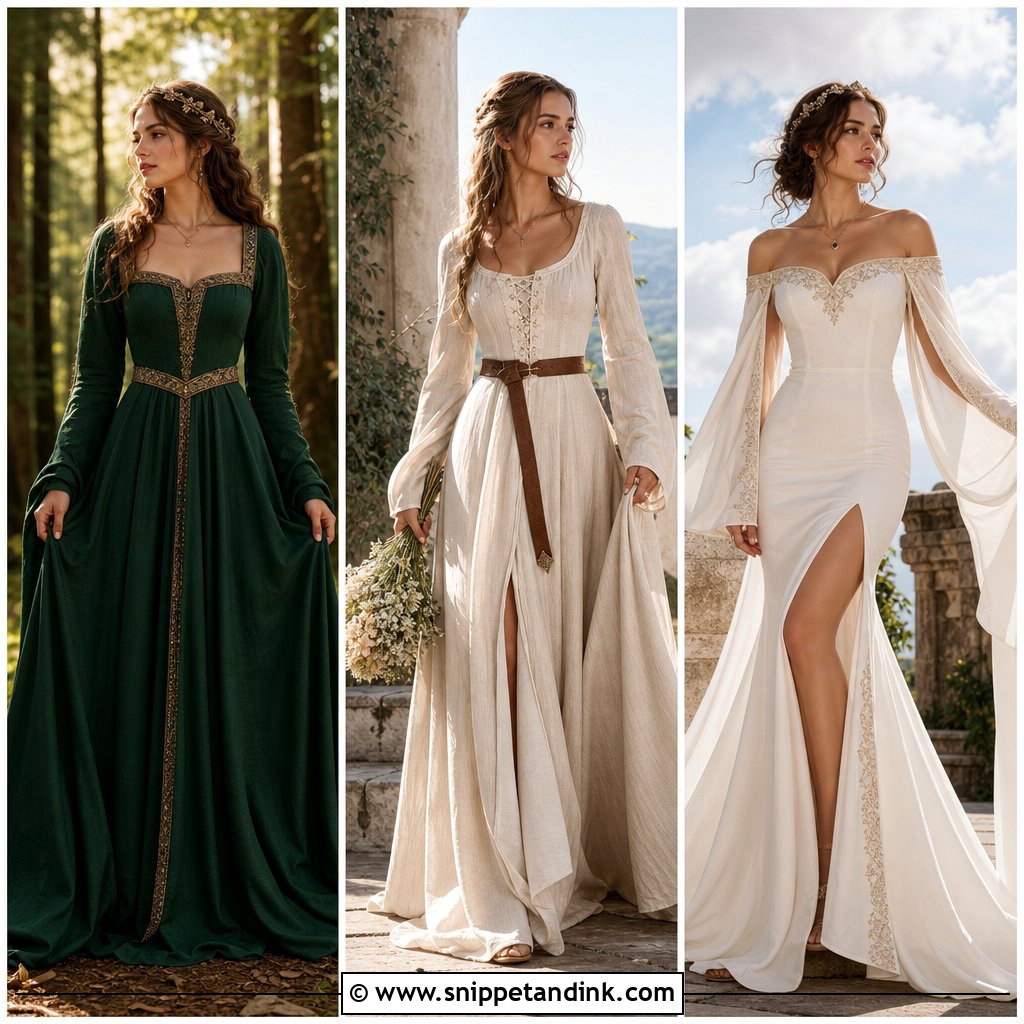
Bell sleeves widen from the elbow or wrist, so they swing with every gesture and look lovely in motion. They also trail into everything you reach for. I’d keep the sleeve hem at the wrist bone or just below when your arm hangs straight, not at the fingertips. An ivory A-line in chiffon, silk or soft crepe with a fitted bodice keeps the shape clean. Pearl drops, pointed flats and a slim circlet suit it, with a loose bouquet trailing ribbon.
2. Medieval Wedding Dress With Corset Bodice
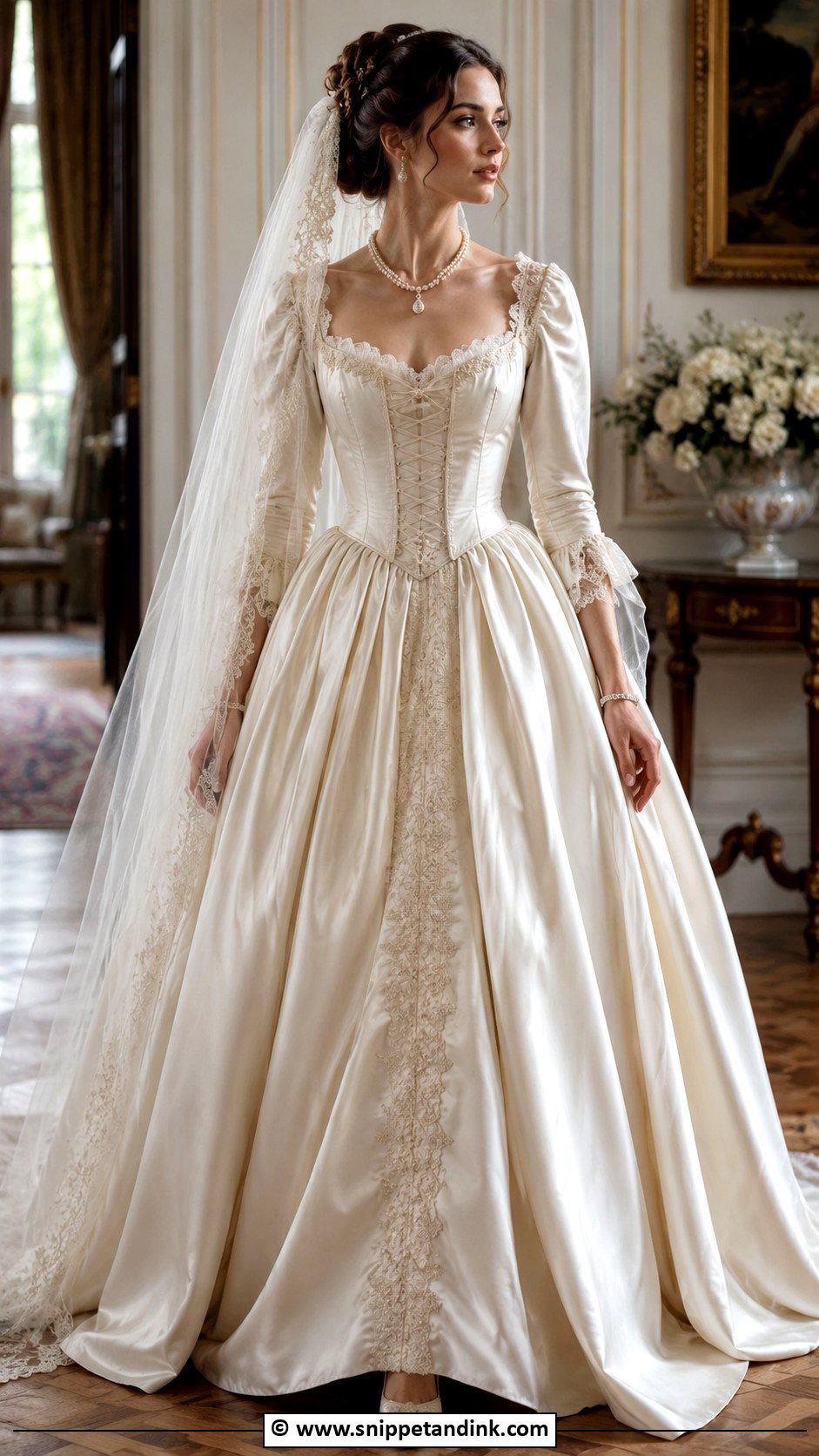
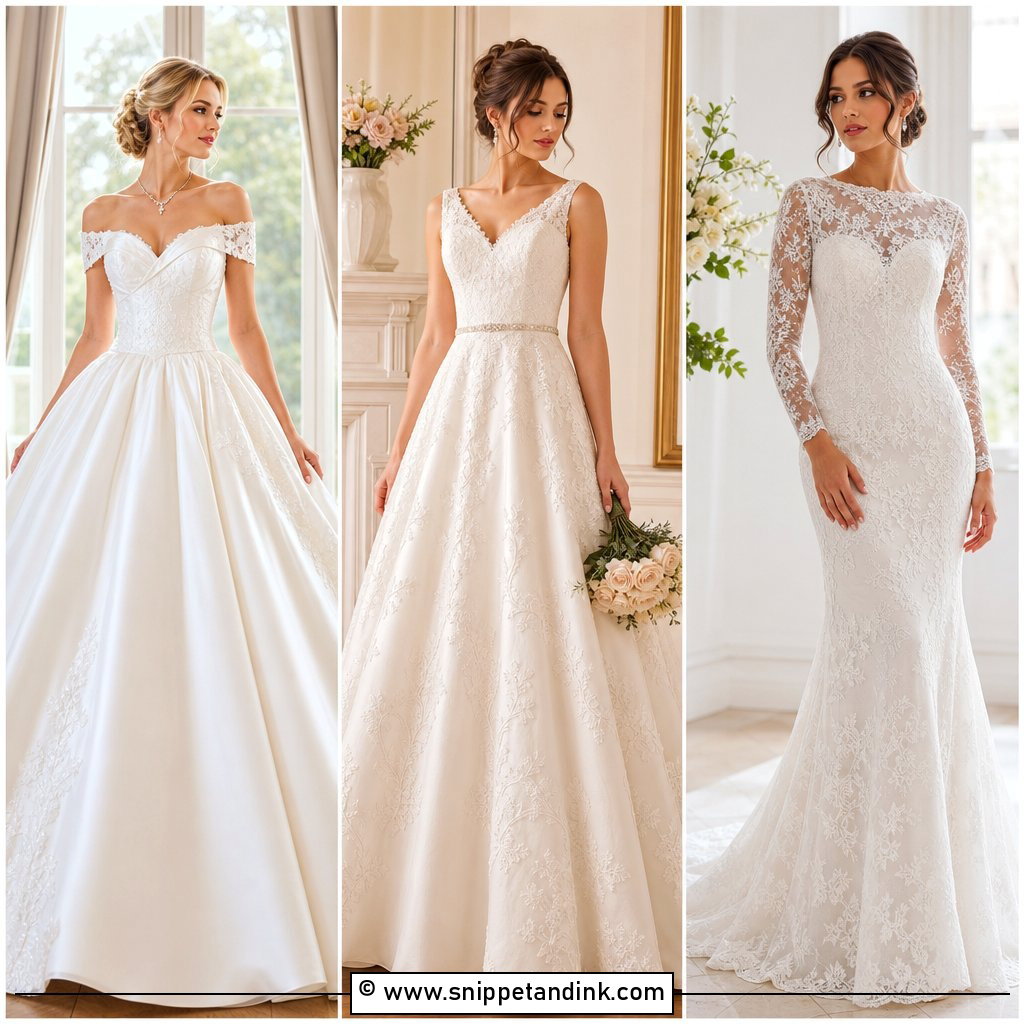
A medieval wedding dress with a corset bodice holds the waist with boning and usually a lace-up back, which is a gift for fittings because the lacing adjusts by a few centimetres either way. Satin, organza or tulle skirts balance the structure. Long sleeves, off-shoulder straps or a square neck all sit well above it. I’d add floral embroidery or soft lace panels if the corset feels too severe. Low block heels and antique-style jewellery suit it.
3. Medieval Wedding Dress With High Neck
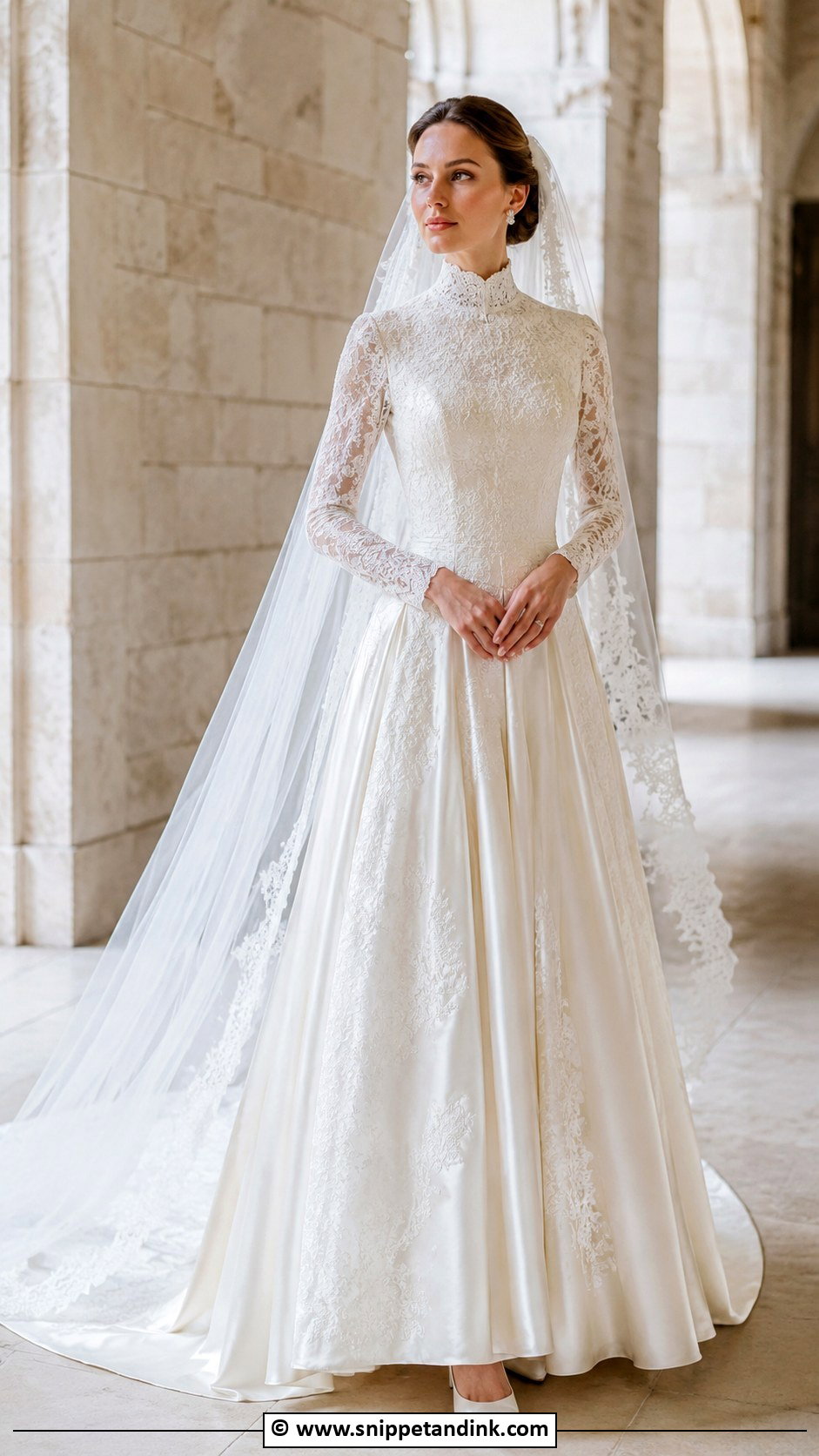
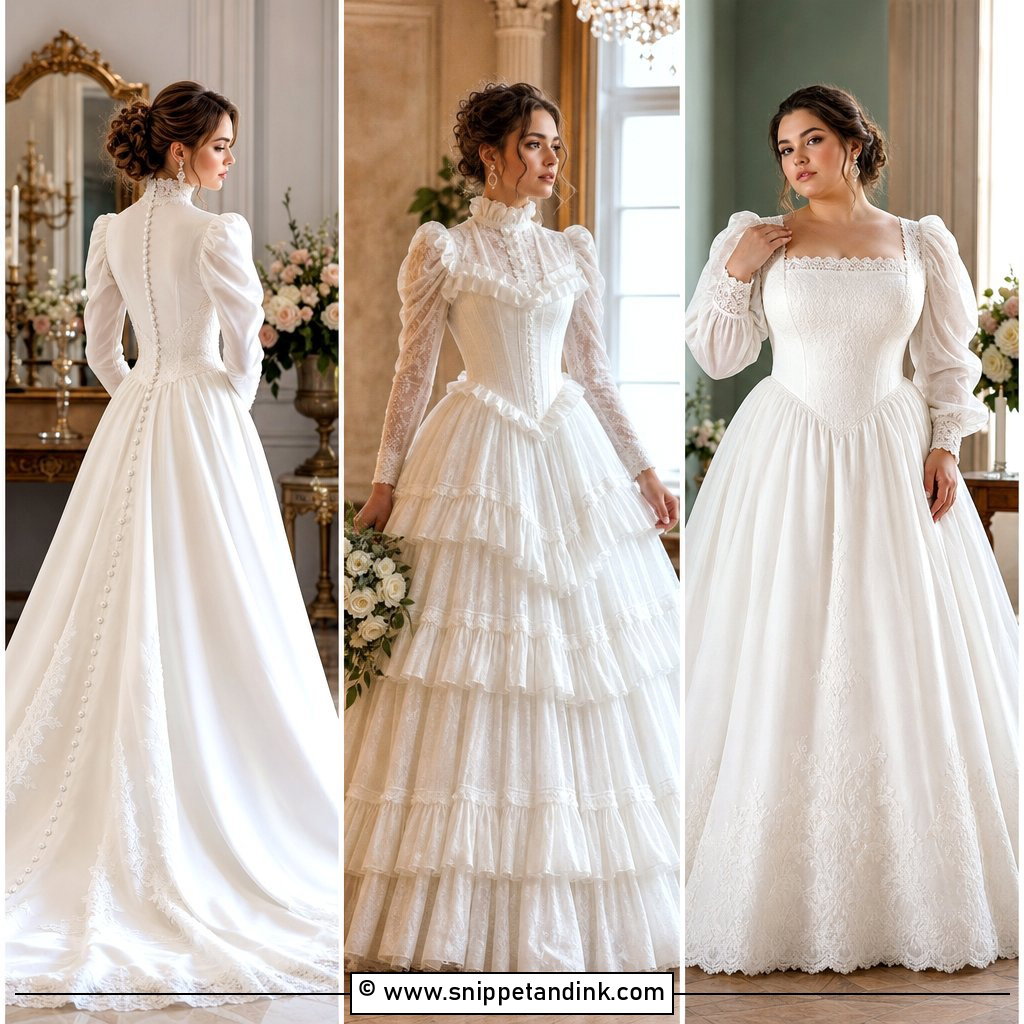
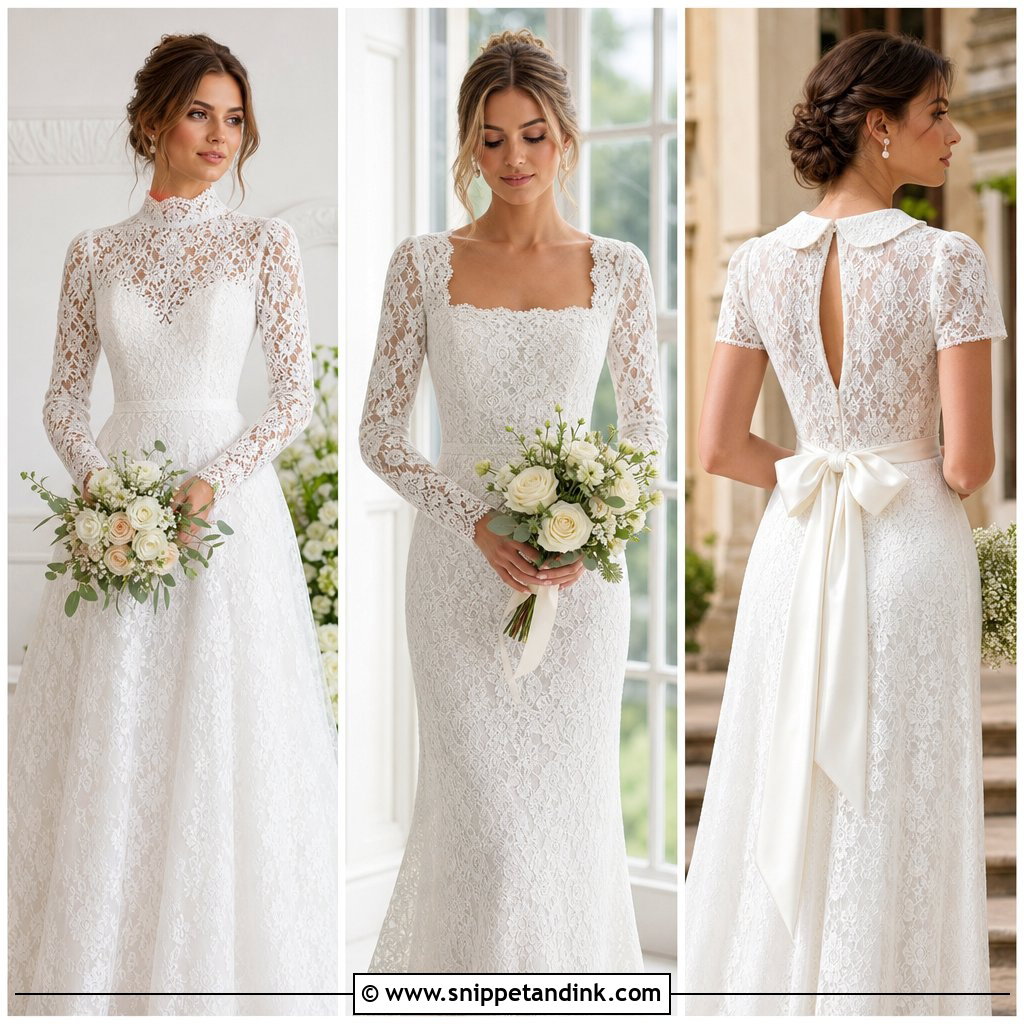
High necks give this style a quieter, more formal feel. Lace at the throat with long sleeves and a flowing skirt is the most romantic version. Smooth satin with covered buttons and a soft train is the most modern. Check that the collar doesn’t press when you look down at your bouquet or sit. Pearl studs, a low bun and a cathedral veil are enough, with ivory pumps or satin flats.
4. Medieval Wedding Dress With Juliet Sleeves
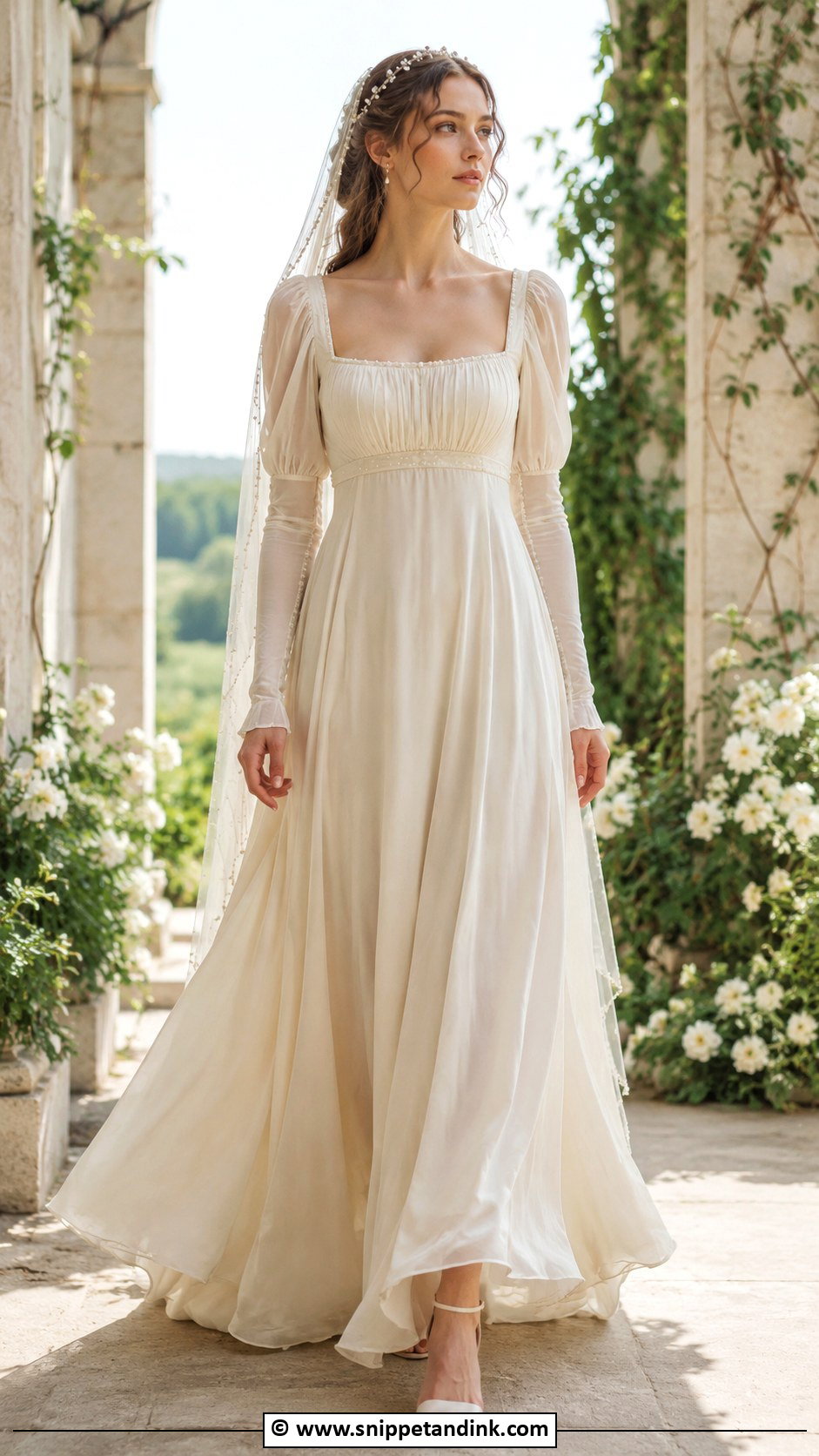
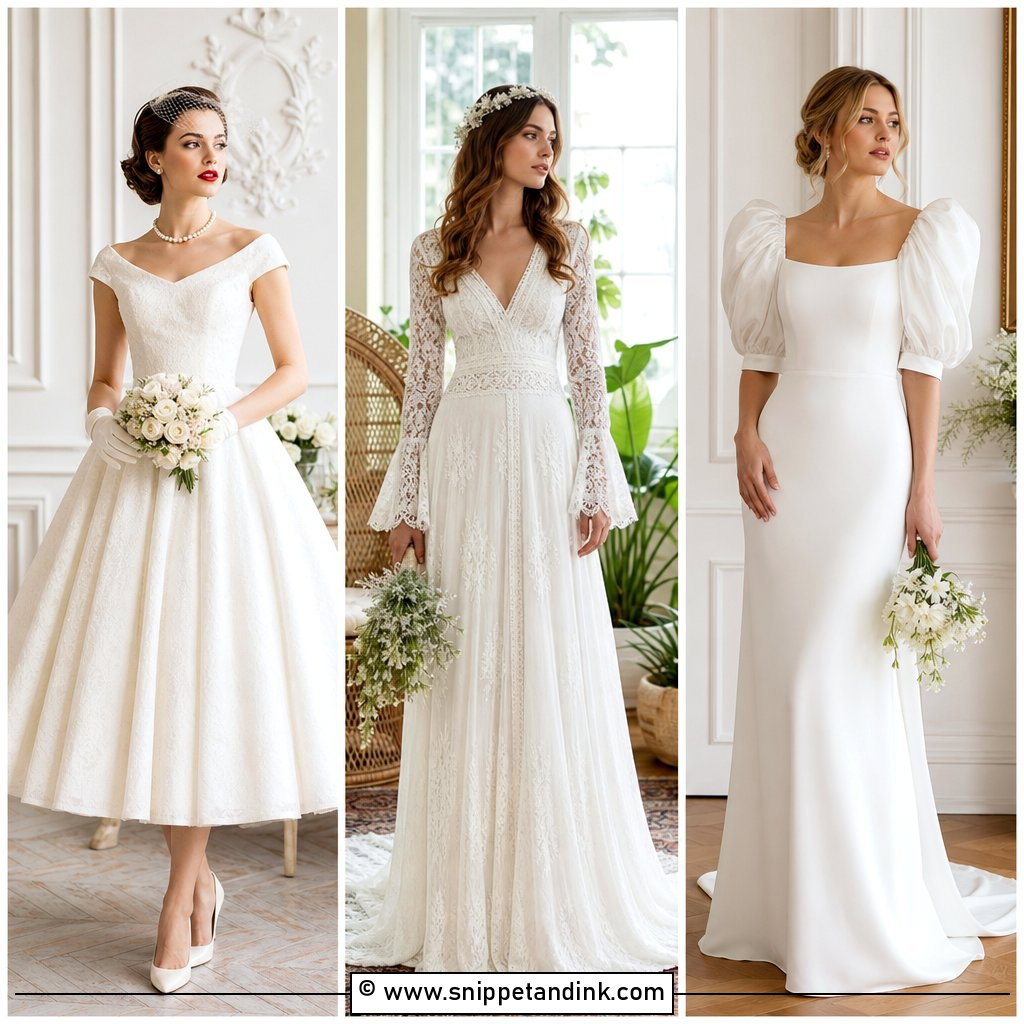
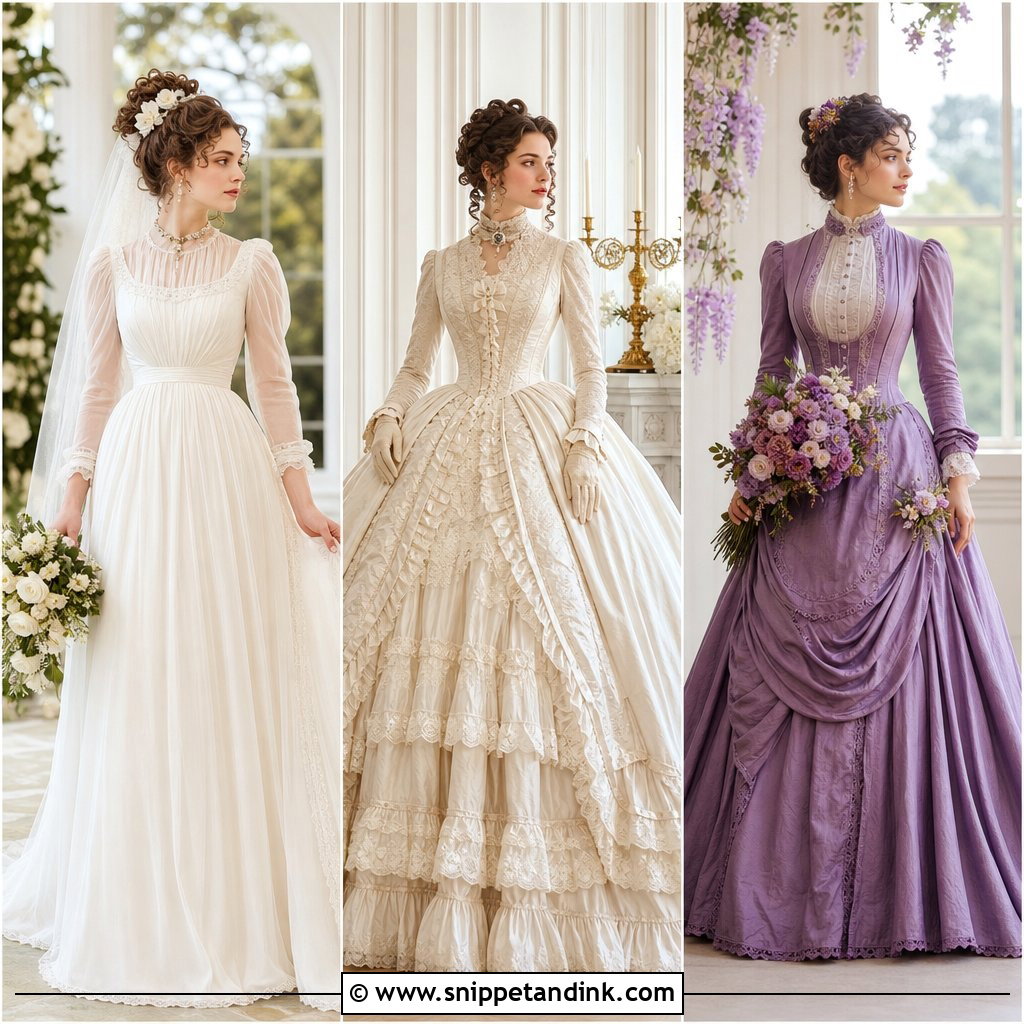
Juliet sleeves are puffed at the upper arm and fitted from the elbow down, which gives you period shape without fabric hanging off the wrists. That makes them one of the more practical medieval sleeves to eat and dance in. A sweetheart, square or scoop neck balances the volume at the shoulder. Chiffon or silk keeps the skirt light. A Juliet cap veil and pearl pins finish it for spring or autumn.
5. Medieval Wedding Dress With Velvet Cape
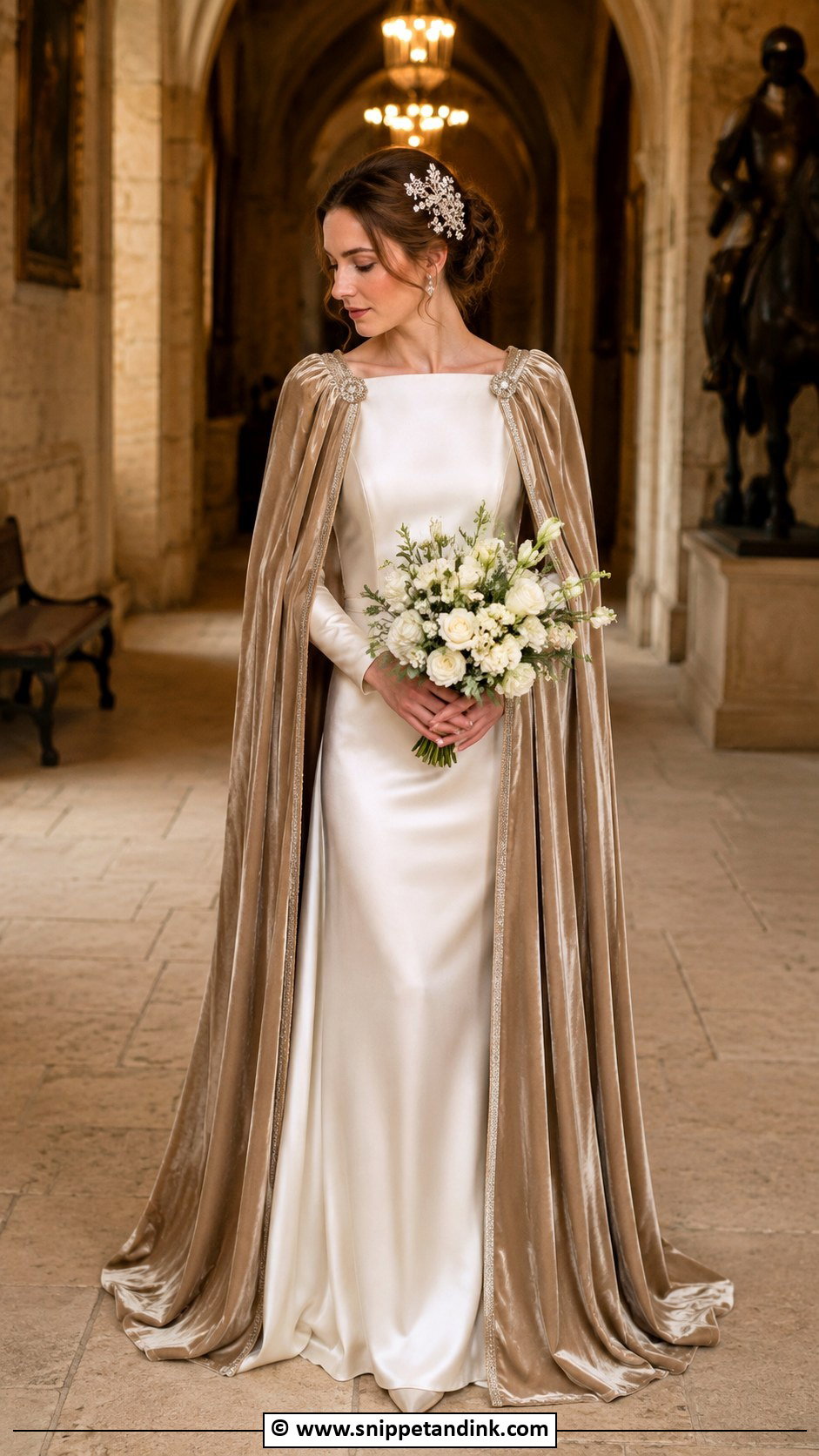
A velvet cape over a plain gown is my favourite way to get drama without committing to a heavy dress. Start with a fitted satin dress, a lace A-line or a long-sleeved sheath. Then add an ivory, champagne, forest green or burgundy velvet cape, hooded or draped at the shoulders. Velvet is warm and weighty, so make sure the cape fastens with a sturdy clasp or hidden hooks, not a single tie. It suits winter, castles and evening ceremonies.
6. Medieval Wedding Dress With Square Neckline
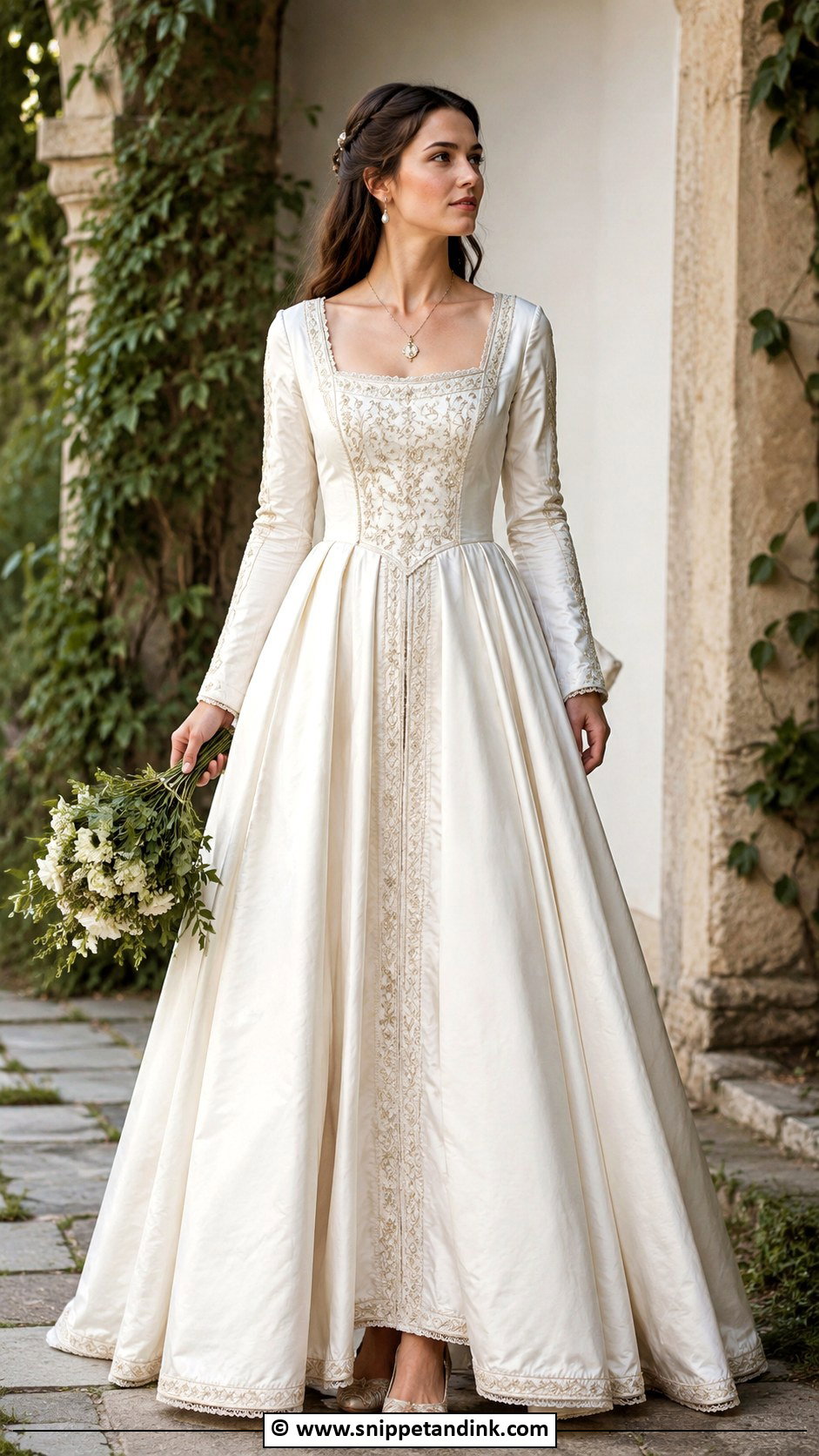
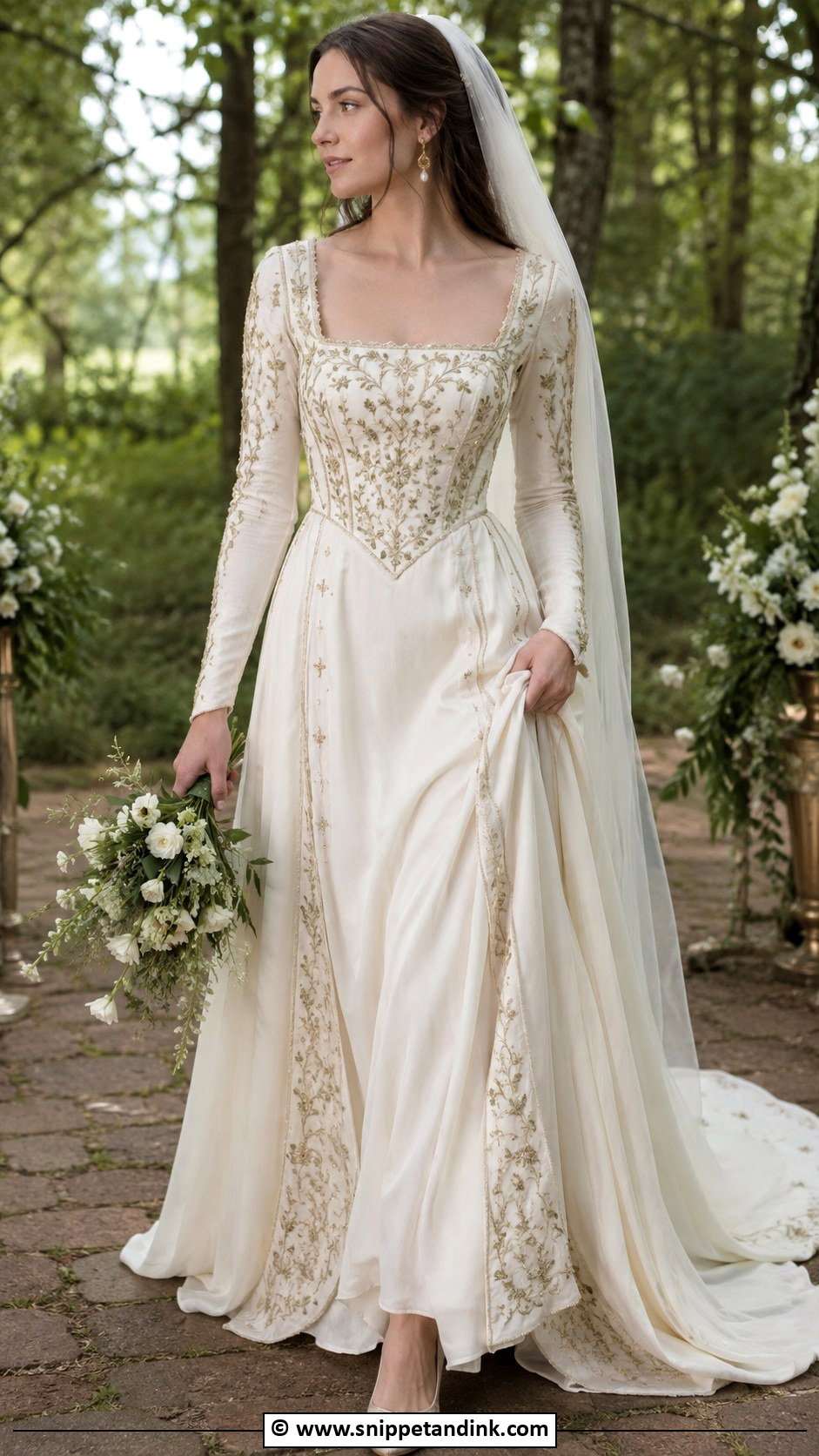
Square necklines appear all over medieval and Tudor-inspired gowns, and they frame the collarbone cleanly on most figures. A fitted bodice, long sleeves and a full A-line skirt give the classic shape. Satin, brocade or embroidered tulle add interest. The corners need to sit flat, so the bodice must fit closely, otherwise they gape. A pendant, pearl earrings and a veil from the crown finish it.
7. Medieval Wedding Dress With Lace Sleeves
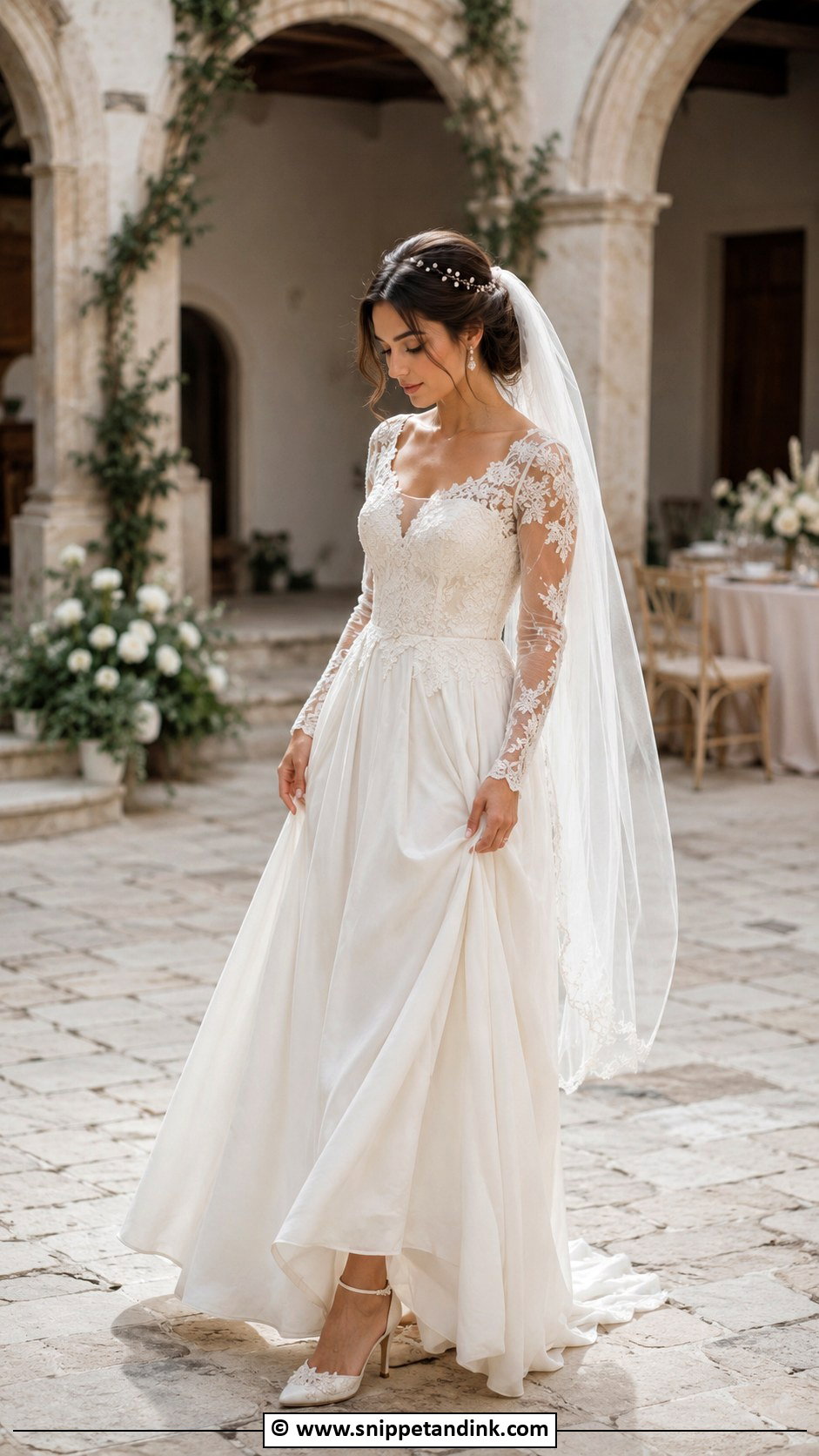
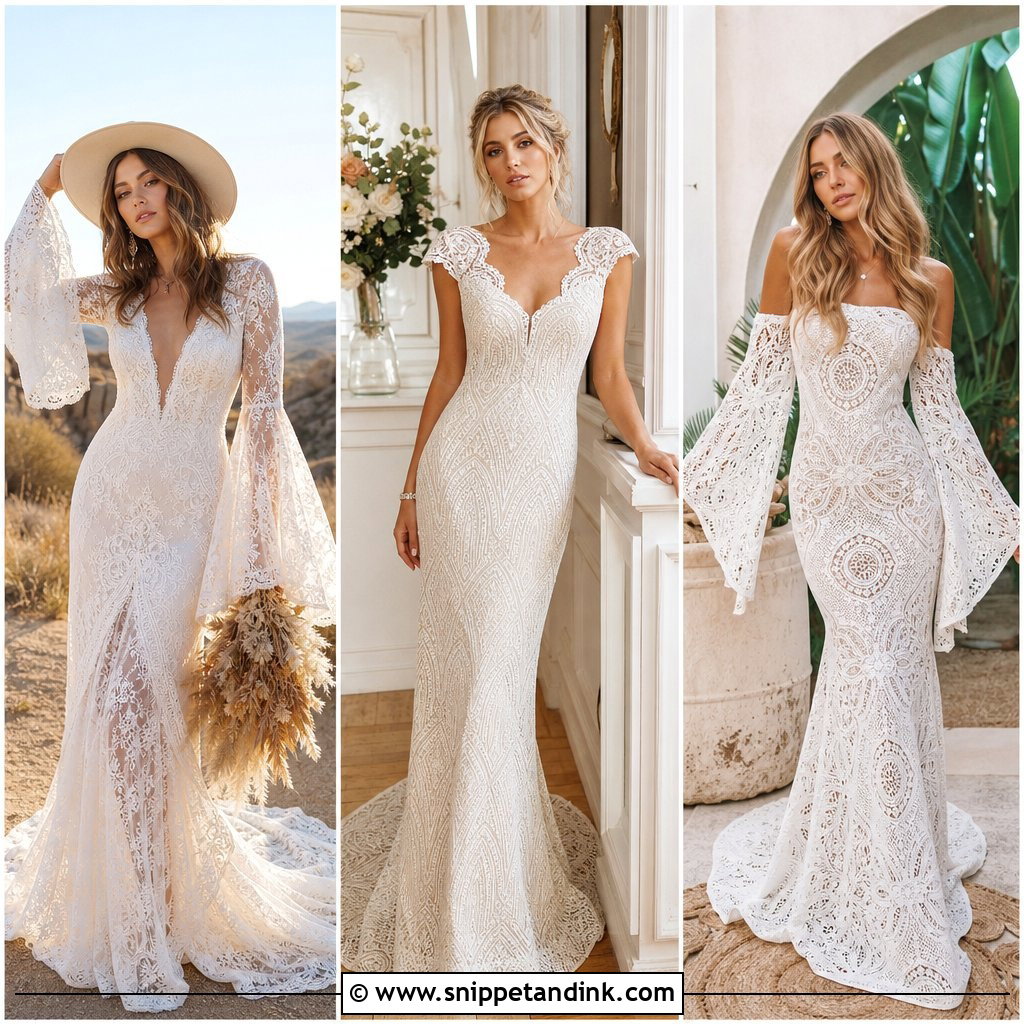
Lace sleeves with vine, floral or scroll patterns echo the borders you’d see in old manuscripts. Sheer lace over the arm gives coverage while keeping the bodice light. A full lace gown is richer. A plain gown with lace only on the sleeves is softer. Check the cuff edge, because scalloped lace at the wrist catches on rings and bracelets. Pearl pins, a fingertip veil and a small bouquet of white roses suit it.
8. Medieval Wedding Dress With Embroidered Bodice
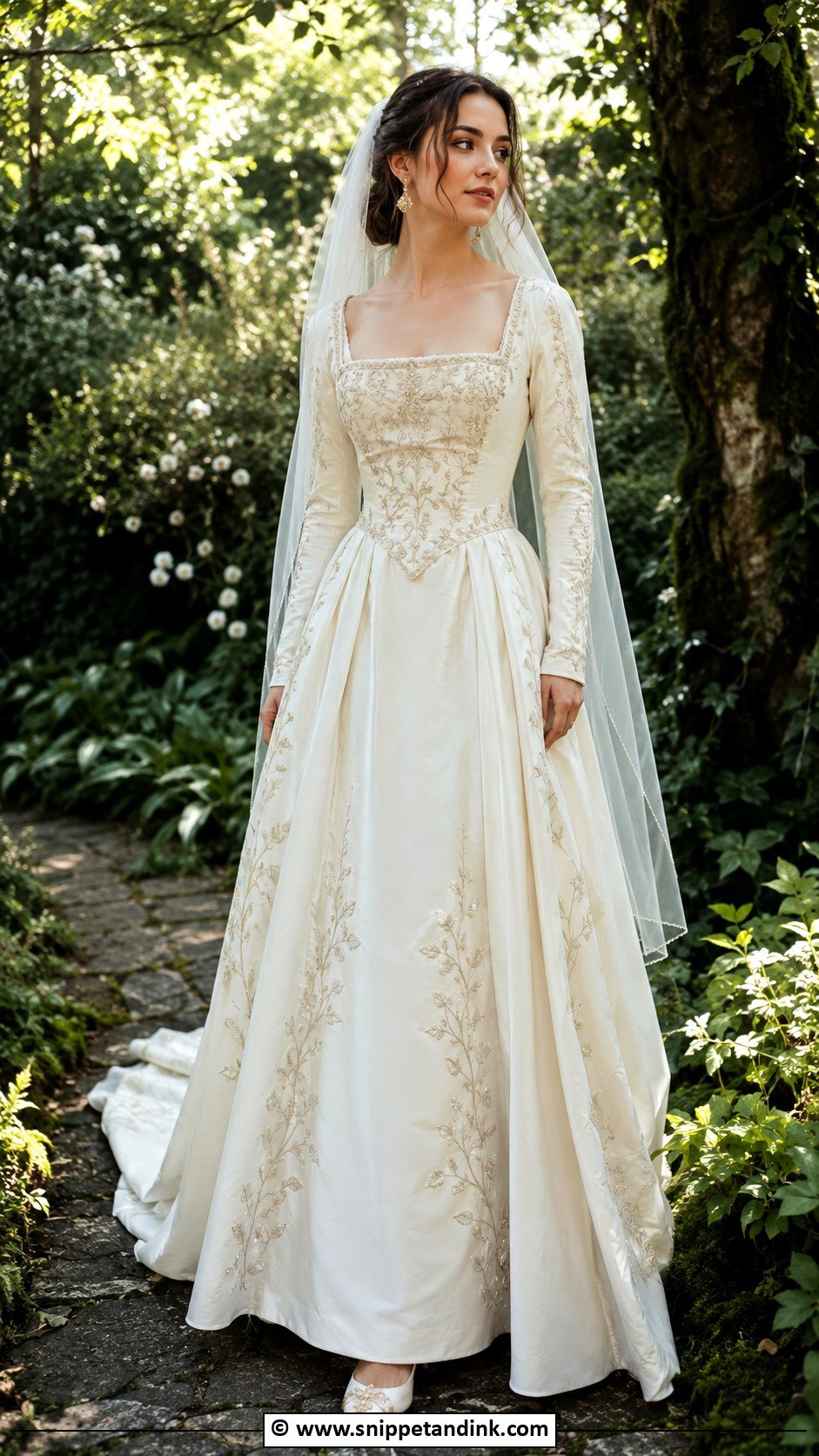
Embroidery near the face and waist draws attention exactly where you want it in photos. Vines, flowers, leaves, pearls and metallic thread all have a handmade feel. I’d keep the skirt completely plain so the bodice carries the story. Long sleeves or wide straps both work. Hand embroidery is heavy, so the bodice needs proper structure underneath. A soft veil, gold or pearl earrings and simple shoes complete it.
9. Medieval Wedding Dress With Trumpet Sleeves
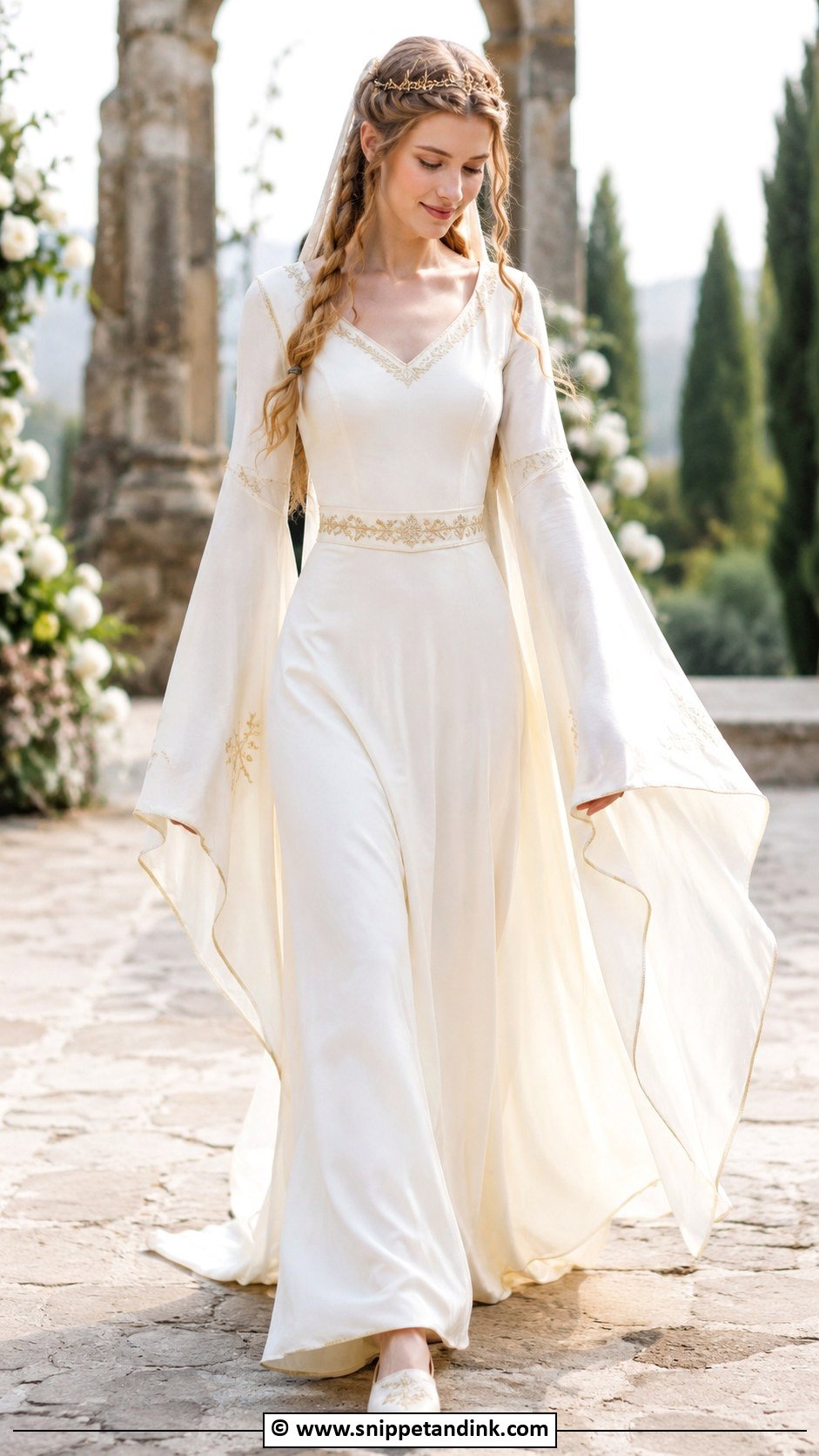
Trumpet sleeves flare from the elbow or forearm and fall in a long line when your arms are down. They need a light fabric such as chiffon, crepe or silk, because a stiff fabric makes them stick out instead of hang. Pair them with a fitted waist and a soft A-line or sheath skirt. A braided style with a delicate circlet suits the shape. Keep jewellery simple so the sleeves stay the focus.
10. Medieval Wedding Dress With Hooded Cloak
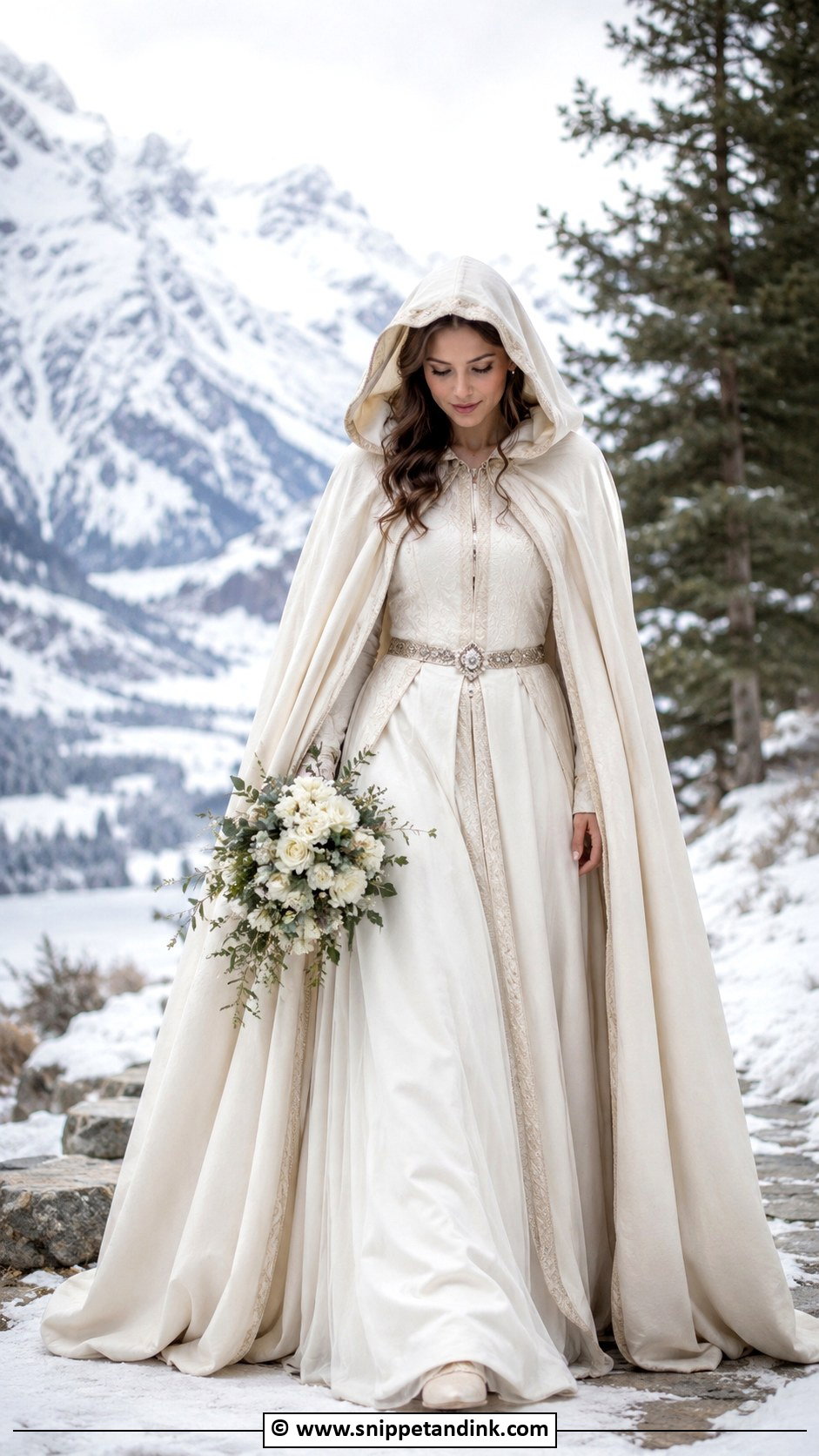
A hooded cloak is the most unmistakably medieval piece you can wear, so I keep the gown underneath simple: long, ivory or cream, with little decoration. Satin, a wool blend or velvet cloak all look bridal if the fabric is good. The hood will flatten your hair if you wear it up, so plan to wear it for the walk in and the photographs, then push it back. A jewelled belt and soft waves suit forest and mountain venues.
11. Medieval Wedding Dress With Drop Waist
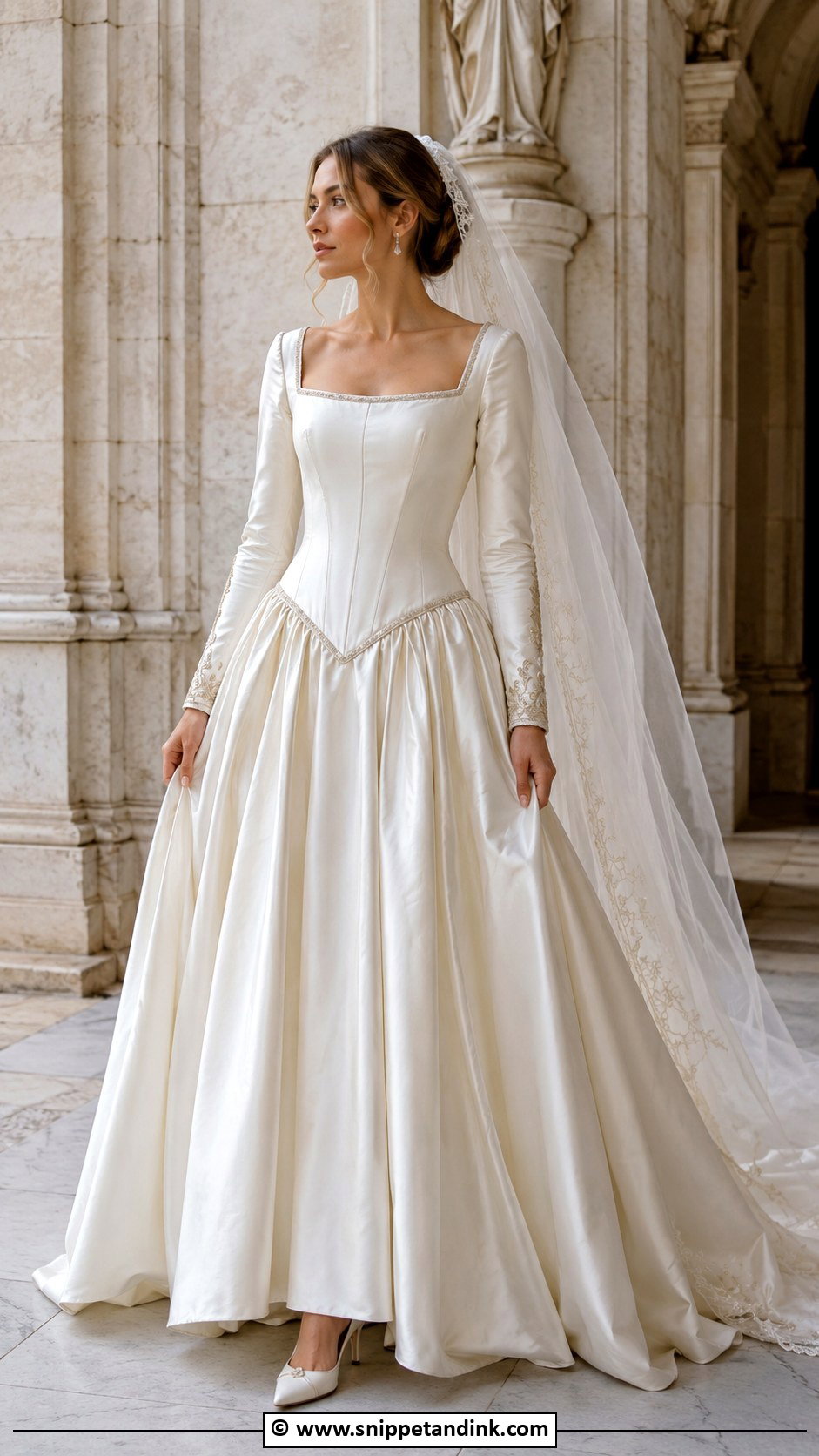
Drop waists extend the bodice below the natural waist, making the torso look long. A structured version with a full skirt looks regal. A softer one with flowing fabric looks romantic. I’d be honest that a short-waisted bride may find it shortens the legs, so try it beside a natural-waist gown. Long sleeves, a square neck or embroidery add period feeling. A long veil and pearl earrings complete it.
12. Medieval Wedding Dress With Gold Embroidery
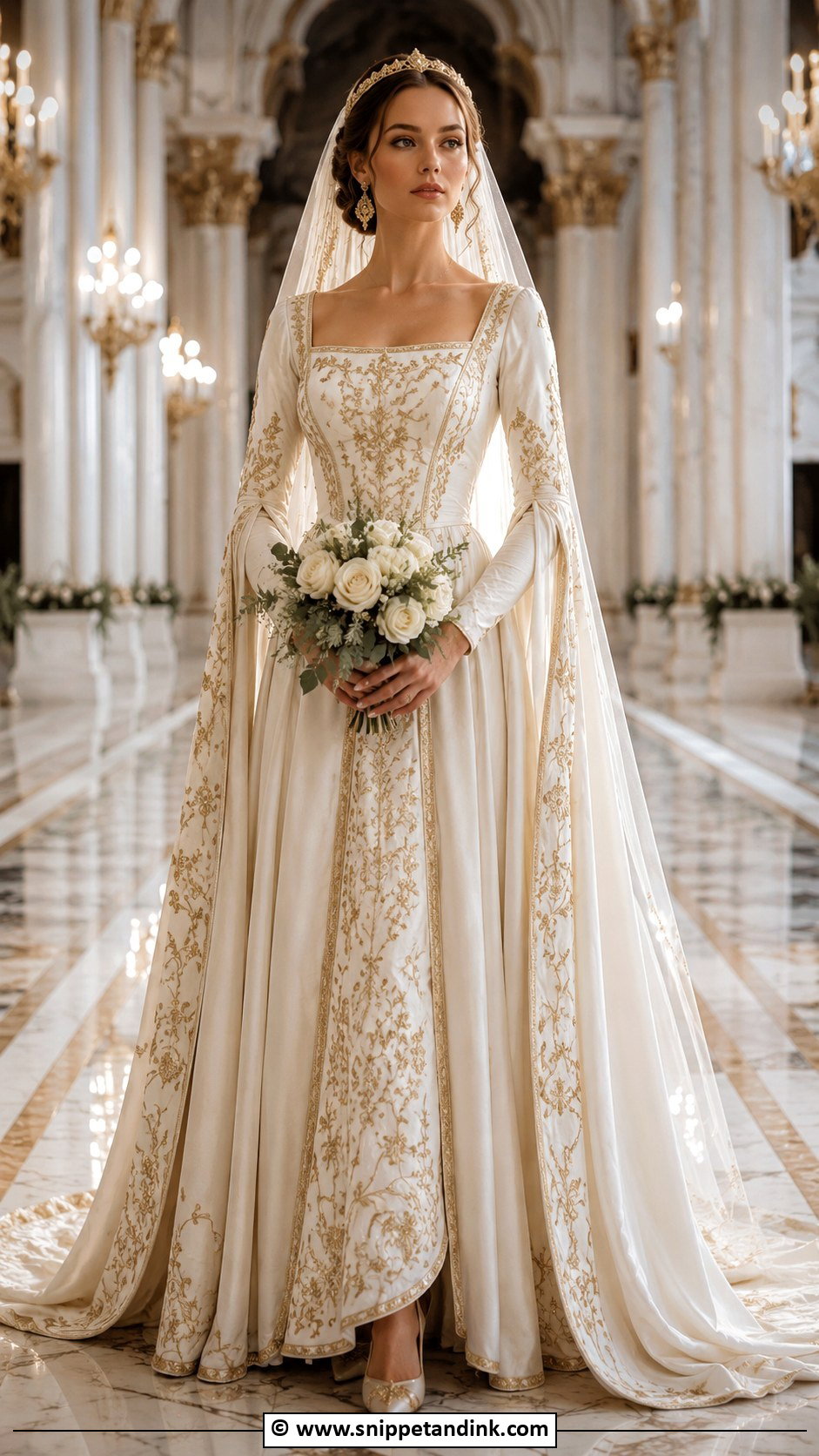
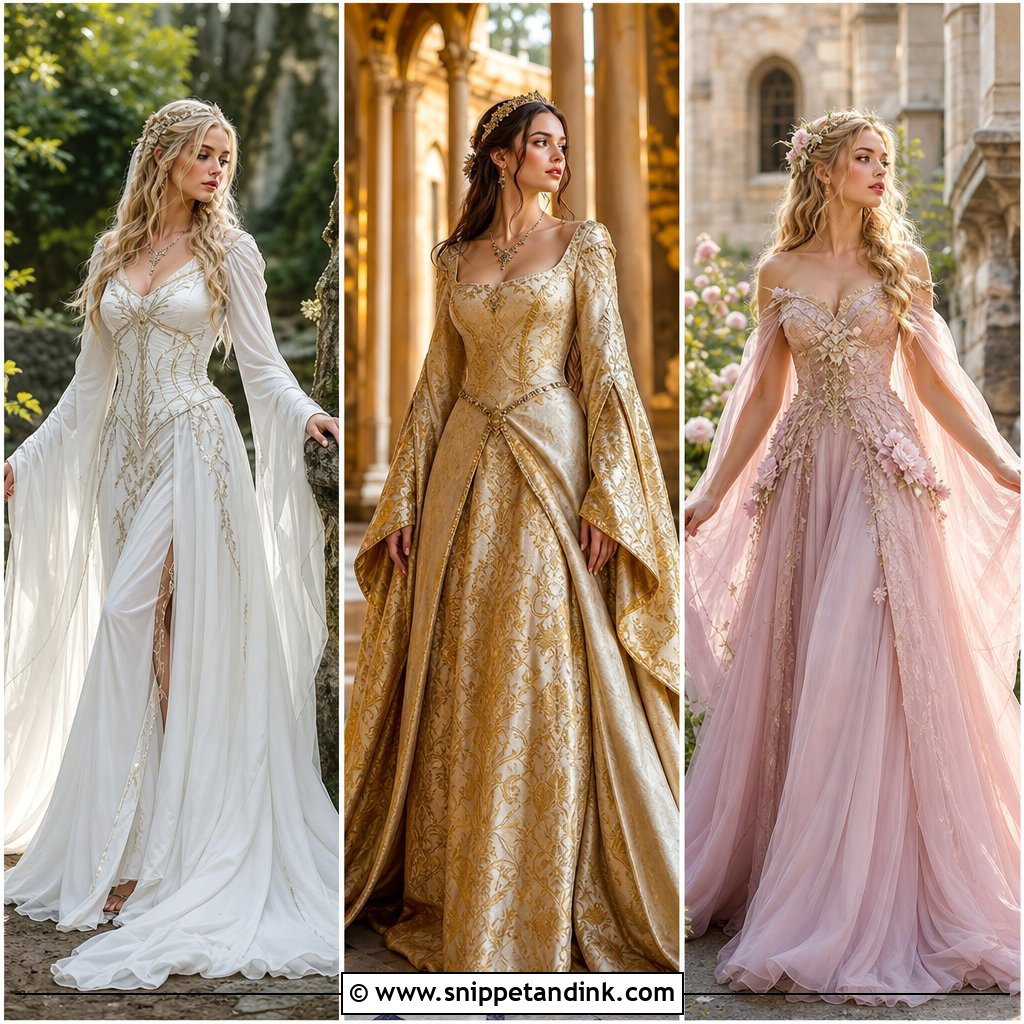
Gold embroidery on ivory or champagne looks ceremonial and warm, especially in candlelight. Gold thread along the bodice, sleeves, hem or train, in vines, flowers or borders like those on old woven hangings, gives that feeling. Metallic thread can be scratchy against the skin, so ask for the inside of embroidered sleeves and necklines to be lined. Gold earrings and a crown-like headband suit evening weddings in grand venues.
13. Medieval Wedding Dress With Cape Sleeves
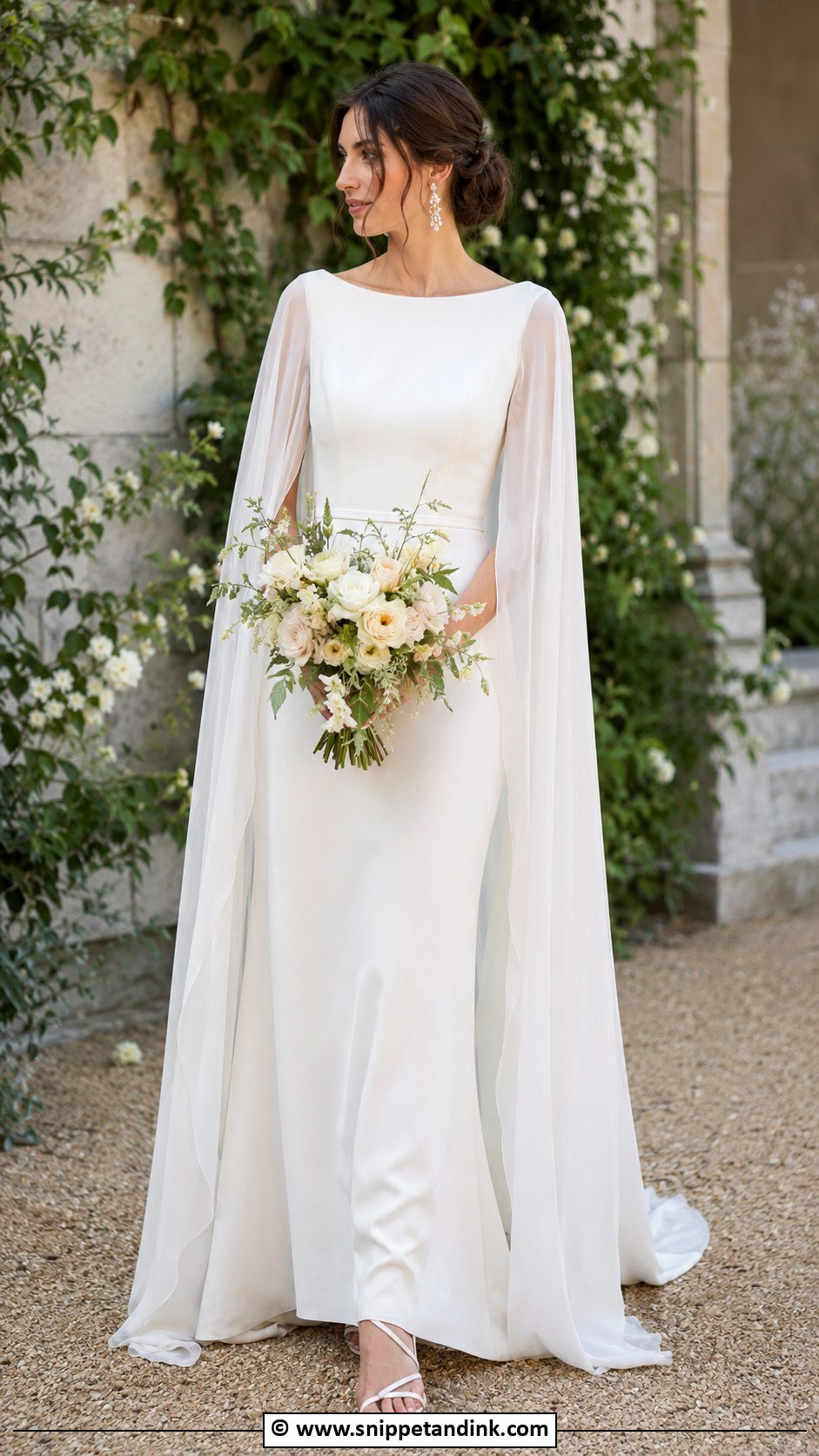
Cape sleeves fall from the shoulder like a short cape split at the arms, so you get movement without a separate cloak. Sheer tulle, chiffon or lace keeps them light. Choose a plain crepe sheath, satin A-line or fitted lace gown underneath. Raise your arms at the fitting, because cape sleeves can lift and expose the bodice edge. Drop earrings, a low bun and strappy heels finish it.
14. Medieval Wedding Dress With Brocade Fabric
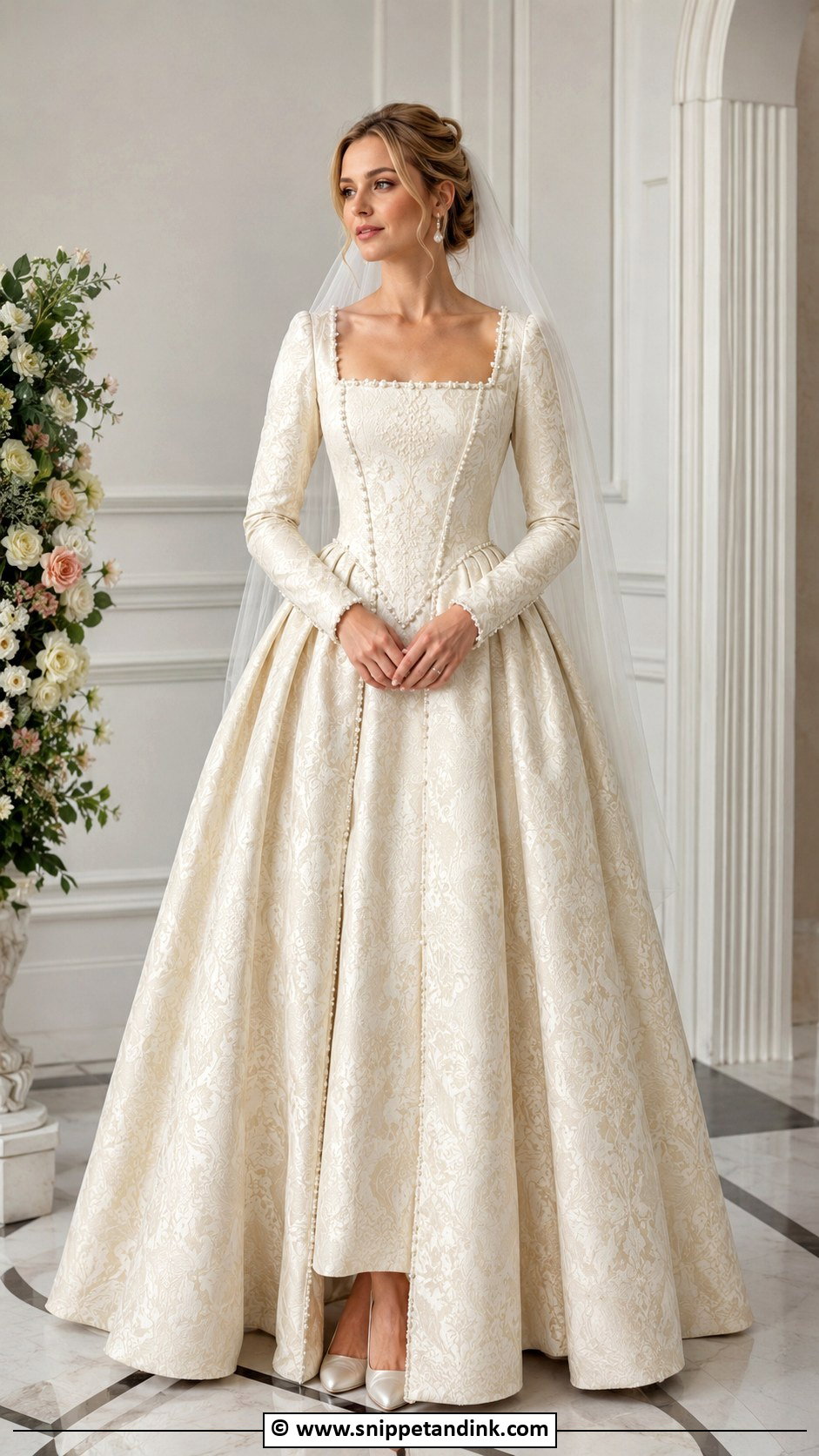
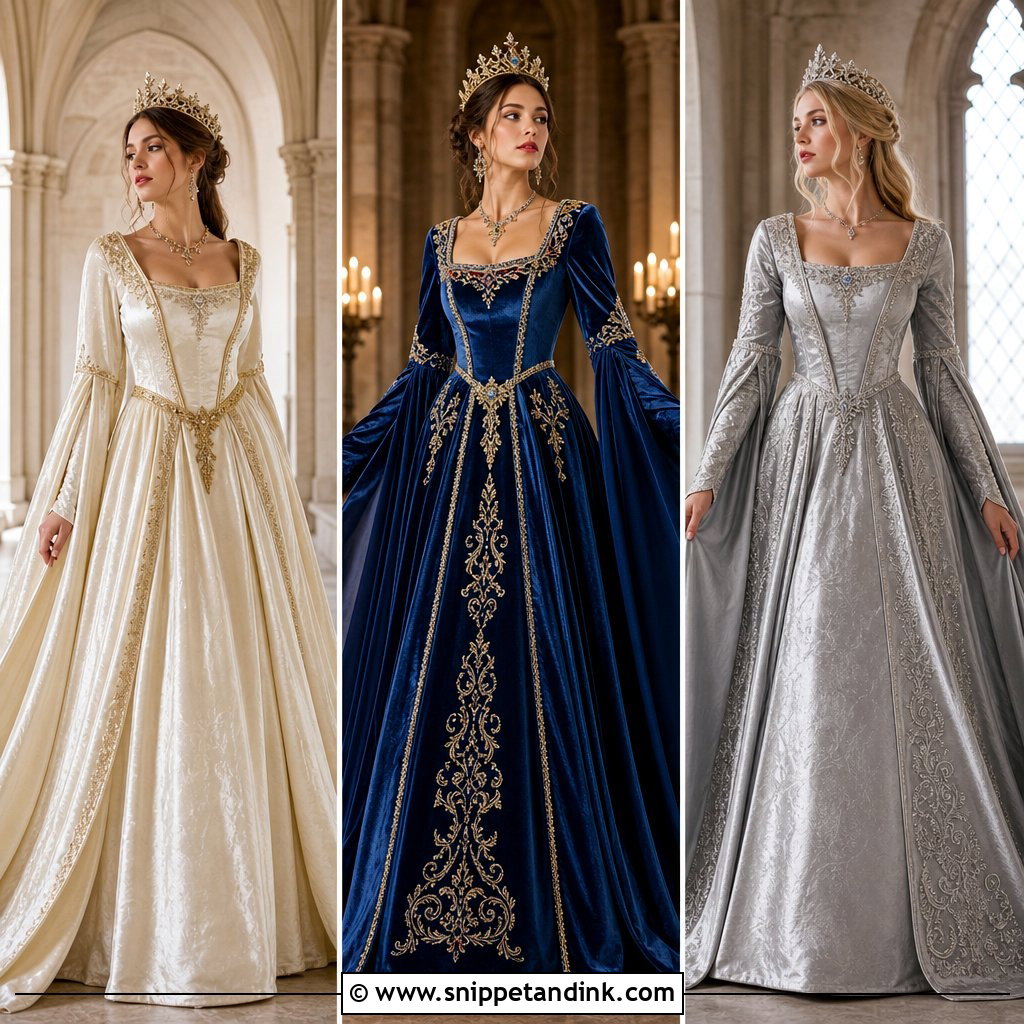
Brocade is woven with raised floral or scroll patterns, so it looks rich without any added embellishment. It’s also heavy and holds a structured shape well, which makes it a good match for a fitted bodice and full skirt. Save it for autumn, winter or indoor weddings. Brocade can’t be ironed hard without flattening the pattern, so steam it gently from the inside. Pearl studs, a smooth veil and satin heels are plenty.
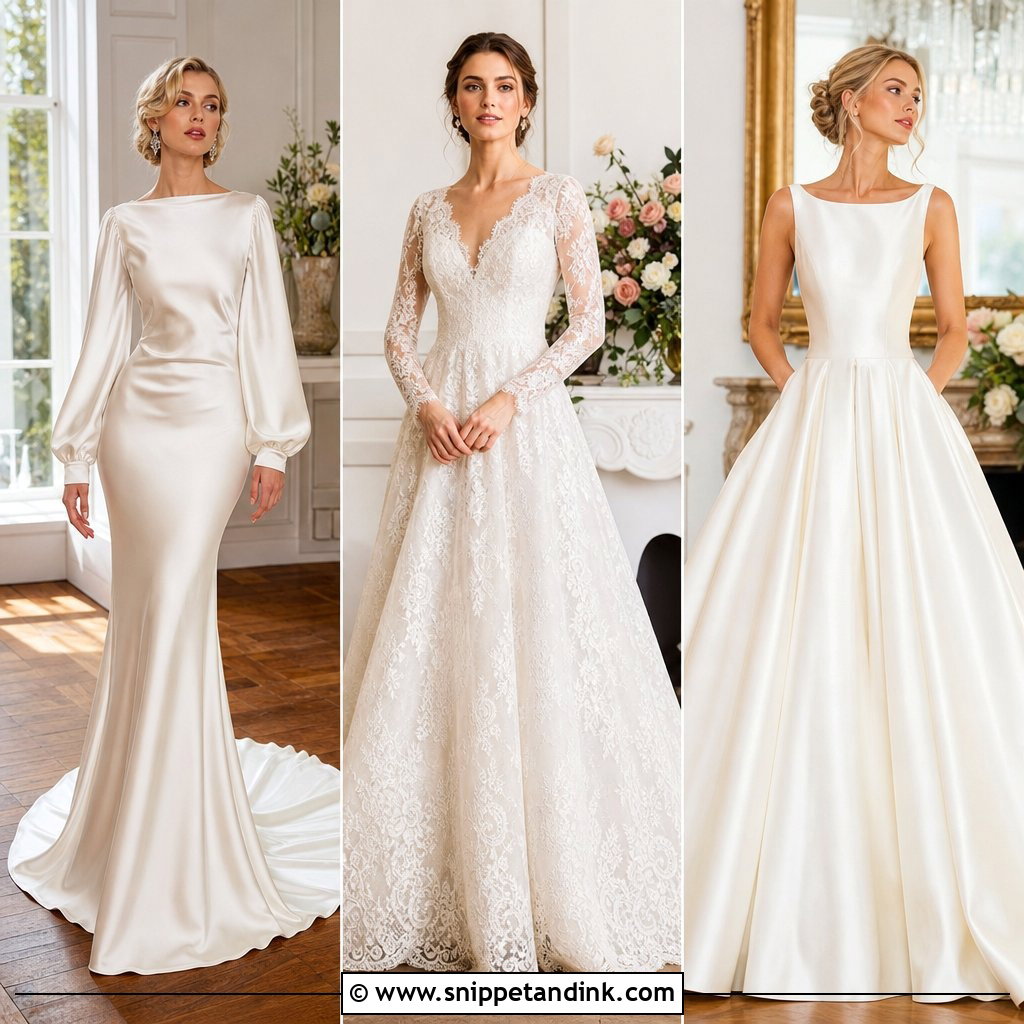
15. Medieval Wedding Dress With Long Train
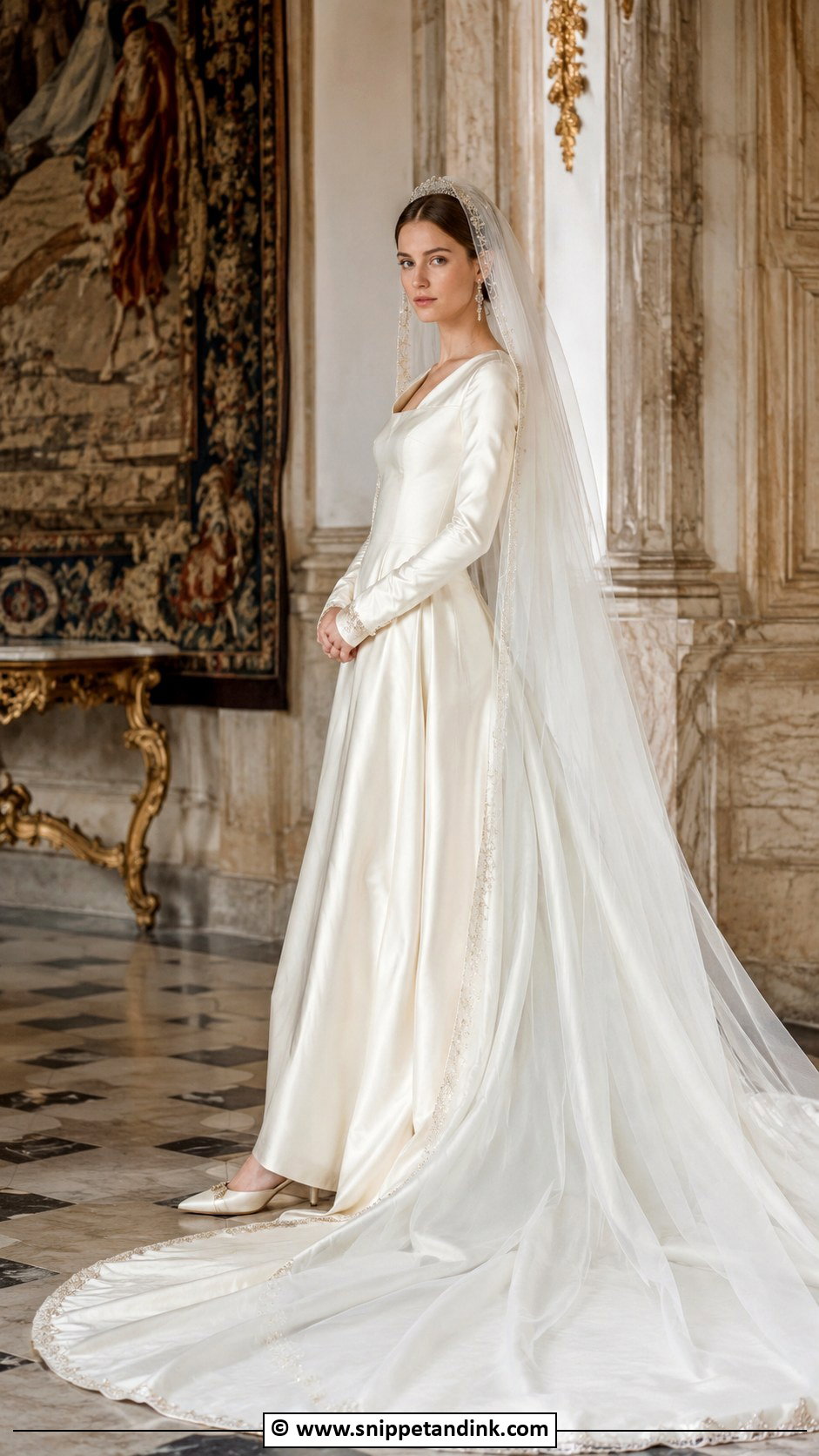
A long train looks wonderful on stone floors and in wide portraits, but it collects dust, grass and petals as it goes. Satin, silk and crepe give a smooth train, while lace or embroidered tulle adds detail and catches more debris. Ask for a sturdy bustle with ribbon loops for the reception, and practise putting it up with whoever is helping you. A cathedral veil and ivory heels complete it.
16. Medieval Wedding Dress With Off Shoulder Neckline
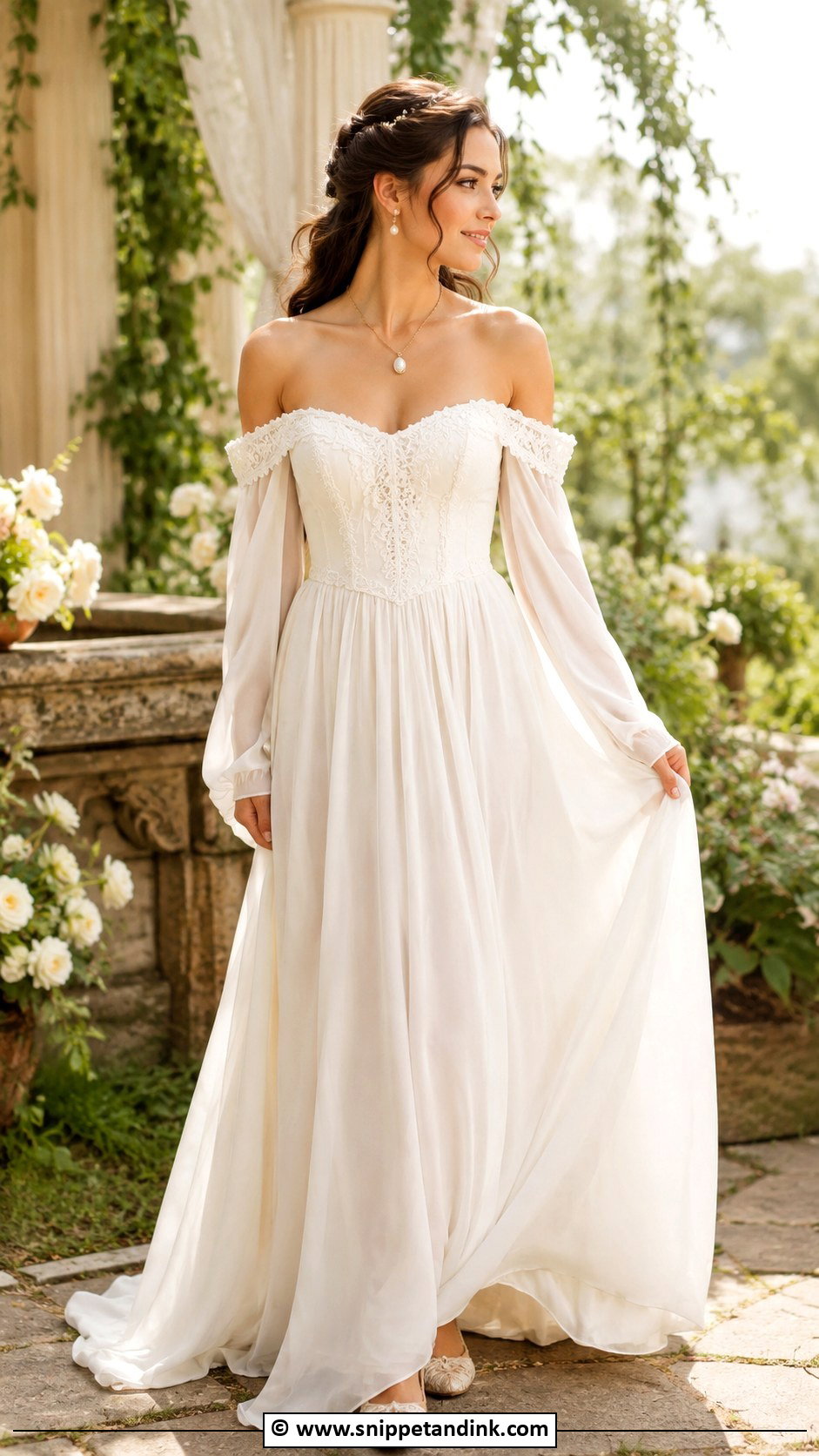
Off-shoulder necklines show the collarbone and soften the more formal medieval shapes. Long sleeves, a corset-style bodice or a full skirt keep it period-inspired. Satin, lace and chiffon all work. Off-shoulder sleeves need a firm bodice to stay in place, so test them by raising your arms. A short pendant and a loose updo with a few face-framing pieces suit it.
17. Medieval Wedding Dress With A Line Skirt
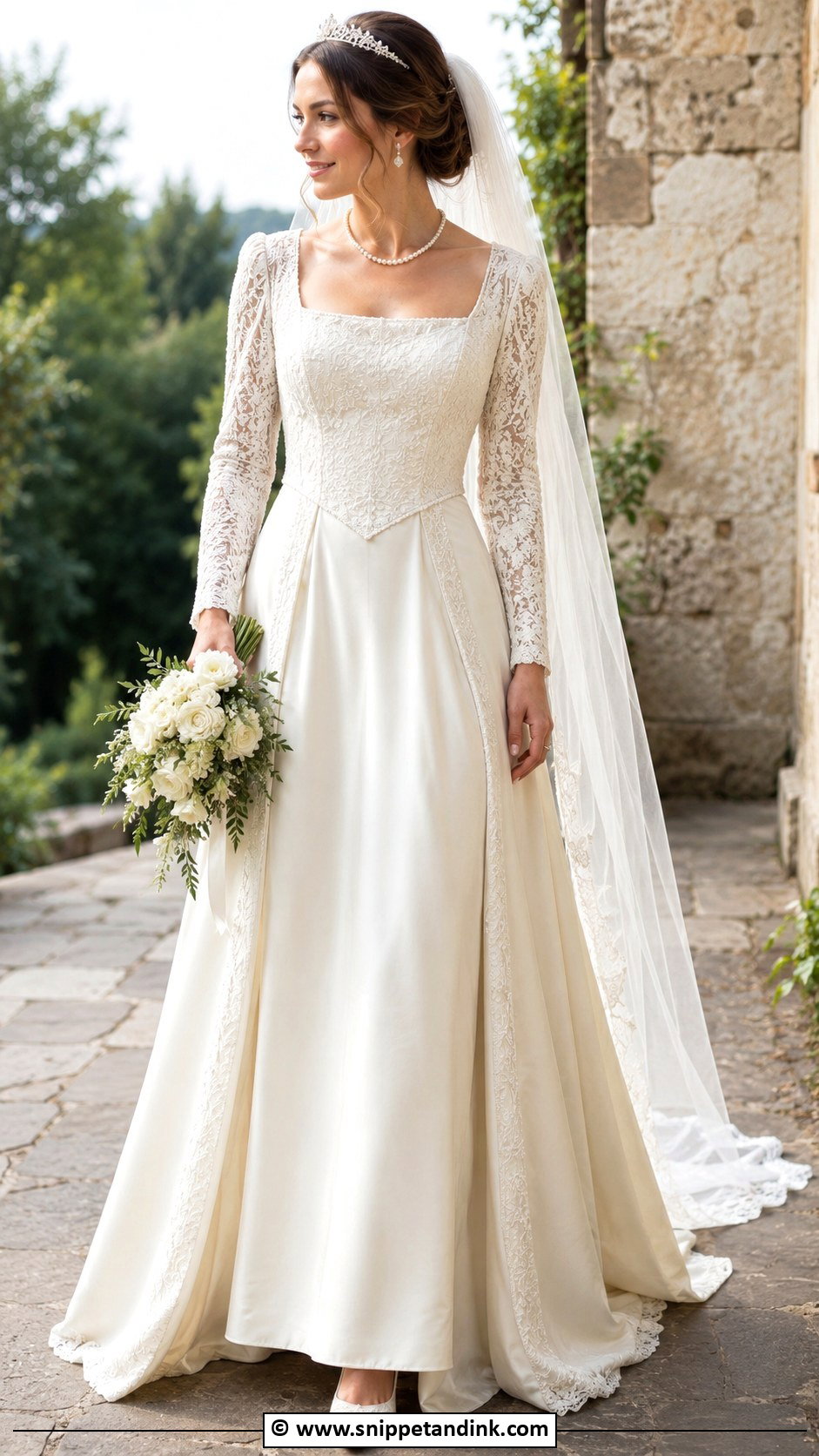
An A-line gives the medieval feel without the weight of a ball gown, which is why I suggest it to brides who want to dance properly. The skirt widens gently from the waist. A fitted bodice, long sleeves and a square or scoop neck give the classic shape. Lace, embroidery or a soft belt add detail. A long veil and pearl accessories work in almost any venue.
18. Medieval Wedding Dress With Ball Gown Skirt
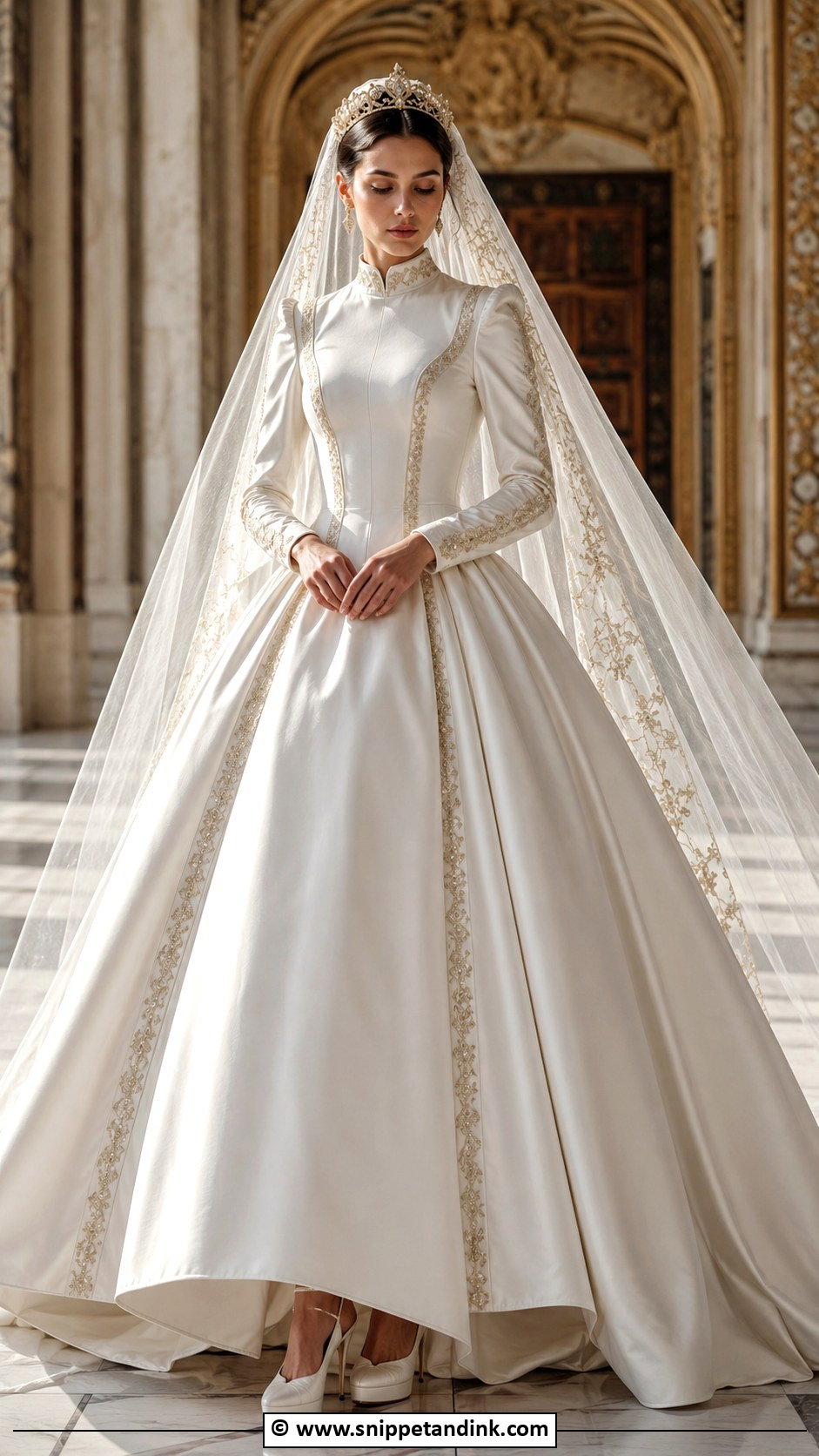
A medieval wedding dress with a ball gown skirt is the grandest version, in satin, mikado, tulle or brocade over a structured bodice. A full skirt is heavy, so wear shoes with real support, and check the weight is carried by the waist and not your shoulders. Long sleeves, a high neck or embroidery add a historical feel, and a lace-up bodice or narrow belt defines the waist. A crown-inspired headpiece and cathedral veil suit castles and grand halls.
19. Medieval Wedding Dress With Floral Applique
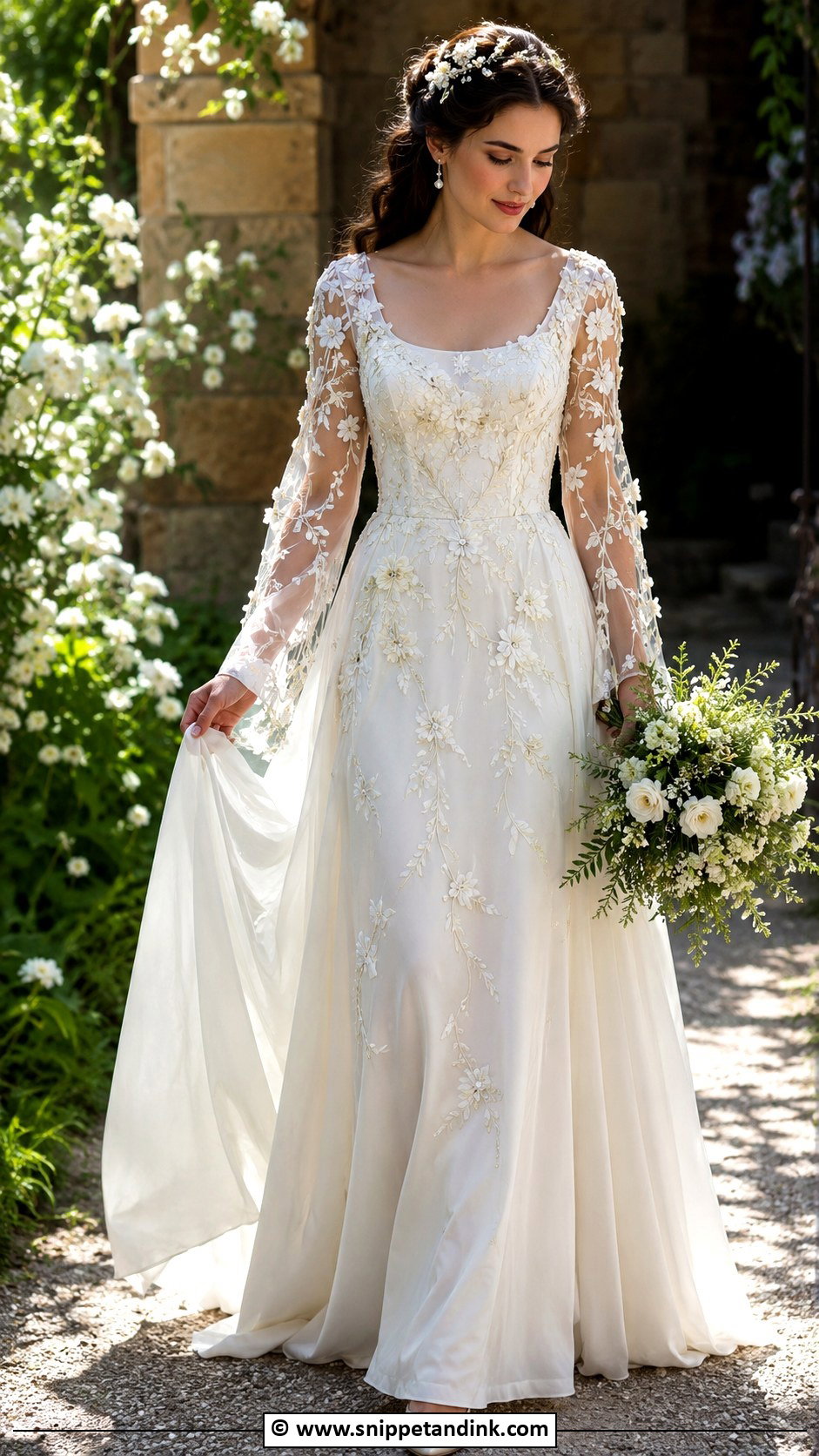
Floral appliqué with trailing vines fits a garden-inspired medieval gown. It can sit on the bodice, sleeves, skirt or train. On a sheer sleeve or illusion neckline, it looks light and airy. Ask how the pieces are attached, since hand-stitched appliqué stays flat after cleaning while glued pieces can lift. A floral comb, pearl earrings and wild greenery in the bouquet finish it.
20. Medieval Wedding Dress With Detachable Cape
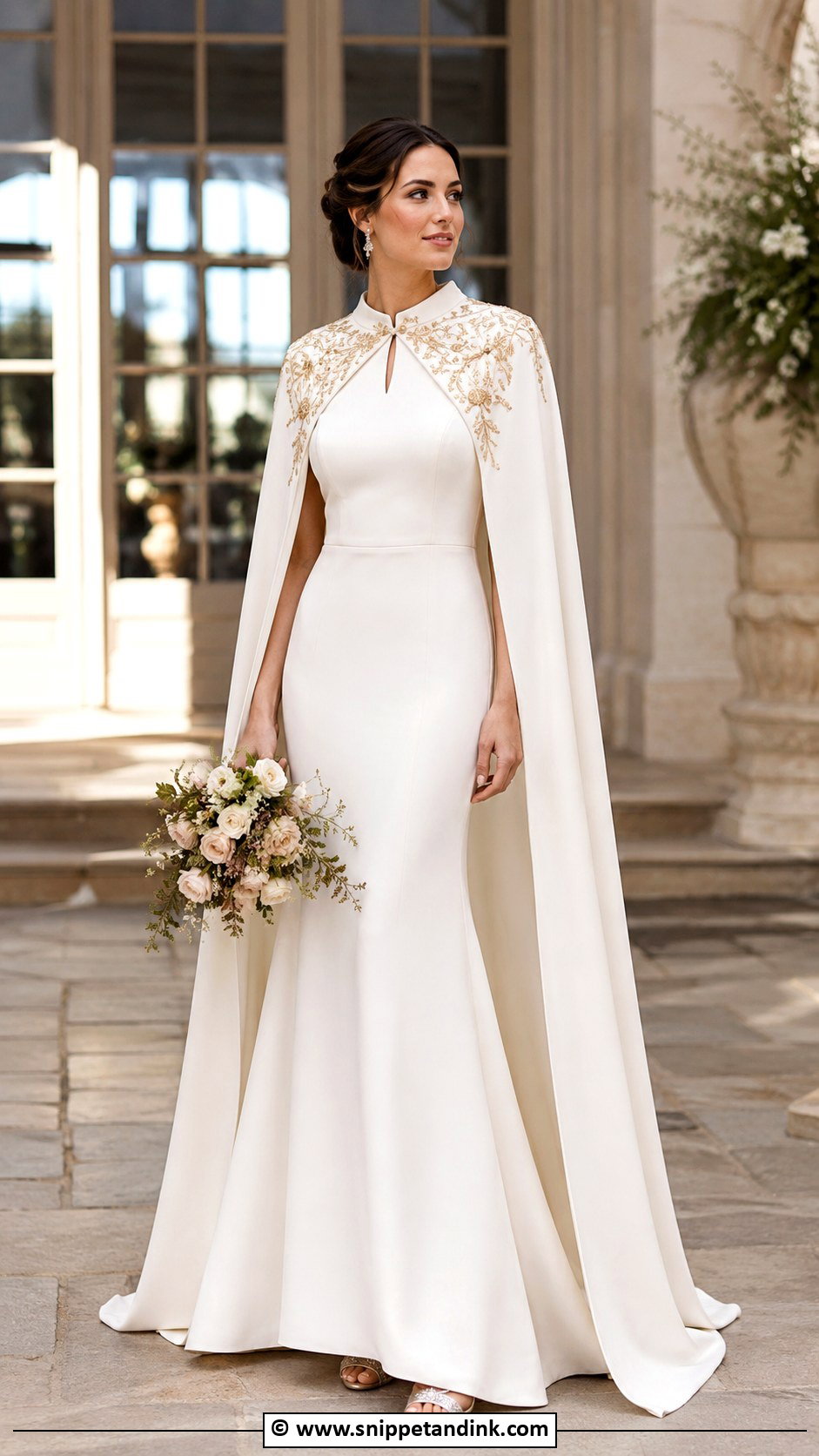
A detachable cape gives you the medieval entrance and a lighter gown for the reception. A crepe sheath, satin A-line or lace dress underneath lets the cape lead. Sheer, embroidered or velvet capes all work. I’d check the attachment points are hidden at the shoulders and that someone has practised removing it. A neat updo and drop earrings suit both halves of the day.
21. Medieval Wedding Dress With Pearl Details
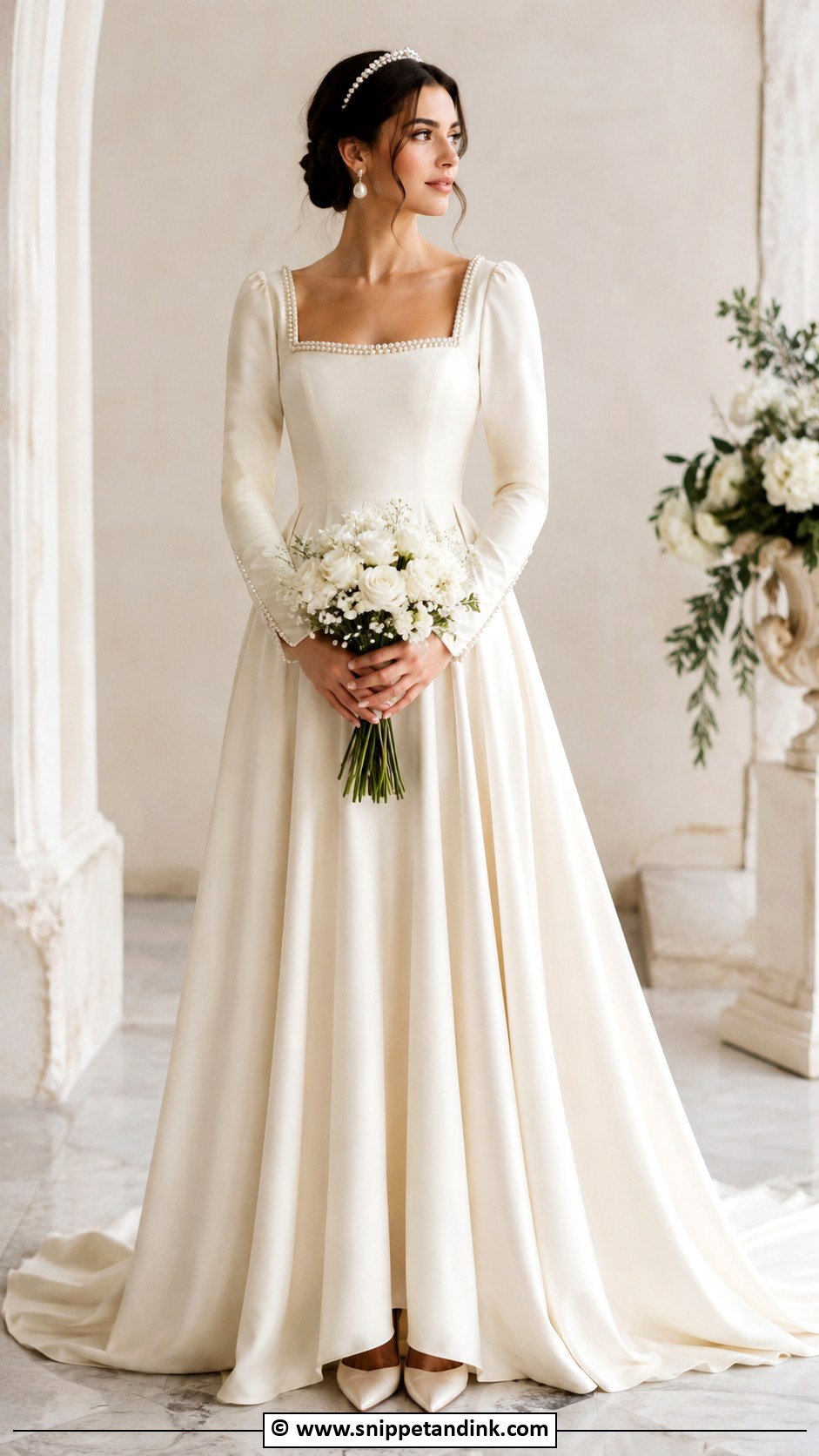
Pearls show up on the neckline, sleeves, bodice, veil or belt, and they suit a soft, light medieval look. An ivory gown with long sleeves and a flowing skirt is the gentle version. A fitted bodice with pearl embroidery and a full skirt is the formal one. Each pearl should be stitched on, not glued. Pearl earrings, a pearl headband and satin shoes, with a simple bouquet so the detail shows.
22. Medieval Wedding Dress With Tulle Overlay
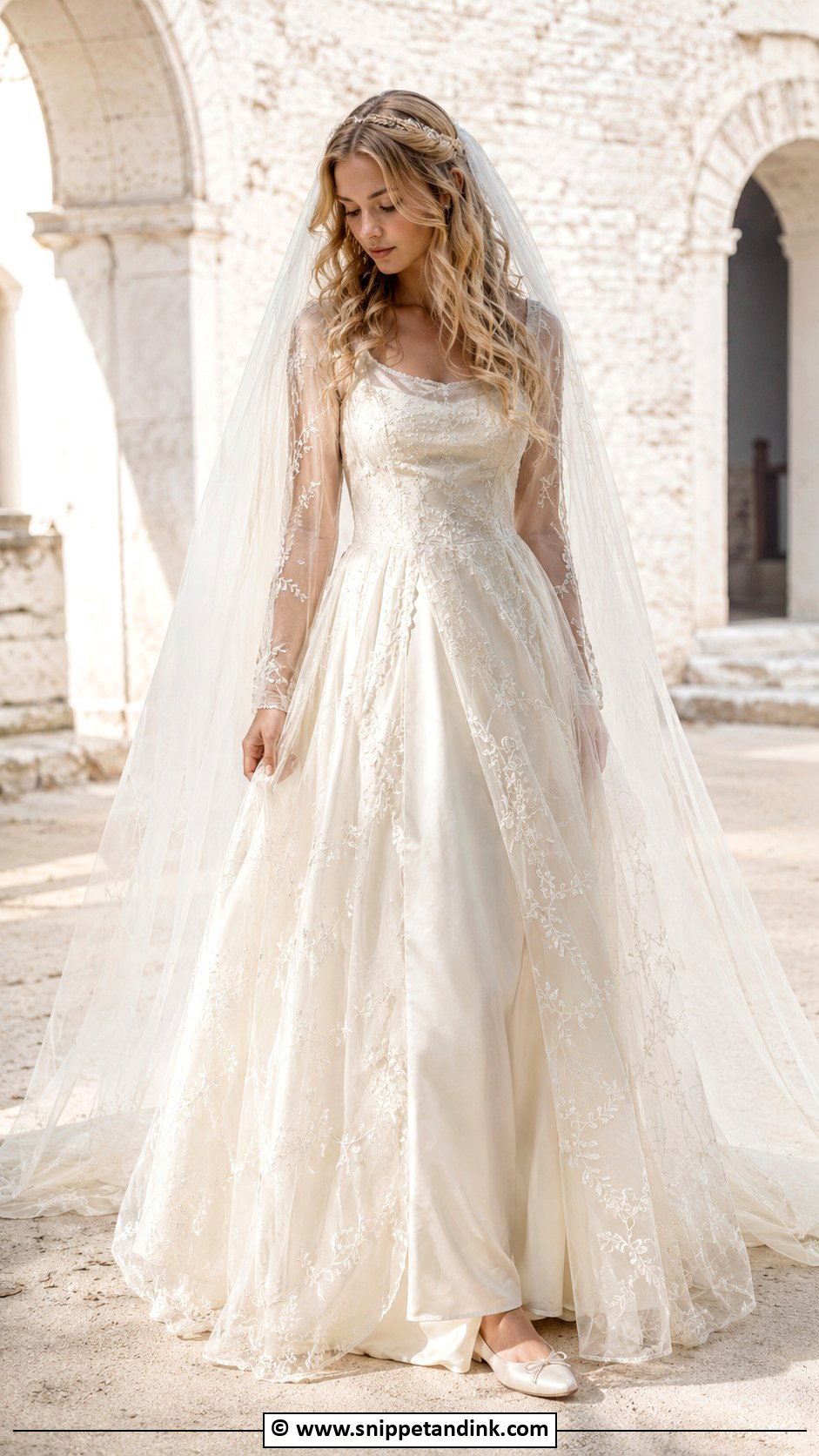
A tulle overlay floats over a satin, crepe or lace base and softens it. Long sheer sleeves, a flowing overskirt or embroidered tulle with vines all work. Tulle snags on rough stone and bark, so watch where you sit at a castle or woodland venue. A long veil, soft curls and minimal jewellery suit it. Ivory ballet flats or low heels keep it light.
23. Medieval Wedding Dress With Renaissance Sleeves
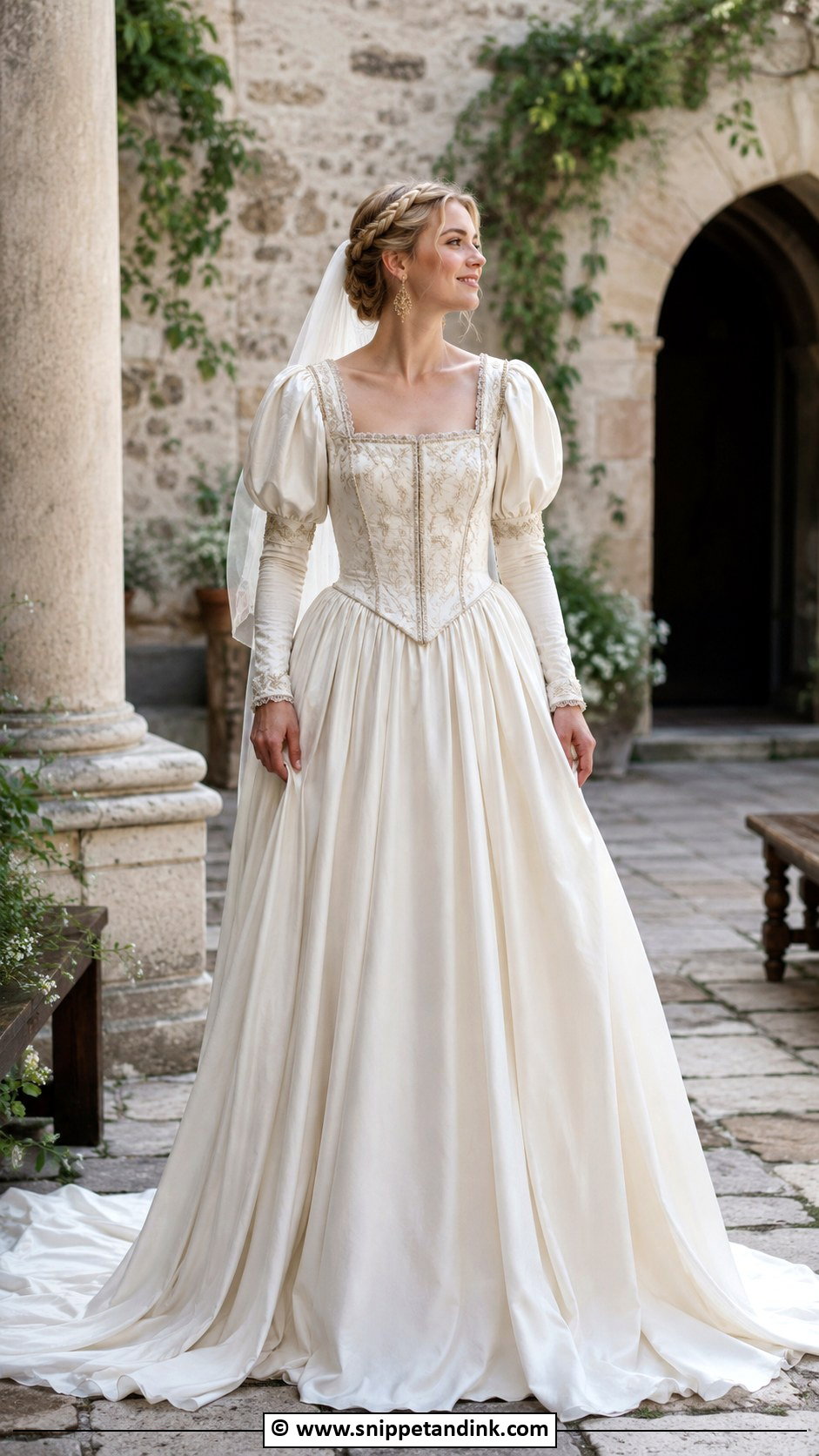
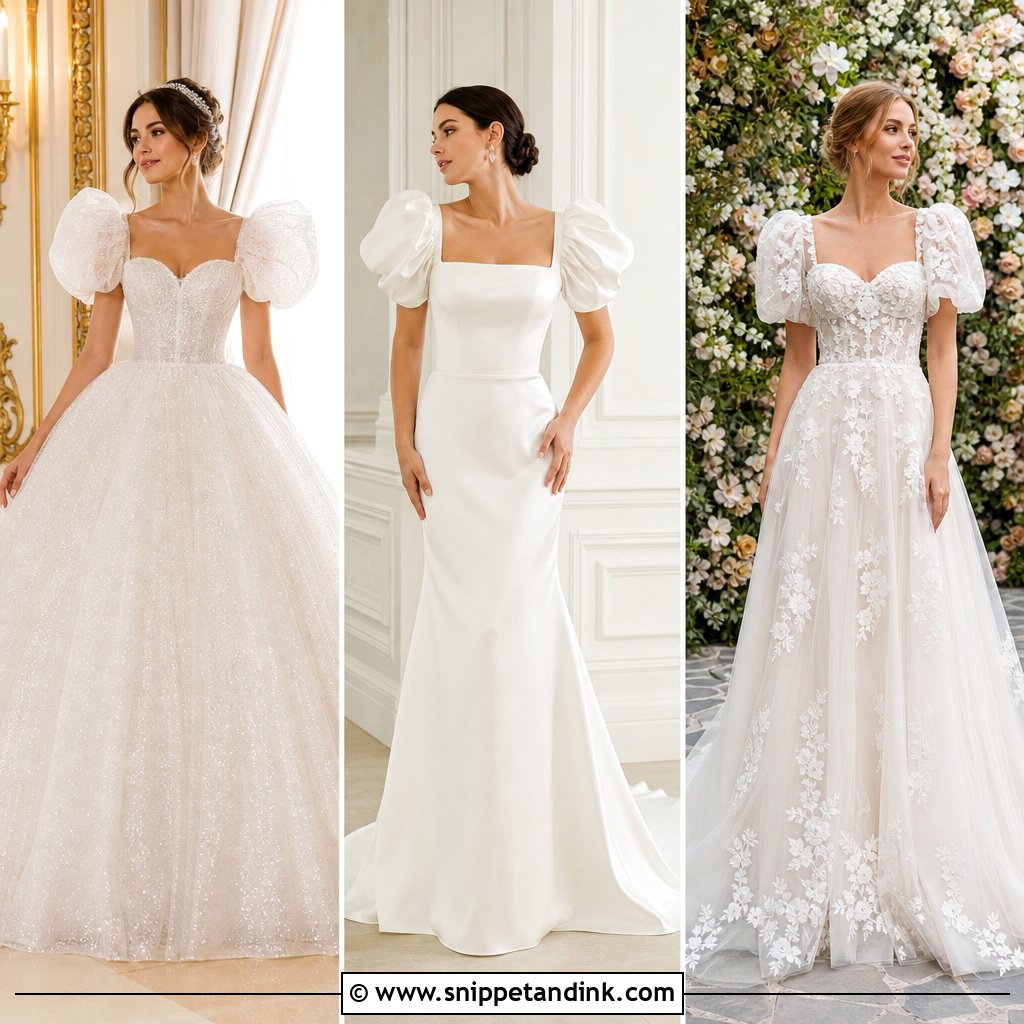
Renaissance sleeves have volume at the upper arm, often gathered or puffed, and taper toward the wrist. They add width at the shoulder, so a fitted bodice and flowing skirt keep the silhouette balanced. A square neck or corset front adds more period detail. I’d suggest a light fabric for the puff, since heavy fabric there makes the shoulders look broad. A simple veil and gold earrings finish it.
24. Medieval Wedding Dress With Lace Up Back
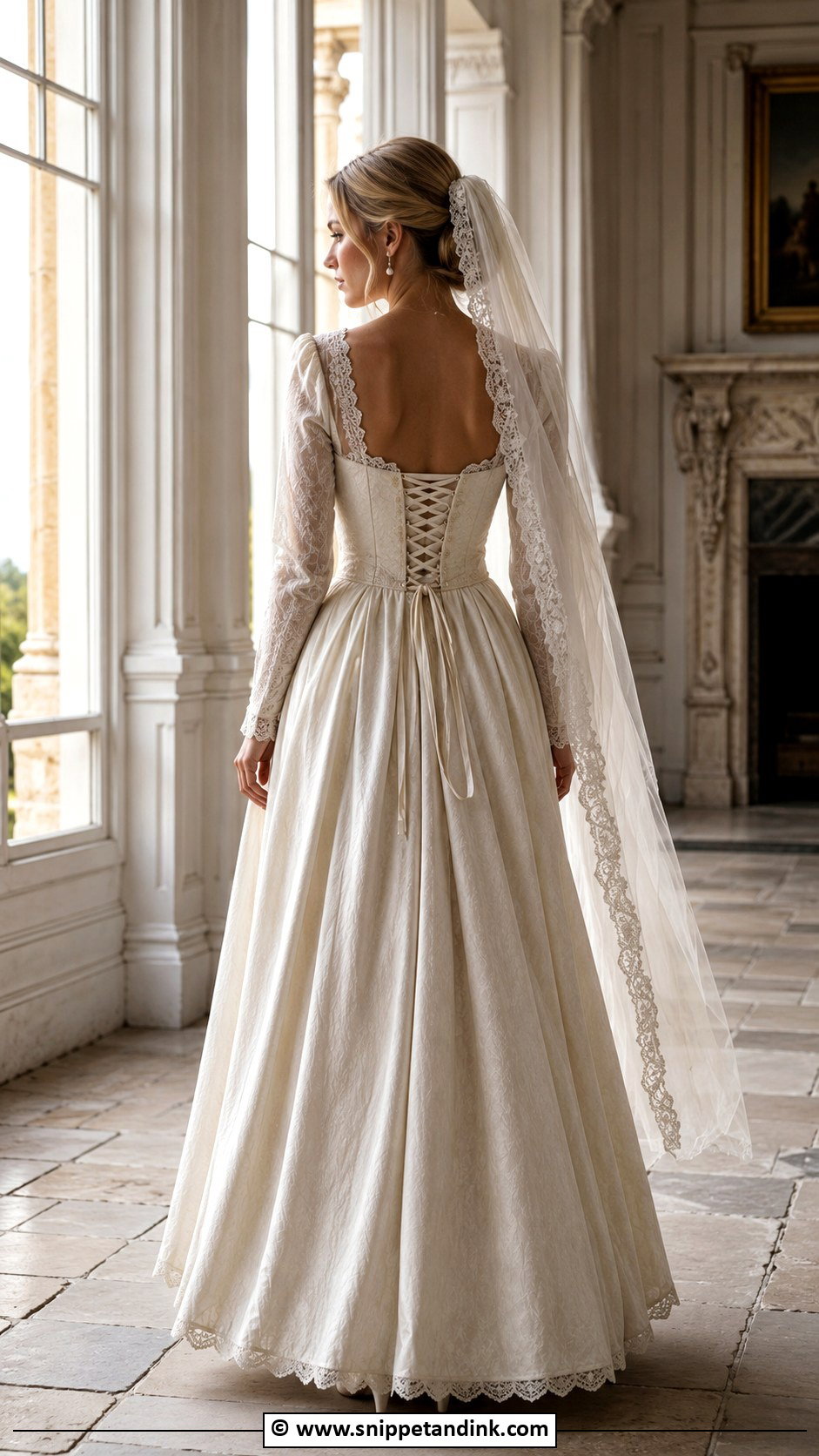
A lace-up back is practical as well as pretty: it lets the fit adjust if your weight shifts before the wedding. Satin ribbon, fabric ties or fine cord all work with a corset bodice, A-line or ball gown. The front can stay plain. Have whoever is dressing you practise lacing it, because it takes longer than people expect. A veil that sits above the lacing keeps it visible.


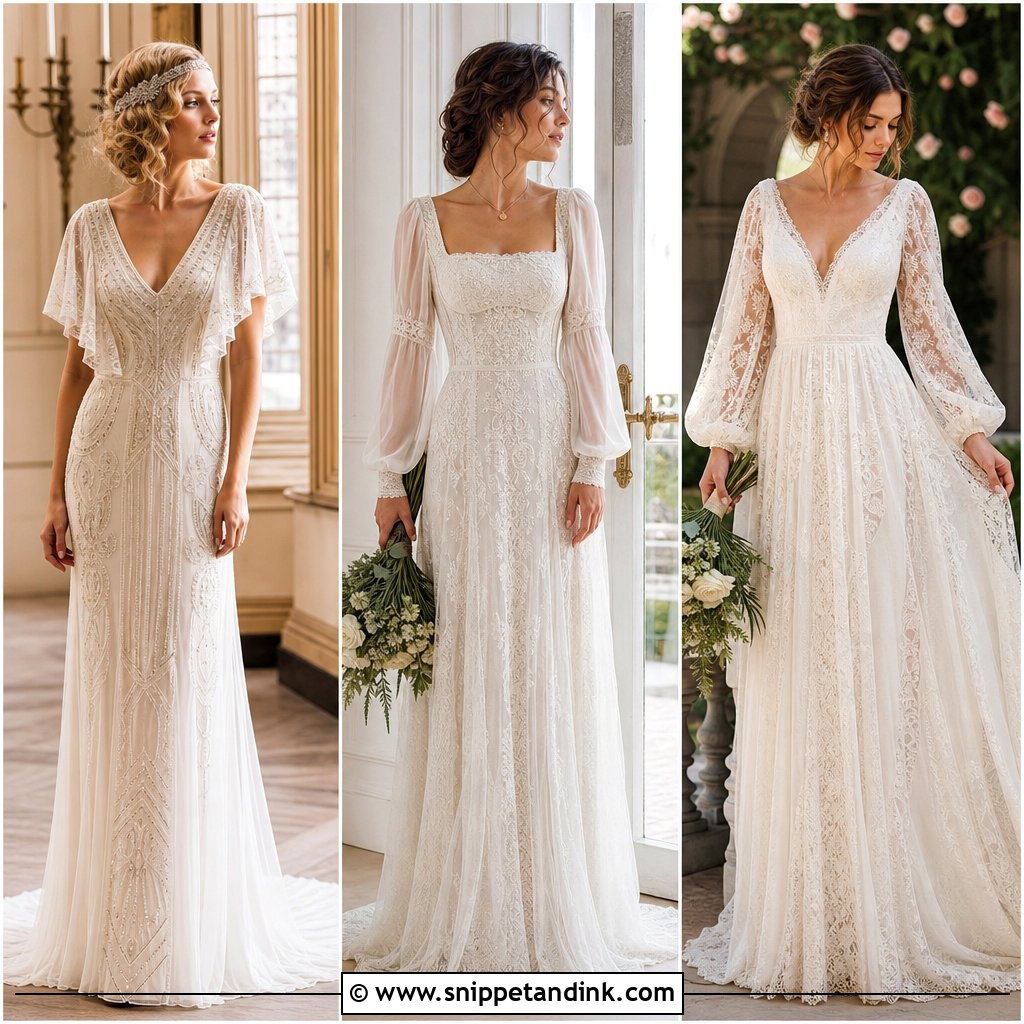
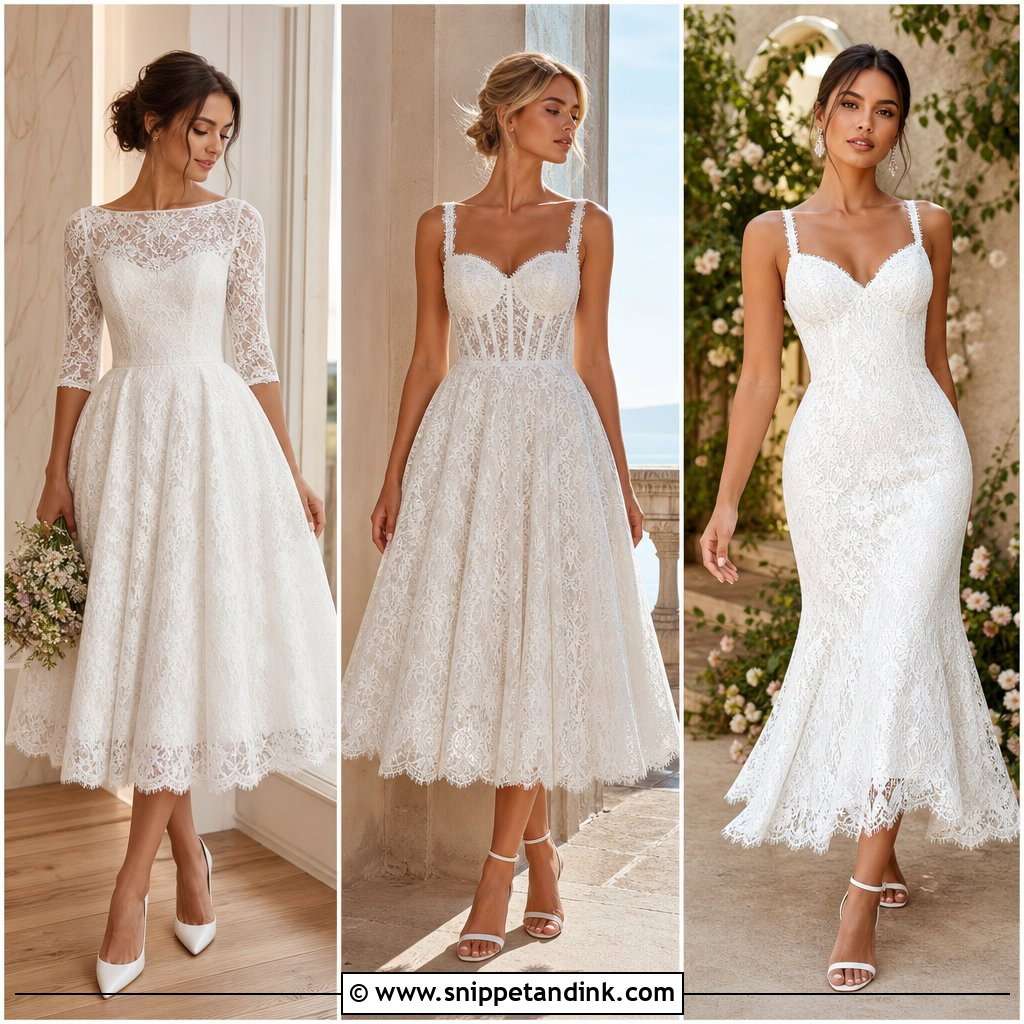

25. Medieval Wedding Dress With Sheer Sleeves
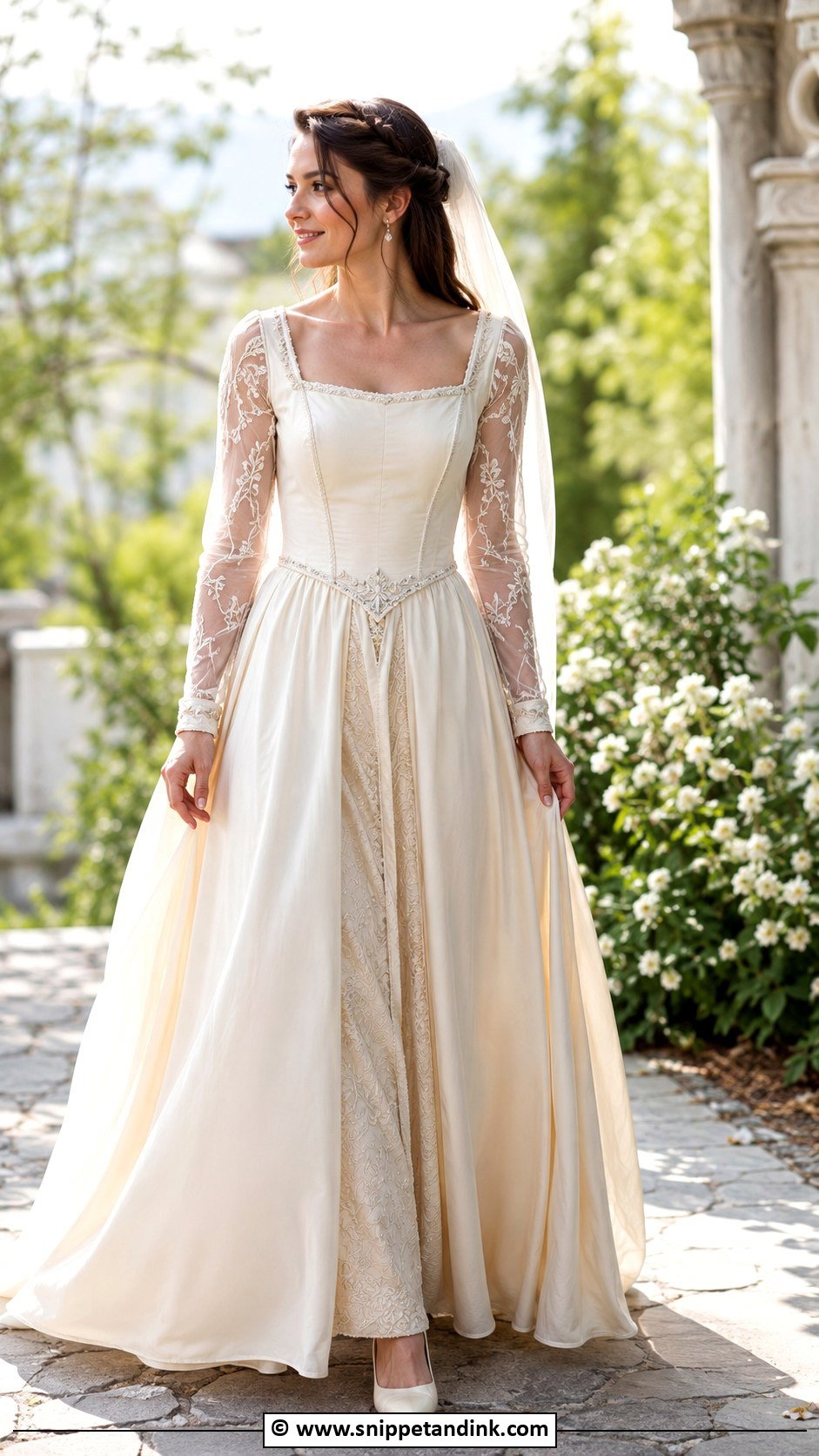
Sheer sleeves in plain tulle, embroidered mesh or soft lace give coverage without heat. That makes them a good choice for spring, summer or a crowded indoor venue. A fitted bodice and flowing skirt balance them. Flared cuffs or pearl accents add drama. I’d check the fit around the upper arm, since sheer fabric that’s too tight shows a pinch line. Delicate earrings and a soft veil finish it.
26. Medieval Wedding Dress With Elven Bridal Look
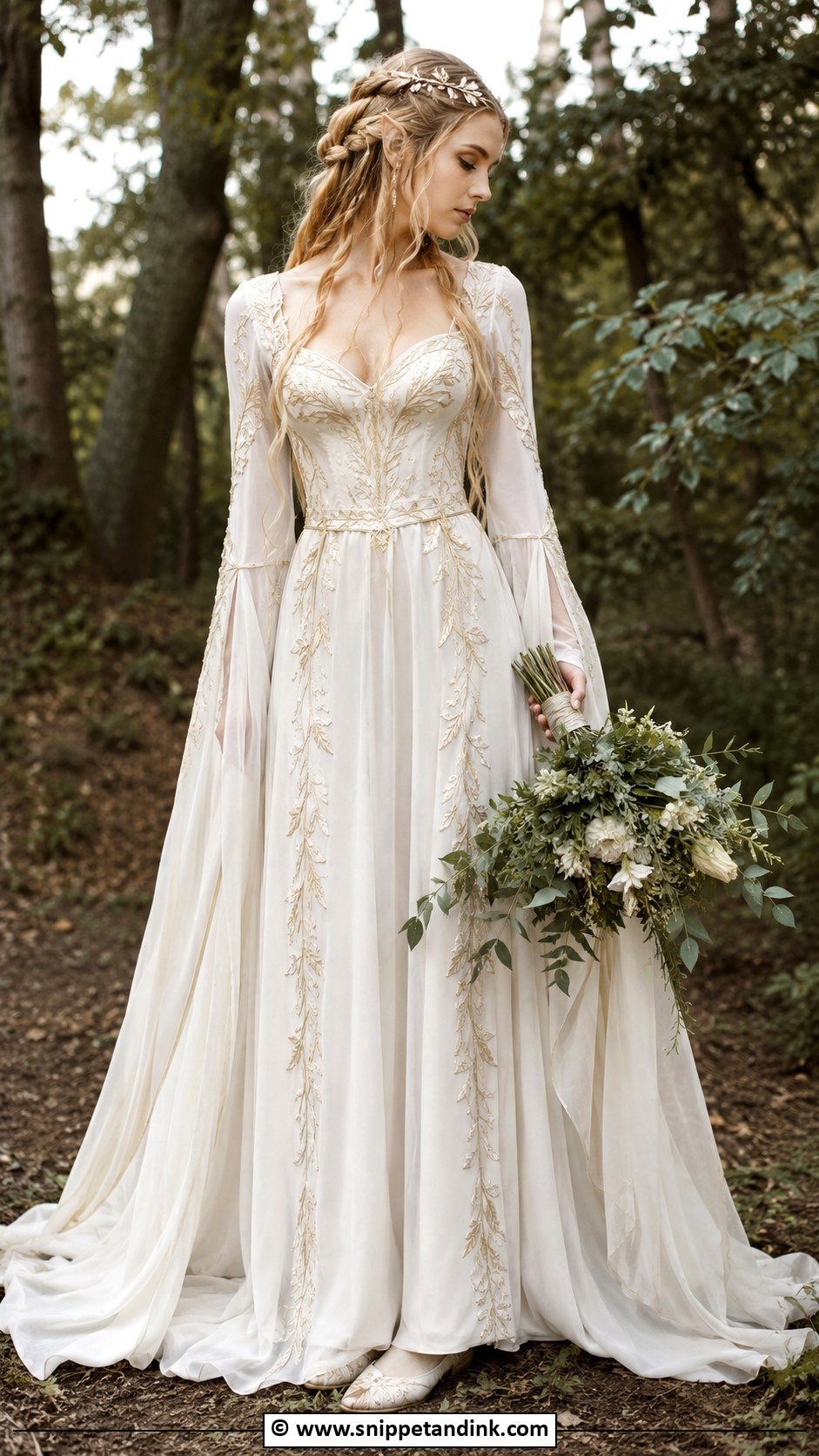
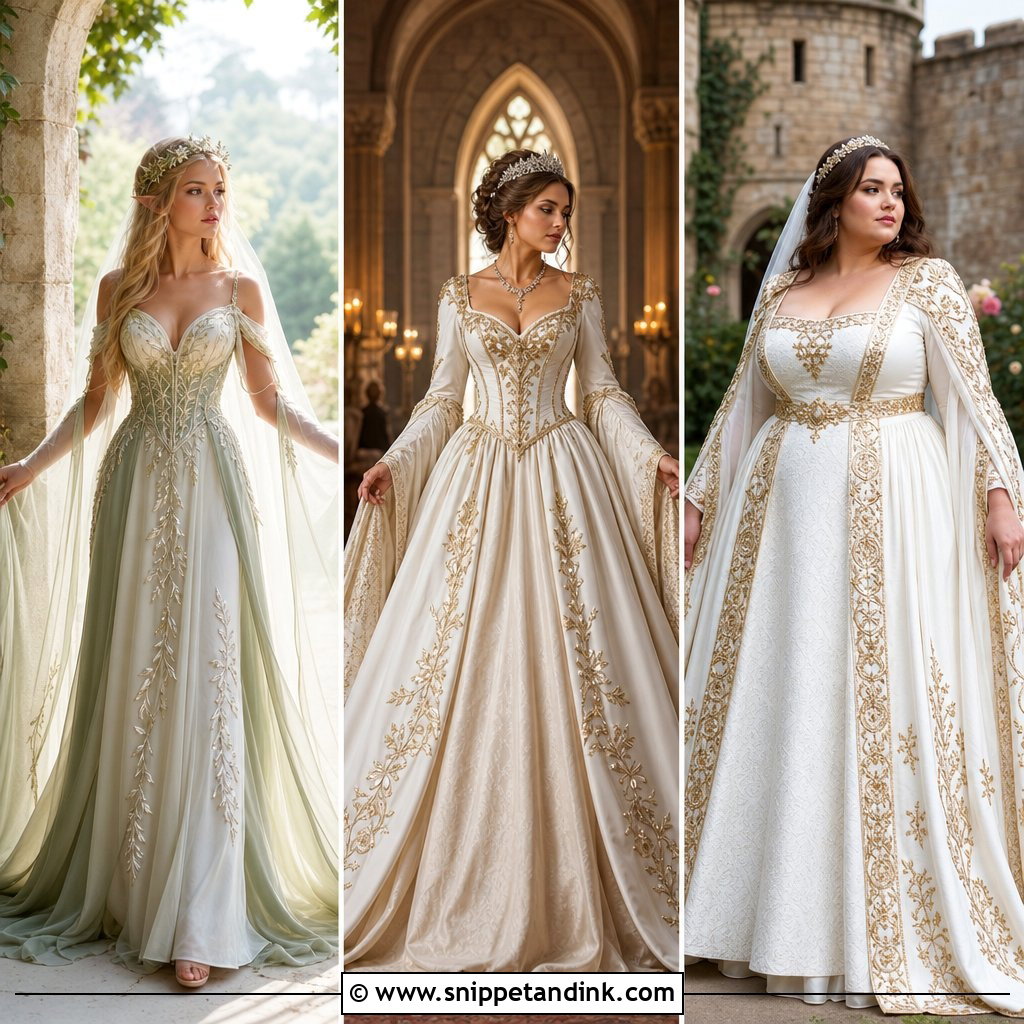
A medieval wedding dress with an elven bridal look uses long sleeves, soft layers and fine embroidery in ivory, silver, pale gold or champagne. Refined fabrics keep it bridal rather than fancy dress. A leaf-shaped hairpiece, a braided style and a light veil suit it. Embroidered flats or low heels are kinder on forest paths. A bouquet with greenery and trailing ribbon completes it.
27. Medieval Wedding Dress With Gothic Bridal Look
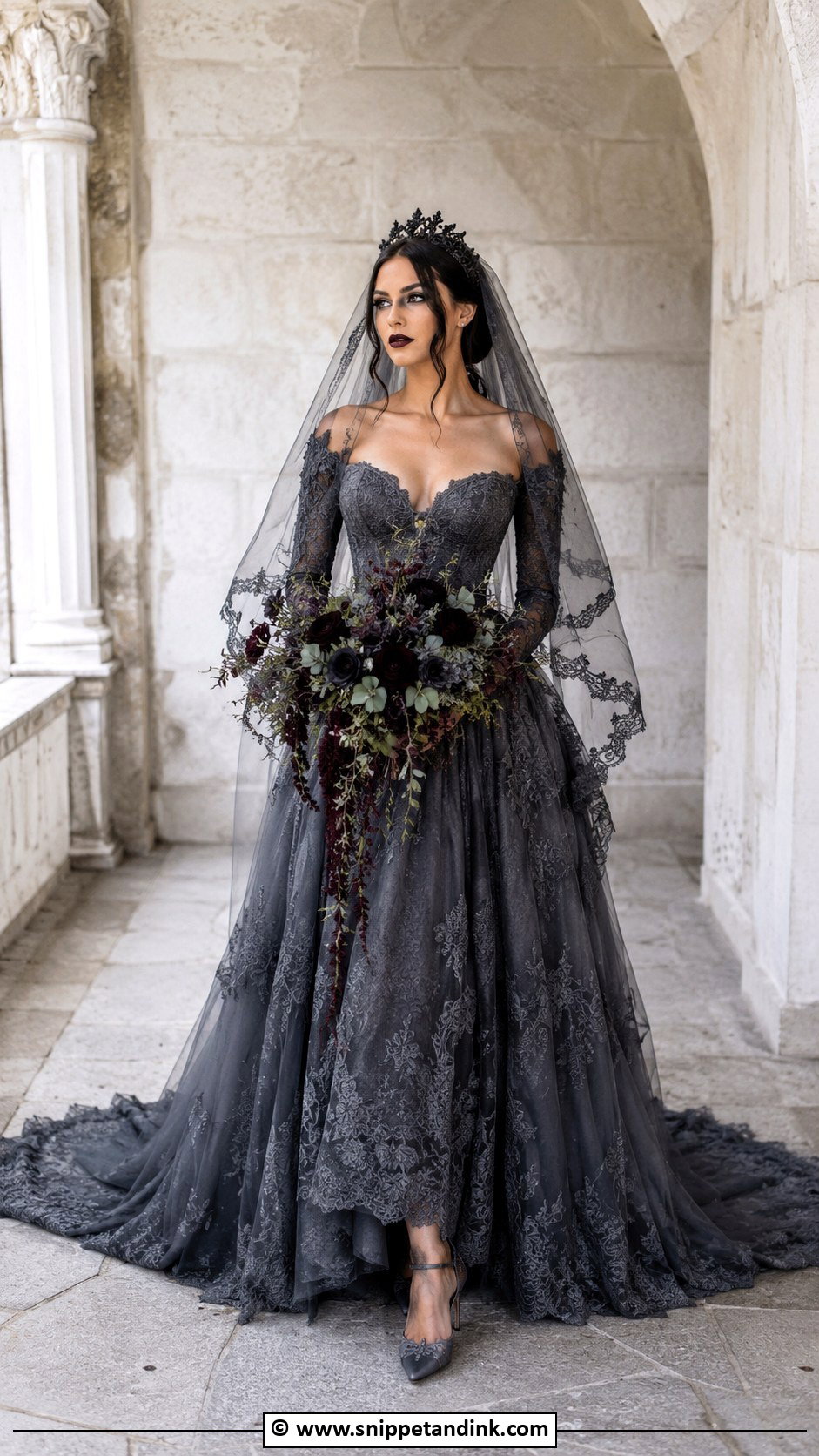
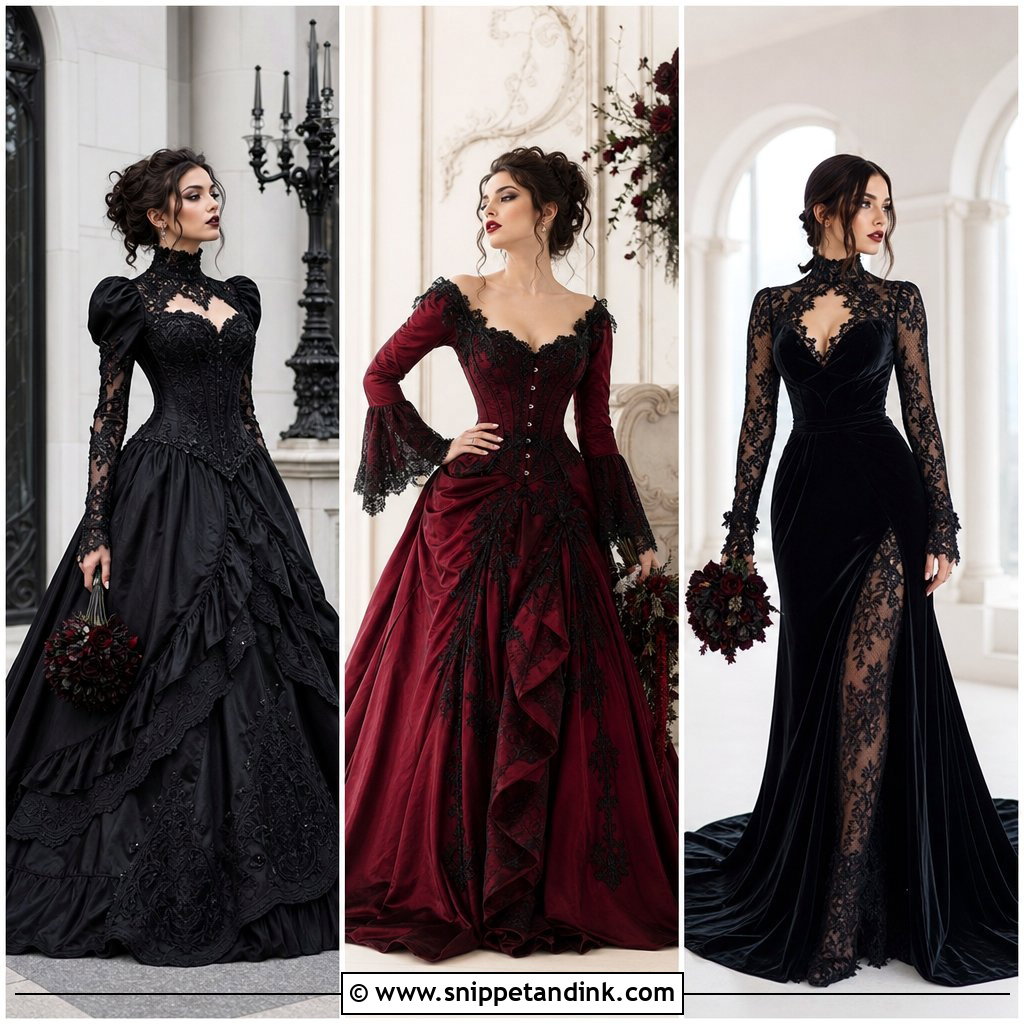
A gothic medieval gown works in black, ivory, champagne or deep grey, with long sleeves, lace, velvet or a corset bodice. The risk is looking heavy, so I balance dark colour with a fine fabric and a precise fit. Dark florals, a dramatic veil and pointed heels suit it. Defined eyes and a soft lip keep the makeup from competing. Black fabric also shows dust and lint in photos, so pack a lint roller.
28. Medieval Wedding Dress With Queen Inspired Look
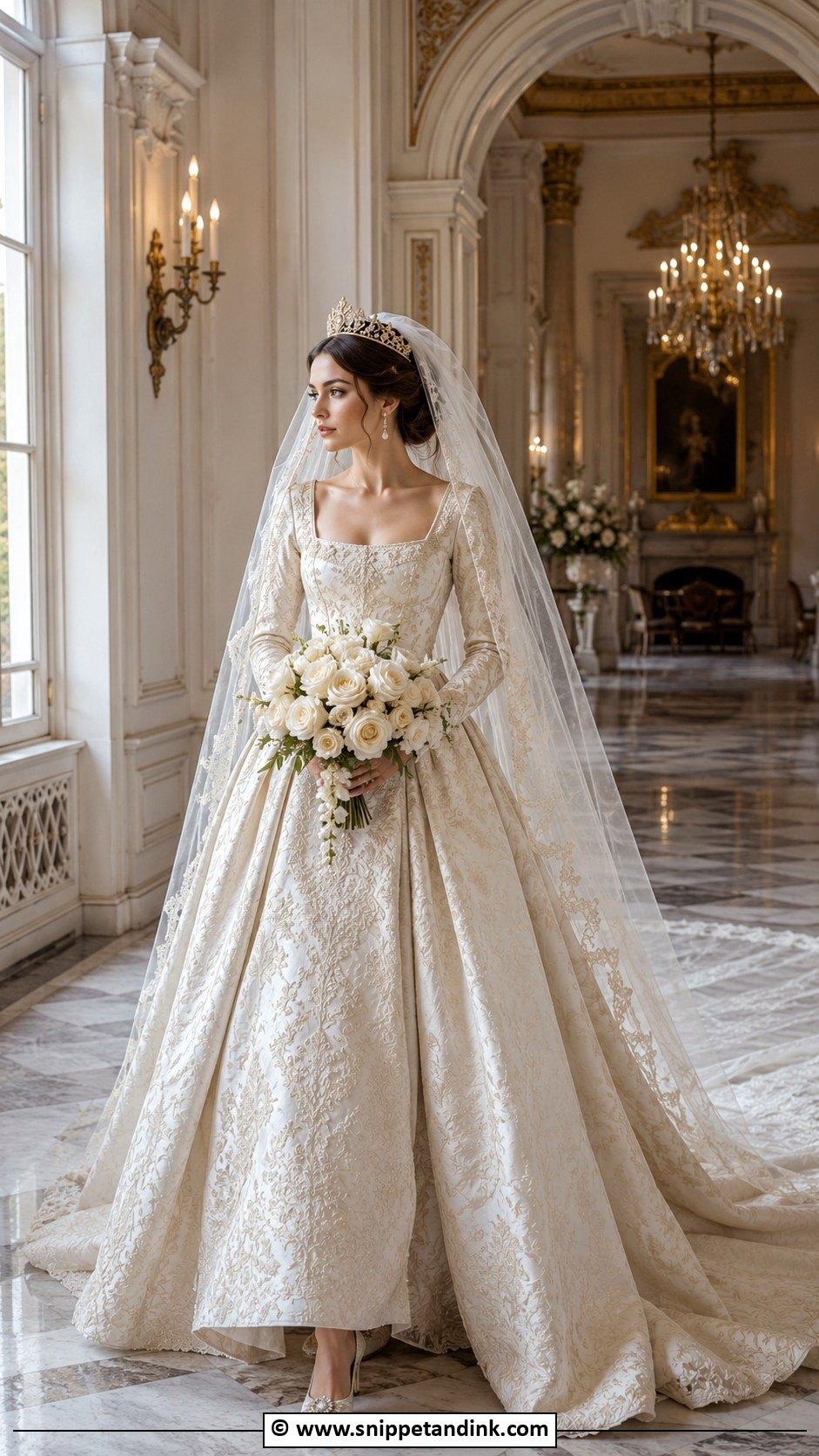
A medieval wedding dress with a queen inspired look depends on structure and posture: a fitted bodice, full skirt, long train and a rich fabric like satin, brocade or embroidered tulle. Keep the palette soft in ivory, champagne or pale gold. A crown-style headpiece and cathedral veil are heavy, so have them anchored firmly into the hair at the trial. Pearl earrings and a structured bouquet suit grand venues.
29. Medieval Wedding Dress With Simple Linen Look
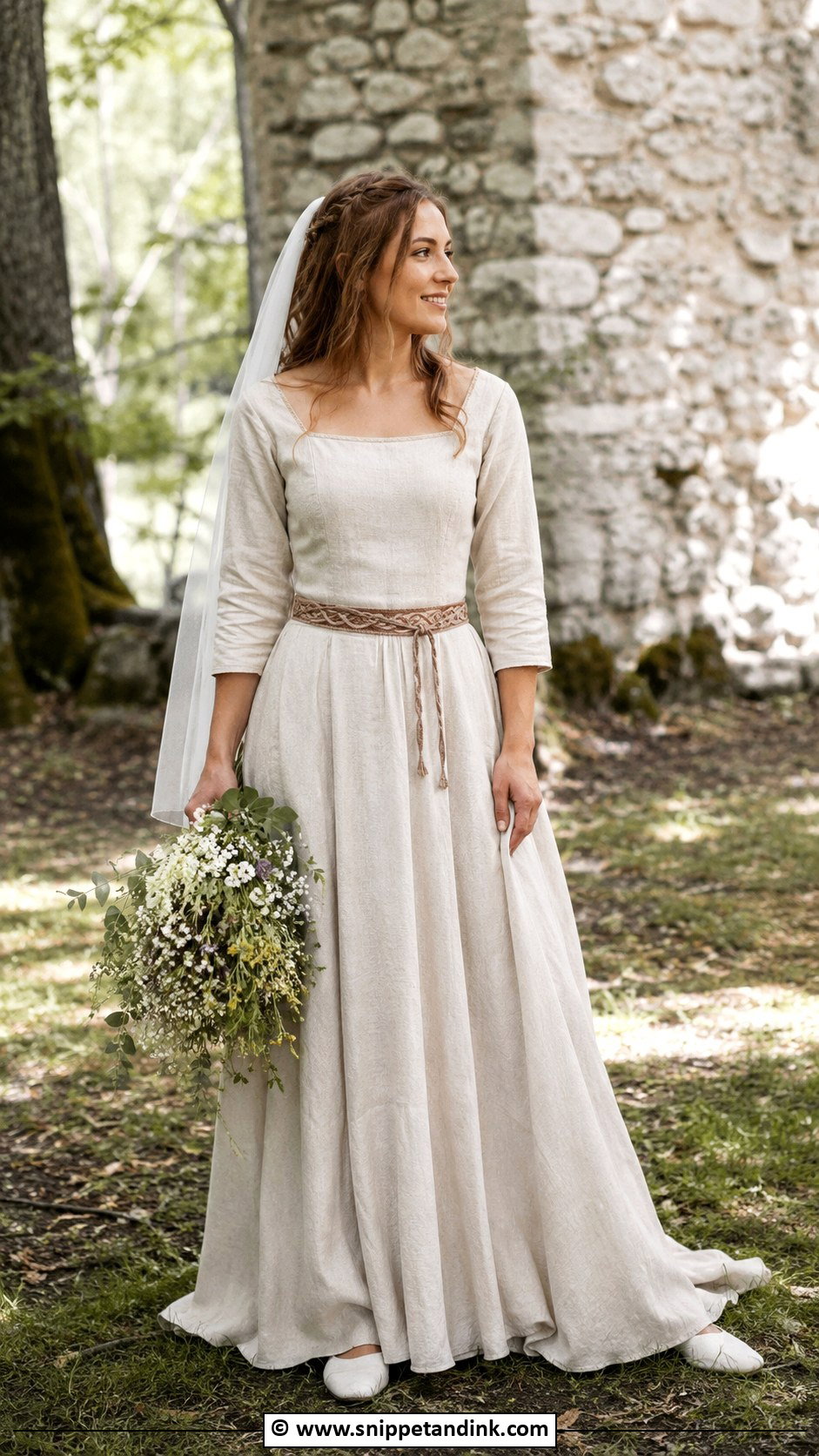
Linen is the most relaxed version of this style. An ivory or cream linen-blend gown with a loose A-line, a square neck and long or three-quarter sleeves looks natural and historically grounded. Linen creases quickly, which is part of its charm, but choose a blend if you’d rather keep it smoother. A woven belt, flat sandals and small earrings suit it, with wildflowers in the bouquet. It works well outdoors and at rustic venues.
30. Medieval Wedding Dress With Cathedral Veil
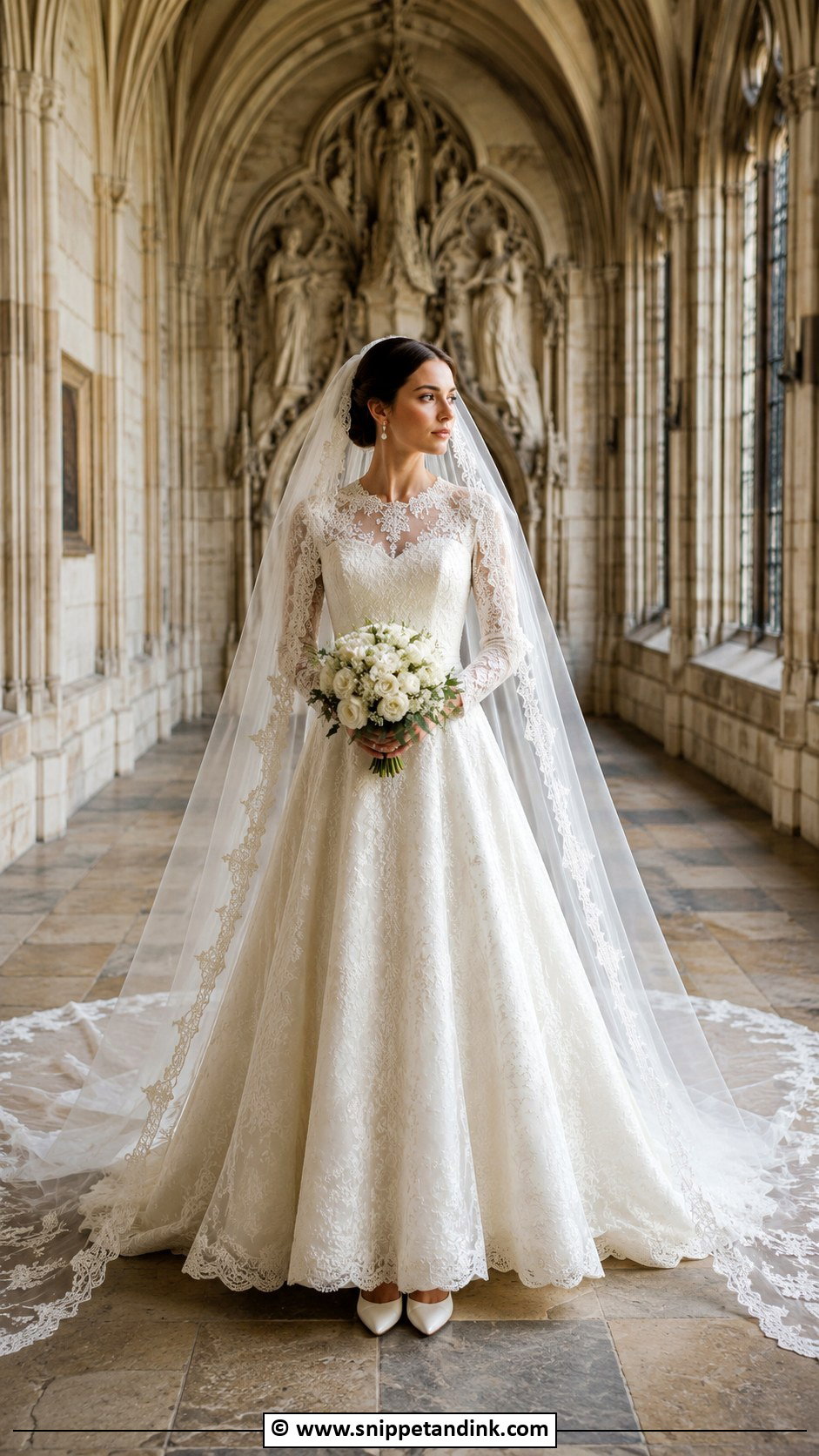
A cathedral veil gives any medieval gown a ceremonial finish, whether lace-edged, embroidered, pearl-trimmed or plain. Choose a gown with a strong silhouette underneath: a lace A-line, satin ball gown or fitted long-sleeve dress. A long veil is heavy, so the comb needs a secure base, usually a small braid or pinned section at the back of the head. Pearl earrings and ivory heels keep the focus on the veil.
Long Sleeves Near Candles, Cake and the Register
The dramatic sleeves that define this style are also what gets in the way most on the day. Bell, trumpet and hanging sleeves hang below your hands whenever you reach forward.
- Candles: venues that use real candles put them on tables and in holders at arm height. Keep wide sleeves well clear and ask the venue where open flames will be.
- Eating and signing the register: a small hidden loop at the sleeve point lets you hook it over a finger or button it up while you eat or sign.
- Cutting the cake: hold the sleeve back with your free hand, or have someone fold it for you.
- Detachable sleeves: some dressmakers can make dramatic sleeves that fasten on at the shoulder, so you can remove them for dinner and dancing.
Many medieval-inspired gowns are made to order by independent dressmakers, which often means a longer wait than a standard bridal shop. I’d allow plenty of time for making and fittings, and ask early about fabric samples so you can see the real colour of the velvet or brocade before it’s cut.
Is It Bridal or Is It Costume?
Medieval bridal style works best when it blends history, fantasy and modern comfort. Bell sleeves, corsets, velvet capes, embroidered bodices, pearls and ball gowns are all options, and your venue should help you decide. Plan the veil, shoes, jewellery, bouquet, hair and fabric weight together, not just the dress. Whether you lean soft, royal, gothic, simple or woodland, the right fit and fabric are what keep it looking bridal.
You'll Like These Ideas:




Leave a Reply