
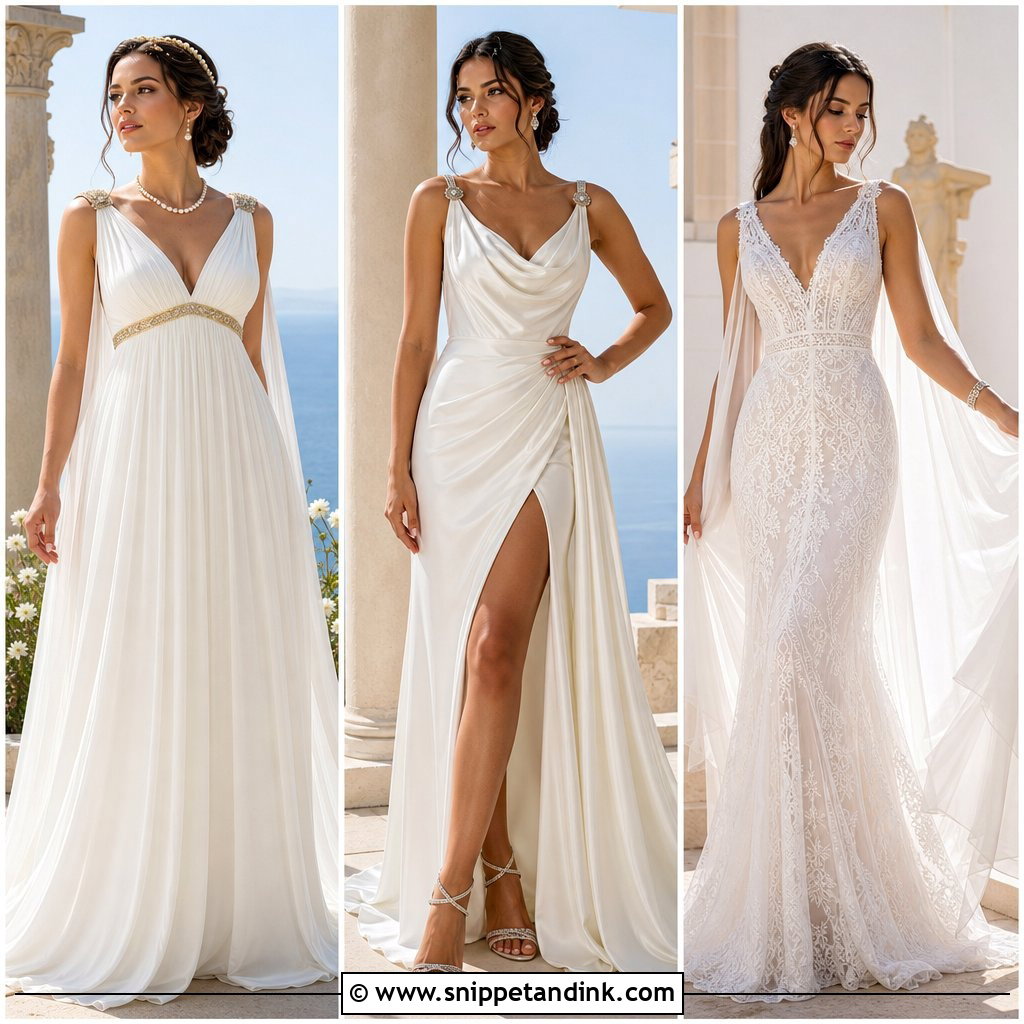
Greek goddess bridal fashion depends on one thing done well: fabric that falls and moves without being forced into shape. Chiffon, silk, satin, crepe, soft tulle and organza all get used, with one-shoulder necklines, empire waists, pleated bodices, cape sleeves, gold accents and open backs doing the styling. Get the drape right and it looks timeless; overload it and it tips into fancy dress. Below are 25 Grecian gowns for beaches, gardens, destination trips and columned formal venues, with my notes on what each one asks of the bride wearing it.
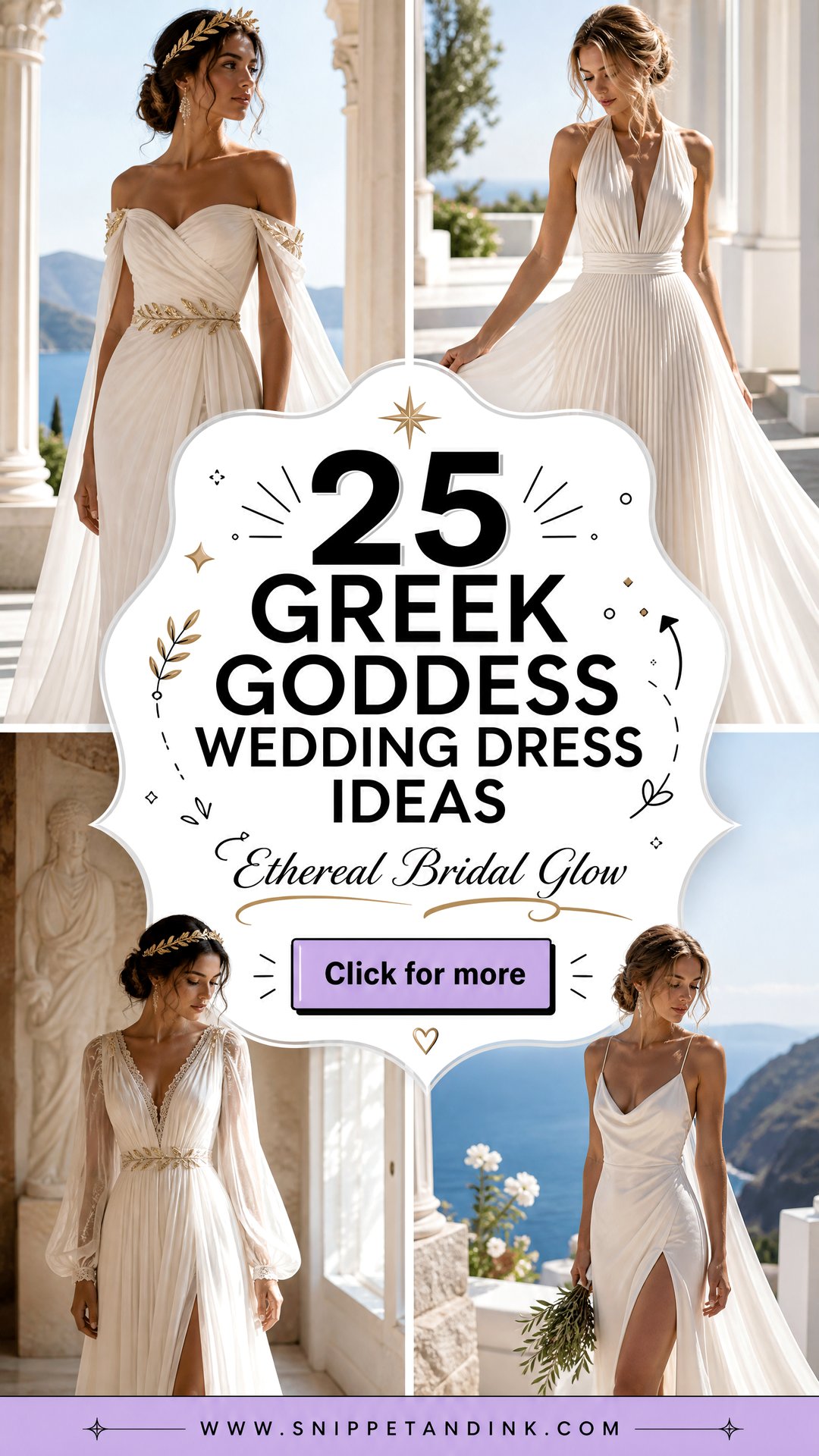
What Makes a Gown Read Grecian Instead of Just Flowy
Plenty of soft dresses get called goddess gowns. In my experience, the ones that genuinely read as Grecian share a few construction details, and you can spot them on a hanger before you ever try them on.
- Fabric gathered to a single point, usually one shoulder, the center front or the waist, then released to fall freely.
- A raised or clearly marked waistline, either an empire seam or a belt.
- Some asymmetry: one shoulder, a side drape or a cape falling from one side.
- Very little structure on show. If you can see boning or stiff interfacing from the outside, it’s drifting into another style.
Two of those are usually enough. A dress with all four plus a laurel crown, gold arm cuffs and a gold belt starts to look like a costume, which is the one thing most brides who love this style are trying to avoid.
1. One Shoulder Greek Goddess Wedding Dress
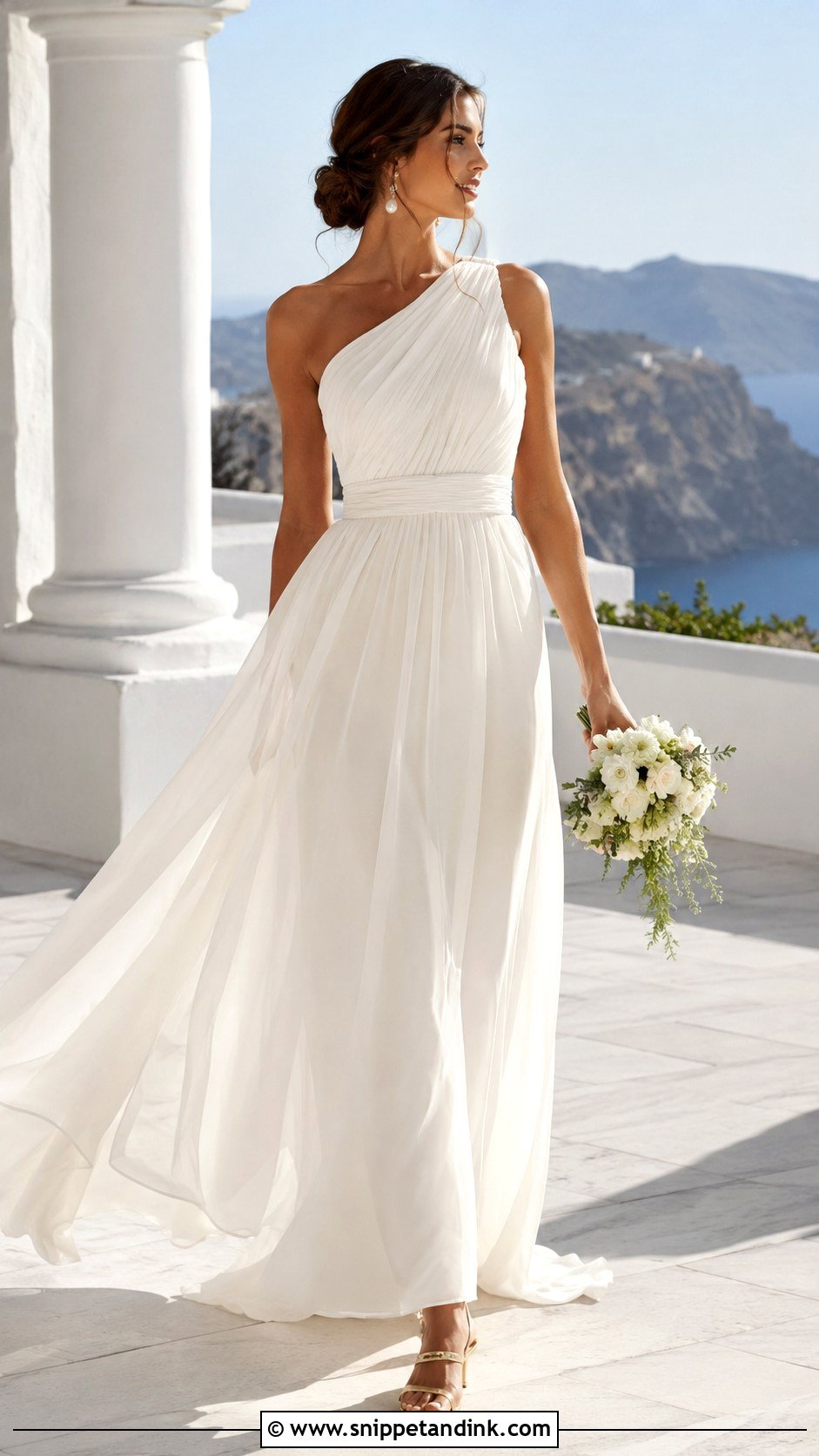
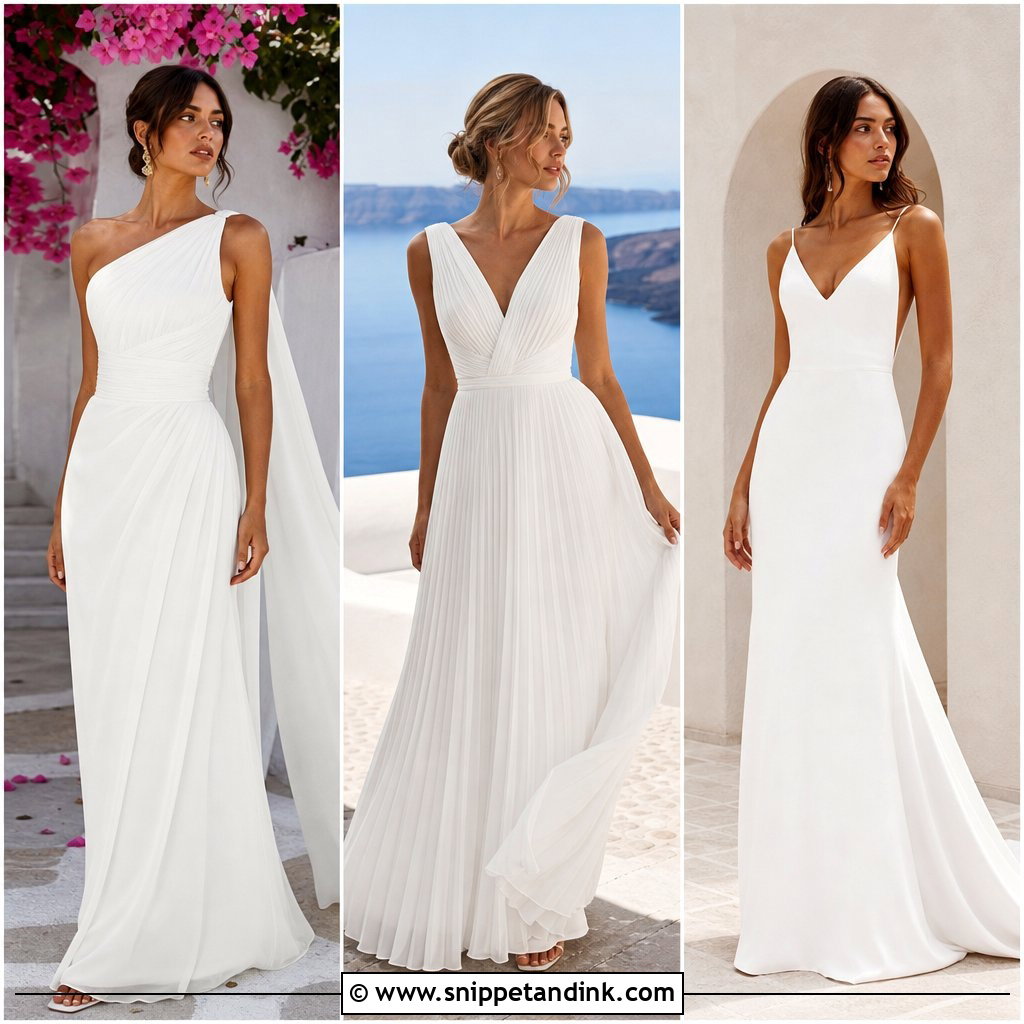
The one-shoulder line is the most recognizable Grecian shape, and the asymmetry does most of the work. Chiffon or silk crepe will float as you walk. What I check at the fitting is the single strap: it carries the whole bodice, so it has to be anchored firmly at the back or the dress slowly twists toward the bare side through the day. A slim gold belt can mark the waist. Gold sandals, pearl drops, a loose low bun and a bouquet of white roses with olive branches complete it, and it suits destination weddings and gardens especially well.
2. Empire Waist Greek Goddess Wedding Dress
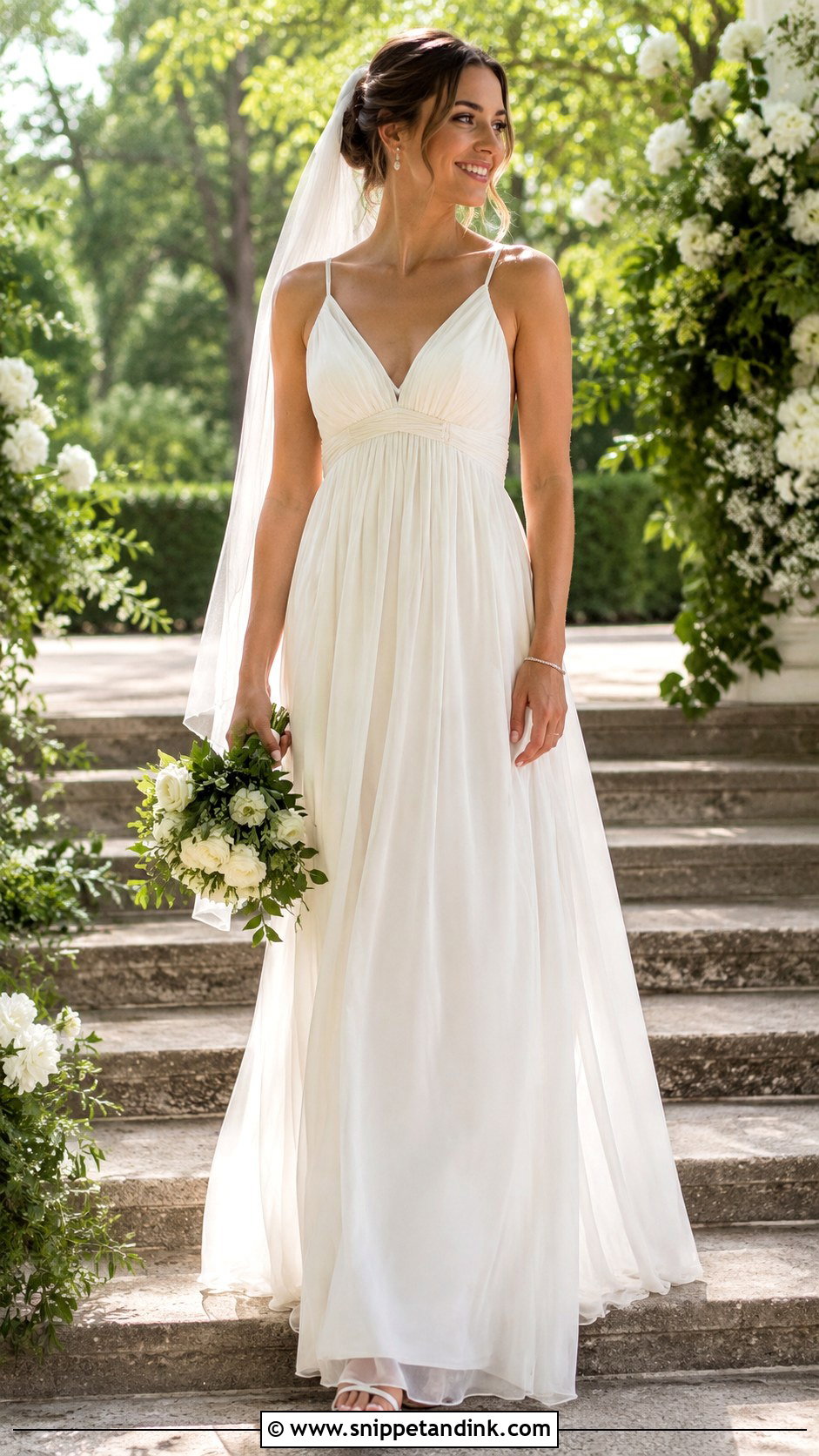
An empire waist sits just under the bust and lets the skirt fall straight, skimming rather than clinging. It’s one of the most comfortable bridal shapes there is, which is why I suggest it for long days and hot venues. The weak point is the bust seam: if it sits even slightly low, the whole dress looks dropped, so that seam gets pinned with the bride wearing her actual bra. Narrow straps, delicate pleats or a soft V keep it light. Metallic flats for the beach, block heels for a formal hall.
3. Draped Chiffon Greek Goddess Wedding Dress
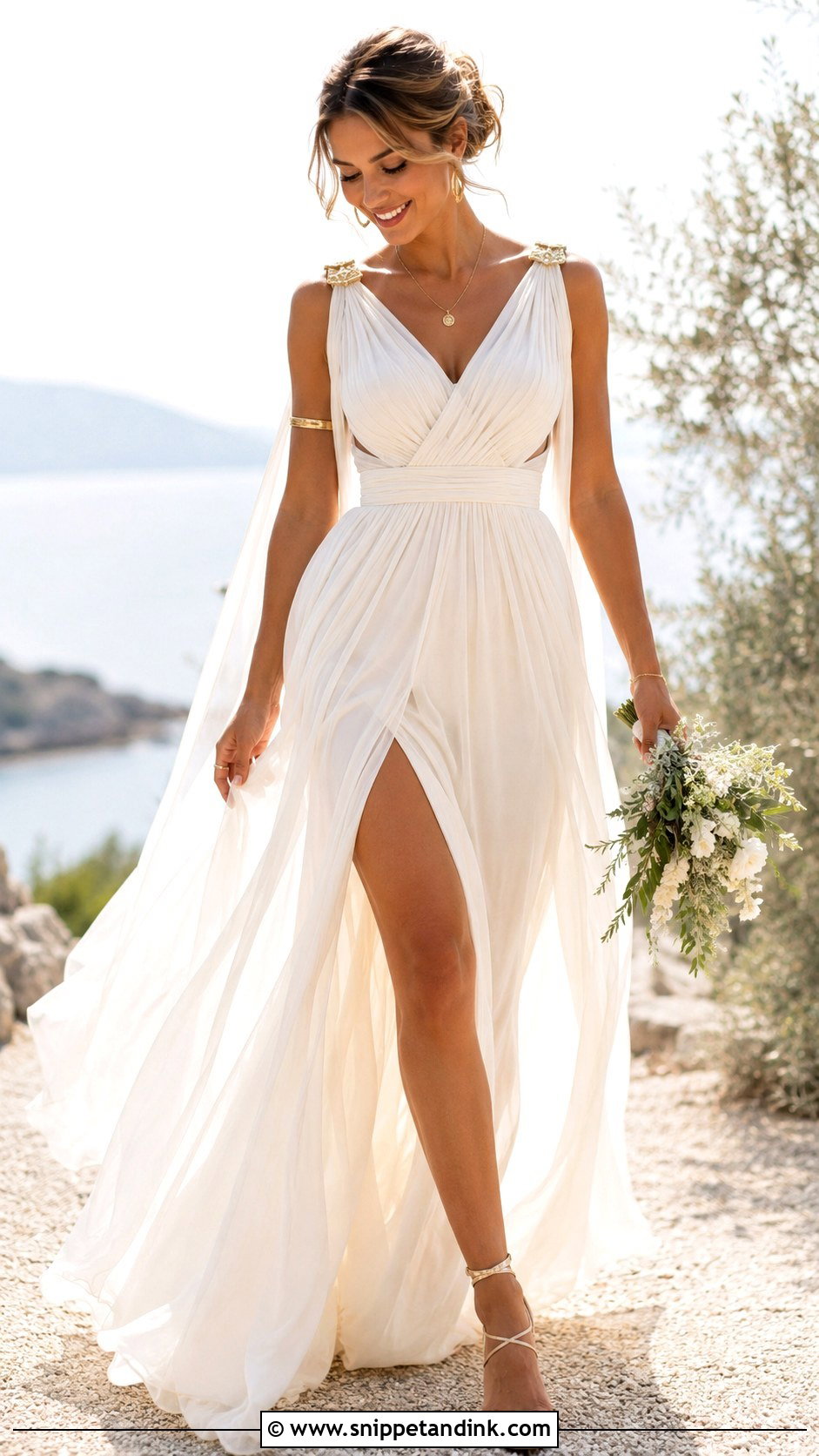
Chiffon in motion is the whole appeal. It gathers across the bodice, waist or shoulder and gives texture without a single bead. It’s also fragile: chiffon snags on rough bouquet stems, brooches and the hook-and-eye of a bridesmaid’s dress, so I wrap the bouquet handle in ribbon and keep brooches off the shoulder. Soft ivory reads classic; a barely blush shade warms it. Delicate gold jewelry and an updo with face-framing pieces suit it, and natural light at a vineyard or beach shows the fabric at its best.
4. Satin Greek Goddess Wedding Dress
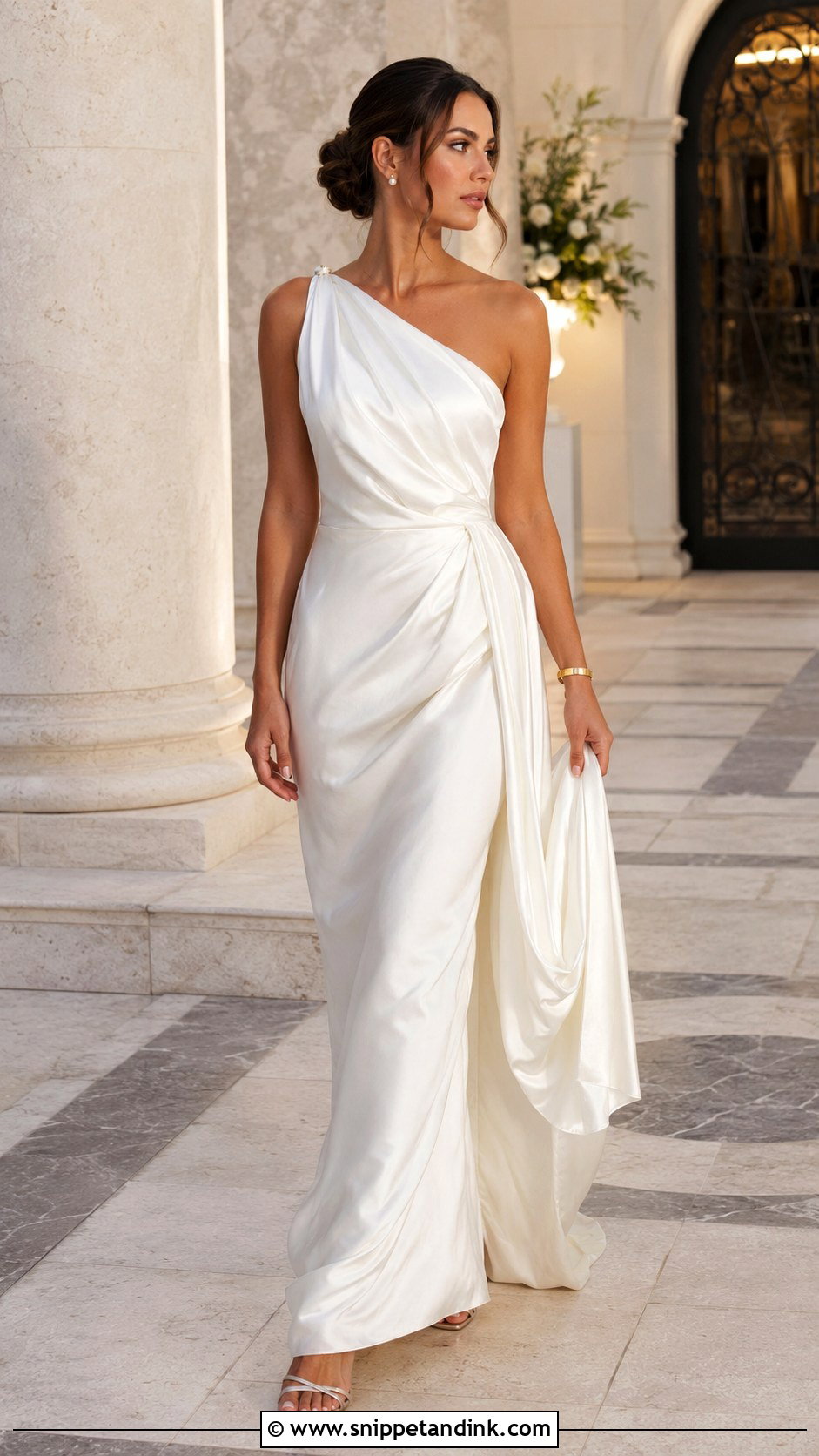
Satin gives the Grecian idea a more polished finish. Rather than a full skirt, look for a fluid gown with draped panels, a gathered waist or a clean column. Satin has a sheen that suits evening and indoor venues. Be aware that it shows creases and sweat more than chiffon, so I’d steam it on the morning and keep the bride standing until the car. Pearl studs, a slim gold bracelet and a sleek low bun are enough.
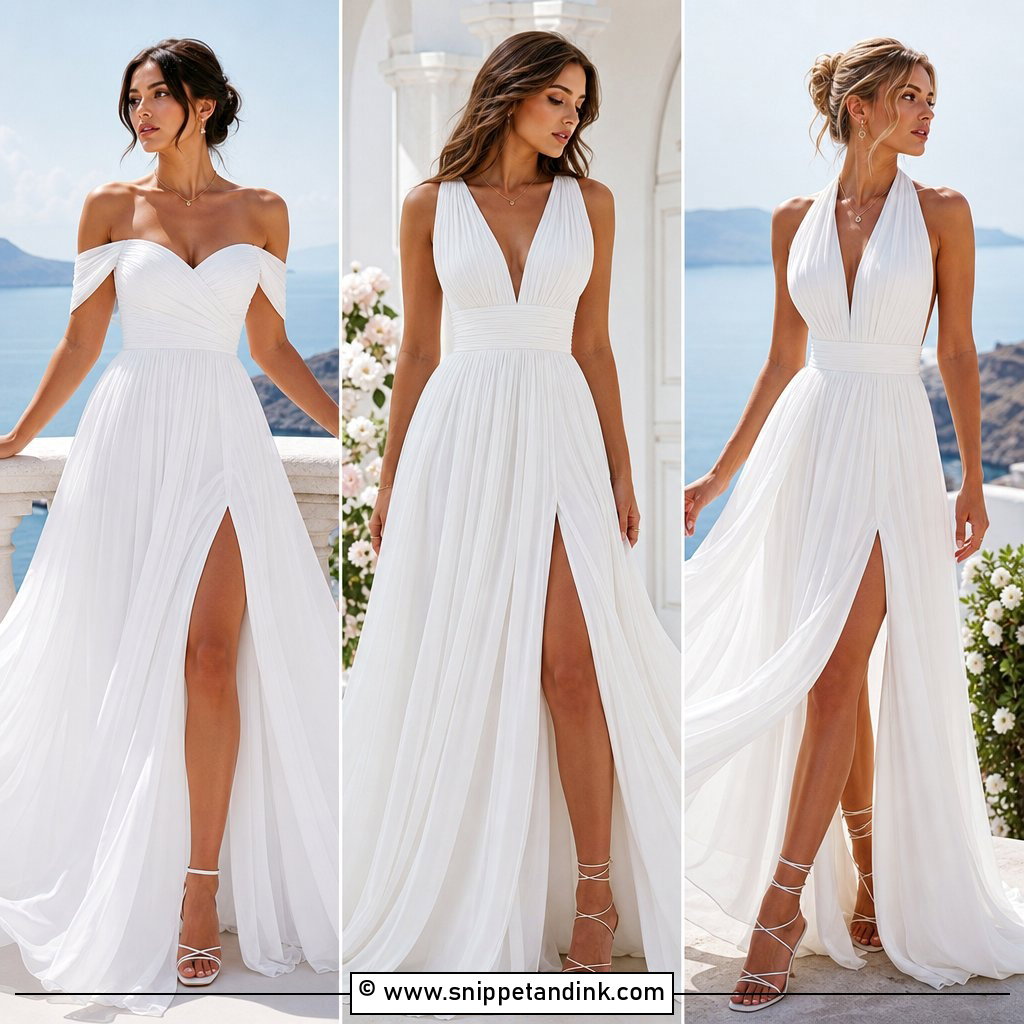
5. Off Shoulder Greek Goddess Wedding Dress
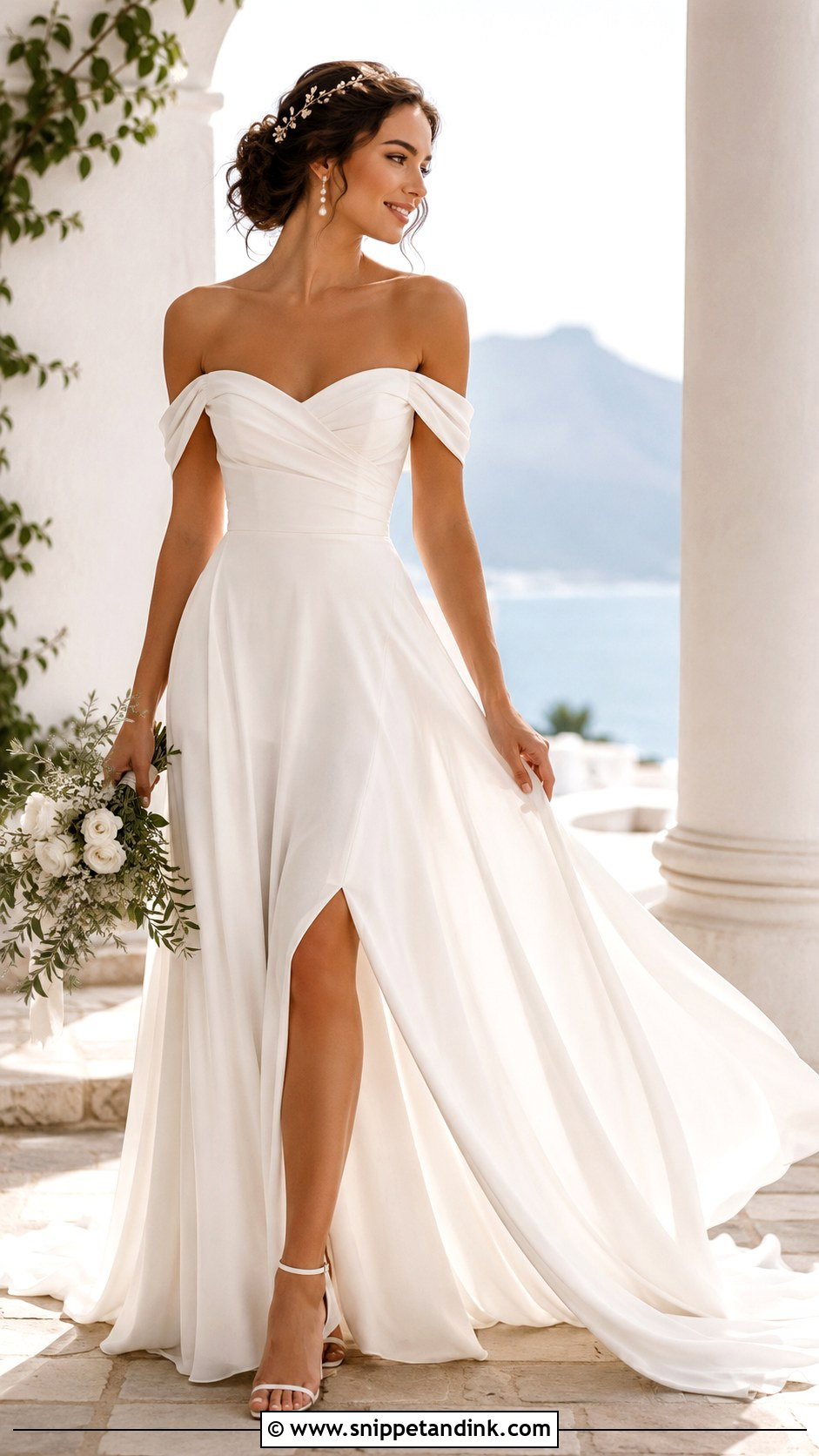
Off the shoulder, with folded fabric across the upper arms, gives a soft regal effect. Crepe, chiffon or light satin all hold the drape. A fitted bodice with a flowing skirt is structured; a looser draped version is more relaxed. I’d skip the necklace here completely and use a delicate hair vine and simple drop earrings instead. The thing to test is hugging: an off-shoulder band that’s too tight stops you lifting your arms, and you’ll be lifting them all day.
6. Pleated Greek Goddess Wedding Dress
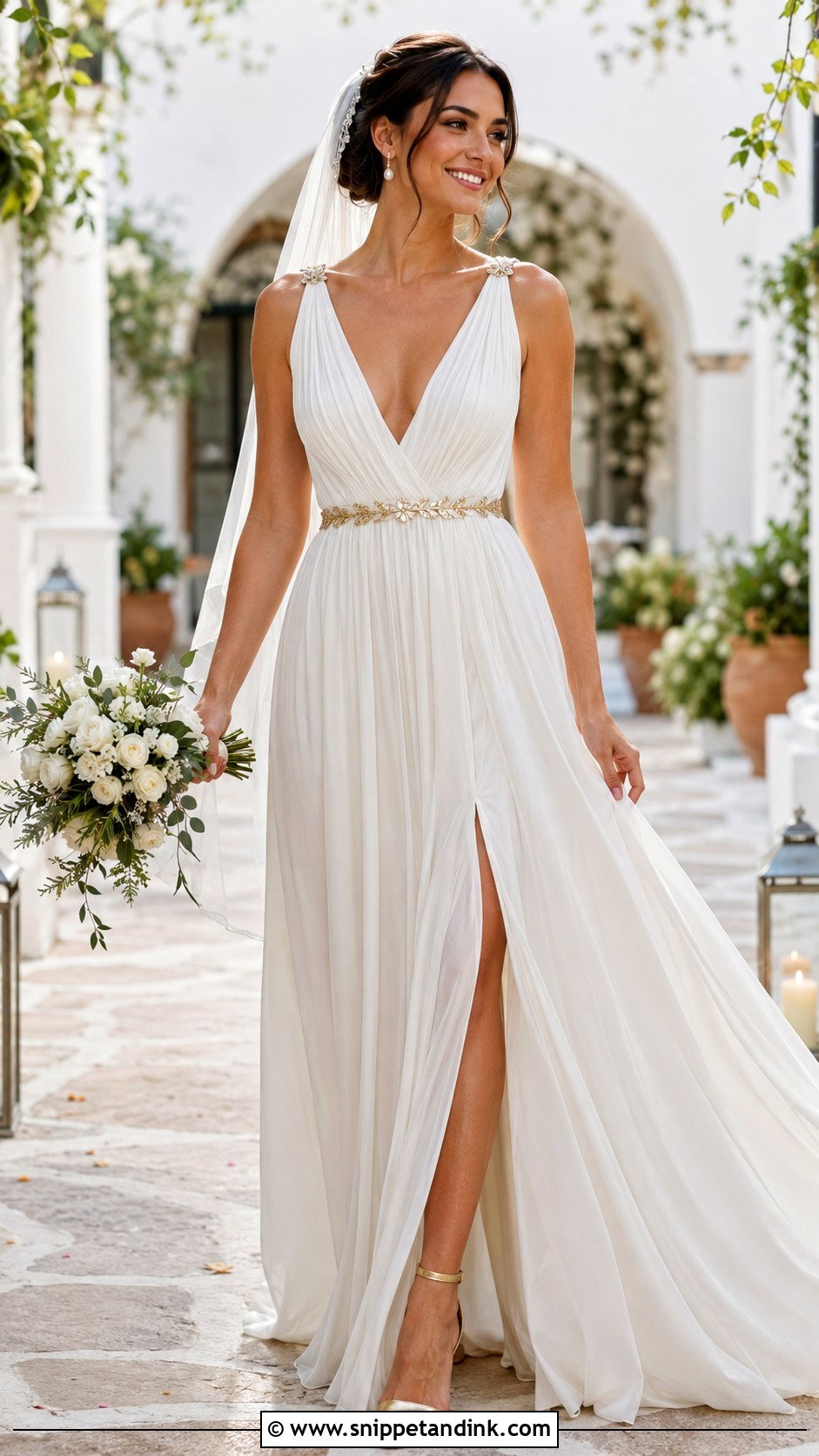
Pleating builds the detail into the fabric itself, so the dress looks finished without any embellishment. Fine pleats on the bodice define the bust and waist gently. One honest caution: fine pleats on silk can relax in humidity and lose their crispness by evening, while polyester pleats hold their set for longer. Gold ankle-strap heels, a soft veil and small pearl earrings suit it. If the pleating is heavy, a simple, airy bouquet stops it looking busy.
7. Greek Goddess Wedding Dress With Gold Belt
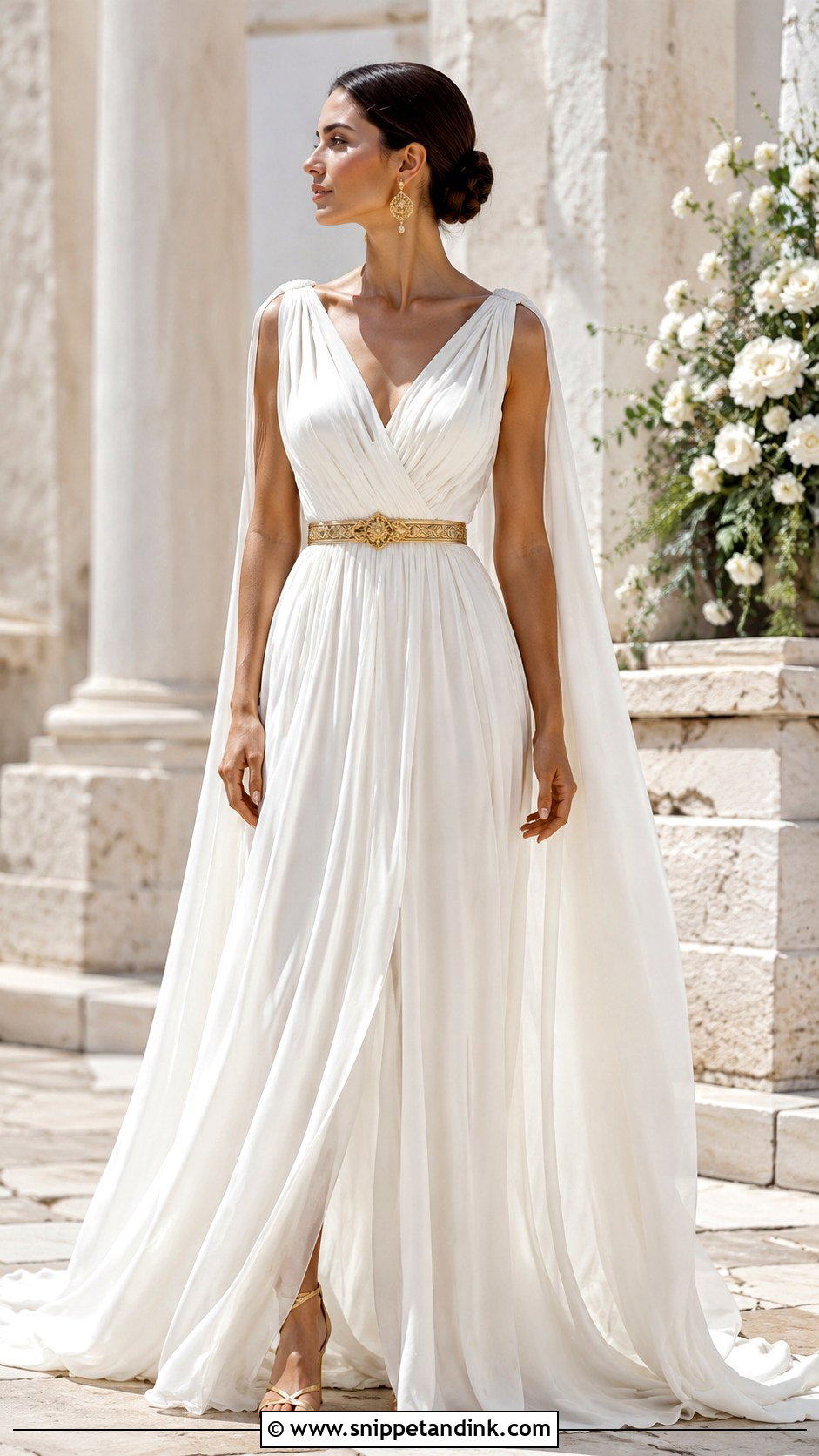
A gold belt is the clearest Grecian reference you can add without choosing a decorated gown. Slim, braided, leaf-shaped or softly embellished, it marks the waist on white, ivory, champagne or blush. I’d fit the belt at the same appointment as the dress, because a belt placed a centimeter off the natural waist changes the proportion in every full-length photo. Gold earrings, metallic sandals and a clean low bun complete it. Add a soft veil just for the ceremony if you like.
8. Halter Greek Goddess Wedding Dress
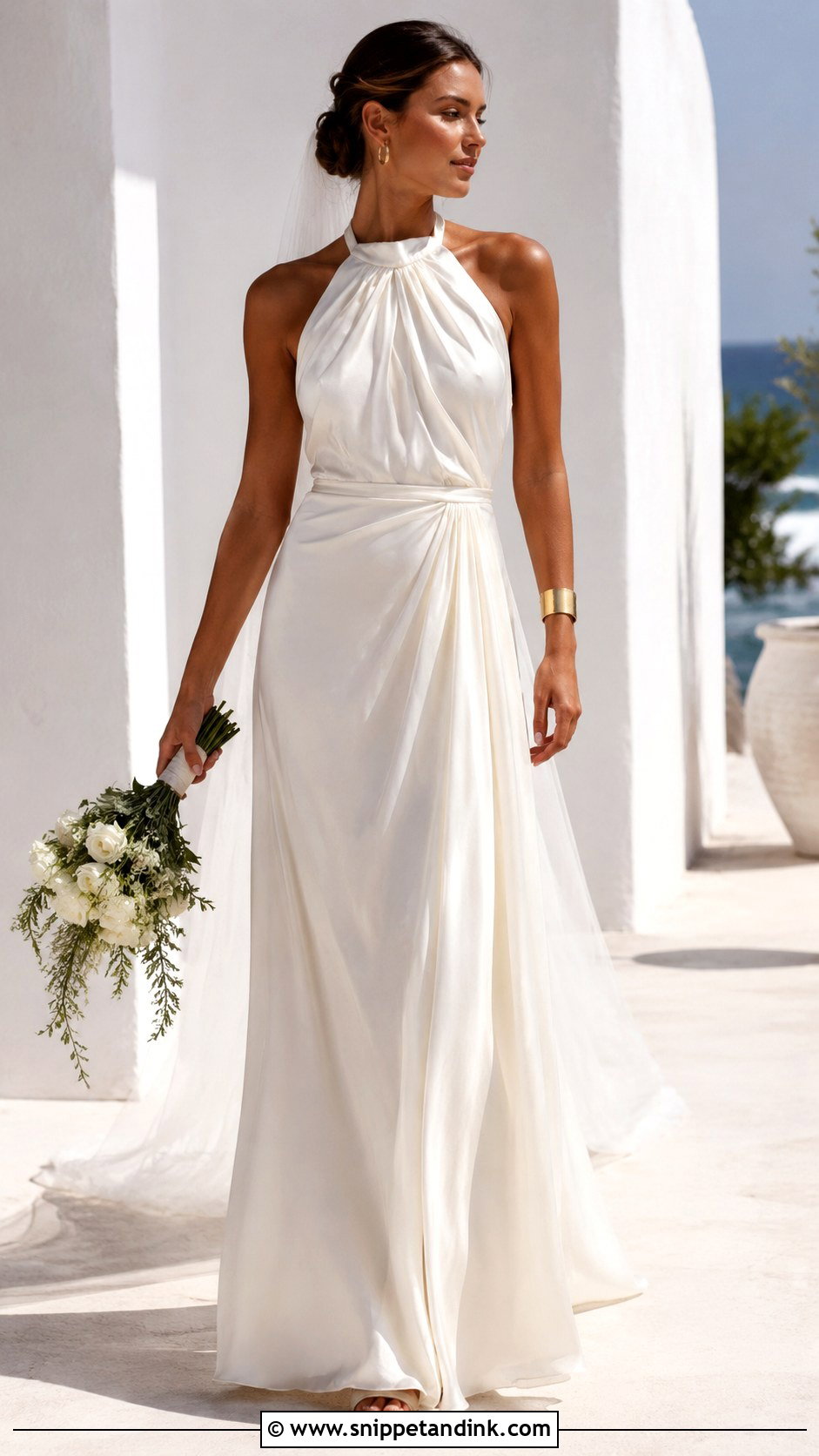
A halter lifts the eye and shows the shoulders while still feeling secure. Draping around the neck or gathered fabric at the bodice gives the Grecian finish, in silk, satin, crepe or chiffon. The neck strap takes some of the bodice’s weight, so heavier fabric can leave you with a sore neck by evening; I always ask brides to wear the sample for a while before deciding. Hair goes up to show the neckline. Gold hoops and a cuff bracelet suit it, and it’s comfortable in heat.
9. Open Back Greek Goddess Wedding Dress
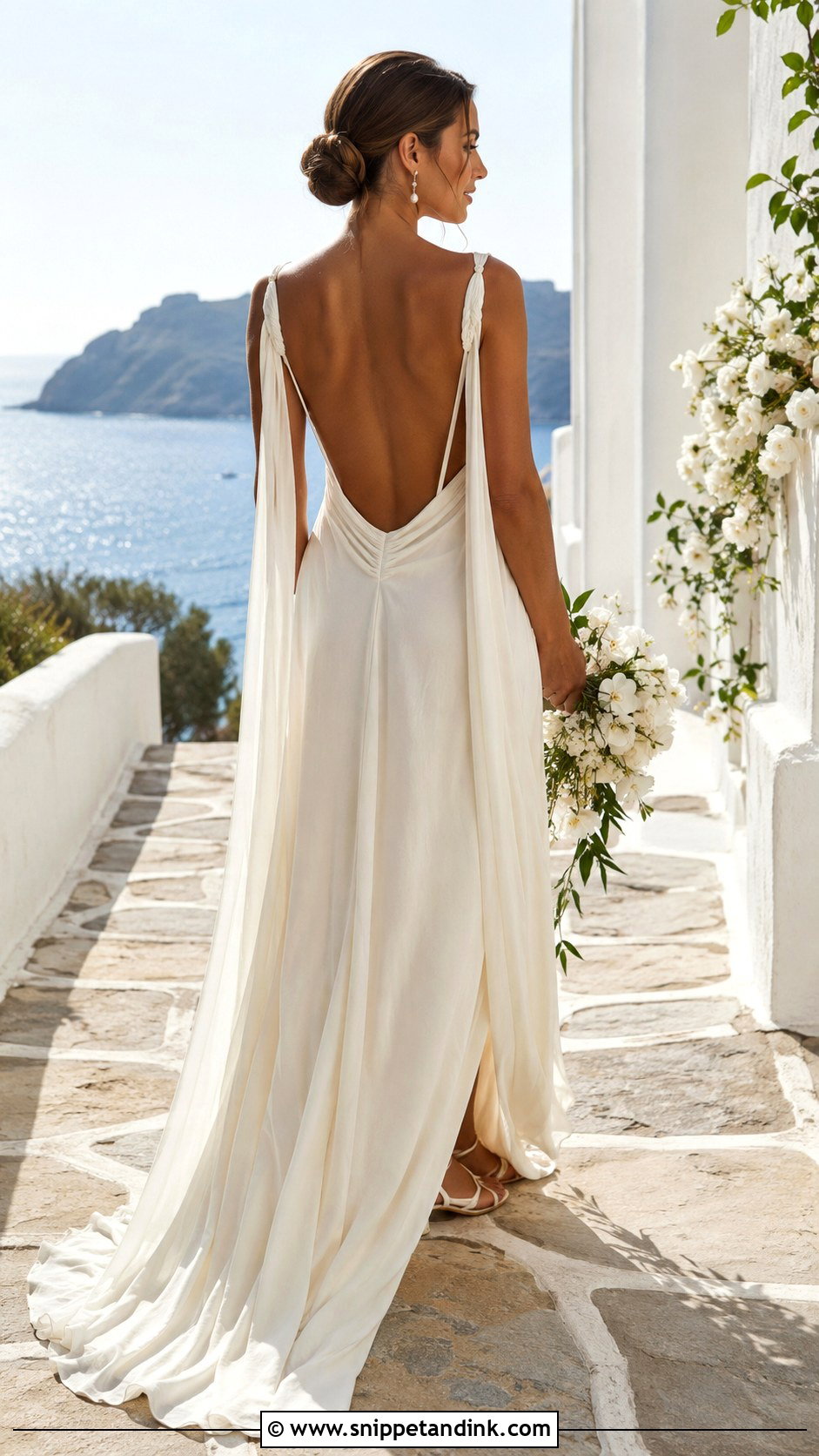
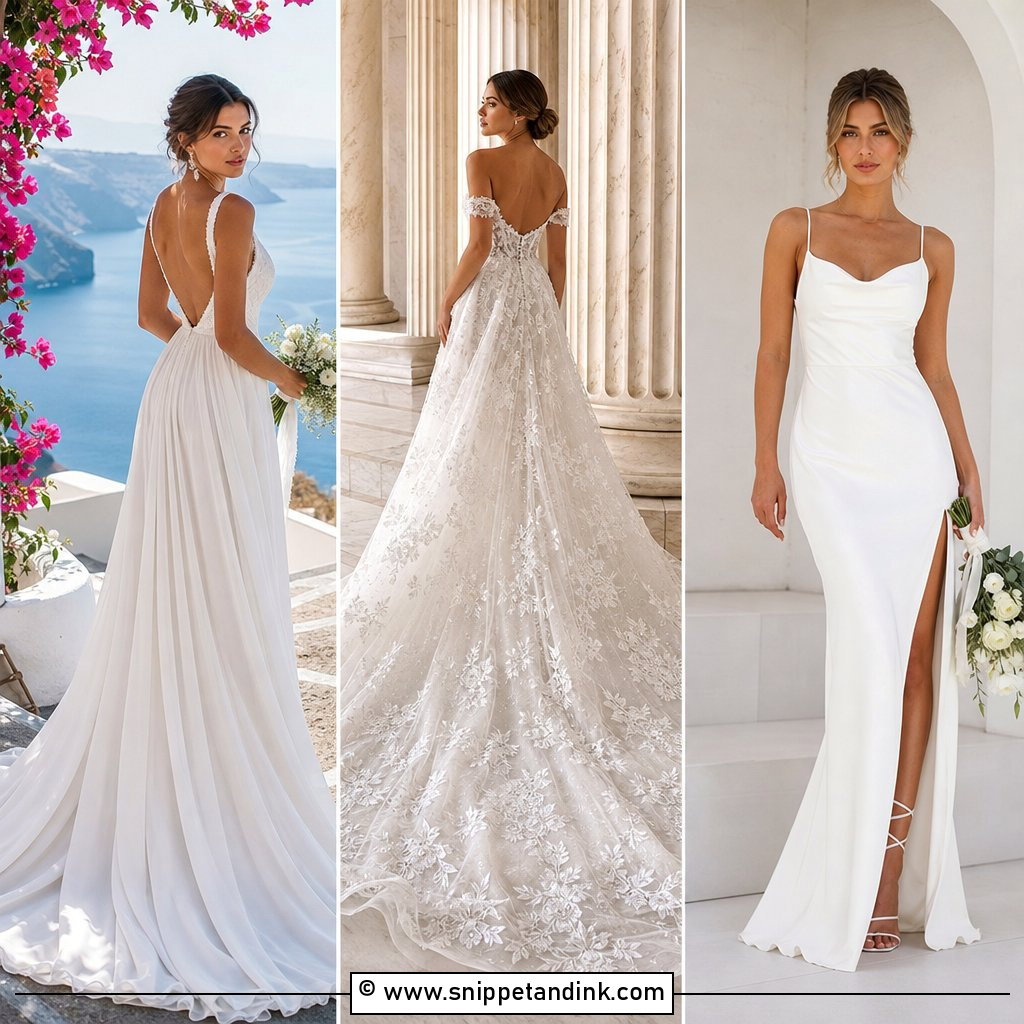
From the front, an open back looks almost plain. From behind, draped fabric, crisscross straps or a low scoop makes the walk back up the aisle the strongest moment. Lightweight fabric is essential, since a heavy skirt pulls the back open and down. The detail people forget is the bra; most open backs need a built-in cup or a stick-on option, sorted at the first fitting. Simple earrings, a low bun and a removable veil keep the back visible. For sunset beach ceremonies it’s a showstopper.
10. Long Sleeve Greek Goddess Wedding Dress
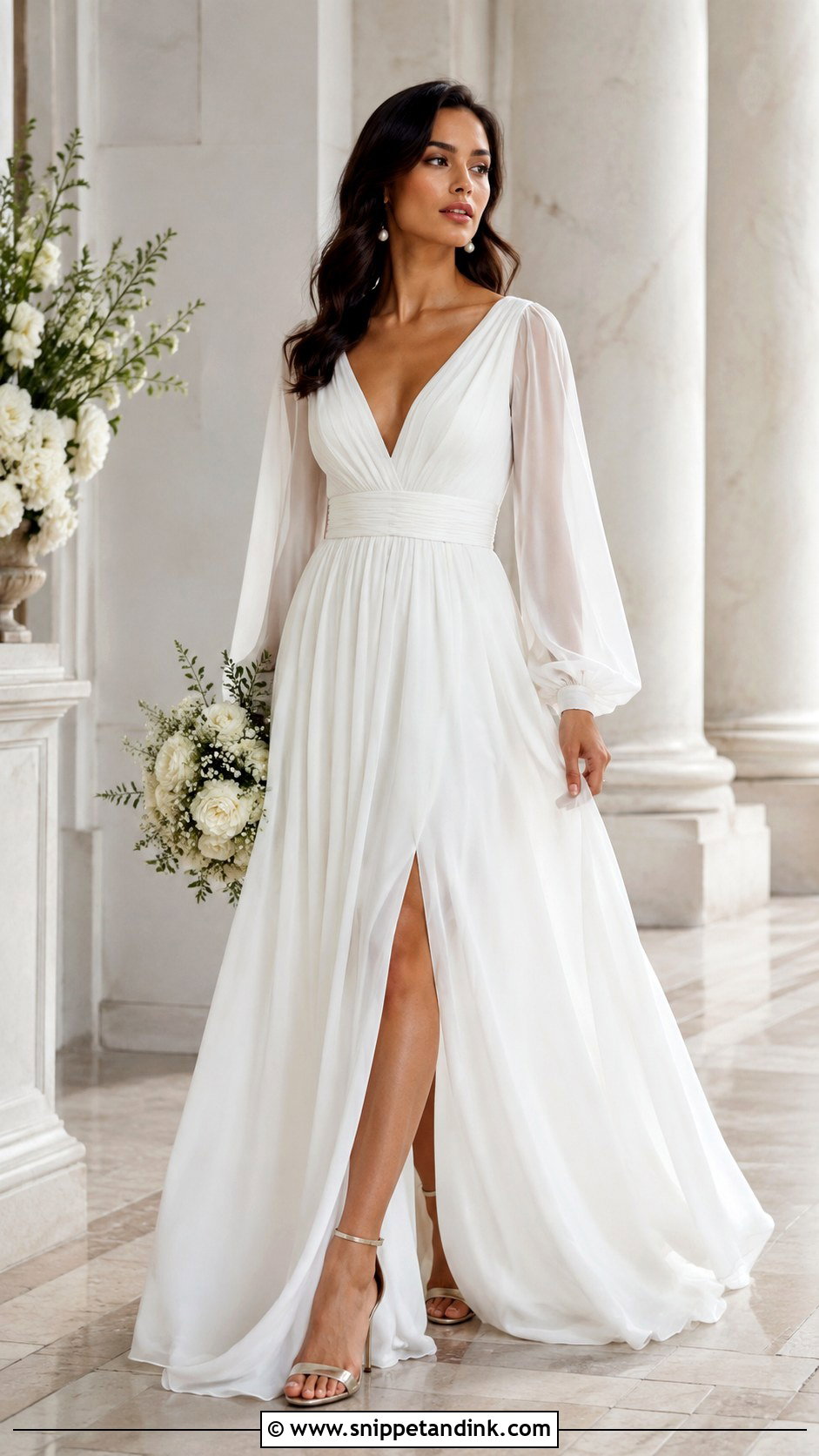
Sleeves give a goddess gown a more formal presence. I’d go for sheer chiffon, bishop sleeves or soft draped ones rather than fitted lace, which pulls the look toward a different style altogether. They add coverage for cooler seasons and indoor venues, and they move beautifully. A V-neckline, empire waist or gathered bodice stops the dress feeling heavy. With bishop sleeves, keep bracelets off; the cuff and the bracelet fight each other. Soft waves, pearl earrings and a delicate veil finish it.
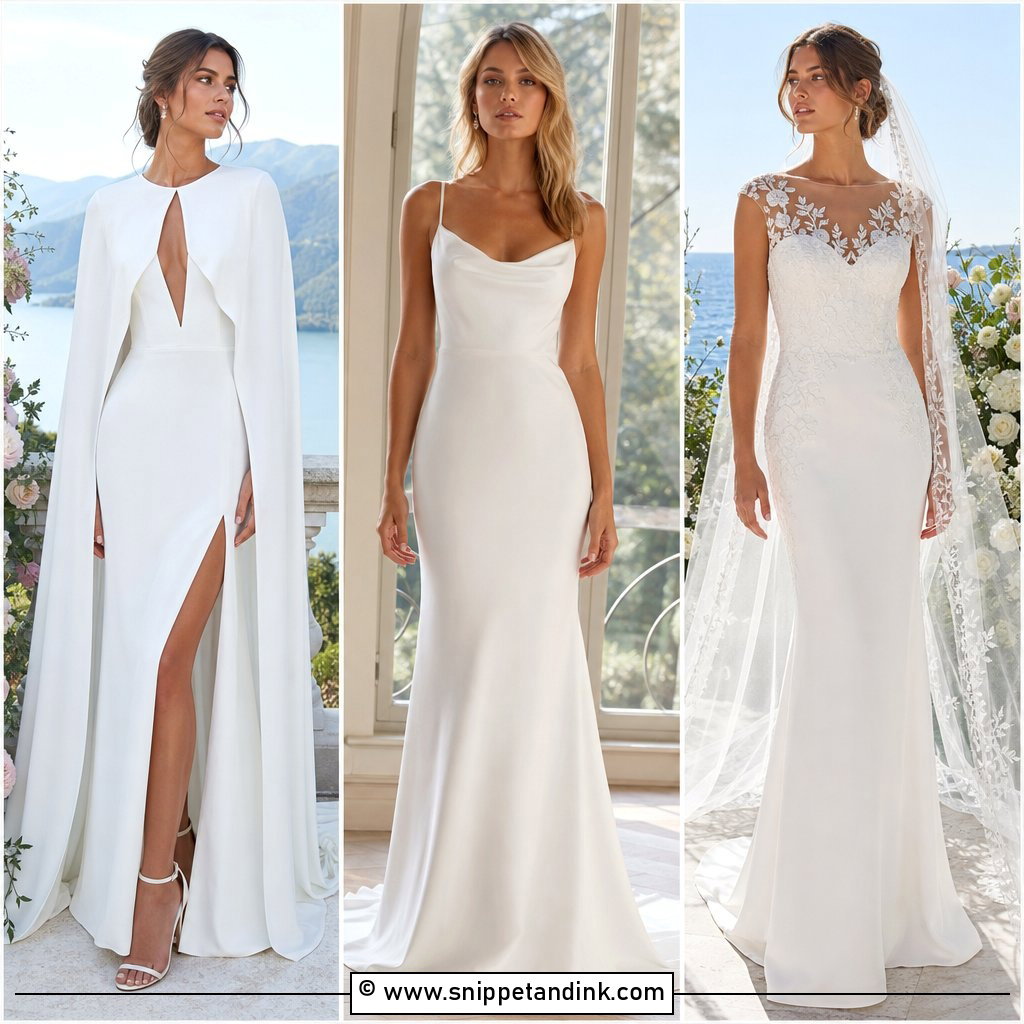
11. Cape Greek Goddess Wedding Dress
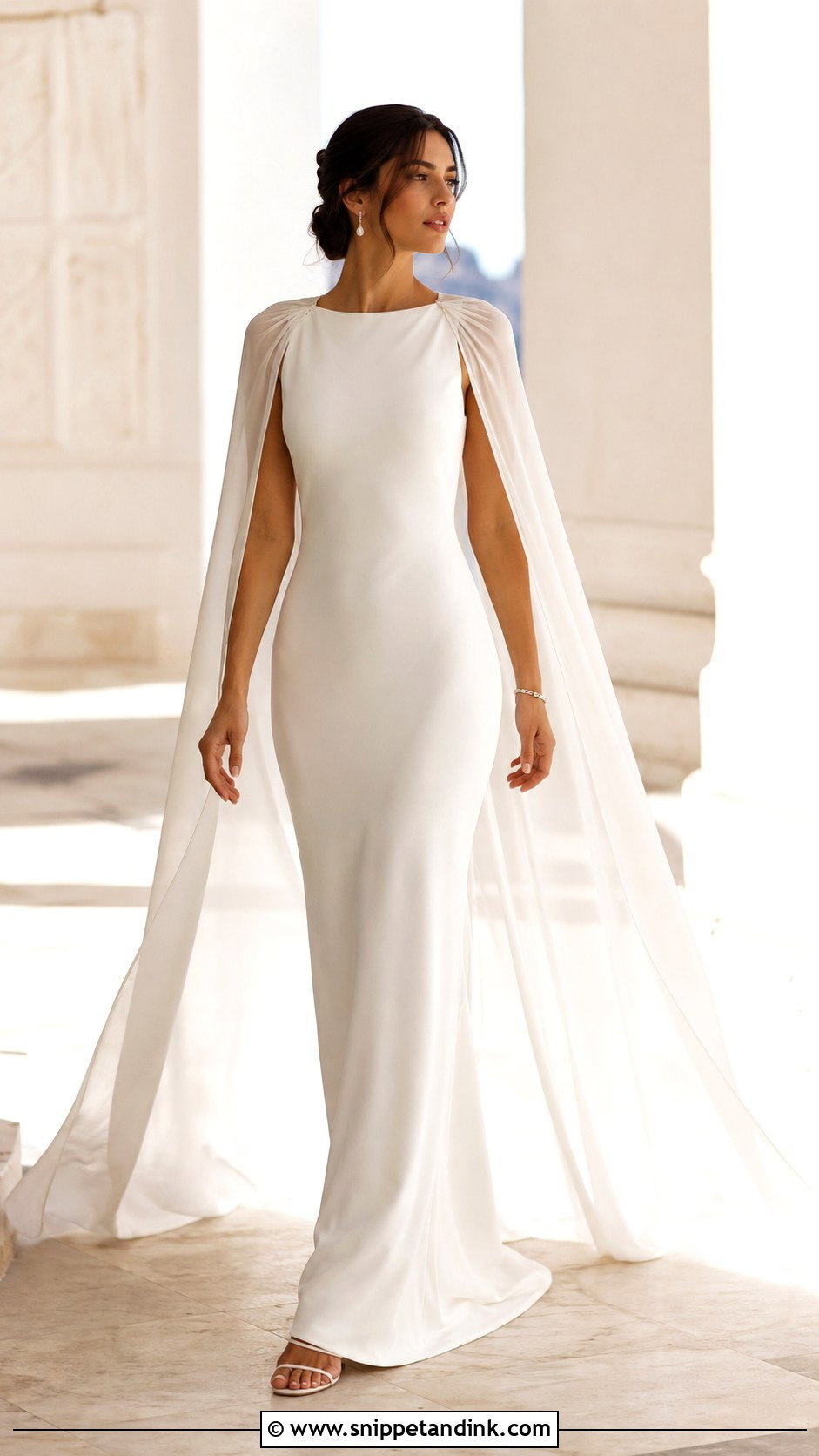
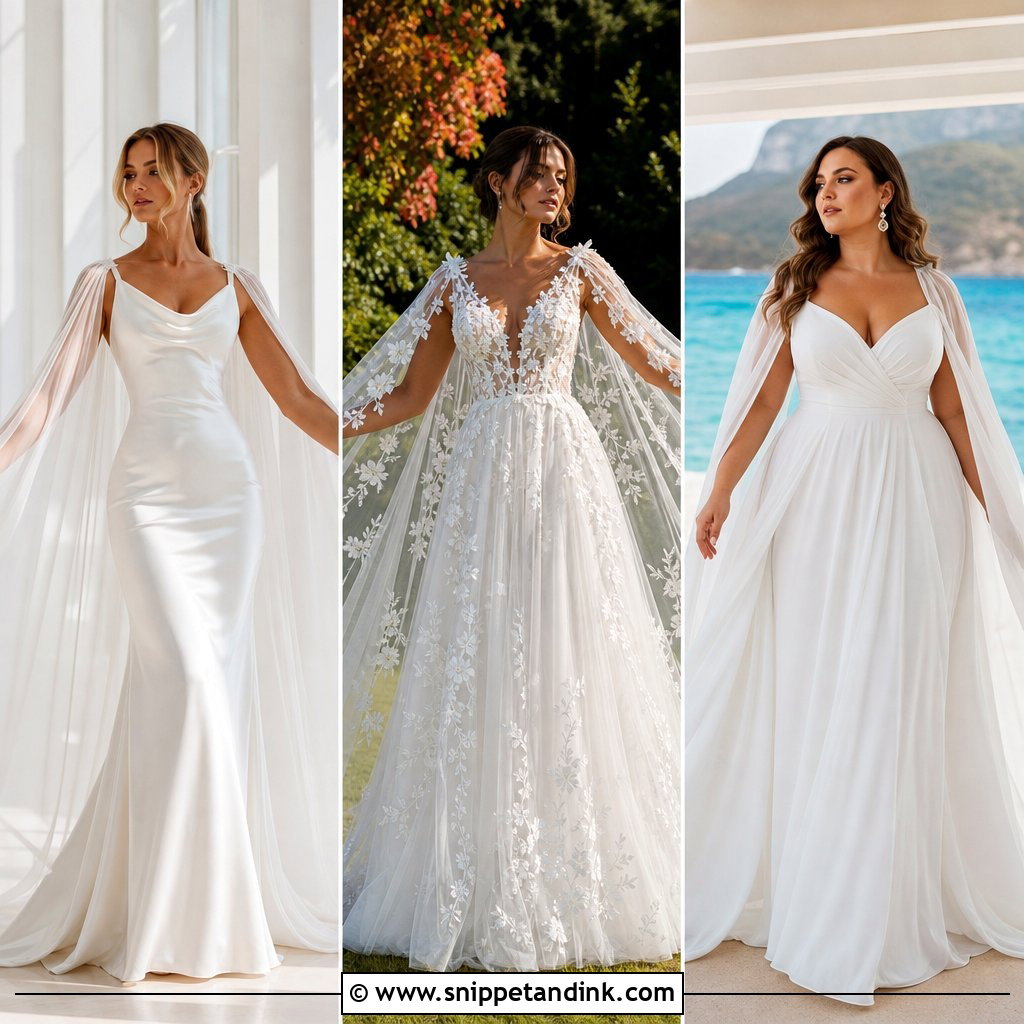
A cape gives drama without a long train. It can fall from both shoulders, attach at the back or flow from one shoulder. I keep the base gown simple so the cape remains the feature: a crepe column with a chiffon cape is modern, while a soft A-line with a sheer cape feels more ethereal. Outdoors, a long chiffon cape catches the wind, which is wonderful for photos and awkward during vows, so I sometimes add tiny weights or a discreet wrist loop at the hem.
12. Column Greek Goddess Wedding Dress
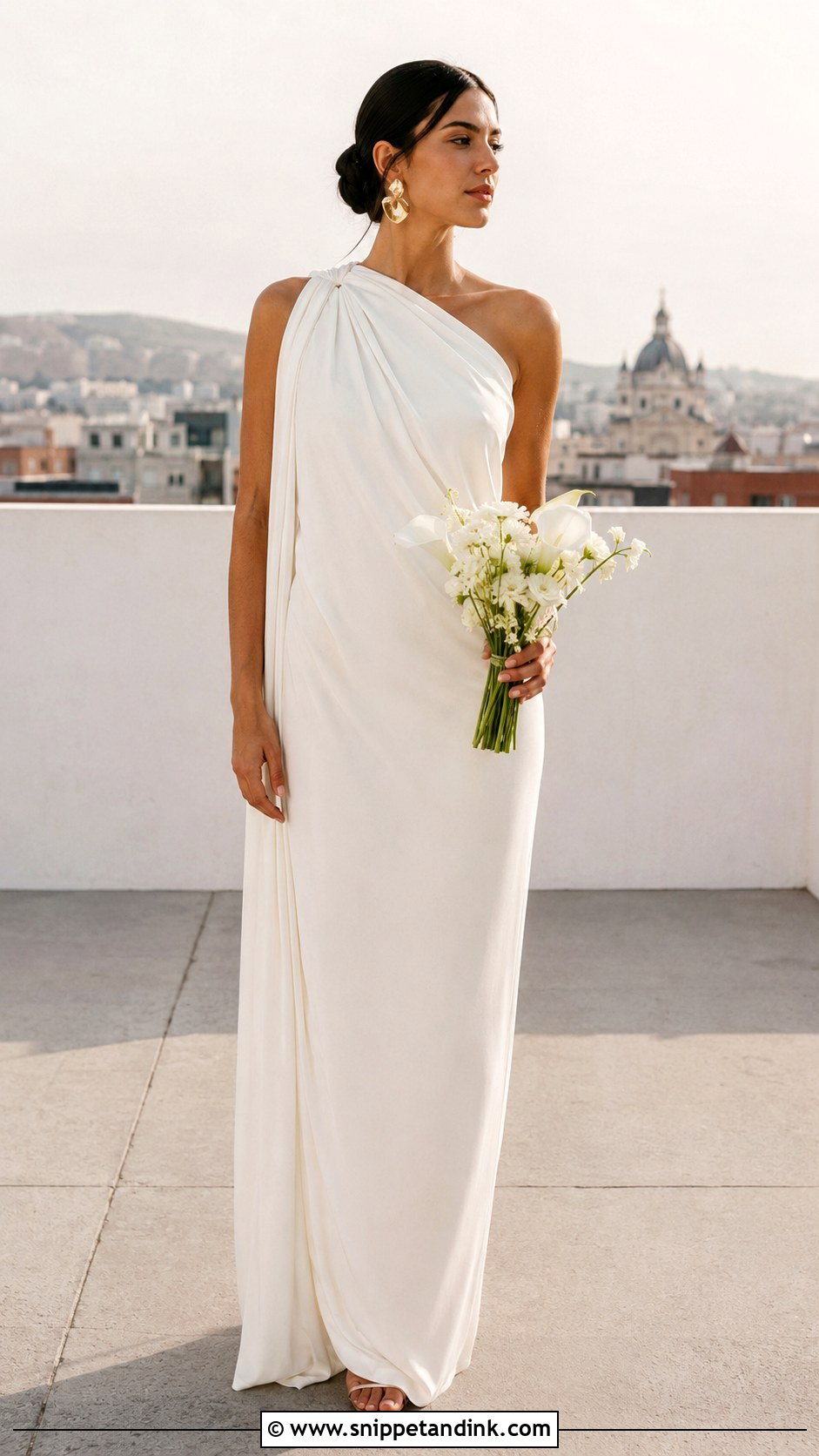
A column falls straight from the shoulders or waist and gives a long, statuesque line. To keep it Grecian rather than just minimal, look for a cowl neckline, a gathered shoulder or a subtle waist detail. Columns are narrow at the hem, so I always check the stride; if she can’t take a normal step, the skirt needs a slit or a little more width at the bottom. Sleek sandals, sculptural gold earrings and a smooth low bun suit it. Courthouses, rooftops and minimal celebrations are its natural home.
13. A Line Greek Goddess Wedding Dress
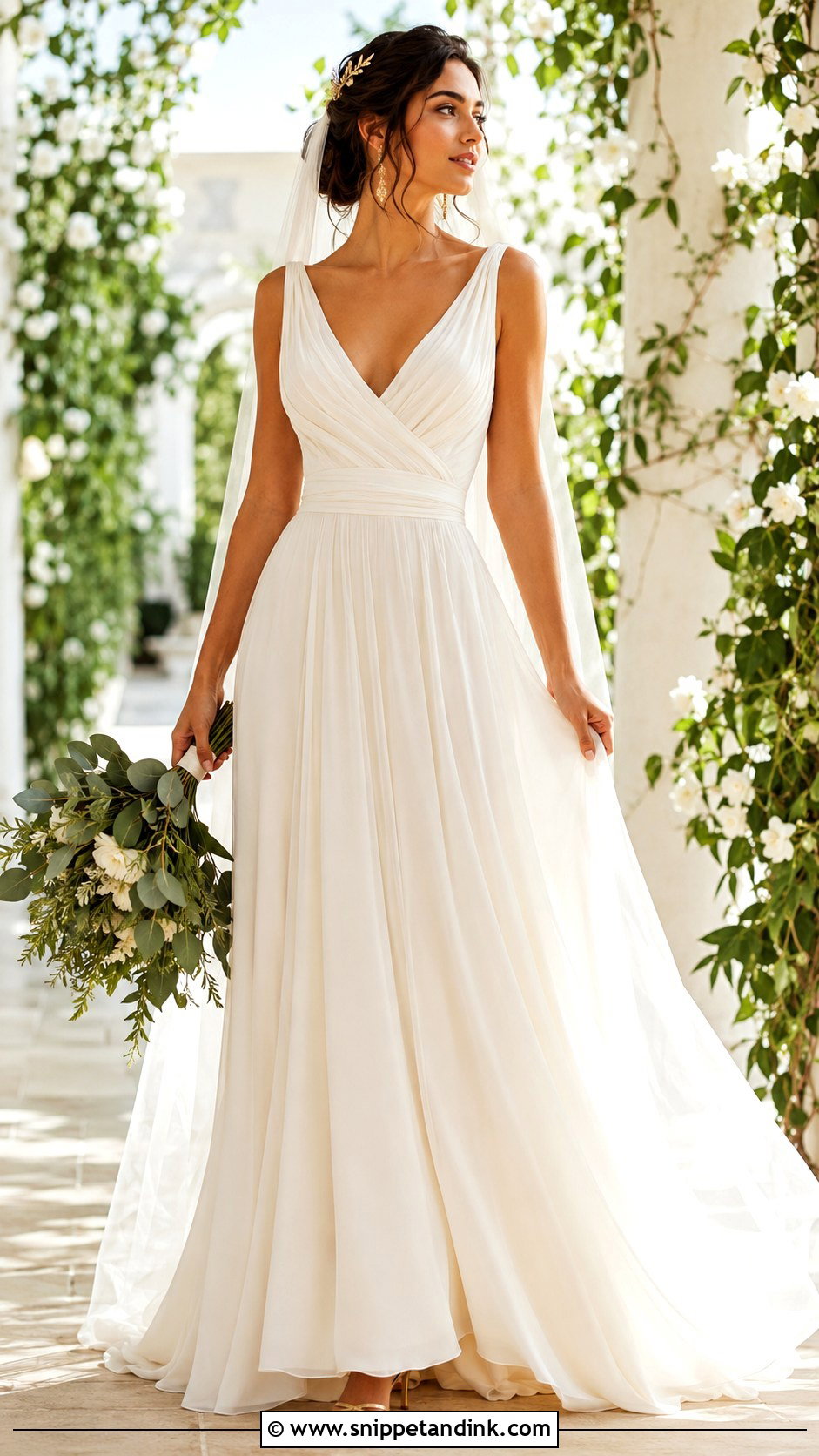
An A line Greek goddess wedding dress combines a flattering bridal shape with Grecian softness. The bodice defines the upper body and the skirt flows away from the waist in draped chiffon, pleated tulle or silk organza. A V-neck, a single shoulder strap or a gathered waist adds the goddess detail. It’s the version I recommend most often to brides who want the mood but have a traditional venue, because it sits comfortably in a church, a ballroom or a field. Gold sandals and a bouquet of white blooms and greenery suit it.
14. Slip Greek Goddess Wedding Dress
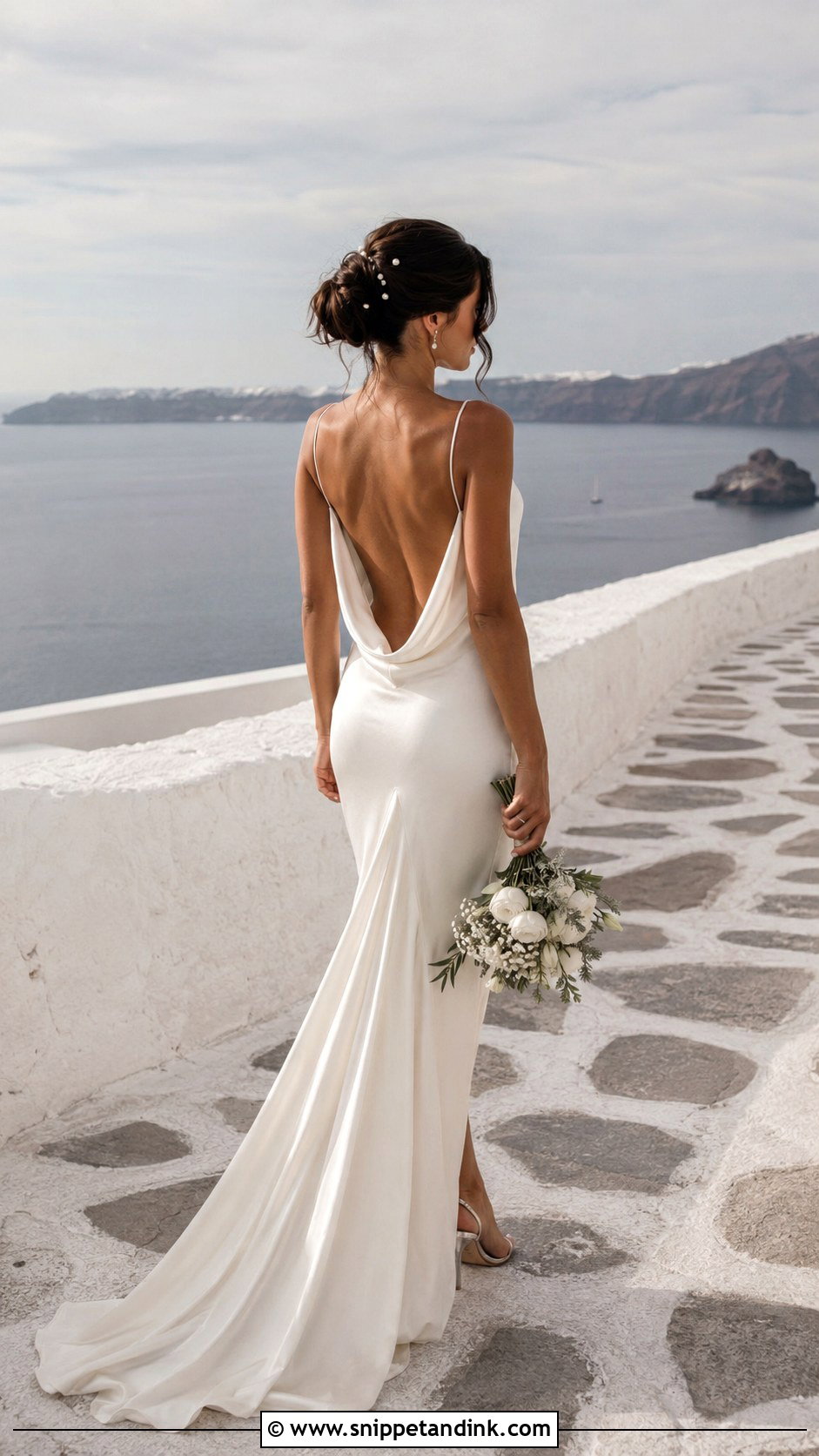
A Grecian slip is the most understated way to wear the look. What makes it Grecian rather than just a slip is the cowl neckline, bias cut, delicate straps or a low draped back. Silk satin falls close to the body without stiffness, but bias-cut silk shows everything beneath it, so smooth, invisible underwear is part of my fitting checklist. Add a sheer cape, gold belt or pearl hair pins for more bridal weight. Ivory or metallic sandals. Elopements and reception changes suit it best.
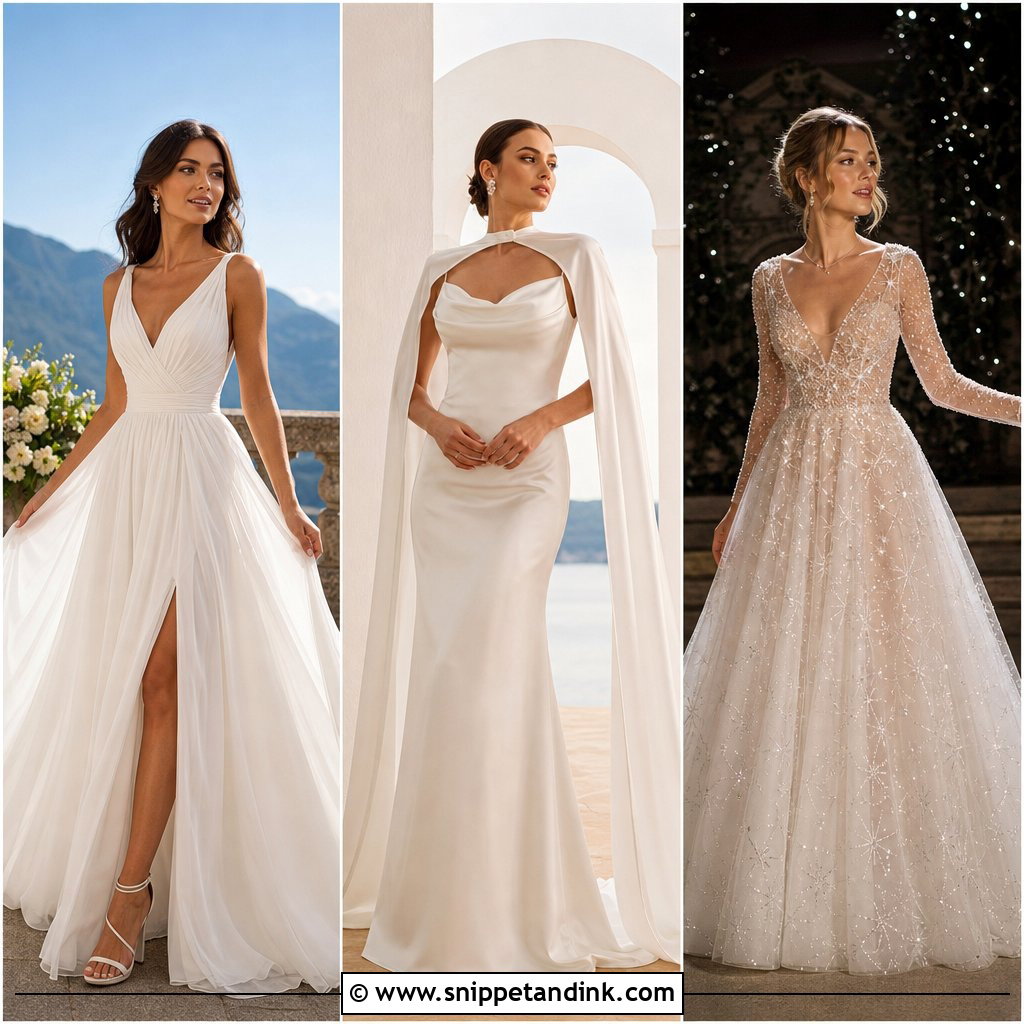

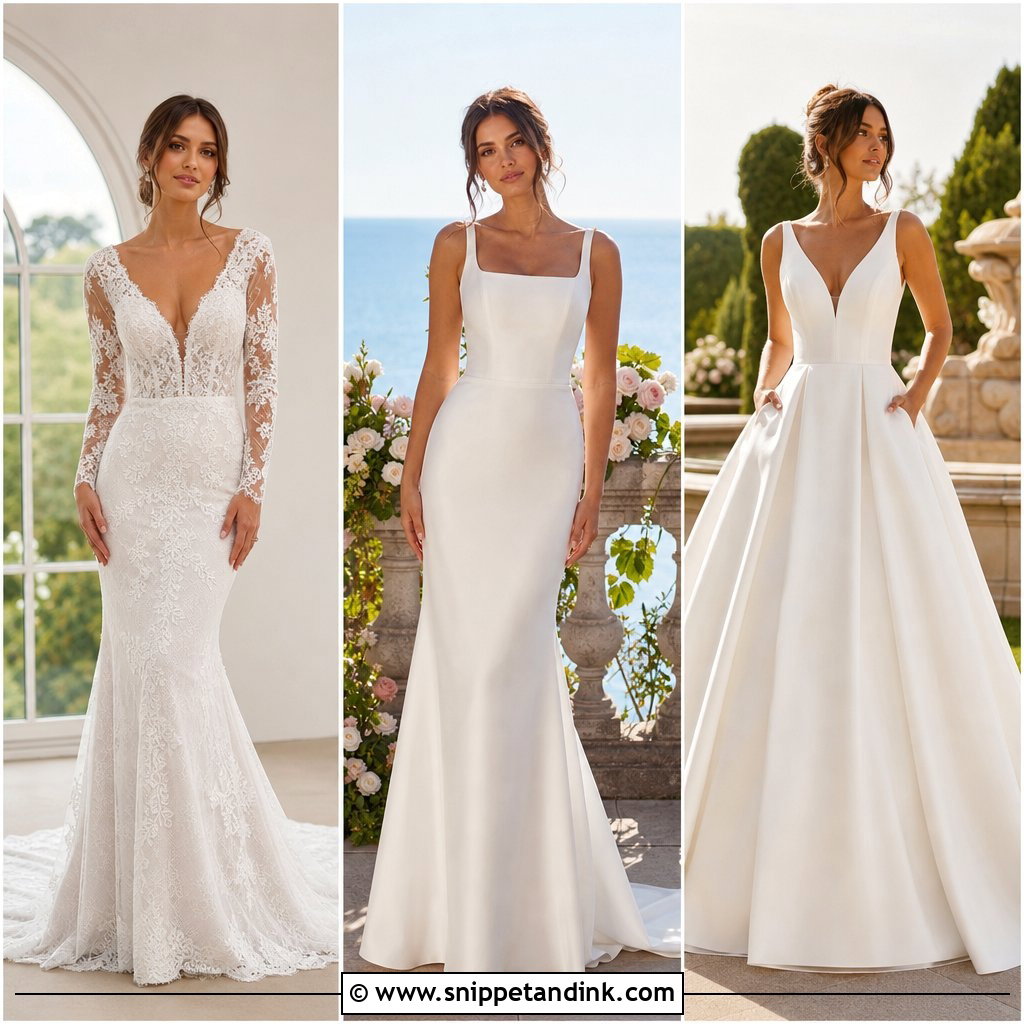
15. Tulle Greek Goddess Wedding Dress
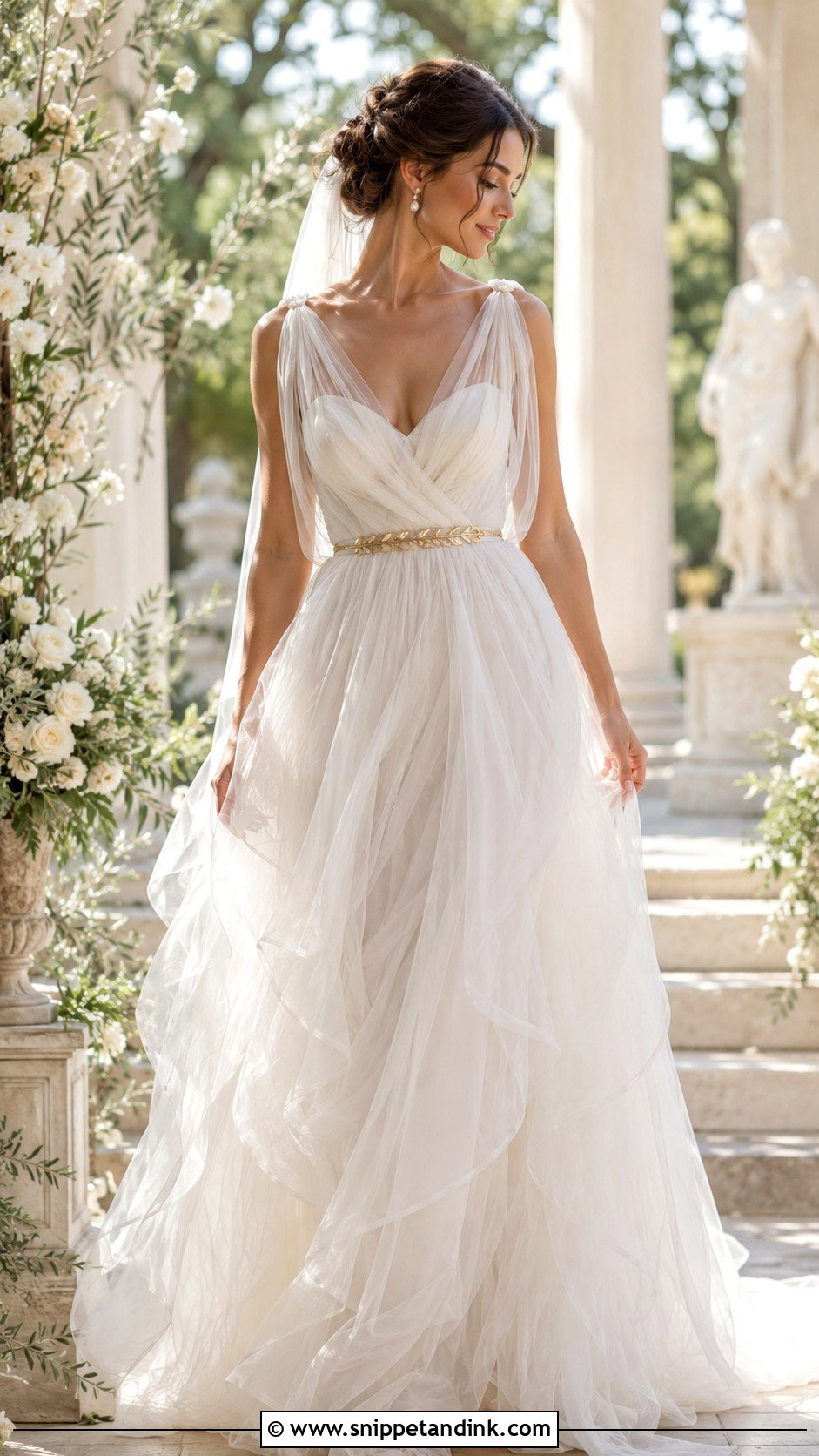
Tulle works for a goddess dress only when it’s soft and layered; stiff tulle turns it into a princess gown. Look for a draped bodice, sheer straps and a floating skirt. Soft tulle gives volume without much weight, which makes it an easy pick if you’d like romance and fullness. Pearl earrings, soft curls and a thin veil keep it delicate, and a subtle gold belt adds definition. Historic estates and garden venues suit the gentler, fairytale lean of this one.
16. Beach Greek Goddess Wedding Dress
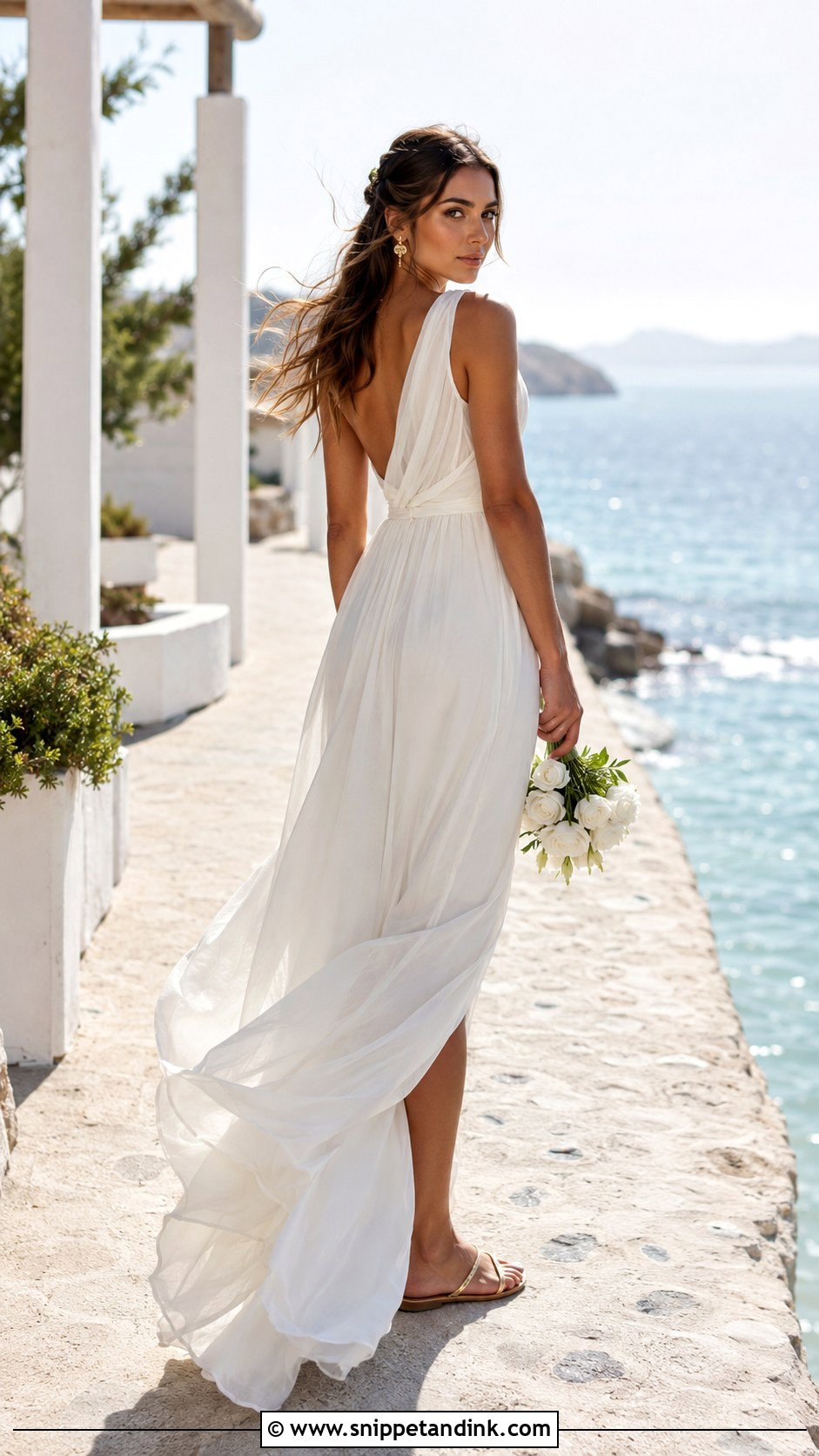
Sand changes the rules. Chiffon, silk and soft crepe breathe and move in a sea breeze; heavy trains drag and collect sand, so I’d keep the hem at floor length or a short sweep at most. One shoulder, an empire waist or an open back keeps it relaxed. Flat metallic sandals or barefoot sandals are the only shoes that work on a beach. Loose waves will move in the wind, which is fine; a stiff set style won’t survive it anyway. Small gold earrings and a simple bouquet keep it natural.
17. Garden Greek Goddess Wedding Dress
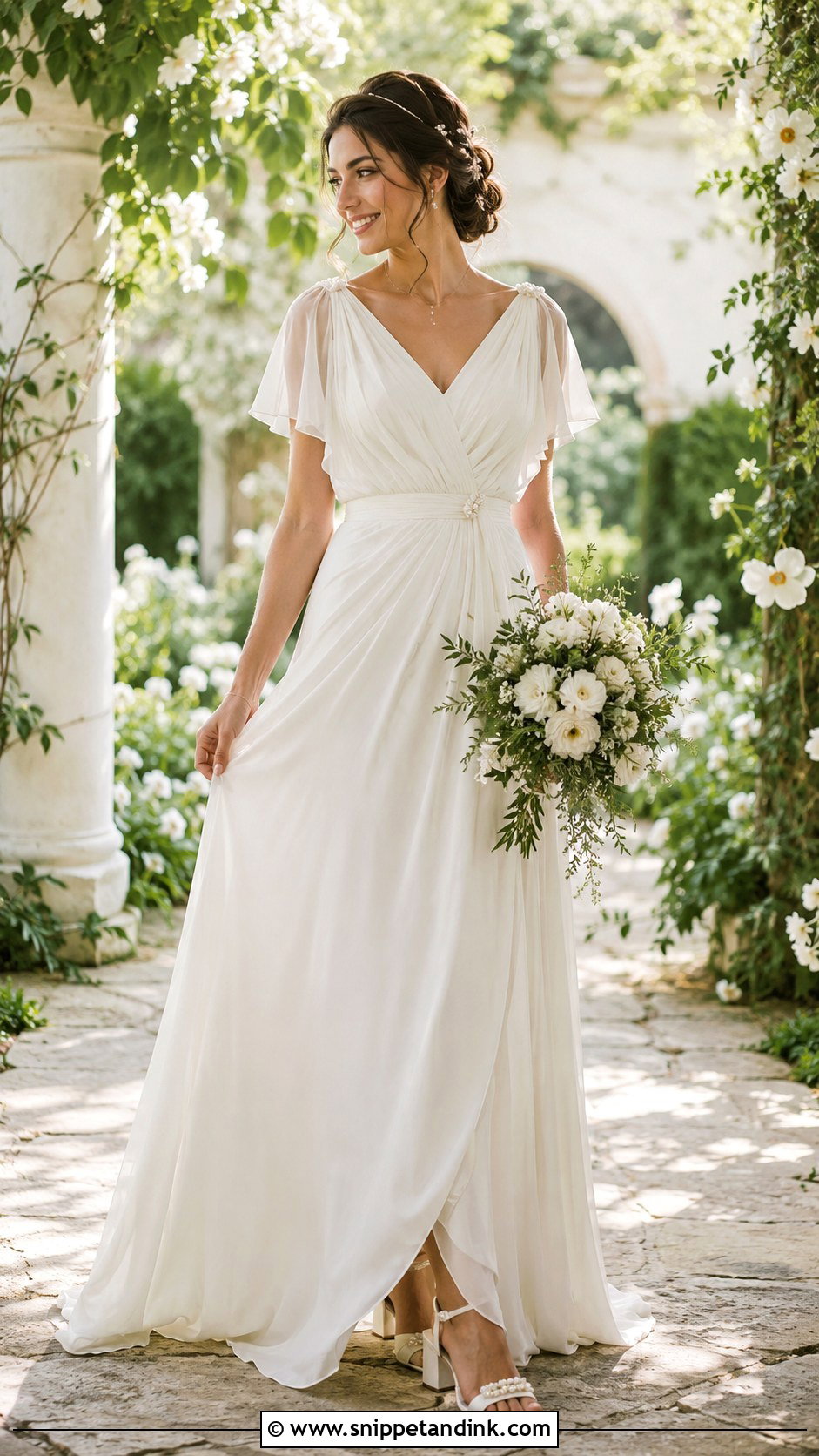
Gardens suit the softest version of this look: flowing chiffon, floral appliqué, fine pleating or a gentle A-line, often with flutter sleeves or an off-shoulder line. Soft curls, pearl pins and a bouquet with white blooms, olive leaves or pale pastels sit naturally in greenery. Thin stilettos sink into a lawn, so I put garden brides in block heels or elegant flats. A hem that sits just at the floor, rather than pooling, stays cleaner on grass. Spring and summer are its seasons.
18. Minimal Greek Goddess Wedding Dress
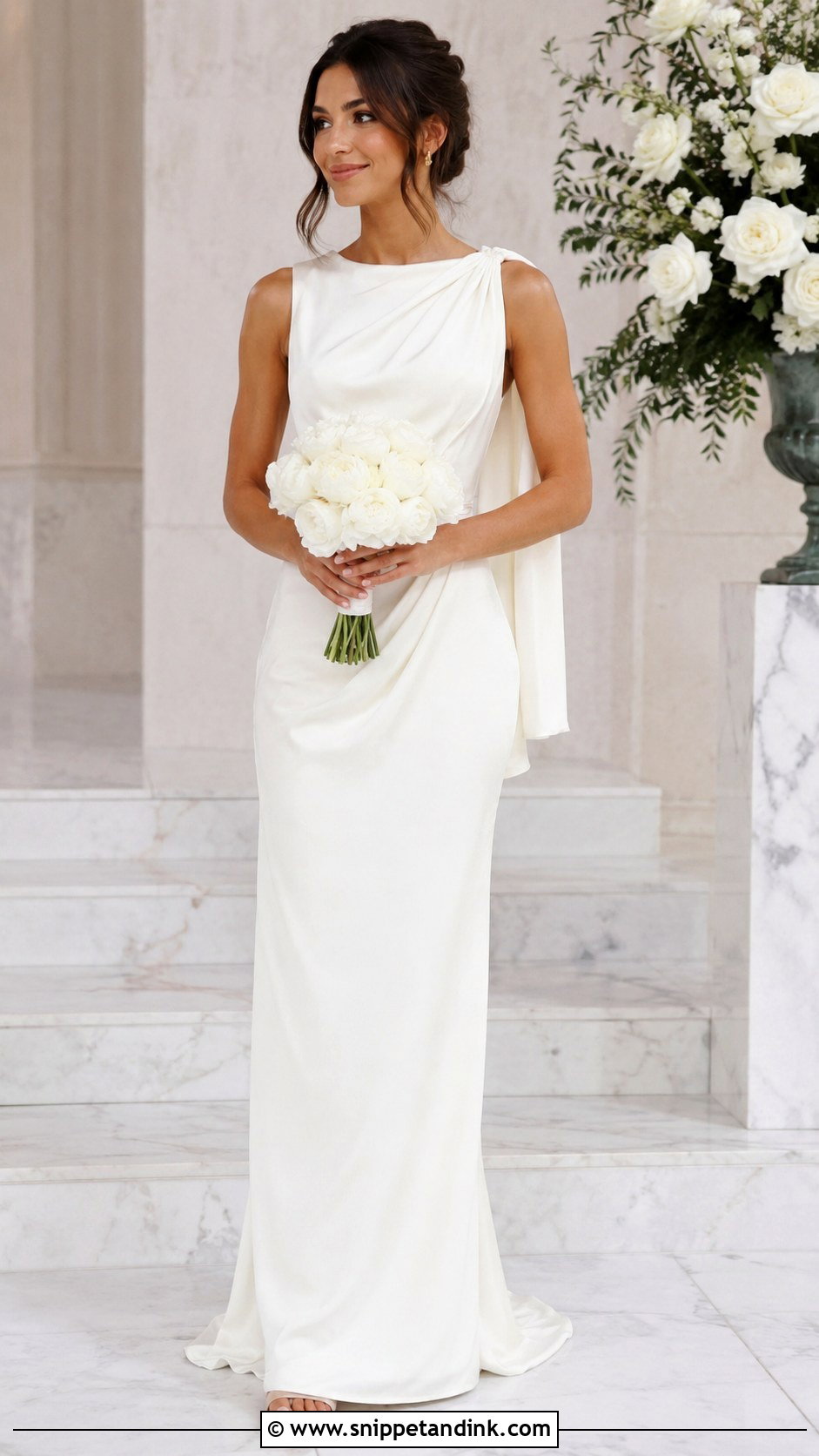
Minimal Grecian design is all fabric, shape and movement. A clean crepe gown with a gathered shoulder, a draped waist or a plain column skirt can look incredibly refined in crisp ivory or soft white. With nothing to distract the eye, fit has to be exact; a minimal dress shows every pull line, so I’d allow for more fittings rather than fewer. Sleek hair, small gold earrings and a bouquet of a single flower type keep it modern.
19. Beaded Greek Goddess Wedding Dress
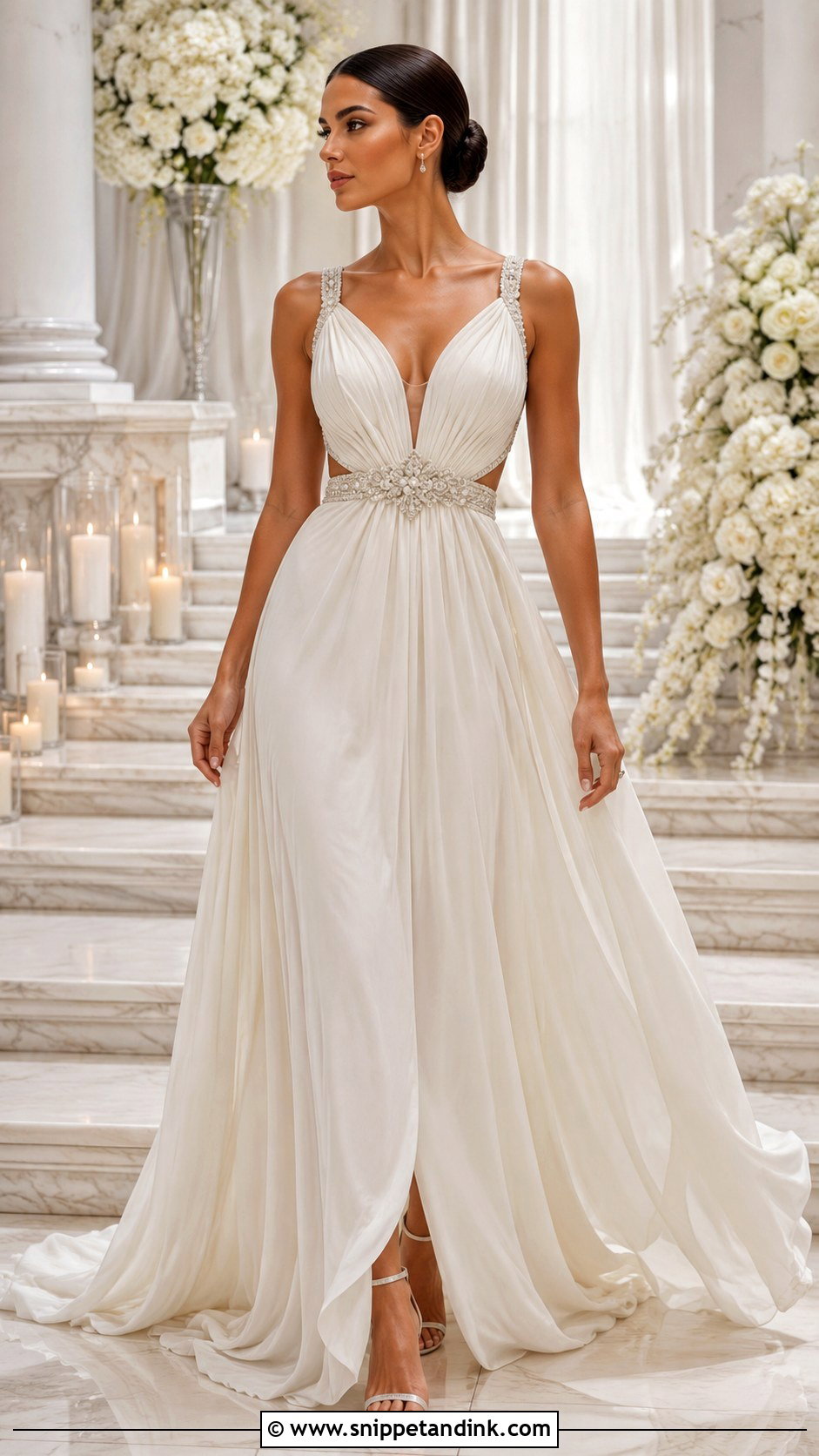
Beading on a goddess dress works when it’s controlled: along the waist, the straps, the neckline or across the bodice, never all over. Gold, pearl and crystal all suit, depending on the mood. The skirt underneath must stay flowing, otherwise the whole dress loses its Grecian softness. Because beading adds weight at the top, I check the straps can carry it without digging in. Simple heels and minimal jewelry. Evening weddings and formal venues are where this extra glamour fits.
20. V Neck Greek Goddess Wedding Dress
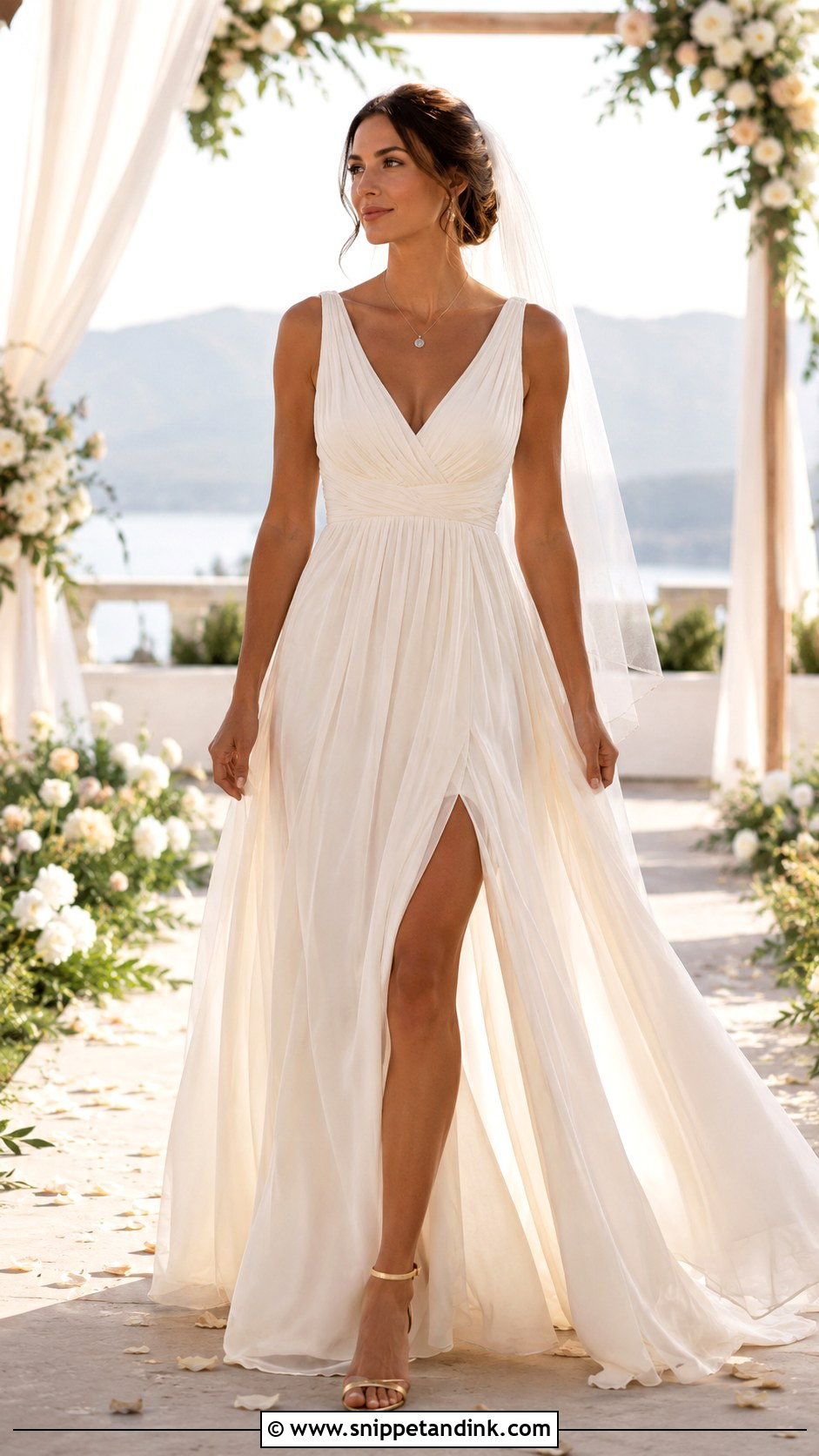
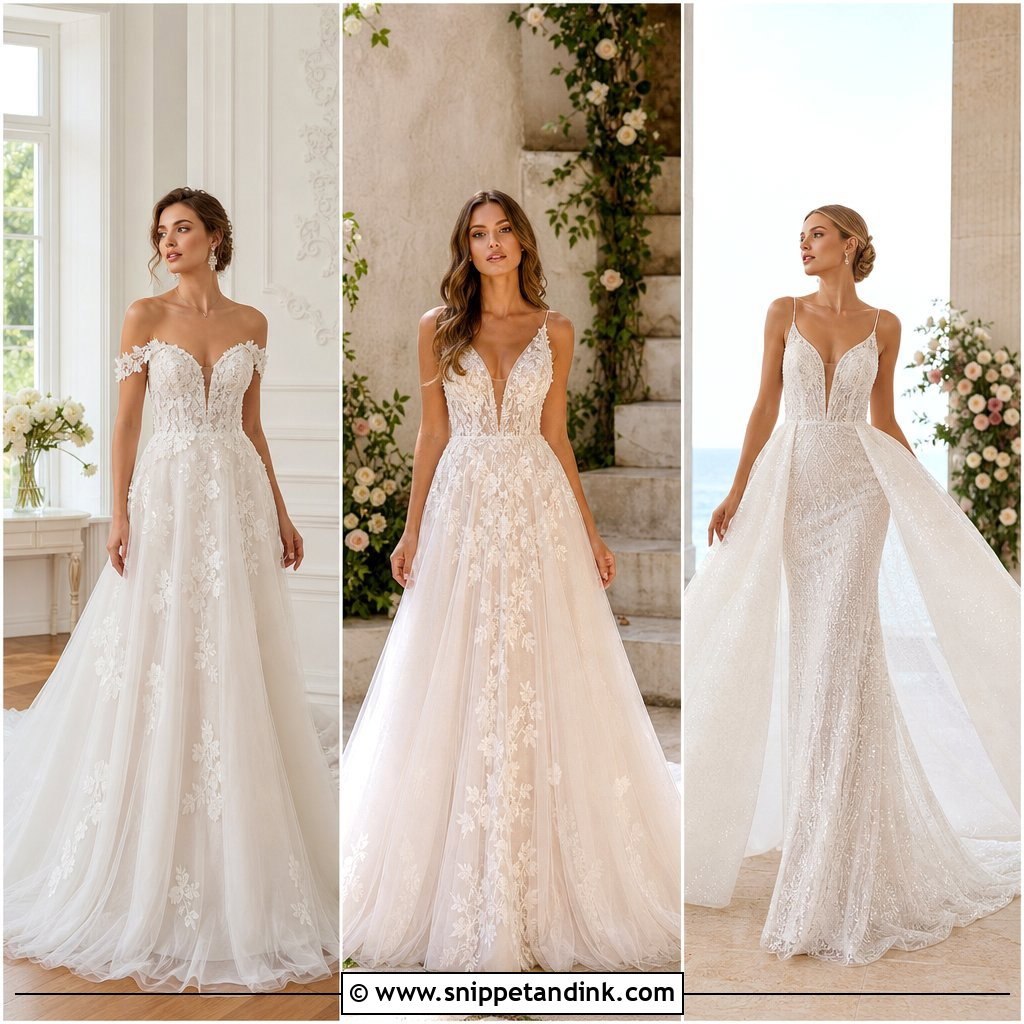
The V-neck lengthens the upper body and suits draped fabric well. A soft V is classic; a deeper V needs illusion support so you’re not adjusting it in every photo. An empire or gathered waistband reinforces the Grecian shape. A delicate pendant can sit in the V, but only if the neckline is plain. Gold sandals and a soft veil complete it, and it moves easily between a beach ceremony and an indoor reception.
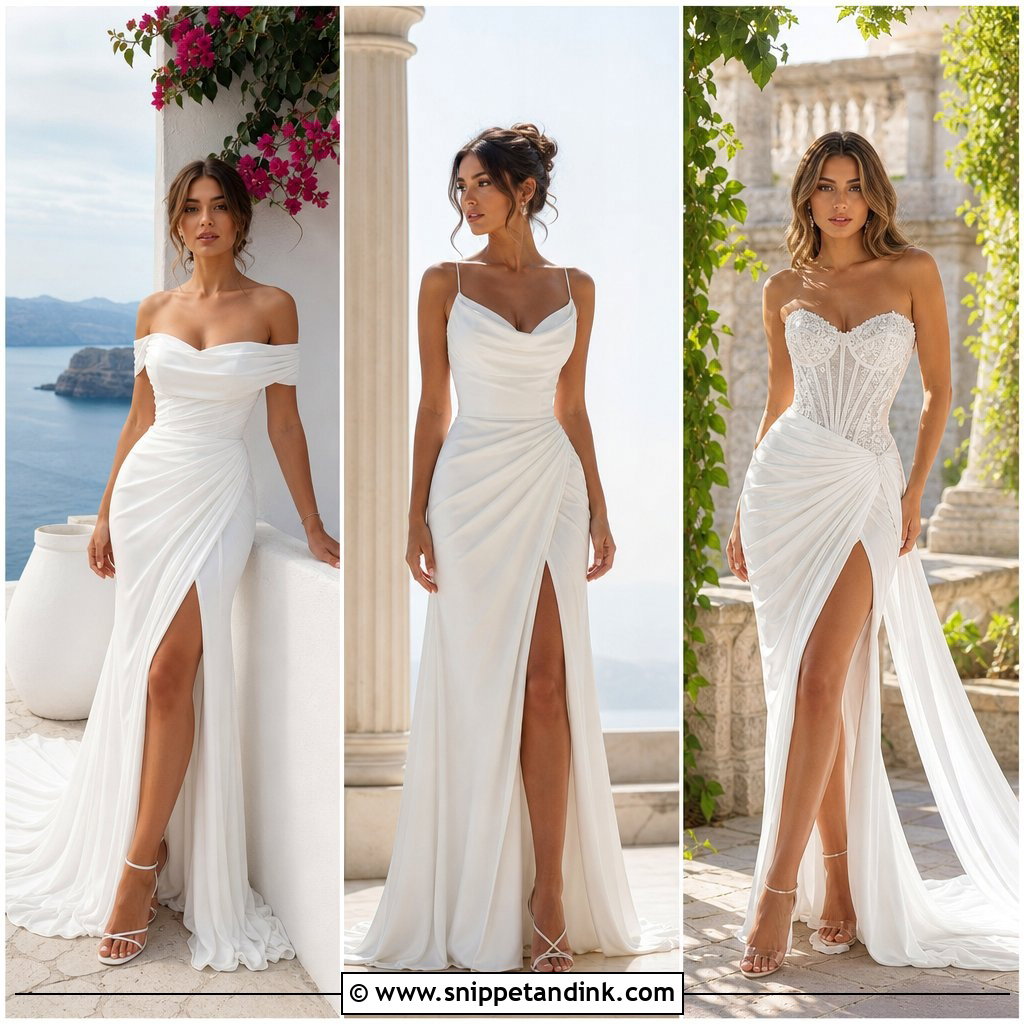
21. High Slit Greek Goddess Wedding Dress
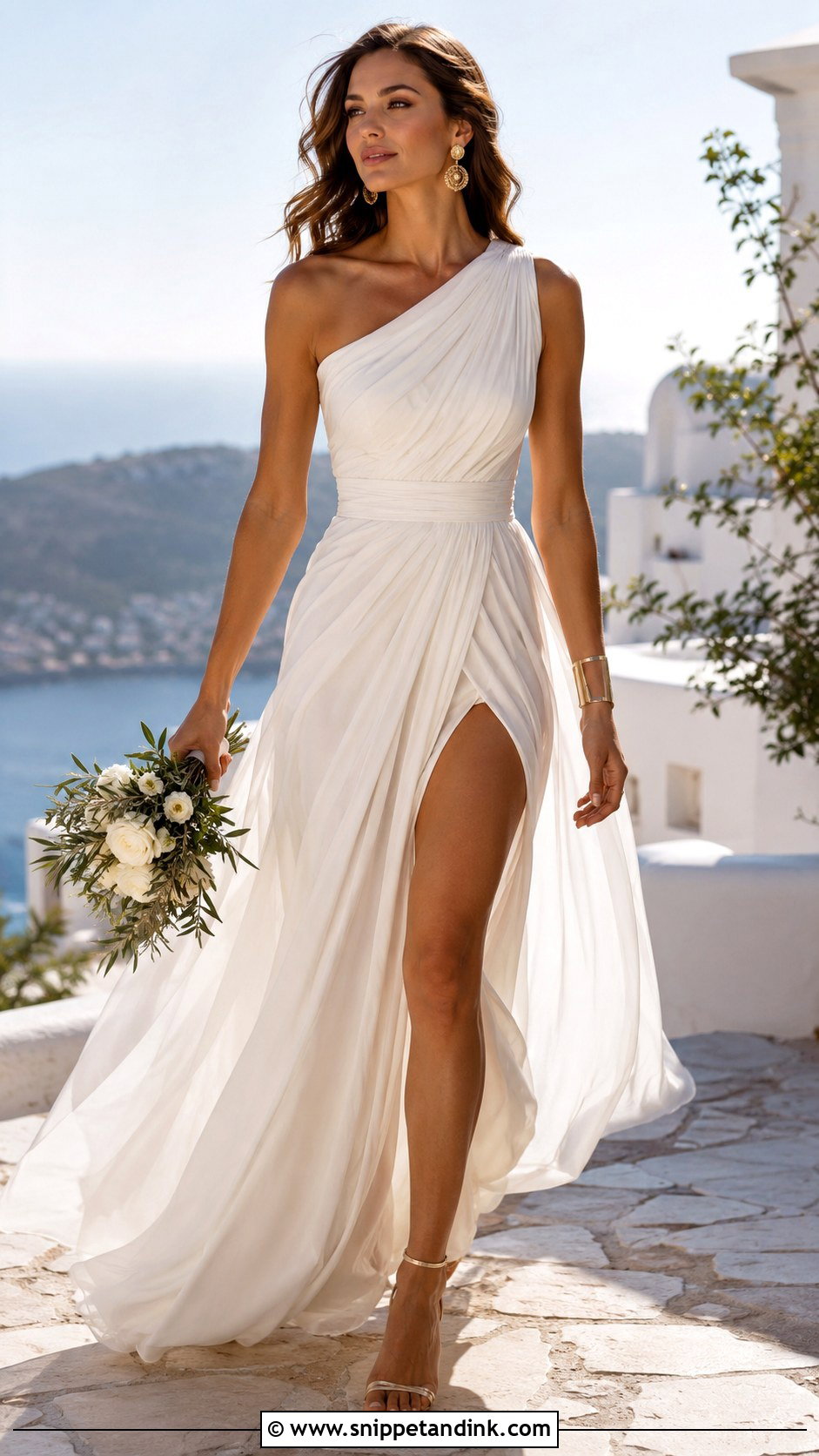
A high slit adds movement and a confident edge, but it has to open naturally as you walk. When a slit sits too high or the skirt is too narrow, it gapes when you sit, so I always sit the bride down and check the angle before anything is cut. Chiffon, satin and silk crepe all suit. Keep the bodice soft with a one shoulder neckline, a halter top or a draped V. Your shoes will be on show with every step, so pick strappy heels you love.
22. Corset Greek Goddess Wedding Dress
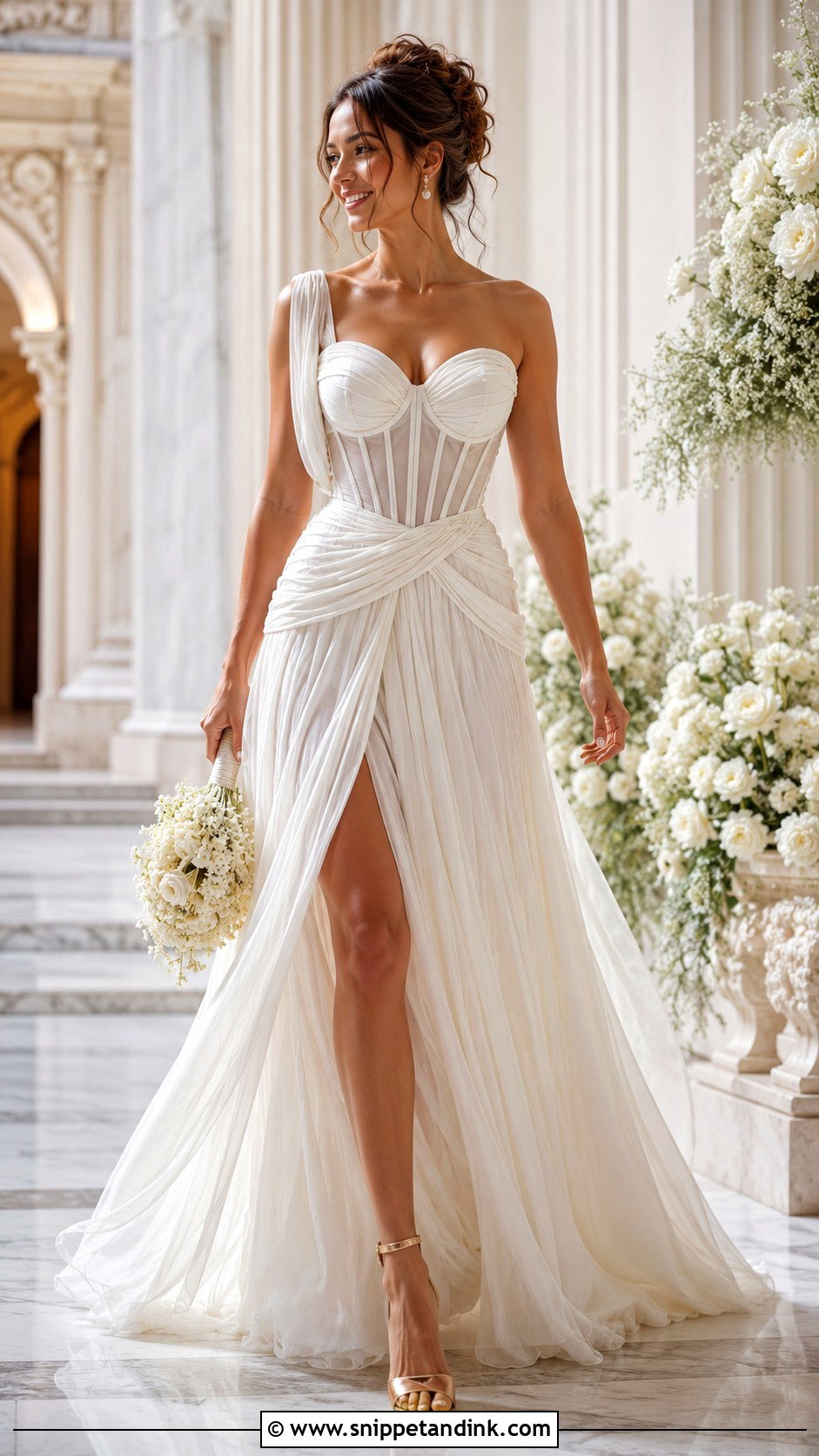
A corset gives structure under the softness. The best versions cover the boning with chiffon folds, silk pleating or a smooth satin overlay, so you get support and waist definition without losing the Grecian drape. A flowing A-line or column skirt keeps it graceful. I’d soften the structured top with a loose updo and pearl earrings rather than a sleek style, which makes the corset look stricter. Gold heels finish it.
23. Blush Greek Goddess Wedding Dress
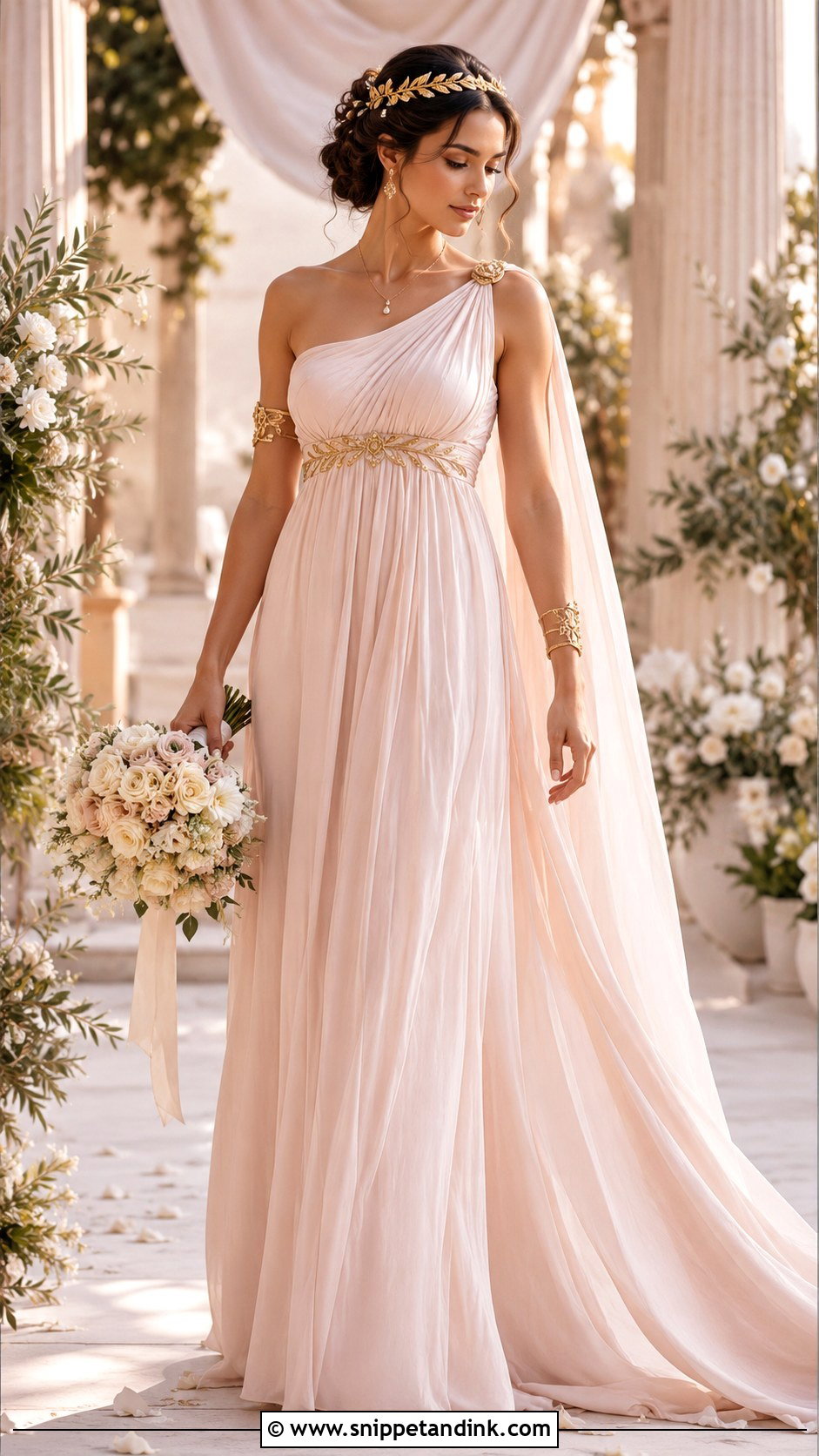
Blush is a softer alternative to pure white and warms most complexions. It works in chiffon, tulle, satin and delicate beading. I always look at a blush fabric in daylight and indoor light, because some blushes go nearly white outdoors and nearly peach under warm bulbs. A draped bodice, empire waist or one shoulder keeps the Grecian theme clear. Gold or pearl accessories both suit, with a light bouquet of ivory, soft pink and greenery. Sunset ceremonies love this color.
24. Plus Size Greek Goddess Wedding Dress
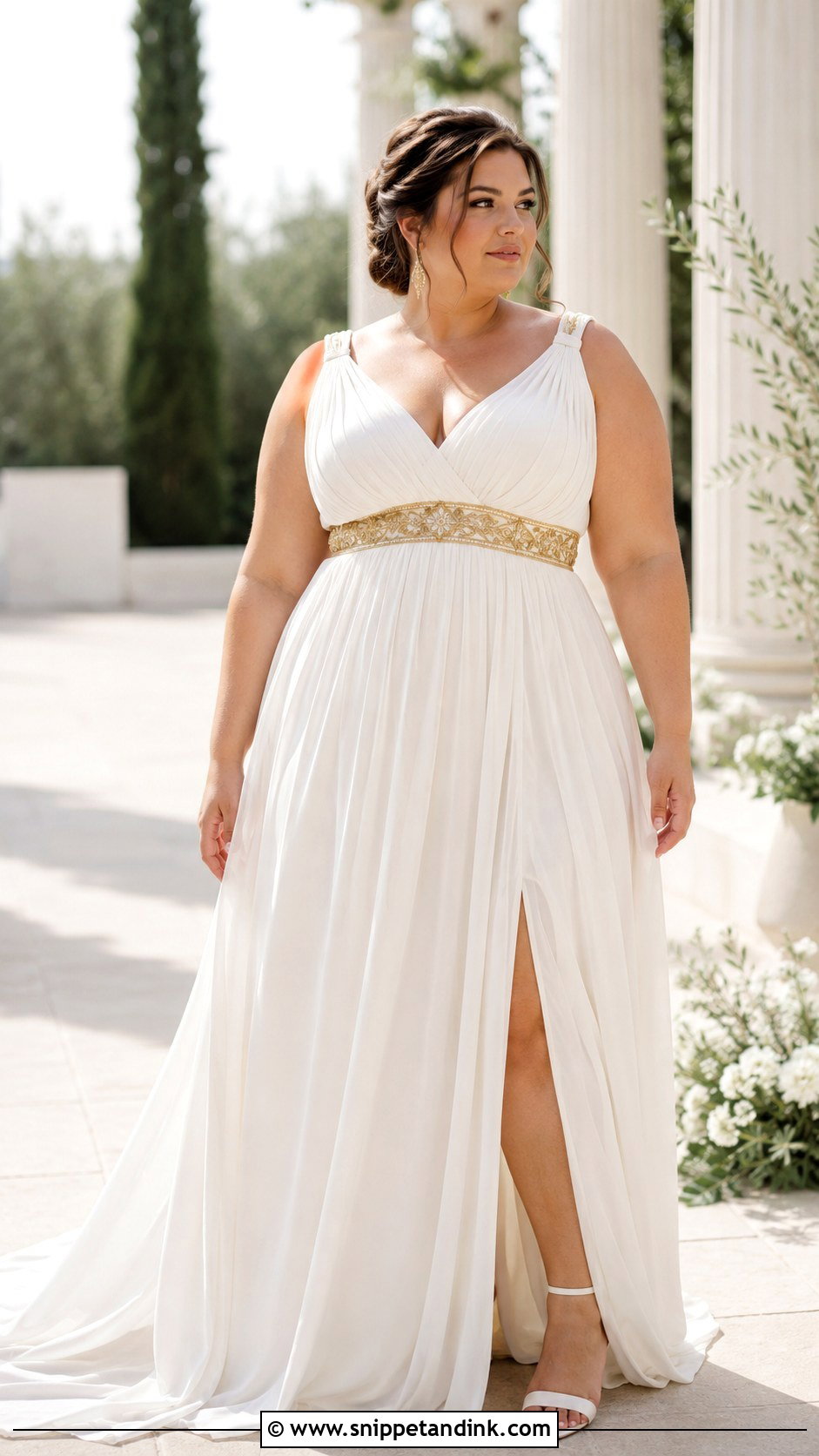
Grecian shapes are often the most comfortable bridal option for plus size brides, because they rely on drape rather than tight construction. Empire waists, soft A-lines, V-necks and gathered bodices define the shape without restriction. My must-haves are supportive straps, quality lining and fabric that skims instead of clings; thin unlined chiffon can show every seam underneath. A gold belt or beaded waistband highlights the waist. Comfortable block heels or embellished sandals, plus earrings that frame the face, finish it.
25. Maternity Greek Goddess Wedding Dress
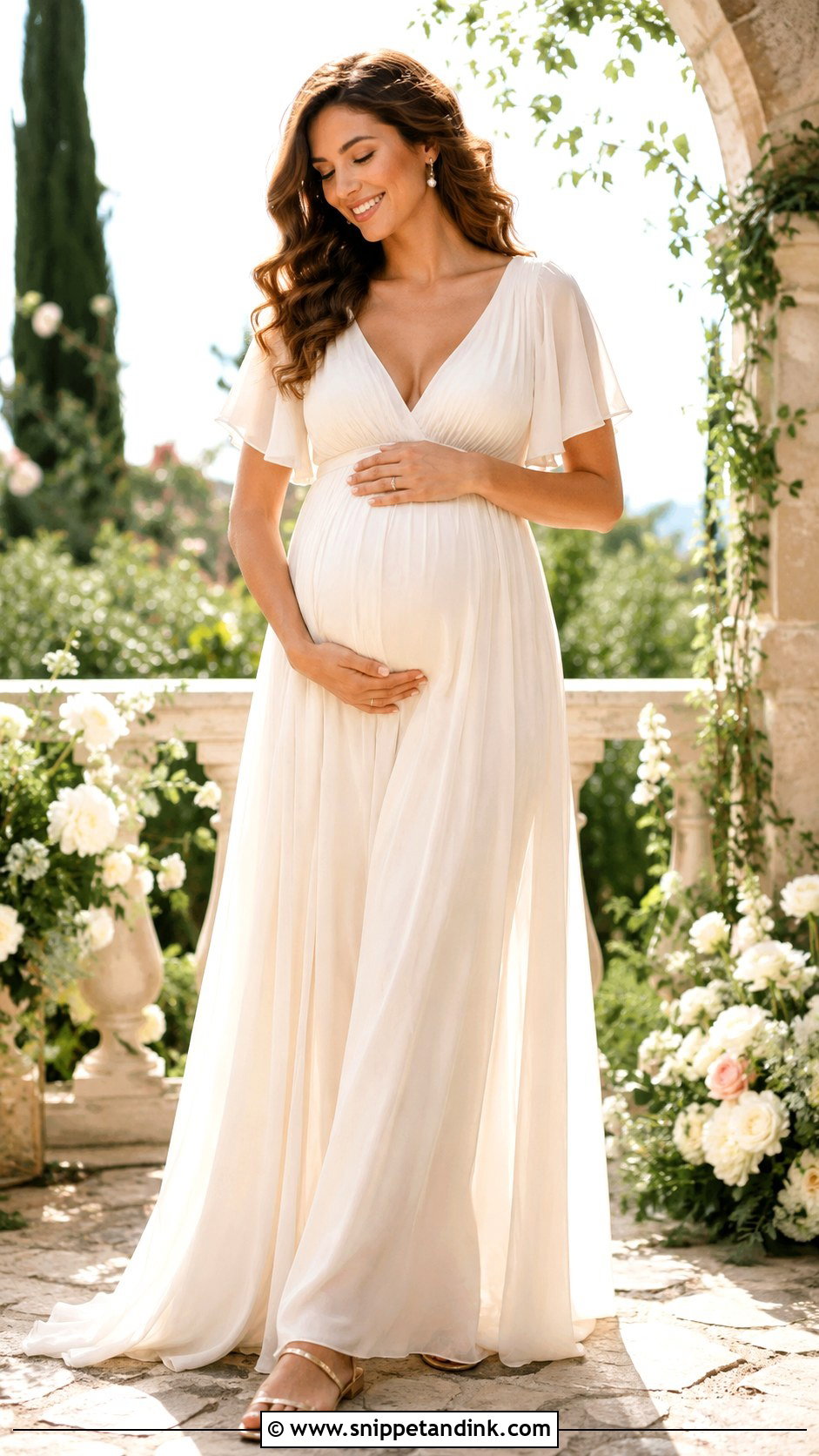
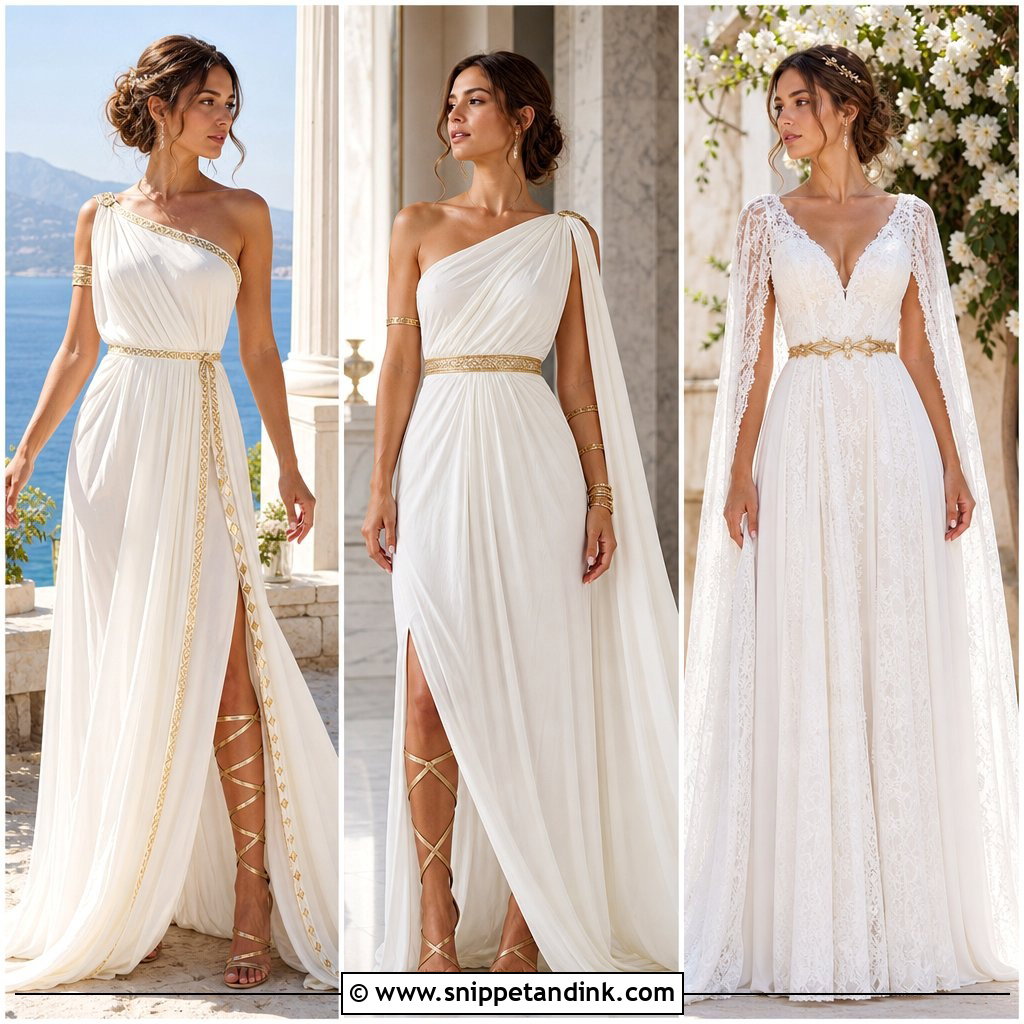
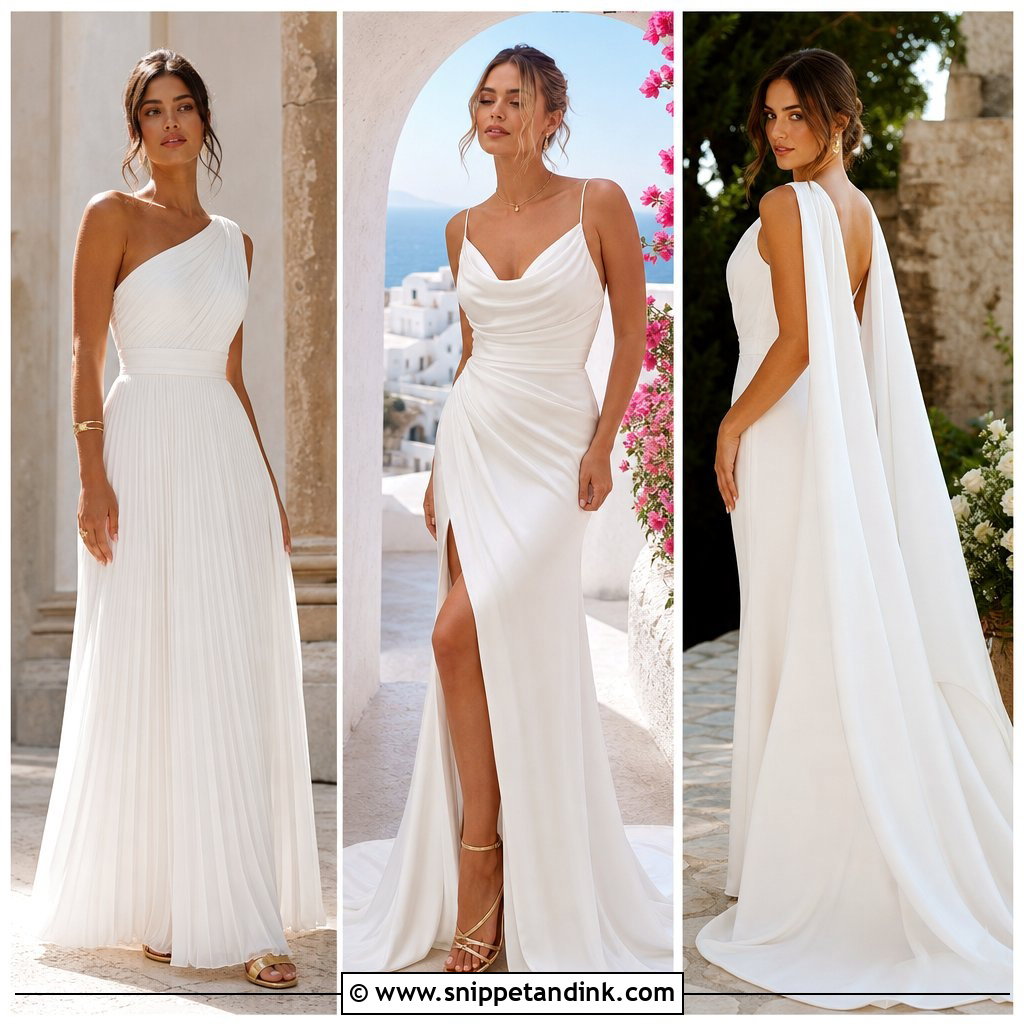
Grecian design suits pregnancy naturally. An empire waist lets the skirt fall over the bump, and chiffon or silk keeps it light. I’d avoid boning and tight waistbands, and order with extra room at the bust, which often changes more than expected in the final weeks before a wedding. Supportive straps, a soft V or flutter sleeves keep it comfortable. Flat sandals, pearl earrings, loose waves and a soft veil or floral comb complete it.
Light Fabrics on a Windy, Hot Wedding Day
The airy fabrics that make this style so pretty are also the ones that react most to weather. Chiffon lifts in wind, which looks wonderful in a walking photo and less so when the skirt wraps around your legs during the vows. A light weight sewn into the hem, or a slightly heavier underlayer, keeps it under control without anyone noticing.
In heat, silk and satin show perspiration at the underarm and the small of the back, where chiffon and crepe forgive more. Polyester chiffon can also cling with static on dry days; a light mist of anti-static spray on the lining, tested on a hidden seam first, usually solves it.
Does a Laurel Crown Suit You?
Gold leaf crowns and hair vines are the most popular Grecian accessory, and they’re easy to get wrong. A full crown sitting on the forehead is the most theatrical option; worn further back, wrapped behind a low bun or pinned along one side, it looks deliberate and wearable. I’d try it with your trial hairstyle, not on its own, since the same piece can look delicate on loose waves and heavy on a sleek updo.
If you pick one strong gold piece, let it be the only one. A crown, a cuff and a belt together compete; one of them chosen well says everything the dress needs.
Drape First, Details Second
Grecian bridal style lasts because it’s graceful and easy to make your own. A simple column, flowing chiffon, a one shoulder line, a gold belt or a dramatic cape can all belong to the same mood. Let your venue, season and comfort decide the fabric, then choose accessories that support the dress rather than turning it into a theme. On a beach, in a garden or under a ballroom chandelier, the right goddess gown is the one that moves when you do.
You'll Like These Ideas:


Leave a Reply