
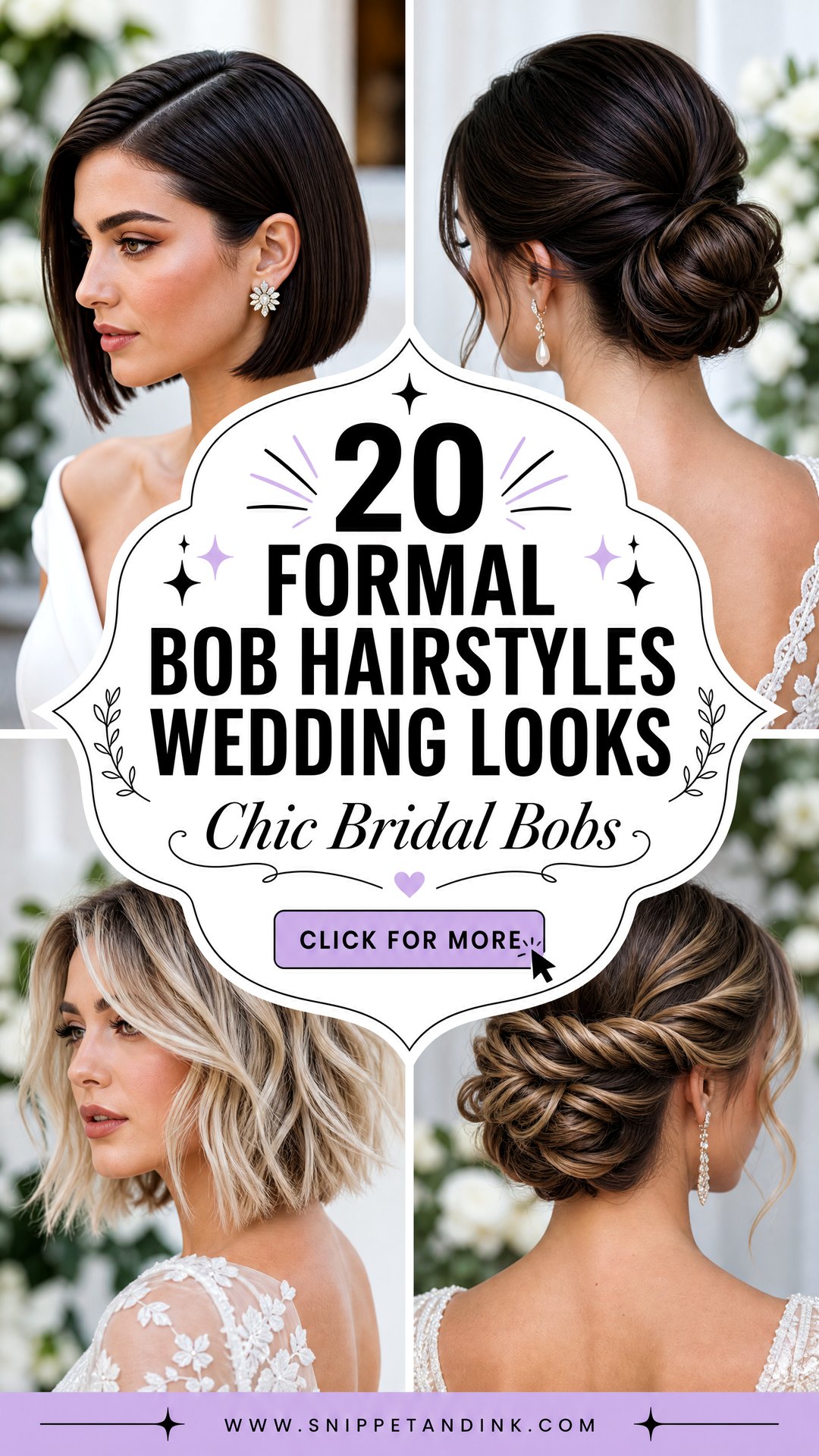
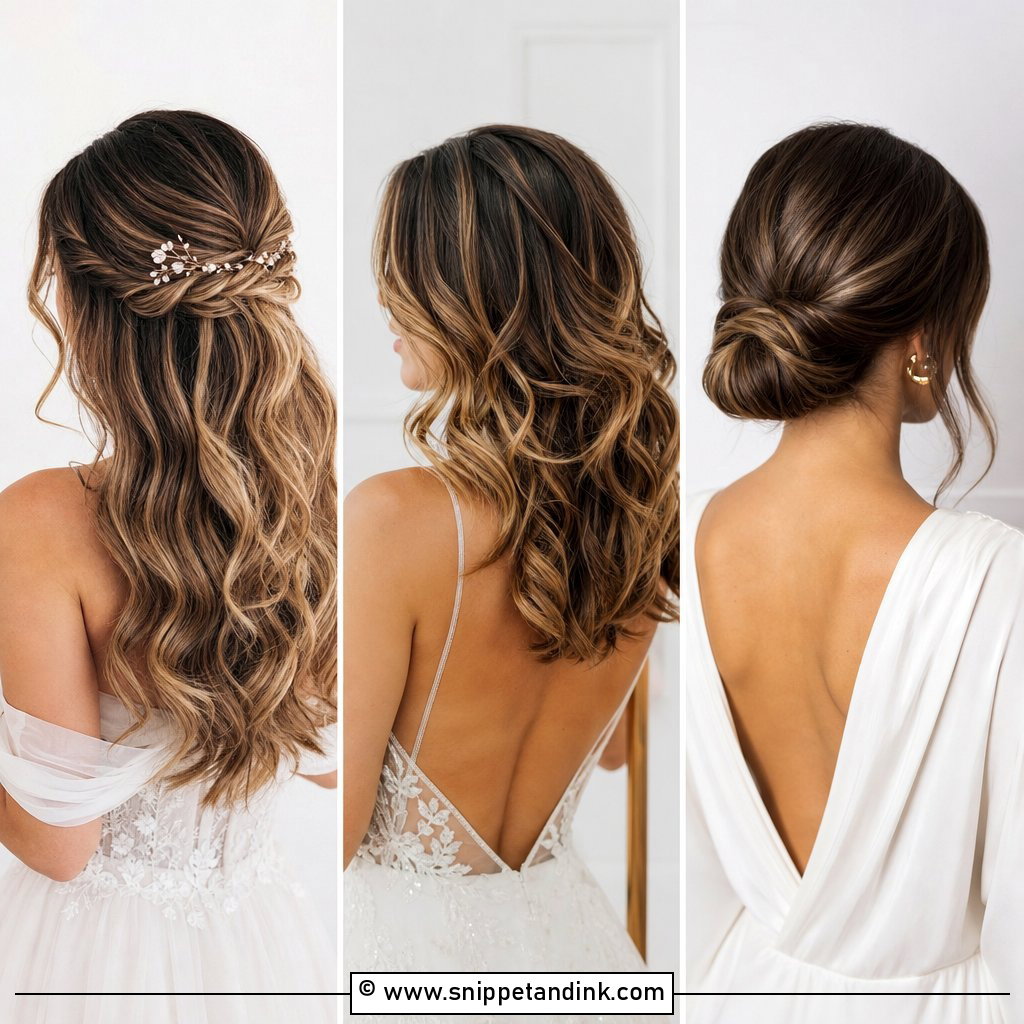
Bob brides often apologise when they sit in my chair, as if short hair limits what I can do. It doesn’t. A bob gives me less weight to fight, so waves hold, sleek finishes stay sleek and the shape of your neck and jaw is on show. What changes is the method: updos need more pins and smaller sections, and veils need a proper anchor. Below are 20 formal looks I’d happily put on a bride, a bridesmaid or a guest, from chin-length to a longer lob, with notes on how each one is built and who it suits.
Trimming a Bob So It Sits Right on the Wedding Morning
Short hair shows growth quickly. A month after a cut, a bob that grazed your chin is resting on it, and the shape you loved at the trial has changed. So the trim timing matters more for you than for a bride with long hair.
- Settle the length at your trial, two to three months out, and tell your stylist what you plan to change.
- Keep the same shape from then on. New fringes, big length changes and colour experiments belong much earlier.
- Book a final tidy-up cut one to two weeks before the wedding. That’s long enough for a blunt line to soften, short enough that it hasn’t grown out.
- If you colour your hair, do it about a week before so roots don’t show and the tone has settled.
On the wedding morning, I prefer to work with hair washed the night before for updos, because slightly lived-in hair grips pins better. For sleek straight styles, freshly washed and dried is fine. Your trial is the time to find out which one your hair likes.
1. Sleek Straight Bob With Side Part
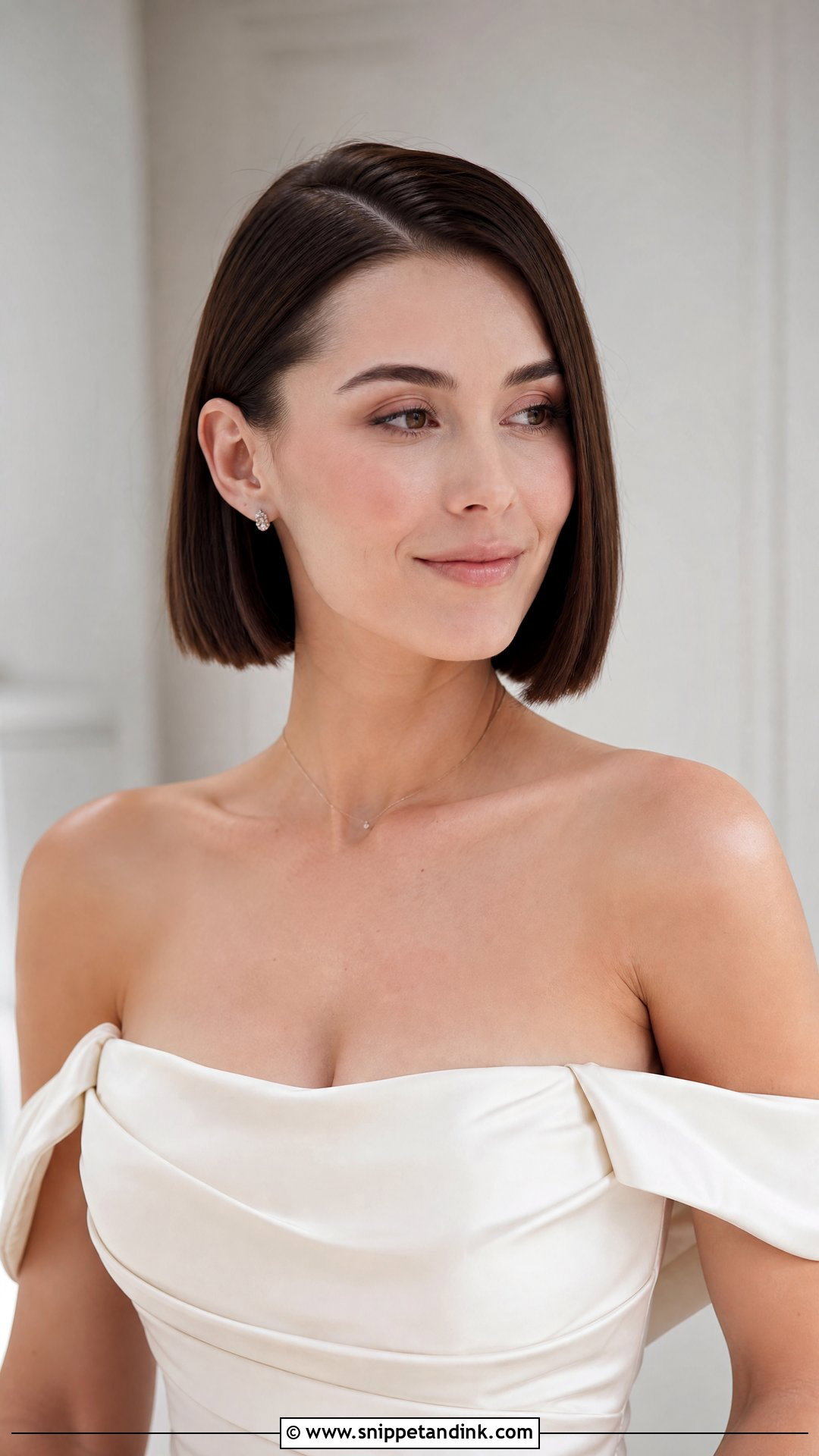
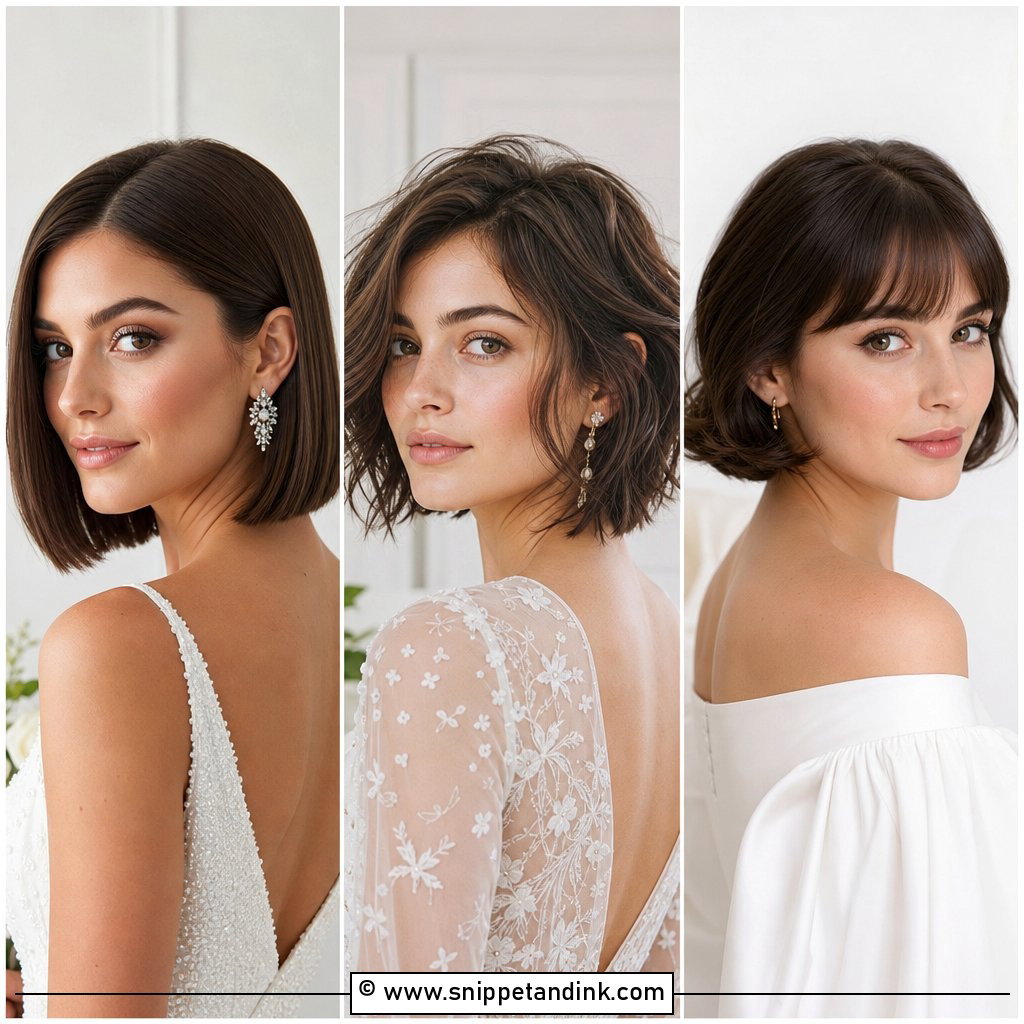
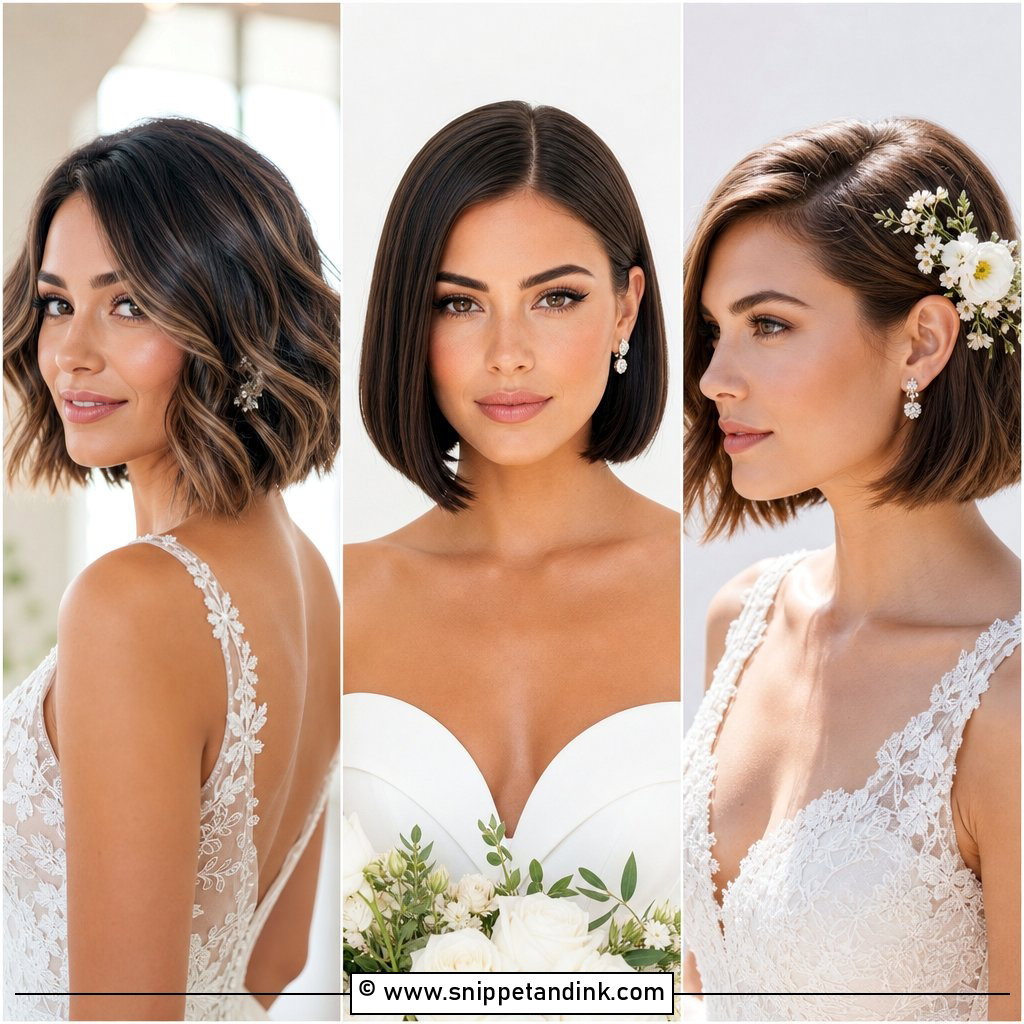
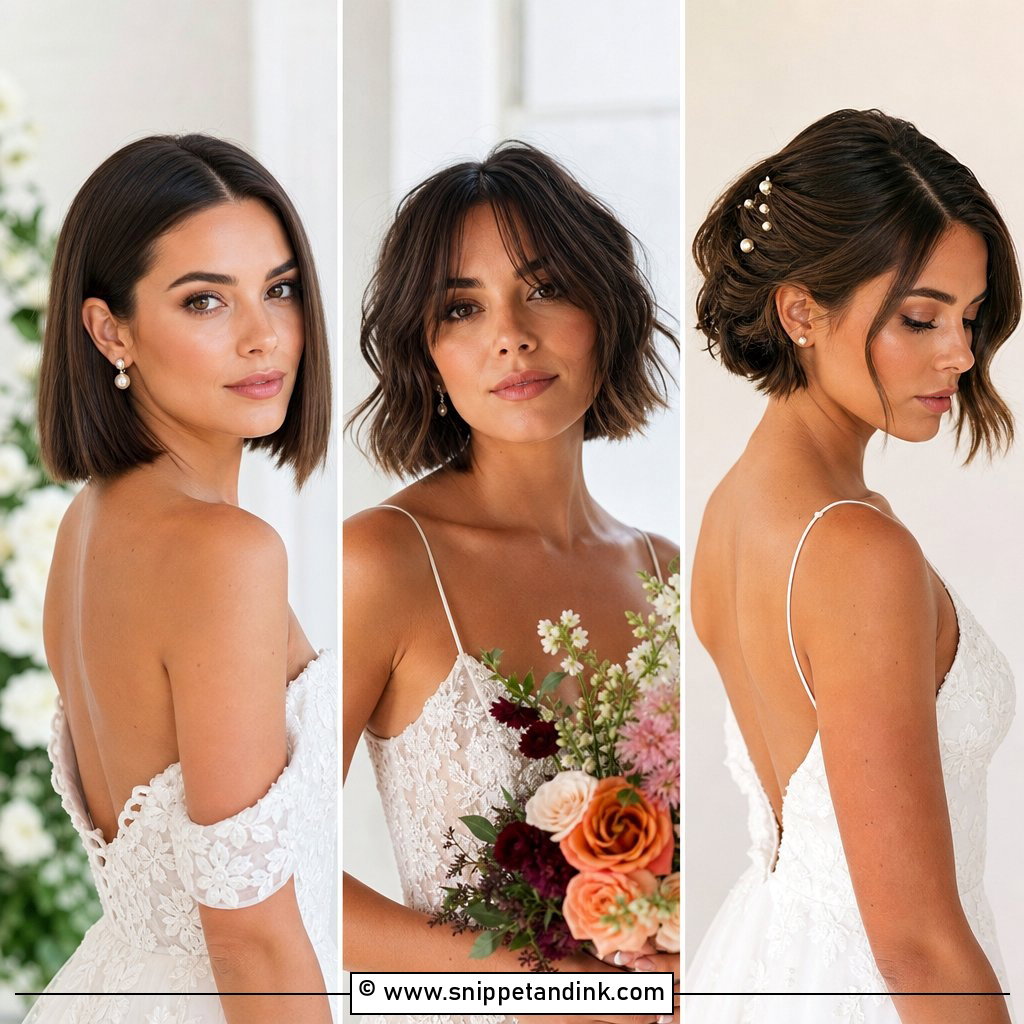
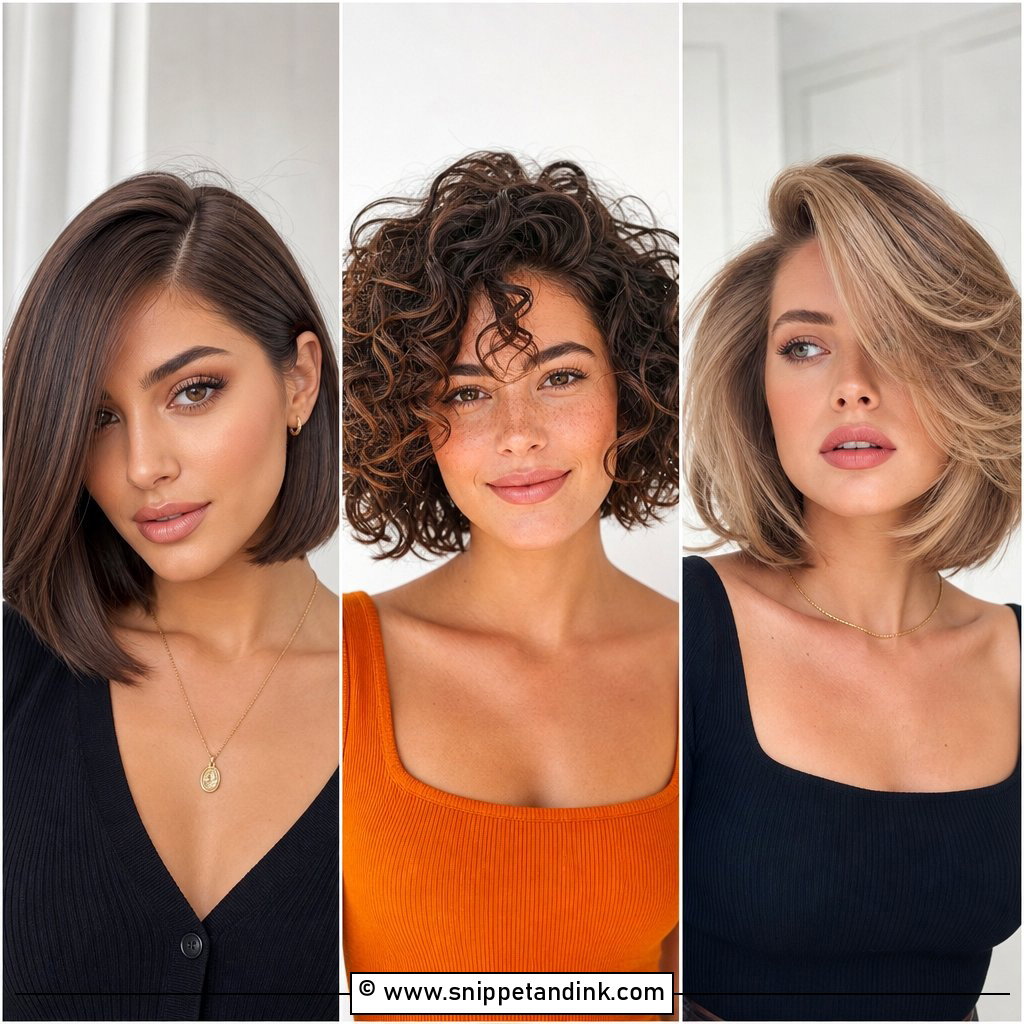
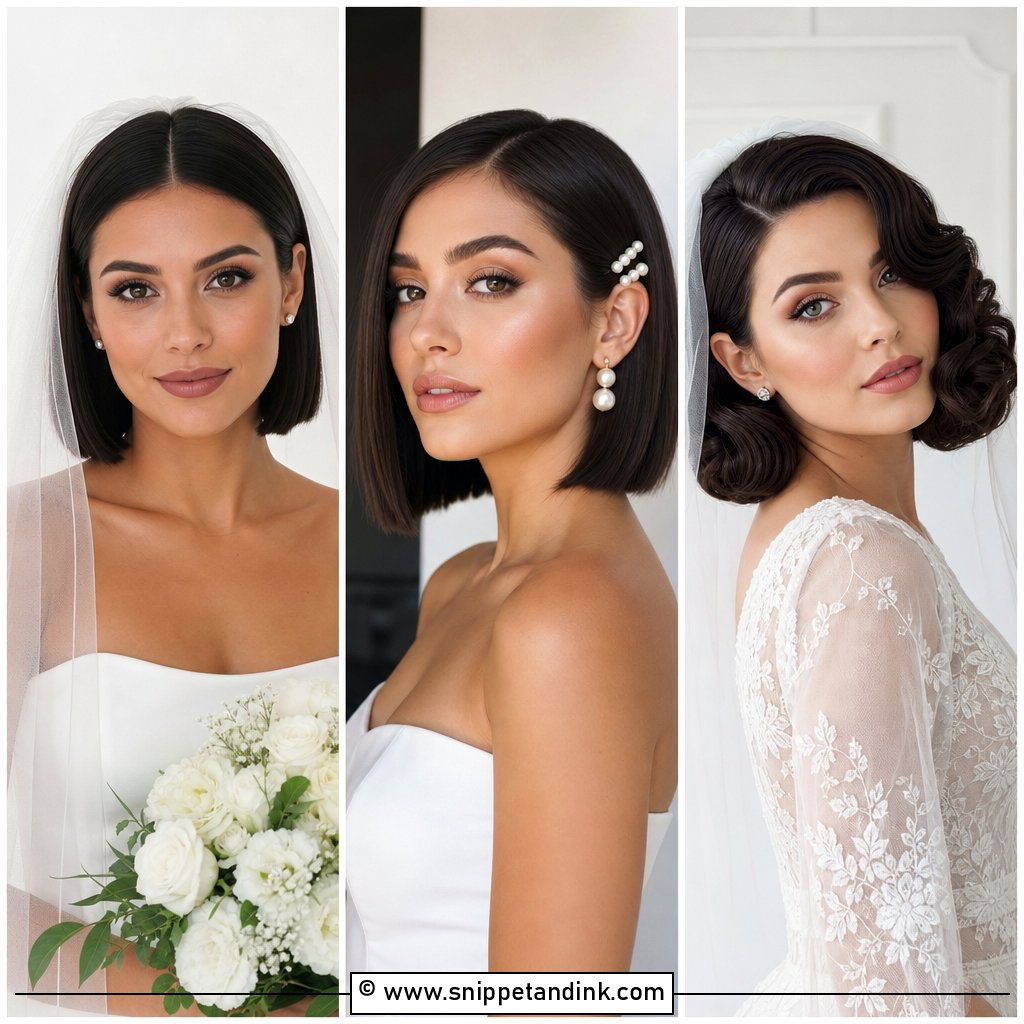
Sleek and straight is the look that shows every flaw, so the blow-dry does all the work. I dry each section flat over a paddle brush, then pass a flat iron through just once on low heat, because repeated passes make the ends go limp. A deep side part pushes volume to one side without backcombing. A small jeweled clip near the part is enough decoration. This is the least likely style on the list to change shape during the day, as long as the room isn’t steamy.
2. Vintage Finger Wave Bob
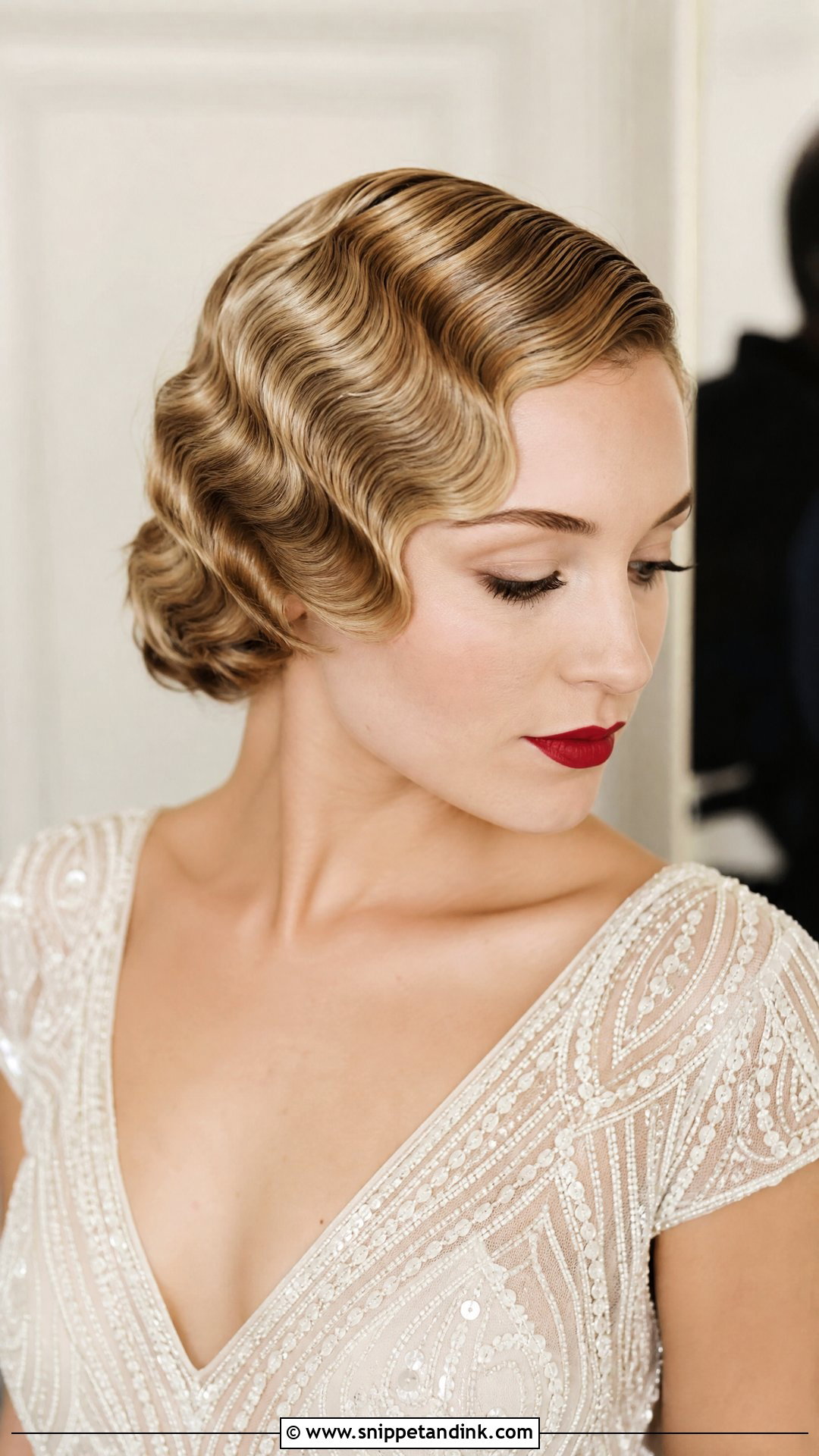
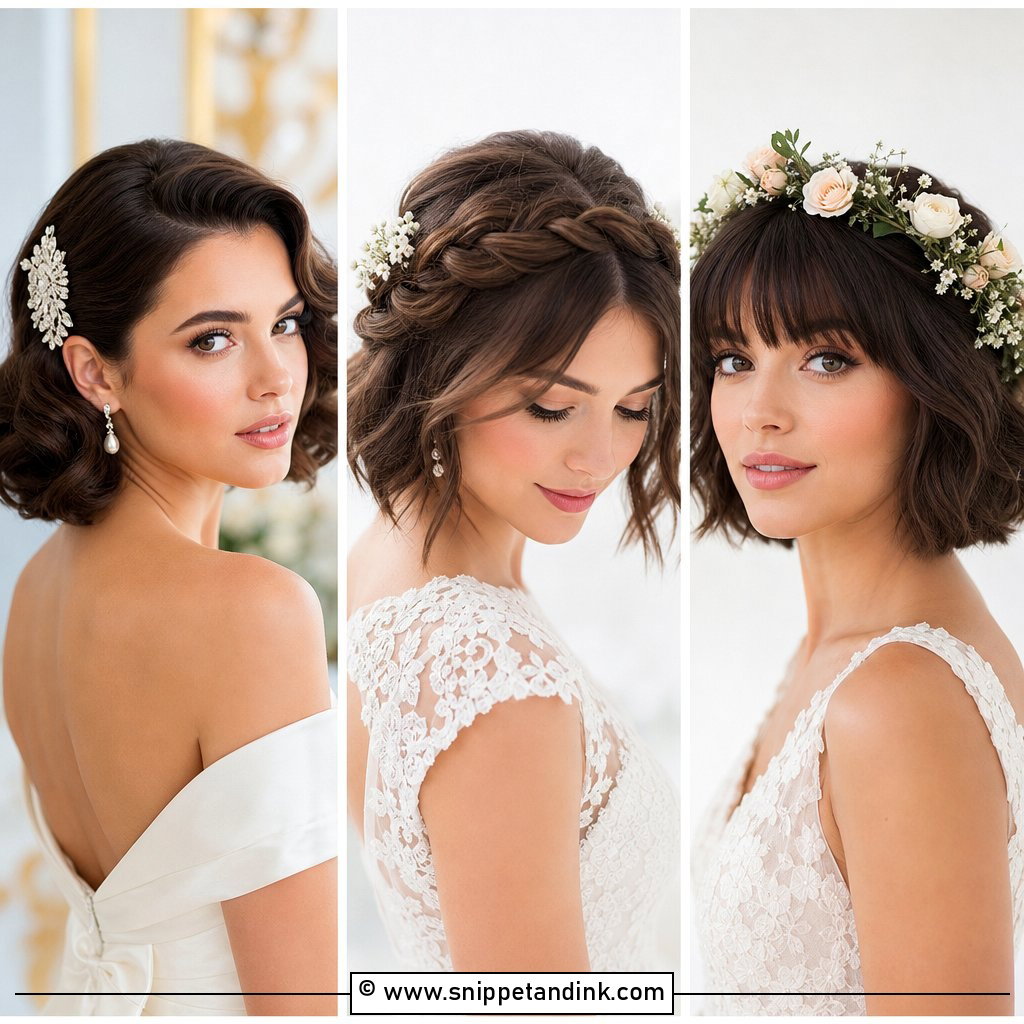
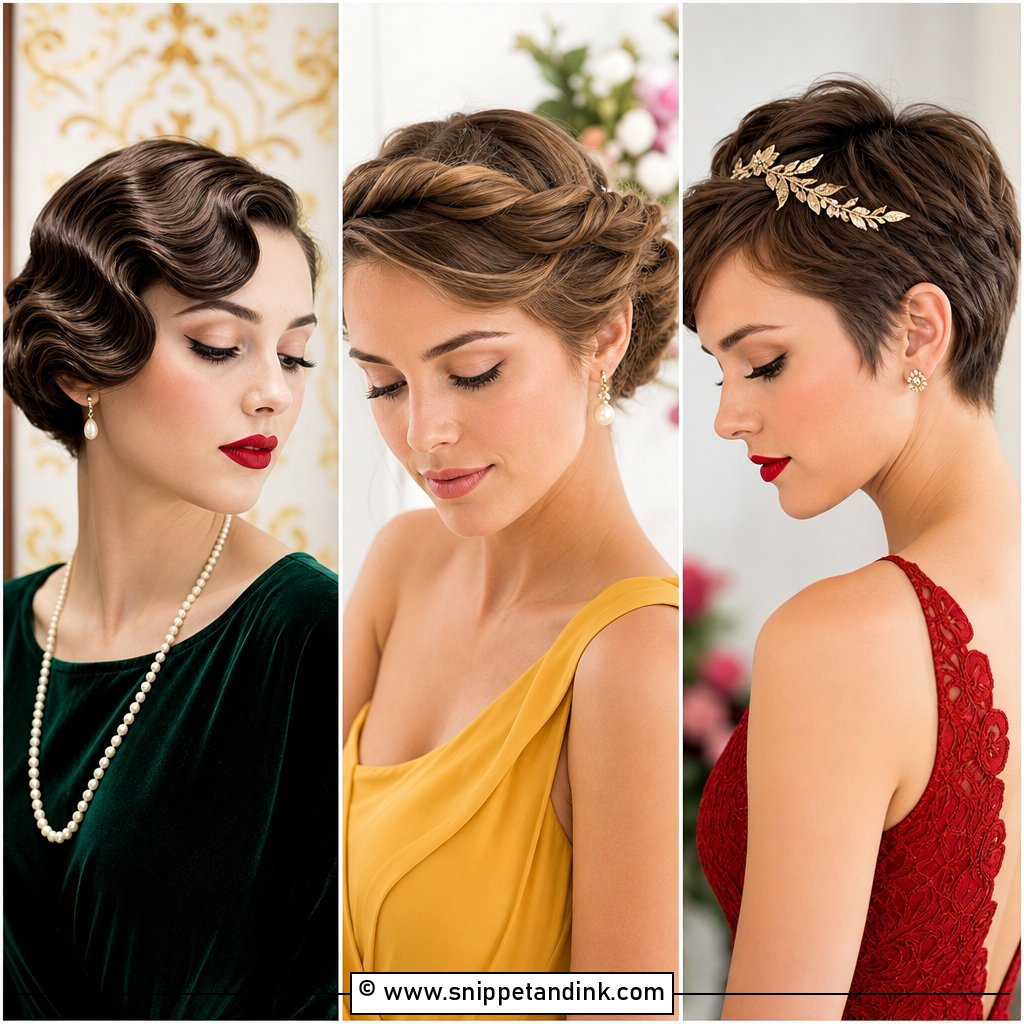
Finger waves are sculpted, not curled. I set structured finger waves into damp hair with a firm gel, pushing each ridge in with my fingers and a fine comb, and clip them until fully dry. Chin length is ideal; much shorter and there isn’t room for the S-shape, much longer and the weight pulls the waves flat. A red lip and Deco earrings finish it. On hair that frizzes in humidity this holds better than any curl, because the gel sets it like a mould.
3. Soft Curled Bob With Loose Waves
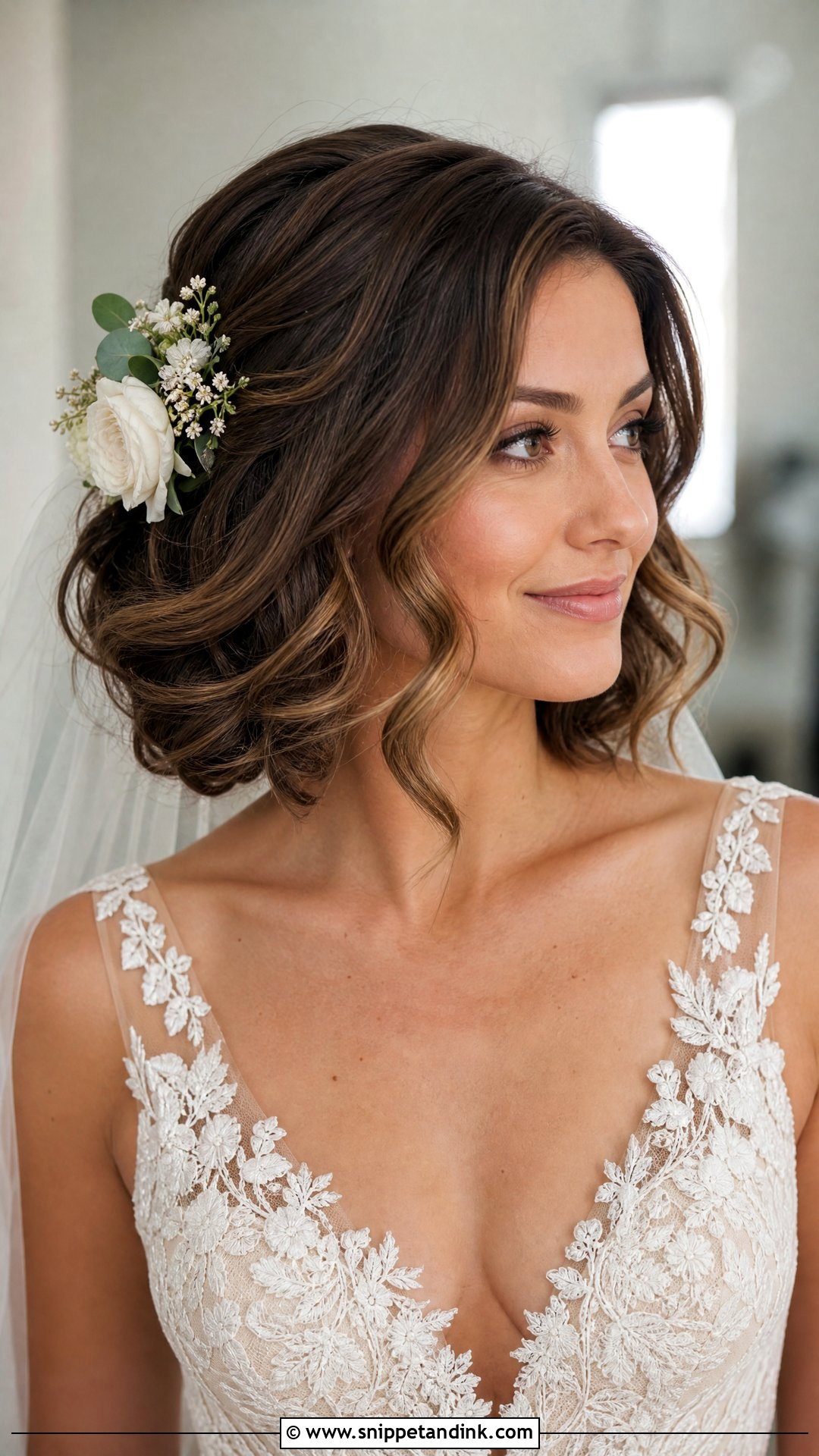
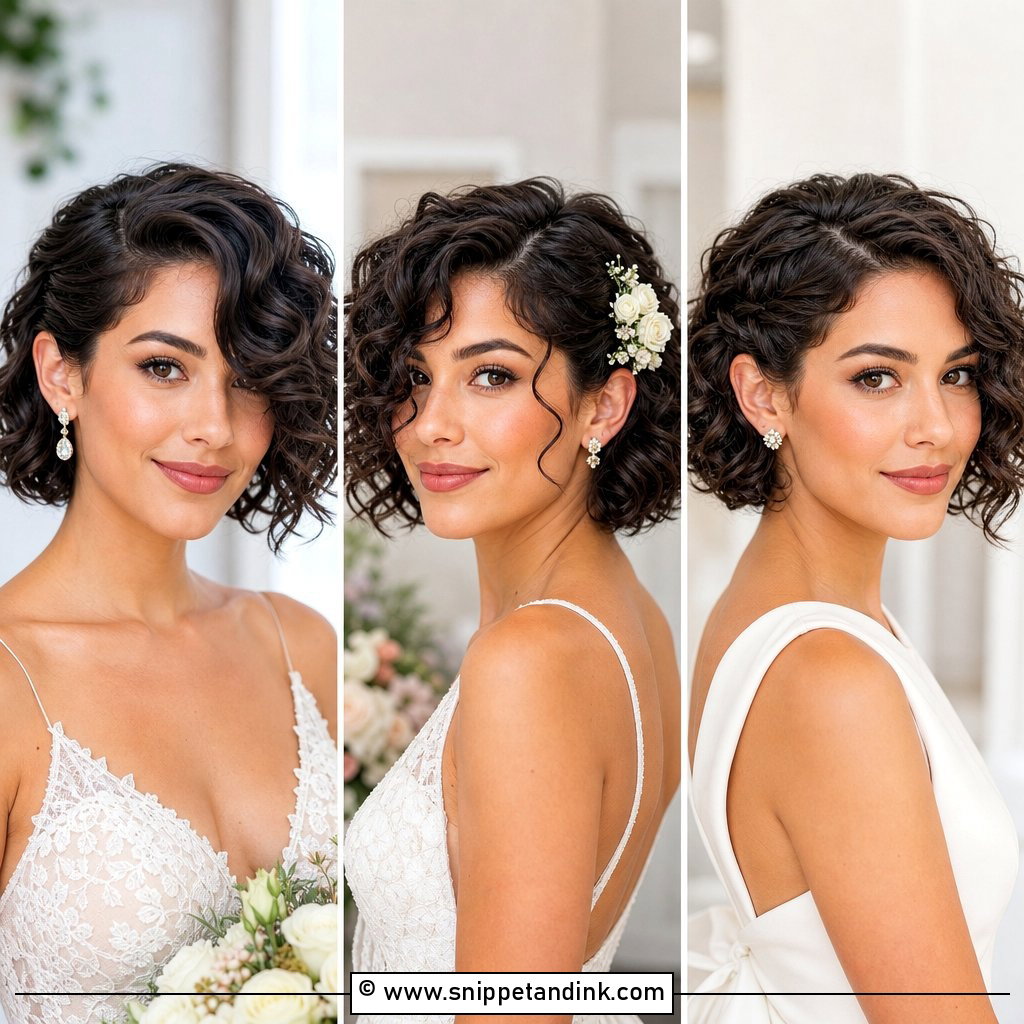
Loose curls are where most bob brides land, and they flatter round and heart-shaped faces by adding width at the jaw rather than the cheeks. I curl the mid-lengths and leave the last inch straighter, then brush through with fingers once the curls cool. Curl the ends tightly and a bob flips up into a 1960s shape you probably didn’t ask for. Fine hair needs a light mousse at the root before drying, or the waves drop within a couple of hours. A floral pin behind one ear is a sweet finishing detail.
4. Low Bun Updo for Short Bobs
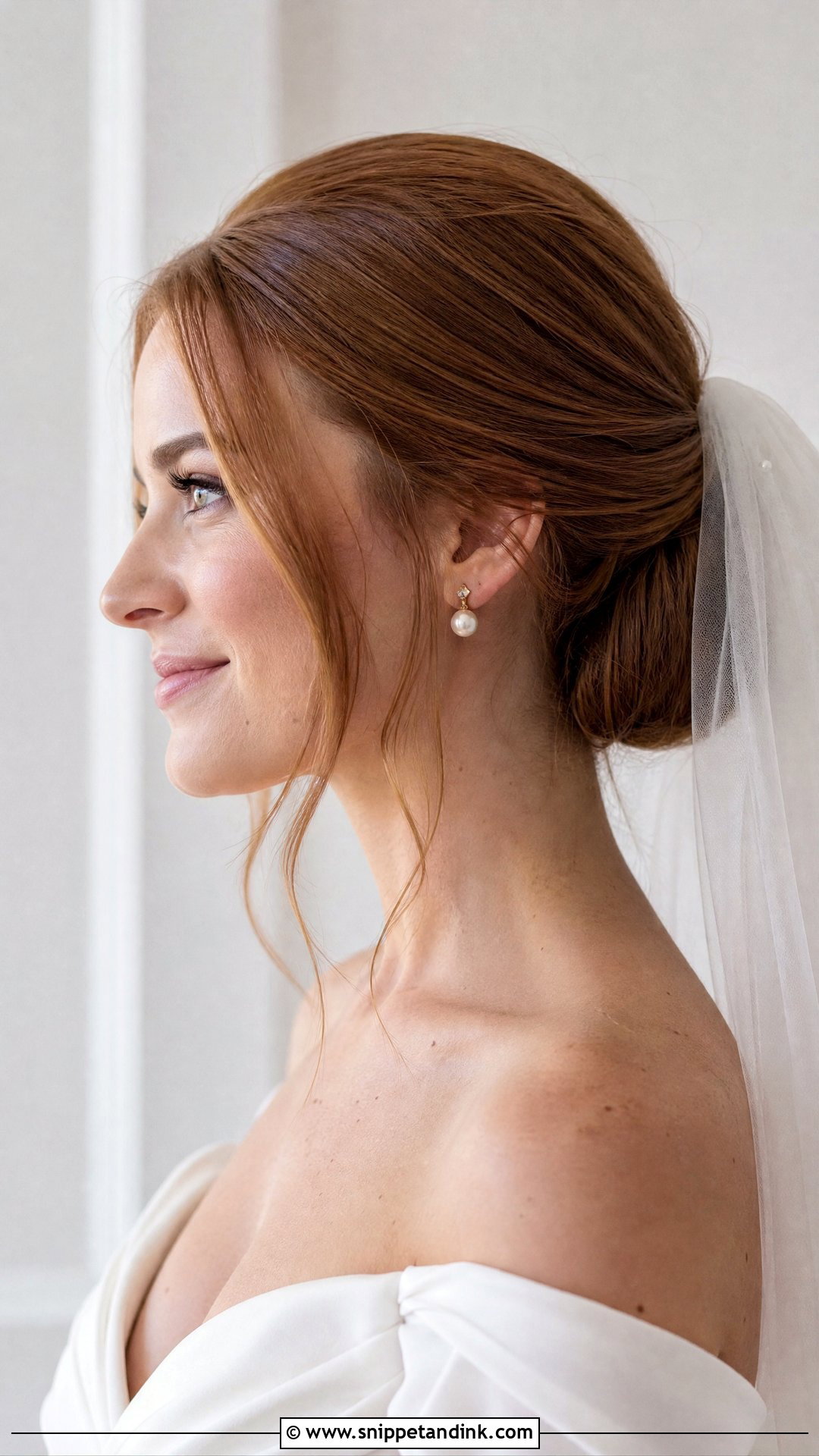
Yes, a short bob can go up. The catch is length at the nape: you need roughly three to four inches there to make a bun, and less than that means I build a tucked roll instead. I gather the hair low, twist it under itself and pin in a criss-cross pattern so the pins grip each other as well as the hair. A few loose face-framing pieces soften it. Pair it with drop earrings and a veil, and expect a few shorter layers at the back to need a touch of wax to stay tucked.
5. Half-Up Half-Down Bob
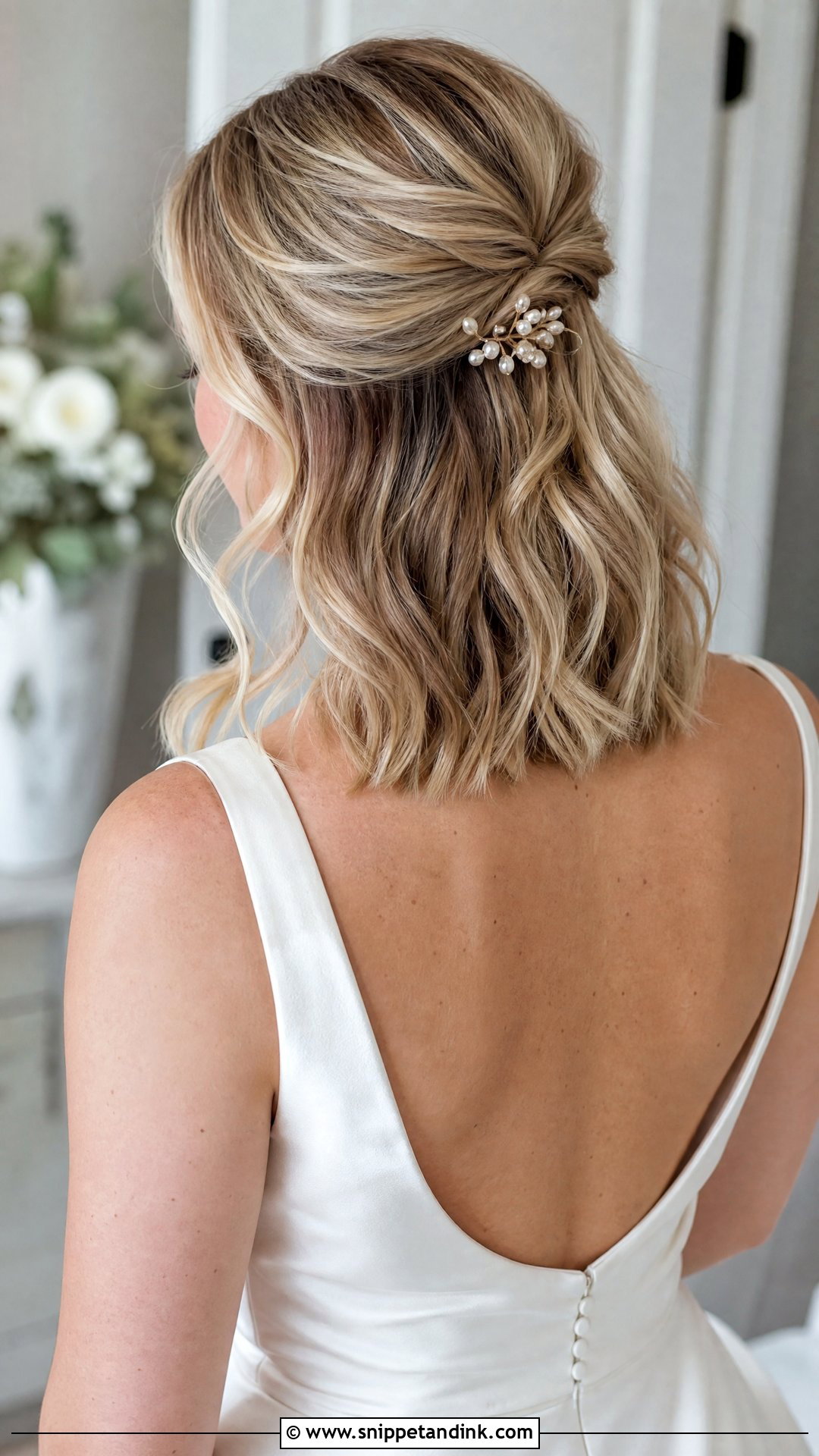
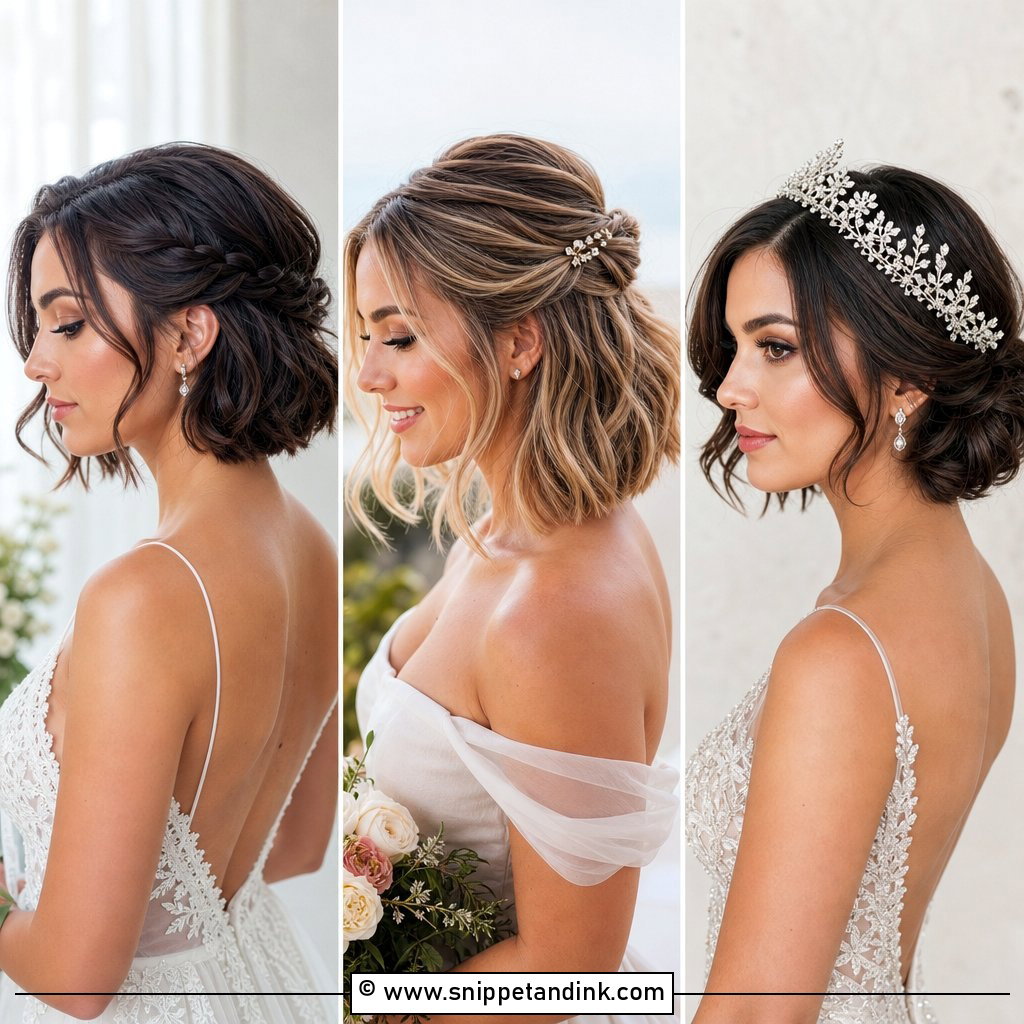
Half-up is the most forgiving style for a bob because it doesn’t ask the shorter back sections to do anything. I take the top section from temple to temple, add a small twist or braid at the crown, and pin it with a hidden elastic underneath for strength. It gives a veil comb somewhere solid to sit, which is why I suggest it so often. The bottom can be sleek, curled or waved. On very short bobs the top section is short too, so I keep the twist small and close to the head.
6. Braided Crown Bob
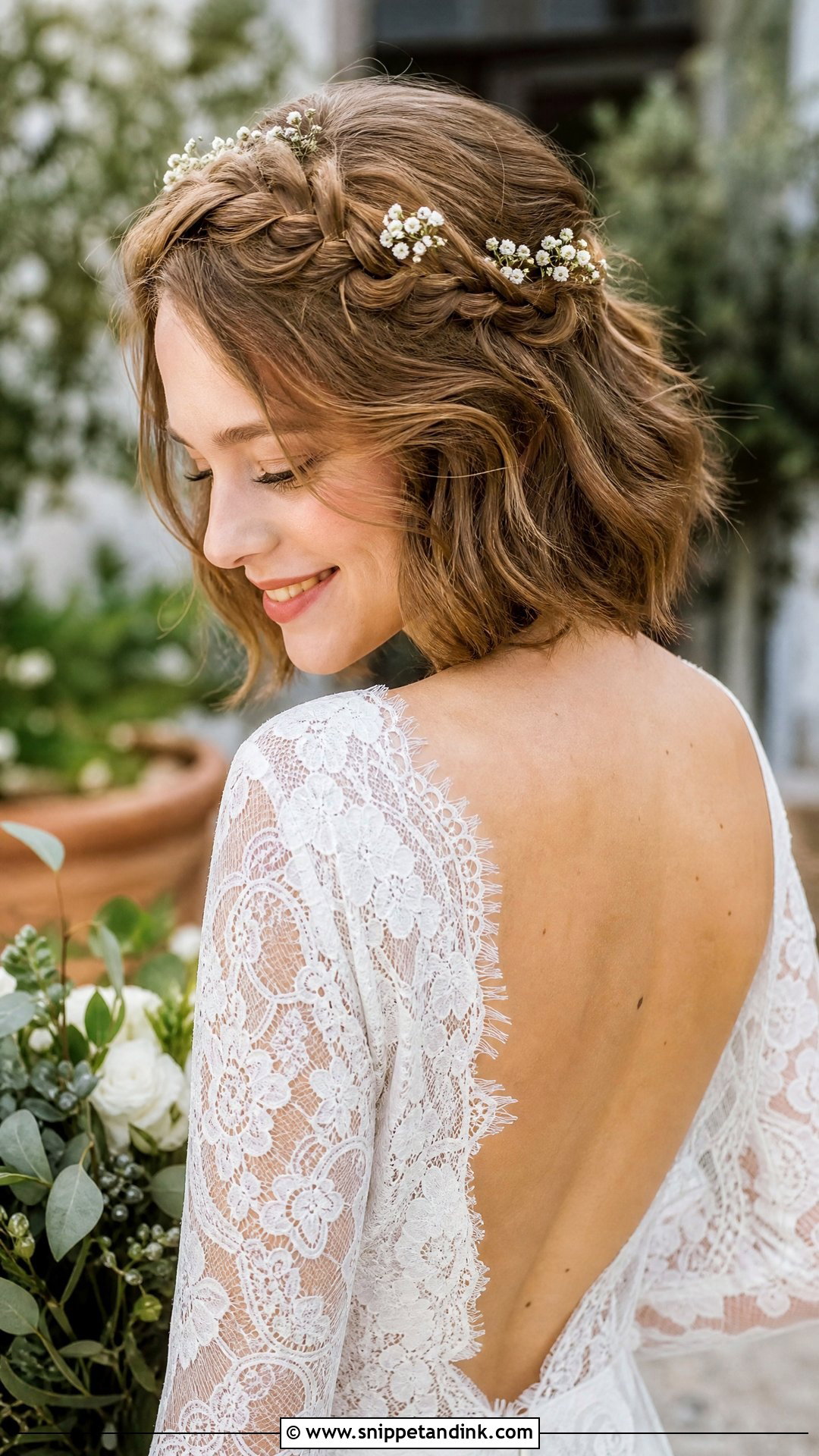
Braiding a crown on short hair means working with small sections and accepting that some layers will poke out. I use a tight Dutch braid along the hairline and secure it with pins at every few crossings, rather than relying on an elastic at the end. Tiny flowers or pearl pins hide the spots where shorter pieces escape. It suits chin-length bobs and longer, and it’s very secure for outdoor and garden weddings where wind is a concern.
7. Sleek Bridal Chignon Bob
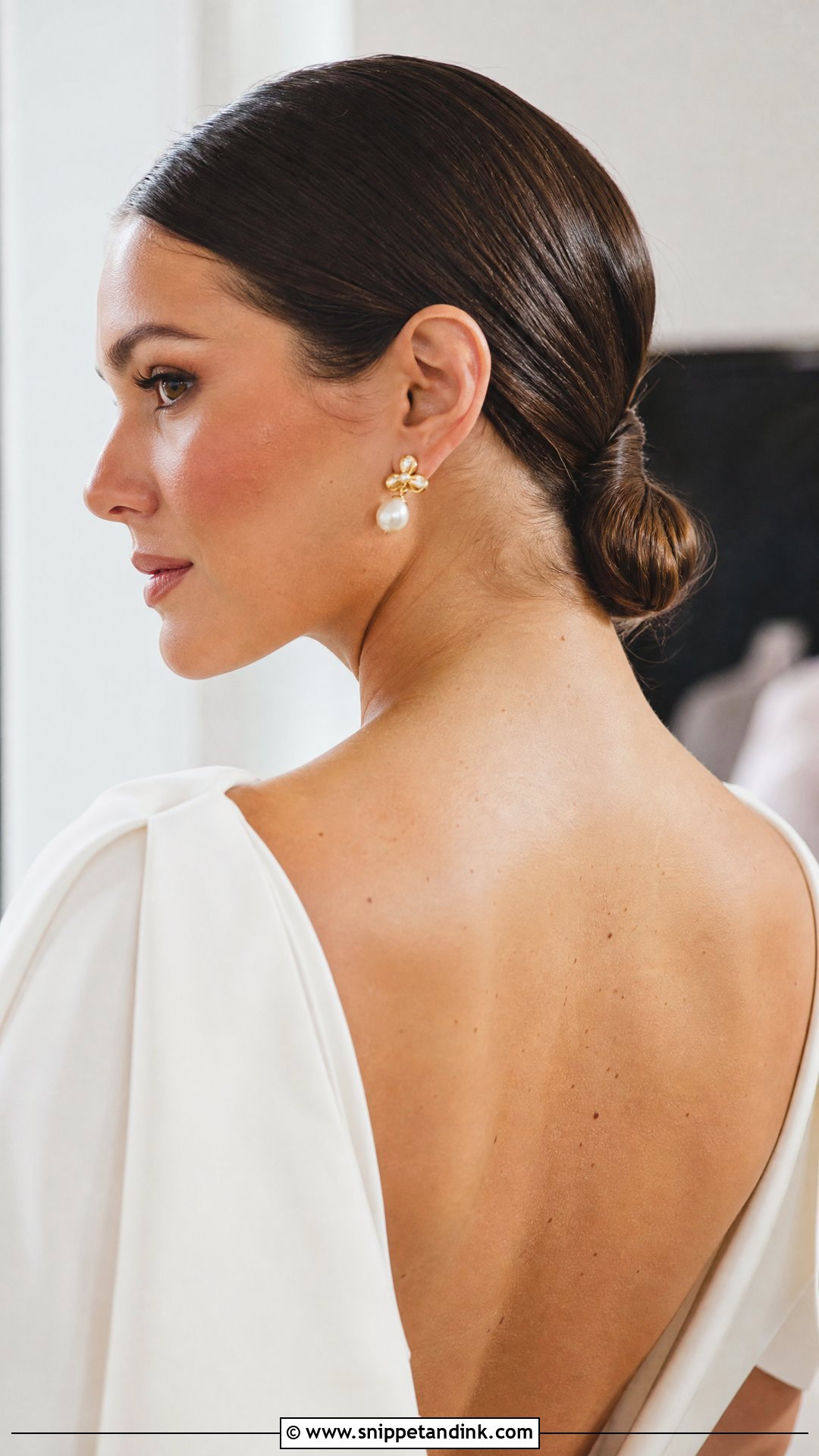
A chignon on a bob is mostly an illusion. I slick the hair back with a smoothing cream, gather it at the nape and fold it into a small knot, padding it with a little backcombing underneath so it reads fuller from the front. Without the padding it looks thin. It suits ballrooms and minimal gowns, and it puts your earrings and neckline at the centre of every portrait. If your bob is shorter at the back than the front, an A-line cut, ask me at the trial whether there’s enough length to reach.
8. Tousled Beach Wave Bob
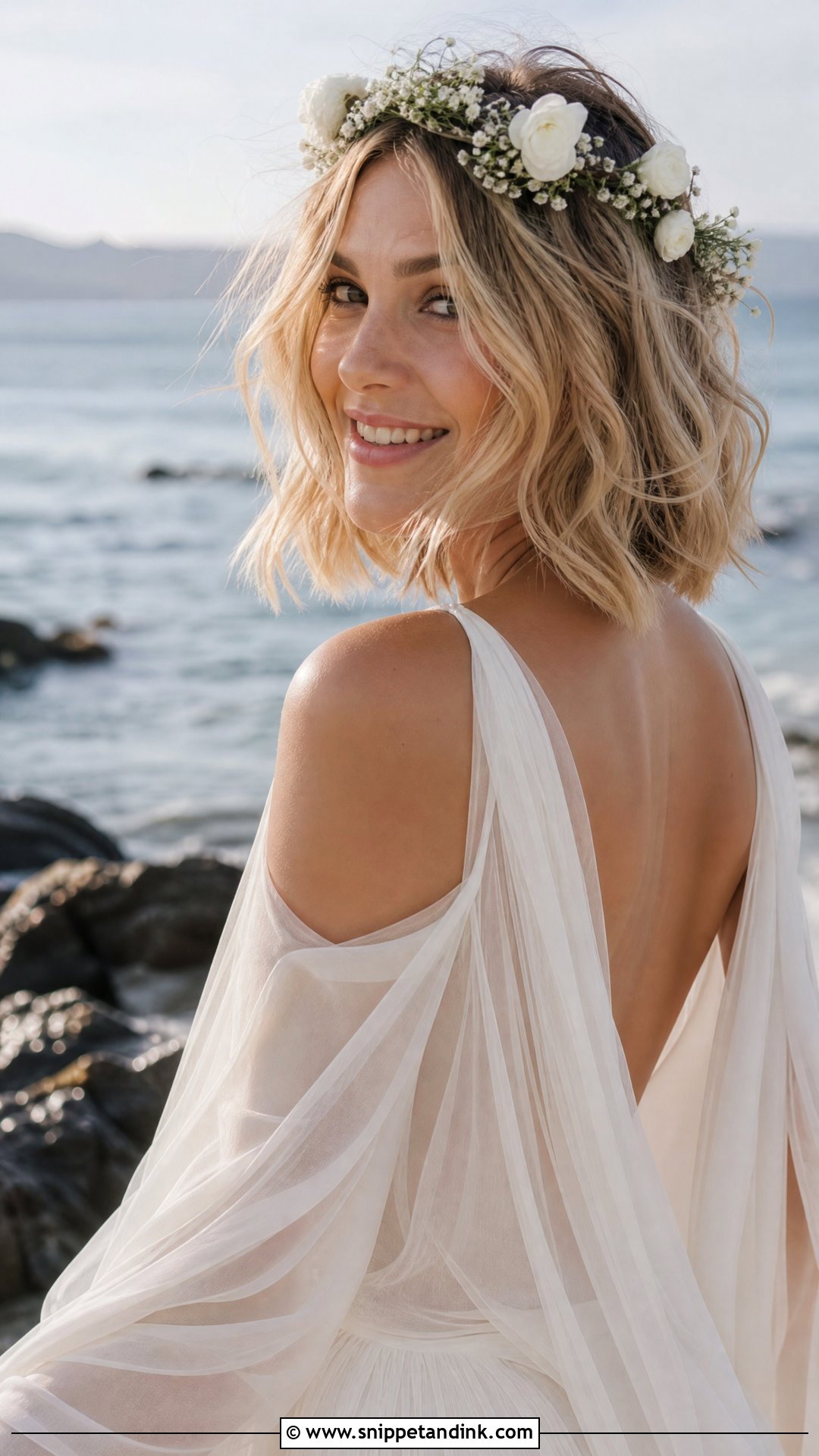
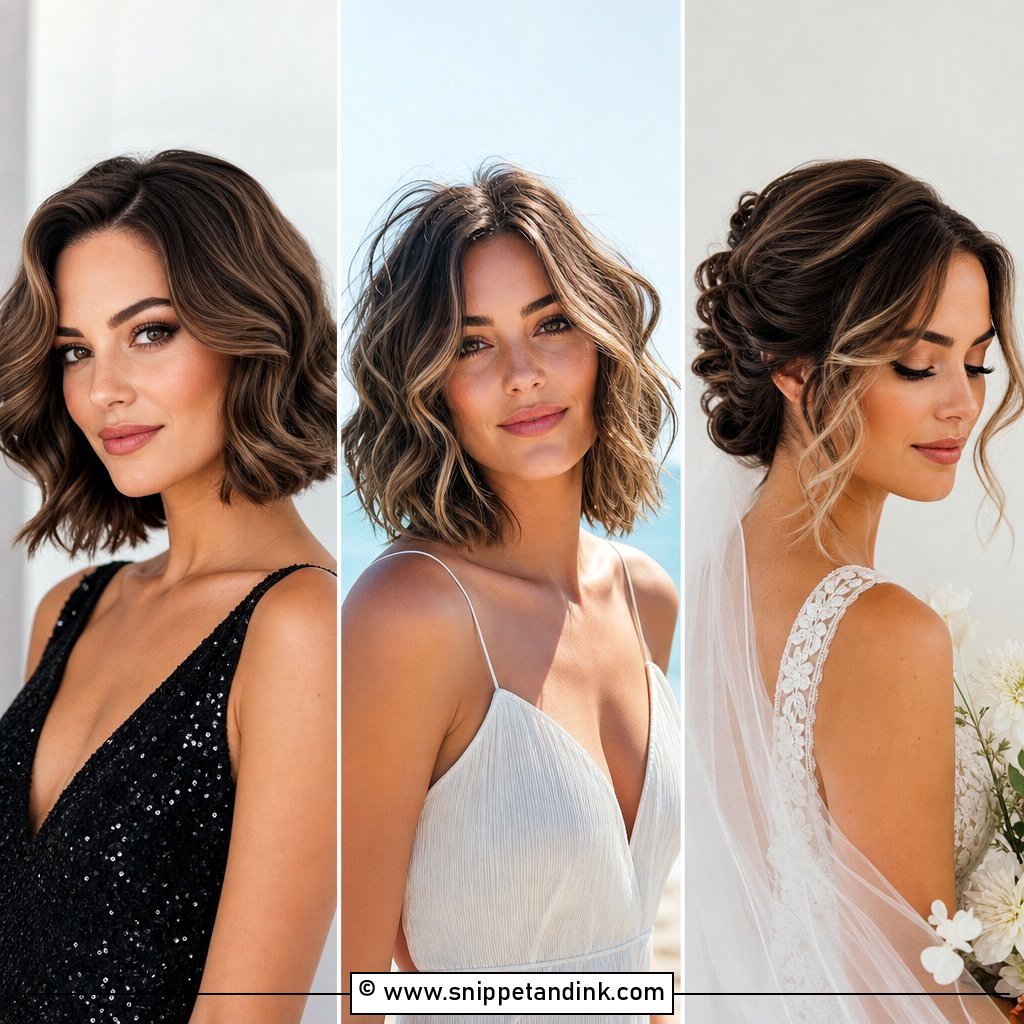
Beach waves look casual but need structure to survive a day at the coast. For a tousled beach wave bob, I wrap hair flat around a wand, alternating direction, and leave the ends out. Then I break the curls apart with a texture spray rather than a brush. Sea air relaxes waves fast, so I build them a little tighter than you want them at the ceremony. A flower crown or a couple of simple pins keep the front out of your eyes in a breeze.
9. Pinned-Back Bob With Pearl Accessories
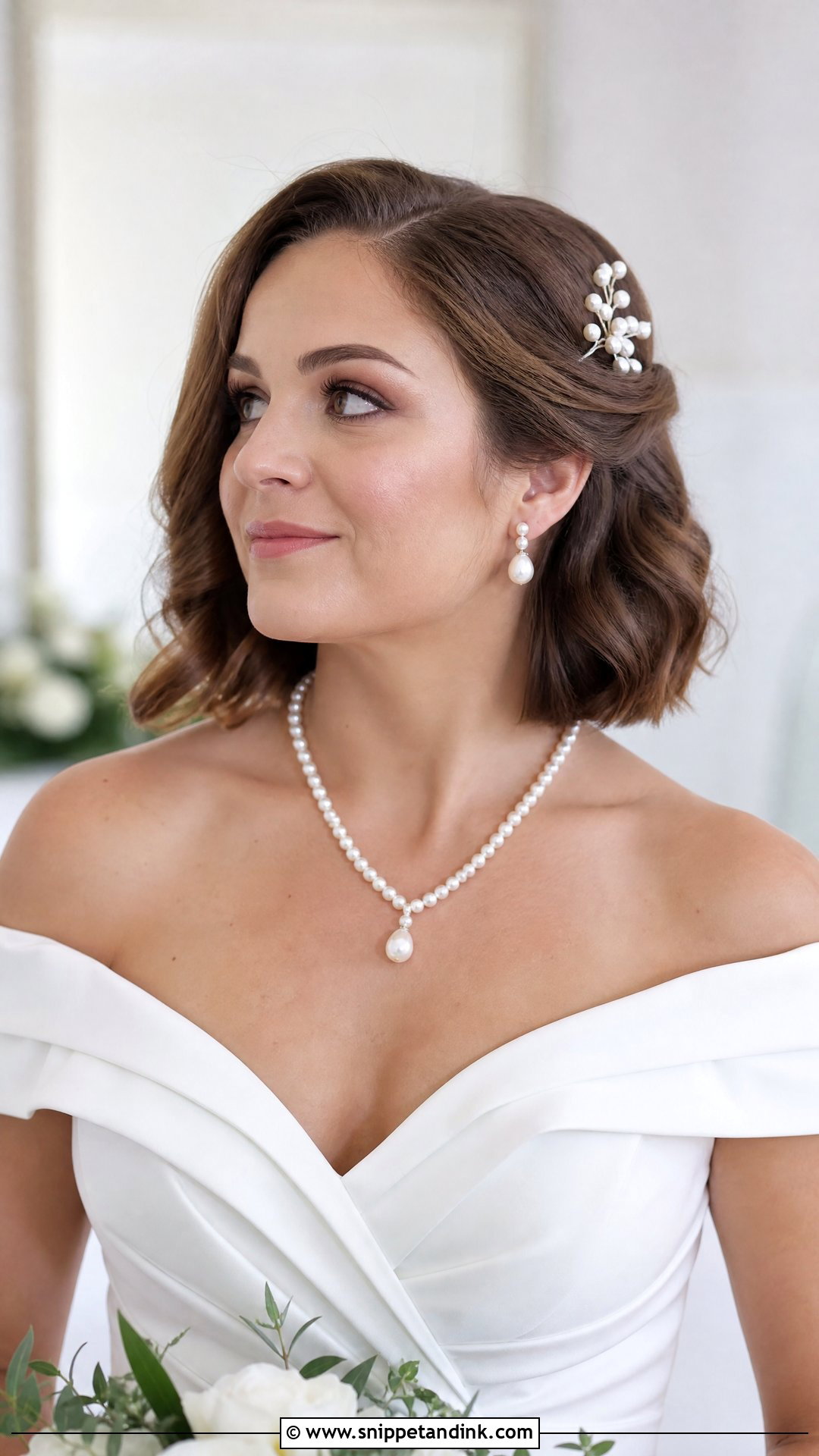
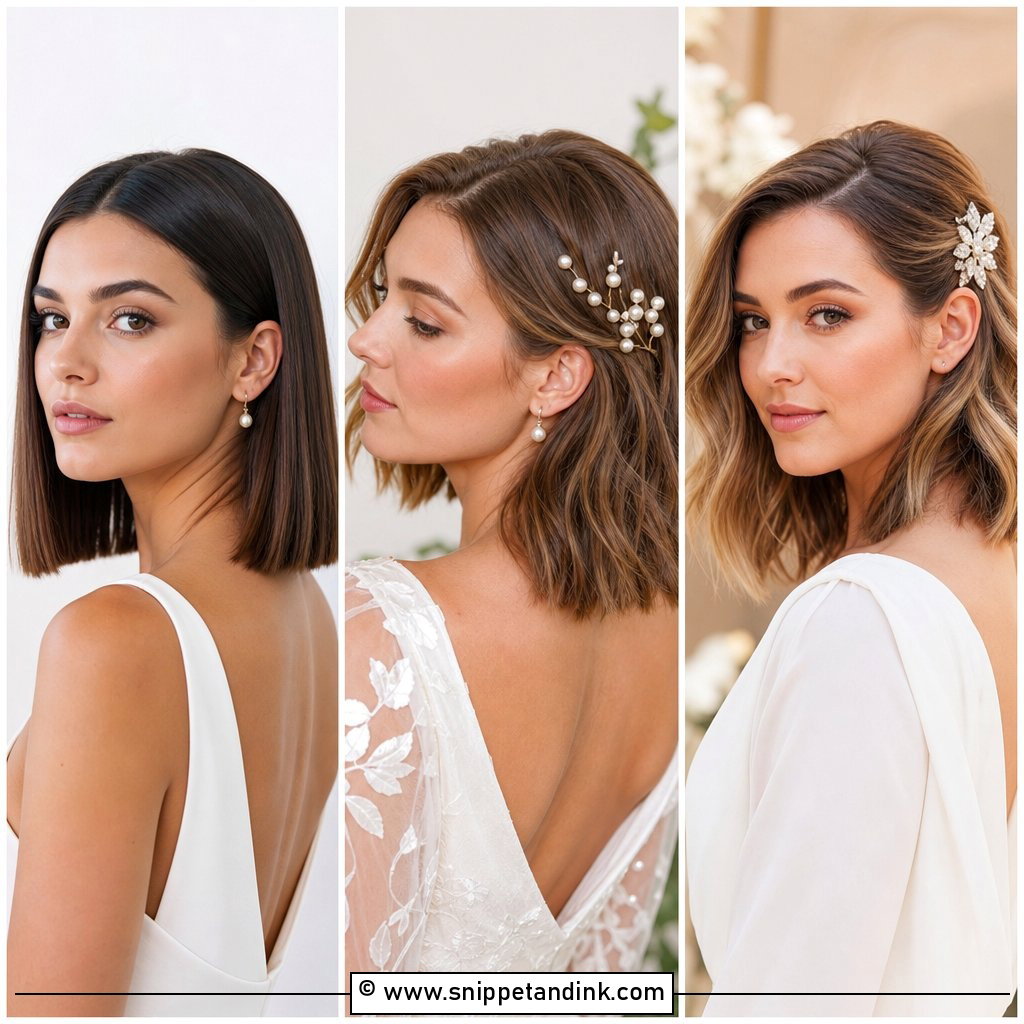
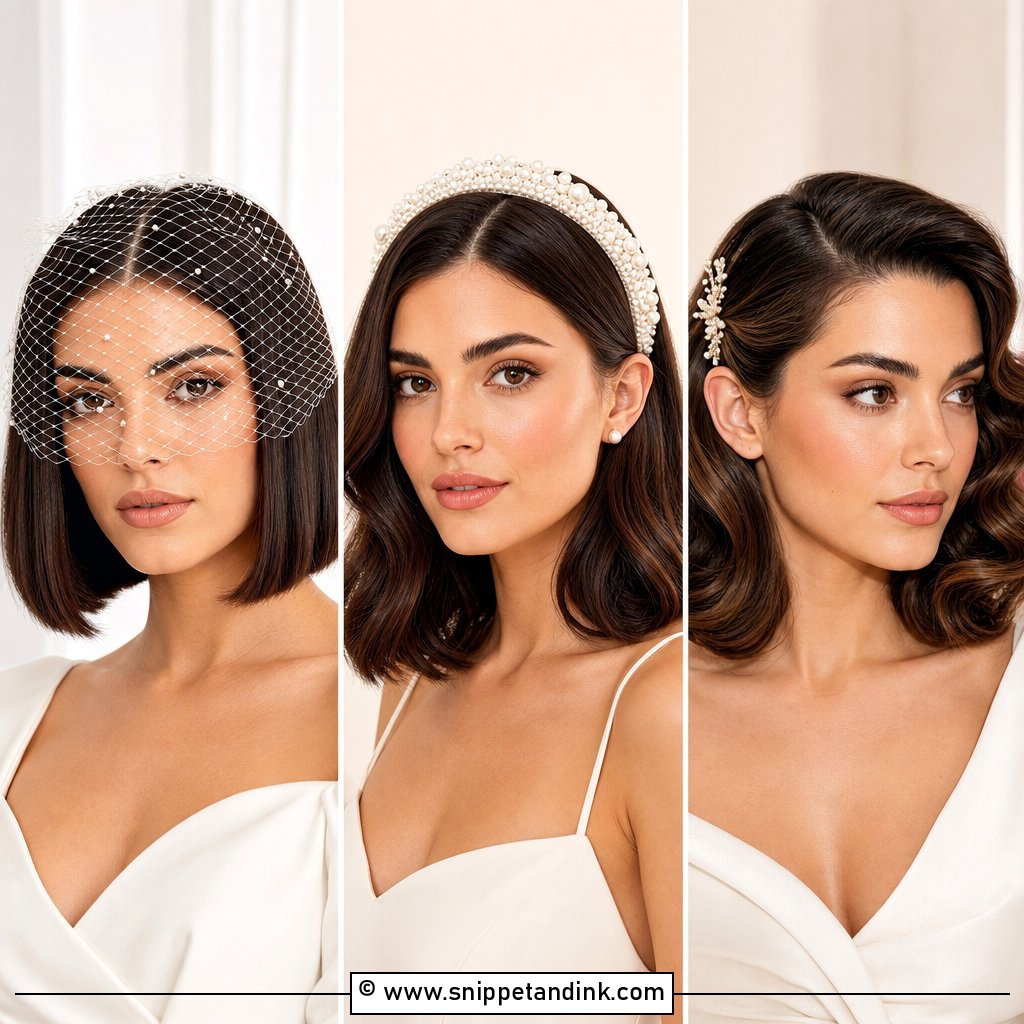
Pearl pins are the simplest way to make a bob look bridal. I sweep one or both sides back, cross two bobby pins underneath as an anchor, and then slide the pearl pins in over them, because decorative pins on their own rarely grip enough to hold. This works on straight, wavy or curled bobs and links neatly to pearl earrings or a necklace. It also survives the switch from ceremony to dancing without anyone needing to fix it.
10. Deep Side-Swept Bob
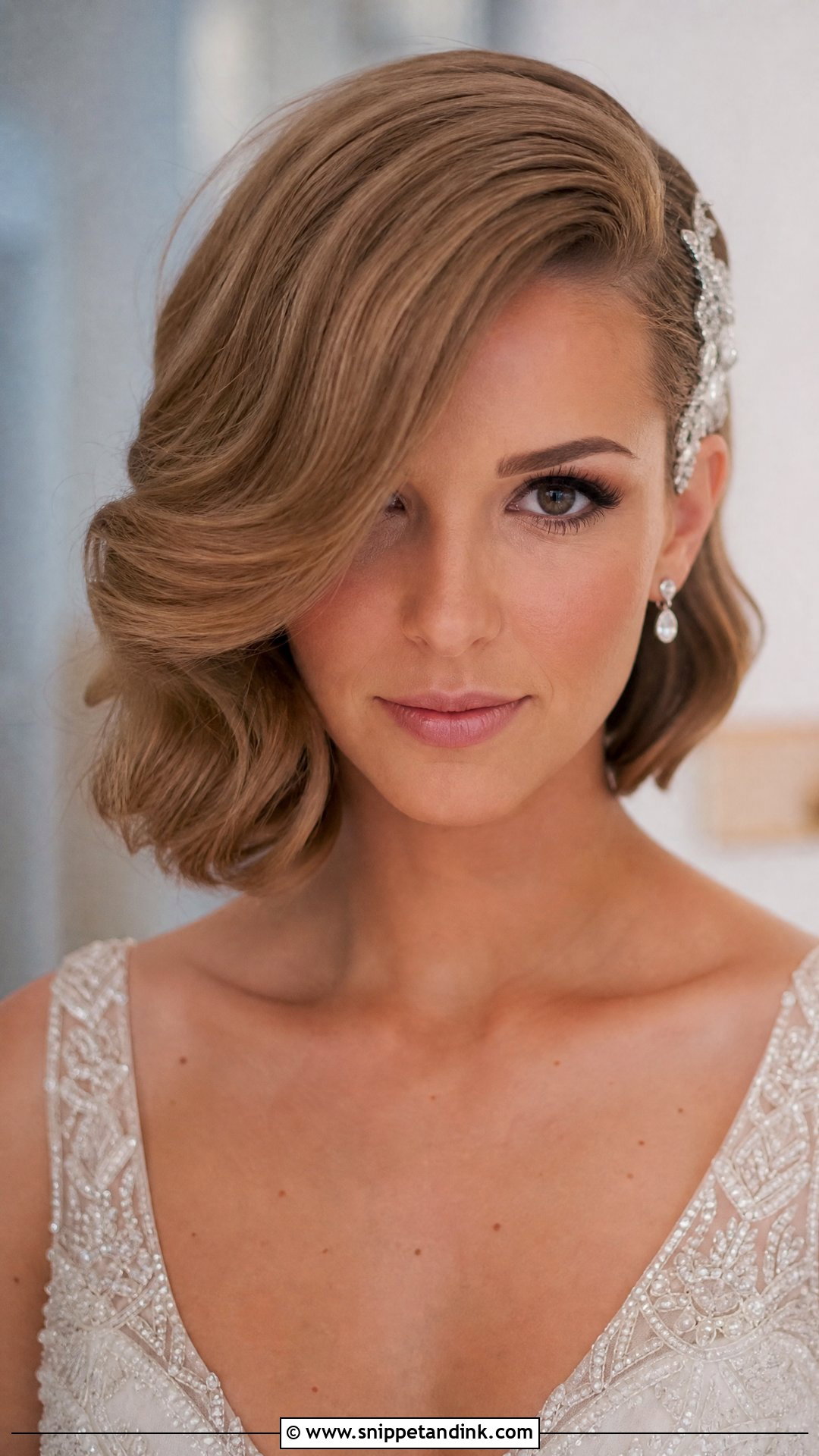
A deep side sweep is pure Hollywood, and it depends on a part placed further out than you’d usually wear it, roughly in line with the arch of your brow. I dry the hair in that direction from the start, since a part fights back if you only move it at the end. The sweep across the forehead adds volume on one side and suits most face shapes. One honest caution: it can fall into your eyes during the vows, so I always add a hidden pin or a sparkling clip to hold the front.
11. Twisted Updo Bob
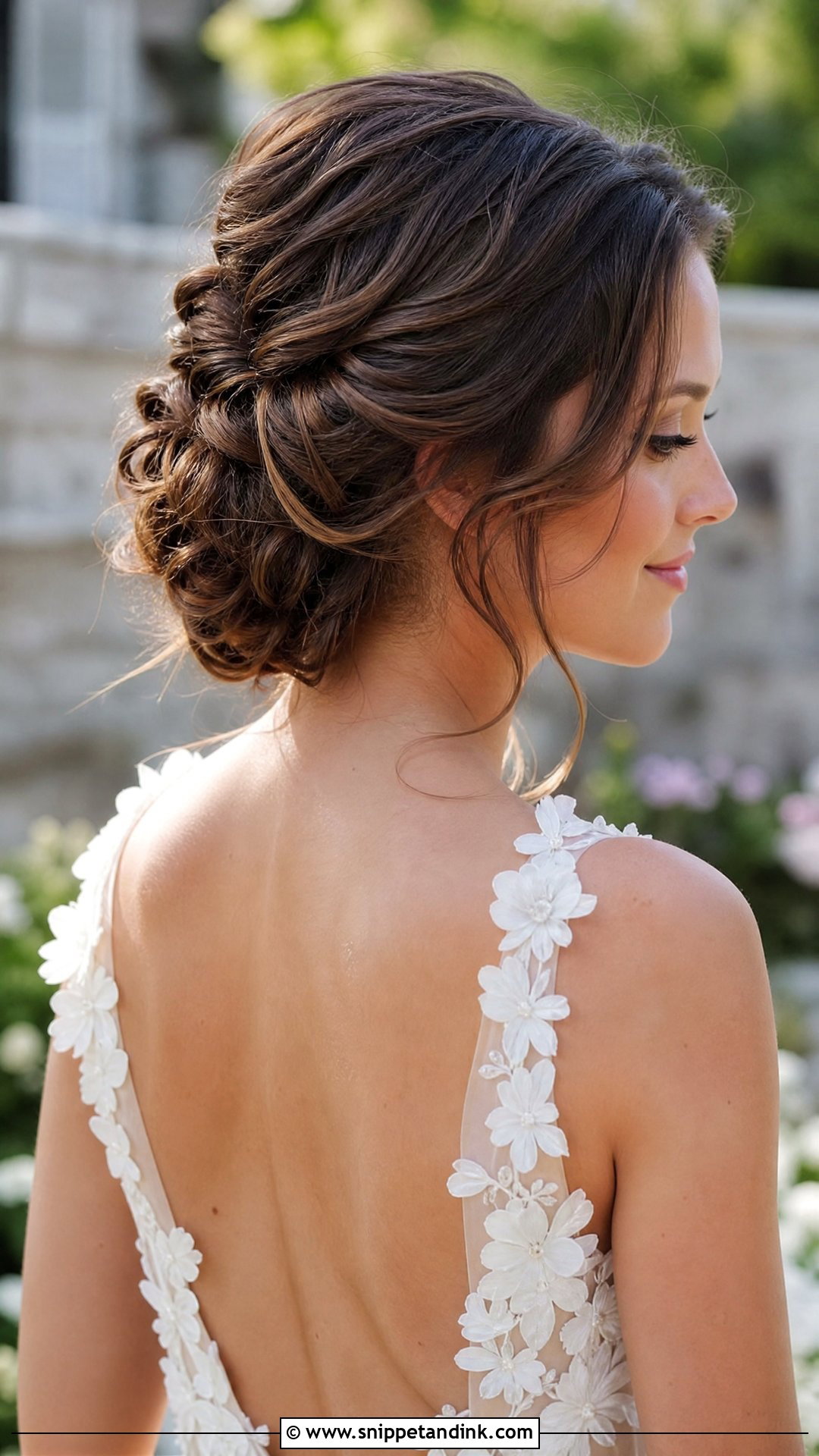
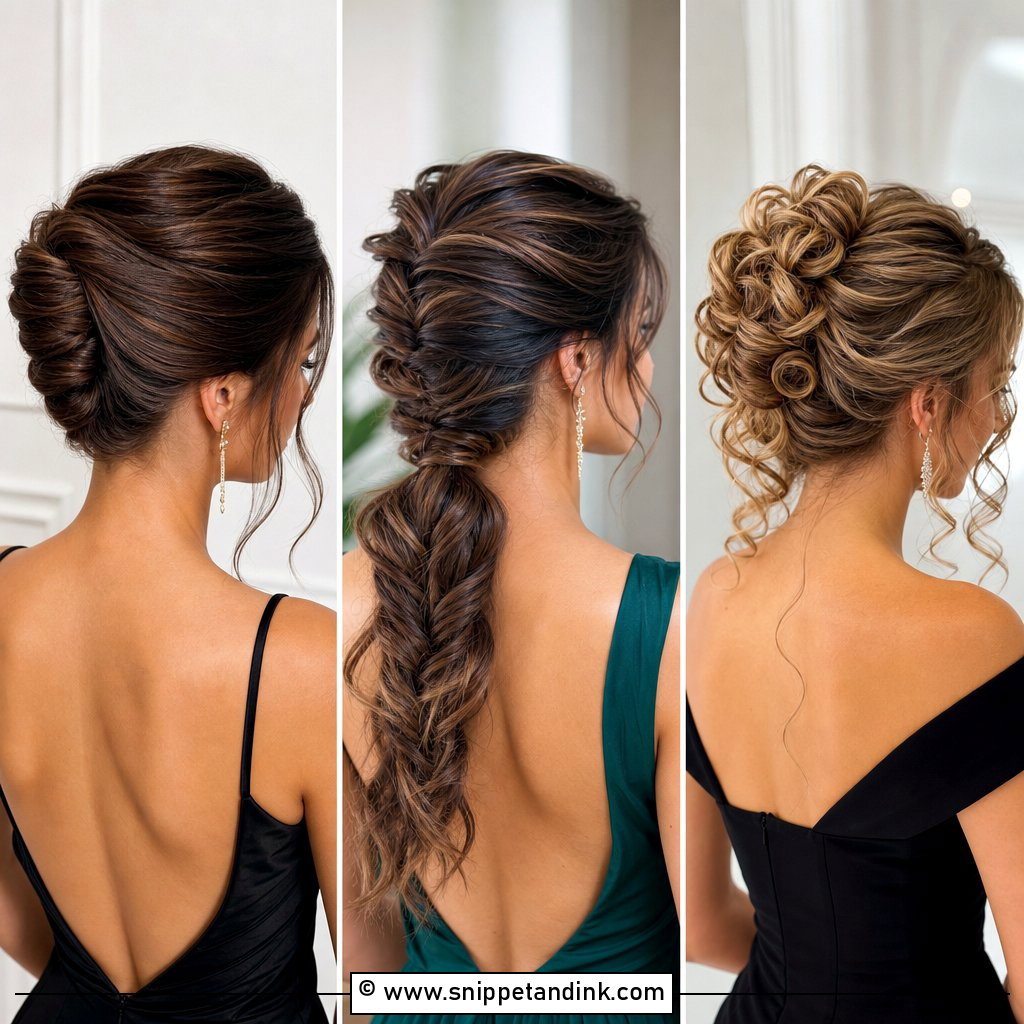
Twists are my favourite way to get a detailed updo on shorter hair, because each twisted section grips itself and needs fewer pins than a bun. I section the bob in small panels, twist each toward the back and pin them into a loose cluster at the nape. It looks intricate from behind, which matters, since guests see the back of your hair through the whole ceremony. Leave a few wisps at the front. Small flowers tucked between twists suit a garden wedding.
12. Bob With Statement Headband
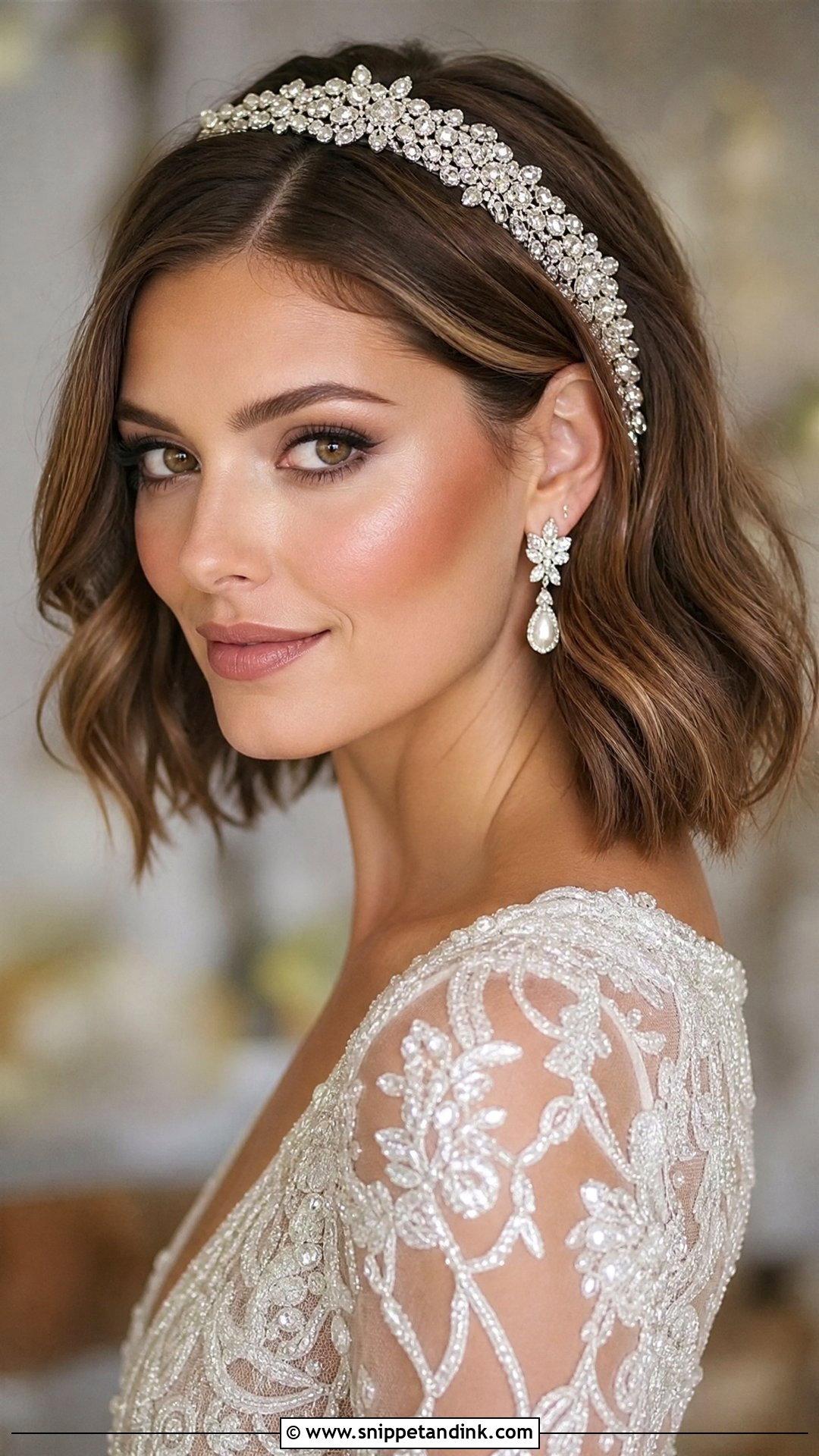
A jeweled or floral headband turns a simple bob bridal in seconds. The thing I check is grip: a smooth metal band slides back on sleek hair, so I lightly backcomb the section just behind it and pin through the band at each side behind the ears. A chunky jeweled band suits a full skirt; a fine one suits a slip dress. Try it on with your earrings so the two don’t compete.
13. Curled Bob With Side Tuck
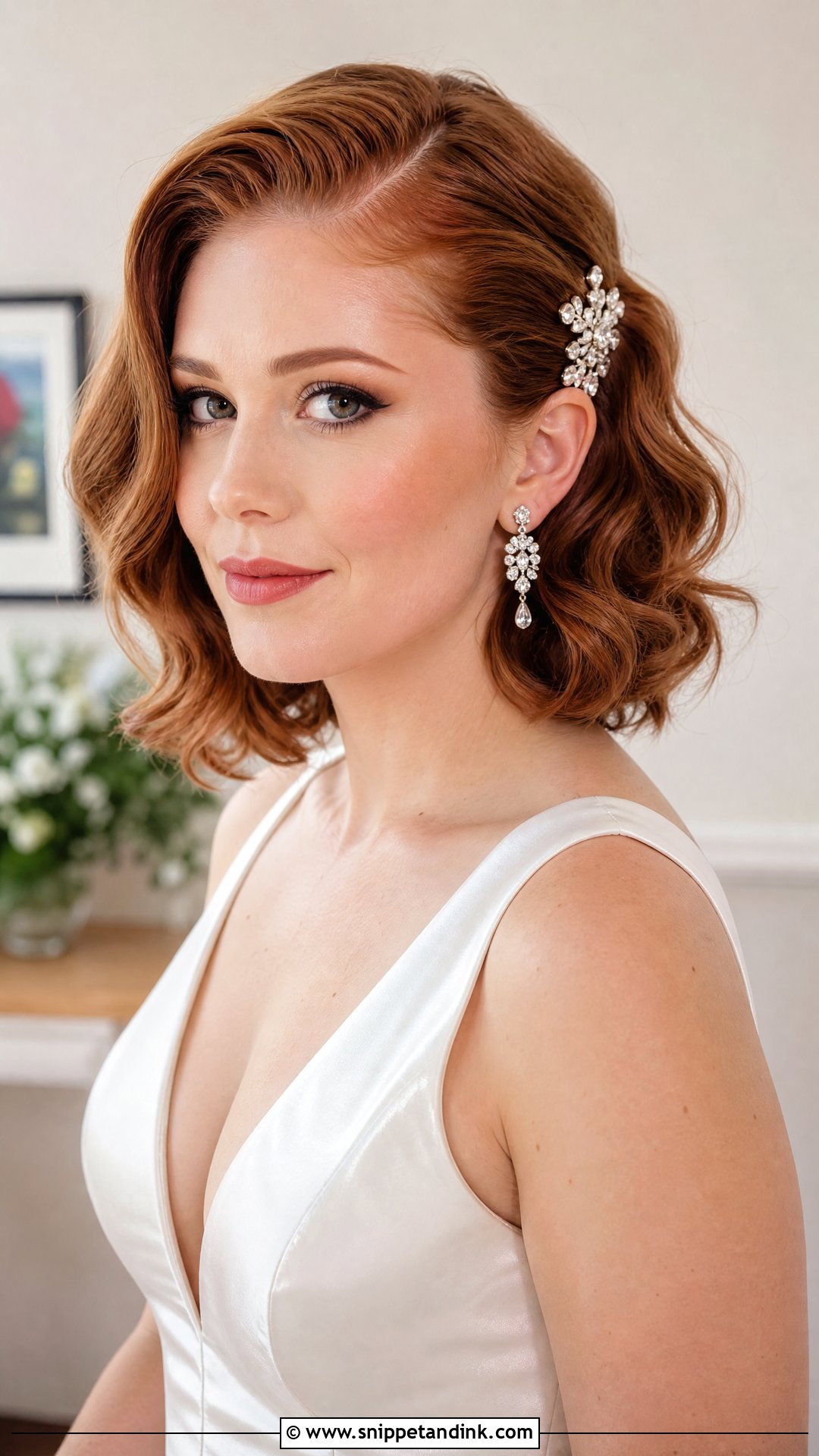
Tucking one side behind the ear sounds like nothing, but it changes a soft curled bob completely. It opens up the cheekbone and jaw and makes room for a statement earring. I curl the tucked side slightly flatter so it lies close to the head, then secure it with two crossed pins hidden under a decorative one. Round and oval faces suit it best. A veil can sit on the opposite side, balancing the shape.
14. Slicked-Back Wet Look Bob
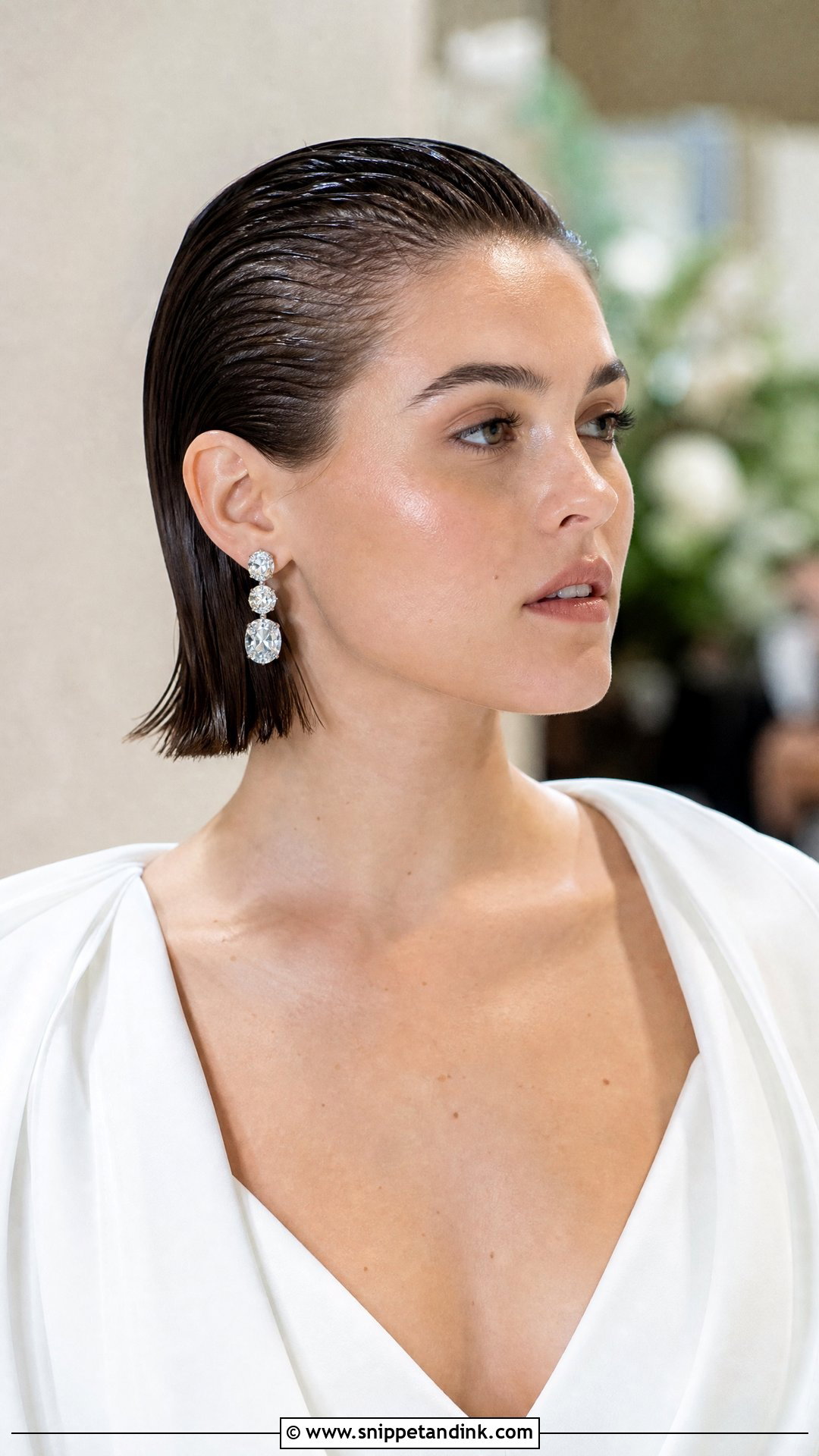
A slicked-back wet look bob is the one style here that truly needs no touching up, provided it’s done with the right product. I use a strong gel combed through on damp hair and finish with a shine spray, then leave it to set completely before the dress goes on. It’s editorial and sharp, made for city weddings and clean, structured gowns. It will show every flyaway at the hairline, so I comb that area last with a toothbrush and a little gel.
15. Bob With Floral Hairpins
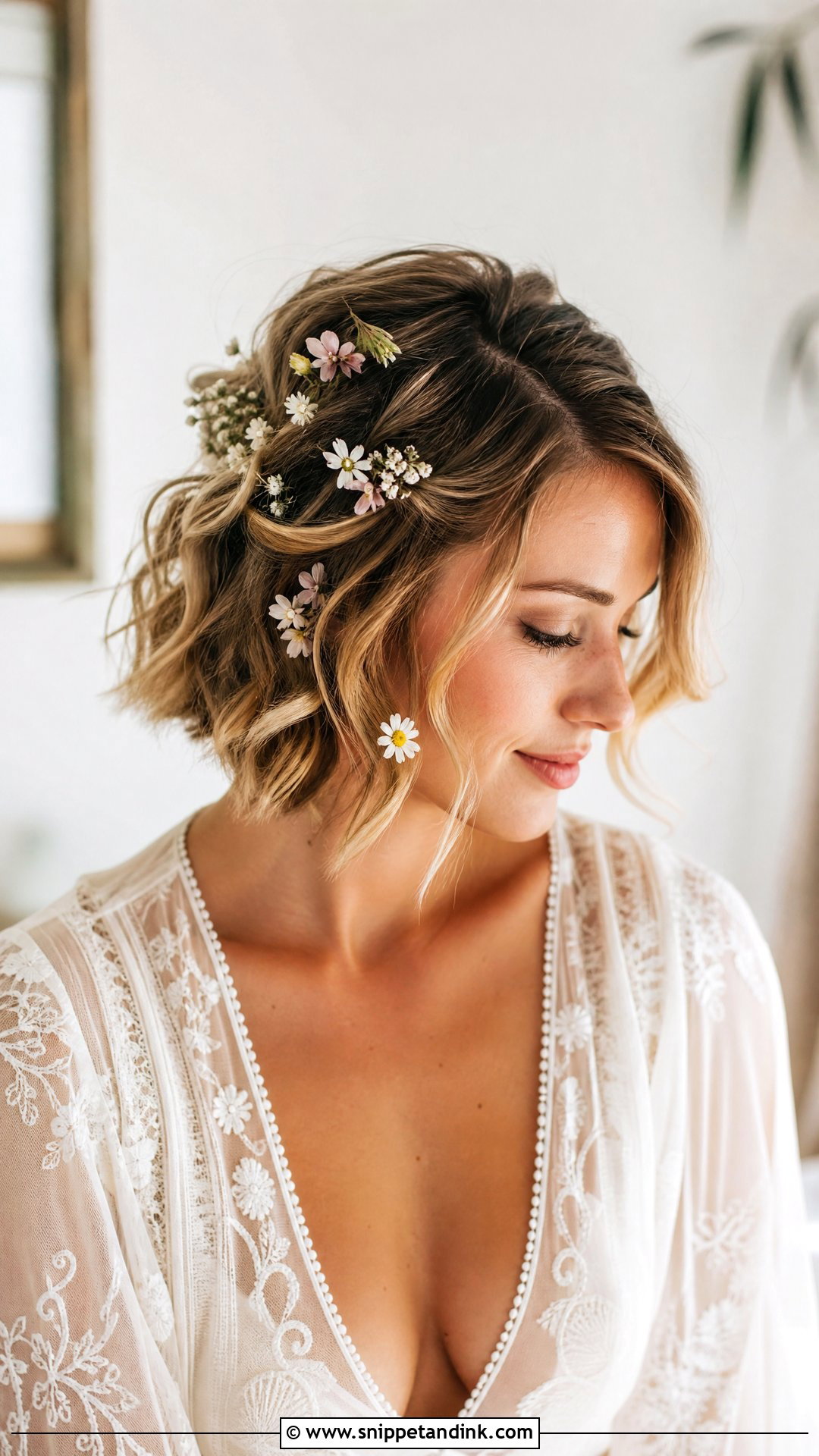
Fresh flowers in hair wilt faster than anything else on your look. If you want real blooms, I ask the florist for hardy ones such as spray roses, waxflower or small orchids, wired and taped so they sit flat, and I add them last. Silk flowers are the safer bet for summer heat. Match the colour to your bouquet and scatter a few pins through loose waves or along a side part. On a bob, three or four small pins look considered; more starts to crowd the shape.
16. Retro Pin Curl Bob
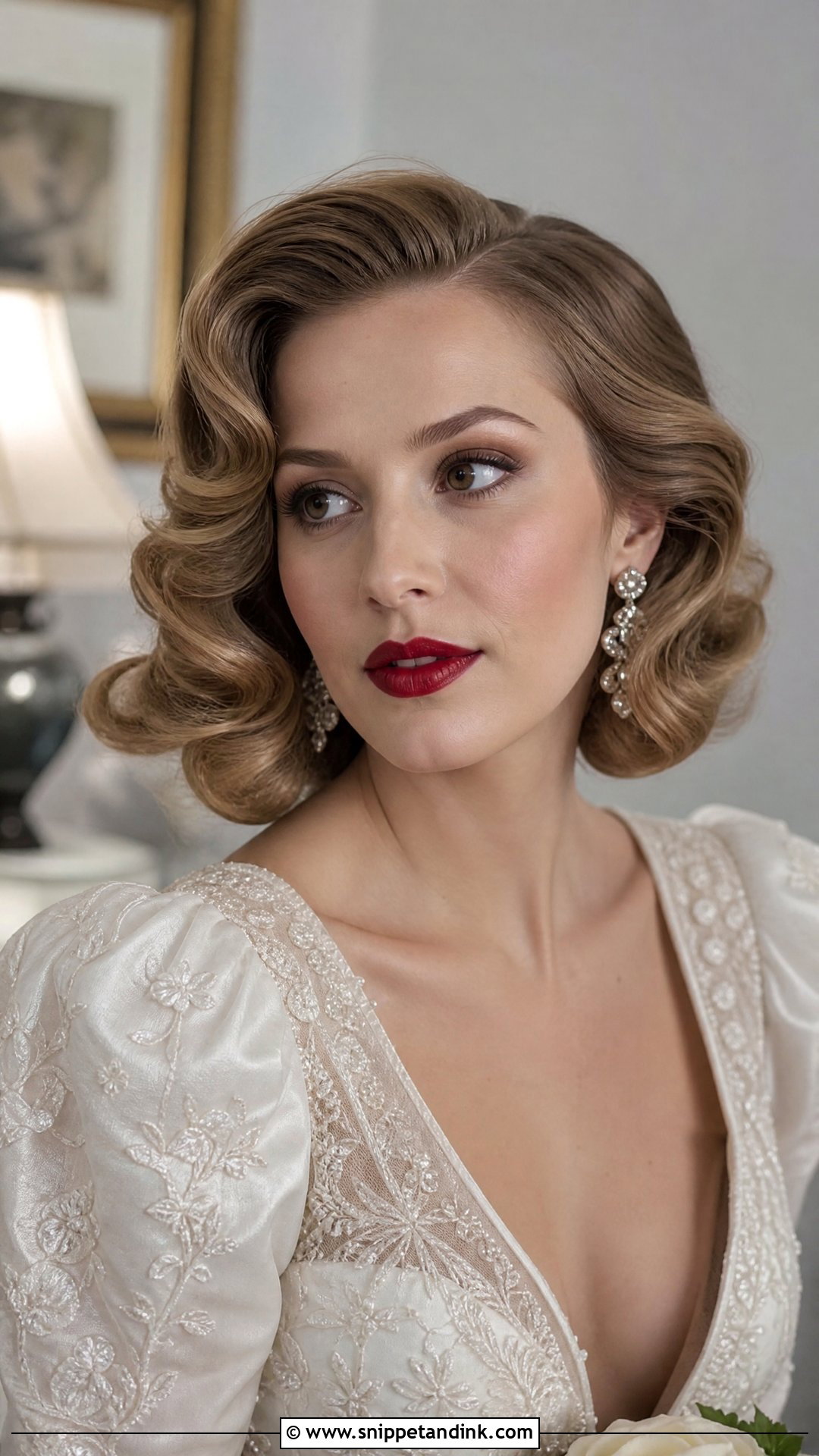
Pin curls take time, which is why they hold. I set small sections in flat coils with a setting lotion, leave them to cool and dry completely, and only then brush them out into soft, bouncy waves. Brushing too soon loses the set. This is a strong choice for brides whose curls usually drop by lunchtime. It suits retro and formal weddings, especially with a bold lip, and it flatters most face shapes because I can shape the volume wherever it’s needed.
17. Messy Textured Bob Updo
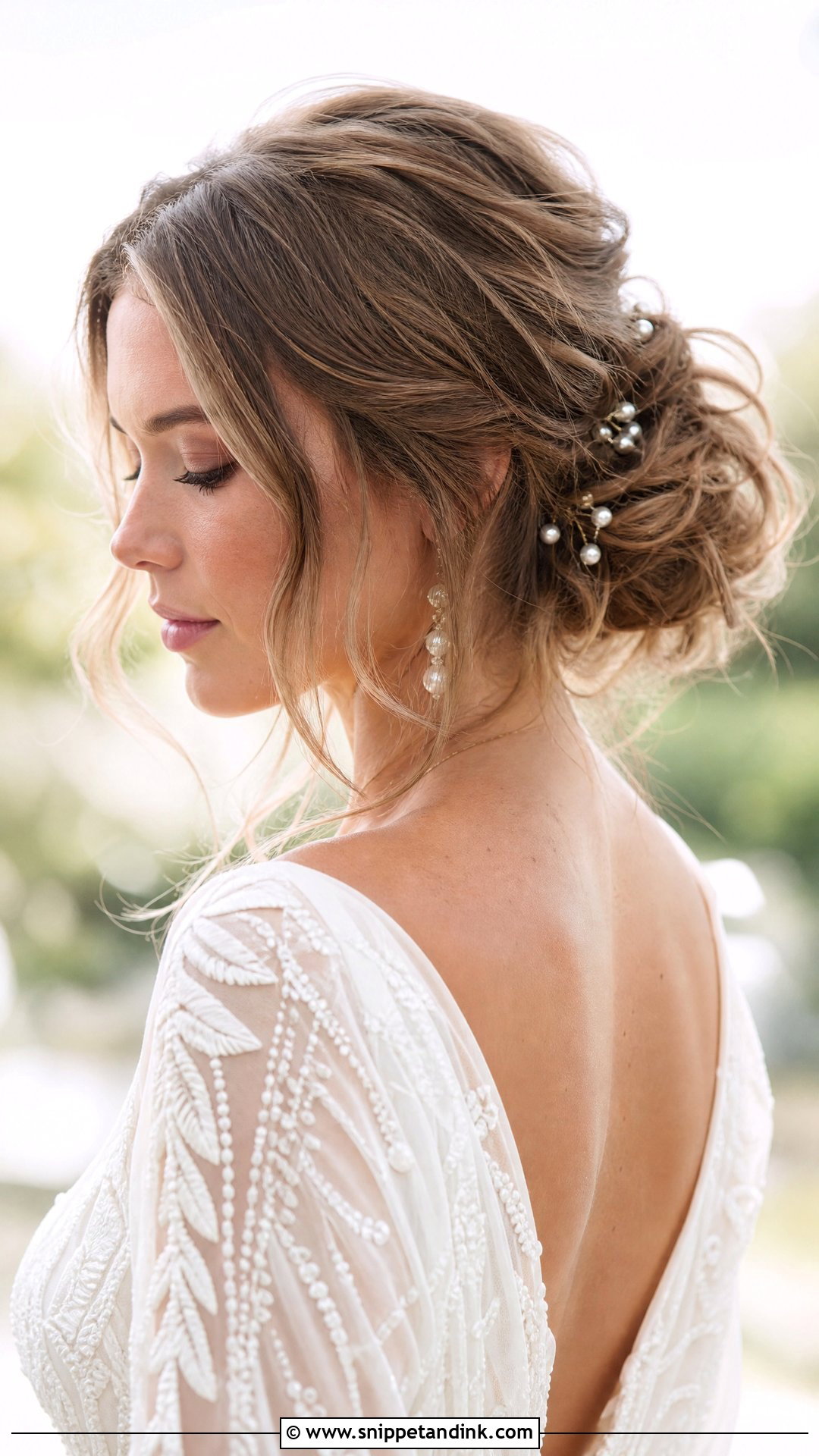
Undone updos need more planning than they look. I prep the hair with a dry texture spray so it has grip, then gather it loosely and pin it in sections, pulling a few pieces out at the face afterward. Too clean and it looks unfinished; too loose and it falls apart before the speeches. It keeps hair off the neck on a hot day and works for a relaxed outdoor wedding. Small flowers or pearls make it read as bridal rather than everyday.
18. Bob With Delicate Hair Vine
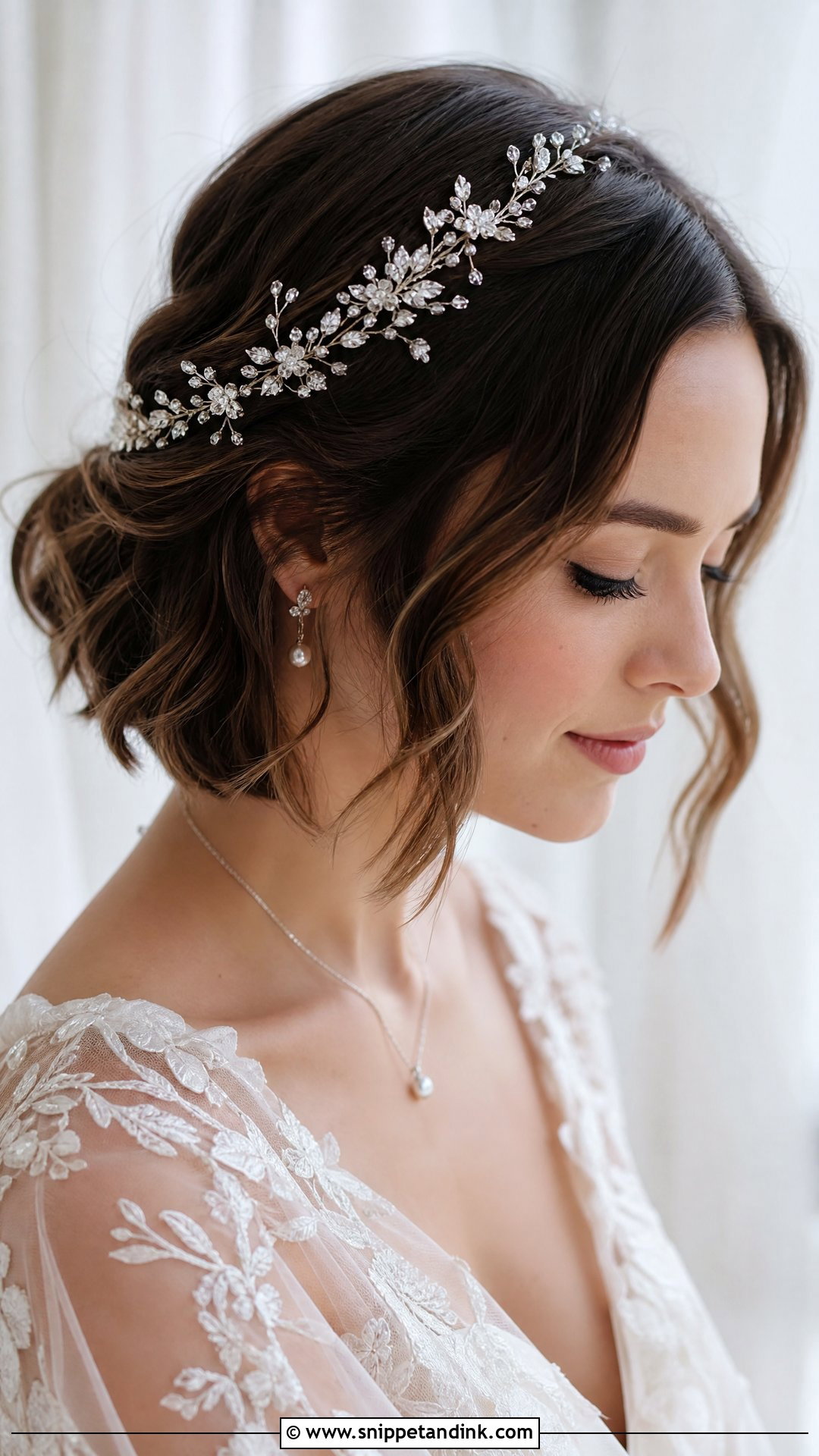
A hair vine is flexible wire strung with pearls or crystals, and I shape it to your head at the trial rather than on the morning. I weave it across the crown or along one side, pinning it every few inches. It works on sleek, wavy, or braided bobs and adds sparkle without the weight of a tiara. Match the metal to your engagement ring and earrings. Bring the vine to your trial, since the wire takes some bending to sit flat.
19. Curtain Bang Bob
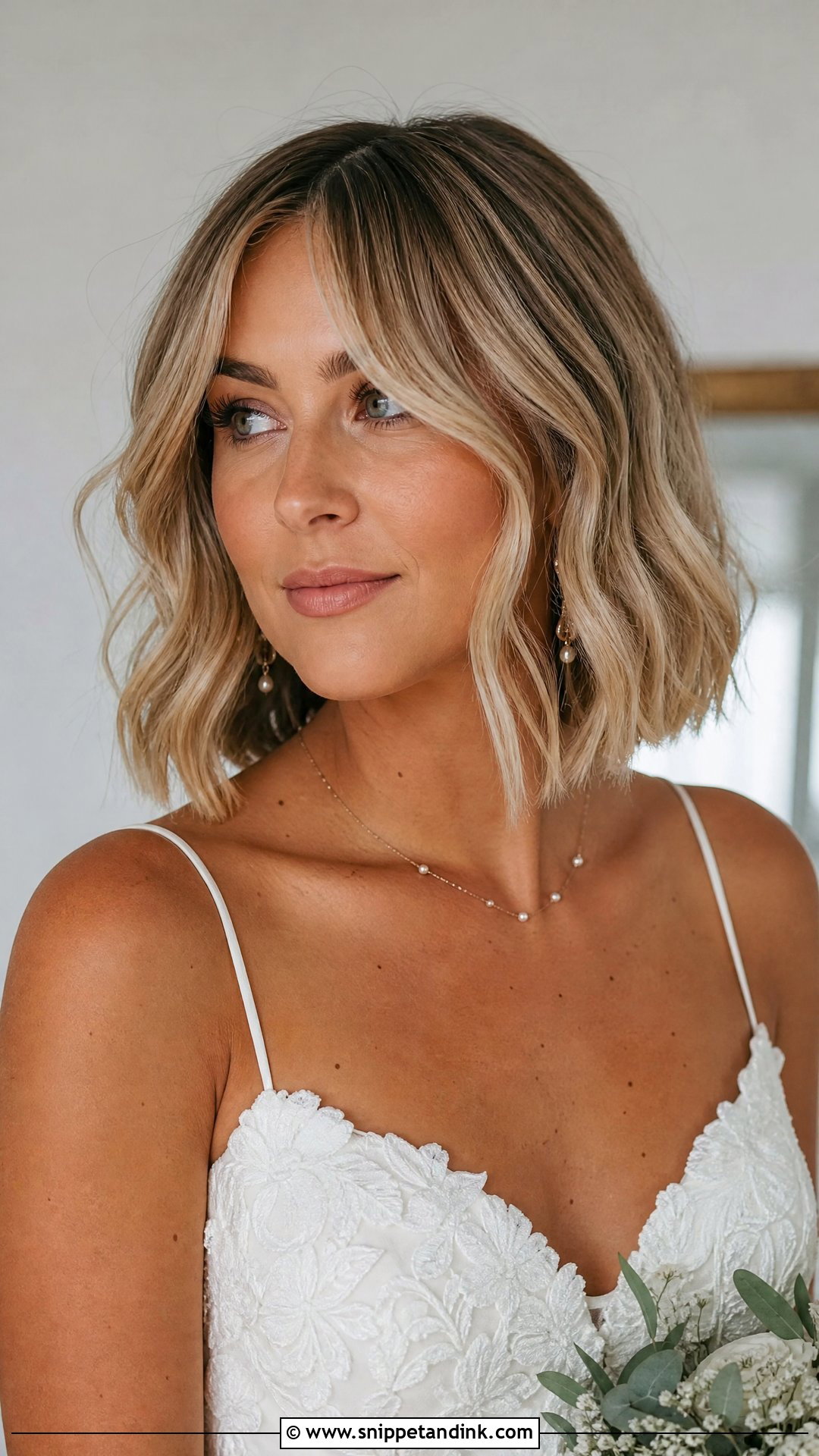
Soft curtain bangs are flattering on most face shapes and do a lot to soften a strong forehead. I blow them out over a round brush, lifting at the root and sweeping away from the face, so they blend into the waves around them. My warning is about timing: don’t cut new curtain bangs in the last month before the wedding. Get them cut several weeks ahead so they’ve settled and you know how they behave.
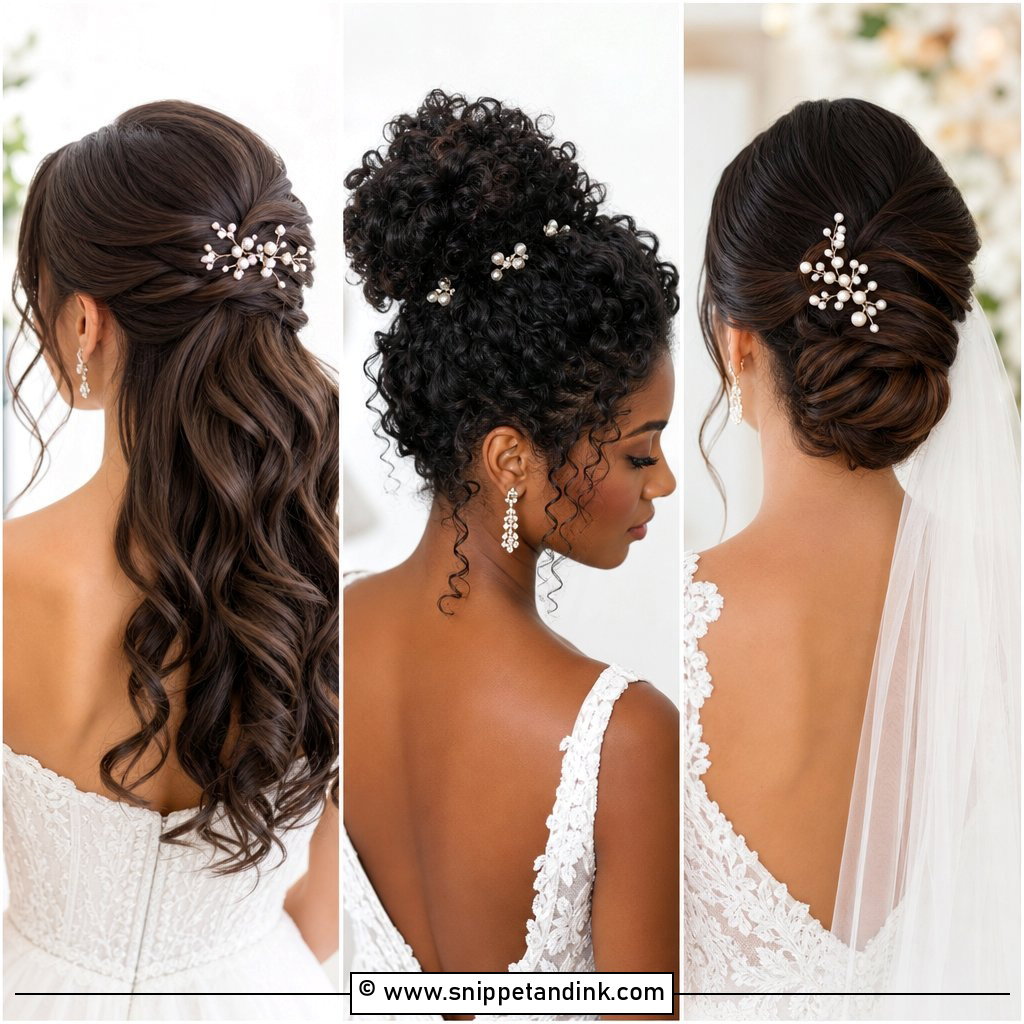
20. Classic Bob With Veil
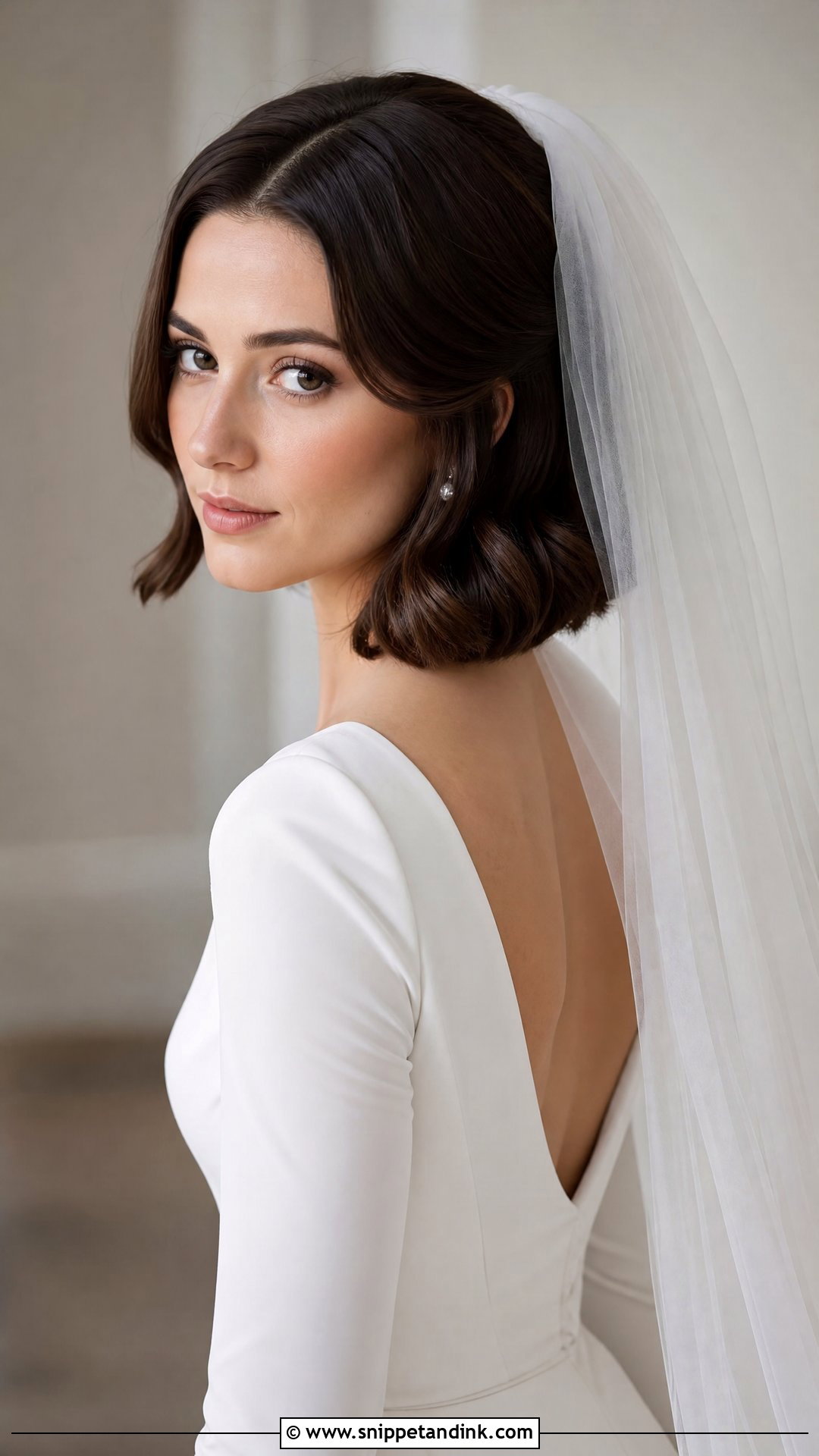
A veil is the bob bride’s main worry, and it doesn’t need to be. I secure the comb into a small anchor, either a hidden crisscross of pins or a tiny twist at the crown, rather than straight into loose hair. Under a low bun is the other good spot. Light, single-layer tulle is kinder to short hair than a heavy cathedral veil. Taking it off after the ceremony reveals your full style for the reception, so plan both looks at the trial.
Fine, Thick or Curly: Adjusting These Styles to Your Texture
The same bob style behaves very differently depending on what your hair is like. These are the changes I make most often.
Fine or thin hair
Fine bobs lose curl and volume fastest. I use mousse or root lift spray before drying, curl with a smaller barrel than you’d expect and let every section cool before touching it. Pins slip, so I texture the hair first and use matte pins rather than shiny ones. Sleek styles and finger waves suit fine hair well because they don’t depend on volume.
Thick or heavy hair
Thick bobs hold curl well but can puff out at the sides once waves relax. I take smaller sections, use a heavier smoothing cream at the ends and often thin bulk out of updos by pinning hidden sections flat underneath. Chignons and low buns need more pins and sometimes a little backcombing underneath for padding.
Natural curls and coils
If your bob is naturally curly, I’d rather define and shape your own curls than straighten and re-curl them. A defined, moisturised curl pattern lasts better in humidity than heat-styled waves. Twisted updos, pinned-back sides with pearl pins and statement headbands all work with natural texture and look very polished. Mention any protective style plans early so we can decide timing together.
Short Hair Gives You More Room at the Trial
A bob isn’t a limitation, it’s a different starting point. Sleek chignons, finger waves, braided crowns and pearl-pinned half-up styles all work on short hair once you know where to place the pins and how much length each look needs. Bring your gown photo, your veil and your earrings to the trial, and let your hairstylist test two or three options on the same day. Accessories like hair vines or a headband are the easy final layer, and they let the same cut feel personal.
You'll Like These Ideas:


Leave a Reply