
Beach waves are the request I hear most from brides marrying near water, and also the one most likely to go flat by the speeches if it’s treated as plain loose hair. The version that lasts is a complete style: a deliberate part, some root volume, hidden pins, a plan for the veil and often a braid or accessory doing quiet structural work. Done that way, waves catch light and show the dimension in your color better than almost any updo. They suit coastal ceremonies, garden venues and destination weddings, on long, short, fine, thick or naturally wavy hair, with a few adjustments I’ll point out as we go.
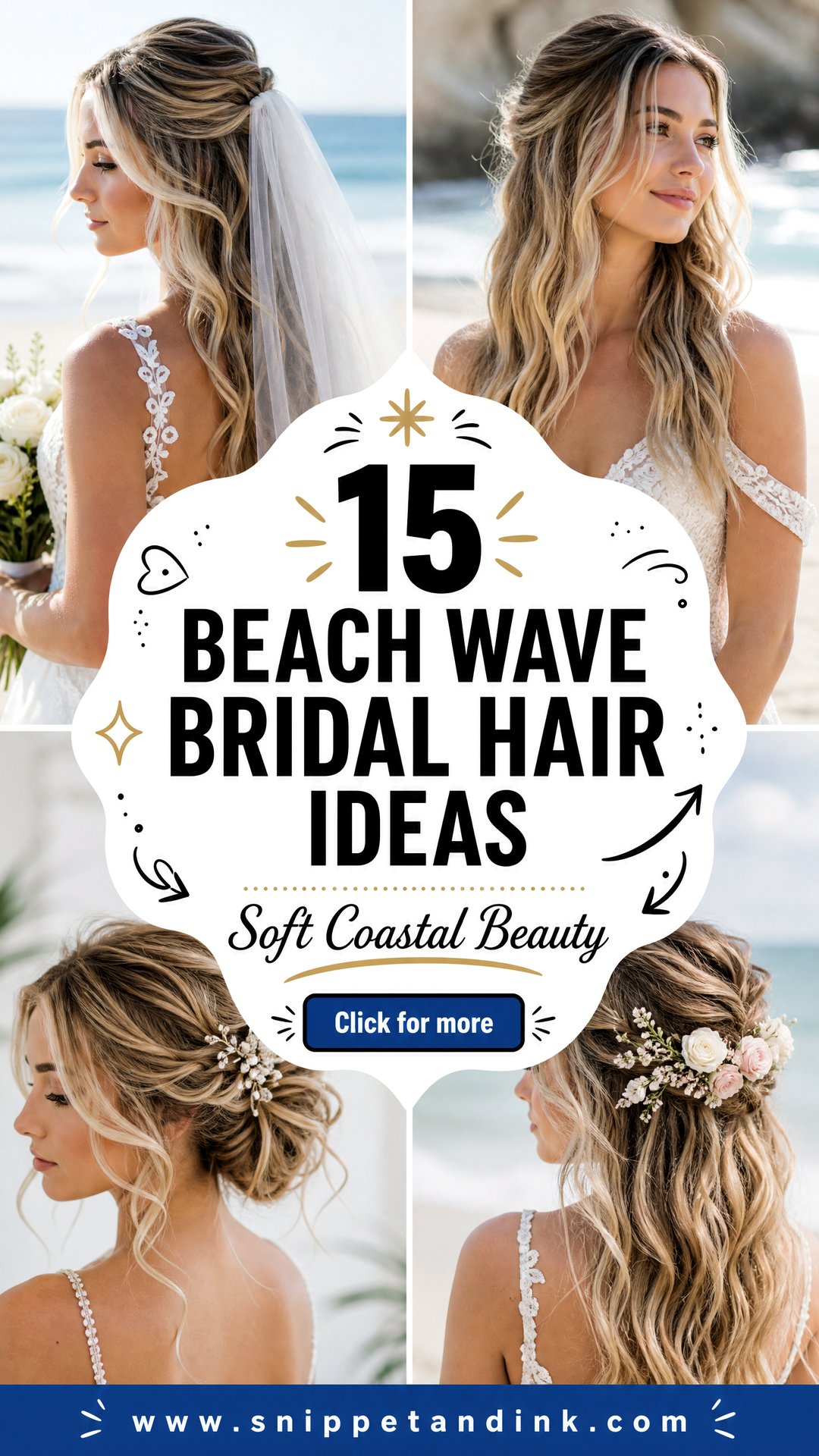
How I Build a Wave That Isn’t Just a Curl
A beach wave is a bend, not a ringlet, and most disappointing waves are really curls that were never broken up. The technique changes the result more than any product does.
- Prep on dry, second-day hair if possible, with mousse at the roots and a heat protectant through the lengths.
- Use a flat iron with a twist or a large-barrel wand, and leave the last inch or two of each section straight. Straight ends are what make it look beachy instead of formal.
- Alternate the direction of each section around the face and the back, so the waves don’t stack into one big rope.
- Let everything cool completely before touching it. Hot hair is still soft; brushing it then drops the shape.
- Rake through with fingers or a wide-tooth comb, then mist with texture spray and a flexible hairspray.
I rarely use sea salt spray for a wedding. It gives great grit for a casual day but dries the hair and can feel gritty against a veil or cheek by the evening. A dry texture spray gives similar separation without that.
1. Beach Wave Bridal Hair With Veil
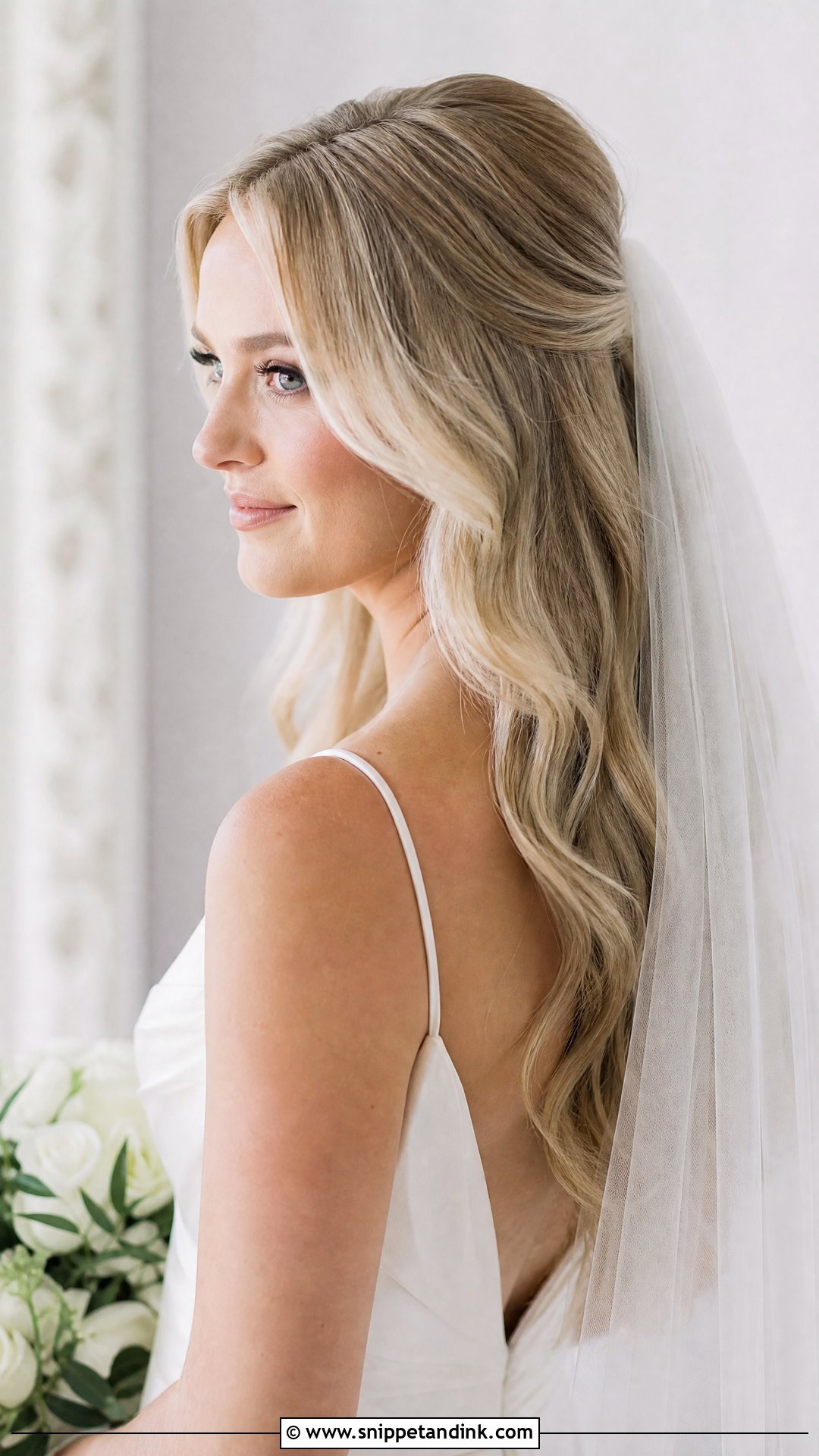
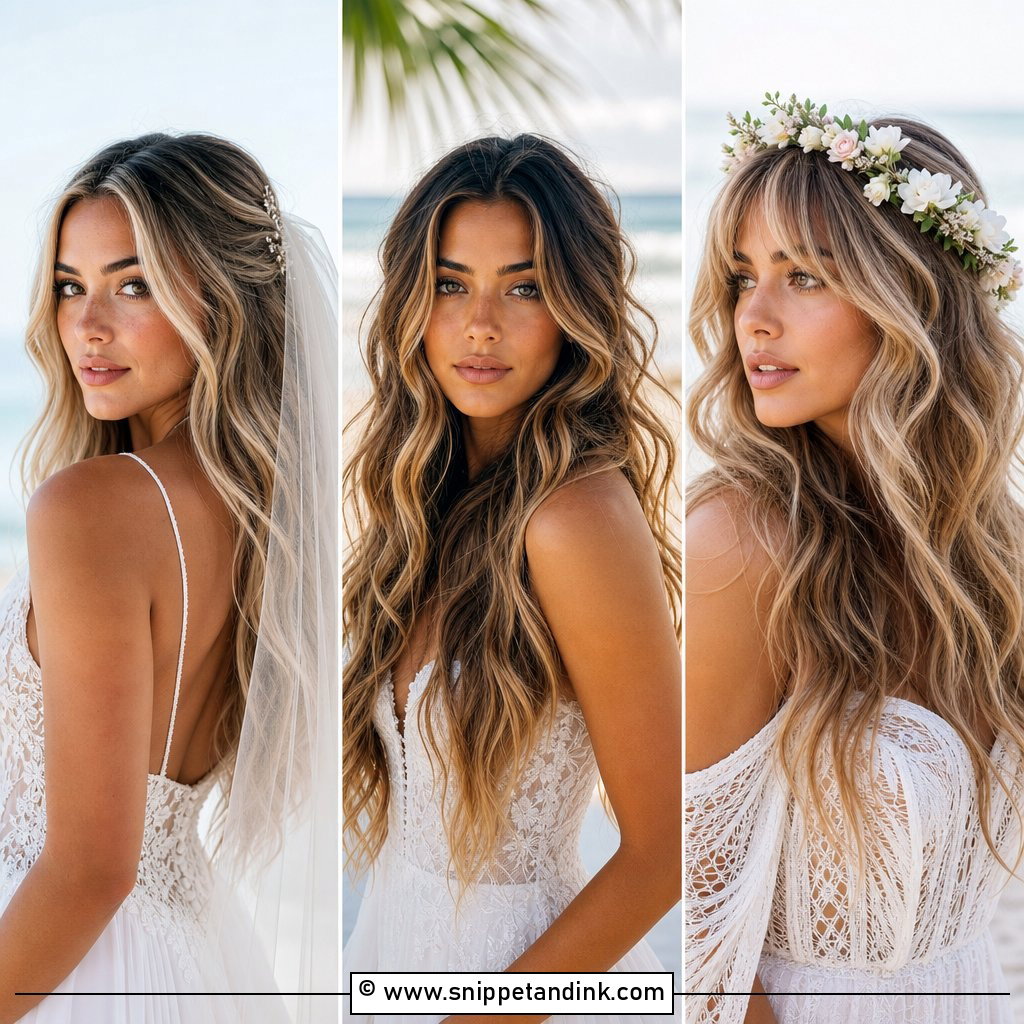
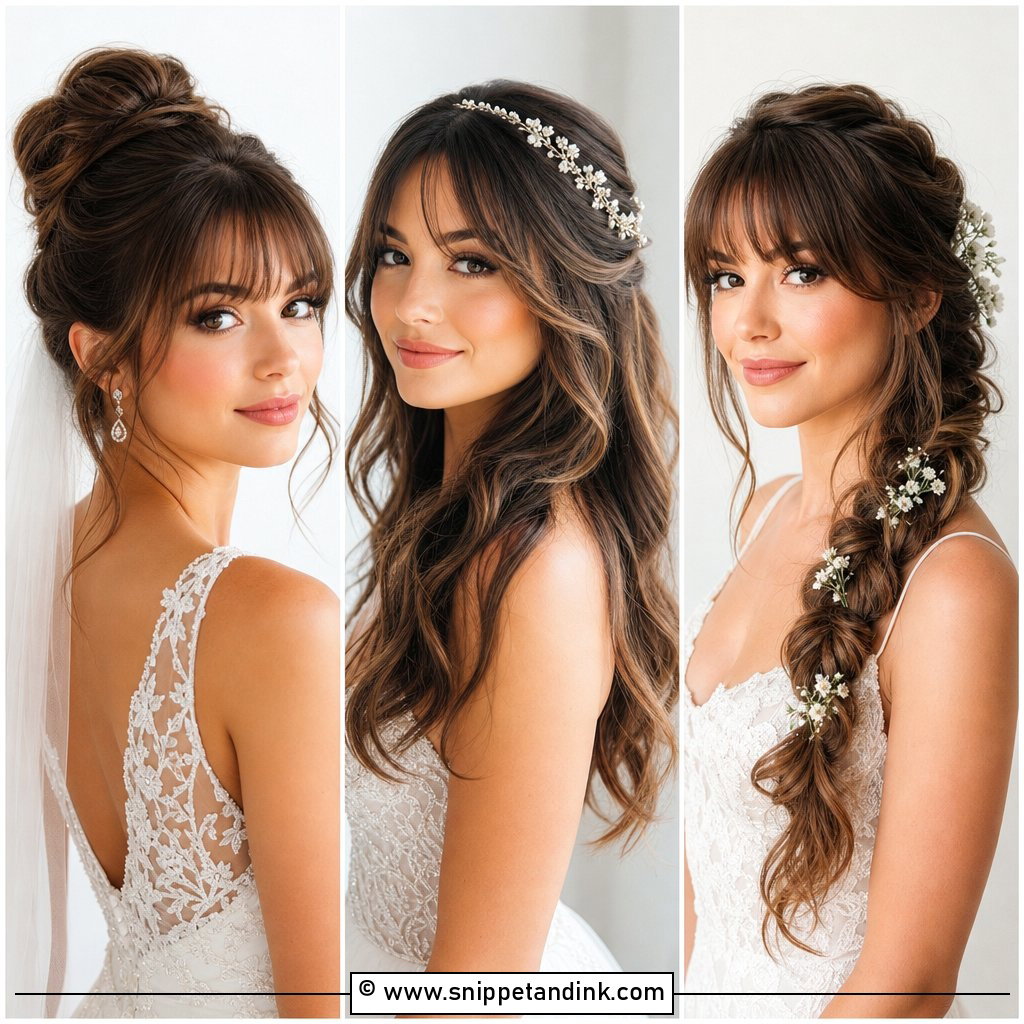
Beach wave bridal hair under a veil is mostly a question of where the waves start. I begin them below the cheekbones and keep the crown smooth, because a veil comb needs flat, slightly backcombed hair to grip; push it into waves and it slides. A middle part feels modern, a soft side part more romantic. I set the waves with a flexible spray so they can move in a breeze. Lace or sheer tulle veils and simple gowns sit well with the texture.
2. Half Up Beach Wave Bridal Hair
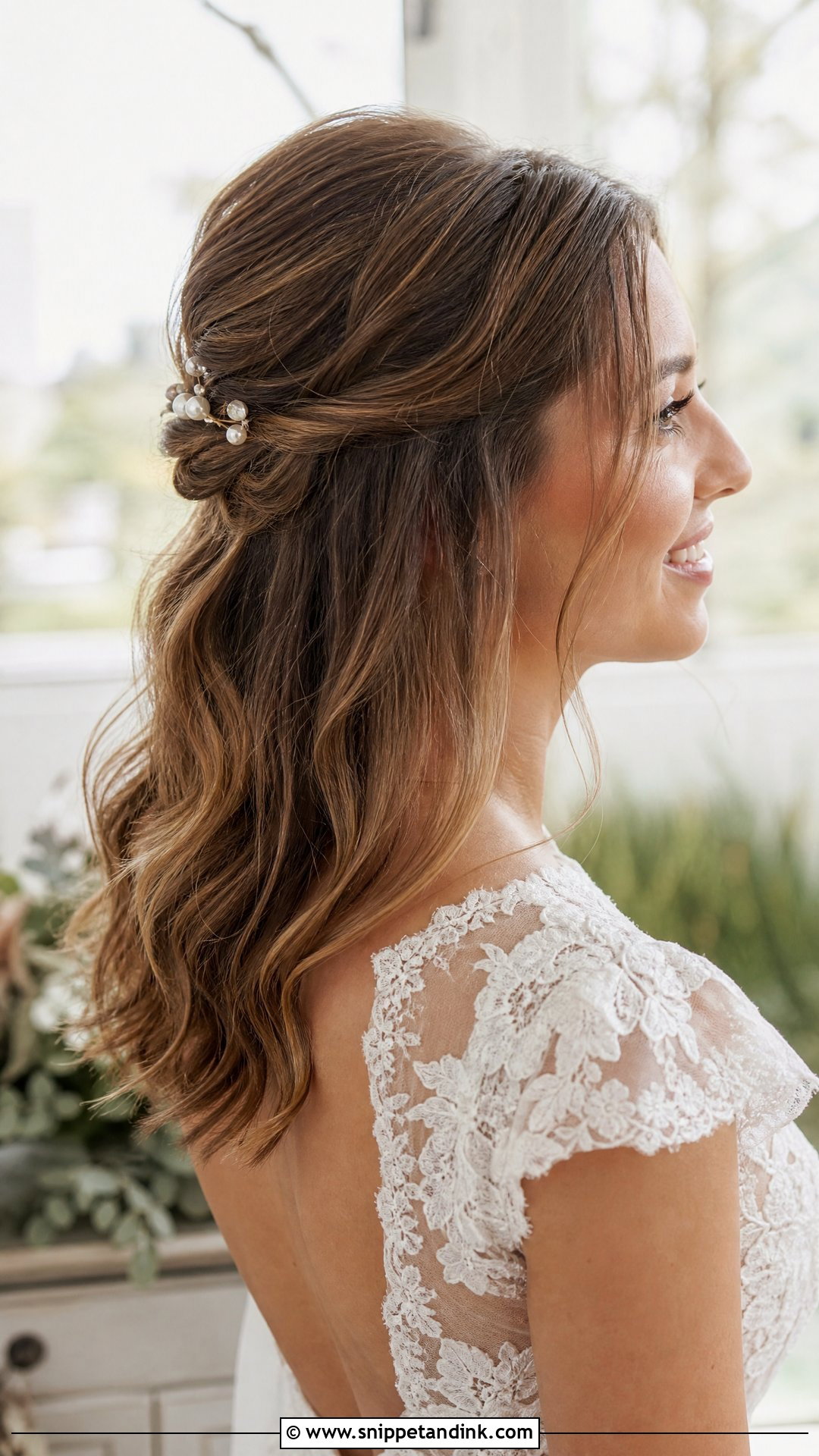
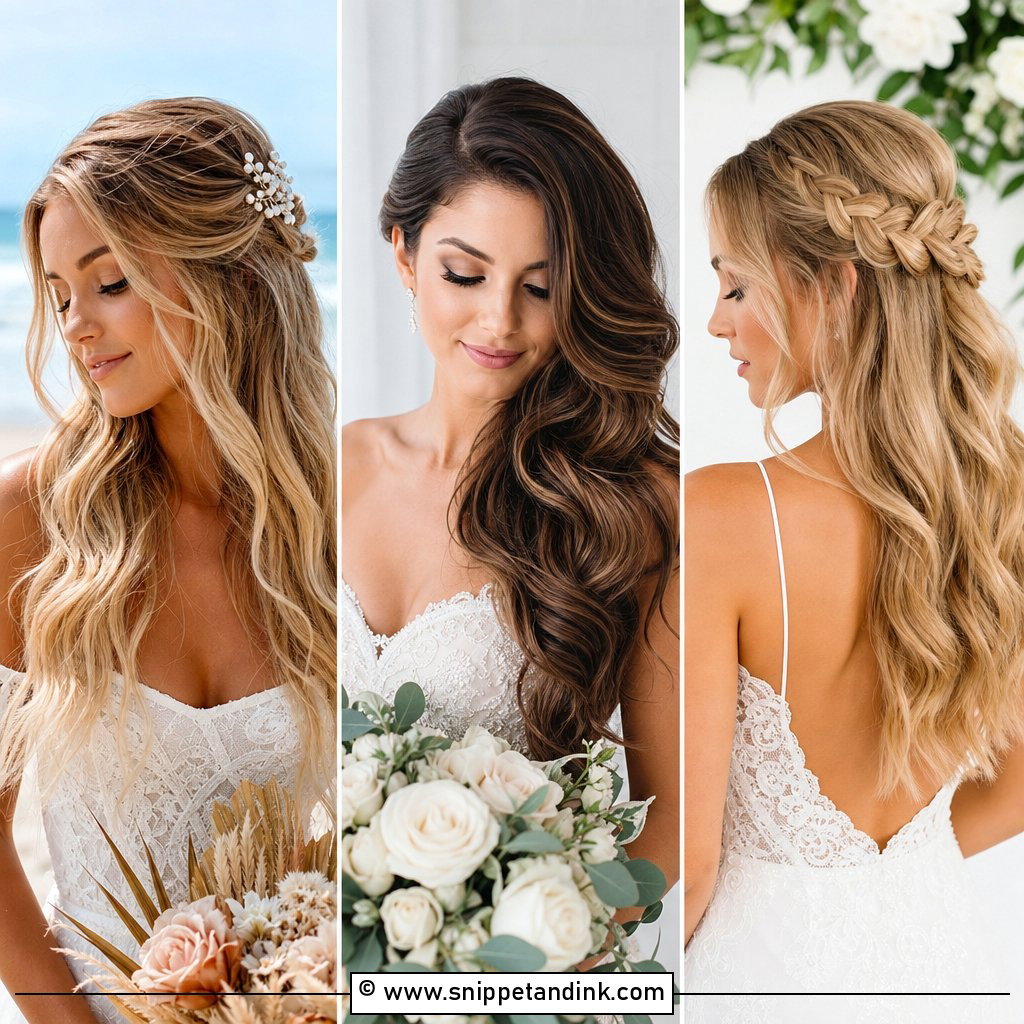
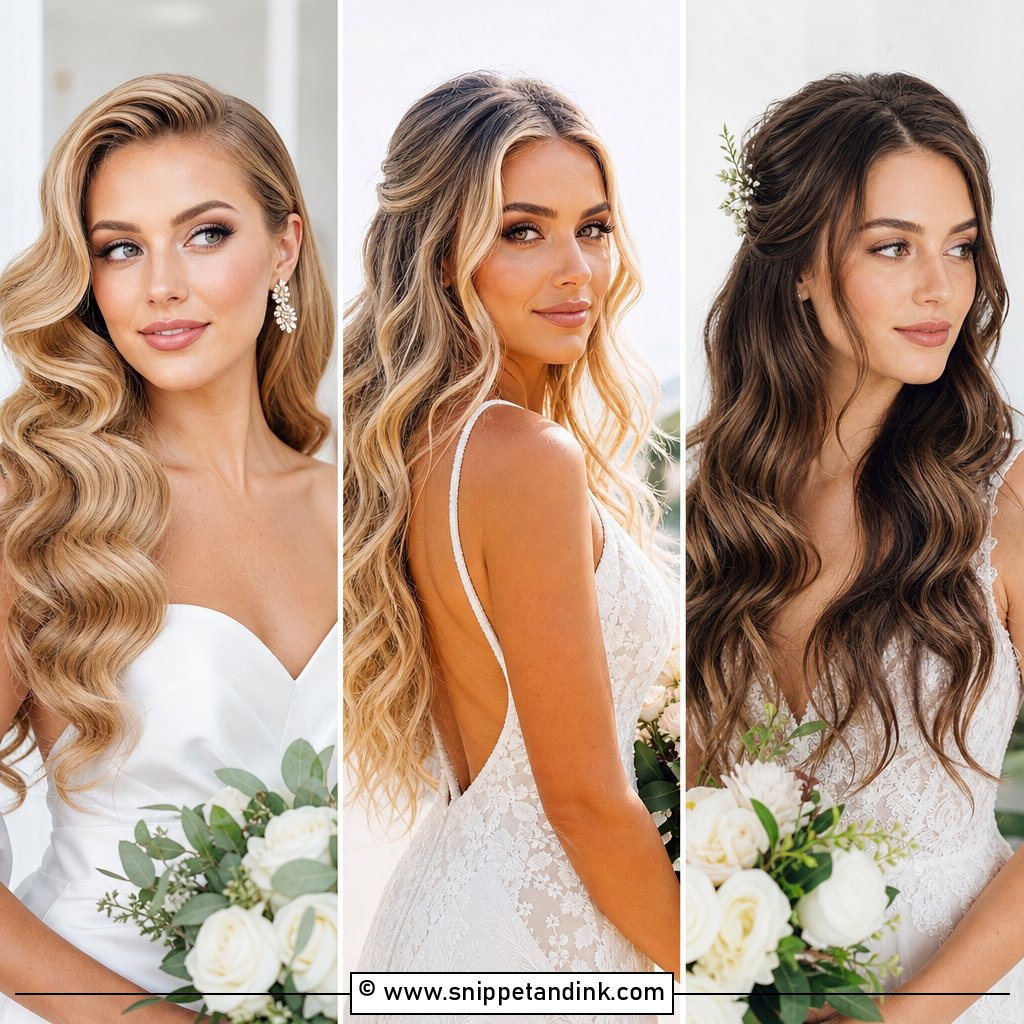
Half up is my safest answer for an outdoor ceremony. The top section is lightly twisted, pinned or gathered into a small lifted crown, so the front pieces can’t blow across your face mid-vow, and the lower waves stay full. That gathered point gives me a strong anchor for pins, pearls, flowers or a veil. I keep the pinned section loose rather than tight, otherwise it looks like a school hairstyle sitting on top of soft waves.
3. Beach Wave Bridal Hair With Braid
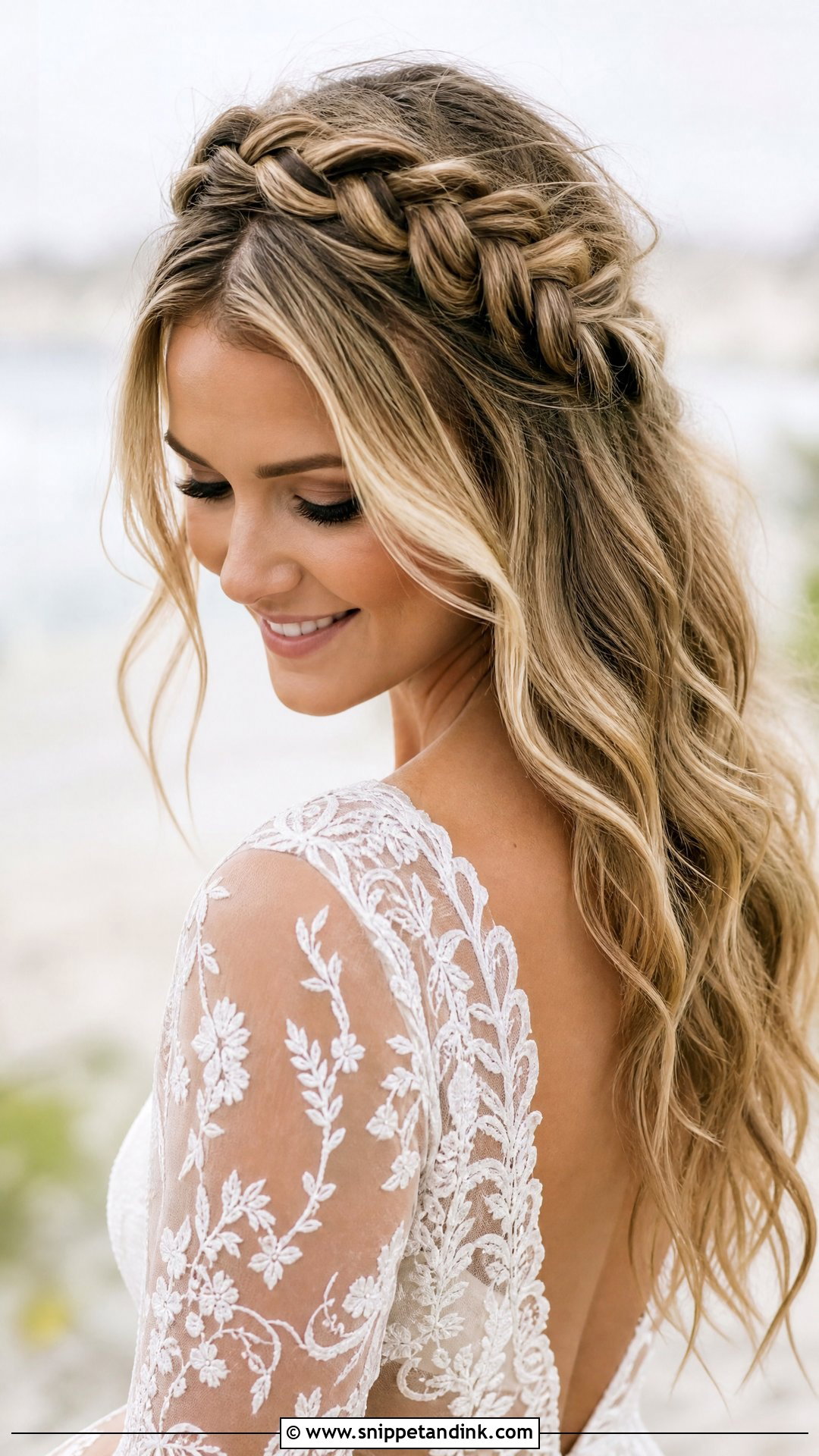
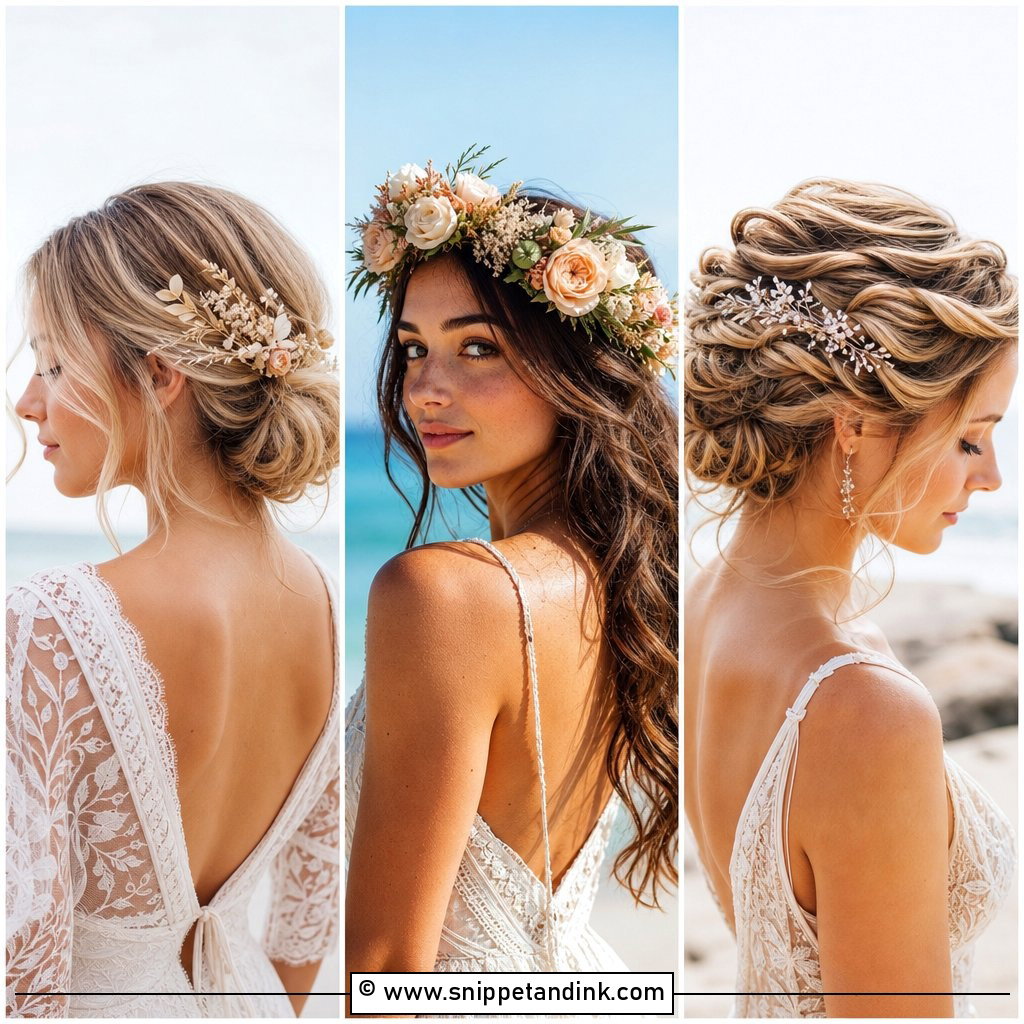
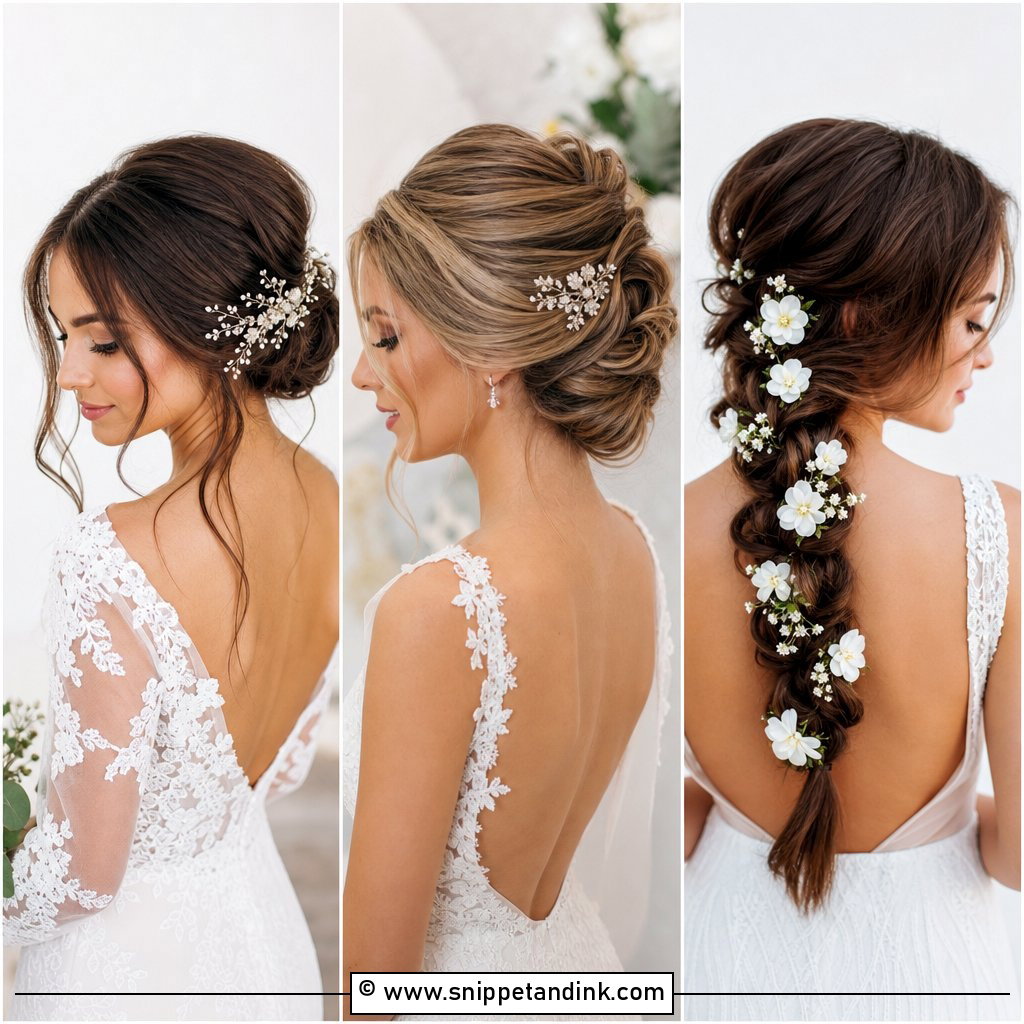
A braid is the hidden workhorse of beach hair. A loose side braid, a crown braid or one small accent braid controls the face-framing pieces that wind and humidity usually ruin, while the lengths stay down. I pancake the braid so it’s wide and soft, then blend it into the waves so you can’t see where one stops. It goes naturally with boho gowns, open backs, embroidered veils and fresh, light makeup. The braid also hides pins, which matters on fine hair.
4. Side Swept Beach Wave Bridal Hair
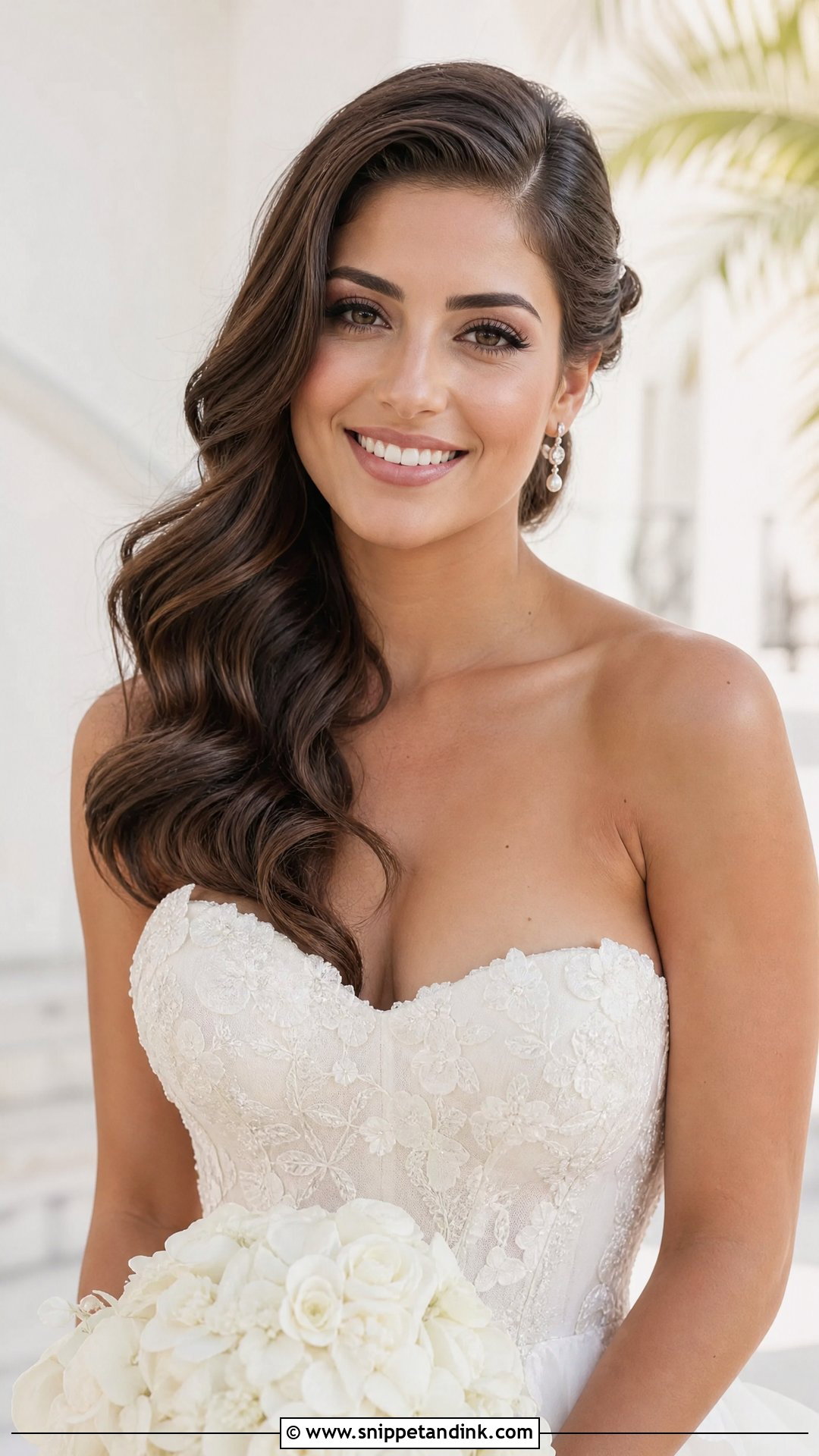
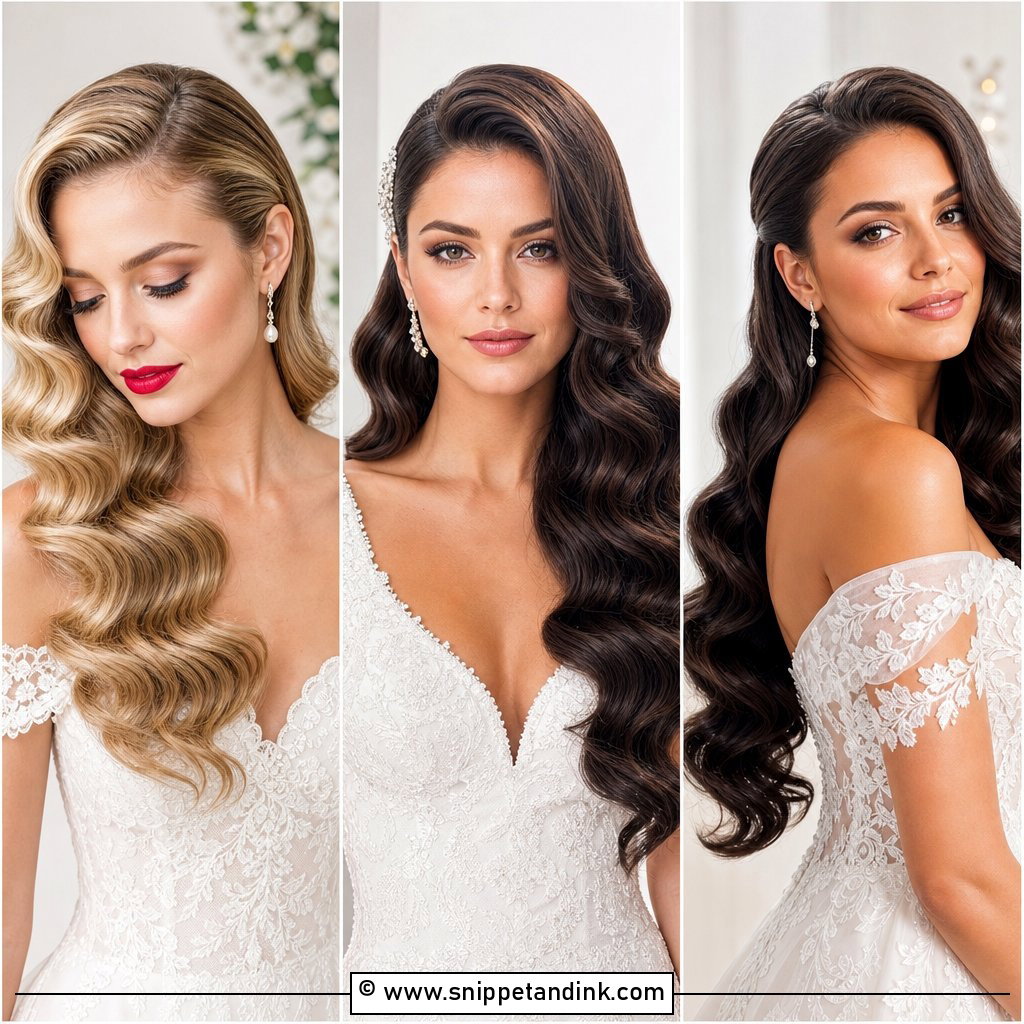
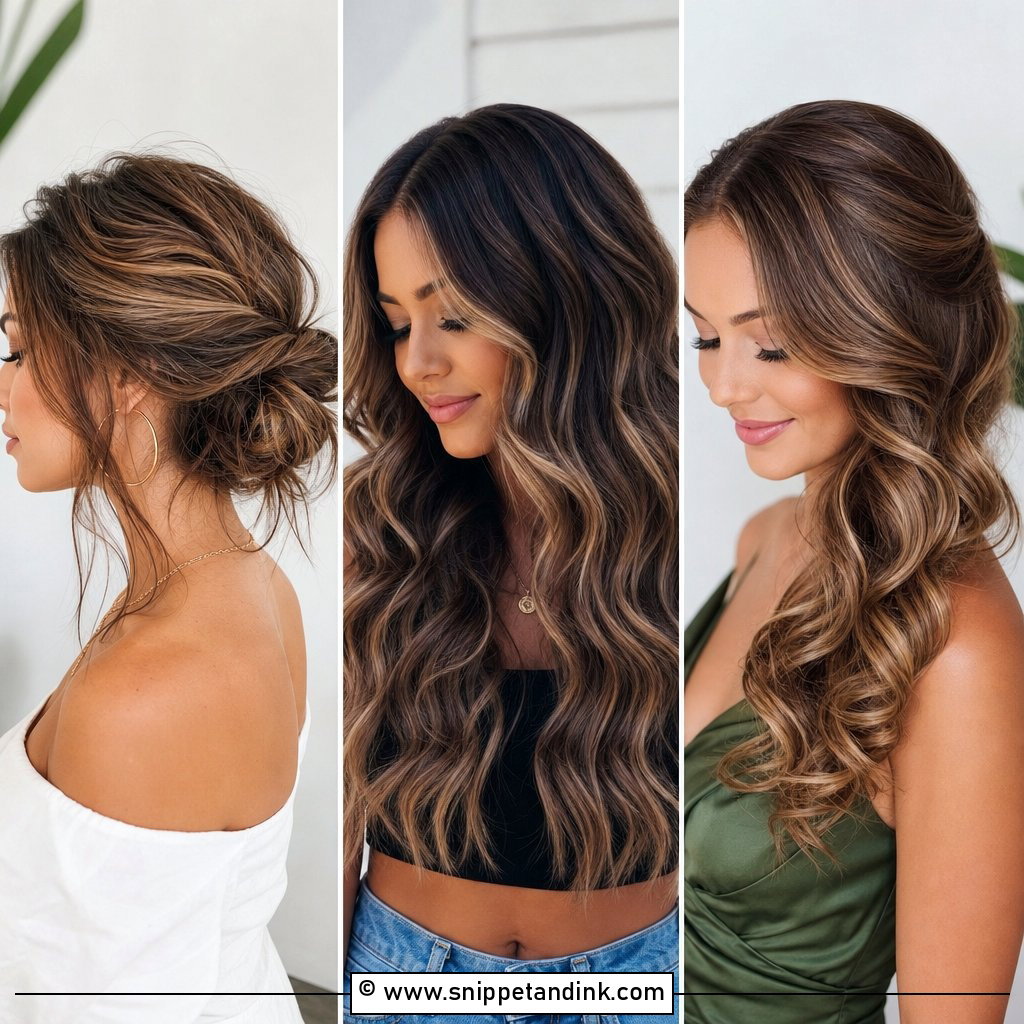
Side swept waves put all the movement over one shoulder, with the other side pinned or tucked back. The result frames a one-shoulder dress, a strapless gown or a pair of statement earrings very clearly. Most of my work goes into the pinned side: I backcomb lightly at the root and cross two pins in an X so it survives photos and dancing. A few soft pieces at the temple keep it from looking severe. On windy beaches, ask which way the breeze usually blows and sweep the hair with it, not against it.
5. Long Beach Wave Bridal Hair
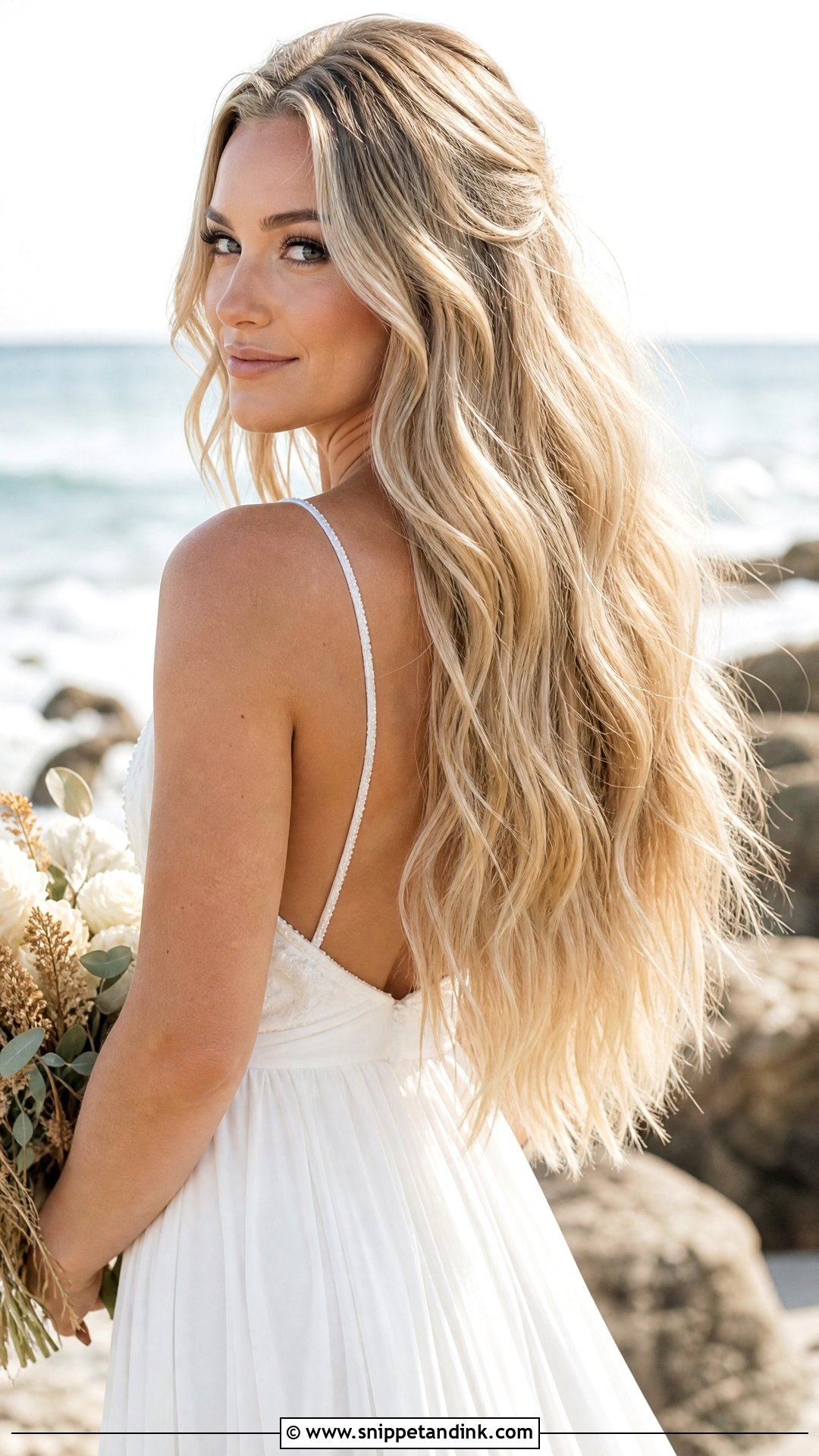
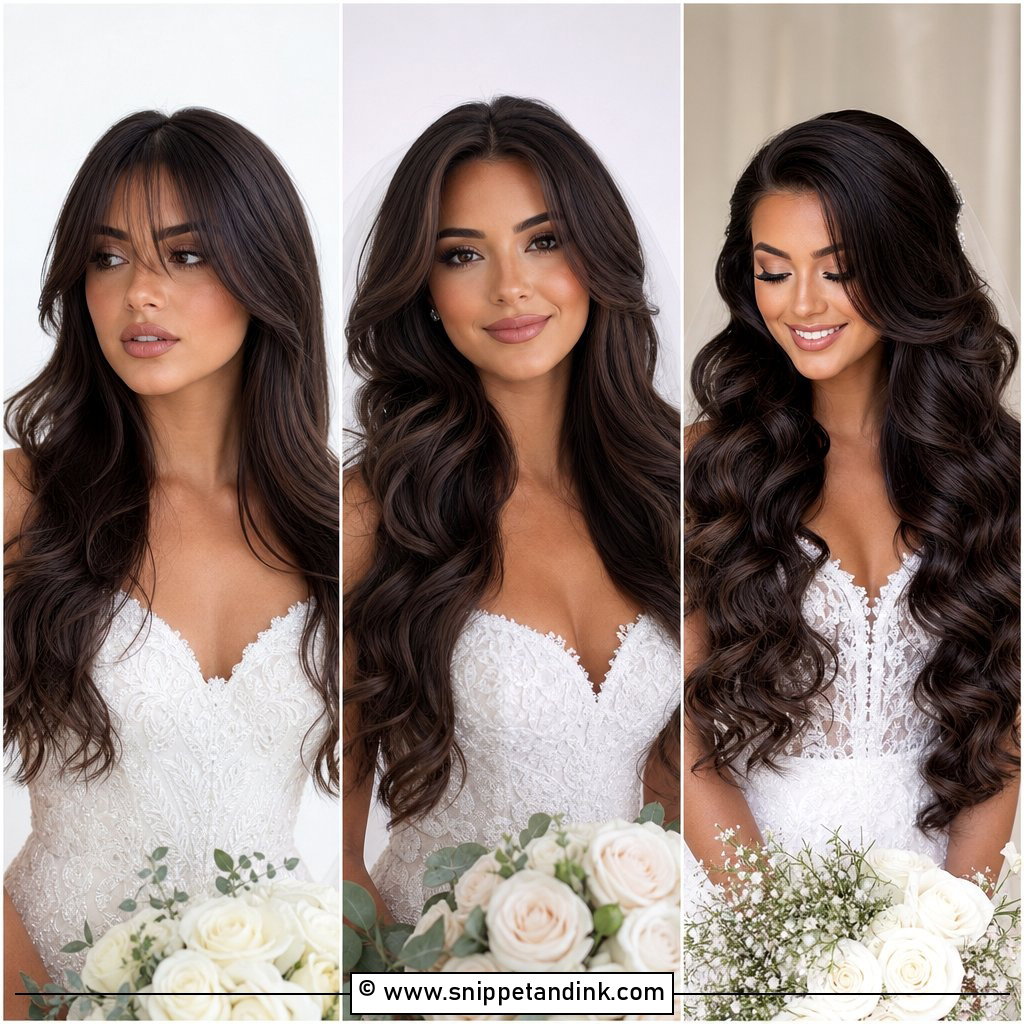
Long hair shows the wave pattern best, with brushed-out S-shaped bends running all the way down. It looks simple, but it is the most prep-heavy style here, because long hair is heavy and pulls waves straight. I layer mousse at the root, heat protectant, texture spray and a light hairspray, letting each wave cool before I touch it. Fine long hair benefits from clip-in extensions for fullness, which also help the waves hold. Keep the ends smooth; frayed tips are what close-up photos pick up first.
6. Medium Length Beach Wave Bridal Hair
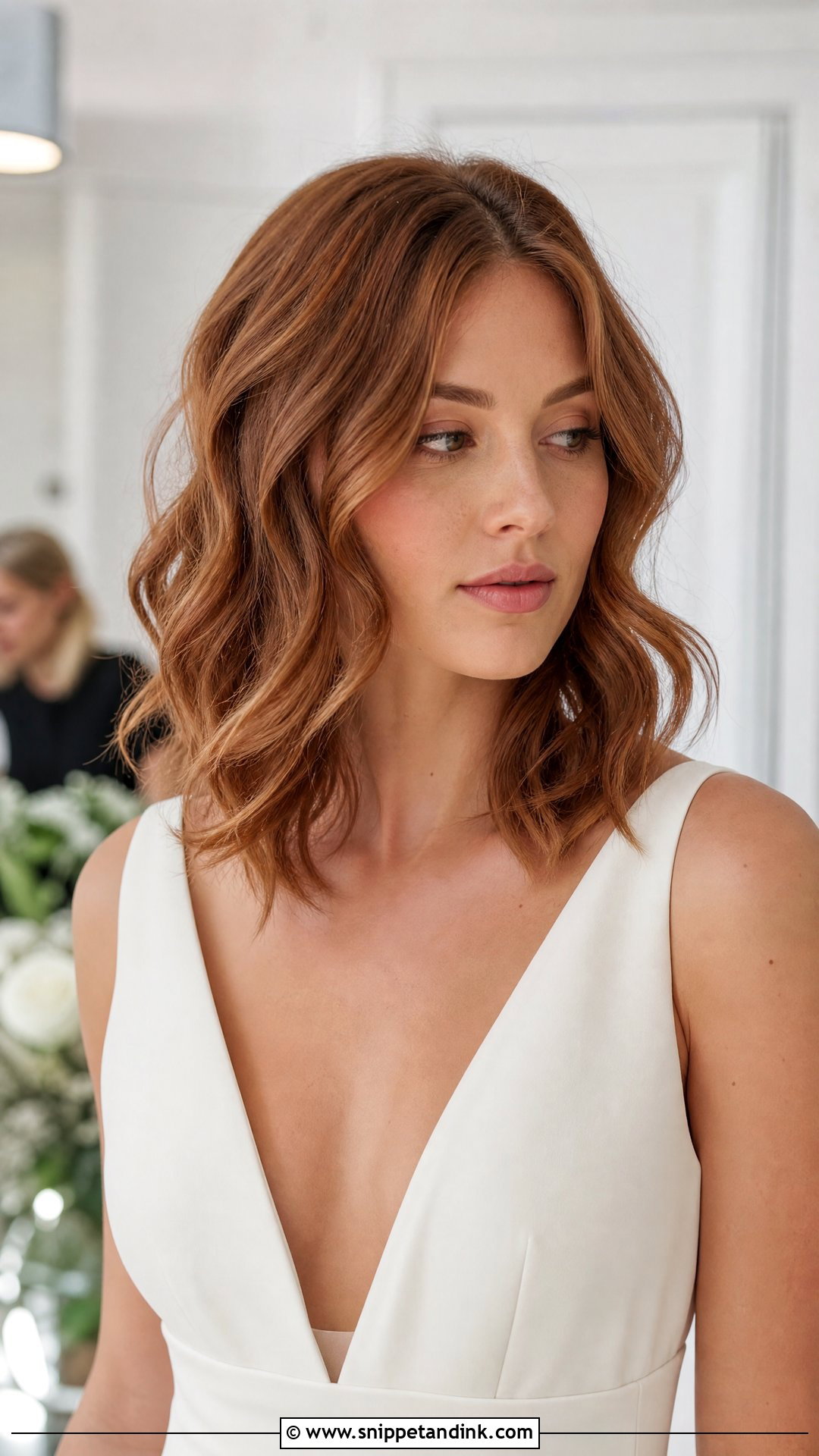
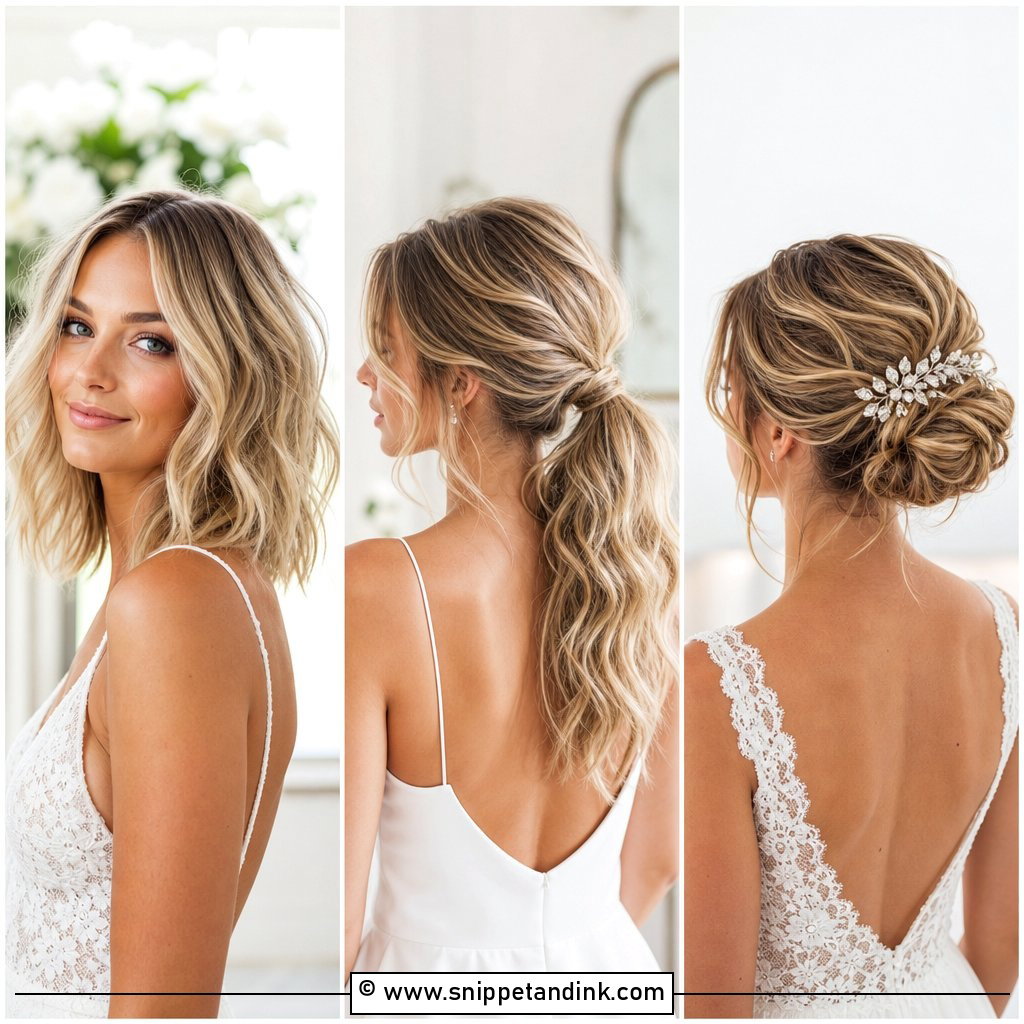
Hair around the collarbone or shoulders holds a wave better than very long hair because there’s less weight dragging it down. A soft bend through the mid-lengths adds volume, and a couple of face-framing pieces stop it reading casual. A veil, a floral comb, pearl pins or nothing at all works with it. I like it with dresses that have detailed straps or an interesting neckline, since the hair stays above the detail instead of covering it. On a hot day it’s also noticeably cooler on the neck than longer lengths.
7. Short Beach Wave Bridal Hair
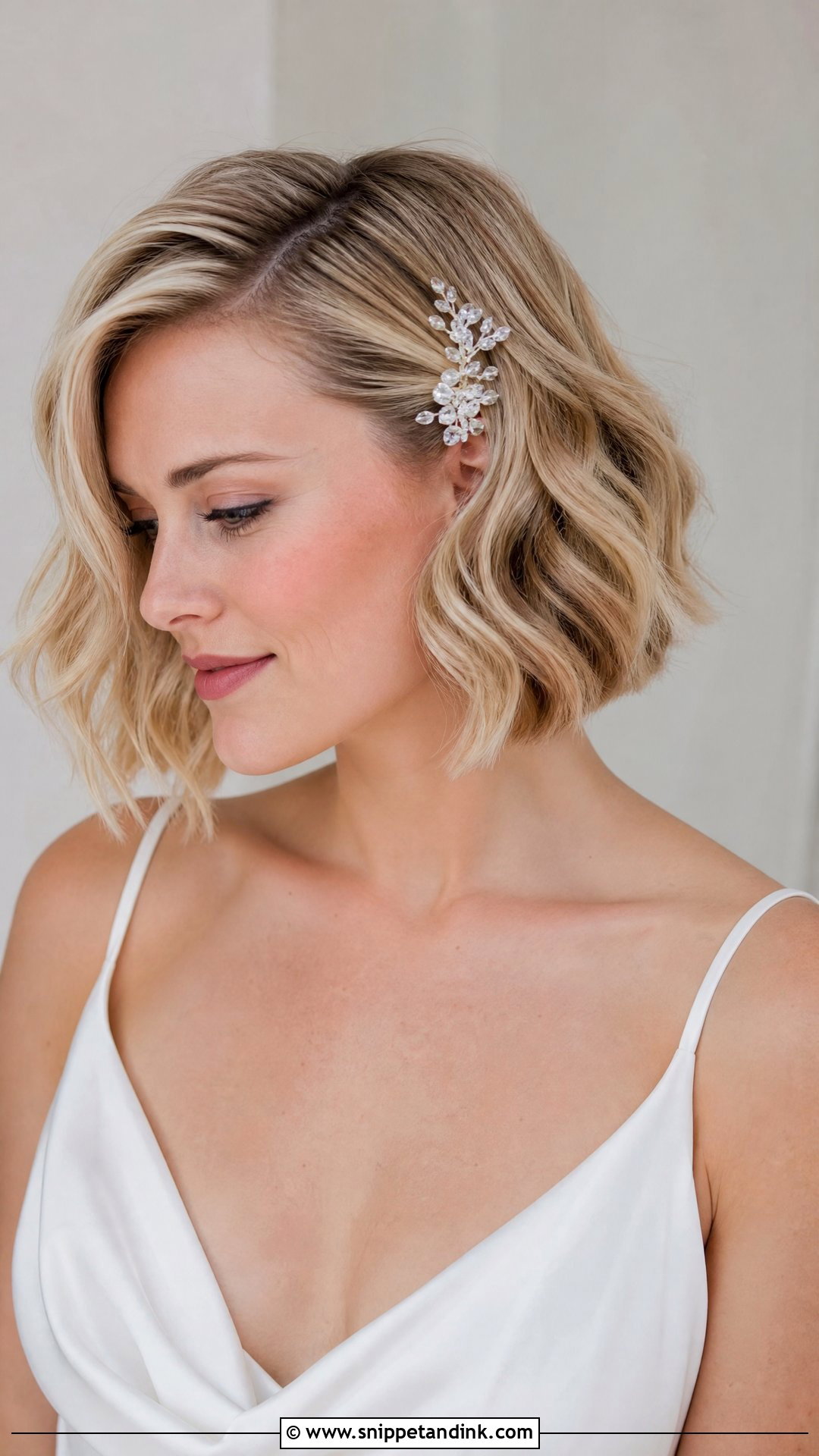
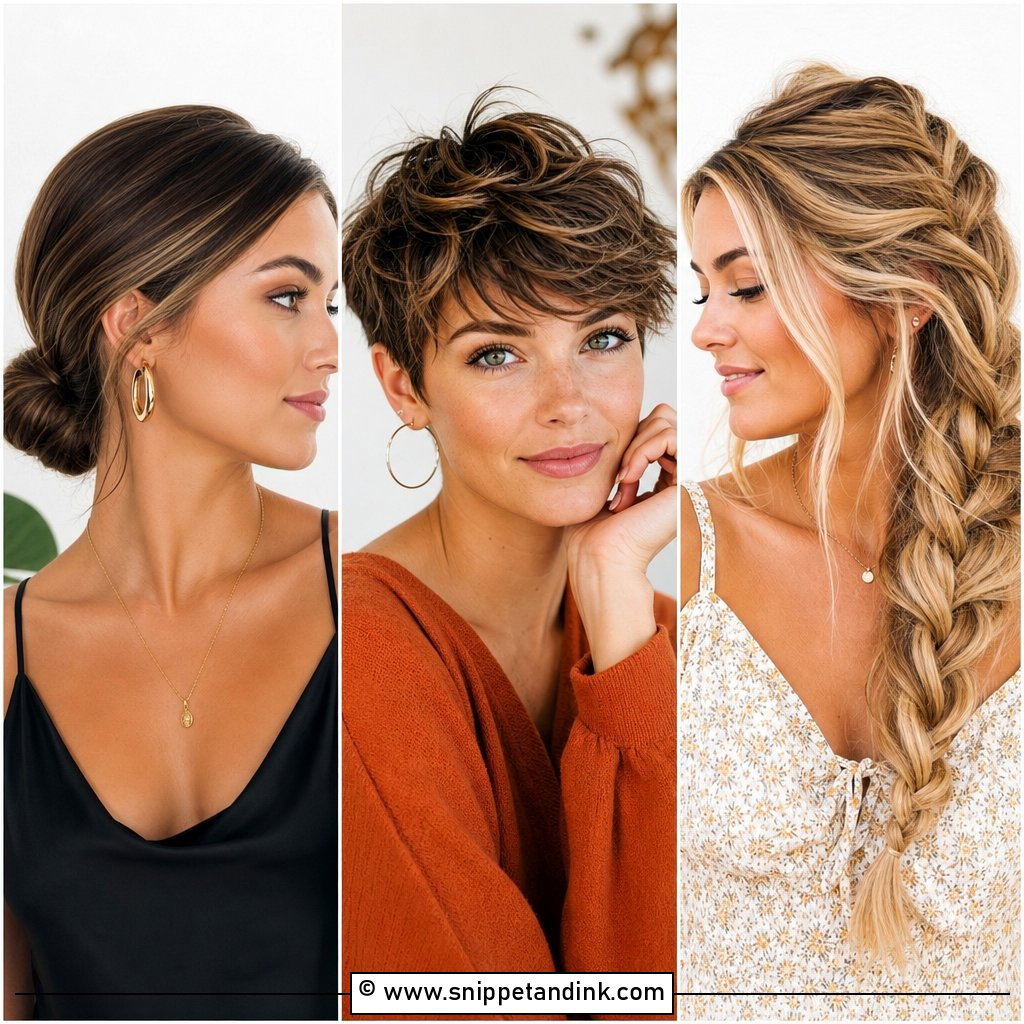
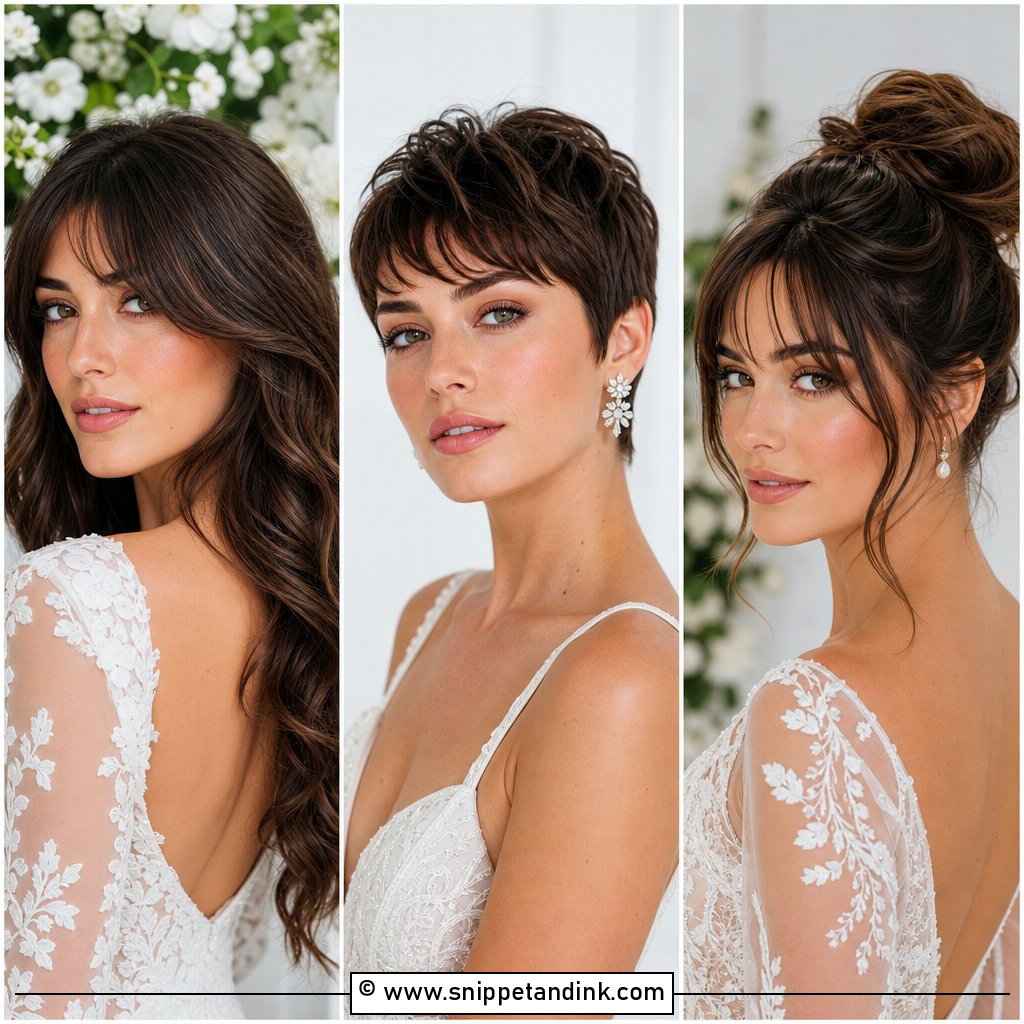
Short hair can absolutely carry beach waves. A wavy bob, a textured lob or a chin-length cut looks chic and airy with the right finish. The skill is in the size of the wave: too tight and short hair looks curled rather than beachy, so I use a flat iron with a twist or a large barrel and leave the last inch straight. A deep side part adds drama, a center part keeps it clean. A small barrette, mini comb or a veil at the crown finishes it, especially with a minimalist dress.
8. Loose Beach Wave Bridal Hair
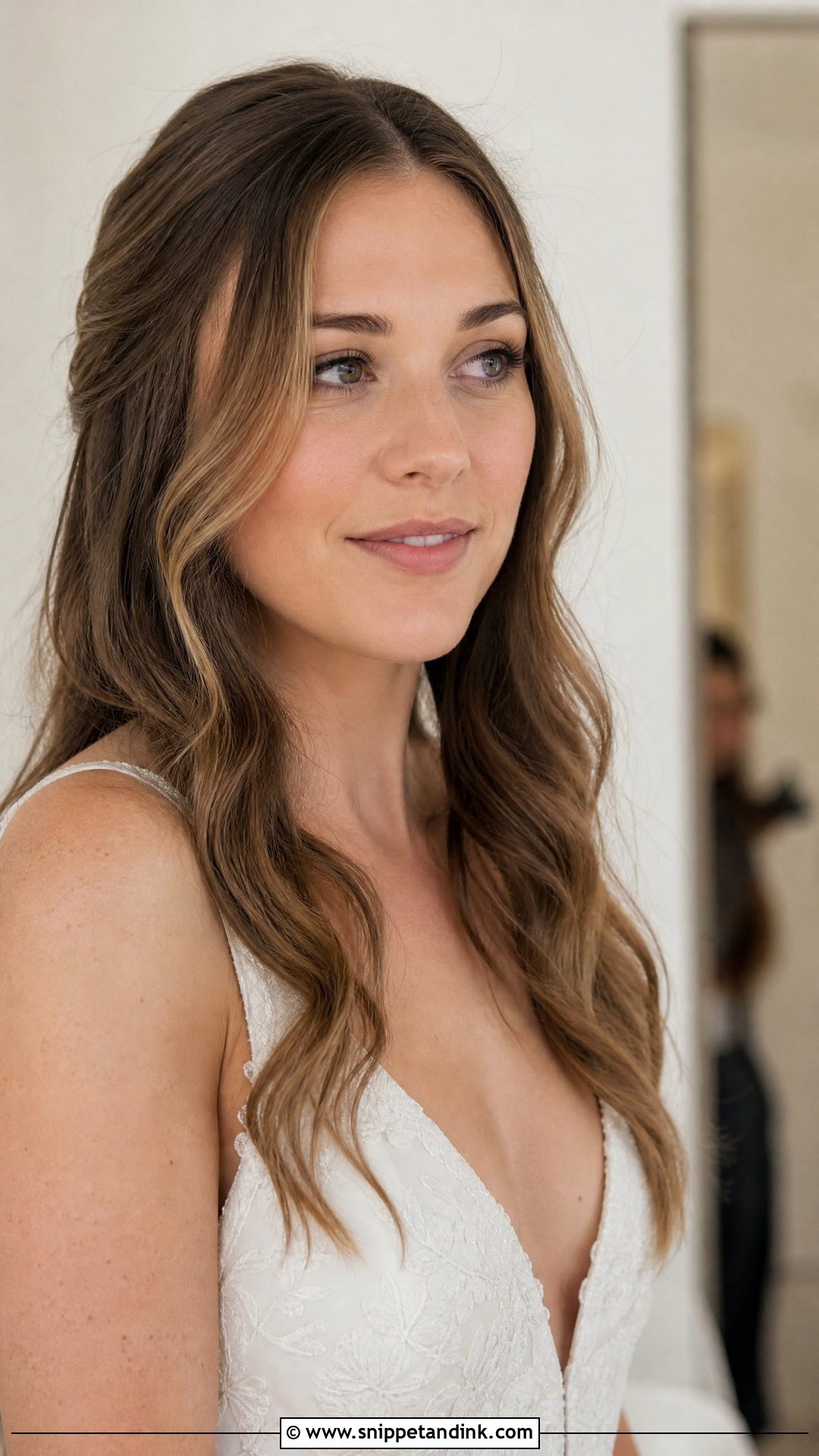
Loose waves are hair down, but brushed and finished, never left frizzy. Subtle volume at the roots and a smooth end are what separate a bridal version from a day at the beach. I use a shine spray so the waves catch daylight in photos and an anti-humidity spray to slow down the moisture that relaxes them. Tiny pearl pins or a simple veil both suit them. Honestly, if your ceremony is at noon on sand in midsummer, I’d steer you toward a half-up version instead.
9. Boho Beach Wave Bridal Hair
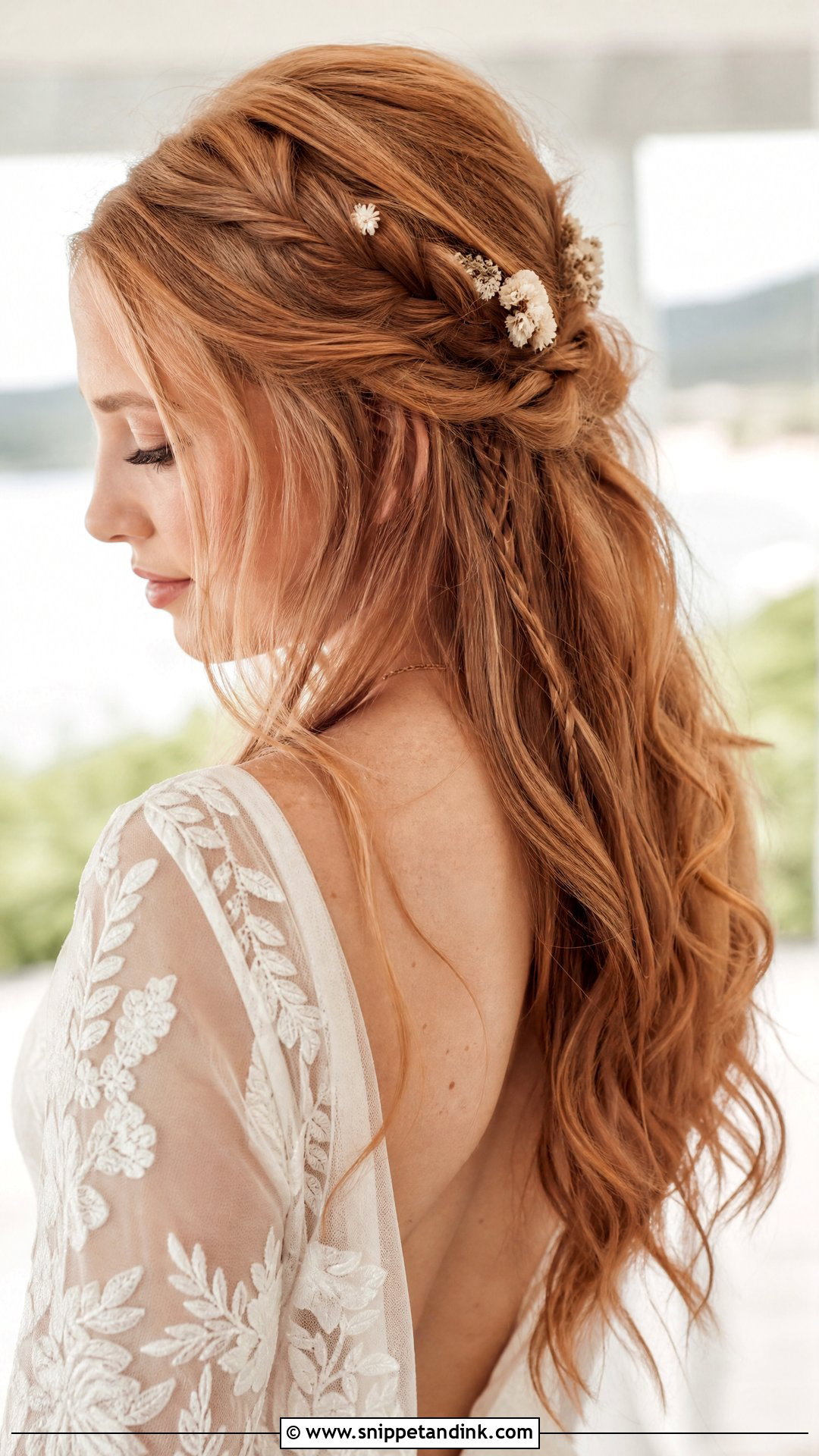
Boho waves lean into airy volume and natural-looking pieces around the face, sometimes with small braids, delicate pins, dried florals or a loose half-up shape. The waves stay the main feature. Lace gowns, flowing sleeves and barefoot ceremonies suit it. The difficulty is balance, and it’s where I spend the most time at trials: too much texture looks messy and too much polish loses the boho feel. I aim for soft separation, a little lift and a flexible finish that looks right when you move.
10. Beach Wave Bridal Updo
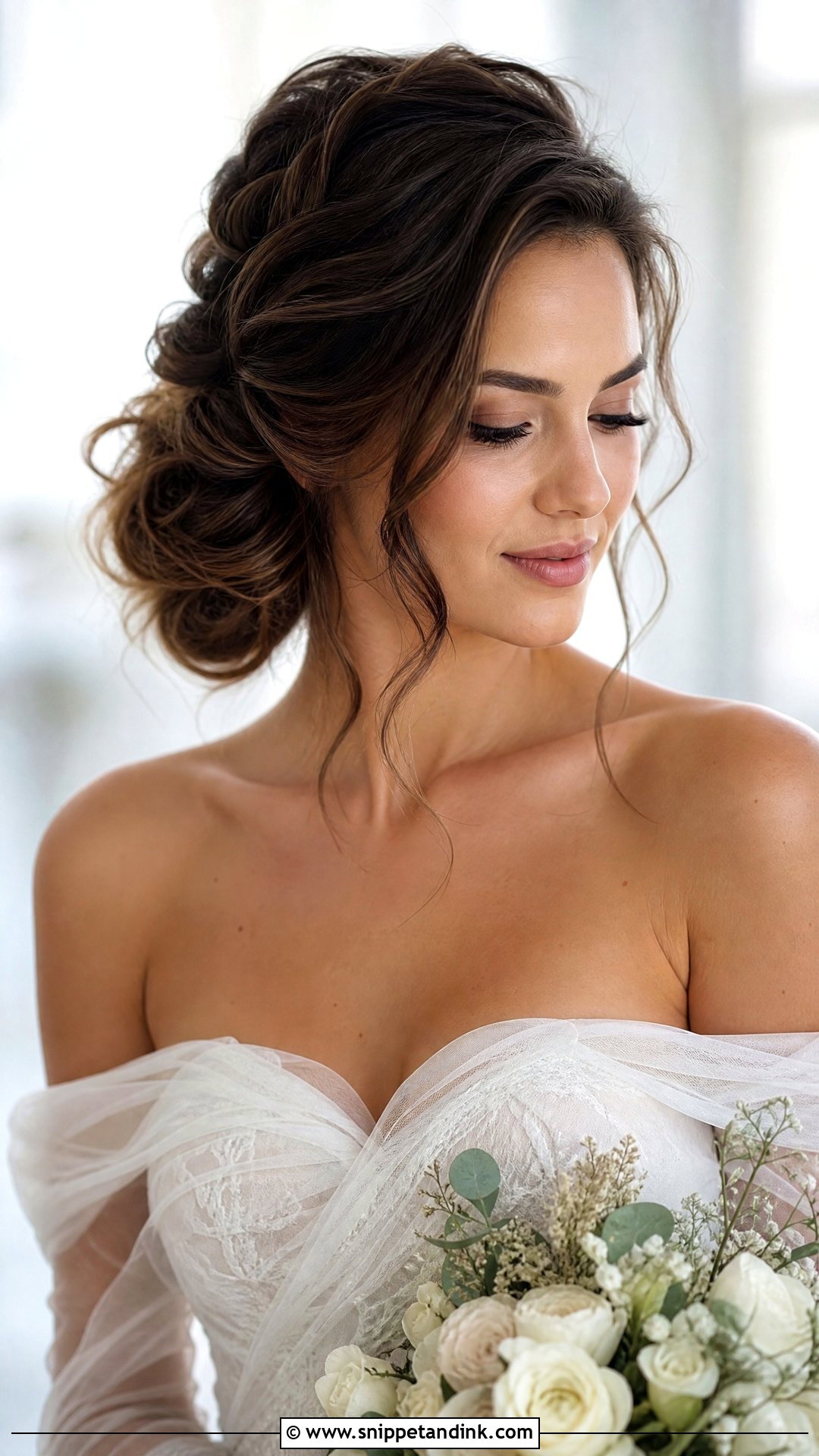
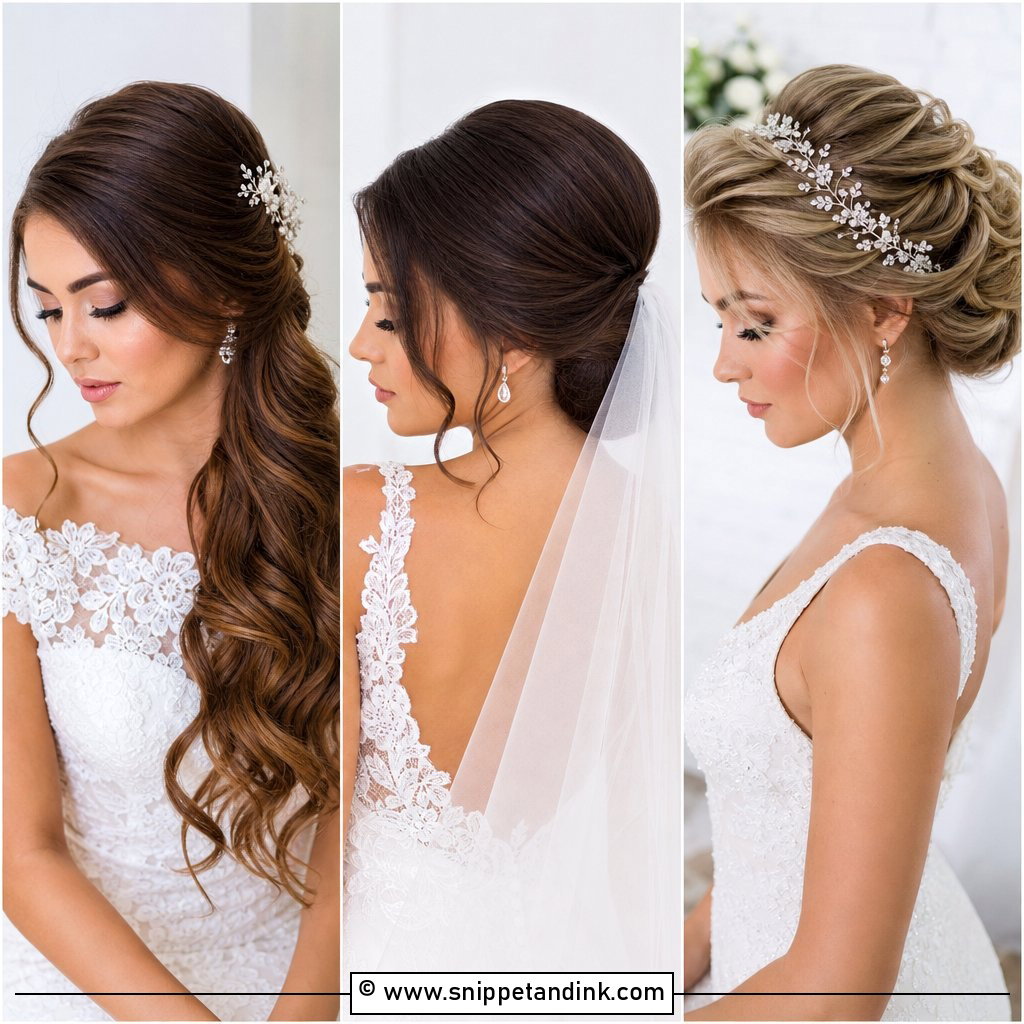
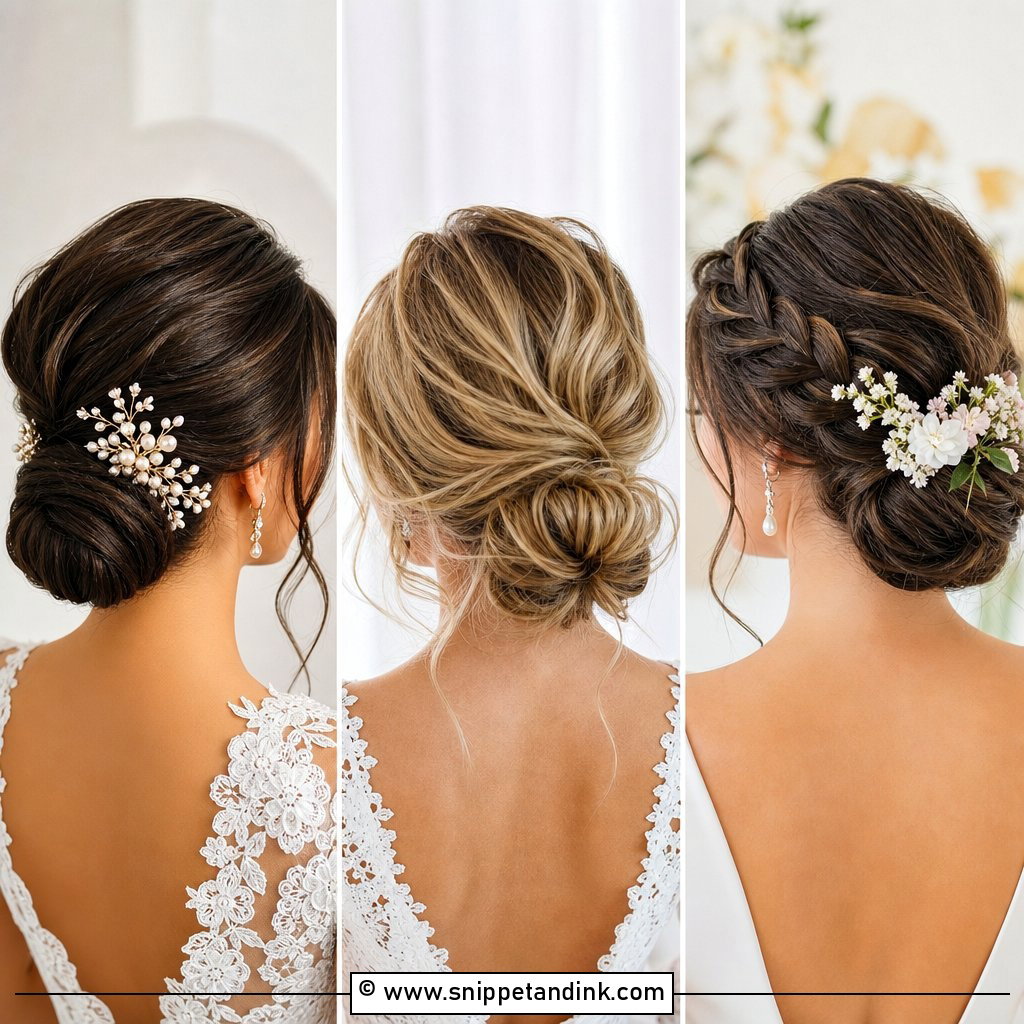
If you love the texture but want your neck free, a beach wave updo is the answer. Rather than a sleek bun, curled and waved sections are pinned into a soft low shape, which holds up in wind, heat and dancing. Loose tendrils around the face keep it gentle, and a few waves pinned at the back add depth. I curl every section before pinning, because waved hair has the grip a sleek bun lacks. Veils and combs slot in easily.
11. Beach Wave Bridal Ponytail
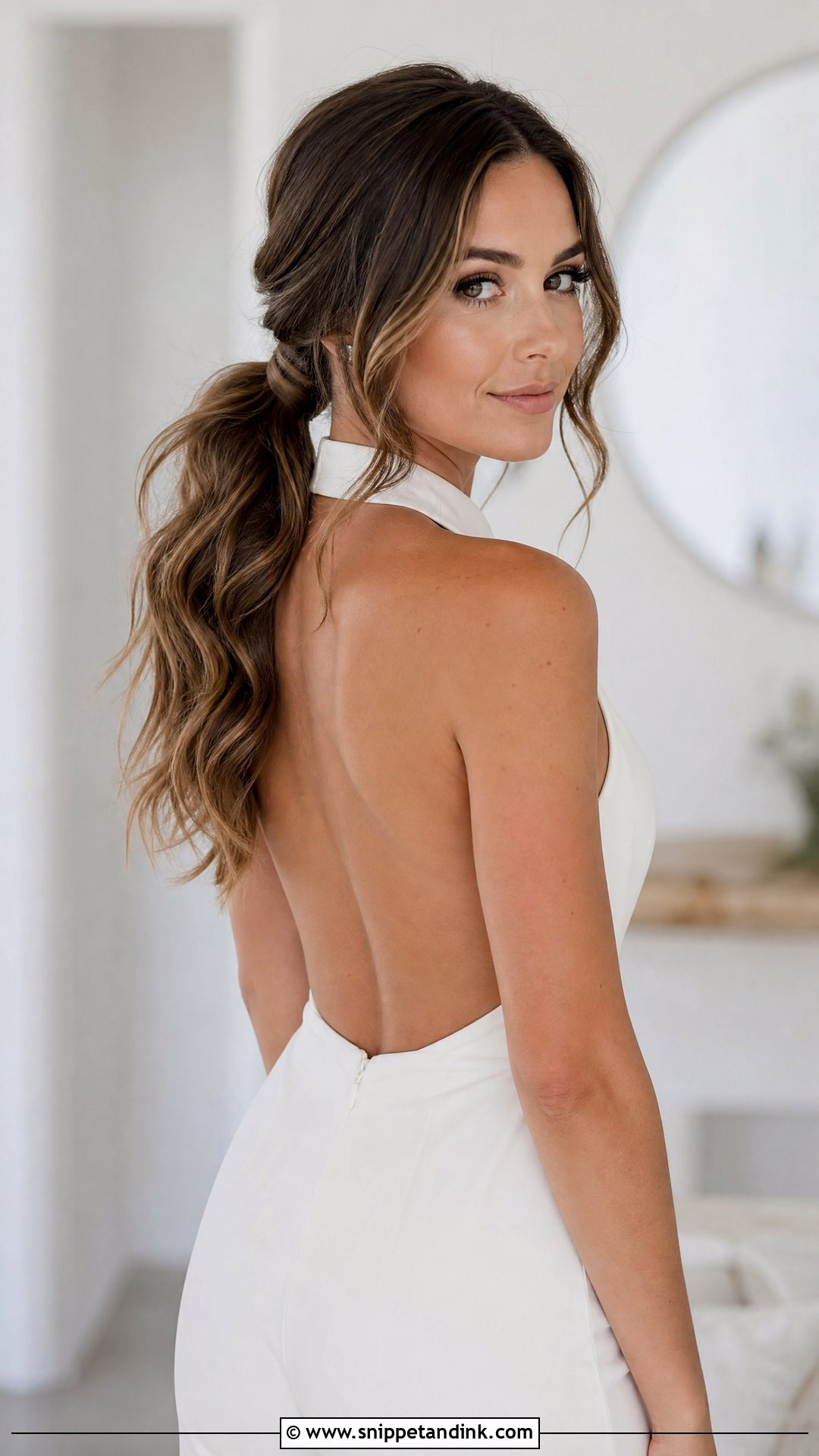
A wavy ponytail keeps everything gathered while still showing texture, which is why I suggest it for windy venues. Low at the nape feels romantic; mid-height adds lift. The waves should run full through the lengths, with a wrapped section of hair around the elastic pinned from underneath. Face-framing pieces stop it looking like a gym ponytail. Pearl pins, a bow or a veil can be added near the base.
12. Beach Wave Bridal Hair With Flowers
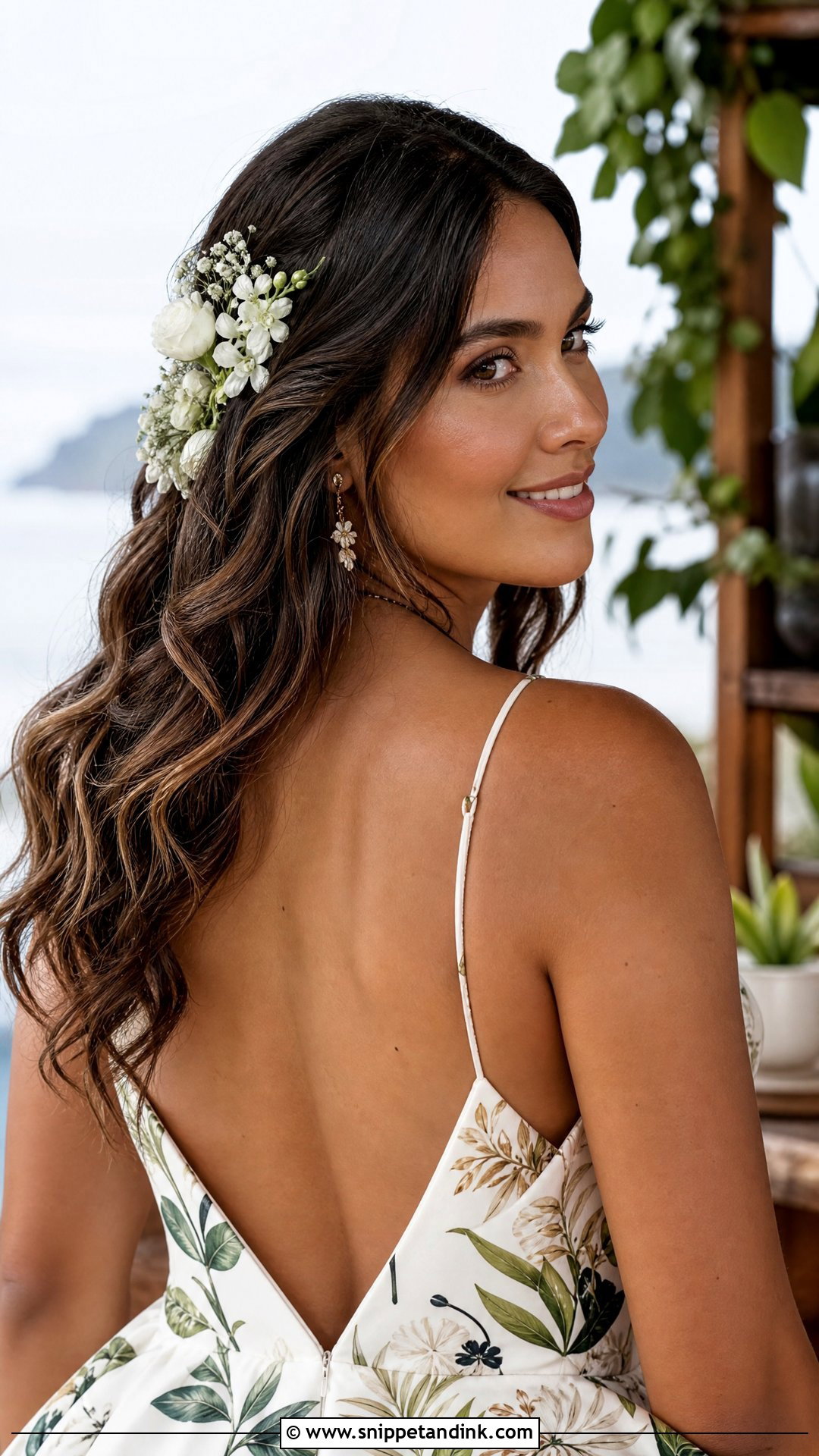
Flowers suit coastal, garden and tropical weddings, tucked into a half-up style, a braid, a low updo or side-swept waves, as fresh blooms or realistic floral pins. Scale matters: tiny blooms look delicate scattered through loose waves, while larger flowers need a braid or pinned side to sit against. In heat, delicate petals wilt within a couple of hours, so I ask the florist for sturdier flowers and have them delivered wired or picked so I can secure them. Coordinating the two of us ahead of time saves a lot of last-minute guessing.
13. Beach Wave Bridal Hair With Pearl Pins
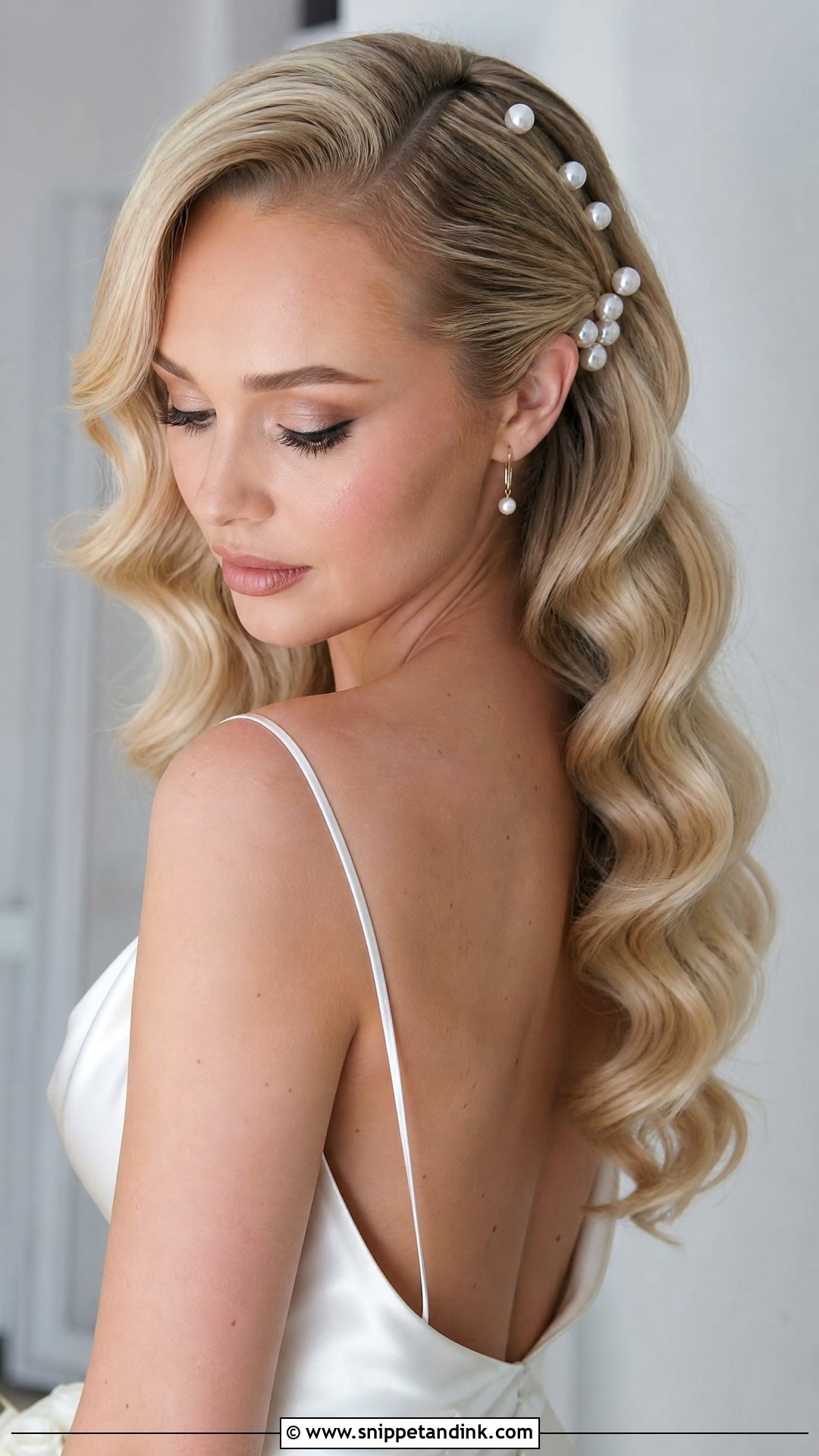
Pearl pins give soft waves a cleaner, more classic finish, since they catch light without shouting. I scatter them through one side, tuck them into a half-up twist, set them along a braid or ring them around a low updo. The trick is irregular spacing, so they look placed rather than lined up. Pearls show best against smooth, defined waves, which is one more reason not to over-texture the hair. They suit satin gowns, lace dresses and minimalist outfits.
14. Beach Wave Bridal Hair For Thin Hair
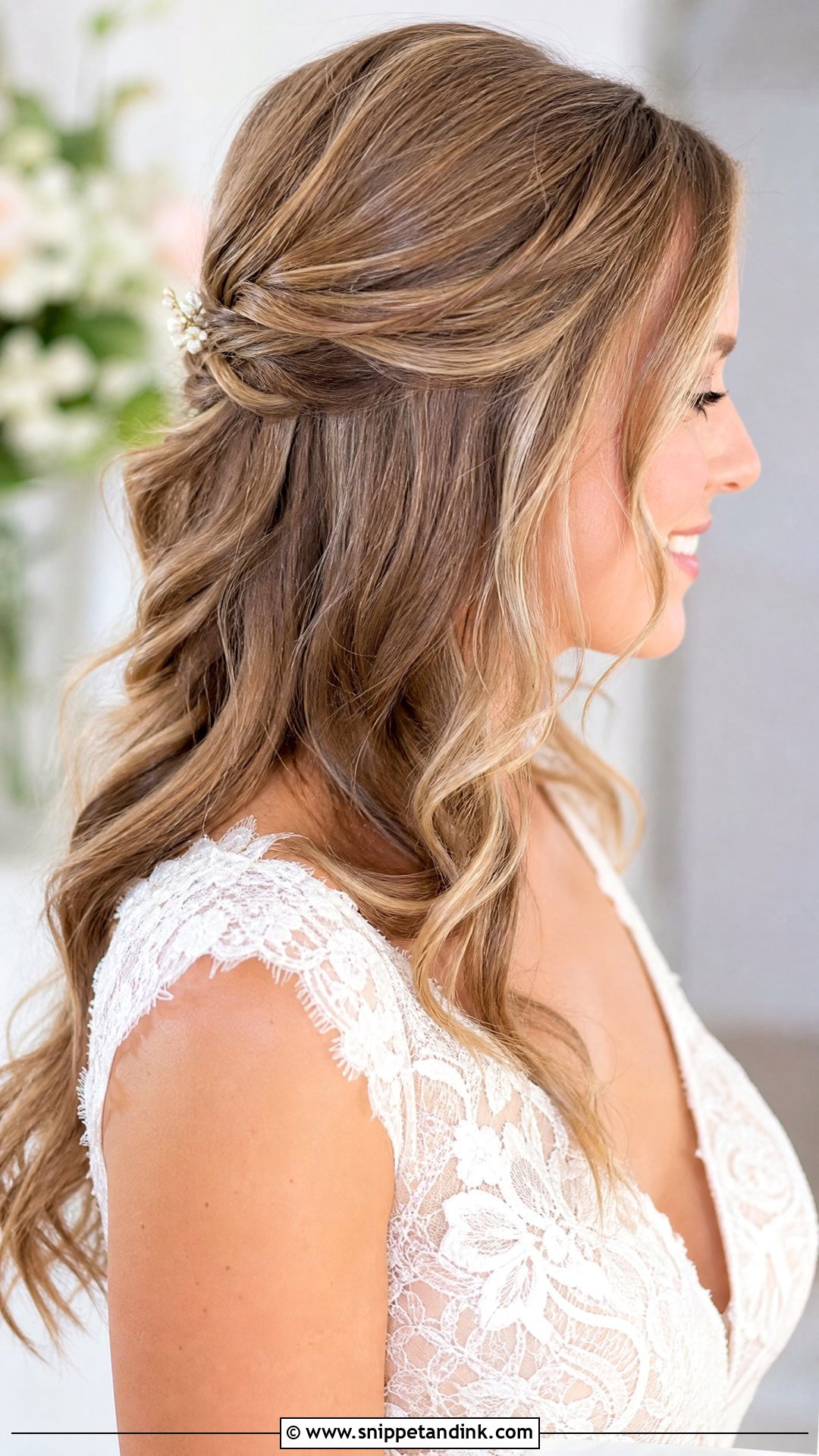
Thin hair can look full in waves with the right plan. I start with root volume, then use the waves themselves to suggest density through the lengths. Half up, side swept and low ponytail shapes help because they gather the sections together. Many brides with fine hair wear clip-in extensions for volume rather than length, and I’d recommend getting them color-matched before the trial. Skip heavy oils and serums, which flatten waves within the hour; a light texture spray and flexible hold keep it airy.
15. Beach Wave Bridal Hair For Thick Hair
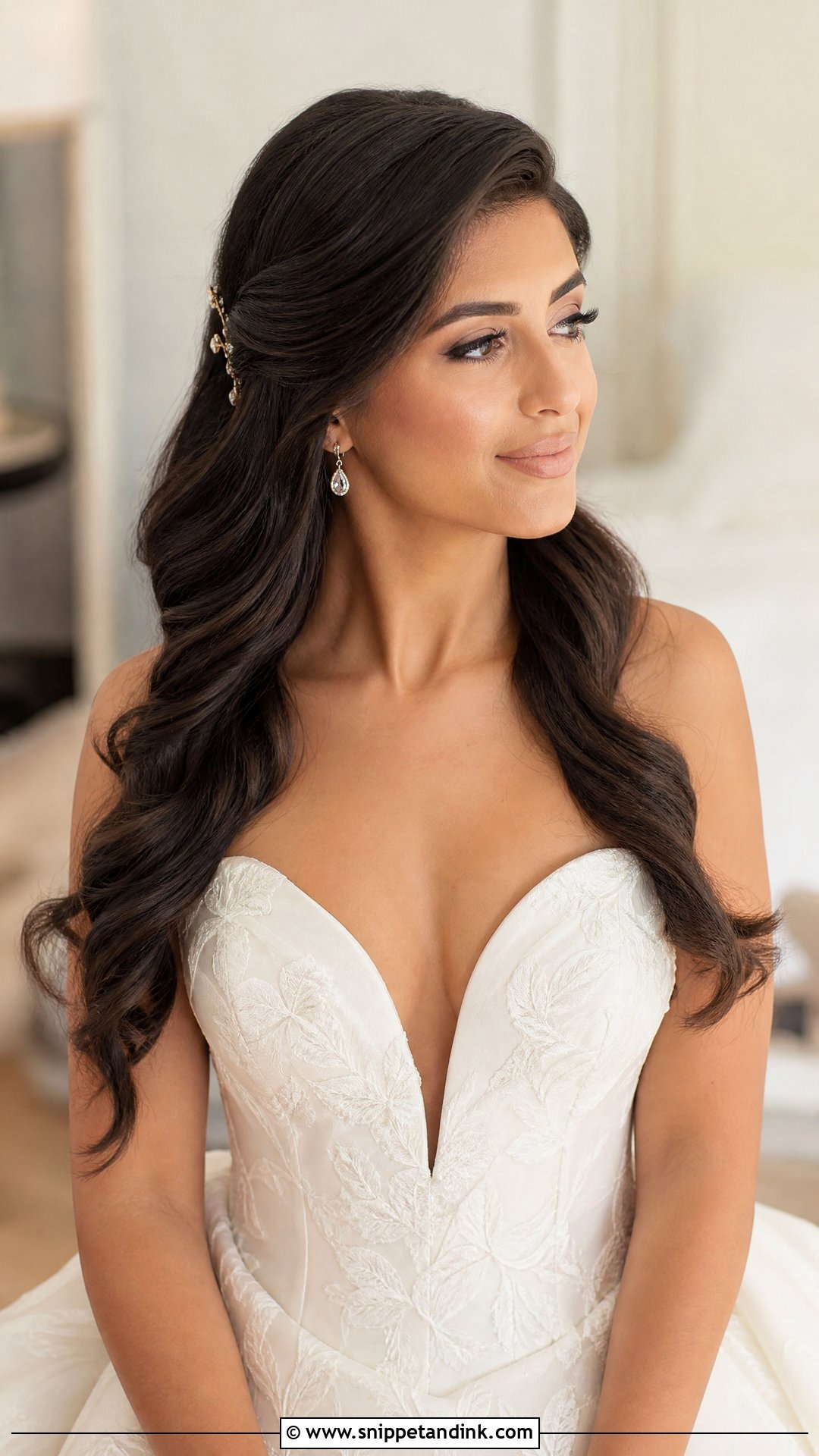
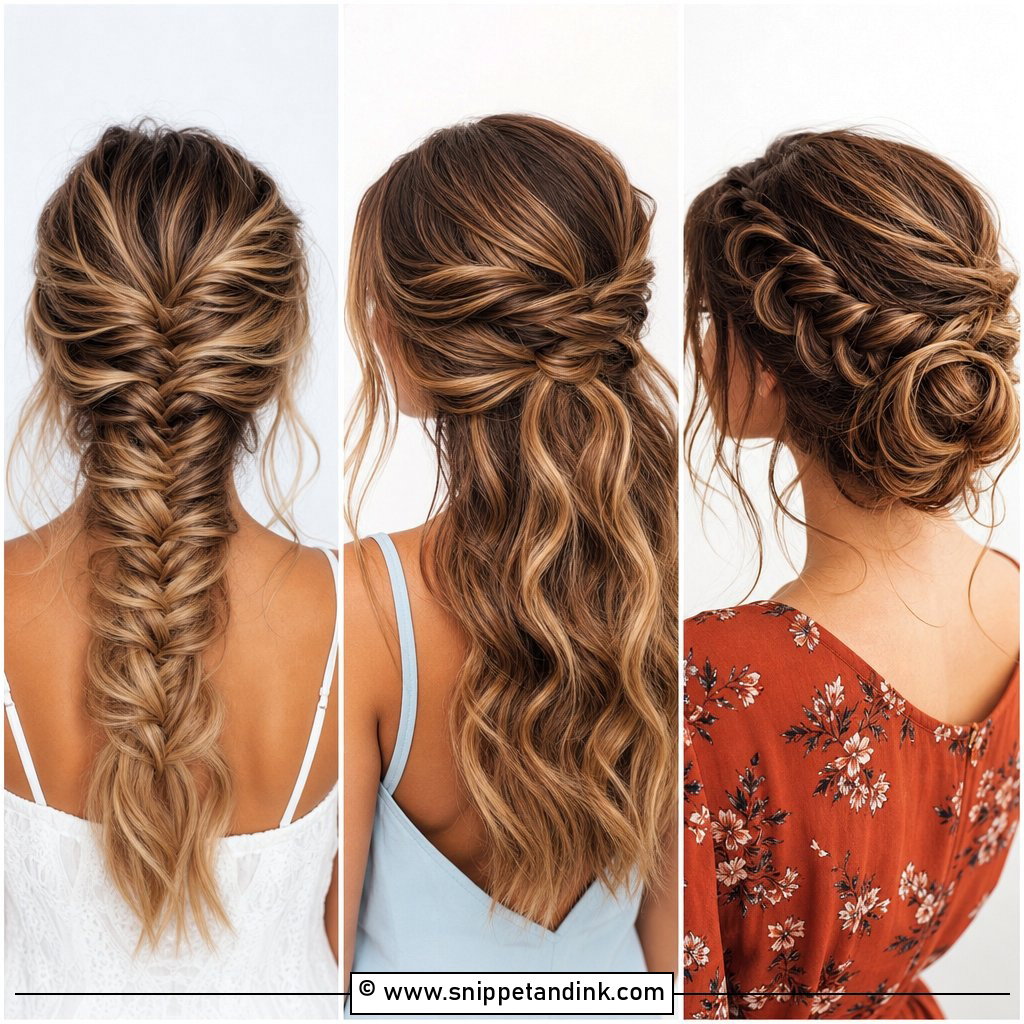
Thick hair holds waves for hours, sometimes days, but it can feel heavy and look bulky in photos. Weight removal or layering at your last cut helps, and on the day I work in small, strong sections so the inside gets as much heat as the surface. Long loose waves are possible, though half-up looks, side-swept waves and textured updos are usually more comfortable at a warm beach wedding. I smooth the crown, define the pattern and hide pins wherever the weight pulls. The aim is movement without bulk.
Sea Air, Wind and Salt at a Shoreline Ceremony
Humid air is the reason beach waves fall. Hair takes up moisture from the air and the shape set by heat slowly relaxes, which is why the same style that held for twelve hours at your city trial can loosen within two by the sea. I plan for that rather than fight it.
I curl as close to the ceremony as the schedule allows, and I set it slightly tighter than the final look, since it will open up. An anti-humidity spray goes on last. Before the ceremony, check which way the wind is blowing and stand the officiant so it comes from behind you; a veil blowing into your face is far harder to manage than one blowing behind.
Give a bridesmaid a small bag with a travel flat iron or mini wand if there’s power at the venue, a few bobby pins, a clear elastic and a little hairspray. If the waves drop entirely by the reception, my quick fix is a low twisted bun or a side braid using the leftover texture. Ten minutes, and it looks like a planned second look.
Waves That Should Still Move at the Last Song
Beach waves can be casual, polished, boho, classic or modern; the part, the accessory and the shape decide which. Fit the style to your dress, venue, hair type and the forecast, and be realistic that fully loose waves are the least weatherproof option. Half up, braids, ponytails and textured updos usually hold better outdoors. Bring clear photos to your trial, test the veil or accessories there, and ask for products that resist humidity while keeping the hair soft enough to touch.
You'll Like These Ideas:


Leave a Reply