
Old styles last because they were built to. Before modern products, a woman’s hair had to hold through a whole evening on setting lotion, pins and good technique, and those same methods still work on a bride today. Vintage hair covers a century of shapes: 1920s finger waves, 1940s victory rolls, the 1950s ponytail, the 1960s beehive, and the softer Edwardian tucks and buns before all of them. Most can be adapted to any length or texture. Here are 25 I’d recommend, with honest notes on what each takes to build and how to keep it looking like your hair rather than a costume.
Let Your Dress Decide the Decade
The fastest way for vintage hair to look like a costume is for it to come from a different decade than the dress. A 1920s finger wave over a full 1950s tea-length skirt confuses the eye, even if you can’t say why. When a bride brings me a mixed board, I start with the gown and work back.
- Drop-waist, beaded or slip dresses point to the 1920s and 1930s: finger waves, Marcel waves, faux bobs, deco combs.
- Bias-cut satin wants soft 1930s or 1940s waves that move with the fabric.
- Sweetheart necklines and fitted bodices suit 1940s pin curls, victory rolls and Hollywood waves.
- Full skirts and tea lengths belong with 1950s ponytails, curly bobs and pompadours.
- Structured A-lines and shift dresses pair with 1960s beehives, bouffants and French twists.
- High necks and lace suit Edwardian tucks, soft buns and lace headpieces.
You don’t have to match exactly. A softened version of the right era will always look more natural than a perfect copy of the wrong one.
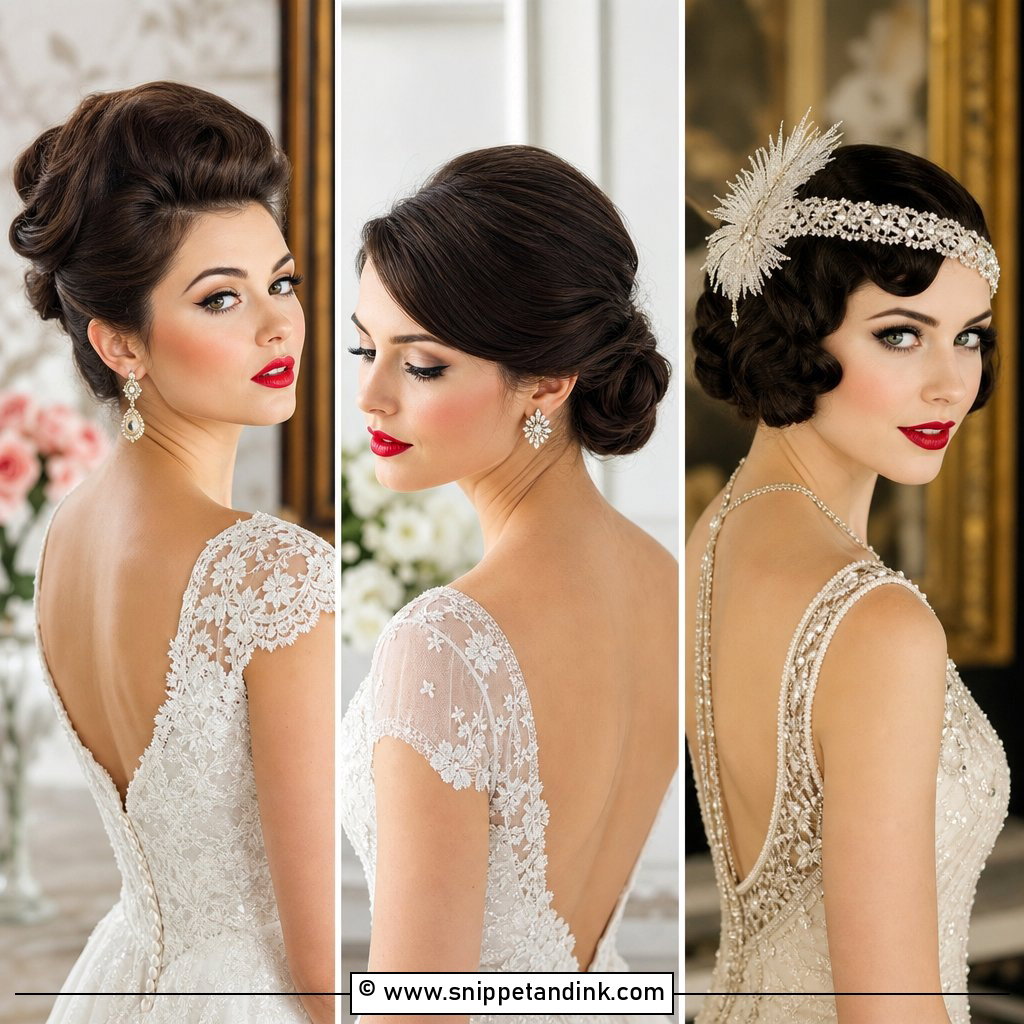
1. Finger Waves Wedding Hairstyle
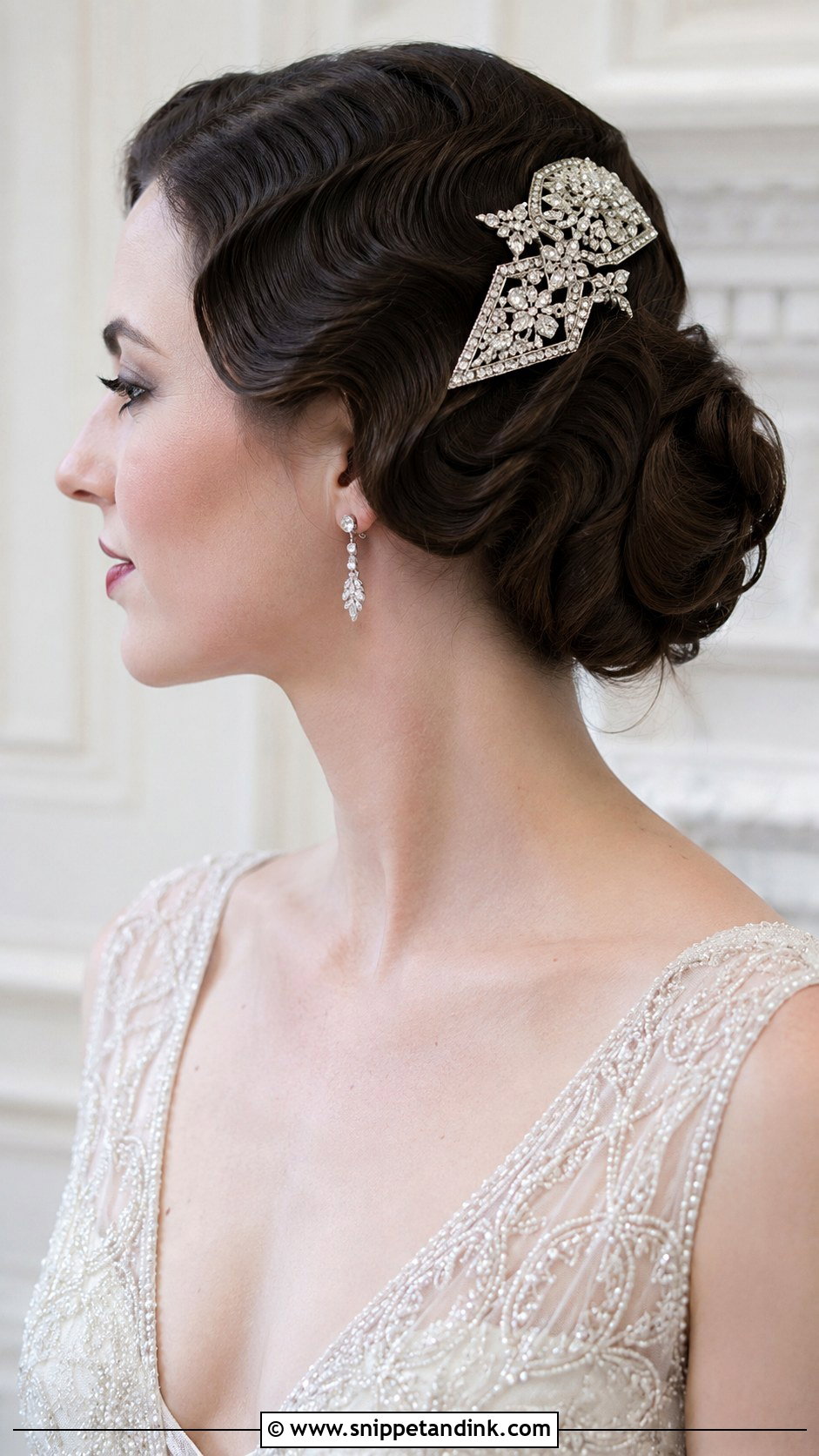
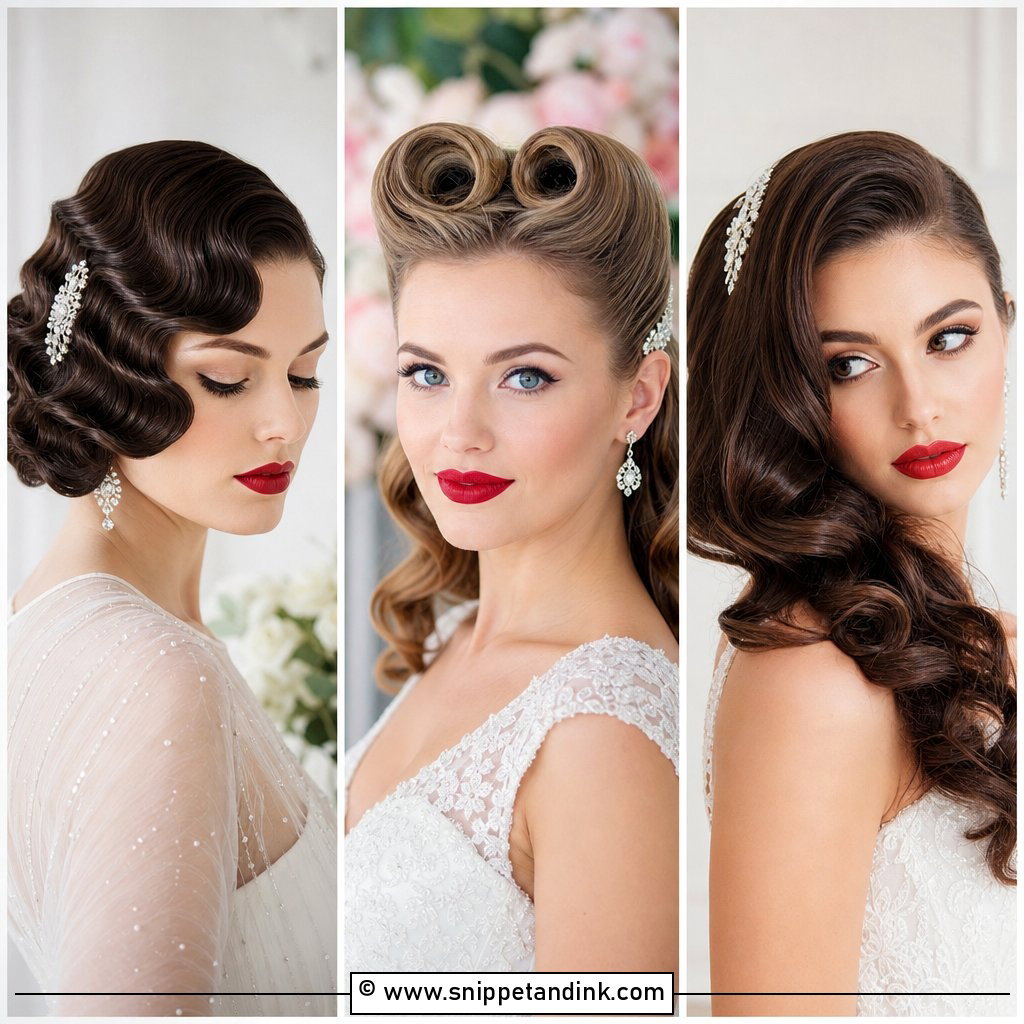
These S-shaped ripples hug the head and catch light along every ridge, which is why they photograph so crisply. On a bob or shoulder-length hair they give an instant Great Gatsby feel. I shape them into damp hair with a firm setting gel, clip each ridge, and dry completely before touching them. A deep side part and a small jeweled comb soften the look for a wedding. Add a beaded band only if the rest of the day is art deco, or it tips into fancy dress.
2. Victory Rolls Bridal Updo
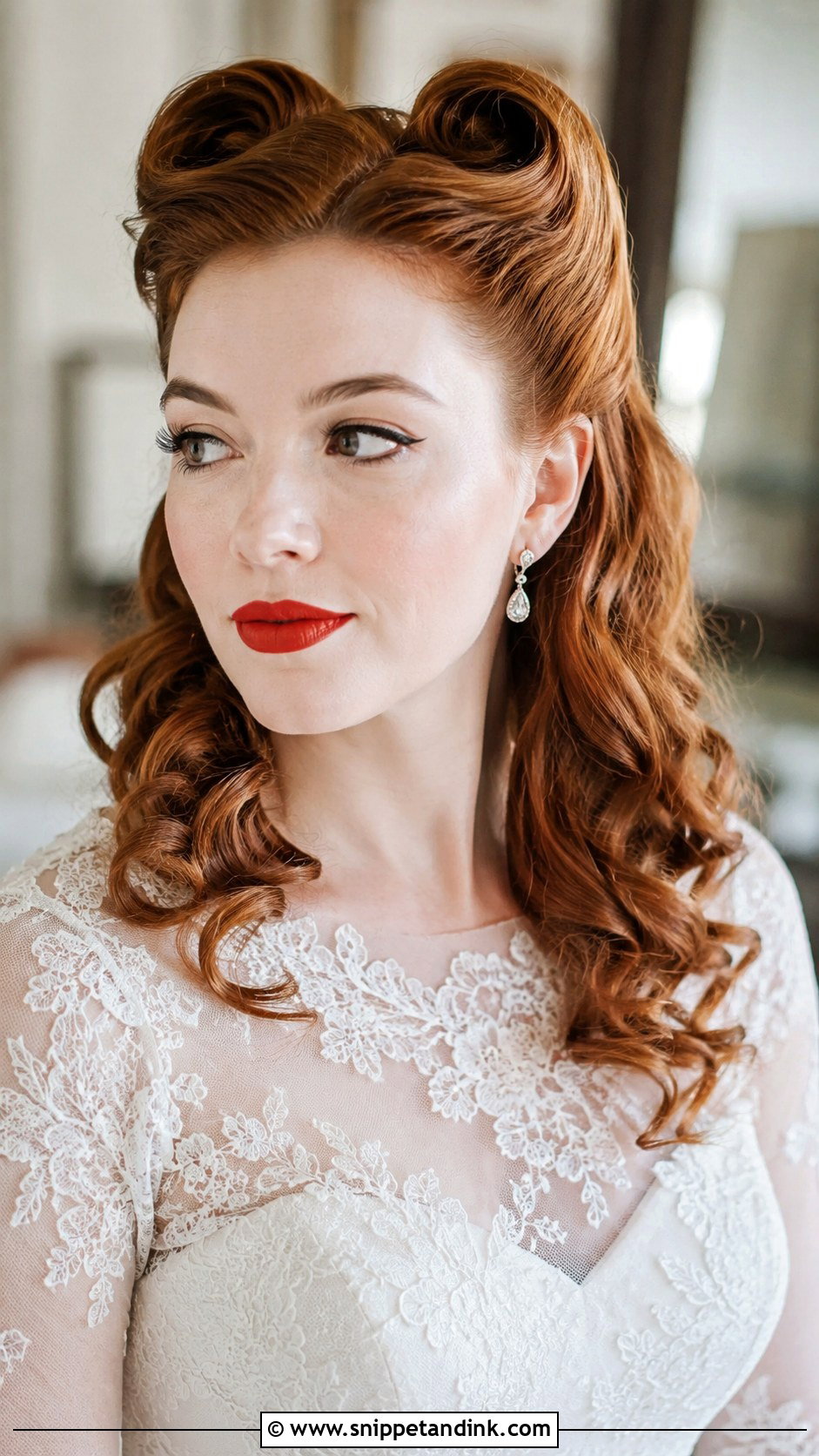
Victory rolls are pin-up hair with structure. These voluminous rolls are built on teased sections, rolled around the fingers and pinned from inside so nothing shows. Two symmetrical rolls read classic; a single roll on the part side is softer and easier to wear with a veil. Loose curls down the back balance the height. Once they’re pinned properly, rolls barely move on the dance floor, which surprises a lot of brides.
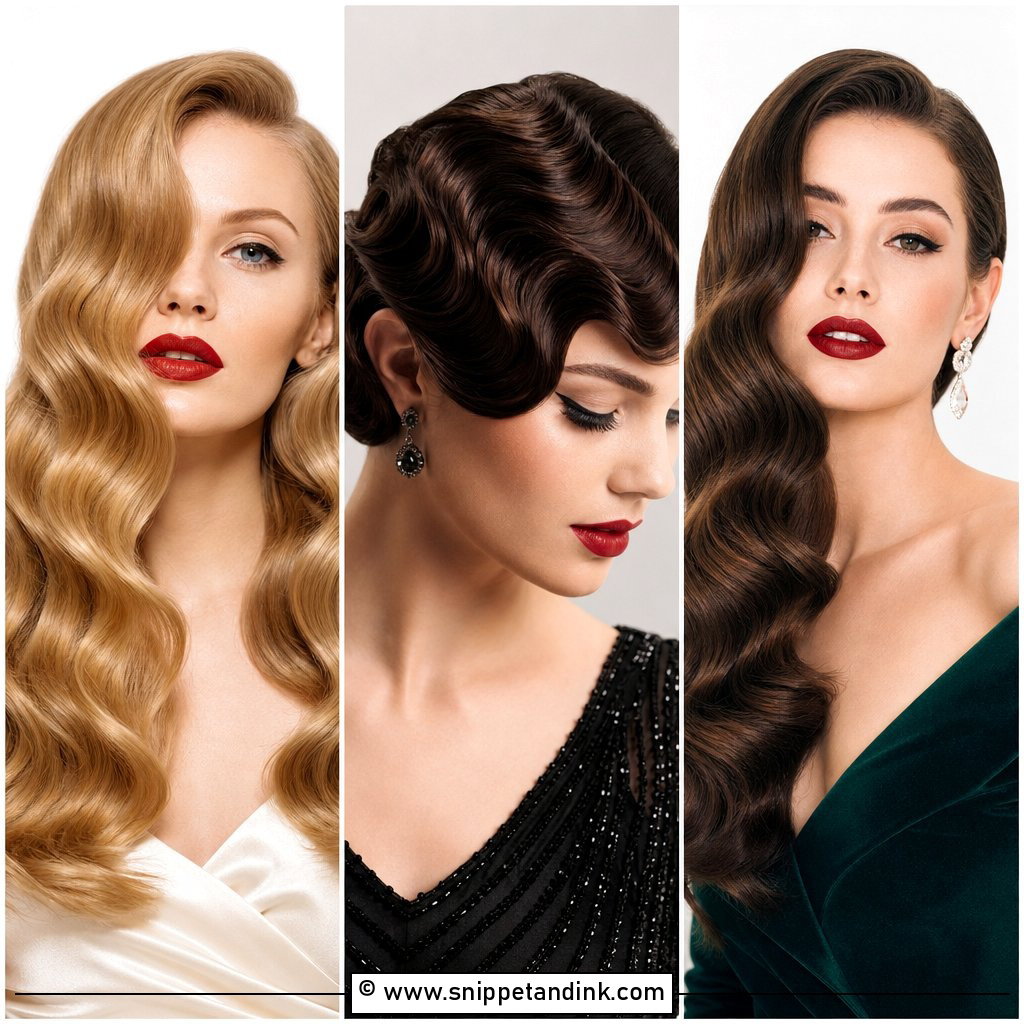
3. Hollywood Waves Wedding Hair
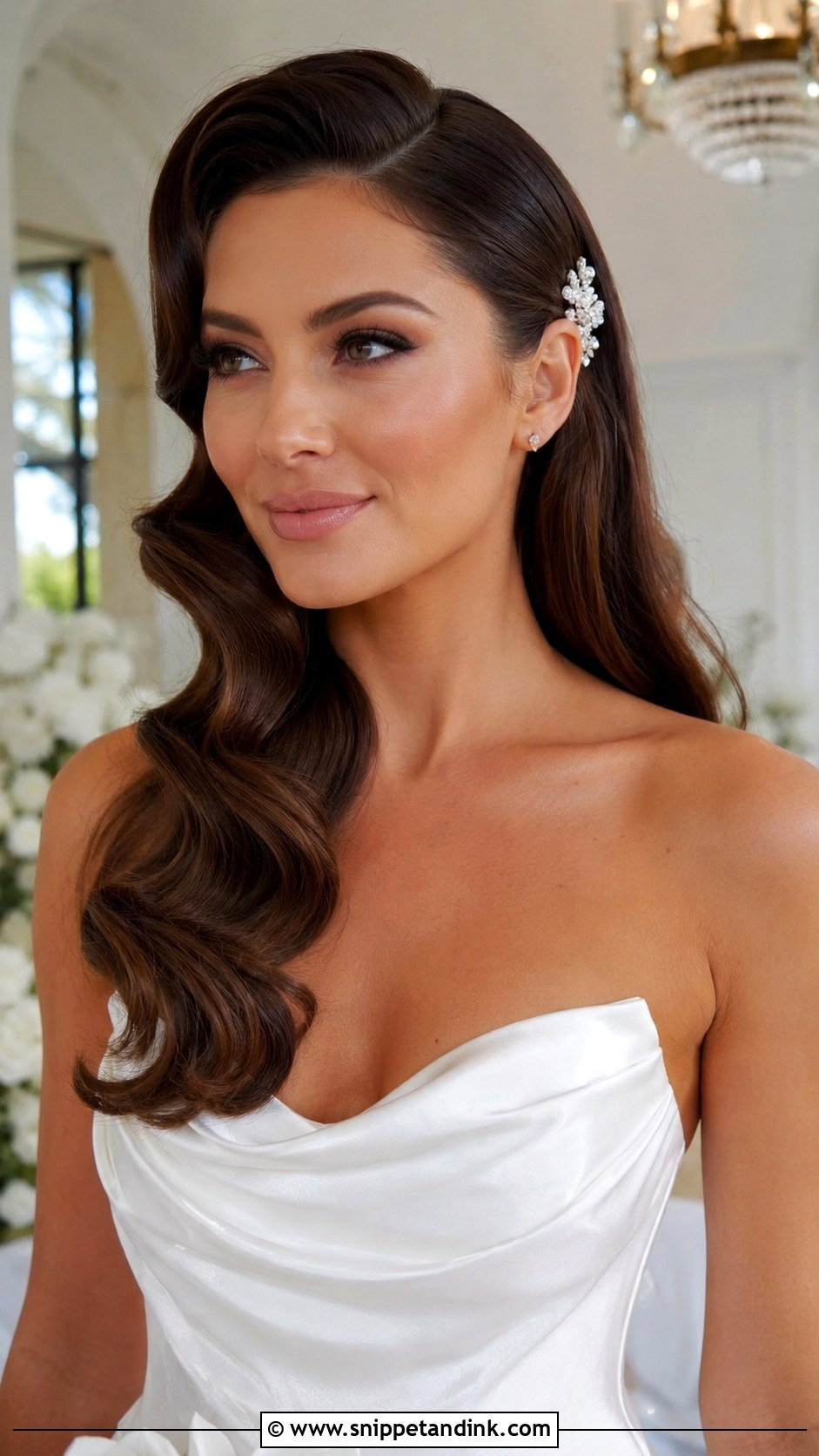
Hollywood waves need medium to long hair and a deep side part to work. The curls are wound in one direction, set, cooled and brushed into a single ripple down one shoulder. Plenty of shine is part of the look, so I finish with a light shine spray, never an oil heavy enough to drag the wave down. A sparkling clip near the part is the traditional accent. If your hair has a cowlick at the front, tell your stylist at the trial so the part can be planned around it.
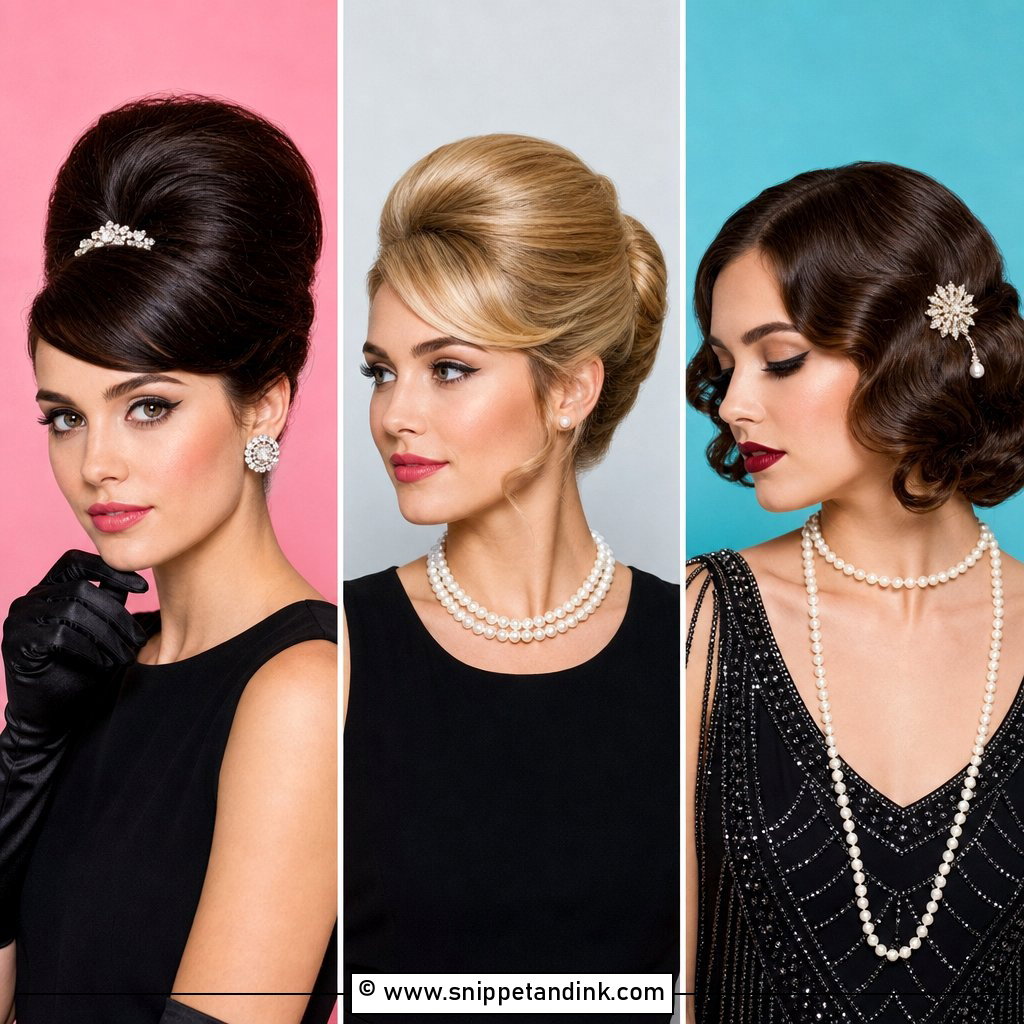
4. Beehive Bridal Updo
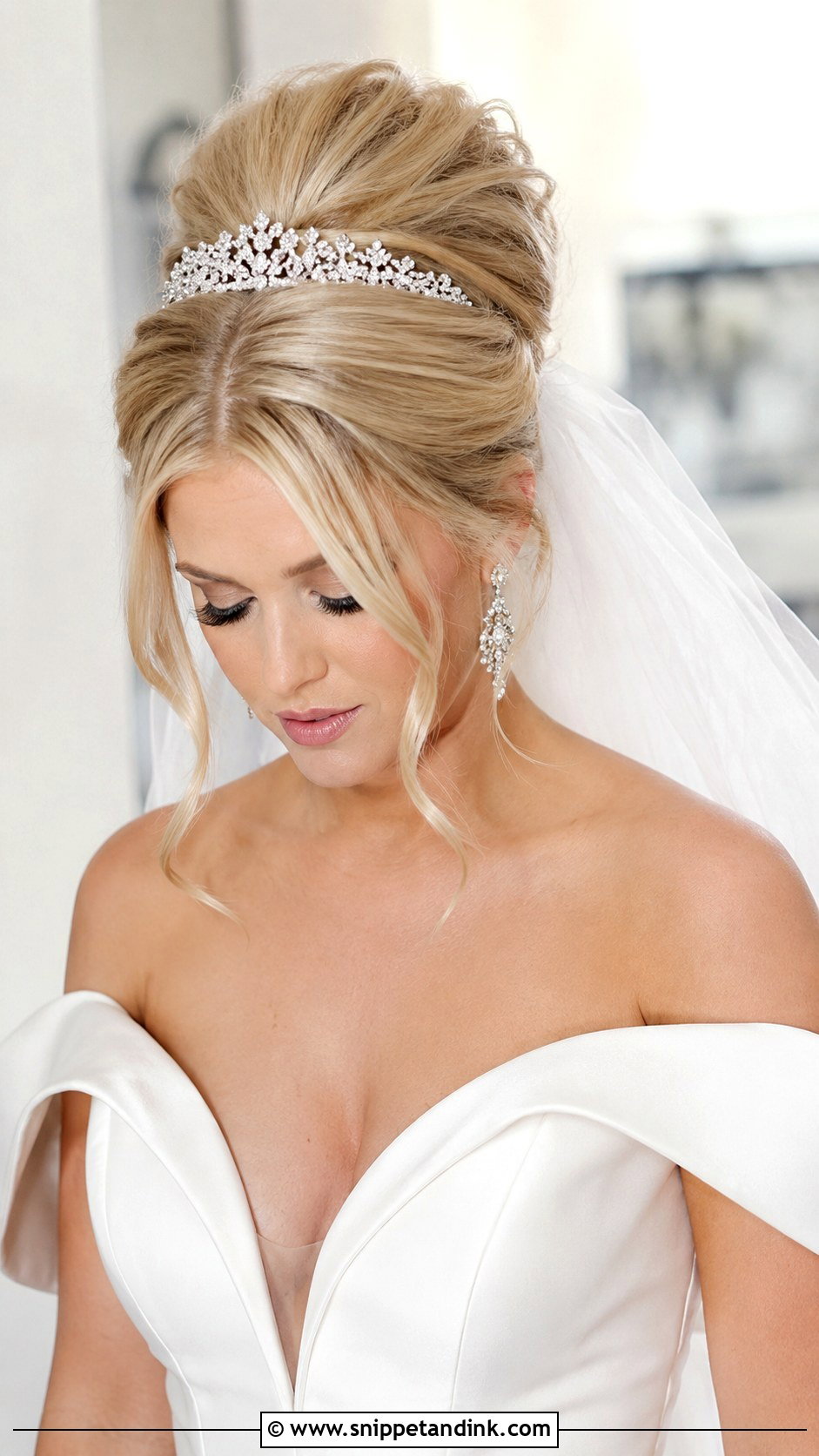
The beehive is pure 1960s style, and the original was enormous. For a wedding I build a softer version: teased at the crown in small sections, smoothed over with a soft brush and pinned into a rounded shape, with the front kept sleek and a few pieces left loose. Height lengthens the face, but it also raises the point where a veil sits, so plan the two together. A tiara or vintage pin finishes it.
5. Low Chignon With Pearls
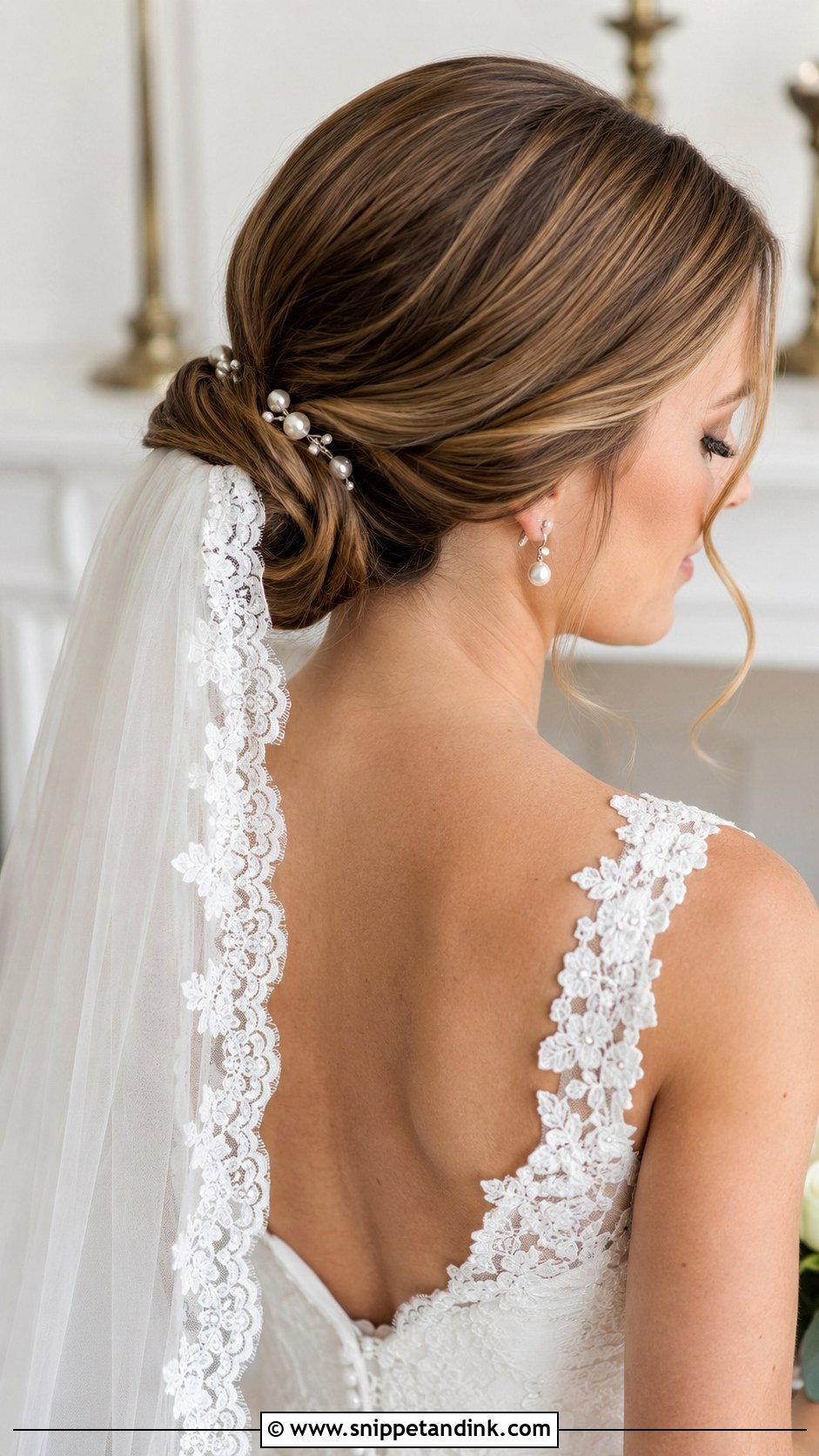
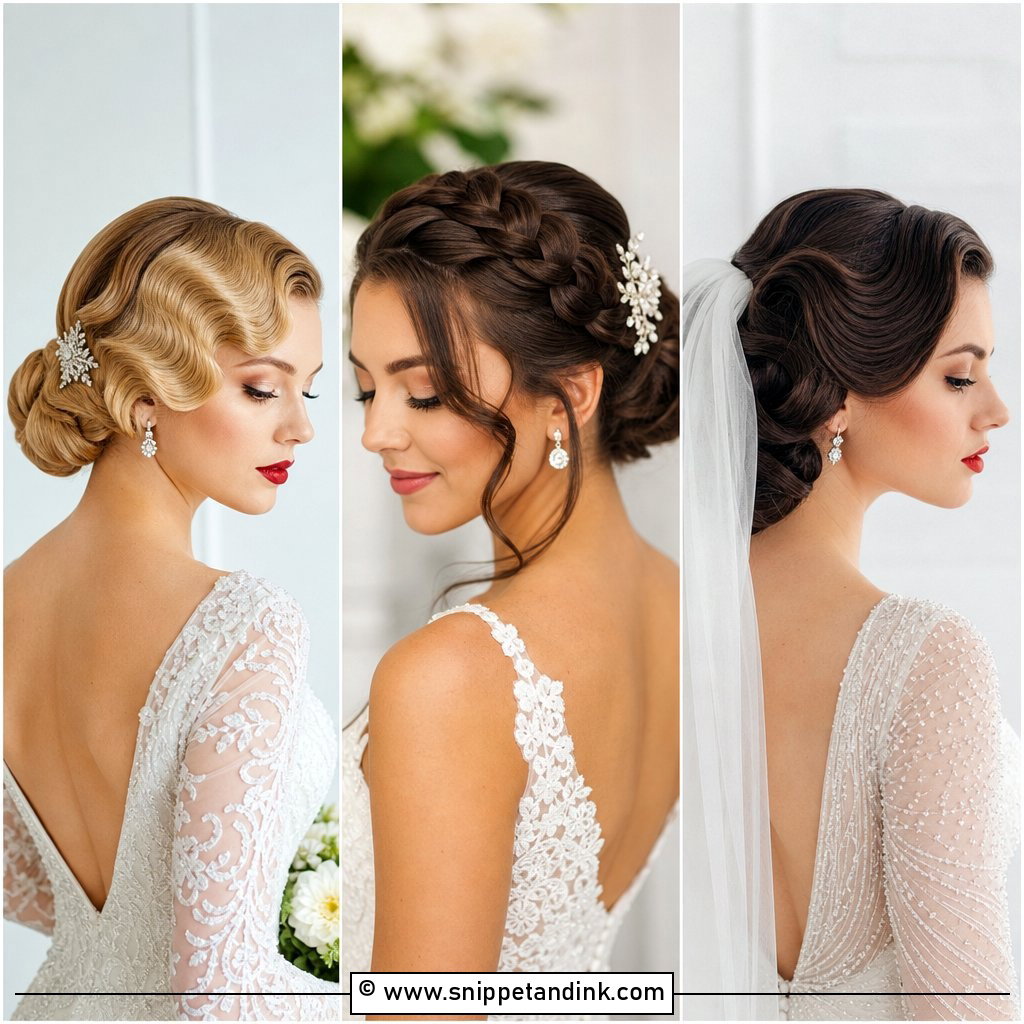
A low chignon at the nape is the quietest vintage choice and one of the sturdiest. I build it around a small anchor ponytail, twist the lengths around it and pin into the base, so the bun can’t drift as the evening goes on. Pearl pins in the twist add an old-world touch. Soft tendrils at the front keep it from looking severe. It sits comfortably under a lace veil or with a vintage comb, and it suits almost any neckline.
6. Pin Curl Wedding Hairstyle
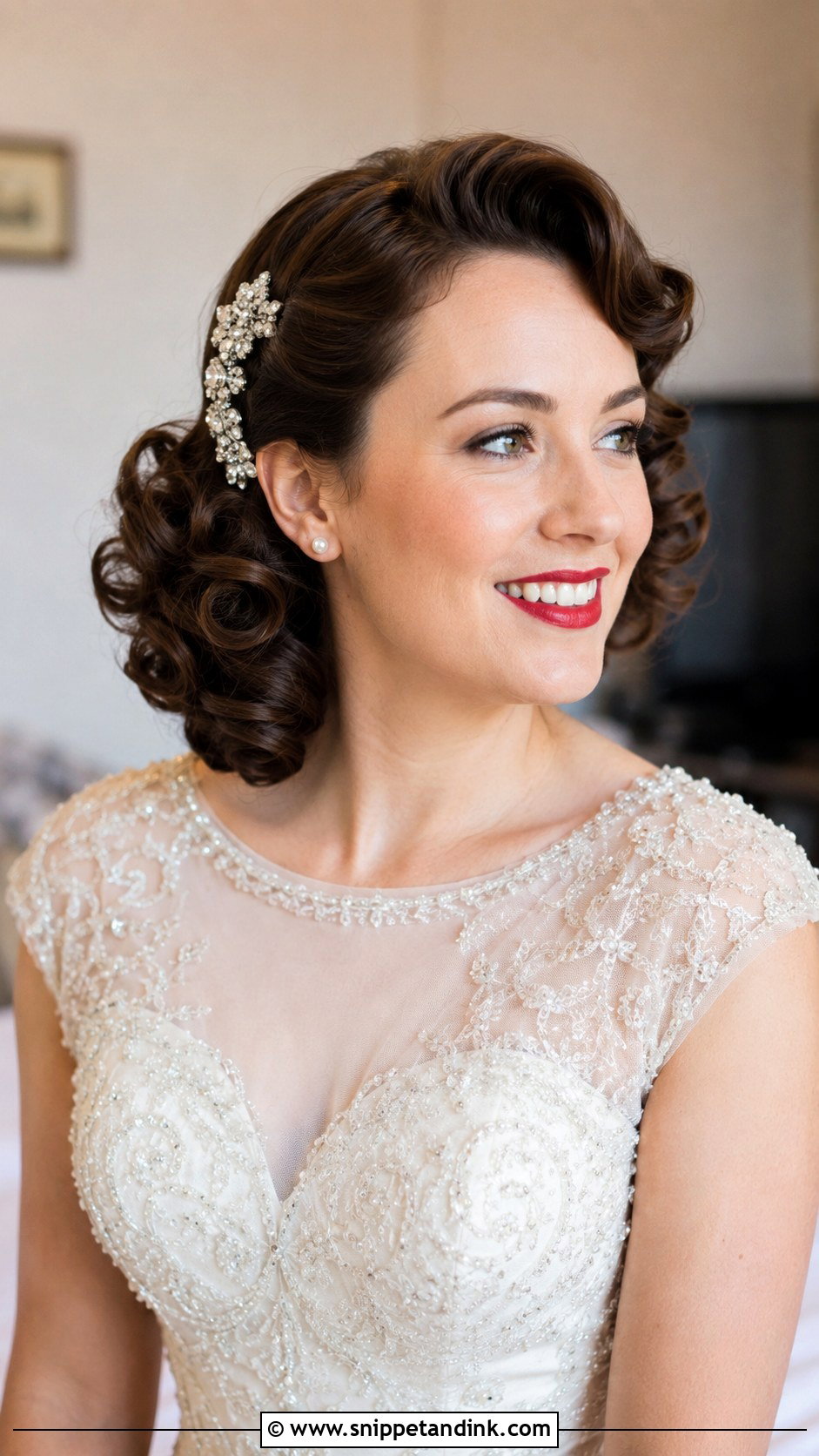
Pin curls are how most 1940s and 1950s styles were actually made. Each section is wound into a flat coil and clipped against the head until it’s cool or dry, then either left structured or brushed into waves. For a wedding, I usually brush them out into glamorous waves and pin one side back with a jeweled clip. On short and medium hair they give spring and bounce that a curling iron alone can’t match. Plan the extra time: a full pin-curl set takes longer than a standard curl.
7. Gibson Tuck Updo
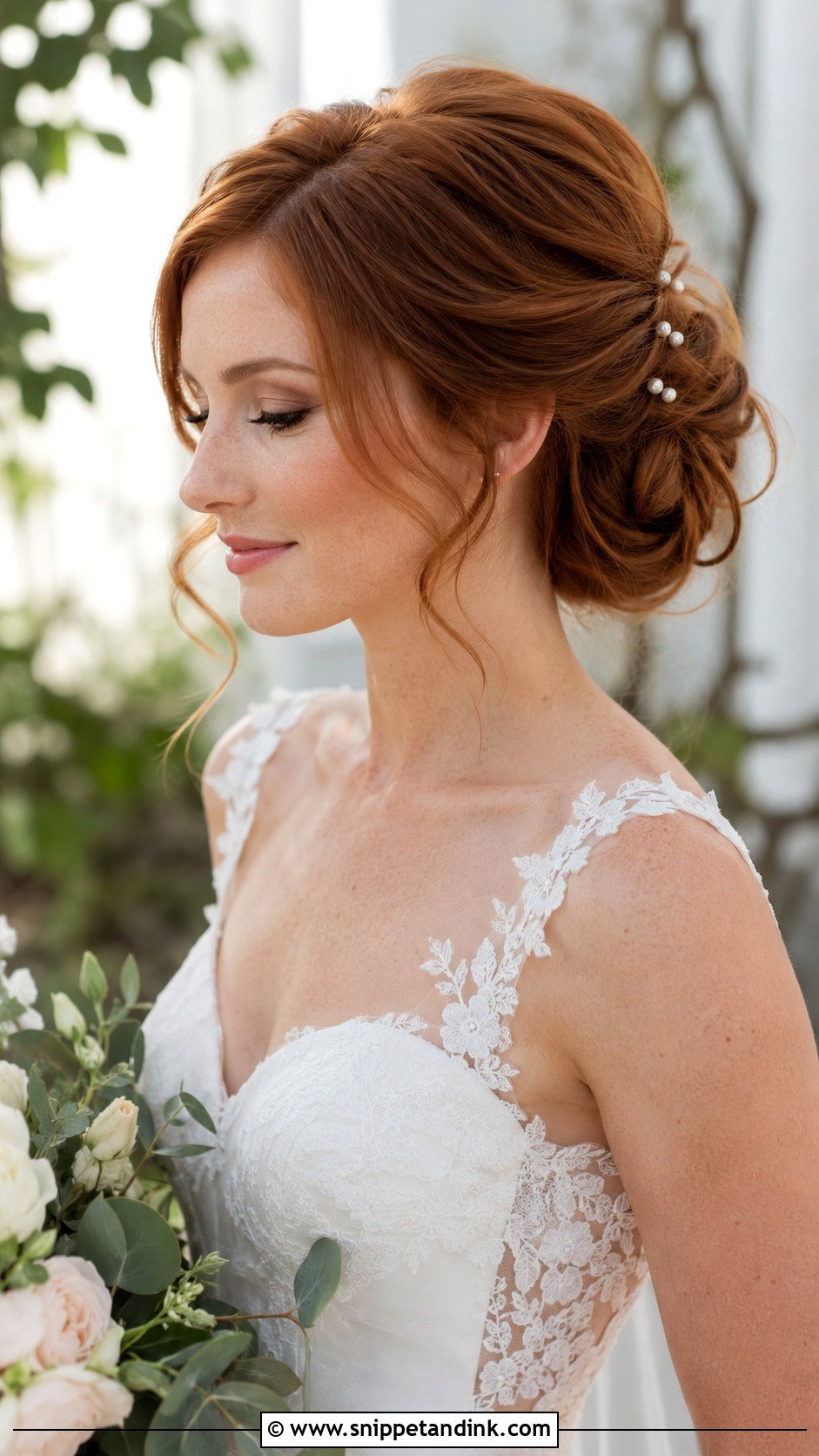
The Gibson tuck is Edwardian and gentle. The hair rolls under itself at the nape into a soft bun with no hard lines. It suits medium to long hair, and I like it on wavy or slightly textured hair, because a little natural grip helps the roll stay tucked. I’d loosen a few strands at the front for softness. Fresh flowers or pearl pins dress it. On very slippery hair, it needs a texture spray first or it creeps loose by the reception.
8. 1920s Bob With Headband
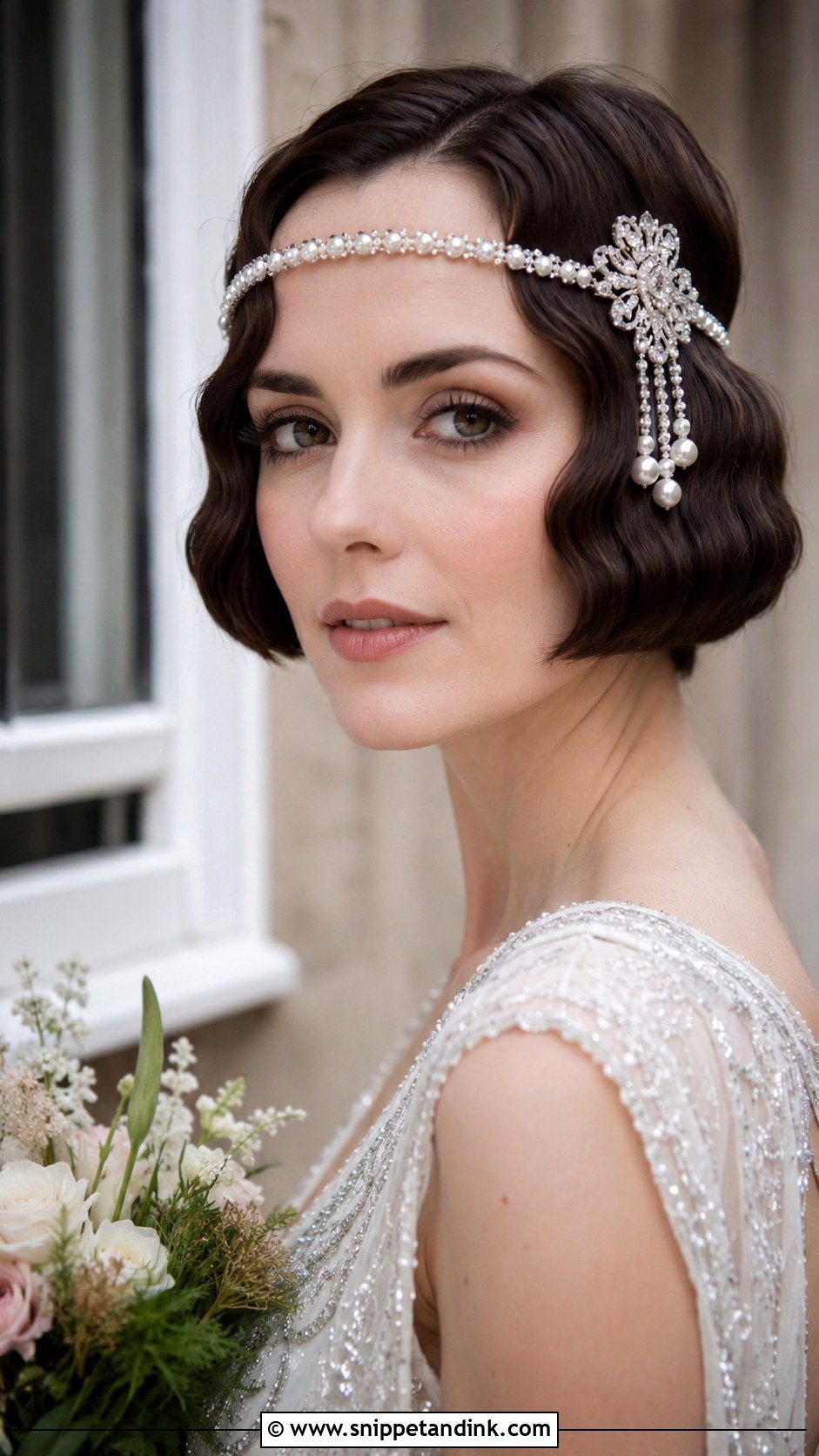
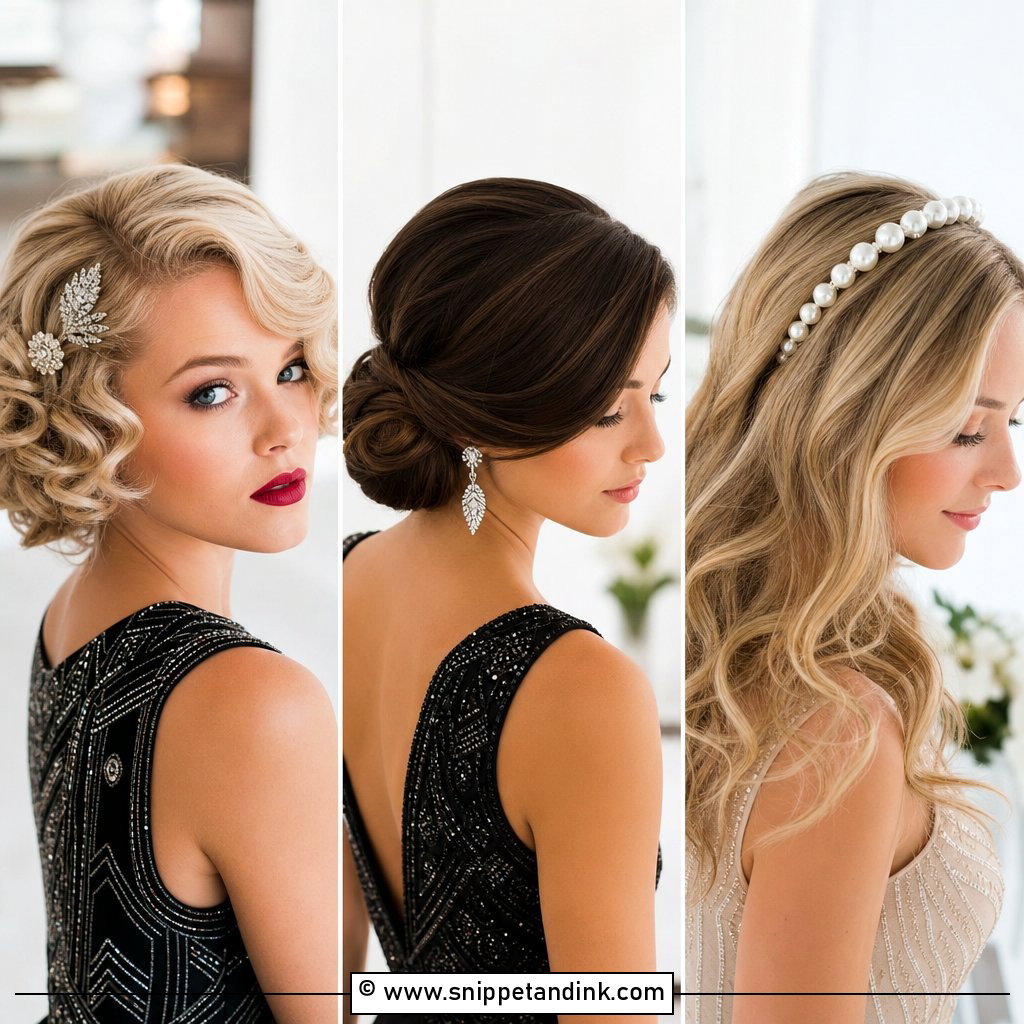
A blunt bob with finger waves or soft curls is the flapper silhouette, and a beaded or pearl band across the forehead turns it into full Gatsby. It suits brides with clean, defined features and a confident style. If you’re considering cutting your hair for this, cut two or three weeks before, so the line softens slightly and any adjustments can be made. A dramatic earring and a red lip complete the era.
9. Soft Vintage Curls Half Updo
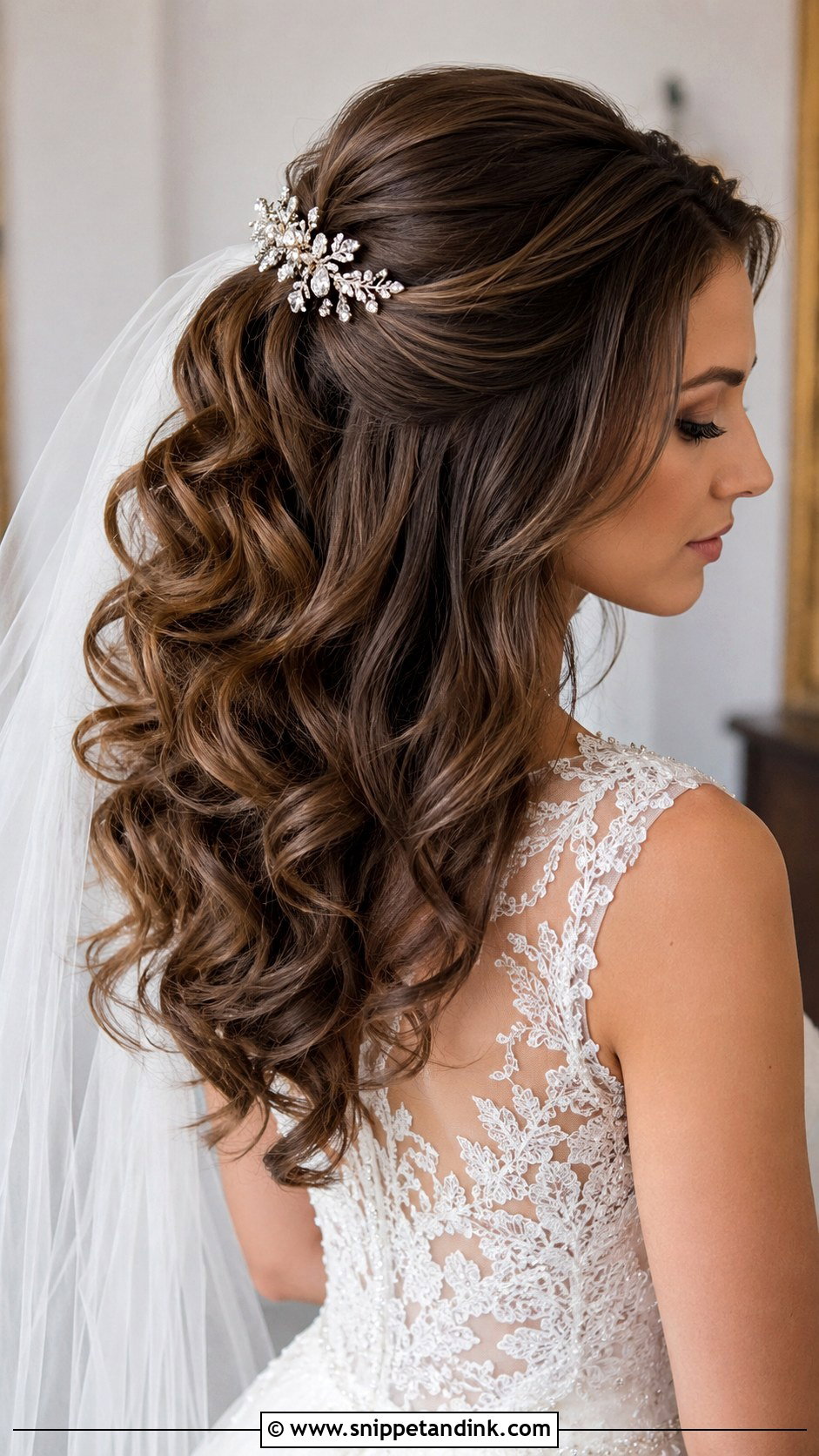
Half-up with soft curls keeps structure at the crown and movement below. I pull the top back and pin it into a small secure base, then set the lengths in 1950s-style curls with plenty of bounce. That pinned base is where a veil comb or a jeweled barrette anchors best. Medium to long hair suits it. If your hair is heavy, the curls below will relax faster than the crown, so I curl the lengths slightly tighter than the finished look.
10. Marcel Waves Wedding Hair
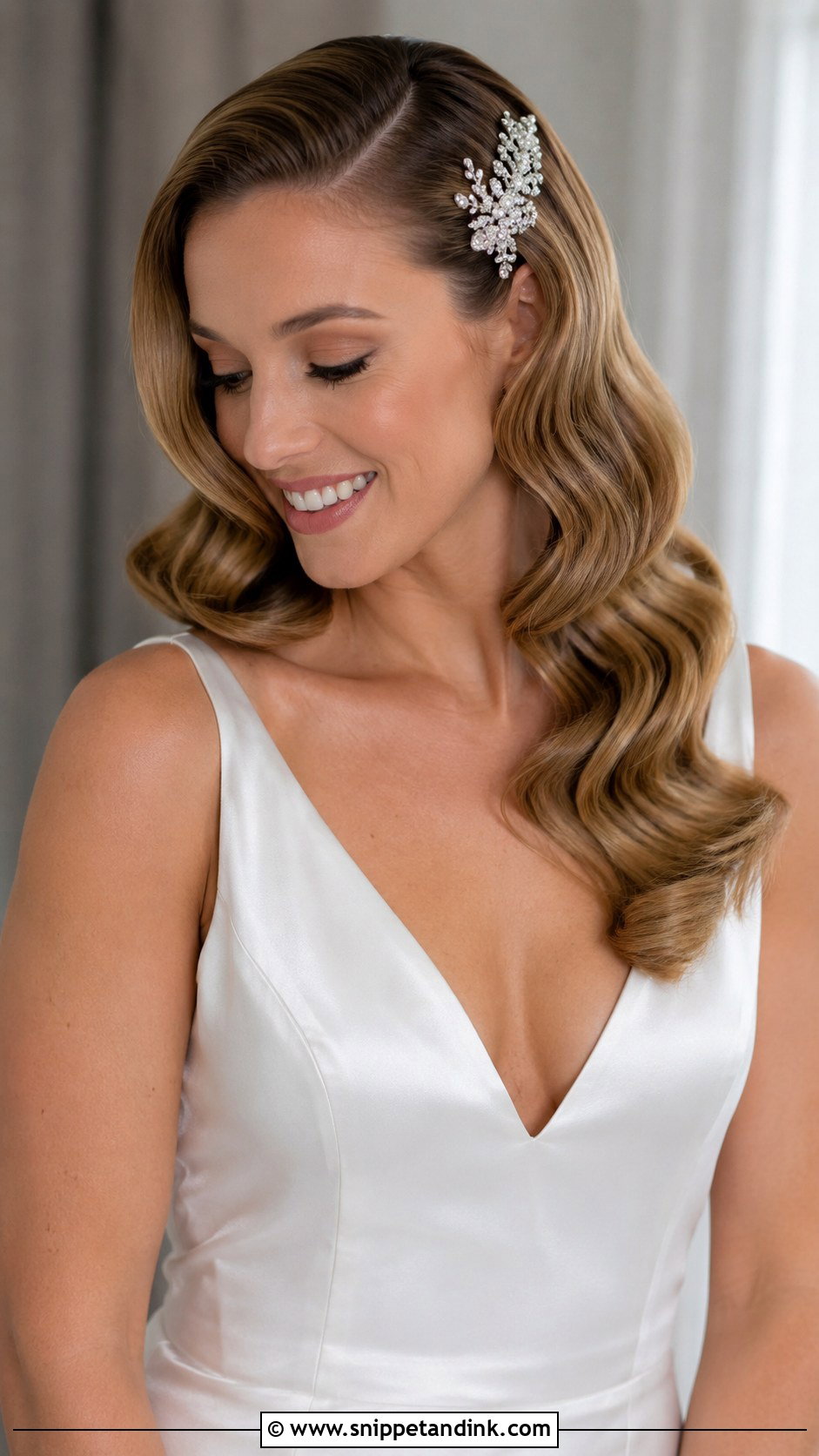
Marcel waves came before finger waves. They’re pressed with a heated Marcel iron into deep, regular ripples, and they carry the polish of the 1920s and 1930s sophistication. They work on bobs and longer hair. For a wedding I sweep everything to one side and fix it with an art deco comb. The iron technique is a specialist skill, so check your stylist has done it before; a regular curling iron gives a different, softer wave.
11. Bouffant Bridal Updo
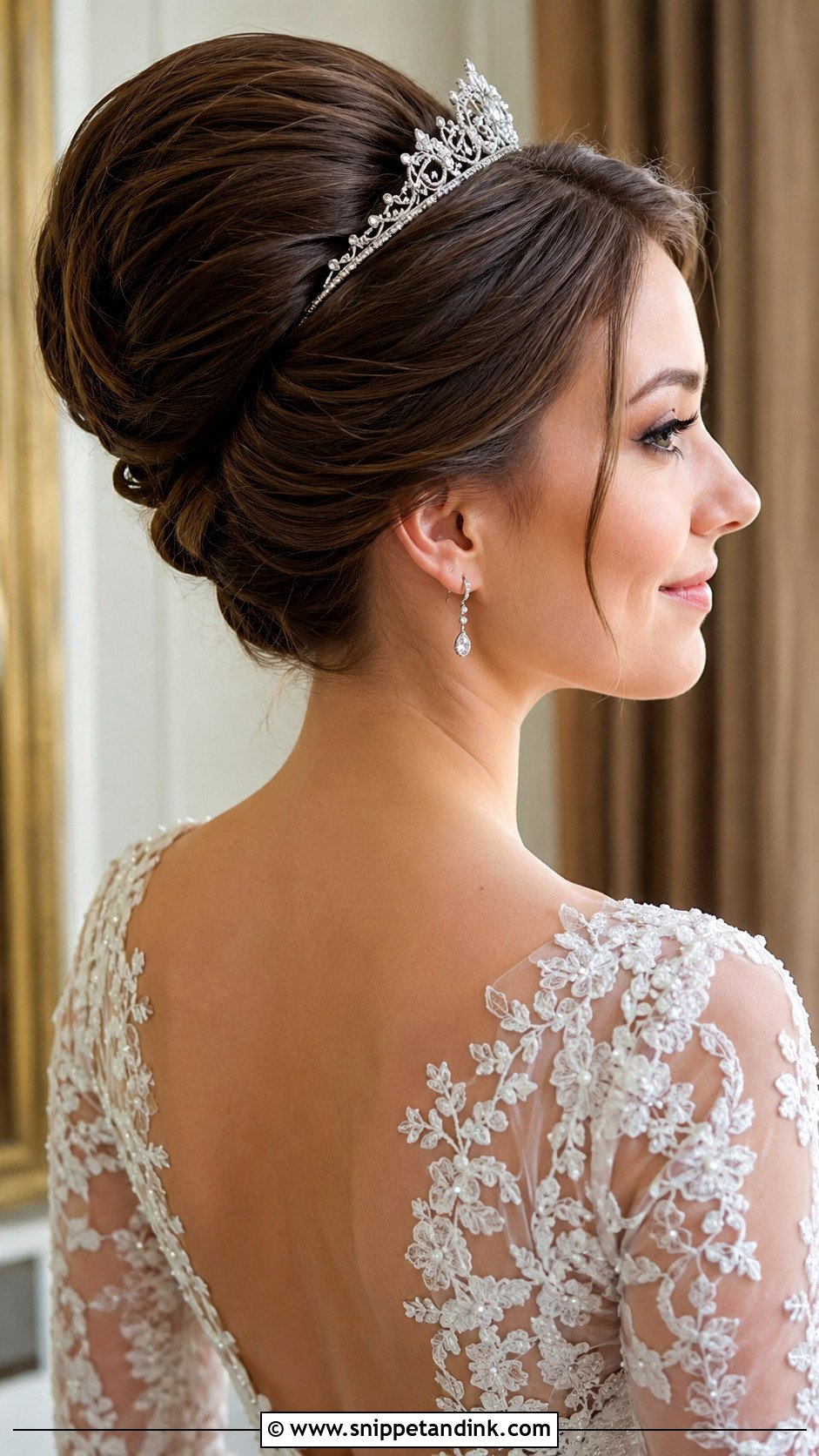
The 1960s bouffant lifts the crown and gives a formal, regal outline. Softened for a bride, it pairs a teased crown with loose curls or a low twist at the back. The teasing has to be firm at the root and smoothed over on top; a bouffant that’s only teased near the surface sinks within a couple of hours. A tiara or vintage pins sit well in it, and it suits grand venues and structured gowns.
12. Vintage Side Bun
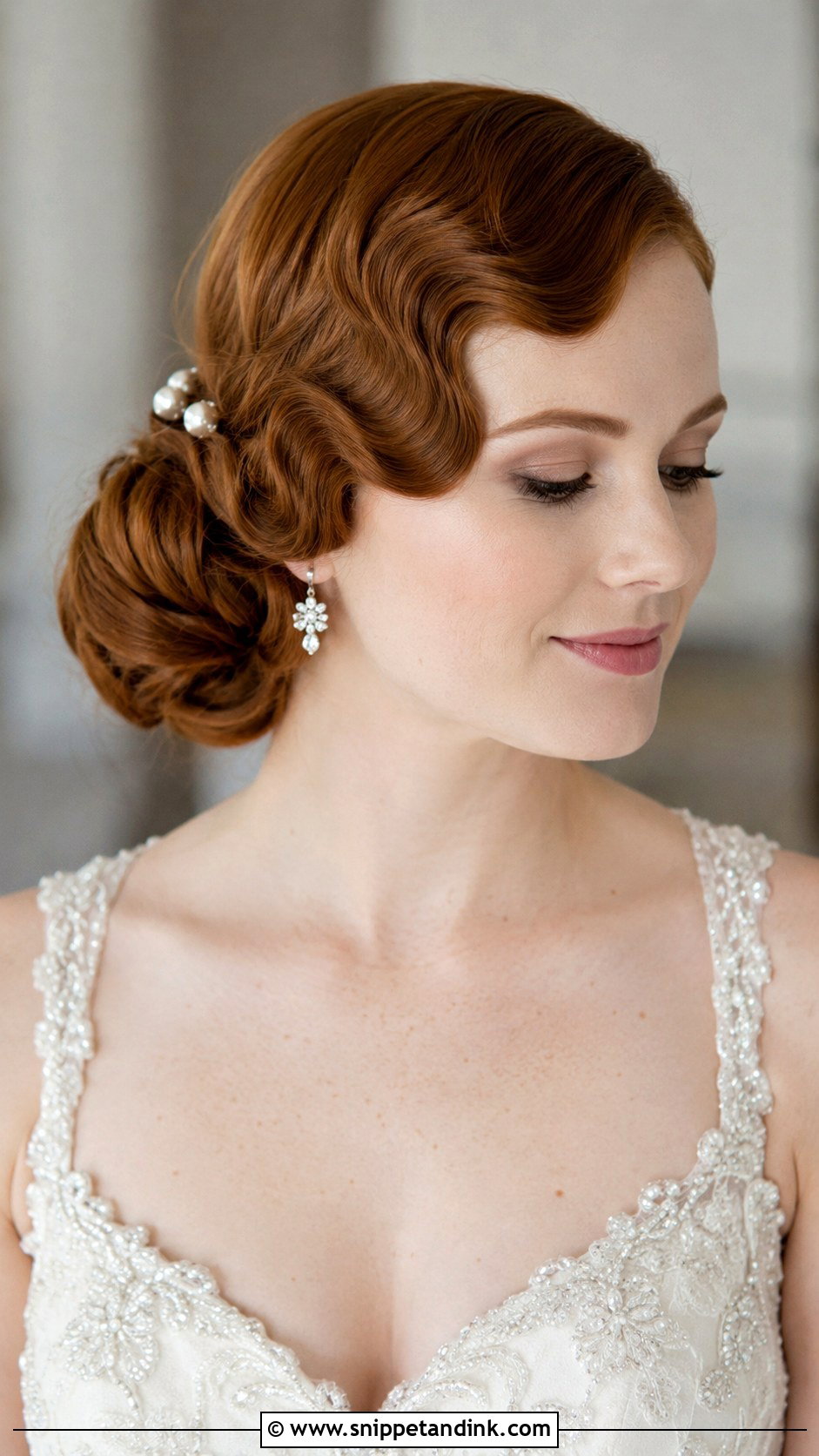
A bun set low near one ear is an old Hollywood touch, especially with finger waves or soft curls across the front. It opens the other side of the neck and frames a statement earring. I pin side buns into a hidden anchor placed exactly where the bun will sit, because a bun pinned only to itself will slowly slide toward the shoulder. Pearl pins or a small floral accent dress it. Long necks show it off best.
13. 1950s Ponytail Wedding Hairstyle
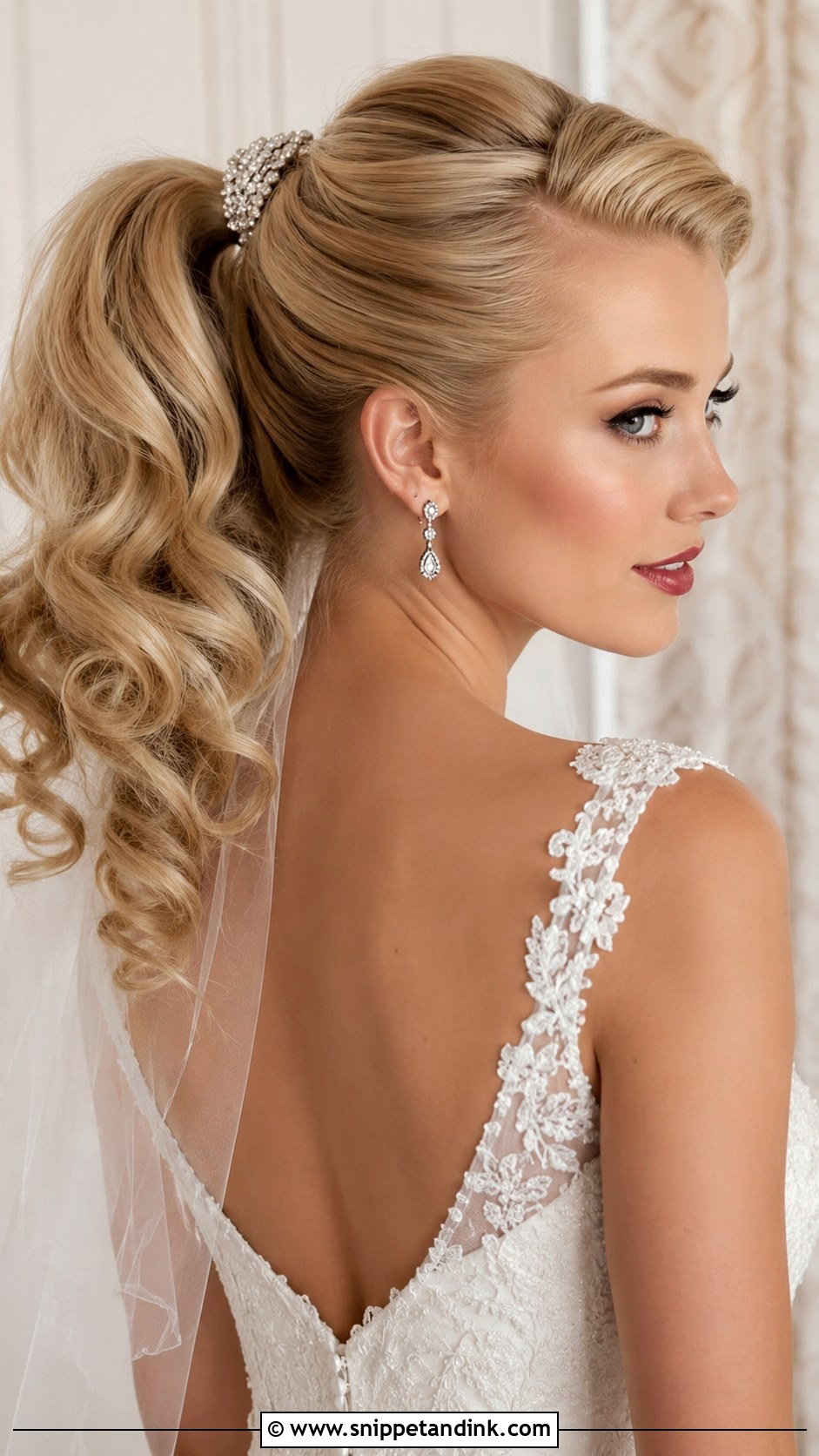
The 1950s ponytail is the most playful option here: high, smooth at the crown, with a bouncy curled tail. A section of hair wrapped around the base hides the elastic, and a jeweled pin sits at the wrap. High ponytails pull on the scalp, so I secure them with two crossed elastics or a bungee band rather than one tight elastic, which keeps them up without a headache. It’s great for dancing and keeps hair off your face.
14. Braided Vintage Updo
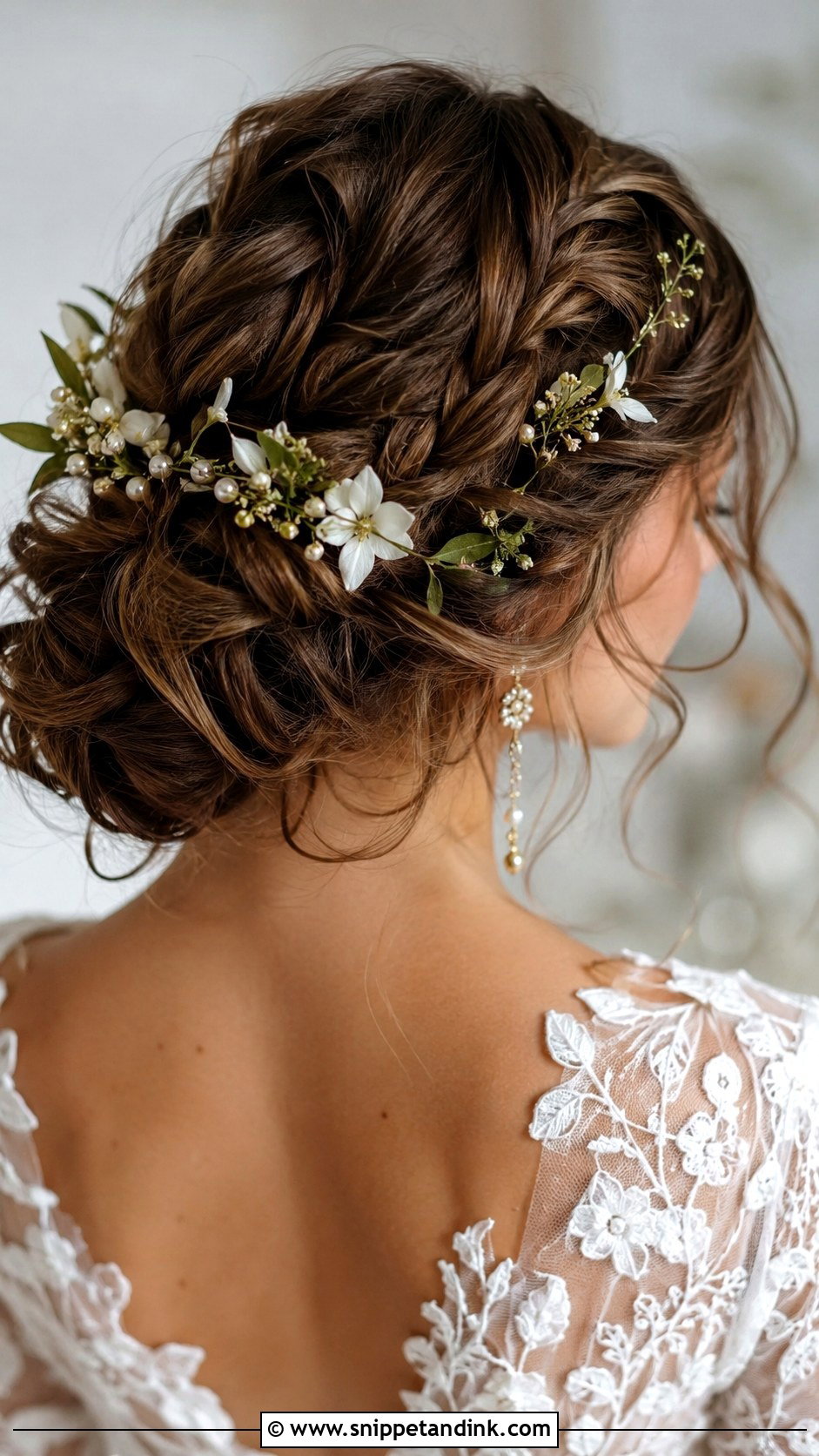
Braids add texture that a plain twist can’t. Soft braids woven into a low bun or a crown suit garden and rustic weddings, with an Edwardian or bohemian feel. I braid with a little texture spray and then pull the edges gently loose, so it looks soft without coming apart. Flowers or pearl pins tuck easily into braids, and they’re one of the most secure places to anchor them. A braided updo holds well all day on medium to long hair.
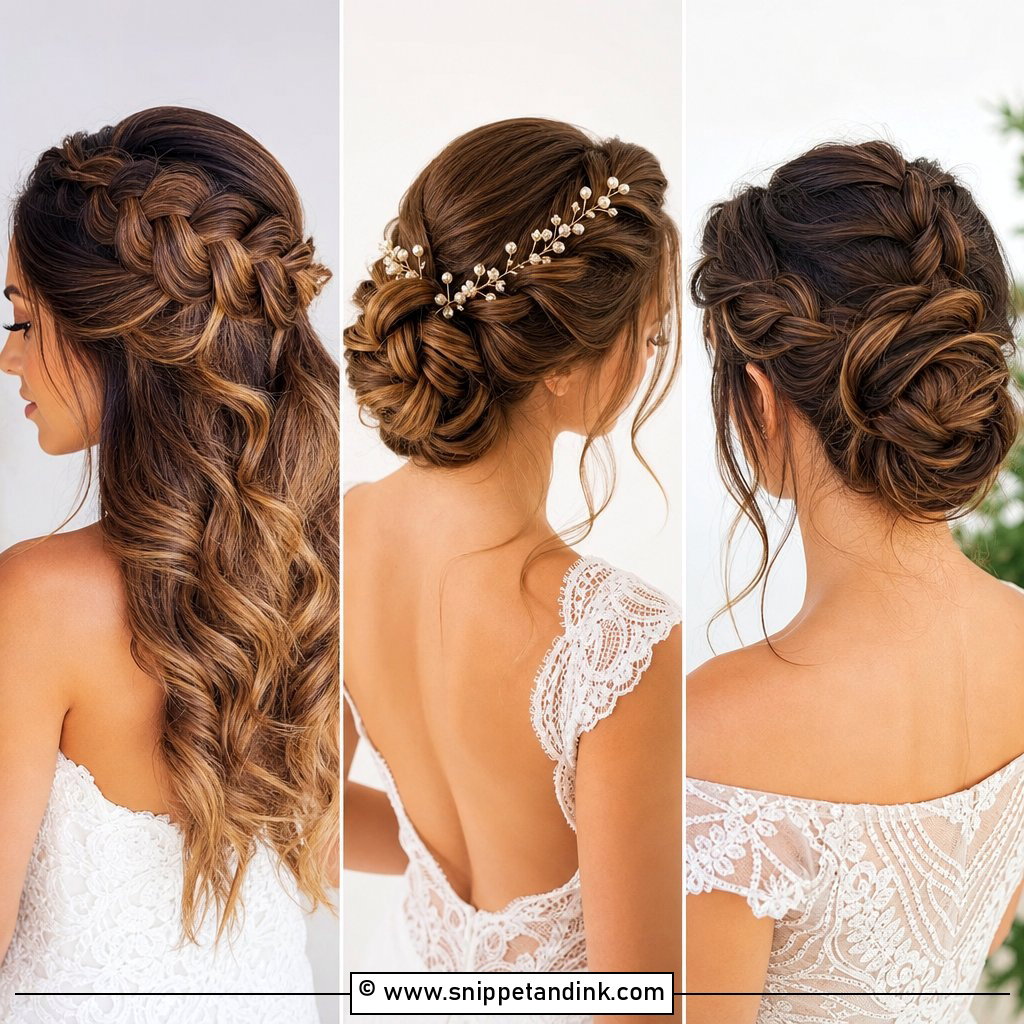
15. Pompadour Bridal Hairstyle
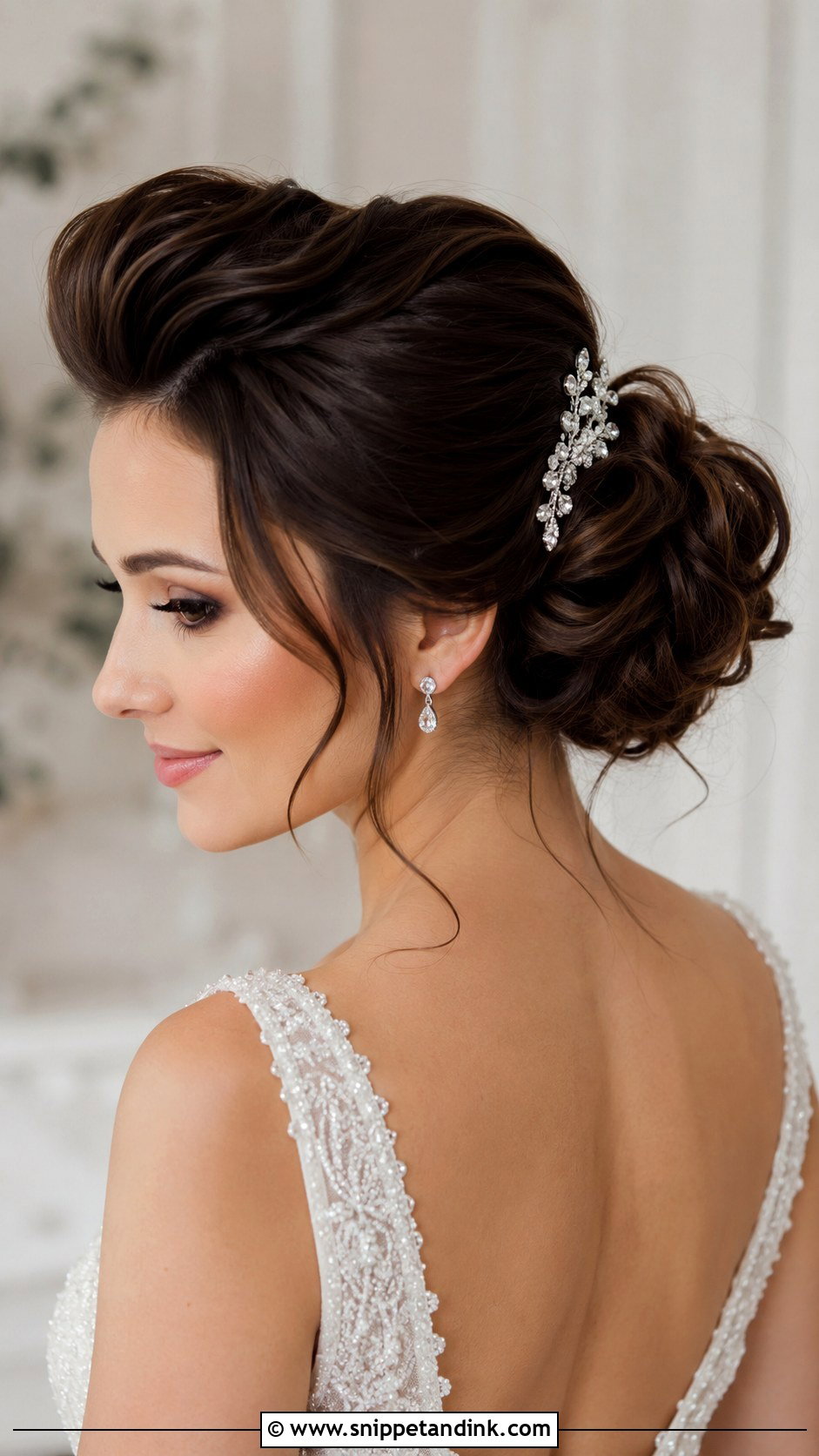
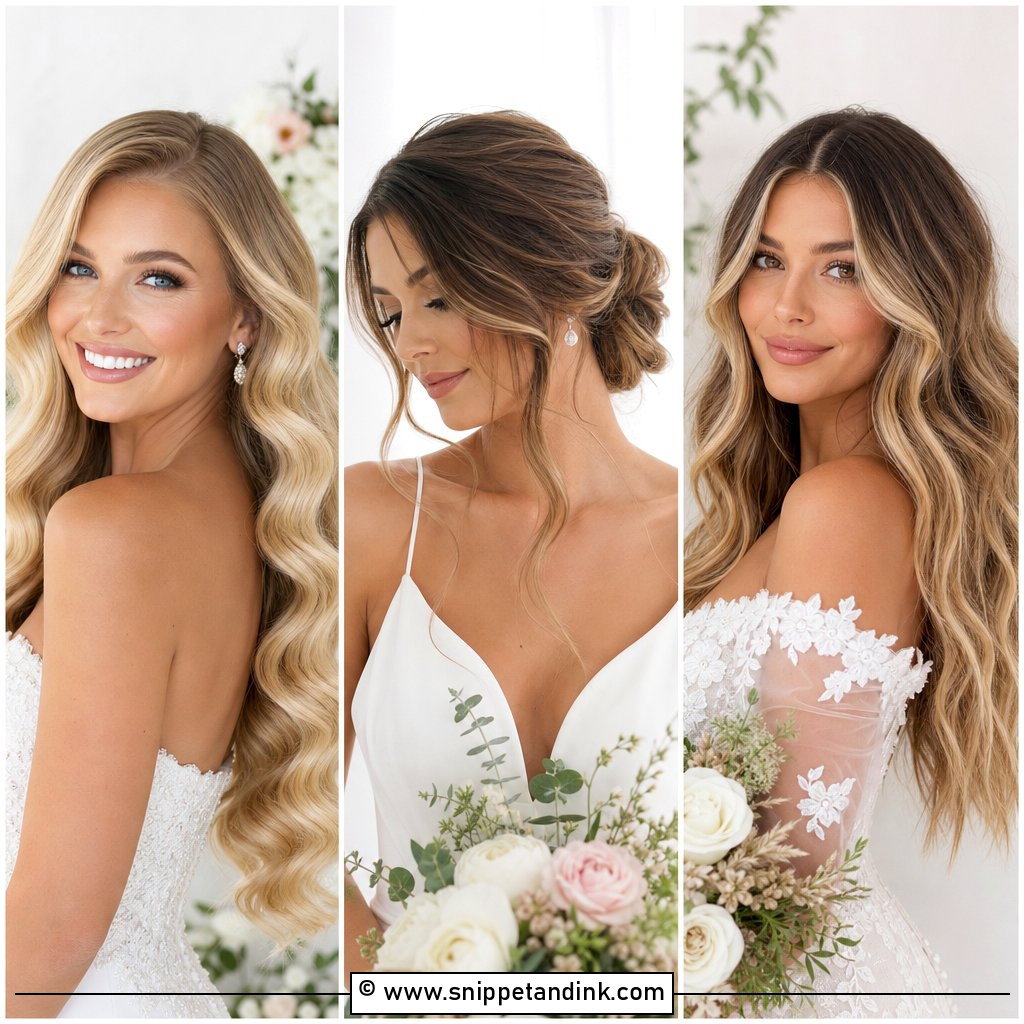
A pompadour sweeps the front up and back into a lifted roll. It’s bold and very 1950s, so it suits brides with strong features who like a statement. For a wedding I pair it with loose waves or a low bun behind. The roll is set over teasing and pinned underneath with crossed pins; on fine hair a small padding piece keeps the height. A sparkling clip at the side finishes it neatly.
16. Vintage Updo With Birdcage Veil
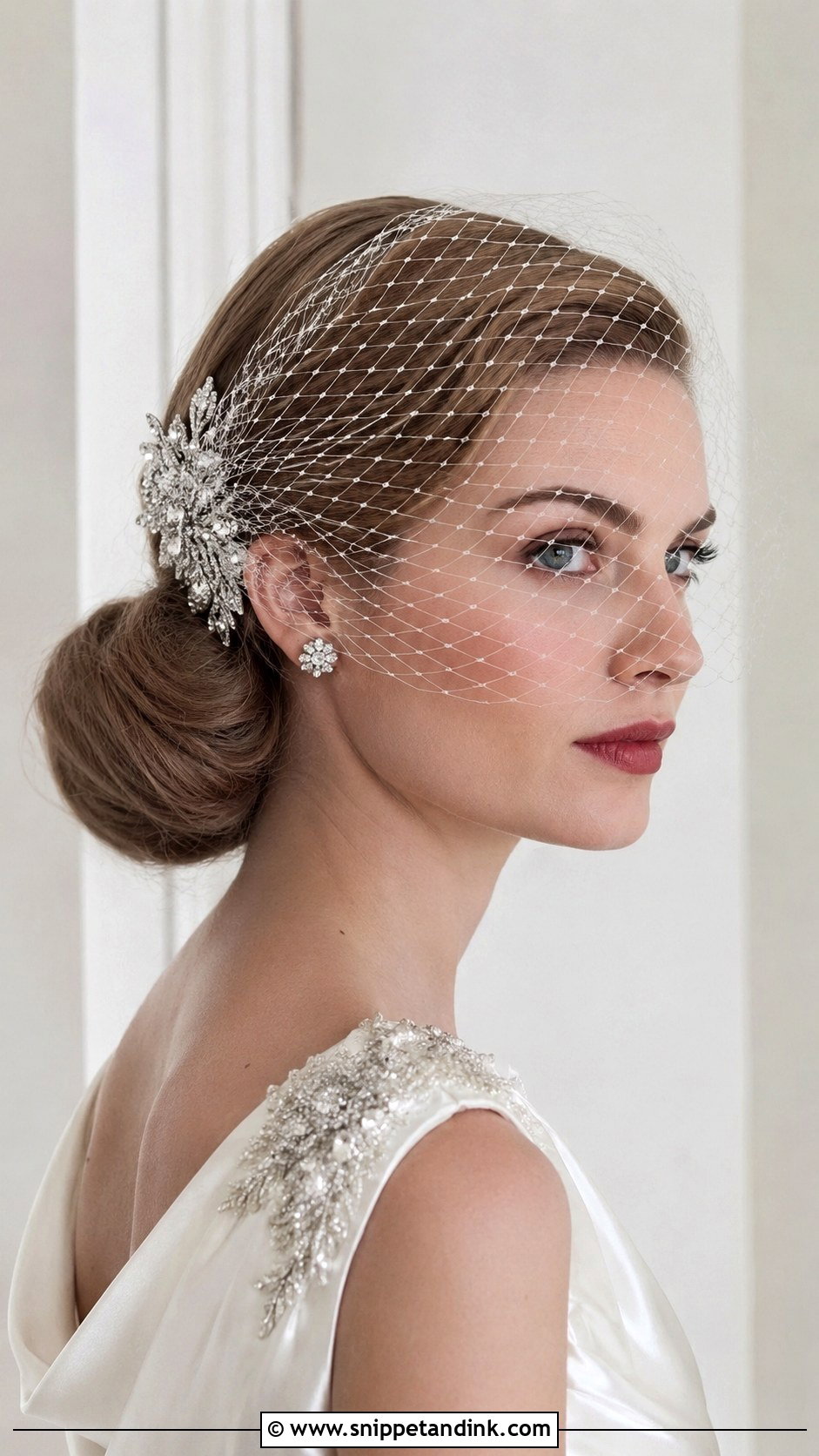
A sleek updo and a birdcage veil are made for each other. The short net crosses the face and the polished hair behind it does the rest. It suits low chignons, finger waves or soft side buns, and the look reads strongly 1940s and 1950s. Birdcage veils are usually fixed with a small comb or clips at the side, so I leave a smooth, firmly pinned spot for it. A jeweled comb or small flower can sit on the opposite side.
17. Loose Vintage Updo With Flowers
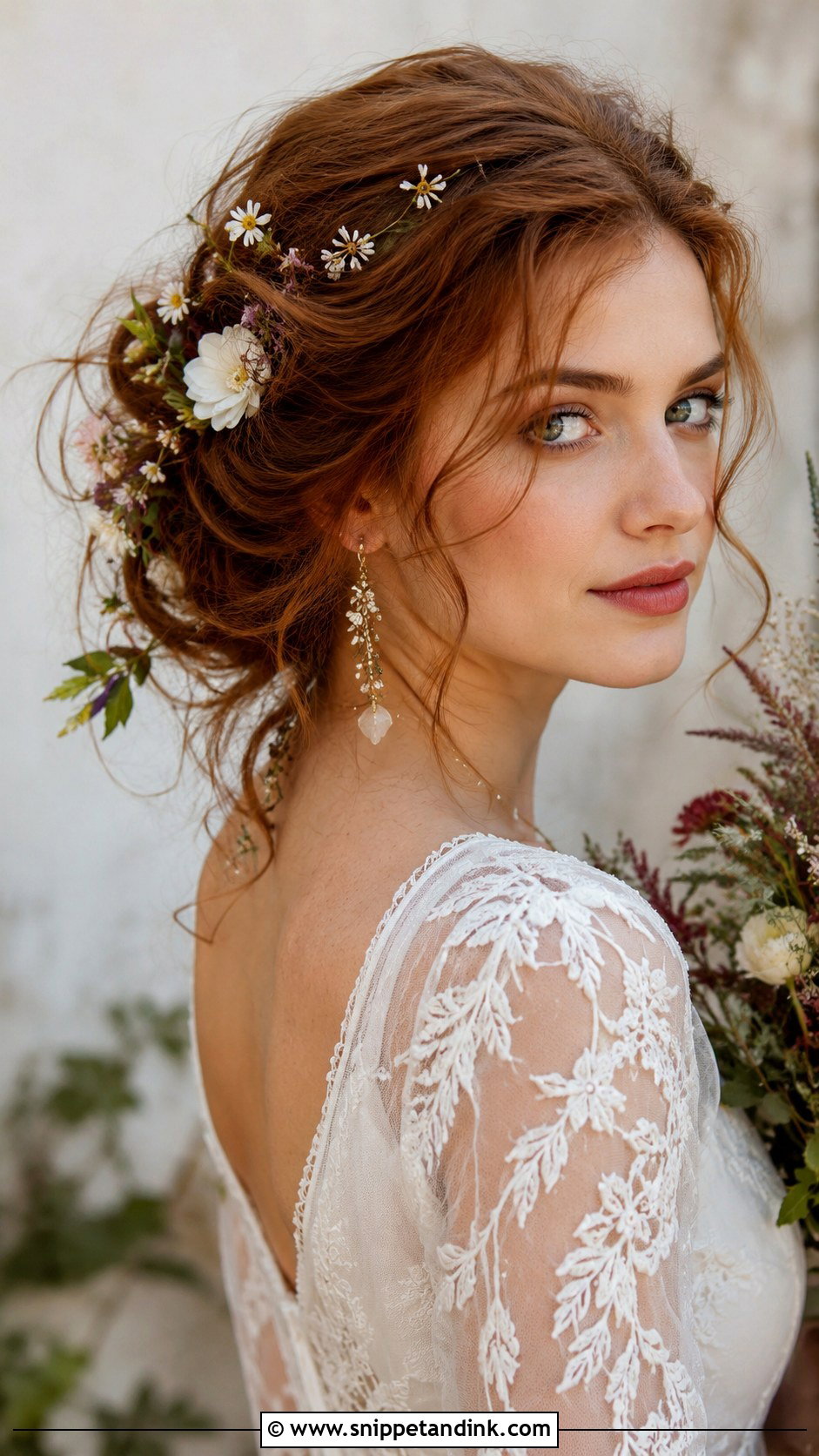
A loose updo with fresh flowers has an Edwardian softness: twisted sections, pieces left undone, blooms tucked throughout. It flatters long, textured hair. The looseness is planned; every twist is still pinned, just not pulled tight. Flowers should be sturdy enough to last out of water for hours, so I’d avoid delicate petals in summer and ask your florist for stems prepared for hair. Garden and bohemian weddings suit it best.
18. Sleek Vintage French Twist
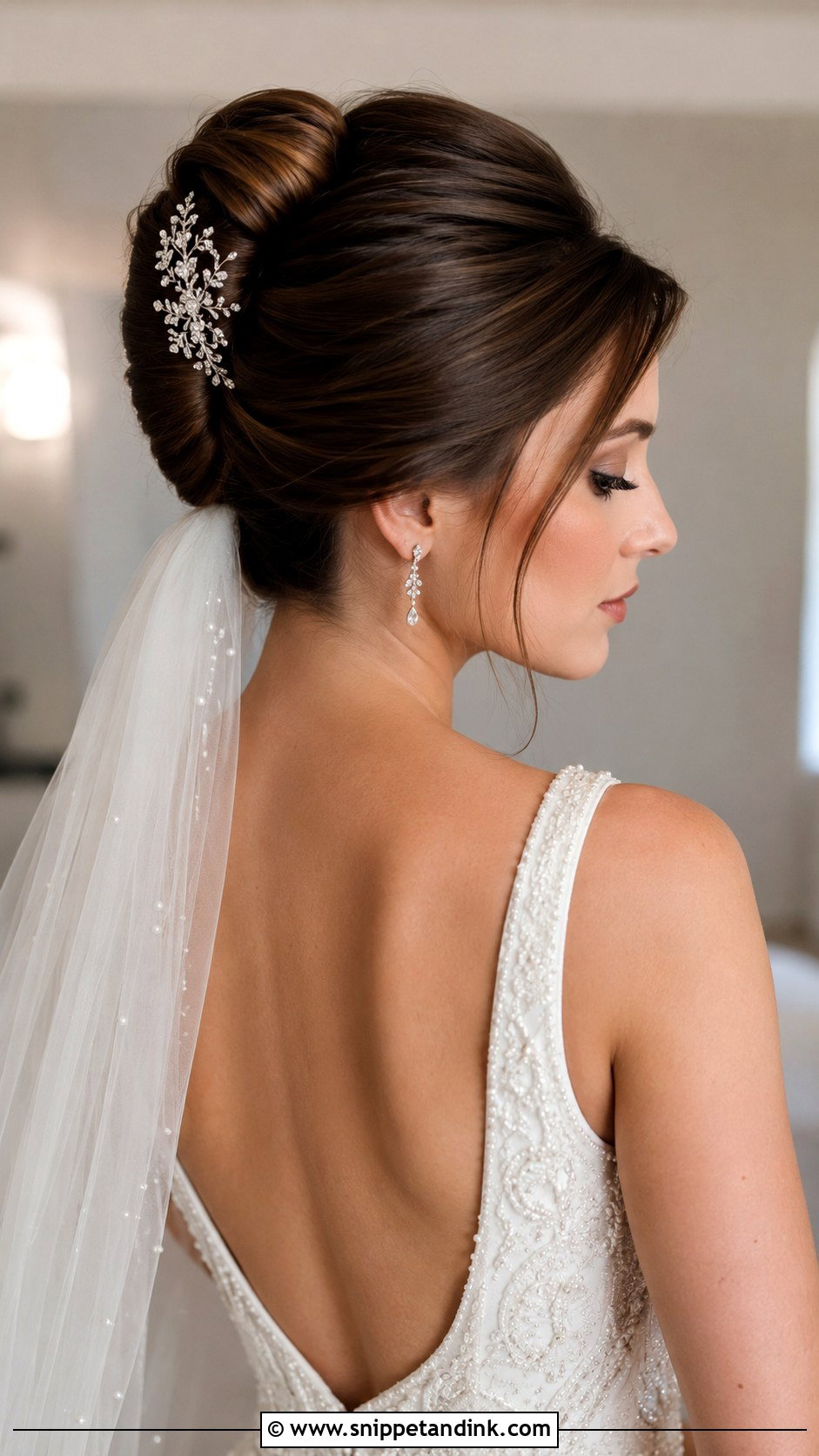
The French twist rolls the hair vertically up the back of the head into a smooth, clean line. It’s been a classic since the 1950s and 1960s. I pin it with long pins along the seam and a few short ones hidden in the fold, so it stays sealed even with a veil comb pressing on it. A sparkling comb or pearl pins dress it for a wedding. A couple of face-framing pieces keep it soft. Very short layers can poke out of the seam, so it needs hair that reaches the crown.
19. Retro Half-Up Bouffant
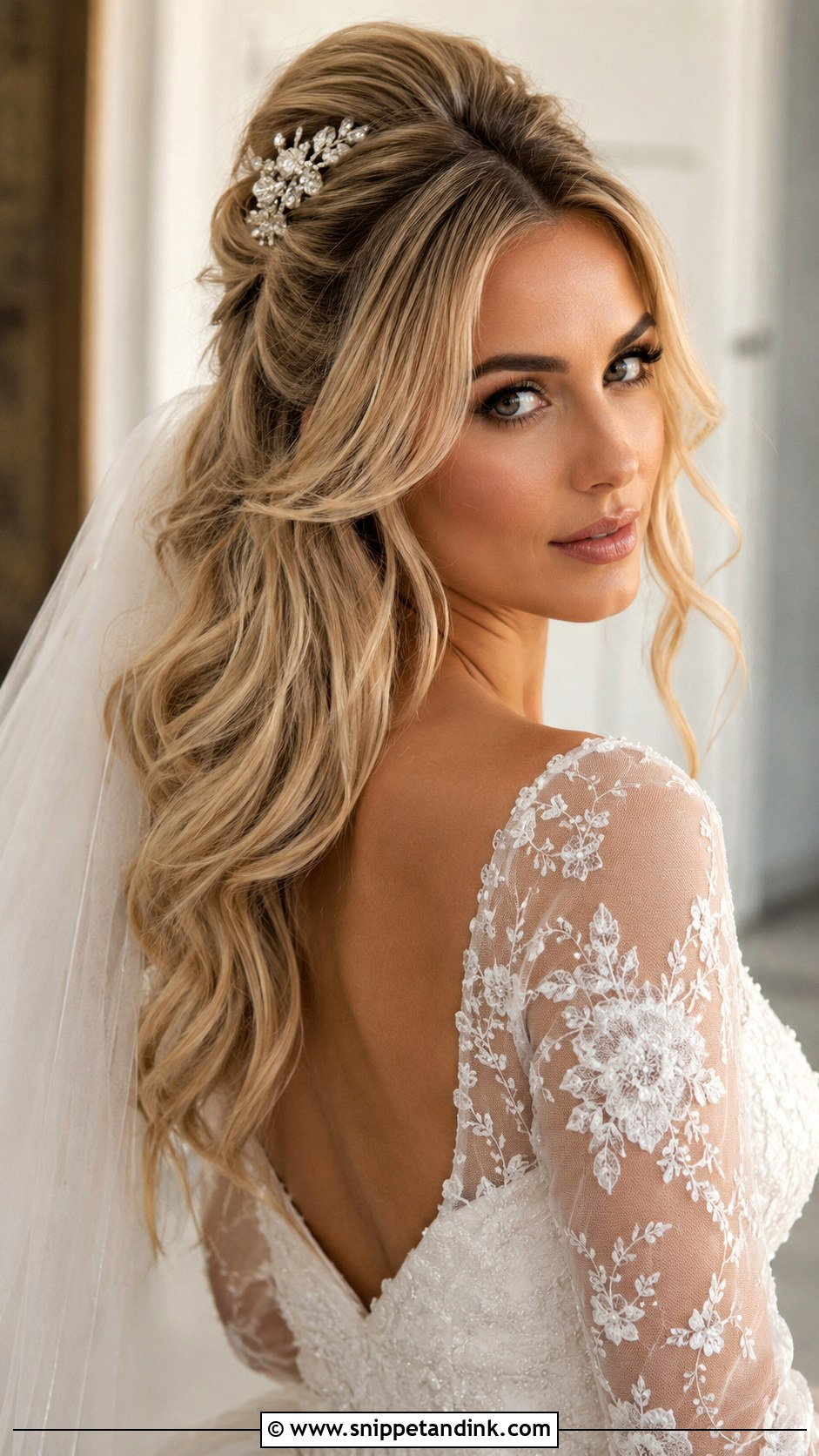
A half-up bouffant combines 1960s height with loose waves or curls below. The crown is teased and lifted, then pinned back, and the lifted section is the right place for a jeweled clip or small tiara. Curly hair is a great base for this, since natural volume makes the bouffant easier to build and hold. It flatters medium to long hair, and face-framing pieces soften it.
20. 1930s Glamour Waves
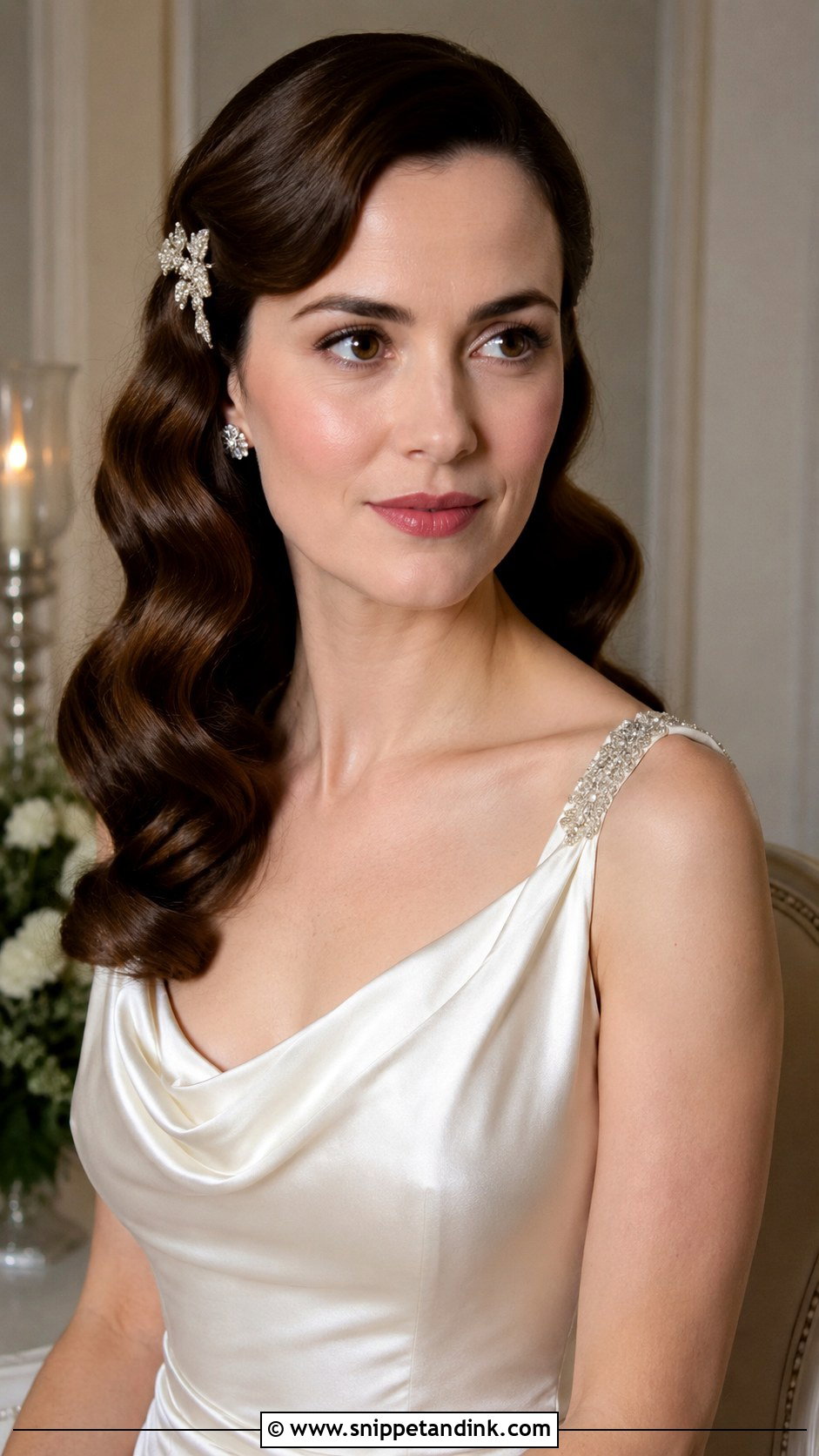
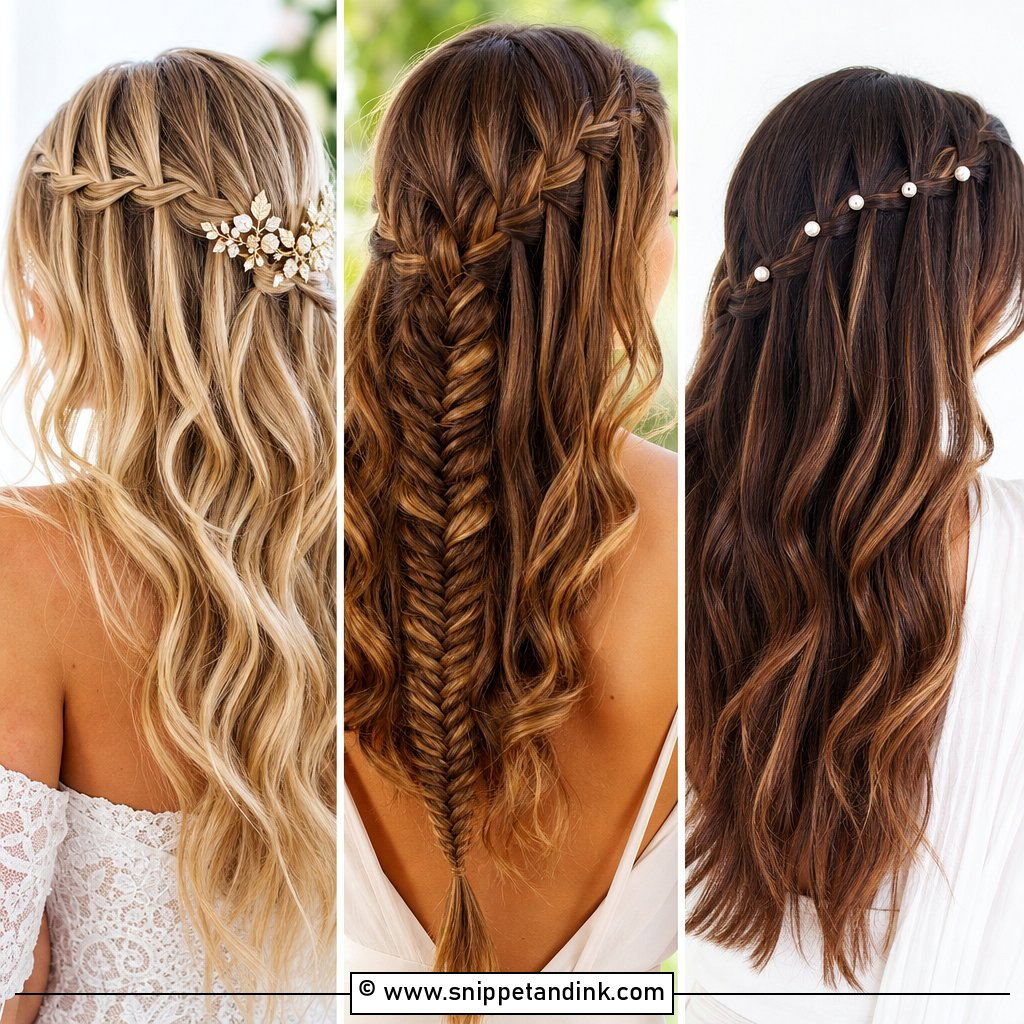
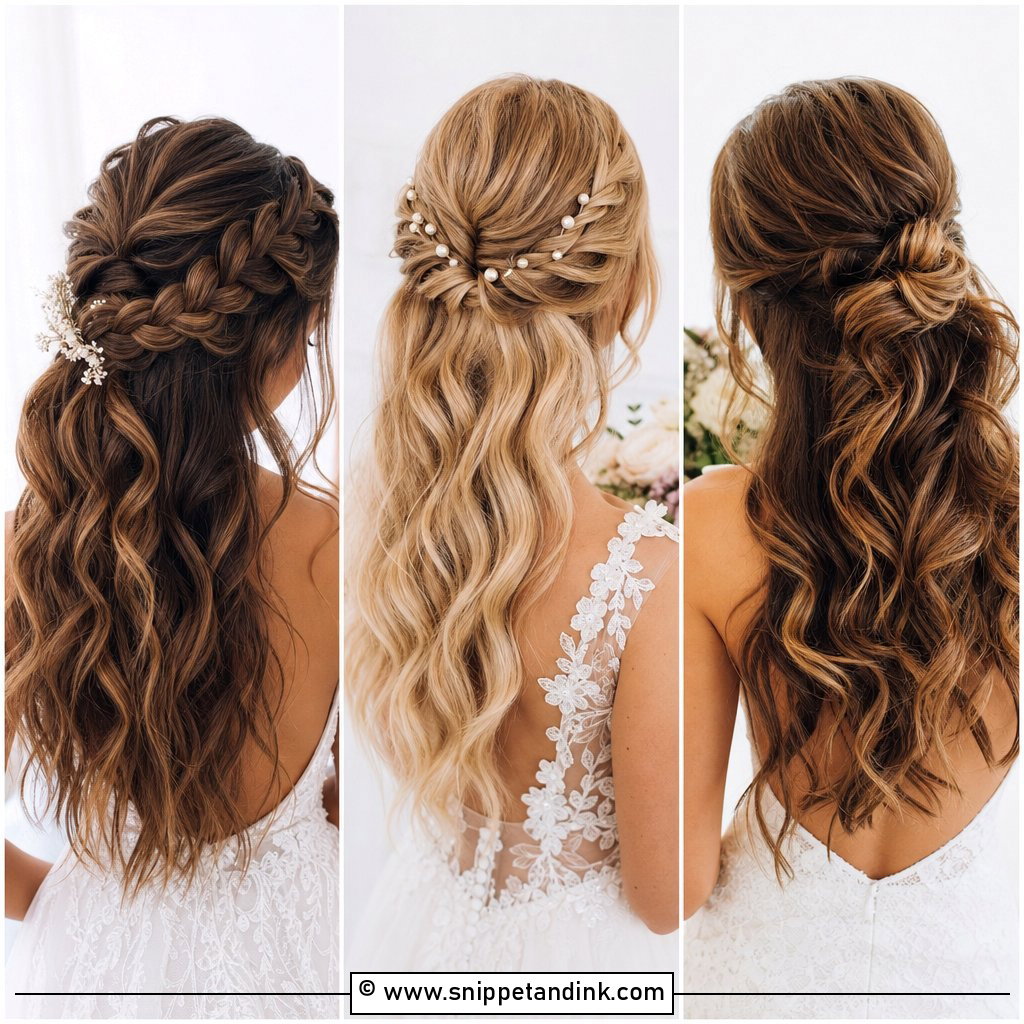
The 1930s wave is softer than the sculpted 1920s look: flowing, smooth waves that drape down the back or to one side. It suits long hair and a deep side part, and plenty of shine. One side is often pinned back with a small jeweled piece. It’s my favorite match for a slinky bias-cut gown, because the hair and the fabric move in the same way. Ask your stylist to brush the waves out more than for a 1940s look.
21. Vintage Updo With Lace Headpiece
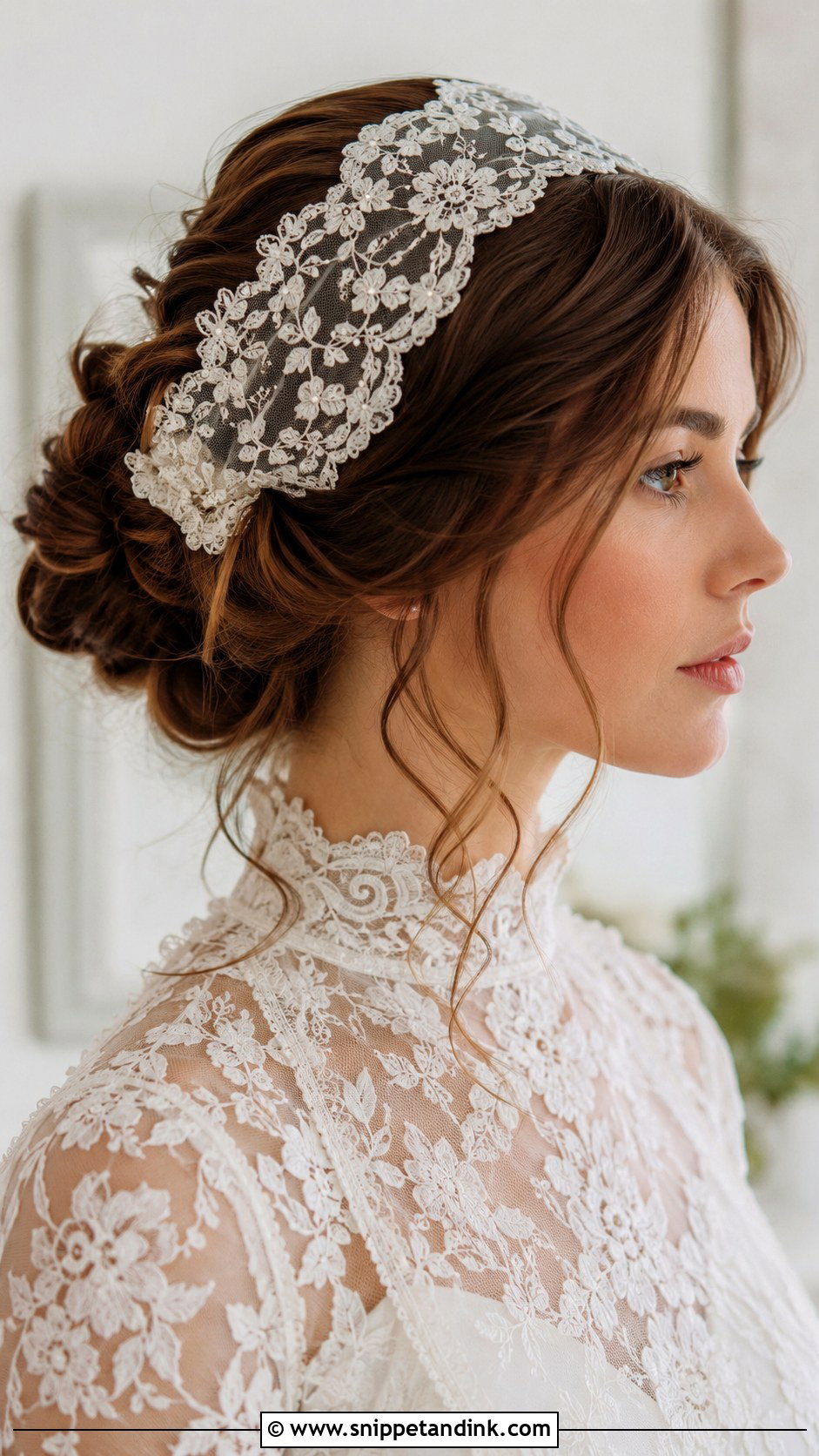
A lace headpiece over a soft bun or twisted chignon draws on Edwardian and Victorian detail. The lace becomes the focal point, so the updo underneath stays smooth and secure. Lace headpieces are usually fixed with combs or small loops, and the hair beneath needs a firm base, not a loose undone texture, or they slip. A few tendrils soften the face. It looks right with high-neck or period-style gowns.
22. Curly Vintage Bob Wedding Hair
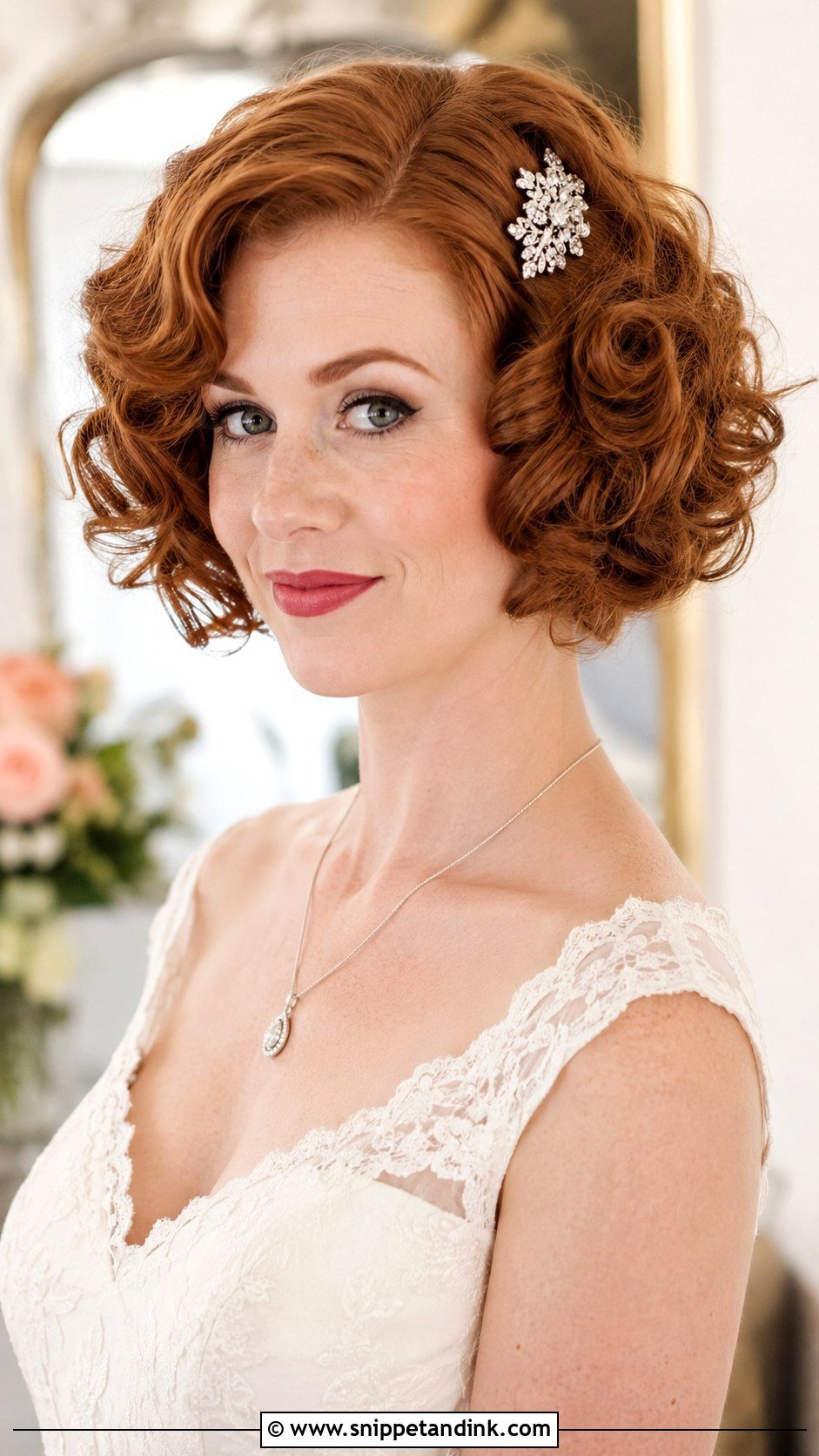
Short hair can carry vintage style as well as long hair. A chin-length bob with soft, bouncy 1950s curls frames the face and keeps the look light. I set short curls with smaller rollers or pin curls, as a curling iron can leave the ends flicking outward. For a wedding, pin one side back with a sparkling clip or a small flower. It’s one of the lower-maintenance styles here once the set is done.
23. Roaring Twenties Faux Bob
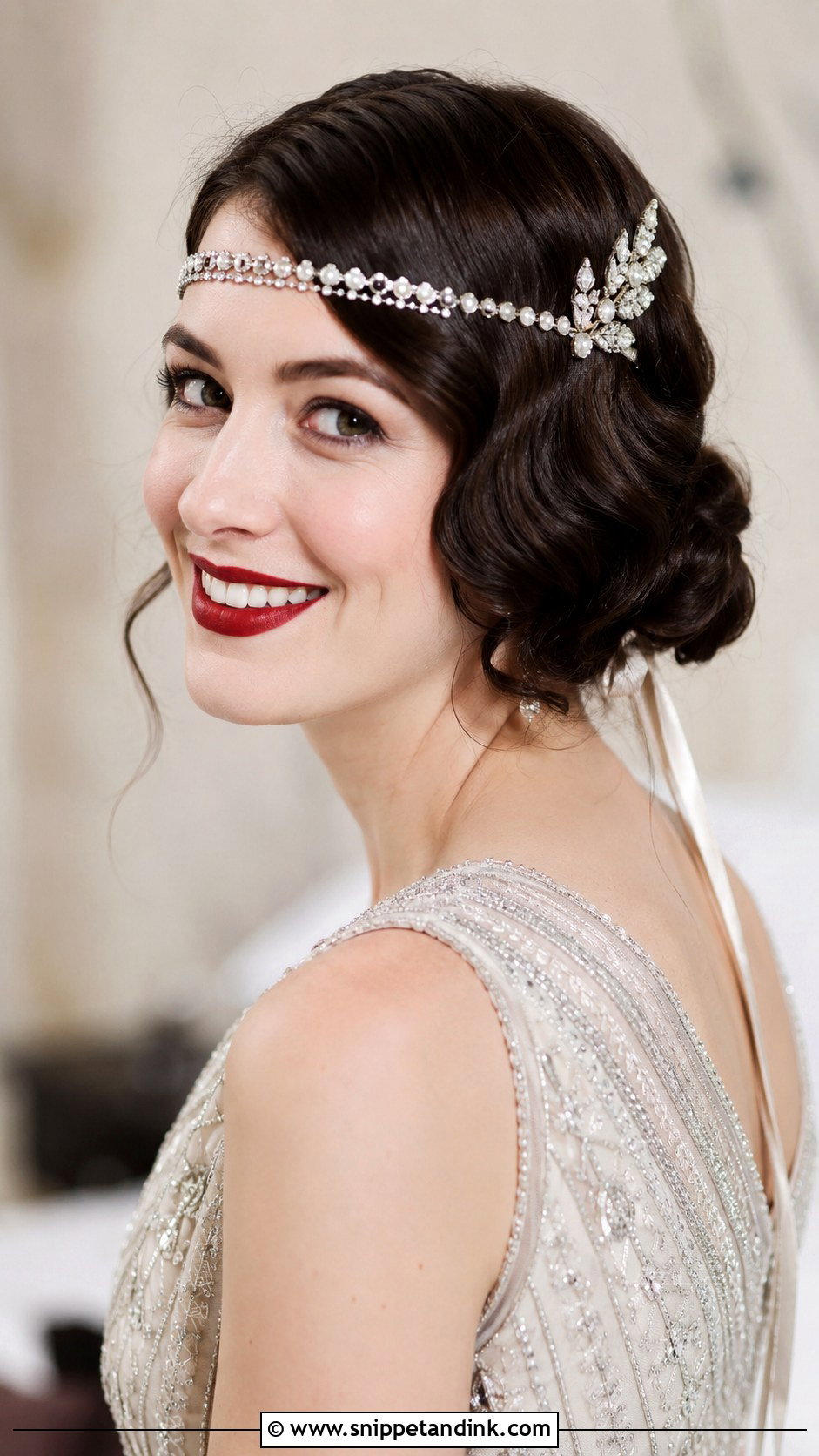
The faux bob gives long-haired brides a flapper silhouette without a cut. The lengths are rolled under and pinned at the nape to mimic a short bob, then paired with finger waves and a beaded headband. It works best on shoulder-to-mid-back hair; very long or very thick hair makes the tucked roll too bulky. Dramatic earrings and a red lip finish the 1920s look.
24. Soft Romantic Vintage Bun
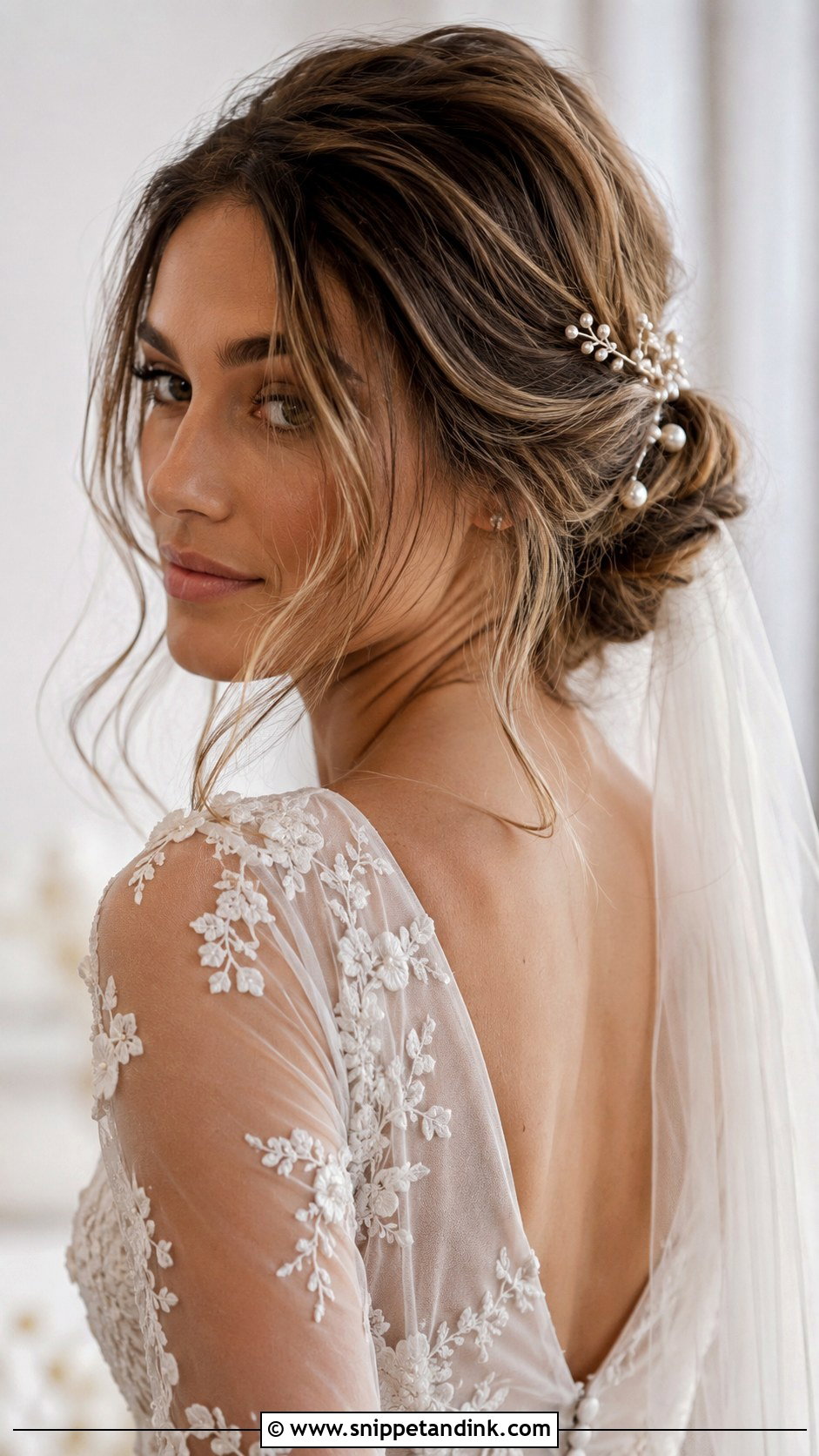
A soft, loosely gathered bun with relaxed texture and face-framing tendrils is the gentlest look here. It sits low or at mid-height, inspired by Edwardian softness. It still needs an anchor underneath; relaxed doesn’t mean loosely pinned. Pearl pins or fresh flowers add detail, and it sits well under a veil. It suits medium to long hair and brides who want romance without stiffness.
25. Vintage Updo With Tiara
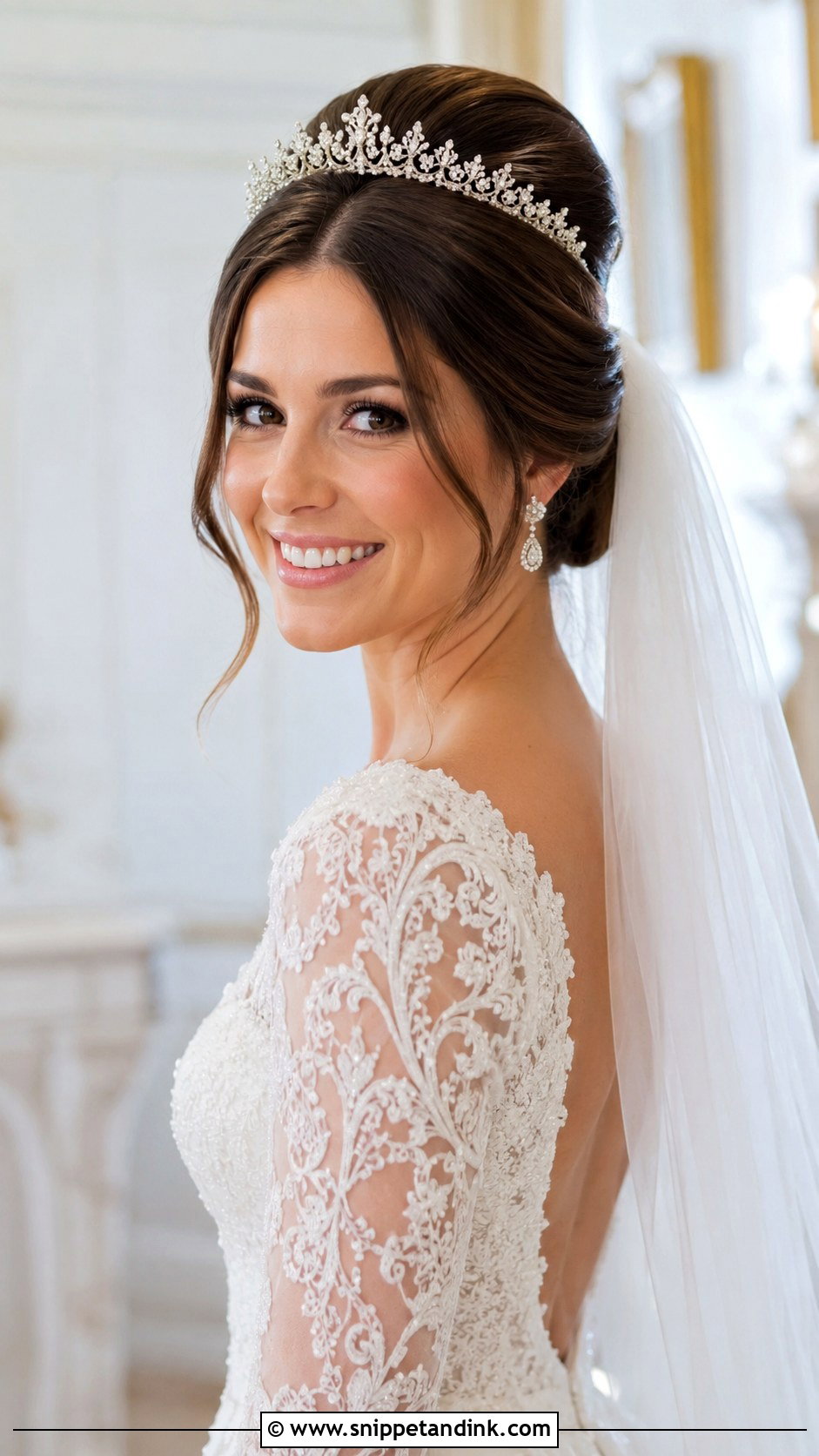
A tiara turns a smooth chignon, French twist or bouffant into the grandest version of vintage hair. It pairs with formal gowns and cathedral veils. Tiaras need grip: I tease a little at the root where the band sits and pin through the side loops, so it doesn’t creep forward when you bend your head. If you’re wearing a veil too, decide which sits in front before the trial, because it changes the whole build.
Securing a Grandmother’s Comb or Antique Pins
Vintage styles often come with vintage pieces: a family comb, old hatpins, a 1950s rhinestone clip. They’re beautiful, and they were made for hair that was set and sprayed much harder than we style today. Antique combs tend to have short teeth and real weight, so they slip out of soft, clean hair.
I give them a base to grip. That means a small braid, a tight twist or a teased patch exactly where the piece will sit, and a couple of bobby pins crossed through the comb’s teeth underneath. Check old pieces before the day for loose stones or sharp ends, and bring them to your trial so the style can be built around them rather than the piece being added at the last minute.
How Much Morning Each Style Needs
Vintage hair is slower than a modern blow-dry because so much of it relies on setting and cooling. Roughly, from quickest to longest:
- Low chignons, Gibson tucks and soft buns are relatively quick.
- Hollywood and 1930s waves need a set and a cool-down, which can run alongside makeup.
- Victory rolls, pompadours and beehives take careful teasing and pinning.
- Wet-set finger waves are the slowest, because they must dry completely before the clips come out.
Times vary with hair length and thickness, so ask your stylist for their own estimate at the trial and build your morning schedule around it.
Wear the Era, Keep Your Own Face
Vintage hair stretches from sculpted finger waves to a tiara-topped chignon, and each era has its own technique behind it. The aim is balance: enough of the period to feel nostalgic, with enough of you in it that it still looks like your hair. Short, medium or long, there’s a vintage style here that will work for you. Book a trial, bring your accessories, and let the dress guide the decade.
You'll Like These Ideas:



Leave a Reply