
Pulling everything back off the face is a confident choice, and it shows the hairline, the ears and the neckline in full. That’s the appeal and the risk. When I plan slicked back hair for a bride I’m thinking about her hairline as much as the bun or ponytail, because nothing else will cover it. The shapes vary more than people expect: a low chignon, a high bun, a waved ponytail, a wet look, a braided bun or half up. Here are fifteen I’d put on a bride, with what I check for each.
Hairlines, Regrowth and Cowlicks: What Slicking Back Reveals
Before I commit to a brushed-back style, I look closely at the front of the head. Slicked hair shows every detail at the hairline, and a few of them change the plan.
I also check the nape. Short, fine hairs at the back of the neck curl up within an hour of being slicked, especially with a low bun. If you have a lot of them, a dab of gel and a brush in the direction of growth before the bun goes in keeps that edge clean in photos taken from behind.
- Color regrowth: roots that are barely noticeable in loose hair show as a stripe when everything is pulled back. Book a root touch-up about one to two weeks before.
- Cowlicks and a widow’s peak: a strong cowlick at the front won’t lie flat against its growth direction all day. A side part that follows it usually works better than forcing a center part.
- Fine or thinning temples: tight styles make thin edges look sparser. A softer pull, a side part or a couple of face-framing pieces help.
- Short broken hairs: a wax stick and an edge brush flatten them. Spray alone won’t.
Talk to your makeup artist too. With slicked back hair, foundation has to blend right into the hairline and around the ears, since there’s no hair to hide a line.
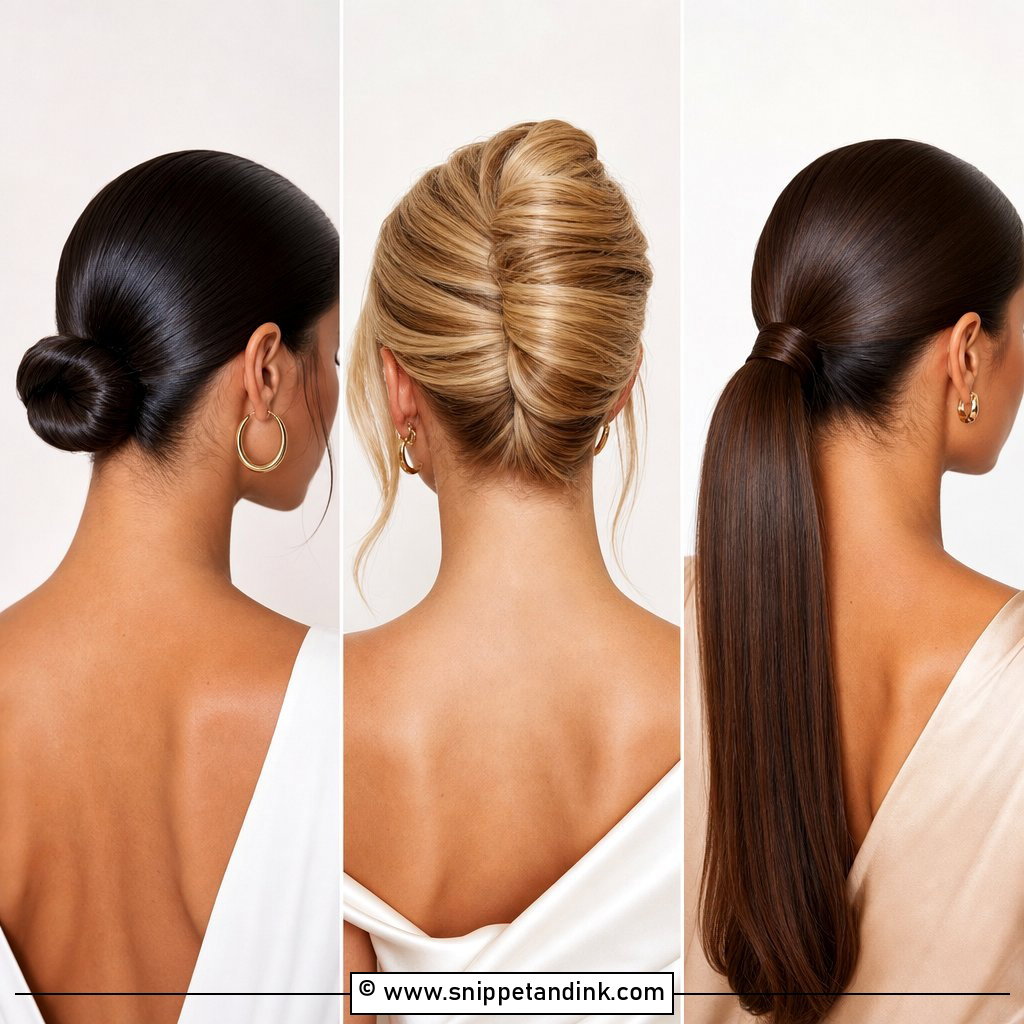
1. Slicked Back Low Bun
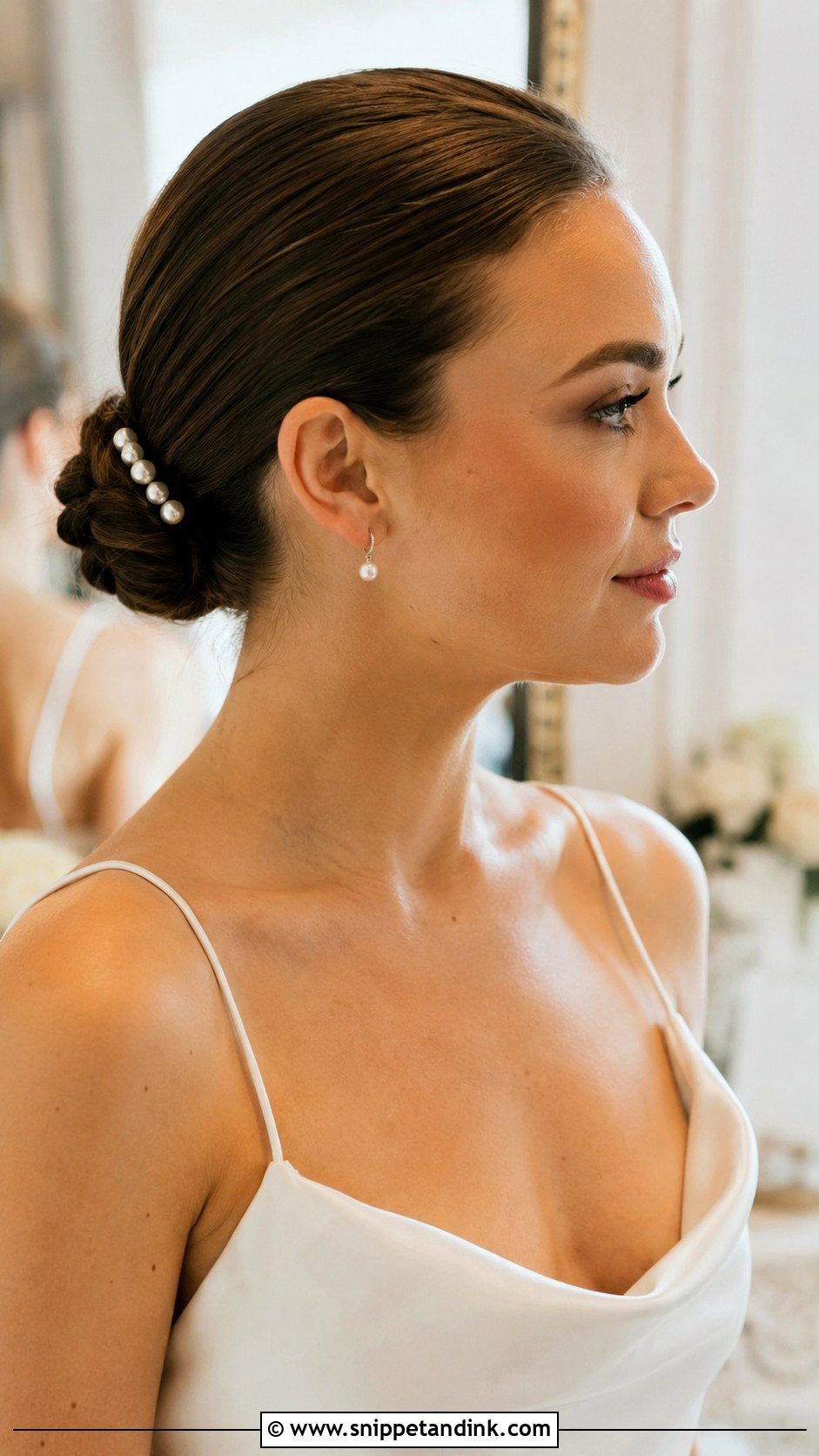
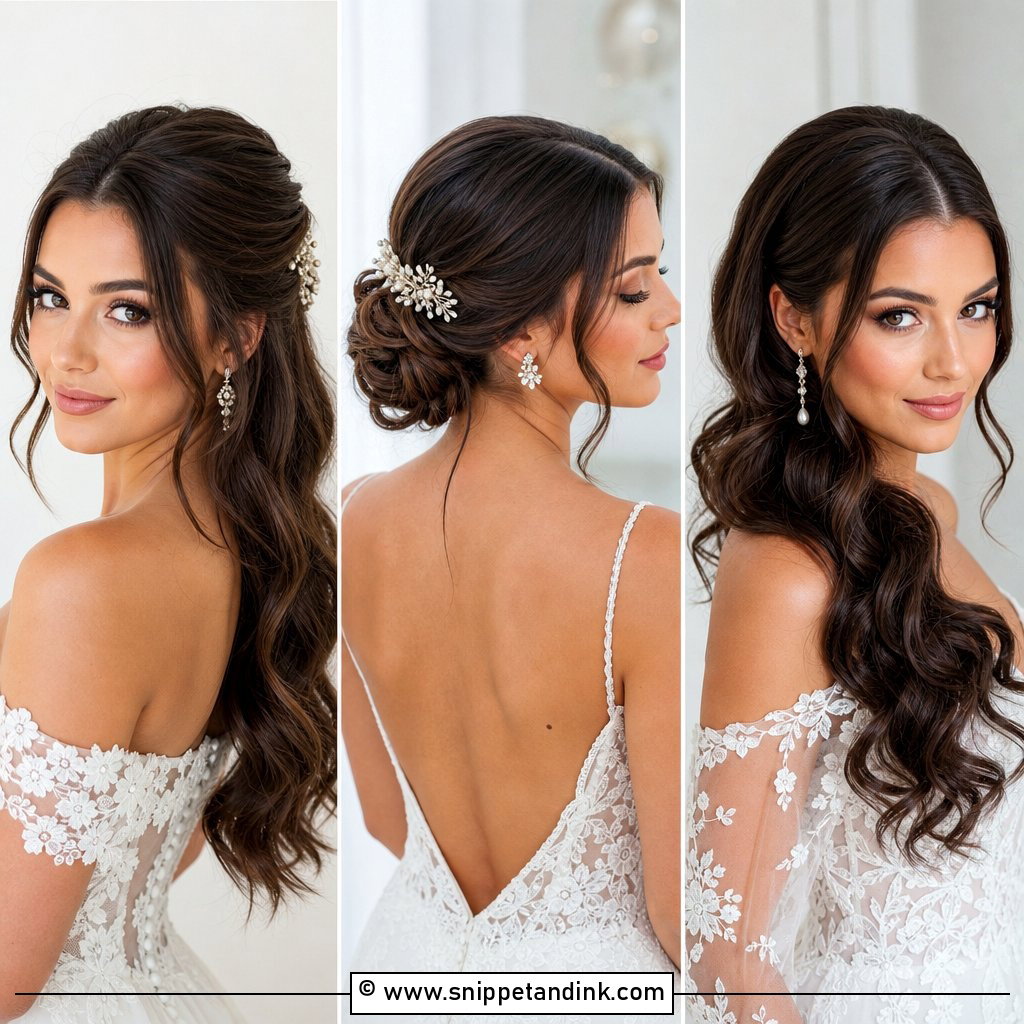
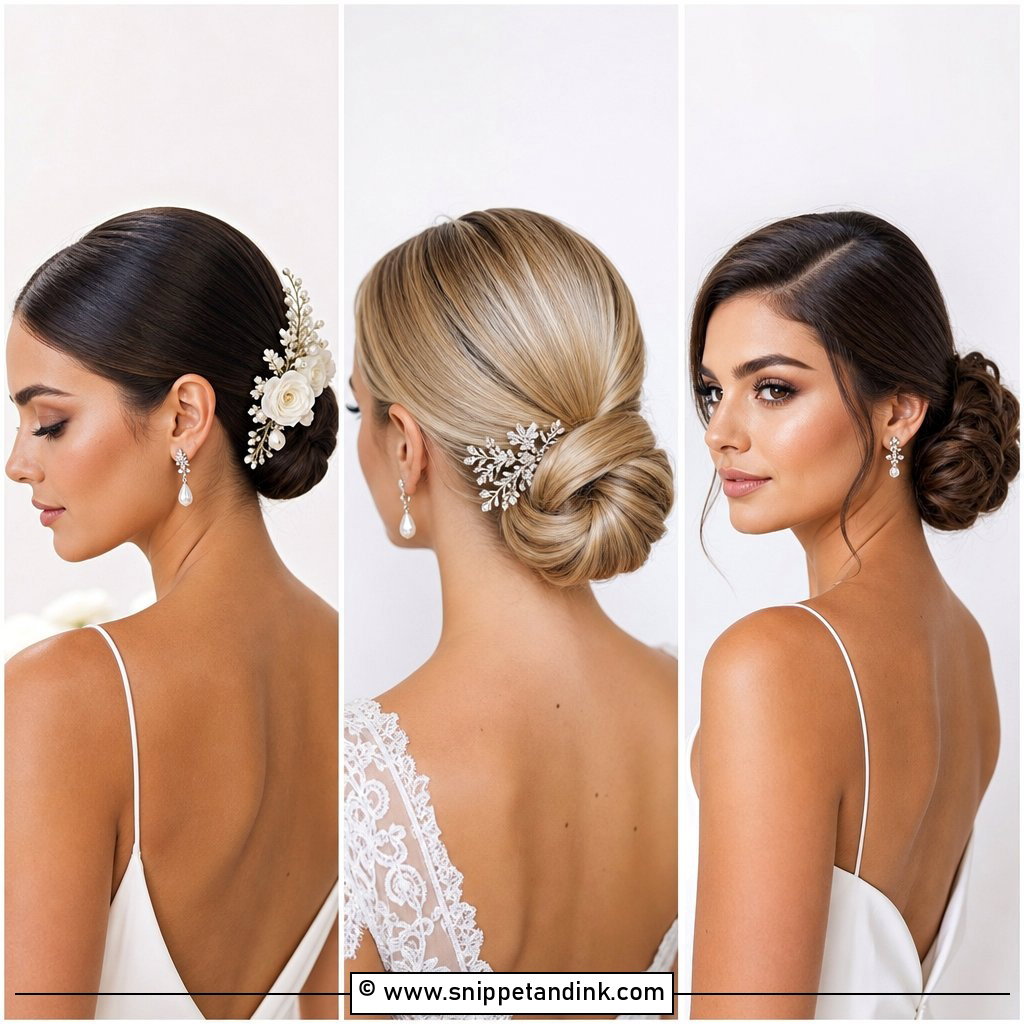
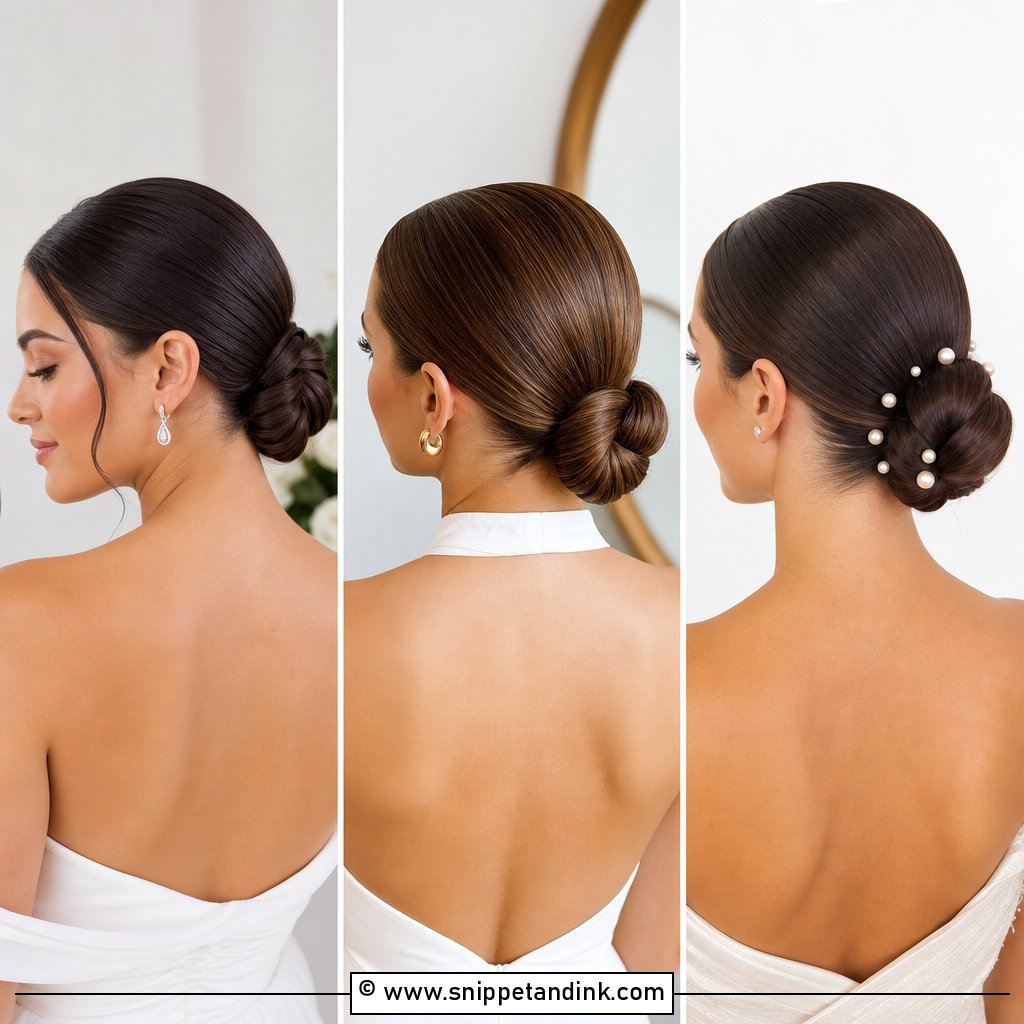
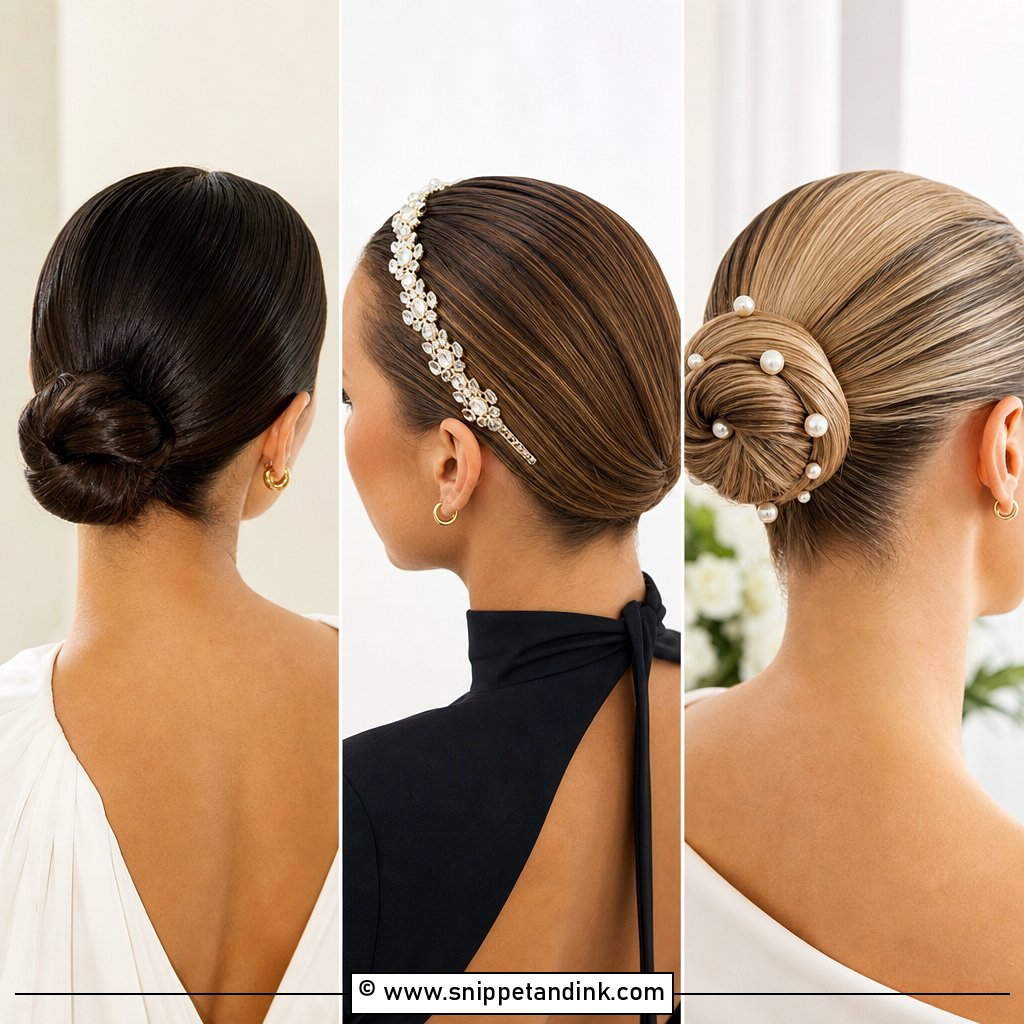
Brushed back and pinned at the nape, the low bun keeps every neckline clear, from strapless to halter to open back. I’d ask for a soft shine rather than crunchy hold; hair that cracks when you touch it looks stiff in close-ups. A center part makes it modern. No part at all, with the front brushed straight back, looks more sculpted, though it shows any cowlick at the front, so I check that at the trial before committing.
2. Slicked Back Chignon
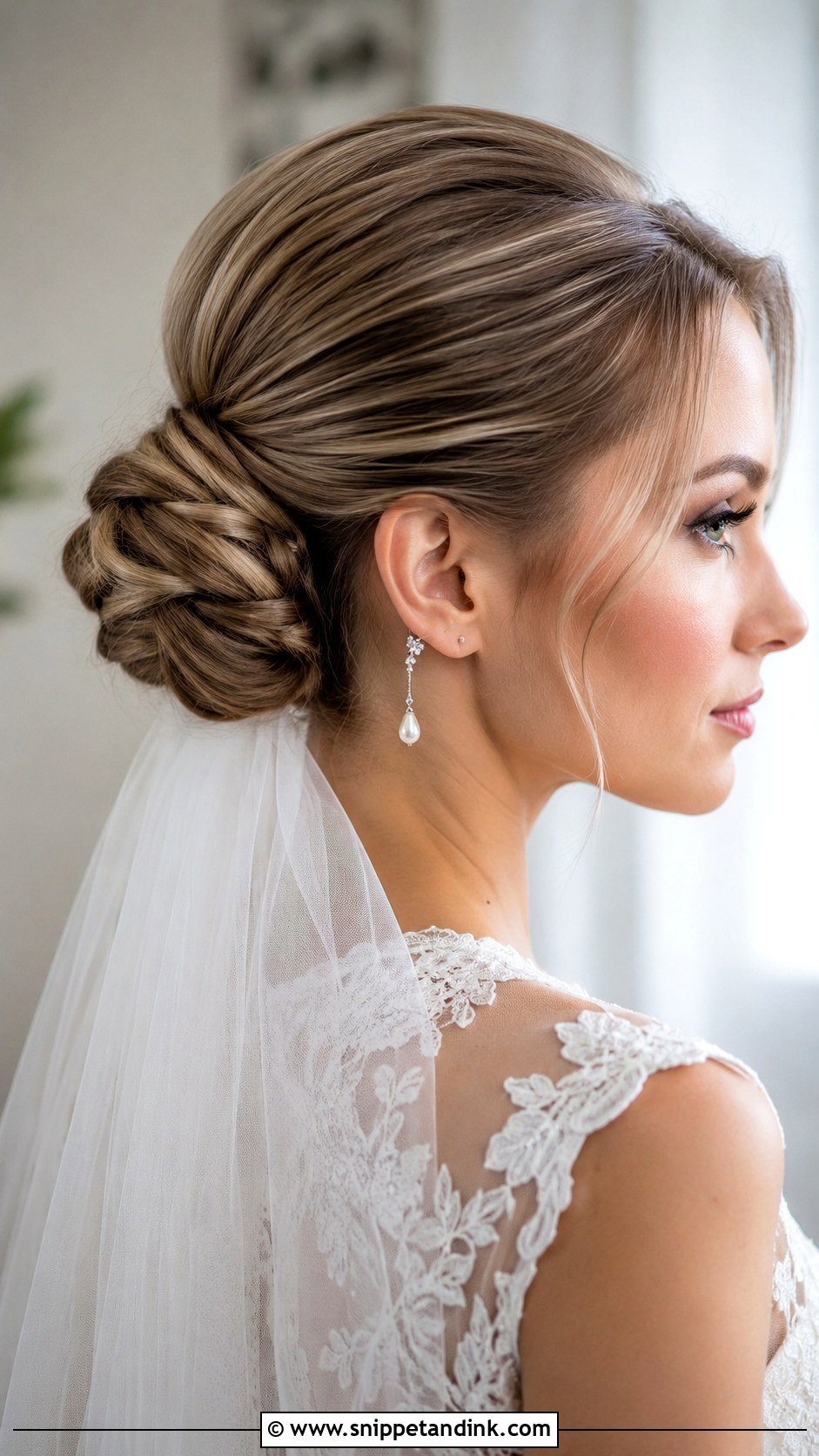
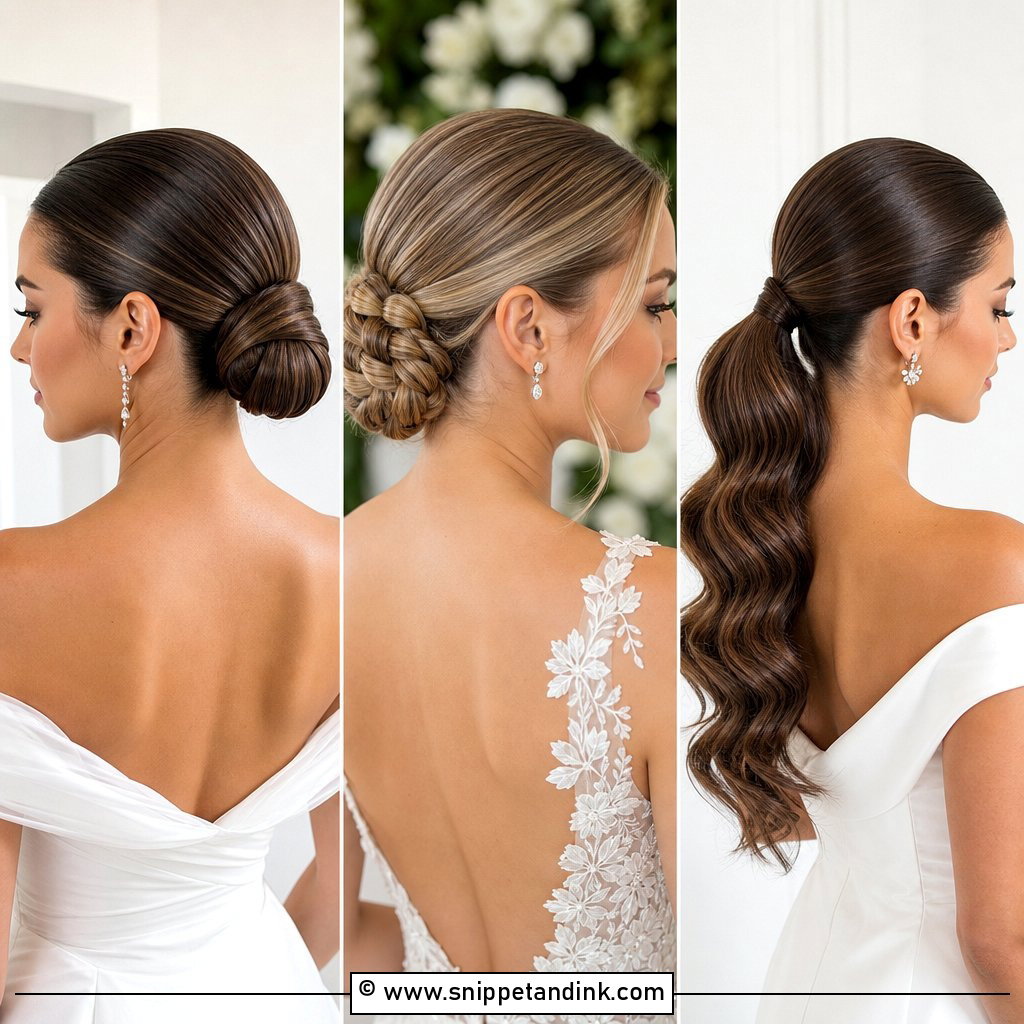
The chignon is rounder and lower than a tight bun, with a little movement in the shape so it doesn’t look flat from behind. Lace, satin and a cathedral veil all sit well with it. I keep the crown strictly smooth and let the chignon itself be the soft part. Rolling the hair over two fingers before pinning gives that shape more reliably than twisting. It suits most lengths from the collarbone down.
3. Slicked Back High Bun
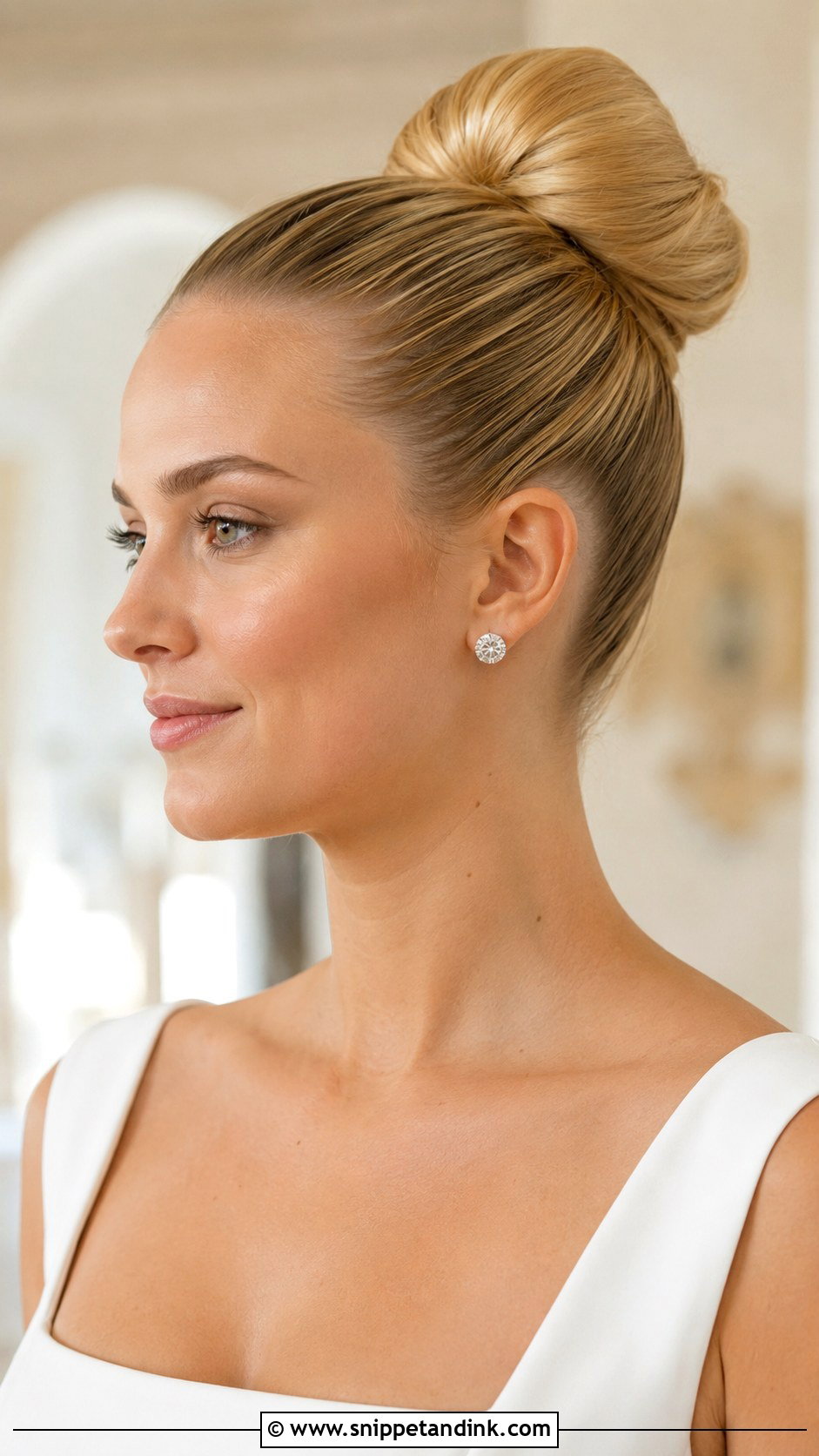
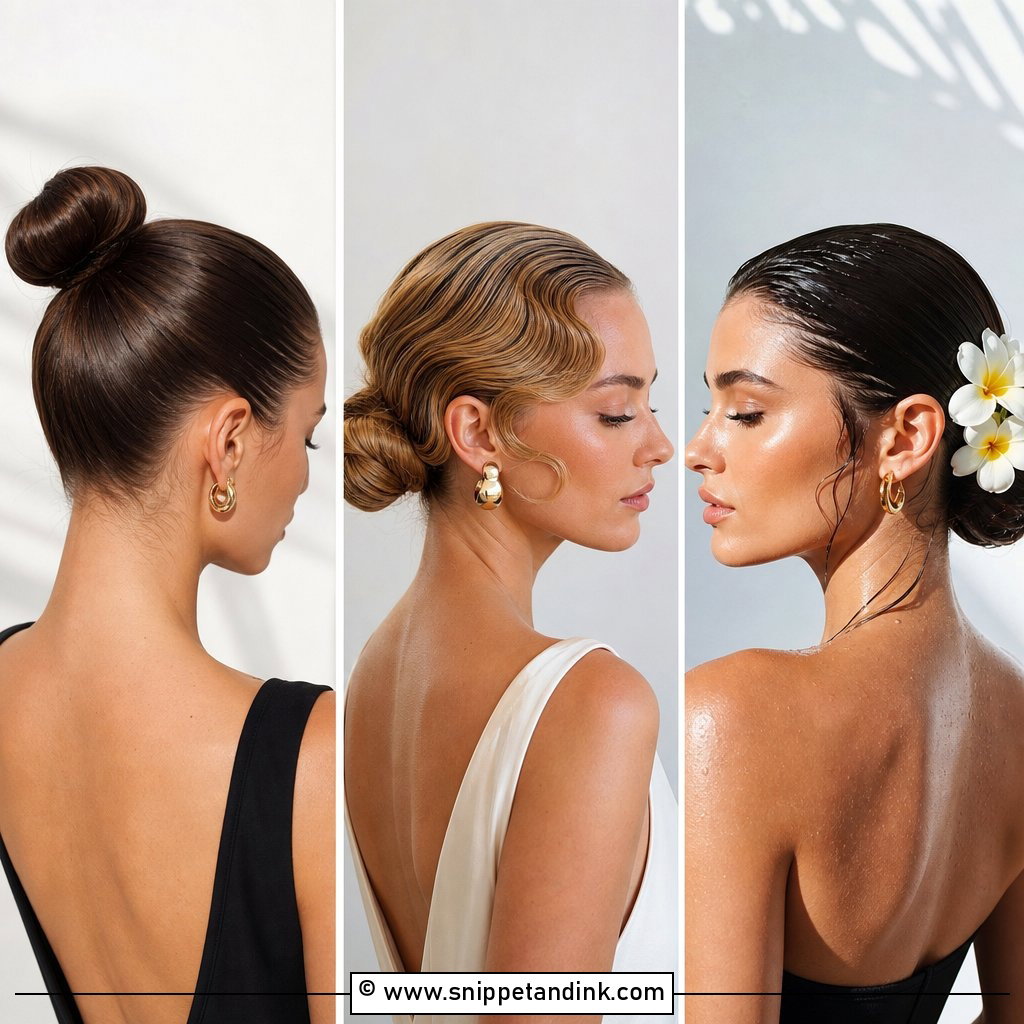
Lifting all the hair to the crown pulls the eye up to the cheekbones and earrings. In summer heat it’s the most comfortable of the lot, because nothing touches the neck. The trade-off is tension. A high, tight bun pulls on the hairline at the temples, and if your hair is fine there, it can thin the look of the edges in photos. I keep the pull firm but not taut, and place the veil underneath. Smooth, slightly rounded or ballerina-wrapped all work.
4. Slicked Back Middle Part Bun
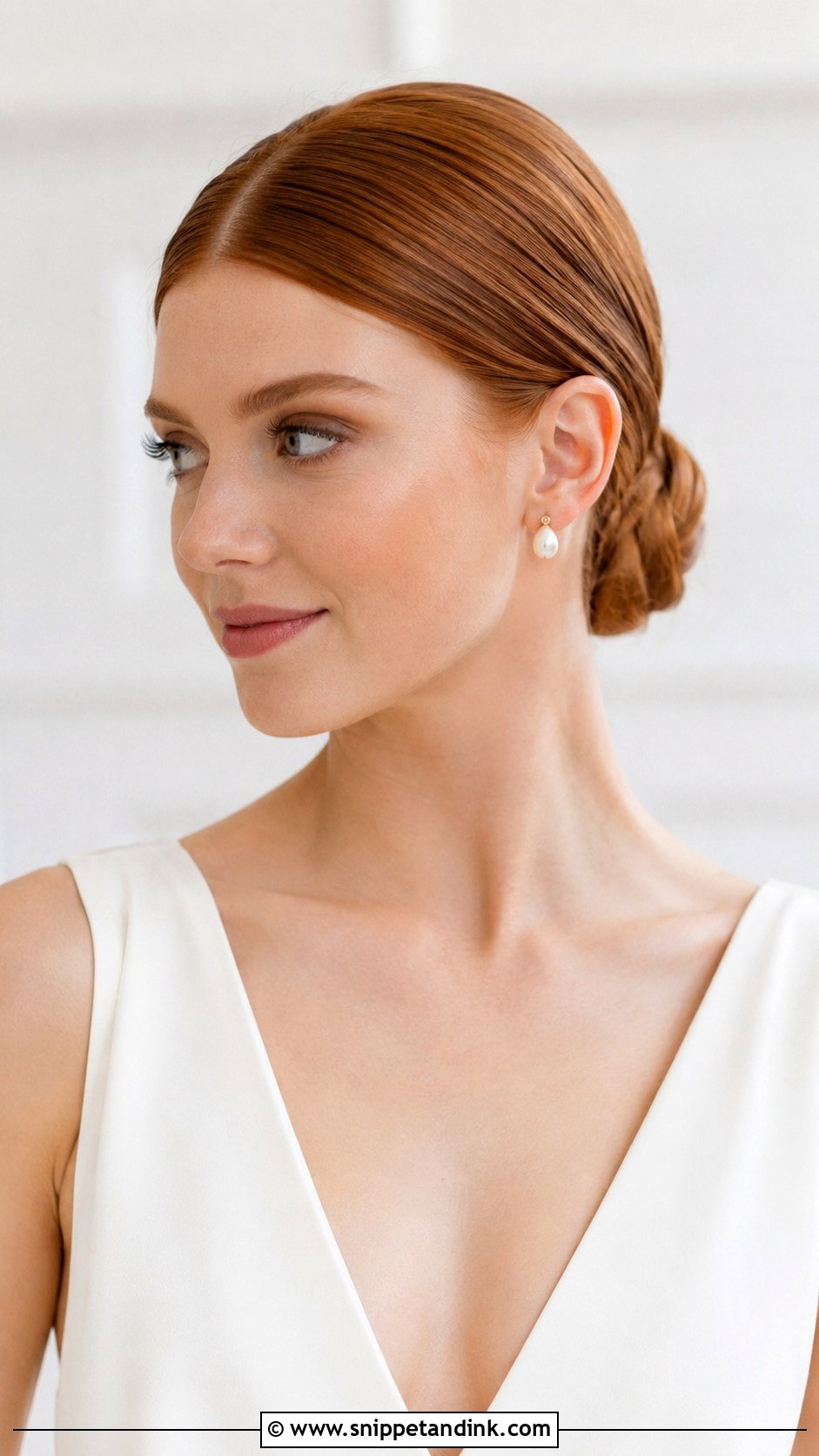
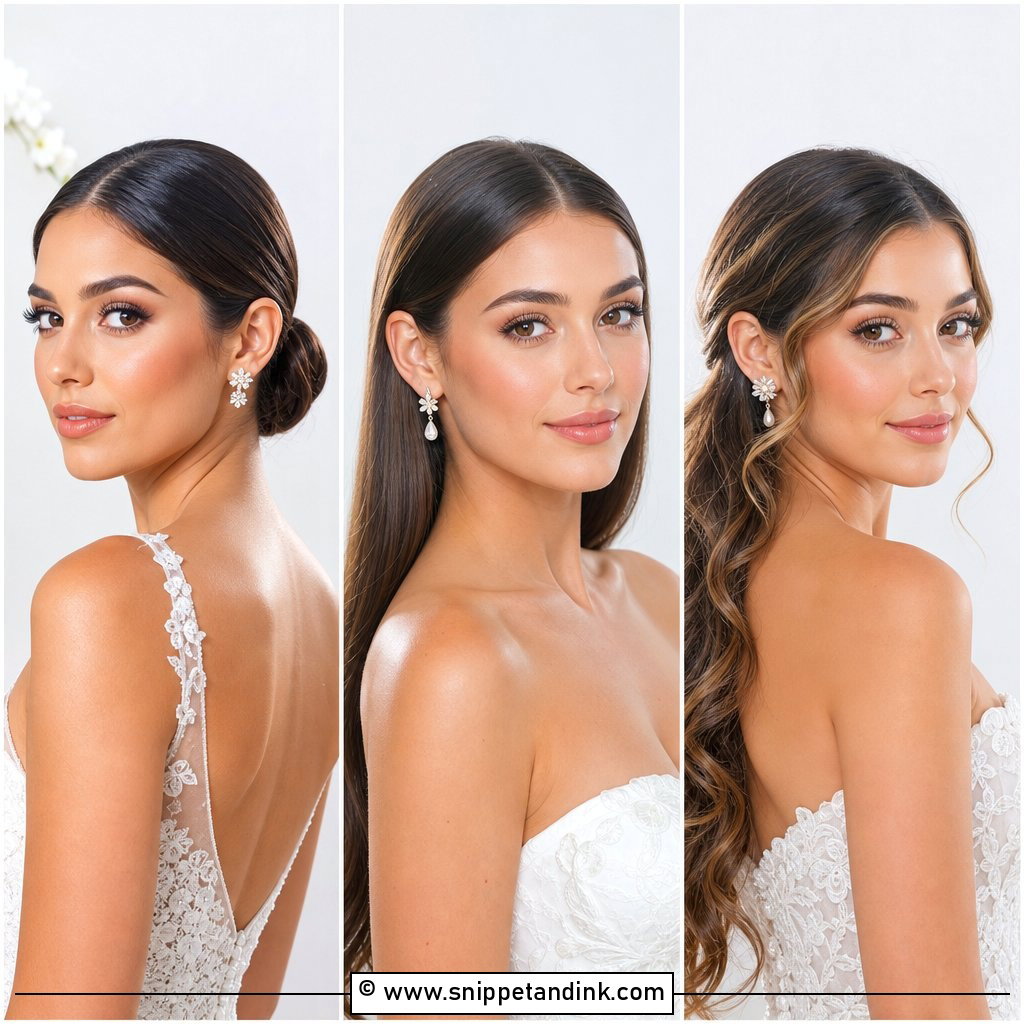
A slicked back middle part bun depends on symmetry. I measure the part from the bridge of the nose to the crown, brush each side down with equal pressure and check the result straight on in the mirror. It looks clean with simple gowns, long veils and sculptural earrings. Smoothing cream goes in first; a flexible shine spray finishes. The bun can sit low, mid-height or tucked, and I’d decide that with your dress on rather than from a photo.
5. Slicked Back Side Part Bun
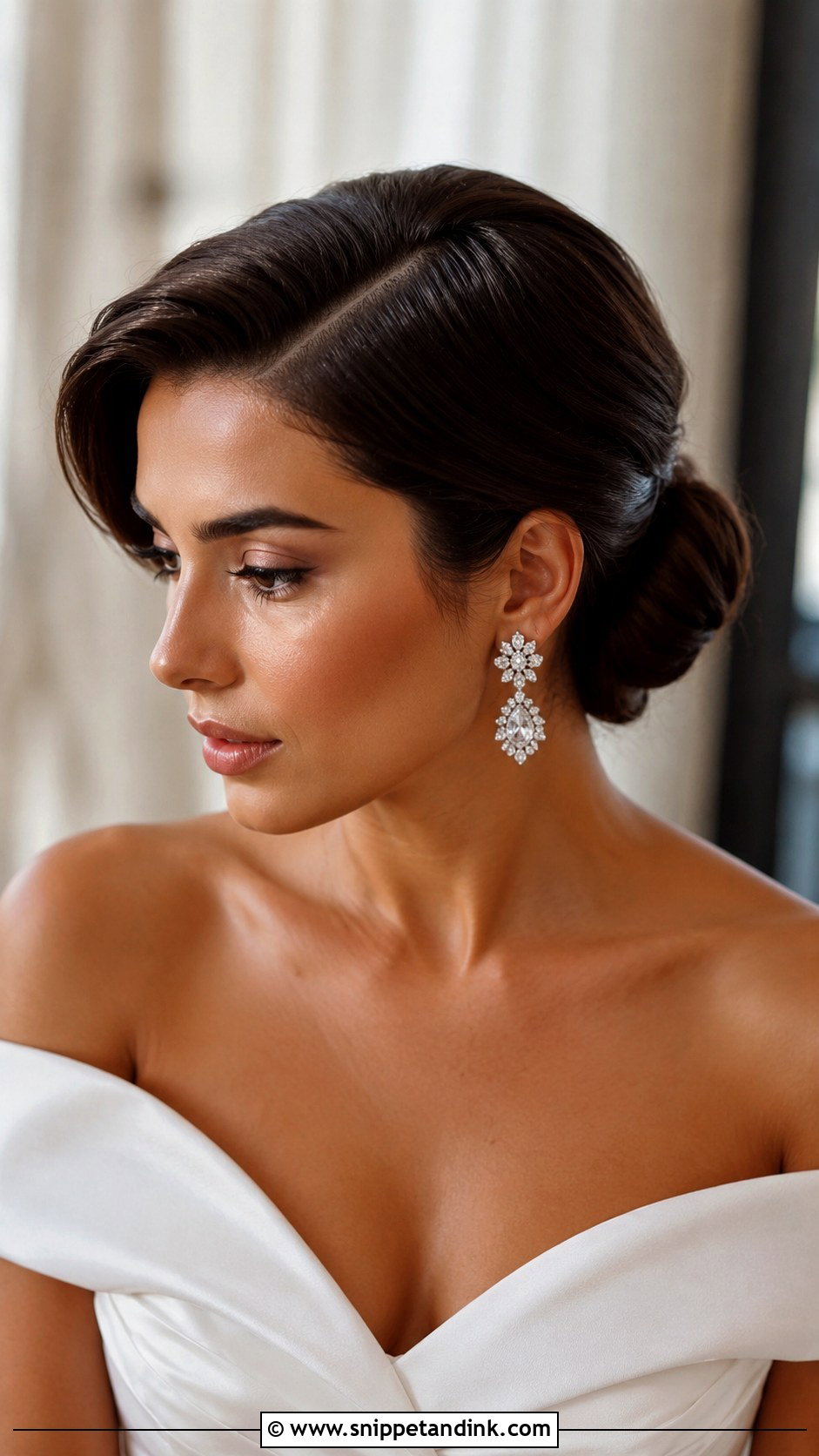
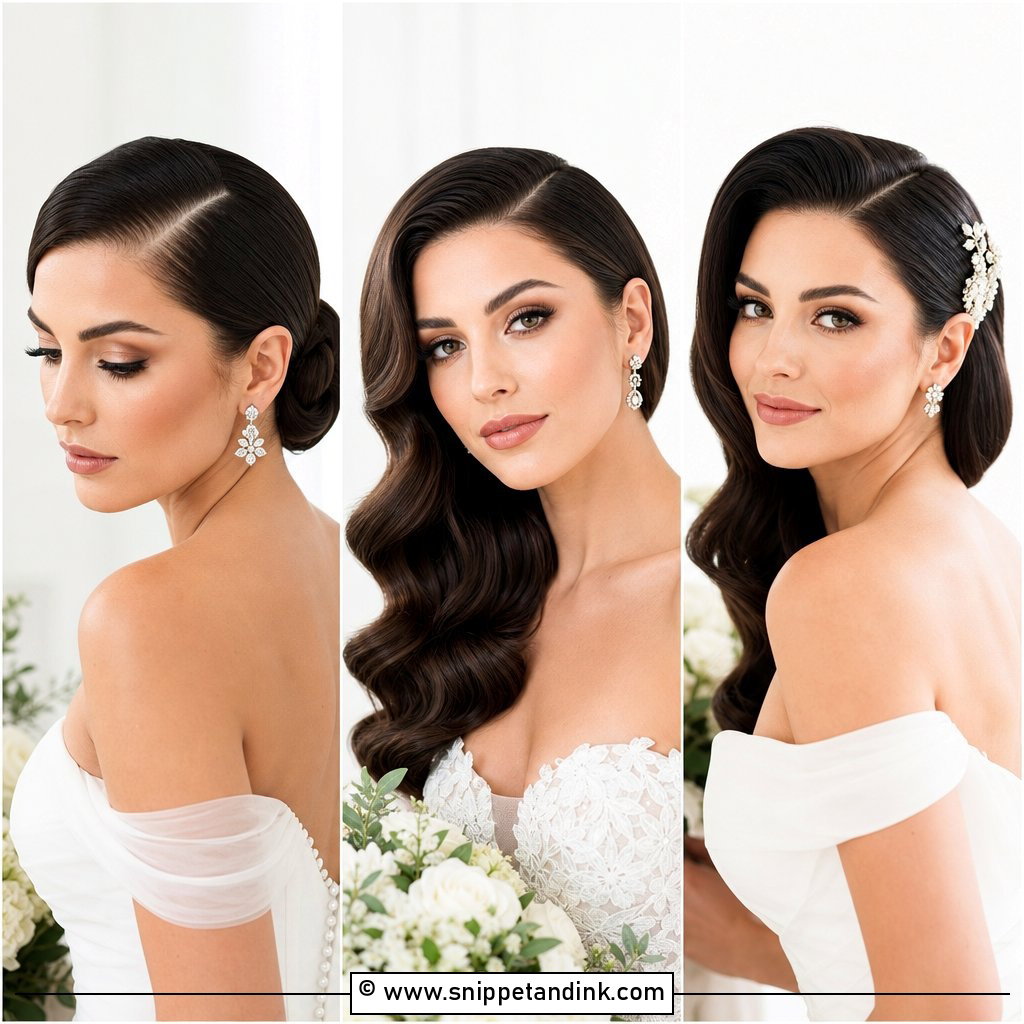
A deep side part brings in some drama and softens the forehead with that sweep across the hairline. It’s my usual suggestion for brides who find a strict center part too severe. One-shoulder and off-the-shoulder gowns pair well, especially with a statement earring on the open side. The bun can be tight or rounded into a chignon. Put the veil low at the back so it doesn’t fight the asymmetry. On fine hair I keep the part shallower so the scalp doesn’t show along the line.
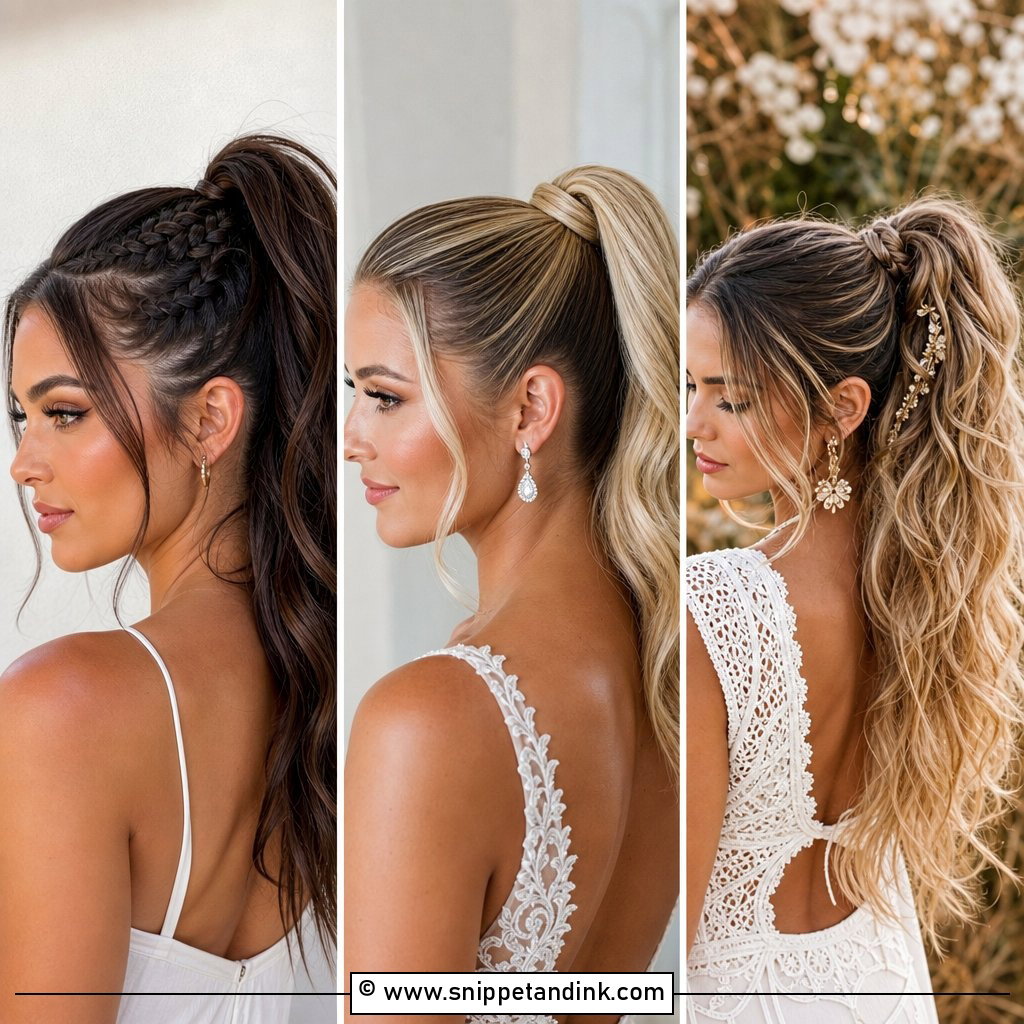
6. Slicked Back Bridal Ponytail
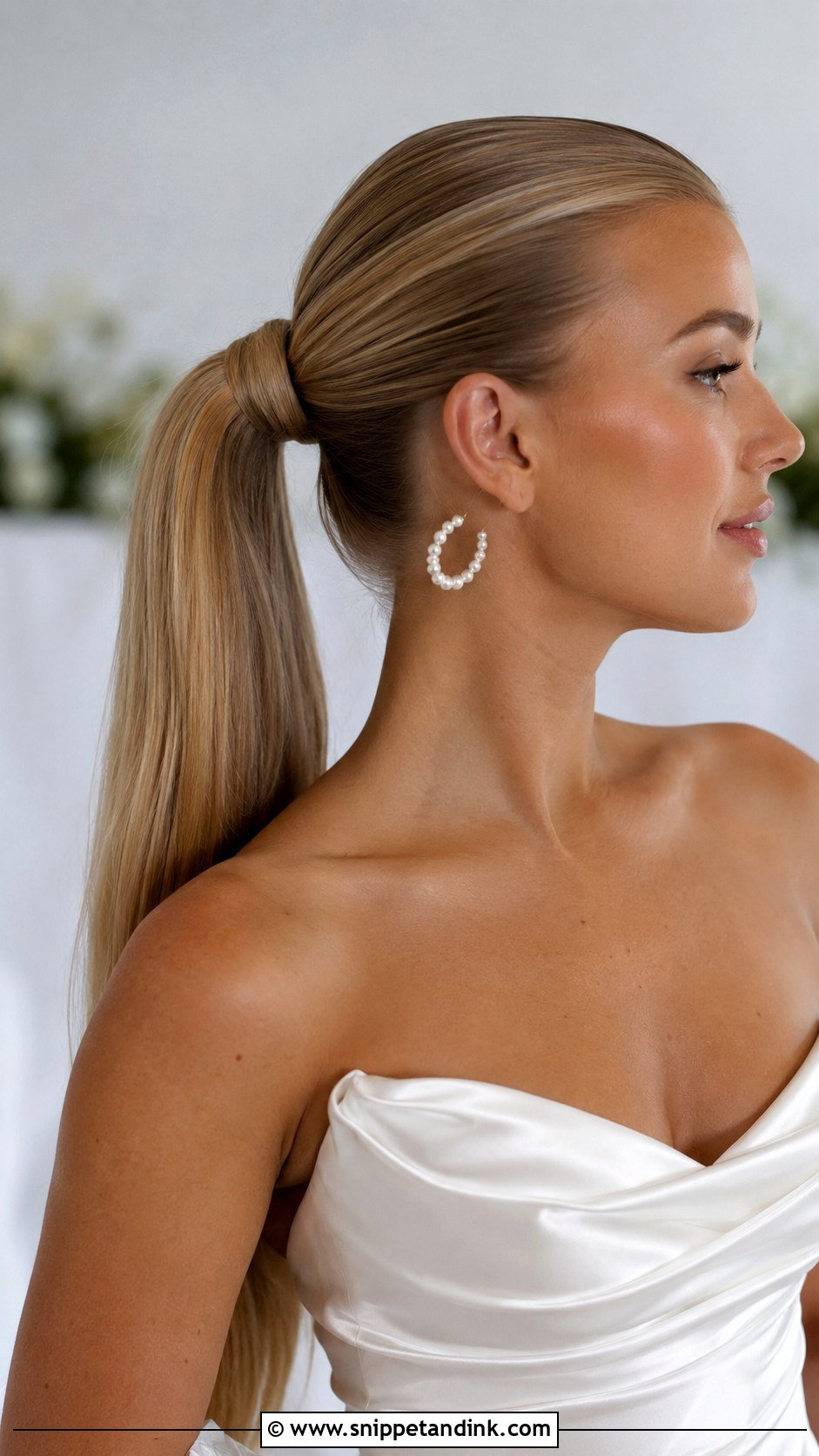
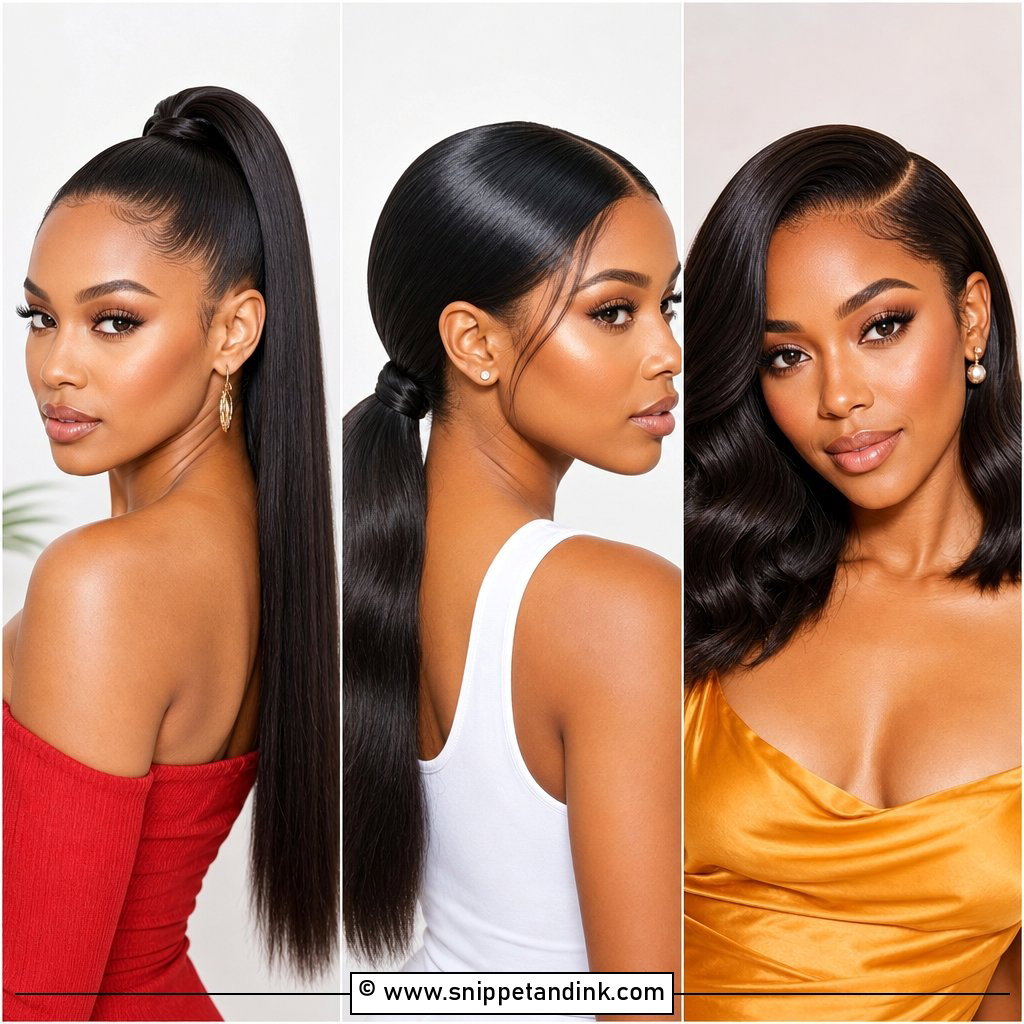
A ponytail gives movement that a bun can’t. The top stays glossy, and the length swings when you turn or walk. Modern gowns, open backs and high necks all suit it. I wrap a section of hair around the base and pin it underneath, which hides the elastic and looks finished. Straight, waved or curled ends change the feel completely. The veil can sit just above the ponytail, or you can skip it for a cleaner look.
7. Slicked Back Low Ponytail
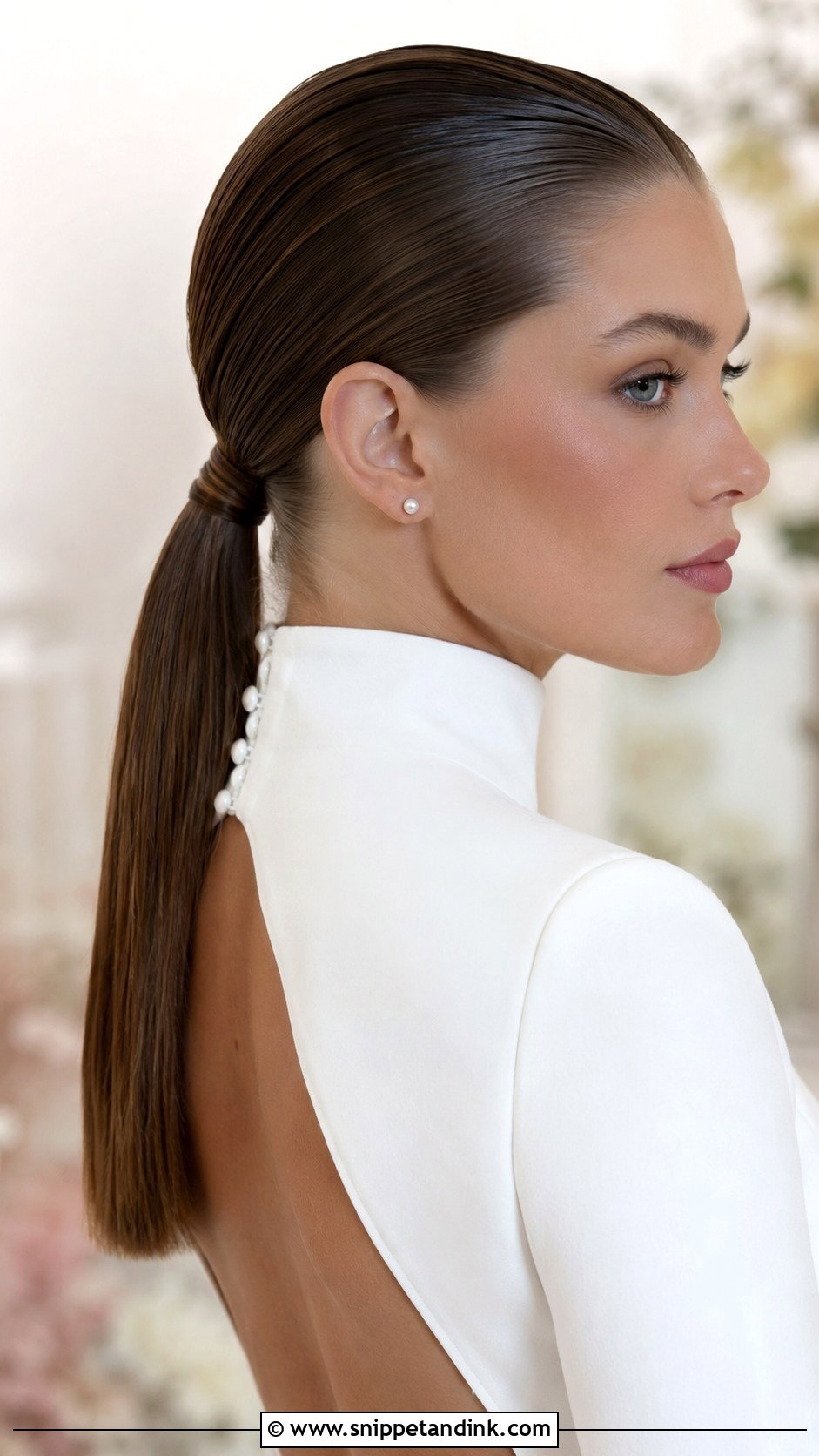
Set at the nape, a low ponytail is the most comfortable slicked style here. There’s no weight pulling at the crown, so it’s a good option if buns give you headaches. Straight lengths look minimal; soft waves add warmth. A simple veil or a pearl clip sits right above the base. I wrap the base with hair so no elastic shows, and I keep a bit of fullness at the crown so it doesn’t look flat in profile.
8. Slicked Back Wavy Ponytail
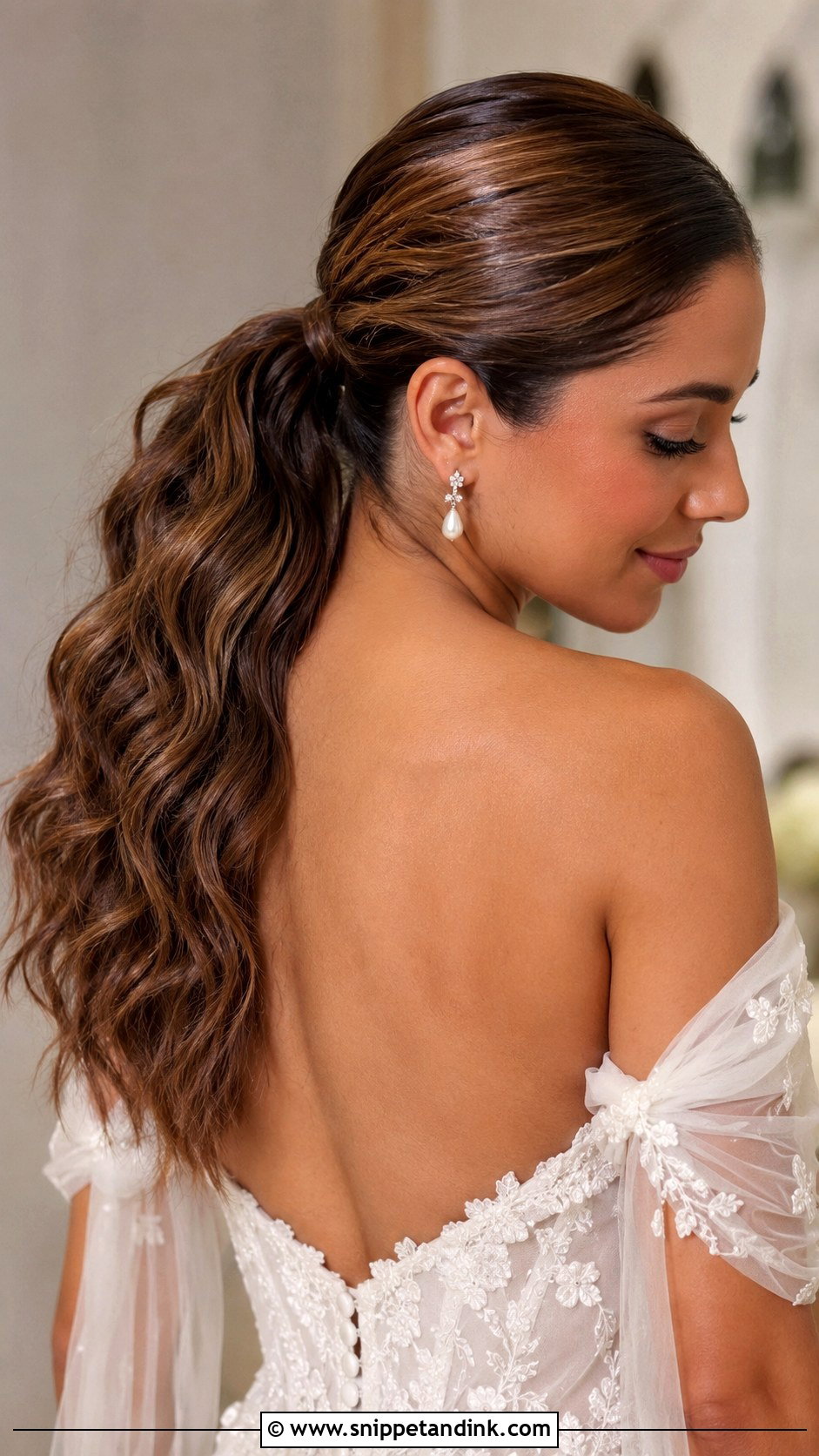
A slicked back wavy ponytail combines a controlled crown with loose waves in the length. It needs medium to long hair, or a clip-in ponytail piece for volume. I curl the hair before slicking it back, then brush the waves out once they’re cool so they look touchable rather than ringlet-tight. The waves will drop a little through the day, so I set them slightly tighter than the look you want at the reception. Pearl earrings and a clean neckline suit it.
9. Slicked Back Wet Look Hair
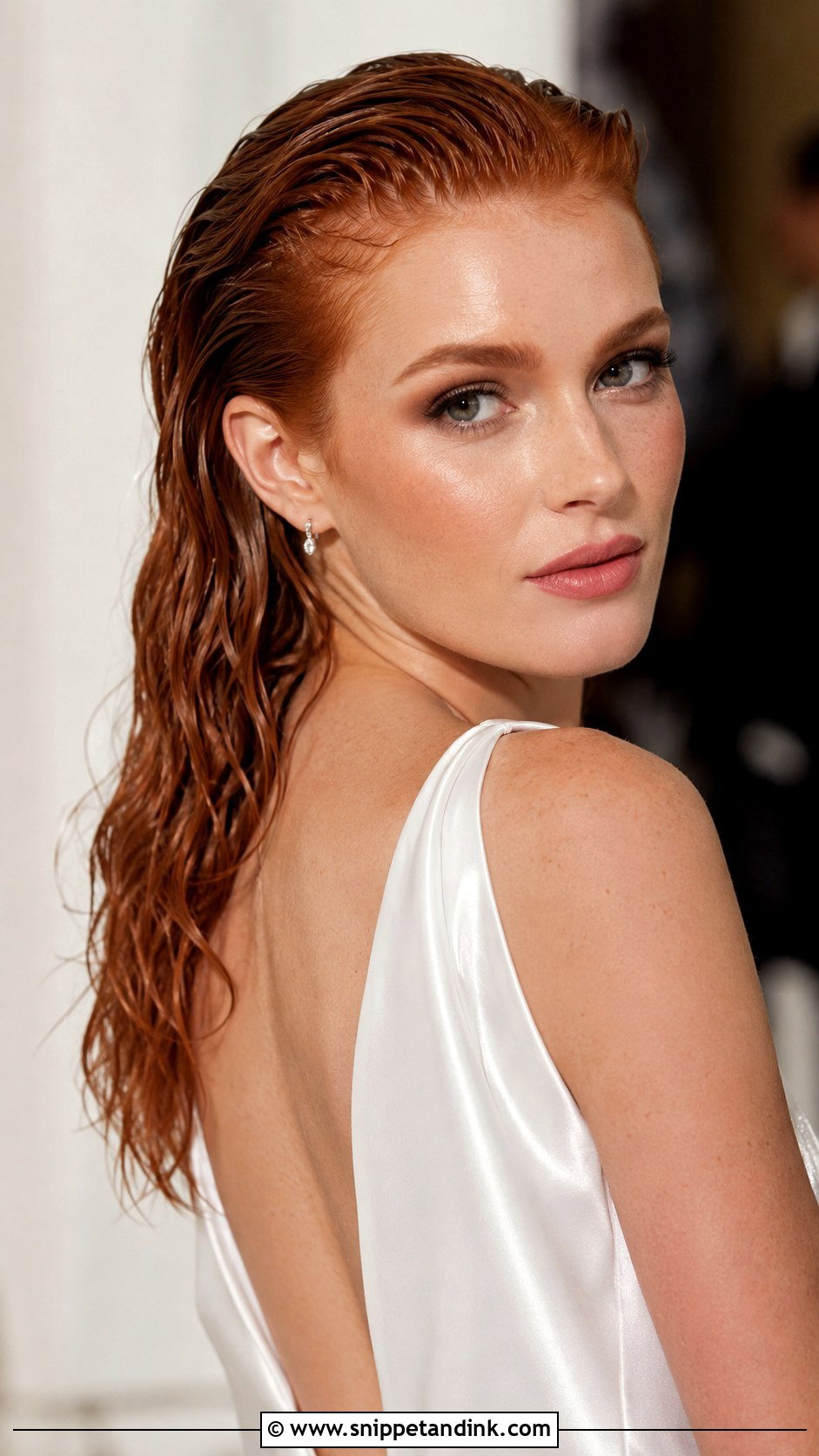
Slicked back wet look hair skips the bun or ponytail altogether: the hair is combed back with a glossy, damp-looking finish and left down, tucked behind the ears or waved through the ends. It suits sleek dresses, city weddings, courthouse ceremonies and outfit changes. I’d be careful on fine or thin hair, as the wet finish separates strands and shows more scalp. A lightweight gel combed through damp hair, then a gloss on top, gives shine without a sticky feel.
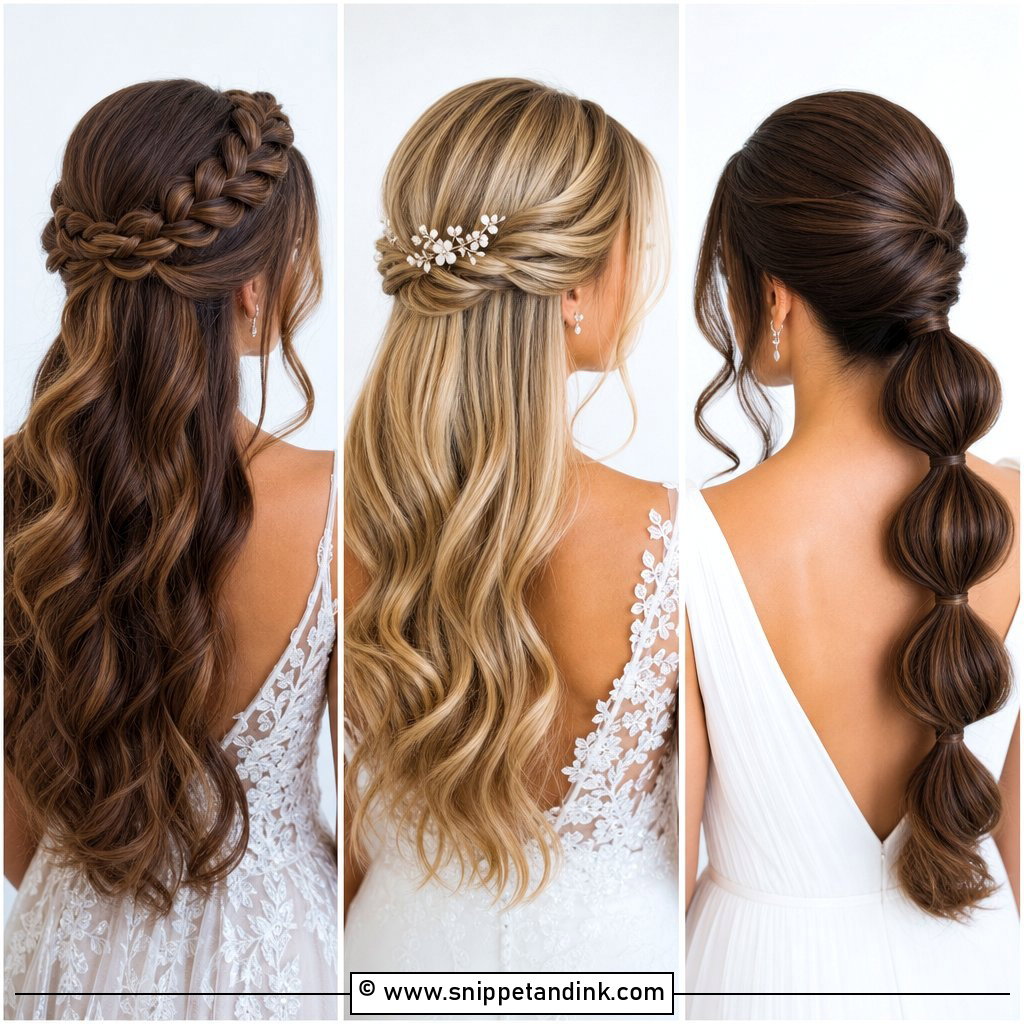
10. Slicked Back Half Up Hair
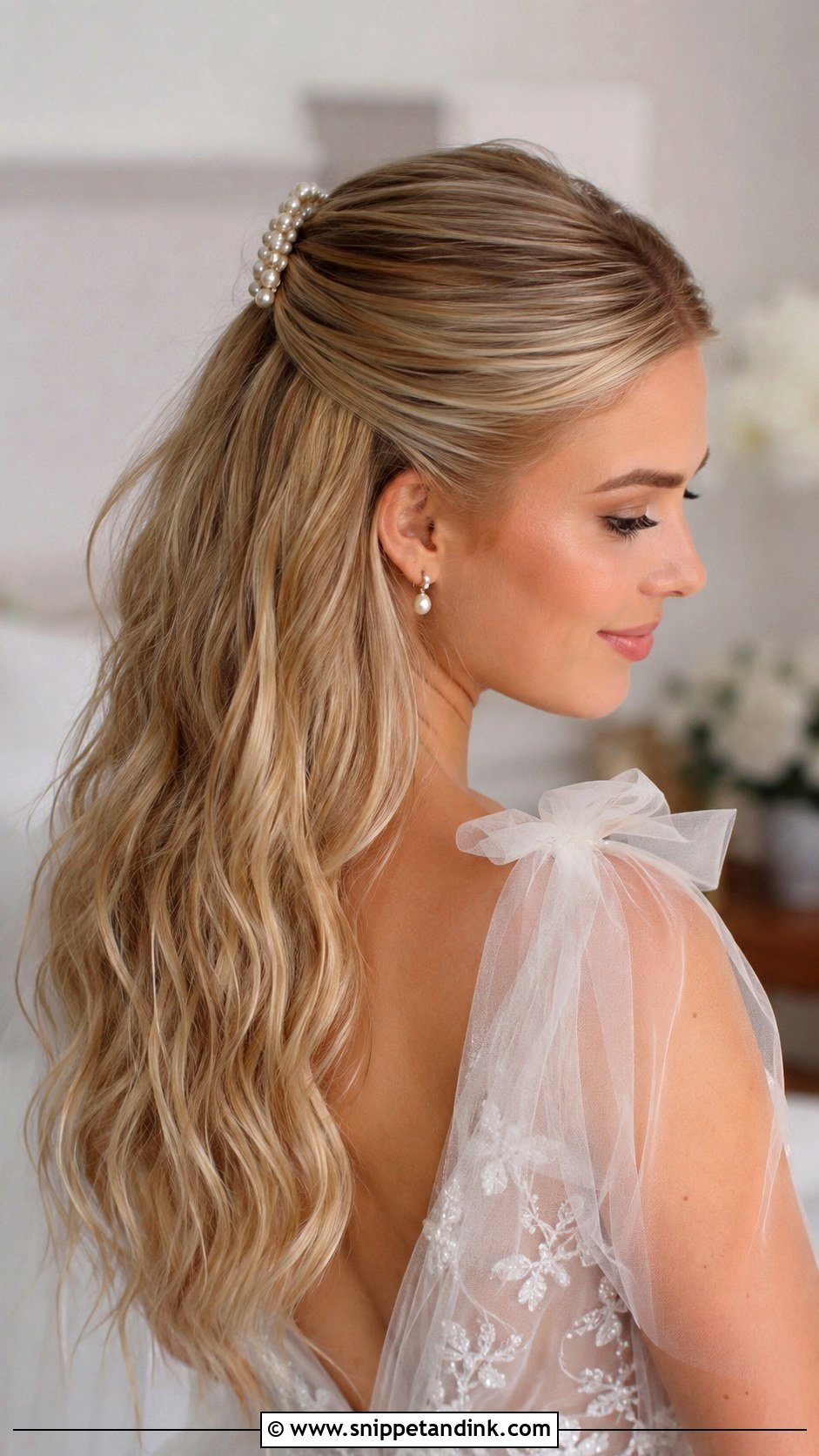
Half up keeps the face open while the length stays on show. I brush the top and sides back and secure them at the crown or a little lower. The rest can be waved, curled or straight. It works best on long or layered hair, and extensions fill it out if the lengths are thin. Layers can poke out of the slicked section, so I put a little cream on them before brushing. A pearl barrette or a small bow finishes it.
11. Slicked Back Short Hair
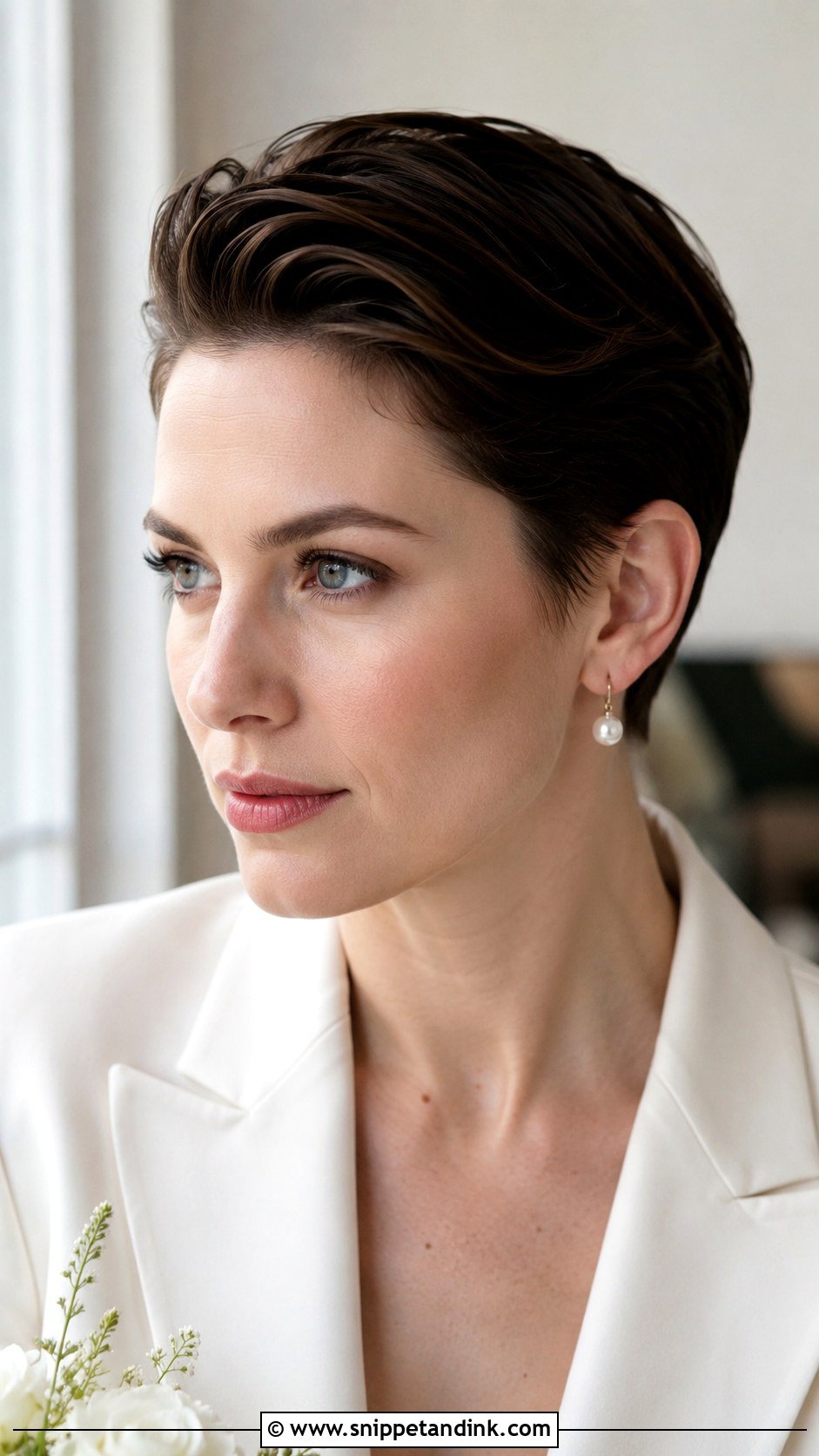
Slicked back short hair works on a bob, lob, pixie or crop. I smooth it back or into a deep part with a glossy, sculpted finish, and let the face, earrings and neckline do the rest. Accessories show more clearly on short slicked hair, so a headband, veil or pearl clip really reads. Product amount matters more here than on long hair: a little shine looks polished, too much makes short hair look heavy and wet.
12. Slicked Back Bob
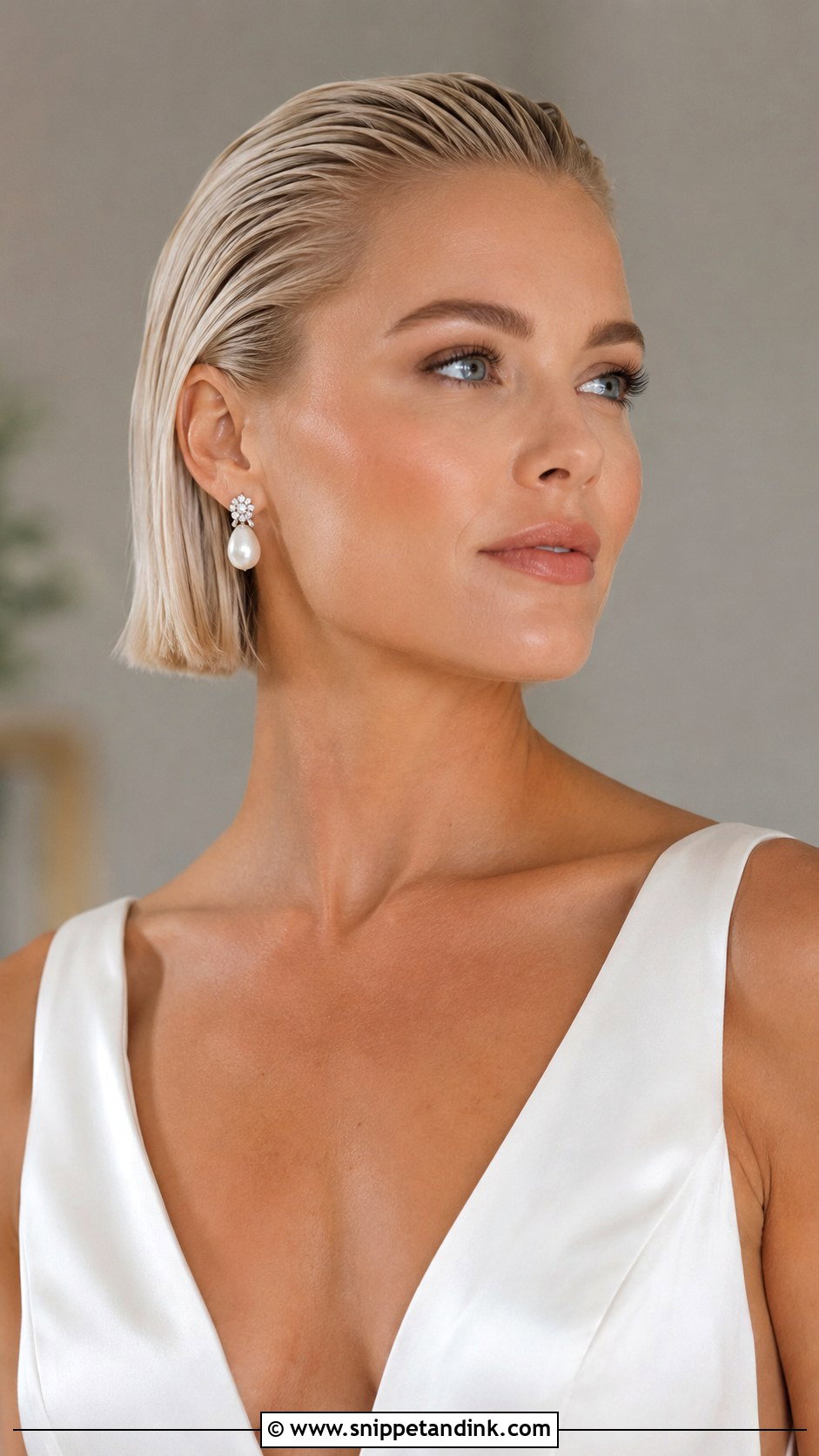
Brushing a bob back and tucking it behind the ears shows off the cut instead of hiding it in an updo. Blunt bobs and chin-length cuts take this best, since the ends stay crisp. A soft lob can work too, though it tends to fall forward by evening. I’d get the bob trimmed a week out, not the day before. Bold earrings or a simple veil, and that’s the whole look.
13. Slicked Back Braided Bun
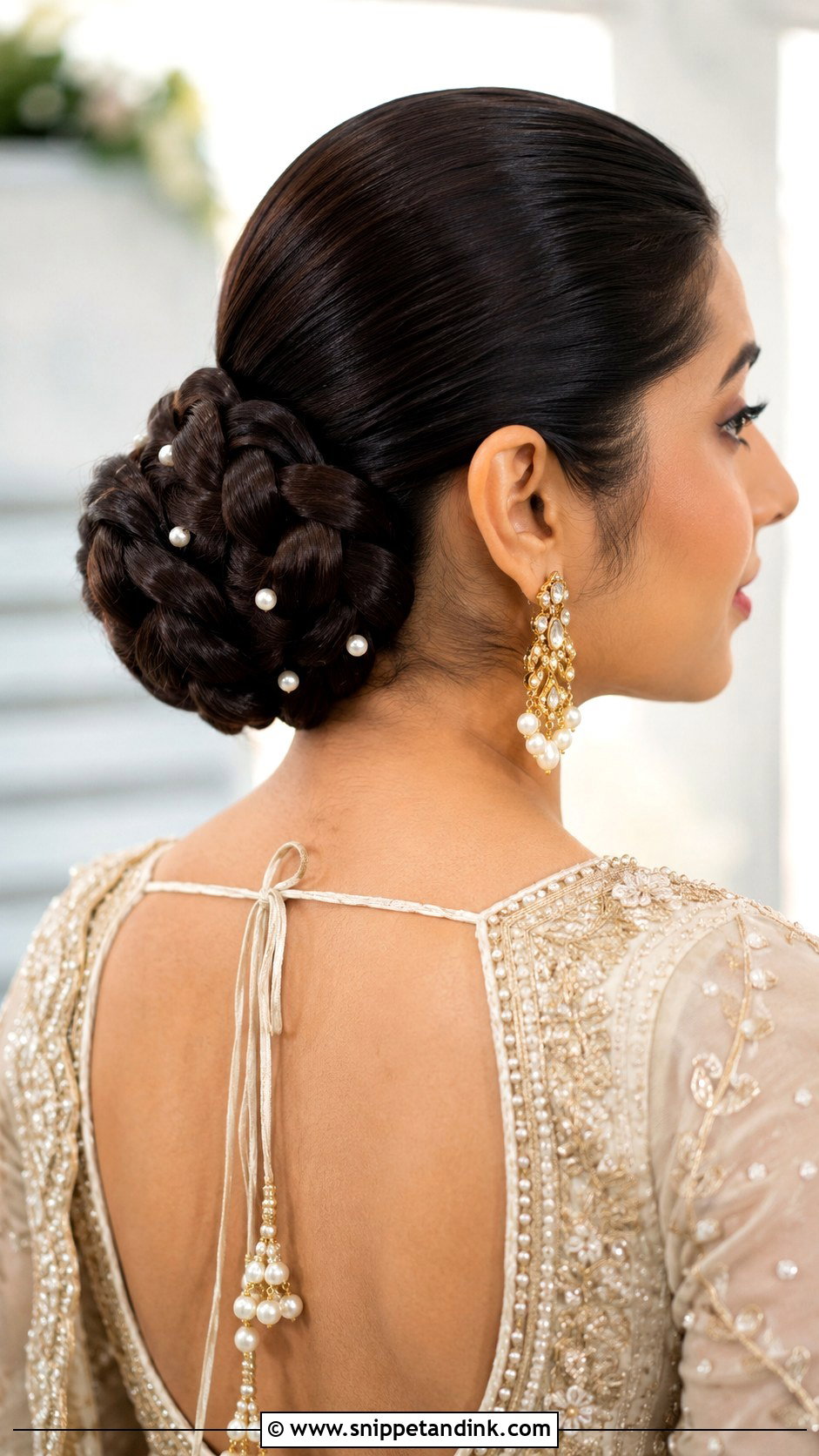
Smoothing the front and then braided and wrapped into a bun at the back gives more detail than a plain bun without losing the neat front. The braid makes the bun look fuller, so it suits thick or long hair and extensions especially well. I loosen the braid a little before wrapping it so the plait reads clearly from behind. Tiny pearls along the braid are a pretty finish. It also holds well, since the braid keeps its shape when a pin slips.
14. Slicked Back Curly Bun
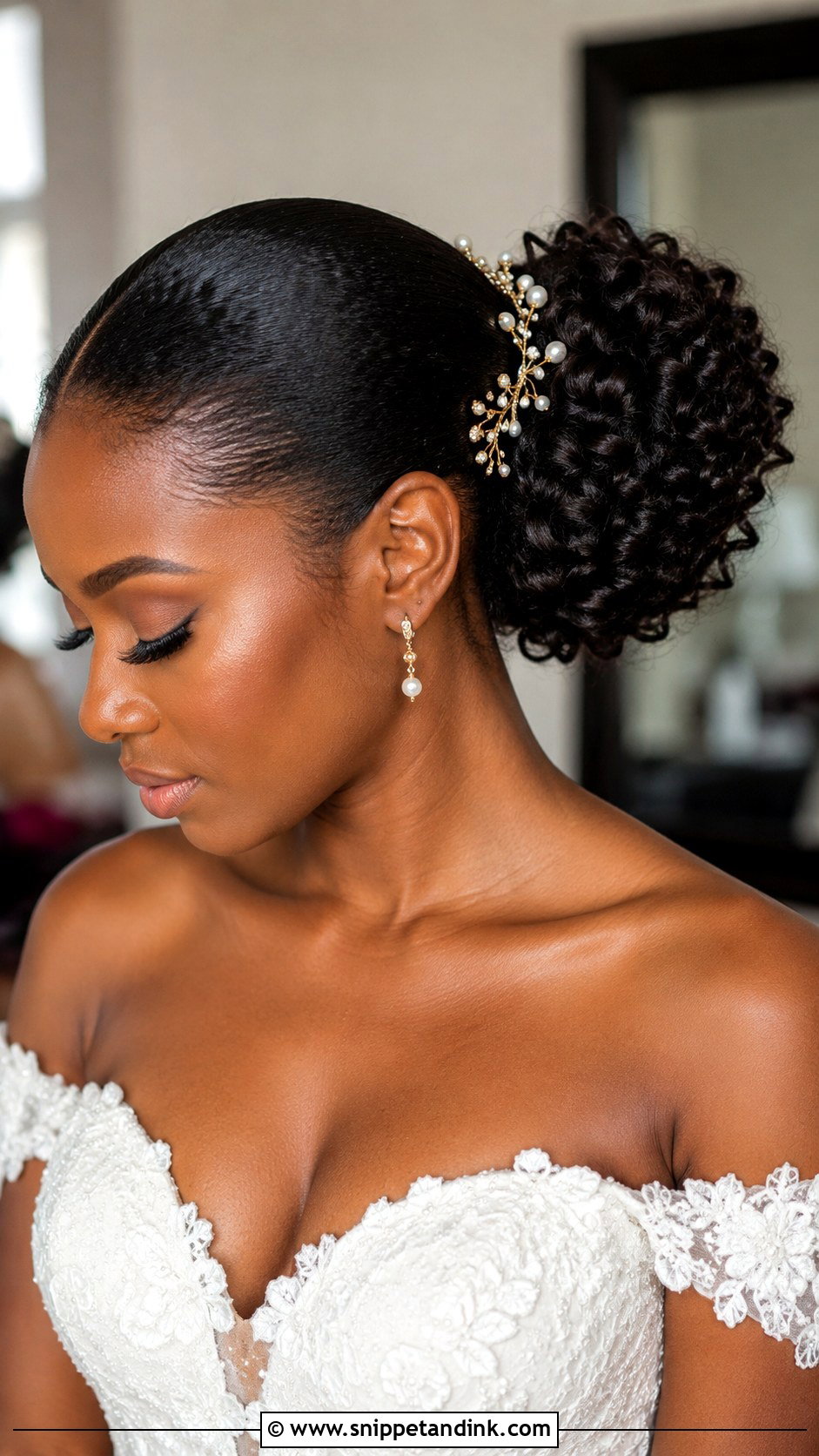
Smoothing only the hairline and crown and leaving the curls intact in the bun keeps texture as part of the look rather than something to hide. I use a firm gel or cream at the front, applied to damp hair, and leave the curls to dry and set before gathering them. Frizz control without flattening is the challenge, so I’d always test products at the trial. Veils, gold pins and small flowers all work with it.
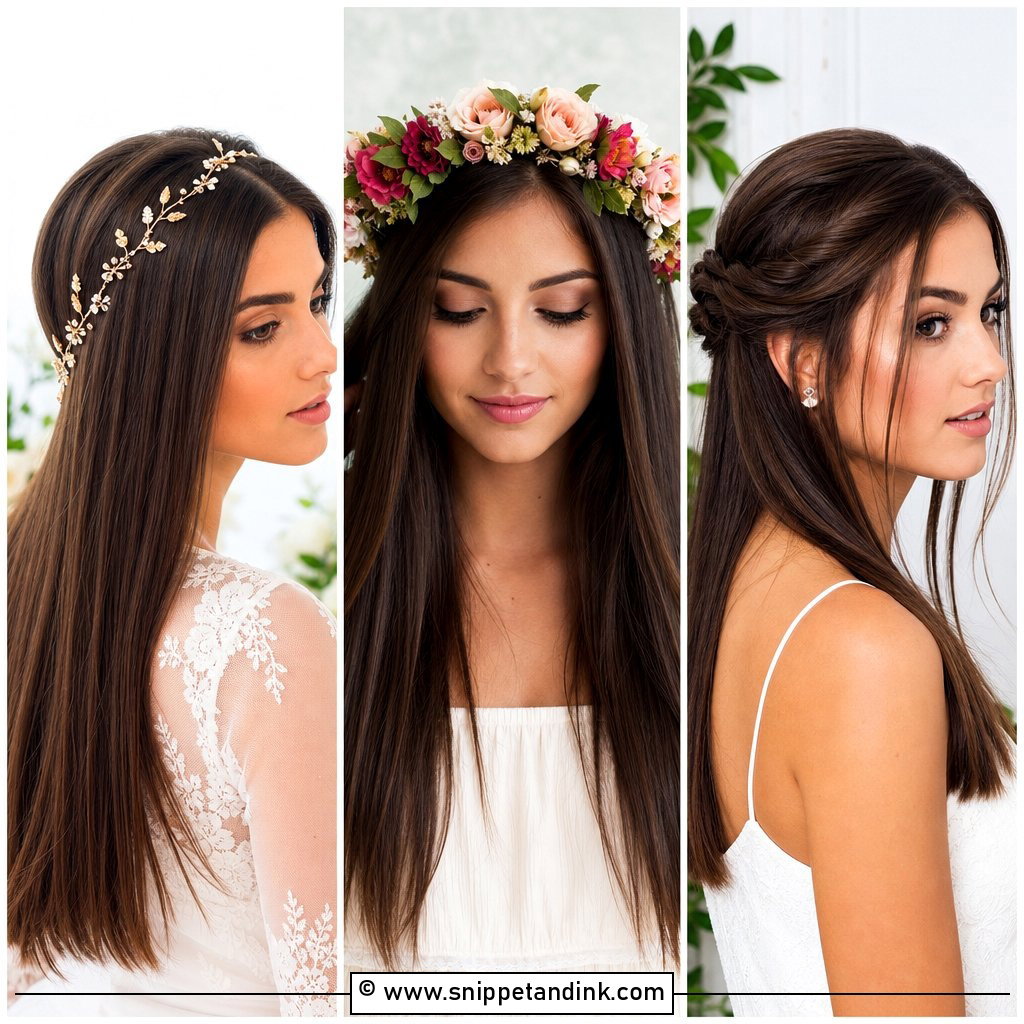
15. Slicked Back Pearl Bun
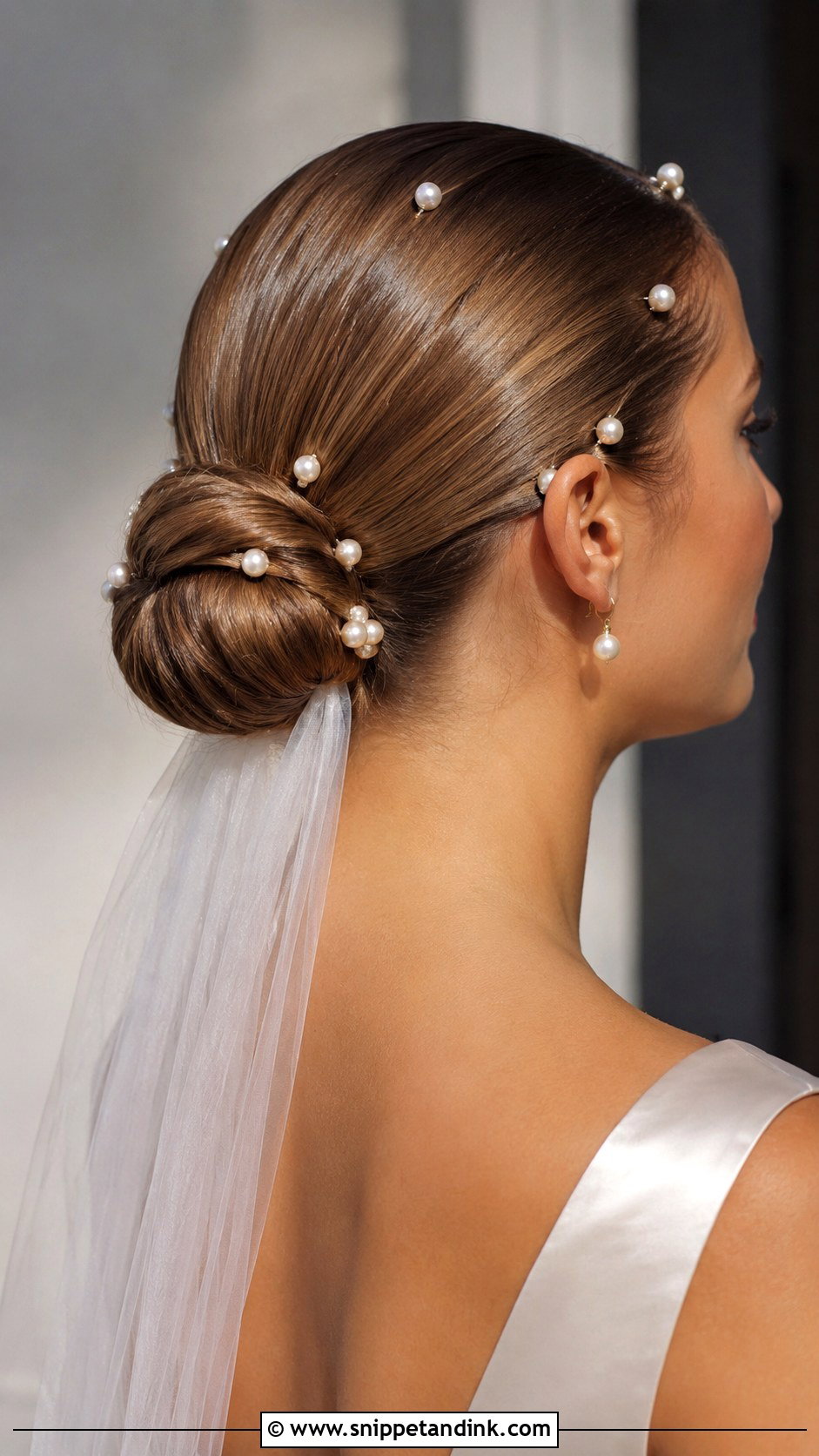
Pearls on a sleek bun give a soft shimmer against the glossy surface. The bun can be low, high or centered, and the pearls can circle it, scatter over the crown or cluster at one side. I’d keep the number small. Too many and the bun looks cluttered rather than finished. Matching the pearl shade to the gown matters; bright white pearls against ivory satin can look stark. Classic gowns and plain satin suit it.
Taking Down a Gelled Style Without Breaking Hair
Slicked styles hold with a lot of product, and the night after the wedding is where most hair gets damaged. Tugging a brush through set gel snaps strands. This is the order I tell brides to follow.
- Take out every pin by feel before touching a brush. Count them if you can; your stylist will know roughly how many went in.
- Cut, rather than pull, any small elastic at the base of a bun or ponytail.
- Work a little oil or conditioner through dry hair to soften the gel, and finger-detangle from the ends up.
- Wash twice. The first wash lifts the product, the second actually cleans. Then condition well.
If you’re leaving early the next morning, a deep conditioner on that first wash day makes a real difference after a style with this much hold and heat.
A Brushed-Back Look Starts at the Hairline
Slicked back hair covers a lot of ground. A low bun or chignon is the classic version, a ponytail is fresher, and the wet look is the most fashion-led. The right one depends on your dress, your venue, how much tension you can wear comfortably and your hair’s natural texture. Bring clear photos to your trial, test the hold, and look at the style with your veil and accessories in place. A slicked back look that’s right for your hairline will still look neat after the last dance.
You'll Like These Ideas:


Leave a Reply