
A big forehead doesn’t need hiding on your wedding day. It needs a bit of company. In my work, the front of the hair does most of the balancing: a part that sits off-center, a fringe that curves, a few tendrils left loose by the ears. Bridal hair has become softer and more touchable over the last few seasons, which suits larger foreheads well, because nothing has to look stiff. Below are fifteen looks, from low buns to short bobs, that give you as much or as little coverage as you’re comfortable with.
Your Hair Texture Decides Which of These Will Last
Two brides can bring me the same photo and end up with very different results, mostly because of texture. Before you fall for a style, think about how your own hair behaves on an ordinary day.
Fine or thin hair
Wispy bangs and face-framing pieces suit you, but they can go flat and see-through within a couple of hours. Volumizing mousse at the root and a slightly heavier fringe than you think you need will last longer. Low, loose updos are kinder than sleek ones, because sleek styles show every gap at the hairline.
Thick or coarse hair
You have the opposite problem. Full blunt bangs can turn into a solid block sitting on your brows. Curtain or side-swept shapes, cut with texture through the ends, let the forehead peek through more softly. I’ll often thin out the sides so a bun doesn’t look oversized.
Curly and coily hair
Curly bangs shrink as they dry, sometimes by a few inches. Have them cut dry, curl by curl, by someone used to your pattern. On the morning itself, a few defined curls pulled forward at the temples often give all the softness you need without a full fringe.
Short hair
With a bob or pixie, the part does nearly everything. Moving it a couple of centimetres further over than usual is often the simplest change you can make.
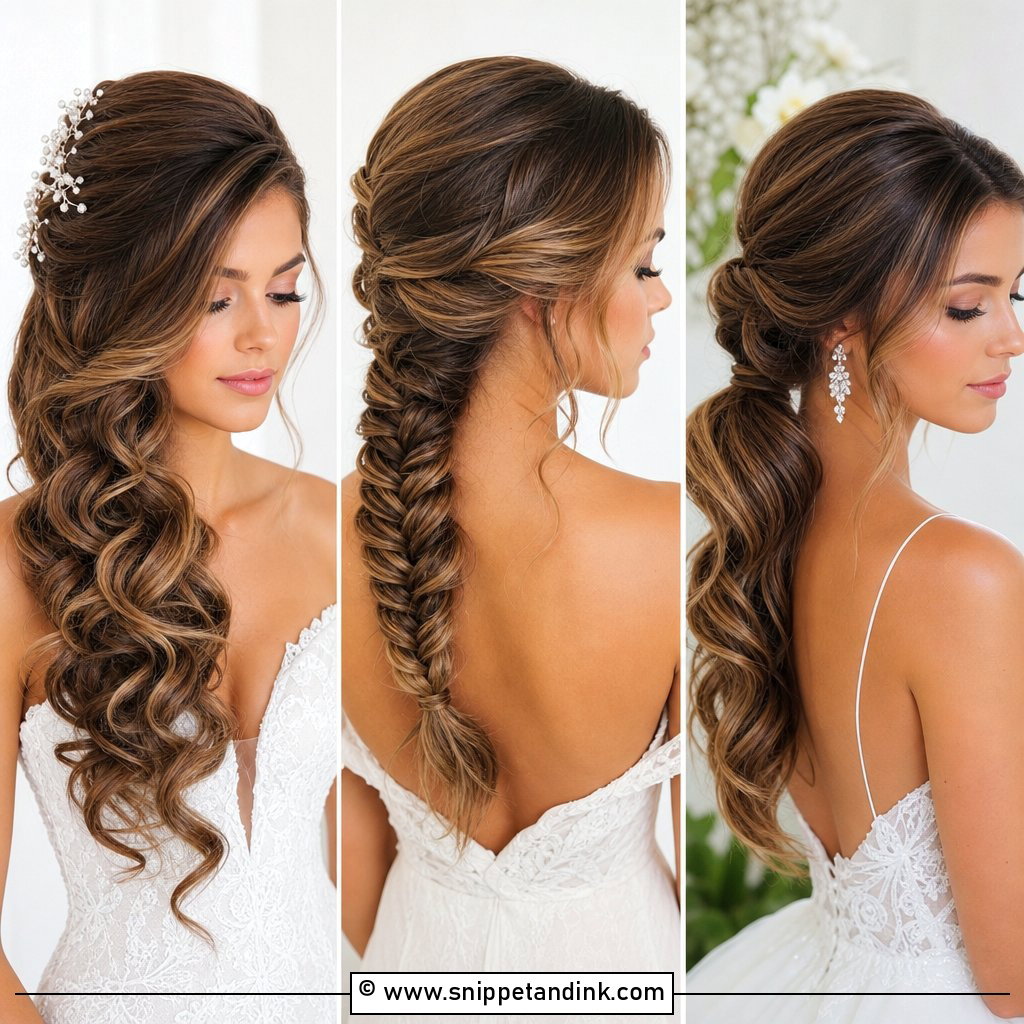
1. Side Swept Wedding Hair With Loose Curls
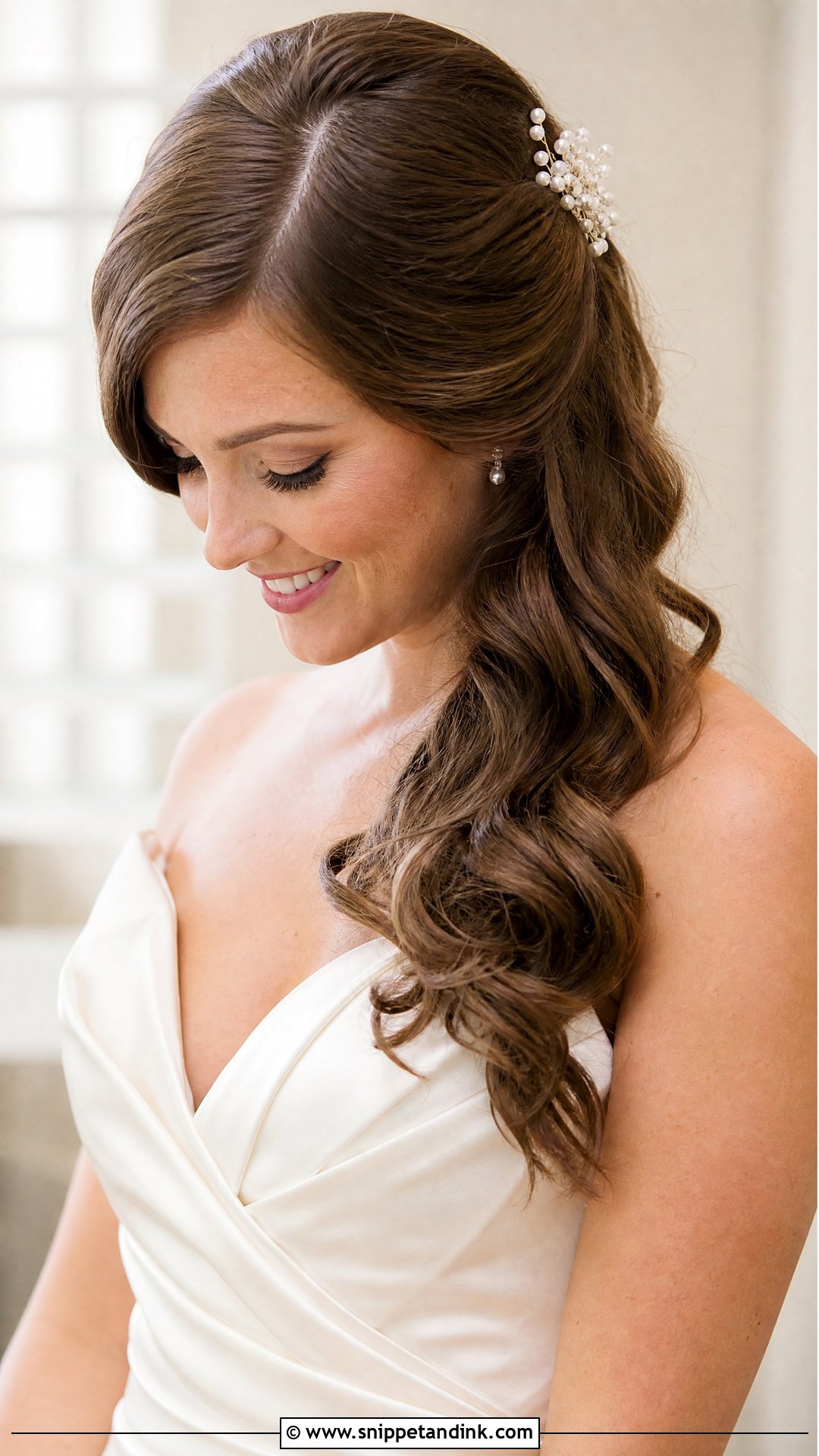
Sweeping everything to one side turns the forehead into a diagonal instead of a flat expanse, and that alone changes how tall it reads. Loose curls then add width at the sides. I keep the front section airy and set it with a bend rather than spray, because a stiff sweep looks like a helmet in profile. A few curved pieces at the temple on the open side stop the face from looking lopsided.
2. Curtain Bangs Wedding Hairstyle
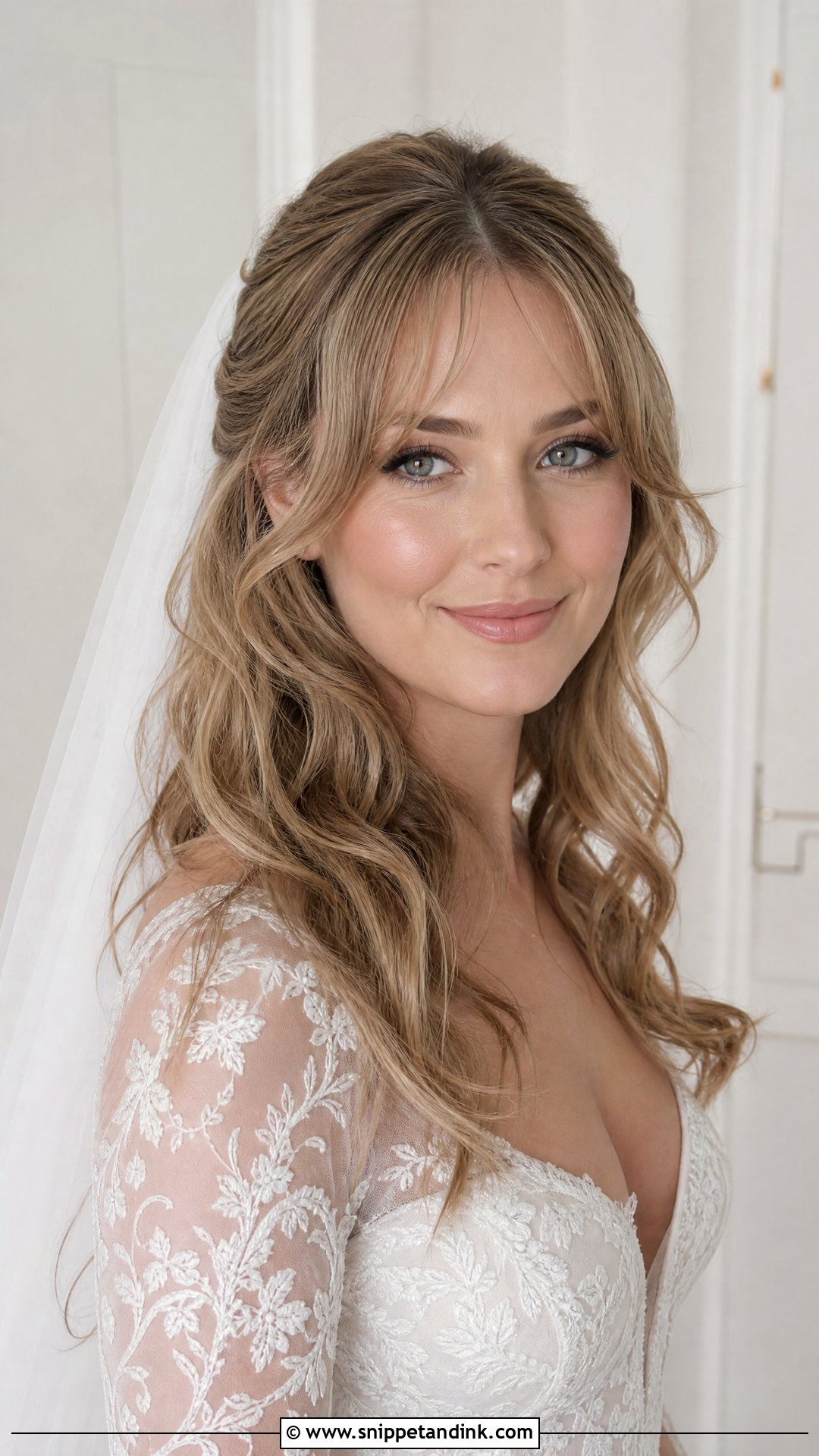
Length is everything with a curtain fringe. The pieces I like best fall to the cheekbone or upper lip; shorter than that and they stick out, longer and they disappear into the rest of the hair. For a wedding, curtain bangs blend into waves, buns and ponytails without any special prep. I blow them out with a small round brush, rolling each side away from the face, so they curve back toward the cheeks on their own instead of falling flat into the eyes.
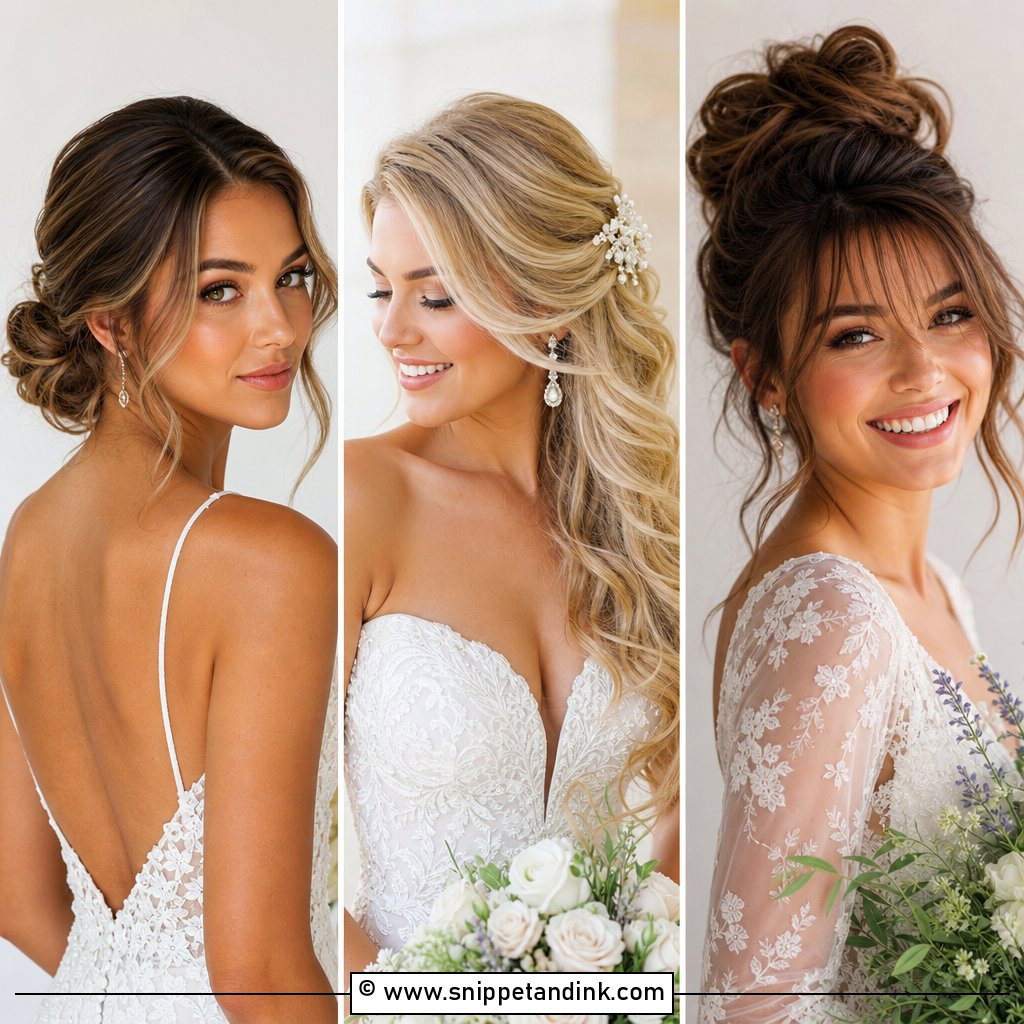
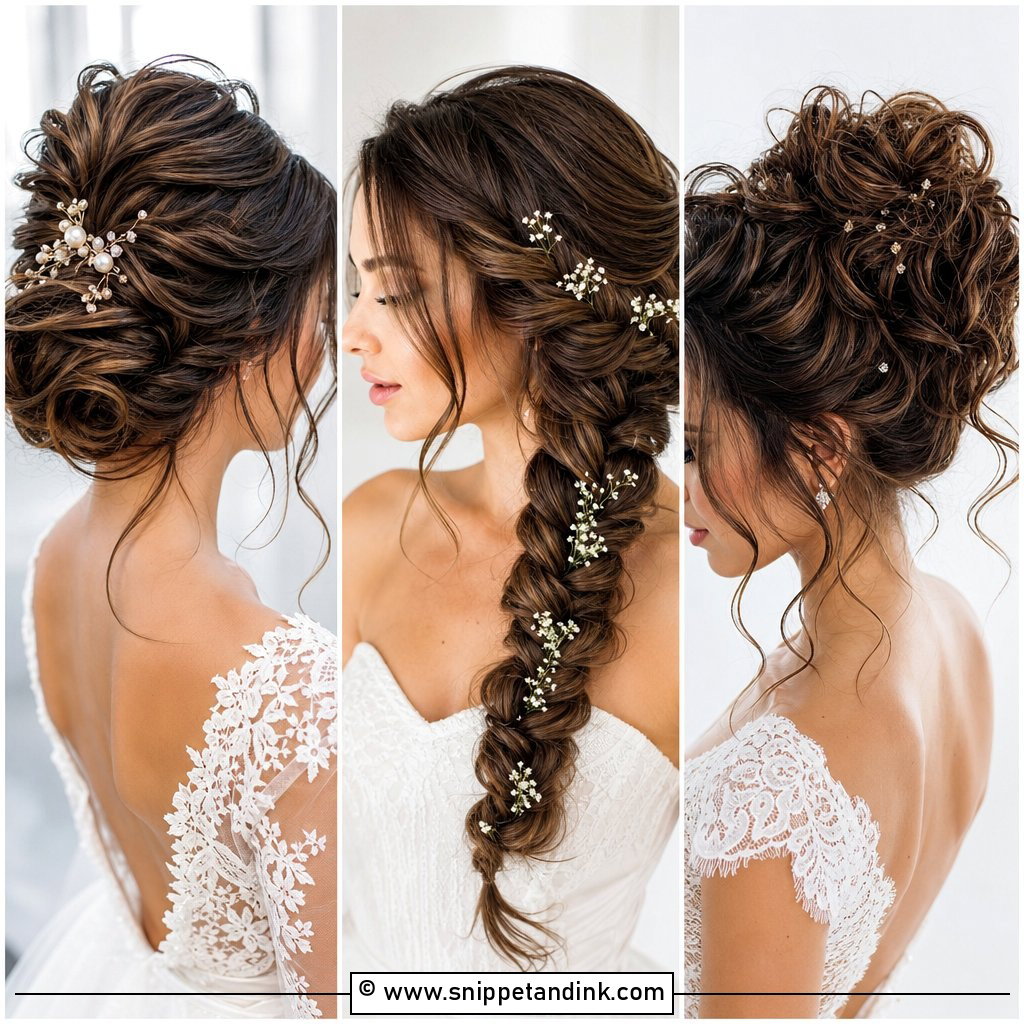
3. Low Bun With Face Framing Pieces
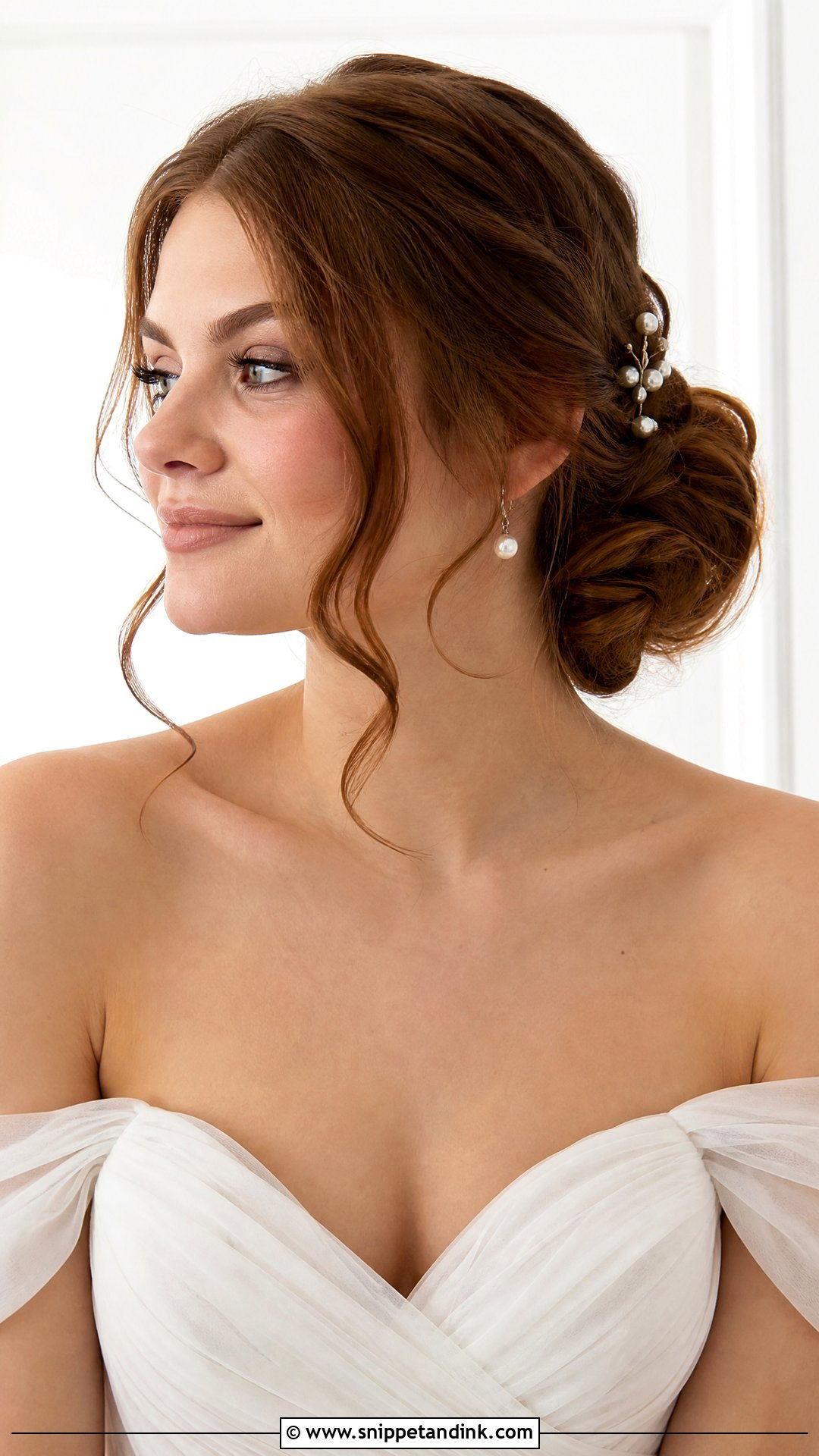
Plenty of brides love the classic low bun but dread how bare it makes the forehead. Leaving pieces out at the front solves that. I’ll ask how much coverage you want and start the pieces at the brow or the cheekbone to match. Bent with a medium iron, they hang more forgivingly than straight sections, which tend to look accidental. The bun keeps the neckline open, so it’s a good partner for an off-shoulder dress.
4. Half Up Half Down Wedding Hair With Bangs
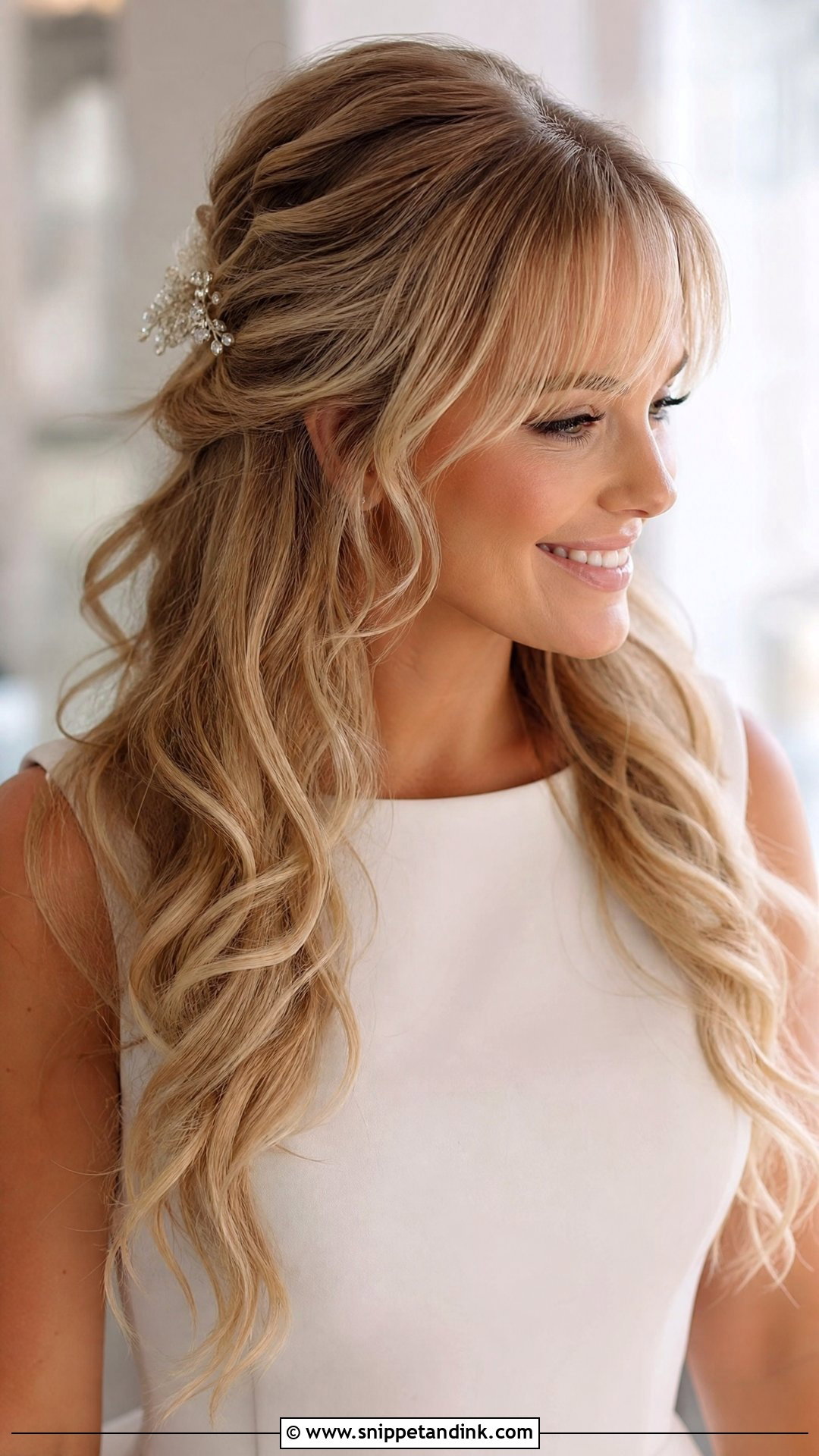
Lift at the crown with loose length at the shoulders feels familiar to brides who rarely wear their hair up, and adding wedding hair with bangs covers the forehead without extra work. Wispy, curtain or side bangs all suit it. The detail I adjust most is the top section: pulled tight into the clip, it flattens the head and exposes the hairline. Gathered loosely, with a little backcombing underneath, it gives shape without stealing the softness at the front.
5. Textured Chignon With Side Bangs
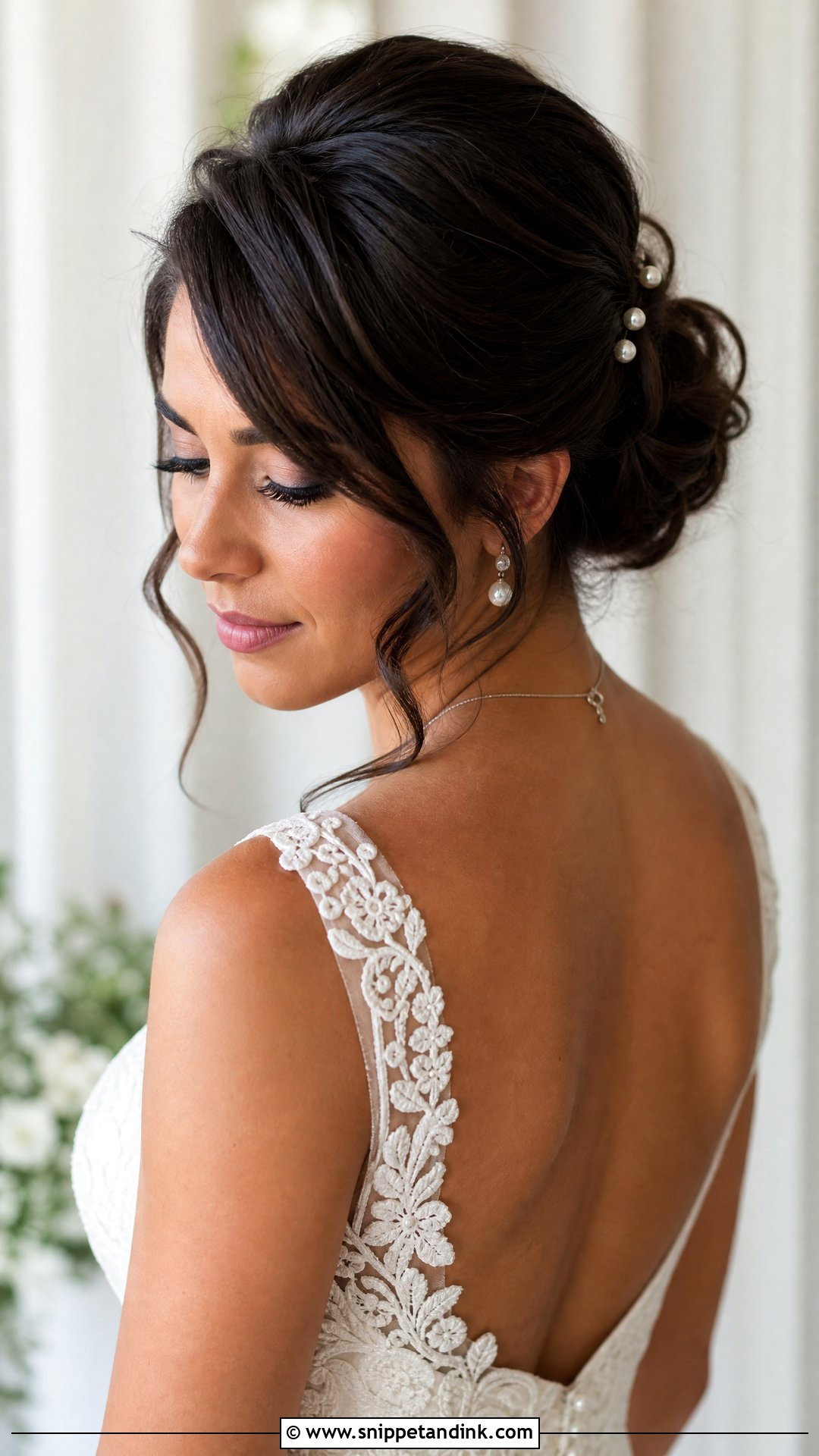
Smooth chignons can look severe on a high hairline, so texture is what earns this one its place. I build it from loose twists and tucked curls, then free a few pieces at the temples. The side bangs sweep across the forehead and should keep their bend. When the front is brushed flat with gel, the chignon starts to look like a ballet bun, which is a very different mood. High necklines and lace suit it well.
6. Hollywood Waves With Deep Side Part
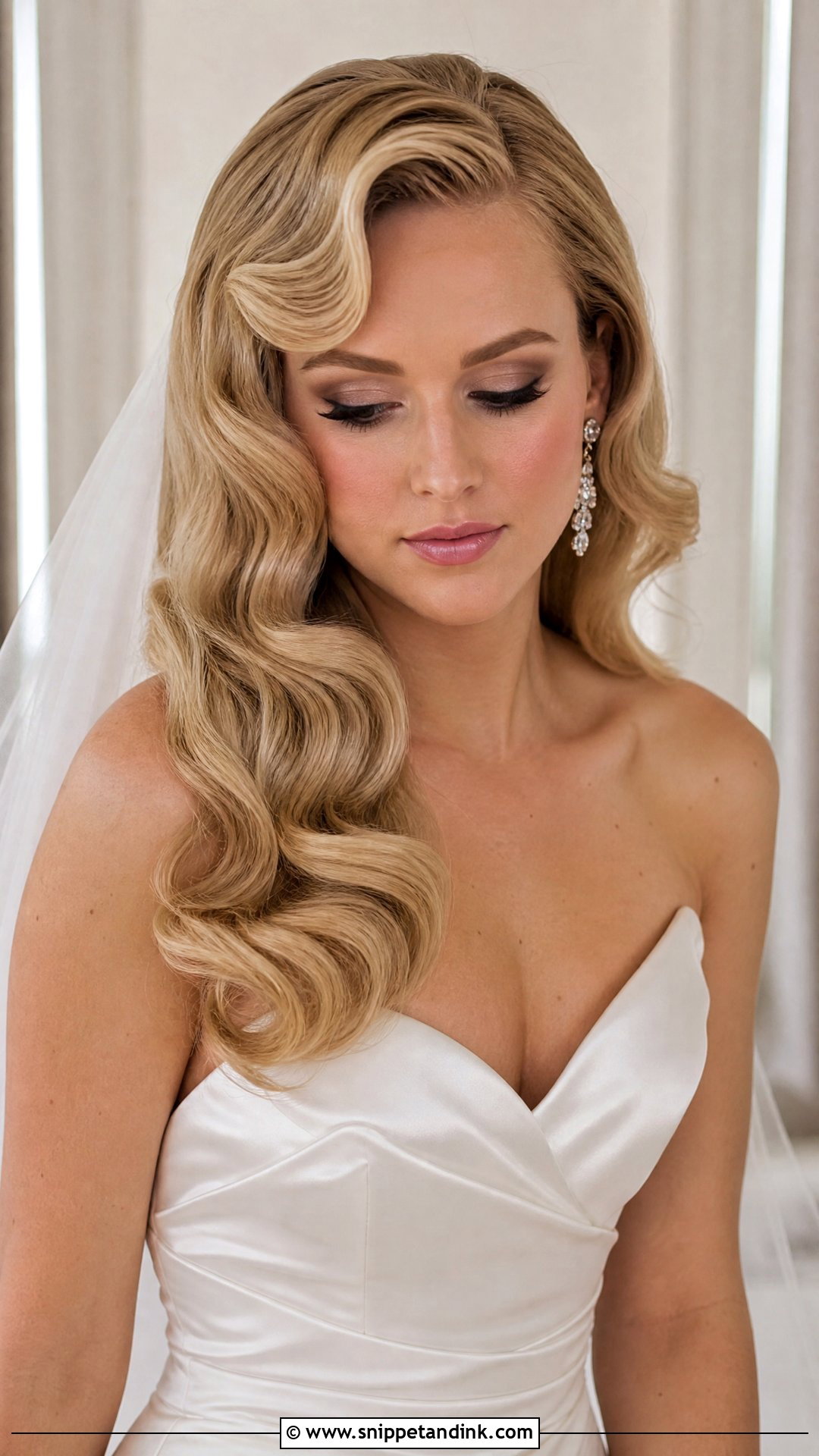
Glamour first, coverage second: that’s how I’d describe this one. The deep part throws a sweeping line across the top of the face, and the sculpted waves add width and shine that balance longer proportions. The front wave must curve near the brow or cheekbone; if it sits too far back, the forehead is fully on show again. I set it with a flexible spray, never a firm one, so the waves still move when you turn.
7. Messy Low Updo With Wispy Bangs
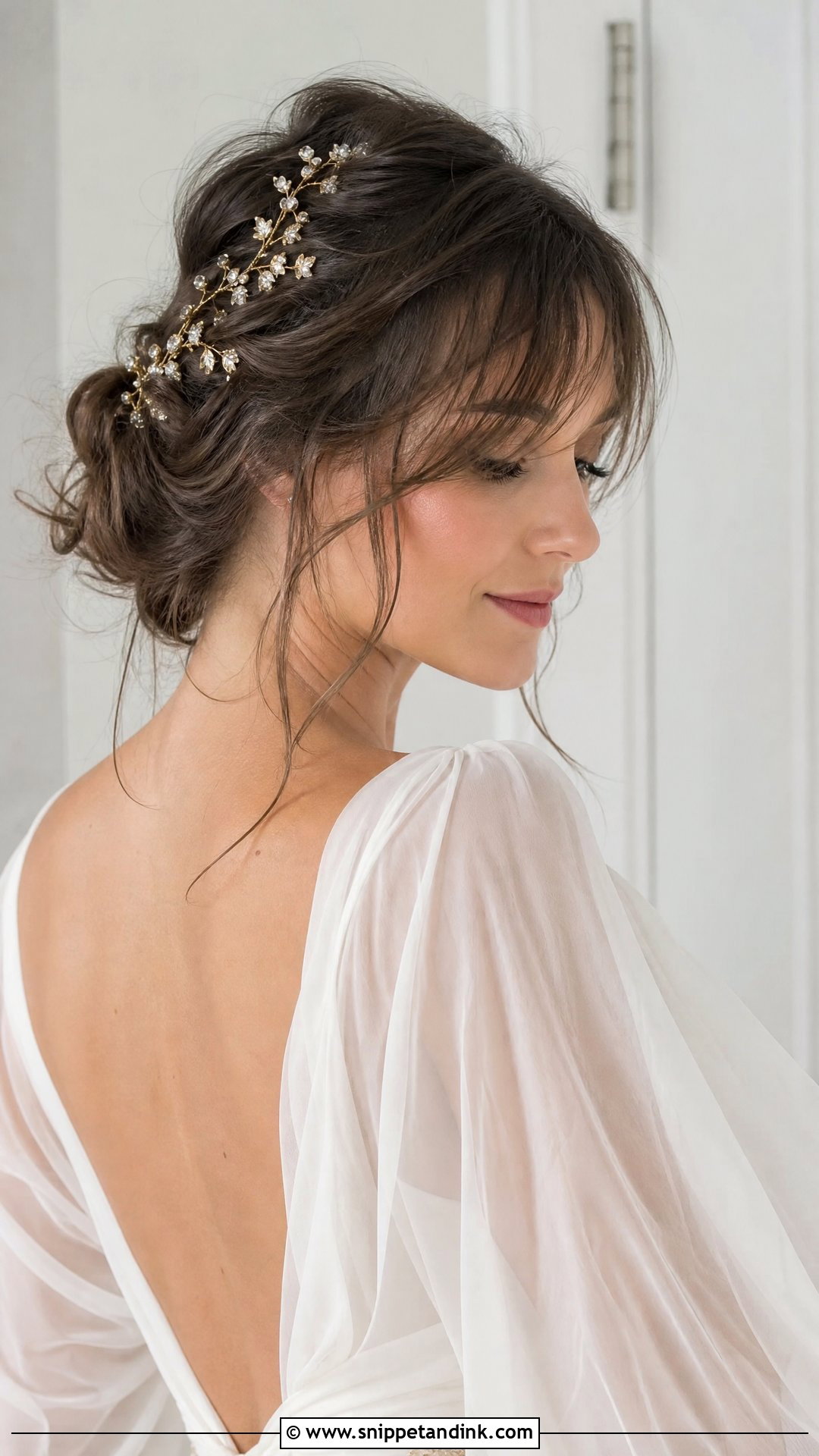
Relaxed styles still need structure, and a messy low updo with wispy bangs relies on hidden pins to stay that way. The wisps cover lightly without looking heavy or dated. I’d steer you away from a tight center part with this look, because it splits the fringe and frames the forehead like curtains around a window. Softer separation keeps the front open but gentle. It suits outdoor weddings, where some movement is welcome anyway.
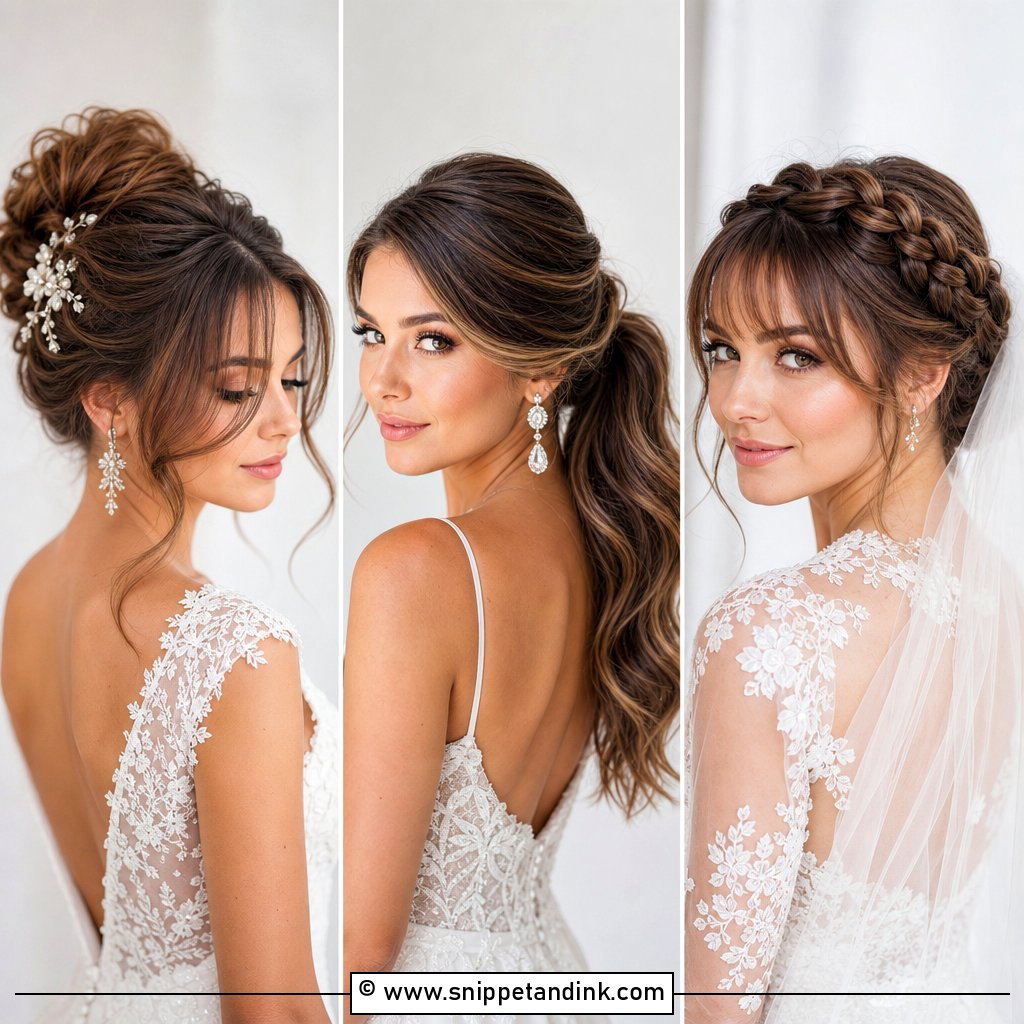
8. Bridal Ponytail With Side Swept Bangs
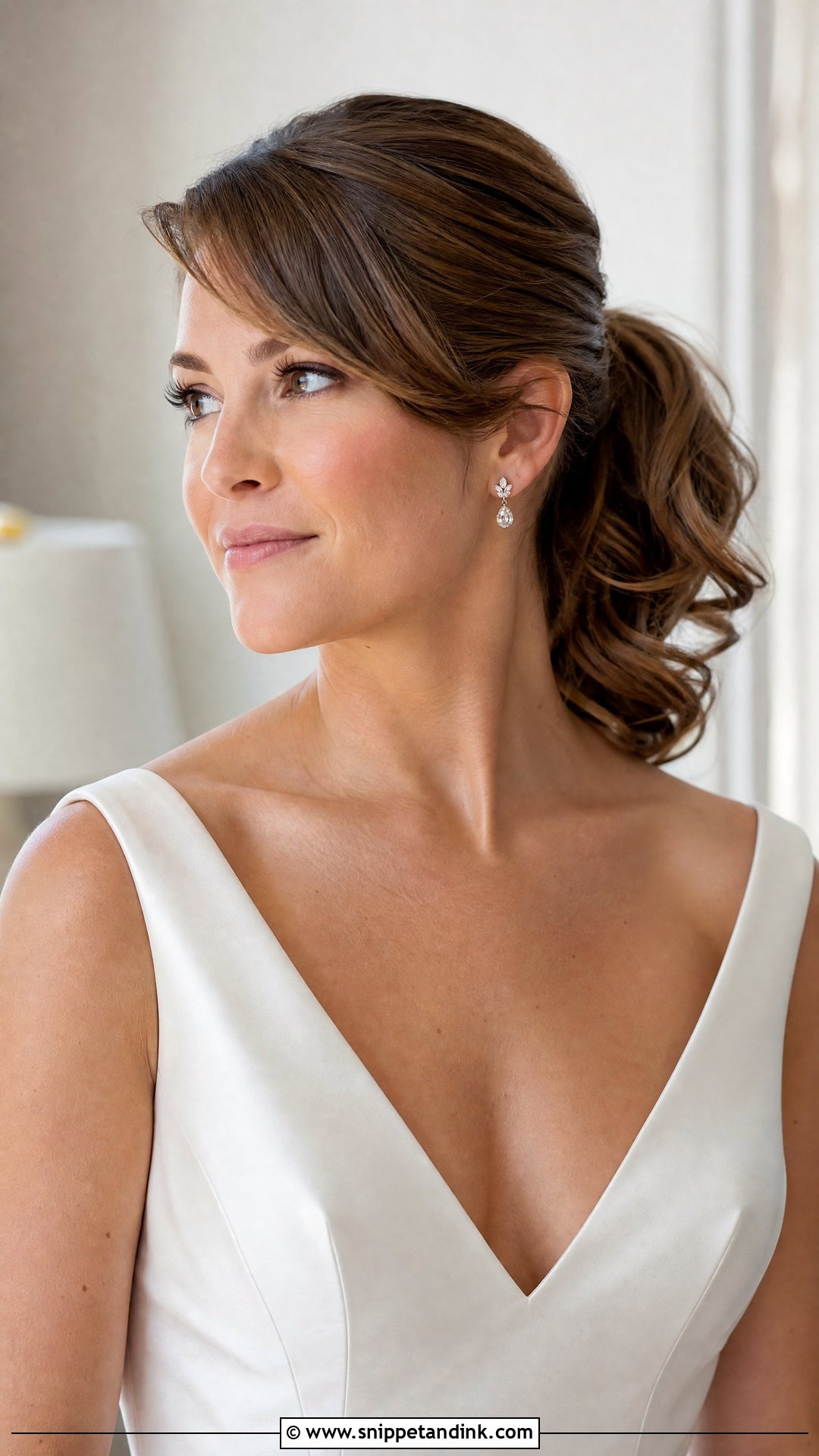
If a bun feels too formal but you want hair off your neck, a ponytail with side-swept bangs is the compromise I suggest. Low or mid-height reads softer than high. The bangs give coverage and the ponytail gives length, so the eye travels downward. I curl the ponytail so it looks finished rather than gym-ready, and I wrap a strand around the base to hide the elastic. Pin that strand twice; a single grip tends to work loose.
9. Braided Crown Wedding Hairstyle
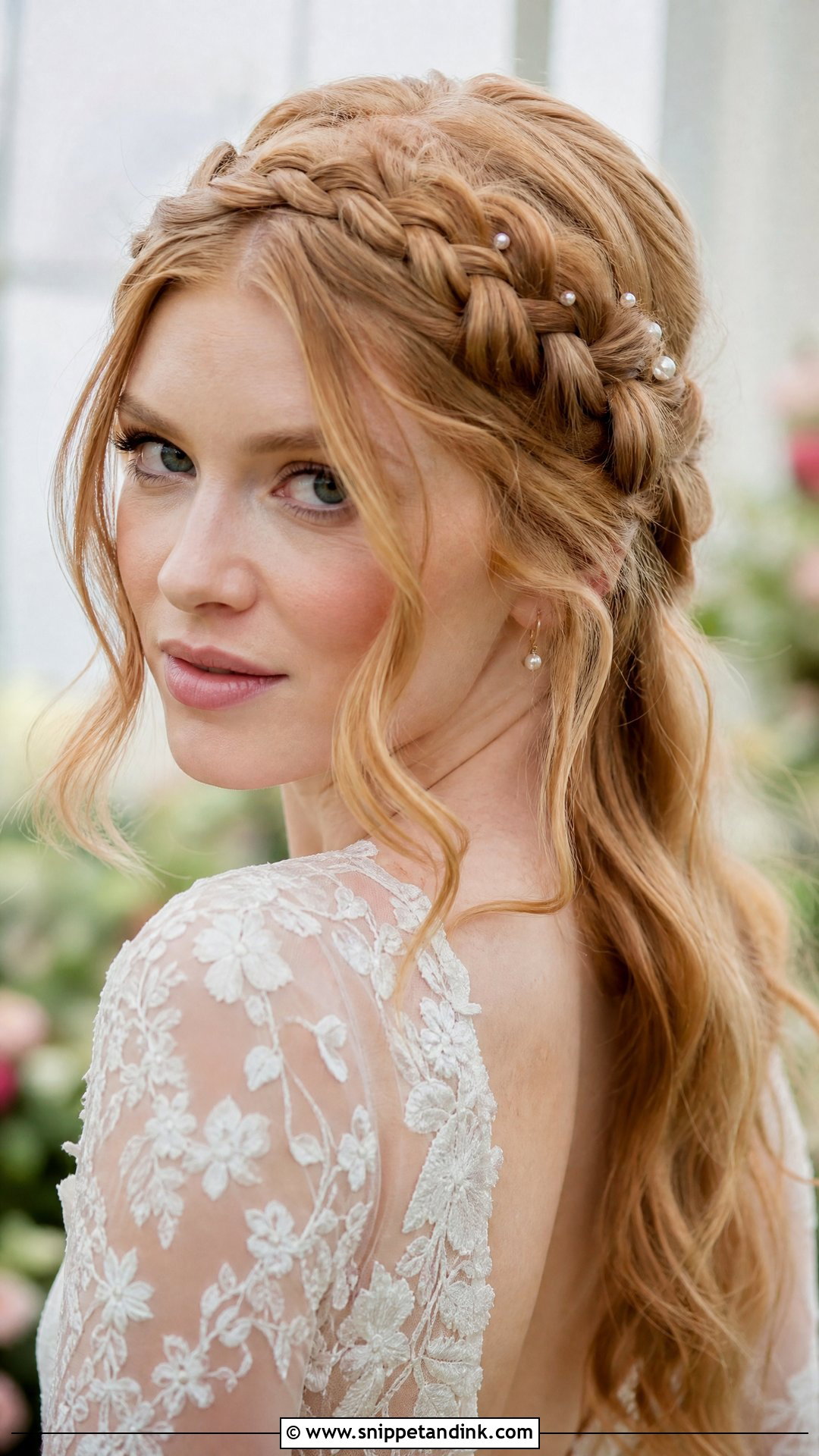
Braids near the hairline add detail where the forehead would otherwise be bare. The finish I aim for is soft and slightly loose, with face-framing pieces left at the temples, because a tight braid pulls the hairline back and shows more forehead, not less. I pancake the braid, gently widening each loop with my fingers, so it looks fuller in photos. Below it, wear waves, a low bun or a tucked updo.
10. Soft Waves With Face Framing Layers
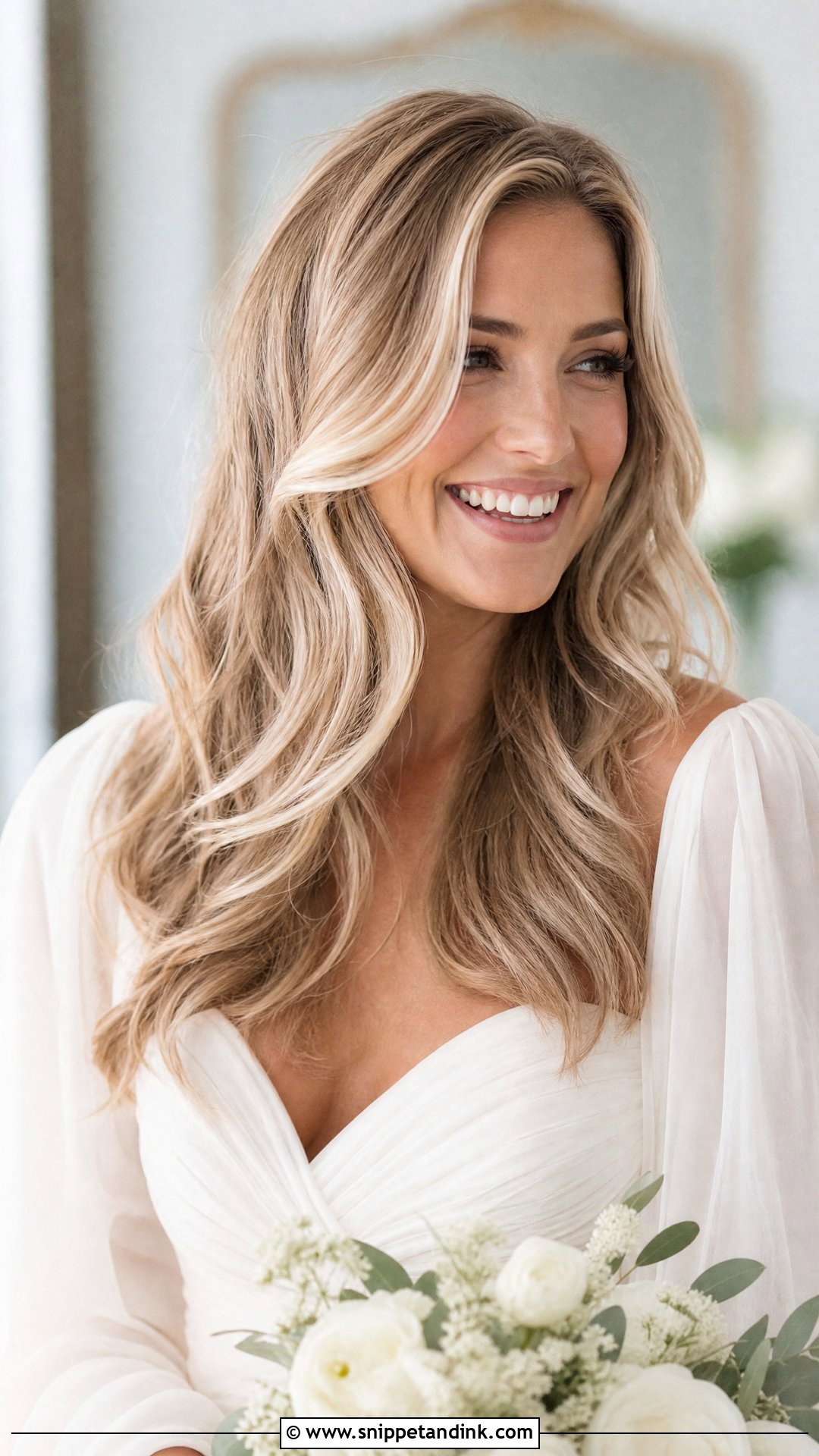
Long hair worn straight down can drag the face downward and make it look longer still. Face-framing layers fix that by putting movement at the front, while waves add fullness through the sides. I usually set the shortest layer at the cheekbone or jaw, depending on face length, and move the part a touch off-center. It’s an easy look to maintain from ceremony to reception, since there’s nothing pinned to fail.
11. Loose Bridal Bun With Curtain Bangs
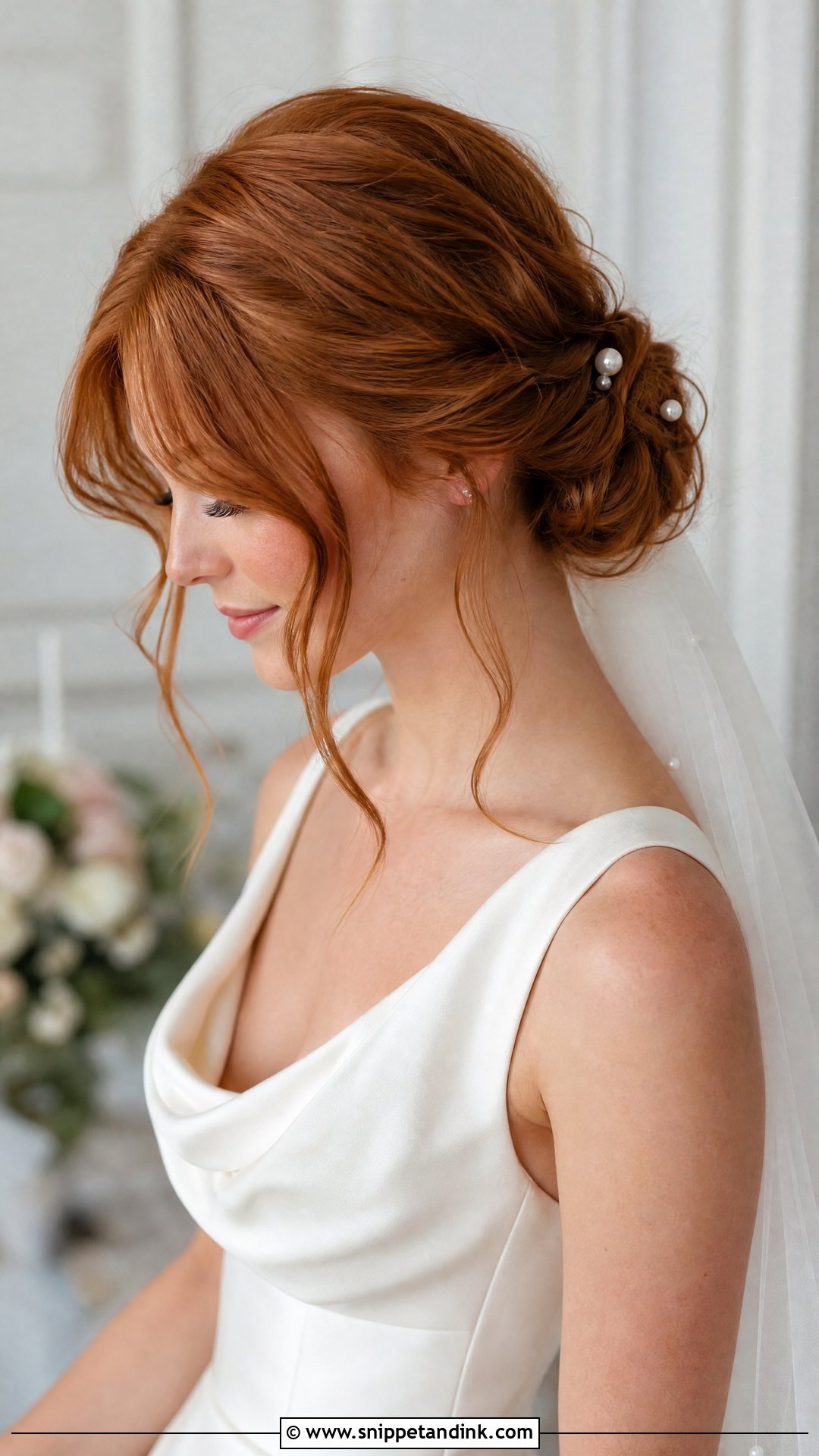
Curtain bangs frame both sides of the face, so the forehead looks balanced instead of leaving the hairline bare. Behind them, a loose bun is more forgiving than a sleek one: stray pieces read as intentional. Textured, not messy, is the brief I give myself. Veils, hair vines and pearl pins sit easily in the bun, and I anchor any accessory to a crossed pair of grips so its weight doesn’t drag the bun loose.
12. Side Part Wedding Bob With Waves
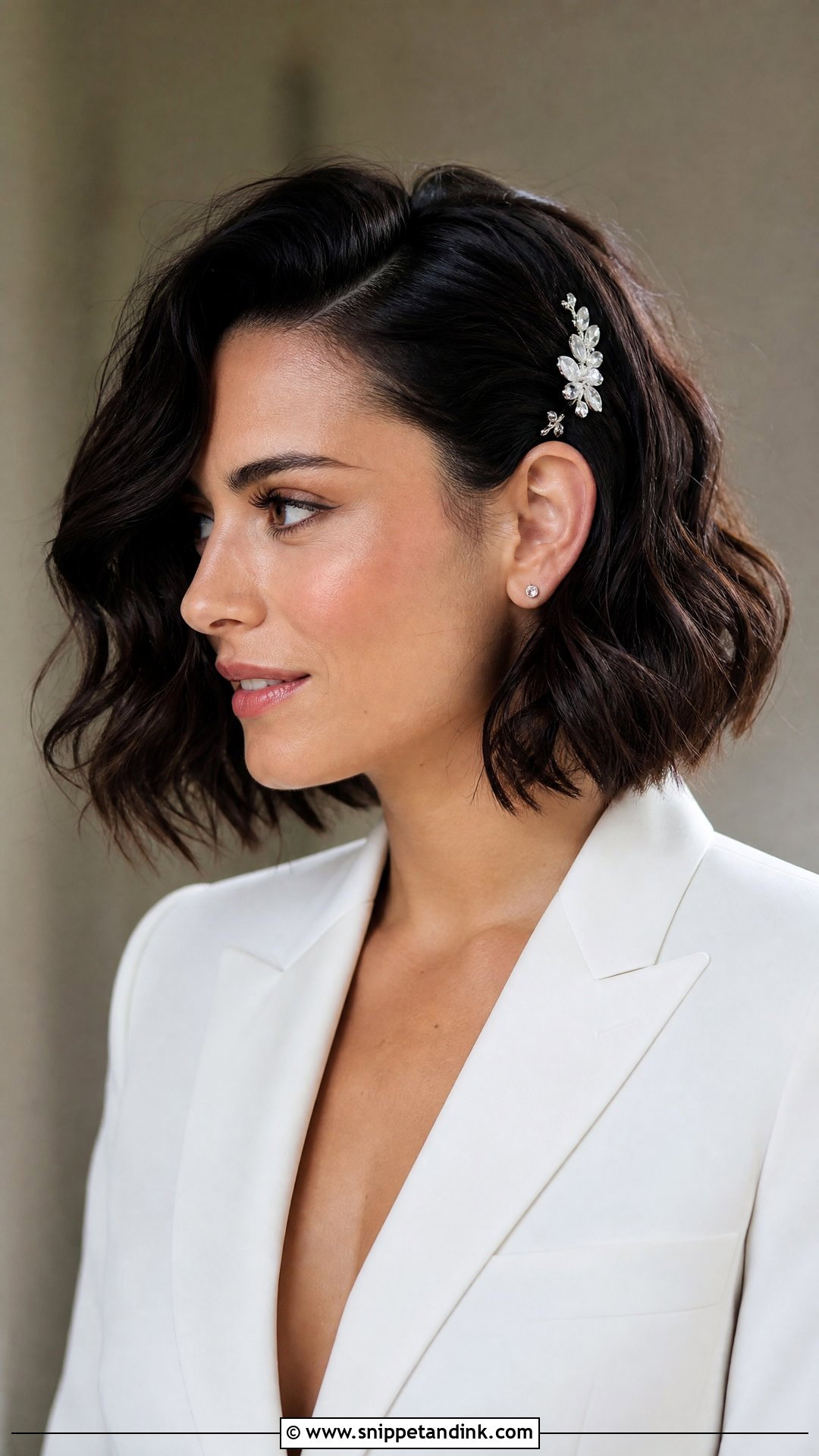
Short or medium hair needs no heavy fringe if the part is in the right place. On a wedding bob, I move the part a little further over than usual for an angled line, then add waves for volume at the cheeks and jaw. Shine matters on short hair, since every strand shows. Tucking one side behind the ear shows off earrings, and a small clip on the heavier side gives it a finished, bridal touch.
13. Long Wedding Hair With Side Bangs
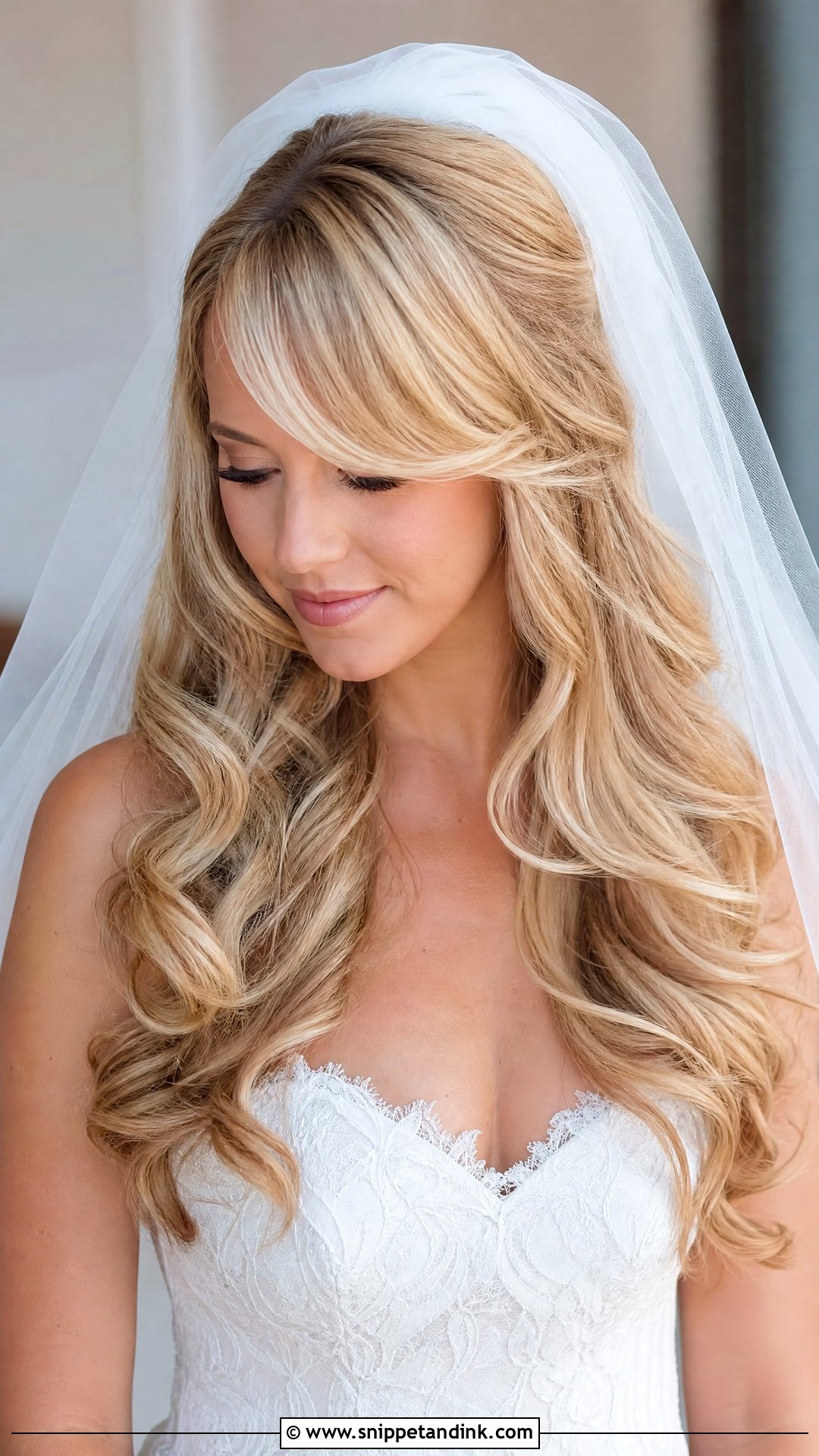
Side bangs and long waves are a classic pairing, and the blend between them is where I spend my time. There should be no harsh line where the fringe ends and the hair begins, so I cut the bangs into face-framing layers. Volume belongs at the mid-lengths and ends, not stacked at the crown, which would only add height. Veils, pins and floral combs all sit well on it.
14. Twisted Half Up Wedding Hair With Front Pieces
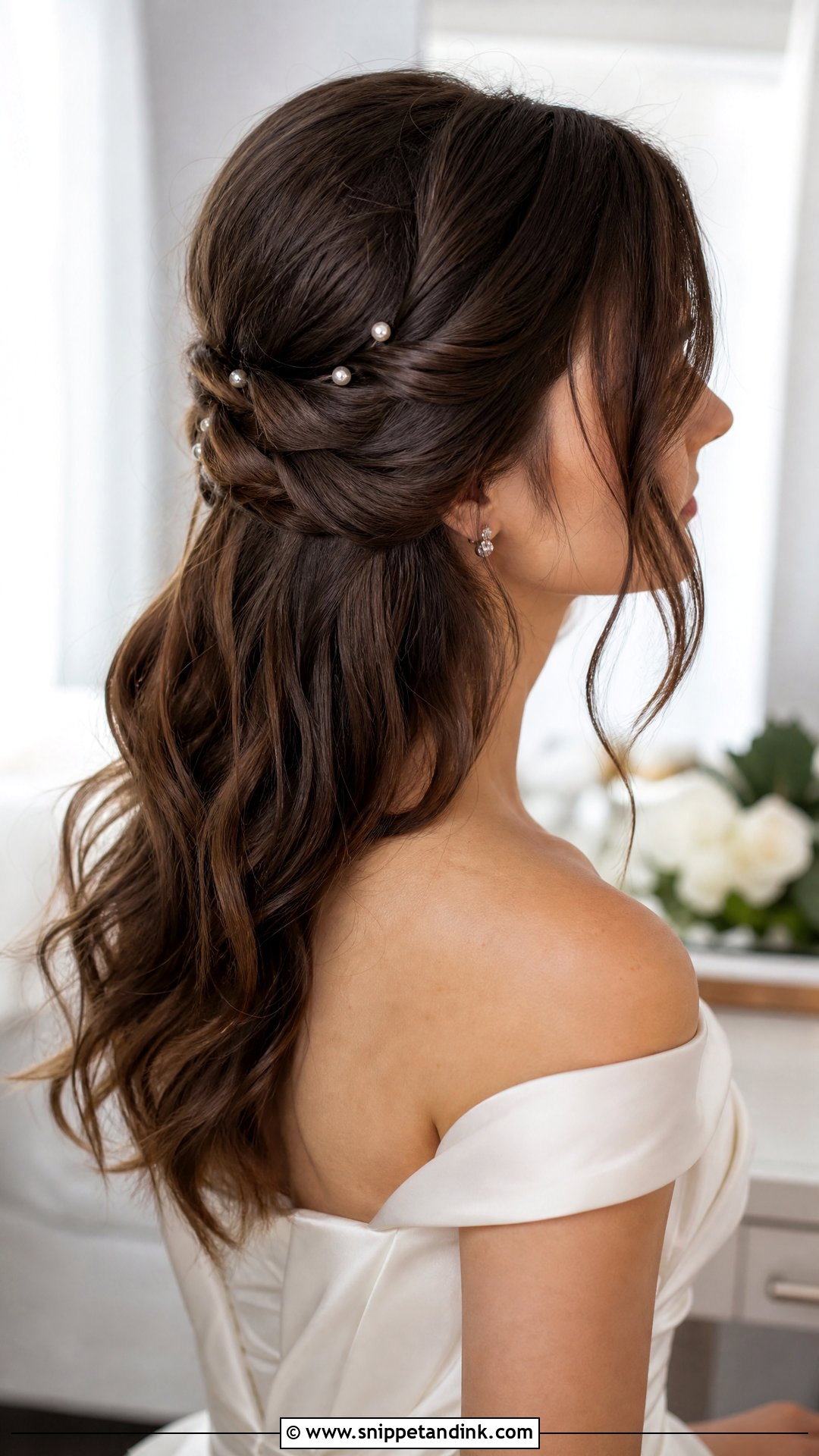
Twists hold better than you’d expect. The twisted crown keeps the top controlled, and the loose front pieces soften the forehead, which makes this a practical pick for bridesmaids as well as brides. Thickness of the front pieces is my main check: too thin and they look like strays, too long and they lose shape. Sections that skim the cheekbone or jaw frame best. Waves through the lower half add movement.
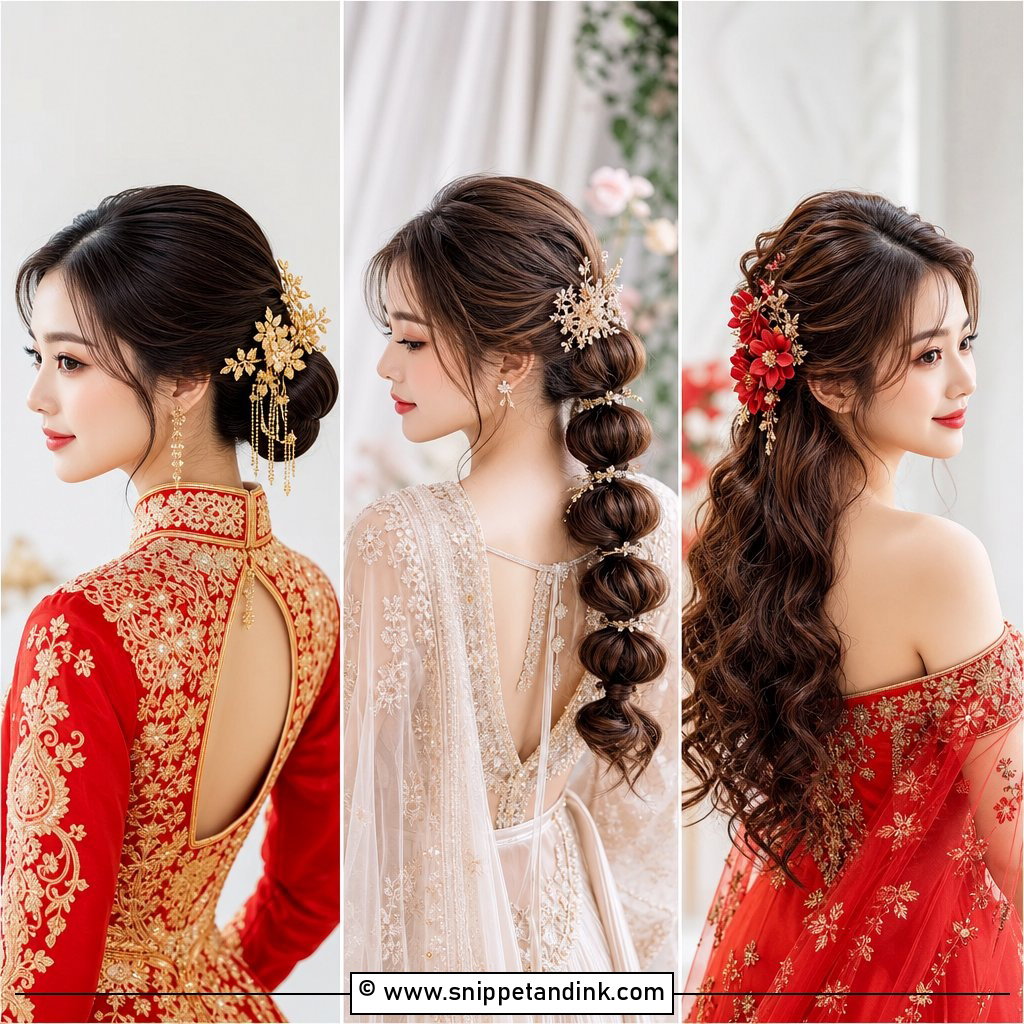
15. Natural Curls Wedding Updo With Soft Bangs
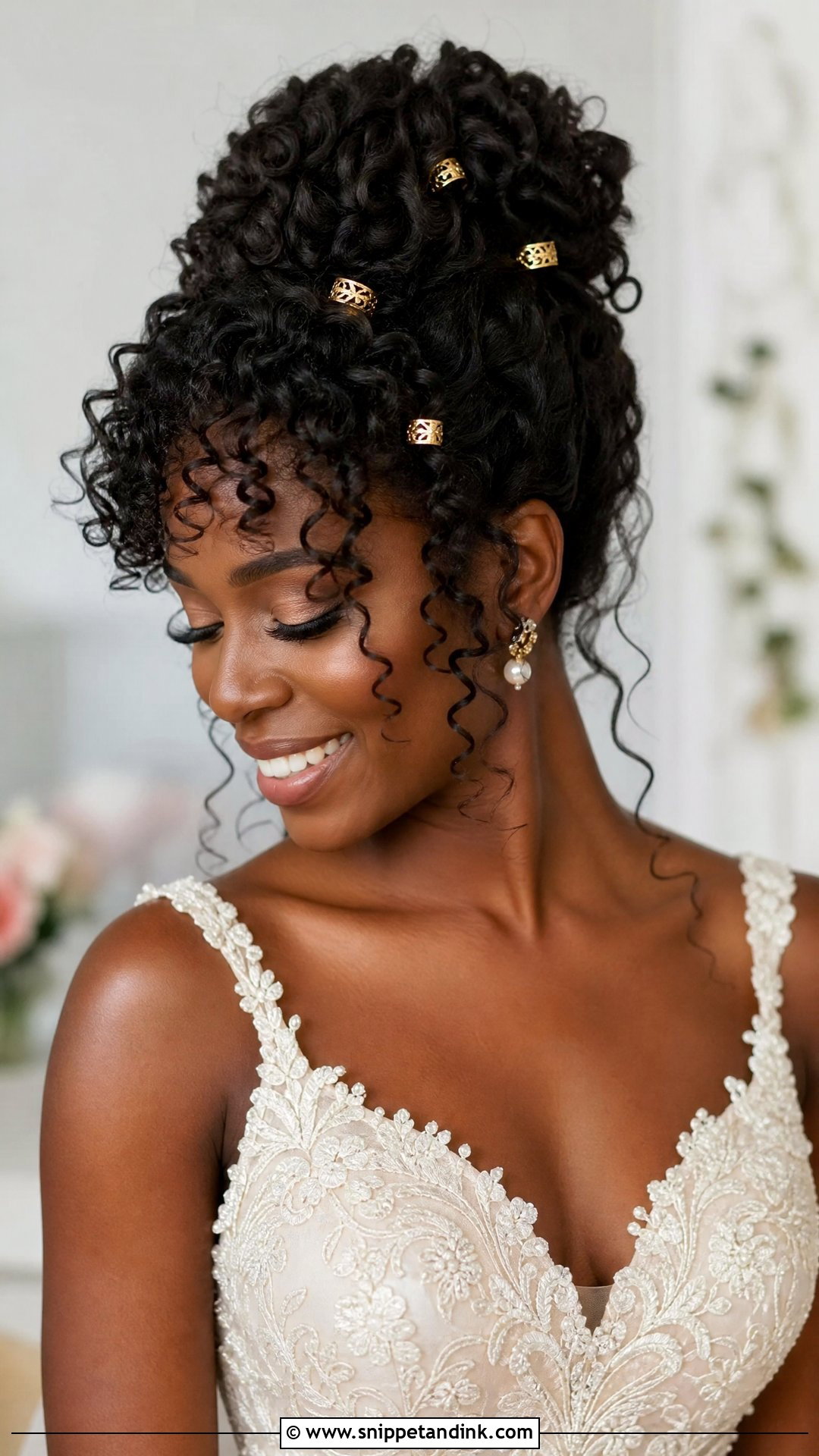
Curls bring their own volume and texture, so the job here is to work with the pattern, not force it into a stiff shape. A loose curly bun, a puff updo or a pinned crown can all hold. I leave a few curls loose at the forehead and temples for gentle coverage. Moisture comes first: I prep with a leave-in and a defining cream, then use a strong but flexible hold so the curls keep their spring for hours. Pearl pins, gold cuffs or a veil tucked low finish it.
Tiaras, Headbands and Combs Can Undo the Balance
It’s easy to plan the hair carefully and then pick accessories separately. With a larger forehead, the headpiece matters almost as much as the style, because anything sitting high adds visual height right where we were trying to soften it.
- A tall tiara worn straight on top lengthens the face. A low-profile one, or a band of pearls set slightly further back, is easier to wear.
- Headbands pressed flat against the hairline push a fringe into your eyes and leave a dent. I set them just behind the bangs.
- Veil combs tucked under a bun keep the eye low. A veil anchored at the crown draws it upward.
- Small clips on the side of a deep part add detail without height, and they hide the pin holding the sweep in place.
Bring every accessory you’re considering to the trial, even the ones you’re unsure about. Swapping them takes five minutes, and you’ll see quickly which ones flatter and which ones just sit there.
Put the Veil On Before You Judge the Fringe
Most of the wedding hairstyles for a big forehead above come down to the same small moves: shift the part, soften the hairline, keep some width at the sides. You don’t need all of them. One or two is usually enough. At the trial, wear your actual veil or headpiece, step outside, and have someone photograph you in daylight. A fringe that looked fine in the salon mirror can read very differently with tulle behind it. If you only like it from one side, tell me; that’s an easy fix on the day.
You'll Like These Ideas:



Leave a Reply