
Formal hair has two jobs: look polished in the first photo and still be standing at the last dance. Most of the work for that happens before anything is pinned, in the prep and the setting. The styles I reach for most at dressy weddings are low buns, glossy waves, sculpted ponytails, French twists and structured half-up shapes, and they’re all here. For each one I’ve noted how it’s built, what hair it suits and where it tends to let people down, so you can walk into a trial knowing what to ask for, bride or guest.

Letting the Neckline Decide Between Up and Down
When a bride or guest can’t decide on a style, I look at the dress before the hair. The neckline tells me where the eye needs space and where hair would hide detail.
- High neck or halter: an updo or high ponytail. Hair down covers the collar and gets caught in the fastening.
- Strapless and sweetheart: almost anything works, but half-up and side-swept waves fill the space across the shoulders.
- Off-the-shoulder: a low bun or chignon keeps the line of the collarbone visible.
- V-neck: half up or loose waves echo the long line of the neckline.
- Open or low back: an updo, so the back of the dress isn’t hidden during the ceremony.
- Heavy lace or beading at the shoulders: keep hair off it, because lace snags curls and pins catch on beading.
Then consider earrings. Long statement earrings call for hair up or swept to one side; studs leave you free to wear hair down.
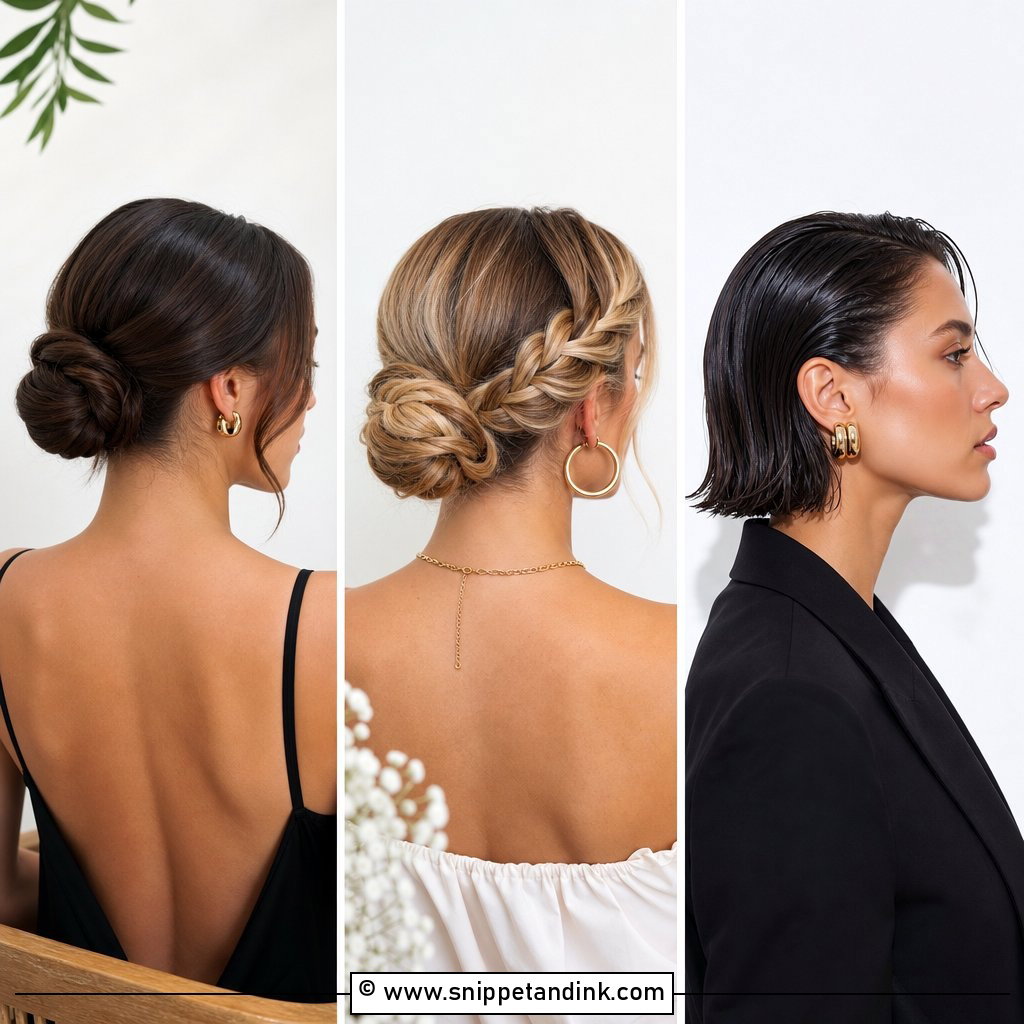
1. Low Bun Wedding Hair

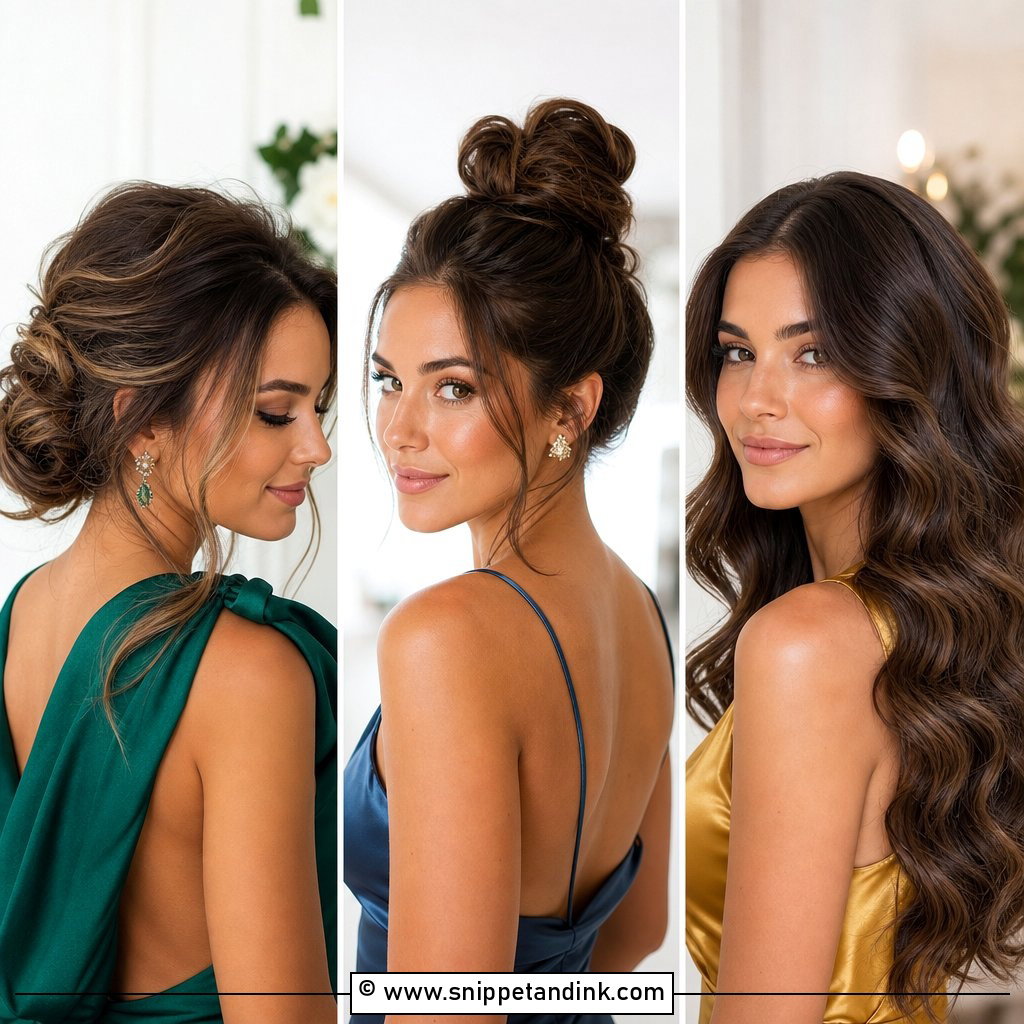
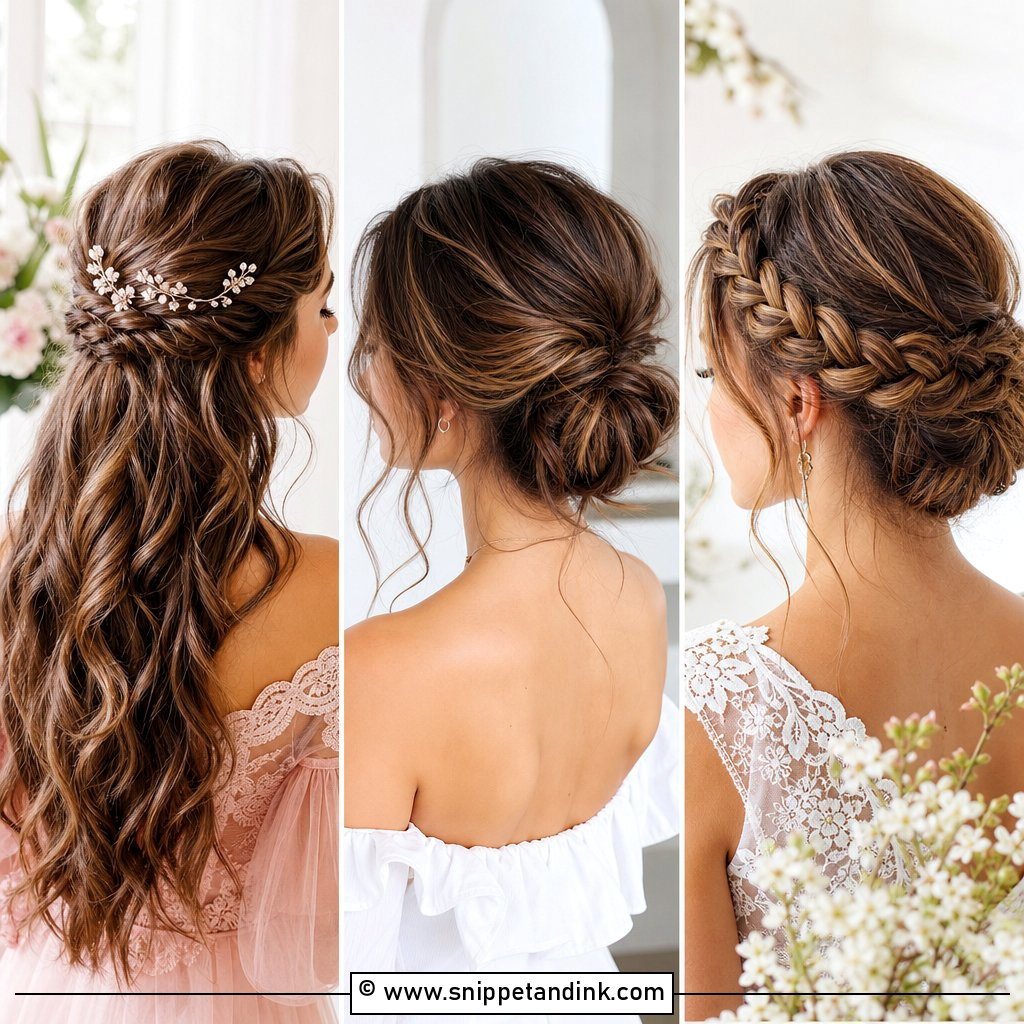
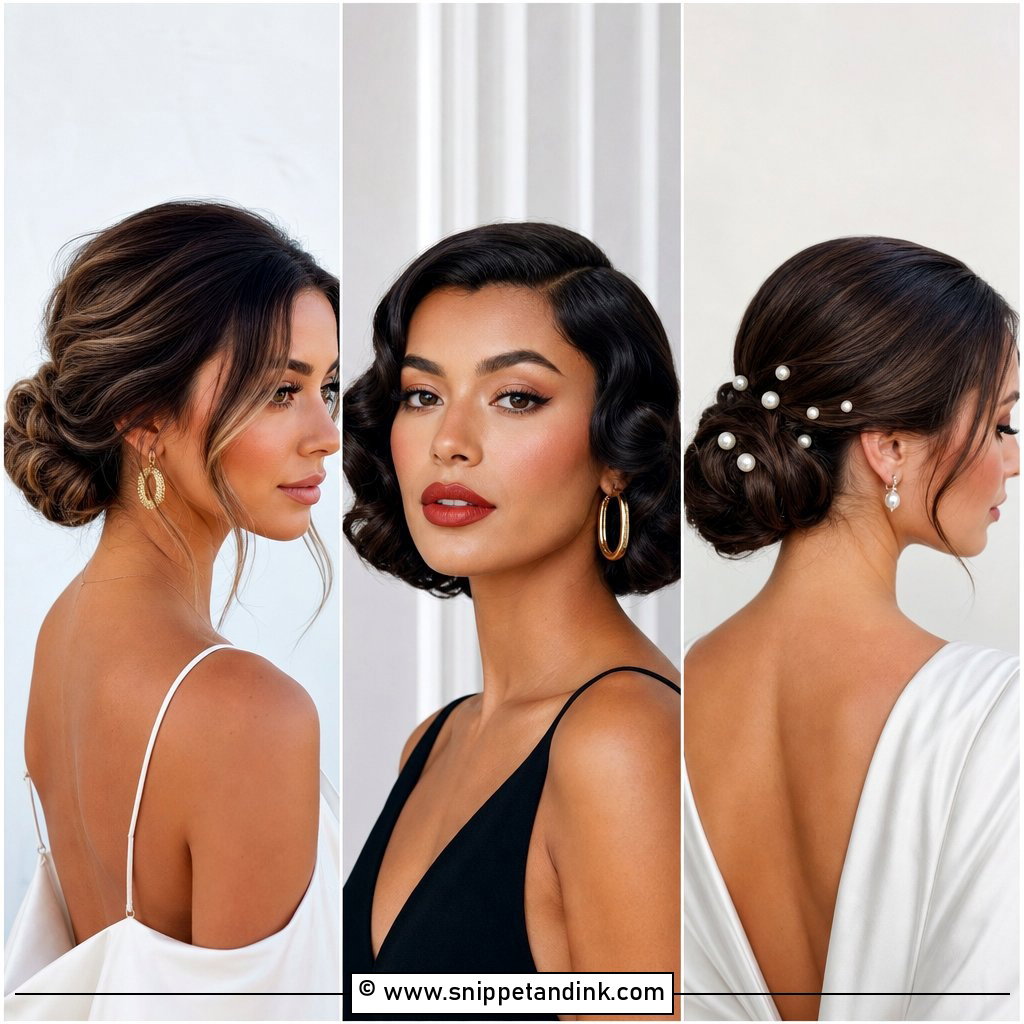
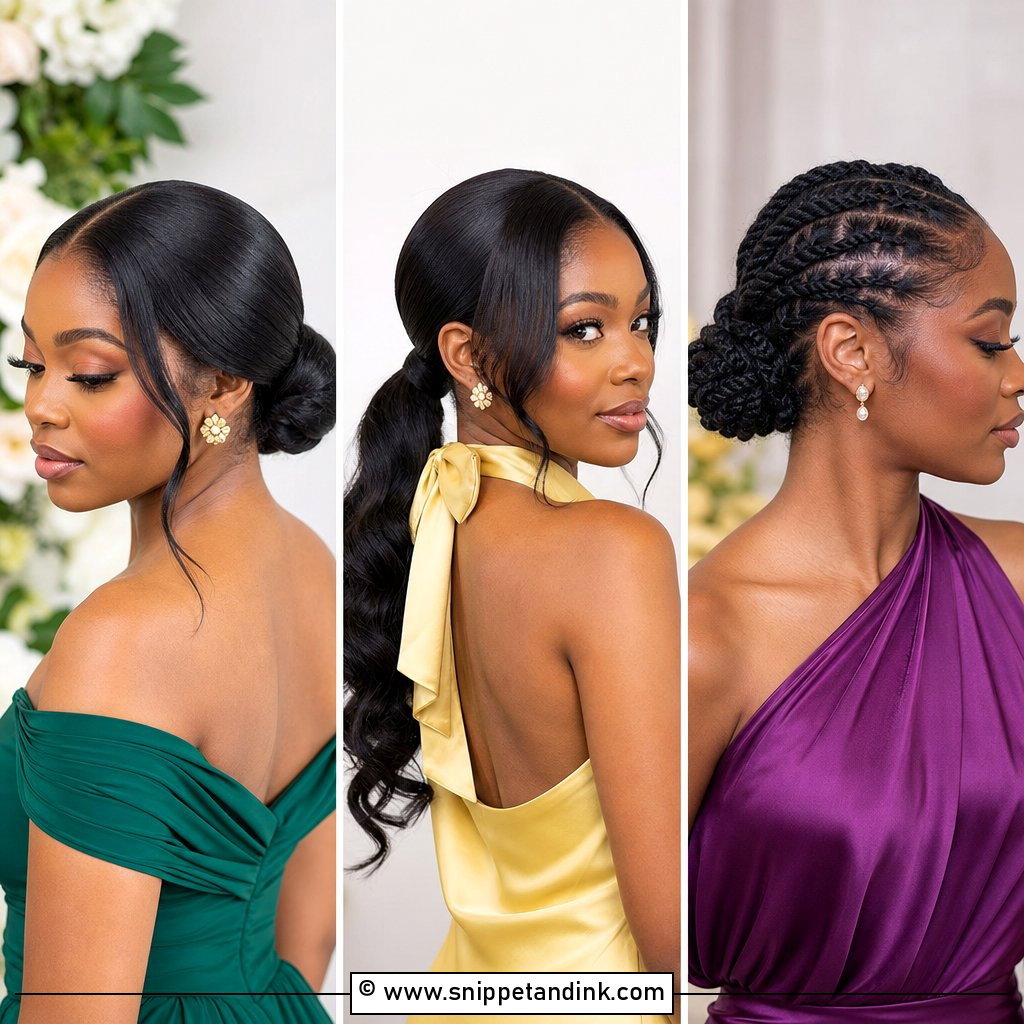
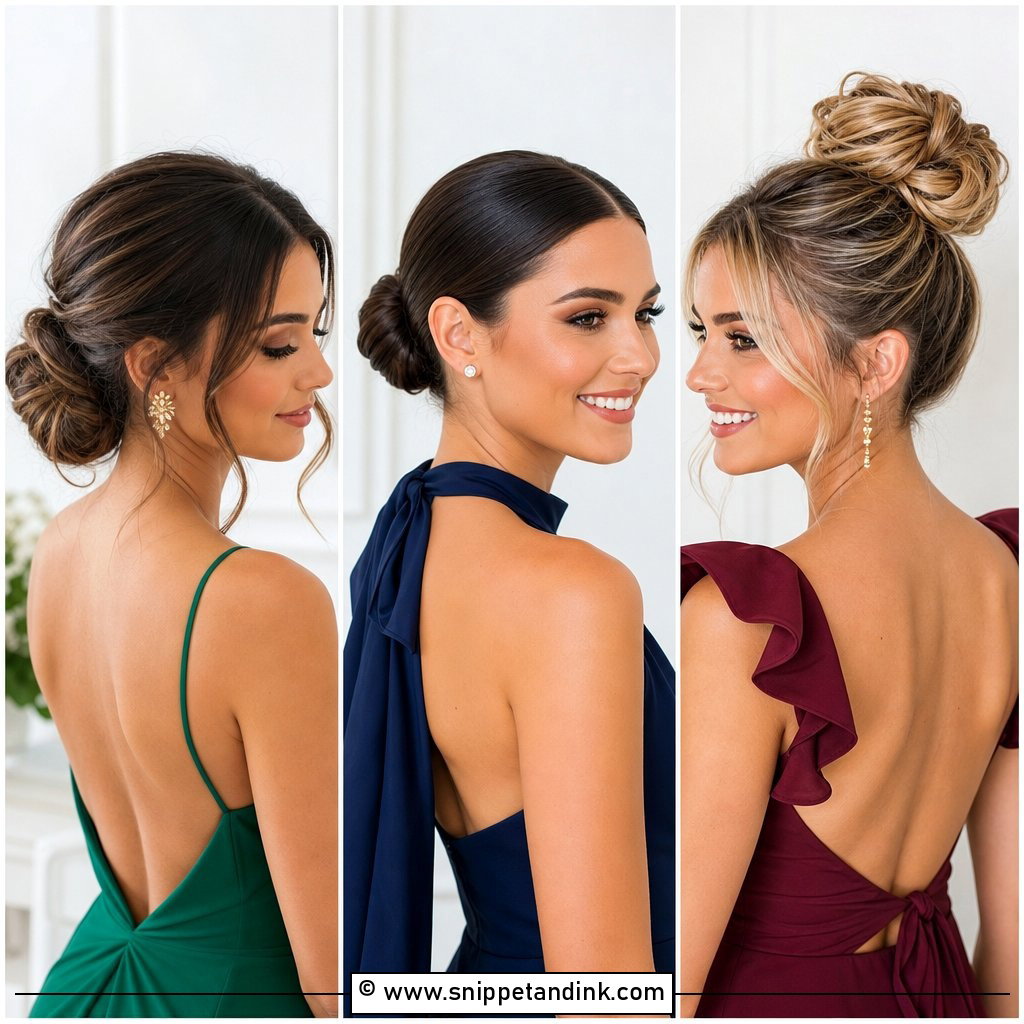
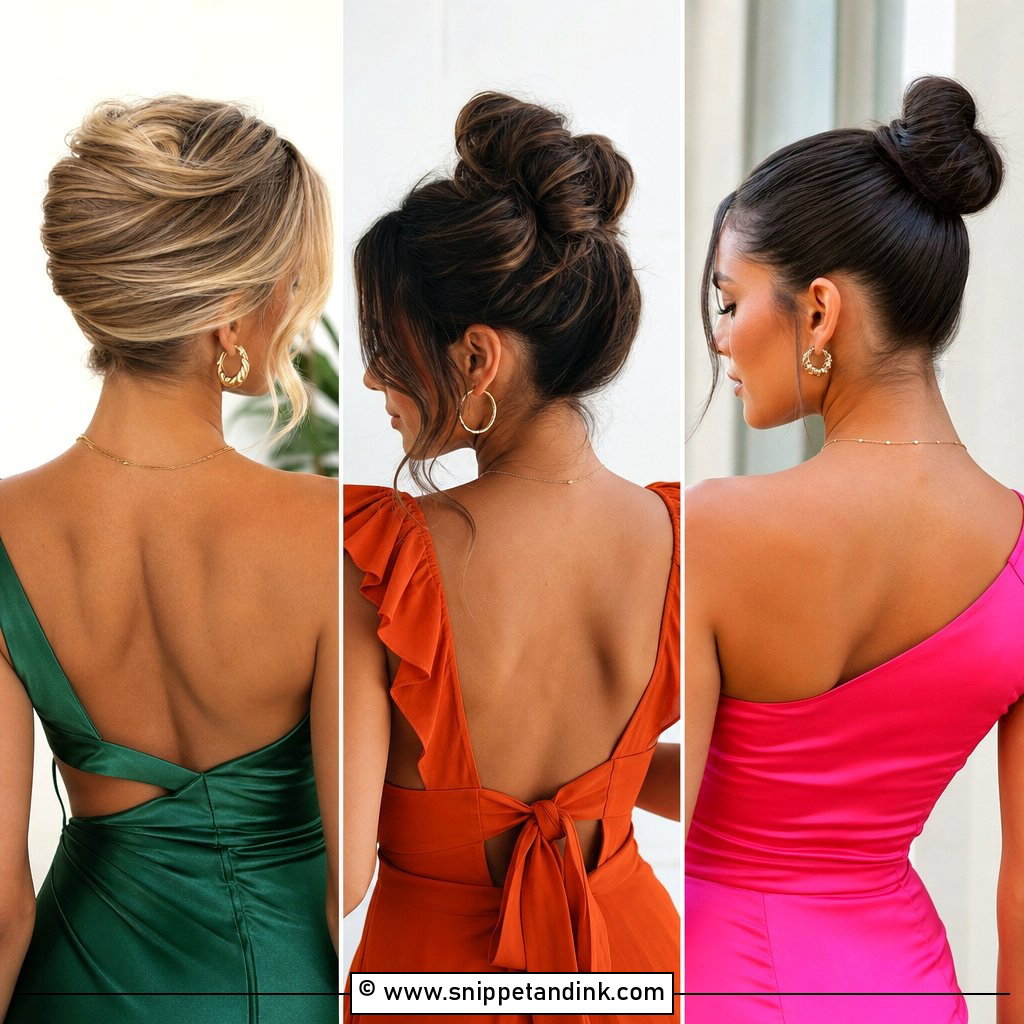
A low bun earns its reputation because it’s pinned close to the head, where nothing can drag it down. It sits at the nape, keeps the neckline clear and gives a veil a solid base just above it. I build it on a small ponytail or a pinned anchor, then wrap and pin the length around it. Sleek suits a ballroom; softly textured suits a garden. Ask for a little lift at the crown, otherwise it can look flat in side-on photos.
2. Sleek Bun Wedding Hair

Sleek buns put the attention on makeup, jewellery and neckline. The smoothness comes from a strong cream or gel, a boar bristle brush and patience, smoothing each side before the hair is gathered. My caution is tension: pulling the hairline very tight for ten hours causes headaches and, done often, can thin the edges. I place the bun a touch lower and keep the hairline smooth rather than strained. A side part or a little crown lift softens it on a narrow face.
3. Classic Chignon Wedding Hair

A chignon is softer than a bun because the hair is rolled rather than wound, so the shape is a gentle curve at the nape. Satin, lace, off-the-shoulder necklines and pearls all suit it. I can make it sleek, full or loosely curved, which is why it adapts to so many textures. Give it a firm base: a hidden elastic or a few crisscrossed pins underneath, so the roll has something to lock into. Without it, the chignon starts to sag by the first dance.
4. French Twist Wedding Hair

A French twist is the updo for someone who wants her hair fully up without a round bun. I backcomb lightly for grip, sweep the hair to one side, fold it inward and pin along the seam in a vertical line. Medium to long hair suits it best; very thick hair can make the roll bulky, so I thin it out by pinning hidden sections flat first. High necks, boat necks and structured gowns all pair well with it.
5. Hollywood Waves Wedding Hair

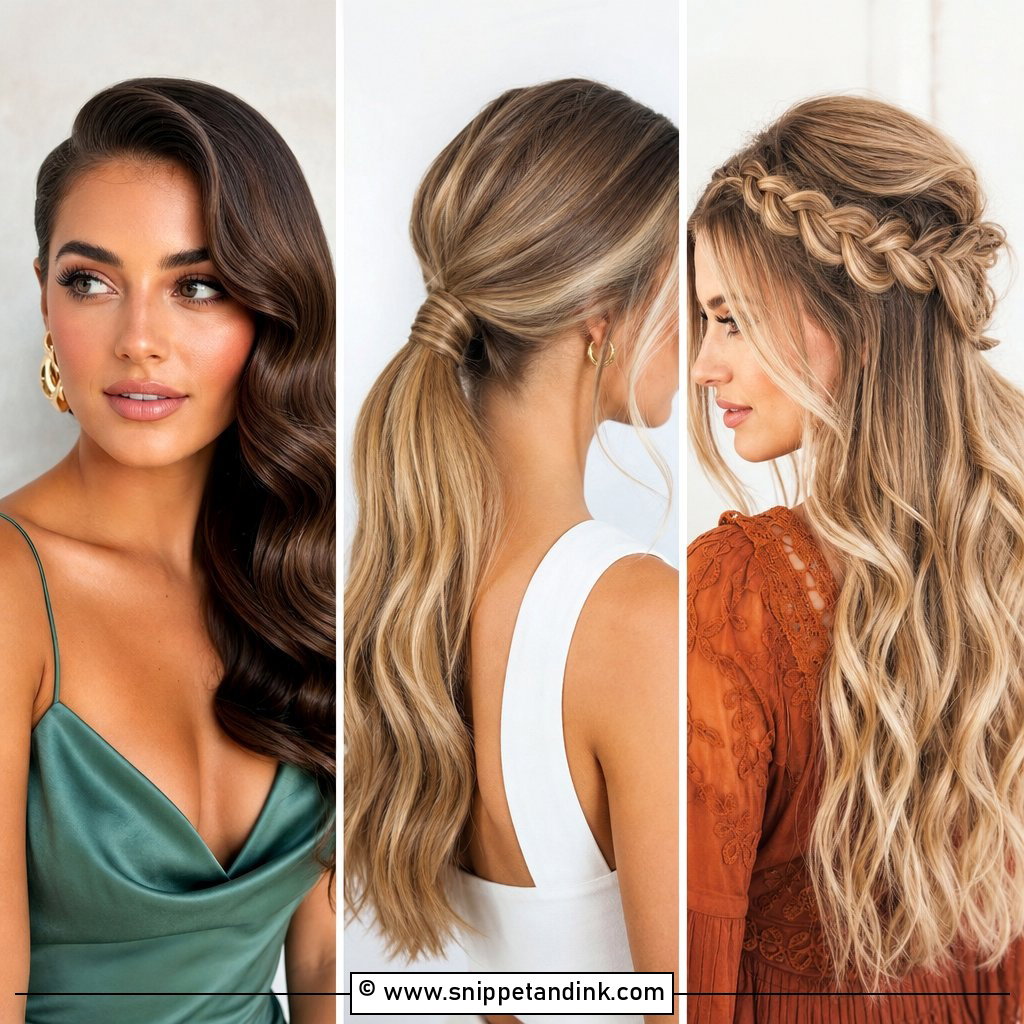
Hollywood waves keep the hair down but read as fully formal, because the curls are brushed into one continuous pattern instead of left as separate ringlets. That brushing only works if the hair has enough length to show the wave, around shoulder length or longer. I set each curl and pin it to cool before brushing out with a wide comb. Strapless, one-shoulder and vintage gowns suit it. A flexible spray keeps the shape soft enough to move.
6. Side Swept Wedding Hair

A side sweep is down hair with a clear direction, which is what makes it look formal. Polished waves go over one shoulder, and the other side is tucked or pinned back to open the face and show an earring. The shape relies on hidden pins behind the far ear, crossed so they lock together. I suggest it often to brides who want their hair down but are worried it will look too casual, because the asymmetry gives it structure.
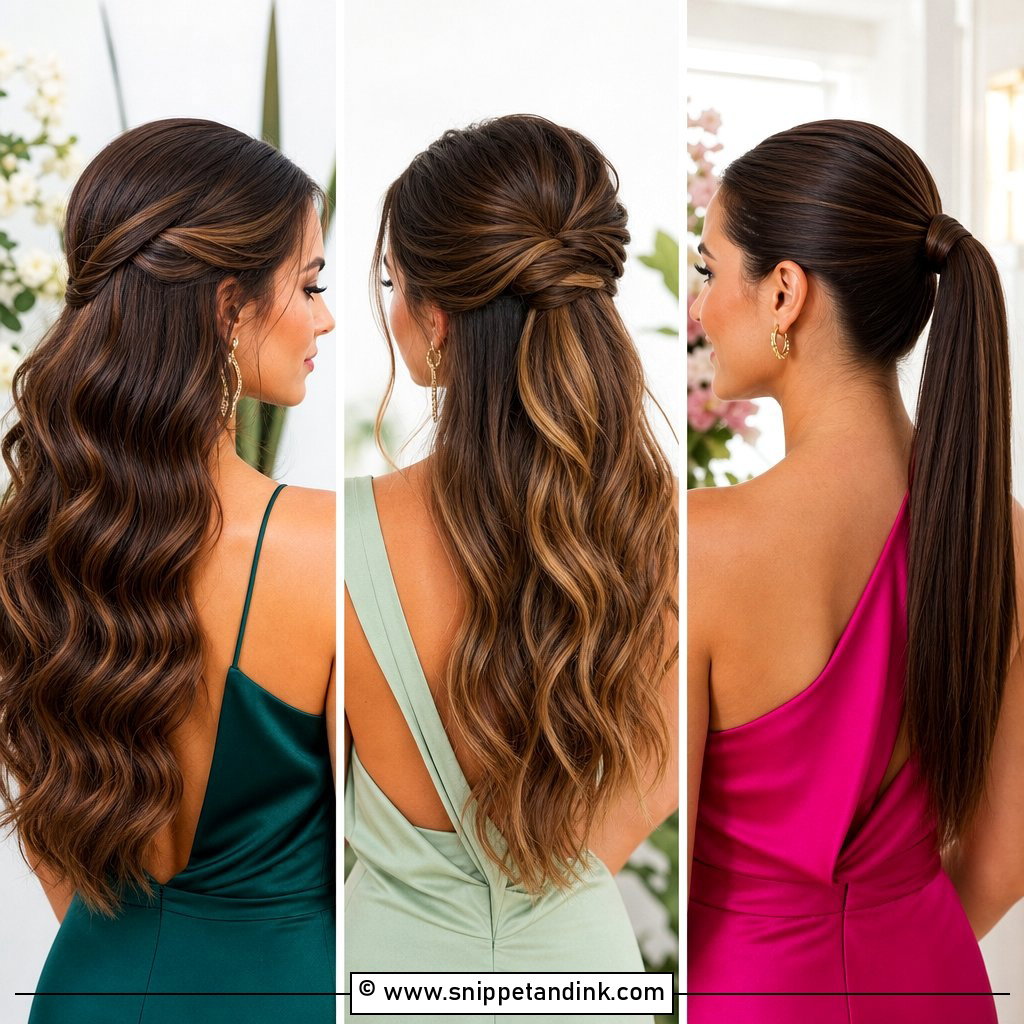
7. Half Up Wedding Hair

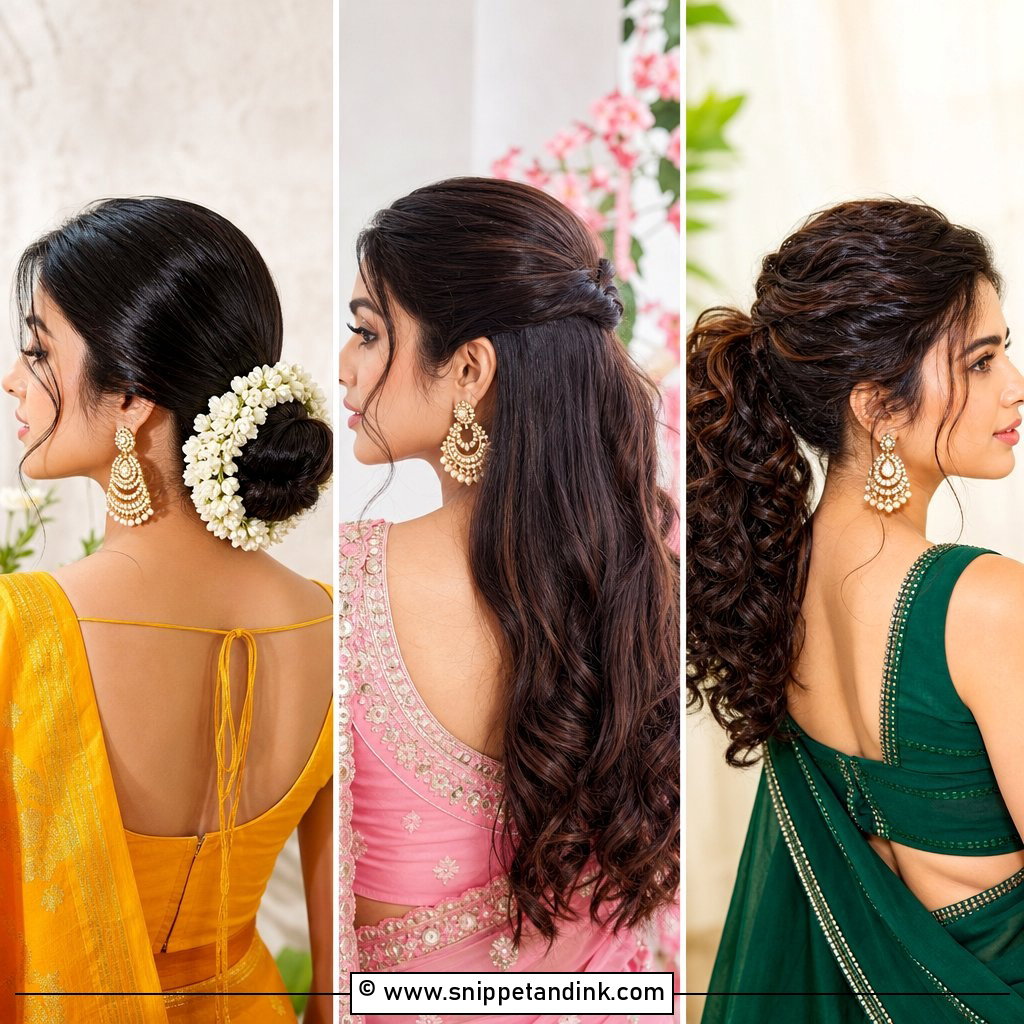
Half up sits between down and a full updo. The top section is pulled back, twisted or softly lifted, and the rest falls in waves or curls. The pinned section gives a veil comb somewhere solid to sit, which is one of its biggest practical advantages. Keep the crown smooth and the pins hidden for a formal finish. Sweetheart, strapless and V-neck dresses suit it well.
8. Half Up Hollywood Waves Wedding Hair

Combining a pinned crown with sculpted waves gives you glamour without the risk of hair blowing over your face in photos. The detail I’d point out is wave placement: the waves should start at the same level all the way round, so the curl line is even from the back. When some sections start higher than others, it looks uneven at the ceremony. Ask for soft crown volume and a clean part. Bridesmaids, guests and brides can all wear it.
9. Low Ponytail Wedding Hair

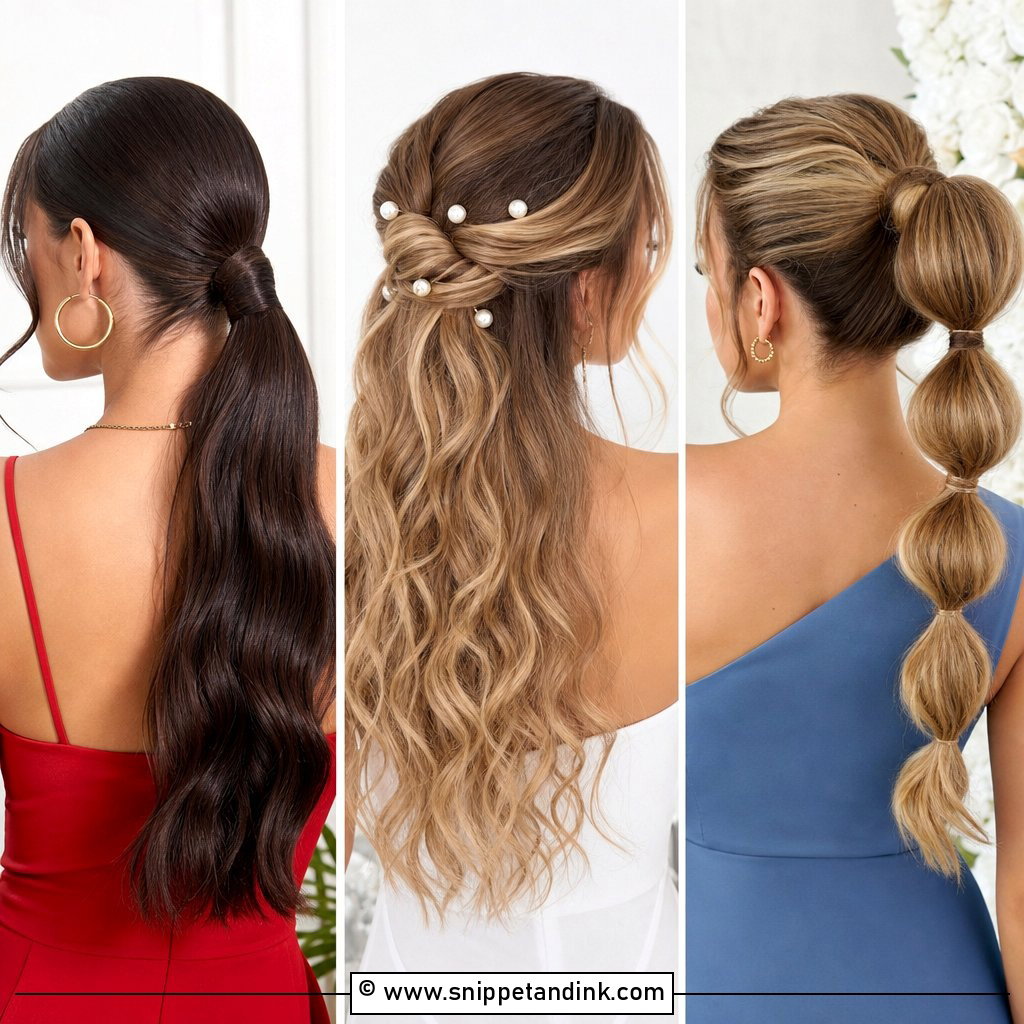
A low ponytail can be surprisingly formal, and it’s the easiest way to show off length on thick hair without weighing down an updo. I smooth the roots, tie it low with a strong elastic and wrap a section of hair around the base, pinning it underneath. The length can be curled, waved or kept sleek. A middle part makes it modern; a side part makes it softer. Thick ponytails can feel heavy by evening, so tie it securely but not too tight.
10. High Ponytail Wedding Hair

A high ponytail lifts the face and swings when you dance, so it suits a party-heavy reception. It pairs with strapless, halter, and fitted gowns. To stop it looking like a gym pony, I polish the roots, wrap the base, add volume to the length with big curls and finish with a light shine spray. A small padding of backcombing under the ponytail keeps it from drooping toward the back of the head over the evening.
11. Braided Bun Wedding Hair

Braids hold pins better than smooth hair, which makes a braided bun one of the most secure choices on this list, especially outdoors. The braid can wrap the bun, lead into it from the crown or run along one side. On thick hair, braiding also reduces bulk, so the bun ends up smaller and neater. Keep the braid neat and loosen only the edges. A veil, a few pins or a small comb sit comfortably beside it.
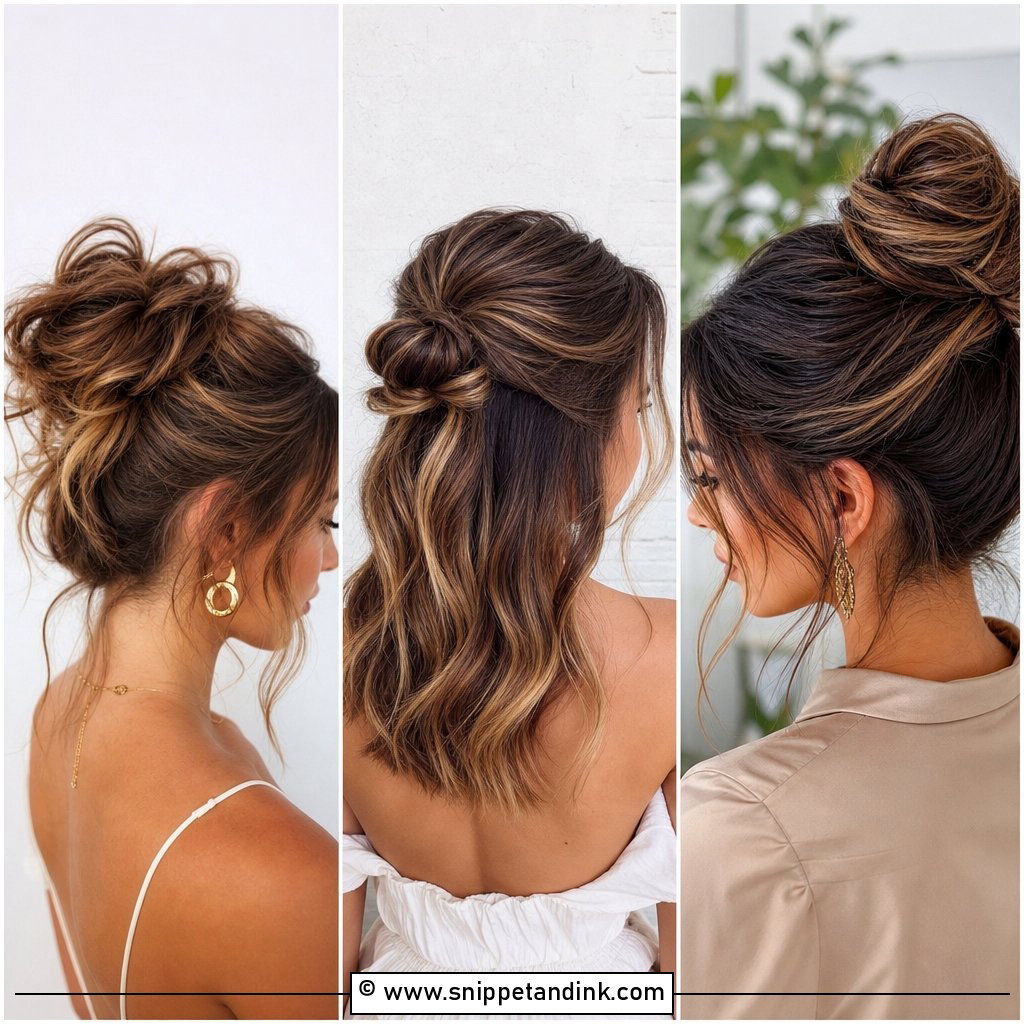
12. Textured Updo Wedding Hair

A textured updo is curled first and then pinned, so the volume is built in rather than added at the end. Layered hair suits it well, since the shorter layers become soft pieces at the face and crown. Fine hair needs volume products and sometimes a little padding hidden inside. What separates soft from messy is intention: each loose piece should be placed, curled and set, not left where it fell.
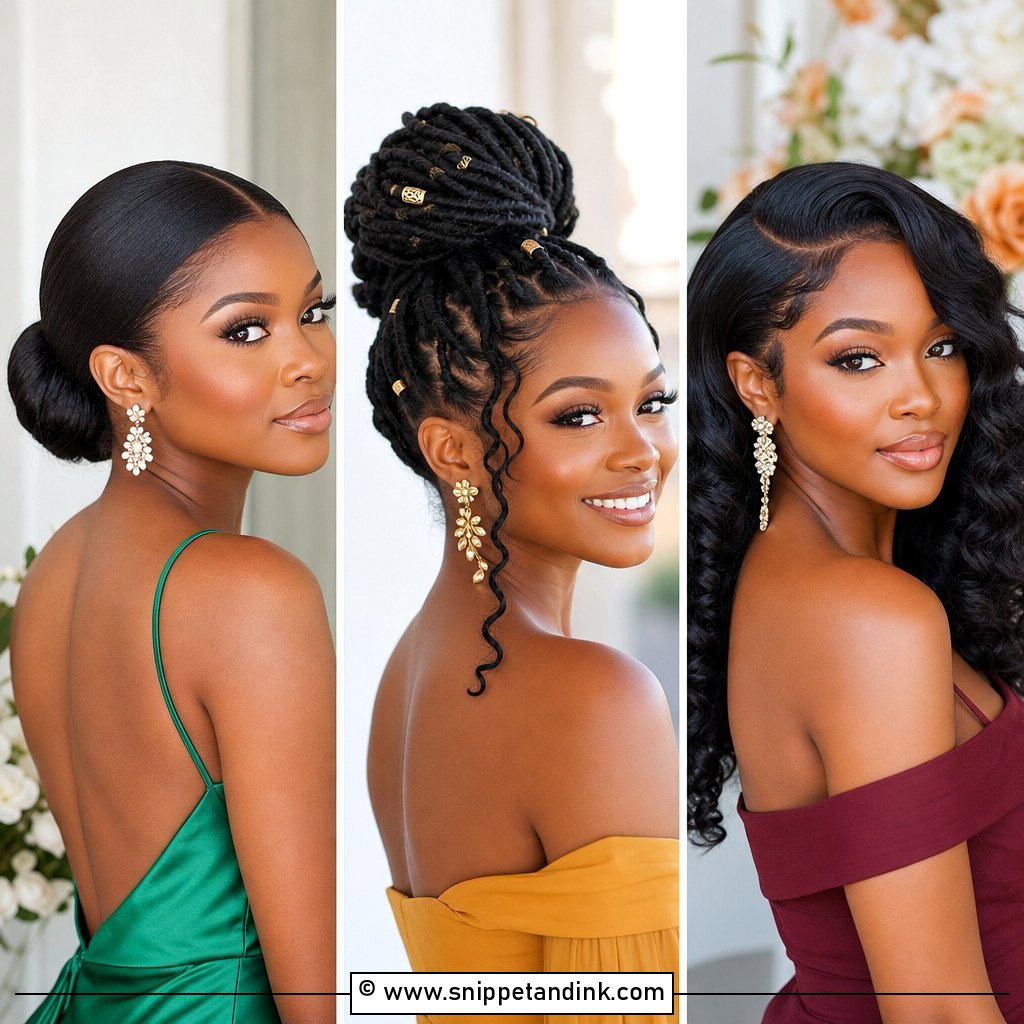
13. Curly Updo Wedding Hair

Curly updos should show the curl pattern rather than crush it. I gather curls in clusters and pin with large U pins, which hold without flattening, and I never brush curls dry. Hydration and definition the day before, a leave-in and a cream or gel, make the shape smoother and longer-lasting. The updo can sit low, high or to the side. Ask your stylist to soften the hairline rather than slicking it back, unless that’s the look you want.
14. Natural Hair Updo Wedding Hair

Natural hair can go into a sculpted puff, a tucked roll, a twisted bun, a braided crown or a pinned curly updo. I choose the shape by what the texture does on its own, so the style isn’t fighting your hair all day. Moisture and definition first, then edge control for a crisp finish. Lifting the hair away from the shoulders shows statement earrings and detailed necklines. If extensions, a veil or accessories are part of the plan, a trial matters even more than usual.
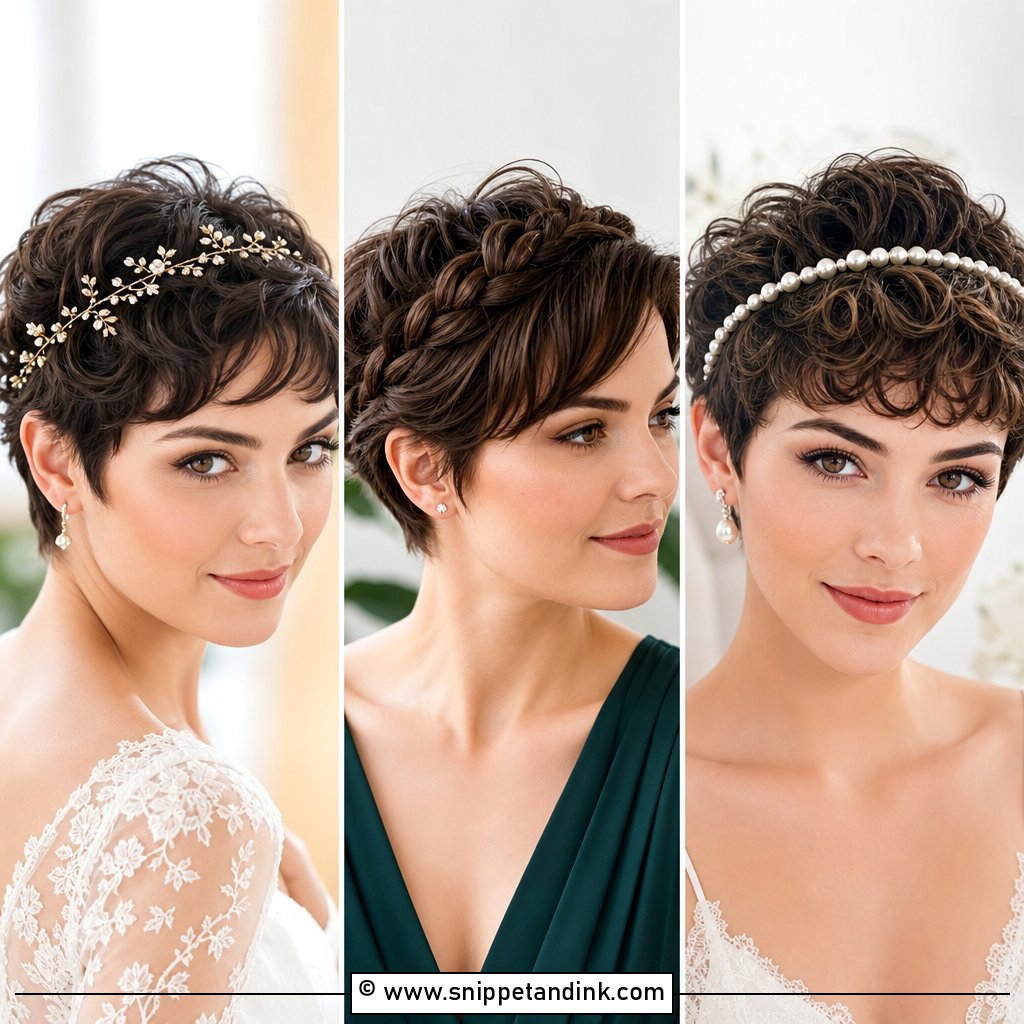
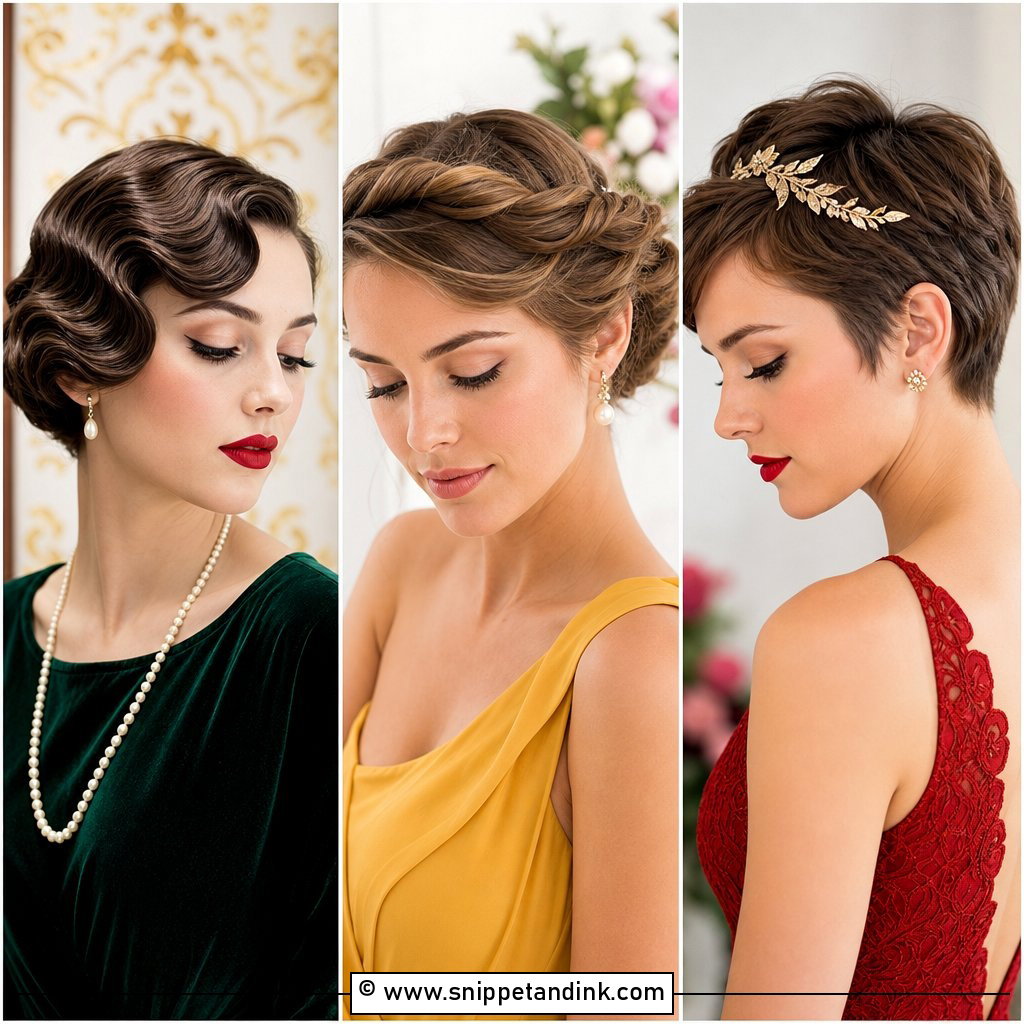
15. Short Hair Wedding Hair

A bob, pixie, or cropped cut looks formal when the shape is deliberate, not when it’s loaded with product. On a bob, polished bends or a deep side part do the job. On a pixie, texture and shine on top make the difference. Accessories help as long as they stay small: a few delicate pins, a slim headband or a little comb. Get the cut tidied a week or two before, so it looks fresh but not newly chopped.
16. Bob Wedding Hair

A smooth bob shows the jawline, neck and earrings without needing an updo at all. If the cut is blunt, a sleek, straight finish looks sharp; if it’s layered, soft bends add movement. Healthy-looking ends matter more than anything here, so a light serum on the tips and a recent trim are worth more than any style. Tuck one side behind an ear or set a deep side part for drama.
17. Vintage Waves Wedding Hair

Vintage waves are tighter and closer to the head than loose curls, and they usually sit on a side part with a glossy finish. They work on short, medium and long hair, and suit satin, lace and pearls. Placement is everything, so bring a reference photo showing where you want the waves to fall. I set them with a setting lotion and brush them softly, so they move a little while keeping their shape.
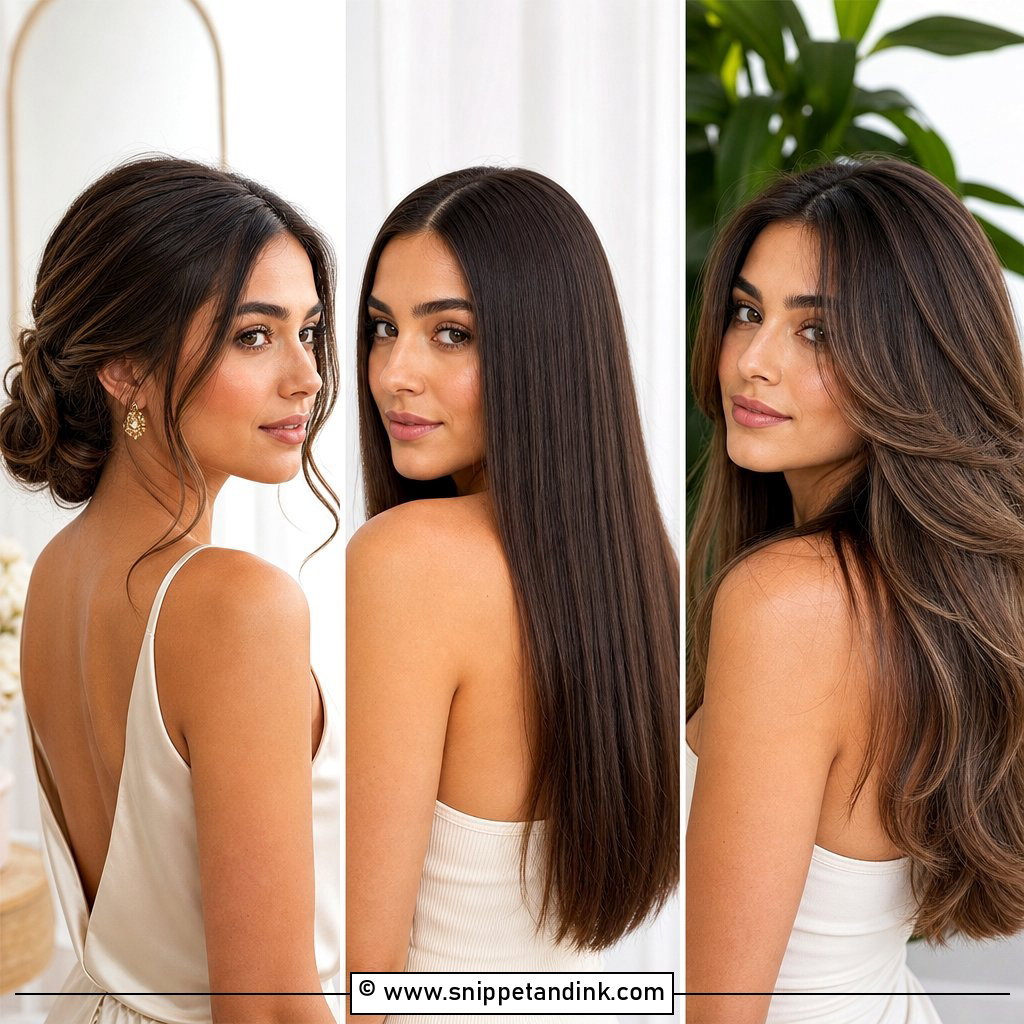
18. Bouncy Blowout Wedding Hair

Of all twenty, this is the style closest to your everyday hair. Bouncy blowout wedding hair relies entirely on the dry: I use a mousse at the root, dry in sections over a large round brush and set each section in a velcro roller while it cools. That cooling time gives the bounce its staying power. It suits a courthouse ceremony, a rehearsal dinner or a relaxed dress code. Keep products light, since heavy spray makes a blowout look stiff.
19. Pearl Pin Wedding Hair

Pearl pins add detail without crowding a hairstyle, but they only look good on a polished base. Scatter them through a low bun, tuck them into a chignon or line them along one side of soft waves. I slide each one over a crossed bobby pin, because decorative pins on their own rarely grip. Fewer is better: odd numbers and varied sizes look natural, while a long row of identical large pearls starts to look like a headband.
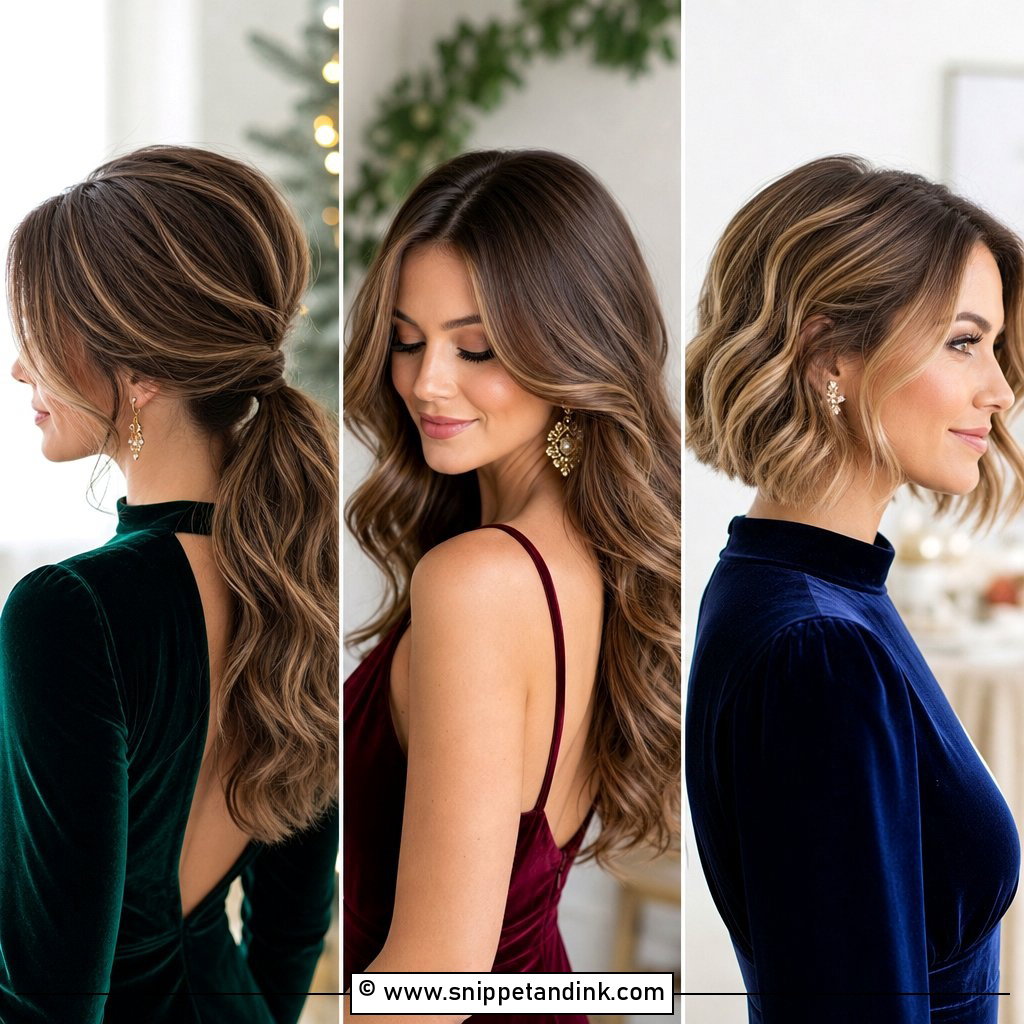
20. Veil Wedding Hair

A veil needs a hairstyle with structure, because it adds weight and pulls on wherever it’s anchored. Low buns, chignons, half-up waves and French twists all give a secure spot for the comb. Match the placement to the style: a low veil sits under or just above a bun, and a crown veil needs some volume at the top. Bring your veil, or one with a similar comb, to the trial so pinning and balance can be planned. And plan how the hair will look once the veil comes off.
Rain, Wind and a Humid Marquee
Weather changes which of these styles I’d recommend. Damp air makes curls relax and straight hair frizz, and wind lifts veils and loose sections. These are the adjustments I make when the forecast looks uncertain.
Styles that cope best
Sleek buns, French twists, braided buns and chignons hold their shape in humidity because the hair is smoothed and pinned close to the head. Vintage waves set with gel also hold up well. Loose Hollywood waves and bouncy blowouts are the most vulnerable, since both depend on curl that moisture undoes.
What I change on a damp day
- Curl a little tighter than you want at the ceremony, knowing it will loosen.
- Use an anti-humidity finishing spray instead of a heavy hold spray, which can go sticky.
- Move from fully down to half up so the front stays off the face.
- For natural curls, define rather than stretch, because a defined curl pattern copes with damp air better than a blow-dried one.
Wind is mainly a veil problem. A fingertip or shorter veil, an extra pair of pins crossed over the comb and someone ready to gather it for outdoor photos make all the difference.
A Trial Answers What Photos Can’t
Formal hair is about balance between polish and comfort over a long day. Your neckline, venue, texture, weather and accessories all narrow the options. Sleek buns, low ponytails and French twists suit a clean, minimal look; Hollywood waves, textured updos and half-up waves suit something softer. Curls, short cuts and bobs look formal when they have shape and shine. Book a trial, bring your inspiration photos and accessories, and wear the style for a few hours afterward to see how it feels.
You'll Like These Ideas:



Leave a Reply