
An Indian wedding asks more of your hair than almost any other celebration. There are several functions, often in heat, with heavy earrings, a dupatta or pallu that wants to sit over your head, and hours of dancing. Most guests I style don’t want three hours in a salon chair, and they don’t need it. Simple shapes hold up better than elaborate ones as long as the foundation is solid. The styles below range from low buns wrapped in gajra to soft braids and open waves, and they sit comfortably with lehengas, sarees and Indo-Western outfits. For each, I’ve added what I’d check first and where it tends to fall apart.
Fresh Jasmine Wilts Faster Than Your Bun Will
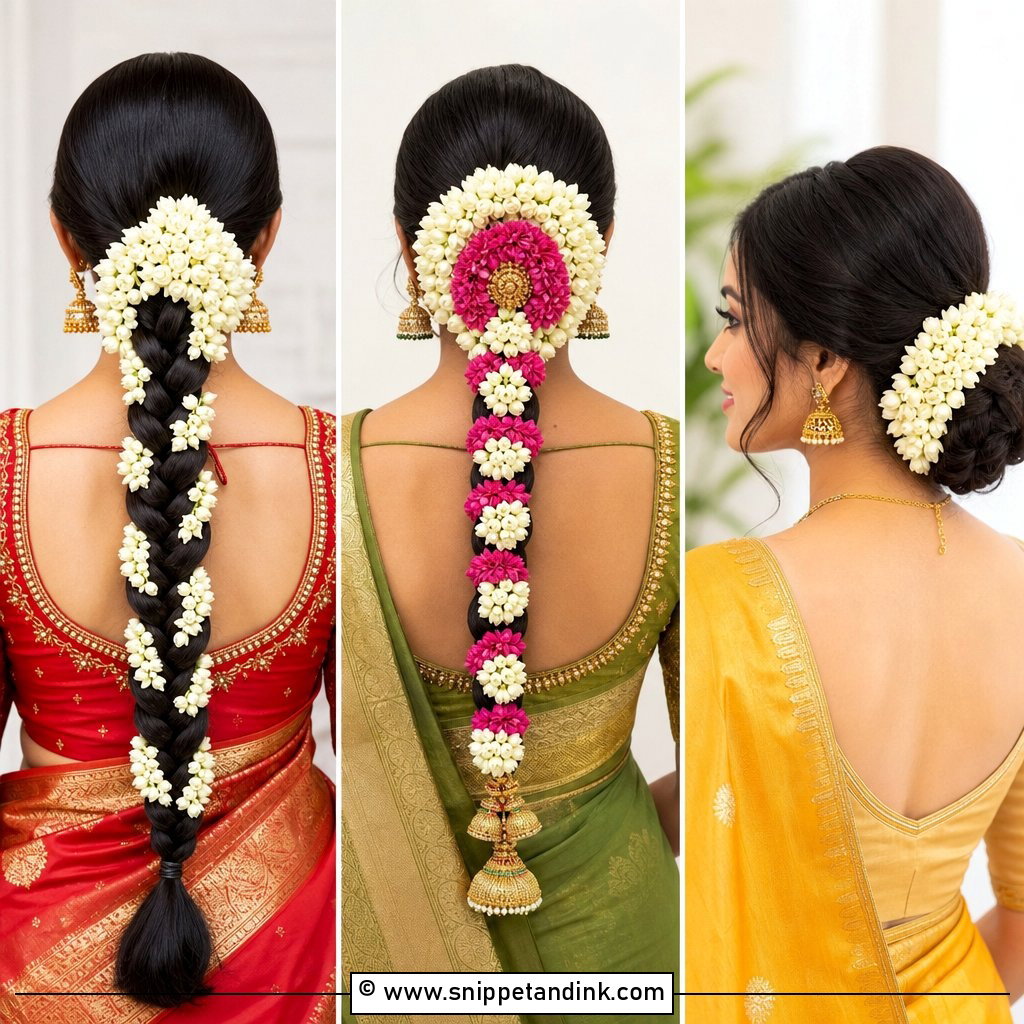
Several of these looks use real flowers, and that’s where I see the most last-minute panic. Jasmine gajra is at its best on the day it’s strung. Buy it as close to the function as you can, and if you must store it, wrap it loosely in a damp cloth or paper towel and keep it in the fridge, never the freezer. Cold, damp and loose is the rule; packed tight in a plastic bag, the buds bruise and brown.
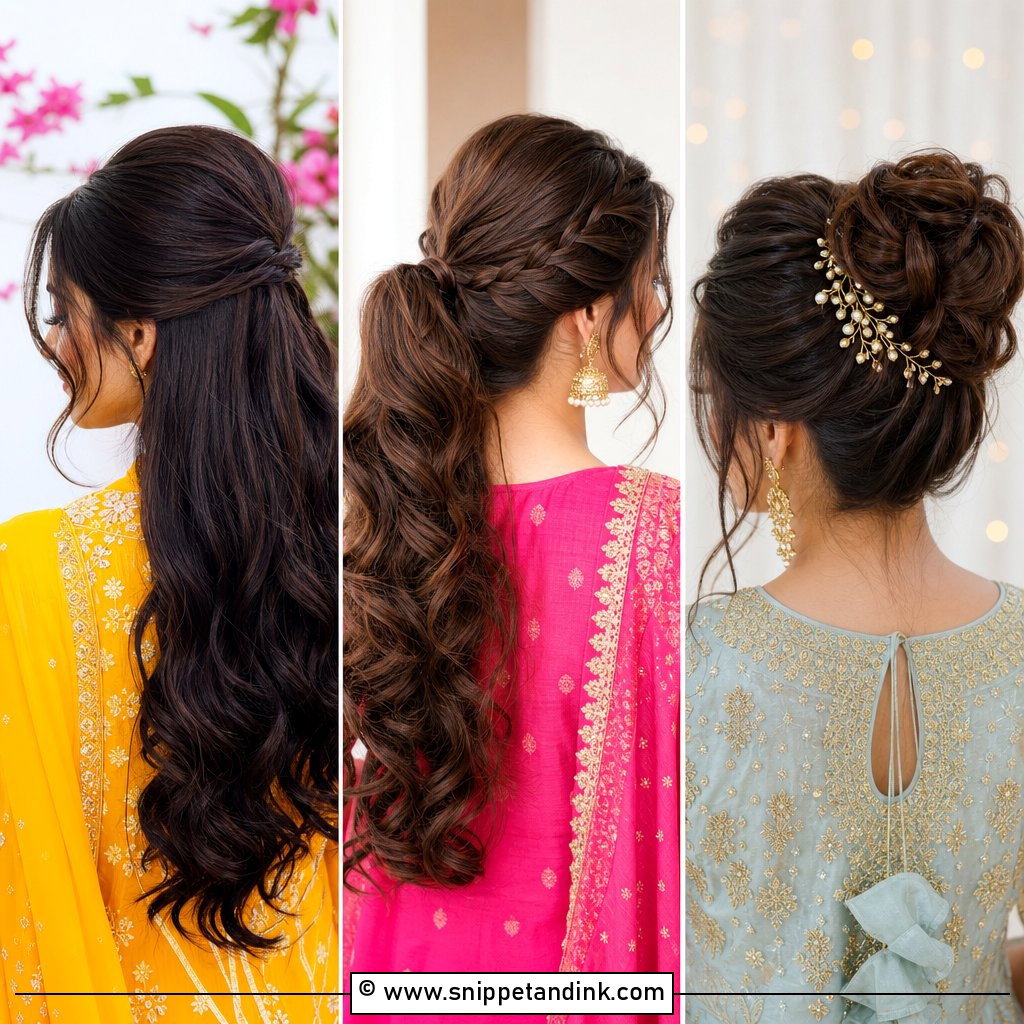
The buds are usually still closed when fresh and open through the evening, which is when the fragrance becomes strongest. If you’re sensitive to strong scents, a shorter strand pinned at the base of the bun is plenty. Pin through the thread with U-pins, keep the flowers off your neck so they don’t stain a light blouse when they bruise, and remove them before you sit for a long car ride home.
1. Low Bun With Gajra
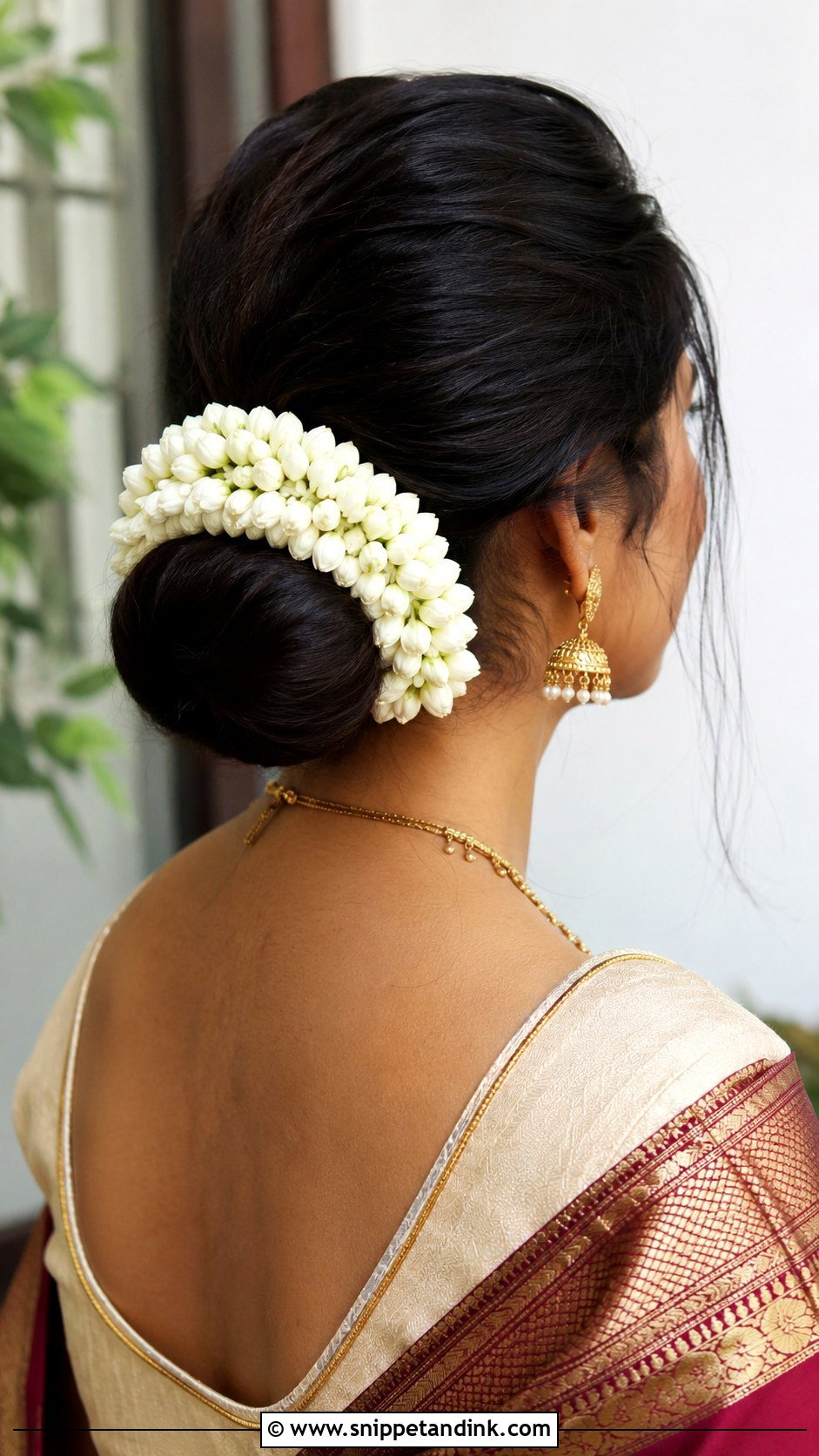
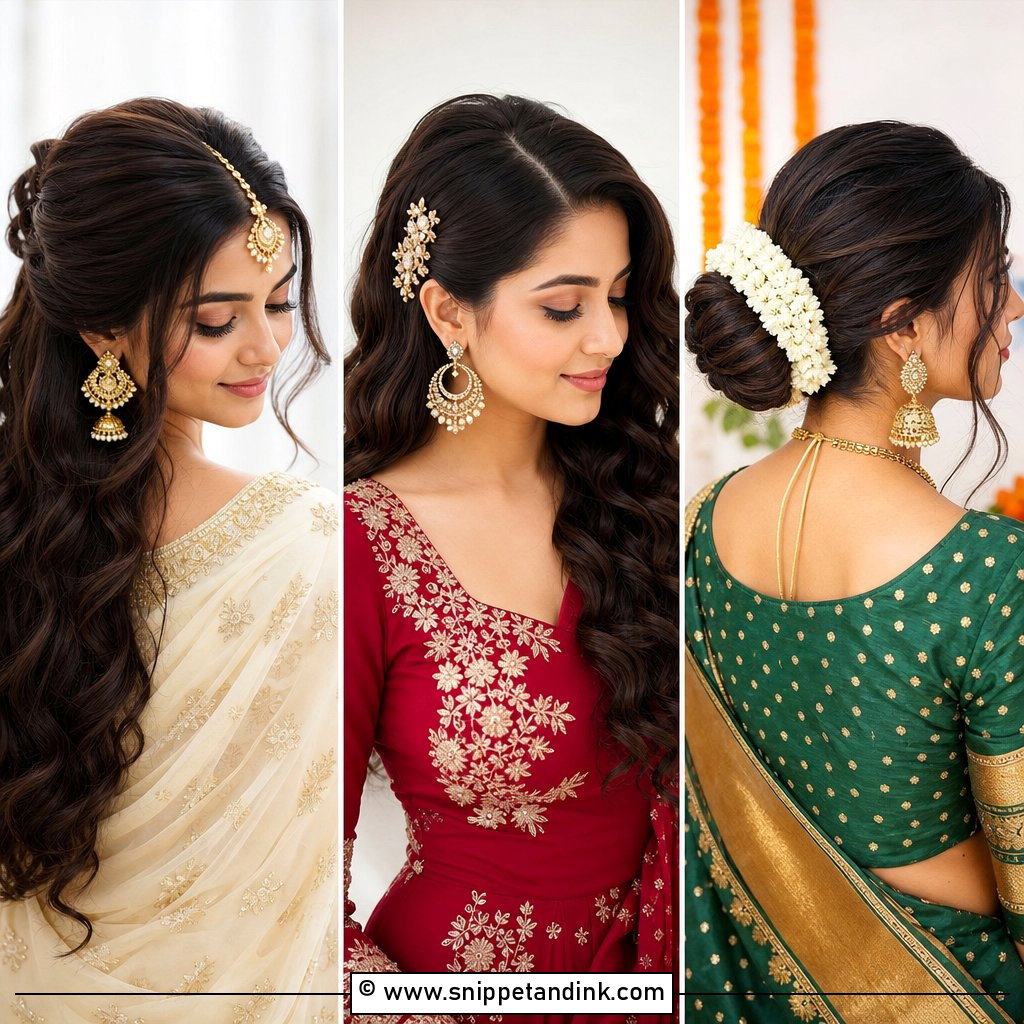
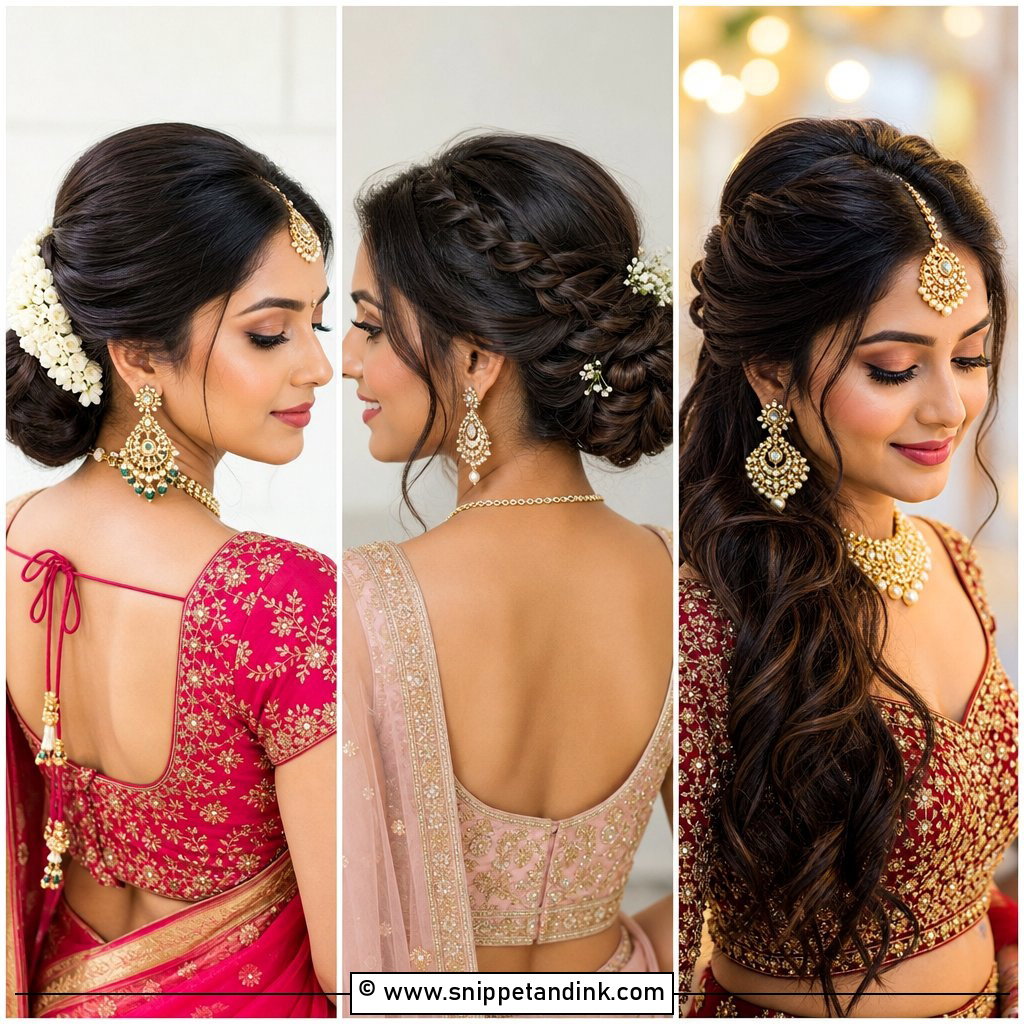
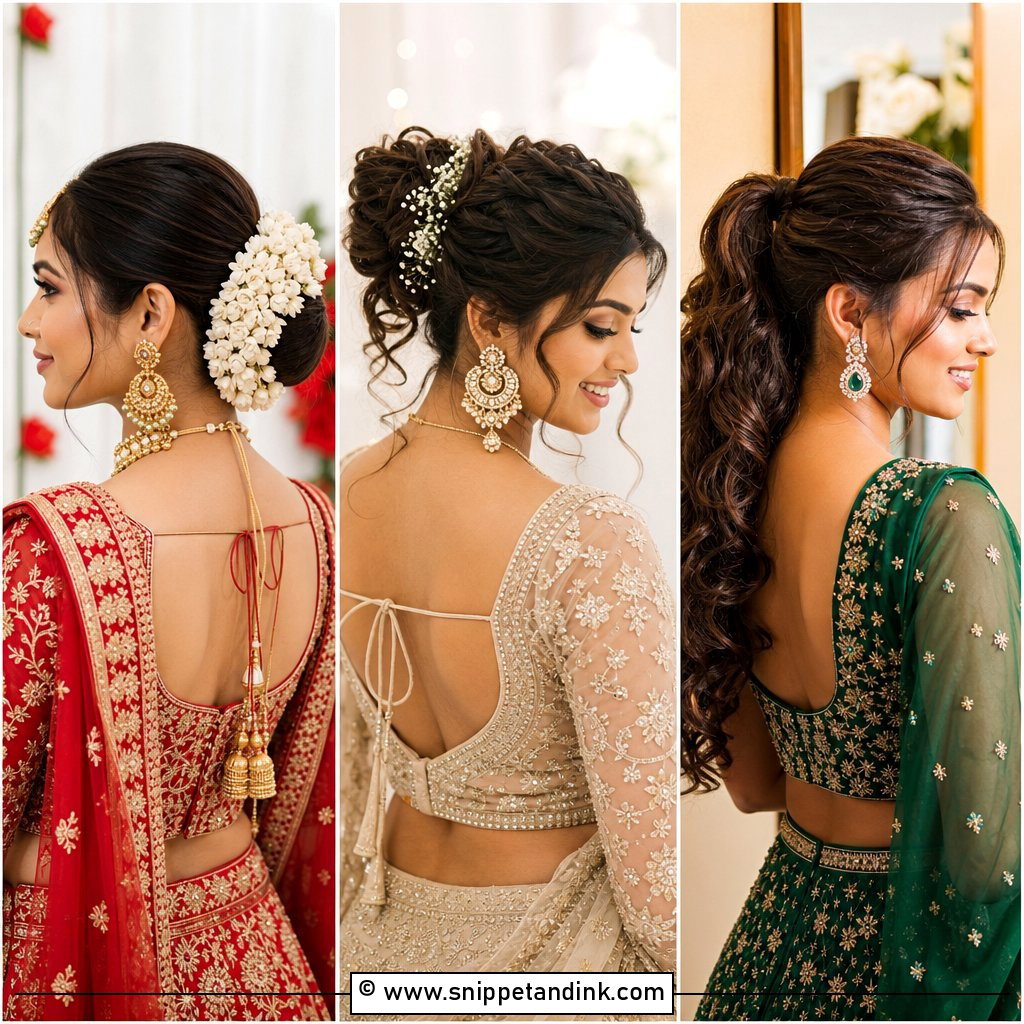
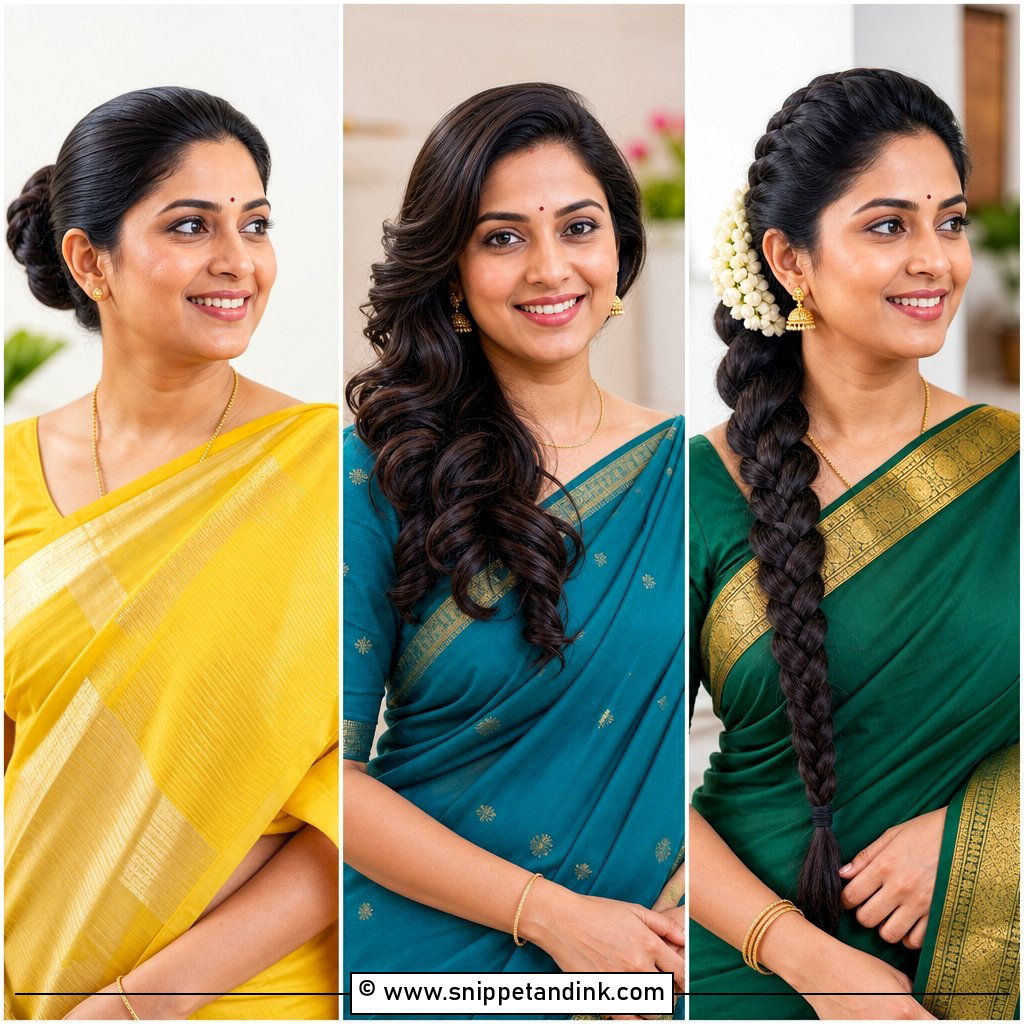
A smooth low bun wrapped in fresh jasmine gajra is the look I’d call the backbone of South Indian wedding hair. It sits at the nape, which leaves space for jhumkas and a maang tikka, and it stays put through long ceremonies. The secret is building the bun tight and slightly smaller than you’d like, because the gajra adds bulk. I wrap the strand around the base and pin it through the thread, not the flowers, using U-pins every few inches. Pinned through the buds, it sags within an hour.
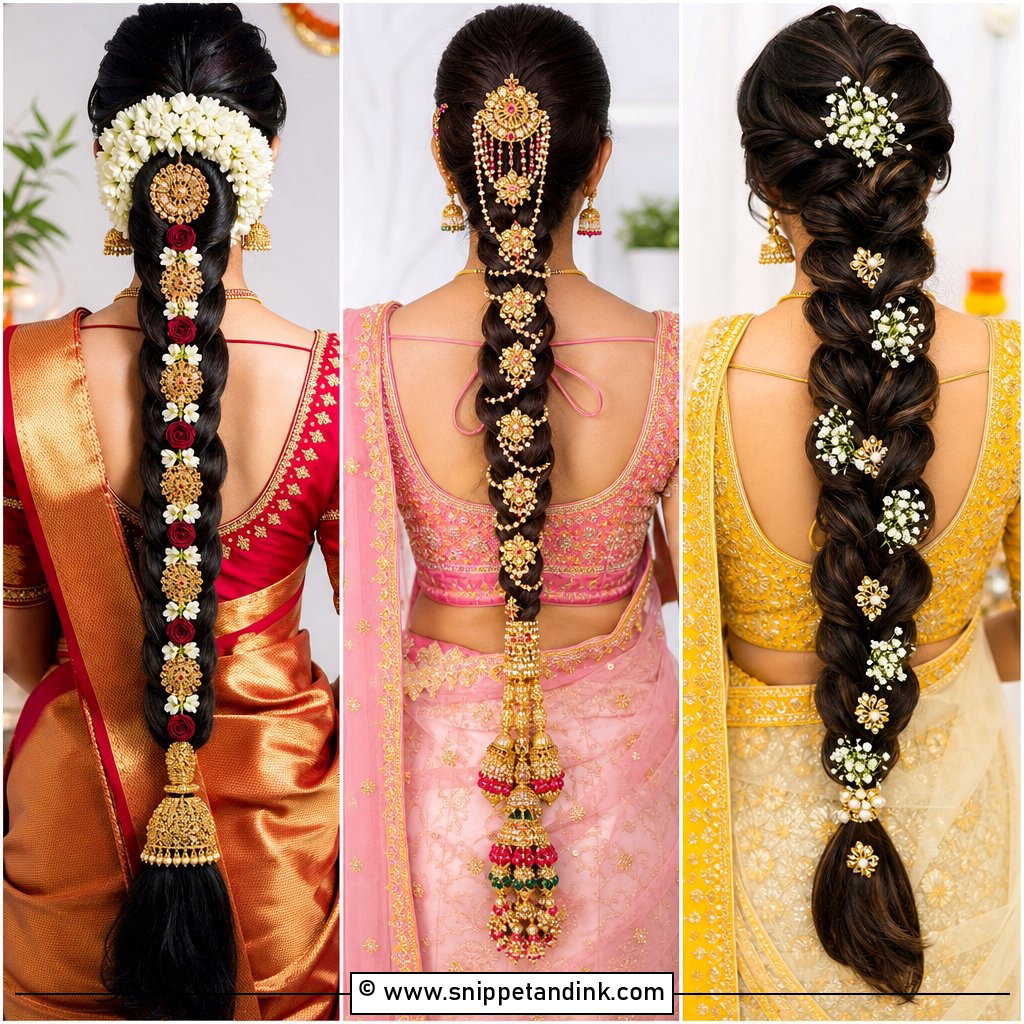
2. Side Fishtail Braid
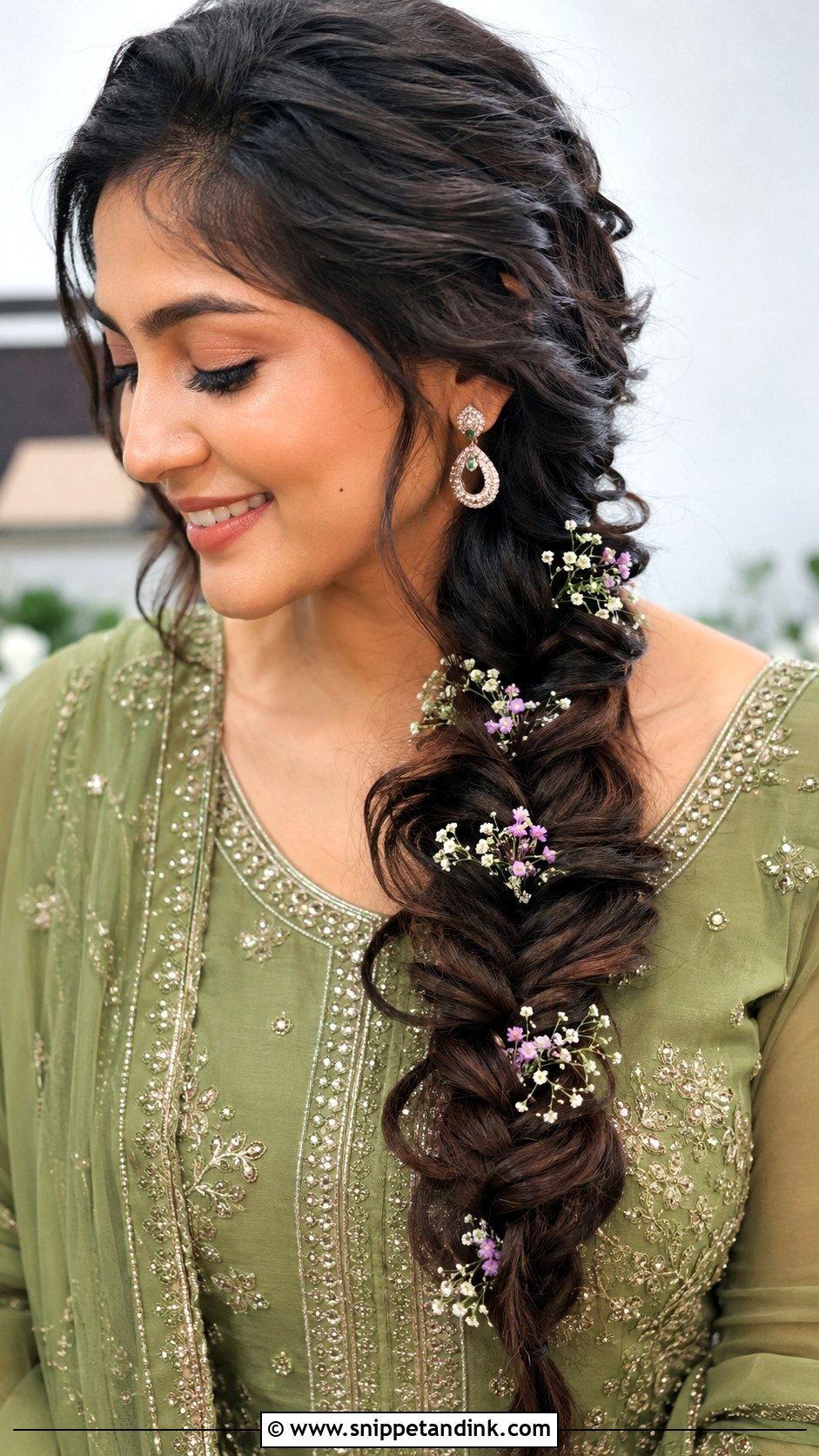
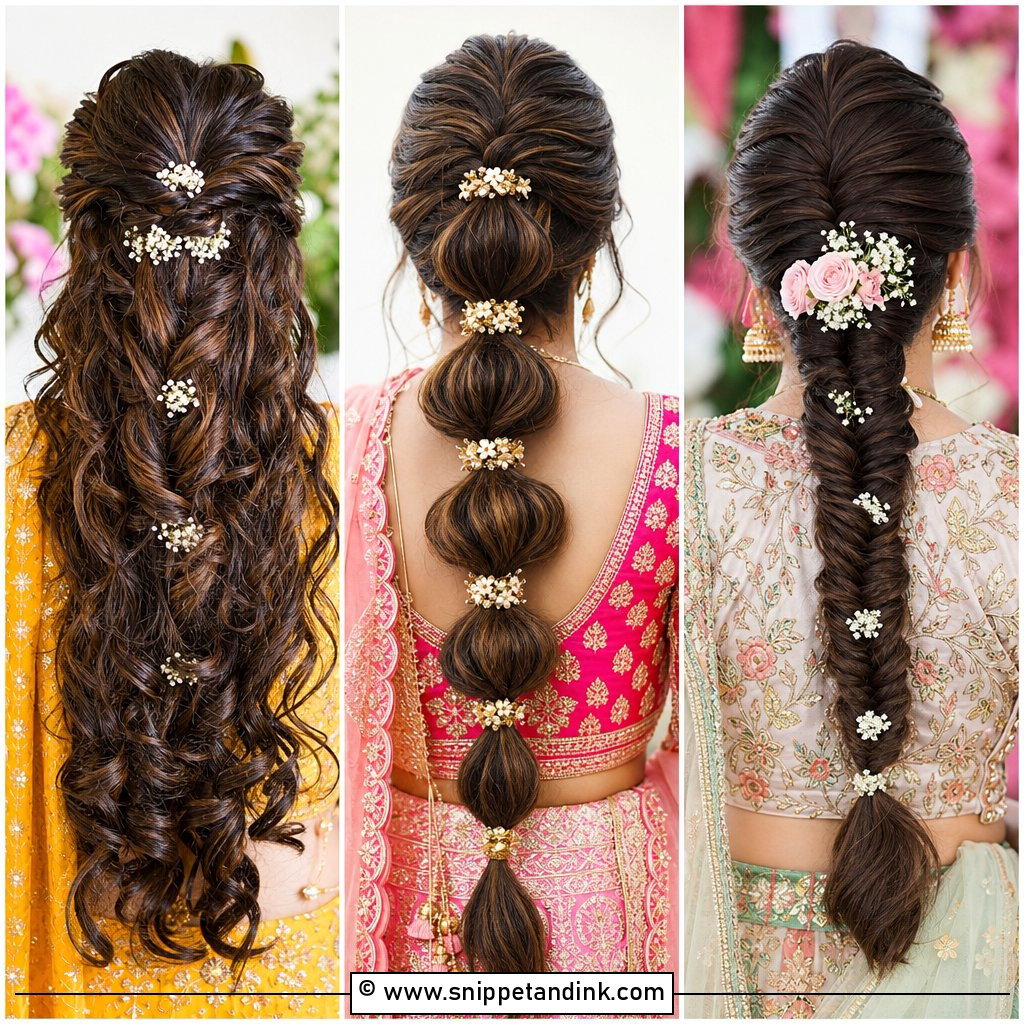
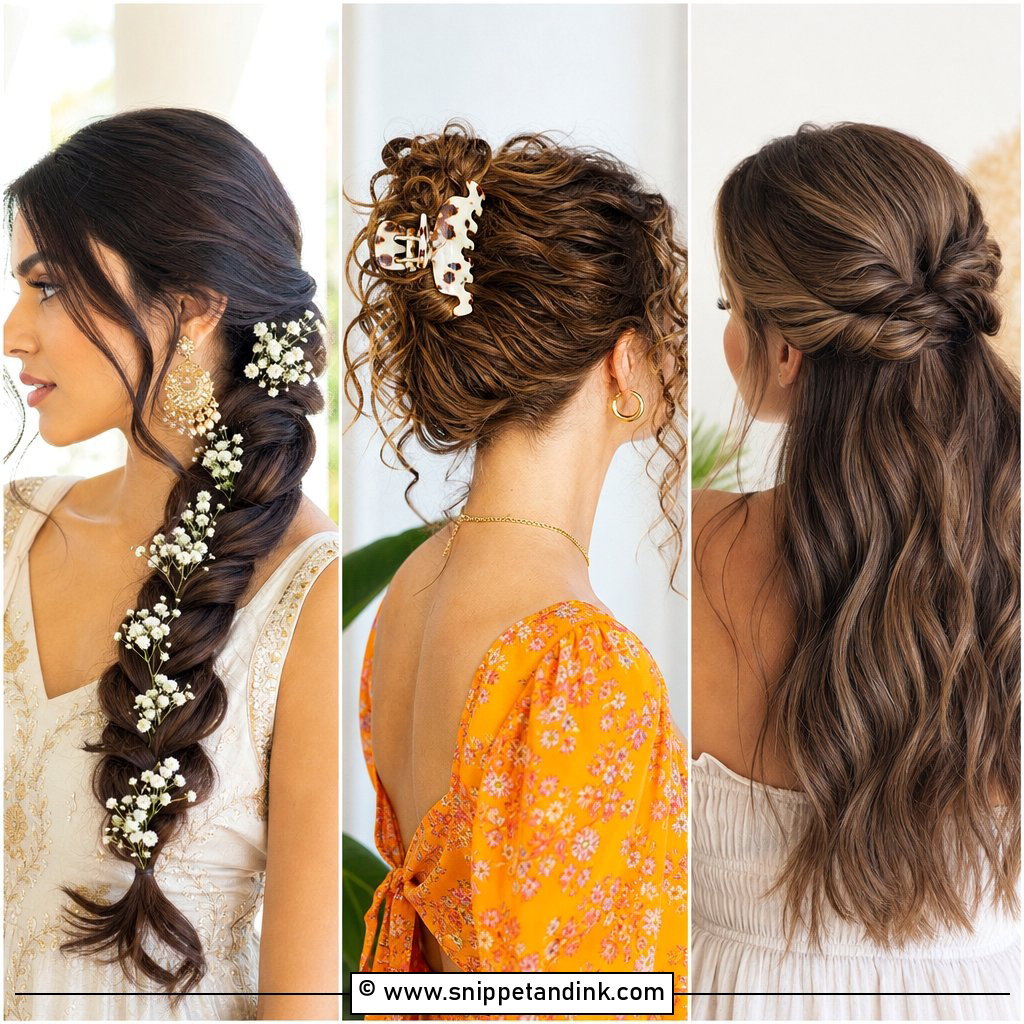
A fishtail braid drapes over one shoulder and keeps your blouse back and earrings in view. The pattern looks intricate but is just two sections crossing small pieces over and over; once you find the rhythm, it’s quick. I loosen the edges after tying it off so it looks fuller. Small flowers or pearl pins tuck neatly into the gaps. It’s a good choice for mehendi and daytime events because it keeps hair off the neck in warm weather. On heavily layered hair, though, short ends poke out along the length, so I’d mist with a little spray before braiding.
3. Messy Low Bun
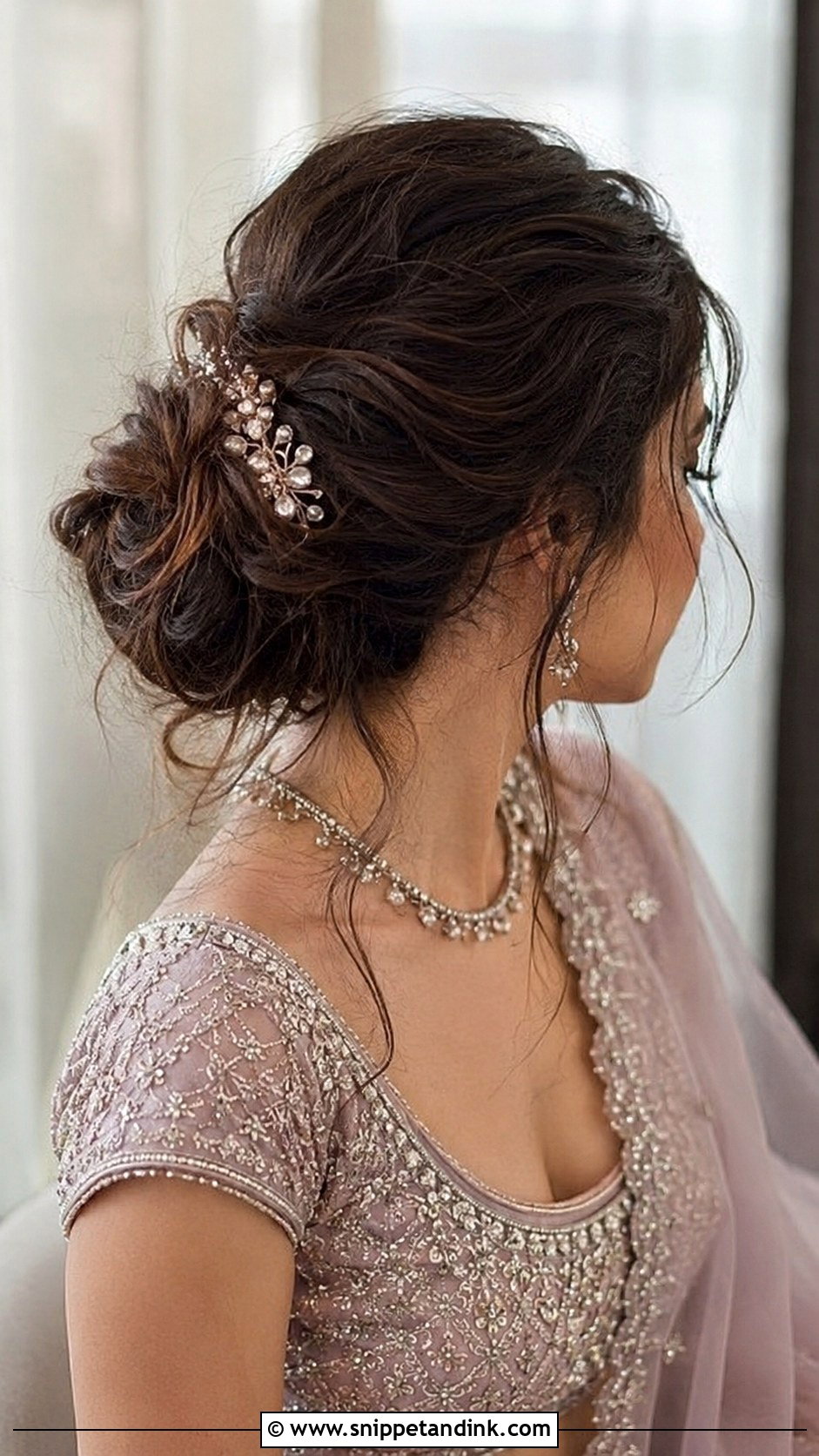
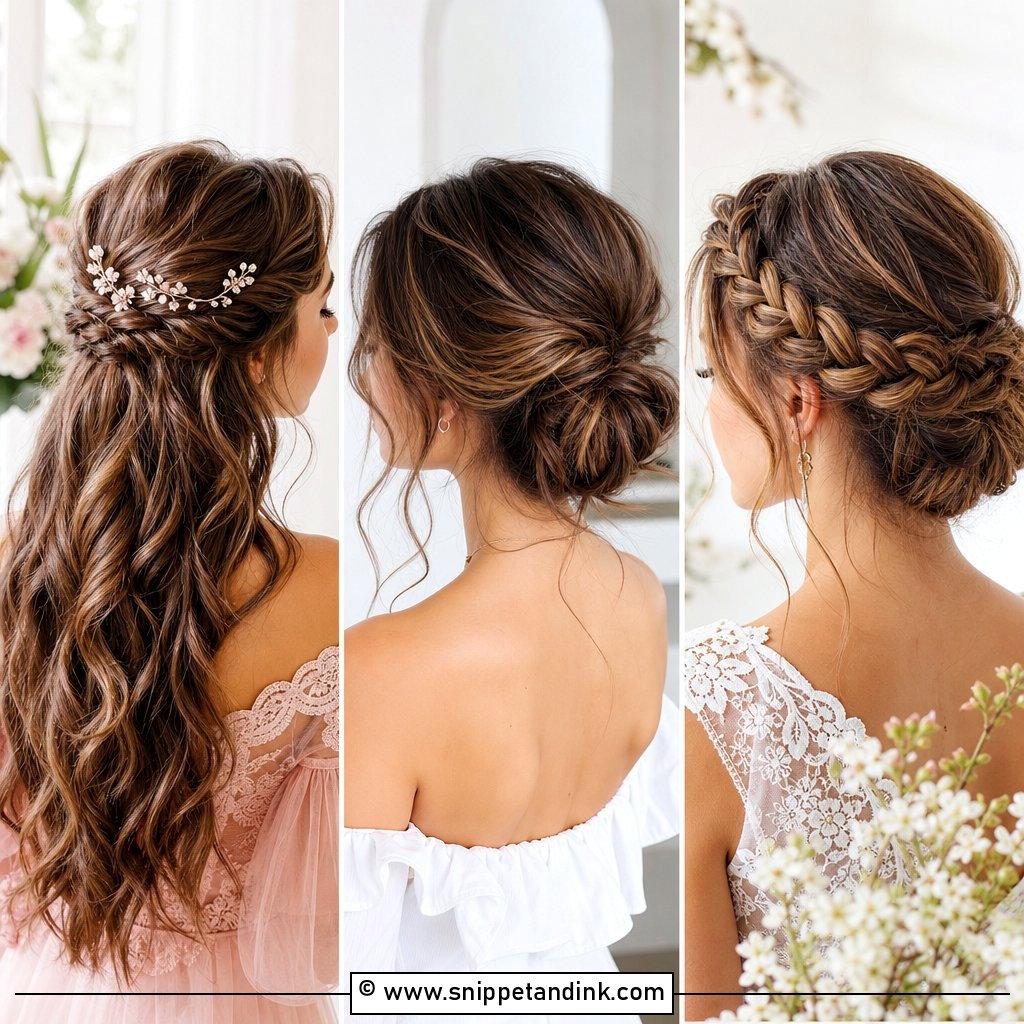
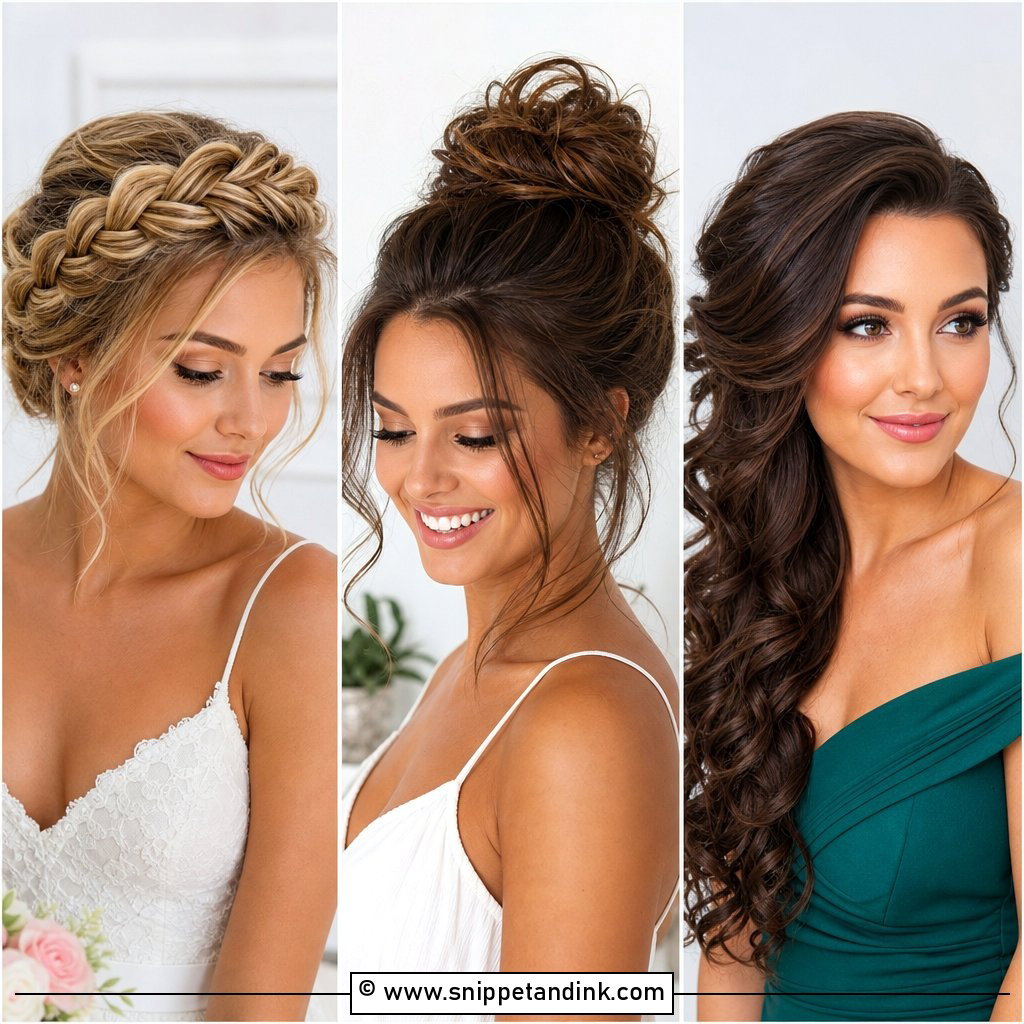
The messy low bun is the one I suggest to guests with fine hair, because the pulled-loose texture makes thin hair look fuller than a sleek bun ever could. Prep it with texture spray on dry hair so the loosened pieces don’t just slide flat. Pull a few strands free at the face, then add a small hairpin or a little cluster of flowers at the base. It holds better than it looks, mainly because loose texture can’t really fall out of place. Sangeet nights and receptions are where it fits best.
4. Half-Up Half-Down With Curls
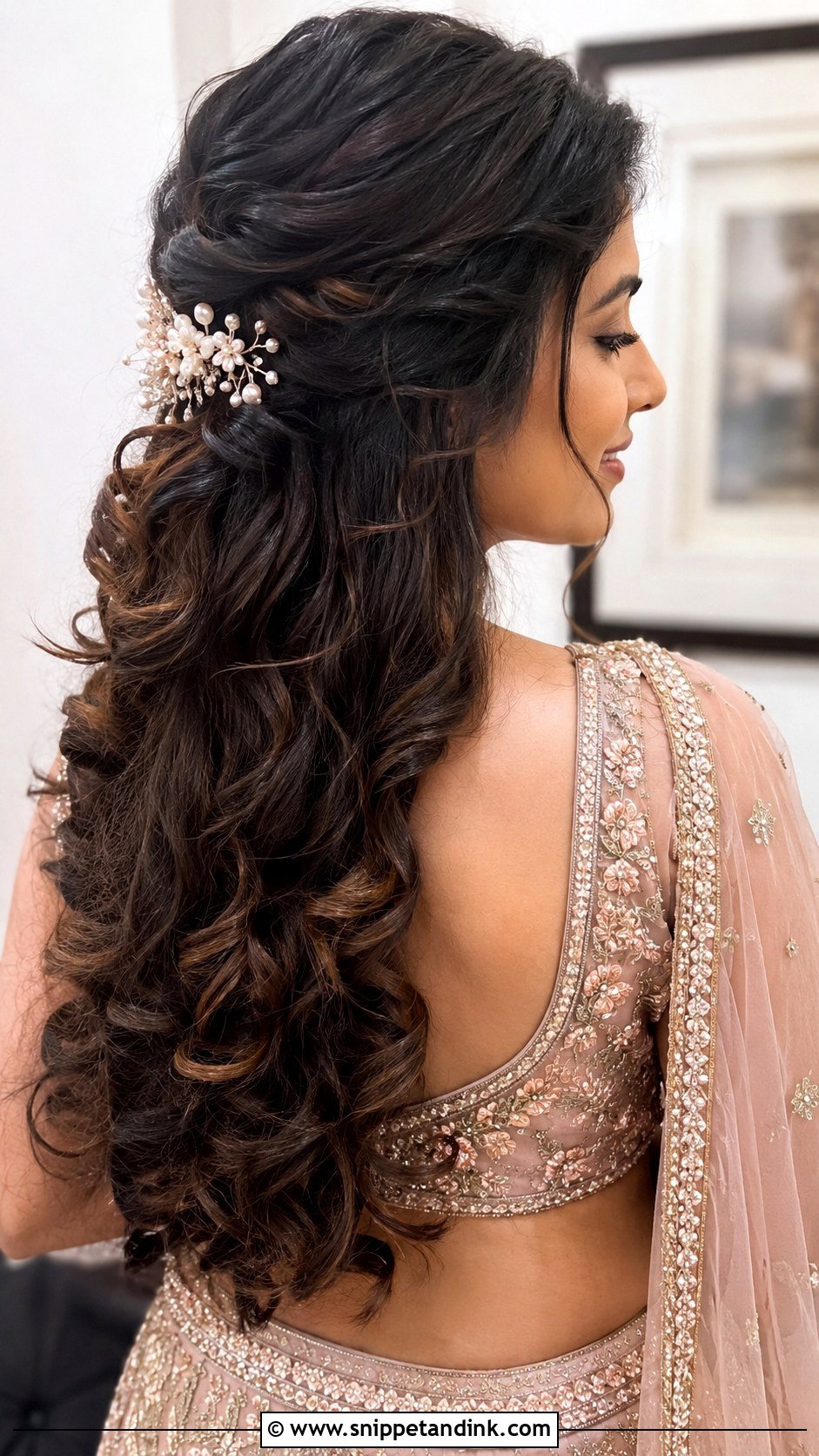
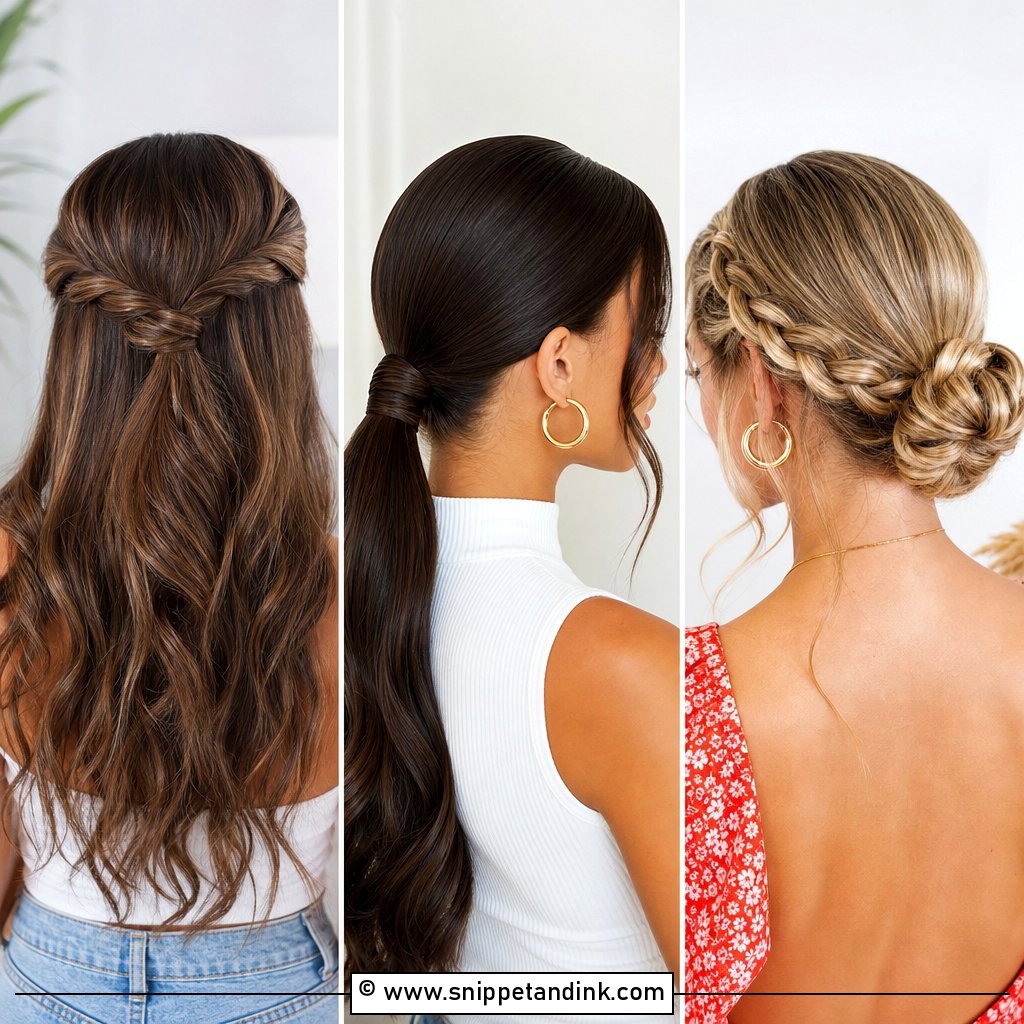
Half-up, half-down keeps your length on show while the top section adds a bit of polish at the crown. The curls underneath give movement under wedding lighting, and the style suits lehengas and Indo-Western gowns alike. My caution with this one at Indian weddings is the dupatta. If you’ll be wearing it over your head at any point, the pinned top section is exactly where it sits, so I keep that section flat rather than puffed. Secure it with a decorative clip or a small twist where the sections meet, and it works from haldi through to the reception.
5. Sleek Low Ponytail
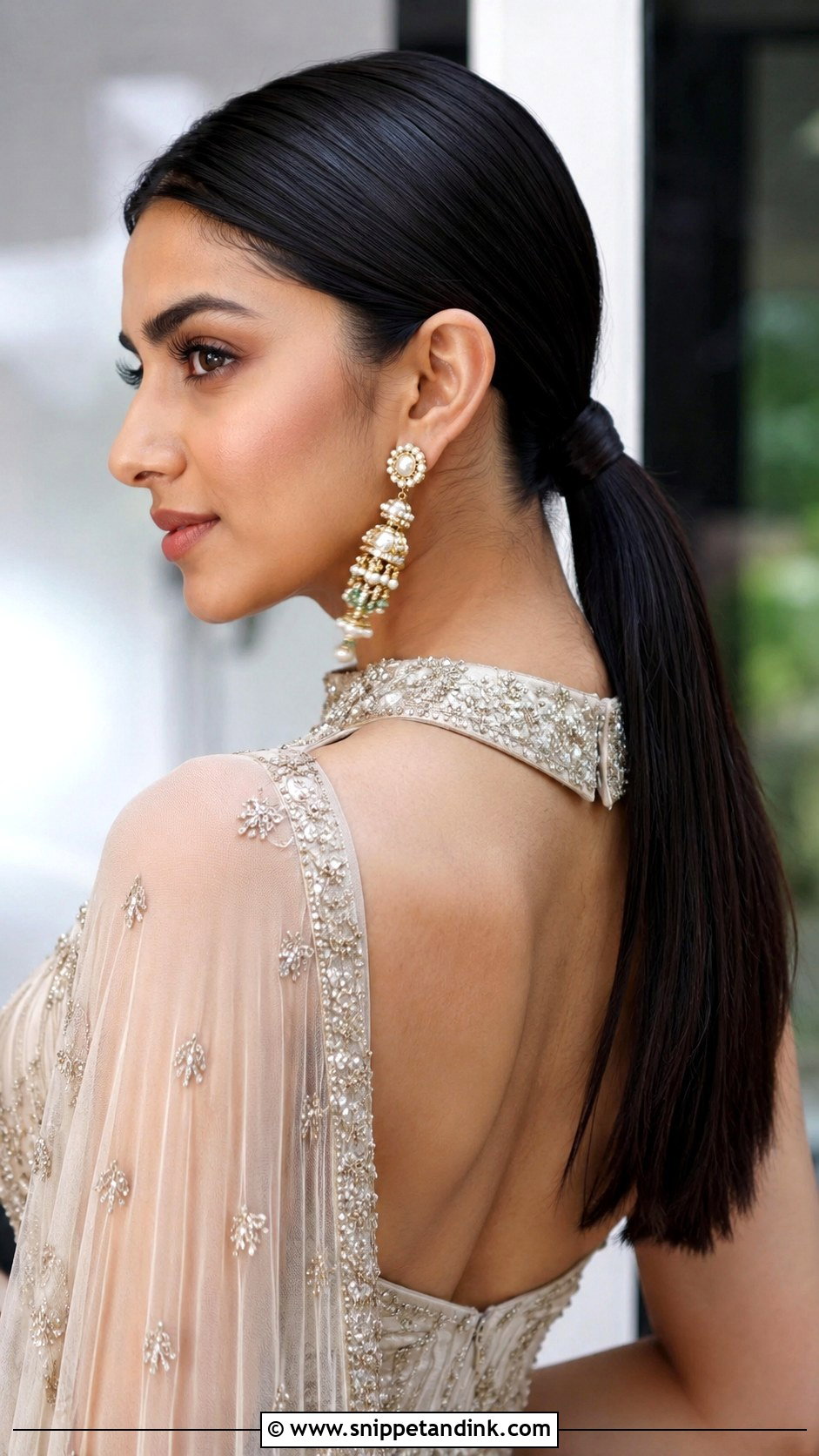
A sleek low ponytail lets the jewelry and the outfit do the talking, which is why I like it with heavy kundan sets or a statement saree. Everything is smoothed back into a tie at the nape and the elastic is hidden with a wrapped strand. Leave the length straight or put a soft bend through it. The hard part is the crown. Use a fine-tooth comb and a small dab of gel along the part line, not all over, or it reads greasy in photos. It’s a natural fit for receptions and cocktail-style celebrations.
6. Floral Crown Braid
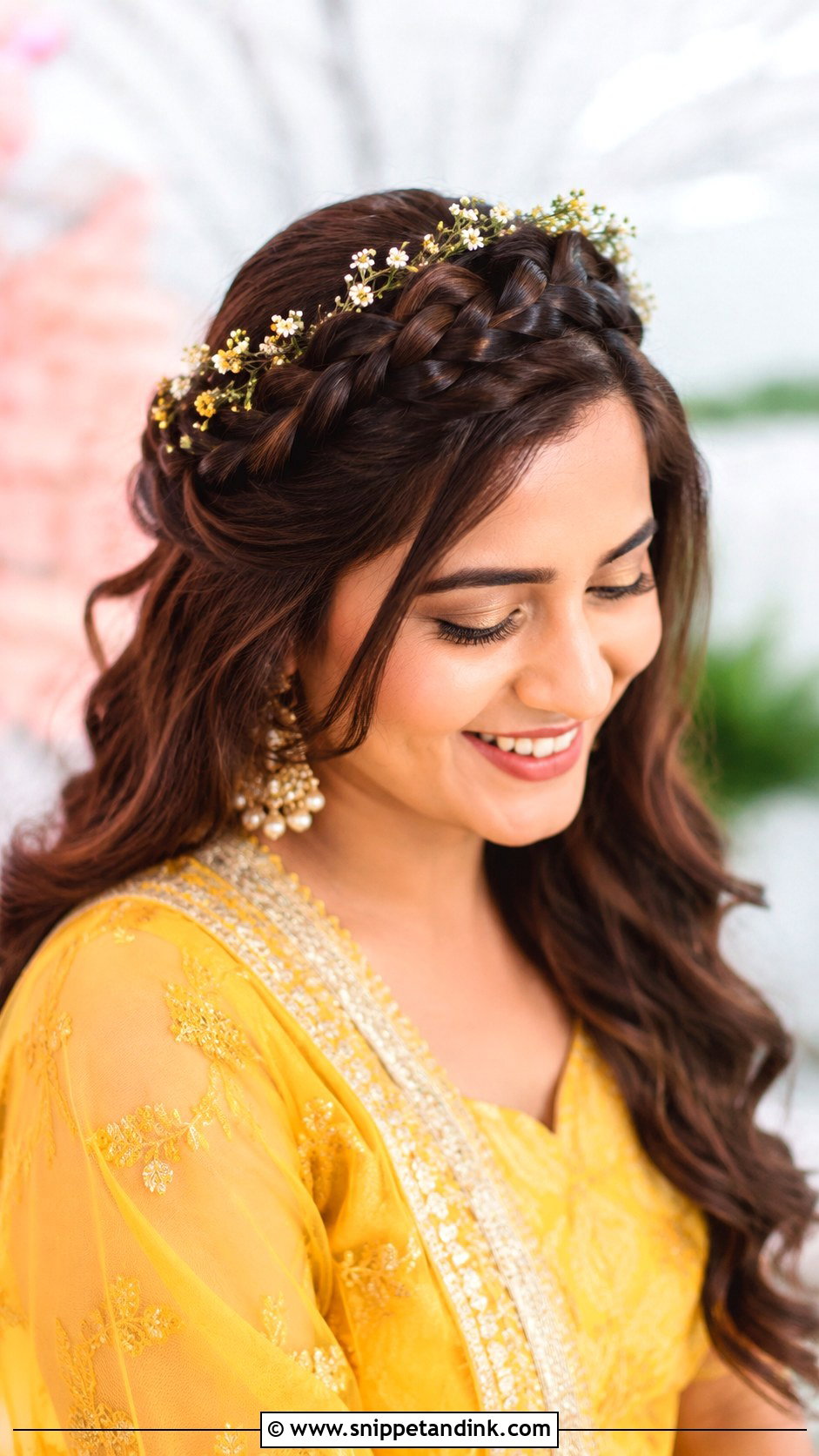
A braided crown circles the head like a halo and keeps every strand off the neck, which matters at an afternoon function in summer heat. Tiny flowers woven into the braid suit mehendi and haldi. It looks elaborate, but it’s really two braids pinned across the top. One thing I check first is length: the braids need to reach across the crown to meet, so on hair shorter than the shoulder blades, I add a small hairpiece or switch to a half crown. Keep the jewelry light so the braid isn’t competing.
7. Loose Waves With Side Part
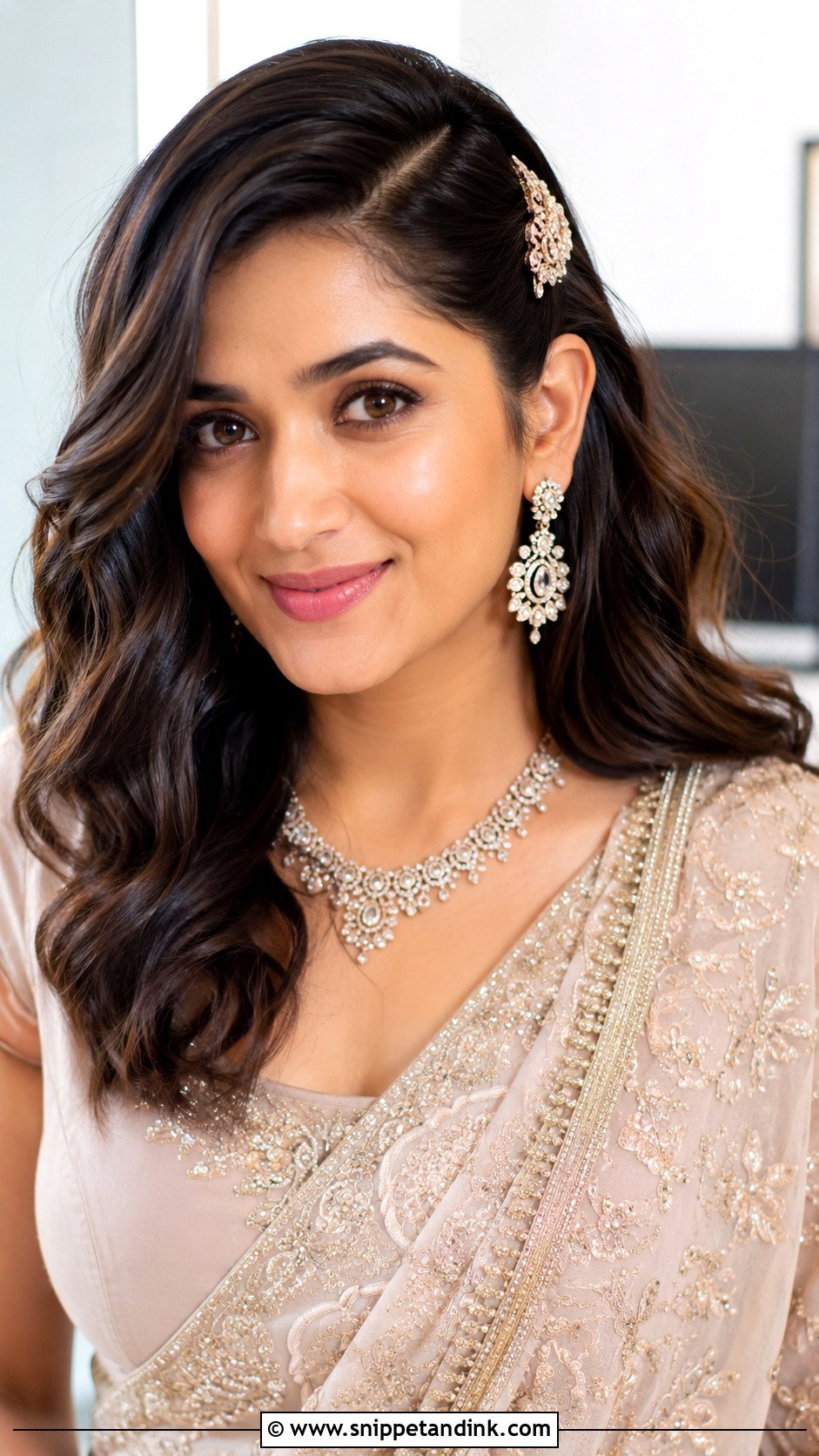
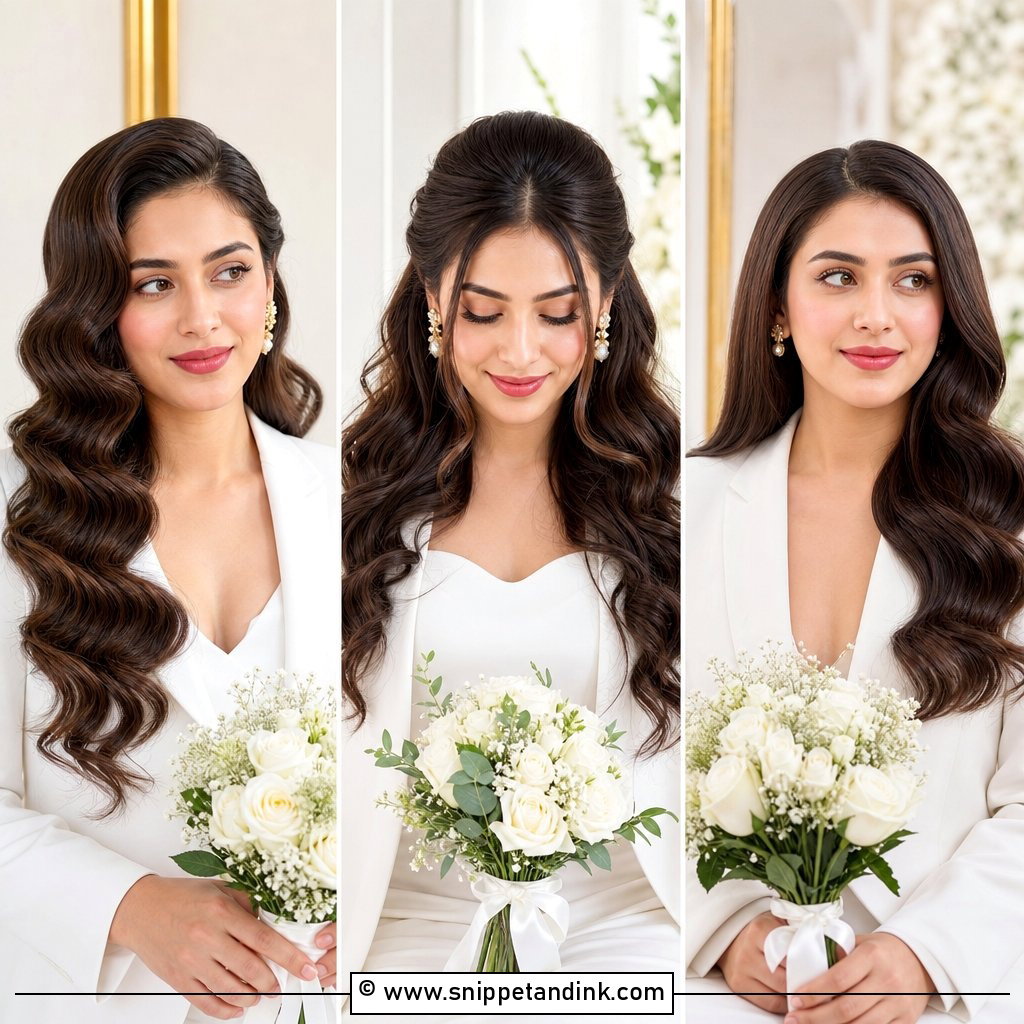
Loose waves with a deep side part are the simplest way to wear open hair to a wedding. The waves add volume and catch the light, and the side part frames the face without needing any accessory. I use a curling wand, let the curls cool, then break them up with my fingers rather than a brush to keep the texture soft. A jeweled pin near the part adds a festive detail. The weak spot is humidity. In monsoon season or a humid venue, waves drop fast, so set them a little tighter than you want to wear them.
8. Dutch Braid Updo
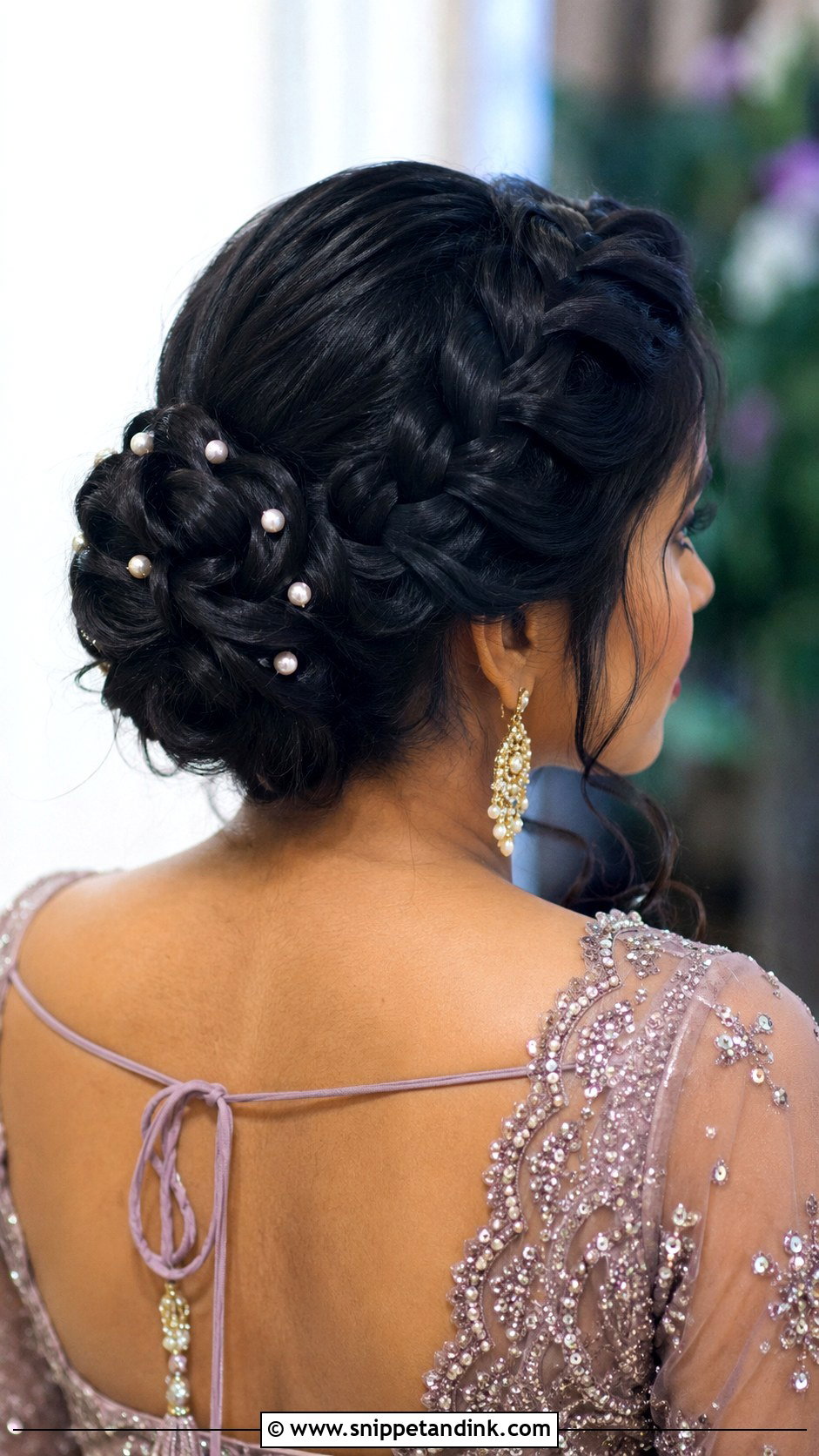
A Dutch braid along the crown gathered into a bun or coil at the back is the most dance-proof style on this list. It’s simply a reverse French braid, so the plait sits on top of the hair instead of tucking under, and that raised shape grips the scalp and holds for hours. Thick and medium hair handle it best; very fine hair can look sparse once the braid is pulled out wide. Pearl pins or small flowers along the braid add charm. If you have a sangeet planned, this is the one I’d choose.
9. Bun With Maang Tikka
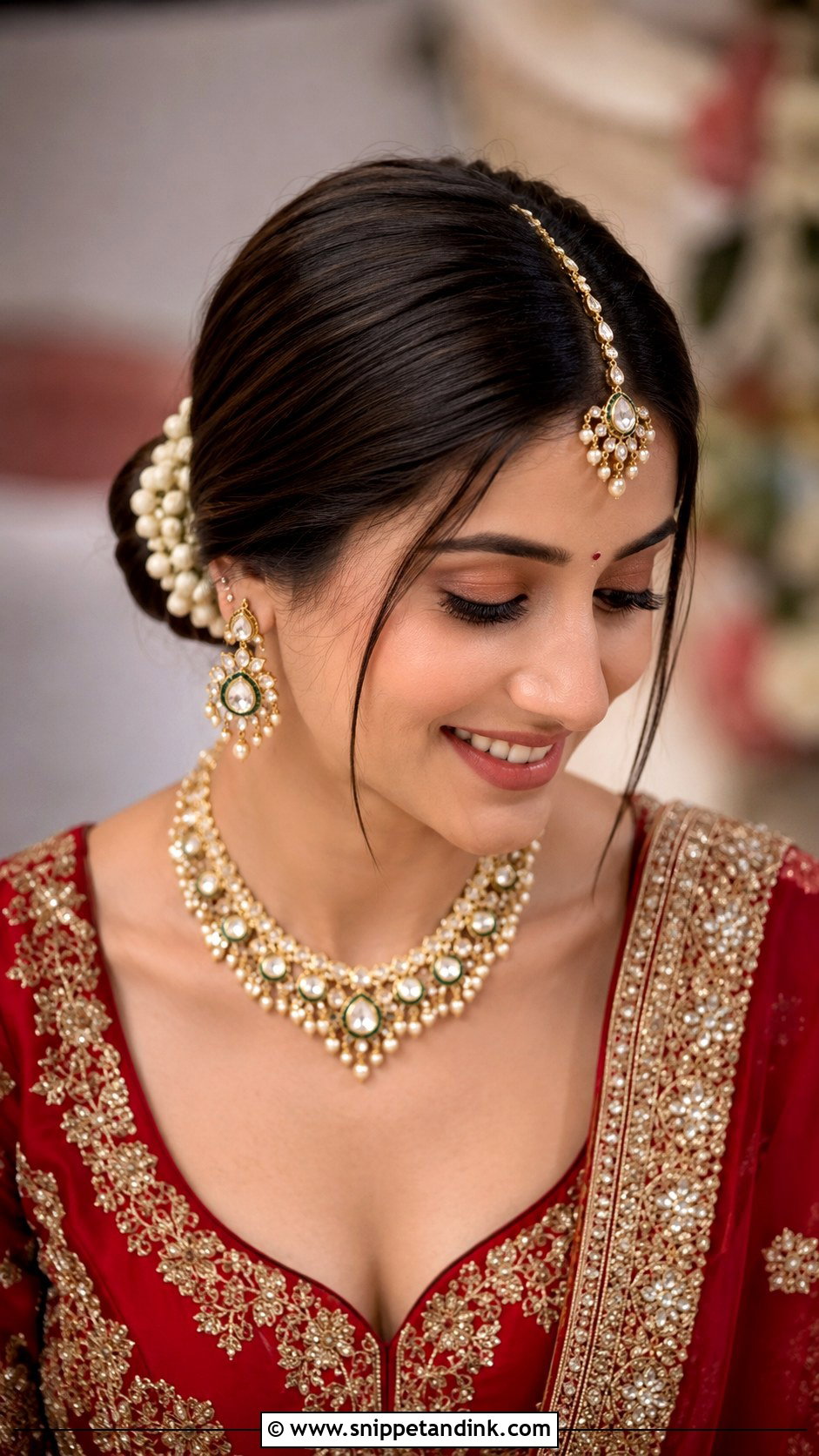
Pairing a simple bun with a maang tikka gives you the most traditional result for the least effort. The neat bun acts as an anchor, and the tikka draws attention to the face and part line. It suits brides and close family in sarees, lehengas or salwar suits. Keep the bun low so it carries the weight of heavy jewelry comfortably. The tikka itself needs securing: I hook the chain’s end into the hair just behind the crown with a bobby pin so it doesn’t slide sideways every time you turn your head.
10. Twisted Side Bun
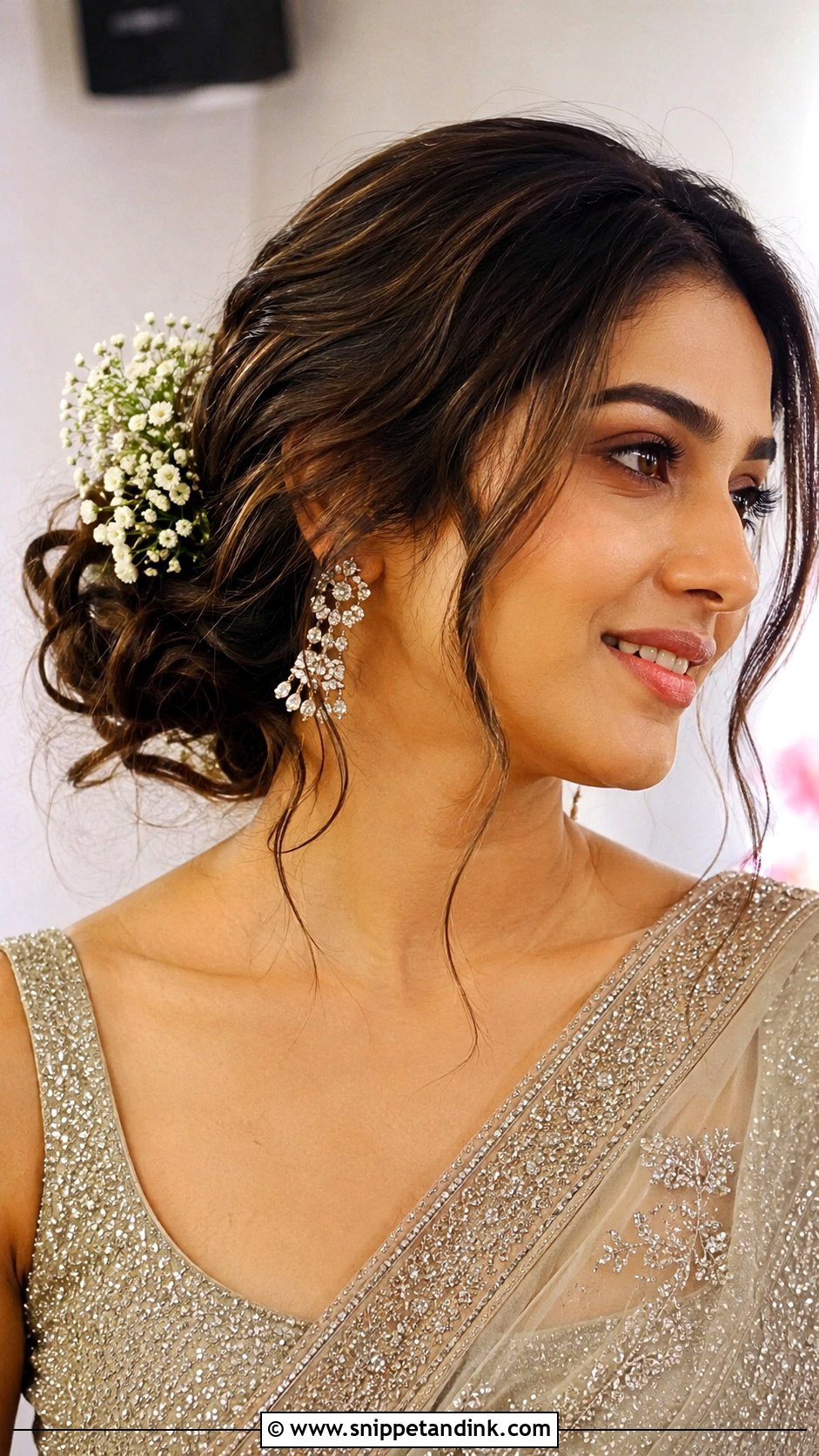
A twisted side bun moves everything toward one ear, which shows off a statement earring on the other side and changes the shape of the neckline. The bun is loose and textured, with a few pieces pulled out around the face. Fresh flowers or a decorative pin can sit right on the bun. I like it for evening functions. My warning: an off-center bun shifts the weight of the head to one side, so on long, heavy hair I pin a hidden base underneath first, otherwise it slowly slides toward the shoulder.
11. Open Hair With Puff
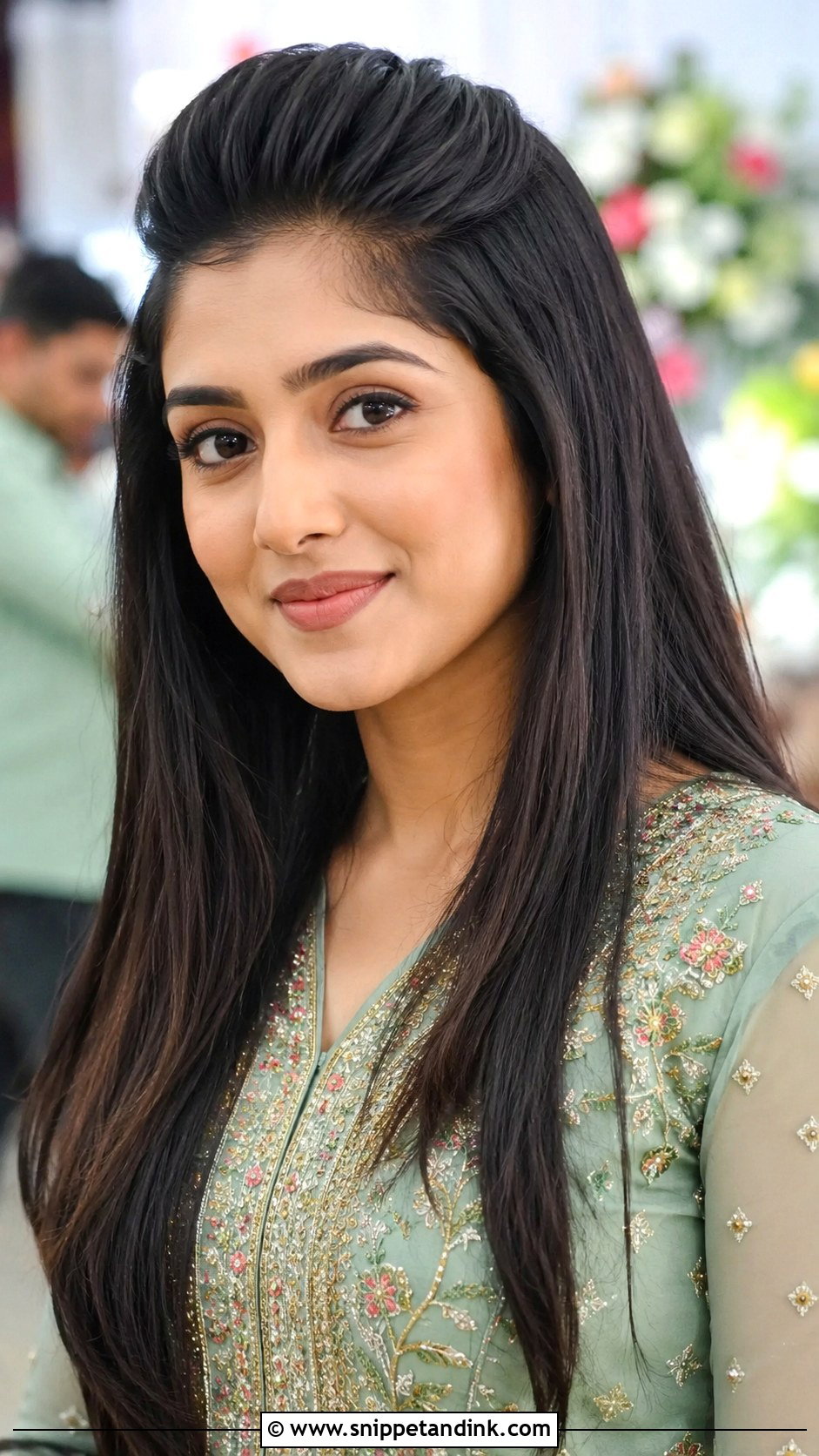
Open hair with a front puff gives height at the crown while the length stays down. It elongates rounder faces and works with both gowns and traditional outfits. I tease only the underside of the front section, then smooth the top layer over it so you don’t see the backcombing. A long puff can collapse under a dupatta, so I keep it modest if anything will be draped over the head. Wear the length straight or lightly waved.
12. Pearl-Embellished Braid
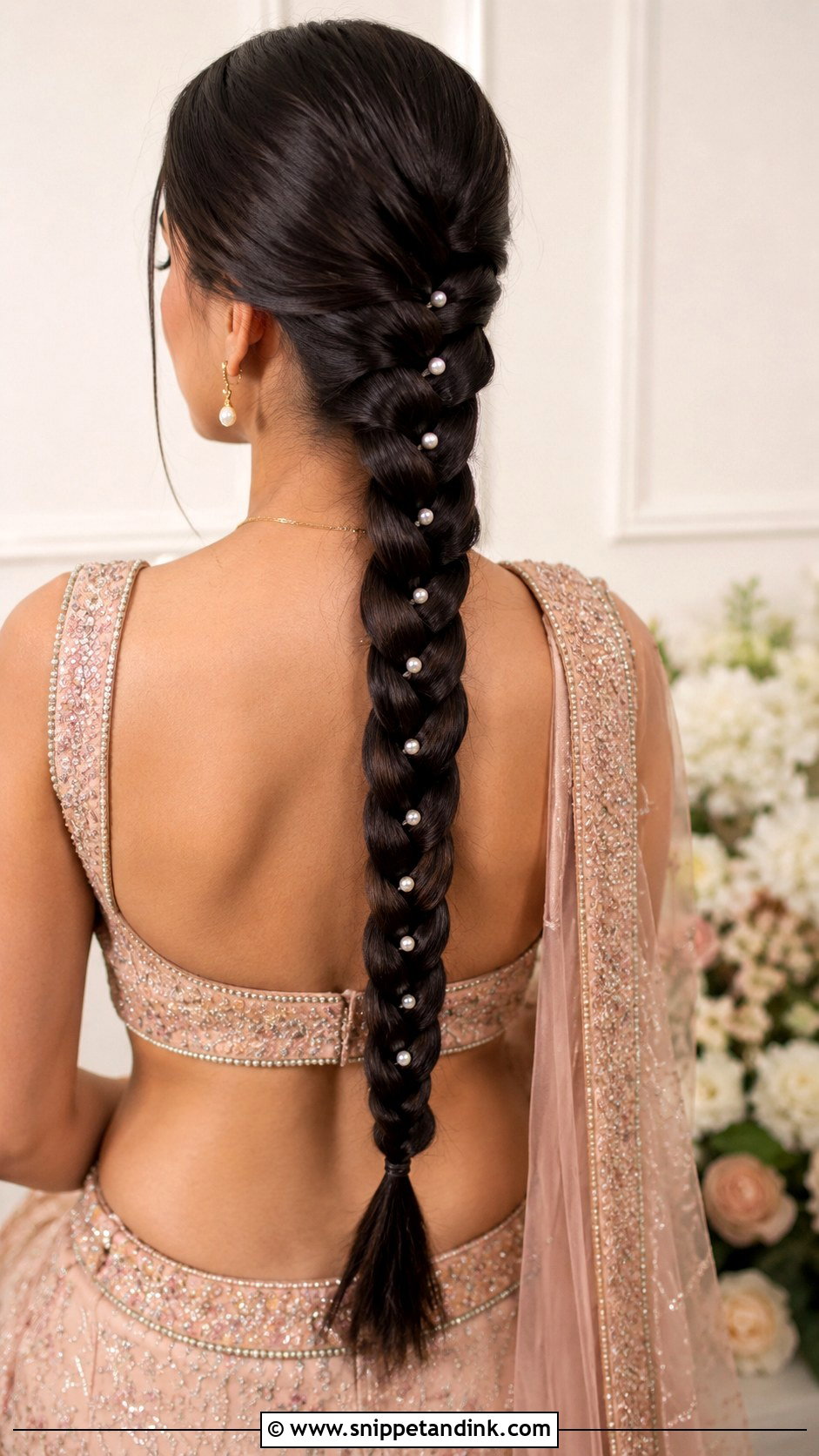
A long braid lined with delicate pearls turns an everyday plait into evening hair. Tiny pearl pins are slipped into the braid along its length, which reads lighter than heavy florals and pairs well with sarees and lehengas. It needs real length to look its best. Place the pins after the braid is finished, angled down into the weave, so they don’t push out as you move. If your braid is thin at the ends, space the pearls closer near the top and fewer toward the tail.
13. French Braid Crown
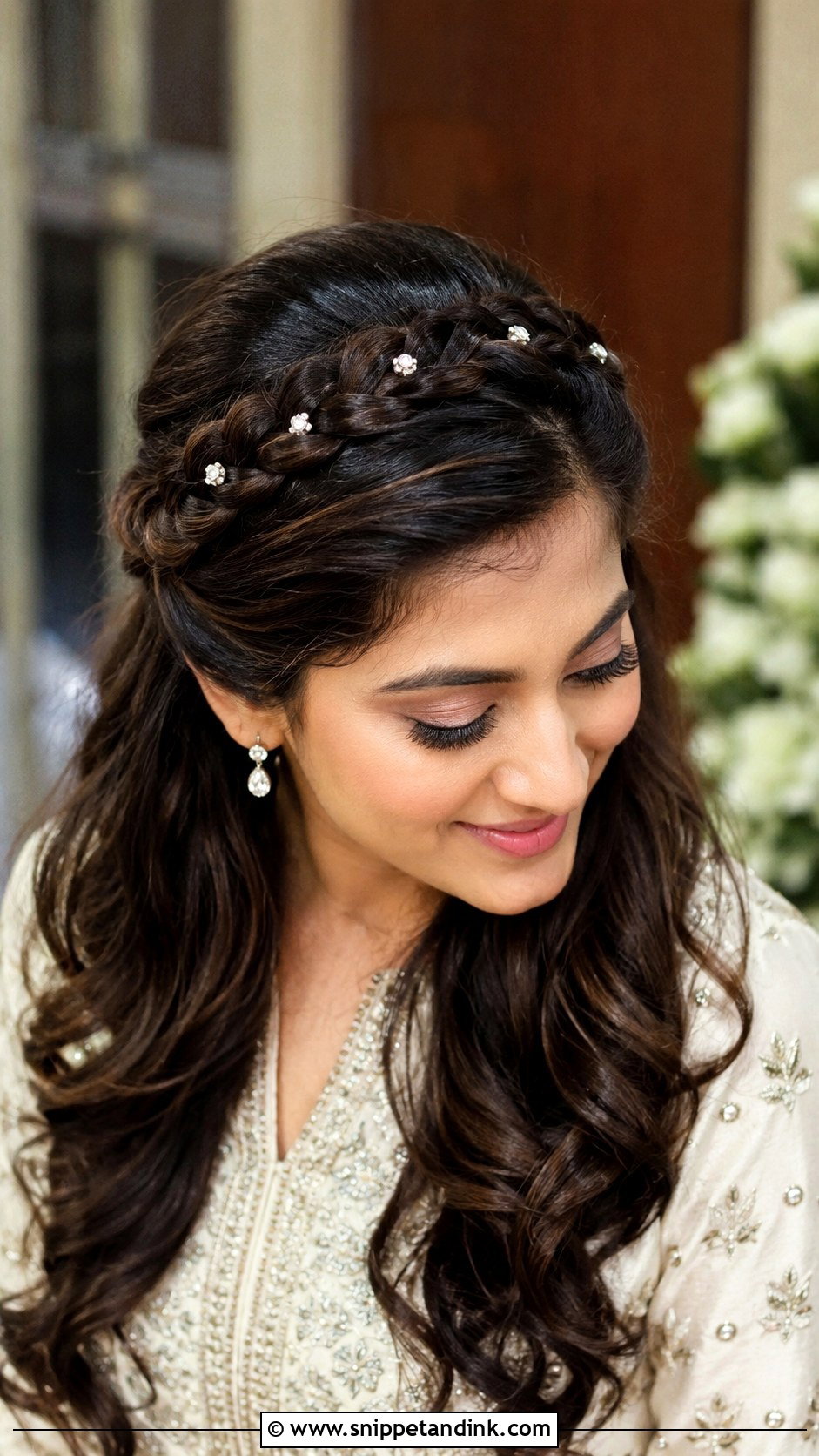
A French braid across the crown works like a headband made of your own hair, keeping strands off the face through a busy day. It can sit over open hair or lead into an updo. Small flowers or jeweled pins can run along it. It suits medium to long hair. One adjustment I always make: braid it slightly tighter at the temples, where hair escapes first, and looser at the back where nobody will notice a bit of relaxation by evening.
14. Curly Ponytail With Volume
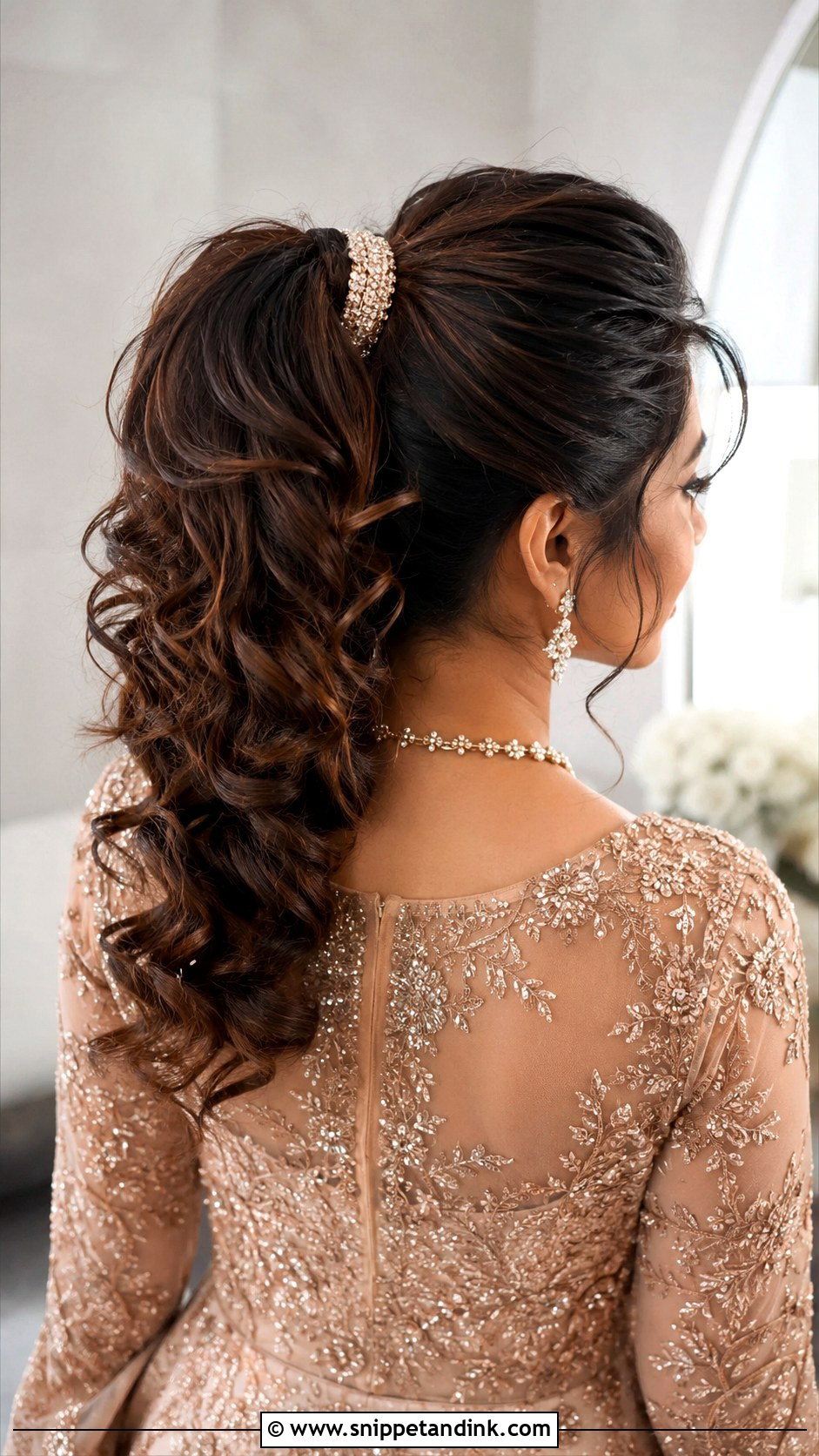
A curly ponytail with volume at the crown carries a lot of energy for receptions and sangeets. The hair is gathered high or mid-back and the curls spill from the tie. I wrap a strand around the elastic and add a decorative cuff if the outfit needs it. Thick and medium hair suit it best, since fine hair loses the fullness once the curls relax. To make it last, curl after tying the ponytail, not before; curls set in loose hair get flattened when you gather them.
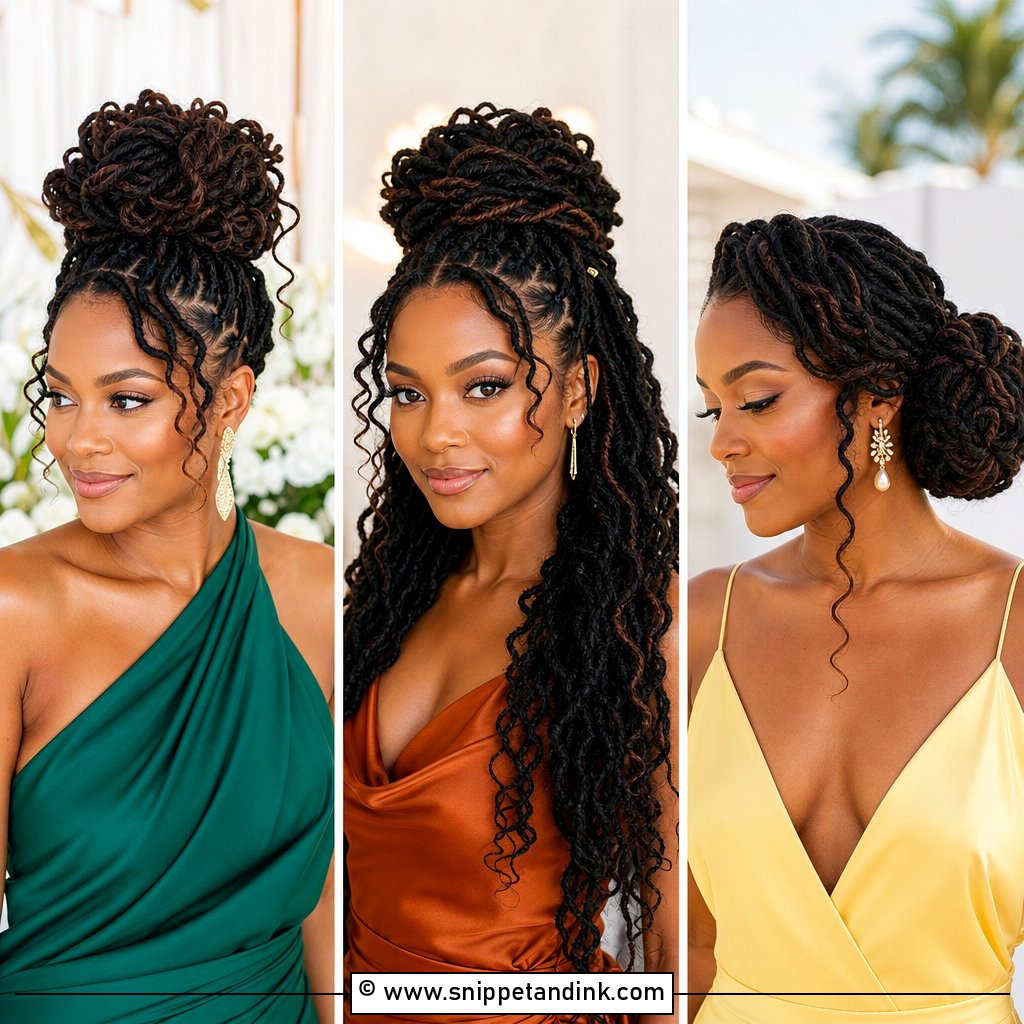
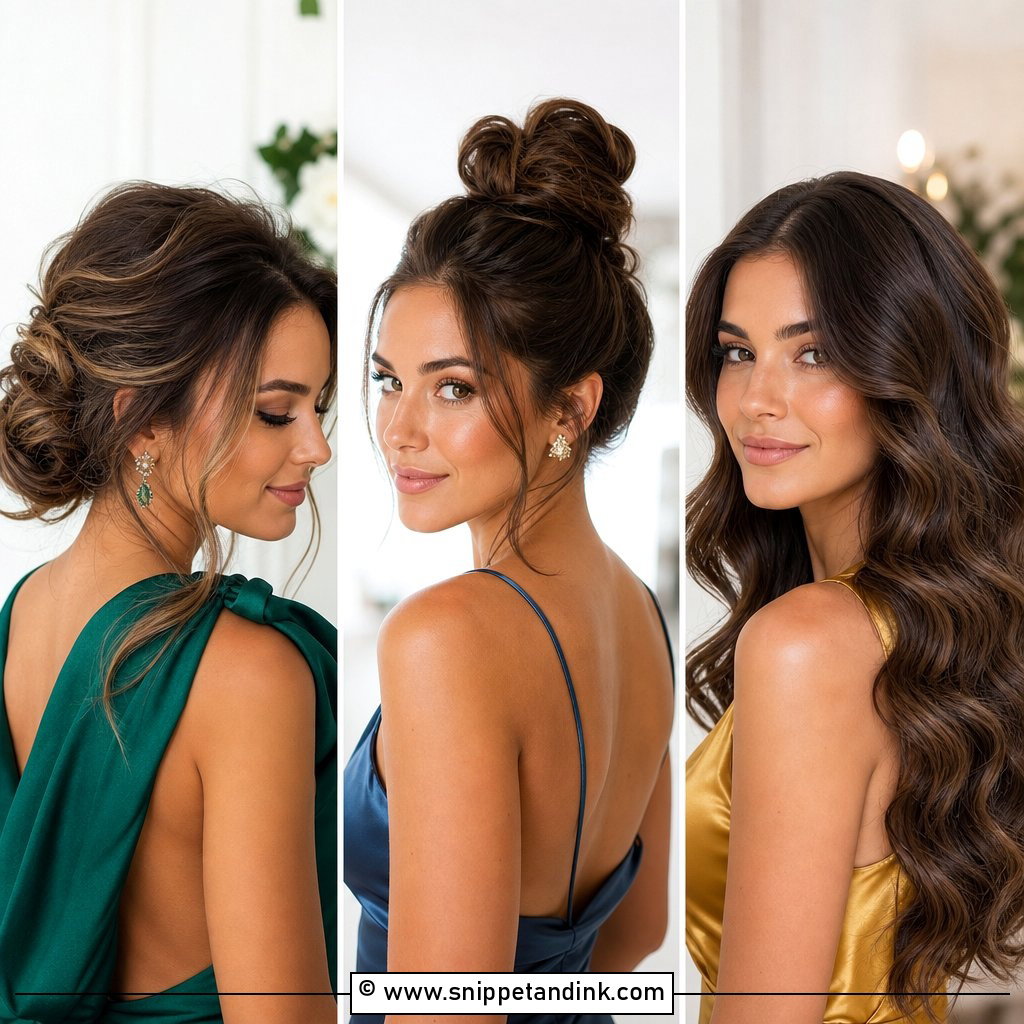
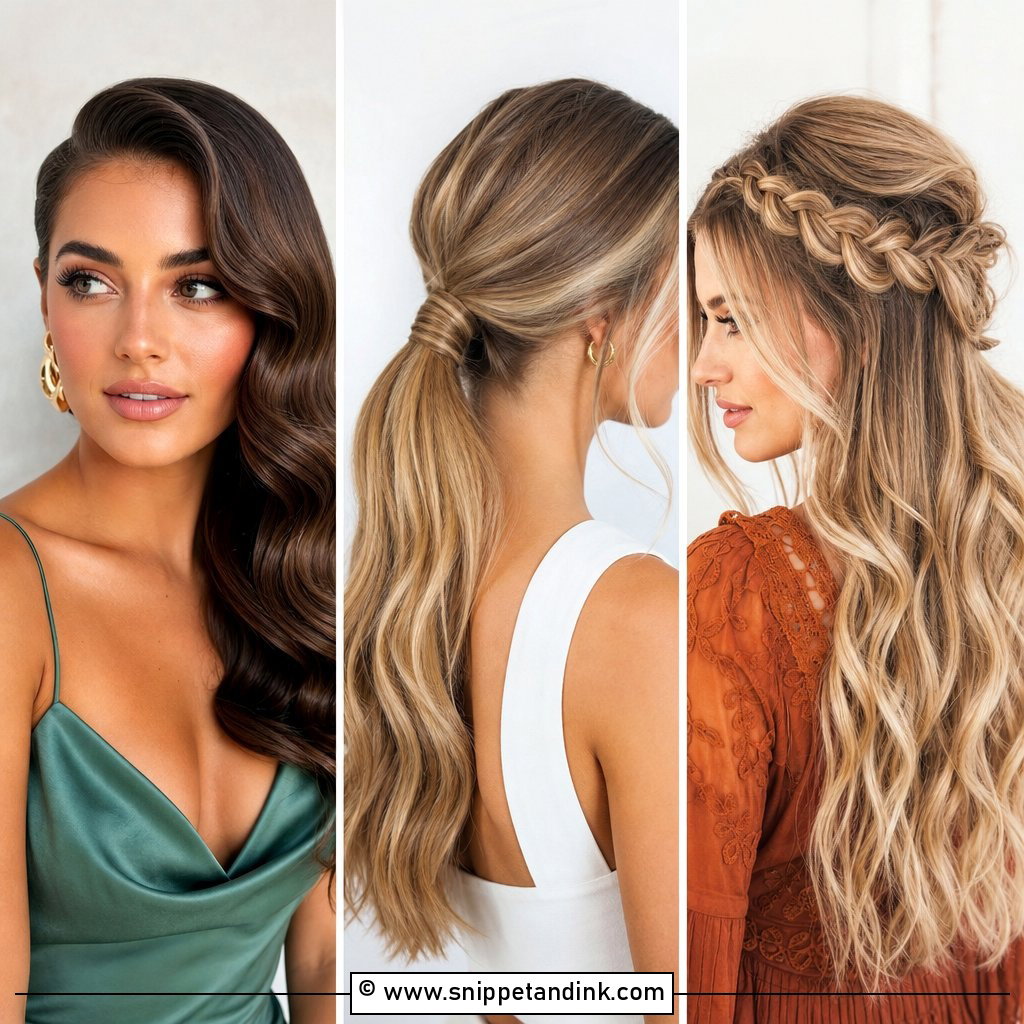
15. Low Chignon With Flowers
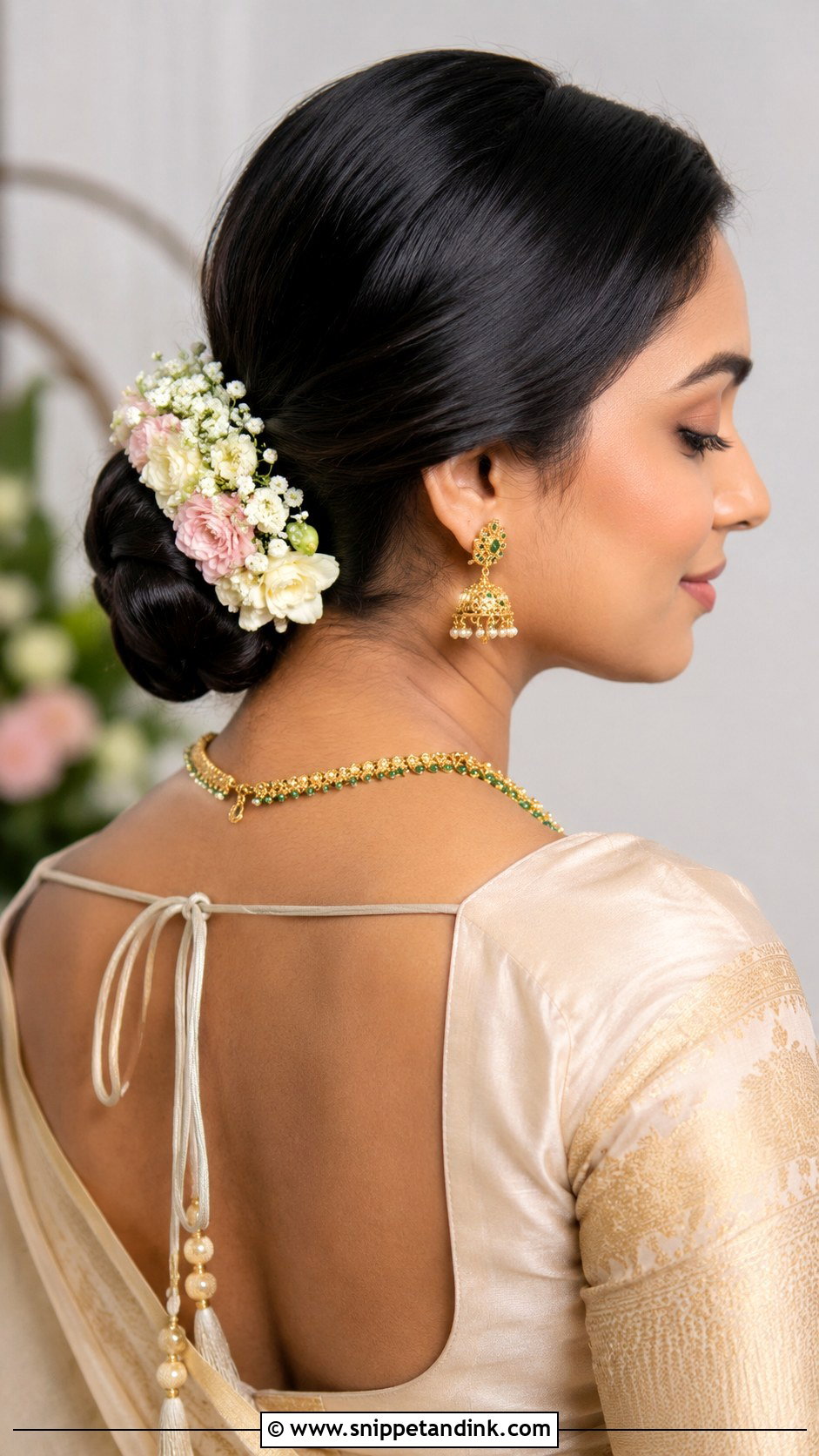
A low chignon coils the hair into a smooth roll at the nape. It’s quieter than a bun and very good at supporting heavy jewelry or a veil-style dupatta draped over the head. Fresh flowers around the roll bring color. The chignon comes together with twisting and pinning, and it suits most textures, though very curly hair needs smoothing first or the roll won’t hold its shape. From behind it shows off detailed blouse backs nicely, which is why I suggest it when the back of the outfit is the best part.
16. Bubble Braid
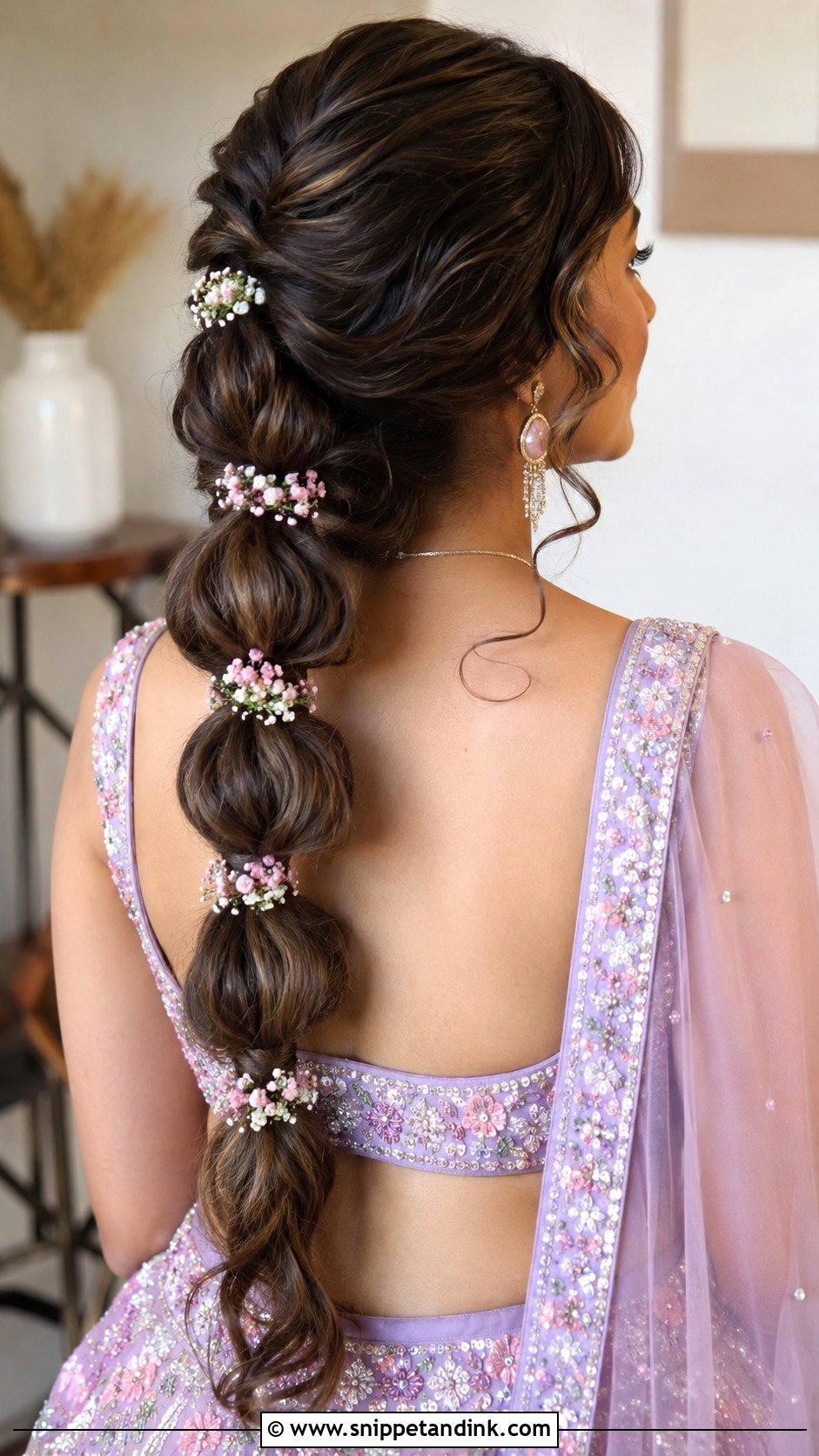
A bubble braid ties the hair into sections with small elastics and gently puffs each one into a round shape. It’s quick, fun and comfortable at sangeet and mehendi functions, especially for younger guests. Do it as a single ponytail or half-up. Tiny flowers or pearl pins can sit between the sections. Use clear elastics rather than black on lighter hair, and keep the spacing even; uneven bubbles are the one thing that makes this look rushed. It holds up well through dancing.
17. Side-Swept Curls
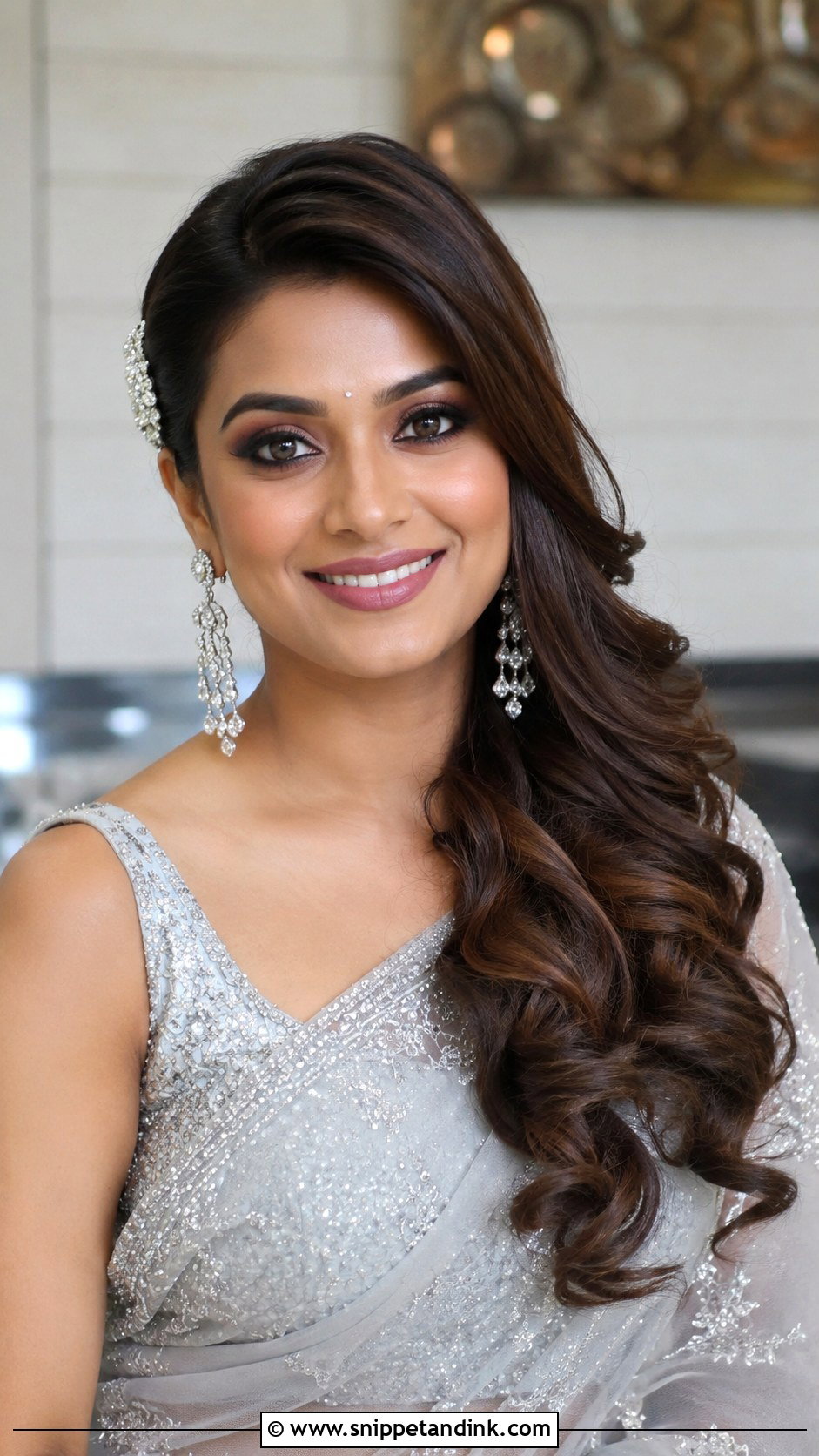
Side-swept curls give old-Hollywood glamour a festive turn. All the curled hair is swept over one shoulder, which frames a statement earring on the open side and keeps a saree pallu visible. The secret is pinning the hair on the other side, behind the ear, with crossed bobby pins hidden under the top layer. Without that anchor, the sweep drifts back toward the center by evening. A sparkling clip or a few flowers can cover the pins. Long and medium hair suit it best.
18. Braided Half-Updo
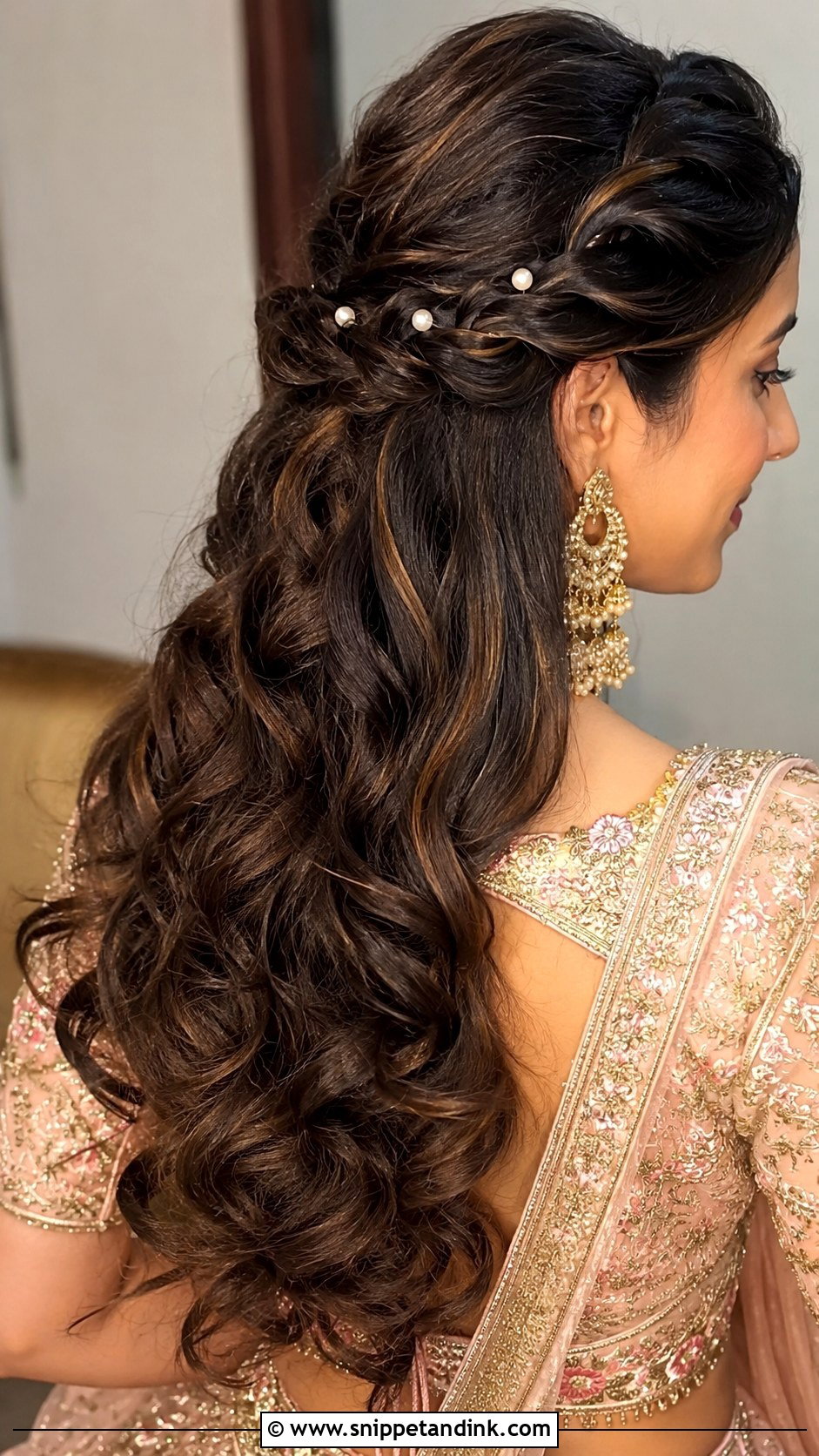
A braided half-updo braids the top sections back and lets the rest fall, so you get detail without committing to a full updo. Loosen the braids slightly for softness and tuck small flowers or pearl pins along them. It suits medium to long hair and almost any function. It’s also one of the easiest to recreate at home on a second day: braid while hair is slightly damp the night before, and the length underneath will have a soft wave by morning without any heat.
19. Sleek Center-Parted Bun
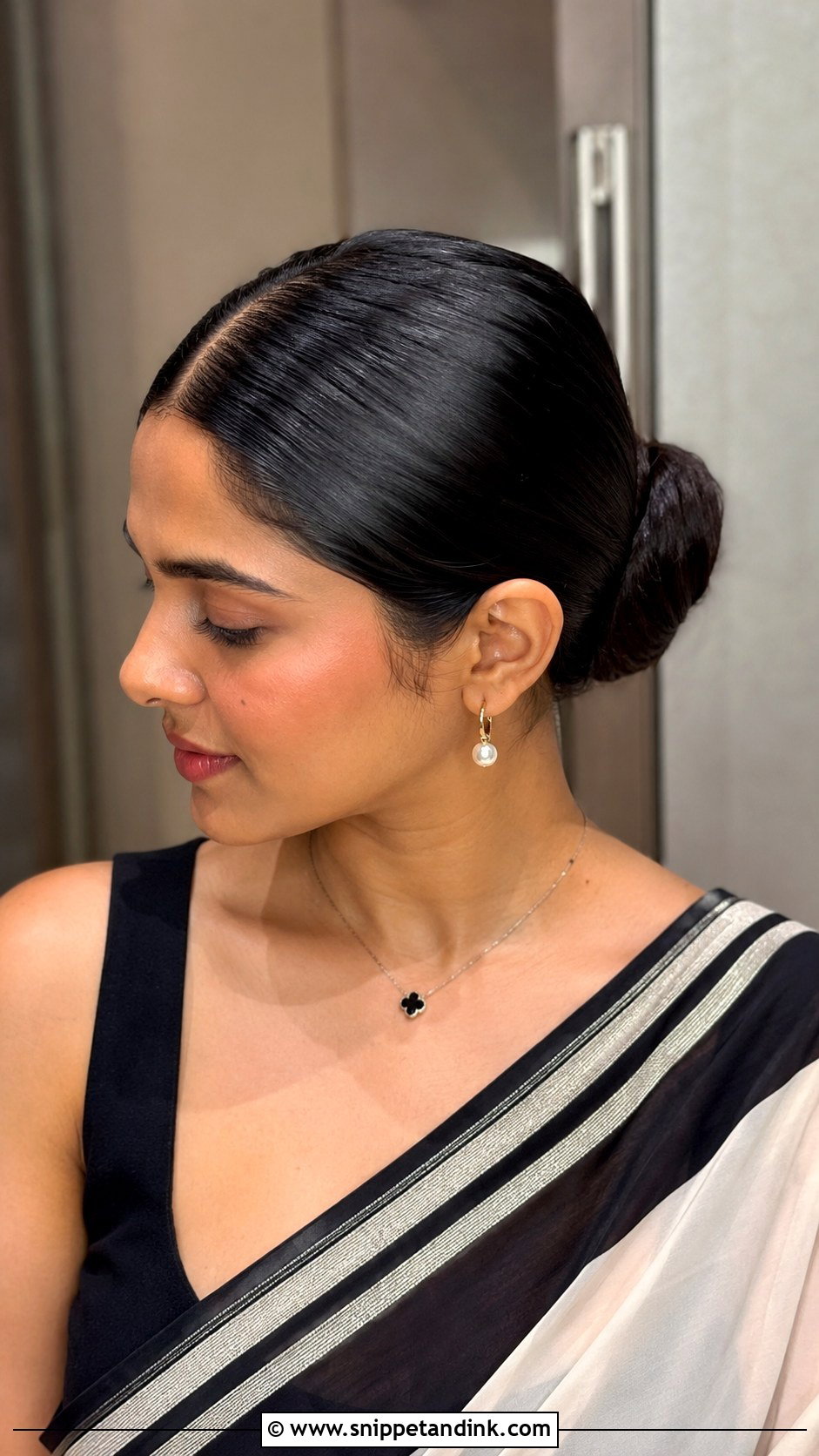
A sleek center-parted bun is the most minimal style here, and it shows every flaw, so the part has to be dead straight and the hair smooth to the root. I use a little serum on the surface for flyaways. Low or mid-height both work. It’s strongest with sarees and Indo-Western looks, and it lets heavy earrings and necklaces stand out. Be honest with yourself about your face shape and hairline: a severe center part suits oval and heart shapes, while a strong widow’s peak or uneven hairline often looks better with a softer side part.
20. Flower-Adorned Open Hair
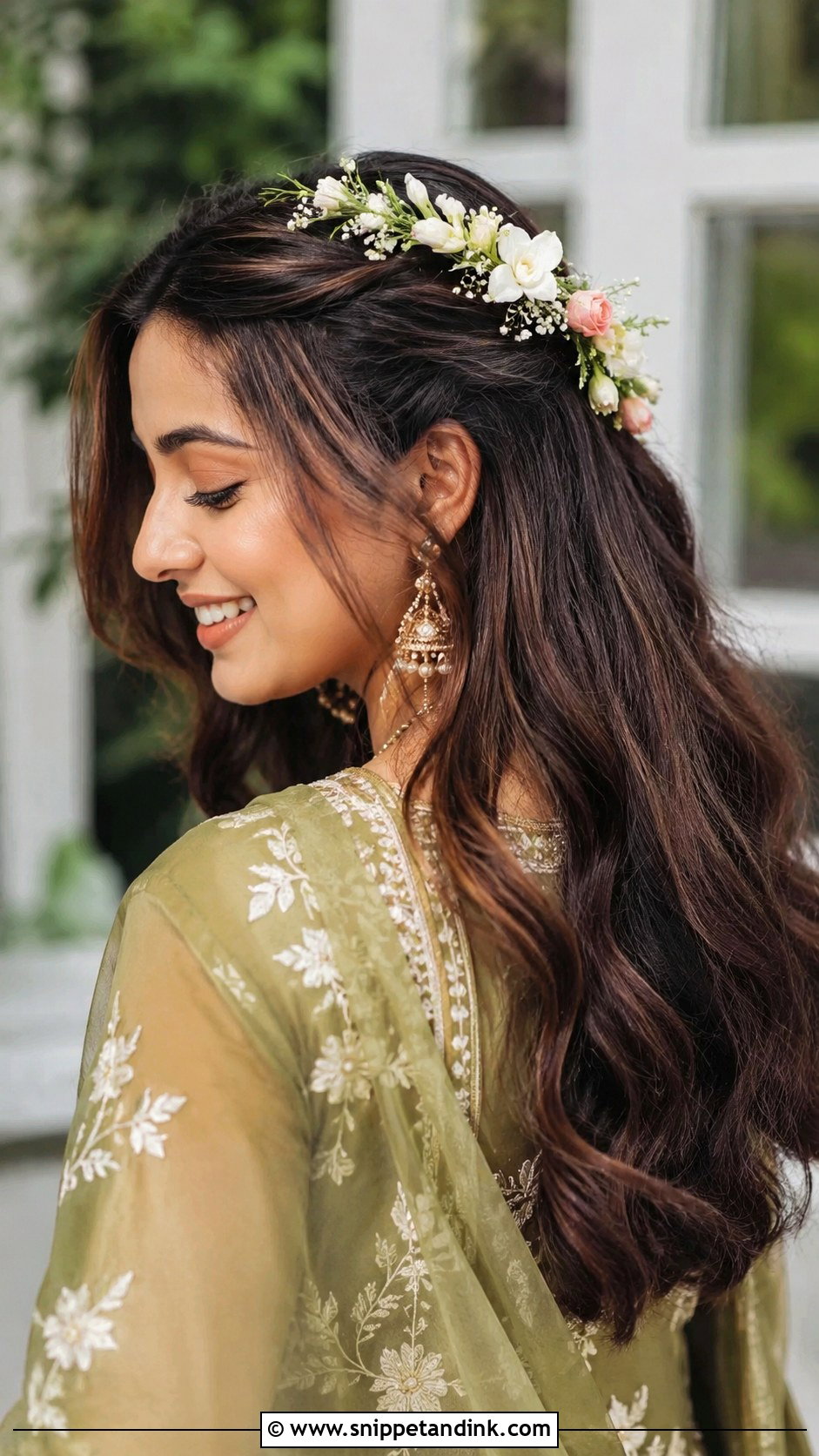
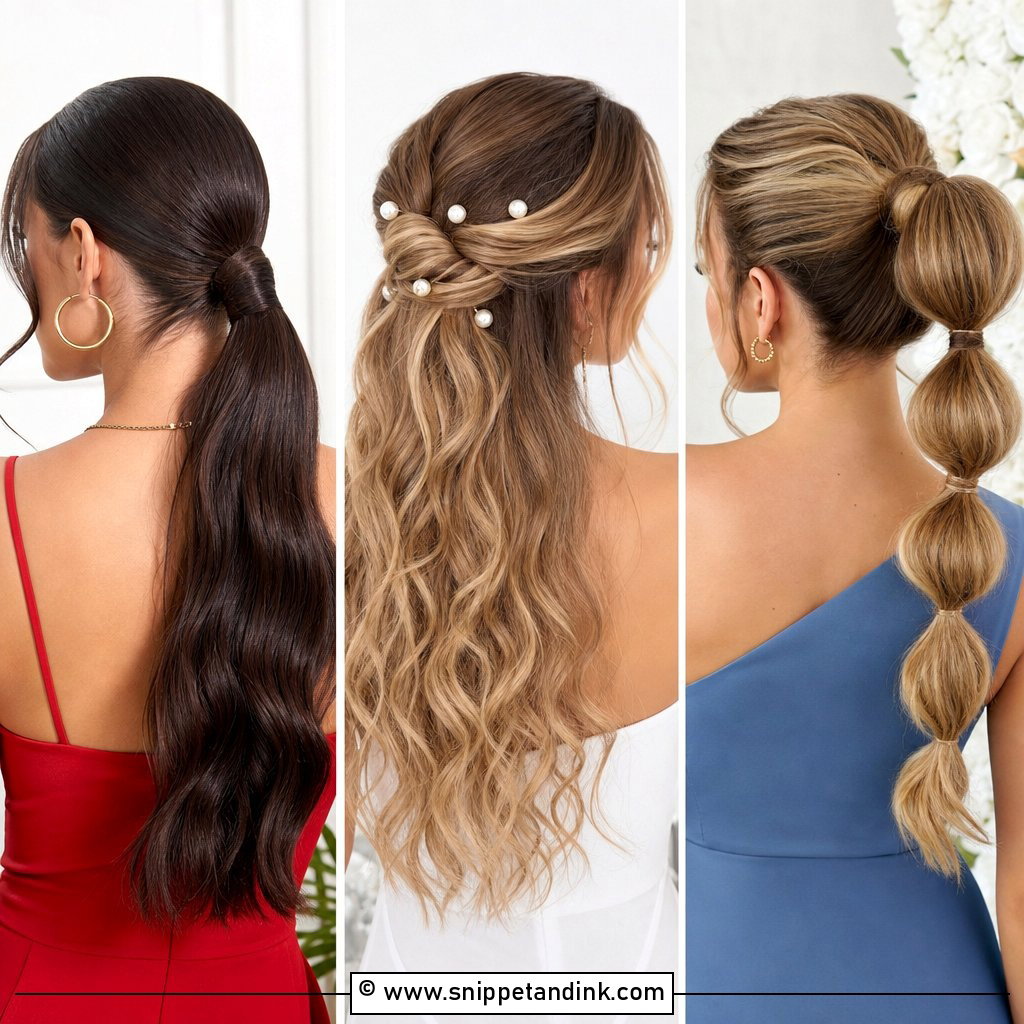
Open hair with fresh flowers tucked along one side or the crown needs almost no styling skill, just soft waves and a few well-placed blooms. It suits daytime mehendi and haldi, and it works on most lengths. Choose sturdier flowers like small roses or baby’s breath over delicate ones that wilt and brown against warm hair. Pin each stem on a short bobby pin crossed into the hair underneath. Pair it with light jewelry so the flowers stay the focus.
Planning Hair Across Haldi, Mehendi, Sangeet and Reception
Guests often book one style and then realize there are four functions. You don’t need four salon visits, but each event has its own practical demands.
Haldi
Turmeric paste can tint light or highlighted hair yellow. Wear an older, tight style like a braid or a simple bun, and save the blowout for later in the week.
Mehendi
Once the henna is on your hands, you won’t be able to touch your hair for hours. Choose a style that needs no adjusting: a braided crown, a fishtail, or open hair already pinned back from the face.
Sangeet and reception
These are the dancing nights, so this is where the braided updos and secure buns earn their place. If you curled hair for one event, don’t curl again the next morning; braid it damp overnight and you’ll have waves without another round of heat.
Securing a Dupatta and Maang Tikka Over Finished Hair
A dupatta draped over the head pulls backward all evening, and if it’s only pinned to itself, it drags the hairstyle with it. I always pin the fabric into the hair, ideally into a bun or the base of a braid, with two or three bobby pins at the crown and two behind the ears. That way the hair carries the fabric rather than the fabric pulling at the hair.
Put the maang tikka in before the dupatta, centred on the part, and hook its chain into the hair at the crown with a pin. Heavy earrings with sahara chains clip into the hair above the ear in the same way. Check everything in a mirror with your head turned both directions before you leave; it’s much easier to adjust now than in the middle of a ceremony.
The Jewelry Usually Decides
When guests can’t decide, I ask what their heaviest piece is. A big maang tikka, a matha patti or a dupatta over the head all push you toward a low, solid base like a bun or chignon. Statement earrings and an open neckline suit side-swept or half-up styles. Light jewelry leaves room for open waves and flowers. From there, think about the function, the weather and how long you’ll be dancing. Simple styles done well hold up from the first ritual to the final song.
You'll Like These Ideas:



Leave a Reply