
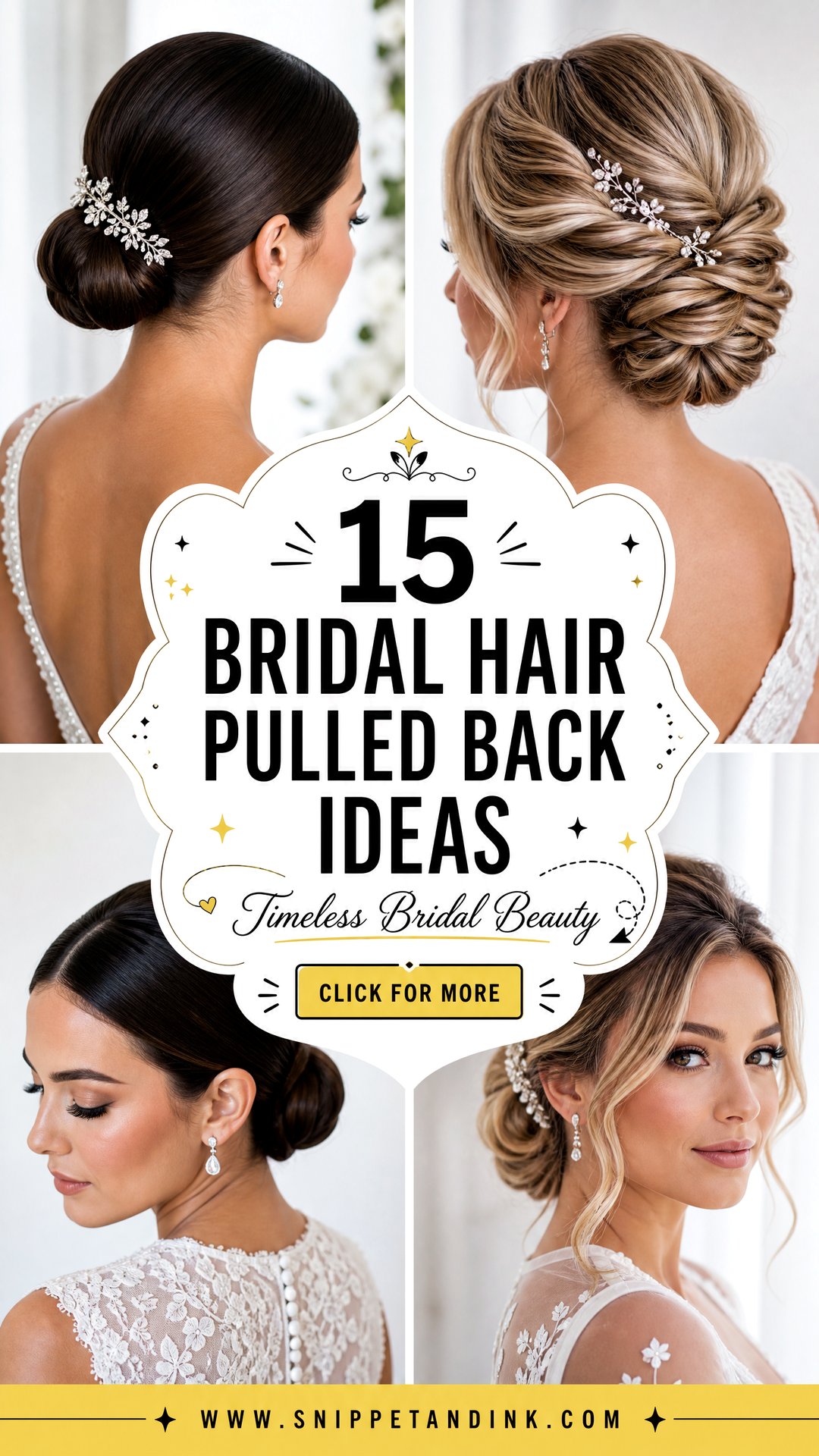
Pulled back hair is the request I hear most from brides who are worried about the weather, a long day or hair in their lipstick. It opens up the face, lets the makeup and earrings do their work, and gives a veil something solid to hold. It is also far more varied than people assume. A pulled back look can be glassy and sculpted, loose and textured, or softened with a few pieces around the cheeks. Satin, lace, beading or a full ballgown skirt all pair with at least one of the fifteen styles here, and I’ve added notes on what each one asks of your hair.
Height on the Head Changes the Whole Mood
Two brides can ask for a bun and walk out with completely different looks, simply because one sits at the nape and the other at the crown. Where the hair gathers matters as much as how it’s styled, so I settle the height before we talk about finish.
- At the nape: the softest and most traditional placement. It frames a bateau or high neckline nicely and leaves room for a veil comb above it, but it can disappear behind a very high collar or a cape.
- Mid-height, roughly level with the ears: the most forgiving spot. It shows from the front and the side, works with most veils, and suits strapless and sweetheart gowns.
- At the crown: lifts the face and lengthens the neck, which looks sharp with square, halter and one-shoulder dresses. The trade-off is that a veil usually has to sit underneath it, and a heavy crown bun can pull by evening.
Check your profile too. A side view shows the shape of the back of the head, and a bun that looks neat from the front can look flat or lumpy from the side. If the back of your head is naturally flat, I build a little volume at the crown first, and I hand every bride a mirror at the trial so she can see all four angles.
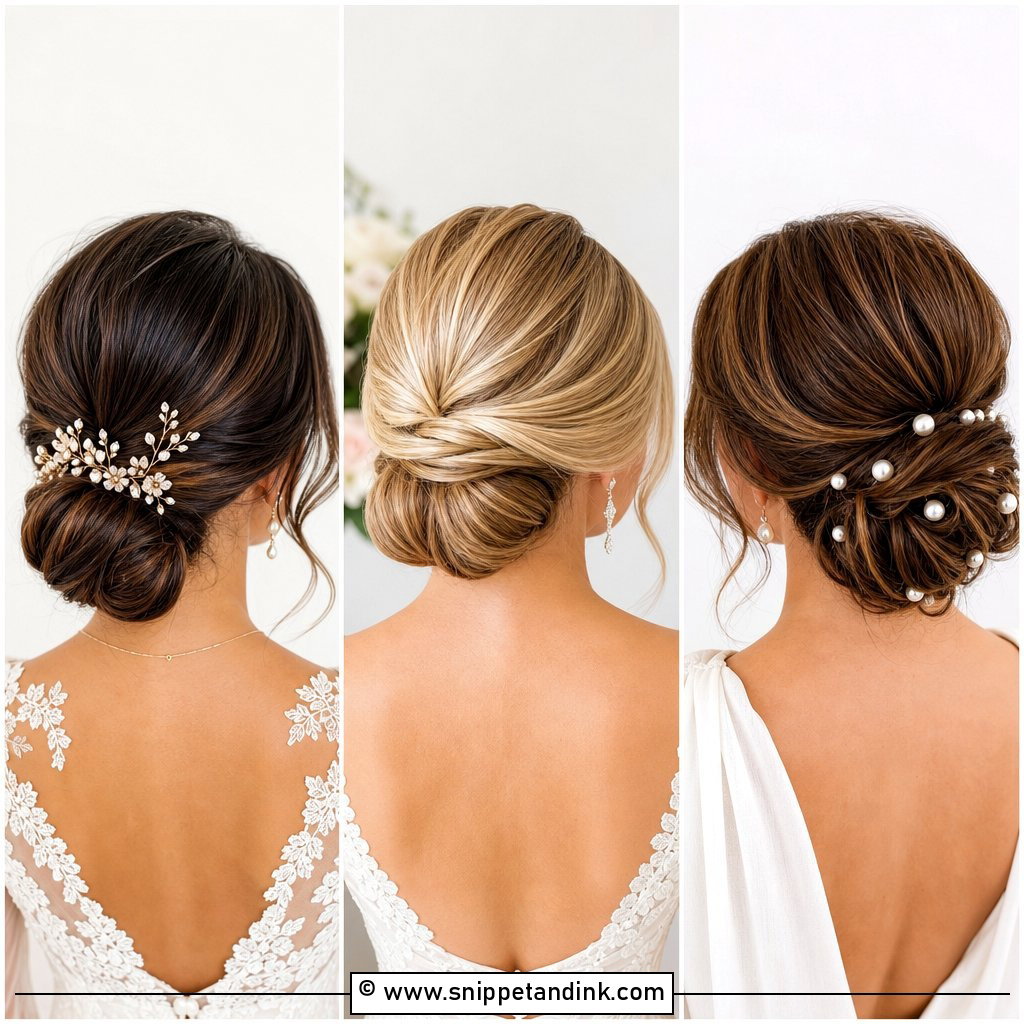
1. Low Bridal Bun
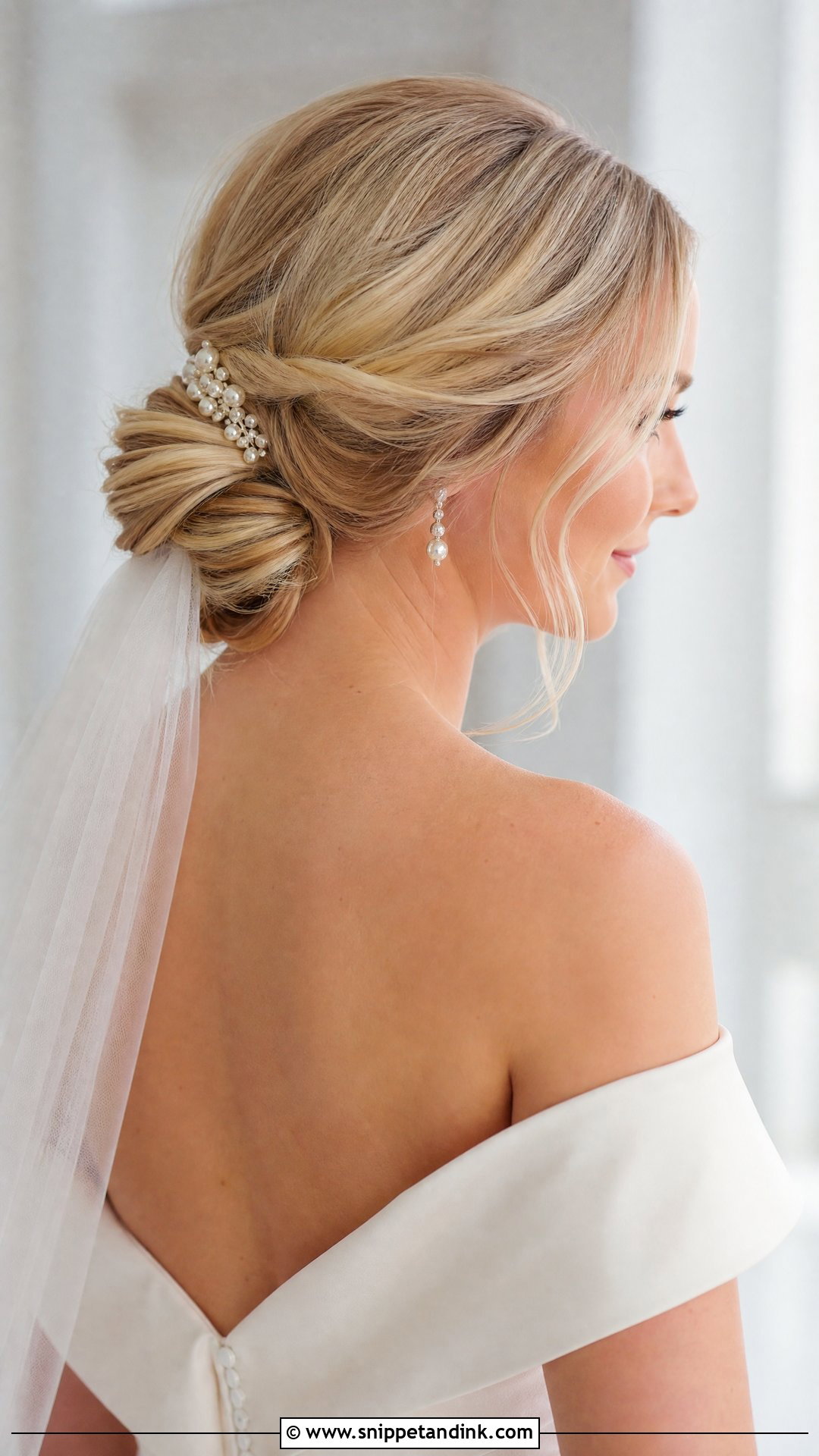
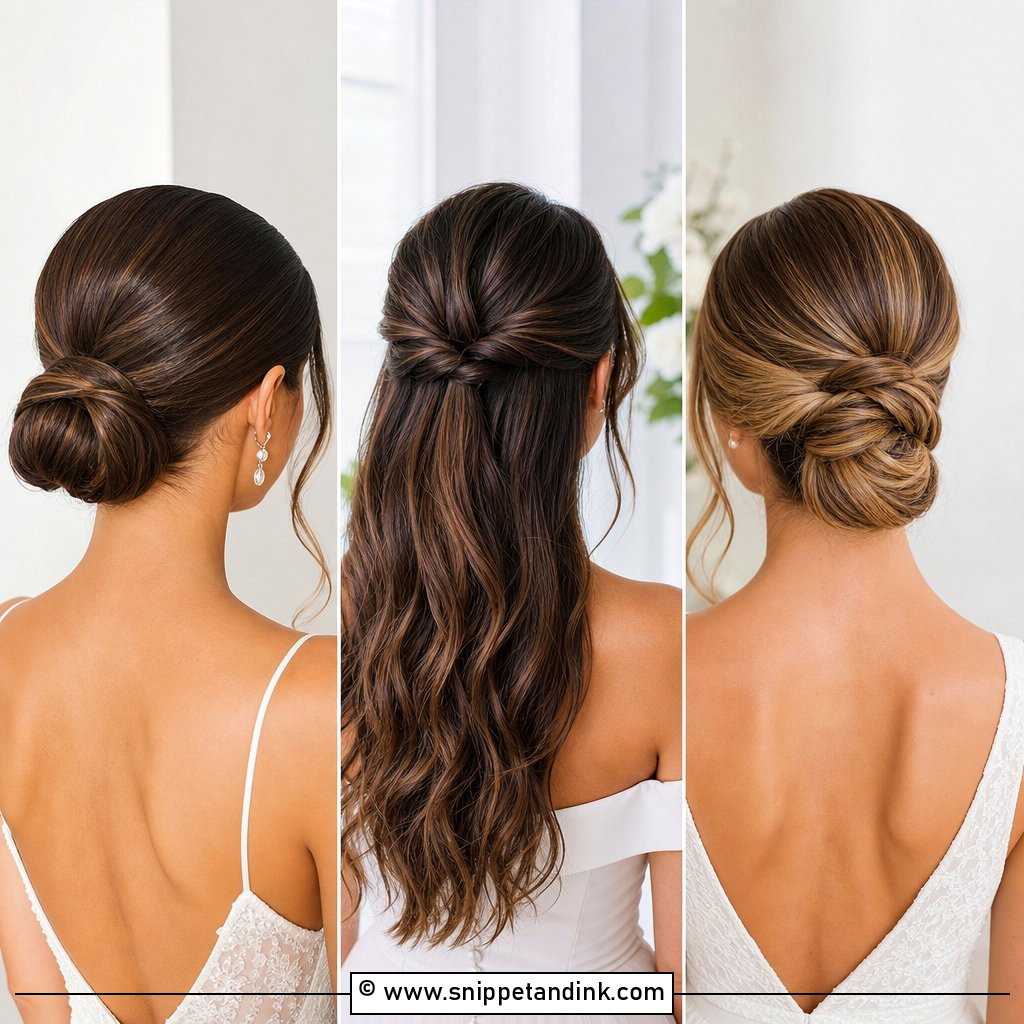
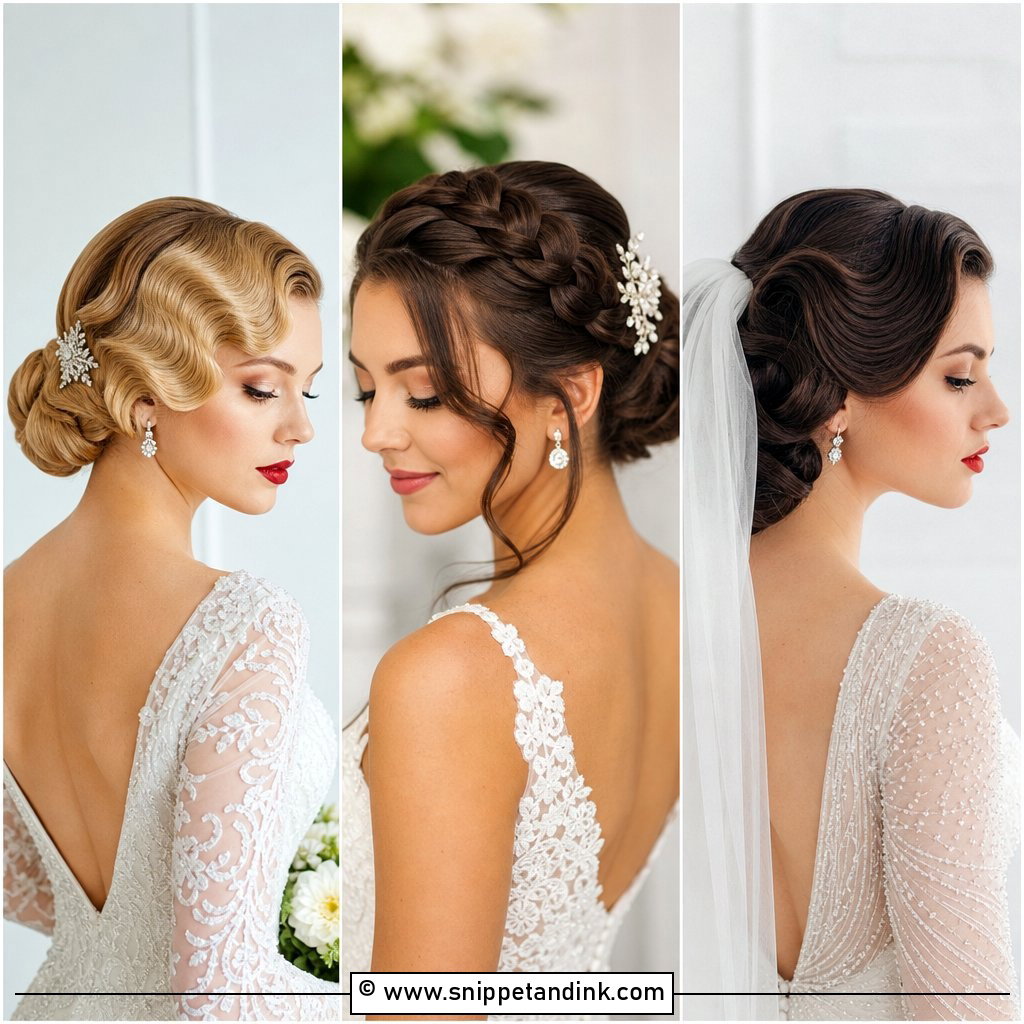
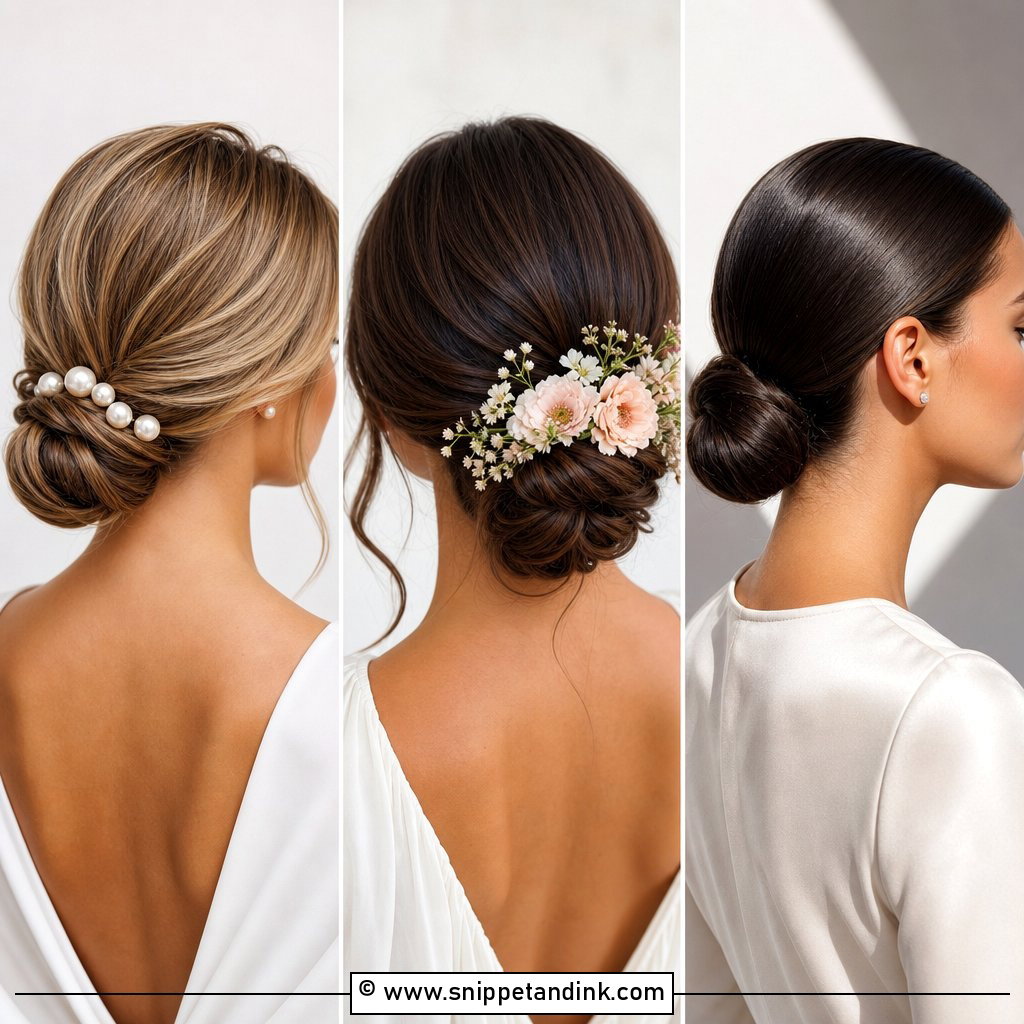
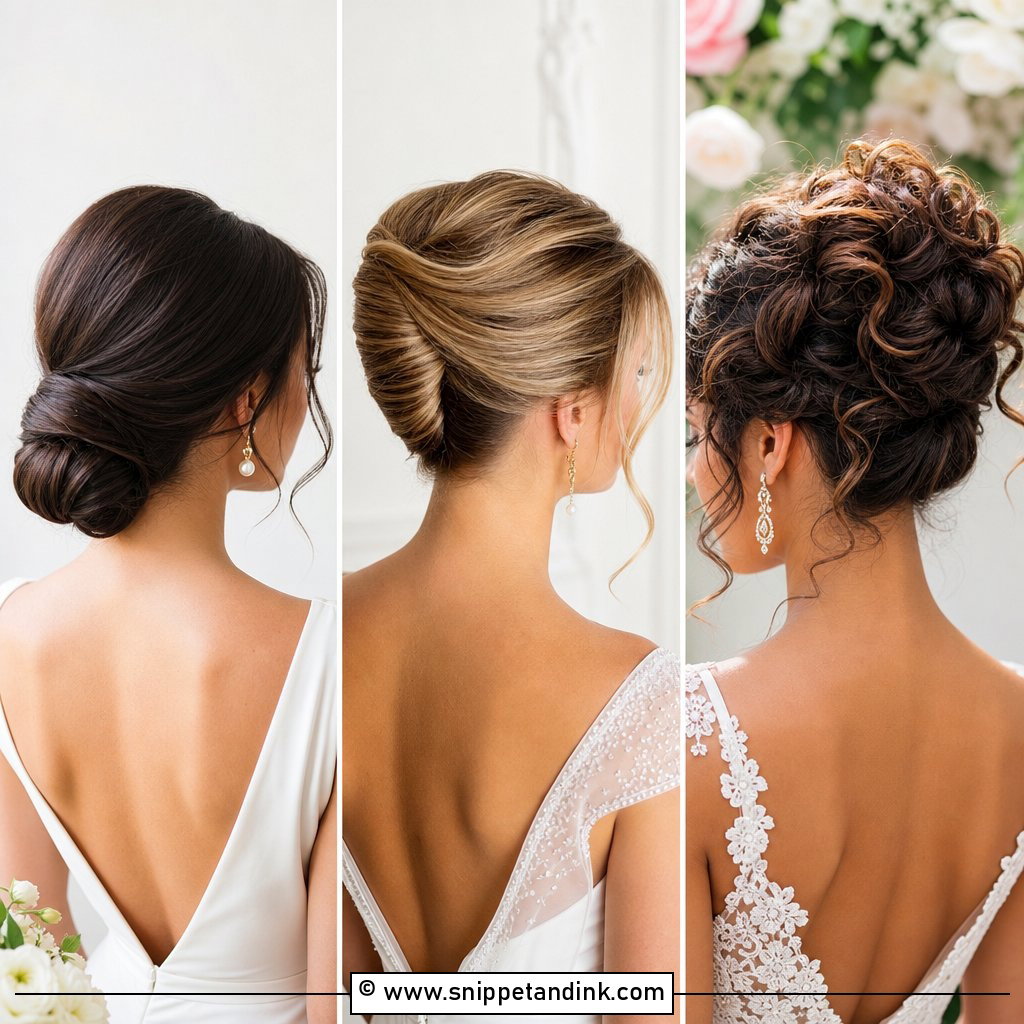
The low bun is the most requested style in my chair, and it earns that. Sitting at the nape, it leaves the crown free for a veil comb, pearl pins or a statement earring to take the attention. It works with a middle part, a soft side part or hair brushed straight back. Smooth reads formal; a little texture through the bun reads relaxed. One thing I check with high-neck and lace collars: the bun must clear the neckline, or it rubs and flattens every time you turn your head.
2. Sleek Bridal Bun
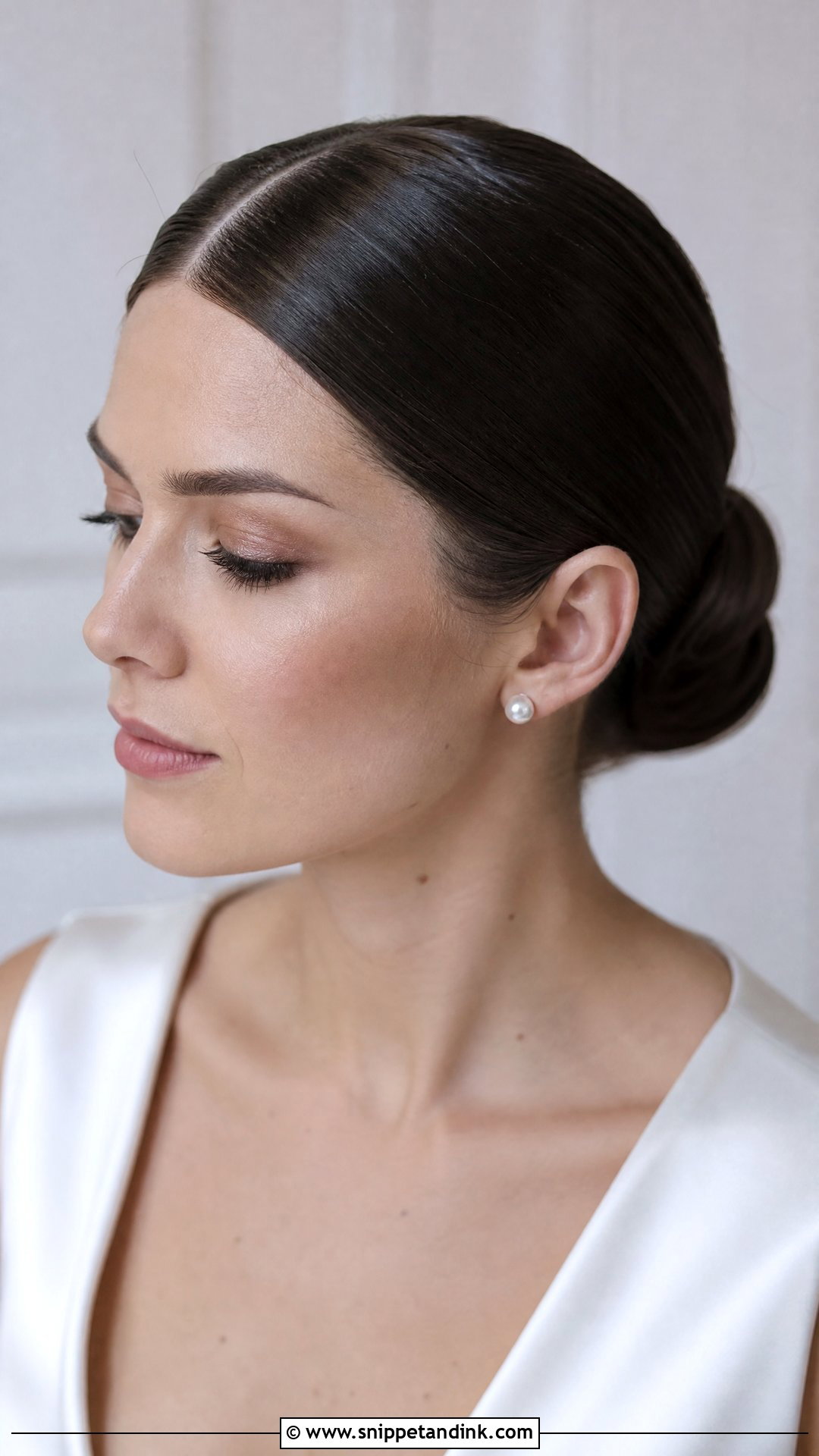
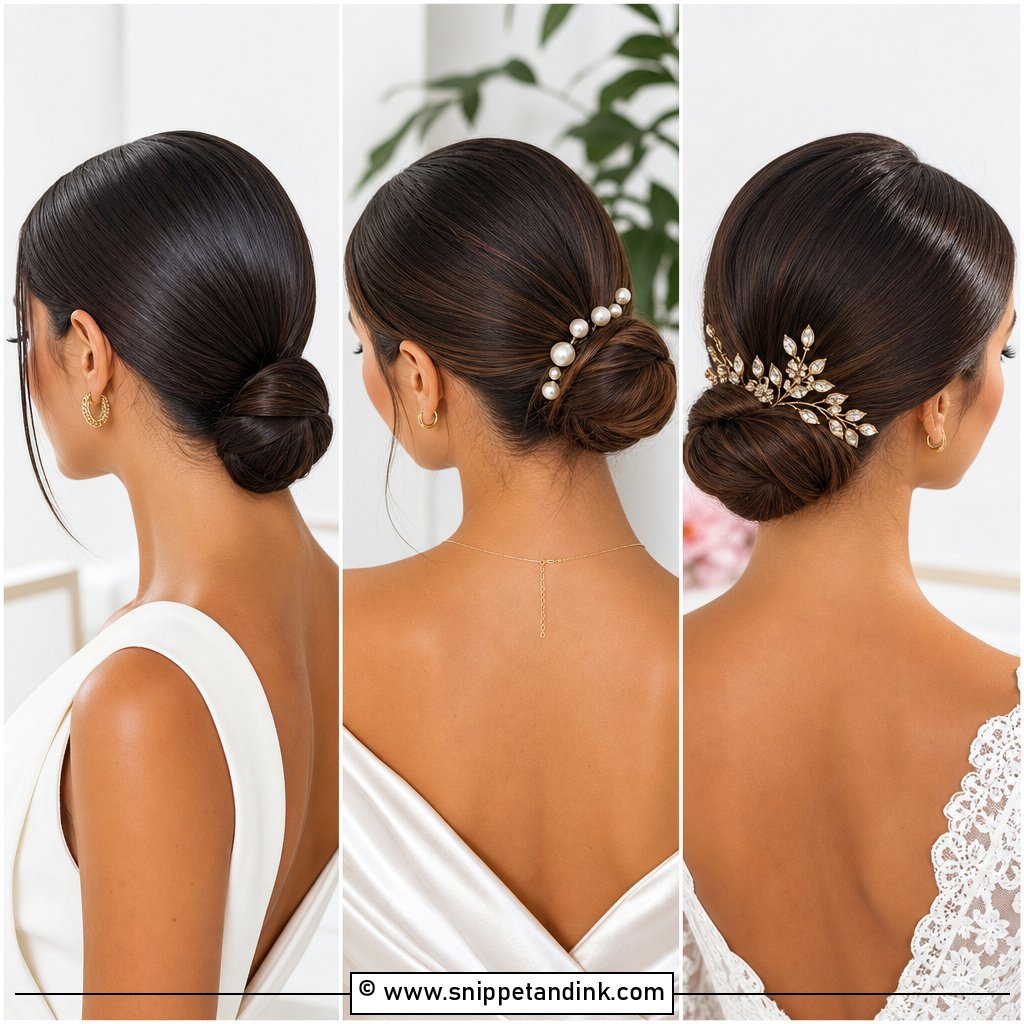
A sleek bun is all about the surface. Every strand is brushed back with a smoothing cream and a firm gel or wax, then shaped into a clean knot at the back or nape. It hands the attention to the dress, the neckline and the jewelry. The part has to be decided, not left to chance: centre, side or none at all. I’d steer you away from it if your hair has a lot of short broken pieces at the hairline, since they spring up through the shine by mid-afternoon.
3. Textured Bridal Bun
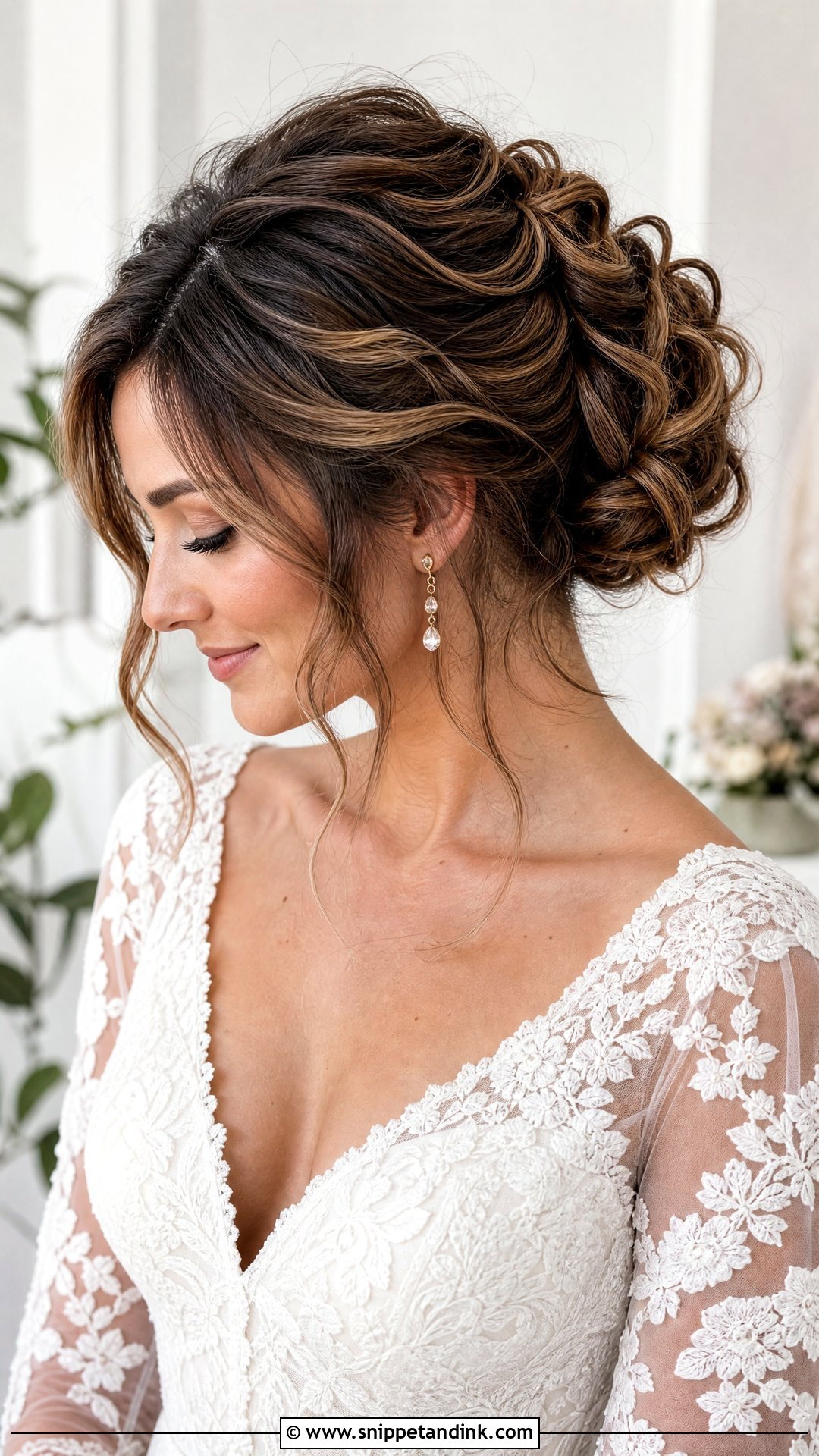
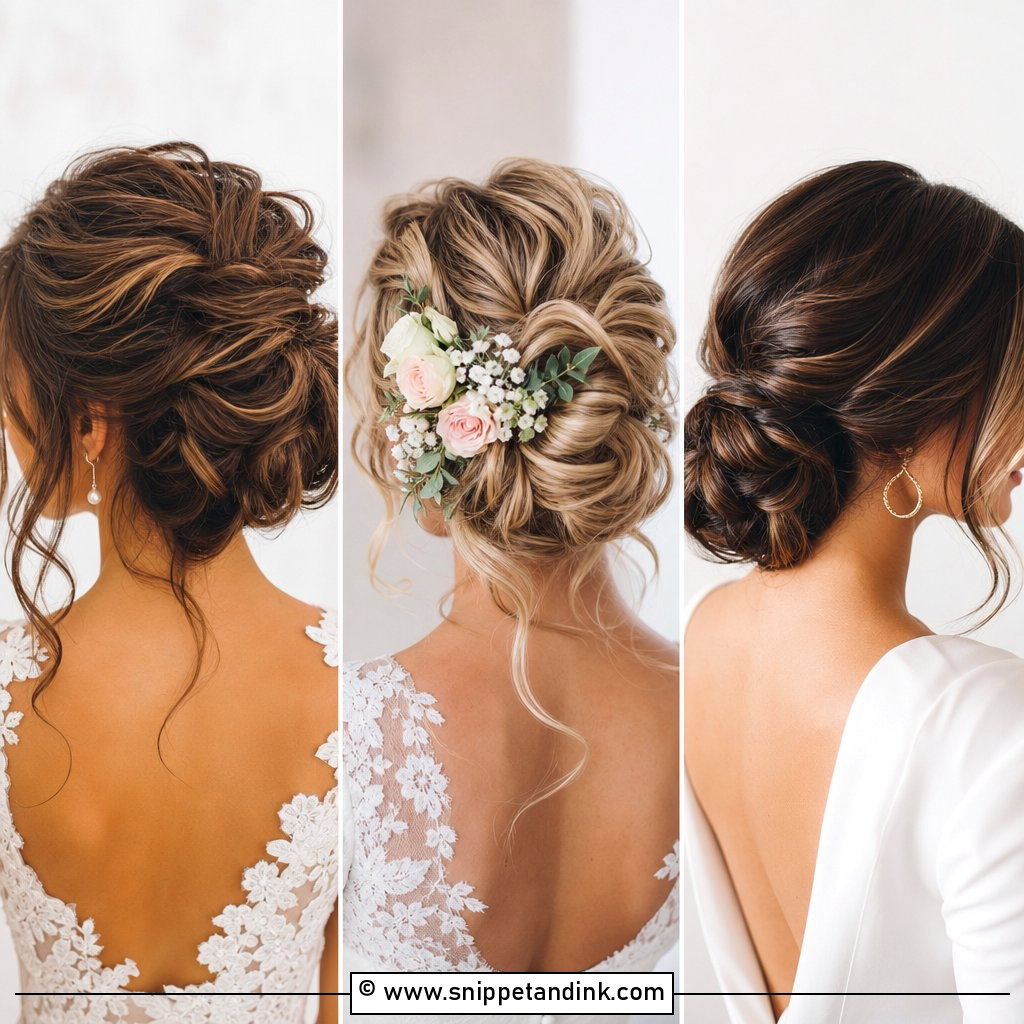
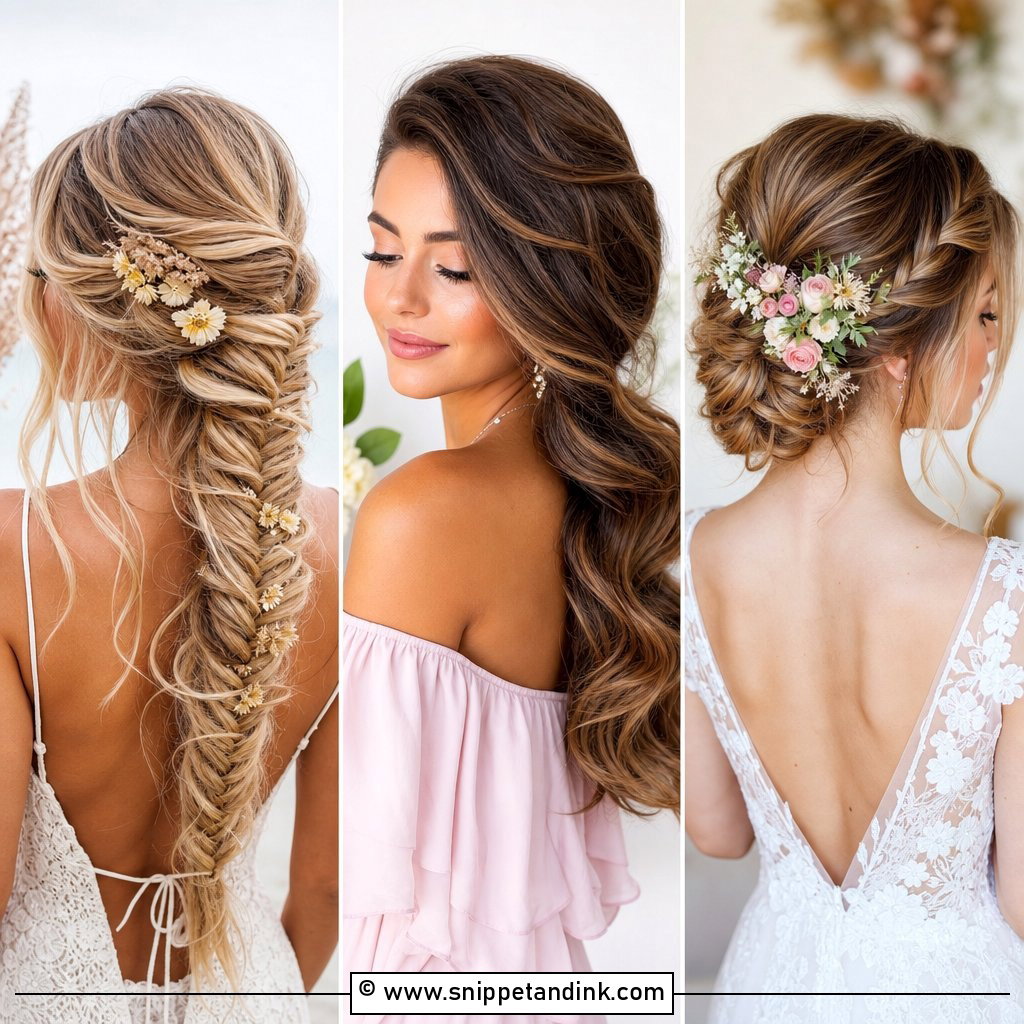
Texture is forgiving. A textured bun is made of bends, twists and loosened sections, so a strand slipping out at hour six looks like part of the design rather than a mistake. That movement shows off highlights, balayage and dimensional brunette hair well, because each twist catches the tones differently. I prep with a dry texture spray, add lift at the crown and leave a couple of soft pieces near the ears. Garden, beach and barn weddings suit it best.
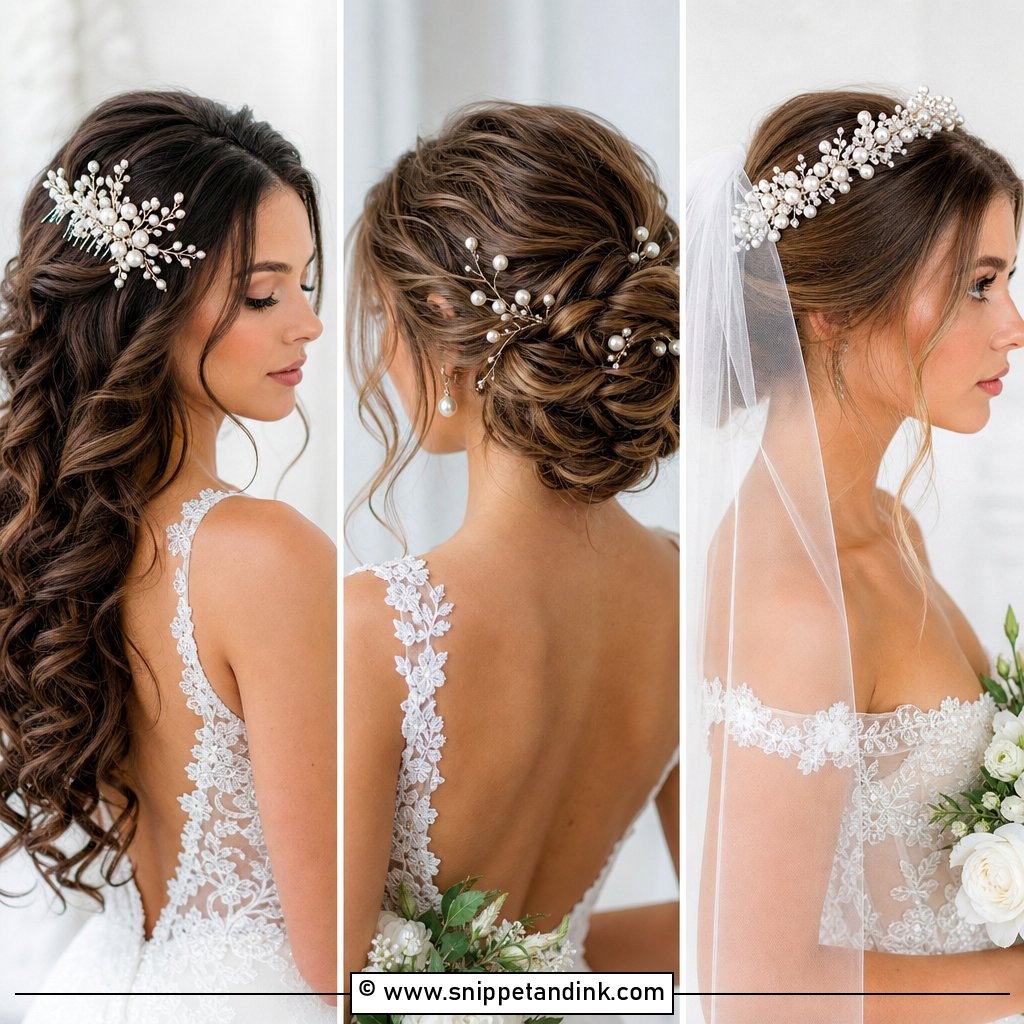
4. Bridal Chignon
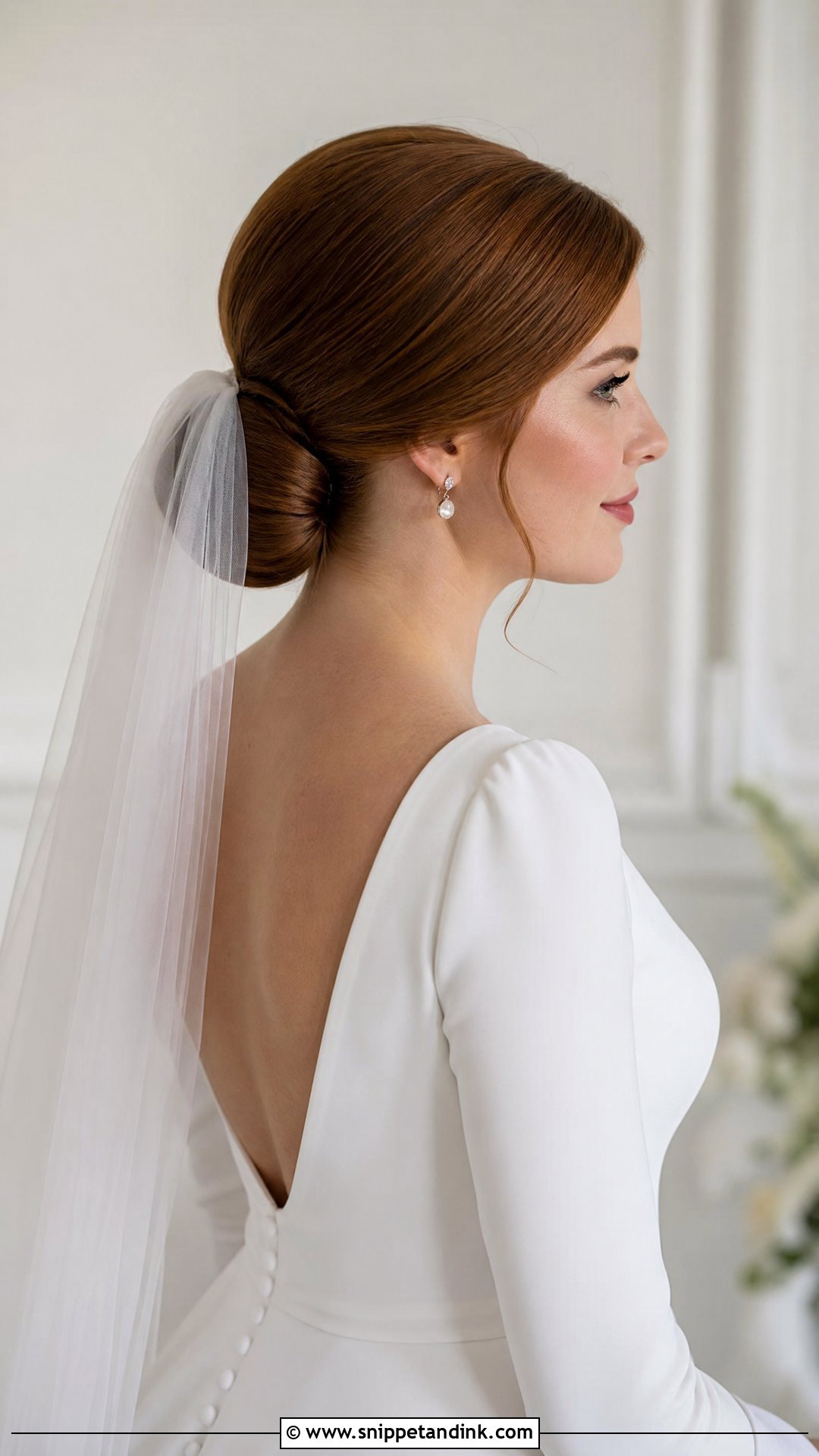
A chignon is tucked low at the nape and shaped into a smooth roll, knot, or folded bun. It’s formal without feeling stiff, and it’s the style I trust most under a heavy cathedral veil, because the comb can go above or tuck beneath it. Look at it from the side at your trial. During the vows, guests and the photographer see your profile far more than your face, and a chignon with a clean curve reads beautifully there. Keep the front low; too much height dates it.
5. Braided Bridal Bun
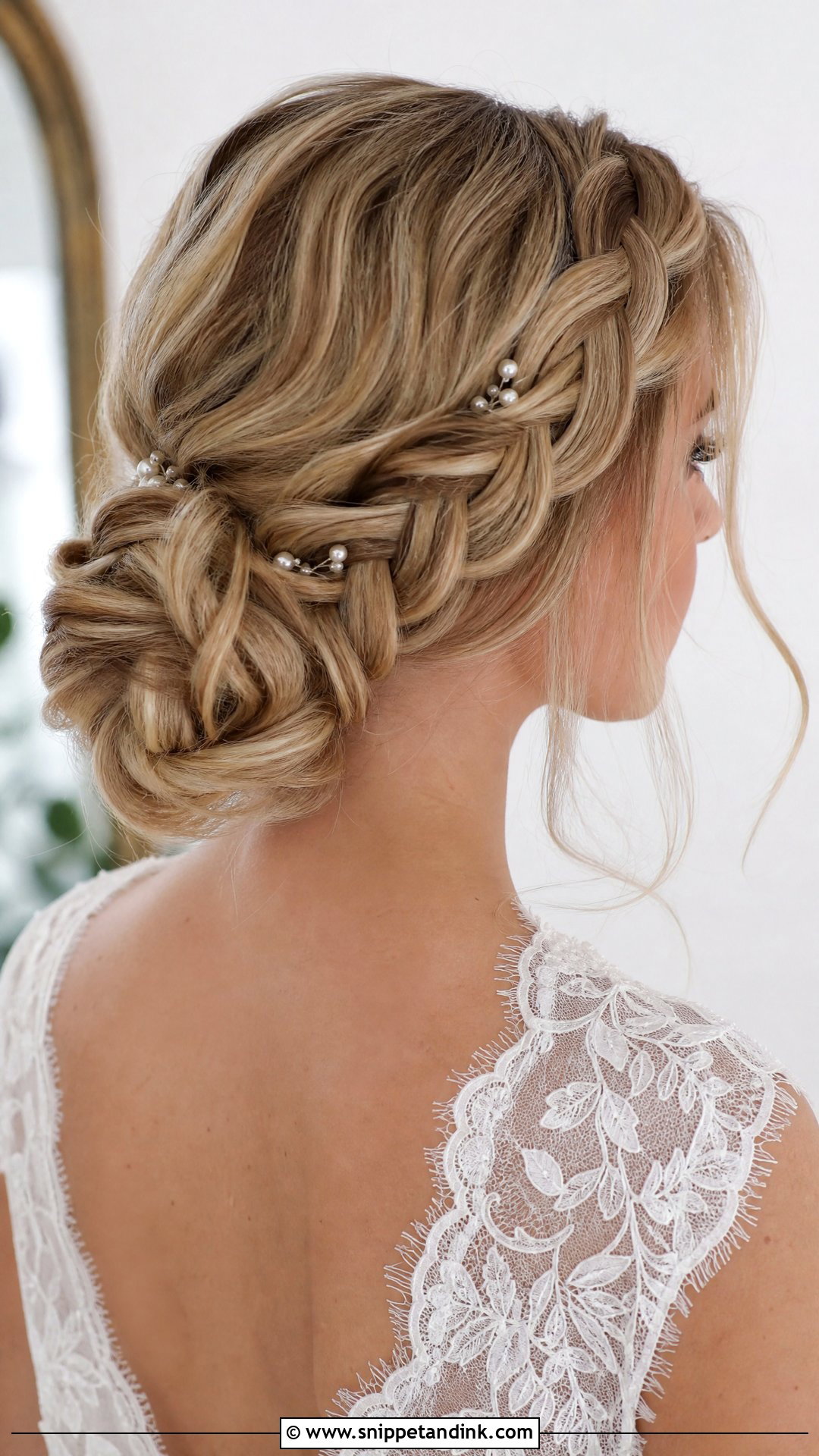
Braids woven into a bun give the back something to look at, which matters during the ceremony when guests mostly see the back of your head. The braid can wrap into the bun, cross the crown or run along the sides. It also has a practical job: braiding the sides catches shorter layers that would otherwise fall out on a breezy day. I expand the braid by pulling each loop slightly so it looks full rather than tight. A small comb or a few pearl pins finish it.
6. Twisted Bridal Updo
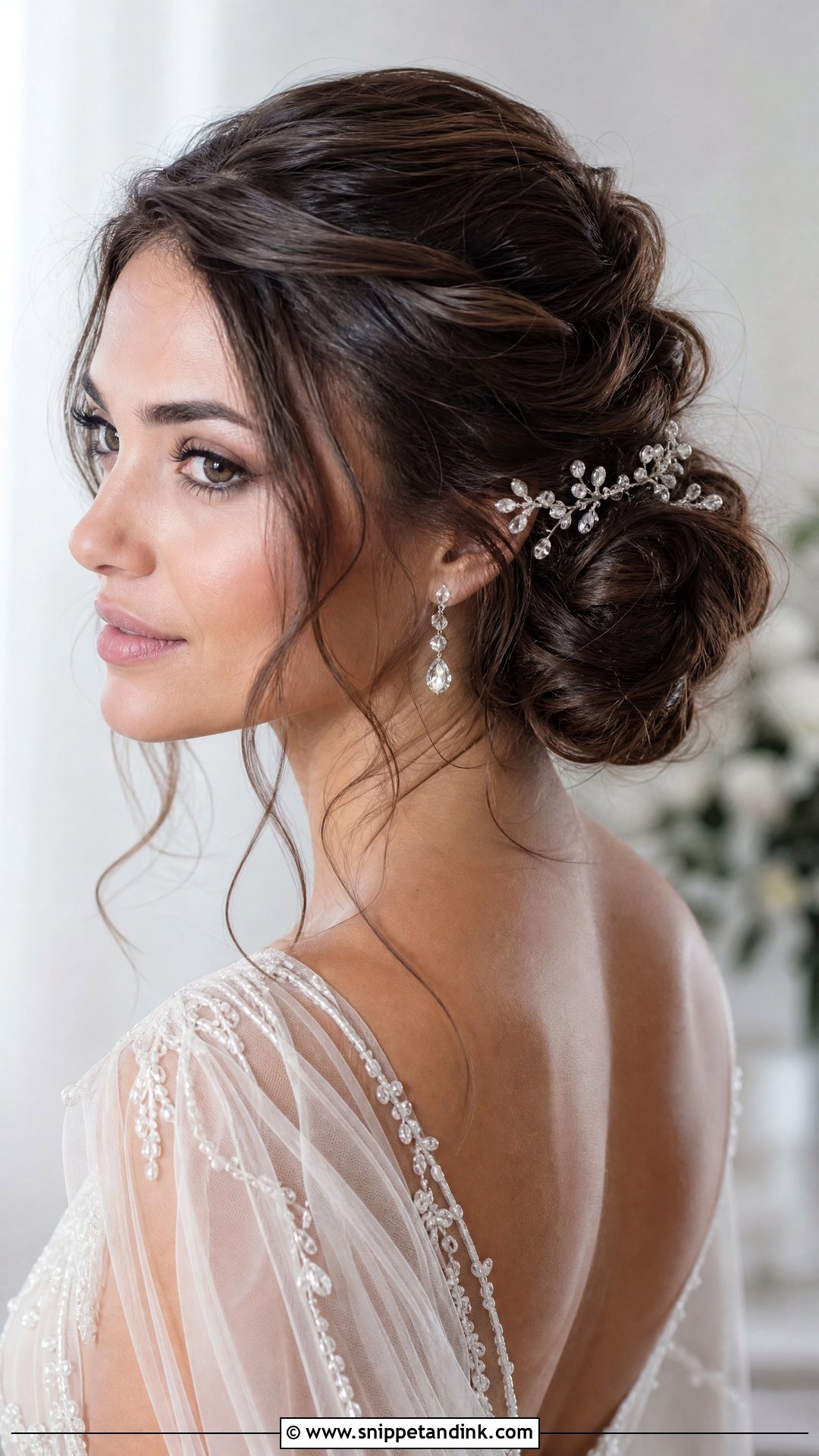
Twists instead of braids make an updo softer and quicker to build. The hair is rolled in sections toward the back and gathered into a bun or knot, and every twist creates a ridge of light and shadow, which is why blonde, auburn and highlighted hair look especially good in it. My one rule: twist in the same direction on each side, or the shape looks lopsided from the front. Keep a little volume at the crown so the front isn’t flat.
7. Bridal Ponytail
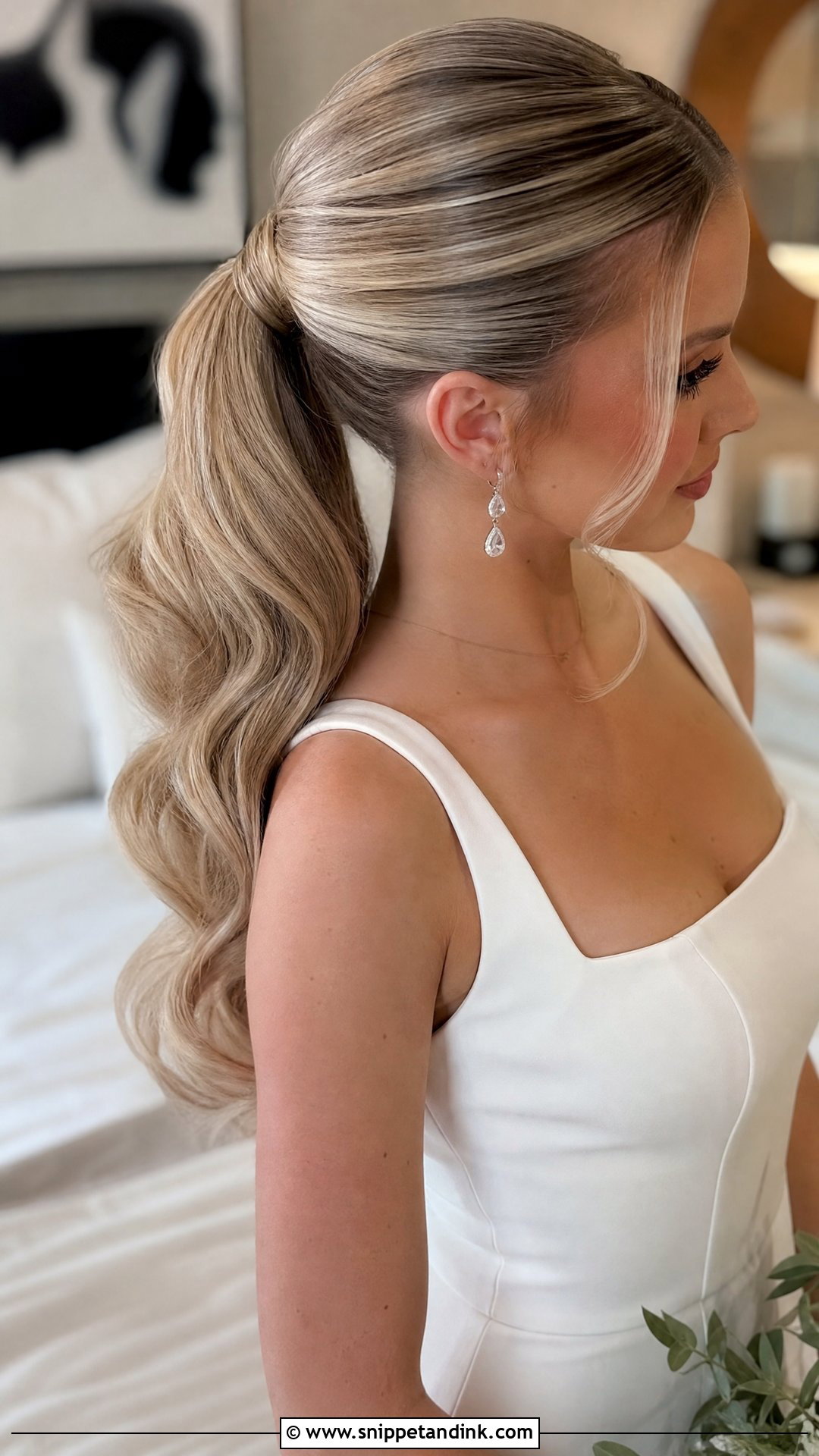
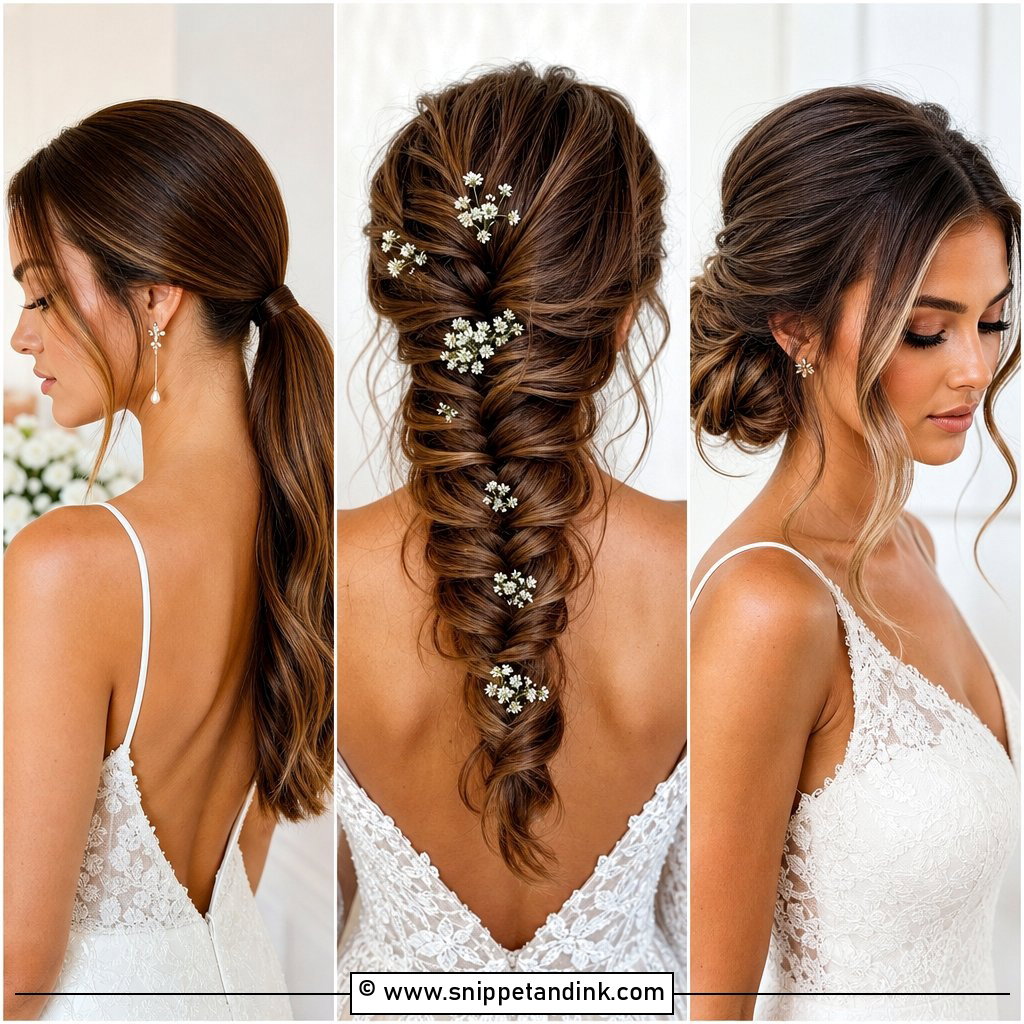
A ponytail gives you movement without leaving your hair fully down, and it swings when you dance. It can be glossy and straight, waved, or built up with volume at the crown. Hide the elastic, always: the base wrapped in hair or covered with an accessory is what makes it read as bridal rather than gym-ready. Long hair and extensions show it best. I ask for smooth roots and controlled flyaways, then soft waves through the length.
8. Low Bridal Ponytail
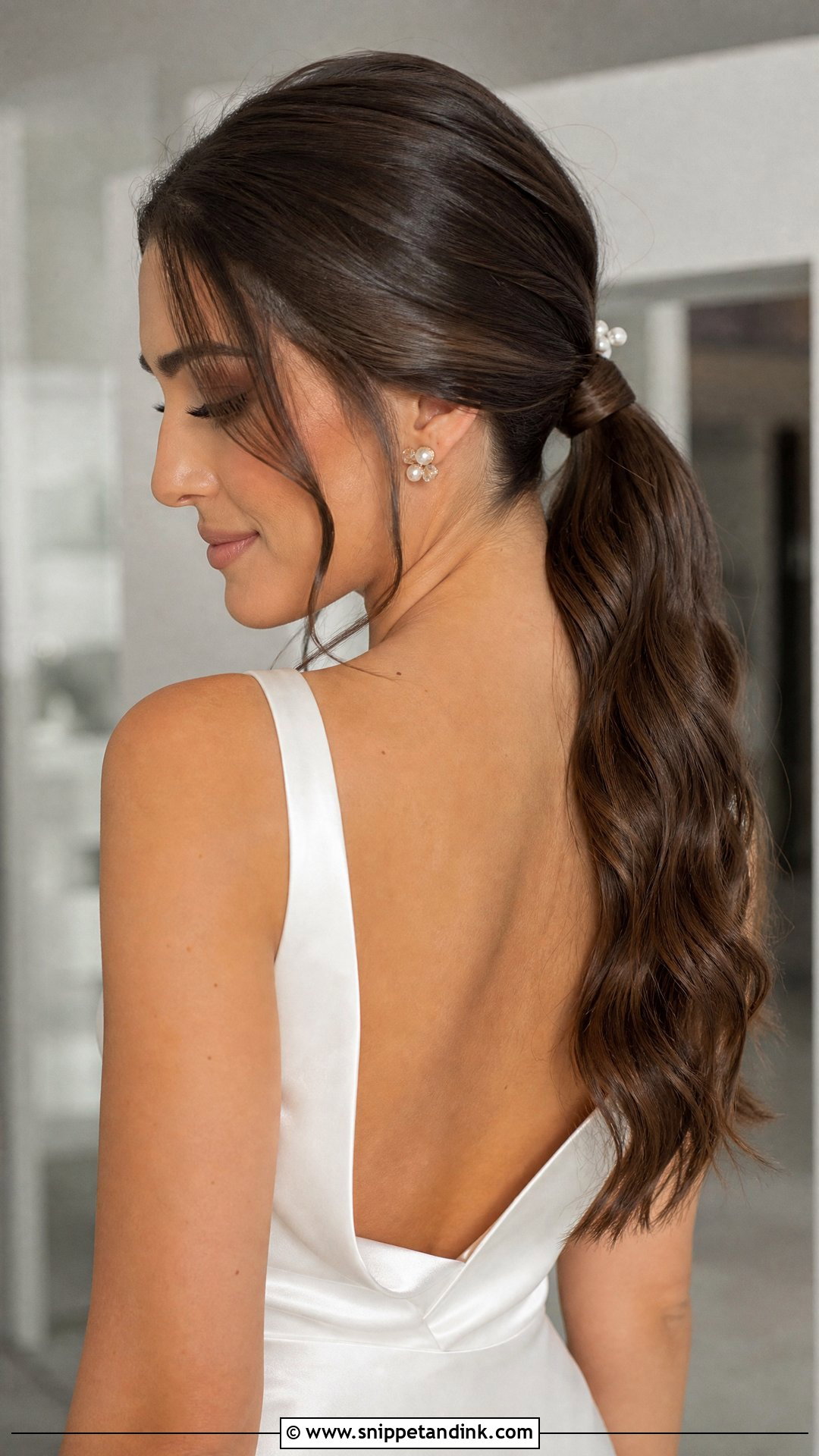
Set at the nape, a ponytail turns quiet and simple. I suggest it when you want hair off the face but find a bun too formal, and it sits well with satin gowns, capes and minimalist dresses. Straight, waved or curled only at the ends all work. I wrap a section of hair around the elastic and pin it underneath, then add a little shine serum through the lengths. One honest caution: a low ponytail under a cape or high back can get pushed to one side all day.
9. High Bridal Ponytail
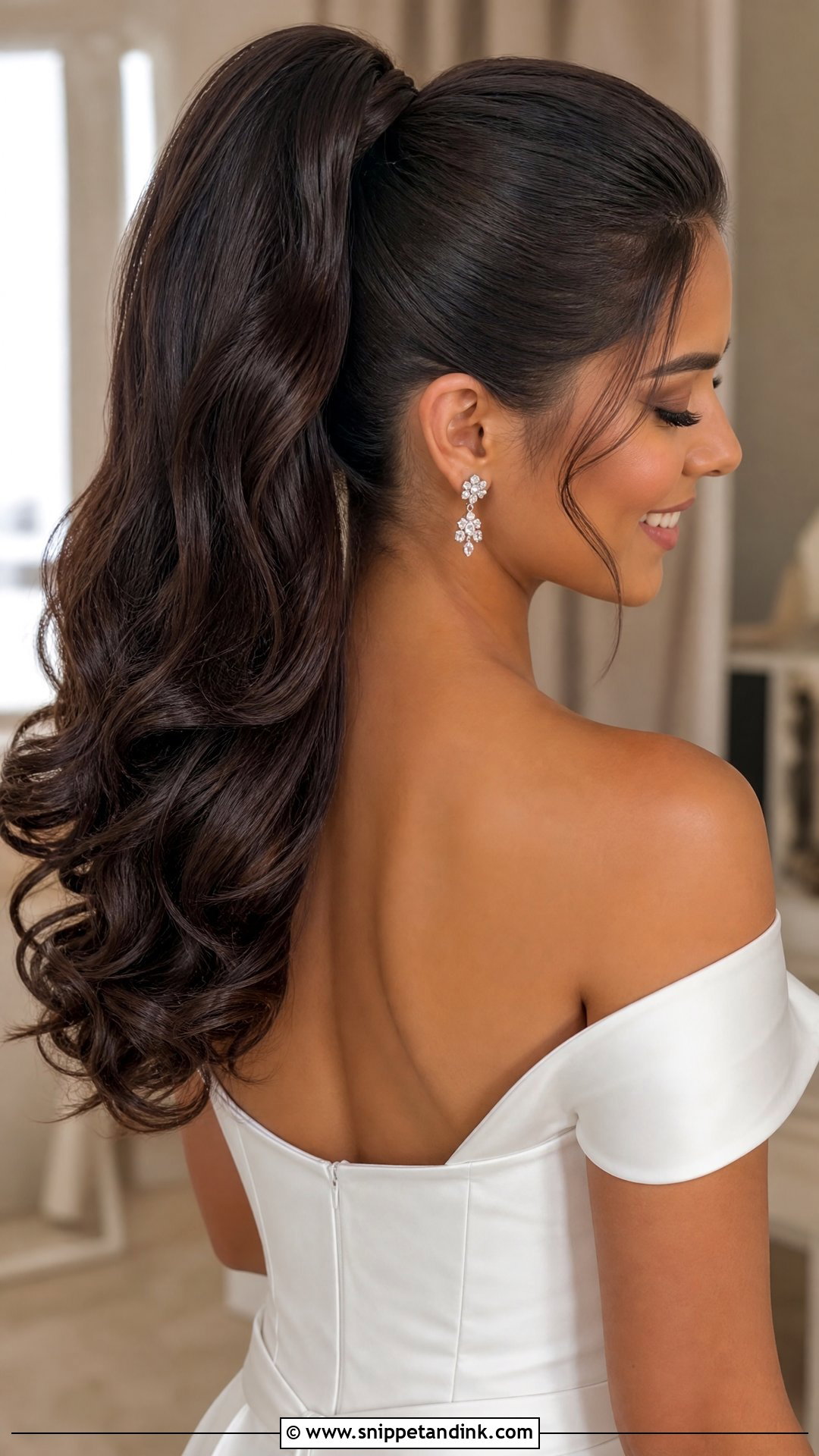
A high ponytail lifts the whole face and gives the boldest outline on this list. It needs long hair or extensions, because the length is the point. The roots are brushed sleek and the ponytail is finished with waves, curls or a straight polish. The base is where it succeeds or fails. I secure it with two elastics and a few crossed pins underneath, otherwise the weight drags it lower by evening. Square necklines and structured gowns pair well with it.
10. Half Up Bridal Hair
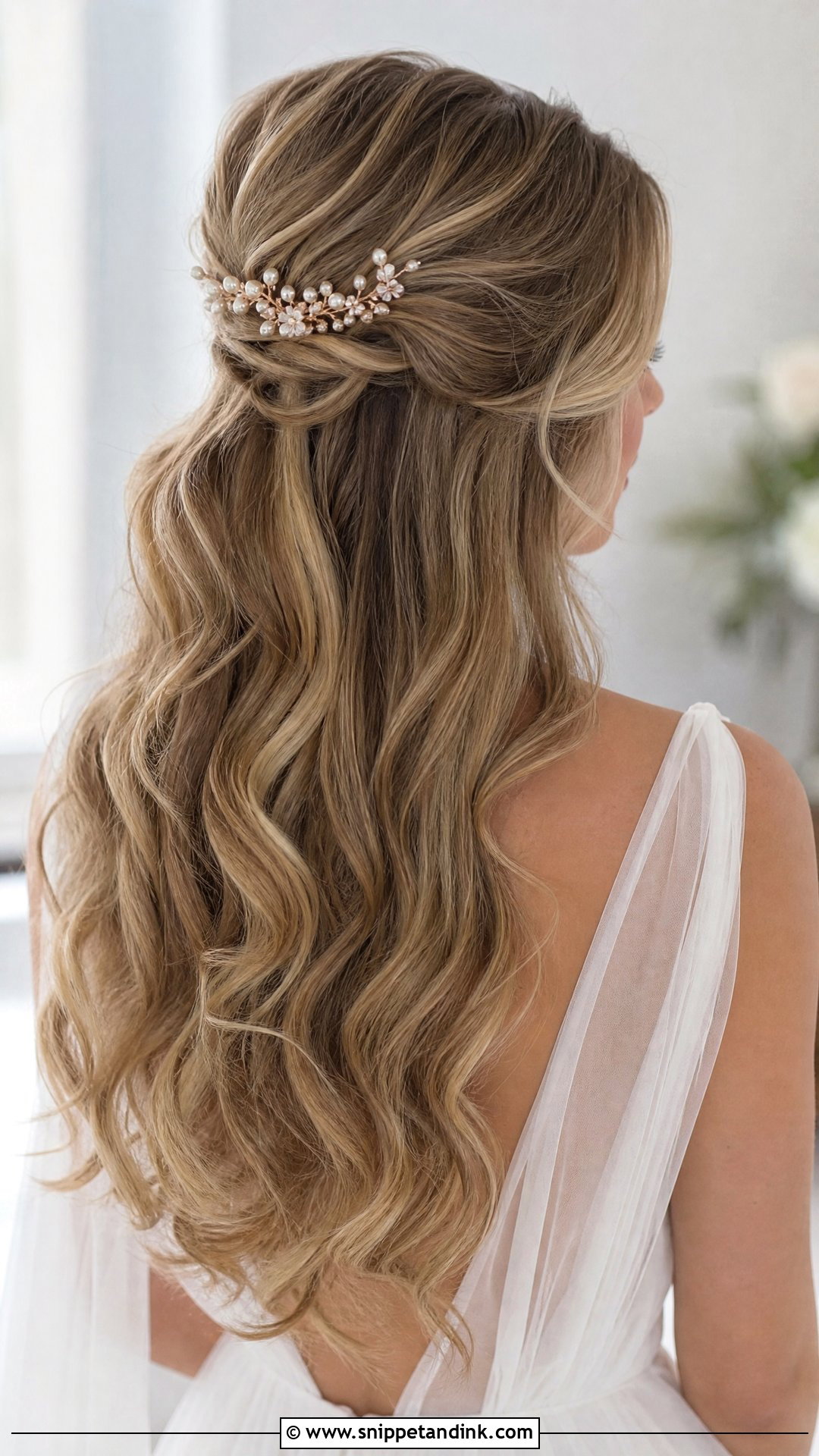
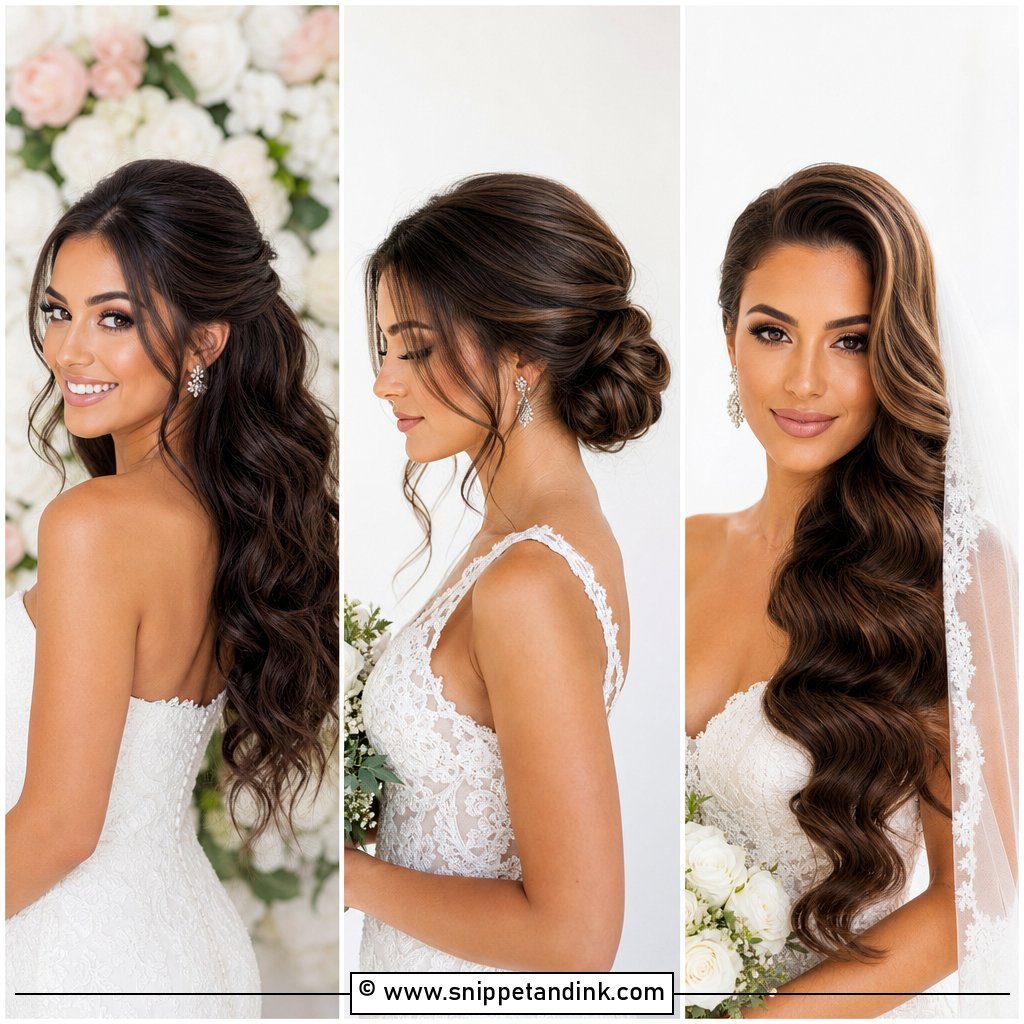
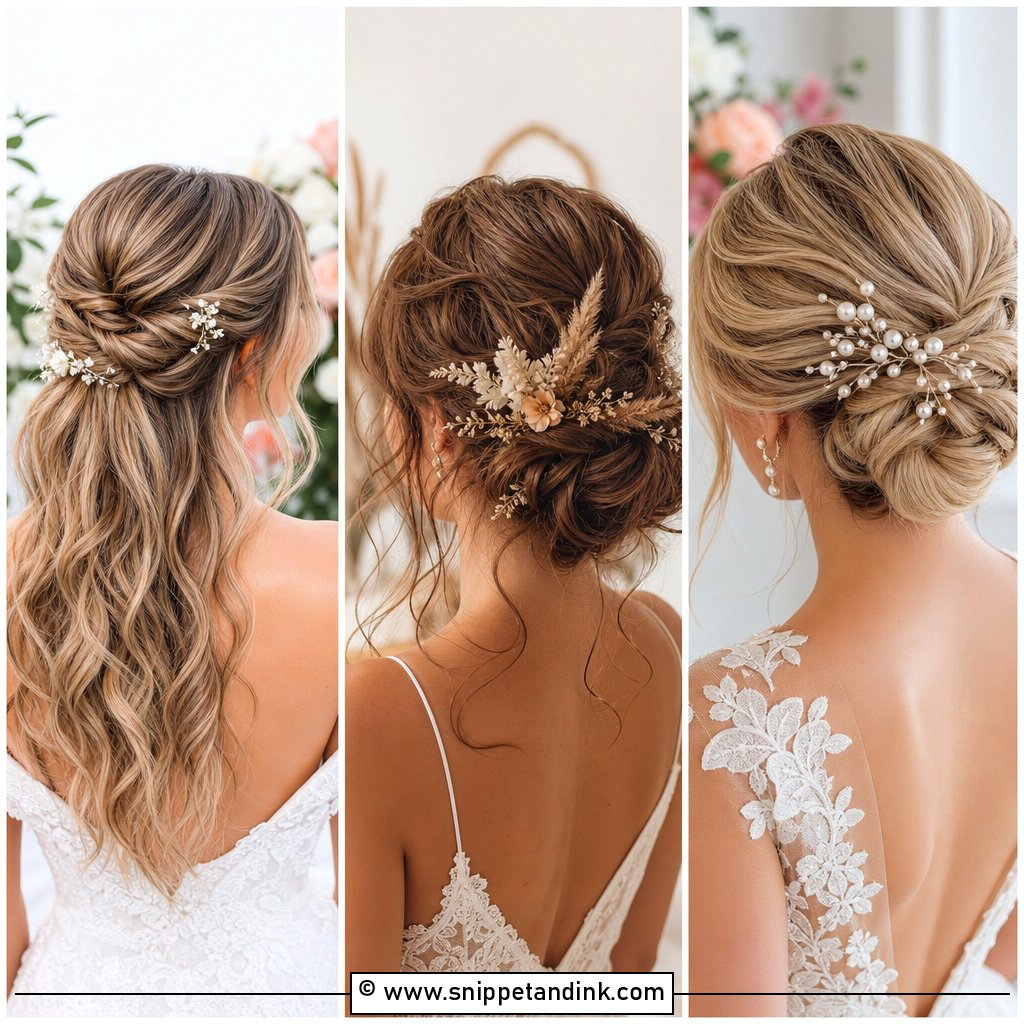
Half up hair lifts the face while keeping length around the shoulders. The top section is pinned away from the face, and the rest falls in waves, curls or a smooth finish. It flatters most face shapes because it opens the features without exposing everything. The pinned section is also a natural anchor for a veil, bow or comb. I keep that section soft rather than tight, with a little lift at the crown, so it doesn’t look scraped back when you see it from the side.
11. Half Up Bridal Bun
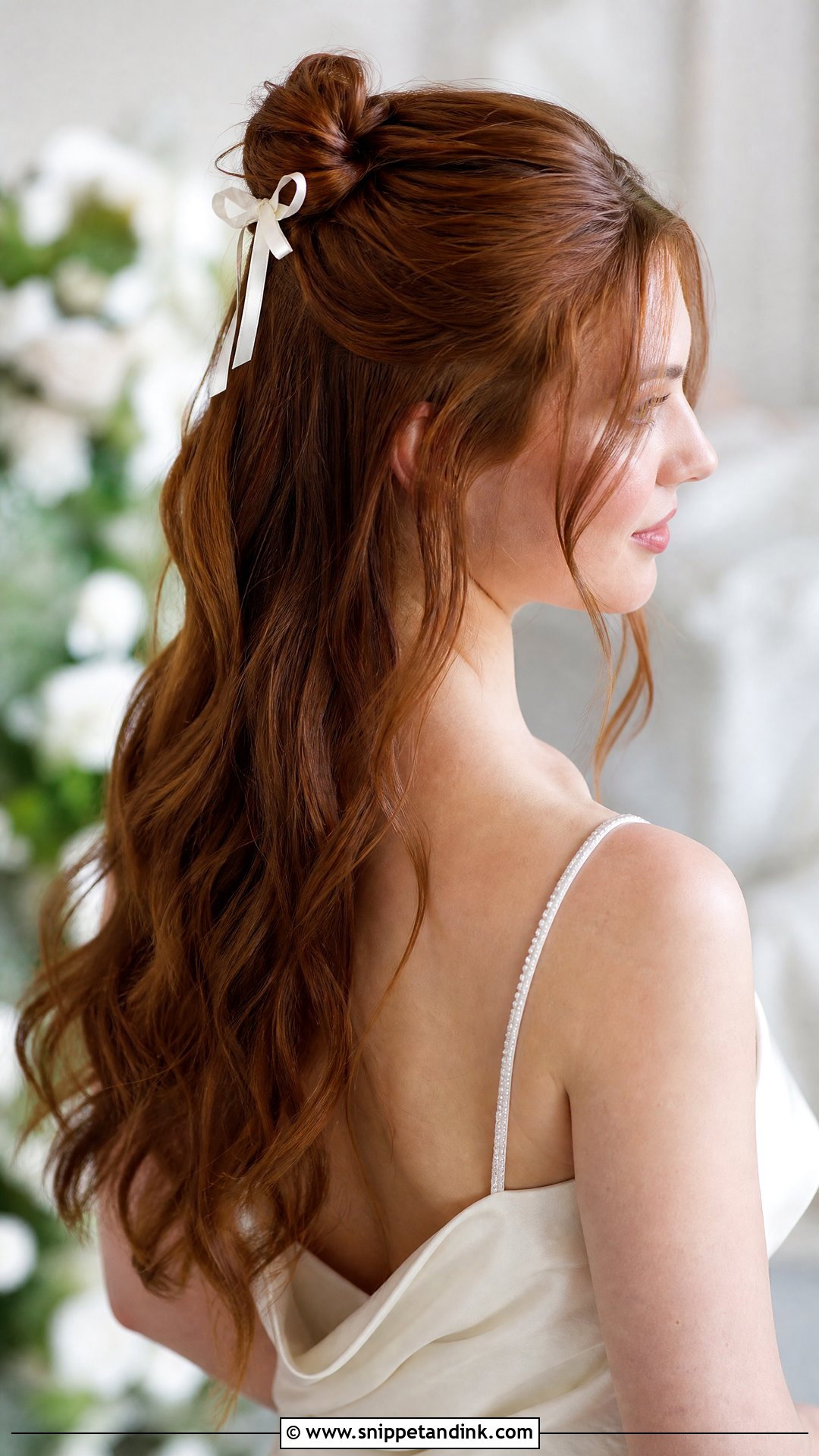
A small bun on top with the rest left loose is a more current take on half up. It works with soft waves, brushed curls or smooth lengths, and it keeps hair off your face while long hair stays in the photos. The size of the bun decides the mood. Too tight and too small, and it starts to look like a casual topknot; a slightly fuller, pinned knot looks finished. Pearl pins or a small bow around the base help.
12. Pulled Back Bridal Curls
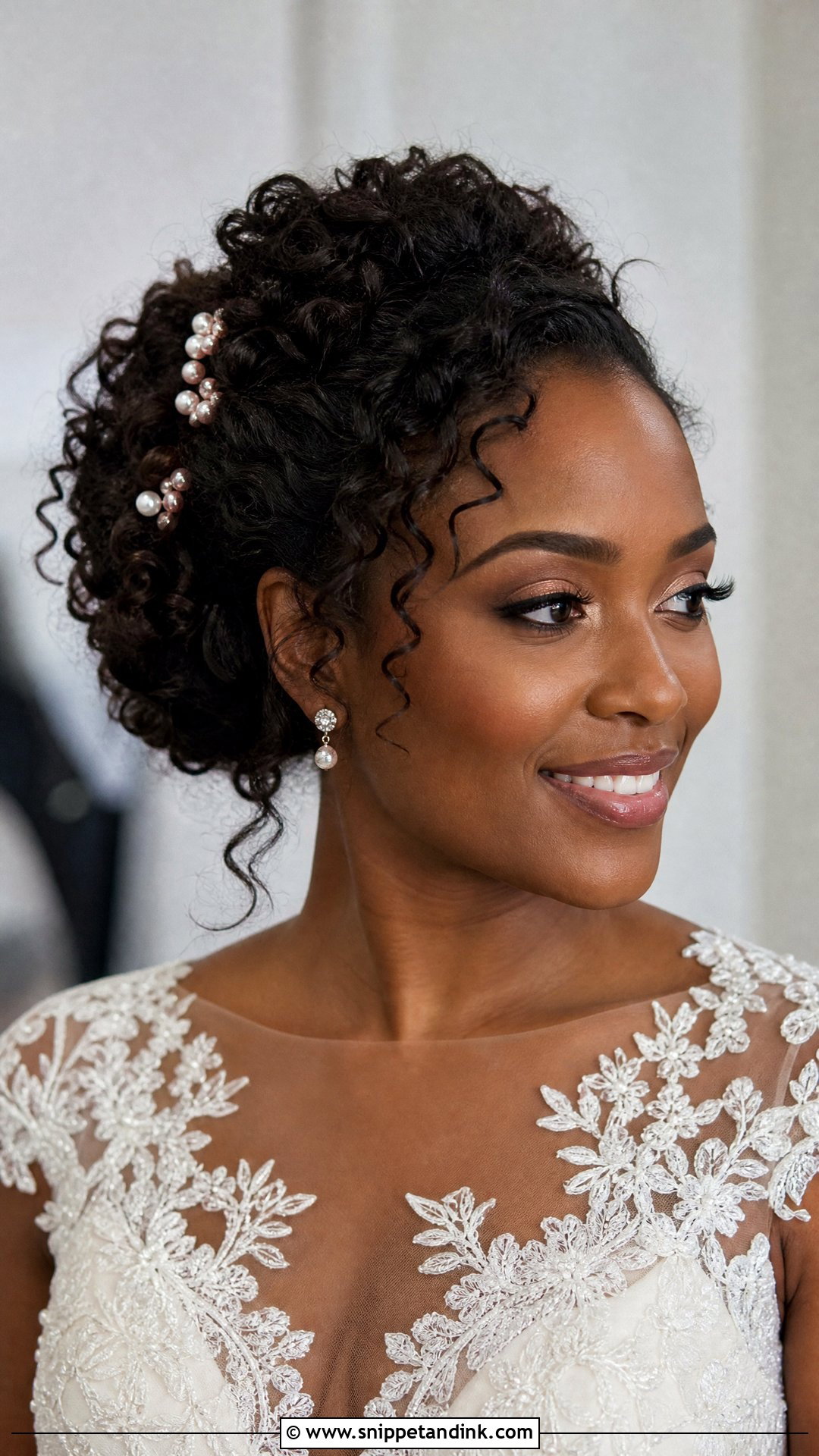
Curly hair pulled back keeps its natural pattern visible while getting it off the face. It can be a curly updo, a curly ponytail or a half up style. Moisture is the foundation: I work in a leave-in and a curl cream or gel before shaping, then pin rather than brush, because brushing breaks up the curl clumps into frizz. Keep the front lifted rather than slicked flat. It suits natural curls, coily textures and curly extensions.
13. Side Part Bridal Updo
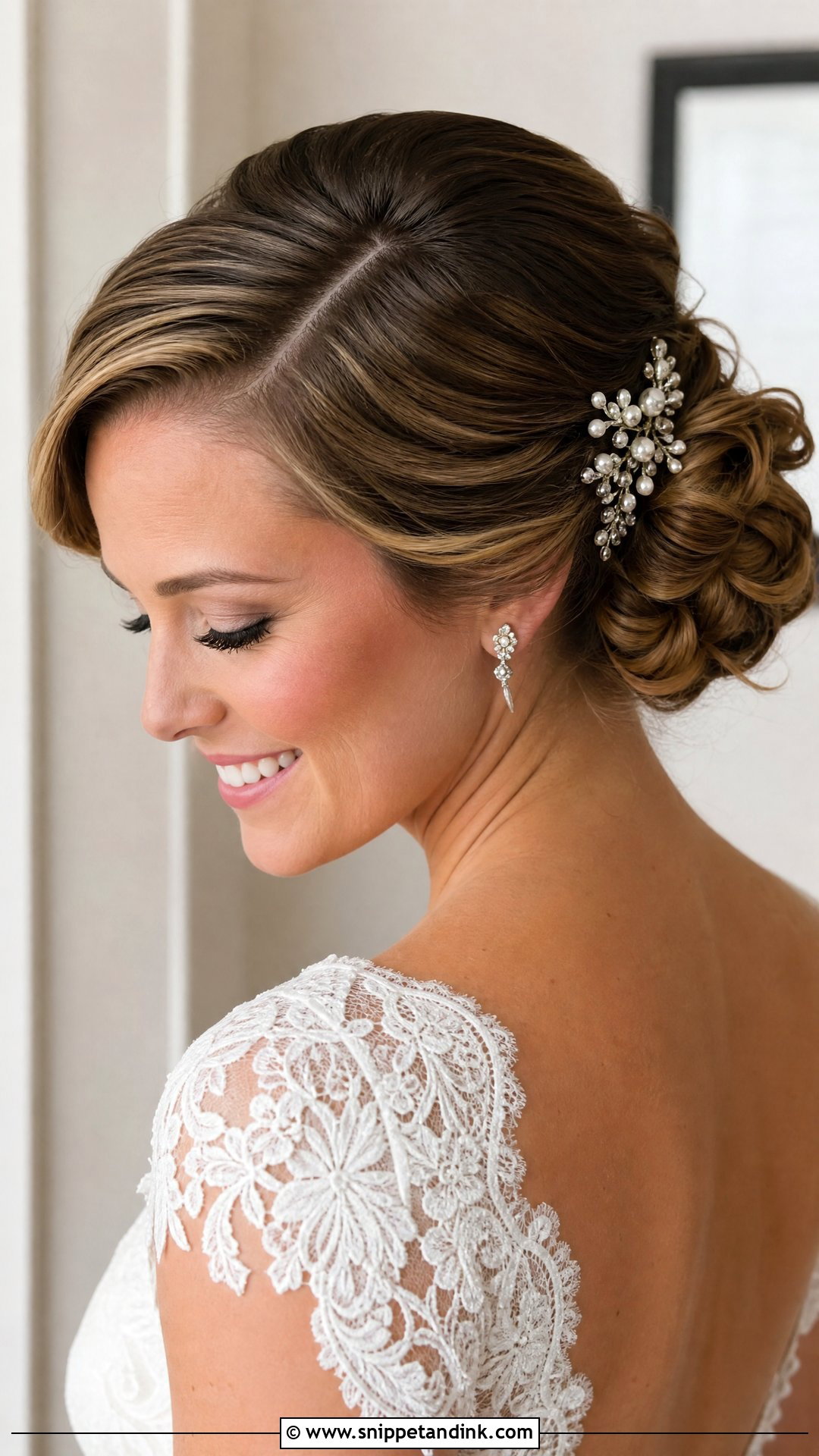
A deep side part adds a sweep across the forehead that softens a pulled back style instantly. The rest of the hair is gathered into a bun, knot or chignon on the lower side. It’s useful if you like some coverage at the forehead or you’re used to a side part day to day; switching to a centre part for one day often feels strange in the mirror. I shape the swept section with a large barrel and pin it at the temple so it holds its curve instead of collapsing onto your eye.
14. Middle Part Bridal Bun
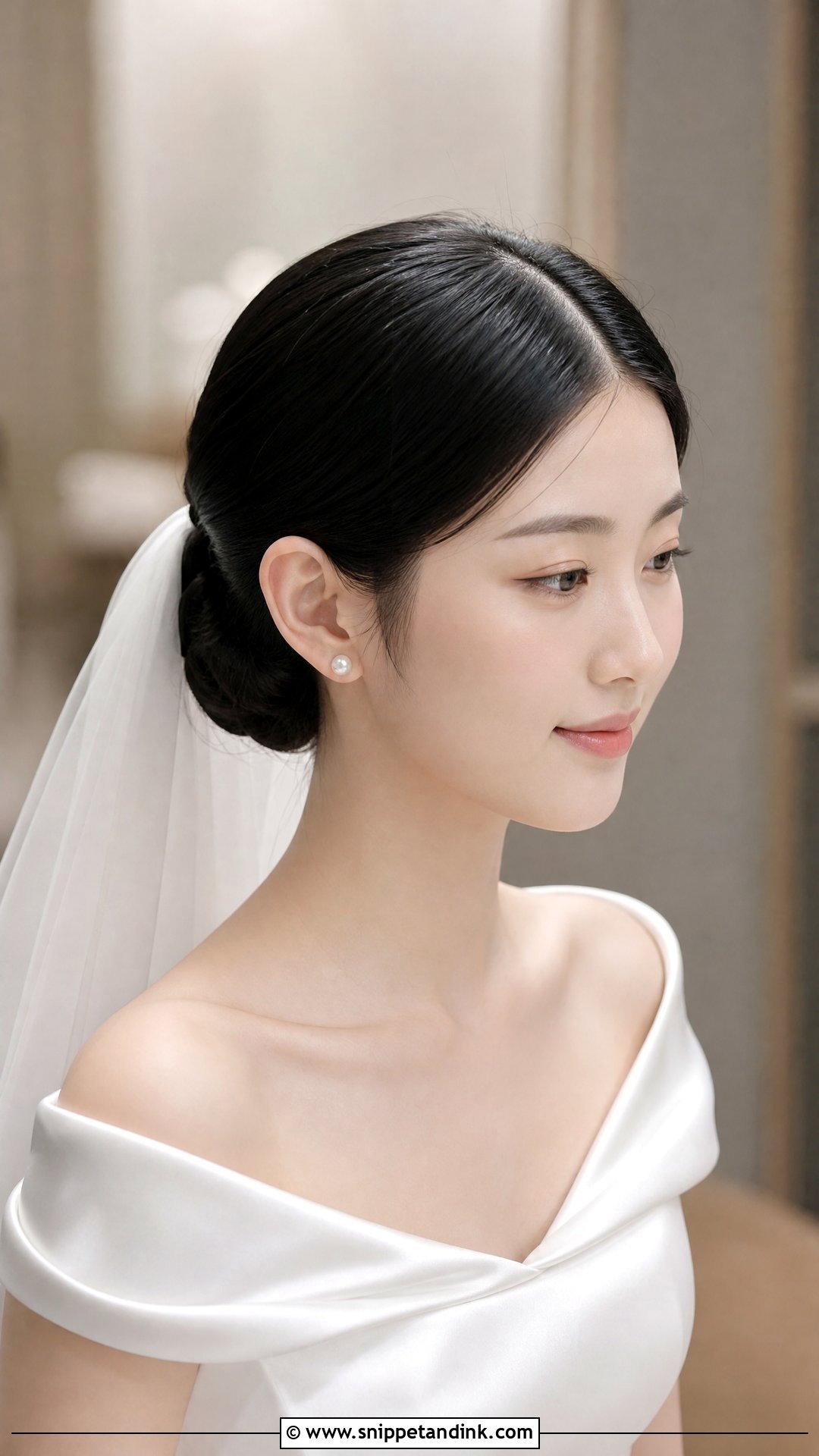
A centre part makes a bun symmetrical, and symmetry is unforgiving. If your hair naturally parts off-centre, it will fight the line all day, so I blow-dry the roots in the new direction first. It can be sleek or softened with volume at the temples. It suits minimal beauty, where the makeup, veil or neckline carry the look. The bun can sit low, mid-height or a little higher depending on your face shape. Keep the part sharp and the sides smooth.
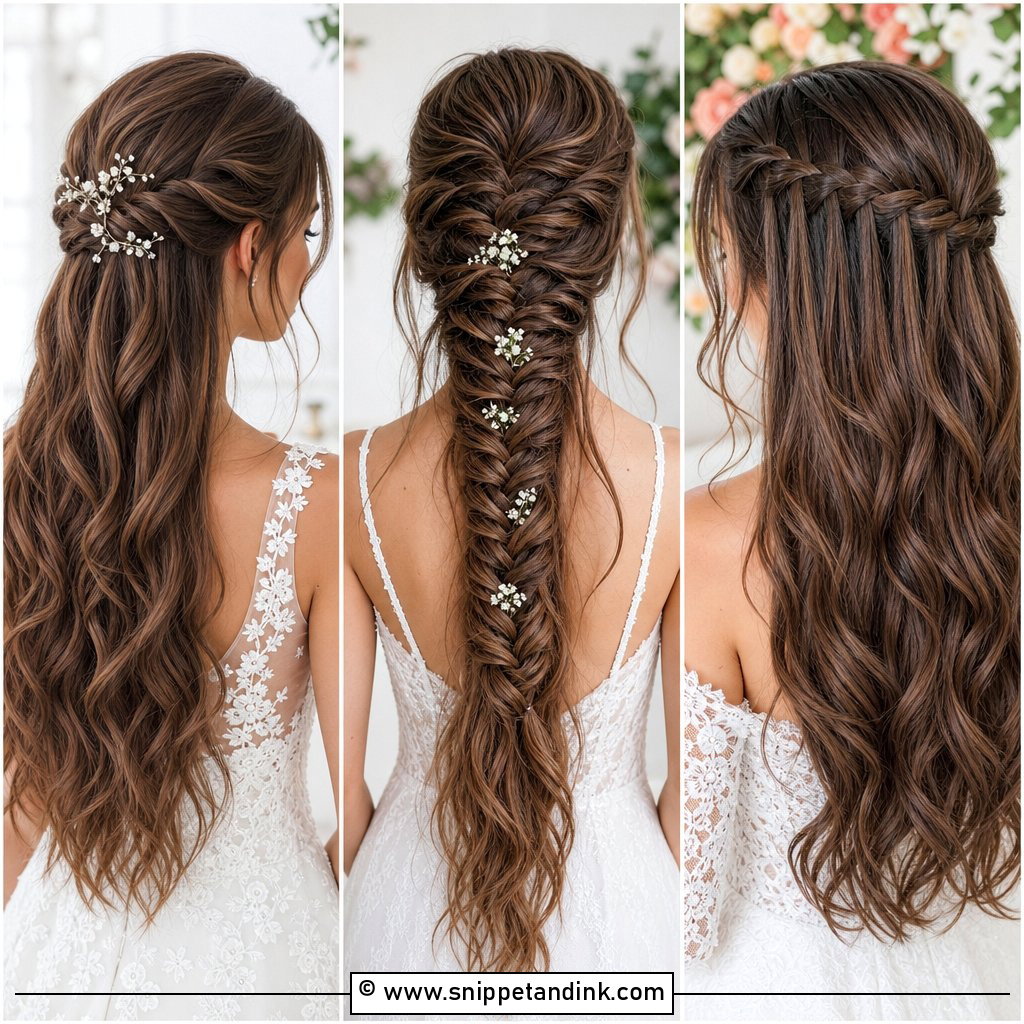
15. Bridal Hair With Face Framing Pieces
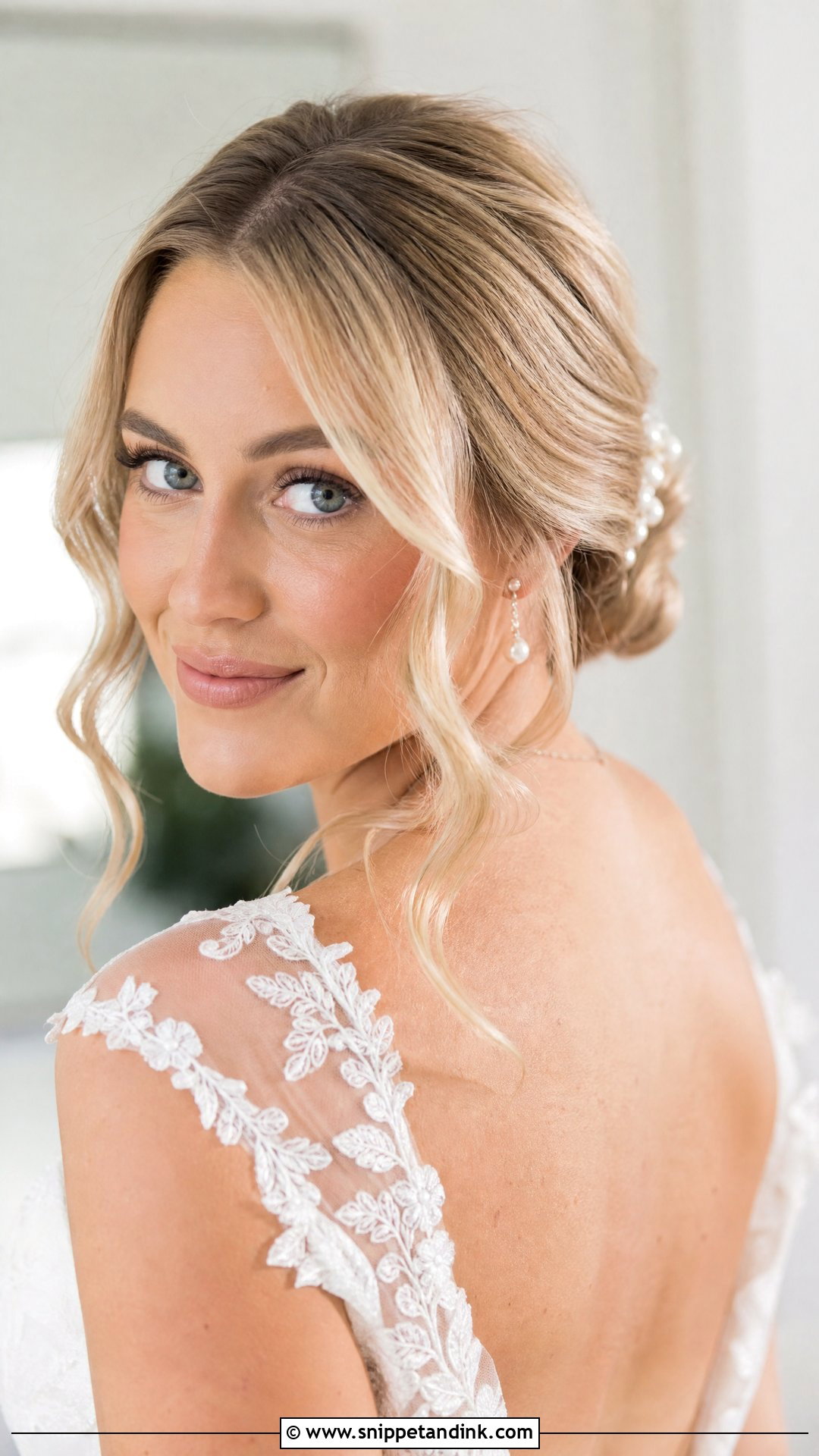
Face-framing pieces stop a pulled back style from feeling severe. The main shape can be a bun, chignon, ponytail or half up look, with soft strands left around the cheeks, jaw or temples. The trick is that they must look planned. I cut out the pieces deliberately, curl them away from the face and set them with a light spray, because random loose strands just look like the style is falling apart. Layered hair, curtain bangs and soft makeup all suit it.
With Nothing to Hide Behind, the Details Show
Hair pulled away from the face exposes things loose hair quietly covers. None of them are problems, but they’re easier to sort out a few weeks ahead than on the morning.
- Root regrowth and your part. A sleek bun or a sharp middle part shows every millimeter of grown-out color. Many brides book a root touch-up a week or two before the wedding so the tone settles and looks natural.
- The hairline. Baby hairs and short broken pieces around the temples will show. They can be smoothed with a little gel or left soft and fluffy, but decide which at the trial.
- Ears, neck and jaw. Your makeup artist should blend foundation and any sunless tan down the neck and onto the ears, because pulled back hair and a camera flash make a line very obvious.
- Earrings. With nothing around them, earrings become a big part of the look. Try your real pair on at the hair trial, not separately.
If it starts to ache
Tight elastics and a dozen pins at one point can give you a headache by the first dance, especially with high ponytails and crown buns. Tell me if anything pinches during the trial rather than toughing it out. A style secured with crossed pins spread over a wider area is usually more comfortable than one hanging off a single tight band. And there’s nothing wrong with planning a softer reception change: take the veil out, loosen the bun into a low twist, and carry on dancing.
Ask How Each Style Holds at Hour Ten
Pulled back styles last well, keep hair out of your face and still leave room for personality. Sleek buns read modern, textured buns read soft, a ponytail brings swing, a chignon brings formality, and half up sits between them. Your dress, veil, face shape, texture and the setting should narrow it down quickly. Bring clear photos to your trial, wear something with a similar neckline, and ask your stylist directly how each option will look after ten hours, a veil change and a dance floor.
You'll Like These Ideas:


Leave a Reply