
Green carries itself like royalty, which is why I reach for it so often when someone wants a ball gown for a prom, a quinceañera, a gala or a fantasy-themed formal. The range below runs from deep emerald velvet and sparkling sequins to pale mint tulle and embroidered florals, across corset bodices, capes and layered skirts. In fittings, the shade is rarely the hard part. What decides whether a green gown works is the pairing of neckline and skirt structure with your frame and the event, and then accessories that stay out of the dress’s way. I’ve noted what I check on each one.
Matching the Shade of Green to Your Undertone and the Room’s Lighting
Green is less forgiving than navy or black, so the first thing I do at a consultation is hold a few swatches under your chin in daylight and again under warm indoor light. Some greens that look rich on the hanger turn your skin sallow up close, and the room you’ll stand in changes them again.
- Cool undertones (veins look blue, silver suits you): emerald, teal, seafoam and mint usually sit well against the skin.
- Warm undertones (gold jewelry flatters you): olive, moss and forest green keep you looking warm instead of washed out.
- Deep skin tones carry emerald, lime and jewel teal beautifully; very pale mint can look grey next to the skin unless the neckline is broken up with sparkle or embroidery.
- Warm tungsten venue lighting pushes blue-greens toward grey and yellow-greens toward khaki, so check your shortlist under that kind of light, not only by a window.
If you’re torn between two shades, I’d take photos of both on your phone with the flash on. Flash is close to what a photographer’s light will do at the event, and it shows quickly which green holds its color and which one goes muddy.
1. Emerald Green Princess Ball Gown
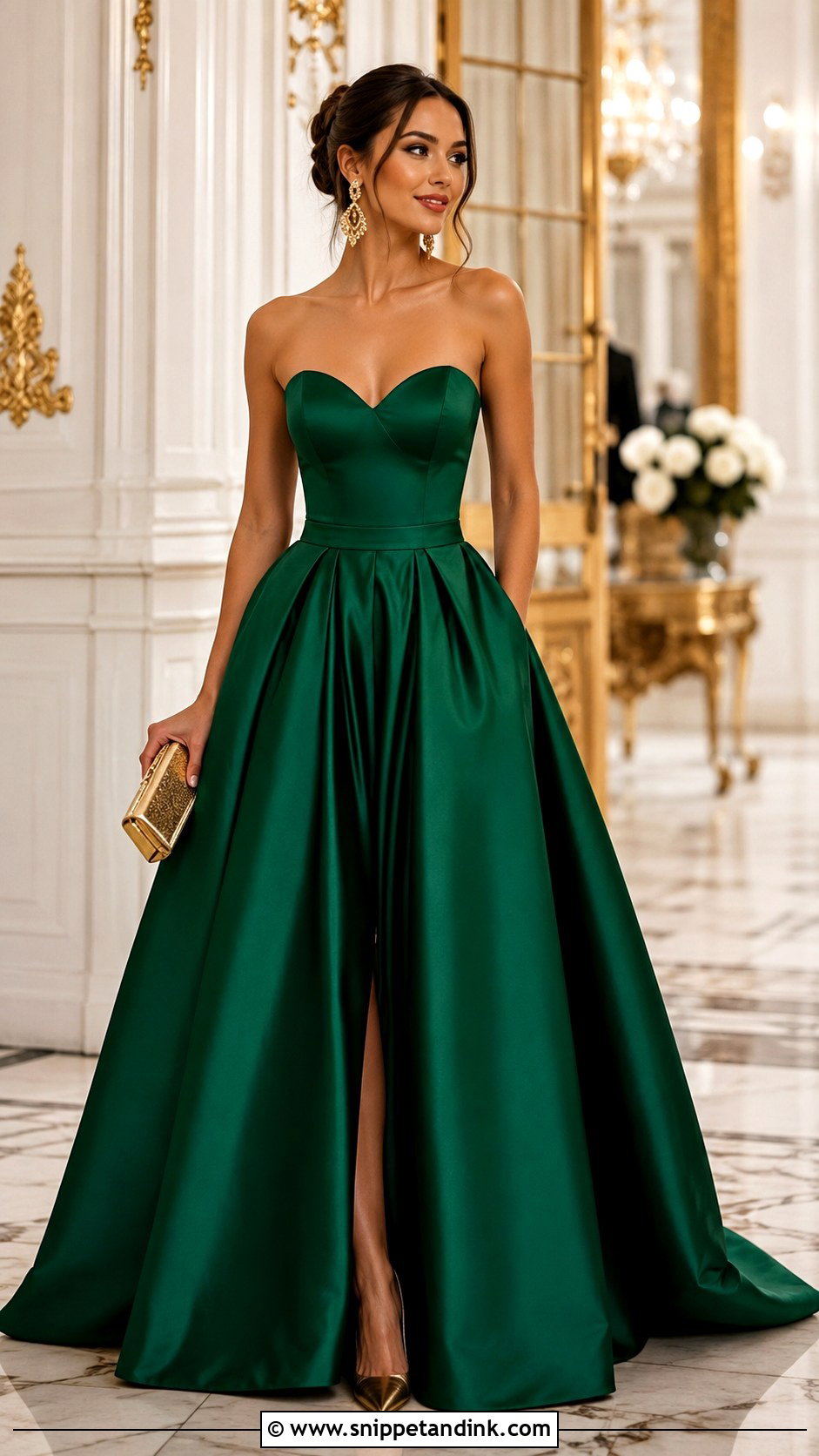
Emerald is the green I trust most for a first ball gown, because it reads as jewel-rich rather than costume even under harsh event lighting. Look for a fitted, lightly boned bodice and a full satin or layered tulle skirt; a sweetheart or softly curved neckline keeps it romantic. The thing I watch at the fitting is the waist seam. If it sits even an inch below your natural waist, all that skirt volume starts to swallow you. Gold drops, a small metallic clutch and an updo are enough, and with a very full skirt I often leave the neck bare.
2. Sage Green Tulle Princess Gown
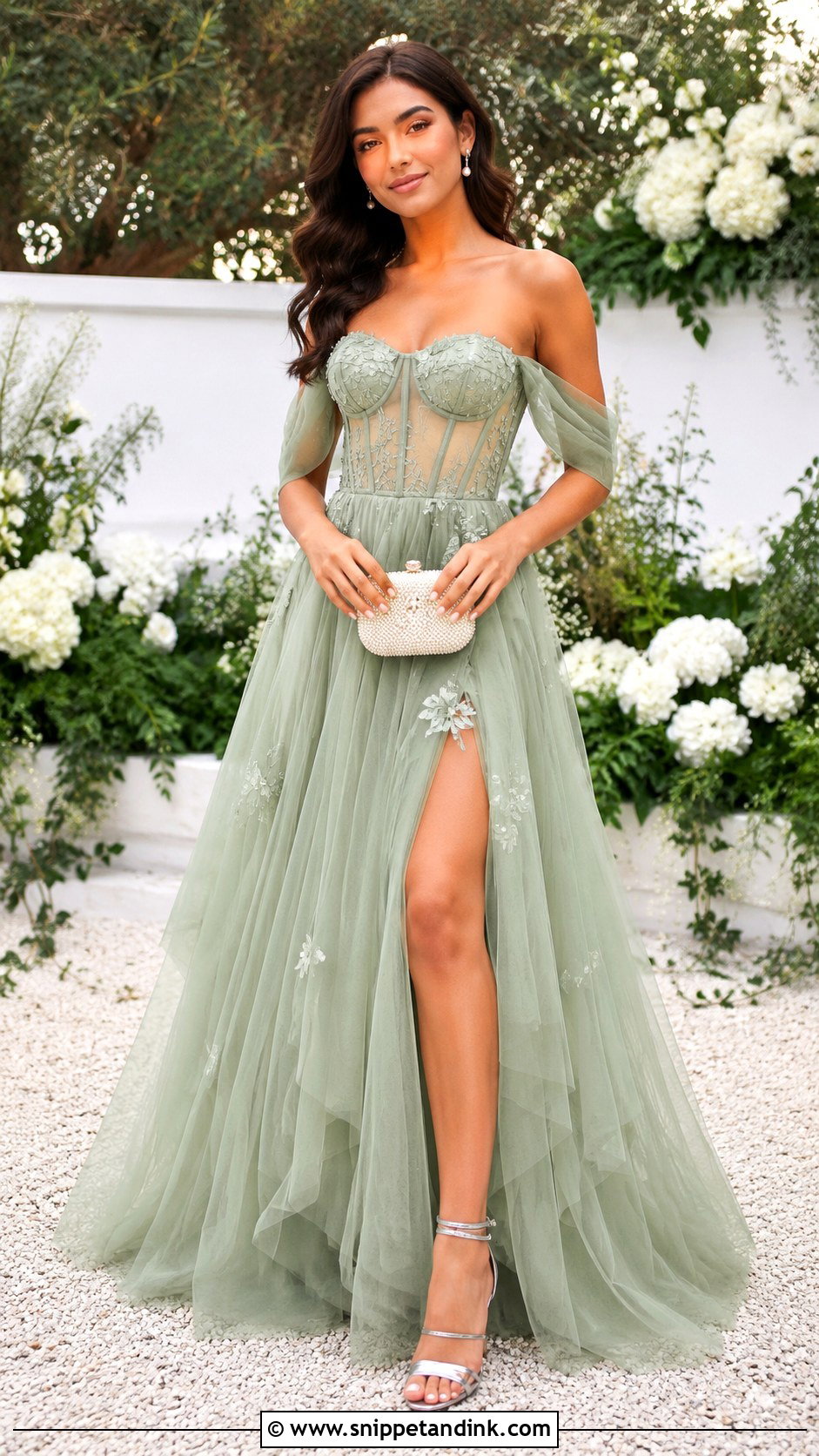
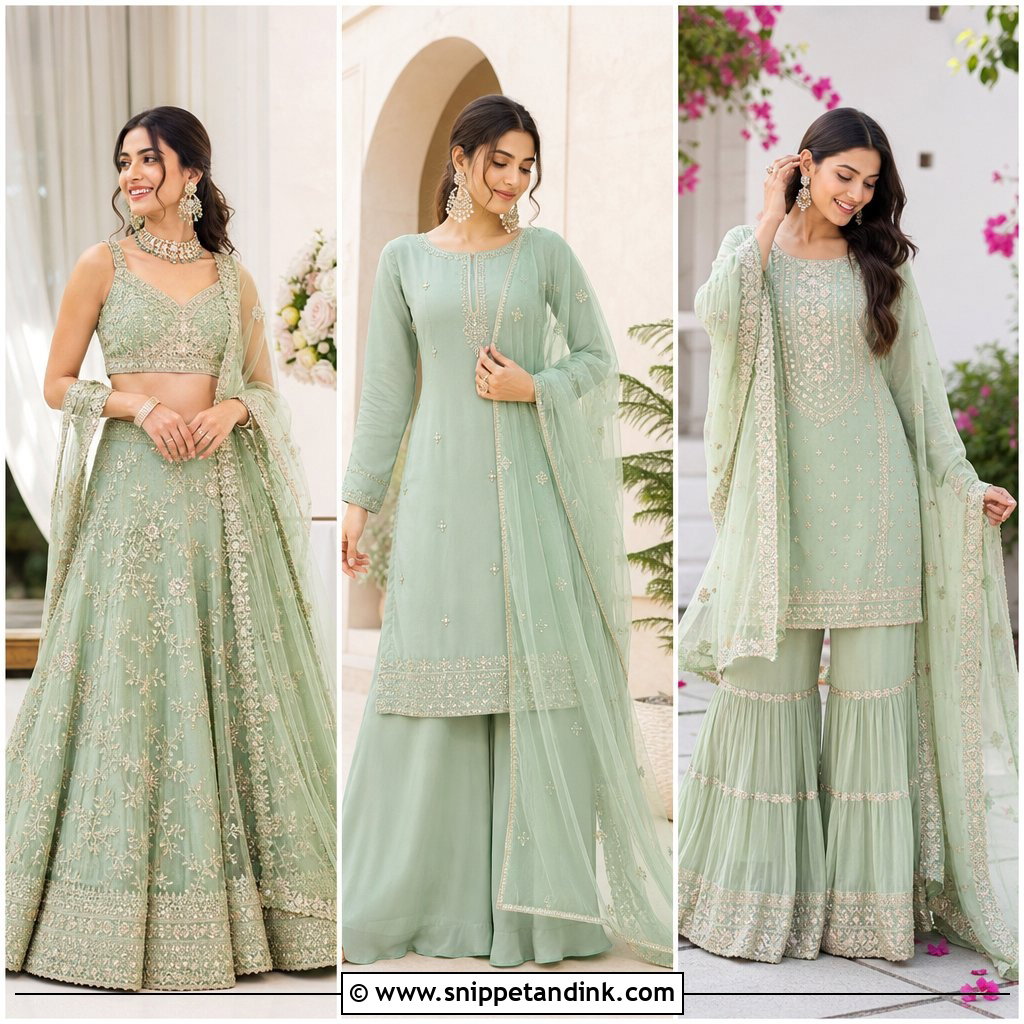
Sage tulle is the gentle end of this list. A supportive corset bodice keeps the airy layers from looking shapeless, and a few floral appliqués or scattered beads add interest without fighting the muted color. Sage sits naturally in a garden or daylight setting, but it can go flat under warm indoor bulbs, so I’d pair it with silver heels and pearls rather than yellow gold. Hem it to just skim the floor in the shoes you’ll actually wear; tulle that drags picks up grass and grit within the first hour.
3. Forest Green Velvet Princess Gown
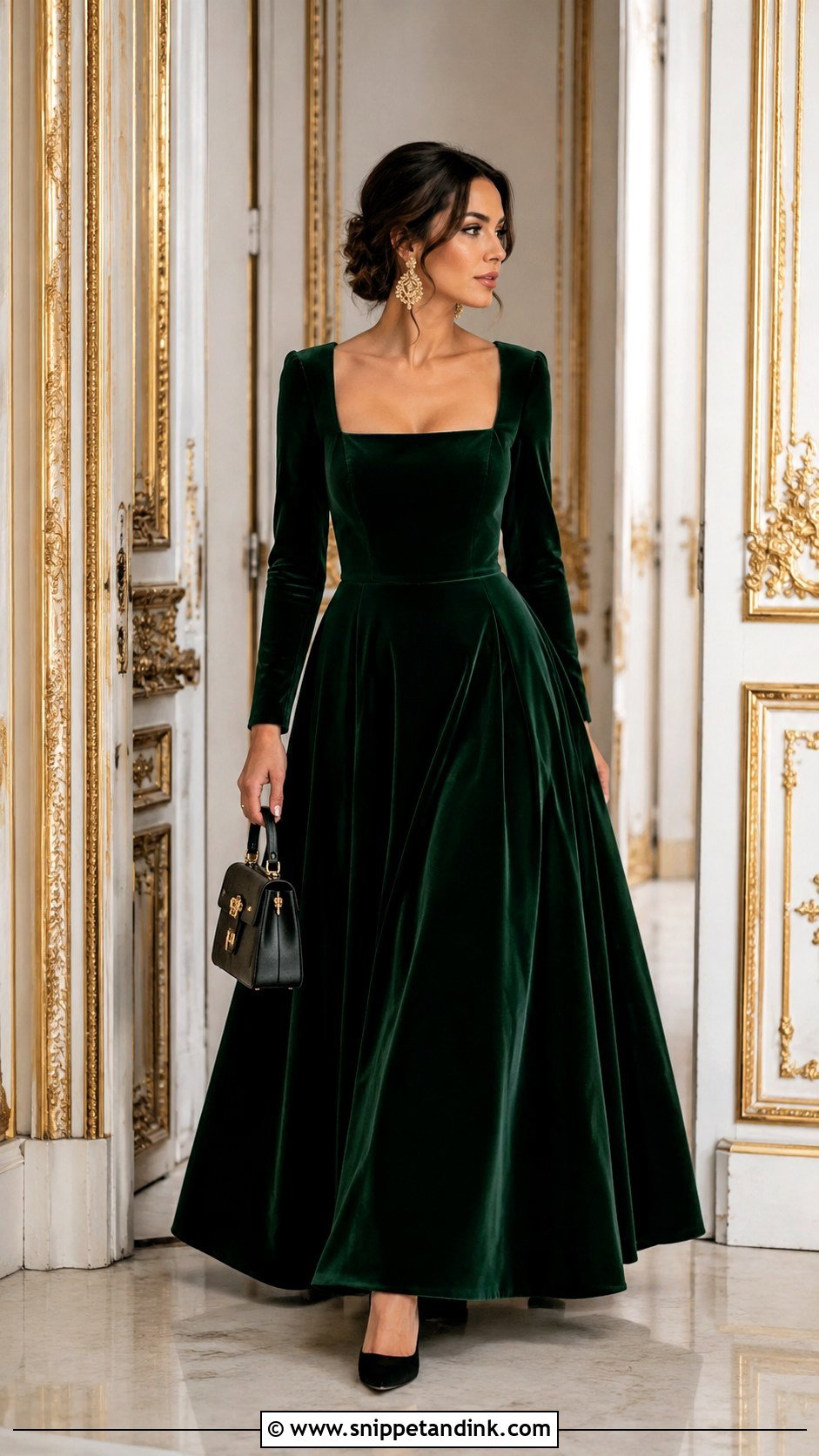
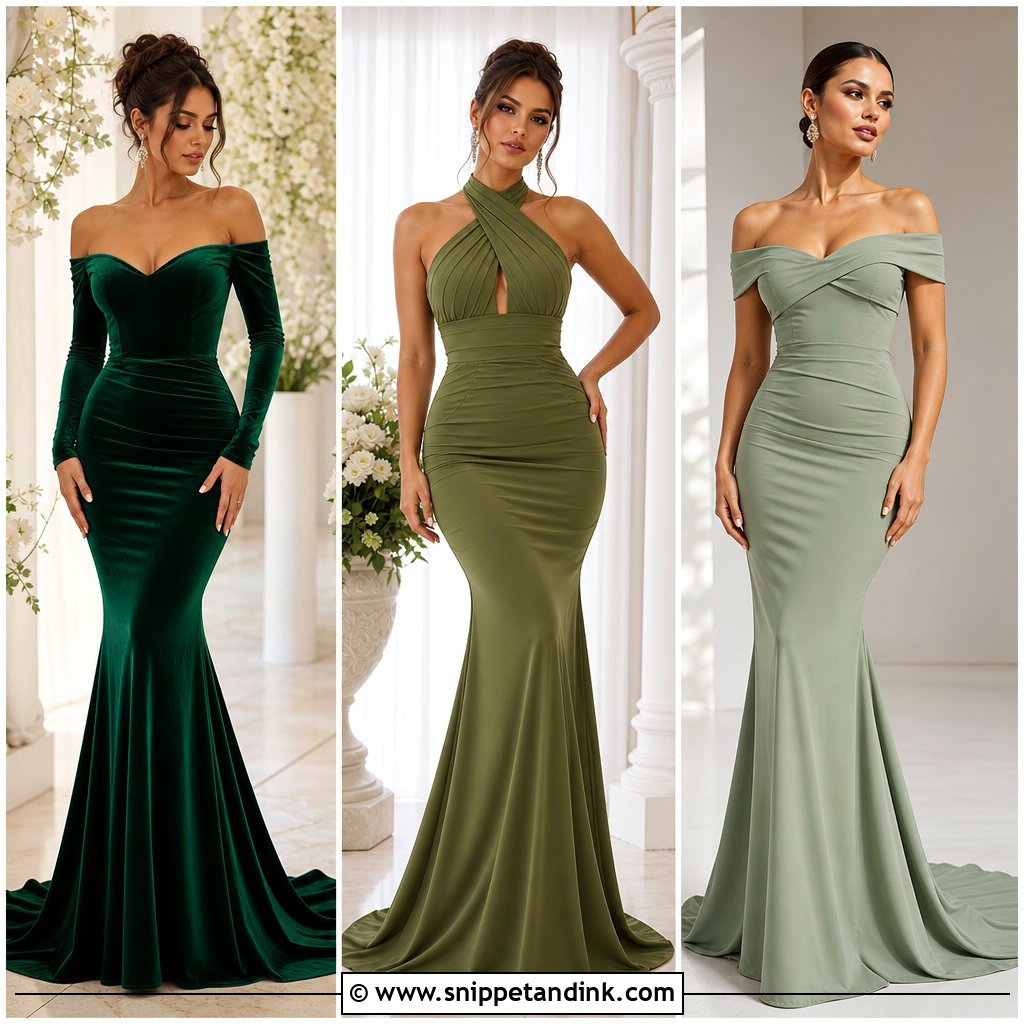
Velvet does the work for you. The pile catches light softly, so a forest green velvet gown with a long-sleeve fitted bodice, square neckline and sweeping skirt looks luxurious with almost no embellishment. It is also heavy, which is why a clearly defined waist matters more here than with tulle. Without it, the weight drags the whole silhouette downward. Black pointed pumps, antique gold earrings and a smooth low bun finish it. Skip the sequins; one jeweled belt or a single brooch is plenty against that depth of color.
4. Mint Green Off-Shoulder Princess Gown
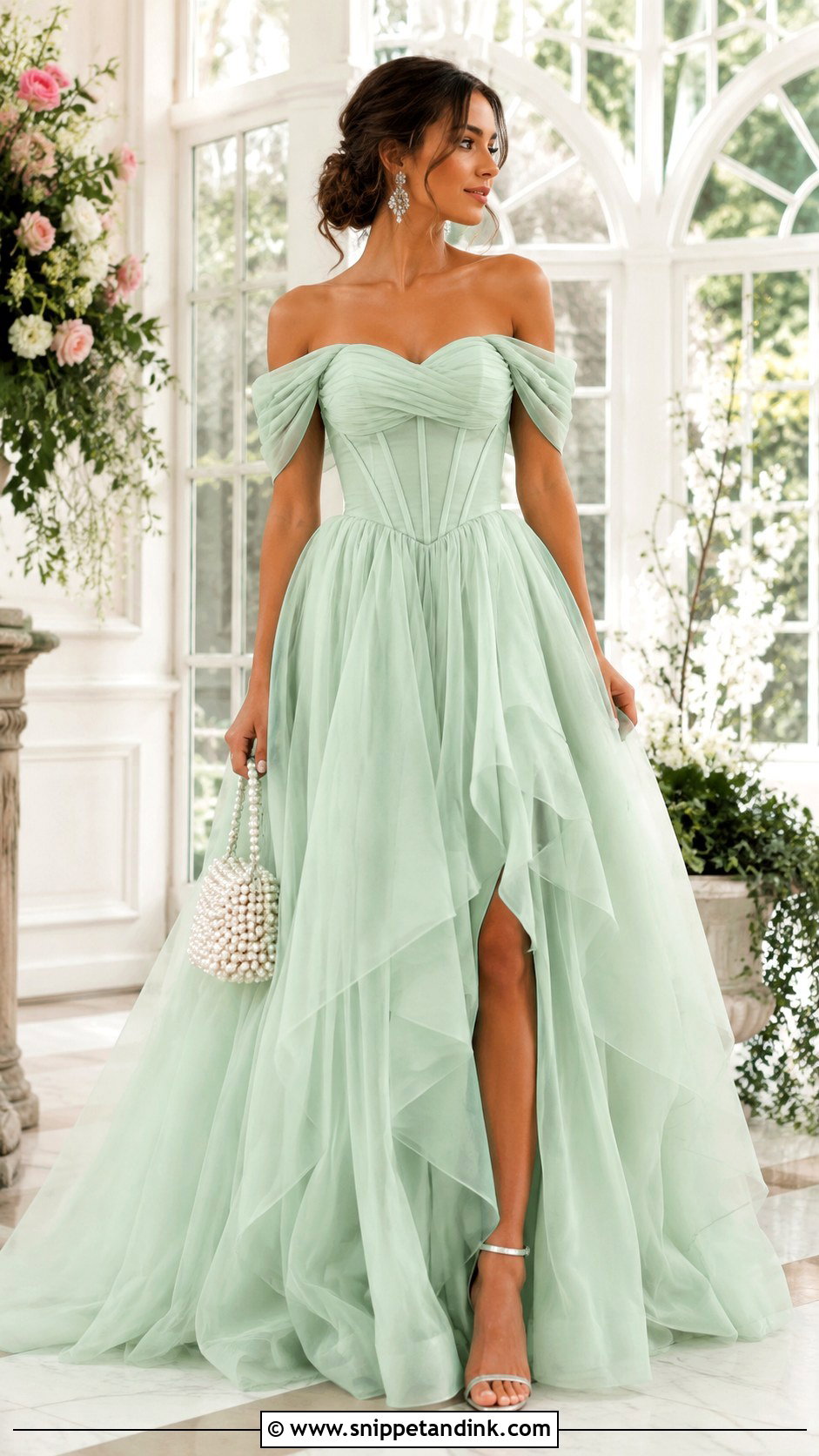
An off-shoulder neckline only looks relaxed if the construction underneath is anything but. When I fit a mint off-shoulder gown, I check for an inner corset or silicone gripper band, because without one the neckline creeps down every time you lift your arms. Short draped sleeves frame the shoulders, and an organza or tulle skirt keeps the princess shape. Very pale mint leans cool, so crystal earrings and silver heels sit better than yellow gold. A loose chignon with a few face-framing strands, plus a light wrap for a cold evening, rounds it out.
5. Dark Green Long-Sleeve Princess Gown
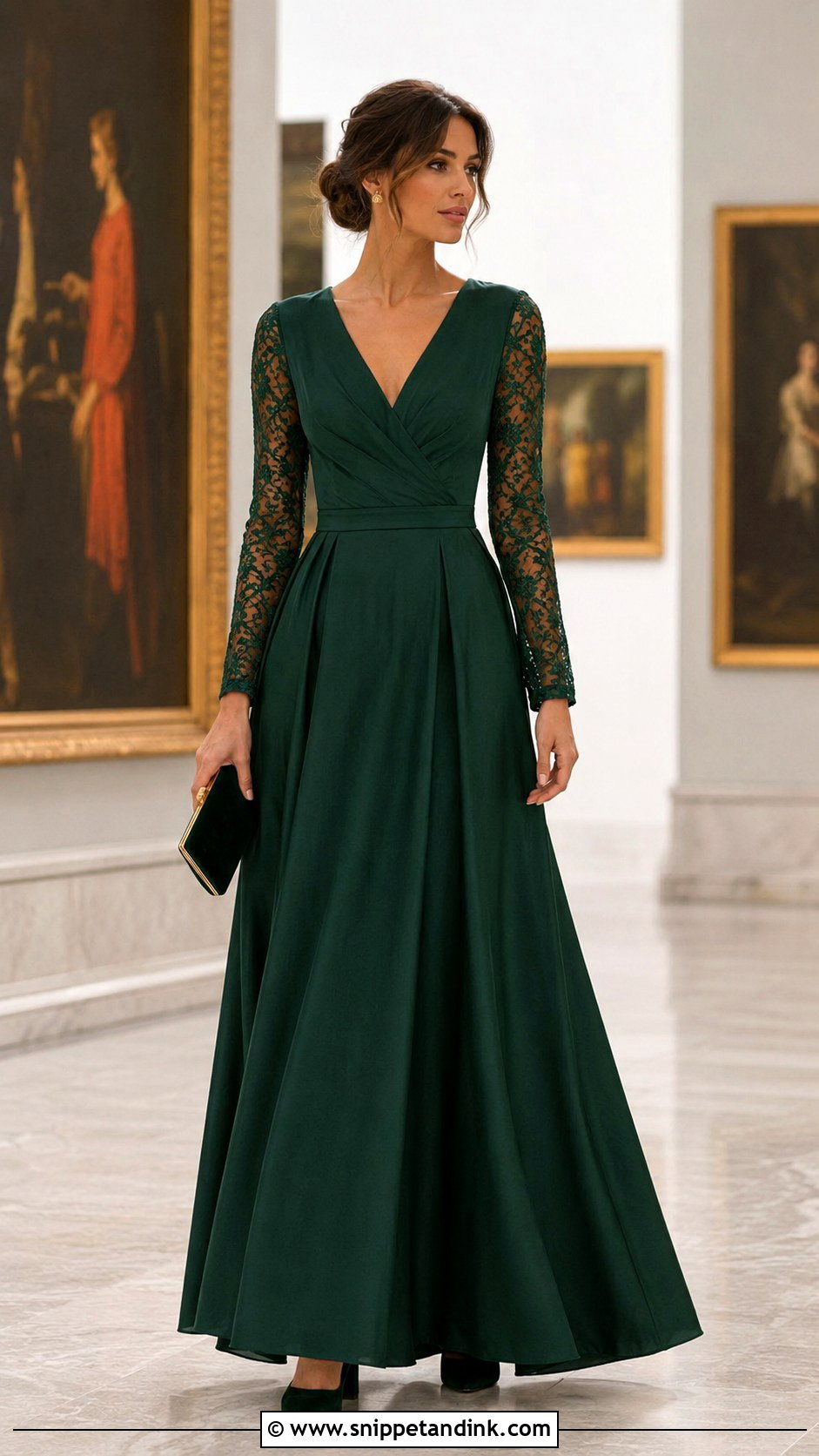
Long sleeves make a dark green ball gown feel stately and modest at once. Sheer lace sleeves keep it light; opaque satin sleeves push it toward a traditional, formal finish. My one fitting rule with sleeves is to raise both arms and hug someone. If the bodice lifts or the seam pulls across the back, the armholes are cut too low and need adjusting. Pair it with a bateau or V-neckline, gold studs, a velvet clutch and block heels, and it handles a chilly venue far better than a strapless gown would.
6. Green Floral Embroidered Princess Gown
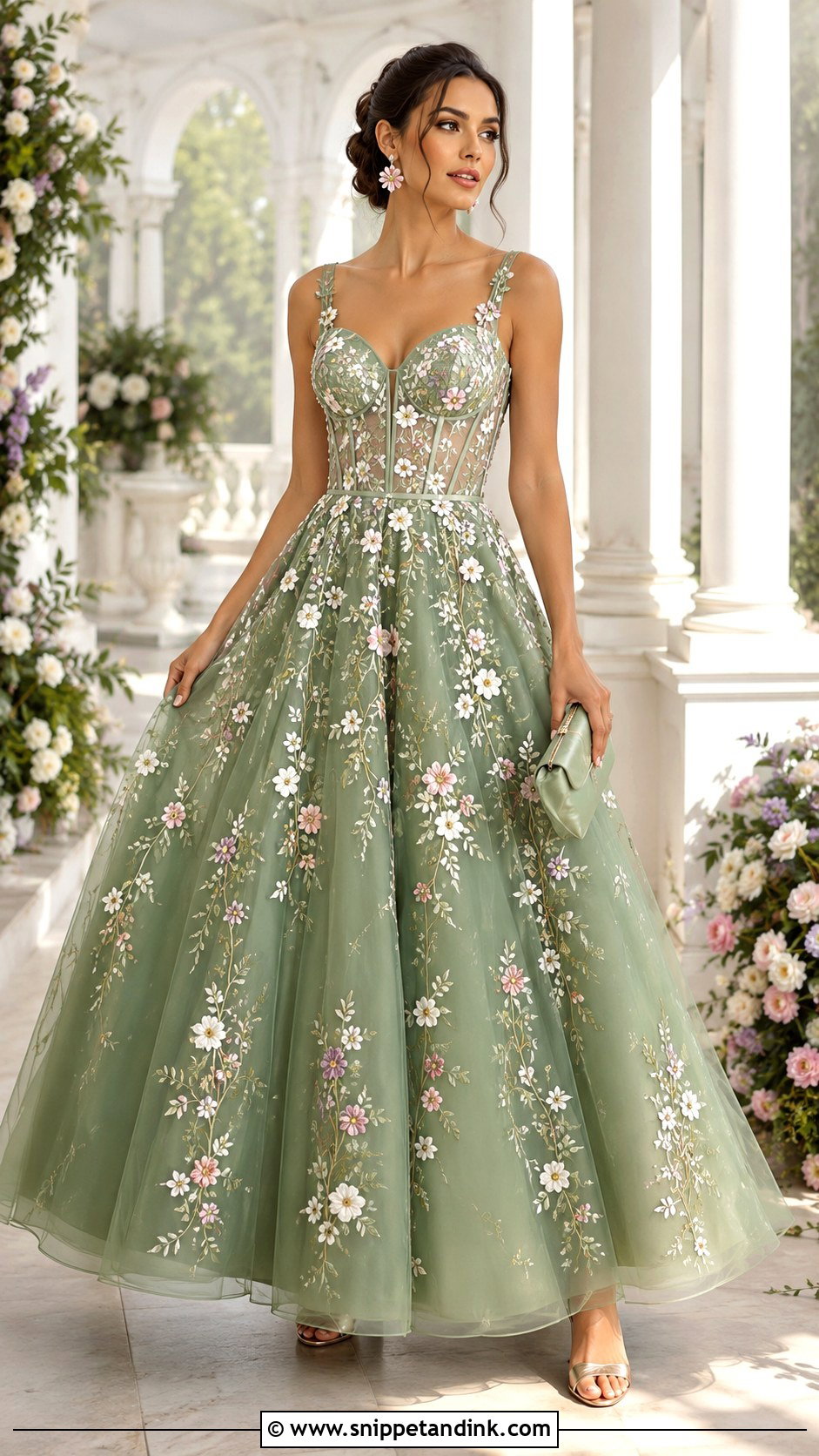
Floral embroidery on a green gown is most convincing when it travels, starting on the bodice and spilling onto the skirt instead of stopping hard at the waist. Tonal green vines read as texture; ivory, blush or lavender blooms read as pattern. I always turn the skirt inside out on sheer tulle. Neatly finished embroidery backs mean the flowers won’t snag or pucker after an evening of dancing. With that much decoration already on the dress, keep jewelry small, choose a satin clutch in one of the thread colors, and let soft curls or a half-up style carry the garden mood.
7. Emerald Green Sequin Princess Gown
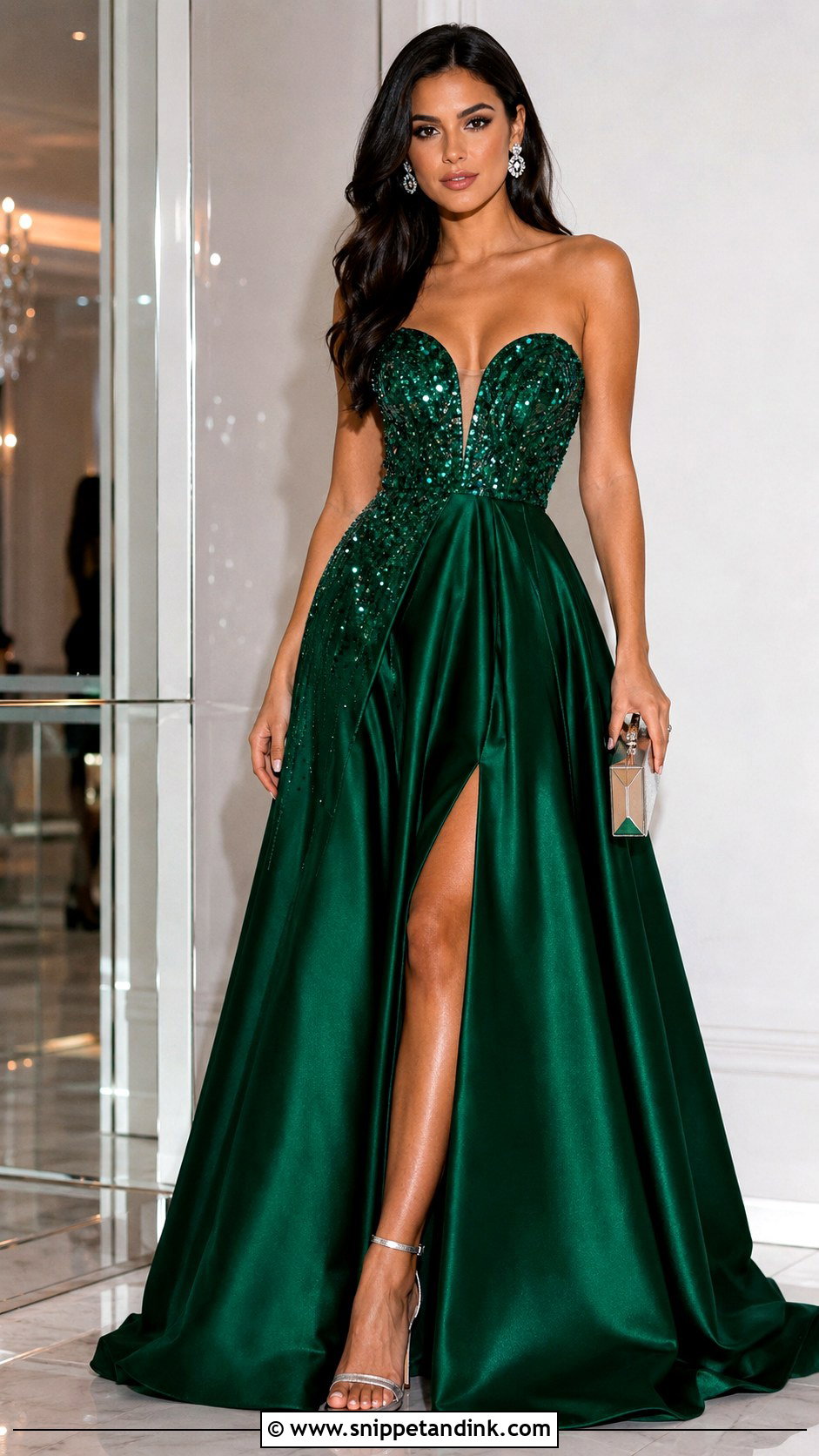
Sequins come alive under evening lights, and emerald is one of the few shades that still looks rich when it glitters. I usually steer people toward a sequined bodice with a plain satin skirt; it’s easier to sit in and less likely to look heavy in photos than all-over sparkle. Before you commit, run your hand inside the armholes and along the side seams. Unlined sequins scratch the skin raw over a few hours, and a good lining is the difference between dancing all night and tugging at the dress by nine. Crystal studs and a sleek bun are all it needs.
8. Olive Green Satin Princess Gown
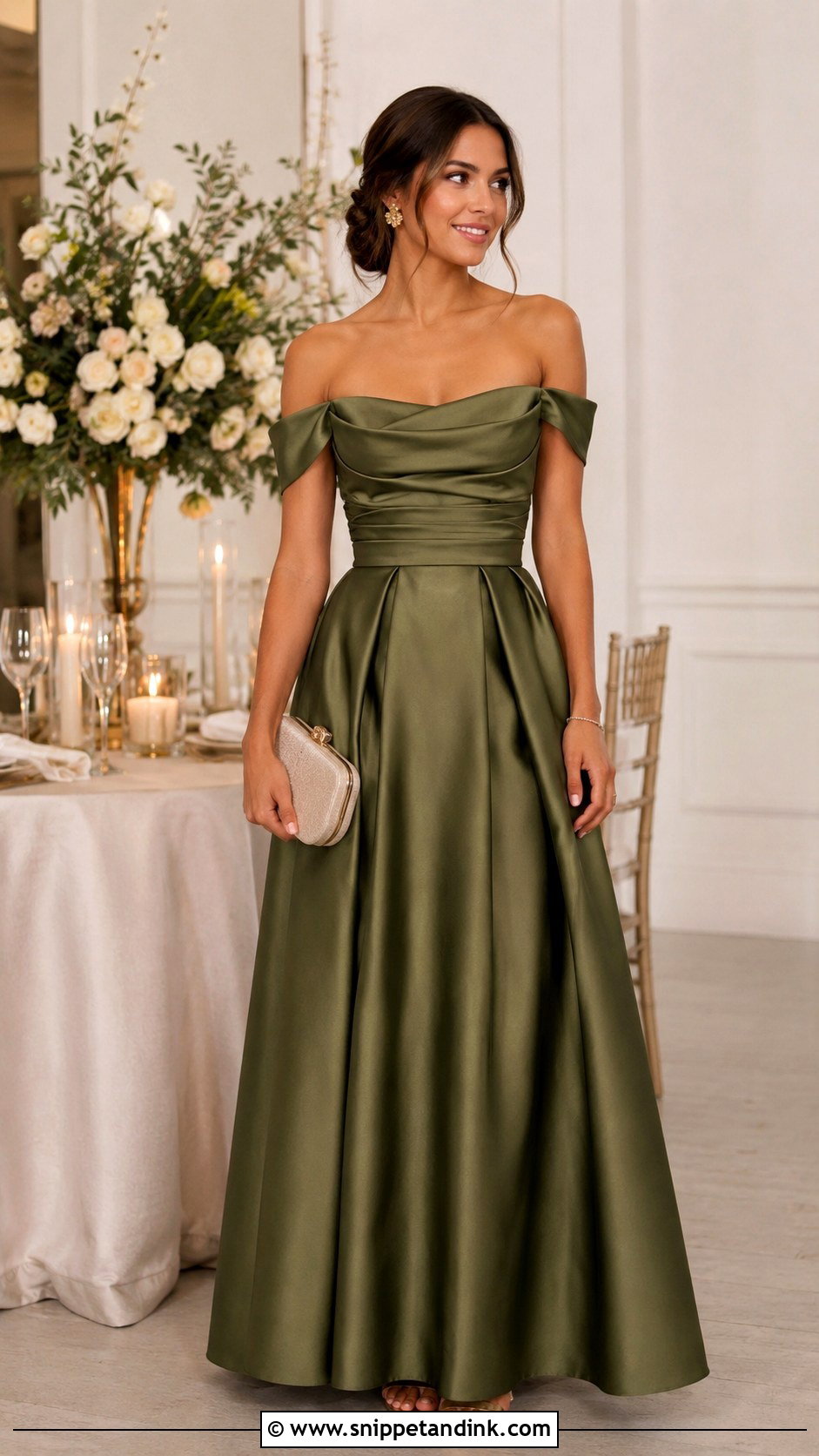
Olive is the green for someone who wants formal without bright. In satin, a softly draped bodice over a structured floor-length skirt balances relaxed and regal, and pleating at the waist can shape you without a rigid corset. Olive leans warm, so bronze heels, warm gold earrings and a champagne or deep brown clutch suit it. Satin is honest about everything underneath, though. I’d plan smooth foundation pieces before the first fitting and steam the gown right before dressing, because seated creases show up across the lap within minutes. It suits autumn events and formal dinners well.
9. Green Corset Princess Gown
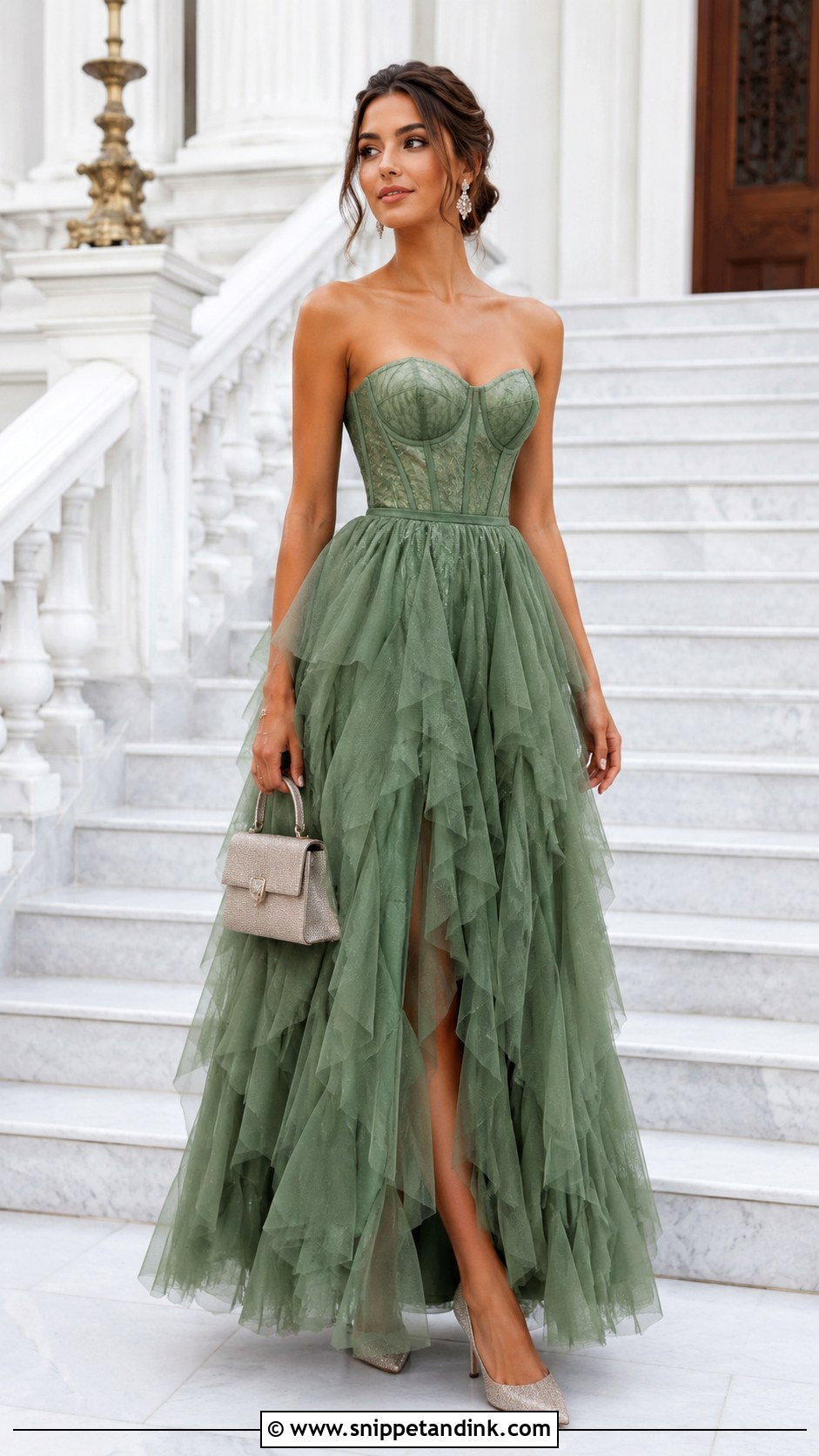
A real corset bodice gives the most dramatic waist on this list, but the fit comes from the boning and the cups, not from pulling the laces tight. I’d rather see a lace-up back with a modesty panel that closes evenly with a finger-width gap than one cranked shut. Underneath, layered tulle or satin gives the sweeping skirt. During the fitting, sit down, walk and lift your arms. If you can’t take a full breath while seated, ask for it to be let out; you’ll be sitting far more than you think. A half-up style keeps hair away from any bodice detailing.
10. Green Princess Gown With Cape
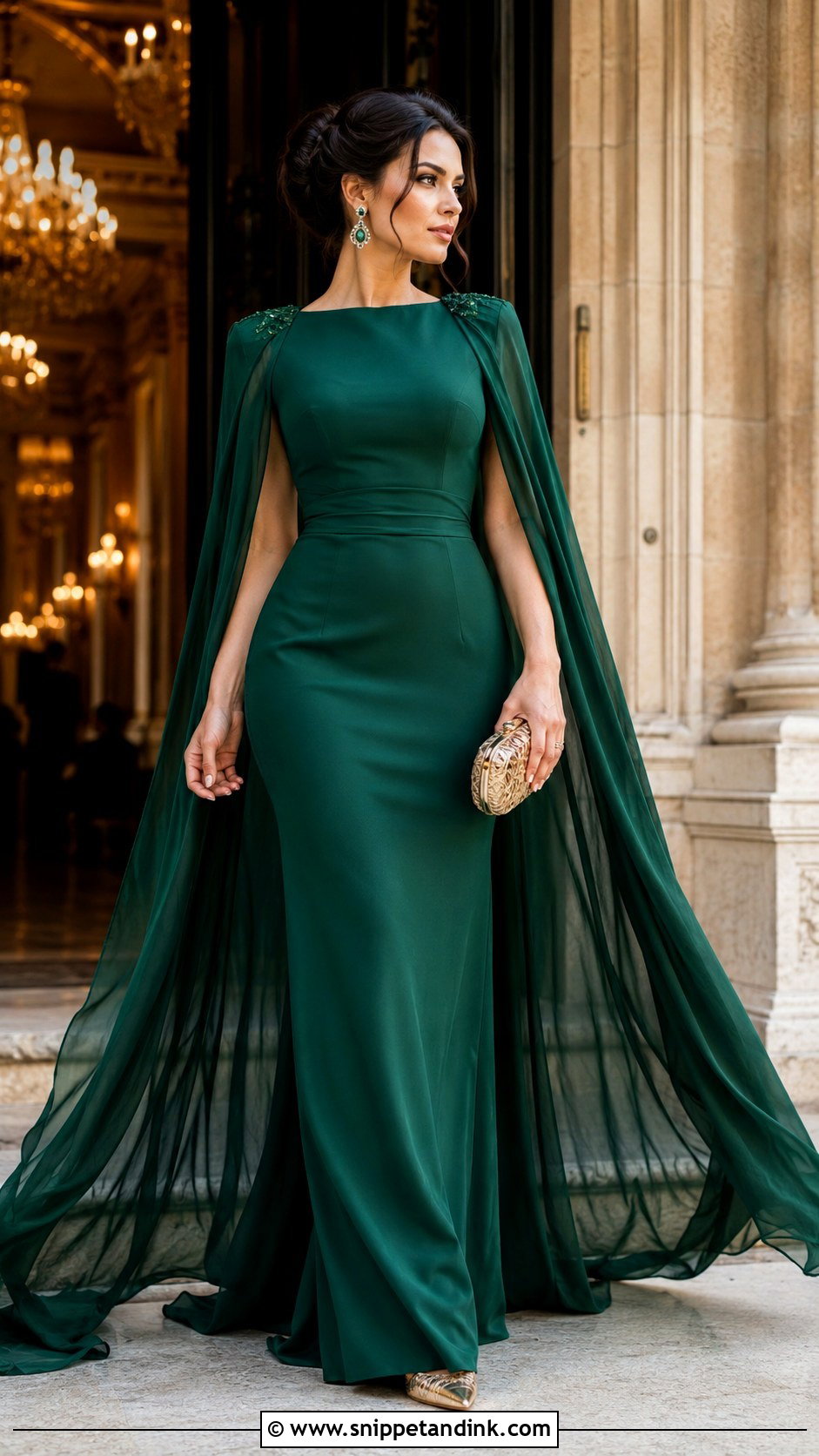
A cape adds ceremony and movement every time you turn. I prefer a detachable one in matching chiffon, tulle or velvet so it can come off for dinner and dancing. A sheer shoulder cape feels airy; a floor-length velvet cape gives a more commanding royal effect. Keep the gown underneath streamlined, wear your hair up so the attachment points stay visible, and check the cape length in a crowded room. If it trails well past your hem, someone will step on it, and the clips will rip before the fabric does.
11. Teal Green One-Shoulder Princess Gown
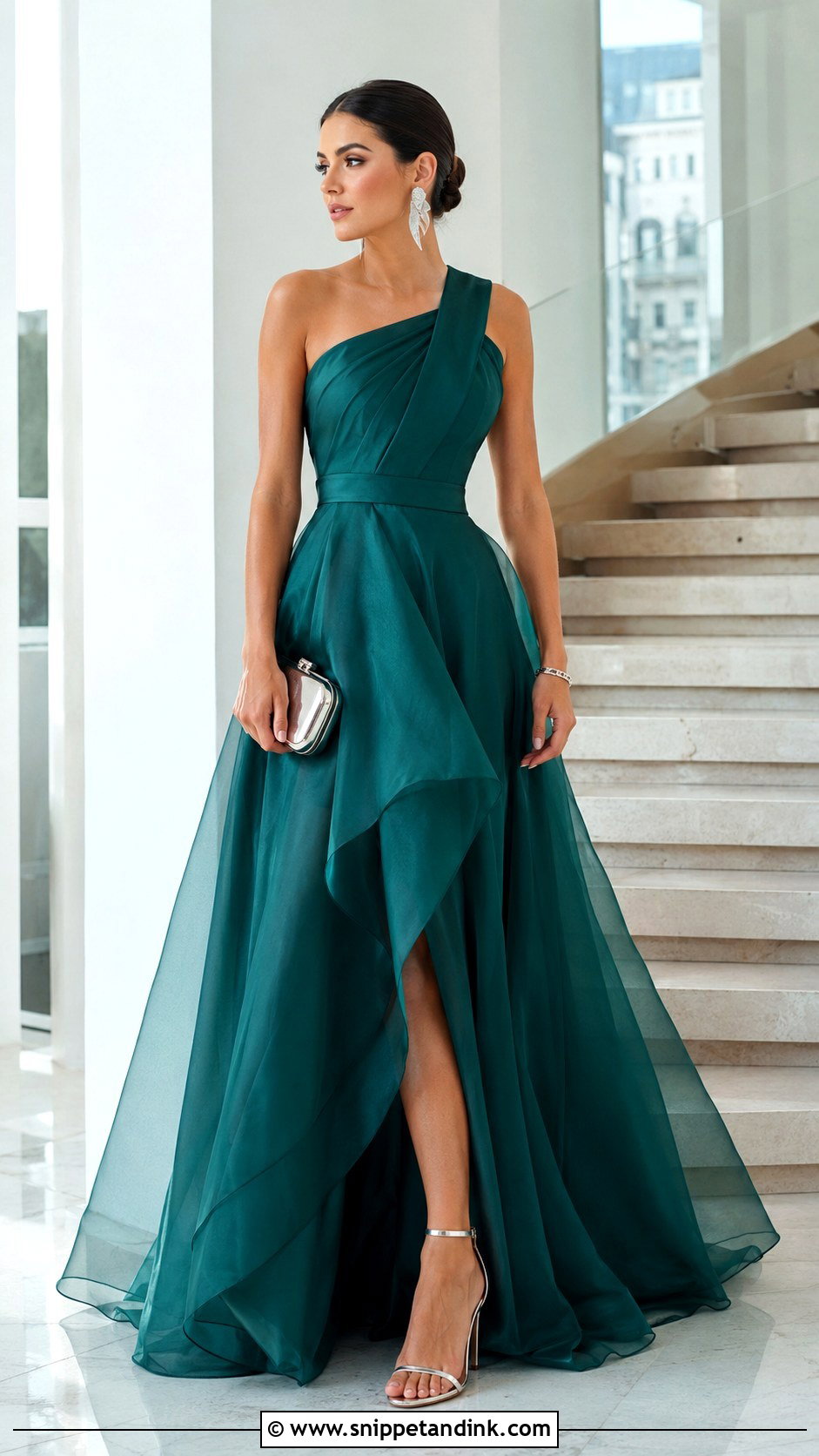
Teal lands between blue and green, and in a one-shoulder cut it gives the ball-gown shape a modern edge. The asymmetric line pulls the eye upward, so I keep the rest quiet: one statement earring on the bare side, a slim bracelet, no necklace. What I test at the fitting is the single strap. It carries more load than two straps would, so it needs to be anchored into a properly boned bodice, or the neckline twists by the end of the night. Sweep your hair toward the covered shoulder and choose silver or gunmetal accents.
12. Moss Green Fairy Princess Gown
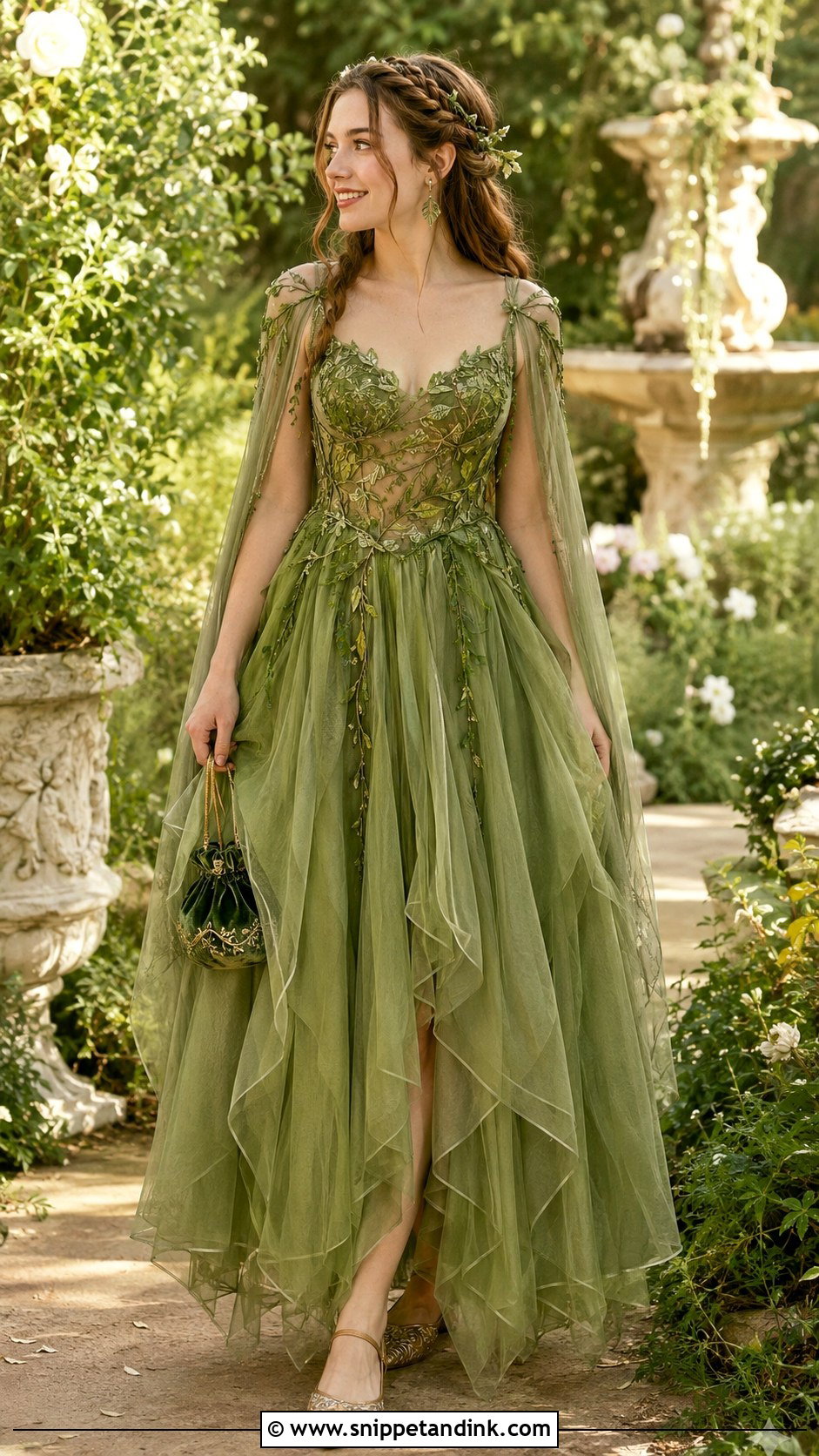
A moss green fairy princess gown lives or dies on restraint. Embroidered vines, tiny flowers or scattered crystals on the bodice, with uneven translucent tulle panels below, give the whimsical effect. A full fantasy crown on top usually tips it into costume. I’d style it with a braided half-up look and a couple of small botanical pins, bronze flats and leaf earrings. For an outdoor event, ask for the hem an inch shorter than you’d wear indoors. Tulle soaks up damp grass and gets heavy fast.
13. Lime Green Ruffled Princess Gown
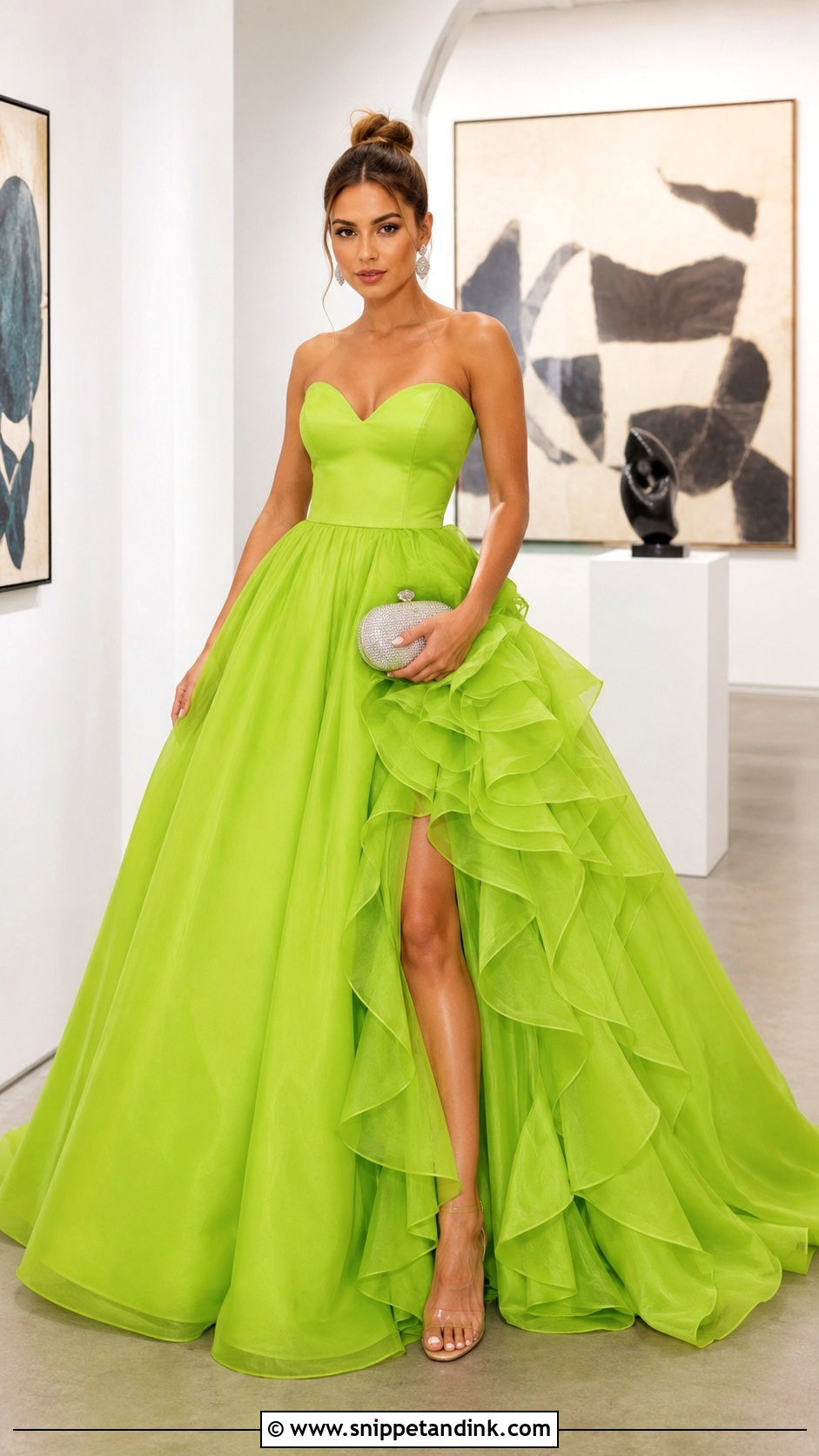
Lime is the boldest green here, and it only works when the shape is disciplined. Controlled ruffles that follow the neckline or cascade down one side of the skirt look intentional; ruffles everywhere look chaotic. A clean fitted bodice balances the volume. Fabric matters a lot with this shade. Organza, satin and light taffeta hold a crisp line, while soft tulle in lime can look like a costume shop piece. Clear or silver heels, small crystal studs and a sleek high bun let the color do the talking. Plan on standing tall; this one rewards confidence.
14. Hunter Green Strapless Princess Gown
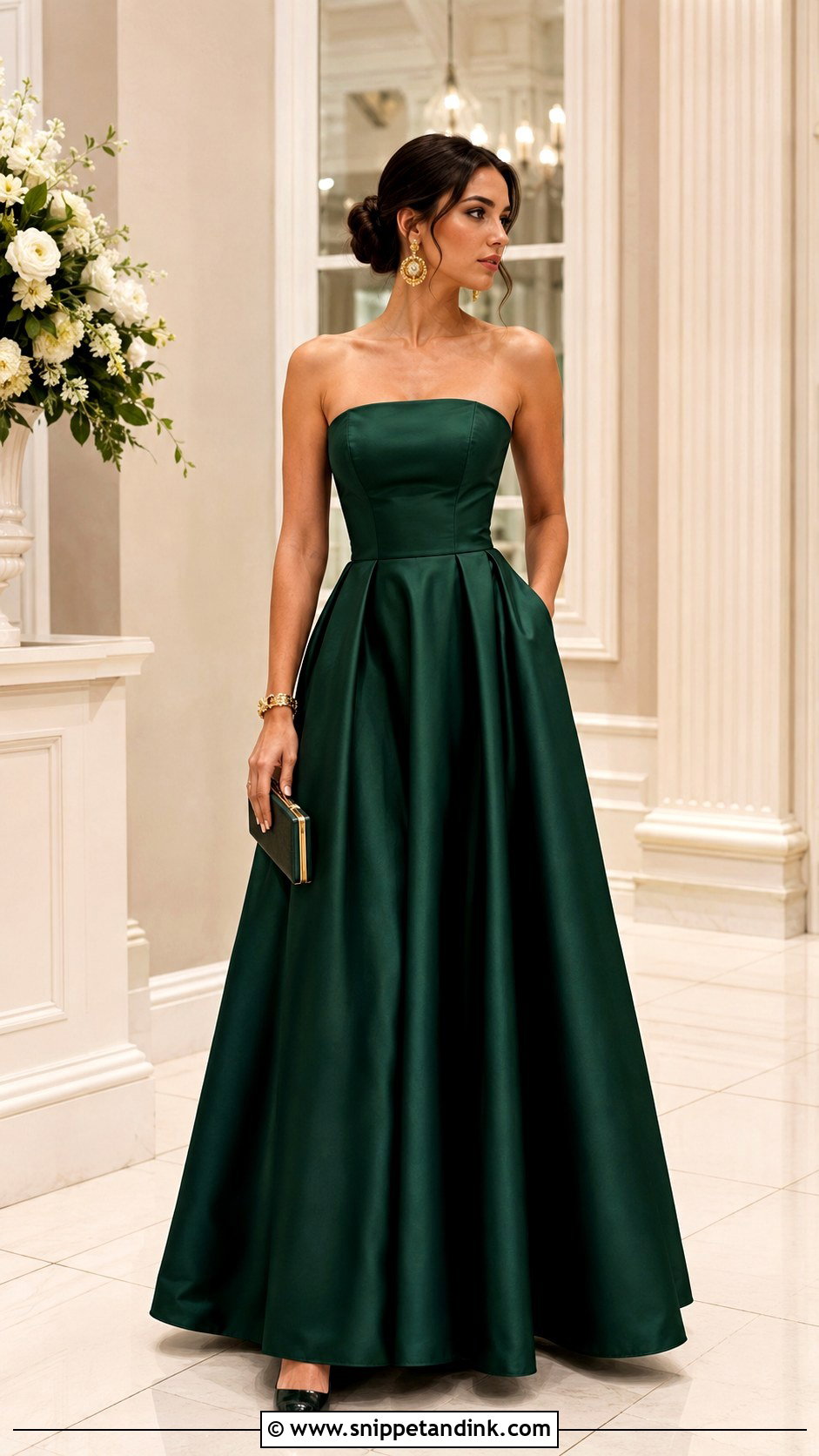
Hunter green strapless is the classic formal silhouette, and it moves across seasons easily. Everything depends on the internal structure: proper boning, a secure back closure and a neckline that stays put. My test is to have you stand, sit and reach forward for a glass. A well-fitted strapless bodice stays exactly where it is without you hitching it up. A full satin skirt gives the drama; tulle softens it. If you want coverage, add a matching wrap or short cape rather than an unrelated jacket, and finish with gold earrings and a polished updo.
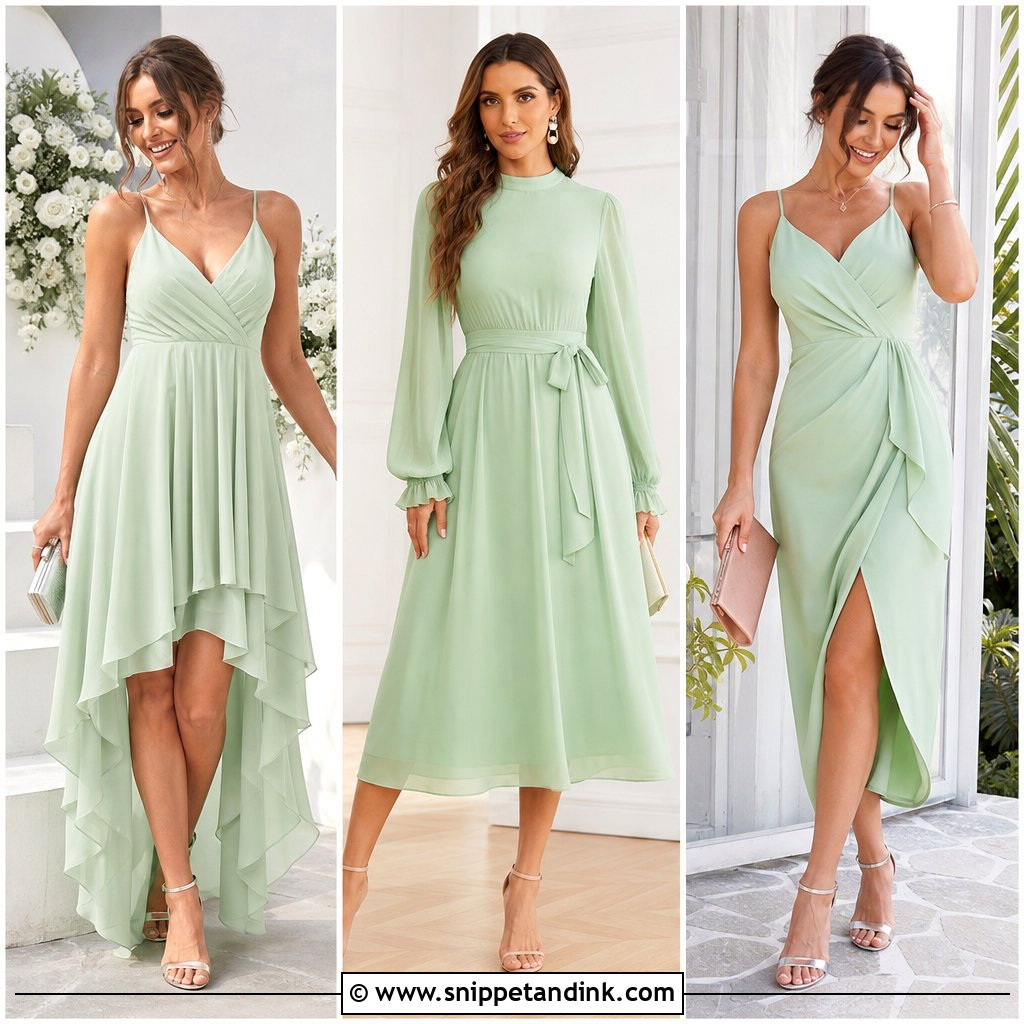
15. Seafoam Green Beaded Princess Gown
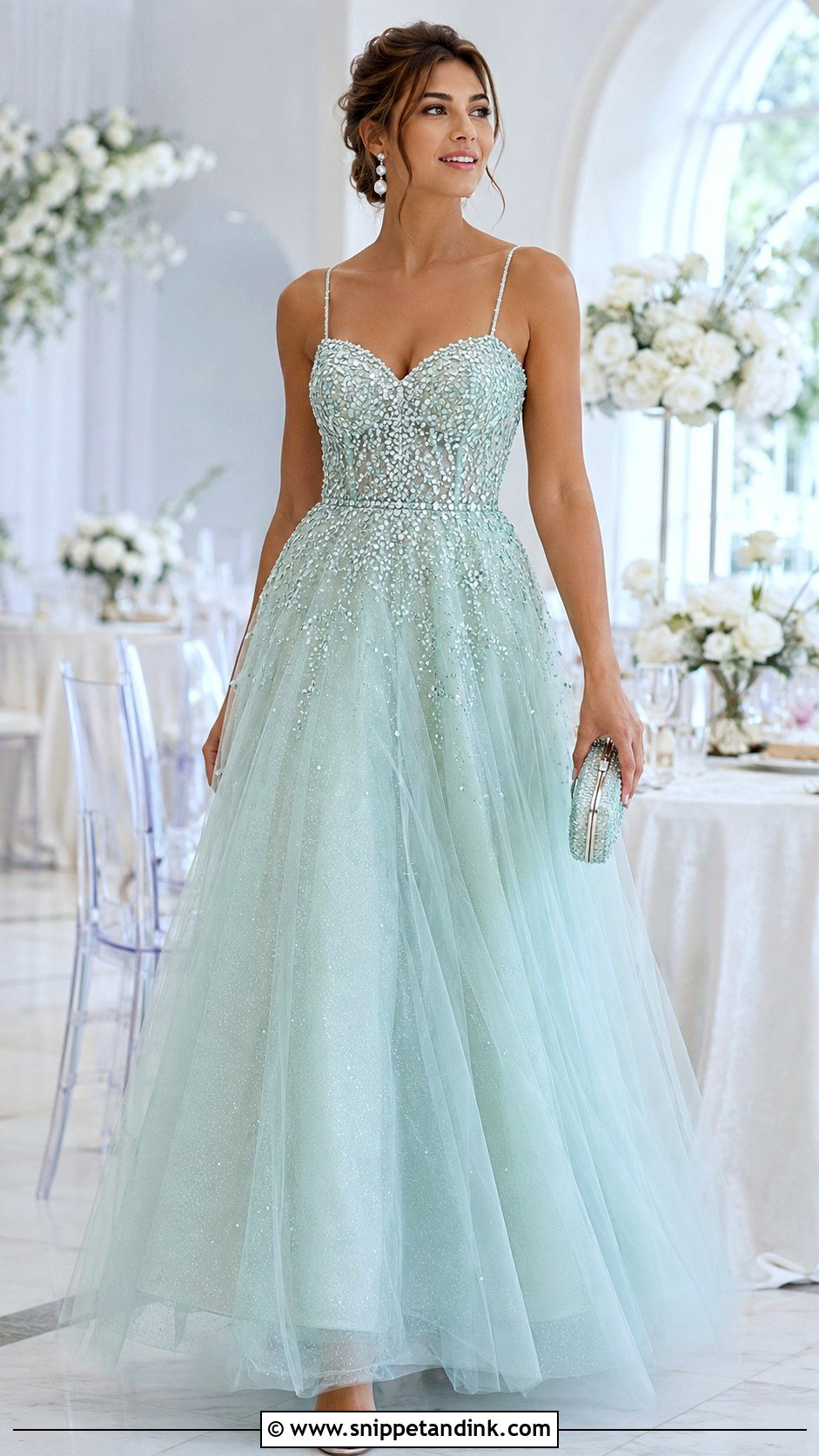
Seafoam has a cool, almost luminous quality that suits beadwork well. Concentrating the beads around the neckline and waist keeps the gown light; crystals that fade down the skirt add more glamour. Heavy beading weighs more than people expect, and it pulls on the shoulders. I always lift the dress by the hanger loops and check how the straps and inner waist stay are carrying that weight before anyone buys it. Silver heels, pearl drops and an icy blue clutch complete the cool palette, and soft waves keep it from feeling stiff.
16. Green Princess Gown With Gold Embroidery
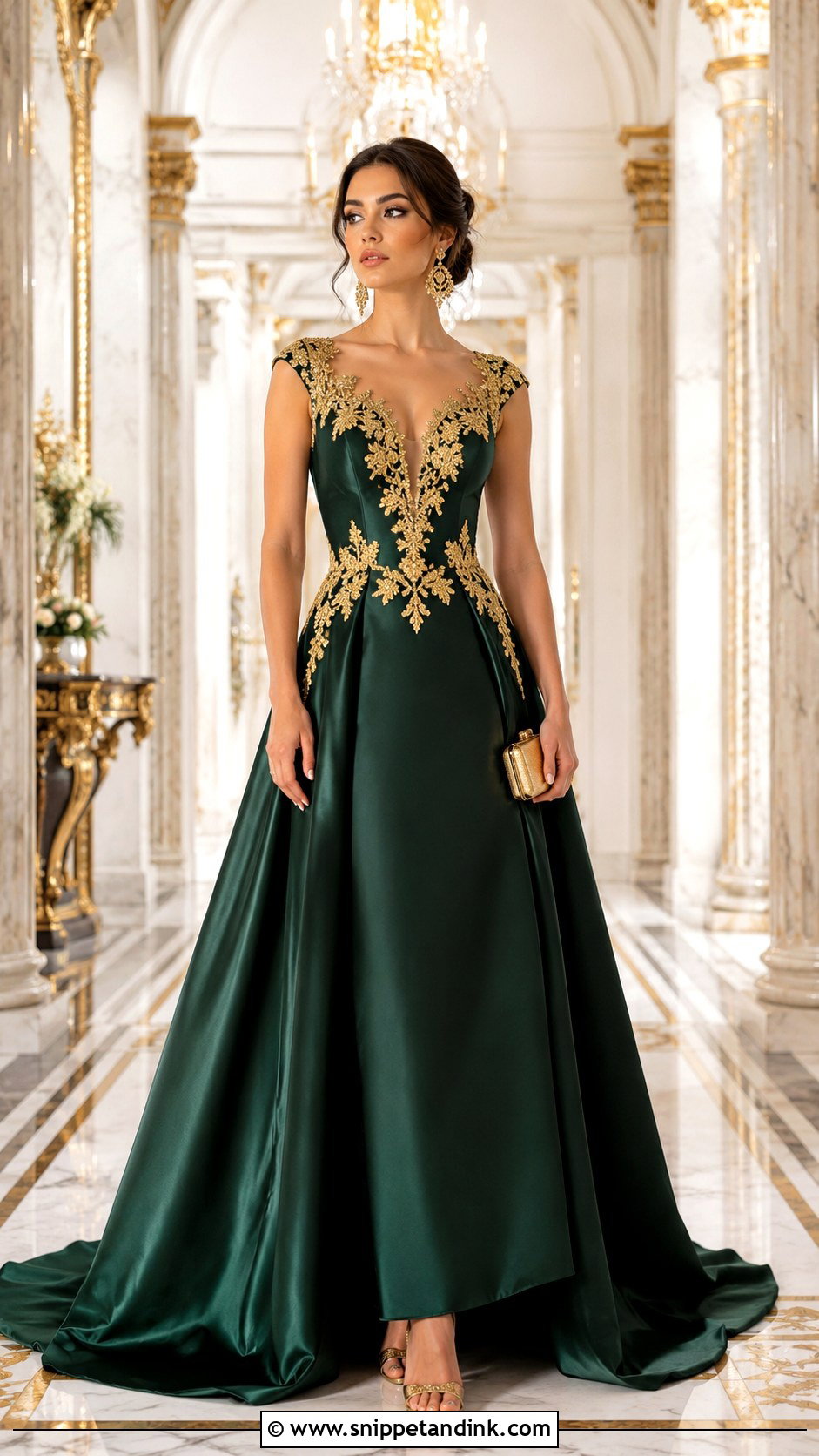
Green and gold is about as regal as a pairing gets. The best versions frame the neckline, waist and skirt panels in gold embroidery rather than covering every inch, so the green still shows. With elaborate metallic work, I ask clients to pick one statement piece: a tiara or a necklace, never both. Deep emerald and forest green give the strongest contrast against gold thread; sage and olive soften it. Metallic embroidery can scratch a bare inner arm, so check where it sits when your arms hang naturally.
17. Green Tiered Tulle Princess Gown
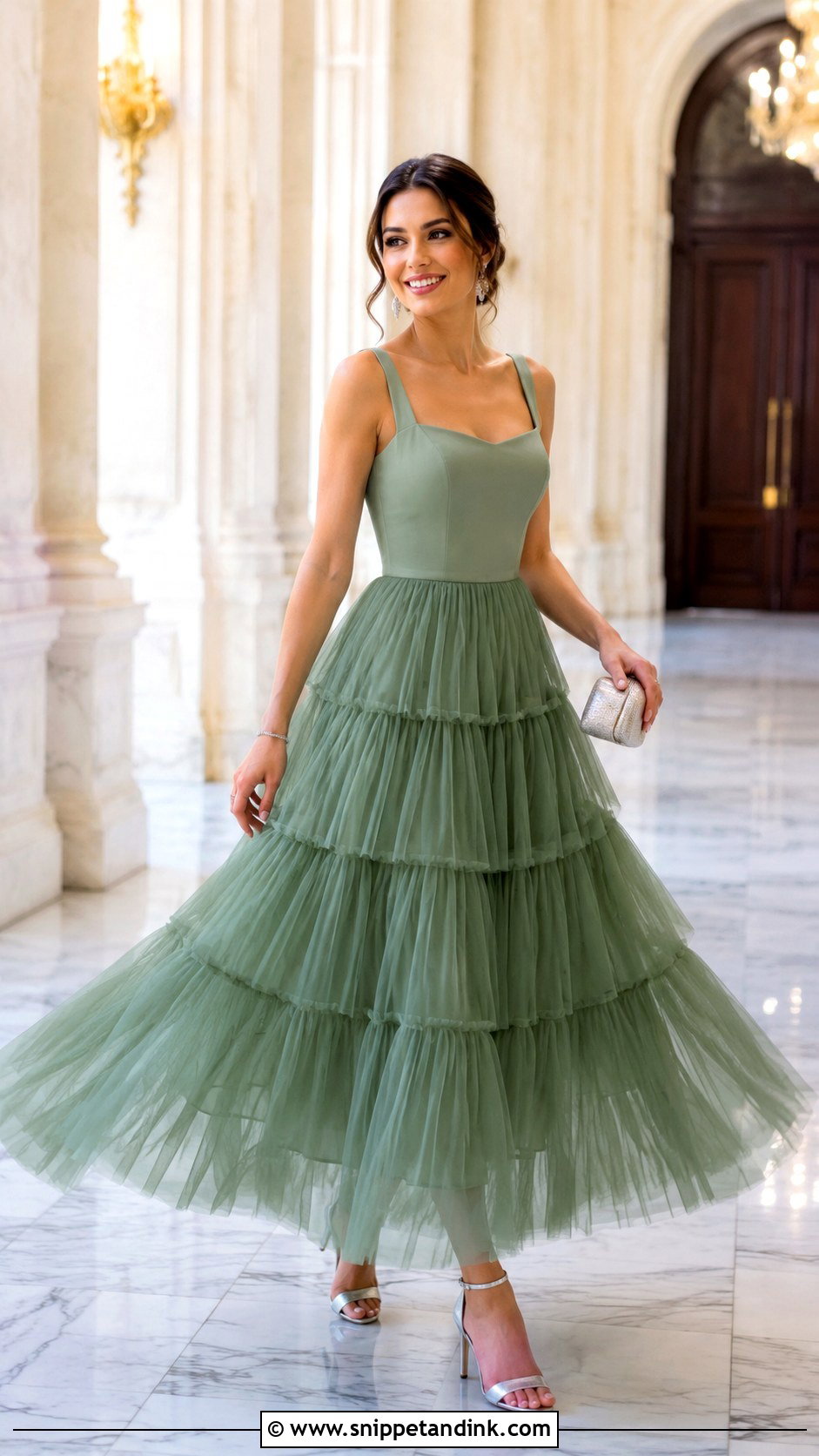
Layers of tiered tulle build movement and depth into a green gown, but spacing is everything. Tiers placed too close together turn bulky; well-spaced tiers over a smooth bodice look deliberate. Soft sage or mint keeps it delicate and emerald gives it drama. The detail I check at alterations is whether each tier hangs evenly and clears the one beneath it. Tulle catches on itself, and a snagged lower tier pulls the whole hem crooked. Choose shoes with enough height to keep the bottom layer off the floor.
18. Green Square-Neck Princess Gown
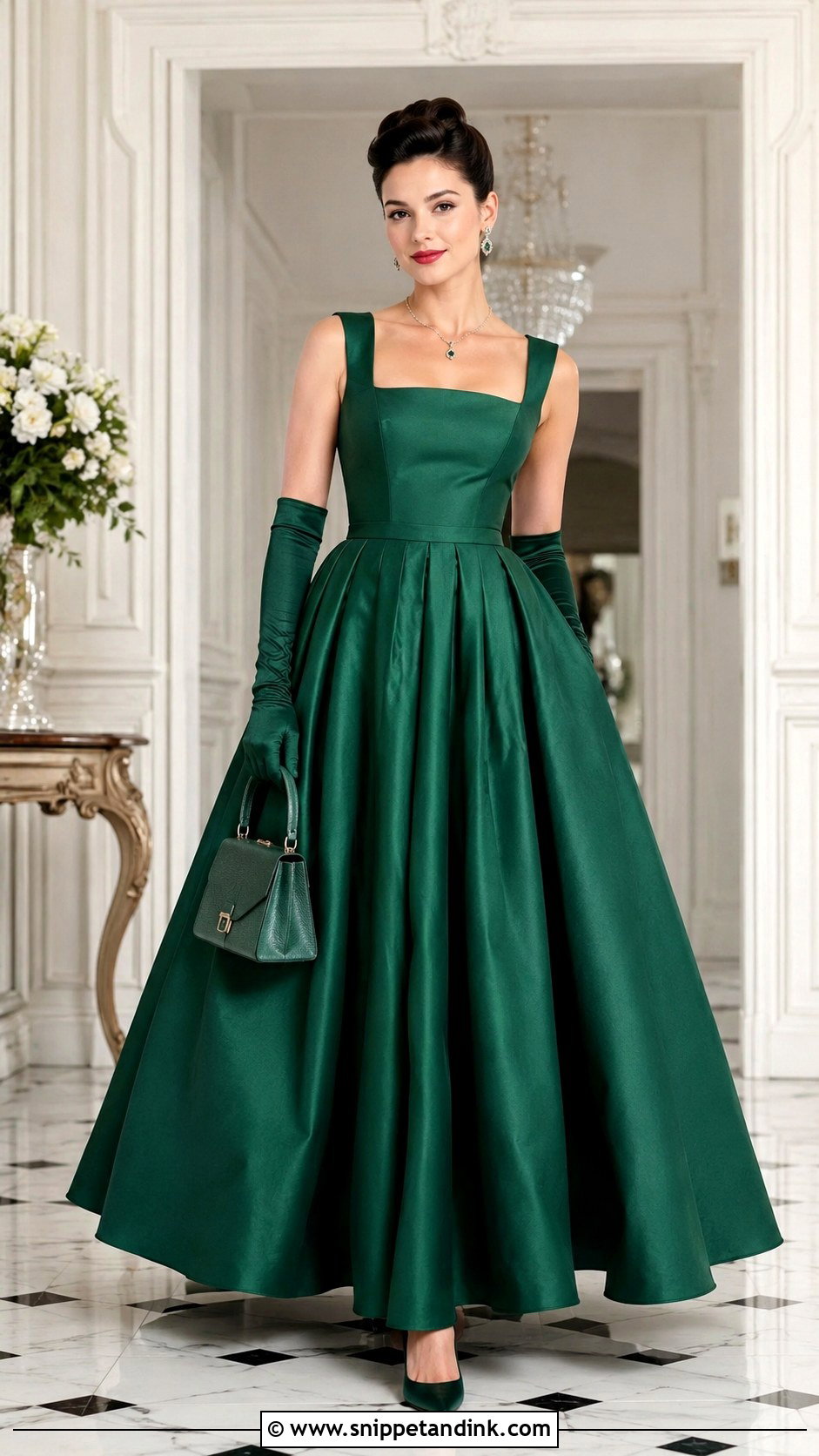
A square neckline frames the collarbone cleanly and suits anyone who wants more support than strapless allows. Look for wide straps and a waist seam that sits right at your natural waist; mikado or satin gives a crisp ball-gown skirt, tulle a softer one. I’d keep jewelry to a short pendant and matching earrings, and if you add long gloves, choose plain ones so the neckline stays the focal point. Hair up or tucked behind the shoulders, so that square shape isn’t hidden.
19. Green Ombre Princess Gown
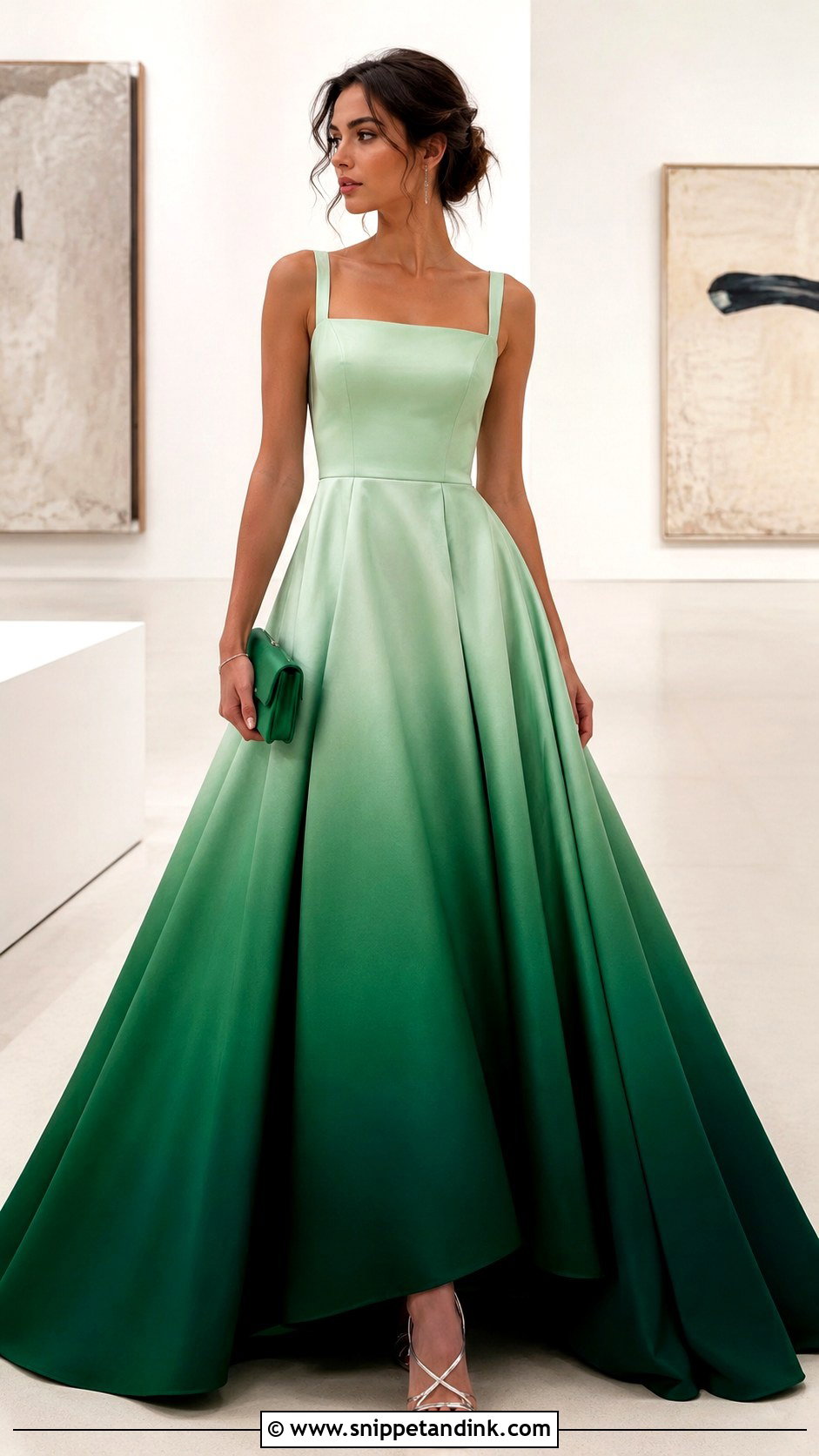
Ombre makes a full skirt look even deeper, moving from pale mint at the bodice to emerald at the hem or the reverse. Because the color is the design, I keep the silhouette plain and the accessories matched to one end of the gradient. Silver or gold depends on the undertone. Before buying, I turn the gown slowly under daylight and room light. Dye transitions can be uneven between the front and back panels, and that shows the moment you walk away from the camera.
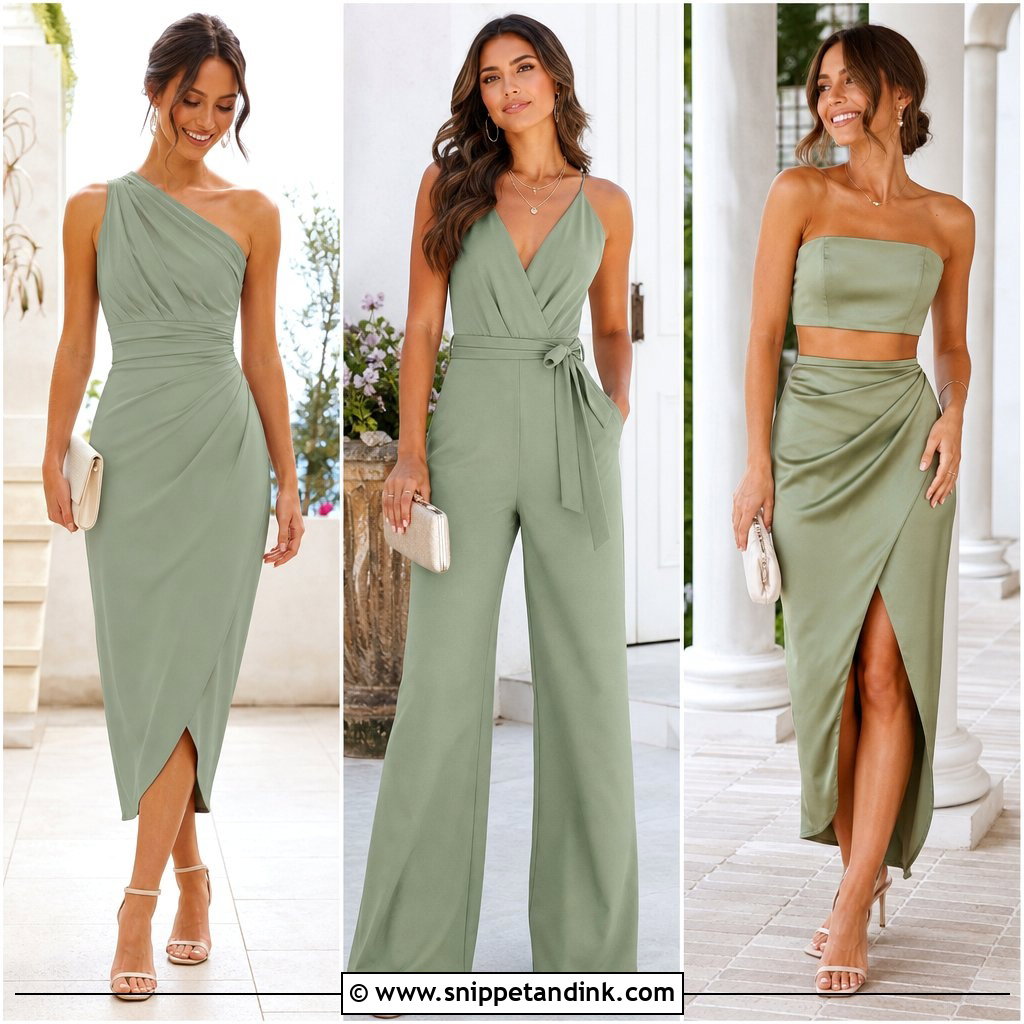
20. Green Puff-Sleeve Princess Gown
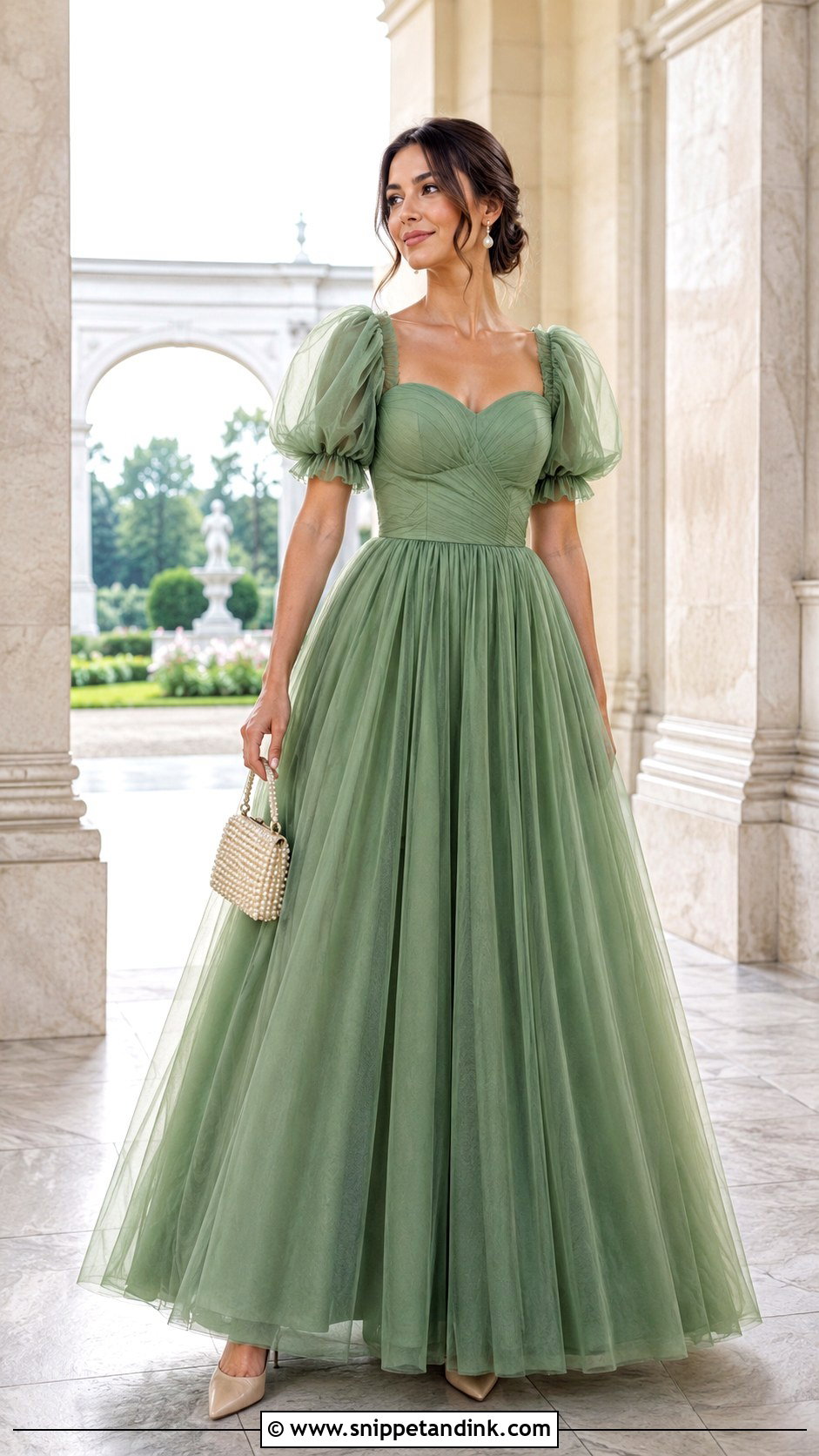
Puff sleeves add romantic volume up top and cover more of the shoulders and upper arms. Sheer tulle sleeves read delicate; structured satin feels more historical. Scale matters with this one. On a petite frame, I keep the puffs small and control the skirt volume, or the proportions overwhelm you; taller wearers can carry the dramatic version. A close-fitting waist balances the volume above and below. Pearl earrings, a small top-handle bag and a low bun or braided crown keep the sleeves from competing with your hair.
A Hoop, a Petticoat or Neither? Getting the Volume You Saw in the Picture
Most of the princess shapes above don’t hold that bell outline by themselves. The fullness comes from what’s worn underneath, and that choice affects how you sit, dance and get through a doorway.
Hoop skirts
A hoop gives the widest, most even bell. The trade-off is sitting: you have to lift the back of the hoop as you sit, or the front flips up. I’d practice that at home, along with getting in and out of a car. Hoops are also the hardest choice for crowded dance floors.
Layered petticoats
A tulle or crinoline petticoat gives a softer, rounder fullness that moves with you and collapses when you sit. For most proms, quinceañeras and galas, this is what I recommend. Bring it to every fitting, since the hem has to be marked with the petticoat on or the gown ends up too short.
Built-in structure
Satin, mikado and taffeta skirts with a stiff lining can stand on their own. They’re the easiest to live in for a long evening, but they won’t reach the full cartoon-princess width, so be realistic about that when comparing photos.
Velvet, Sequins and Tulle Each Need Different Care Once the Night Ends
The fabrics on this list react very differently to steam, folding and storage, and the wrong habit can leave permanent marks before you ever wear the gown again.
- Velvet: hang it, never fold it, and steam from the inside of the fabric. Pressing an iron on the pile flattens it into shiny patches that don’t come back.
- Sequins: keep steam away from the face of the sequins, because many are plastic and can cloud or curl. Spot-clean only, and store the gown inside out so sequins don’t catch on each other.
- Tulle and organza: a cool steam releases creases easily; store the gown in a breathable cotton garment bag with the skirt loosely stuffed with acid-free tissue.
- Satin: get any spills to a specialist cleaner quickly, and tell them what the stain is. Sugary drinks can turn brown in satin months later even when they looked invisible on the night.
Skip plastic garment bags for long-term storage. They trap moisture, and a green gown stored that way can develop yellowing or a musty smell along the fold lines.
Which Green Gown Feels Right After Midnight?
Whichever green you land on, it has to feel secure for hours, not just magical in the fitting room mirror. Emerald satin creates classic glamour, while sage tulle, seafoam beadwork and embroidered florals sit at the softer end. Velvet, capes, corsets, sequins and tiers add drama when the accessories stay simple. Walk and sit in it before the final hem, bring the real shoes, and let your jewelry and hair follow the neckline. Get that right and a traditional ball gown or a modern one-shoulder cut will carry you through the whole night.
You'll Like These Ideas:


Leave a Reply