
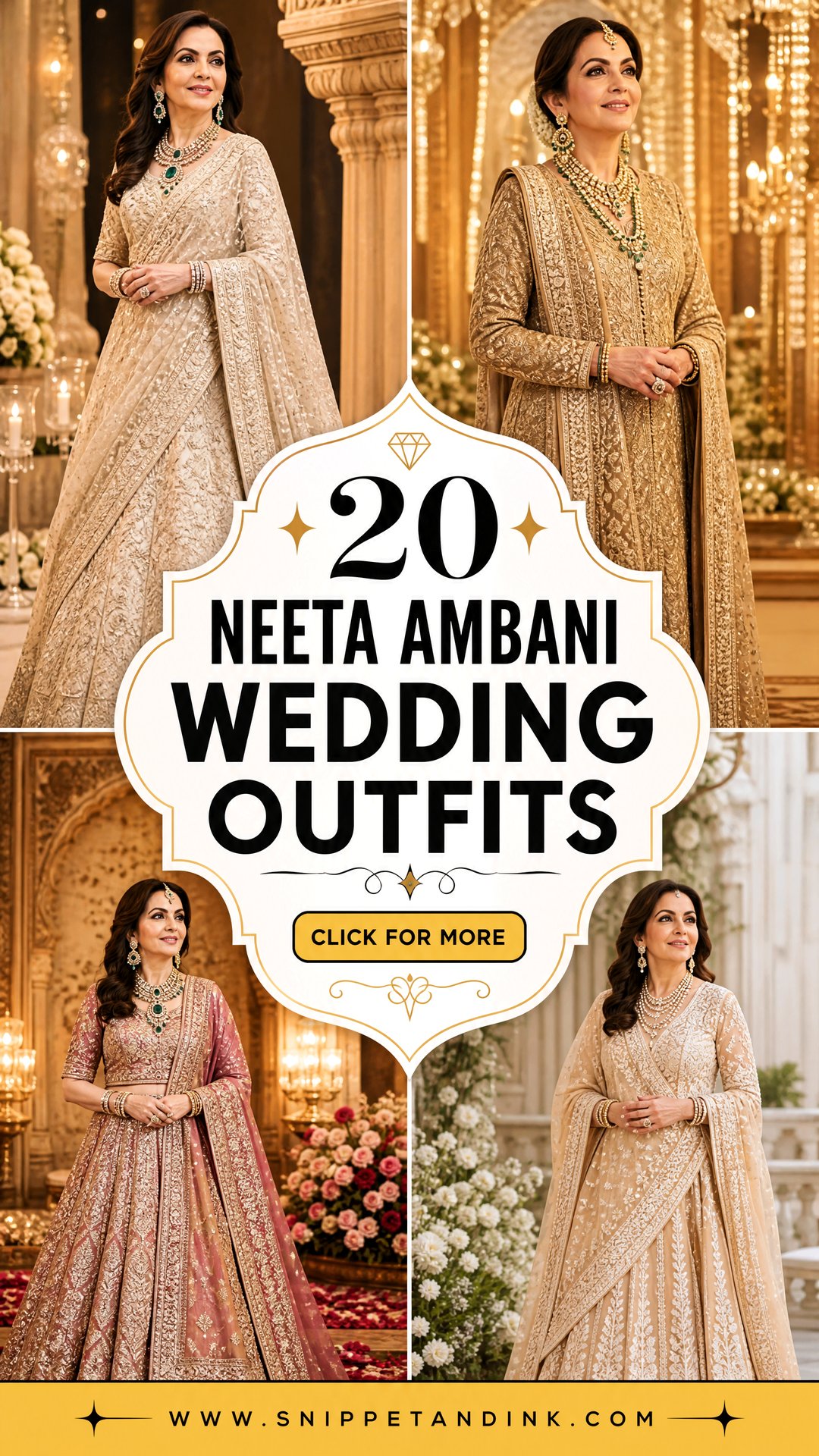
Nita Ambani’s wedding wardrobe is the closest thing Indian occasion wear has to a living textile archive. (Her name is often searched as Neeta, but it is officially spelled Nita.) Across her children’s weddings she has worn Banarasi and Kanchipuram silk, Bandhani, Rangkat weaves, zardozi lehengas and a Hyderabadi-style kurta, and nearly every look repeats the lesson I give mothers of the bride and groom at a first fitting: let one textile lead and make everything else serve it. Below are twenty of her outfits, with what I’d borrow from each and where I’d adjust it for a real wedding schedule and a real budget.
Turning a Couture Reference Into an Outfit Your Tailor Can Make
Most people who save these photos aren’t ordering from Sabyasachi. They’re taking a picture to a local designer or tailor, and the result depends on how that brief is given. When a client shows me a reference like these, I split it into three parts: the base textile, the embroidery and the blouse cut, because each one can be sourced at a very different cost.
Start with the cloth, not the picture
A handwoven Banarasi, Kanchipuram or Bandhani saree is a finished piece; you buy it rather than copy it. Ask the seller what the zari is made of. Real zari is silver thread plated in gold, tested zari is copper wire plated to look like silver and gold, and imitation zari is metallised film. Tested zari is lighter and far cheaper, and for a guest outfit it is often the sensible choice. Real zari ages better and is the one worth buying if you hope to pass the piece on.
Give the blouse the most fitting time
- Order the blouse first and plan for at least two fittings, since dense embroidery shifts the fit once it is stitched down.
- Bring the bra and shapewear you will wear on the day to every fitting.
- Ask for generous side-seam margins so the blouse can be let out for a family wedding years later.
- Sit, lift your arms and lean forward in it. If the neckline gaps, the weight of the work is pulling it.
- If you have back or knee trouble, ask for the heaviest work on the blouse and hem and lighter work across the skirt panels.
Hand embroidery at this density takes weeks and often months, so if anything is being embroidered for you, start three to four months before the first function. A ready-made saree needs far less time, but the blouse still deserves a buffer of a few weeks for alterations.
1. Nita Ambani Red Gayatri Mantra Banarasi Saree
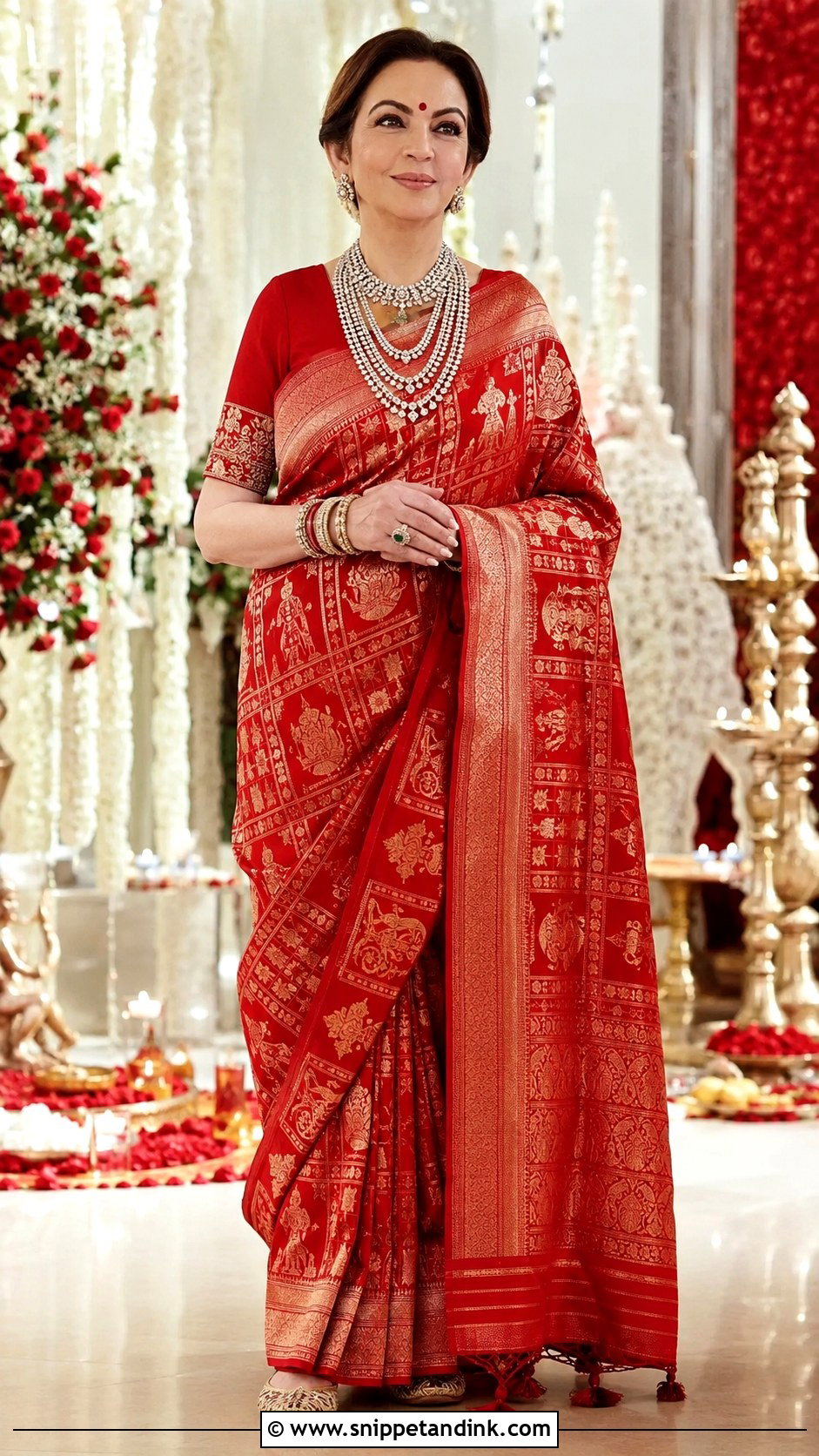
For the opening of Anant Ambani and Radhika Merchant’s wedding celebrations, she chose a deep red Banarasi with Gayatri Mantra inscriptions woven into the cloth, worn with a matching red blouse, layered diamonds, bangles and a red bindi. Woven script is a detail I always point out to clients: it only reads when the pleats and pallu lie flat, so the drape has to be pinned with the lettering facing out rather than bunched at the shoulder. Her neat hair kept the neckline clear for the same reason. For a puja or family ceremony, keep the blouse structured and the palette to red and gold. A third color just fights the weave.
2. Nita Ambani Pink And Red Bandhani Saree
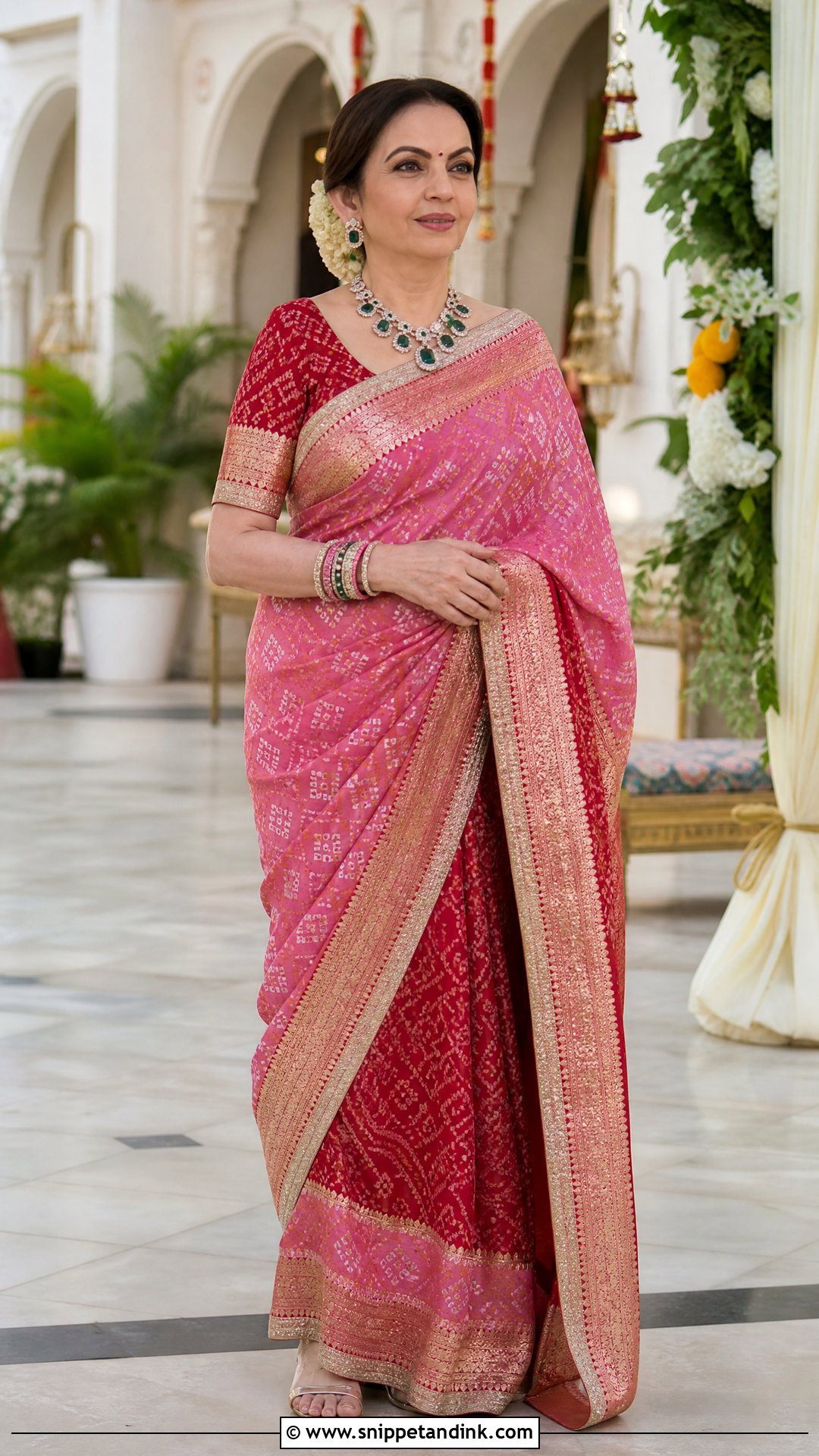
Bandhani is tie-dye at its most patient. Each dot is a tiny pinch of cloth knotted before dyeing, which is why good pieces feel slightly crinkled and lighter than they look. Her Sabyasachi saree for the Mameru ceremony mixed pink and red with a broad gold zari border and a matching blouse, and emerald and diamond jewelry brought in green. The front-facing Gujarati drape shows that border properly. My one warning is about pressing: a hot iron laid flat relaxes the crinkle, so I steam Bandhani from a distance. A low bun, a small bindi and gold sandals keep it daytime. With a necklace that size, everything else should step back.
3. Nita Ambani Red Ghar Chola Saree
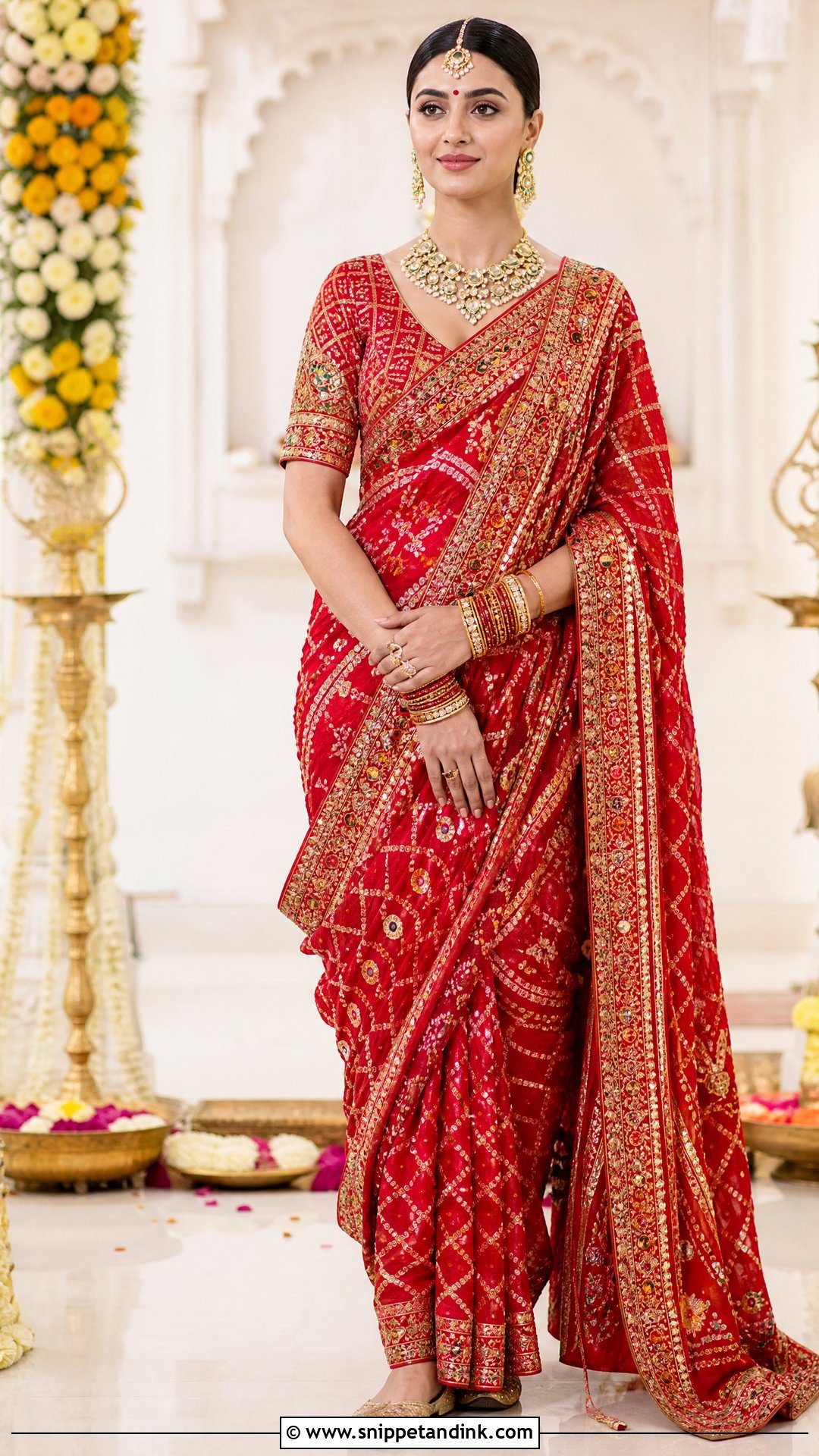
A Ghar Chola is the Gujarati wedding saree traditionally gifted to a bride by her new family, woven as a grid of zari squares filled with Bandhani, so it carries meaning before a single jewel goes on. For the Mata Ki Chowki, Nita Ambani wore a red one by Anuradha Vakil with zari embroidery, a heavy border, a decorated blouse, stacked bangles and quiet makeup. I often suggest a Ghar Chola to mothers who dread the width of a lehenga at a long seated ritual; a saree sits far more comfortably cross-legged. Add cushioned gold juttis, a neat bun and one necklace, and let the grid do the talking.
4. Nita Ambani Ivory Zardozi Lehenga
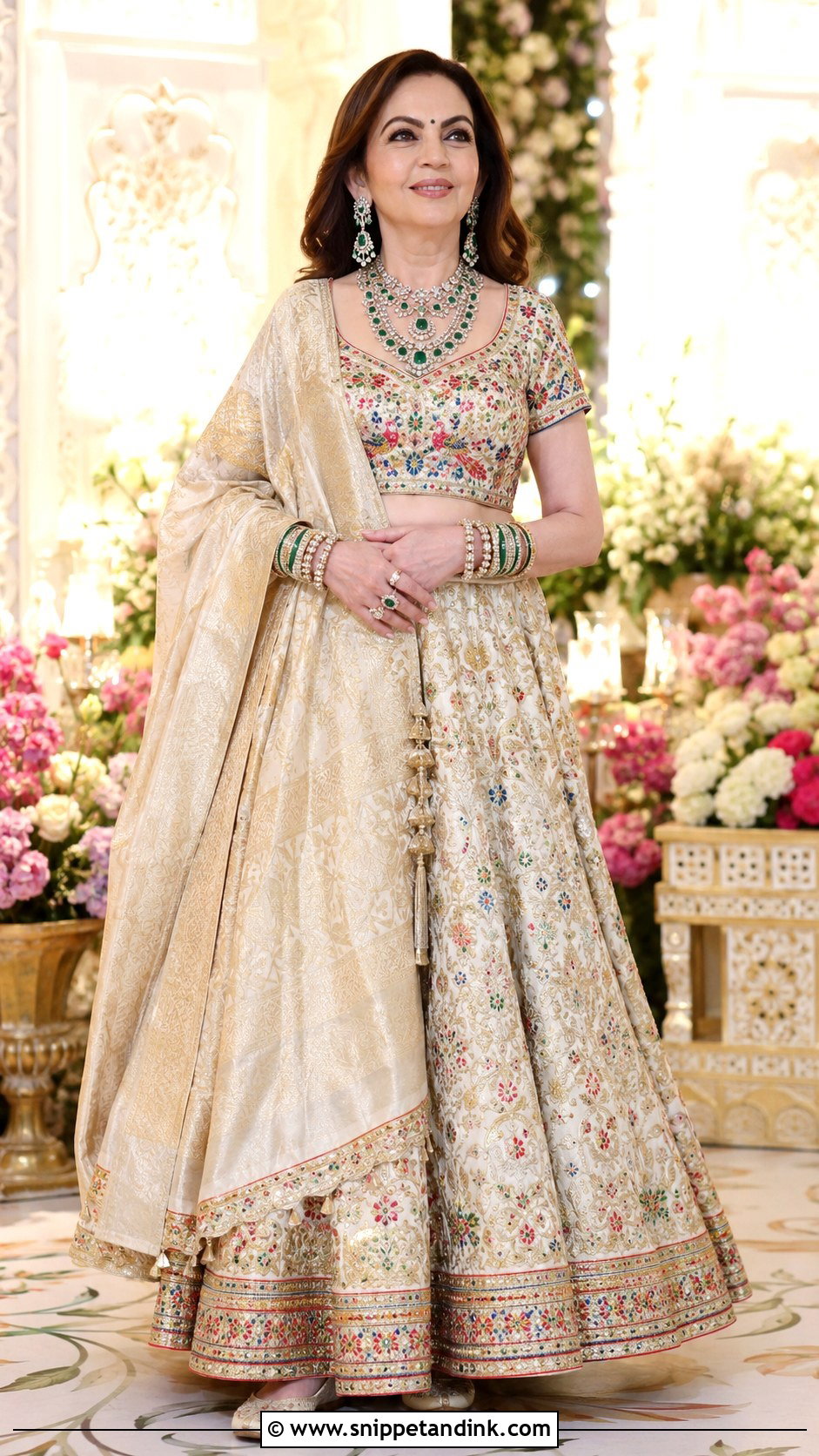
Ivory gave the celebrations a pause from saturated color. This custom Manish Malhotra lehenga carried multicolored vintage-style zardozi, a structured blouse drawing on meenakari and kundan work, and a Banarasi tissue dupatta with zari borders, finished with layered necklaces and an updo. Zardozi is heavy. At a final fitting I ask clients to stand, sit and walk in it, because metal thread drags the skirt down and the waistband has to be built to carry that weight. Pull one or two of the embroidery’s muted colors into the jewelry, not all of them, and wear ivory juttis so the line stays unbroken.
5. Nita Ambani Pink Jeweled Sangeet Lehenga
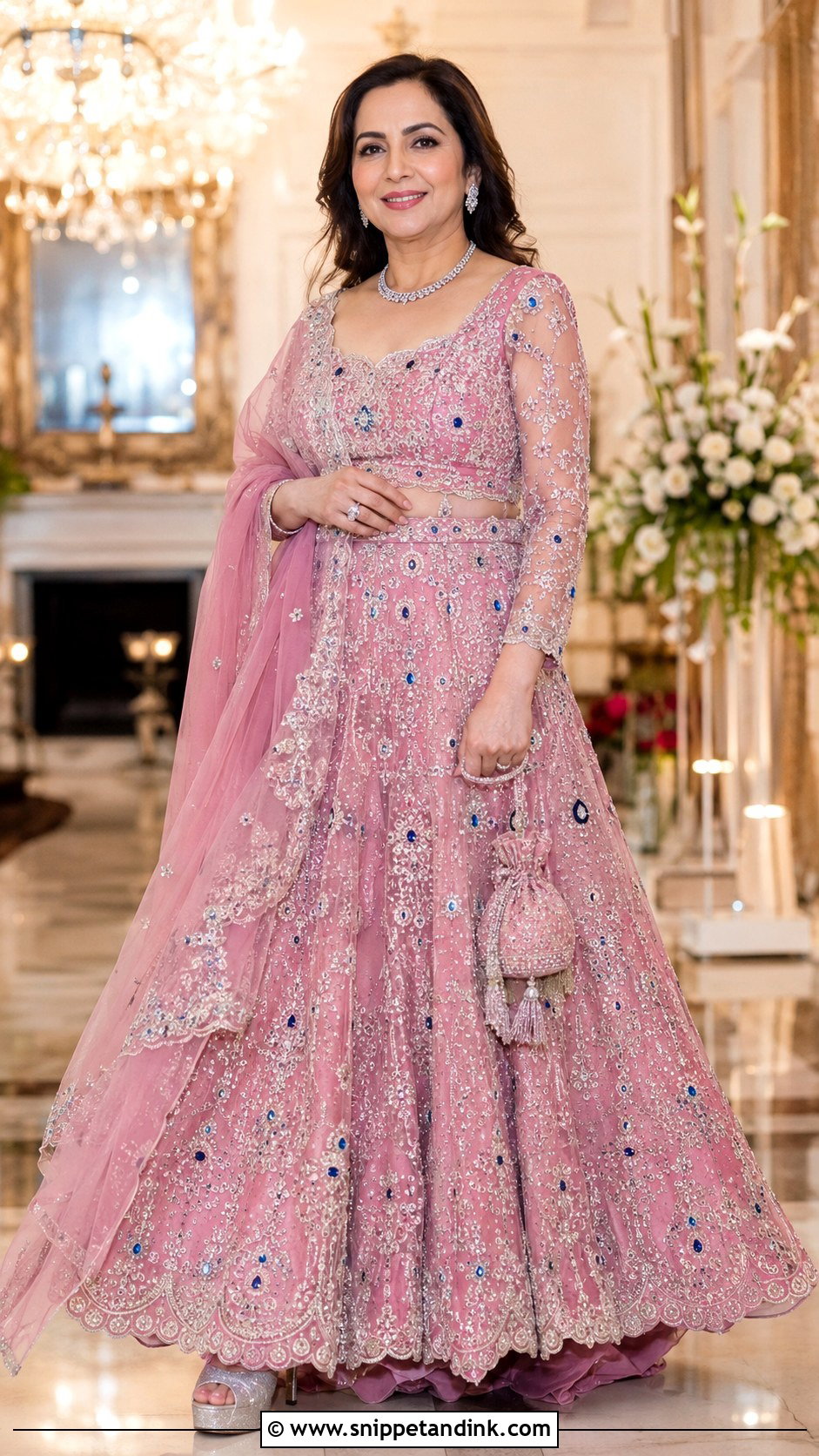
The Falguni Shane Peacock lehenga she wore to the sangeet was pure stage wear: an A-line skirt with a scalloped hem, jeweled tassels, sequins, silver resham and sapphire-toned stones, with sheer embellished sleeves and an embellished drape. Under event lighting that much reflection reads well. In a daytime courtyard it can look like costume. When clients want this feeling, I have them pick one jeweled zone, usually the blouse or the hem, and keep the rest calmer. Long tassels also catch on chair legs and other people’s dupattas, so I tack the longest ones before a night of dancing.
6. Nita Ambani Antique Gold Hyderabadi Kurta
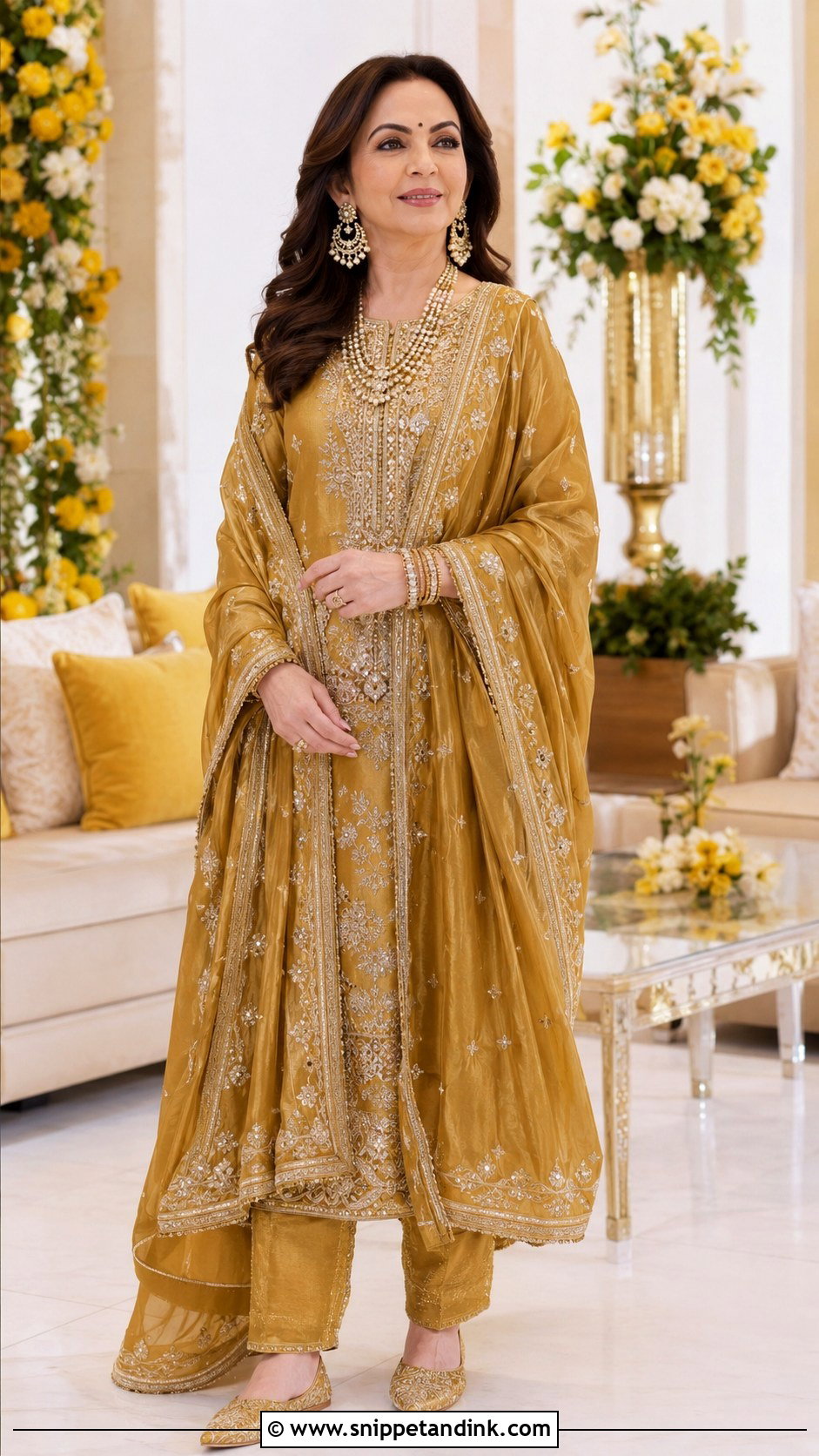
This antique gold Manish Malhotra outfit borrowed from the Hyderabadi kurta tradition, worn with a khada dupatta in a formal double drape. Antique zari, zardozi and a silver-gold chatai border gave it texture without bright color, and large chandbalis did the rest. A long kurta is my quiet favorite for older guests: it covers well, it’s easy to walk in, and there are no pleats to keep fixing. The catch is the dupatta. A double drape needs pins at both shoulders before you leave the room, or it slides off by the first photograph. Keep the makeup luminous and neutral so the metallics stay the point.
7. Nita Ambani Blue And Green Lehenga Saree
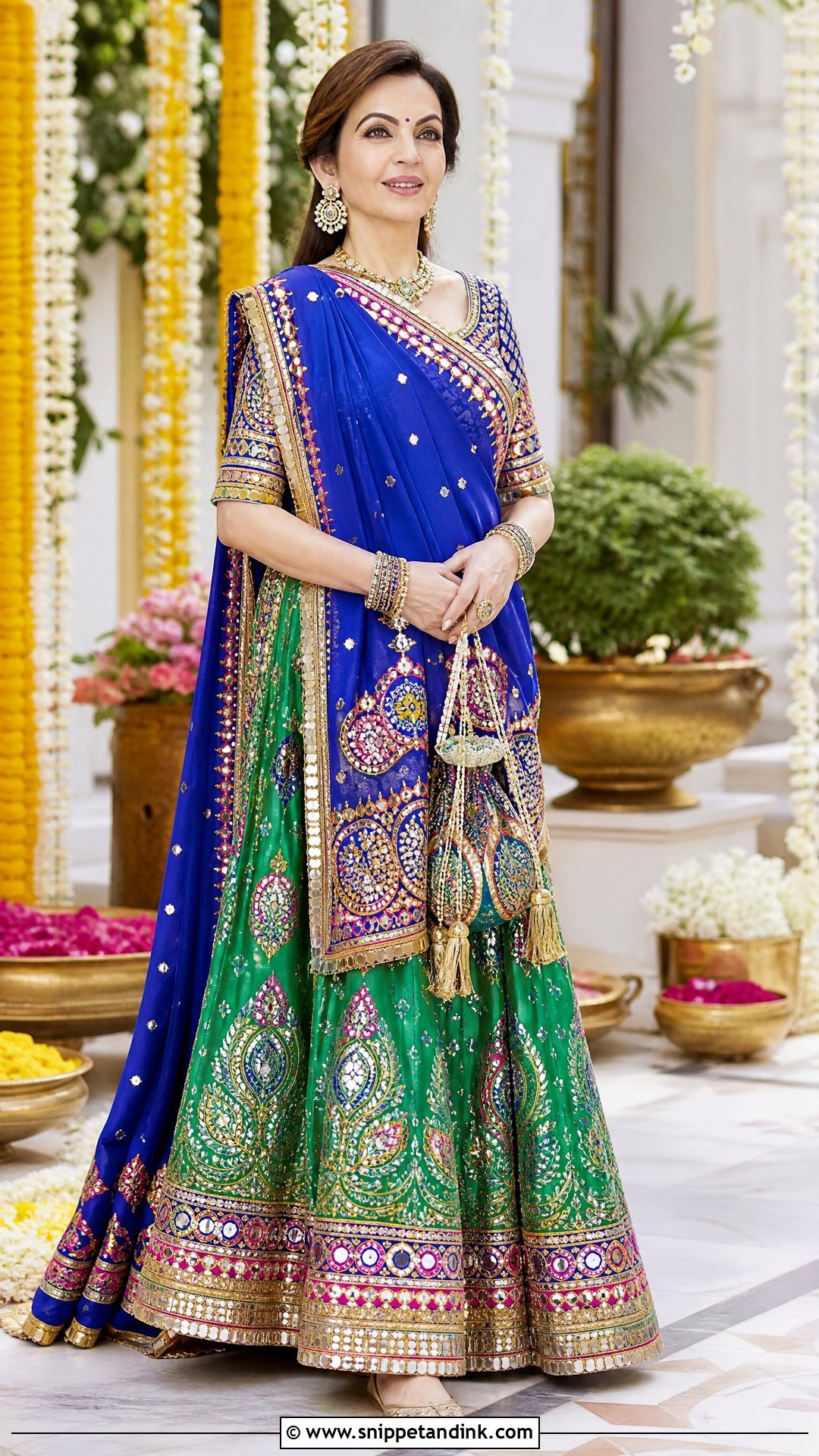
Royal blue and green, mirror work and sozni embroidery made her Abu Jani Sandeep Khosla lehenga saree for the mehendi impossible to miss. The seedha pallu, brought over the right shoulder to the front, gave it a Gujarati flavor while the stitched skirt kept a lehenga’s structure. A lehenga saree is what I recommend to anyone who loves a pallu but has never draped six yards, since the pleats are already sewn and it goes on in minutes. With two jewel tones, decide which one leads. She let blue dominate and green follow, then tied it together with gold juttis and an embroidered potli.
8. Nita Ambani Pink Multi Resham Saree
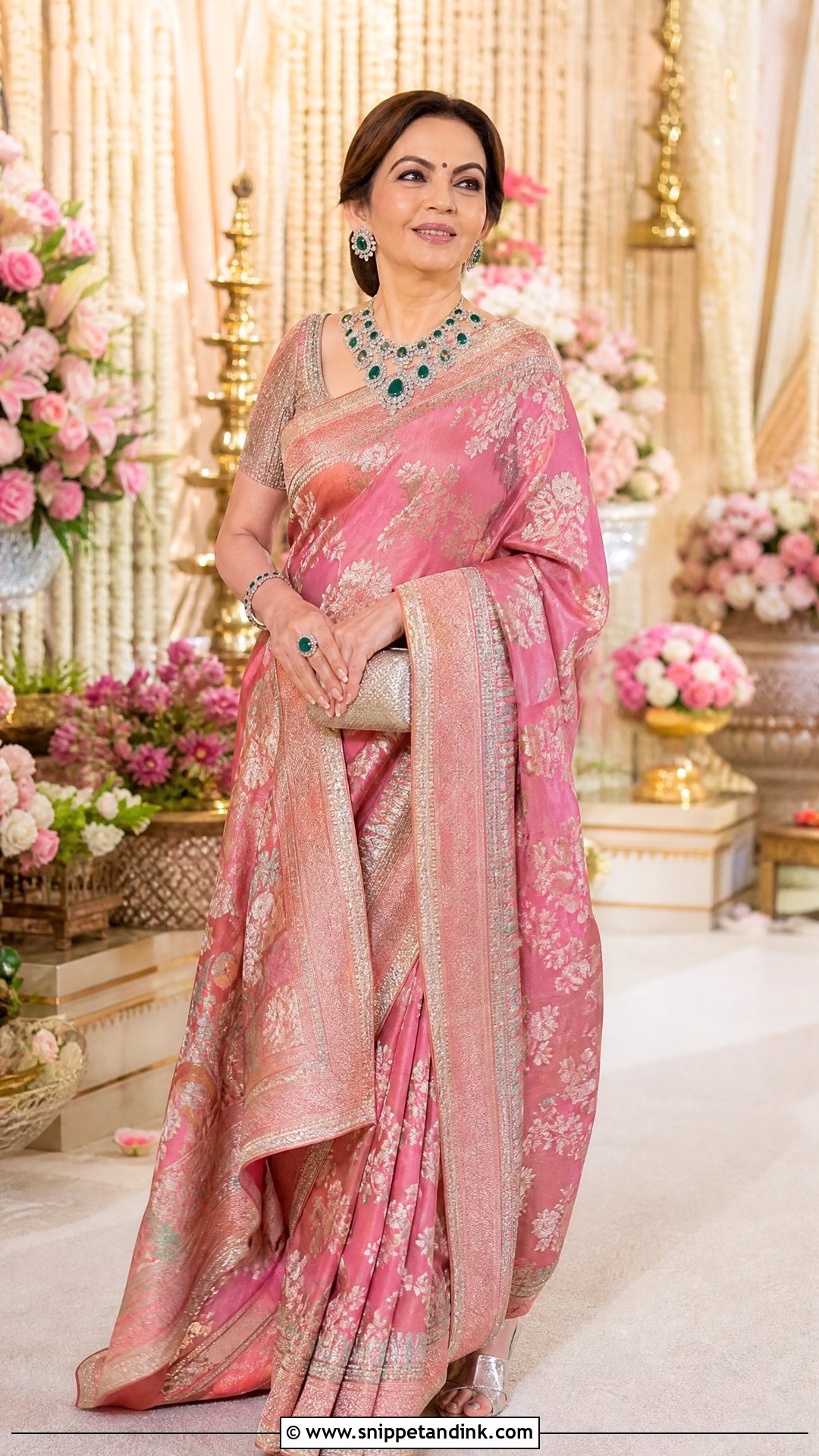
Here the grandeur is quieter. The custom Manish Malhotra brocade had individually woven resham flowers in several colors, real silver embroidery and a blouse finished in silver zari, worn with diamonds and emeralds and a graceful drape. Resham is silk thread, and it has a softer sheen than zari, so a saree like this looks its best in daylight or warm indoor light rather than under hard spotlights. I’d echo the metallic thread in the blouse as she did and then stop: low silver heels, a small clutch, a smooth bun. One colored stone at the neck gives contrast without hiding the woven flowers.
9. Nita Ambani Tissue Banarasi Saree
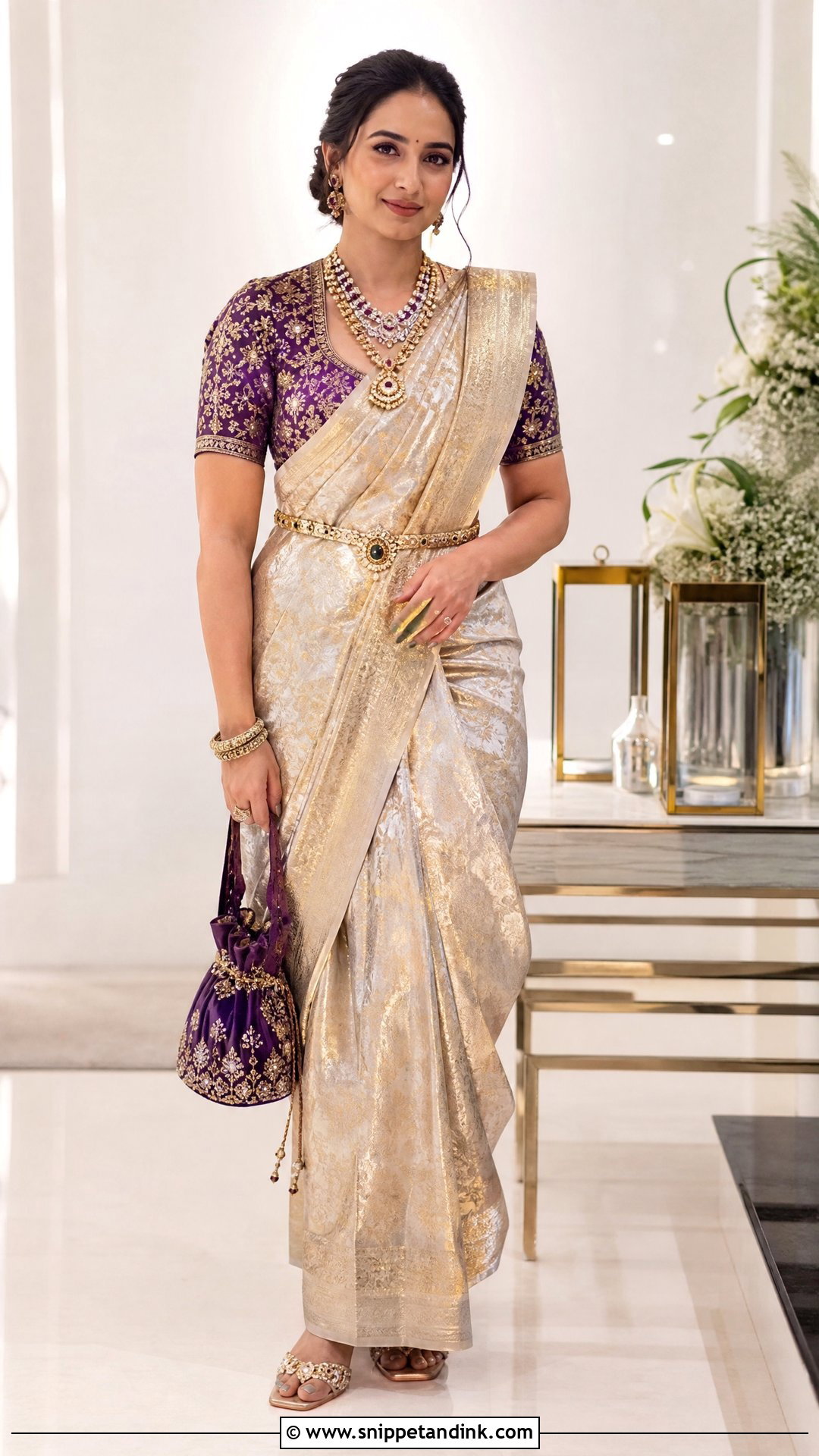
A Gujarati drape turned this tissue Banarasi saree into a full ceremonial look. It was woven in the Kadhwa technique, where each motif is woven in separately instead of floating threads across the back, with a real zari border, gold and silver work on the pallu and a contrasting purple brocade blouse. That contrast matters on tissue. A pale metallic saree can wash out the face and blur in flash photography, and a dark blouse gives the upper body definition; plum or emerald does the same job. Tissue also creases sharply, so I fold it with tissue paper between the layers the night before.
10. Nita Ambani Hand-Embroidered Kashi Lehenga
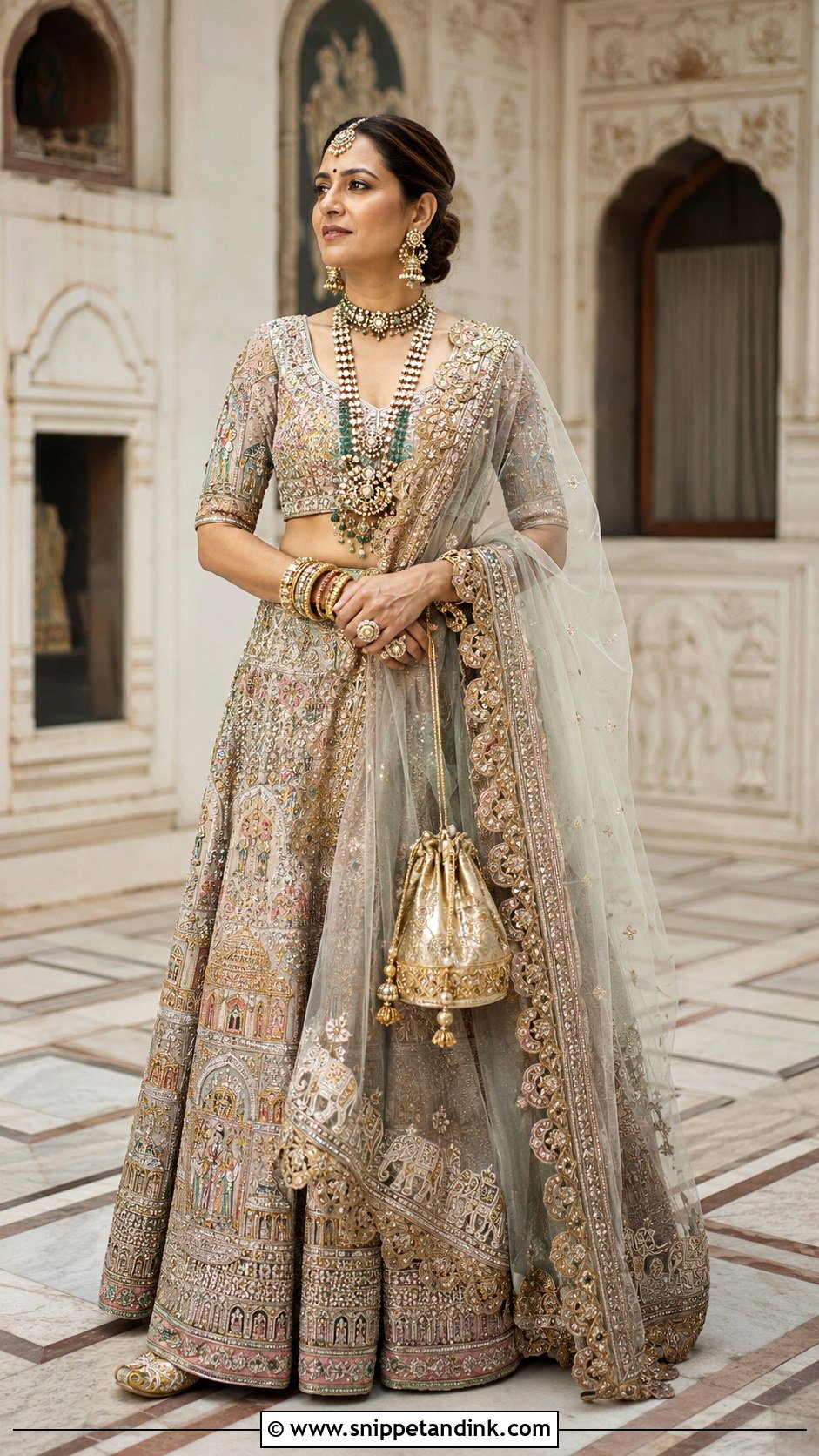
Abu Jani Sandeep Khosla built this lehenga as a tribute to Kashi: a hand-embroidered zardozi ghagra with temple and architectural patterns, a jeweled blouse with jhumka and elephant motifs, and net borders carrying Hindi text and family names. I encourage personal embroidery like this, but it has to be decided at the design stage, before the cloth is cut, and any lettering should be sampled first so the script stays legible from across a room. Initials, a regional motif or a family flower along one border is plenty for most people. Keep the shoes and bag neutral so those details are what guests notice.
11. Nita Ambani Rangkat Saree
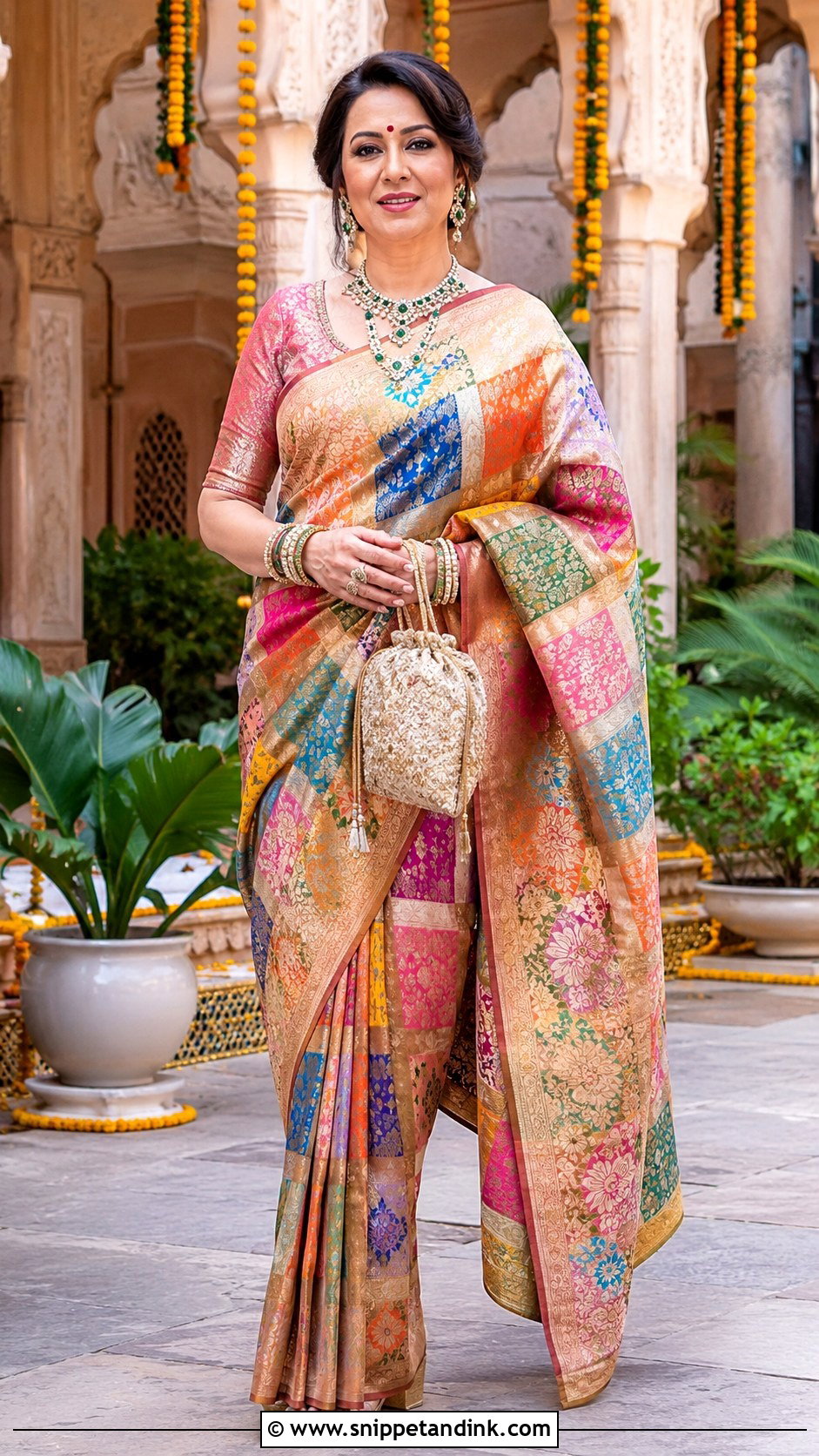
Rangkat is a Varanasi weaving technique in which blocks of different colors are woven into one saree, so the color changes live in the cloth rather than being printed on. Her bespoke Manish Malhotra version used a 28-chauk jaal layout, floral motifs and real zari, worn with traditional jewelry, stacked bangles and a formal drape. A saree like this gives you a lehenga’s drama without a wide skirt, and it tolerates several accessory colors, though I’d still let one stone lead. Gold heels, a structured potli and a flower-trimmed bun suit it. Keep the blouse plain; an embellished one competes with the weave.
12. Nita Ambani Tissue Gold Wedding Ghagra
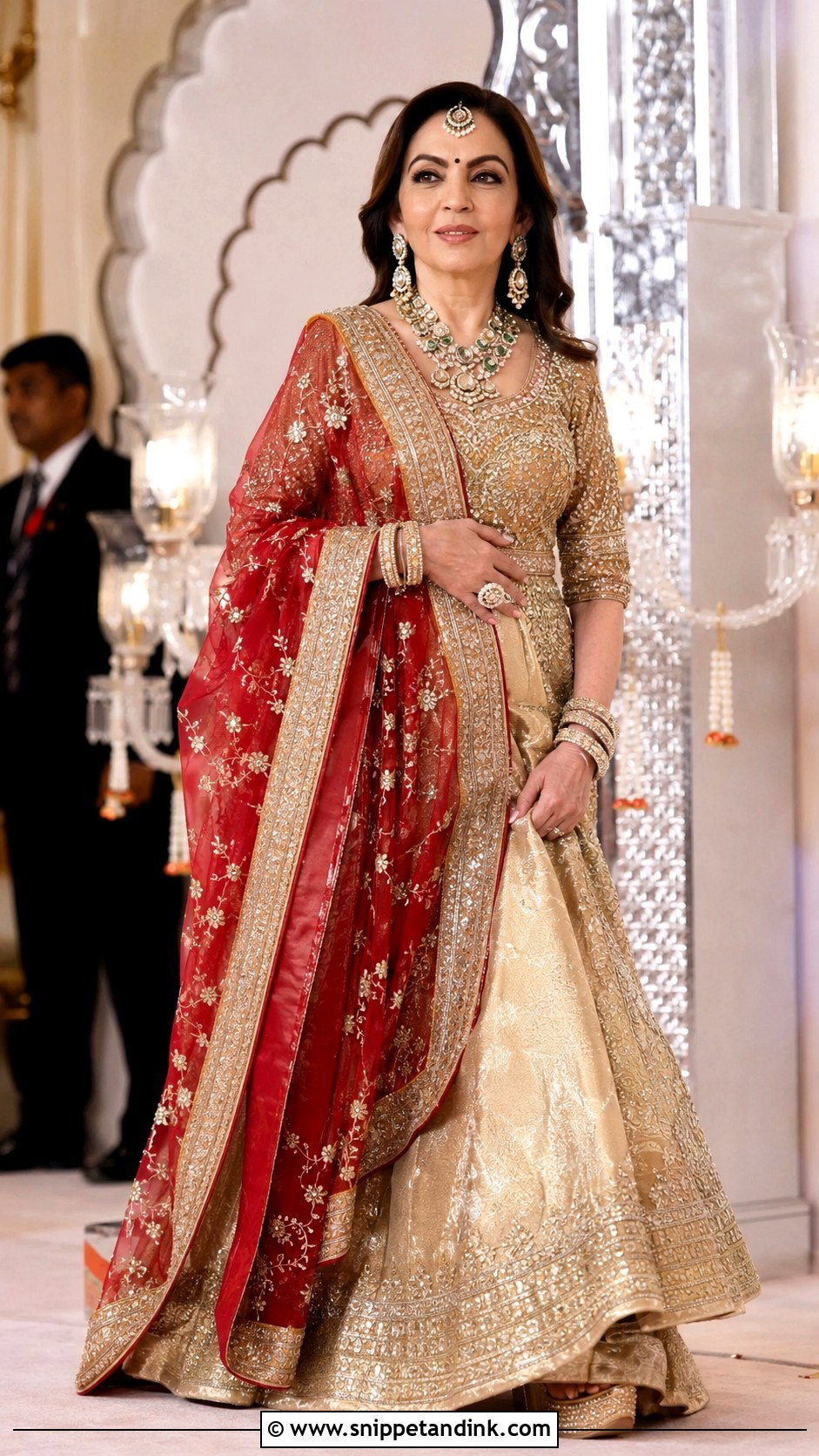
On the wedding day itself she wore a tissue gold ghagra by Abu Jani Sandeep Khosla, a gold zardozi blouse and a red tissue dupatta worked with naqshi and crystals, plus a handwoven Banarasi zari element with a traditional border. Three layers of tissue and metal thread are heavy and warm. That’s why I build any outfit like this around a blouse with proper support and a firm waistband, so the weight sits on the hips instead of dragging at the shoulders. Gold and red remain the most reliable ceremony pairing on camera. Wear cushioned gold platforms or juttis; nobody sees them, but you will feel them by the pheras.
13. Nita Ambani Peach Rangkat Baraat Ghagra
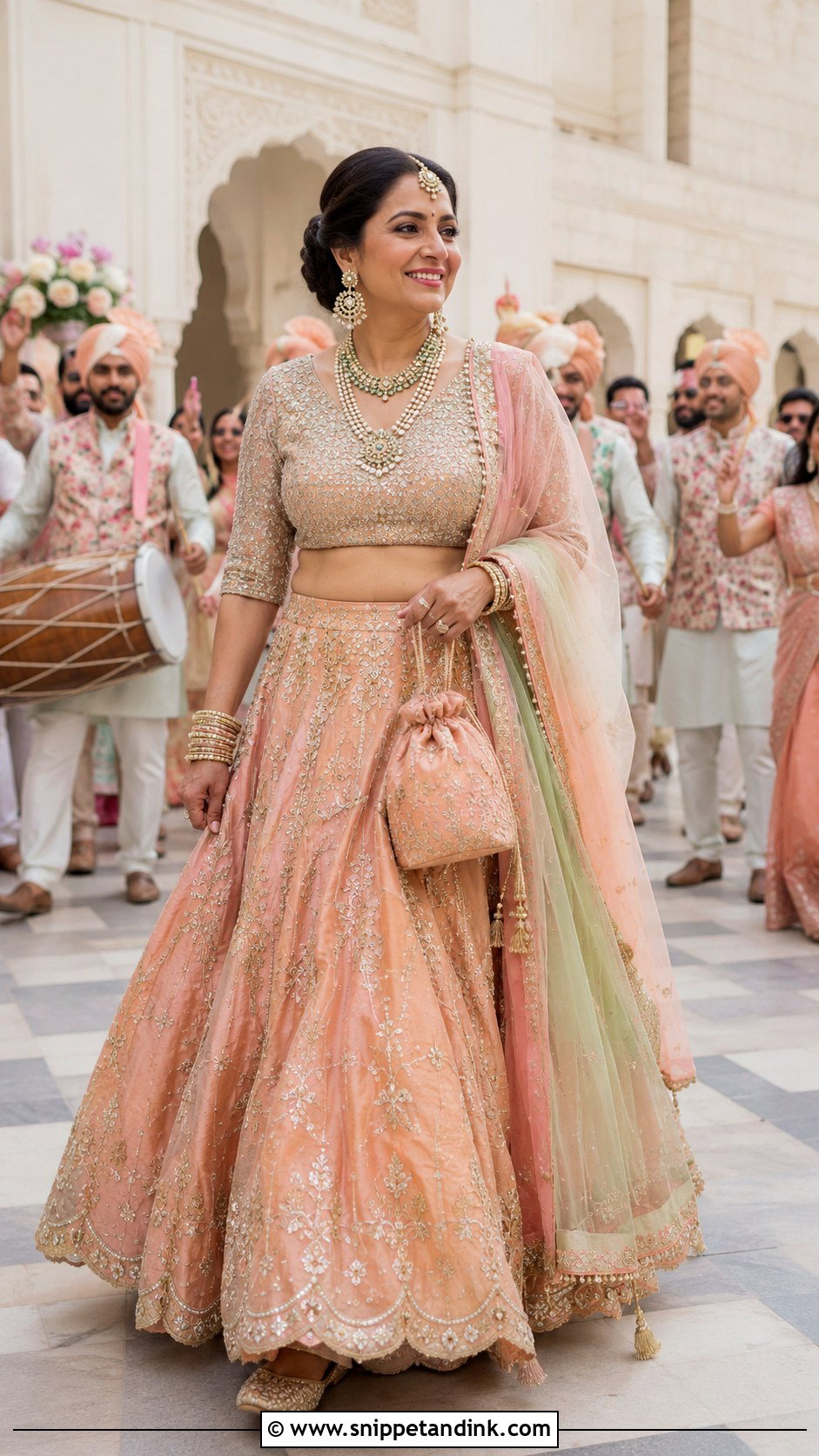
Peach, pistachio, bronze and blush made a fresh baraat palette for a mother of the groom. Her custom Abu Jani Sandeep Khosla Rangkat ghagra had a peach silk base, a jaali blouse, gold and silver zardozi and crystals, with a multicolored Rangkat dupatta pulling the pastels together. A baraat means dancing outdoors, so I want a blouse with real support and the dupatta pinned firmly at the shoulder, not just draped over an arm. If you’re stepping away from red or maroon, repeat one pastel from the dupatta in your bag or shoes and keep the jewelry classic.
14. Nita Ambani Red Kanchipuram Silk Saree
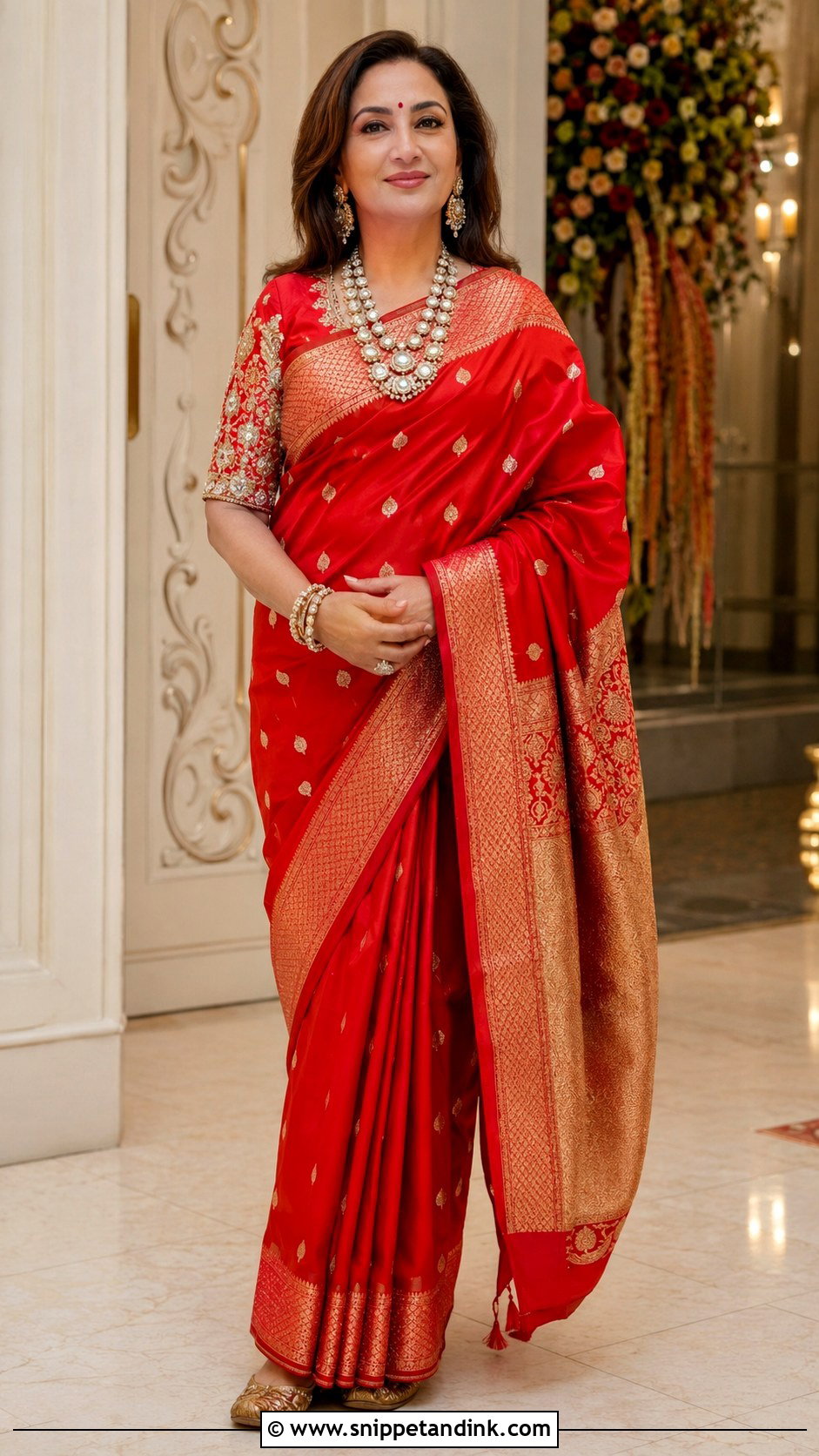
At Jamnagar she wore a bold red handloom Kanchipuram produced through Swadesh, woven with traditional patterns and a personal tribute to Anant Ambani and Radhika Merchant. A semi-sleeved embroidered blouse, a polki necklace, diamond bangles, rings, a red bindi and smoky eyes finished it. Kanchipuram is woven from heavy, tightly twisted silk, so it holds a crisp pleat but never falls soft. I tell clients to expect a structured drape and to make the pleats a little wider than they would in georgette. A set of initials woven discreetly along the border is the most wearable version of her idea.
15. Nita Ambani Embroidered Kanchipuram Saree
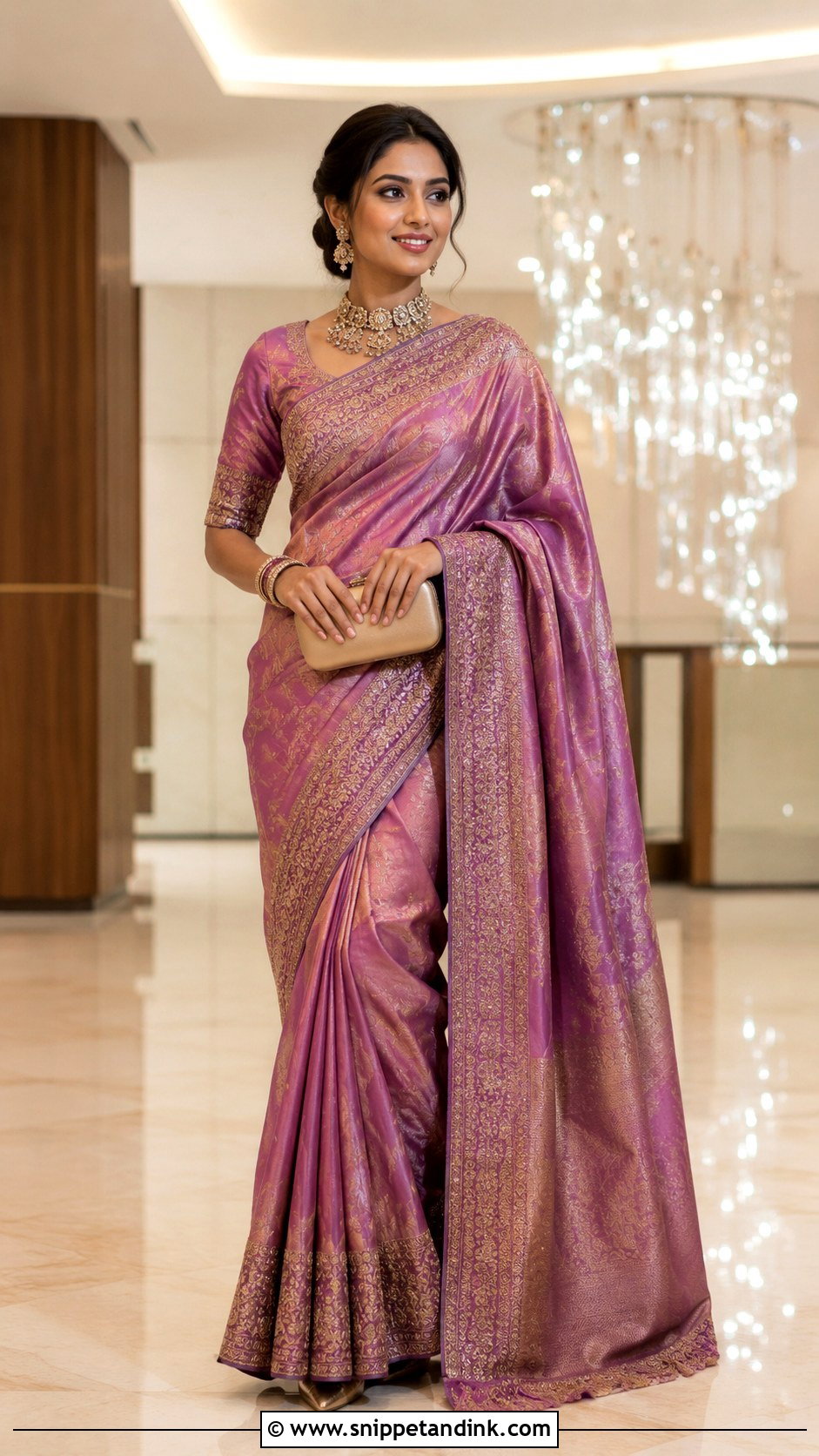
For another Jamnagar evening, Manish Malhotra and his team added zardozi to the border of a Kanchipuram saree, giving it dimension while leaving the woven body untouched. With a structured blouse, a substantial necklace and a classic drape, it read clearly as evening wear. I like border-only embroidery on good silk because the eye follows the hem and pallu edge as you move while the silk itself stays visible. It is also one of the easier looks here to recreate: a Kanchipuram with one ornate edge, a fitted blouse in the same color family, low metallic heels and a plain clutch.
16. Nita Ambani Pink Sabyasachi Pre-Wedding Lehenga
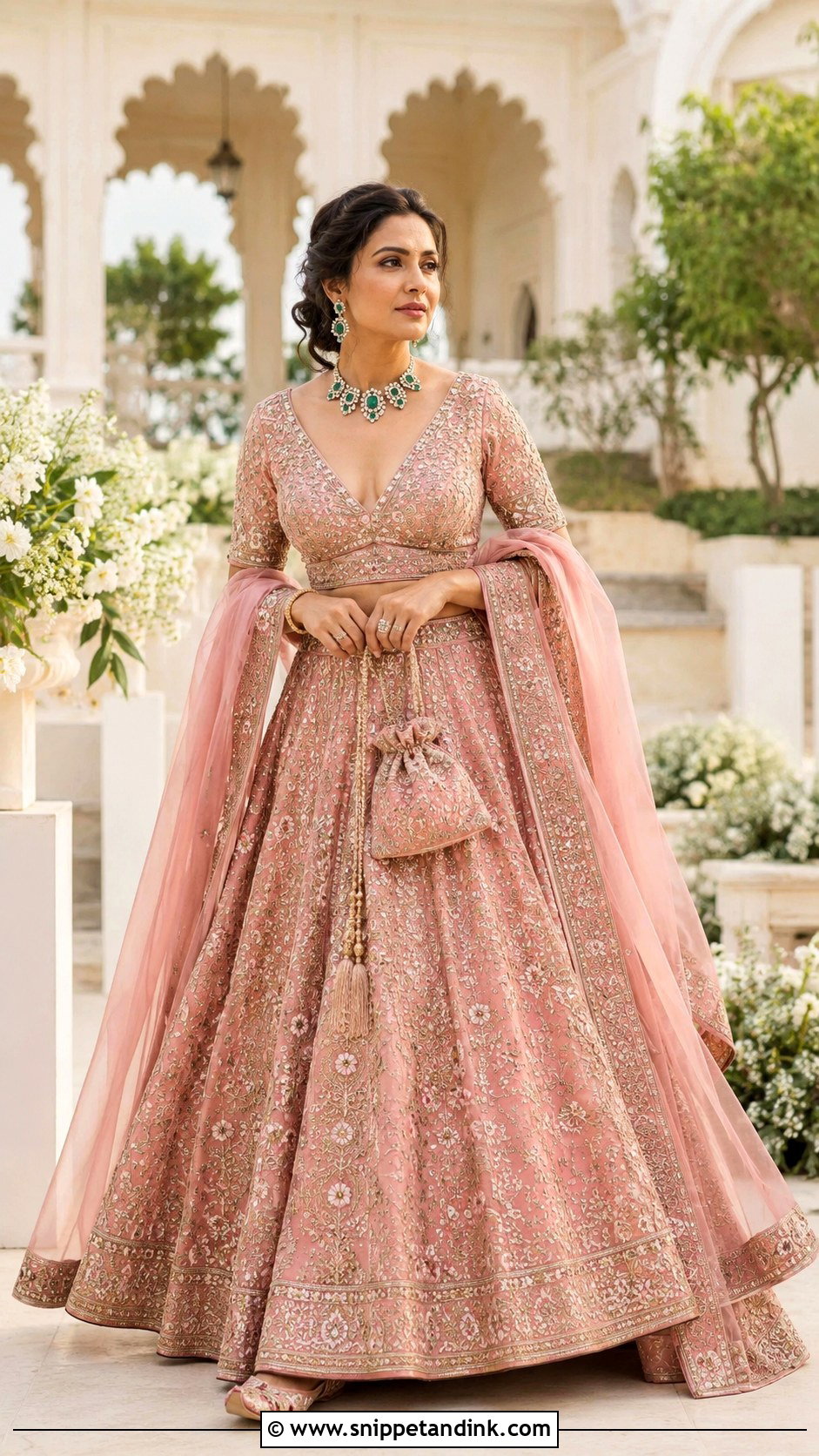
A romantic pink Sabyasachi lehenga carried her through Akash Ambani and Shloka Mehta’s 2019 pre-wedding celebration, embroidered across skirt and blouse with a flowing dupatta to soften the structure. Emerald and diamond jewelry supplied the only strong contrast and framed her face. The shade of pink is what makes this work. Muted, slightly dusty pinks sit kindly on mature skin, while neon pinks bounce color up under the chin in photos. Look for embroidery with an antique finish rather than bright gold, then add a matching potli, embroidered juttis and a low bun.
17. Nita Ambani Off-White Mehendi Lehenga
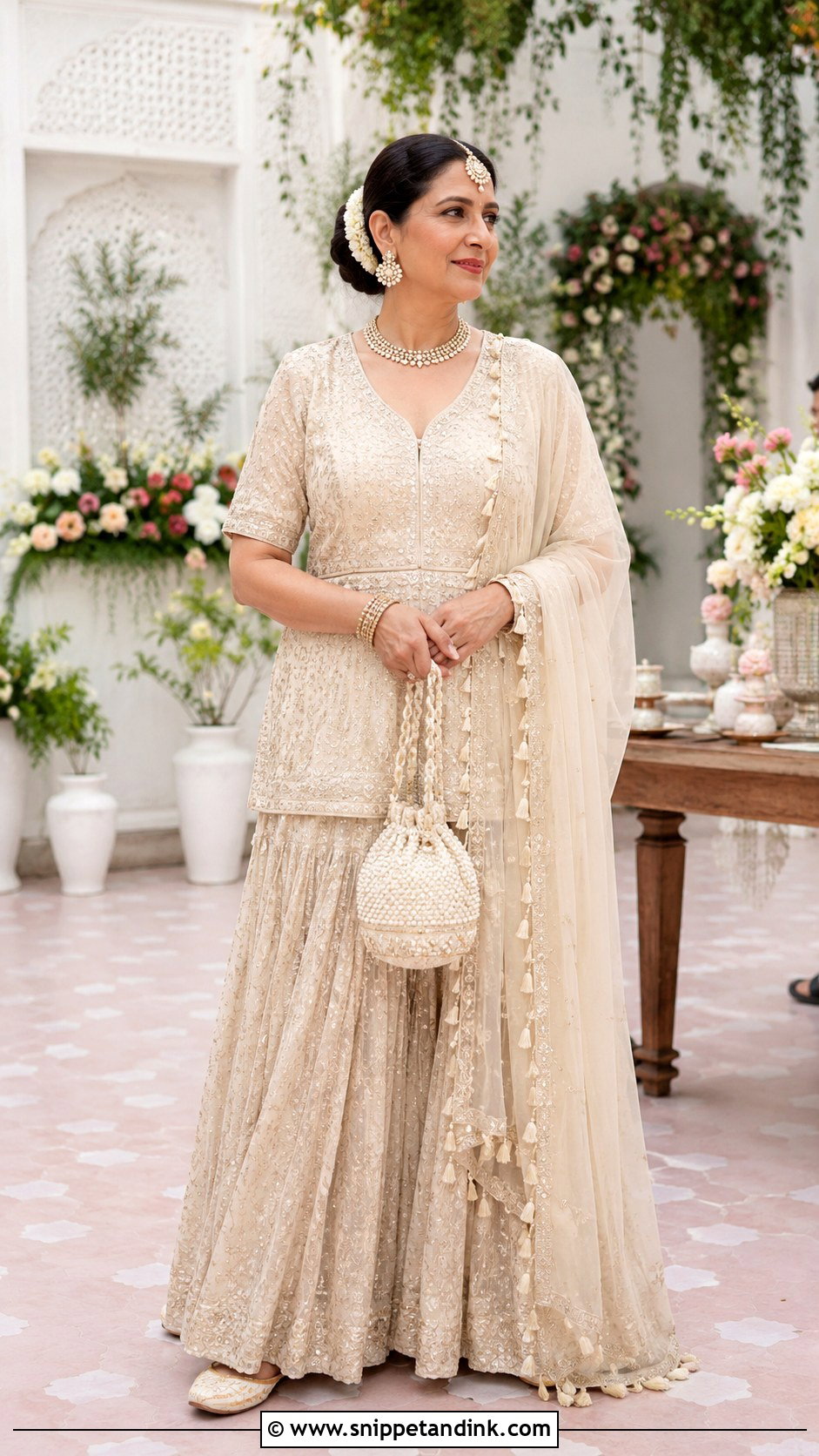
For a mehendi during Akash Ambani and Shloka Mehta’s wedding, she wore an off-white custom Sabyasachi lehenga with a short, heavily embellished kurta-style blouse, a tasseled stonework dupatta, pearls, floral drop earrings, a maang tikka and a gajra around a low bun. Wearing off-white to a mehendi takes nerve, because wet henna paste stains almost anything it touches. If you copy this, have your own henna applied before you dress and let it dry completely before you sit down in pale fabric. Ivory juttis with pearl details, a beaded potli, mauve lips and soft kohl keep the color story light.
18. Nita Ambani Pink Baraat Lehenga
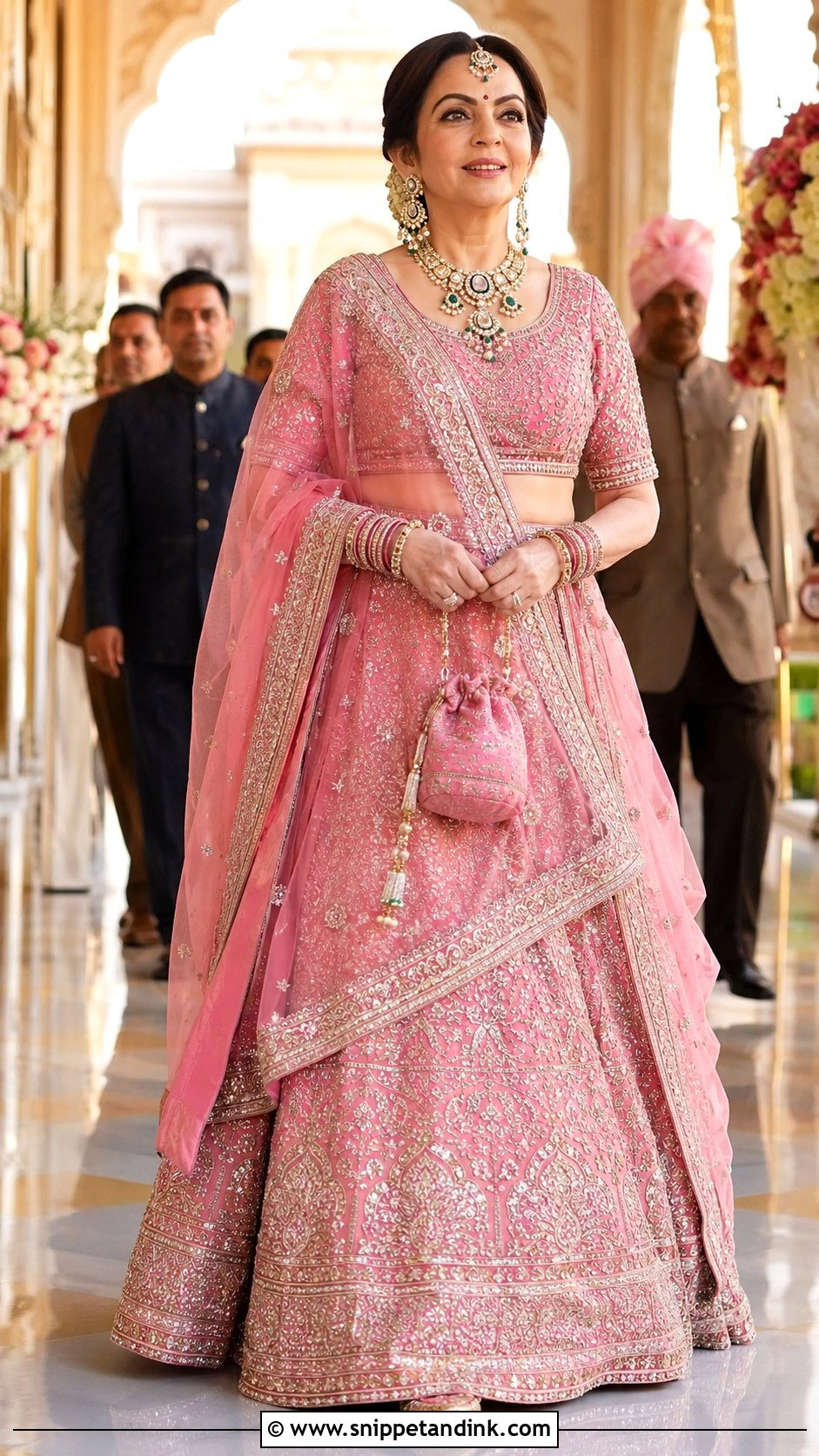
For Akash Ambani’s baraat she chose a heavily embellished pink Sabyasachi lehenga, embroidered over both skirt and blouse, with a coordinated dupatta and jewelry scaled to a big procession. Pink is the color I suggest most often to mothers of the groom: festive and ceremonial, yet clearly not the bride’s red. A fitted blouse gives a full skirt a waist. If you’re having all three pieces made, insist on one embroidery style throughout, because mismatched motifs between blouse and skirt are an easy mistake to make when pieces come from different workshops. Pin the dupatta for the walk and wear pink or gold juttis you can dance in.
19. Nita Ambani Beige Chikankari Ghagra
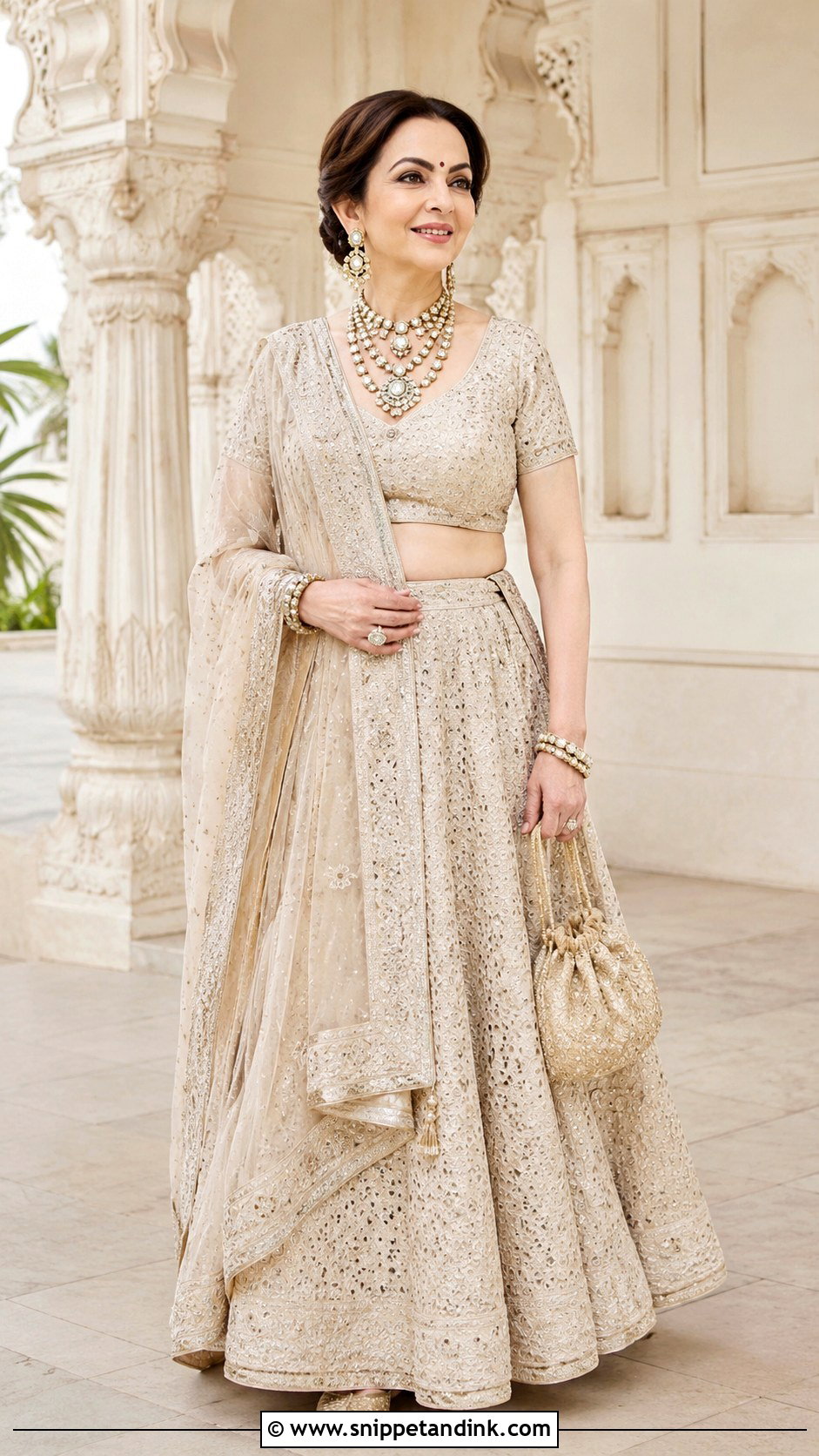
Beige looks expensive when texture does the work. During Isha Ambani’s wedding celebrations she wore a beige ghagra covered in chikankari, mukaish and crystals, with a matching blouse and dupatta for one long tonal line. Chikankari is Lucknow’s shadow embroidery, traditionally white on white, and mukaish adds tiny twists of metal that flicker as you move. Without that handwork, neutrals go flat on camera, so I always check a beige outfit in a phone photo with flash before a client commits. Antique gold juttis, a champagne potli and pearl or polki jewelry suit it. Bright accessories break the effect.
20. Nita Ambani Red Heirloom Wedding Saree
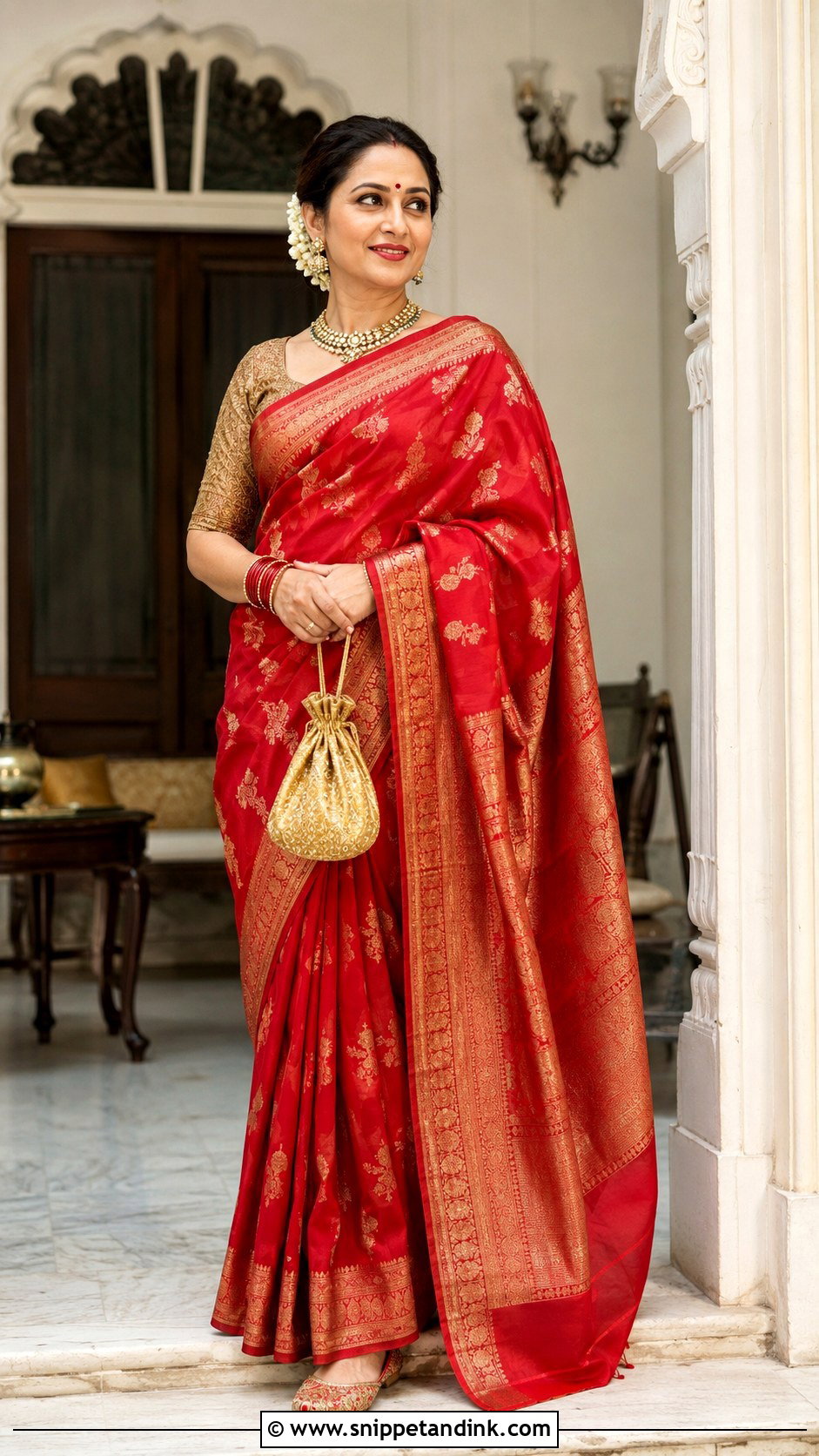
Her own red wedding saree became an heirloom when part of it was worked into Isha Ambani’s bridal ensemble, a red contrast against Isha’s off-white lehenga. Old silk can only be reused like that if it has been stored well, and that is the real takeaway here. Worn on its own, a classic red silk saree pairs with a zari blouse, gold or kundan jewelry, red bangles and a neat pallu. To start the same tradition, keep the saree, the dupatta or even just the border, and have later alterations done by someone used to old zari, since aged metal thread tears where it is restitched.
Wearing Heavy Silk Through Twelve Hours of Rituals
Every outfit above was worn through long stretches of standing, sitting cross-legged, greeting relatives and dancing, and photographs never show that part. A heavy Banarasi or tissue saree behaves very differently at hour eight than it did in the mirror at home, so I prepare clients for the day, not just the portrait.
- If you don’t drape daily, have the saree pre-pleated and box-pressed by a draper. The pleats are tacked loosely and come out afterwards without marking the silk.
- Wear a firm cotton petticoat with a drawstring. Silk pleats tucked into a stretchy shapewear skirt slide out within an hour.
- Pin the pleats at the waist and the pallu at the shoulder from the inside, plus one hidden pin where the pallu meets the blouse.
- Break in your juttis at home for a few evenings. They are flat but stiff, and new ones rub the heel raw.
- Carry spare safety pins, a blouse hook, double-sided tape and a cotton handkerchief to blot sweat before it reaches the silk.
Storing the saree you might pass on
If a piece could become an heirloom, the week after the wedding matters more than the day itself. Air it out of the garment bag, then fold it into undyed muslin or plain cotton, never plastic, which traps moisture. Zari cracks and tarnishes along fixed folds, so refold it along new lines every few months. Keep mothballs off the fabric, since naphthalene can discolor silk and dull metal thread, and send it only to a dry cleaner who handles silk and zari regularly.
What Her Wardrobe Teaches a Mother of the Groom
Across twenty looks, from Bandhani and Kanchipuram to Banarasi tissue, Rangkat and zardozi, Nita Ambani keeps to one rule I’d give any client: one textile leads, the jewelry agrees with its colors, and the drape suits the ceremony. None of that depends on a couture budget. Good fabric, a blouse that truly fits, footwear you can stand in for hours and fewer accessories chosen on purpose will get you most of the way there. Pick the color that suits your skin and the function, then let the cloth carry it.
You'll Like These Ideas:


Leave a Reply