
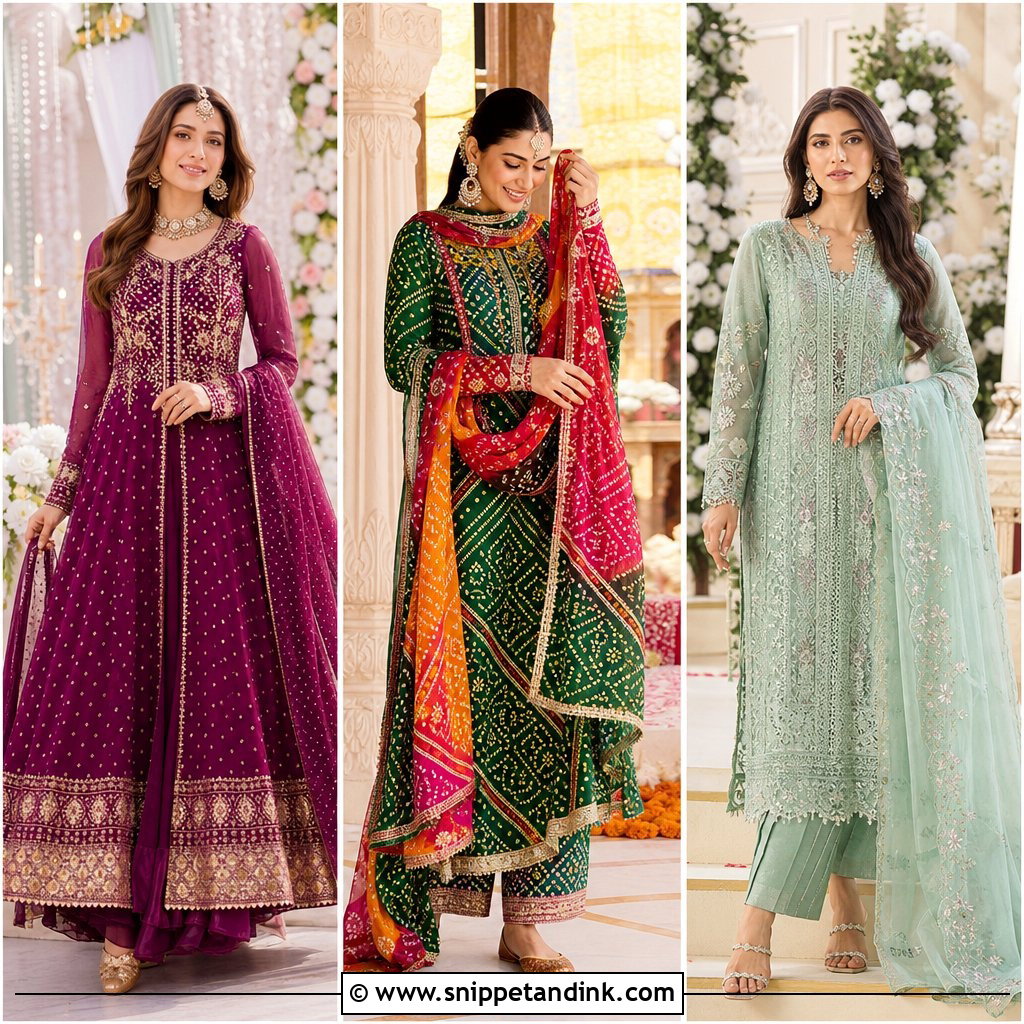
A heavy suit earns its place at a wedding when the work on it is placed with some thought. Anarkalis, sharara sets, palazzo suits, velvet and straight cuts can all carry zari, gota patti, mirror work or resham, but the ones I send guests home in are the ones they can still sit, eat and dance in at midnight. When I style a guest for a family wedding, I look at three things before colour: where the embroidery sits on the body, how much the dupatta weighs, and what the lining feels like against skin. Get those right and the jewellery, shoes and bag fall into place. Below are twenty five cuts and fabrics, each with what I’d watch for when you try it on.
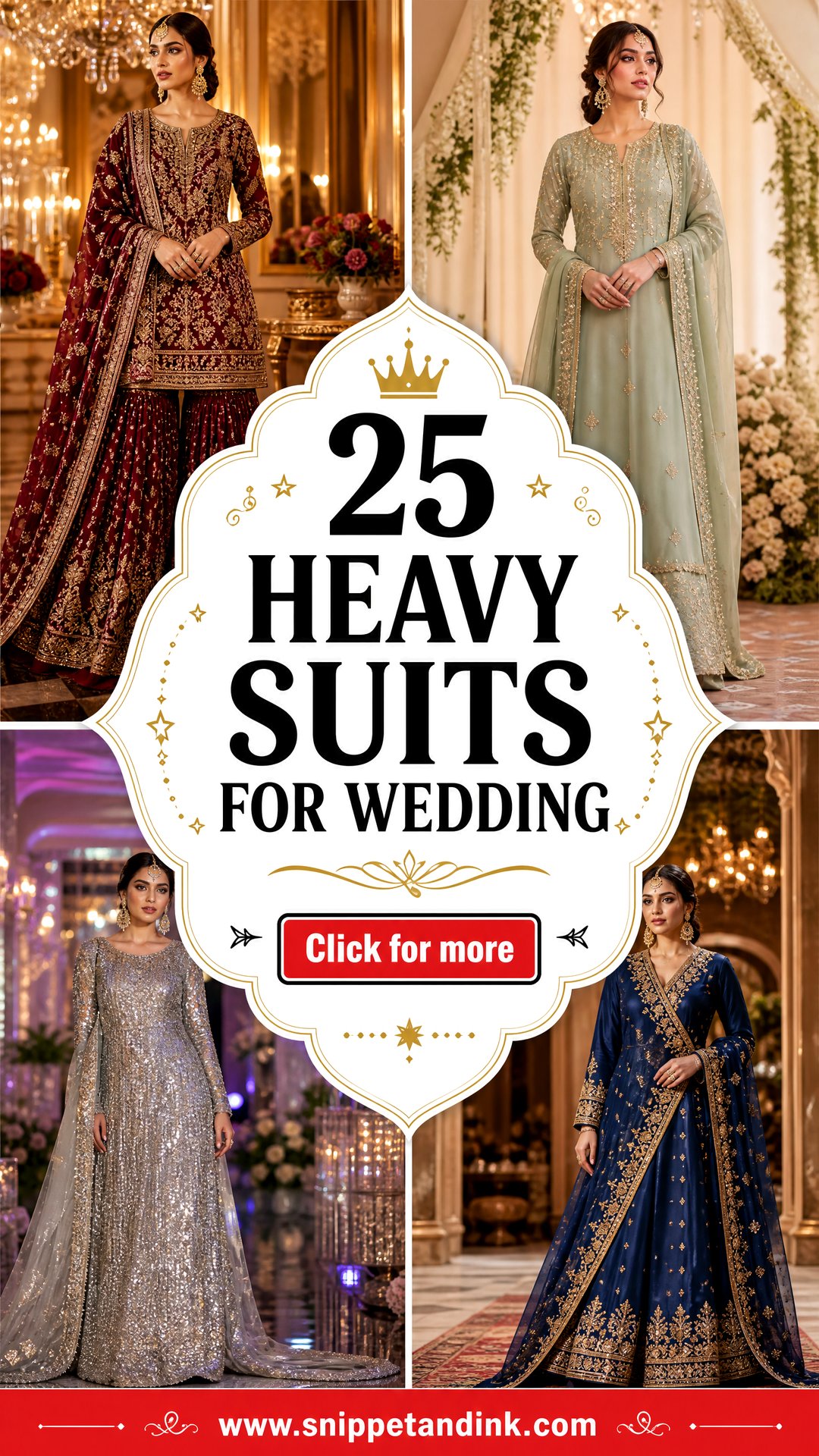
How Heavy Is Too Heavy for a Twelve-Hour Wedding Day
Most guests judge weight by how a suit looks on the hanger. I judge it by where the weight sits once you’re wearing it. Embroidery spread across the shoulders and yoke is tiring by the evening, while the same amount of work on a hem or a sharara border mostly rides on the floor and barely registers.
Before you buy or order, run these quick checks in the trial room:
- Lift the kurta by the shoulders with one hand. If your wrist tires within a few seconds, picture that on your neck for a whole day.
- Feel the lining against your inner arm. Scratchy lining is the number one reason guests change outfits halfway through a wedding.
- Sit on a low stool and stand up again without touching the dupatta. If it slides, it needs a pin or a lighter fabric.
- Raise both arms as if you’re dancing. Tight armholes in a structured kurta pull the whole garment up.
Season matters too. Velvet, brocade and heavily worked silk are a gift in a December evening function and a punishment at an outdoor June haldi. If the wedding runs across several functions, I’d put the heaviest suit on the evening reception, when you’re mostly standing and the hall is air-conditioned.
1. Heavy Anarkali Suit for Wedding
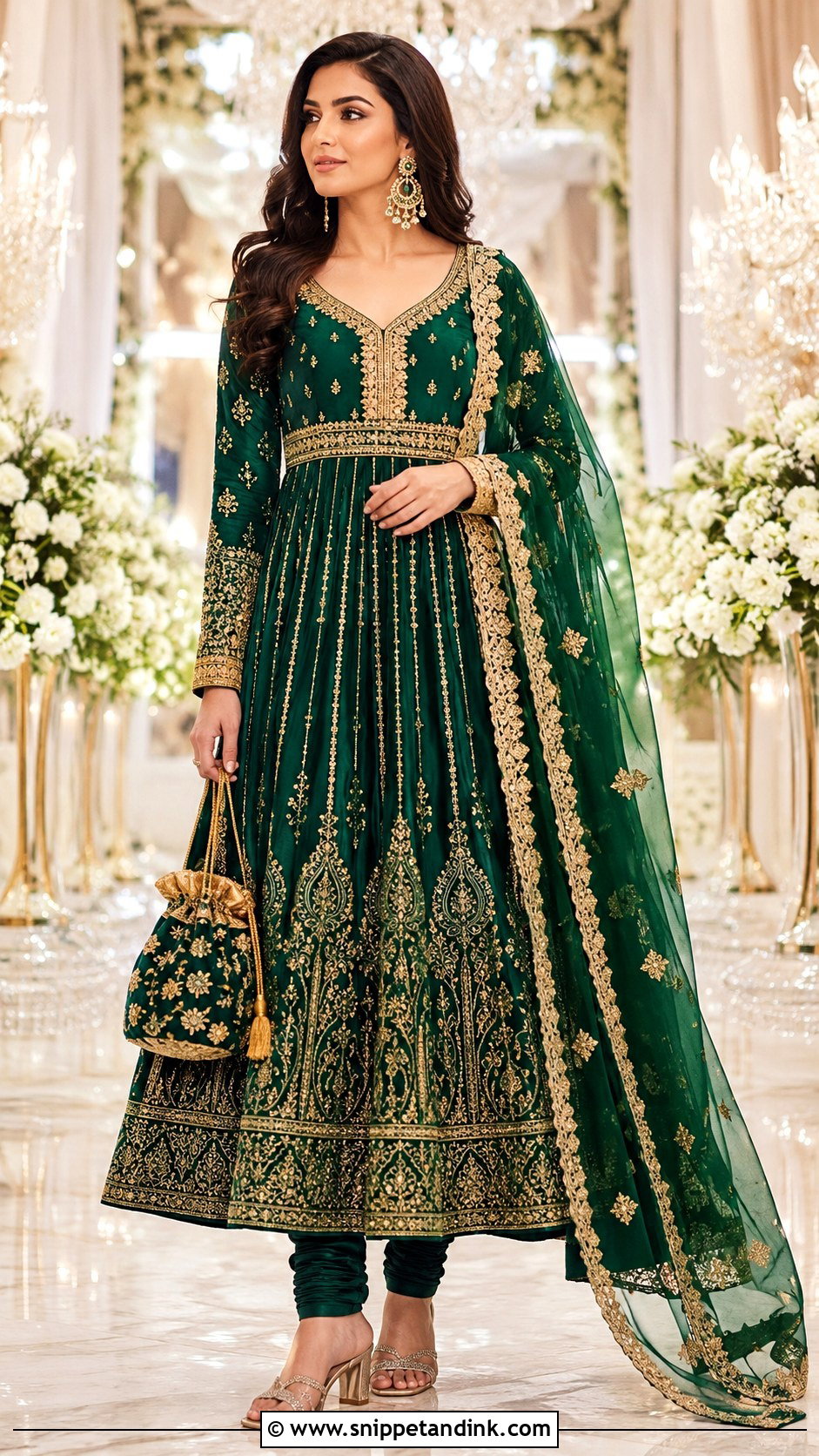
An Anarkali gives you volume and a regal outline with only one main layer, which is why it suits long ceremonies. The flare depends on the number of kalis (panels) and the fabric: georgette and net swing, while silk and organza stand away from the body and can look stiff if the cut is too full. I always ask a guest to sit in the fitting room, because a floor-length hem that is perfect standing often drags once you’re seated on a low mandap chair. Keep churidar or slim pants underneath so nothing competes with the flare. For evening, emerald, wine and navy hold their depth under warm lights; blush, ivory and sage read better in daylight.
2. Heavy Sharara Suit for Wedding
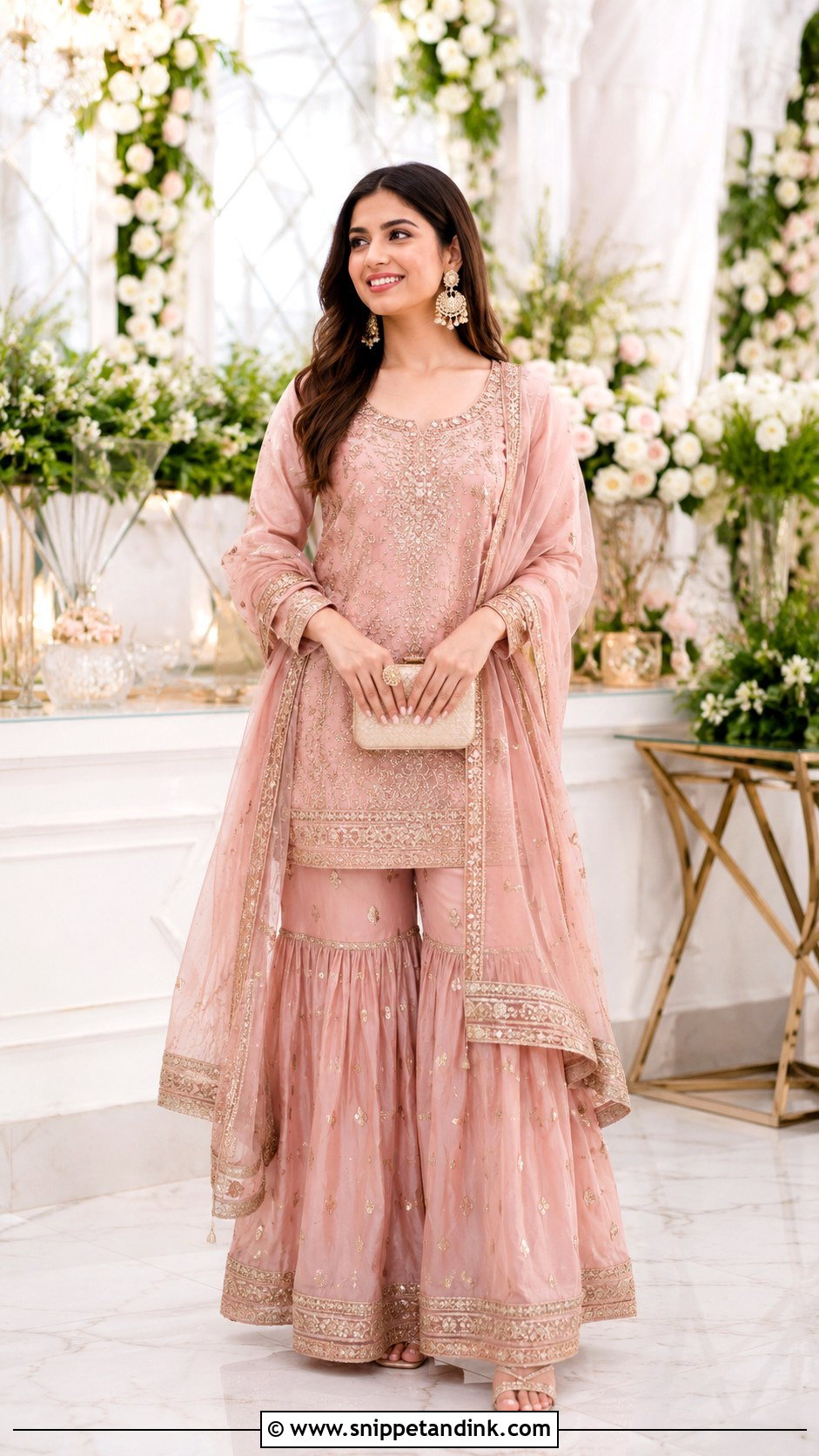
Shararas look relaxed but the pants carry a lot of fabric, so the weight sits at the hips and knees rather than the shoulders. That makes them comfortable for dancing, as long as the flare starts at the knee and not higher. Gota patti or scalloped borders on the pants do most of the festive work, so I keep the kurti short and lightly embroidered. Check the hem length with the exact heels or juttis you’ll wear; a sharara that touches the floor collects dust and gets stepped on within the first hour. Sisters of the bride tend to love this one because they’re on their feet all day.
3. Heavy Garara Suit for Wedding
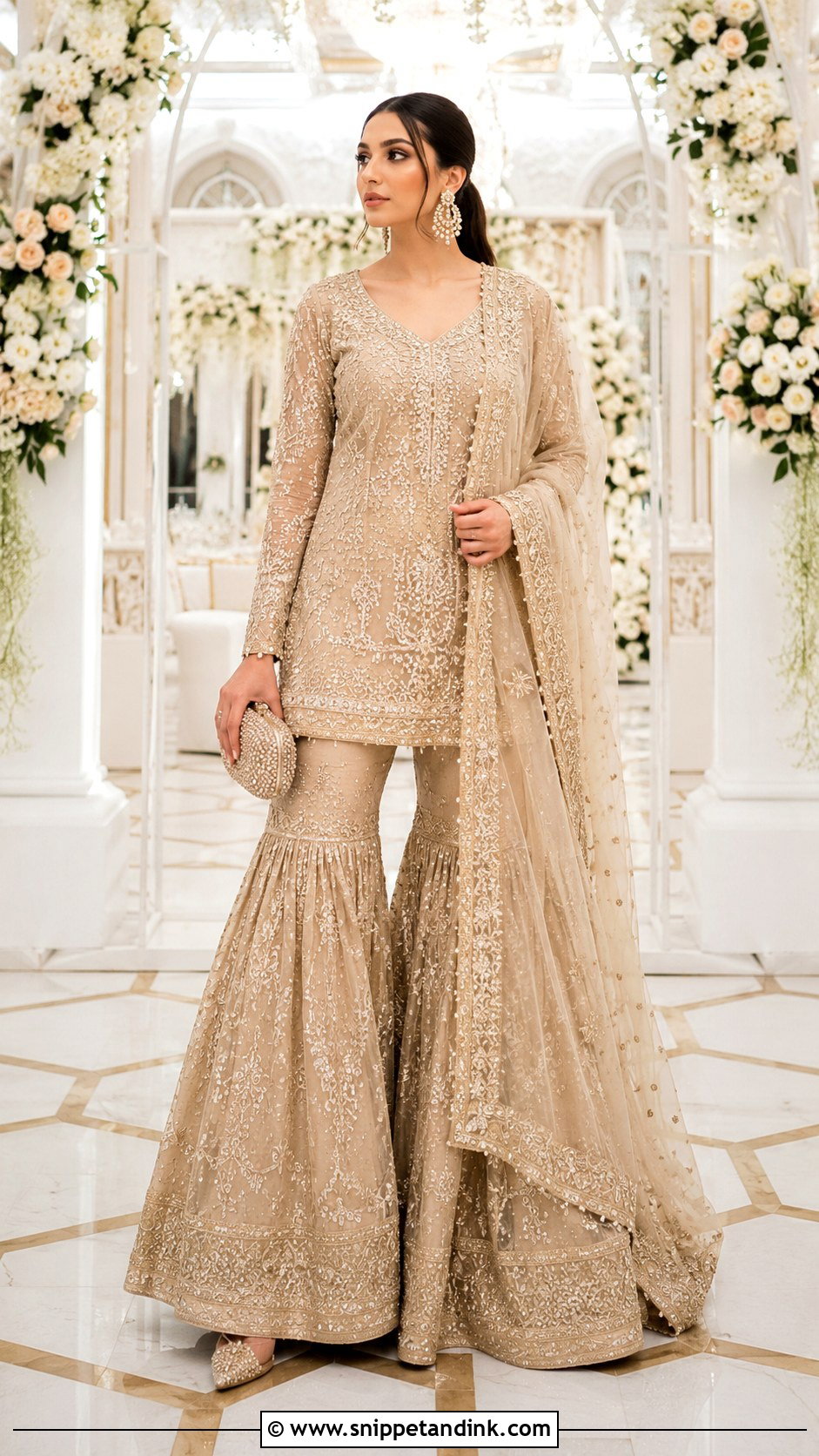
The garara is often confused with the sharara, but the difference matters at a fitting: a garara is fitted to the knee and breaks into its flare at a joint, usually covered with a band of gota or zari. That joint has to land exactly at your knee or the whole silhouette looks shortened. I’d steer petite guests toward a slightly higher joint and a shorter kameez. Dabka, mirror and pearl trim along the joint and hem give the vintage feel without needing a heavy shirt. Drape the dupatta over one shoulder so the knee band stays visible. Deep rose, mustard and teal suit the older, Lucknowi-style mood of this cut.
4. Heavy Palazzo Suit for Wedding
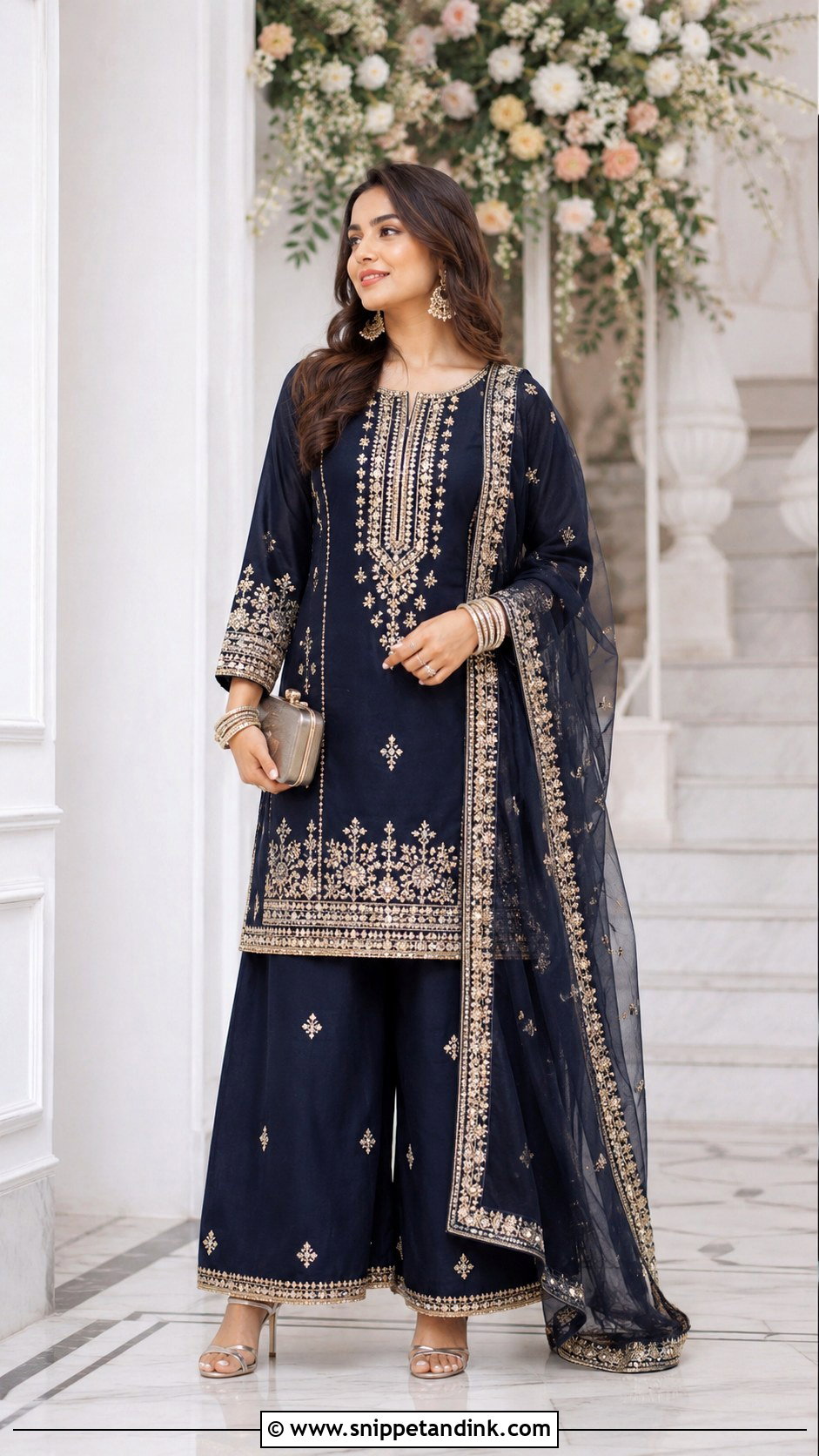
Wide palazzos are my quiet recommendation for guests who dread a ten-hour wedding. The ease is in the leg, so an embroidered straight or A-line kurta can carry sequins or zari without the outfit feeling heavy overall. One thing to check: very wide palazzos in chiffon cling when you walk in wind or under a fan, so a crepe or silk blend with a little body behaves better. Let a chiffon or organza dupatta soften the top. Heeled sandals rather than flats keep the hem off the ground.
5. Heavy Straight Suit for Wedding
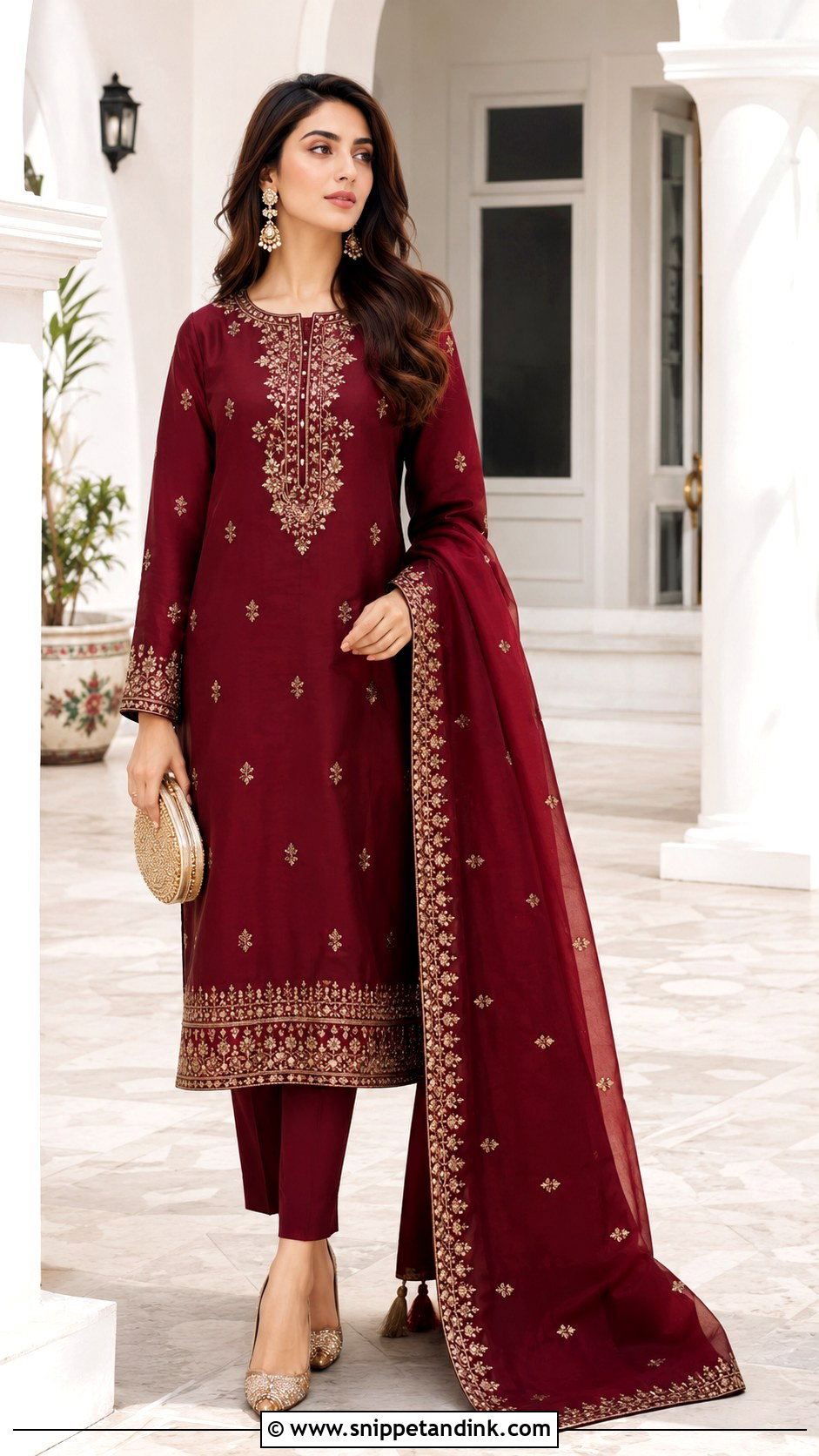
A straight kurta lengthens the body more than any flared cut, which is why I reach for it with shorter guests and anyone who wants a quieter heavy look. The embroidery should travel vertically: neckline, placket, side slits and hem. Side slits need to sit high enough to let you take a full stride, otherwise the kurta pulls across the thighs when you climb stairs. Cigarette pants or a churidar keep the line sharp, and a heavily embroidered dupatta can carry most of the festive weight. It sits well at intimate ceremonies and receptions where restraint reads as rich.
6. Heavy Churidar Suit for Wedding
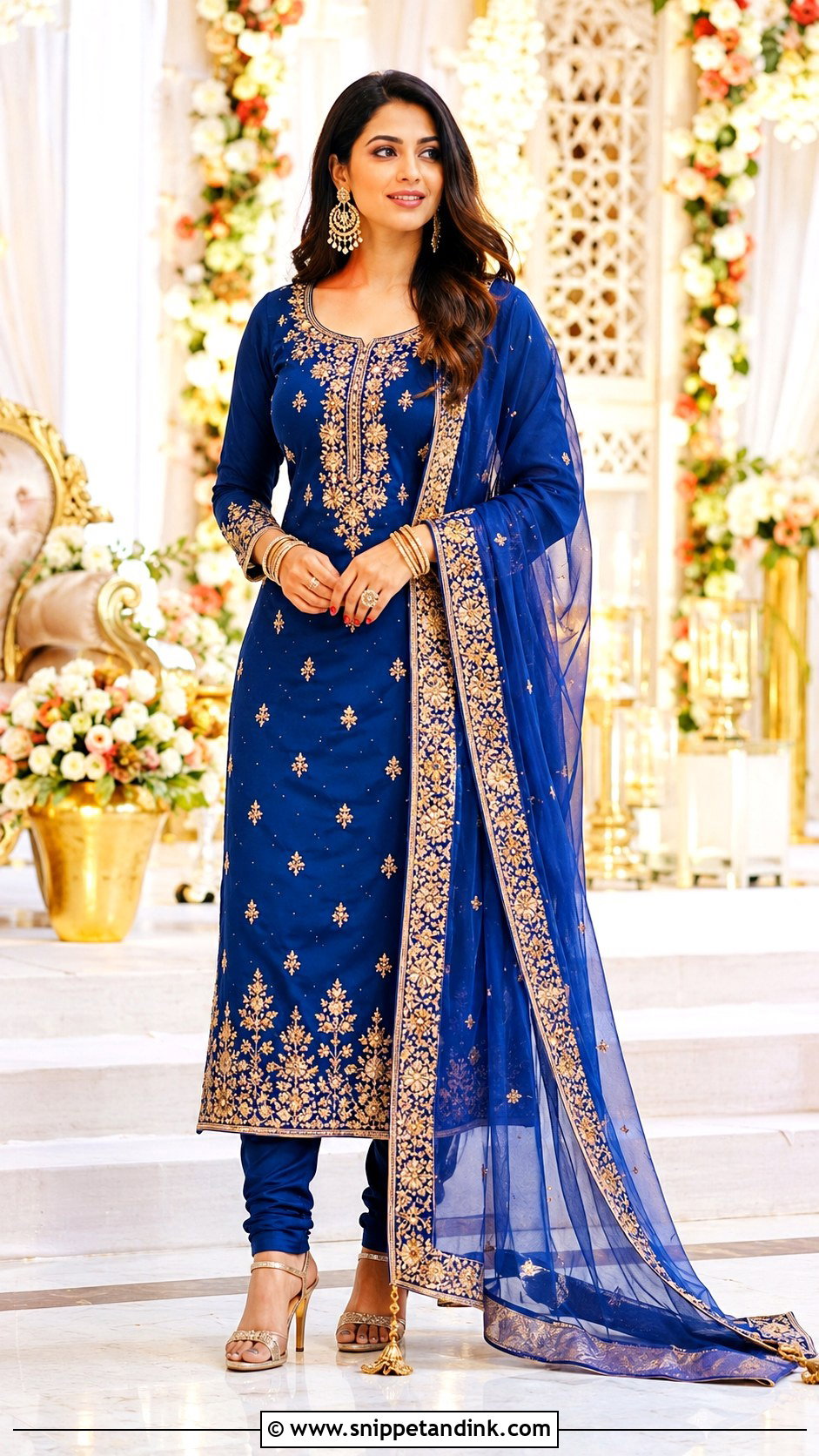
The churidar’s gathered ankle is what gives this suit its classic structure, and it is also where most fitting problems show up. If the churidar is cut on the straight grain instead of the bias, it won’t bunch evenly and will feel tight when you sit cross-legged. I ask for bias cut every time. Above it, a flared or slightly A-line kurta in silk, brocade or velvet carries zari or beadwork well. Burgundy, plum and royal blue look rich against gold embroidery. A wide-border dupatta balances the slim lower half.
7. Heavy Silk Suit for Wedding
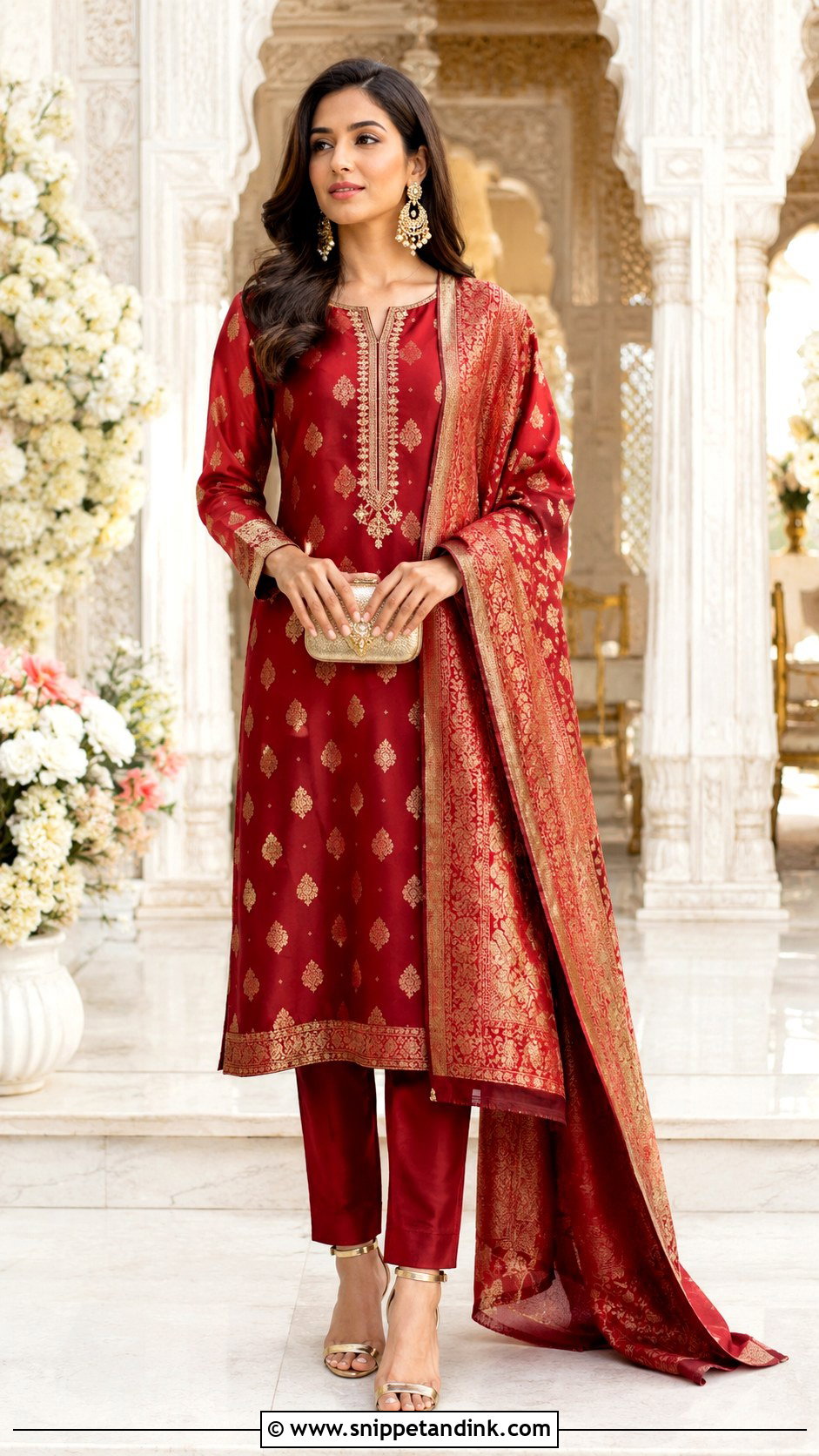
Silk already has sheen and some structure, so a silk suit needs less embroidery than you’d think to look wedding-ready. I prefer woven motifs or brocade borders on silk over dense surface embroidery, because heavy handwork on thin silk can pucker the fabric around the motifs. Match the bottoms to the formality: churidar for a pheras ceremony, palazzos for a sangeet. A Banarasi or organza dupatta adds richness without much weight. Ruby, peacock blue and rani pink are classic, but test the colour in daylight, since silk shifts tone a lot between sun and indoor bulbs.
8. Heavy Velvet Suit for Wedding
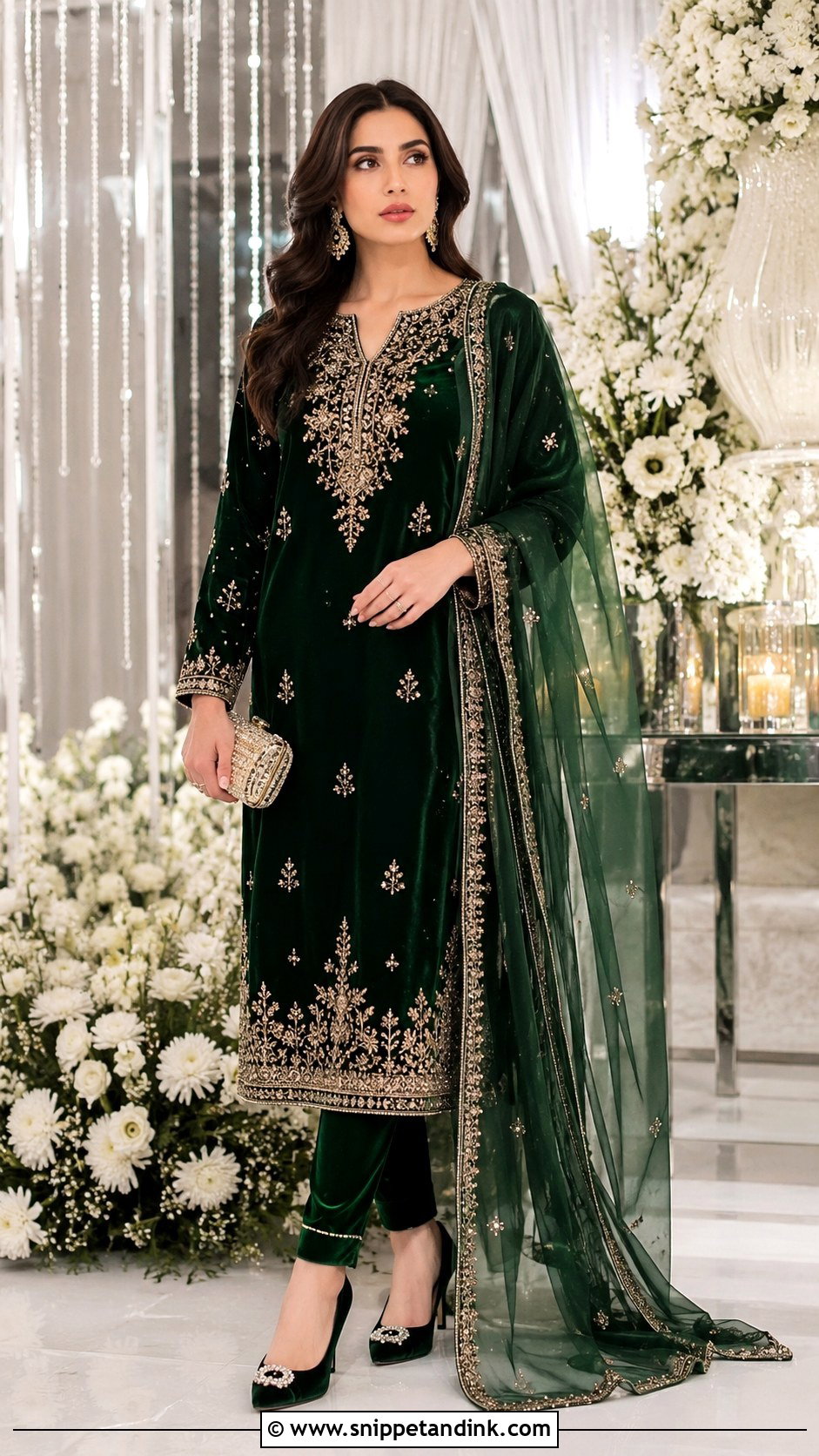
Velvet is the warmest fabric on this list and I only suggest it for winter weddings or cold indoor venues. It holds zari, dabka and stonework very well because the pile cushions the stitches. The catch is weight and heat: a fully embroidered velvet kurta can get uncomfortable in a crowded hall, so I’d ask for a soft cotton or silk lining and a lighter net or organza dupatta. Maroon, bottle green and navy look best; pale velvet shows every crush mark. Hang it, never fold it, the night before.
9. Heavy Pakistani Suit for Wedding
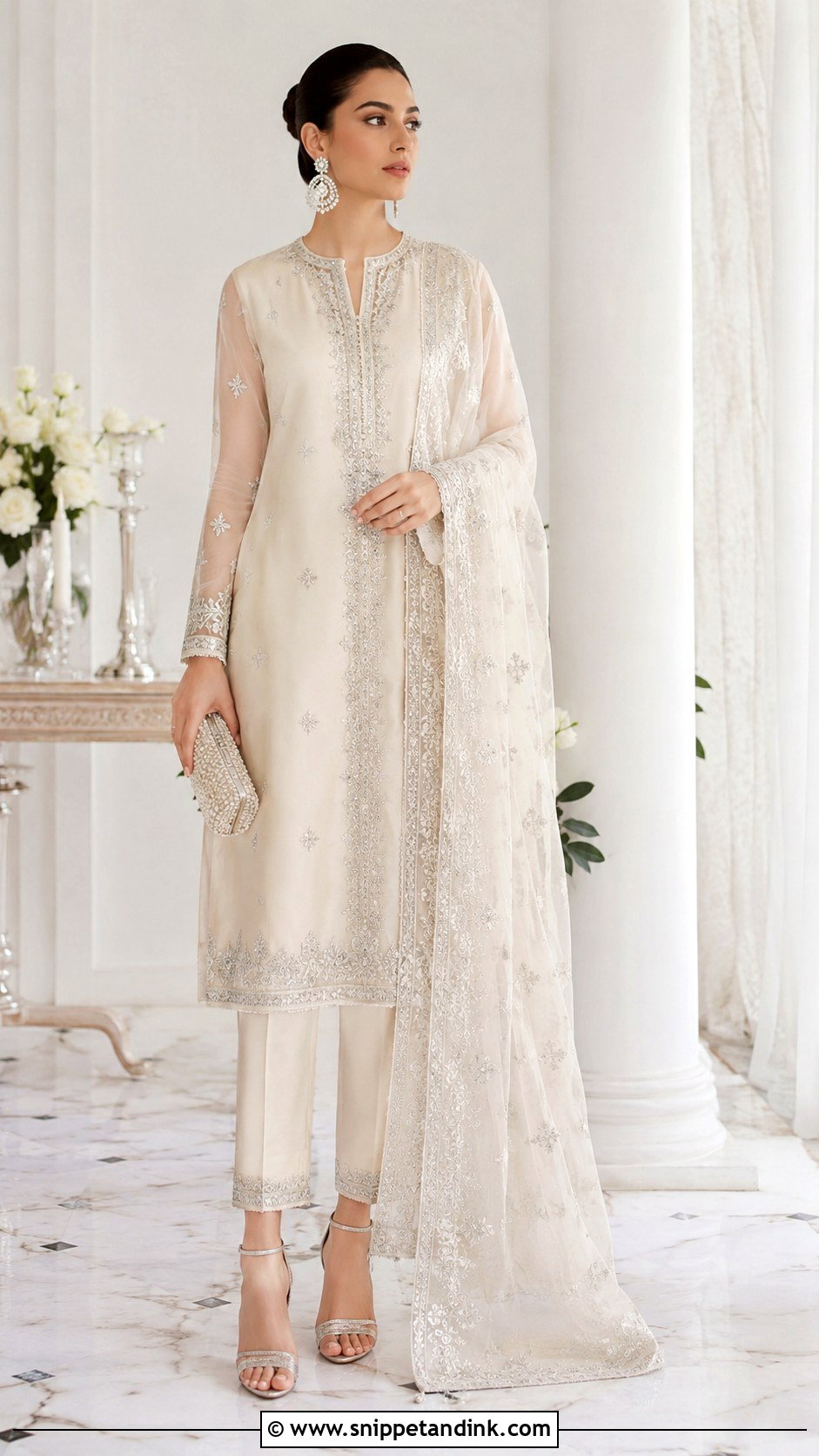
Pakistani suits are defined by length: a long kameez, often below the knee, with detailed handwork and a dupatta that is as important as the shirt. Because the shirt is long, the side slits and the fall of the hem matter more than the neckline. I check that the slits start no lower than the hip so the kameez can move when you sit. Farshi or wide palazzo bottoms make it grander; cigarette pants keep it modern. Pastels with silver work look refined, while deep jewel tones with gold thread feel more formal.
10. Heavy Punjabi Suit for Wedding
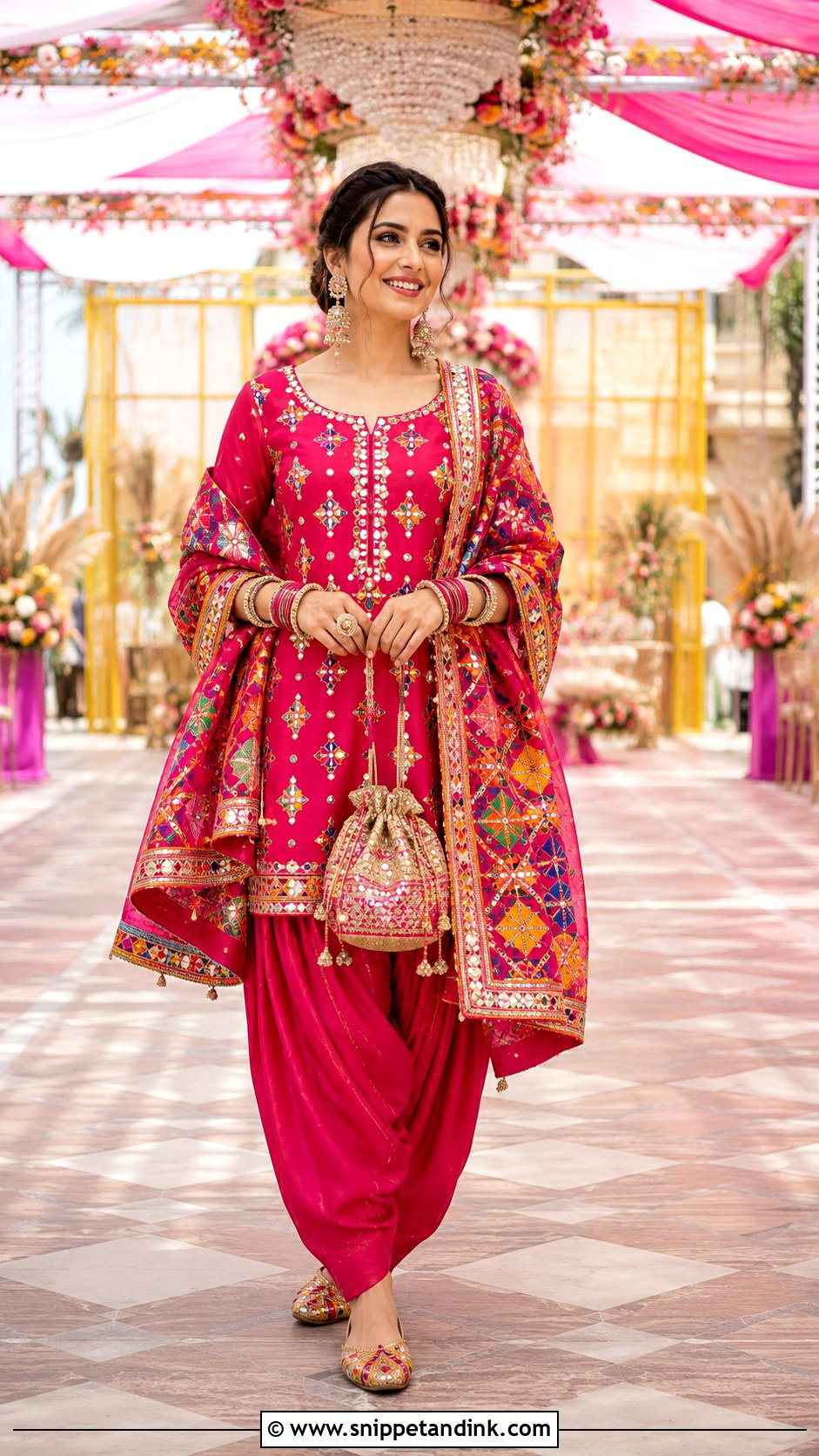
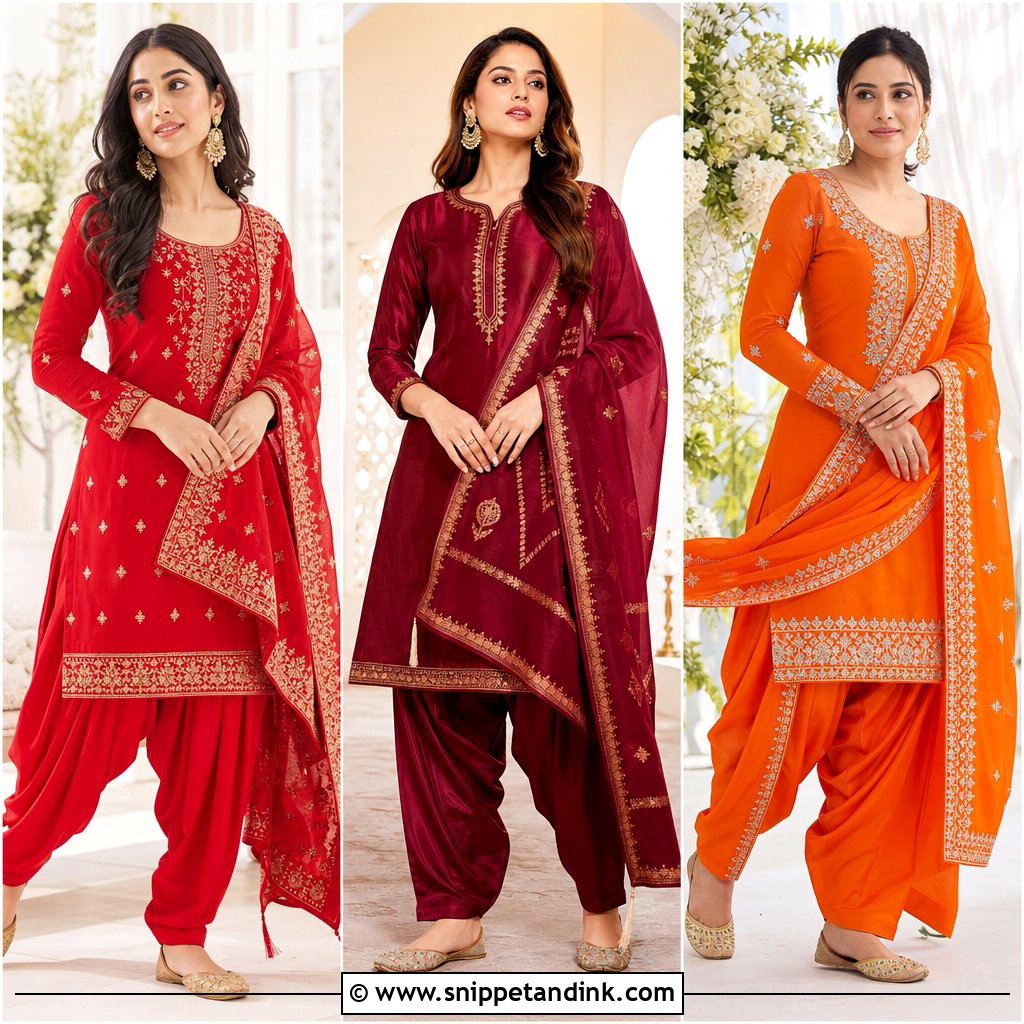
A heavy Punjabi suit is built for movement, so I treat it as a dancing outfit first. The short kameez with salwar, patiala or sharara bottoms lets your knees and hips move freely during the jaggo or bhangra. Phulkari, mirror and gota work all suit the bright colours of the cut, from fuchsia to marigold. Tasselled dupattas are fun, but heavy tassels pull the dupatta off the shoulder, so I pin it at the back with a small safety pin hidden under the fold. Embellished juttis are kinder to your feet than heels on a dance floor.
11. Heavy Salwar Suit for Wedding
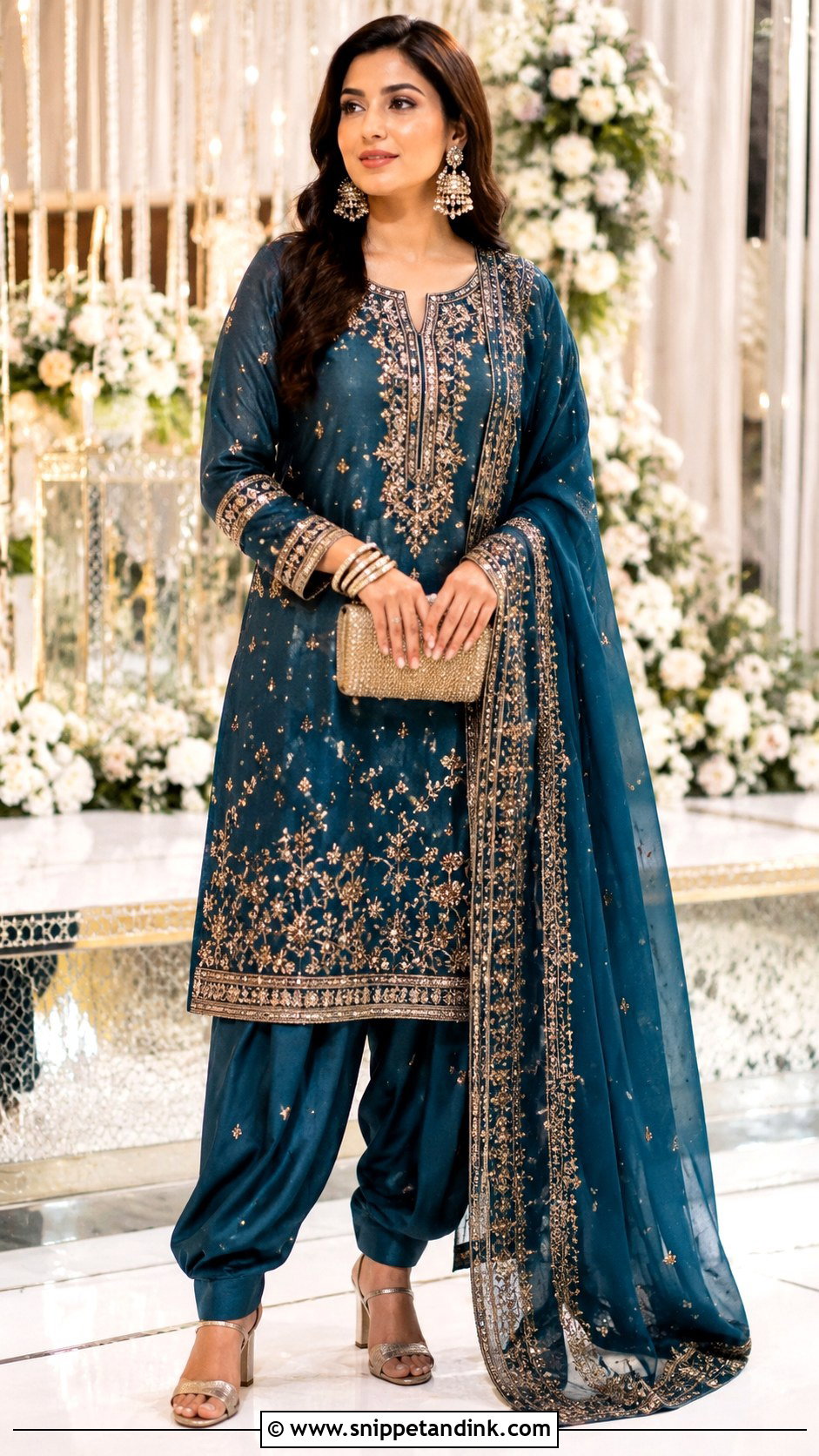
The salwar suit is the cut I’d recommend to a guest who has no idea what to wear and needs something that won’t look out of place at any function. The relaxed salwar is forgiving on fit, so the kameez carries the occasion with zari, gota patti or stones. A longer kameez looks more polished; a short one feels more traditional. Watch the drawstring: a thick nada knot shows through fitted kameez fabrics, so ask your tailor for elastic at the back with a short tie at the front.
12. Heavy Patiala Suit for Wedding
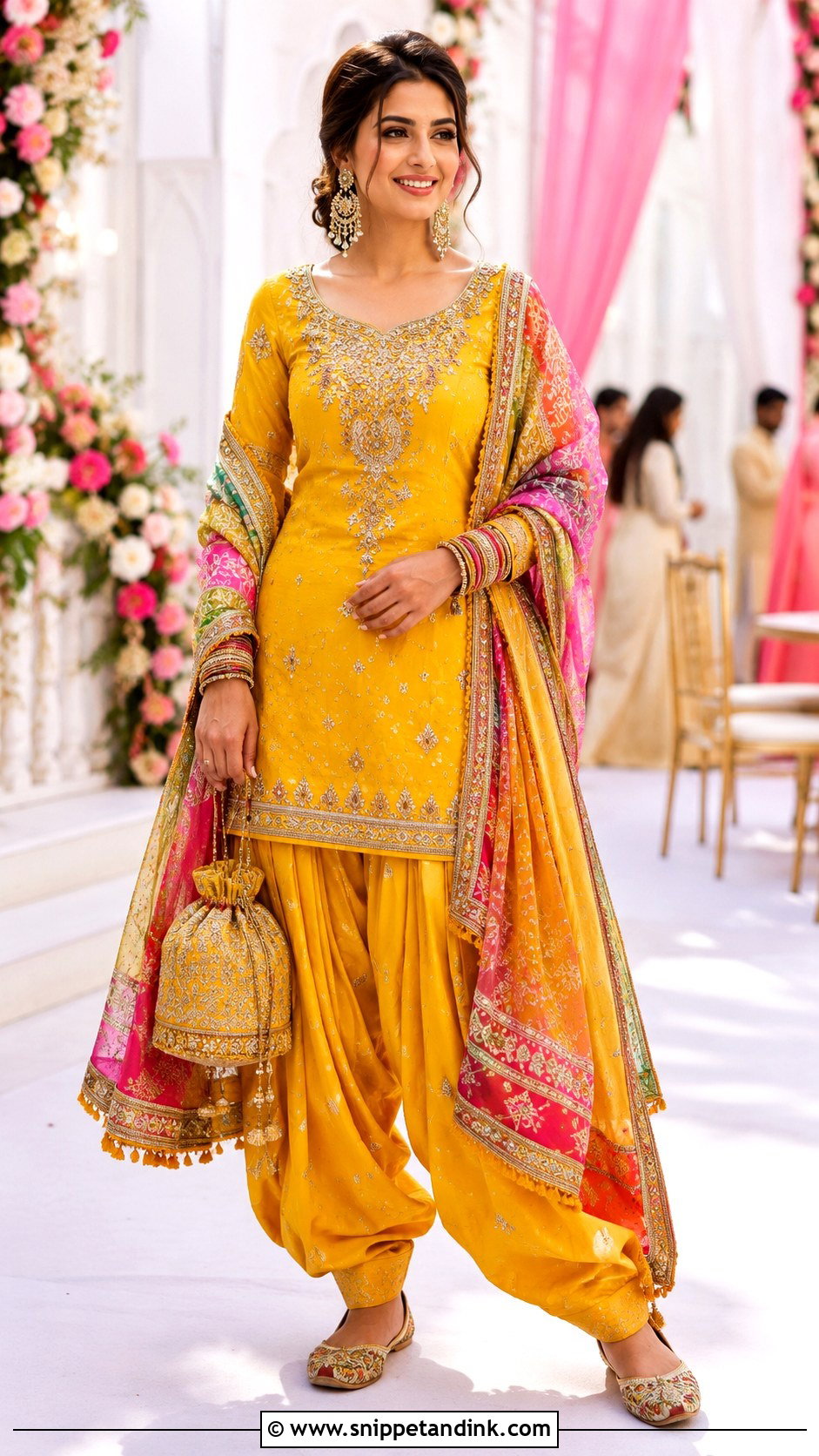
Patiala pleats use a lot of cloth, which is exactly why they drape so well and also why fabric choice matters. Heavy silk in a Patiala salwar can feel bulky at the hips; cotton silk or crepe falls into cleaner pleats. A short embroidered kameez balances the volume, and phulkari or mirror work feels right for the daytime, family-heavy functions this cut belongs to. I’d skip it for a formal reception where a slimmer line reads better.
13. Heavy Net Suit for Wedding
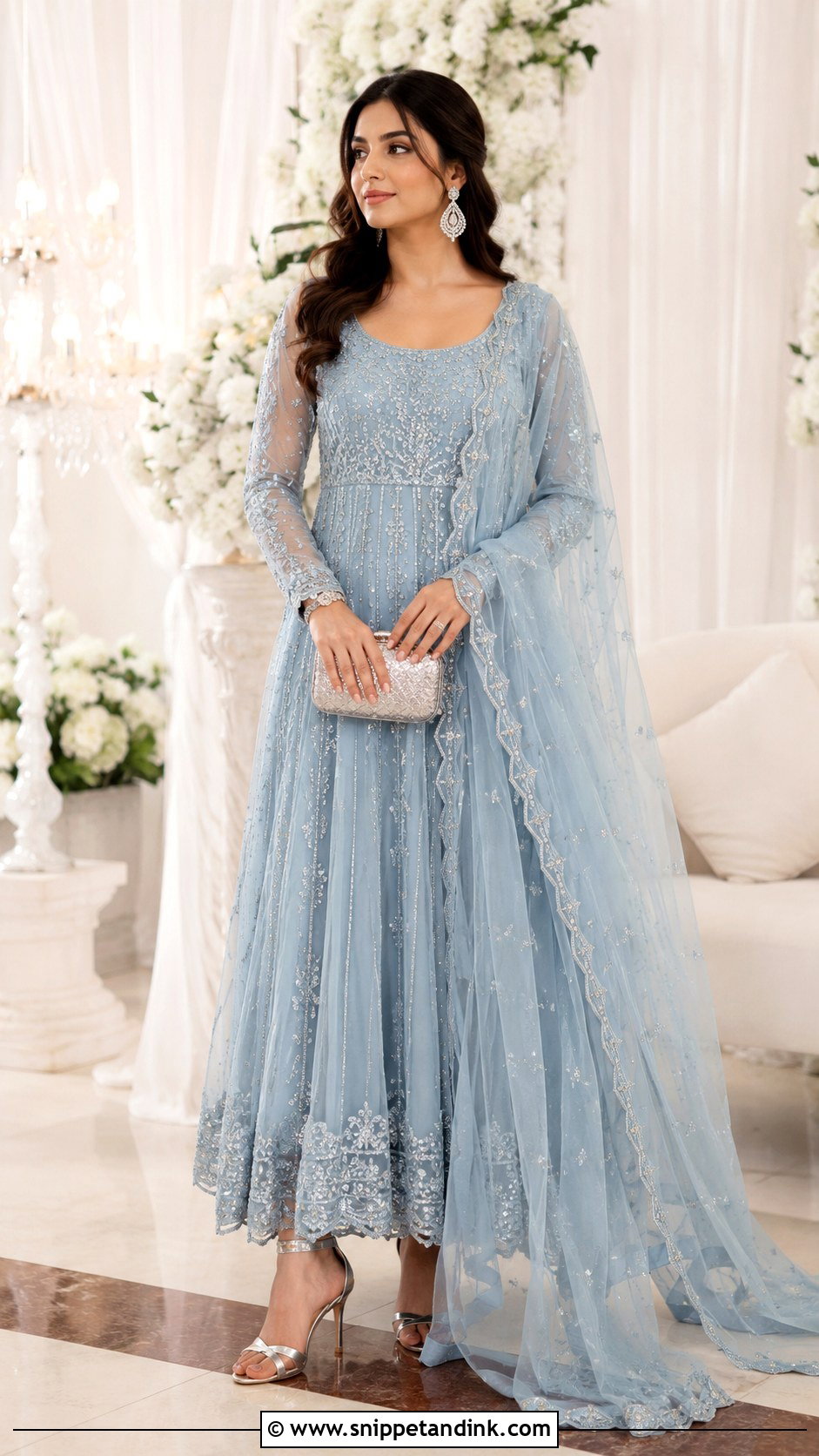
Net is light and sheer, so the look depends entirely on what sits underneath. When I check a net suit, I look at the lining first: a satin or silk lining should be cut a little shorter than the net so it doesn’t peep out at the hem. Sequins, stones and pearls on net catch light without adding much weight. An Anarkali, straight suit or sharara with a net overlay all work. Be careful with heavy stonework on net, since it can snag on jewellery and bag chains. Powder blue and blush look dreamy; black and navy net suit evening functions.
14. Heavy Organza Suit for Wedding
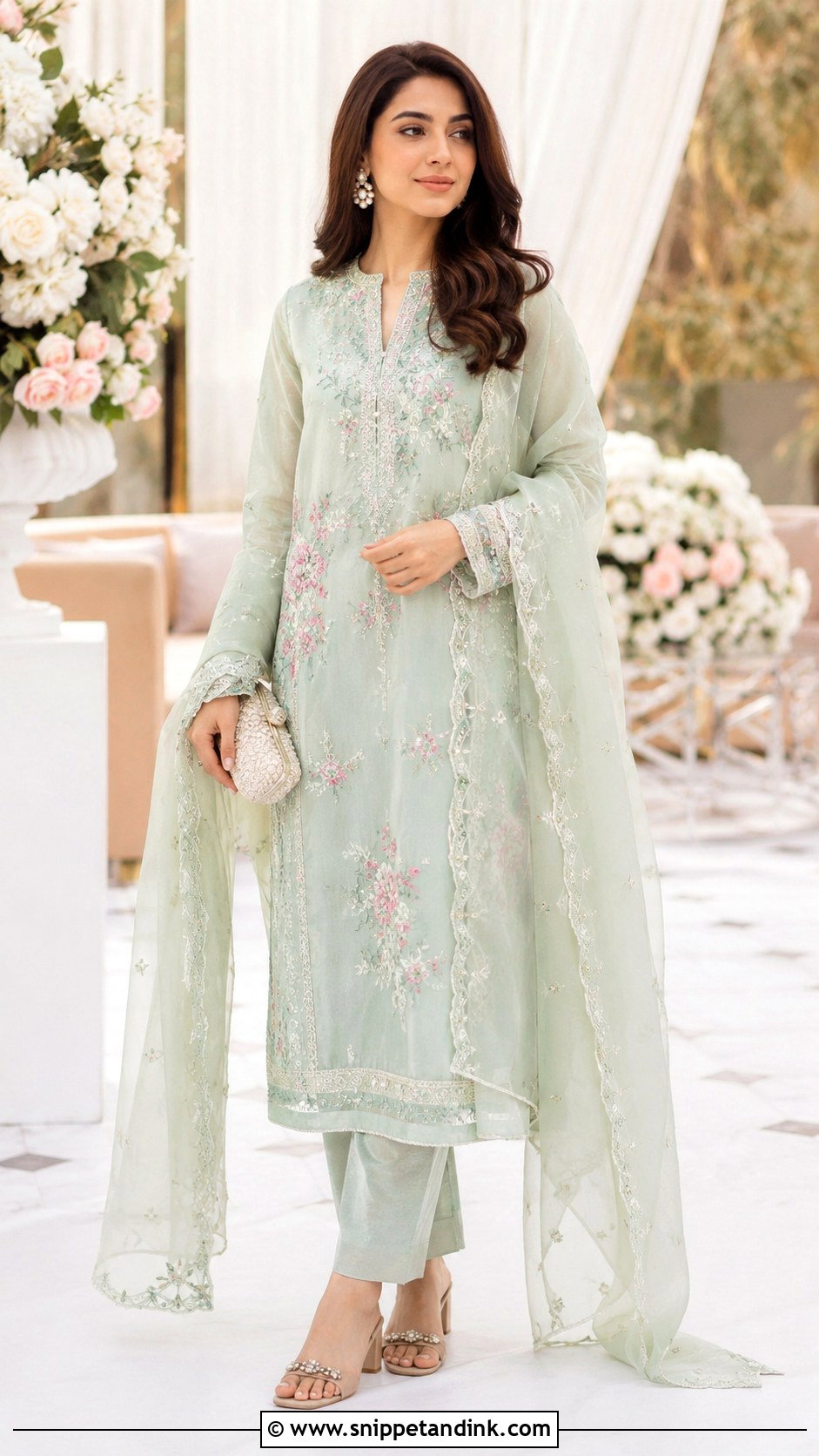
Organza holds its shape, which makes it lovely for dupattas and structured kurtas but unforgiving if the fit is off, because it won’t drape over a gap. It also creases sharply when you sit, so I tell guests to expect a few lines across the lap by the end of the evening. Floral embroidery, zari borders or appliqué look crisp on it. Make sure the lining is smooth and the seams are finished, as organza edges can scratch at the underarm. Pastels suit daytime; deeper organza with metallic thread works for receptions.
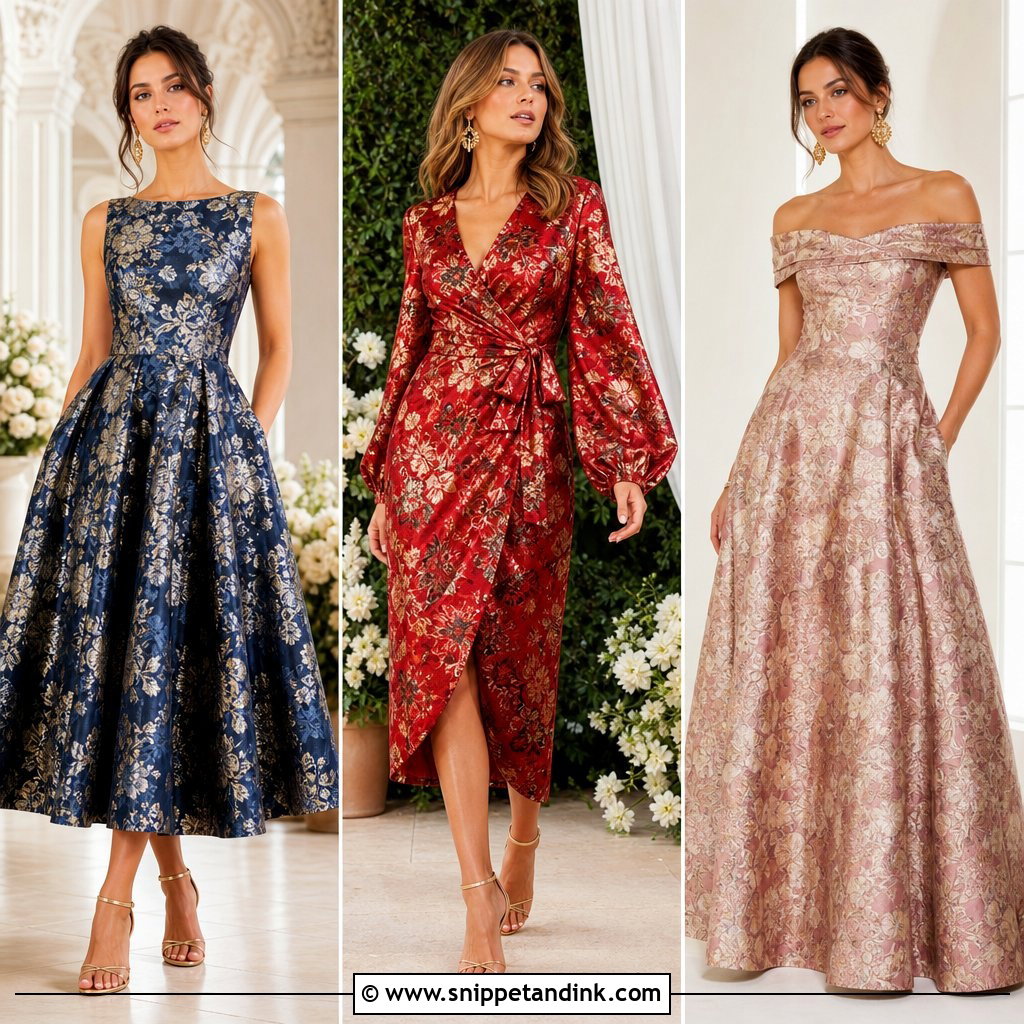

15. Heavy Georgette Suit for Wedding
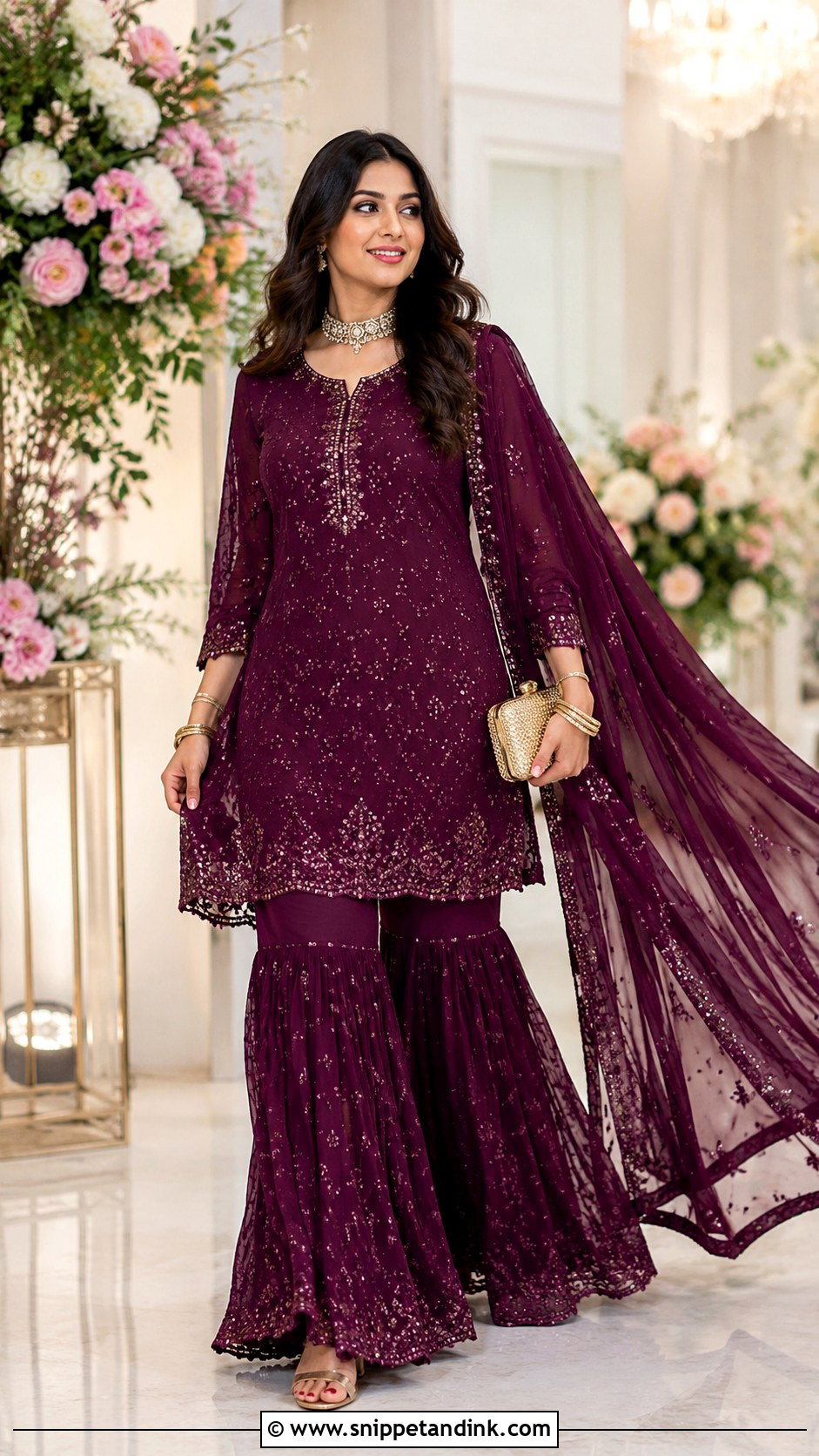
Georgette has a soft, grainy drape, so even dense sequins or zari feel lighter on the body than the same work on silk. It moves well and hides small fitting flaws. The one thing I watch is the weight of the embroidery on the dupatta: a heavily bordered georgette dupatta can slide off the shoulder repeatedly, so I’d add a tiny snap at the shoulder seam. An Anarkali, sharara or palazzo set in georgette is the easiest heavy suit to wear for a full day.
16. Heavy Mirror Work Suit for Wedding
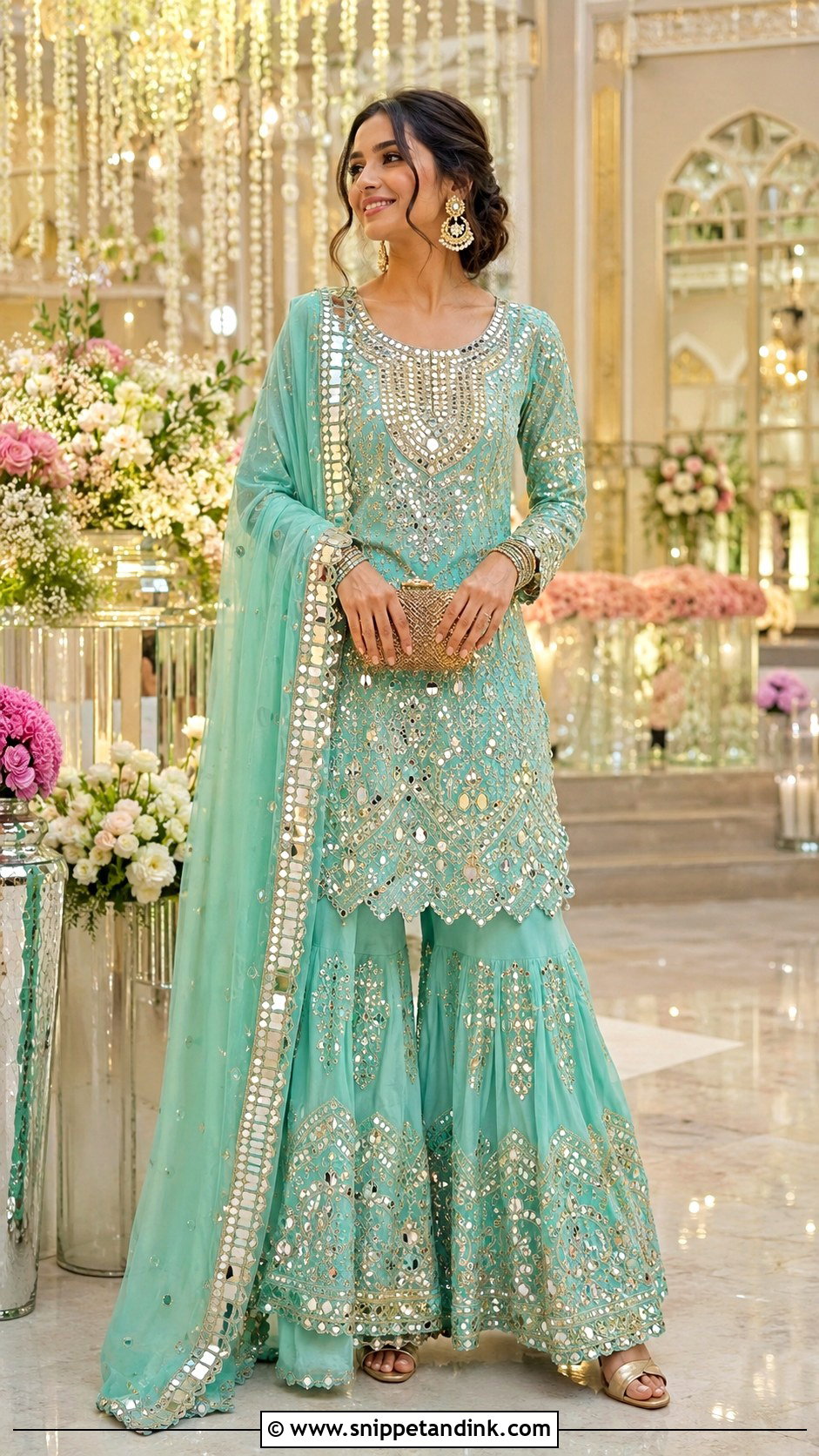
Mirror work throws light back at the camera and the crowd, which gives it energy at mehndi and sangeet functions. On sharara, garara and Anarkali cuts I like the mirrors clustered at the neckline, sleeves and hem, with plain space between. Real mirror work is stitched around small glass pieces, so it adds weight and can scratch delicate skin at the inner arm; check sleeve linings. Because the outfit already reflects so much, keep jewellery simple. Turquoise, yellow and hot pink feel playful; ivory or black with mirrors reads more modern.
17. Heavy Zari Work Suit for Wedding
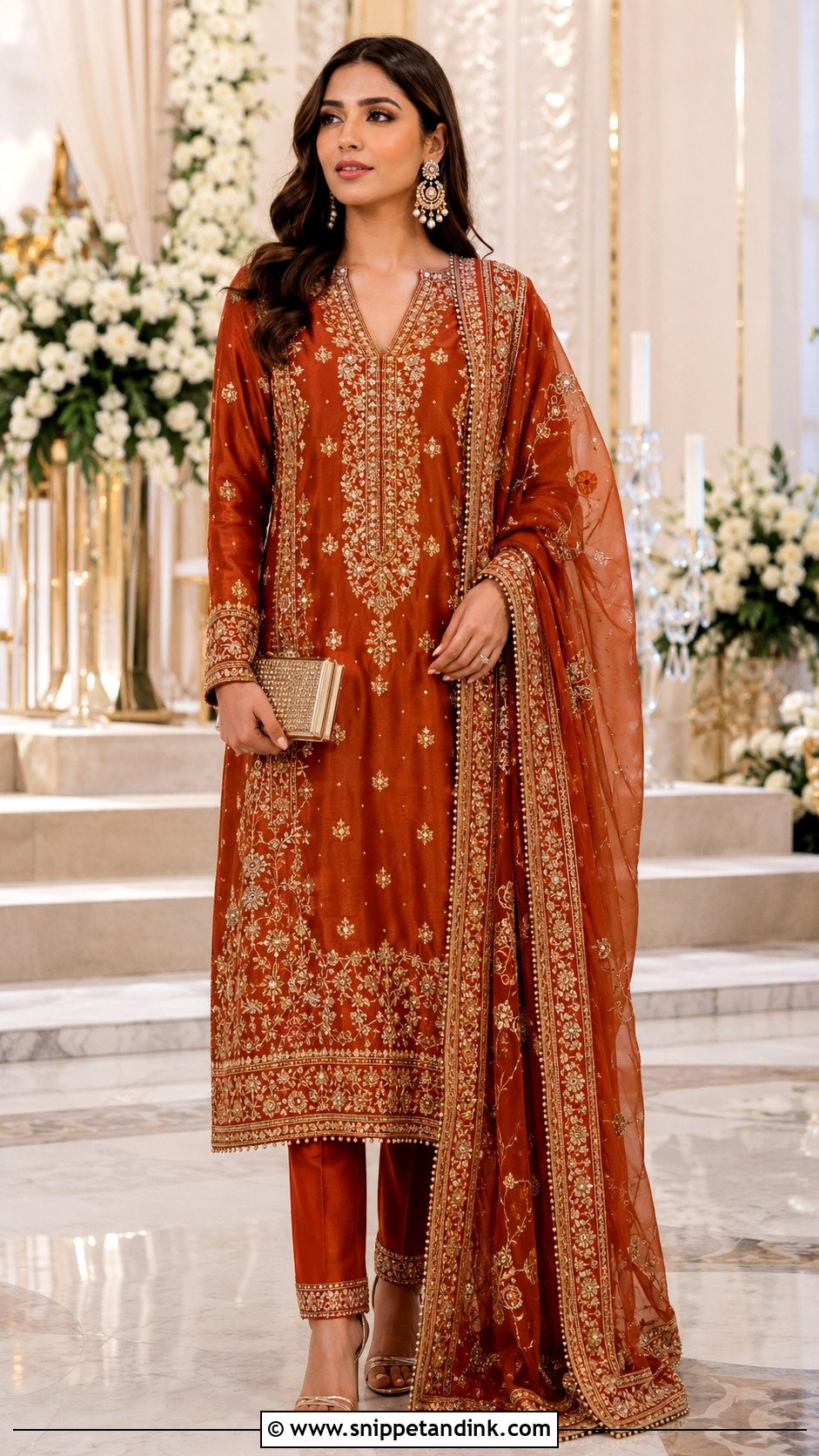
Zari is metallic thread, and real zari is heavier than polyester imitation, so a densely worked zari suit can surprise you on the hanger. I’d hold it up by the shoulders in the shop before deciding. Gold zari warms maroon, rust and emerald; silver zari suits navy, lavender and grey. When the yoke, sleeves and dupatta all carry metal thread, keep the accessories small, such as kundan studs and a sleek clutch, or the whole look turns heavy. Keep perfume away from the embroidery, as it dulls metallic thread over time.
18. Heavy Gota Patti Suit for Wedding
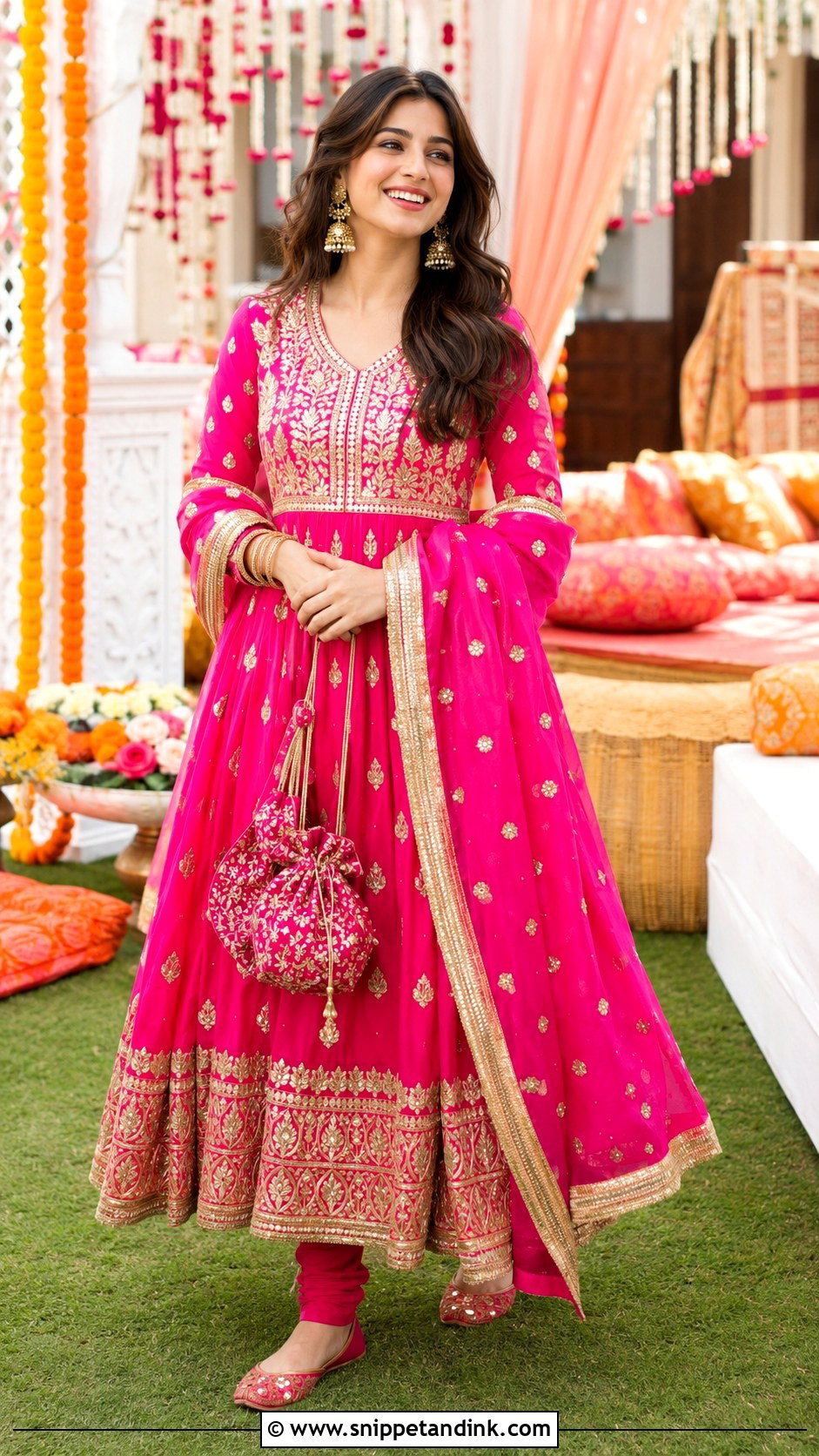
A heavy gota patti suit looks festive without the weight of zari, because gota is a flat woven ribbon appliquéd onto the fabric. It shines on georgette, chiffon and organza. I check the stitching on gota borders closely, since loose tacking lets the ribbon lift and catch on bangles. Scattered gota on the dupatta with a wide border feels complete. Rani pink, yellow and peach bring out the shine, and it belongs at daytime functions like haldi or a day mehndi.
19. Heavy Sequin Suit for Wedding
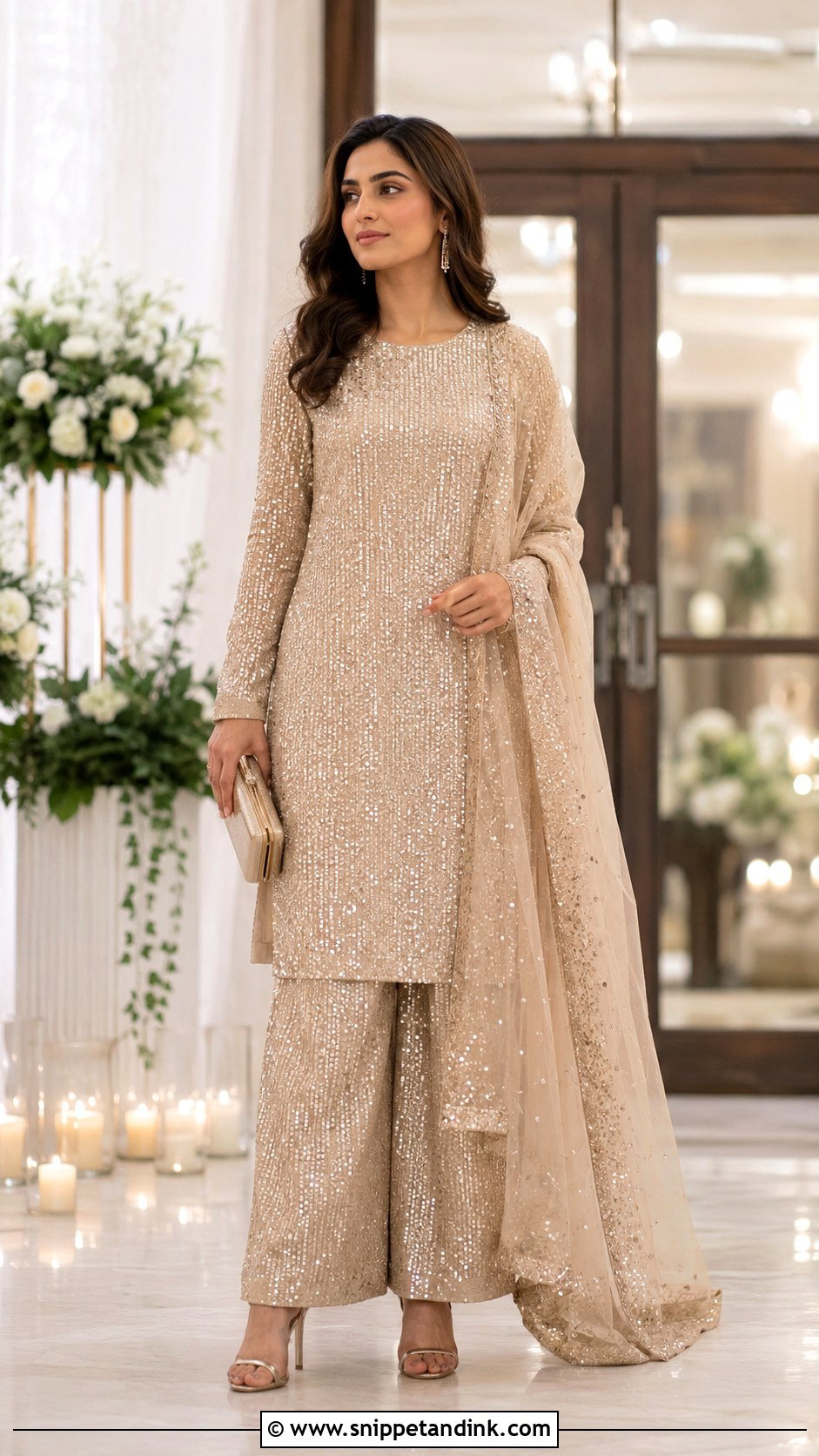
Sequins give you sparkle without changing into a gown, and they come alive under indoor evening light. Keep the shape clean, such as a straight suit or a simple Anarkali, so the shine reads as polish rather than noise. Georgette and crepe bases move well under sequins. One practical point: sequins rub against the inner arms and can scratch, so I’d look for a fabric lining on the sleeves. Champagne, silver, rose gold and navy all suit sequin work. Let the outfit carry the shine and pare back jewellery and makeup sparkle to match.
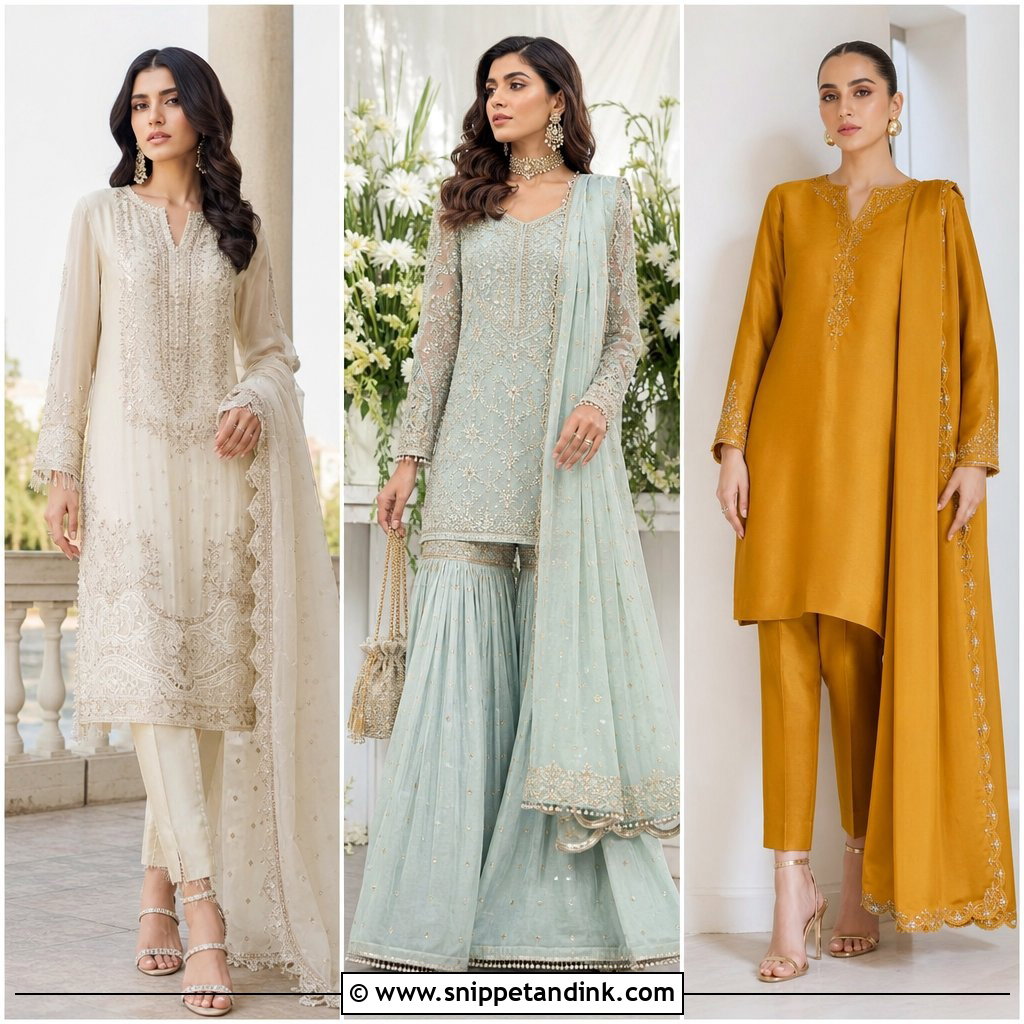
20. Heavy Embroidered Jacket Suit for Wedding
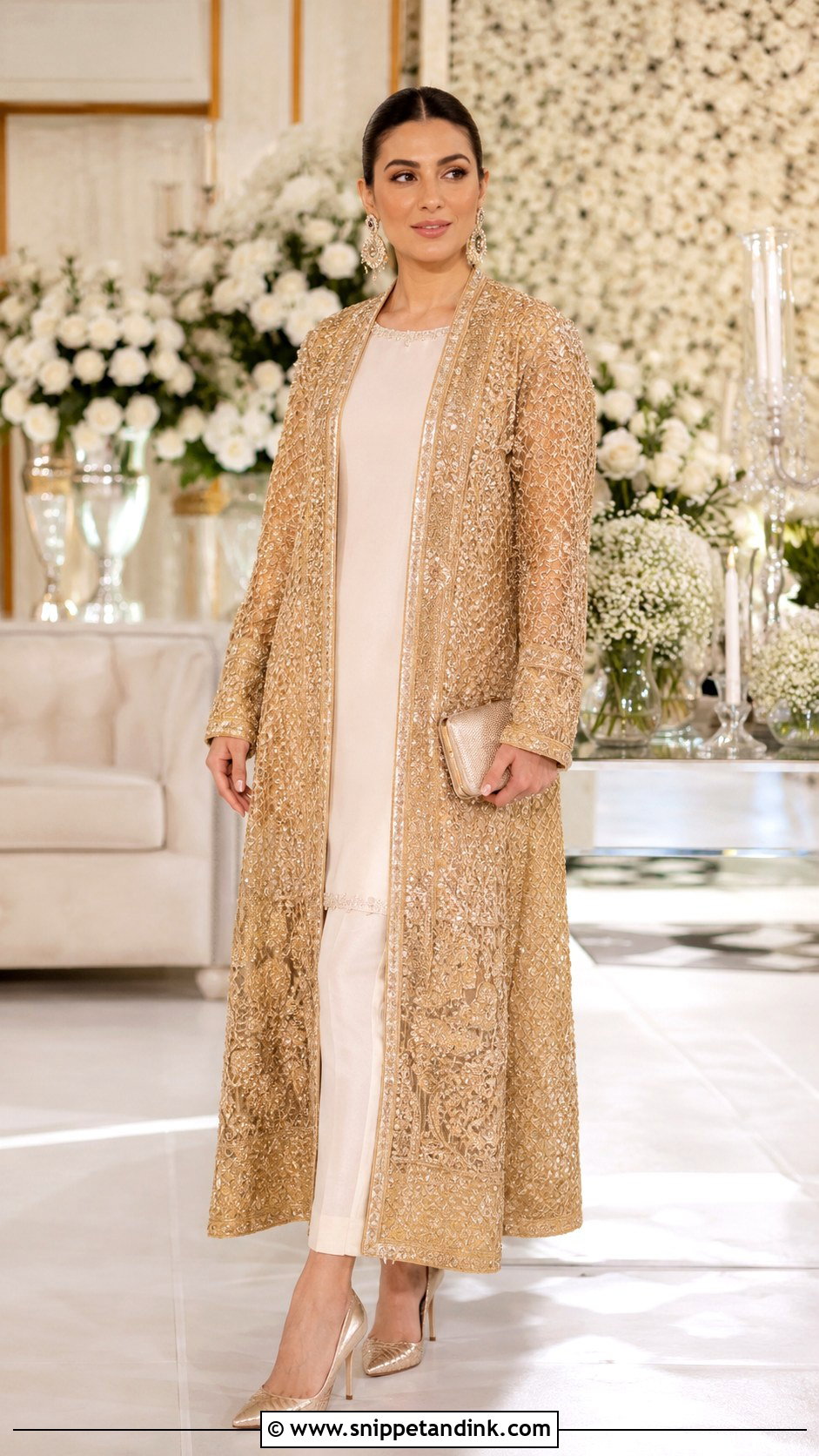
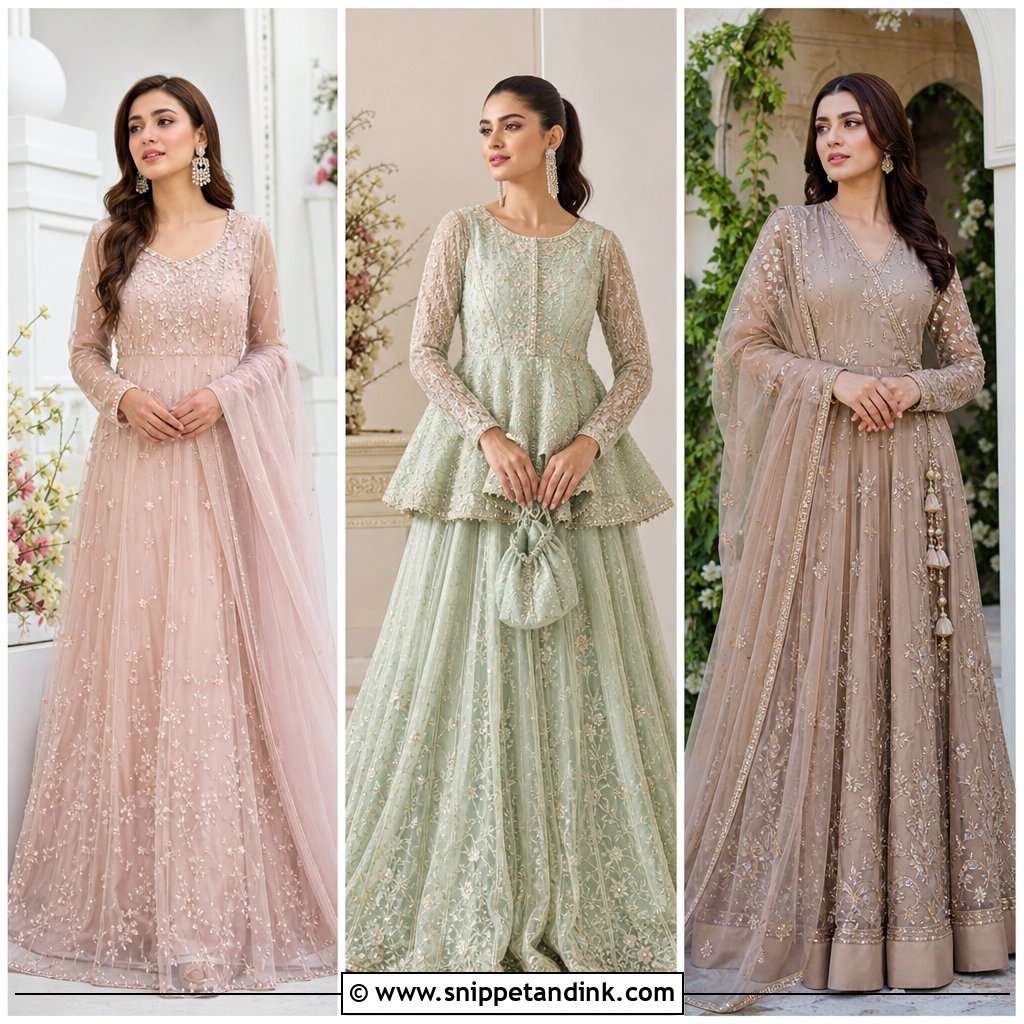
A jacket suit moves the heaviness from the dupatta to a layer you can take off, which I find useful at long weddings that run from a cool morning into a warm hall. The base can be a plain kurta and pants or a crop top with palazzos, and the jacket carries the zari, sequins or mirror work. A long jacket feels dramatic, a short one more youthful. Check that the armholes of the jacket are cut slightly larger than the kurta underneath, otherwise the two layers bind when you lift your arms.
21. Heavy Cape Suit for Wedding
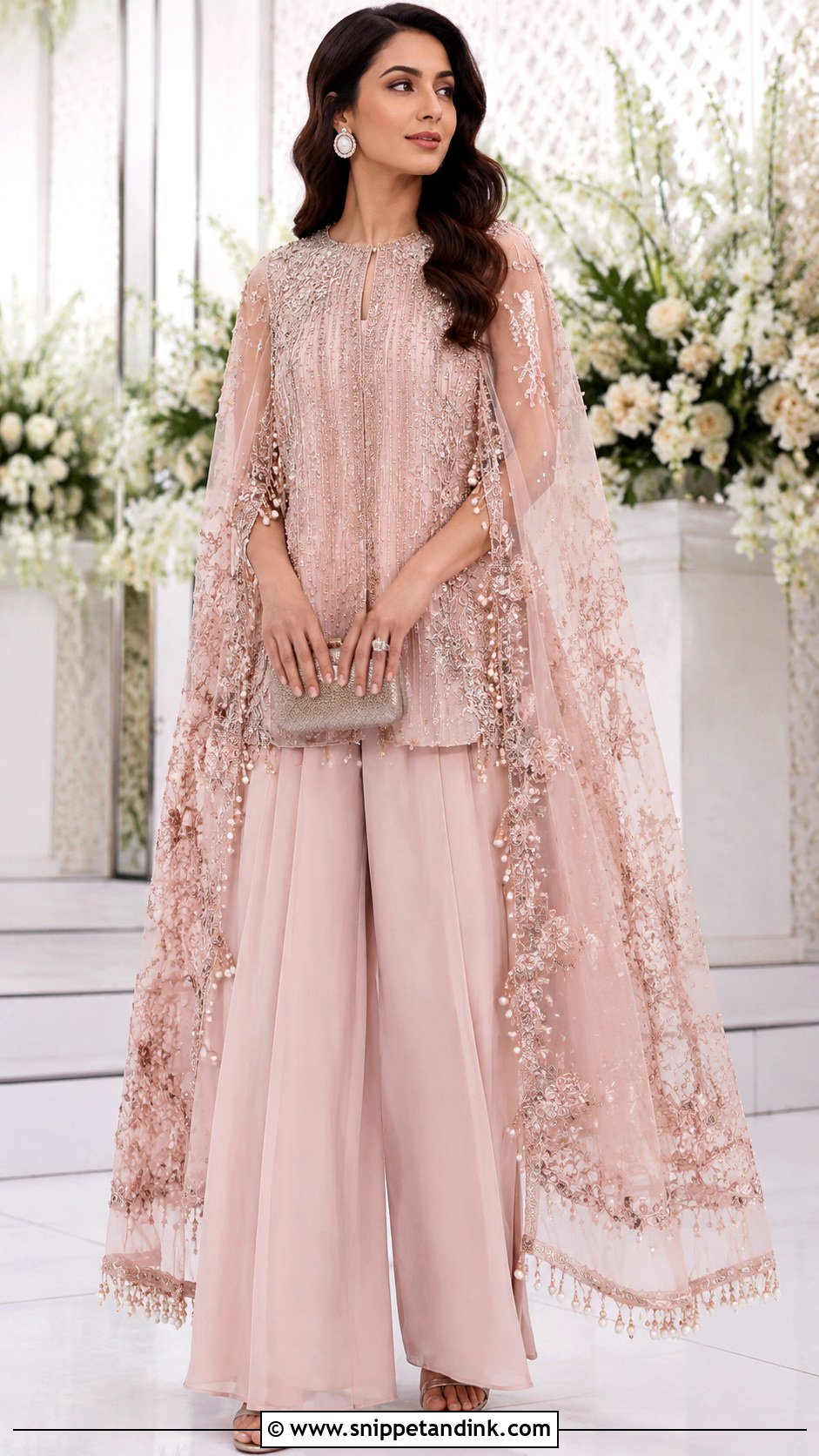
A cape gives the effect of a dupatta without the constant re-adjusting, and that is the main reason I suggest it to guests with small children or hosting duties. It can be attached at the shoulders or worn separately over a straight kurta, palazzo set or sharara. Sequins, pearls or zari along the edge add weight that helps the cape hang straight. Champagne, mint and ivory feel modern; deeper shades suit formal evenings.
22. Heavy Banarasi Suit for Wedding
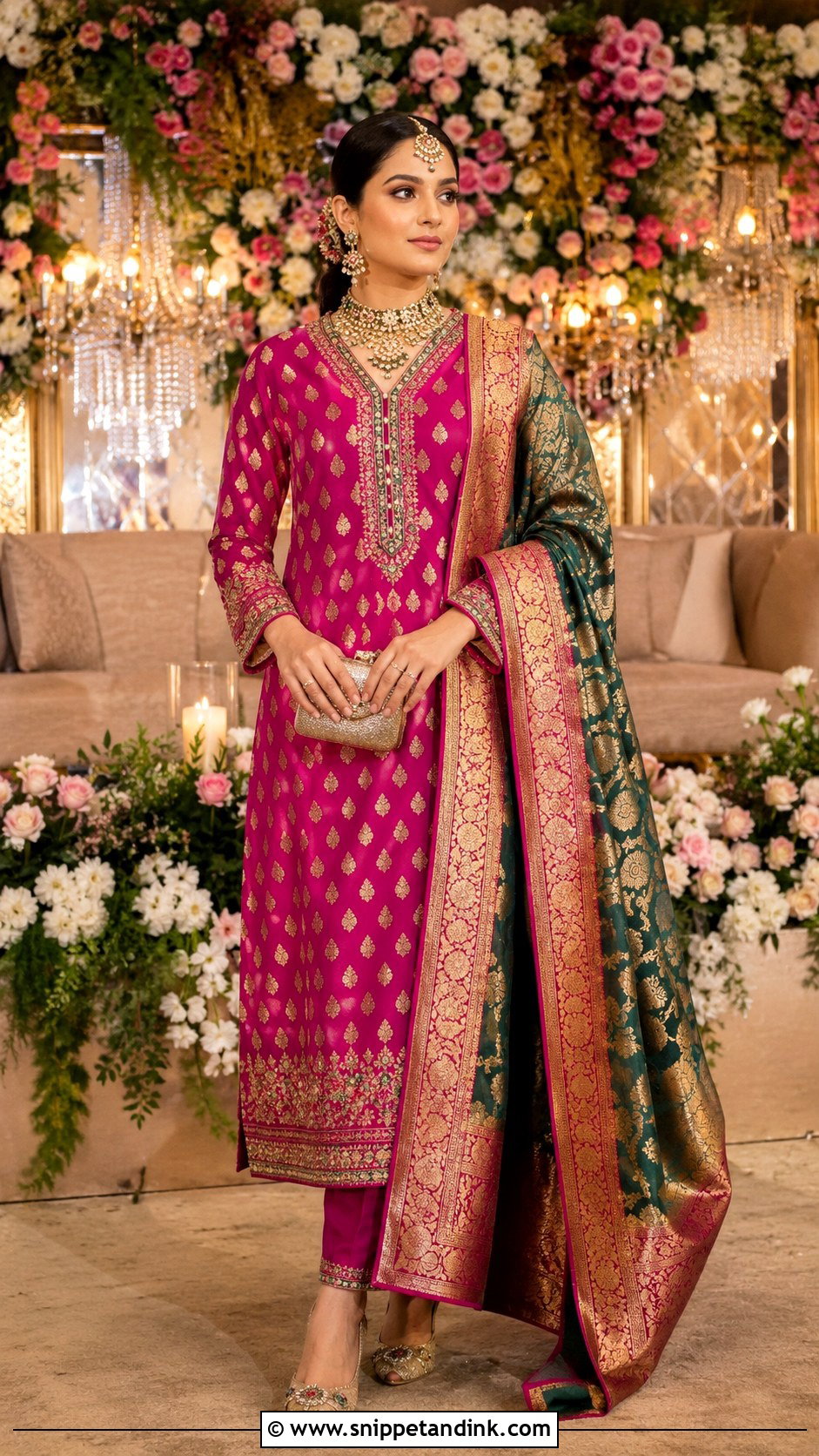
Banarasi fabric has zari motifs woven into it, so it looks rich before a single extra stitch is added. That woven work is also why it feels stiffer than embroidered fabric. I’d pair a Banarasi kurta with straight pants or a churidar and let a matching or contrast dupatta finish it, or use a Banarasi dupatta to lift a plain silk suit. Kundan jewellery and embroidered heels suit the heritage feel. Red, magenta and royal blue are traditional, and the woven gold reads especially well in family portraits taken in daylight.
23. Heavy Angrakha Suit for Wedding
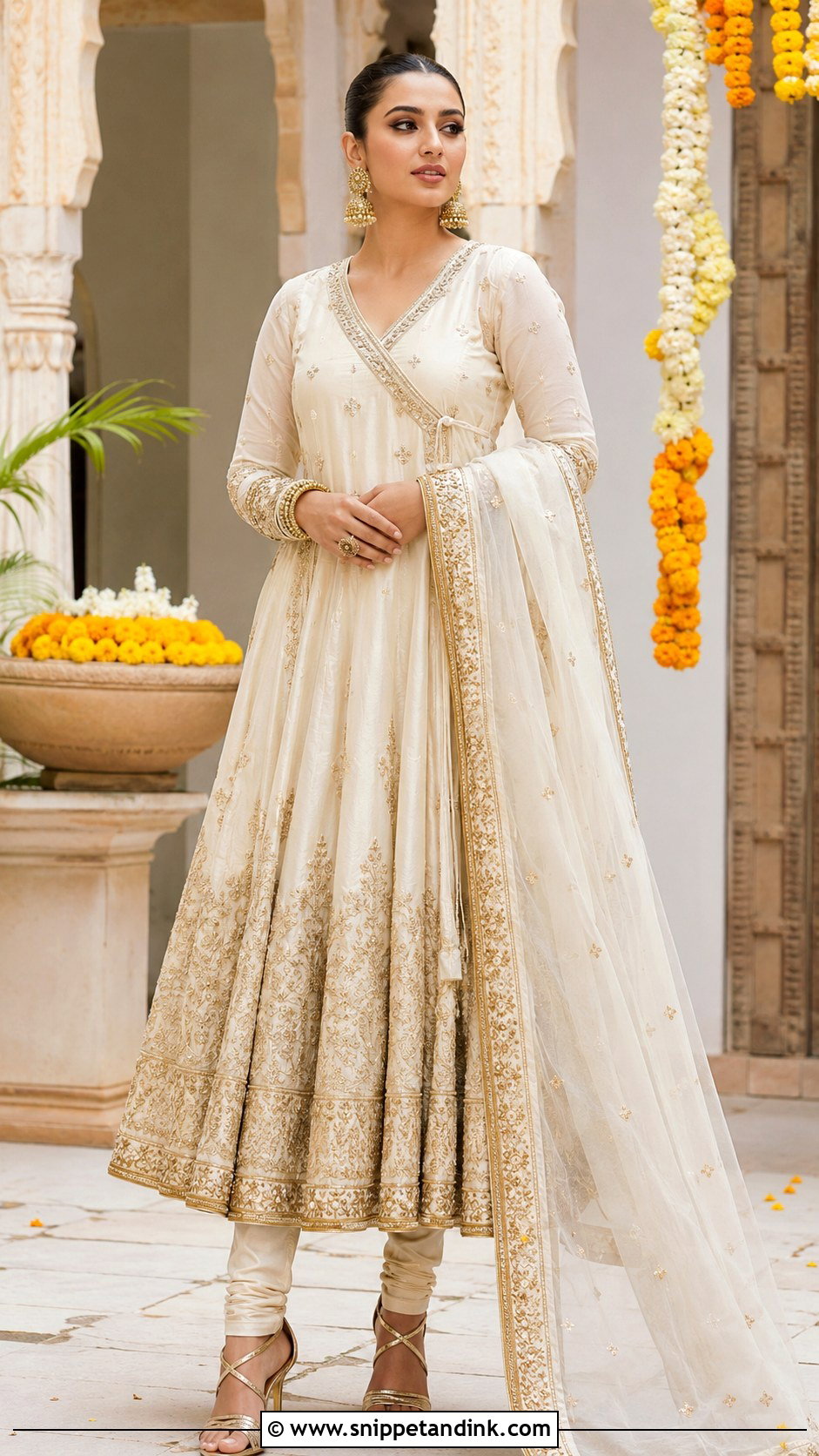
The Angrakha’s overlapping wrap front creates a diagonal line that shapes the waist, which flatters most body types more than a straight front. Embroidery along the overlap, ties and hem traces that line. I always check that the inner tie is strong and that the overlap is deep enough, because a shallow wrap opens when you bend or sit. Pick an Angrakha Anarkali or a straight Angrakha kurta and pair it with churidar, palazzo or sharara bottoms. Georgette and cotton silk give the wrap enough body without stiffness.
24. Heavy Peplum Suit for Wedding
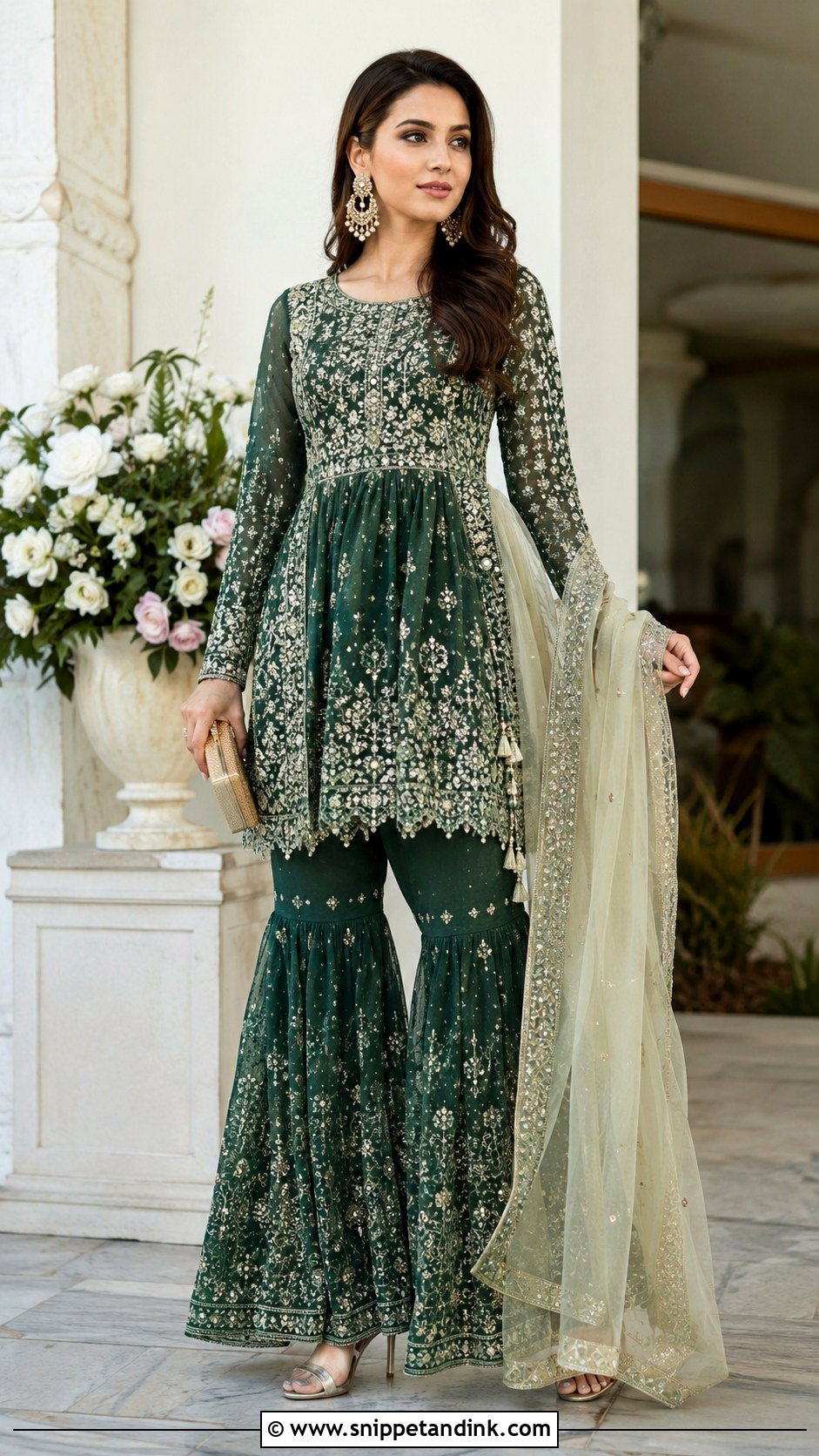
A peplum top sits fitted at the waist and flares just below it, so the seam has to land at your natural waist, not lower, or it shortens the torso. It pairs well with sharara, garara or wide palazzos. Put embroidery along the neckline, waistline and peplum hem, and keep the dupatta light when the bottoms already carry heavy borders. Younger cousins and bridesmaids usually gravitate to this cut. I’d avoid a very stiff peplum if you’ll be seated for long stretches, because it pokes out awkwardly when you sit.
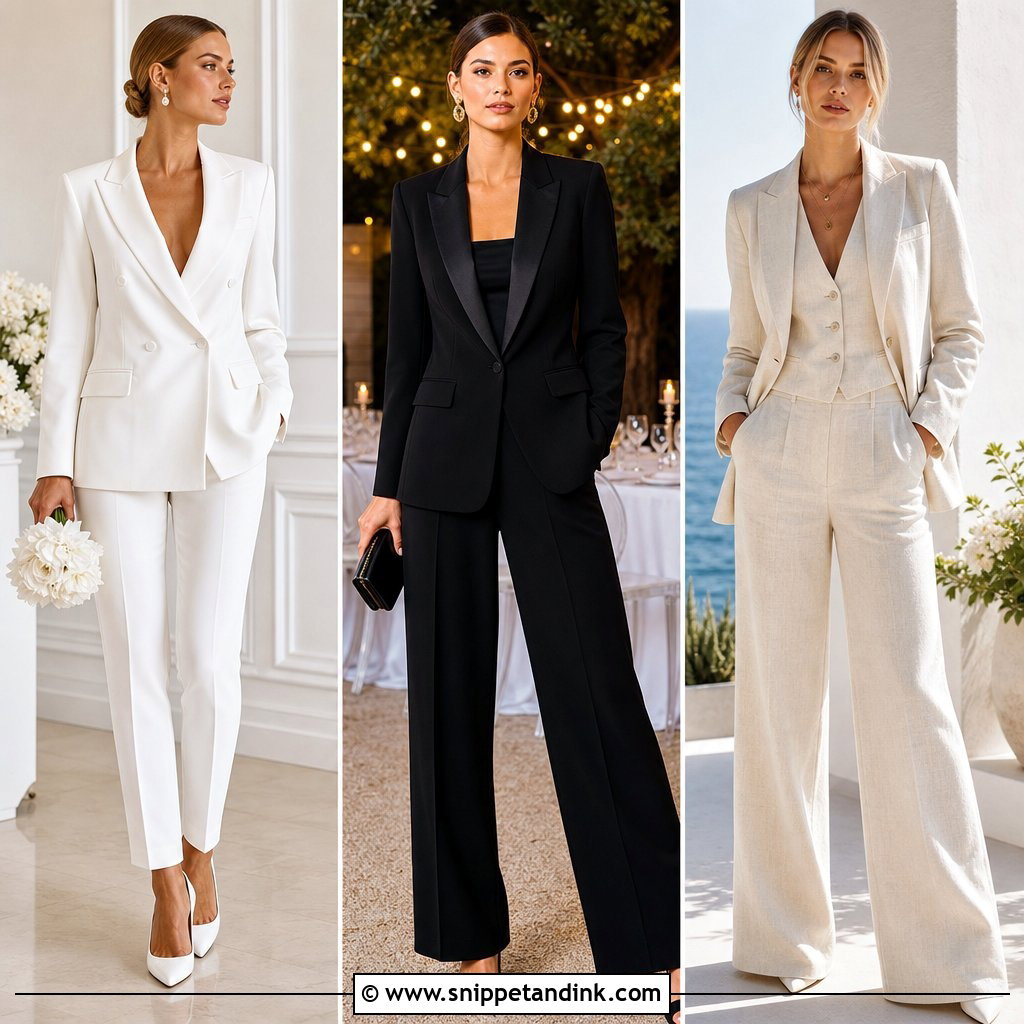
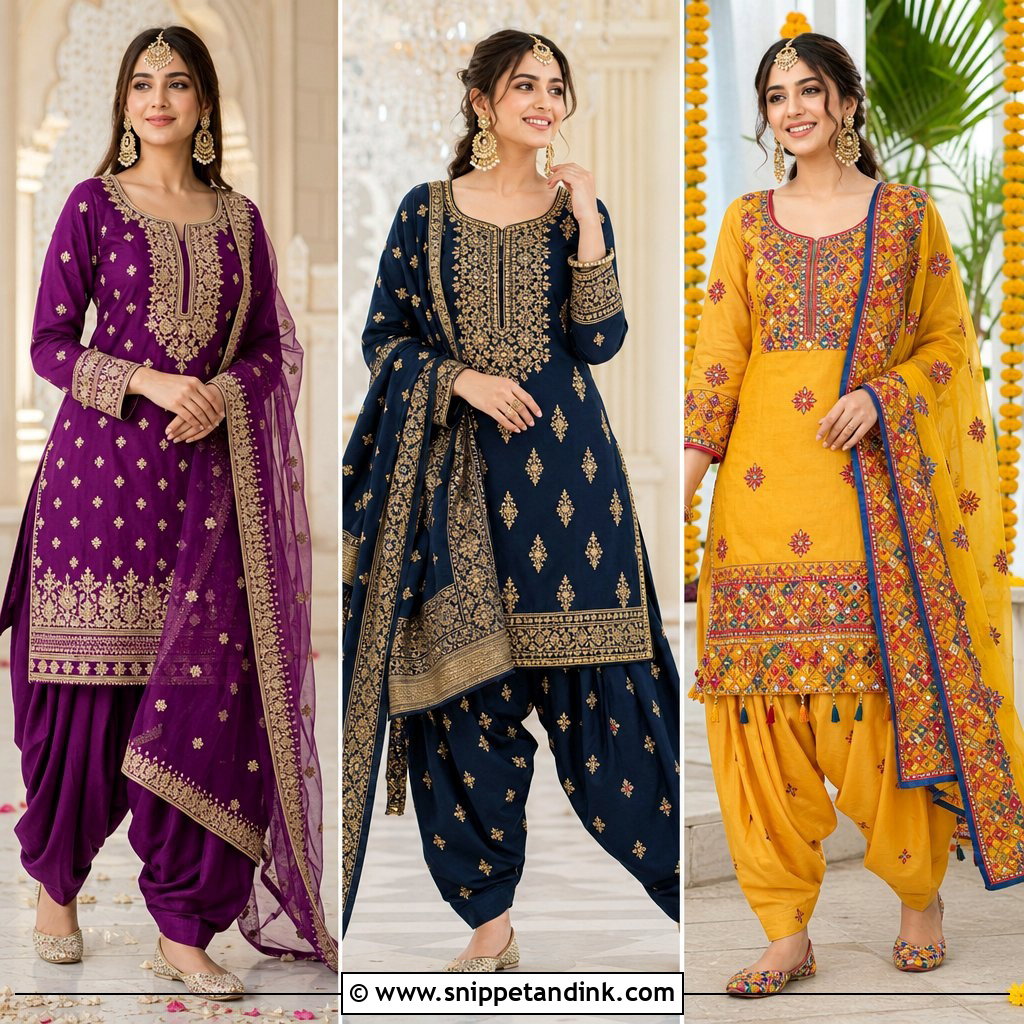
25. Heavy Indo Western Suit for Wedding
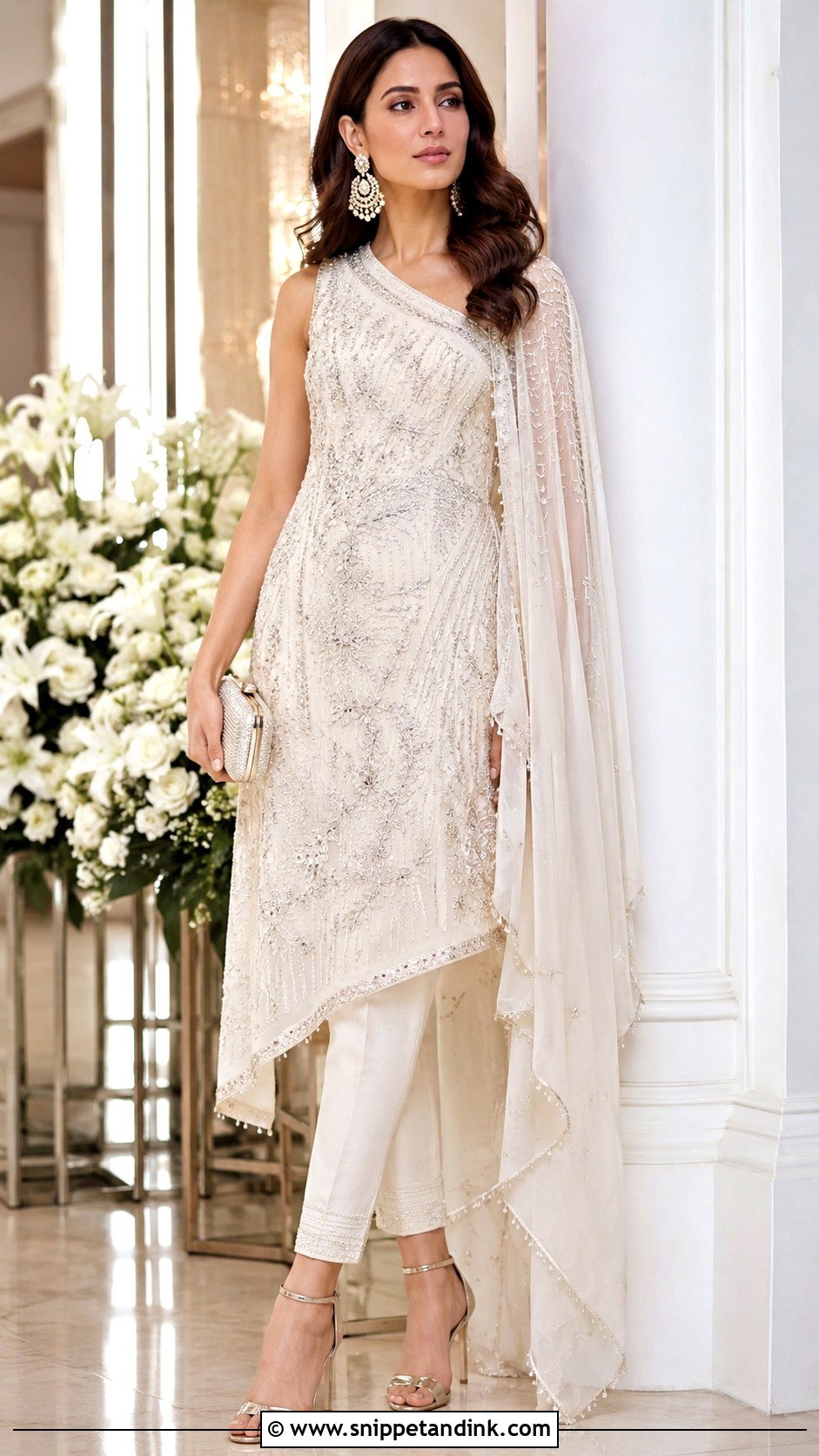
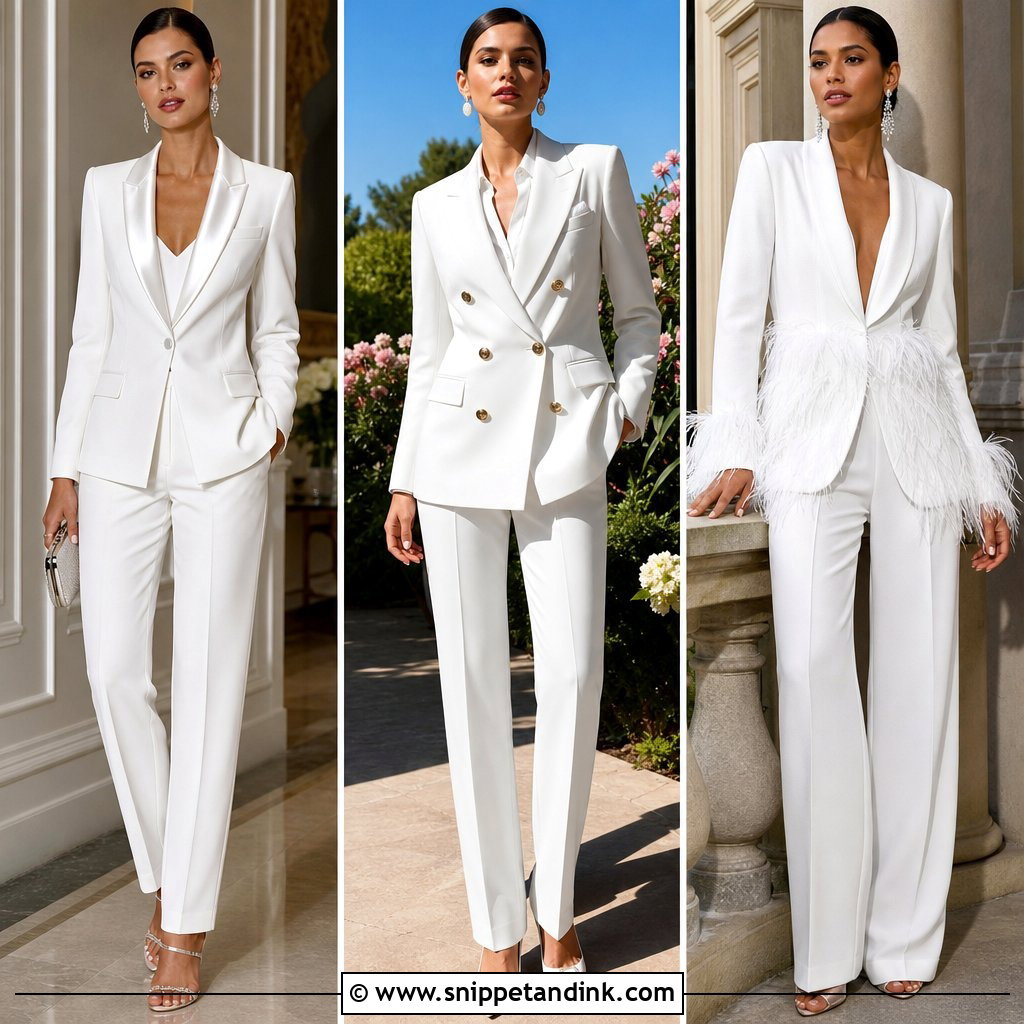
A heavy Indo Western suit mixes ethnic embroidery with modern lines: tunics with cigarette pants, cape sets, draped dupatta suits or asymmetric tops with palazzos. The fit has to be sharp, since a slightly loose structured top looks borrowed. Sequins, pearls, cutwork or mirror embroidery all suit it, as long as the silhouette stays clean. It reads best at receptions and contemporary venues. Champagne, black, ivory and rust feel refined, and the format is a good bridge for guests who want tradition with a more tailored feel.
Small Alterations That Make an Embroidered Suit Wearable
Ready-made heavy suits are cut for a standard figure, and the embroidery limits how much a tailor can change afterwards. That is why I ask for alterations at the seams that carry no work: side seams, the underarm and the hem. Anything touching an embroidered panel is risky, because unpicking zari or sequins leaves holes in the base fabric.
- Take in the side seams for a closer fit through the waist instead of adding darts through embroidered panels.
- Raise side slits by a couple of inches if the kurta pulls across your thighs when you walk.
- Hem trousers, shararas and churidars with your wedding shoes on, never barefoot.
- Add a small press stud or a fabric loop at the shoulder so the dupatta stays put without a visible pin.
- Ask for a soft cotton lining in the sleeves when the outer fabric carries sequins or real mirror work.
Leave at least two to three weeks for alterations in wedding season, when tailors are booked solid, and plan one final fitting in the exact shoes and undergarments you’ll wear.
Folding Zari and Velvet Away Once the Wedding Is Over
A heavy suit is usually worn again at the next family wedding, so how you put it away matters. Metallic thread tarnishes when it touches damp, perfume or plastic, and velvet pile flattens permanently under pressure.
I air the outfit inside out overnight before storing it, then wrap zari and gota pieces in soft muslin and fold them with tissue between the layers so the metal thread doesn’t rub against itself. Refold along different lines every few months to stop permanent creases cracking the work. Velvet should hang on a padded hanger with space around it. Send anything with sweat or food marks to a dry cleaner who handles embroidered ethnic wear, and point out the stain so they don’t run it through a standard process.
Matching a Heavy Suit to the Function You’re Attending
Start from the function and the hours you’ll be wearing it, then pick the cut. Heavy does not have to mean bulky: it can be rich fabric, a dramatic dupatta or embroidery placed exactly where the eye should land. Anarkalis bring grace, shararas bring movement, velvet brings warmth, and jacket or cape suits take the fuss out of the dupatta. Do one sitting test, one stair test and one arms-up test before you commit, and wear the shoes to the final fitting. If the outfit passes all three, you’ll forget you’re wearing it and enjoy the wedding.
You'll Like These Ideas:



Leave a Reply