
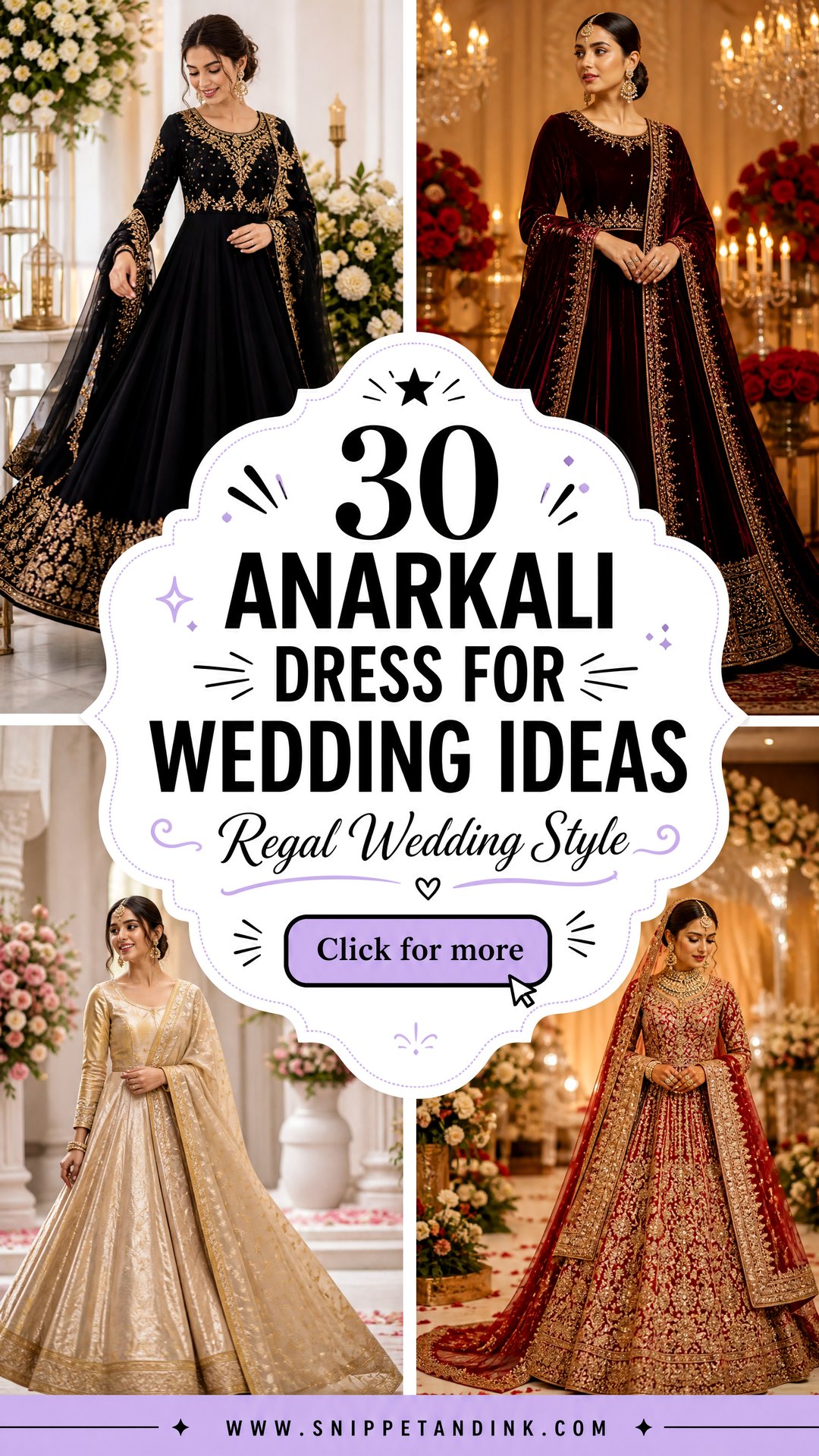
I dress more women in Anarkalis across a wedding week than in any other single silhouette. The fitted bodice and the flare from the empire line flatter almost every frame, the skirt gives you room to sit and dance, and the same cut can be quiet for a haldi or grand for a reception. Below are thirty versions, from heavy silks and velvet to georgette, mirror work, jacket Anarkalis and light prints. My rule of thumb runs through all of them: a heavy dress wants clean styling, and a simple dress is where the dupatta, earrings or shoes get to work.
Does Your Height Suit a Full Flare? Measuring an Anarkali Properly
The two numbers that decide whether an Anarkali looks right are where the bodice ends and where the hem falls. Most problems I fix at fittings come from one of them.
- The bodice seam should sit just under the bust or at the natural waist. Too low and the flare starts at the hip, which makes the body look shorter.
- Measure length from the shoulder to where you want the hem, wearing the shoes you’ll actually wear. Floor-length styles should end about a finger’s width off the ground.
- If you’re petite, a calf-length or ankle-length cut with fewer kalis (the triangular panels) keeps the flare from swallowing you.
- If you’re tall, more kalis and a full floor length show off the volume, and churidars with extra length ruche nicely at the ankle.
Online sizing is the riskiest part. Many ready Anarkalis come with deep seam allowances at the bodice, so I check that before ordering and plan for a local tailor to adjust the side seams. The flare itself is hard to alter, so get that length right first.
1. Red Anarkali Dress for Wedding
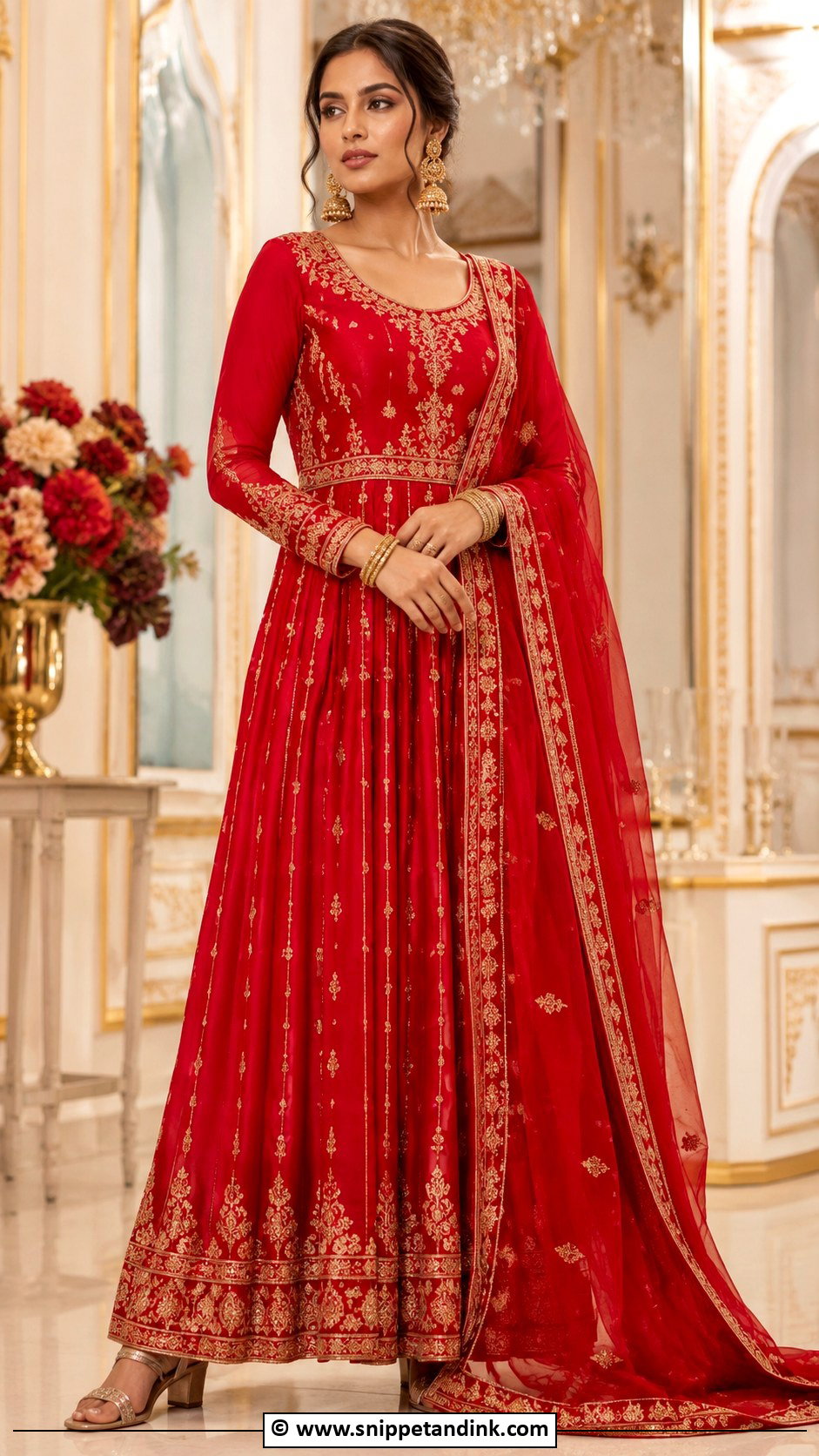
Red is the color most people picture at an Indian wedding, which is exactly why guests need to handle it with care. Floor-length red with gold zari or threadwork looks festive at a family function, but if you’re not the bride I’d keep the jewelry to jhumkas and bangles and skip anything resembling a bridal set. Embellished block heels help the hem clear the floor. A sleek bun keeps attention on the flare, which is where a red Anarkali earns its money.
2. Pastel Anarkali Dress for Wedding
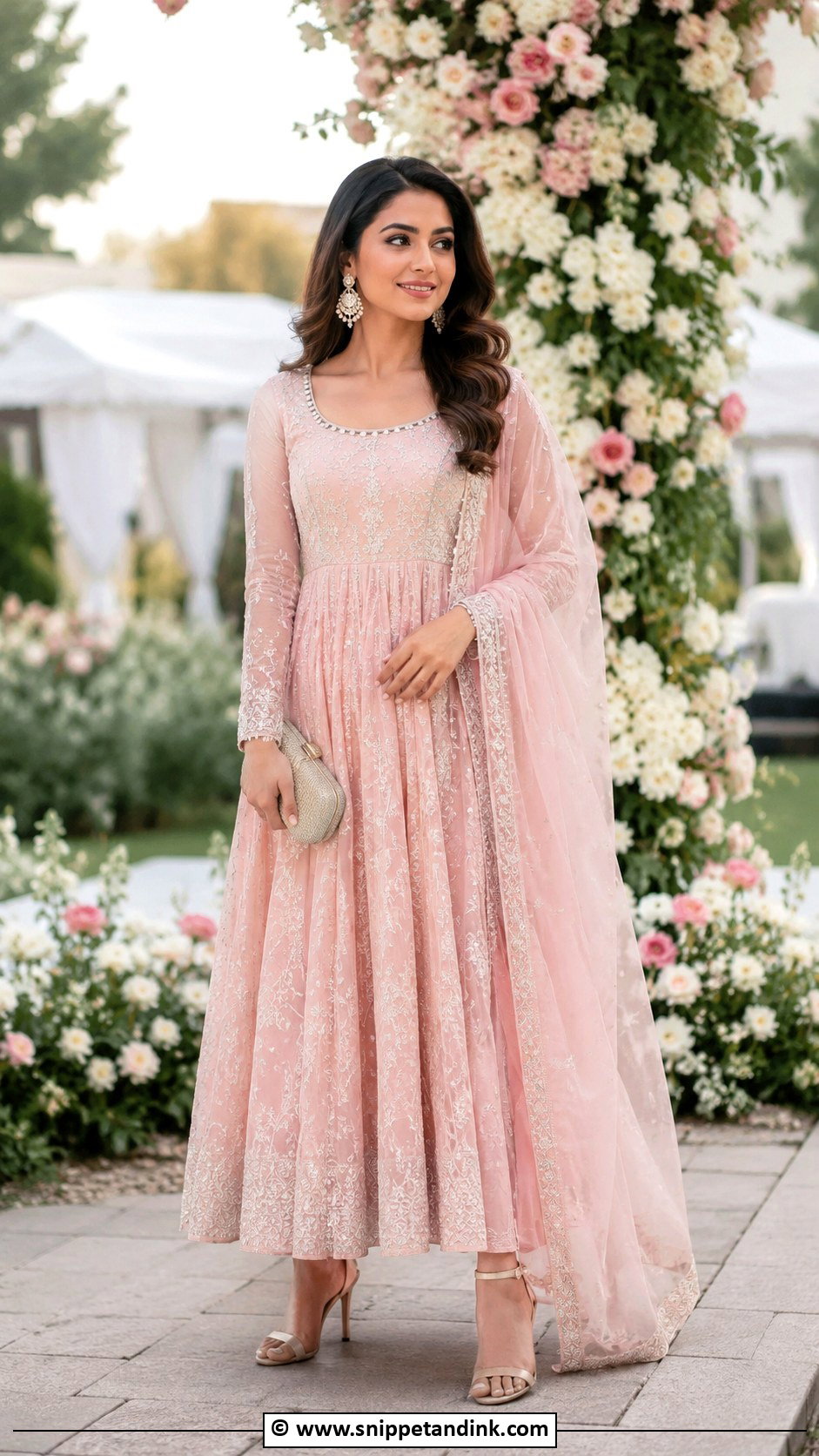
Pastels suit daylight. Under strong sun, blush, powder blue and mint look fresh, while the same shades can look washed out under yellow banquet lighting at night. Pearl, chikankari or light sequins give enough sparkle. A sheer organza dupatta, nude heels and pearl earrings keep it airy, and makeup can stay light: glowing skin and a pink or nude lip. For a long daytime ceremony, I’d choose a pastel in georgette over net, because net scratches the arms after a few hours.
3. White Anarkali Dress for Wedding
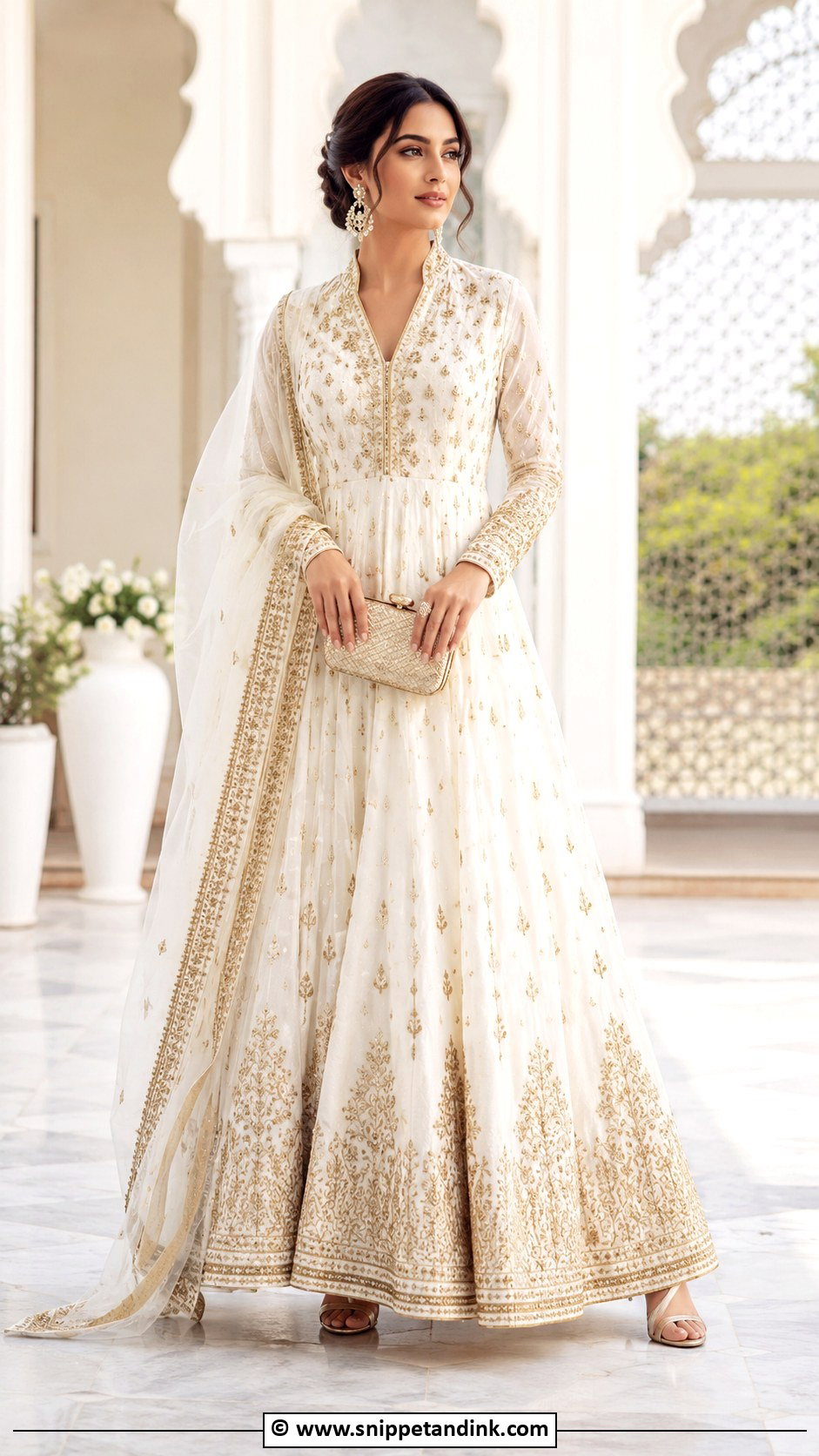
Plain white can read as mourning in many families, so I always move clients toward ivory, pearl or off-white with visible gold, silver or pastel embroidery. Fabric does most of the work here: silk, organza and chanderi look rich in pale tones, while thin georgette in white can look like a nightdress. Kundan earrings and metallic heels add the festive note. Receptions and engagement parties with lighter dress codes are where it fits best.
4. Black Anarkali Dress for Wedding
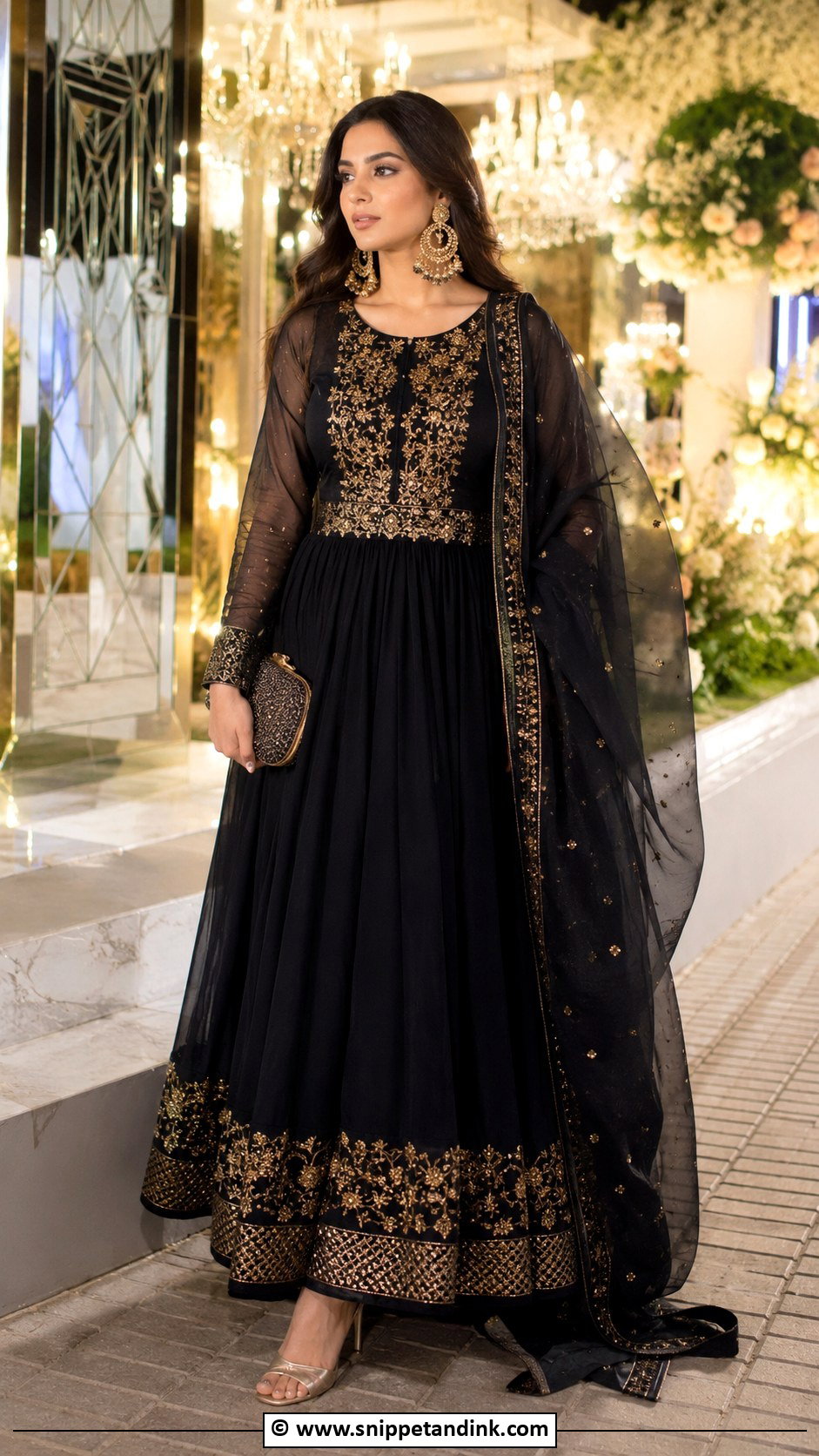
Black works at evening receptions and sangeet nights, but some families still avoid it at weddings, so check before you buy. Gold embroidery, sequins or velvet panels stop it looking plain. Black also hides the dupatta pin and the inevitable spill, which I appreciate on a long night. A sheer dupatta with embroidered borders adds movement, statement earrings do the rest, and a bold eye suits the color well.
5. Green Anarkali Dress for Wedding
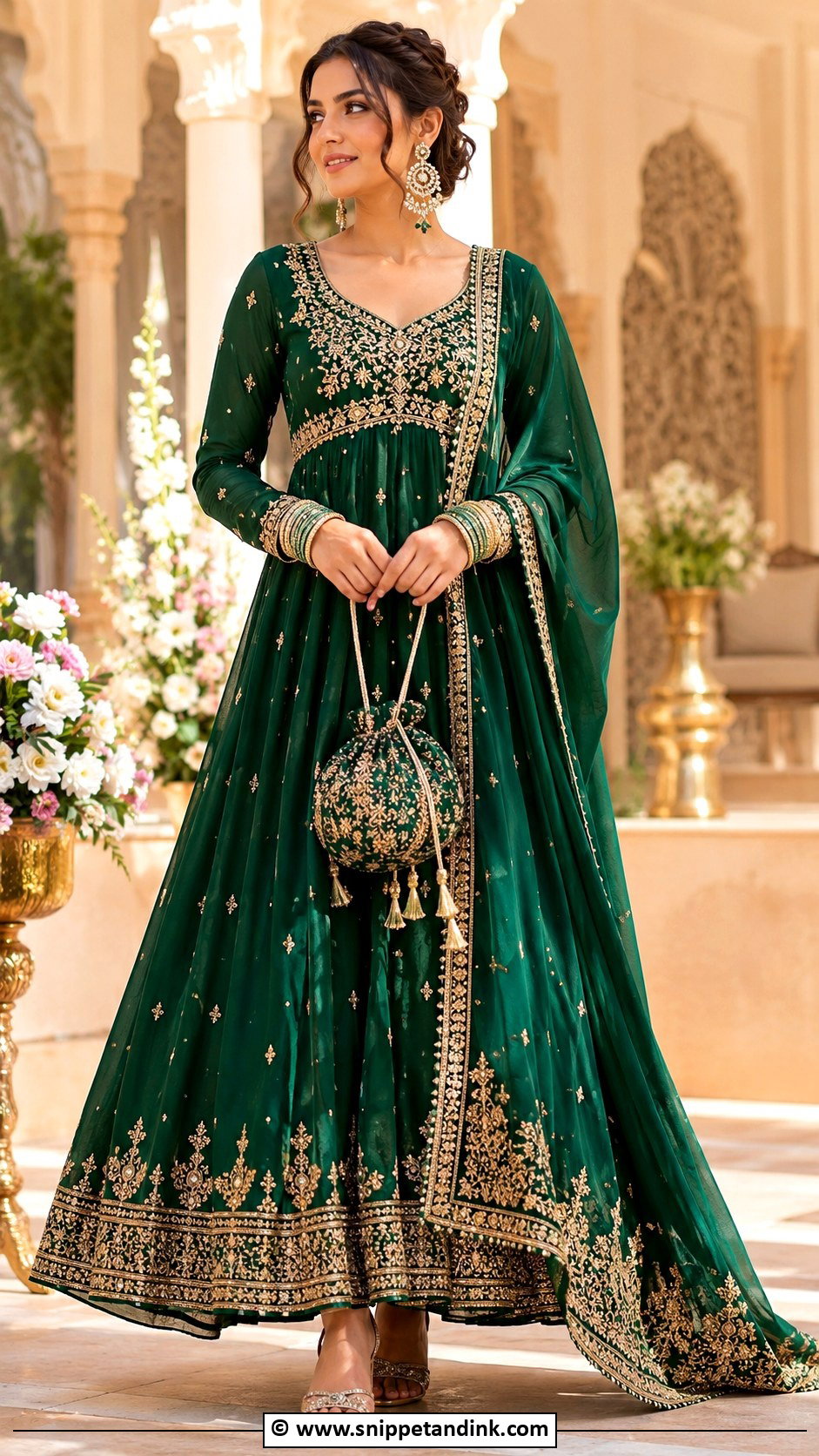
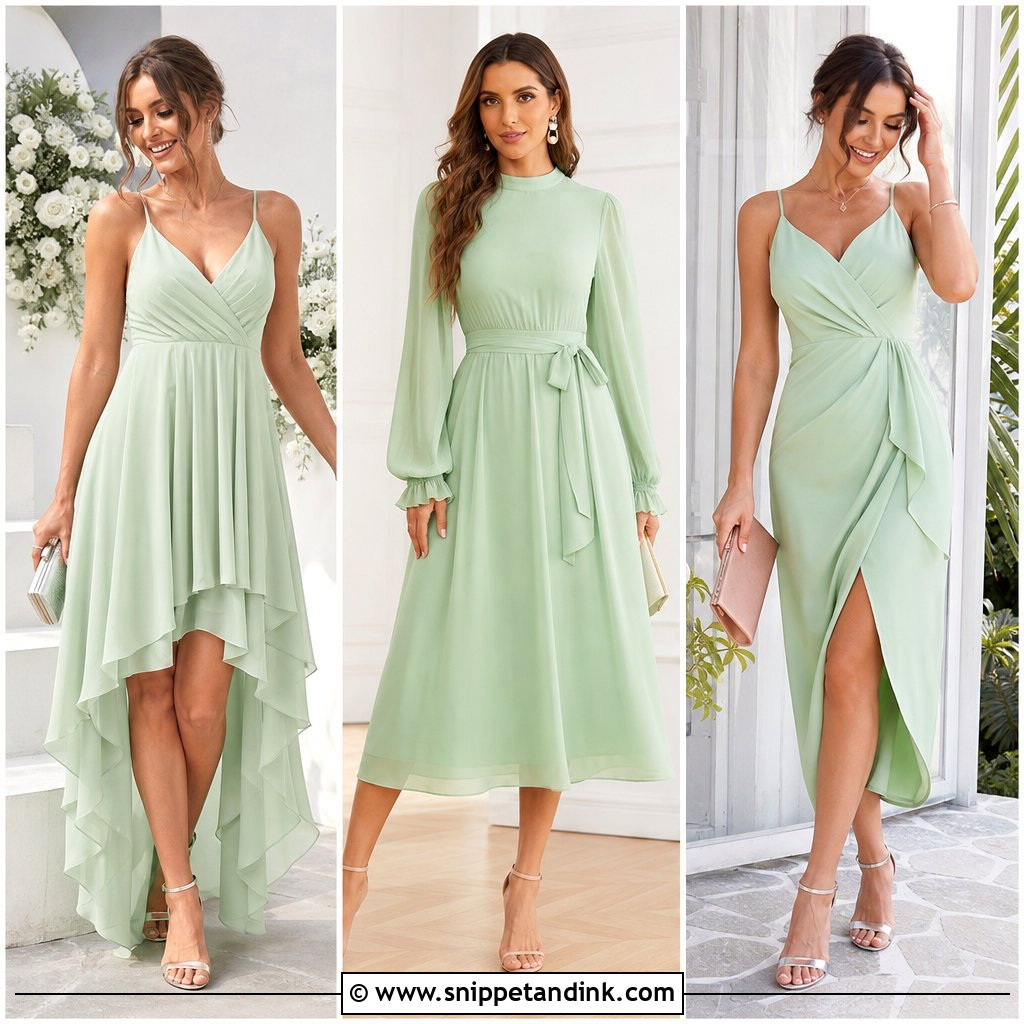
Green shifts mood more than any other color depending on the shade. Mehendi green or sage with mirror work and comfortable juttis is right for a mehendi; emerald silk or georgette with gold embroidery and heels belongs at a reception. Polki earrings and a potli bag finish both versions. Green suits a wide range of skin tones and sits well with gold, pearl or antique jewelry, so it’s a color I suggest when someone is stuck between red and blue.
6. Yellow Anarkali Dress for Haldi Wedding
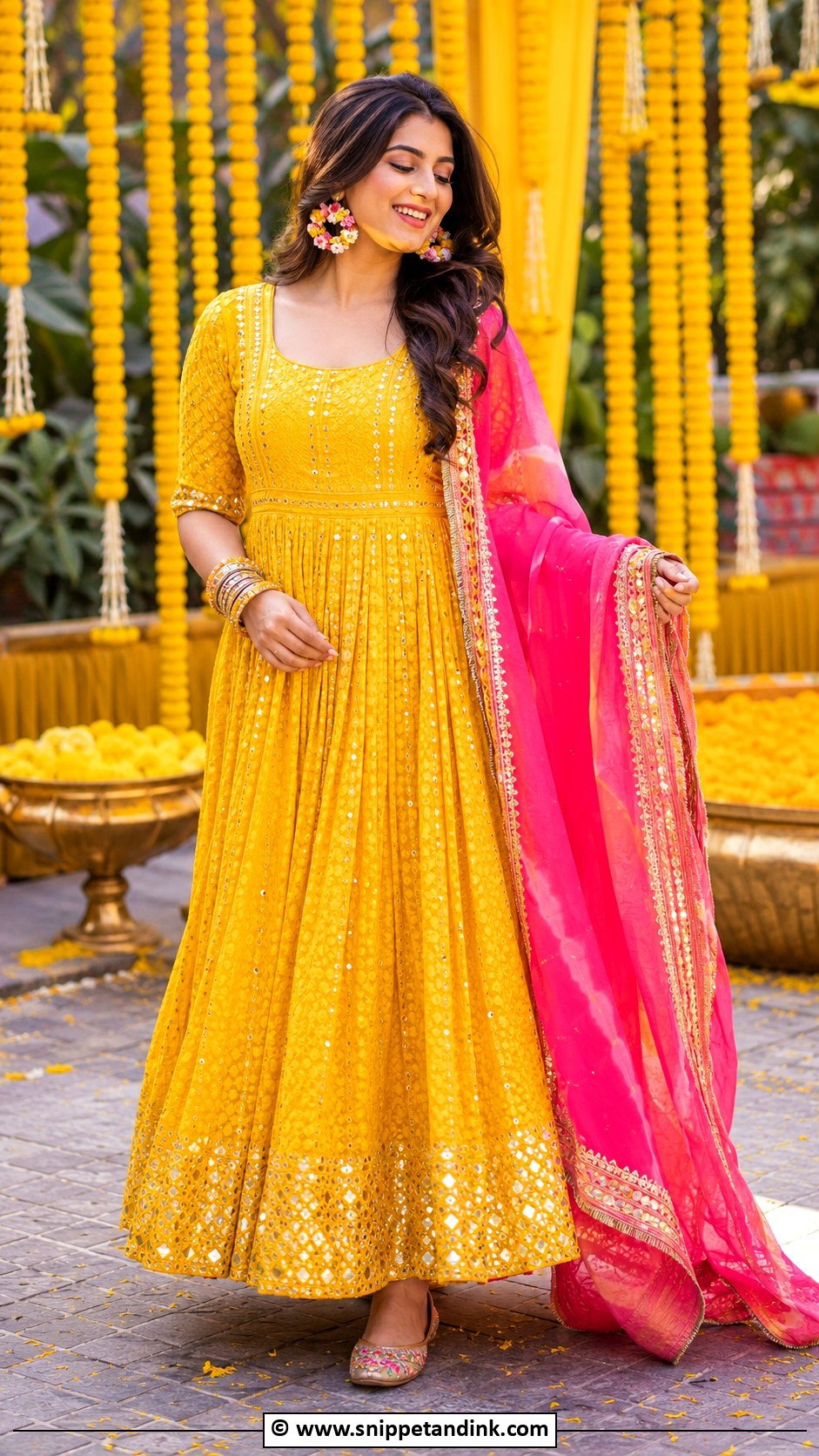
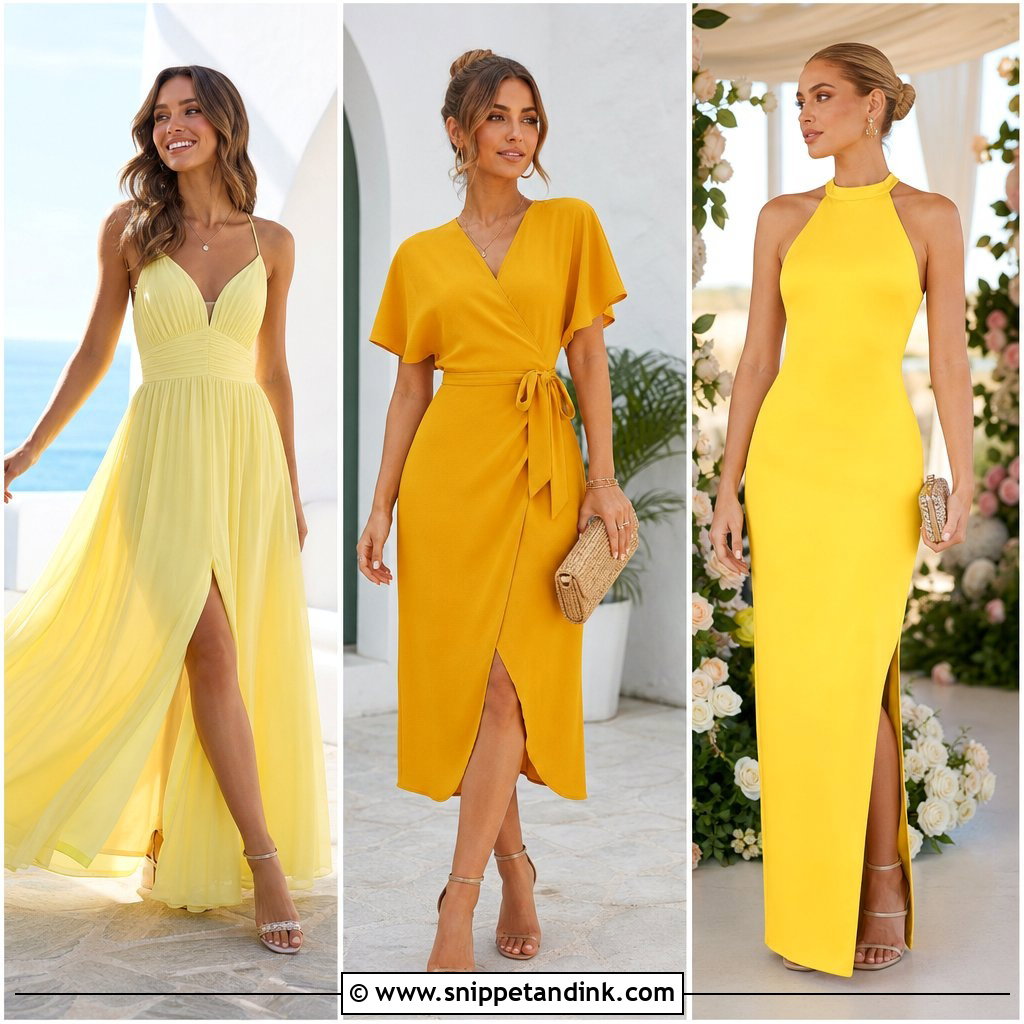
A haldi or daytime wedding event is the one place I’d tell you not to wear your best Anarkali. Turmeric paste stains silk and georgette permanently, and haldi gets messy. So choose a yellow you don’t mind marking: cotton or a cotton blend in mustard or marigold, with mirror work or gota rather than delicate threadwork. Keep the flare modest so you can sit on low seating. A pink or ivory contrast dupatta and floral earrings make it feel bright.
7. Pink Anarkali Dress for Wedding
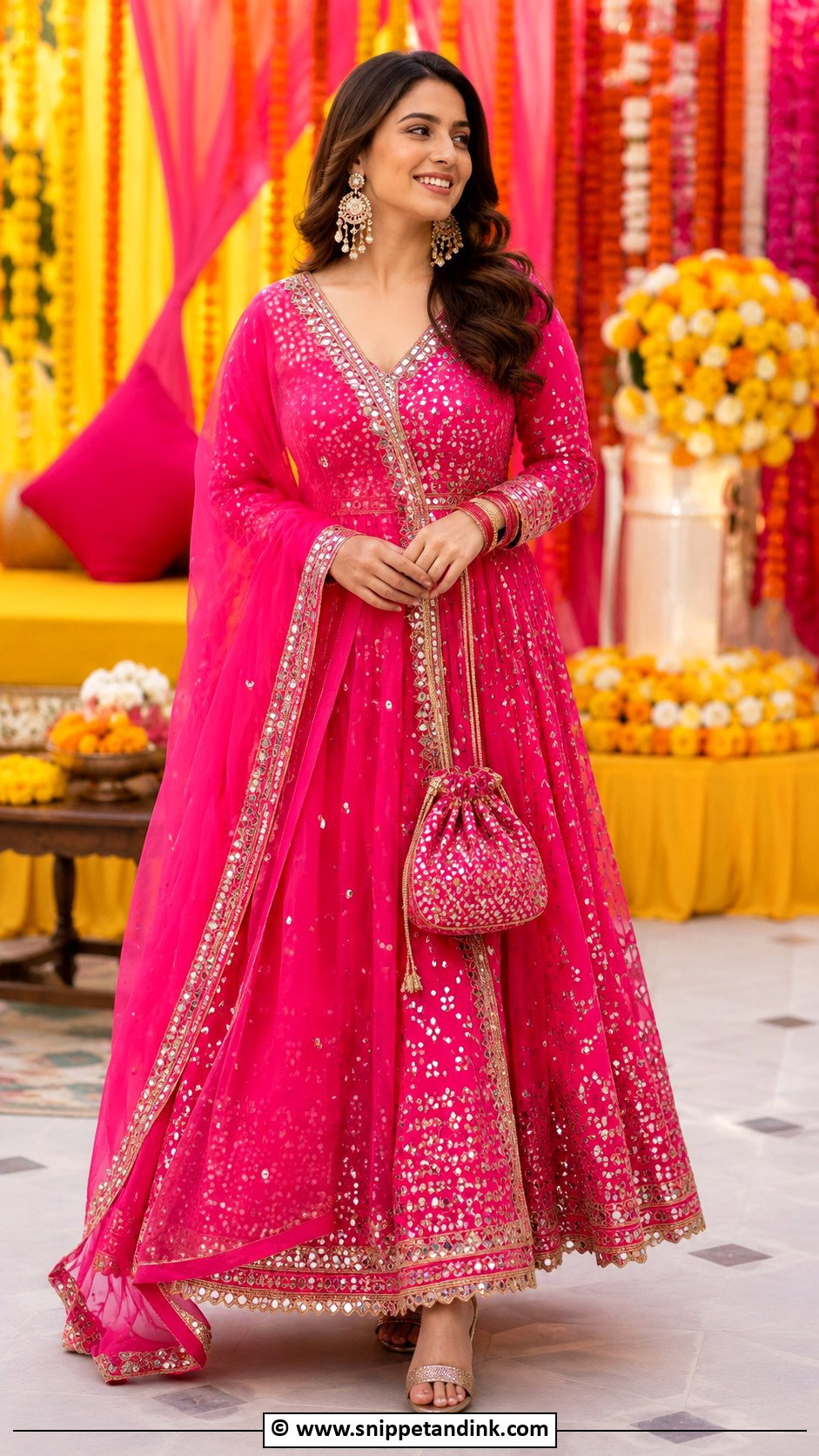
Pink covers the most ground of any color here. Blush for a daytime ceremony, rani pink or fuchsia for a sangeet or mehendi. Pearls make it subtle, mirror work makes it festive, zari makes it traditional. The undertone decides the metal: cool pinks with silver, warm pinks with gold or kundan. Bright pinks also look great in twirling photos, so wear a flare with real fullness if you plan to dance.
8. Blue Anarkali Dress for Wedding
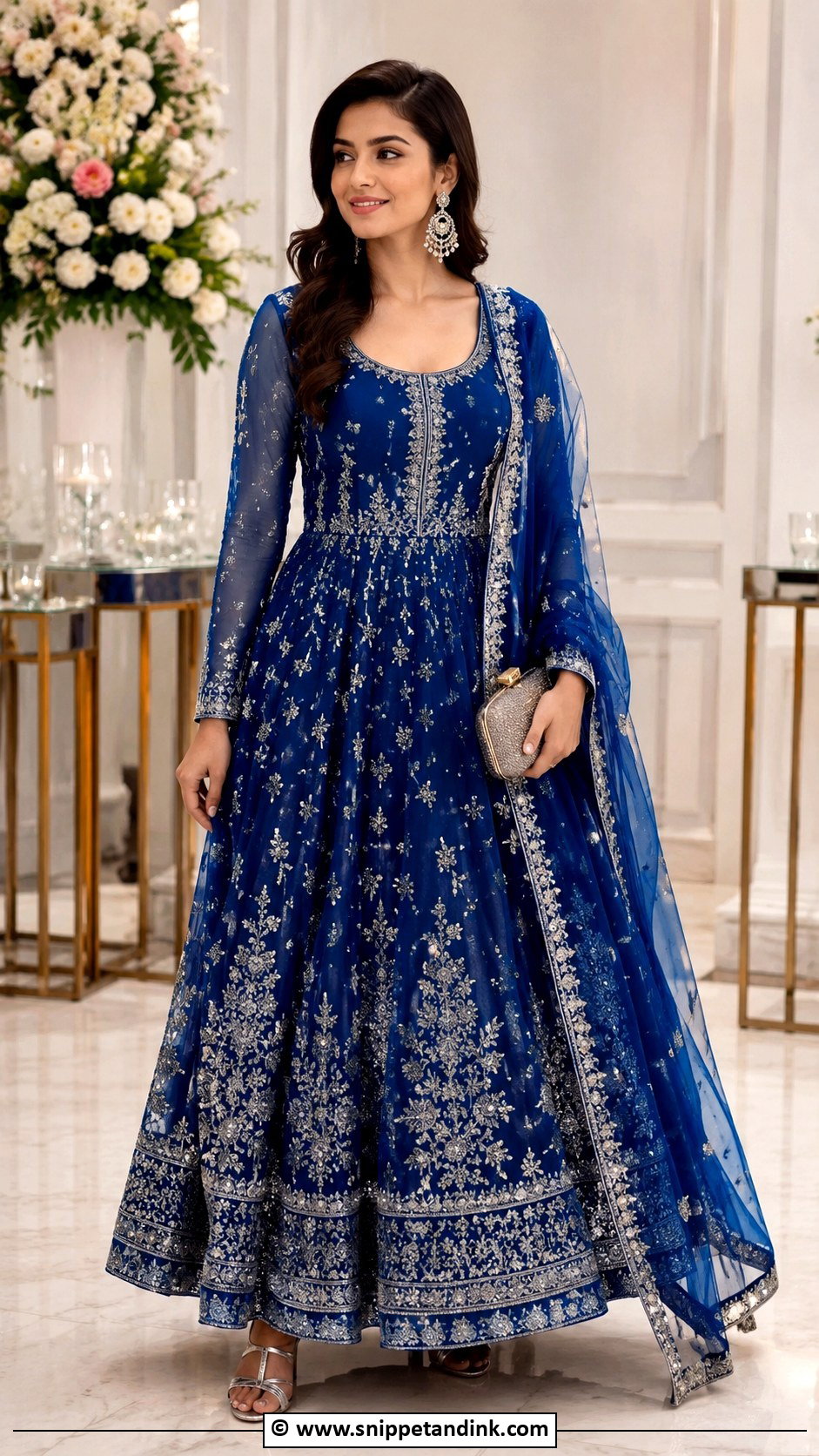
Blue gives you color without competing with the reds and pinks around the bride. Navy or royal blue with silver embroidery and sequins suits a reception; powder blue with pearl work and an organza dupatta suits daytime. Crystal earrings and metallic heels keep it cool-toned. Teal is the in-between I suggest for women who don’t know which way to go.
9. Gold Anarkali Dress for Wedding
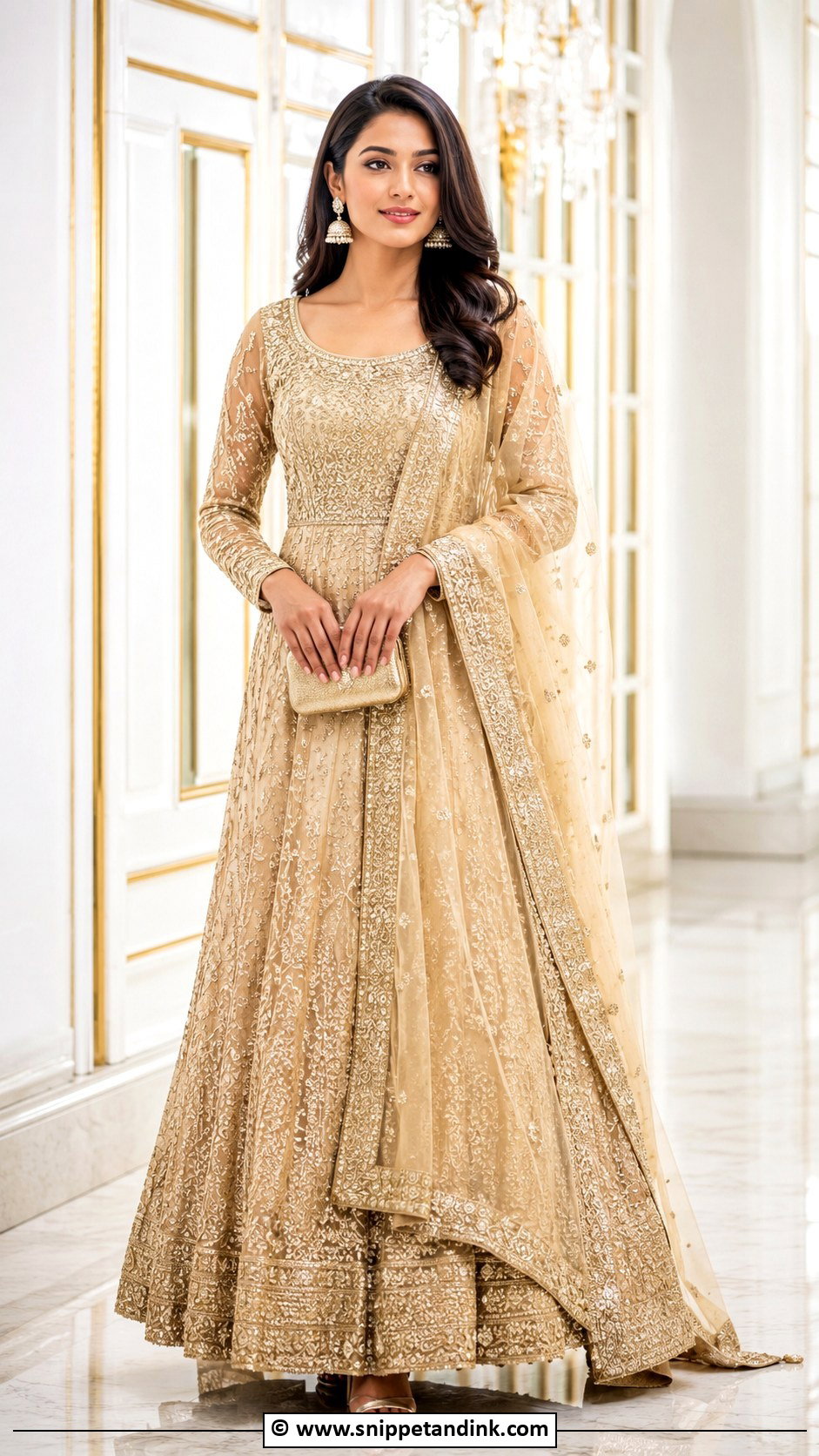
Gold Anarkalis do the work of color through shine. Champagne, antique and soft metallic tones are easier to wear than bright yellow gold. Gold-on-gold embroidery or zari looks grand at evening functions, and the sheer bordered dupatta softens it. Watch how much jewelry you add: the dress is already metallic, so pearl or kundan earrings and a plain clutch are plenty. It glows under ballroom lighting.
10. Purple Anarkali Dress for Wedding
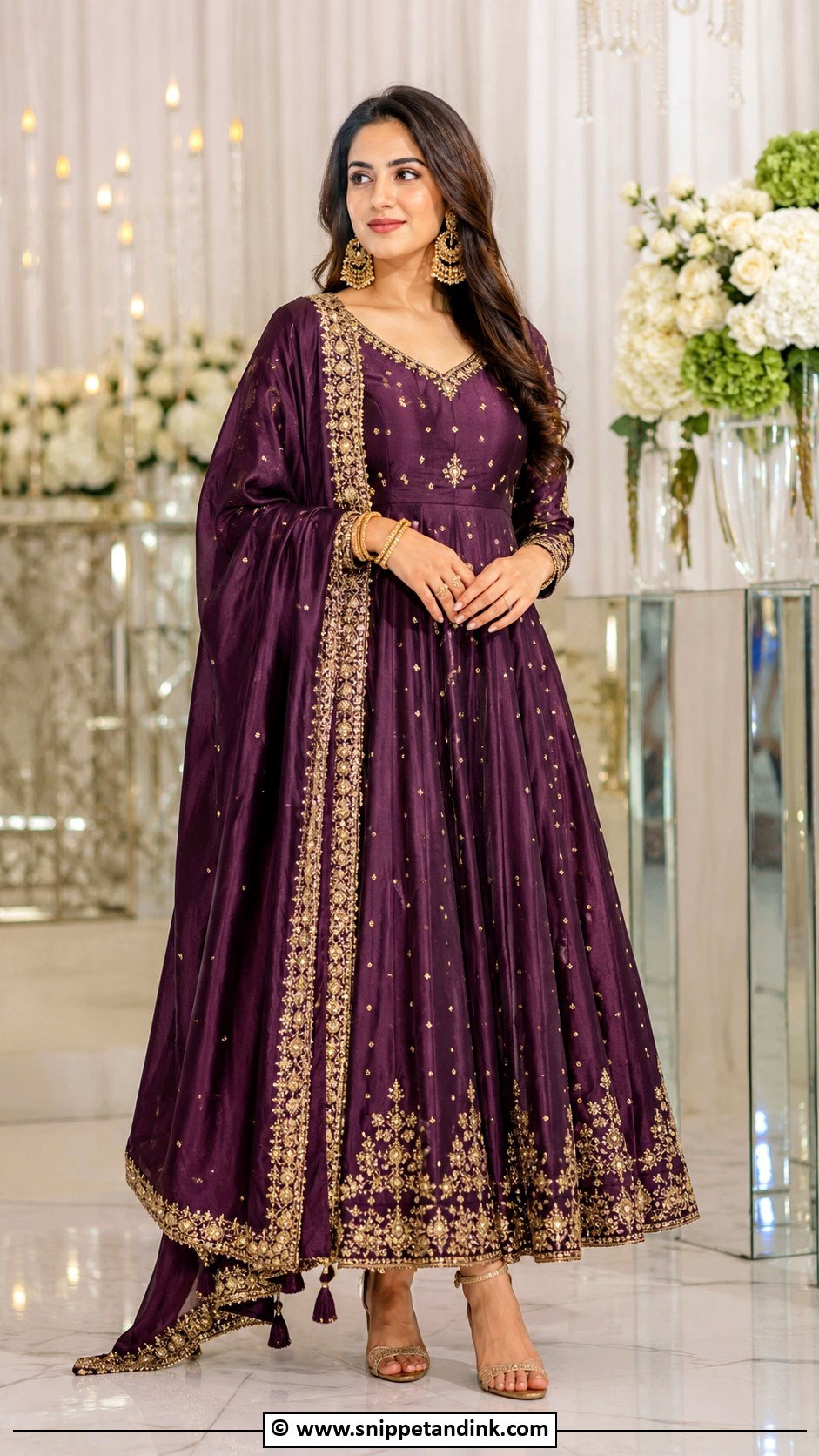
Purple feels royal and still slightly unexpected. Plum and aubergine in velvet or silk with gold embroidery suit winter receptions. Lavender in georgette or organza with pearl work suits daytime. I pair deep purple with antique gold and pale purple with pearls, diamonds or silver. A matching dupatta and a polished hairstyle are all it needs beyond that.
11. Velvet Anarkali Dress for Wedding
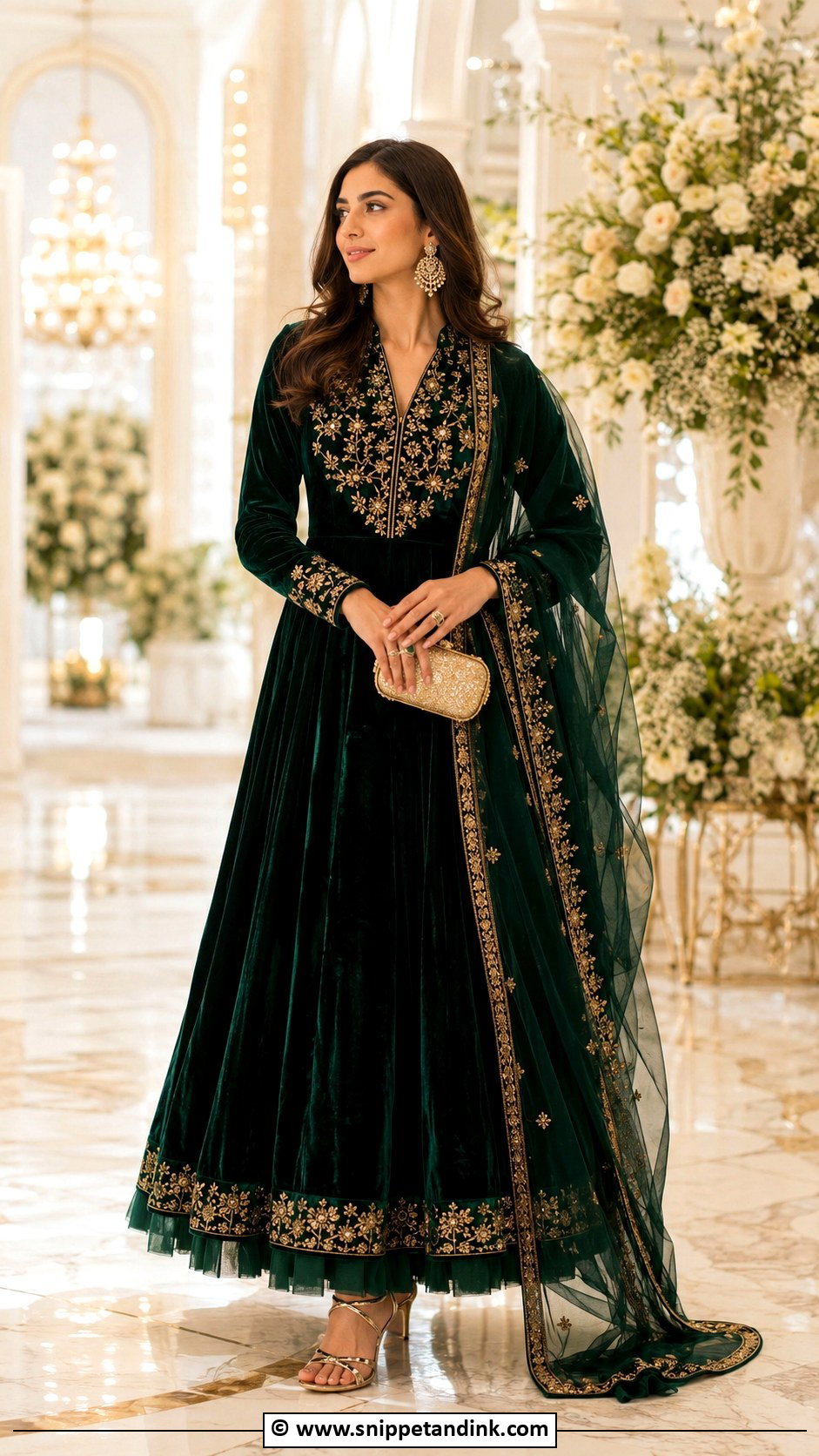
A velvet Anarkali dress is for cold evenings and air-conditioned ballrooms. Velvet is heavy, so I check two things at the fitting: that the bodice lining is soft cotton rather than polyester, which traps heat, and that the shoulder seams carry the weight without slipping. A sheer dupatta balances the bulk. Maroon, emerald, navy and deep purple look richest. Skip a big bag; the dress is enough.
12. Silk Anarkali Dress for Wedding
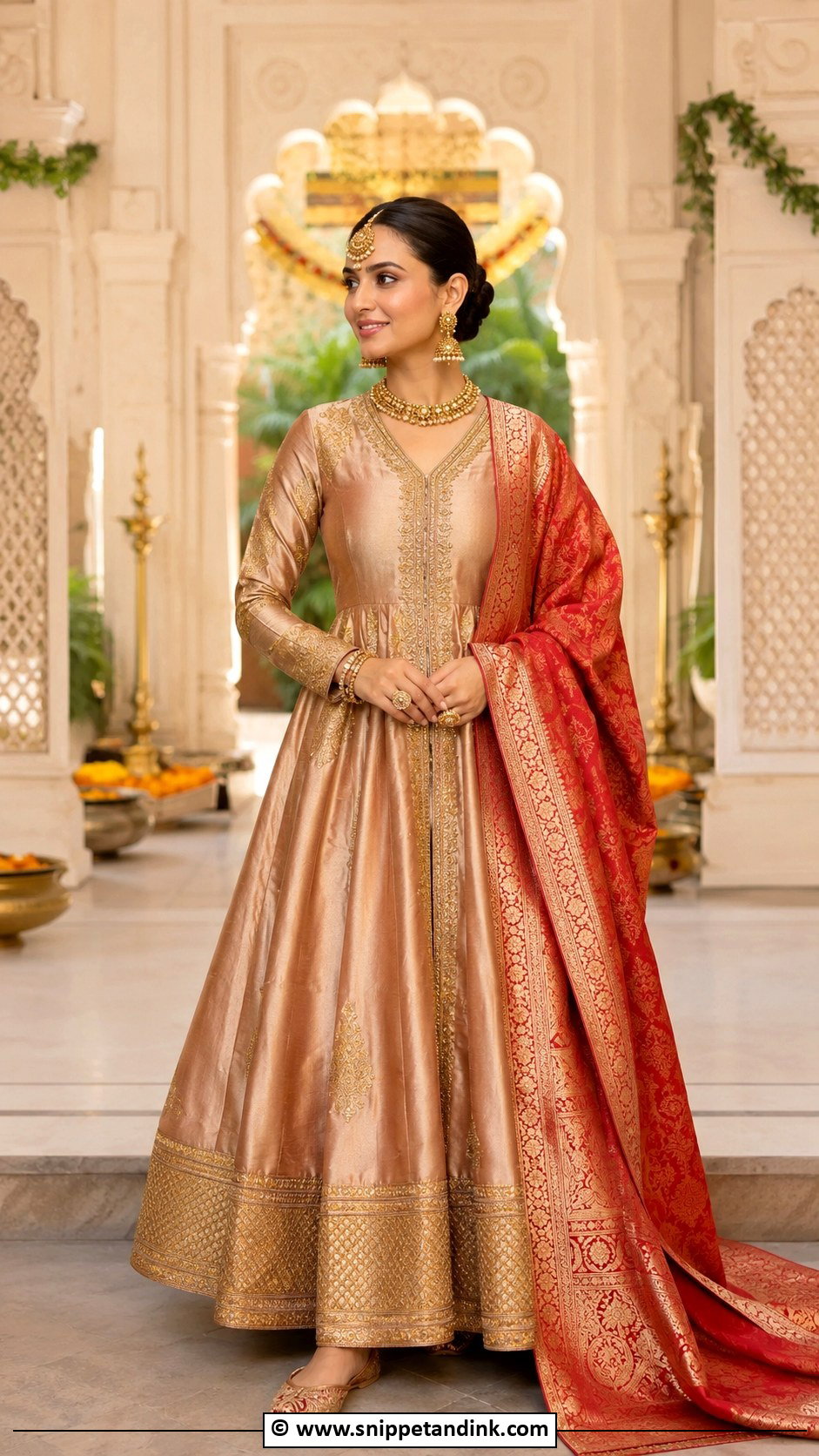
Silk holds the flare in a firm bell, which is why a silk Anarkali looks so graceful when you walk. Banarasi silk carries woven motifs, raw silk has texture, art silk is lighter on the budget. A rich dupatta, temple jewelry and bangles suit it for a main ceremony. High-shine silk can reflect flash, so softer makeup balances it. Silk also creases where you sit; a quick steam before photos fixes it.
13. Georgette Anarkali Dress for Wedding
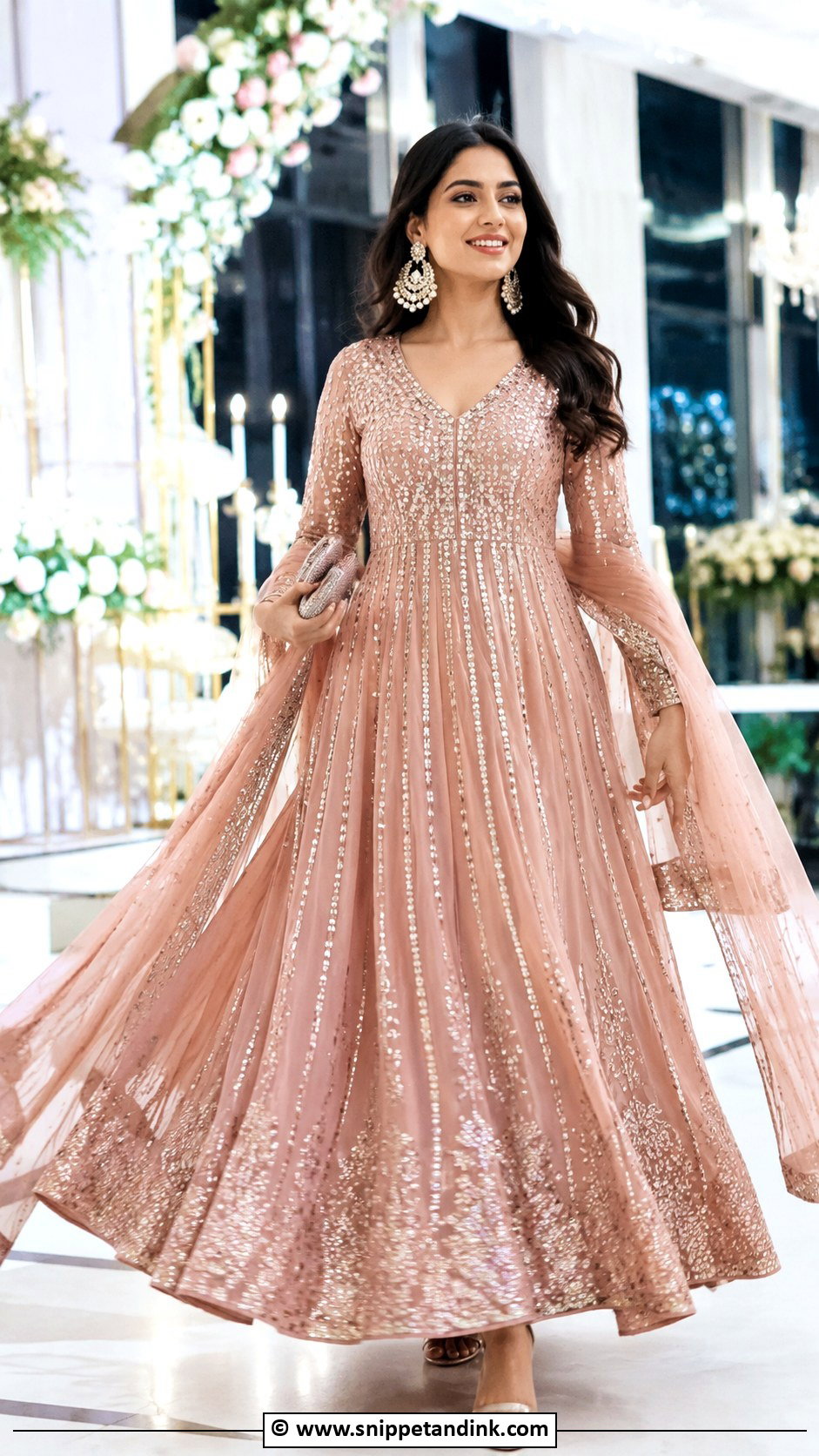
Georgette is my practical pick for a long day. It’s light, it falls well on most body types, and it doesn’t hold creases the way silk does. Sequins, threadwork or a little zari give sparkle without weight. Comfortable block heels and statement earrings are enough. If you’ll be dancing at a sangeet, choose georgette with a cotton lining so you don’t overheat.
14. Chikankari Anarkali Dress for Wedding
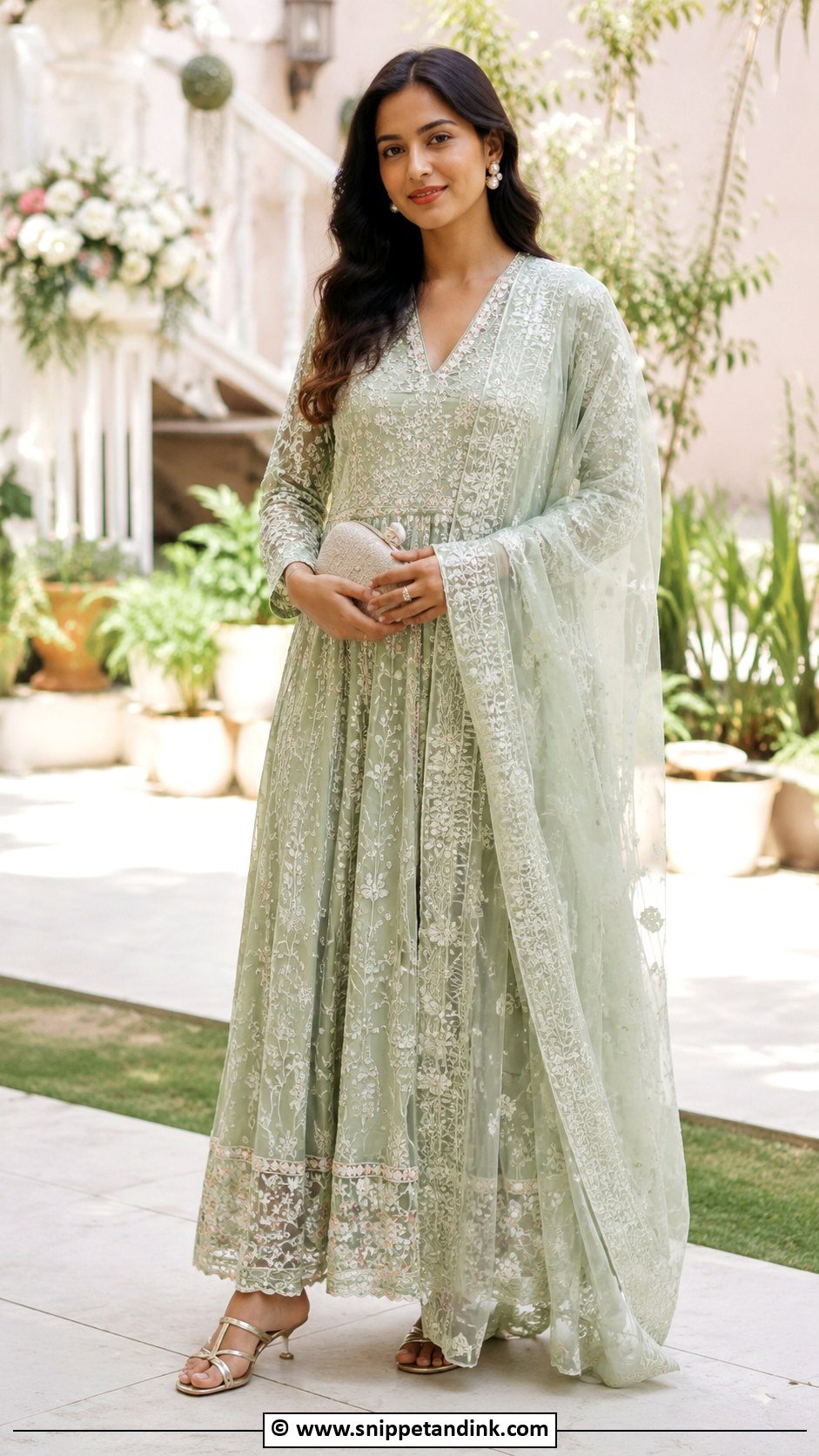
Chikankari is hand embroidery, traditionally white thread on light fabric, and it gives an Anarkali a handmade softness that suits daytime. On its own it can look a little casual for a wedding, so I look for pieces with mukaish (small metal work) or sequins, or pair it with a decorated dupatta. Ivory, mint and pale yellow are the classic grounds. Pearl earrings and soft hair keep it fresh in summer heat.
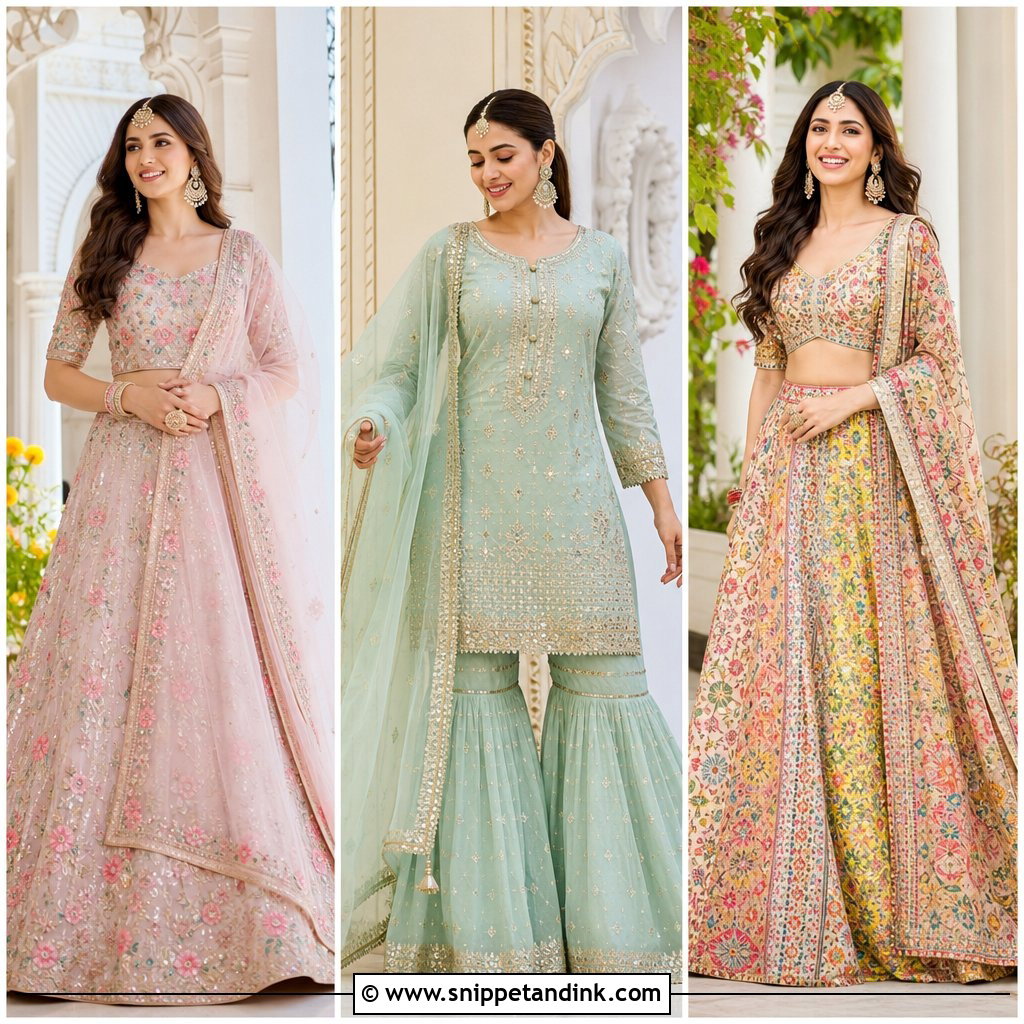
15. Mirror Work Anarkali Dress for Wedding
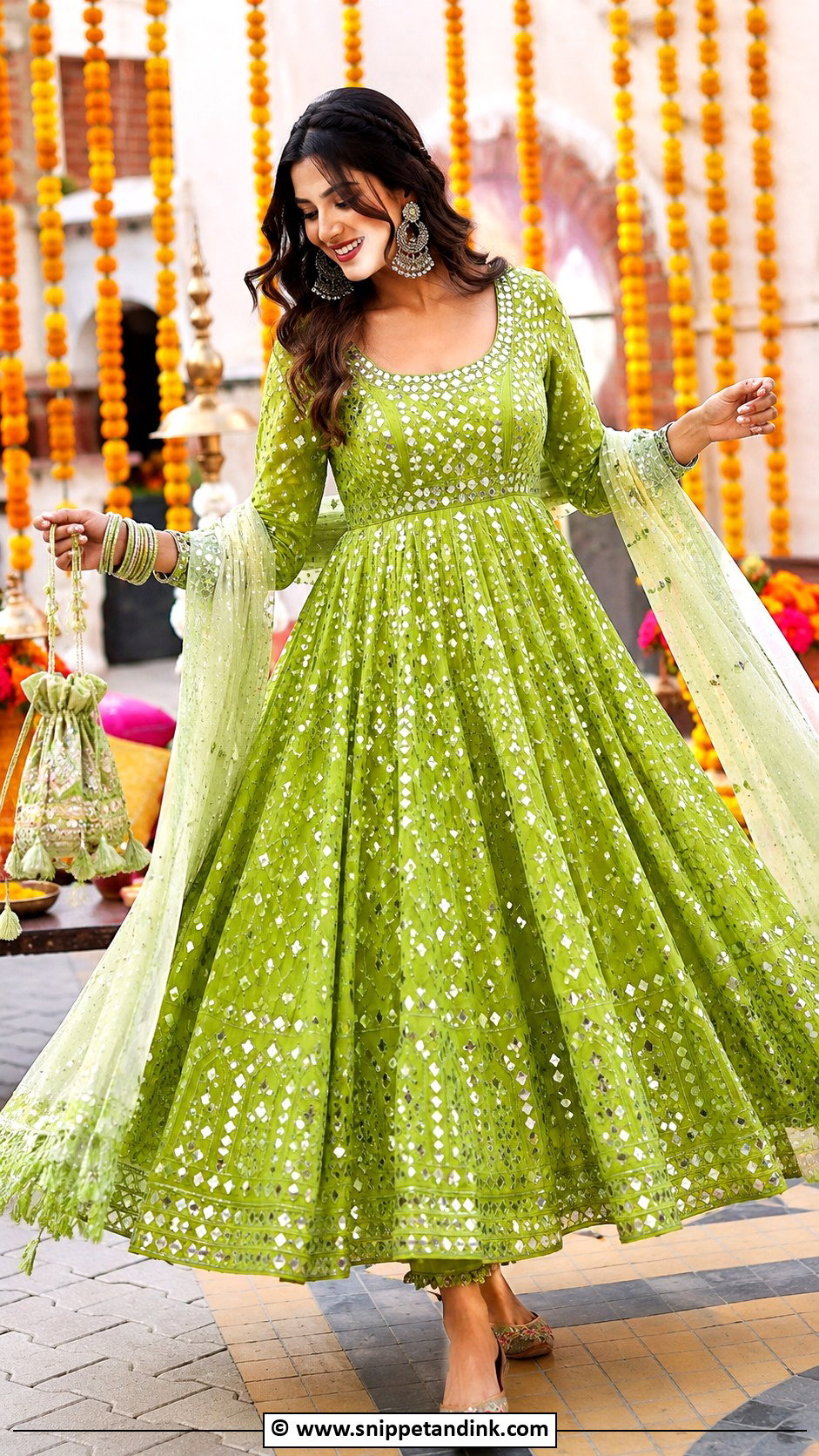
Mirror work belongs at mehendi, sangeet and welcome parties, where the light catches every movement. Bright yellow, orange and pink suit daytime; deeper tones suit evening. Oxidized earrings and a potli bag keep it playful. Since mirrors already shine, I’d skip a heavy necklace unless the neckline is plain. One practical note: mirror work on the inner sleeves can scratch, so check the backing.
16. Sequin Anarkali Dress for Wedding
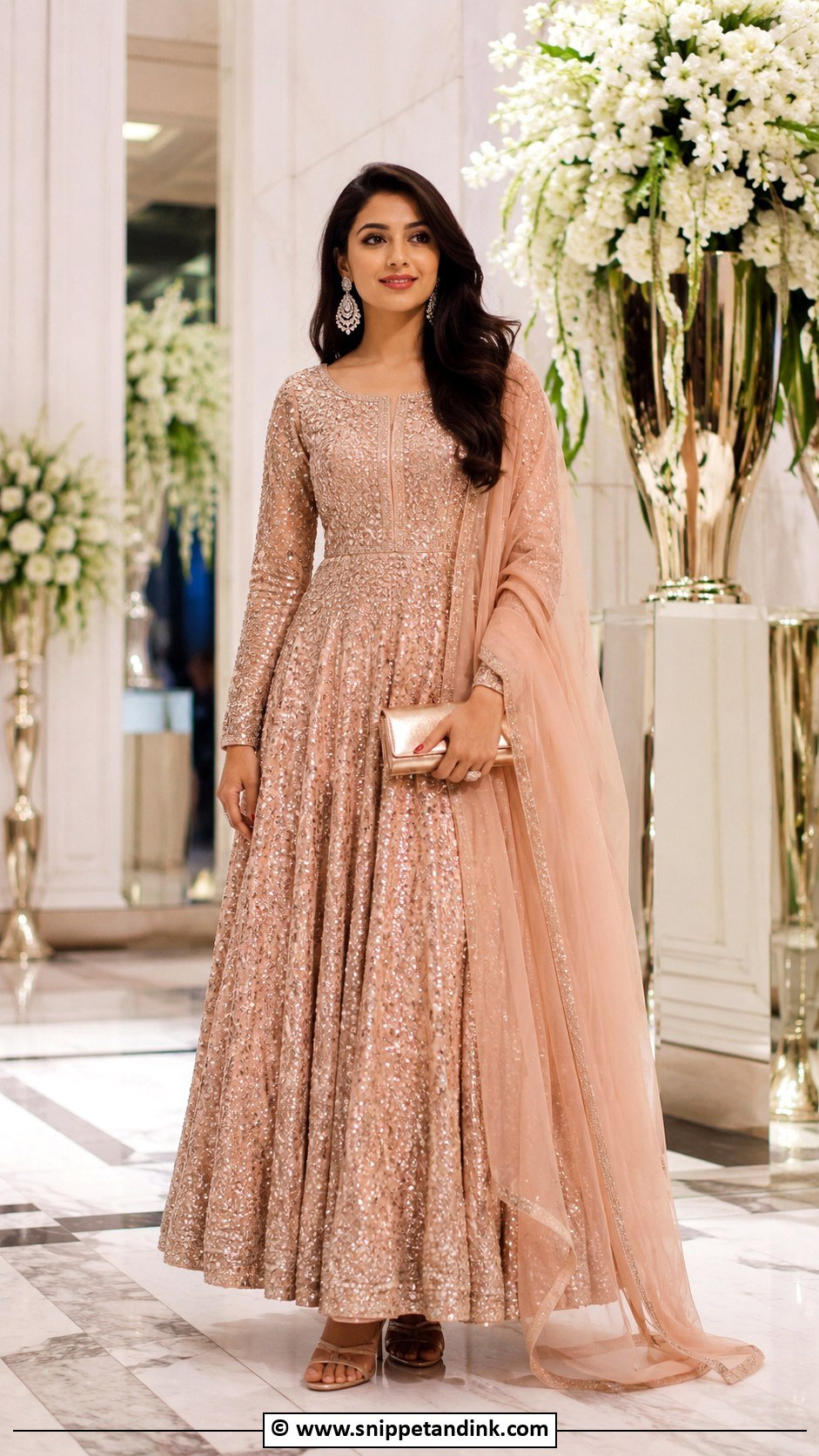
Sequin Anarkalis are for after dark. Soft shimmer looks more elegant than dense full coverage, and champagne, rose gold, navy and emerald all photograph well at night. Sequins can catch on a net dupatta and on other guests’ clothes during hugs, so I pair them with a smooth, sheer dupatta or none at all. A sleek hairstyle and clean makeup keep the look modern.
17. Gota Patti Anarkali Dress for Wedding
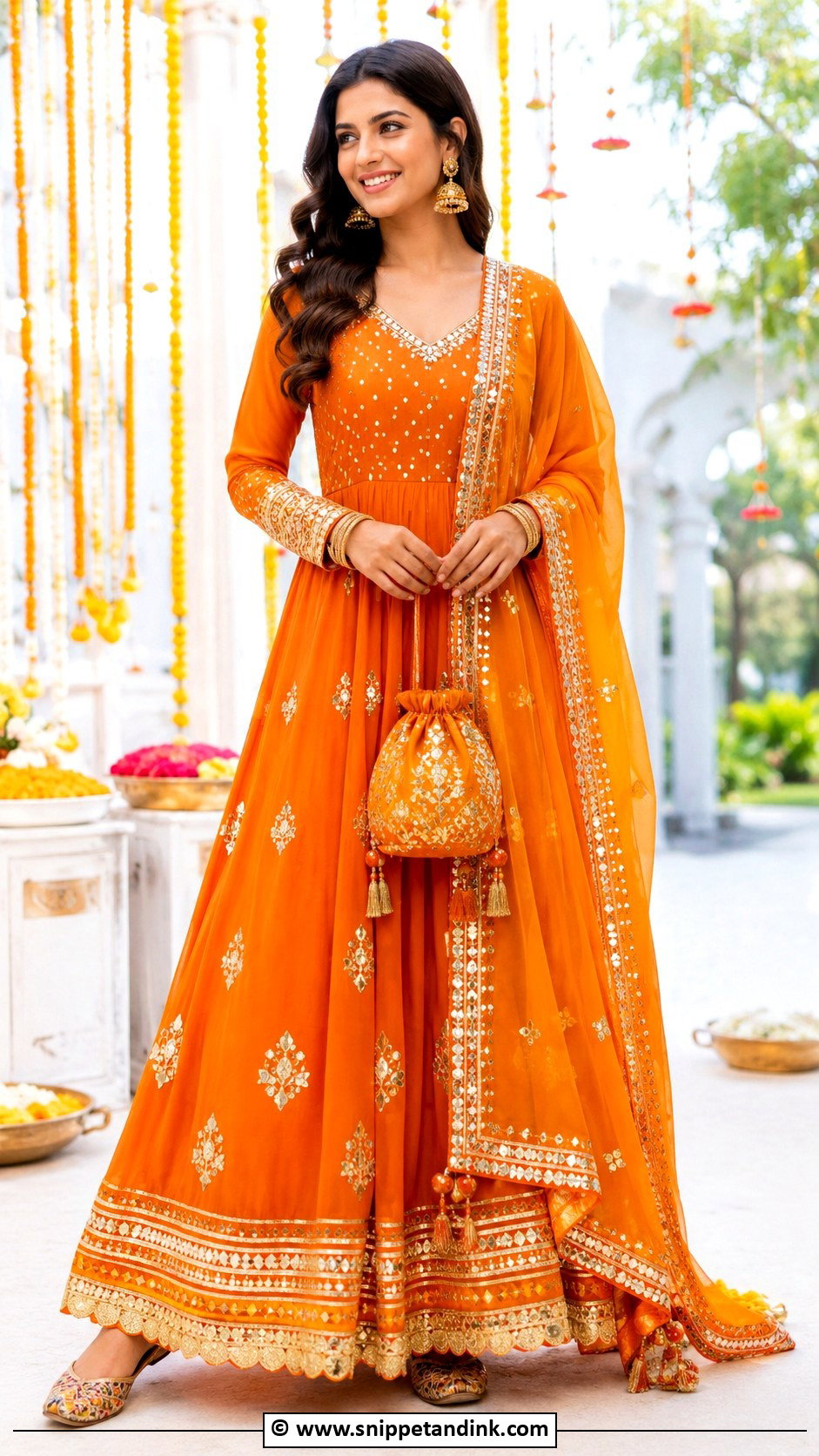
Gota patti is flat metallic ribbon appliqué, so it shines without the weight of zardozi. It’s traditional for haldi, mehendi and daytime ceremonies, in yellow, orange, pink, green or ivory. A gota-bordered dupatta, gold jhumkas and embellished juttis keep it in one family. If you prefer lighter, choose scattered gota motifs instead of dense work.
18. Floor Length Anarkali Dress for Wedding
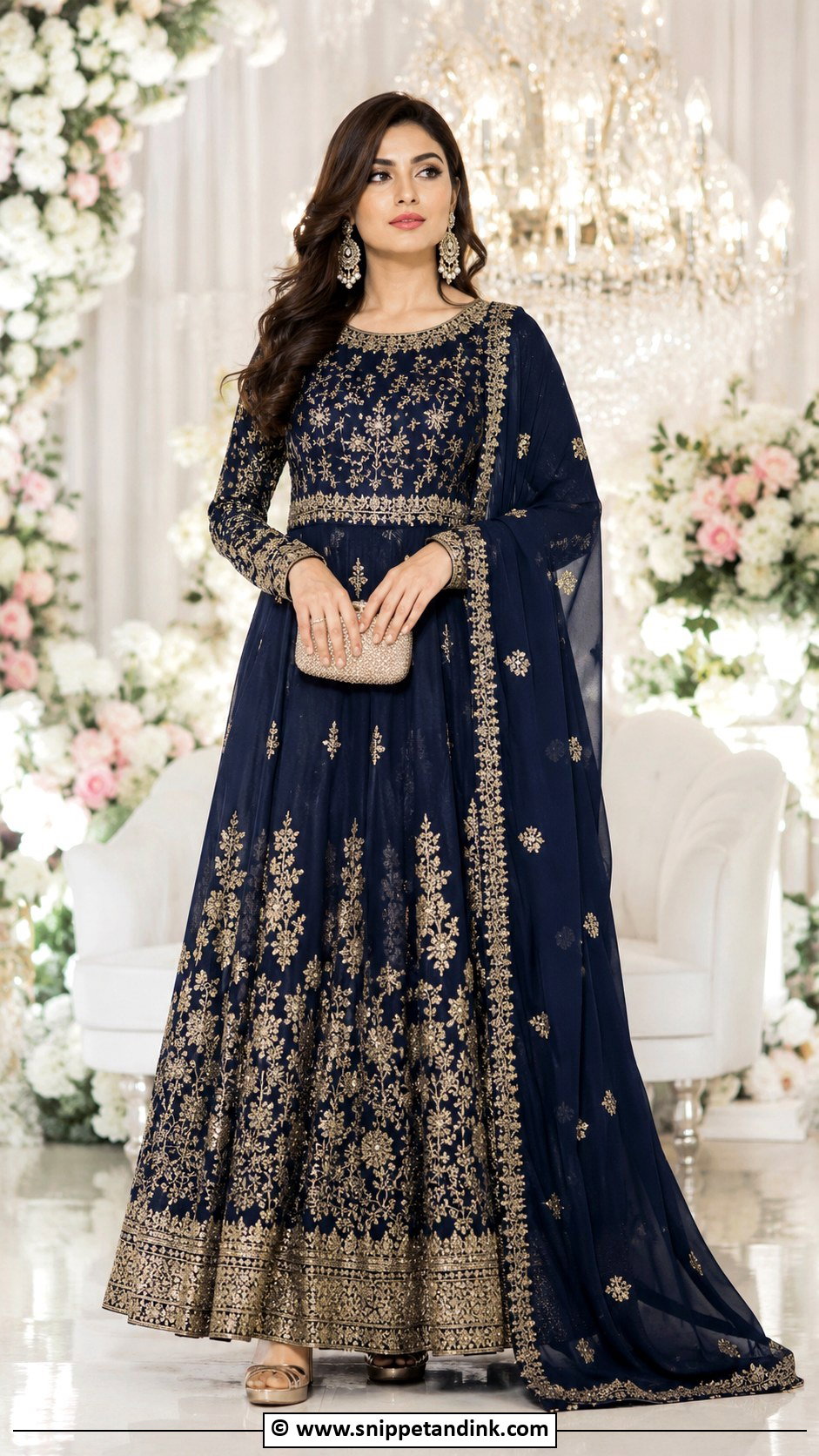
A floor-length Anarkali dress gives gown proportions with Indian structure. The length should be set with your shoes on, ending just above the floor, because a hem that brushes the ground collects dust and catches heels. A fitted bodice with a wide flare balances the length. Silk, georgette, net or velvet depending on season. The dupatta should be lighter than the dress so it doesn’t drag the look down.
19. Jacket Anarkali Dress for Wedding
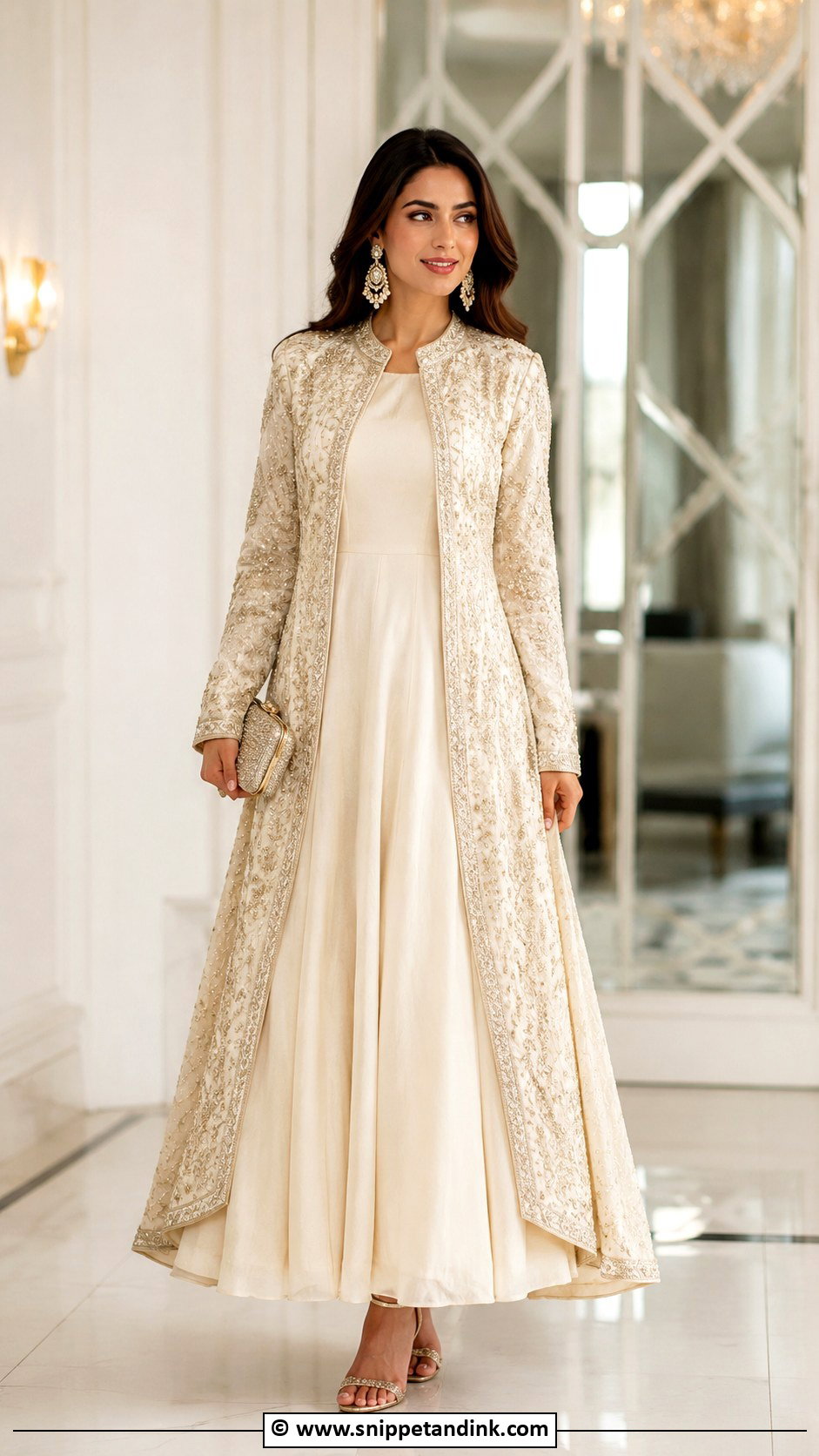
A jacket Anarkali is a layering trick: a long embroidered jacket over a plain Anarkali, or a light printed one for day. It adds coverage, which some families appreciate, and it lets you take a layer off as the evening heats up. If the jacket is detailed, I’d skip the dupatta entirely. Drop earrings and a neat clutch finish it. It’s a smart choice for women who want to cover the arms without hiding the shape.
20. Cape Anarkali Dress for Wedding
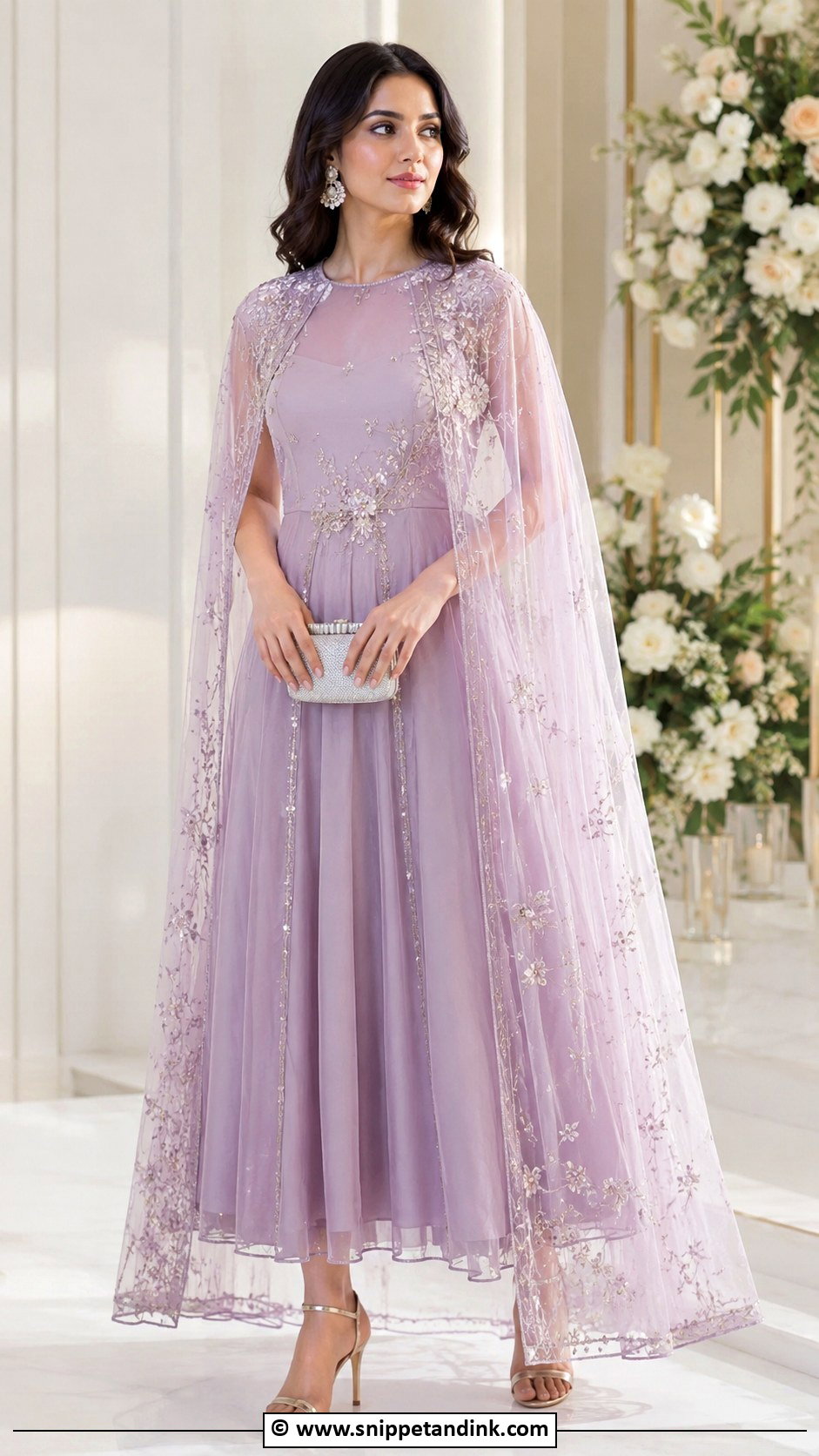
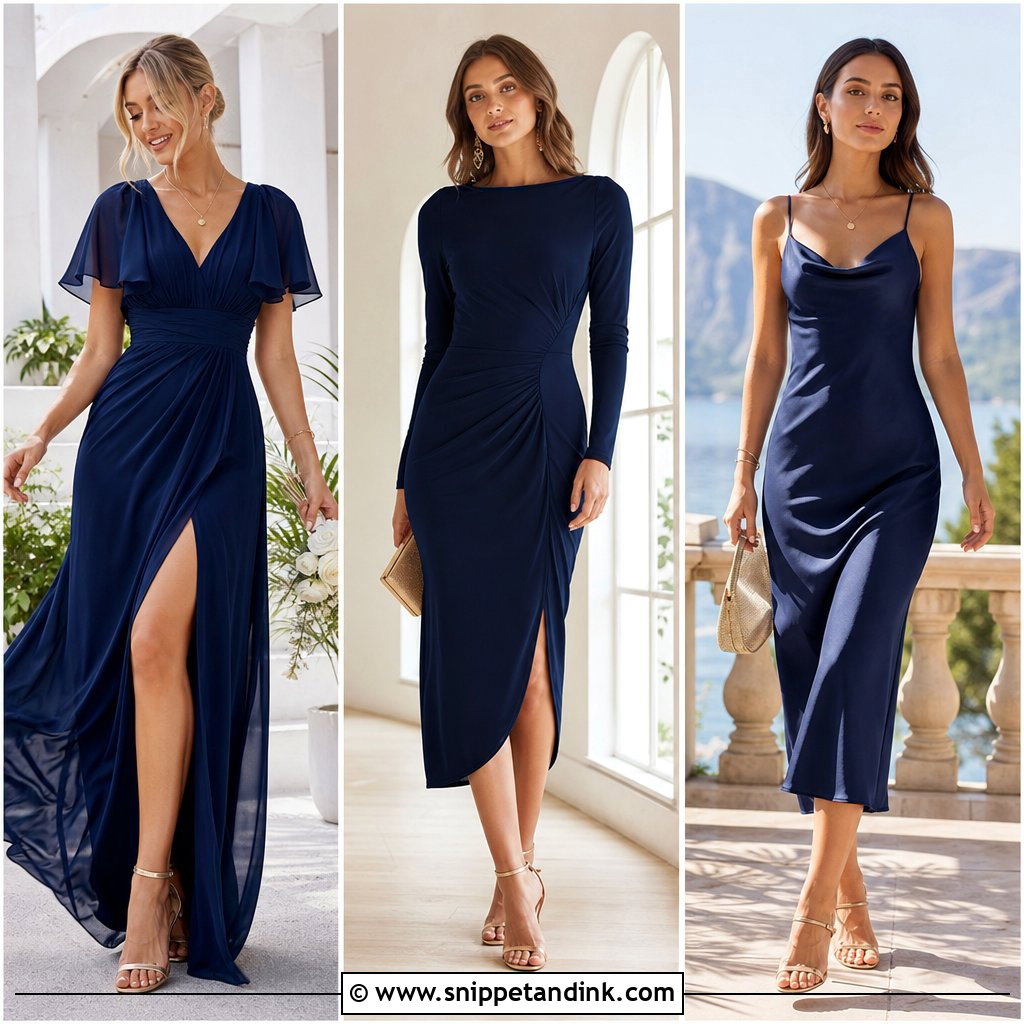
A cape replaces the dupatta and leaves both hands free, which is the real reason I recommend it. Sheer, sequined or softly draped capes all work over a fitted bodice and flowing skirt. Because the cape frames the shoulders, skip a heavy necklace and wear statement earrings instead. It suits receptions and modern sangeet nights better than traditional ceremonies.
21. High Low Anarkali Dress for Wedding
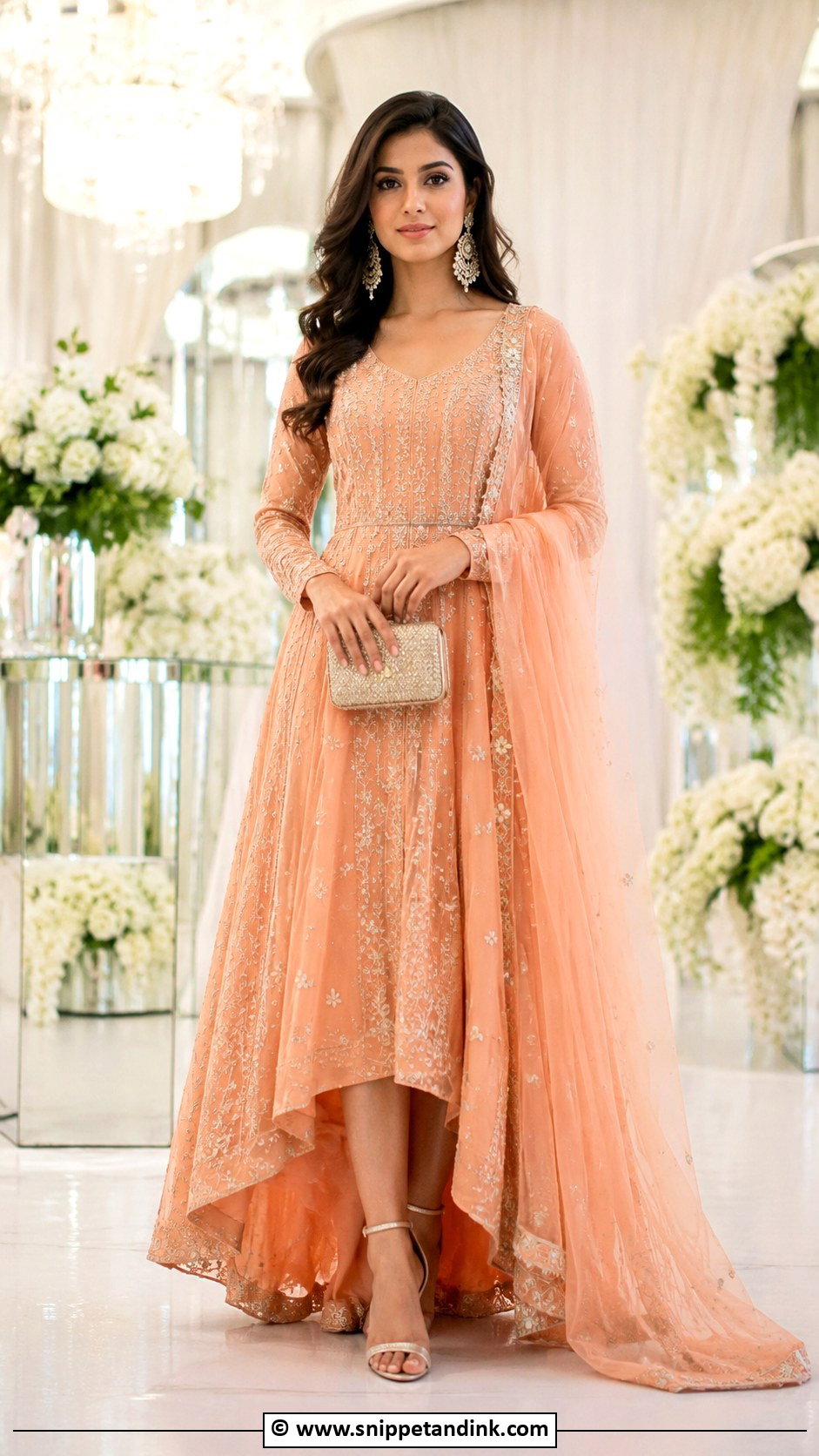
A high-low hem shows your shoes, so the shoes need to be worth seeing: embellished heels, embroidered sandals or juttis. Georgette, organza or silk blends hold the curve of the hem without stiffness. The front length matters most; it should clear the ankle so you can walk without the hem catching. A light dupatta or none at all, with chandelier earrings. It suits sangeet nights and semi-formal events.
22. Printed Anarkali Dress for Wedding
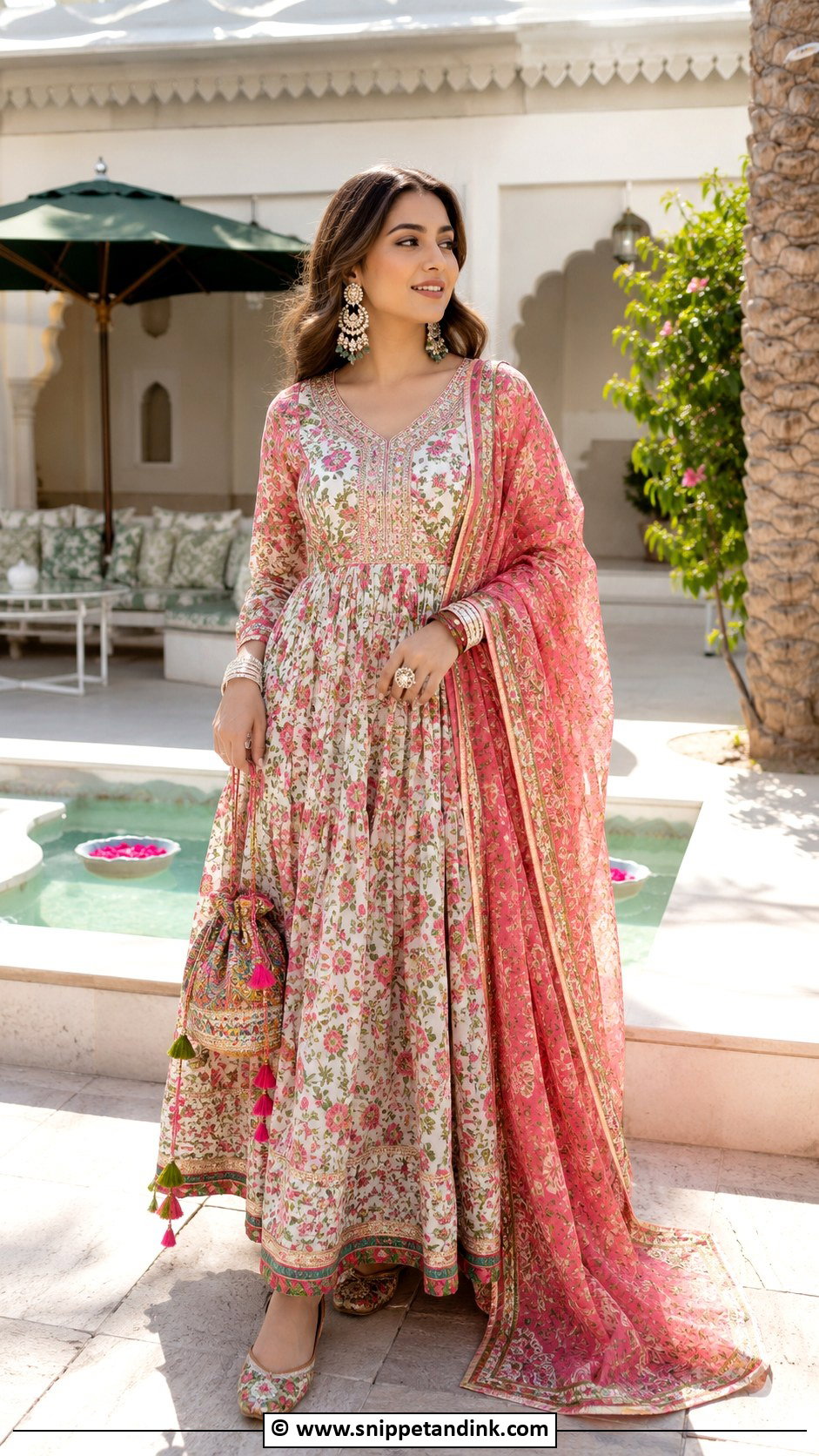
Prints suit lighter functions: a daytime mehendi, a brunch, a destination welcome. Floral, paisley, block print and digital print all work, but a print on its own can feel casual, so I look for an embroidered neckline, a gota border or a contrast dupatta to make it festive. Juttis and a colorful potli fit the mood. Printed Anarkalis are lightweight to pack and easy to rewear.
23. Floral Anarkali Dress for Wedding
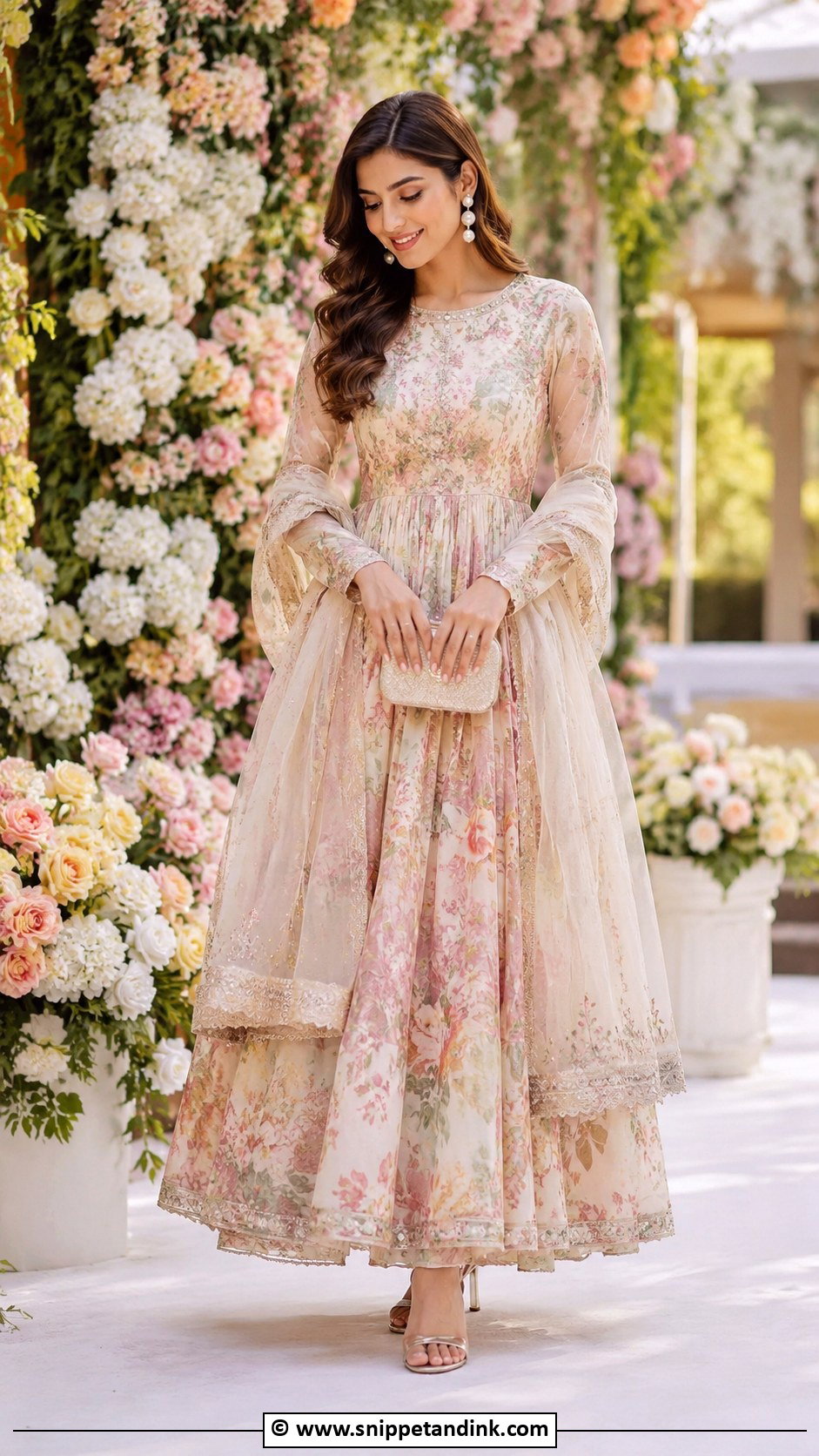
Floral Anarkalis come in two versions: printed florals for a soft, casual feel, and embroidered florals for something more formal. Pastel bases with pink, blue or peach flowers look pretty in natural light at garden weddings. A sheer dupatta lets the pattern show through. Pearl earrings, metallic sandals and loose or half-up hair keep it light.
24. Organza Anarkali Dress for Wedding
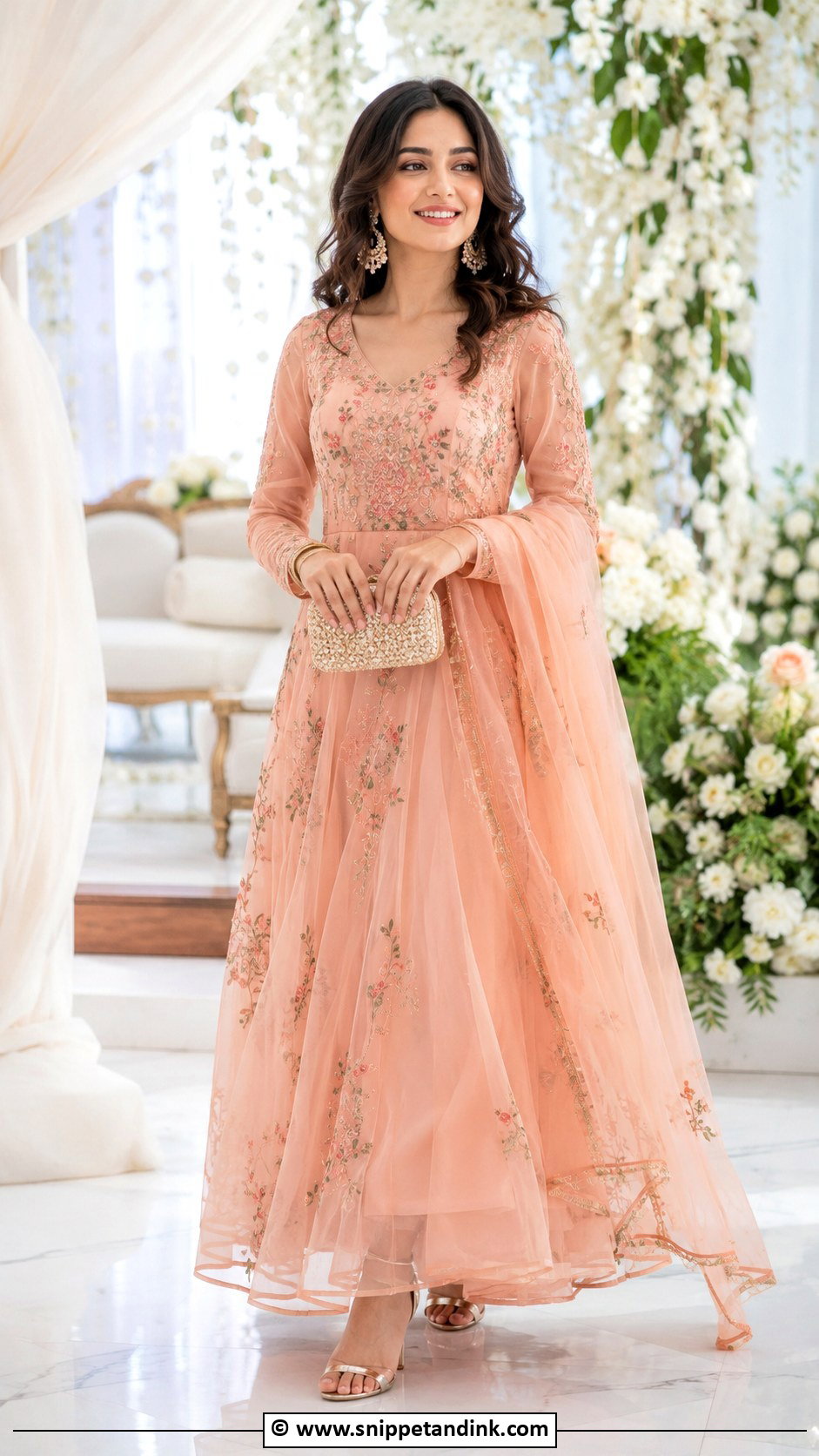
Organza has body, so it holds a wide flare without stiff layers underneath. That makes it feel airy at a daytime reception or an engagement. Pastels, ivory, peach and soft green with floral embroidery or pearl work suit it. Organza creases sharply and those creases don’t always steam out, so I’d hang it the moment you arrive. Slim heels and delicate earrings keep it refined.
25. Net Anarkali Dress for Wedding
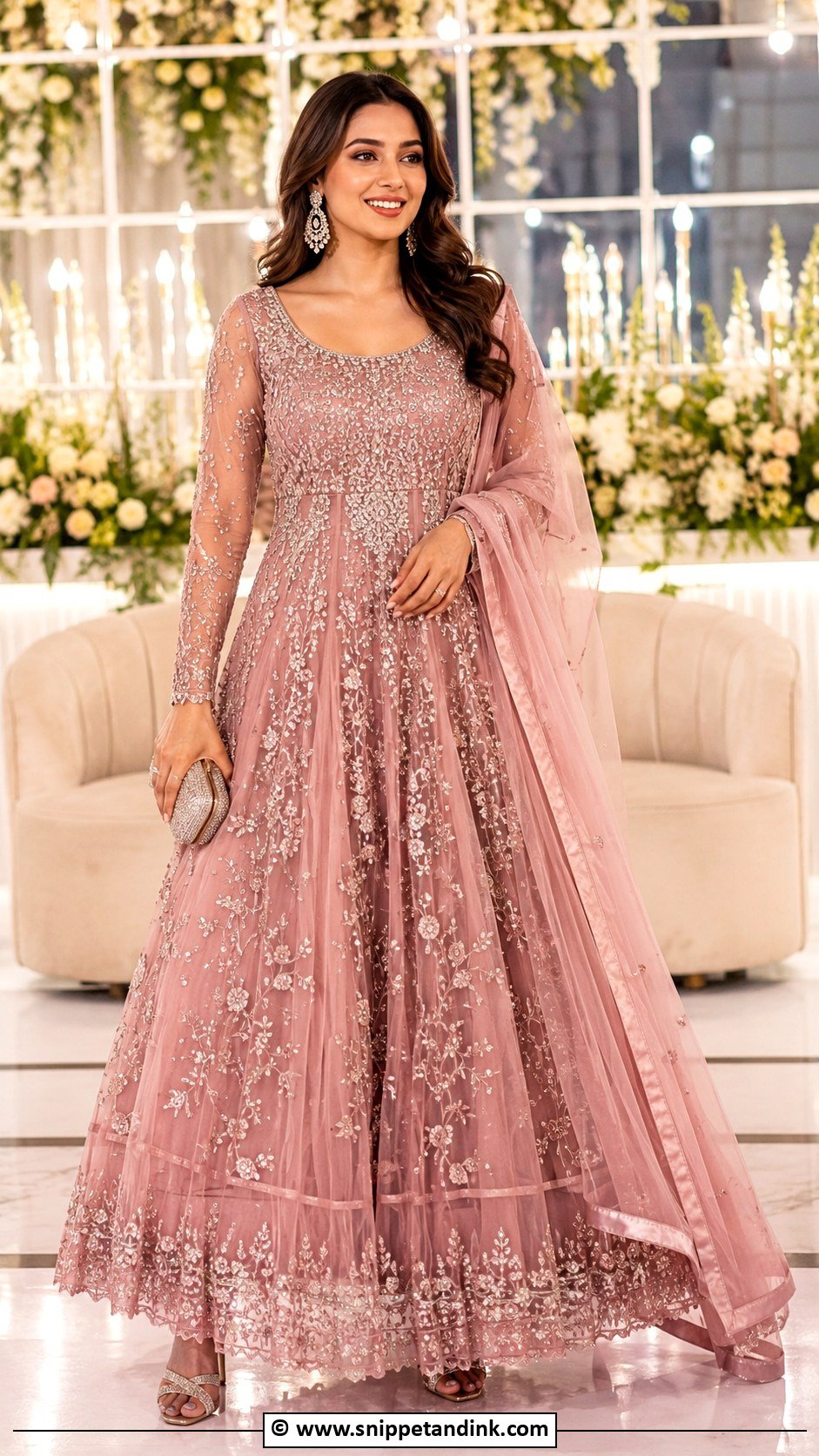
Net Anarkalis get their volume from layers, and the lining makes or breaks them. A cheap lining is scratchy and too short, so check that it’s soft, opaque and runs nearly to the hem. Blush, navy, deep berry, ivory and emerald look refined in net. Pair it with a lined dupatta, heels and sparkling earrings. The bodice should fit neatly so the flare reads clean.
26. Anarkali Dress With Dupatta for Wedding
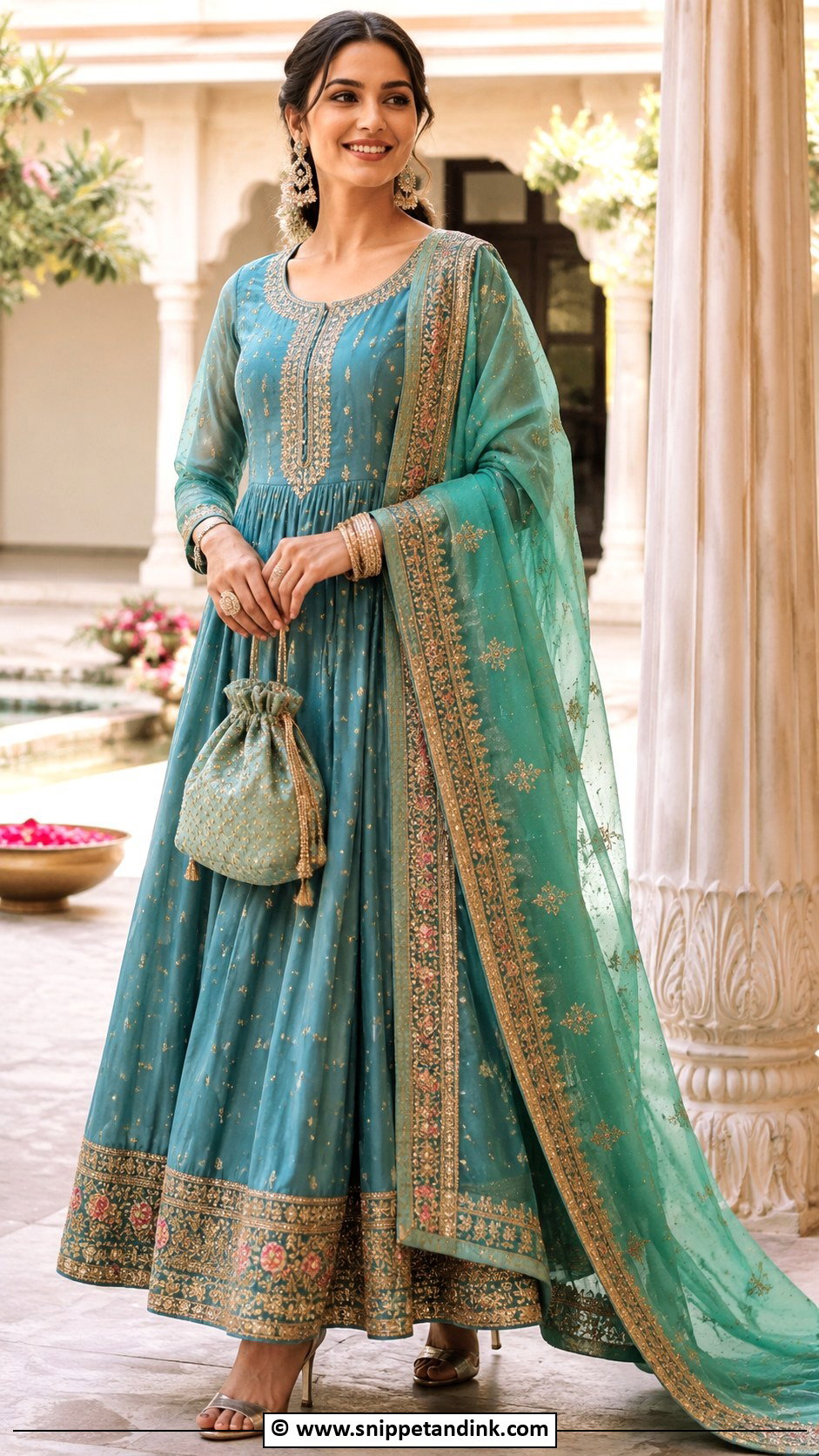
The dupatta can change an Anarkali completely. A heavy embroidered one makes a simple dress formal; a sheer organza one balances a detailed dress. I drape over one shoulder for ease, across both for a traditional look, and pin it at the shoulder and waist for a hands-free night. Match footwear to the border color, not the dress, and the whole outfit pulls together.
27. Anarkali Dress With Palazzo for Wedding
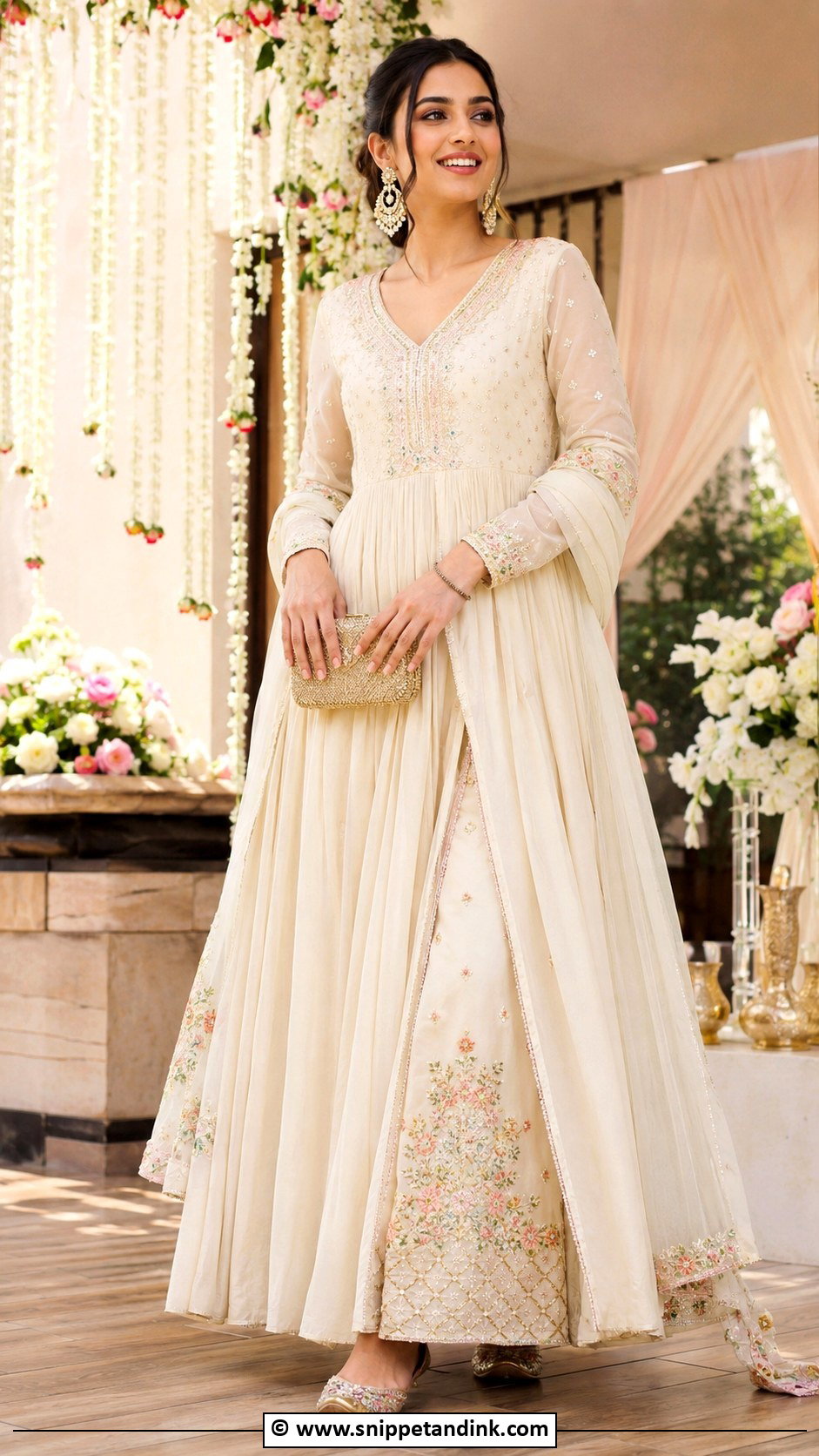
An Anarkali over palazzo pants trades the fitted churidar for ease. Churidars ruche at the ankle and can feel tight after a big dinner; palazzos don’t. A side-slit or slightly shorter Anarkali shows the palazzo. Heels or juttis, a light dupatta and statement earrings work well. It’s the combination I suggest for women walking, sitting and dancing across a long event.
28. Anarkali Dress With Sharara for Wedding
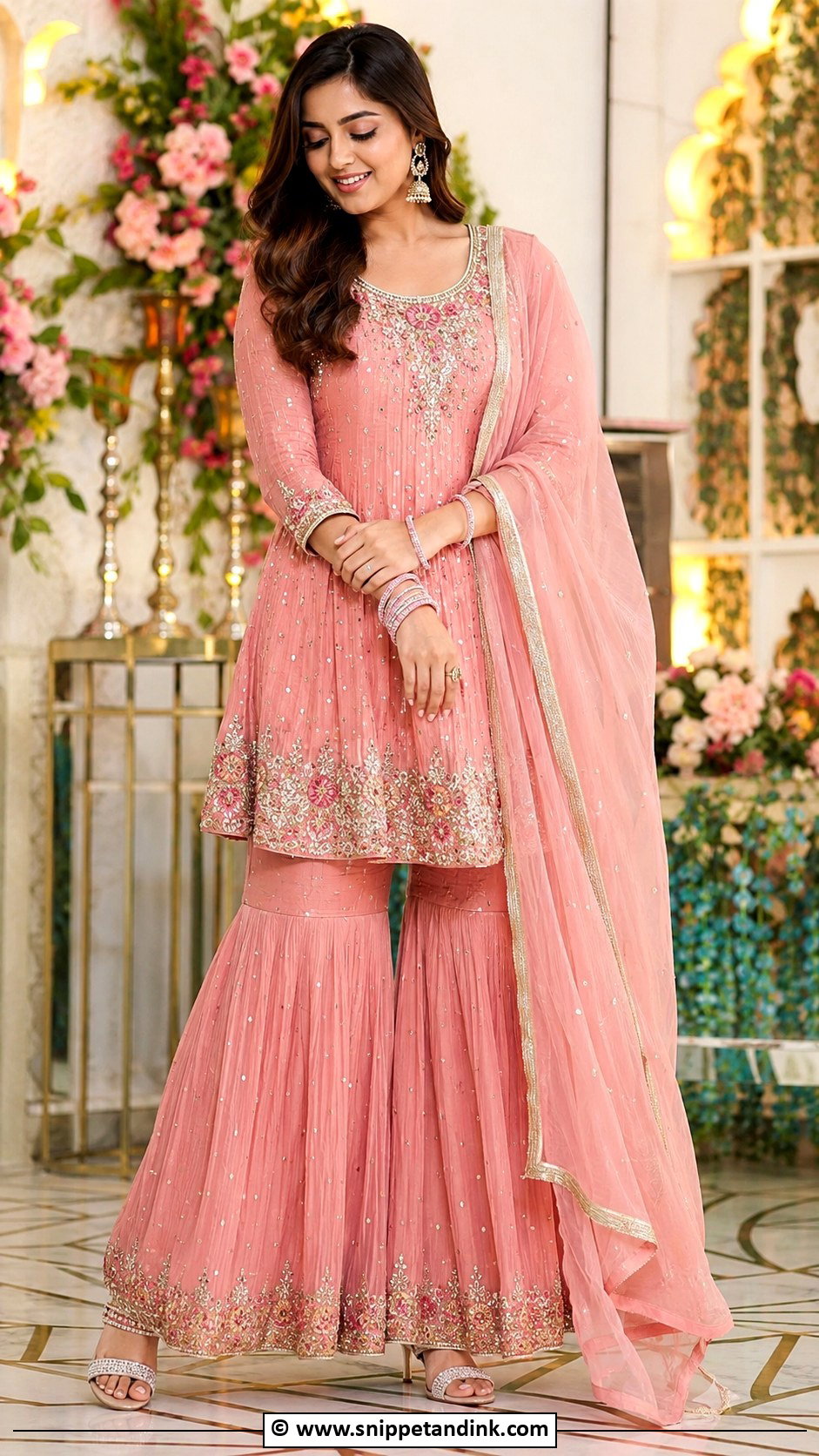
An Anarkali over a sharara doubles the volume, so the fit has to be clean at the shoulders and waist or the whole thing looks heavy. A shorter Anarkali or a front slit lets the sharara show. Georgette, silk or chiffon sets suit sangeet and mehendi. A matching dupatta, jhumkas and embellished heels complete it. It’s livelier than a classic Anarkali and still traditional.
29. Bridal Anarkali Dress for Wedding
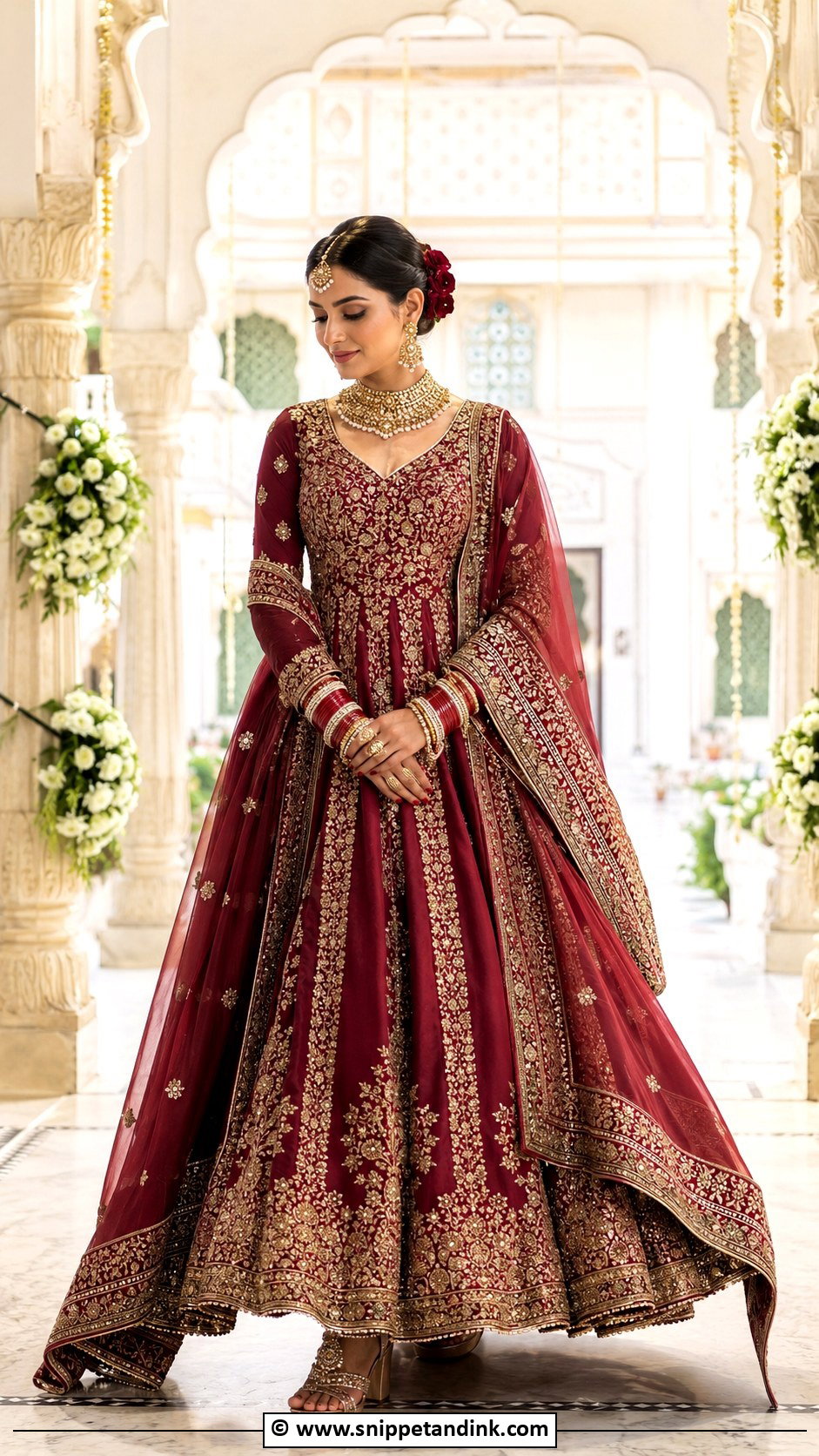
A bridal Anarkali is the comfortable alternative to a lehenga, and for nikah ceremonies, intimate weddings and receptions it can be every bit as grand. Silk, velvet, brocade or layered georgette with zari, zardozi or pearl work, in red, maroon, gold, blush or emerald. Heavy zardozi adds real weight, so I’d do a full walk and sit in it at the final fitting with the bridal dupatta pinned on. The flare should be dramatic but leave your stride free.
30. Simple Anarkali Dress for Wedding
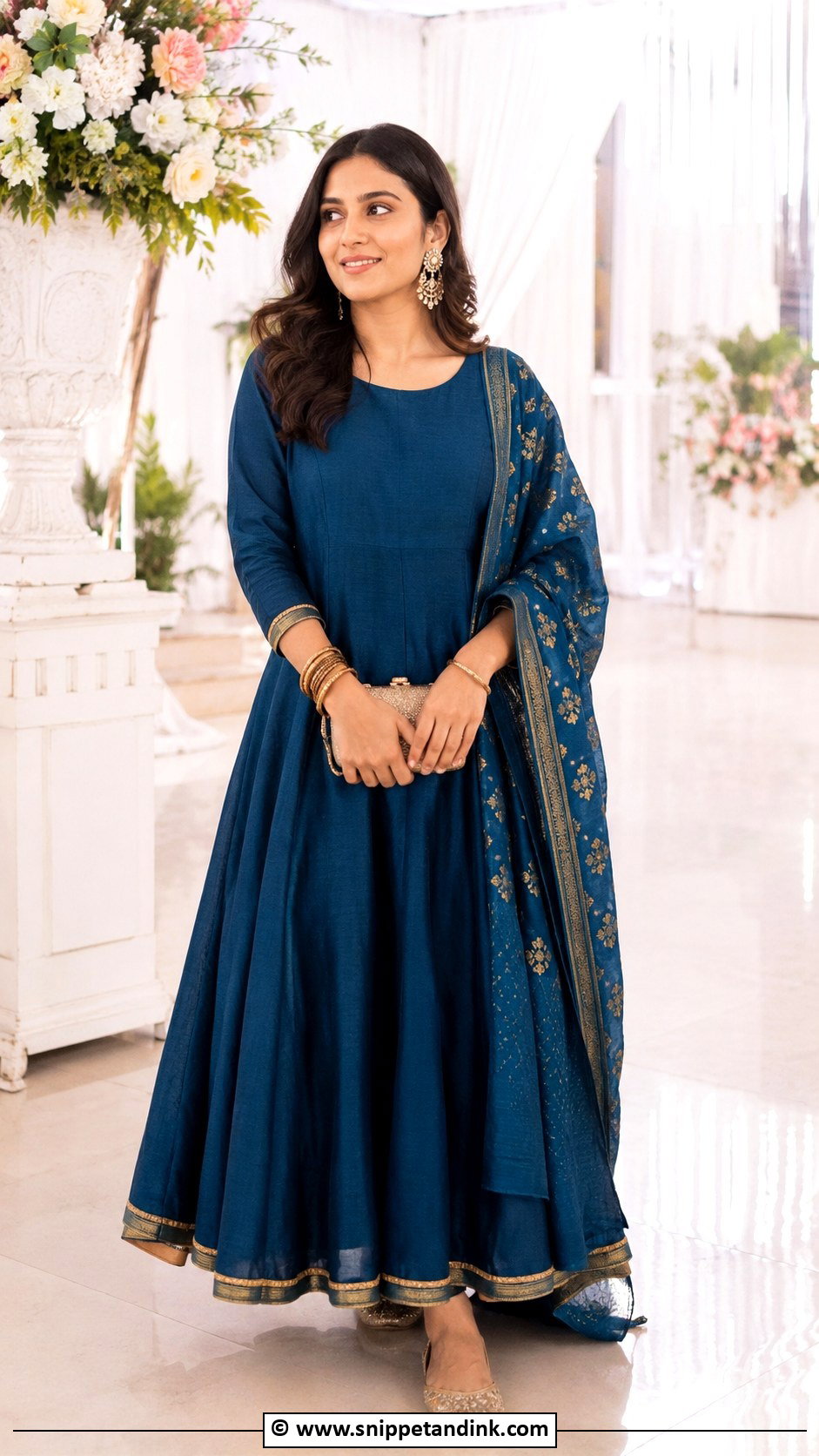
A simple Anarkali can carry a wedding with the right accessories. A clean silhouette in silk, cotton silk or chanderi with a small border is the base, then a statement dupatta, festive earrings, bangles and embellished footwear do the dressing up. Soft colors for day, jewel tones for evening. It’s the easiest piece to restyle for future festivals, which is why I tell clients it’s rarely a wasted buy.
Packing an Embroidered Anarkali for a Four-Function Week
Wedding weeks mean suitcases, and heavy Anarkalis don’t love them. This is how I pack them for clients:
- Turn the dress inside out so the embroidery faces in, then wrap it in a cotton muslin cloth or an old cotton sari. Plastic traps moisture and can dull zari.
- Fold the flare along the kali seams rather than across them, which keeps creases where the eye won’t land.
- Lay sequin and mirror pieces flat on top of the case, not underneath heavier items.
- On arrival, hang light fabrics, but lay heavy velvet and zardozi pieces flat. Their own weight stretches the shoulders on a hanger.
- Steam from the inside, never iron directly over embroidery.
After the wedding, most embroidered Anarkalis should go to a dry cleaner who handles ethnic wear. Air them for a day before storing, and refold every few months so the folds don’t set into permanent lines.
Day Fabrics, Night Fabrics and the Right Hem
Anarkalis cover more of a wedding week than almost any other outfit, from velvet and sequins at a reception to chikankari and georgette at a daytime mehendi. The dress is only half of it; the dupatta, shoes, jewelry and hair decide whether it reads festive or casual. Light fabric and soft colors by day, richer tones and polish at night. Get the length right with your shoes on, and the rest is choosing what makes you happy.
You'll Like These Ideas:


Leave a Reply