
Waves are the style brides ask me for most, and the one most likely to disappoint if it’s built wrong. They look relaxed in the reference photo, but a wave that lasts from a morning ceremony to a late dance takes careful setting, the right tool for the hair type and a plan for humidity. Every wave below works with different dresses, veils and lengths, from glossy Hollywood ridges to loose beach texture, half-up styles and soft updos. For each one, I’ve added how I’d build it and who it suits, plus the moment it tends to fall apart, so you can walk into your trial with a clearer brief.
Wand, Flat Iron or Hot Rollers for Each Wave
The tool changes the wave more than most people realize. When a bride shows me a photo, the first thing I work out is how that wave was made.
- A curling wand gives a rounder, softer curl that brushes out into loose waves. Good for most hair types.
- A flat iron twisted as it glides makes flatter, more modern waves with straight ends. Best for beach texture and lobs.
- Hot rollers give volume at the root and a soft bend. I use them on very fine hair, which holds a roller set better than an iron curl.
- A deep waver creates uniform ripples for mermaid waves, but it’s slow and needs long, healthy ends.
Whatever the tool, I let each curl cool in a pin curl before brushing. That cooling time is where the hold comes from.
Barrel size matters too. A large barrel on long, heavy hair often gives almost nothing by the evening, so I go one size smaller than the wave you see in the photo and let it relax into place over the day.
1. Hollywood Waves for Long Bridal Hair
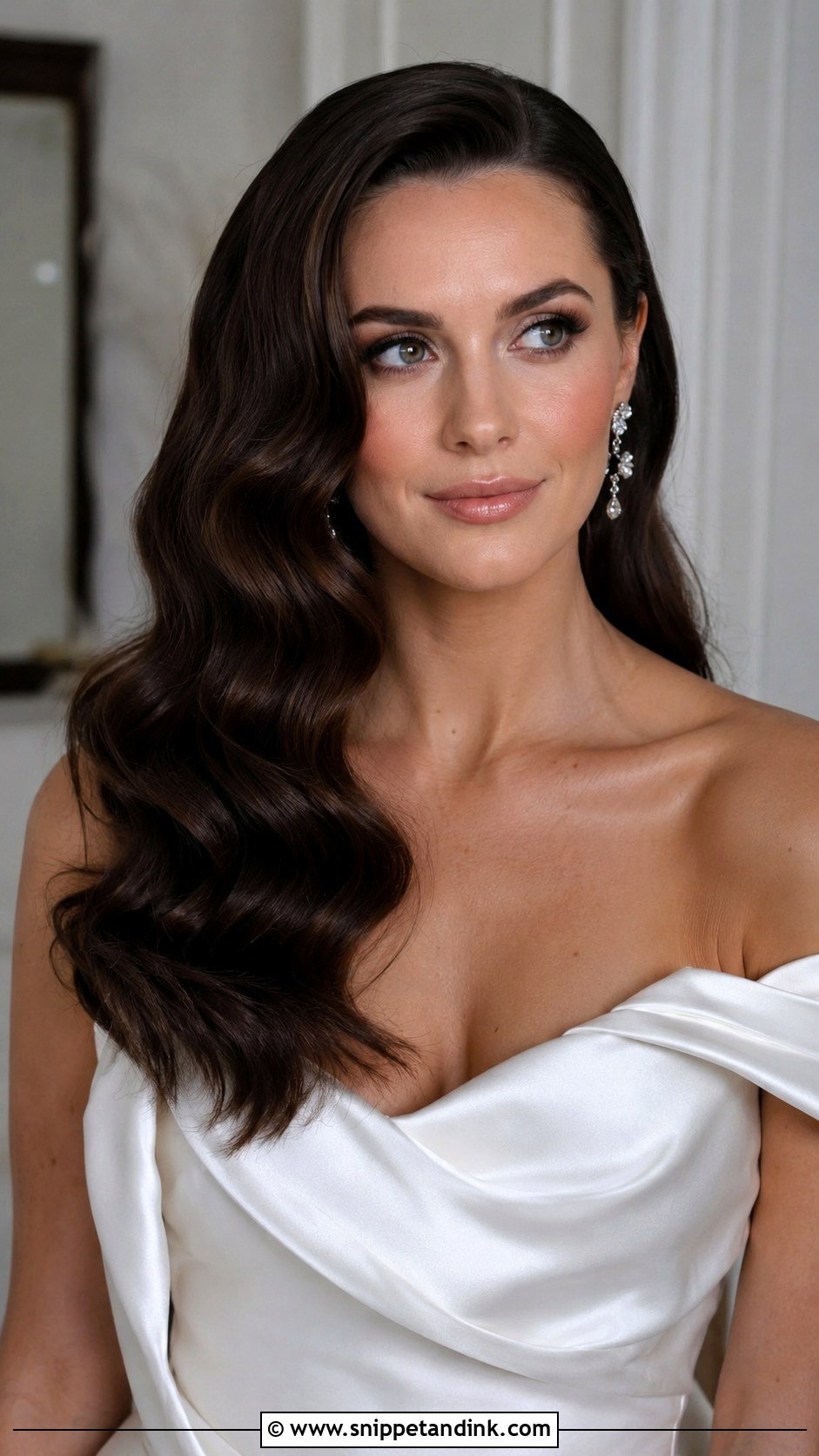
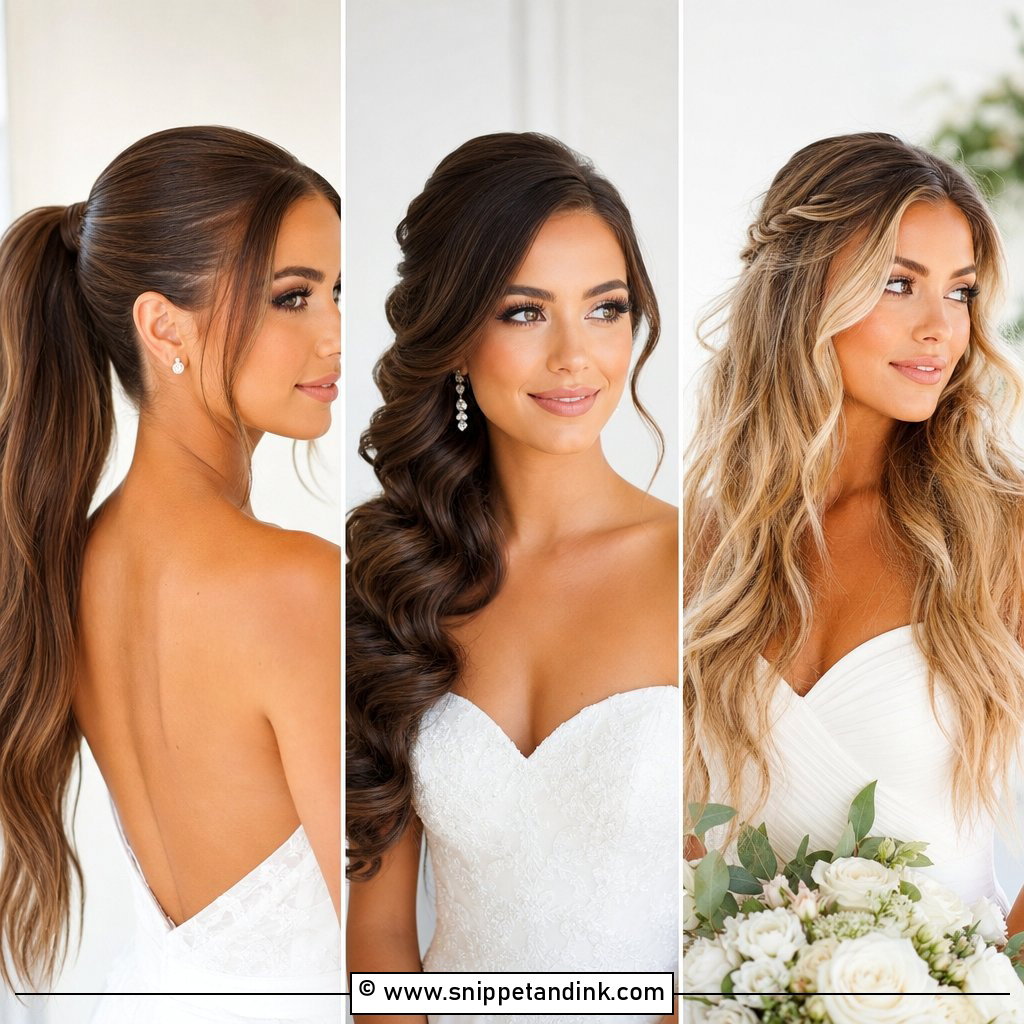
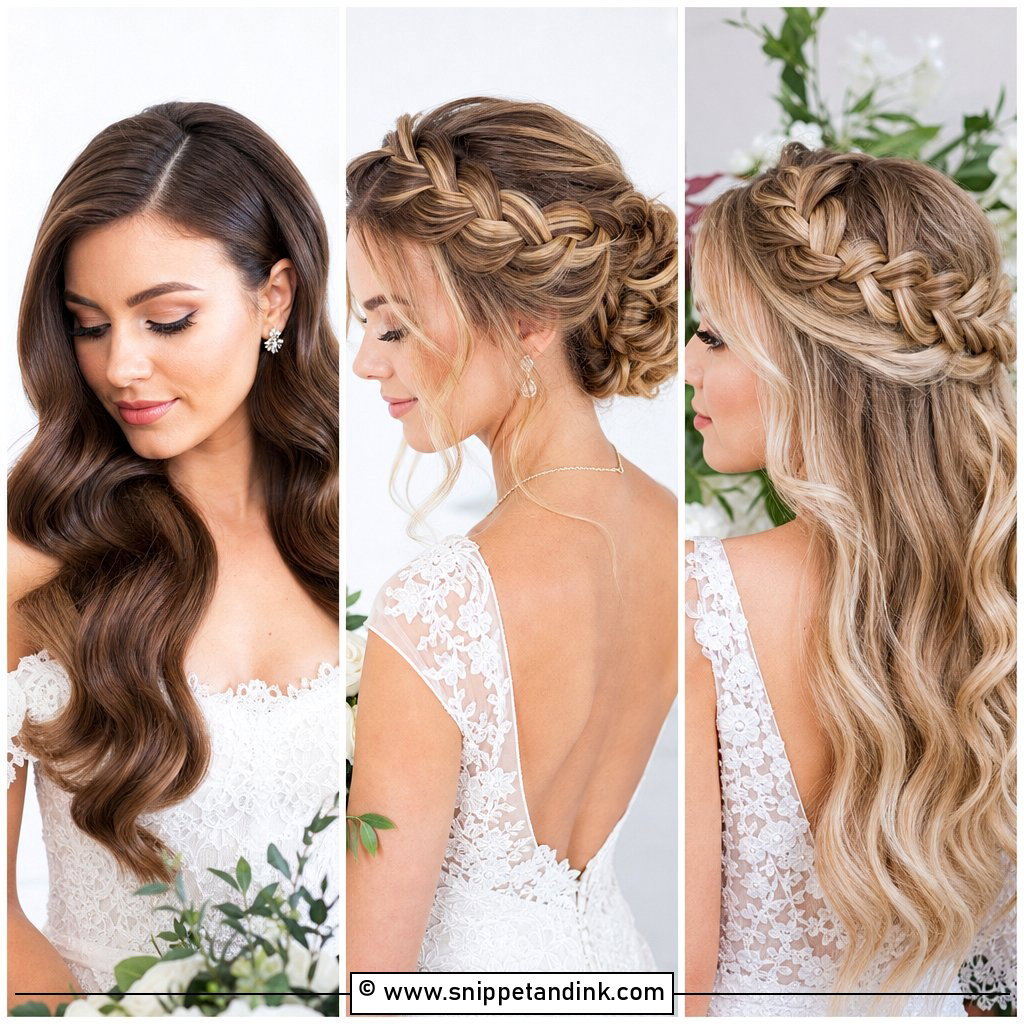
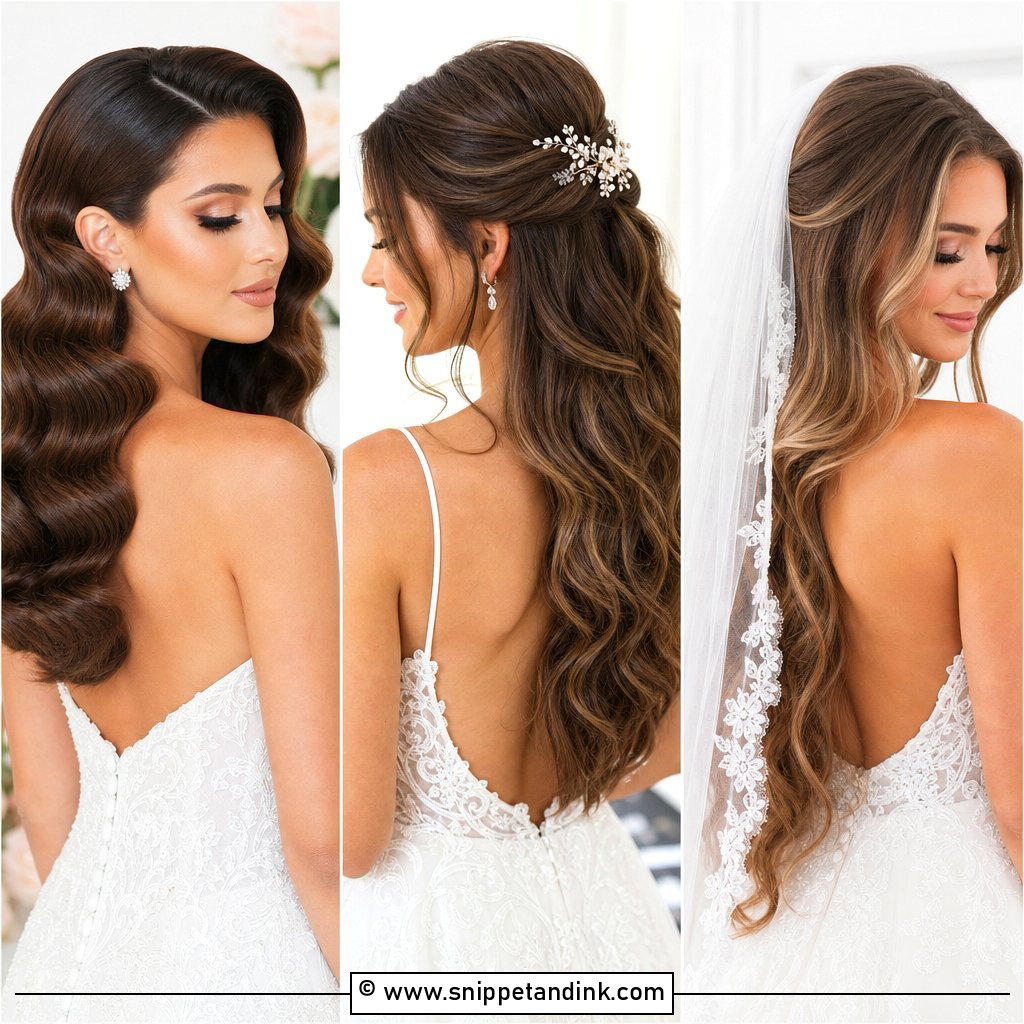
Hollywood waves are the most technical style in this list. Every section is curled in the same direction and then brushed together until the curls merge into one continuous S-shaped ridge, the look made famous by Rita Hayworth. A deep side part gives the drama. The shine comes from brushing, so I use a boar-bristle brush and a light serum rather than spraying for gloss. To keep the ridges sharp for hours, I pin each wave with duckbill clips while it sets and remove them just before the ceremony. Satin gowns and statement earrings are the natural match.
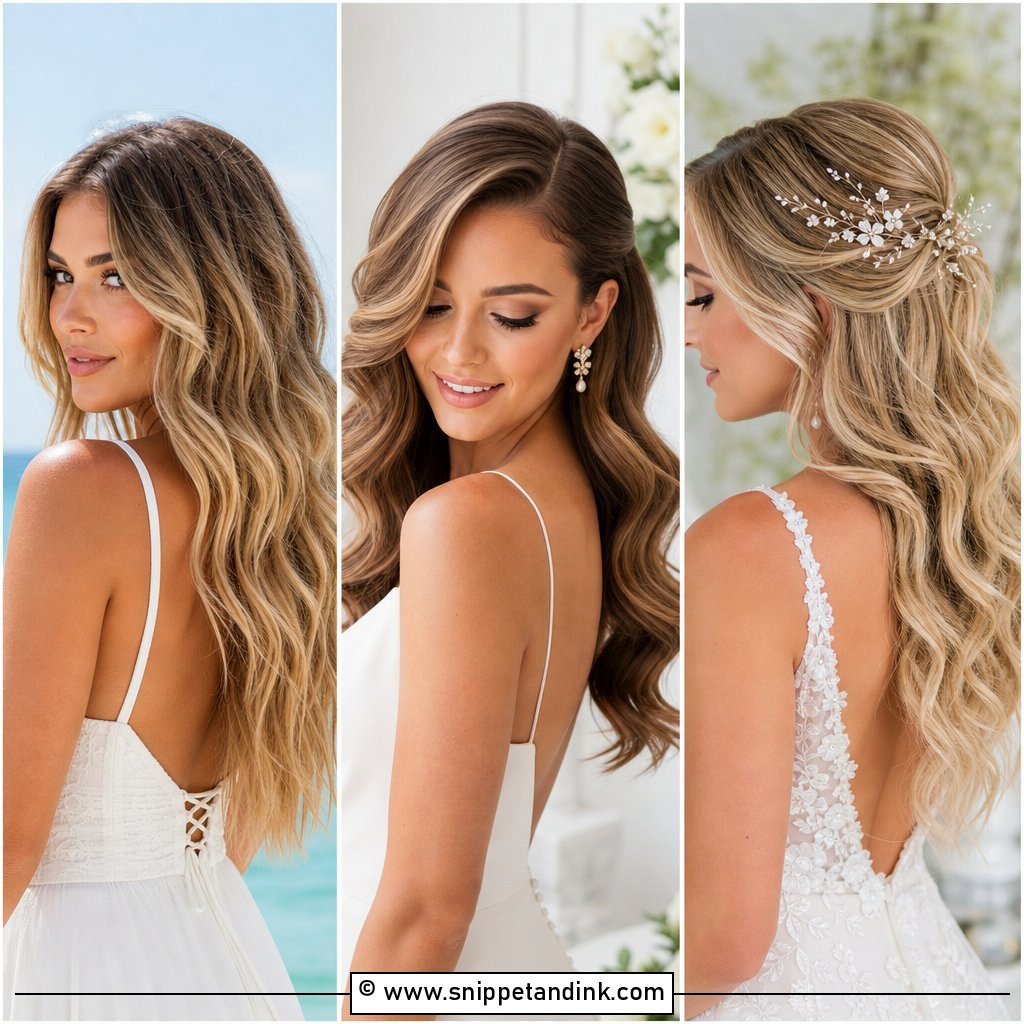
2. Loose Beach Waves for a Destination Wedding
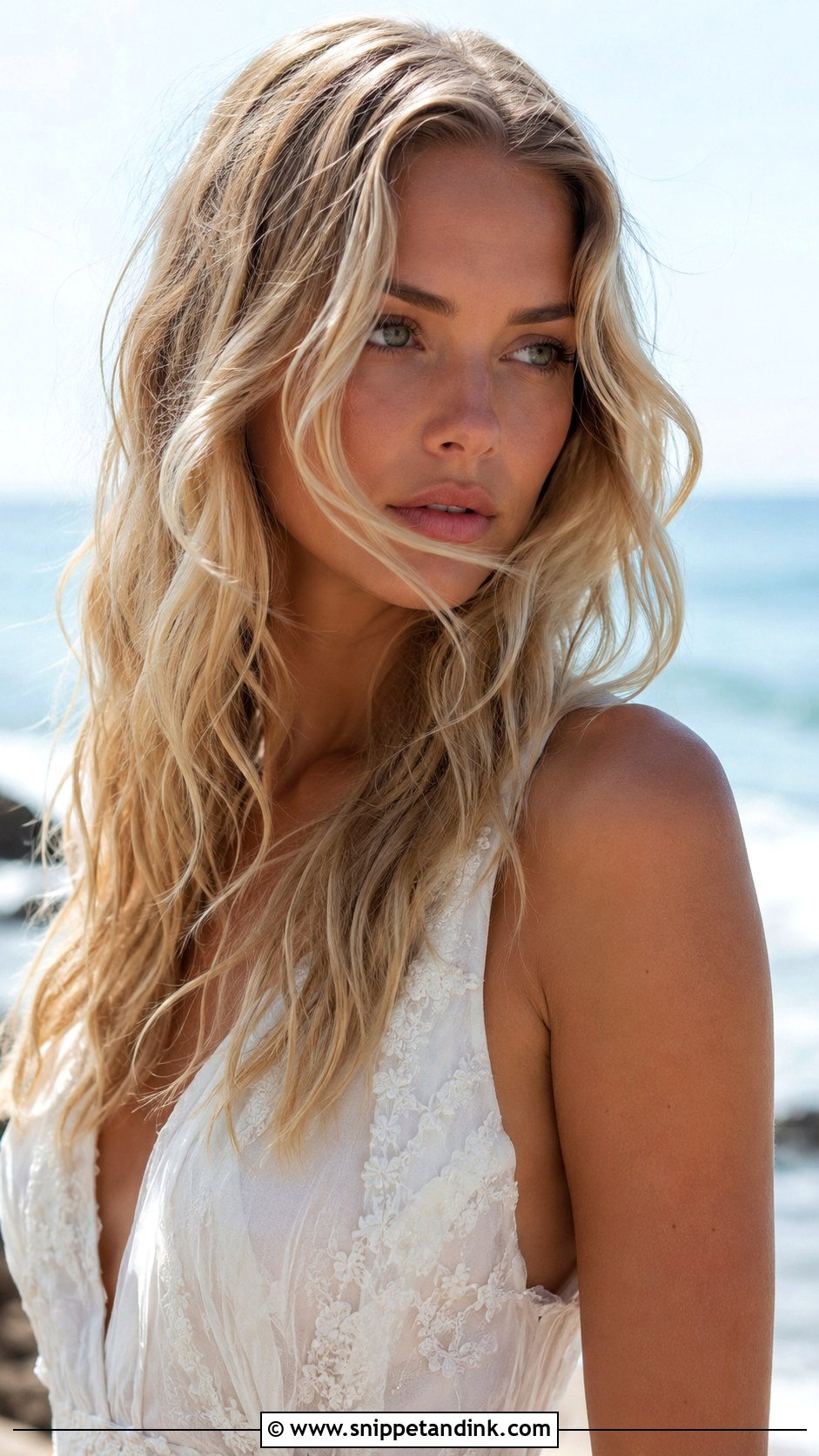
Beach waves look like the beach did them, but they’re usually made with a flat iron, twisting the hair as I glide down and leaving the last inch straight. That straight end is what stops it looking like a curl. Sea-salt spray adds grit, though on dry or curly hair it can create frizz in humid air, so I swap it for a texture spray there. This style relaxes as the day goes on, which suits a seaside wedding, but it isn’t the choice if you want defined waves in your evening photos.
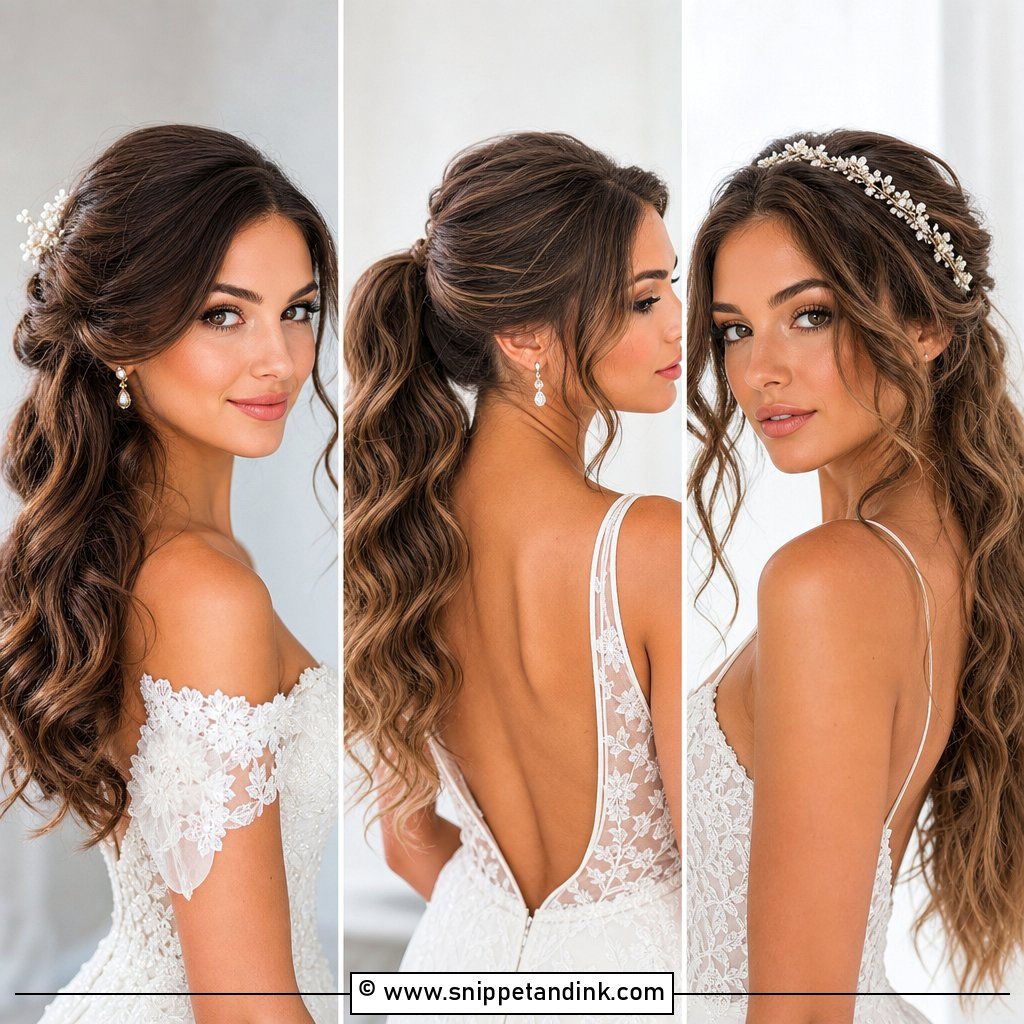
3. Half-Up Half-Down Waves with Pearl Pins
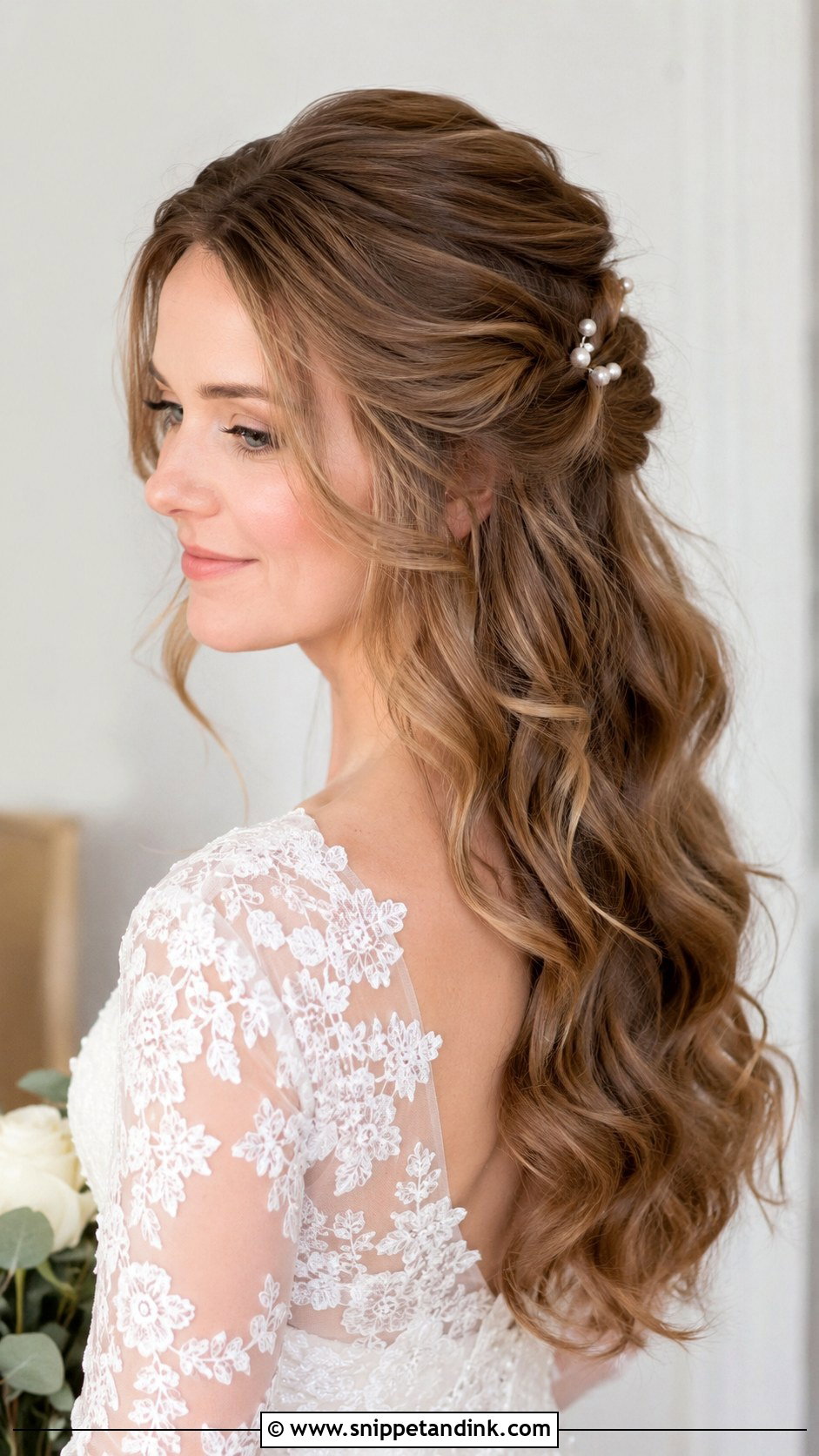
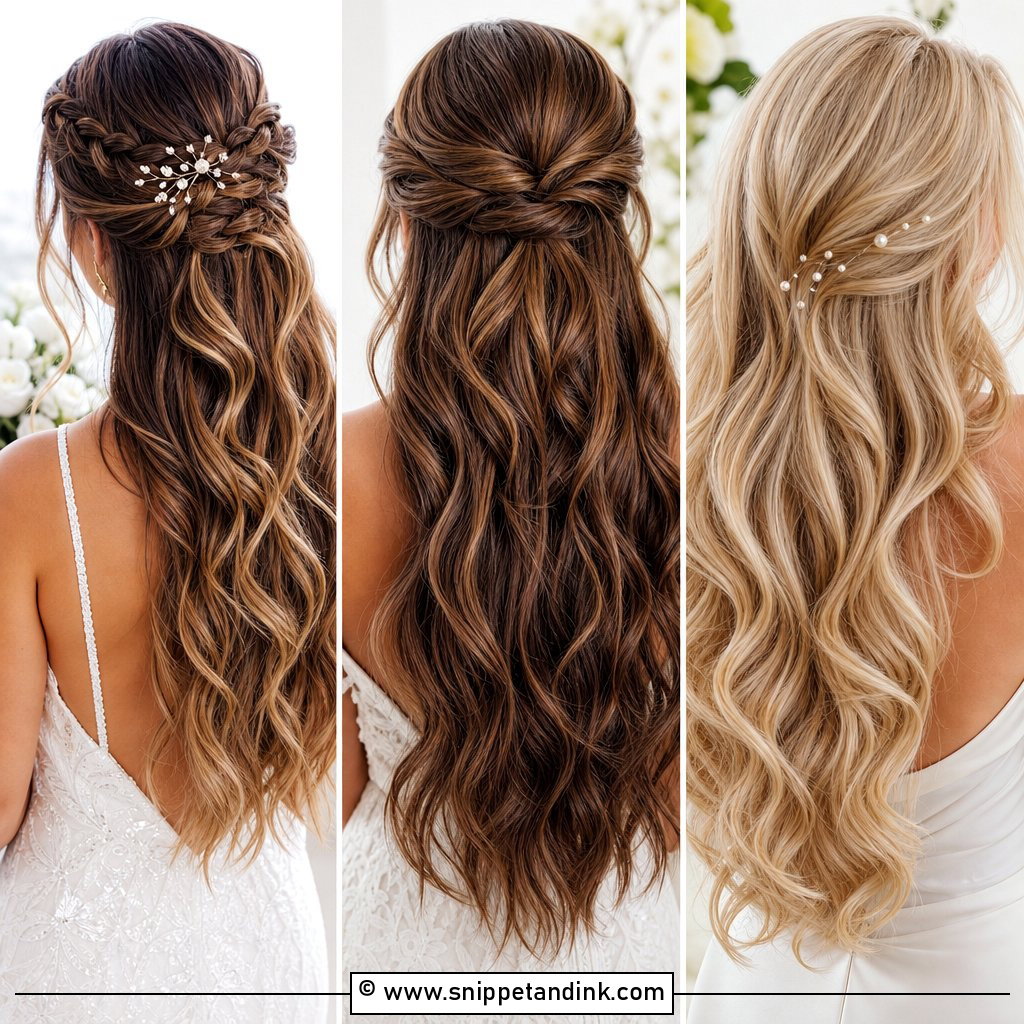
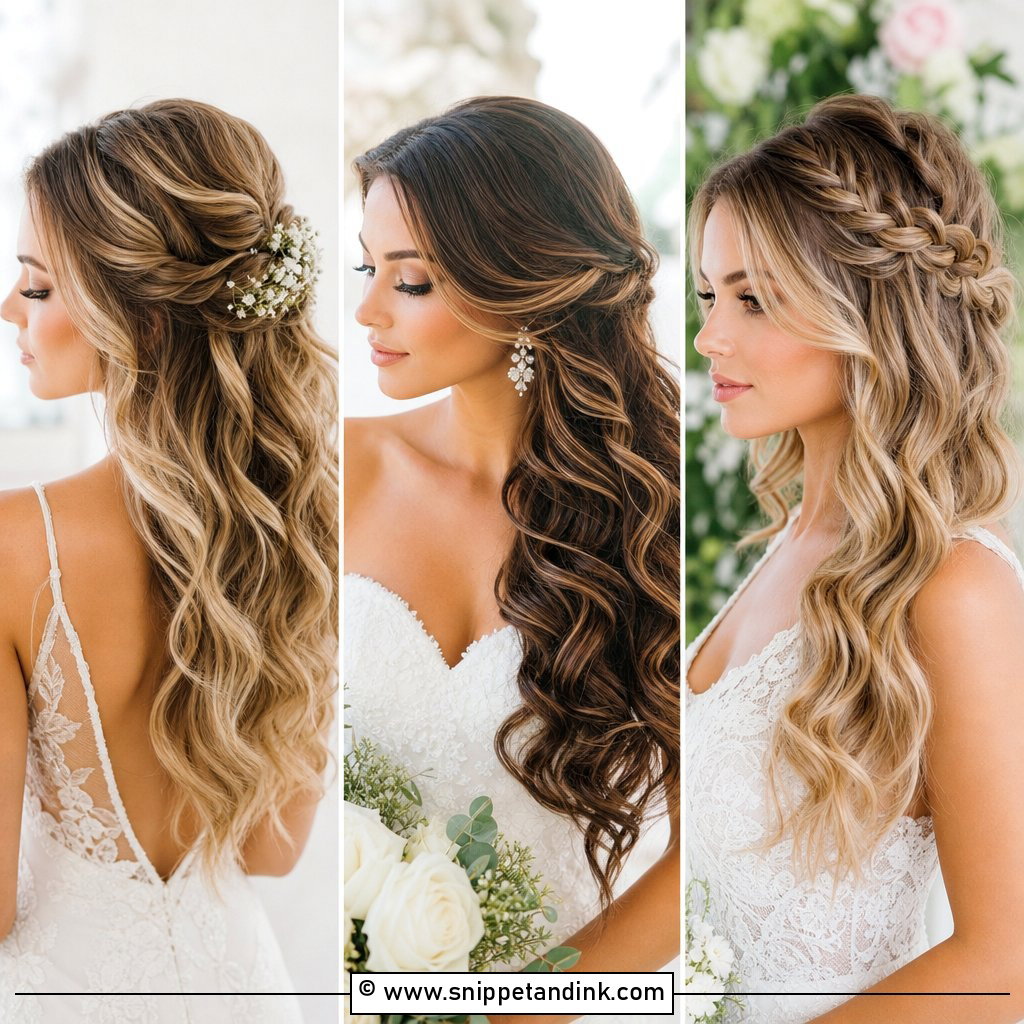
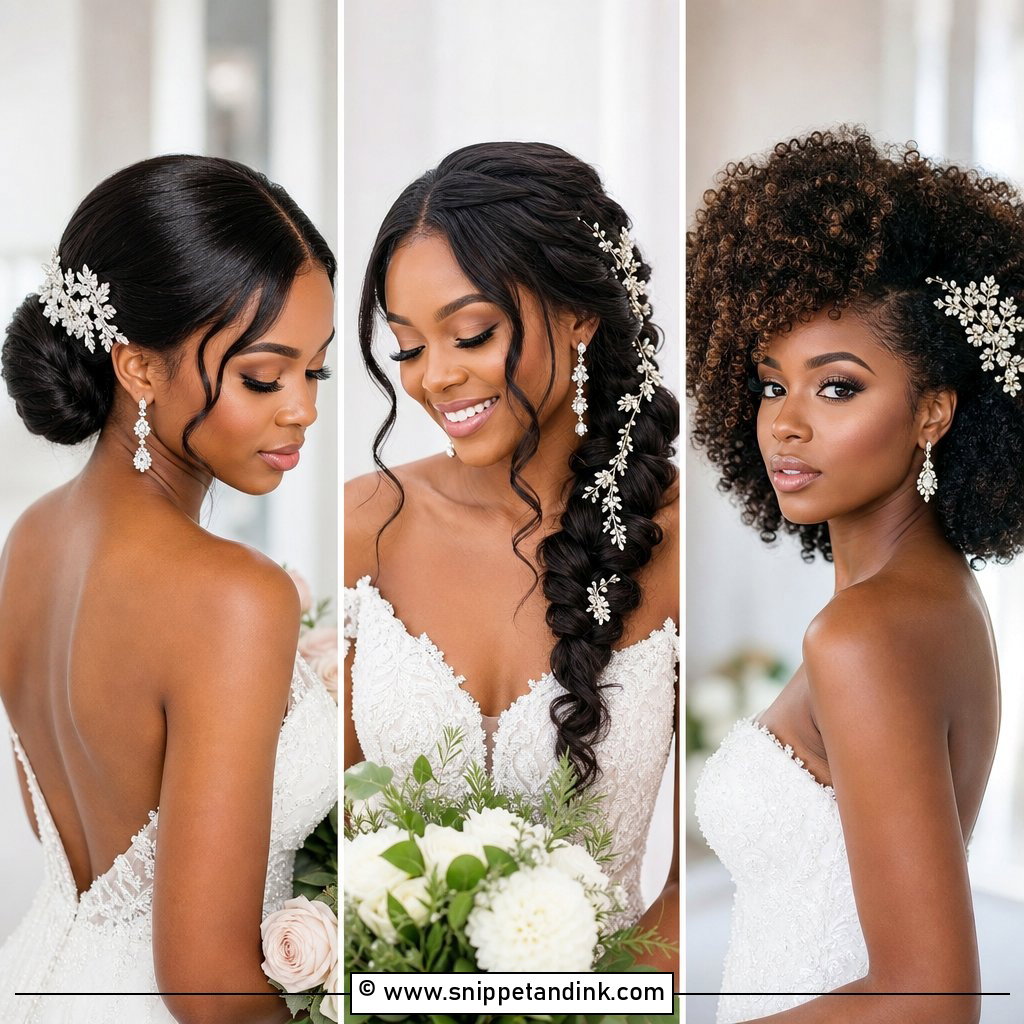
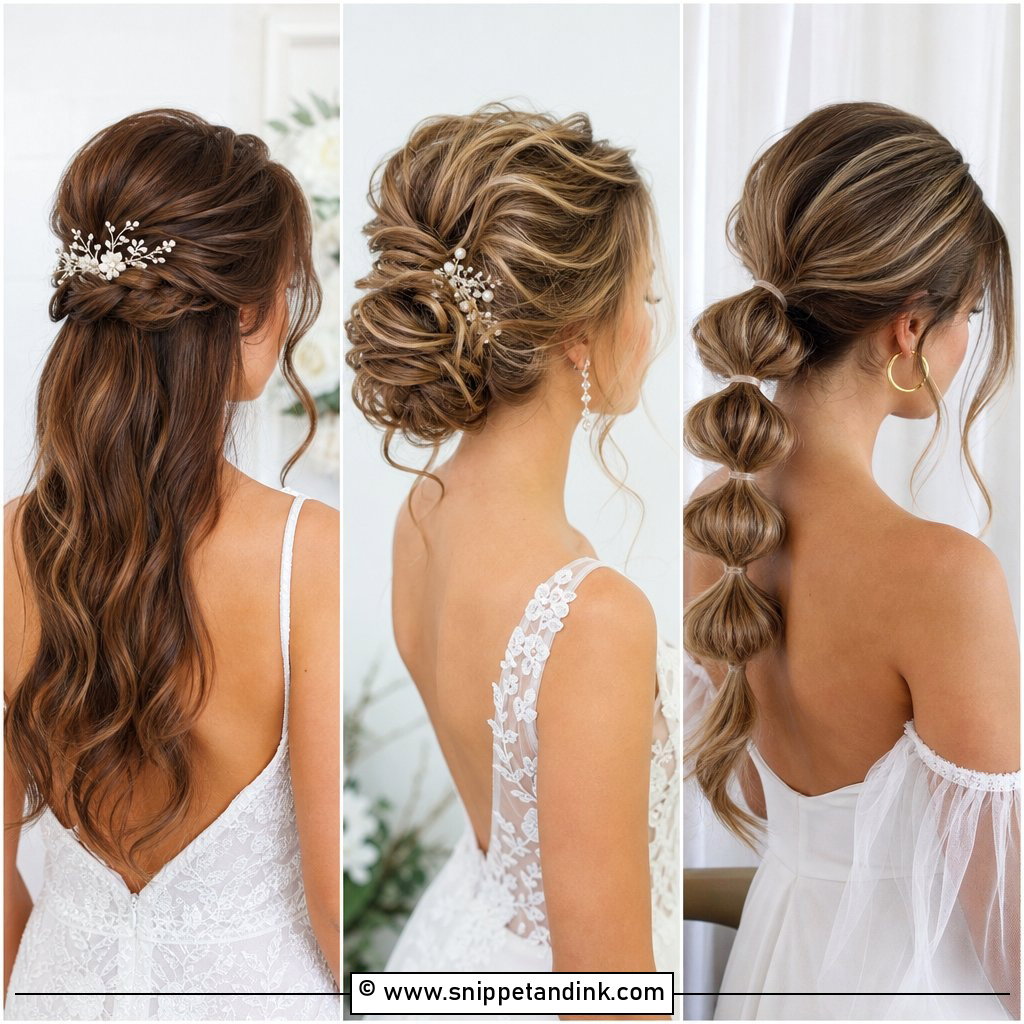
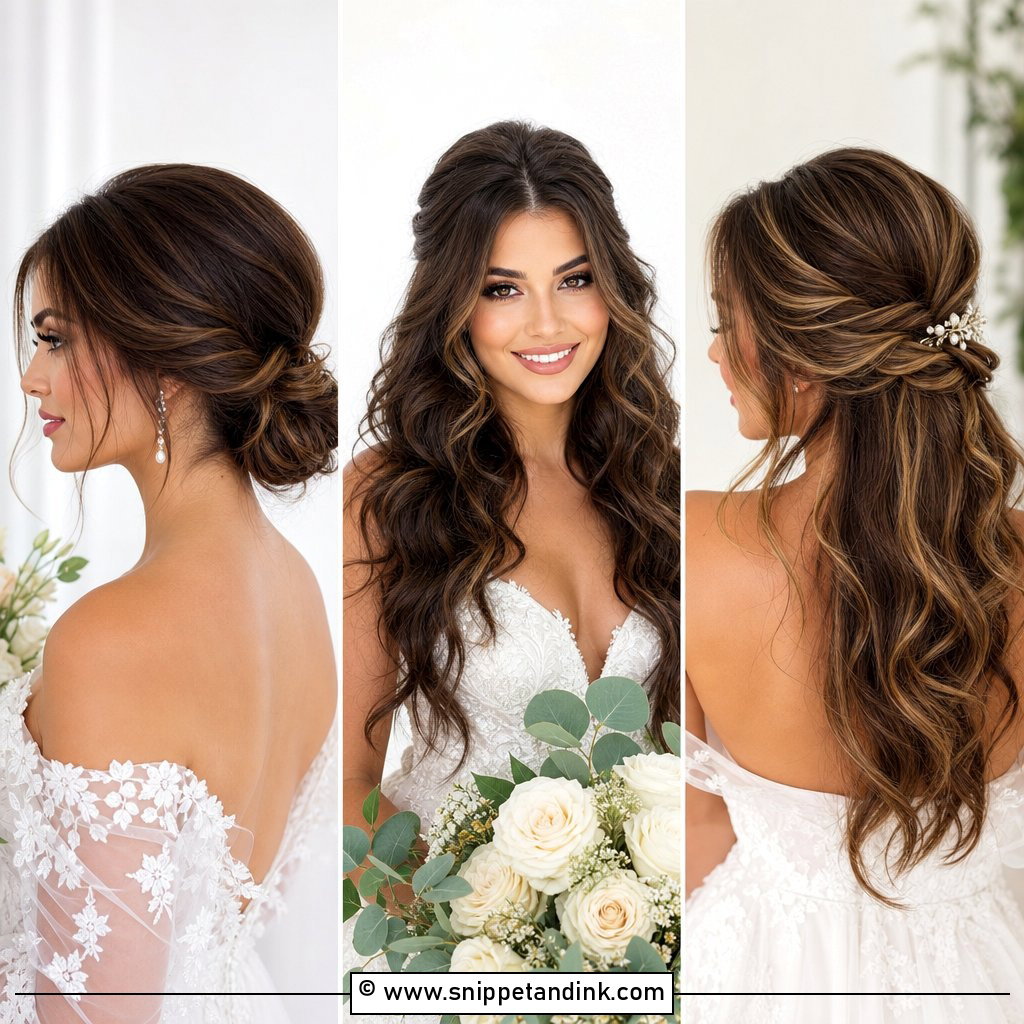
A half-up style keeps the front of the hair off the face while the waves stay on show. I pin the top section with crossed bobby pins as the real anchor, then add pearl pins as decoration, because pearl pins alone tend to slide in soft waves. The pinned section gives a veil comb something to grip. It works in ballrooms and gardens alike, and the pearls pick up light whenever you turn your head.
4. Boho Waves with Loose Tendrils
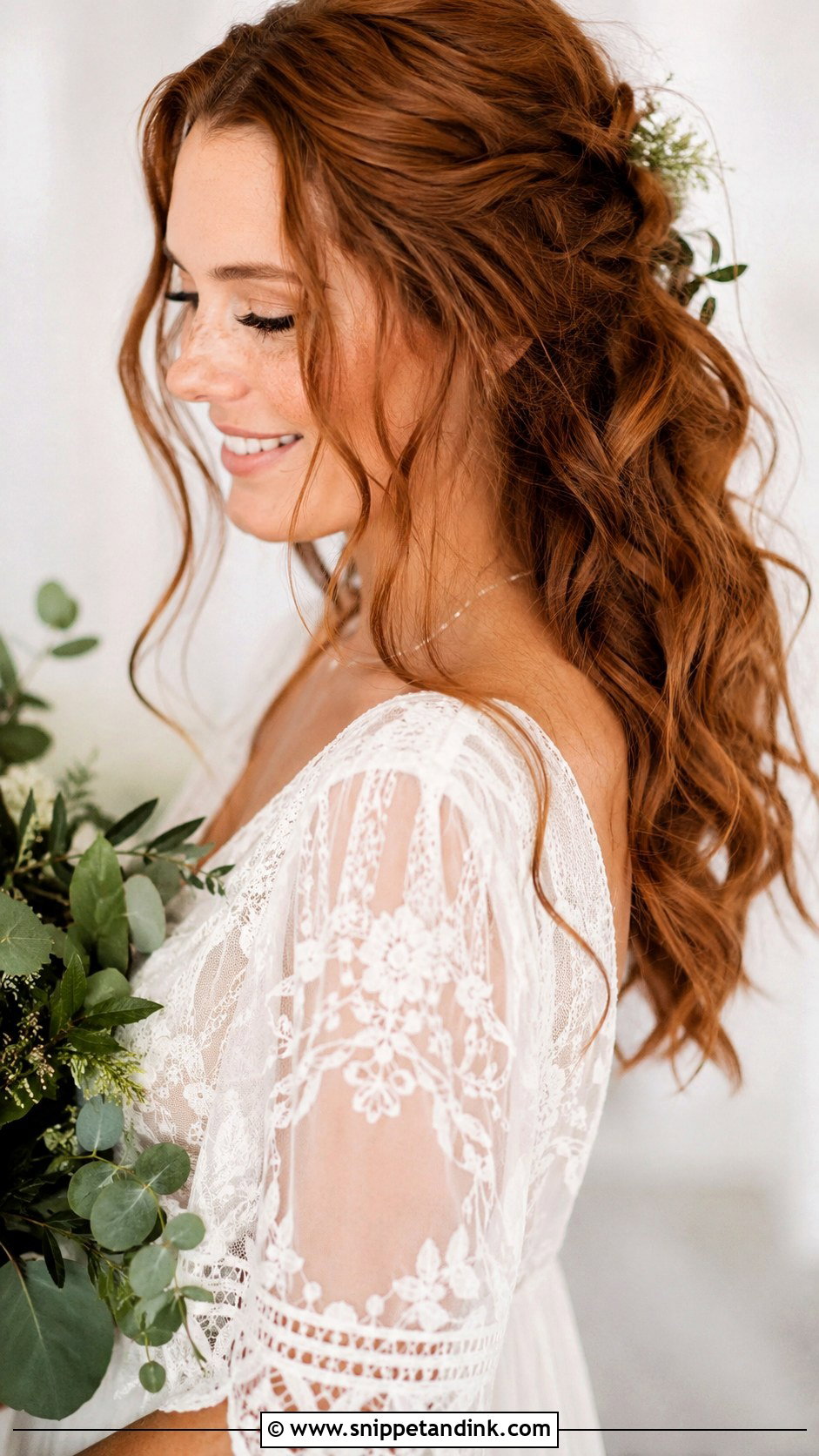
Boho waves are piecey and textured, with soft tendrils framing the face. I make them with a mix of curl sizes and directions so the result looks natural rather than uniform. They suit barns, woodlands and flower crowns. The risk is that ‘undone’ turns into frizz over a long day, especially on fine or coarse hair, so I set texture with a dry texture spray and keep the face-framing pieces a little more polished than the rest. It suits a bride who feels overdressed in sleek hair.
5. Side-Swept Waves Over One Shoulder
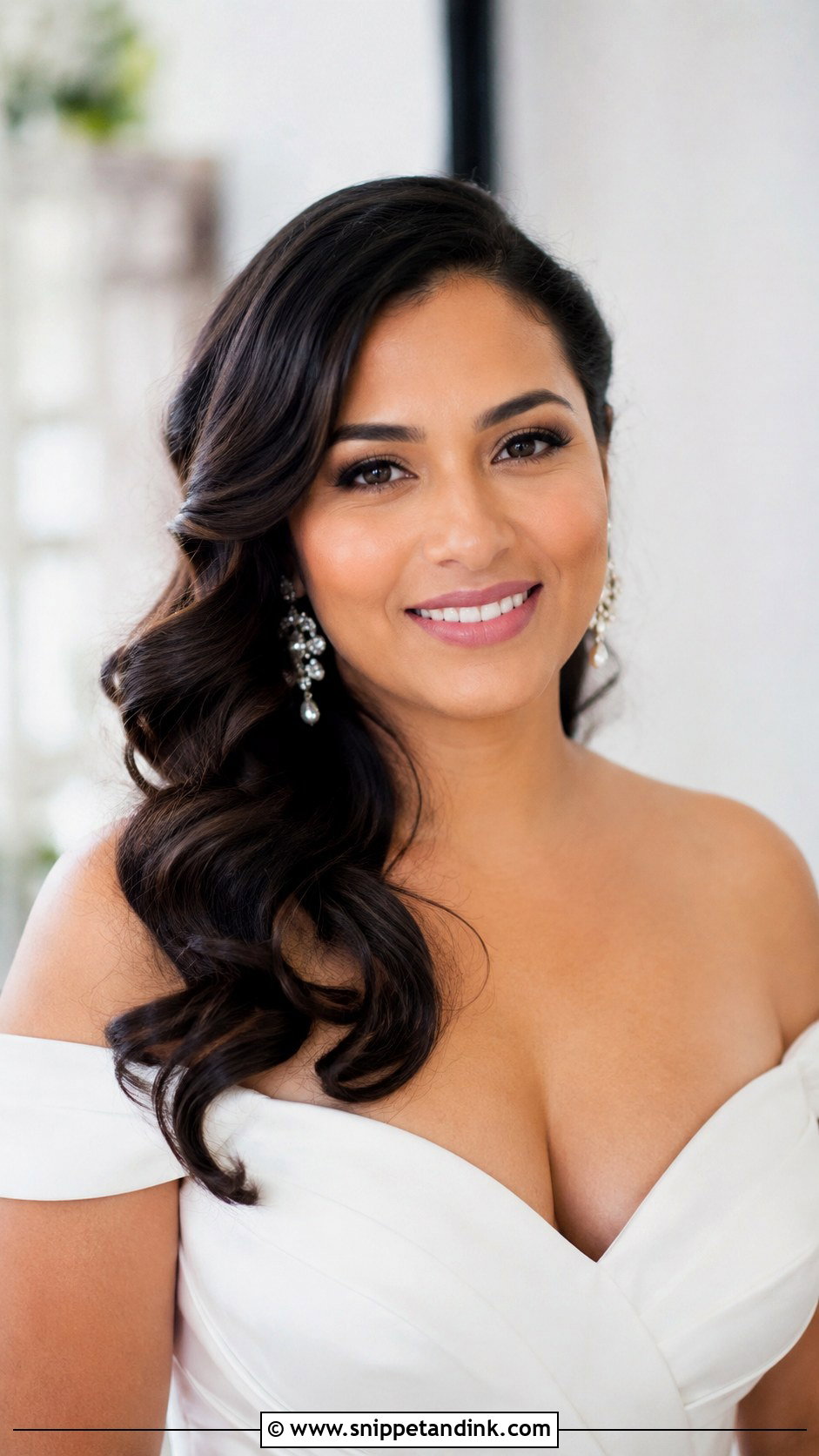
Sweeping waves over one shoulder shows off the neckline on the open side and looks great with one-shoulder or off-shoulder gowns. The asymmetry is what gives it its slightly vintage glamour. I anchor the swept side with a hidden twist and pins behind the ear, since everything shifts forward the moment you hug or lean in. Statement earrings or a fine necklace on the bare side finish it. It also hides a strap on one shoulder neatly.
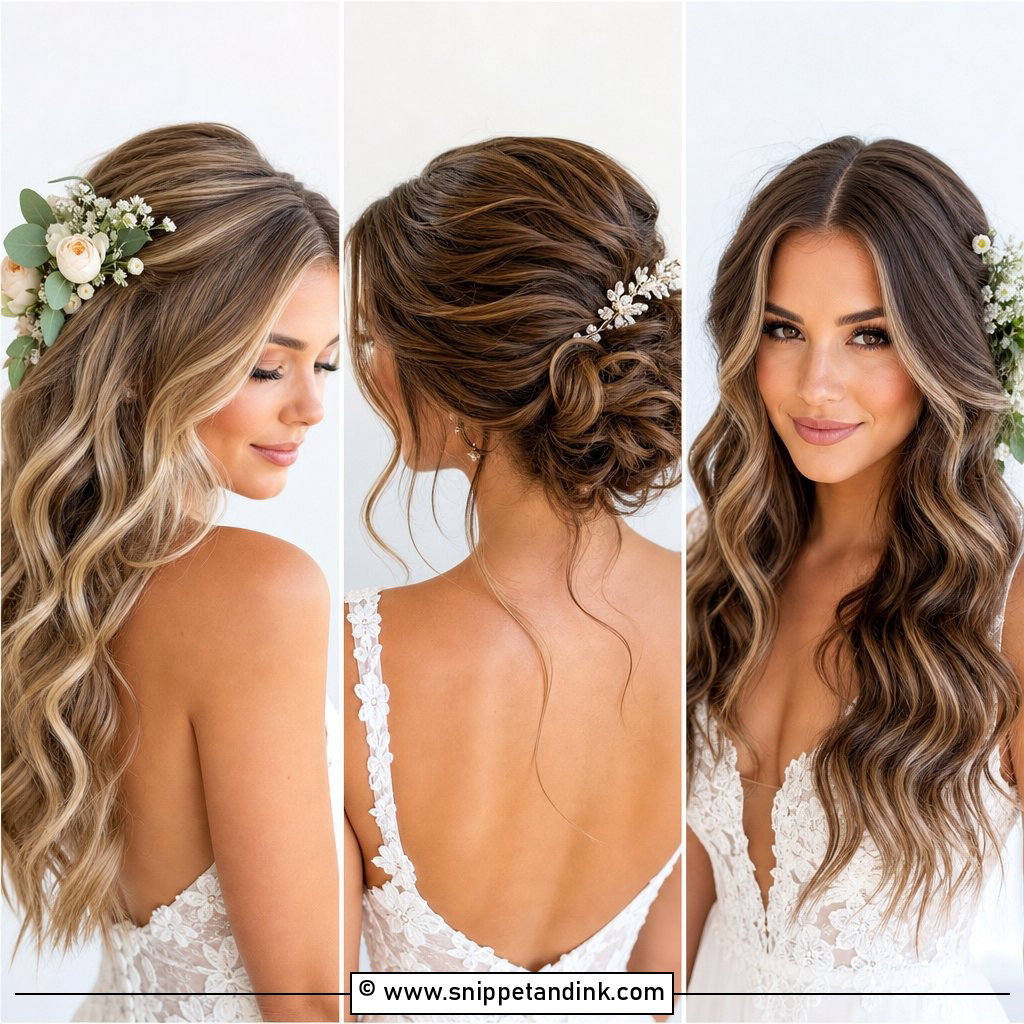
6. Wavy Low Bun with Face-Framing Pieces
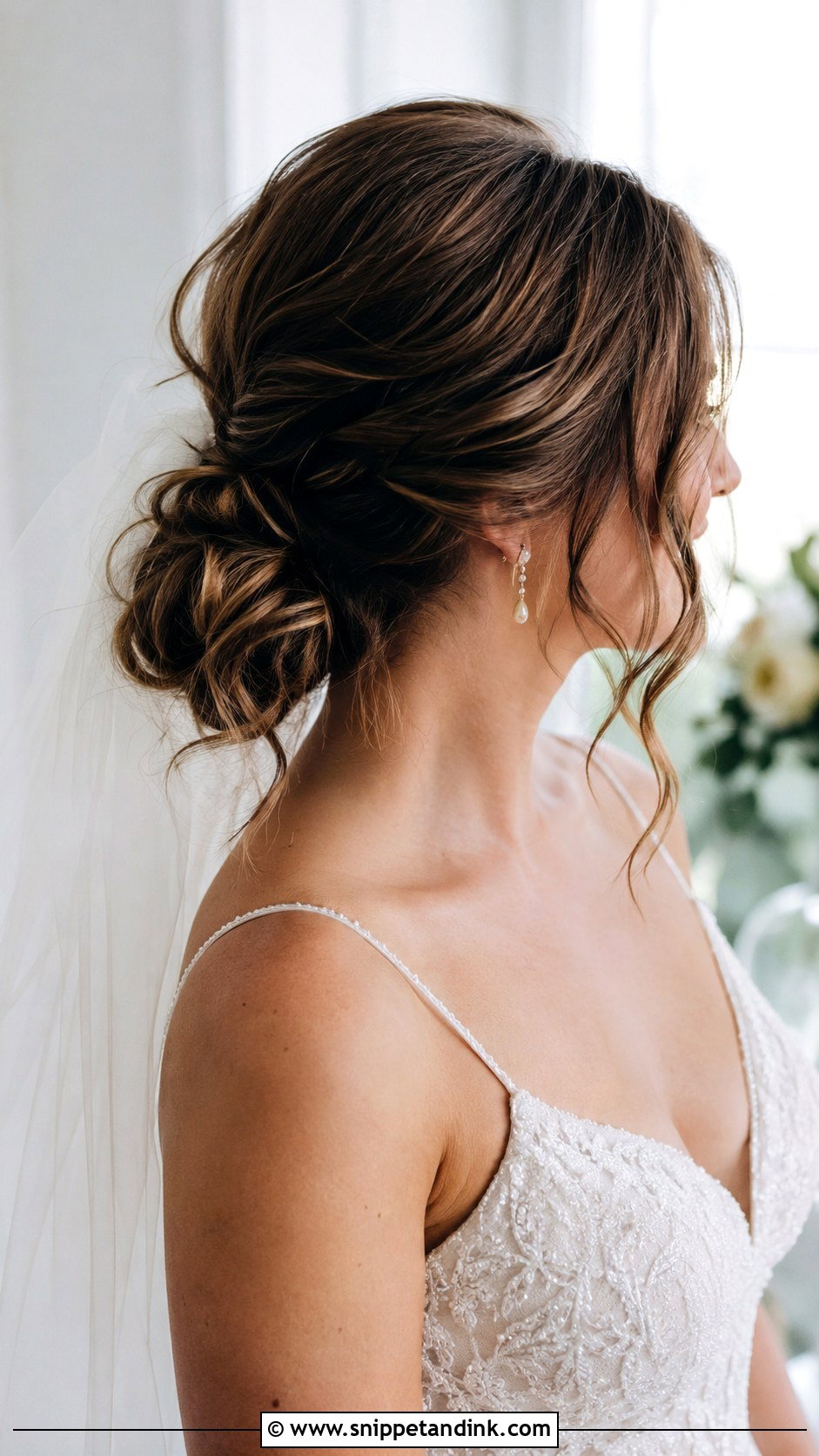
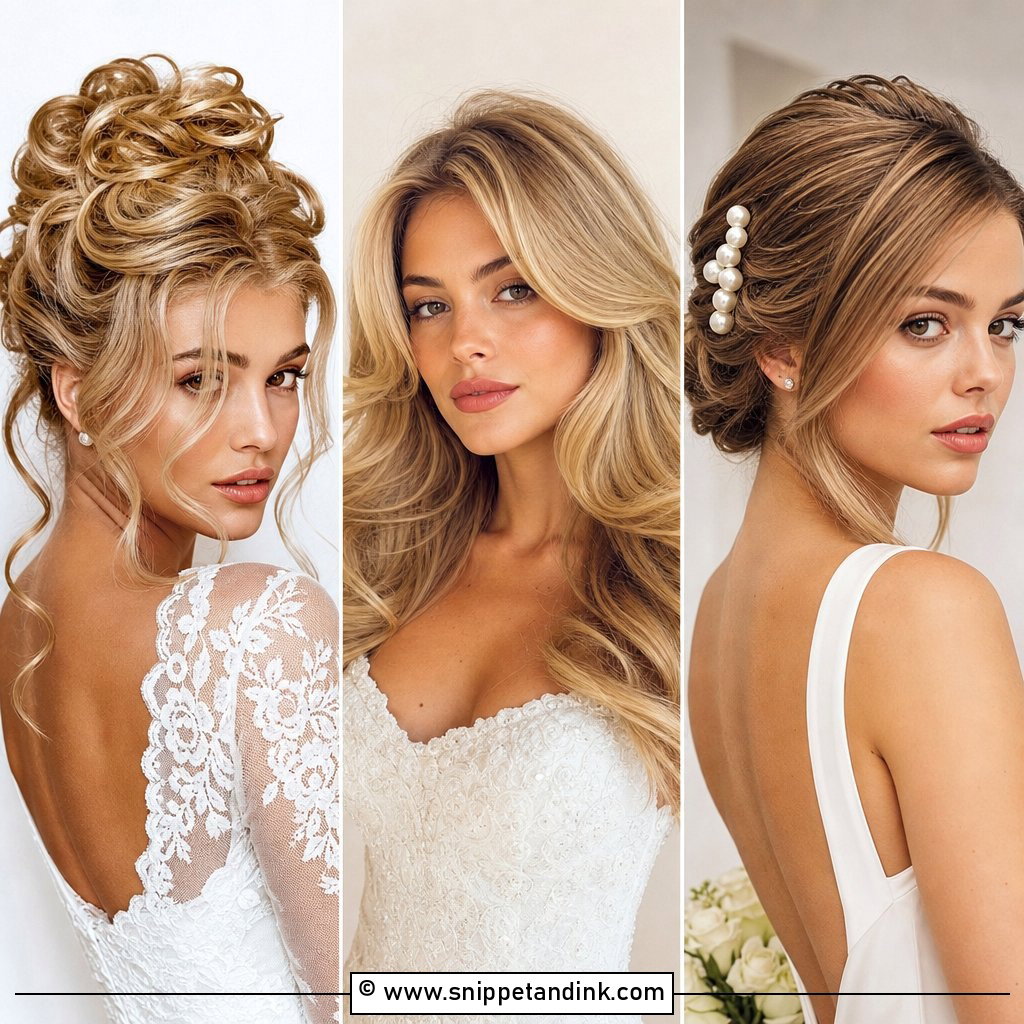
A low bun with waves keeps hair secure while the texture still shows. I gather a loose, textured bun at the nape and leave a few wavy tendrils at the temples. The tendrils need their own curl, made smaller than the rest, because they relax fastest. It sits well under a veil and suits modern and classic gowns. If you want an updo but hate a stiff, sprayed look, this is where I’d start.
7. Long Wavy Hair with a Flower Crown
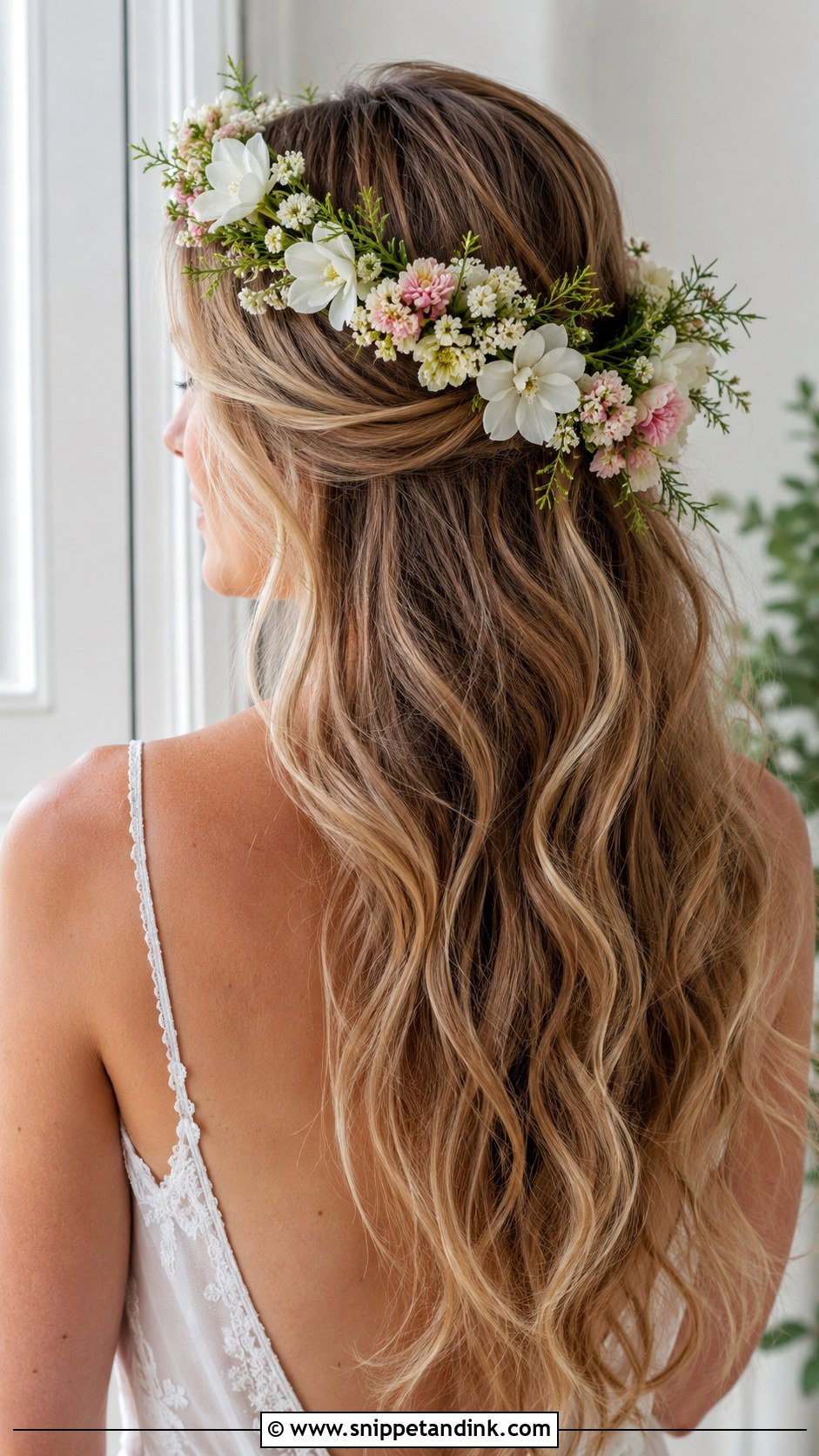
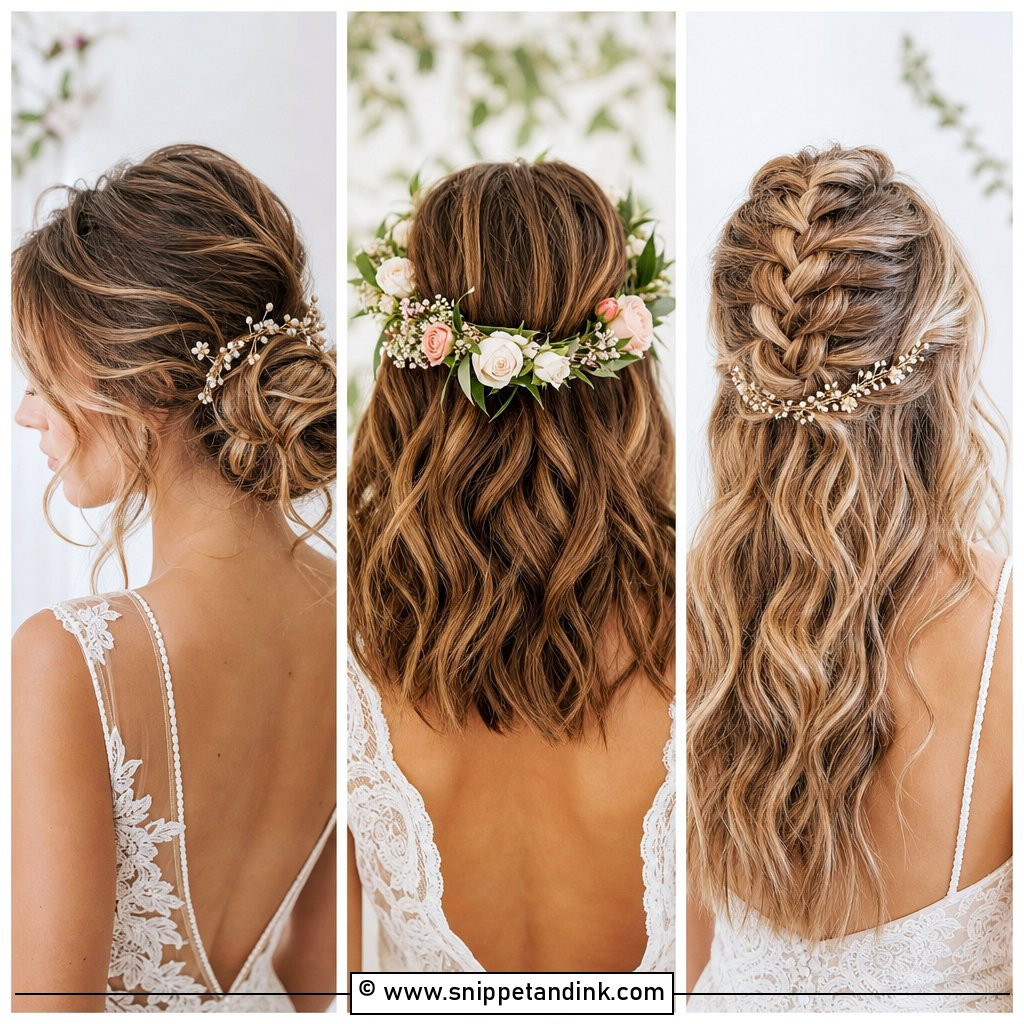
Waves with a flower crown give an inner garden goddess look that suits spring, summer and outdoor weddings. Fresh flowers look softer but wilt in heat; faux flowers last all day and won’t leave a pollen stain. I attach the crown with bobby pins crossed under the wire at four points, otherwise it tilts by the reception. Matching the blooms to the bouquet ties the look together.
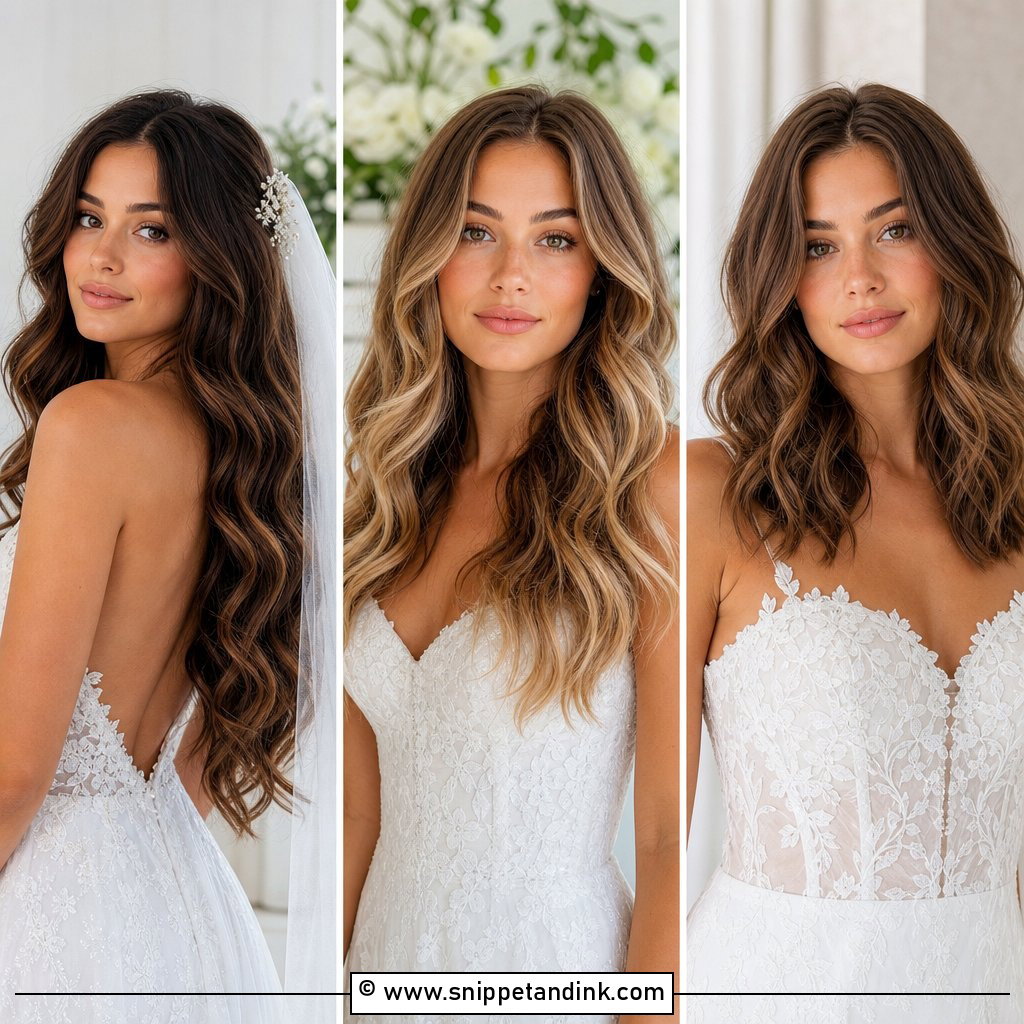
8. Curtain Bangs with Soft Bridal Waves
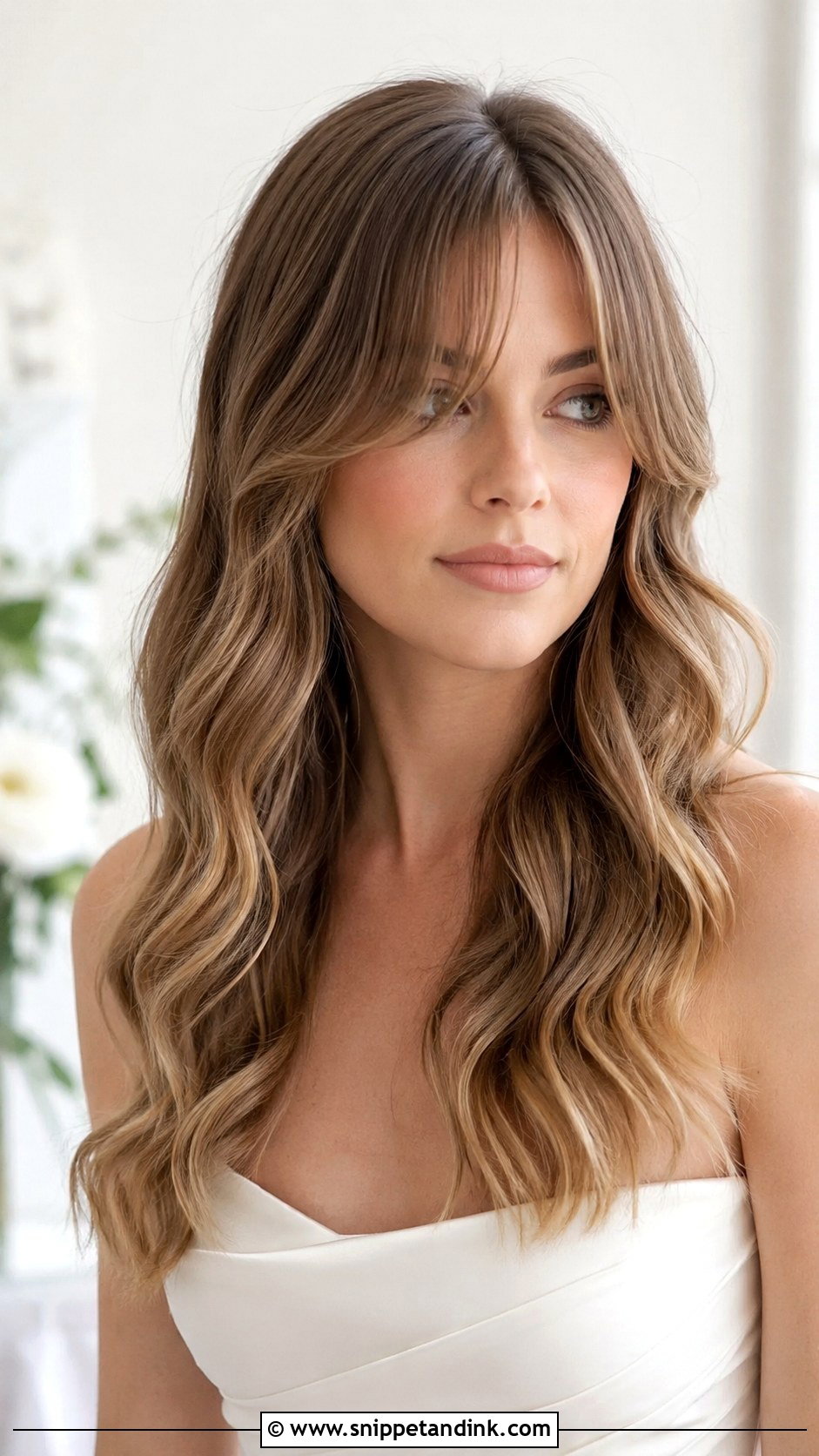
Curtain bangs frame the face and draw the eye up, and with waves they look current. The bangs need styling as a separate step: I round-brush them away from the face and blend them into the first wave so there’s no line. If you’re growing bangs out or cutting them new, plan the cut about two weeks before the wedding so they’ve settled. Curtain bangs with bridal waves also work in updos, as long as the bangs are long enough to tuck if they misbehave.
9. Wavy Half-Up Braid Crown
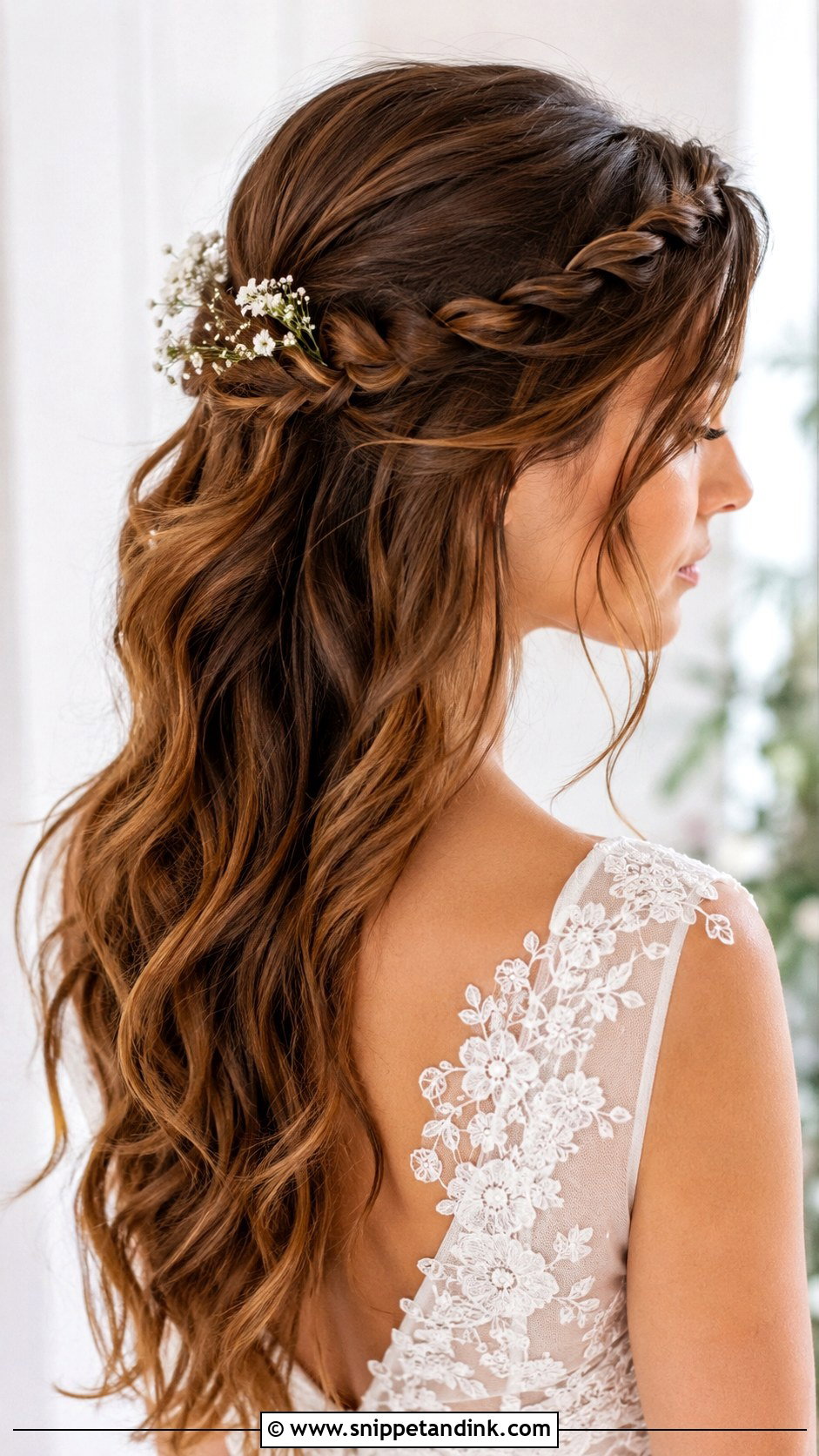
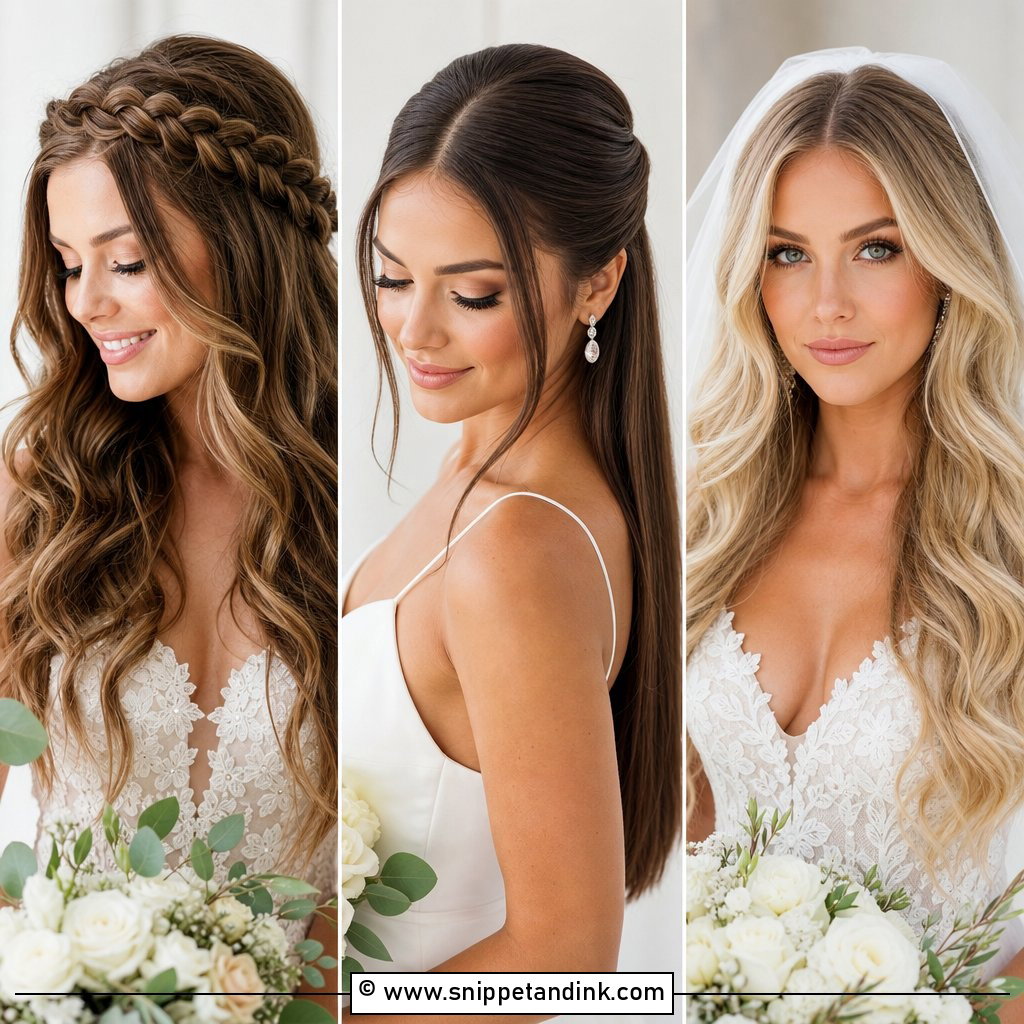
Braids across the top with waves below combine structure and softness. I braid first, then curl the lengths, because curling first means the braid pulls the waves out of shape. Small flowers or pearls tuck into the braid easily. It keeps hair off the face all day, which is why I suggest it for garden ceremonies in wind. Pancake the braid only slightly, or it loses definition in photos.
10. Voluminous Waves with a Deep Side Part
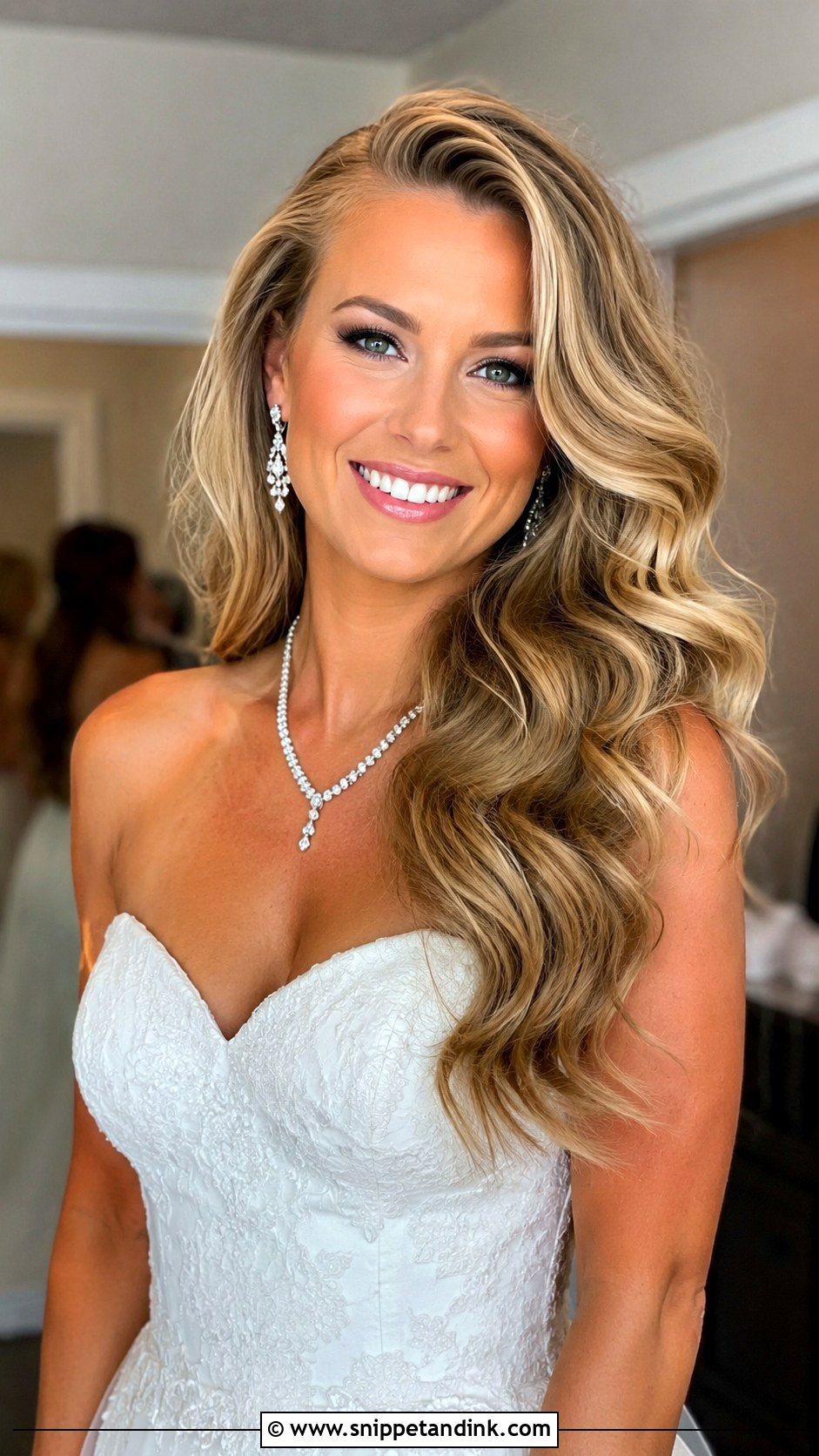
Volume plus a deep side part gives the fullest silhouette in this list. I tease the roots gently in the crown and along the part, then curl with a medium barrel. It suits most face shapes, strapless gowns and big jewelry. Heavy hair can pull volume flat by mid-afternoon, so I use a root-lifting product before blow-drying, not only spray afterward. It’s a bold choice; if you’re nervous about it, try it at the trial and wear it for an afternoon.
11. Wavy Updo with Loose Curls
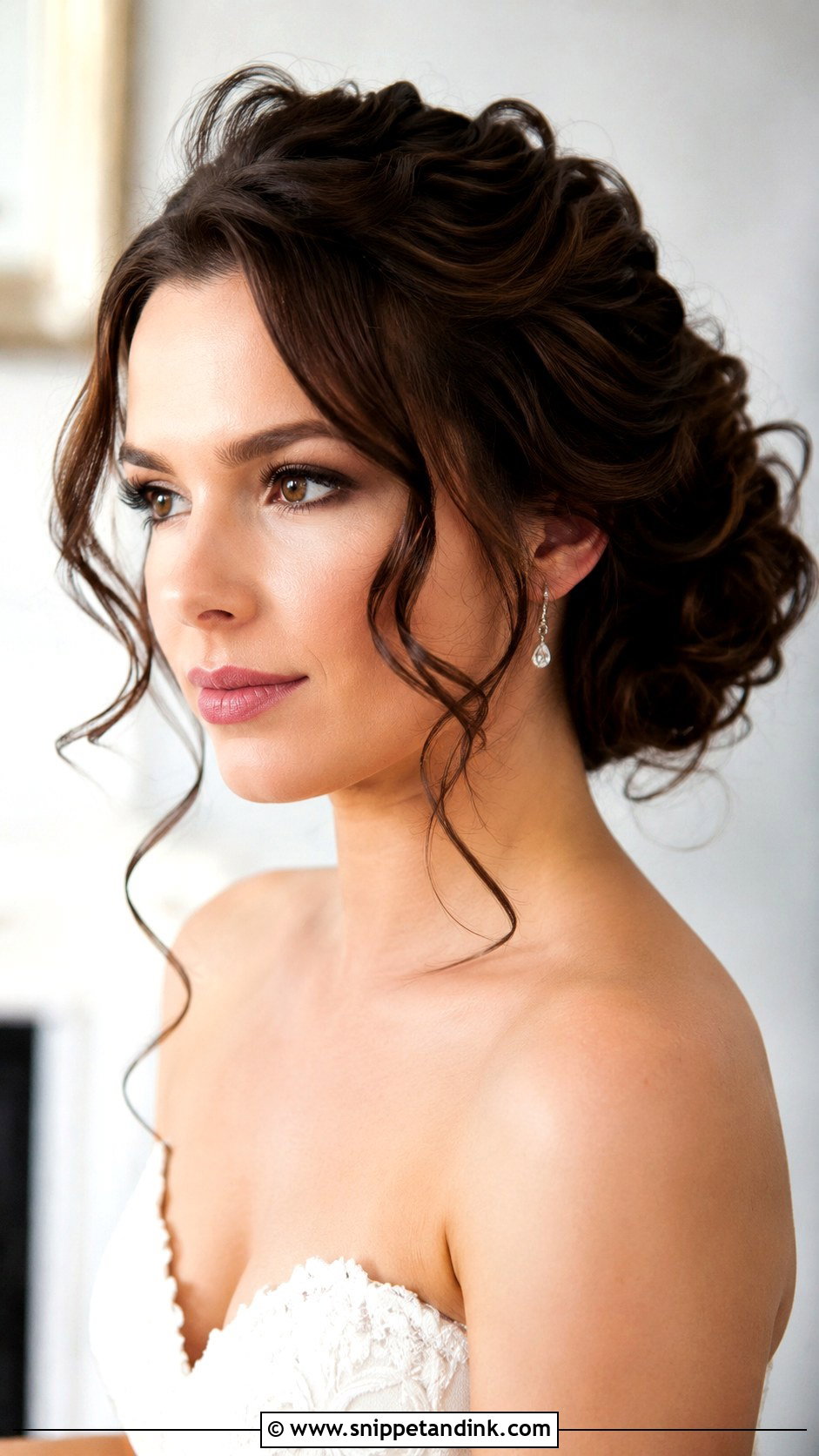
A wavy updo pins curls into a relaxed, textured shape with a few tendrils at the face. The curls add dimension so the updo doesn’t look stiff. I curl the whole head first and let the hair cool completely before pinning; warm curls pinned in place relax into a flat shape. Ballrooms and formal weddings suit it, along with statement earrings and a light veil.
12. Beachy Waves with a Delicate Hair Vine
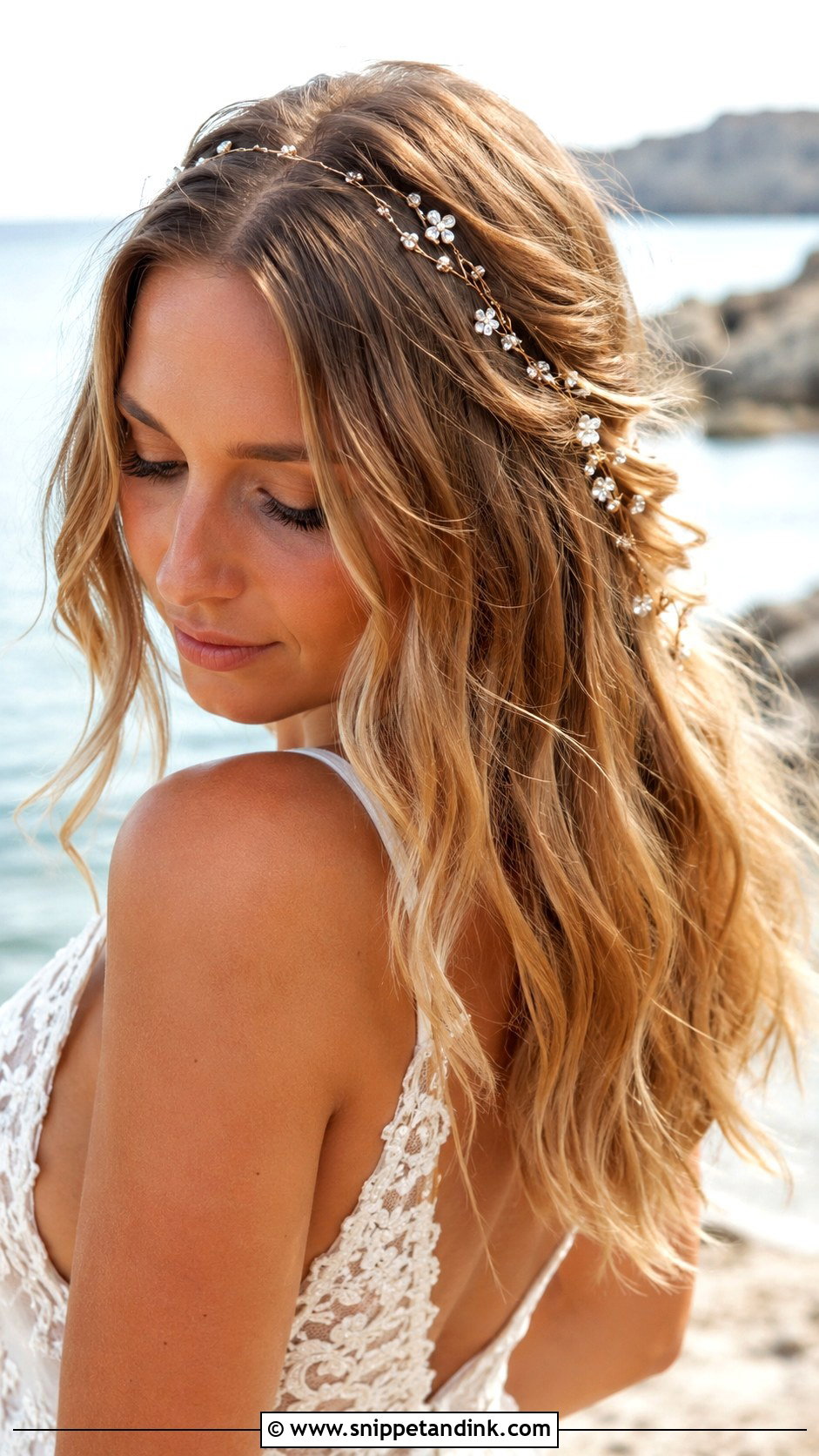
A hair vine woven through beachy waves adds a little shimmer. The vine can hold a half-up section or drape across loose hair. I sew it in with pins at each end and one or two along the length, so it doesn’t sag. Light vines suit loose waves; heavy crystal vines need a firmer base, like a half-up twist, to sit on. Boho and outdoor weddings are where I see it most.
13. Wavy Ponytail with Soft Volume
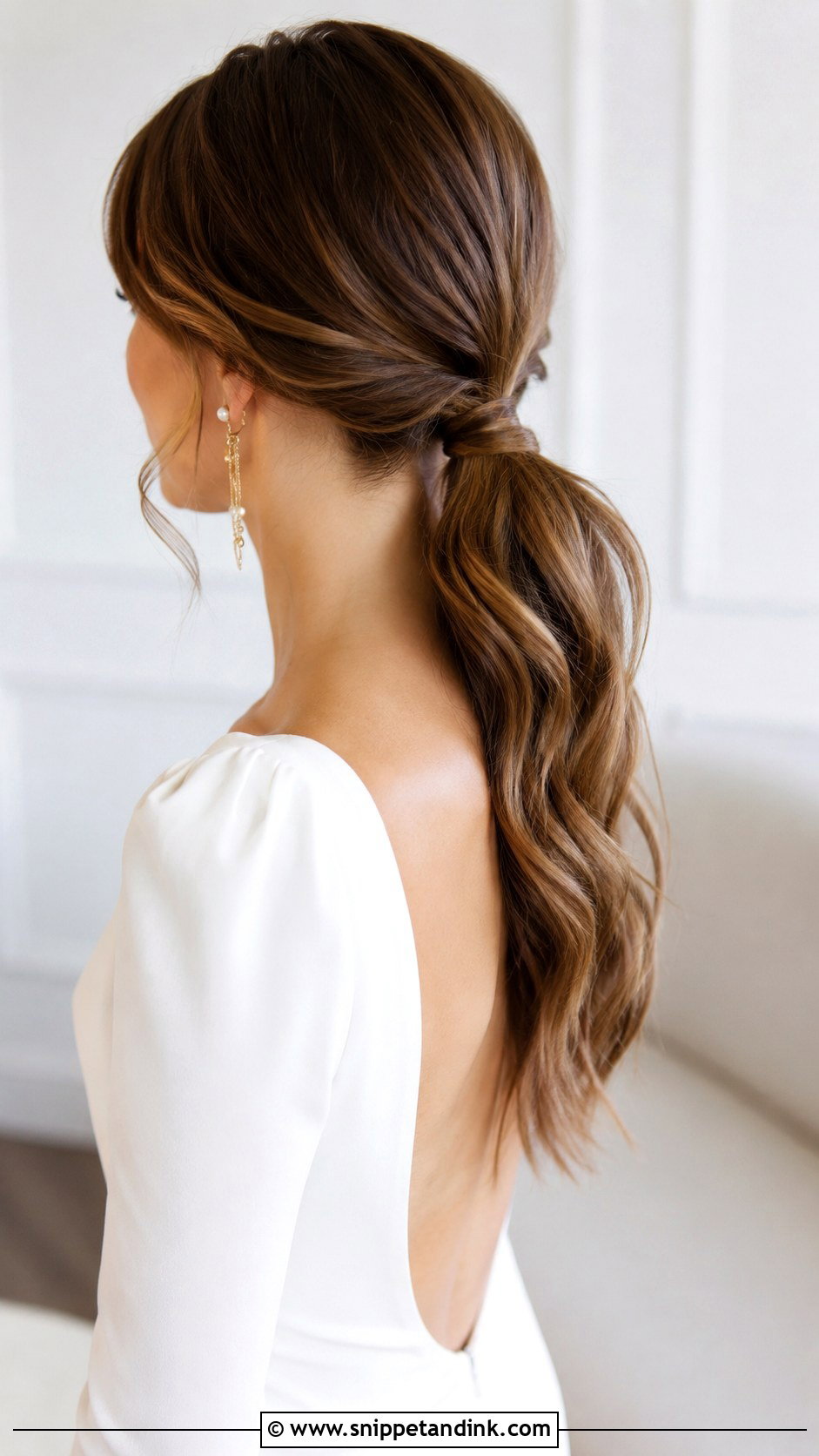
A ponytail with waves is practical, modern and cool on a hot day. I set it low or mid-height, with a little volume at the crown and the elastic hidden under a wrapped strand. Two pins pushed upward under the ponytail stop it drooping over the evening. Sleek, minimalist gowns and statement earrings sit well with it. It suits a bride who never wears her hair down at work and doesn’t want to start on her wedding day.
14. Tousled Waves with a Middle Part
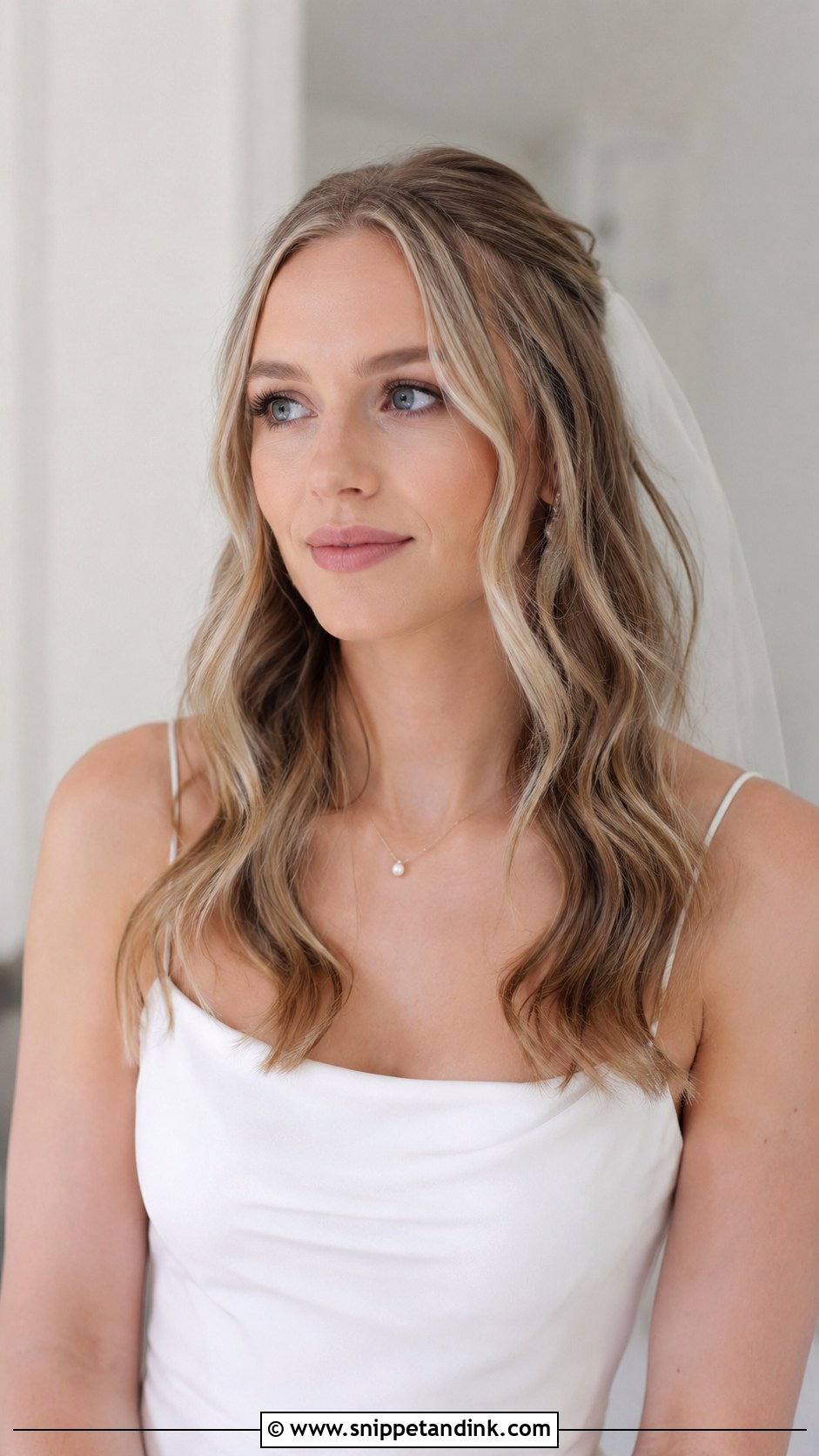
Center-parted tousled waves look modern and understated. The middle part suits symmetrical features, and the waves stay piecey rather than polished. I make sure the part is clean and straight, because with relaxed texture a messy part looks unfinished rather than intentional. It pairs with simple gowns and delicate jewelry and looks natural in candids.
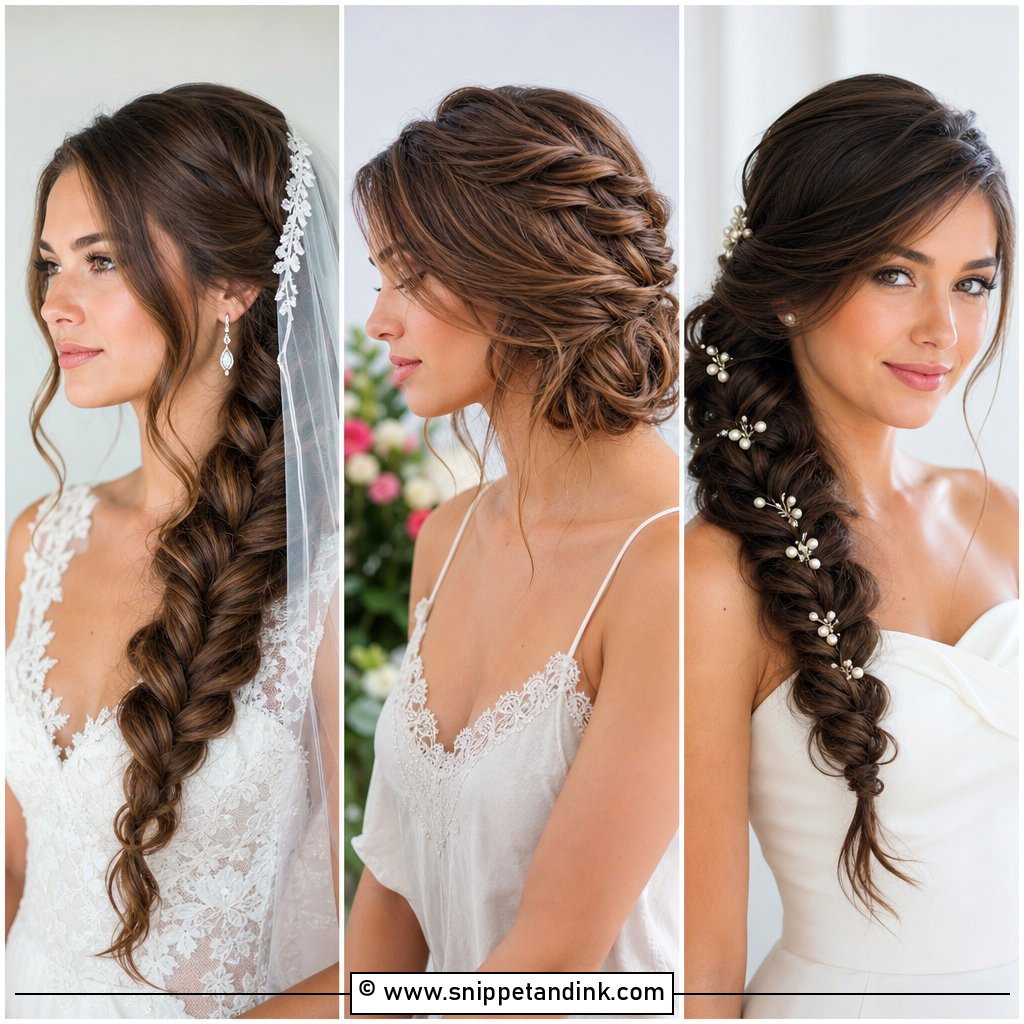
15. Wavy Hair with a Birdcage Veil
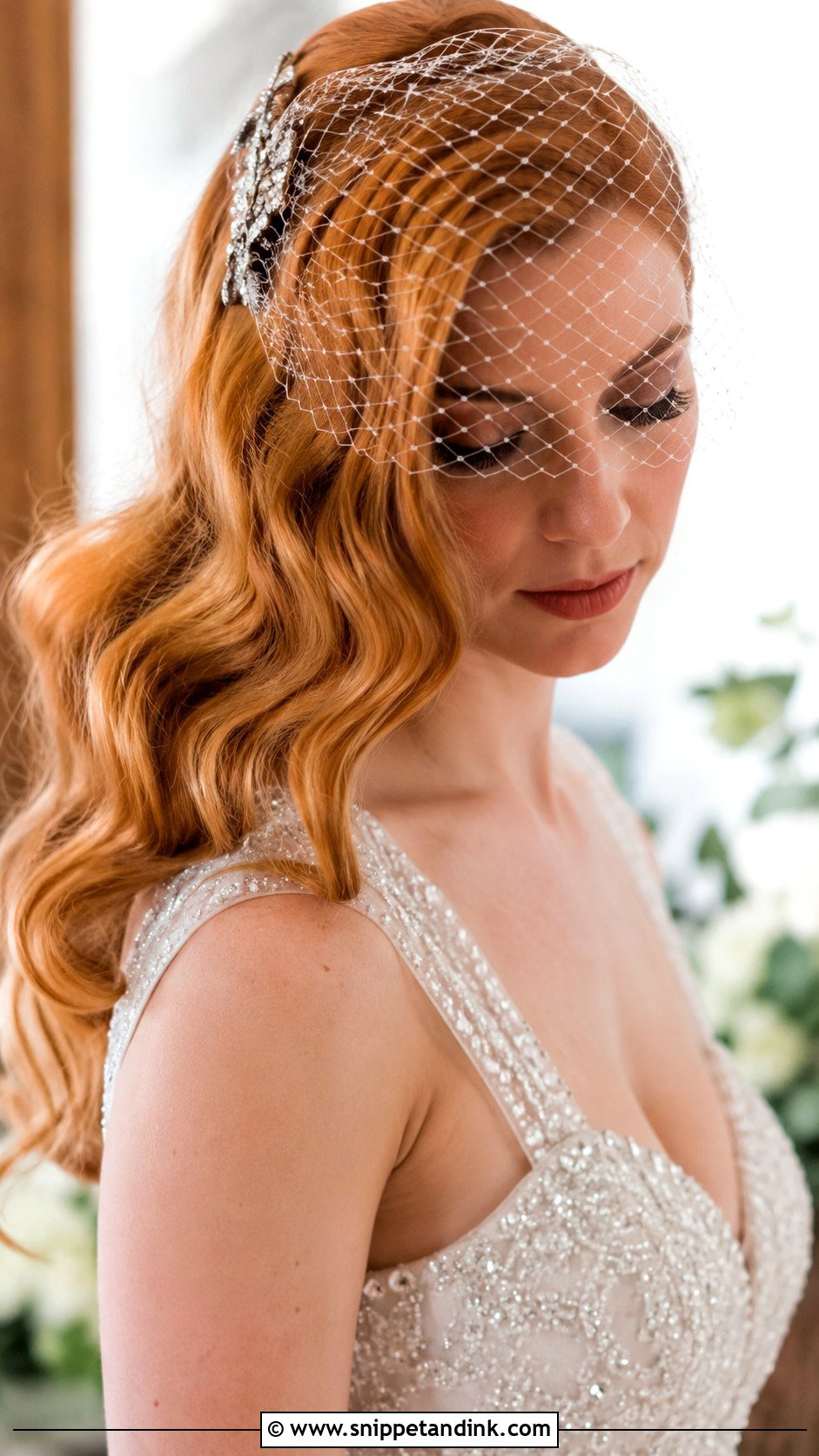
A birdcage veil with waves is pure retro glamour, nodding to the 1920s and 1950s. The waves can be worn down or pinned into a soft updo beneath the veil. The birdcage comb needs a solid base to grip, so I pin a small hidden section underneath before attaching it. A sparkly clip adds glamour. It suits vintage-themed or intimate weddings, especially courthouse ceremonies.
16. Long Wavy Layers with Face-Framing Highlights
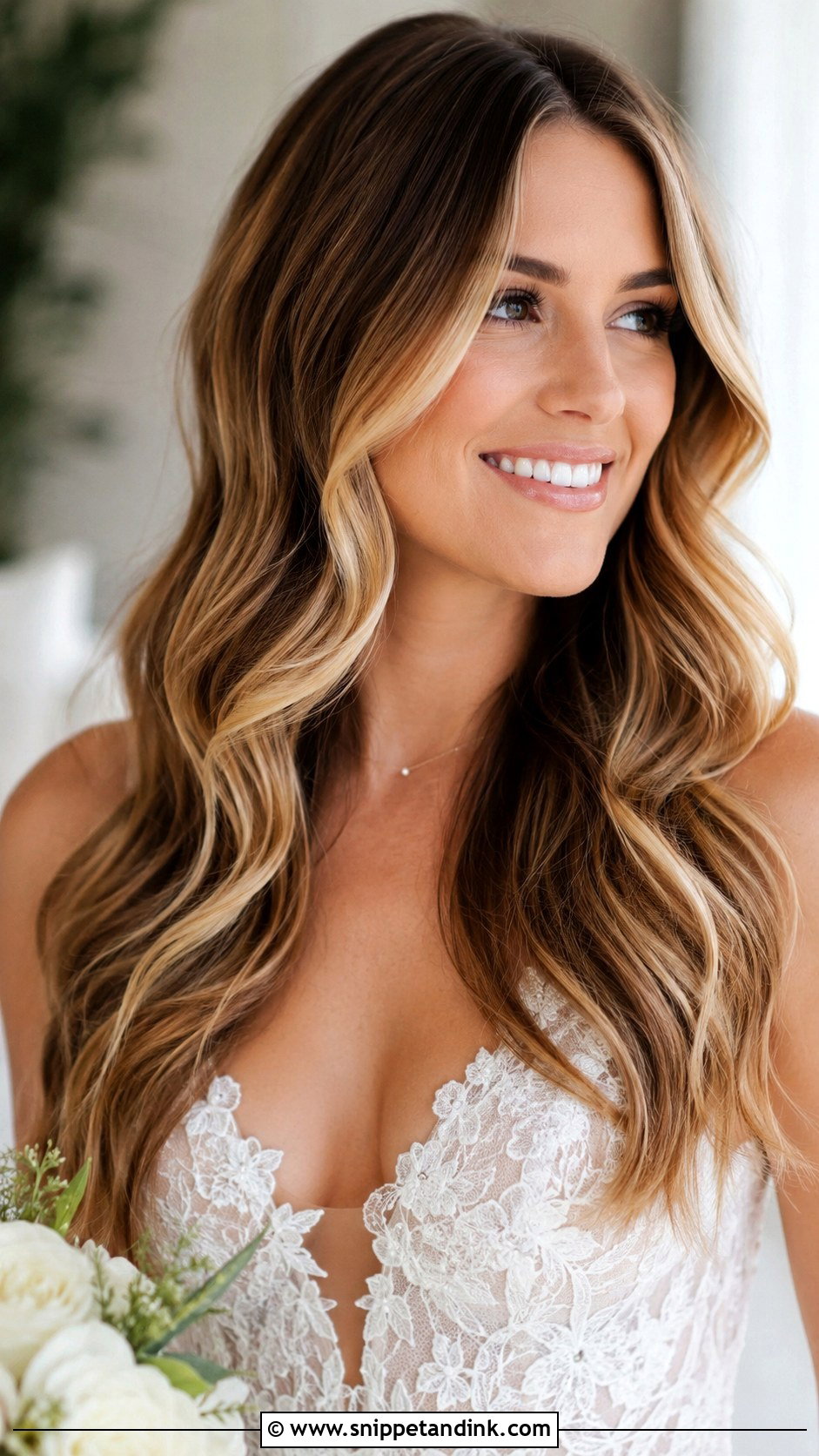
Face-framing highlights make waves look fuller, because the lighter pieces show the bend of each curl. Long layers help the waves fall without weight dragging them flat. If you’re coloring for the wedding, book it about two to three weeks before the day so the tone settles and any brassiness can be adjusted. Golden or honey tones warm the face. This works indoors and outdoors.
17. Wavy Side Bun with Cascading Tendrils
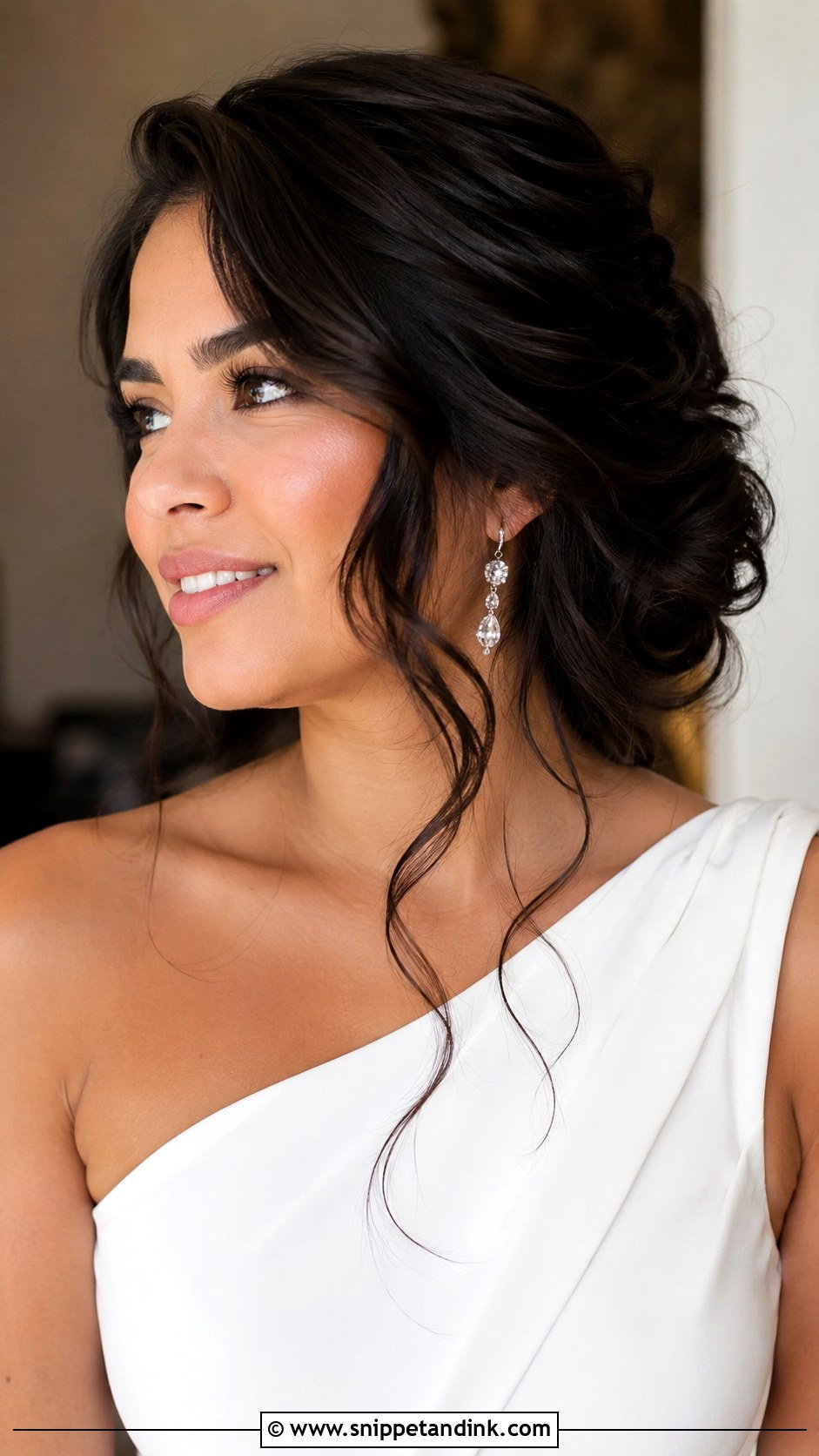
A side bun positioned low on one side adds romantic asymmetry. A few tendrils fall down the neck and shoulders. I place the bun on the side opposite the bride’s best camera angle, so her face is open toward the lens. It pairs with one-shoulder gowns and statement earrings and flatters the profile. The tendrils should be lightly curled so they don’t hang straight by dinner.
18. Glamorous Waves with a Sparkling Hair Clip
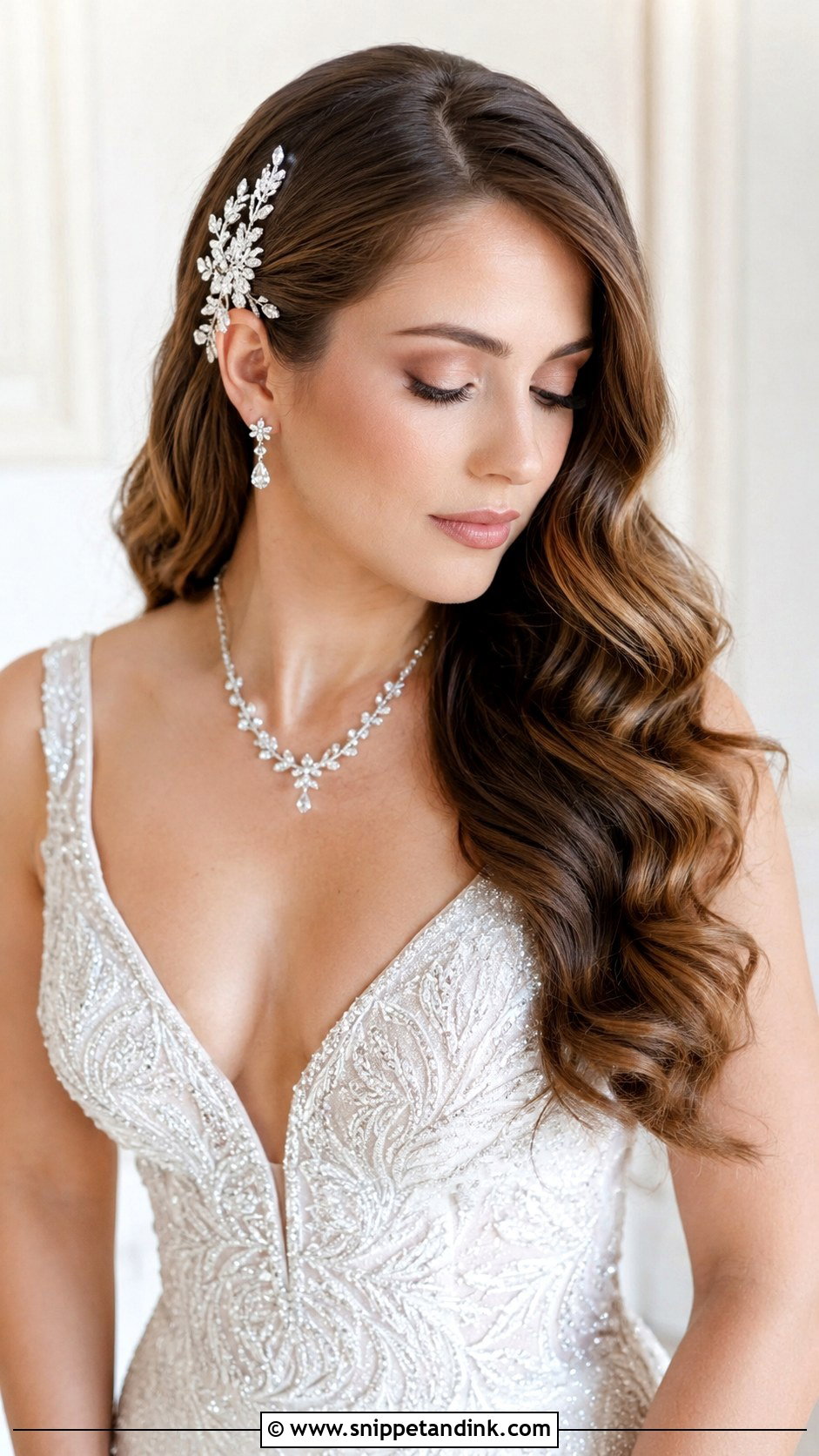
A single sparkling clip can do the work of a full headpiece. It can sweep hair to one side or secure a half-up section. Heavy clips slide in soft waves, so I anchor them through a few crossed pins hidden underneath. Matching the metal to your jewelry ties the look together. It suits a bride who wants a hint of sparkle but finds tiaras too much.
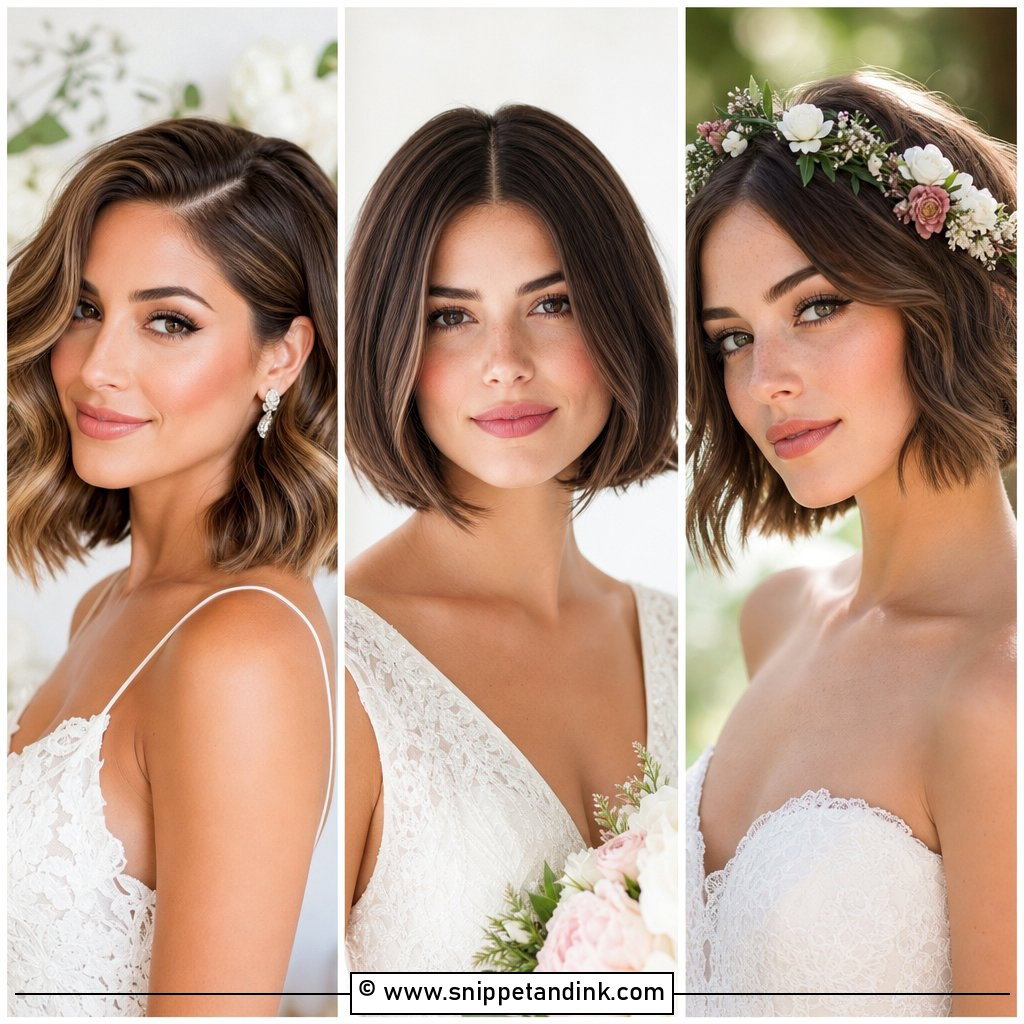
19. Wavy Bob for Short-Haired Brides
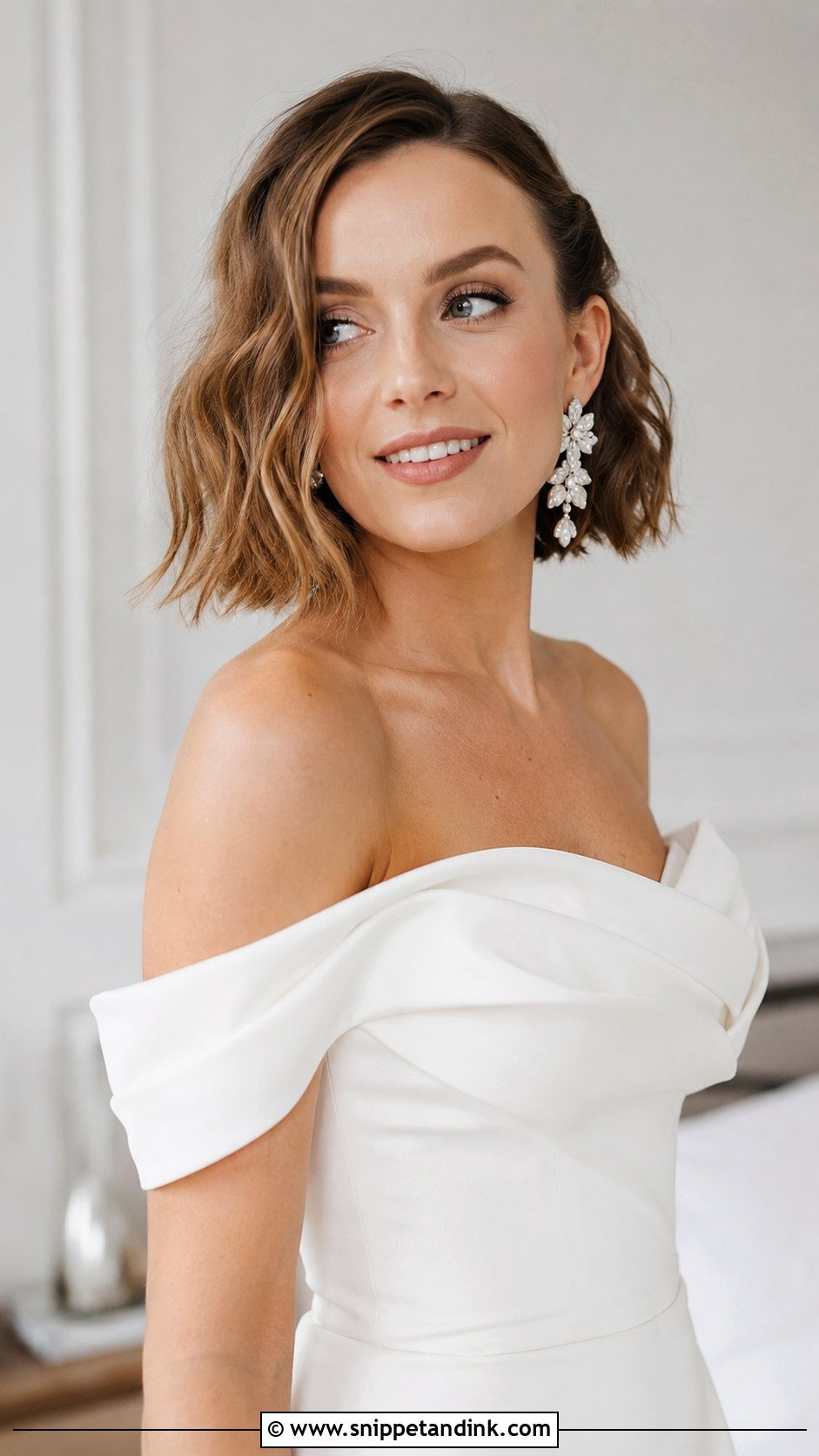
Short hair holds gorgeous wavy bridal styles just fine, and often better than long hair, because there’s less weight pulling the curl out. I use a smaller barrel on a bob and leave the ends slightly straighter so it doesn’t look too round. Tuck one side behind the ear and add a pin. It shows earrings well. A bob that’s freshly cut can be too blunt to wave nicely, so trim it a week or two before.
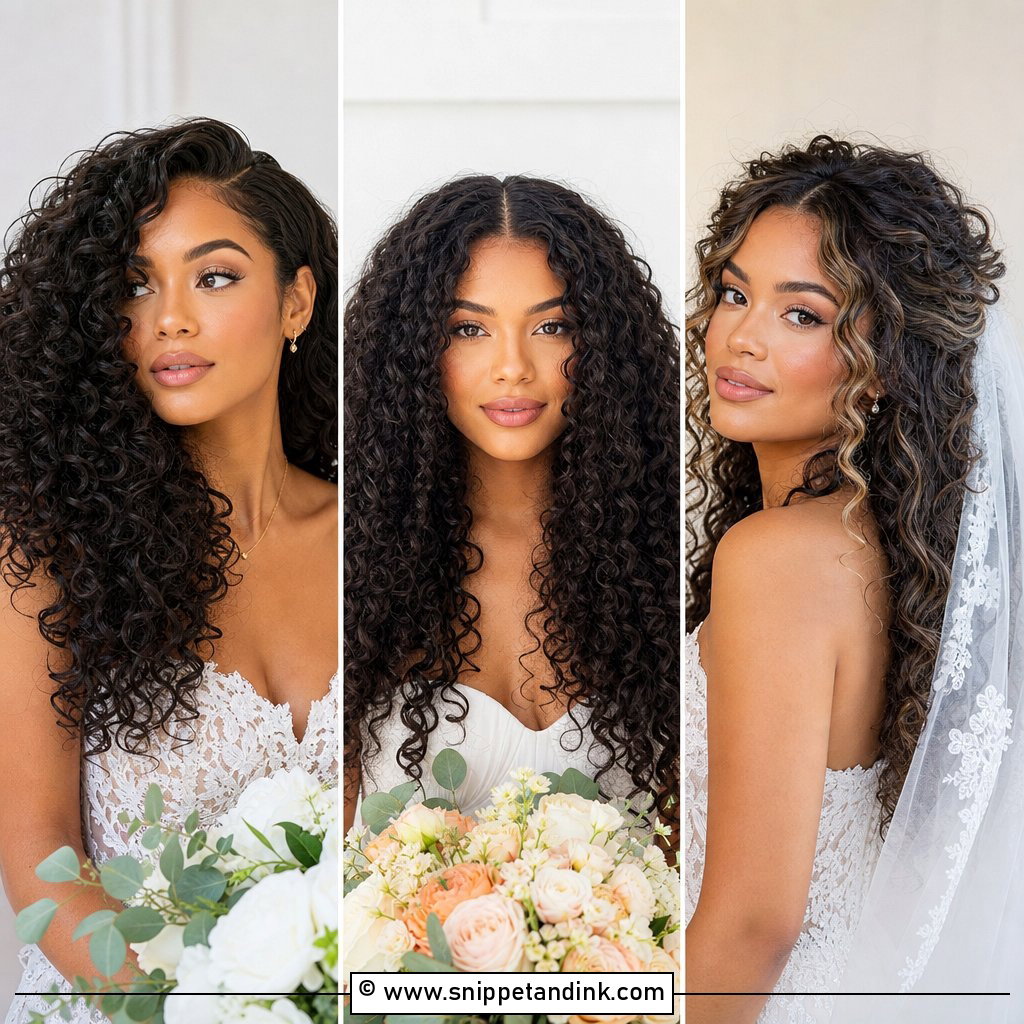
20. Romantic Waves with a Cathedral Veil
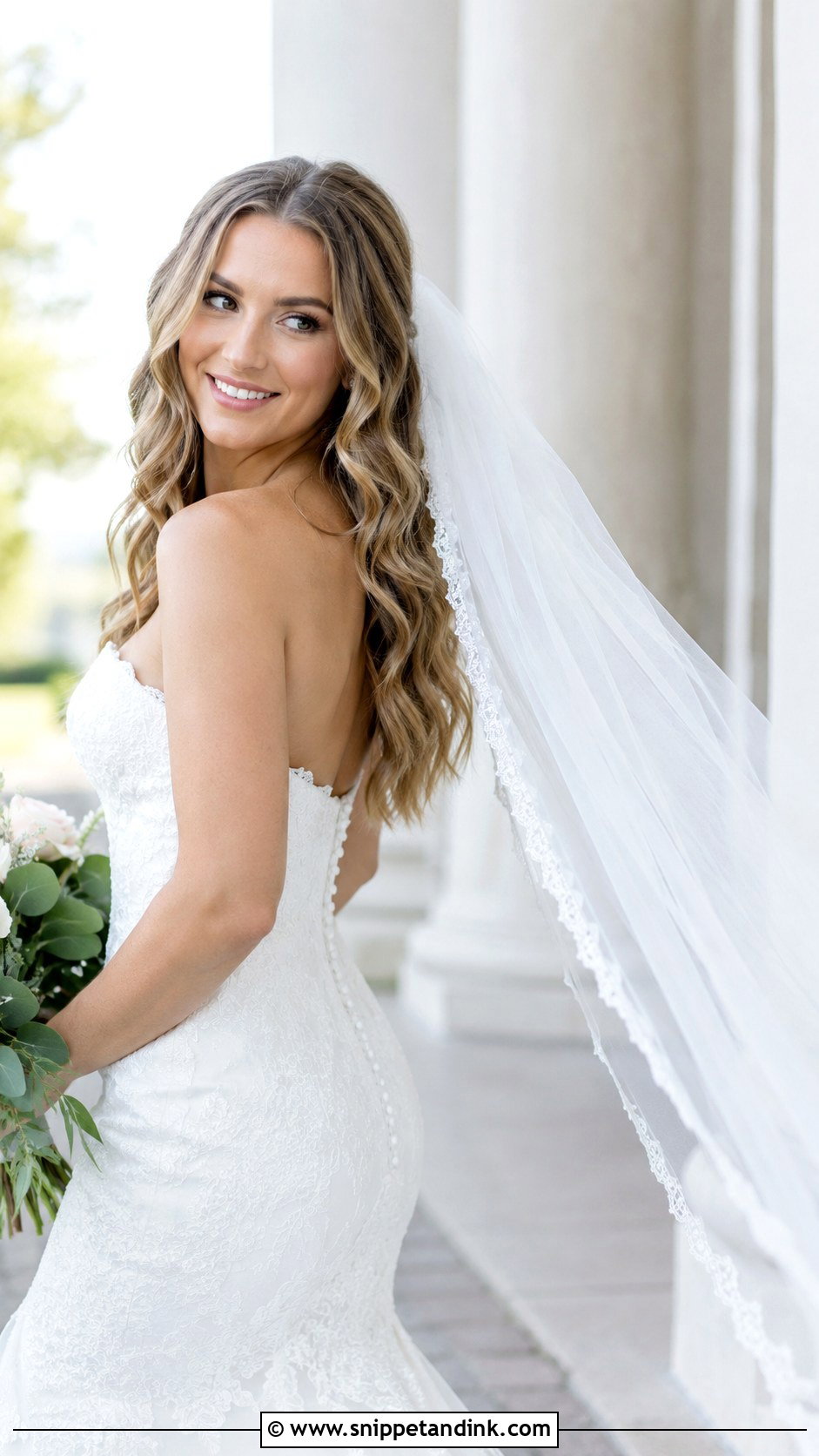
A cathedral veil is long and dramatic, and the waves underneath need to support its weight. The waves can be worn down or half-up beneath the veil. A heavy veil comb drags loose hair down, so I always build a small hidden anchor, a twist or mini bun, under the comb. Church and cathedral ceremonies suit it. When the veil comes off for the reception, the waves are left free and you get a second look.
21. Wavy Hair with a Twisted Crown
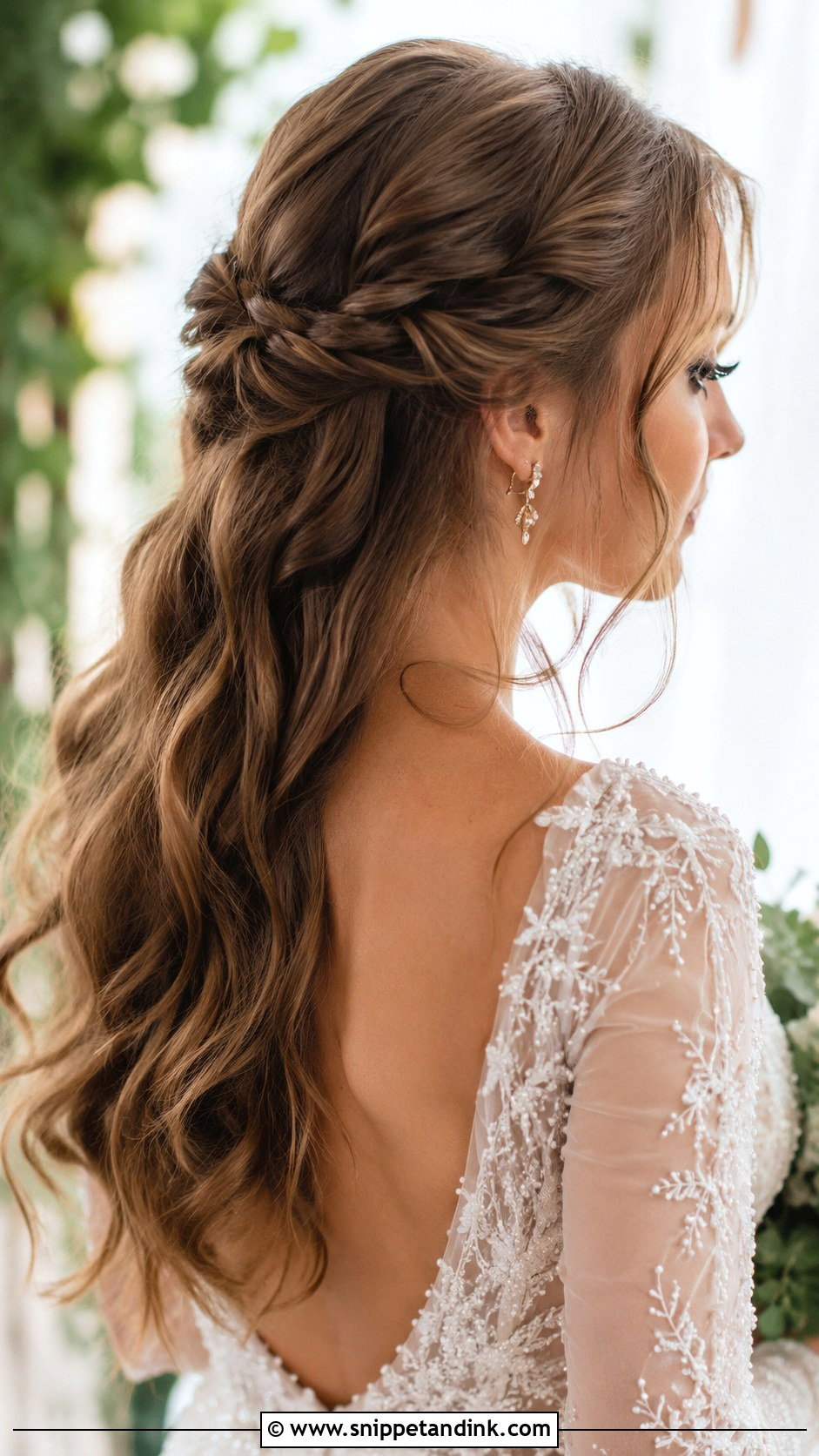
A twisted crown is gentler than a braid: sections are twisted and pinned across the crown while waves fall below. The twists add structure without the bulk of braids, which suits fine hair that looks thin when braided. Small flowers or pearls fit between twists. It holds through the day and suits boho and garden weddings.
22. Soft Waves with a Center-Parted Veil Tuck
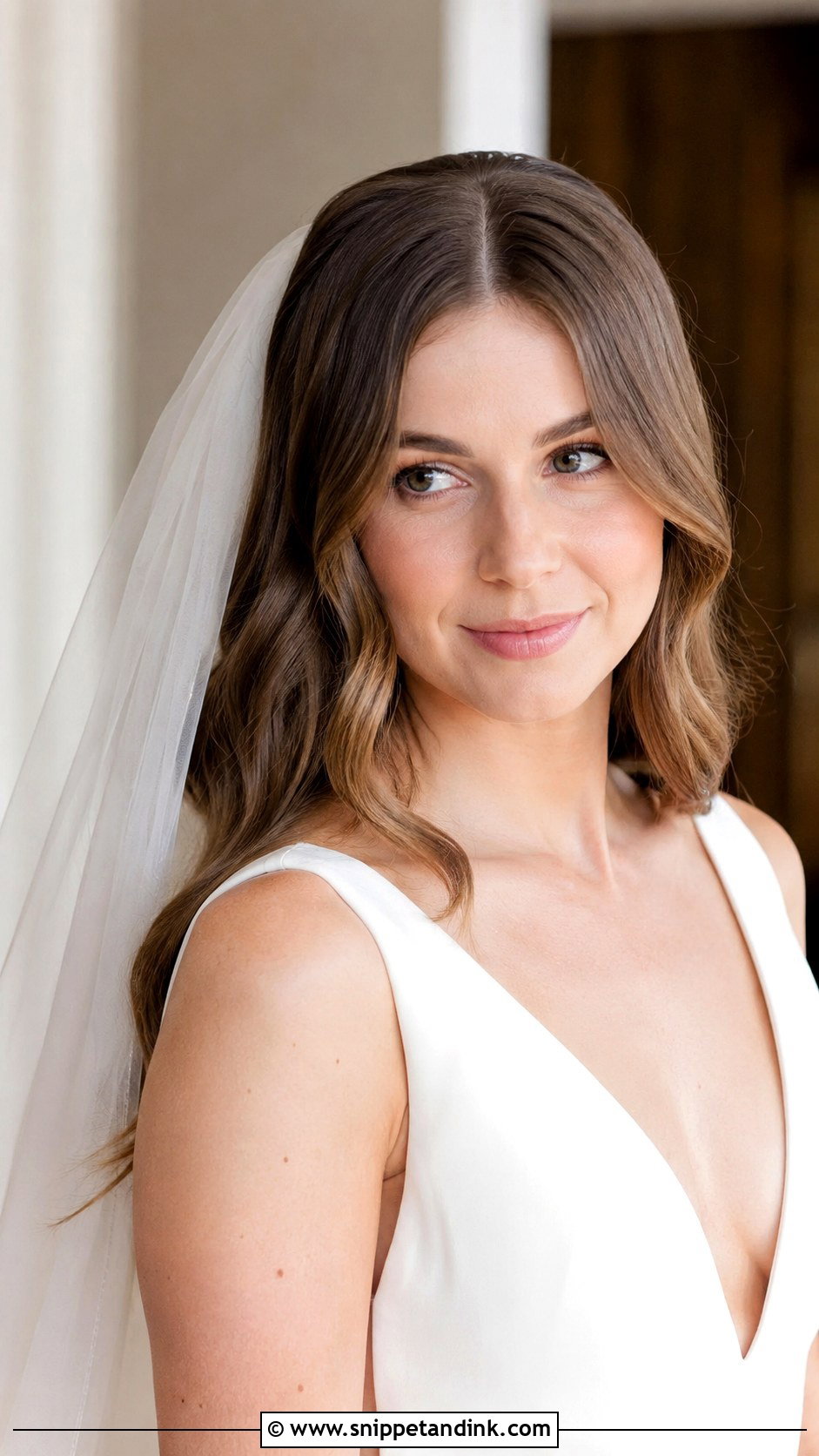
Tucking the veil comb under a clean center part makes it disappear, so the veil appears to float. The waves fall on either side. I place the comb slightly behind the crown and point it upward, then cover the teeth with a little hair. Simple gowns and delicate jewelry suit it. This one needs very little extra decoration.
23. Wavy Updo with a Floral Accent
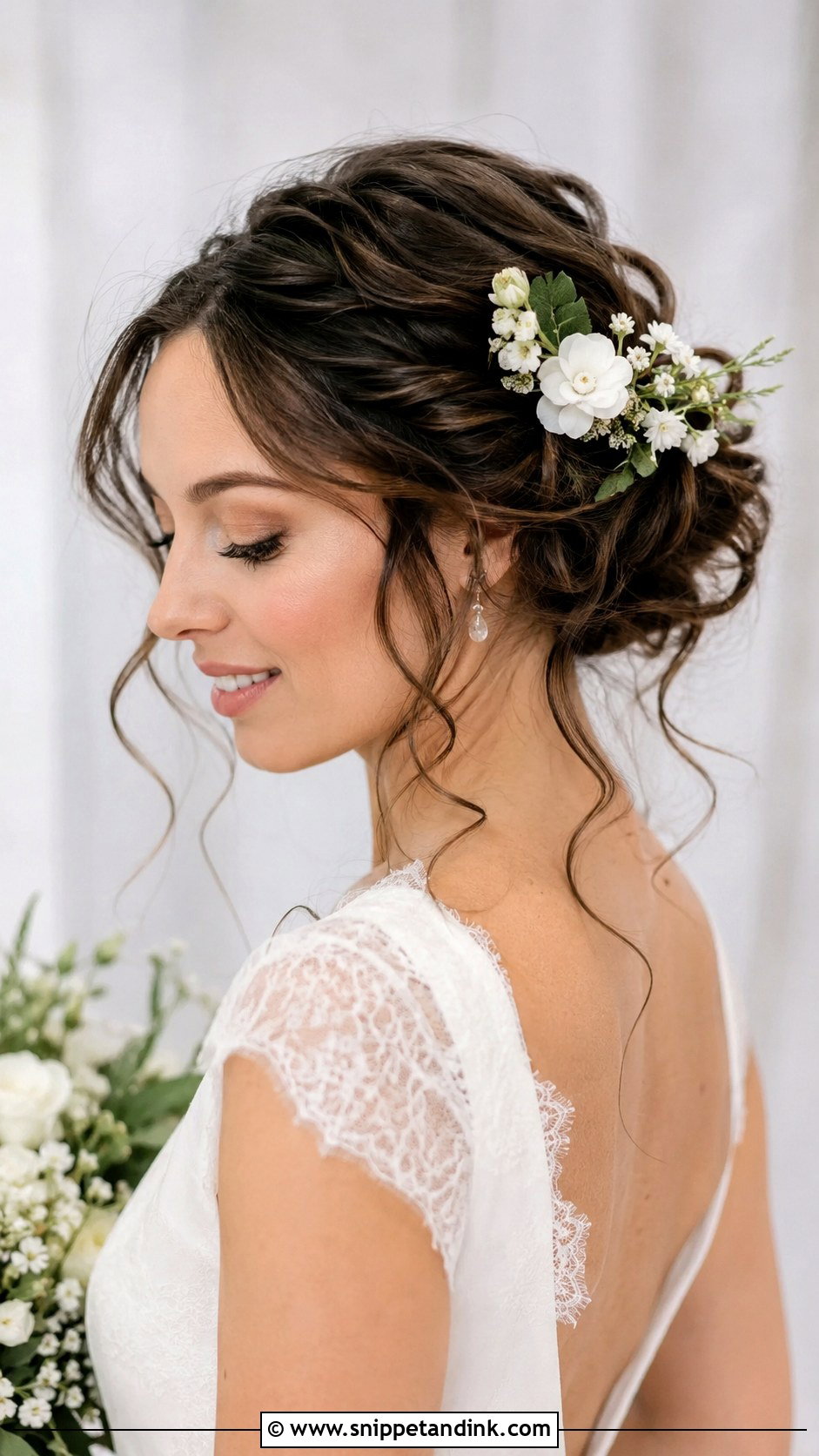
Fresh flowers pinned into a wavy updo bring a garden mood. I choose sturdy blooms, like spray roses or wax flower, because delicate petals wilt fast once out of water. Wire and tape each stem before pinning. Match them to the bouquet. A few loose tendrils frame the face. It suits spring and summer weddings, ideally with a florist who can prep the flowers for hair.
24. Mermaid Waves for Long Bridal Hair
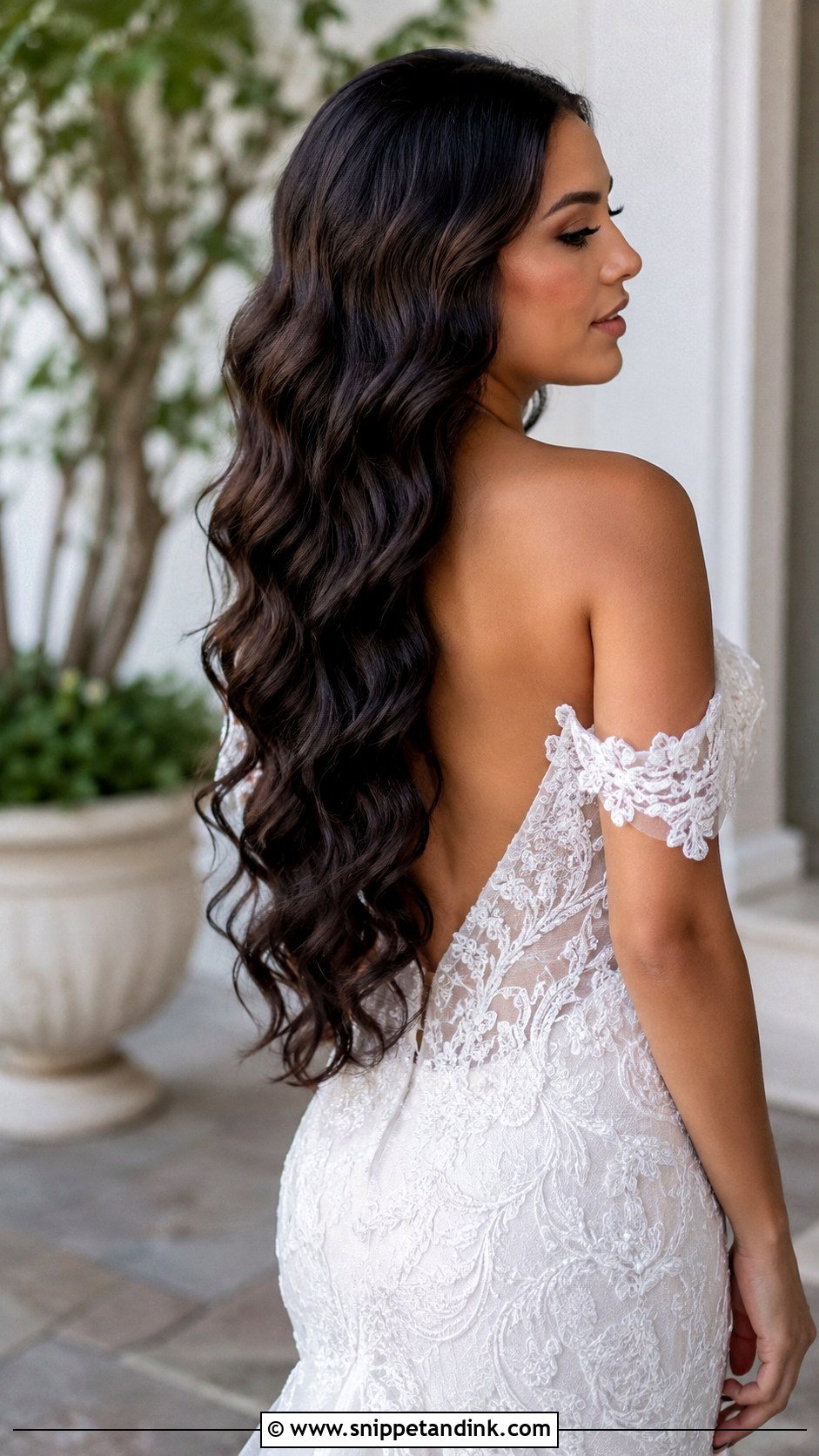
Mermaid waves are long, continuous ripples, usually made with a triple-barrel waver or a deep waver rather than a curling iron. They define long hair from top to bottom and photograph well from behind during the ceremony. The waver’s ridges are crisp, but they flatten under a heavy veil, so I’d pair them with a light veil or none. A hair vine works too. Mermaid waves need long, healthy ends; damaged ends crimp unevenly.
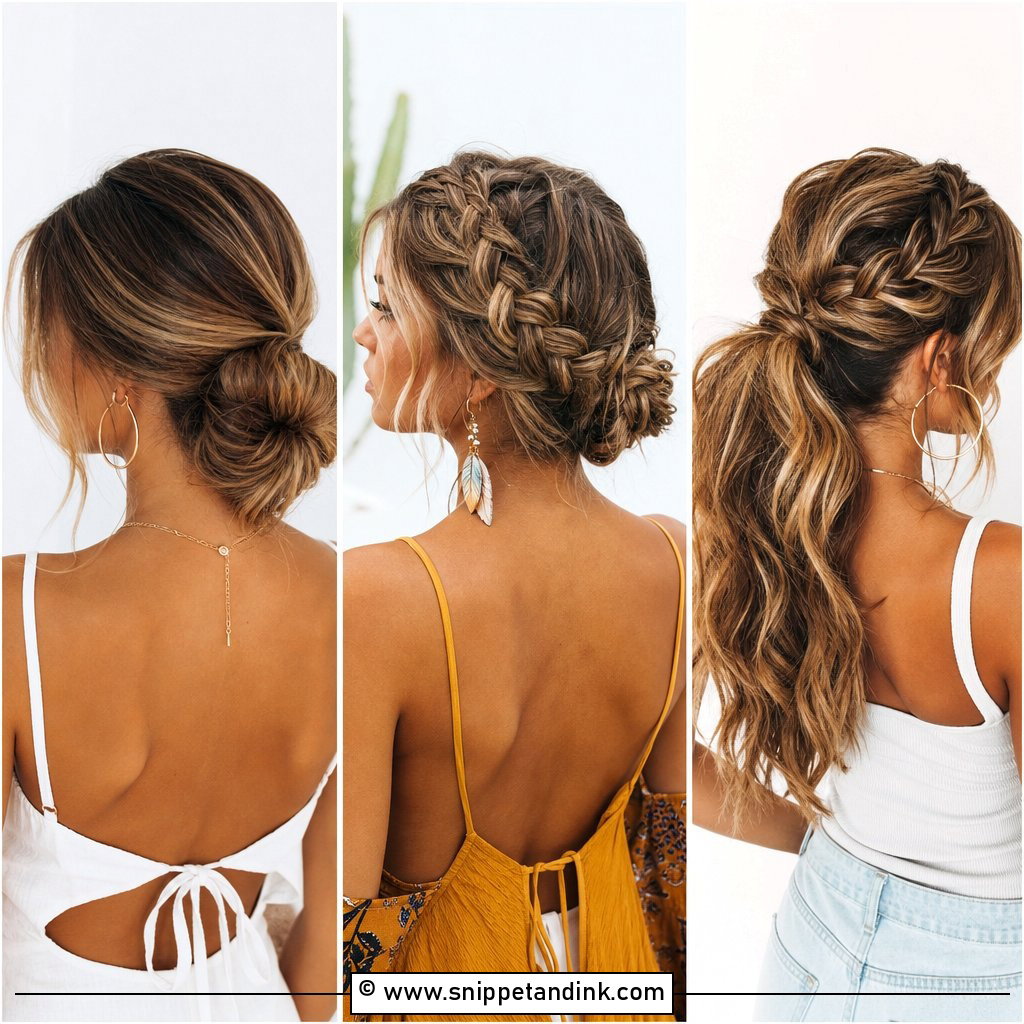
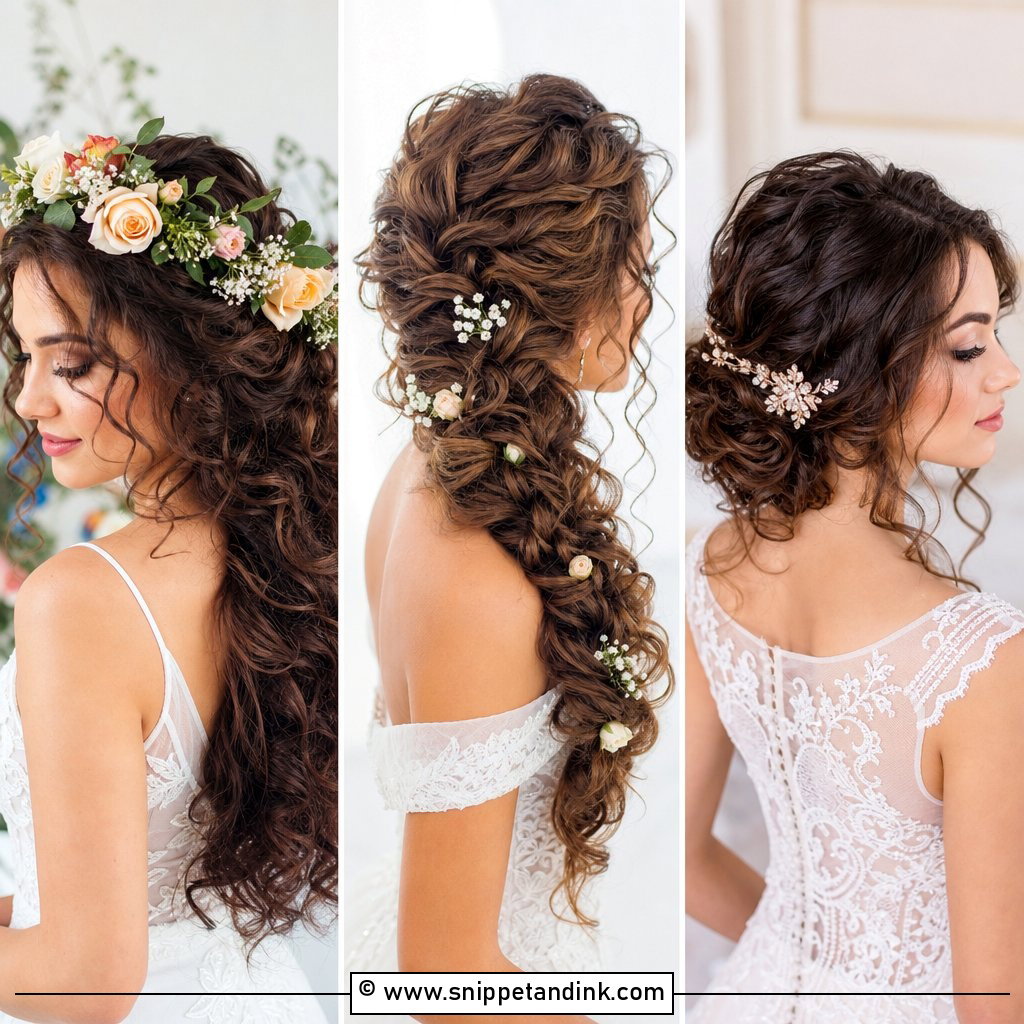
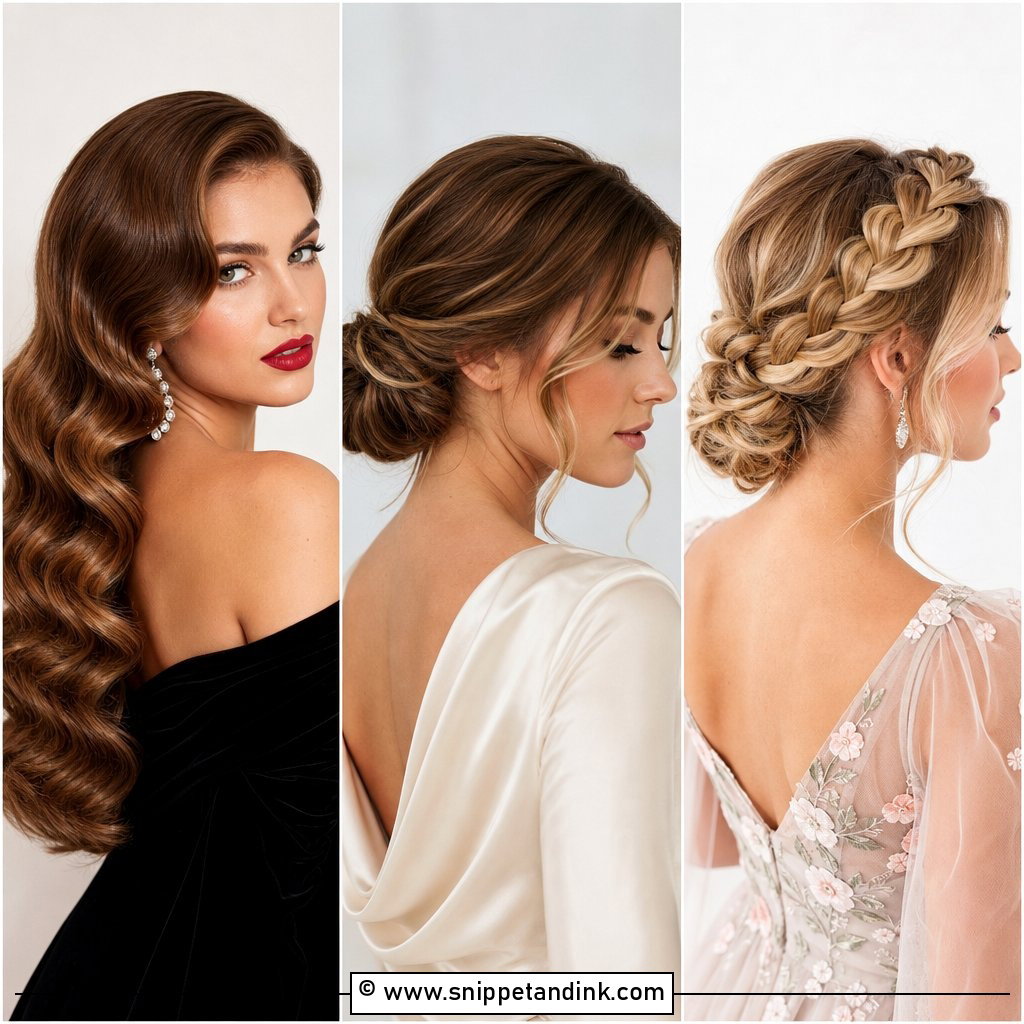
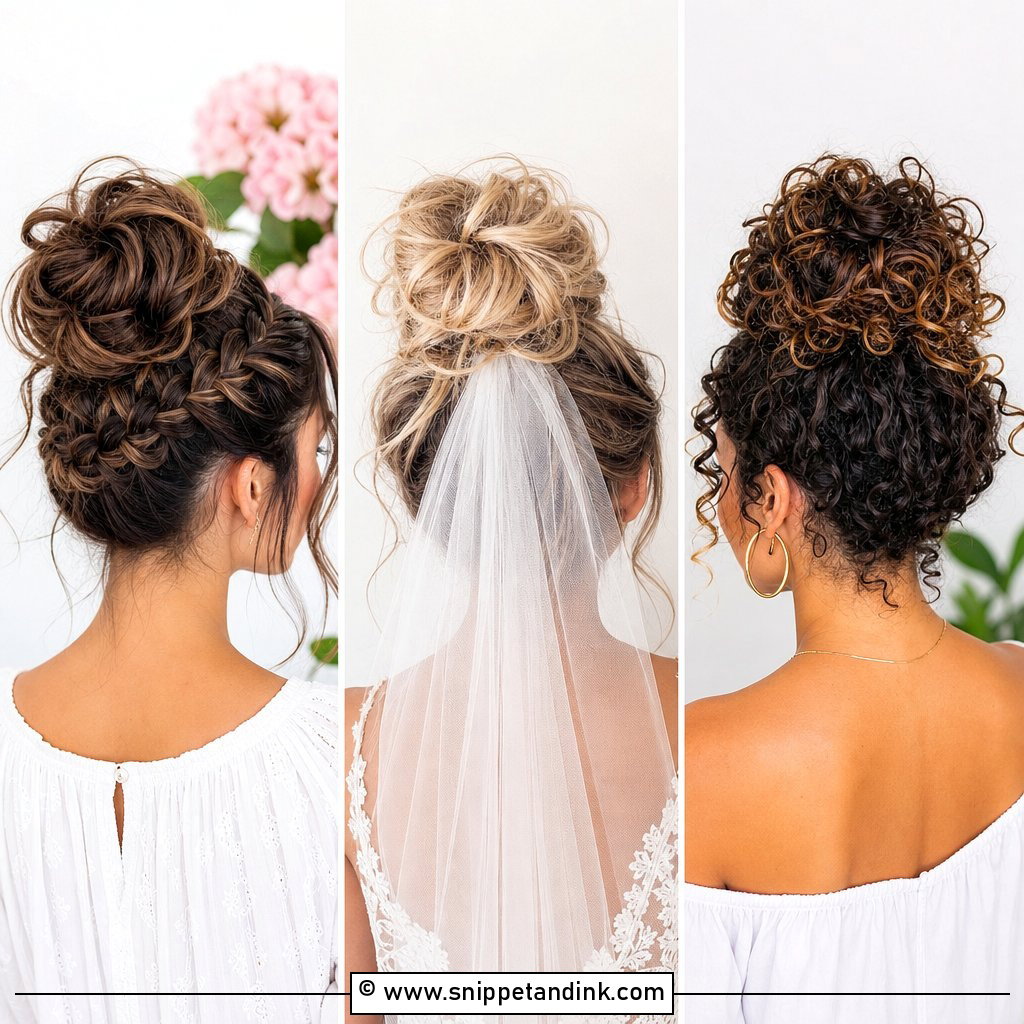
25. Wavy Lob with Tucked-Back Sides
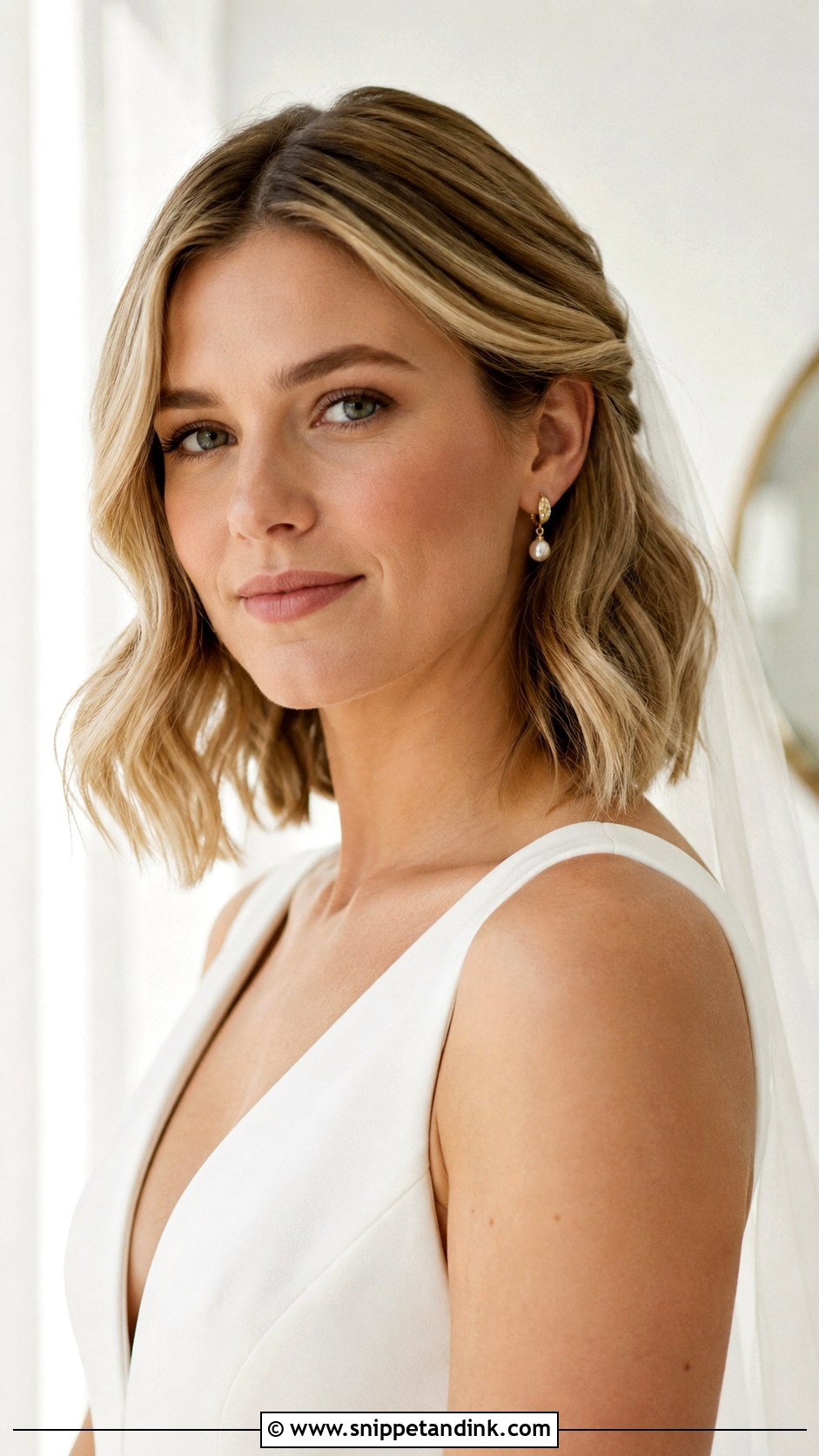
A lob, falling just past the shoulders, holds waves well because it’s long enough to bend but light enough not to drop. Tucking one or both sides behind your ears shows off statement earrings. A sparkly pin or small flower adds a final touch. It pairs with minimalist gowns and delicate accessories. I’d pick it for a bride who wants to look like herself on a good day.
Why Some Waves Fall Flat by the First Dance
Waves drop for a few predictable reasons, and most can be fixed in the prep.
- Squeaky-clean hair. Freshly washed, conditioned hair is slippery. Washing the night before, with conditioner only on the ends, gives better grip.
- Too much product. Heavy creams and oils weigh down fine hair. I use a light mousse at the root and a little heat protectant only.
- Humidity. Moisture in the air swells the hair and loosens the curl. On a humid day, I curl tighter than the final look I want.
- Brushing too early. Curls brushed while still warm lose shape fast.
Working With Natural Waves Instead of Ironing Them In
If your hair waves on its own, I’d rather enhance it than replace it. Naturally wavy hair holds its own pattern better than any heat set. I diffuse it with a curl cream, then use a wand only on the sections that don’t wave evenly, usually around the face and the crown.
The thing to watch is frizz. Natural waves can puff up in humidity, so a light anti-humidity spray and a hands-off approach, no touching or brushing during the day, keep them defined.
Which Wave Will Still Be There at Midnight?
Every wave in this list can be adapted to your hair length and venue: glossy Hollywood ridges, loose beach texture, soft updos or long mermaid waves. Take a few reference photos to your trial, wear the result for several hours, and see how it holds. Note how it looks at the end of the afternoon, not just in the mirror right after it’s done. That’s the version that will show up in your photos.
You'll Like These Ideas:


Leave a Reply