
Dressing a boy for an Indian wedding is different from dressing a groom, even when the clothes look like miniature versions. A groom stands still for photos; a seven-year-old sits cross-legged at the mandap, runs during the baraat and falls asleep on a chair by midnight. So when I help families pick an outfit for a young wedding guest, I check the fabric at his neck and the waistband before I look at the embroidery. The ideas below run from sherwanis and achkans for the main ceremony to kurta sets, dhotis and Nehru jackets for the pre-wedding functions, plus bandhgalas and a tuxedo for older boys at the reception.
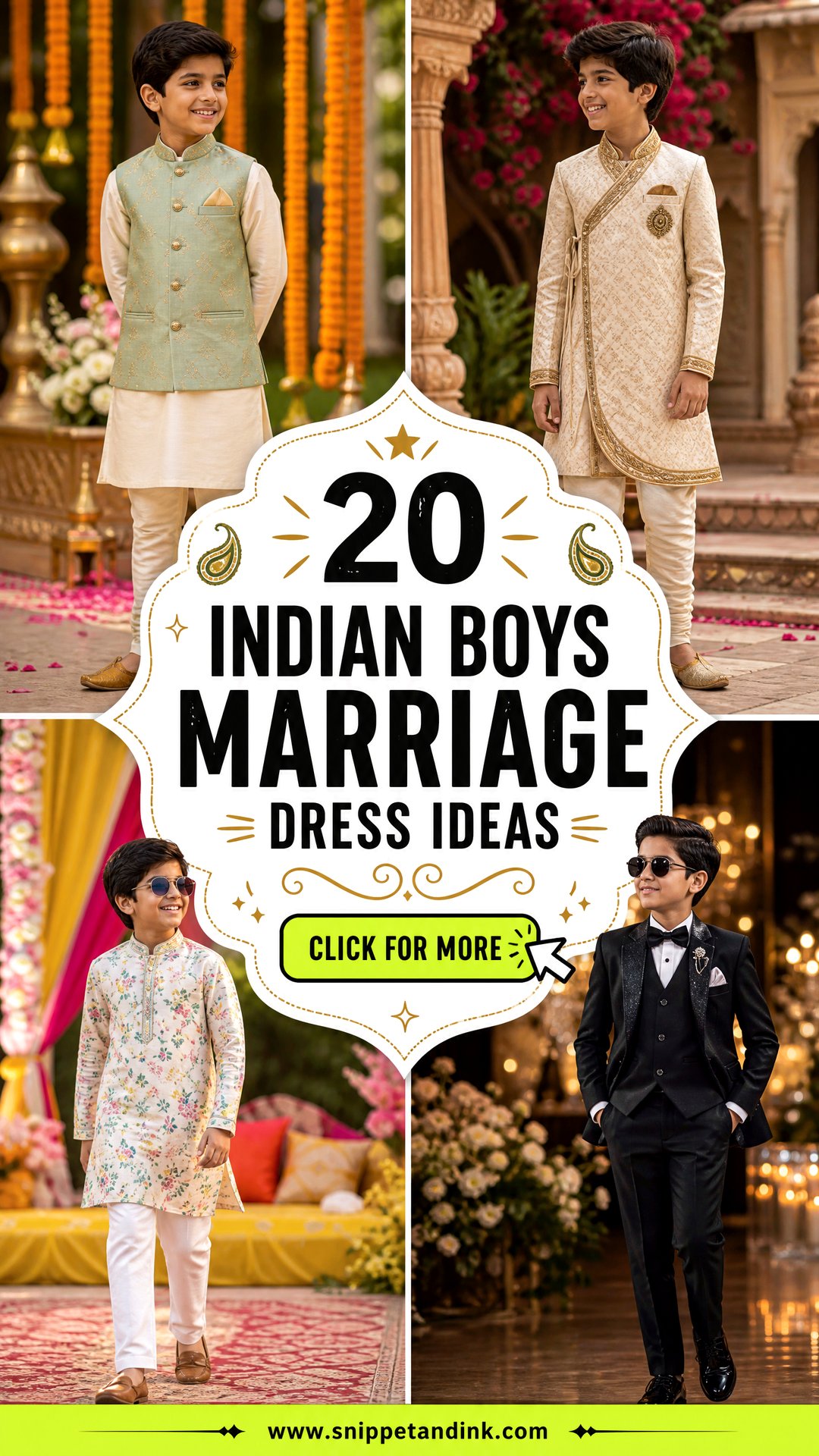
Matching His Outfits to Haldi, Sangeet, Pheras and Reception
Most Indian weddings run across several functions, and a boy rarely needs a new heavy outfit for each one. I sort the wardrobe by how messy and how formal each event is, then buy the fewest pieces that cover all of them.
- Haldi: turmeric stains cotton and silk alike and seldom washes out completely, so dress him in an inexpensive yellow or white cotton kurta you won’t mind retiring.
- Mehndi: a printed kurta or Pathani set in washable fabric, because wet henna on little hands ends up on everything nearby.
- Sangeet: the Indo-western or jacket-over-kurta looks, since there will be dancing and he should be able to drop a layer.
- Wedding ceremony: the most formal piece, a sherwani, achkan, dhoti kurta or veshti depending on the family’s tradition, in a fabric he can sit cross-legged in through a long ritual.
- Reception: a bandhgala, Jodhpuri suit or tuxedo for older boys, while a younger child can rewear the sangeet outfit with a different jacket.
Ask about the dress code for each event before buying anything. Some communities expect particular colors at certain rituals, and a boy in the main wedding party may be coordinated with the groom’s side.
1. Boys Ivory Sherwani With Churidar
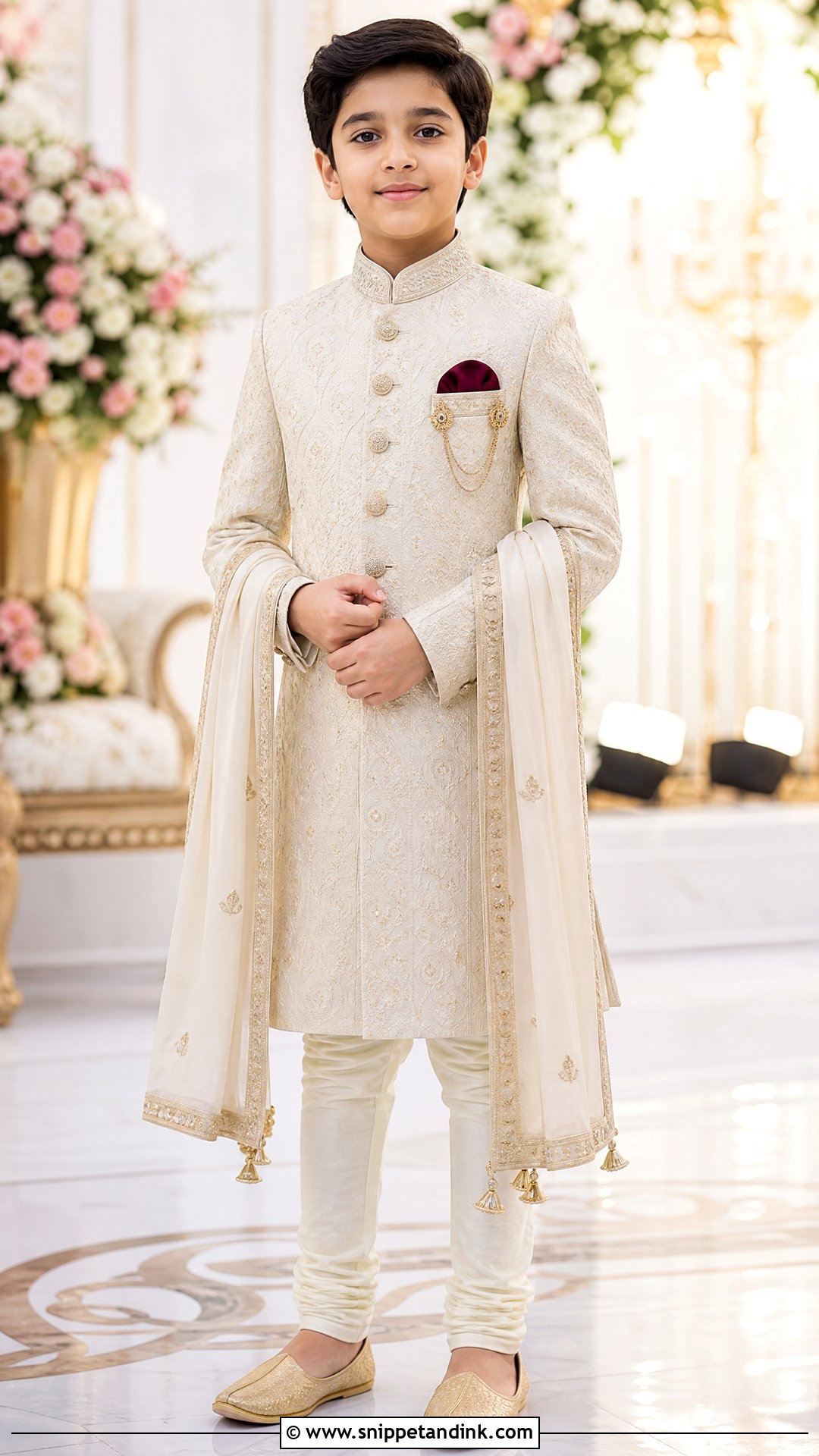
Ivory is the most ceremonial color a boy can wear without looking like a tiny groom, as long as the embroidery stays light. I’d pick a silk-blend sherwani with gold work only at the collar, buttons and cuffs, since heavy zari across the chest scratches the inner arm when a child folds his arms. A white or cream churidar needs a little room at the knee so he can sit on the floor. Gold or tan mojaris keep the palette soft, and a maroon pocket square adds contrast if the family is in red. A stole works for formal portraits, but skip big necklaces and turbans on younger boys. The honest drawback: ivory shows every drop of dal, so plan when he eats.
2. Boys Pastel Sherwani With Pajama
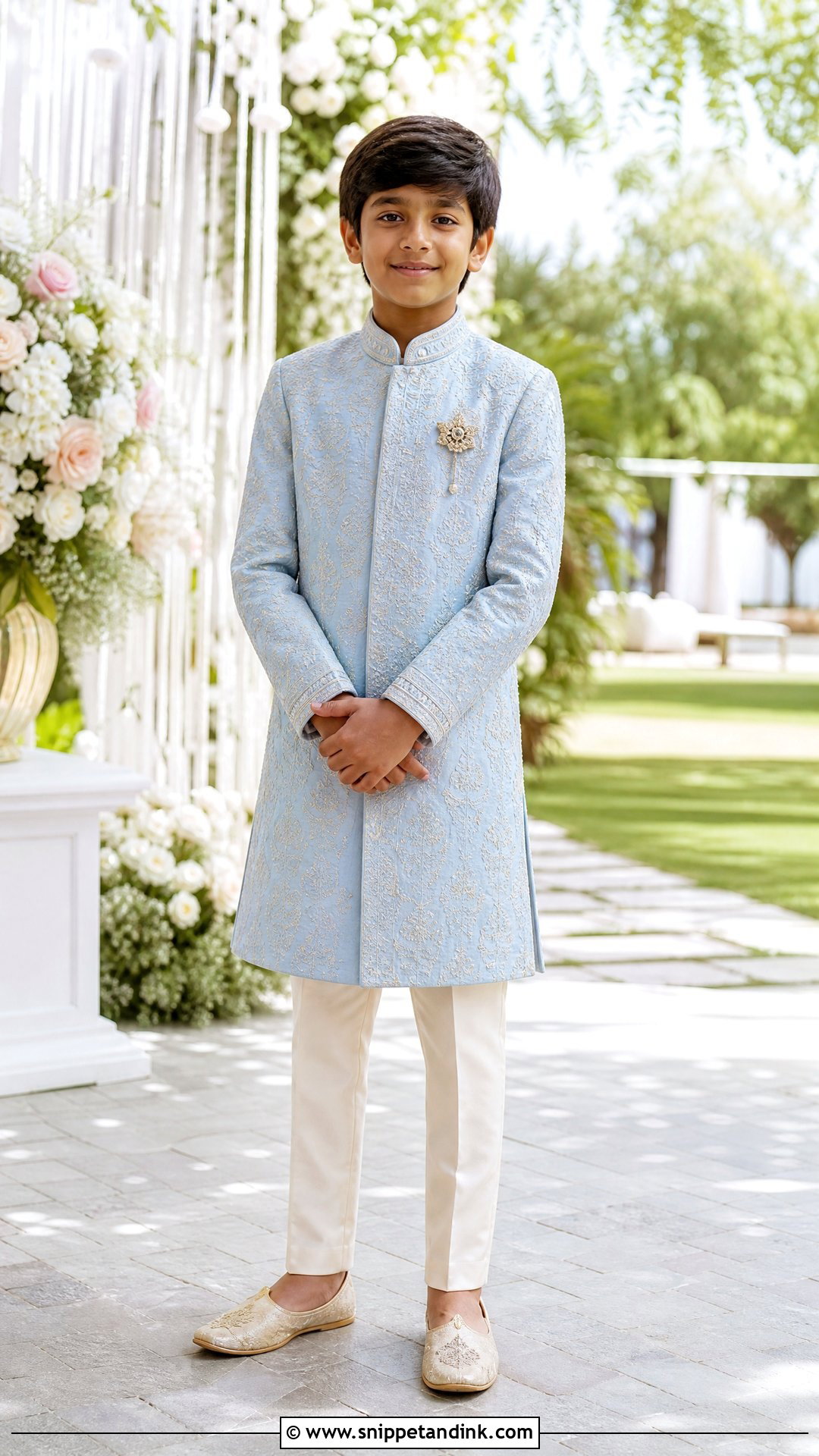
Pastels are my default for a daytime wedding, because they read festive in sunlight without the weight of metallic thread. Powder blue, blush, mint or peach with tonal thread embroidery photographs softly. Straight cream pajamas give an active boy far more movement than a churidar, and they’re easier for a small child to manage in the bathroom. Beige juttis and one small brooch are enough; if the sherwani is already embroidered, leave out the stole. Turn it inside out before buying. Covered seams and a soft collar edge decide whether he’ll keep it on for five hours.
3. Boys Velvet Bandhgala With Trousers
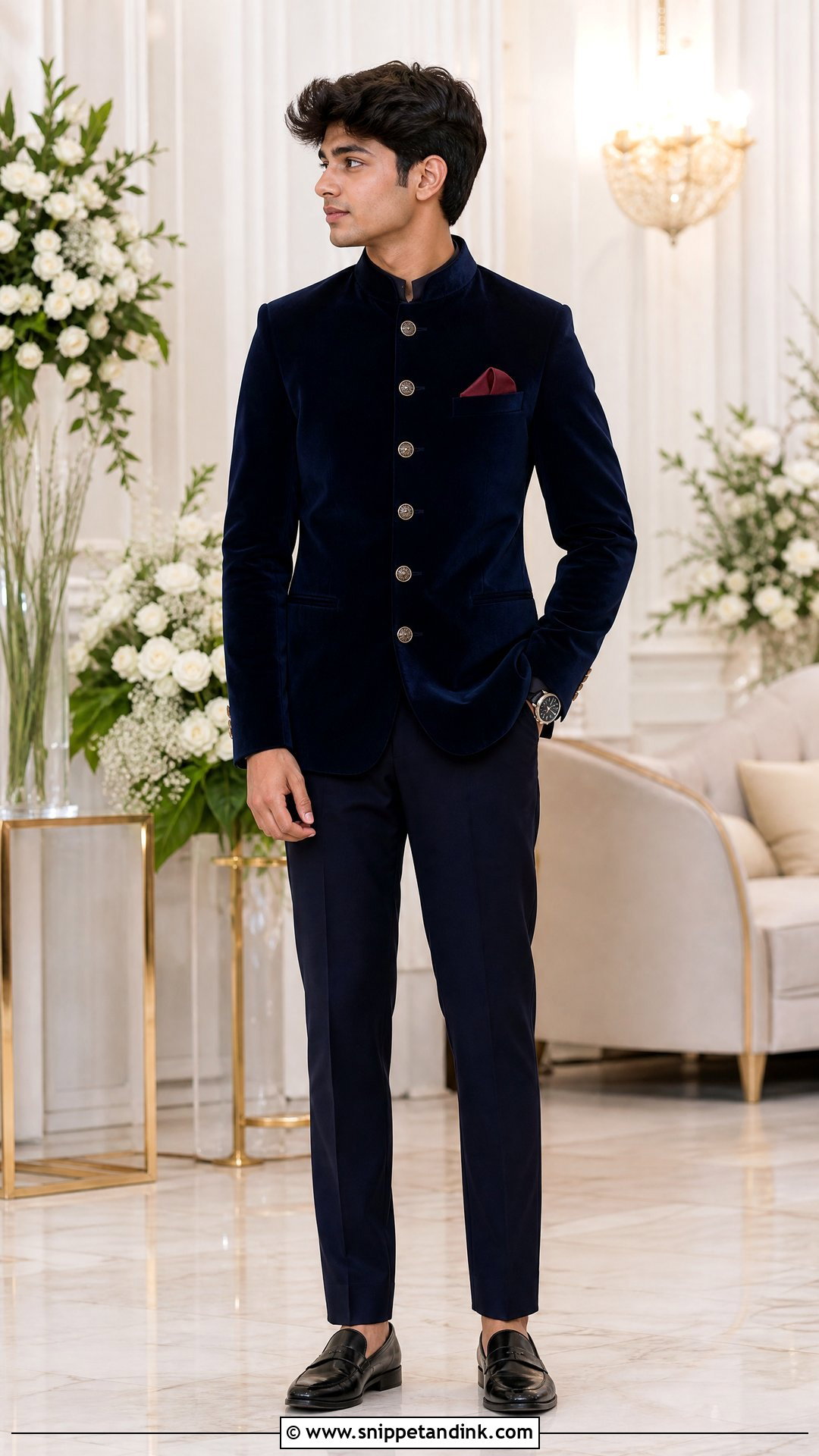
Velvet is a winter fabric, full stop. In a cool evening venue, a bandhgala in navy, bottle green, burgundy or plum looks rich with nothing more than plain metal buttons, but in a warm hall a child will be red-faced within the hour. Put a light cotton shirt or mandarin-collar top underneath so the velvet doesn’t rub. Tailored black or matching trousers, polished loafers and a pocket square suit an older boy, who might also wear a watch; little ones are happier in cushioned slip-ons. Have him sit down in the fitting room. If the jacket pulls across the chest when he’s seated, go up a size, and keep extra embroidery and heavy pins off a fabric that’s already doing the work.
4. Boys Kurta Pajama With Nehru Jacket
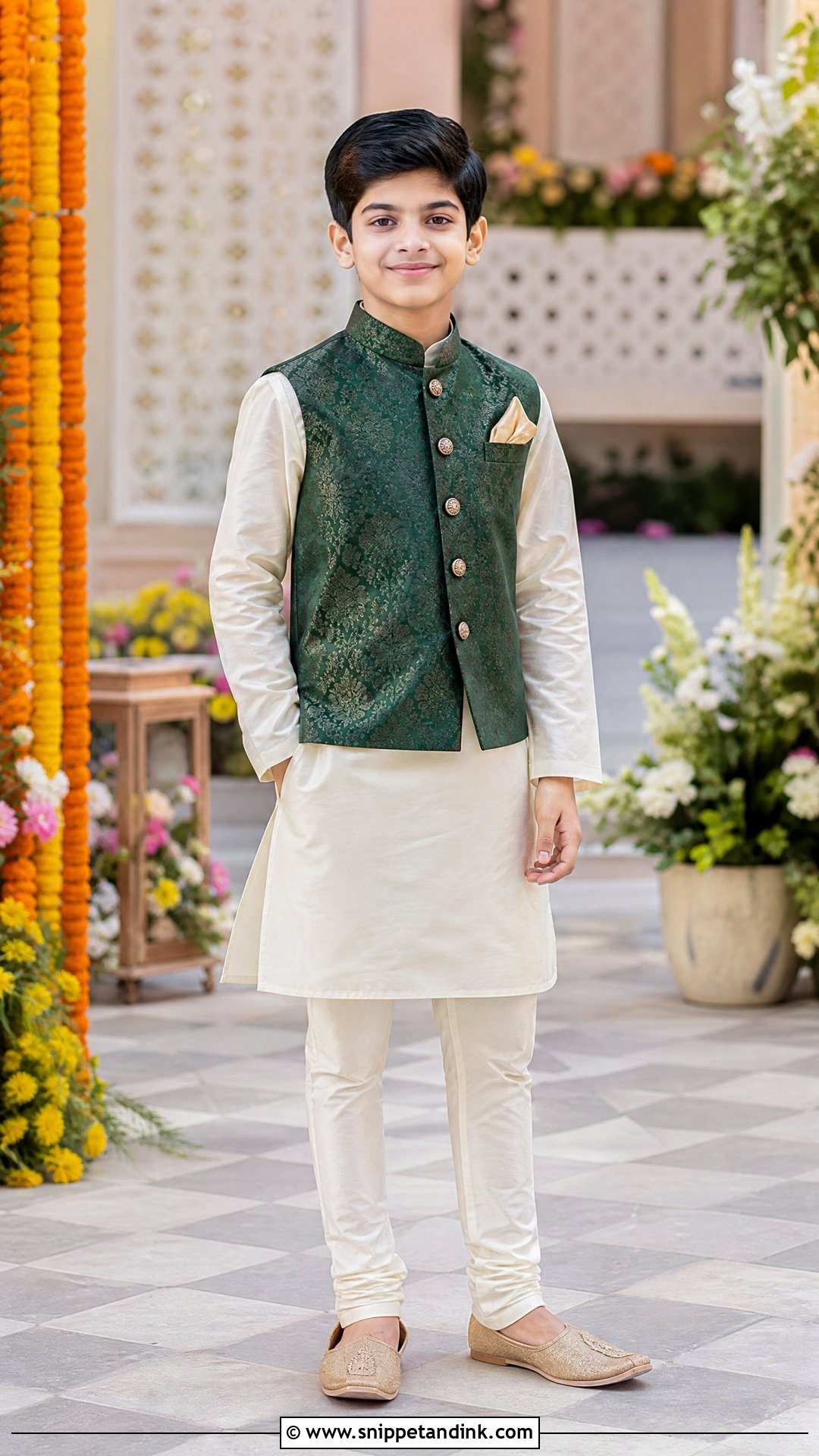
If a family asks me for one outfit that covers almost every function, this is it. A plain cotton-silk kurta in white, cream or pale blue, straight pajamas and a brocade or jacquard Nehru jacket in navy, maroon, emerald or gold give you festive color over an easy base. Tan juttis or soft loafers and a pocket square finish it. The real advantage is that the jacket comes off when he gets hot or wants to play, and the kurta underneath still looks dressed. Check that the armholes are generous and the lowest button doesn’t dig into his stomach when he sits.
5. Boys Floral Jacket Kurta Set
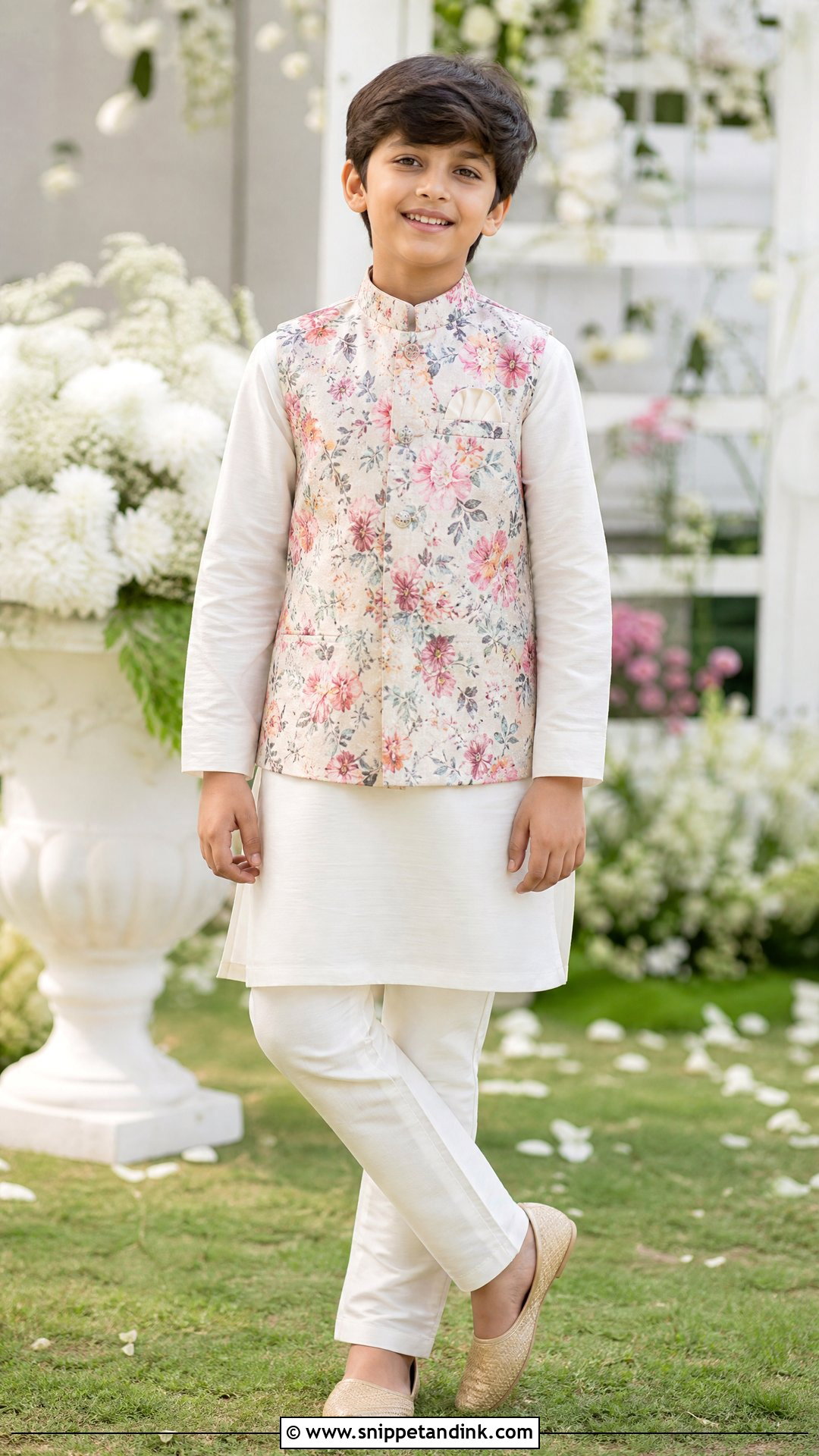
Prints are where I let younger boys have some fun. Start with a solid white, peach, mint or light-yellow kurta and comfortable pajamas, then add a floral Nehru jacket whose print picks up one color from the base. Neutral beige juttis and a plain pocket square stop it from getting busy. Scale matters more than people expect: a large floral on a small body looks like upholstery, so choose small or medium motifs for little ones. Garden venues and spring or summer daytime functions suit it best. A soft lining keeps a printed cotton jacket from chafing.
6. Boys Dhoti Kurta Wedding Outfit
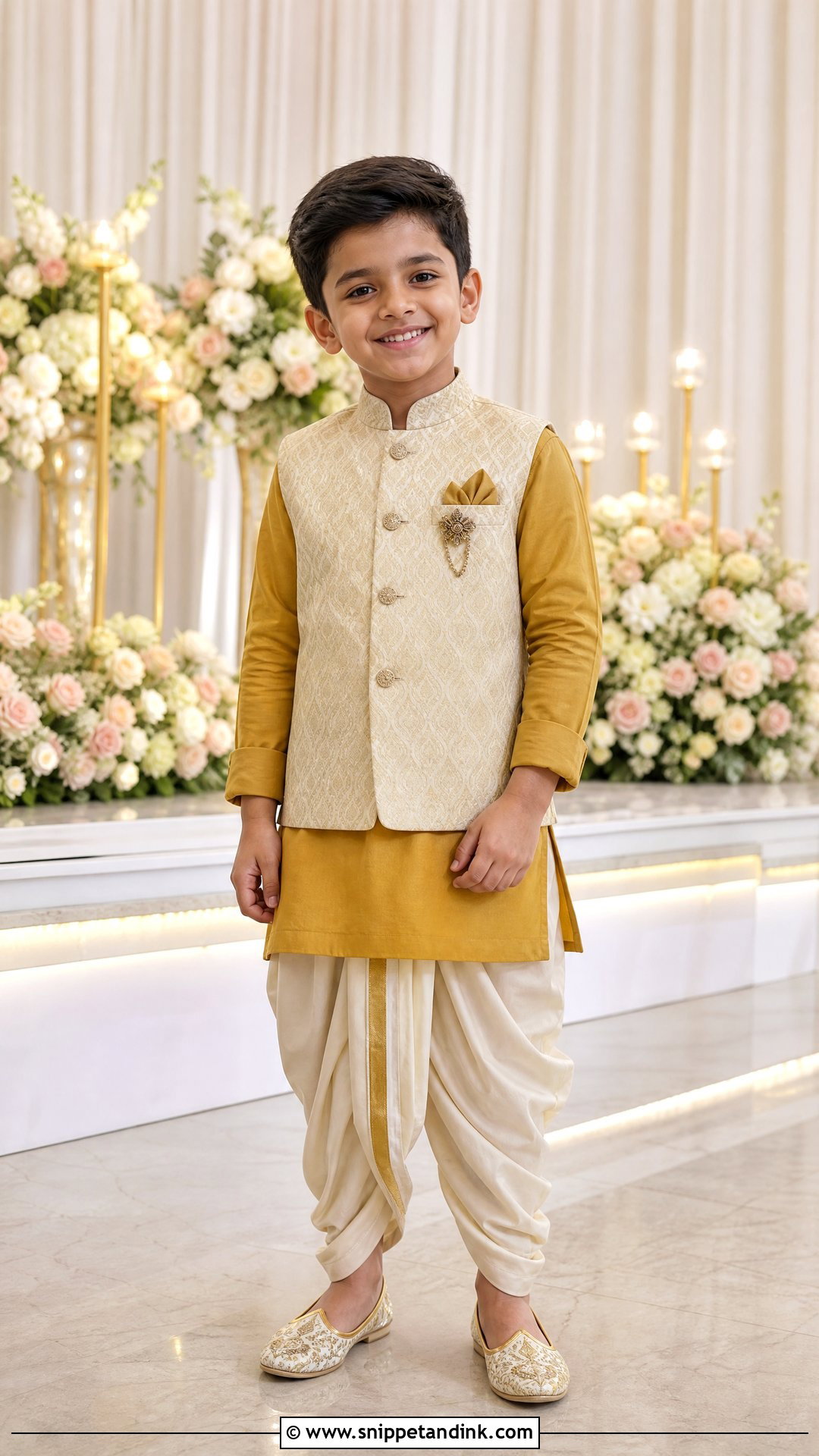
For a young boy, buy the dhoti pre-stitched. A hand-draped dhoti comes loose the first time he runs, and nobody at a wedding has time to re-pleat it. Pair a cream, white, mustard or pastel dhoti with a short kurta in silk, cotton-silk or jacquard, then add embroidered juttis and a light sleeveless jacket for formal rituals. One bracelet or small brooch is plenty. Two things I check: the hem must sit clear of the shoes, since a trailing dhoti is a tripping hazard on temple steps, and the waistband should stay secure but not tight when he’s sitting cross-legged.
7. Boys South Indian Veshti And Shirt
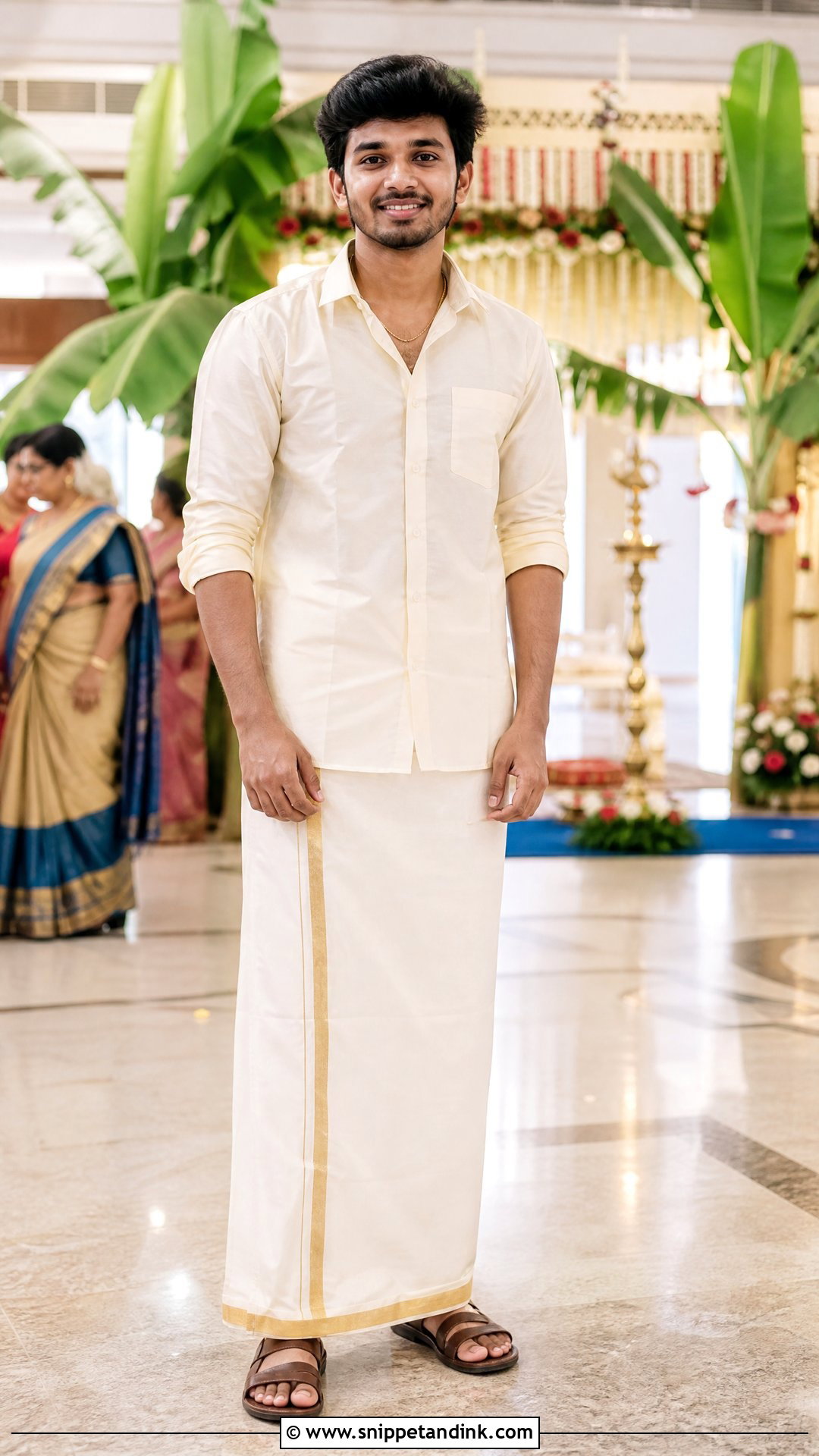
At a South Indian wedding, a veshti with a silk-blend shirt is what most families expect a boy to wear, and it suits a long morning muhurtham better than any jacket. Choose a white or cream pre-stitched veshti with a gold or colored border and a short-sleeved shirt in ivory, pale gold, green or maroon. Traditional sandals or plain brown slip-ons keep the lines clean. A small gold-toned chain is optional and depends on family custom. Younger boys should have an elastic or hook-fastened veshti, because a wrap that relies on tucking won’t survive a toddler. Check the hem length beforehand so it doesn’t drag across the hall.
8. Boys Angrakha Kurta With Churidar
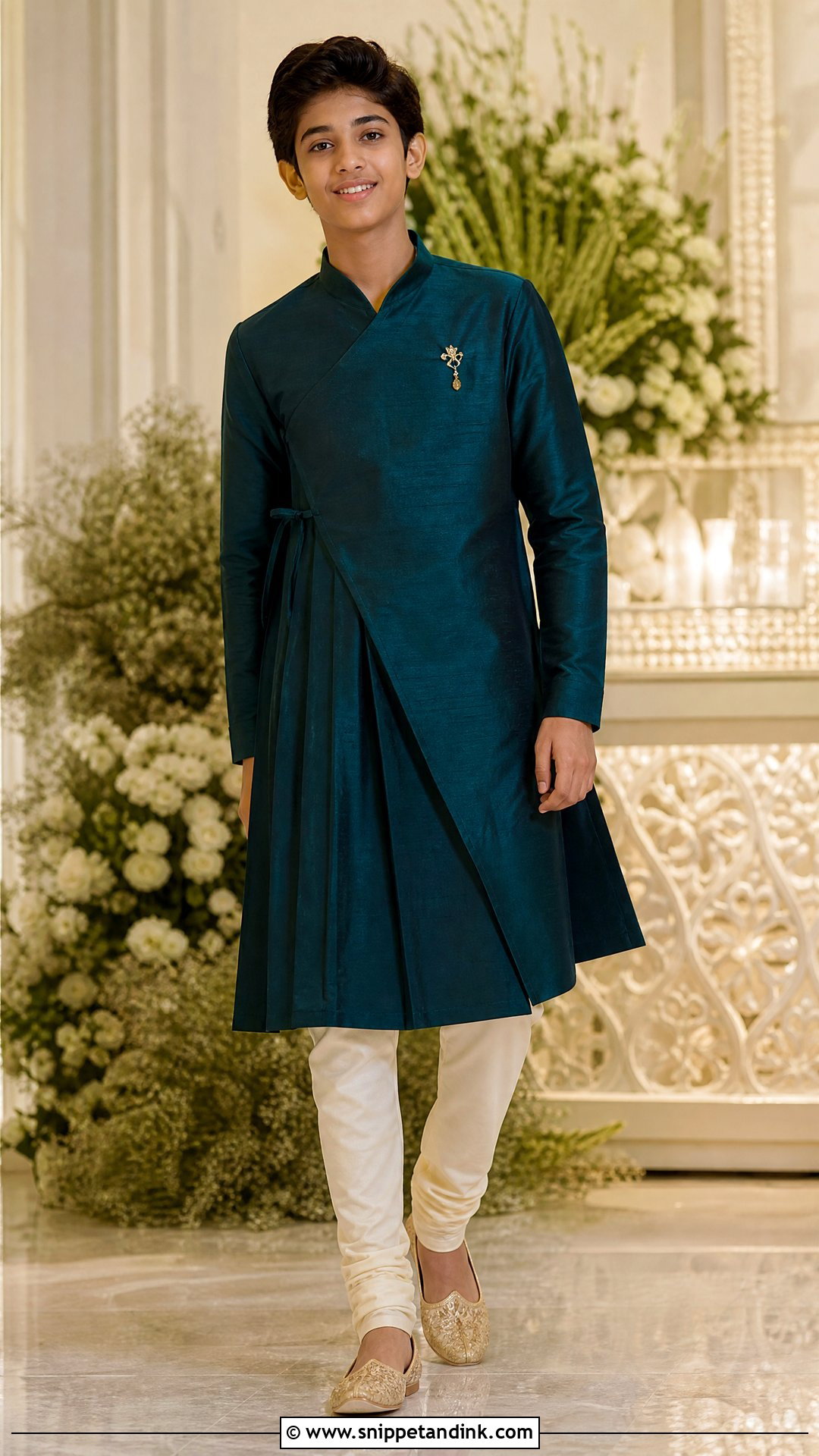
The wrapped front of an angrakha is the detail people notice, and it’s also the part that can go wrong on a child. Long decorative ties get pulled, chewed or caught on chairs, so I look for short ties that are firmly sewn, or fabric-covered buttons instead. Pick a knee-length cut in teal, maroon, royal blue or emerald for an evening event, or peach, beige and mint by day. A plain cream churidar keeps attention on the overlap, and embroidered mojaris plus a small brooch finish it. An older boy can carry a light printed stole for formal rites. A soft lining at the neck and chest matters, because the crossover sits right against the skin.
9. Boys Asymmetrical Indo Western Outfit
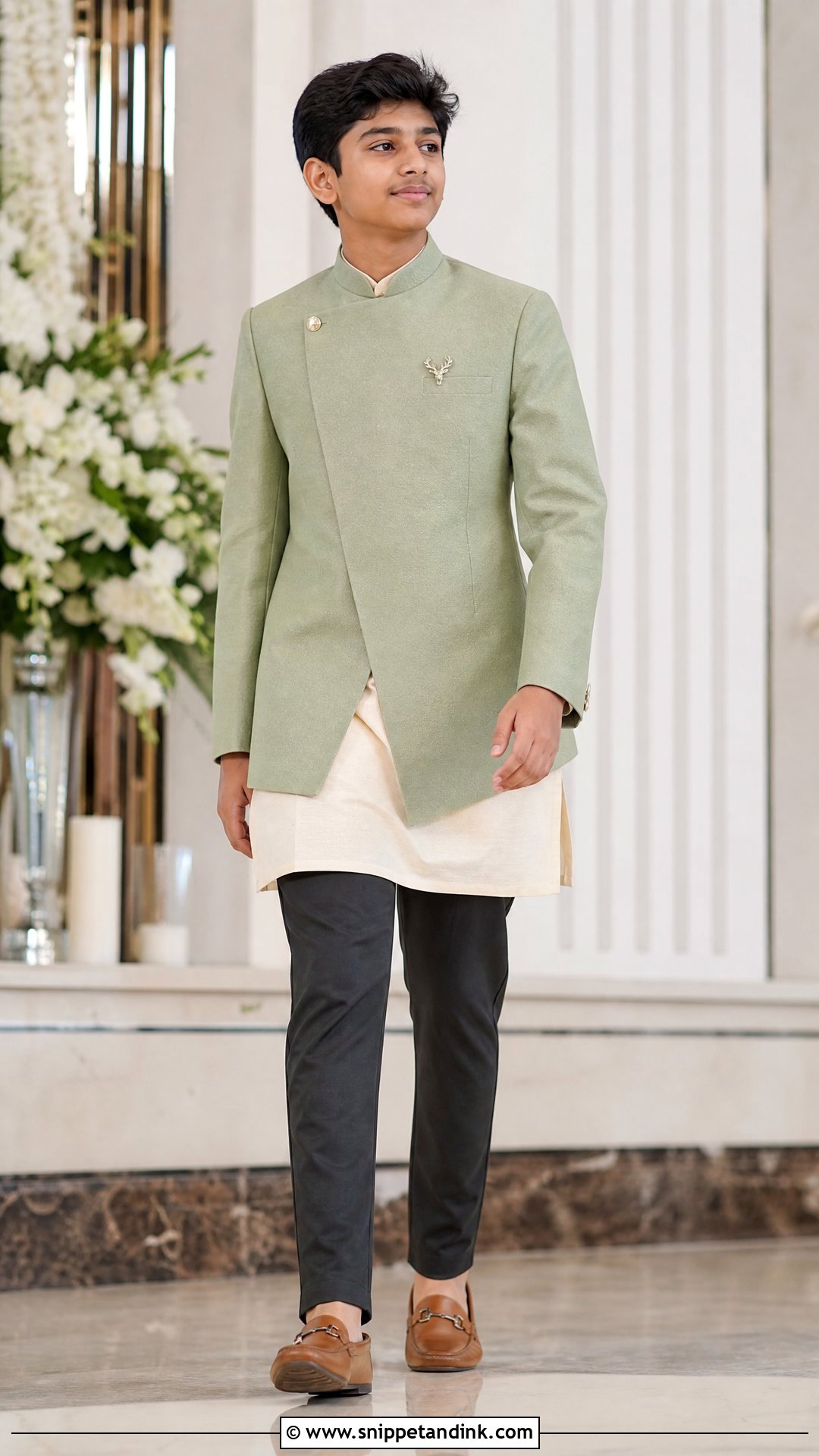
An asymmetrical Indo Western outfit is often what teenage boys ask for once they’ve decided sherwanis are old-fashioned. A fitted high-low kurta or crossover jacket in navy, sage, charcoal or dusty blue with slim straight trousers gives that cleaner shape. Black or tan loafers and one metallic brooch are enough, and some versions add a contrasting inner kurta, which gives you layers without a scarf. The thing I watch is the long side of the hem, because it catches on stair edges if it’s cut too long. It’s a strong pick for a sangeet or reception. Let the angled closure be the one feature and keep everything else plain.
10. Boys Jodhpuri Suit With Formal Shoes
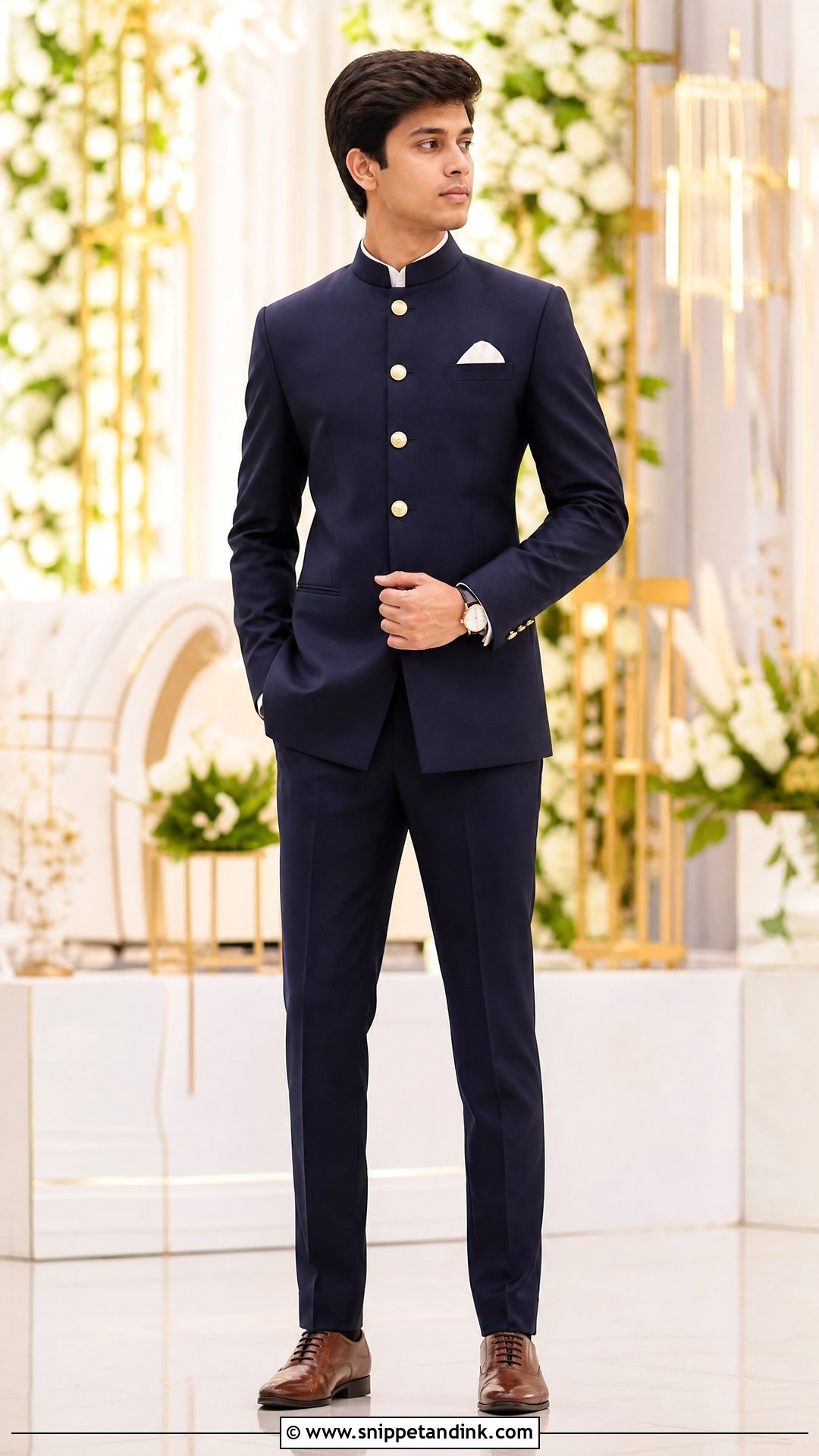
A Jodhpuri suit is tailoring first, and it only suits boys old enough to tolerate a structured jacket for a few hours, usually teens and older children. Choose a band-collar jacket and matching trousers in navy, charcoal, black, beige or deep green, with gold-toned buttons, a woven texture or minimal embroidery to tie it to the occasion. A light mandarin-collar shirt underneath should stay hidden when it’s buttoned. Polished loafers or lace-ups, a pocket square and a simple watch finish it. The trousers need a clean break and a bit of stretch for sitting. The fit point that ruins it is the shoulder: too tight there and he can’t raise his arms to dance.
11. Boys Achkan With Churidar
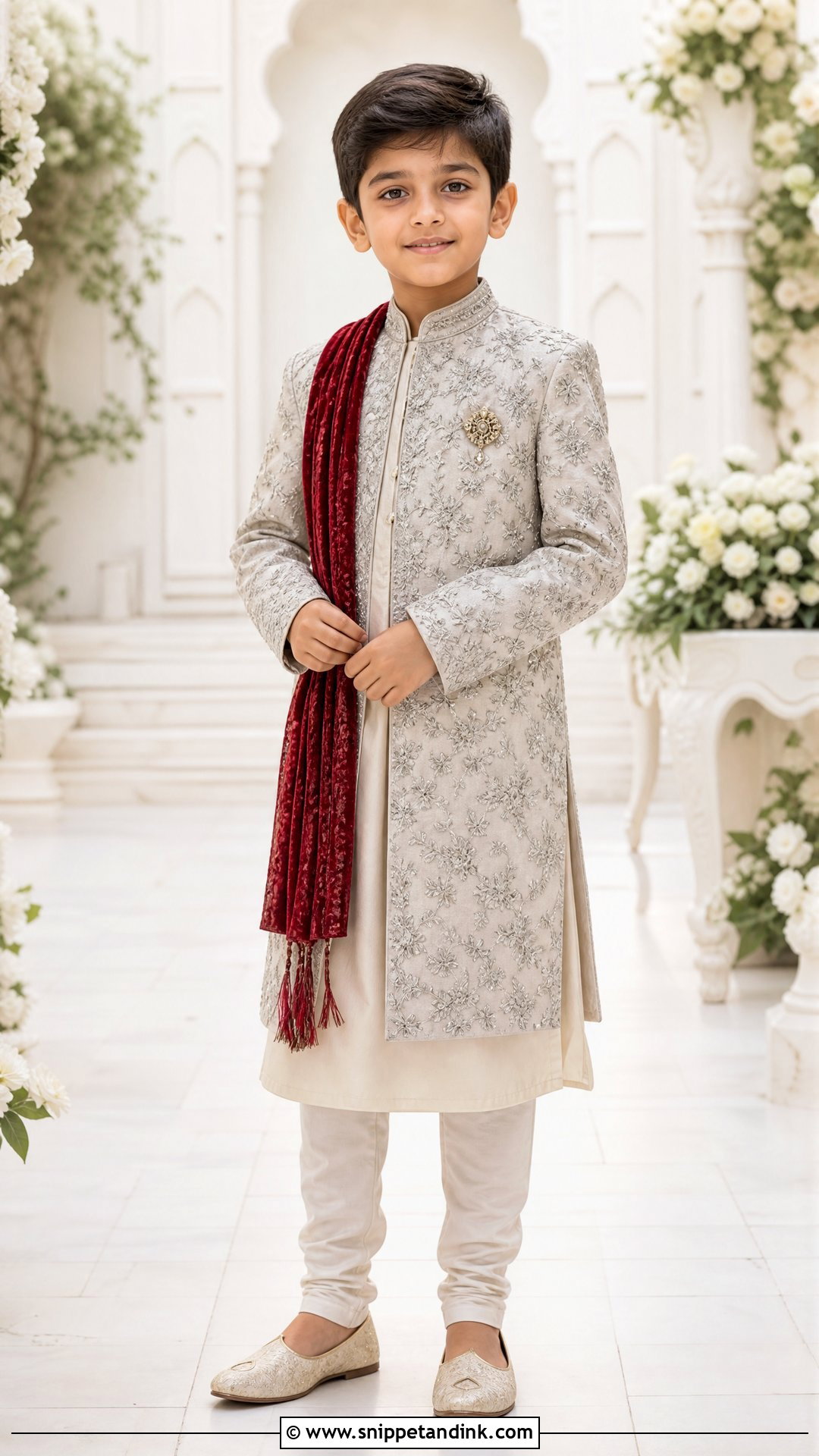
An achkan gives you the ceremonial length of a sherwani in a cleaner line. Go knee-length in beige, ivory, light gold, sage or pale gray, with tonal embroidery or contrasting buttons, worn over a light kurta and a fitted cream churidar. Brown, gold or ivory mojaris keep it coordinated. For close family photographs a stole in maroon, rust or dusty pink adds color, though a brooch can replace it for a boy who hates extra layers. Long coats on children restrict the stride when the shoulders and hips are cut narrow, so ask for side or back vents. He’ll walk, sit and climb onto the stage far more easily.
12. Boys Pathani Suit With Waistcoat
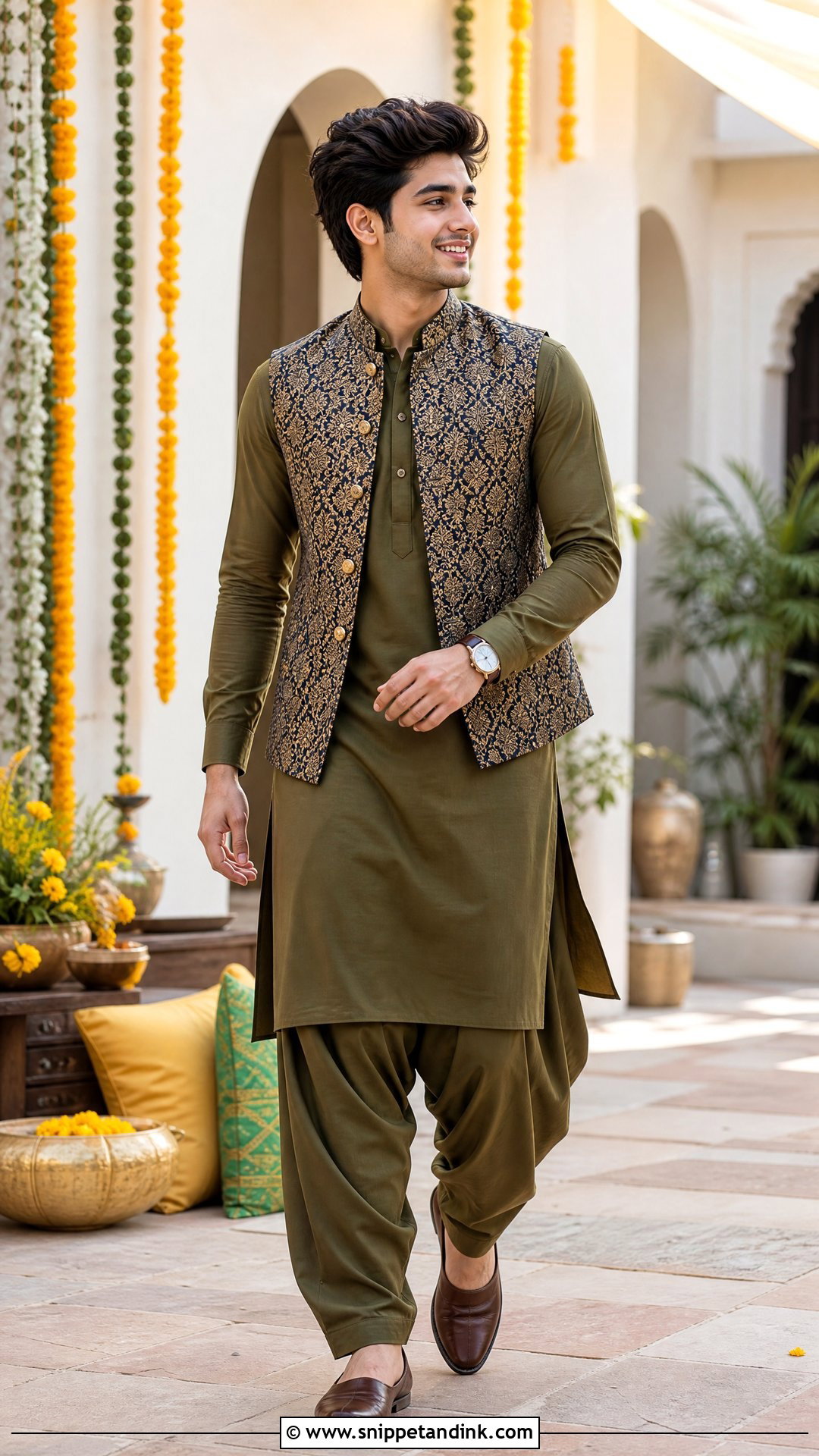
Energetic boys tend to stay happiest in a Pathani suit, because the long shirt and roomy salwar move with them. A band-collar shirt with salwar in black, navy, olive, beige or maroon is relaxed on its own; a contrasting patterned waistcoat makes it formal enough for a wedding. Beige with a dark brocade vest is a balanced pairing, as is navy with gold or cream. Slip-on juttis and a simple watch finish it. Taper the salwar at the ankle so fabric doesn’t bunch over the shoes, and keep the shirt loose through the shoulders. It suits mehndi celebrations, family gatherings, casual receptions and daytime events.
13. Boys Silk Kurta Pajama Outfit
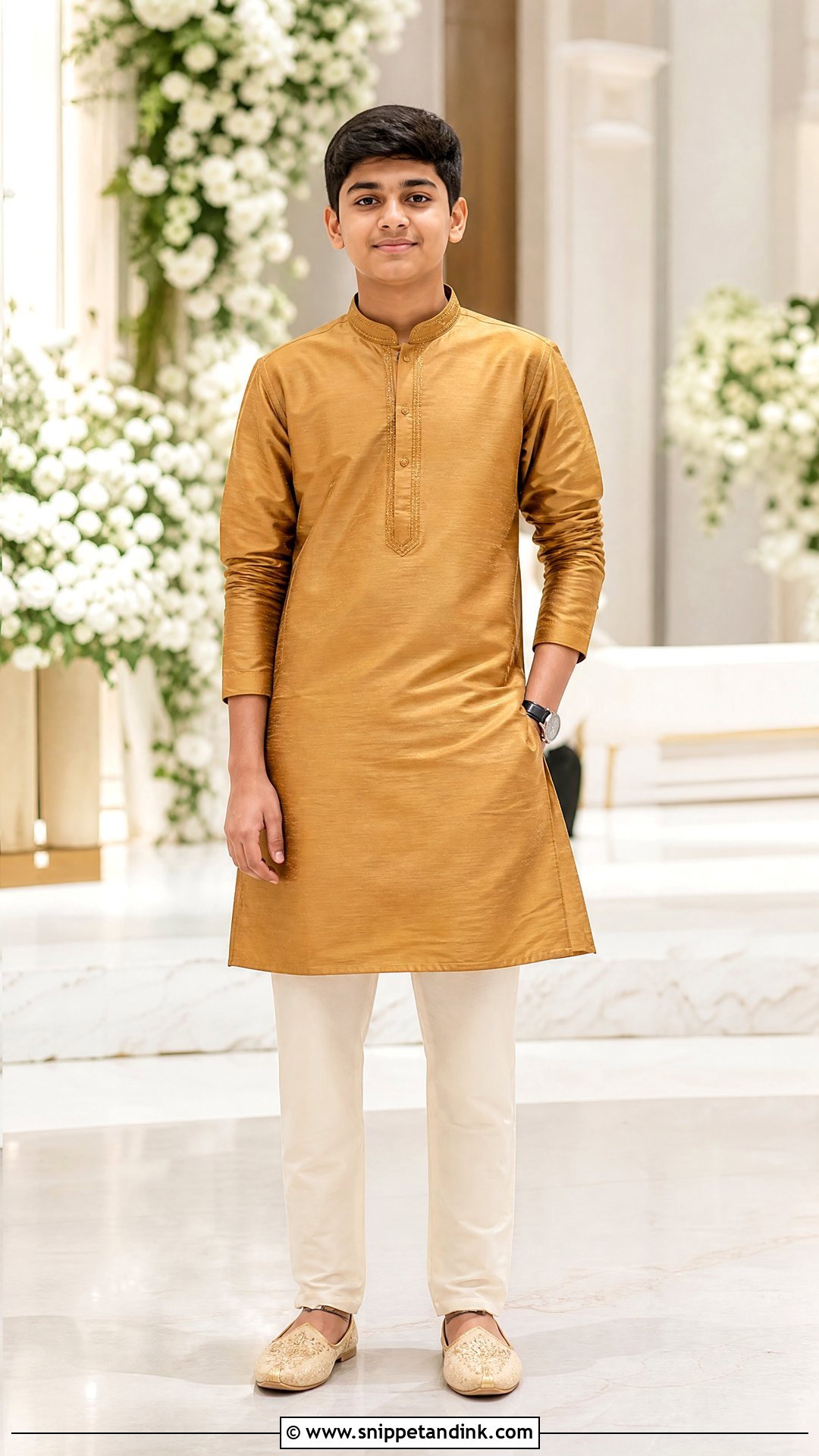
Some boys simply refuse jackets, and a silk kurta pajama is my answer for them. A solid kurta in mustard, teal, rust, royal blue, maroon or soft gold over cream or white straight pajamas looks finished on its own. Textured silk gives richness without embellishment, though a little embroidery at the neckline helps for formal events. Neutral mojaris and a classic watch are enough, plus a folded handkerchief if there’s a chest pocket. Stiff silk can feel like cardboard on a child and creases sharply at the elbows, so I steer families toward lightweight, lined silk. It suits pujas, family lunches and indoor ceremonies with a traditional but not grand dress code.
14. Boys Printed Kurta With White Pants
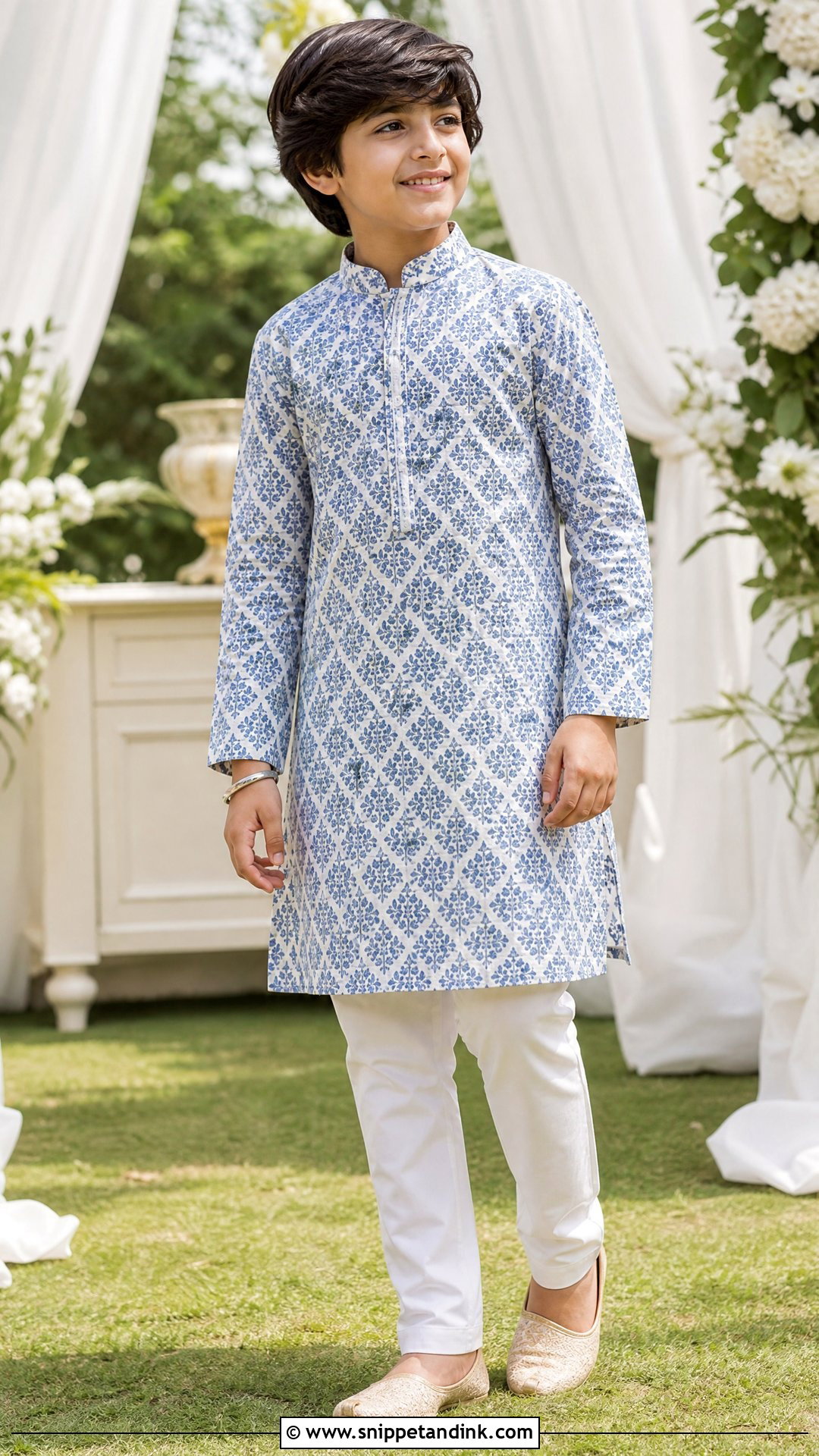
A printed kurta is the easiest outfit here to wear, and the hardest to make look formal. Block prints, geometrics, small florals or classic motifs in blue, green, orange, pink or yellow work best with plain white or cream straight pants and beige juttis. Rolled sleeves feel relaxed for an informal daytime function; full sleeves look neater for the ceremony. Add a solid Nehru jacket only if the event calls for it, otherwise let the print lead and keep accessories to a single bracelet or watch. Check that the length lands near the knee, because an oversized kurta on a small boy looks borrowed. Warm-weather weddings and outdoor family functions suit it.
15. Boys Short Kurta With Dhoti Pants
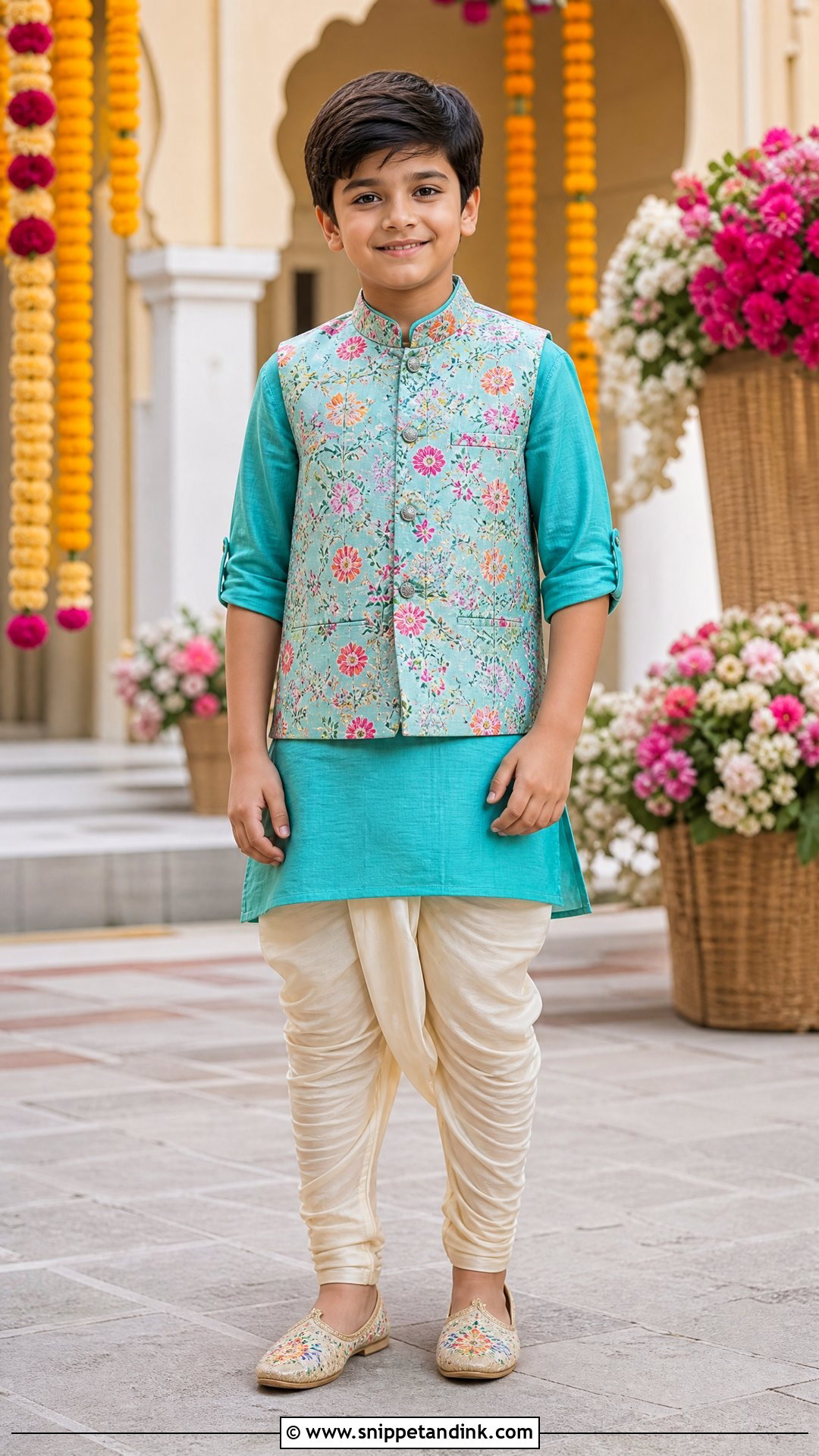
A short kurta with dhoti pants is what I’d put on a toddler for most functions. A hip-length or mid-thigh kurta in turquoise, yellow, coral, green, ivory or royal blue shows off the draped lower half, and pre-stitched dhoti pants with a secure elastic waist stay put through running and naps. A printed sleeveless jacket adds structure for the ceremony, with embroidered juttis below. Leave out long necklaces and loose scarves, which catch when a small child plays. Check that the pleats are stitched down and the hem stops above the ankle. Younger cousins taking part in rituals do especially well in it.
16. Boys Royal Blue Sherwani With Gold Details
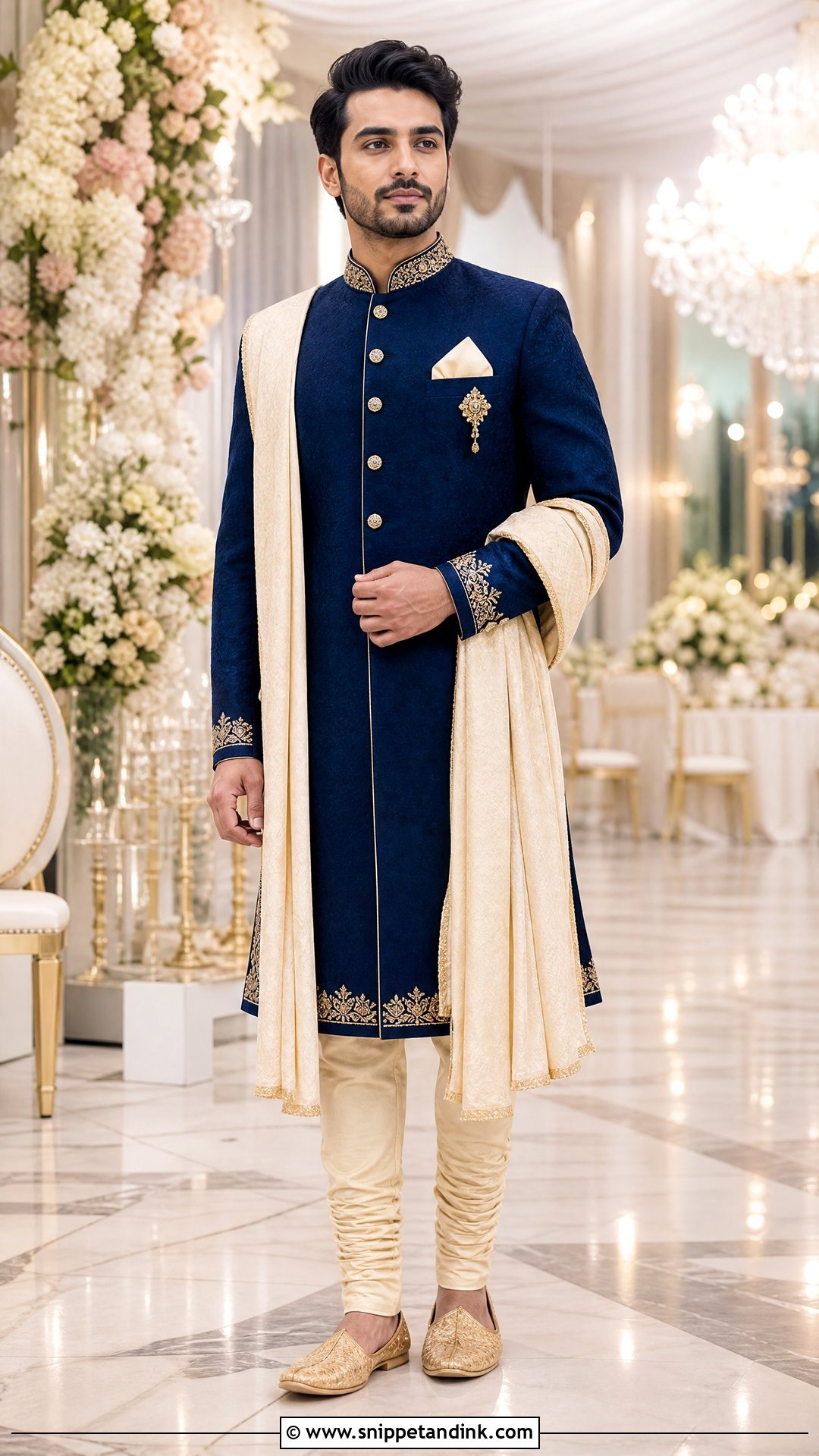
Royal blue with gold detailing is a confident evening color, and it photographs richly under warm reception lights. Look for embroidery restrained to the collar, front placket and cuffs, then pair it with cream churidar to lift the dark shade. Gold or tan mojaris, a cream pocket square and a small jeweled brooch complete it. An older boy can add a light cream stole with a narrow blue border; younger children usually pull it off within minutes. Ask for a smooth, medium-weight fabric. Dense embroidery on heavy fabric turns a child’s sherwani into a stiff tube he can’t sit in, and a hem near the knee keeps his steps free.
17. Boys Maroon Sherwani With Cream Pants
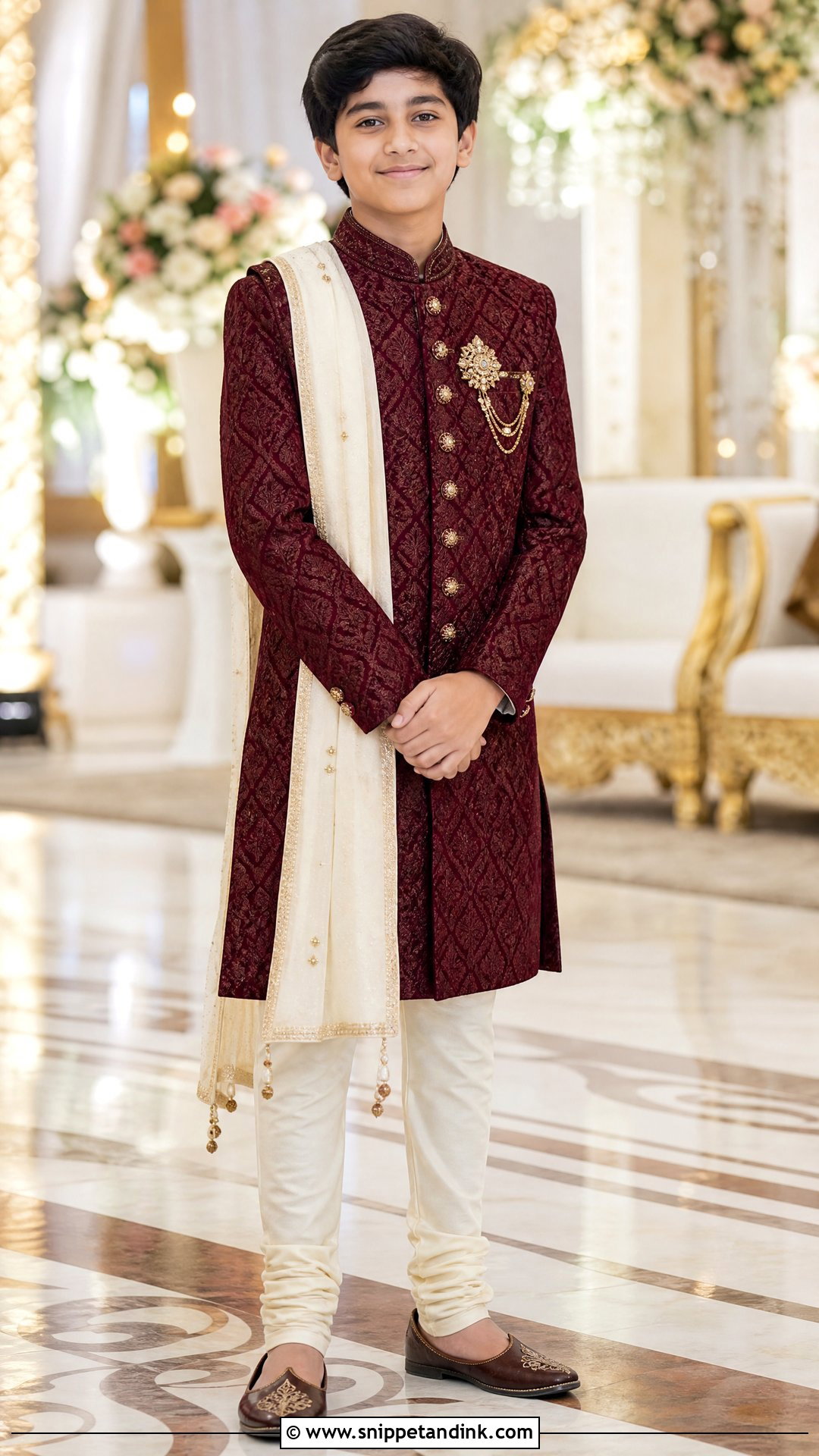
Maroon is one of the safest sherwani colors for a family wedding because it sits comfortably beside red, gold and pink. A jacquard or silk-blend with subtle gold, beige or tonal embroidery pairs better with cream churidar or straight pajamas than with dark trousers, which make a small boy look heavy. Brown mojaris, a gold-toned brooch and a cream stole work for formal portraits; drop the stole if the fabric already has a busy weave. Run a finger inside the collar at the fitting. If the edge is stiff or the embroidery reaches the inside, it will rub his neck raw by the reception. It works day or evening.
18. Boys Sage Green Kurta With Jacket
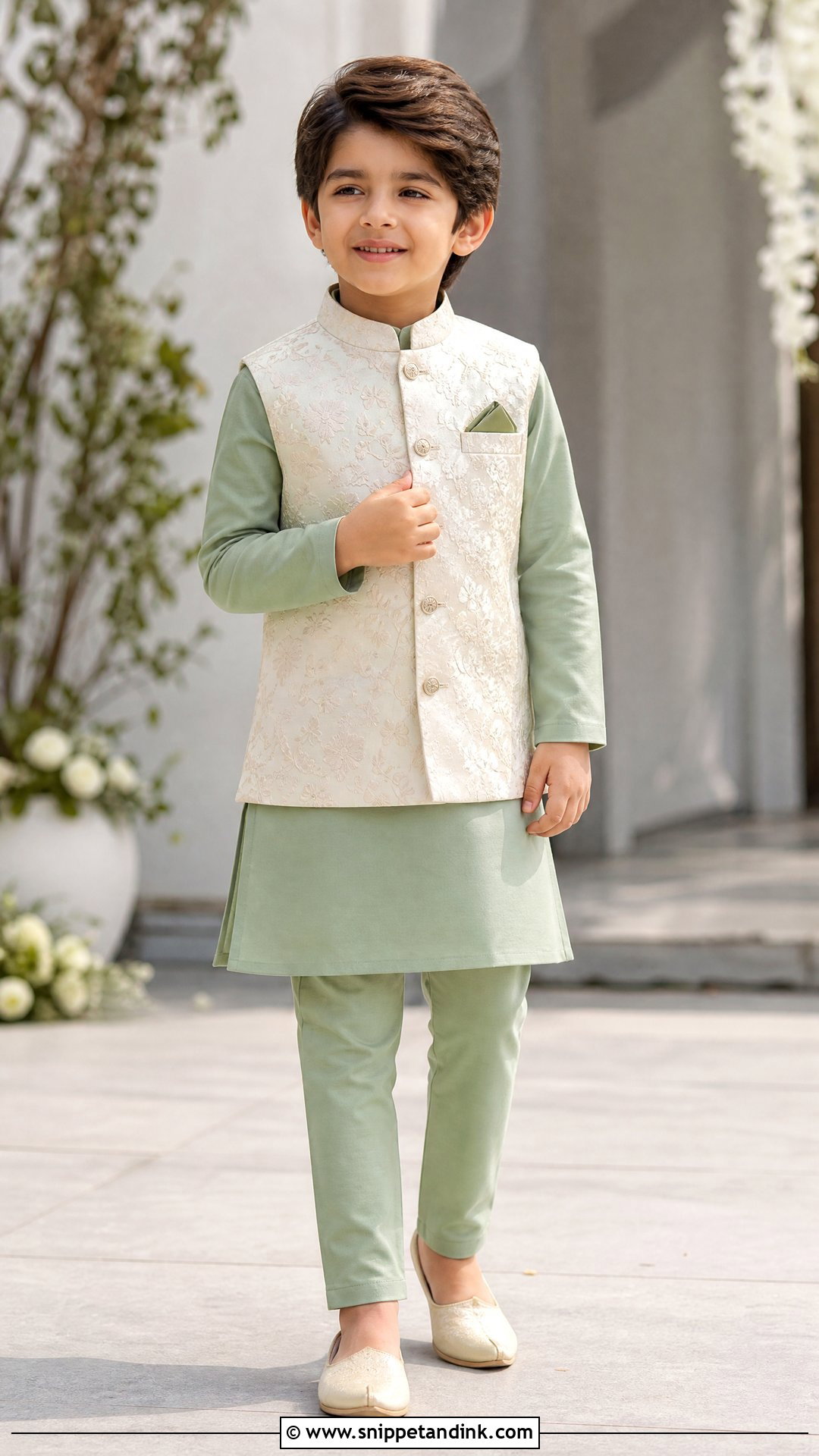
Sage green is a quiet, modern choice for a daylight ceremony. Start with a plain sage or light-olive kurta and matching straight pants, then add an ivory, beige or floral jacquard Nehru jacket for gentle contrast. Cream juttis and a pocket square finish it, and gold-toned buttons give enough festive touch that you can skip extra accessories. Small embroidery at the neck and cuffs makes it more traditional. Pale colors depend on being pressed and spotless, and a pale jacket shows grubby handprints faster than a dark one, so keep a spare pressed kurta nearby. Choose breathable fabric outdoors, and a jacket he can shrug off by himself.
19. Boys Black Tuxedo Reception Outfit
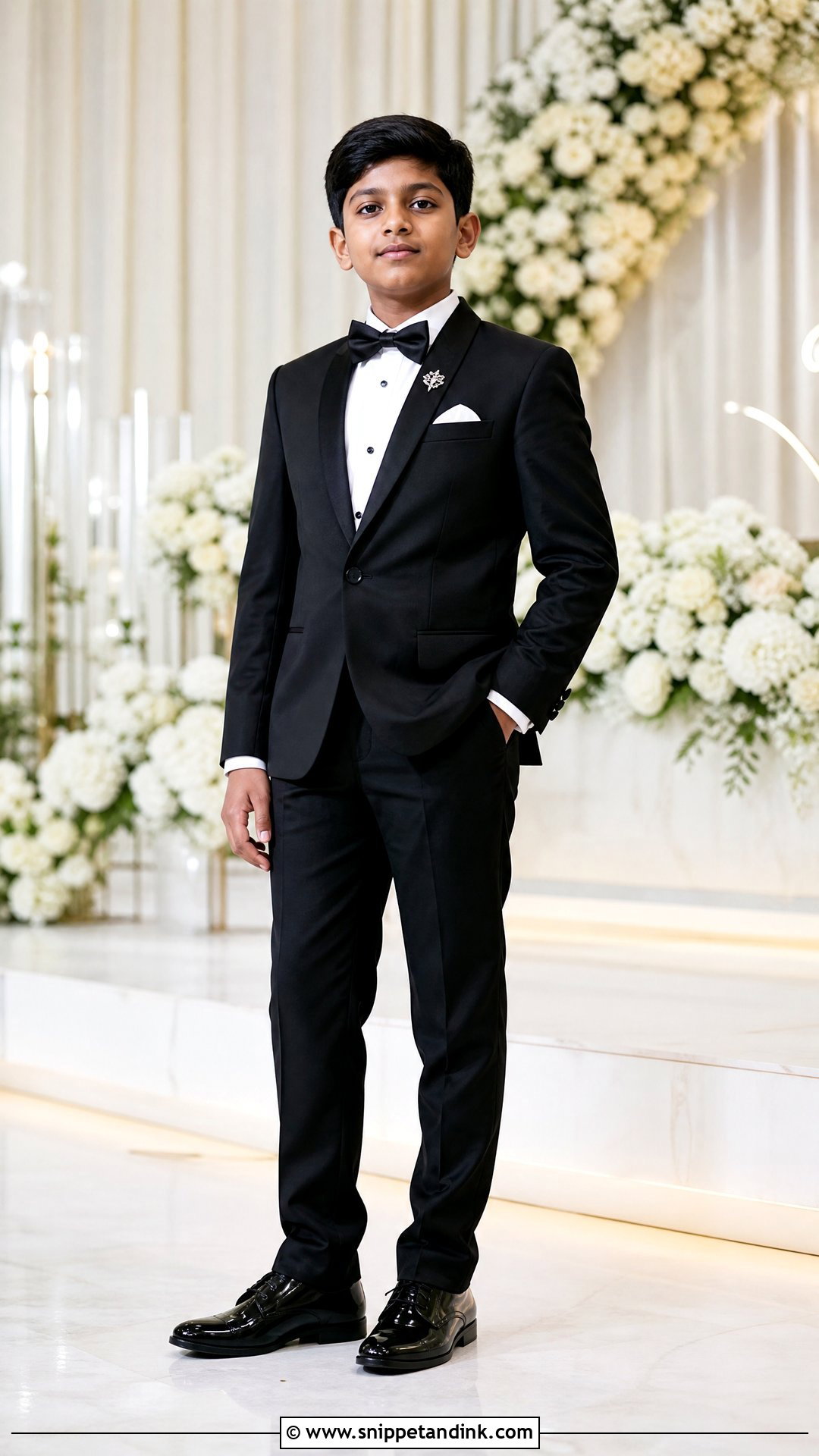
A well-fitted black tuxedo suits an older boy at an evening reception, and it’s often the outfit a teenager feels most grown-up in. Think single-breasted jacket, matching trousers, a crisp white shirt and a black bow tie, with polished loafers or lace-ups. A white pocket square keeps it classic, and a small lapel pin can nod to the wedding colors. For younger boys I always choose an adjustable waistband, a pre-tied bow tie and flexible cushioned shoes. Two fit checks: two fingers should slide inside the shirt collar, and the sleeves should end at the wrist bone. Keep his hair neat and skip bulky accessories.
20. Boys Cream Kurta With Brocade Waistcoat
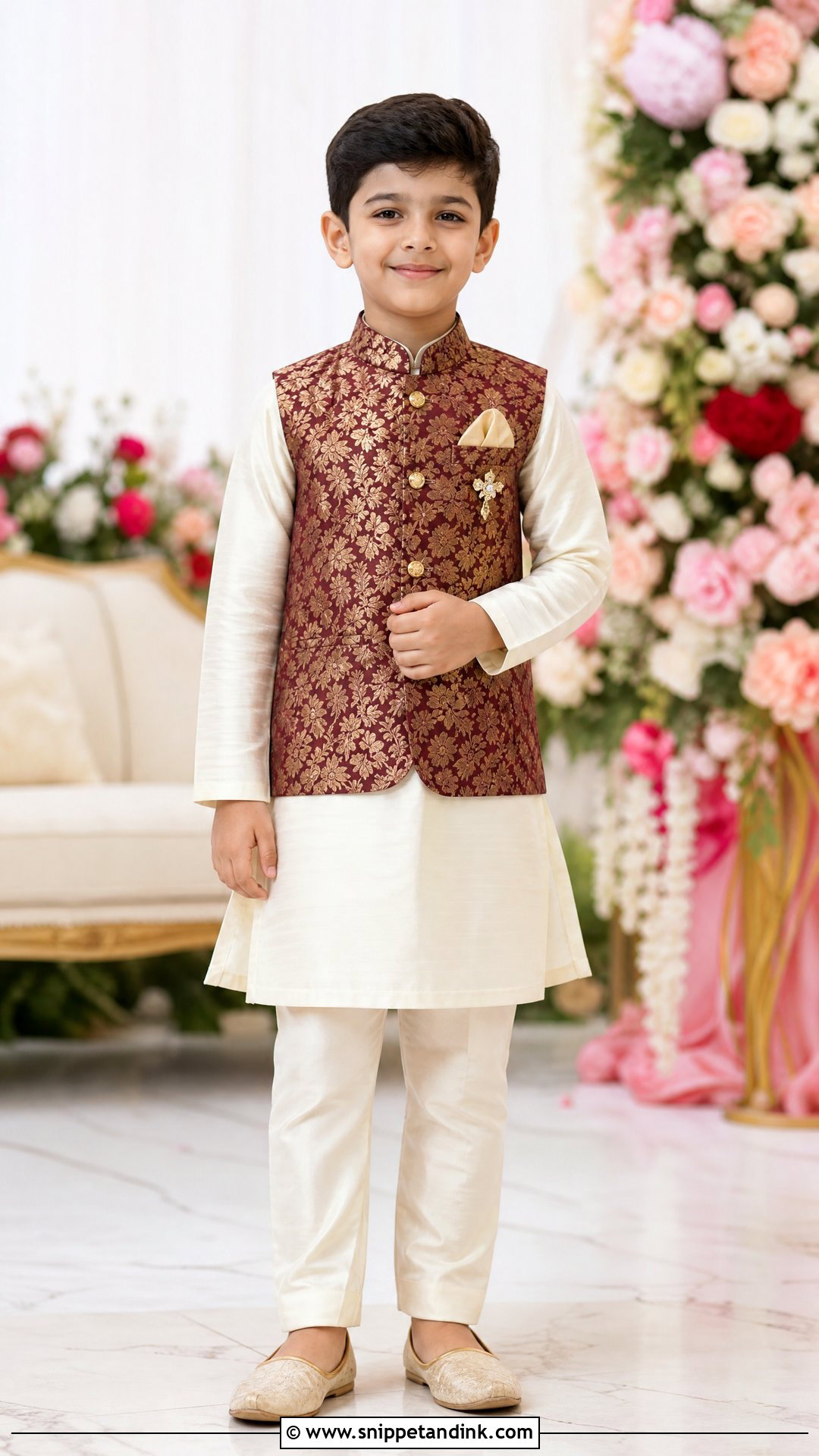
A cream kurta with a brocade waistcoat is the outfit I’d buy if a boy could only have one for the whole wedding. A knee-length cotton-silk kurta and straight cream pajamas form the base, and a fitted waistcoat in navy, maroon, green, rust or antique gold brings woven texture without a full sherwani’s weight. Beige juttis, a plain pocket square and one small brooch finish it. Have him hug someone in it at the shop; the waistcoat should close smoothly yet leave room at the chest. When the evening turns casual, it comes off and he’s still properly dressed.
Sizing for a Boy Who Grows Between Purchase and Wedding
Children can shoot up in a few months, so unless the main outfit is being custom-stitched, I avoid buying it more than about six to eight weeks ahead. If you must buy early, choose forgiving pieces: straight pajamas instead of a fitted churidar, an elastic waist, and a kurta with hem allowance you can let down.
Ask the tailor to leave extra seam allowance at the sides. Sherwanis and achkans are hard to alter at the shoulder, so fit that point to his current body and let the sleeves and hem carry the growing room. Buy shoes last and break them in at home. Stiff new mojaris often rub the back of the heel, and their smooth leather soles can slip on polished marble, so scuff the soles lightly on a rough step before the day.
What Goes in the Bag I Pack for Him
Long Indian weddings test a child’s patience and his clothes. This is the small kit I’d hand a parent before the ceremony starts.
- A spare plain kurta and pajama for the inevitable spill, or a change after the baraat.
- Safety pins and a couple of hooks for a loose dhoti pleat or a popped button.
- Soft sandals so he can rest his feet from stiff juttis between rituals.
- Stain wipes that are safe on silk, tested on an inner seam first.
- A thin cotton undershirt that soaks up sweat and keeps embroidery off his skin.
Think about the bathroom too. Churidars and fitted dhotis are fiddly for a small boy on his own, so younger children are better off in an elastic-waist bottom, and whichever adult is with him should know exactly how the outfit fastens.
The Outfit He Forgets He Is Wearing
Comfort decides whether an outfit survives the whole celebration. Sherwanis and achkans bring formality to the main ceremony, kurta sets, dhotis and Nehru jackets flex across the smaller functions, and bandhgalas, Jodhpuri suits and tuxedos suit older boys at an evening reception. Whatever you choose, have him wear the full outfit at home for an hour beforehand, sitting, walking, raising his arms and dancing. Secure shoes, light accessories and fabric that suits the season matter more than how much embroidery there is. A boy who forgets what he’s wearing will still be in it for the last family photo.
You'll Like These Ideas:


Leave a Reply