
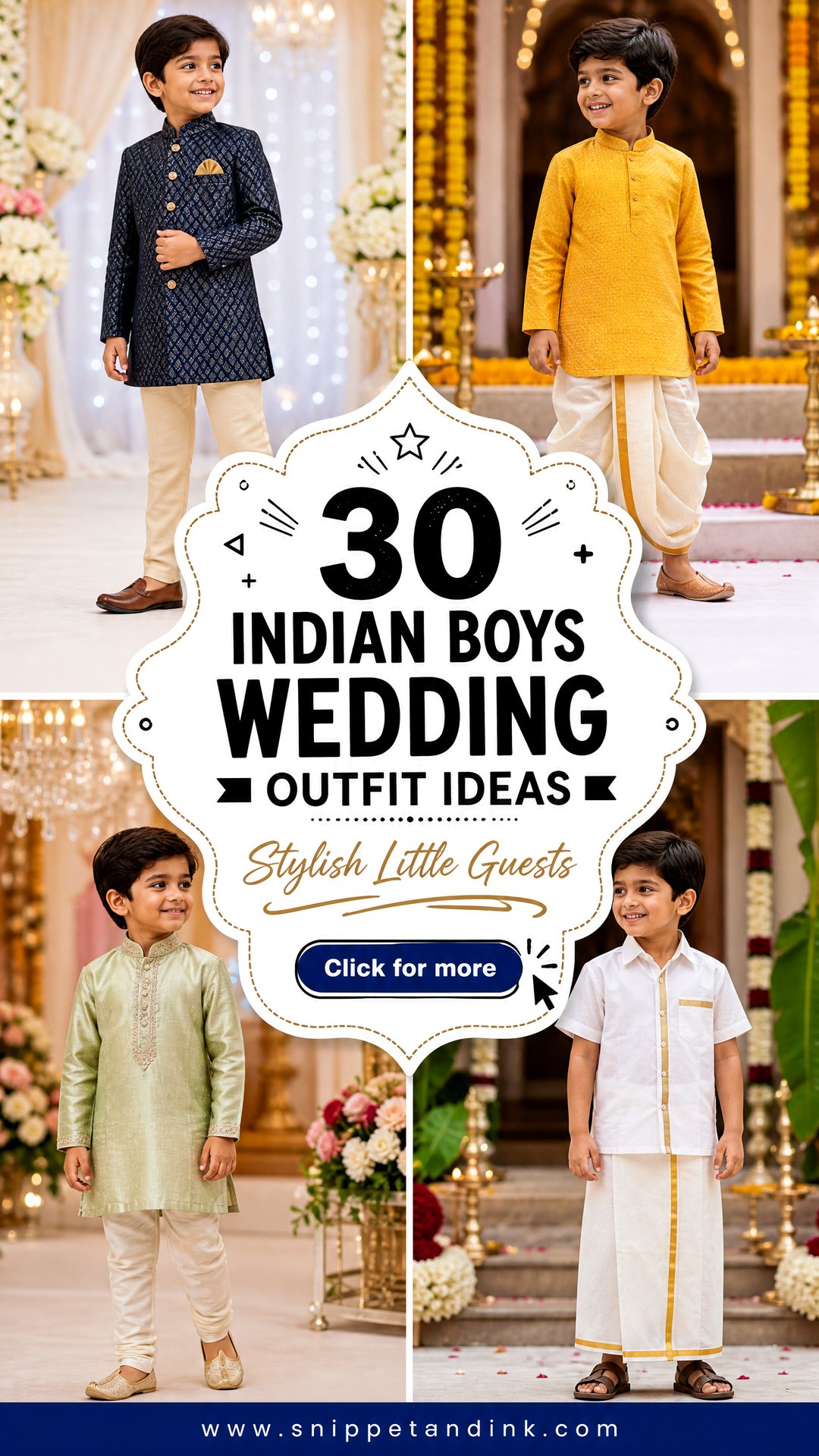
Dressing a boy for an Indian wedding is a different job from dressing his father. The outfit has to survive several events, changing dress codes, a lot of sitting cross-legged and even more running between tables. When I plan kidswear, I start with what he can move in and work up to the embroidery, not the other way round. Lightweight sherwanis, kurta pajama sets, Nehru jackets, dhoti looks, pastels, jewel tones and Indo-western cuts all have a place. Each of the 30 looks below is complete, from shoes to the last accessory, and covers haldi, mehndi, sangeet, the ceremony and the reception.
Sizing Kidswear for the Wedding Date, Not the Shopping Date
Children change size faster than wedding plans change, and a sherwani bought three months early can be short at the wrist by the big day. My approach depends on whether the outfit is ready-made or tailored.
- Ready-made: buy around four to six weeks out, try it on with the actual shoes, and pick the size that fits at the shoulders. Sleeves and hems are easier to shorten than shoulders are to widen.
- Tailored: ask for extra seam allowance at the sides and a deep hem so the tailor can let it out at a final fitting close to the date.
- Churidar: order it long. The gathers at the ankle are part of the look, and extra length hides a growth spurt.
- Collars and armholes: have him sit cross-legged, raise both arms and turn his head. If anything pulls, it will hurt by the end of the day.
One Base Outfit or a New Look for Every Function?
For a boy with four or five functions, I rarely buy four or five complete outfits. One good kurta pajama in a neutral, plus two or three jackets in different colors and fabrics, covers mehndi to reception, and a single formal piece such as a sherwani or bandhgala takes care of the ceremony. It halves the packing and the cost, and he gets used to wearing the same comfortable base.
1. Boys Sherwani With Churidar
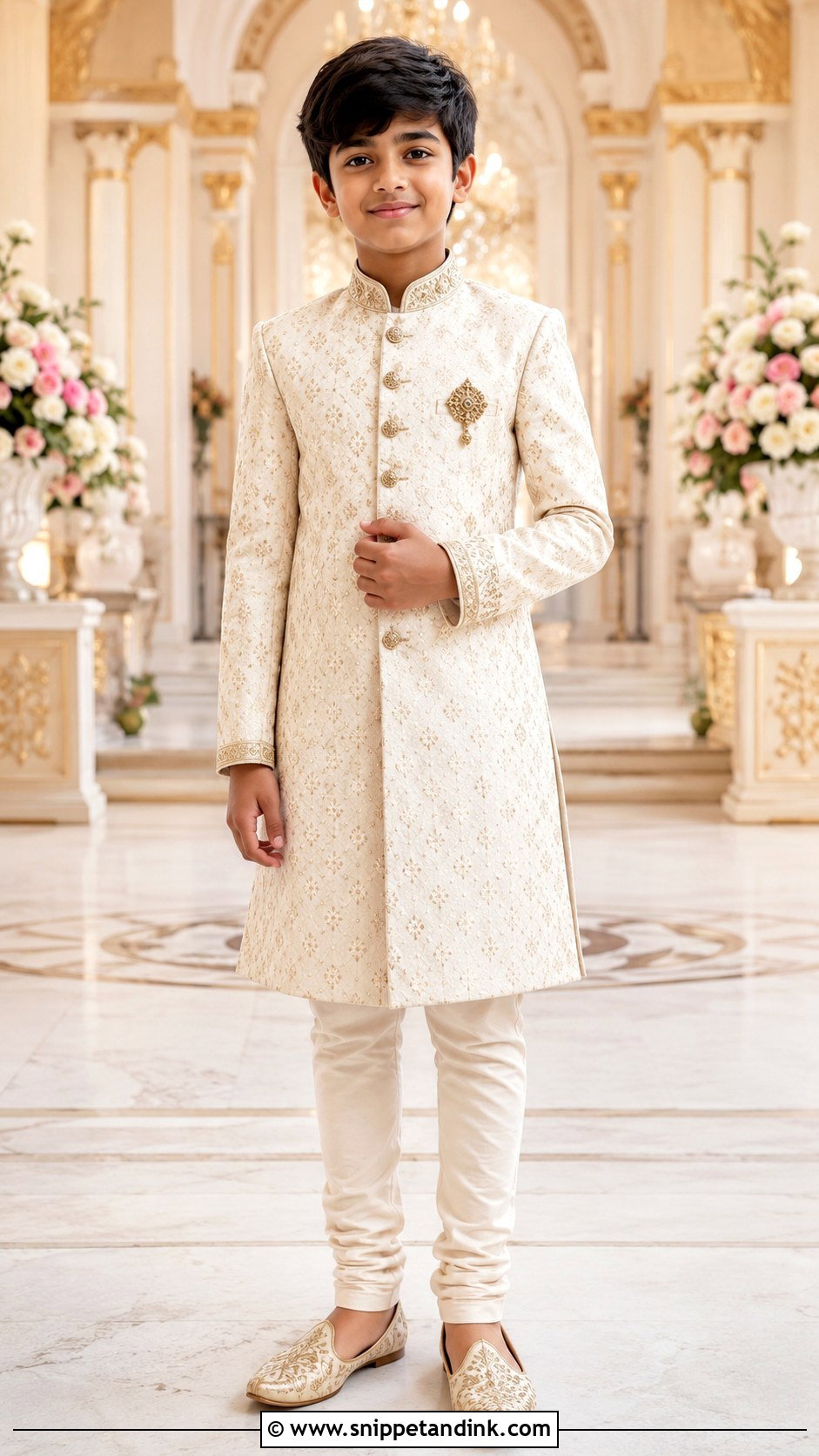
Sherwani with churidar is the classic for the main ceremony, and it instantly looks formal. Ivory, gold, beige, navy or maroon with light embroidery suits a boy better than the heavy zardozi an adult might wear. The thing I check first on a child’s sherwani is the lining: a cotton lining keeps him cool, while polyester lining traps heat under all that fabric within an hour. Pair it with a fitted churidar, matching mojaris and a simple stole if the design allows. A small brooch or pocket square is plenty. It’s the look for family photos, the baraat and the pheras.
2. Boys Kurta Pajama With Nehru Jacket
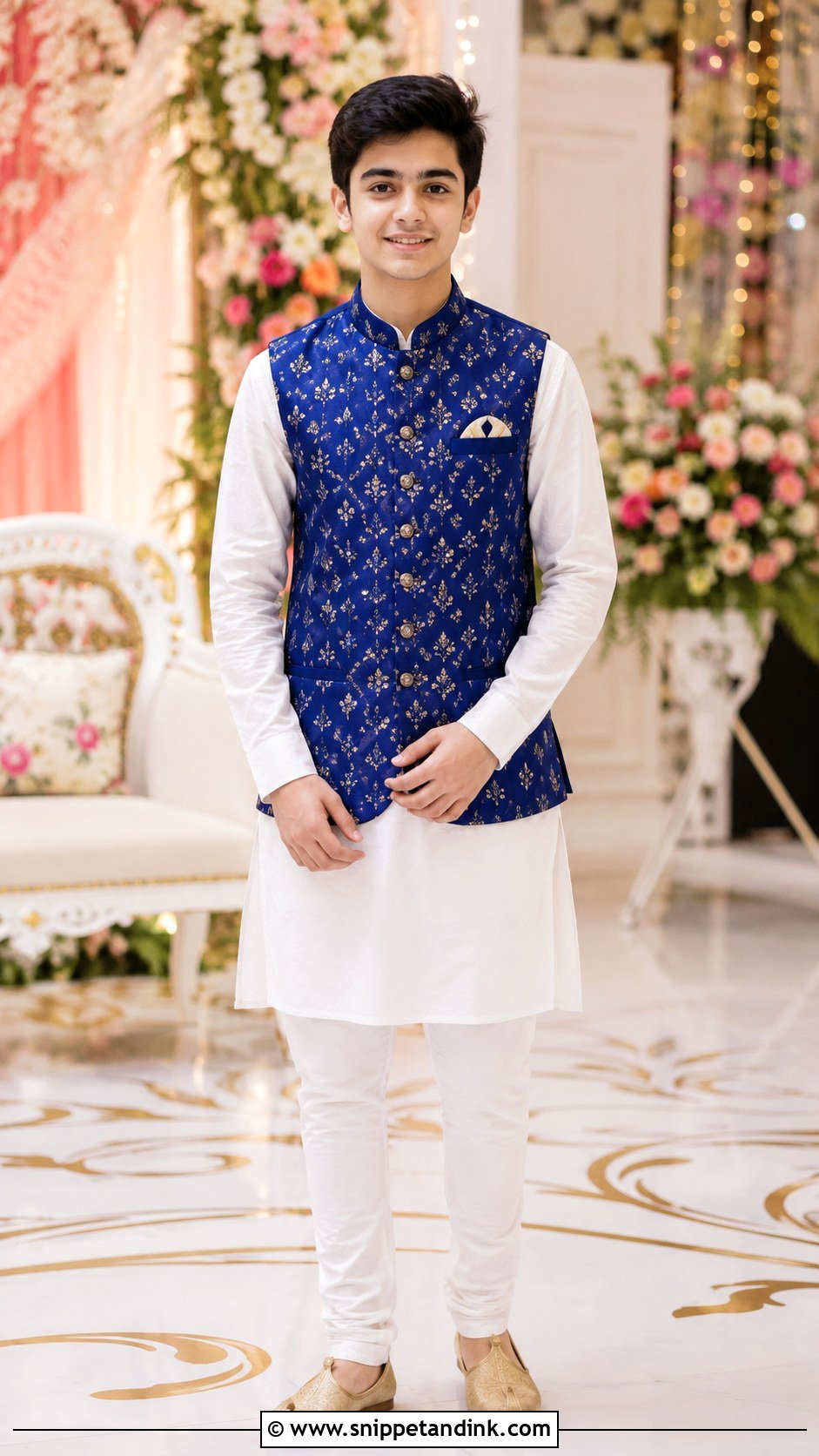
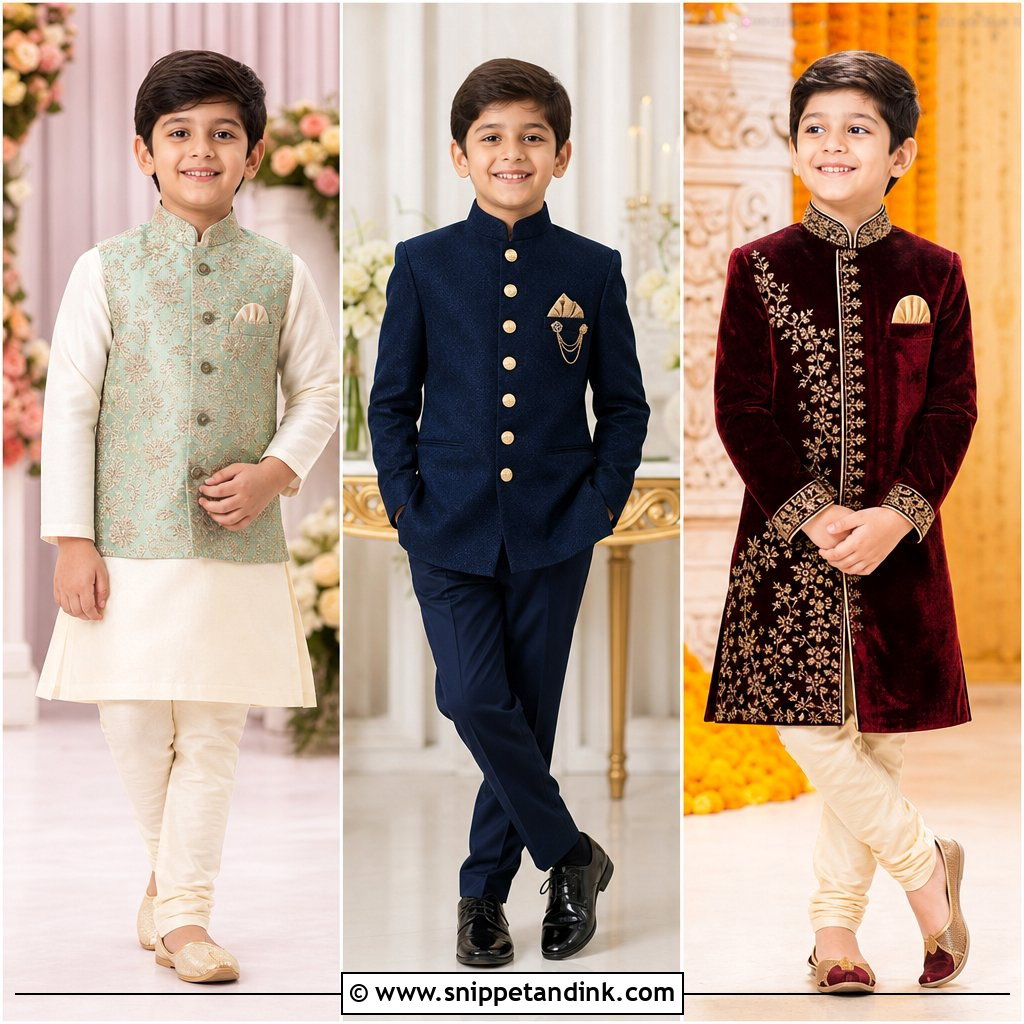
A kurta pajama with a Nehru jacket gives structure without the weight of a sherwani. A plain cotton-silk or linen-blend kurta in white, cream, mint, powder blue or mustard under a printed or embroidered jacket, with straight pajamas or slim pants and mojaris or dressy loafers. It covers mehndi, engagement, daytime weddings and family events, and goes straight into the festival wardrobe afterward. On a child’s jacket I look at two things: buttons sewn on firmly enough to survive being tugged, and armholes cut generously so he can lift his arms without the whole jacket riding up.
3. Boys Indo Western Kurta With Pants
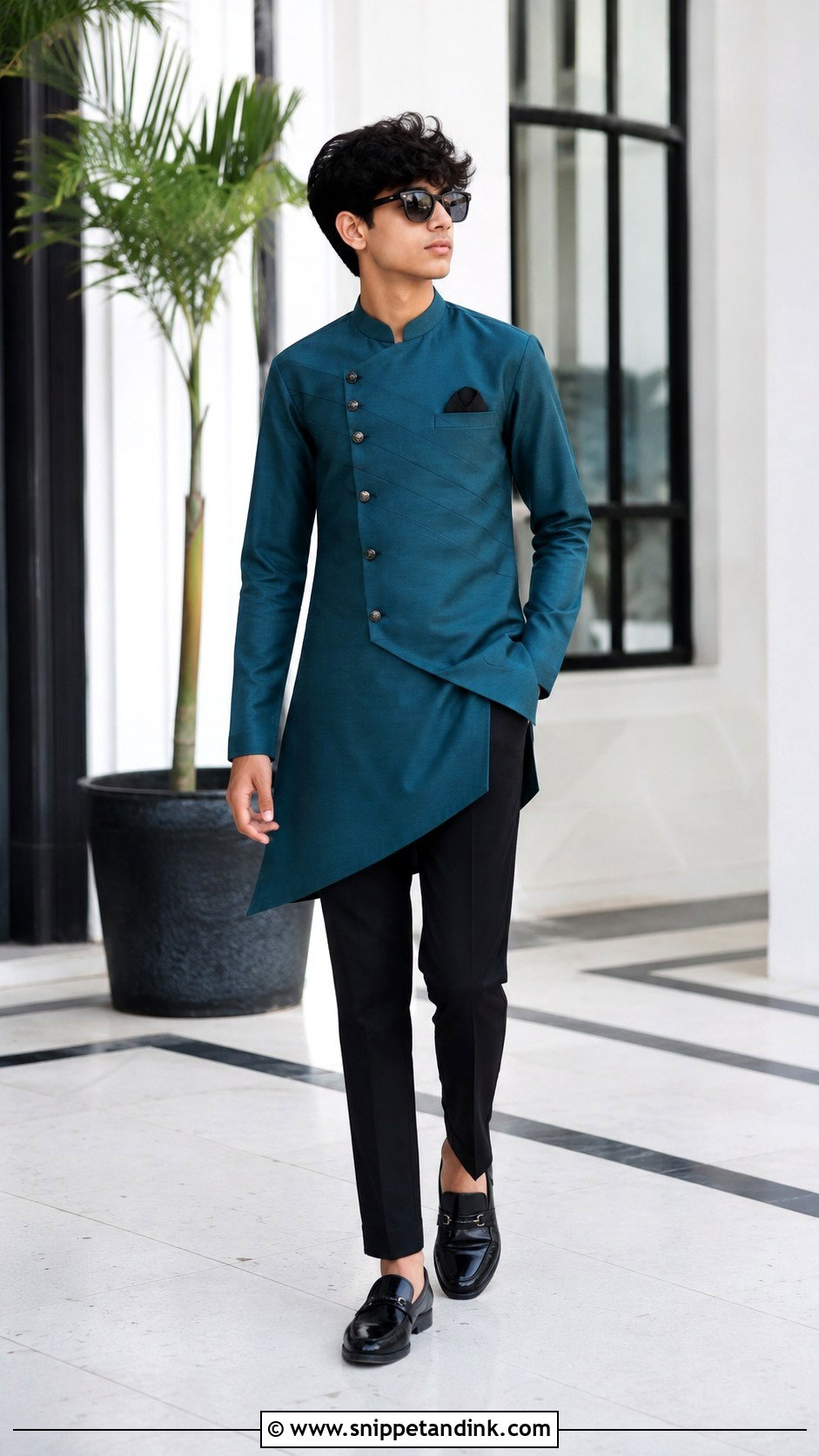
Some boys hate anything that feels traditional, and an Indo western kurta with pants is how I win them over. An asymmetrical, draped or high-low kurta in silk blend, jacquard or textured cotton, worn with tapered trousers rather than pajamas, looks current. Charcoal, teal, ivory, olive and royal blue feel stylish without being loud. Loafers, juttis or slip-on dress shoes, depending on the event. Draped kurtas have loose panels that small hands love to pull and chew, so I’d save them for boys around eight and up, for the sangeet and reception.
4. Boys Dhoti Kurta For Wedding
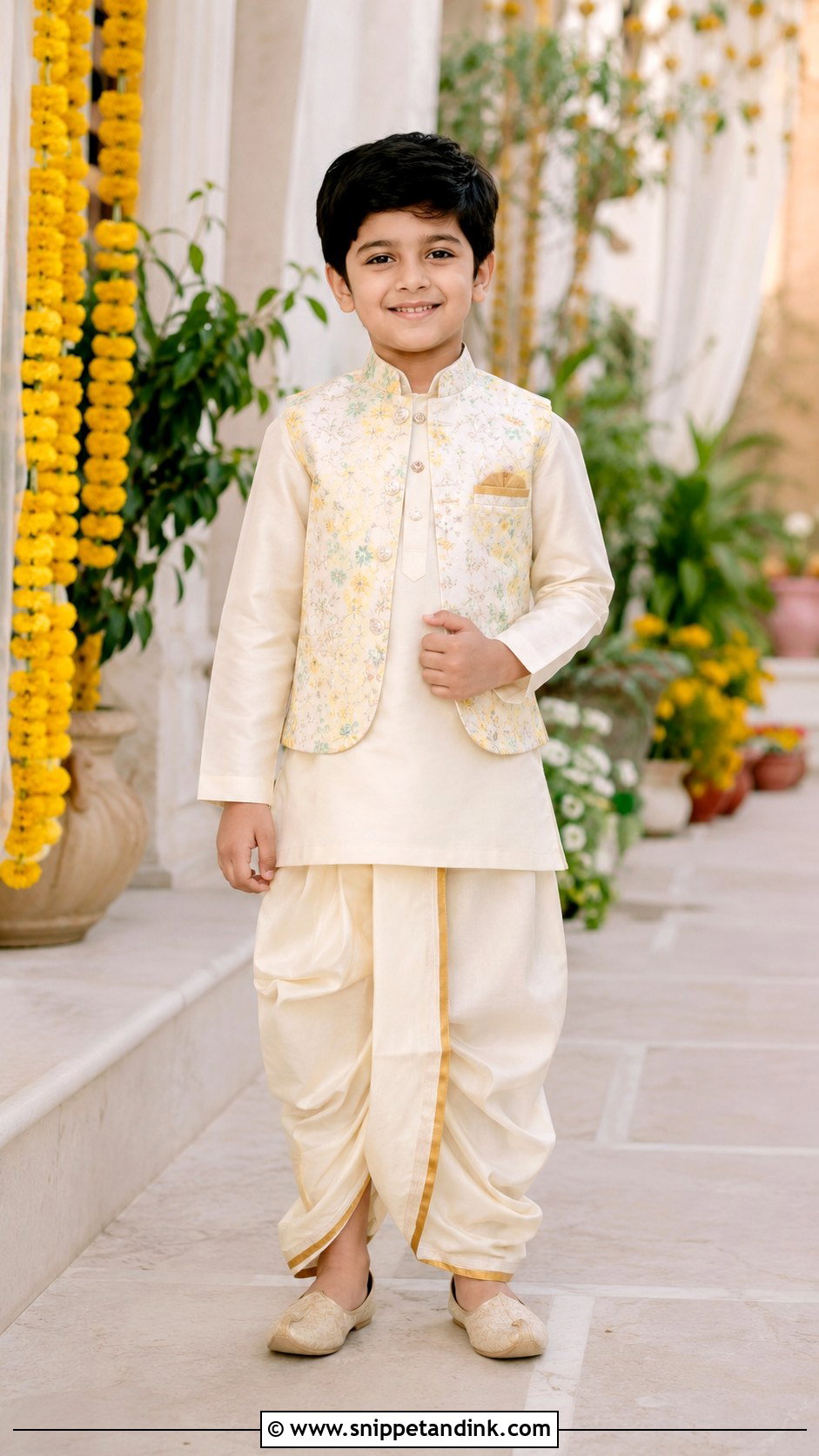
Dhoti kurta is charming on little boys, and pre-stitched dhoti pants are the only version I’d put on a child. You get the look of a draped dhoti without the drape coming undone halfway through the ritual. Pair them with a short kurta in silk, cotton-silk or festive cotton. Cream and gold, yellow and white, peach and beige, or green and ivory all suit haldi and daytime rituals. Mojaris or soft sandals, and a small printed waistcoat if the kurta is plain. It’s breathable, which matters for toddlers who won’t tolerate layers.
5. Boys Pathani Suit For Wedding
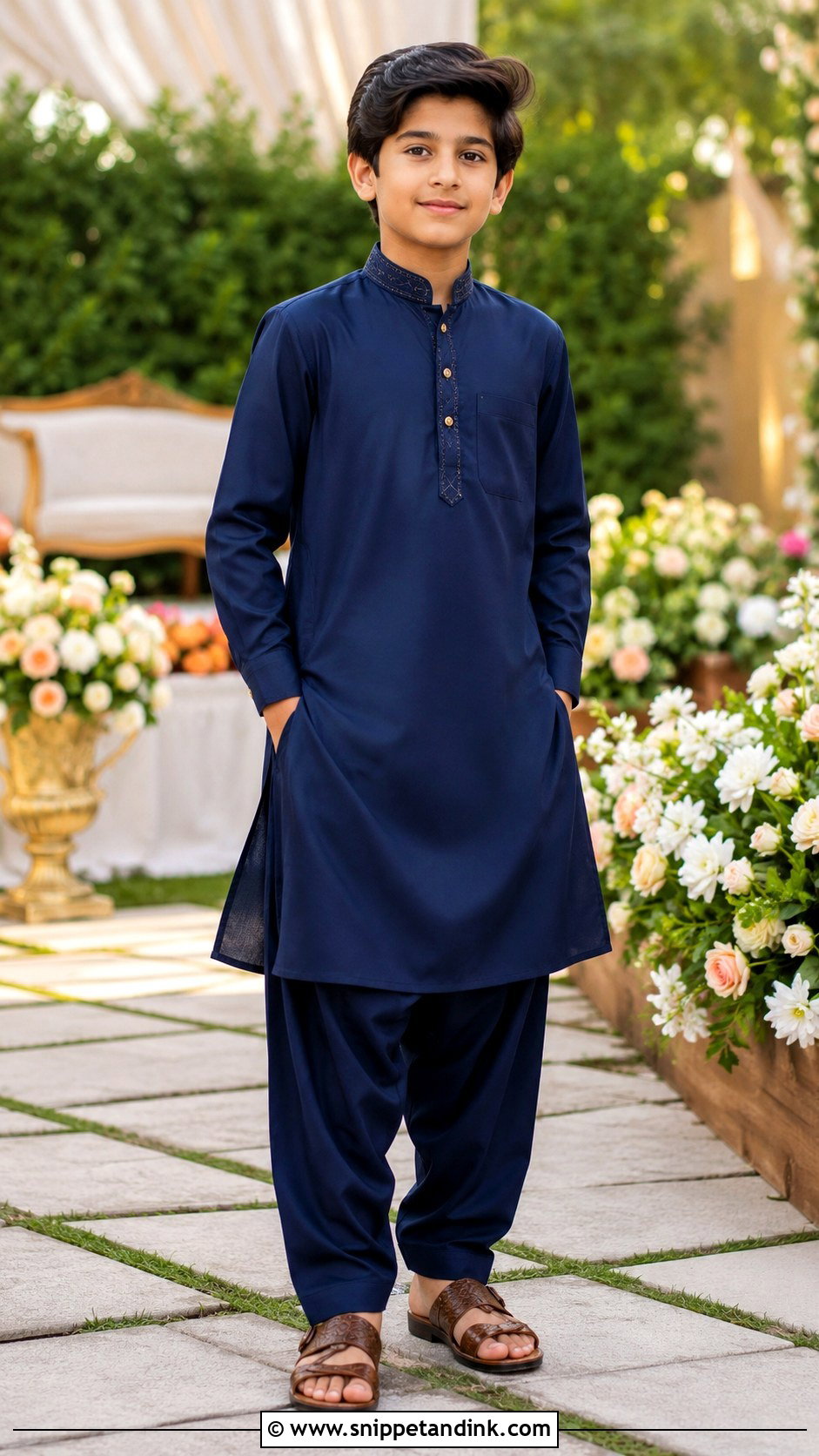
Pathani suits are roomy, and that’s their whole appeal. A long kurta-style shirt over a straight or salwar-style bottom gives a boy freedom to sit on the floor and climb on chairs. For a wedding, choose navy, bottle green, beige, charcoal or deep brown, with subtle embroidery on the collar, cuffs or placket. Leather sandals, ethnic slip-ons or clean loafers. Older boys who want something simple but sharp tend to like it most, and it suits mehndi, family dinners and semi-formal events.
6. Boys Bandhgala Suit With Trousers
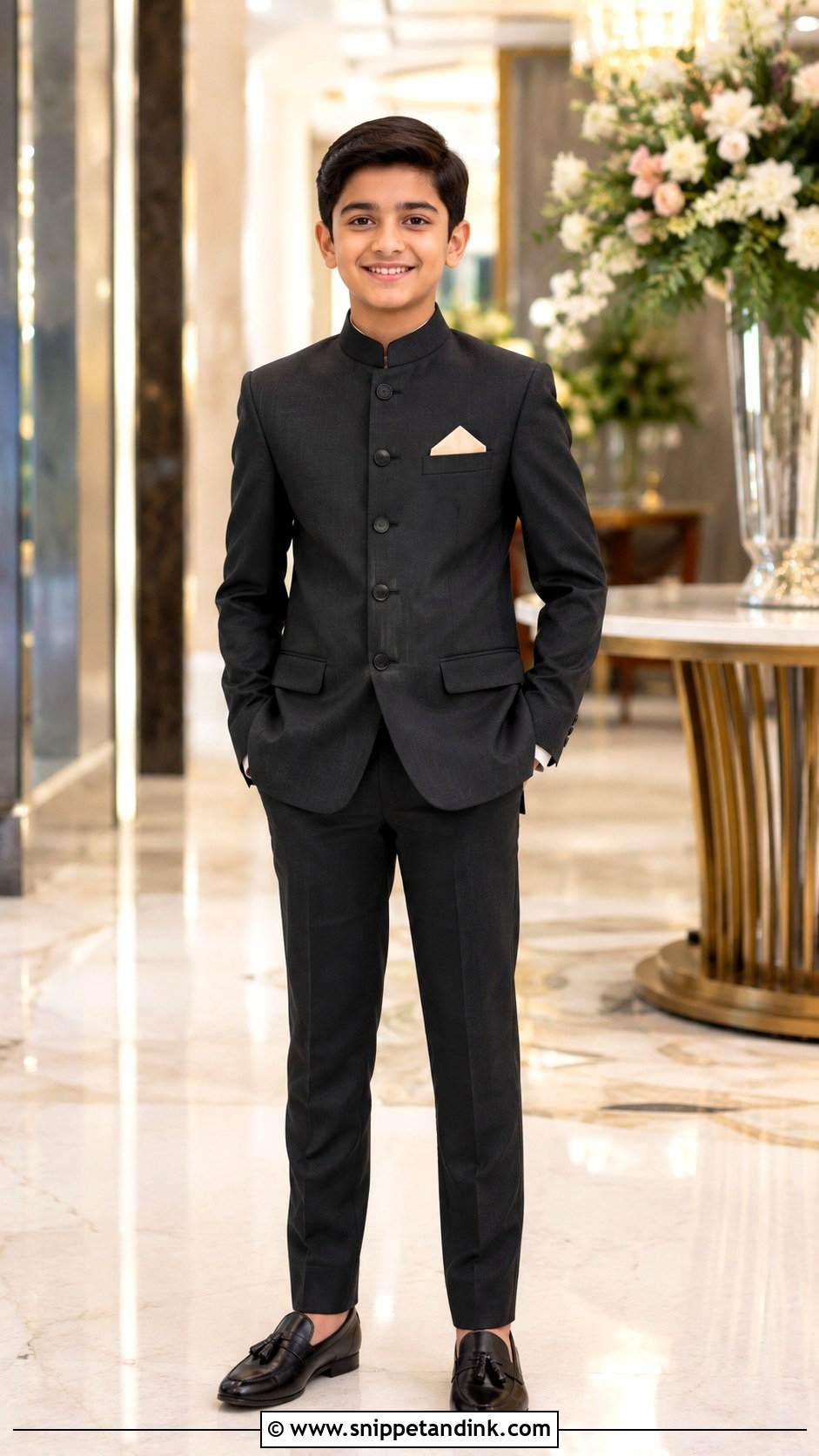
For formal evening functions, a bandhgala suit with trousers gives a royal Indian line with a modern trouser base. Navy, black, beige, emerald or charcoal, well fitted, with minimal buttons and clean tailoring. The closed collar is where kids complain: I measure it with two fingers’ room at the neck, because a bandhgala collar that fits an adult snugly will feel like a choke on a child by dessert. Soft lining, straight trousers, polished loafers and a pocket square. It’s the answer when a sherwani feels too heavy for the reception.
7. Boys Kurta With Printed Waistcoat
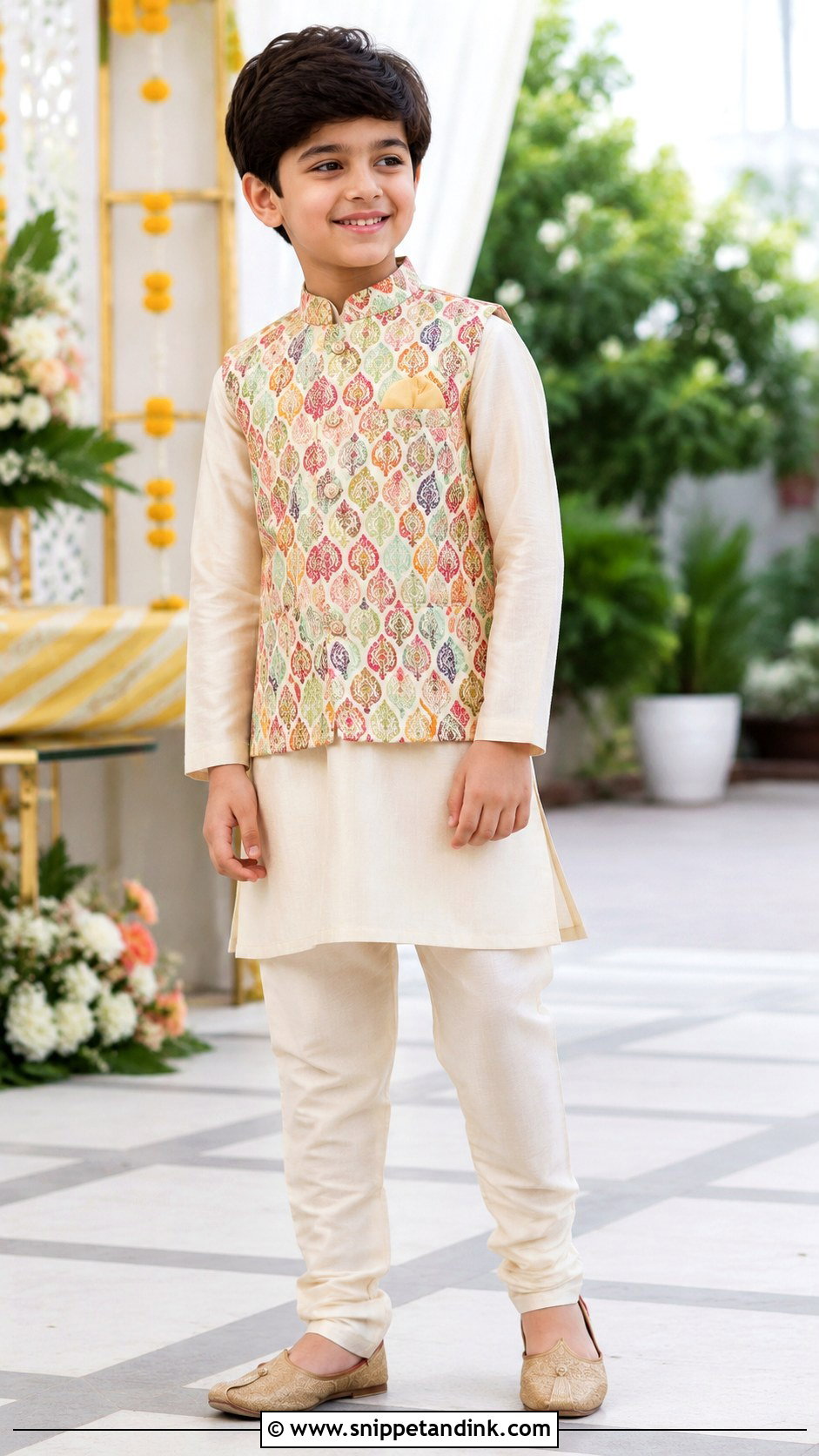
Plain kurta, statement waistcoat. That’s the easiest formula for kids I know. Start with a kurta pajama in white, cream, yellow, blue or pastel green, then add a waistcoat with block prints, florals, mirror work or brocade. Juttis, mojaris or tan loafers. The waistcoat comes off in seconds when he gets hot and the outfit still looks finished, which is why I like it for mehndi, haldi, roka and daytime events. Boys who dislike heavy embroidery are happiest in this one.
8. Boys Kurta With Dhoti Pants
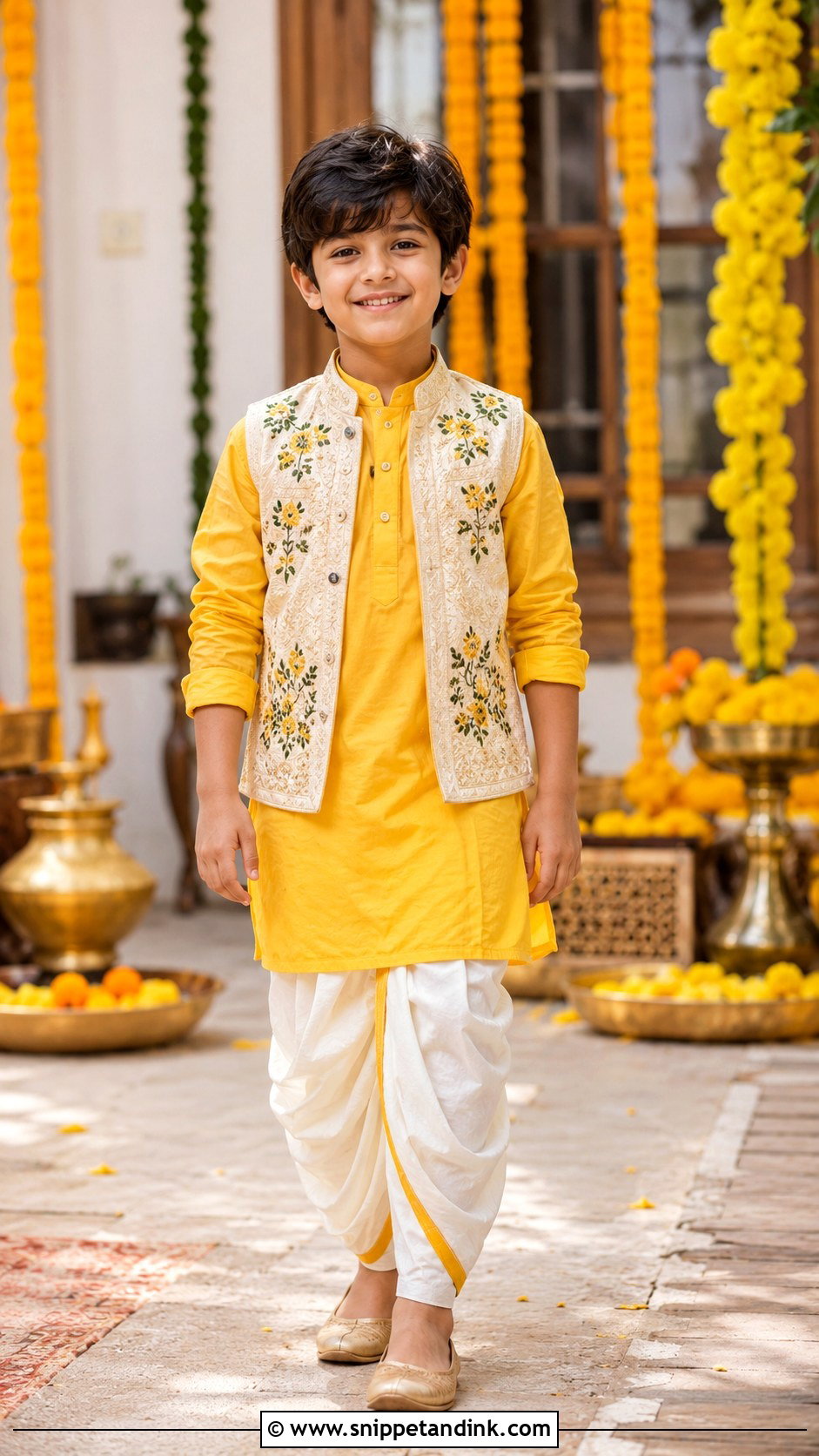
Kurta with dhoti pants is playful and traditional, made for younger boys. Try a short kurta in yellow, cream, peach or turquoise with white, gold or beige dhoti pants, and a light jacket or embroidered buttons to dress it up. Soft mojaris finish it. Elastic waists are a must at this age, and check the hem in his shoes: dhoti pants that look fine standing can drag when he squats, and that’s how kids trip on stairs. Haldi, mehndi and morning ceremonies are where it fits best.
9. Boys Velvet Nehru Jacket Outfit
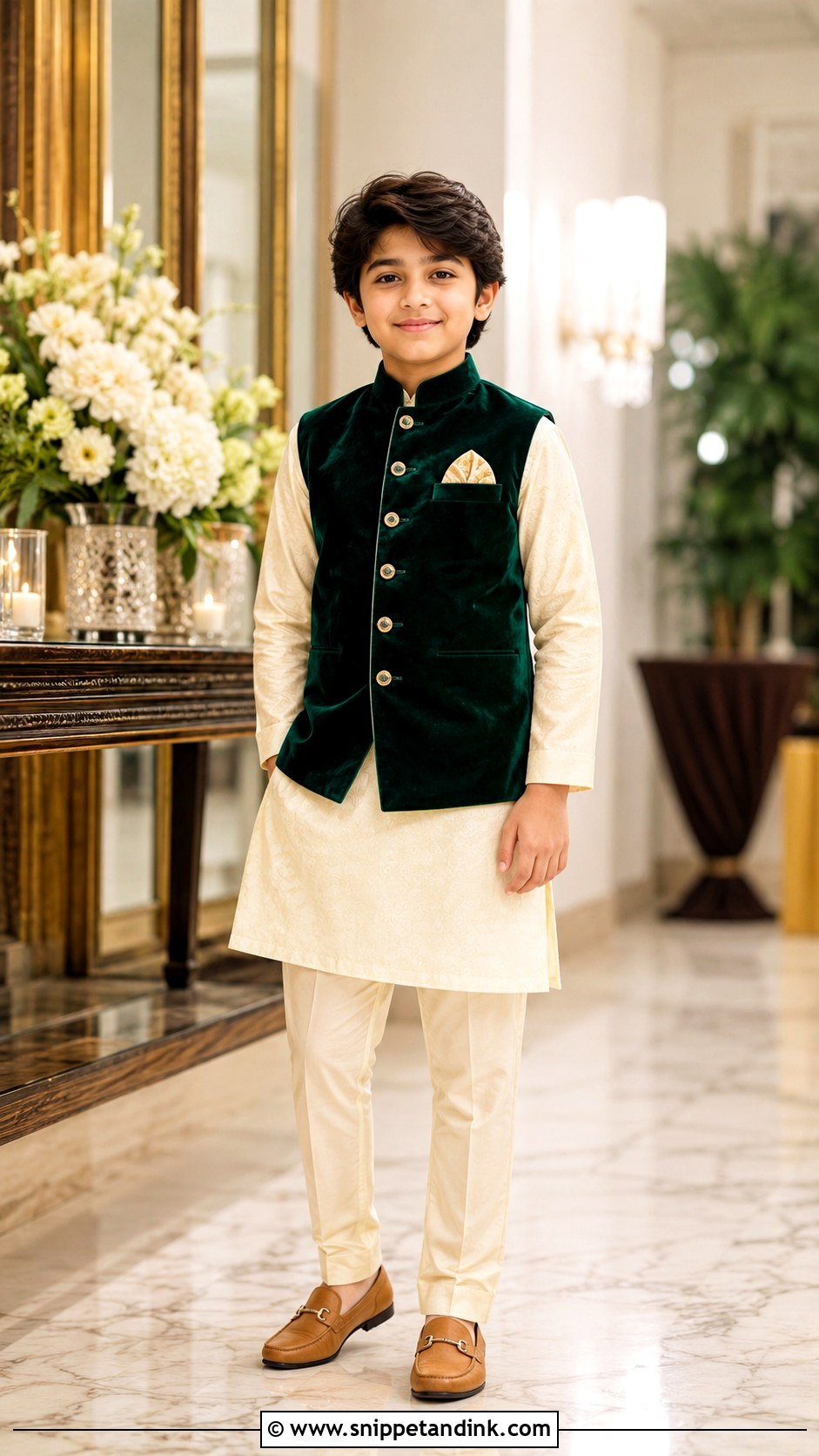
Velvet looks rich with very little else. A deep velvet Nehru jacket in navy, emerald, maroon or chocolate brown, over a lighter kurta in ivory, beige or pale gold, with slim pajamas or trousers. Loafers, juttis or dress shoes, depending on the venue. Velvet is warm, so I keep it for winter weddings, evening receptions and air-conditioned halls. Choose a jacket that isn’t too thick, and test whether he can do up the buttons himself; velvet-covered buttons are often stiff for small fingers.
10. Boys Floral Kurta Pajama
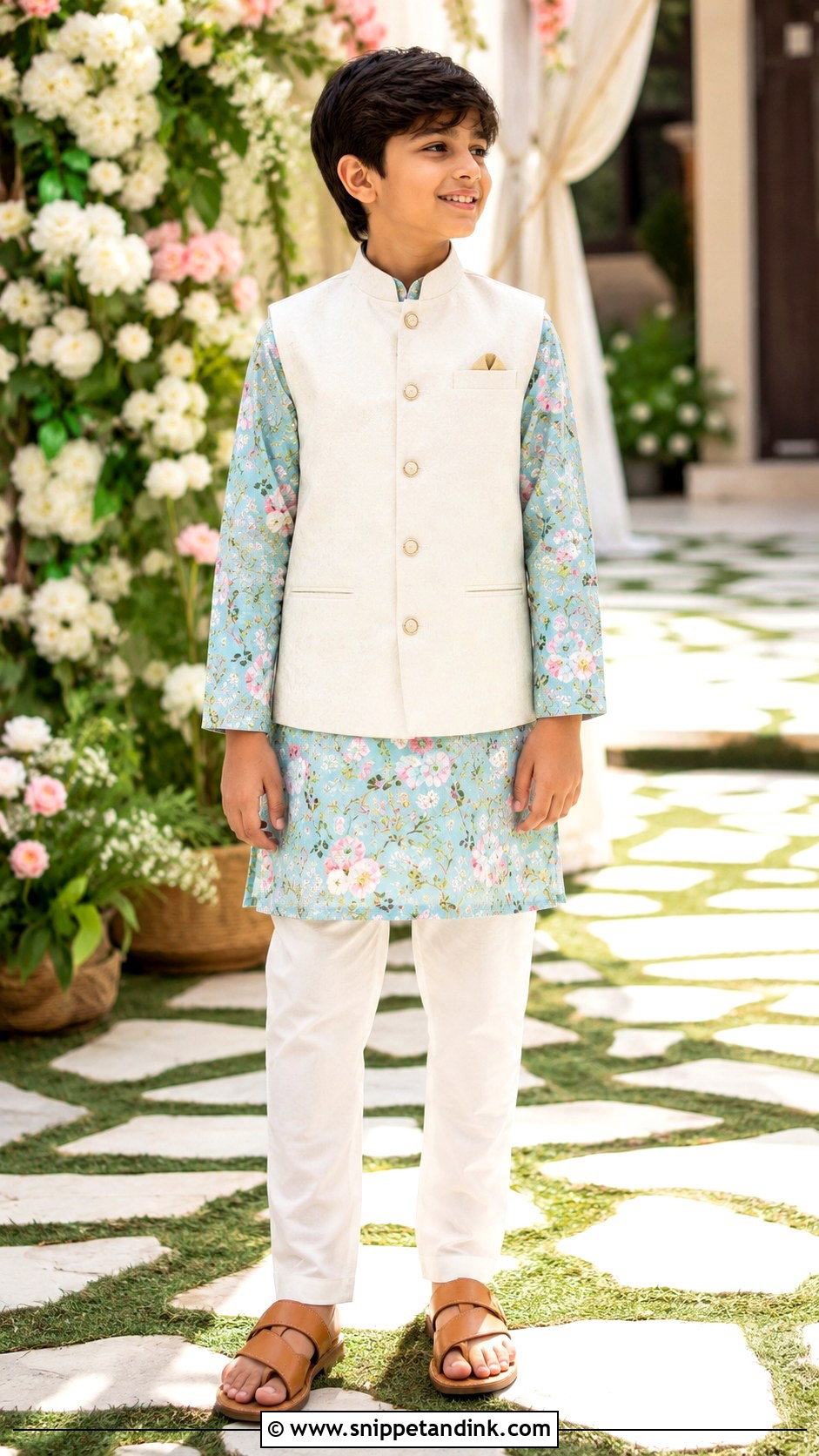
Floral kurtas belong to spring and summer and to the daytime functions: mehndi, haldi, garden ceremonies. Soft florals in pastel pink, mint, sky blue, ivory or lemon, with plain white or beige pajamas so the print isn’t head to toe. For something slightly more formal, add a solid Nehru jacket. Tan sandals, mojaris or neutral loafers. Small, scattered prints suit young boys better than large florals, which can swamp a short frame. Light cotton keeps him cool in a crowded tent.
11. Boys Pastel Sherwani Outfit
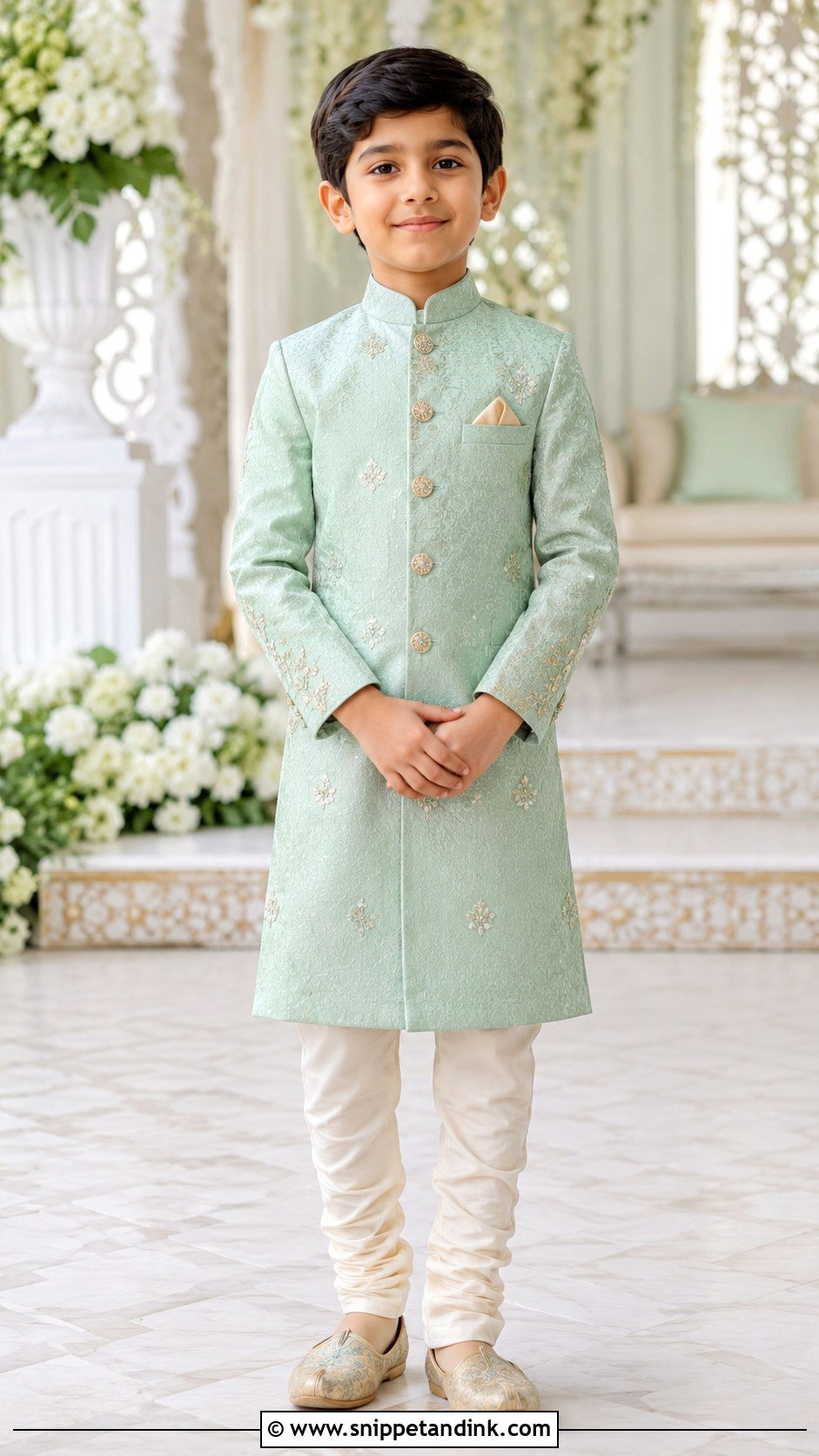
Pastel sherwanis are a fresh break from maroon and gold. Powder blue, mint, blush beige, pistachio and soft lavender suit daytime ceremonies and coordinated family photos. Delicate embroidery, pearl-style buttons or tonal threadwork rather than heavy work. Cream churidar or slim trousers, and mojaris in beige, gold or tan. Pastels flatter younger boys because they look gentle and age-appropriate, though they show every turmeric and food mark, so don’t send a pastel sherwani anywhere near the haldi.
12. Boys Black Bandhgala Outfit
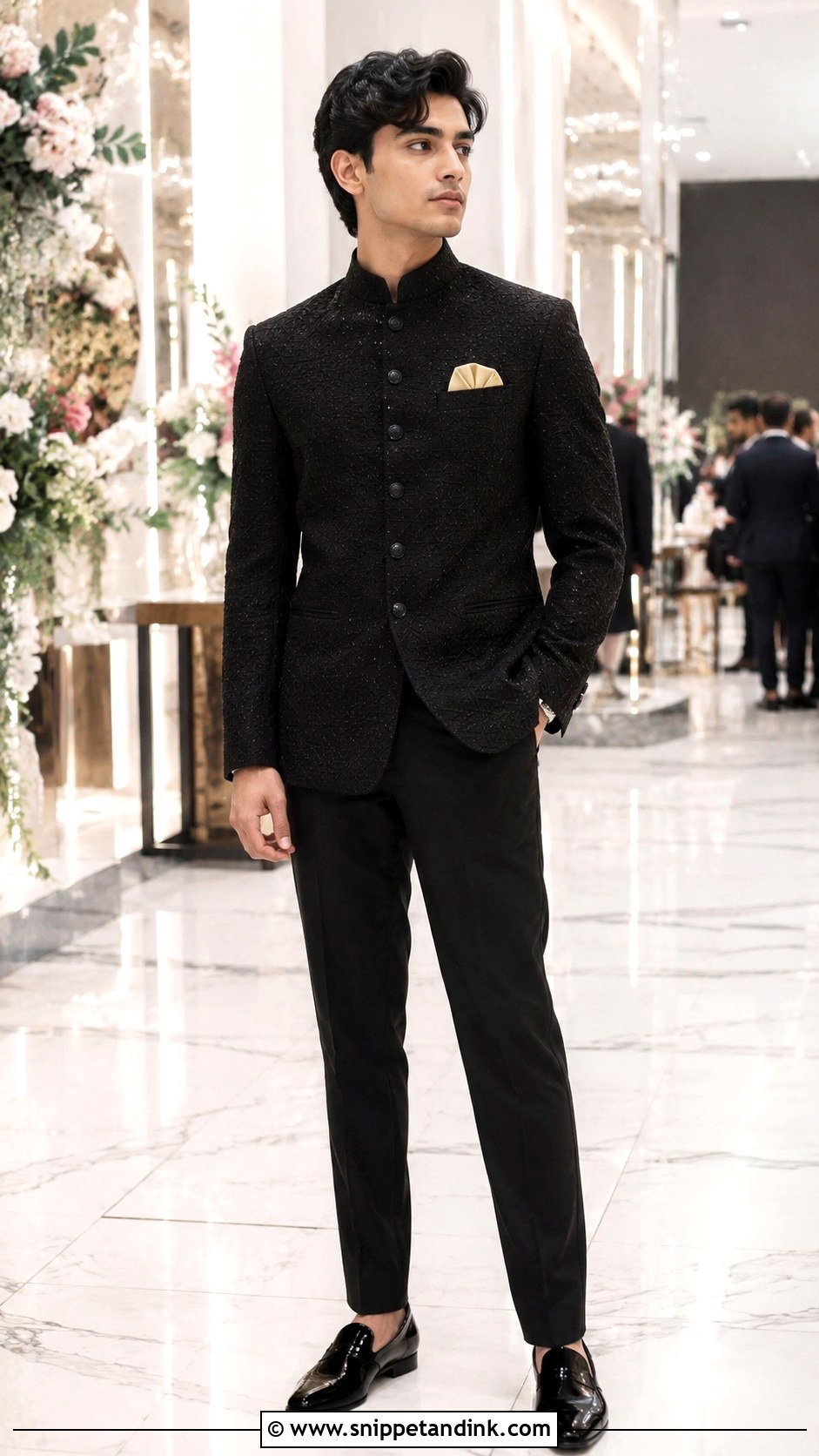
A black bandhgala is the sharpest reception option short of a Western suit. Black or charcoal with subtle buttons, tone-on-tone embroidery or a textured finish, matching trousers and black loafers or dress shoes. On younger boys, all-black can look severe, so I add an ivory inner kurta or shirt at the collar and a small gold, beige or deep green pocket square. It suits cooler indoor functions and formal family portraits. Black also hides spills better than any other color here, which is no small thing at a dinner reception.
13. Boys White Kurta With Colorful Jacket
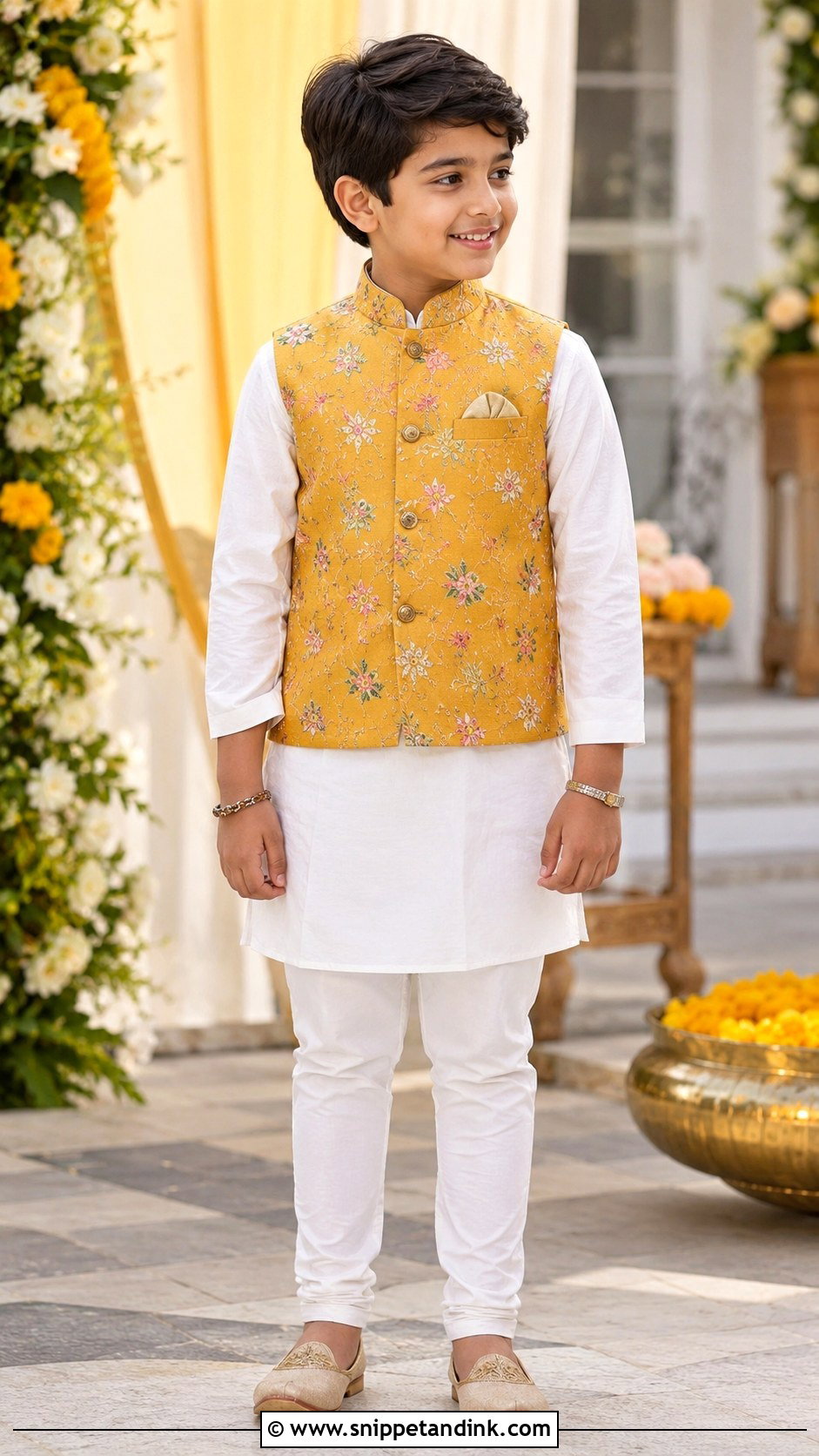
White kurta, colored jacket: simple to pack and simple to change up. Put a royal blue, mustard, emerald, pink, orange or printed waistcoat over a crisp white kurta pajama, and the jacket fabric decides how formal it is. Mojaris, tan sandals or beige loafers. For destination weddings it’s the most efficient choice, since one white set can take a different jacket for each function. The honest drawback is that white on a small child rarely survives lunch, so pack a second kurta.
14. Boys Jodhpuri Suit For Wedding
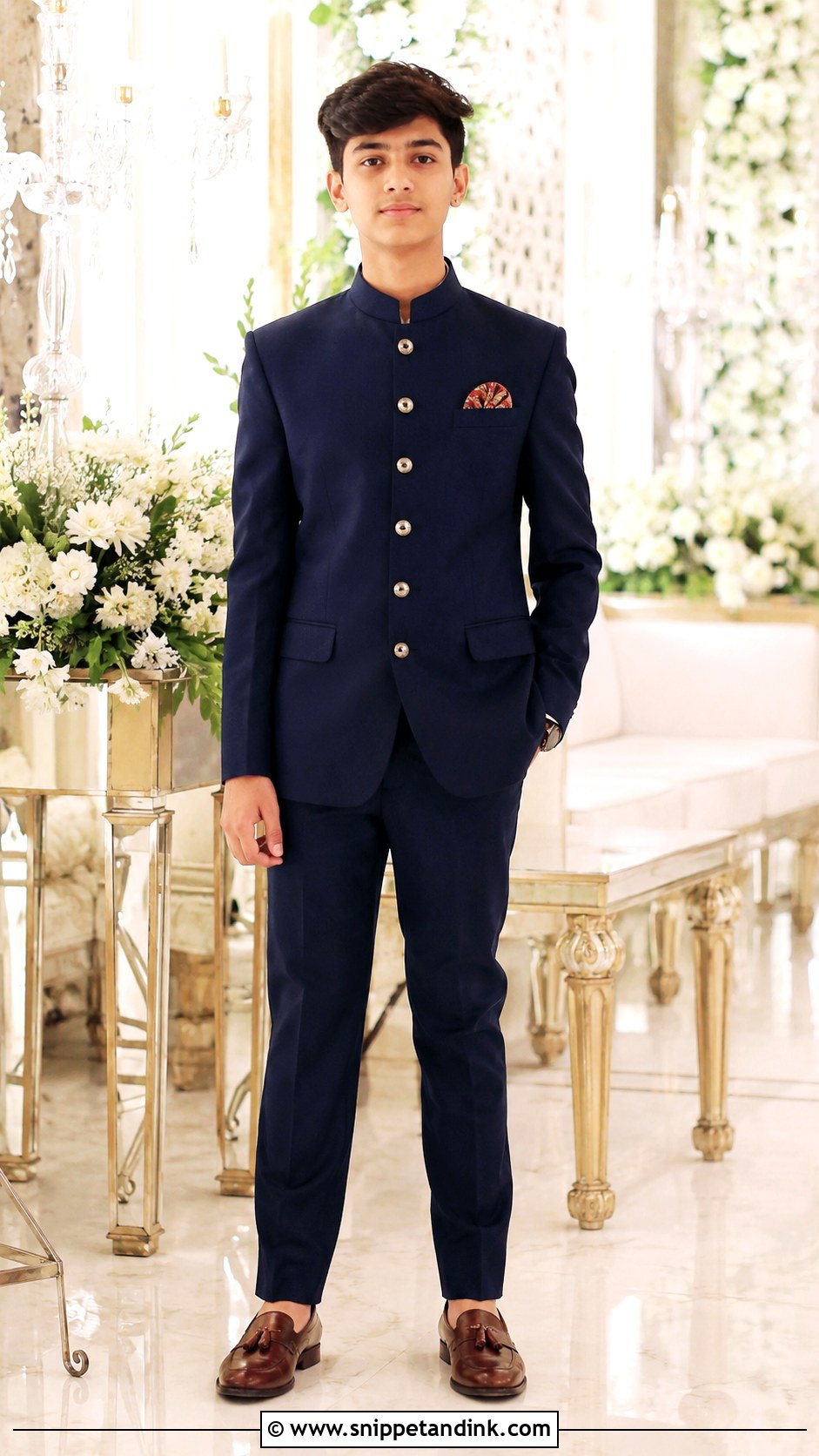
A Jodhpuri suit suits teens and older boys best, because the structured jacket, high collar and tailored trousers look mature. Navy, beige, ivory, bottle green or charcoal. Brocade or jacquard reads festive; a plain suit with metallic buttons is more understated. Polished loafers or dress shoes finish it. Fit across the shoulders is the deal-breaker. A Jodhpuri that’s tight there stops him lifting his arms to eat or hug, so I check it with his arms raised, not just standing straight.
15. Boys Angrakha Kurta With Pants
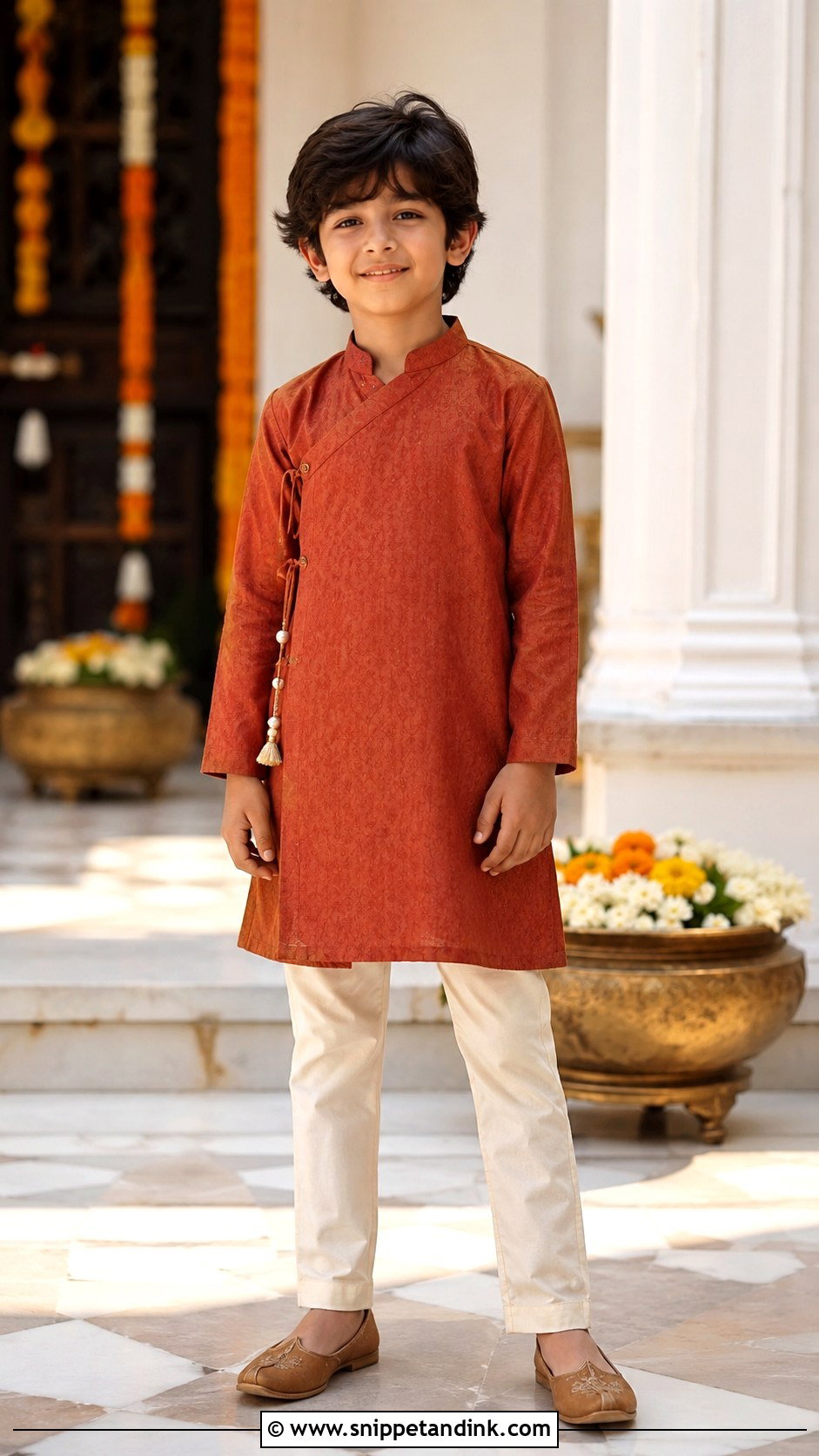
The angrakha’s overlapping front gives a traditional detail without needing heavy embroidery, which sets it apart from a basic kurta pajama. Cotton-silk, raw silk or a soft festive fabric in cream, rust, teal, maroon, mustard or sage. Straight pants, churidar or slim pajamas; mojaris for tradition, loafers for something more modern. The ties are what I look at closely. They should be soft, secure, and sewn so the knot doesn’t press into his side when he sits. It’s a natural fit for mehndi, haldi and family ceremonies.
16. Boys Embroidered Kurta Set
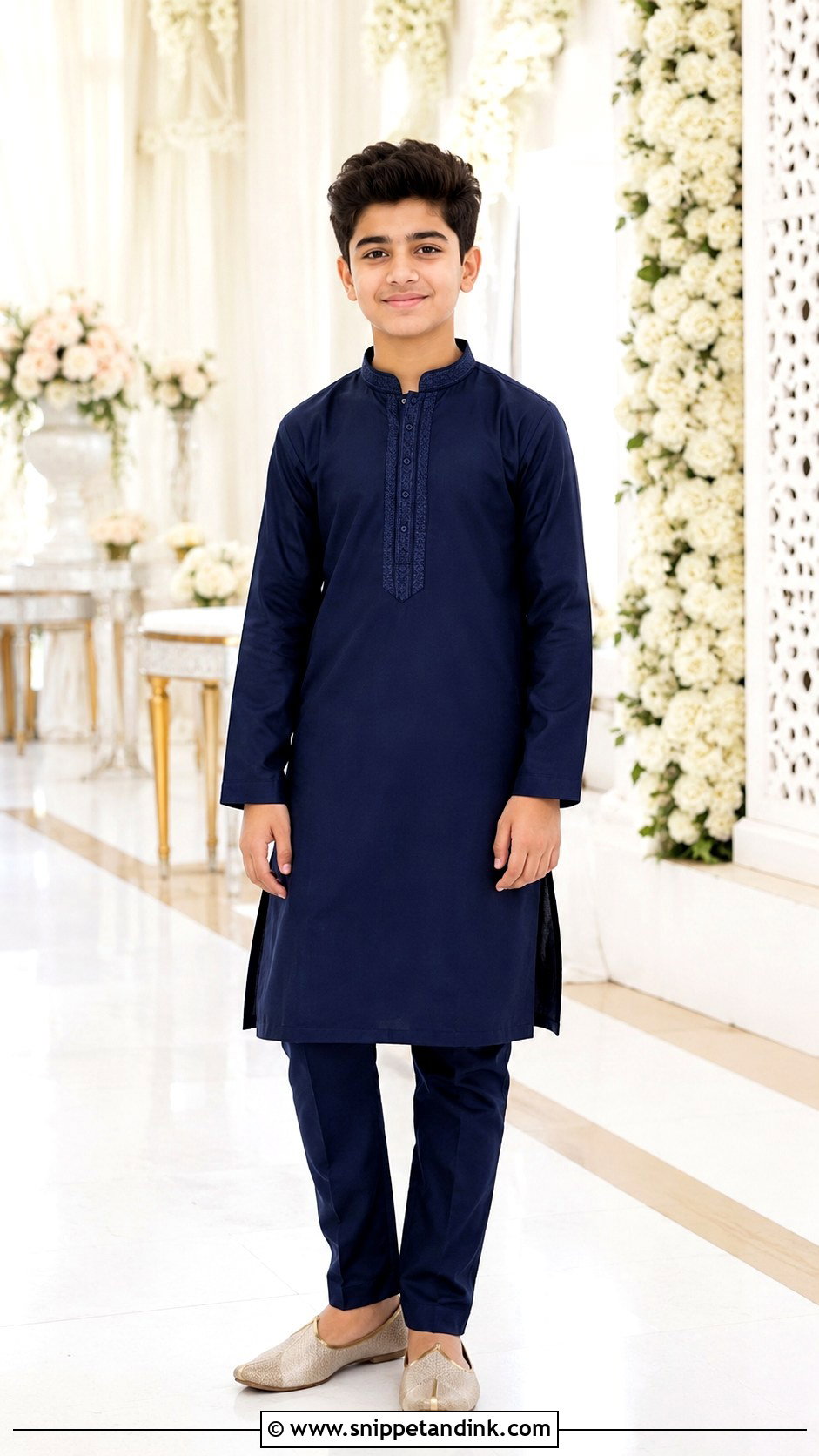
An embroidered kurta set sits between a plain kurta and a heavy sherwani. Look for work at the neckline, cuffs, chest or hem rather than all over, which keeps it light. Pair it with matching pajamas, churidar or straight trousers in ivory, beige, navy, maroon, sage or mustard, and juttis or mojaris. Metallic zari embroidery can scratch the inside of a child’s arms and neck, so turn the kurta inside out in the shop and feel the back of the work. Keep accessories quiet if the thread is metallic.
17. Boys Silk Kurta Pajama
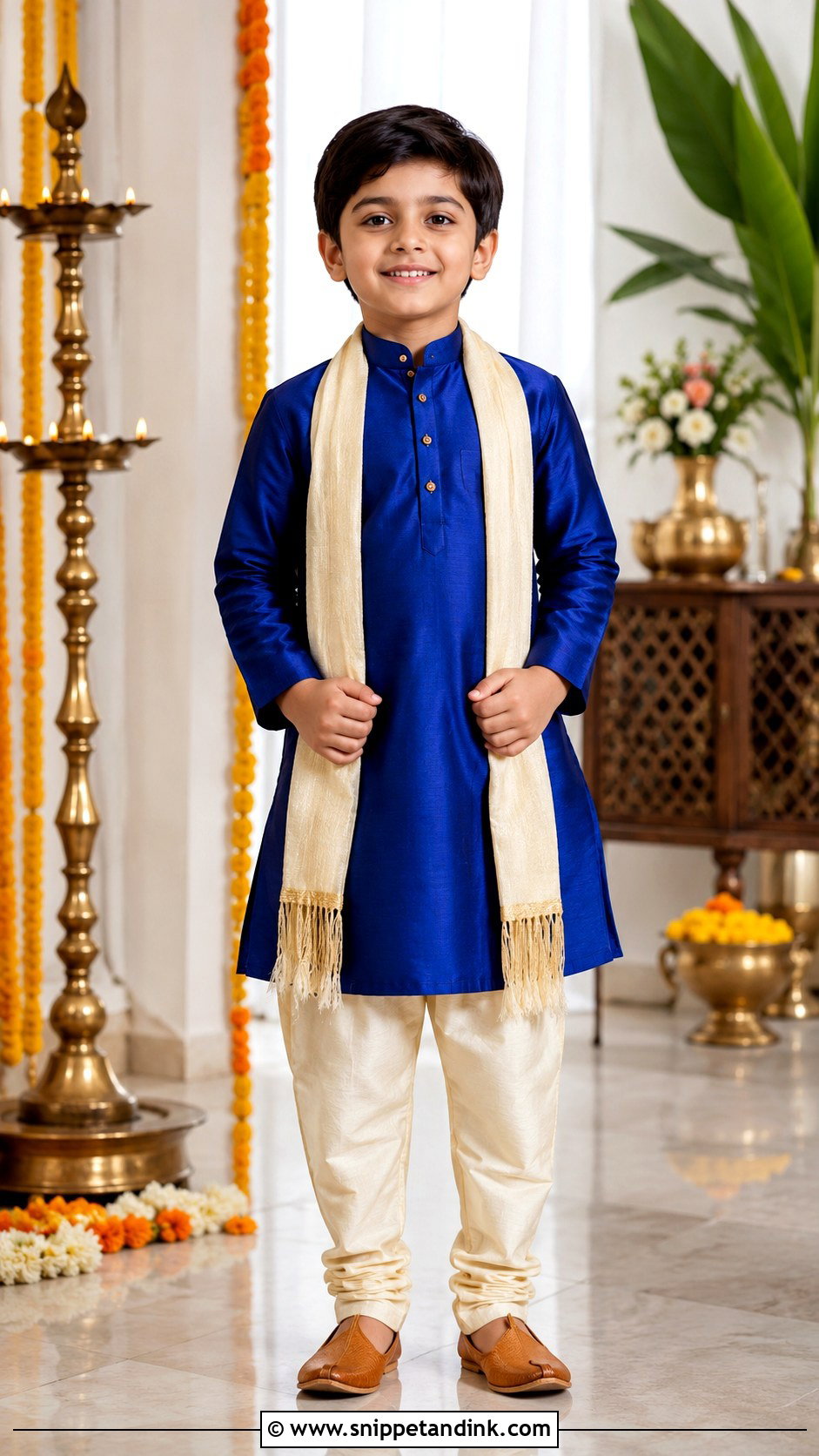
A silk kurta pajama looks polished with almost no styling. For kids, choose a soft silk blend rather than stiff pure silk, which creases sharply and feels rough. Cream, gold, copper, royal blue, emerald and maroon all photograph warmly. Matching or contrast pajamas, mojaris or dressy sandals. A light stole can be added for the ceremony but should come off easily. Silk water-marks, so keep a napkin tucked at the collar during meals; a splash of water on raw silk can leave a ring.
18. Boys Linen Kurta With Nehru Jacket
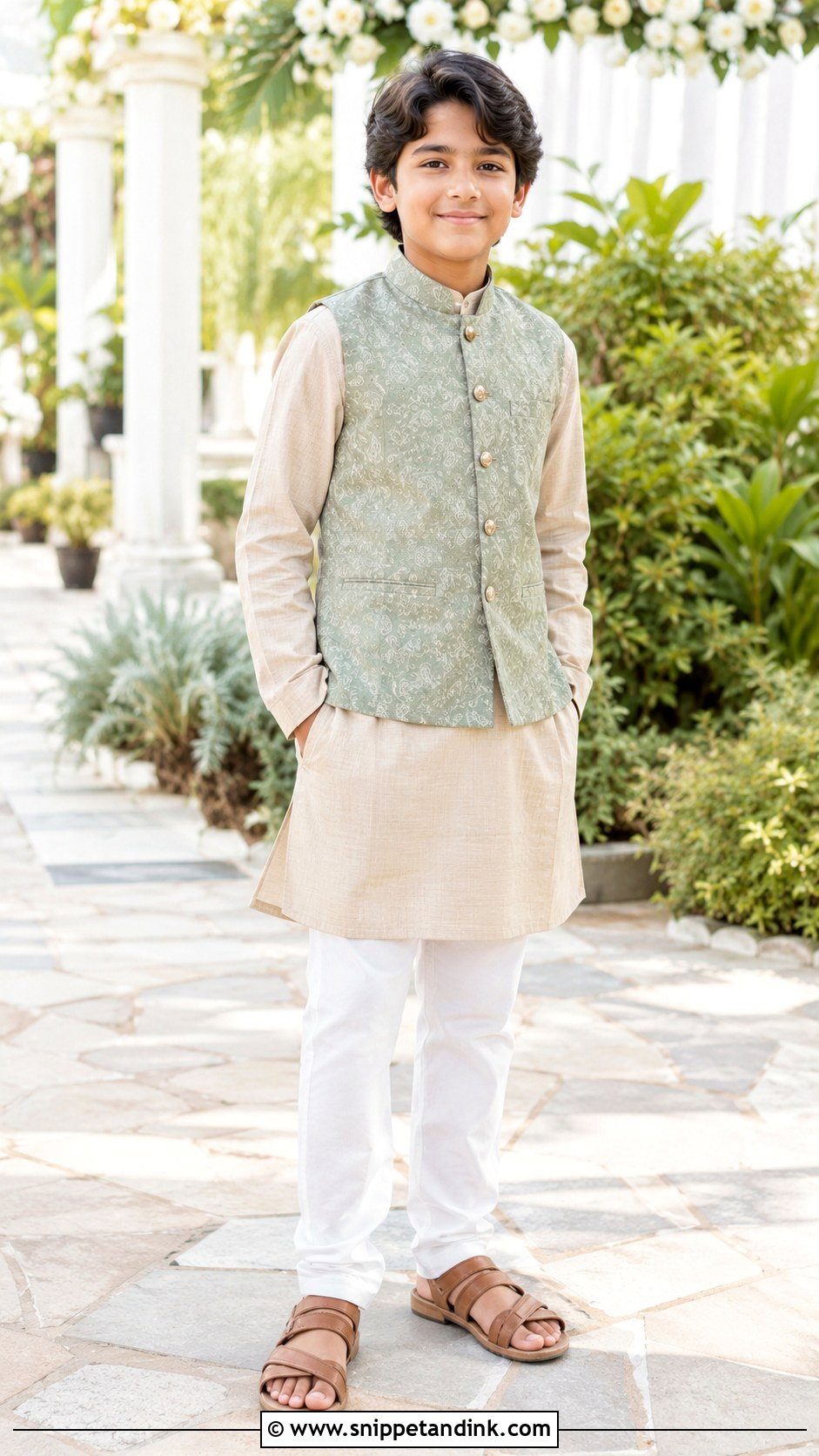
Linen with a Nehru jacket is my pick for summer, beach and garden weddings. A white, beige, sage, sky blue or light yellow linen kurta with a printed or textured jacket, neutral pants or pajamas, and tan sandals, loafers or soft juttis. Cut it slightly relaxed. Linen creases within minutes on a child who sits on the floor, and that softened texture is fine as long as the jacket stays crisp over it. It’s the coolest option on this list for outdoor daytime functions.
19. Boys Kurta With Blazer
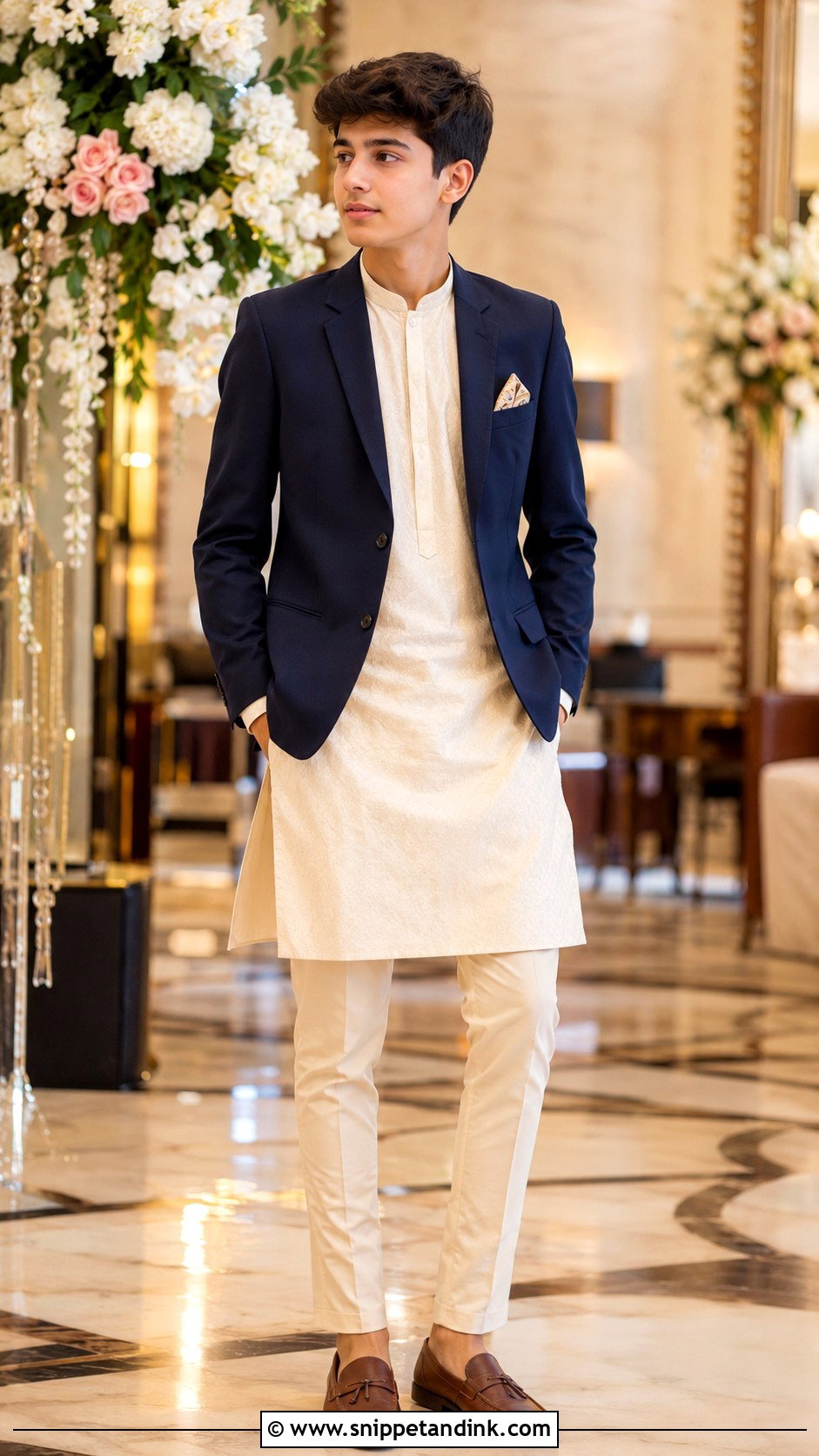
Kurta with a blazer is for boys who’d rather look smart than traditional. A plain kurta in ivory, white, black or pastel under a tailored blazer in navy, beige, grey or olive, with tapered trousers and loafers or dress shoes. A pocket square can tie in the wedding colors. Length is the detail most people get wrong. A long kurta bunches under the blazer hem, so I’d go knee-length or a little shorter. It suits receptions, engagements and modern venues.
20. Boys Printed Kurta With White Pajama
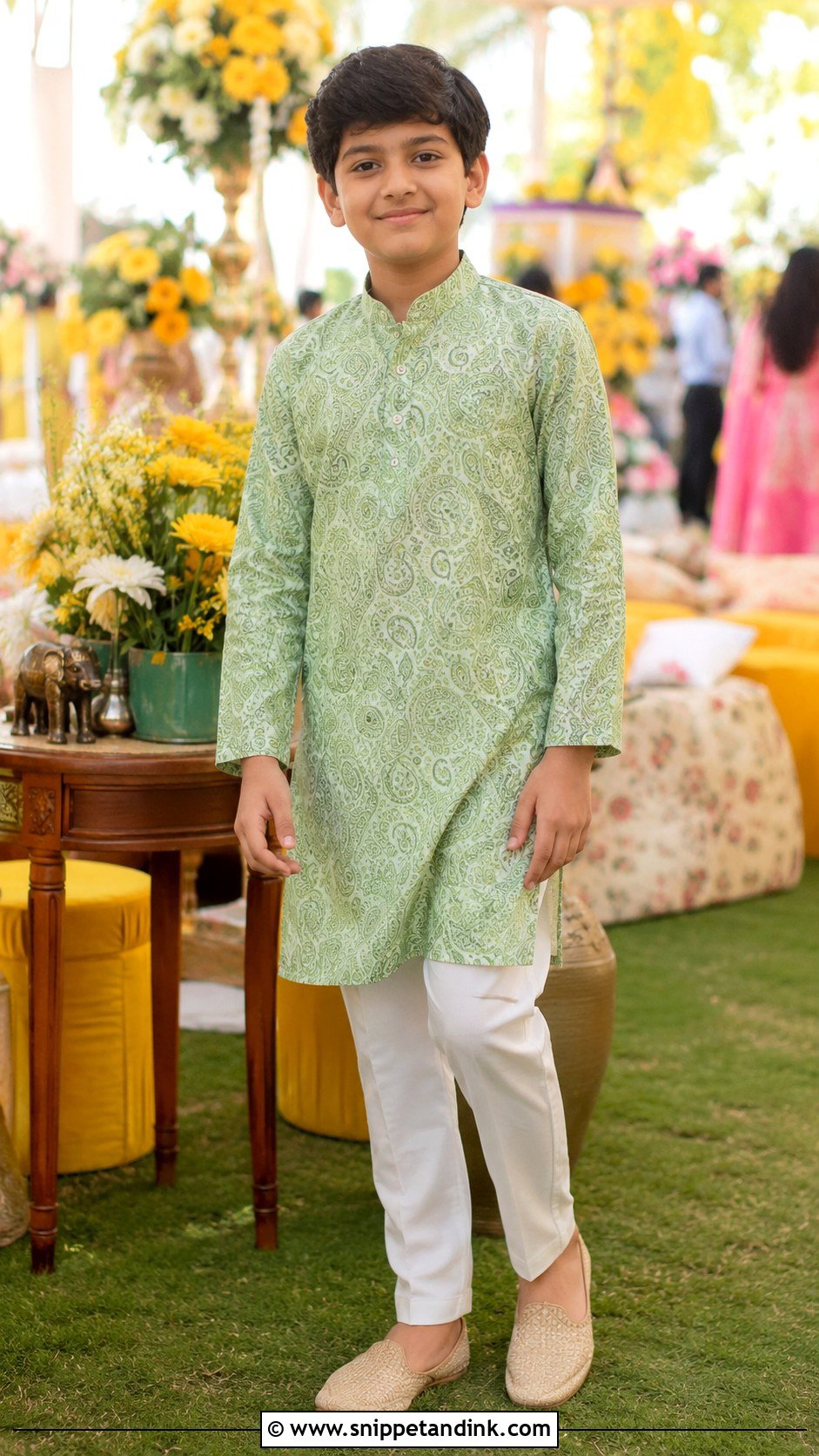
A printed kurta with white pajama works at almost every casual or semi-formal function. Paisley, florals, block prints, ikat-style patterns or small geometrics all suit it, and the white bottom keeps it fresh. Neutral mojaris, sandals or loafers by formality; a plain waistcoat for a layered look. If the print is bright, skip extras. It’s affordable, comfortable and easy to rewear at festivals, which makes it the first thing I’d buy for a boy with several functions to attend.
21. Boys Achkan With Churidar
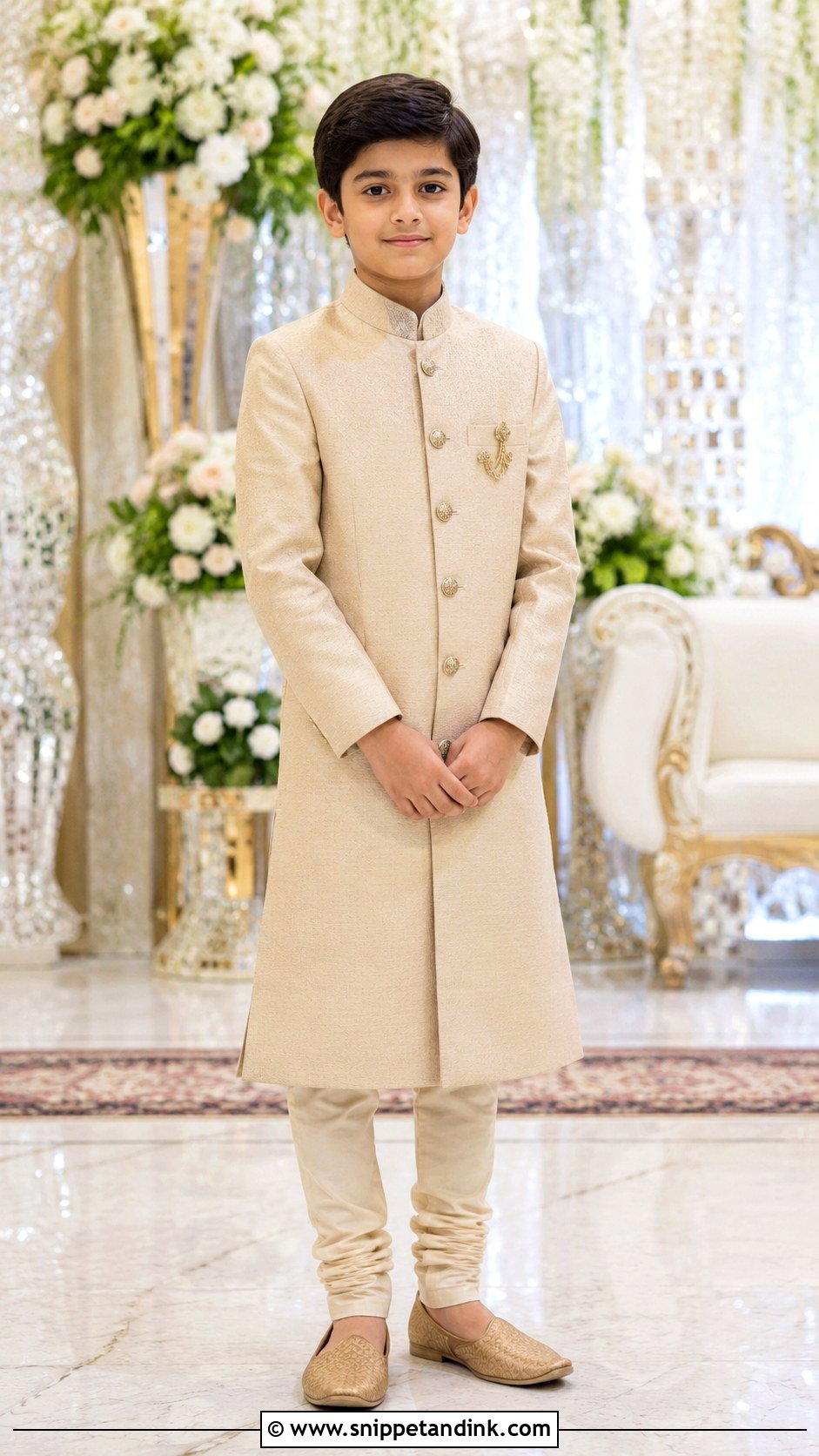
An achkan is more structured than a kurta but usually simpler than a heavy sherwani. Its long coat line suits the main ceremony in cream, beige, navy, maroon or gold, with a fitted churidar and traditional mojaris. A small brooch or decorative buttons are enough. I’d only put a boy in an achkan if he can manage a formal garment for a few hours, roughly from age six or so, depending on the child. Check for a breathable lining and a collar without stiff interfacing that scratches.
22. Boys South Indian Veshti Shirt Outfit
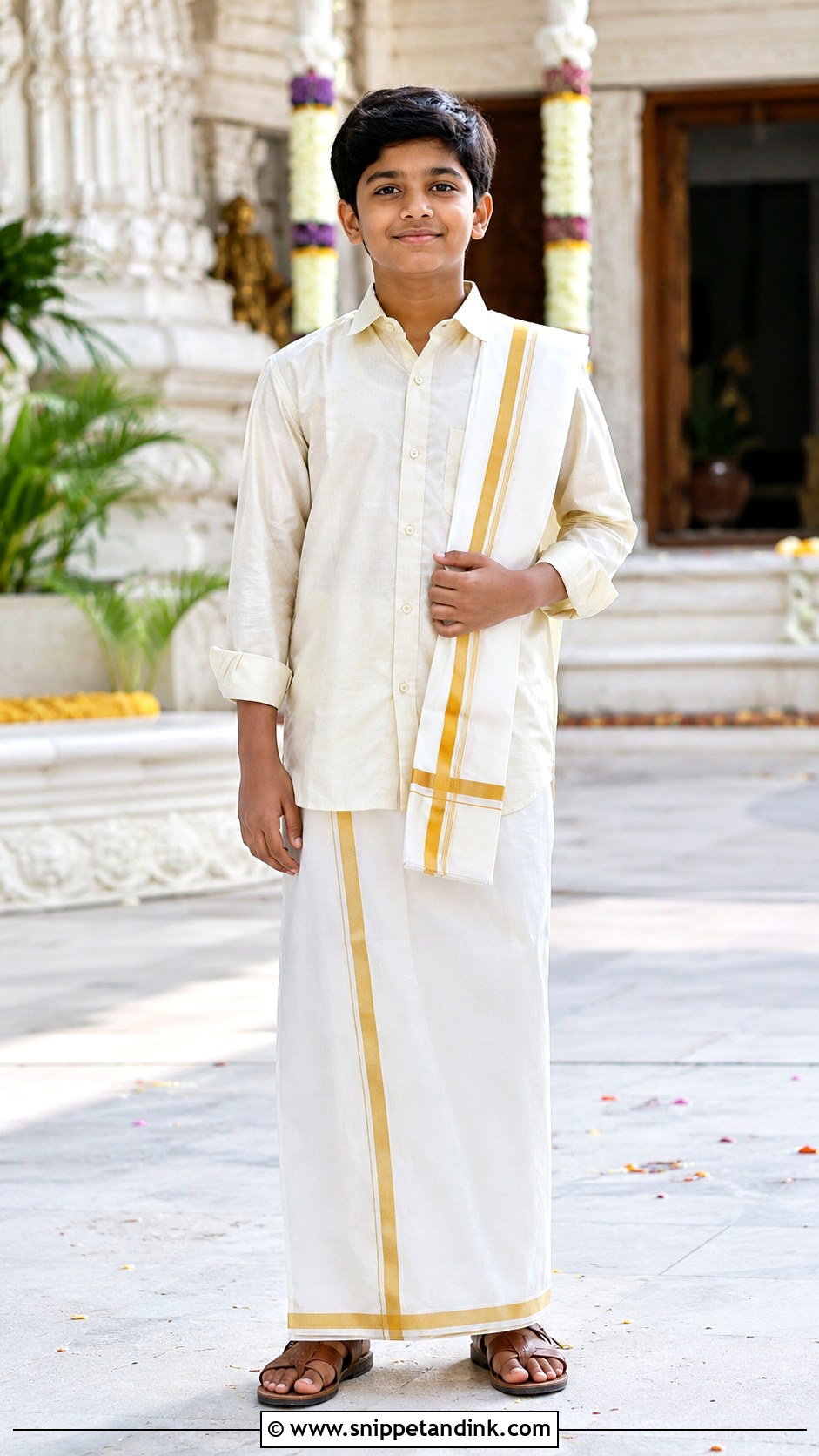
A veshti with a shirt is clean, cultural and right for temple weddings and South Indian ceremonies. A crisp white or cream shirt with a cream, white or gold-bordered veshti. For young boys, a pre-stitched veshti with a velcro or elastic waist is far safer than a wrapped one, which slips the moment he runs. Simple sandals or traditional slip-ons, and a light angavastram for photos or rituals. Get the length right so it clears his ankles, and choose soft cotton for movement.
23. Boys Kurta With Sleeveless Jacket And Jeans
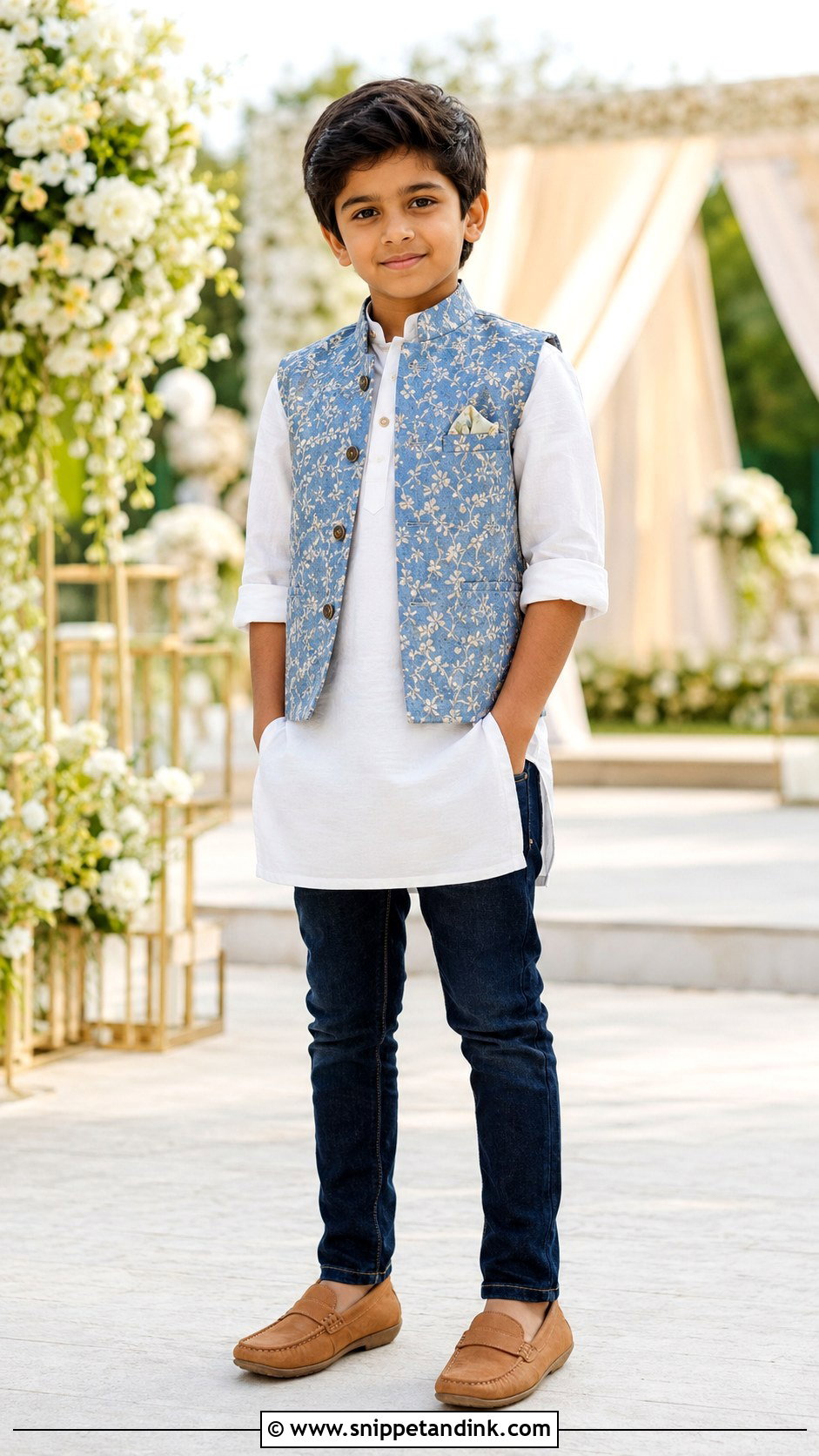
For casual wedding events, a kurta with a sleeveless jacket and jeans is the relaxed option: mehndi, welcome lunches, travel days, small home functions. A short or medium kurta in cotton, linen or a print, a sleeveless Nehru-style jacket for the festive touch, and dark blue or black jeans without rips or heavy fading. Clean sneakers, loafers or ethnic slip-ons. It isn’t right for the main ceremony. Kurta length matters here too; it should end at mid-thigh so it doesn’t look like a dress over jeans.
24. Boys Royal Blue Sherwani Outfit
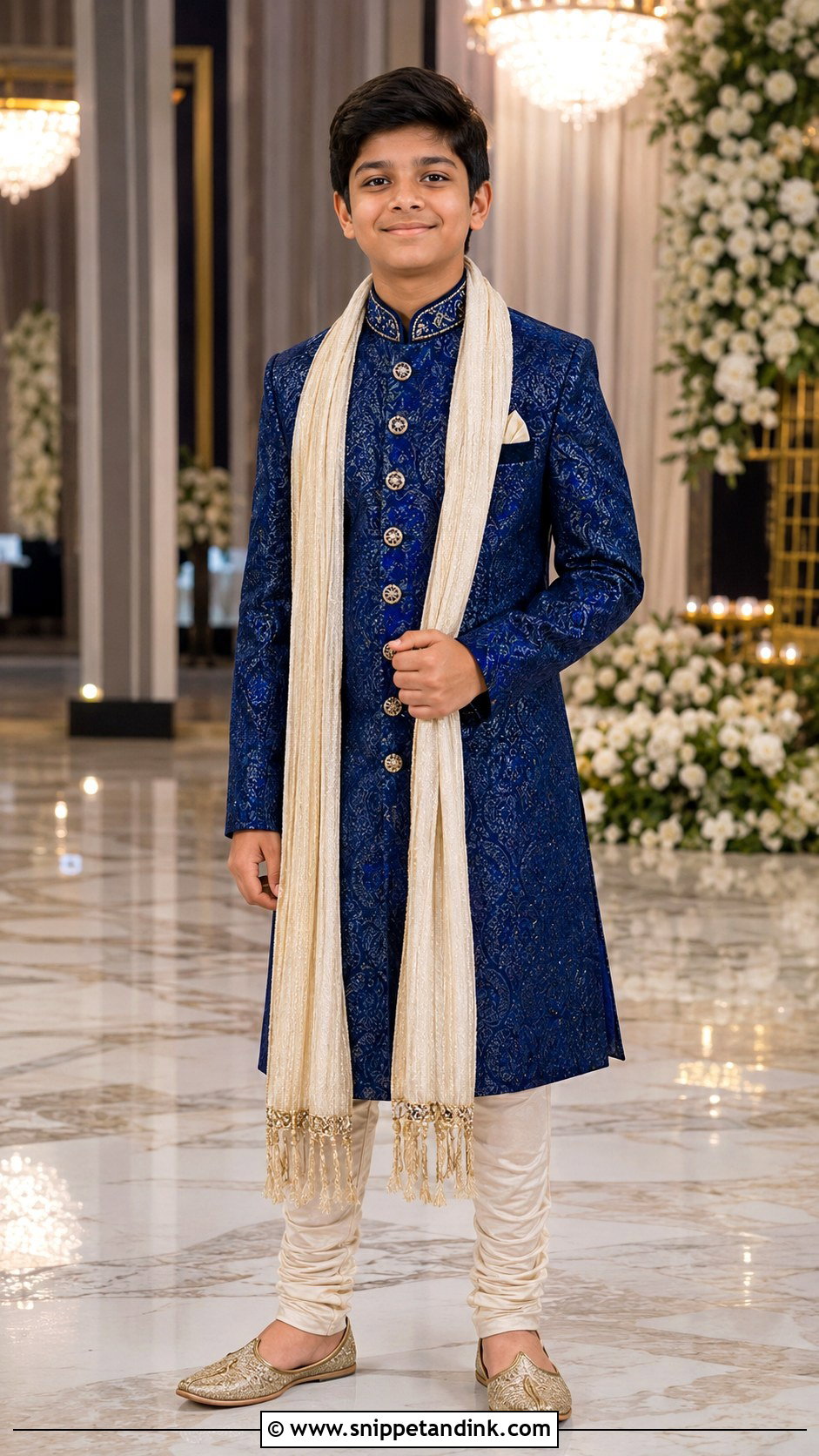
Royal blue is a bold evening color that looks rich next to gold, ivory, beige or silver embroidery. Pair the sherwani with cream churidar or slim trousers and gold or tan mojaris. A matching stole works for the ceremony as long as it’s light. This is the outfit I’d give a bride’s or groom’s brother, or a boy walking in the baraat, since the color stands out in crowd photos. Keep his hair neat and accessories plain. Ask the family about colors before buying, as some households reserve certain shades for the couple.
25. Boys Mustard Kurta With White Pajama
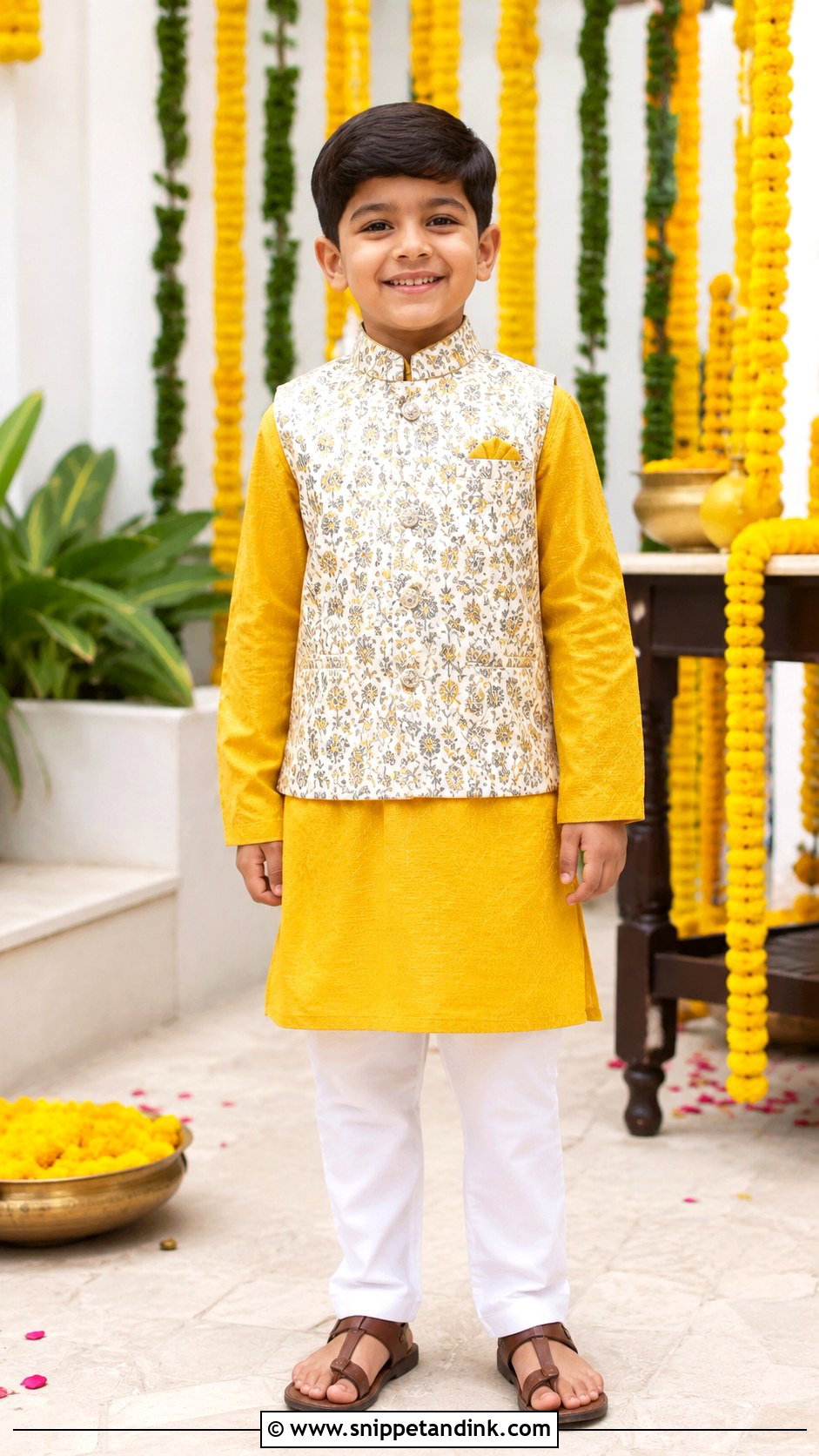
Mustard is the haldi color, and it’s forgiving: turmeric that lands on it barely shows. A plain mustard kurta with textured fabric, light embroidery or wooden-style buttons, over crisp white pajama, churidar or straight pants. Brown sandals, tan loafers or beige mojaris suit the warm tone, and a printed cream, green or rust jacket adds style. It’s comfortable and easy to clean compared with embellished pieces. Wash it separately afterward, though; turmeric stains that do land on the white pajama set in quickly.
26. Boys Ivory Sherwani With Stole
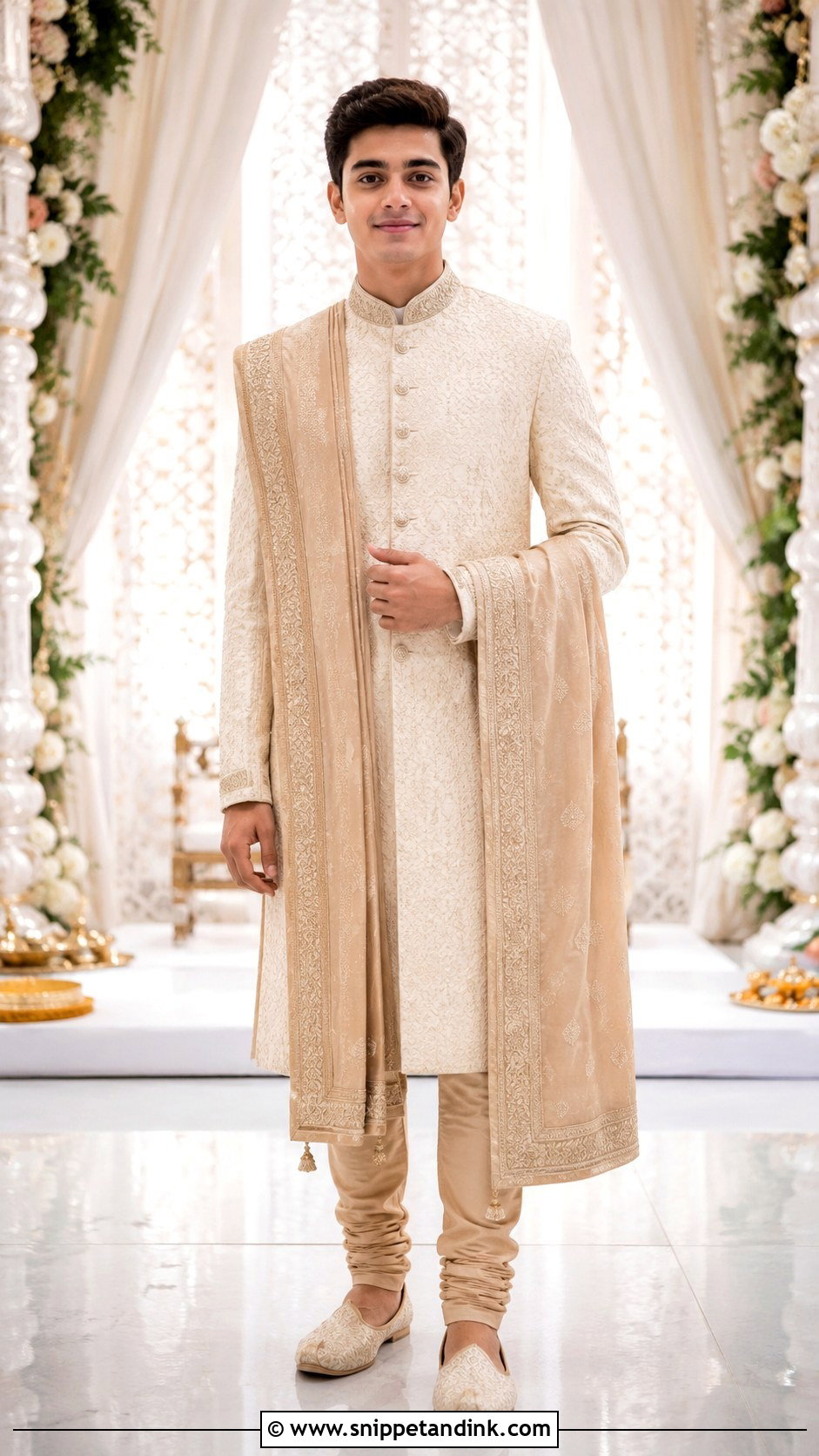
An ivory sherwani with a stole is the refined choice for boys in close family roles. Ivory looks traditional without being flashy. Tonal embroidery, pearl-style buttons or subtle gold detail; ivory or beige churidar and matching mojaris. A stole in gold, champagne, sage or pale pink adds color. I always pin the stole at the shoulder with a small safety pin hidden under the fold, because an unpinned stole on a child ends up on the floor within minutes. Ideal for portraits, entrances and coordinated sibling outfits.
27. Boys Green Kurta With Beige Jacket
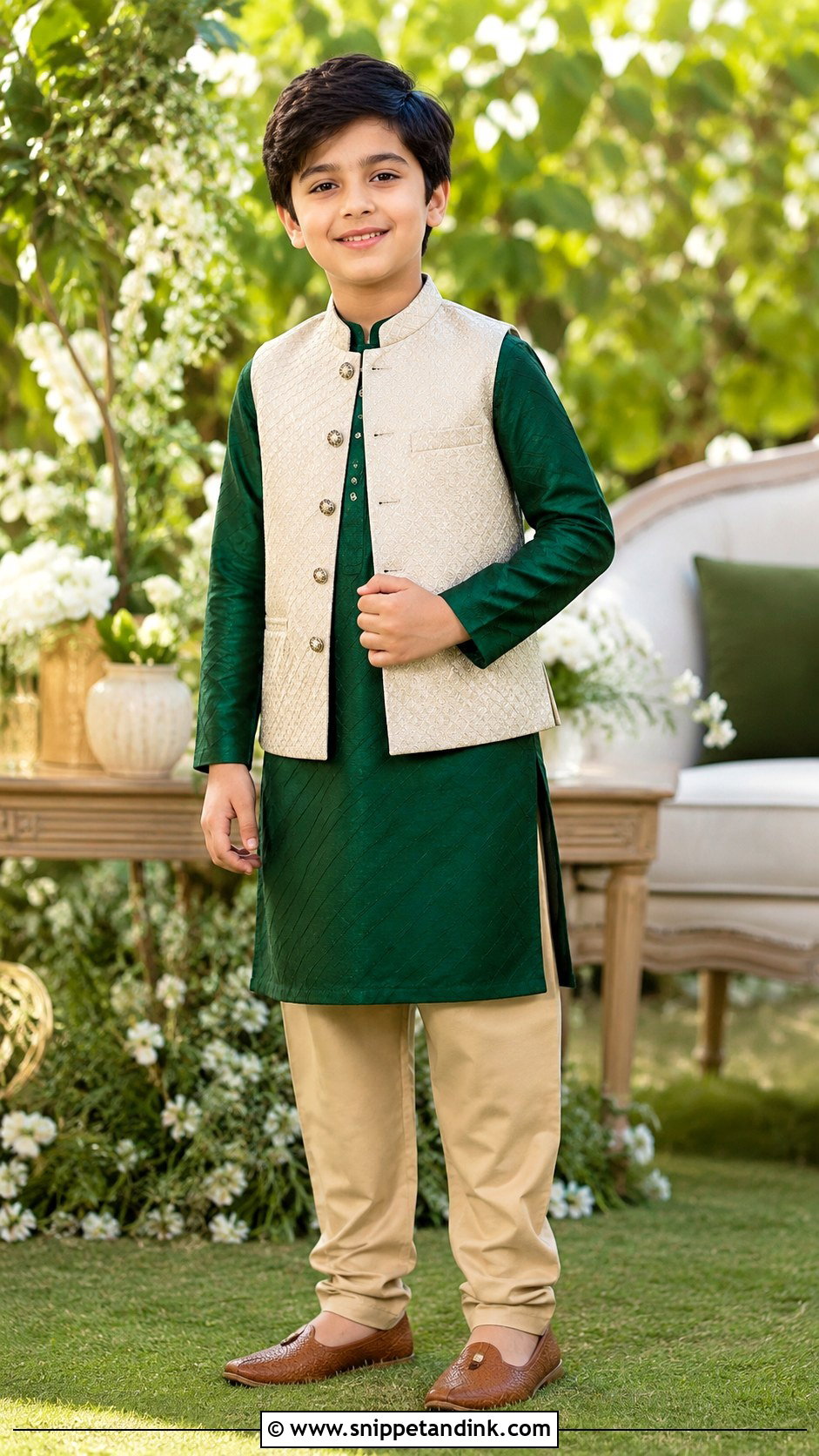
Green with beige is earthy and festive and suits many events. Choose sage, olive, emerald or bottle green by season and time of day, with beige pajamas or trousers and a beige Nehru jacket with light embroidery or texture. Brown mojaris or tan loafers. Green adds personality while beige grounds it. Parents who want color without anything flashy tend to land here, and it works for mehndi, engagement, garden weddings and family ceremonies alike.
28. Boys Maroon Kurta With Gold Jacket
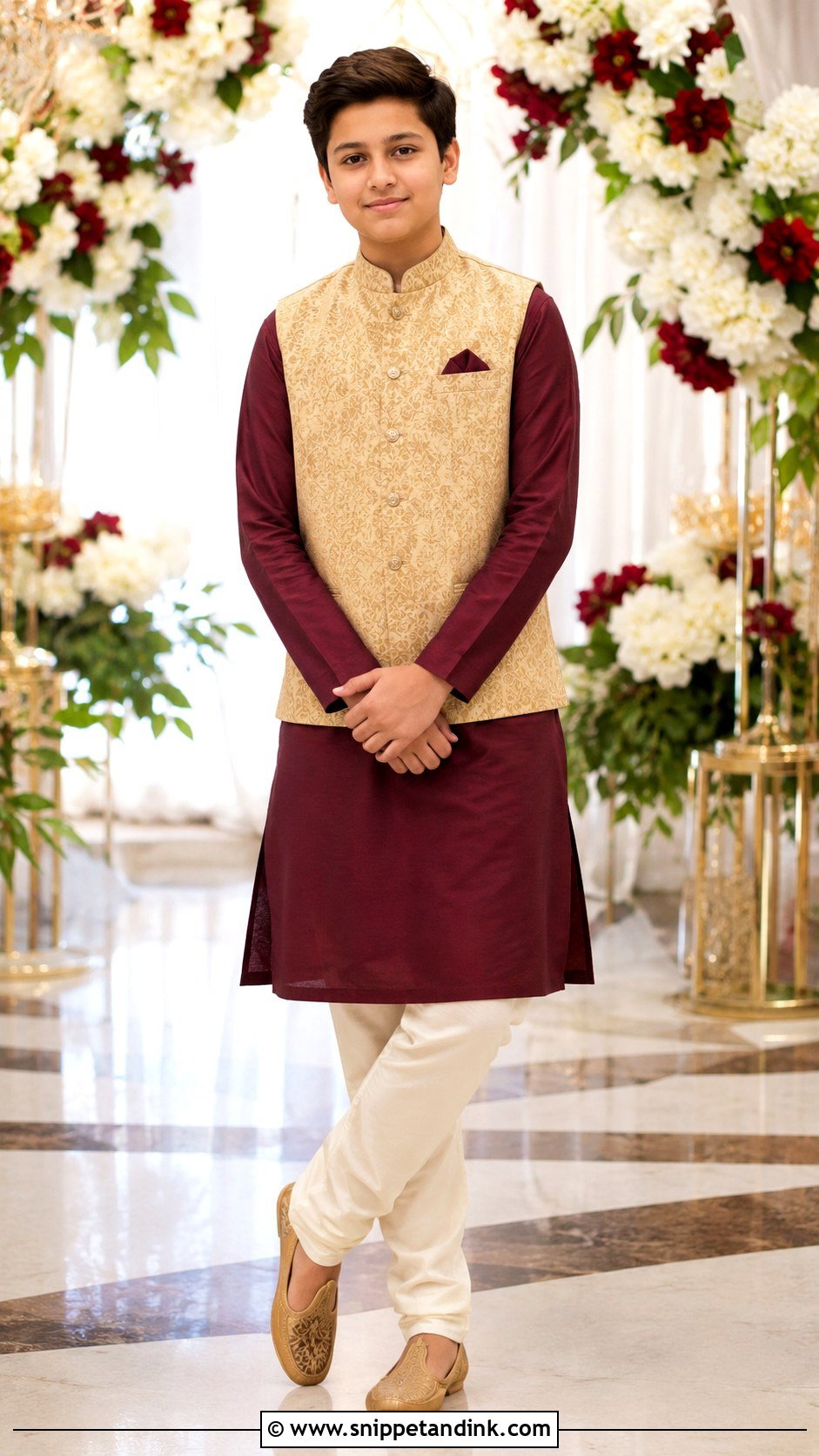
Maroon with a gold jacket gives the richness of a sherwani for less weight. Maroon suits evening events, winter weddings and formal gatherings. Cream or gold-toned pajamas lighten it; a gold brocade or jacquard jacket adds traditional shine, with tan or gold mojaris. Keep the kurta plain so the jacket leads. Stiff brocade rubs at the armholes on small children, so for younger boys I go for a softer gold jacquard. Sangeet, reception and the main ceremony all suit it.
29. Boys Cream Kurta With Printed Dupatta
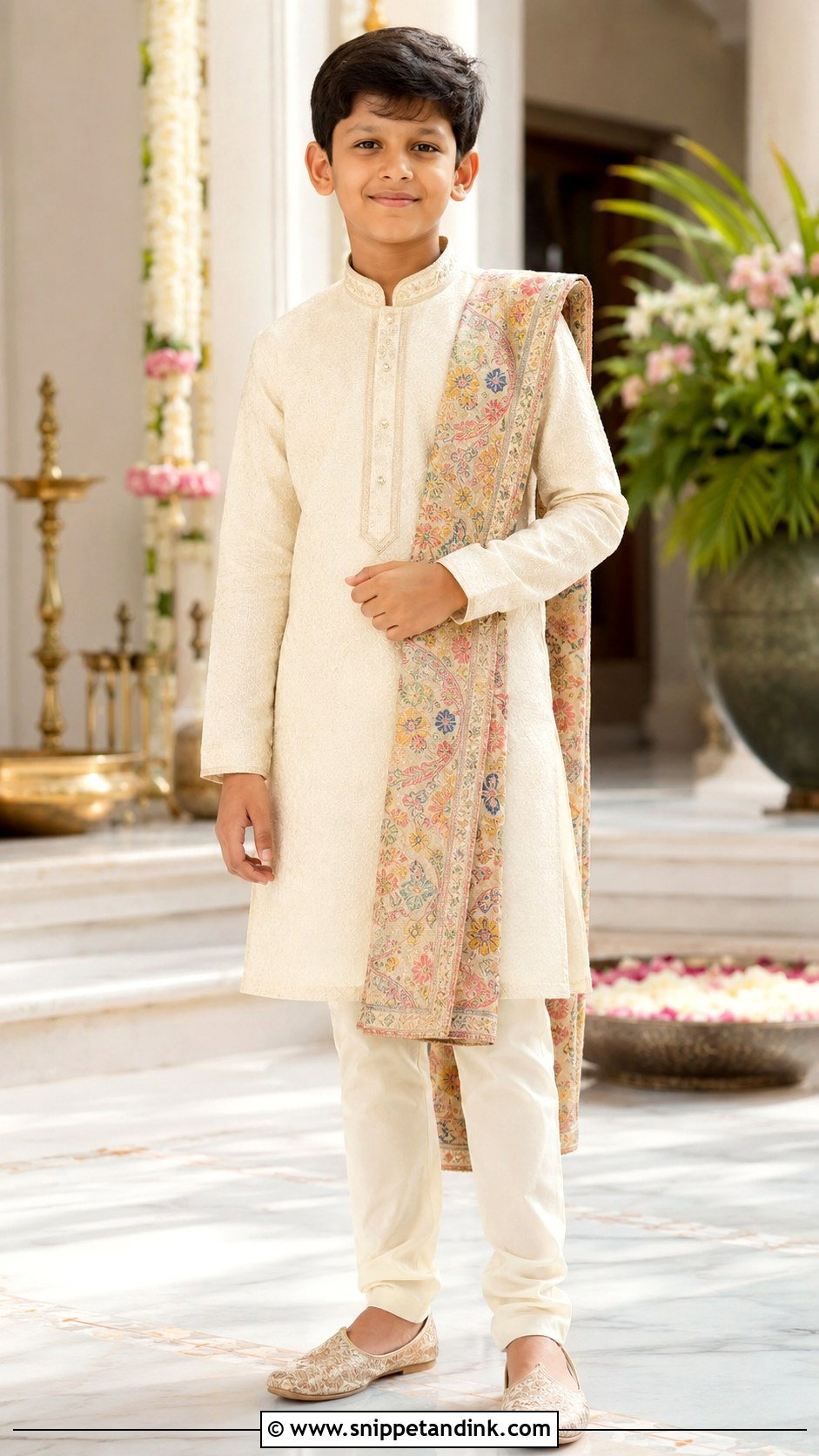
A cream kurta with a printed dupatta only works on a boy who’ll tolerate a drape. Start with a simple cream kurta pajama or churidar set and add a lightweight printed dupatta in red, green, blue, mustard or rust. Mojaris or ethnic slip-ons. For younger boys, pin it lightly at the shoulder or swap it for a shorter stole. Honestly, most under-fives pull it off within the hour, so plan to take the photos early. Ceremonies, family rituals and photo sessions are where it belongs.
30. Boys Reception Suit With Indian Details
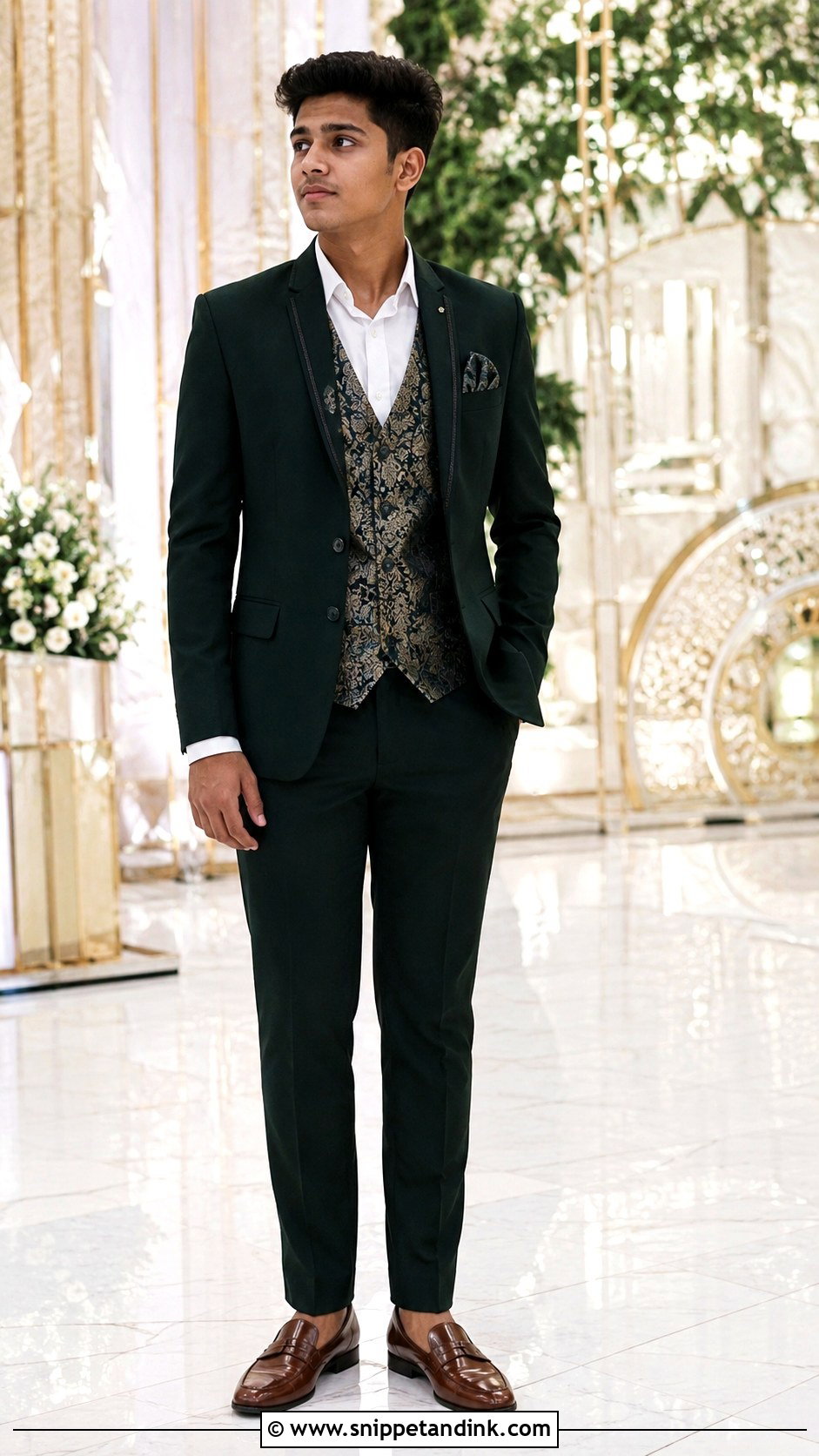
Teens who don’t want ethnic wear at all will often agree to a reception suit with Indian details. Start with a well-fitted suit in navy, charcoal, beige or deep green, then add a brocade waistcoat, an embroidered collar, metallic buttons or a pocket square in the wedding colors. A crisp shirt, tailored trousers and polished loafers. Teenagers grow fast, so I leave a little let-out in the trouser hem and side seams, and keep the fit sharp but never tight; he needs to sit, eat and dance.
Getting a Young Boy Through a Long Muhurat in Embroidery
The main ceremony can run for hours, often in heat, on the floor or in a crowded mandap. A few small preparations decide whether he sits happily or spends the pheras tugging at his collar.
- Put a thin cotton vest under any embroidered or zari kurta. It stops the metallic threads scratching and soaks up sweat.
- Check the waist before you leave home. Drawstrings are hard for small children to retie in a bathroom; elastic waists are far kinder.
- Let him take the jacket or sherwani off for the meal. Most spills happen at the buffet, and the inner kurta is easier to sponge.
- Pack a spare kurta, a pack of wet wipes and a stain pen in the parents’ bag.
Mojaris Need Breaking In at Home
New mojaris and juttis are stiff leather and notorious for rubbing at the heel and toe. Have him wear them around the house for short spells in the week before the wedding, ideally with thin socks, and slip in a cushioned insole if they feel hard. A pair of soft sandals in the car is a sensible backup for the walk to the dinner hall or the late-night dancing.
Soft Linings, Secure Waistbands and a Boy Who Enjoys the Day
Plan style and comfort together and the rest follows. A boy’s wedding outfit should suit the event, look his age and let him move through long ceremonies, photos, meals and dancing. Sherwanis, kurta pajama sets, Nehru jackets, dhoti pants, bandhgalas and Indo-western cuts all have their place, depending on the function and the weather. Light fabrics, soft linings, secure waistbands and shoes he has already worn make the biggest difference, and accessories should support the outfit rather than weigh it down.
You'll Like These Ideas:



Leave a Reply