
Mehndi nights are loud, long and full of running, which is exactly why boys’ outfits need more thought than the adults’. A kurta that looks sharp at the start has to survive dancing, floor seating, food and possibly a nap on someone’s lap. When I dress boys for a mehndi, I look for one festive piece, usually a waistcoat, jacket, stole or embroidered kurta, set over breathable fabric and bottoms they can manage alone. Yellow, mustard, green, ivory, orange and teal suit the mood, and mirror work adds shine without weight. The ideas below run from simple kurta pajama sets to small sherwanis, with notes on who each one actually suits.
Ordering a Kurta for a Boy Who Is Still Growing
Ethnic wear for boys is usually bought or stitched weeks ahead of the wedding, and children can move up a size in that time. I build in room rather than guessing the exact fit on the day of the order.
- Chest: allow a couple of fingers of ease beyond his measurement. A kurta that skims the chest pulls at the buttons the moment he sits.
- Sleeves: a slightly long sleeve can be turned under and tacked, then let down for the next function.
- Length: on small boys, mid-thigh to just above the knee. Longer kurtas get trodden on climbing stairs.
- Waist: elastic or an elastic-backed band beats a drawstring for under-tens, who need to manage the bathroom alone.
- Shoes: buy juttis early and have him wear them indoors for a few evenings. New juttis are stiff at the heel and rub.
If the outfit is being stitched, ask the tailor to leave extra seam allowance at the sides. It costs nothing and means the same kurta can be let out for the next wedding in the family.
1. Yellow Kurta Pajama For Boys
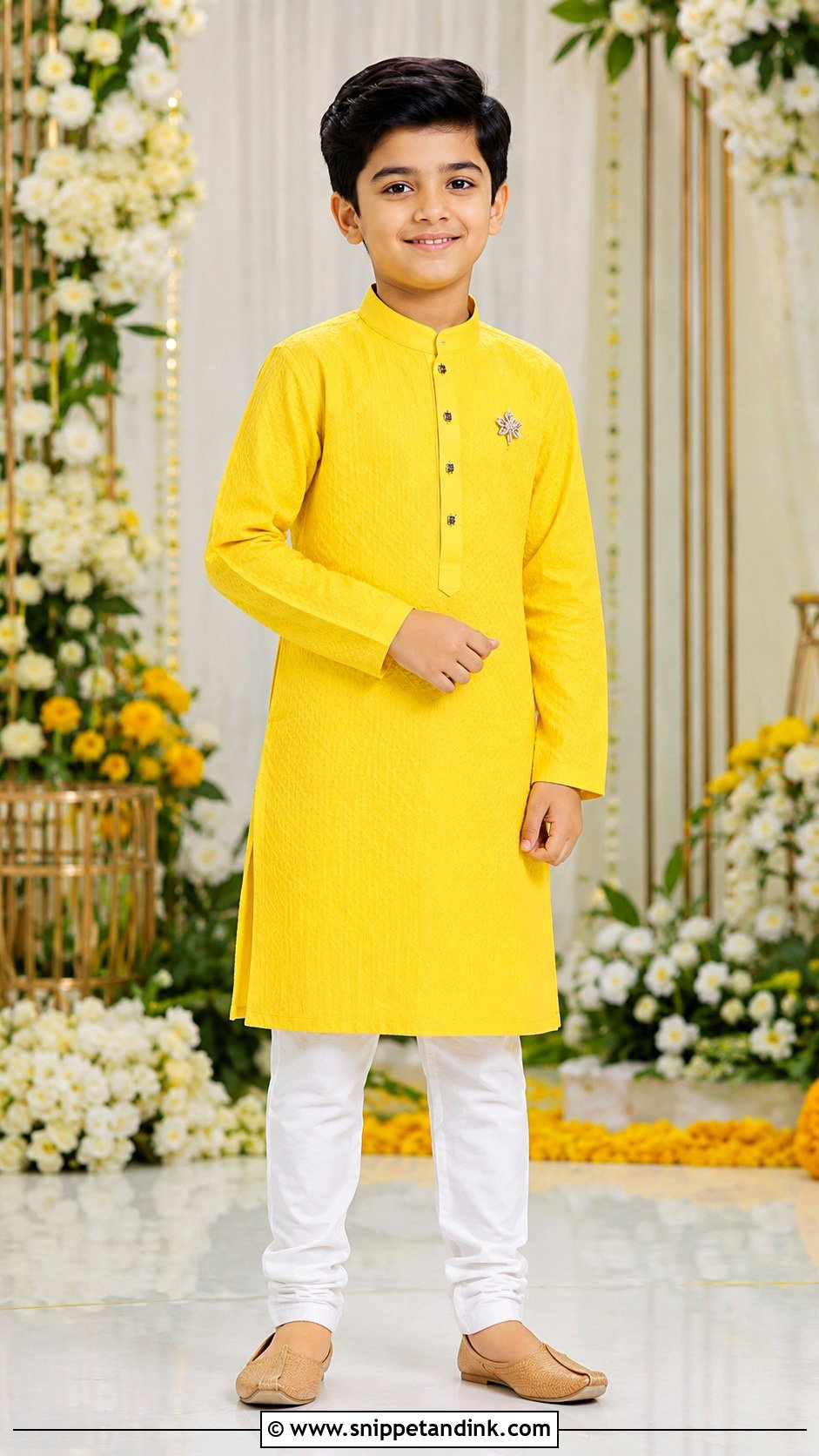
Start here if you’re dressing a toddler or a reluctant six-year-old. A yellow kurta pajama is the least fussy mehndi outfit there is: one color, two pieces, nothing to lose. Cotton or linen breathes best. Silk blends look dressier but show sweat marks under the arms once the dancing starts. A straight pajama keeps it neat, and tan sandals or soft juttis finish it. If the kurta is plain, a printed pocket square adds a little ceremony. I’d skip brooches on small children, because the pins work open.
2. Green Kurta With White Pajama For Boys
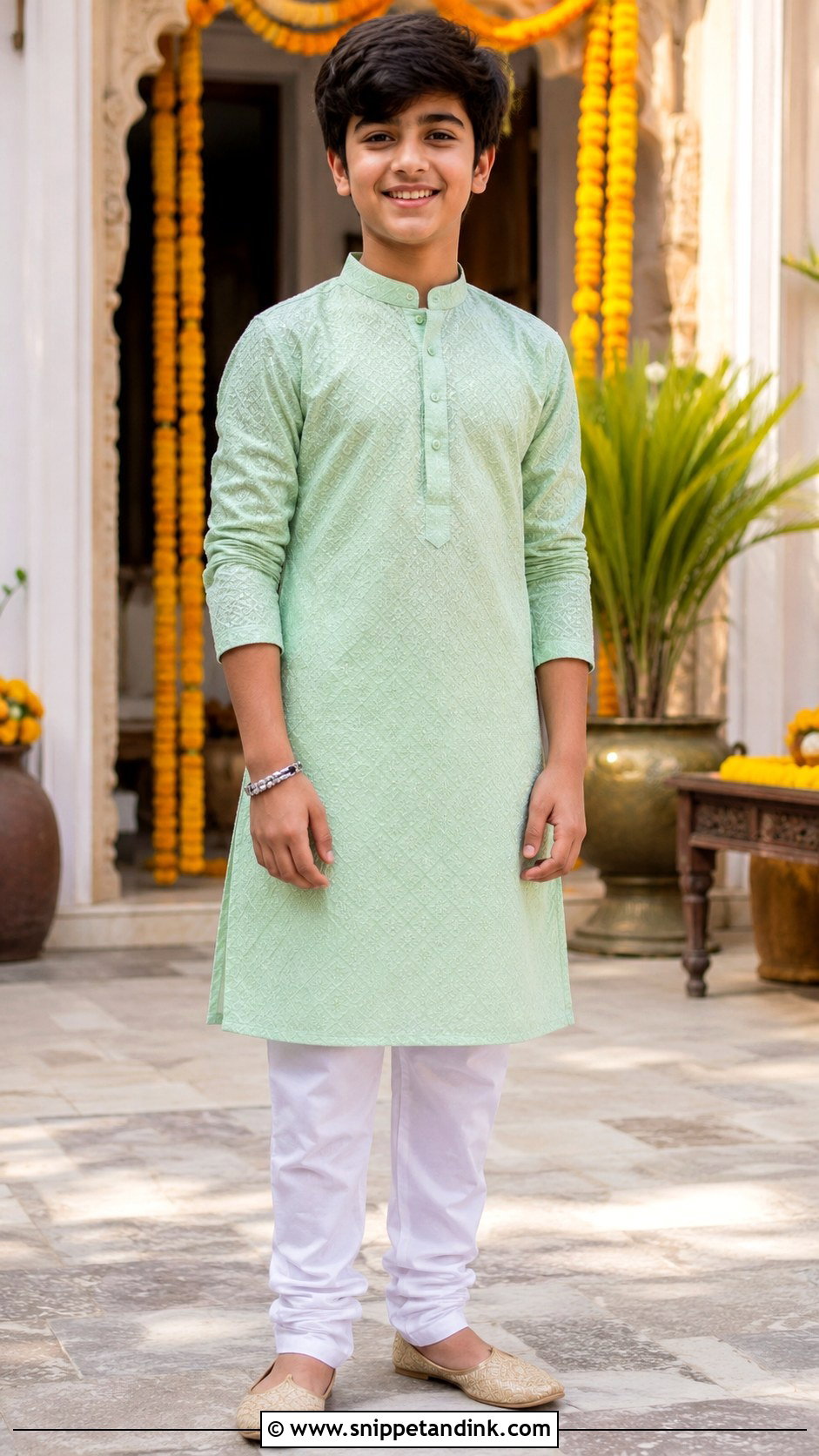
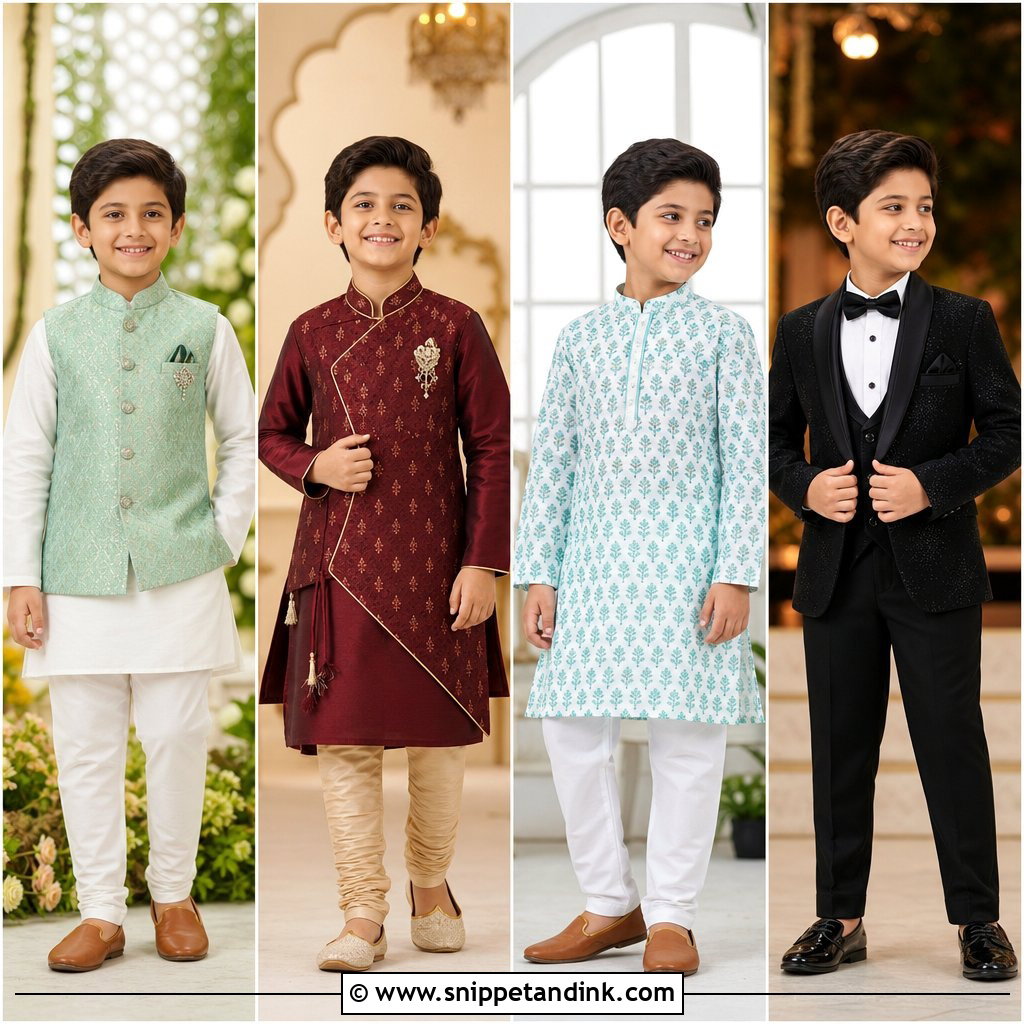
Green over white is fresh and properly mehndi without being loud. The shade changes the age it reads. Mint and parrot green feel young and daytime; olive and bottle green look older and suit teens at evening events. For a softer version, choose a pastel kurta with minimal embroidery at the collar, and for something dressier, a darker green with gold buttons or threadwork. White pajamas balance it, though on a toddler they’ll be grey at the knees within the hour. Beige juttis and, for close family boys, a light dupatta for photos.
3. White Kurta With Yellow Waistcoat For Boys
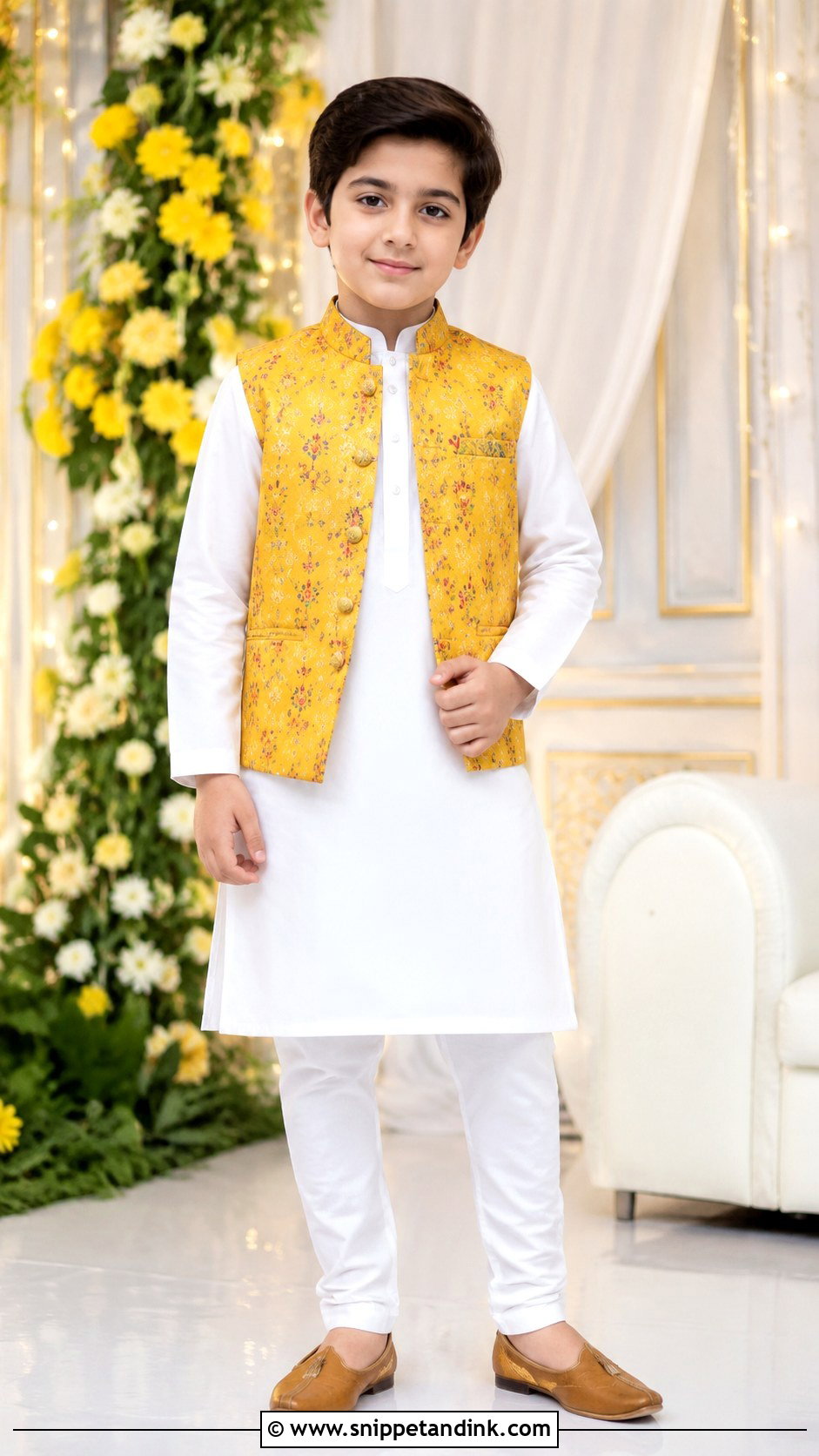
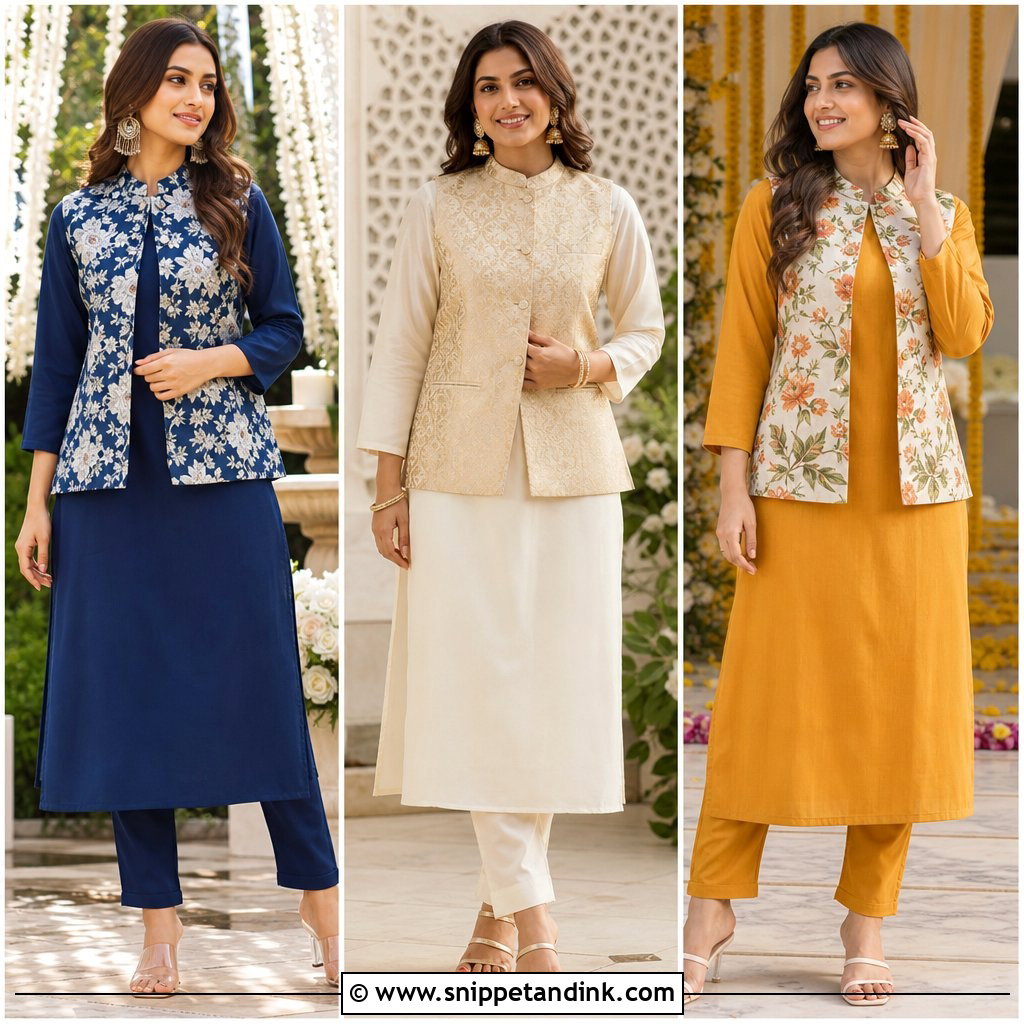
White under yellow gives you the mehndi color with an easy way out. The waistcoat carries the theme, and when it comes off for dancing, the boy is still dressed in a clean white kurta. Pick a printed or lightly embroidered waistcoat rather than a heavy one, and check the armholes: cheaper waistcoats are cut tight there, and kids start complaining within minutes. White pajamas, churidar or slim cotton trousers all work, with brown juttis or cream loafers. It’s my go-to for boys who refuse anything colorful from head to toe.
4. Mustard Kurta With Nehru Jacket For Boys
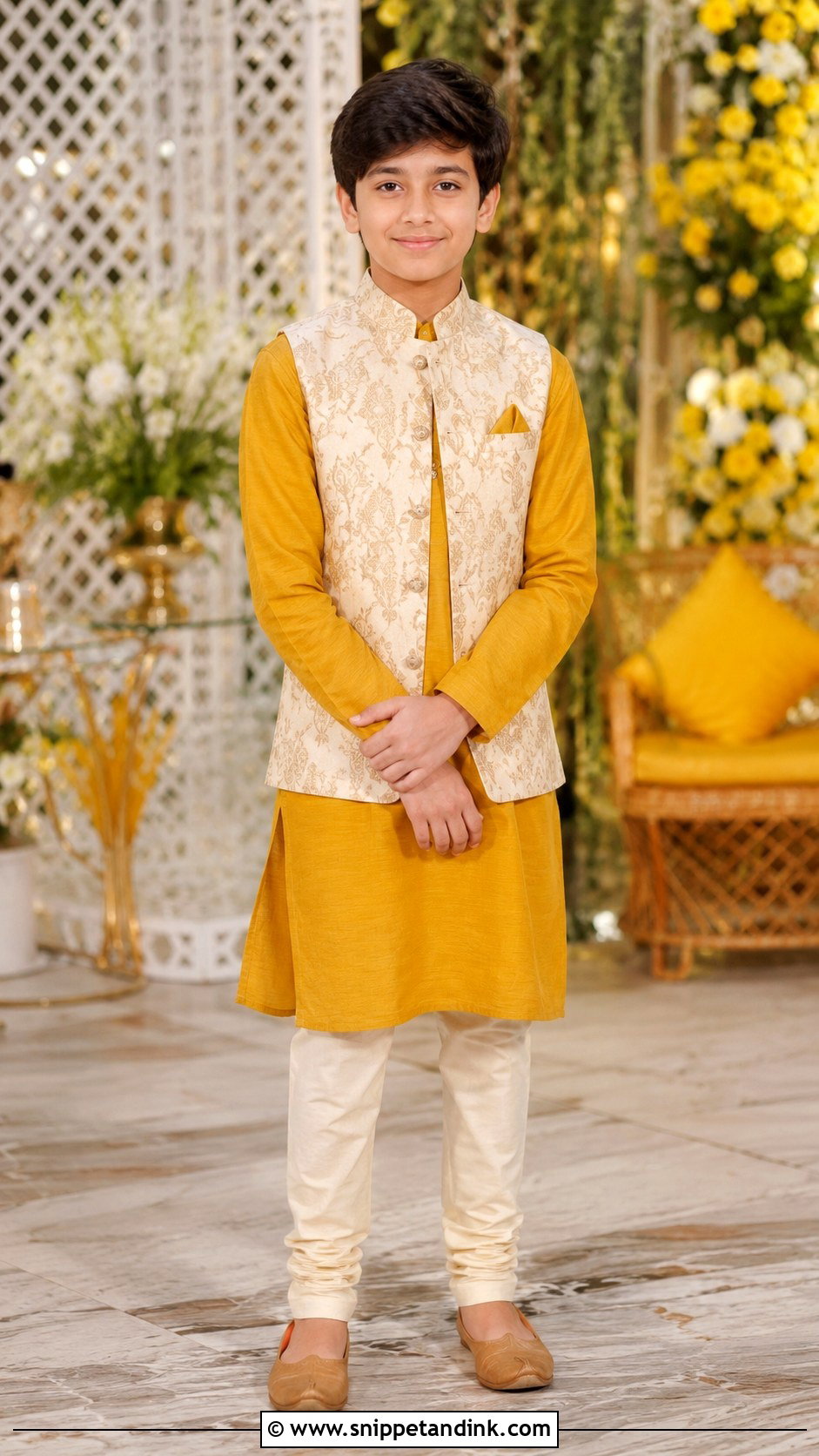
A mustard kurta with a Nehru jacket is what I’d put on a boy who needs to look sharp in group photos. Mustard is deeper than bright yellow, so it holds its color under warm evening lighting instead of washing out. Layer a plain mustard kurta with a printed Nehru jacket in green, ivory or maroon, or reverse it with an embroidered kurta and a plain jacket. Never both busy. White or beige churidar balances the depth, and tan or camel juttis finish it. Nehru jackets are structured, so size up slightly for a boy who’s still growing.
5. Printed Kurta Pajama For Boys
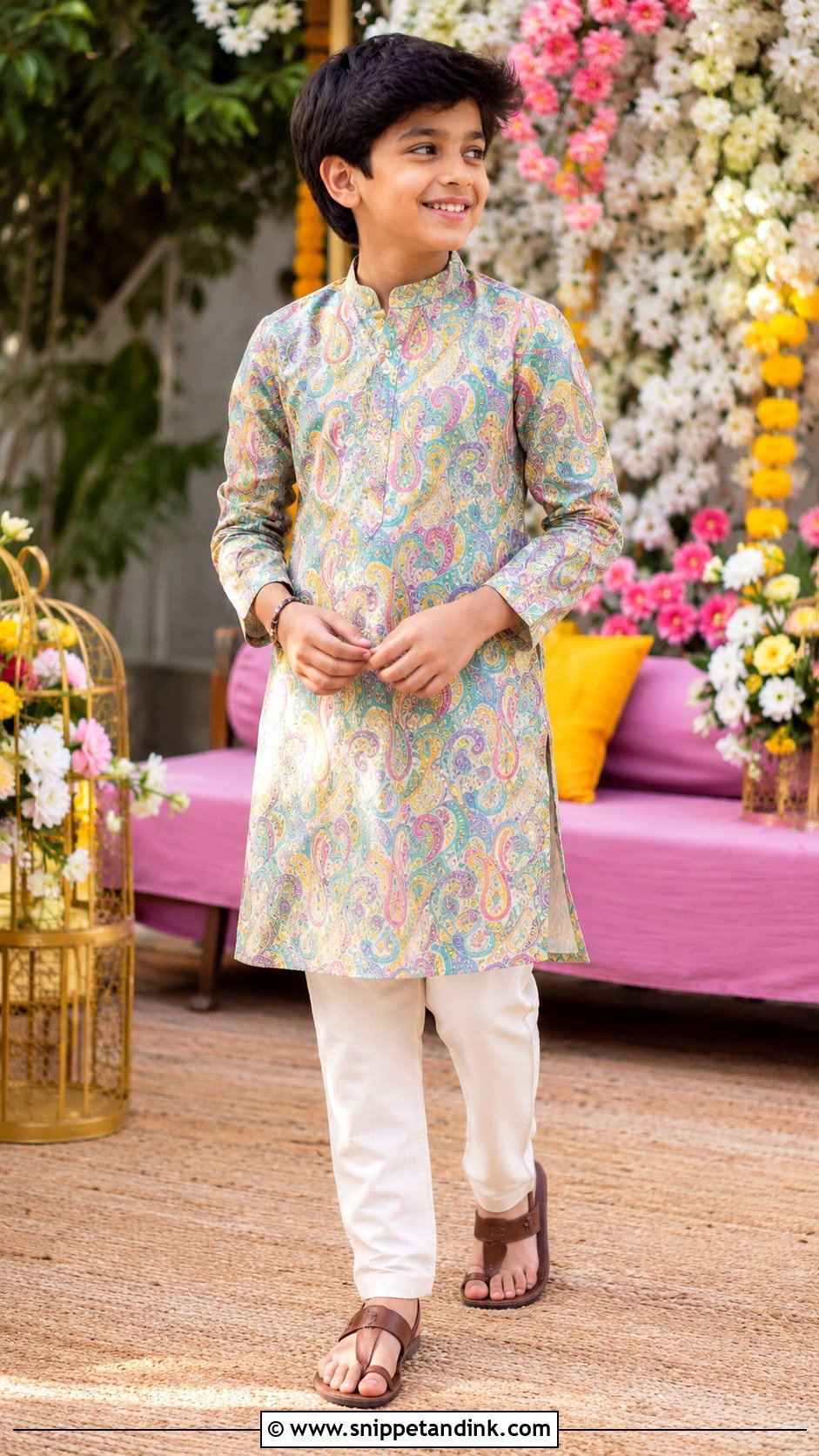
Prints are a parent’s best friend at a mehndi. Floral, paisley, geometric and block-printed kurtas hide the turmeric, chutney and henna marks that plain fabric shows instantly, and nobody notices a smudge on a busy pattern. Choose a base like yellow, green, orange, teal or ivory, and keep the pajama plain in white, cream or beige. Hand block prints on cotton can bleed in their first wash, so wash a new one separately before the event, not after it has met white pajamas. Soft juttis or sandals let him move.
6. Kurta With Mirror Work Waistcoat For Boys
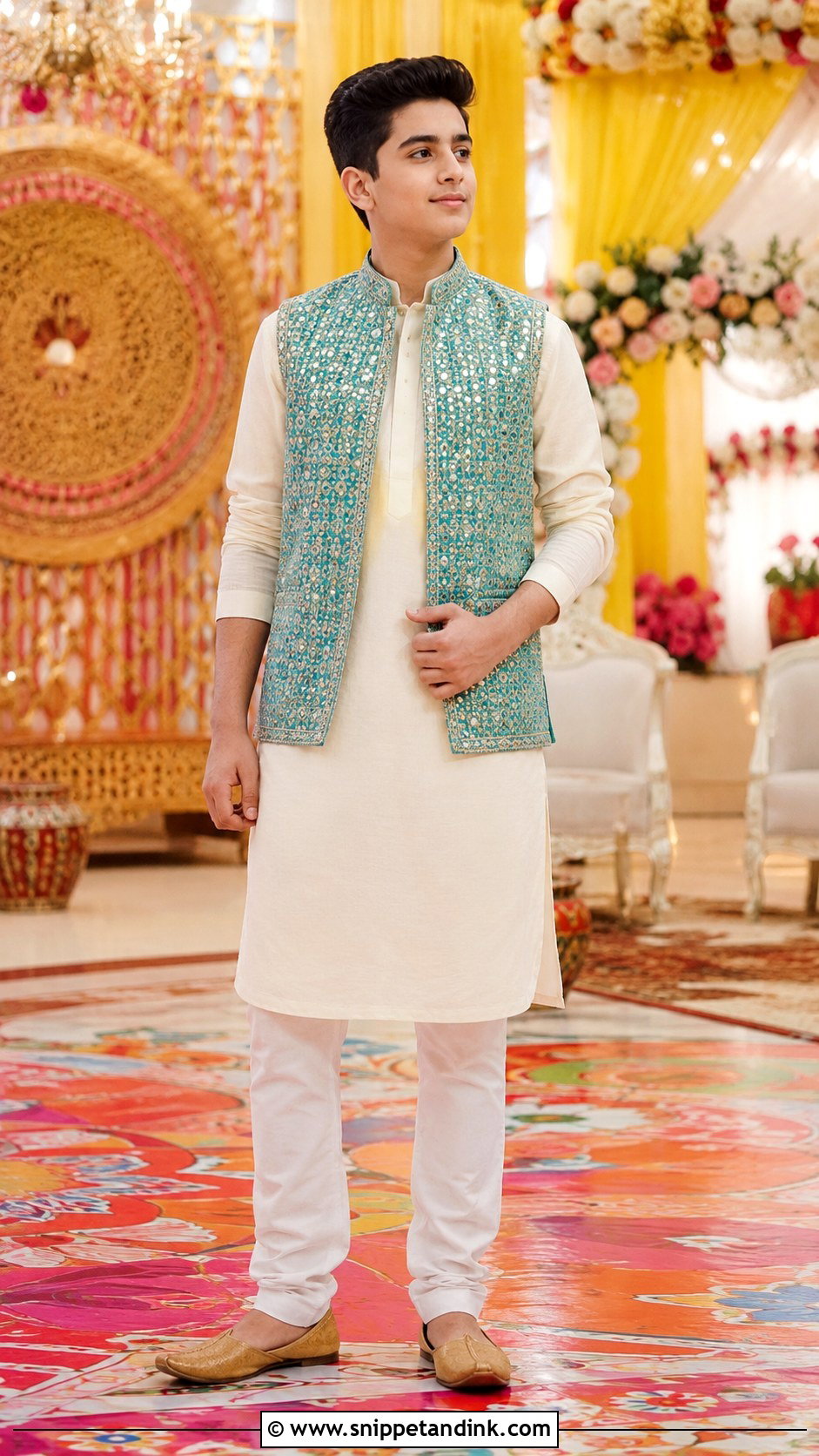
Mirror work is the quickest route to mehndi sparkle, and a waistcoat is the right place for it. Over a plain kurta in white, cream, yellow or green, a mirror waistcoat in mustard, turquoise, orange or emerald does all the work. I check two things. First, the backing, because the stitching behind each mirror can scratch through a thin kurta. Second, how securely the mirrors sit, since small children pick at anything shiny until it comes loose. Keep the bottoms plain and the shoes simple, tan juttis or embroidered slip-ons.
7. Pathani Suit For Boys
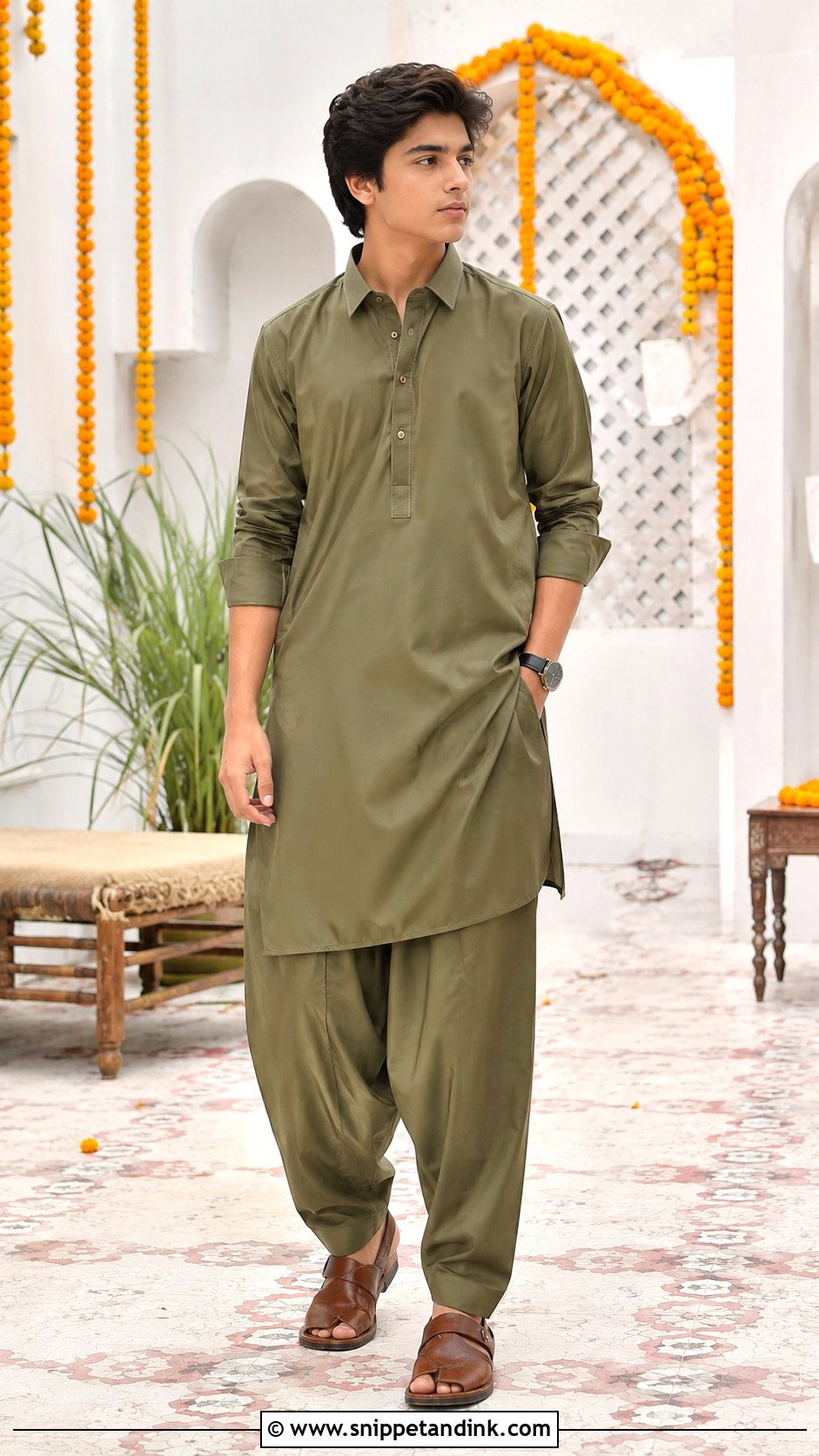
Teenage boys tend to say yes to a Pathani suit after saying no to everything else. The straight kurta with a structured collar and loose matching pants feels closer to everyday clothes, and the cut moves easily through a long function. For mehndi, olive green, mustard, beige, ivory and rust all work. Rolled sleeves with leather sandals make it relaxed; embroidery on the placket or collar dresses it up. If the cotton is soft, give the collar a light press with a little starch, or it collapses before the evening is out.
8. Sherwani With Churidar For Boys
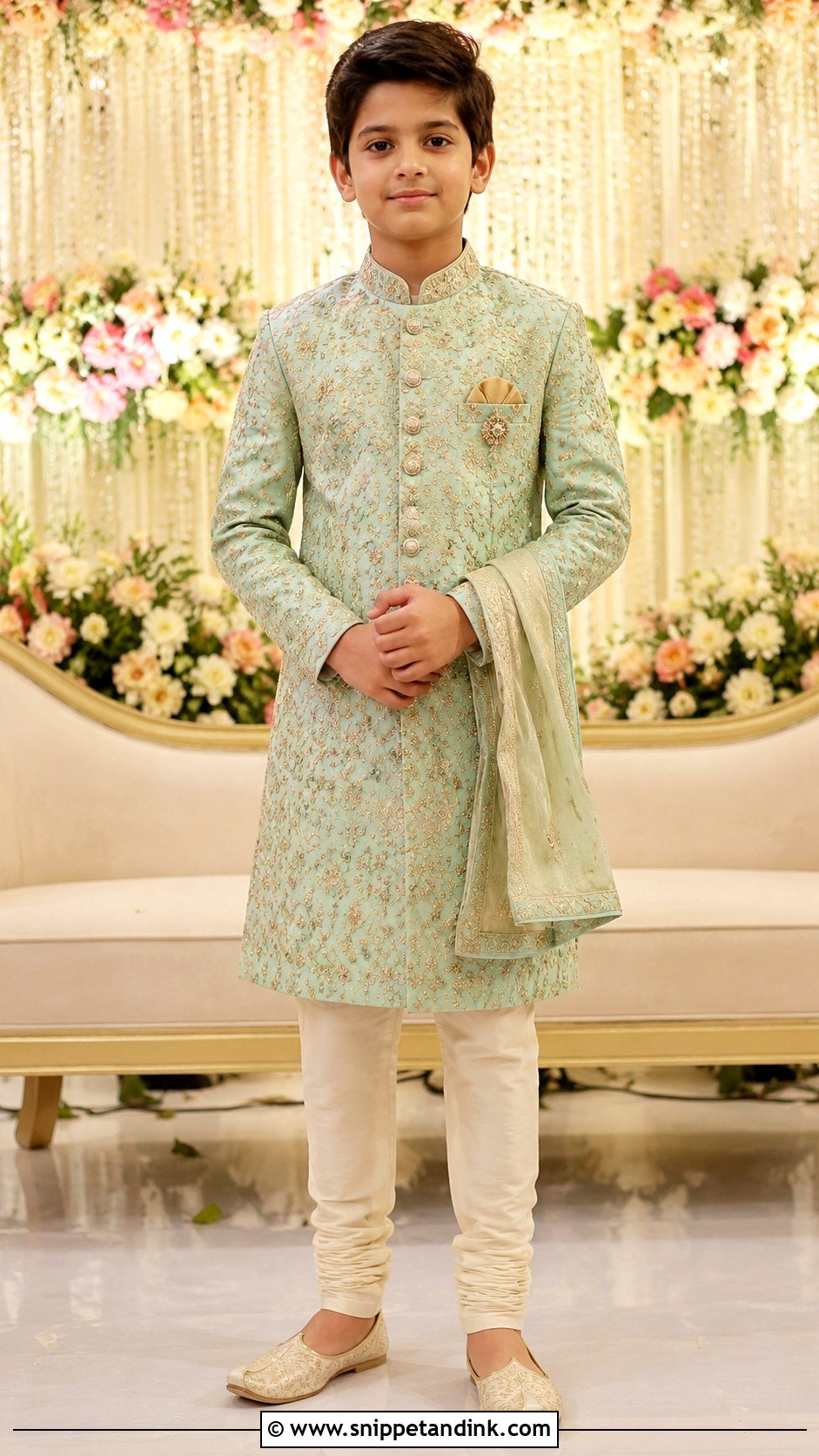
A sherwani with churidar is for the boys closest to the groom, the ones who’ll be up on stage. Skip the heavy wedding-day sherwani and go lighter: yellow, ivory, mint, pista green or beige in a soft fabric. Length matters for kids. A short or knee-length sherwani lets them sit and climb stairs, while a long one gets stepped on. Churidar gives the traditional line, but it’s fiddly for a young child in the bathroom, so I only use it on boys who can manage on their own. Soft juttis, and a small stole if the event is formal.
9. Short Sherwani With Pants For Boys
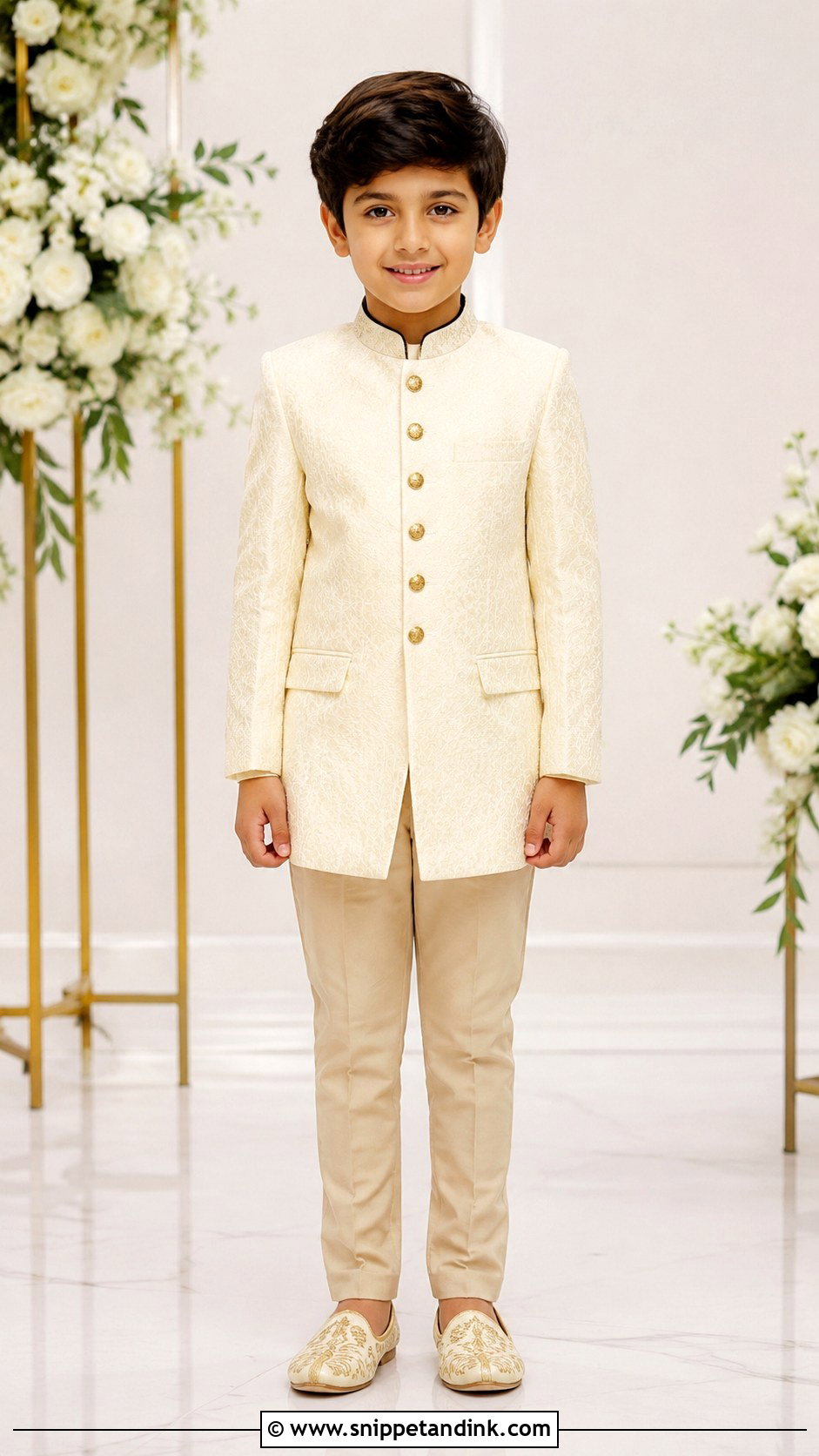
If the full sherwani feels too formal, the short version with straight trousers keeps the structure and drops the fuss. Ivory, yellow, sage green or gold with light embroidery or statement buttons reads modern. Straight trousers are easier than churidar for active boys and sit cleanly over loafers, mojaris or simple dress shoes. Have him sit down in it at the fitting. A buttoned front that fits perfectly standing can strain across a child’s tummy after dinner.
10. Dhoti Kurta For Boys
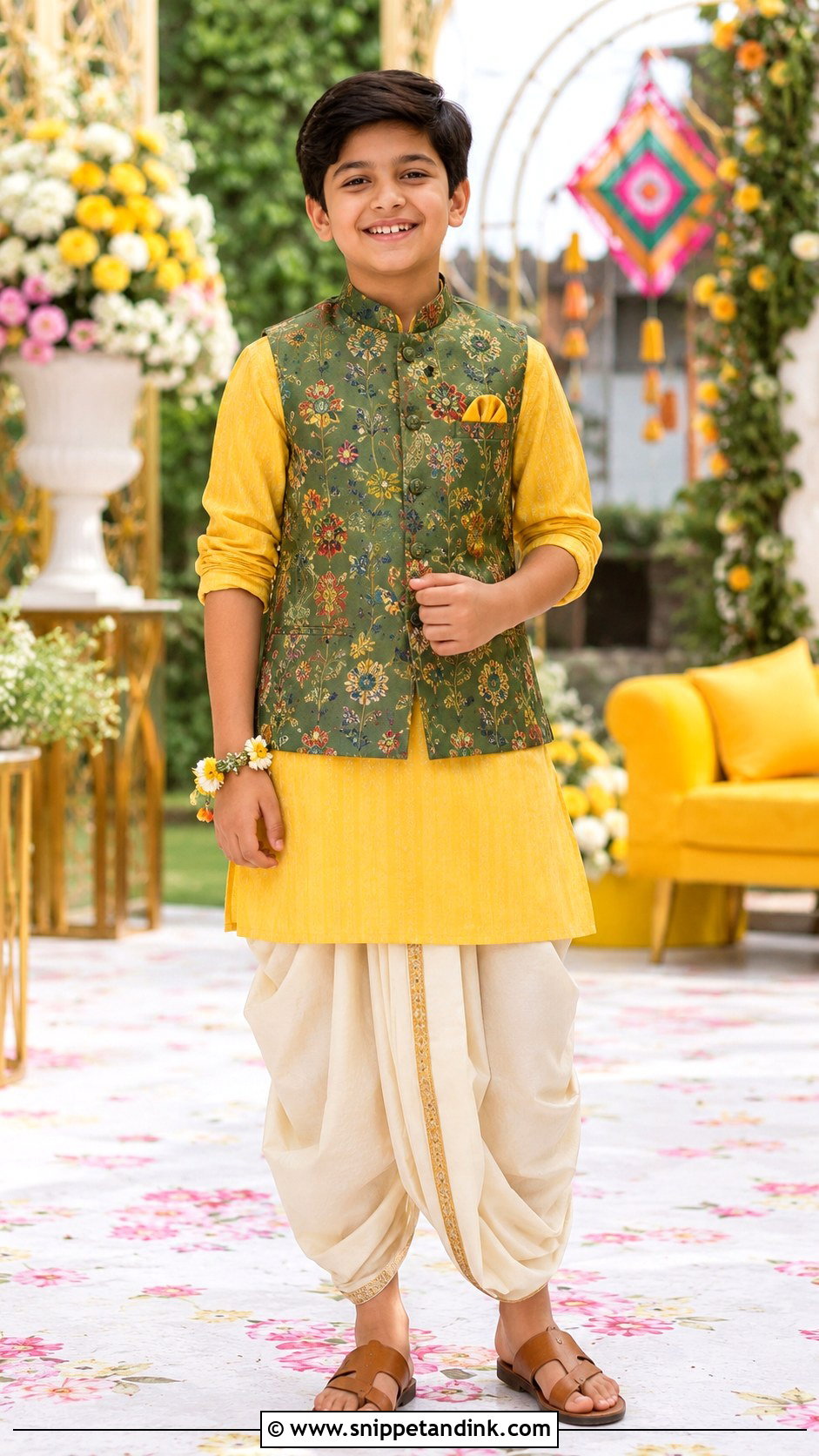
A dhoti kurta moves well on the dance floor, and that’s its whole appeal. For younger boys I only use pre-stitched dhotis. A hand-tied one comes loose within the hour, and someone ends up re-pleating it in a corridor. A yellow, ivory, green or orange kurta over a white or cream dhoti is the classic version, with a small printed waistcoat if it needs more detail. Sandals or juttis are the only sensible shoes. It suits daytime events, dance performances and sibling sets.
11. Angrakha Kurta With Pajama For Boys
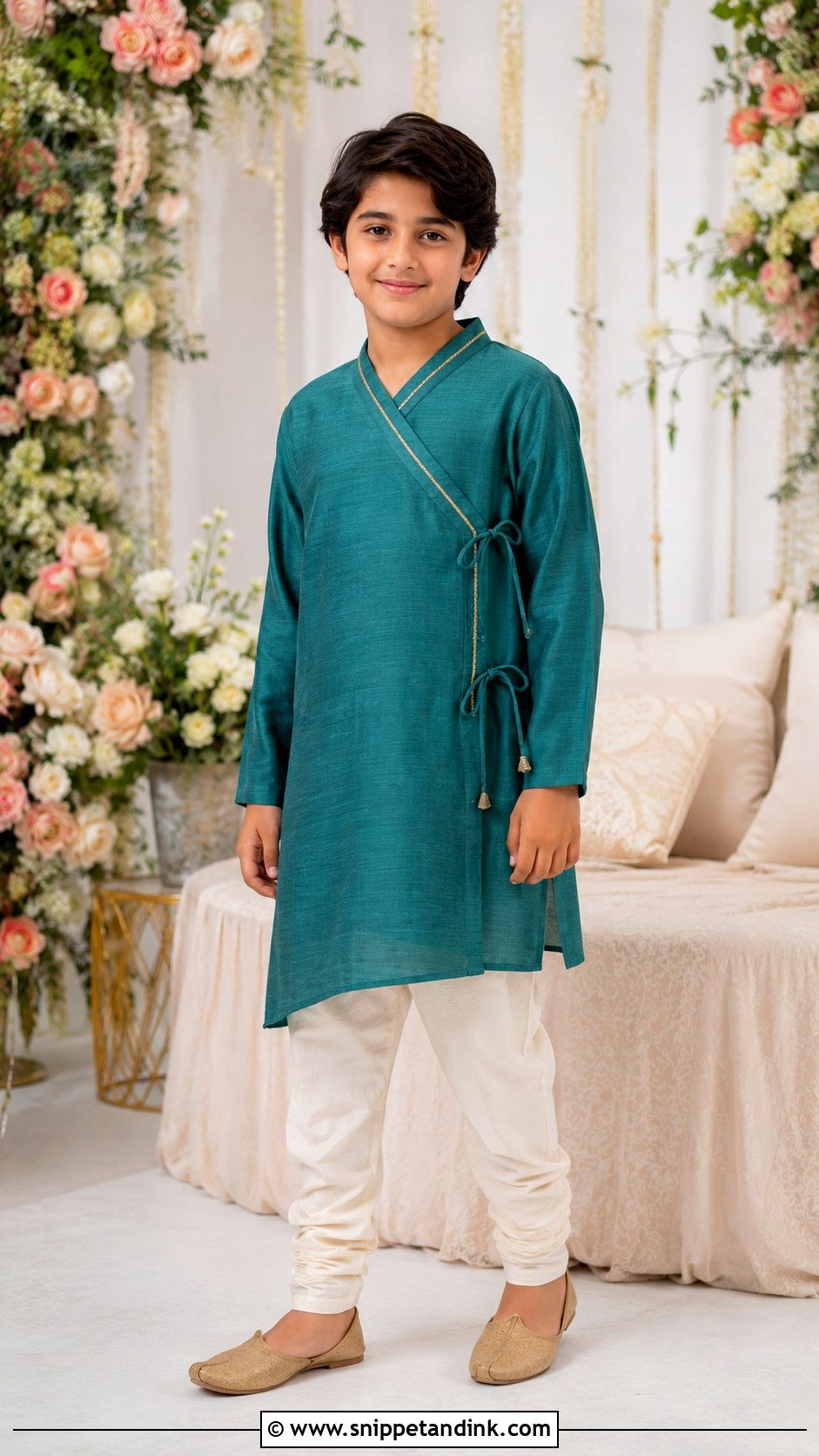
The angrakha’s overlapping front adds shape and detail on its own, so it stands out among rows of straight kurtas. Mustard, turmeric yellow, mint, teal and rust all suit a mehndi. Look closely at how it fastens. Traditional versions tie at the side, which looks right but loosens with play; inner snaps or hidden hooks hold better on a child. Contrast piping or light embroidery is enough. Plain pajamas or churidar and tan or cream juttis keep the attention on the kurta.
12. Indo Western Jacket Set For Boys
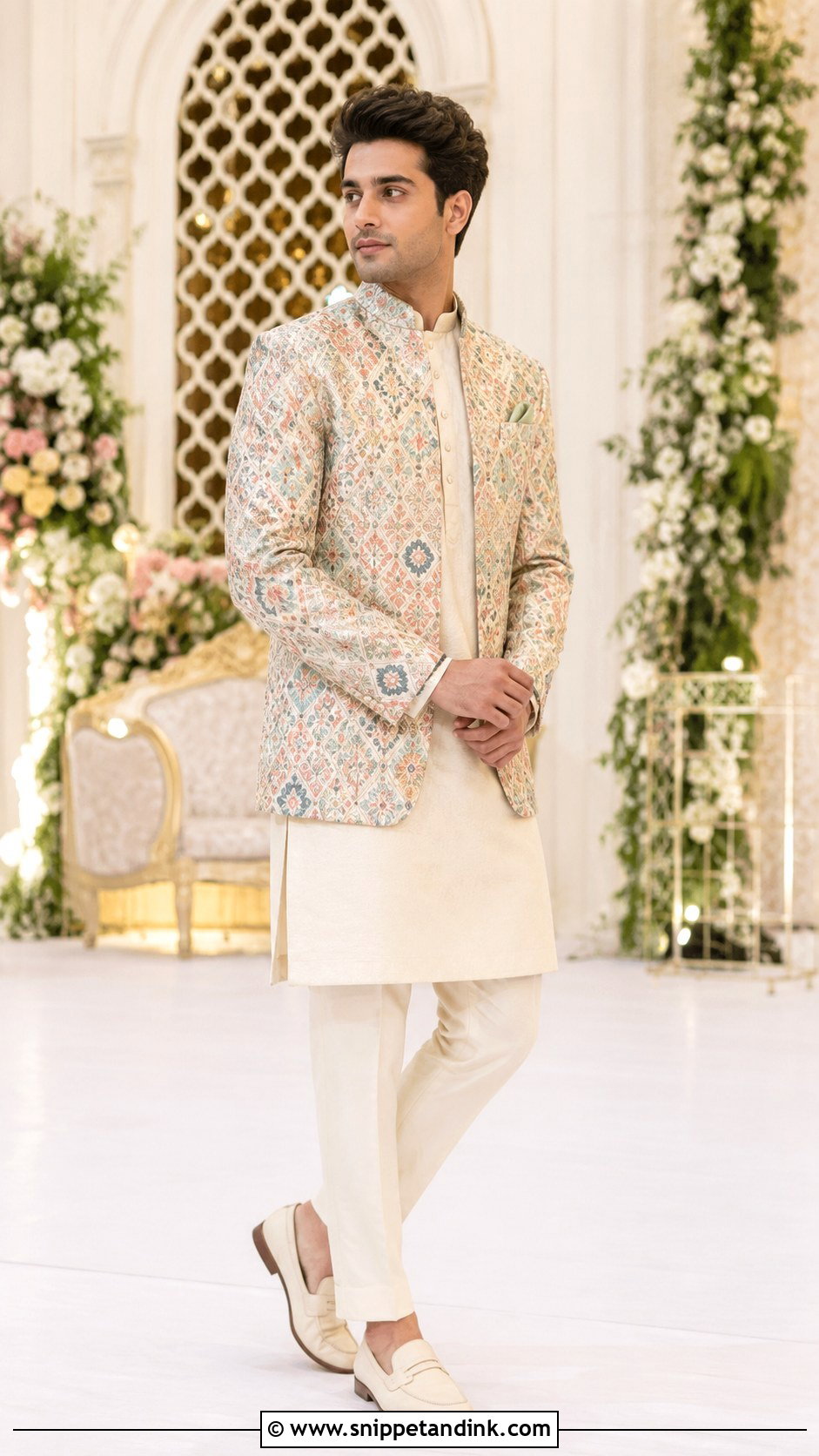
An Indo Western jacket set usually means a kurta or shirt-style top, slim pants and a structured jacket, and it’s the look older boys and teens are most likely to pick for themselves. For mehndi, let the jacket carry the festivity with prints, embroidery, mirror work or color blocking over a plain ivory or beige base. Slim trousers keep it sharp. One fit note: boys’ structured jackets are often adult patterns scaled down, so sleeves can come up long. Have them shortened rather than rolled. Loafers or mojaris finish it.
13. Kurta With Floral Waistcoat For Boys
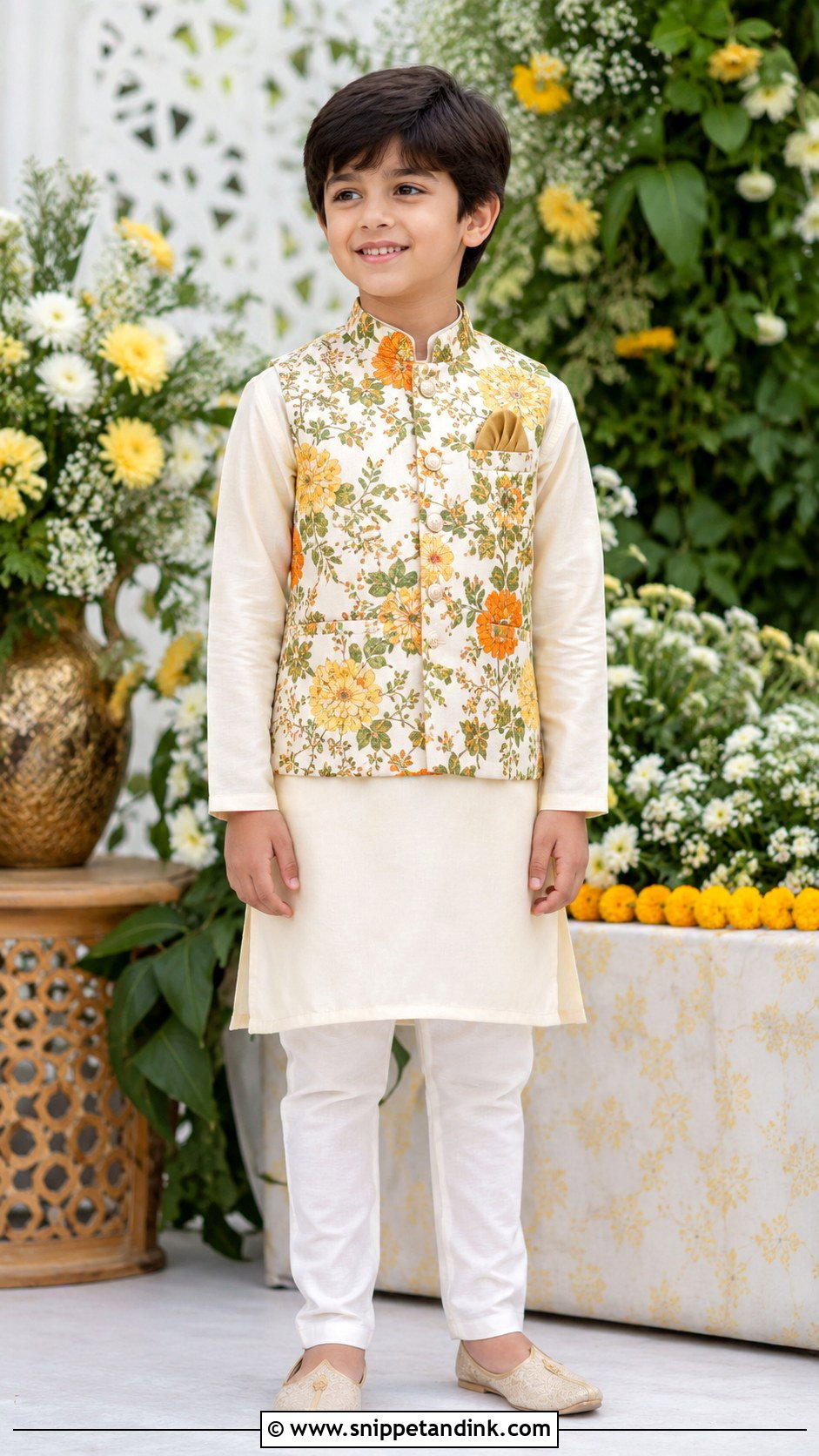
Floral waistcoats suit garden mehndis and marigold-heavy decor because the print picks up what’s already around him. Start with a plain kurta in white, ivory, mint or pale yellow, then add a waistcoat in marigold, green, coral or a multicolor print. Watch the scale. Large florals swamp a small boy’s frame, while smaller repeats look proportionate on him. Pajamas, churidar or slim trousers go underneath, with beige juttis or tan sandals.
14. Orange Kurta With Cream Pajama For Boys
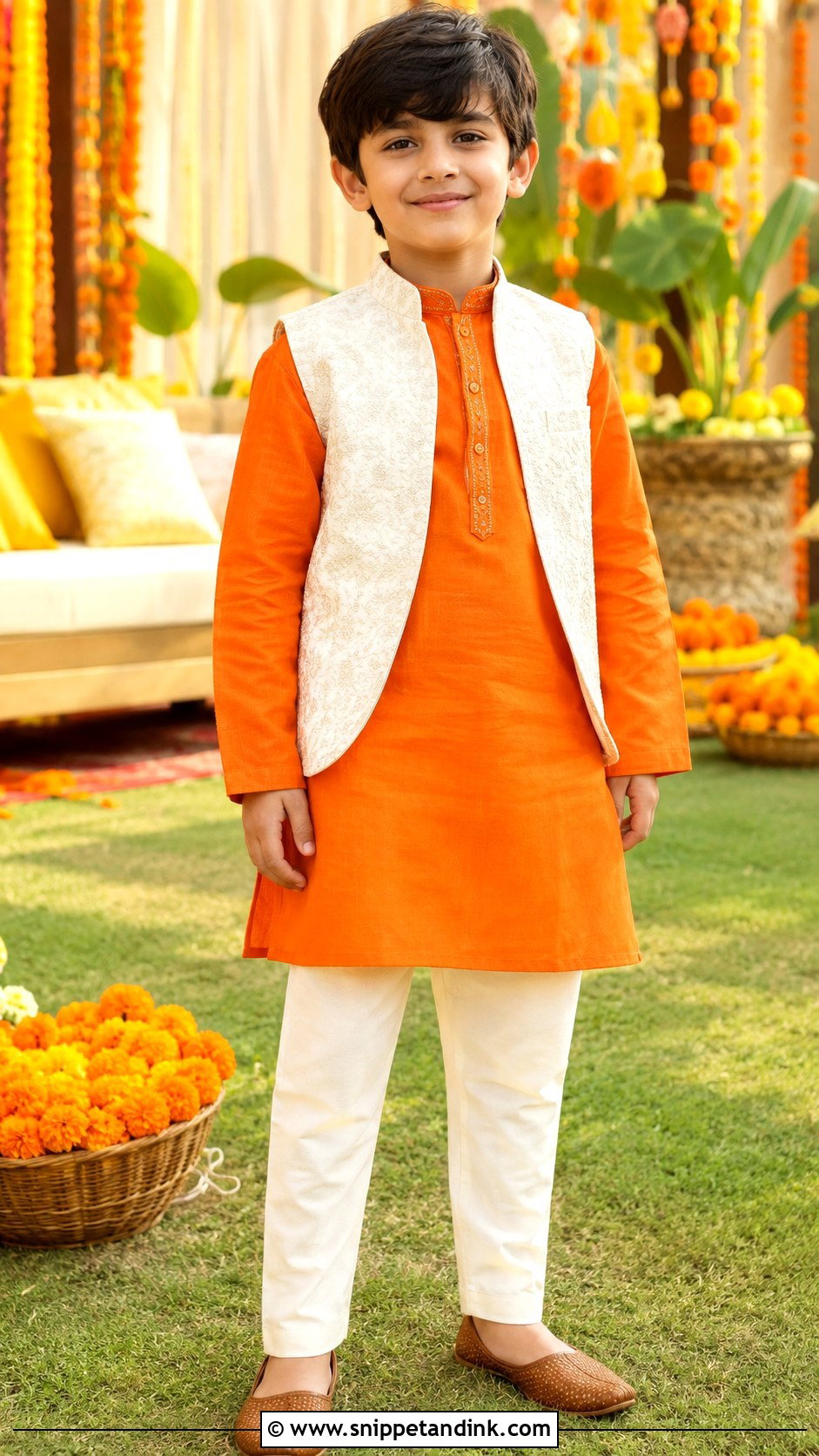
Orange is a strong celebration color, and it behaves best grounded by soft cream or beige bottoms. Marigold, rust and burnt orange are far easier to wear than neon, which throws a harsh glow onto the face in photos. A plain orange kurta keeps it simple; subtle embroidery makes it dressier. Brown juttis, tan sandals or cream ethnic shoes all work. If it still feels too bright on him, an ivory waistcoat over the top calms it down while keeping the mehndi warmth.
15. Ivory Kurta With Green Dupatta For Boys
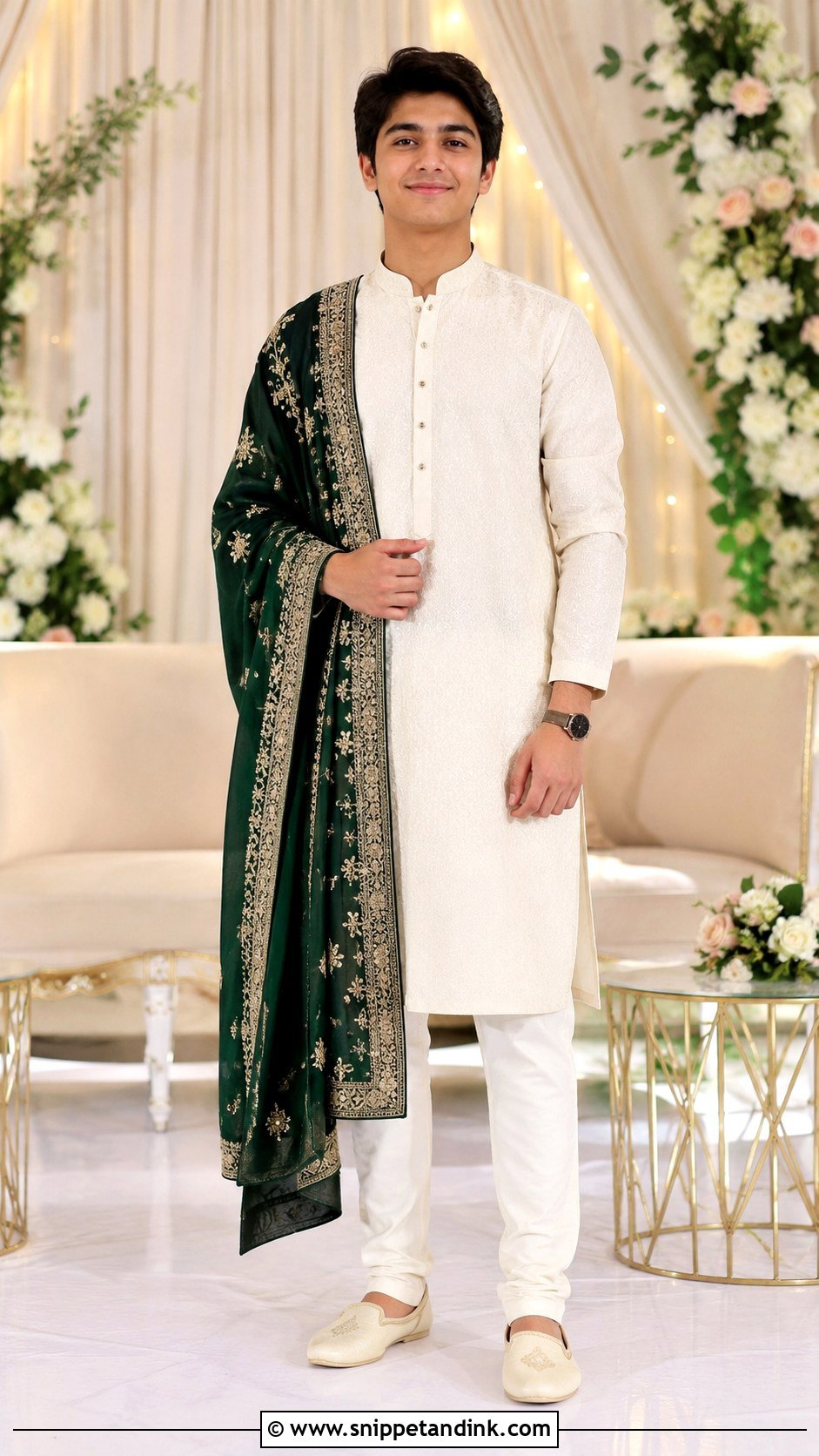
This is the most ceremonial outfit on the list, and I keep it for older boys, brothers and young groomsmen. A soft cotton-silk or linen ivory kurta, straight pajamas, and a bottle green, mint or embroidered organza dupatta over one shoulder. The dupatta is for photos and rituals. Pin it at the shoulder with a small safety pin hidden under the fold, and plan for it to come off once the dancing starts. Cream juttis or brown sandals finish it.
16. Black Kurta With Embroidered Waistcoat For Boys
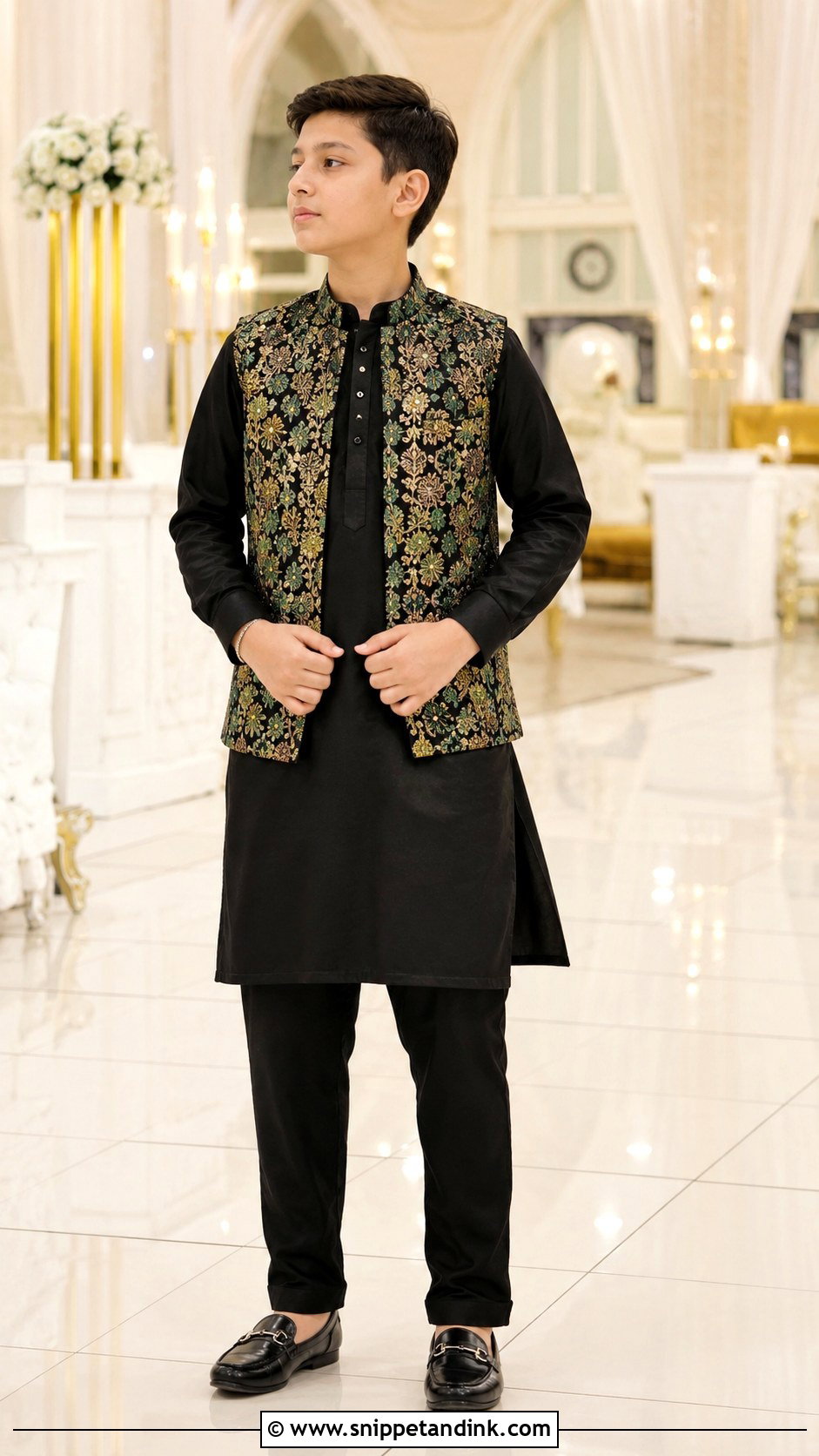
Black isn’t a traditional mehndi color, and some families still avoid it at auspicious events, so ask first. Where it’s welcome, a black kurta with an embroidered waistcoat makes a sharp evening outfit, especially for teens. The waistcoat ties it back to the theme with gold, mustard, green or multicolor threadwork. Black also shows every fleck of dried henna paste, which matters if he’ll be hanging around the henna station. Black loafers, tan juttis or embroidered mojaris, and very little else.
17. Teal Kurta Pajama For Boys
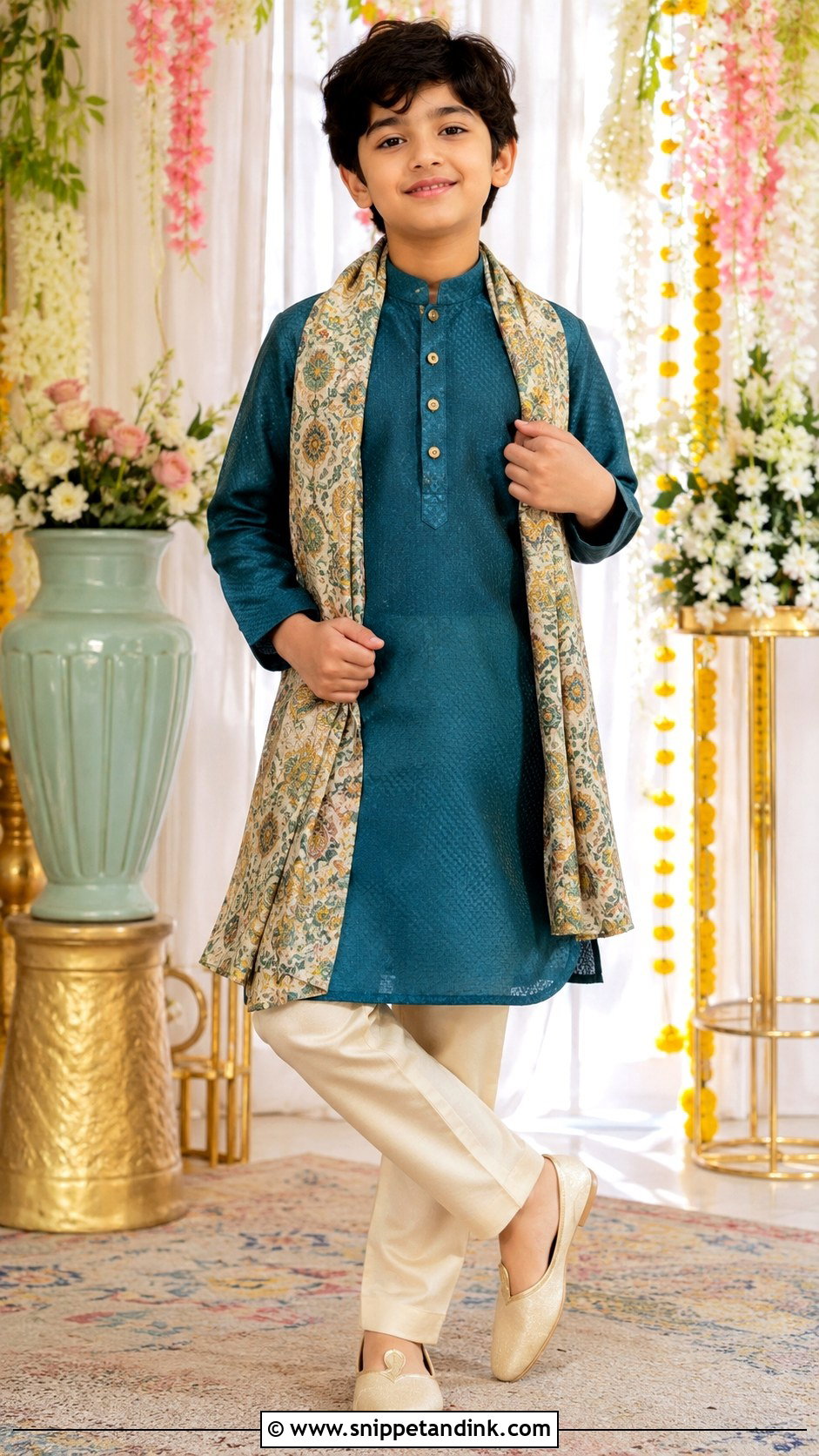
Teal looks rich under evening lighting and gives a boy something different from the rows of yellow and green. A teal kurta with small gold buttons, light embroidery or a plain mandarin collar does the job. White or cream pajamas soften it, and matching teal makes it bolder. Deep teal cottons often release dye at first, so I wash a new one on its own before it goes anywhere near white bottoms. Tan juttis or beige sandals, plus a printed stole for close family.
18. White Kurta With Printed Jacket For Boys
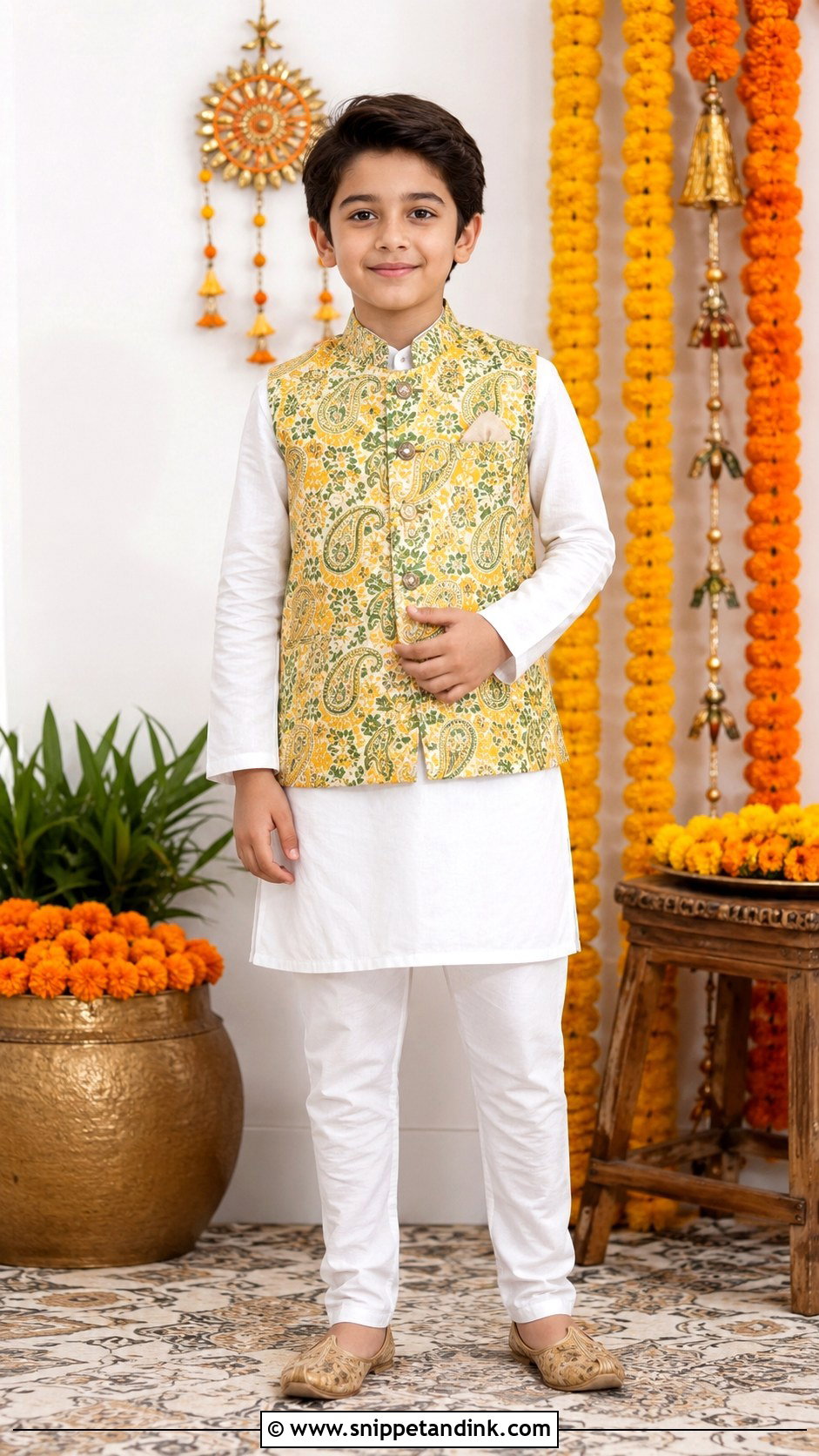
This is the easiest outfit to coordinate across brothers and cousins. Everyone wears a white kurta, and each boy gets a printed jacket in paisley, floral, block print or ethnic motifs, in yellow, green, orange or blue. The jacket does the styling, so beige juttis or brown loafers are enough, with white pajamas or cream trousers. The practical bonus: when the jacket gets too warm, it comes off and he’s still properly dressed.
19. Kurta With Blazer For Boys
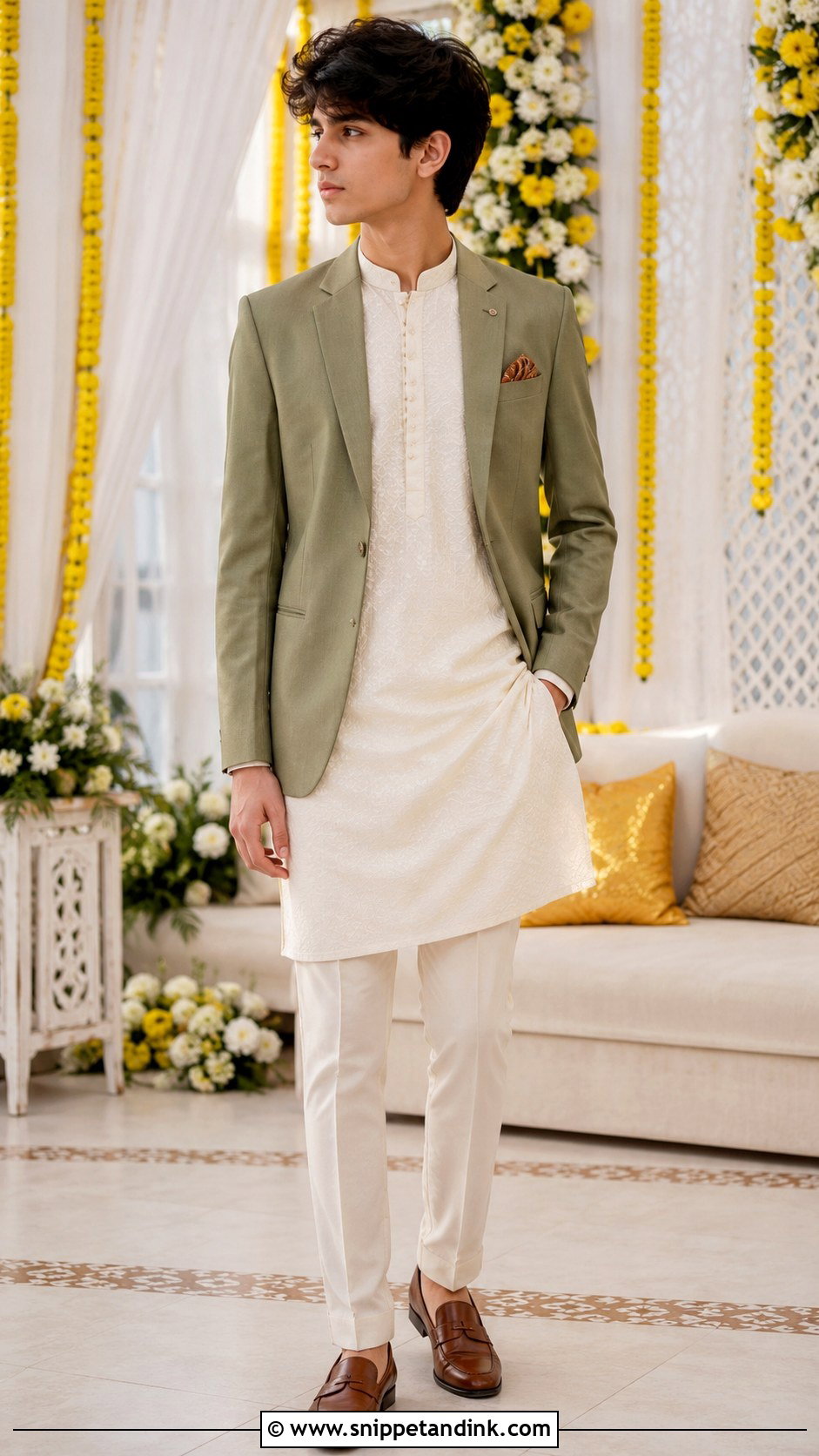
A kurta with a blazer suits the dressier mehndi, the kind held in a hotel ballroom rather than a backyard. Start with a plain kurta pajama in ivory, cream or pastel yellow and add a lightweight blazer in olive, beige, tan or deep green. Fit across the shoulders decides everything. A blazer that’s tight there pulls when he lifts his arms, and boys lift their arms constantly at a mehndi. Unlined or half-lined jackets are kinder in warm venues. Loafers or clean dress shoes finish it.
20. Pastel Kurta With White Trousers For Boys
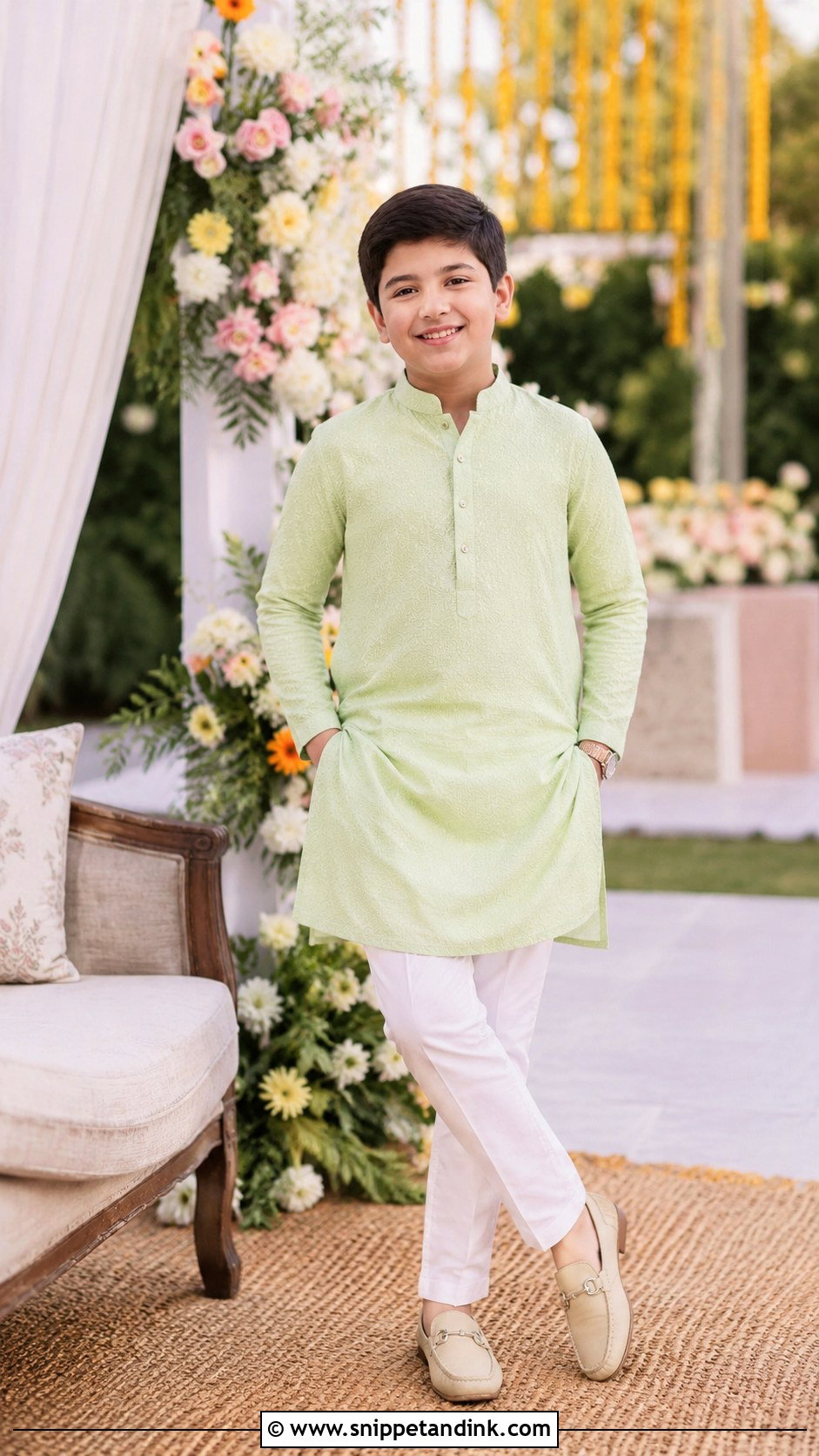
Pastels with white trousers make a soft, modern outfit for daytime and outdoor mehndis. Mint, lemon, powder blue, peach and pistachio all suit it, and a mandarin collar or light threadwork keeps the kurta neat. White trousers on a lawn are a gamble, so I’d save this one for boys old enough to stay off the grass. Beige juttis, white loafers or tan sandals all work. In strong midday sun pastels can look washed out on camera; a little thread detail at the collar helps the kurta register in photos.
21. Embroidered Kurta With Straight Pants For Boys
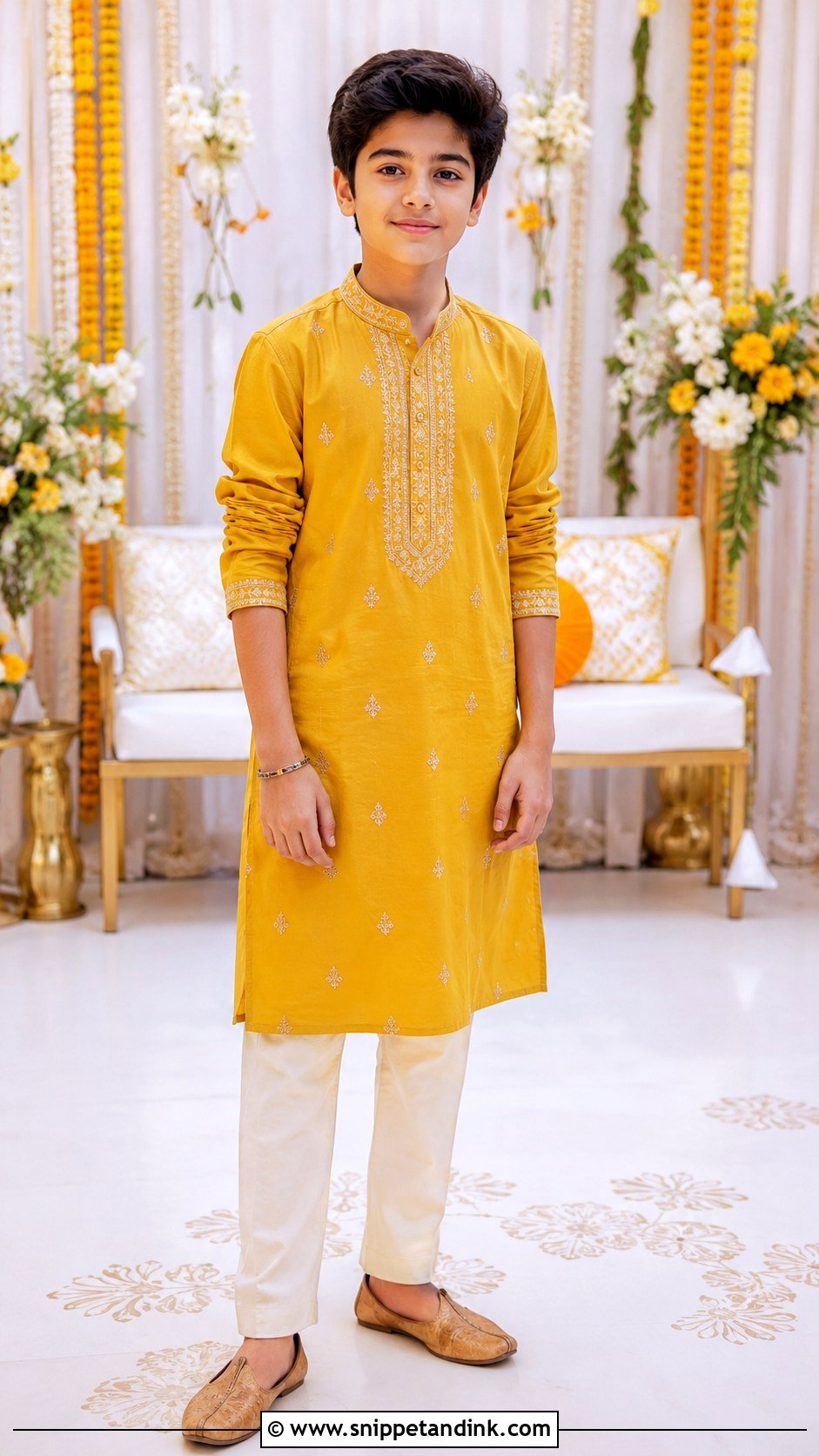
For boys who won’t keep a waistcoat, jacket or dupatta on for ten minutes, put the detail into the kurta itself. Embroidery around the neckline, cuffs or front placket looks festive and can’t be taken off and lost under a table. Mustard, ivory, green, teal and rust suit mehndi. Straight pants give a modern shape and are easier for children than churidar. Turn the kurta inside out before you buy. Rough embroidery backing at the neckline rubs a child’s neck all evening, and soft lining there makes the difference.
22. Bandhgala Set For Boys
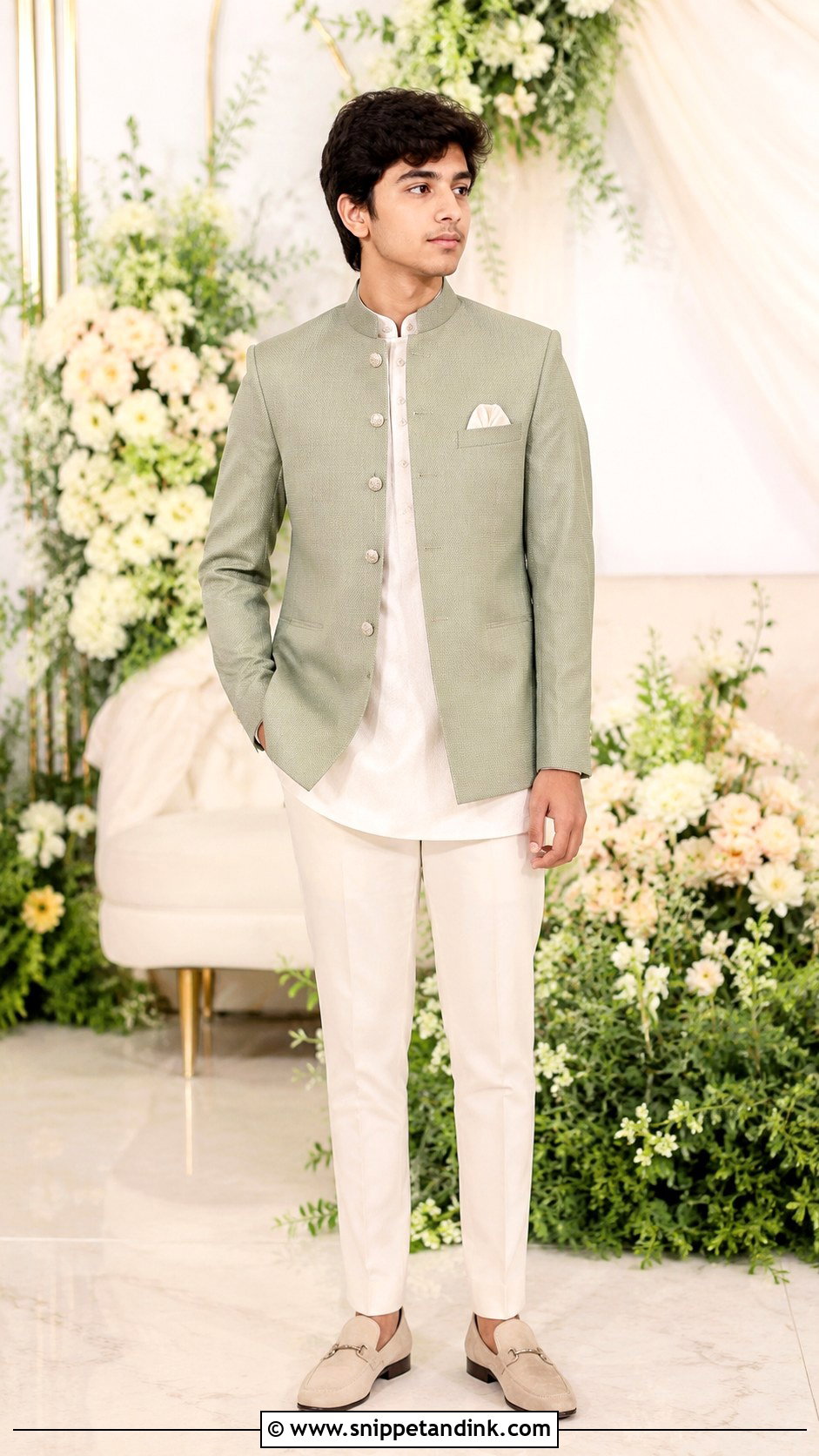
A bandhgala is the most formal option here. It suits older boys and close family who’ll be greeting guests and standing for stage photos. The high collar creates a sharp line, but for mehndi go lighter: sage green, mustard, ivory, beige or teal rather than dark formal shades. Pair it with slim trousers and a simple inner kurta or shirt. The collar is the comfort test. If he can’t turn his head freely with it fastened, it’s too small, and he’ll undo it within the hour. Embroidered buttons or a pocket square add detail; loafers or dressy slip-ons finish it.
23. Shalwar Kameez With Waistcoat For Boys
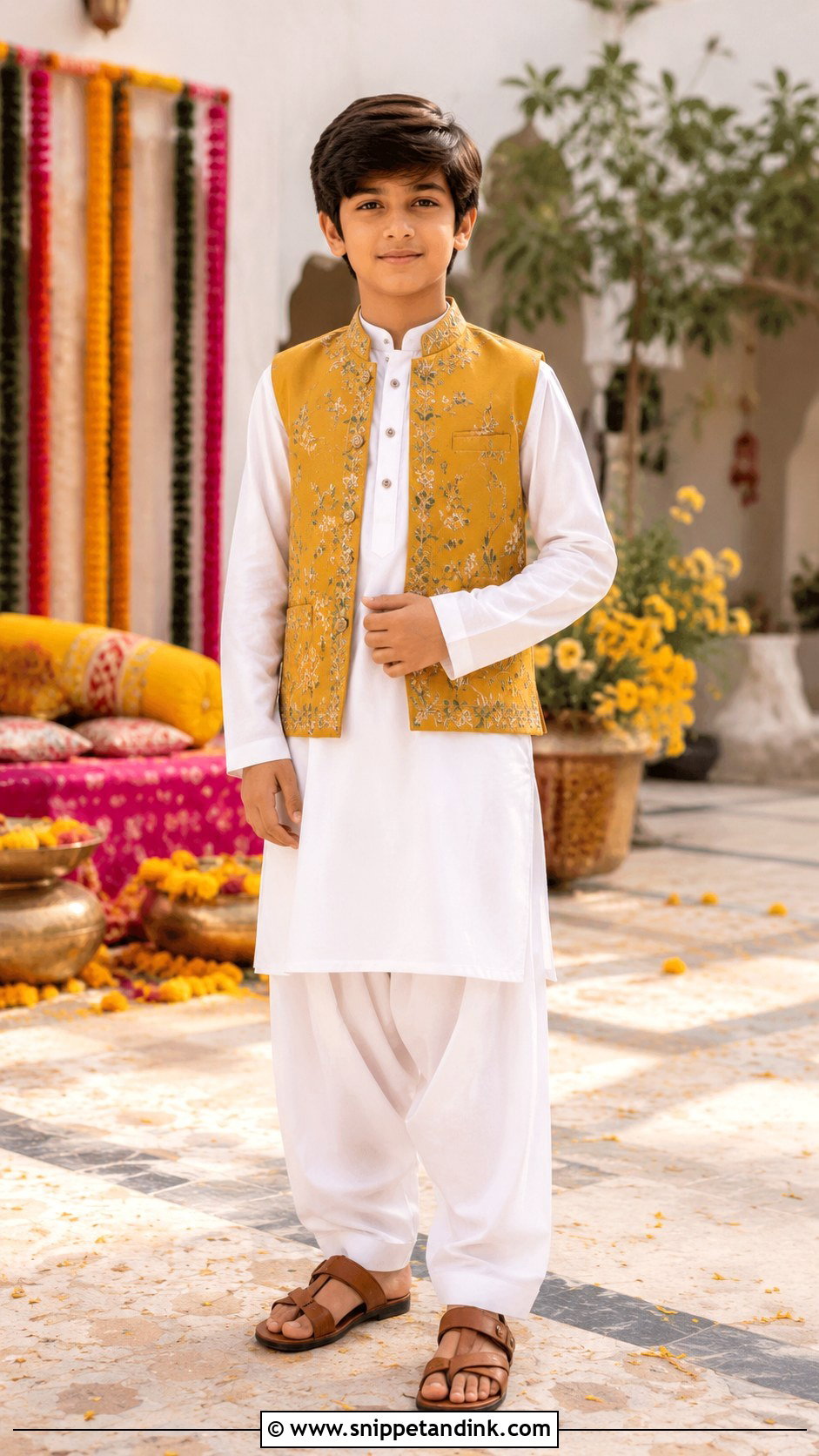
For South Asian mehndi functions, a shalwar kameez with a waistcoat is the comfortable, rooted choice, and it’s the one I’d pick for a young boy who’ll sit on floor cushions through the rituals. The loose shalwar handles sitting, walking and dancing. Choose a kameez in yellow, white, green or beige, then a contrasting waistcoat in a printed, embroidered or textured fabric. For small children, ask for elastic inside the shalwar waist. A drawstring knots tight and won’t untie in a hurry. Brown sandals, soft juttis or mojaris finish it.
24. Kurta With Stole For Boys
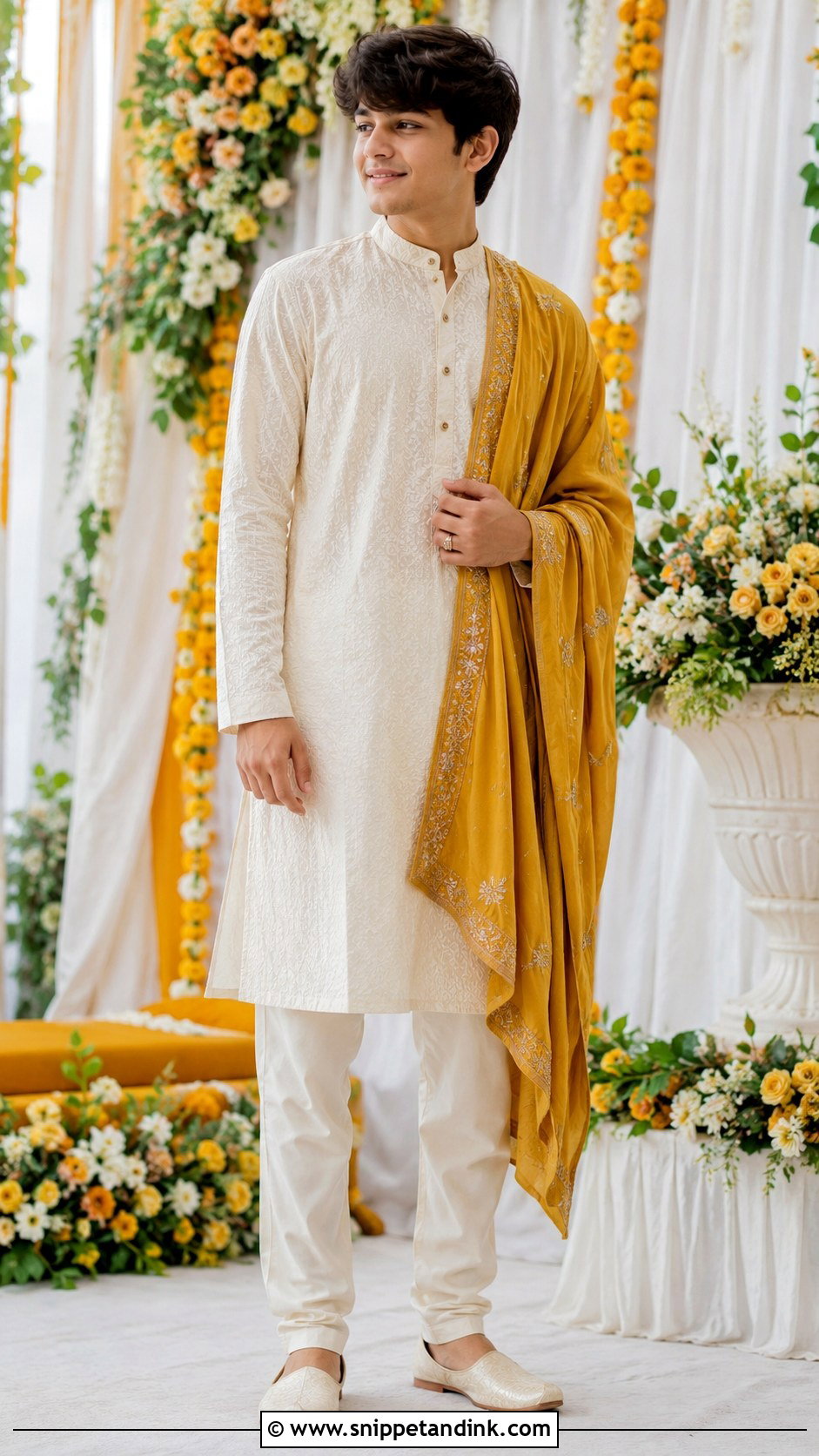
A stole turns a plain kurta pajama ceremonial in a second, and it’s the cheapest way to dress up something he already owns. Start with ivory, yellow, green or beige, then add a contrasting stole: orange on ivory, green on yellow, mustard on white. A border, small mirror work or light embroidery is plenty. On younger boys, keep it short and take it off near candles, diyas or anything on a low table, because long stoles trail into things. Juttis or sandals.
25. Matching Father And Son Mehndi Outfit
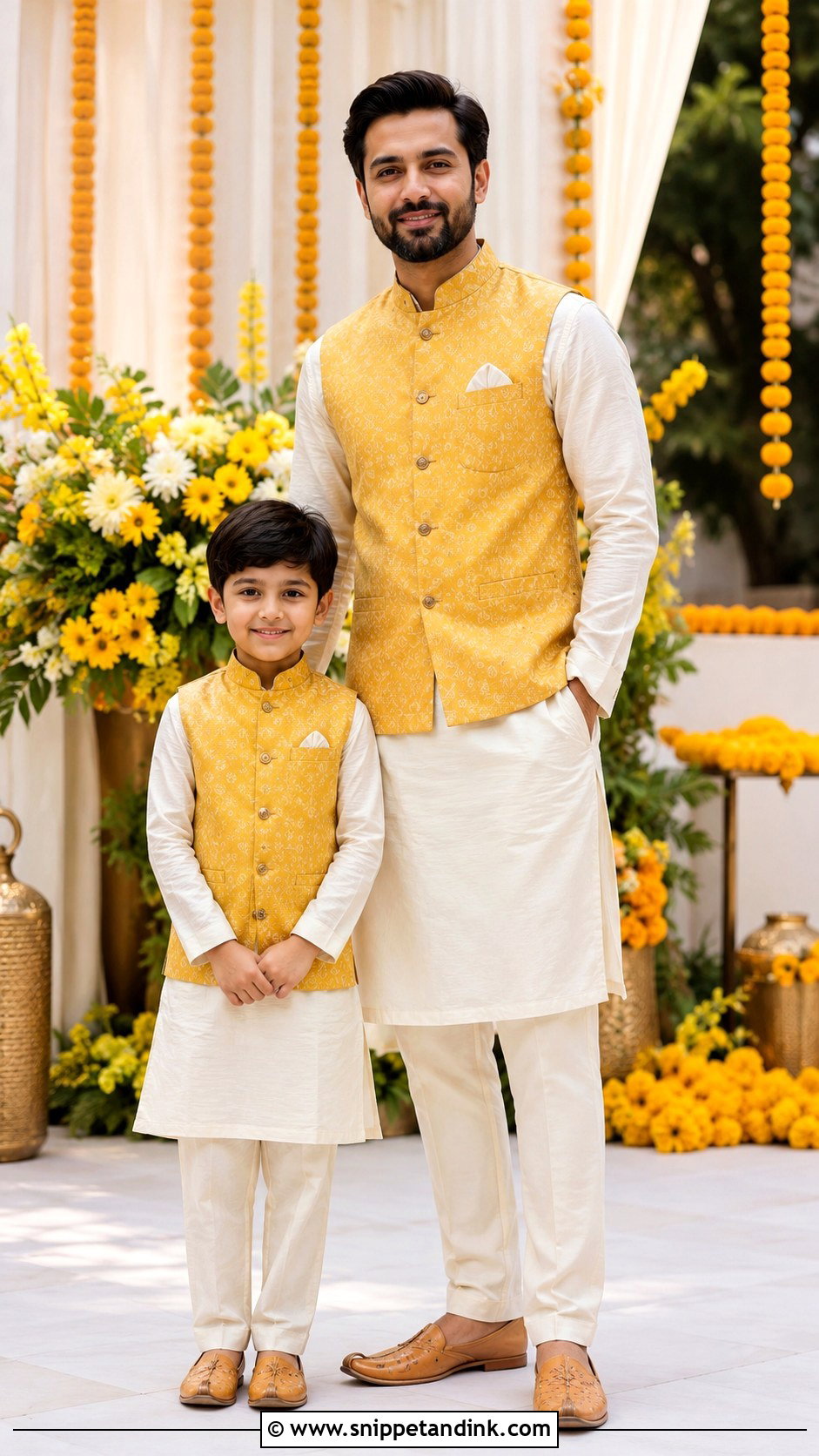
Father and son outfits don’t need to be identical; they need to share one thing, whether that’s a color, a fabric or a detail. Think ivory kurtas with yellow waistcoats, green Nehru jackets, or mustard kurta pajama sets. Let the father’s version carry more embroidery and keep the boy’s lighter and softer. If you’re buying from one maker, order both together so the dye lot matches, since separate orders rarely come out the same shade. The same idea works for a groom and his little brother, or an uncle and nephew.
Why Boys Start Tugging at Their Kurtas by Nine O’Clock
It’s almost never the color. When a boy starts pulling at his outfit, it’s the inside of the garment talking. Zari and metallic thread are stiff on the reverse and scratch wherever they touch skin, usually the neck and inner wrists. Polyester linings trap heat, which a crowded tent multiplies. Heavy starch on a collar feels like cardboard after a few hours of sweat.
A thin cotton vest underneath solves most of this. It keeps embroidery backing off the skin, soaks up sweat before it marks silk, and makes a scratchy waistcoat bearable for one more round of photos. For the very young, I’d choose cotton or cotton-silk throughout and leave the brocade to the teenagers.
A Small Rescue Kit for the Evening
Someone in the family should carry a pouch with a few outfit fixes. Kids’ clothes fail in small, predictable ways, and each one is a two-minute repair if you have the right thing to hand.
- Small safety pins for a dropped hem, a loose stole or a waistband that’s given up.
- Blister plasters for jutti heels, applied before the rub turns into a limp.
- Unscented wet wipes for sticky hands, kept away from silk, which can water-mark.
- A spare plain pajama. If the white one doesn’t survive dinner, the kurta still looks fine over a fresh pair.
- A plastic bag for the waistcoat or jacket once it comes off, so it doesn’t end up under a chair.
A Dress Rehearsal in the Living Room
Most boys’ mehndi outfits succeed or fail on comfort, not color. Kurtas, printed waistcoats, Nehru jackets, Pathani suits, dhoti sets and light sherwanis all suit the function; the right one is whichever he can run, sit and eat in without asking to change. Yellow, green, ivory, orange, mustard, teal and soft pastels are all safe palettes. Have him wear the full outfit at home for an hour beforehand, shoes included, and you’ll know whether it will last the night.
You'll Like These Ideas:


Leave a Reply