
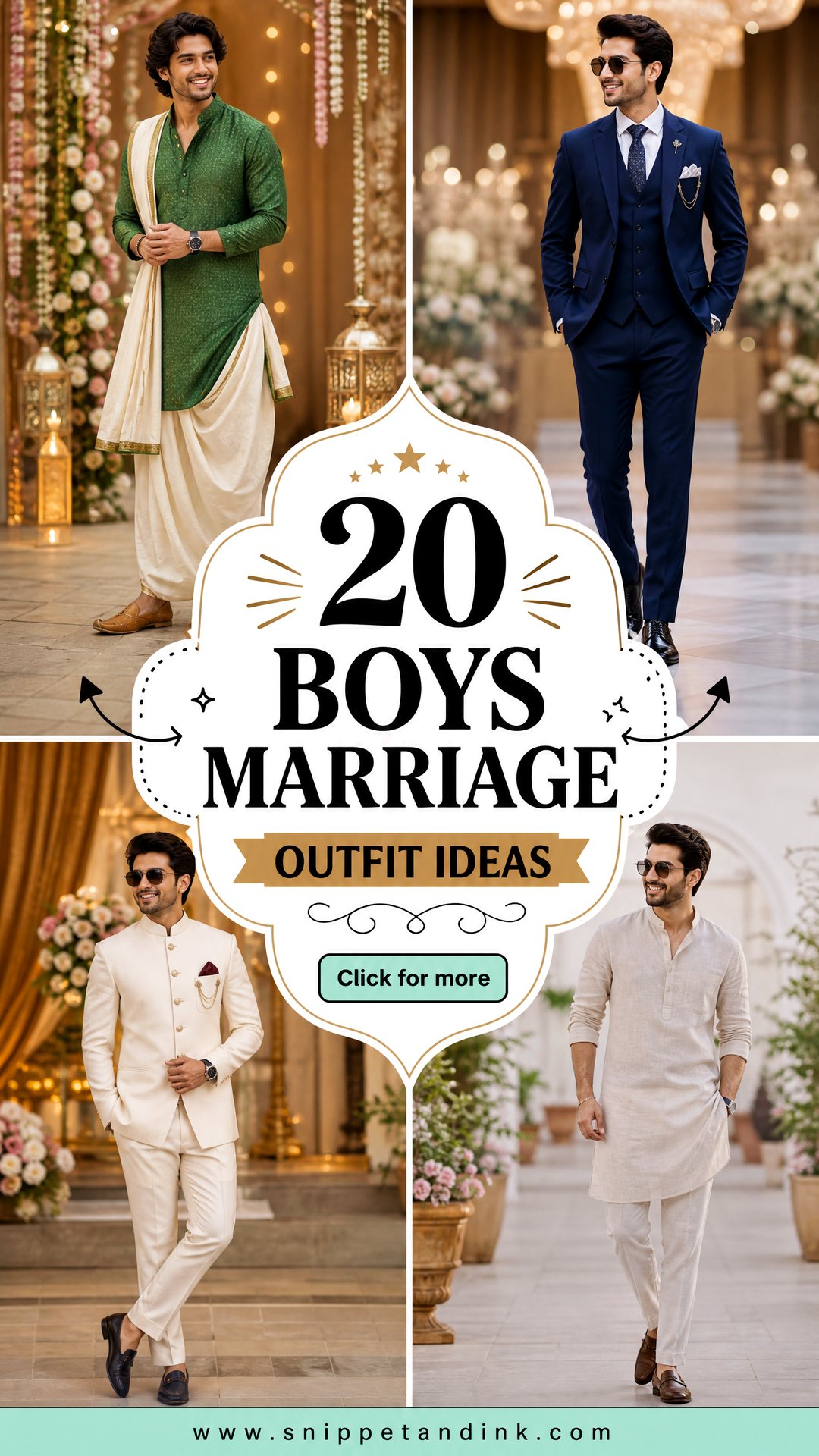
Dressing a boy for a wedding is a different job from dressing a groom. He will sit on the floor, run between tables, get lifted for photos and probably fall asleep in a chair before the last dance, so I judge every piece by how it moves before I look at the embroidery. For Indian ceremonies I lean on sherwanis, kurta pajamas, and bandhgala sets; for receptions with a Western dress code, tuxedos, three-piece suits and waistcoat sets do the work. Cotton and linen blends carry a summer day, while brocade and velvet earn their weight in winter. Below are twenty complete outfits, each with the fitting and fabric checks I’d make before buying.
Buying for a Boy Who Will Grow Before the Wedding
Children can gain a size in a few months, so timing the purchase is half the fit. For ready-made pieces I buy about six to eight weeks out, which leaves time for a hem and sleeve alteration without much risk of a growth spurt. Custom sherwanis and achkans need longer, often several weeks of stitching plus a fitting, so order them earlier but ask the tailor to leave generous seam allowance at the side seams and hems.
At the fitting, I don’t let a boy stand still and pose. I ask him to do four things:
- Raise both arms overhead. If the jacket rides up past his waist or the armholes pinch, it will bother him all night.
- Sit cross-legged on the floor. Churidars and fitted trousers should not cut in at the knee or show a gap at the back waist.
- Walk up a few stairs. Long kurtas, dhotis and achkans without vents reveal themselves here.
- Bend to pick something up. This shows whether a waistcoat gapes or a shirt untucks.
Buy shoes last and have him wear them around the house for a week before the day. New juttis are stiff along the heel until they soften, and blisters on a six-year-old end the evening early.
1. Boys Ivory Sherwani Outfit
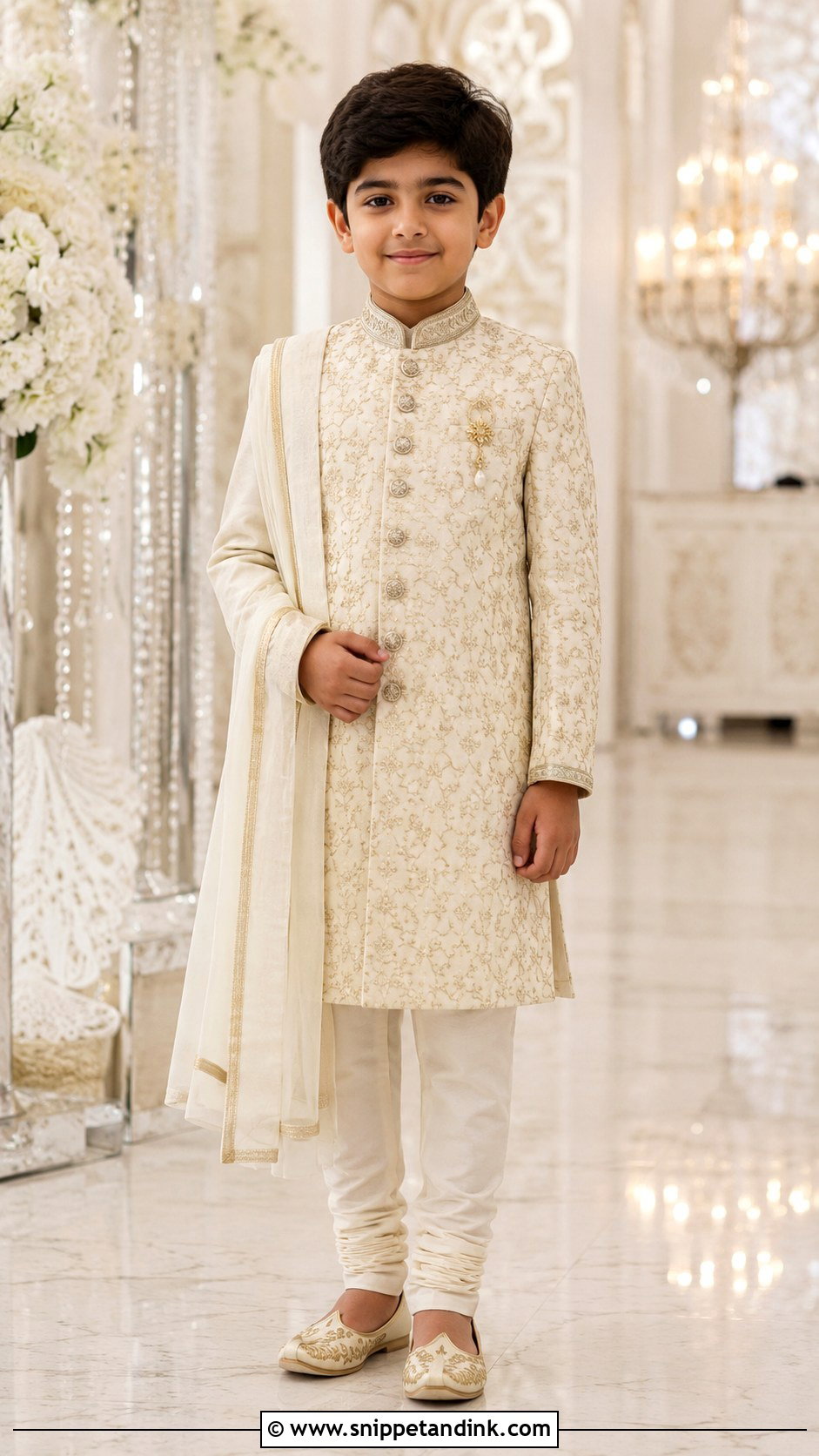
Ivory reads as ceremonial without the visual weight of a darker sherwani, which matters on a small frame. I look for knee length, light gold threadwork and covered buttons, then I turn the garment inside out: if the lining is polyester rather than cotton, a boy will be sweating and tugging at it within an hour. Cream churidars keep the colour run unbroken, and gold or tan juttis bend far more easily than stiff dress shoes. A light dupatta over one shoulder suits the procession, though I pin it at the shoulder seam so it doesn’t slide every time he waves. One small pearl brooch is plenty.
2. Boys Pastel Nehru Jacket Kurta Outfit
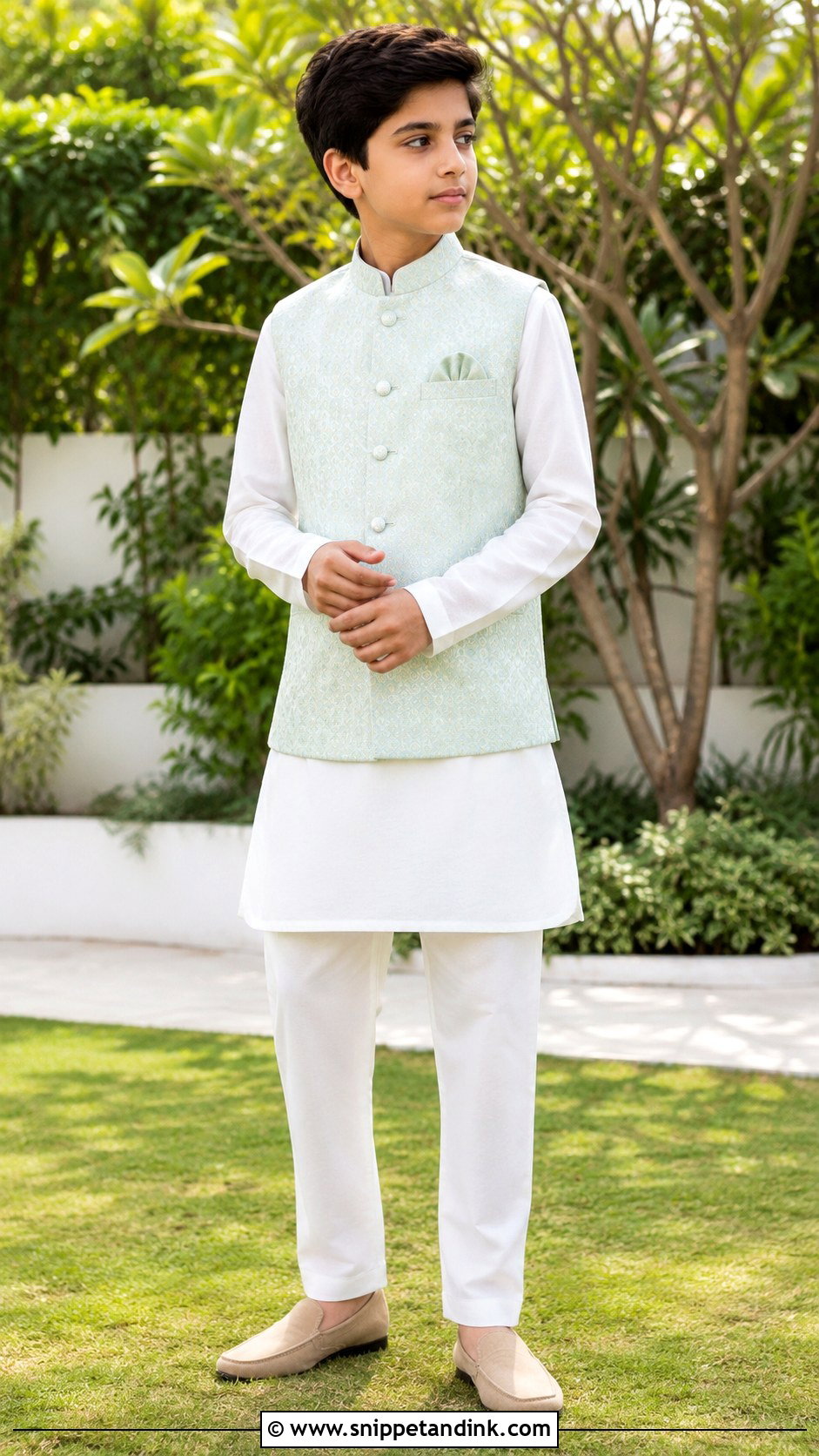
A pastel Nehru jacket over a white or ivory kurta is the outfit I reach for when the event is daytime and the child is under eight. The kurta and pajama stay in breathable cotton or a light silk blend; the jacket, in mint, powder blue, peach or blush, carries the colour. Jacquard texture or fabric-covered buttons give it enough interest. The real advantage is practical: the jacket comes off after portraits and he is left in a plain kurta that can take spilled juice. Beige loafers or soft tan juttis and a pocket square finish it for spring and summer functions.
3. Boys Navy Bandhgala Trouser Outfit
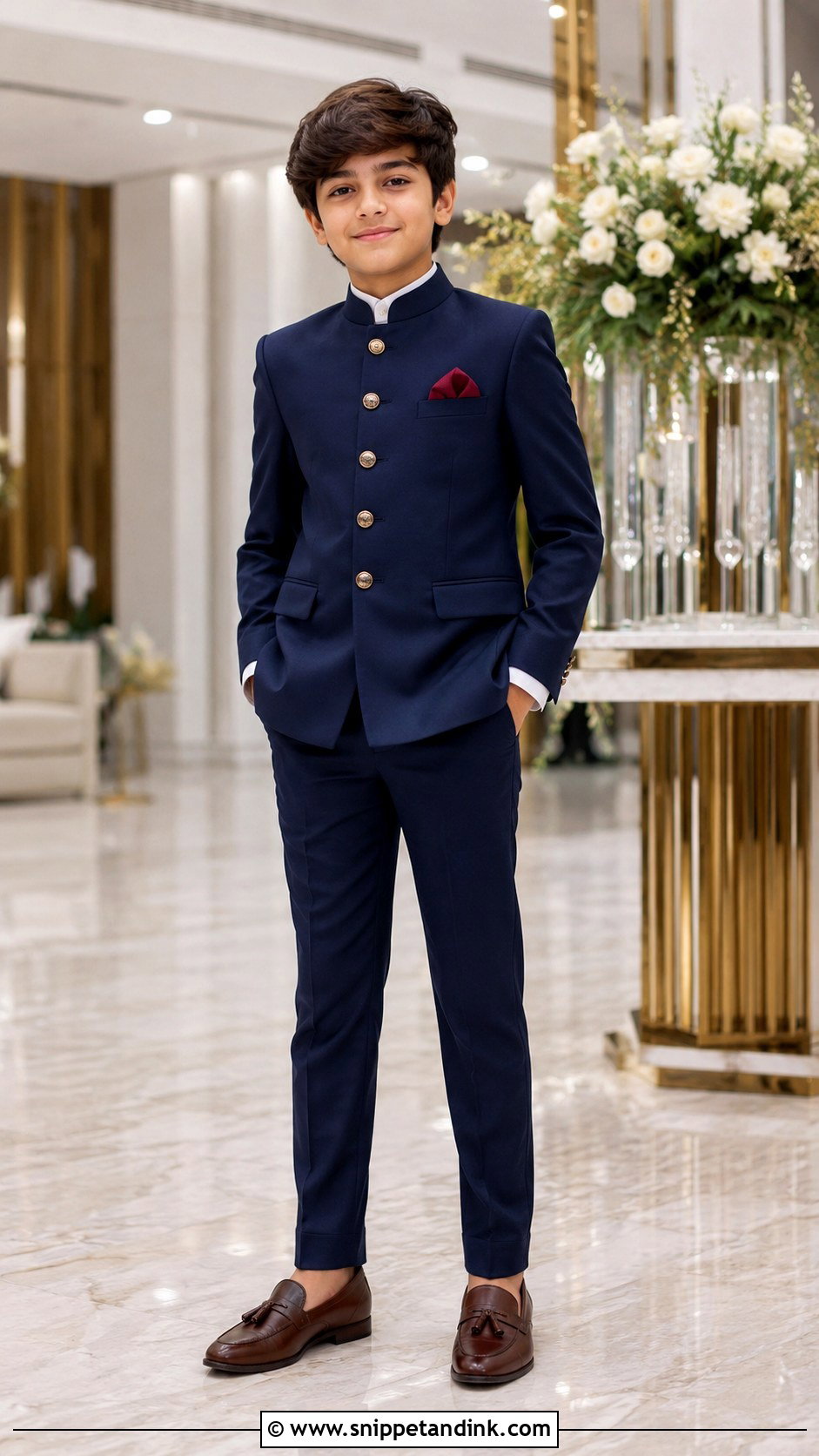
The navy bandhgala sits between Indian and Western formalwear, so it rescues families unsure of the reception dress code. My first check is the shoulders: a stand-collar jacket cut close through the chest restricts arm lift, and boys raise their arms constantly. Choose hip length with neat buttons, worn over a crisp white shirt or a collarless top. Matching navy trousers and polished brown loafers keep it streamlined, and a burgundy or gold pocket square can tie it to the wedding colours. No tie. The collar already does that job, and a tie on a band collar looks confused.
4. Boys Yellow Kurta Pajama Outfit
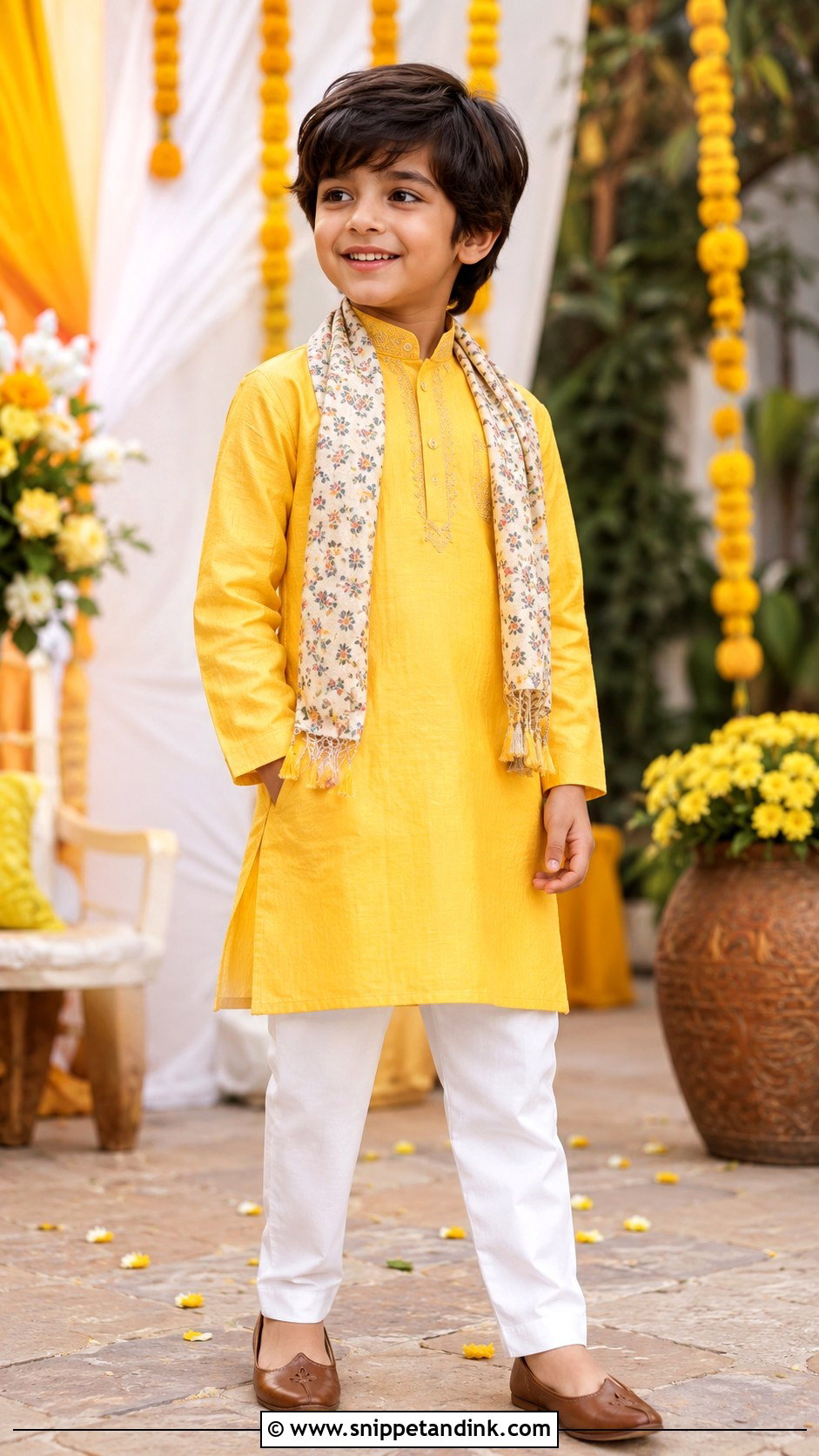
Haldi turmeric stains cotton yellow for good, so I treat the haldi outfit as disposable in the best sense: cheap enough that nobody panics. A plain yellow kurta with minimal neckline embroidery, white straight pajamas and brown sandals or simple mojaris make a cheerful set for a haldi ceremony or colorful daytime celebration. Leave the silk and beadwork for later in the week. A printed scarf only goes on if it can be knotted securely; anything loose ends up dragged through the turmeric bowl.
5. Boys Green Kurta Dhoti Outfit
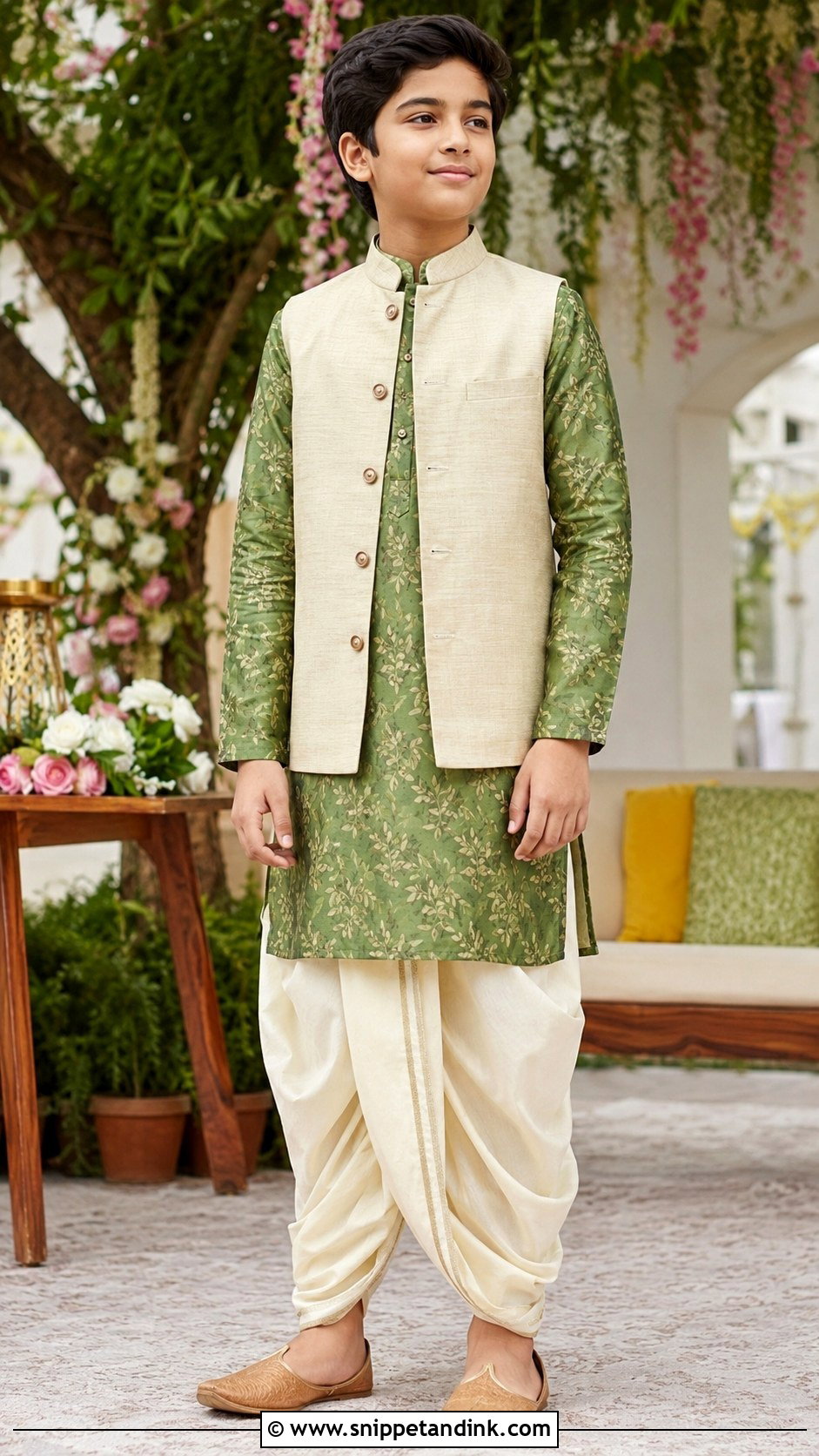
For a mehndi in a garden, a green kurta with an ivory dhoti has real traditional character. Sage, emerald or leaf green with small block prints all suit a child’s colouring. I insist on a ready-stitched dhoti with an elastic waistband; a hand-draped dhoti on a five-year-old unravels by the second dance. Hem it so it clears the ankle bone, because fabric touching the floor is a trip waiting to happen on grass. Tan juttis and, for photographs only, a slim waistcoat with wooden buttons give it some structure.
6. Boys Asymmetrical Indo-Western Outfit
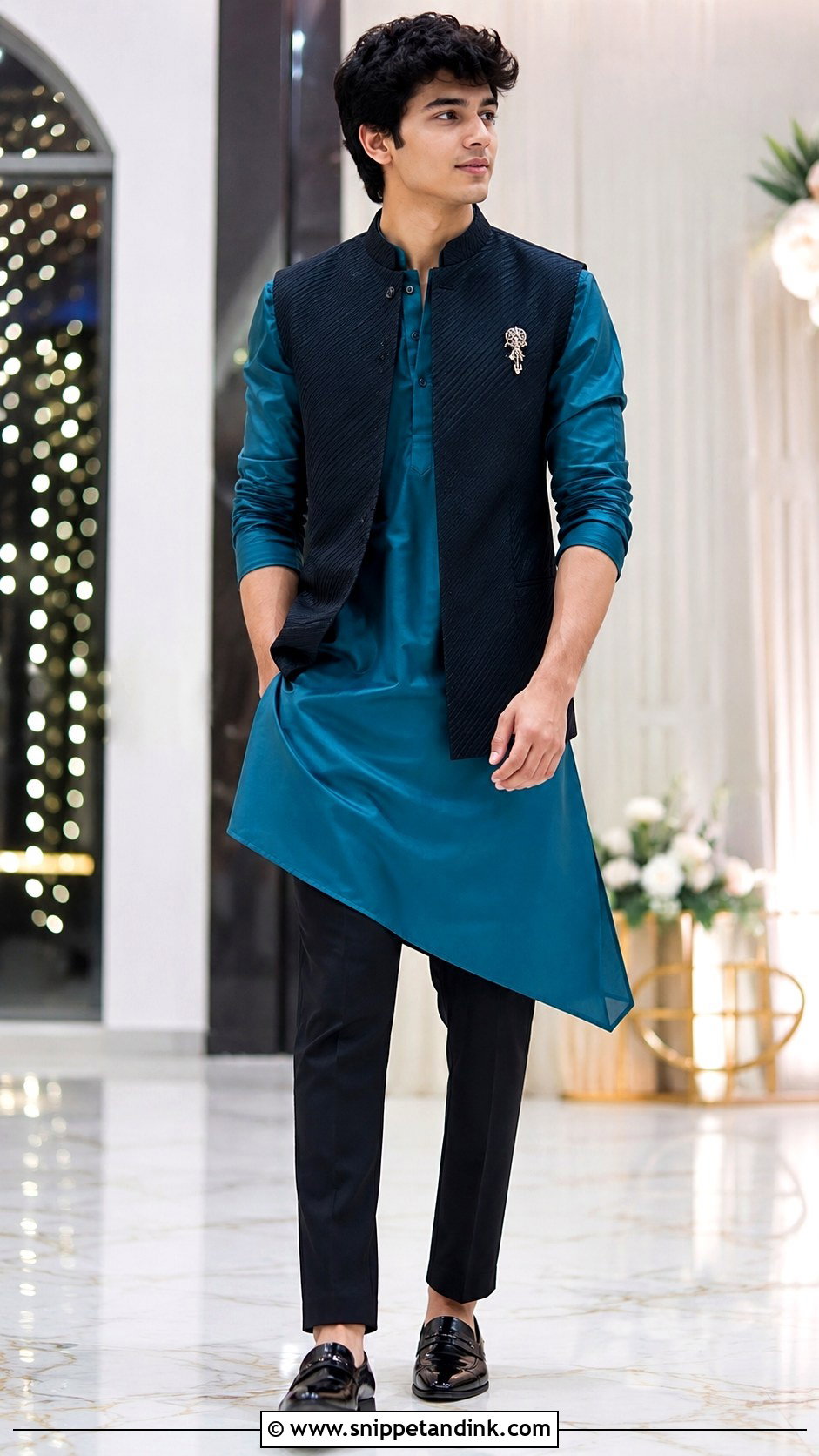
Older boys who have started to care what they look like usually pick this one. A side-cut kurta in teal, charcoal, rust or royal blue over slim ivory or black trousers feels current without dropping the traditional base. The uneven hemline is the feature, so I keep accessories to a pocket square at most and only add a sleeveless jacket if the night is cool. Footwear follows the formality: modern juttis or loafers for a reception, minimal white sneakers for a dance-heavy sangeet, reception, or family celebration. Check the cut on him in motion; some asymmetric hems swing into the knee when walking.
7. Boys Maroon Velvet Sherwani Outfit
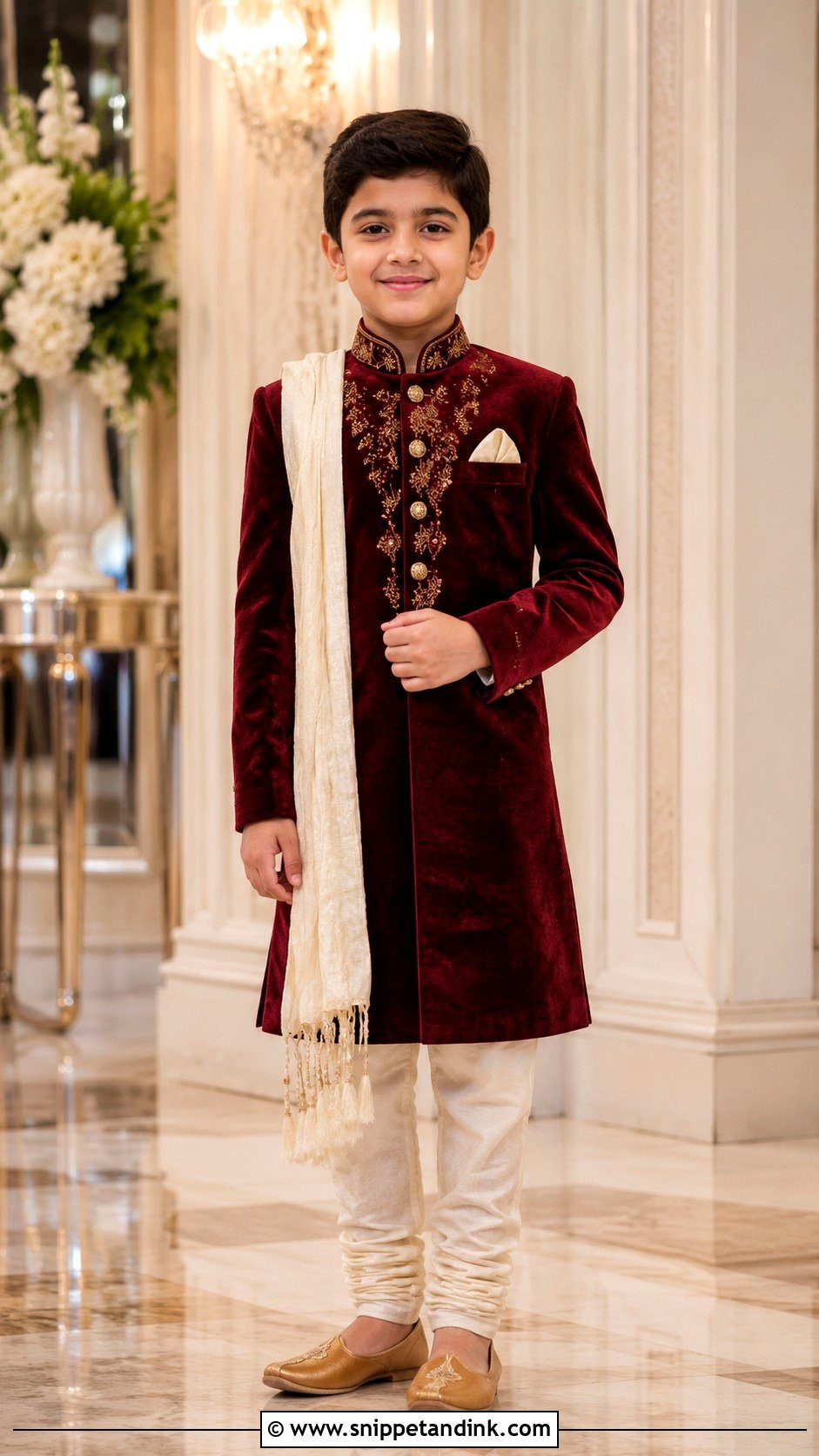
Maroon velvet belongs to winter evenings. In a warm hall it becomes a sauna within twenty minutes, and children don’t tell you they’re overheating, they just get cranky. When the season is right, choose a softly structured sherwani with a smooth lining and arm openings cut generously enough that he can reach above his head. Cream churidars lift the dark colour so it doesn’t swallow a small boy in photos, and tan or gold juttis plus an ivory pocket square near the face finish it. Velvet crushes where it is sat on, so I steam the back panel right before the ceremony rather than the night before.
8. Boys Floral Jacket Kurta Outfit
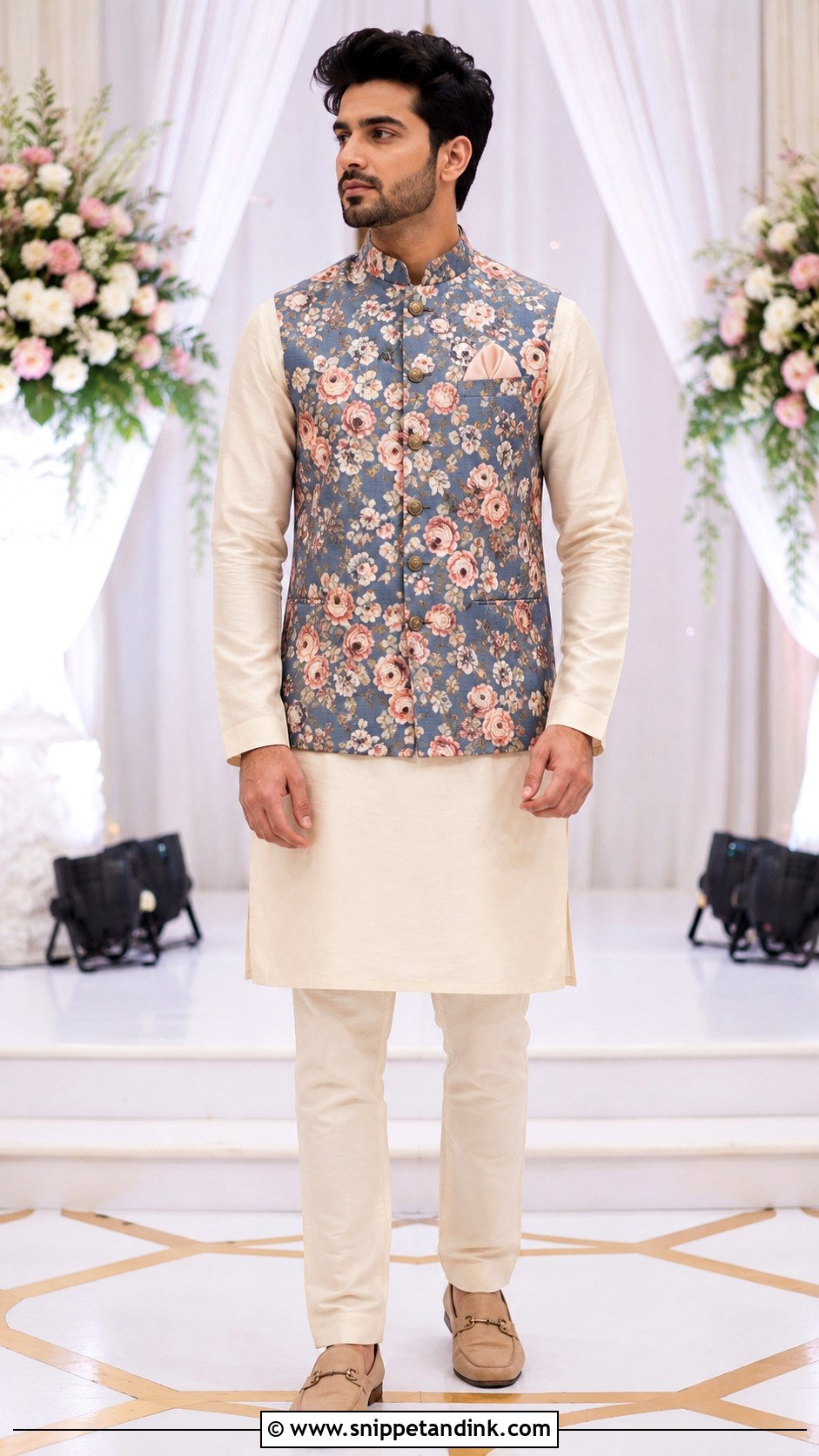
Print scale is where floral jackets go wrong on children. A rose the size of a fist that looks balanced on a grown man covers half a boy’s torso, so I look for motifs no bigger than a coin. Put the fitted jacket over a solid cream, blush or pale blue kurta with straight pants, and pull one colour from the print into the pocket square. Neutral juttis or loafers keep the feet quiet. The floral layer is the whole story, so leave off the necklace, scarf and brooch. It’s a good sangeet outfit because the jacket moves with him through dancing and performances.
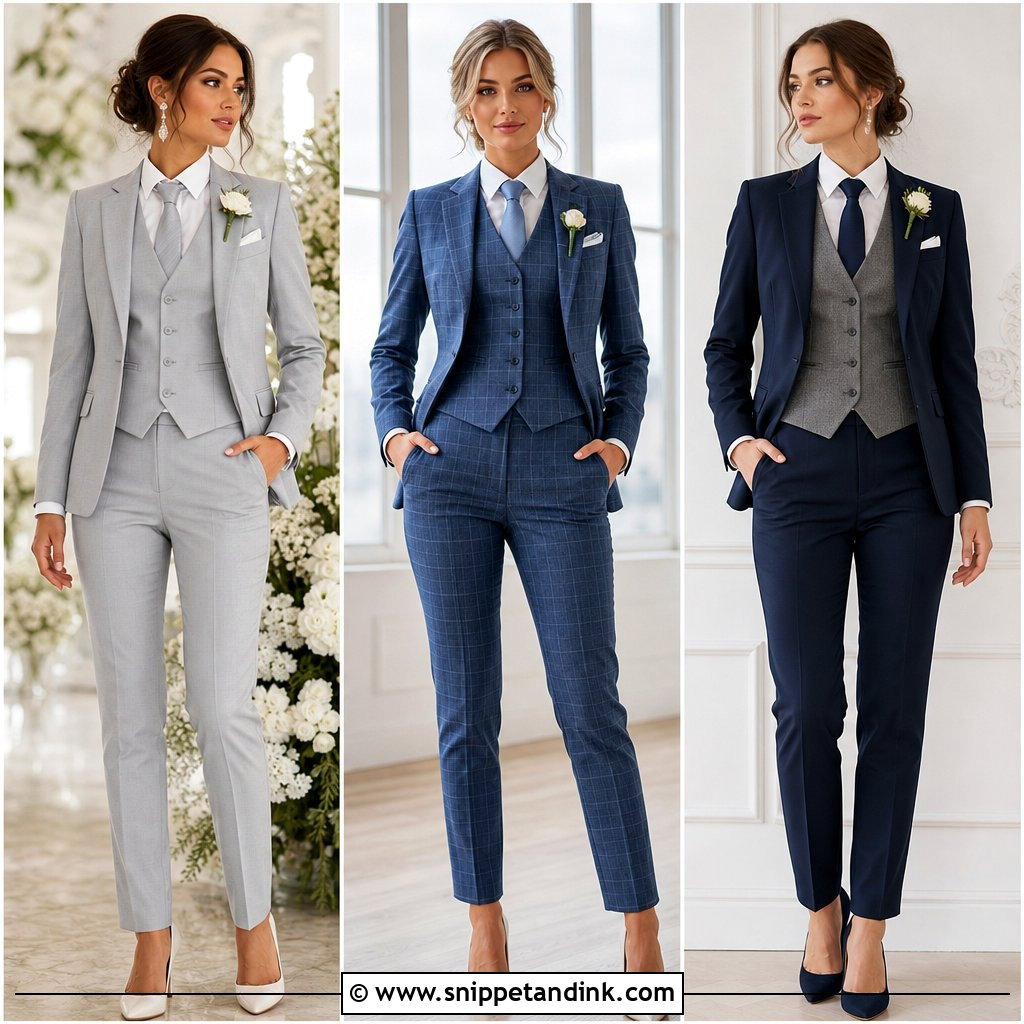
9. Boys Black Tuxedo Outfit
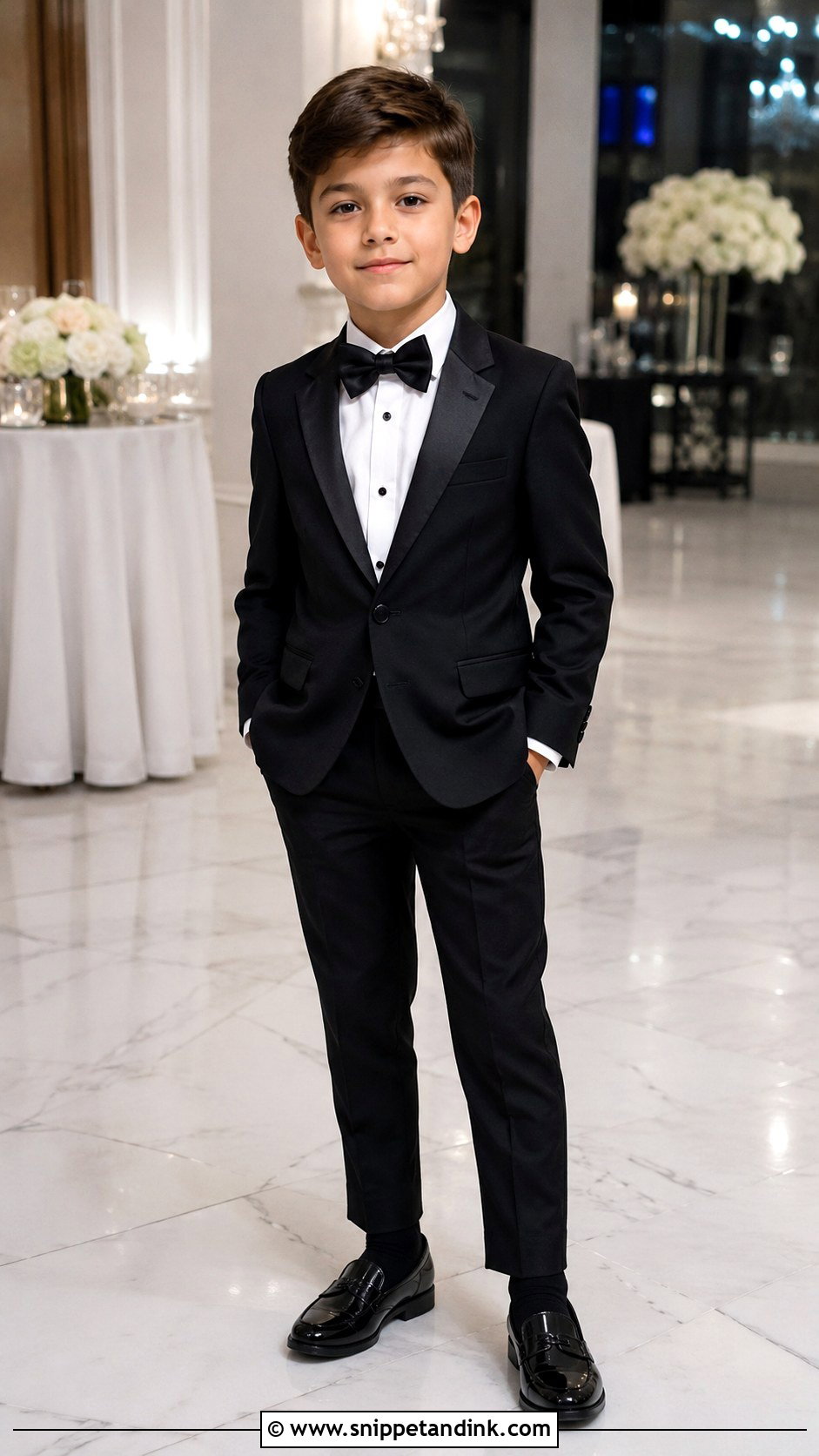
A well-cut black tuxedo is the most formal option here, and the fit has to be honest. Satin lapels, matching trousers and an adjustable waistband (boys’ sizes are cut for growth, so the waist tab matters). I prefer a pre-tied bow tie on a band clasp over a self-tie for any child under ten; he will pull at it, and a clip-on can be reclipped by anyone. White dress shirt, black loafers or lace-ups, dark socks. Sleeves and hems should be altered to his actual length, because an oversized tux reads as borrowed in every photo. For a black-tie reception or ring-bearer duty, this is the one.
10. Boys Navy Three-Piece Suit Outfit
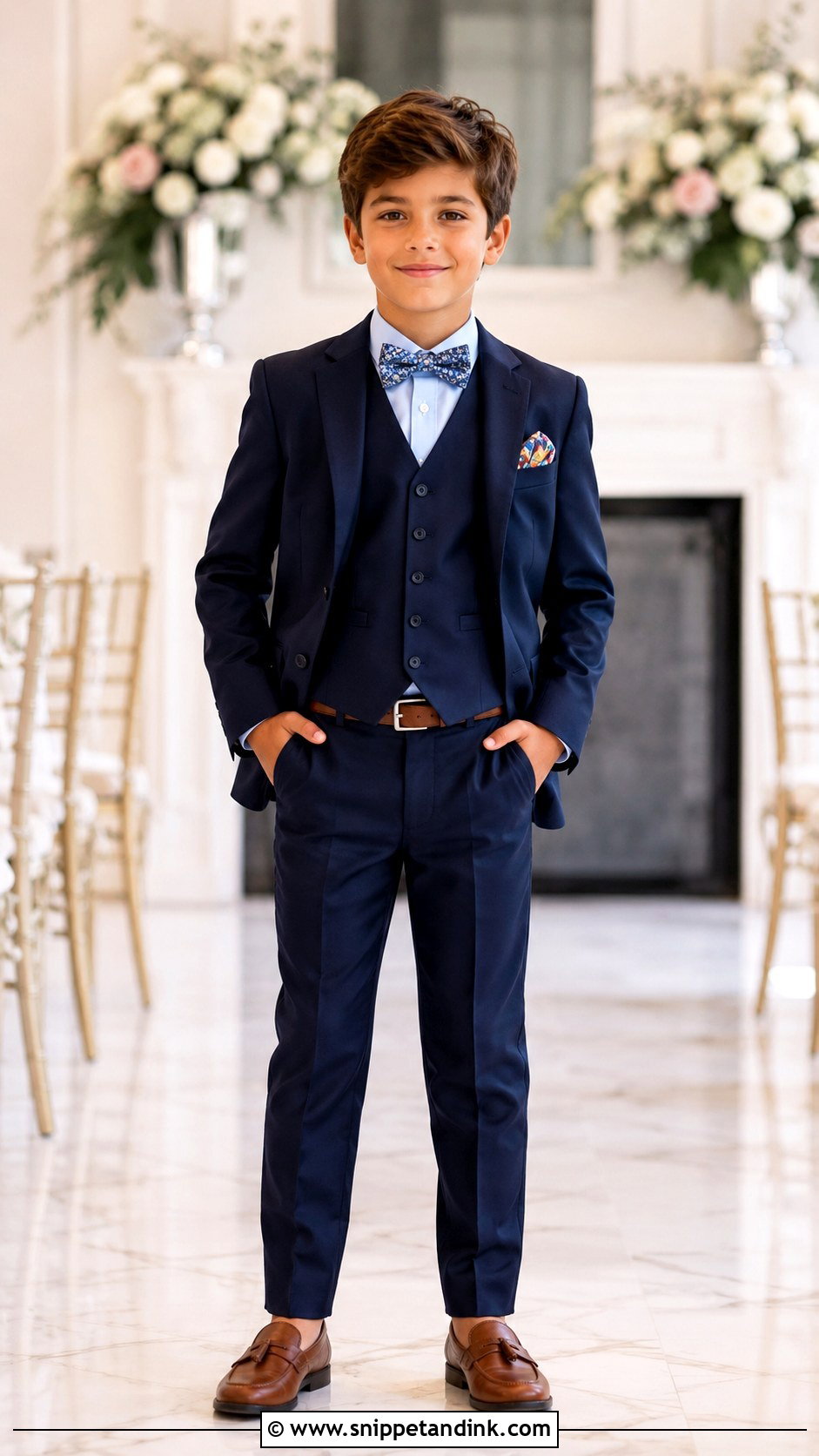
Navy is kinder to a child’s skin tone than black and still reads as properly formal. The three pieces are a tailored jacket, matching waistcoat and straight trousers, worn with a white or pale blue shirt and a patterned tie or bow tie. Brown loafers with a matching belt warm it up, and a pocket square can echo the wedding palette loosely. The test I always do: sit him down. If the waistcoat buttons pull into horizontal creases when he sits, go up a size or have the back adjuster let out. The jacket can come off after dinner and the waistcoat still looks finished.
11. Boys Suspenders And Bow Tie Outfit
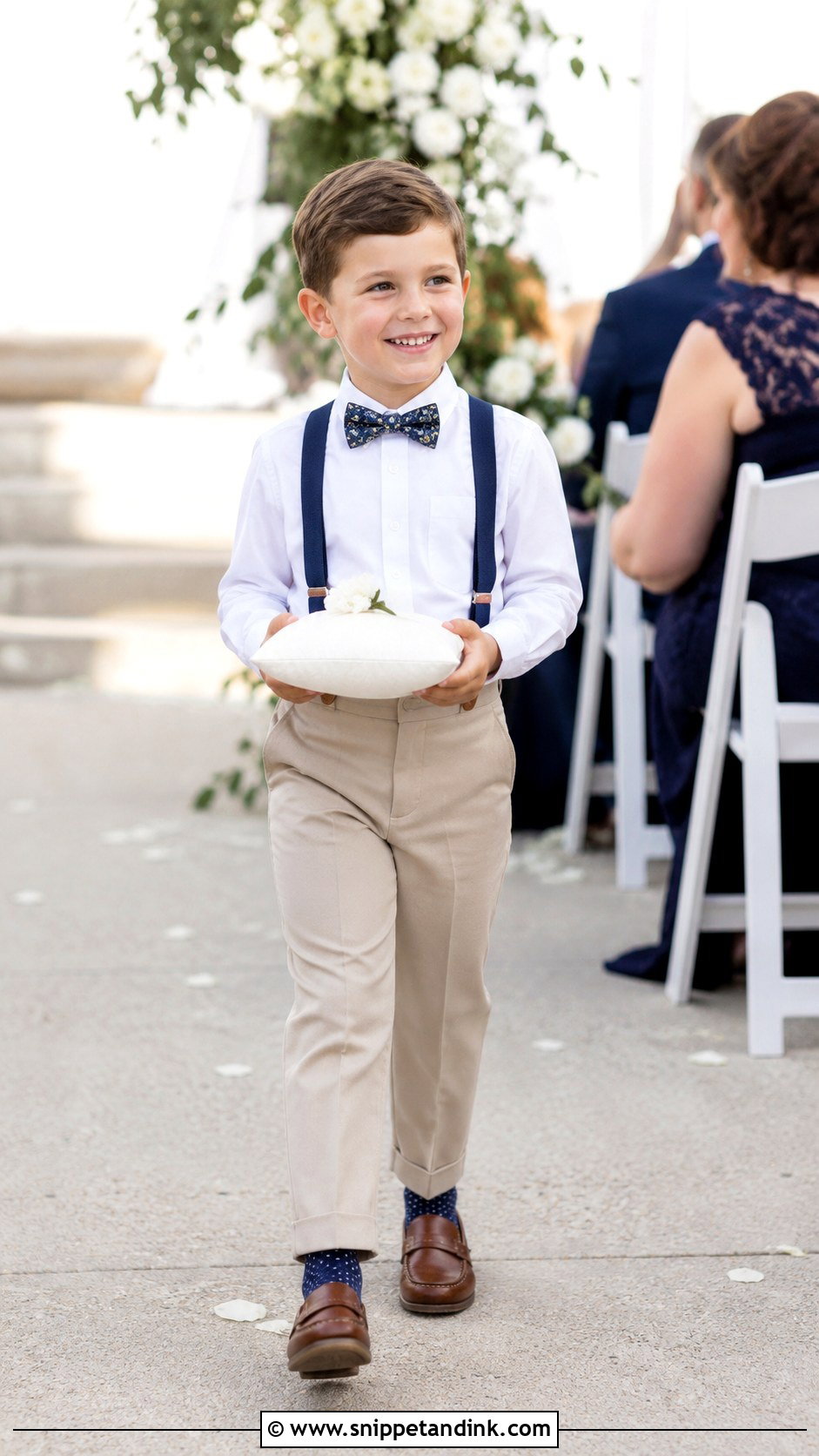
Suspenders and a bow tie give a toddler or small boy the shape of formalwear without a jacket weighing on his shoulders. Start with a soft long-sleeve white shirt, add beige, grey or navy trousers with an elastic or adjustable waist, and clip on coordinated suspenders. I use button-on braces where the trousers allow, since metal clips slip off small waistbands within the hour. A small patterned bow tie adds colour, and loafers with socks long enough to stay hidden finish it. After photographs, roll the sleeves. It’s the most practical choice I know for ring bearers, page boys at outdoor and warm-weather weddings.
12. Boys Pathani Suit Outfit
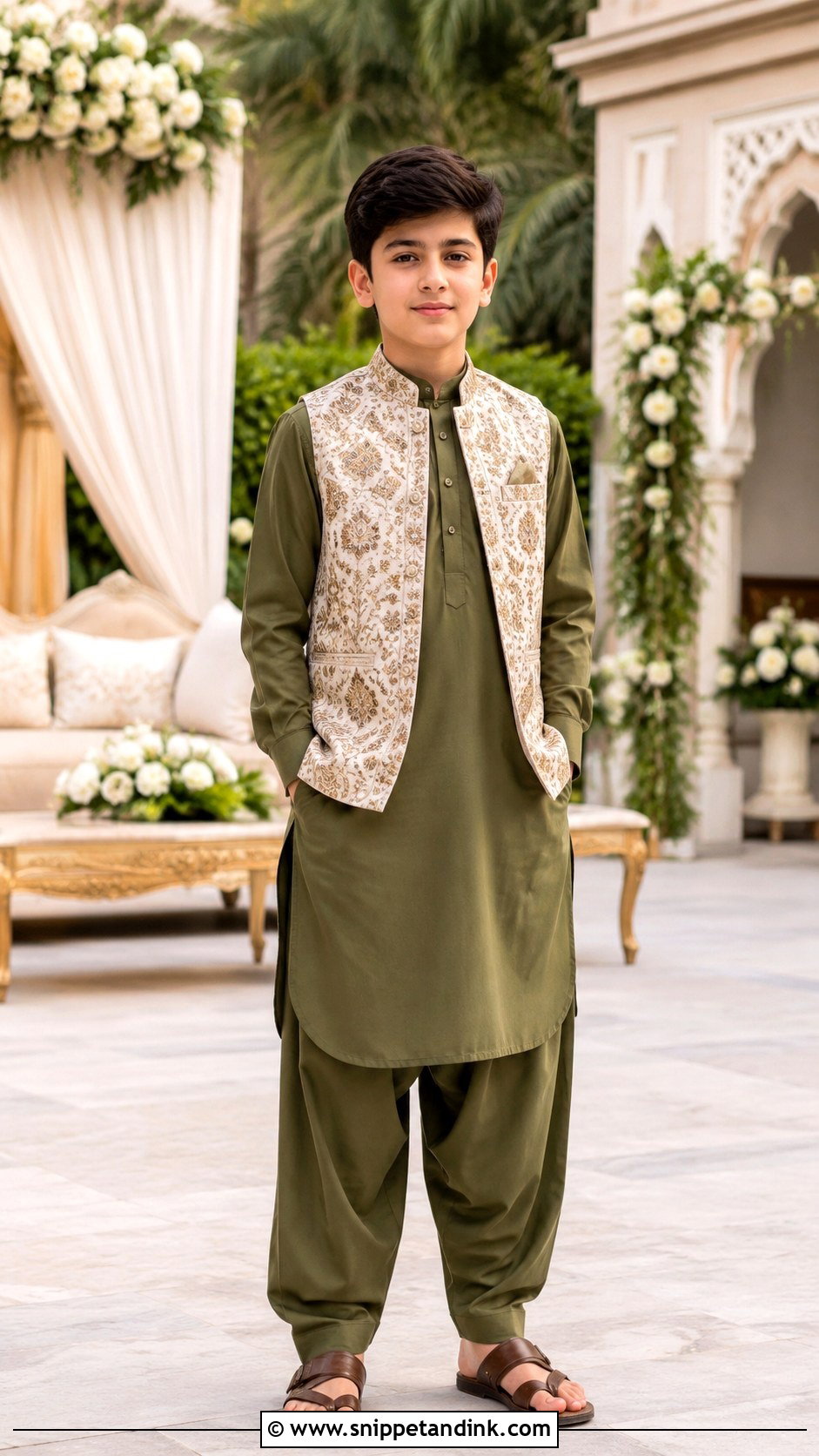
The Pathani suit gives a lot of room through the body and seat, which is exactly why I recommend it for long, sit-on-the-floor ceremonies. Look for a knee-length kurta with a structured collar, buttoned placket and real side pockets (boys collect things). Matching salwar trousers in navy, olive, beige or charcoal keep it understated. An embroidered waistcoat makes it ceremony-ready, and brown sandals or juttis complete it. Stay in lightweight cotton blends unless the event is outdoors in winter; the full cut traps heat more than you’d expect.
13. Boys Achkan Churidar Outfit
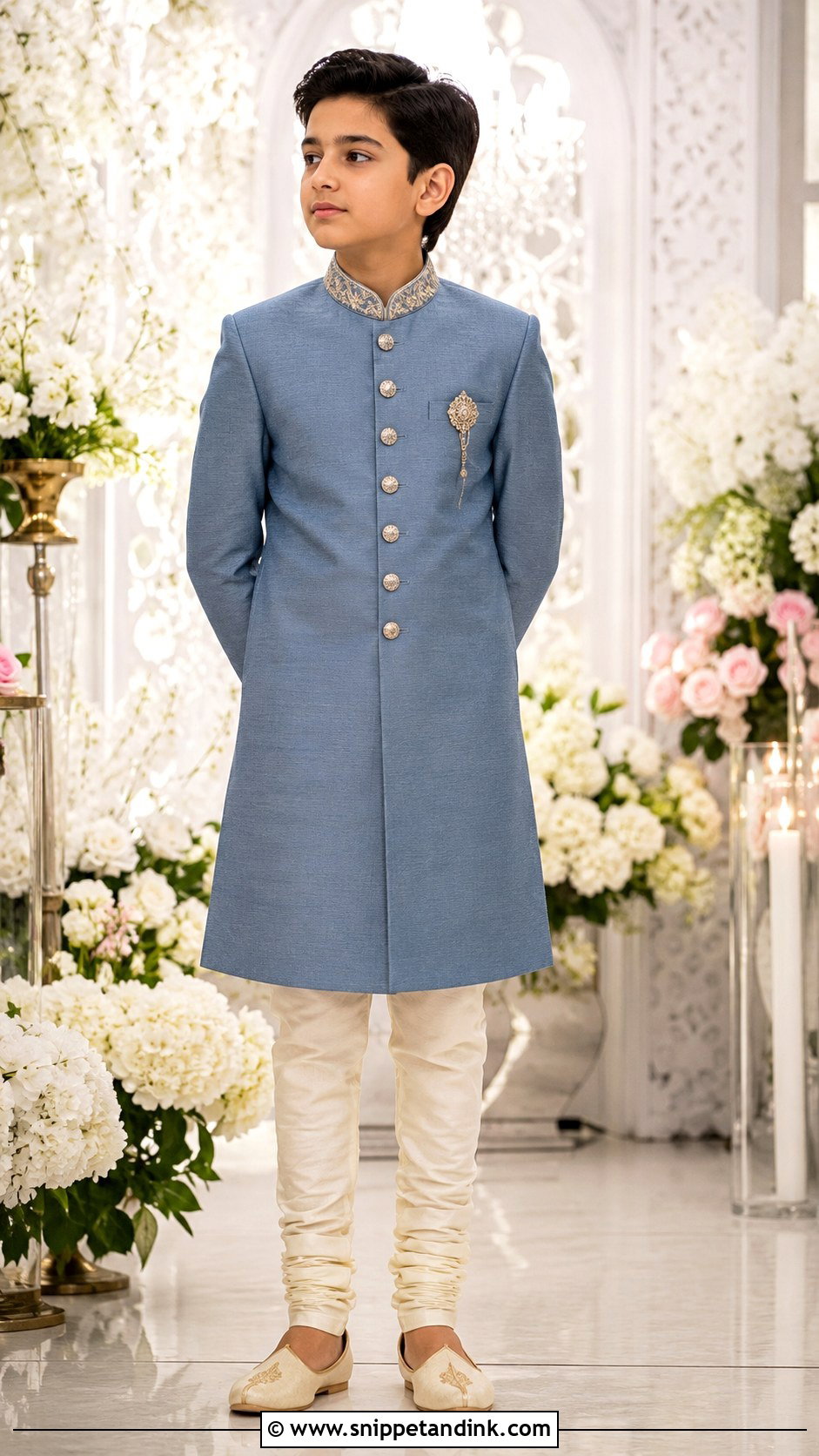
An achkan with churidar is the outfit I suggest when a boy is standing beside the groom and the two looks need to relate. A structured knee-length achkan in cream, dusty blue, beige or muted gold, with embroidery limited to the collar, cuffs and button line, looks dignified rather than costume-like. Fitted ivory churidars and matching juttis go underneath, plus one slim brooch or a folded pocket square. Check for side or back vents before you buy. A closed achkan with no vent stops a child mid-stride on stairs and makes sitting cross-legged nearly impossible.
14. Boys Dhoti Kurta Jacket Outfit
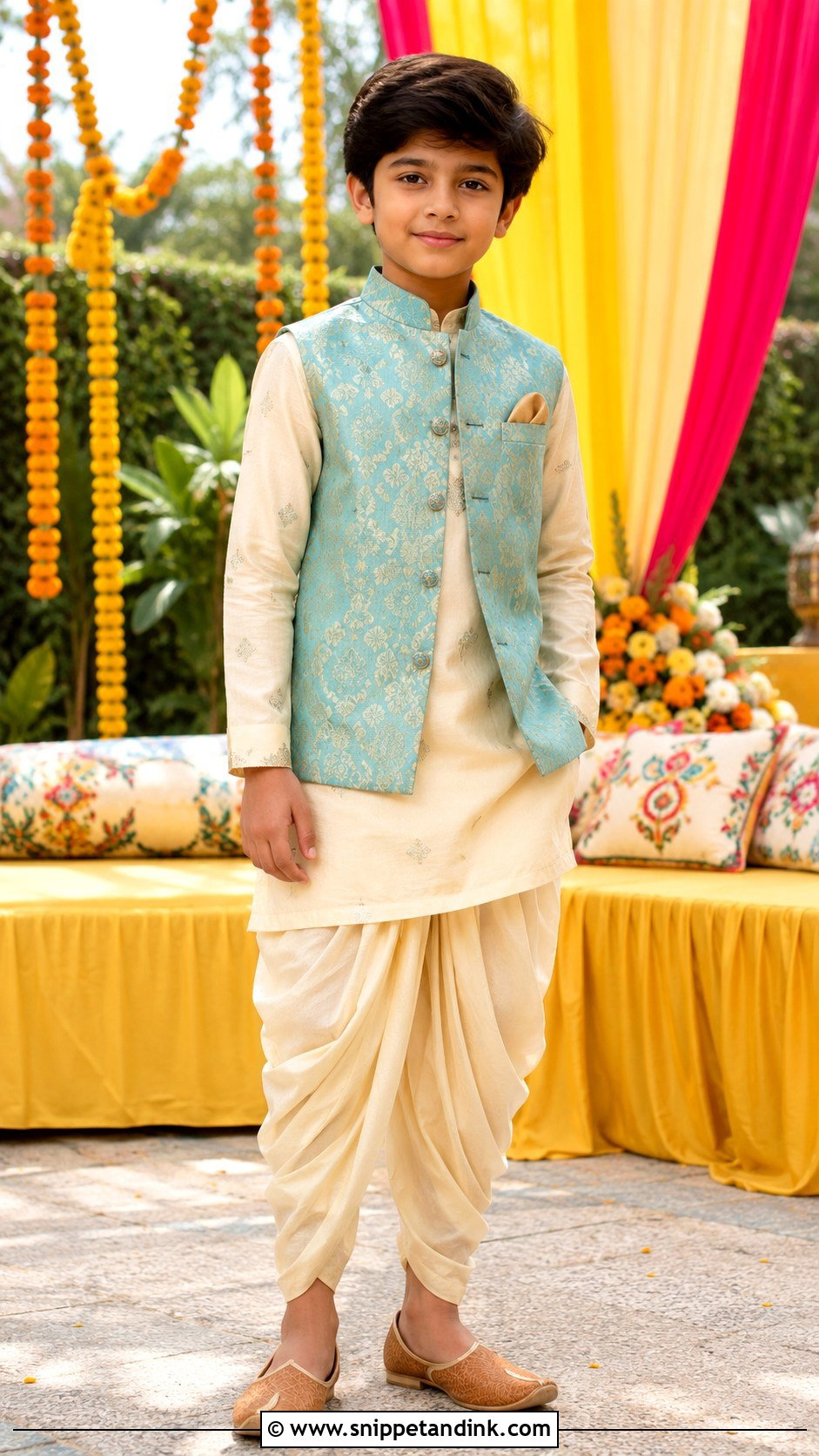
Layering a ready-stitched dhoti, a short kurta and a jacket gives a festive outline that still holds up to a busy child. Keep the kurta ivory or pastel, the dhoti a neutral that matches it, and let a coral, mustard, turquoise or brocade Nehru jacket carry the colour. The jacket should stop at the hip; any longer and it fights the drape of the dhoti and makes his legs look short. Soft juttis or cushioned sandals with a heel strap are safest. For younger boys I take in any loose fabric at the ankle so nothing catches on chair legs.
15. Boys White Chikankari Kurta Outfit
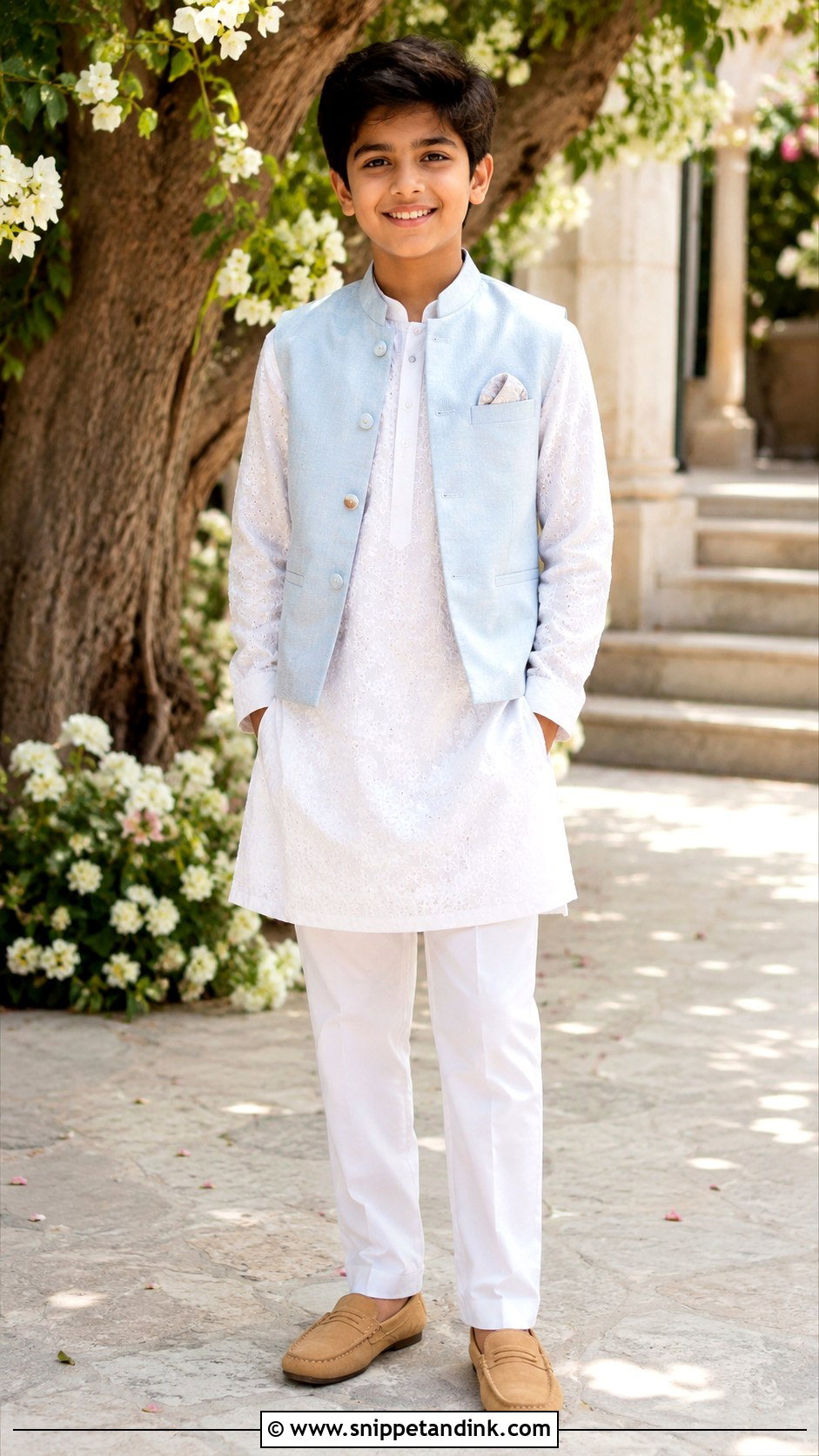
Chikankari is shadow embroidery worked on fine cotton, and that fineness is the catch: unlined white chikankari goes sheer in bright sun. Hold the kurta up to a window before buying and make sure it has a cotton lining, which also keeps the embroidery’s back from scratching. White straight pants give a tonal look, beige trousers a gentle contrast. Tan sandals, cream juttis or suede loafers keep it soft. A pastel Nehru jacket over it for portraits, off again when the afternoon heats up, makes it a strong summer ceremony or daytime reception choice.
16. Boys Jodhpuri Suit Outfit
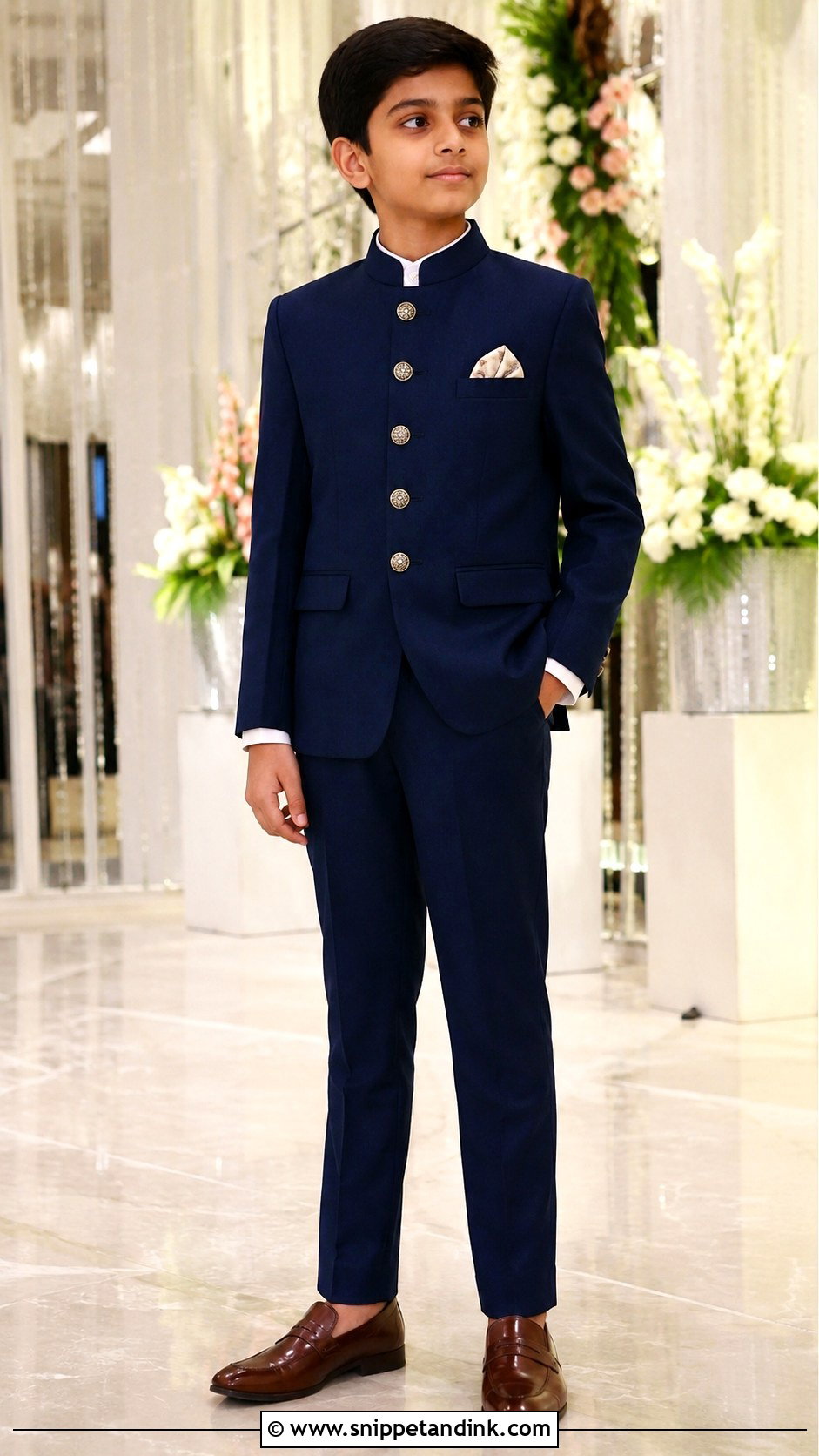
Jodhpuri tailoring depends almost entirely on the shoulder and jacket length, so this is one outfit I would never buy off a photo without a try-on. Choose a band-collar jacket in deep blue, charcoal, bottle green or burgundy with matching tapered trousers. A white or cream shirt underneath keeps the neckline clean, though some children’s sets are cut to be worn without one. Polished brown or black loafers and a folded pocket square are all it needs; decorative buttons already supply the detail. It’s sharp at receptions and evening family dinners.
17. Boys Waistcoat Shirt Trouser Outfit
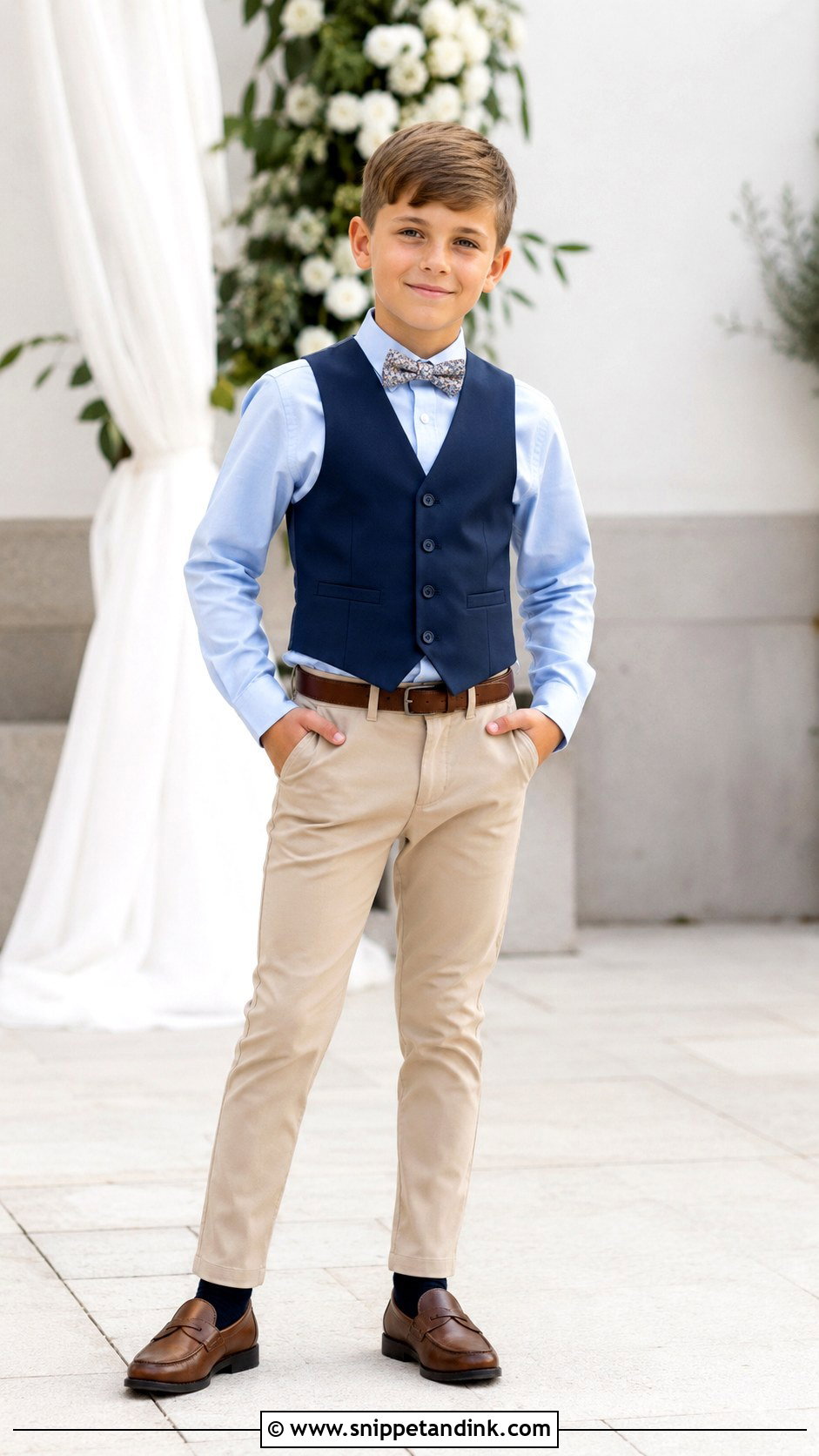
Semi-formal weddings are where the waistcoat, shirt and trouser set earns its place. A white, pale blue or softly patterned shirt goes under a waistcoat that sits smoothly over the waistband of navy, grey or beige trousers; if a strip of shirt shows between them when he lifts his arms, the waistcoat is too short. Bow tie for younger boys, a standard tie once they are old enough to want one. Brown loafers, dark socks and a belt only if the trousers need it. He gets structure without a jacket’s warmth, which I prefer for spring ceremonies, outdoor receptions and page-boy duties.
18. Boys Matching Sibling Kurta Outfit
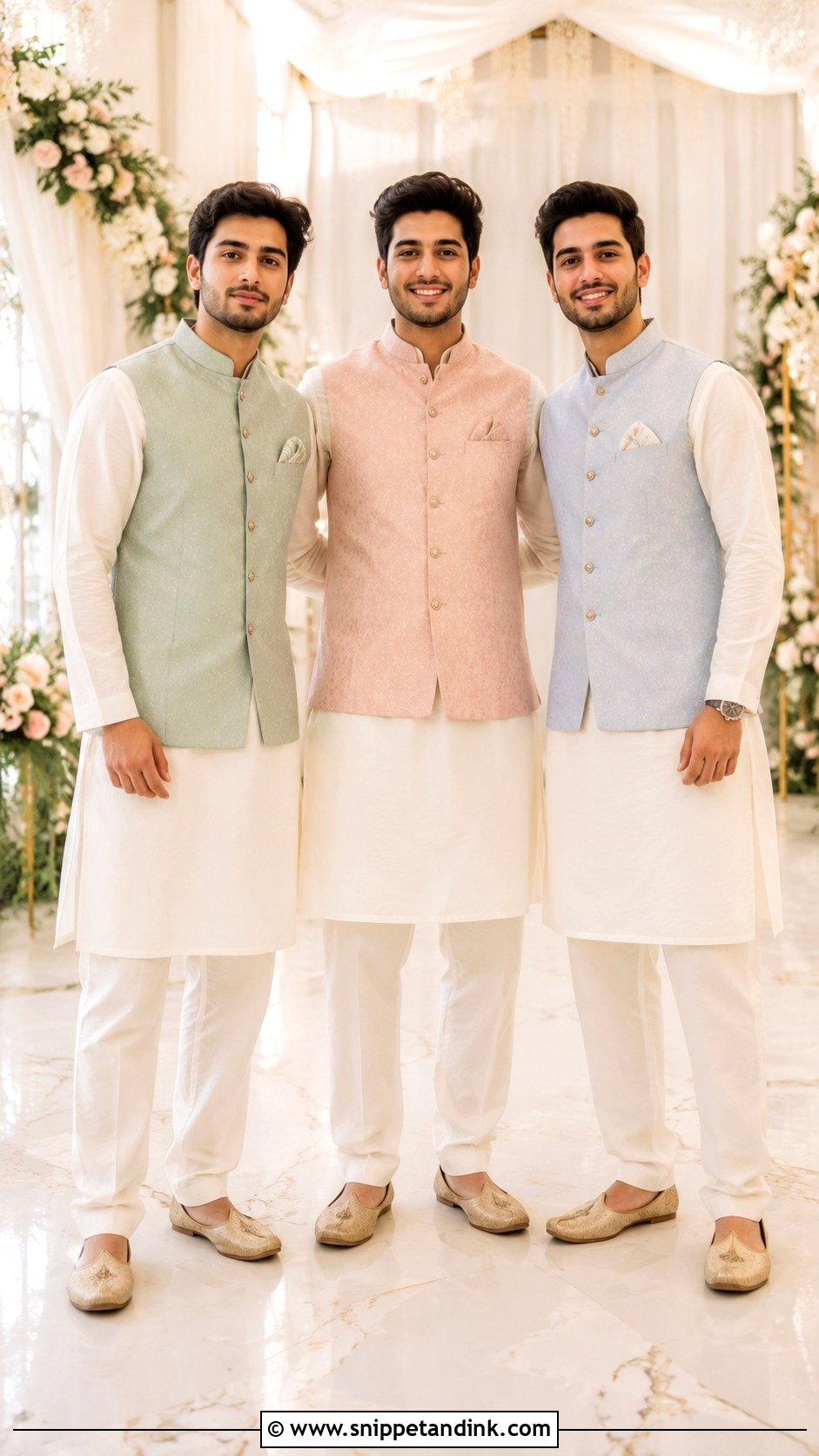
Siblings photograph best coordinated, not cloned. I keep the kurta base the same, say ivory kurta pajama sets, and vary the jackets inside one palette: sage for one brother, blue for another, blush for the youngest. Footwear stays consistent, neutral juttis or loafers across the row, because mismatched shoes are what the eye catches first in a group shot. The common mistake is buying one design in several sizes from the same rack without trying them on; children’s sizing varies so much that one fits and the next drowns. Fit each boy individually, cousins included.
19. Boys Kurta Jacket Sneaker Outfit
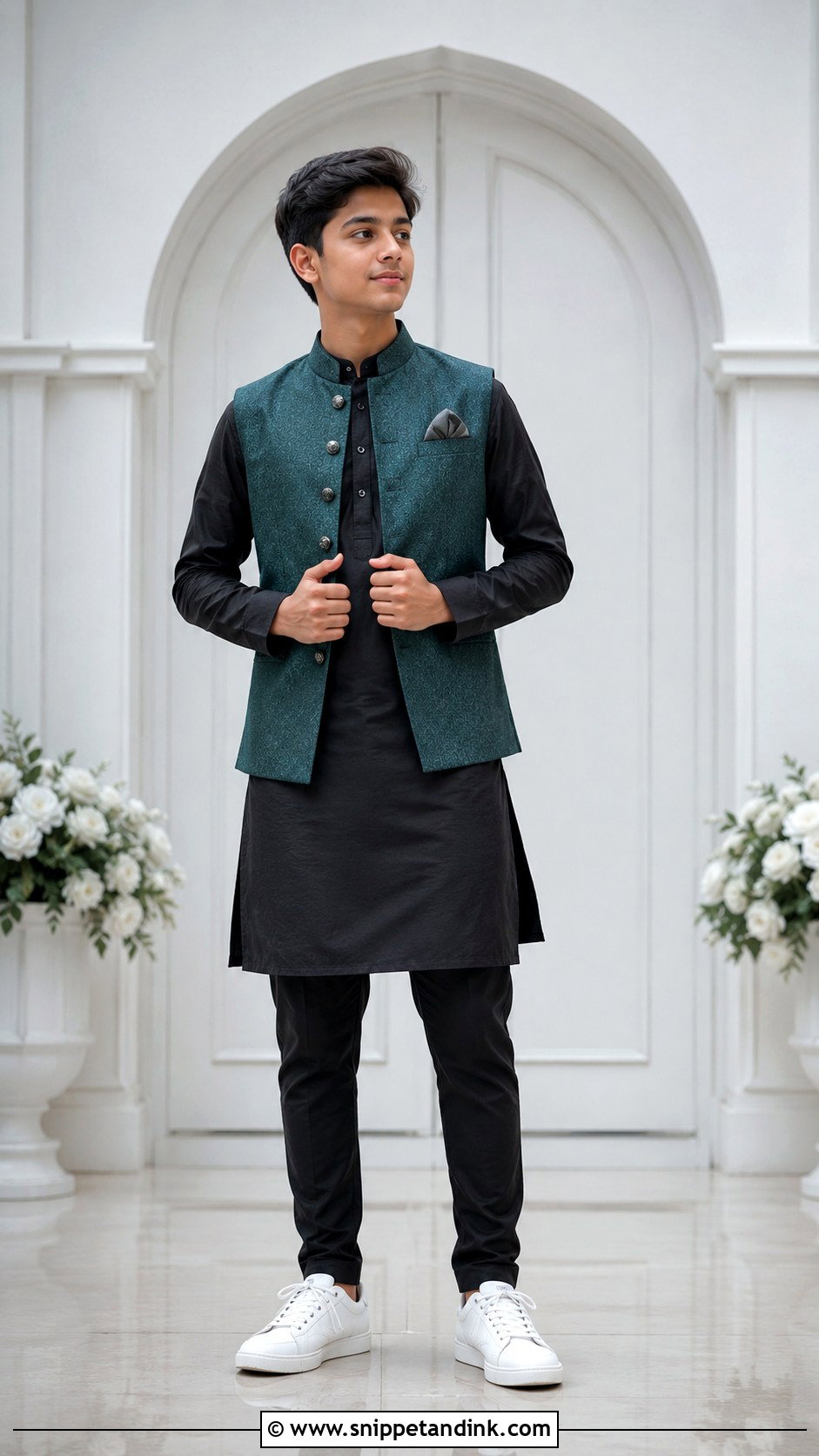
Can a kurta work with sneakers? Yes, if everything above the shoe is streamlined. I pair a knee-length solid kurta with tapered pajama pants or ankle-length trousers and a printed or textured Nehru jacket in the wedding colours. The sneaker must be spotless white leather or leather-look with a slim, low sole; chunky trainers or big logos make the whole thing read as a school assembly. Hide the socks and hem the trousers to show the shoe cleanly. Older boys like this look, and it is the most dance-proof option for a sangeet or destination wedding.
20. Boys Linen Kurta Trouser Outfit
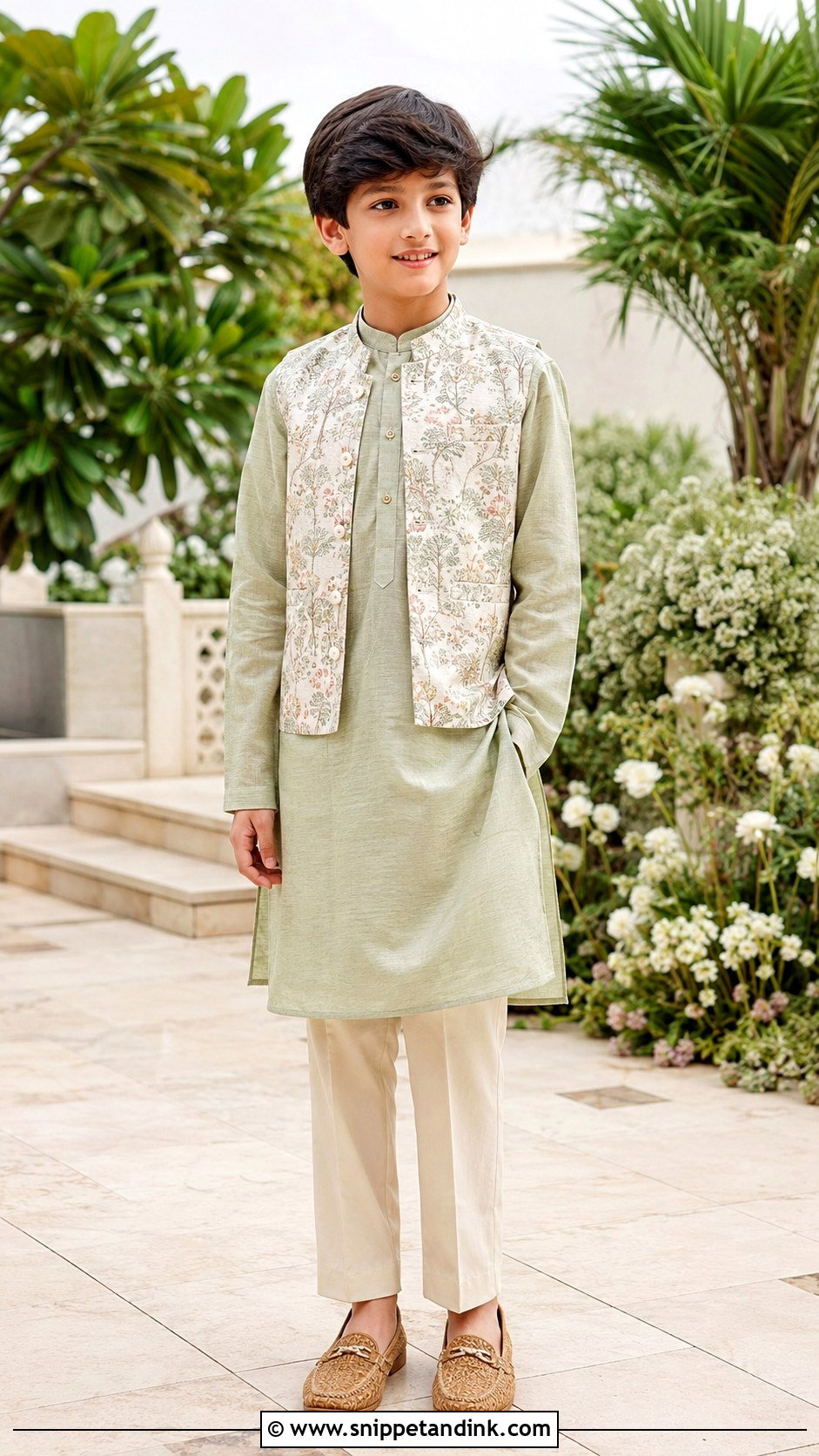
Linen keeps a child cooler than anything else on this list, but it wrinkles the moment he sits, and I’d rather a family accept that than fight it. Choose a linen-blend kurta (the blend creases less than pure linen) in ivory, light blue, sage, sand or soft peach with minimal collar embroidery. Straight white or beige trousers suit linen’s loose texture better than a tight churidar. Tan loafers, woven slip-ons or cushioned sandals finish it, and a printed waistcoat can go on for the ceremony and come off afterwards. Skip brocade layers and scarves in humidity.
A Spare Set, a Stain Pen and Other Things in My Kit for Little Guests
Multi-day weddings are hard on children’s clothes, and the outfit rarely fails because of style. It fails because of food, heat and bathroom trips. Churidars and draped dhotis are the trickiest for a young boy to manage alone, so if he isn’t yet confident, choose elastic waists and assign an adult to help during the ceremony.
What goes in the bag
- A plain kurta or polo in a colour close to his outfit, for after the formal photos.
- A stain remover pen and a few safety pins for slipped dupattas and loose buttons.
- A small lint roller, especially for velvet and dark suits.
- Spare socks and plasters for new shoes.
I schedule family portraits with the children early, before dinner, while the clothes are clean and the boys are fresh. After that, I’d let him take off the jacket, swap into sandals and enjoy himself.
Storing Sherwanis and Suits a Child Will Outgrow
Many families pass these outfits to a younger brother or cousin, so a little care after the wedding pays off. Have embroidered pieces dry cleaned and point out any food marks, since sugar stains can turn brown in storage if left. Store sherwanis and jackets on padded hangers in breathable cotton garment bags, never sealed plastic, which traps moisture and can yellow ivory fabrics. Fold zari or metallic embroidery inside out with soft tissue between the layers so the threads don’t snag or tarnish against each other.
Dressing Him for the Last Dance, Not Just the First Photo
The outfits that succeed are the ones a boy forgets he is wearing. Sherwanis, achkans and embroidered kurta sets cover the ceremony; bandhgalas, tuxedos and waistcoat sets cover the reception. Before any of the decoration, I check fabric weight against the weather, fit through the shoulders and seat, a waistband that stays up, and shoes he can run in. Coordinate with siblings by colour rather than identical pieces. Get those basics right and he will still look put together in the late-night photos, which are often the ones the family keeps.
You'll Like These Ideas:


Leave a Reply