
Plenty of couples tell me at the tasting that nobody in their family really eats wedding cake, and they’re usually right: half-eaten slices are some of the most common things my team clears at the end of a night. Skipping the tiered cake opens up desserts guests pick up and finish, from stacked pastries to chilled cups to a small cutting cake beside a bigger spread. What matters from the kitchen side is how each option is served, how long it survives in the room, and how much of it you need. Here are 20 alternatives I’ve seen work, with the practical catch for each one.
How Many Pieces Per Guest When Nothing Gets Sliced?
Quantity is the question I’m asked most when couples replace the cake. A slice of cake is one portion; small desserts are eaten differently, and guests will take more than one.
- One dessert only (a cupcake tower or cheesecake), plan around one and a half portions per guest.
- A mixed dessert table with no cake, plan for two to three small pieces per guest.
- Late-night snacks like churros or waffles, plan for about half your guests, since not everyone stays.
- Takeaway bags add to your total; count them separately.
These are starting points, not rules. Evening weddings with a long dance floor eat more sweets than an afternoon wedding with a big lunch.
1. Wedding Cupcake Tower
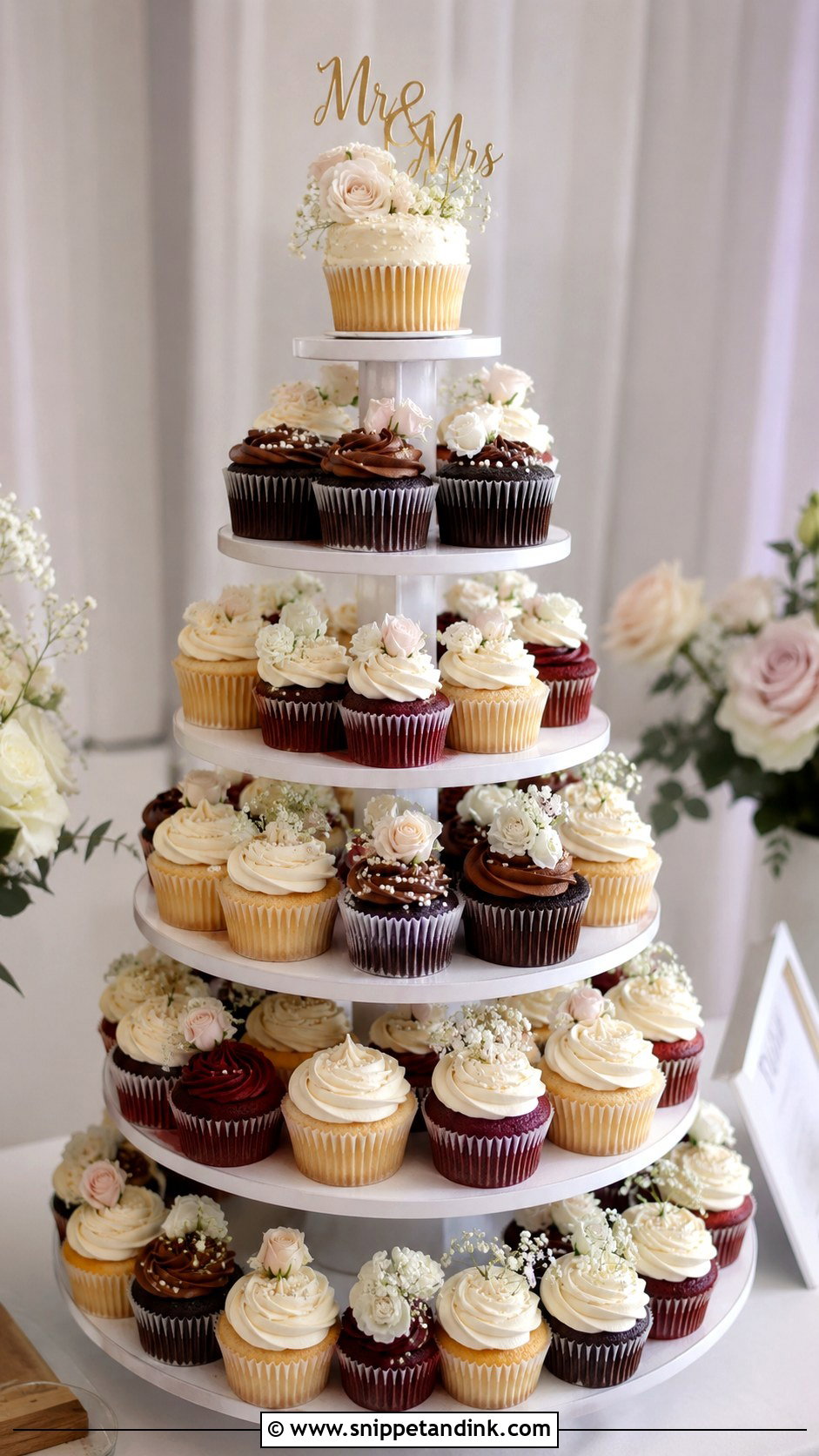
A wedding cupcake tower keeps the height of a tiered cake while letting guests choose their flavour. I’d limit the menu to three or four flavours and two frosting styles; more than that and the tower looks scattered and the baker’s costs climb. Buttercream on cupcakes softens in a warm room, so keep the tower away from windows and the dance floor lights. A small cake on the top tier gives you something to cut for photos.
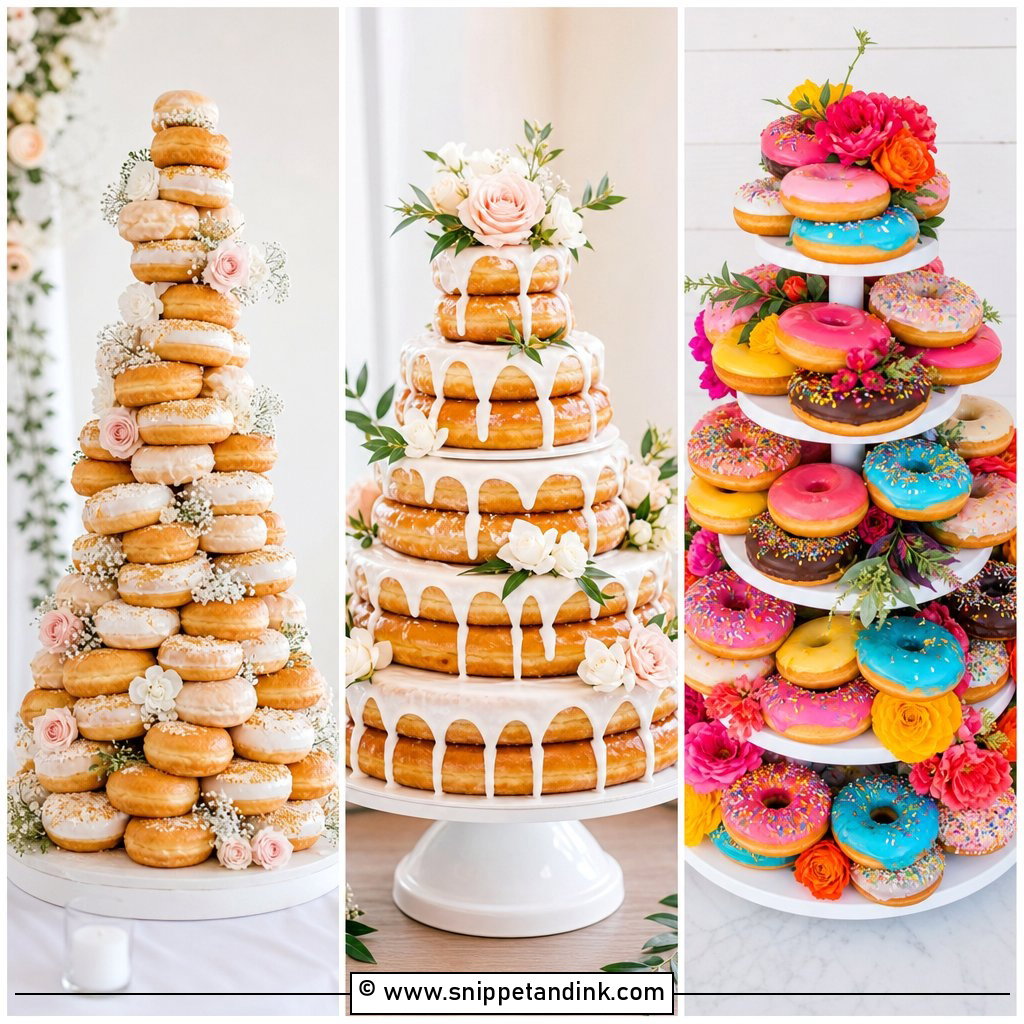
2. Wedding Donut Wall
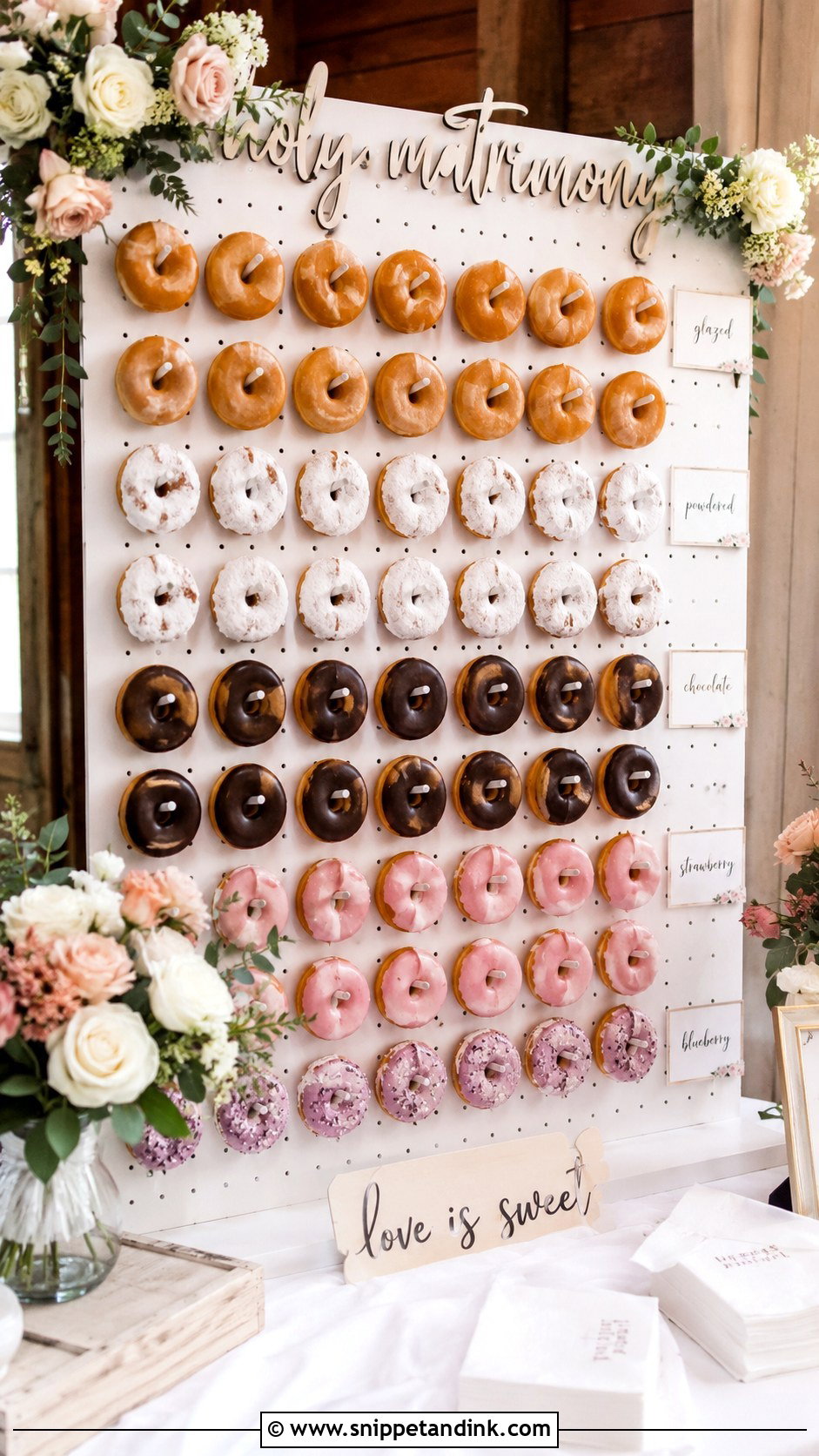
Donuts lose their softness quickly once they’re out of the box, so I ask the bakery to deliver as close to dessert time as possible and hang the wall just before guests reach it. Glazed and powdered donuts behave differently: glaze turns sticky in humidity, while powdered sugar dusts everything below. Arrange by colour, use white pegs and clear labels, and keep a tray of extras underneath so you can refill the wall instead of leaving gaps.
3. Wedding Macaron Tower
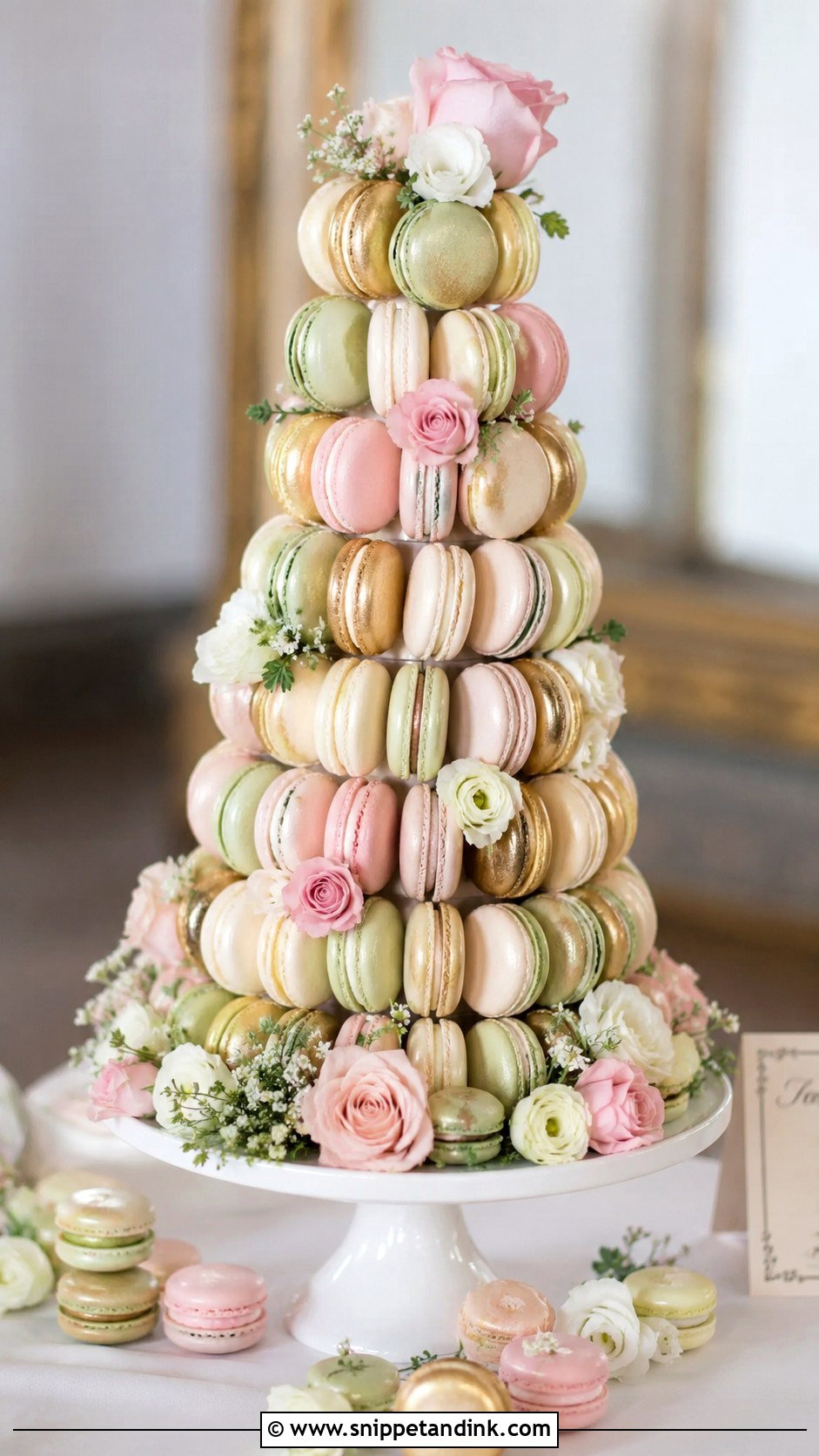
Macarons are light after a big dinner and look tidy on a cone. They also hate humidity: the shells soften and the fillings weep in a warm, damp tent. I only recommend a macaron tower for indoor or air-conditioned dessert areas, and I bring them out shortly before service. Pick flavours by season, like raspberry and lemon in summer or coffee and salted caramel in autumn. Keep spares in a sealed box in the kitchen.
4. Wedding Croquembouche
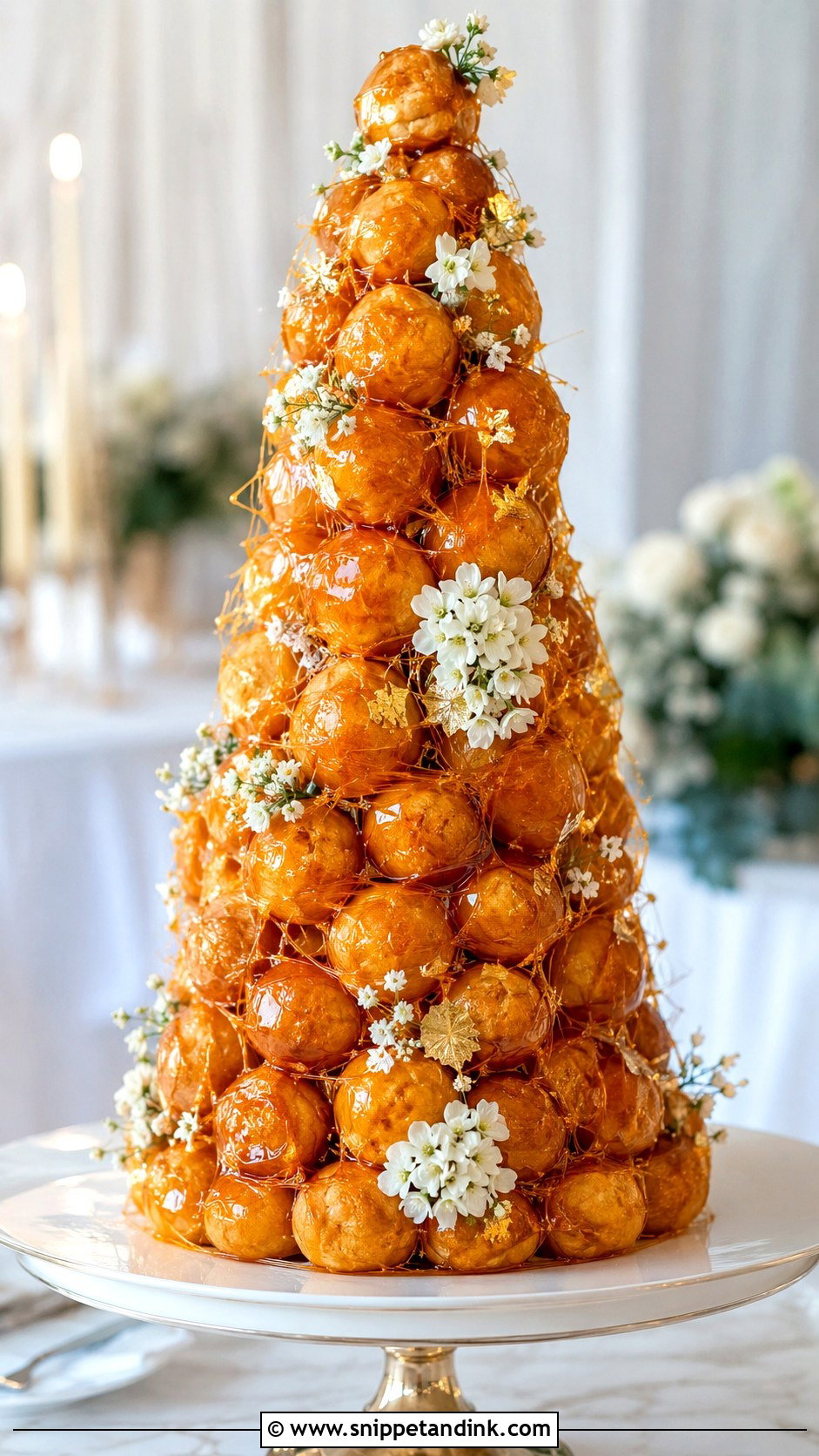
A croquembouche is a stack of cream puffs held with caramel, and it’s as dramatic as any tall cake. The caramel is what makes it tricky: humidity softens it, and the tower can start to lean within a couple of hours. I assemble it on site, as late as possible, and keep it out of the sun. Vanilla pastry cream is traditional; chocolate or coffee also hold well. Put tongs and small plates beside it so guests don’t pull the structure apart from the top.
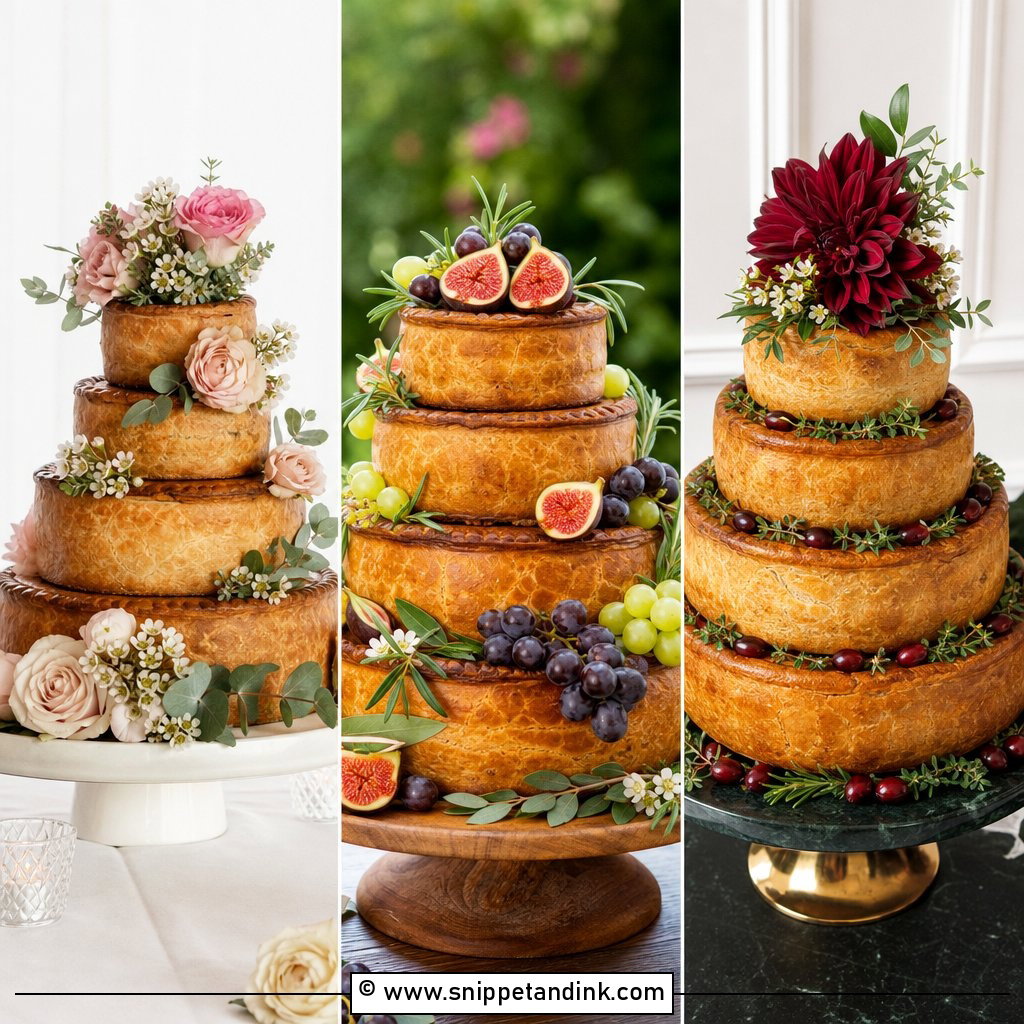
5. Wedding Pie Table
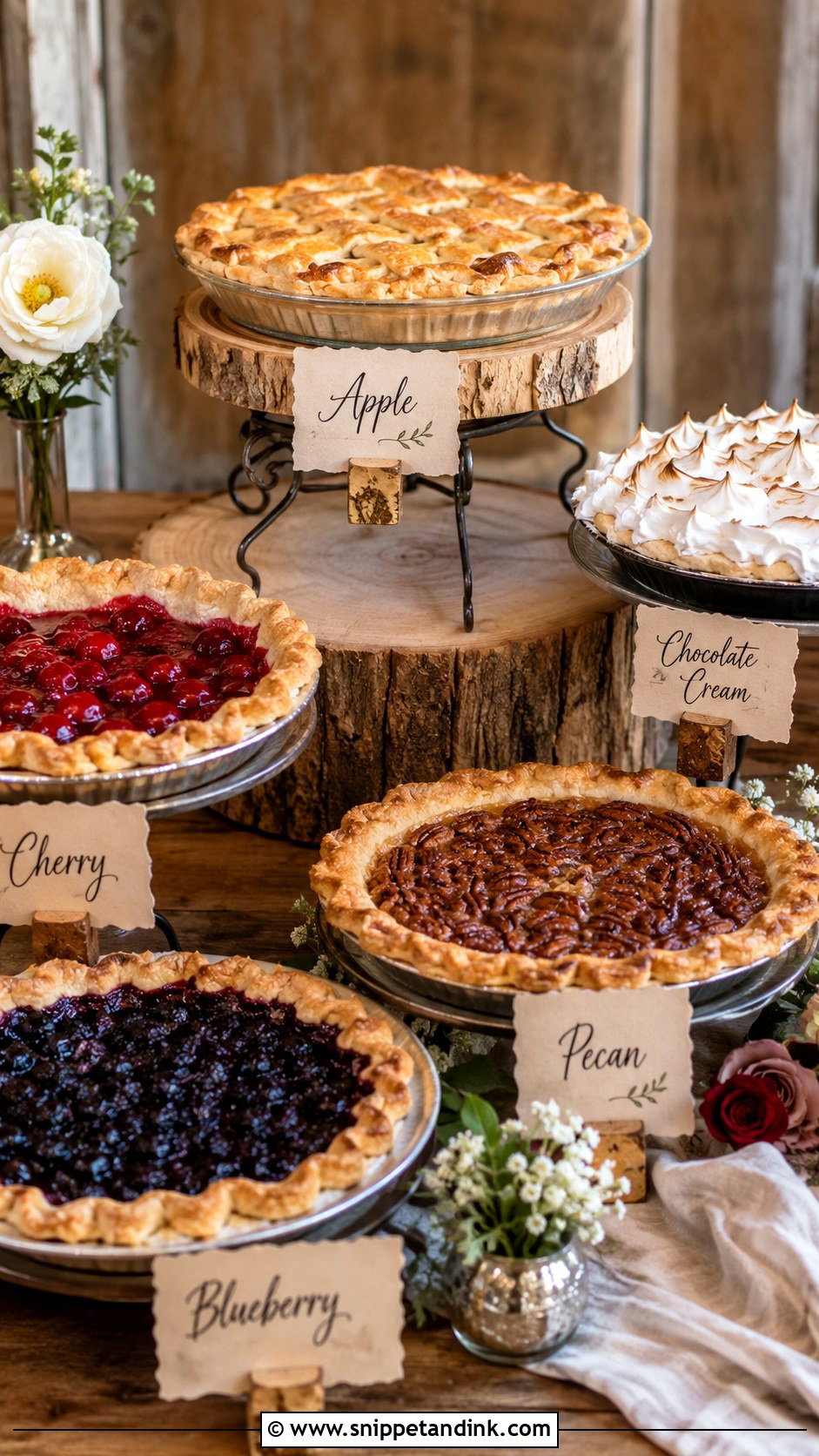
Pies suit rustic, garden and autumn weddings. The catch is cutting: a pie table means someone has to slice dozens of pies neatly, so budget for staff or pre-cut them. Cream and meringue pies need refrigeration and can’t sit out for long; fruit and nut pies like apple, cherry or pecan are much sturdier. I mix heights with cake stands and add mini pies for guests who just want to grab one.
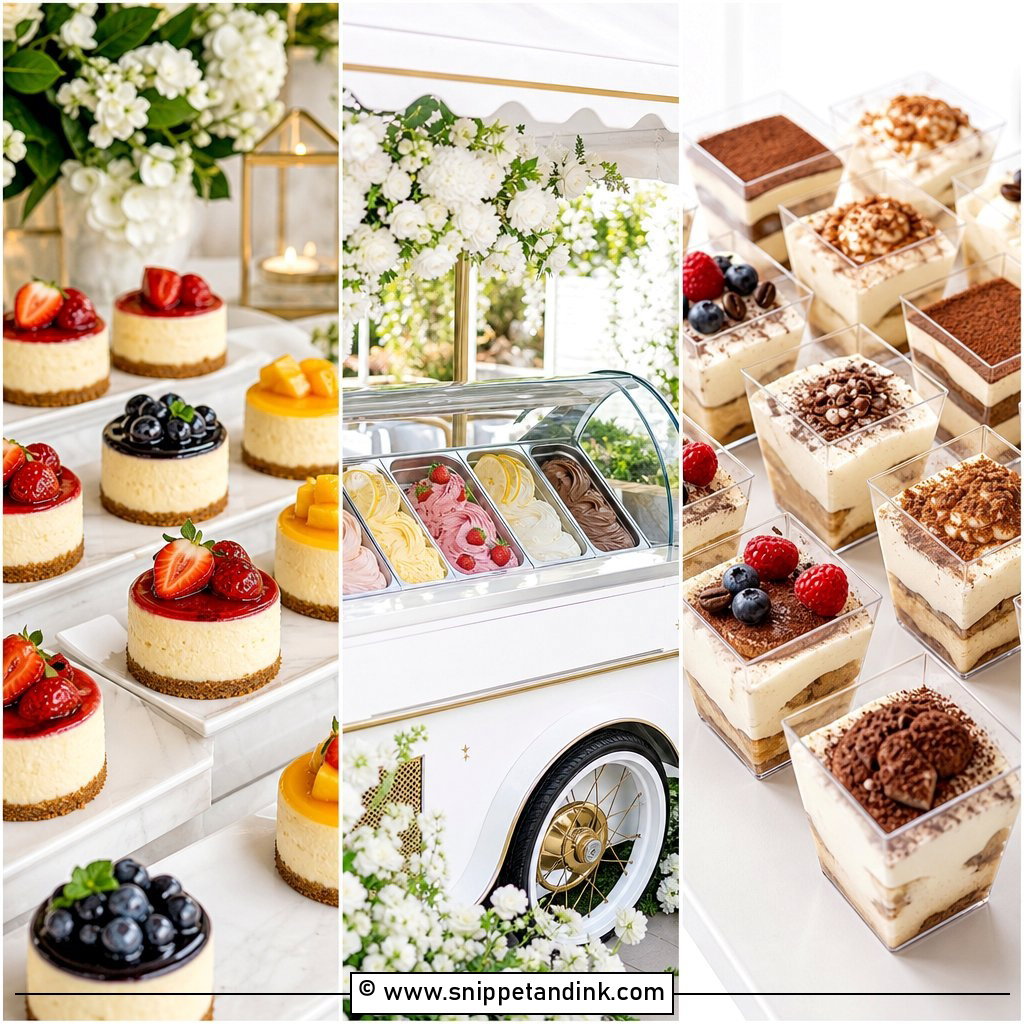
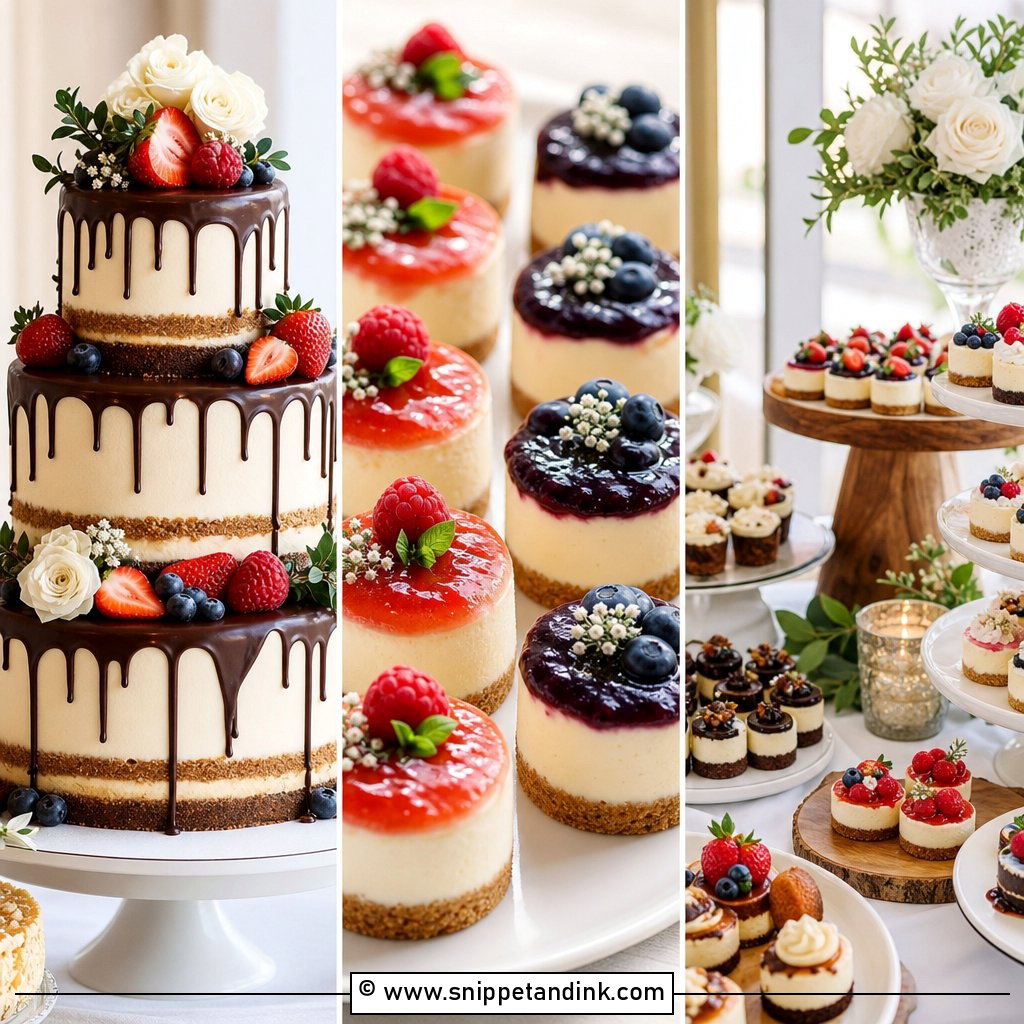
6. Wedding Cheesecake Tower
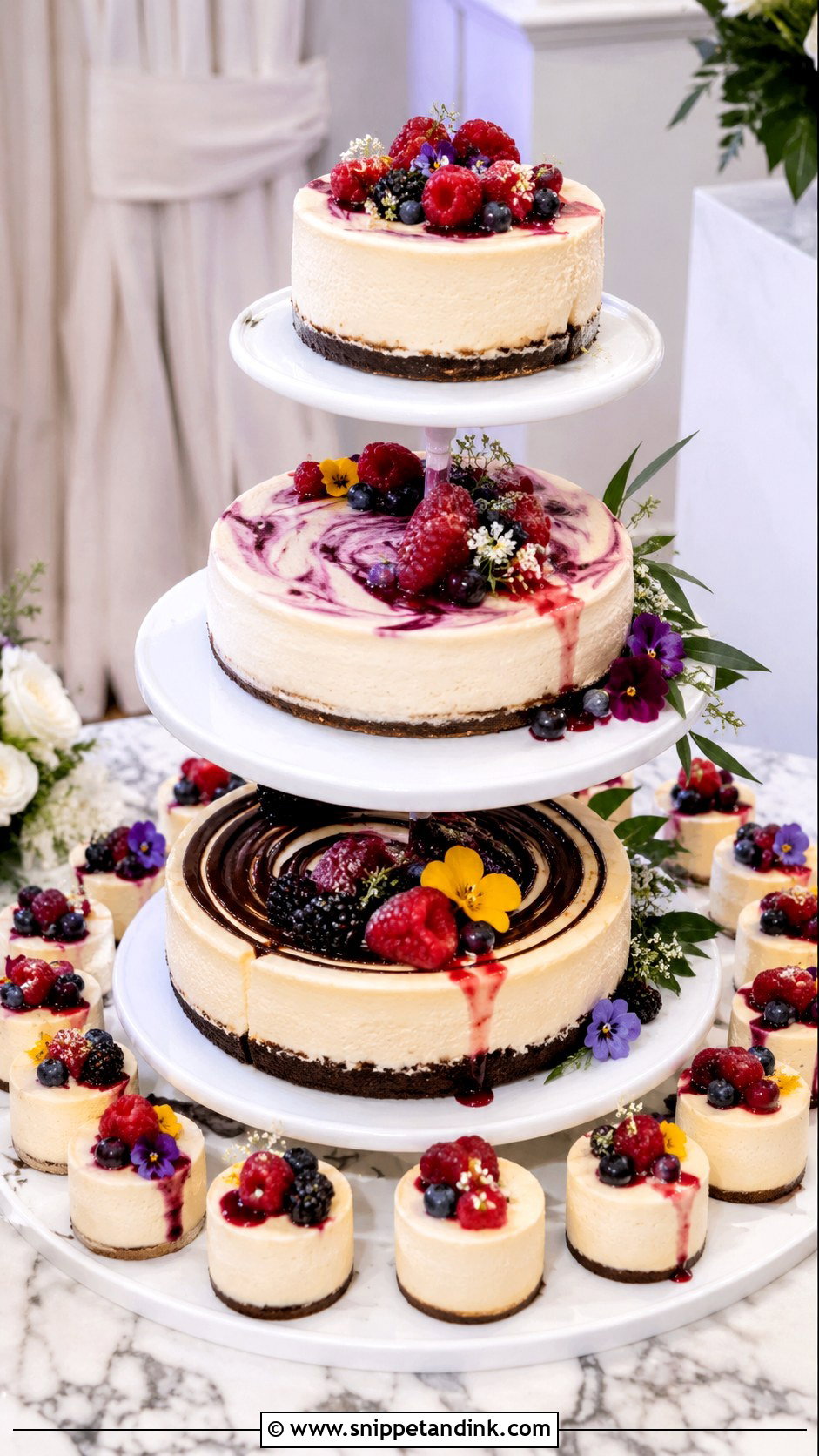
A wedding cheesecake tower can be stacked whole cheesecakes or minis on tiers. Cheesecake is a chilled dairy dessert, so it should come out of the fridge shortly before service and not sit at room temperature for hours. Whole cheesecakes cut cleanly with a hot, wiped knife; I plan for a staff member to do this. Decorate with fresh fruit or a light sauce added just before serving so it doesn’t bleed into the top.
7. Wedding Brownie Stack
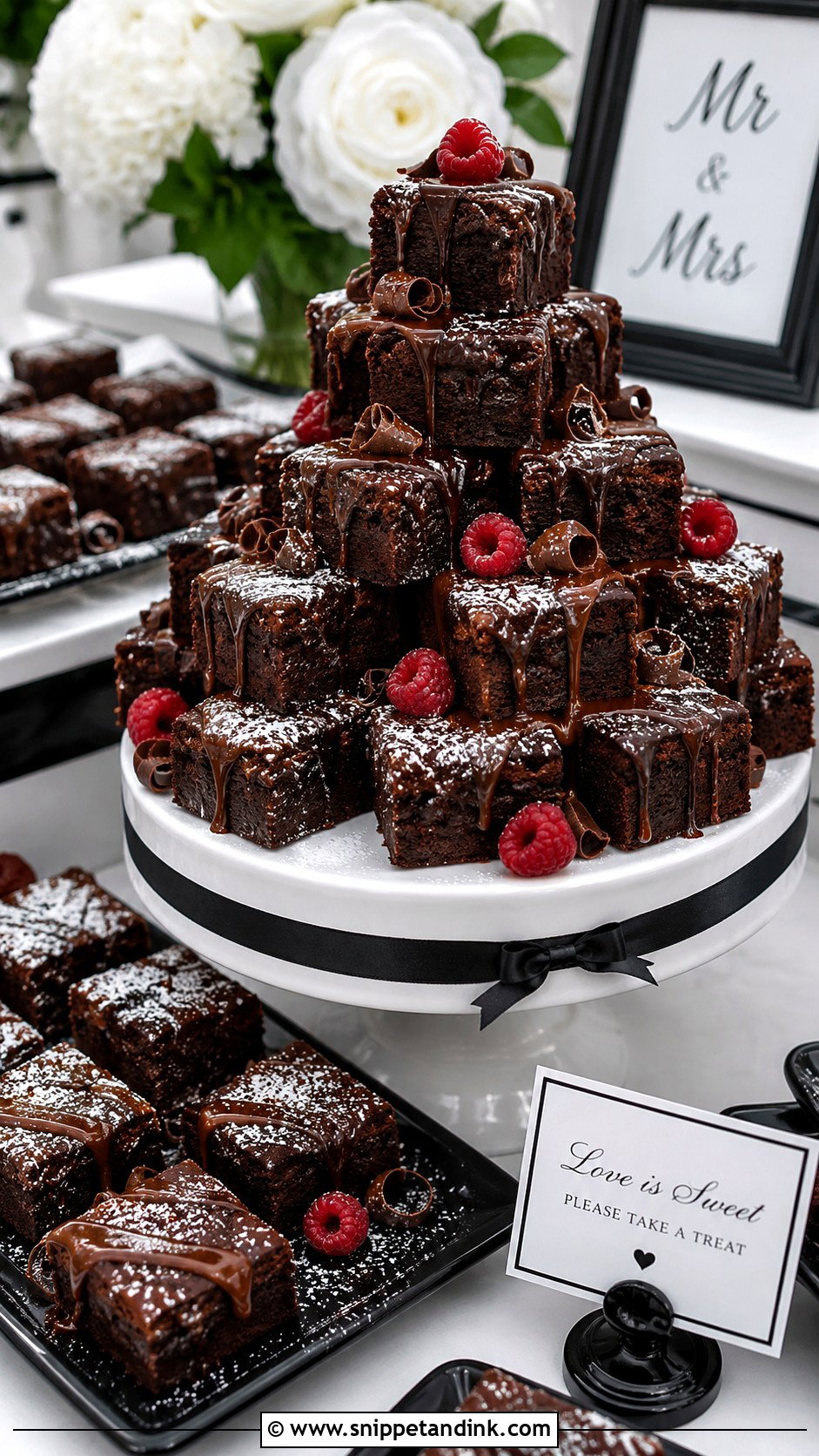
Brownies are one of the most forgiving desserts I serve. They can be made a day ahead, don’t need chilling, and portion cleanly. Stack thick squares into a tower or arrange them on trays, and mix fudge brownies with a few flavoured ones. Cheesecake-swirl brownies are the exception and need to stay cool. Pair with coffee or milk shots for a late-night feel.
8. Wedding Cookie Table
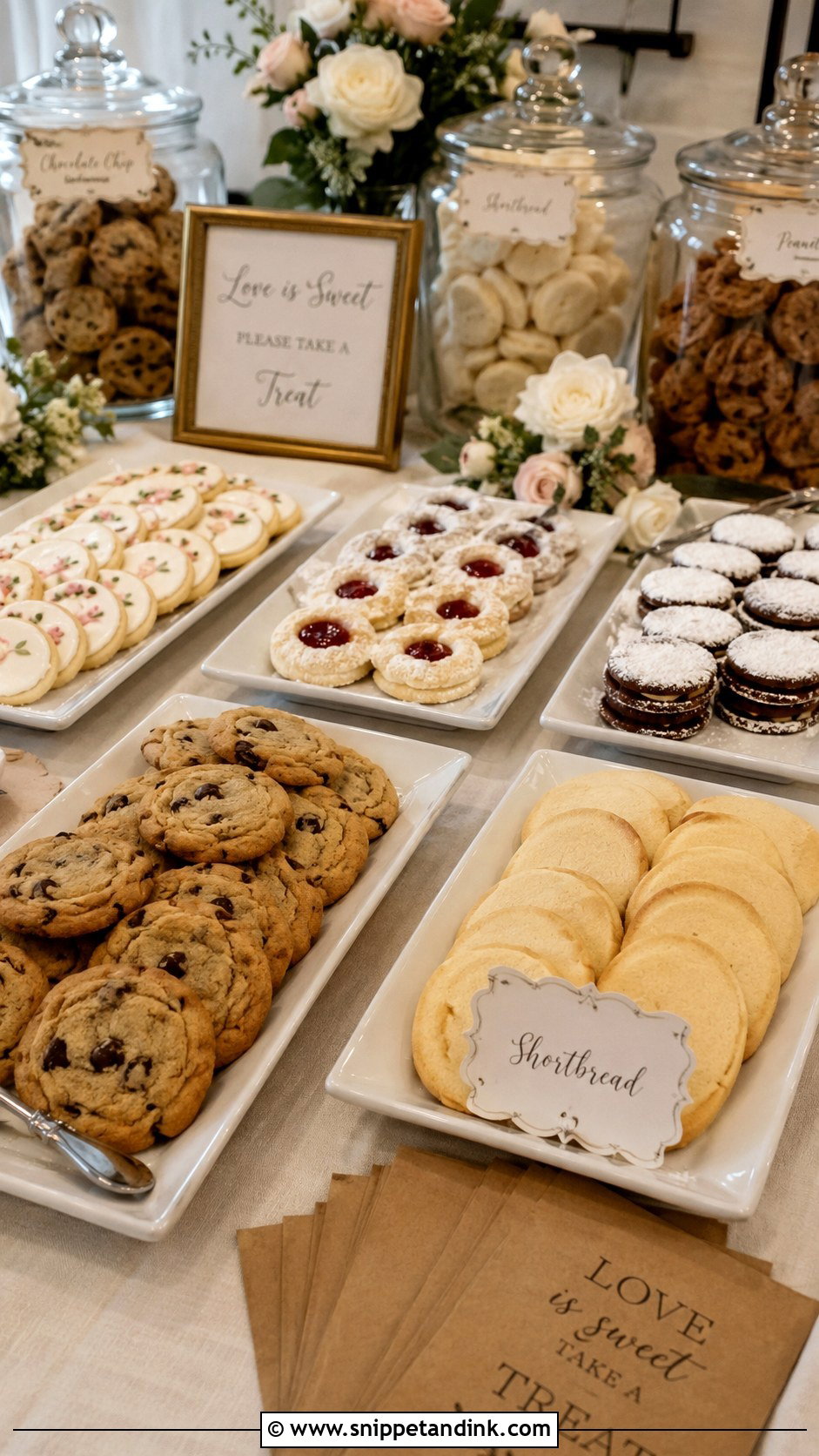
A wedding cookie table is often built from family baking, which is lovely but needs coordination. I ask families to bring cookies already in labelled containers, with a note if they contain nuts. Group each type on matching trays, put taller jars at the back, and leave takeaway bags at the end of the table. Check your venue’s policy first, as some don’t allow homemade food.
9. Wedding Dessert Table
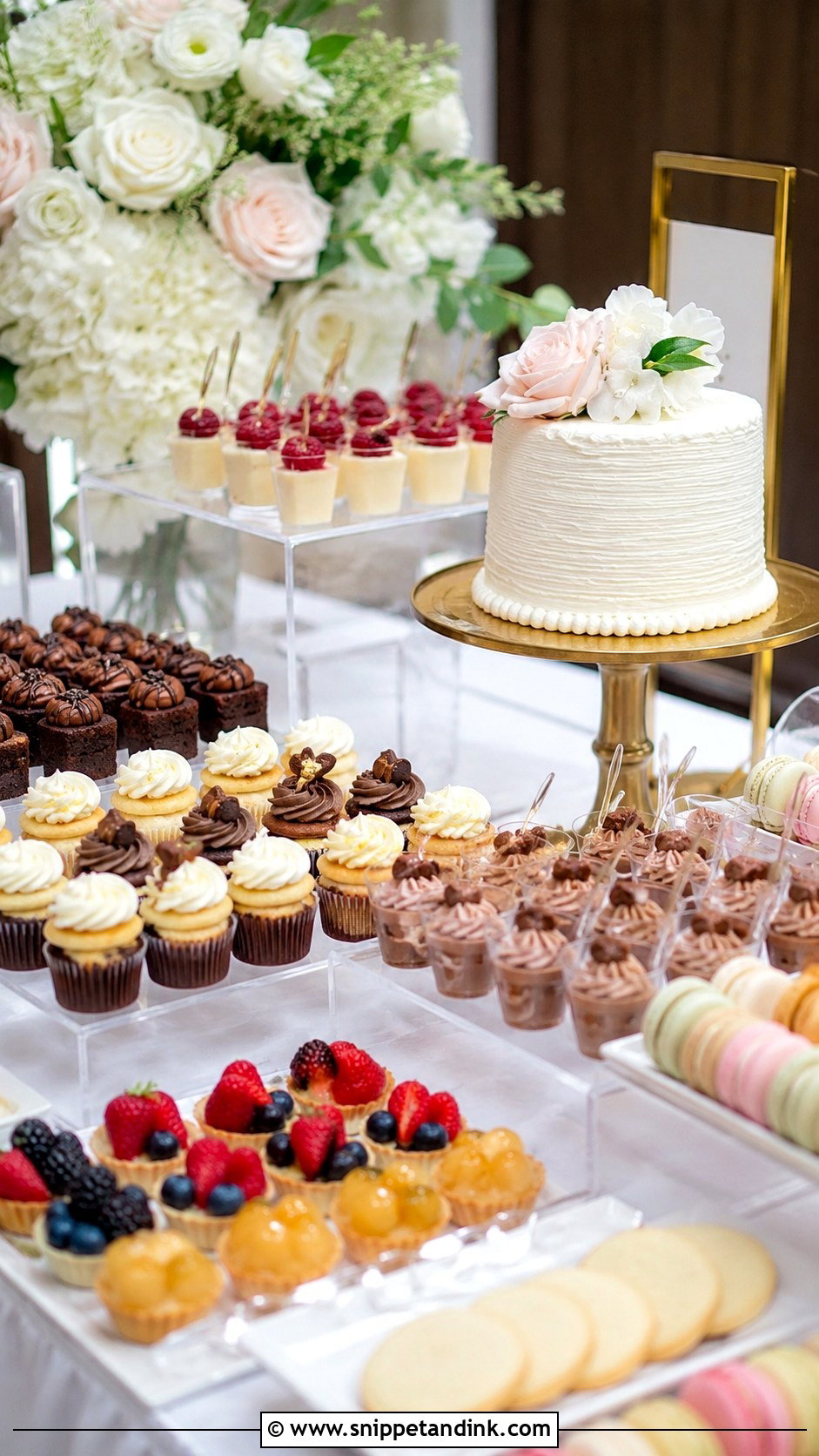
A wedding dessert table gives the most variety and the most choice for guests with dietary needs. I plan it in zones: the showiest pieces in the centre for photos, and grab-and-go items at the sides where people actually queue. Repeat the same serving pieces and two or three colours so it looks coordinated. Label gluten-free, dairy-free and nut-free items clearly, and keep those on separate platters with their own tongs.
10. Wedding Mini Tart Display
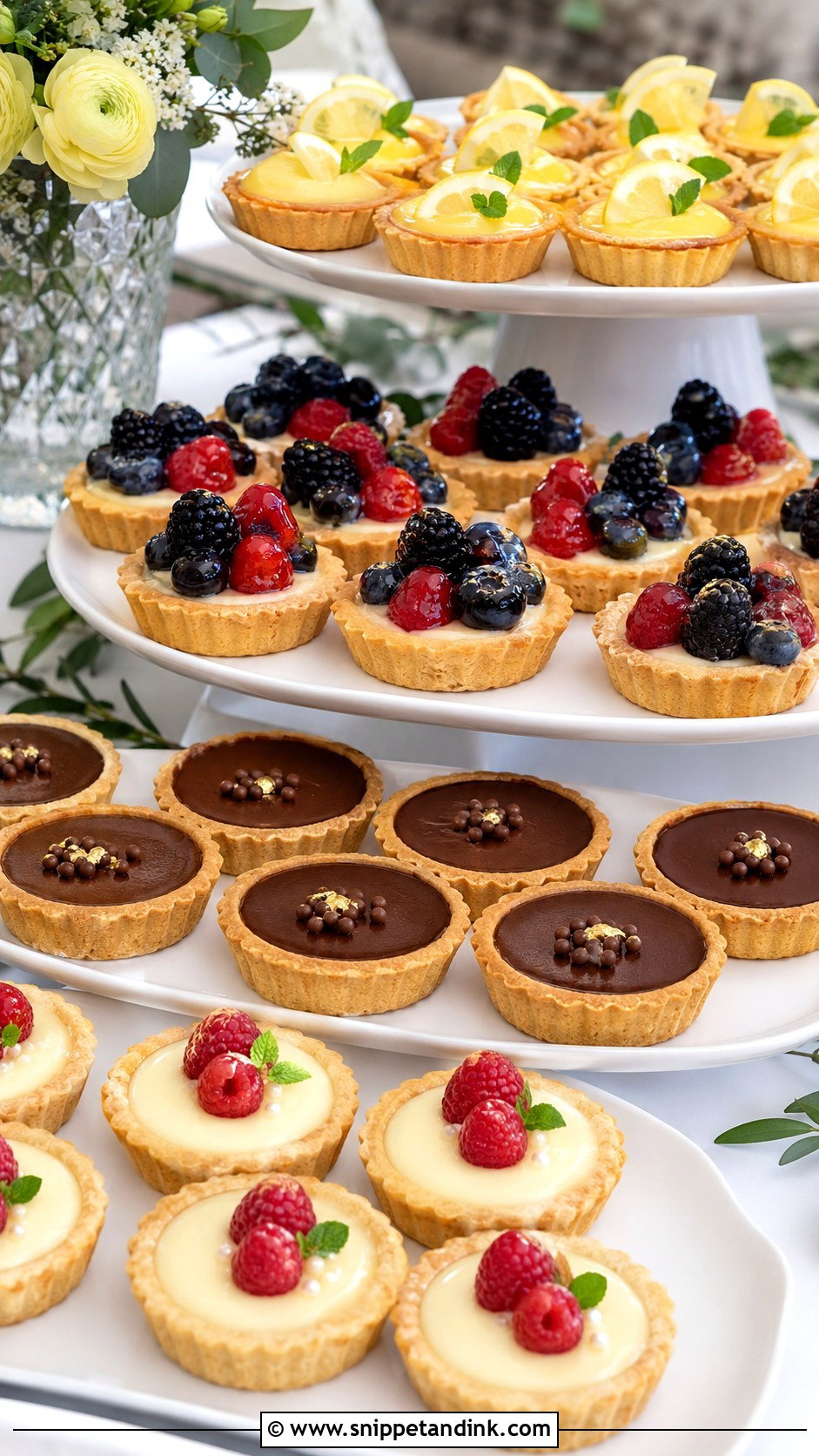
Mini tarts are bright and easy to pick up, but the pastry is the weak point. Once filled, a tart shell slowly softens, so I fill them close to service or brush the shell with chocolate or cocoa butter to seal it. Lemon curd, berry and chocolate ganache sit well together. Keep fruit-topped tarts chilled until service; berries weep in the heat.
11. Wedding Tiramisu Cups
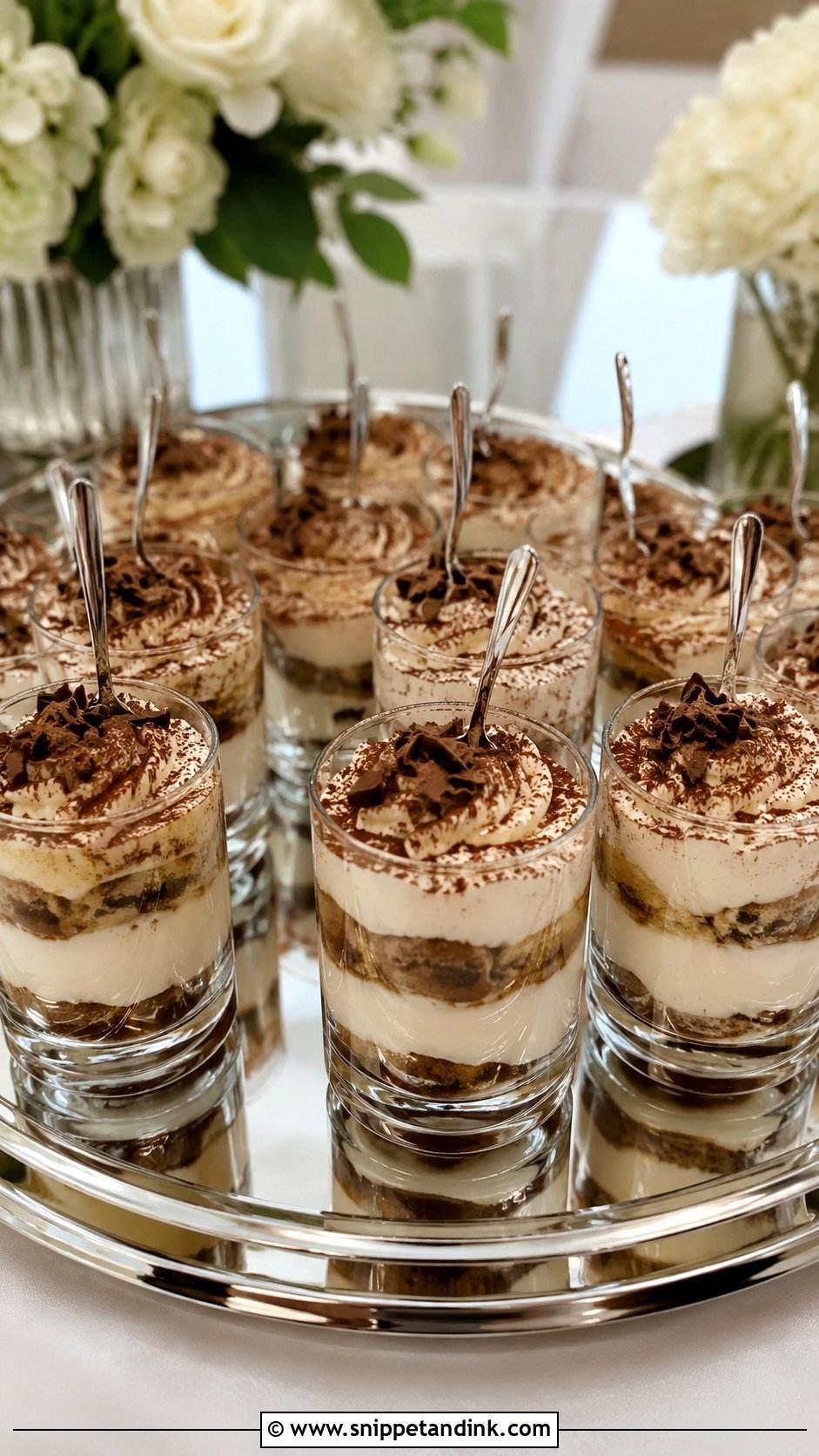
Tiramisu cups give you a restaurant-style dessert without a slicing station. Classic tiramisu uses espresso and mascarpone and often raw egg or alcohol, so I make sure guests know what’s in it, and offer a non-alcoholic version if children or non-drinkers are at the wedding. Clear cups show the layers. I dust the cocoa just before service; dusted early, it absorbs moisture and goes patchy.
12. Wedding Ice Cream Sandwich Bar
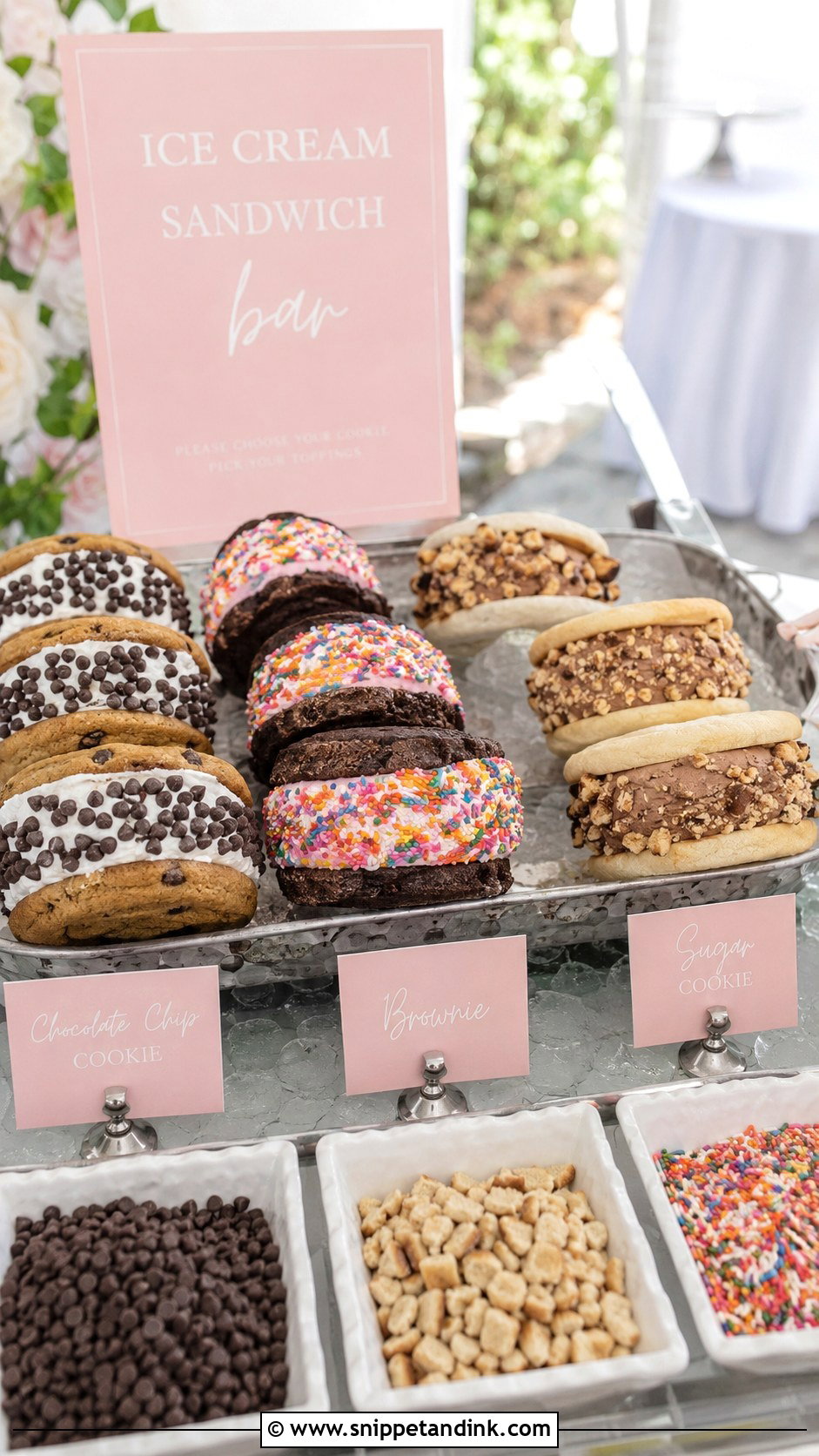
An ice cream sandwich bar is fun but needs serious freezer planning. Ice cream starts to soften within minutes on a buffet, so I either pre-make the sandwiches and keep them in a freezer cart, or have staff build them to order. Soft-baked cookies work best because hard cookies crack when bitten. Include a dairy-free option. In hot weather, plan on at least one staff member at the bar all night.
13. Wedding Gelato Cart
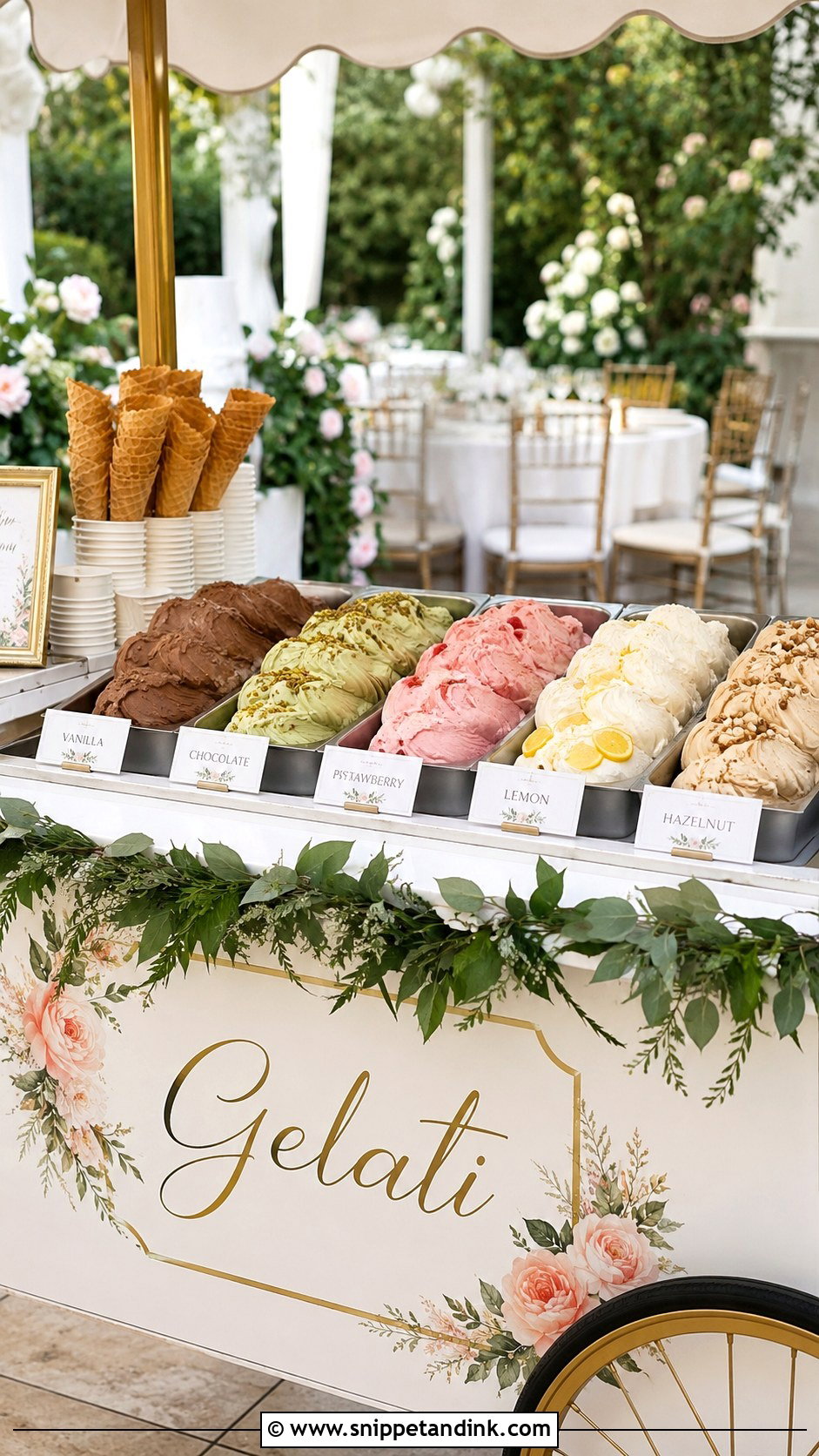
A gelato cart works for outdoor receptions because it brings its own freezer and someone to scoop. The question I always ask the vendor is how many guests they can serve per hour; a single scooper with a long queue means half the guests wait while the dancing starts. Classic flavours are fine, plus one dairy-free sorbet. Decorate the cart with your flowers and signage.
14. Wedding Cannoli Tower
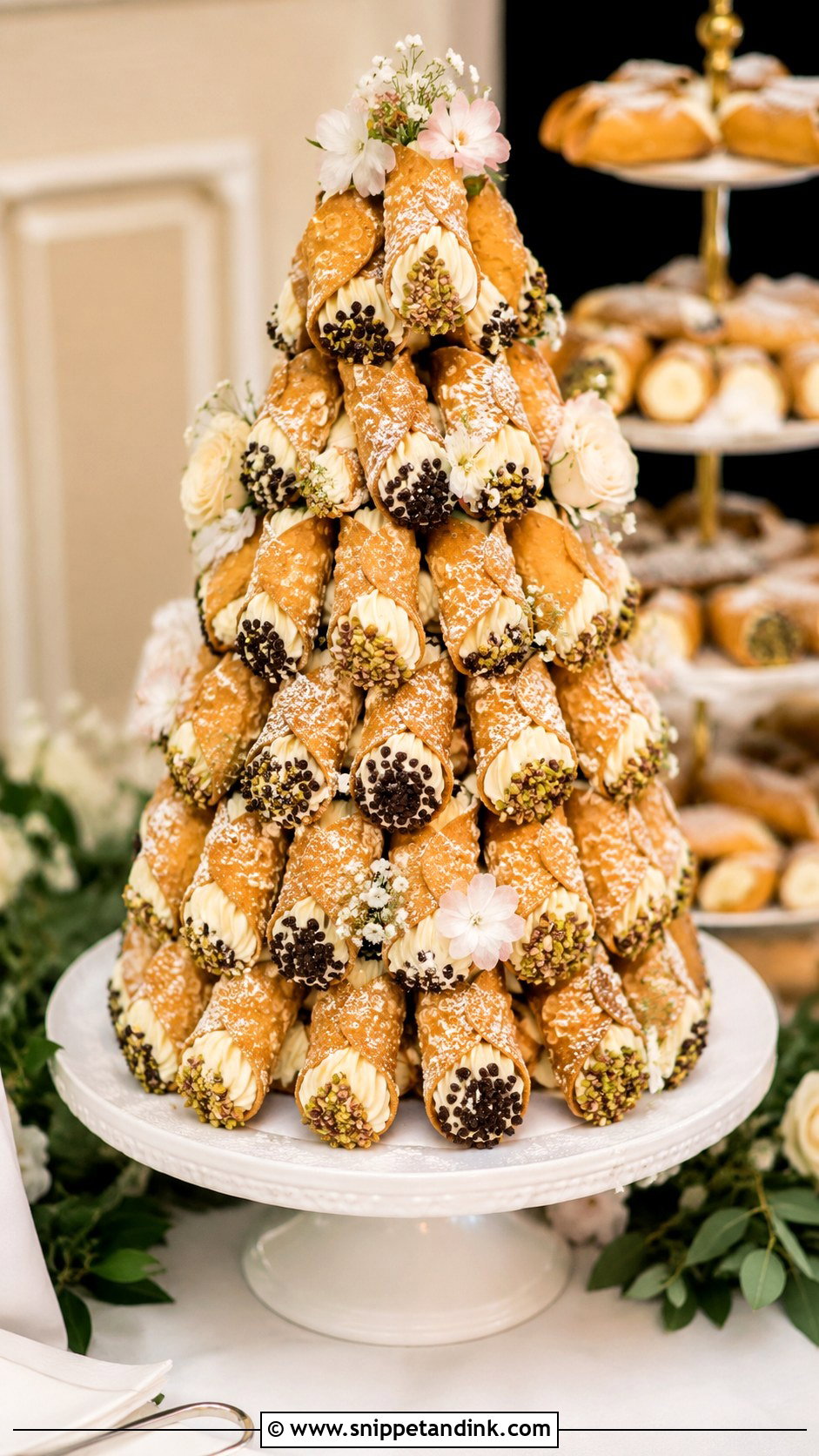
Cannoli are crisp only when they’re filled shortly before serving. Filled hours ahead, the shells soften and lose their snap, so for a tower I fill on site. Ricotta is classic for Italian desserts like these, with chocolate chip or pistachio for variety. Arrange them in a cone or on tiered trays and dust with powdered sugar right at the end.
15. Wedding Churro Bar
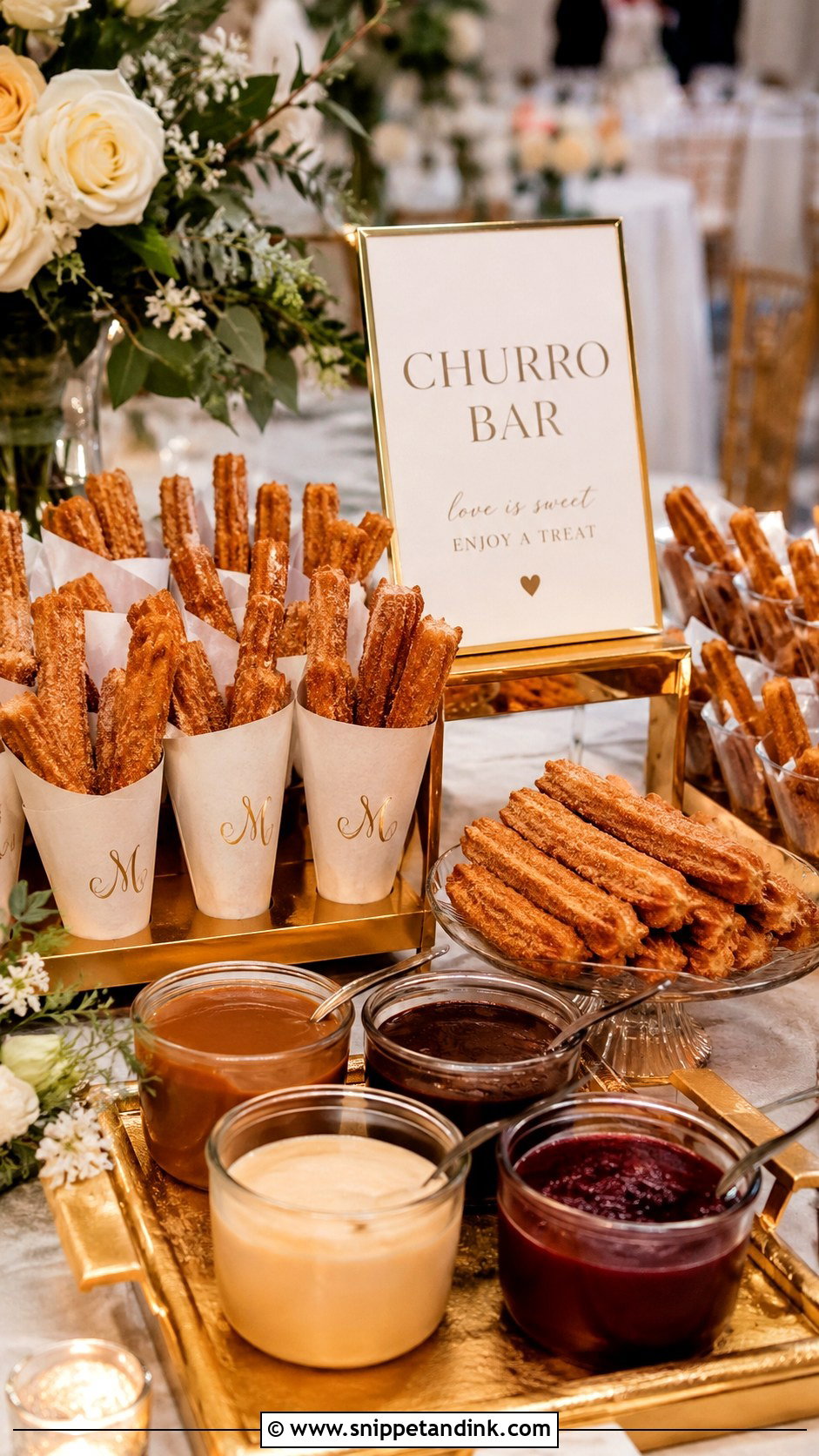
Churros taste right only when they’re warm, which means a fryer and a staffed station, not a cold display. Check whether your venue allows open frying, since many don’t. Mini churros in paper cones are the easiest to eat while standing, with chocolate and caramel for dipping. They work best as a late-night snack.
16. Wedding Waffle Stack
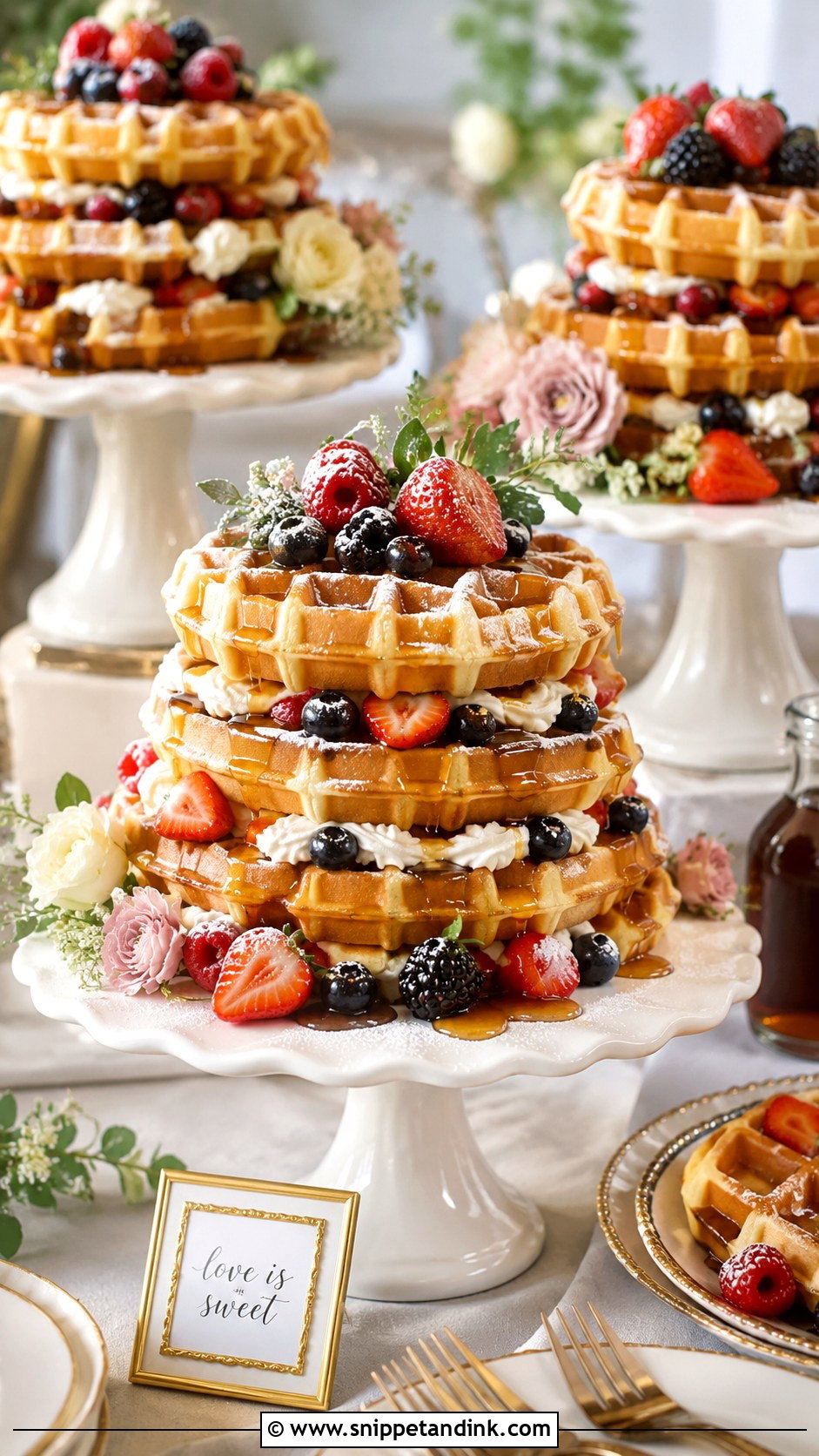
Waffles suit brunch weddings and relaxed receptions. Like churros, they need to be made to order or kept warm, otherwise they go limp. I build small stacks on tiered stands rather than one big tower, which looks better and is easier to replace. Serve with berries, syrup and cream on the side.
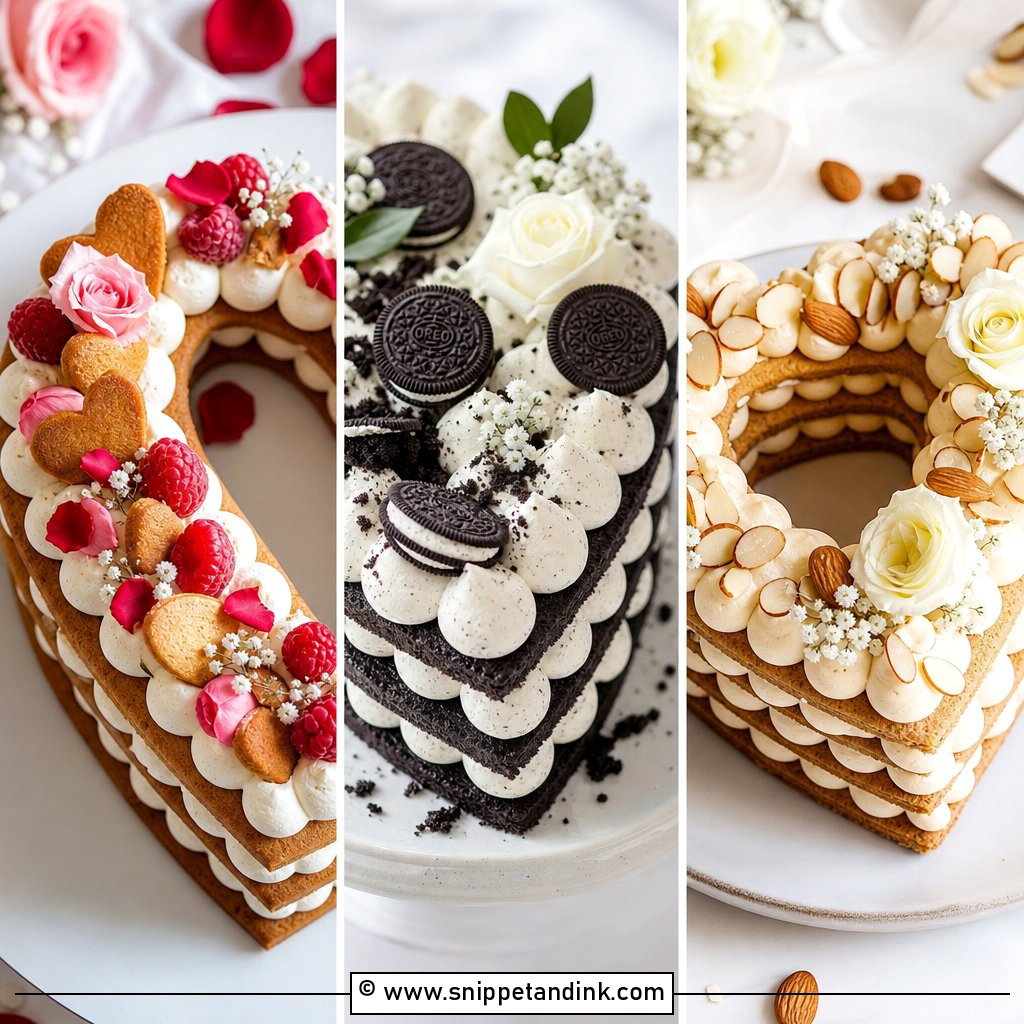
17. Wedding Crepe Cake
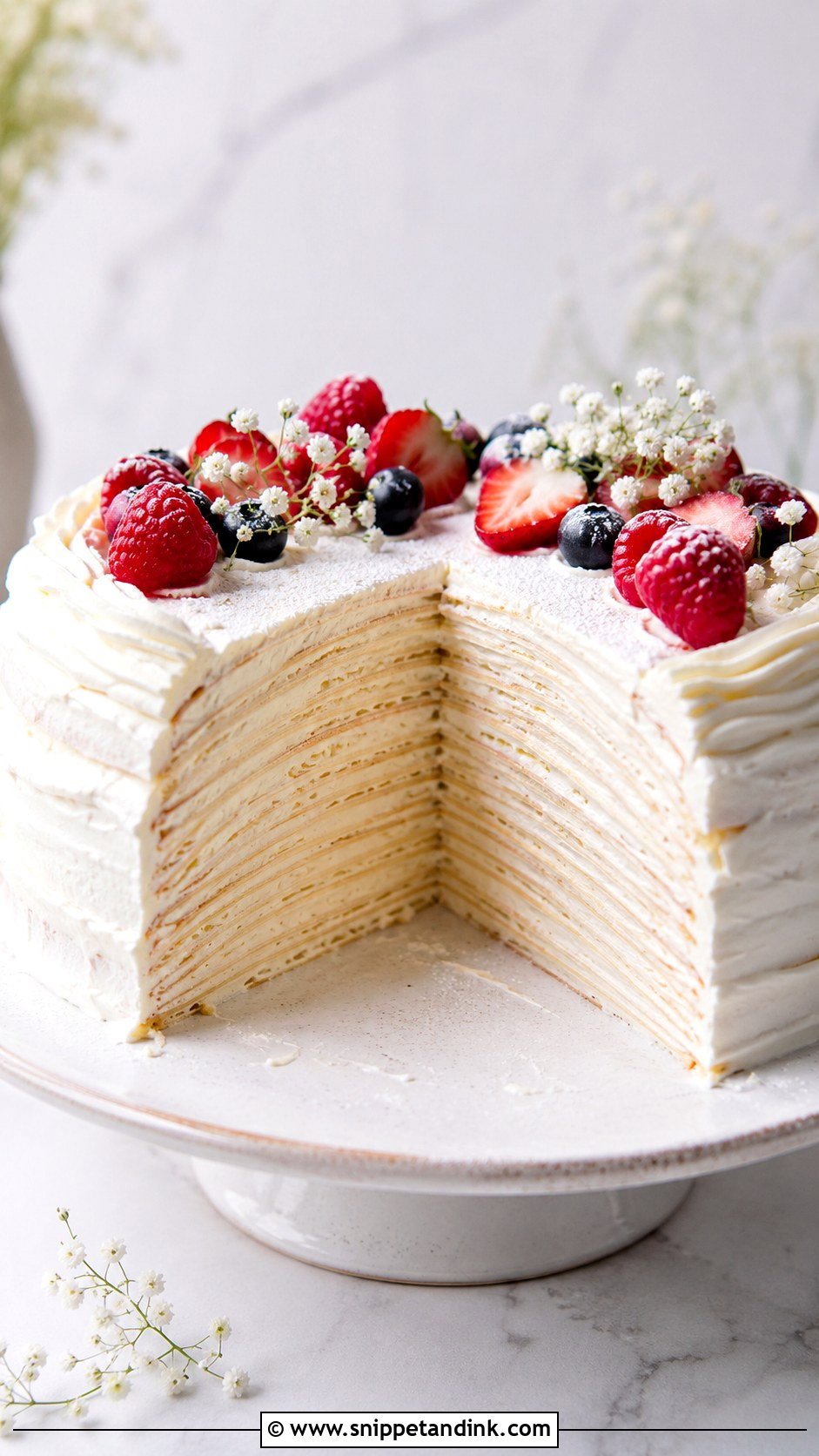
A crepe cake is dozens of thin crepes layered with cream, and it gives you a sliceable centrepiece with striped layers when cut. It must stay chilled and cuts best straight from the fridge with a sharp, warm knife. Vanilla, matcha and chocolate show the stripes clearly. It’s best for smaller weddings, as one crepe cake serves fewer guests than a tiered sponge of the same height.
18. Wedding Profiterole Tower
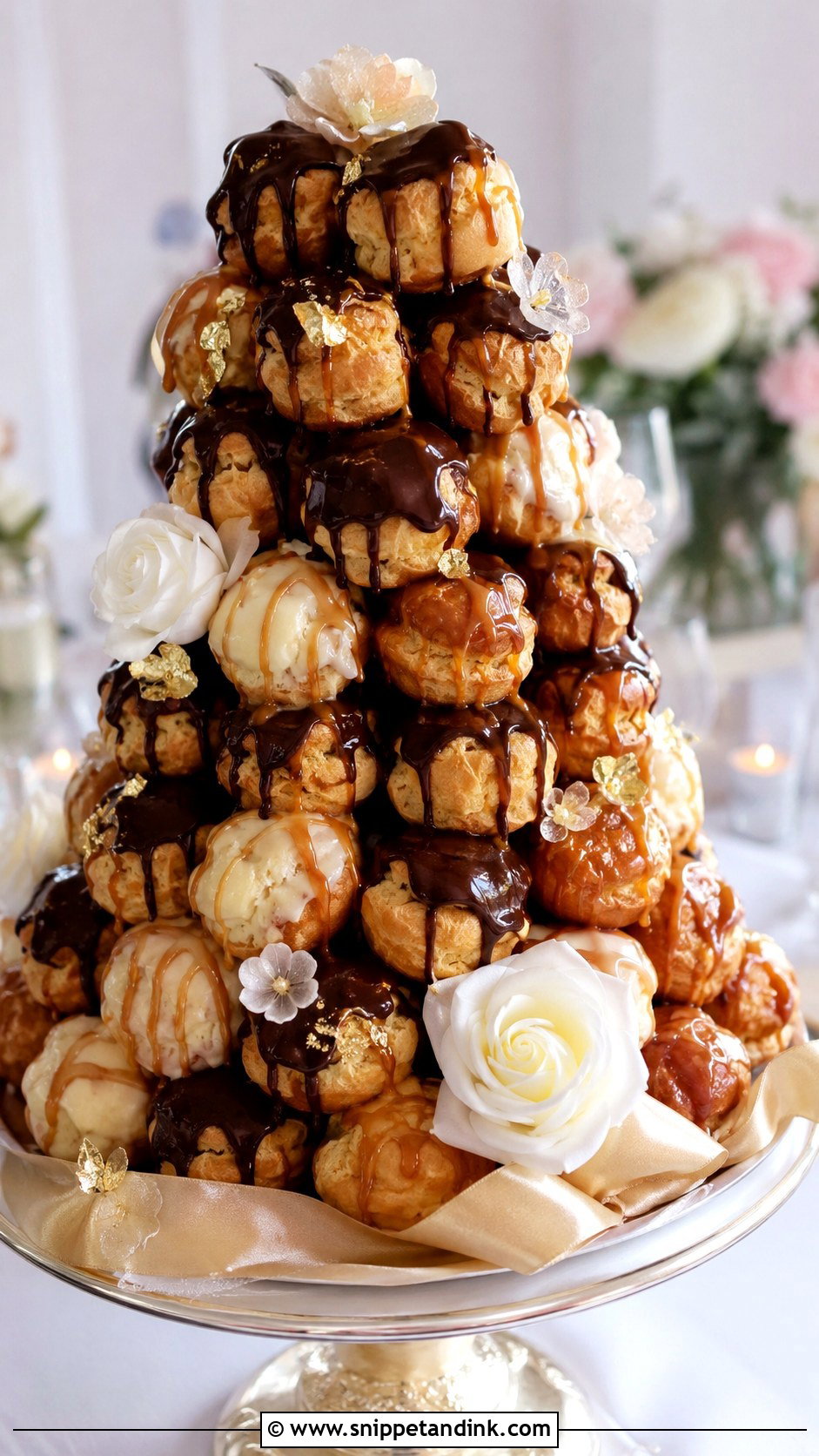
Profiteroles are cream-filled puffs, and stacked into a tower they look formal. Unlike a croquembouche, they’re often drizzled rather than glued with caramel, so they’re less structural and should be stacked lower. Cream-filled puffs need to stay cool, so I keep extras in the fridge and refill the tower rather than leaving it out the whole evening.
19. Wedding Mini Bundt Cakes
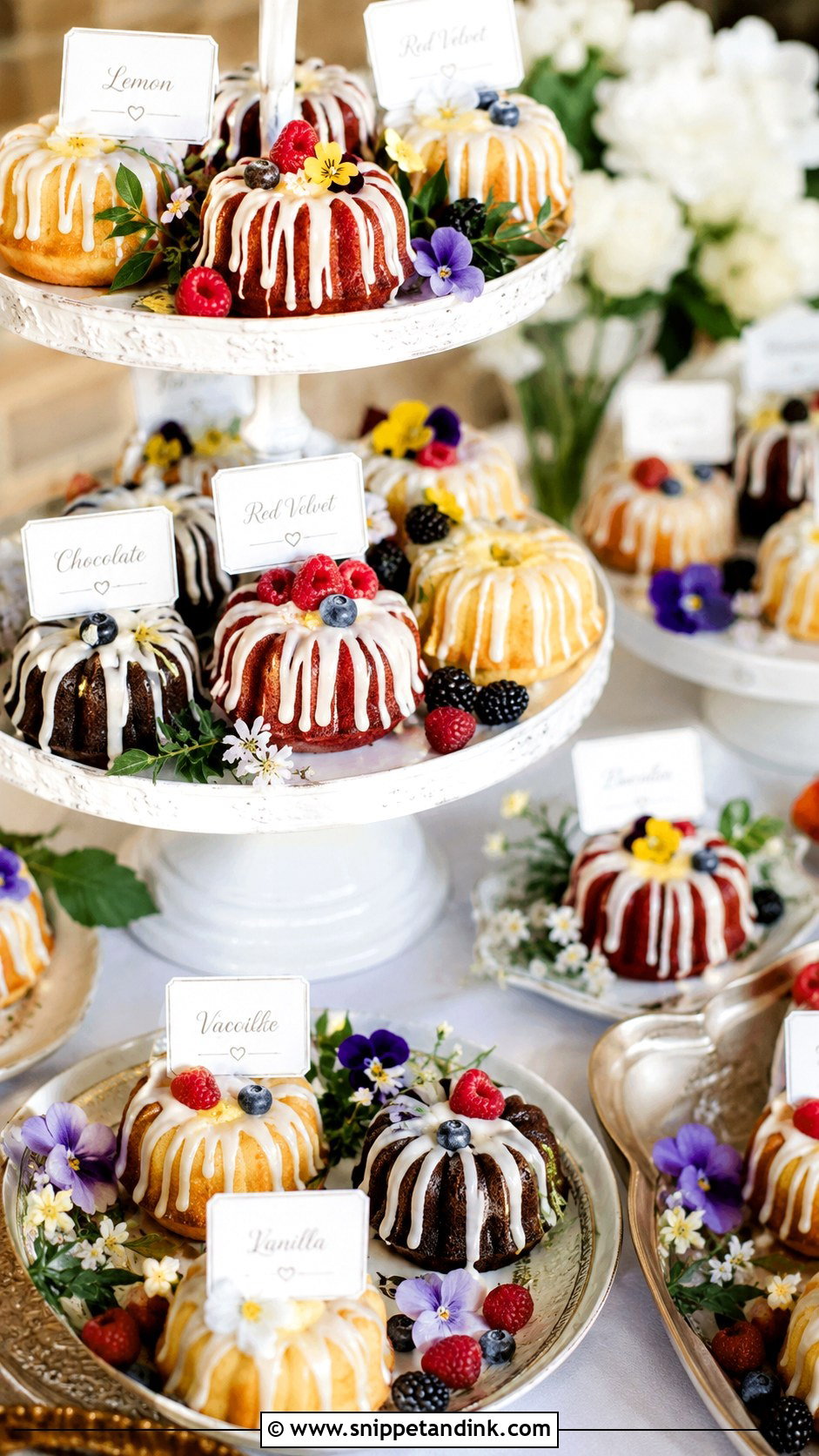
Mini bundt cakes can be baked a day ahead and keep well under a light glaze, which makes them one of the easiest options logistically. The moulded shape looks special without much decoration. Vanilla, lemon, almond and spice all hold up. Arrange them on tiered stands and add small name flags if you’d like them to double as place settings.
20. Wedding Dessert Shooters
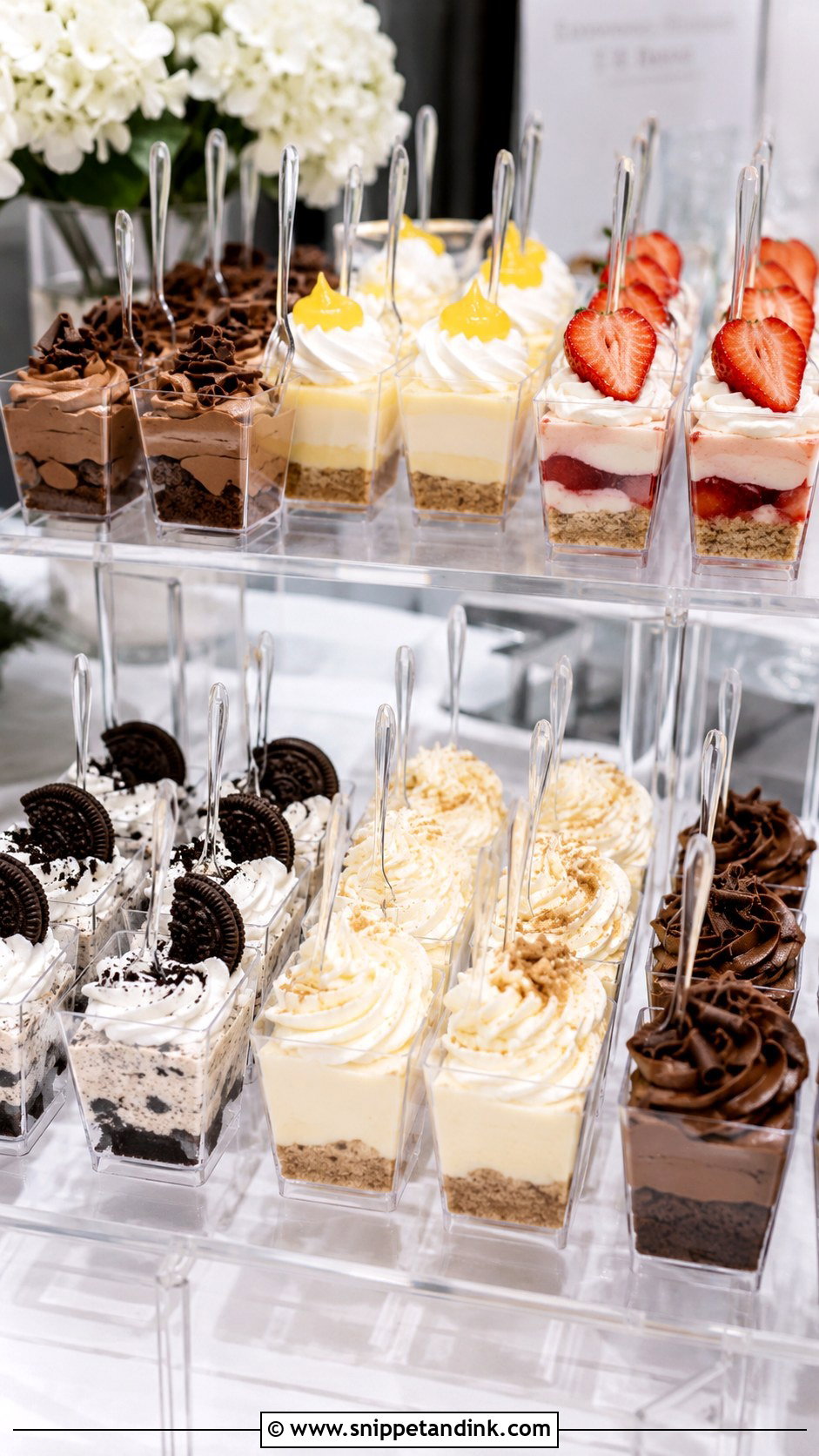
Wedding dessert shooters are small layered cups, ideal for tasting several flavours after a heavy meal. Most are cream-based, so they need refrigeration until service and shouldn’t sit out for long. I set them in straight rows with tiny spoons and clear labels. Plastic cups are lighter, but glass shows the layers better and stops the shooters tipping over.
Which Desserts Survive Two Hours in a Warm Room
The biggest difference between these alternatives isn’t taste, it’s how long they can sit out. Anything made with cream, custard, cheese or ice cream should be kept cold and shouldn’t sit at room temperature for more than about two hours, less on a hot day.
- Sturdy: brownies, cookies, mini bundts, fruit and nut pies, glazed donuts.
- Bring out in rounds: cheesecake, tiramisu, shooters, crepe cake, profiteroles, cream pies.
- Make to order: churros, waffles, ice cream sandwiches, gelato.
I schedule the cream-based desserts in two or three smaller rounds rather than putting everything out at once. The table looks full the whole evening, nothing sits in the heat for long, and anything left in the kitchen fridge can be boxed for the couple at the end of the night.
Venue Rules, Plating Fees and the Cutting Moment
Before booking a dessert vendor, ask your venue three things: whether outside desserts are allowed, whether they charge a cutting or plating fee per guest, and whether open frying or a freezer cart is permitted. Many venues charge for serving outside food even when it isn’t a cake.
If you still want a cutting moment, a small single-tier cake or even a large cheesecake works. I place it at the front of the dessert table so the photographer has a clear angle, then serve it alongside everything else.
Tell your caterer early if you want the leftovers packed up. Containers, labels and a cool box are easy to arrange in advance and hard to find at midnight.
Dessert Without a Tiered Cake Still Needs a Plan
Going without a tiered cake doesn’t mean going without a centrepiece. It means picking desserts your guests will actually finish. Before you decide, look at the weather, your venue’s rules, whether the dessert needs chilling, frying or staff, and how many guests you’re feeding. If you still want the cutting photo, a small cake beside any of these options gives you that moment. Then pick the one that tastes most like you.
You'll Like These Ideas:


Leave a Reply