
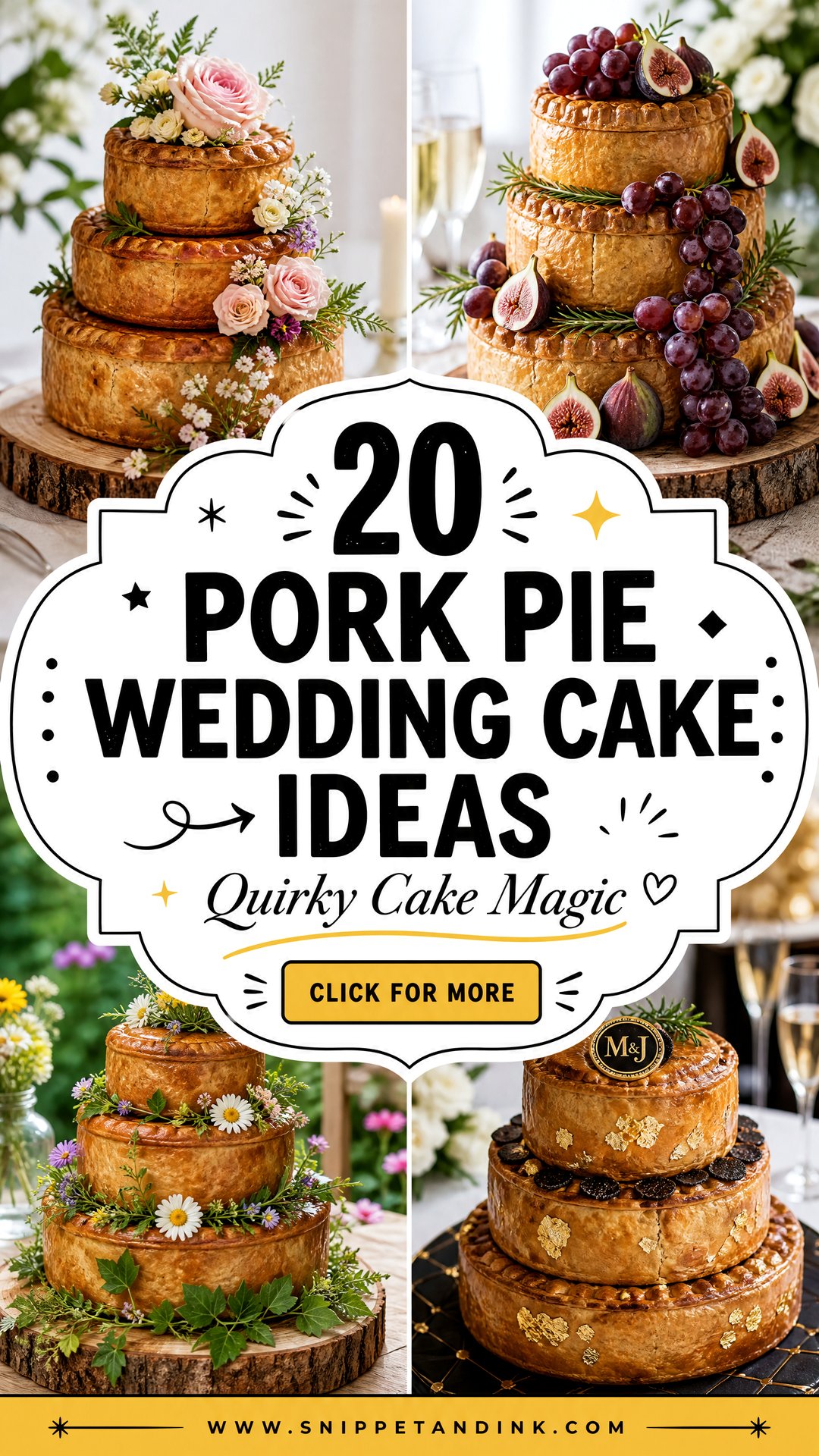
Swapping sponge for pastry is one of the most fun requests I get, and it usually comes from couples who’d rather feed people properly late in the evening than serve slices that half the room leaves on the plate. A stack of pork pies keeps the tall, tiered outline of a cake, but it’s golden, savory and built to be eaten with chutney and a pint. It sits naturally at barns, pubs, garden parties and grazing-table receptions. Flowers, herbs, pastry lettering and a good stand make it feel like a wedding piece. Here are 20 ways to build one, with notes on stacking, serving and keeping it safe.
Ordering Pies That Will Actually Stack
Not every pork pie is built to carry another one on its head. When I order for a stack, I go to a butcher or baker who makes hand-raised pies regularly and ask for a few specific things.
- Hot water crust pastry. It sets firm when it cools and holds straight sides, unlike softer shortcrust.
- Flat lids. A domed or heavily decorated top won’t support the next tier. Decoration can go on the top pie only.
- Clear size steps. Each tier should be noticeably smaller than the one below, so the stack tapers like a cake.
- Fully set jelly. The jelly poured in after baking fills the gap under the crust; a pie that’s still warm inside is too fragile to stack.
Large raised pies take time, and wedding season is busy for good butchers. I’d place the order several weeks ahead and confirm sizes and collection time a week before. Ask for a test pie earlier if you can, so you can taste the filling and check how it slices.
1. Three Tier Pork Pie Wedding Cake
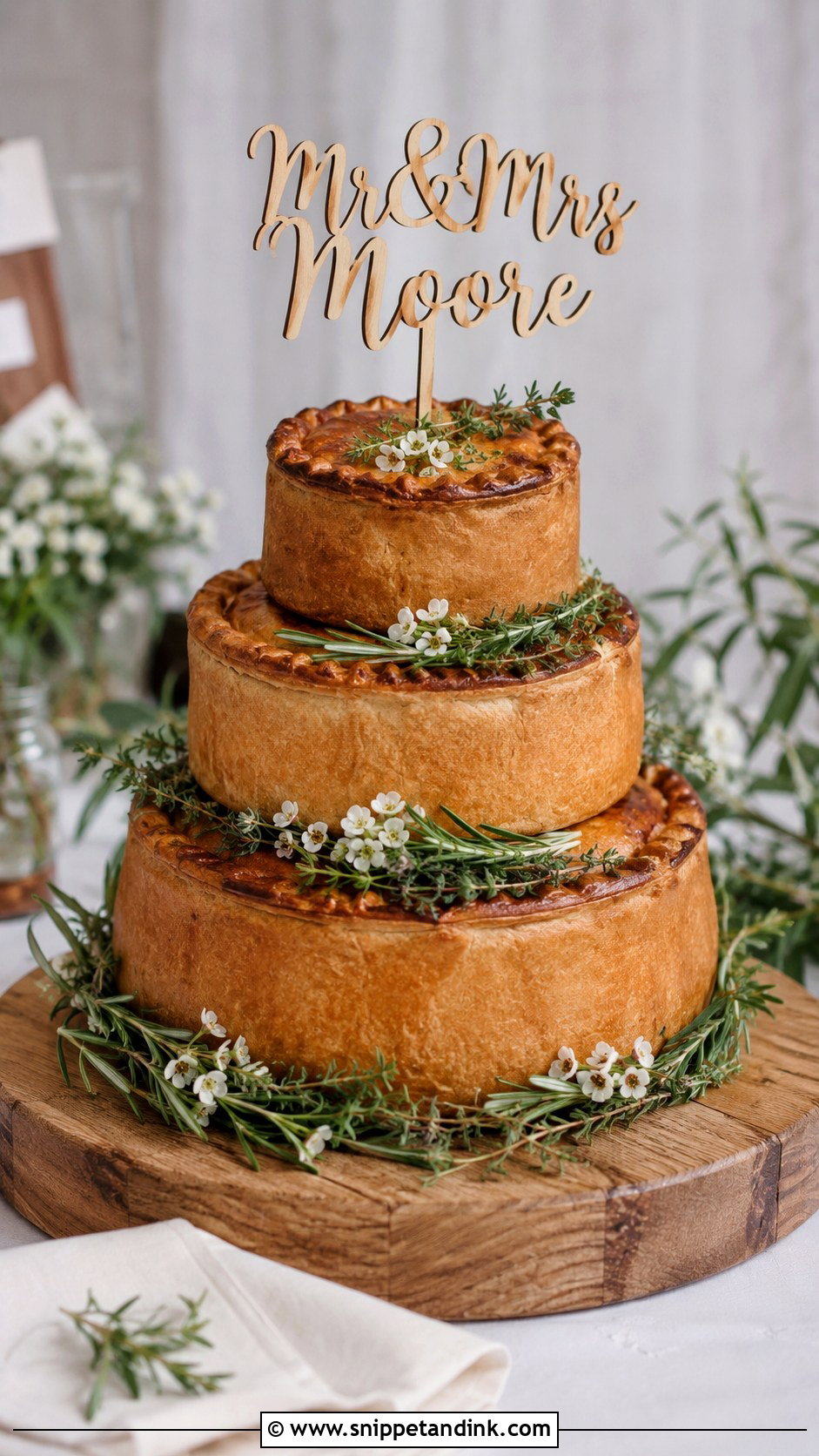
Three graduated pies is the version I build most, because it reads instantly as a wedding cake. A large pie at the base, a medium in the middle and a small one on top. Pastry tops can crack under weight, so I put a thin board under the upper tiers to spread the load. The golden crust does most of the decorating, so a few herbs, edible flowers and a small name topper are plenty. A wooden board or stone stand finishes it, with chutney bowls nearby.
2. Four Tier Pork Pie Wedding Cake
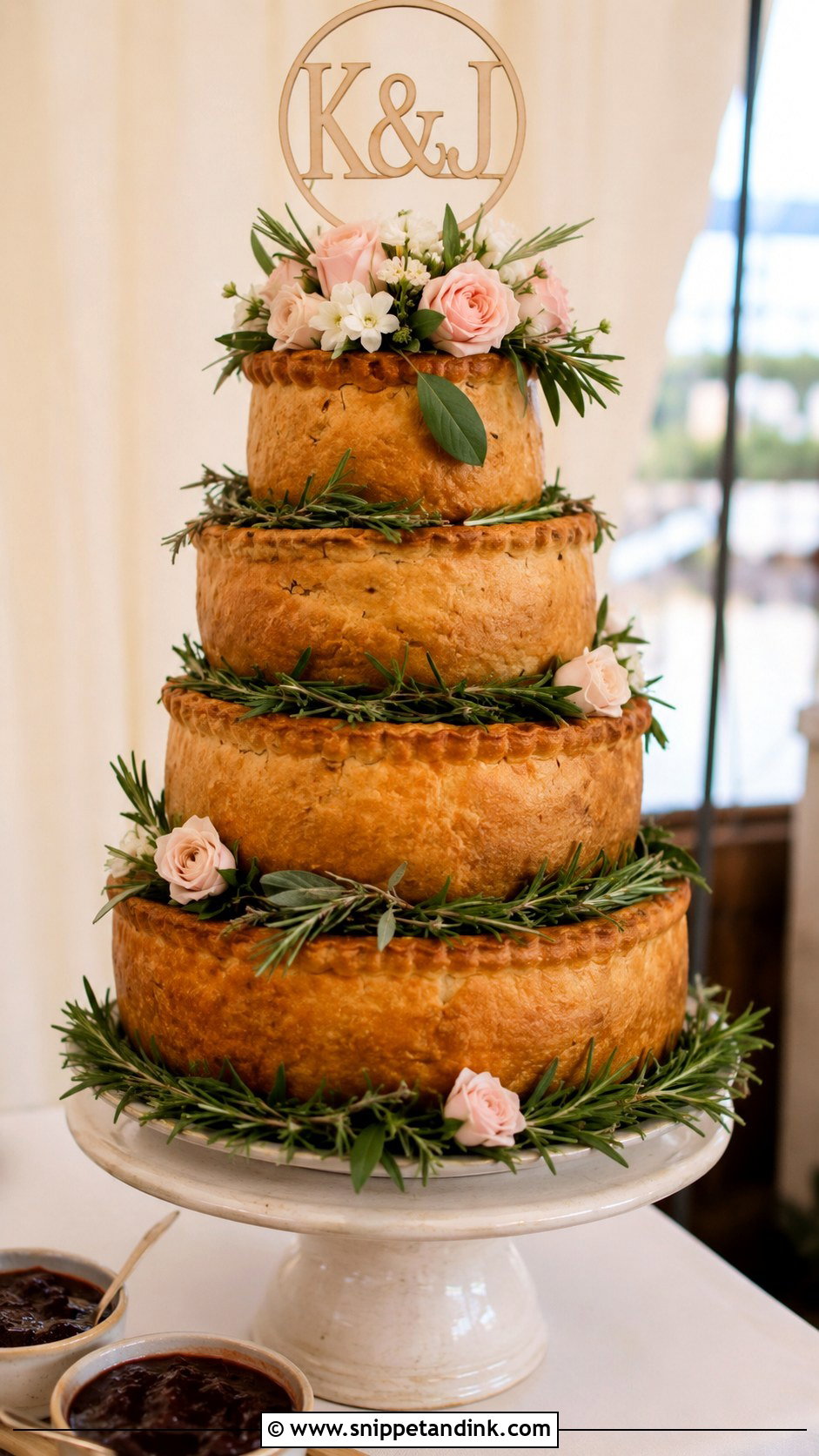
Four tiers bring real height, and they’re the answer for big guest lists. The base pie needs to be wide and deep, with straight, firm sides; hand-raised hot water crust holds shape far better than a soft shortcrust. I use boards and a central dowel once the stack goes past three. Bay, rosemary and thyme tucked into the gaps hide the boards. Put labeled chutneys and pickles alongside, so nobody mistakes it for decoration.
3. Pork Pie And Cheese Wedding Cake
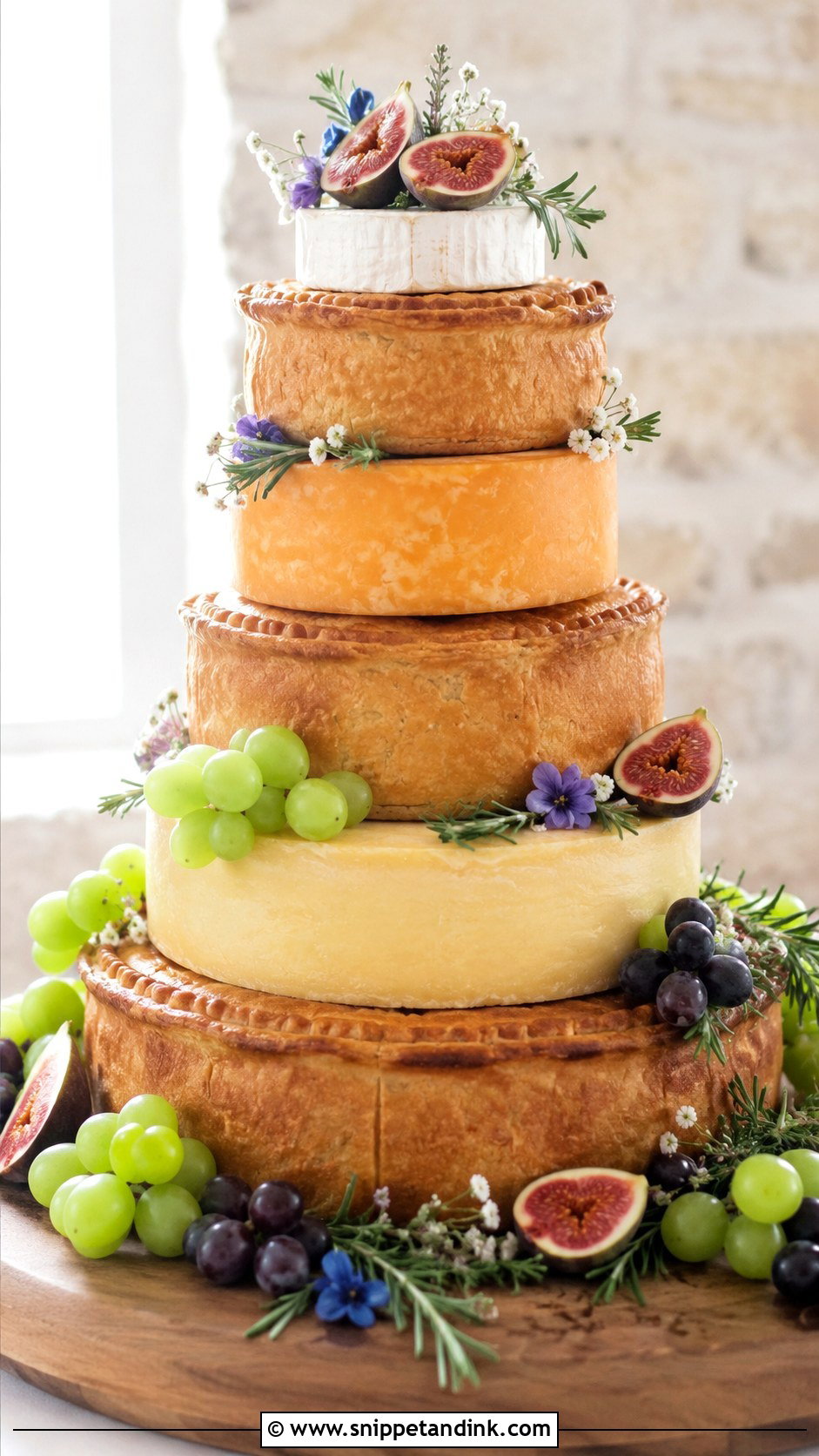
Pies stacked with a cheese wedding cake give guests a whole evening buffet in one tower. I alternate pork pies with whole rounds of cheddar, brie, red Leicester or blue cheese, putting the firmest cheeses at the bottom and soft brie near the top, where it won’t be squashed. Grapes, figs and herbs fill the gaps. It feeds more people than pies alone and offers something for guests who don’t eat pork.
4. Rustic Pork Pie Wedding Cake
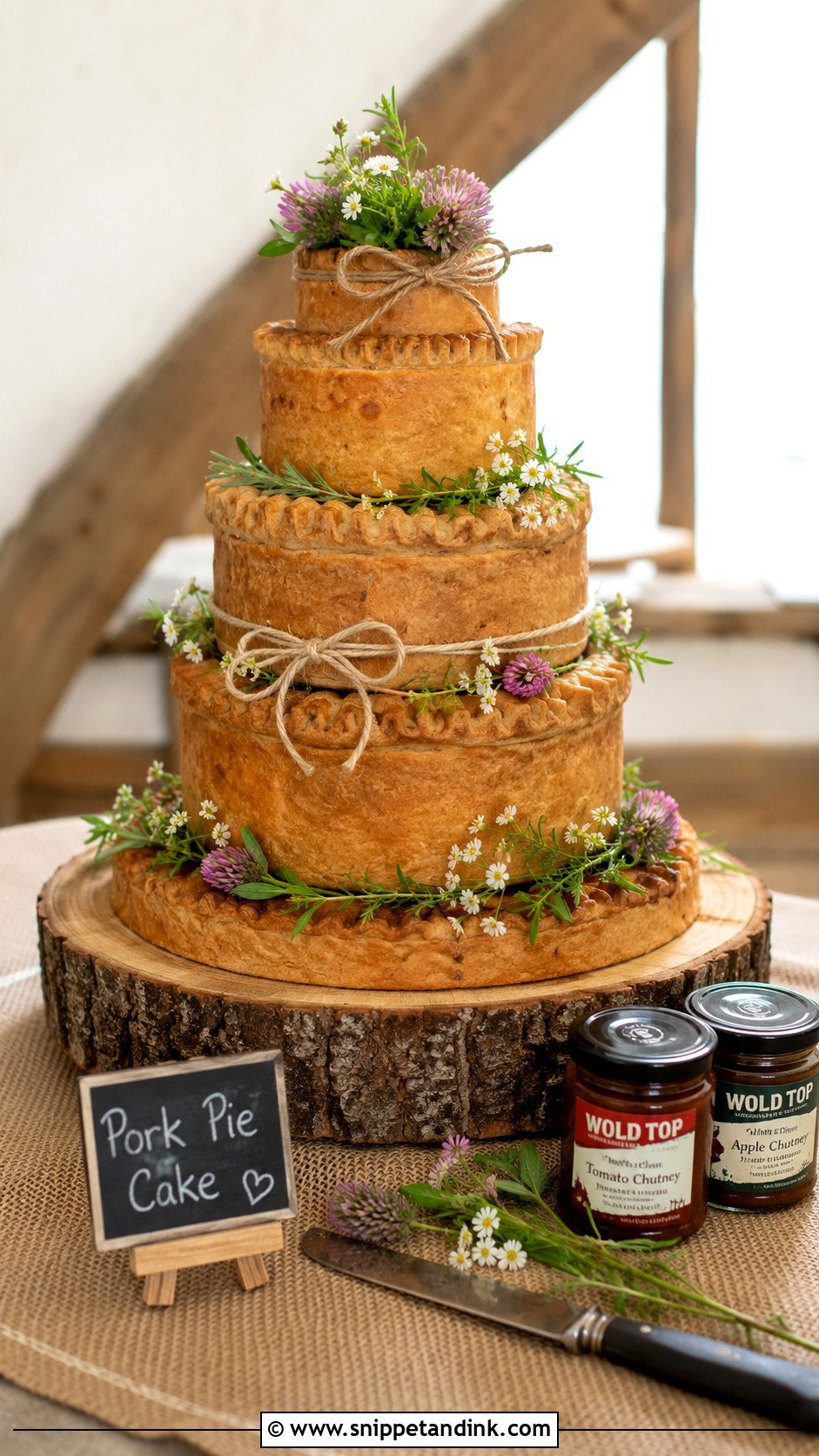
The rustic version is about honest pastry: hand-raised pies with slightly uneven crimps and a deep color from a long bake. I’d ask your baker not to trim them too neatly. A thick wooden slab, linen, jars of chutney and seasonal greenery are all the styling it needs, with twine, kraft labels and loose flowers. It belongs in a barn or a field and asks guests to gather round and help themselves.
5. Mini Pork Pie Wedding Cake Tower
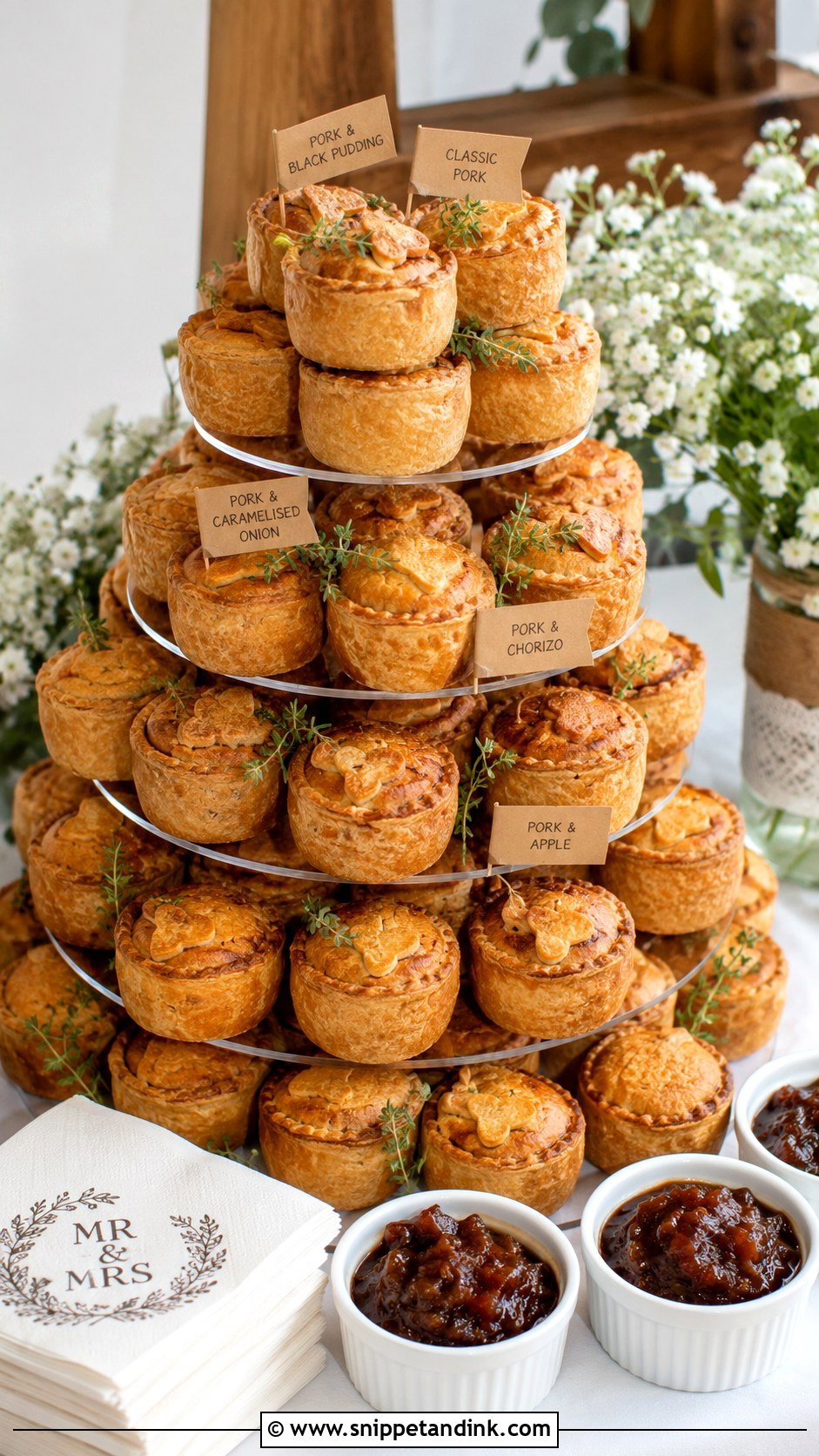
A mini pork pie wedding cake tower is my favorite for buffets because nobody has to wait for slicing. Small pies are stacked on a tiered stand, with the most at the bottom and fewer toward the top. Each one is a portion, so service is as quick as guests can pick one up with a napkin. Little flags, herb sprigs or pastry hearts add a wedding touch, and mixing fillings is easy.
6. Pork Pie Wedding Cake With Flowers
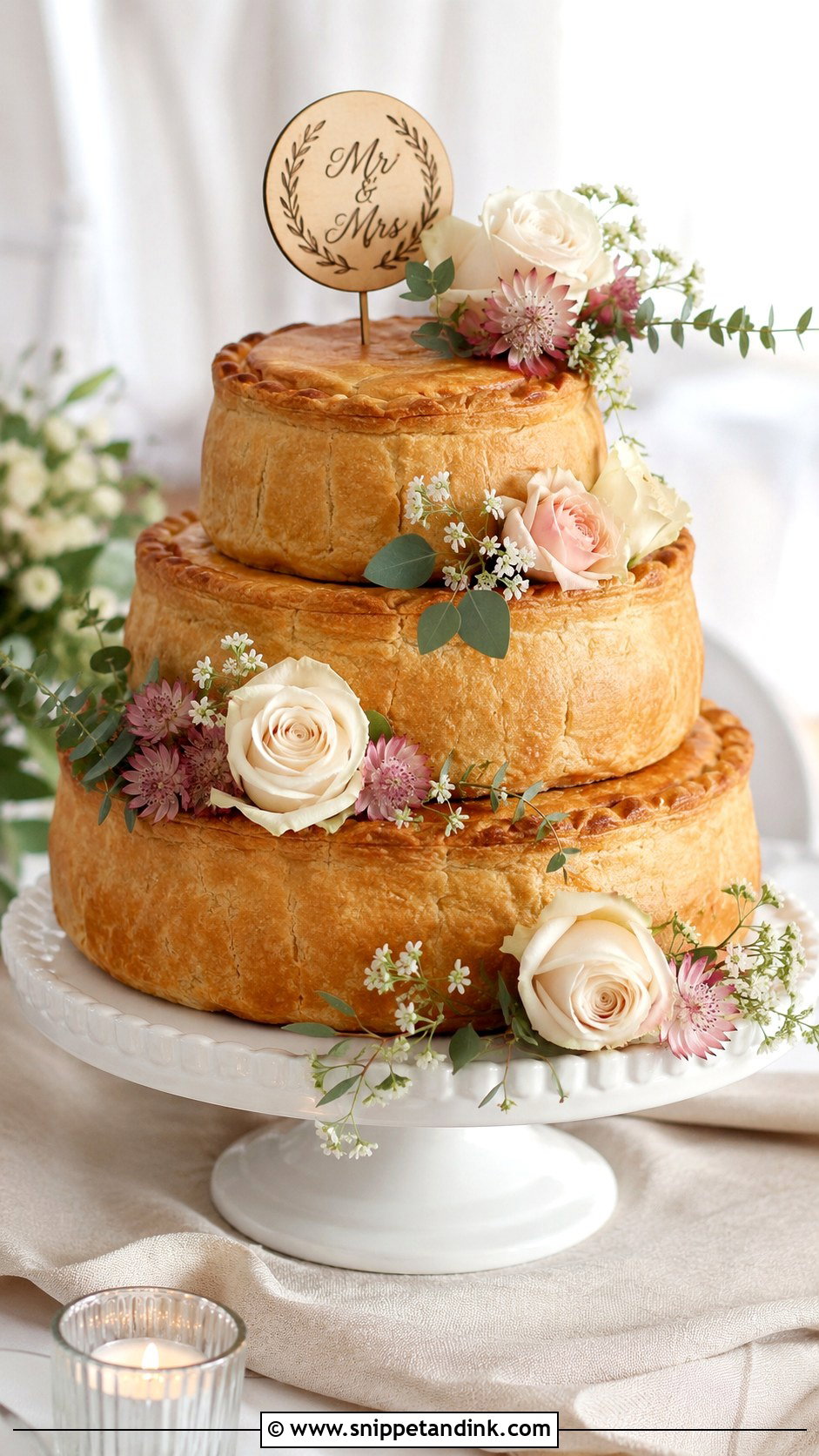
Flowers on a savory stack need extra care, since they sit right against food. I only use edible or food-safe blooms, such as roses, chamomile, lavender or nasturtium, ideally grown without pesticides, and I keep stems out of the pastry by laying them on top. Herbs make the best greenery because they belong with the food. A simple stand lets the flowers and the golden crust share the attention.
7. Pork Pie Wedding Cake With Pastry Letters
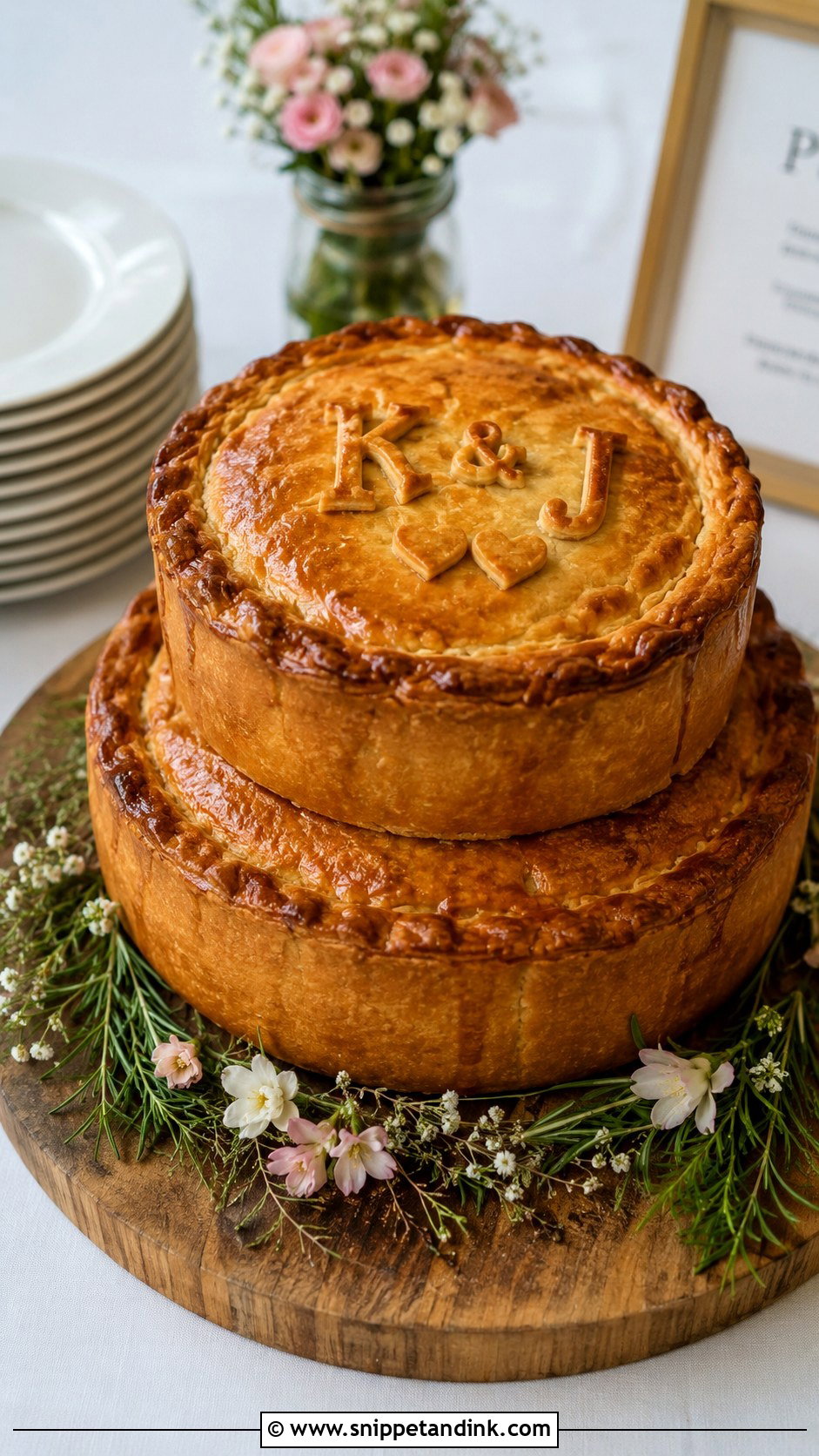
I make pastry letters from the same dough, egg-washed so they turn the same deep gold as the pie. Initials, a surname or “Just Married” works best in thick, simple shapes, since thin script letters can burn or break. I bake them separately and fix them to the top tier with a little beaten egg before a final short bake, which keeps them flat and readable. Pastry hearts or leaves can continue the theme.
8. Pork Pie Wedding Cake With Chutney
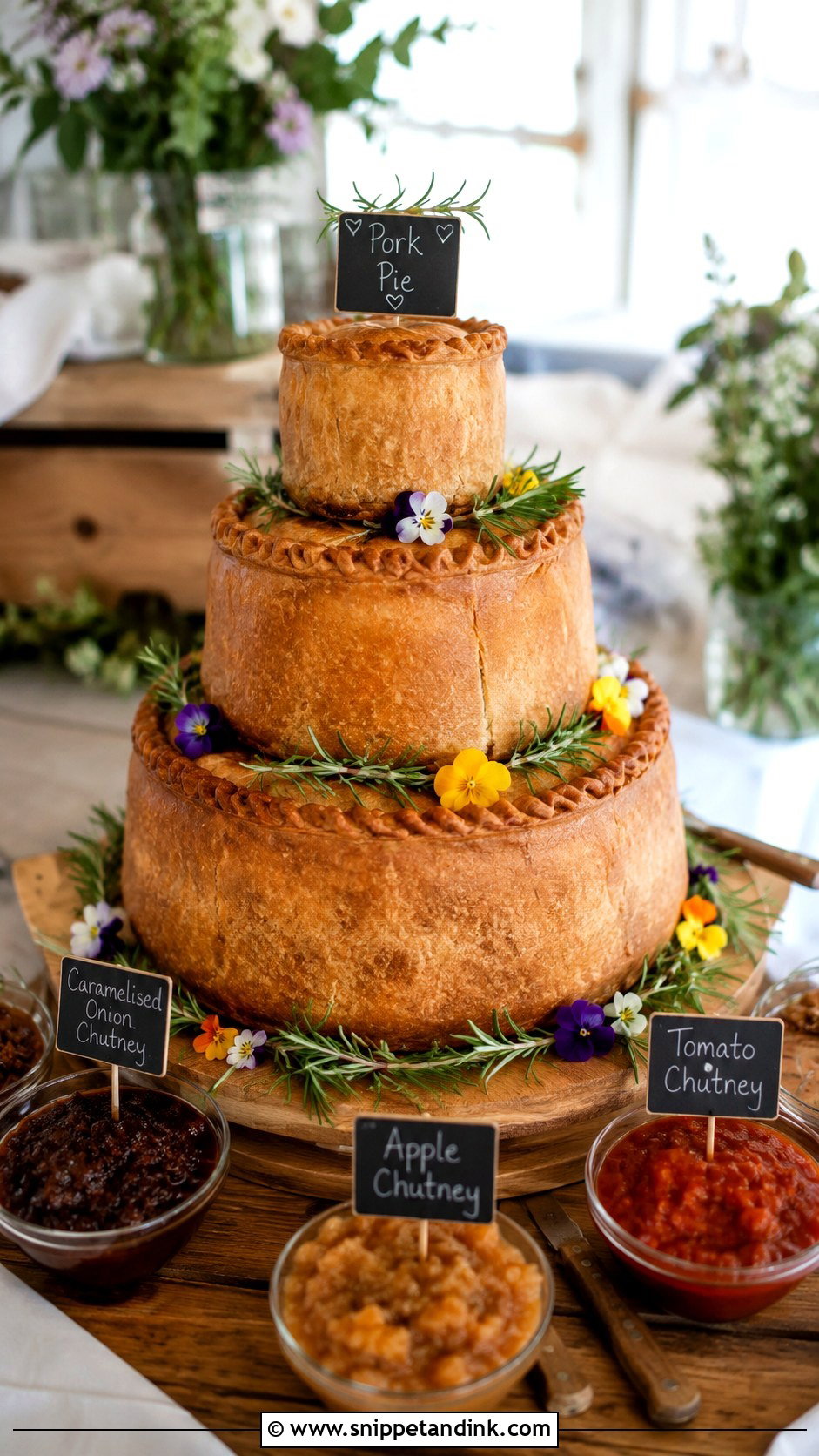
With chutney around the base, the stack becomes a complete serving station. Caramelized onion, apple, tomato and a spicier fruit chutney give a good range. I set them in small bowls with their own spoons rather than open jars, which keeps the table tidy after the first hour. Keep the pies plainly decorated and let the chutney labels add the color.
9. Square Pork Pie Wedding Cake
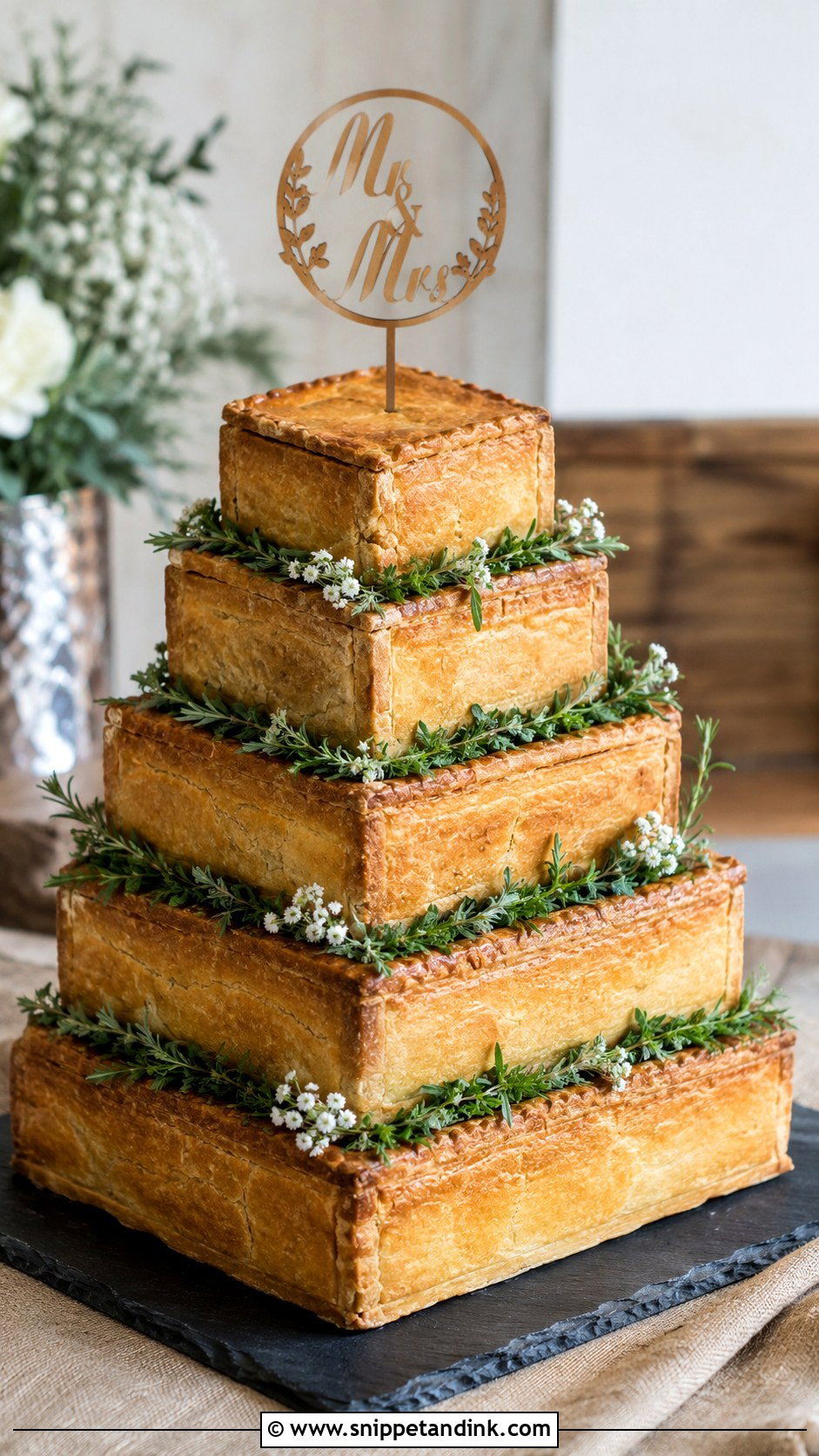
Square pies feel modern and graphic, and they cut more cleanly than rounds. Each slice is a neat rectangle, which helps when serving a crowd. A square raised pie needs a sturdy tin and careful pastry work at the corners, which are the first place a hot water crust cracks, so order from a baker who makes them regularly. Keep decoration minimal: herbs along the edges and a narrow ribbon around the board.
10. Round Pork Pie Wedding Cake
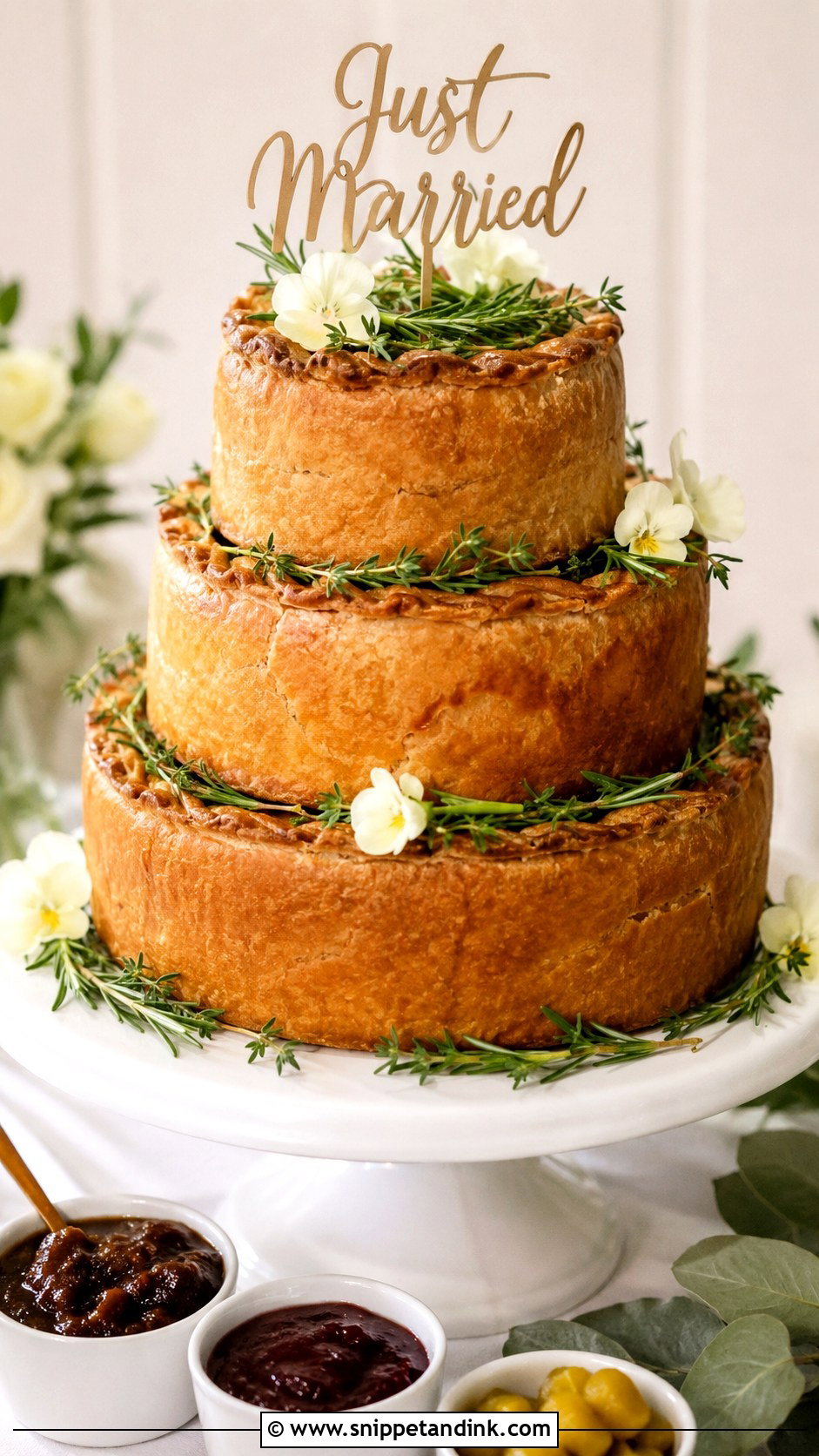
Round tiers are the closest to a traditional wedding cake, so guests understand the moment instantly. The trick is choosing sizes with a clear step between them; pies that are too close in diameter look bulky rather than tiered. Herbs, edible flowers and a simple topper finish it. Have a long, sharp serrated knife ready, as pork pie jelly and crust crumble under a blunt blade.
11. Pork Pie Wedding Cake With Pickles
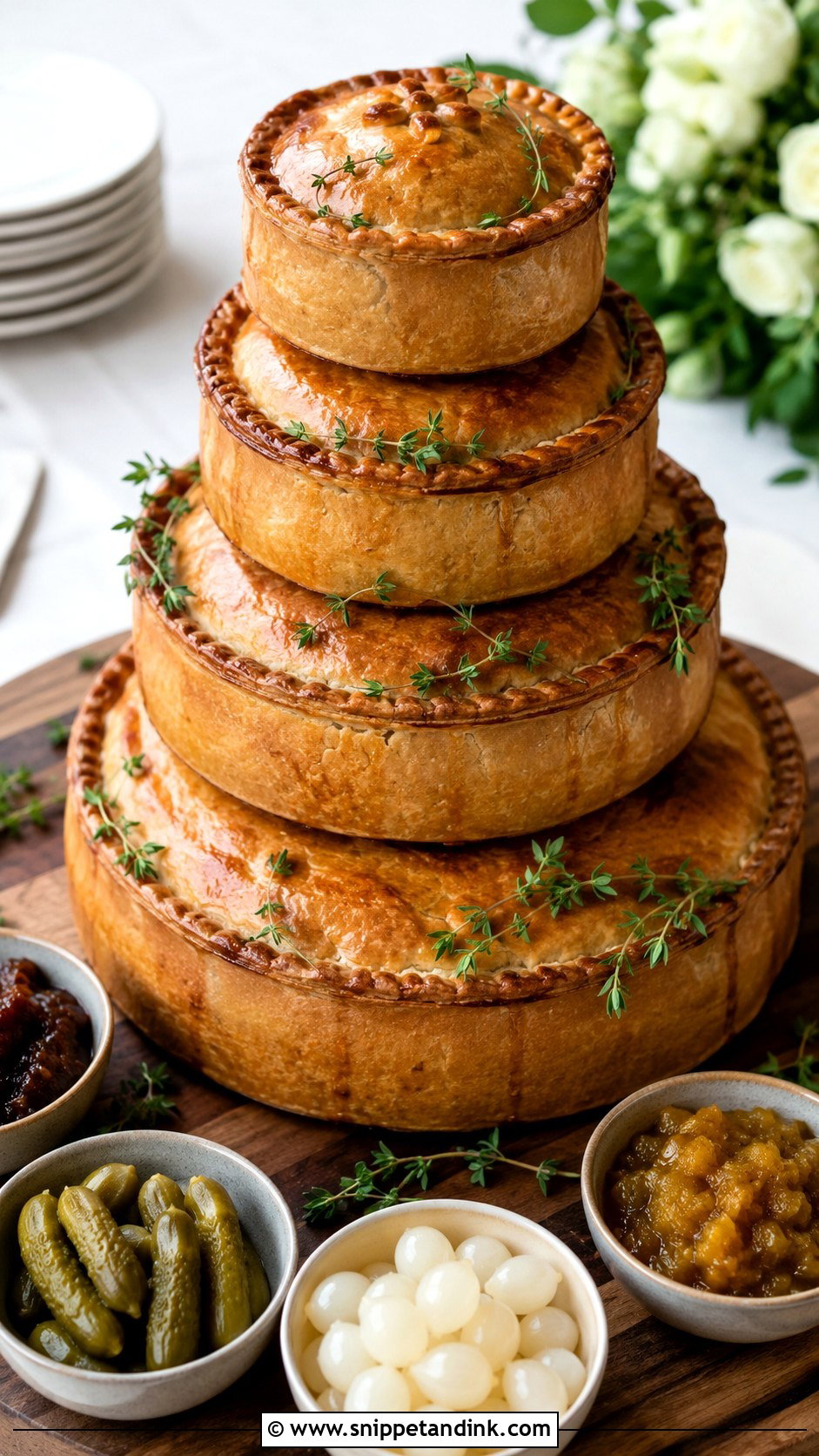
Pickles make the whole stack feel like a pub ploughman’s, which is exactly the point. Cornichons, pickled onions and a sharp relish cut through the richness of the pork, and the green looks fresh against golden pastry. I keep the pickles off the pies themselves, since the brine softens the crust, and put them in small bowls around the base. It’s ideal fuel after a long night of dancing.
12. Pork Pie Wedding Cake With Grapes And Figs
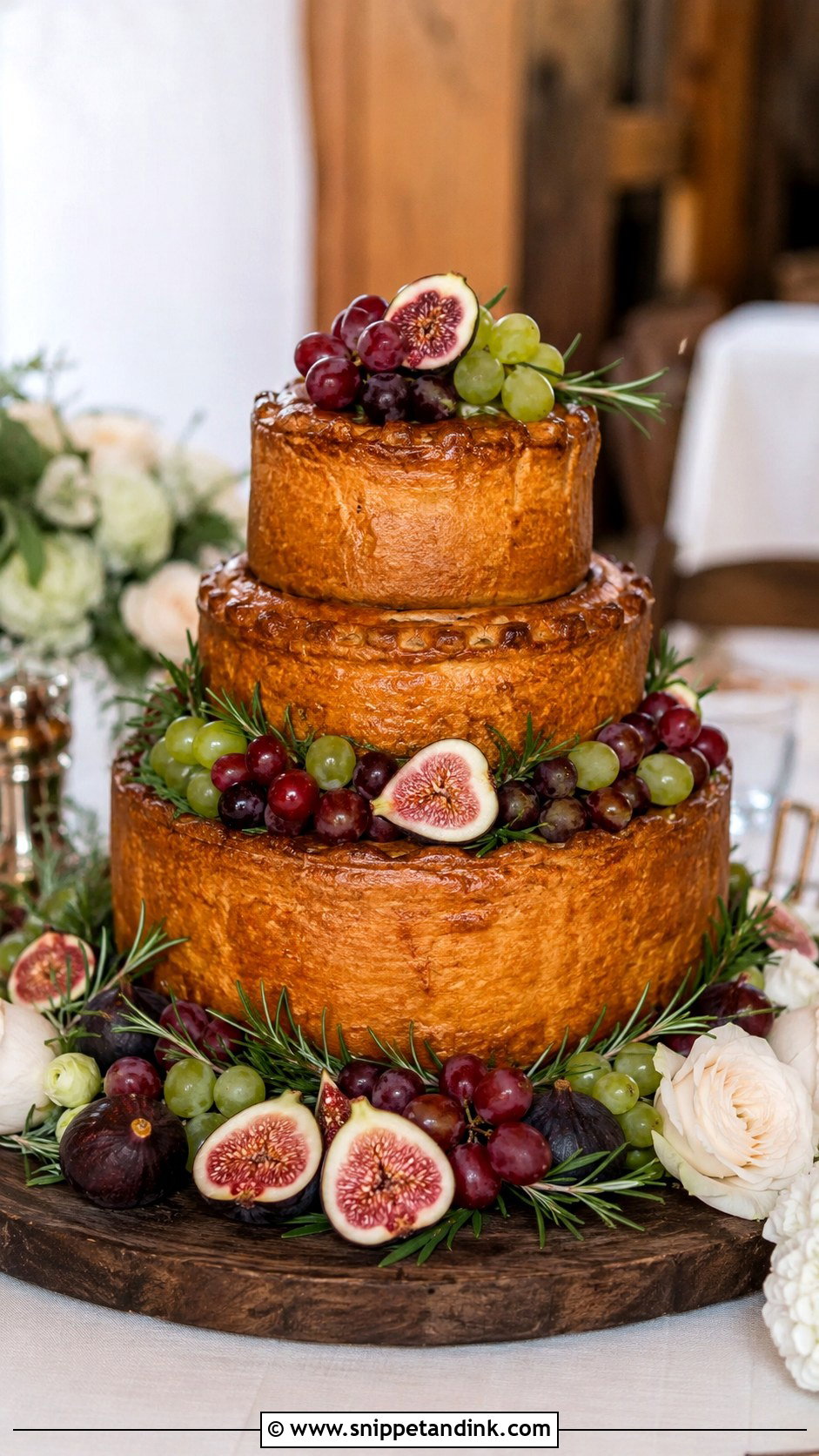
Grapes and figs give a stack deep color for late summer and autumn weddings. Red and green grapes in clusters, halved figs and rosemary around each tier look generous without tipping into dessert. Cut figs only last an hour or two before they start to look tired, so I halve them at the venue. If you’ve added cheese tiers, the fruit pairs with those too. A dark wooden board shows it off.
13. Pork Pie Wedding Cake With Herb Garnish
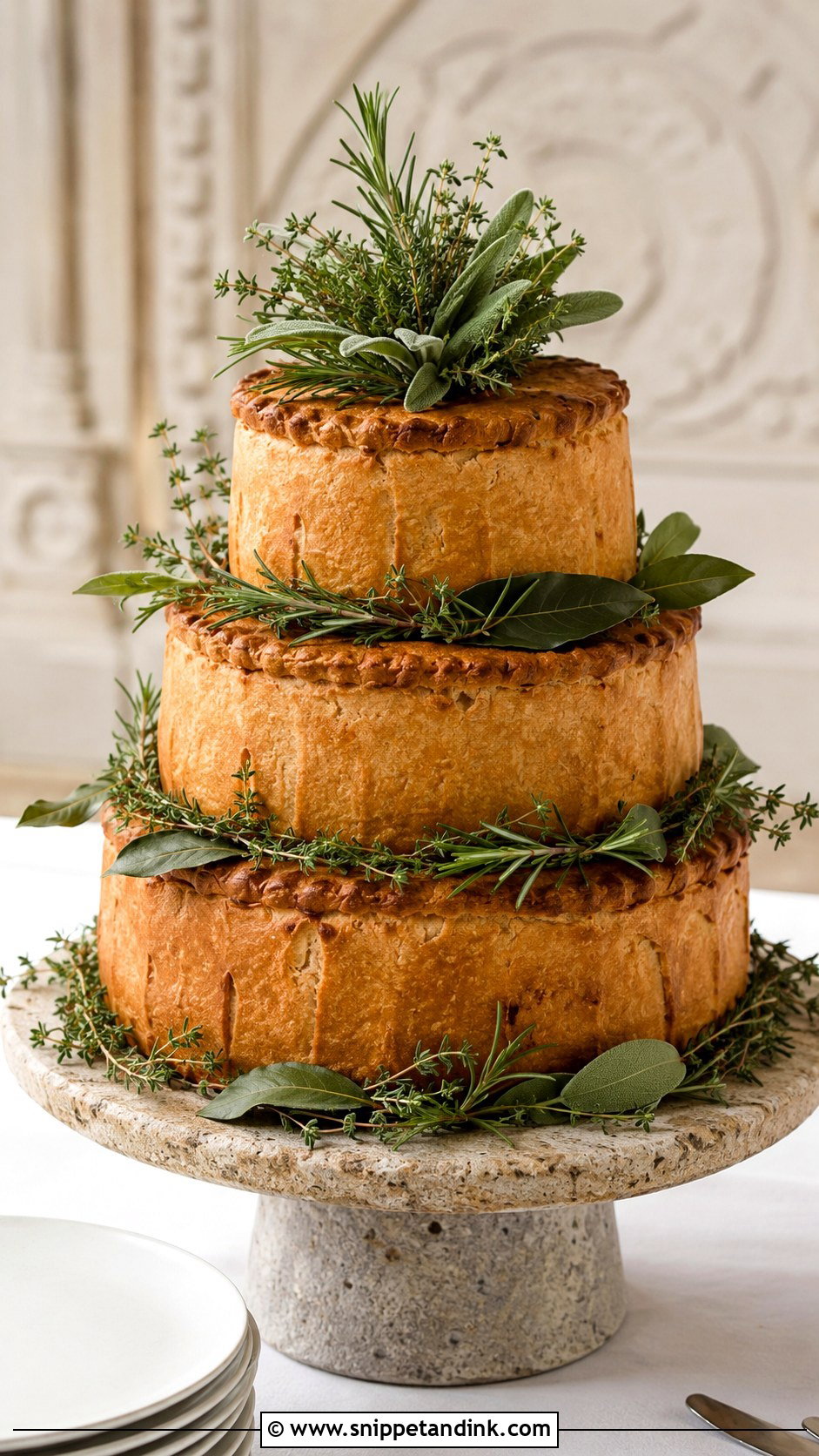
Herbs are the cheapest and most natural way to dress a pork pie stack. Rosemary, thyme, sage and bay hold up for hours; soft parsley wilts quickly in a warm room, so I use it sparingly. Tuck sprigs between tiers, scatter some around the base, and tie a small bundle on top in place of a topper. The green looks sharpest against a well-colored, even crust.
14. Pork Pie Wedding Cake With A Cheese Board
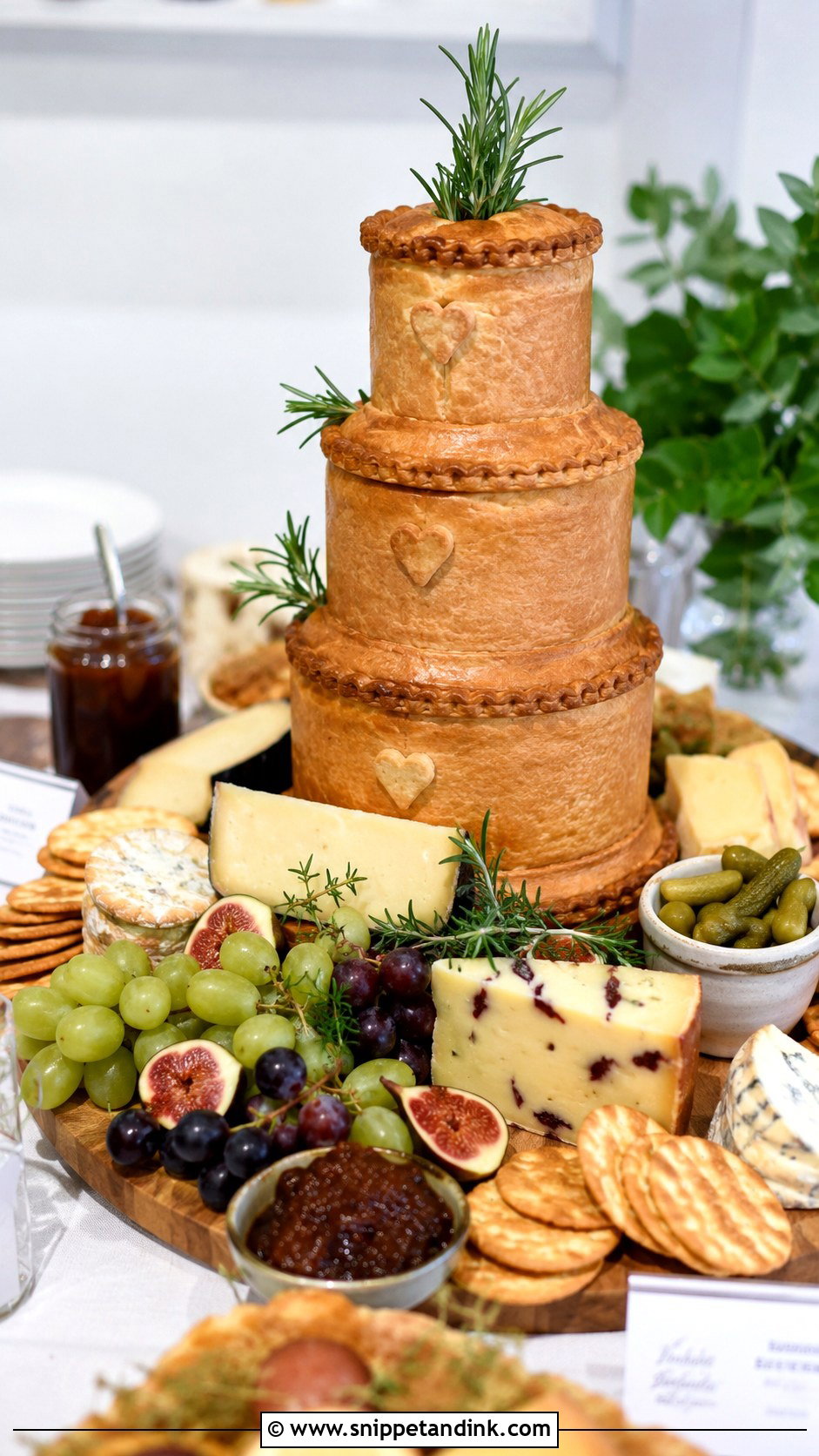
A full cheese board around the stack turns the cake table into a grazing station. I build outward from the pies with cheese wedges, crackers, chutneys, grapes, figs and pickles, leaving small gaps so guests can reach in without knocking anything. Keep the pies tidy so they stay the focal point. It suits receptions where people mingle rather than sit through every course.
15. Pork Pie Wedding Cake With A Cake Topper
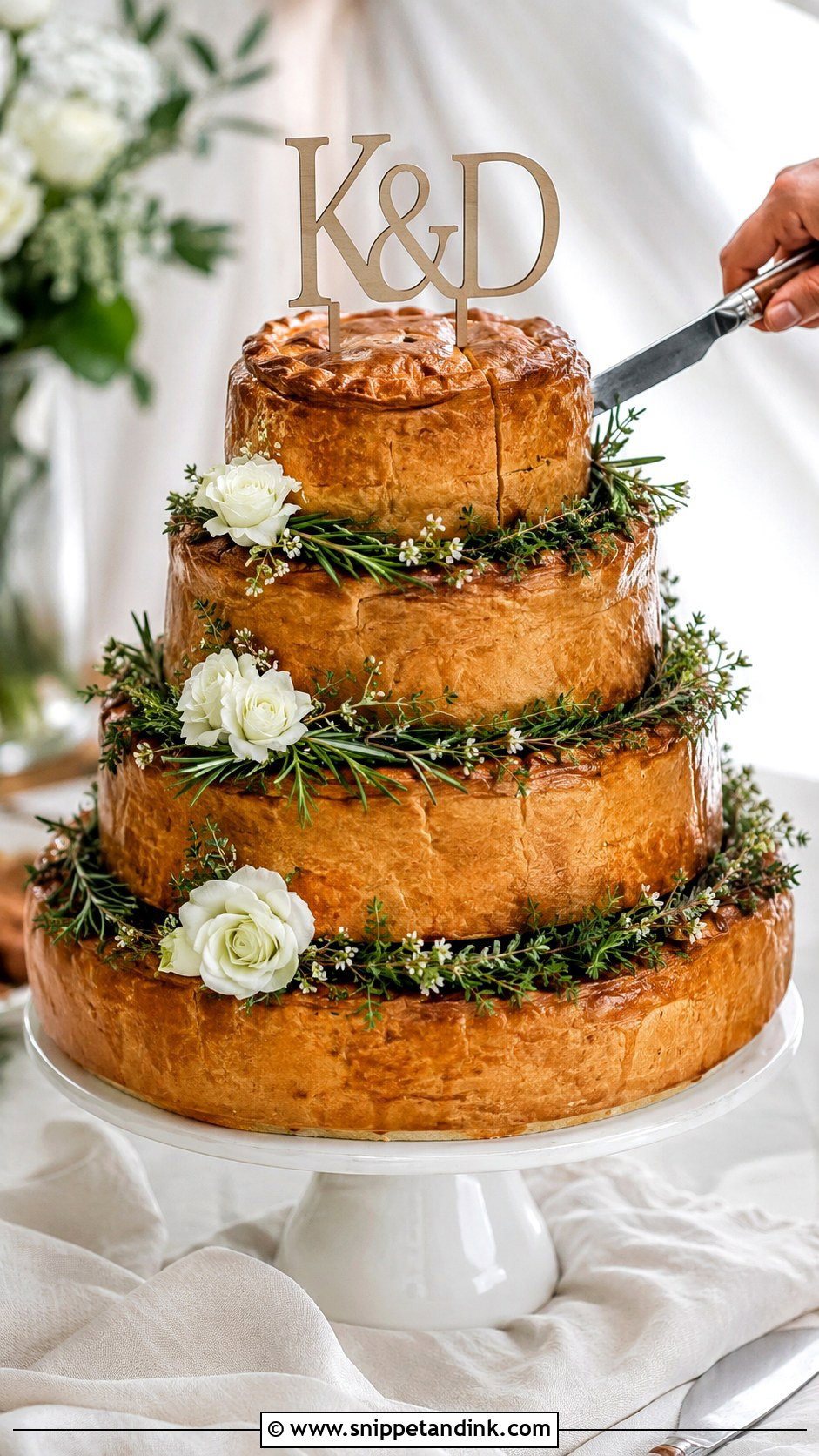
A topper gives a savory stack its ceremonial moment. Wooden initials, a small name sign or a slim metal script suit it best. The pastry lid is firm but not rigid, so keep the topper light and push its spikes in gently, or rest it on a small disc. Herbs or flowers around the base of the topper blend it into the pie. It means you still get the classic cake-cutting photo.
16. Pork Pie Wedding Cake With Different Flavors
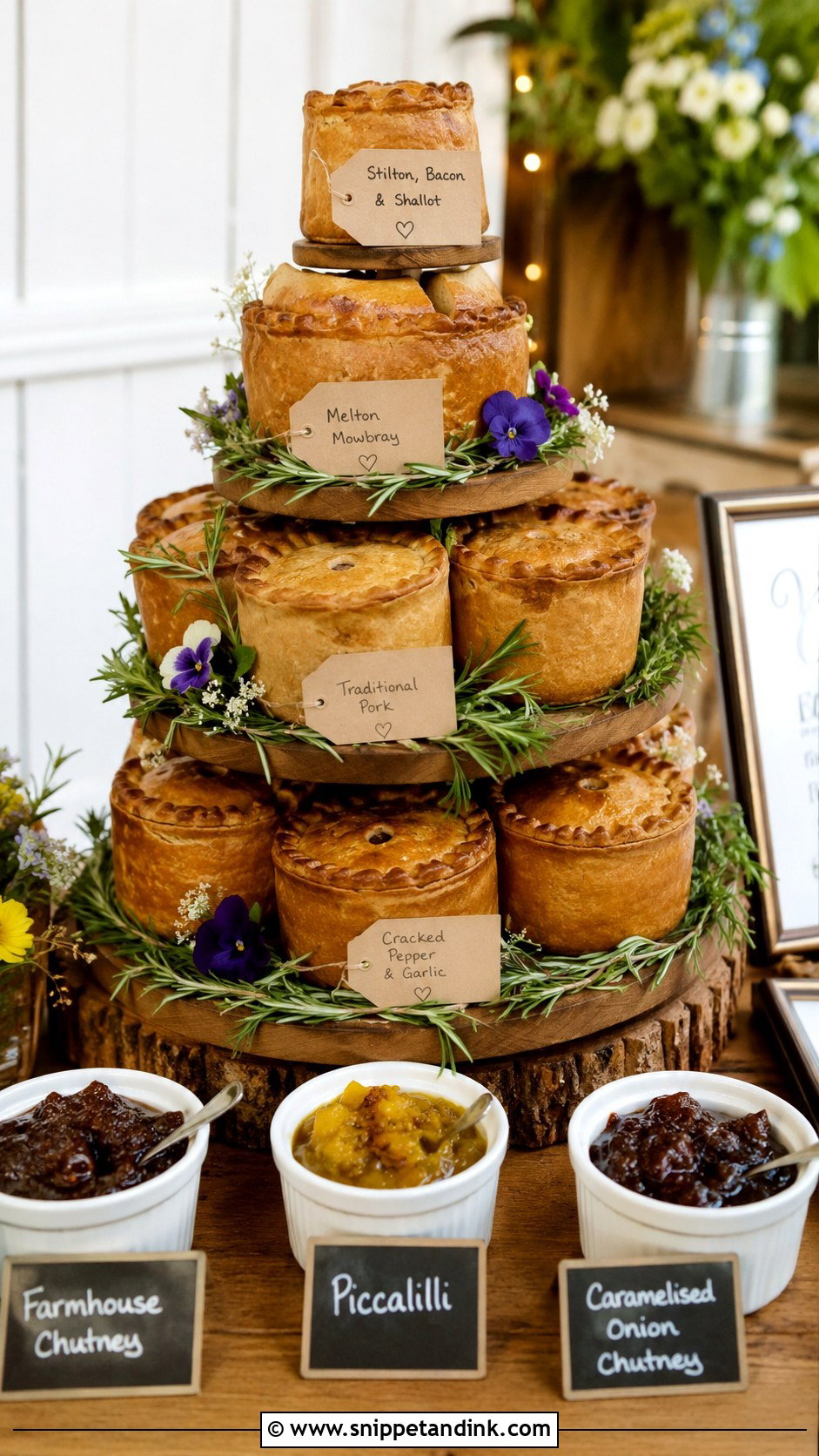
Mixing fillings across tiers gives guests a reason to come back for a second slice. I keep traditional pork on the base tier, since it’s the safest bet for the largest number of guests, then add pork and apple, pork and pickle, pork and cheese or a gently spiced version above. The pastry looks the same from outside, so small flavor labels matter. It works well when the stack replaces the evening buffet.
17. Pork Pie Wedding Cake For A Barn Wedding
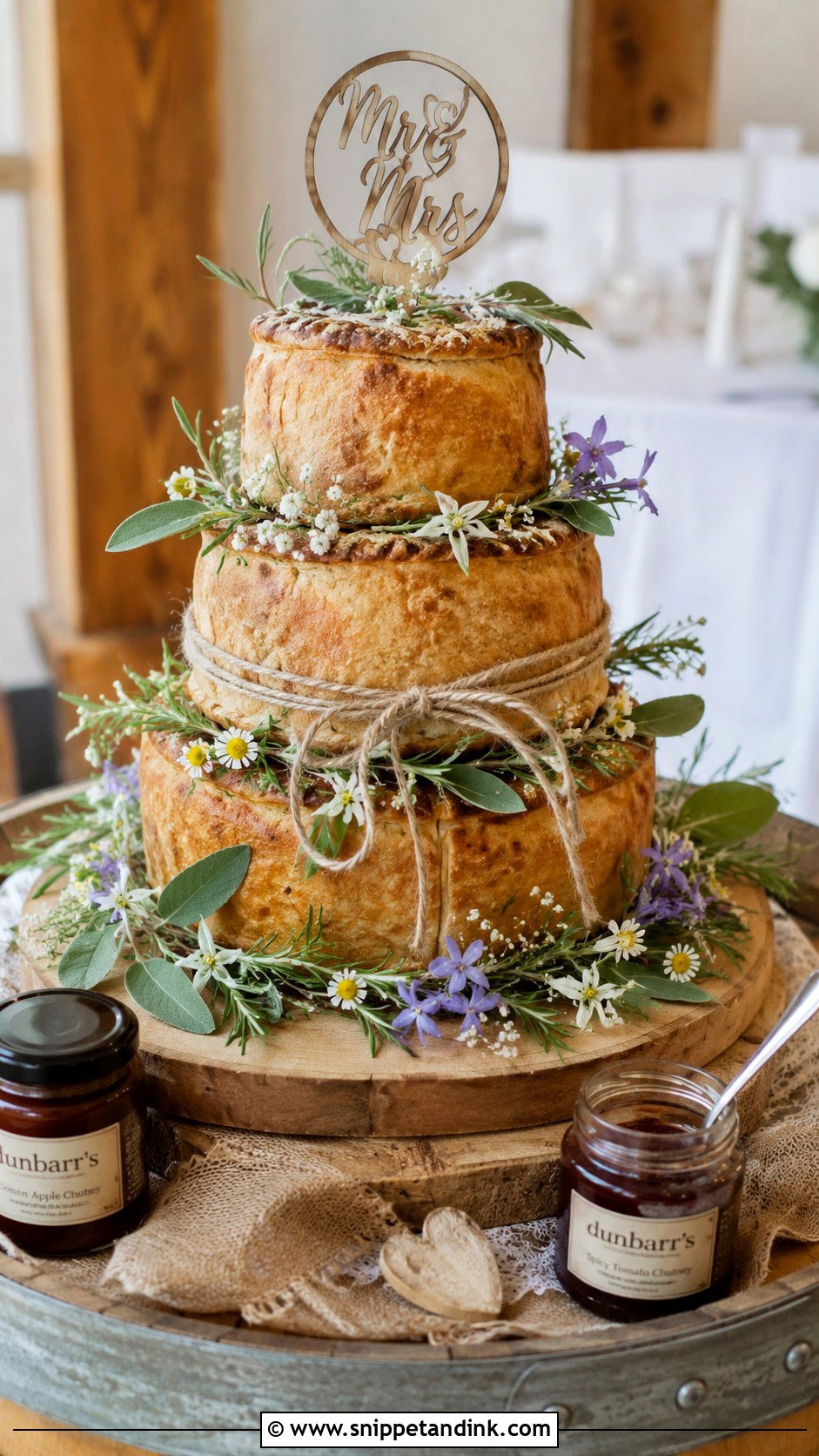
For barns, I like to raise the stack on a wooden barrel, a farmhouse table or a thick board. Herbs, soft wildflowers and a fabric ribbon in the wedding colors are enough decoration. Barns can be cool at night, which is good for the pies, but they’re often dusty, so I keep the stack covered until it’s time to cut. Chutneys, napkins and small plates sit ready nearby.
18. Pork Pie Wedding Cake For A Garden Wedding
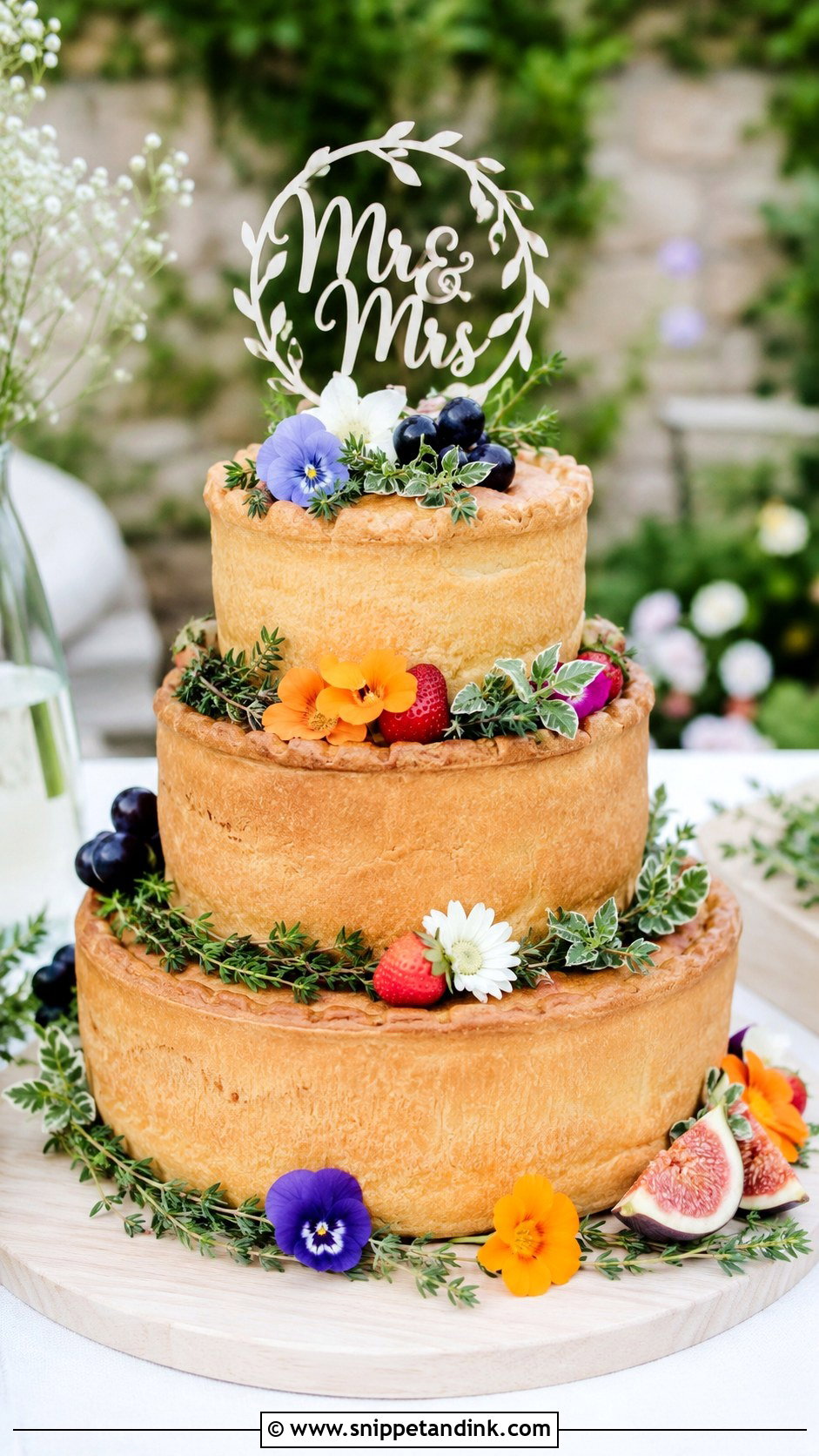
In a garden, keep the look light: round tiers, soft herbs, edible flowers and a few seasonal fruits on a pale wooden board or white stand. The real concern outdoors is heat and insects. I keep the pies in a chilled van or the kitchen until shortly before cutting, and use mesh food covers once it’s out. Daytime marquee receptions suit this one.
19. Pork Pie Wedding Cake For Evening Food
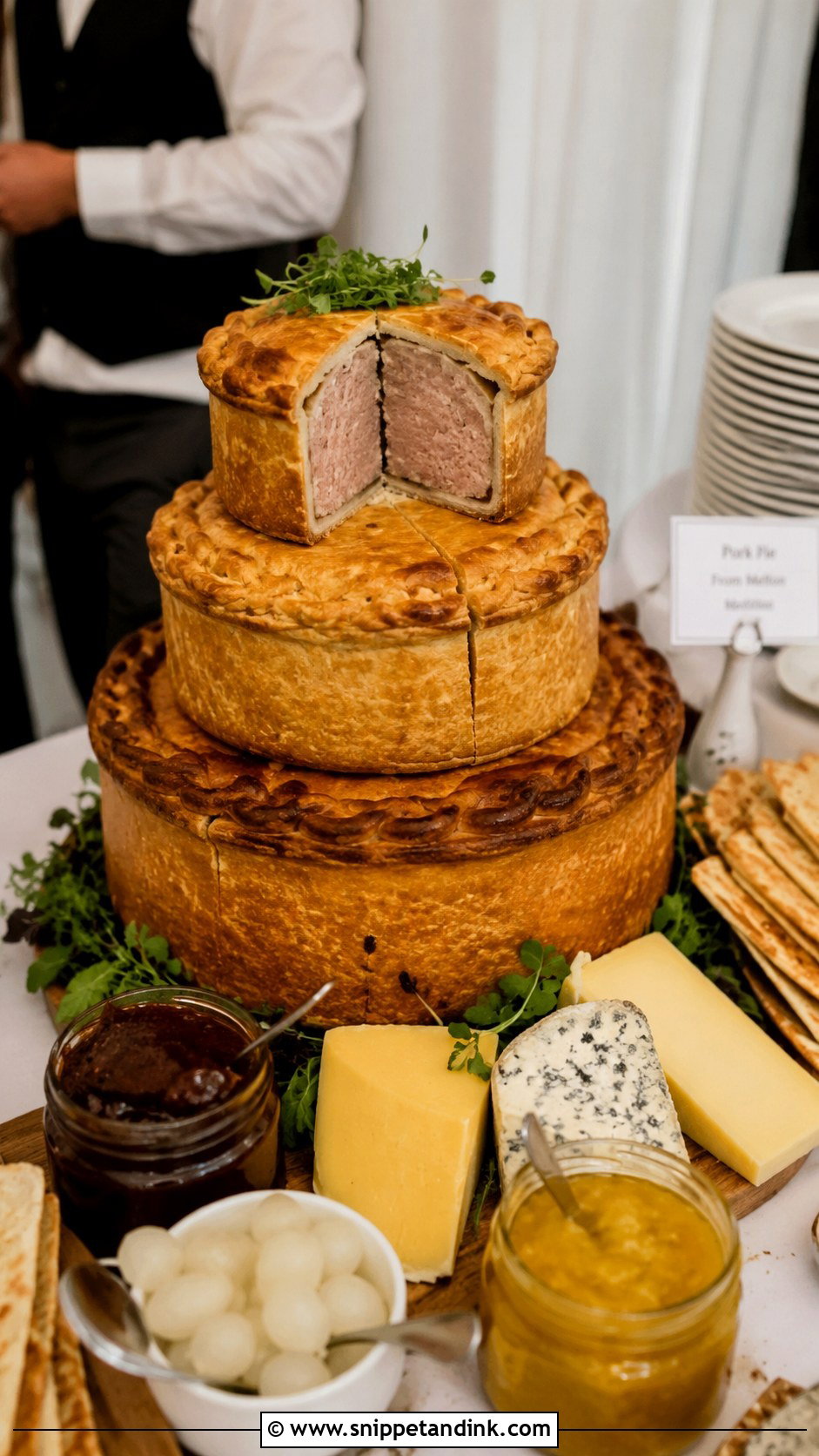
As evening food, a pork pie stack earns its place twice: once in the photos, once after the dancing. I set it out for the cutting, then take it back to the kitchen to slice and plate with chutneys, pickles, cheese and crackers. That keeps it chilled and makes service faster than guests hacking at it themselves. Sturdy, edible decorations like herbs and pastry shapes survive the move better than delicate flowers.
20. Luxury Pork Pie Wedding Cake
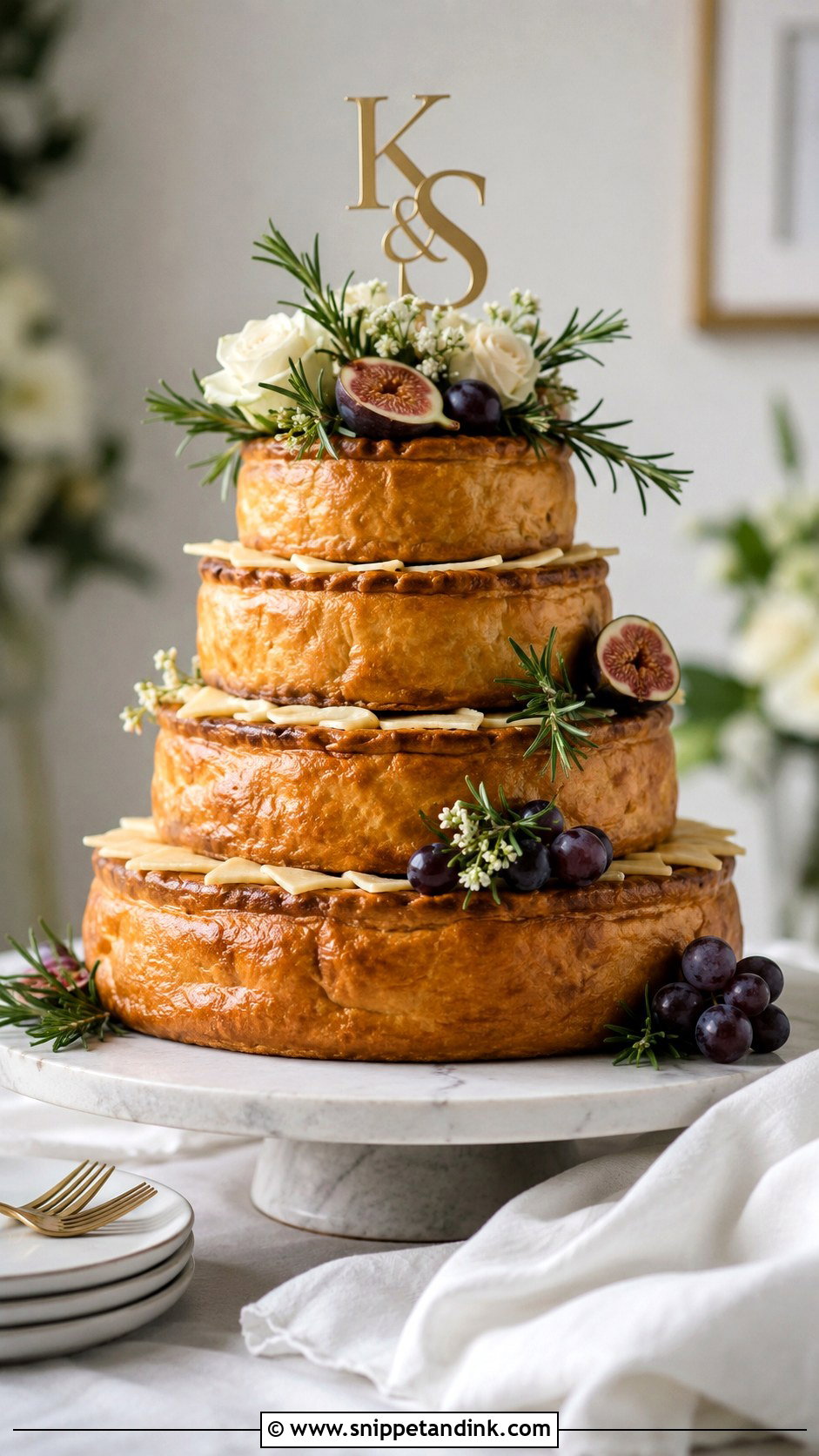
A polished version comes down to precise baking: tiers of even color, straight sides and clean crimps, ideally from a baker who makes raised pies all year. Cheese layers, figs, grapes, herbs and a few refined flowers add richness. A marble stand or polished board lifts it. Coordinate labels and serving pieces so nothing looks improvised. It suits couples who want an alternative cake that still feels formal.
How Long Can a Pork Pie Cake Sit Out?
This is the question I’m asked least and worry about most. A pork pie is chilled meat, and it should be treated like the rest of the cold buffet. Food safety guidance generally allows cold food out of the fridge for a limited period, a few hours at most, and less in a hot marquee. After that, it should be eaten or thrown away, not put back.
In practice, I keep the stack refrigerated until about an hour before the cutting, display it for photos, then bring it back to the kitchen to slice. If the venue has no fridge space, ask your caterer to bring a chilled van or cool boxes. Never assemble the stack the night before and leave it on a table.
Guests Who Don’t Eat Pork
Some guests won’t eat pork for religious, ethical or dietary reasons, and the pastry is often made with lard. A cheese tier, a vegetarian pie made with vegetable fat, or a small sweet cake on the side keeps everyone included. Label each one clearly, and keep separate knives so nothing gets mixed up during serving.
A Savory Centerpiece That Earns Its Place on the Table
A pork pie stack is more than a joke cake. It can be rustic or polished, and it does a real job by feeding people late in the night. Size it to your guest count, your venue and your serving plan. A small three-tier stack suits an intimate reception, while a pork pie and cheese display can feed a larger evening crowd. Add chutneys, herbs, labels and a sturdy stand, and it will be the table guests keep coming back to.
You'll Like These Ideas:


Leave a Reply