
Italian wedding cakes are built differently from the classic sugar-paste tower. Height is optional; what they lean on is filling: pastry cream, mascarpone, ricotta, citrus, berries, almonds, hazelnut and soft sponge. A large one can be wide, layered, fruit-topped or a full dessert spread, and it should taste as fresh at the last slice as the first. That freshness is also the challenge, because cream and pastry don’t sit happily for hours. Below are thirty Italian-style cakes I’d design for a big reception, from a classic millefoglie to modern tiers with Italian flavours, with honest notes on how each one behaves on the day.
Cream Fillings Run on a Shorter Clock Than Buttercream
Most of the cakes in this list are filled with something fresh: pastry cream, mascarpone, ricotta, Chantilly or cut fruit. That’s what makes them taste so good, and it’s also why they need a different plan from a sugar-paste cake that can stand in a room all afternoon.
- Dairy fillings should stay refrigerated until shortly before display, and they shouldn’t sit out at room temperature for long. Plan the cake reveal and the cutting close together.
- Puff pastry and choux go soft once they meet cream. Millefoglie and Saint Honoré are best assembled at or near the venue.
- Cut fruit weeps and browns, so berries, figs and pears go on late.
- Ask whether your venue has a cold room or fridge space big enough for a tier, and confirm it before you fix the design.
The display cake and the serving cake
A common solution for big Italian receptions is a smaller show cake for the cutting photo, with matching sheet trays or extra millefoglie kept cold in the kitchen and plated by the caterers. Guests get the cake at its best, and you aren’t relying on one tall cream-filled tower to survive a long evening. If you love a tall look, ask about decorated dummy tiers underneath the real one.
1. Big Italian Millefoglie Wedding Cake
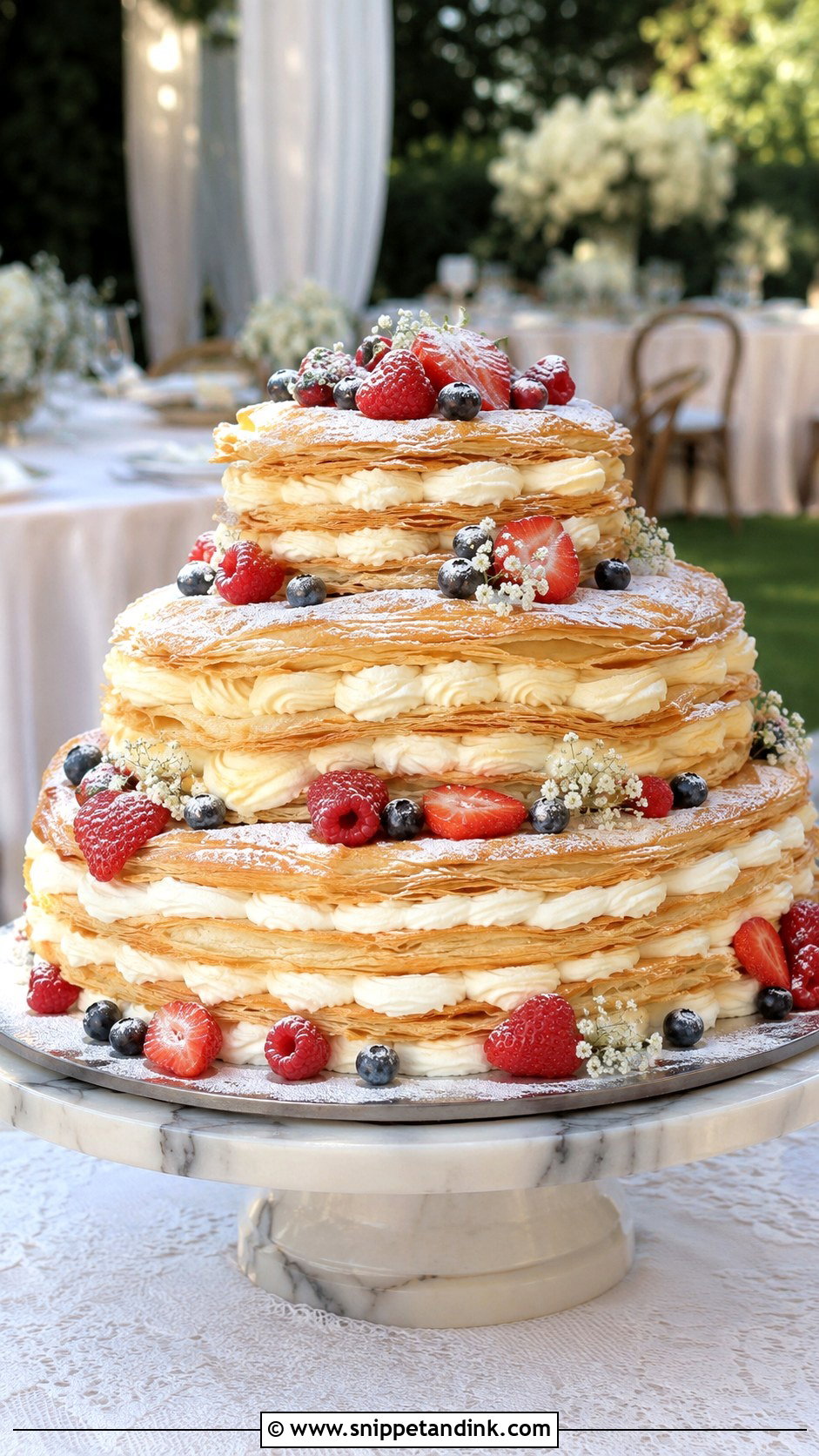
Millefoglie is the cake people picture at an Italian wedding: crisp puff pastry, soft crema pasticcera, a dusting of icing sugar and fresh berries. For a large guest list I build it wide, a broad stacked rectangle or several large rounds, rather than a tall tower that would crush the pastry beneath. The pastry starts losing its crunch once the cream touches it, so I assemble it as close to serving as I can, ideally at the venue. Villas, gardens and summer receptions suit it.
2. Big Italian Cream Wedding Cake
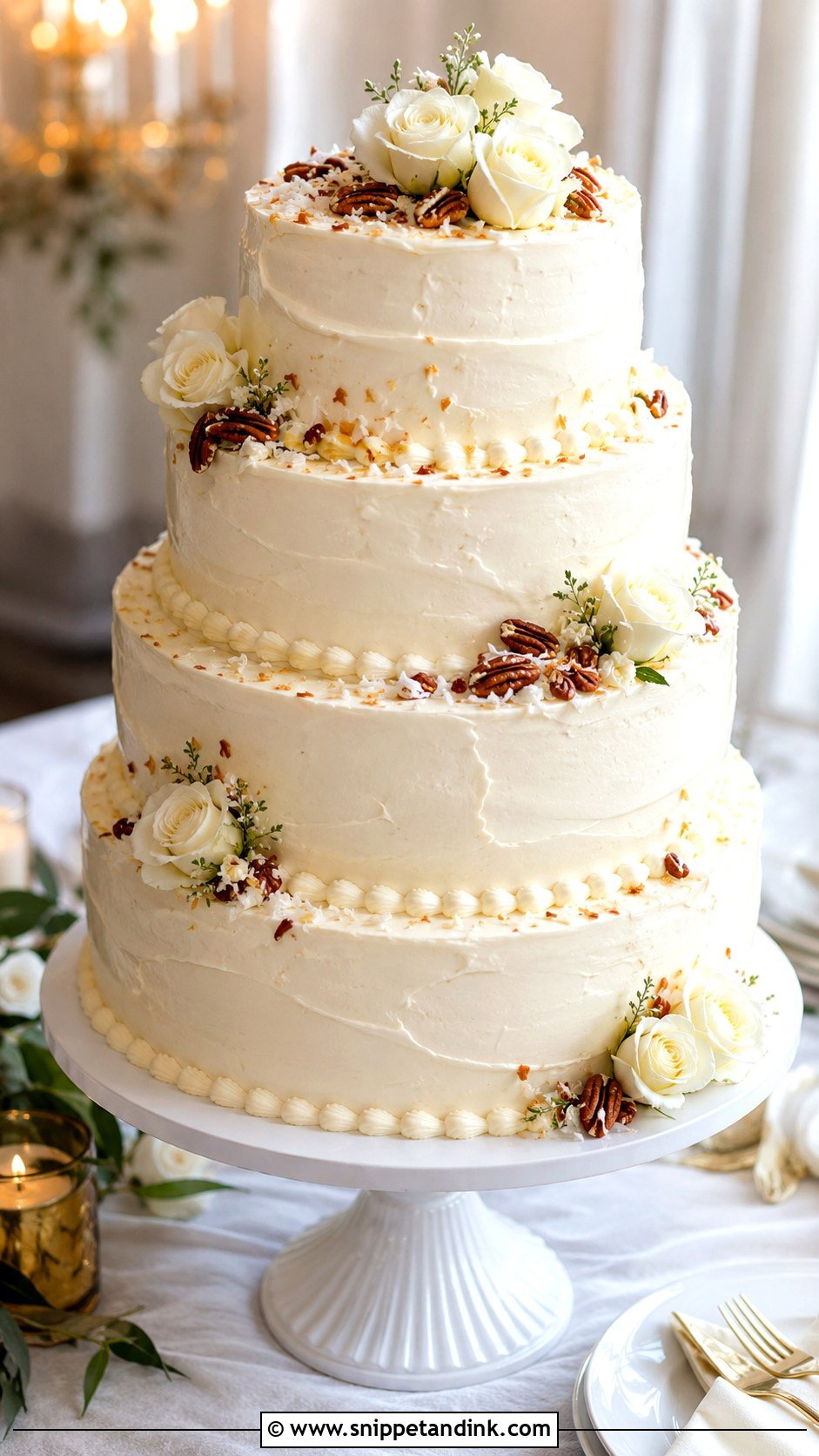
A small confession: Italian cream cake is not Italian at all. It’s a Southern American cake made with coconut, pecans and cream cheese frosting, and it’s a crowd-pleaser for good reason. To give it an Italian-wedding look, I keep the outside soft ivory with delicate piping, white flowers and a few toasted nuts at the base. Cream cheese frosting is soft, so it stacks best as three sturdy tiers in a cool room, or four wider ones for a big guest count. The flavour is nutty, sweet and rich.
3. Big Tiramisu Wedding Cake
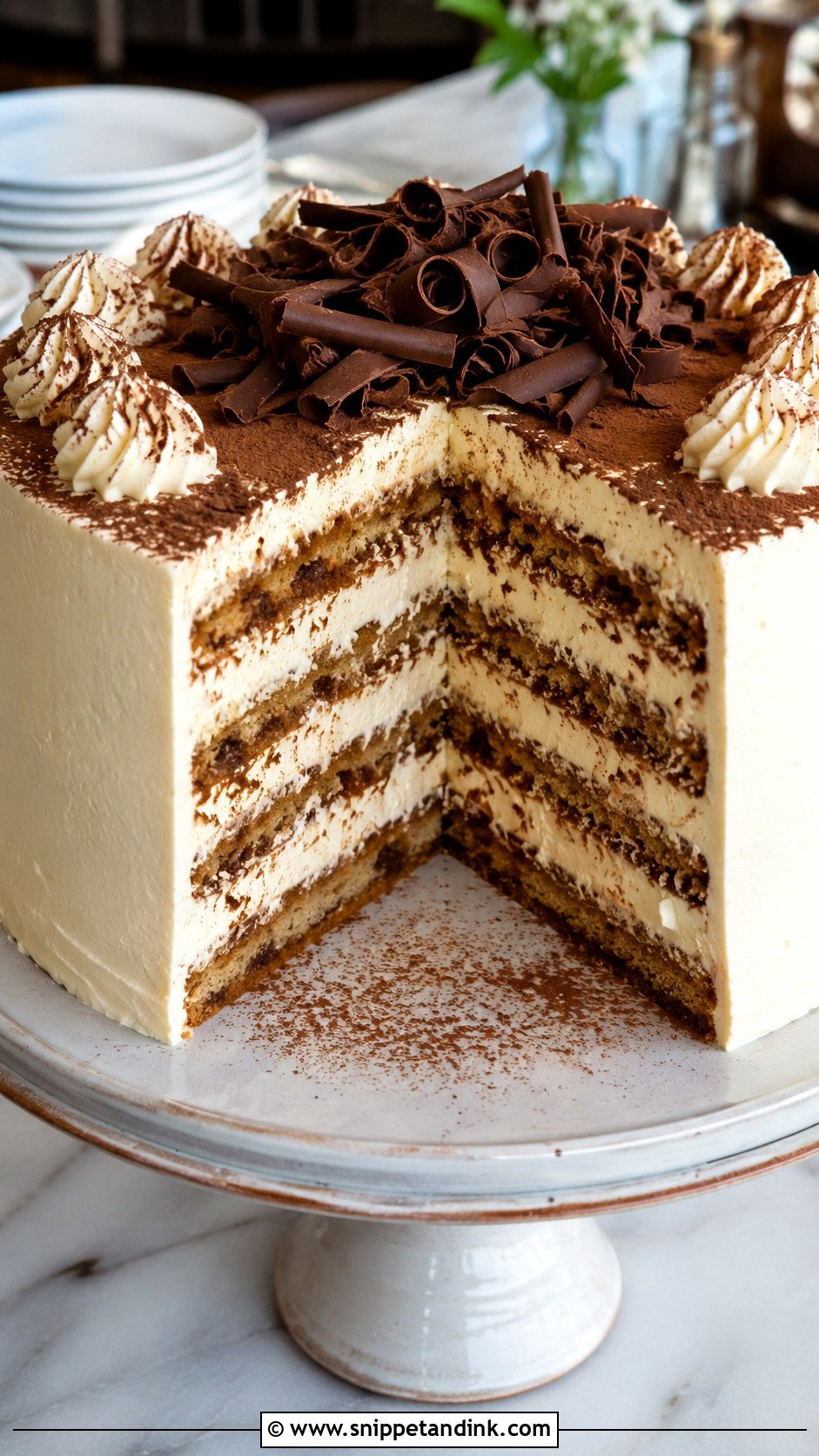
A big tiramisu wedding cake turns the dessert most guests already love into a centrepiece: espresso-soaked sponge or savoiardi, mascarpone cream and a cocoa top. The structural problem is that true tiramisu is a spoon dessert, too soft to stack. For a wedding I use a firmer sponge, stabilise the mascarpone cream and chill each tier well, so it slices cleanly while still tasting like the real thing. A single wide tier looks modern; stacked tiers look formal. Cocoa, chocolate curls and piped mascarpone are all it needs.
4. Big Sicilian Cannoli Wedding Cake
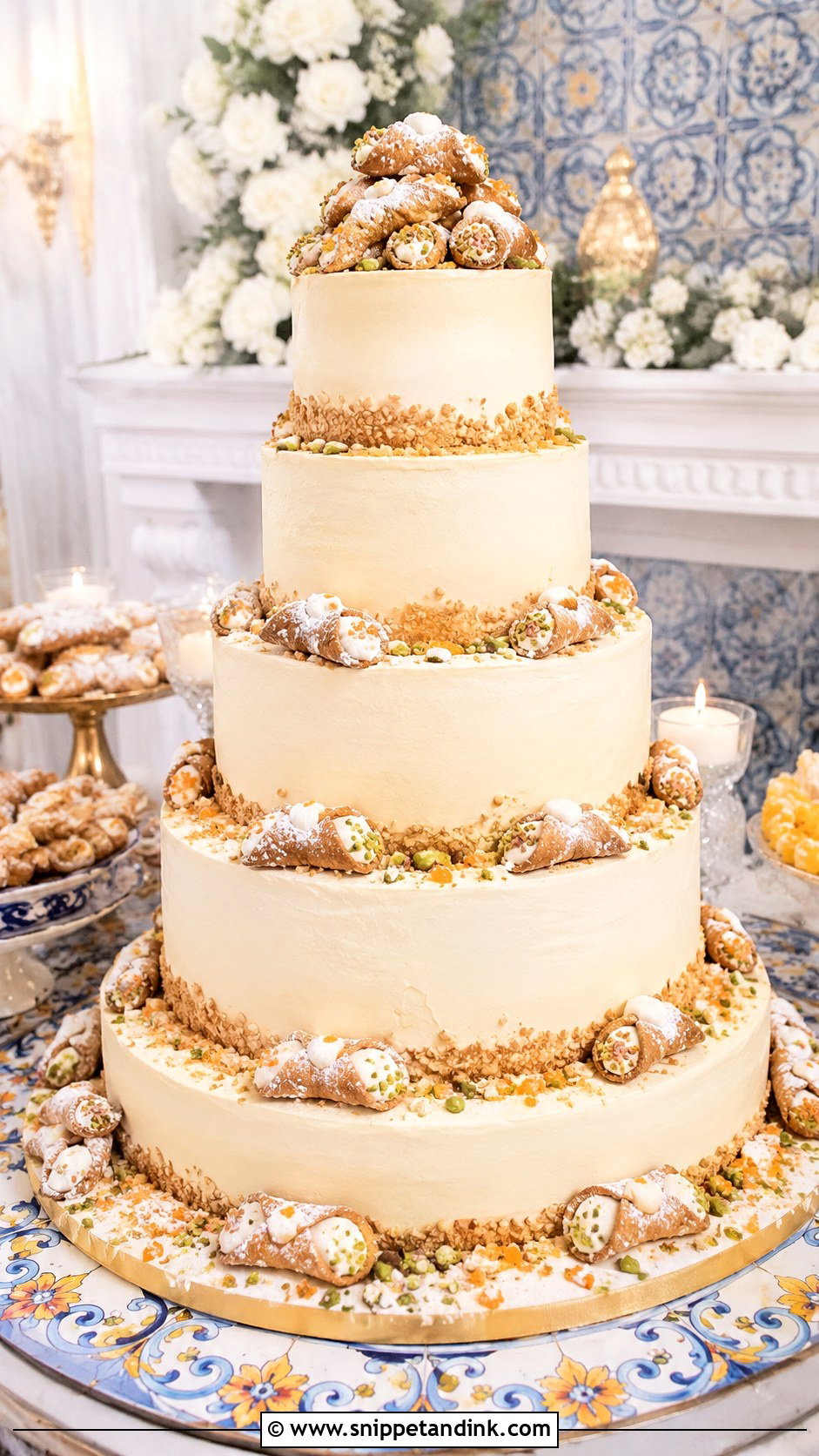
This one takes everything from a Sicilian cannoli and puts it in cake form: vanilla or almond sponge, sweetened ricotta cream, mini chocolate chips, candied citrus and crushed shells. I like a ring of small cannoli around each tier, piped with filling at the last moment, because filled shells turn soft within an hour or so. Pistachios and orange peel finish the outside. It’s a lively, textured cake that guests come back to.
5. Big Amalfi Lemon Wedding Cake
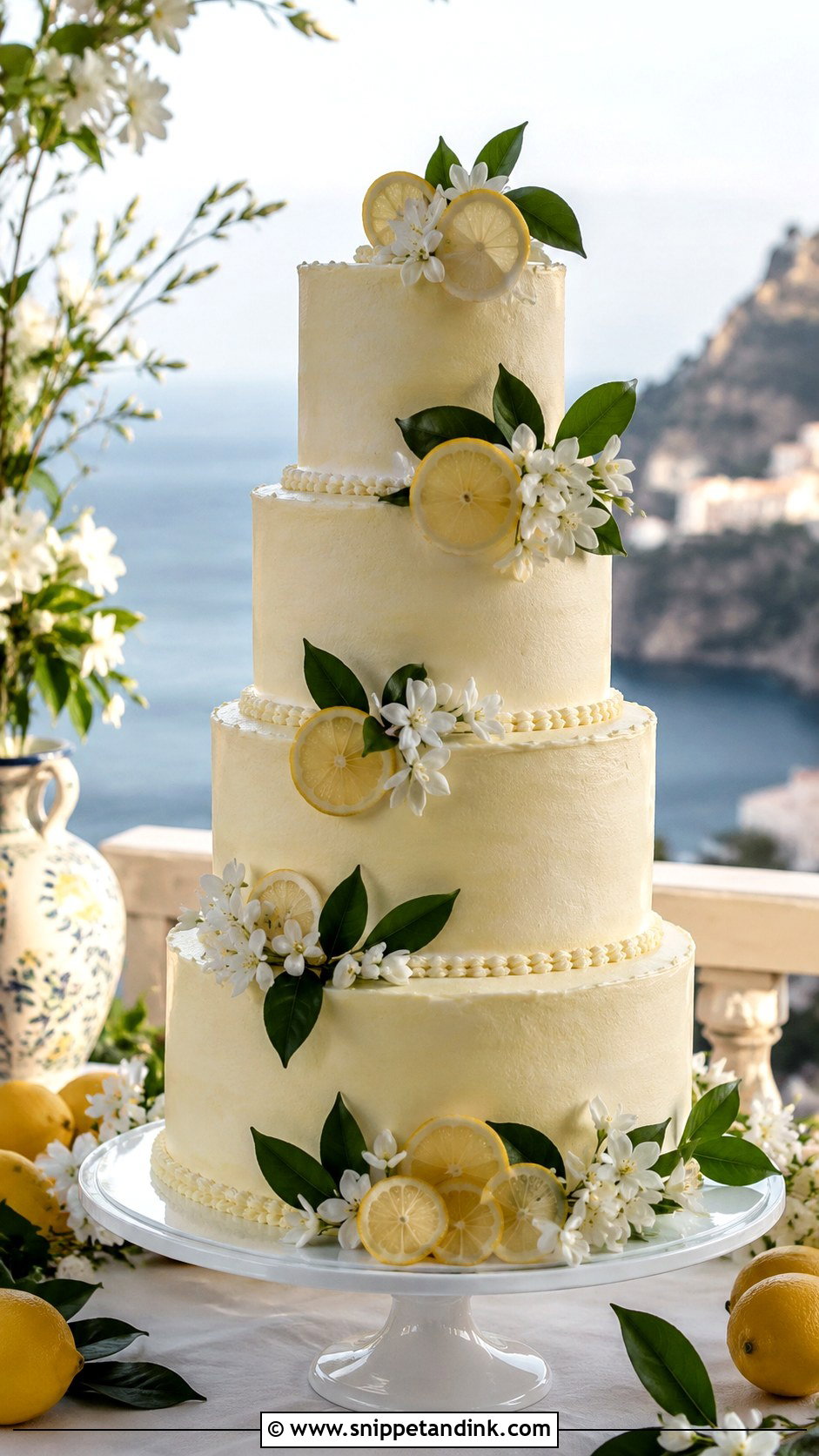
Amalfi lemon brings brightness after a heavy Italian dinner: lemon sponge, lemon curd and whipped mascarpone, finished in soft ivory with pale yellow touches, lemon slices, small white flowers and glossy leaves. Real lemon leaves look wonderful but should be washed and kept clear of the icing, or replaced with sugar ones. A wide base tier keeps it generous. Coastal and terrace weddings suit it.
6. Big Italian Ricotta Wedding Cake
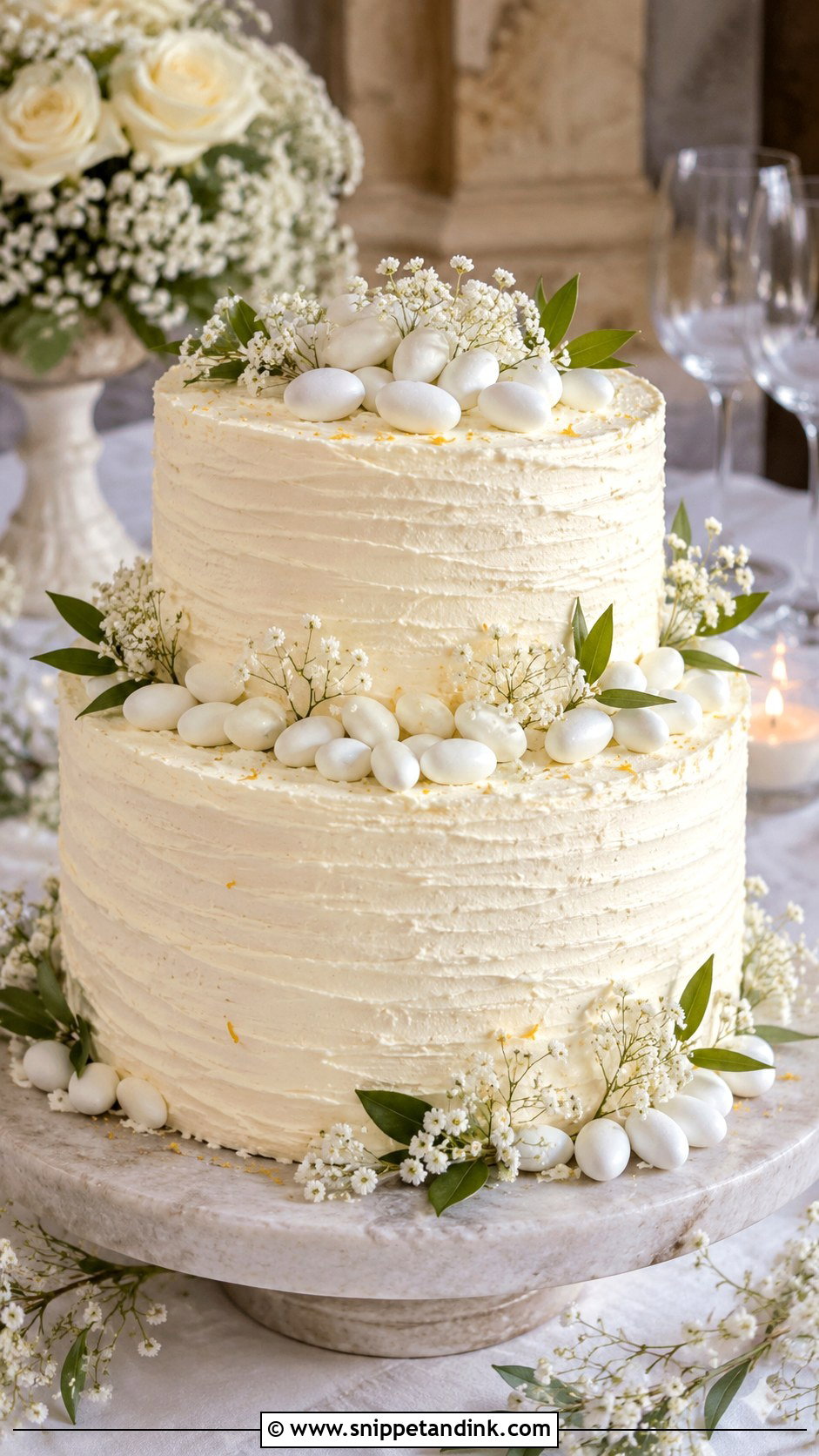
Ricotta works two ways in a cake: in the batter for a moist, tender crumb, or folded into the filling for a light, milky cream. Paired with vanilla sponge, citrus zest and a little almond, it tastes less sugary than buttercream cakes. Ricotta filling must be drained well; wet ricotta weeps into the sponge and makes the layers slide. I finish the outside in smooth buttercream or mascarpone, with soft flowers and a few sugared almonds, the confetti of Italian weddings.
7. Big Italian Almond Wedding Cake
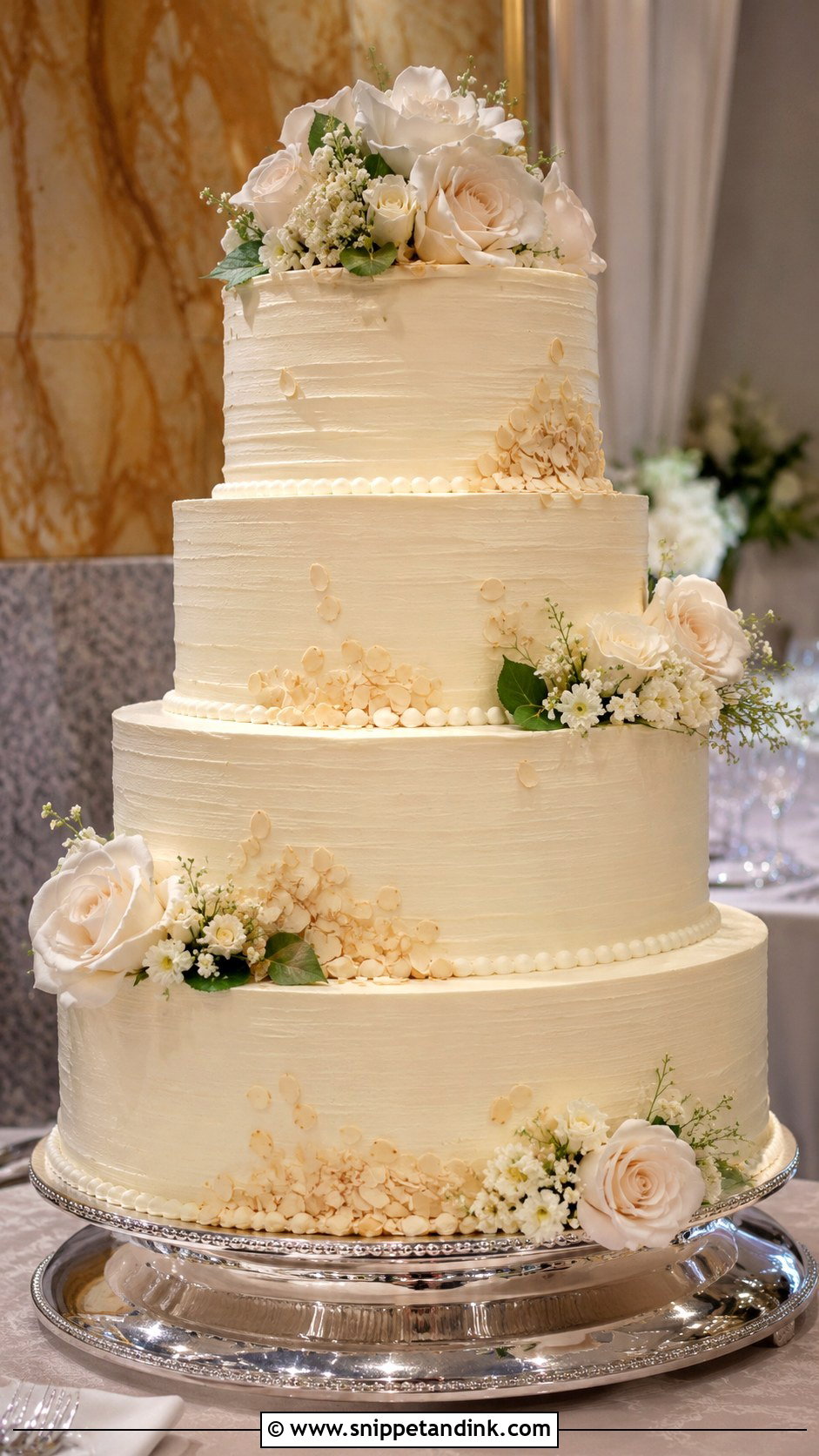
Almond is one of the oldest Italian wedding flavours, and it pairs with vanilla, apricot, raspberry, citrus and mascarpone. A tall tiered shape with smooth ivory icing, a scatter of sliced almonds at the base and sugar or white flowers keeps it formal. I sometimes brush the sponge with a light almond syrup for moisture. Nut allergies are the obvious caution here, so label the cake clearly and tell your caterer.
8. Big Italian Sponge Wedding Cake
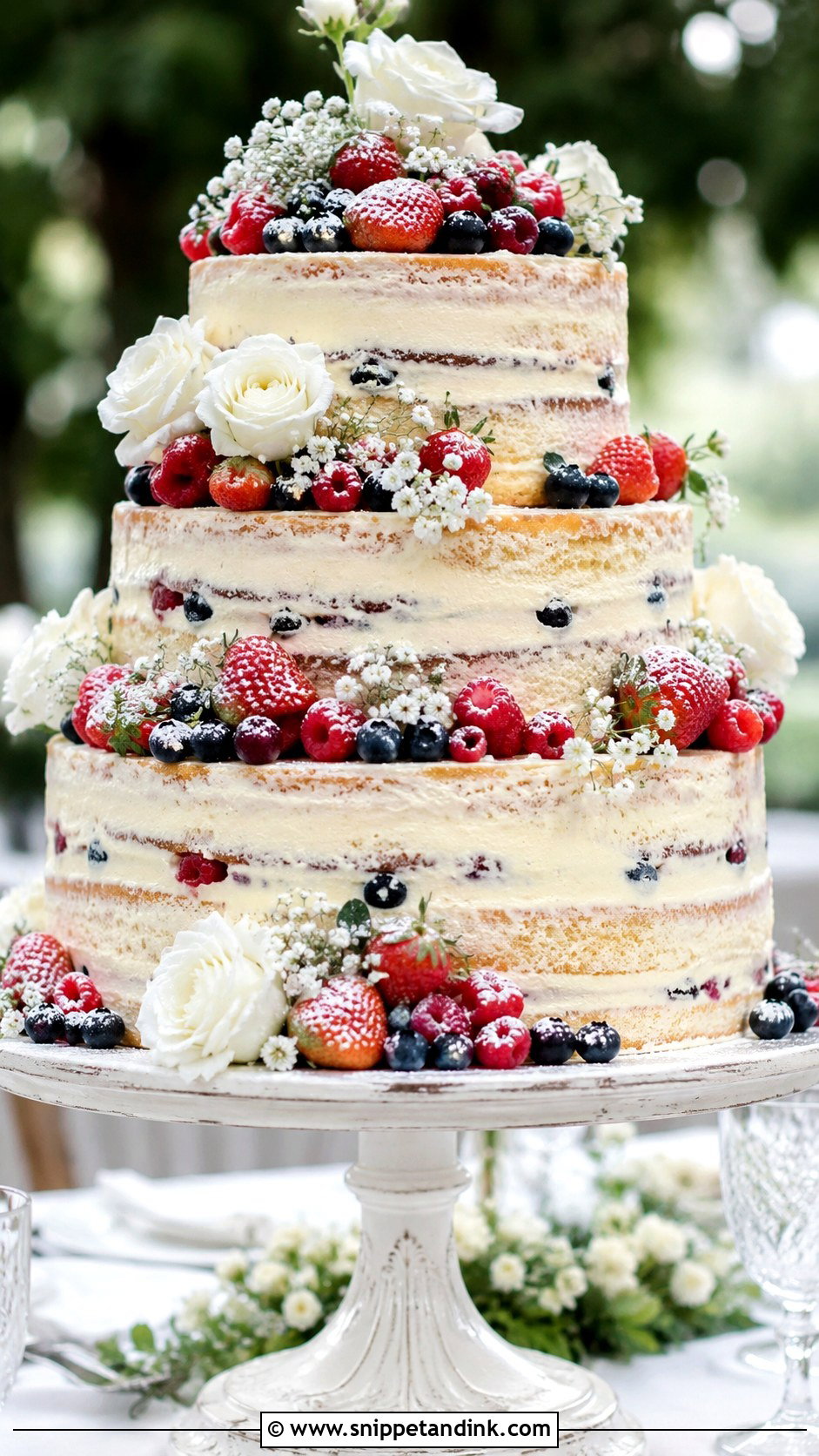
Pan di Spagna, the light Italian sponge, is the base for most of these cakes. A big Italian sponge wedding cake layers it with pastry cream, whipped cream, fruit or mascarpone. Pan di Spagna is drier than an American butter cake on its own, so it’s always moistened with a syrup, which is where flavours like limoncello, orange or vanilla come in. Smooth buttercream, soft ruffles or a semi-naked finish all suit it. It’s the flexible choice when you want Italian character without committing to tiramisu or cannoli.
9. Big Italian Fruit Tart Wedding Cake
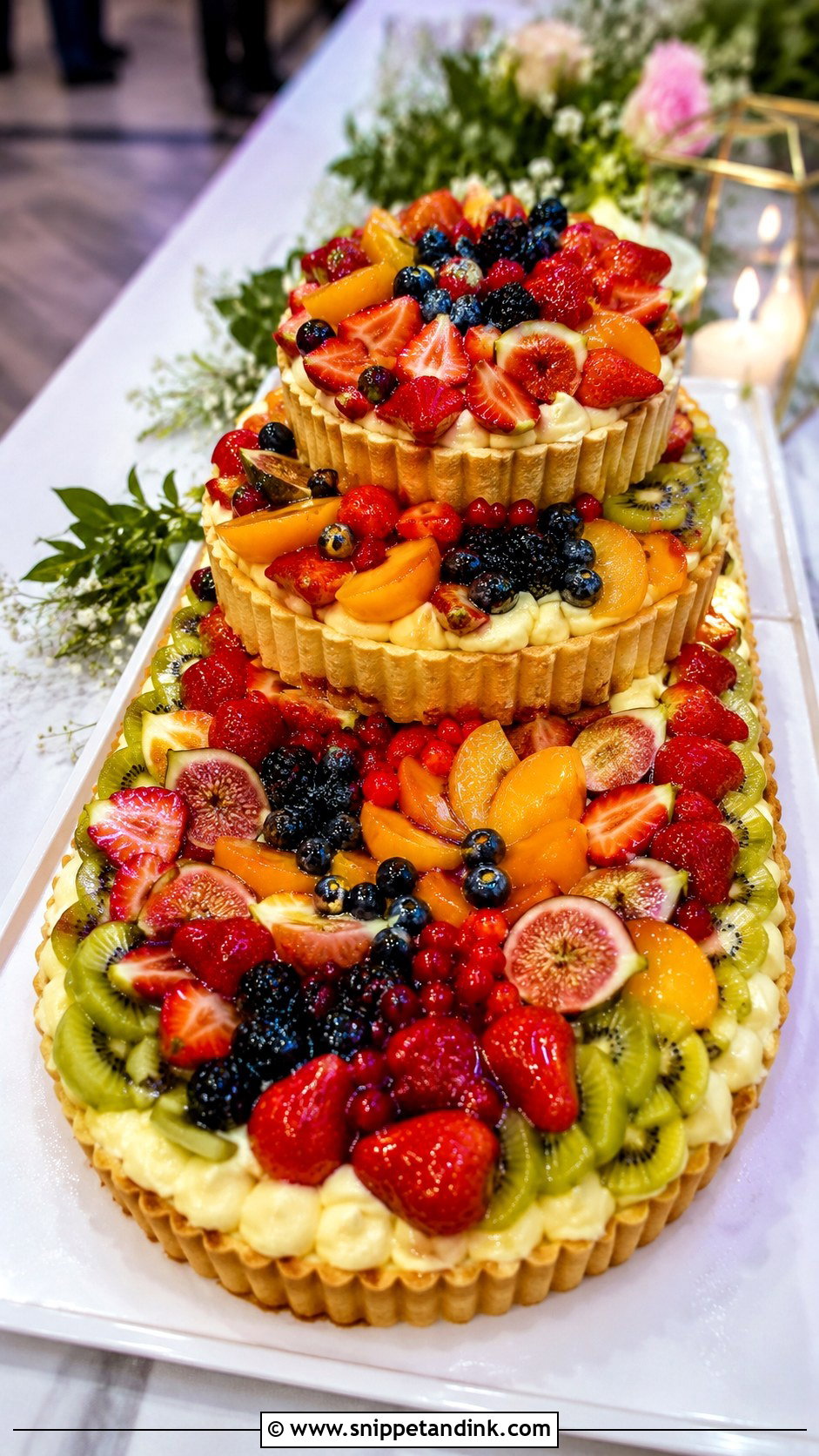
An oversized fruit tart gives colour without frosting: crisp pastry, vanilla pastry cream and rows of berries, kiwi, peaches, figs or citrus, finished with a thin apricot glaze that keeps the fruit glossy. Tiered tarts on a stand feel more like a wedding cake; one long rectangular tart looks dramatic down a banquet table. Cut fruit weeps after a few hours, so it’s arranged on the day. Spring and summer weddings suit it.
10. Big Italian Crostata Wedding Cake
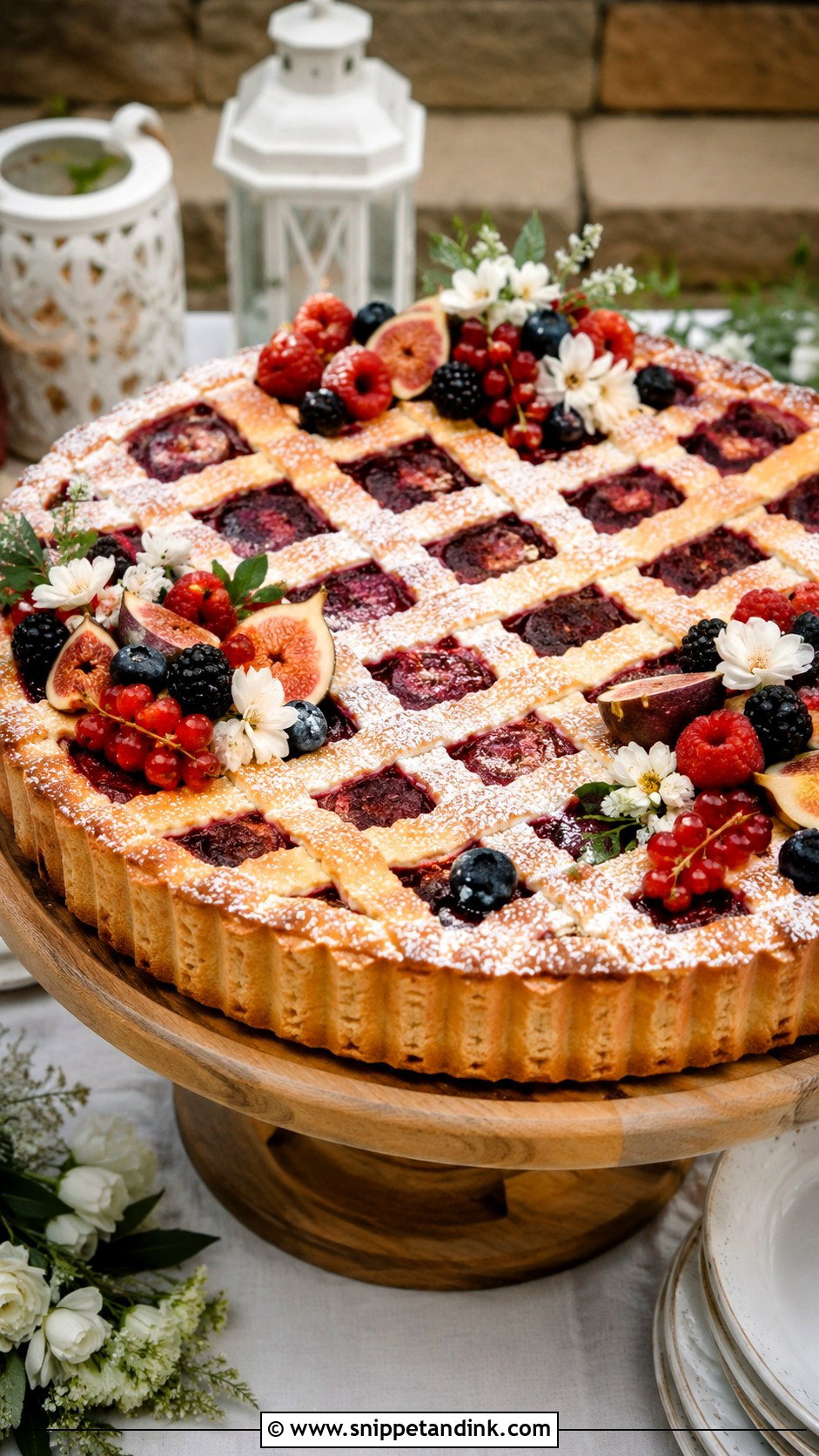
Crostata is home baking dressed up: buttery shortcrust, fruit preserves or pastry cream, and a lattice top. For a wedding I make the lattice neat and the edges scalloped, then set several on a tiered stand to give height without turning it into a frosted cake. Apricot, cherry, berry and fig fillings all work. Crostata travels and keeps better than cream cakes, which makes it a practical pick for a farmhouse or countryside venue with no cold room.
11. Big Italian Berry Wedding Cake
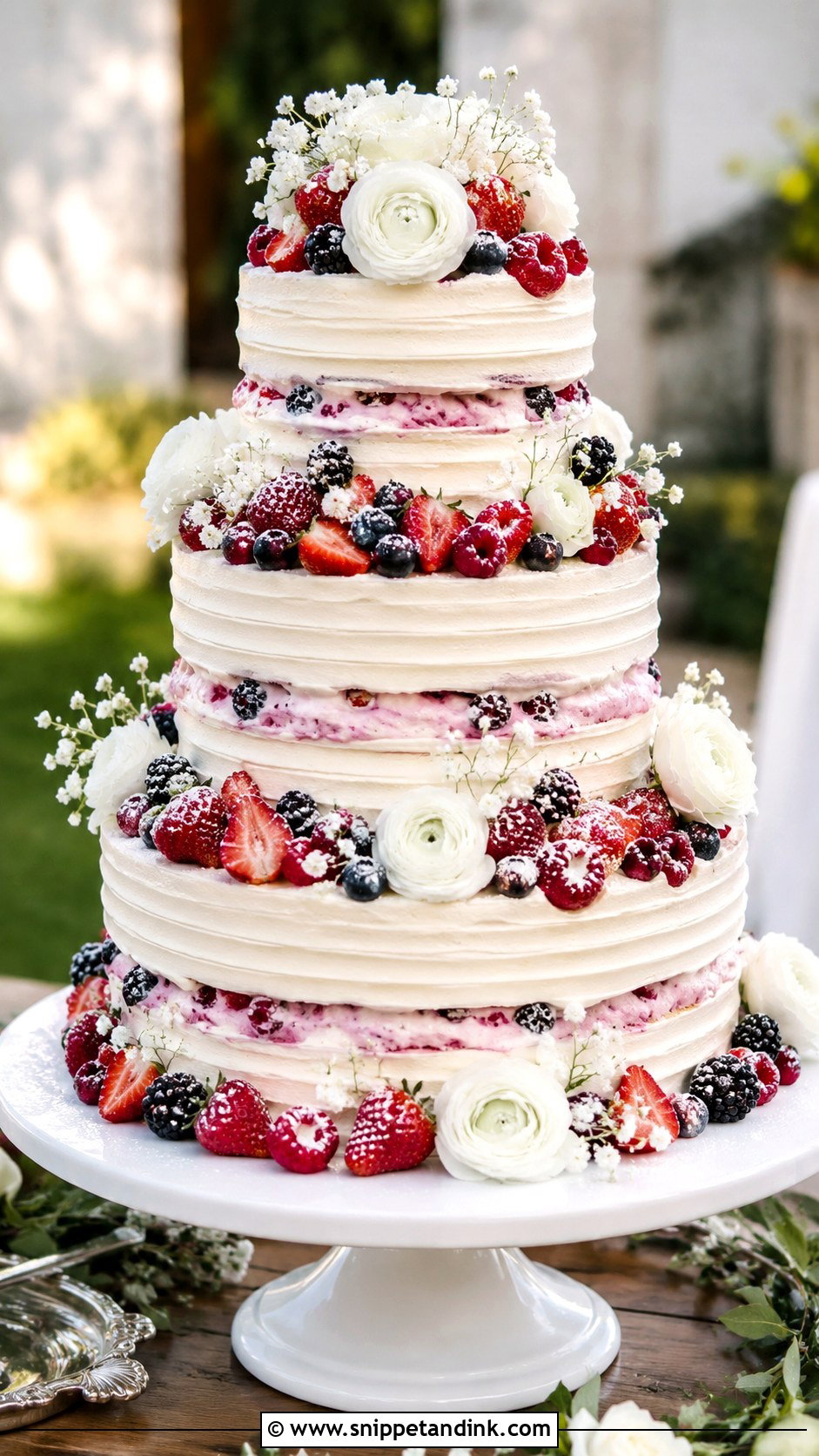
Berries make the simplest Italian cake look abundant: vanilla, almond or millefoglie layers filled with pastry cream and fruit, with strawberries, raspberries, blackberries and blueberries tumbling down white or ivory tiers. A dusting of icing sugar at the end gives it the bakery finish, but it dissolves on moist fruit, so it goes on just before guests see it. Summer and outdoor receptions suit it.
12. Big Italian Pistachio Wedding Cake
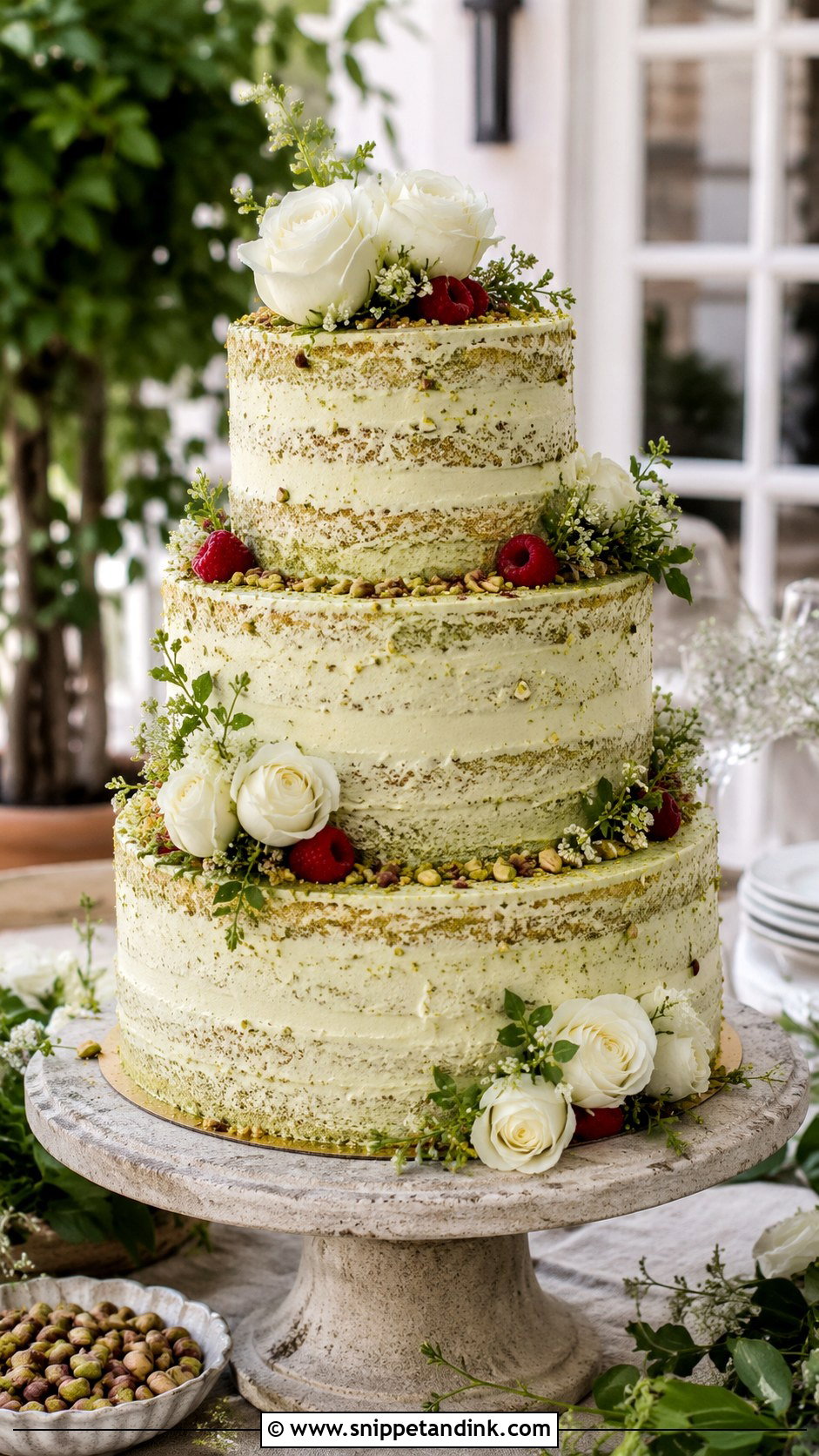
Pistachio is the flavour I’m asked for most in Italian cakes right now: pistachio cream, pistachio sponge or praline, with a soft green colour and a rich nutty taste. A thin raspberry or lemon layer cuts through the richness. Ivory mascarpone frosting, white flowers and crushed pistachios suit it; smooth sides look modern, semi-naked looks rustic. Real pistachio paste is pricey, and cheap versions rely on green colouring and flavouring, so ask what goes into the cream at your tasting.
13. Big Italian Hazelnut Wedding Cake
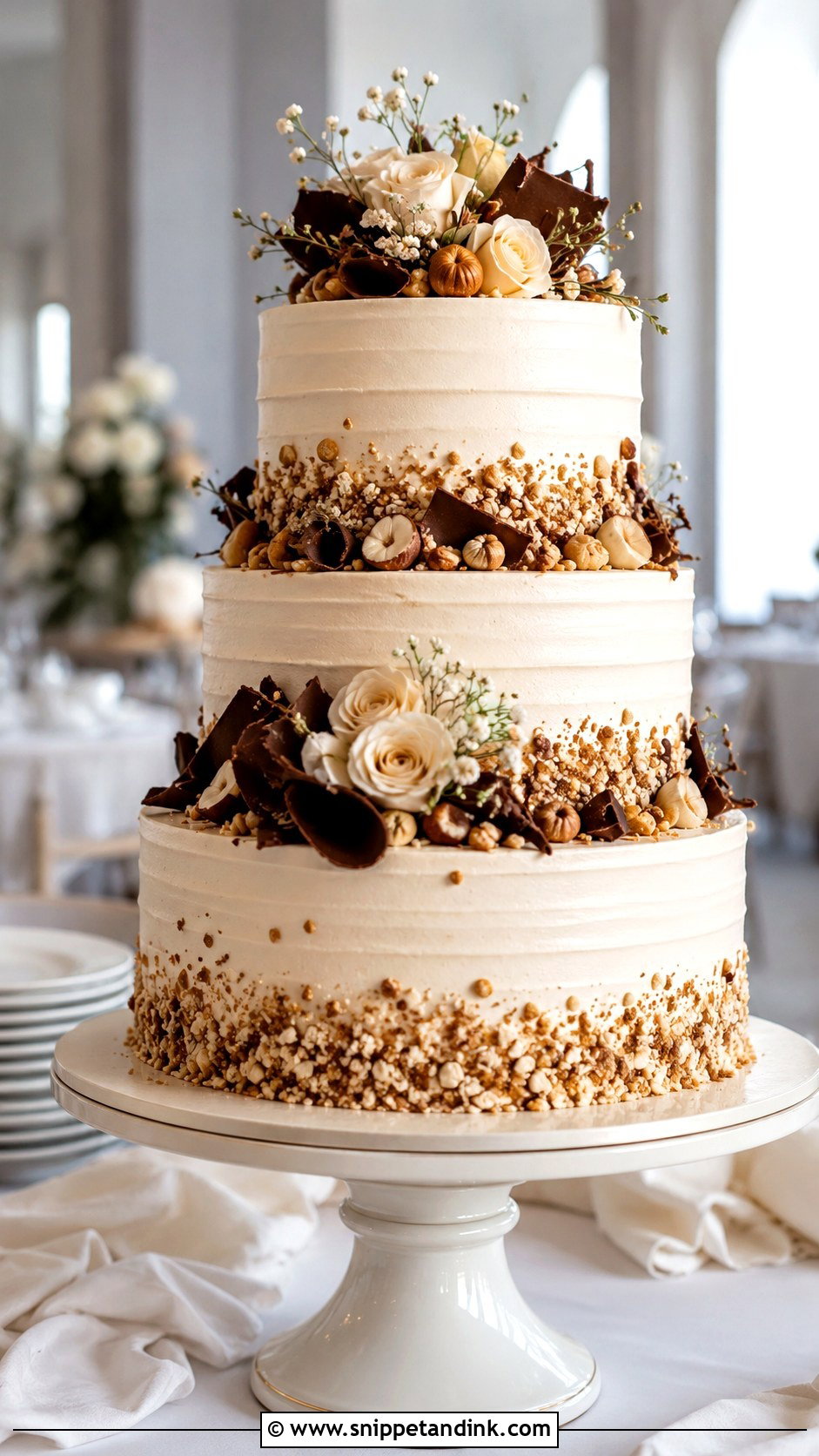
Hazelnut sponge with chocolate cream, vanilla cream or mascarpone is warm and rich. I finish it in smooth ivory with hazelnut praline, chocolate curls and neutral flowers. Toasting the hazelnuts properly before grinding is what makes the flavour; raw hazelnuts taste flat. A taller cake looks formal and a wide one modern. Autumn weddings and evening receptions suit it.
14. Big Italian Chocolate Wedding Cake
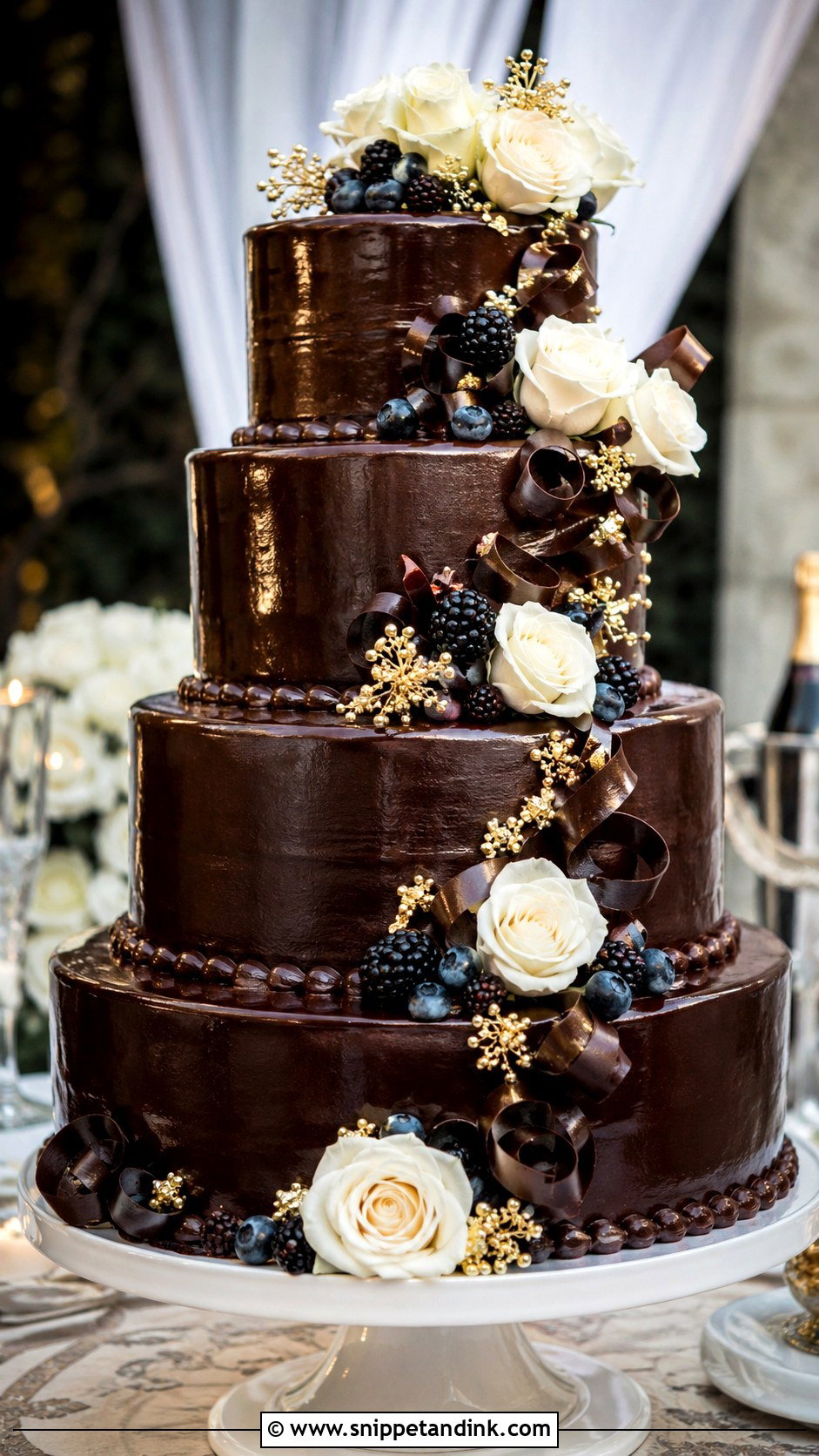
Chocolate can look dramatic and stay elegant: dark chocolate sponge, ganache and a lighter mascarpone or vanilla filling to balance it. Smooth chocolate icing, ivory flowers, gold touches and fresh berries give contrast. Ganache is one of the most stable coatings in warm weather, far more forgiving than buttercream, so a chocolate cake is a sensible choice for a summer reception indoors. Thin cream layers between the sponge make each slice look neat.
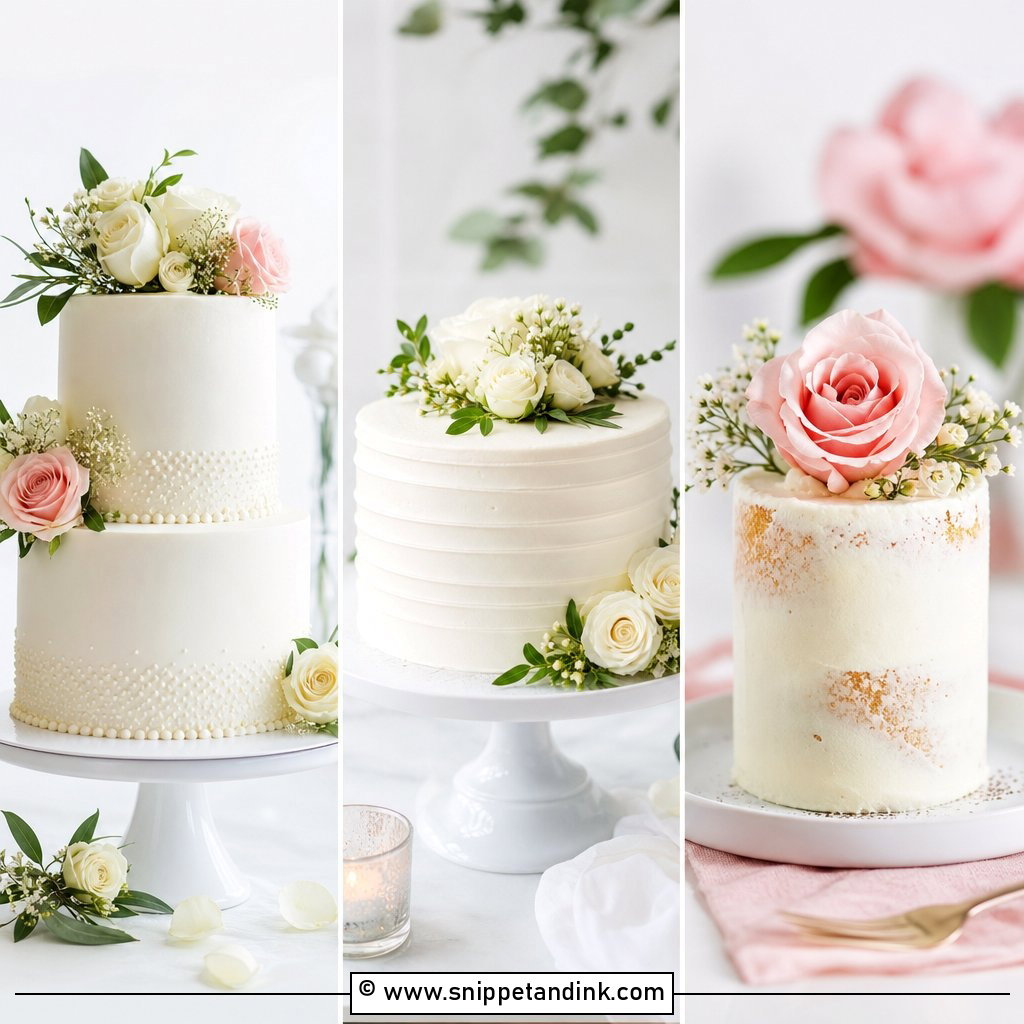
15. Big Italian Setteveli Wedding Cake
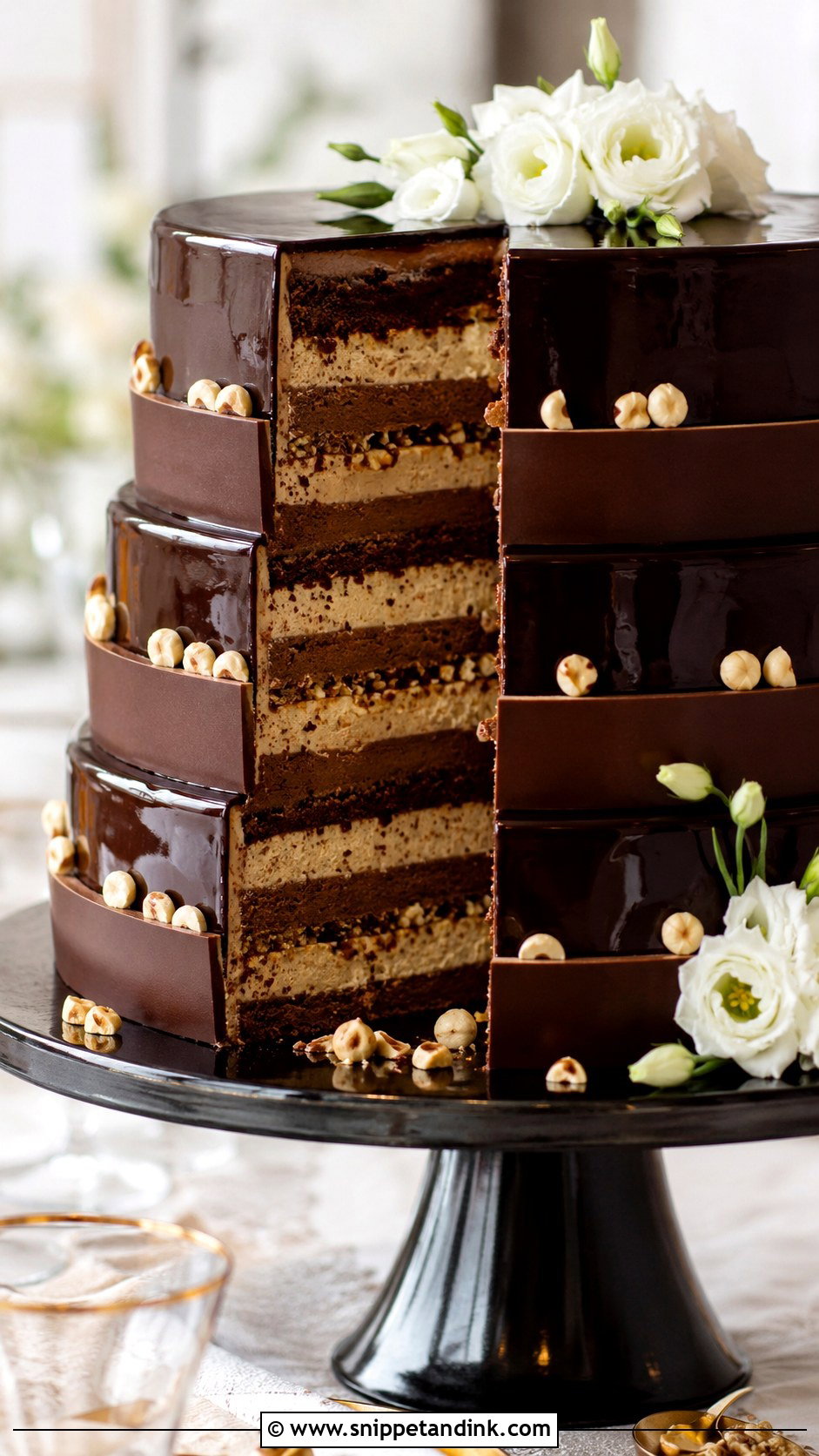
Setteveli, the seven-layer cake, stacks chocolate sponge, hazelnut cream, crunchy praline and chocolate mousse under a glossy glaze. It’s very rich, so smaller slices still satisfy, which helps with big guest counts. Mousse layers and mirror glaze need to stay cold and are hard to stack, so I build setteveli as wide single tiers or on separated stands rather than one tall tower. Evening receptions and formal indoor venues suit it.
16. Big Italian Cassata Wedding Cake
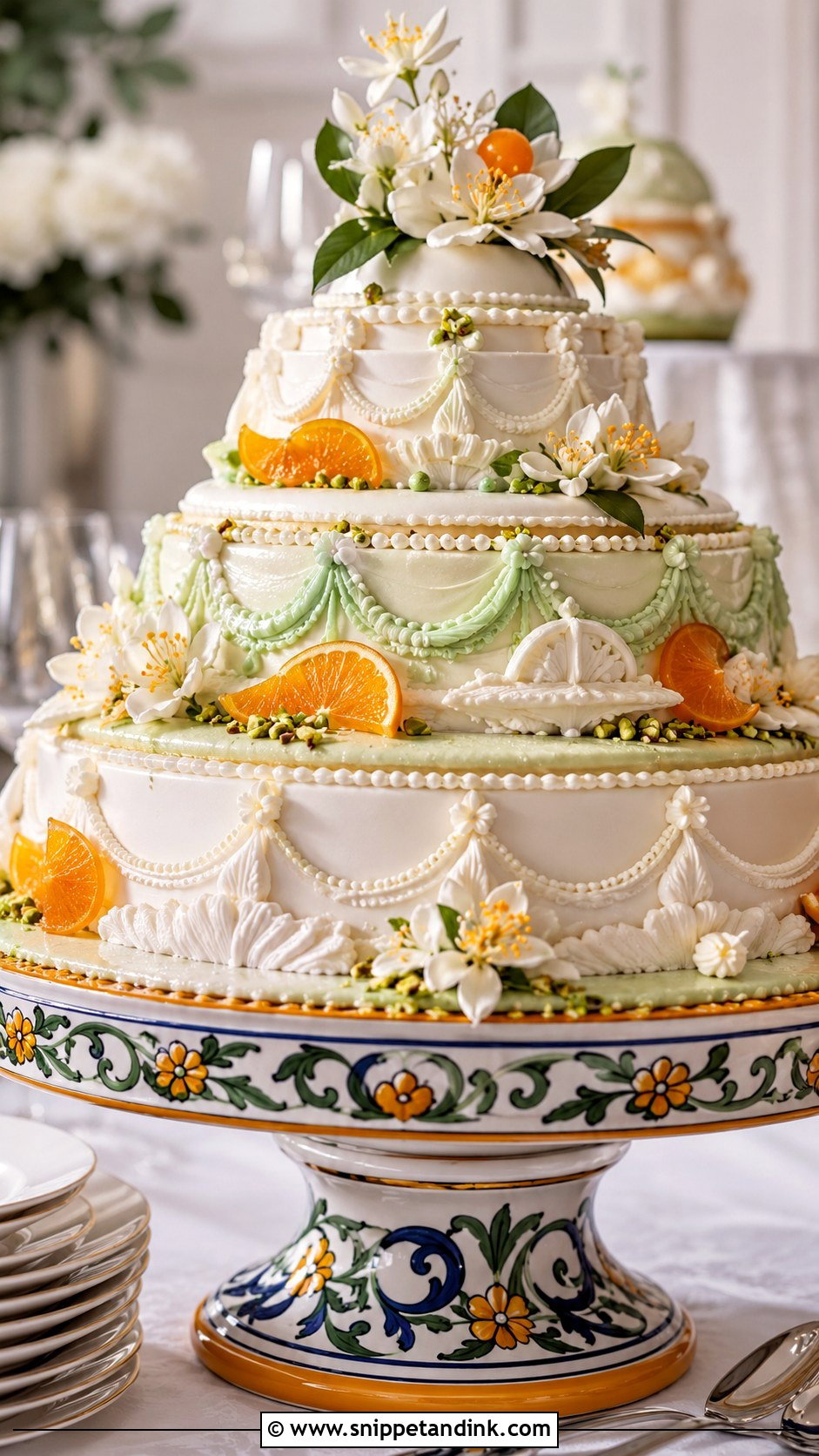
Cassata is the most colourful Sicilian cake: sponge, sweet ricotta, candied citrus, a green almond-paste wrap and decorative icing. Traditional cassata can look bold, so for weddings I soften it, with pale green marzipan, ivory icing and carefully placed candied fruit. Round tiers feel festive without looking casual. It’s a heritage dessert with real personality, and it’s very sweet, so serve thin slices.
17. Big Italian Saint Honore Wedding Cake
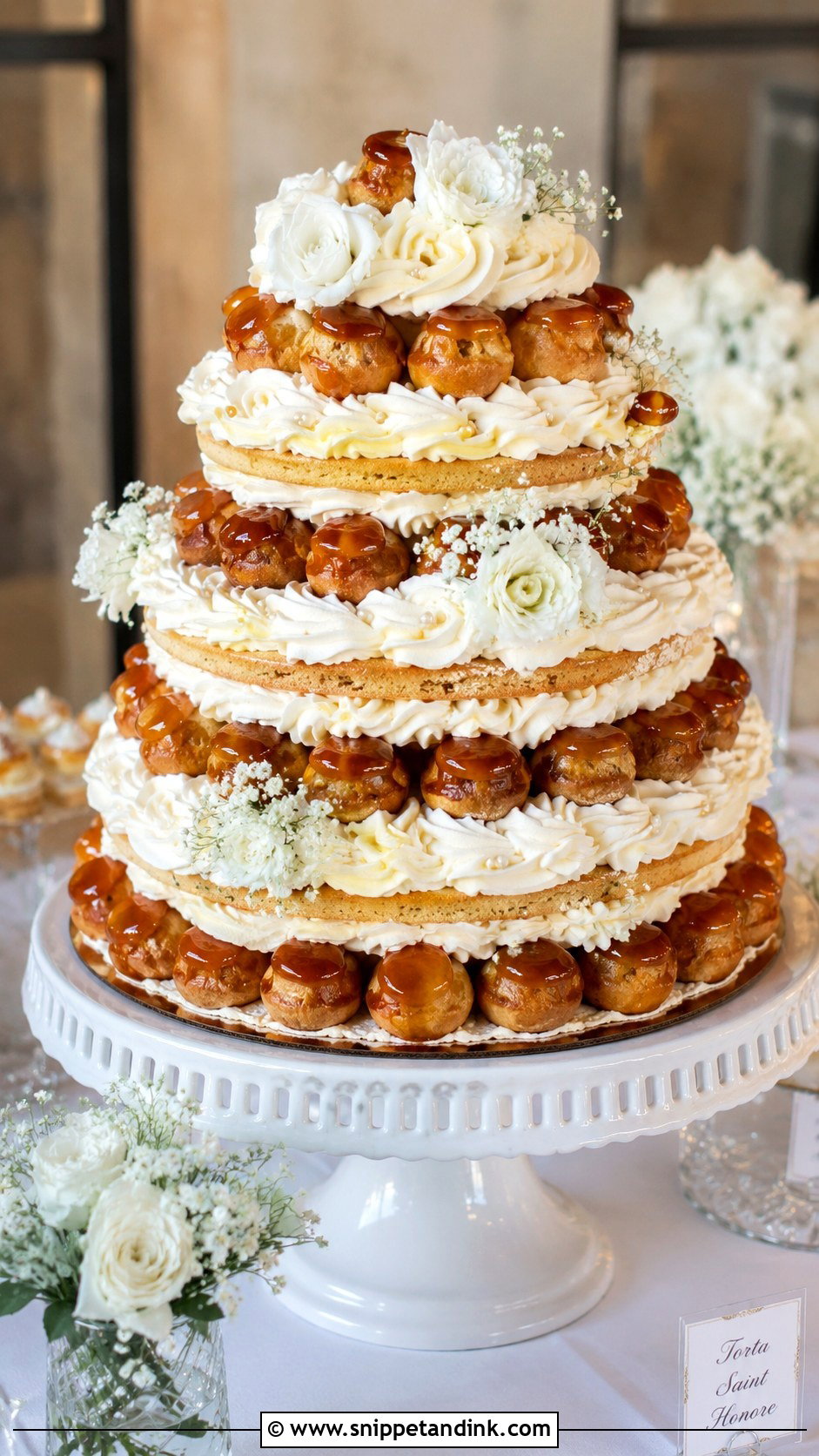
Saint Honoré combines pastry base, cream and caramel-dipped choux puffs around the top. For a wedding I use a tall round base with puffs glazed in caramel, vanilla cream and neat piping, which gives it showpiece height without fondant. Caramel draws moisture from the air and turns sticky within hours in humid weather, so it’s one of the last things I do before delivery. It offers crisp, soft and creamy textures in one bite.
18. Big Italian Mimosa Wedding Cake
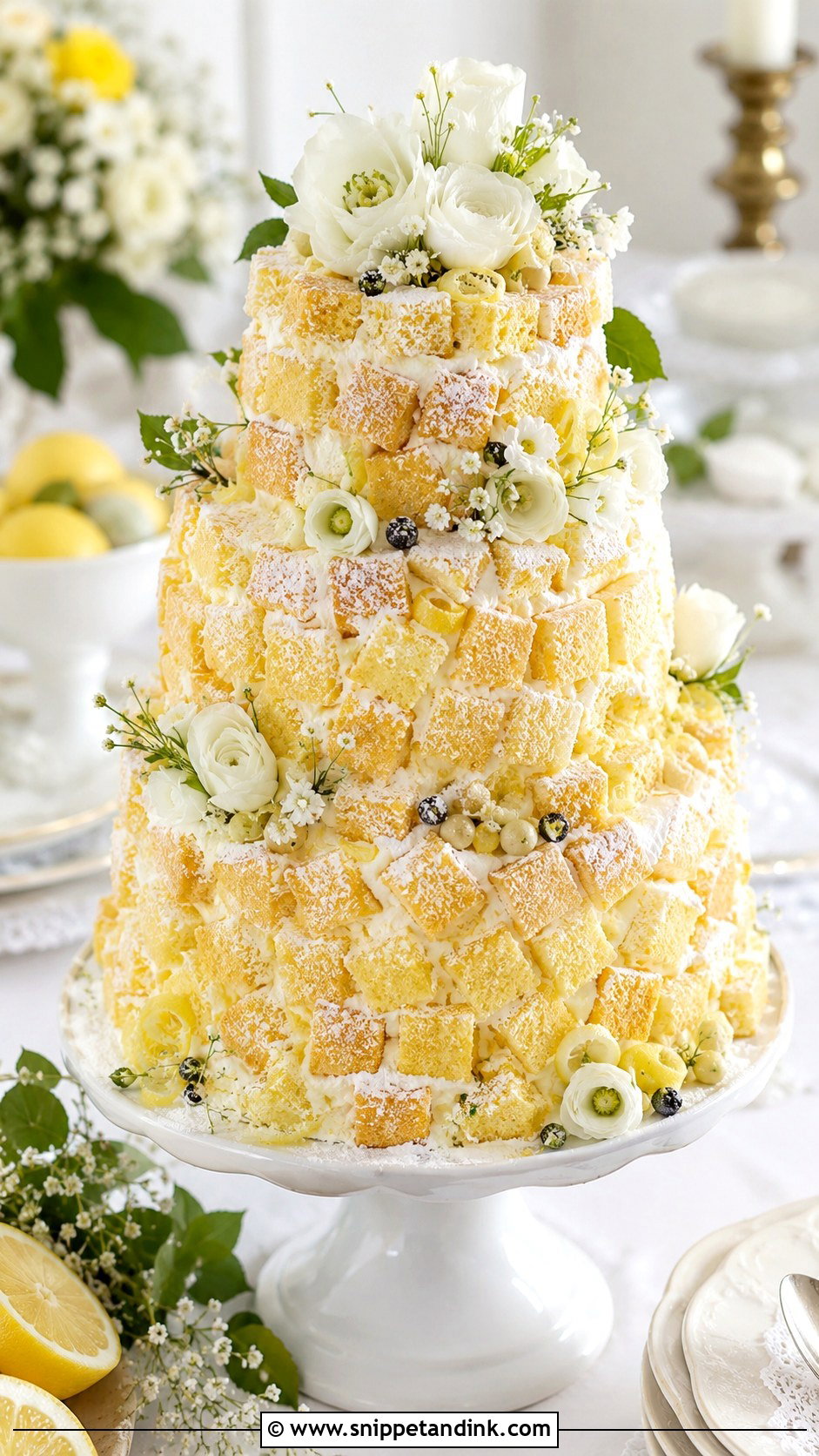
Torta mimosa is sponge and cream covered in tiny yellow cubes of sponge that resemble mimosa blossoms. It looks sunny and delicate, a natural for spring. A tiered version with pale yellow crumb coating, smooth cream filling and simple white flowers sits well on a good stand. The crumb coat is pressed into soft cream, so it doesn’t hold sharp edges; expect a soft, rounded silhouette. Berries or lemon cream add brightness.
19. Big Italian Mascarpone Wedding Cake
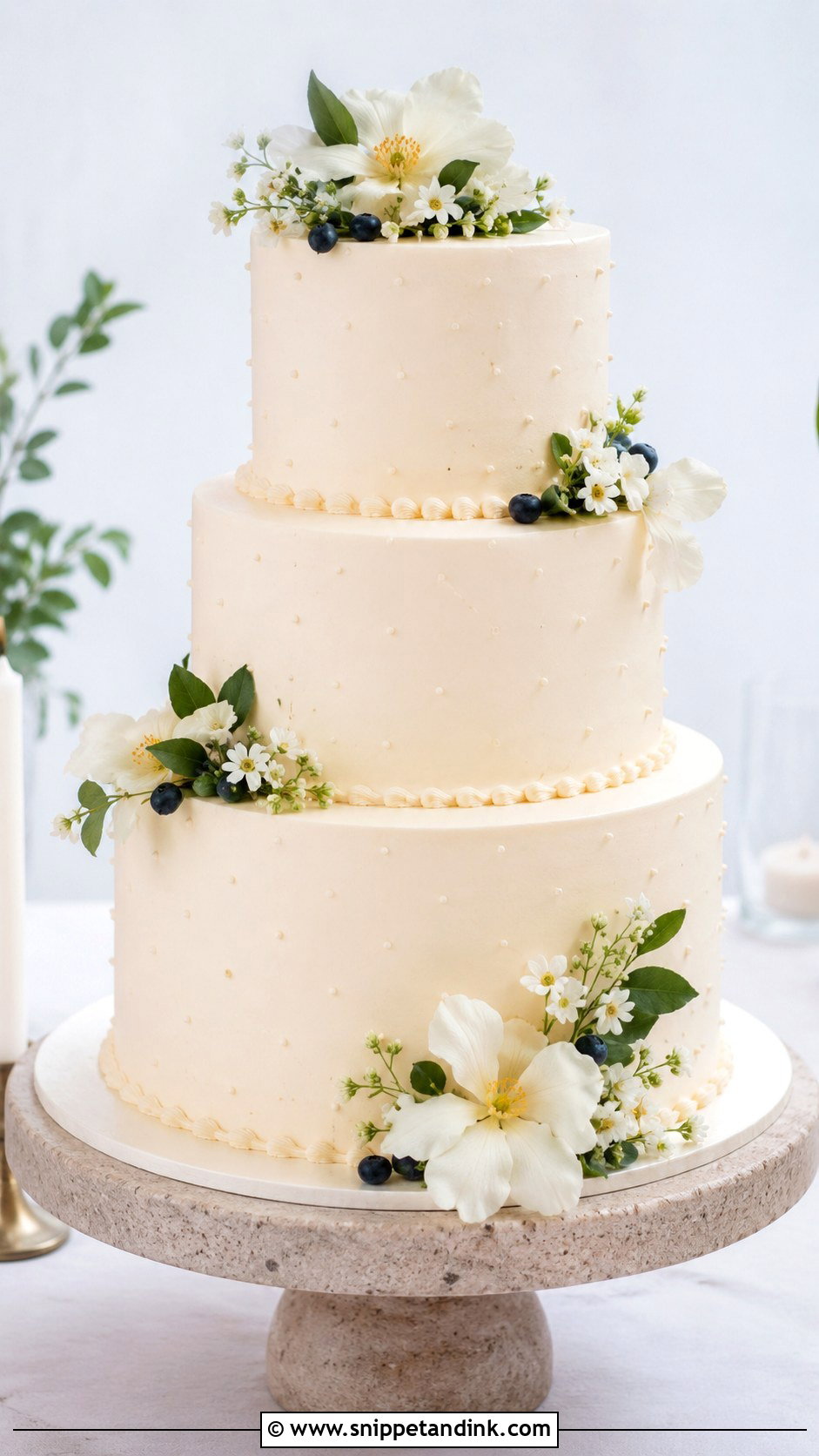
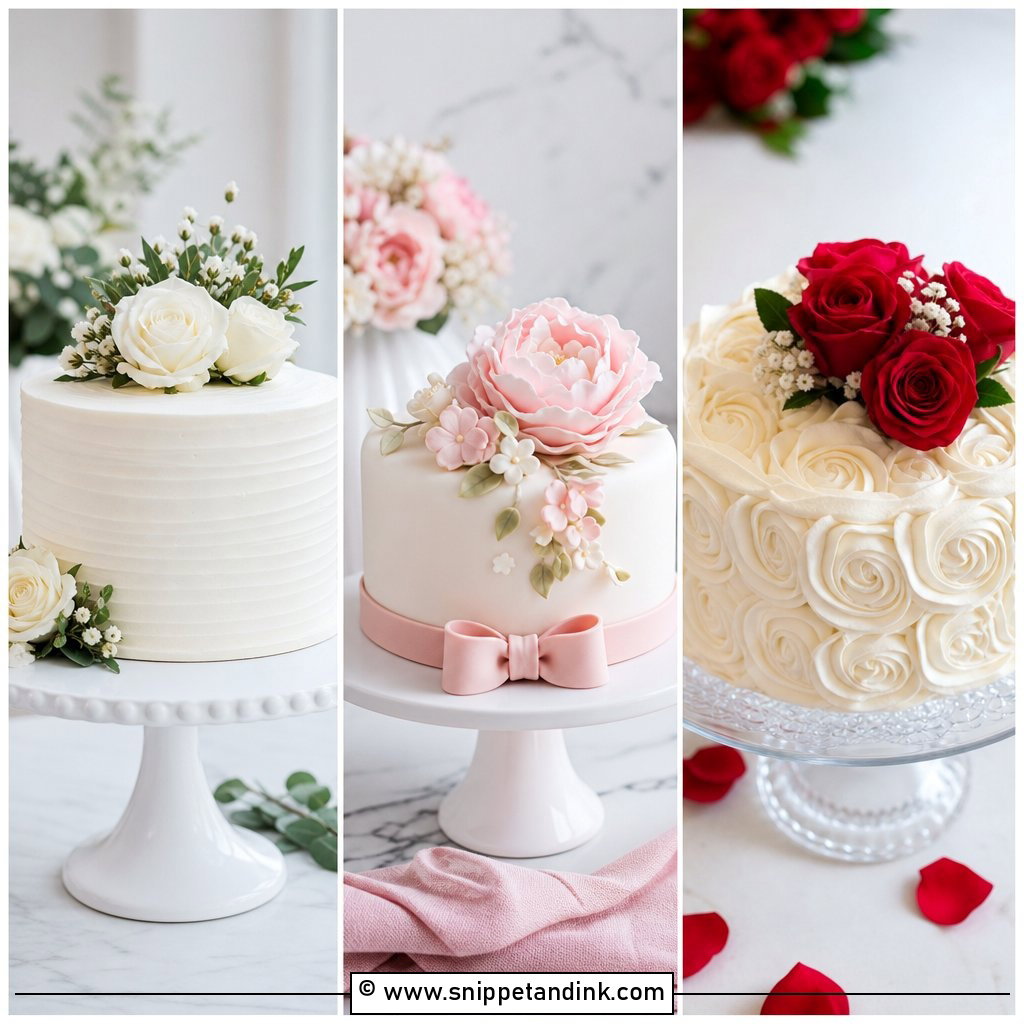
Mascarpone is the most adaptable filling in this list. It pairs with vanilla, citrus, berries, chocolate, coffee, pistachio and almond. It’s softer than buttercream, so for a tall cake I stabilise it, usually with a little whipped cream and white chocolate, and keep the cake chilled until shortly before display. Soft ivory icing with clean edges, light piping and seasonal flowers keeps the outside quiet and lets the texture do the work.

20. Big Italian Chantilly Wedding Cake
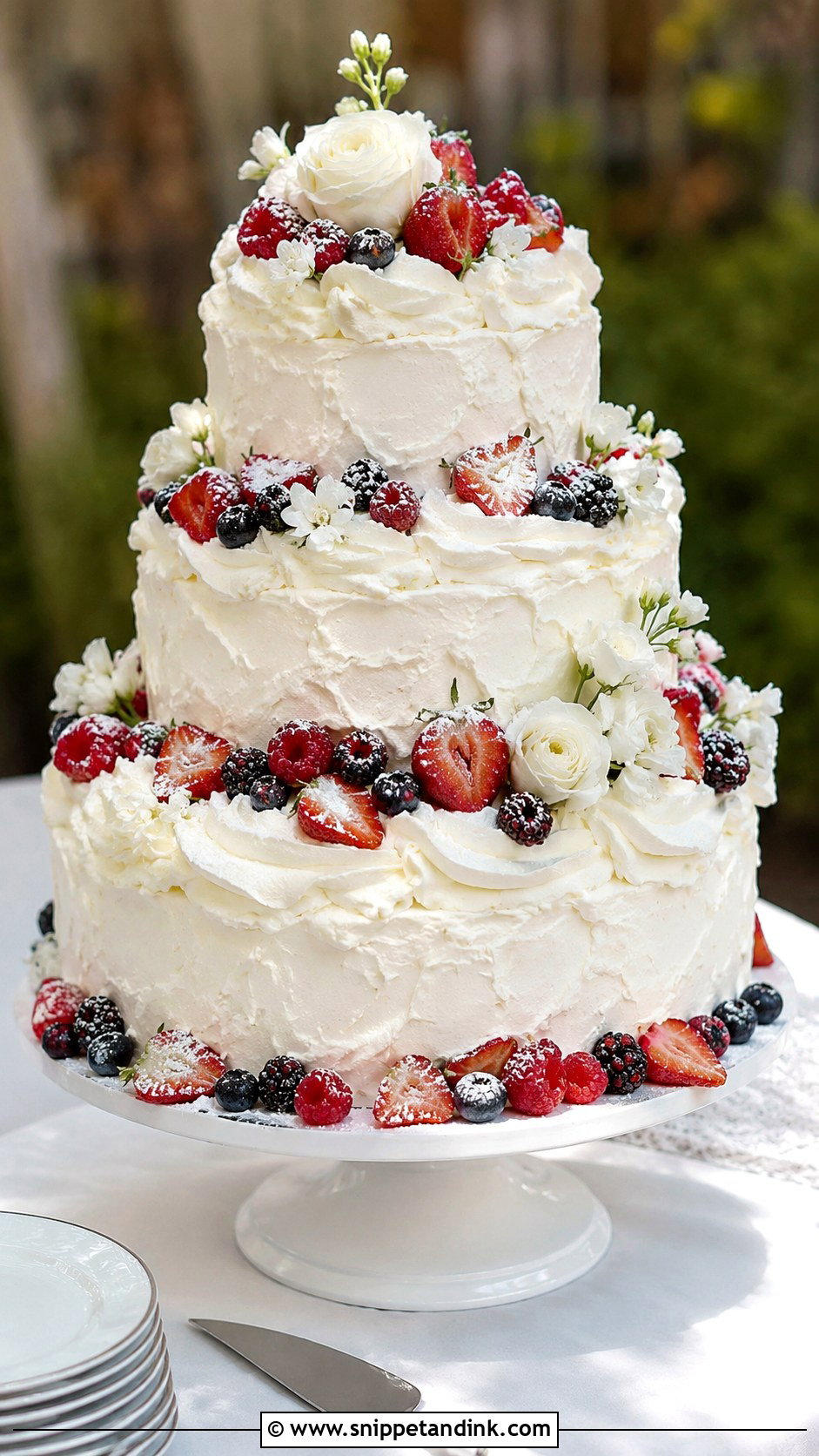
Chantilly cream is sweetened whipped cream, light and airy, layered with sponge, pastry, berries or citrus curd. Tall sponge tiers filled with cream and fruit and finished in soft whipped frosting look cloud-like. Whipped cream is the least heat-tolerant icing there is, so a Chantilly cake has to stay cold and be displayed briefly. For a warm-weather wedding I’d only do it indoors with good air conditioning. Berries, white flowers and a little icing sugar finish it.
21. Big Italian Lemon Ricotta Wedding Cake
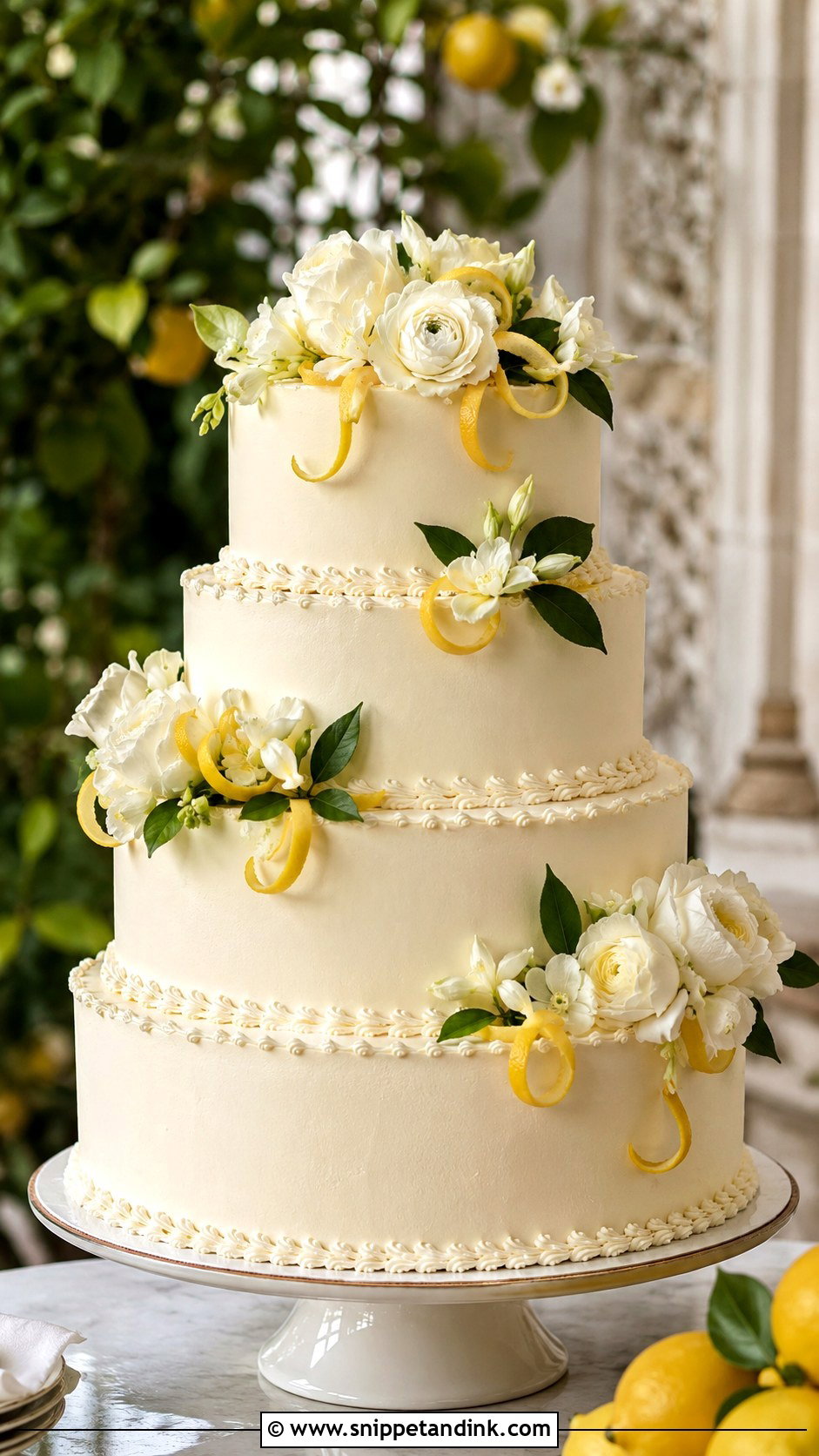
Lemon ricotta gives a moist, tender crumb with a clean citrus lift. I layer it with mascarpone frosting or a light buttercream and finish with lemon curls, white flowers and soft green leaves. A wide bottom tier makes it generous and smooth sides keep it refined. It’s the slice I’d steer people toward after a long, rich dinner.
22. Big Italian Orange Almond Wedding Cake
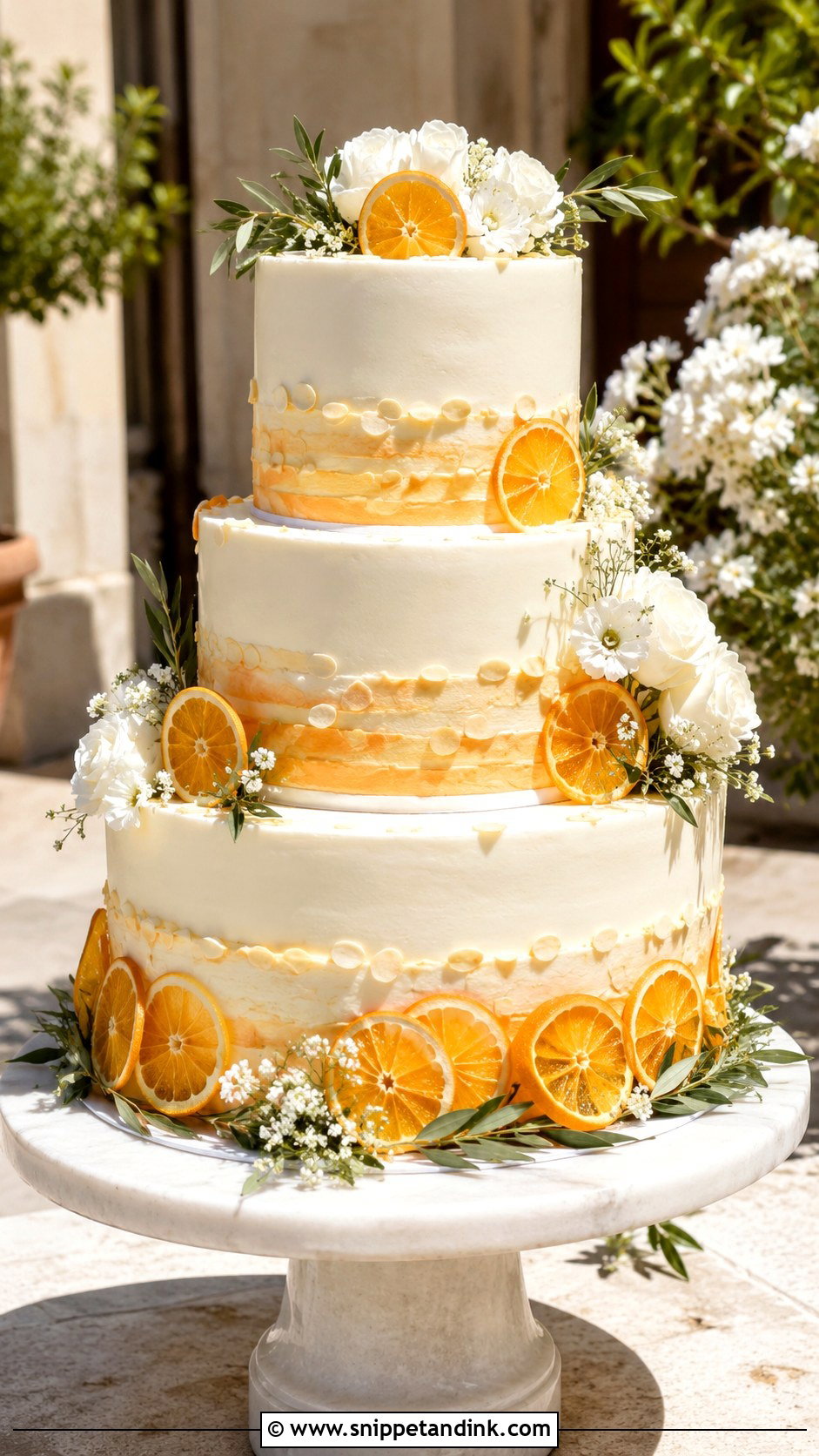
Orange and almond is warm and fragrant: almond sponge brushed with orange syrup and filled with orange cream. Some versions use whole boiled oranges, which gives a dense, moist crumb that keeps well. I decorate with ivory icing, candied orange slices, almond slivers and simple flowers, smooth for formal or semi-naked for rustic. It’s a good alternative when lemon feels too obvious.
23. Big Italian Fig Wedding Cake
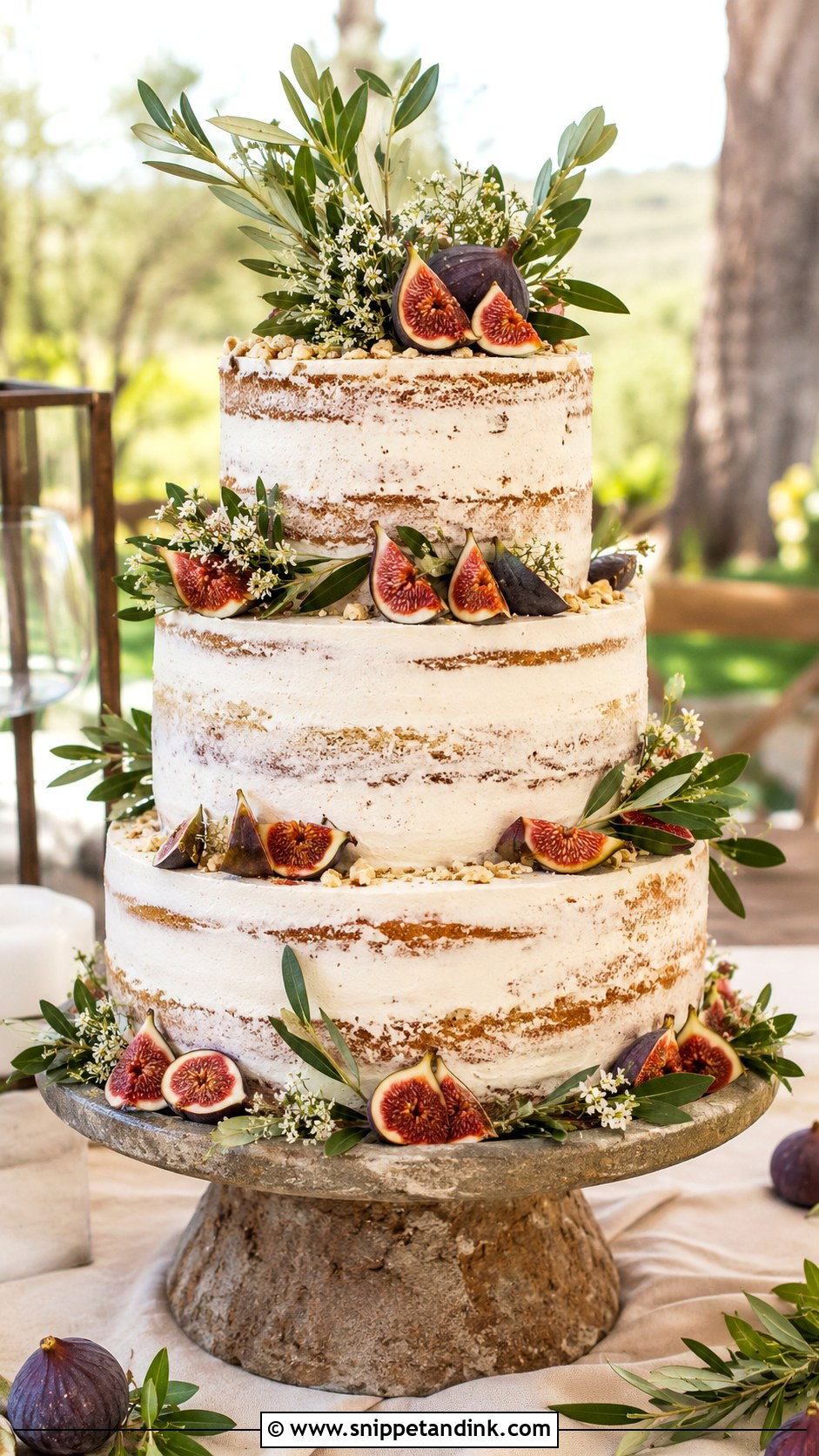
A fig wedding cake uses vanilla or almond sponge with honey cream, ricotta or mascarpone, crowned with fresh sliced figs, greenery and small white flowers. The purple skin and pink centres bring colour without icing. Figs are only properly ripe in late summer and early autumn, and they bruise and weep once cut, so they’re sliced and placed on the day. A tall semi-naked cake makes the fruit look natural.
24. Big Italian Olive Oil Wedding Cake
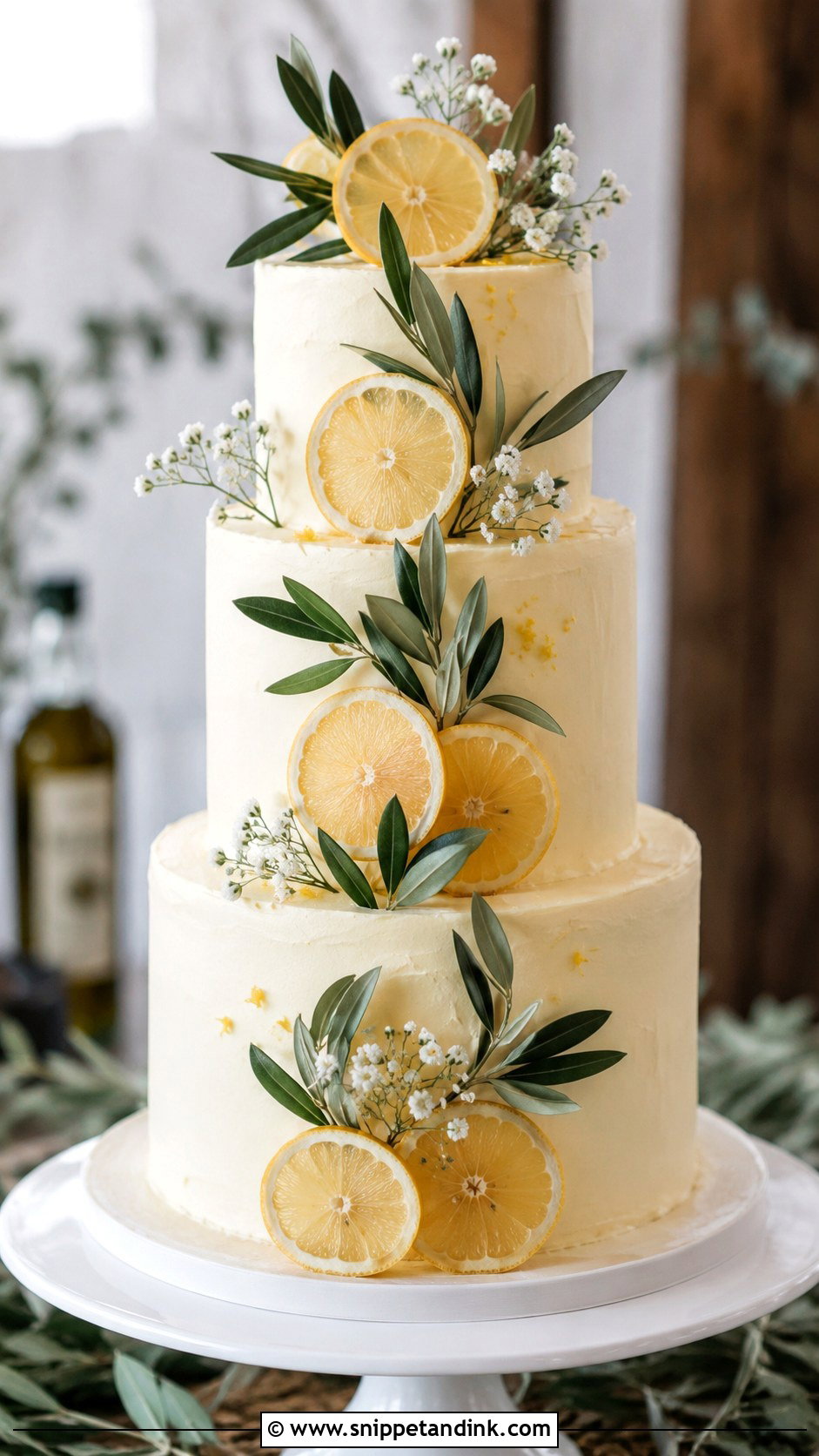
An Italian olive oil wedding cake is moist, softly fruity and surprisingly elegant, especially with citrus, vanilla, almond or a hint of rosemary. Olive oil cakes stay moist longer than butter cakes, which is useful when a cake is baked a day ahead. I layer the sponge with mascarpone and finish it in clean ivory with citrus slices, greenery and small flowers. A mild, fruity oil tastes better here than a peppery one.
25. Big Italian Pear Ricotta Wedding Cake
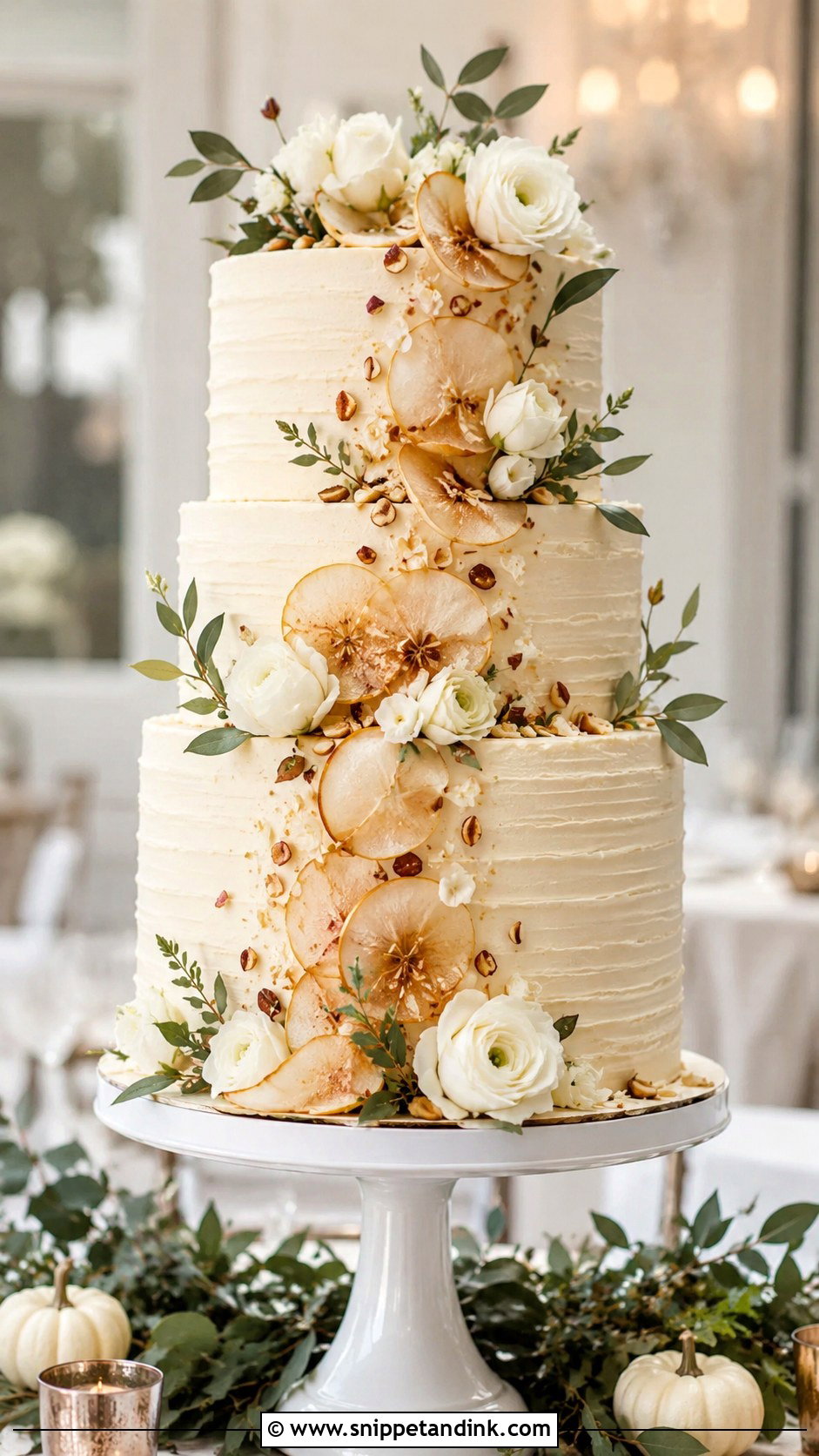
Pear and ricotta is gentle: vanilla or almond sponge with pear compote and ricotta cream, finished in smooth ivory with thin pear slices, white flowers and toasted almonds. Fresh pear browns fast once cut, so I poach or brush the slices with lemon syrup before they go on. It suits autumn but stays light enough for other seasons.
26. Big Italian Raspberry Cream Wedding Cake
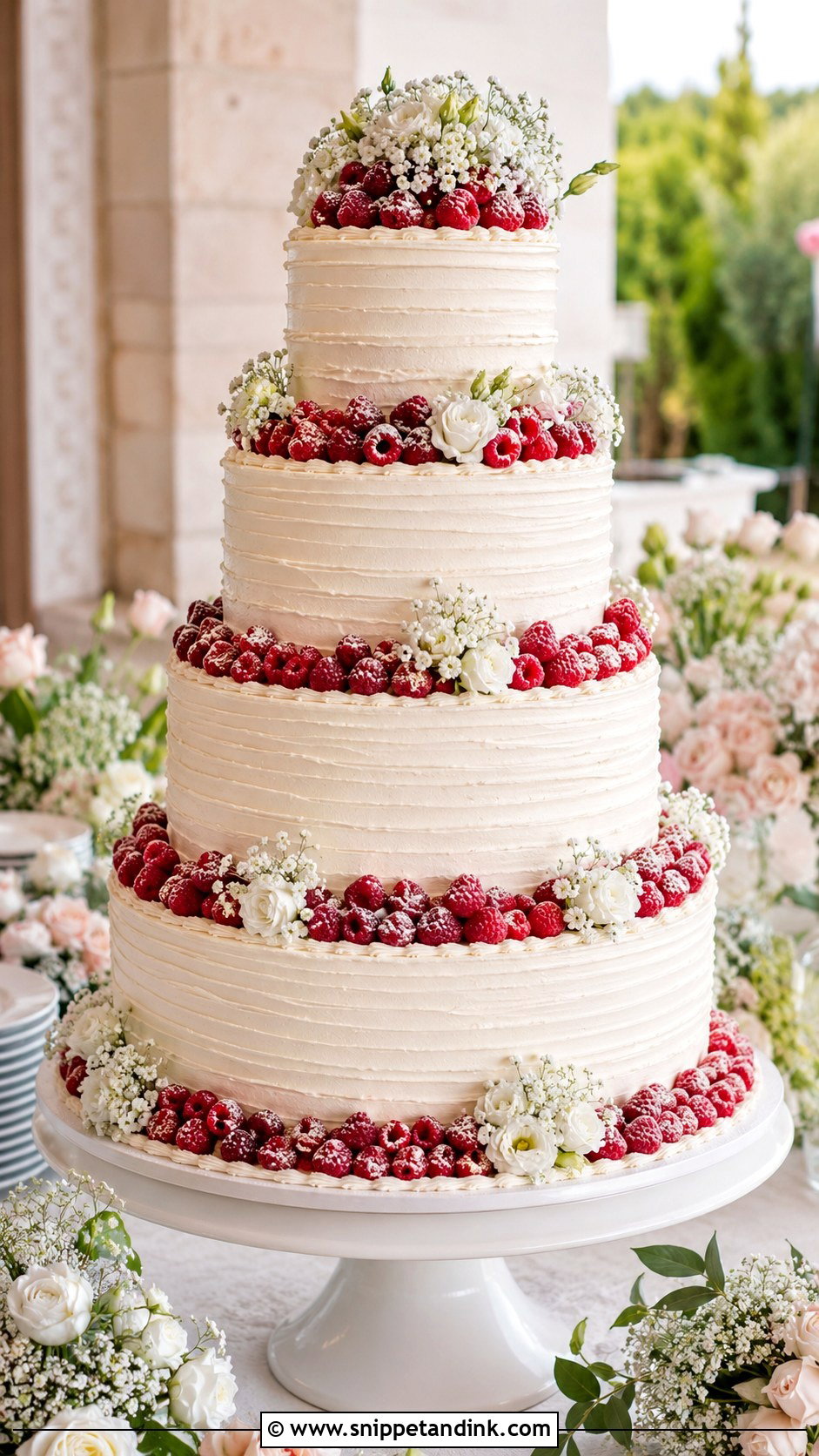
Raspberry brings a sharp note that cuts through pastry cream, Chantilly or mascarpone. Three or four ivory tiers with a visible raspberry layer in every slice look striking when cut. I use a set raspberry filling rather than loose jam, which would bleed into the cream and turn it pink. Fresh raspberries, white flowers and a light dusting of sugar finish it. It suits formal receptions and garden parties equally.
27. Big Italian Strawberry Millefoglie Wedding Cake
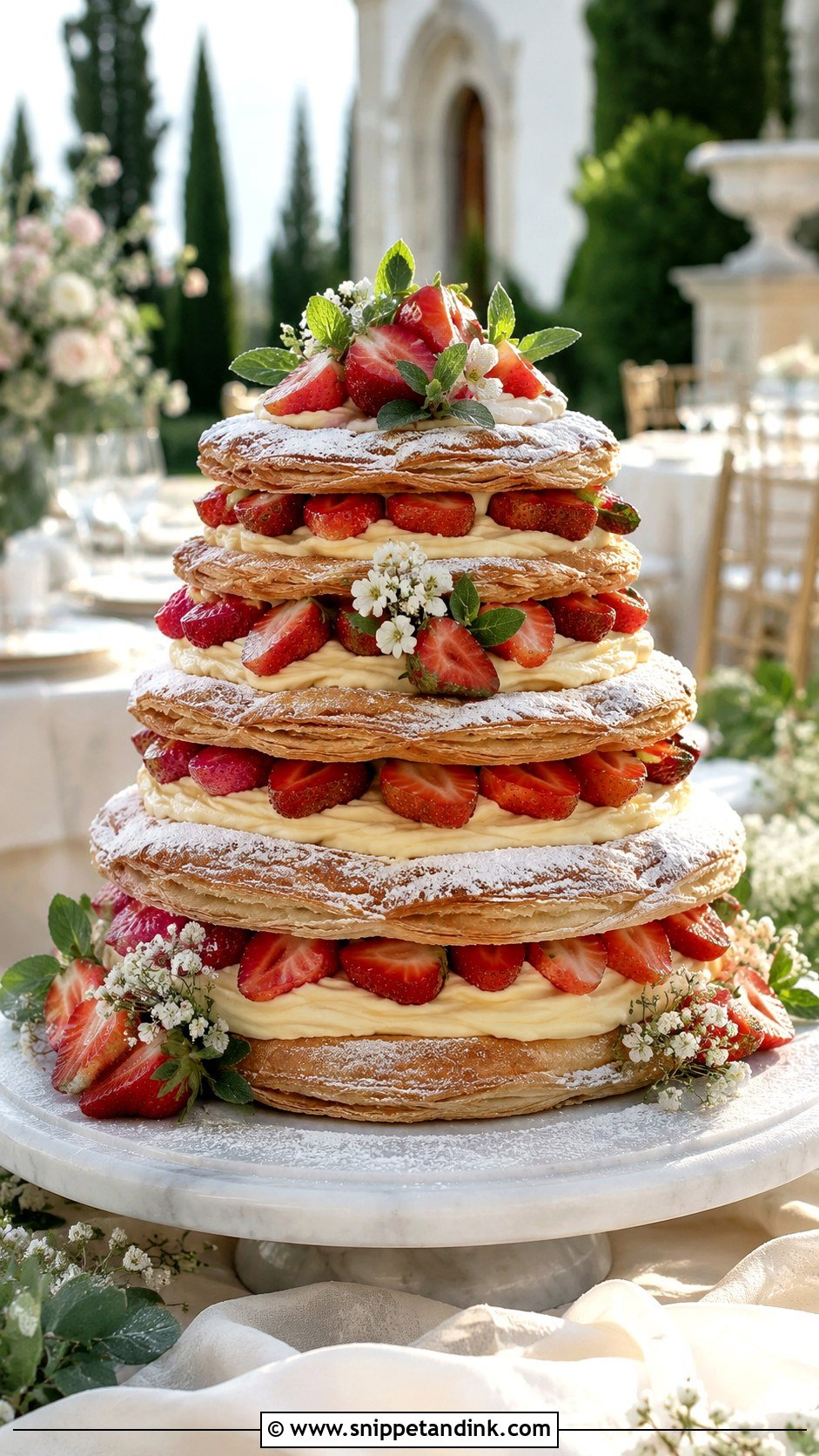
Strawberry millefoglie layers puff pastry with pastry cream or Chantilly and sliced strawberries. For a big wedding I make it wide with several neat layers rather than tall, because tall millefoglie is unstable and hard to cut. Strawberries release juice once sliced, so they go on at the very last moment. Icing sugar and a few small white flowers finish it. Summer villa weddings suit it.
28. Big Italian Naked Wedding Cake
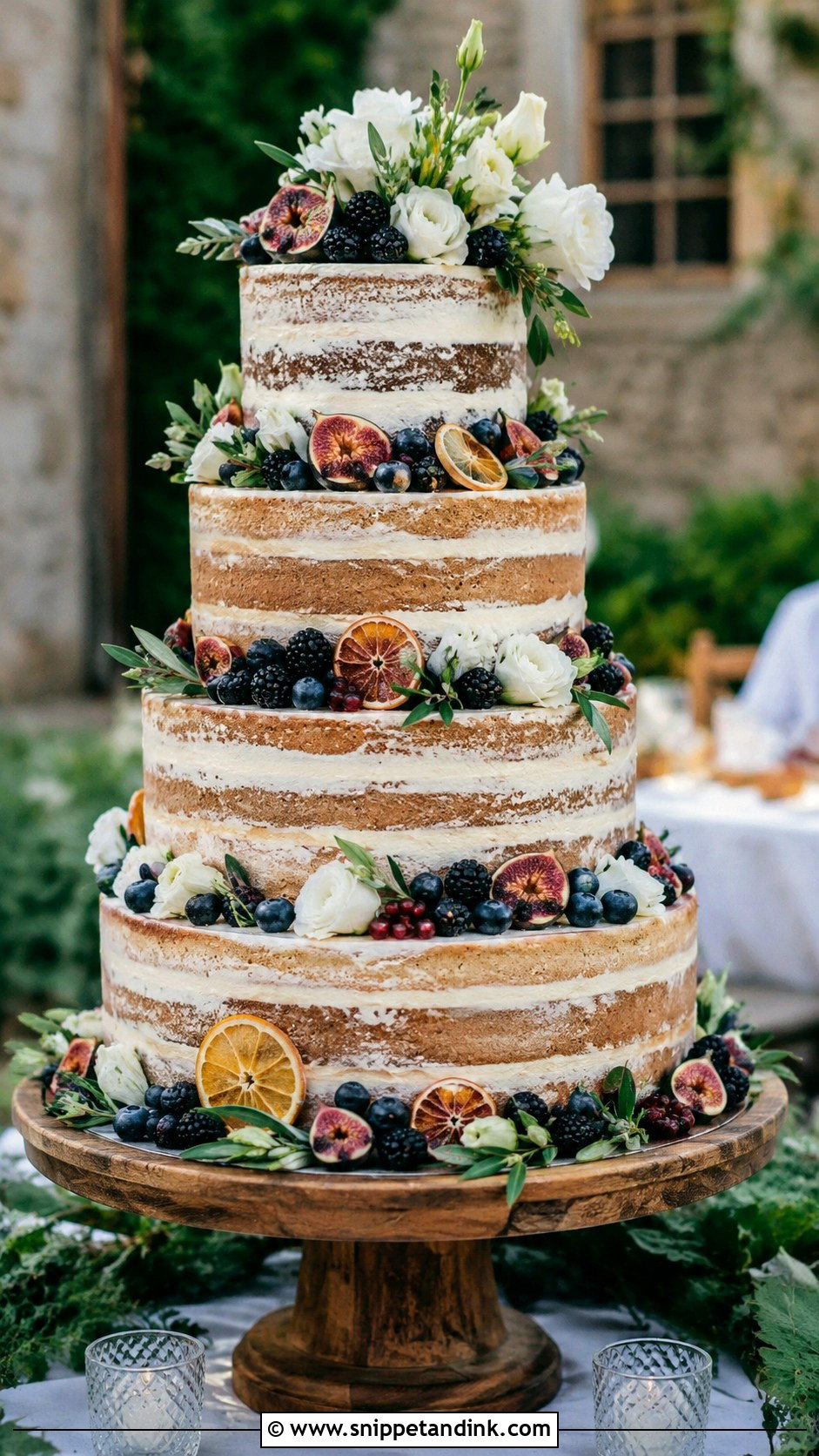
A naked Italian cake shows its layers: pan di Spagna with mascarpone, pastry cream or ricotta, sides lightly scraped. Without a full coat of icing it needs tidy, even layers and level tiers. Exposed sponge dries out faster, so it’s brushed with syrup and assembled close to the event. Berries, figs, citrus, greenery and simple flowers give a countryside look, and it scales up easily for a large crowd.
29. Big Italian Tiered Wedding Cake
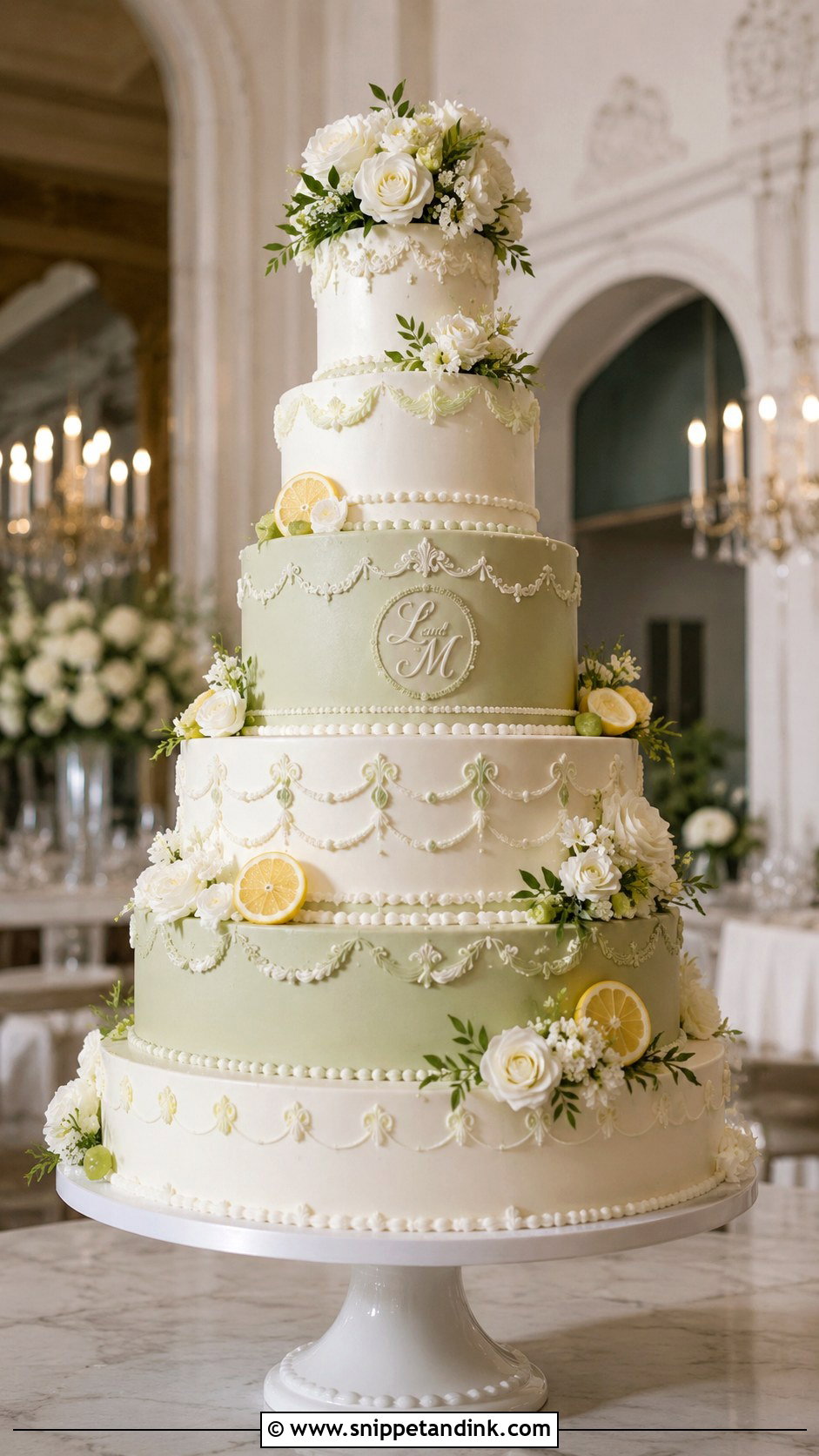
A classic tiered silhouette with Italian flavours inside is the safest bridge between tradition and taste: sponge with pastry cream, mascarpone, lemon curd, pistachio cream or berry compote, under smooth ivory buttercream or fondant. Fresh flowers, fruit, fine piping or soft texture decorate it. Cream fillings need refrigeration, so a tiered Italian cake is built with firmer fillings near the base and chilled until shortly before display. It gives you height and a traditional cake-cutting photo.
30. Big Italian Dessert Table Wedding Cake
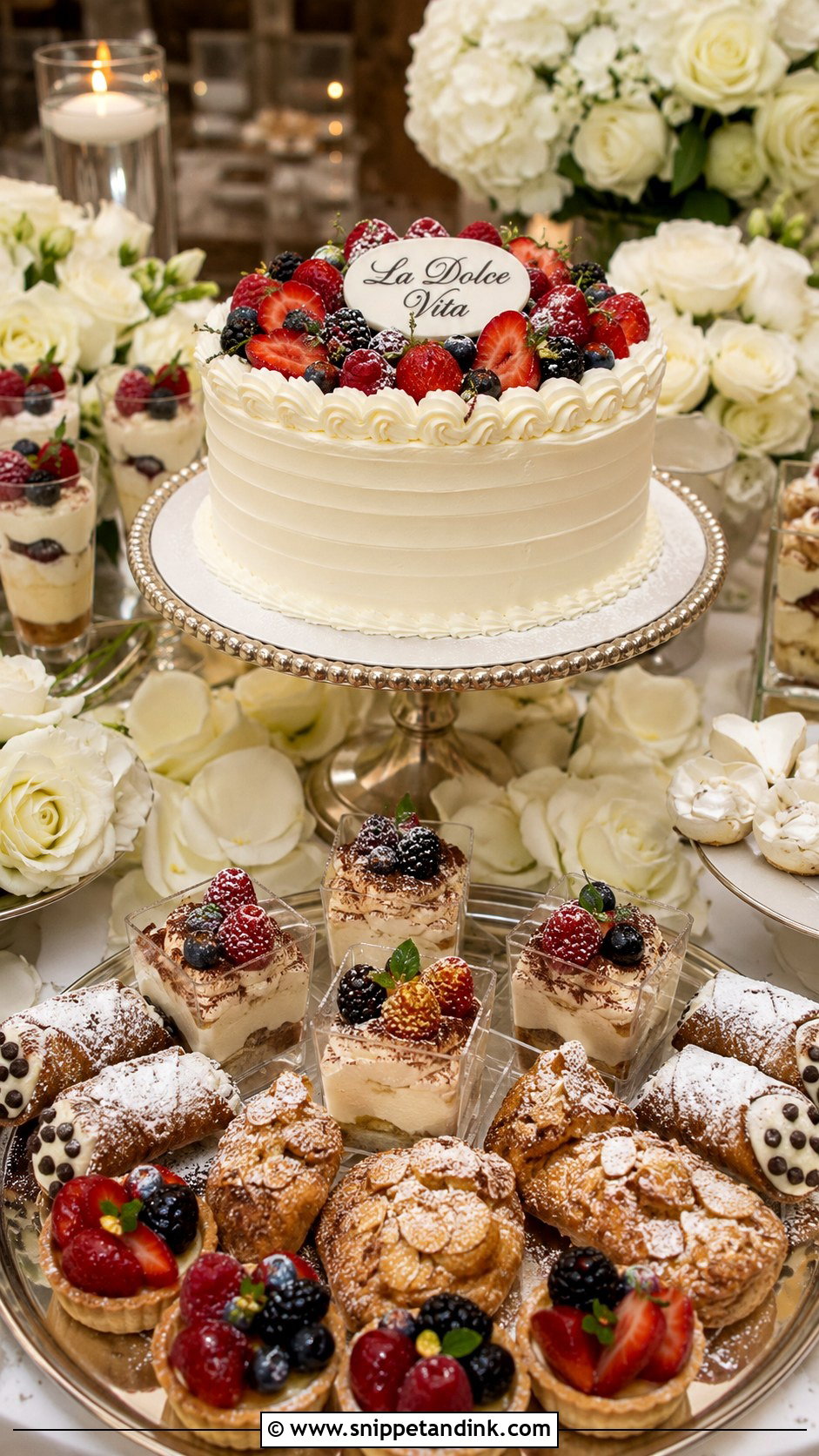
Sometimes the best Italian cake is part of a spread. Start with a central cake, millefoglie, mascarpone sponge or lemon ricotta, then surround it with small cannoli, fruit tartlets, tiramisu cups, almond cookies and mini cream puffs. Raise the main cake on a stand with flowers and fruit at its base so it still reads as the cake. Guests can pick what they like, and smaller pieces mean less waste. Plan for the creamy items to be put out in batches rather than all at once.
How a Pastry Cake Gets Cut and Plated for a Crowd
Sponge cakes cut into neat fingers. Pastry cakes don’t. A millefoglie or Saint Honoré shatters under a straight knife and pushes cream out the sides, so the serving plan needs as much thought as the design.
- Brief whoever is cutting. A sharp serrated knife used with a gentle sawing motion breaks puff pastry far more cleanly than pressing straight down.
- Expect pastry portions to be squares or wedges on a plate with a spoon or fork, not finger slices on a napkin.
- Allow enough staff and time. Cutting a large pastry cake is slower, and the cream softens while it waits.
- Label the flavours, and flag nuts clearly. Almond, pistachio and hazelnut appear in many of these cakes, sometimes in places guests won’t expect, like the sponge or the praline.
Getting the most out of the tasting
Taste from lightest to richest: Chantilly and lemon first, mascarpone and ricotta next, chocolate and hazelnut last, or the strong flavours will flatten the delicate ones. Ask to see a cut slice, not just a whole sample, so you know how the layers look on the plate. And ask the baker plainly how long each cake can sit out at the venue. Her answer tells you which designs fit your timeline.
Millefoglie, Cassata or a Whole Dessert Table?
Italian cakes are about flavour and freshness first. They can be tall and formal, wide and modern, rustic with fruit or built around pastry. Millefoglie is the classic, though tiramisu, cannoli, ricotta, pistachio, lemon, almond, berry and crostata all deserve a place. Your venue, season, guest count and favourite flavours point to the right one. Choose something that looks good from across the room, slices cleanly and still tastes bright after a long dinner.
You'll Like These Ideas:





Leave a Reply