
From the catering side, cheesecake is one of the few wedding desserts I rarely see come back to the kitchen half eaten. It’s familiar, it’s rich, and it can be dressed up enough for the cake-cutting photo. You can style it as a tiered cake, set it out as a dessert bar, or finish it with flowers, fruit, chocolate, caramel or fine piping. The look can be rustic or polished depending on the flavour and finish. If you’re weighing it as an alternative to traditional sponge cake, the twenty ideas below include what I’d want to know as the person serving it: how it slices, how it holds and who it suits.
Plated, Buffet or Late-Night Station?
Before you pick a flavour, decide how the dessert will reach your guests. It changes which cheesecake format makes sense far more than the decoration does.
Plated at the table
A whole or tiered cheesecake is cut in the kitchen and served by staff. It looks the most formal, but slicing cheesecake cleanly is slower than slicing sponge, because the knife needs heating and wiping between cuts. Ask your caterer how many people will be cutting and how long it will take for your guest count.
Self-serve dessert table
Minis, bars and jars are the easiest choice here. Whole cheesecakes left for guests to cut themselves end up as crumbled wedges and smeared stands within twenty minutes. If you want whole cakes on the table, have them pre-sliced and reassembled.
Late in the evening
Dancing guests want something they can eat standing up. Minis or bars in paper liners work best, and a heavier flavour like chocolate or cookie is welcome at that hour. Keep the main stock in the fridge and refill in small batches.
1. Tiered Cheesecake Wedding Cake
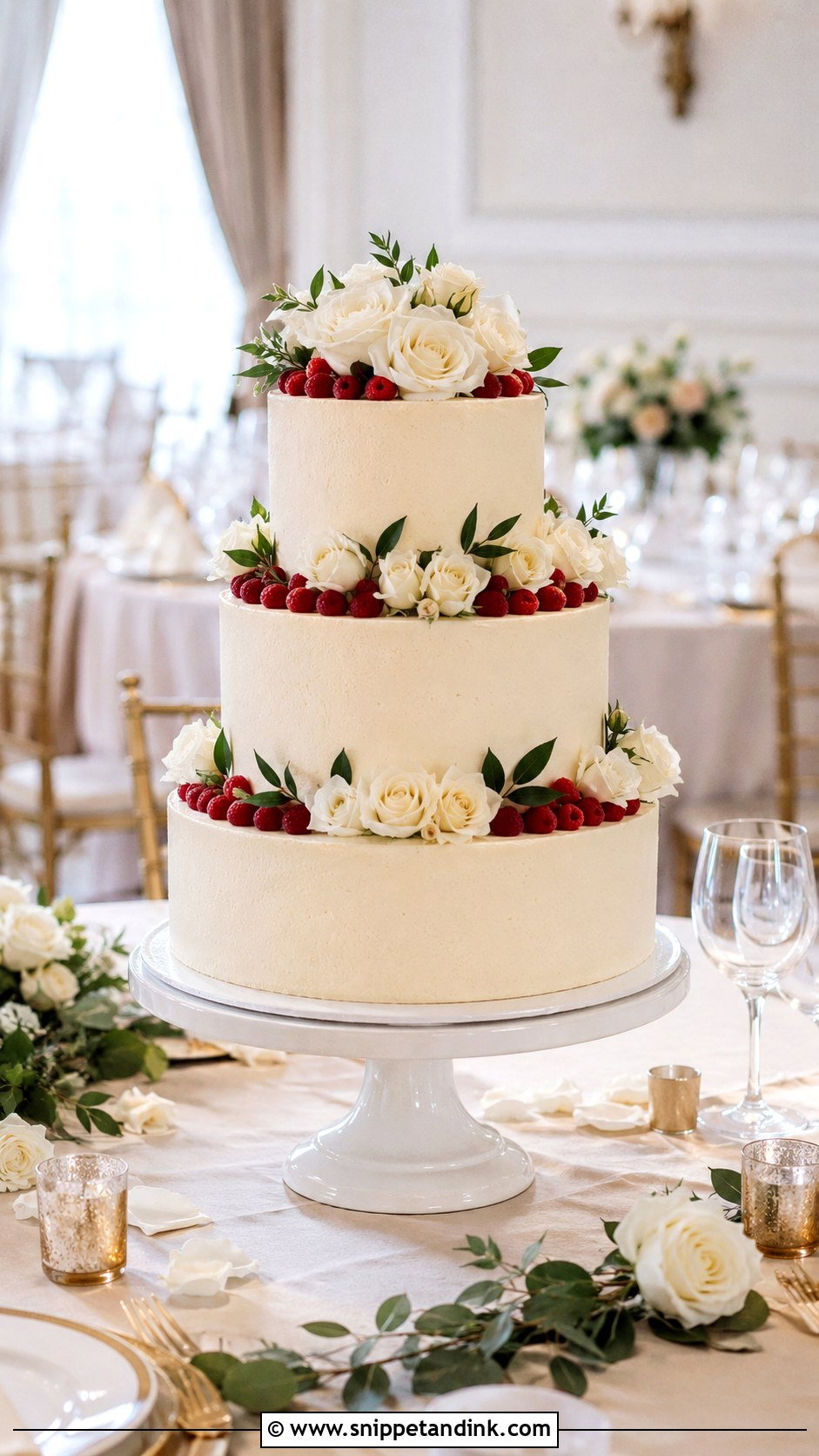
Tiered cheesecake gives you the familiar cake-cutting shape with a creamier bite. Each tier has to be baked firm and chilled thoroughly, and it should sit on a proper tiered stand or on supported boards rather than being stacked straight onto the tier below. Whipped cream, white chocolate ganache or a light cream cheese frosting all give a clean finish, with fresh flowers, berries and greenery added on top. When I plan service for one of these, I count on the stand coming apart in the kitchen first, so allow a little more time between the cutting and the first plates leaving than you would for sponge.
2. New York Cheesecake Wedding Cake
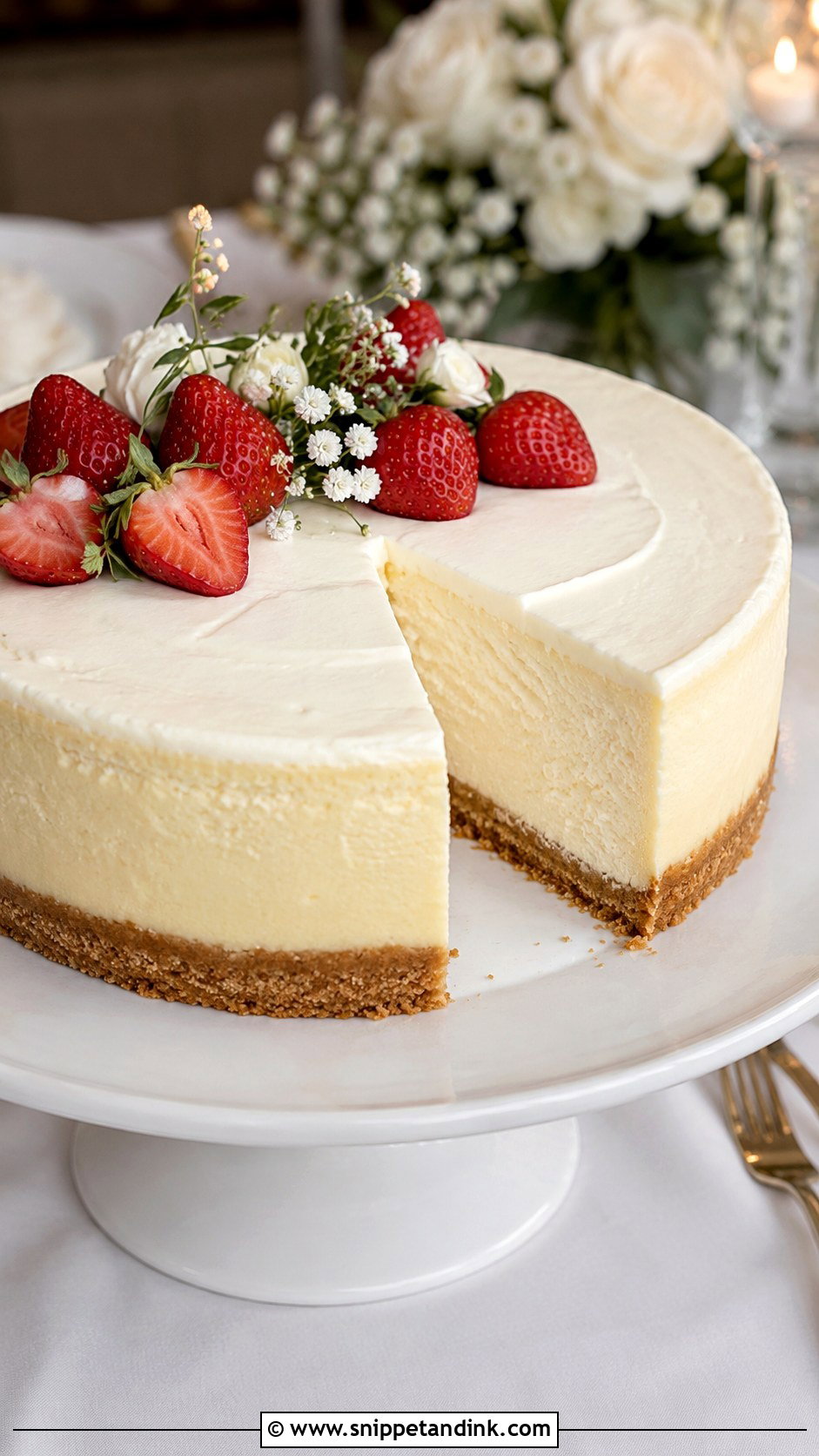
Guests recognise New York cheesecake the moment they taste it: dense, smooth, slightly tangy. A clean round with a golden crumb crust, an ivory filling and a polished top looks formal on its own. The classic finish is a thin layer of sweetened sour cream baked briefly on top, which gives an even, bright white surface and hides small cracks. A few strawberries, raspberries or white flowers are enough decoration. It slices more cleanly than almost any other cheesecake, which matters when a team is plating a hundred portions in a short window.
3. Strawberry Cheesecake Wedding Cake
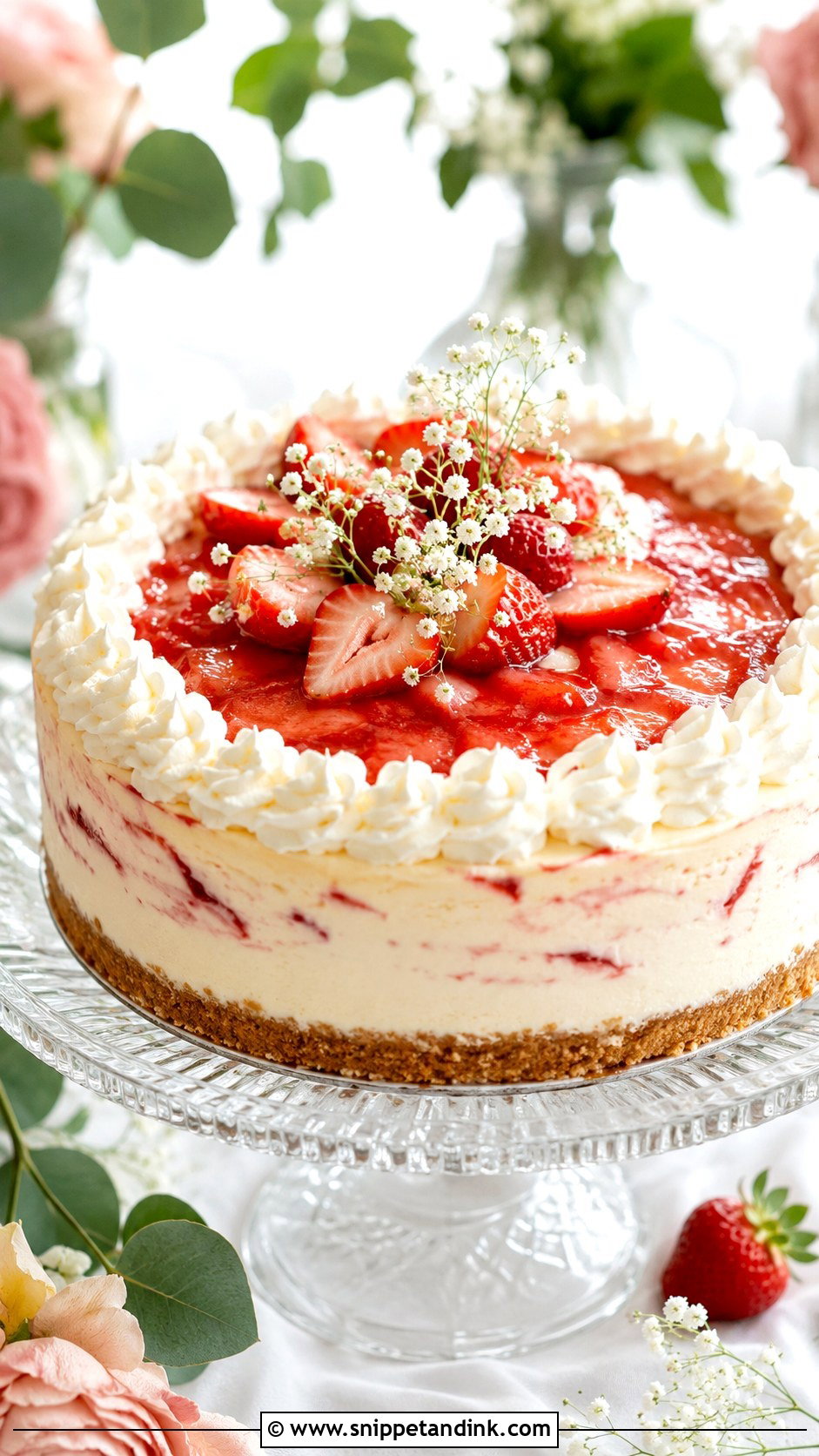
A strawberry swirl baked into the filling makes a soft pink pattern, but baking dulls strawberry’s colour, so it comes out more dusty rose than bright pink. If you want true red fruit on show, that comes from a fresh topping. For a formal reception, the sides stay smooth and the berries on top get a thin glaze so they don’t dry out. A garden wedding can have a fuller, looser pile. Vanilla, lemon or white chocolate notes pair naturally. On a buffet, strawberry is the flavour that tends to disappear first.
4. Raspberry Cheesecake Wedding Cake
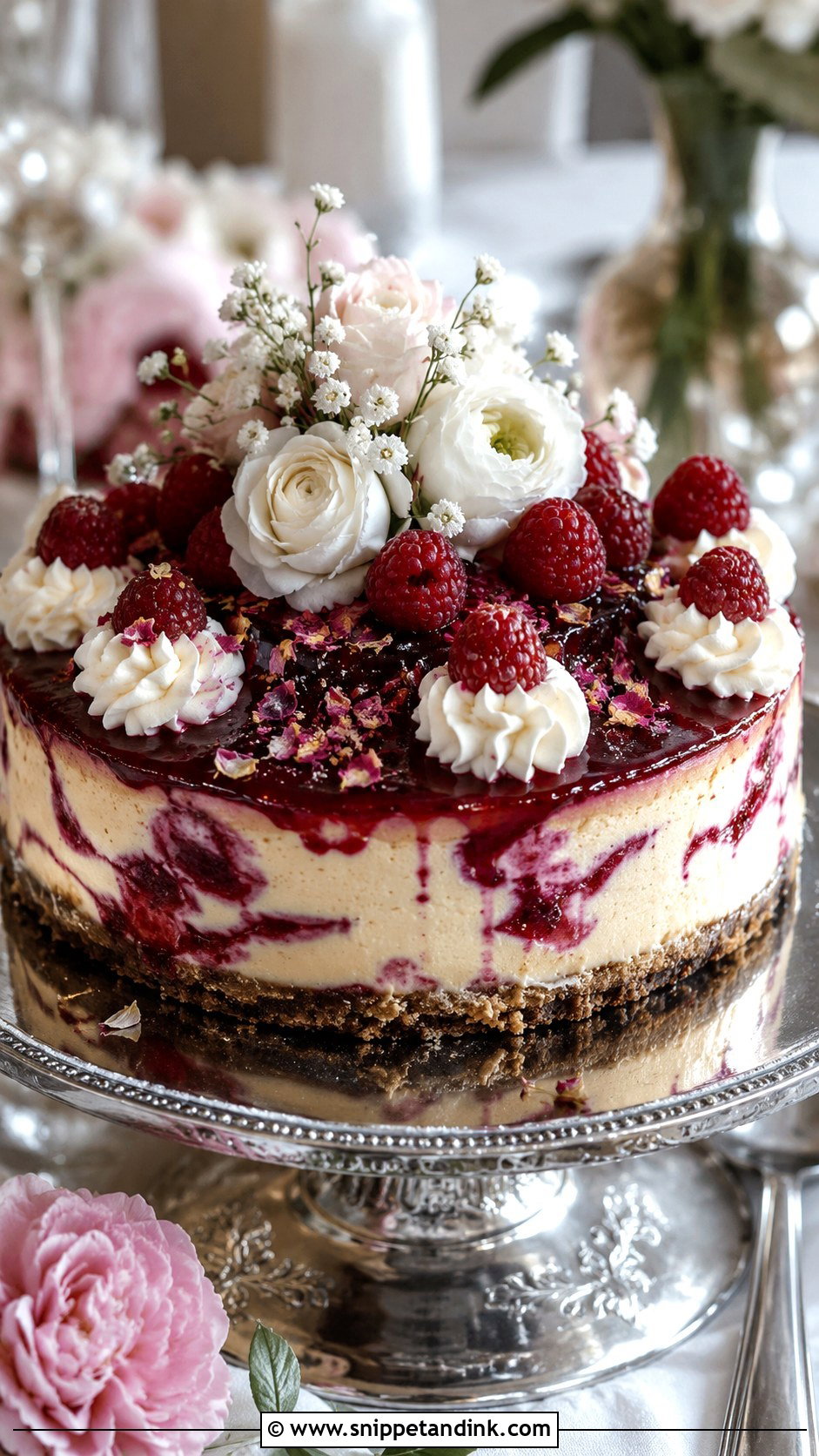
Raspberry’s sharpness is what makes it work after a heavy meal. It cuts the richness so guests can finish a slice. A baked swirl is subtle; a glossy compote across the top is more dramatic and shows the colour against the pale base. Seeds bother some guests, so I usually ask for the compote to be sieved. A few edible flowers or small white blooms finish it. It can stand alone as the cutting cake or sit among other flavours on a dessert table.
5. Blueberry Cheesecake Wedding Cake
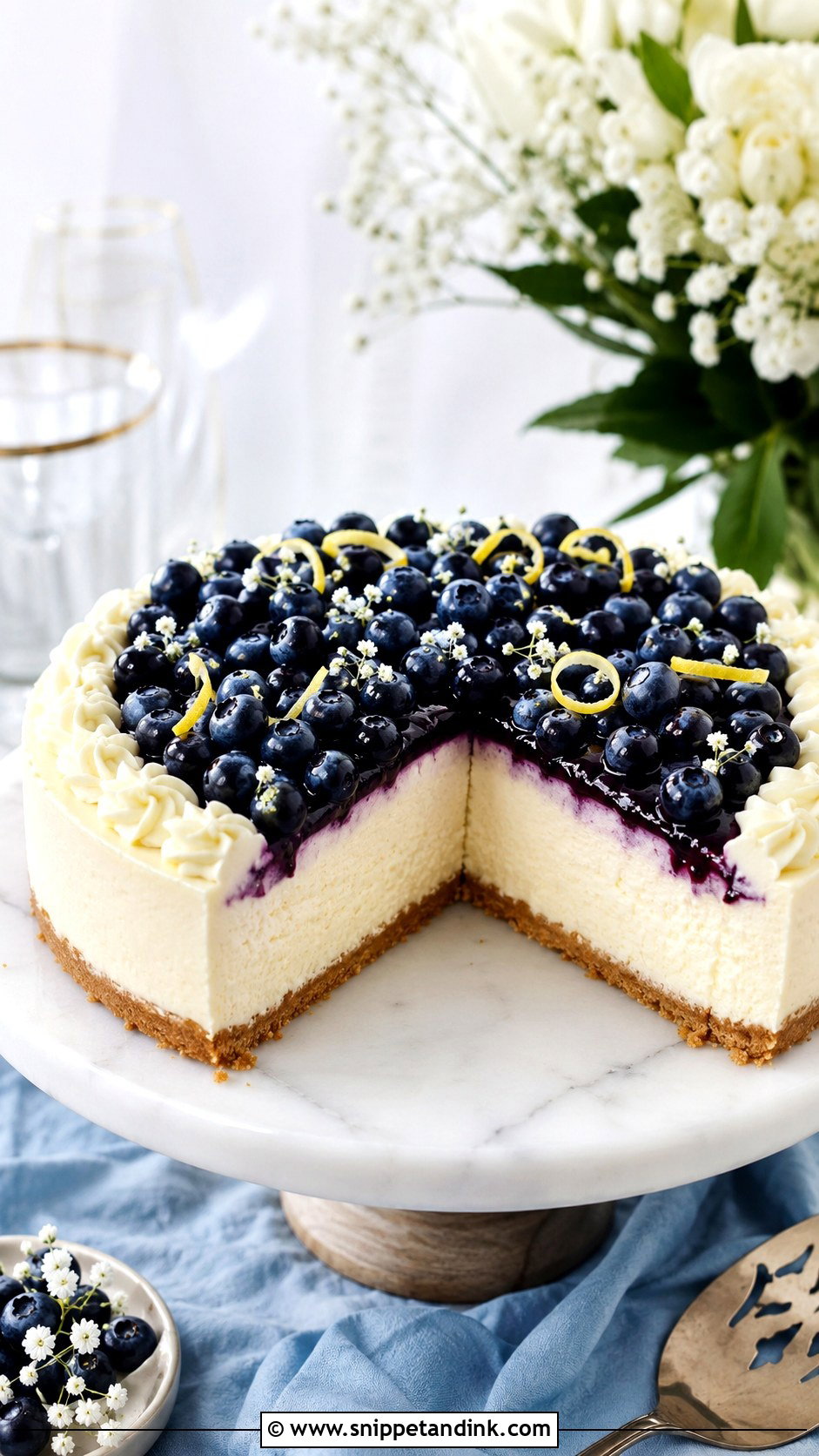
Blueberry topping gives a deep blue-purple contrast against ivory filling and a golden crust. I keep the sides neat and let the berries sit in a mound or a smooth compote on top, with small white flowers, lemon zest curls or a dusting of powdered sugar for brightness. One serving note: blueberry compote runs onto the plate once cut and stains white linens, so I plate it onto dessert plates in the kitchen rather than letting guests serve themselves. The fruit keeps the sweetness from feeling heavy.
6. Lemon Cheesecake Wedding Cake
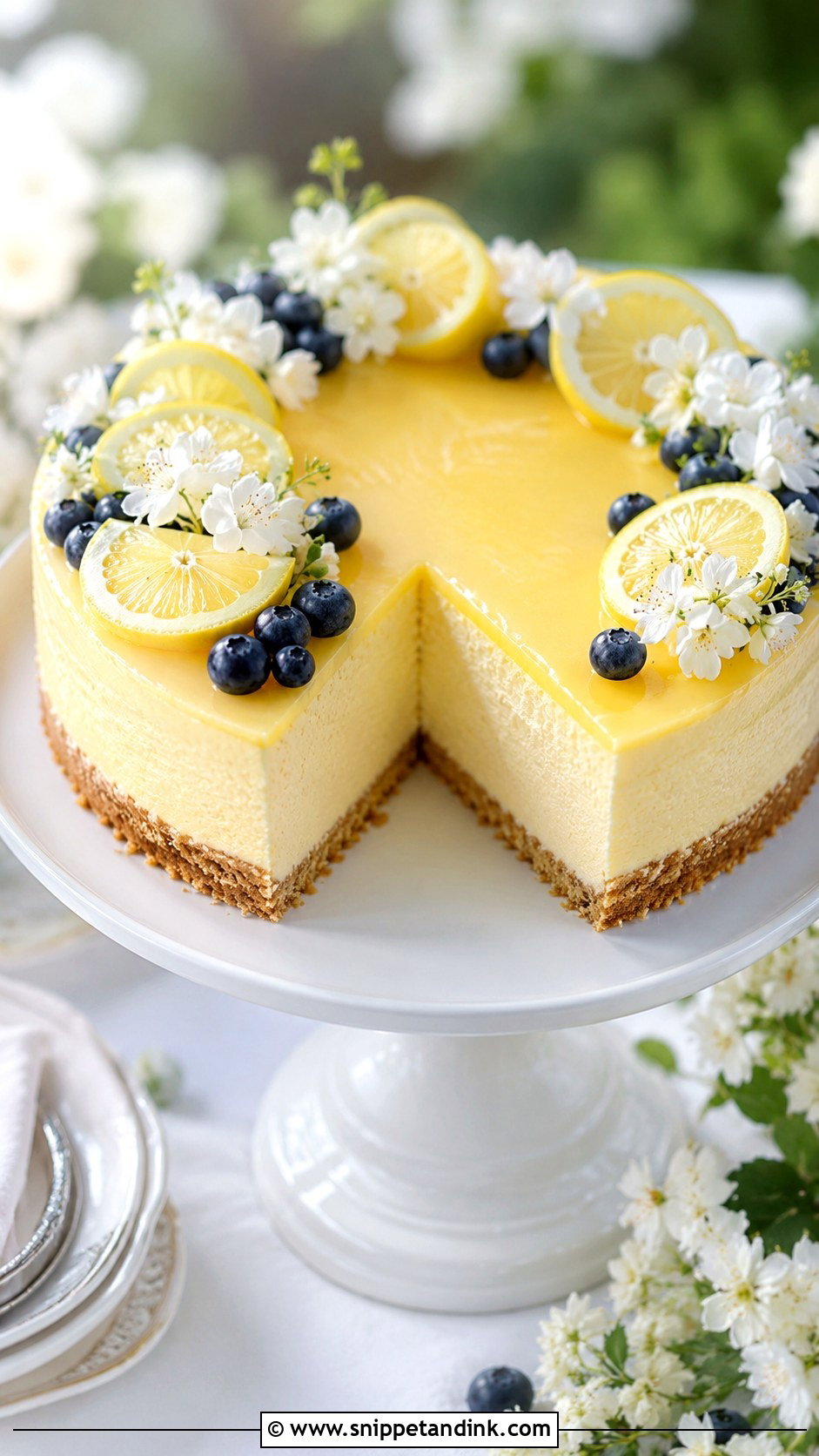
Lemon is the most refreshing finish for a long menu, especially one with rich mains. The pale yellow reads sunny without looking casual when paired with smooth whipped frosting or a thin lemon glaze. Lemon slices, tiny white flowers and a few berries add contrast. Lemon slices dry and curl at the edges after an hour or two in a cold display case, so they’re cut and placed just before service. Outdoor, brunch and summer receptions suit it, and it sits well beside vanilla, almond or berry sauces.
7. White Chocolate Cheesecake Wedding Cake
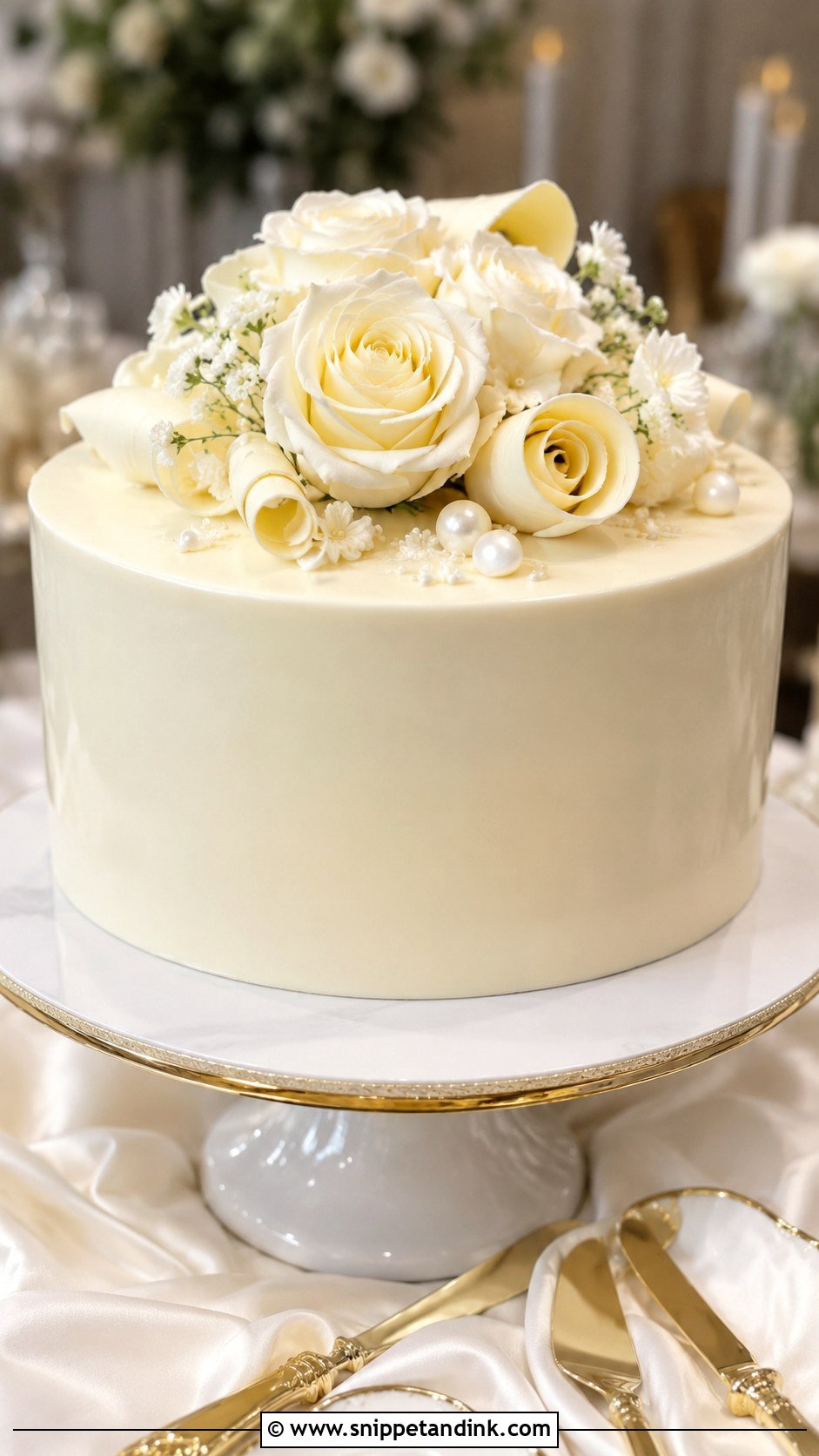
White chocolate cheesecake needs very little decoration because the ivory colour already looks bridal. White chocolate curls, pearl-like accents and a few fresh flowers are enough, and a thin white ganache on top adds a formal shine. It’s sweet, so I always suggest something sharp beside it: raspberry, passion fruit or strawberry, or a dark chocolate drizzle. For all-white dessert tables and evening receptions it’s an easy fit. Serve it in thinner slices than you would vanilla; most guests find a small piece is plenty.
8. Chocolate Cheesecake Wedding Cake
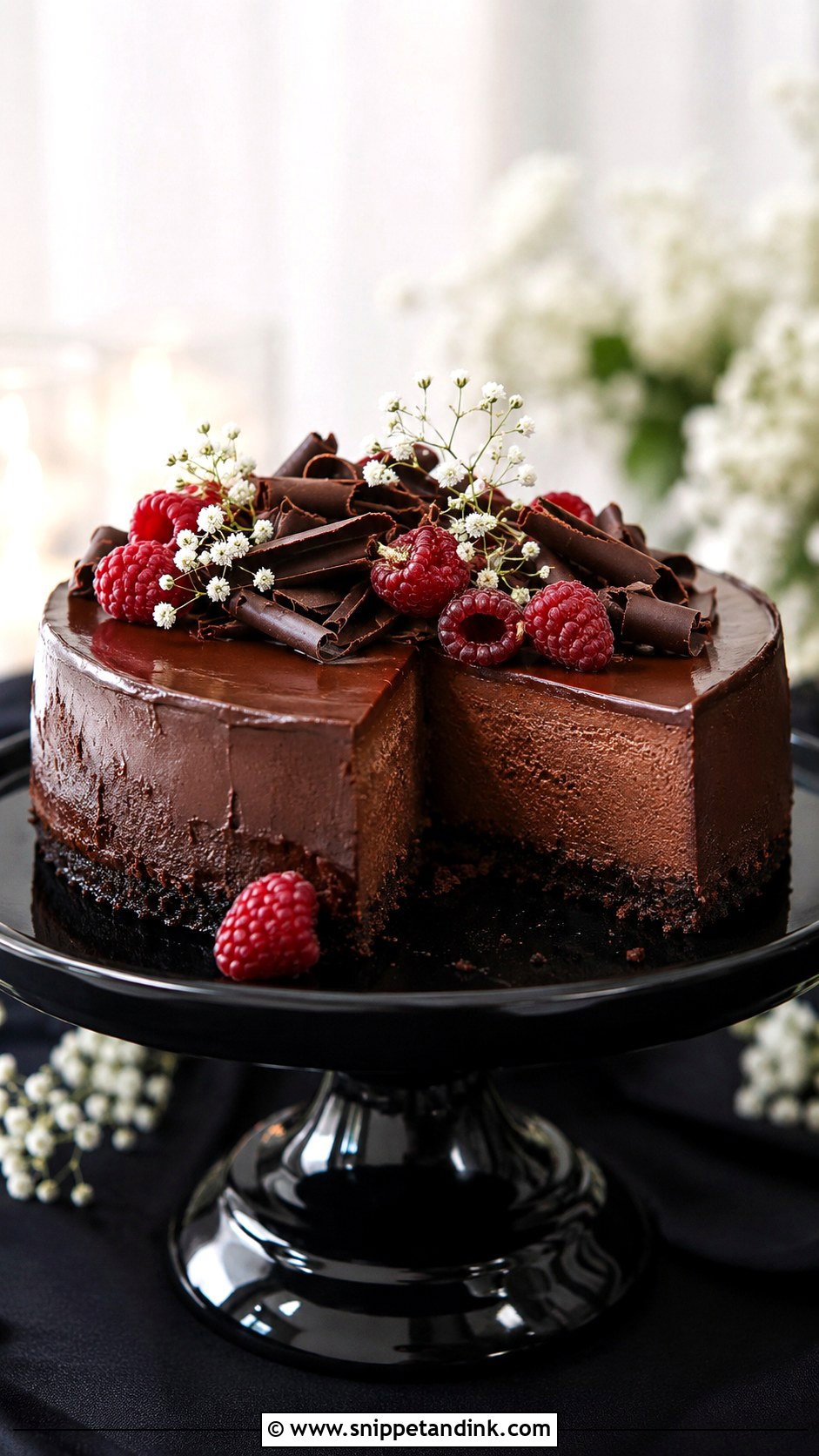
Dark chocolate filling on a chocolate cookie crust is the indulgent end of the list. Smooth ganache, chocolate curls and fresh berries keep it polished, and gold accents or white flowers stop it looking too heavy on the table. Chocolate cheesecake tends to be the favourite of a smaller but very loyal group of guests. On a mixed dessert table, I’d make it one option among several rather than the only cake, unless you know your crowd. It suits evening receptions and modern venues.
9. Chocolate Drip Cheesecake Wedding Cake
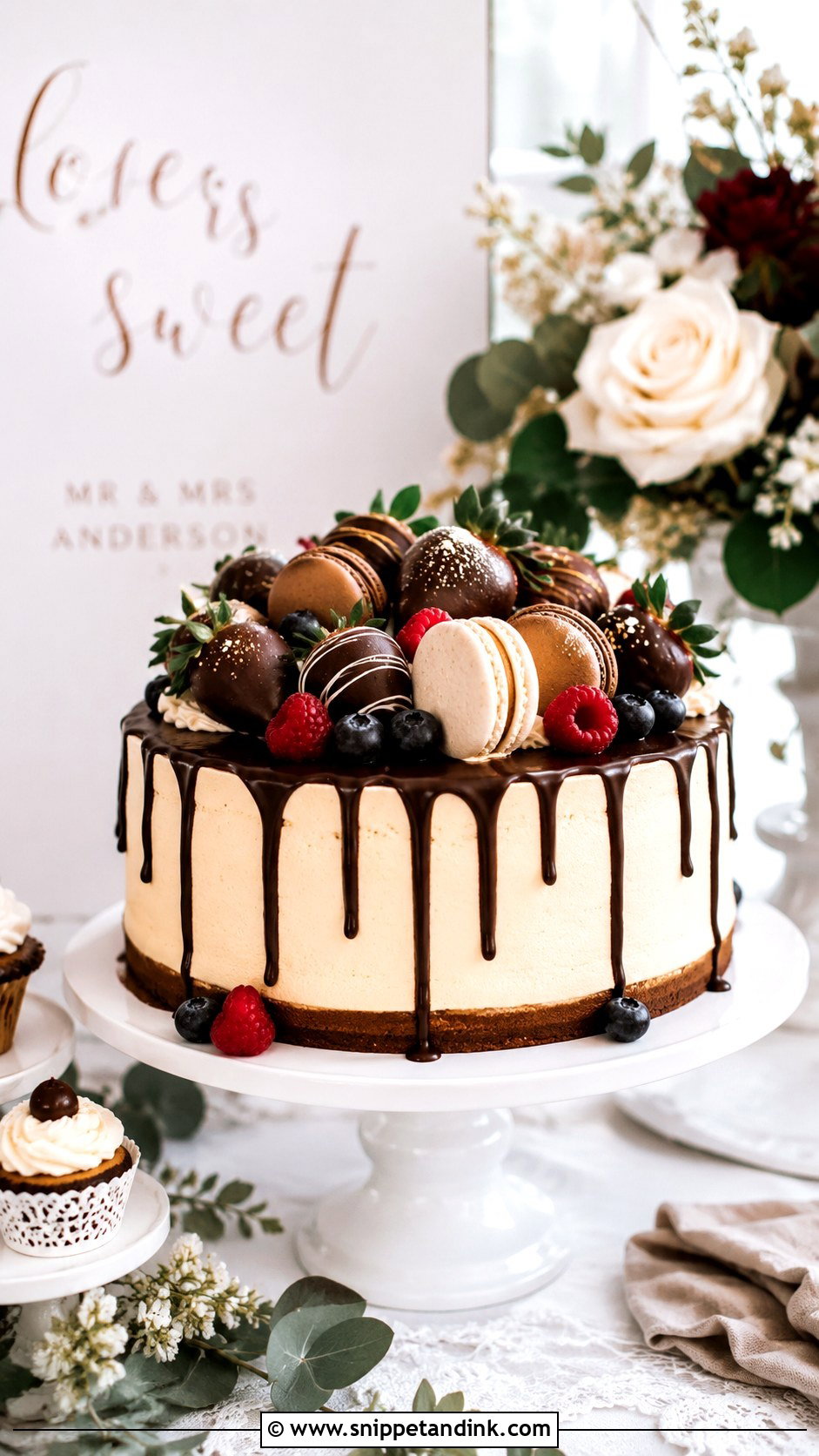
A ganache drip gives instant drama with little other decoration. The base can be vanilla, white chocolate or chocolate. A cold cheesecake sets the drip fast, so the drips stop short and stay neat, which is actually an advantage over a room-temperature sponge. Chocolate-covered strawberries, macarons, berries or small florals on top balance it. Plan to cut it with a hot knife, since a set ganache shell cracks under a cold blade and the slices look ragged on the plate.
10. Salted Caramel Cheesecake Wedding Cake
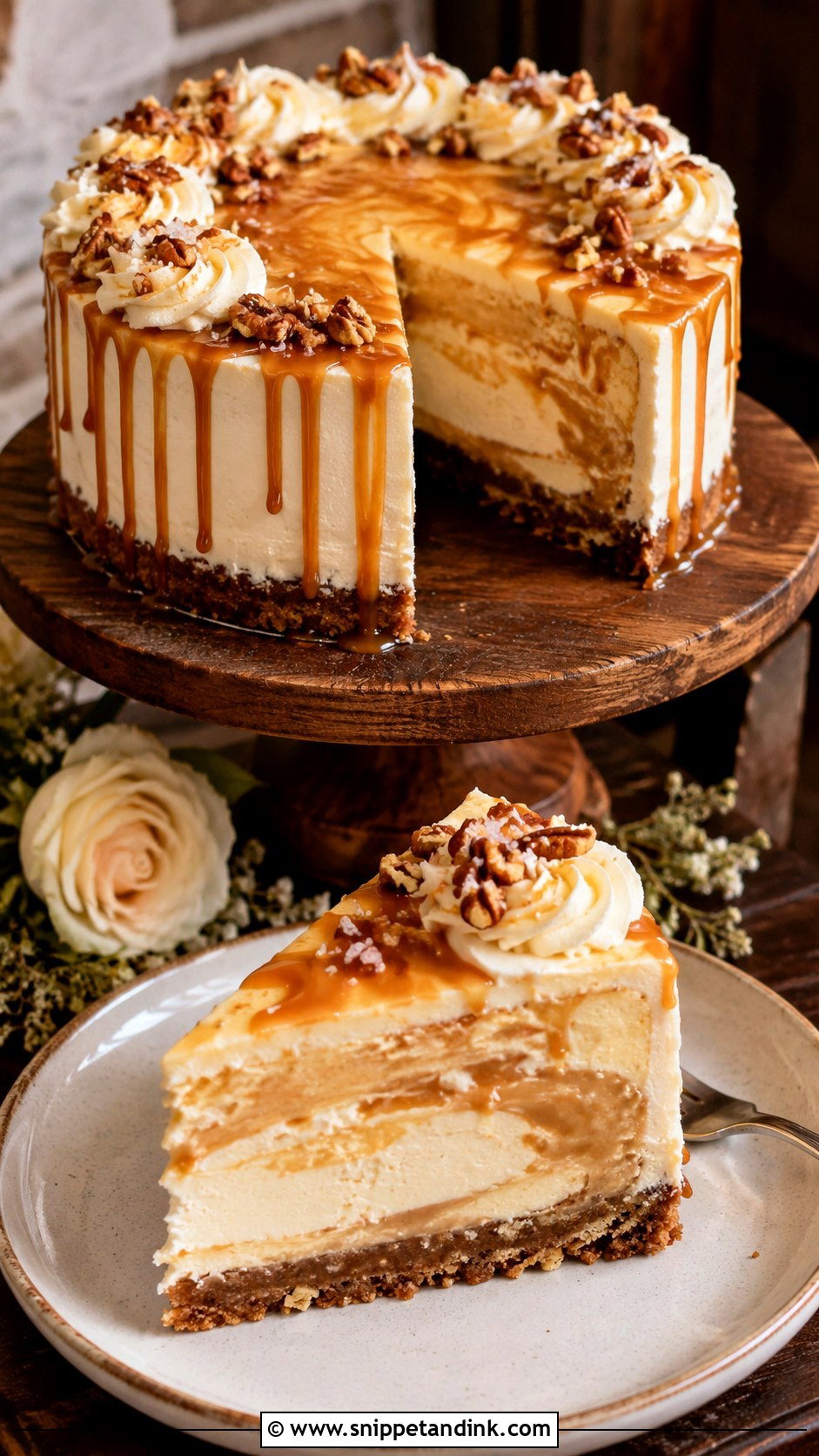
Salted caramel is the crowd-pleaser I’m asked for most at autumn weddings. The caramel can be swirled through the filling, poured over the top or run as a drip, with a pinch of flaky salt to keep the sweetness in check. Flaky salt dissolves on a moist surface, so it goes on right before the cheesecake leaves the kitchen. Caramel shards, cream piping or small neutral flowers finish it. It pairs well with vanilla, pecan, apple or chocolate on a mixed table.
11. Vanilla Bean Cheesecake Wedding Cake
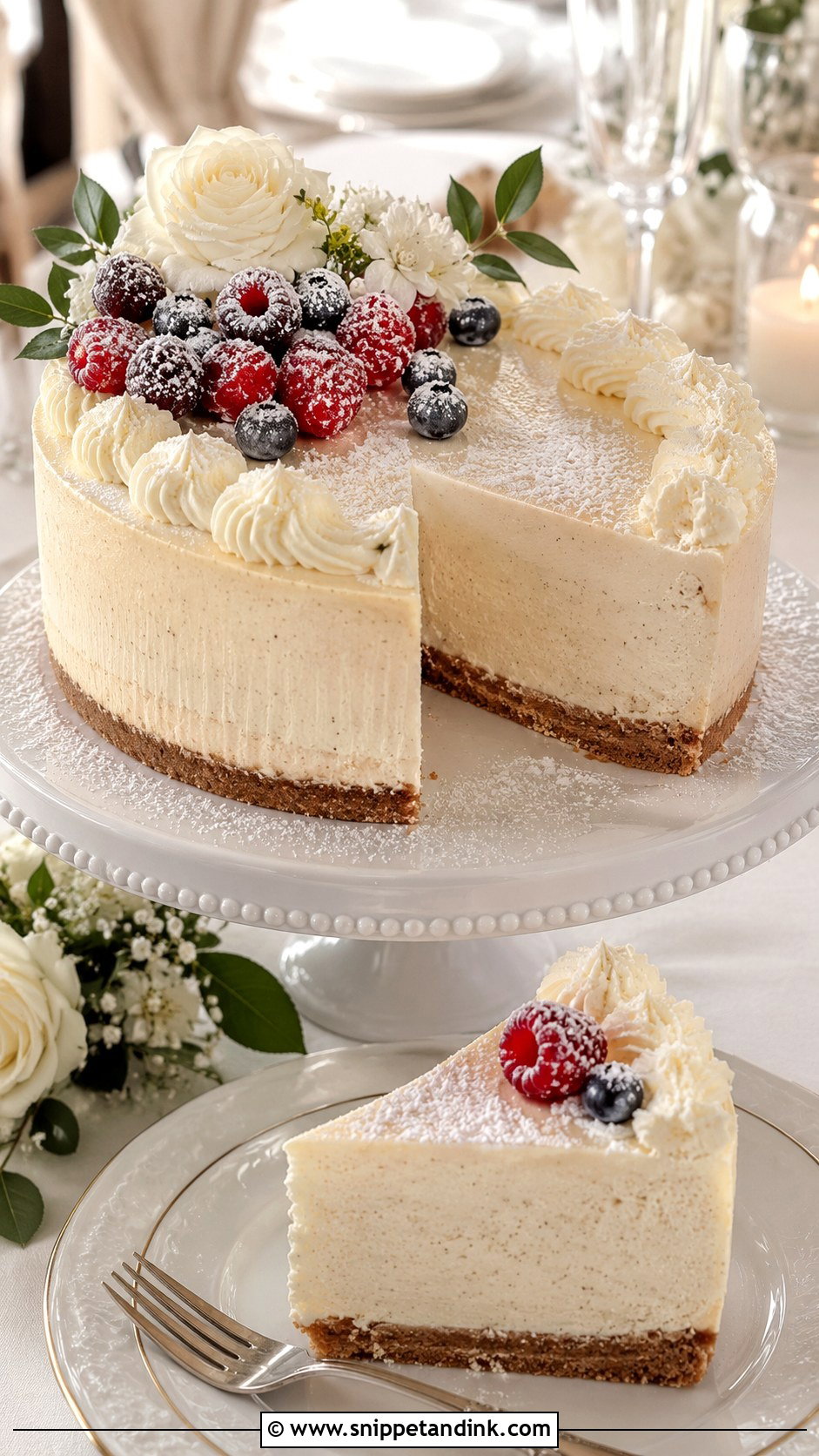
Vanilla bean is the cheesecake I recommend when you can’t decide. The tiny specks come from real vanilla seeds, which is how guests can tell it apart from plain vanilla at a glance. The soft ivory suits any palette and takes almost any topping: berries, caramel, lemon curd or chocolate sauce. A smooth surface with delicate piping around the edge, and fresh flowers or sugared fruit for colour, is all it needs. It’s also the safest choice for guests who are wary of anything unfamiliar.
12. Oreo Cheesecake Wedding Cake
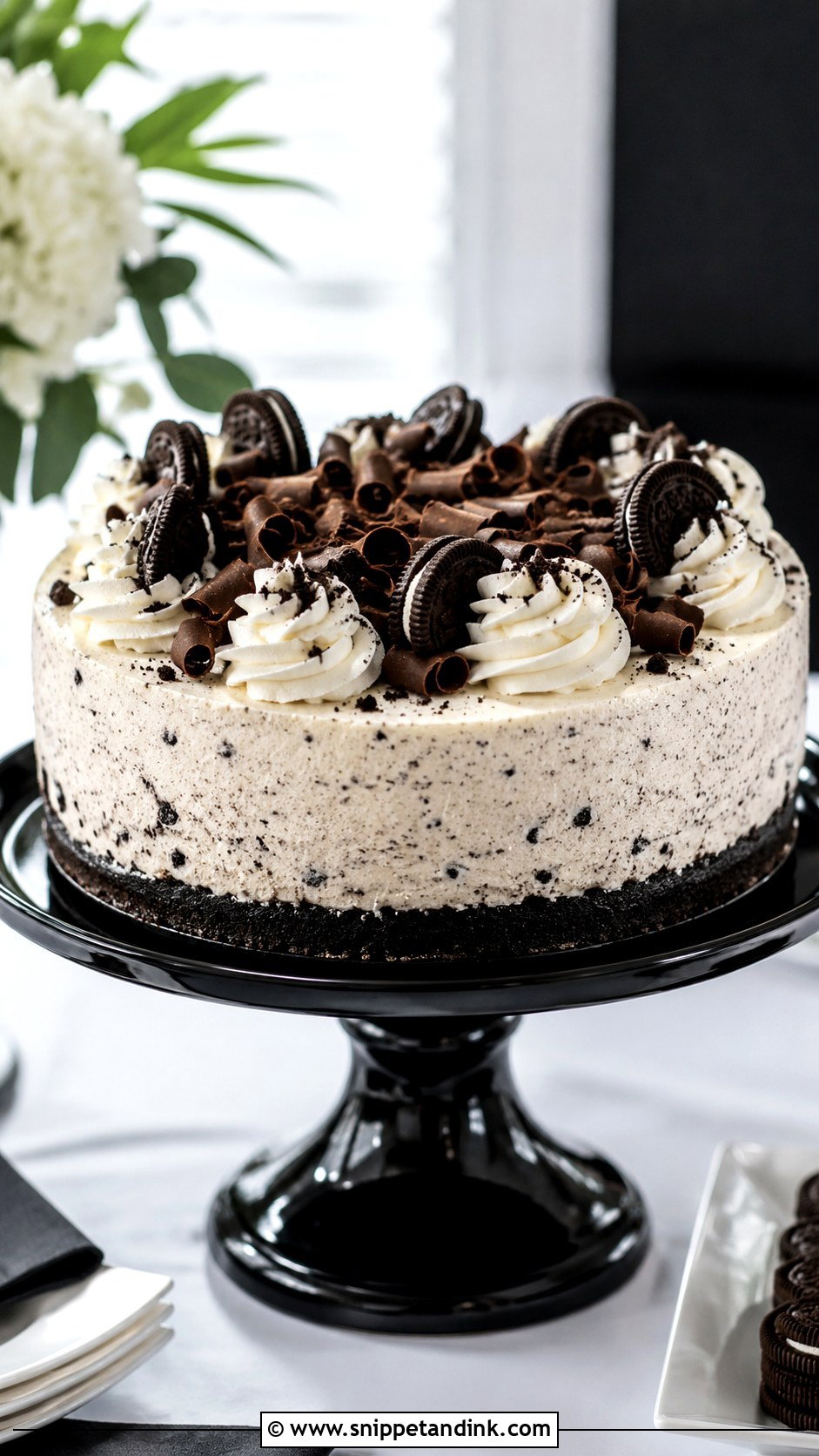
Cookie cheesecake is playful, and it can still look polished. The dark crumb crust and speckled filling give texture, while whipped cream piping and chocolate cookie accents finish it. Whole cookies on top soften in the fridge within a few hours, so I add them close to service. For a more formal version, use a smooth white top with a few chocolate curls rather than a pile of cookies. It also makes a good groom’s cake or late-night dessert.
13. Red Velvet Cheesecake Wedding Cake
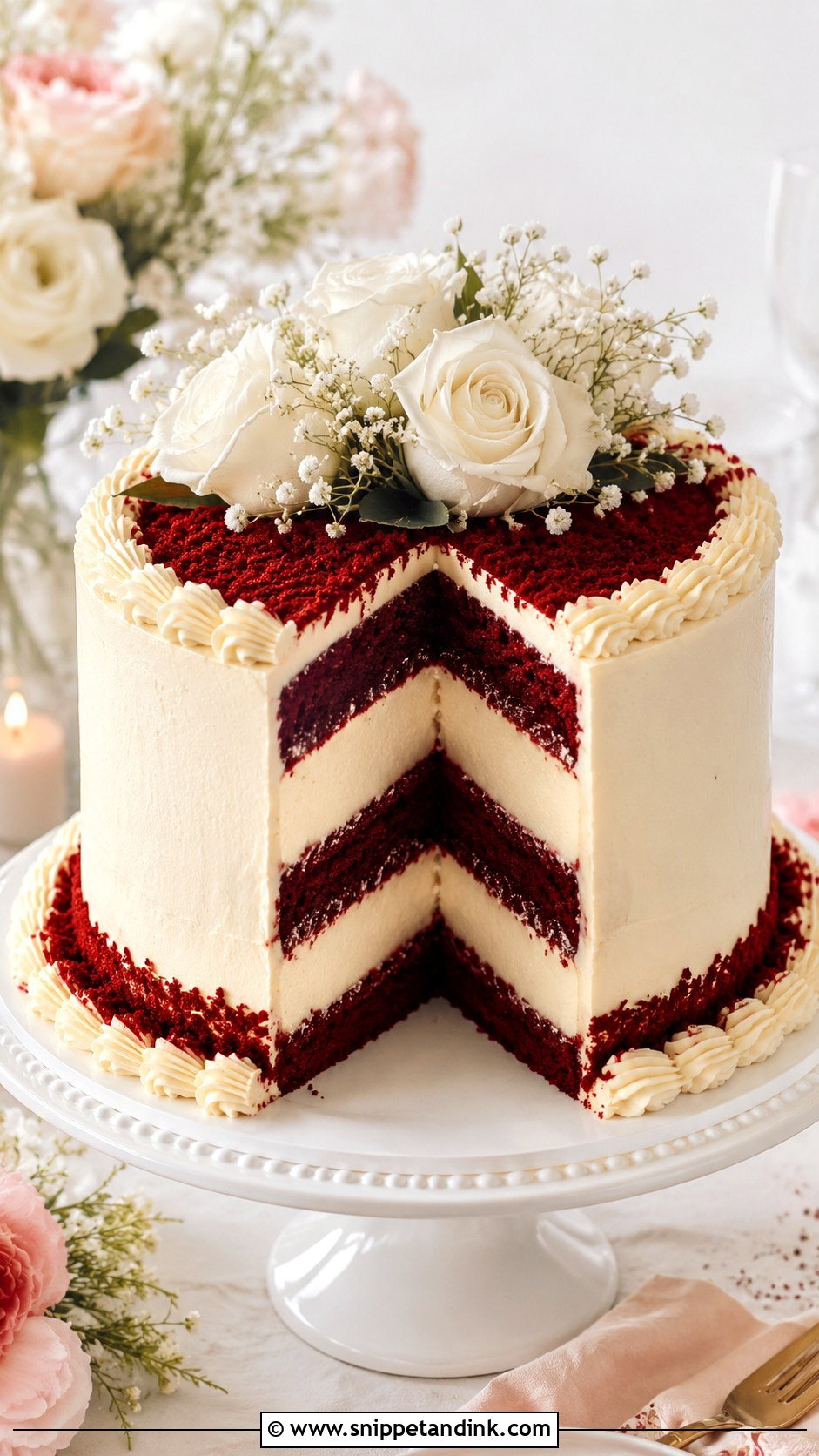
Red velvet cheesecake gives a dramatic slice when it’s cut: red cake layers between bands of cheesecake, or a cheesecake with red velvet crumbs and cream cheese frosting. A white outside makes the red reveal stronger. The colouring in red velvet can bleed into the pale cheesecake layer if the cake is assembled warm, so the layers are chilled separately and stacked cold. Piped borders, cake crumbs and a few flowers are enough decoration. It’s a good middle ground for guests who want something familiar but not plain vanilla.
14. Mini Cheesecakes For Weddings
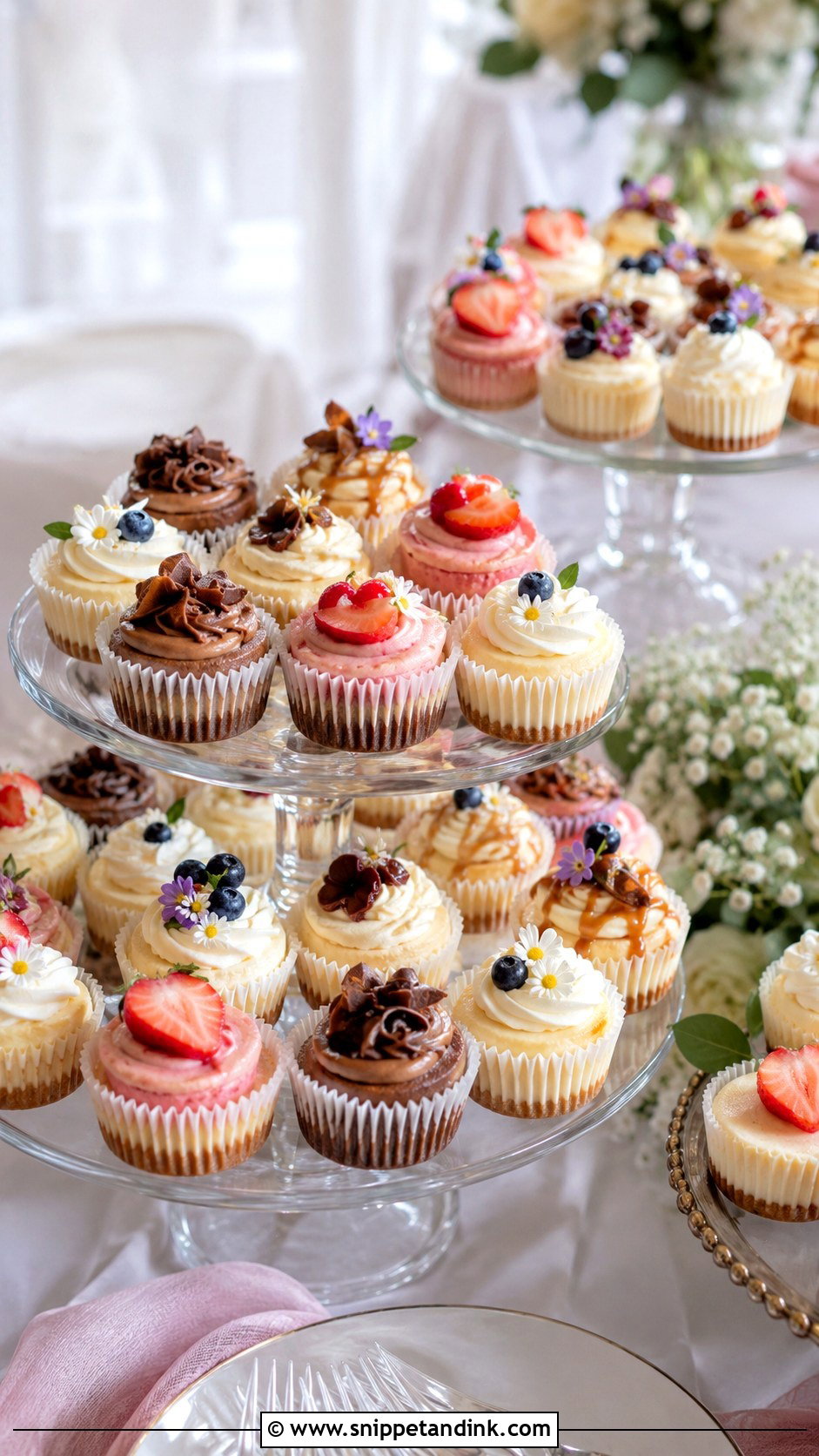
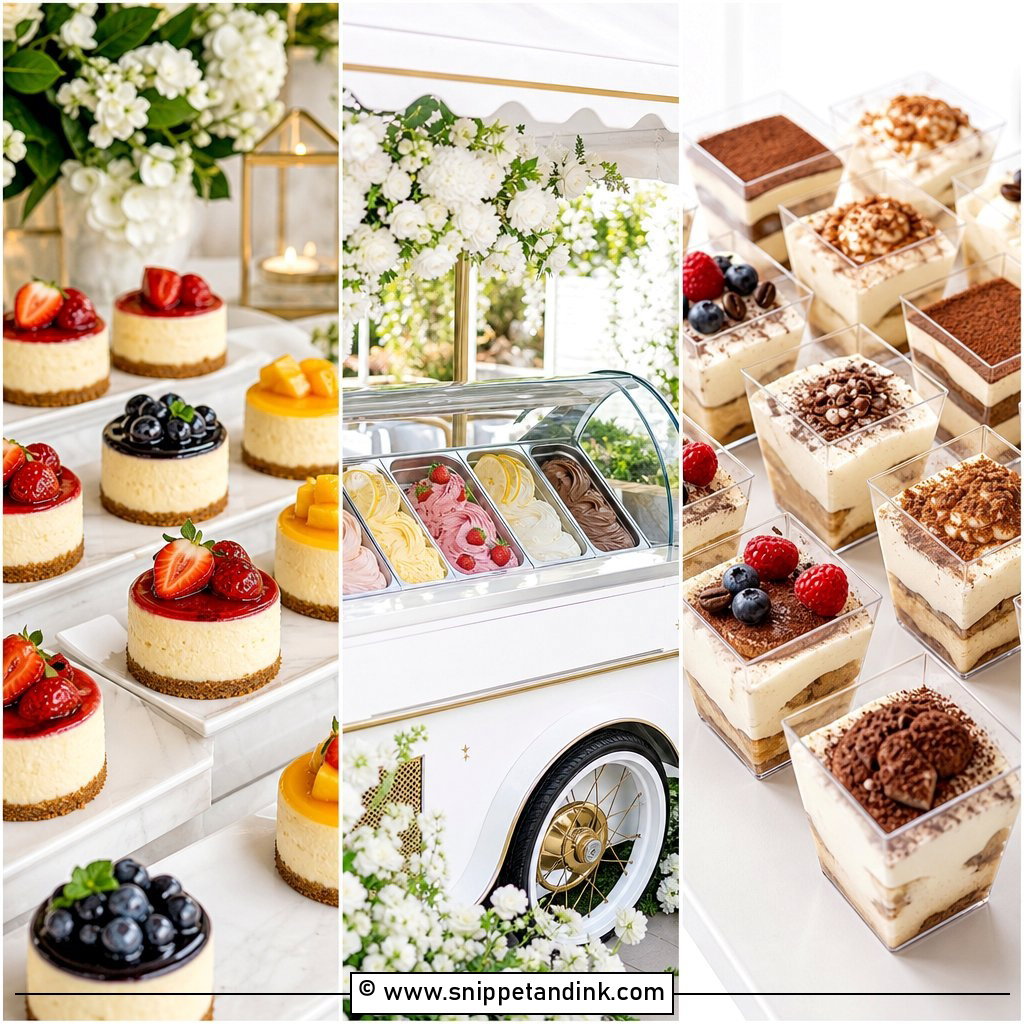
Mini cheesecakes remove the slicing problem entirely, which is a big help for a small catering team. Each one can carry fruit, chocolate, caramel or a flower, and together they make the dessert table look full. They suit standing receptions especially, since guests can eat one with a napkin and no fork. I’d limit them to two or three flavours, keep toppings in your palette, and arrange them on tiered stands or matching trays. Order a few more than the guest count; people take two.
15. Cheesecake Dessert Table For Weddings
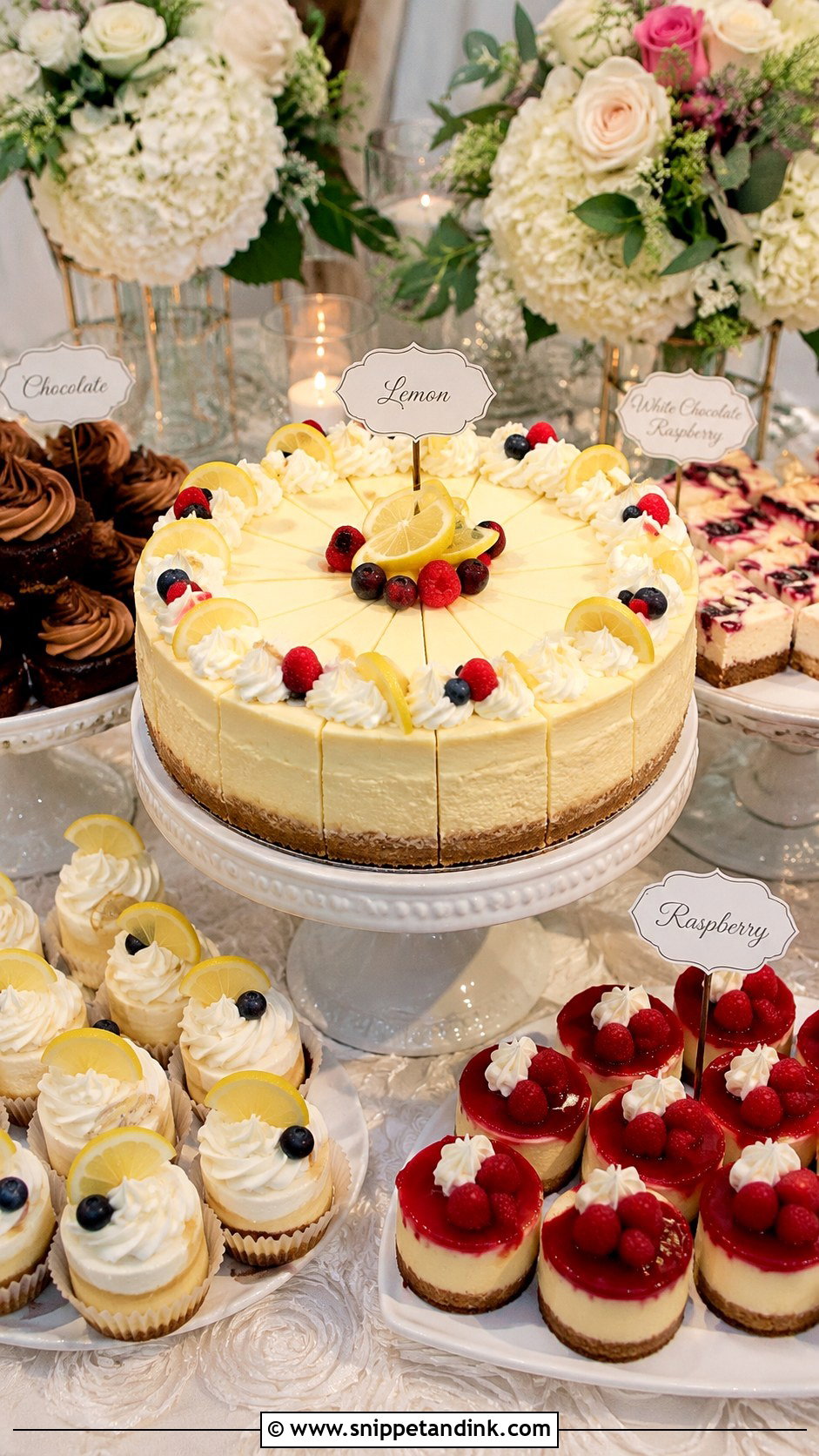
A cheesecake dessert table offers choice while still giving you a centrepiece. I build it around one larger cutting cheesecake and surround it with minis, bars, jars or pre-cut slices, using stands at different heights so it looks full. Simple labels help when the flavours look similar, as lemon, raspberry, chocolate and caramel can at a distance. Flowers, candles, and linen tie it to the room. Keep the candles a little away from the cheesecakes; even a small flame warms a cold dessert faster than you’d expect.
16. No Bake Cheesecake Wedding Cake
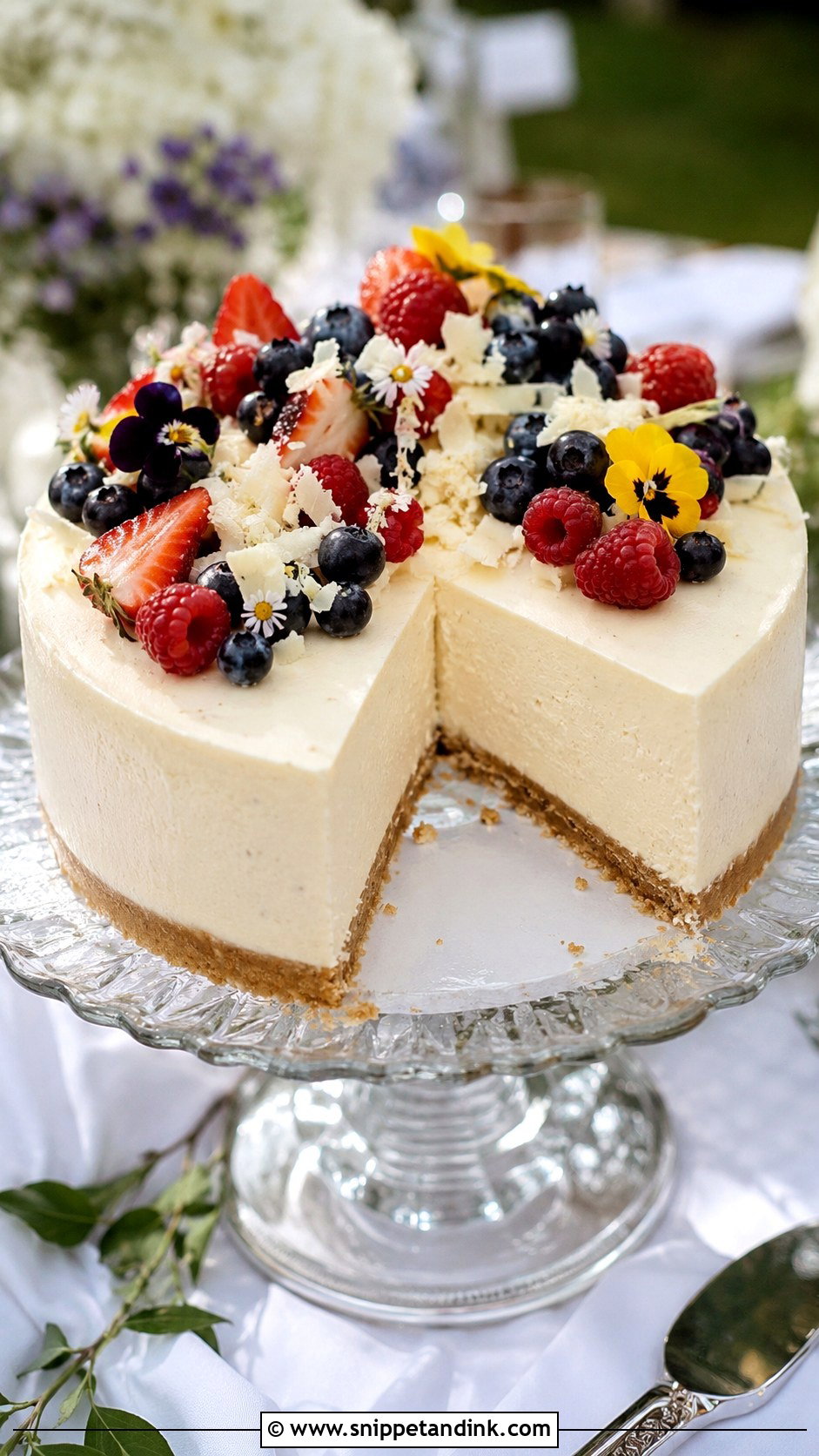
No-bake cheesecake is lighter and closer to a mousse. It sets in the fridge rather than the oven, often with gelatine, which is worth knowing if you have vegetarian guests or guests who avoid pork gelatine. A firm crust, a smooth filling and a stabilised whipped topping give it a wedding finish, with fresh fruit, white chocolate curls or edible flowers on top. It softens quickly once out of the fridge, so it suits smaller weddings and venues with refrigeration close to the reception room.
17. Basque Cheesecake Wedding Cake
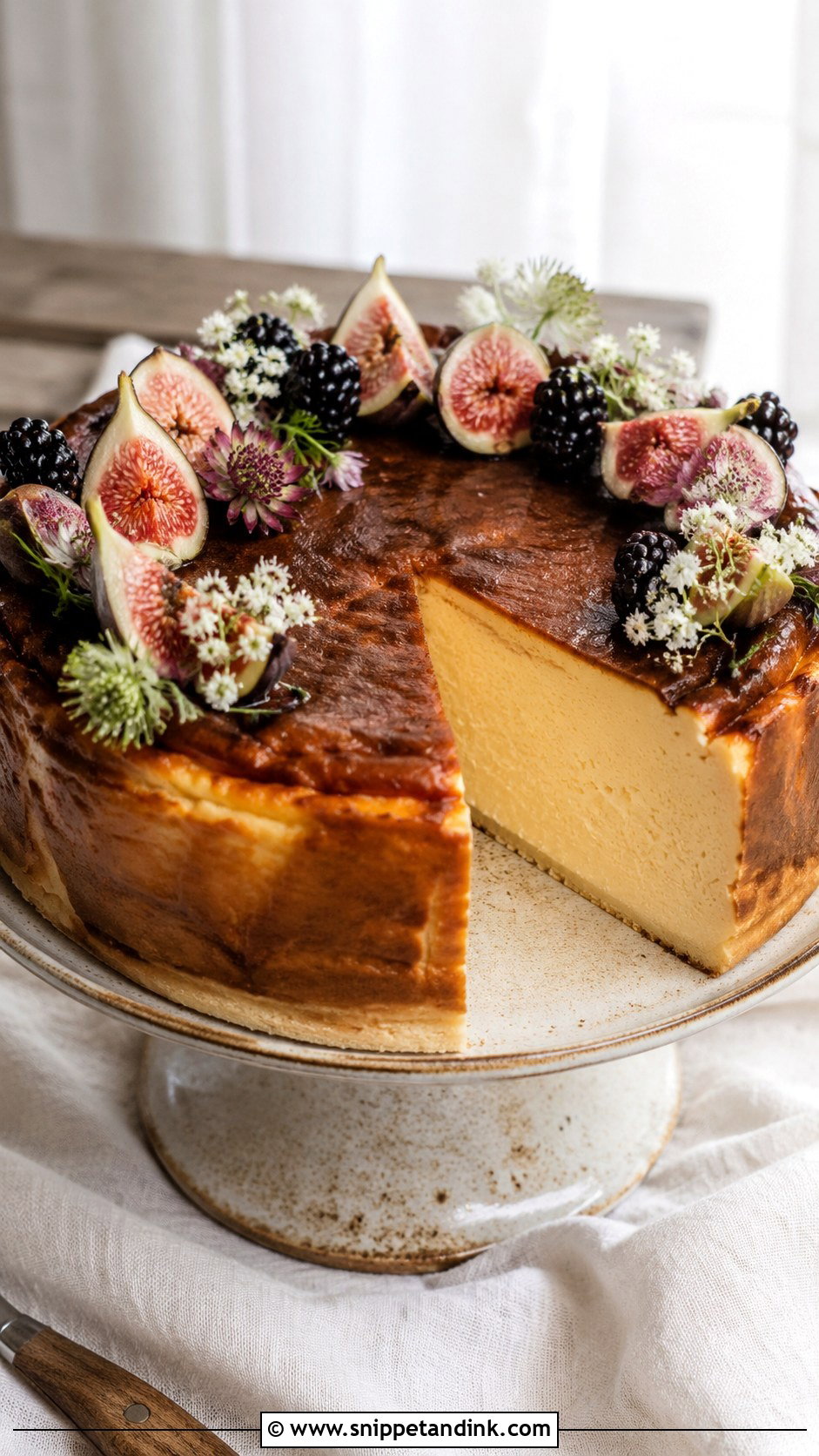
Basque cheesecake is baked hot until the top is deeply caramelised, almost burnt, with a soft, creamy centre and rough edges. It has no crust, which also makes it a natural option for guests avoiding gluten. Its look is the point, so toppings stay minimal: a few fresh figs, berries or flowers to one side. Unlike most cheesecakes, it’s commonly served at room temperature, when the centre is at its softest, though it still goes back in the fridge between servings. Intimate and modern weddings suit its handmade look.
18. Floral Cheesecake Wedding Cake
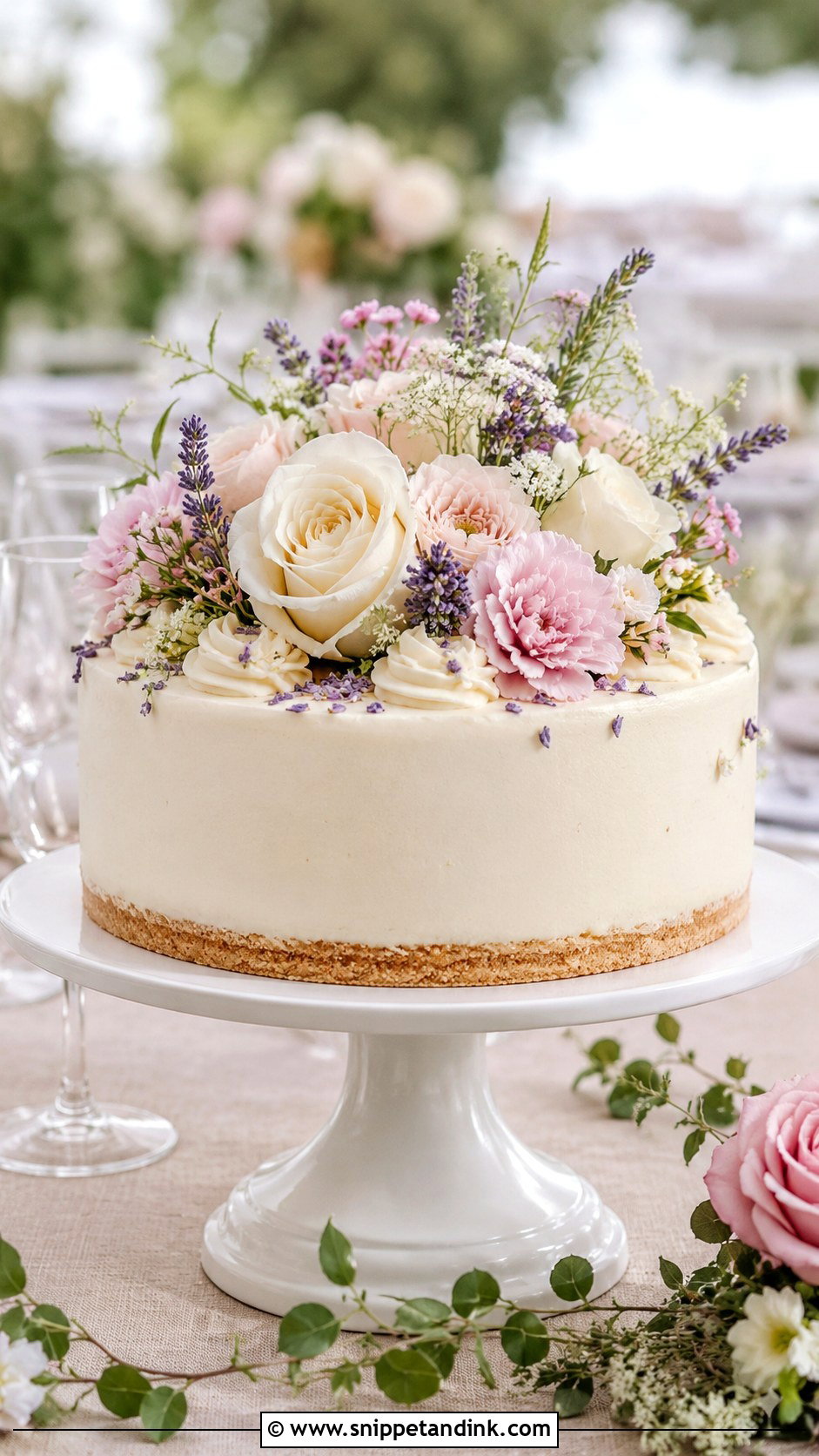
Floral cheesecake is all about restraint. A smooth base with fresh edible flowers, piped buttercream flowers or safely wrapped blooms, matched to the palette in blush, ivory, lavender or peach. Keep the flavour simple, vanilla bean, lemon or white chocolate, so the look stays delicate. A cold cheesecake carried into a warm room causes condensation, which can mark petals and make piped flowers slide, so let it sit a few minutes before adding anything delicate. Garden weddings and spring receptions suit it.
19. Berry Cheesecake Wedding Cake
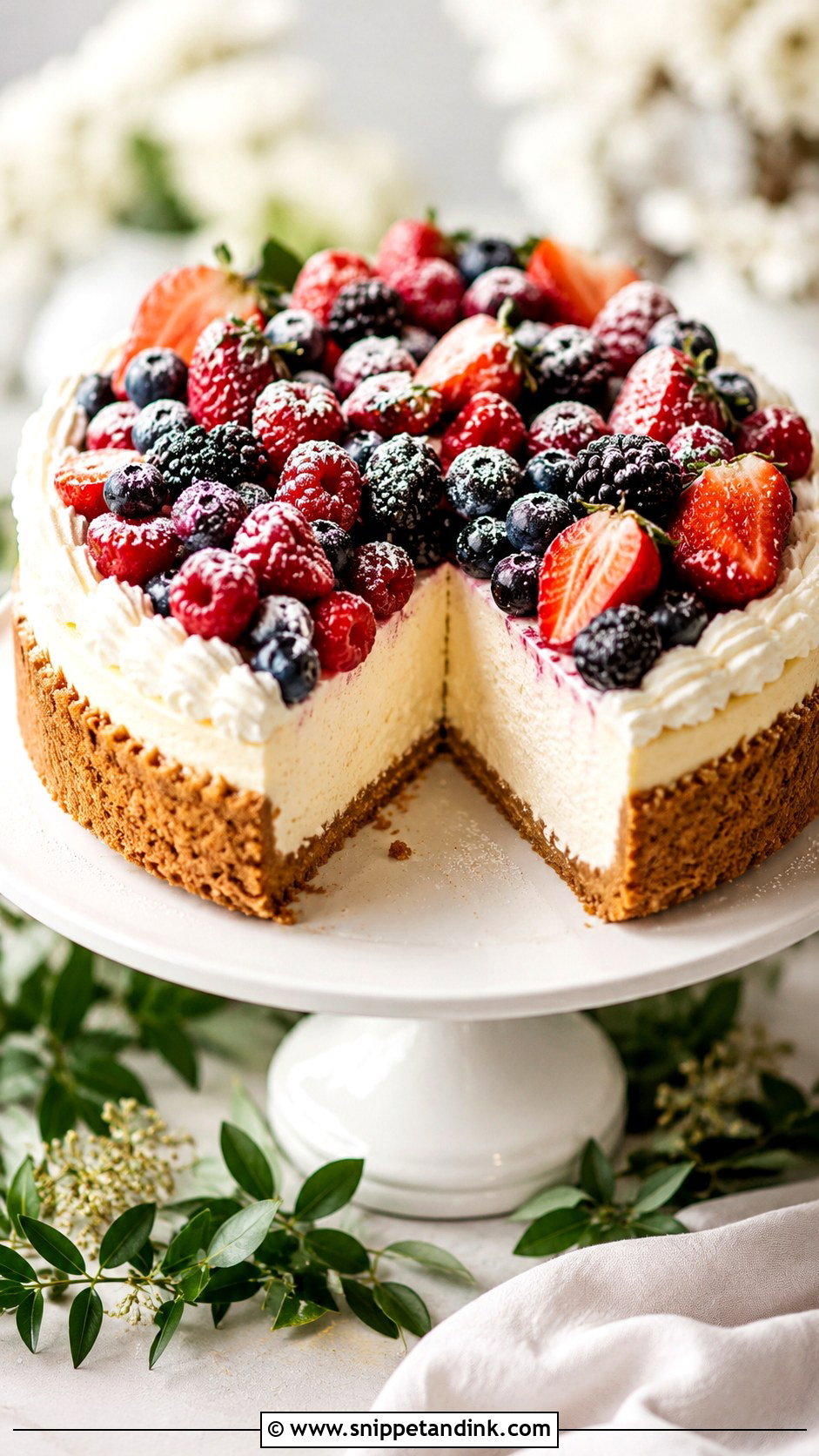
Mixed berries on a vanilla base are the easiest way to add colour without frosting. Strawberries, raspberries, blueberries and blackberries together look generous and need no artificial decoration. A light glaze makes them shine for a formal room; loose berries and a dusting of powdered sugar suit a rustic one. Blackberries and blueberries hold up longest on display, while cut strawberries weep, so I put the most fragile fruit on last. It goes well with champagne-coloured decor and simple white flowers.
20. Cheesecake Bar Wedding Cake
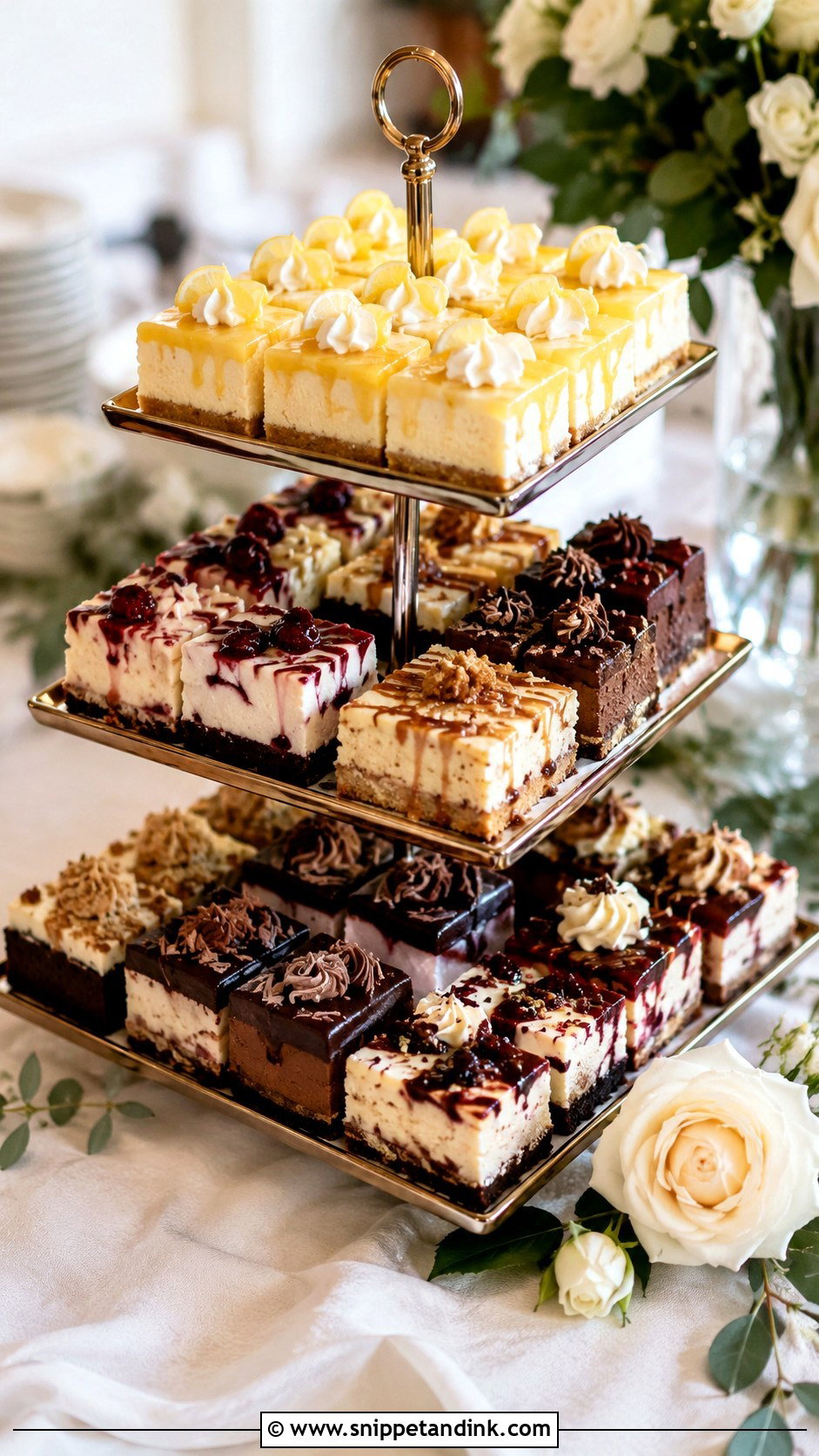
Cheesecake bars are the most practical format I serve. Rectangular bars are baked in trays, chilled and cut into identical portions, which makes numbers easy to plan for a large guest list. Display them on trays, stands or a dessert tower, and offer a range of toppings: berry compote, chocolate ganache, caramel, lemon curd and cookie crumbs. For clean edges, they’re cut fully chilled with a hot, wiped knife. Matching liners keep the display tidy, and the result is relaxed but organised.
Cream Cheese, Eggs and Biscuit Crumbs: Feeding Guests With Restrictions
Cheesecake is built almost entirely from the ingredients guests most often avoid. That doesn’t rule it out, but it does mean planning a second option.
- Gluten: the crust is usually made from wheat biscuits. A crust made from gluten-free biscuits or ground nuts, or a crustless Basque cheesecake, solves it. Keep it on a separate stand with its own server.
- Dairy and eggs: these are the filling. A plant-based cheesecake made with soaked cashews or a dairy-free cream cheese is the usual answer, and it’s always a no-bake style.
- Lactose: some guests are fine with lactose-free cream cheese, which bakes much like the regular kind. Ask rather than assume.
- Nuts: nut crusts, pecan toppings and praline are common. Label them clearly, and keep nut-topped cheesecakes away from the others on the table.
- Gelatine: many no-bake recipes rely on it. Ask your baker to use agar instead if you have vegetarian guests or guests who avoid pork products.
A small batch of minis or bars in the alternative recipe is far easier to manage than a whole separate cake. Give your caterer a count from the RSVPs, and ask for those portions to be labelled and plated first, before anything else can touch them.
Taste Three Flavours Side by Side Before You Decide
Cheesecake can carry the cake-cutting moment as well as any sponge if the flavour, structure and service are planned together. A tiered cheesecake gives you the classic shape; minis and dessert tables make serving simple. Fruit toppings keep it fresh, chocolate and caramel bring richness, and a few flowers make it bridal. At your tasting, try at least three flavours next to each other and think about your menu, season and venue. The one you’d happily order twice is usually the right one.
You'll Like These Ideas:


Leave a Reply