
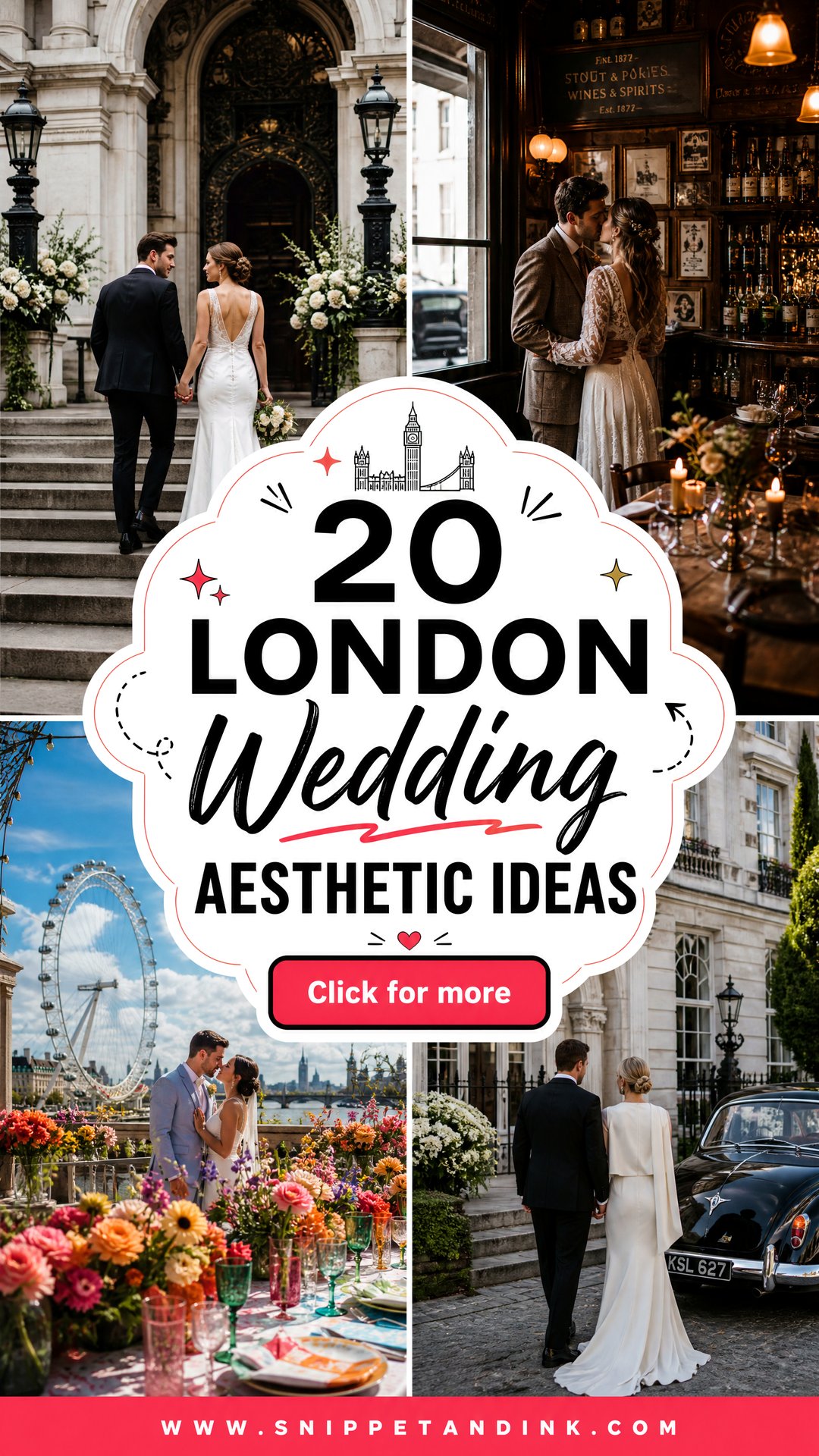
London venues arrive with a personality already built in: Georgian plasterwork, Victorian pub tiles, warehouse brick, hotel chandeliers, a glass roof over a garden. My job as a decorator is mostly to listen to that and not shout over it. Couples today tend to want a day that feels like their own story rather than a matched set, and the city makes that easy because no two rooms look alike. A town hall and a private dining room, a pub garden, a big multicultural celebration in a hotel: each needs one clear direction that runs through clothes, flowers, paper, tables and photos. Below are twenty directions to start from, with the season, the guest count and the room in mind.
Reading a London Room Before You Pick a Palette
On a first site visit I spend more time looking at what cannot change than at the empty space. The colour of the carpet, the wood of the floor, the paint on the walls and the direction the windows face will shape every choice afterward. A blush scheme that looks soft in a white gallery turns muddy against red hotel carpet.
- Photograph the room at the time of day your ceremony will happen. Afternoon light in a north-facing room is cool and flat; a south-facing conservatory glows warm.
- Note the fixed colours, floor, walls, curtains, upholstery, and build the palette to sit beside them.
- Measure the ceiling height. Tall Georgian rooms can take tall arrangements; a low pub dining room cannot.
- Ask what the venue already owns. Many London venues have their own chairs, linen and candle holders, and working with them saves money and storage.
Older buildings come with rules. Listed and historic venues often limit fixings to walls and ceilings, require candles to be enclosed in glass, and control or ban confetti. Ask for the venue’s decor policy in writing before you fall in love with an installation you will not be allowed to hang.
1. Classic London Town Hall Wedding
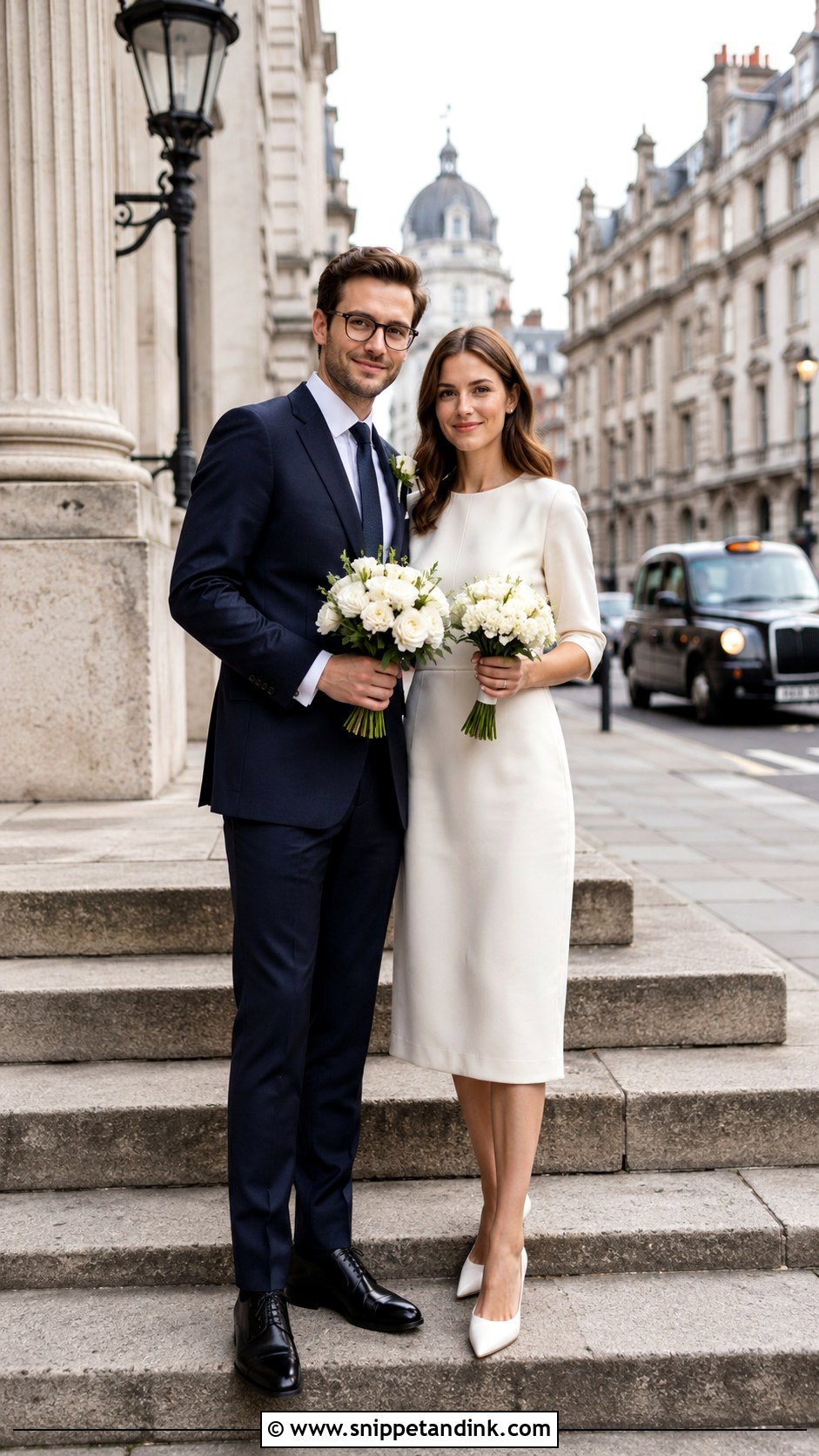
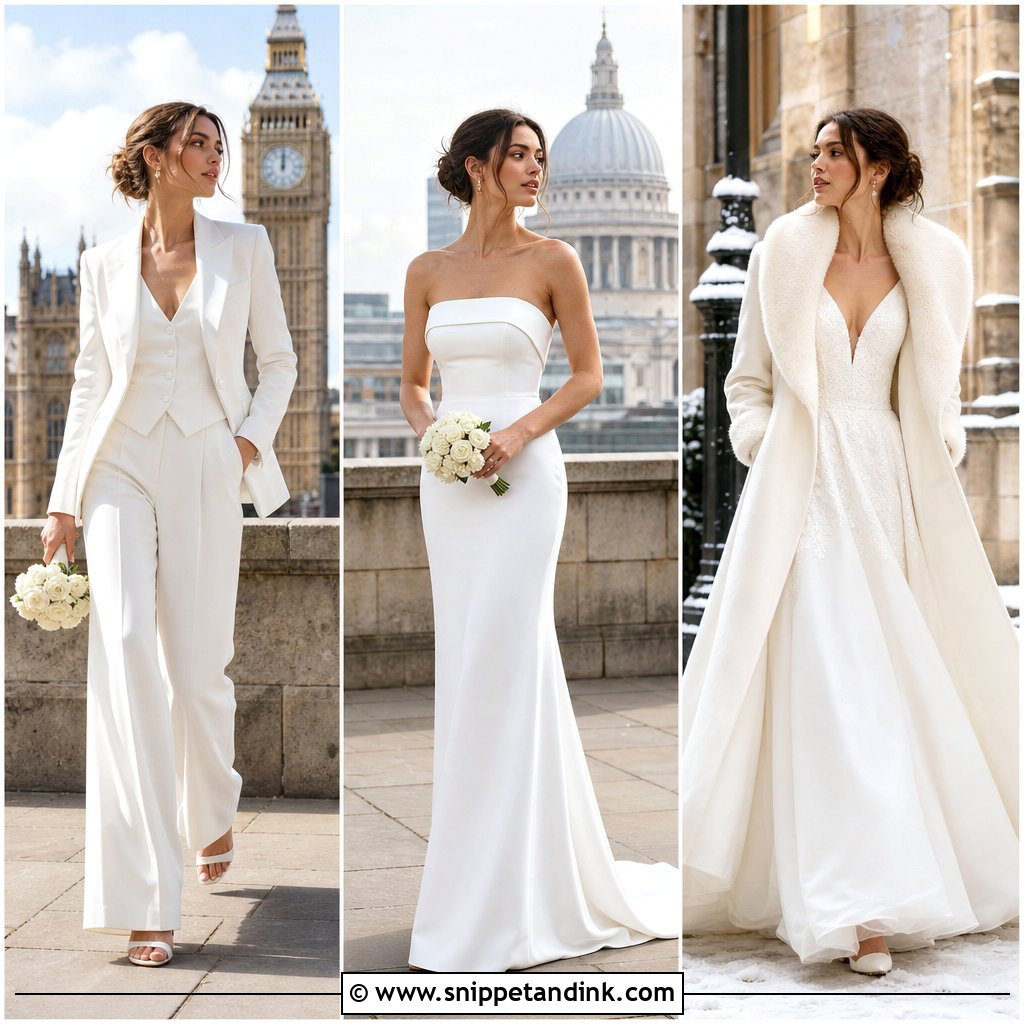
The town hall wedding is short, small and very photogenic if you plan the after-part well. Most registry buildings give you stone steps, tall windows and a panelled room, and the decor allowed inside is usually minimal, so put the effort into what you carry and wear. The bride could choose a tailored midi dress, a column gown or a skirt suit; the groom a dark suit and a quiet tie. White roses or calla lilies in a tight bouquet read well on the steps. Then move everyone to a private dining room I’d dress with white linen, tapers, handwritten menus and a small cake. Black cabs and iron railings outside do the rest for portraits.
2. Black Tie London Hotel Wedding
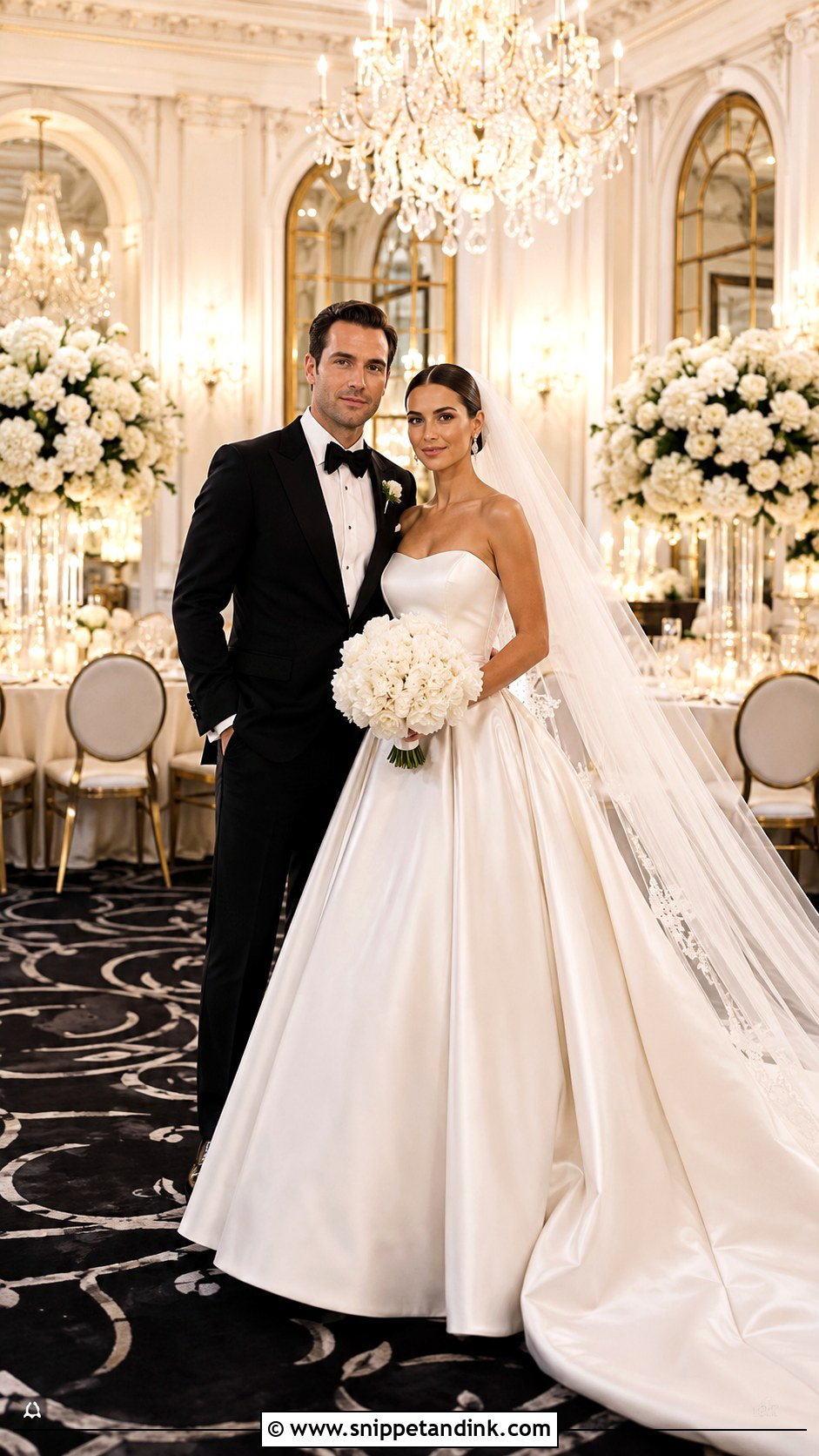
Black tie in a hotel ballroom is about control. I build the palette from black, ivory and champagne with a little gold, and then I keep every element the same height family so the room looks deliberate. Hotel ballrooms usually come with patterned carpet you cannot change, so check it before choosing linen; a busy carpet next to a busy cloth is the first thing I’d fix. Tall white arrangements on alternate tables, low candles on the rest, proper glassware. Satin gown, cathedral veil and tuxedos set the dress code, a string quartet for the ceremony hands over to a band, and heavy card with serif type and black envelopes tells guests what to expect before they arrive. Staircases, mirrors and chandeliers are your portrait spots.
3. English Garden London Wedding
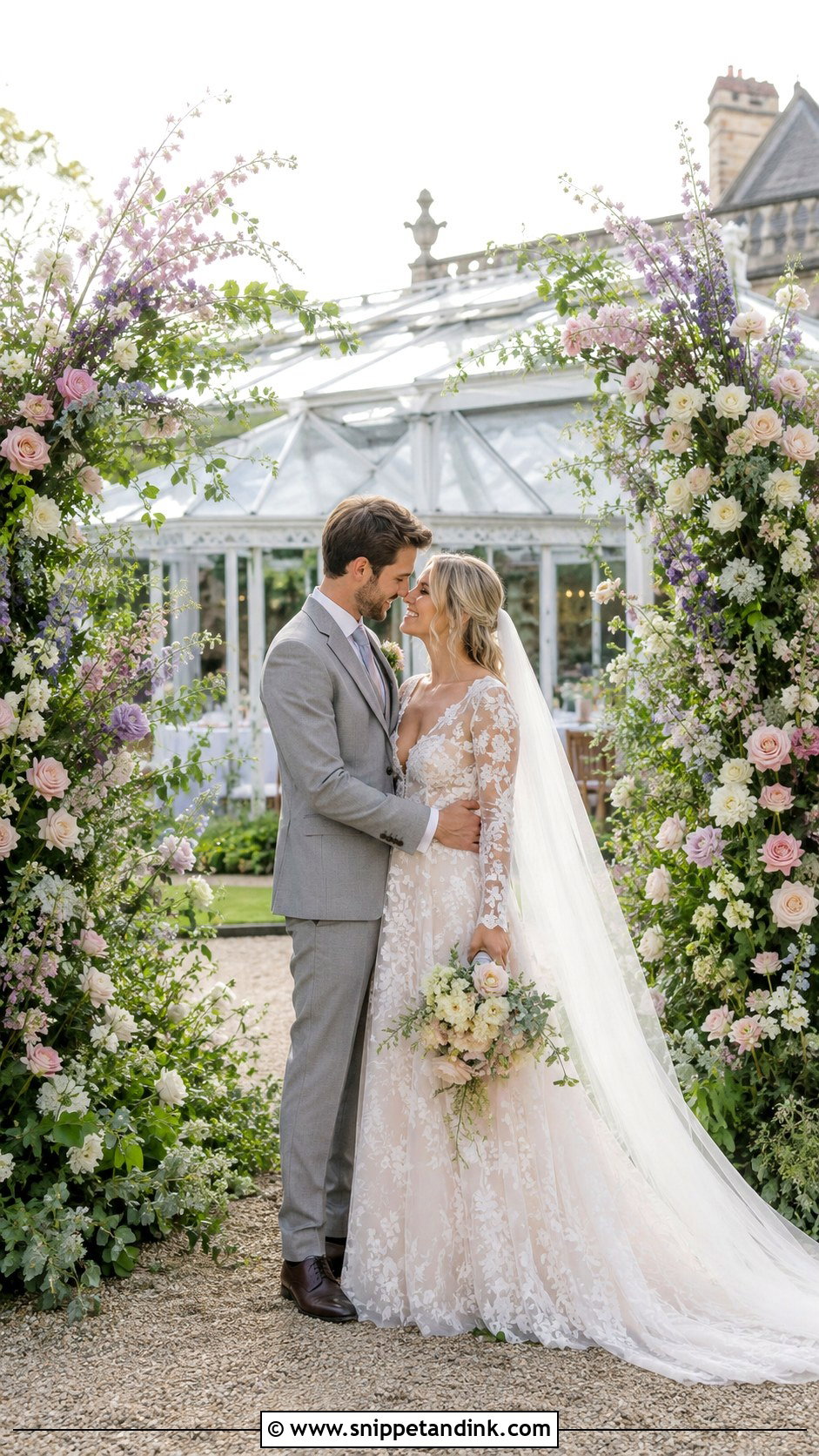
An English garden look depends on flowers that are actually in season, which in Britain means late spring to late summer for sweet peas, foxgloves, delphiniums and garden roses. Outside that window you are paying for imports that never look as loose. Work in blush, cream, lavender, pale blue and green. A lace or chiffon gown with soft sleeves, a light grey or navy suit. Long tables with floral linens, mismatched china and handwritten place cards suit afternoon tea before a dinner under a marquee or in an orangery. Book that indoor space properly, not as an afterthought; I dress the wet-weather room as fully as the lawn, because a bare plan B is what guests remember.
4. Modern Minimalist London Wedding
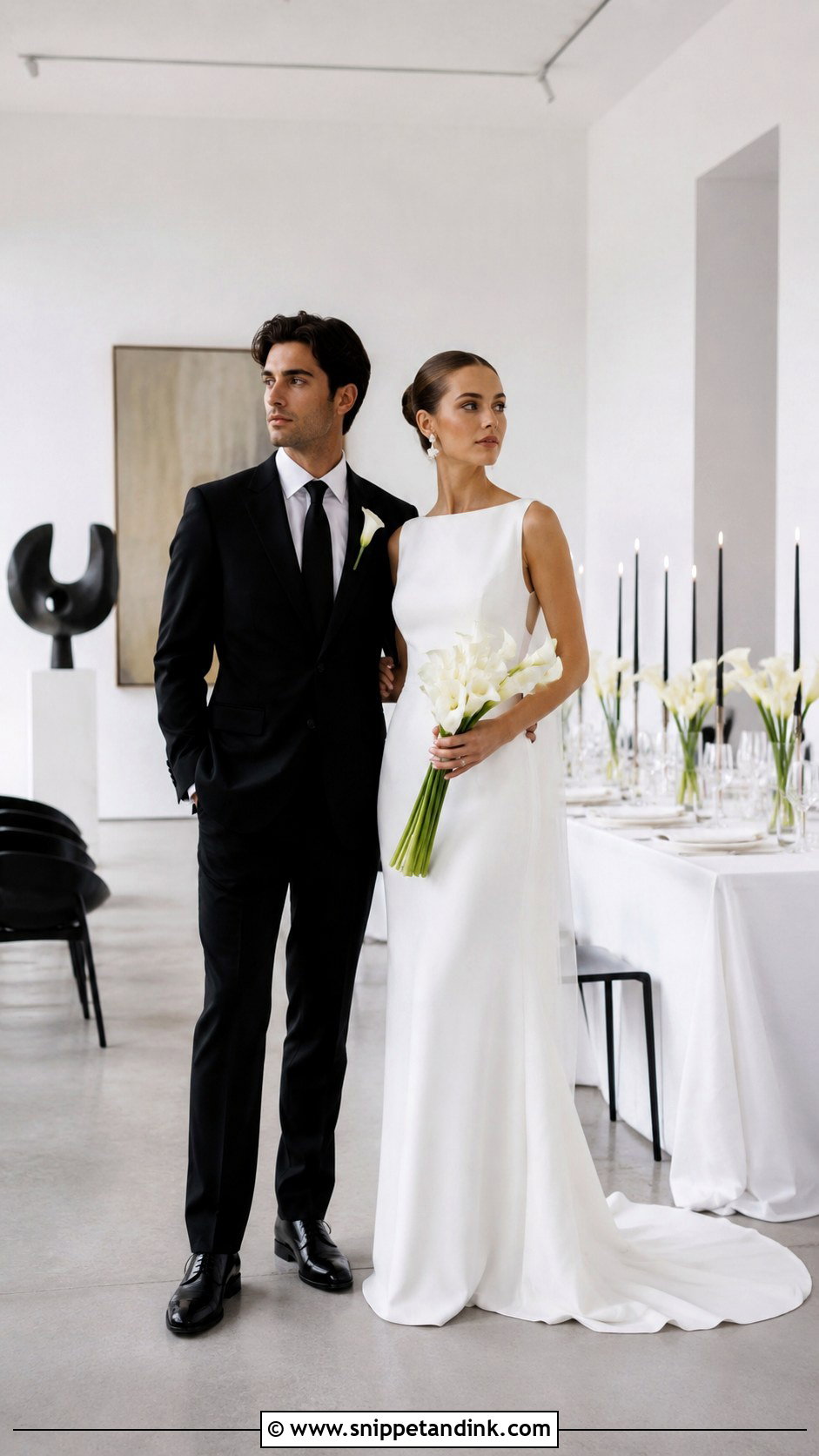
Minimalism is harder to decorate than abundance, because every object is visible. A gallery, a design-led restaurant or a white studio gives you the clean walls; your job is restraint. Keep to white, cream, stone and black with one accent. Single-variety arrangements, calla lilies, orchids or anthuriums, look sculptural where a mixed bouquet would look messy. I space tables generously and keep the same typeface on every card and sign, because one mismatched font breaks the effect. A plain crepe gown, a sharp black suit, direct-flash portraits and a smooth white cake finish it.
5. Vintage London Pub Wedding
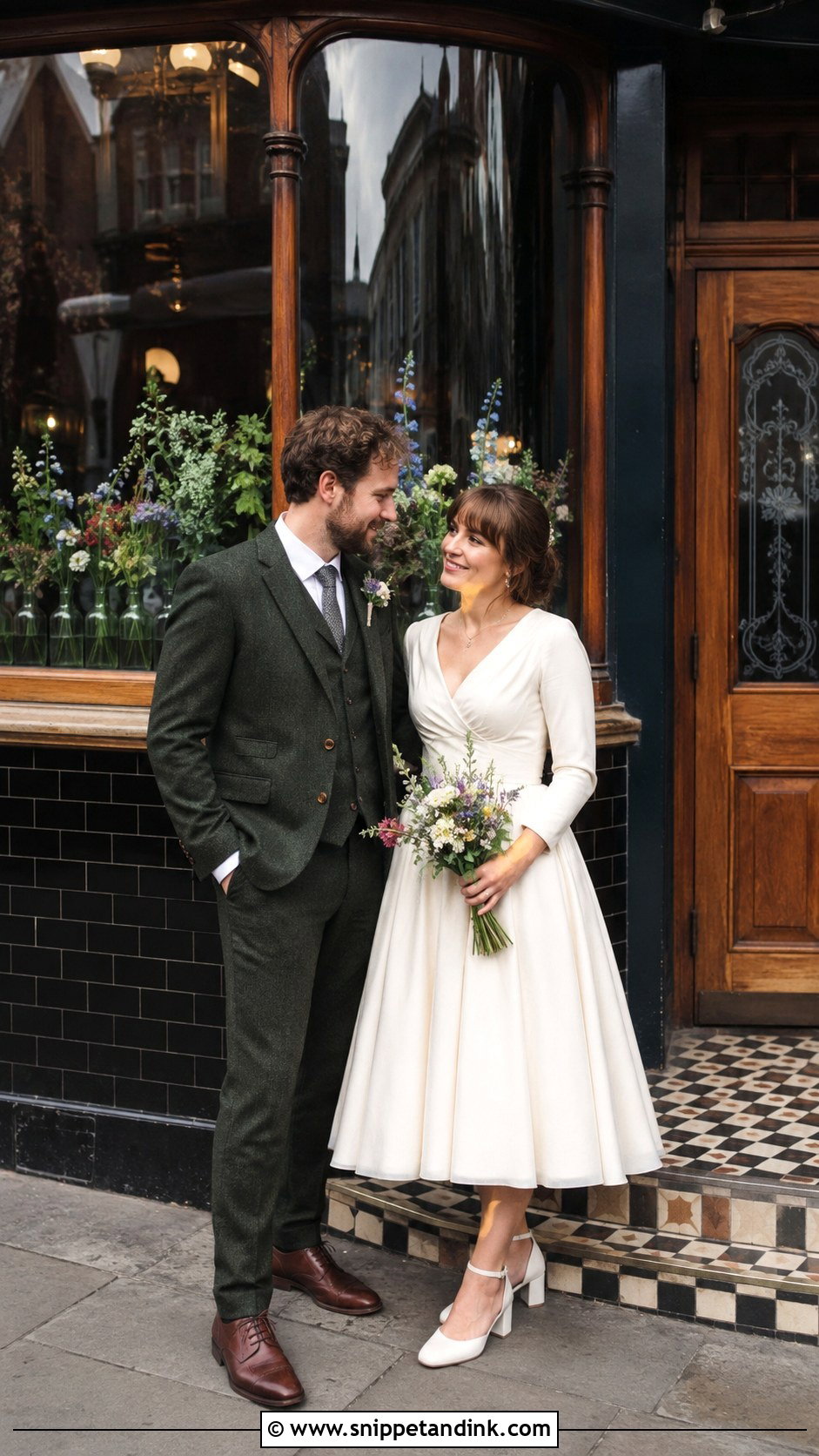
Pubs are underrated wedding venues. Victorian ones in particular come with wooden floors, patterned wallpaper, tiles and etched glass, so the room is already decorated for you. Check that there is a private dining room or a garden you can have exclusively, and ask what time the bar reopens to the public. A tea-length gown, a silk slip or vintage lace with block heels; a textured suit in brown, navy or forest green. On the tables I’d use bud vases and coloured tapers rather than big centrepieces, which look out of place on pub tables. A long shared meal, your own playlist and a simple iced cake. Photograph at the bar, in the doorway and on the street outside.
6. Editorial London City Wedding
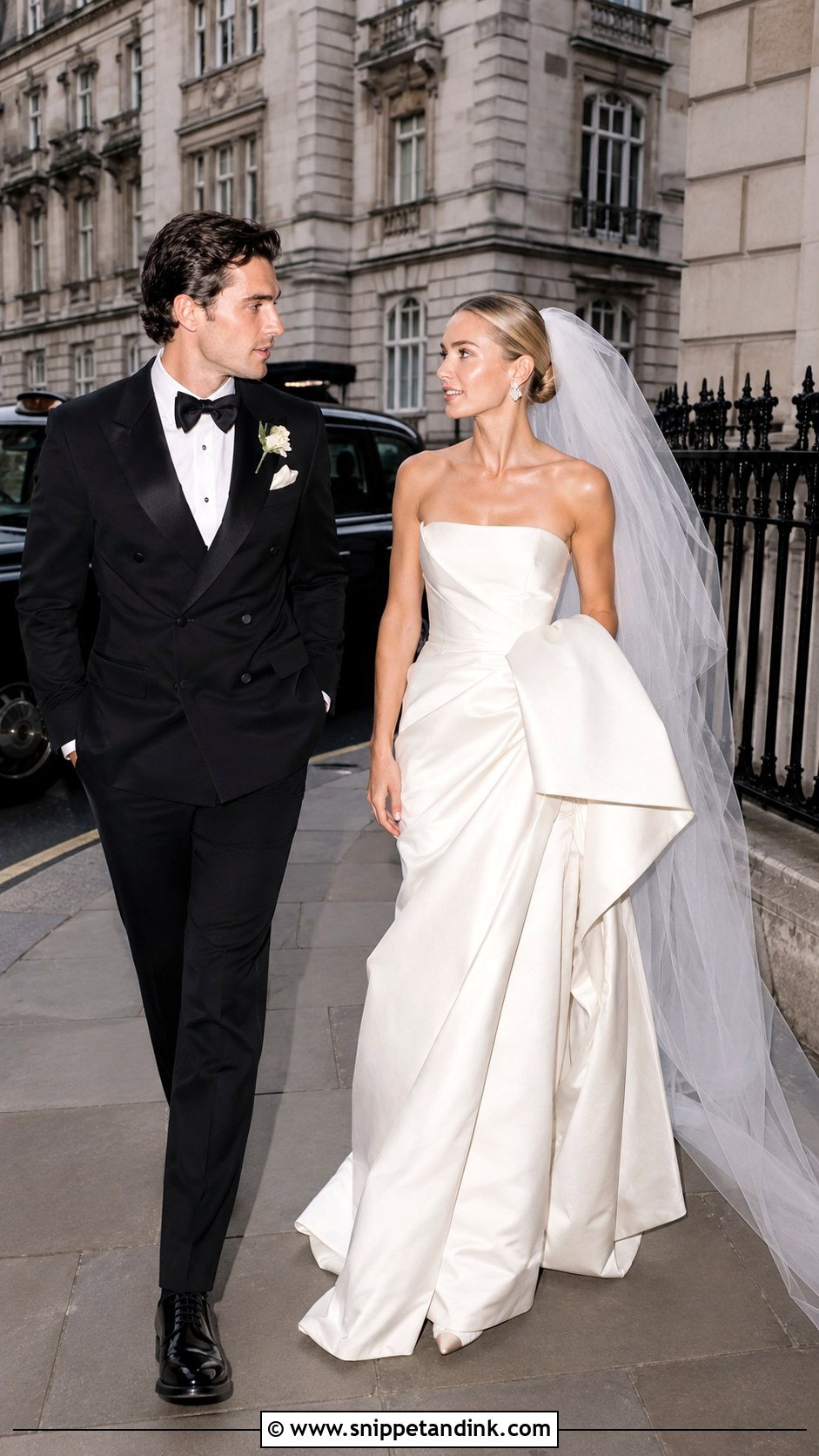
The editorial look is a photography plan first and a decor plan second. Pick a ceremony room with clean, plain interiors, then build a portrait route through stone facades, zebra crossings, Underground signage and quiet side streets. A sculptural gown, a dramatic veil or a fashion mini with statement heels; a double-breasted suit for the groom. One strong flower, a single orchid stem or an asymmetric arrangement in one colour, beats a full bouquet here. Reflective surfaces and graphic stationery carry the look into the reception. Film and direct flash give the magazine finish. Give the photographer real time, at least an hour, so there is room for both posed frames and street moments.
7. Romantic London Conservatory Wedding
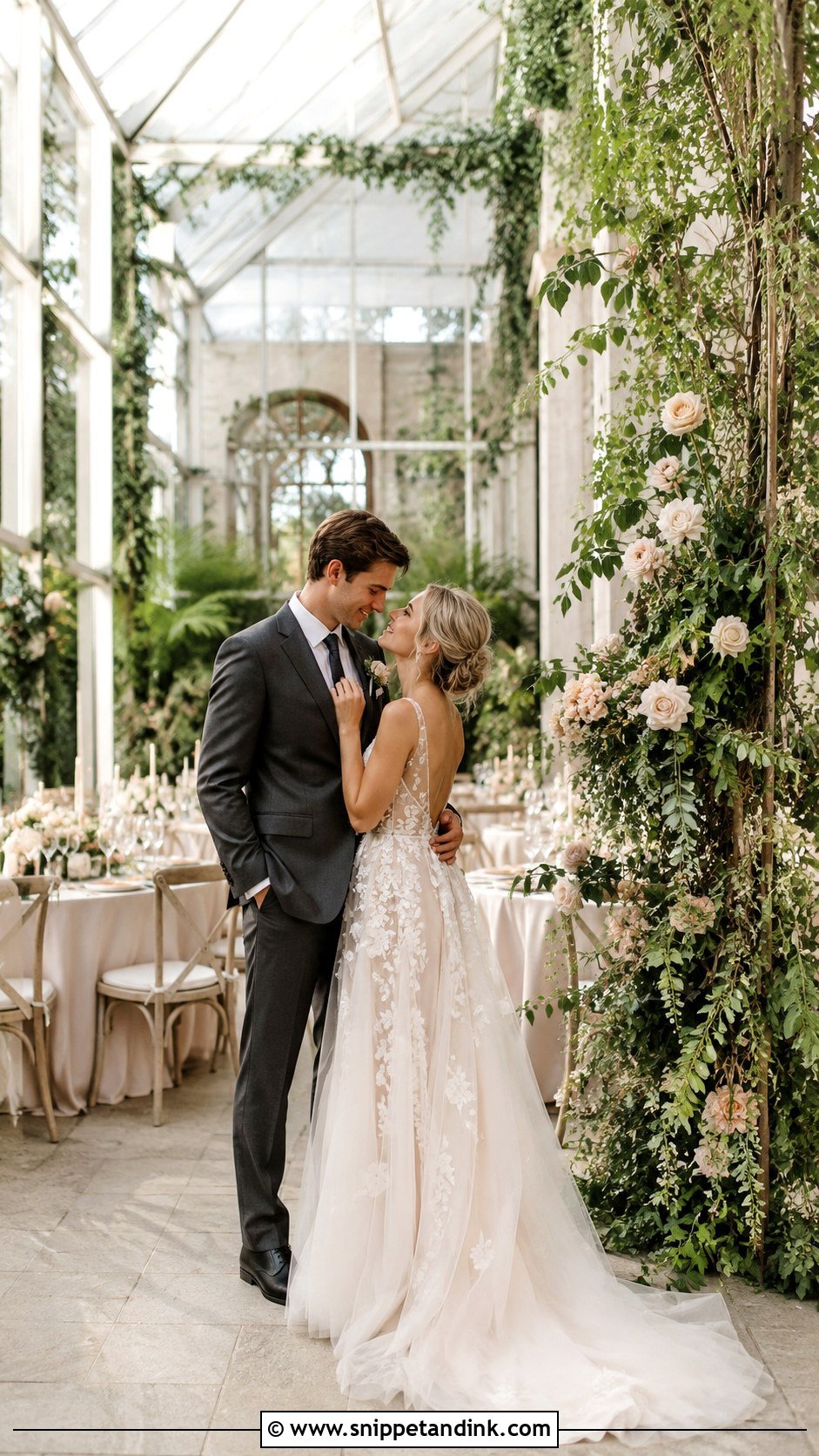
Conservatories do the decorating with daylight, and the mistake I see is covering the glass with too much. Let the windows and the planting lead. Ivory, dusty pink, sage and pale peach suit the green. A soft tulle gown with floral appliqué and a charcoal, navy or beige suit. I place meadow-style arrangements at floor level around the ceremony so they look as if they grew there. Low table flowers keep conversation open. Glass rooms heat up fast in sun and cool fast after dark, so ask about blinds and heating. Shoot portraits in daylight, then again after sunset when candlelight bounces off the panes.
8. Royal-Inspired London Wedding
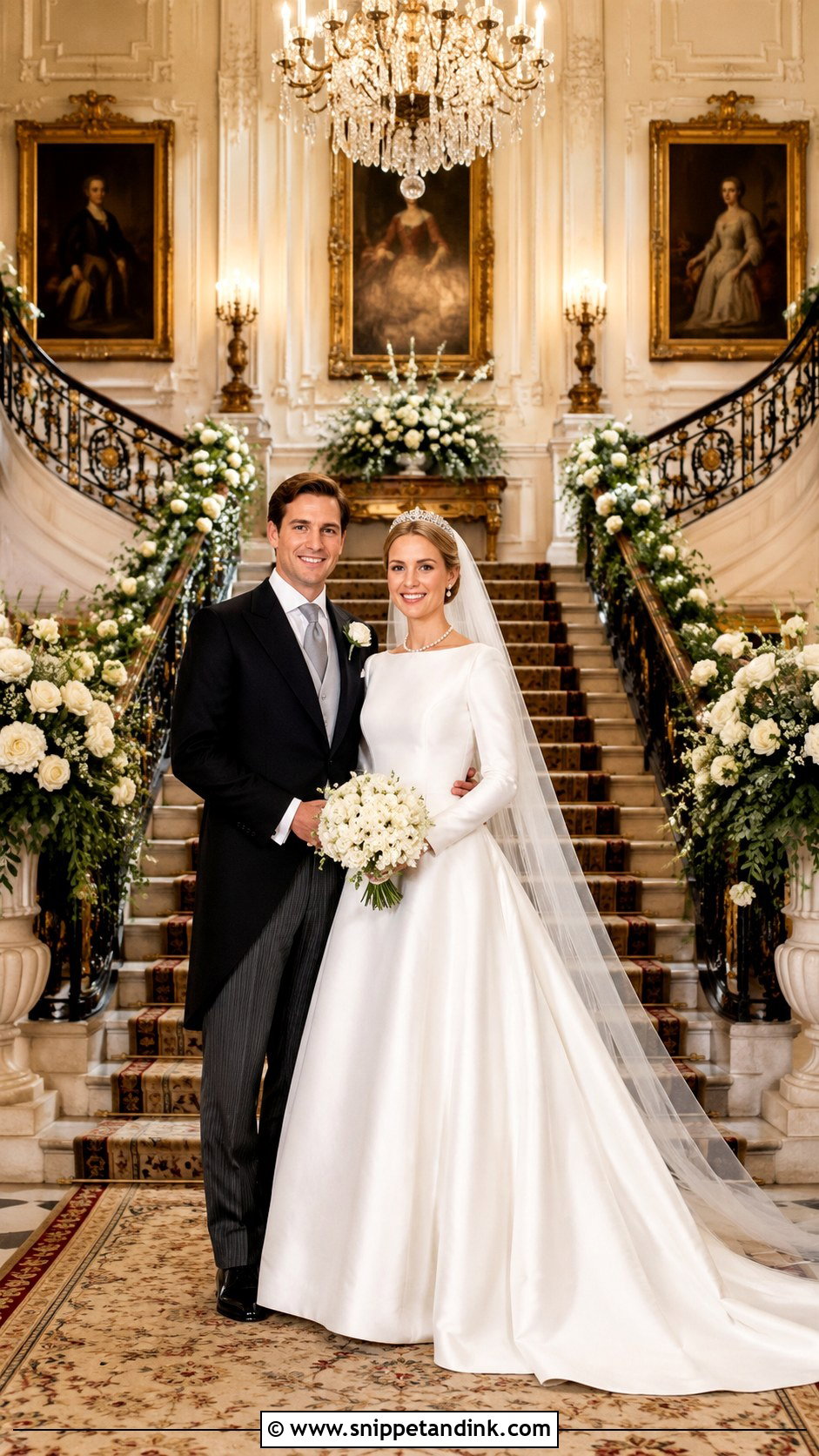
A royal-inspired day works only through quality and proportion. Novelty crowns and corgis undo it instantly. Choose a historic hall, a members’ club, a townhouse or a ballroom with fireplaces and portraits. Long sleeves, a structured bodice, a classic veil and pearls for the bride; morning dress or a black tuxedo for the groom. I keep the flowers symmetrical, white roses, lilies and hydrangeas with glossy foliage, placed in matching pairs. Formal wording, fine paper and a monogram or crest on the invitations. A seated dinner, a tiered cake with fine piping, and a choir, harpist or strings.
9. Industrial London Warehouse Wedding
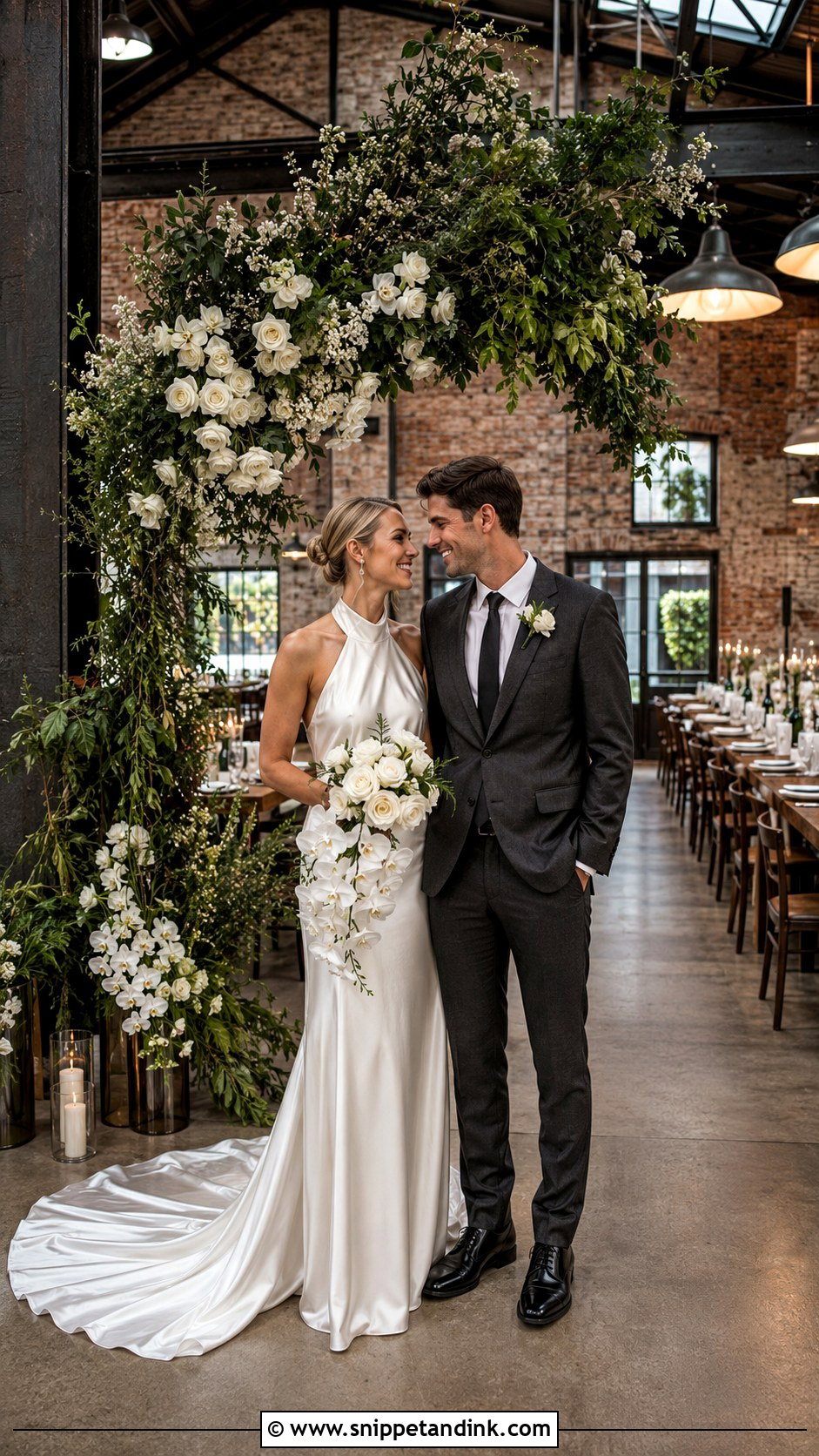
Warehouses look wonderful in photos and empty in person if you do not plan the lighting. Brick, steel and concrete swallow light, so I hang festoon or pendant lights low over the tables and put candles in clusters rather than spreading them thin. Fabric draping softens the ceiling and helps the acoustics, which are often echoey. A satin gown or a bridal two-piece, a black, charcoal or burgundy suit. Long tables, matte tableware and linen napkins. Put a big focal point behind the ceremony, an asymmetric floral arch or a fabric installation, so there is somewhere to look. Food stations and an open dance floor use the space well.
10. Rooftop London Wedding
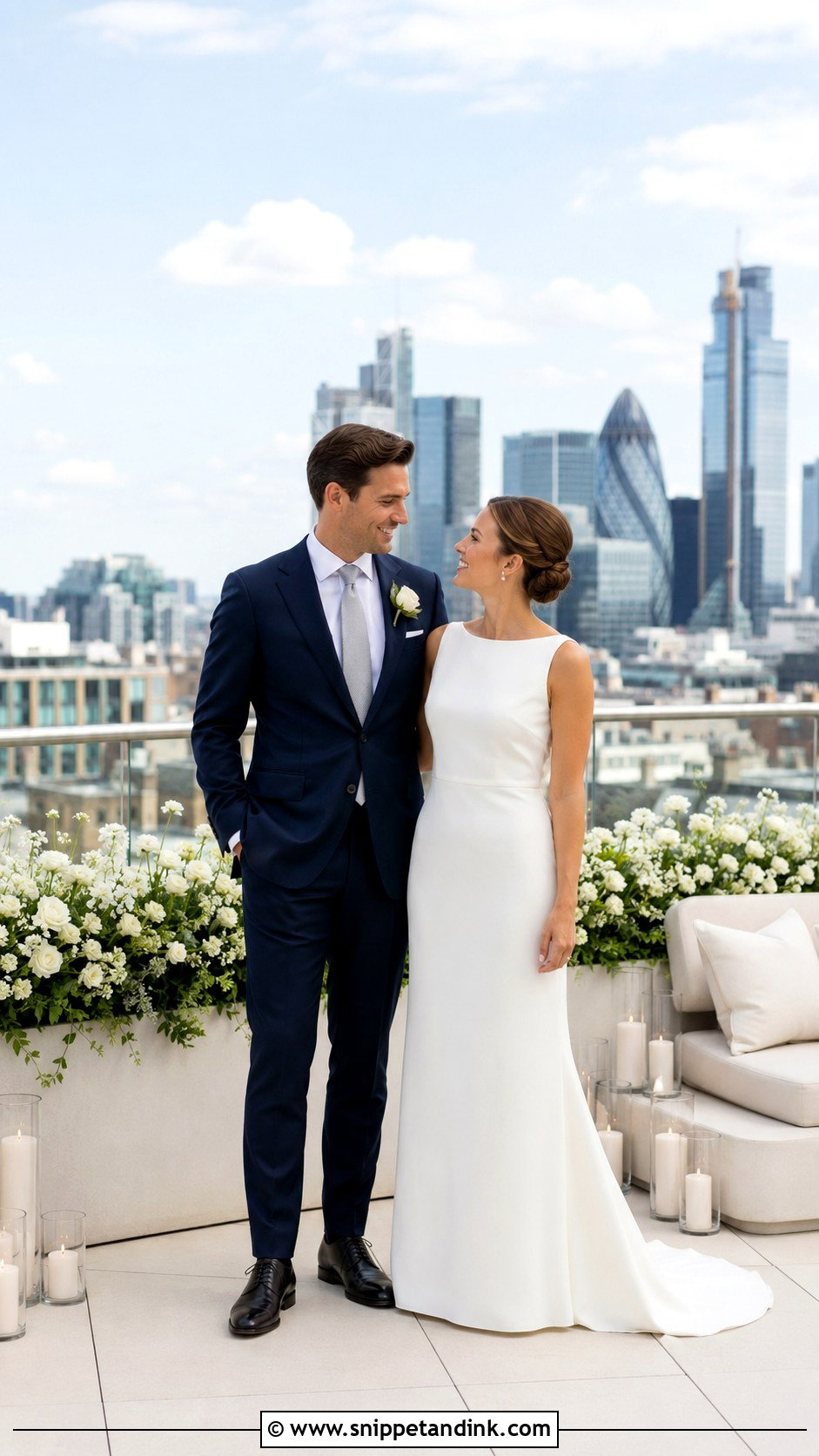
On a rooftop the skyline is the decor, and wind is your biggest enemy. Choose a venue with a proper indoor room alongside the terrace, not a tent. Everything on the tables has to be weighted: low flower arrangements, candles in deep glass, heavy signs and clipped-down linen. I never put tall arrangements or loose paper outdoors up high. White, pale blue, silver and green keep it fresh. A column gown, a neat bun and a veil pinned firmly; a navy or light grey suit. Ceremony in daylight, dinner as the skyline changes, portraits in the soft evening light, then lounge seating and string lights after sunset.
11. Art Deco London Wedding
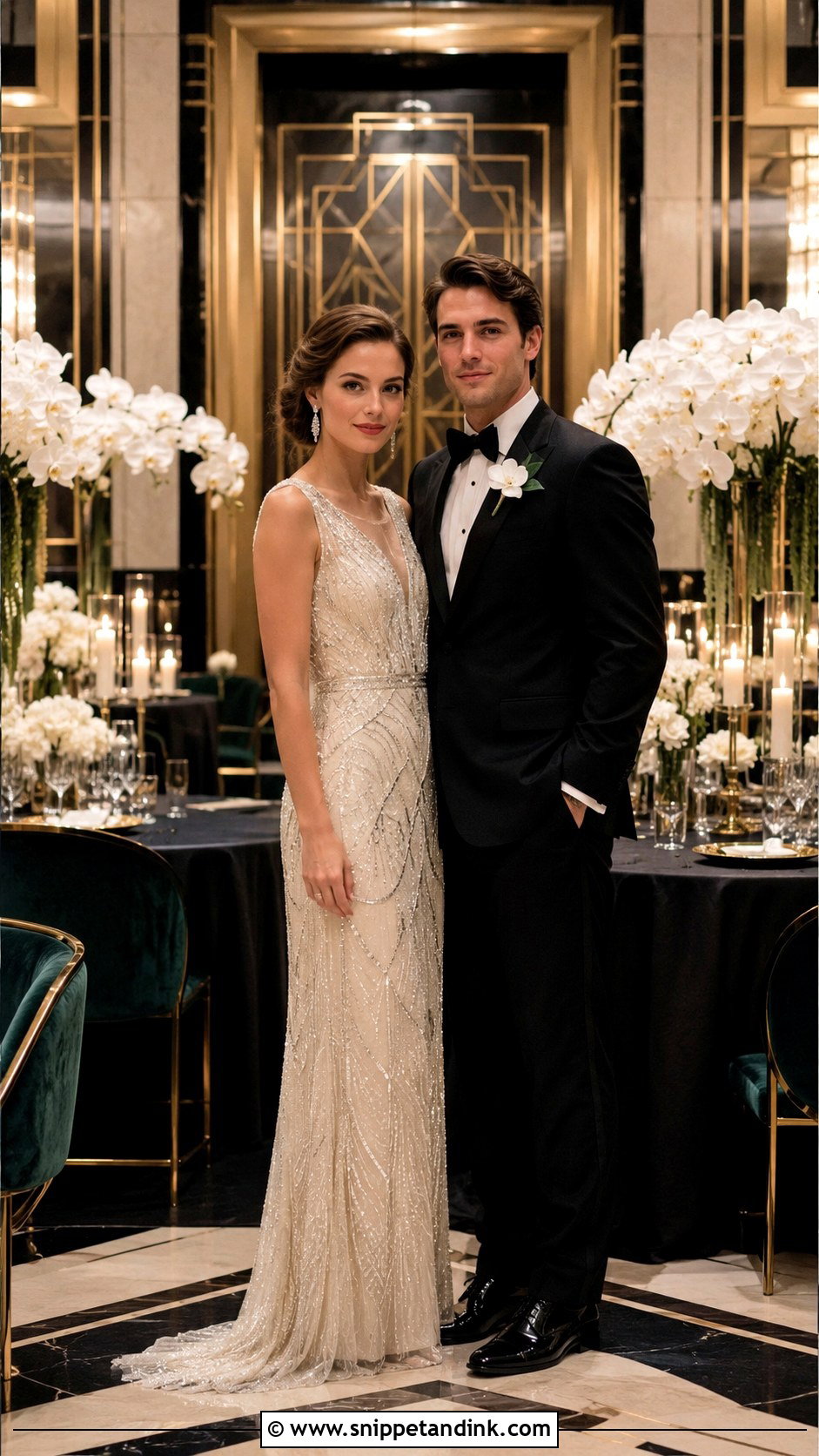
Art Deco suits a historic hotel or a restored theatre bar, and it works best when you pick a few period references and do them well. Build on black, cream, emerald, and brushed gold. A beaded column gown, finger waves and vintage earrings; a sharp tuxedo. Fan motifs and stepped borders can run across invitations, menus, the seating chart and the cake. I avoid feathers here, choosing white roses, orchids and glossy leaves, so it reads as glamour rather than fancy dress. Dark linen, gold-rimmed glasses and evenly spaced candles. Jazz to start, a livelier playlist later, and staircase portraits with flash.
12. Georgian Townhouse London Wedding
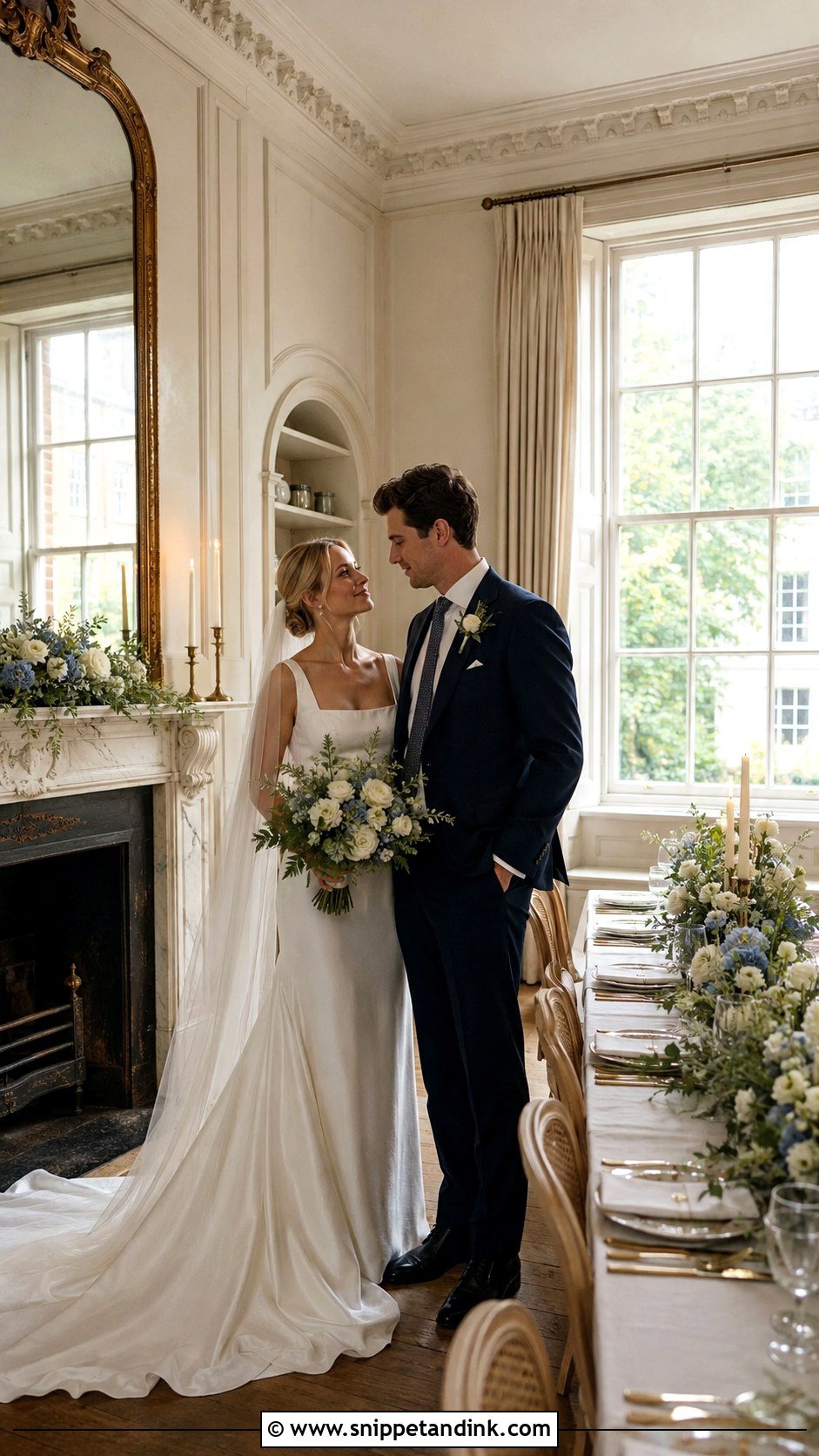
Georgian townhouses give you a run of connected rooms, which is a gift for flow: ceremony in one, drinks in the next, dinner at a single long table in a third. Tall sash windows, mouldings, marble fireplaces and wooden floors already do a lot. I keep to cream, dusty blue, sage and antique rose, and I place garden-style flowers on mantels and hall tables while leaving the architecture clear. Many of these buildings are listed, so expect rules about fixings and candles, and check them before you plan any installation. A silk gown with a square neck or soft sleeves, a navy or grey suit. Handwritten stationery and portraits by the windows and on the front steps.
13. Colorful London Wedding
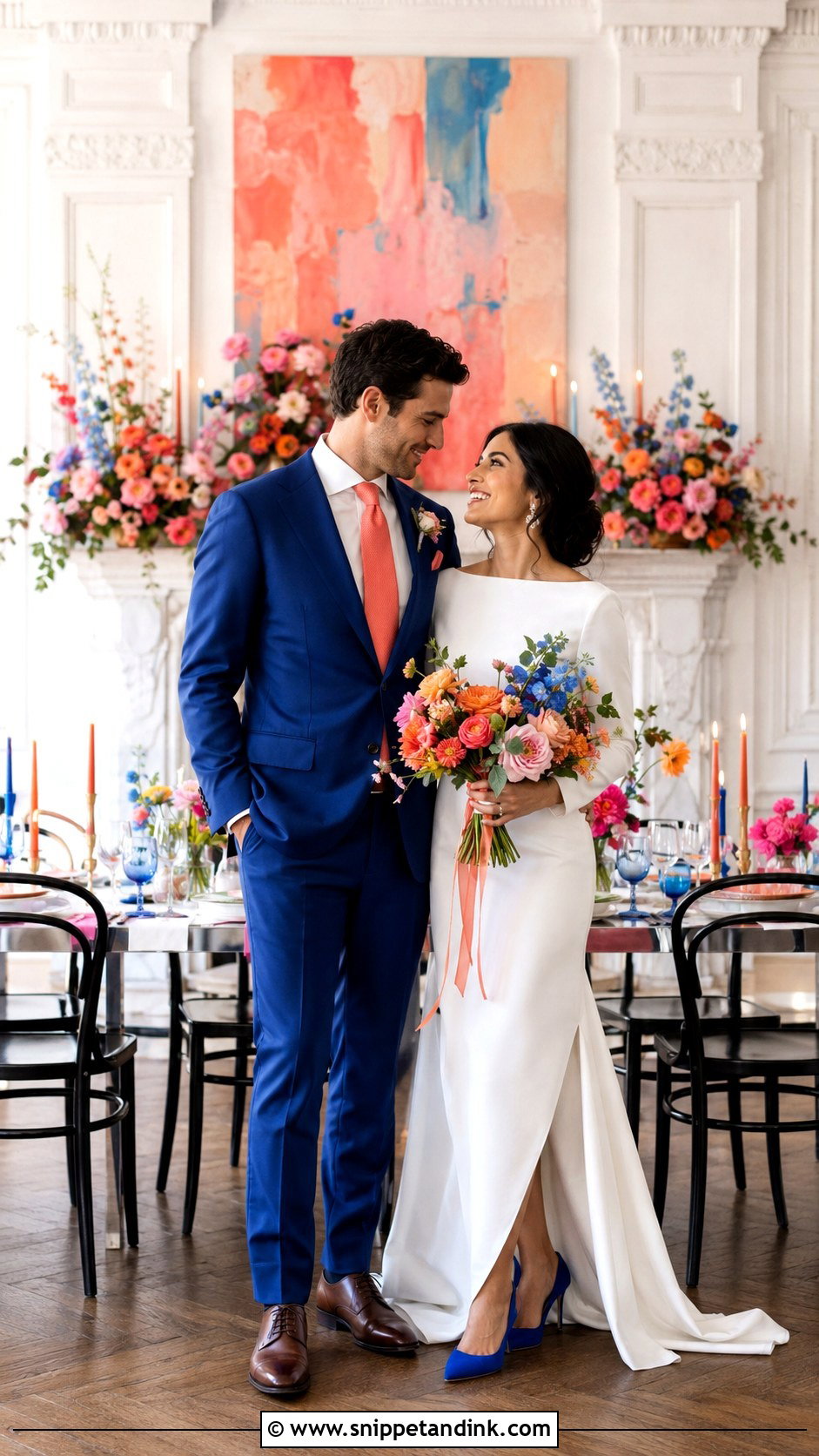
Colour looks joyful rather than chaotic when it follows a plan. Choose three or four shades, coral, cobalt, pink and orange for example, and repeat them through flowers, stationery, candles, linen and small fashion details. Bright, mixed flowers have become a confident alternative to all-white arrangements, and they suit London’s energy. A white gown with coloured shoes, or a bright reception dress; a patterned tie or a coloured suit for the groom. I put strong colour in clear glass on plain modern tableware so the table can breathe. A painted cake and a graphic seating chart, and photography that catches movement.
14. Old Money London Wedding
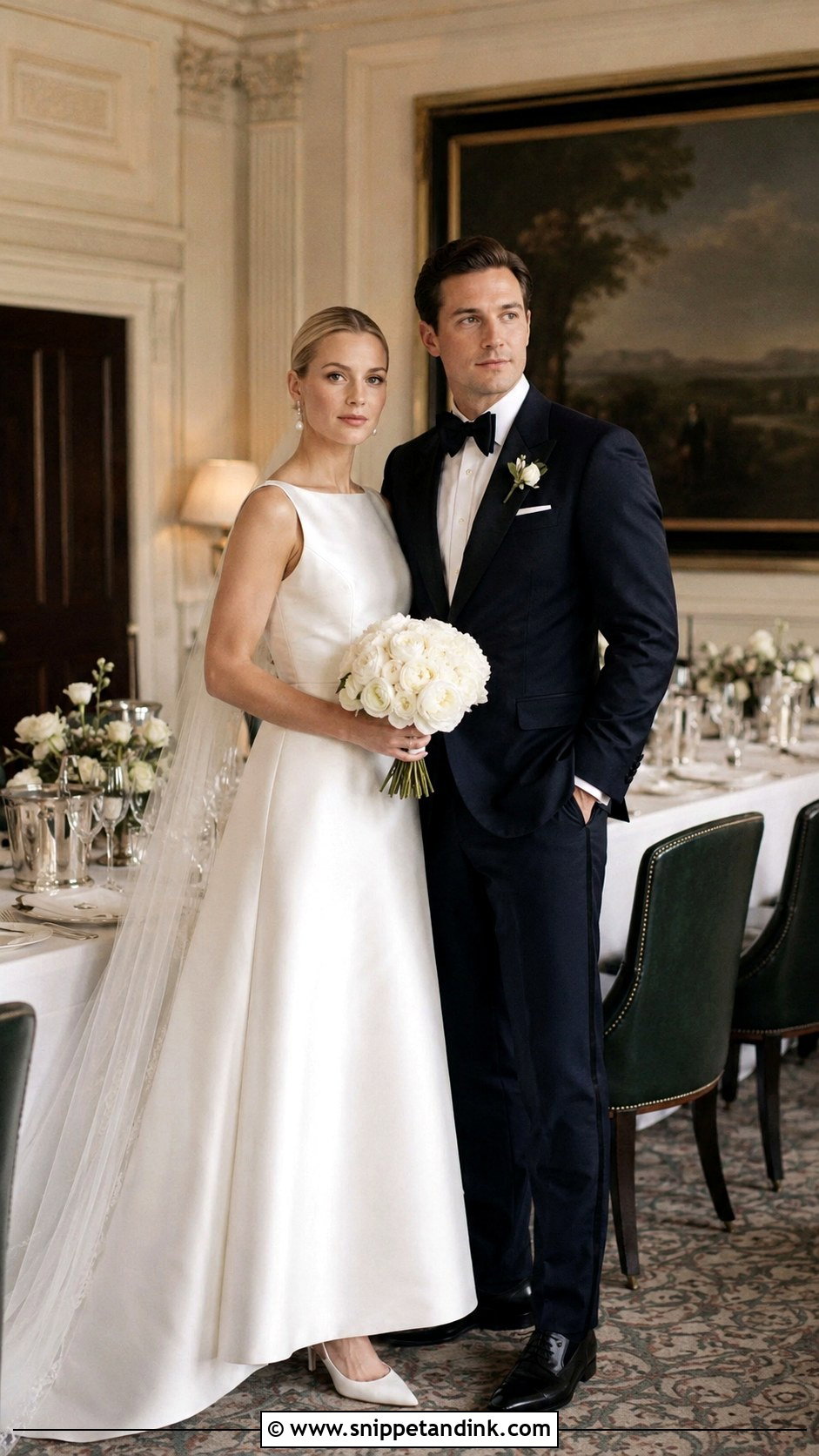
Old money is the quietest look on this list, and every shortcut shows. A private dining room, a historic club, a hotel suite or a townhouse. Ivory, navy, burgundy, forest green and muted gold. A silk A-line gown, pearl earrings, a low bun and satin pumps; a perfectly fitted black or midnight-blue tuxedo. I use silver vessels, white flowers, pressed linen and tapers, with plain monogrammed stationery. The cake should be tiered with restrained piping. A pianist or small string group during dinner, and photography with natural expressions and very few trendy effects that will date.
15. Autumn London Wedding
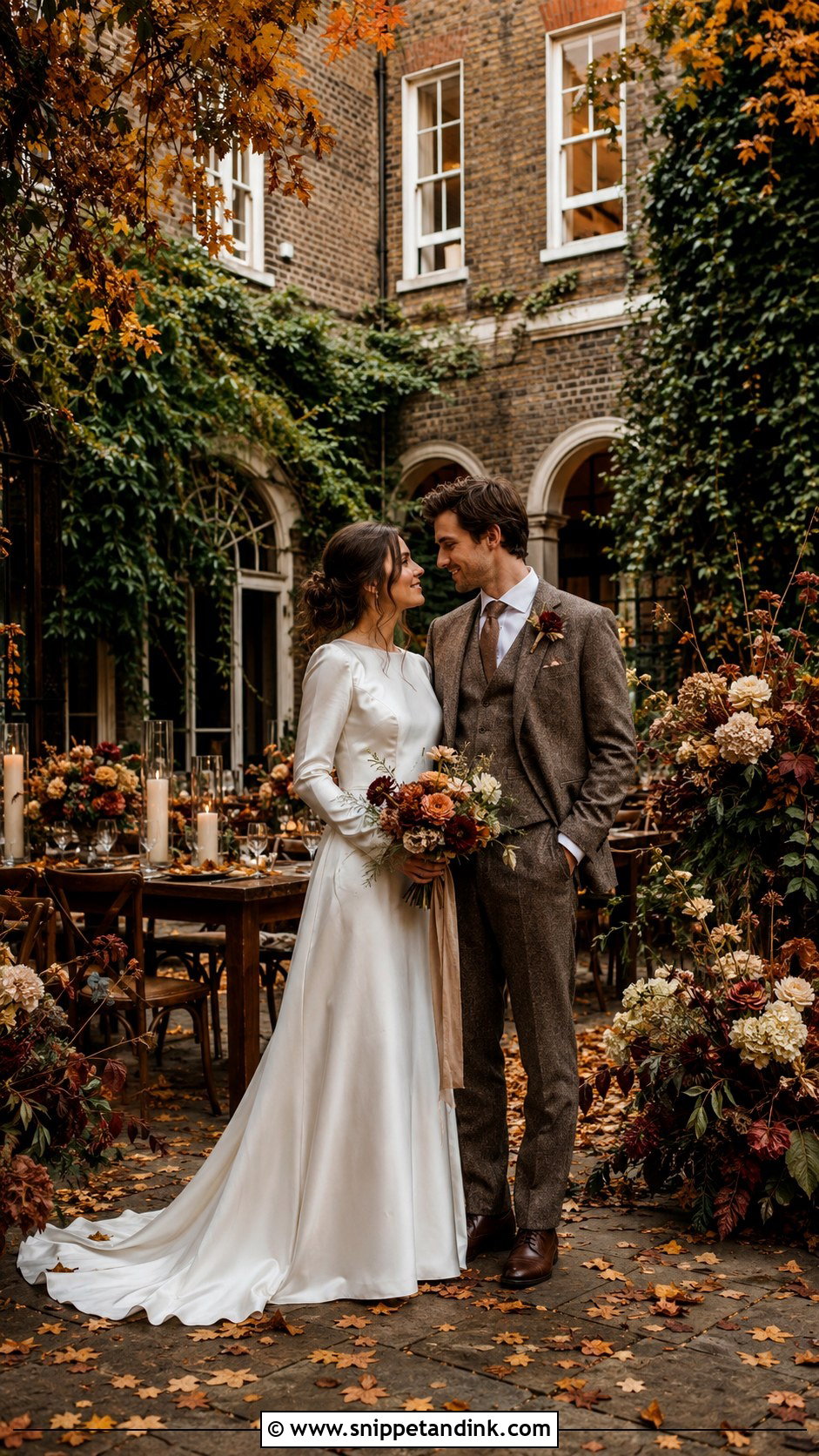
Autumn is the easiest season to decorate in Britain, because the flowers and foliage do so much on their own. Dahlias, chrysanthemums, berries and branches carry rust, burgundy, brown, amber, cream and green without any help from dyed props. A long-sleeved satin or lace gown keeps the bride warm; tweed, charcoal or navy for the groom. Wooden tables, linen napkins, tapers and illustrated stationery. A hearty shared menu and a richly decorated cake suit the season. For portraits outdoors, bring a tailored coat, closed shoes and clear umbrellas. Keep the walk between ceremony and dinner short; cold guests stop mingling.
16. Winter London Wedding
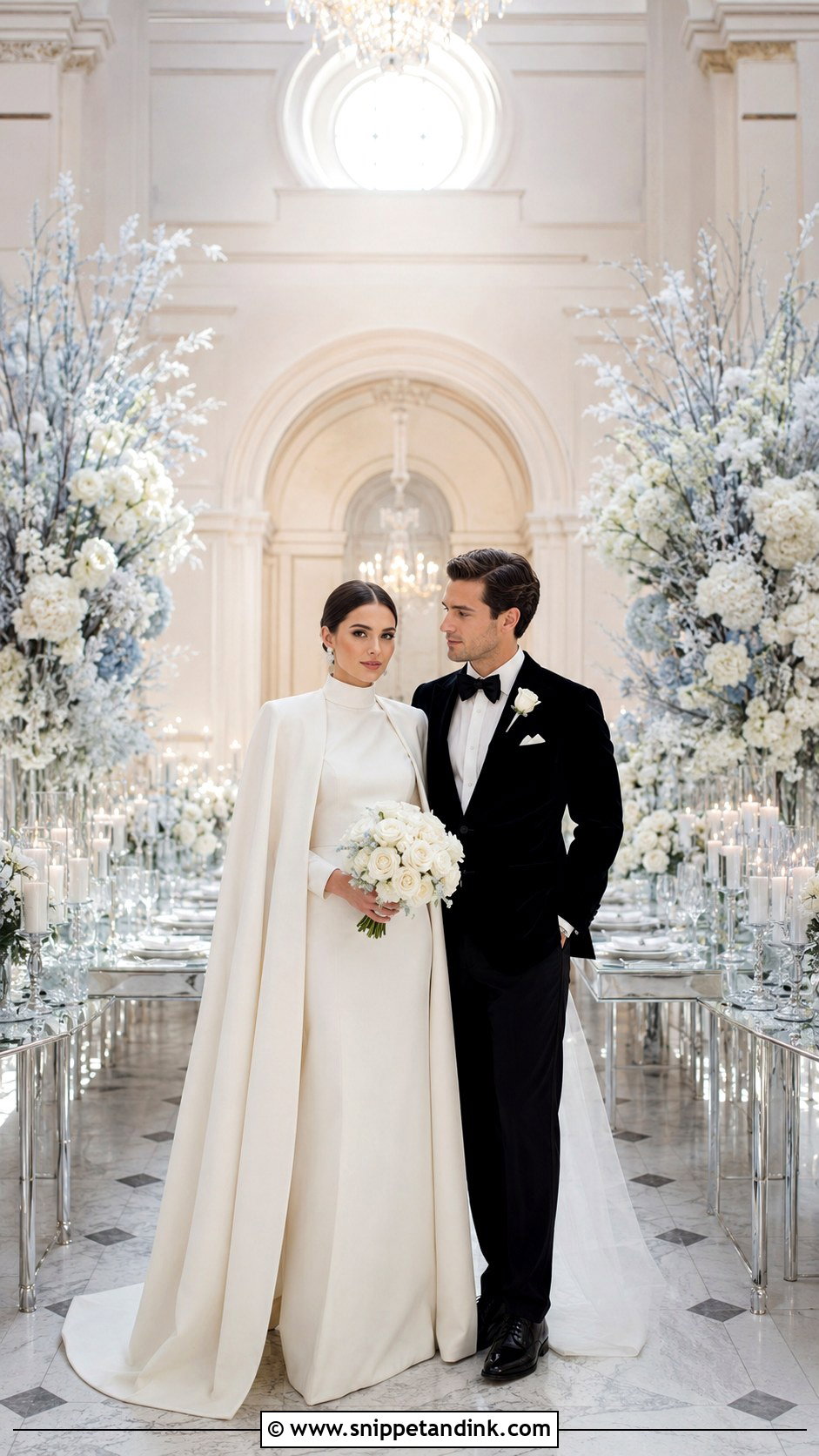
Winter in London means dark by mid afternoon, so the light plan matters more than the flower plan. I schedule couple portraits early, find two or three indoor spots in advance, and then go heavy on candles once the sun is down. Choose a candlelit hotel, a historic hall, a townhouse, a restaurant or a glass-roofed room. Ivory, black, silver, icy blue and deep green avoid any Christmas look. Long sleeves, a cape or a bridal coat; a velvet dinner jacket or a dark tuxedo. White flowers, bare branches and reflective glass, with pale linen to keep the room bright.
17. Spring London Wedding
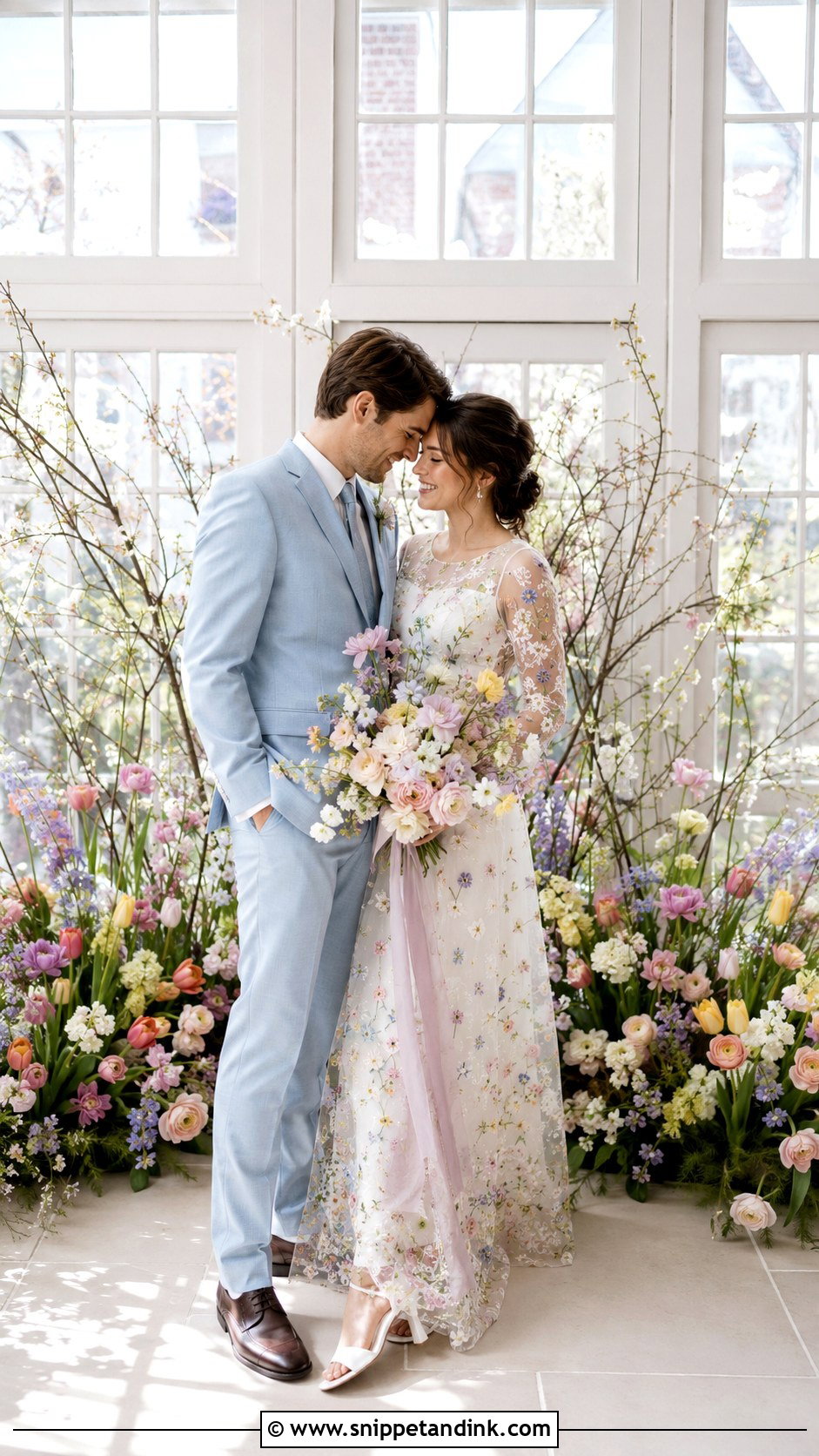
Spring weather in London can change by the hour, so I always plan covered portrait spots. The palette almost picks itself: pale yellow, lilac, blush, sky blue and green, balanced with plenty of white. Tulips, ranunculus, sweet peas, narcissus and blossom branches, loosely arranged. Note that narcissus sap shortens the life of other cut flowers, so florists condition daffodils separately before mixing them. A light gown with floral embroidery, a short veil and block heels; a grey, blue or beige suit. Botanical illustrations or deckle edges on the paper. A conservatory, garden room or bright townhouse, a floral cake and soft photography.
18. Summer London Wedding
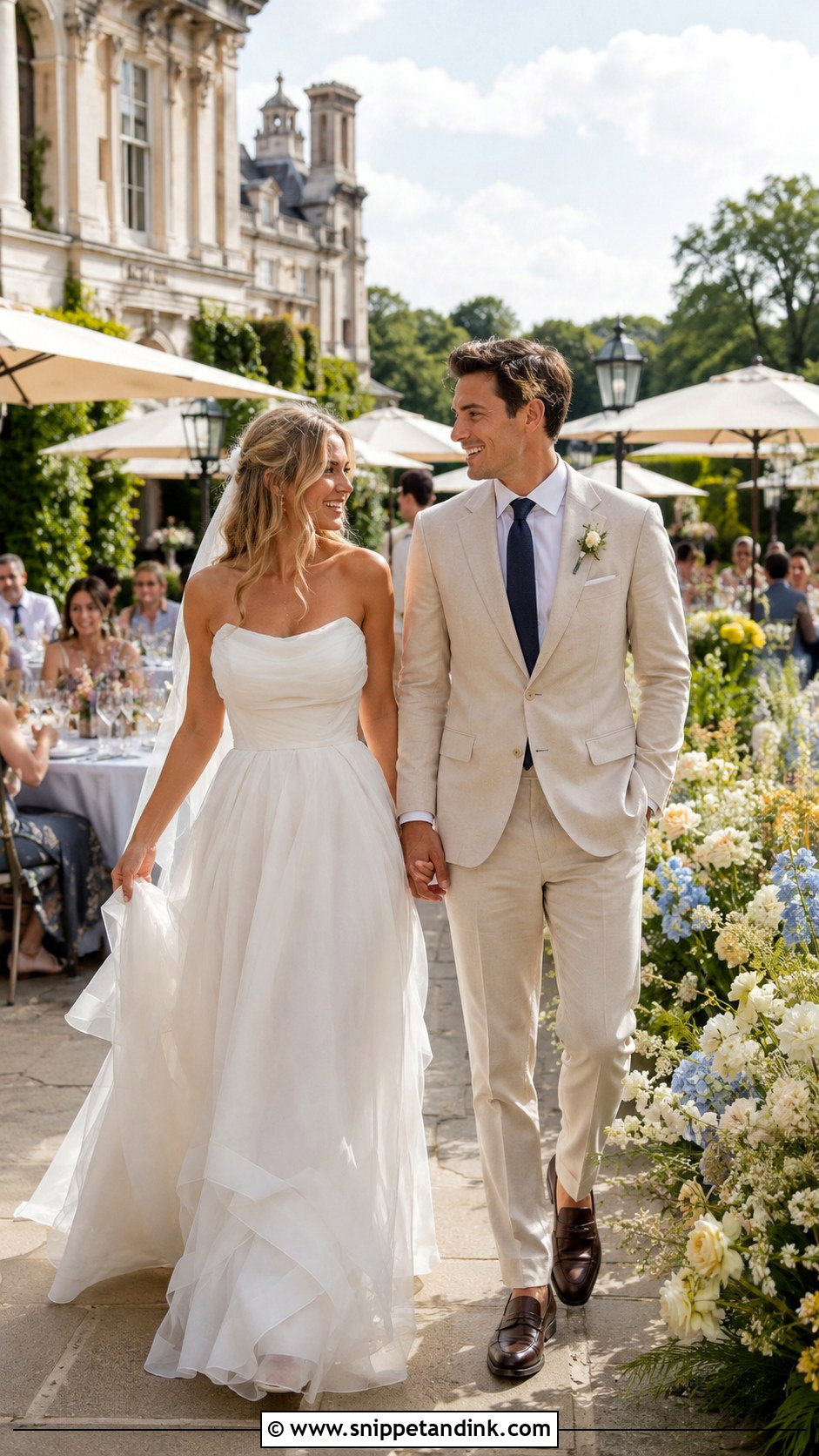
Summer days are long, which lets you push the portraits later into soft evening light. Midday sun on a London rooftop or garden is harsh and makes guests squint, so I suggest group photos early and indoors. White, green, pale peach, butter yellow or blue. Silk, chiffon or organza for the bride with minimal jewellery; a linen-blend or light wool suit for the groom. Flowers in summer heat wilt fast, so keep arrangements airy and out of direct sun until guests sit down. Shade, cold water and fans for guests, and an easy route between inside and out.
19. Multicultural London Wedding
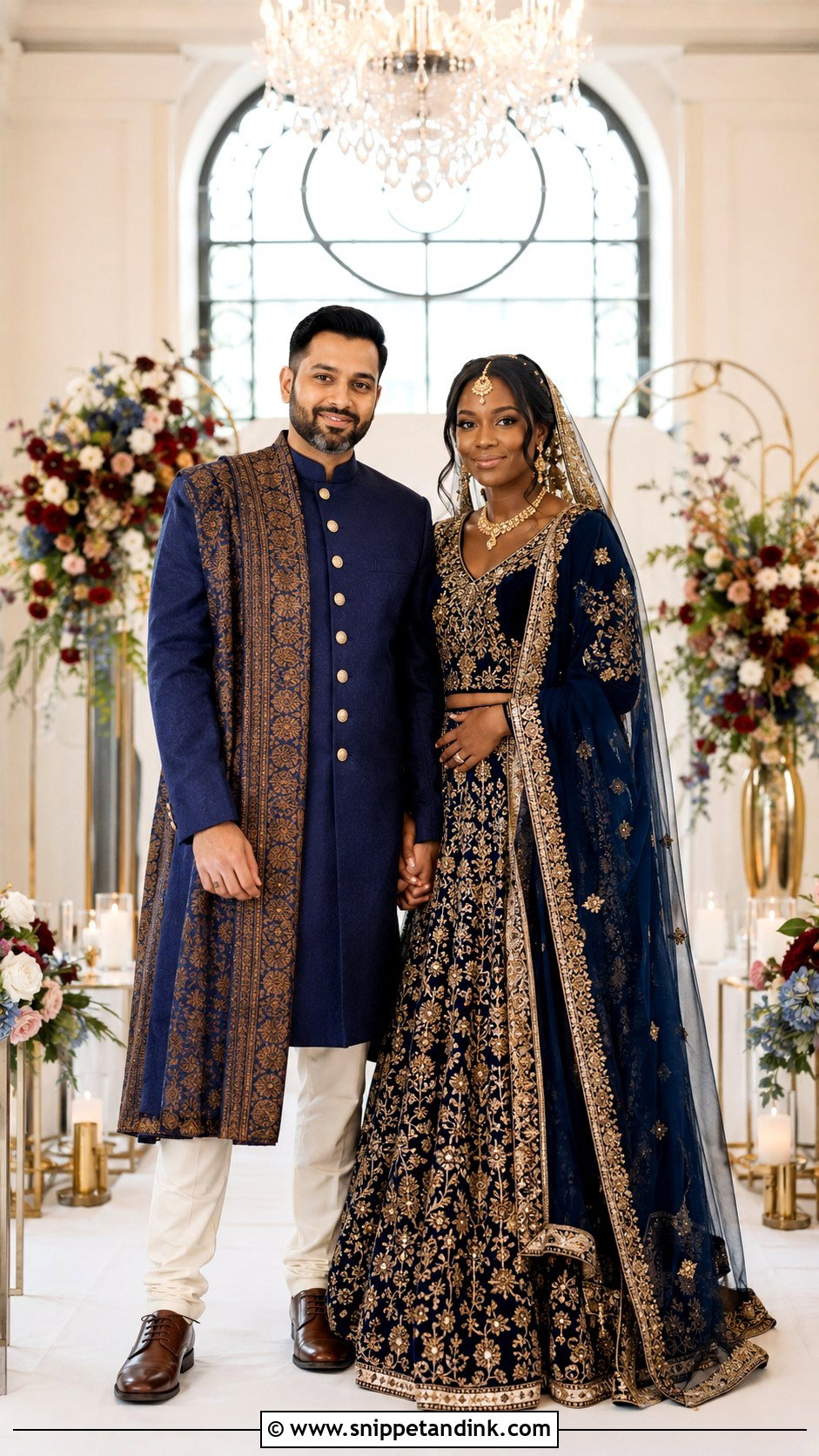
When two cultures share a wedding, I start by asking each family what is non-negotiable: which ceremonies, clothes, music, colours and dishes carry real meaning. Then I find a shared palette that can sit behind all of them without forcing everything into one theme. The couple may wear traditional dress for one ceremony and contemporary formalwear for the reception. Bilingual stationery, family textiles, symbolic flowers and meaningful patterns all belong, used with care. A menu that tells the story of both families is one of the warmest touches, and London’s food culture makes that easy to source. Bring in family elders or specialists for customs you are unsure of, so each is honoured properly.
20. Intimate London Restaurant Wedding
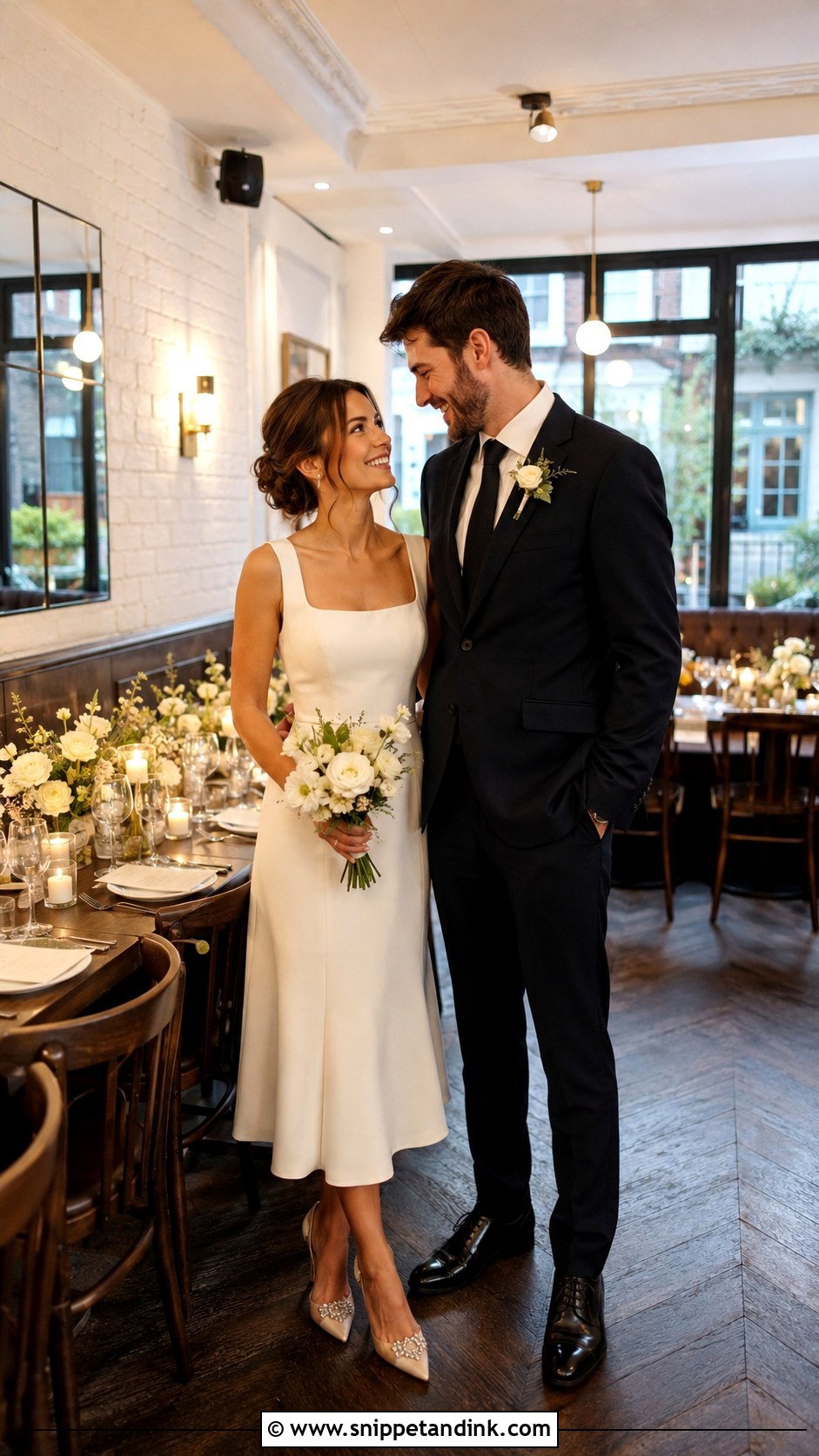
A restaurant wedding puts the budget where guests feel it: the food, the service and the chairs. Choose one with a private room, good light and a pretty frontage for portraits. A midi dress, a modern gown or a tailored suit, and a dark suit or tuxedo matched to the room’s formality. I’d dress one long table with low flowers, candles, printed menus and personal place cards, and skip installations entirely. Restaurants usually need the room set up in a tight window between services, so keep decor simple enough to place quickly. A small guest list lets you talk to everyone, and a petite cake and toasts close the night.
Lifts, Loading Bays and Set Up Windows in a Busy City
London decorating is logistics before it is design. Many central venues share a loading bay, have a small service lift, or sit on streets where suppliers can only stop briefly. Restaurants and hotels may give you a short slot between a lunch service and your guests arriving. If your plan needs four hours of set-up and the venue gives you ninety minutes, the plan has to change.
These are the questions I ask every central London venue before I design anything large:
- What time can suppliers arrive, and what time must everything be cleared the same night?
- How big is the service lift, and are there stairs between the loading point and the room?
- Is there anywhere to store flower buckets and crates during the event?
- Are open flames allowed, or only enclosed candles or LED alternatives?
- Does the building sit inside the congestion charge zone, which affects supplier delivery costs?
The answers often favour fewer, larger pieces over dozens of small ones. A single statement arrangement and a long table of candles go in quickly and come out quickly, which matters on a street where the van cannot wait.
Your Venue Already Has a Style, So Work With It
Every one of these looks begins with the building. A town hall, a conservatory, a restaurant, a ballroom, a pub or a warehouse each suggests its own direction, and the best days follow it rather than fight it. Once you have the room, carry one idea through clothes, flowers, paper, tables, light, food and photography. Then do the practical planning: a weather plan, travel time between locations, indoor portrait spots and guest comfort. Choose details that say something about the two of you, and leave out trends that do not suit the space.


Leave a Reply