
October is my favourite month to design cakes. The fruit is at its best, the flowers come in rust and burgundy instead of pastel, and the flavours (spice, apple, maple, caramel) are the ones guests actually ask for seconds of. A fall cake can be rustic, moody, boho or classic and still say autumn clearly. What it has to do, beyond matching the season, is sit comfortably on your dessert table and survive a room that’s often warmer than you’d expect for the time of year. Here are twenty autumn designs and flavours I’d suggest, with the practical notes I give couples at tastings.
Fall Blooms, Fruit and Leaves: What Can Safely Touch the Frosting
Almost every cake below uses fruit, flowers or foliage, and autumn is the season where I turn down the most stems. Several popular fall flowers and berries aren’t meant to touch food. Chrysanthemums, hydrangea and many decorative berries fall in that group, and florist stems are often treated with sprays.
- Fresh flowers go on with stems wrapped in floral tape and set in food-safe picks or straws, never pushed bare into the cake.
- Ask your florist for unsprayed blooms and tell them the stems are going on a cake.
- Real autumn leaves stay on the table. On the cake, I use sugar, wafer paper or chocolate leaves.
- Dark berries and figs bleed into buttercream, so they go on at the venue.
- Remove every flower before the cake is cut, and let the catering team know which parts are decoration.
1. Rustic Fall Wedding Cake
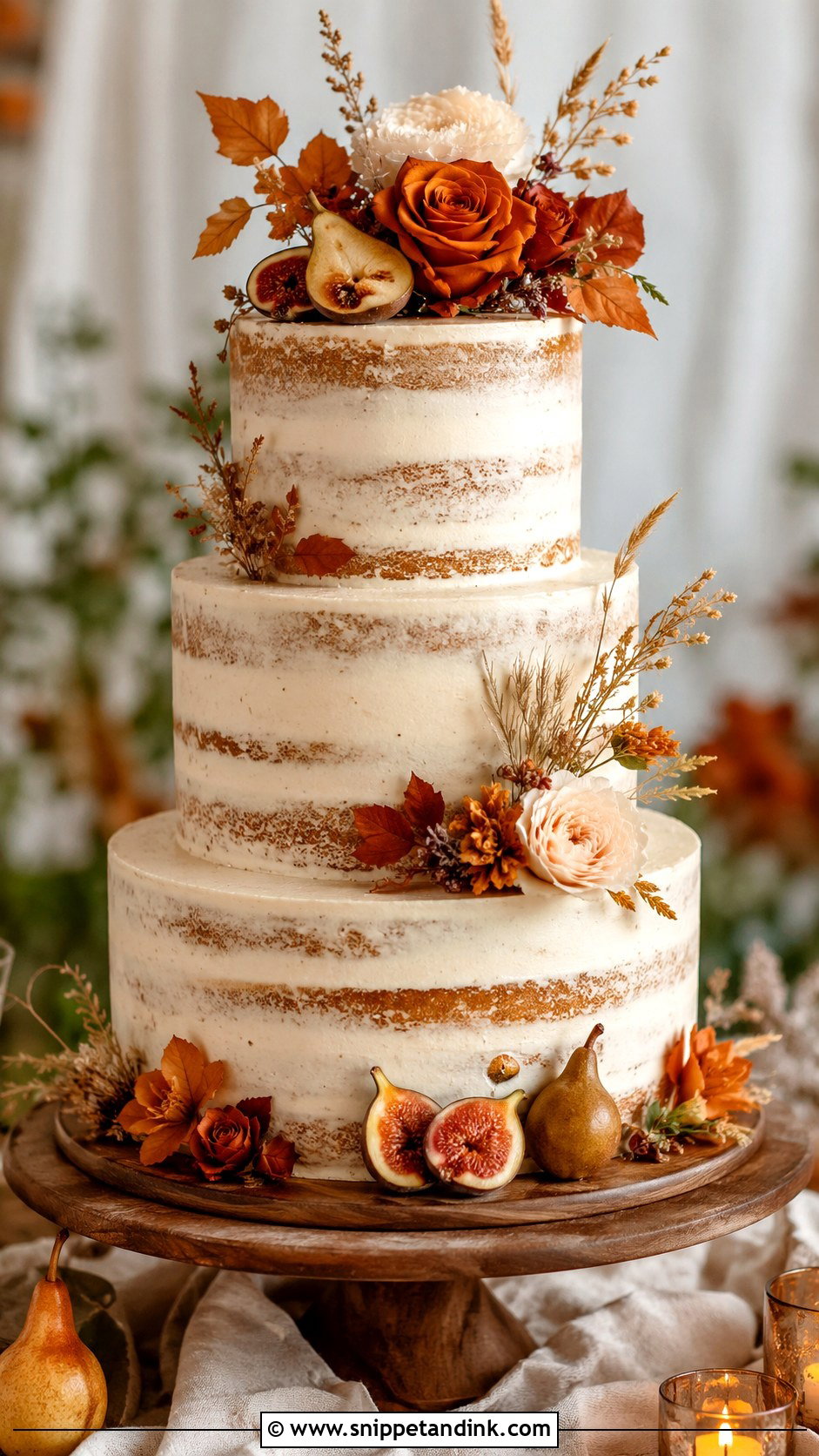
Couples who want warmth without a formal finish usually land here. Semi-naked buttercream lets a little cake show through the frosting, so it looks handmade. I add small clusters of burnt orange roses, cream flowers, dried grasses and a few sugar leaves, then set it on a wooden stand among candles, figs and pears. Vanilla bean, apple spice or brown sugar with maple buttercream are the flavours I suggest. Because so much crumb is exposed, I keep a semi-naked cake wrapped until the last possible moment; it dries faster than a fully frosted one.
2. Burgundy Wedding Cake
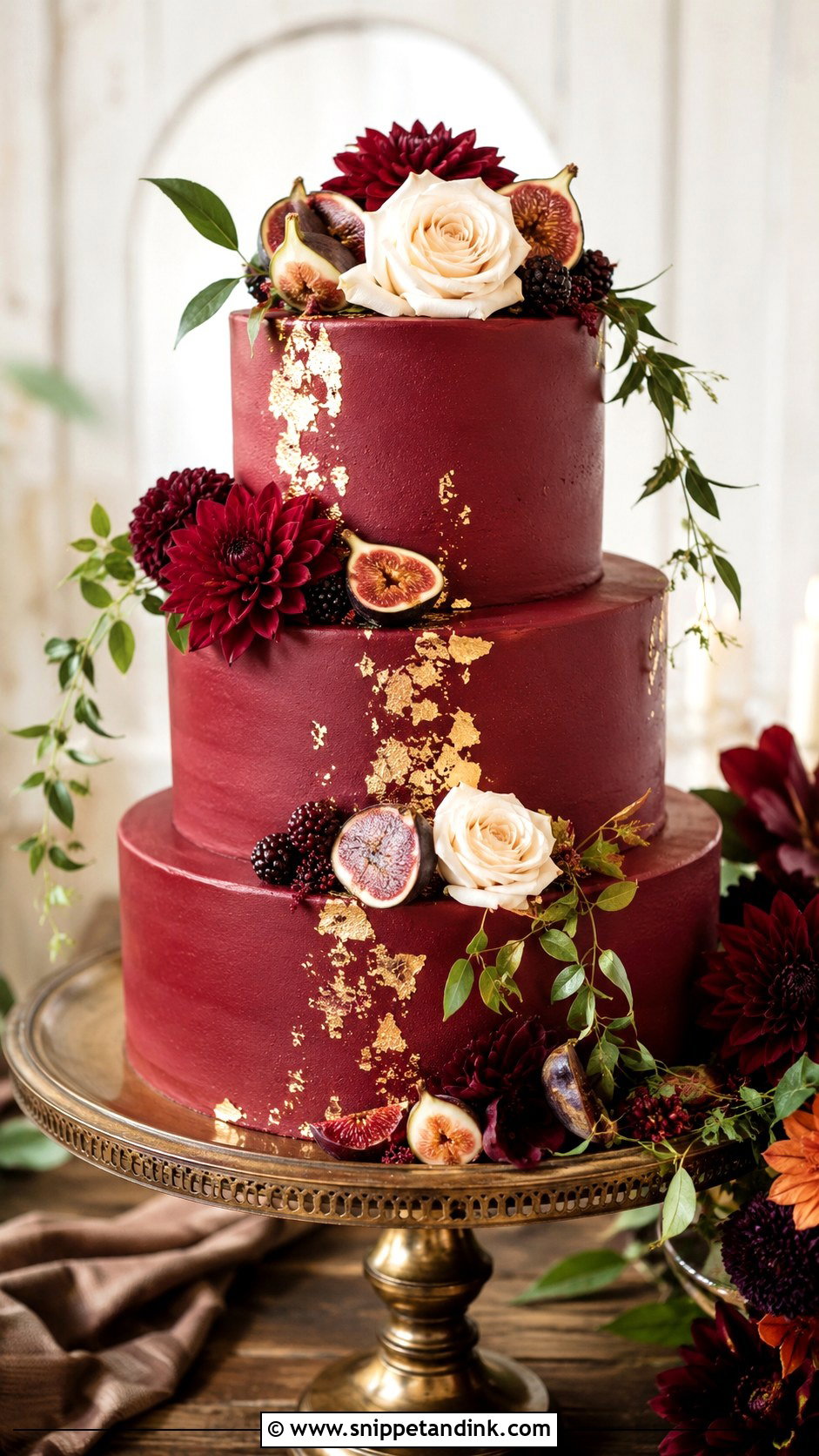
Burgundy brings drama straight away, especially with gold accents or ivory flowers. Smooth burgundy buttercream reads modern; burgundy fondant reads more formal. Dahlias, roses, blackberries and dark figs keep the palette lush. A word of warning: deep reds take a lot of colouring in buttercream, which can taste bitter, so for large burgundy areas I’d usually suggest fondant or a ganache base, or a burgundy tier paired with ivory ones. Brass candleholders and warm linen keep the table around it simple.
3. Pumpkin Spice Wedding Cake
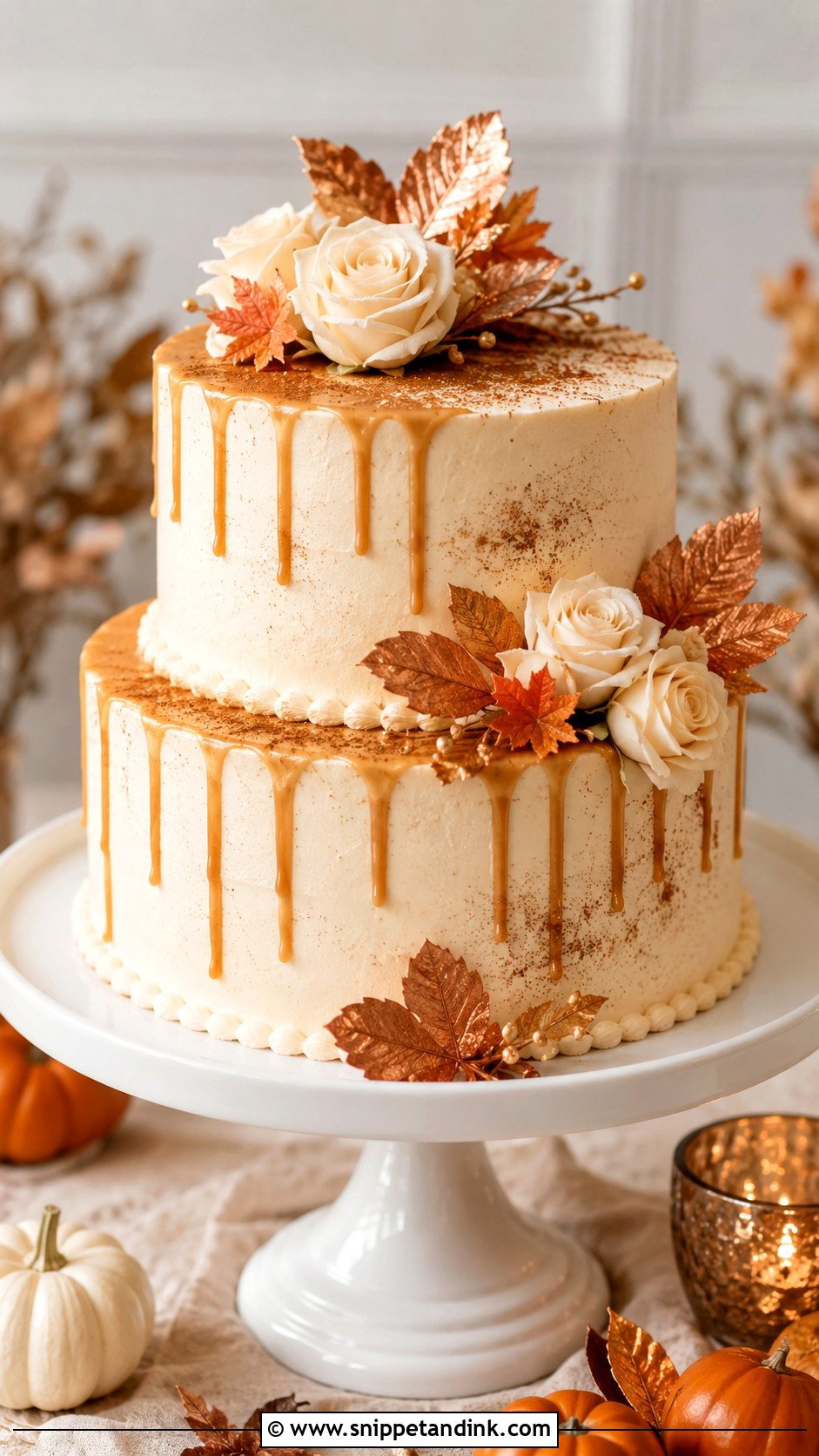
Pumpkin spice tastes like the season with almost no help from the decoration. The crumb comes out soft orange or golden brown depending on the recipe, and it pairs with cream cheese, cinnamon or maple frosting. Pumpkin cake is very moist and heavy, so in tall tiers I use extra supports, and I keep cream cheese frosting inside as a filling while the outside gets a firmer buttercream that will hold up. Smooth ivory, a caramel drip and a few fall flowers keep it from looking like a Thanksgiving dessert.
4. Apple Cider Wedding Cake
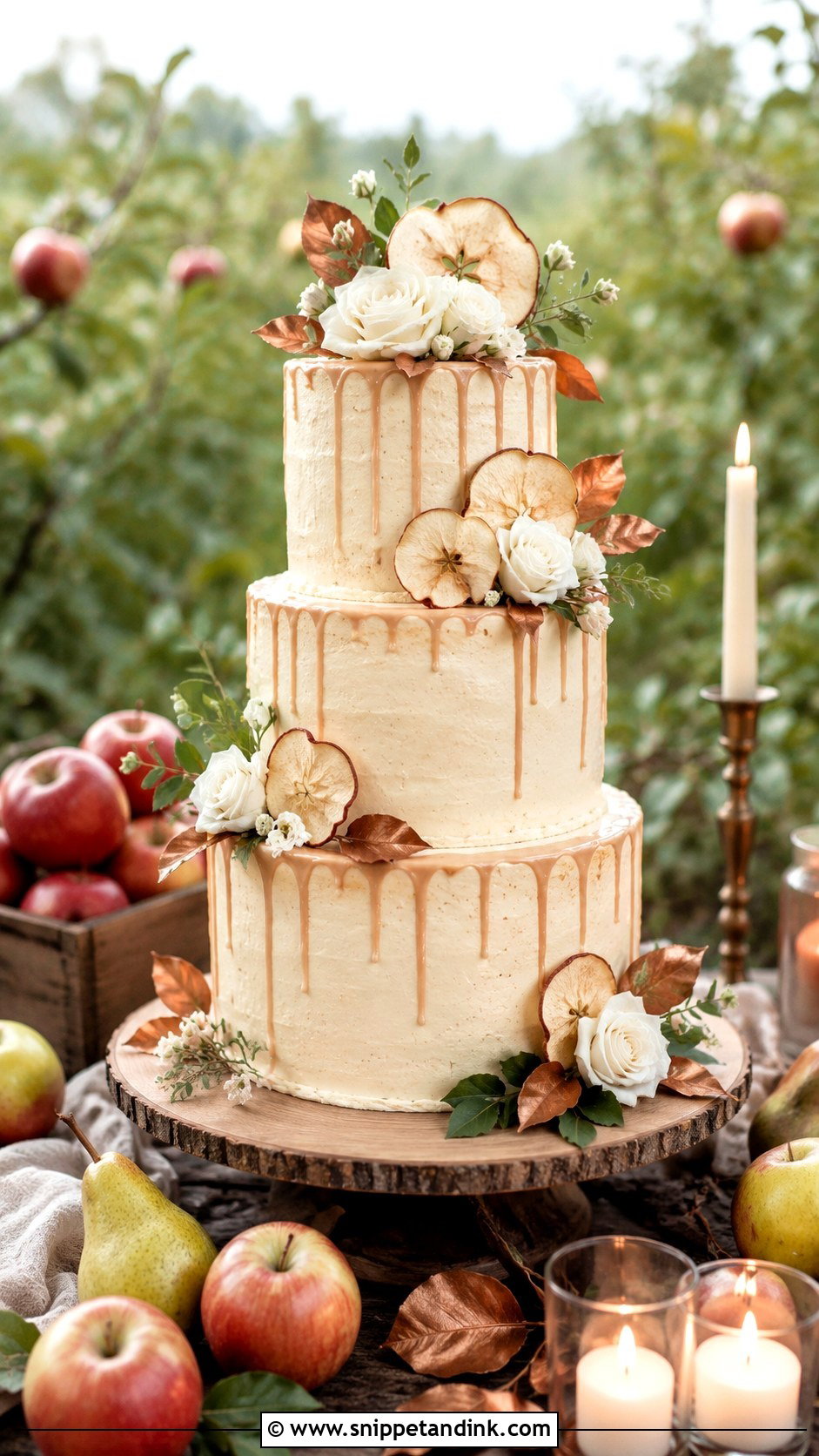
Guests rarely expect cider in a wedding cake, which is half the fun. Apple cider wedding cake can mean a cider reduction in the sponge, apple butter filling or caramel apple layers. Smooth buttercream, a light caramel drip and thin apple slices around the tiers look refined with ivory roses and copper leaves. Cut apple browns quickly, so I brush the slices with lemon juice or a thin glaze and add them as late as possible. Orchards and farmhouse venues suit it naturally.
5. Caramel Drip Wedding Cake
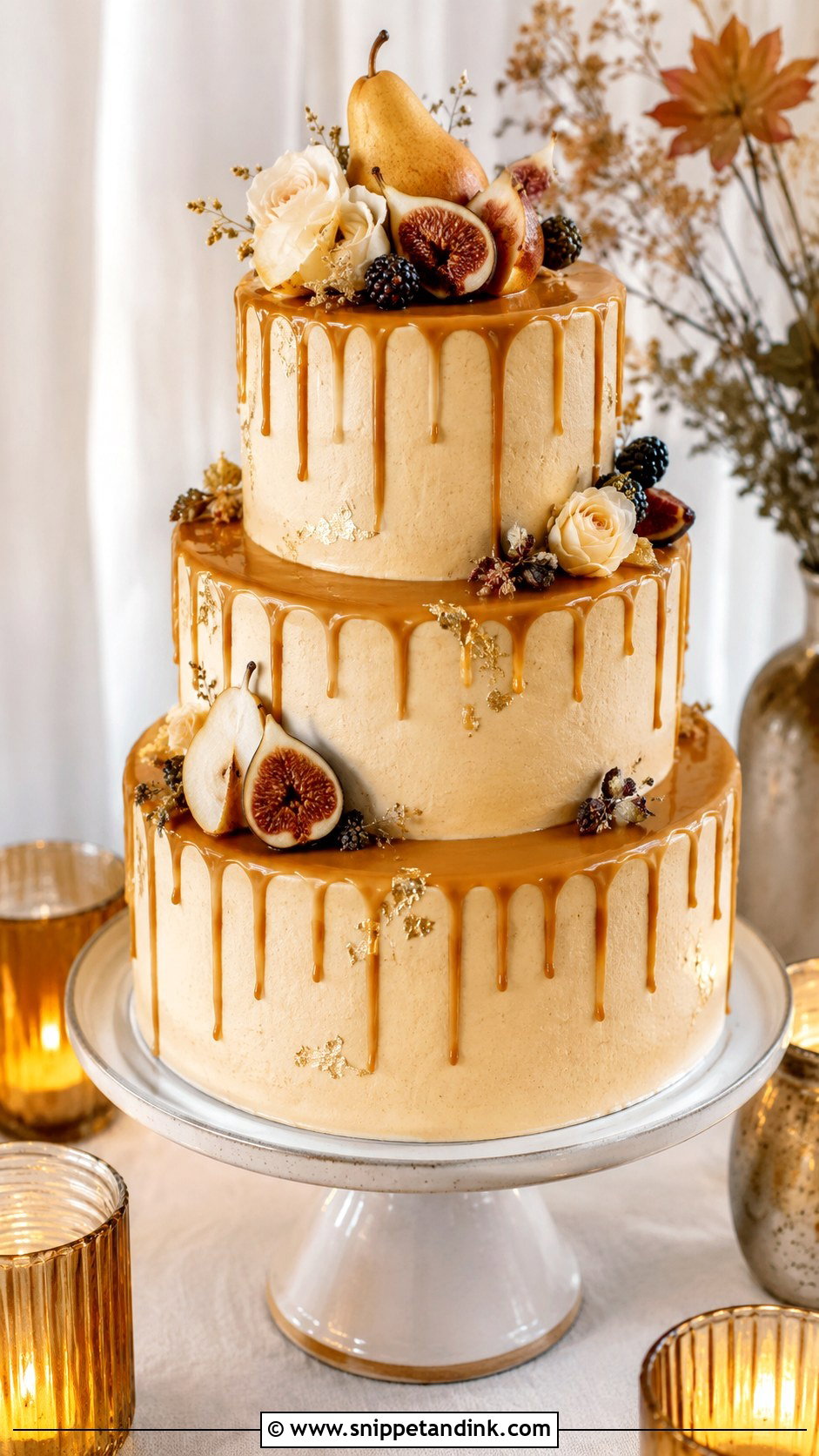
Few finishes make a fall cake look richer for less effort than caramel. The amber drip stands out against ivory, beige or soft brown buttercream, and it suits vanilla, spice, apple, chocolate and pumpkin. A neat, even drip looks elegant; a wild one looks rushed. I chill the cake first so the caramel sets where it lands, and I test the caramel’s temperature on the side of a cold glass before it touches the tier. Figs, pears, macarons or a little gold leaf on top finish it.
6. Terracotta Wedding Cake
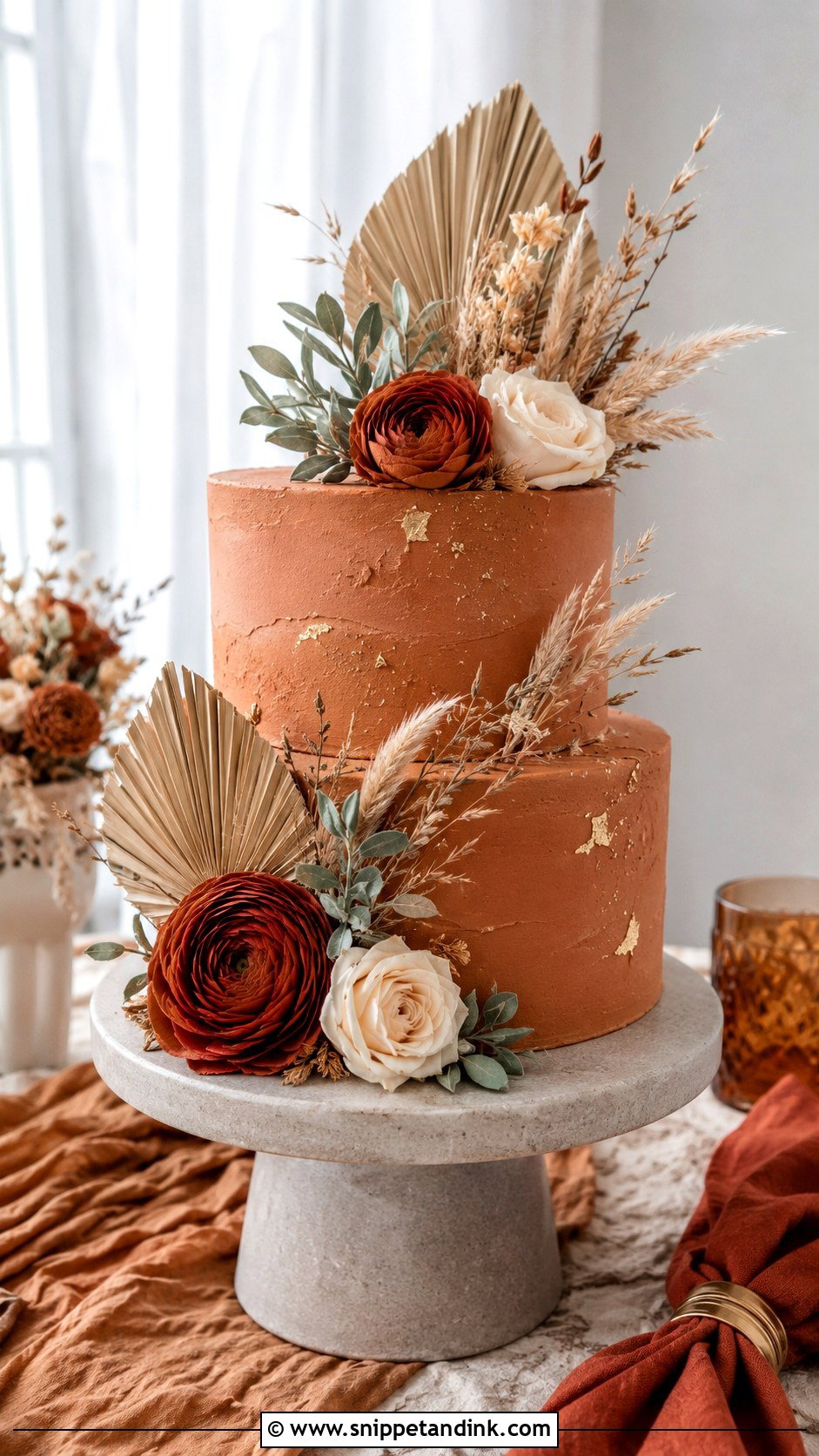
Terracotta ranges from soft clay to deep rust, so it fits many palettes. Smooth buttercream gives a clean look; textured frosting feels organic. Dried palms, cream roses, rust ranunculus and small gold details complete it, and the colour does enough work that the decoration can stay spare. Brown butter vanilla, carrot, almond or chai all suit it. Colour-matching terracotta to linens is tricky, because buttercream darkens a shade or two as it sets, so I mix it the day before and compare it to a swatch in daylight.
7. Fall Floral Wedding Cake
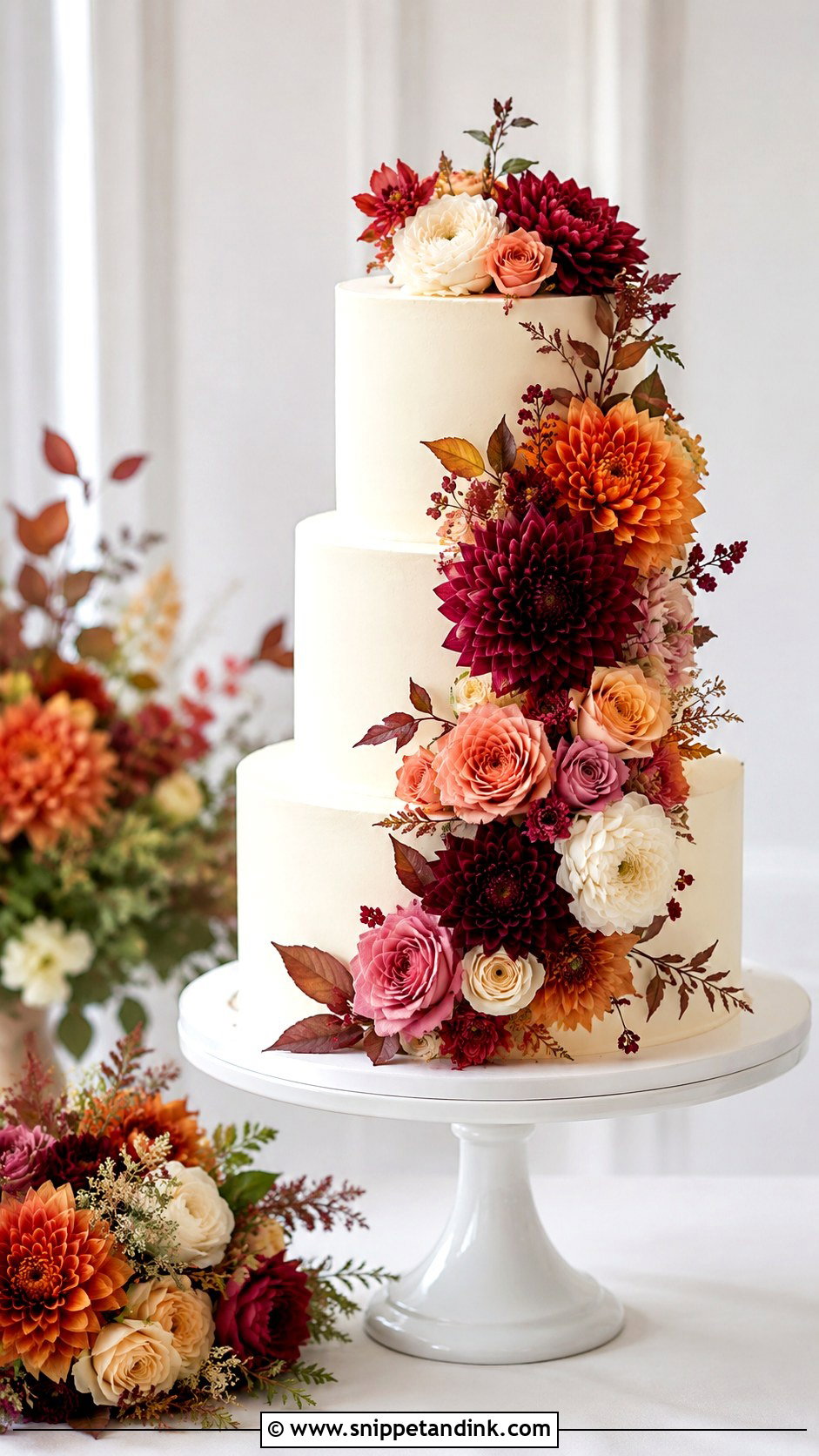
Flowers decide whether this cake reads formal or relaxed. Autumn blooms in rust, burgundy, peach, mauve, cream and deep yellow replace spring brights; dahlias, roses and ranunculus look lovely in soft clusters or cascading down the tiers. The base can be ivory, champagne, sage or pale blush. I work with the florist so the cake flowers match the bouquet, and I ask for the stems a day early, because they need to be checked, wrapped and placed in picks before they touch the frosting.
8. Naked Fall Wedding Cake
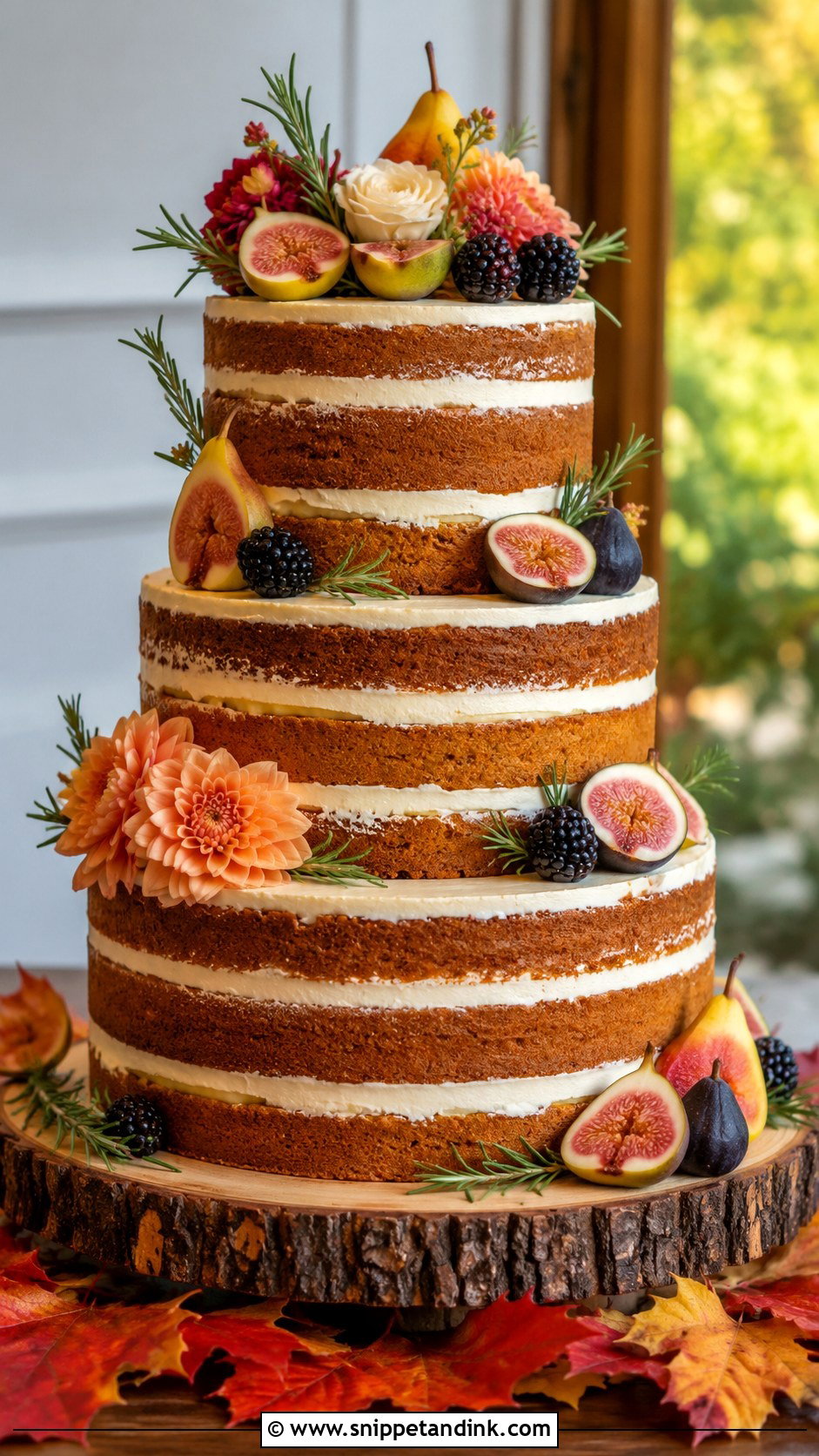
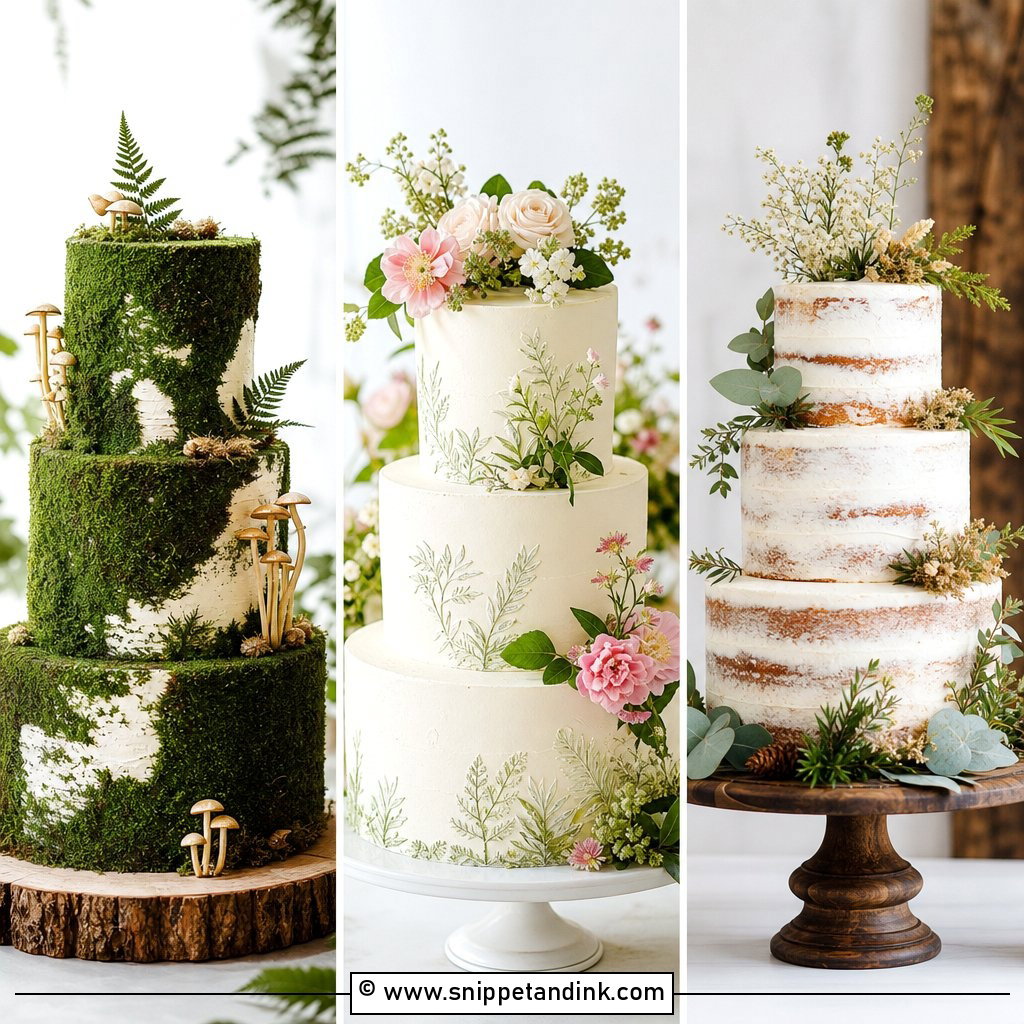
A naked cake shows everything, including mistakes. Exposed layers and a thin scrape of frosting give it a homemade feel, and spice, vanilla, carrot or chocolate sponge adds natural colour to the sides. Fillings like cream cheese, maple buttercream or caramel go between the layers. The layers must be level and the same thickness, otherwise the stripes look wobbly from across the room, so I torte every layer with a cake leveller. Figs, berries, pears, herbs and fall flowers on a wood slice stand finish it.
9. Sage Green Wedding Cake
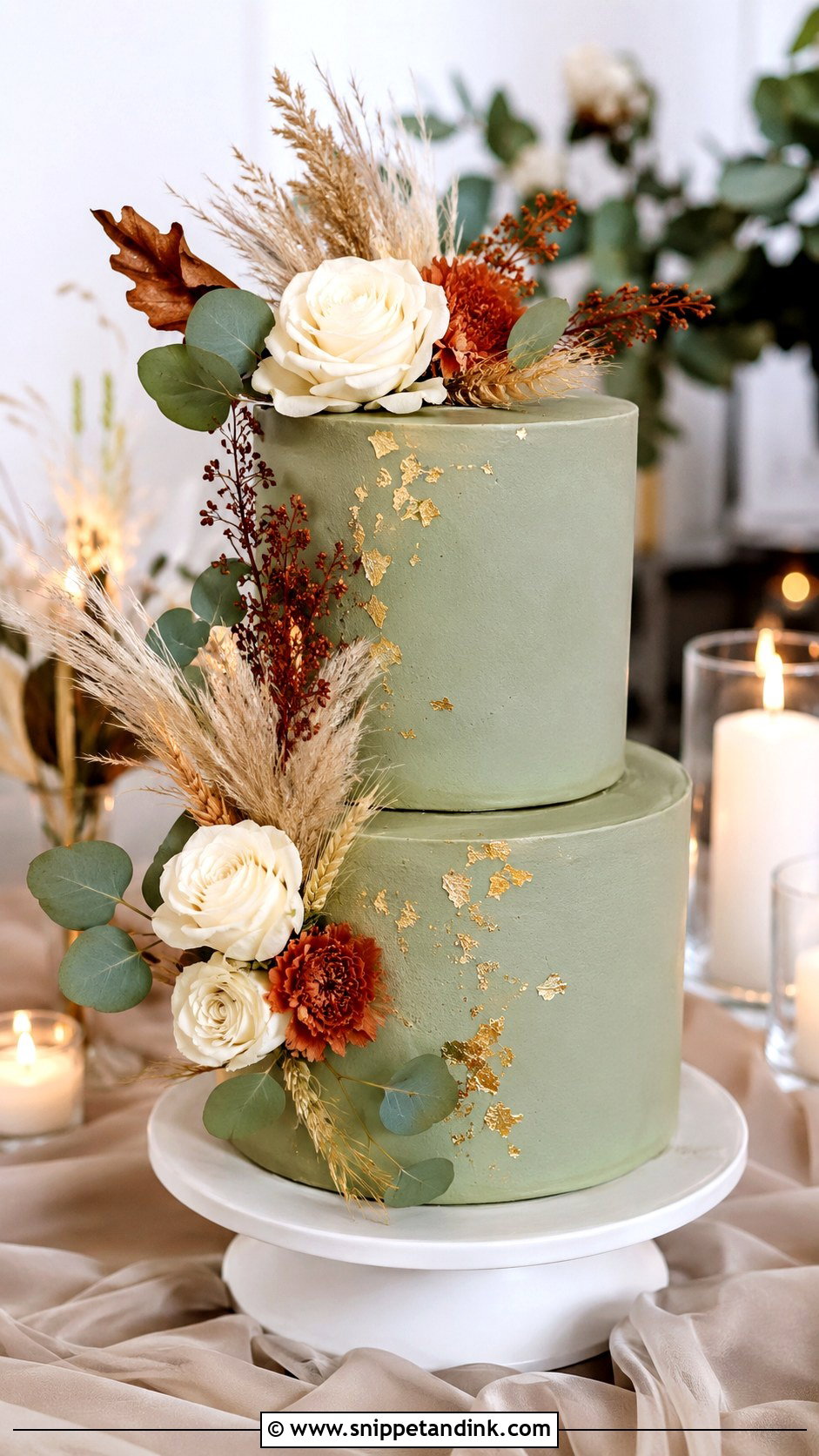
Not every autumn palette wants orange. Sage buttercream is calmer, and it pairs with ivory flowers, dried grasses, gold leaf and eucalyptus, as well as rust, champagne, taupe and dusty rose. Two or three tiers can go modern with smooth frosting or artistic with palette-knife texture. I keep sage on the grey side rather than minty; a slightly warm, muted green sits better next to fall flowers. Vanilla, pear, almond and chai suit its gentle mood.
10. Woodland Wedding Cake
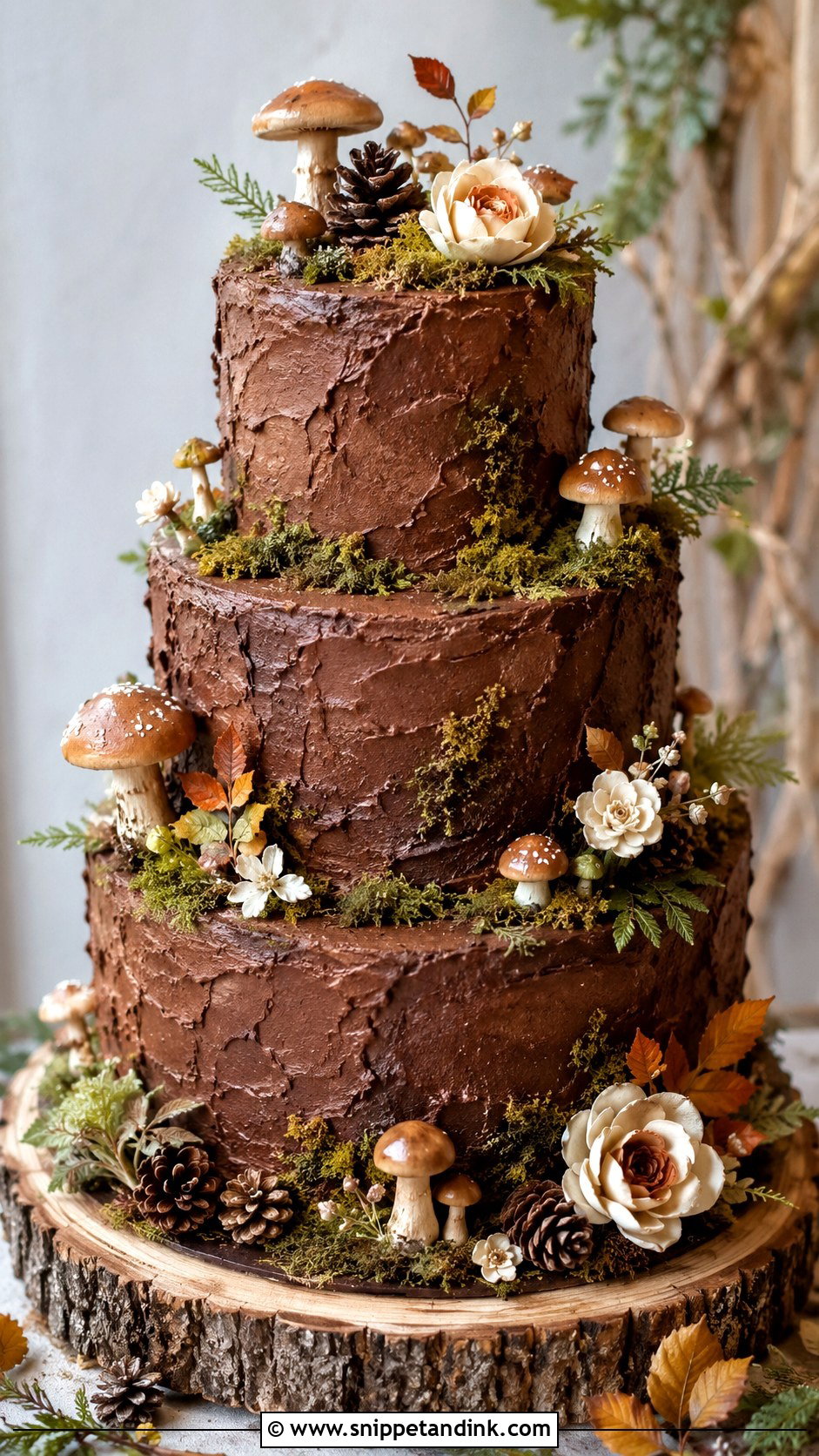
A woodland wedding cake should feel enchanted, not cluttered. Bark-textured buttercream, sugar mushrooms, tiny edible leaves, mossy green accents and small pinecones bring the forest in. Chocolate or spice cake matches the darker look. Real pinecones are dusty and sometimes treated, so I use sugar or chocolate ones on the cake itself and leave real ones for the table around it. Mountain lodges and forest ceremonies are where it belongs, displayed on natural wood with soft lighting.
11. Gold Leaf Wedding Cake
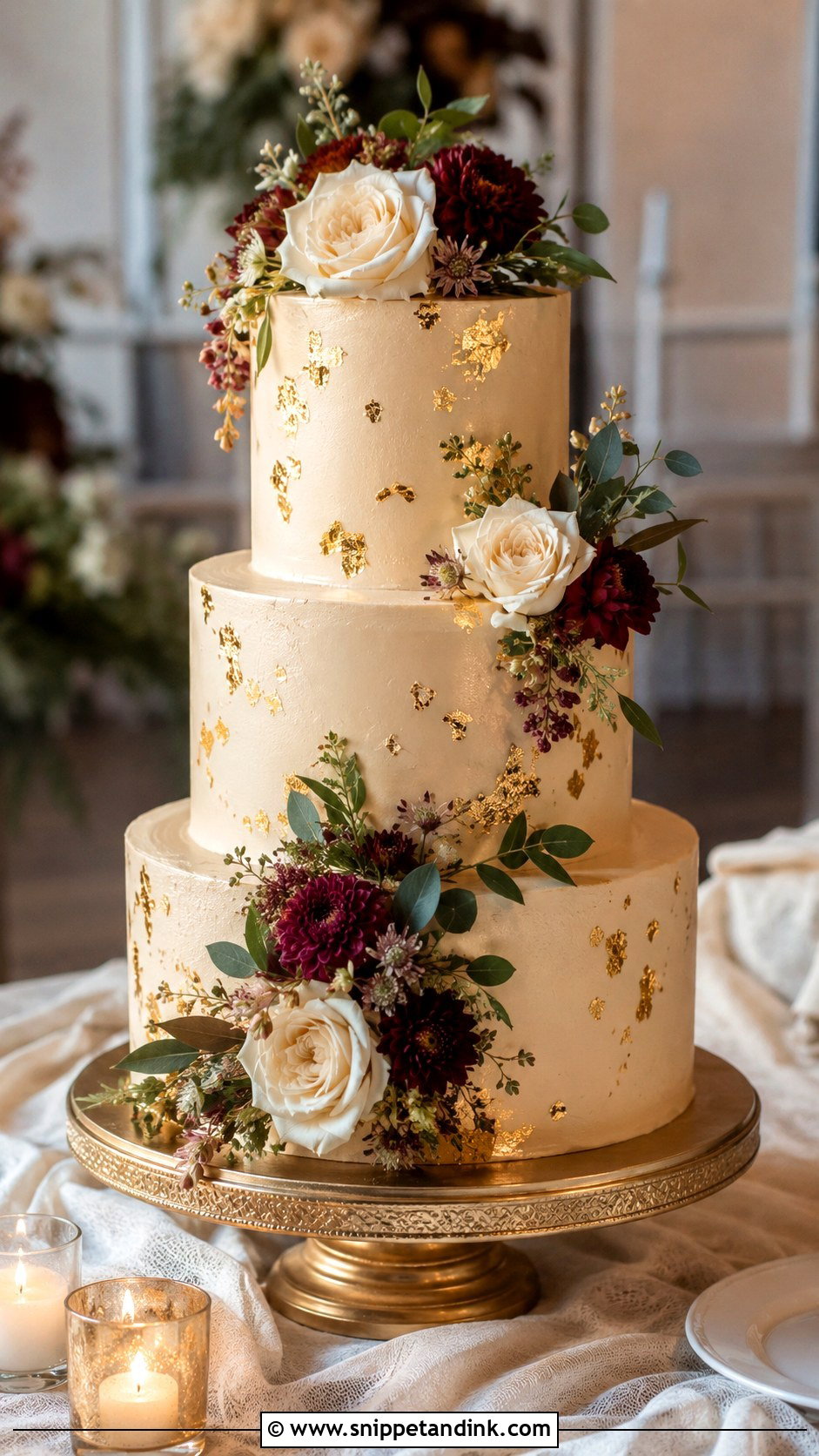
Gold leaf catches autumn light the way nothing else does. It sits well on ivory, burgundy, chocolate, sage or terracotta frosting, as small scattered flakes or larger patches. Keep the flowers and the cake shape simple so it looks expensive rather than busy. Edible gold leaf is so thin that it sticks to fingers and tweezers, so I lift it with a dry brush and apply it to a chilled, slightly tacky surface. Salted caramel, vanilla bean, almond or chocolate ganache keep the inside as rich as the outside.
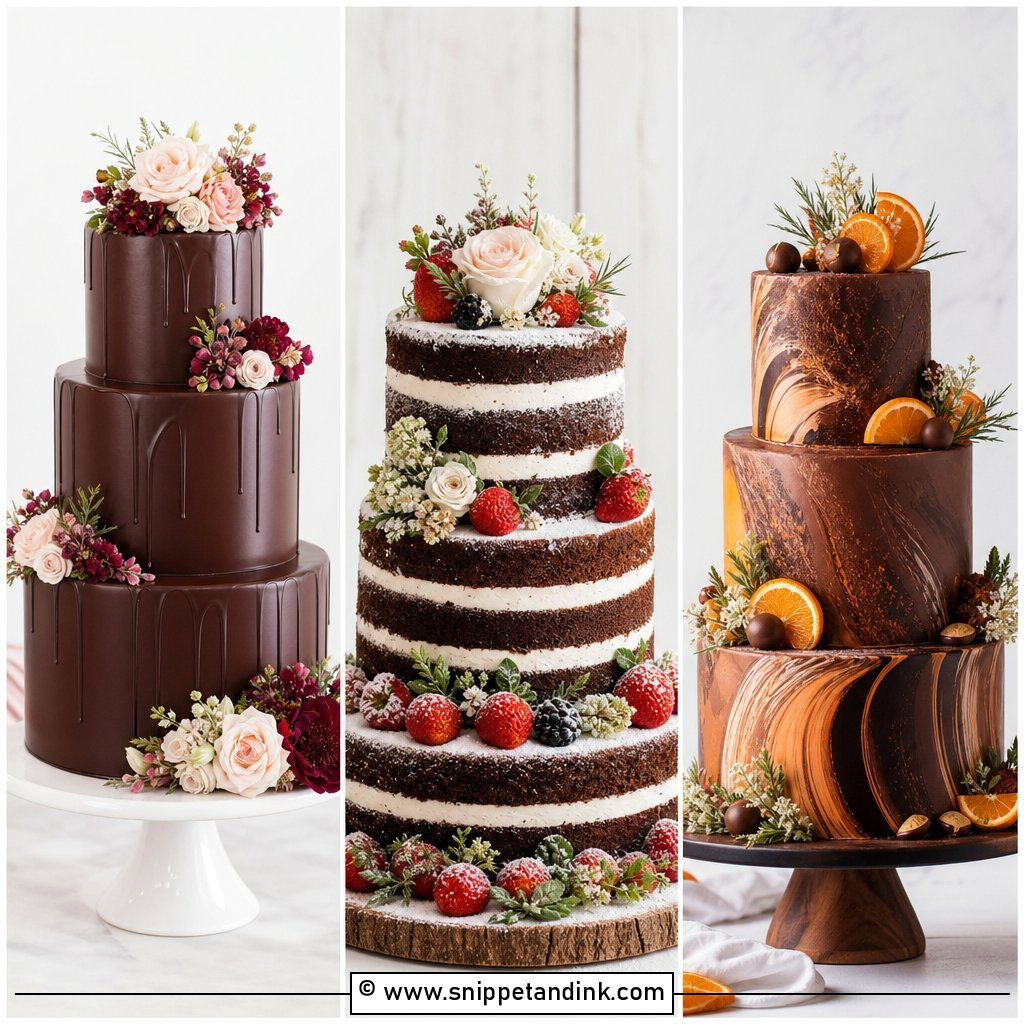
12. Chocolate Fall Wedding Cake
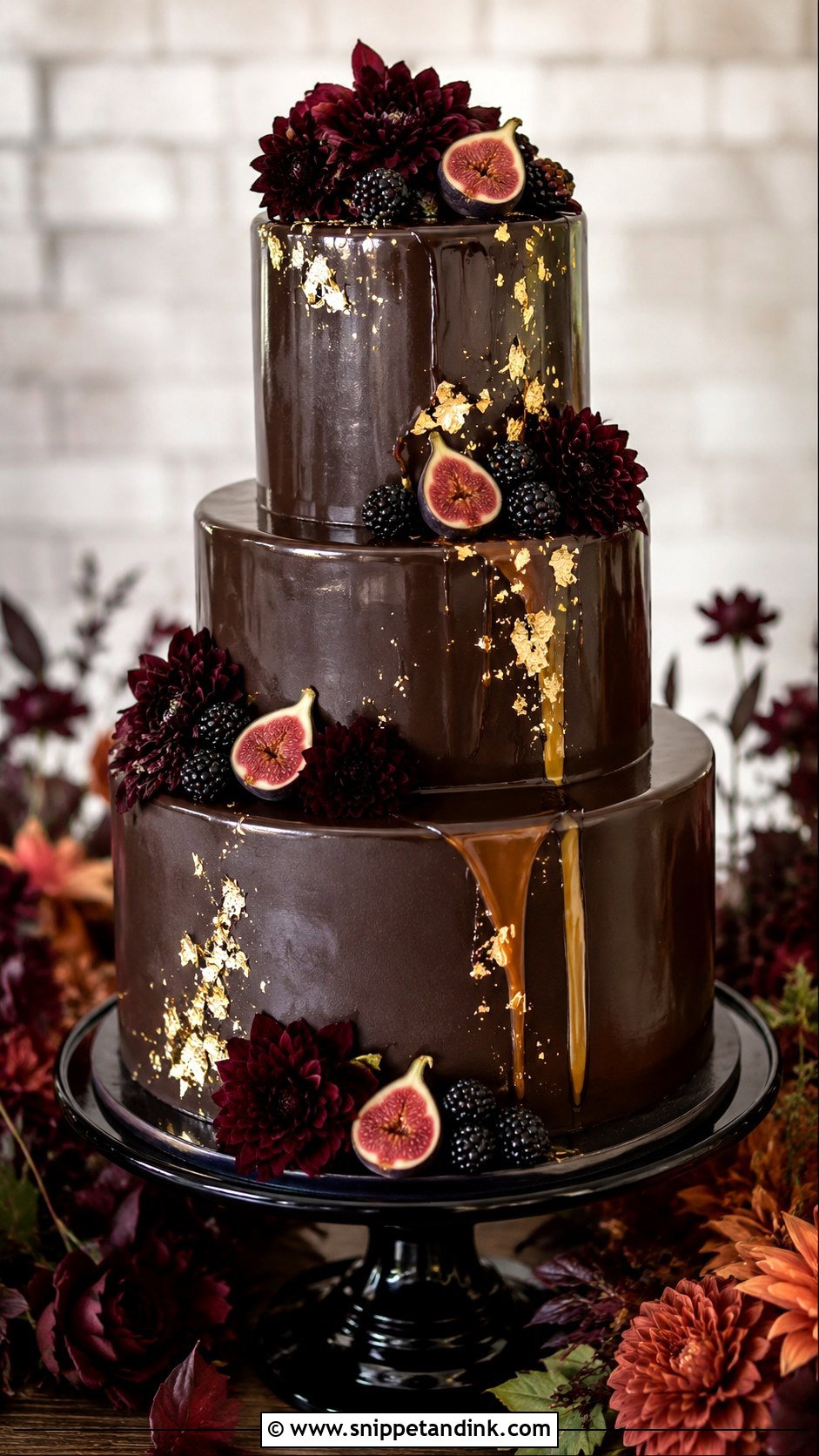
Cooler weather is when chocolate cakes come into their own. Dark chocolate sponge, chocolate buttercream and glossy ganache make a dramatic base for figs, blackberries, burgundy flowers, gold leaf or caramel. A three-tier chocolate cake looks moody and modern, while a semi-naked one feels rustic. Espresso, hazelnut, salted caramel or raspberry fillings add depth. Ganache is also my favourite coating for a warm room, because it sets firmer than buttercream and keeps sharp edges longer.
13. Pear Wedding Cake
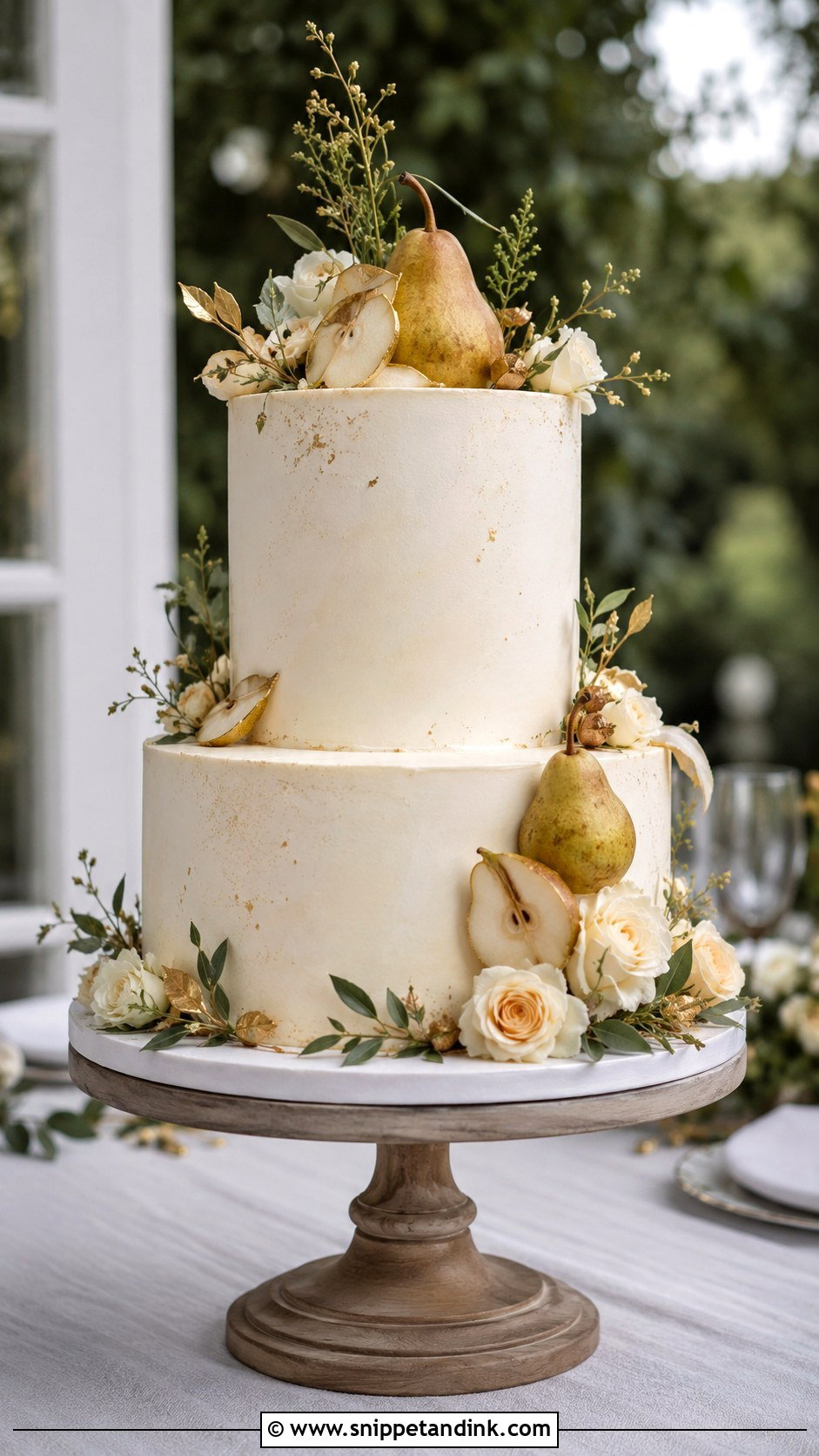
Pear is subtle. Its flavour is soft and slightly floral, and it pairs with vanilla, almond, honey, ginger or brown butter, as well as caramel and spice when you want more autumn. Whole pears, slices, gold-painted pears or pear-shaped sugar details decorate a smooth ivory cake with champagne accents and a little greenery. I bake with firmer pears that hold their shape, since ripe soft ones turn to mush in the oven. Estate venues and couples who prefer gentle flavours suit it.
14. Fig Wedding Cake
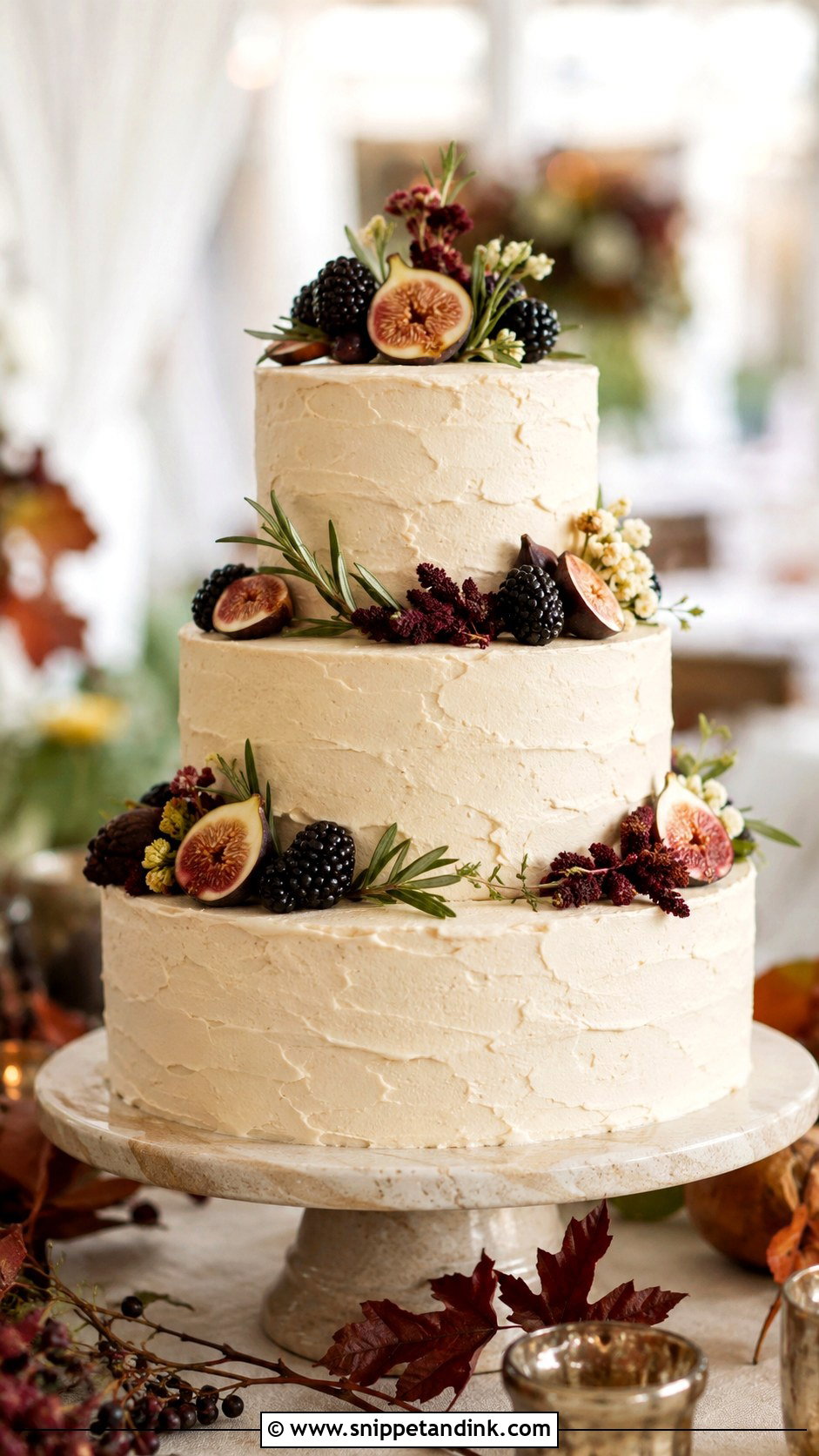
Halved figs might be the most photogenic fruit you can put on a cake: deep purple outside, pink and red inside, all of it vivid against ivory or beige frosting. Honey, almond, vanilla or spice cake suit them. I arrange the figs with rosemary, blackberries and small flowers, and keep the frosting simple so the fruit leads. Cut figs weep juice into buttercream within a few hours, so I cut and place them at the venue, not in the studio. Dinner-party-style receptions outdoors suit its Mediterranean feel.

15. Burnt Orange Wedding Cake
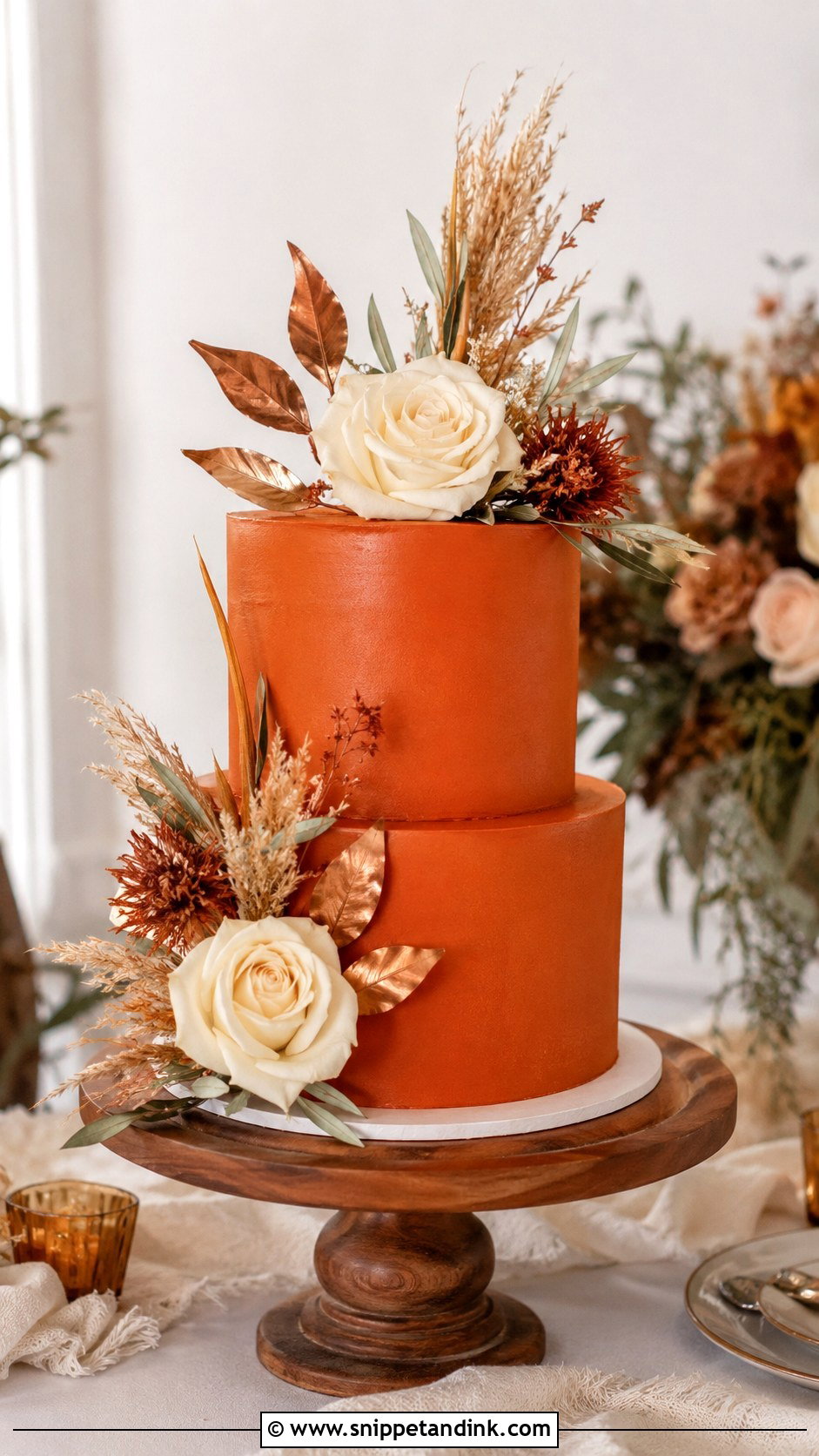
Bold yet easy to pair, burnt orange sits well with cream, gold, rust, brown or olive green. A burnt orange wedding cake can be smooth and modern or textured and natural, decorated with ivory roses, copper leaves, dried grasses or a few clusters of fall flowers. Orange spice, carrot, vanilla chai and caramel all fit. Bright orange frosting fades under strong light, so if the cake will sit near a window, I keep it covered until the reception starts. Barns and boho weddings are where it shines.
16. Vintage Fall Wedding Cake
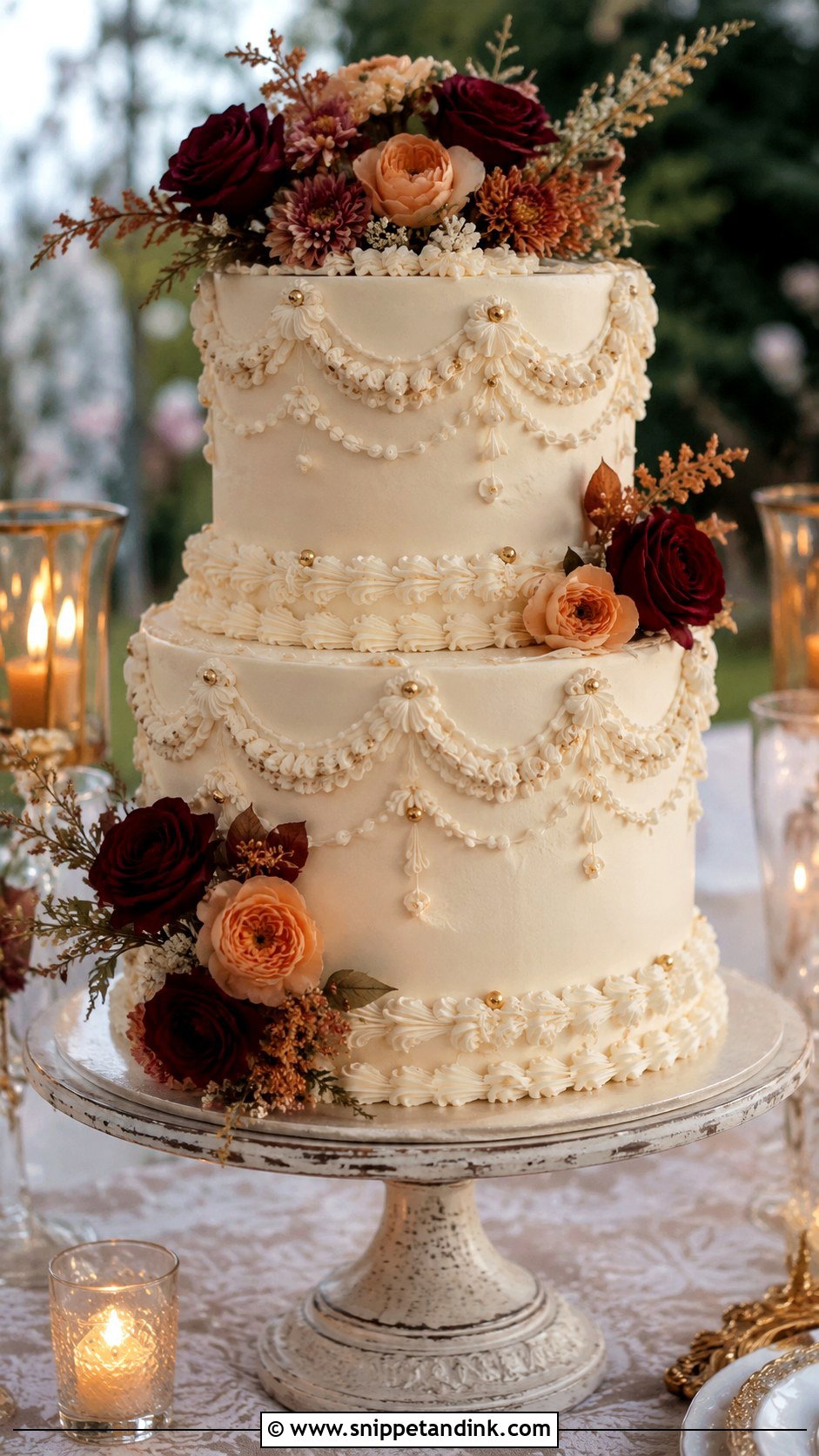
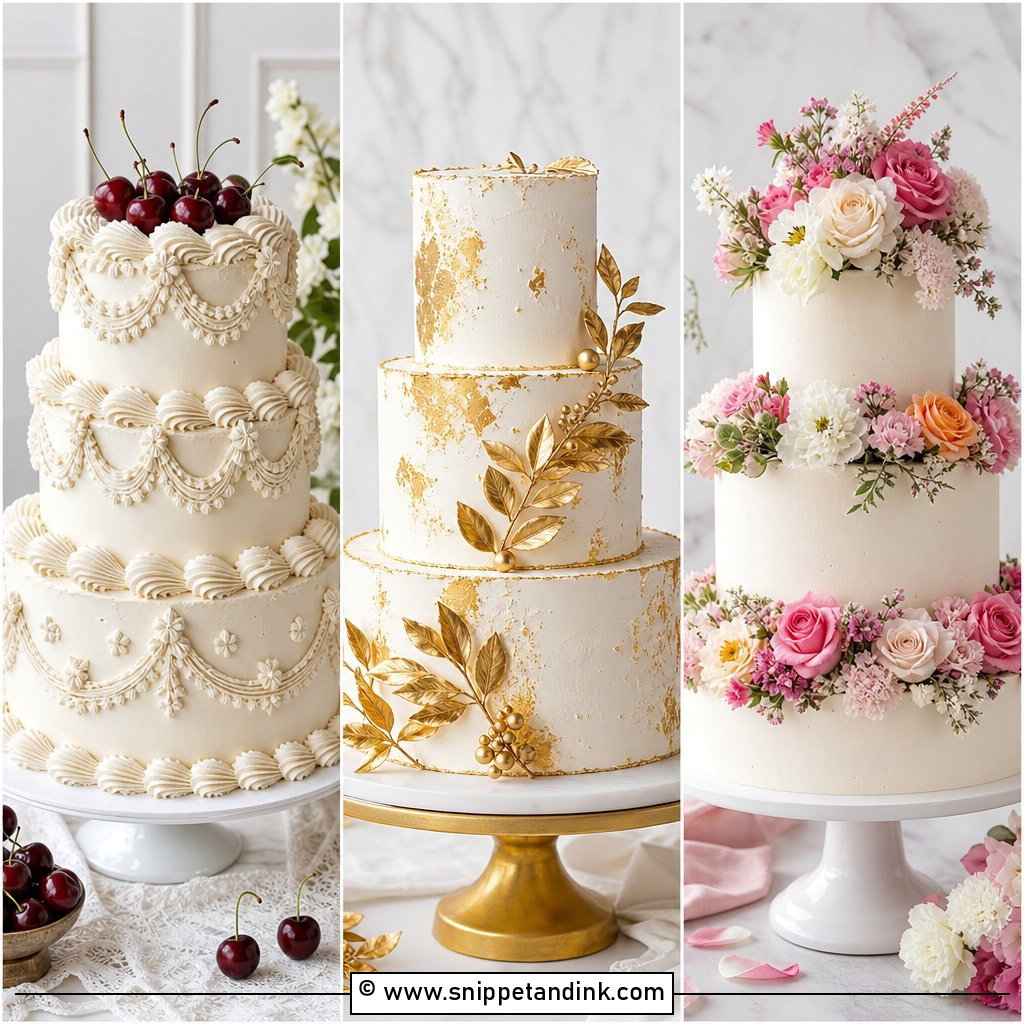
Piped borders, soft ruffles and pearl details give the vintage cake its old-fashioned romance, with flowers in burgundy, peach, cream or rust. It works as a single tier for an intimate wedding or tall and tiered for a bigger one. I’d pick one colour family and stay inside it; vintage piping already adds a lot of visual texture. Vanilla almond, red velvet, spice or brown sugar butter cake suit it. Ruffles take a while to pipe, which is worth knowing when you compare quotes.
17. Boho Fall Wedding Cake
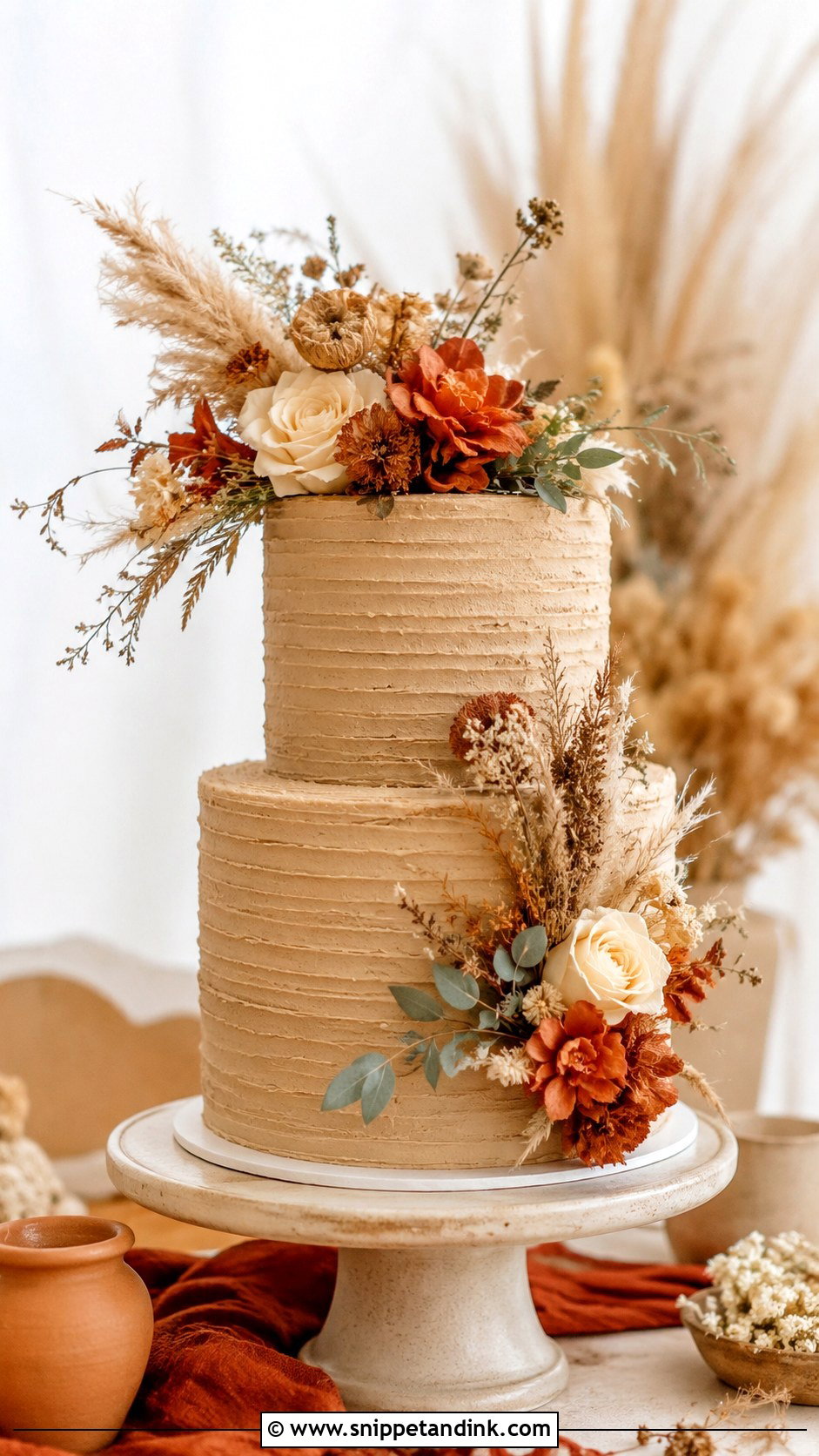
Dried flowers, pampas grass, muted colours and textured buttercream define the boho fall cake, in terracotta, ivory, taupe, rust or sage. The cake shape can stay simple while an asymmetrical arrangement of dried florals adds height and movement on a two-tier cake with ridged frosting. Dried stems are brittle and shed, and some are dyed or sprayed, so I wrap every stem and keep the arrangement on a small separator rather than pushed straight into the cake. Chai, carrot, honey almond or brown butter vanilla flavours suit it.
18. Maple Wedding Cake
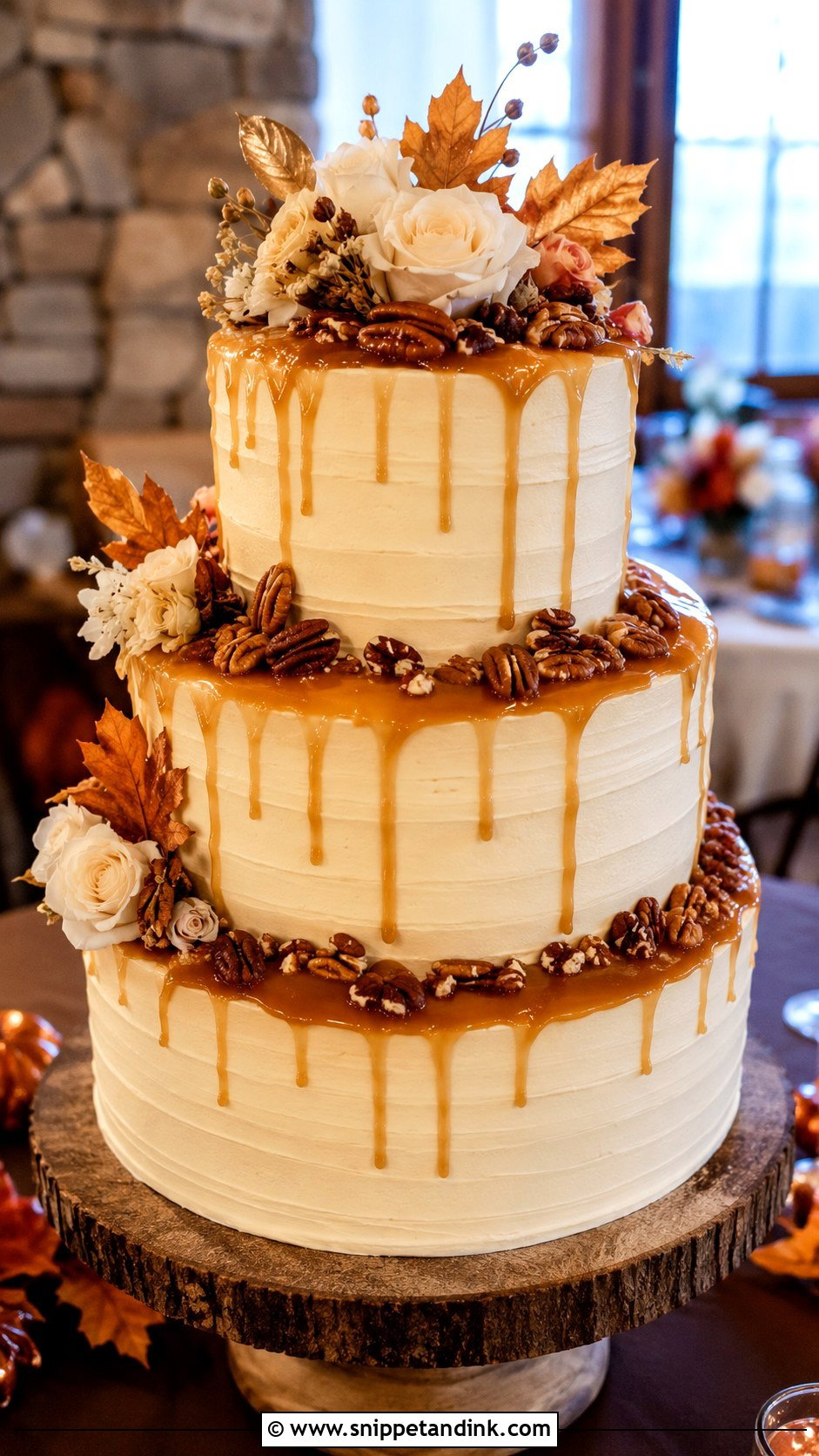
Maple wedding cake is comforting without being heavy. Vanilla maple, maple pecan, brown butter maple or maple spice sponge pairs with maple buttercream, cream cheese frosting or a light caramel filling. Outside, ivory frosting, an amber drizzle, toasted pecans and a few autumn flowers keep it soft; a little gold leaf or bronze makes it more formal. Real maple syrup tastes milder in buttercream than people expect, so I use a little maple extract alongside it at tastings until the flavour is clearly there. Mountain venues and small receptions suit it.
19. Pressed Flower Fall Wedding Cake
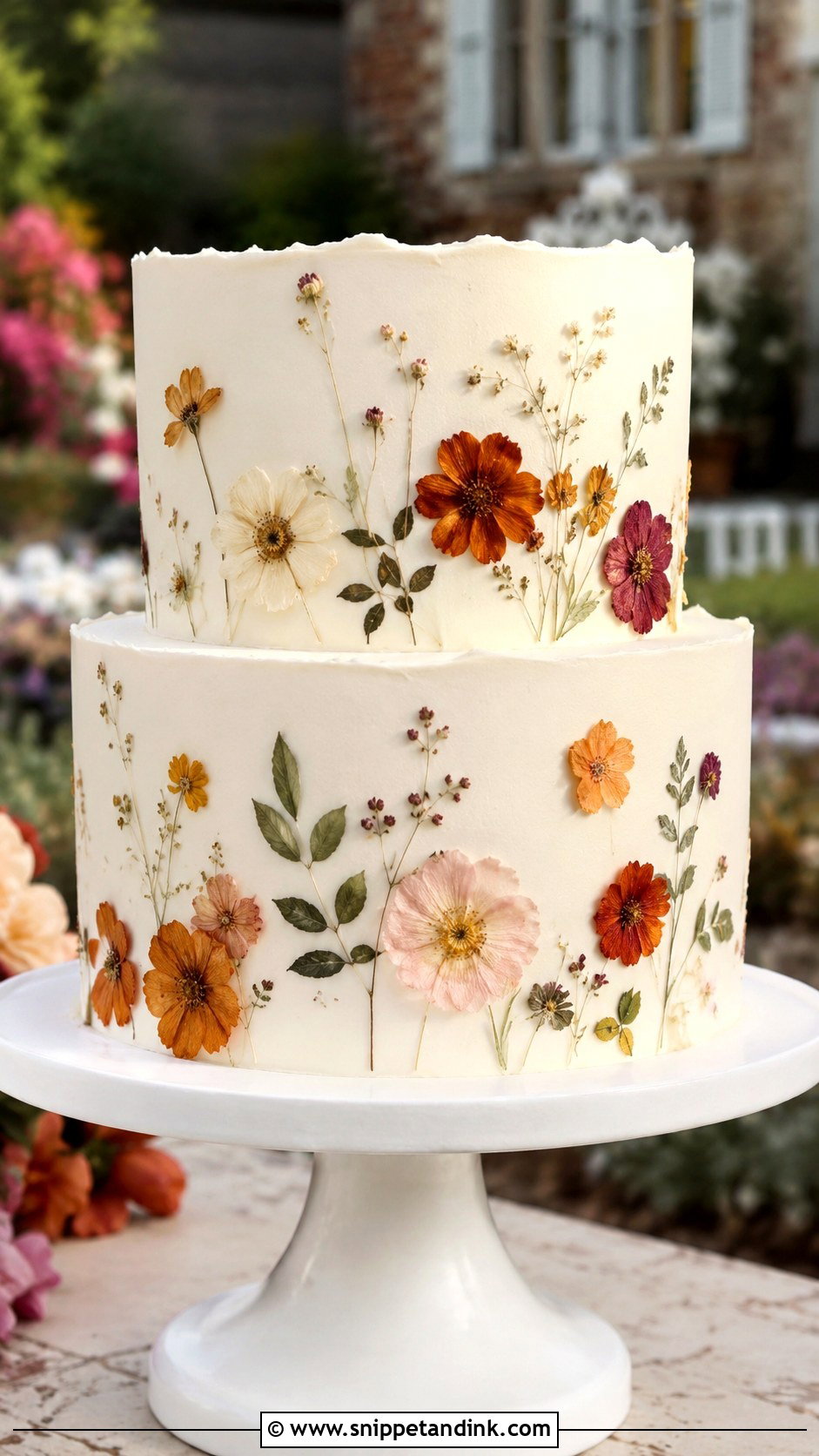
Pressed flowers suit autumn surprisingly well when you pick rust, gold, burgundy, dusty pink and cream rather than spring brights. Each bloom goes flat against smooth white or pale beige buttercream, spaced so the design breathes. I only use pressed flowers grown or sourced as edible, and they go on a chilled cake so they stick without sliding. Vanilla bean, lemon thyme, honey or almond keep the flavour light. Cottage venues and garden weddings suit it, and it looks hand-made in the best way.

20. Moody Fall Wedding Cake
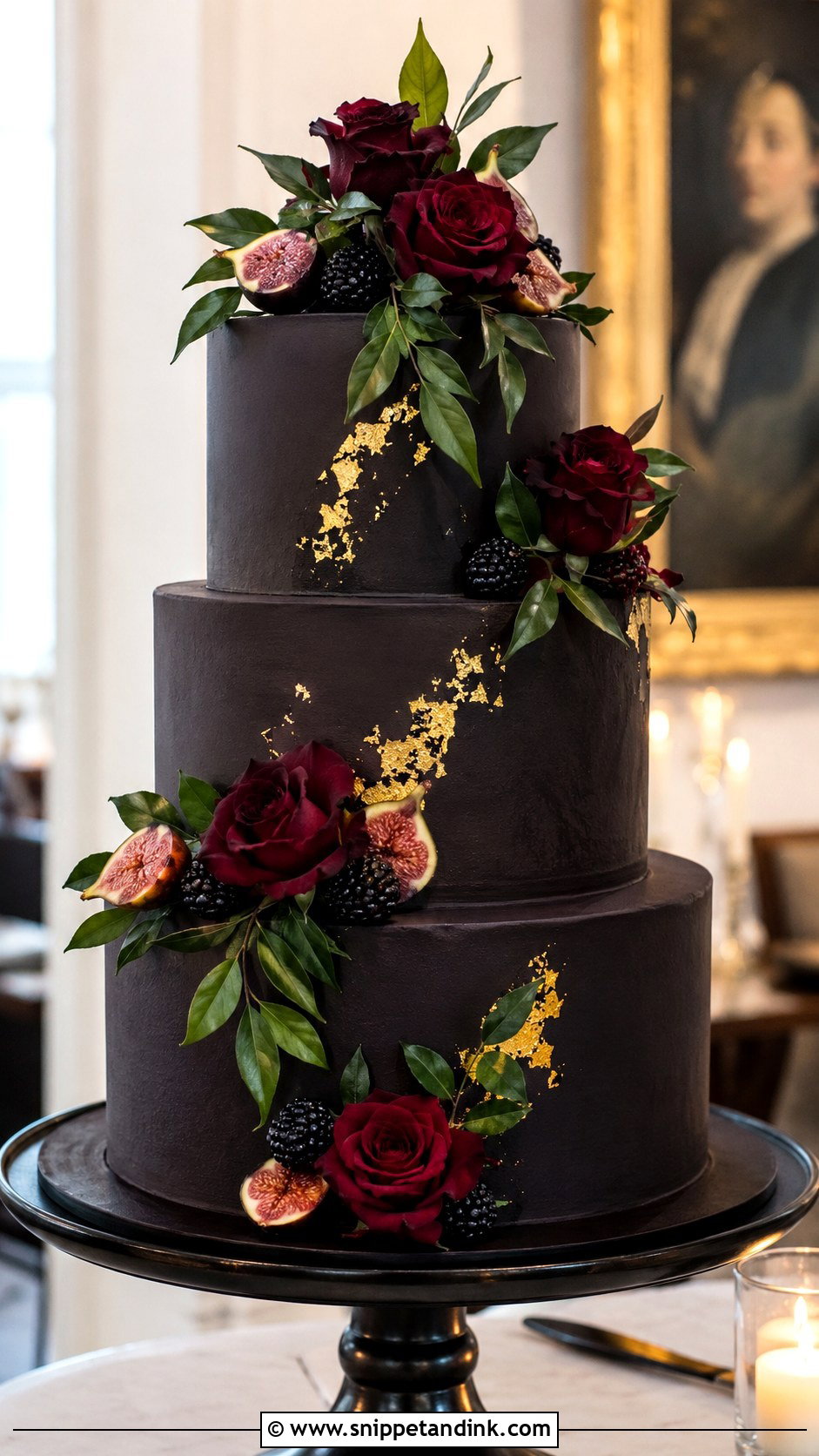
Charcoal, dark chocolate, plum, burgundy or forest green make the base of a moody cake, with gold leaf, dark florals, blackberries, figs or deep red roses for contrast. Clean shapes are important here, so the dark colour looks deliberate rather than heavy. Black cocoa gives a true deep colour without much dye, which is how I get charcoal and black tiers that still taste good. Chocolate, espresso, red velvet or spiced plum suit the mood. Candlelit evening receptions and historic venues are where it belongs.
Warm Barns and Cold Fridges: How Autumn Cakes Misbehave
Fall weddings aren’t always cool. An early October afternoon in a barn with the doors shut and a full room can be warmer than a summer ballroom, and buttercream softens accordingly. I ask about the venue’s heating, the sun on the cake table and how long the cake will sit before cutting.
The opposite problem catches people out too. A fondant cake taken from a cold fridge into a warm, humid room forms condensation, which looks like the cake is sweating and can make colours run. I let fondant and gold-leaf cakes come up to room temperature slowly in their box rather than carrying them straight onto the stand.
Tasting Spice Cakes Before You Commit
Spice is the flavour that varies most between bakers. Some lean heavily on cinnamon and clove; others keep it gentle. At a tasting, I’d try the spiced flavour plain and with its frosting, because cream cheese and maple soften spice a lot. If half your guests are children or older relatives, consider one spiced tier and one vanilla or chocolate tier. Ask too how the cake behaves when it’s stacked tall; moist pumpkin and carrot sponges need more support than a vanilla butter cake, and a good baker will tell you how they handle it.
Let the Flowers and the Fruit Set Your Cake’s Palette
Autumn cakes can be soft and romantic or dark and dramatic, and the season hands you more colour, flavour and texture than any other. I usually start with what’s in season and what the florist is using: pumpkin, apple, maple, pear, fig or chocolate, then dahlias or dried grasses. From there the design follows the venue and the table. A simple semi-naked cake or a bold burgundy tier both work when they feel connected to the rest of the day.
You'll Like These Ideas:





Leave a Reply