
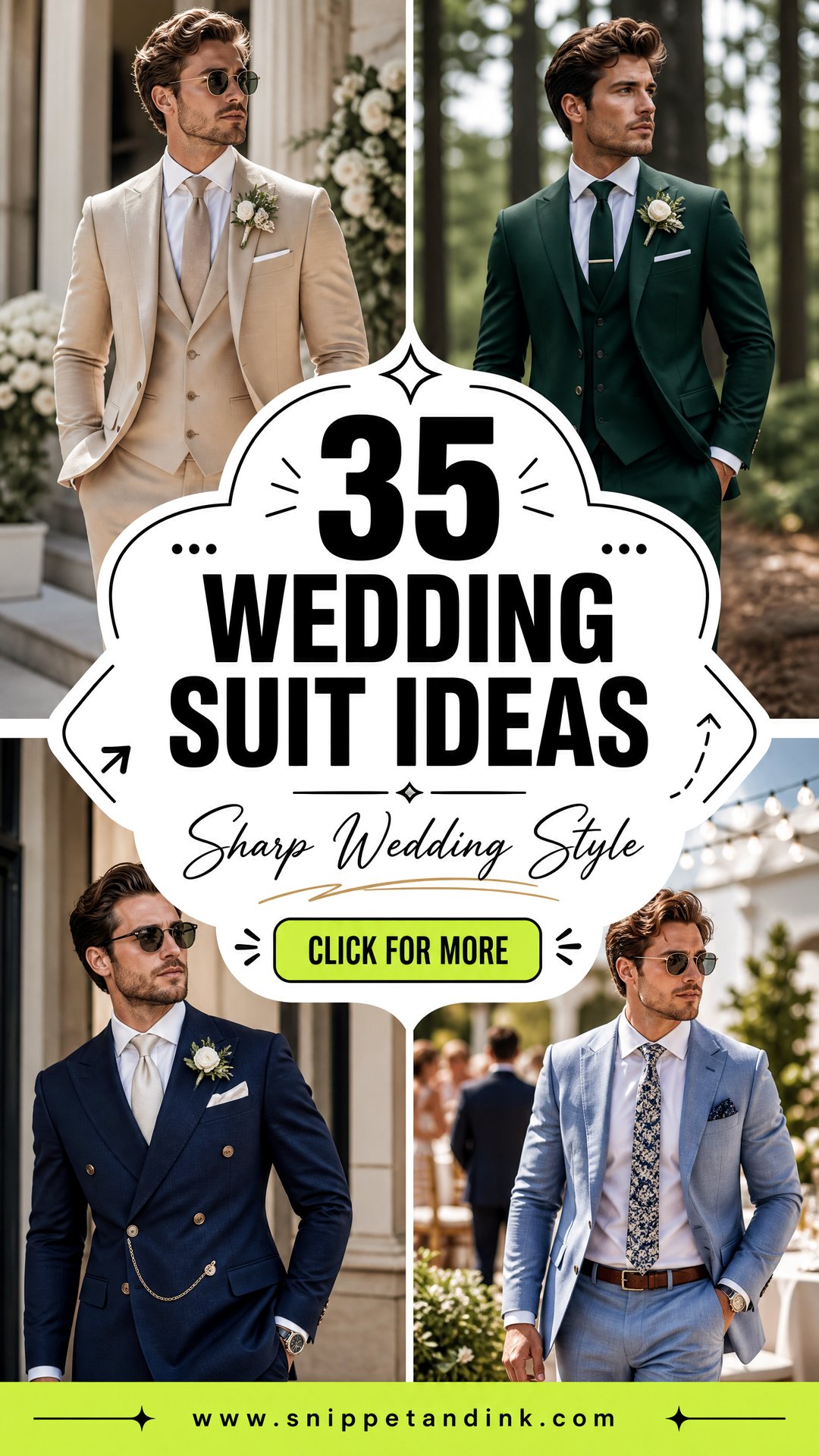
A wedding used to mean either the black suit in the wardrobe or a navy rental with a shiny tie. That has changed. The suits I’m fitting for weddings now come in earthy colors, softer neutrals and textured cloth, cut a little easier through the body and finished with one detail that says occasion. Fit still decides almost everything, though; a well-cut navy suit beats a poorly fitted velvet one every time. The ideas below run from classic groom tailoring to guest looks and coordinated wedding parties, with the shirt, shoes and cloth I’d pair with each.
What Alterations Can Fix and What They Can’t
Most off-the-rack suits need some alteration, and that’s fine. The trick is buying one where the hard parts already fit, because some problems can be corrected cheaply and others can’t be corrected at all.
- Shoulders: buy for the shoulders first. If the seam overhangs your shoulder or the sleeve head dimples, it’s very hard to fix.
- Jacket length: it should cover your seat. Shortening a jacket changes the pocket placement and usually looks wrong.
- Sleeves: easy to shorten on most jackets, so a little shirt cuff shows.
- Trouser hem: simple, and should be done with your wedding shoes on. A slight or no break looks modern.
- Waist: jackets and trousers can usually be taken in a little, less often let out.
Buy, Rent or Made to Measure
Buying off the rack and tailoring needs a few weeks for alterations. Rentals for a wedding party are usually ordered two to three months ahead so everyone’s measurements can be collected and checked. Made-to-measure takes longer, often four to eight weeks for the suit plus a final fitting, though lead times vary between tailors and busy seasons.
1. Navy Wedding Suit
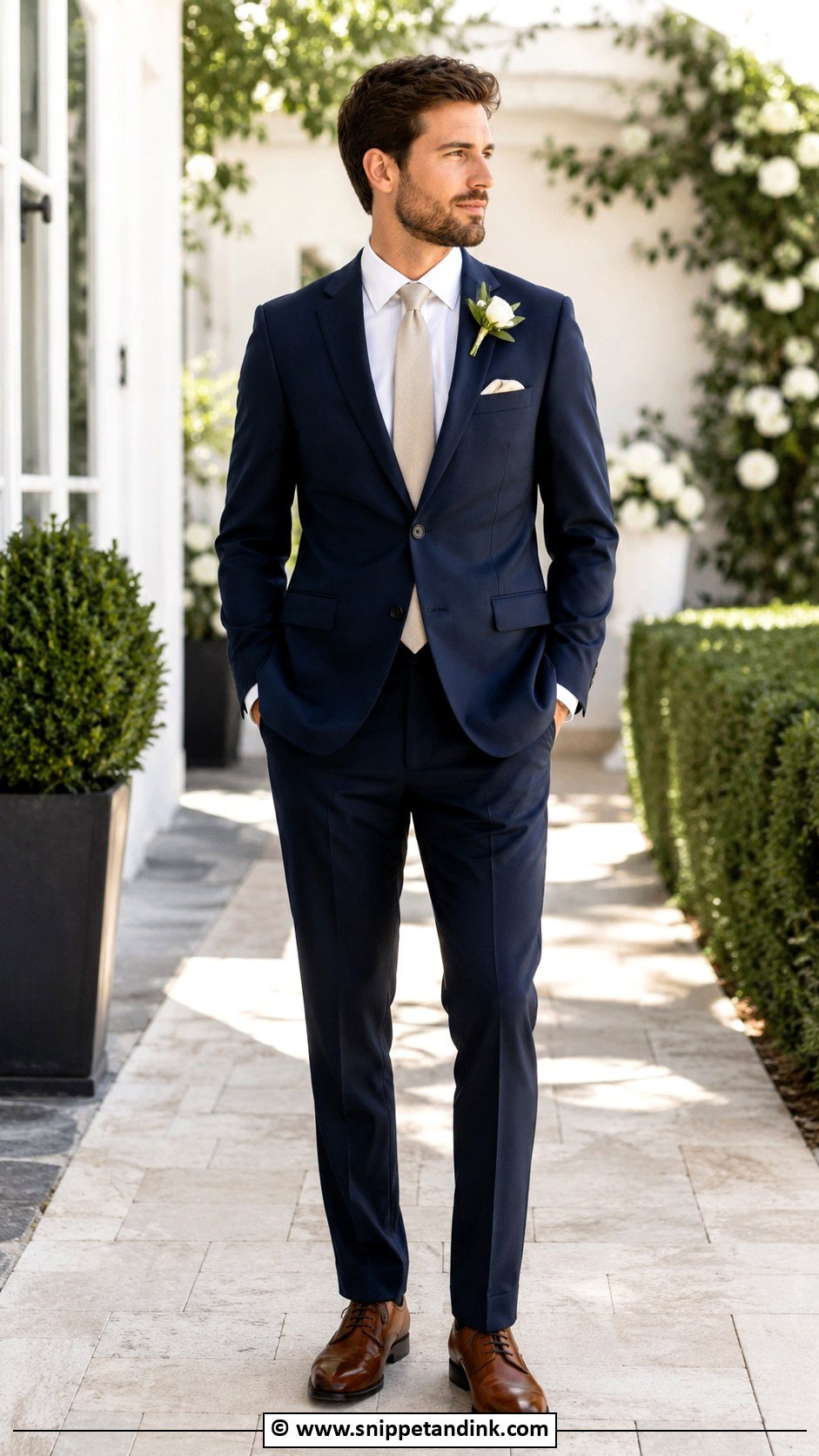
If a client can only own one suit for weddings, I tell him to buy a navy wedding suit in a mid-weight wool. It looks right in a garden, a hotel or a city ceremony, and it’s less severe than black in daylight. Brown leather shoes and a crisp white shirt keep it warm; a tie in champagne, sage or burgundy picks up the palette. Grooms can add a waistcoat and pocket square. Guests should keep the extras to one, so the look stays sharp rather than showy.
2. Black Wedding Suit
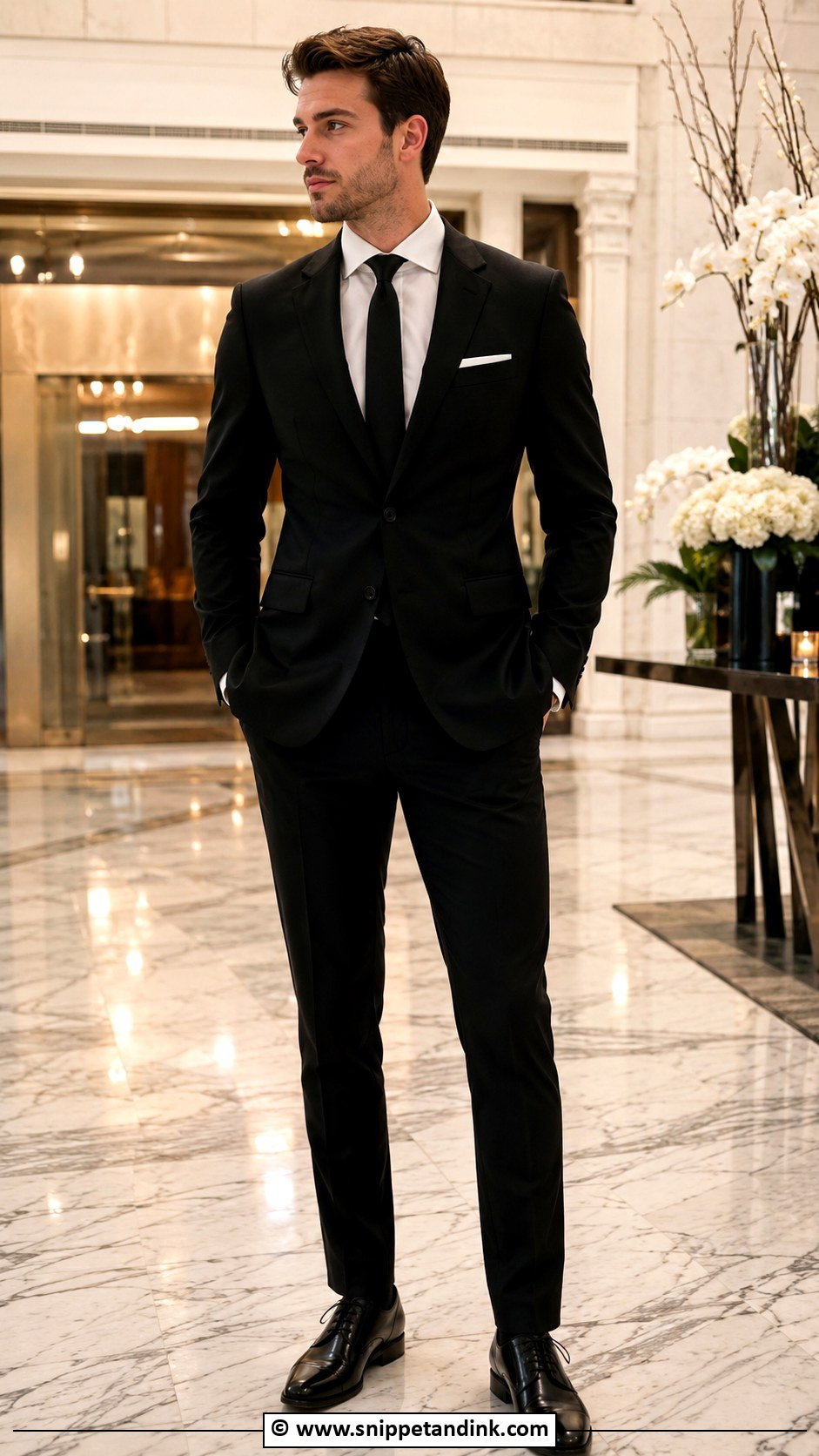
Black is unforgiving of fit. Loose shoulders and a long sleeve make it look borrowed, while a closely tailored black suit looks powerful in a ballroom. It suits formal evening venues and winter weddings far better than a noon garden ceremony, where it can feel heavy. Pair it with a white shirt, black shoes and a black tie for the cleanest version. At a cocktail dress code, a textured tie or an open collar softens it.
3. Charcoal Gray Wedding Suit
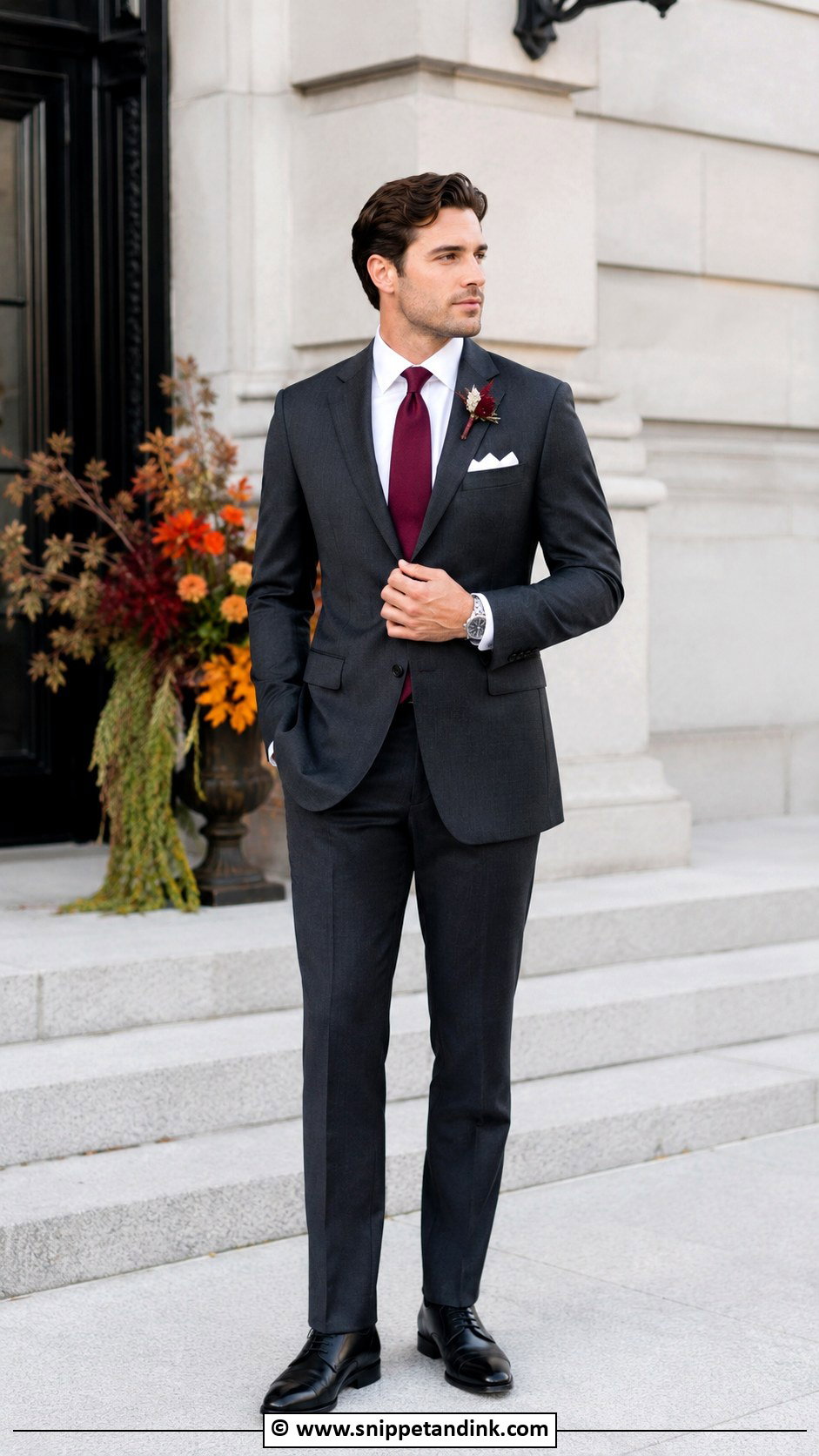
A charcoal gray wedding suit gives you the polish of a dark suit with a softer edge than black, and it photographs with more detail because the camera can still read the cloth. Autumn, winter and city weddings suit it. Wear it with a white shirt, black or dark brown shoes and a tie in silver, forest green or dusty rose. Groomsmen look coordinated in charcoal without anyone looking like a waiter. Add a waistcoat for a formal ceremony; skip it as a guest.
4. Light Gray Wedding Suit
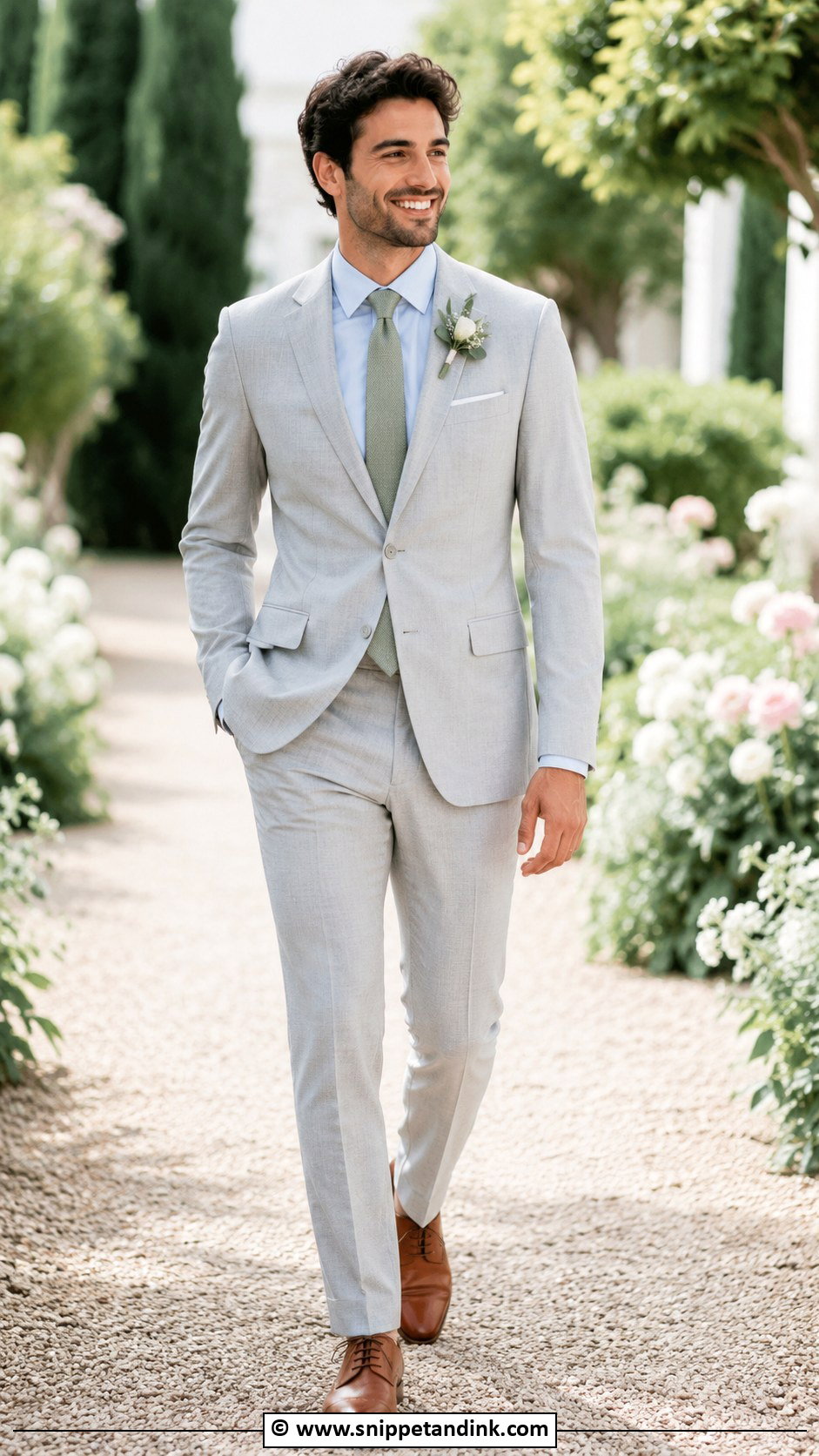
Light gray belongs to spring and summer daylight. The thing I check first is the cloth weight, because a pale suit in a heavy wool looks wrong in July, while a tropical wool or wool-linen blend keeps its shape and breathes. Pair it with a white or pale blue shirt, tan shoes and a tie in sage, lavender or navy. The trouser hem matters more on a light suit, since bunching at the ankle shows up clearly against pale cloth.
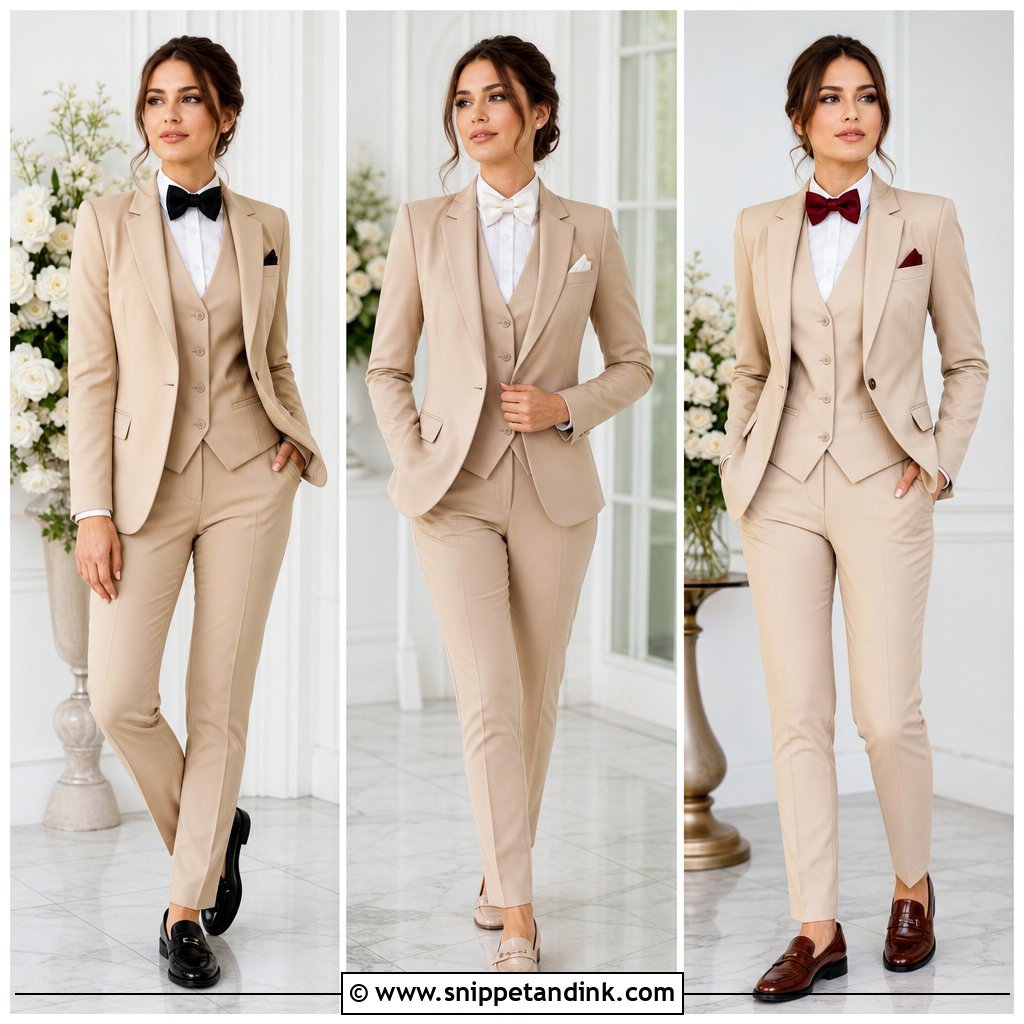
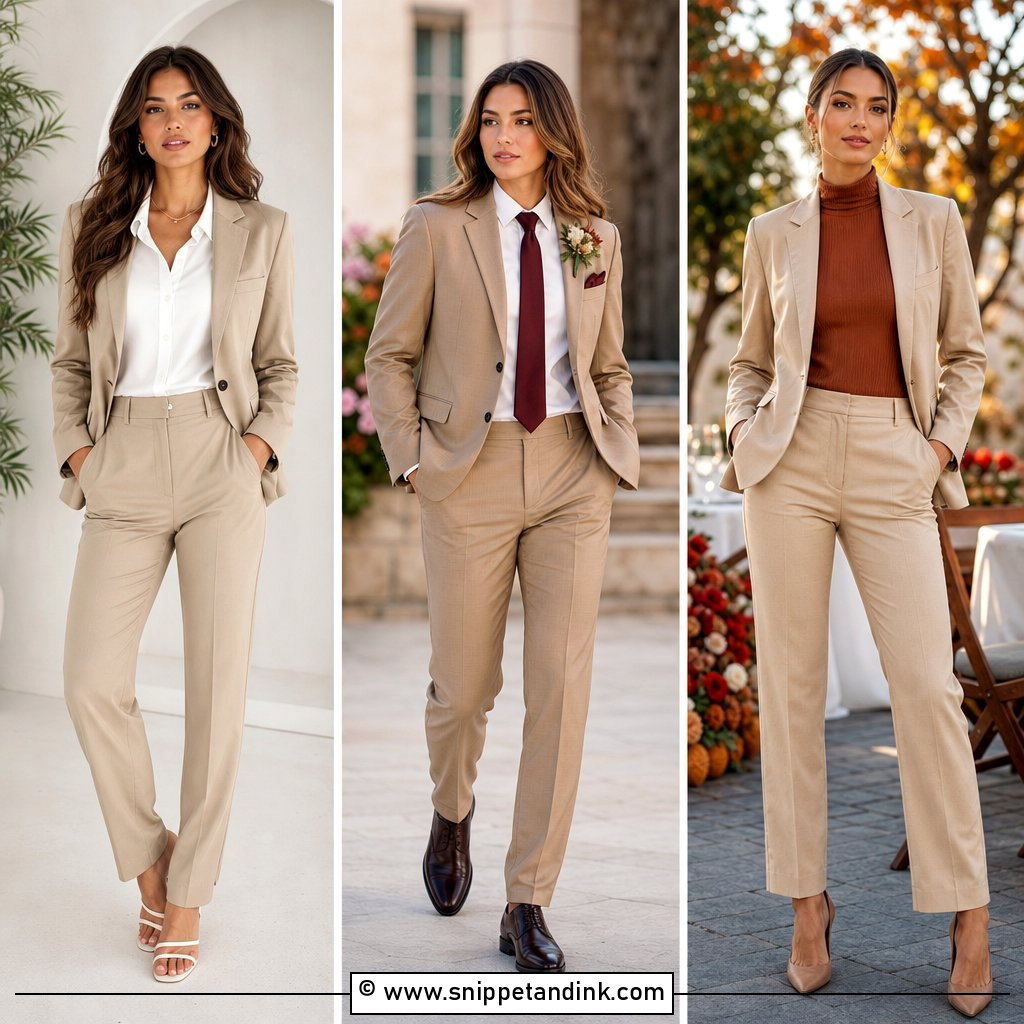
5. Tan Wedding Suit
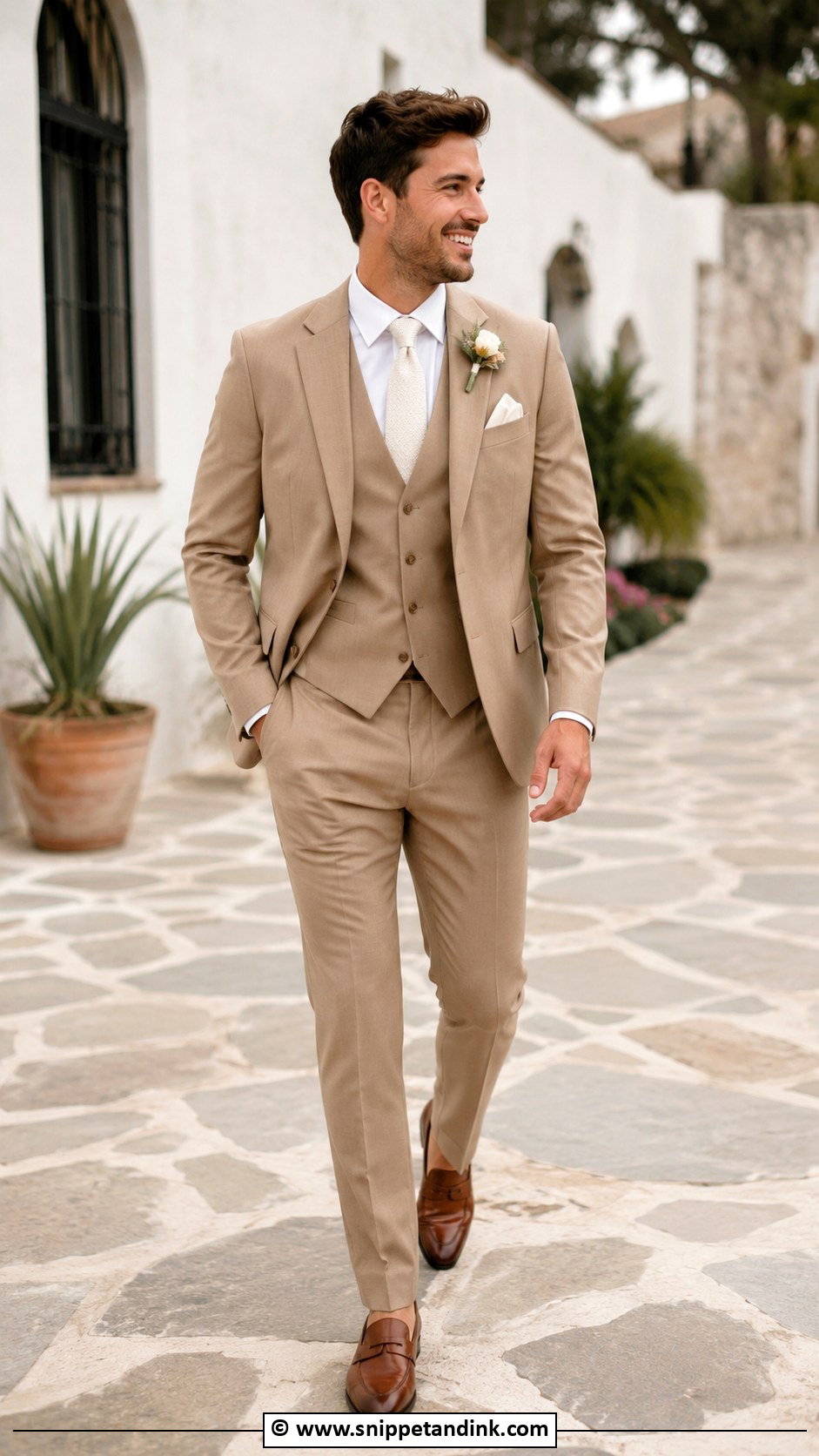
Tan is the warm-weather suit I reach for at beach, desert and outdoor ceremonies. It’s softer than gray and more seasonal than navy, and brown loafers or lace-ups suit it without effort. The pitfall is a floppy fit: tan in a loose, unstructured cut looks like holiday wear. Keep some structure in the shoulder. Grooms can add a cream tie and matching boutonniere; guests can wear it with an open collar when the dress code allows.
6. Beige Wedding Suit
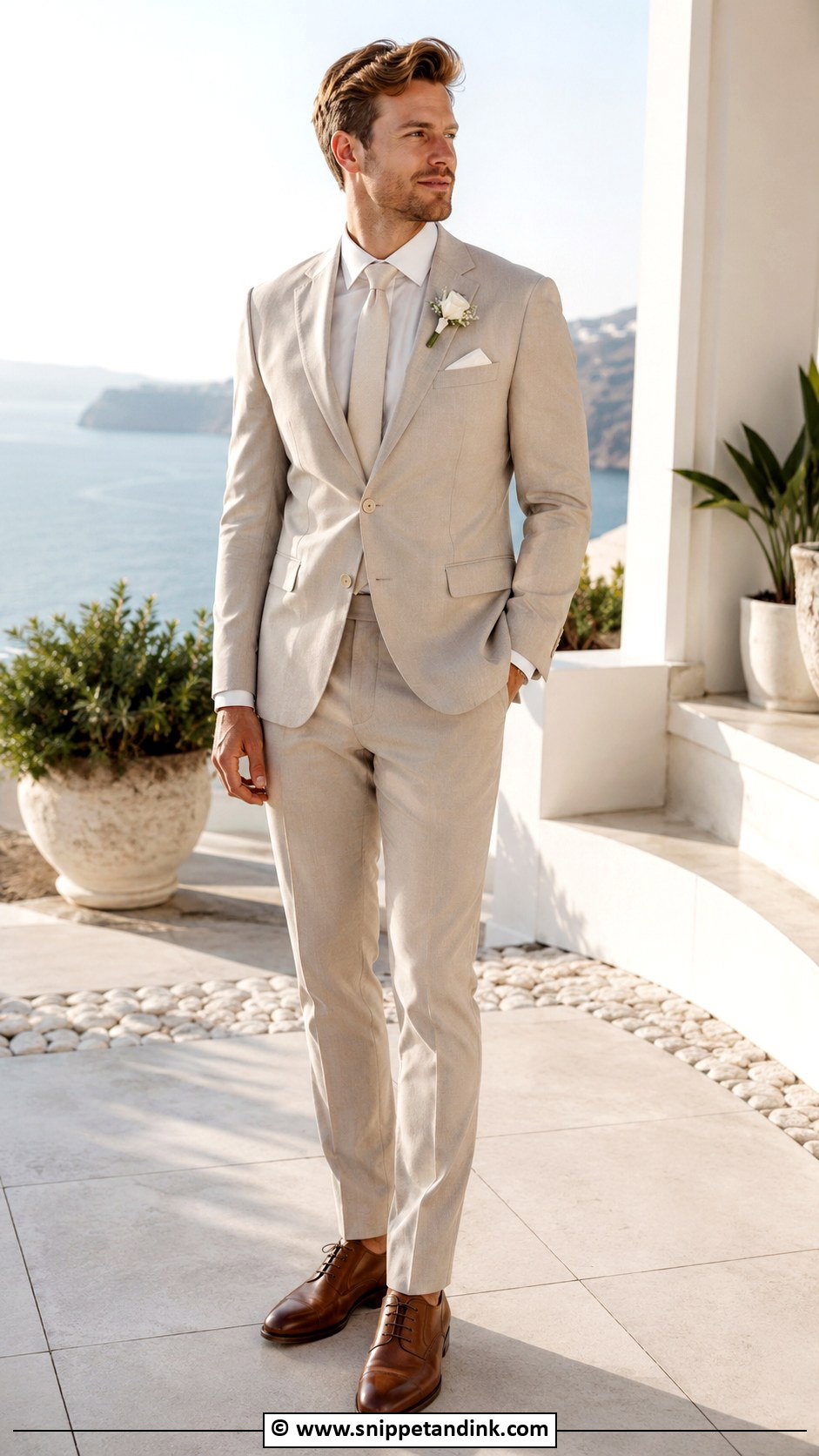
Beige sits a step lighter than tan and looks fresh in natural daylight, which suits destination and garden weddings with a neutral palette. It’s a gentle way for a groom to stand out without wearing white. Pale tailoring shows every scuff and every grass stain, so keep the shirt crisp, the shoes clean and a lint roller in the car. Light brown shoes and accessories in ivory or muted green finish it.
7. Cream Wedding Suit
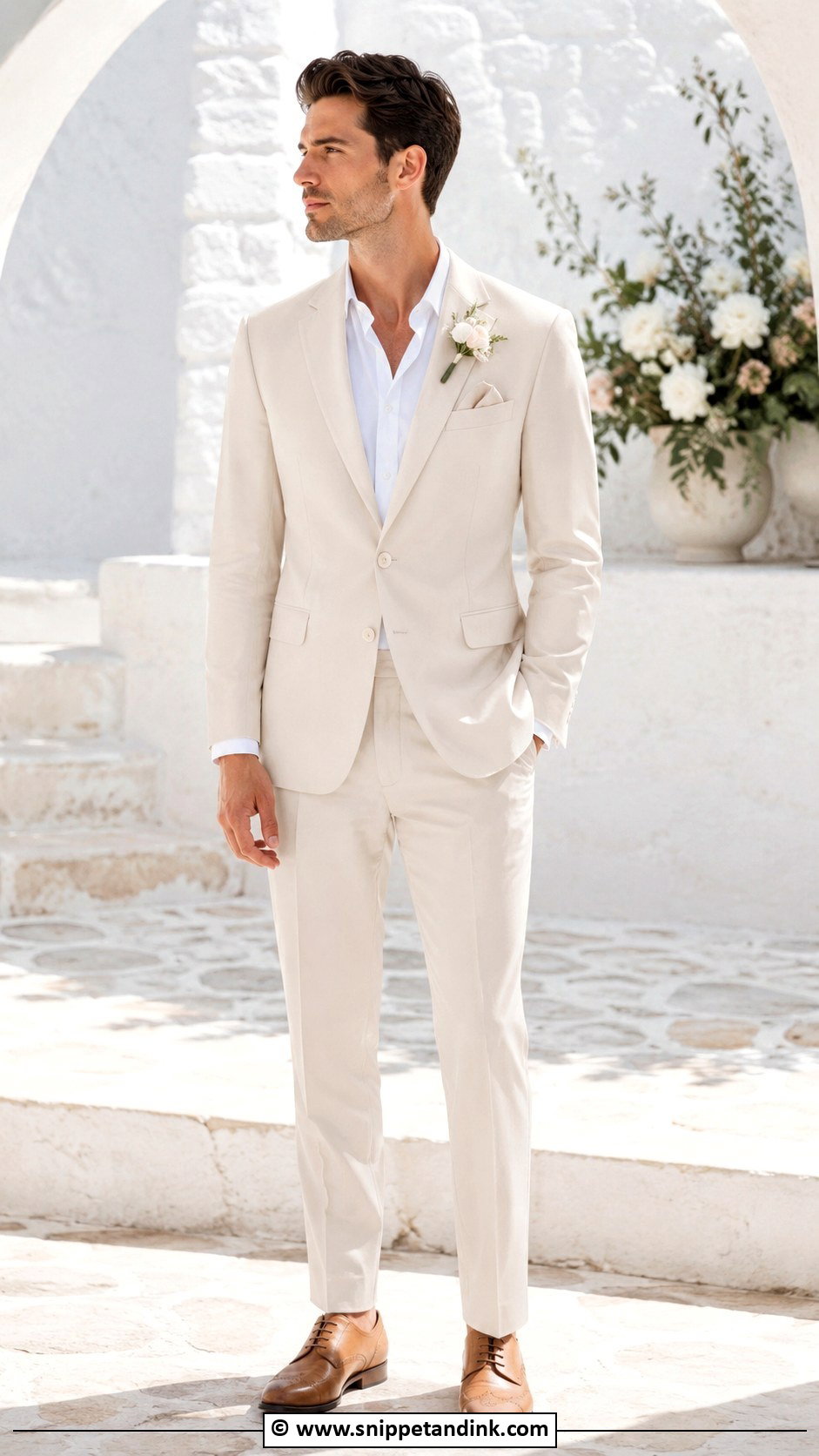
Cream is a groom’s or couple’s color, not a guest’s, unless the couple has said otherwise; it sits too close to bridal white. For the person getting married, though, it looks memorable in summer, coastal and courthouse photos. Go monochrome with an ivory shirt, or add contrast with tan shoes and a soft patterned tie. Cream wool marks easily, so I’d plan the meal and the red wine around it.
8. White Wedding Suit
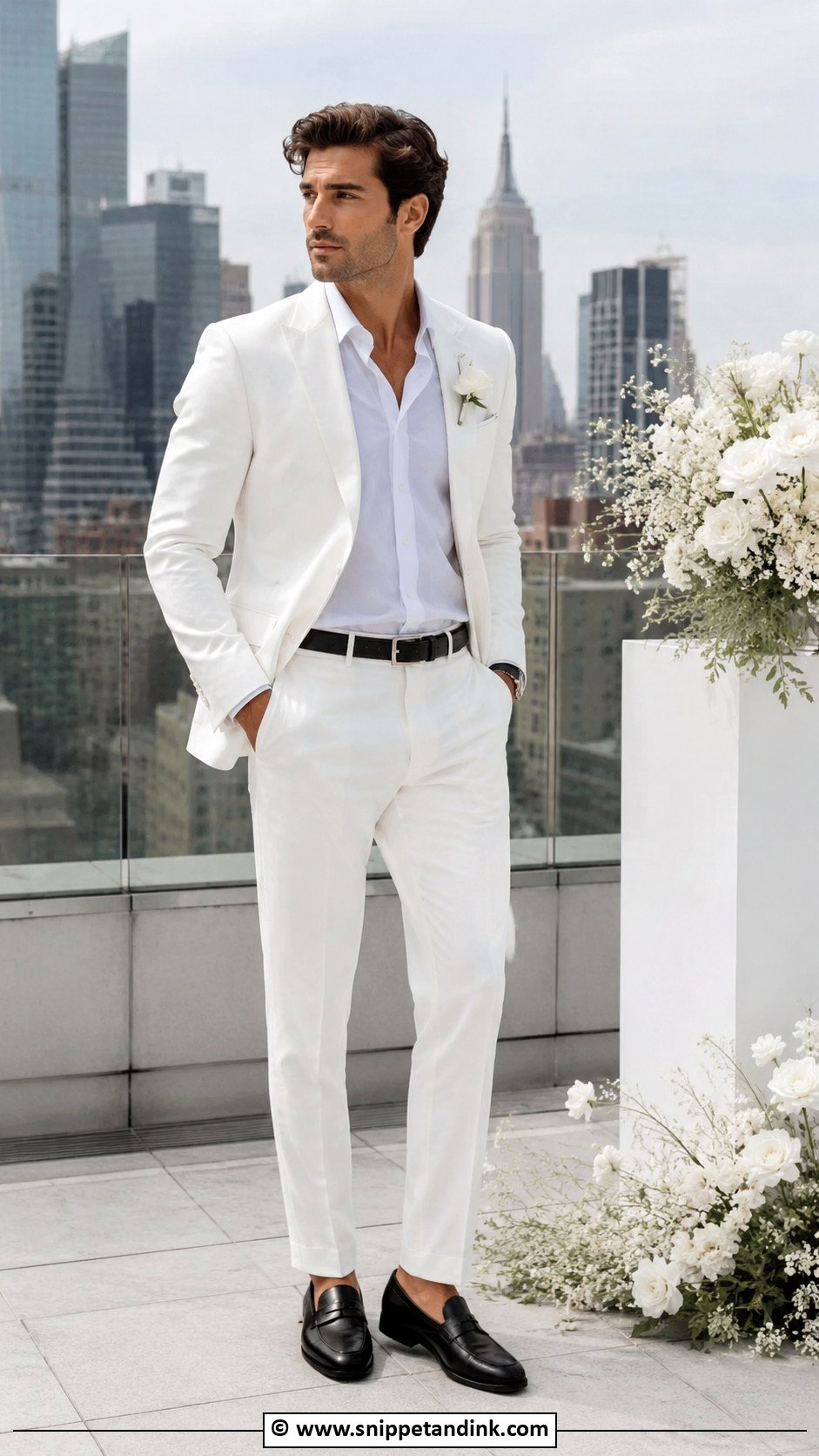
A white suit is a statement, and it only works for the people getting married or the celebrant, unless the invitation asks for all white. It suits rooftops, beaches and fashion-forward courthouse ceremonies. Black loafers add sharp contrast; matching white shoes make it a full monochrome look. Keep the shirt plain and skip extra accessories. Choose a slightly heavier, lined cloth, because thin white fabric can show pockets and shirt-tails through it.
9. Sage Green Wedding Suit
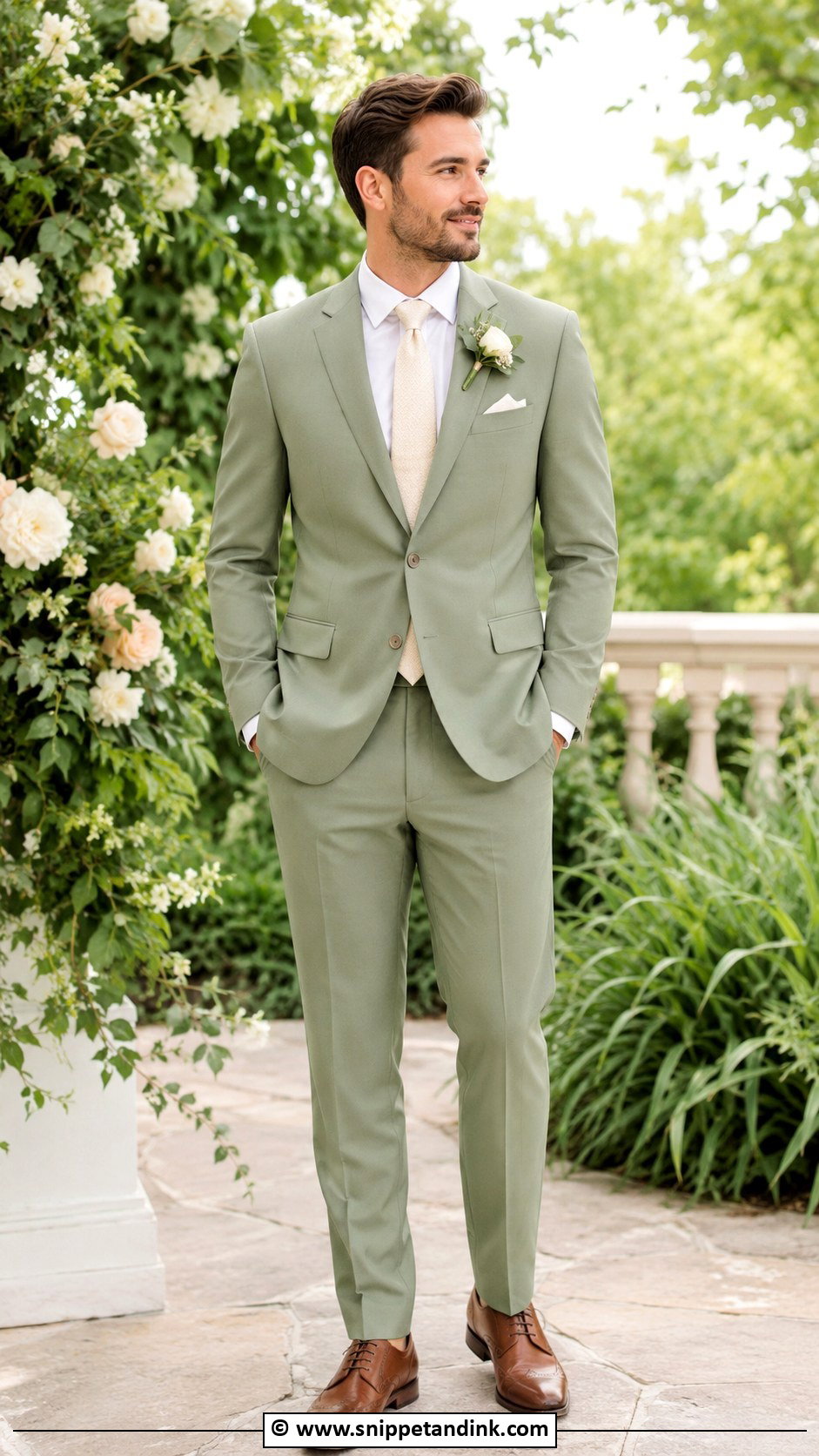
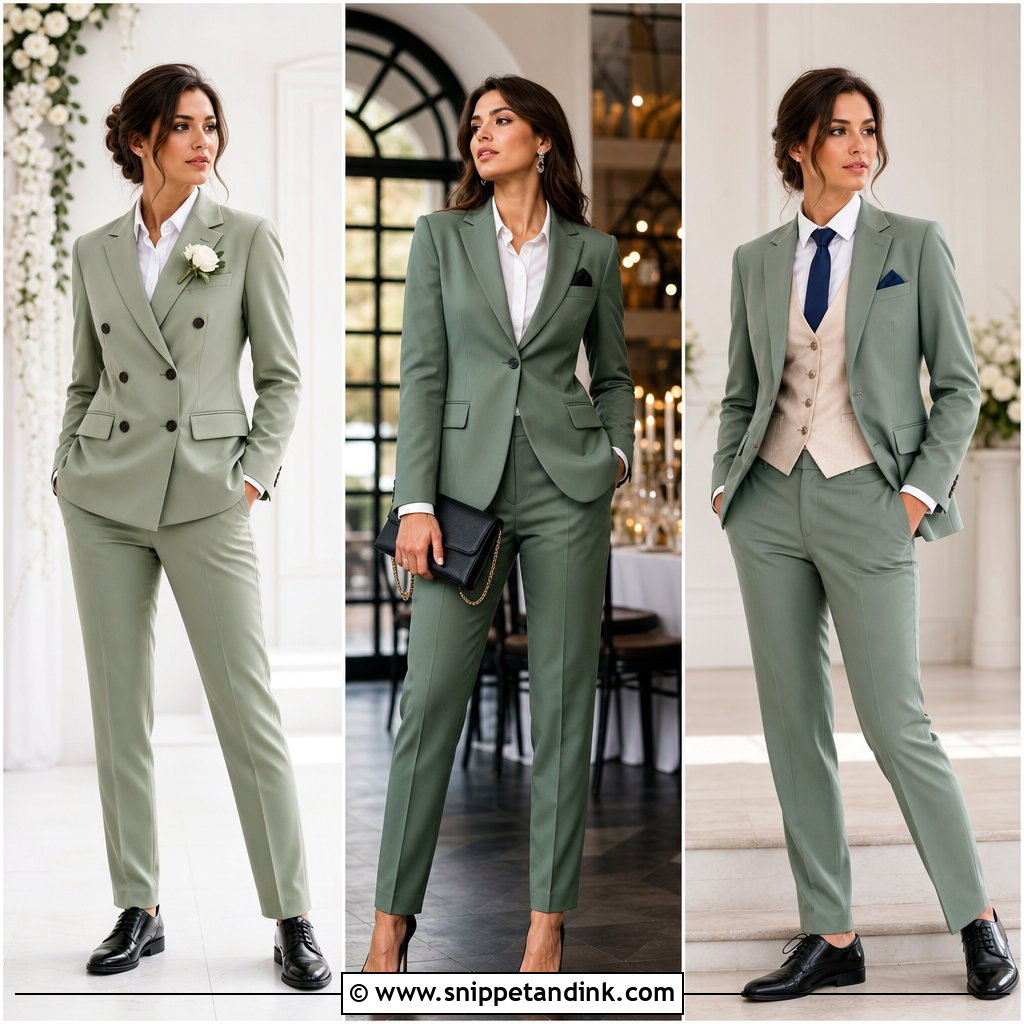
Sage has become one of the most requested colors for outdoor weddings, and it looks calm against greenery without fading into it. Choose a matte cloth; a shiny sage turns synthetic-looking in sunlight. A white shirt, brown shoes and accessories in cream or blush keep it soft. For groomsmen, sage sits well beside bridesmaids in neutral, terracotta or pastel dresses. Garden, barn and vineyard settings are its home.
10. Olive Green Wedding Suit
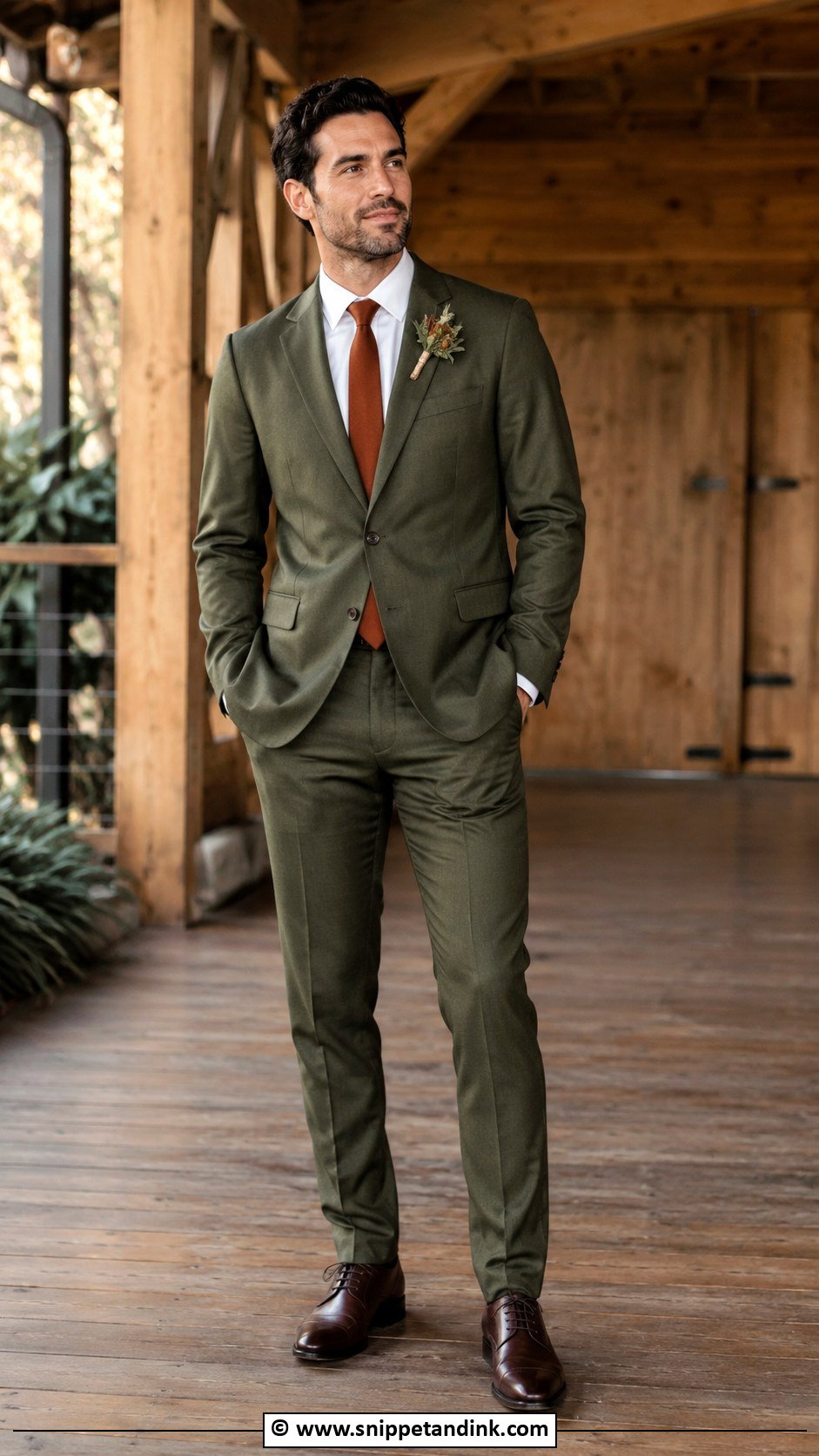
Olive has more depth than sage and a little more weight, which makes it feel right at autumn weddings with dried flowers and wood. It pairs with a white or cream shirt, dark brown shoes and a tie in rust, mustard or navy. Since the color already brings personality, I’d keep the cut plain and the pocket square simple. Olive cloth varies a lot from mill to mill, so judge it in daylight, not under shop lighting.
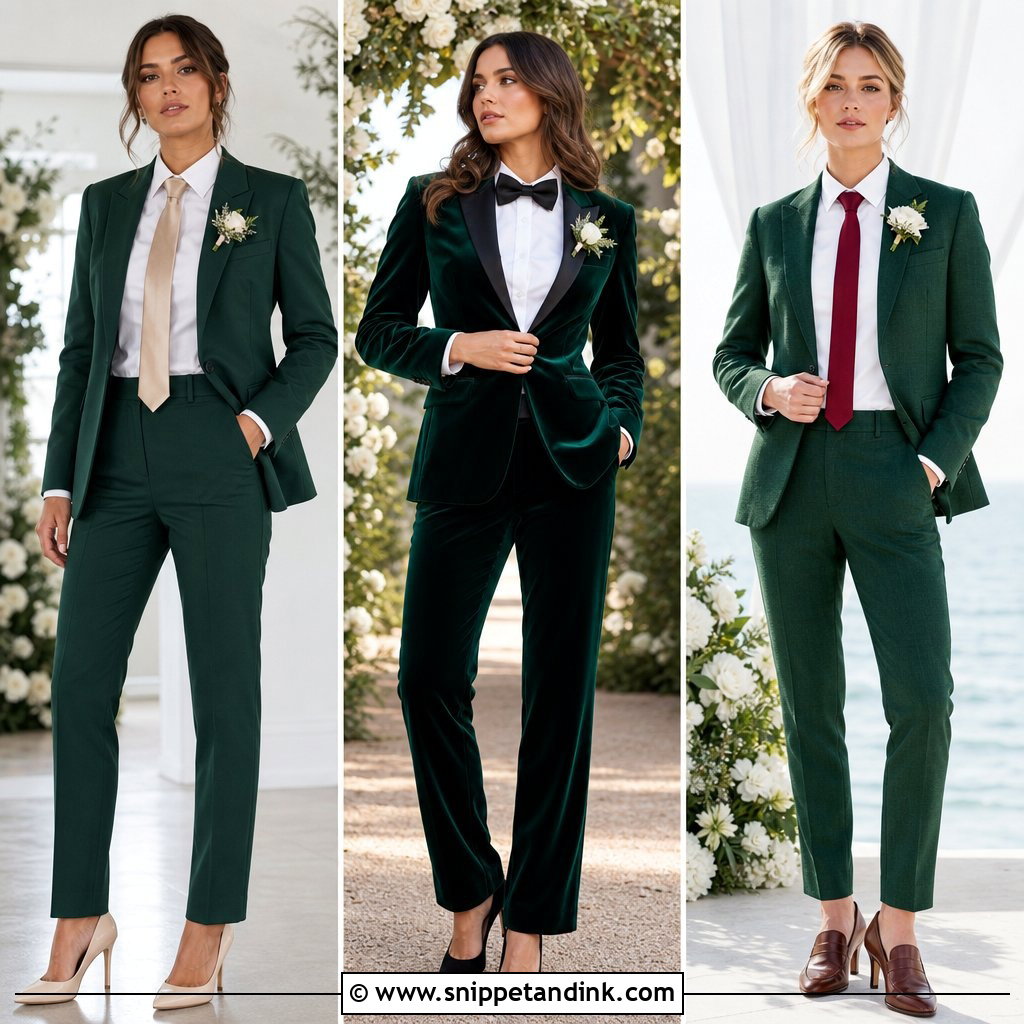
11. Forest Green Wedding Suit
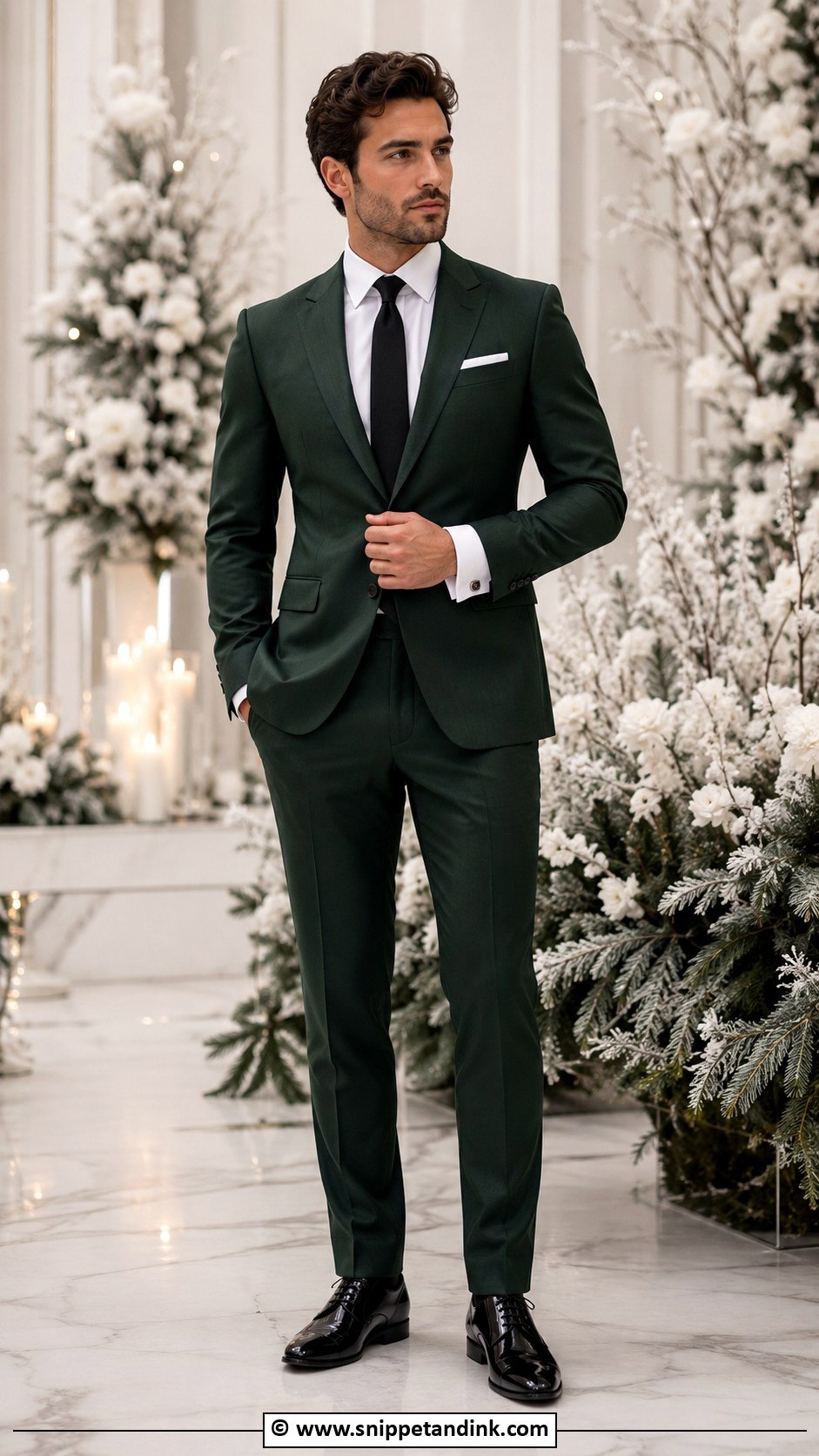
Forest green is the color I suggest to grooms who want to stand apart from their groomsmen in an evening or winter wedding. In a wool or velvet, it looks rich under candlelight. A white shirt, black shoes and a dark tie make it sleek; brown shoes and a cream tie soften it. It reads formal enough for a major occasion while still being unmistakably different from a navy wedding party.
12. Emerald Green Wedding Suit
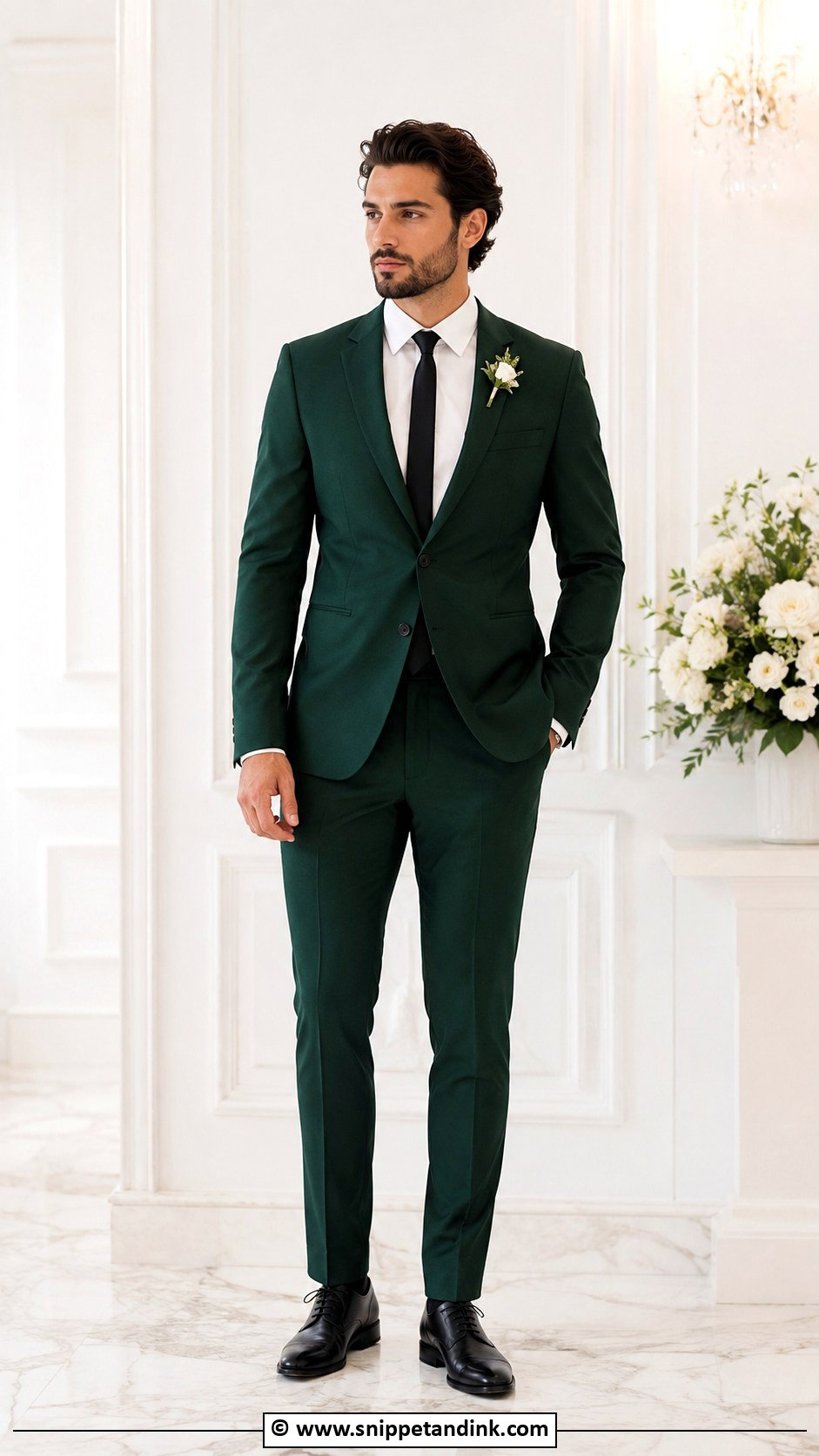
Emerald is brighter and more dramatic than forest, so the rest of the outfit needs to stay disciplined: white shirt, black shoes, nothing extra. It suits evening receptions and hotel weddings with jewel-tone decor. If a full emerald suit feels like too much, an emerald jacket with black trousers keeps the formality and still brings color. That split also makes the jacket easier to wear again.
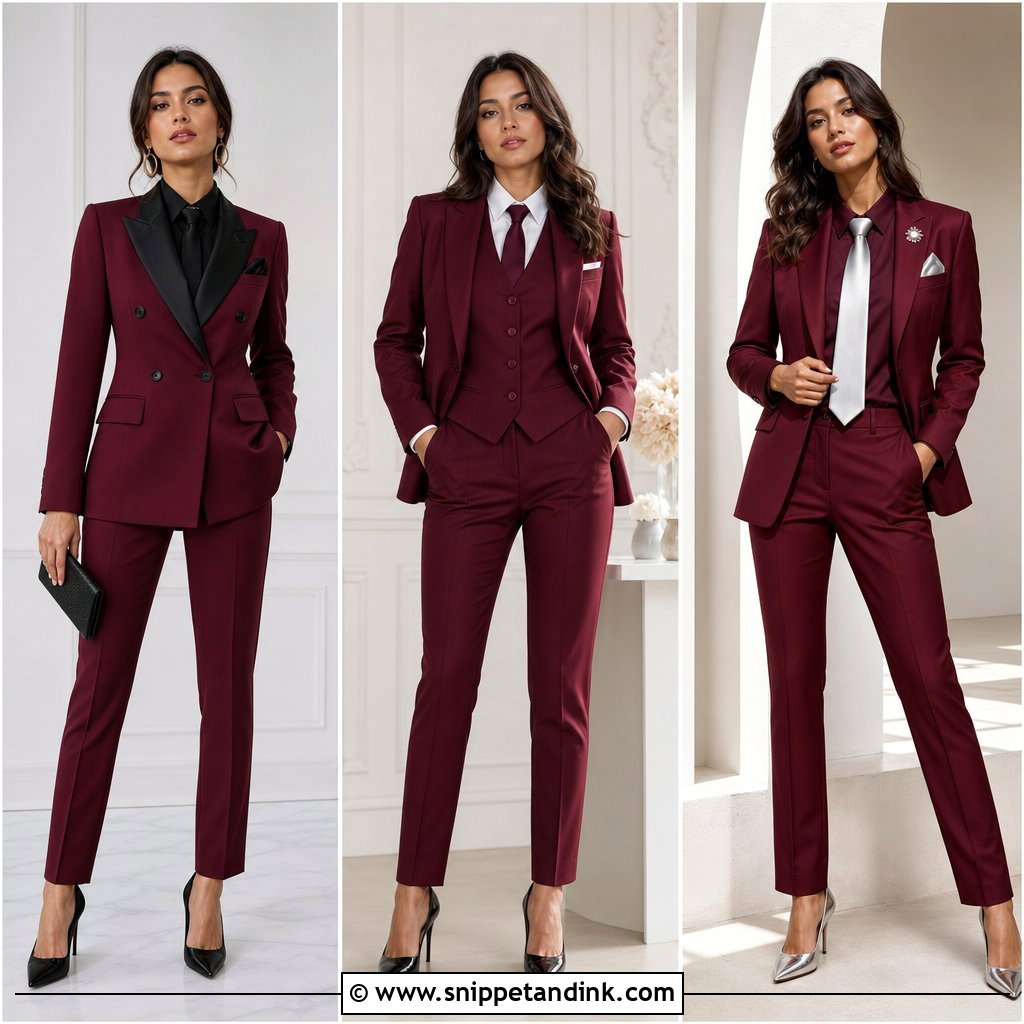
13. Burgundy Wedding Suit
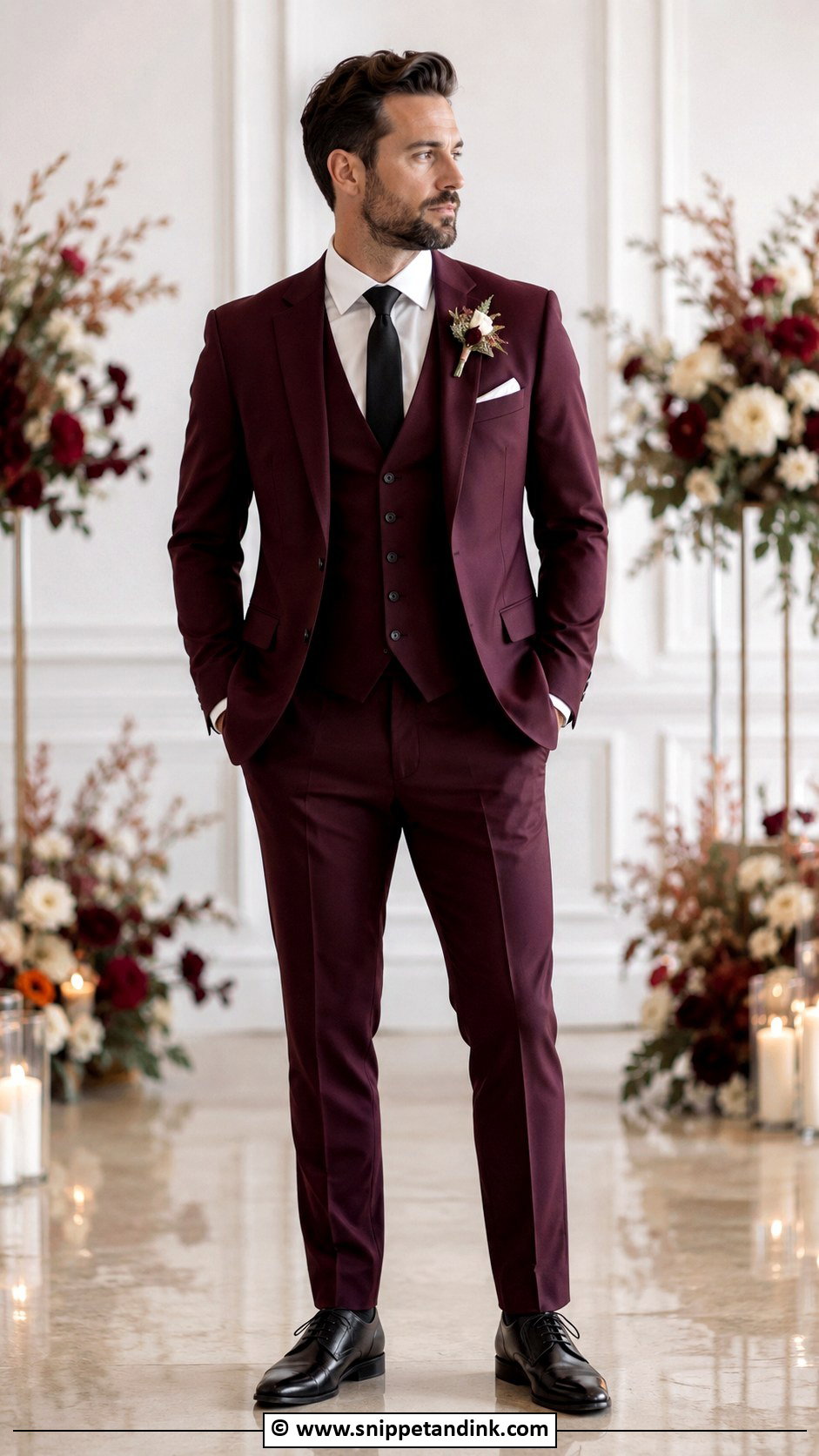
Burgundy carries enough color to feel special but still reads dressy, especially in autumn and winter. With a white shirt, black shoes and a black tie it goes formal; with brown shoes and a cream tie it warms up. A three-piece burgundy suit gives a groom a polished, finished look. Guests in burgundy should keep the accessories quiet so they don’t compete with the wedding party.
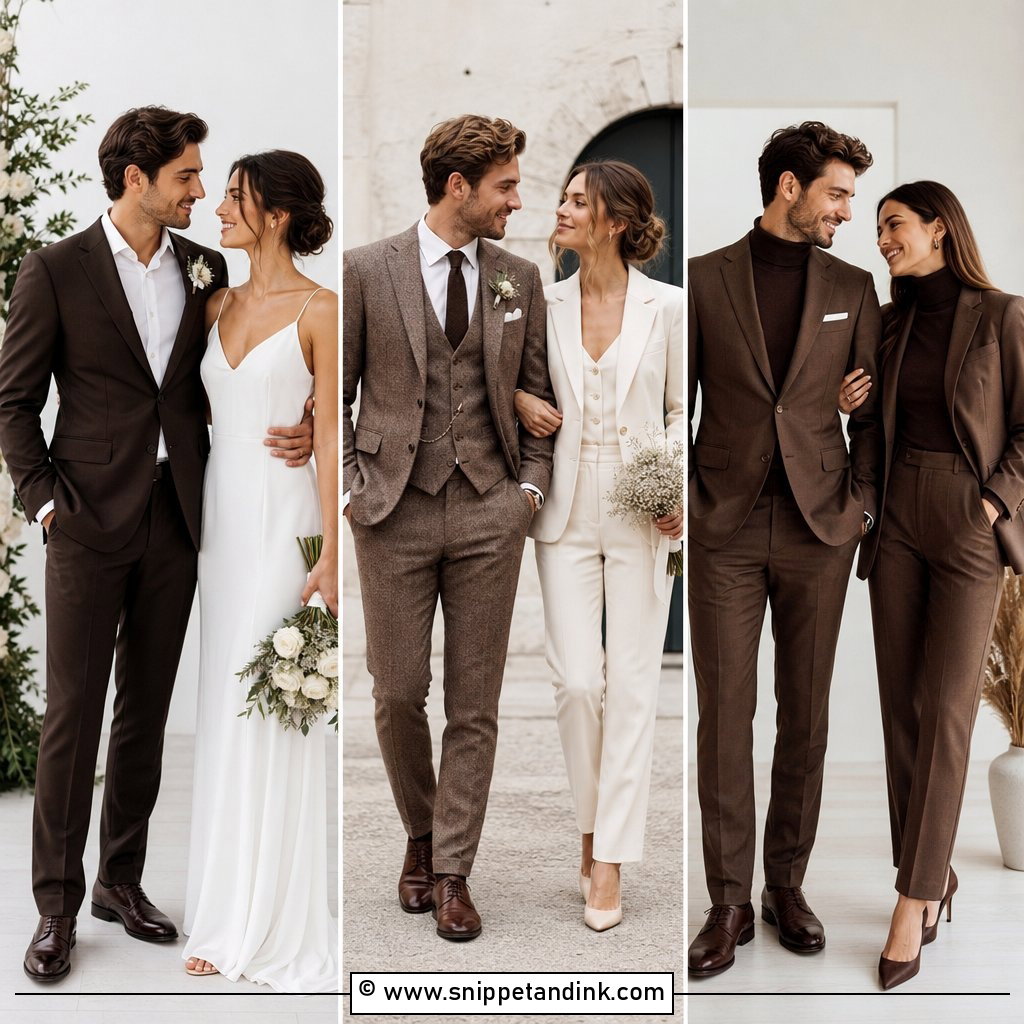
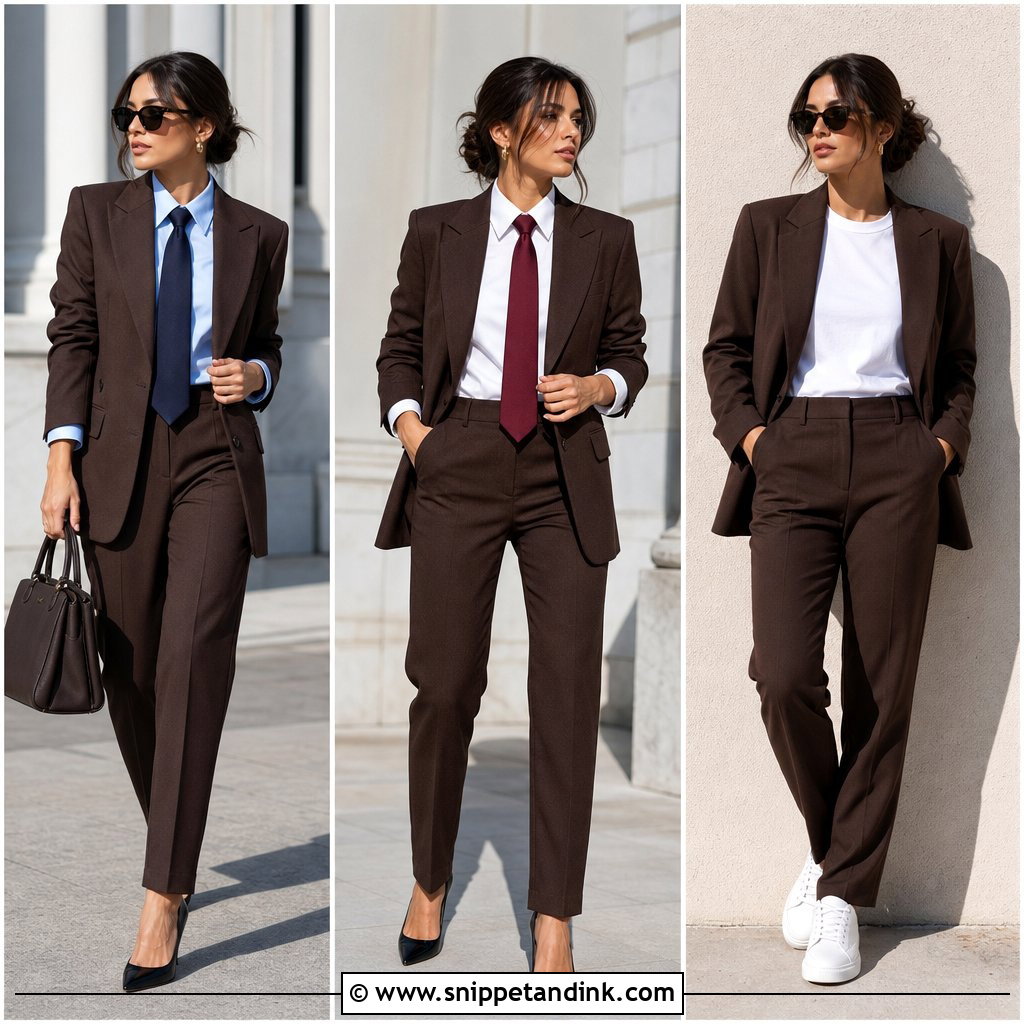
14. Brown Wedding Suit
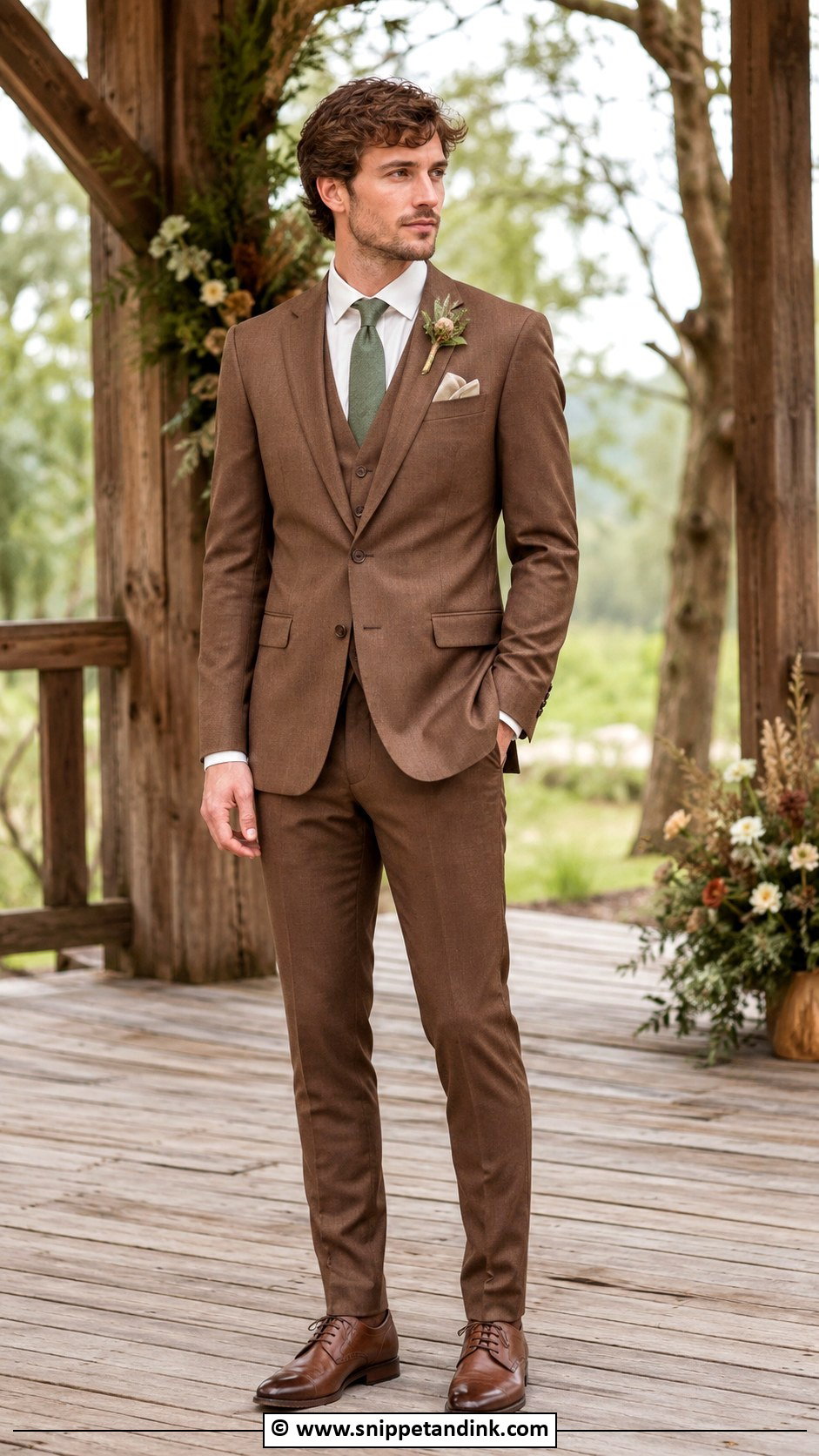
Brown suits have made a real comeback, and they flatter warm skin tones in a way gray rarely does. Chocolate reads formal; a lighter tobacco brown suits daytime. Texture is what makes brown work: a plain smooth brown can look flat, while flannel in autumn or a linen blend in summer gives it depth. A cream shirt, brown leather shoes and a tie in tan, sage or rust complete it.
15. Chocolate Brown Wedding Suit
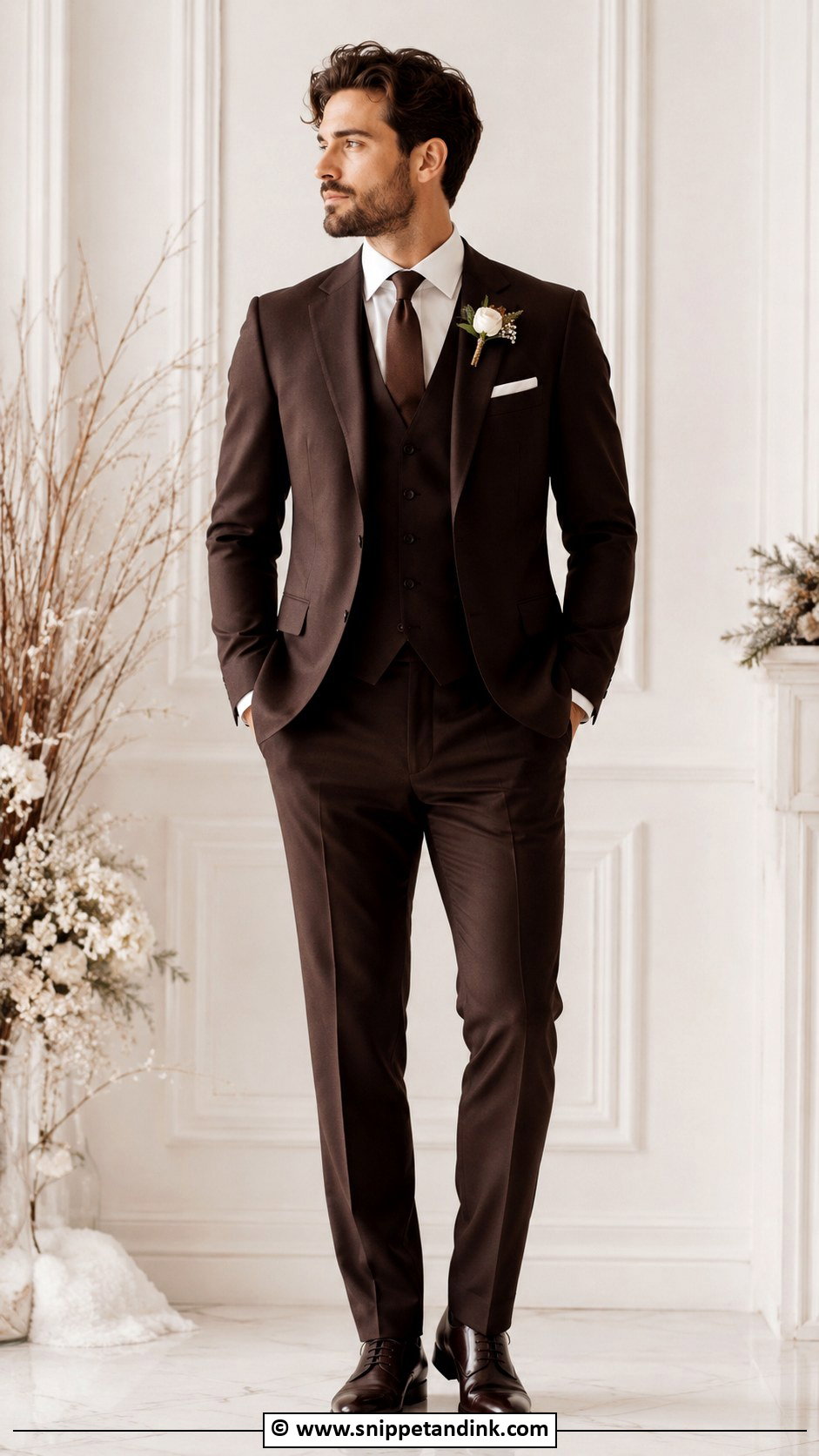
Chocolate is the darkest of the browns and a real alternative to black or navy for someone who wants formality with warmth. A white or ivory shirt, dark brown shoes and a tonal tie keep it refined, and a matching waistcoat suits a modern groom. It pairs naturally with cream flowers, copper accents and candlelight. Keep the silhouette sharp, because a deep brown in a loose cut starts to look heavy.
16. Rust Wedding Suit
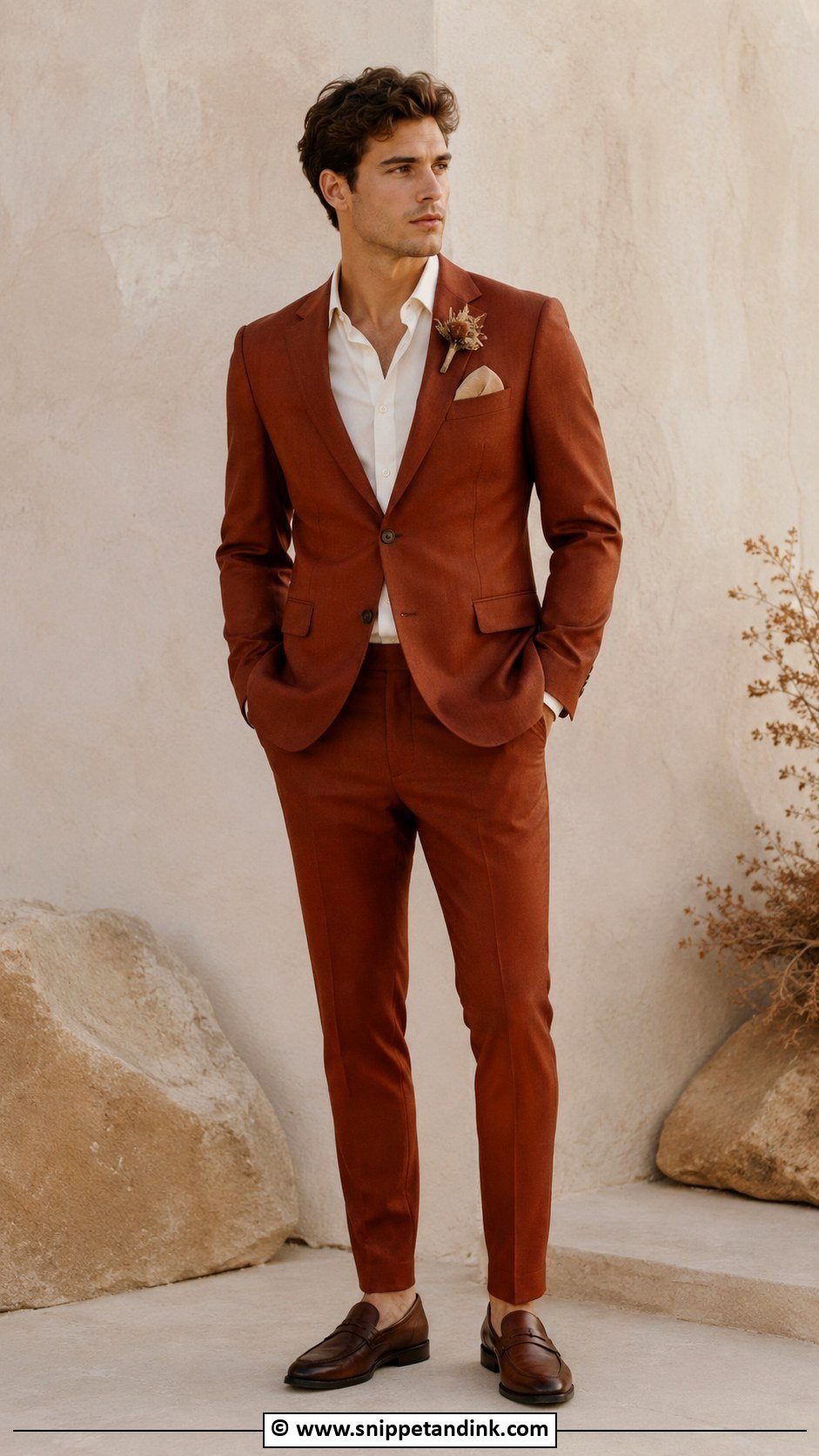
Rust is a personality suit. It’s less formal than navy or charcoal, so I’d save it for autumn, desert or outdoor weddings where the setting supports the color. Because it’s already bold, everything else should be quiet: cream shirt, brown shoes, a plain tie in tan or olive. A loud pocket square on a rust suit is one detail too many. Let the cloth carry the look.
17. Dusty Blue Wedding Suit
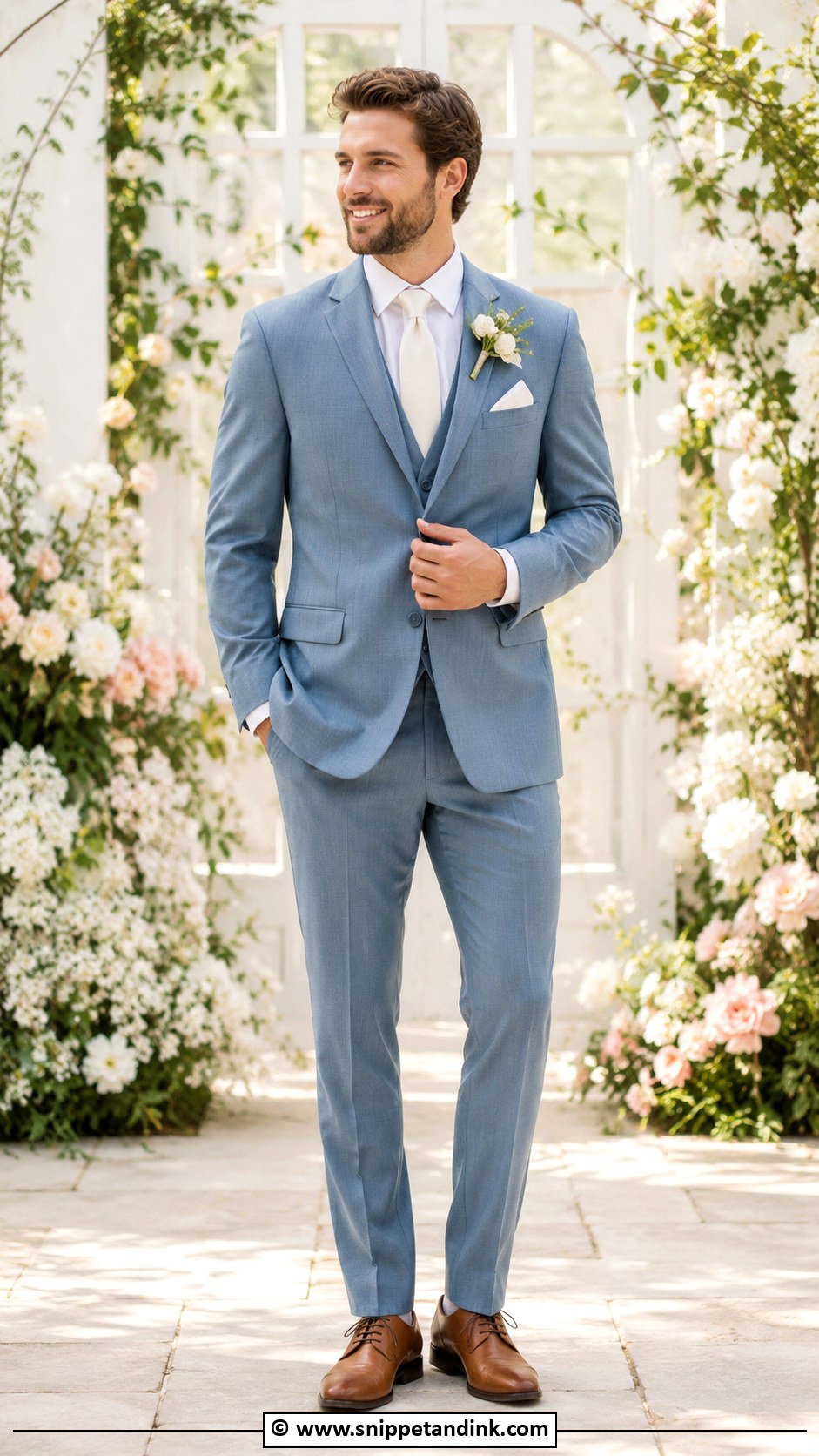
Dusty blue gives color without brightness, so it suits spring and summer weddings in gardens, on the coast or in light-filled rooms. A white shirt and tan shoes keep it fresh, with accessories in ivory, blush or sage. Groomsmen in dusty blue look coordinated and photograph cleanly. For a groom, a three-piece version with a pale tie adds just enough formality to separate him from the party.
18. Royal Blue Wedding Suit
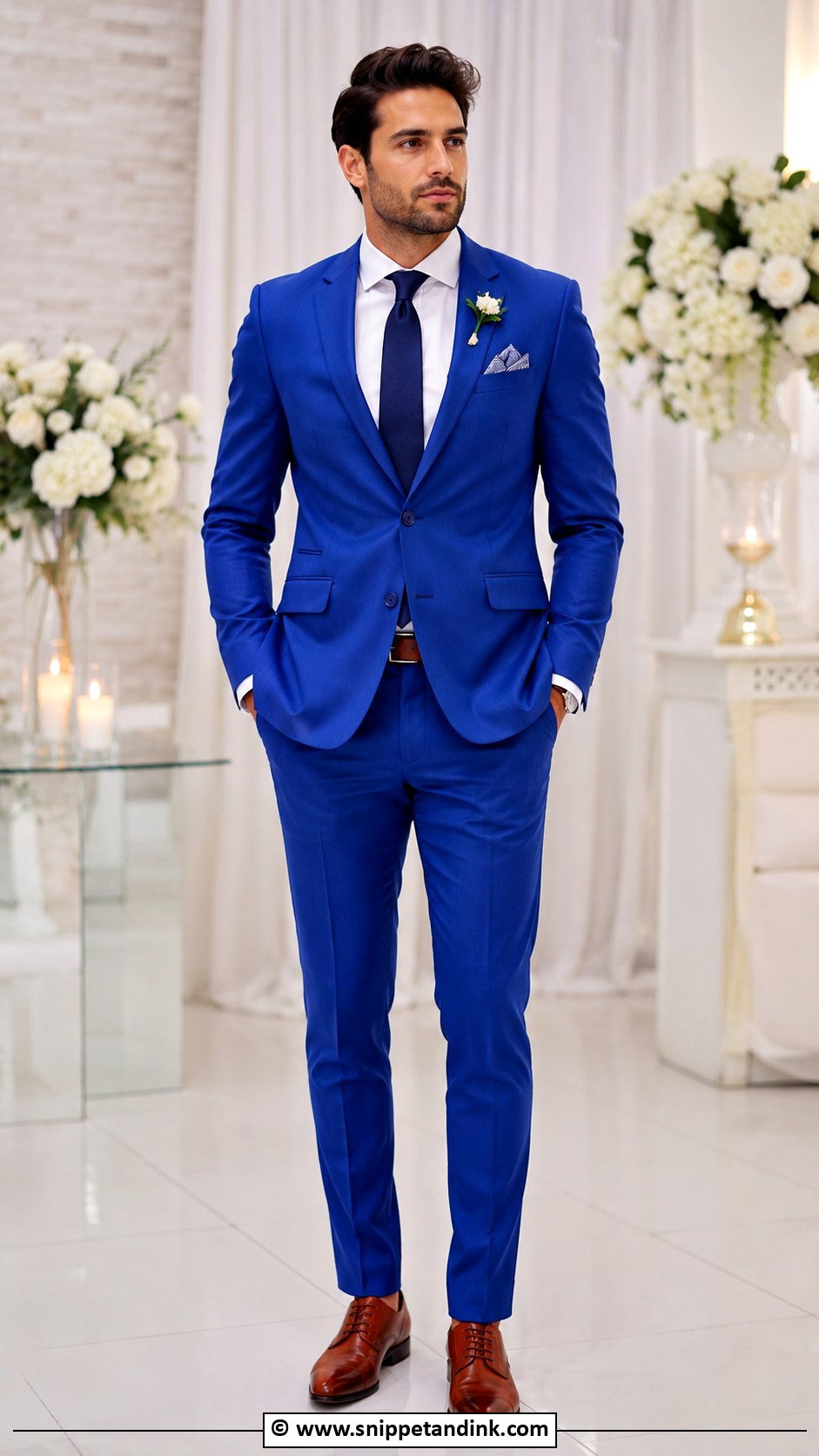
Royal blue is a confident choice and a loud one, so it belongs at festive weddings where color is part of the mood. Pair it with a white shirt, brown or black shoes and very simple accessories. A navy tie tones it down; a patterned pocket square makes it playful. Royal blue is strong on camera, which is why I’d check it against the wedding palette before committing.
19. Powder Blue Wedding Suit
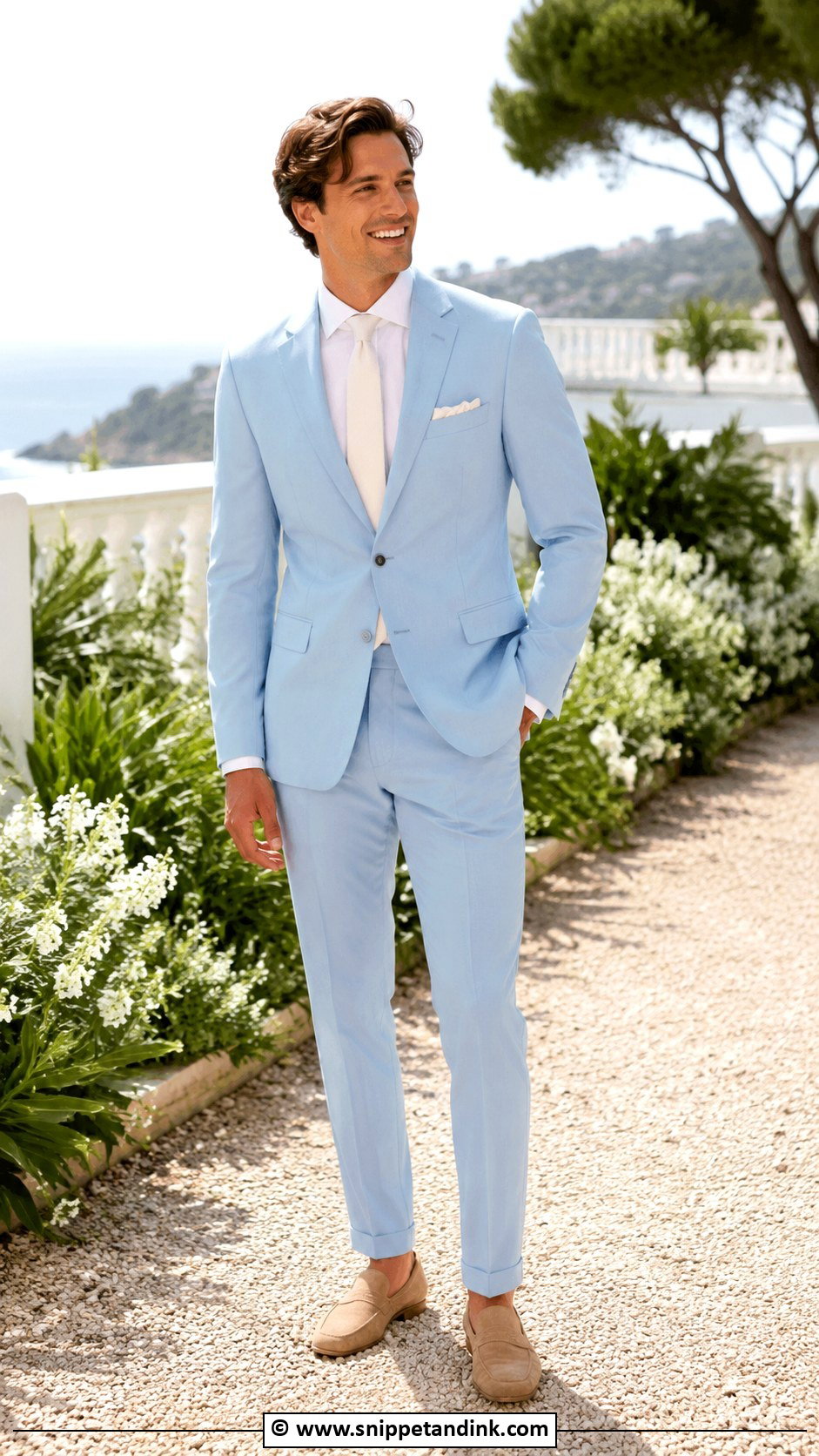
Powder blue is the brightest daytime option here, at its best at beach venues and garden parties. It must look crisp, so choose a tailored jacket and a cloth that doesn’t crumple, since wrinkled pale blue reads casual very quickly. Tan loafers, a white shirt and a tie in cream or pale yellow suit it. For spring groomsmen in a pastel palette, it’s an easy match.
20. Plaid Wedding Suit
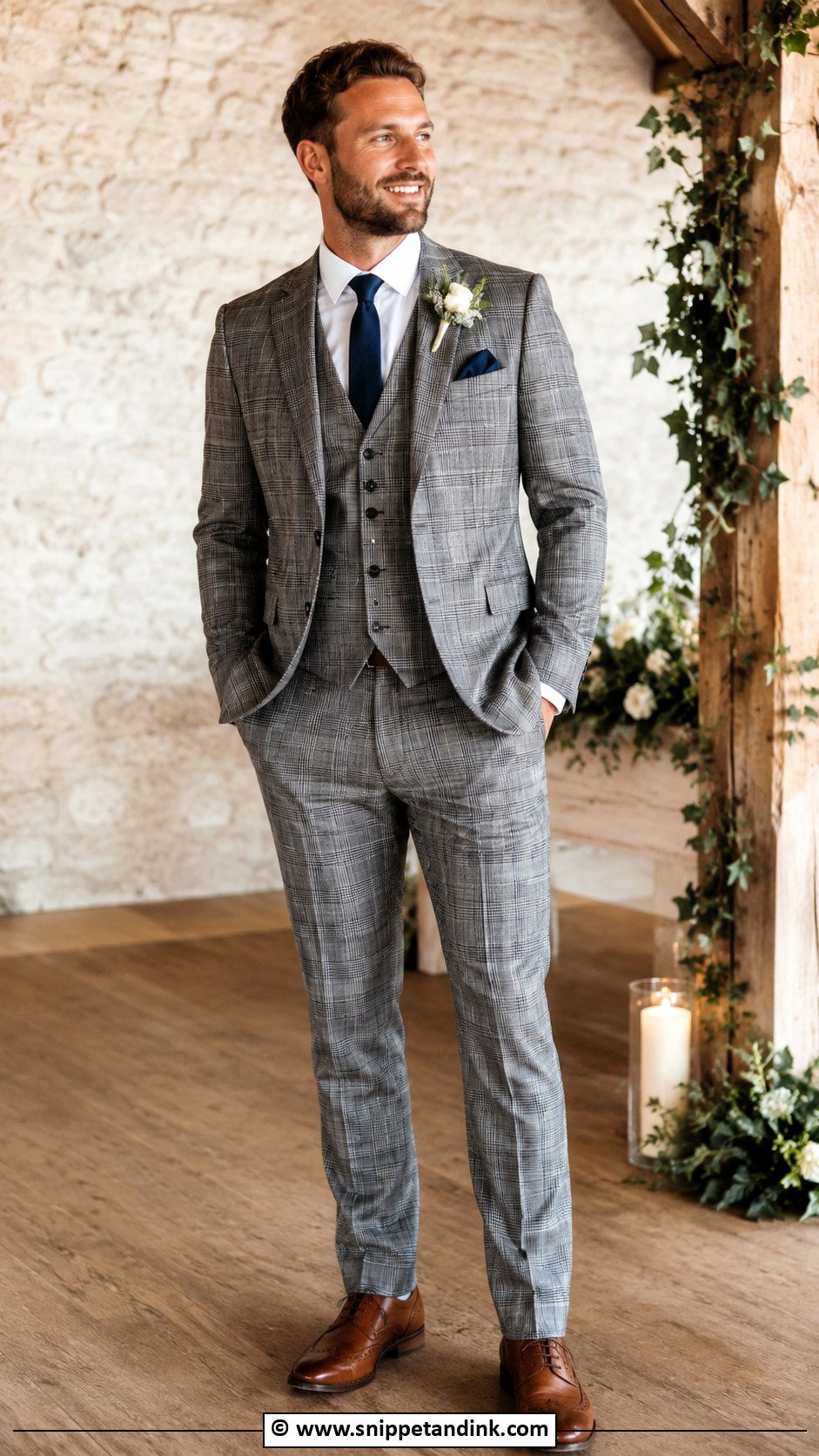
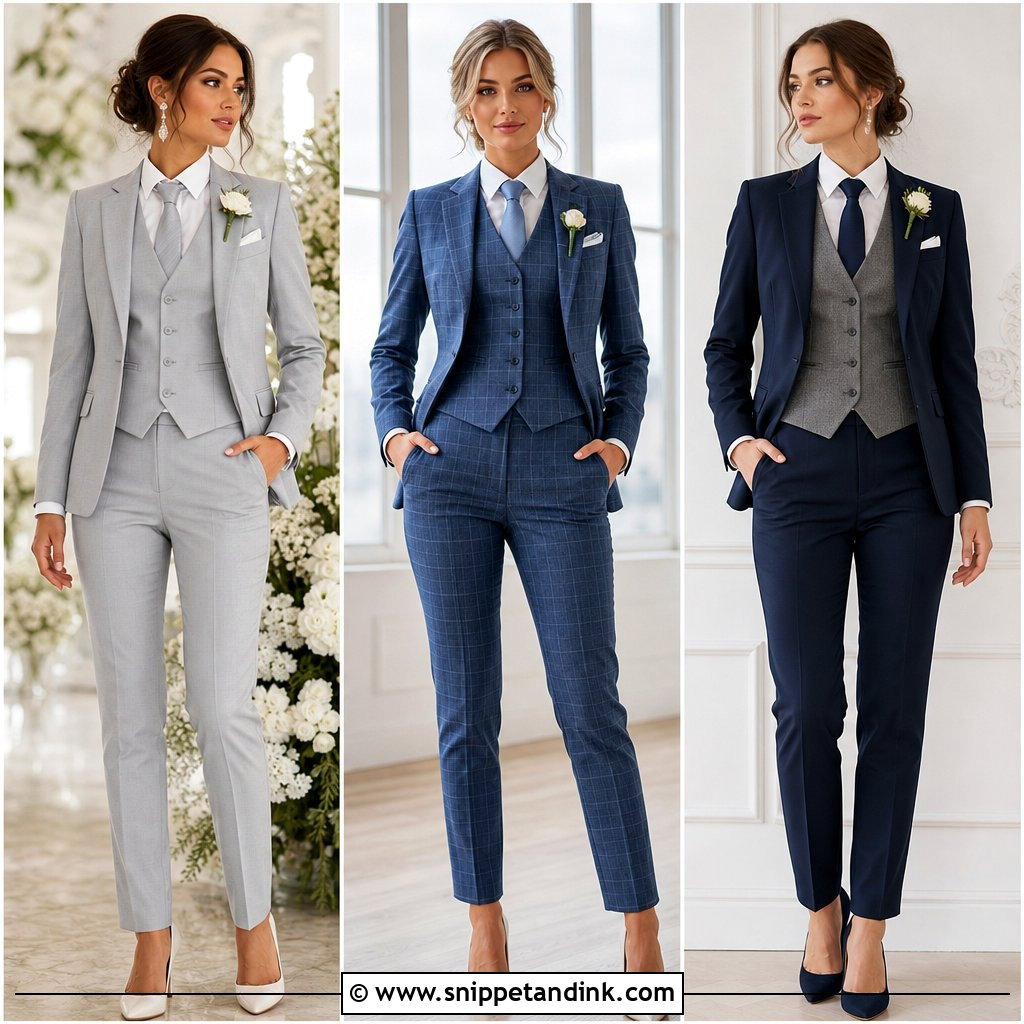
Pattern scale should follow the wearer’s build: larger frames carry bolder checks, slighter frames look better in a fine one. A plaid wedding suit in subtle gray, navy, brown or green suits rustic and autumn weddings. Keep the shirt plain, the tie simple and the shoes solid so the pattern doesn’t fight anything. Guests may find a plaid jacket with solid trousers easier to wear.
21. Checked Wedding Suit
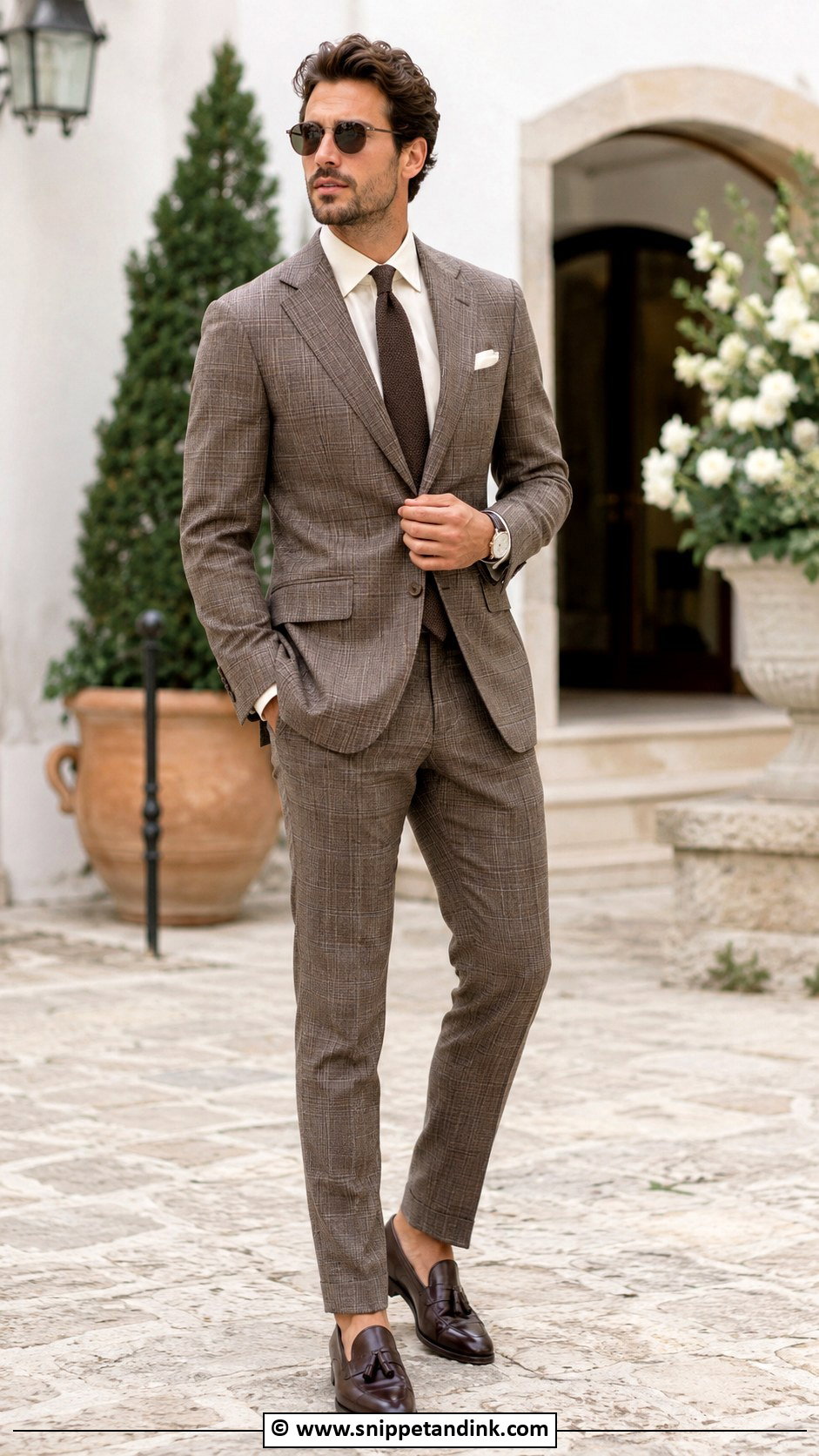
Checks give a slightly vintage feel, at home at daytime, countryside and courthouse weddings. Small checks read refined; large windowpanes read fashion. Pull the tie color from one of the lines in the check, so the outfit looks planned. Brown brogues or loafers sit well with gray, tan and brown checks. A matching waistcoat completes a groom’s look; a two-piece is enough for a guest.
22. Pinstripe Wedding Suit
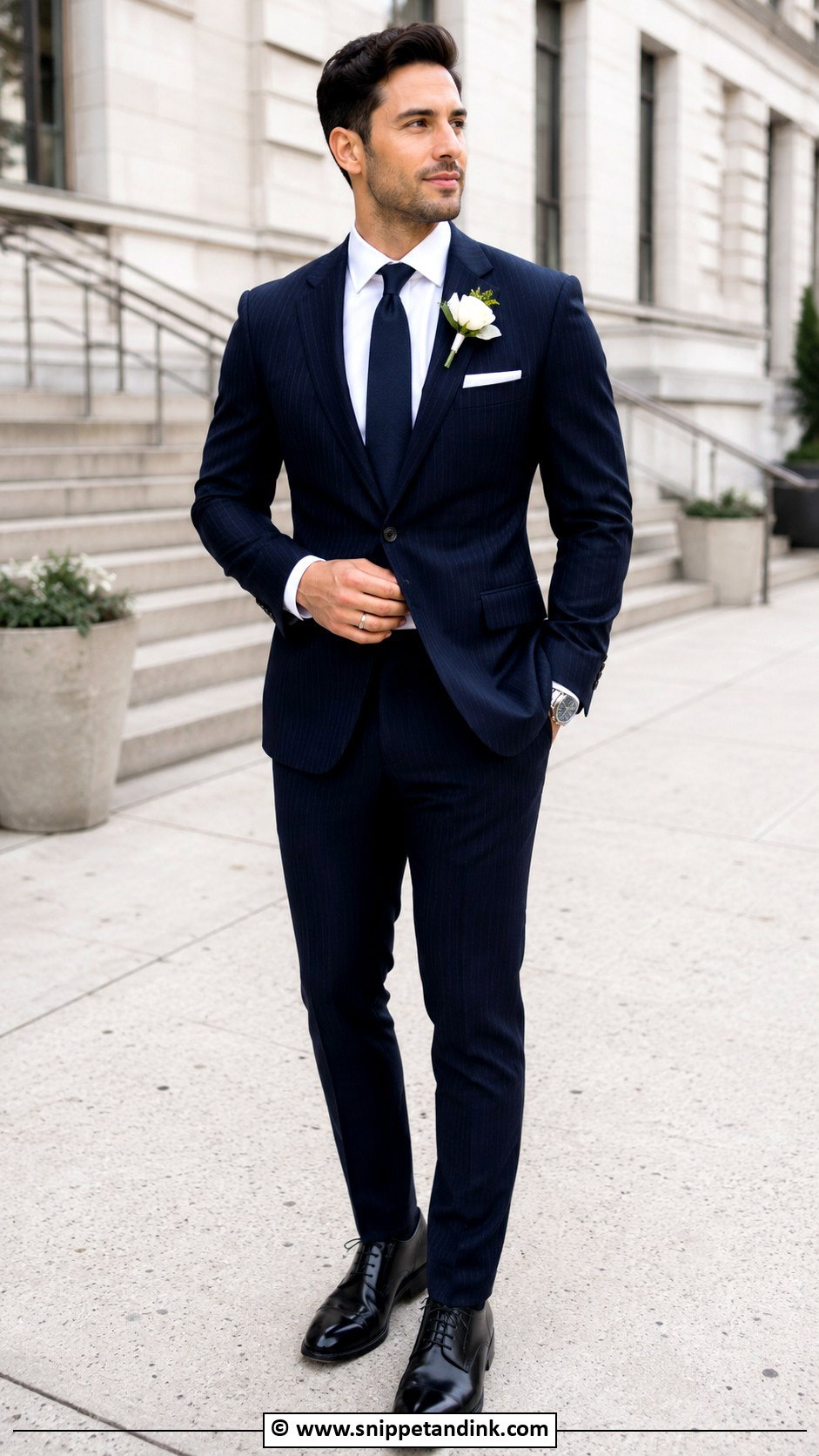
Pinstripes carry an office association, so they need wedding details to shift the mood. Navy, charcoal or black with a fine stripe look the most elegant. The stripes have to fall straight, which only happens when the jacket is tailored close but not tight; a pulling button turns the lines into curves. A white shirt, polished shoes and a simple tie keep it clean. A groom can add a boutonniere and pocket square to make it clearly a wedding suit.
23. Linen Wedding Suit
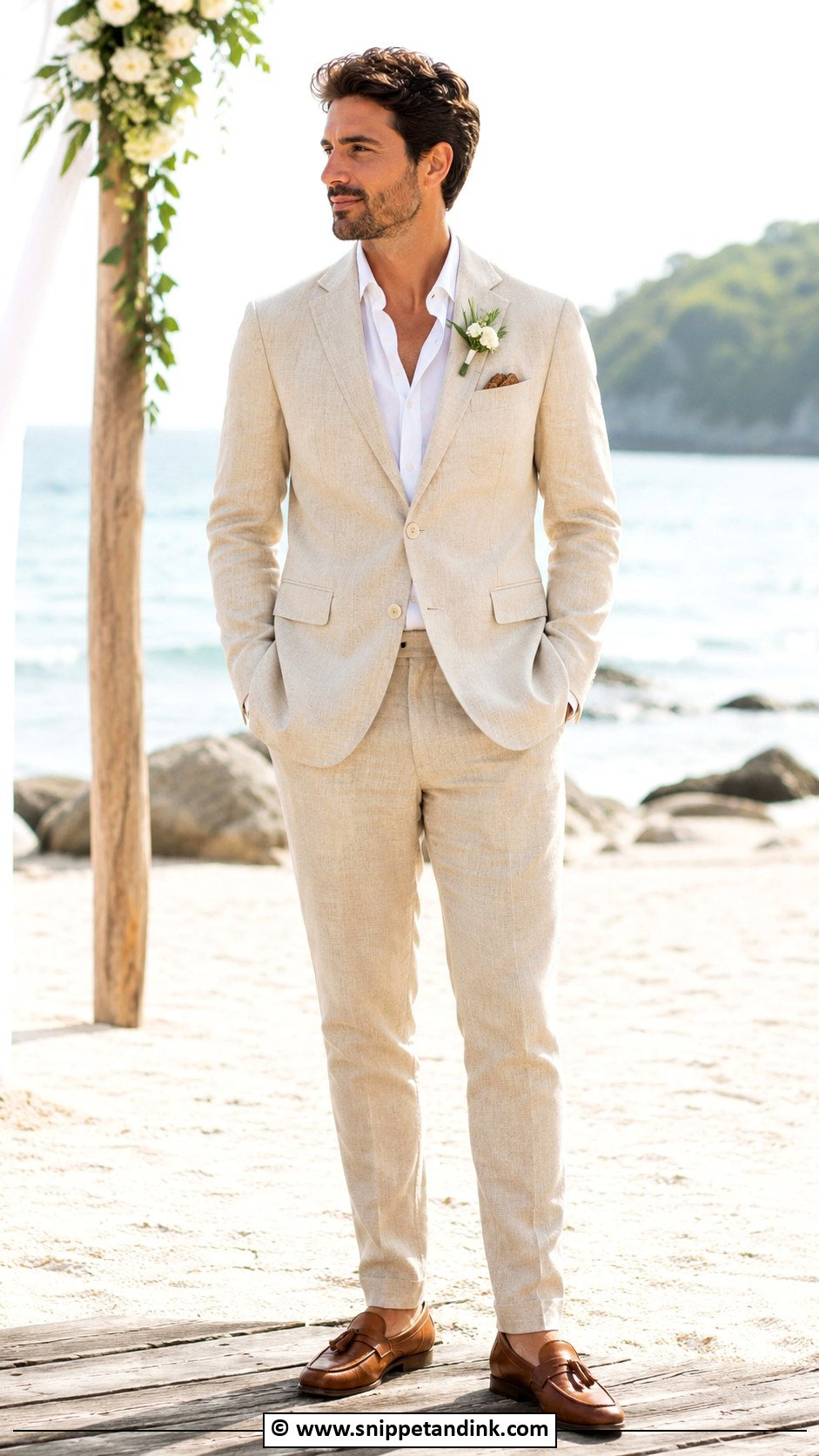
Linen breathes better than almost anything else in heat, and it creases; you can’t have one without the other. A half-lined or unlined jacket keeps it cooler still. Beige, tan, light gray, sage or soft blue suit warm-weather and destination weddings. Pair with a white shirt and loafers, with or without a tie depending on the dress code. Make sure the trousers are hemmed properly, since linen trousers that pool at the ankle look sloppy fast.
24. Seersucker Wedding Suit
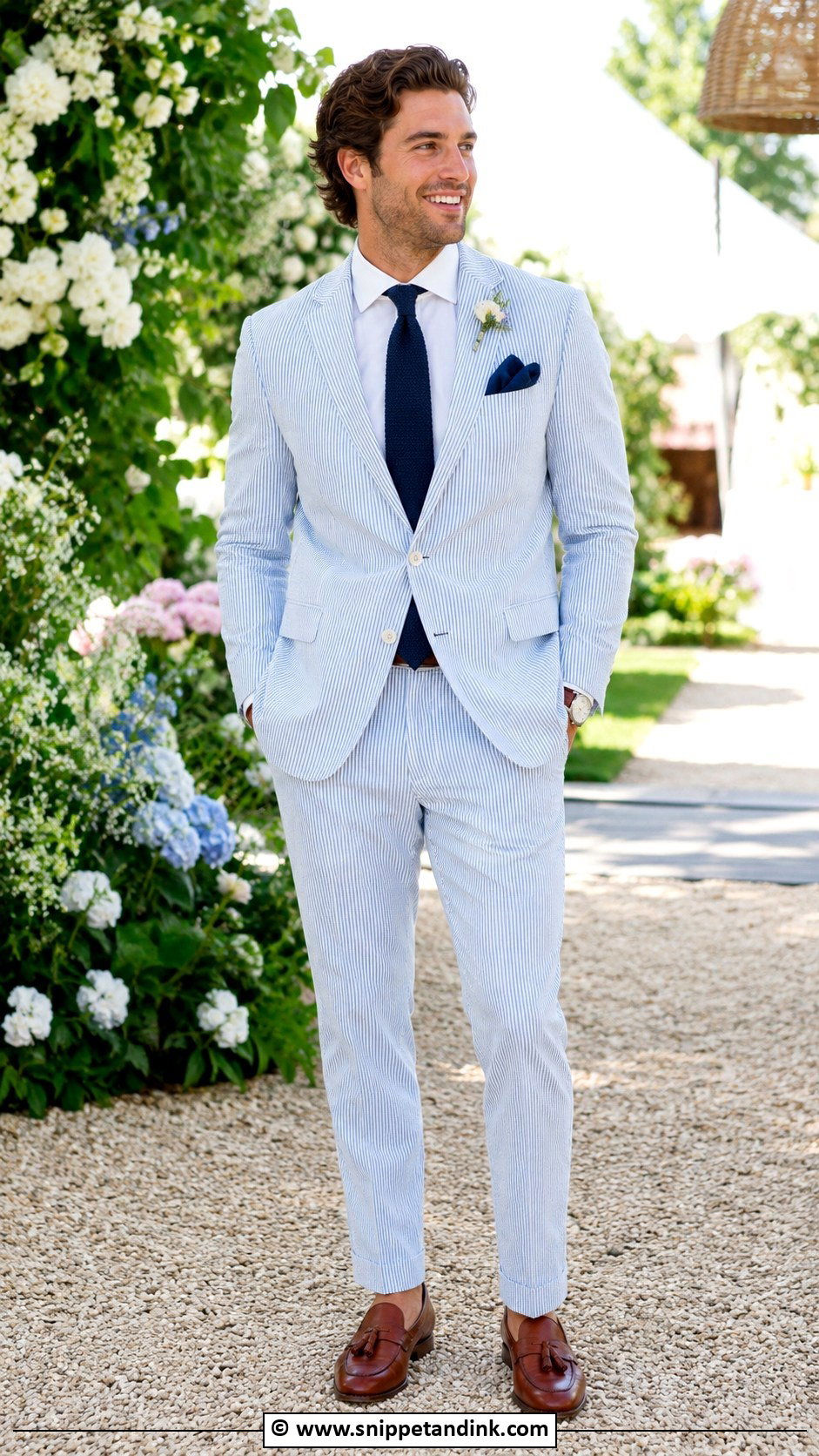
Seersucker’s puckered weave holds the cloth slightly away from the skin, which is why it stays cooler on hot summer days. Blue-and-white is the traditional version; gray or tan is subtler. It’s cheerful and preppy, so it fits relaxed or semi-formal outdoor weddings rather than formal evenings. A white shirt, brown loafers and a soft tie in navy or pale yellow finish it. For a groom, it works when the whole wedding is bright and casual.
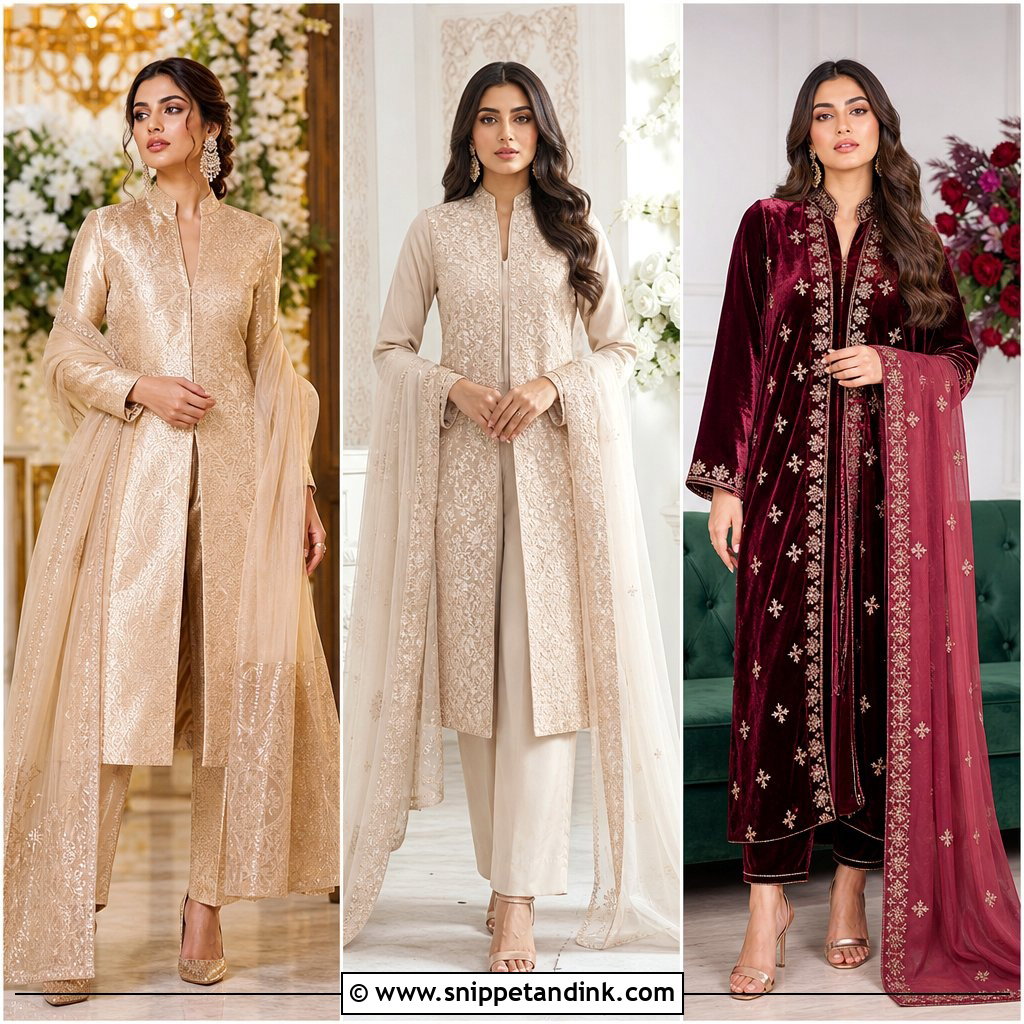
25. Velvet Wedding Suit
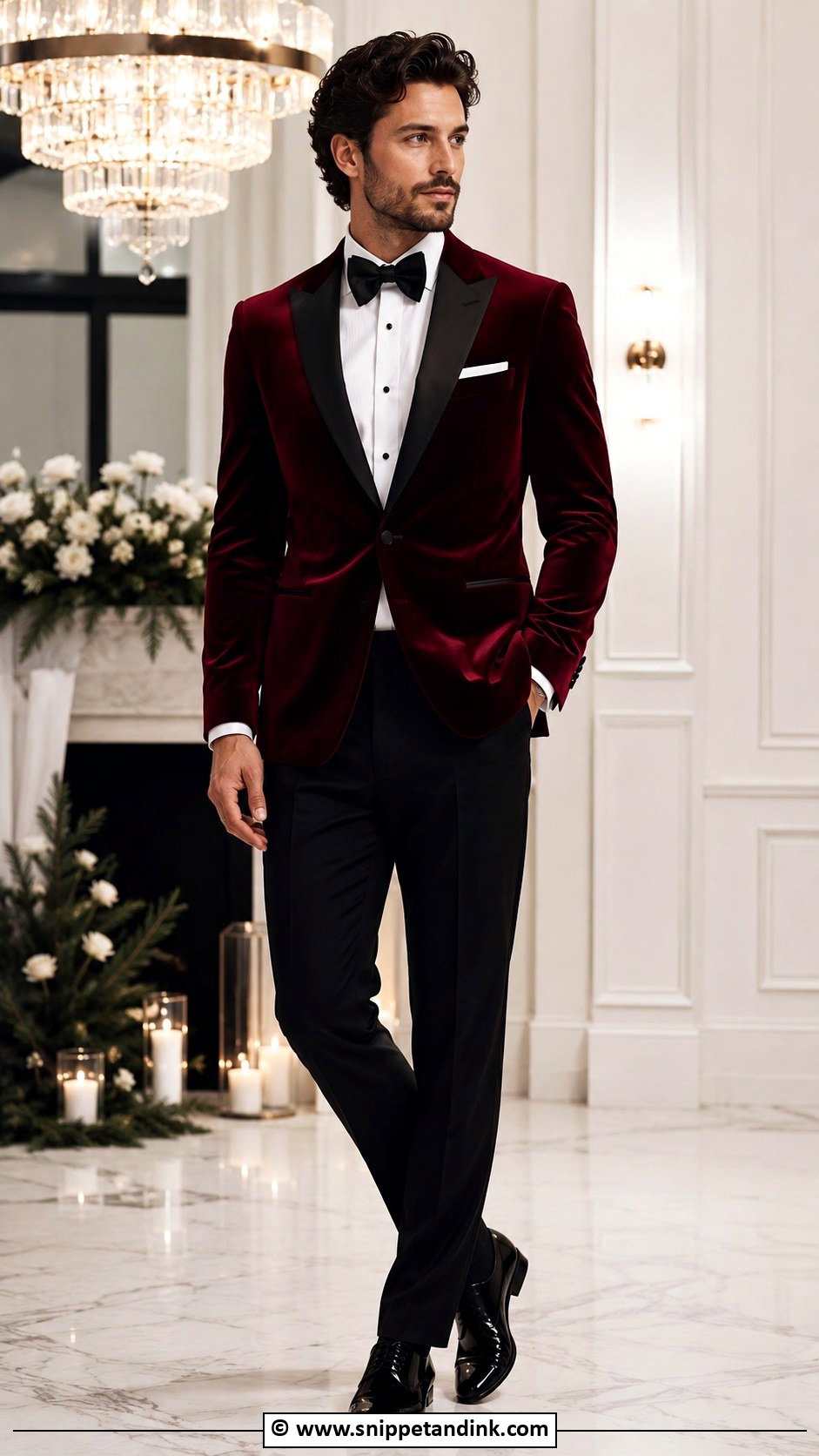
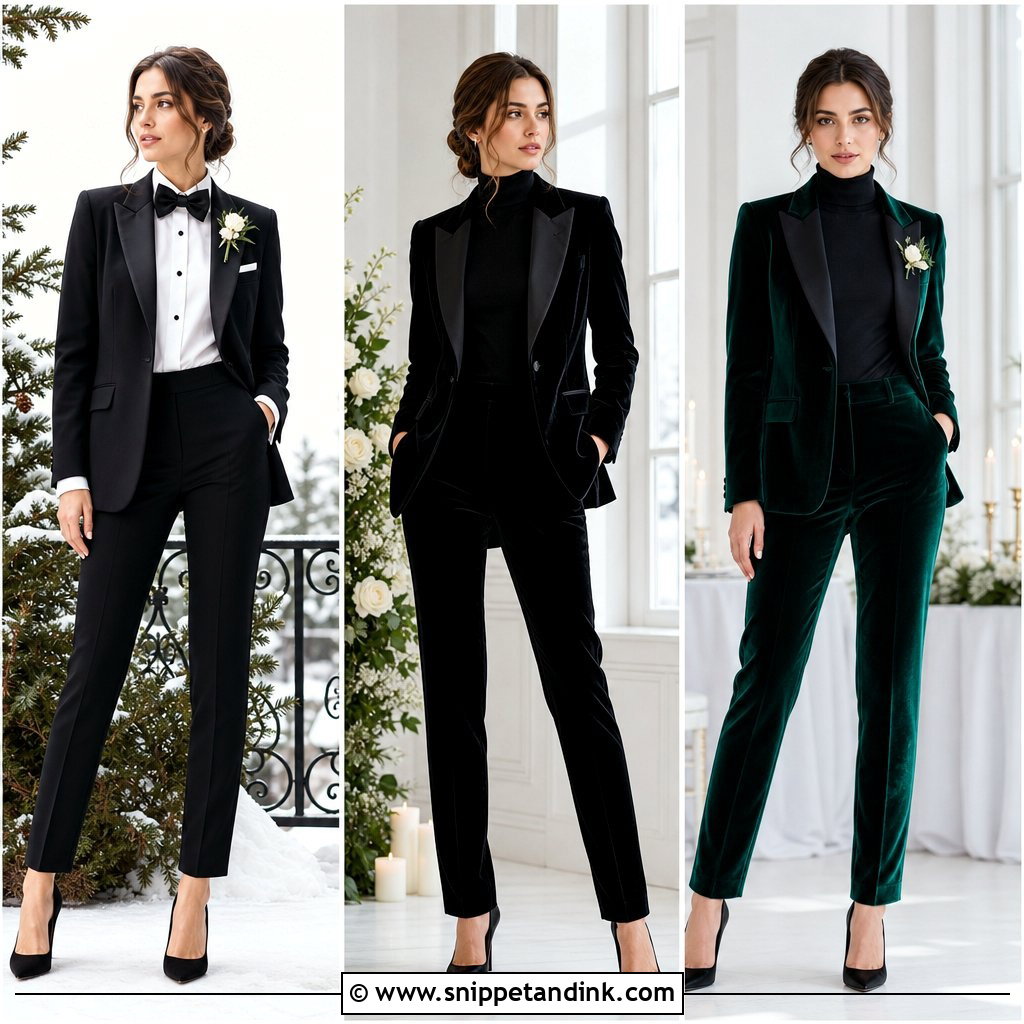
Velvet is a cool-weather and evening cloth, best in black, burgundy, emerald, navy or chocolate. It has its own sheen and depth, so everything around it should be simple. A full velvet suit is bold; a velvet dinner jacket with black wool trousers is easier to wear and more traditional. A white shirt, polished shoes and a clean bow tie are enough. Velvet crushes where it’s pressed, so hang it up during dinner rather than sitting on the tails.
26. Tweed Wedding Suit
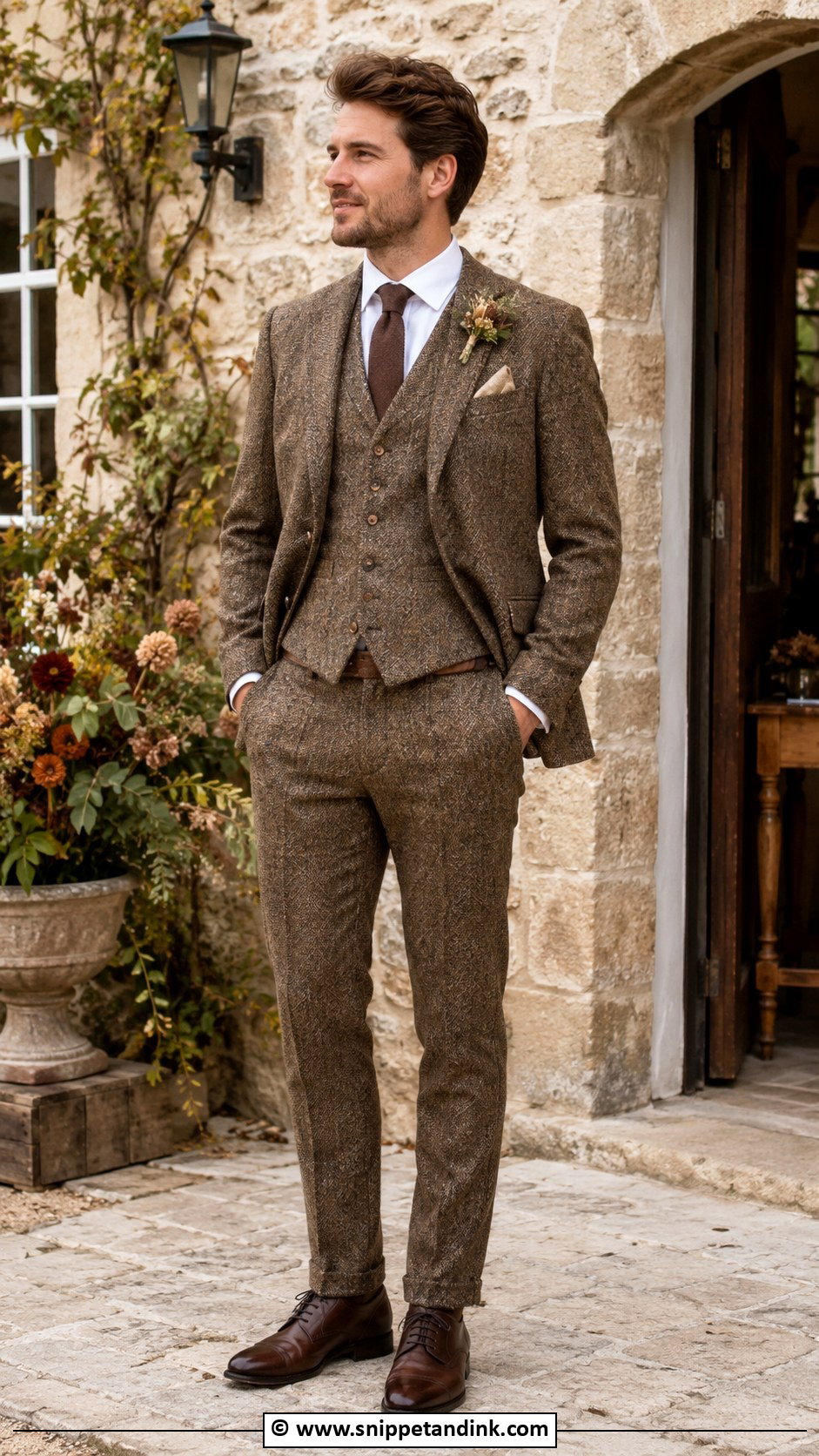
Tweed is warm, textured and at home at autumn, winter, barn and countryside weddings. It’s also hot indoors, which I always mention to grooms with a long dance-floor evening ahead; a lighter tweed or a jacket that comes off easily helps. Brown, gray, olive and muted blue look best, with a white or cream shirt and a wool tie. A three-piece suits a groom. Keep accessories modern so it doesn’t tip into costume.
27. Double Breasted Wedding Suit
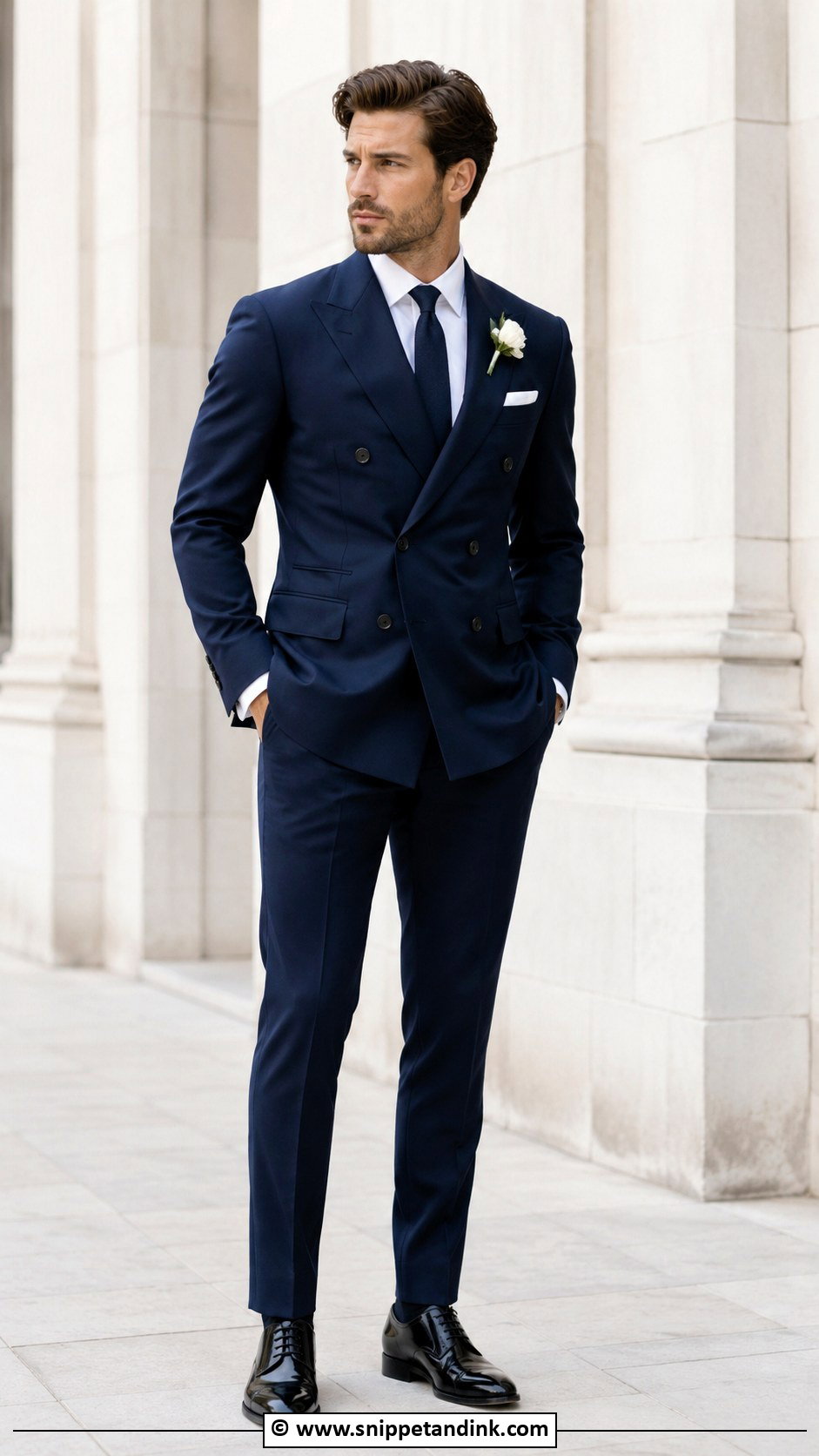
A double-breasted jacket should stay buttoned when standing, since open it flaps and loses the shape that makes it worth wearing. That makes shoulder and waist tailoring essential. Navy, black, charcoal, cream and deep green are the strongest colors for formal and city weddings. Keep the shirt and tie simple because the jacket already has presence. A neat pocket square and polished shoes complete it.
28. Three Piece Wedding Suit
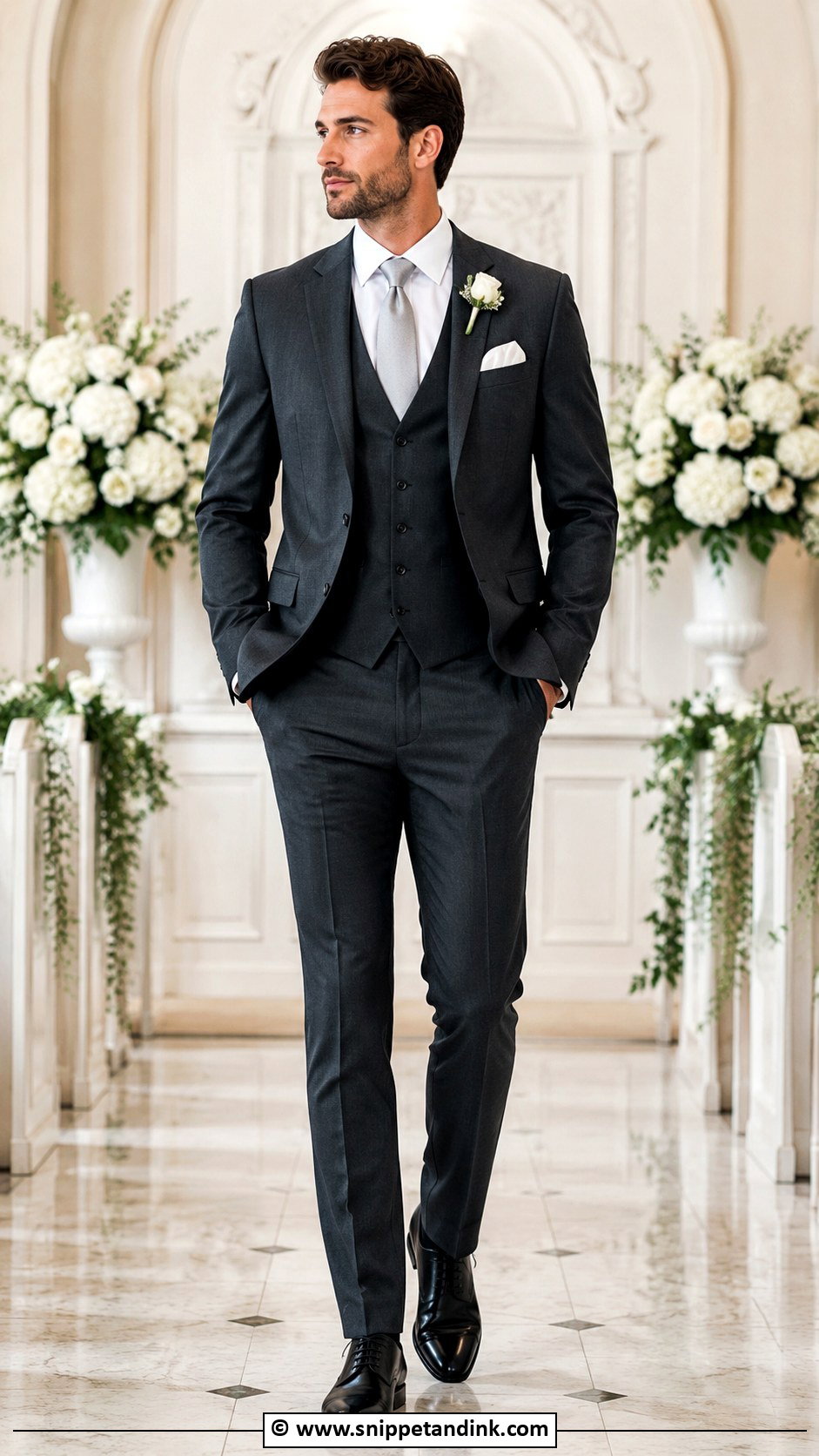
The waistcoat is what makes a three-piece practical. Once the jacket comes off for dancing, the outfit still looks finished. Navy, charcoal, gray, brown or burgundy all suit the format. The waistcoat should sit close without pulling across the buttons and should cover the trouser waistband, which means trousers with a slightly higher rise. It’s also a smart way to coordinate the wedding party, since waistcoats can match while jackets vary.
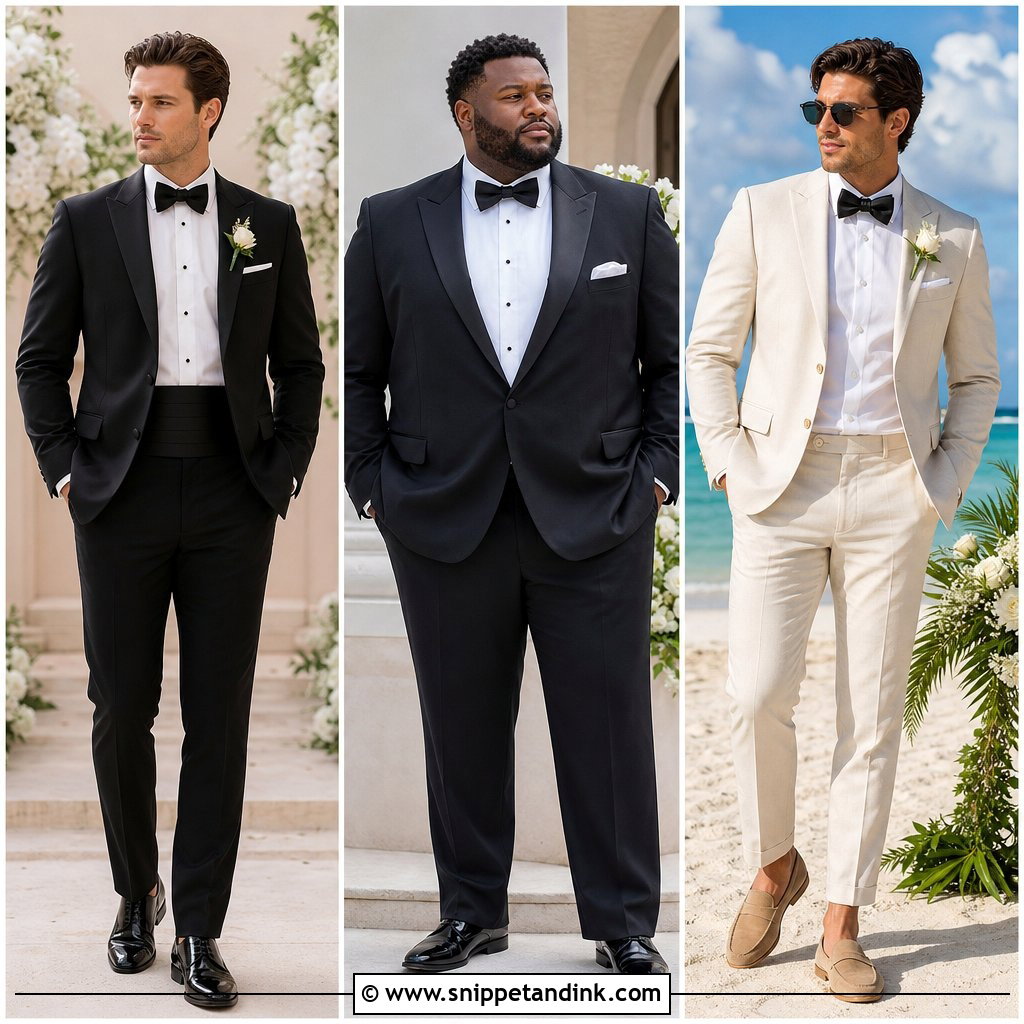
29. Tuxedo Wedding Suit
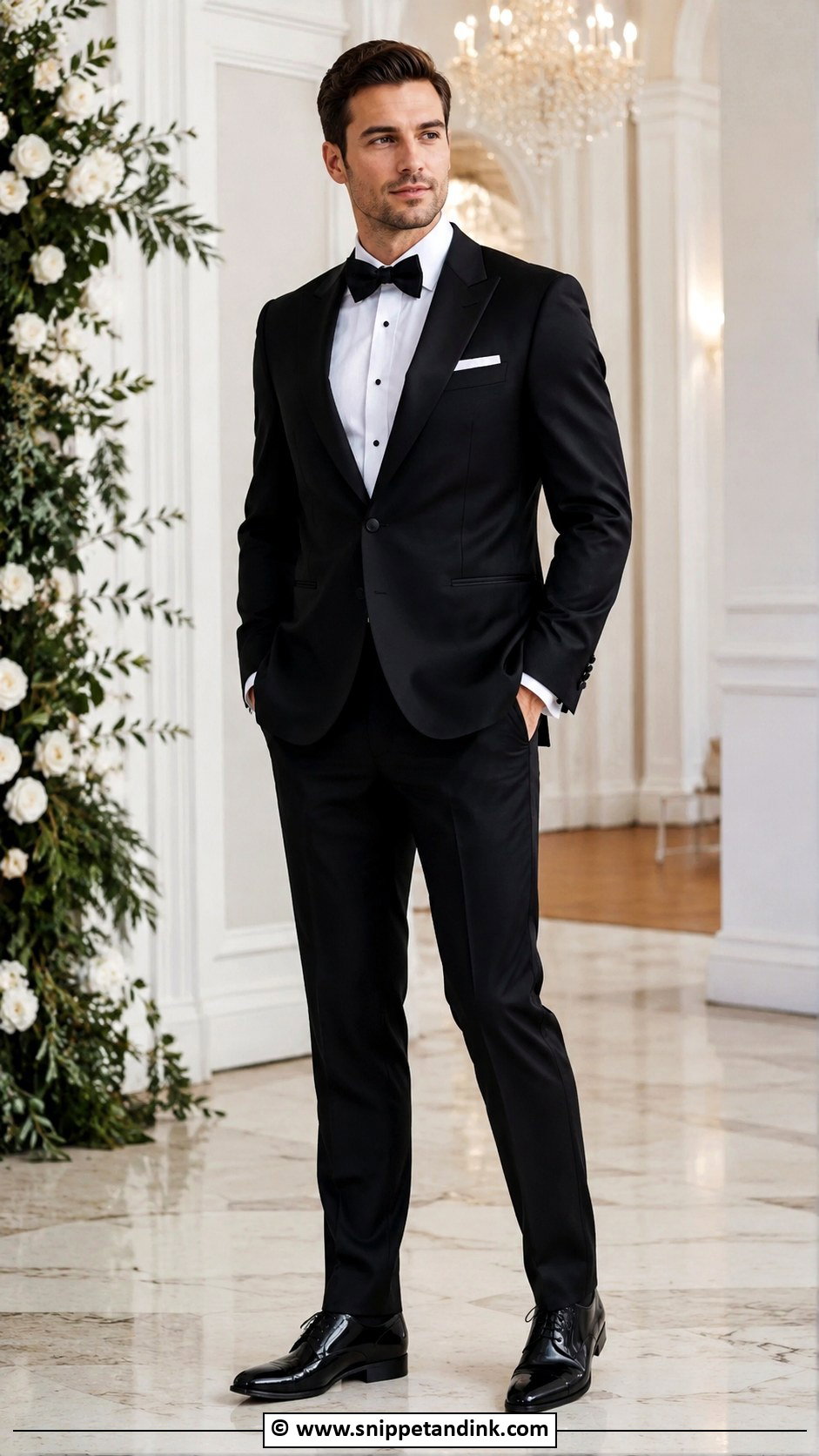
A tuxedo wedding suit is the right answer for black tie and very formal evening weddings. What separates it from a business suit is the detail: satin or grosgrain lapels, a matching stripe down the trouser leg, a proper dress shirt and a bow tie. Traditional tuxedo trousers are worn with braces rather than a belt. Midnight navy is a classic alternative to black and can look richer under evening light. Black patent or highly polished shoes finish it.
30. Black Tie Wedding Suit
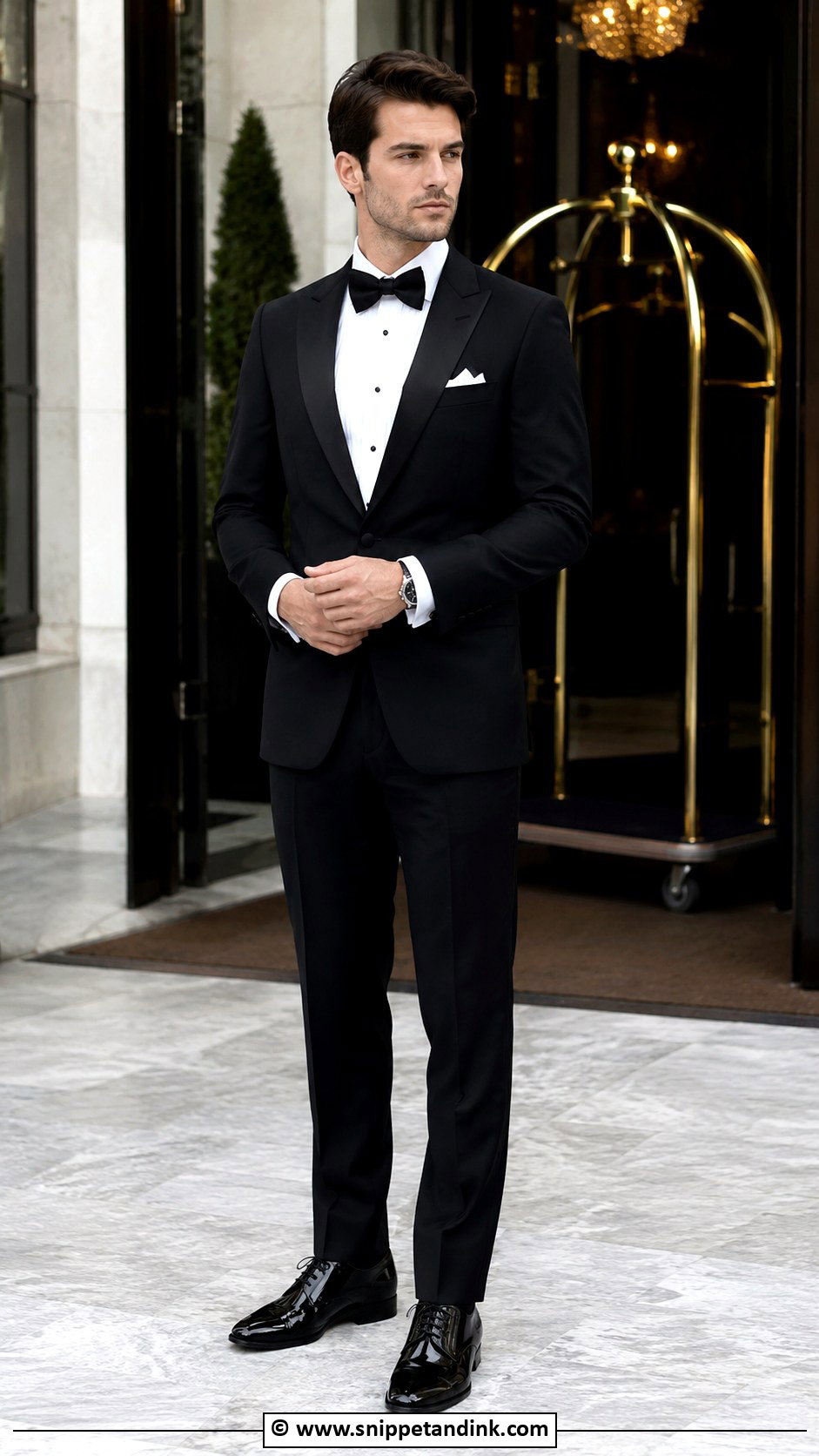
Black tie has a short list of correct answers. The safest is a black tuxedo, white shirt, black bow tie and black shoes. If the invitation says black tie optional, a sharp dark suit can work, though it must be impeccably fitted and styled carefully. Casual fabrics, bright colors and relaxed shoes don’t belong. Quiet, correct details beat an overdesigned outfit at this level.
31. Beach Wedding Suit
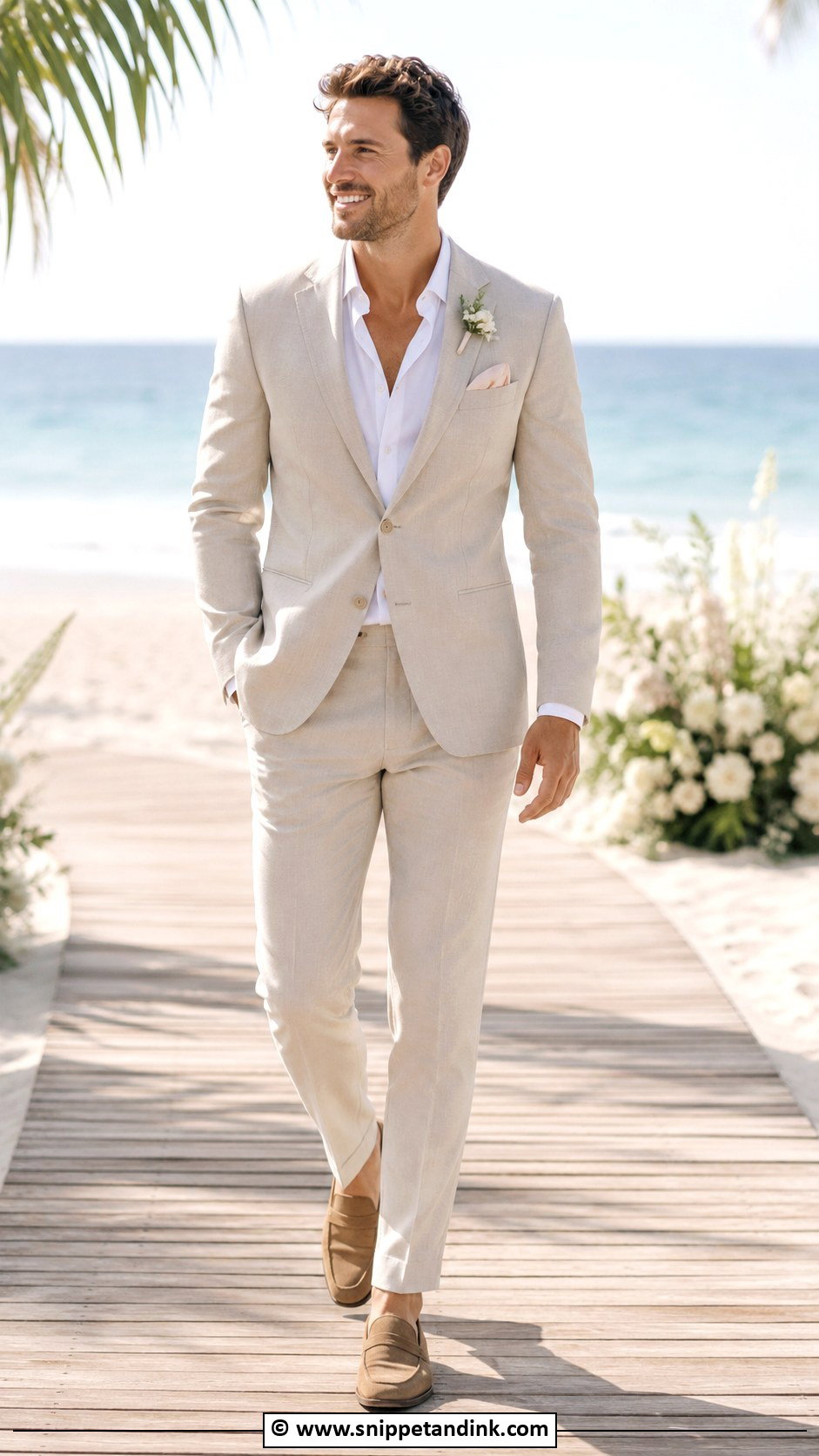
Sun and sand change the rules. Linen, cotton blends and tropical wool in beige, tan, light gray or pale blue breathe; a dark wool suit on a beach becomes uncomfortable fast. Loafers or dress sandals suit a relaxed dress code. Skip heavy accessories in favor of a soft pocket square or boutonniere. For a groom, a cream or tan suit looks special while staying comfortable.
32. Courthouse Wedding Suit
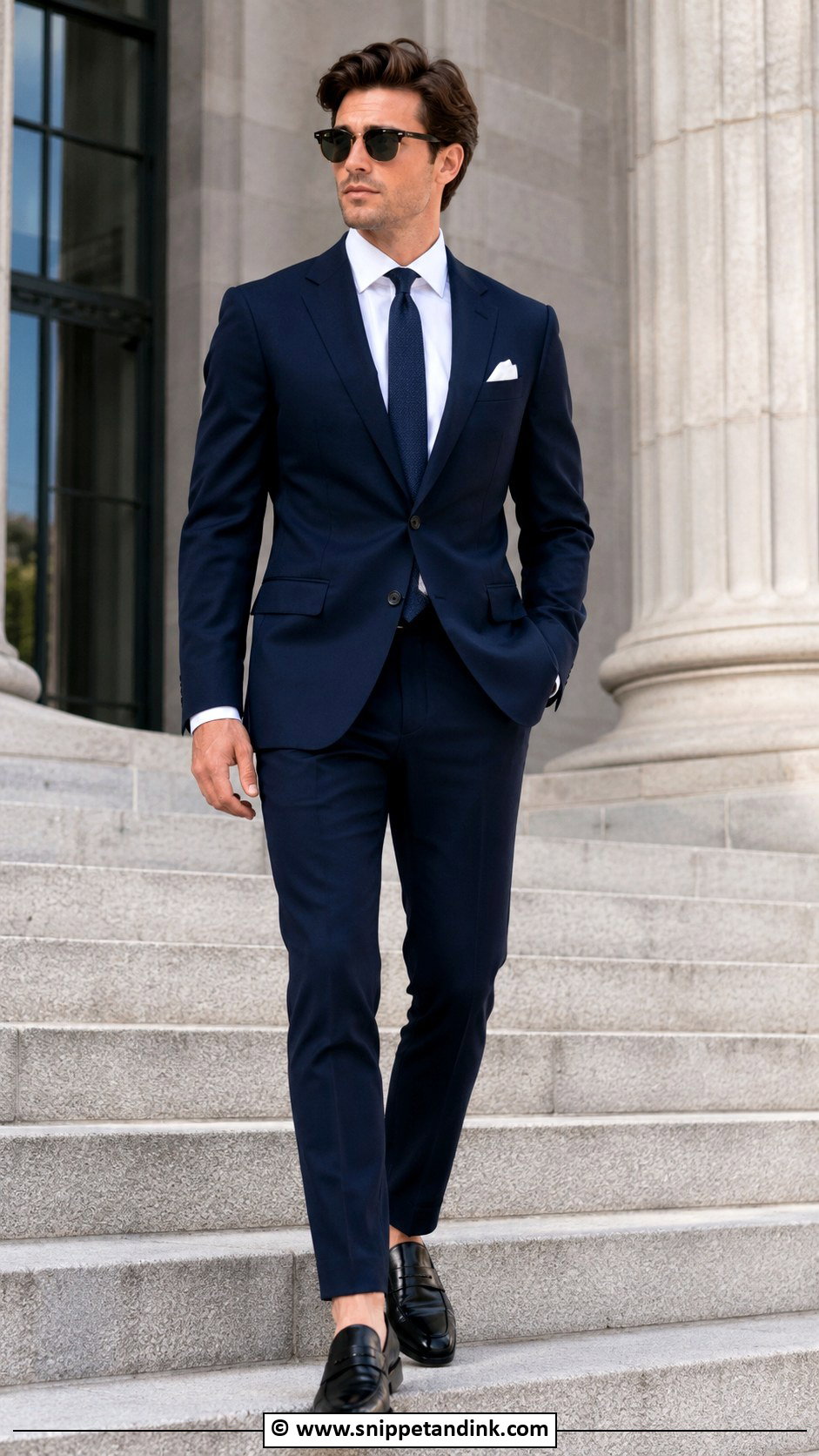
Courthouse weddings involve a lot of waiting, sitting and walking between quick portraits, so comfort matters more than people expect. Navy, black, cream, pinstripe or a relaxed double-breasted all suit the setting. Pick one standout detail, such as a silk tie, a pocket square or sunglasses for the outdoor photos, and keep the rest plain. Make sure the jacket sits well when you sit down.
33. Garden Wedding Suit
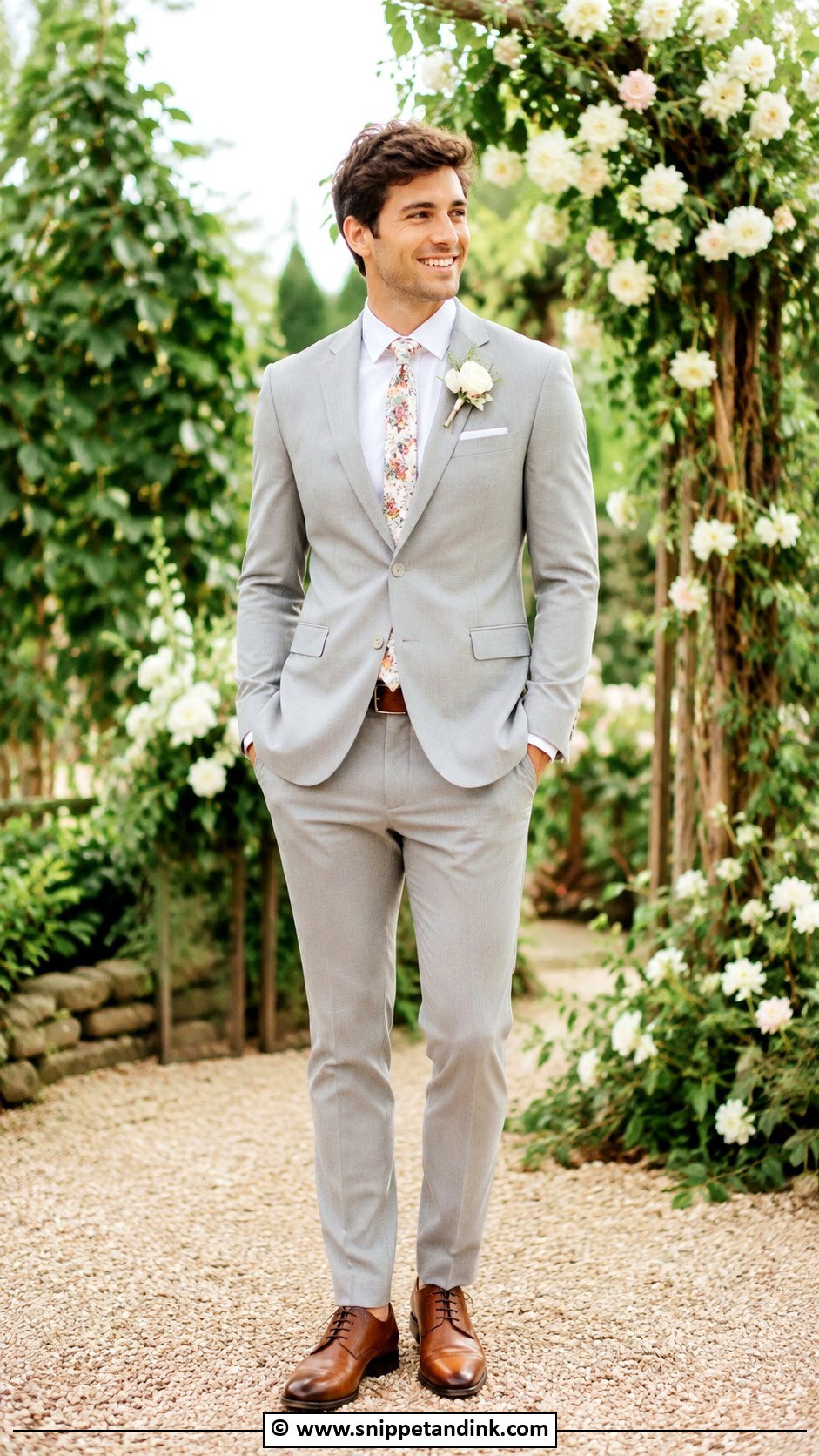
Garden weddings are hard on heavy cloth. Light gray, sage green, dusty blue, tan and beige look right outdoors and stay cool. A white shirt, brown shoes and accessories in floral or pastel tones connect to the flowers. Avoid very dark suits unless the ceremony is in the evening. A three-piece adds formality for a groom, and groomsmen can be coordinated with the seasonal flowers.
34. Winter Wedding Suit
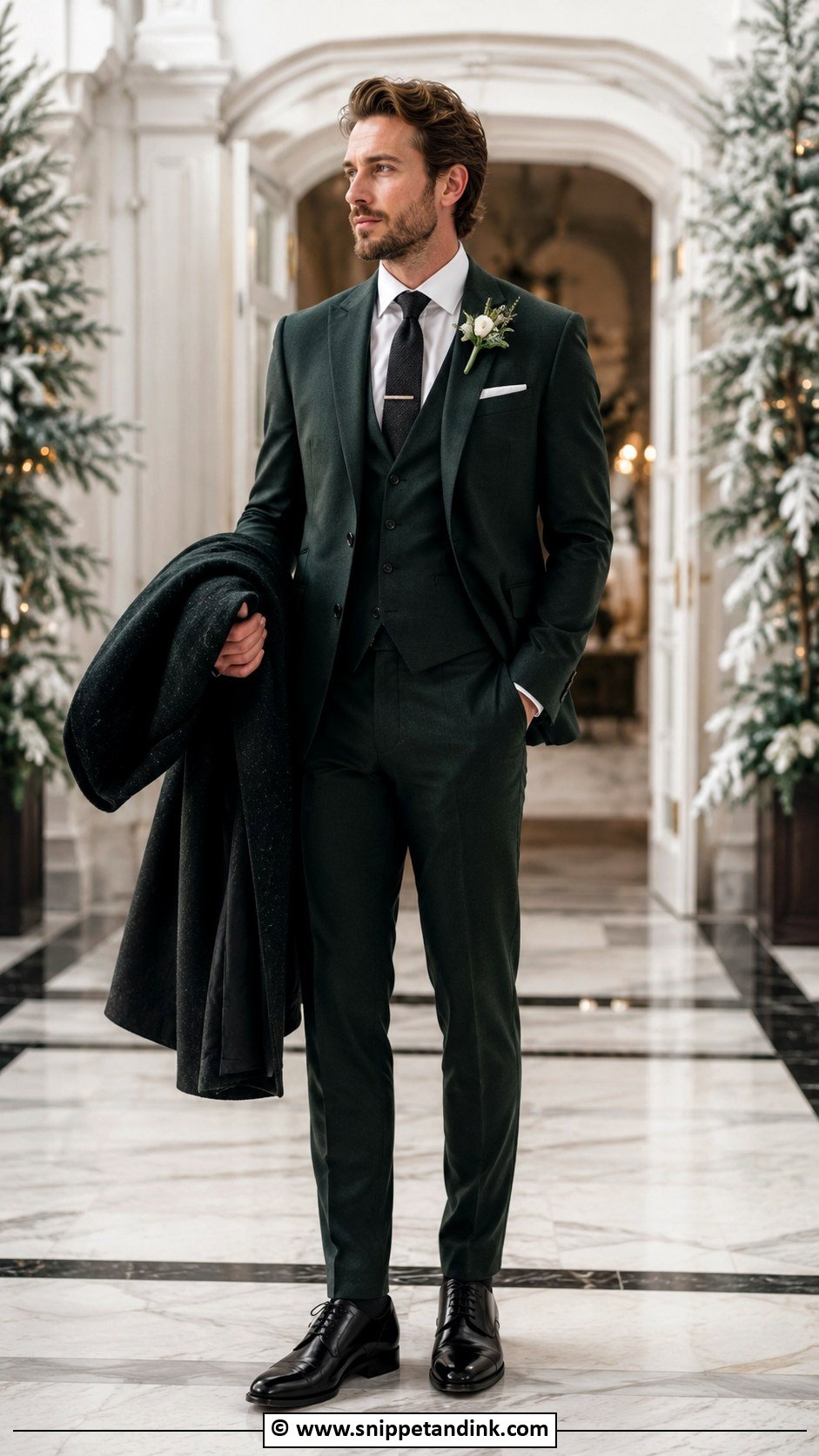
Winter is the season for heavier cloth, and it’s when a suit actually feels comfortable. Wool flannel, tweed and velvet in charcoal, black, navy, forest, burgundy or chocolate all suit cold-weather ceremonies. Polished leather shoes, a crisp shirt and a tie in a deep tone keep it formal. Don’t forget the overcoat: it’ll be in every outdoor photo, so a tailored coat in a complementary color is worth planning.
35. Wedding Guest Suit
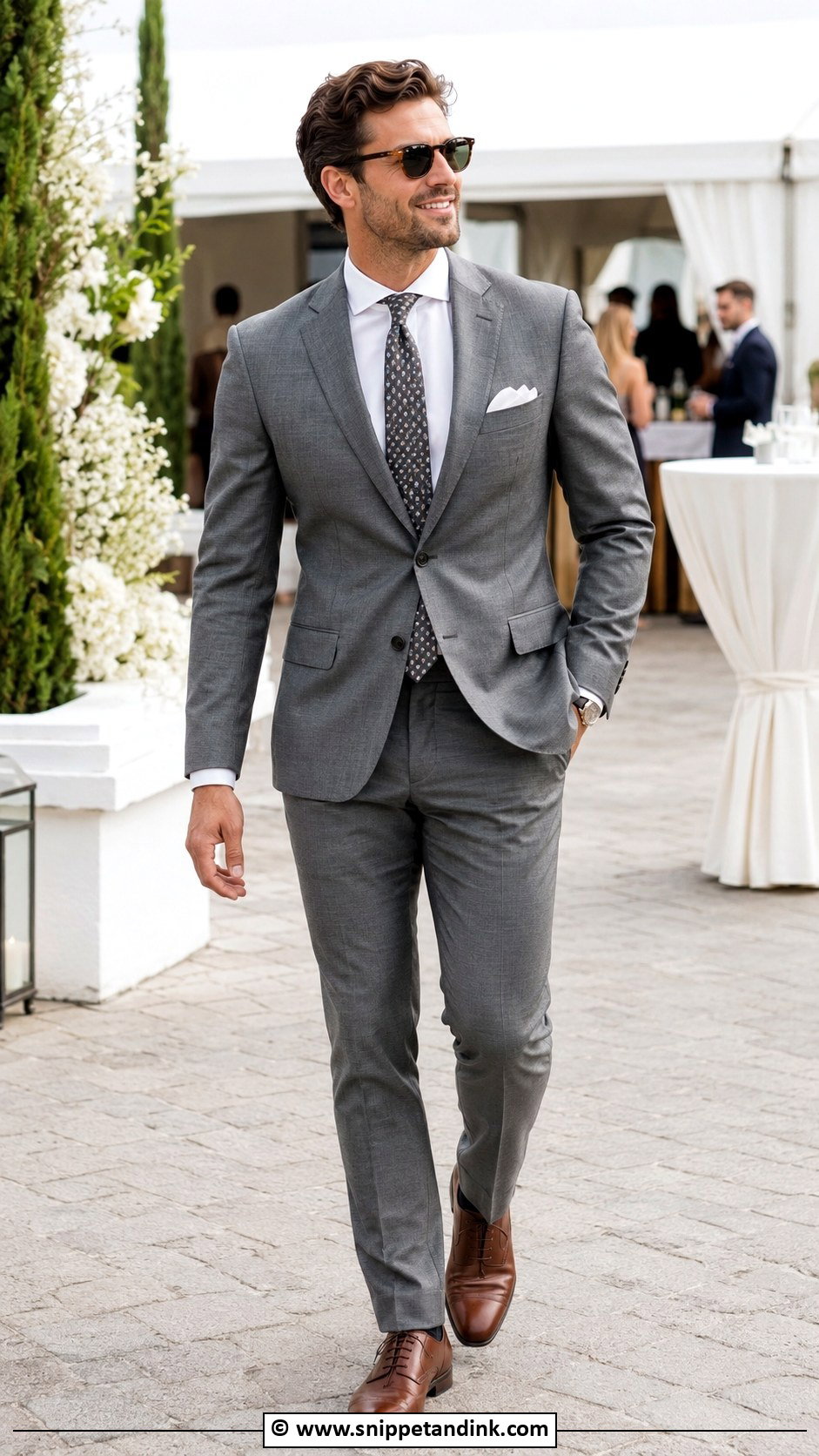
Guests should look polished while leaving the spotlight on the couple. Navy, gray, tan, brown and subtle checks are safe, depending on the season. Avoid white, cream or anything matching the wedding party unless you know it’s welcome. For cocktail weddings, a two-piece with a tie or open collar works; for formal events, darker tailoring and dressier shoes. Clean shoes and a good fit make more difference than any accessory.
Groom Versus Groomsmen: Keeping One Man Distinct
In group photos, the groom should be identifiable at a glance. There are a few ways I do it without making him look like he’s in a different wedding.
- Give the groom a different jacket color or cloth, such as a velvet jacket against the party’s wool suits.
- Put the groom alone in a waistcoat, or give him a waistcoat in a contrasting color.
- Change the neckwear: a bow tie for the groom, regular ties for everyone else.
- Make his boutonniere distinct from the party’s, which the florist can do easily.
For groomsmen who live far away, collect measurements early and ask each to get a local fitting where possible. A single bad fit stands out in every group shot.
On the Day: Buttons, Heat and a Spare Shirt
On a single-breasted jacket, the bottom button stays undone; fasten the top one when standing and undo it when sitting. Unpack and hang the suit the night before, and steam rather than iron if creases appear. In hot weather, a spare shirt for the reception is the most practical item anyone can pack.
A Well-Cut Jacket Outlasts Every Trend Color
Wedding tailoring can be classic or bold, relaxed or formal, and every suit in this collection has a place. Start with the dress code, the venue, the season and your role in the day. Then choose a color, cloth and fit that suit that mood without forcing it. Navy, charcoal and black will always work, while sage, brown, burgundy and cream keep things current. Whichever you choose, get it tailored, wear it in before the day, and it will look right from the ceremony to the last photo.
You'll Like These Ideas:


Leave a Reply