
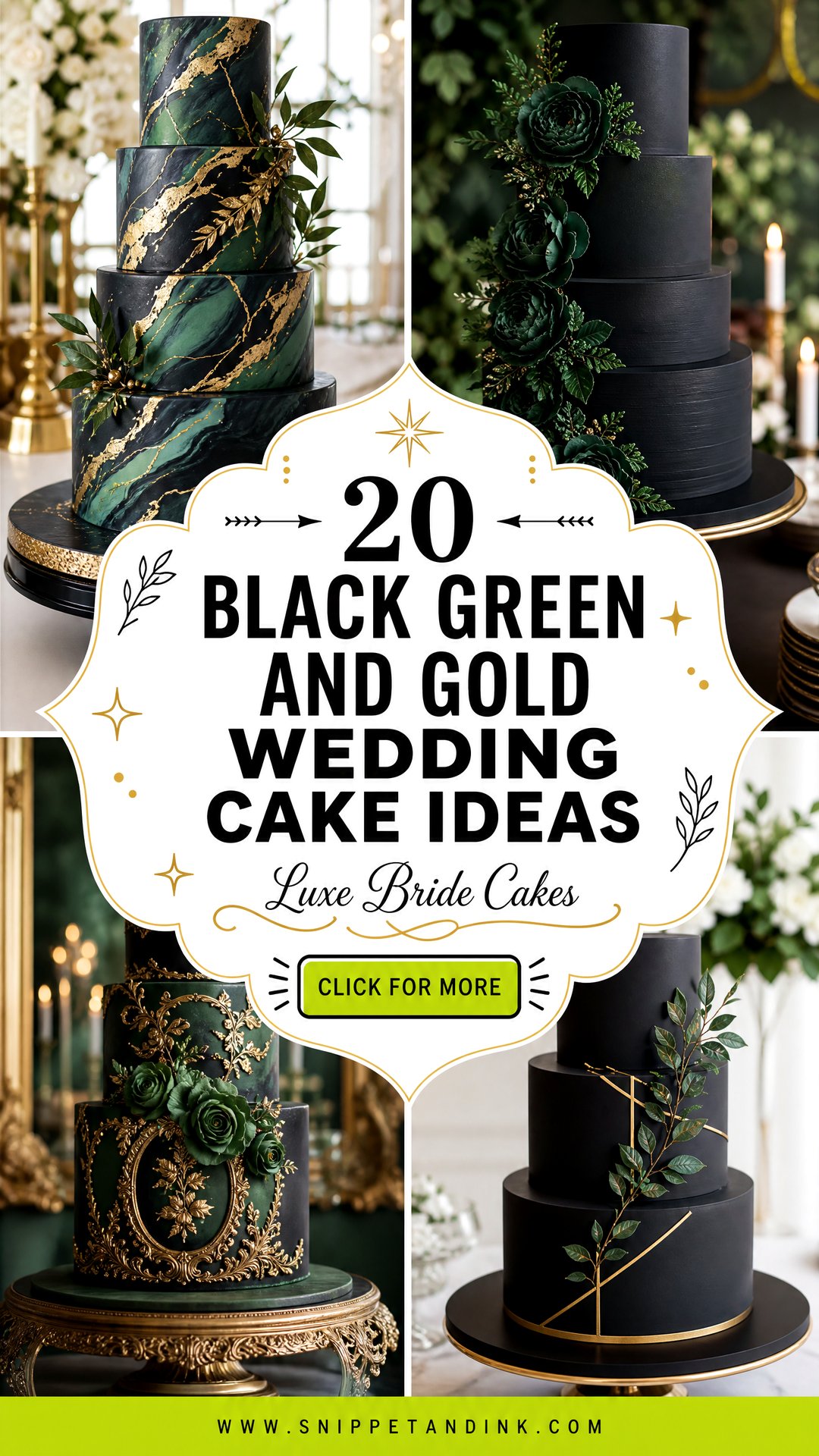
Black, green and gold is a palette with three strong personalities, and on a cake they only work when each one has a clear job. Black gives weight, green gives life, and gold supplies the light. I have seen this trio go art deco, garden, fall harvest and ballroom depending on which color leads. The cakes below range from sleek stacked tiers to marble, texture, florals and vintage piping, so you can see how far the same three colors stretch before you sit down with your baker.
Deciding Which of the Three Colors Gets the Most Cake
When a couple brings me this palette, the first thing I ask is which color should cover most of the cake. Give all three equal space and the tiers start to look striped. I work to a rough split: one color covers most of the surface, the second appears as a full tier, panel or ribbon, and gold stays a small accent of trim, leaf or a few painted petals.
- Black leading, green supporting: the most formal version, right for a ballroom or a black-tie evening.
- Green leading, black supporting: richer and warmer, and the one I suggest for garden or fall venues.
- Ivory leading, with black and green only in flowers and trim: the gentlest way in, and the best fit if the rest of your decor is light.
Bring a linen swatch or a napkin from the venue. Deep green looks very different beside a black tablecloth than beside an ivory one, and I would rather match it at the tasting than guess.
1. Black Green And Gold Wedding Cake With Gold Leaf
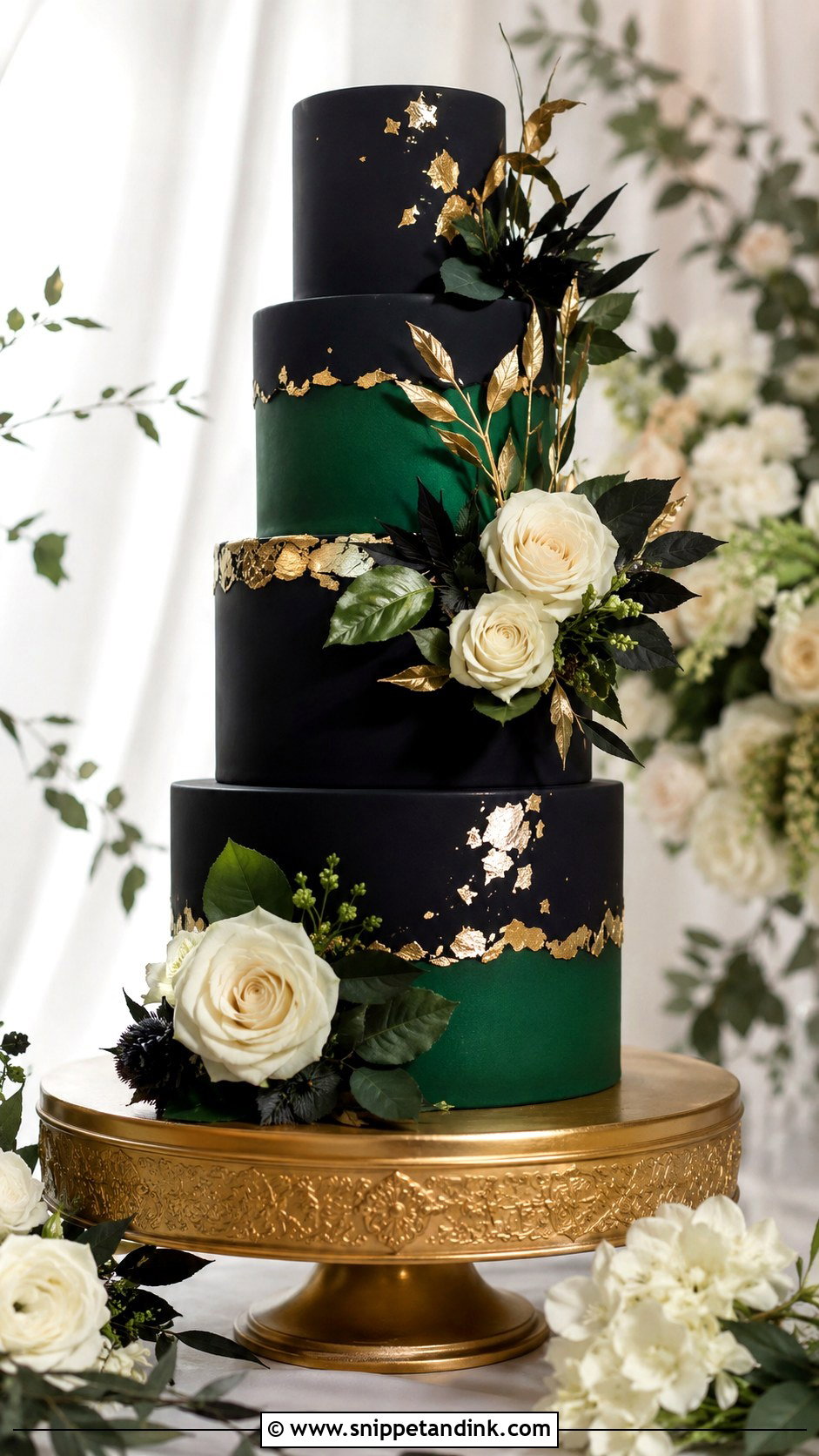
Gold leaf is the quickest way to make this palette look expensive. I lay it in torn, irregular pieces around tier edges on black, with emerald showing in a band or a few leaves, so it looks like the gold settled there rather than being stuck on in squares. Fondant takes leaf best; on buttercream it has to go onto a chilled, firm surface or it smears. A few ivory roses or white orchids soften all that darkness. Three tiers is the right canvas for it.
2. Emerald Green And Black Wedding Cake
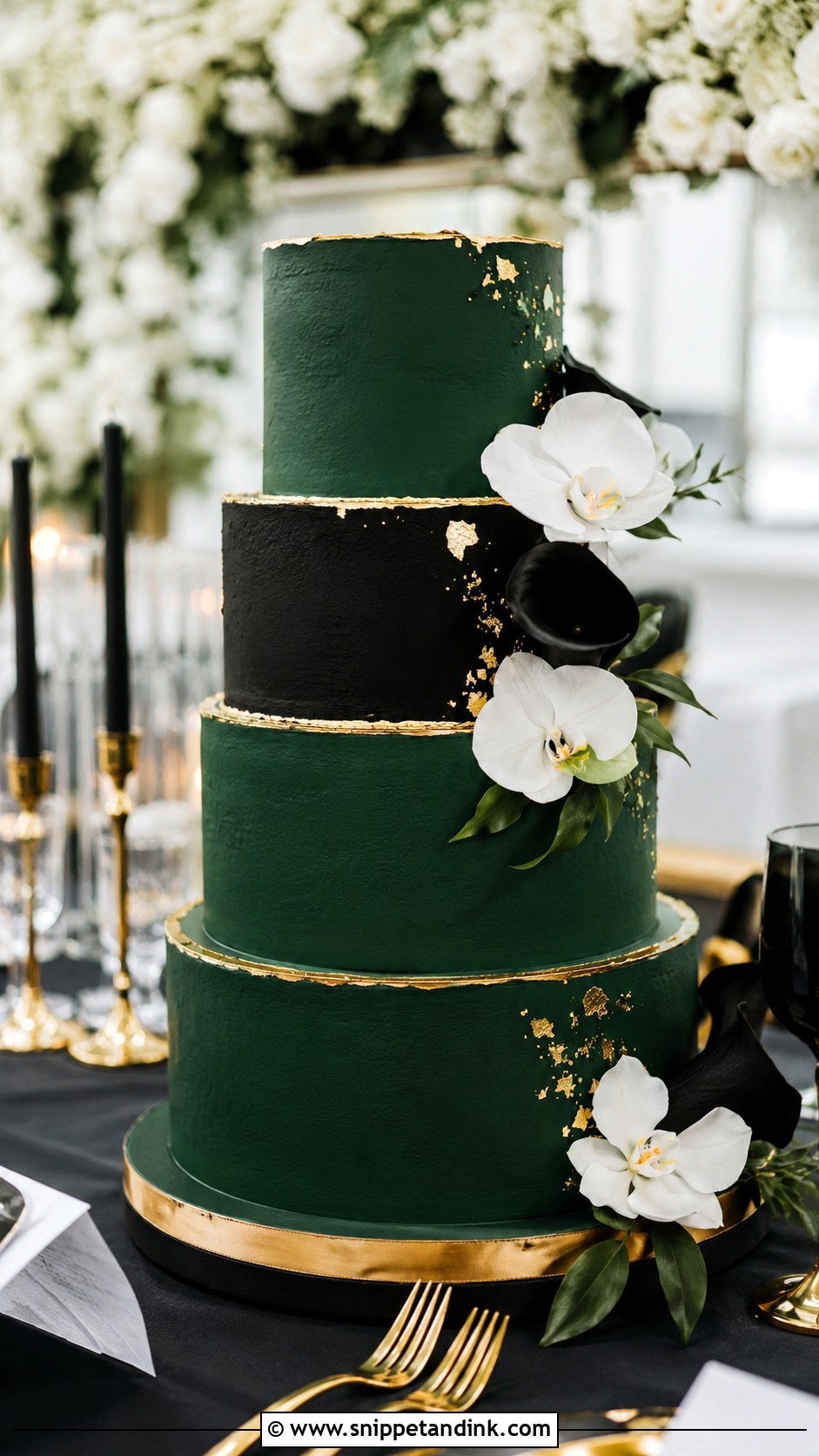
Most couples who ask for an emerald green and black cake picture more black than they actually want. My usual advice is the reverse: let emerald cover most of the cake and keep black to one tier, a ribbon or a painted panel, because a deep green tier already looks dark in candlelight. Gold then goes in as thin lines, leaf or a light drip. Flowers should be sparse: white roses, black calla lilies or green orchids. Winter receptions with dark linens and gold flatware are where this cake shines.
3. Black Green And Gold Marble Wedding Cake
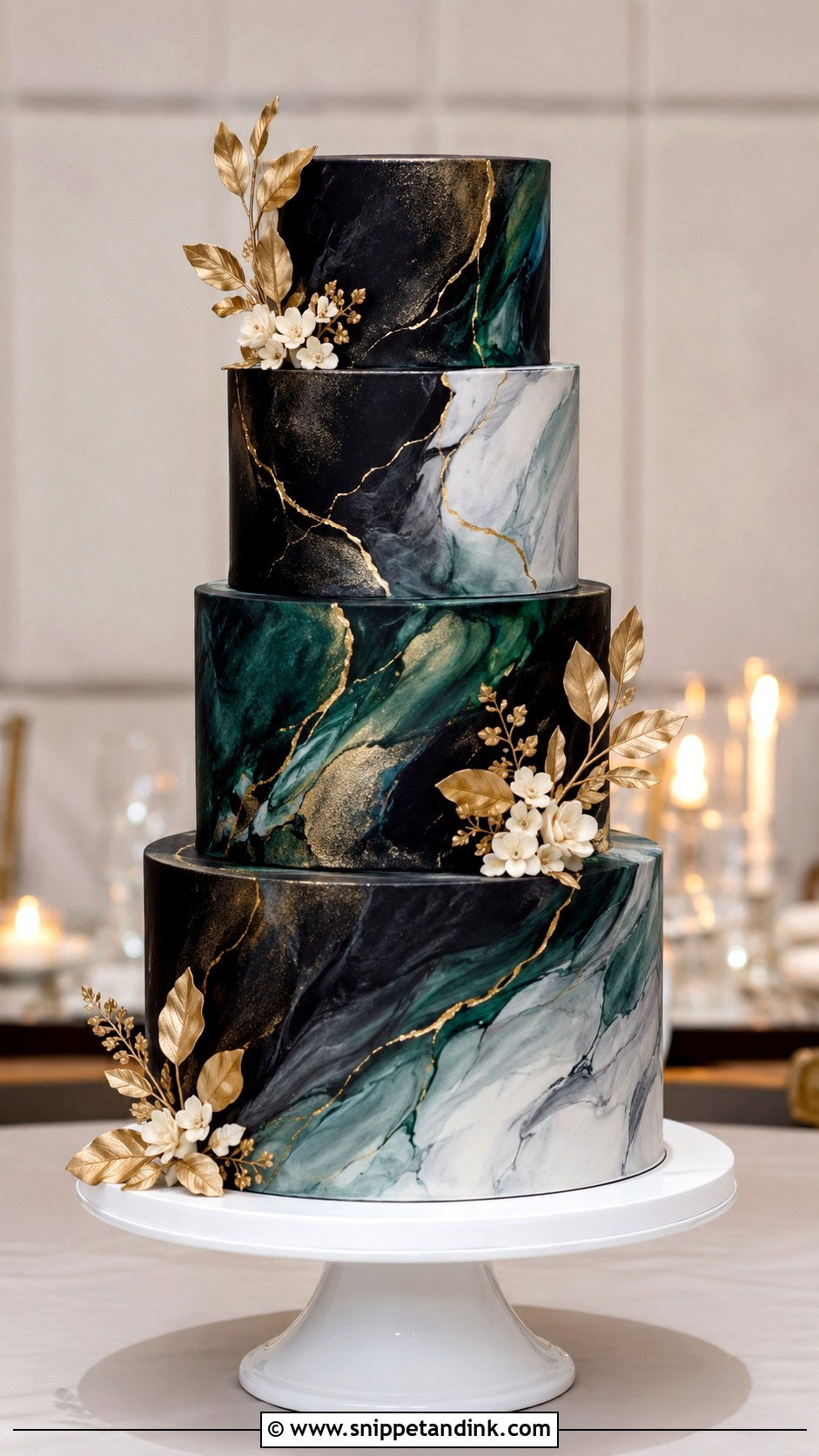
Marble is the design where less decoration matters most, because the pattern is already doing all the talking. The effect comes from folding black, forest green and a little white or charcoal fondant together, rolling it out, then hand-painting fine gold veins along the natural lines. Every sheet comes out different, so I always tell couples to expect the spirit of a photo, not a copy. Gold-edged leaves or a plain acrylic topper is all it needs. Loft and modern venues with black chairs suit it.
4. Black Buttercream Wedding Cake With Green Flowers
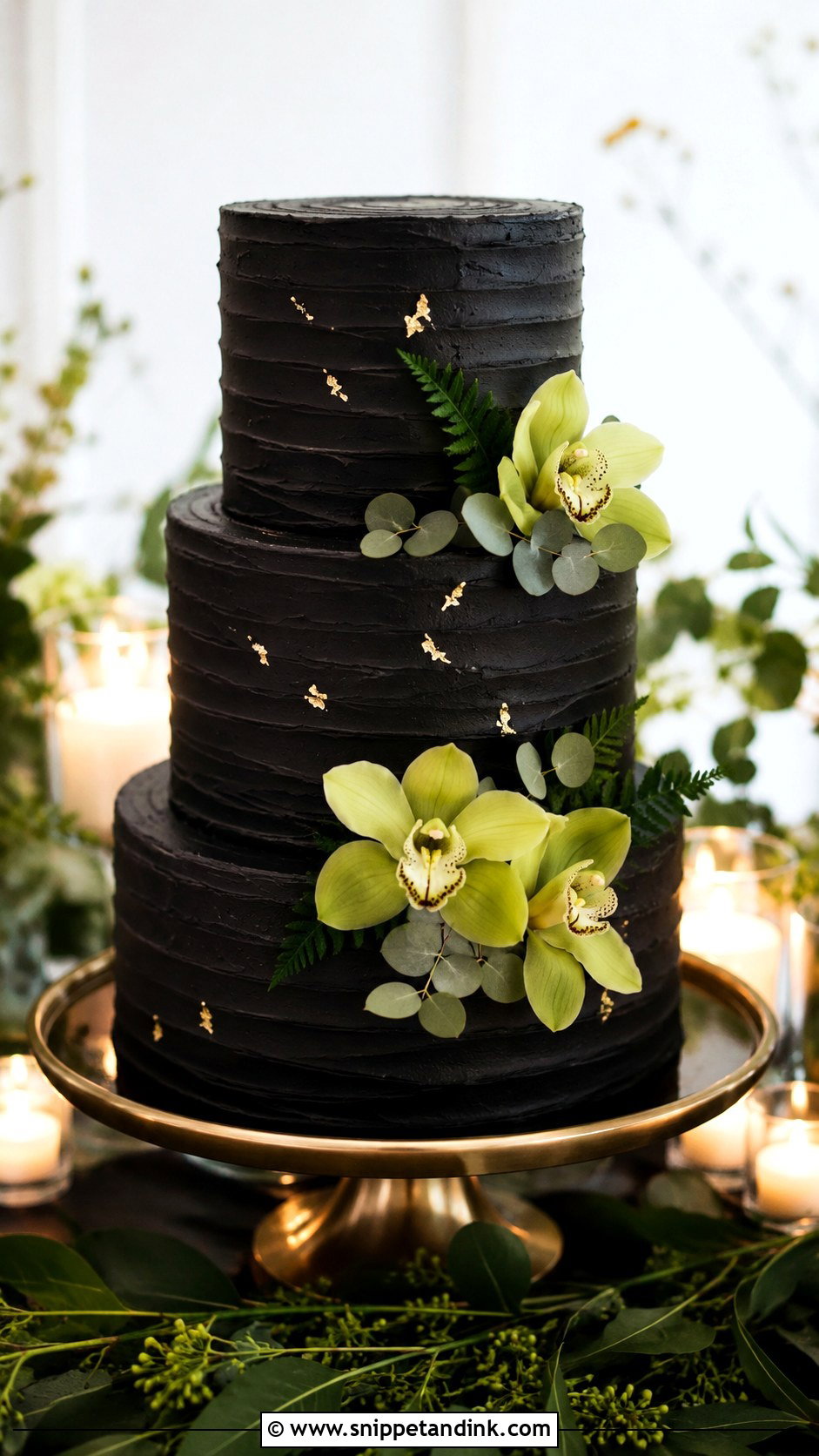
Black buttercream looks handmade in a way fondant never does, especially with soft ridges or a stucco finish. That suits a garden-minded couple who still wants drama. The green comes from real foliage and flowers: green orchids, eucalyptus, ruscus, ferns. Eucalyptus is a favorite, but it is one I keep on a barrier rather than pressed into icing. Gold can go on painted edges, a metallic stand or a few flecks. In heat, black buttercream softens faster than light colors because it absorbs warmth, so keep this cake in the shade.
5. Green Wedding Cake With Black And Gold Drip
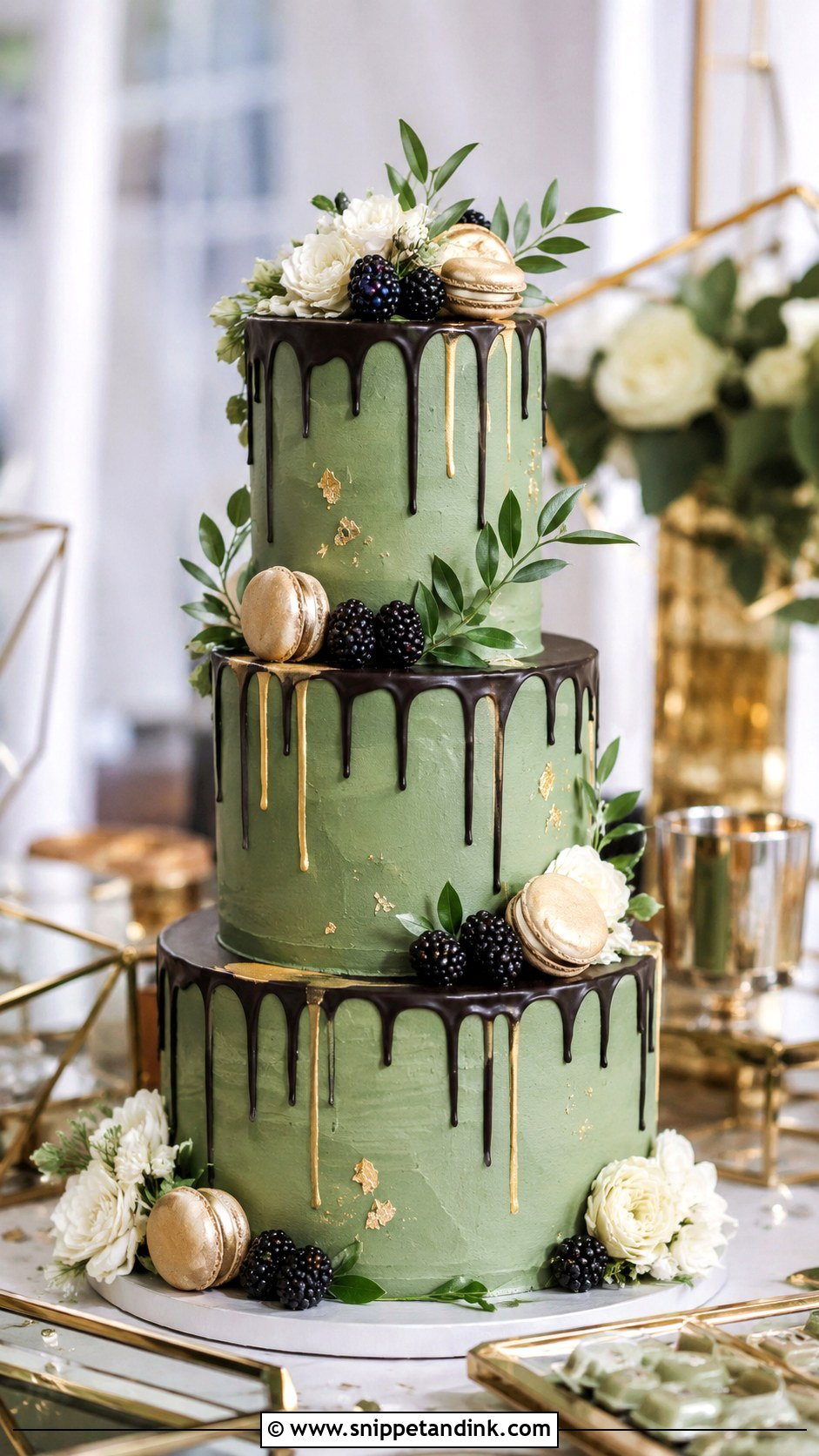
A drip is the playful option, and it is easy to get wrong. Start from emerald or sage buttercream and add black ganache to one or two tiers, never all of them. I test the ganache temperature on the side of a cold cake before committing; too warm and it runs to the board, too cool and it sits in fat blobs. Gold paint can be brushed over the set drips for a dressier finish. Gold macarons, blackberries or green leaves finish the top. It suits evening receptions where a white cake would feel too traditional.
6. Black And Gold Wedding Cake With Emerald Flowers
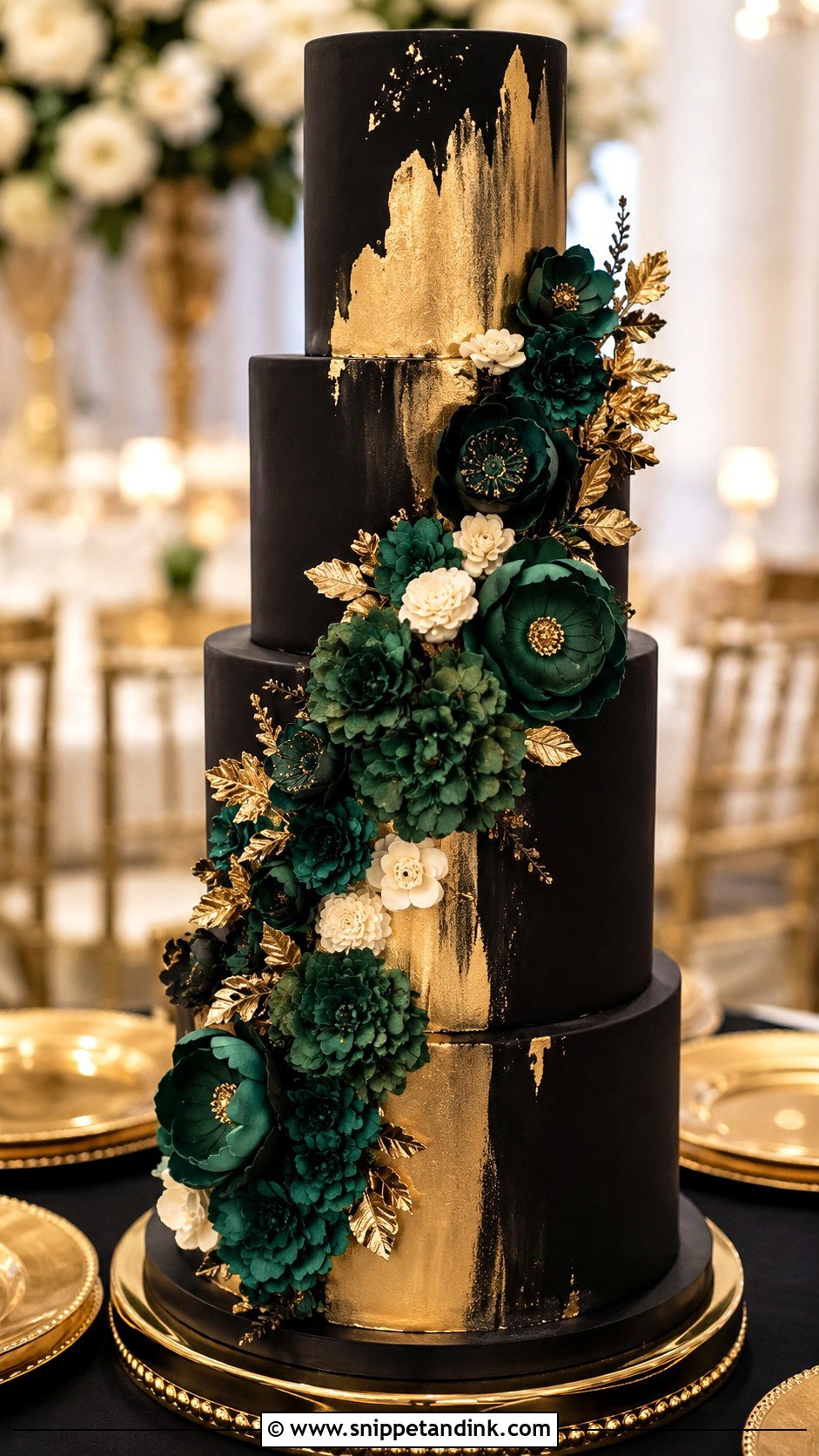
Here black and gold carry the cake, and emerald arrives only through the flowers. That restraint is why it looks glamorous rather than busy. Emerald sugar flowers, painted orchids or dark foliage in a diagonal sweep work well; I would avoid fresh green hydrangea touching icing and make that bloom in sugar instead. Gold sits in leaf, piping or a brushed finish on a single tier. On a tall three or four-tier cake the cascade has room to travel, which ballrooms and art deco receptions both reward.
7. Black Green And Gold Geometric Wedding Cake
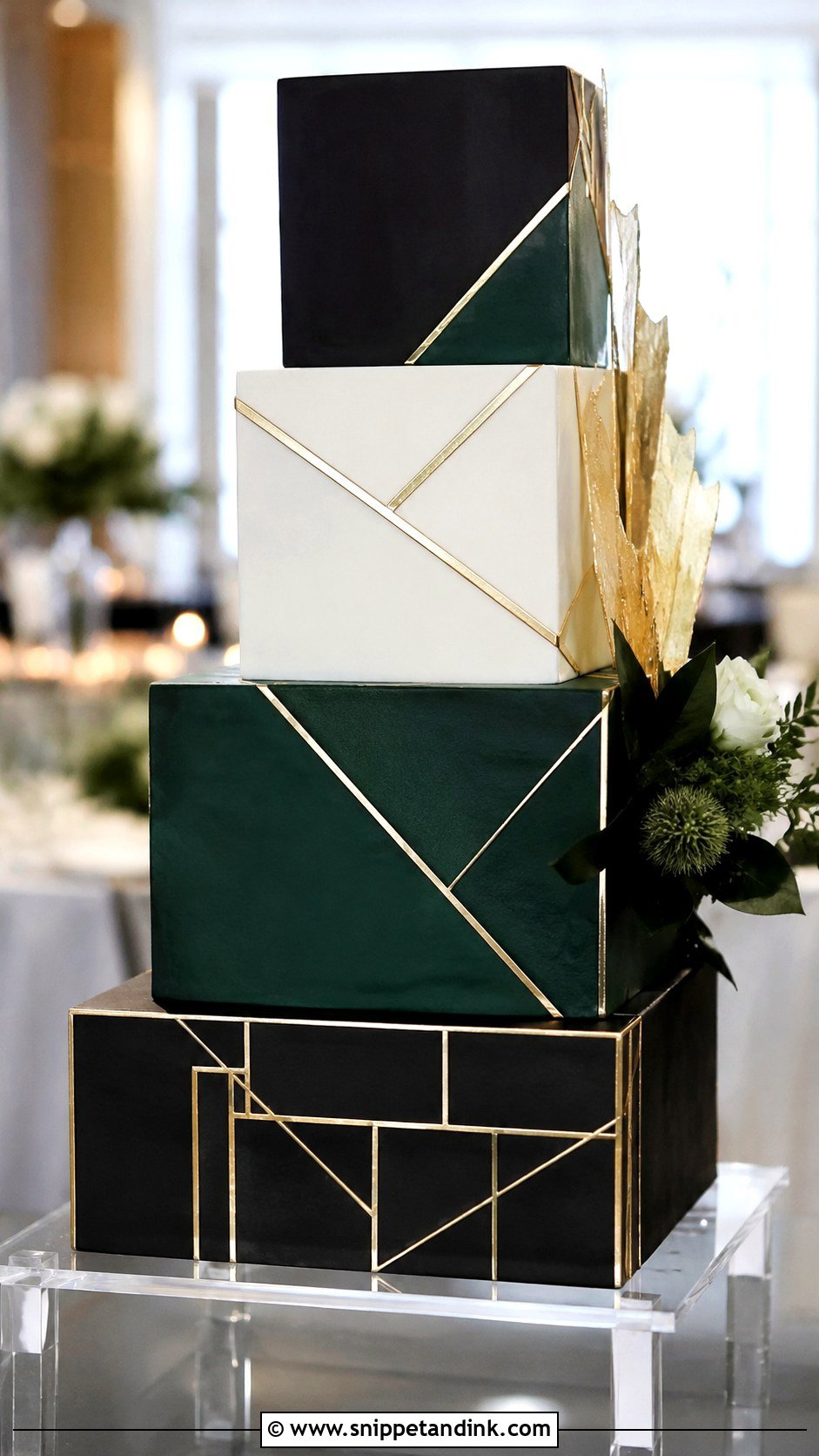
Geometric cakes live or die by their edges. Hexagons, triangles and color blocks only read as crisp if the fondant corners are sharp and the panels line up, so this is a design to give a baker with strong fondant work. One tier matte black, one deep green, one ivory with gold lines is the classic split. A few gold sugar shards or one small floral cluster finishes it. I love this for city weddings, and I would steer couples who want a soft, romantic table toward something else on this list.
8. Dark Green Wedding Cake With Black Ribbon
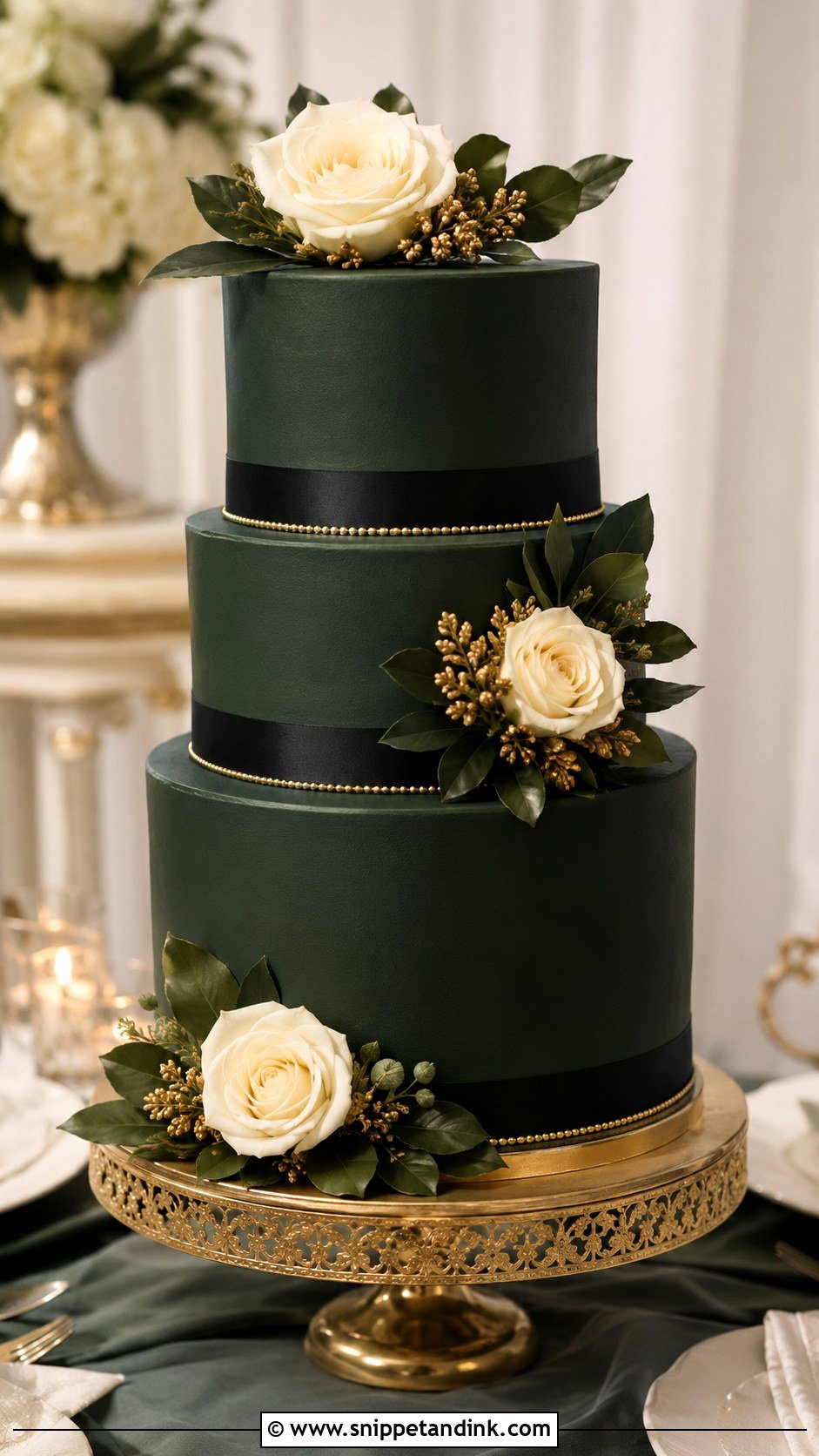
Ribbon is the most understated idea here, and it ages well in photos. Dark green icing makes the base, with black satin ribbon at each tier. One practical detail matters: real ribbon placed against buttercream will soak up grease and develop dark spots, so I back it with a thin strip of fondant or use a ribbon made from fondant itself. Gold comes in through an edible border, a monogram or the stand. A small cluster of ivory roses at the base keeps the whole palette calm.
9. Black Green And Gold Floral Wedding Cake
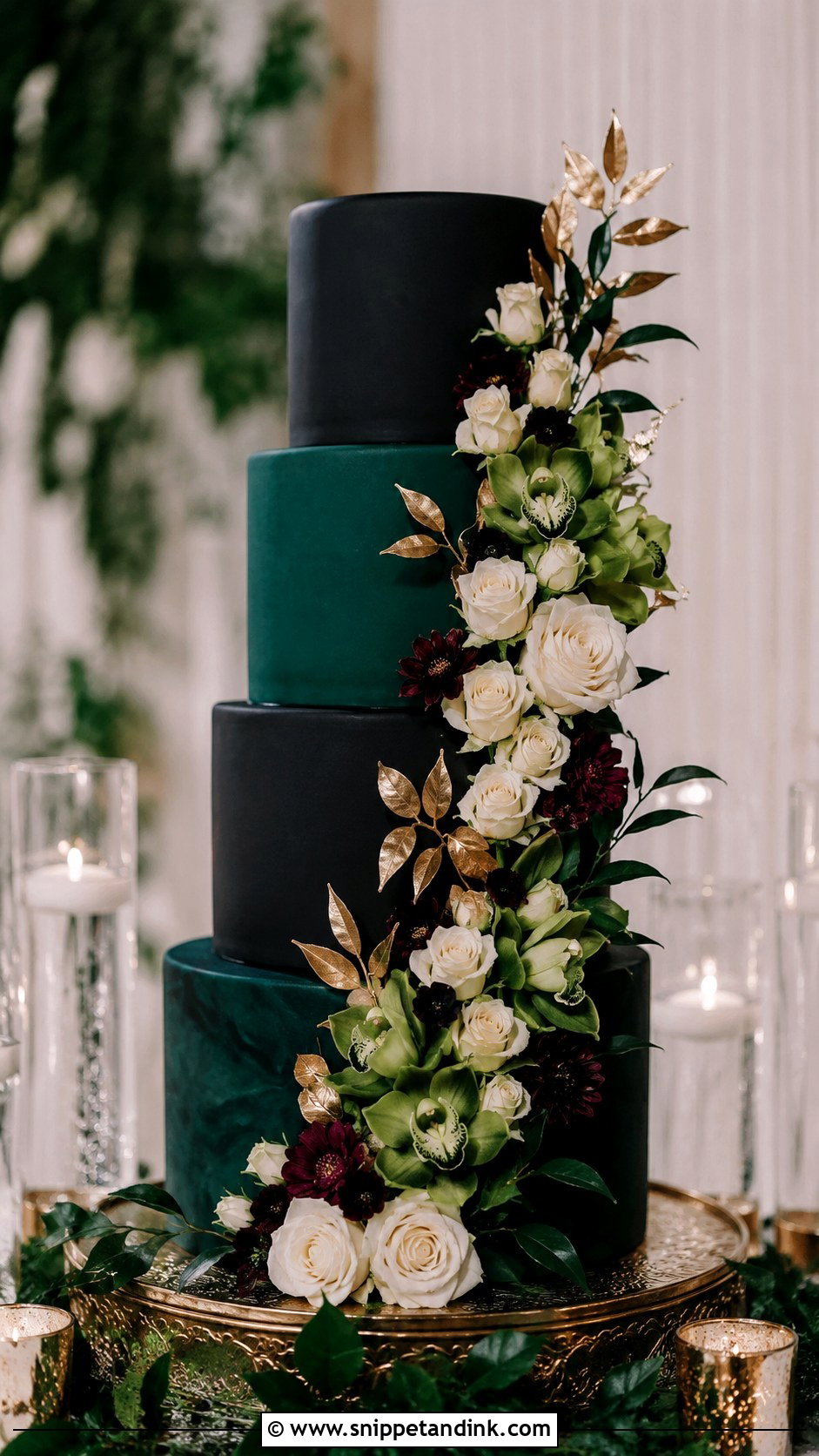
A floral version brings romance into the dark palette. The base can be black, or ivory with emerald accents, and the flowers do most of the color work: deep green foliage, ivory roses, green orchids, a few dark burgundy blooms and small gold leaves. I place the arrangement either diagonally from top to bottom or gathered on one side, since a full wreath at every tier starts to look crowded. Garden weddings with a moody twist and candlelit fall or winter receptions suit it best.
10. Black Green And Gold Art Deco Wedding Cake
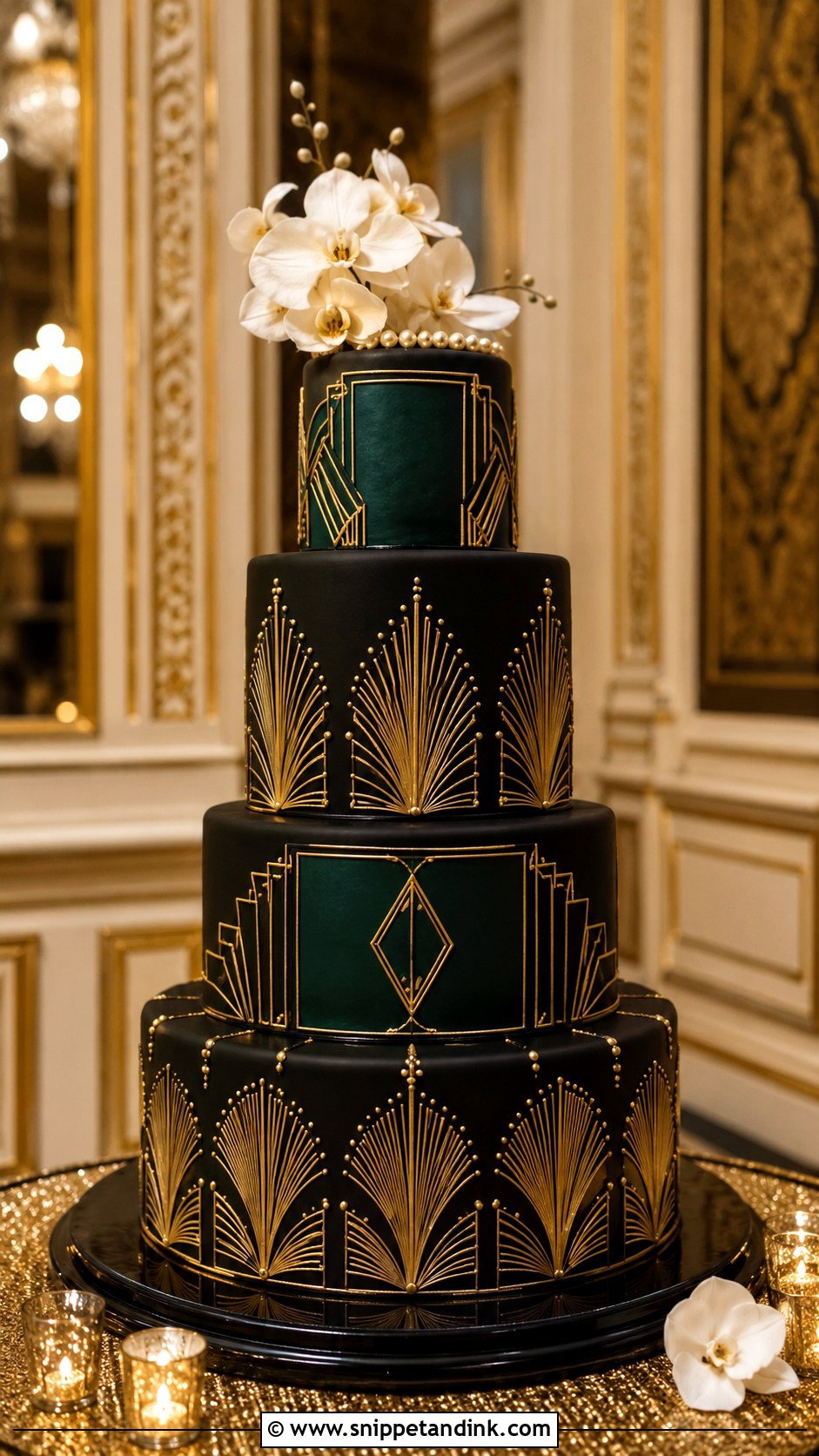
Art deco is about symmetry. Black tiers, emerald panels and gold fans or arches need to be centered and evenly spaced, so I measure and mark the tiers before any gold piping goes on; eyeballing a fan pattern shows immediately. Pearl details or a subtle scallop on one tier add period character. Flowers stay minimal, maybe one emerald and ivory arrangement at the top. Historic hotels and formal banquet halls give this cake the setting it was designed for.
11. Black Green And Gold Square Wedding Cake
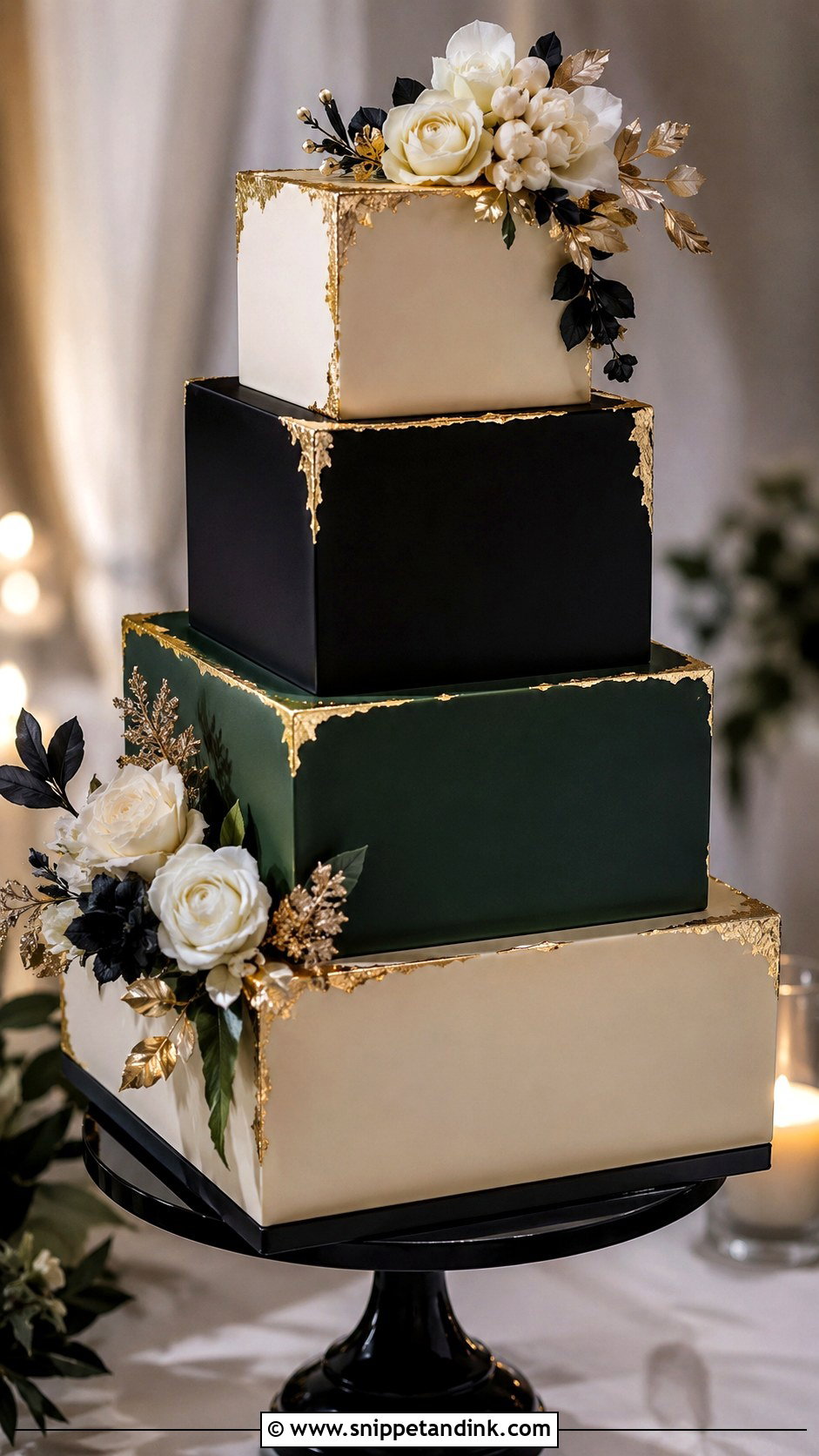
Square tiers make this palette look instantly modern, and they are harder to build than round ones. Corners show every flaw, they dry out first, and a square cake needs more careful support so the edges do not sag in transport. One matte black tier, one emerald and one ivory with gold trim is a strong layout. Gold leaf along the edges or flowers tucked at the corners highlights the shape. I would only order one from a baker who can show you square cakes they have actually made.
12. Black Green And Gold Single Tier Wedding Cake
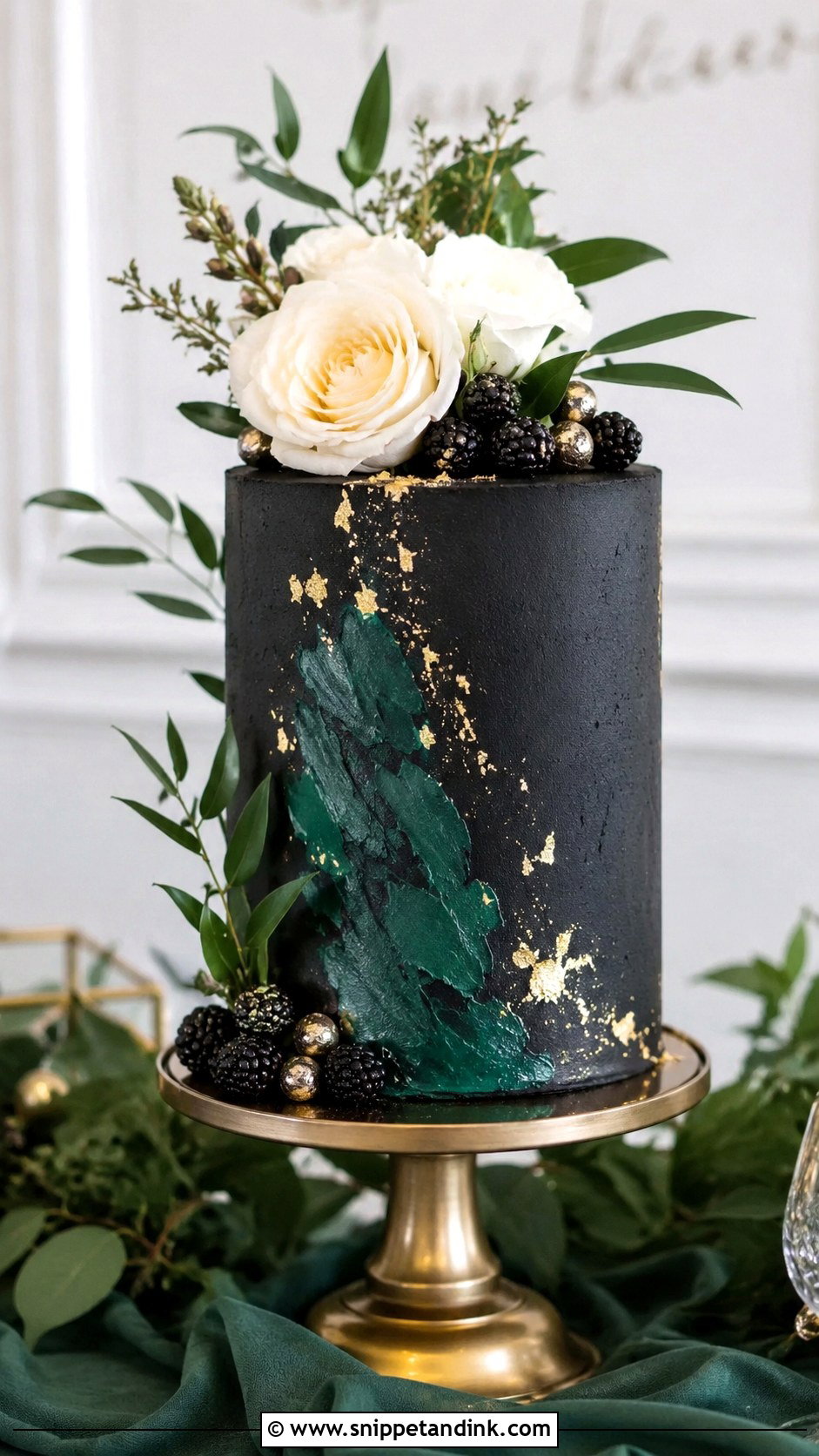
A single tier wedding cake in this palette suits elopements and micro weddings, and it is often the smartest choice when a dessert table is doing the feeding. Make it tall, in matte black or emerald, so it holds its own in photos. Gold leaf, painted texture or a mini drip adds detail, and green foliage or gold-dusted fruit finishes the top. It doubles neatly as a cutting cake when guests eat sheet cake or plated dessert.
13. Black Green And Gold Two Tier Wedding Cake
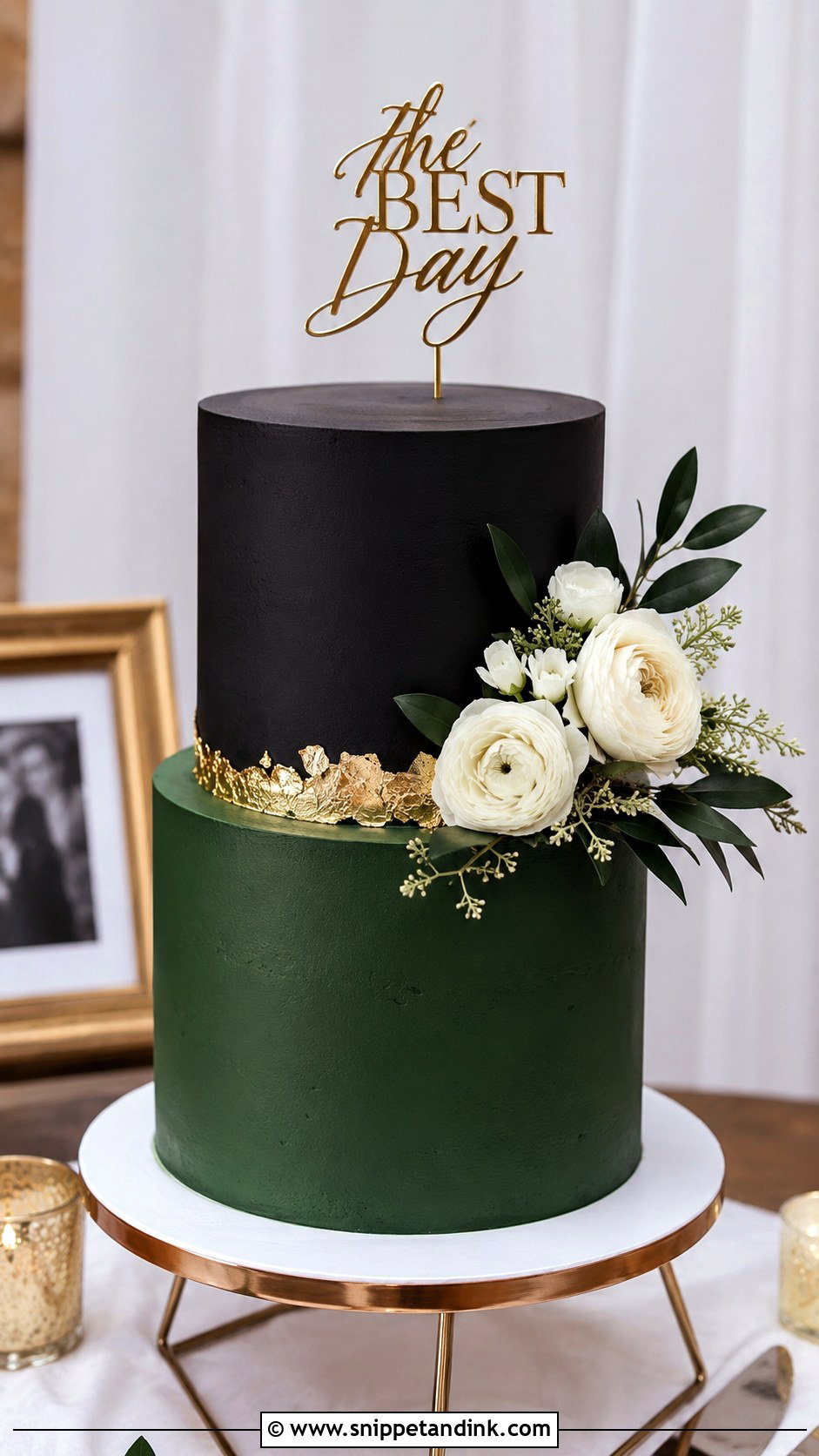
Two tiers give you height without formality. I like an emerald bottom tier with a black top, joined by gold leaf or a painted gold seam where they meet; that seam hides the join and draws the eye to the middle. Reverse the colors for a darker cake. A small floral cluster on one side or a brushed gold topper is enough. Restaurant weddings and medium receptions fit it well.
14. Black Green And Gold Three Tier Wedding Cake
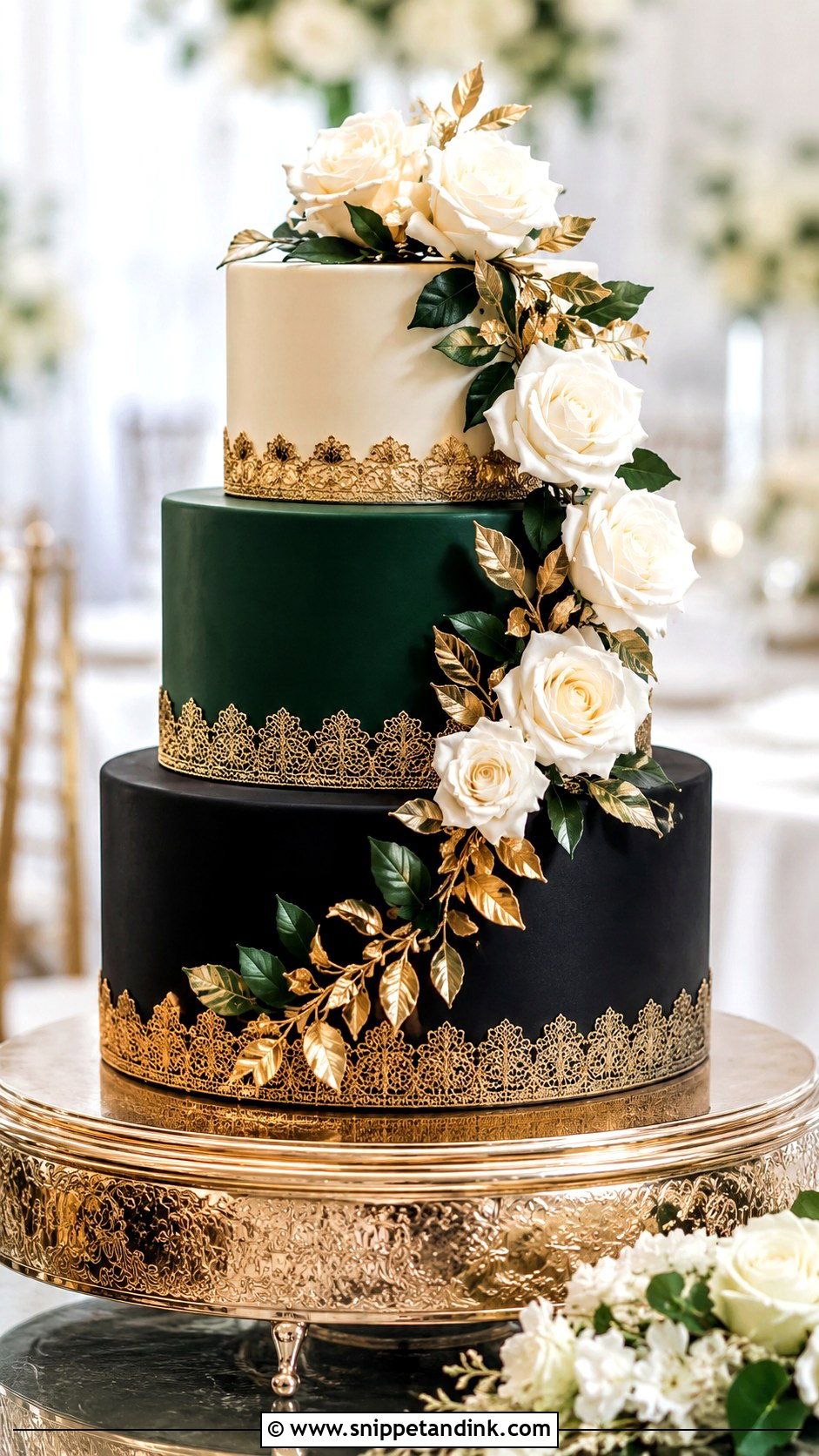
With three tiers each color gets a stage, which is why this is the version most couples land on. The risk is that three different tiers look like three different cakes. I repeat one thread through all of them, the same gold leaf, a matching border or one floral cascade running across the joins, so it reads as a single design. A diagonal cascade sits well on this height, and the size anchors a dessert table without dwarfing a small room.
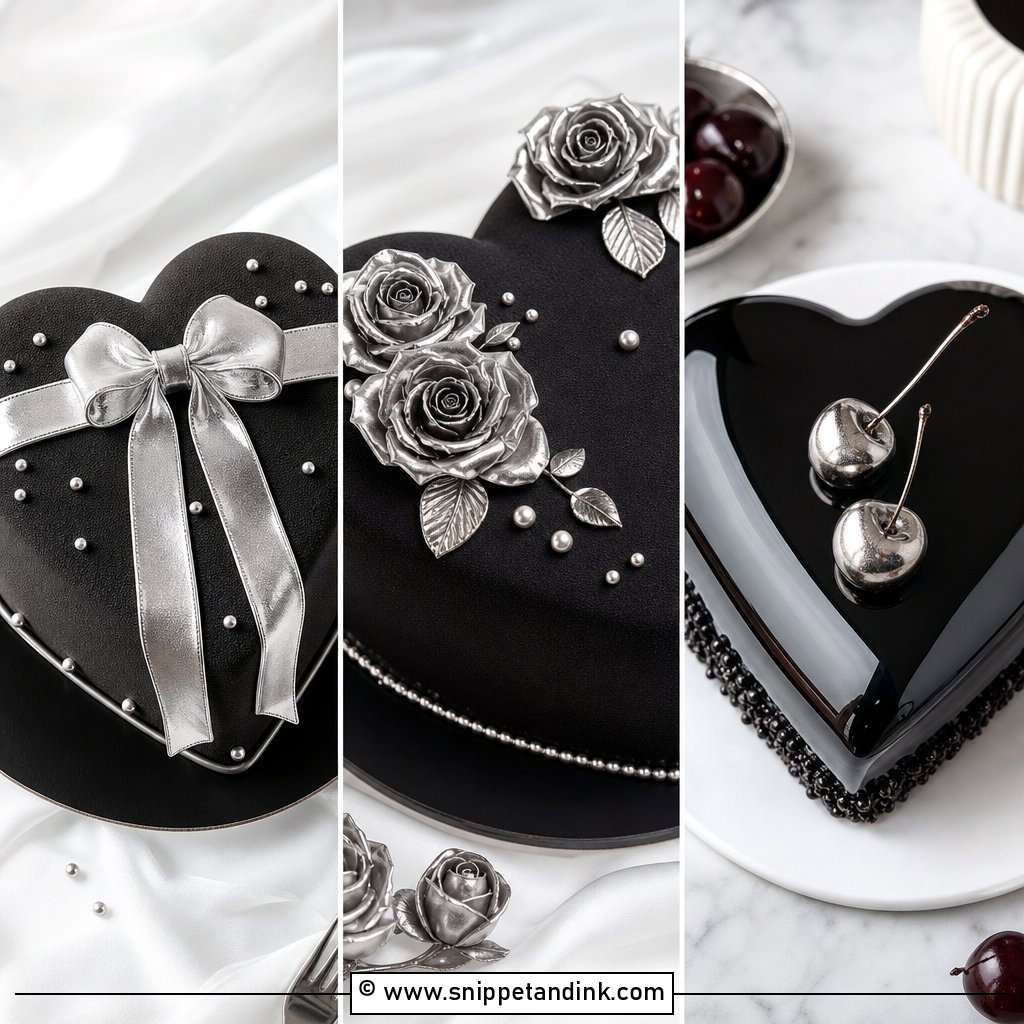
15. Black Green And Gold Wedding Cake With Orchids
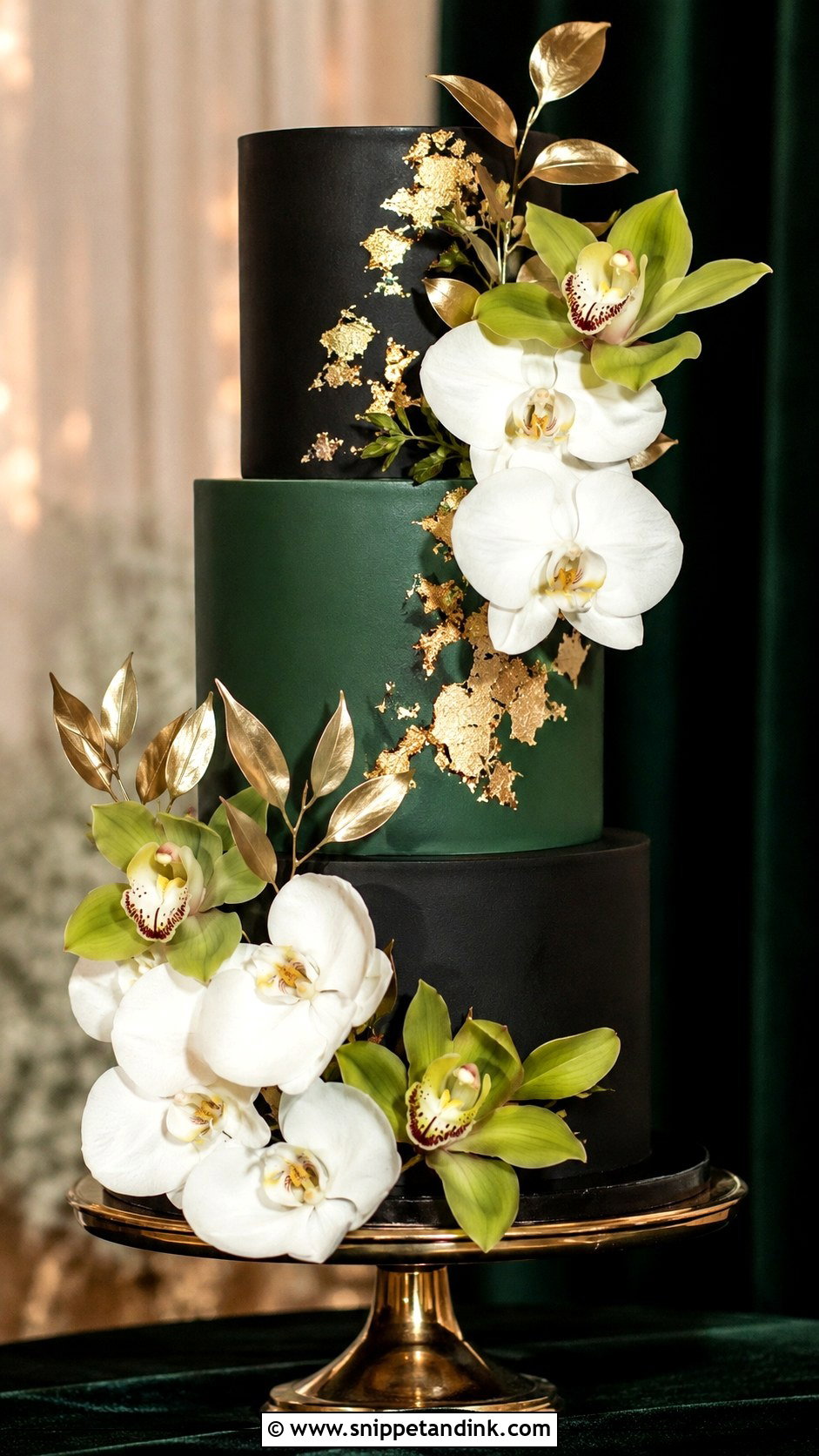
Orchids suit cakes because a few blooms read as sculpture. Green cymbidiums, white phalaenopsis or deep green sugar orchids look sharp against black tiers. Keep the gold leaf to small areas so the flowers stay in charge. I prefer placing orchids in a clean vertical line on a tall cake; scattered, they lose their architectural quality. Fresh orchids are fairly sturdy, but they still go in food-safe picks, and in tropical heat I would switch to sugar.
16. Black Green And Gold Wedding Cake With Roses
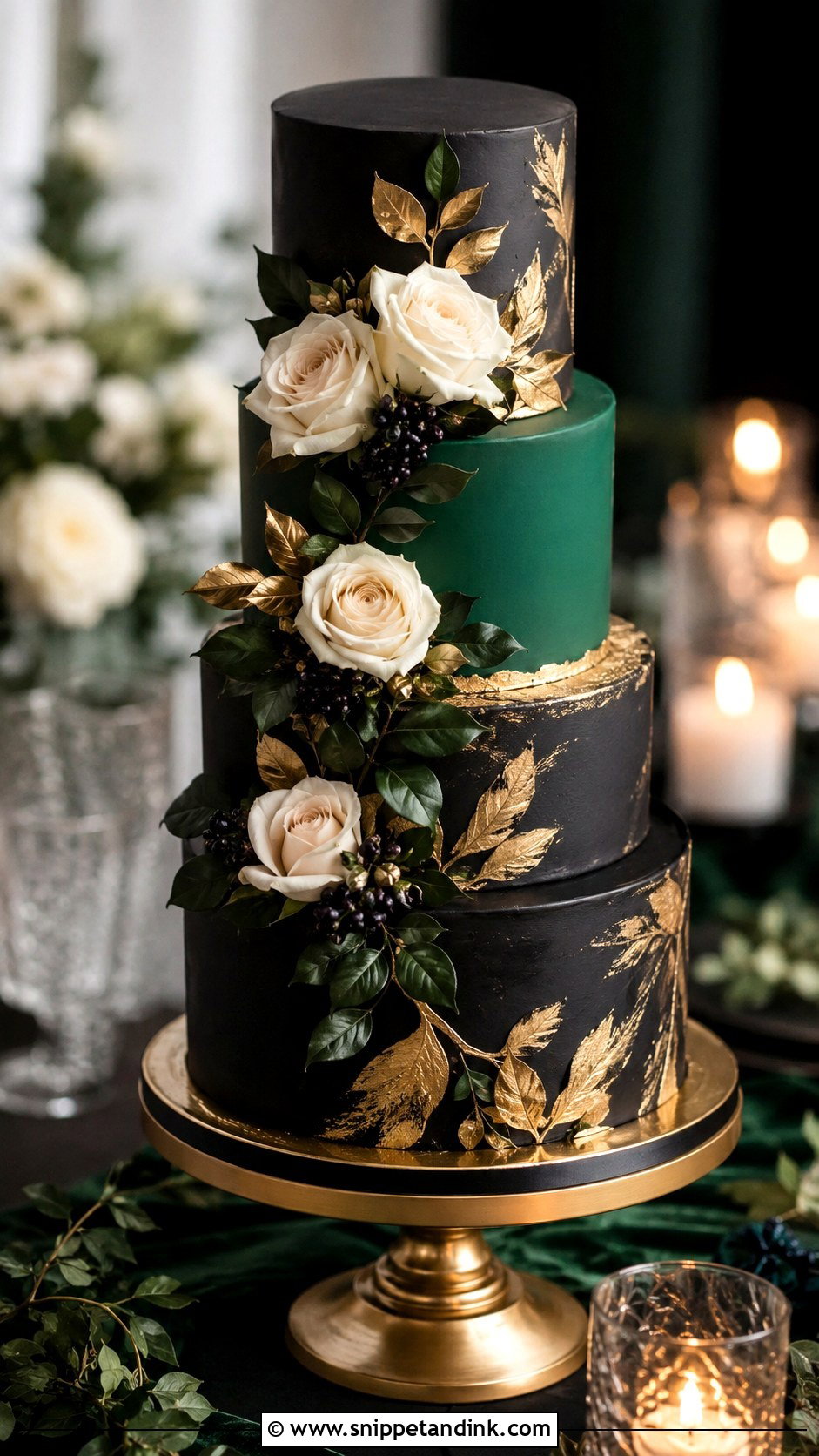
Roses bring the classic wedding flower into a bold palette. On matte black with green accents and brushed gold, ivory roses give the softest contrast. Dark red roses with emerald foliage make it moodier, and cream roses with small green buds keep it gentle. Gold-painted petals should be used sparingly; two or three on the whole cake catch light better than ten. Evening and fall weddings with velvet and candlelight carry this cake well.
17. Black Green And Gold Wedding Cake With Succulents
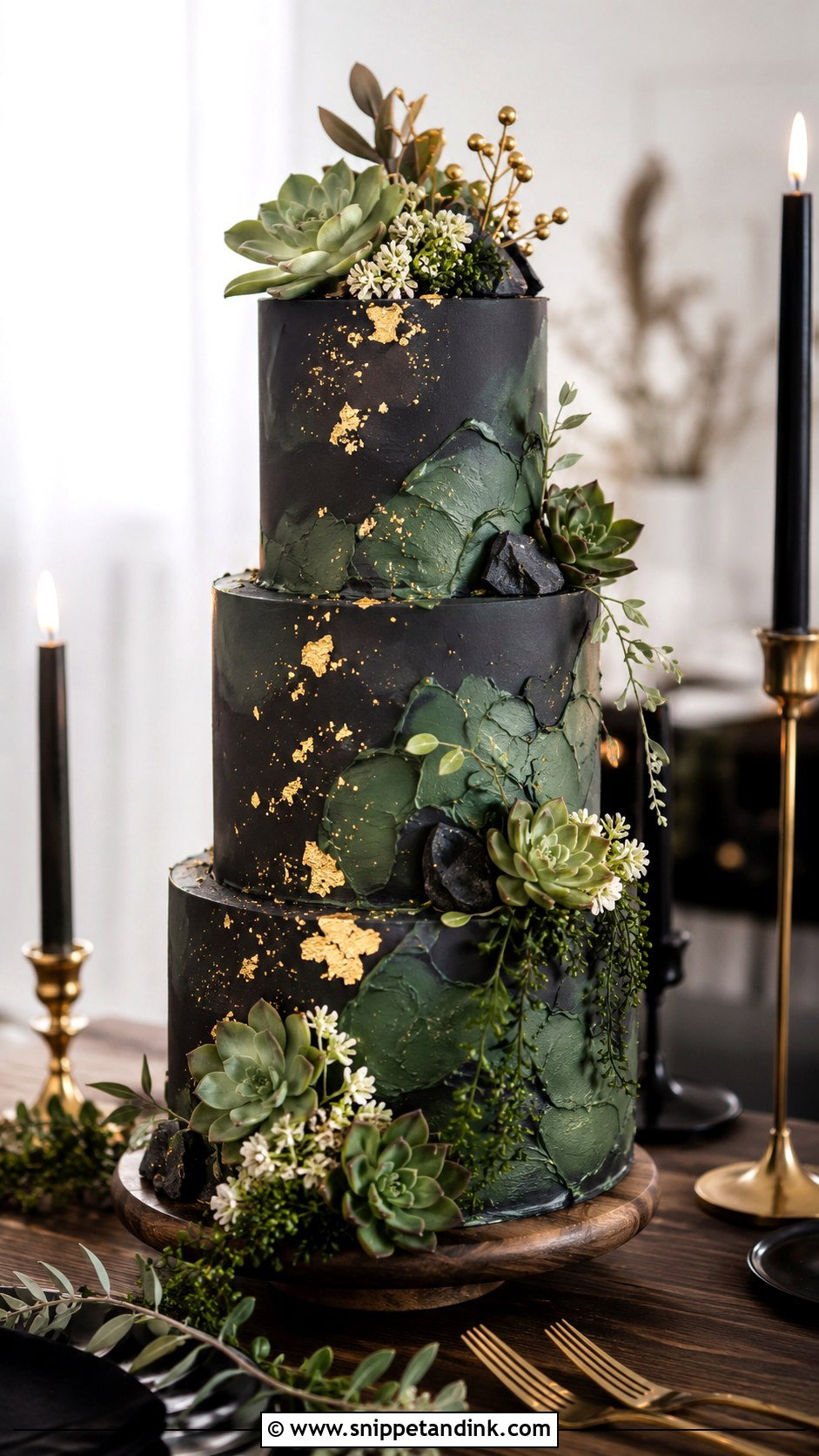
Succulents give natural green without making the cake floral, which is why desert and greenhouse weddings ask for them. Real succulents are heavy and carry soil in their roots, so I either make them in sugar or wafer paper or rest live ones on a small barrier. Matte black buttercream with deep green painted sections and small gold leaf accents is the base I would choose. Edible stones and gold berries add texture for an earthy, polished table.
18. Black Green And Gold Wedding Cake With Texture
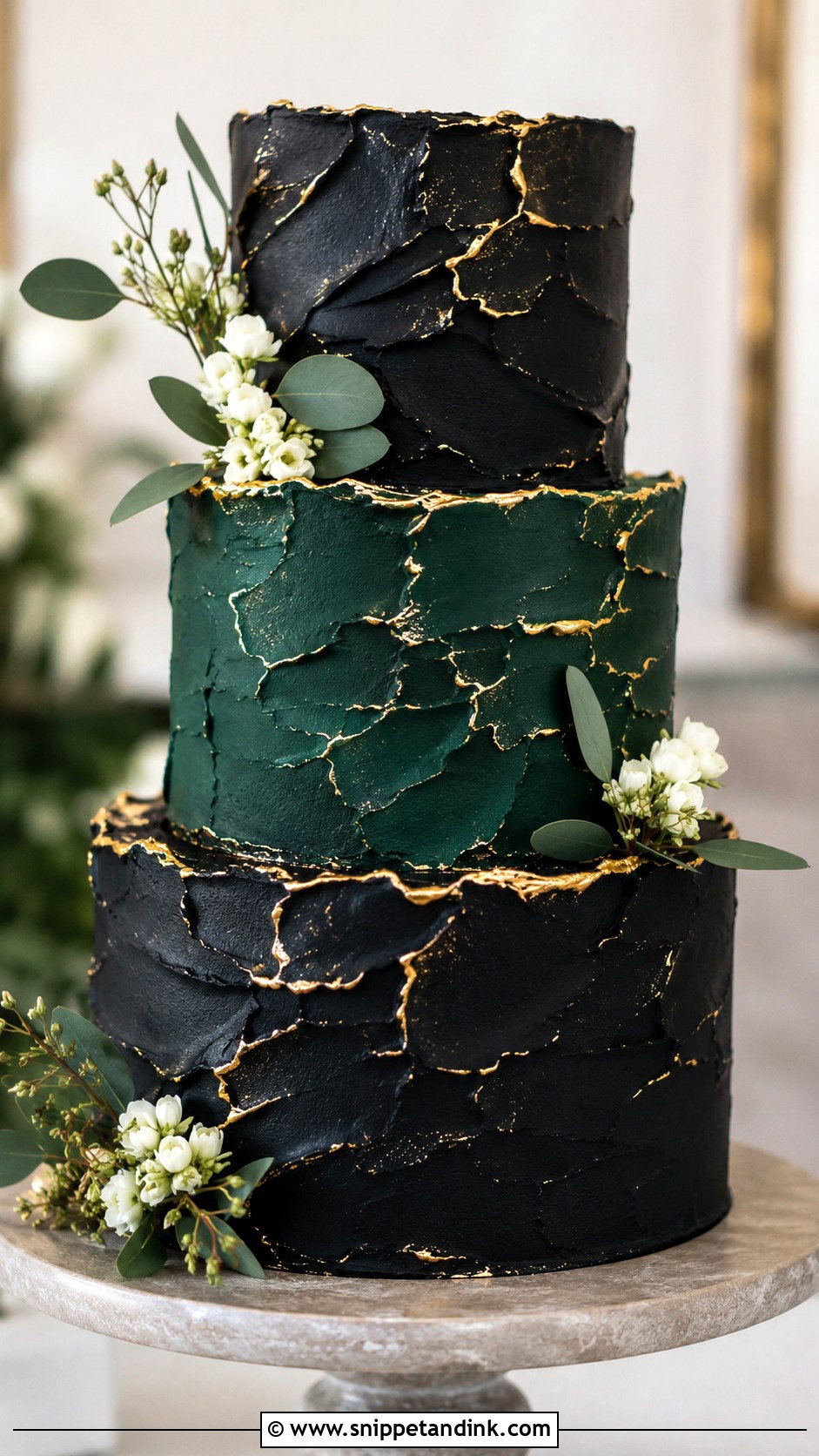
Textured buttercream, bas-relief, ruffles or pressed patterns give this palette depth without extra decoration. Black grounds it, green goes in as a painted or frosted accent, and gold picks out the raised areas. That last step is where I slow down: dry-brushing gold onto just the high points takes a light hand, and too much paint flattens the texture back out. Keep the flowers minimal. Candlelight on a side table shows the relief far better than overhead lighting does.
19. Black Green And Gold Vintage Wedding Cake
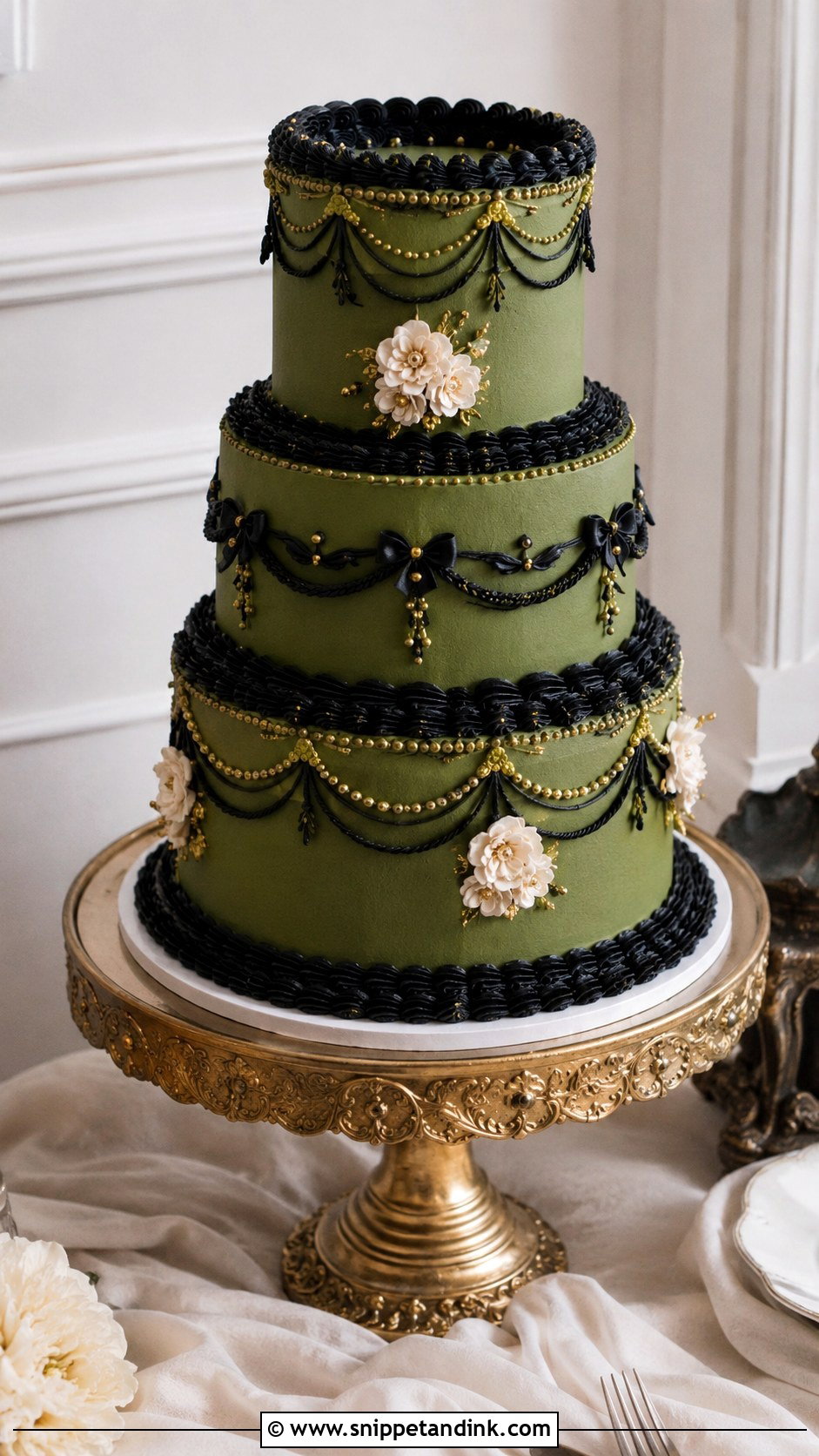
This one takes old-school piping and recolors it. Instead of a white Lambeth cake, use deep green buttercream with black piped borders and gold pearl accents. Shells, swags, bows and gold dragées give the nostalgic detail. Piping black next to green needs clean, cold icing and a steady hand, because the two colors bleed into each other if the buttercream is warm. A tall single tier, two tiers or even a heart shape all suit it, and it is the most playful cake in this collection.
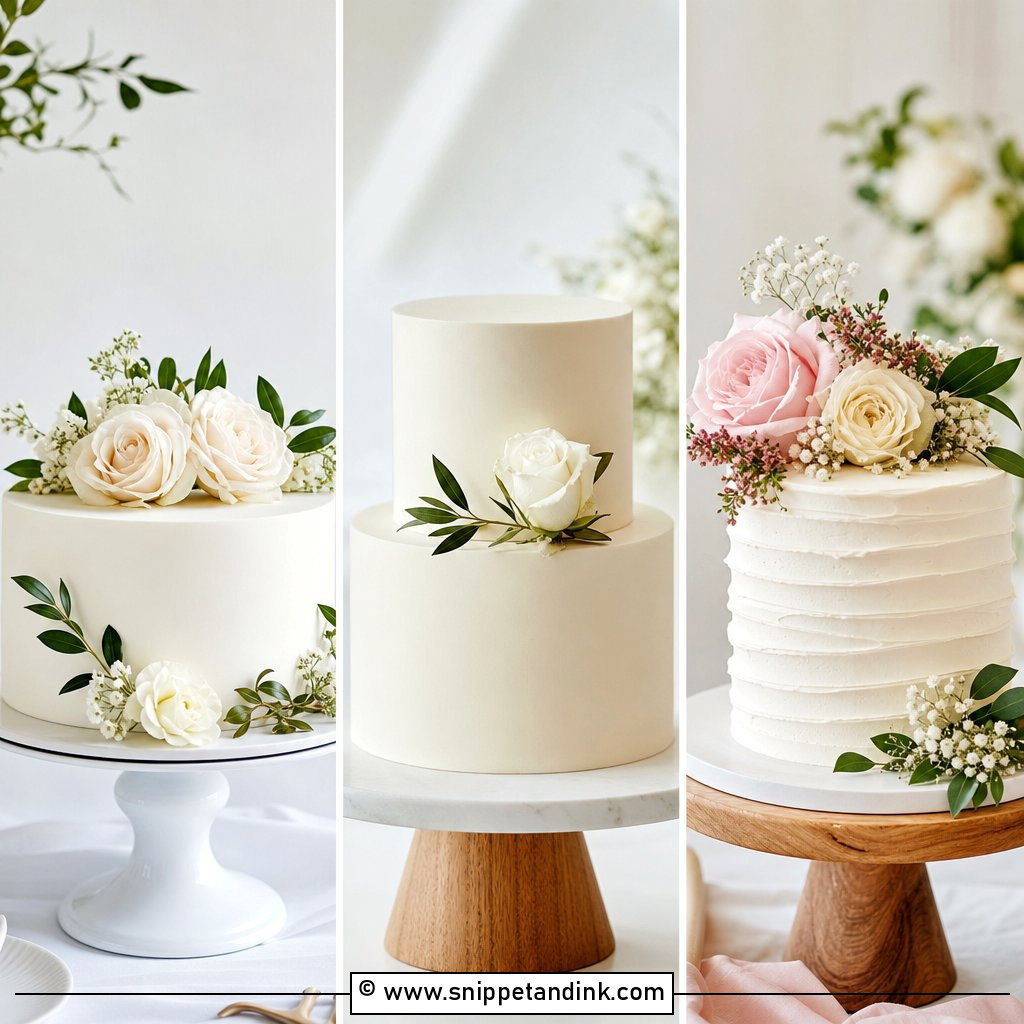
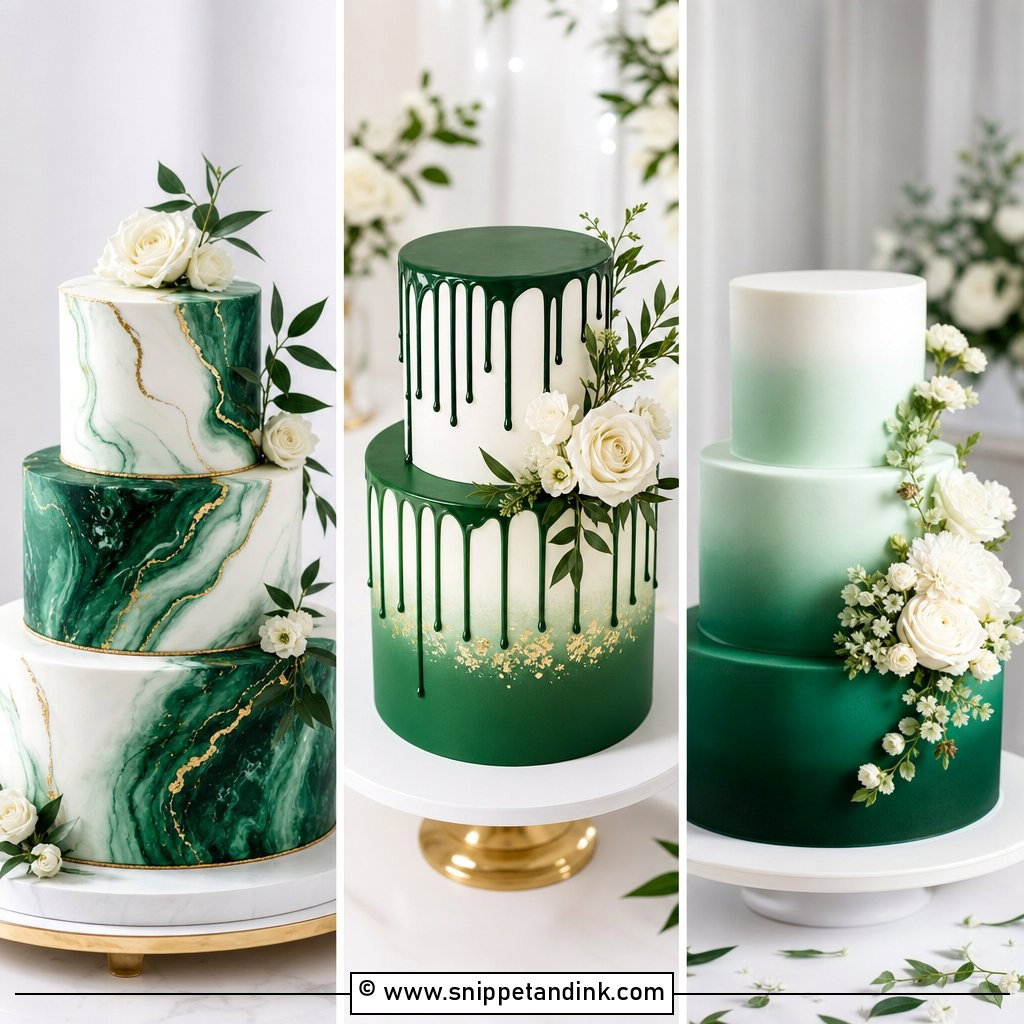



20. Black Green And Gold Minimalist Wedding Cake
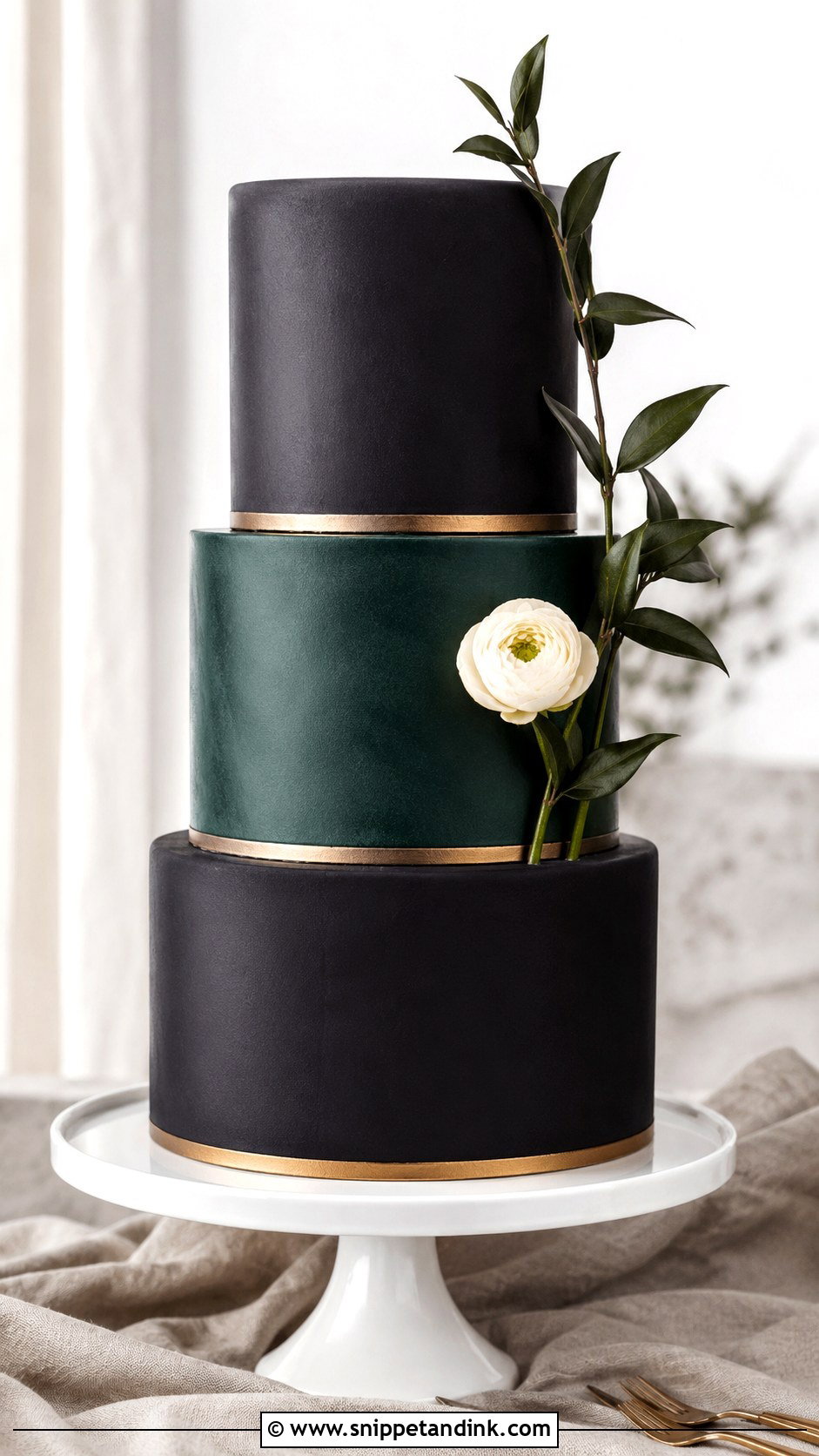
Minimal does not mean plain. Pick one main color, matte black or deep green, then use the other two in small, exact amounts: a thin gold line, one emerald panel, a single green stem. Smooth buttercream or fondant keeps it clean, and that surface must be flawless because there is nothing to hide behind. A simple stand and neutral linens let the color pairing read as deliberate.
Gold Leaf, Gold Paint and Gold Dust Do Different Jobs
All three show up in the photos above, and they are not interchangeable. Edible gold leaf is real metal beaten paper-thin. It gives a rich, uneven shimmer and sticks best to fondant or to chilled, firm buttercream. Only leaf sold as food-grade, typically high-karat, belongs on a cake.
Gold paint is lustre dust mixed with a little alcohol and brushed on. It gives solid lines and painted edges, but it needs a firm surface, and it scuffs if anyone touches the tier. Loose dust gives a soft glow rather than shine. I use it on piped texture and sugar petals. Ask your baker whether each gold product is labeled edible or only non-toxic, since the second kind is meant for decorations you remove.
Emerald Icing Changes Color Under Reception Lights
Deep green is a mixed color, so it shifts with light more than black or ivory. Under warm candlelight emerald can drift toward olive; under cool LED uplighting it can look almost teal. When the shade matters to you, I would ask for a small sample tile and photograph it on your phone in light like the venue’s. Very dark greens also need a lot of coloring, so the same advice as black icing applies: a chocolate or cocoa-tinted base gets there with better flavor and less staining.
A Palette This Strong Rewards Restraint
Every cake here comes down to the same decision: which color leads. Let green foliage and ivory flowers balance black tiers for a softer table; push emerald, gold leaf and geometric edges for something bold; keep the shape simple and gold to a thin accent for a classic finish. Bring your linen swatch, a flower sample and a photo of the room to your tasting. Those three things tell your baker more than any inspiration photo can.
You'll Like These Ideas:








Leave a Reply