
Getting-ready coverage is where I learn the most about a bride before the ceremony, and the robe is in nearly every frame of it. A long robe moves well in full-length shots and gives you coverage while hair and makeup happen around you. What reads well on camera is not always what looks best on the hanger, though. Think of the robe as part of an outfit, with coordinated pajamas, sensible slippers and a few small accessories. Satin and silk are the classics; chiffon, lace, cotton, velvet and embroidery each behave differently in window light. The looks below include minimalist, personalised, plus-size, maternity and seasonal options.
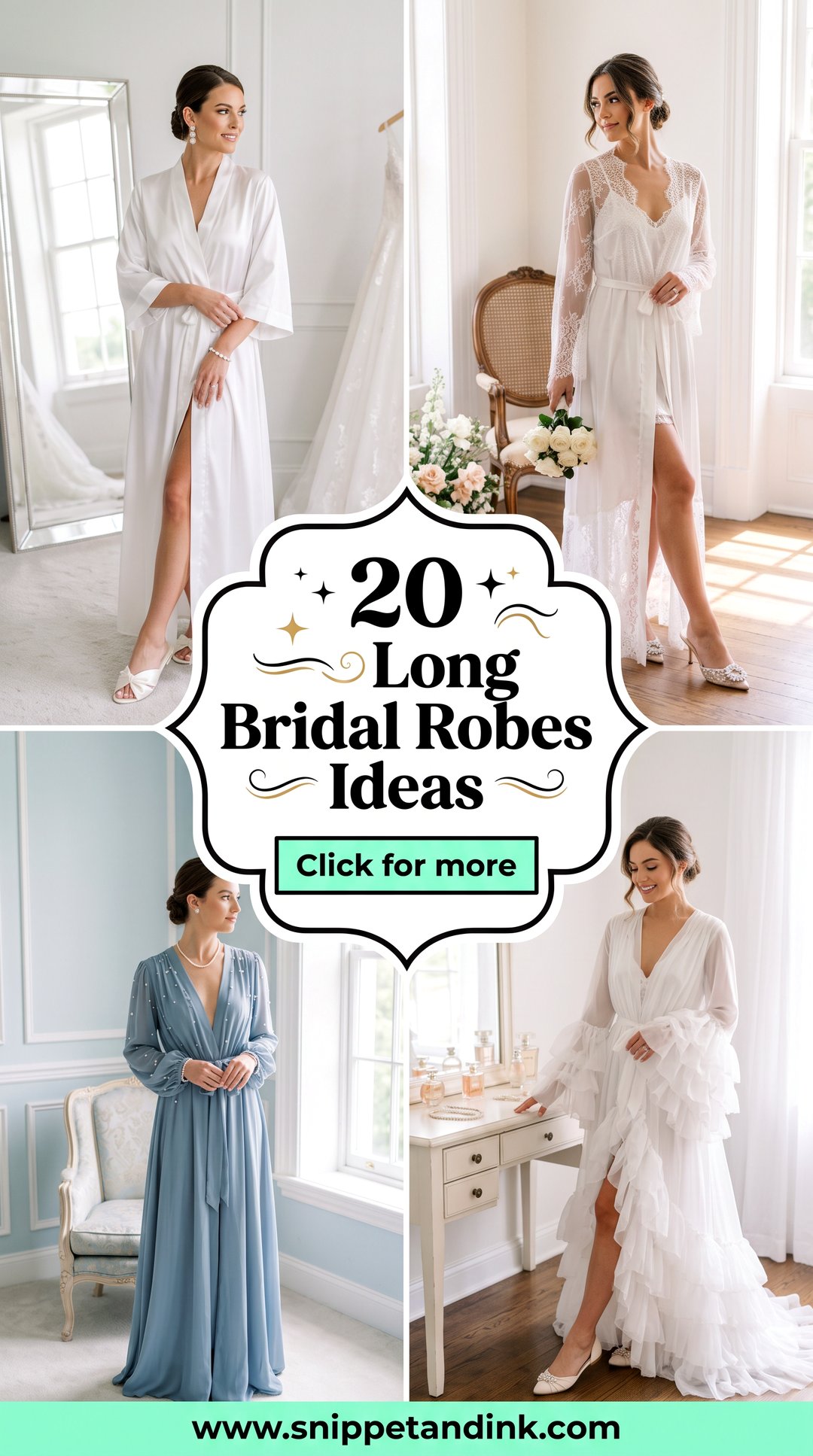
How a Robe Reads in Window Light
Most getting-ready photos are taken by a window, because it gives the softest light on a face. The robe sits in that light for the whole session, so its surface matters more than its colour.
Shine
Glossy satin reflects the window as bright streaks. A little shine looks luxurious; a lot looks like plastic. Matte satin, crepe and cotton give smooth, even tones.
Brightness
I expose for your skin. A very bright white robe next to your face can lose its folds and texture as a result, while ivory and soft white hold detail. If you love bright white, choose one with texture, like lace trim or embroidery, so there is something for the camera to find.
The room behind you
A white robe against a white wall can vanish. If the suite is all white, a soft colour or a textured fabric gives you shape. Clear the clutter, coffee cups, chargers, plastic bags, from the corner you will stand in before I arrive.
1. White Satin Long Bridal Robe
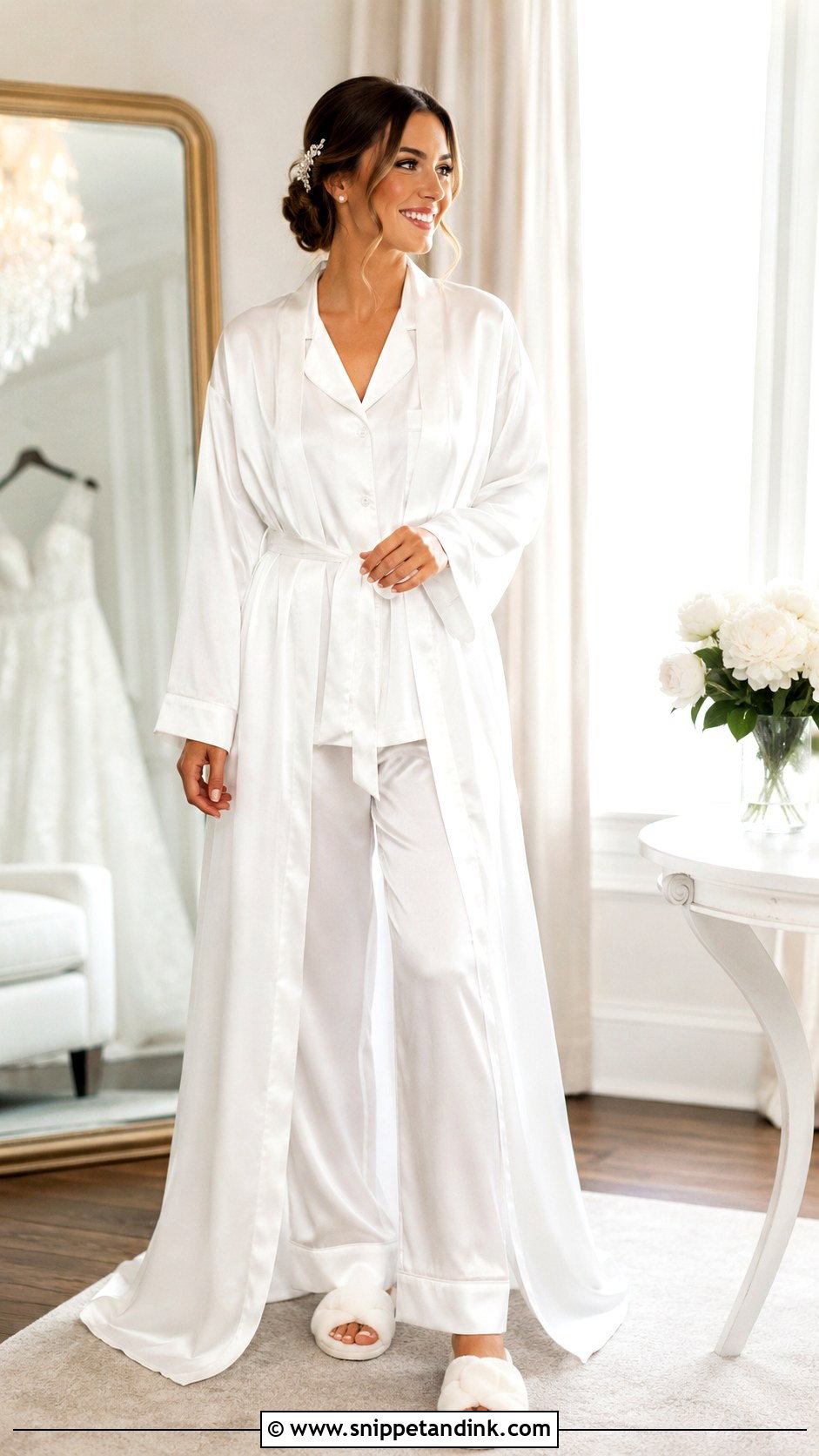
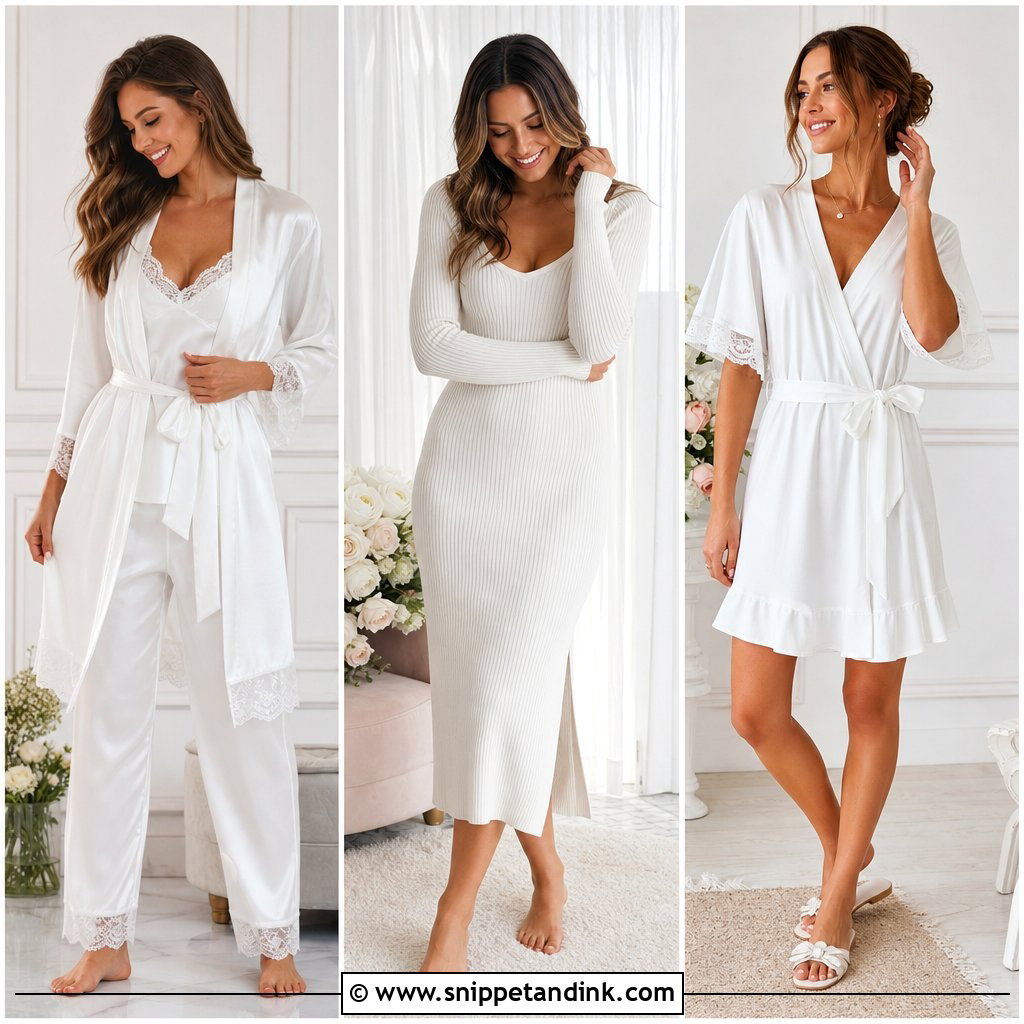
If you want the cleanest white robe on camera, choose a heavier matte satin. High-shine satin throws hot spots of glare wherever window light hits it, and thin satin shows every crease from the chair. A white button-front pyjama top and wide-leg trousers underneath let you change without disturbing hair. White cushioned slippers, pearl studs and a small clip are plenty. Hem length matters in full-length frames: ankle length suits petite brides who would otherwise tread on the hem, while a taller bride can carry a robe that just skims the floor.
2. Ivory Silk Long Bridal Robe
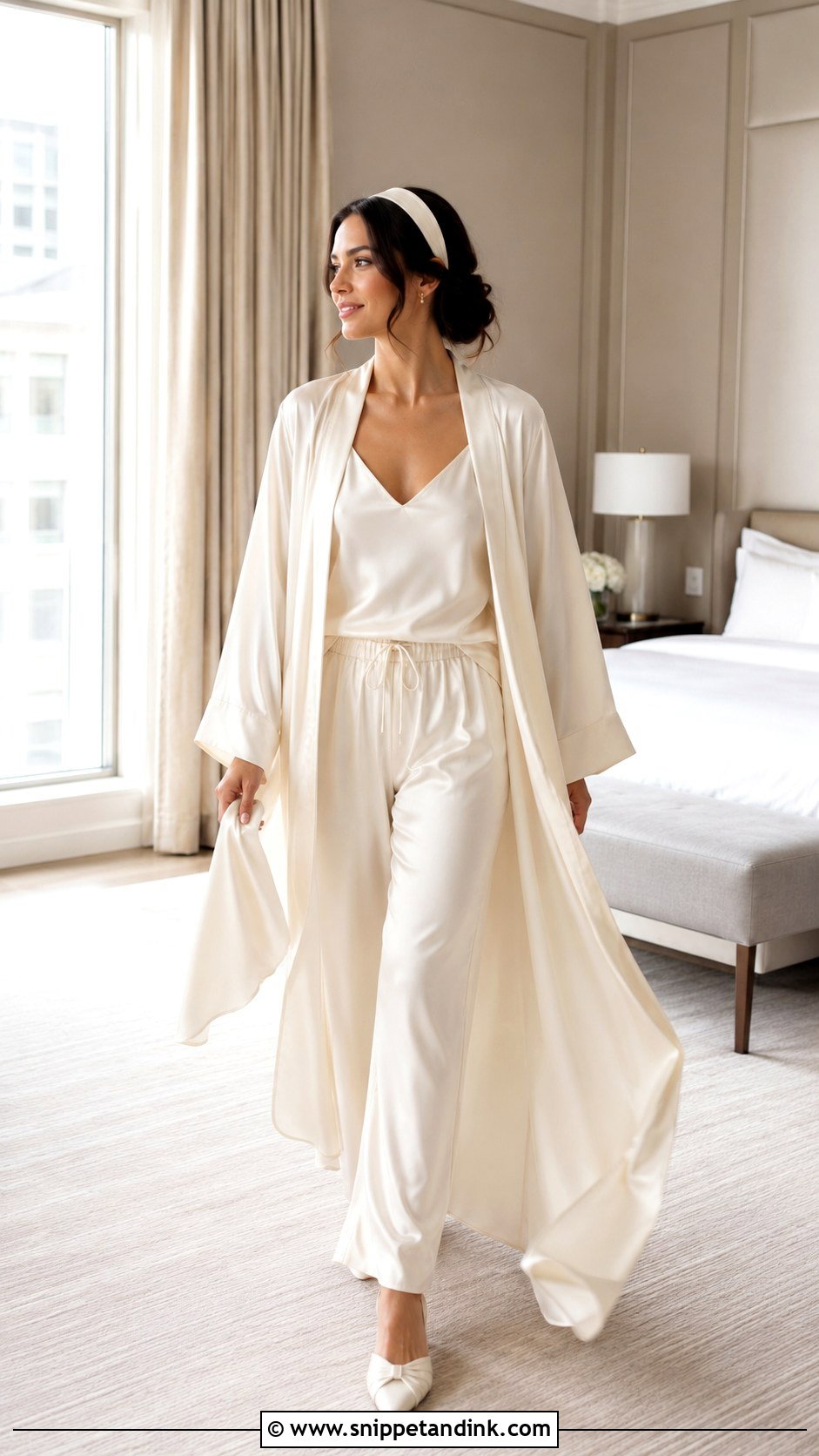
Ivory is the white I find easiest to expose for. Bright white next to a face can lose all its detail when I set the exposure for skin; ivory keeps its folds and texture, and it sits more naturally against cream walls and wooden furniture. Layer it over an ivory silk cami and matching trousers, with cream pointed slippers and small gold earrings. A narrow silk headband looks pretty early on but must come off before hair starts. Wide sleeves and an inside tie keep the robe closed as you move. Afterward it becomes good loungewear.
3. Lace Trim Long Bridal Robe
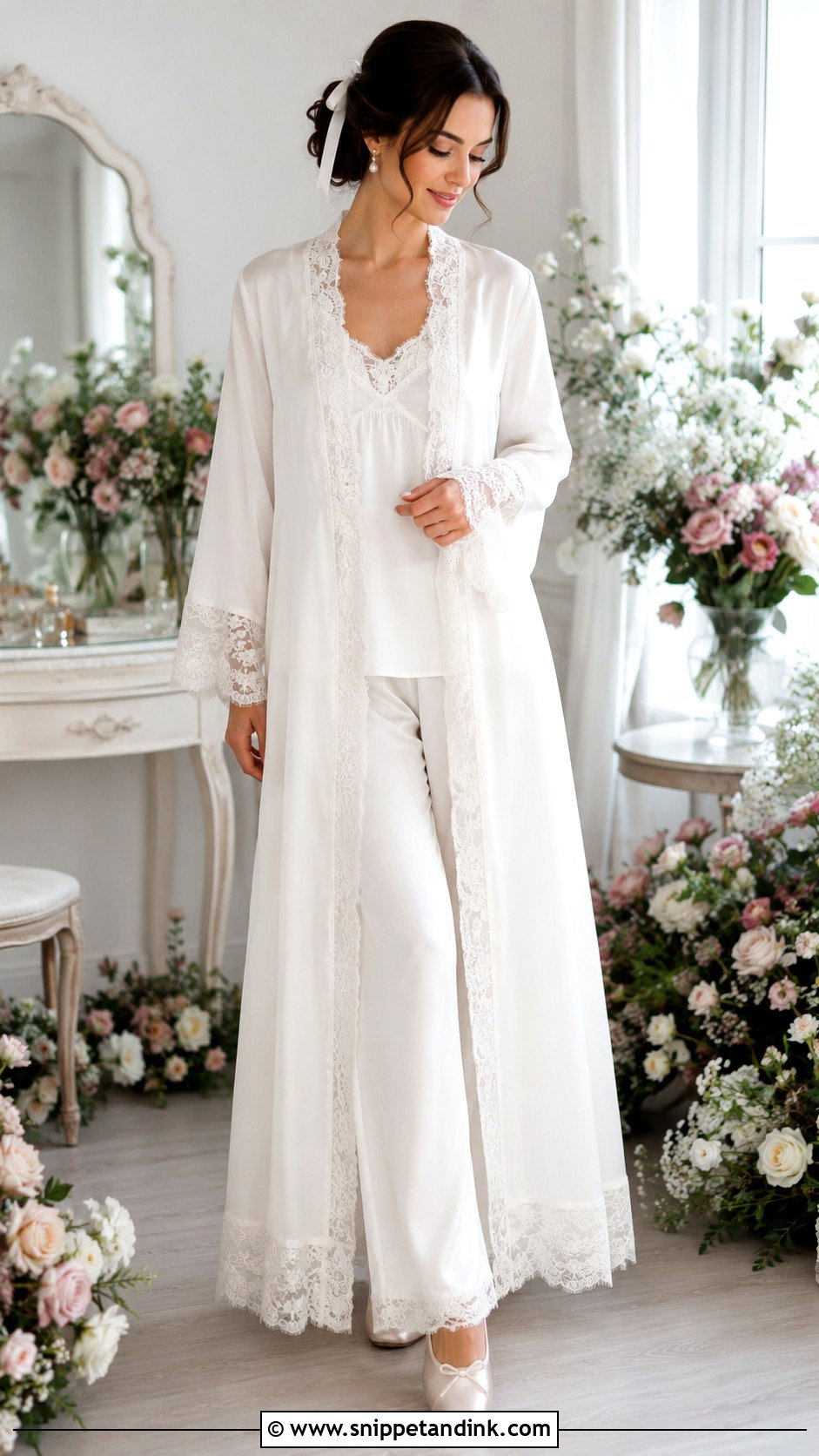
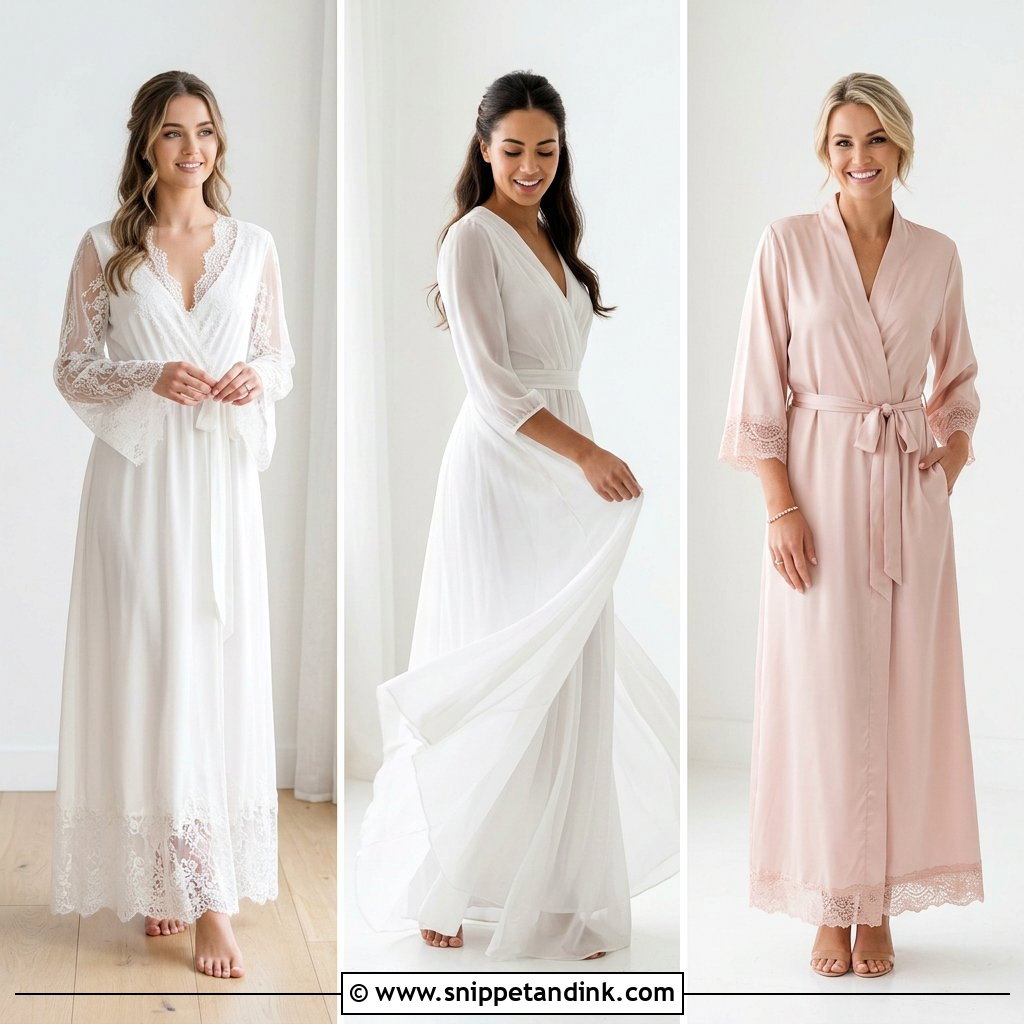
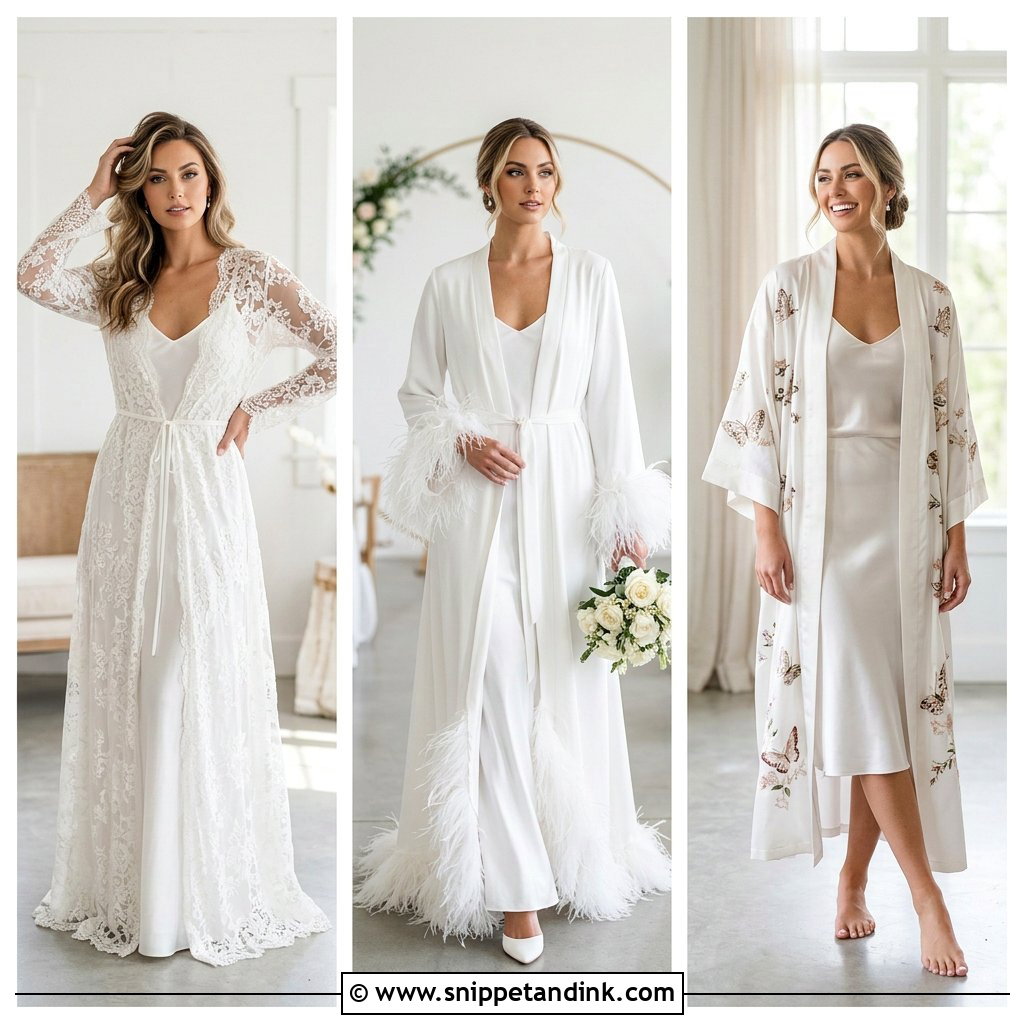
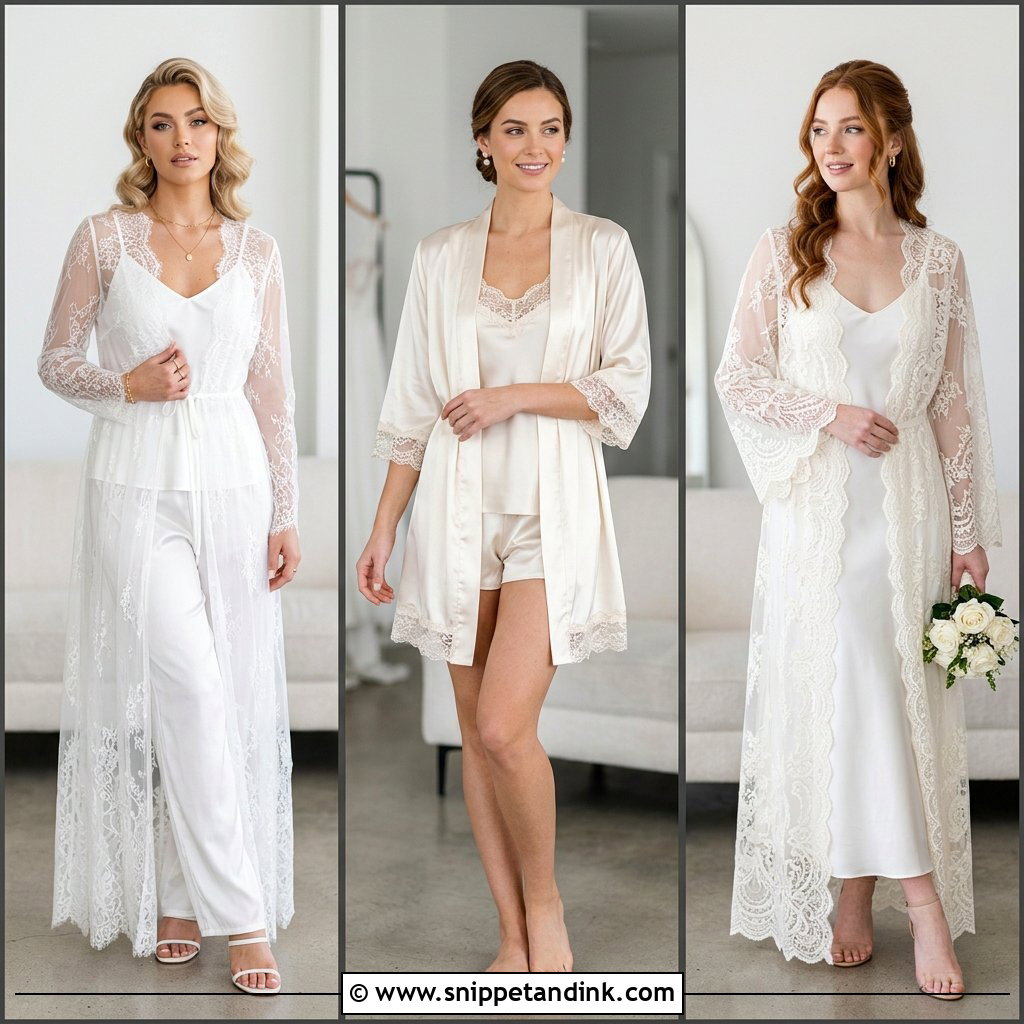
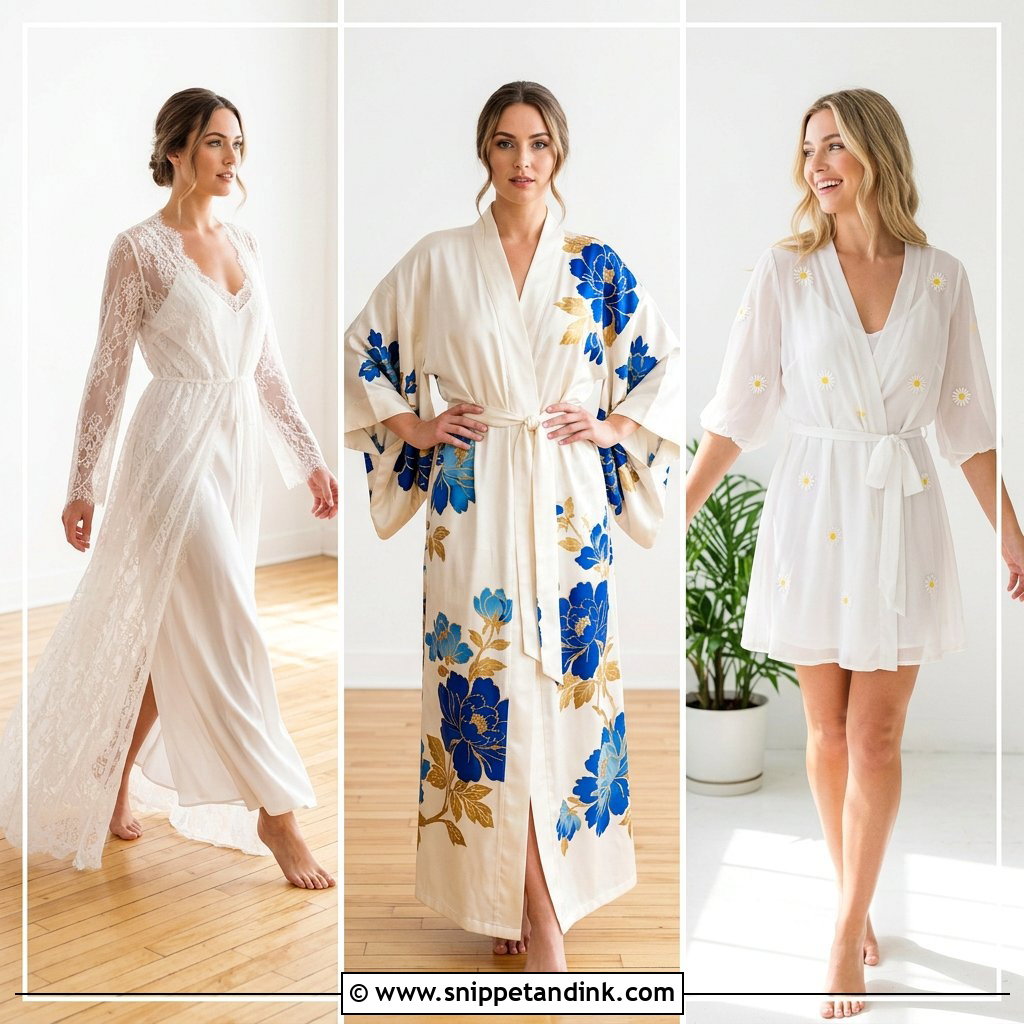
Lace trim on an opaque robe gives texture without the see-through problem of an all-lace robe. Look for lace at the neckline, cuffs and hem. Underneath, a button-front pyjama set or a sleeveless maxi lounge dress that ends just above the robe’s hem. Satin ballet slippers, pearl drops and a slim ribbon bow. Scalloped lace suits a traditional wedding; geometric lace looks cleaner. In close-ups the cuff trim is often in frame next to brushes and jewellery, so check it does not catch on rings or makeup tools.
4. Embroidered Tulle Long Bridal Robe
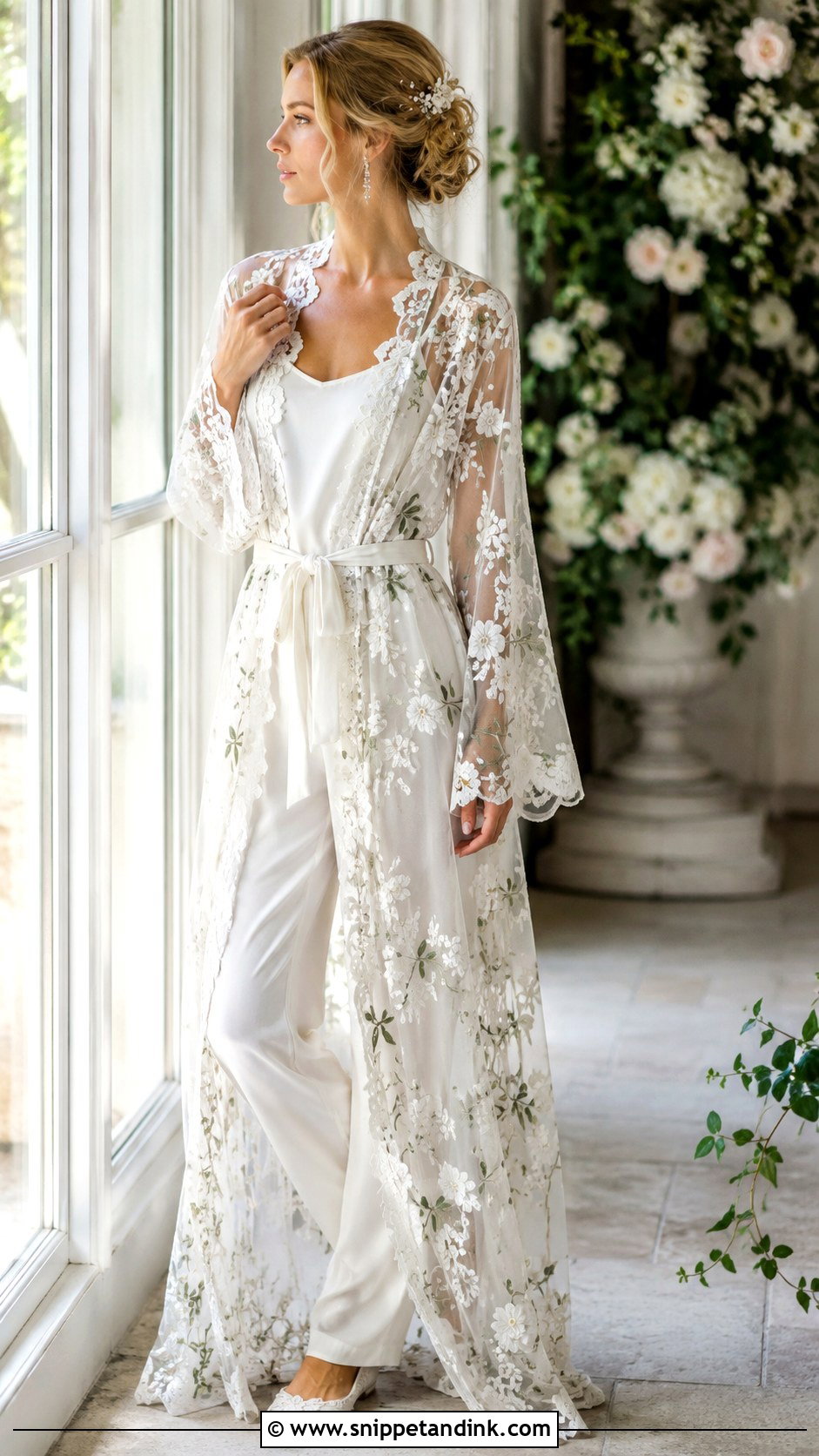
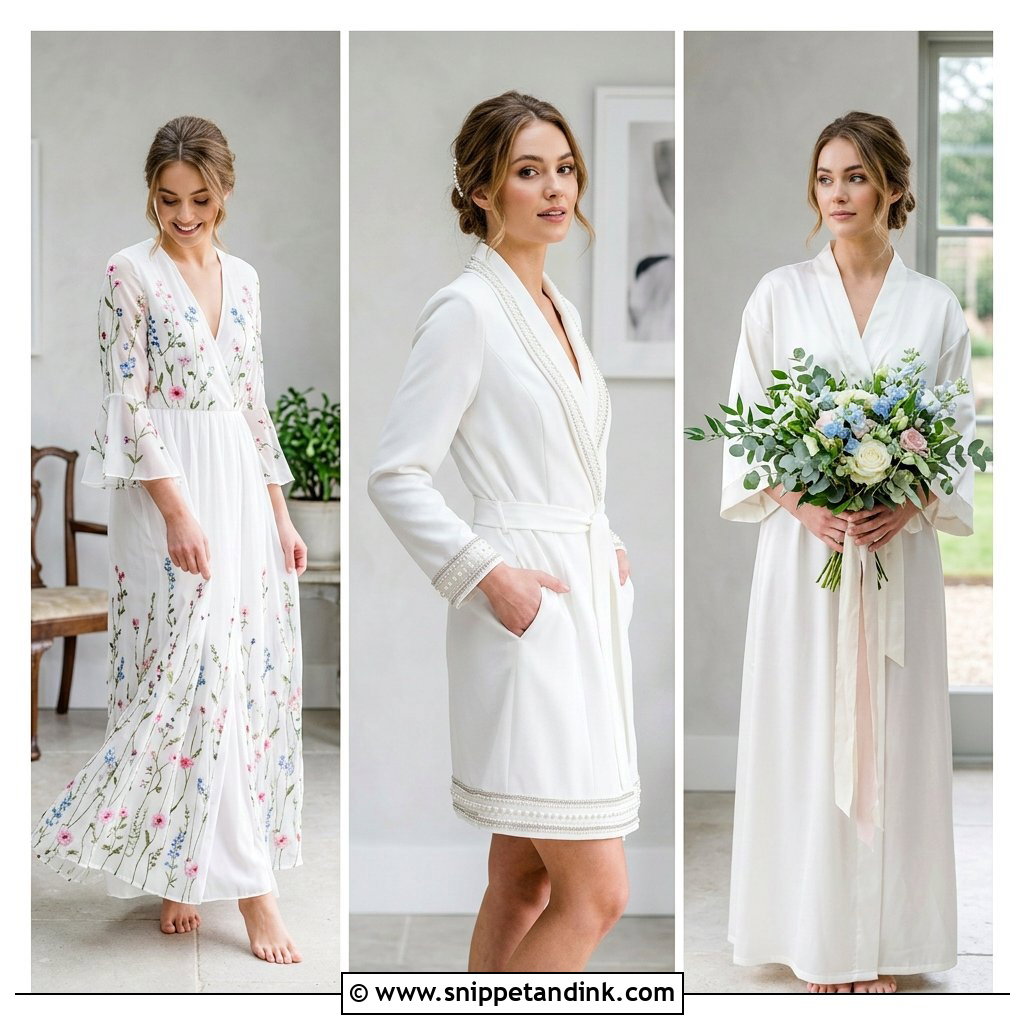
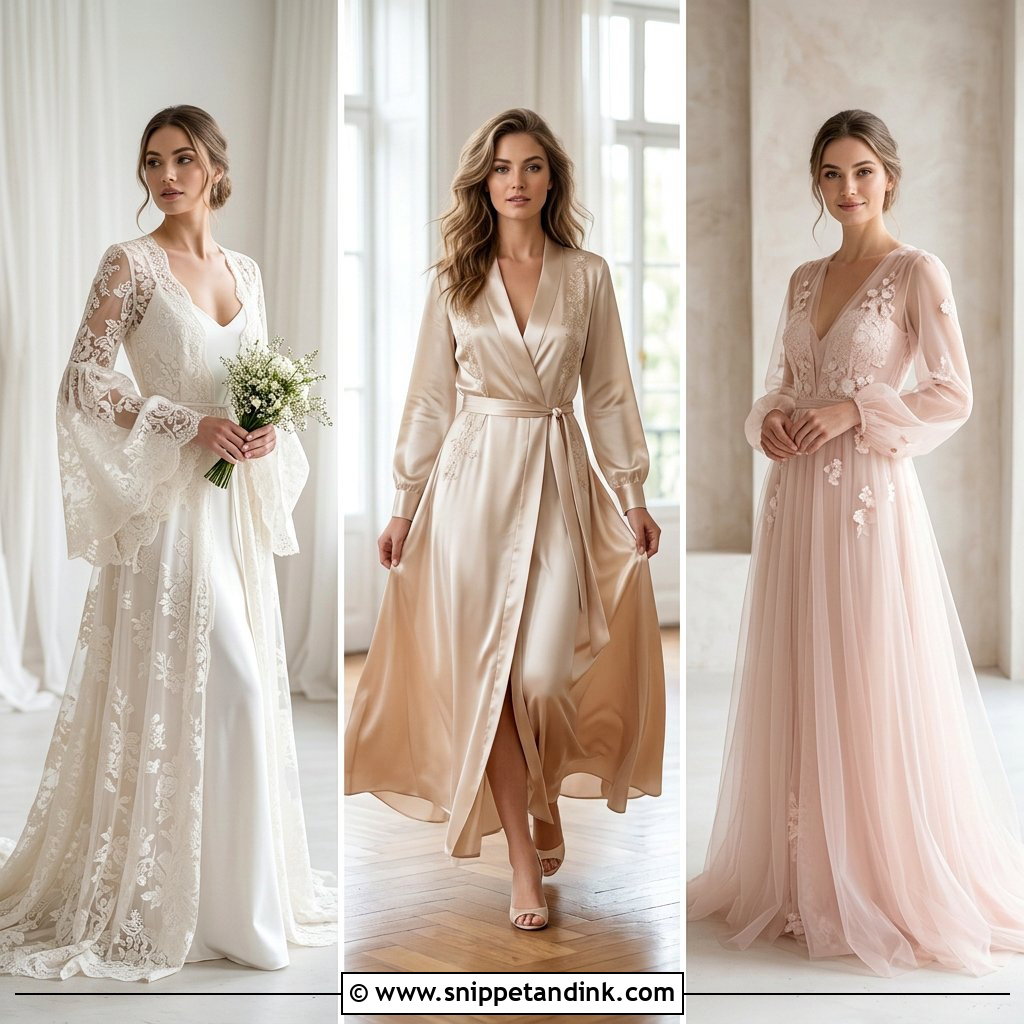
Tulle is the fabric I most like to backlight. Stand a bride in embroidered tulle with a window behind her and the embroidery glows while the tulle almost disappears. That also means anything underneath shows, so layer an opaque white cami and flowing pyjama trousers beneath. Small flowers, leaves or scattered dots read clearly at a distance; dense embroidery turns into noise. White flats or padded mules, floral hair pins and tiny crystal earrings. A fitted satin waistband adds shape, and the hem should clear the floor so it doesn’t snag on chair legs.
5. Feather Trim Long Bridal Robe
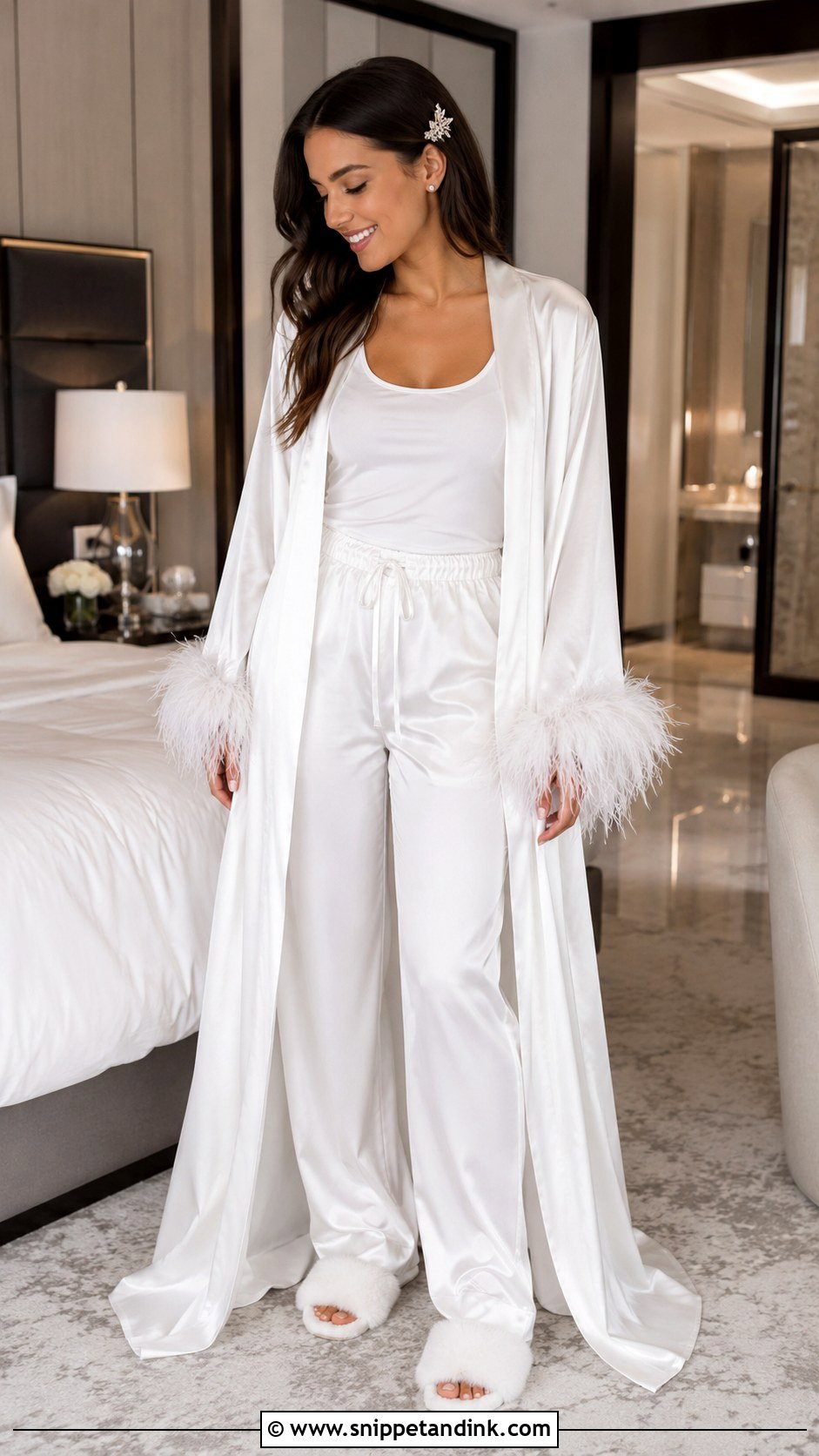
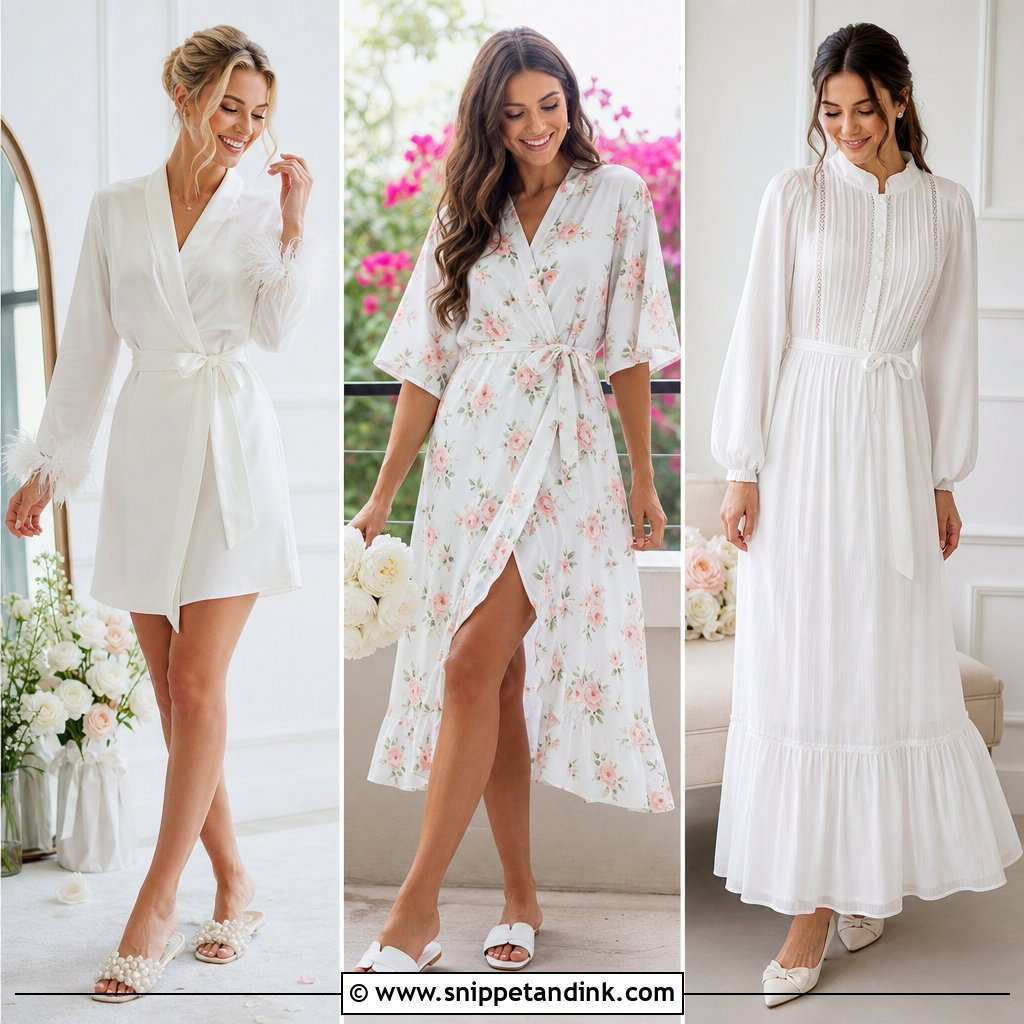
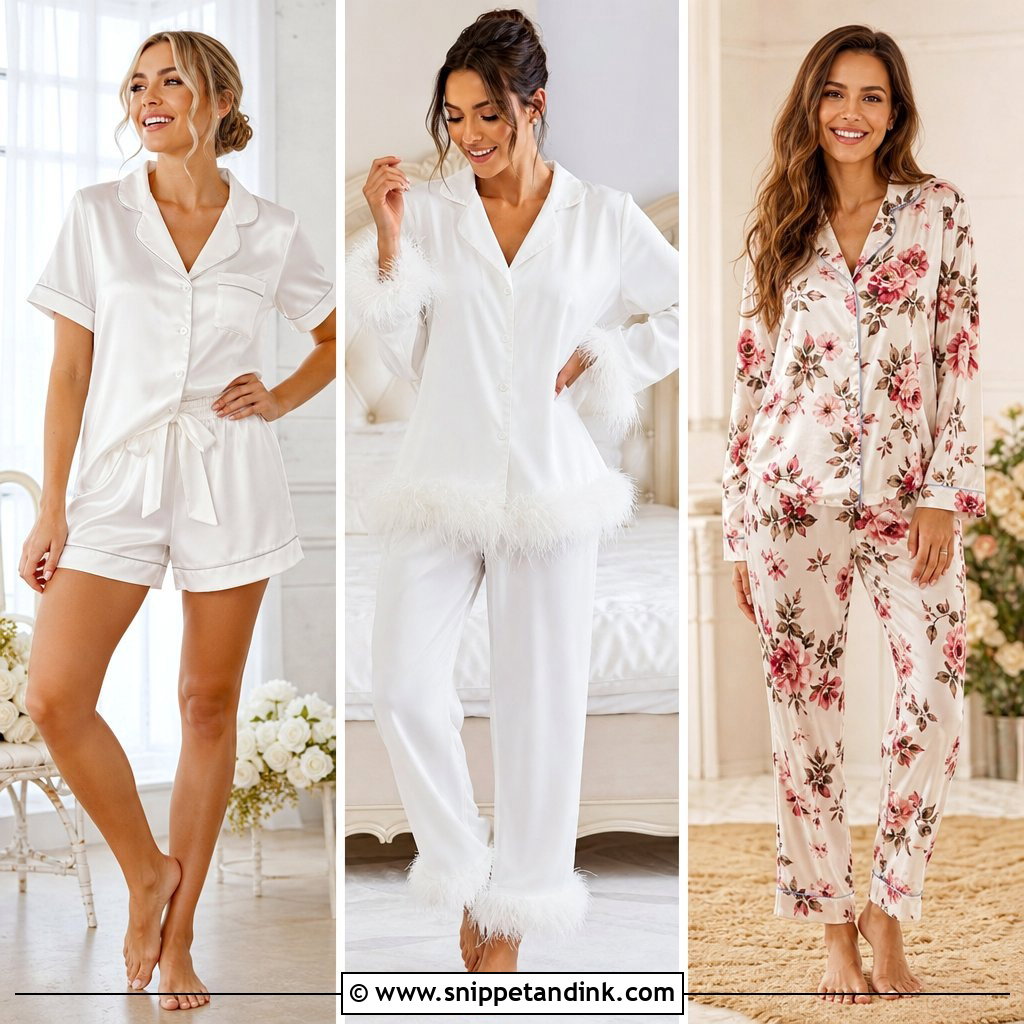
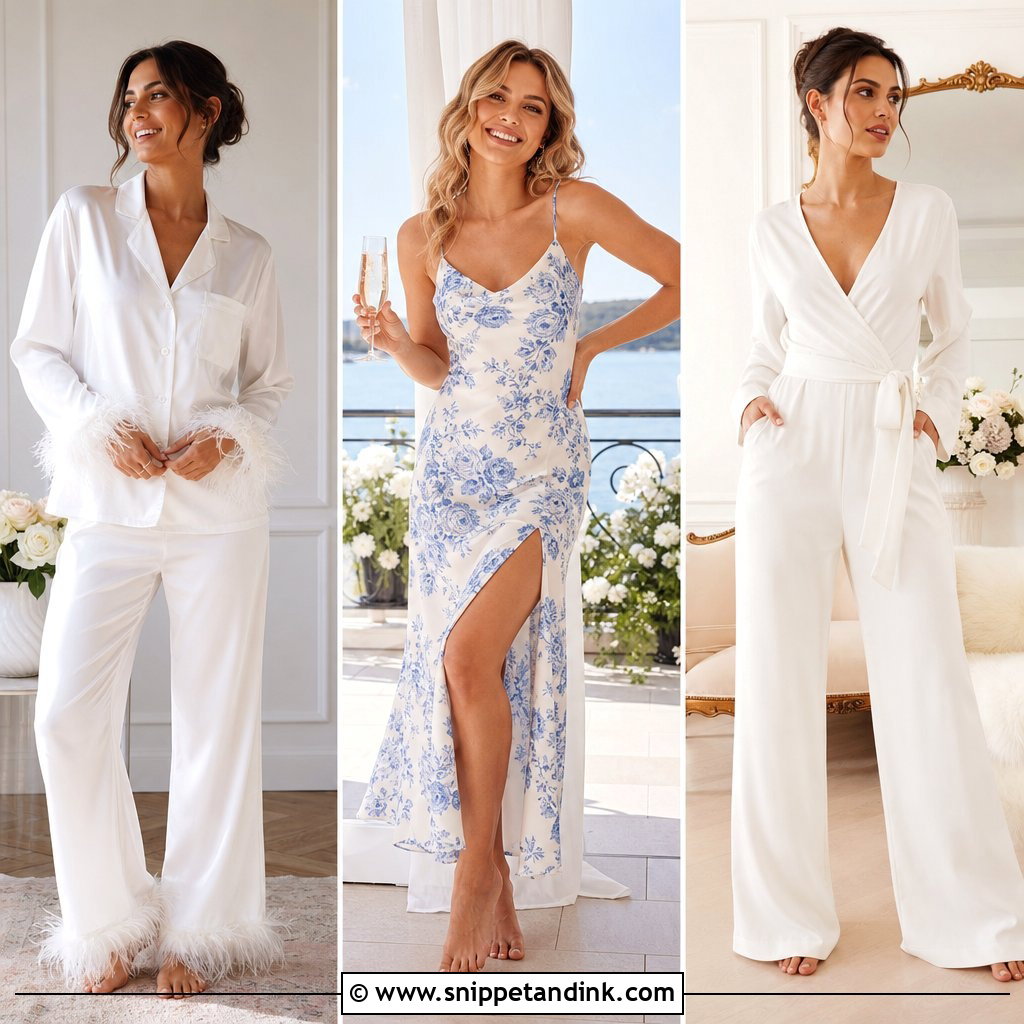
Feathers look wonderful in movement, and movement is where they can go soft in a dim room, because I need a faster shutter to freeze them. Keep the feathers at the cuffs or hem on a plain satin base. A white tank and sleek wide-leg pajama pants sit underneath. Fluffy slippers, crystal studs and a metallic clip finish it. Leave big bracelets off, as they tangle with the trim. For walking shots I’ll ask you to move slowly near the brightest window, which gives the feathers their best chance to stay crisp.
6. Pearl Embellished Long Bridal Robe
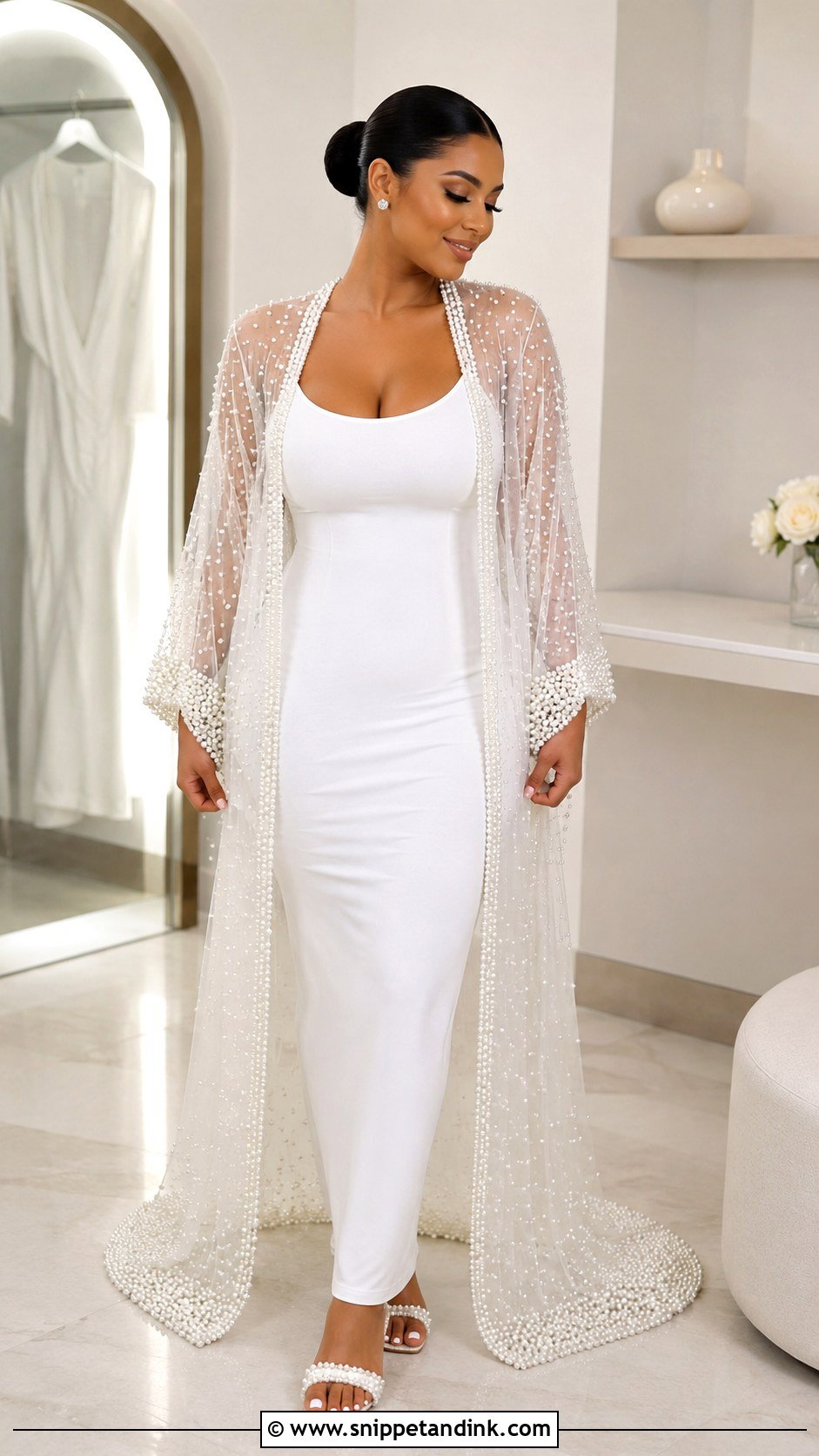
Scattered pearls on a sheer overlay catch little points of light in close-ups, which is lovely in detail shots. Wear the overlay over an opaque white tank dress or a cami with pyjama trousers so you are covered in group photos. Pearl-edged slippers and simple studs match the theme; if the shoulders or neckline are already decorated, skip the pearl necklace. The pearls should be sewn securely and spaced evenly so the overlay still hangs straight. A smooth low bun or clipped-back hair keeps the neckline visible.
7. Floral Long Bridal Robe
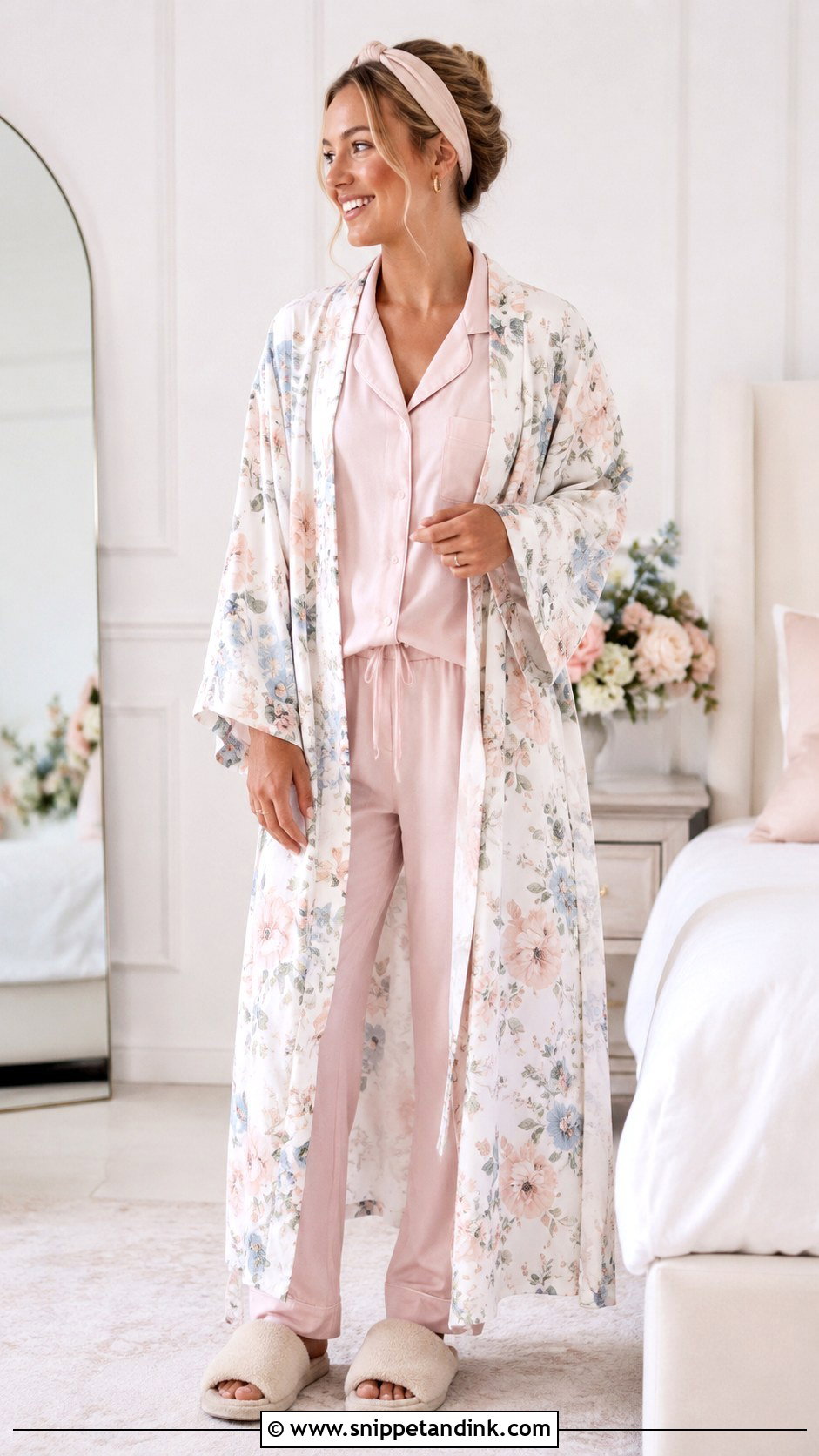
A floral robe adds colour to a bright room, and it also sits right beside your face in every portrait. A large print near the chin pulls the eye away from your expression, so I nudge petite brides toward smaller watercolour flowers. Choose a white or ivory background with flowers that echo the bouquet, then wear solid pyjamas in one shade from the print: blush, pale blue, sage or lavender. Neutral slippers, small hoops and a plain fabric headband avoid a second pattern. Wide sleeves and a defined waist keep the shape relaxed. Spring, summer and garden mornings suit it best.
8. Blue Long Bridal Robe
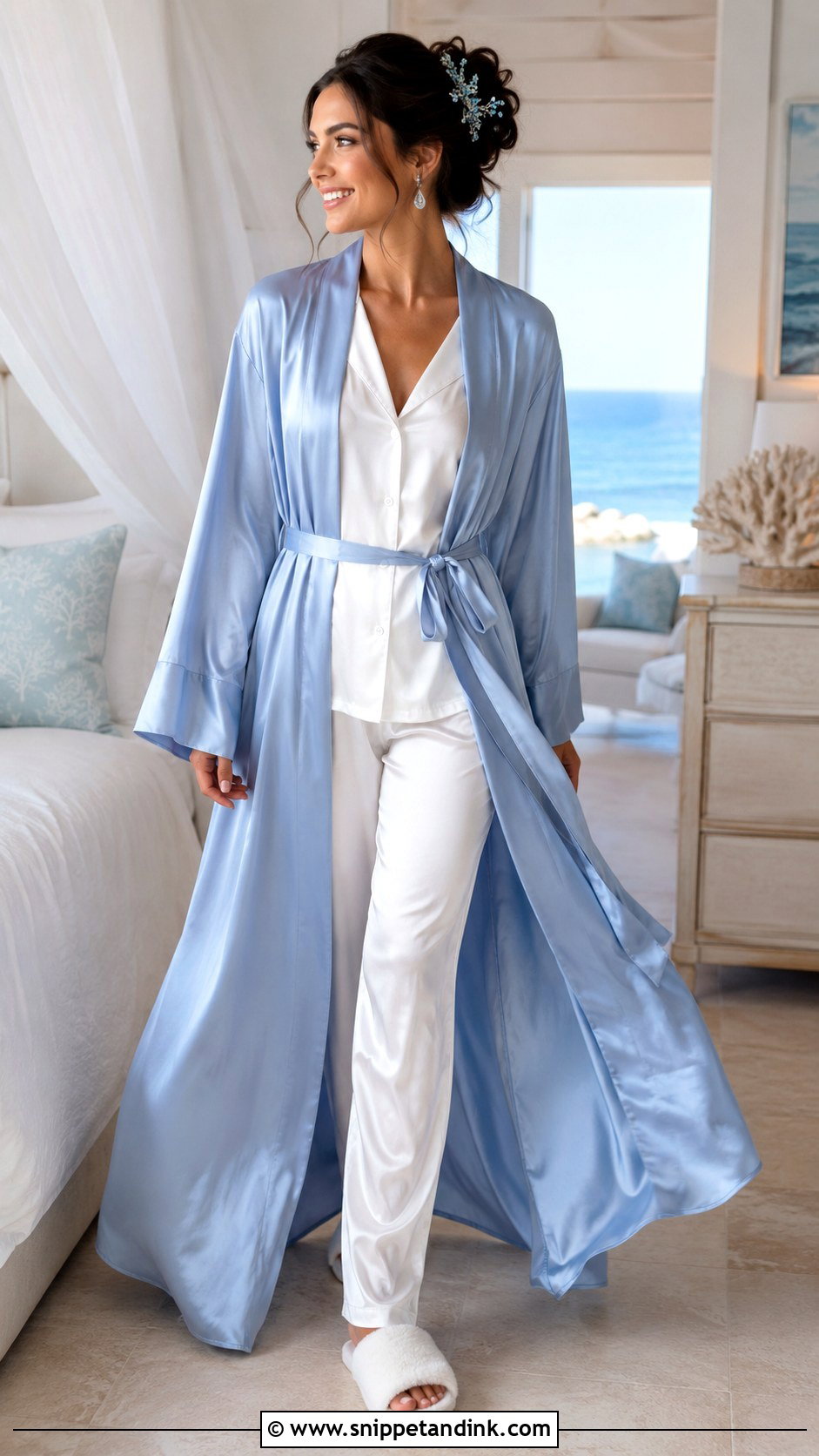
Pale blue covers your something blue neatly. Powder blue satin, silk or light cotton all work, with a white button-front pajama set underneath so the robe stays the only colour. White slippers, silver earrings and a blue crystal hair pin finish it. One thing I watch for: in a suite lit by warm lamps, pale blue can shift toward grey or green on camera, so turn off the yellow lights and use the window if you can. If your bridesmaids are in blue too, wear the lightest shade or add white trim so you stand apart.
9. Champagne Long Bridal Robe
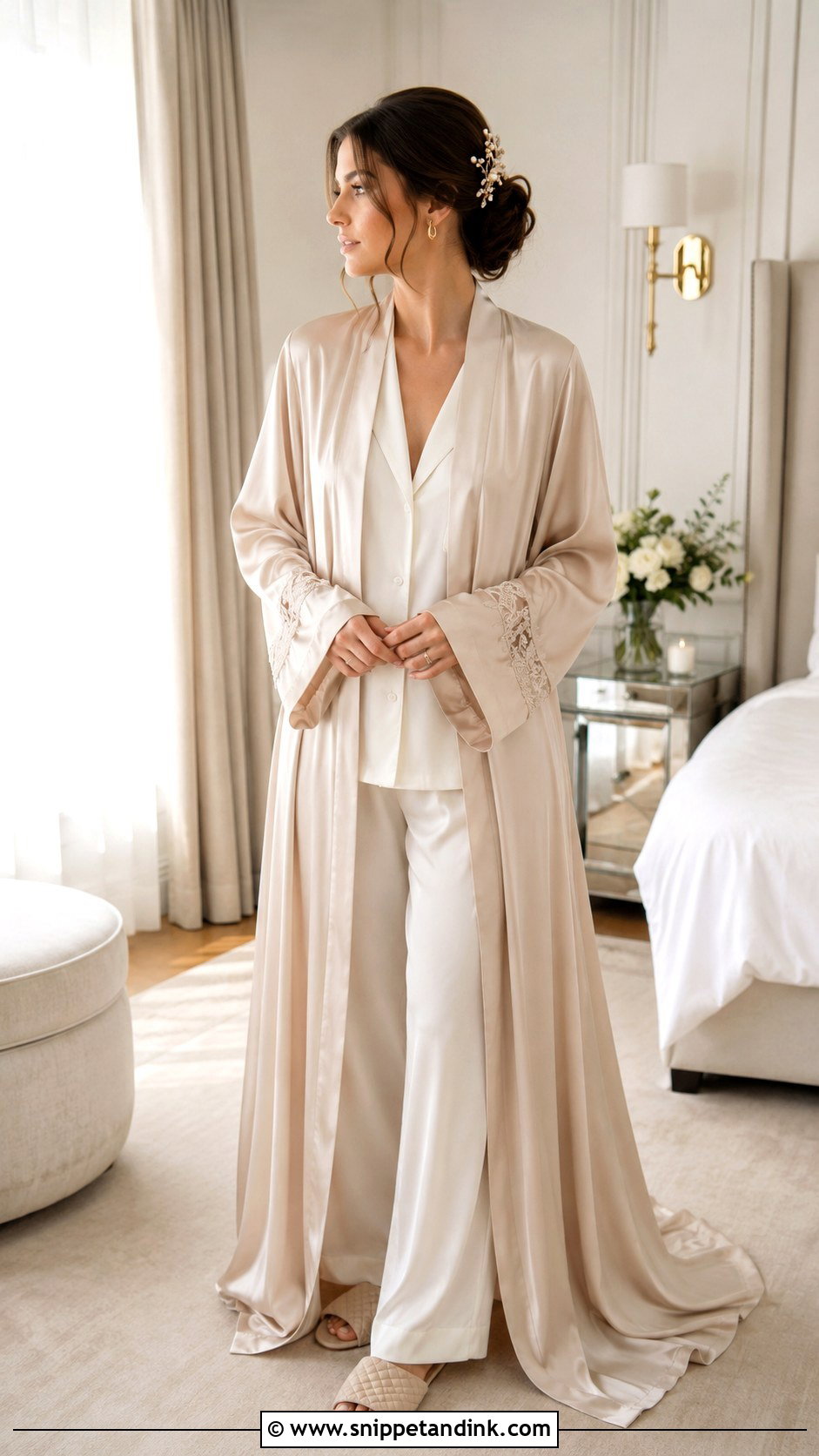
Champagne satin pairs well with gold jewellery and warm flowers, but its biggest risk is blending into your skin. When the robe is close to your skin tone, the edges of your arms and neck disappear into the fabric in photos and the silhouette flattens. Pick a shade clearly lighter or darker than your skin. Matte or medium-shine satin photographs more evenly than mirror-bright fabric. Cream pyjamas with straight or wide legs, beige quilted slippers, small gold hoops and a pearl-and-gold comb complete it, and a secure tie keeps it practical.
10. Blush Long Bridal Robe
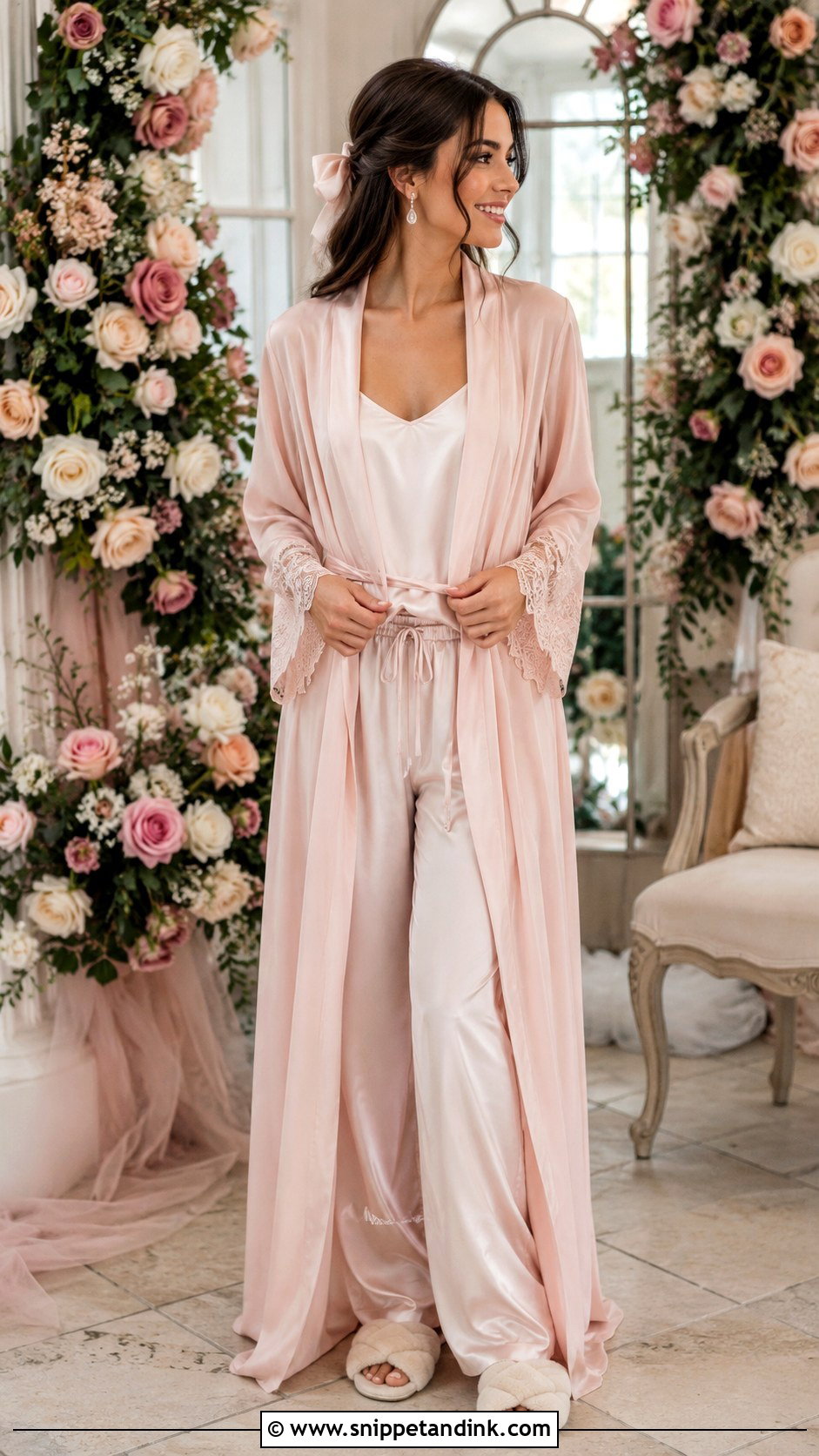
Blush gives colour without leaving the bridal palette, and in soft window light it warms the skin a little. Choose dusty rose or pale blush over saturated pink, which can reflect a pink cast onto your face in close-ups. An ivory cami and matching trousers underneath, rose-gold studs, cream slippers and a satin bow clip. When the bridesmaids also wear blush, I need a quick way to find you in a wide frame: a longer hem, an embroidered name, lace cuffs or white piping all work. Look for a generous wrap with an inside and an outside tie.
11. Personalized Long Bridal Robe
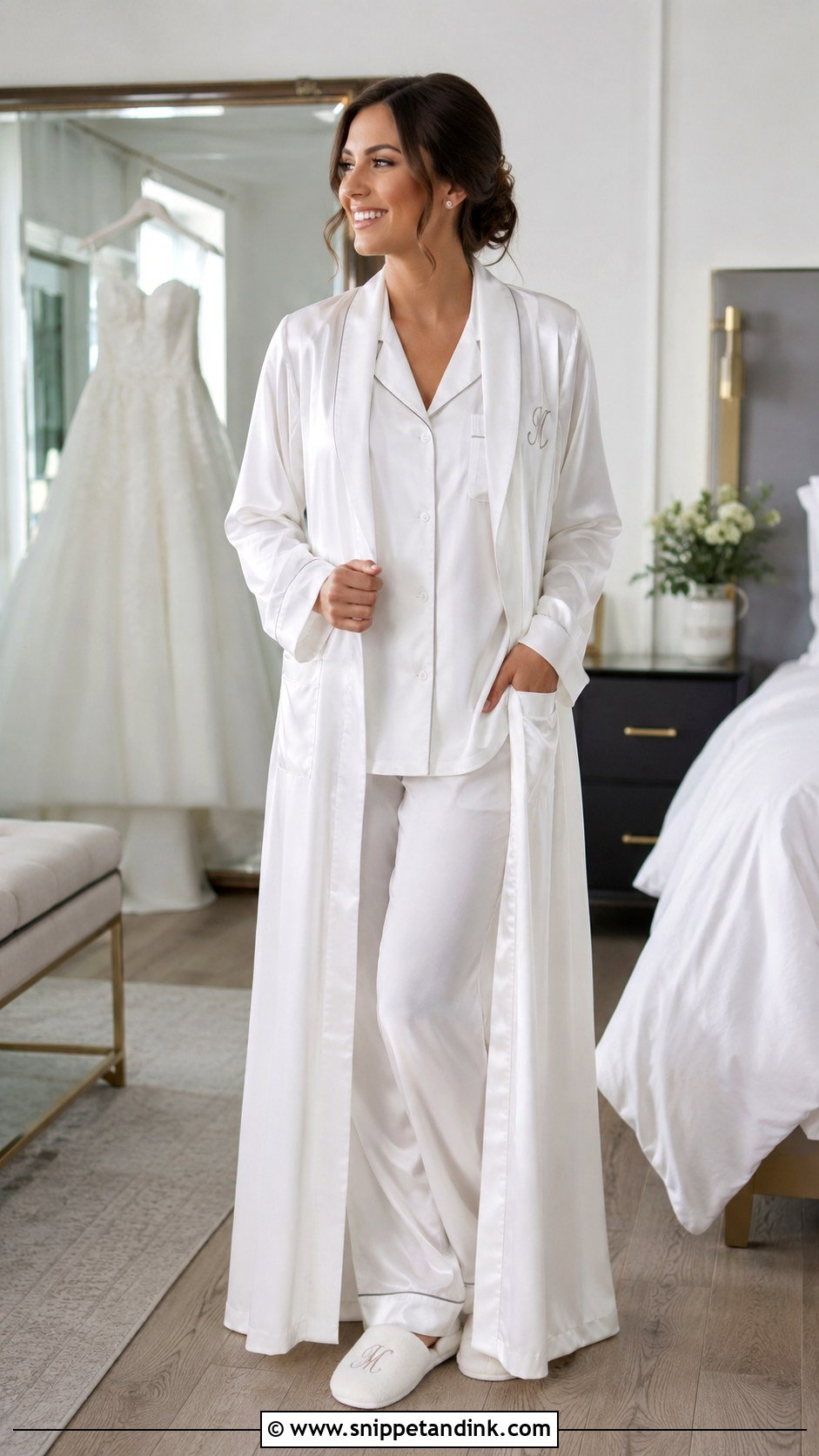
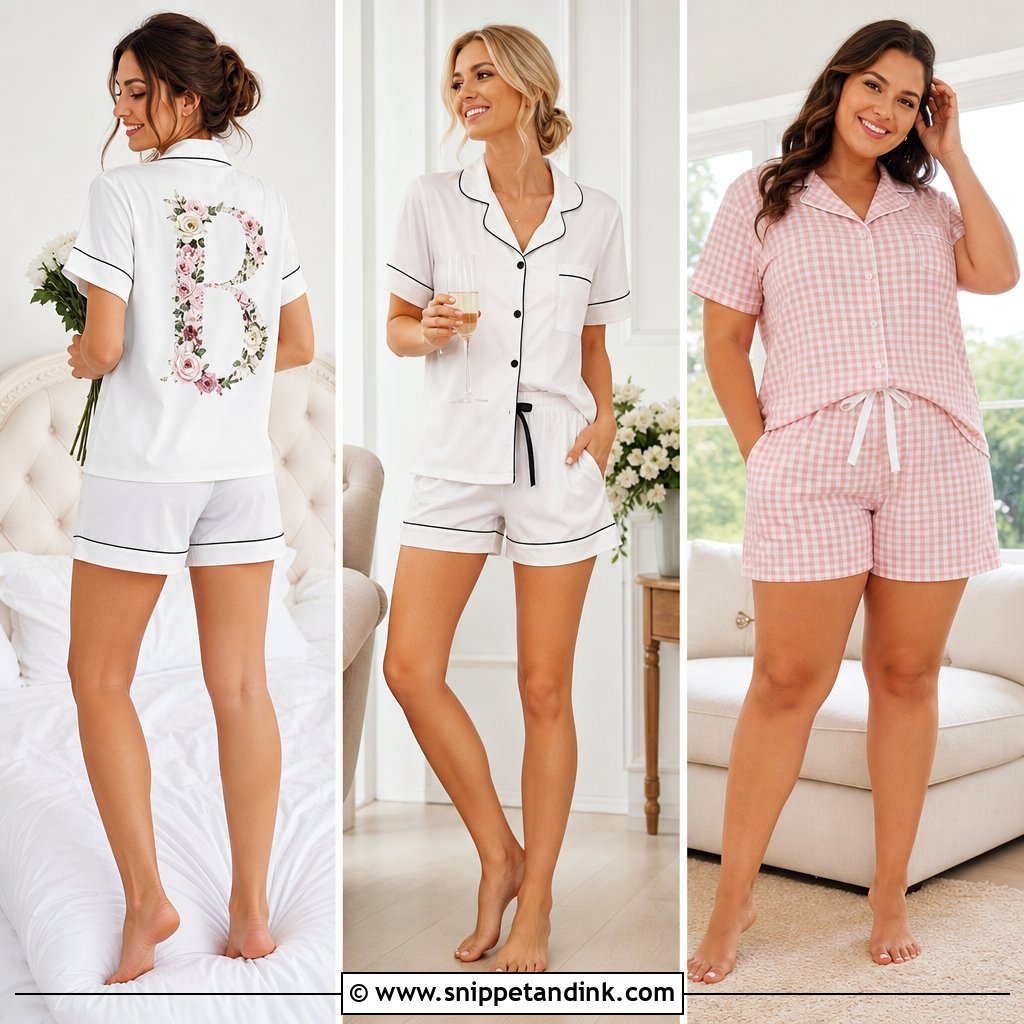
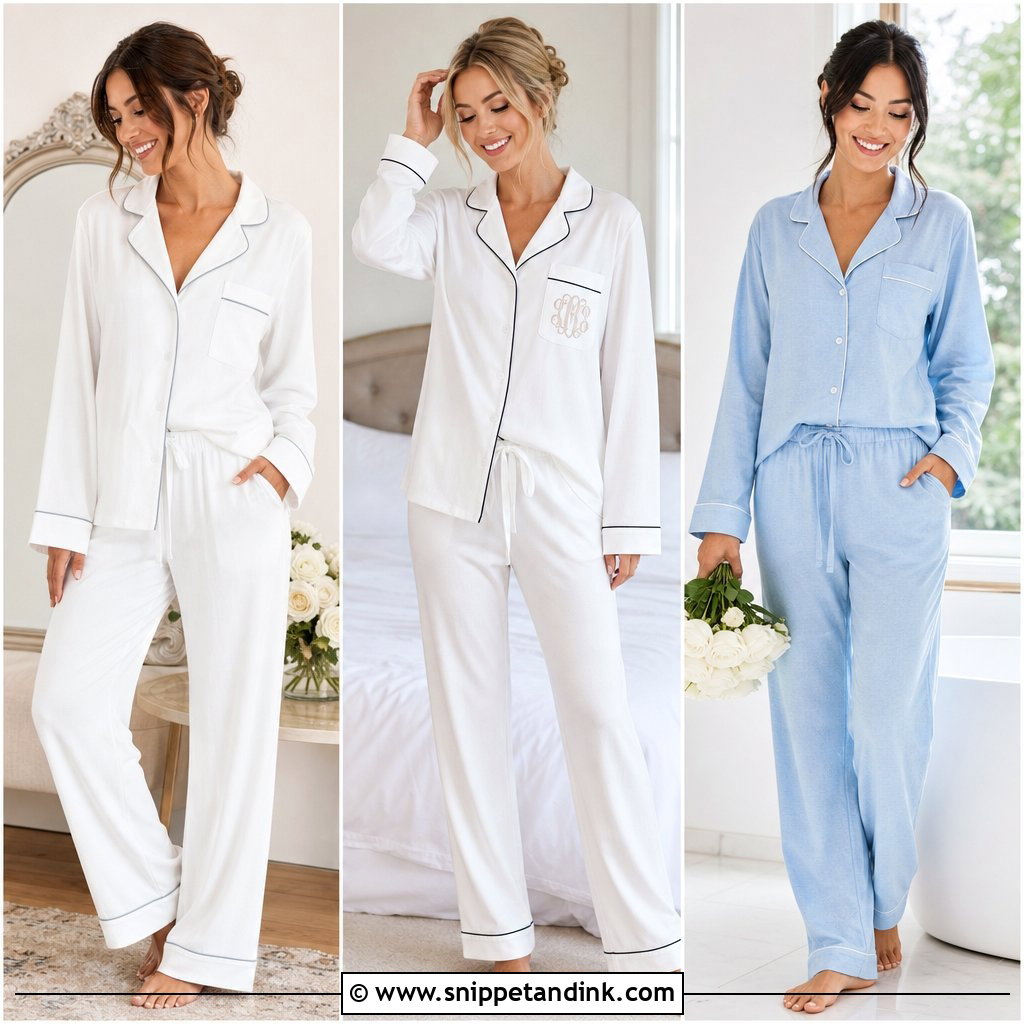
A personalized long bridal robe reads best on camera when the lettering is small and neat. A huge script across the back dominates every frame you are turned away in. Upper back, cuff or chest placement looks refined, and a wedding date stitched inside the collar is a private detail I like to photograph on the hanger. Match the thread to your palette: white for tonal, pale blue, blush or gold for contrast. Solid white button-front pyjamas, monogrammed slippers and studs keep it calm. Double-check the spelling and the finished measurements before ordering.
12. Long Sleeve Bridal Robe
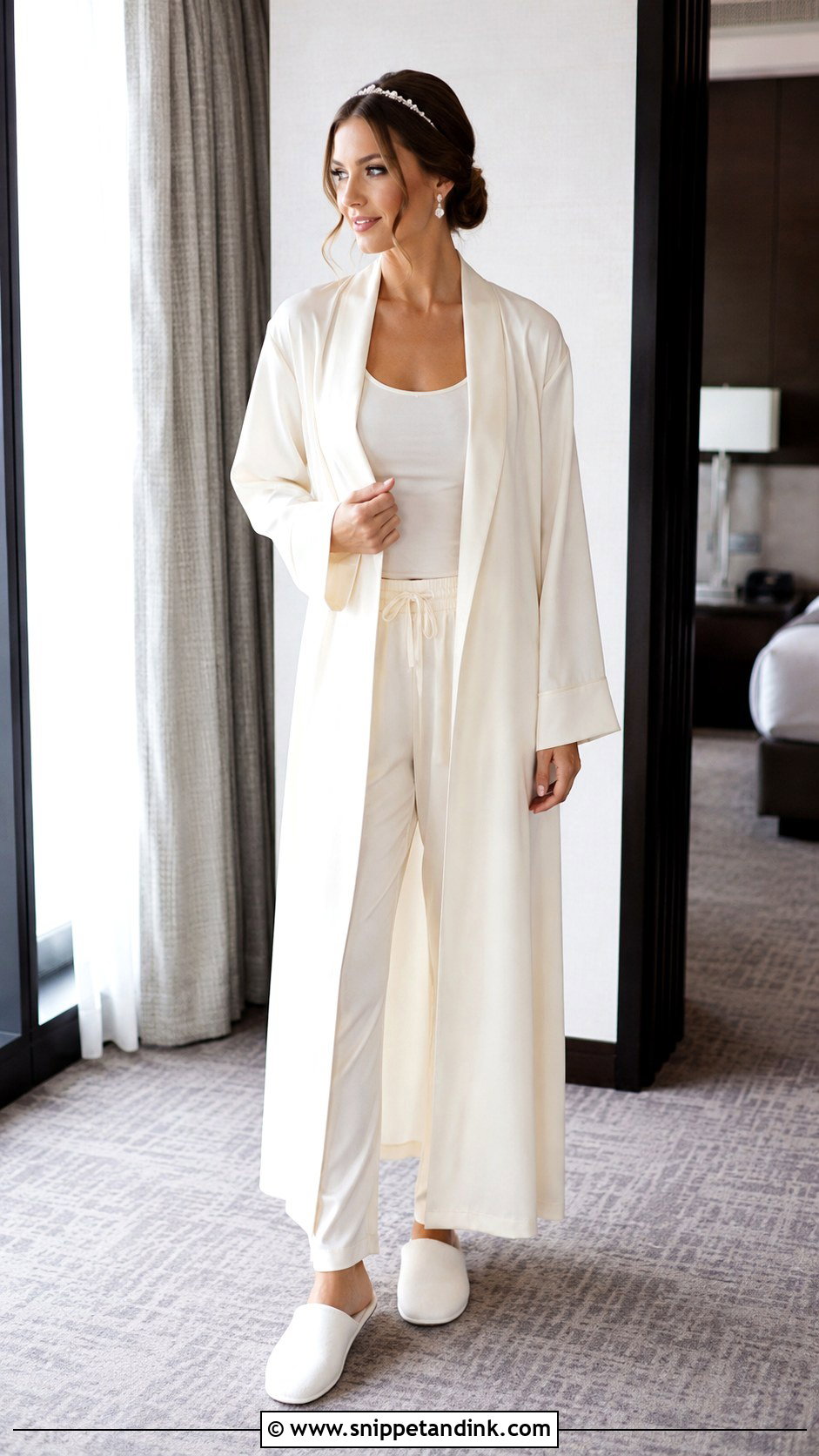
Long sleeves keep you warm in a chilly or heavily air-conditioned suite. A floor-length robe in satin, silk, modal or brushed cotton looks smart, and a fitted tank and trousers underneath avoid bulk. Closed-toe slippers, small earrings and a slim headband. Bell sleeves look dramatic in portraits; straight sleeves are far easier around breakfast, cosmetics and hot tools. The cuffs should sit at the wrist, not over the hands, or they hide your hands in every detail shot of rings and earrings.
13. Kimono Sleeve Long Bridal Robe
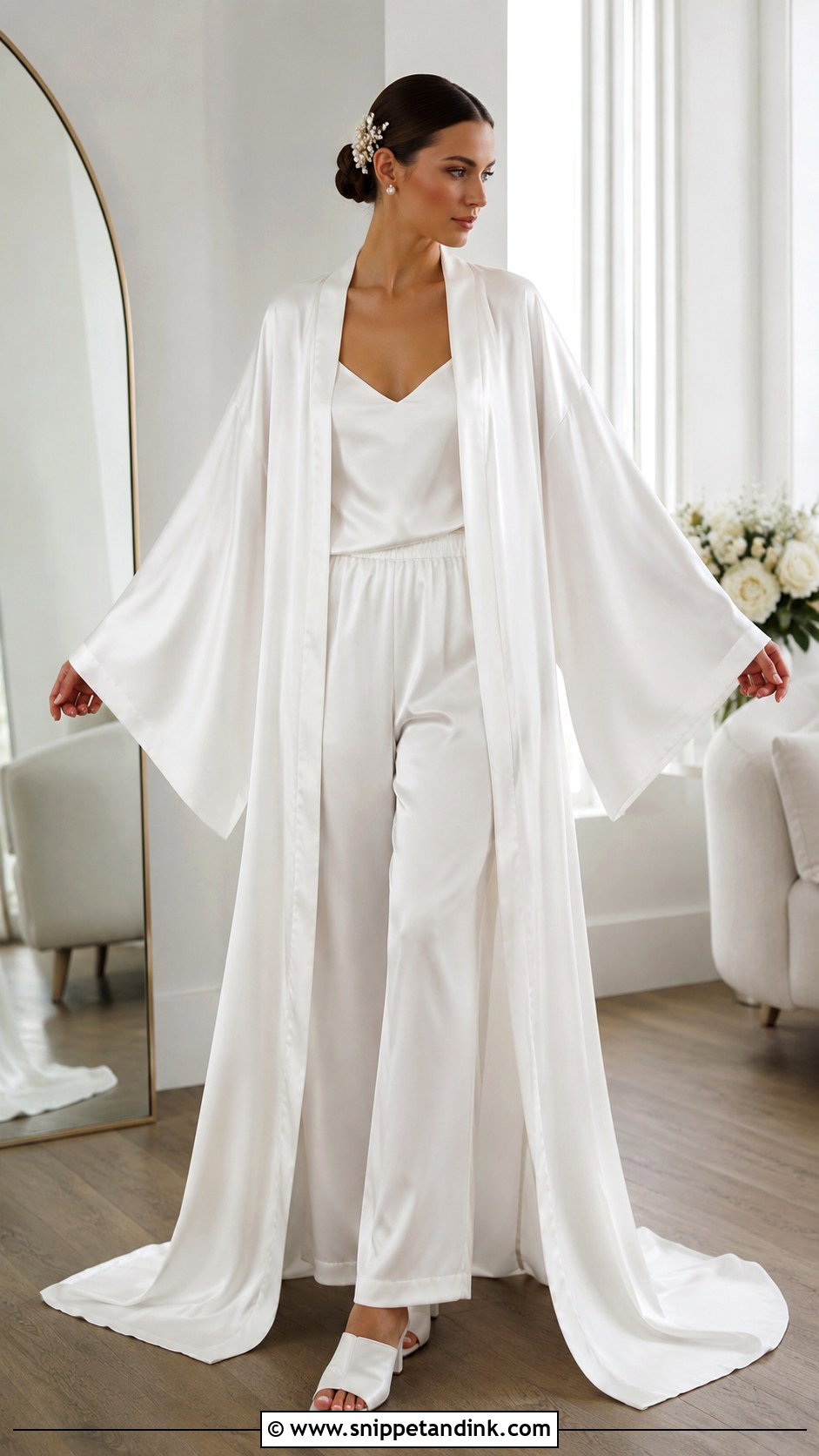
Kimono sleeves fall into a graceful shape when you lift your arms to fasten an earring, which is one of the most natural getting-ready frames I take. A smooth satin or silk-blend robe with a straight floor-length body works well, over a fitted white cami and fluid trousers. Minimal mules, pearl studs and a sleek clip. The sleeves already add volume, so skip big necklaces, stacked bracelets and busy pyjamas. A matching tie looks cleaner than a contrasting sash. The robe slips off without anything going over your head.
14. Ruffle Long Bridal Robe
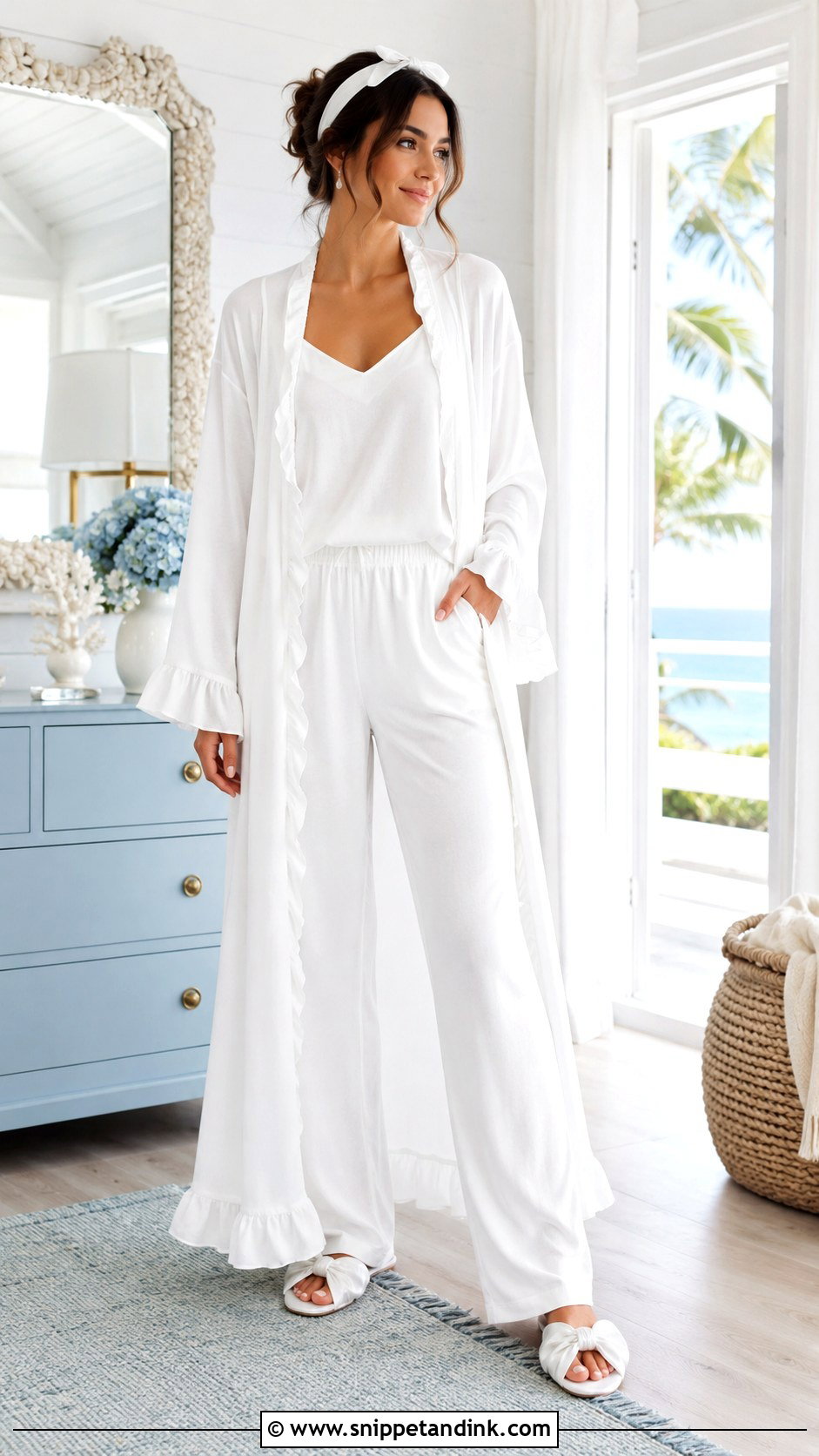
Ruffles need body to photograph well. Soft ruffles in thin fabric collapse after an hour of sitting and look limp by the time I arrive for portraits, so choose fabric that holds its shape. Put them along one edge, the neckline, sleeves or hem, rather than all three. A plain white cami and straight-leg trousers underneath, satin slippers, tiny drop earrings and a narrow bow headband. A lightly gathered waist defines the shape while leaving room to sit.
15. Chiffon Long Bridal Robe
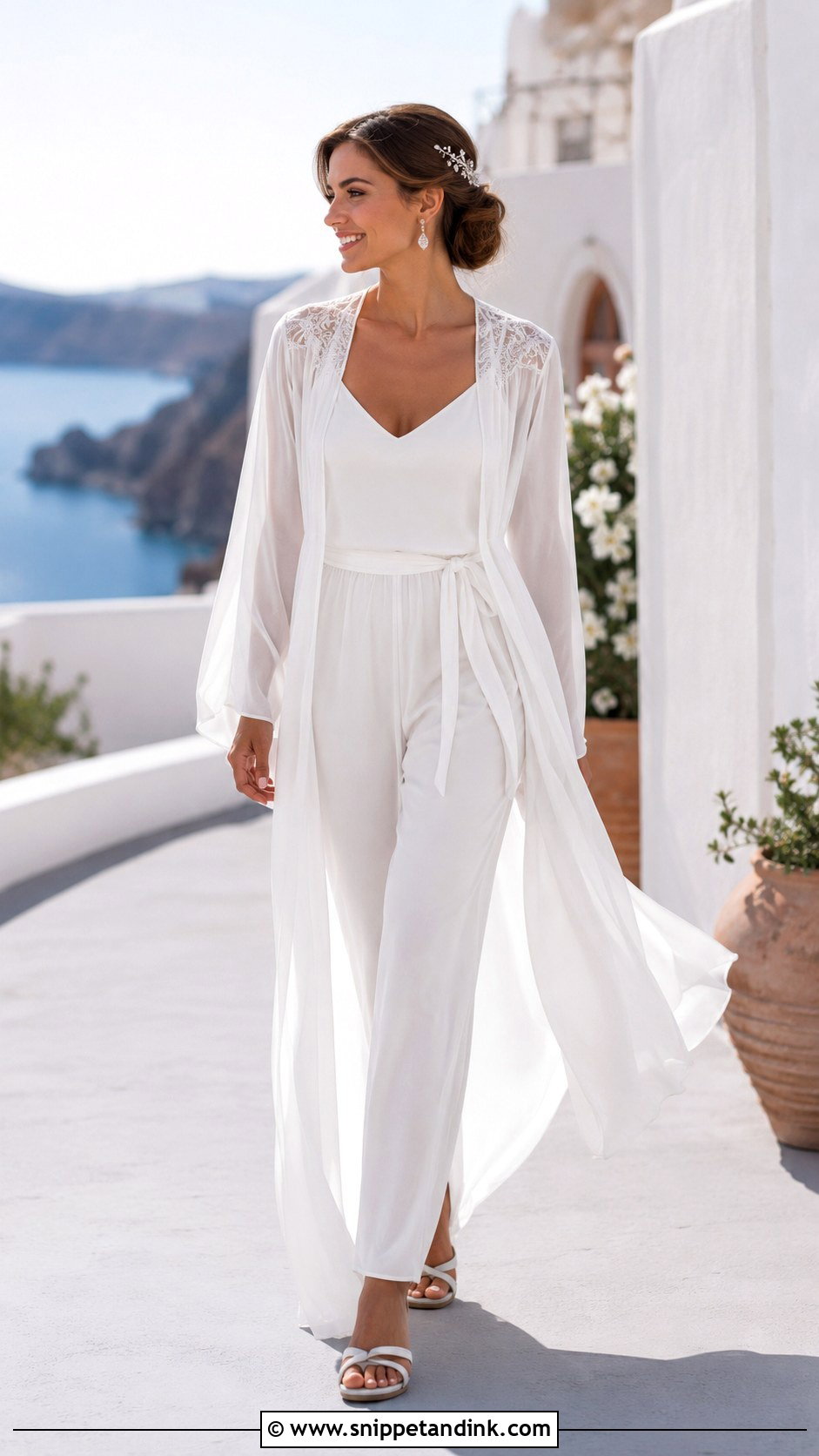
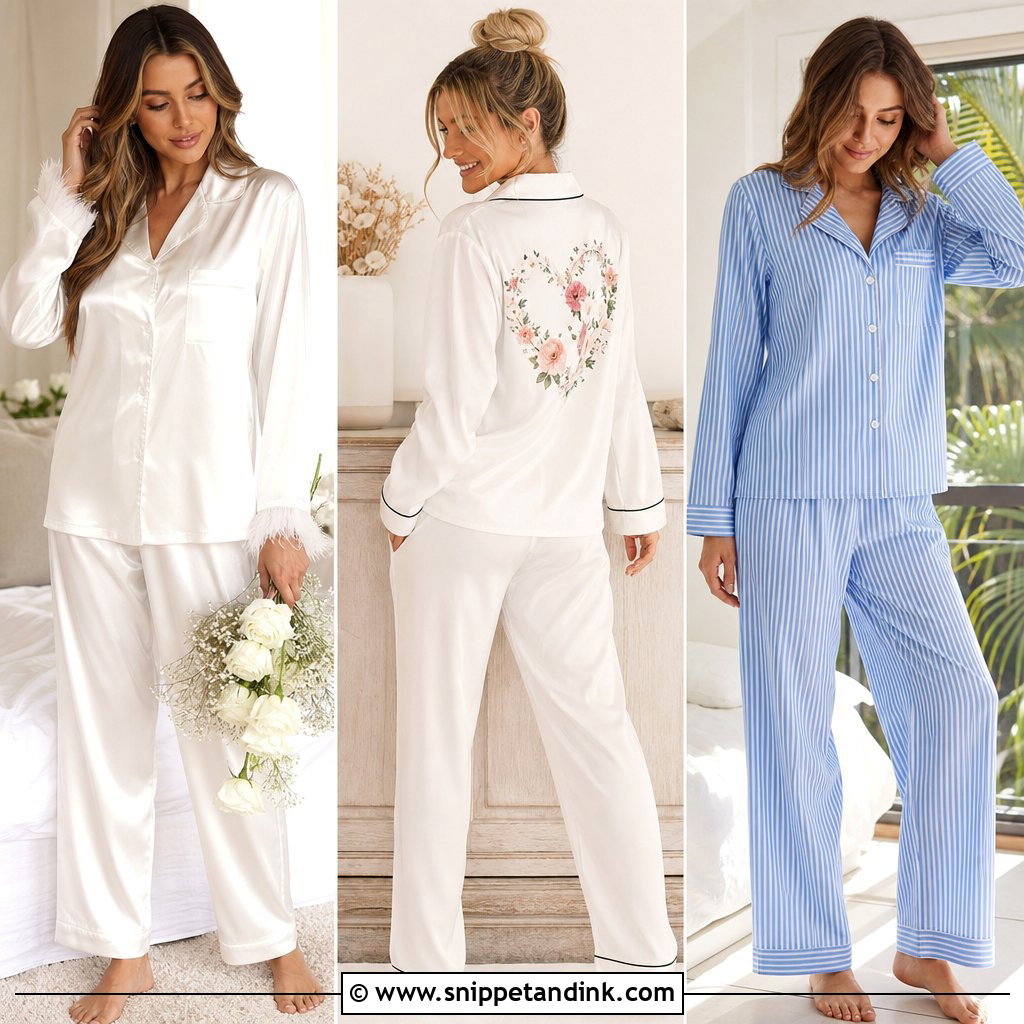
Chiffon is light and floaty, ideal for a hot morning or a destination suite, and it is sheer. Plan an opaque layer underneath: a white lounge jumpsuit, a tank dress, or a cami and trousers. Reinforced seams and a satin sash help the light fabric keep its shape. Flat white sandals, small crystal earrings and a hair comb finish it. A flared hem moves beautifully near a terrace door or a big window, which is where I’ll put you for walking shots. Keep jewellery minimal; the fabric is doing the work.
16. Velvet Long Bridal Robe
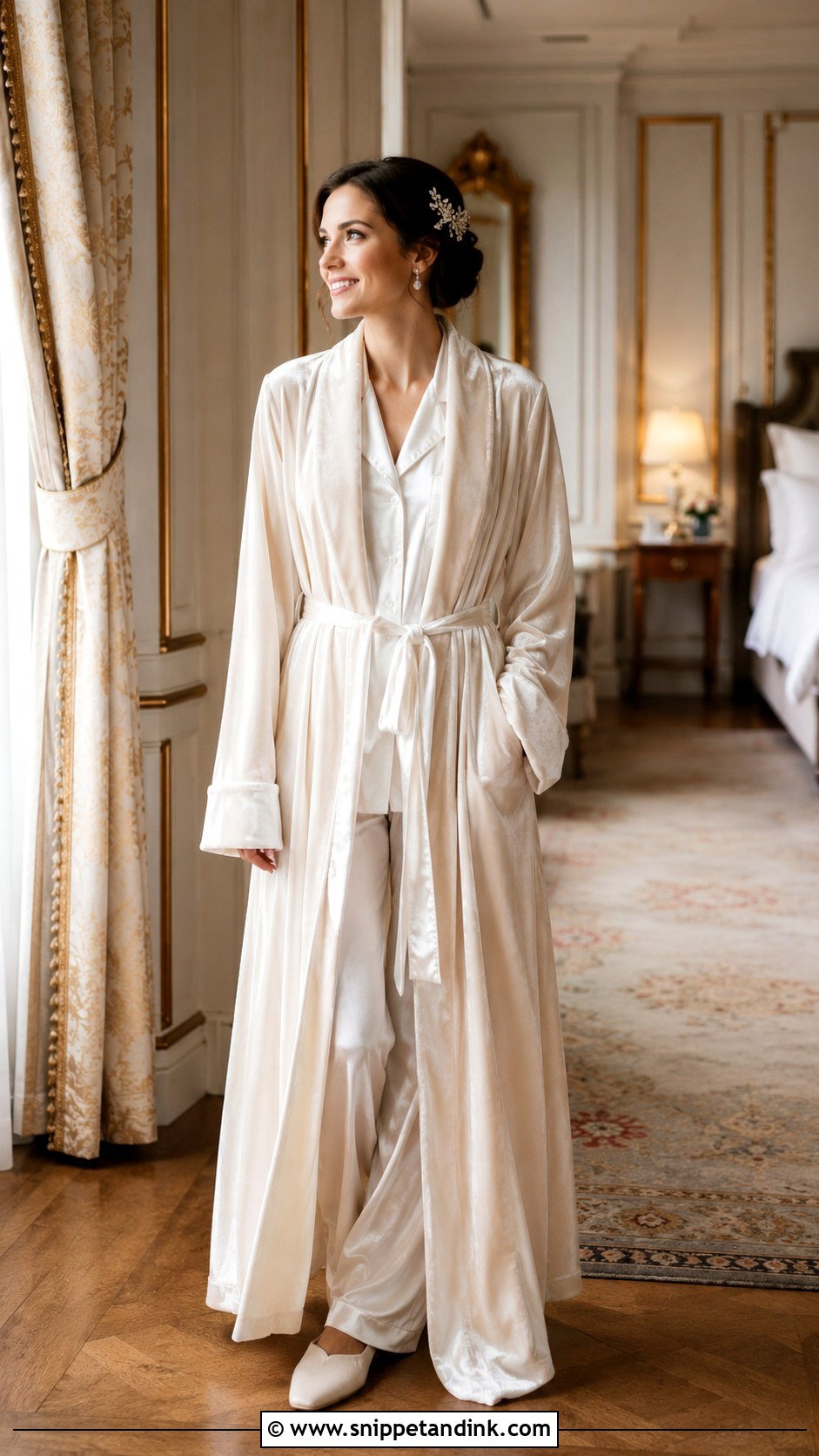
Velvet soaks up light rather than reflecting it, so a dark velvet robe turns into a heavy block of colour in a bright suite. Ivory, pearl, pale blue or champagne velvet keeps the texture visible while staying warm for an autumn or winter morning. Wear lightweight satin pyjamas underneath to avoid overheating indoors. Closed-toe mules, small gold earrings and a jewelled clip. A velvet sash defines the waist, and a side slit helps you walk in the long hem. Historic hotels and mountain venues suit it.
17. Waffle Long Bridal Robe
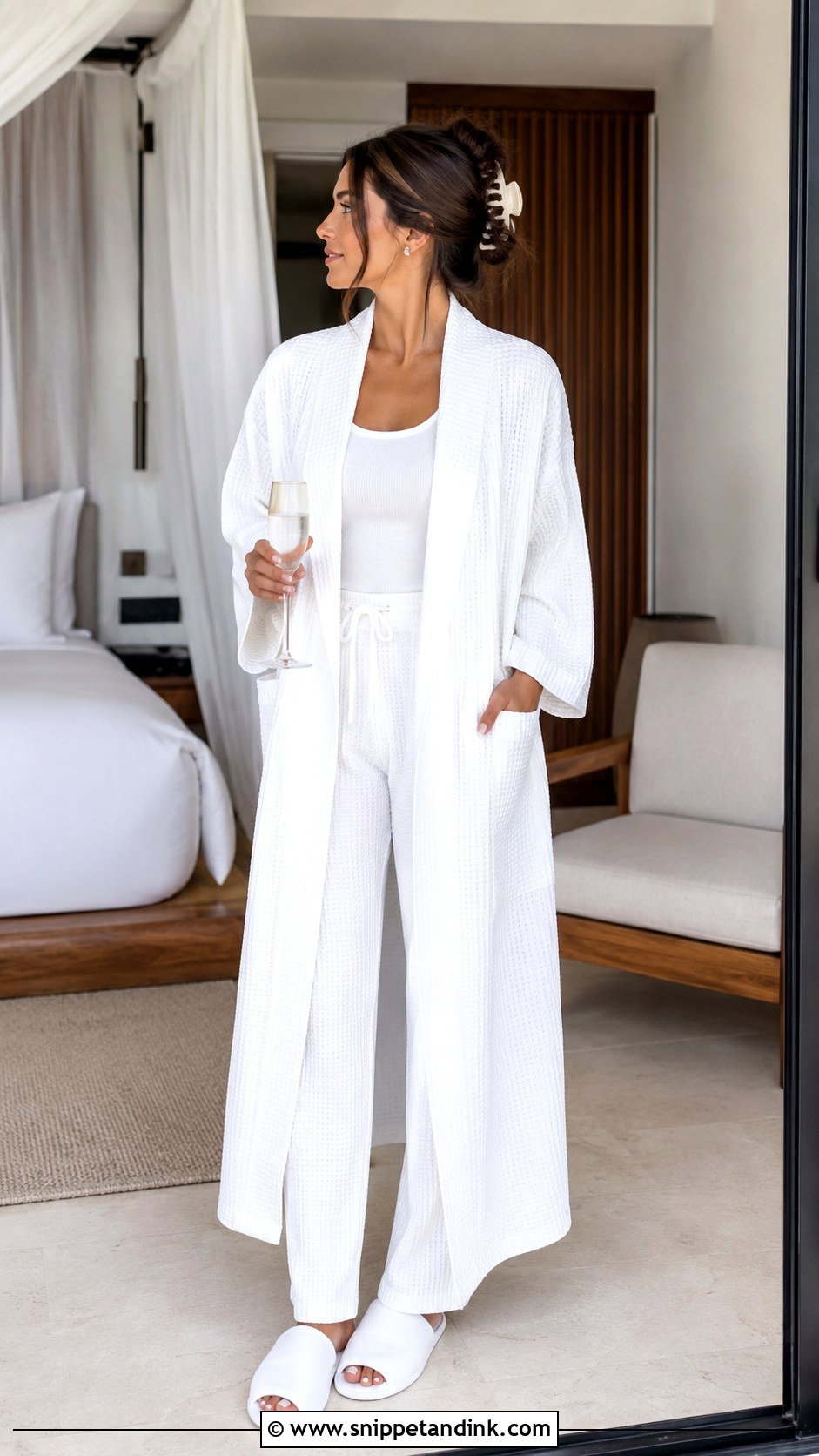
Waffle cotton is comfortable and practical, but on camera a plain one can look like the hotel’s spa robe. A long waffle robe in bright white with a fine texture, a structured collar and a firm belt avoids that, and a small embroidered name makes it clearly yours. Wear a white ribbed tank and straight lounge trousers underneath, clean spa slippers, silver studs and a claw clip. Choose light cotton or a cotton blend that will not feel bulky in the chair. It becomes an everyday robe afterward.
18. Cotton Long Bridal Robe
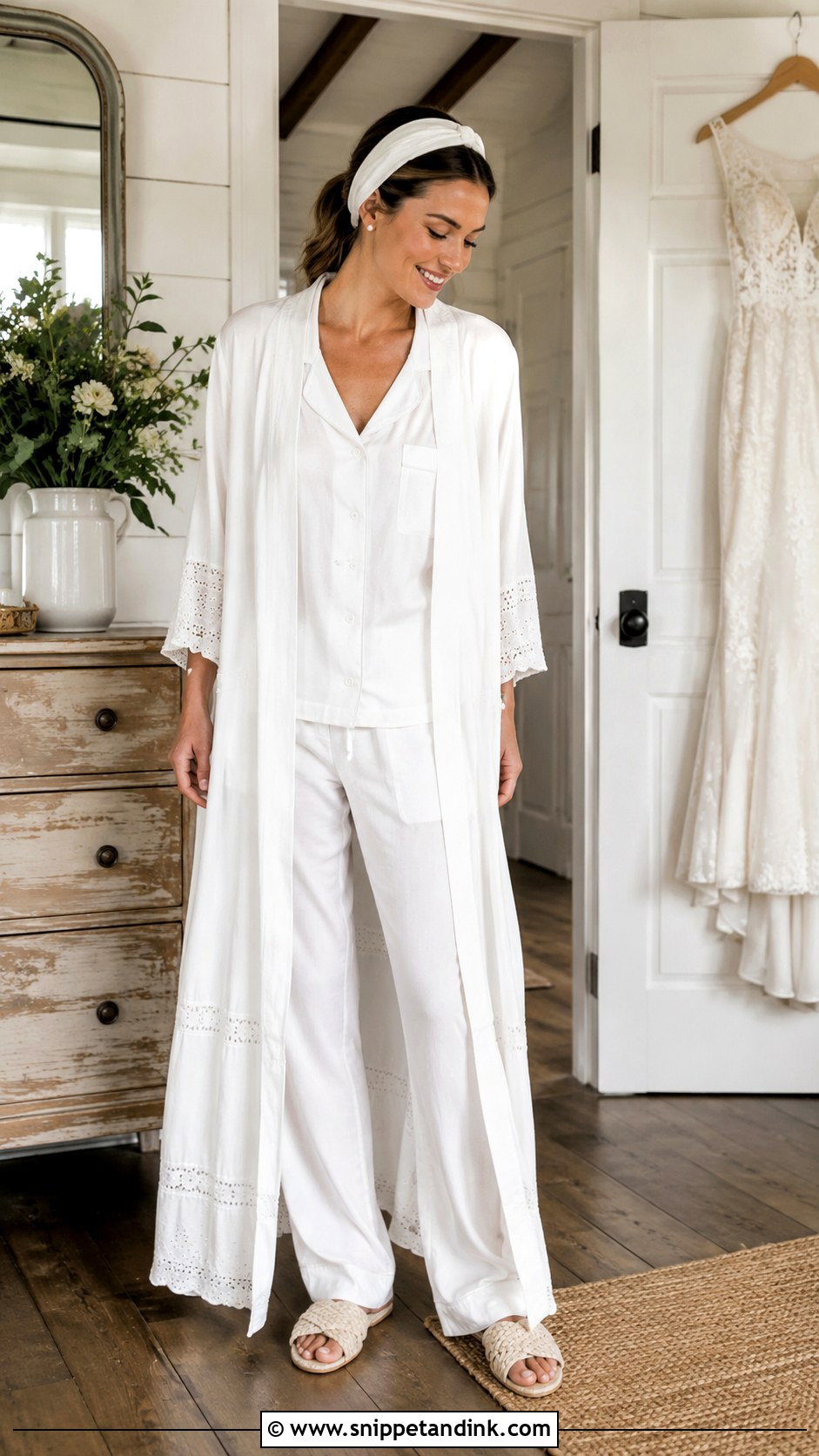
Cotton has a matte finish that never glares, which makes it easy to photograph in harsh midday light at a beach or garden venue. An ankle-length white or ivory robe pairs with a matching button-front pyjama set and woven slippers, small pearl earrings and a cotton headband. Eyelet panels, piping or a fine floral print add interest without shine. Steam it before I arrive; cotton creases show clearly in full-length shots. A generous wrap and adjustable belt fit a range of body shapes.
19. Plus Size Long Bridal Robe
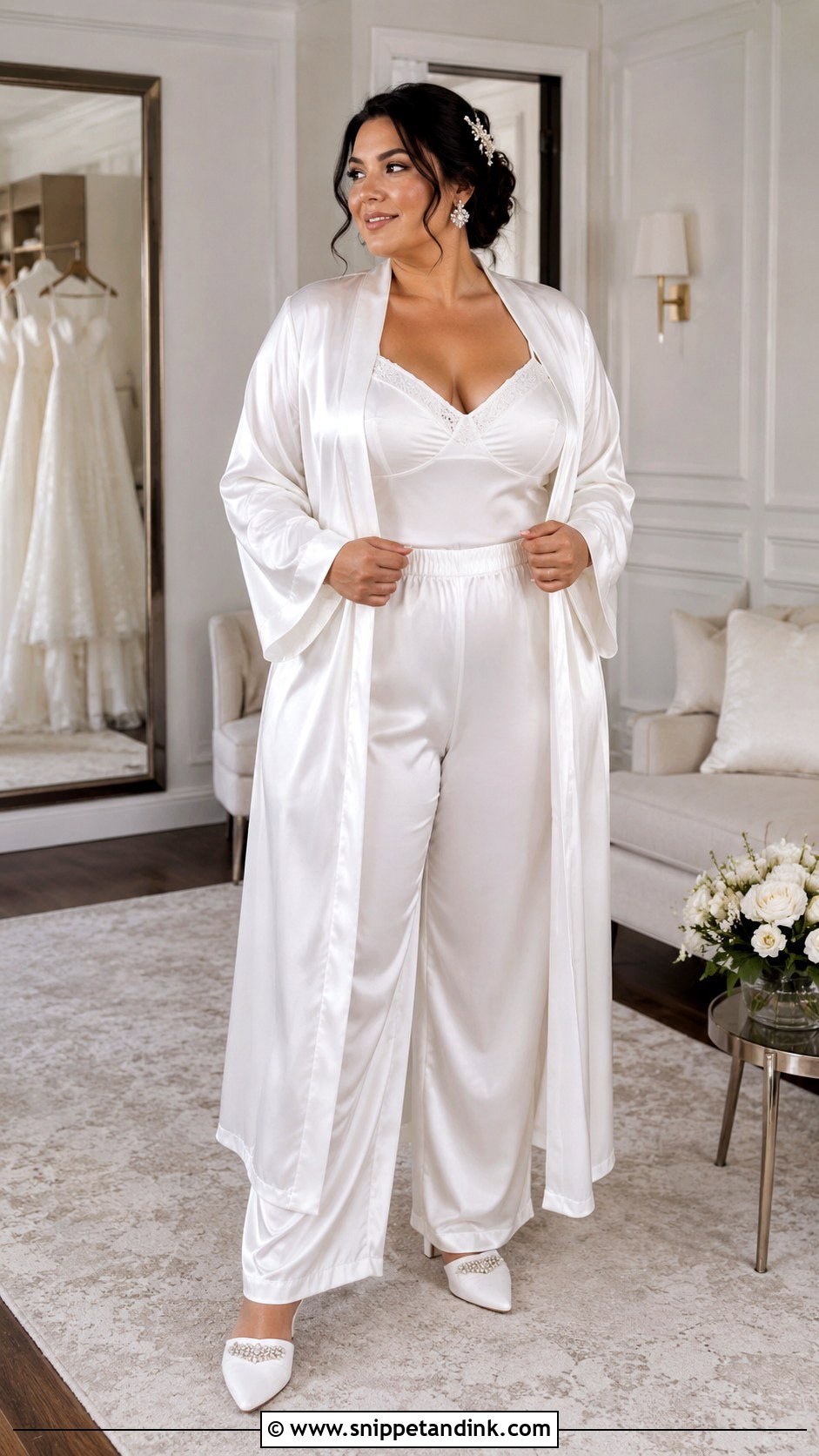
For a plus-size robe, the measurements matter more than the label. Check bust, hip, sleeve and finished length, and look for brands with true extended sizing rather than one-size wraps that only just close. The sash should sit at your natural waist. When you are seated, a wrap that is too narrow gapes at the bust, and from my usual angle slightly above, that gap is what the camera sees. White satin or soft modal over a supportive cami and wide-leg trousers works well. Cushioned pointed slippers, statement studs and a small hair accessory, plus an inside tie so nothing shifts.
20. Maternity Long Bridal Robe
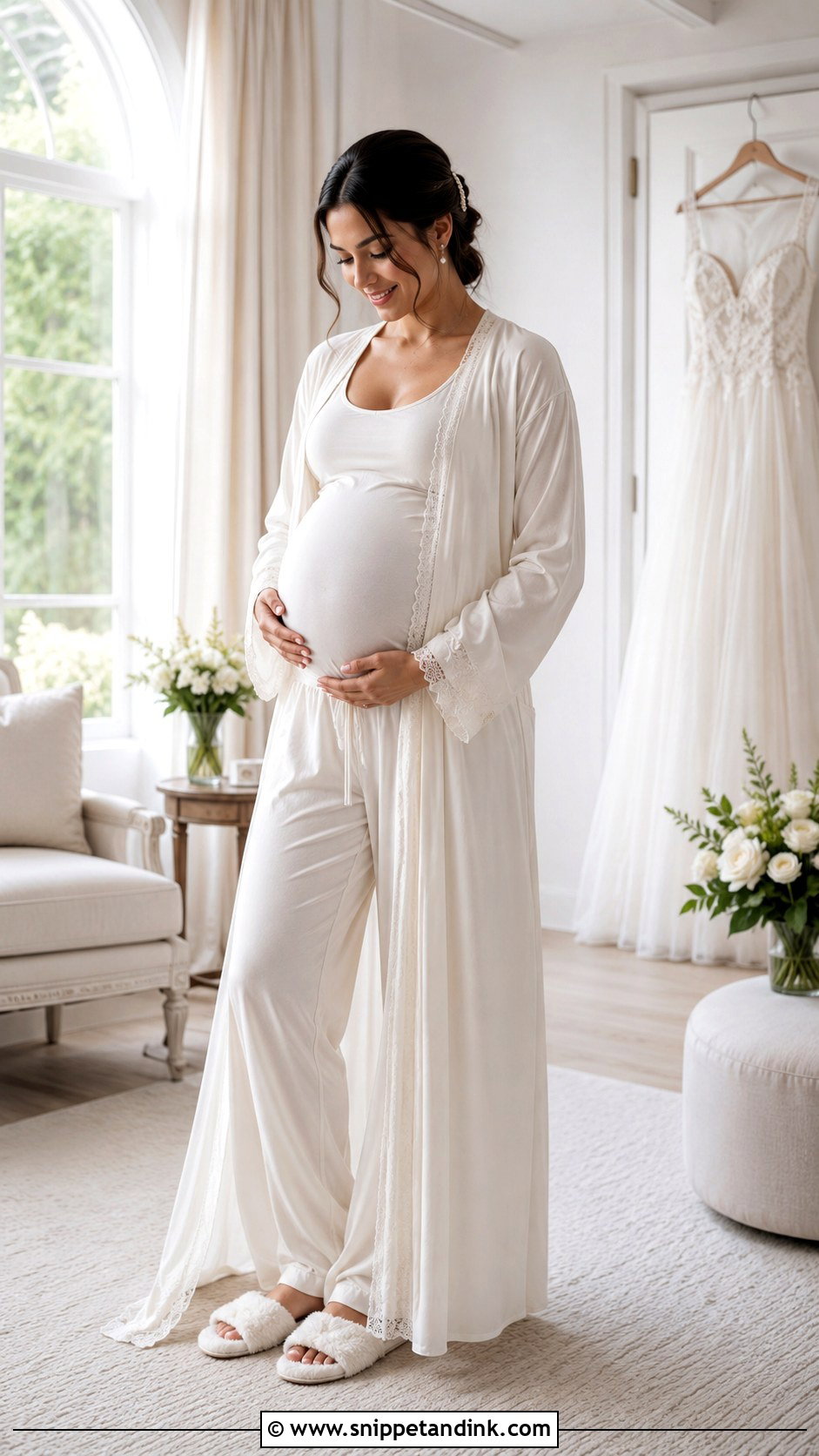
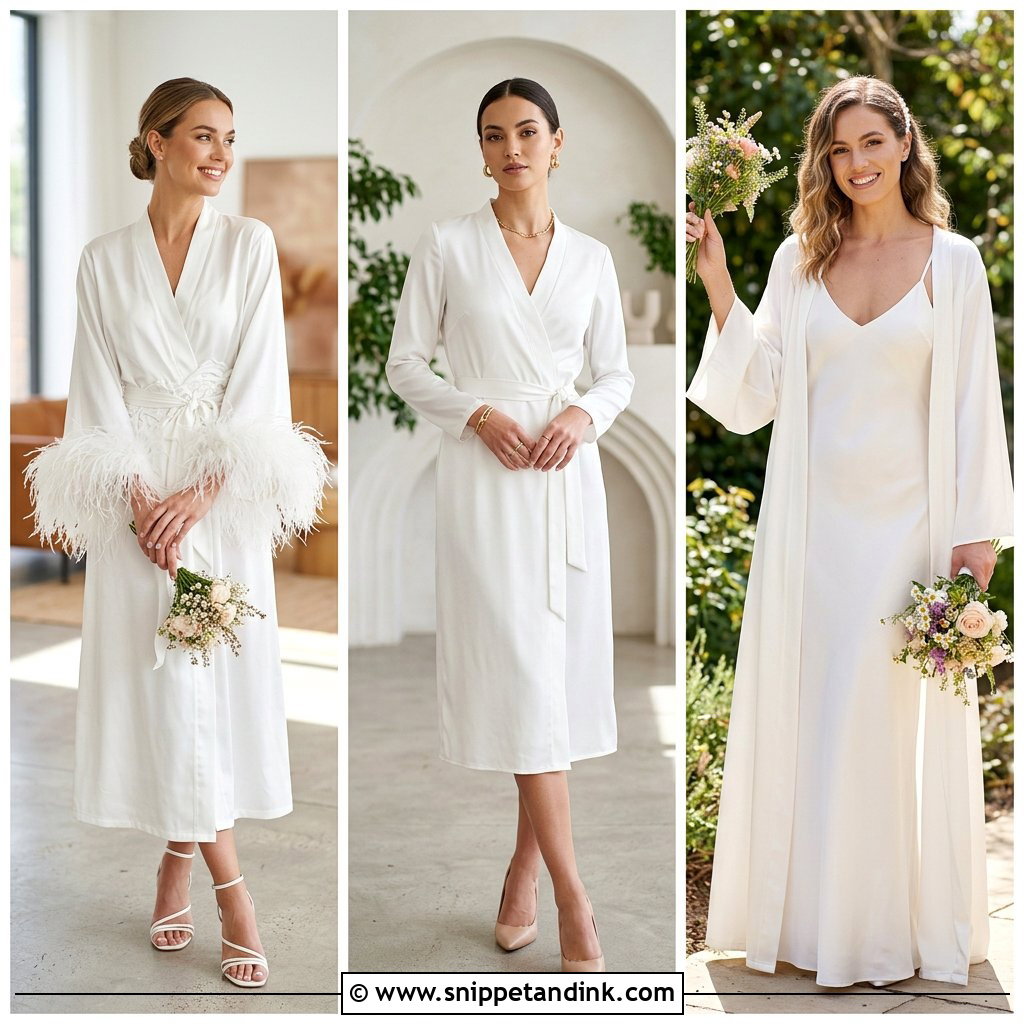
Maternity robes need room at the waist and hips and a wrap that adjusts as the day goes on. Stretch modal, light cotton or flexible satin with an inside tie and a long outer sash work best, and I’d tie it above the bump; a sash tied below can slide down. Underneath, a maternity cami and loose trousers with an over-bump or under-bump waistband. Supportive flat slippers, small earrings and a simple clip. Keep the hem at ankle length so it never pools underfoot, and skip stiff waistbands and scratchy trims. A hand resting on the bump with the robe softly open makes one of the gentlest frames of the morning.
The Half Hour of Robe Photos Before the Gown
Robe portraits usually happen in a short window: after hair and makeup are finished and before you step into the dress. If that window gets squeezed by a running-late timeline, the robe shots are the first to disappear. Plan it like this and they will not.
- The night before, steam the robe and hang it on a wooden or padded hanger. I photograph it alone for details, and a wire hanger shows.
- Have the robe back on, tied neatly, as soon as your makeup artist finishes. Check that no bra straps are showing at the shoulder.
- Allow fifteen to thirty minutes for solo portraits by the window and a few with your bridesmaids, if they have matching robes.
- Put your earrings, a perfume bottle and any personal detail somewhere tidy so I can photograph you putting them on in the robe.
- Then step into the gown. The robe goes back on its hanger for one last detail shot.
Tell your photographer what the robe means to you, whether it is a gift, has your new name on it or was made from a family piece. I can only include the details I know about.
Test It by a Window Before You Order
Start with the season to pick a fabric, then work through coverage, sleeves, hem length and closures. Add pyjamas, slippers and small accessories that stay out of the way of hair and makeup. Satin and silk give the classic look; cotton, chiffon, velvet, lace and waffle each change the mood. Above all, choose a robe that fits you and feels like you rather than a trend. If you can, try it on near a window and take a phone photo before you buy. That quick test tells you how the fabric will look in your real getting-ready light.
You'll Like These Ideas:


Leave a Reply