
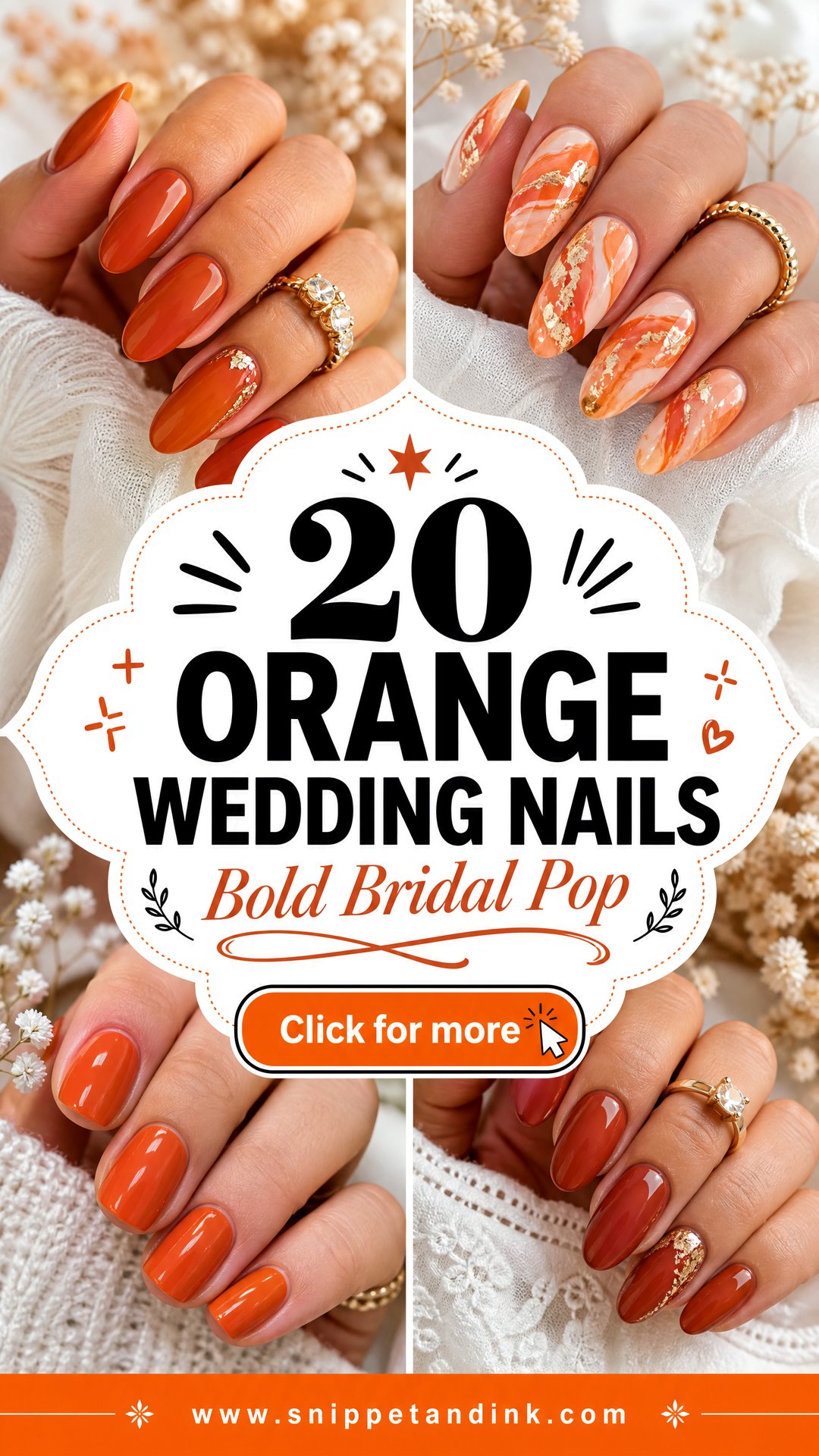
Orange is the color I most enjoy putting on a wedding hand, because it covers such a wide range. At the soft end there’s peach, apricot and coral; at the deep end, terracotta, rust, copper and burnt orange. Brides, bridesmaids and guests can all wear it, as long as the finish suits the setting: sheer gloss for a garden ceremony, chrome for a modern look, gold foil for a formal venue, small florals for something softer. The twenty sets below run from slim French tips and ombre fades to glazed finishes and fine nail art, and I’ve added what each one asks of your nails and your schedule.
Finding the Orange That Flatters Your Skin Undertone
Orange is more sensitive to skin tone than almost any other nail color. The wrong one can make hands look red or sallow, and that shows up in every ring photo. Before I mix anything, I hold two or three swatches against the bride’s knuckles in daylight and watch what happens to the skin around the nail.
- Cool or pink undertones: coral and pinkish peach usually sit best. A true tangerine can make the knuckles look flushed.
- Warm or golden undertones: apricot, terracotta and copper look natural, almost like an extension of the skin.
- Olive undertones: muted shades with a little brown in them, such as rust and burnt orange, avoid the greenish cast a bright orange can create.
- Deep skin tones: rich burnt orange, copper chrome and saturated tangerine glow, while very pale peach can look ashy.
Look at the swatch on your actual hand, not on the stick or the bottle, and take a quick phone photo of it. Orange often reads brighter on camera than in person, so the photo tells you more than the mirror does.
1. Orange French Tip Wedding Nails
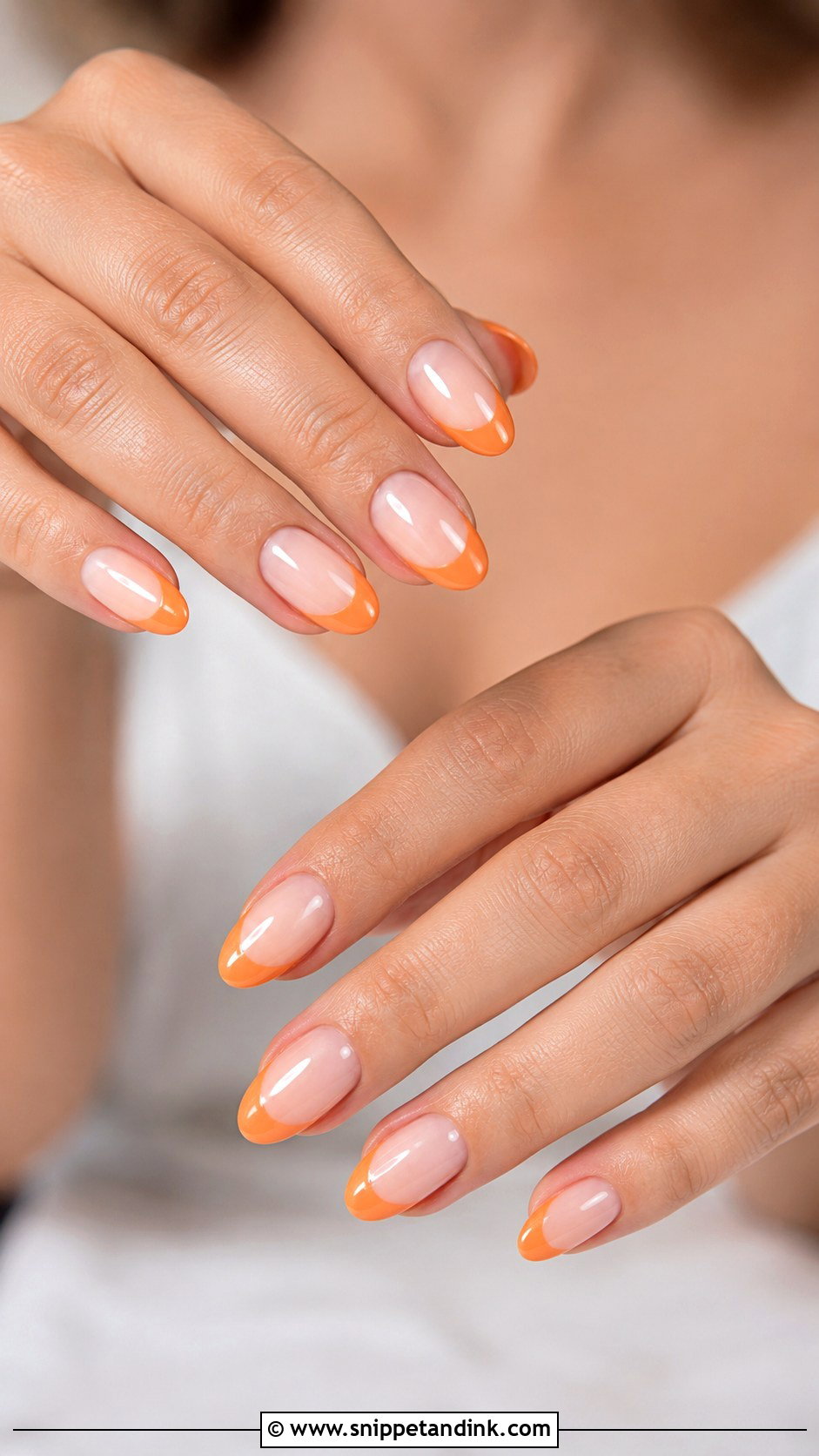
A thin orange tip over a sheer nude or soft pink base is the gentlest way into the color. The base keeps it bridal, and the tip shade can move with the season, peach in spring, burnt orange in autumn. What makes or breaks this set is the smile line. Orange is less forgiving than white here, because any wobble reads as a mistake against warm skin, so I paint the tip slightly thinner than I would a classic French and clean the line with a fine brush dipped in remover. Almond and oval shapes soften it; square makes it crisp.
2. Burnt Orange Wedding Nails
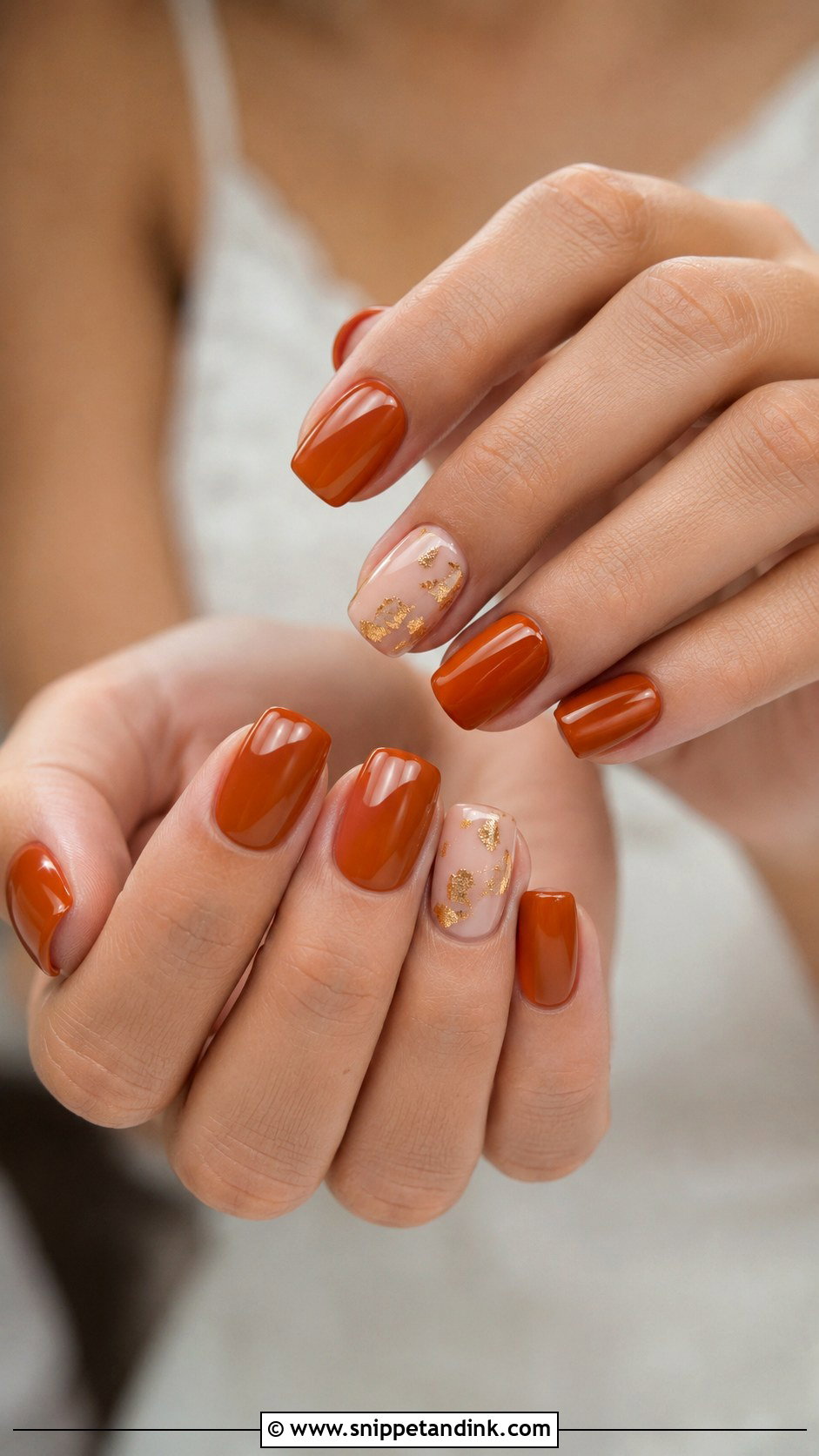
Burnt orange wedding nails are my first suggestion for an autumn or outdoor wedding with a warm palette. The shade is rich without shouting, and it sits comfortably next to ivory, champagne gowns, rust florals and gold rings. I keep it on short almond or squoval nails, since a long deep-orange nail starts to look like a costume. If the full set feels heavy, swap one or two nails for a nude. Detail-wise, a little fine gold foil is all it needs.
3. Peach Orange Wedding Nails
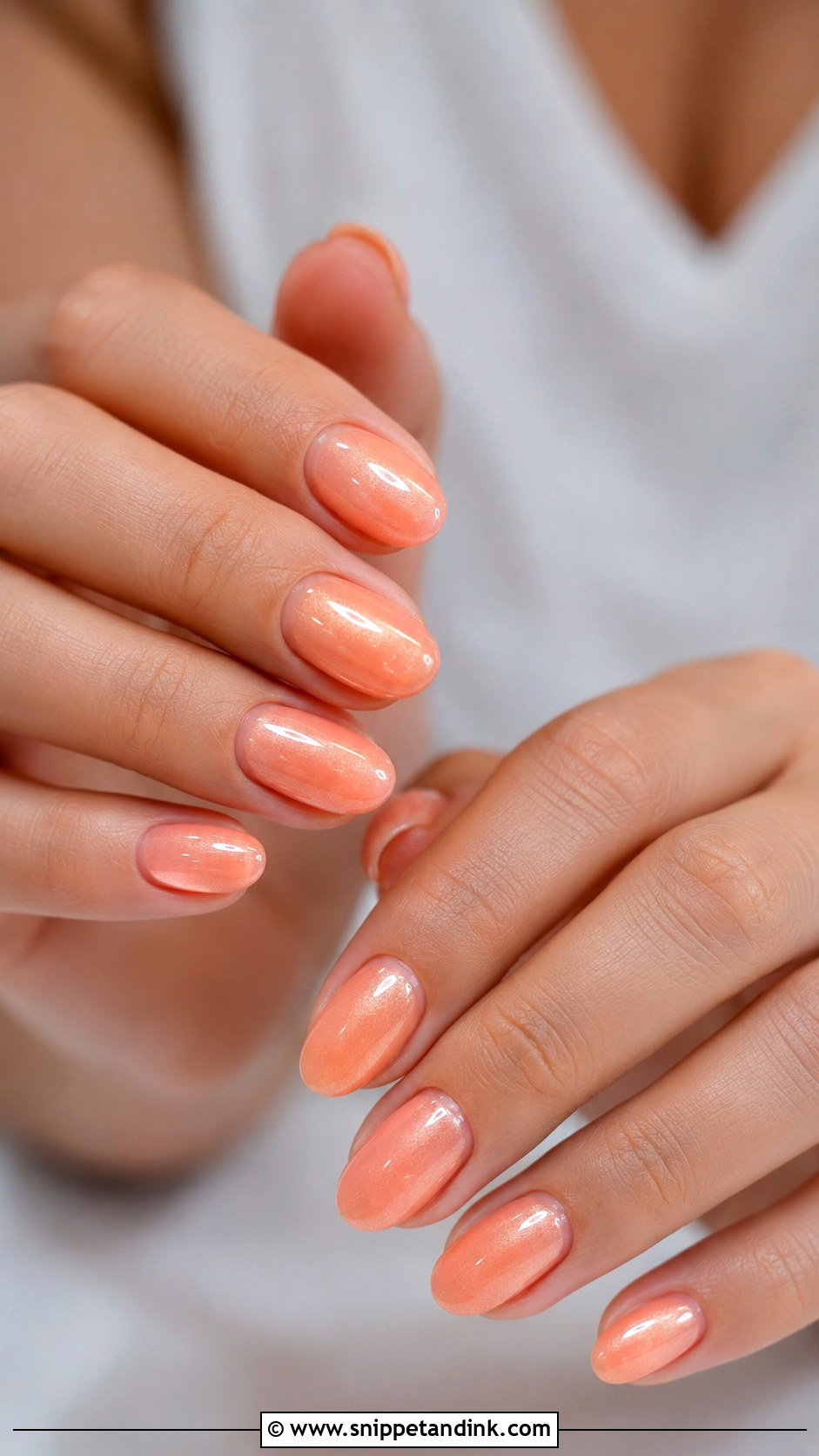
Peach sits between nude, coral and pastel orange, so it adds warmth without ever looking bright. I offer it to brides who are tired of pink and white but nervous about real color. The undertone matters more than the name on the bottle: a pinker peach suits cool skin, a yellower apricot suits warm or olive skin. Sheer layers on almond, oval or short square nails look the most bridal, and a pearl shimmer on top adds glow without changing the shade.
4. Orange Chrome Wedding Nails
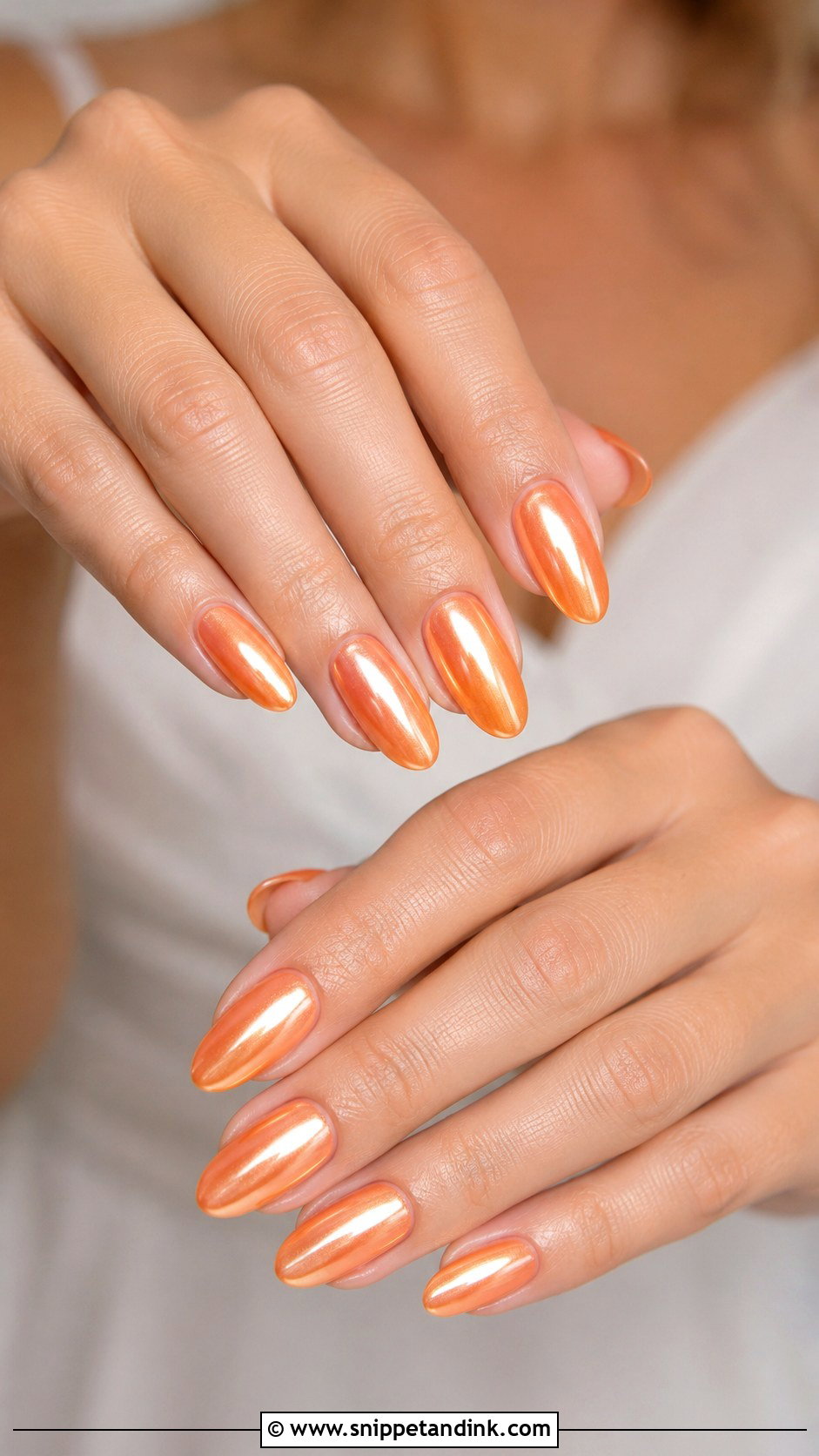
Chrome over orange gel catches light in a way flat polish can’t. I rub the powder over peach, coral, copper or tangerine depending on the effect, and the softer bases always look more wedding-appropriate than a neon one. Chrome does show every ridge, so I build a smooth layer of structure gel first; on a lumpy nail plate the reflection breaks up in close-ups. Copper chrome on almond nails works for a formal evening. Leave the art off and let the finish do the work.
5. Terracotta Wedding Nails
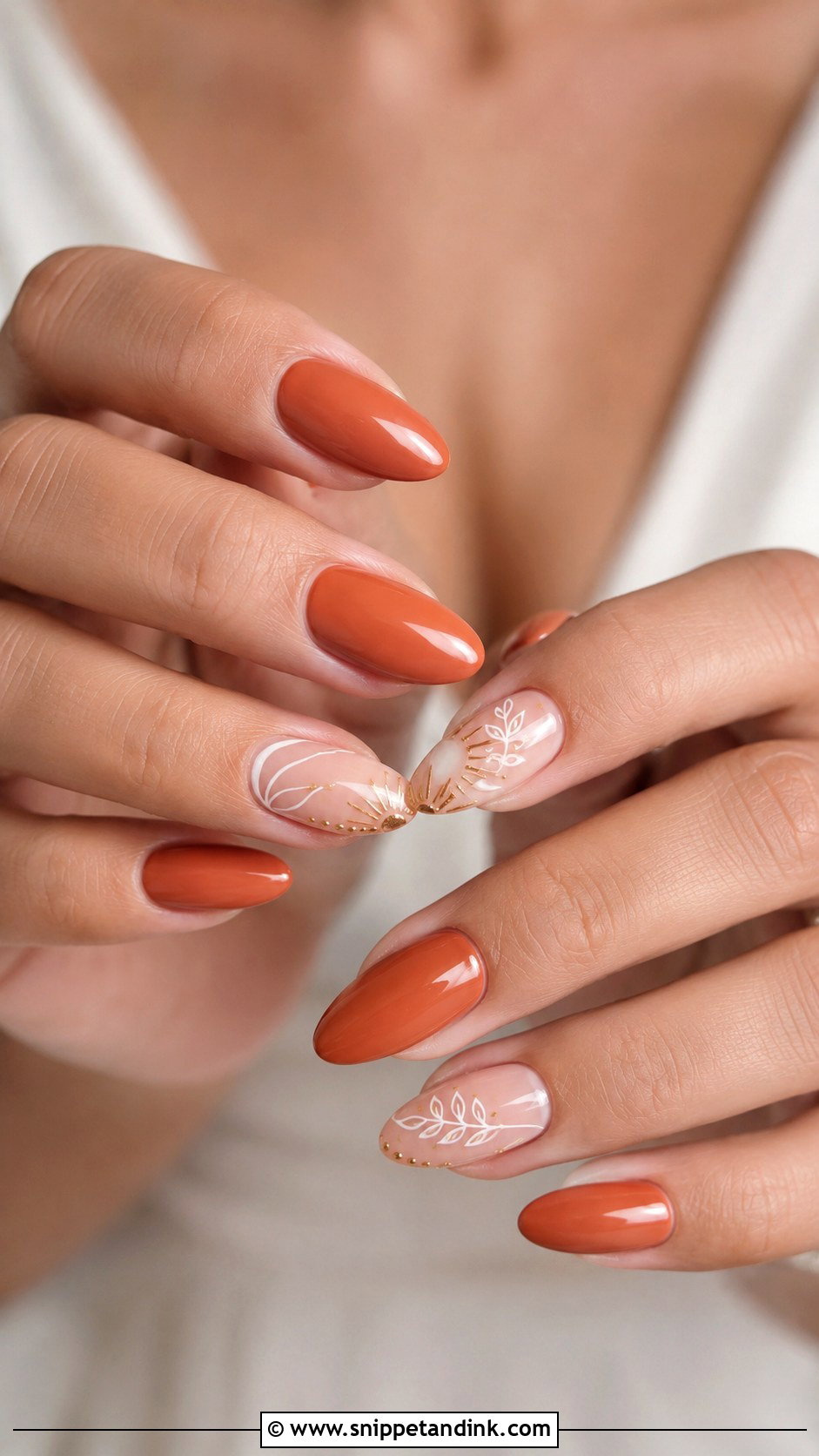
Terracotta is a muted orange-brown that reads earthy rather than bright, and it suits boho weddings, desert venues and rustic fall ceremonies. A full set on almond or squoval nails looks finished on its own. If you want dimension, I’d add fine white line work or a nude accent rather than more color. This shade sits well beside dried florals and ivory lace. Gloss keeps it classic; a soft matte top coat turns it modern, though matte shows hand cream marks, so keep a lint-free wipe handy.
6. Orange Ombre Wedding Nails
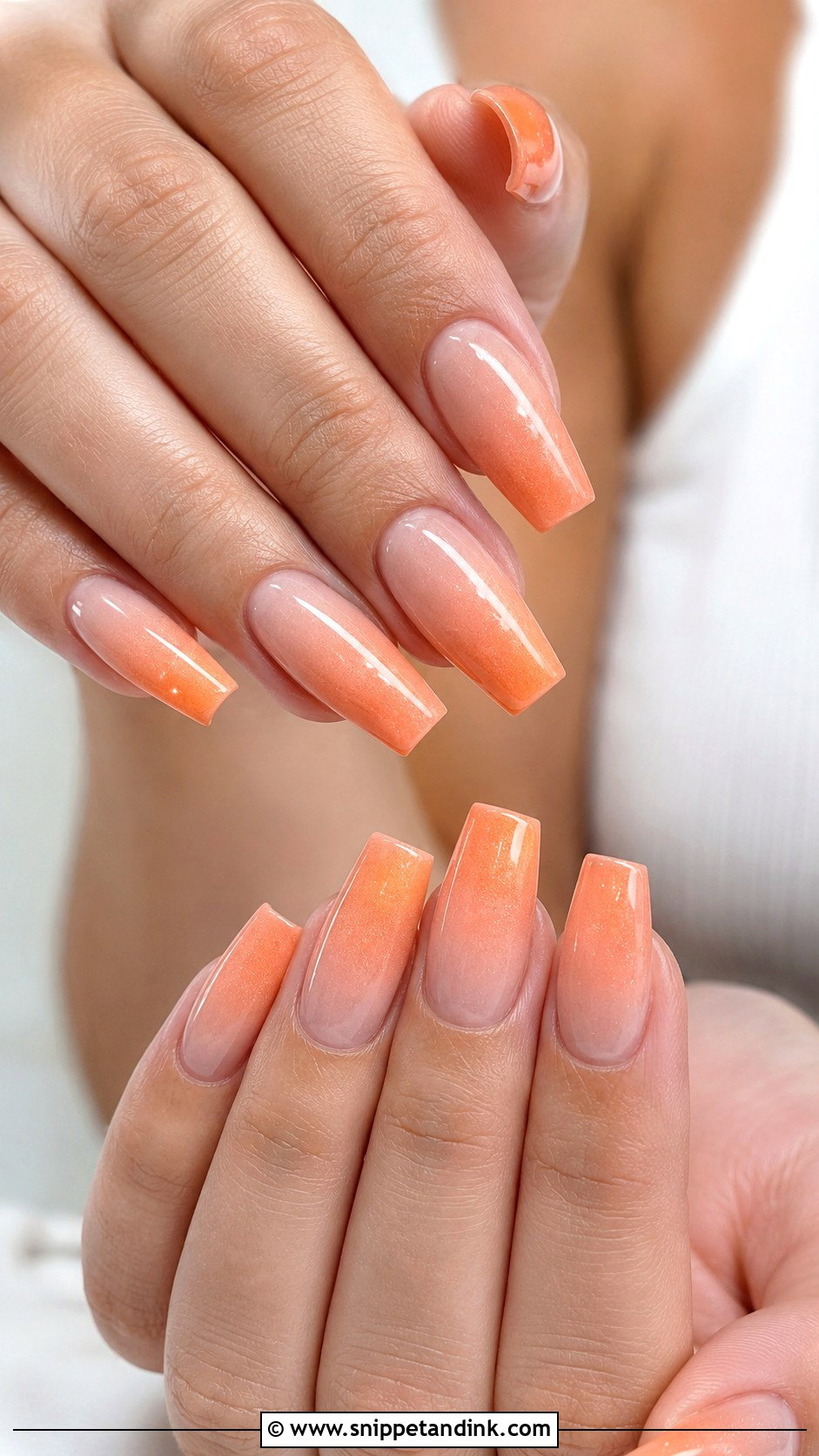
An ombre gives you a gradient instead of a block of color: nude to peach, peach to coral, or ivory to burnt orange. The most wedding-friendly version is well diffused, with no visible band where the shades meet. I sponge or airbrush it in thin layers, because a heavy hand leaves a stripe that shows in every ring photo. Almond and coffin shapes give the fade room. A glossy top coat keeps it fresh; a fine shimmer overlay adds glow. Lighter fades suit a beach wedding, deeper ones a fall event.
7. Orange Floral Wedding Nails
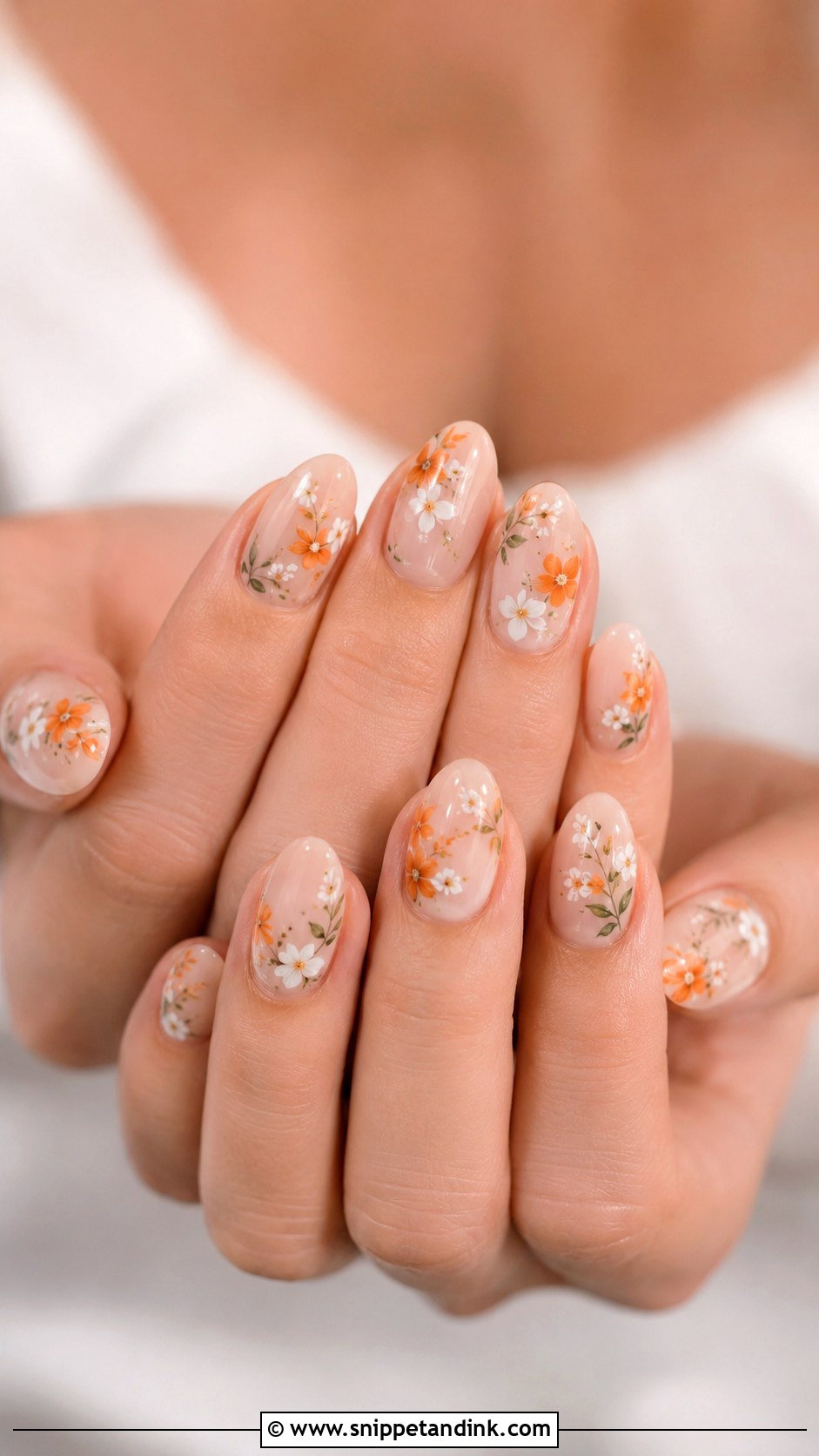
Tiny orange flowers are the easiest way to tie your nails to the bouquet. I paint them over a nude, milky or peach base, either across every nail for a garden feel or on two accent nails for something quieter. Bring a photo of your florals to the appointment so I can match the actual orange of the flowers, not a guess. White petals, small green leaves and a gold center make the flowers look finished rather than cartoonish. Short nails need fewer, smaller flowers; crowd them and the design turns busy.
8. Coral Orange Wedding Nails
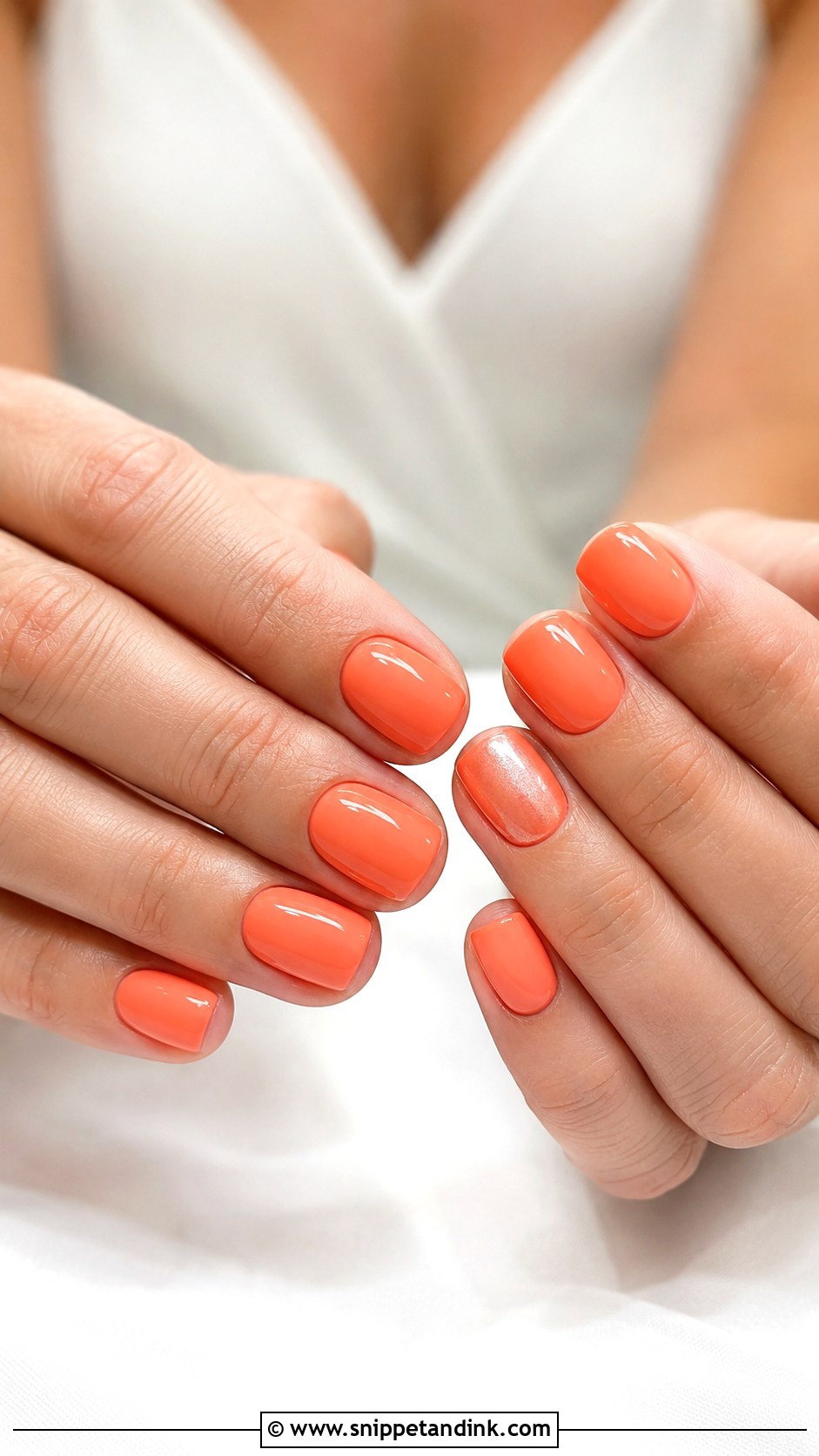
Coral mixes orange with pink, which is why it’s easier to match than true orange with dresses, florals and makeup. It’s my go-to for warm-weather weddings. Choose a creamy, opaque coral over a neon one; neon coral can look almost fluorescent under some reception lighting. Short square coral nails feel fresh, almond ones softer. For a dressier set, add a sheer shimmer or a slim French tip.
9. Orange And Gold Wedding Nails
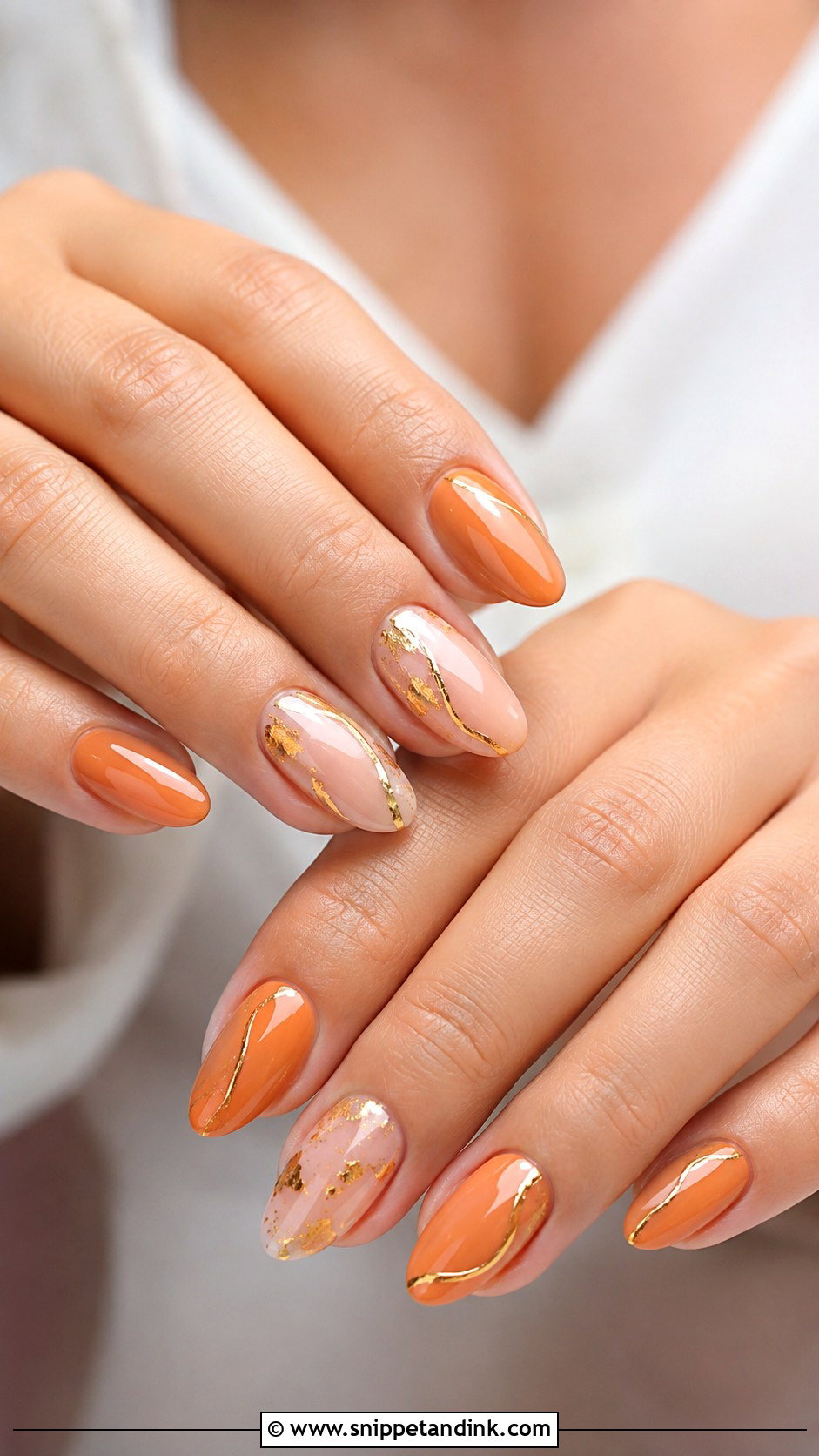
Gold makes orange feel celebratory, but only when it’s used in small amounts. Fine foil flakes, thin metallic lines or a narrow cuff near the cuticle all look more refined than heavy glitter. A nude base with an orange tip and a gold edge suits bridesmaids and guests well. For the bride at a fall or evening wedding, full rust or burnt orange with a few foil accents feels richer. One practical note from the chair: foil needs to be fully sealed under top coat, or the edges lift and catch on lace and hair.
10. Orange Glitter Wedding Nails
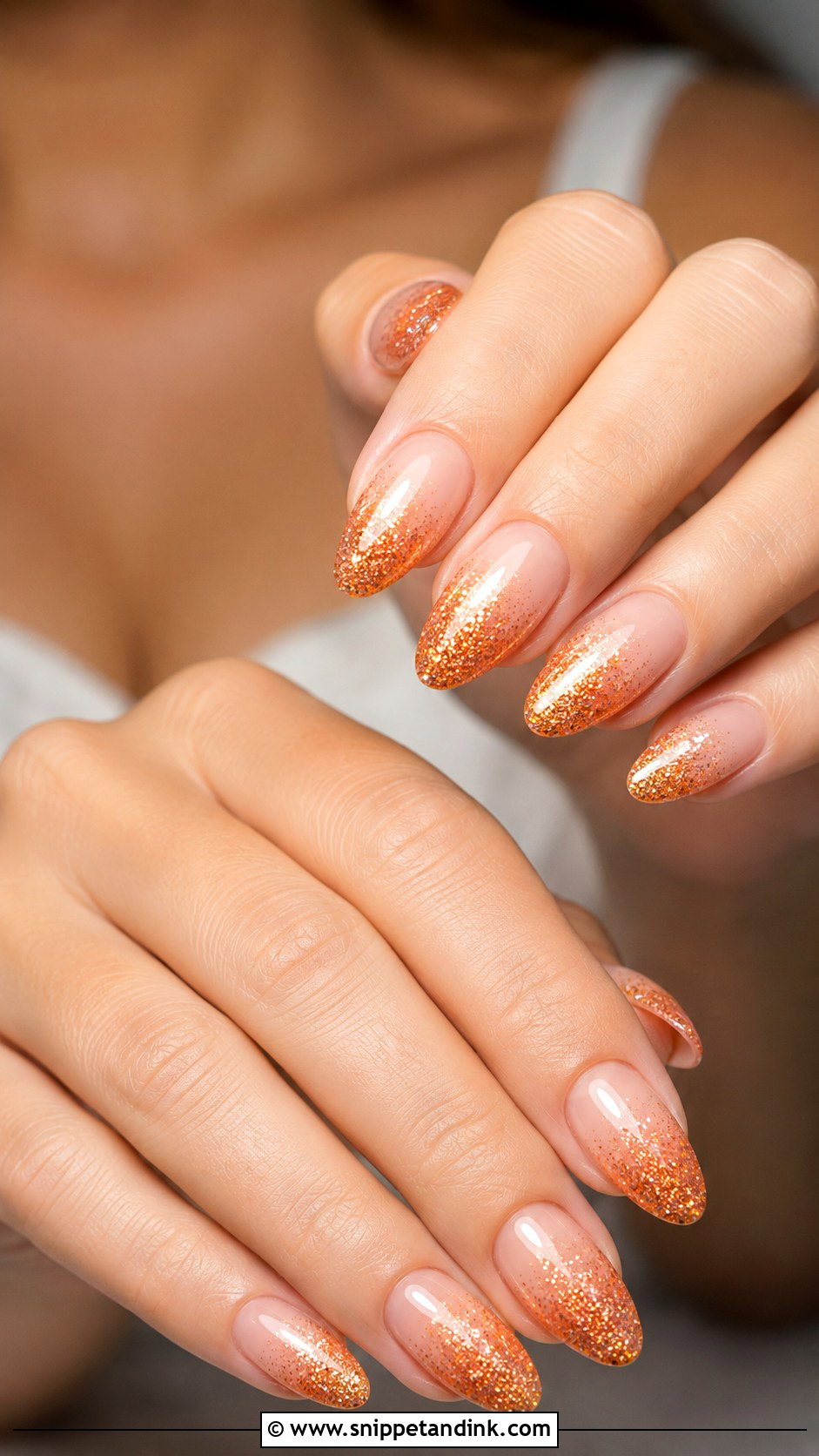
Orange glitter wedding nails work when the sparkle stays fine. Chunky glitter on every nail looks more party than wedding, so I reach for fine shimmer, soft copper sparkle or a glitter fade from the tips. Peach glitter reads soft; burnt orange glitter reads bold and seasonal. The fade over a nude base is the version I’d wear myself. Glitter is also the hardest finish to remove, so if you’re wearing regular polish, plan for a foil-wrap removal rather than scrubbing.
11. Orange Marble Wedding Nails
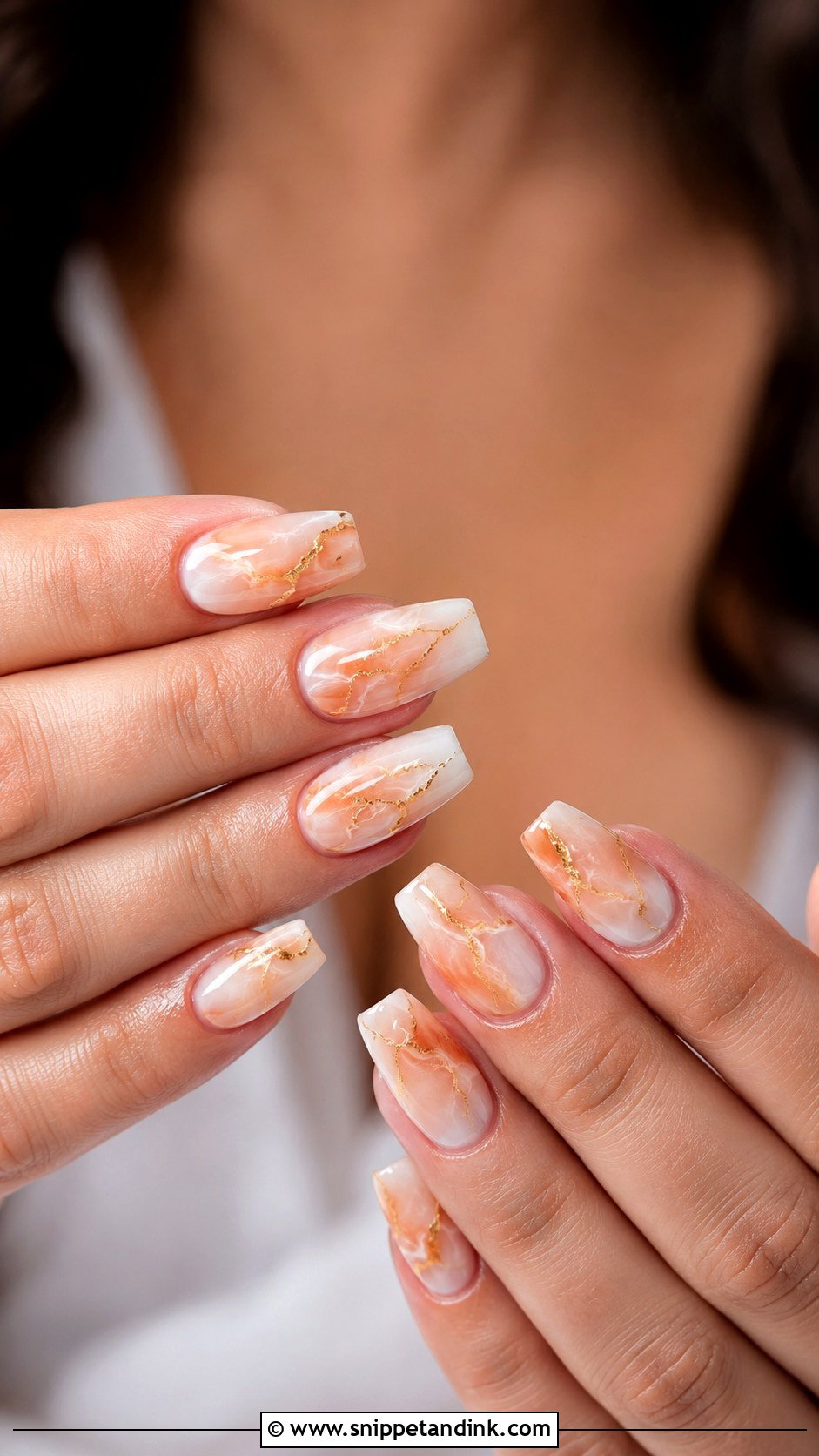
Marble is where orange gets artistic. I swirl peach, coral, terracotta or burnt orange through a milky white or nude base, sometimes with thin gold veins for a more formal set. The trick is restraint: light, airy lines look like stone, while heavy blocks of color look like a mistake. Medium almond or coffin nails give the pattern room to flow. Every marble nail comes out slightly different, which I see as the charm, but if you need ten matching nails, choose another design.
12. Matte Orange Wedding Nails
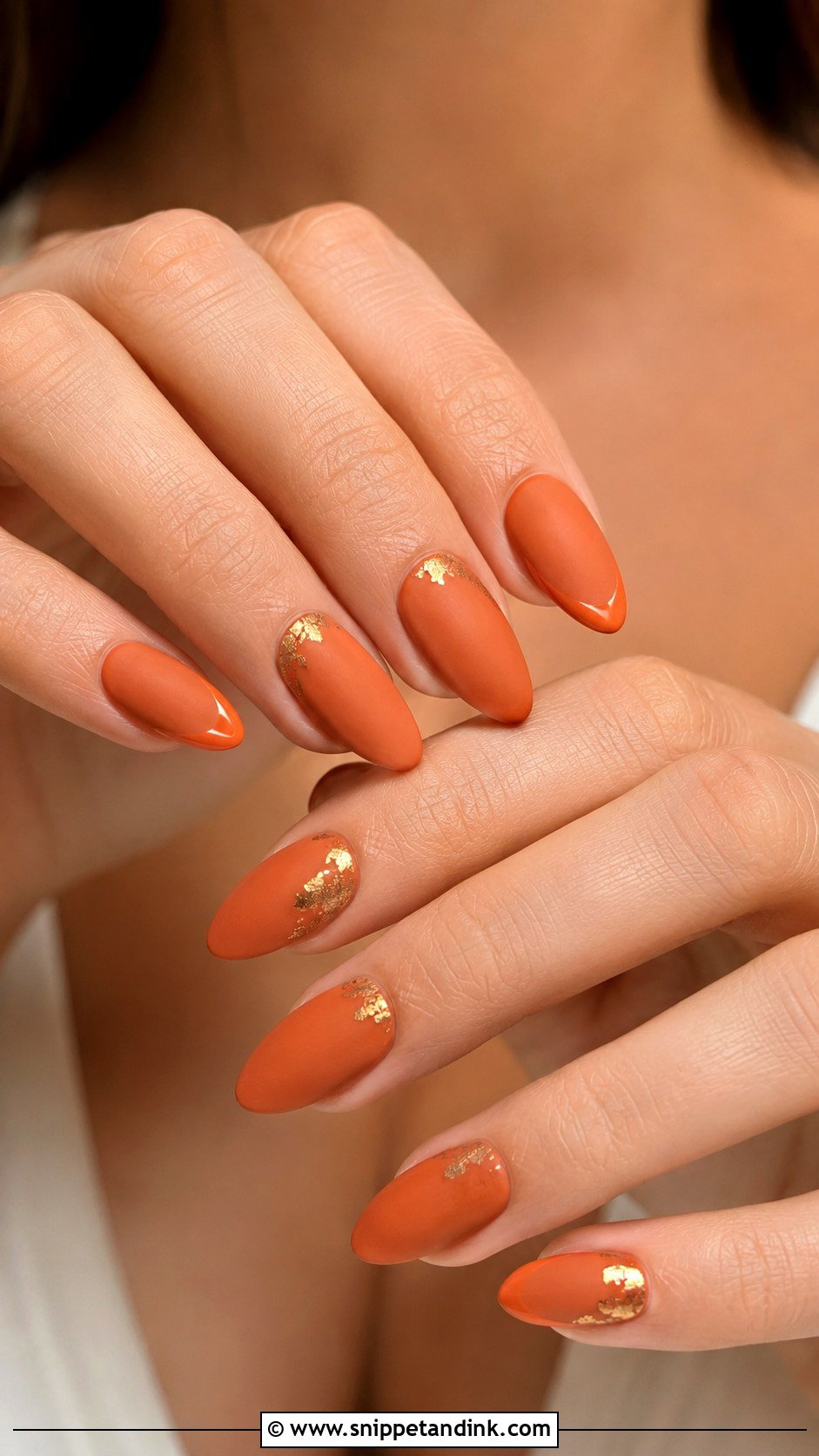
A matte top coat changes how orange behaves. Bright shades go smoother, deep shades go velvety. Terracotta, rust, peach and burnt orange all suit it. Matte shows wear sooner than gloss, though: the tips can turn shiny after a day of handling paper and fabric, so I’d book it close to the wedding. A full matte terracotta set on almond nails is clean, and glossy French tips over a matte base give a subtle contrast. Gold foil sits well on matte too.
13. Orange Aura Wedding Nails
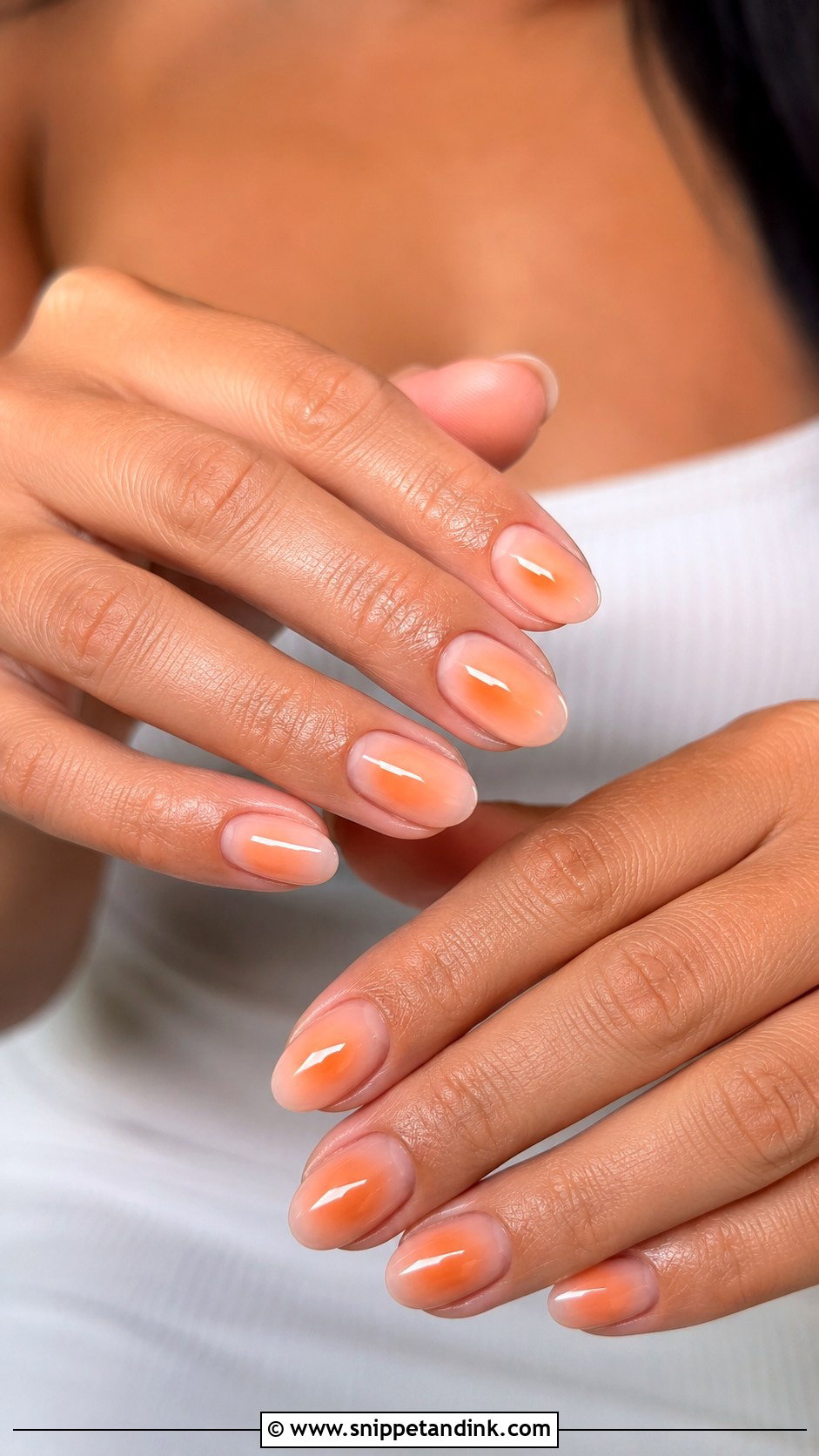
Orange aura wedding nails have a soft glow in the center of each nail, as if the color is coming from inside. I build them over a sheer nude, pink or milky base and blend the orange outward with a small sponge or airbrush. Peach auras look delicate; coral and tangerine look playful. A glazed top coat softens the edges further. This one suits a bride who likes current trends but doesn’t want a solid bright set.
14. Orange Pearl Wedding Nails
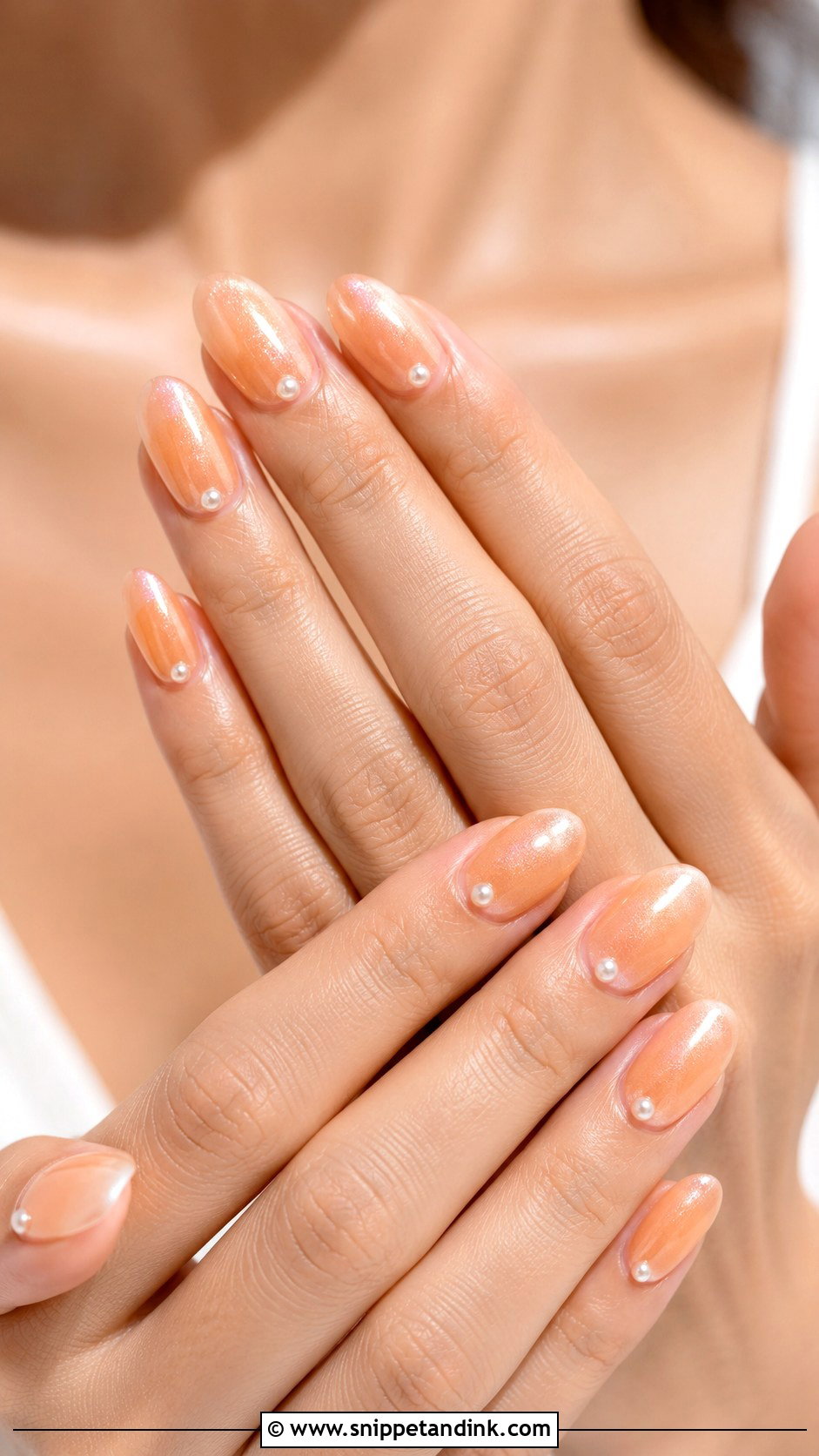
Pearl shimmer over peach, apricot or light coral gives a gentler glow than chrome. It’s luminous rather than mirror-like, which suits ceremony photos and ring close-ups where chrome can flare. Almond and oval shapes suit it. You can do the full set in pearly orange or keep the color sheer and place a few tiny pearl accents near the cuticle. Real 3D pearls snag knits and veils, so I set them low and flat or skip them on the ring finger.
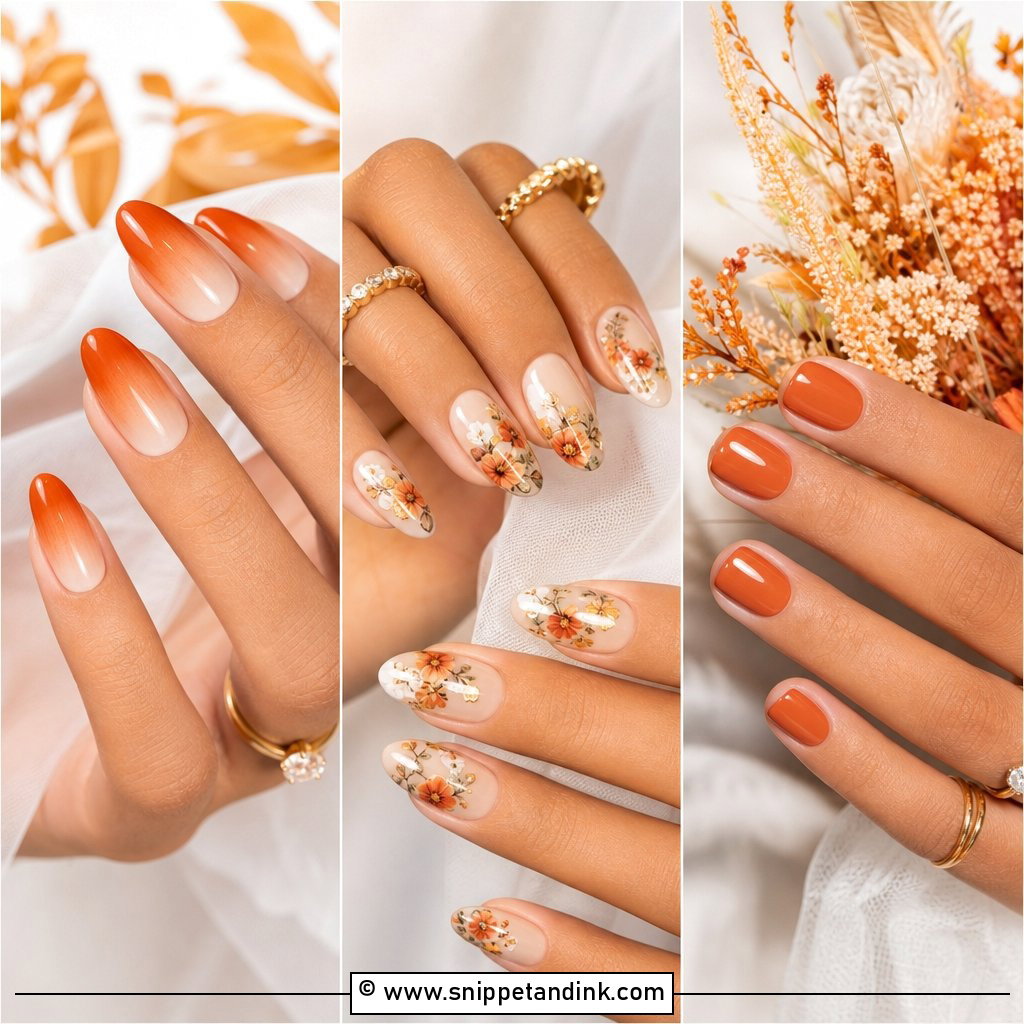
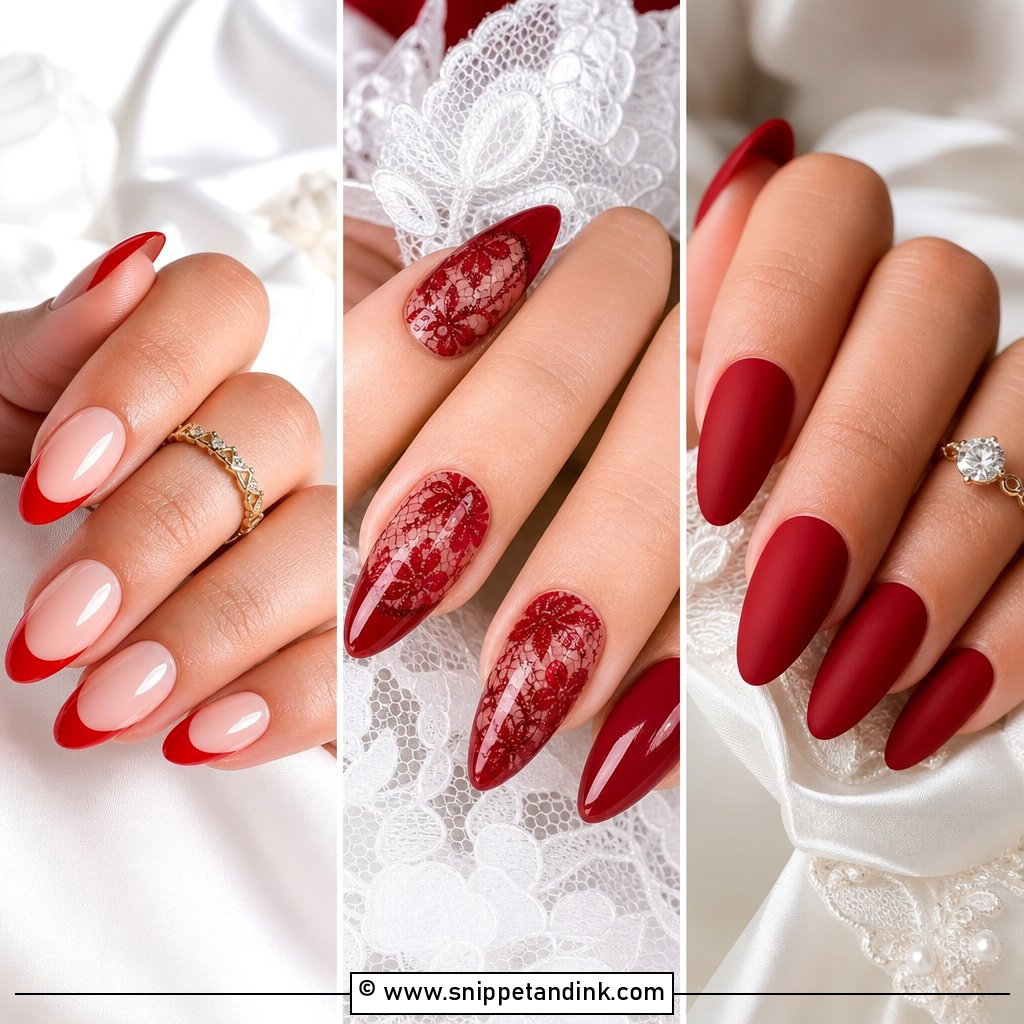
15. Orange Almond Wedding Nails
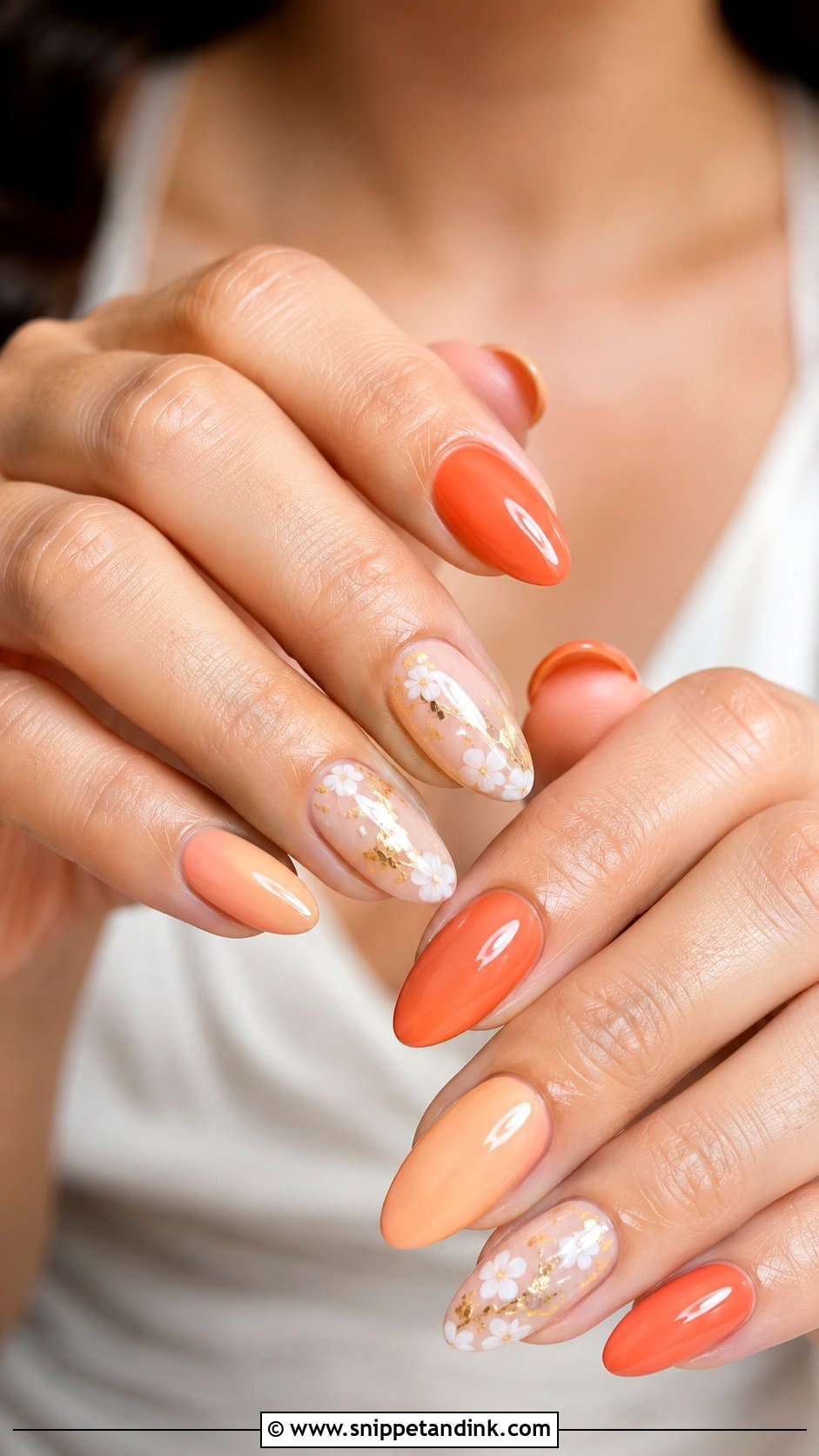
Almond is the shape I recommend most for wedding nails, because it lengthens the fingers and softens strong colors like orange. Peach or coral suit spring and summer; terracotta or burnt orange suit fall. Medium length is the practical sweet spot: long enough to look polished, short enough to fasten a dress, hold a bouquet and eat at the reception. The shape takes any detail from French tips to ombre, but one is usually plenty.
16. Short Orange Wedding Nails
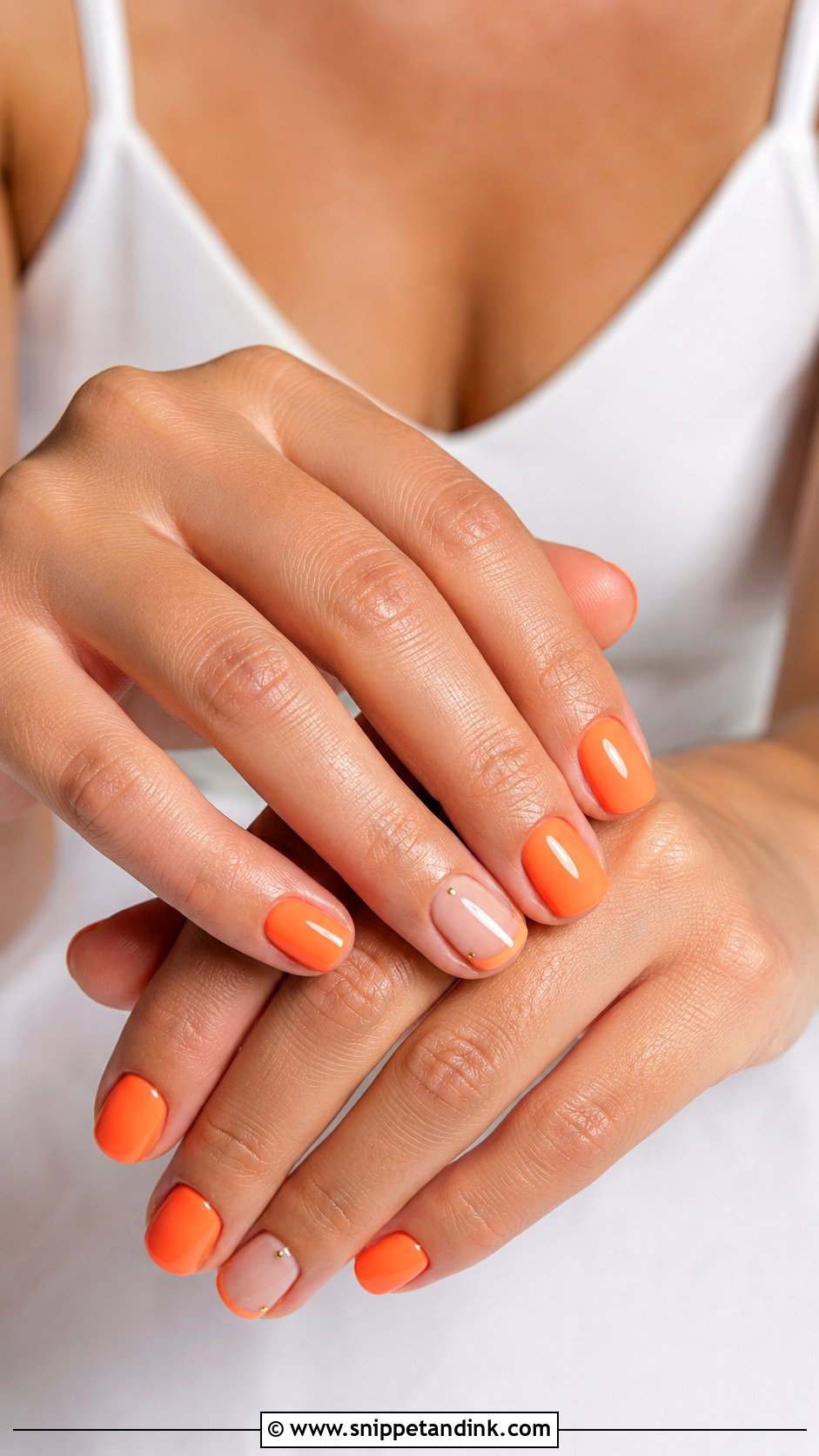
Short nails carry orange better than people expect. A short squoval or rounded shape tones down even a bright shade, and peach, coral, terracotta or burnt orange all look clean on it. This is the set I’d give a bride who types all day or a guest who’ll be dancing and carrying children. Detail scales down well too: micro French tips, small gold dots or a shimmer layer. It also survives the honeymoon flight.
17. Orange Coffin Wedding Nails
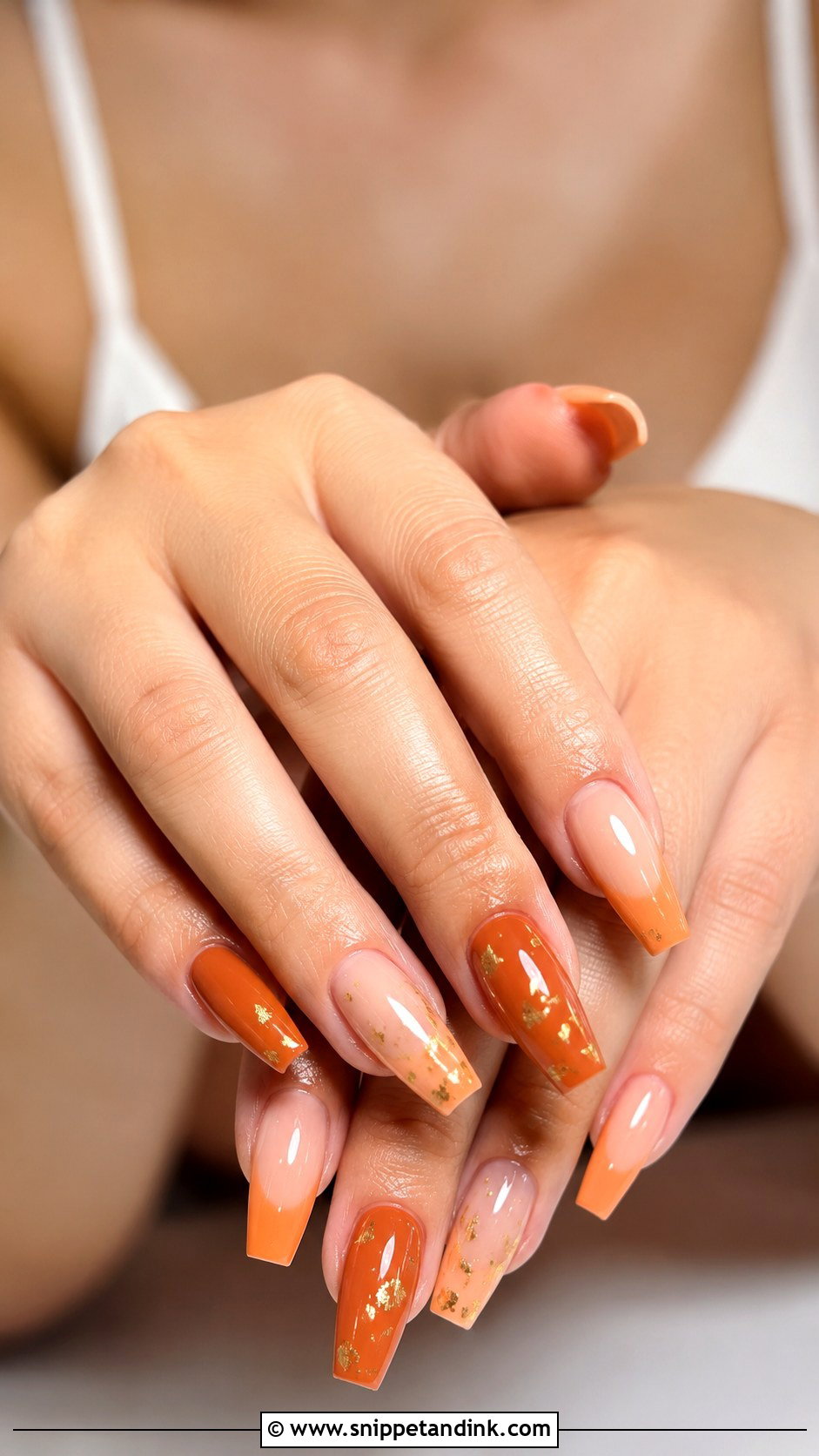
Coffin nails taper to a straight edge, which gives orange a modern, sharp look. For a wedding I keep them at medium length; extra-long coffin sets look dramatic in photos but make buttons and earring backs hard work. A peach ombre coffin set reads soft, while burnt orange coffin nails with gold foil feel formal. The wide tip leaves room for marble, chrome or florals. Balance strong shades with a nude base or sheer accents, and finish with gloss.
18. Orange Nude Wedding Nails
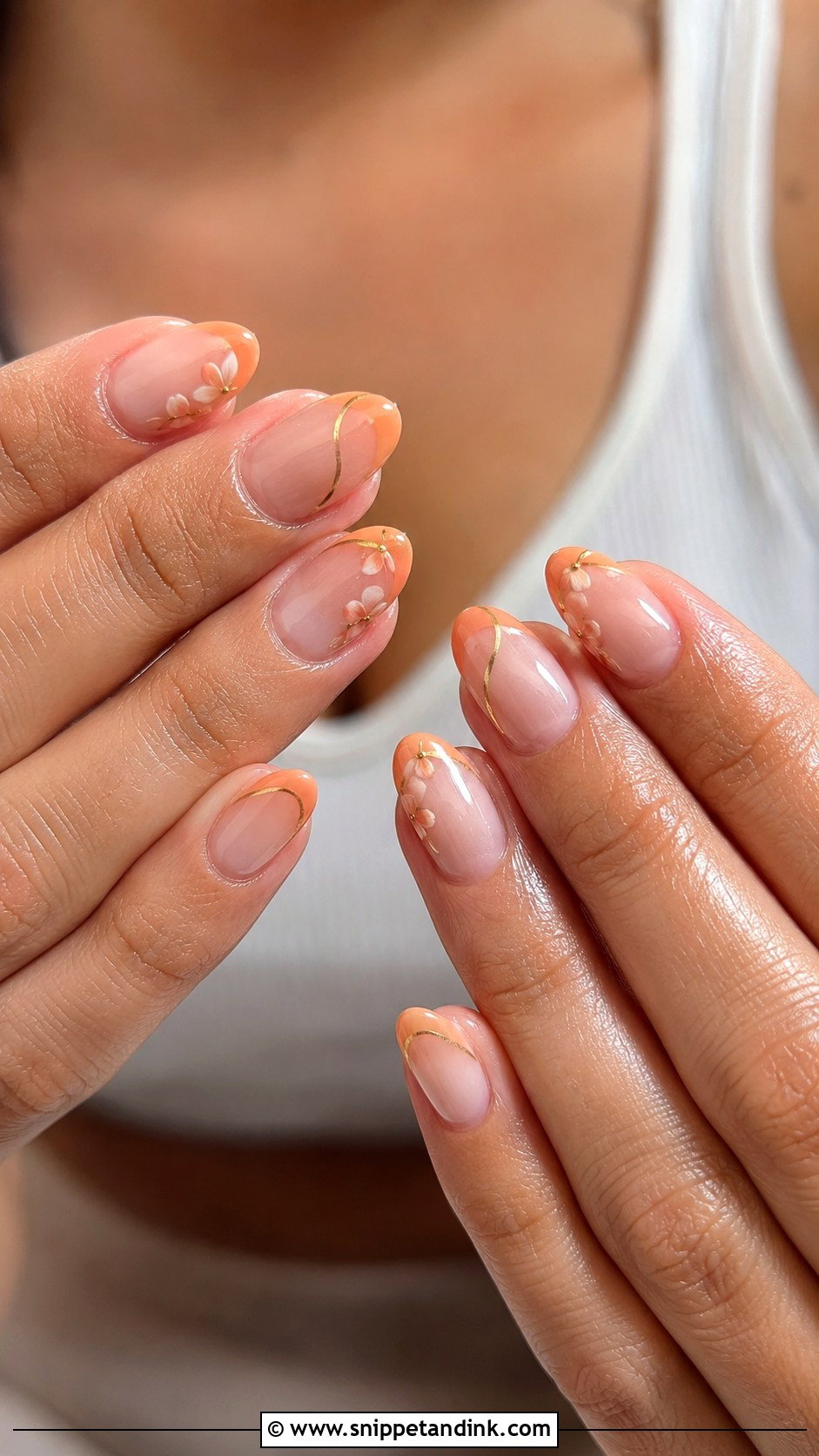
For a bride who wants only a hint of color, I start with a nude, beige, blush or milky base with orange details: a tip, a tiny flower, a fine swirl or a soft ombre edge. The nude grounds the orange, so even bright shades become easy to wear. The base has to match your skin closely. Too light and it looks chalky against the orange; too dark and the hand looks muddy. Mothers of the couple and guests suit this set as much as the bride.
19. Rust Orange Wedding Nails
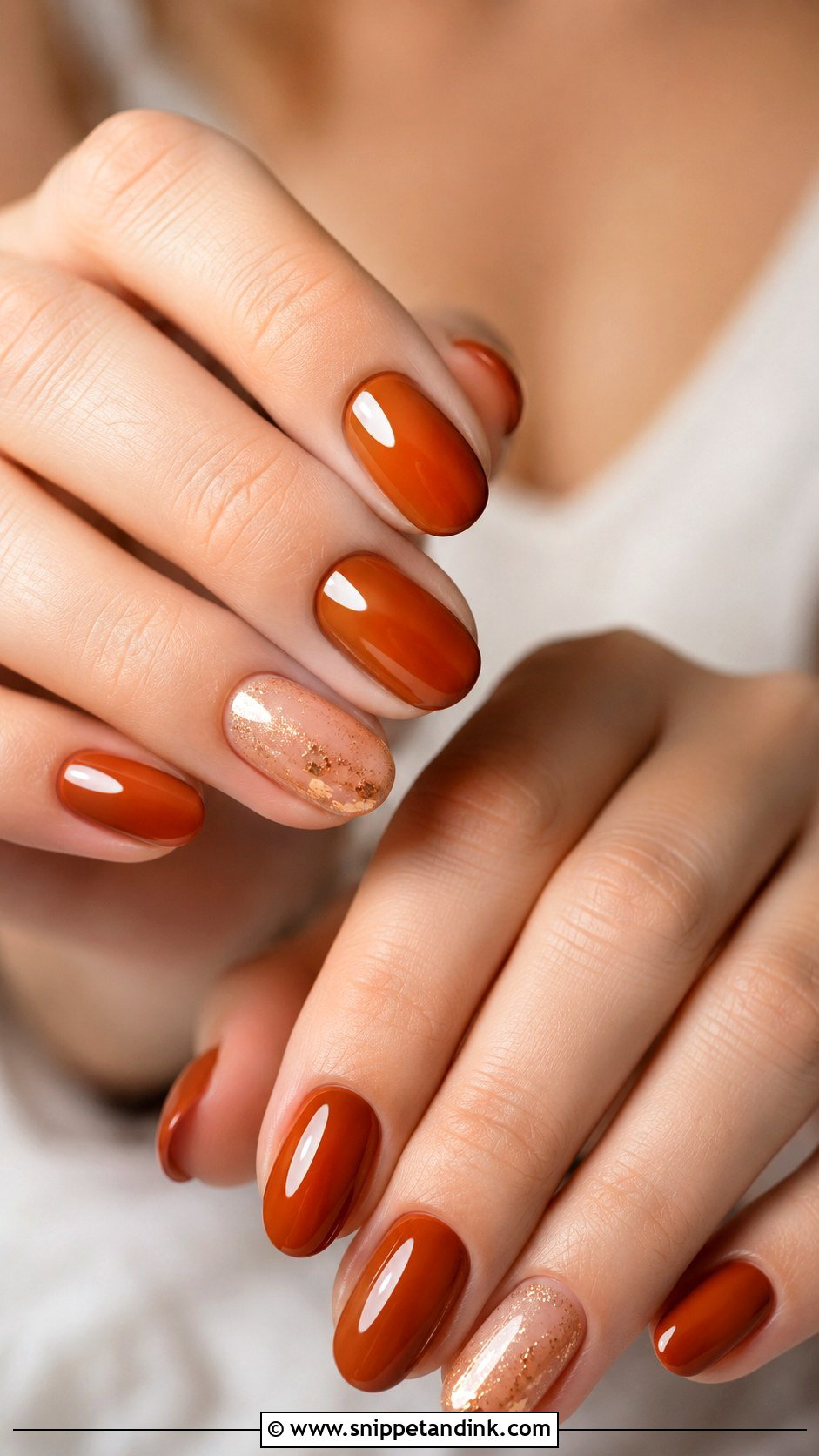
Rust sits between orange, brown and red, so it feels deeper and more formal than a citrus shade. It works best for fall and late-summer weddings and pairs with ivory, bronze, champagne, forest green and navy. A glossy rust on short square nails looks sharp; almond softens it. Add thin gold foil or a nude accent if you want detail, or go matte for a boho outdoor ceremony. If your palette already includes earthy tones, this is the orange that will blend in rather than stand apart.
20. Orange Swirl Wedding Nails
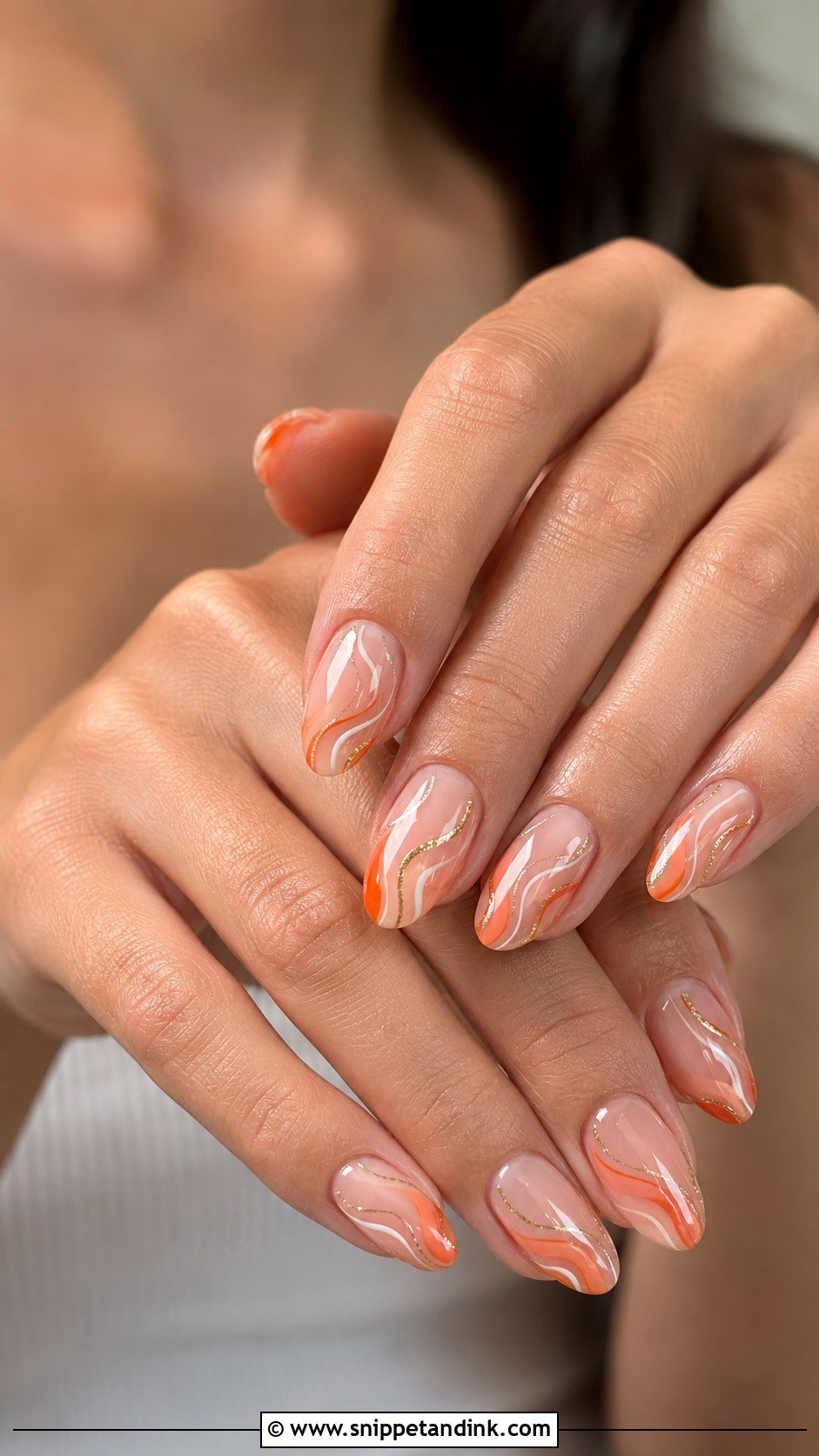
Swirls look playful, but kept fine and airy they hold up at a wedding. I paint the orange curves over a nude or sheer pink base, sometimes with thin white or gold lines between them. Peach swirls feel delicate, coral ones fresh, burnt orange warmer. They need a steady liner brush and patience, so allow extra appointment time. Almond, oval and coffin shapes give the lines room to move. Leave plenty of bare base showing; negative space is what keeps the design grown-up.
Saturated Orange Can Stain Your Nails, So Plan the Removal Too
Deep oranges and rusts are heavily pigmented, and on bare nails they can leave a yellowish tint on the nail plate after removal. That matters if you plan to switch to a nude for the honeymoon or a later event. A proper base coat under regular polish prevents most of it, and gel has its own base layer that does the same job.
For the wedding itself, I’d book gel two or three days ahead so any small lifting shows up while there’s still time to fix it. Regular polish is better done the day before, since orange chips are very visible against the skin. Ask for the free edge to be capped with top coat; that wrap is what stops the tips wearing through when you’re unwrapping gifts and handling stationery.
Will Orange Nails Clash With a Red Lip or Bright Bouquet?
They can. Orange and blue-red lipstick fight each other, especially in close-up photos where hand and face appear together. If your makeup artist is planning a cool red lip, I’d move you toward coral or a peach nude. A warm brick red or terracotta lip, on the other hand, sits happily next to almost any orange on this list.
With flowers, aim for the same family rather than an exact copy. A burnt orange nail beside peach roses looks deliberate; a nail one shade off the flowers can look like a failed match. Bring a single real bloom or a clear photo to the appointment, and if the bouquet holds several oranges, pick the deepest one for the nails so they anchor the arrangement instead of disappearing into it.
Orange Can Be Quiet or Loud, and You Decide Which
The same color family covers a whisper of peach and a full burnt orange statement, and the finish shifts it again. For a gentle bridal look, stay with peach, coral and apricot. For fall weddings and warm palettes, terracotta, rust, copper and burnt orange earn their place. French tips, chrome, ombre, florals, pearls, gold foil and soft swirls let you make it personal without losing polish. Test your chosen shade on one nail a few weeks ahead, look at it in daylight and in a photo, and you’ll know quickly whether it’s the right orange.
You'll Like These Ideas:


Leave a Reply