
White is the color I’m asked for most by brides, and it’s also the hardest polish I apply. It streaks if a coat goes on thick, it shows every uneven cuticle line and it picks up stains that a nude would hide. Done well, though, it looks clean beside a ring and suits every shape from short squoval to long coffin. It doesn’t have to be plain either: milky, sheer, pearly, chrome or lace all count as white. Below are twenty white bridal sets I’d happily put on a bride, each with a note on how it’s built and how it lasts.
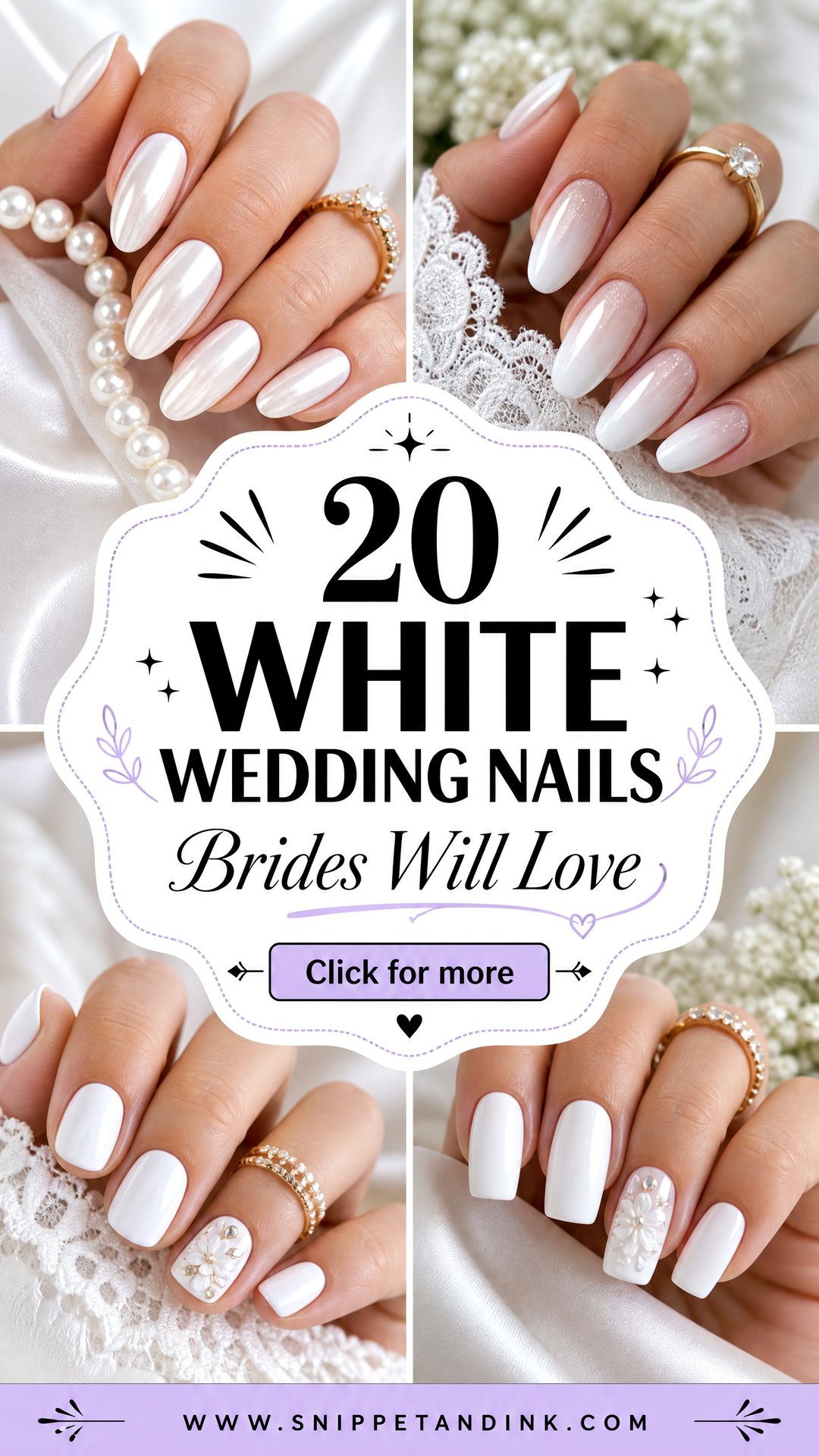
Bright White Polish Can Make an Ivory Gown Look Yellow
White polish comes in as many shades as wedding dresses, and the two sit right next to each other in every photo of you holding the bouquet. A stark optical white beside an ivory or champagne gown makes the dress look slightly yellow by comparison. Here’s how I match them.
- Pure white or bright white gown: crisp opaque white, a sharp French tip or bright chrome.
- Ivory or soft white gown: milky white, sheer white or a French tip softened with a drop of nude.
- Champagne, blush or nude-lined gown: sheer ivory or a pearl finish that leans warm.
- Cool, pink-toned skin tends to suit milky whites with a hint of pink; warm or olive skin often looks better with ivory or cream-based whites.
Bring a fabric swatch to your nail appointment, or at least a photo taken in daylight. I’ll paint a sample on one nail and hold it next to the fabric. Salon lighting is usually cooler than daylight, so I always check the match by a window.
1. White French Tip Wedding Nails
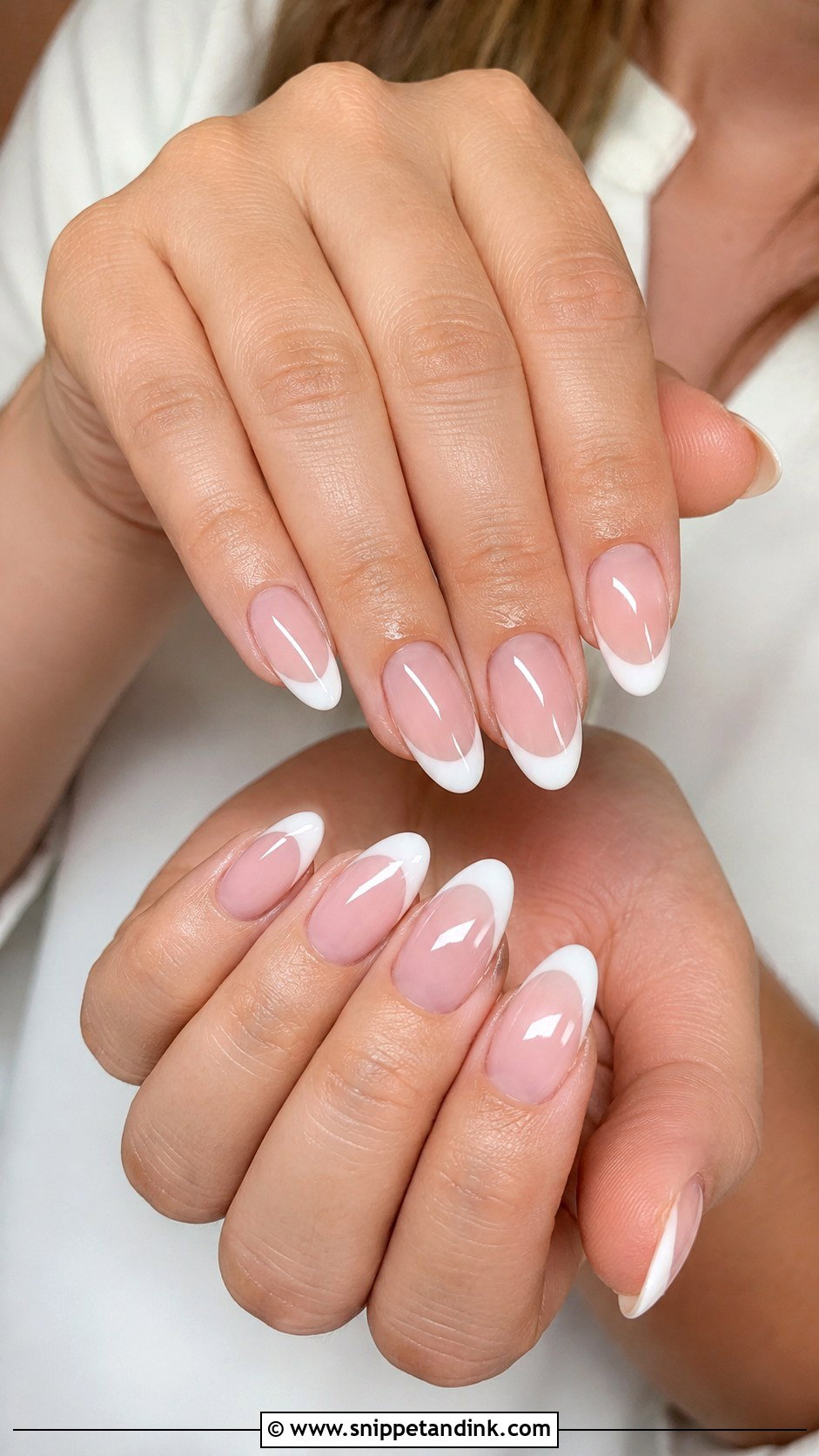
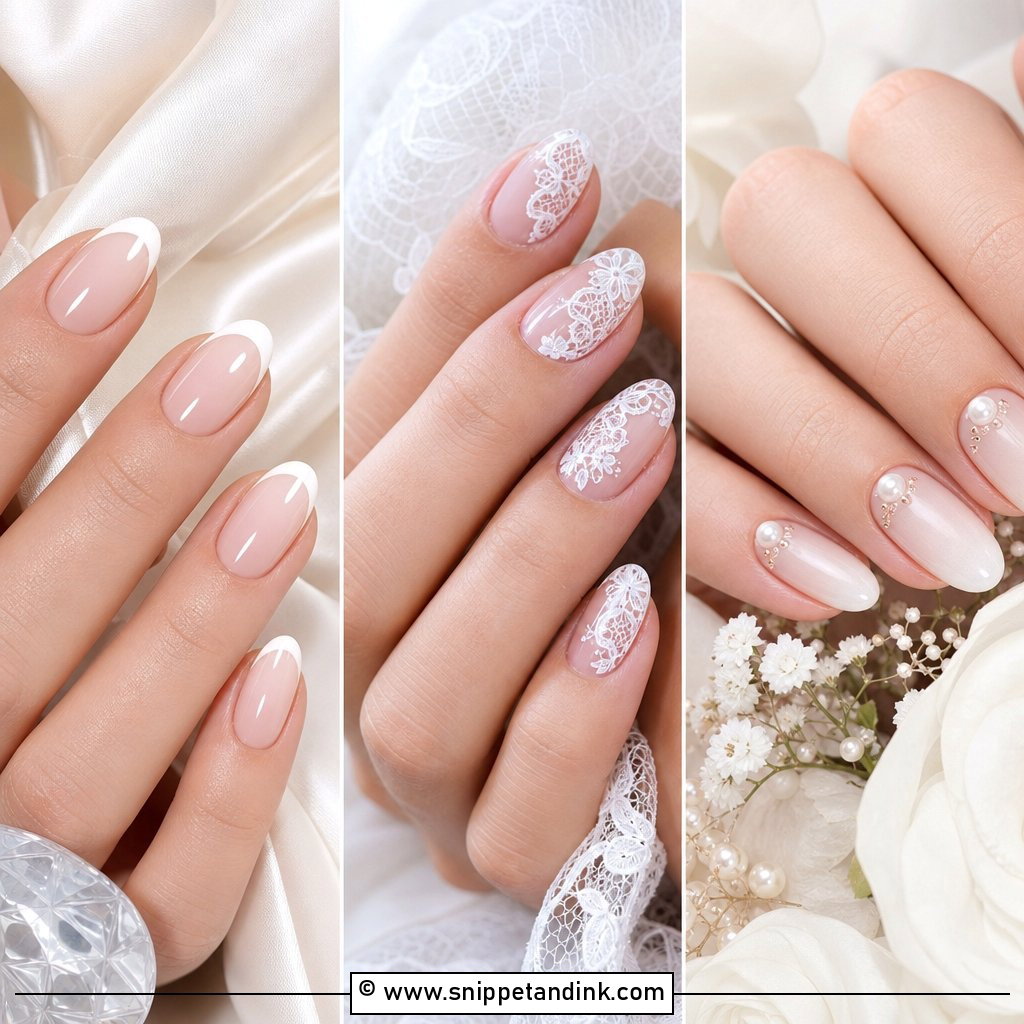
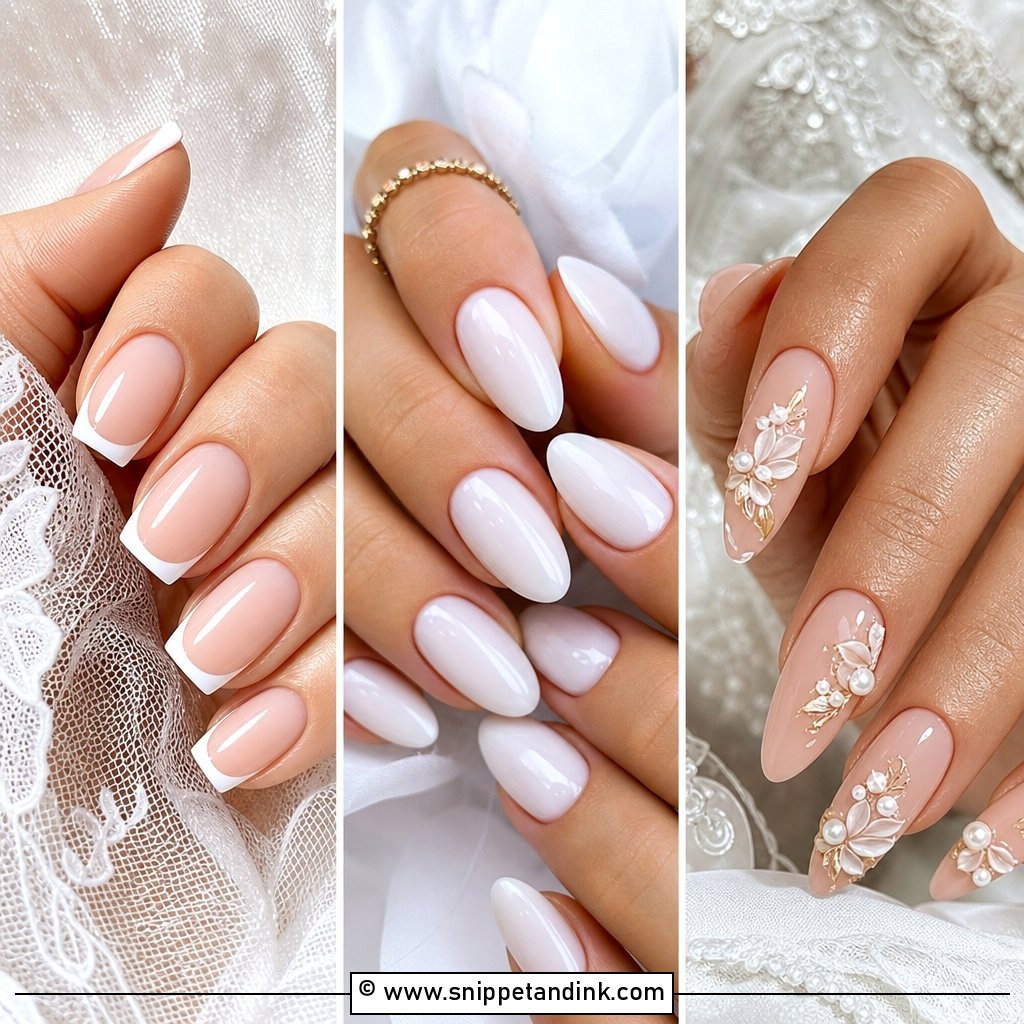
A French tip never dates, and on a bride it frames each nail without pulling focus from the ring. The base is sheer pink or nude; the tip is where I spend my time, because a wobbly smile line shows more in white than in any other color. Short nails suit a thin micro French tip, while longer almond or oval nails can carry a deeper curve. With an ivory, champagne or off-white dress, I mix a drop of nude into the white so the tip is soft rather than stark.
2. Milky White Wedding Nails
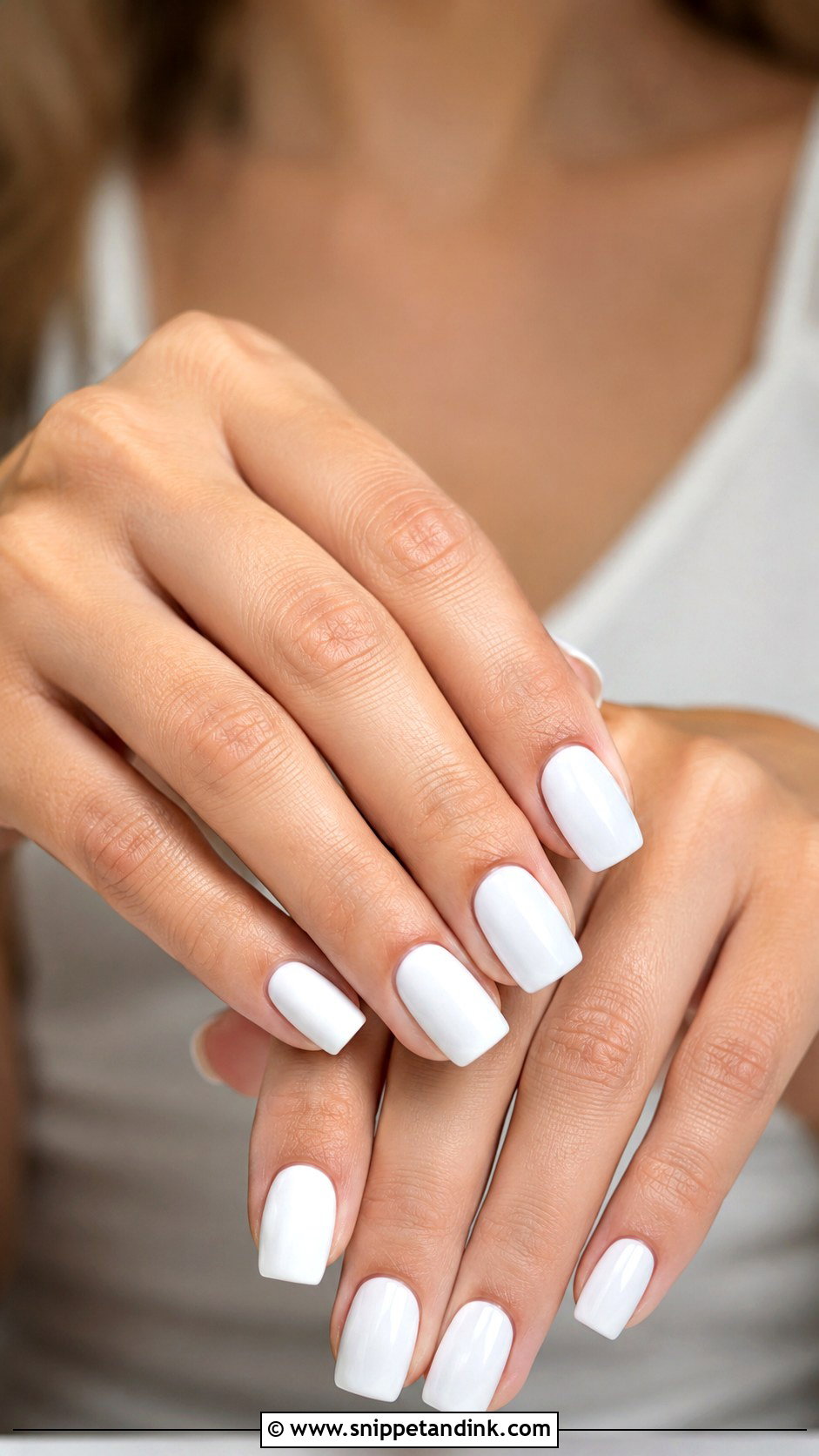
If solid white feels too stark, try sheer. Milky white wedding nails use a translucent white that lets a little natural nail show through, like a veil. I can warm or cool the milkiness by layering, which is why it suits nearly every skin tone. Two thin coats usually look better than one thick one; three can turn it opaque. Short oval or soft almond keeps it natural, and a high-shine gel top coat gives the glassy look that reads best in close-ups.
3. White Chrome Wedding Nails
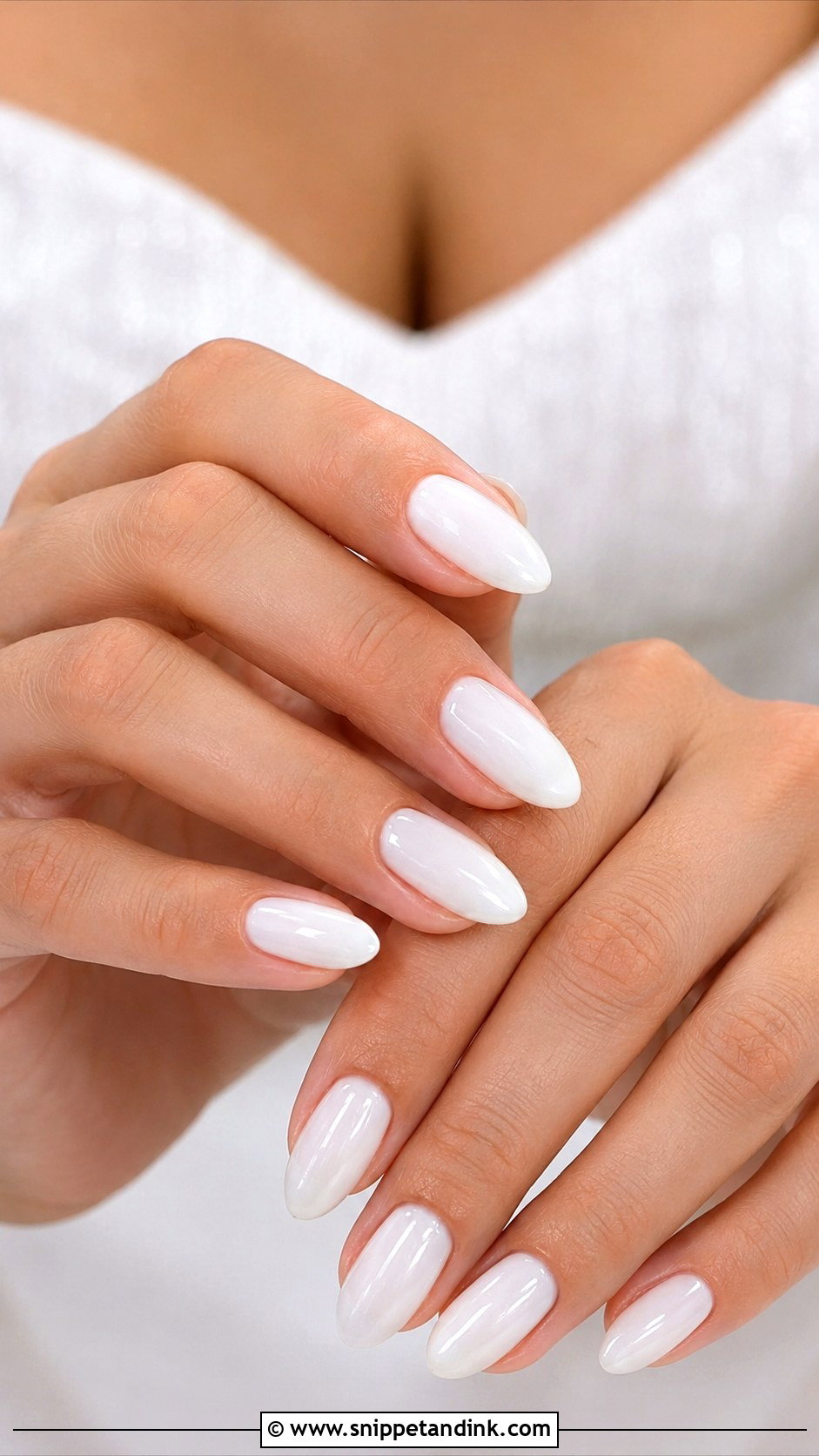
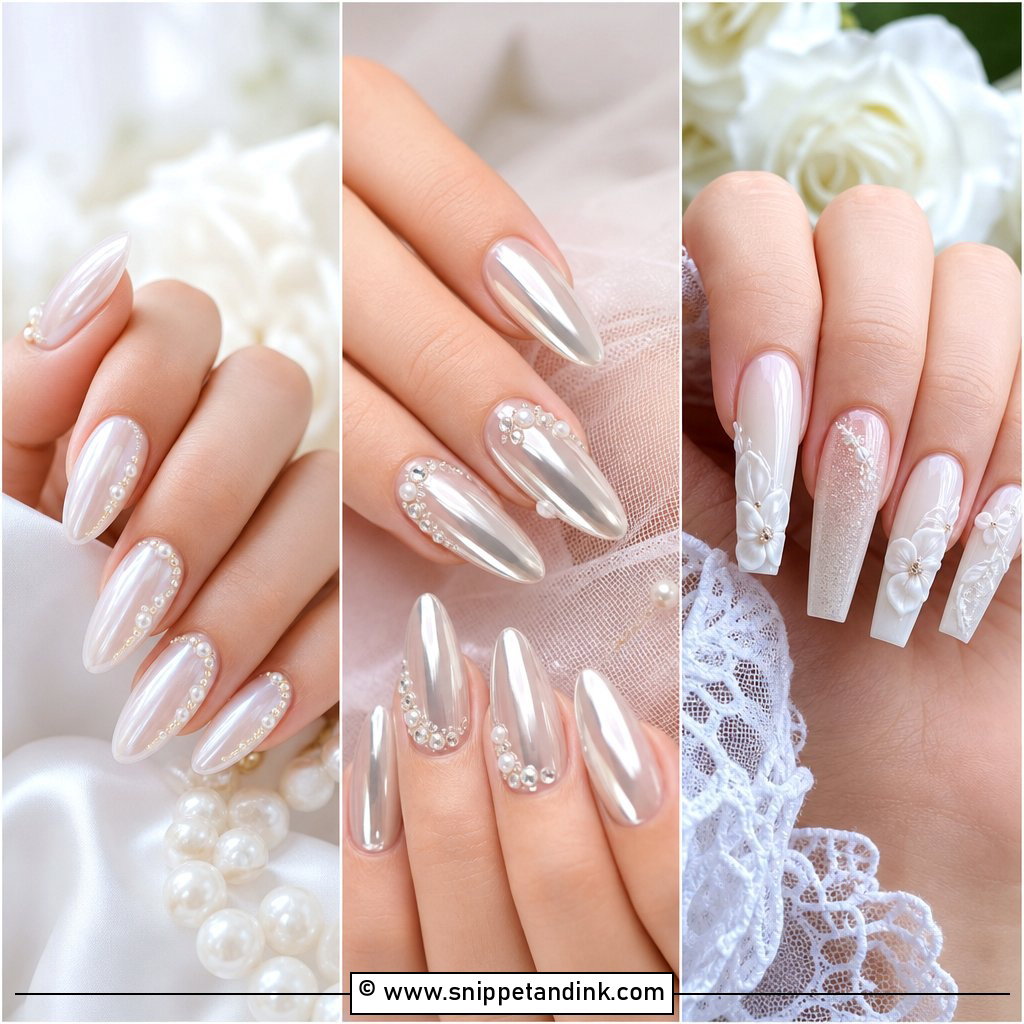
Chrome gives white a soft sheen without any glitter. I paint a milky, pearl or sheer ivory base, cure it under a no-wipe top coat and buff a very fine chrome powder over it, then seal. Too much powder turns it mirror-like and loses the bridal feel, so I go lightly and check it under daylight before sealing. Satin, silk and beaded gowns suit it. Almond and oval shapes look graceful with chrome; square gives it a sharper, fashion edge. Chrome can lift at the free edge if it isn’t capped, which I always do.
4. Pearl White Wedding Nails
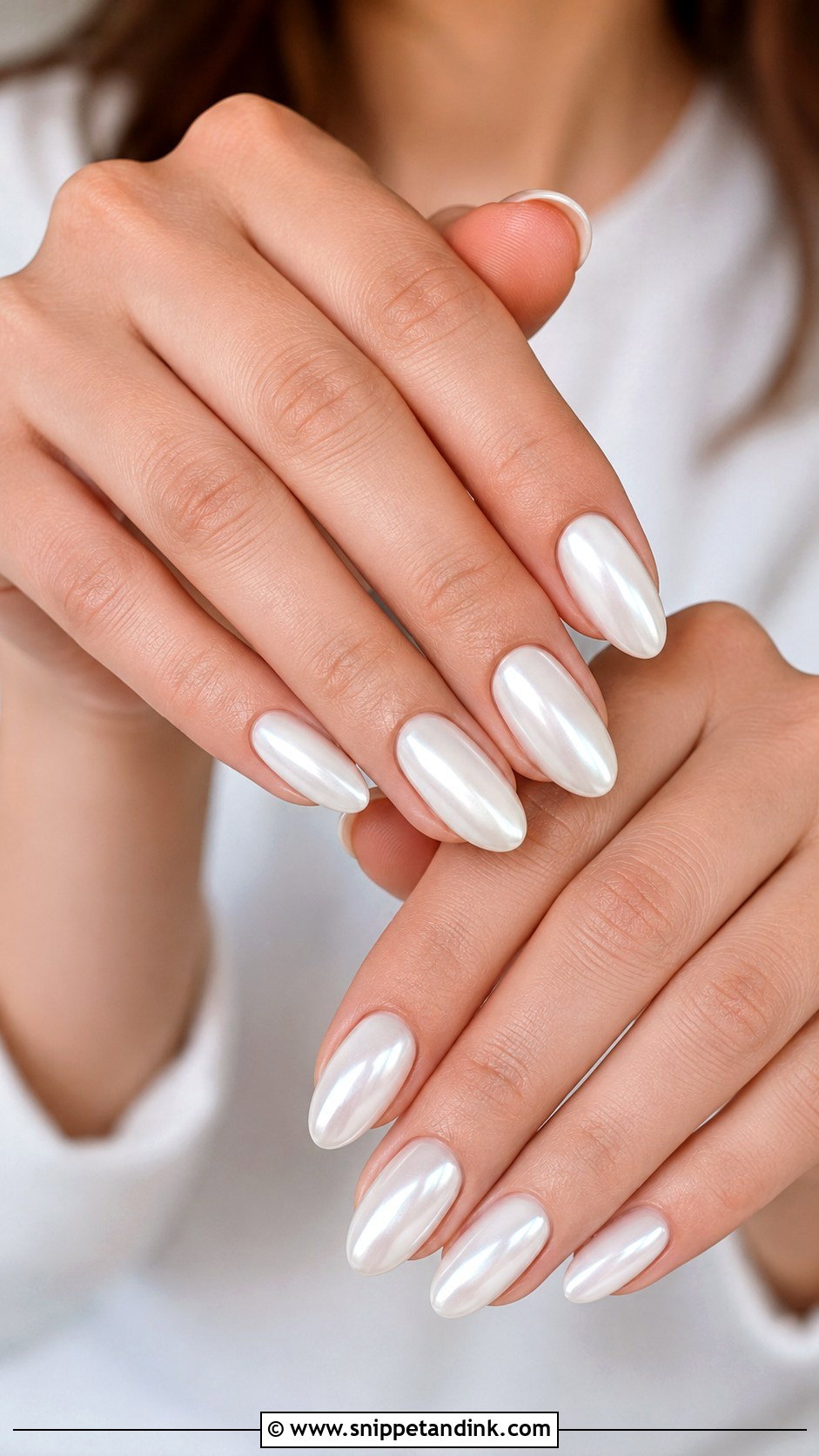
Pearl finishes come in two kinds: a pearly polish or shimmer top coat, and tiny 3D pearls set near the cuticle. If your dress has pearl buttons or your veil is beaded, either one ties the hands into the look. I’d keep 3D pearls to one or two per hand. A full set looks heavy, and every pearl is something that can snag on lace or hair pins. Small half-pearls set into builder gel hold far better than flat-backs on regular polish.
5. White Ombre Wedding Nails
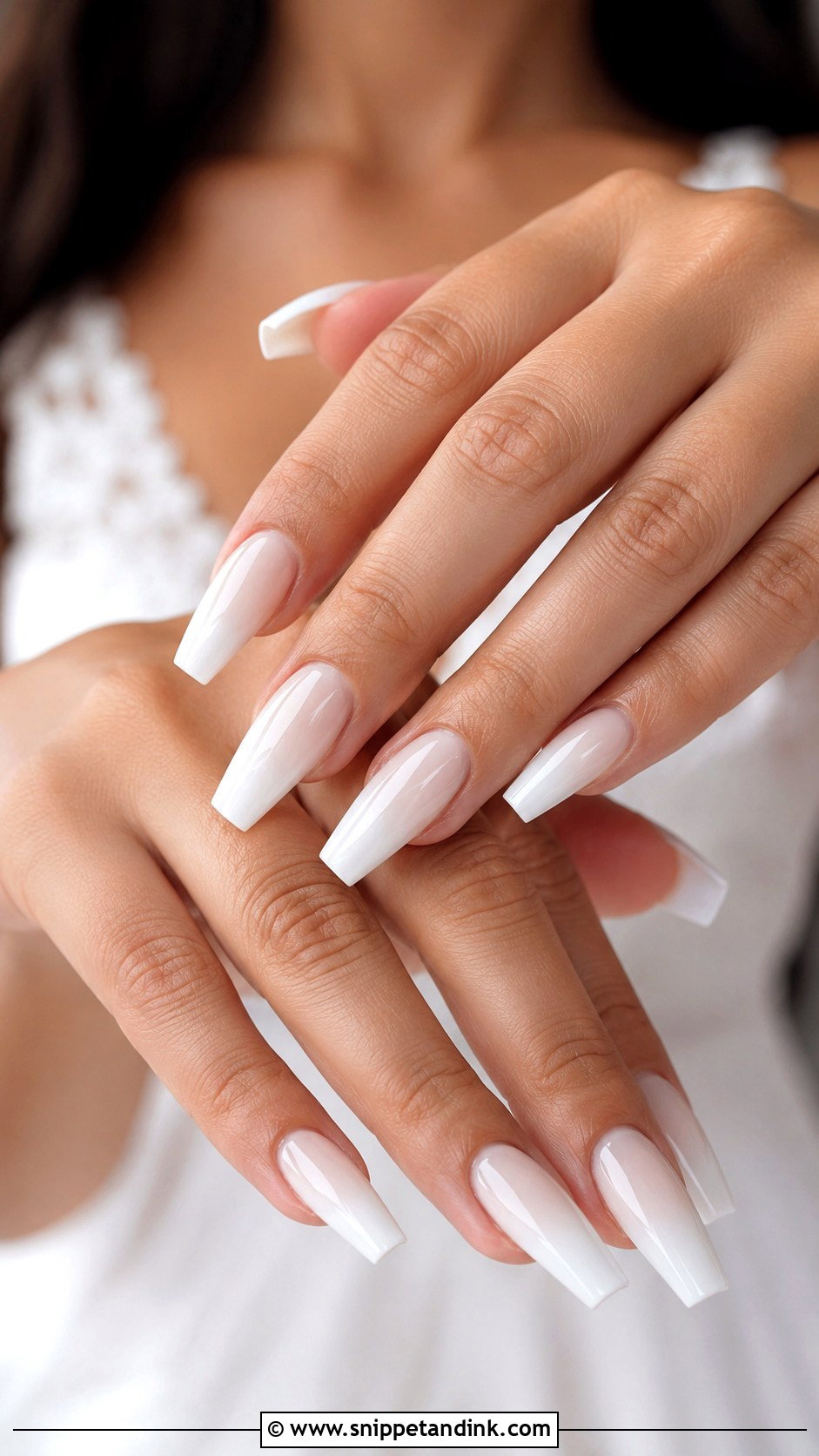
An ombre fades from nude at the cuticle to white at the tip, so it makes nails look longer without a hard line. That softness makes it forgiving as the nail grows out, since there’s no obvious gap at the cuticle. I blend it with a sponge or an airbrush for the smoothest gradient; a brush blend can look patchy in white. Coffin, almond and oval shapes all give the fade room to work. A glossy top coat finishes it.
6. Short White Wedding Nails
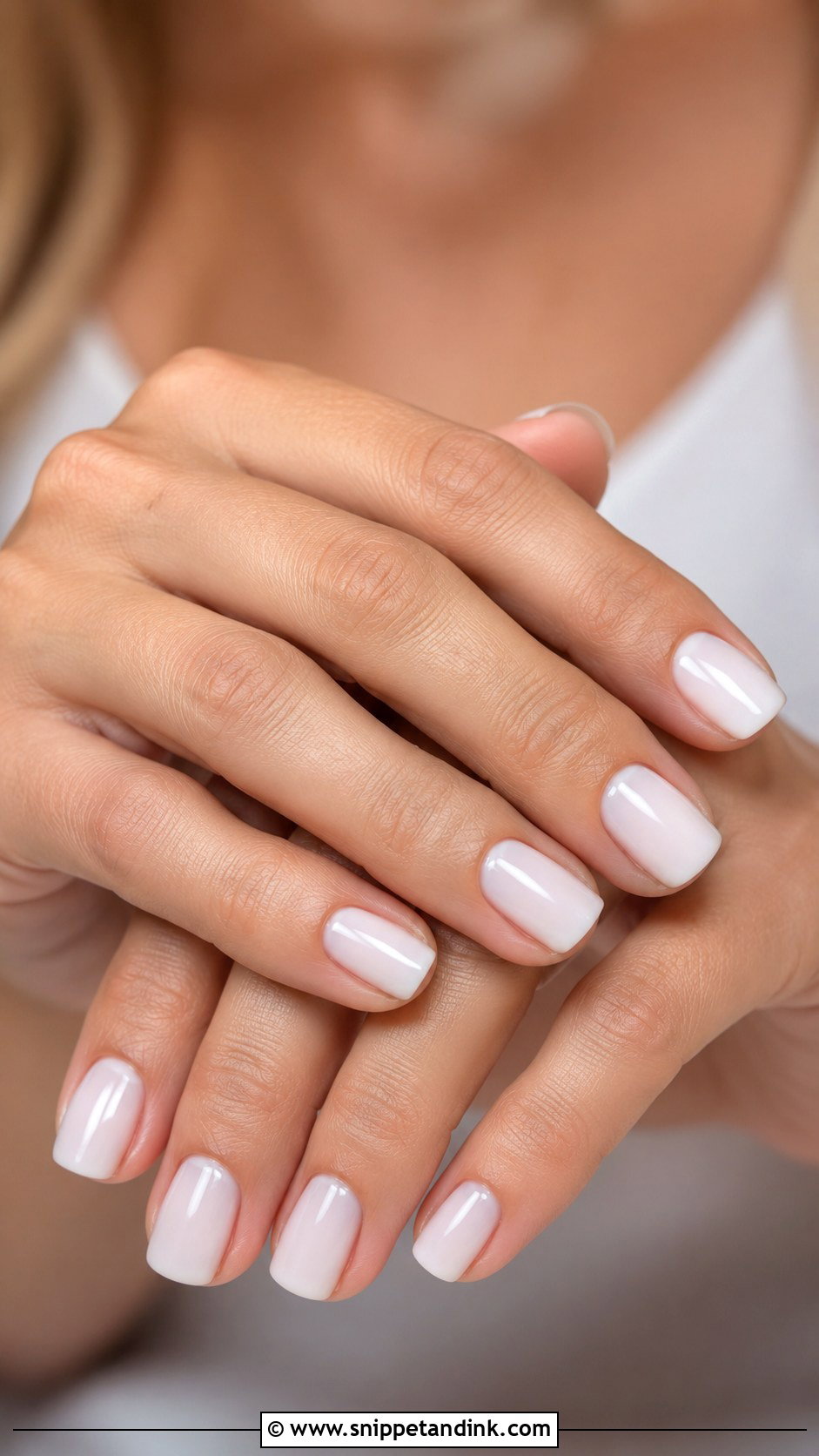
Short nails are what I’d suggest to any bride who doesn’t usually wear length, because you’ll be pinning on a corsage, holding a bouquet and doing up buttons without thinking about them. A soft square, squoval or short oval keeps them neat in photos. Milky white, sheer ivory and fine French tips suit short nails best. Thick art shrinks the nail bed visually, so I’d keep detail to glossy white, tiny pearls or one accent nail.
7. Almond White Wedding Nails
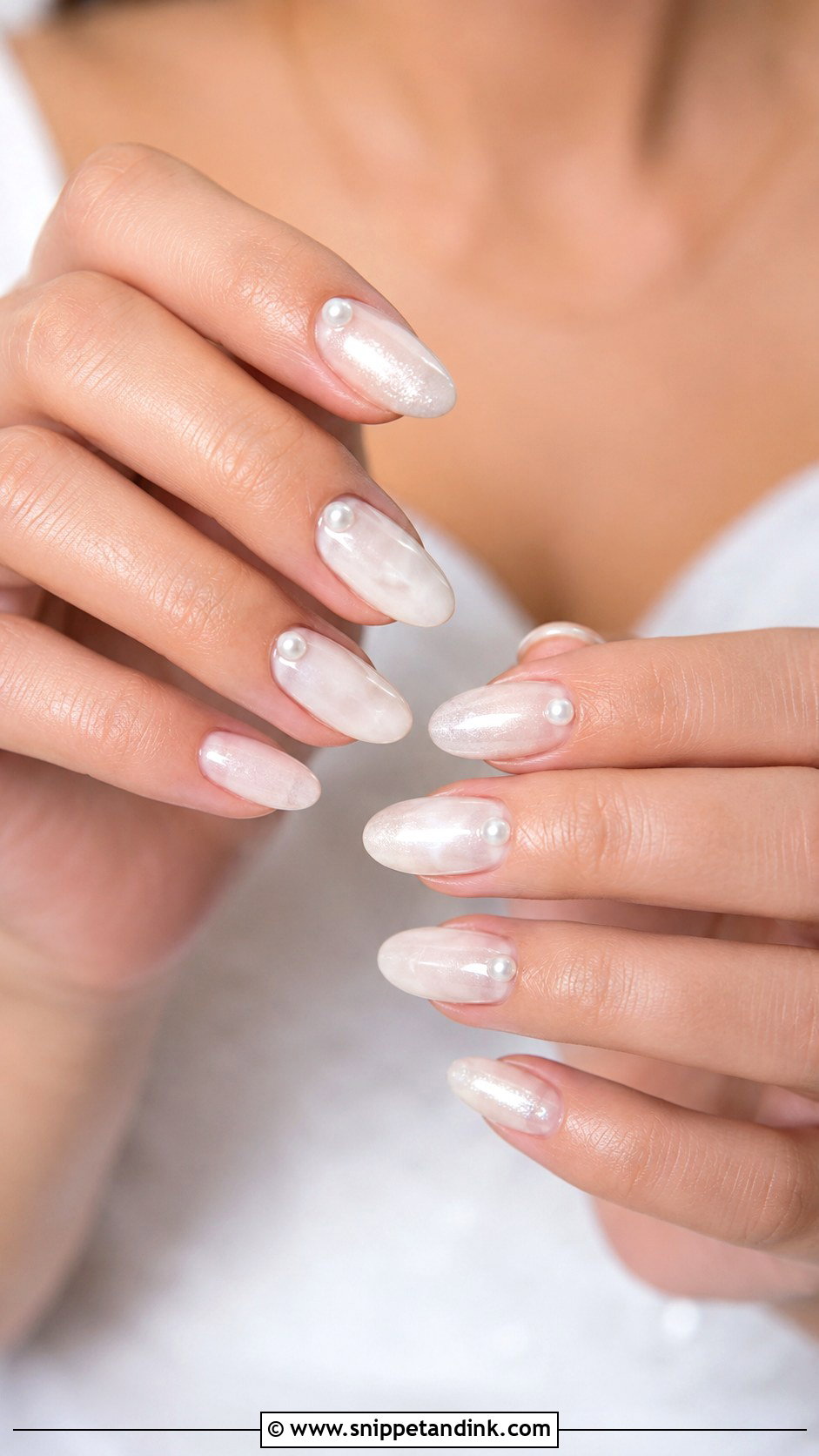
Almond shapes lengthen the fingers, which is why so many brides end up here. It carries every white design on this list, from a sheer French tip to chrome over a milky base. The catch is that almond needs some free edge to form the point. If your natural nails are short, plan a trial early so we can decide whether to grow them or add extensions. A medium almond is the length I’d recommend for most brides, as it’s elegant without getting in the way of the day.
8. Square White Wedding Nails
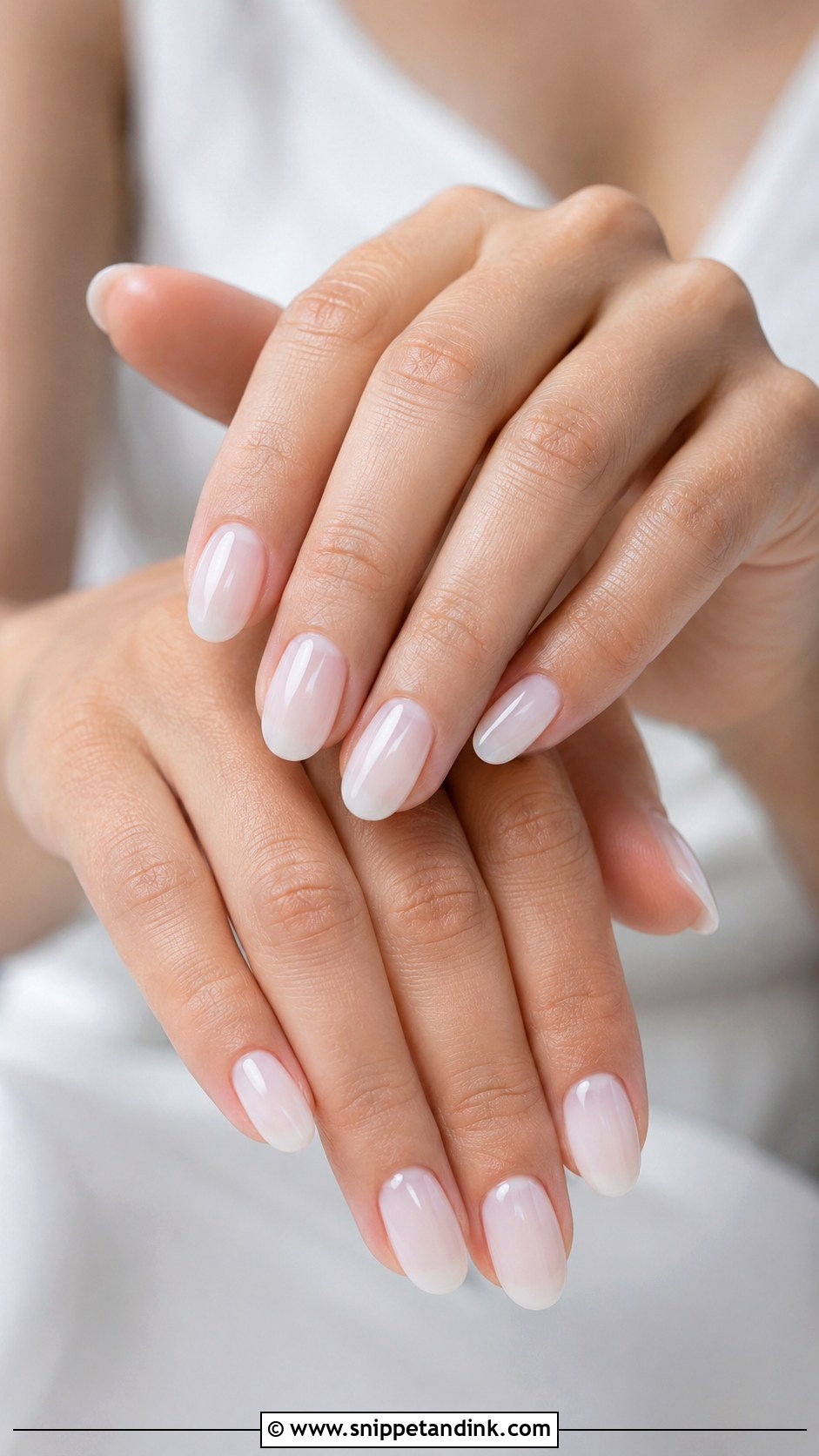
Square nails give clean, structured edges, and a white French tip looks crisp on them. A milky full-color manicure softens the shape. Whether square suits you depends on your nail beds: on narrow beds it looks balanced, but on wide ones it can make fingers look shorter, so I’d file a soft square or squoval instead. Sharp corners also catch on fabric, and a satin gown snags easily, so I always round the corners slightly even on a true square.
9. Coffin White Wedding Nails
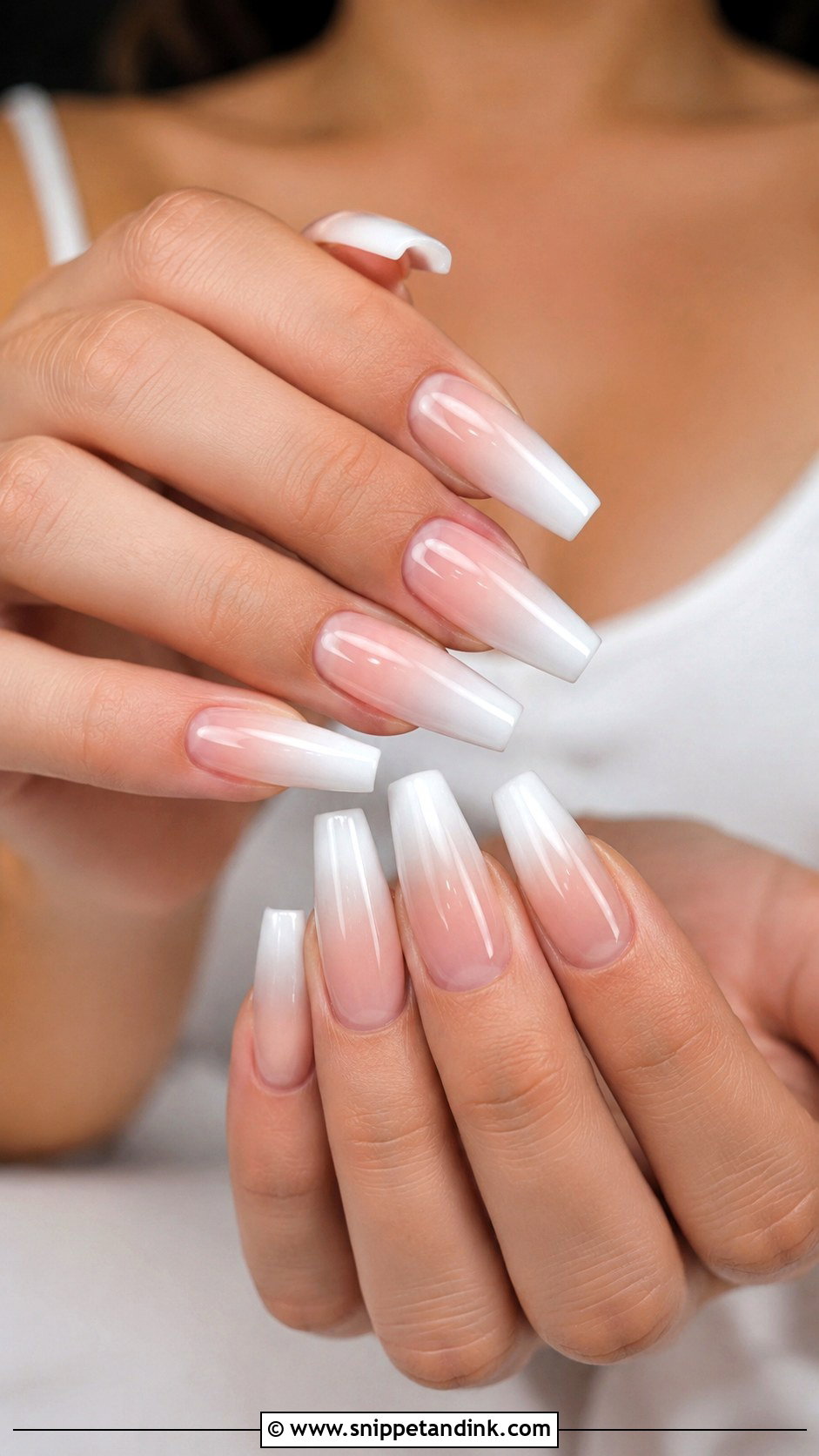
Coffin nails look glamorous, and white keeps them from feeling too dramatic. A white ombre fade is my favorite design here, since the length gives the blend room. Pearl chrome, lace and fine glitter also sit well on this shape. Coffin needs real length, so it’s usually done with extensions or builder gel. If you’ve never worn extensions, I’d try them a few weeks before the wedding, because long nails take a few days to get used to.
10. White Lace Wedding Nails
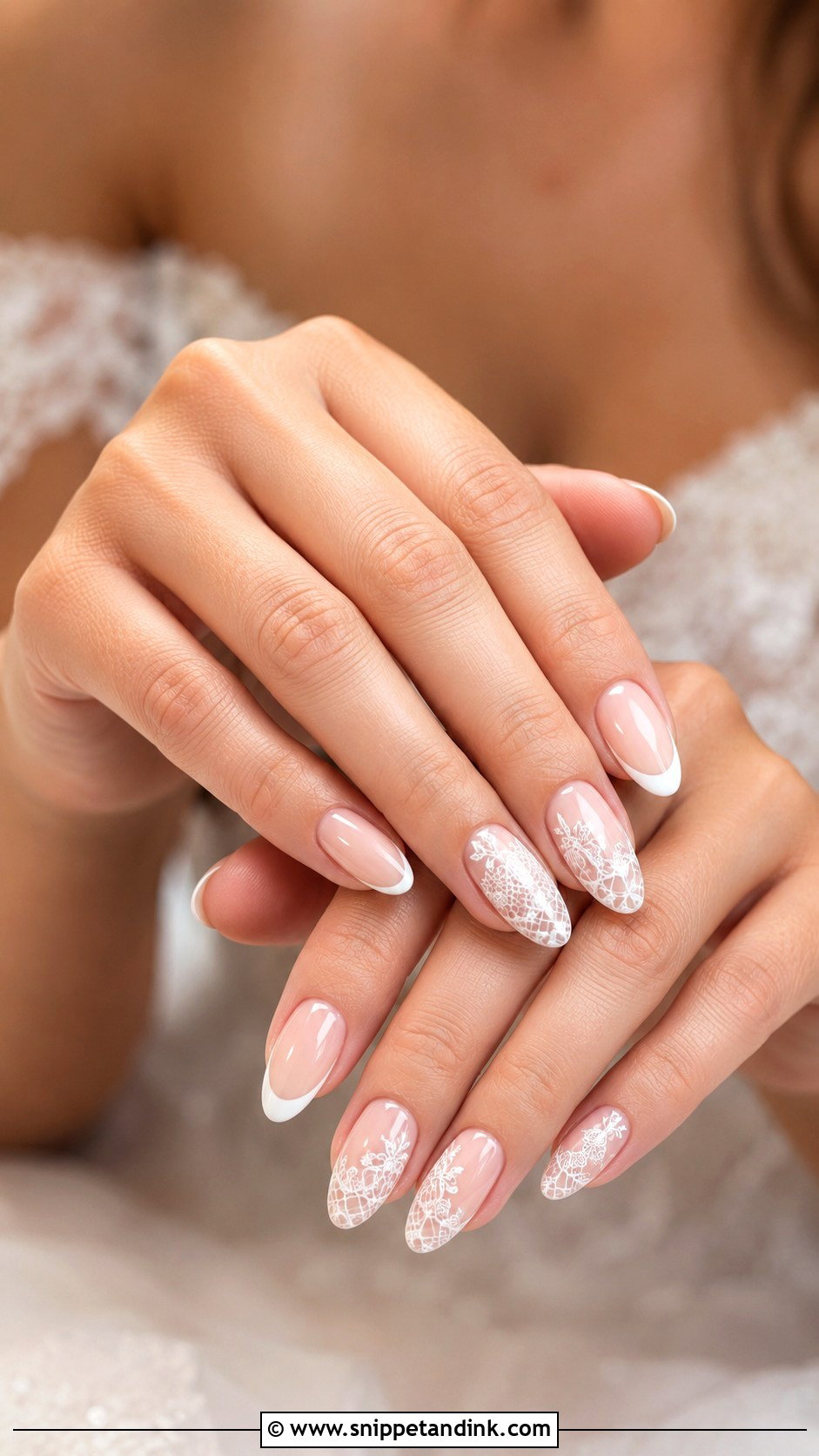
Lace art can echo the actual lace on your sleeves or bodice. I’d ask you to bring a scrap or a close photo of the fabric, because matching the motif makes it feel personal. The base is sheer nude, milky white or soft pink, and the lace goes on by hand, by stamping or with fine gel detail. Hand-painted lace takes time, so book a longer appointment. Keep it to two or three accent nails; a full set of lace reads as busy in photos.
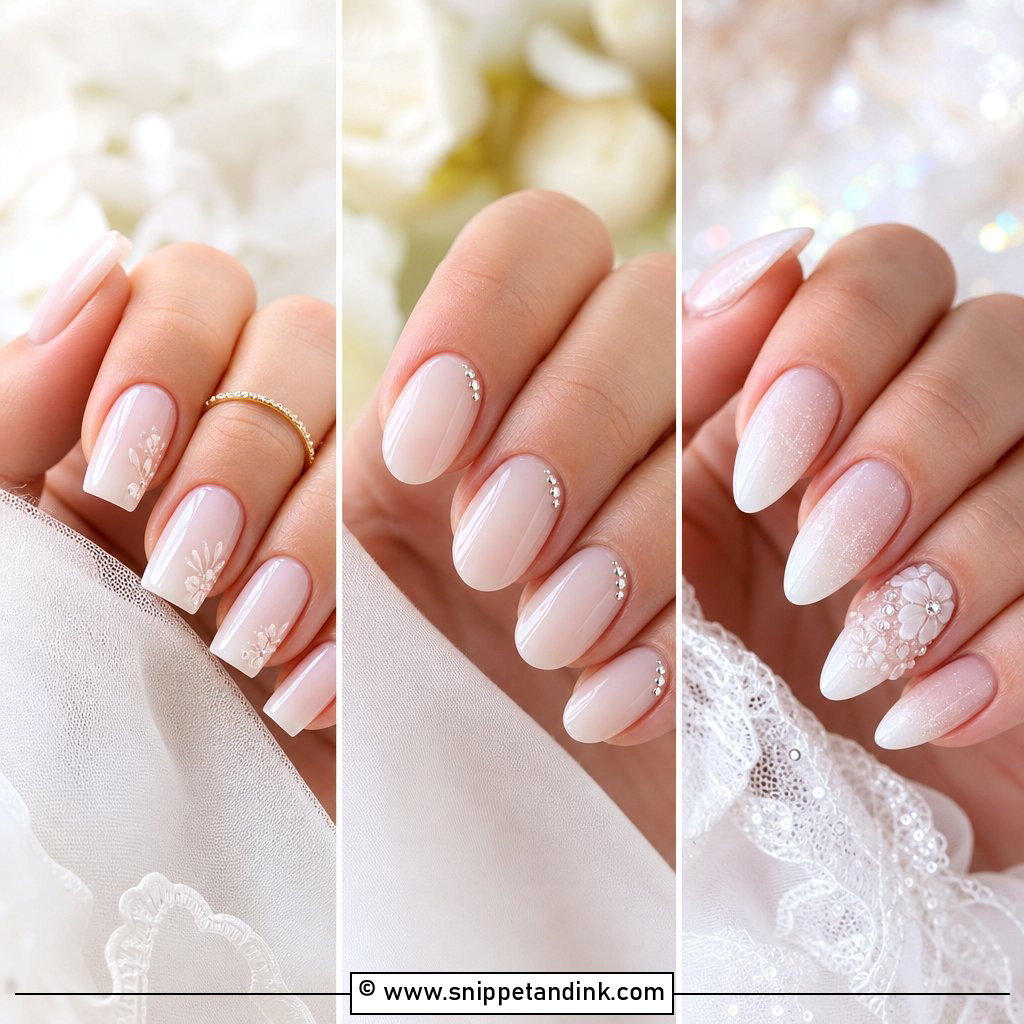
11. White Floral Wedding Nails
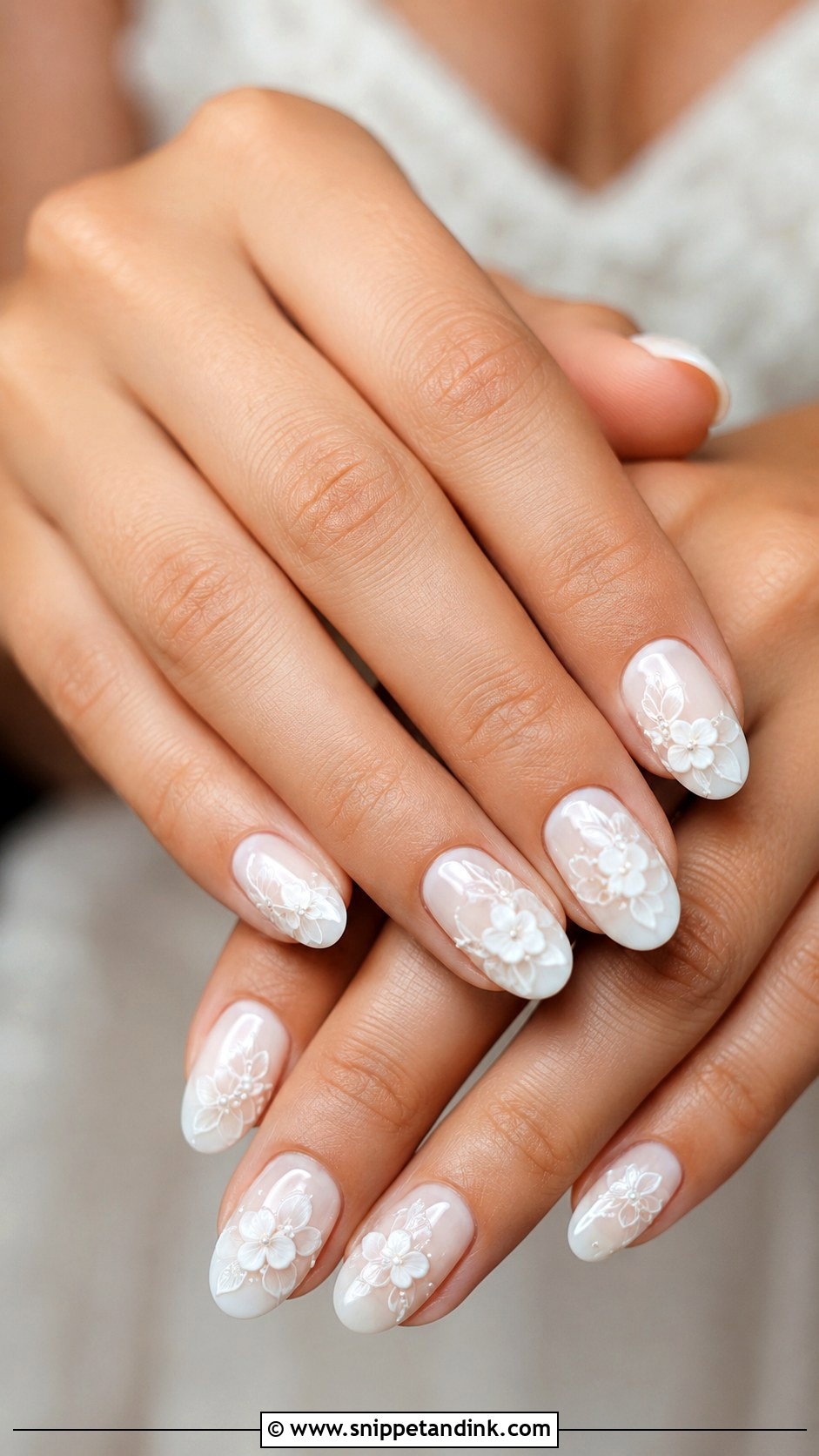
Florals are a way to add art without color. Small daisies, soft petals or raised gel flowers sit over a sheer or milky base. They suit spring and garden weddings, especially with white roses or baby’s breath in the bouquet. I keep the flowers small and spaced. A matte base makes raised florals stand out more, while gloss keeps it clean. Raised 3D gel flowers need a solid seal at the edges, or they’re the first thing to chip.
12. White Glitter Wedding Nails
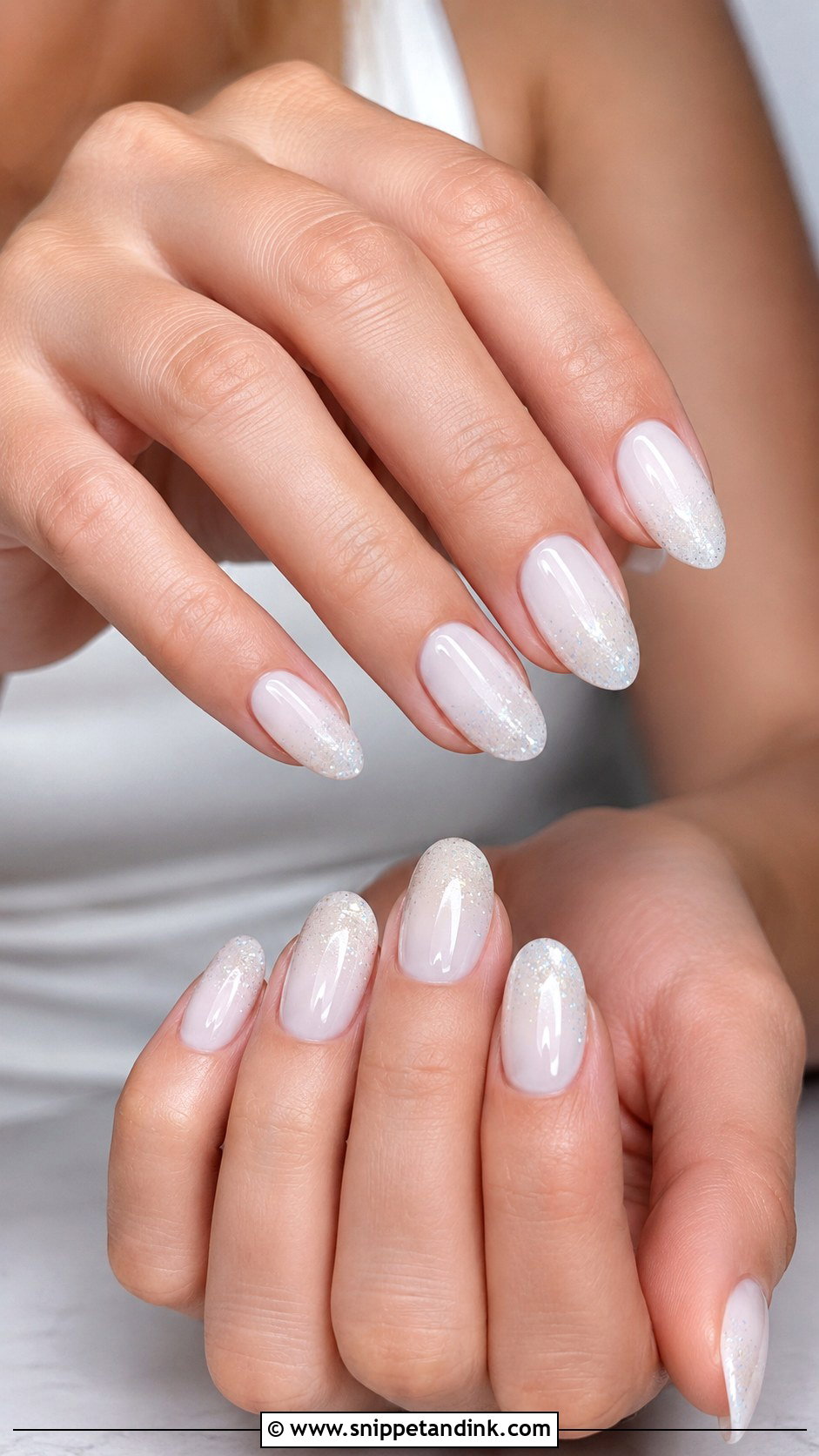
Glitter should catch light, not dominate, so I use fine shimmer, scattered micro glitter or a soft glitter fade at the tips rather than chunky pieces. A milky base with glitter at the tips looks clean; a sheer pink base with white glitter accents is lighter. If your dress has sequins or crystal beading, bring a photo so the sparkle level matches. Chunky glitter can also feel gritty under the top coat, so for a bride I always add an extra layer to keep the surface smooth.
13. White Marble Wedding Nails
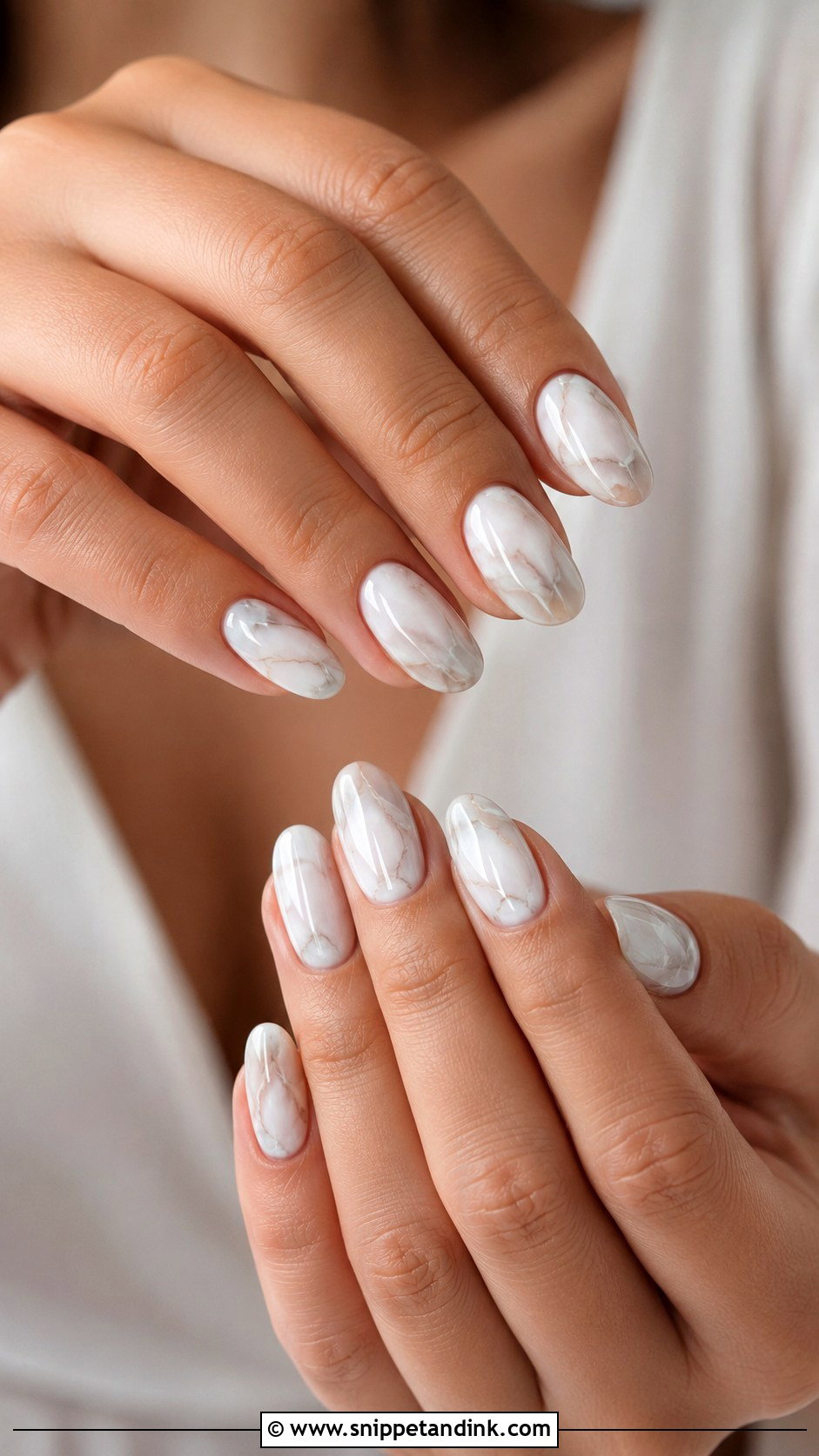
Marble is subtle art for a bride who wants something more than plain white. I blend white, ivory, sheer nude and a little soft grey into cloudy veins, keeping the lines thin. Heavy grey veining can look dirty next to a white dress, so I’m sparing with it. Gold foil can be added lightly, but silver or pearl often feels softer. I’d use marble on two accent nails and keep the rest solid milky or sheer white.
14. White Swirl Wedding Nails
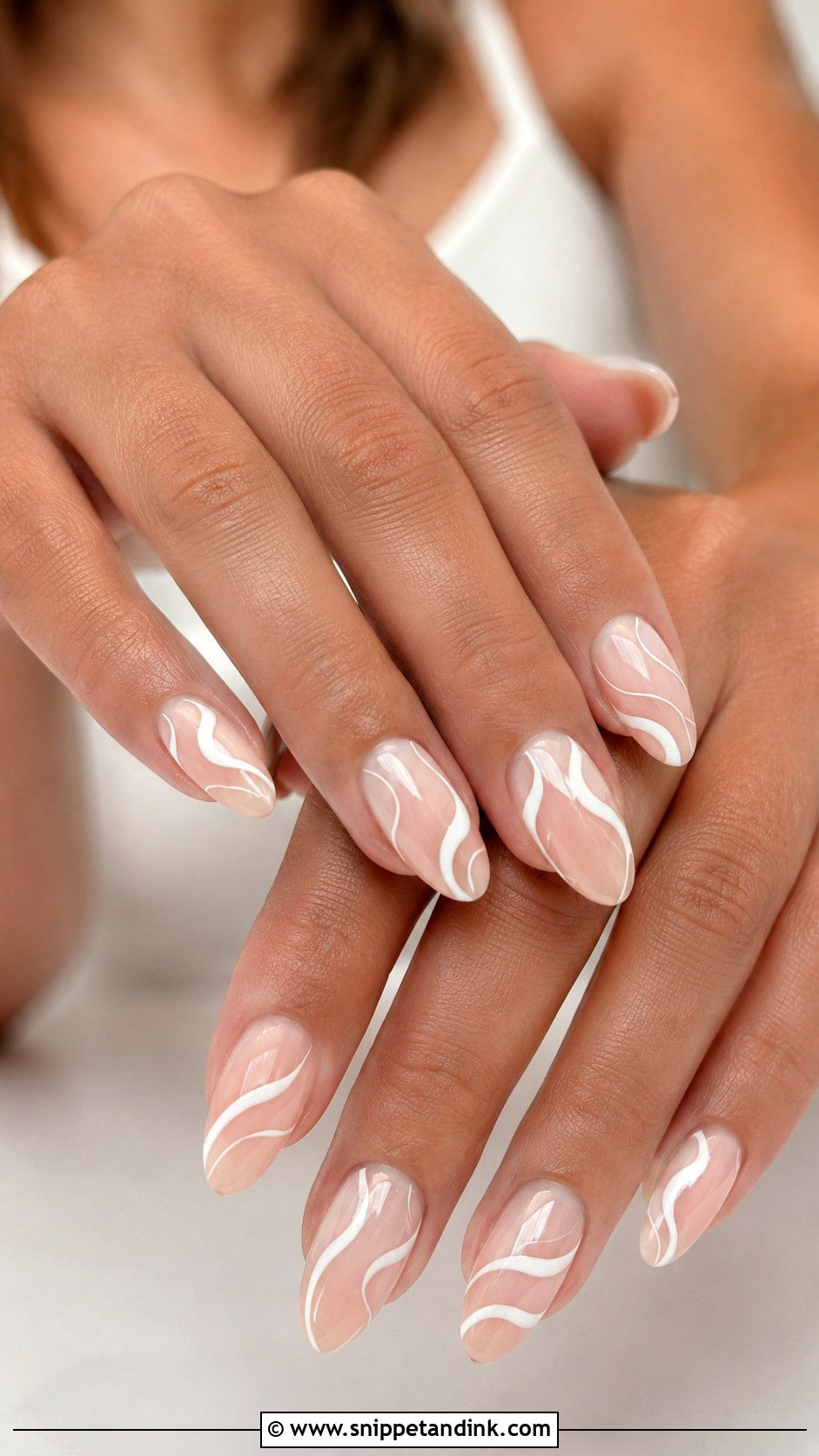
Swirls are painted in thin white lines over a nude, sheer pink or milky base, flowing across the nail like ribbon. They follow the curves of almond and oval nails better than square ones. I paint them with a long striping brush in one stroke, since stopping halfway leaves a visible bump. Keep the lines thin and spaced so they look light. A glossy finish keeps it fresh; a pearl top coat adds glow.
15. White Bow Wedding Nails
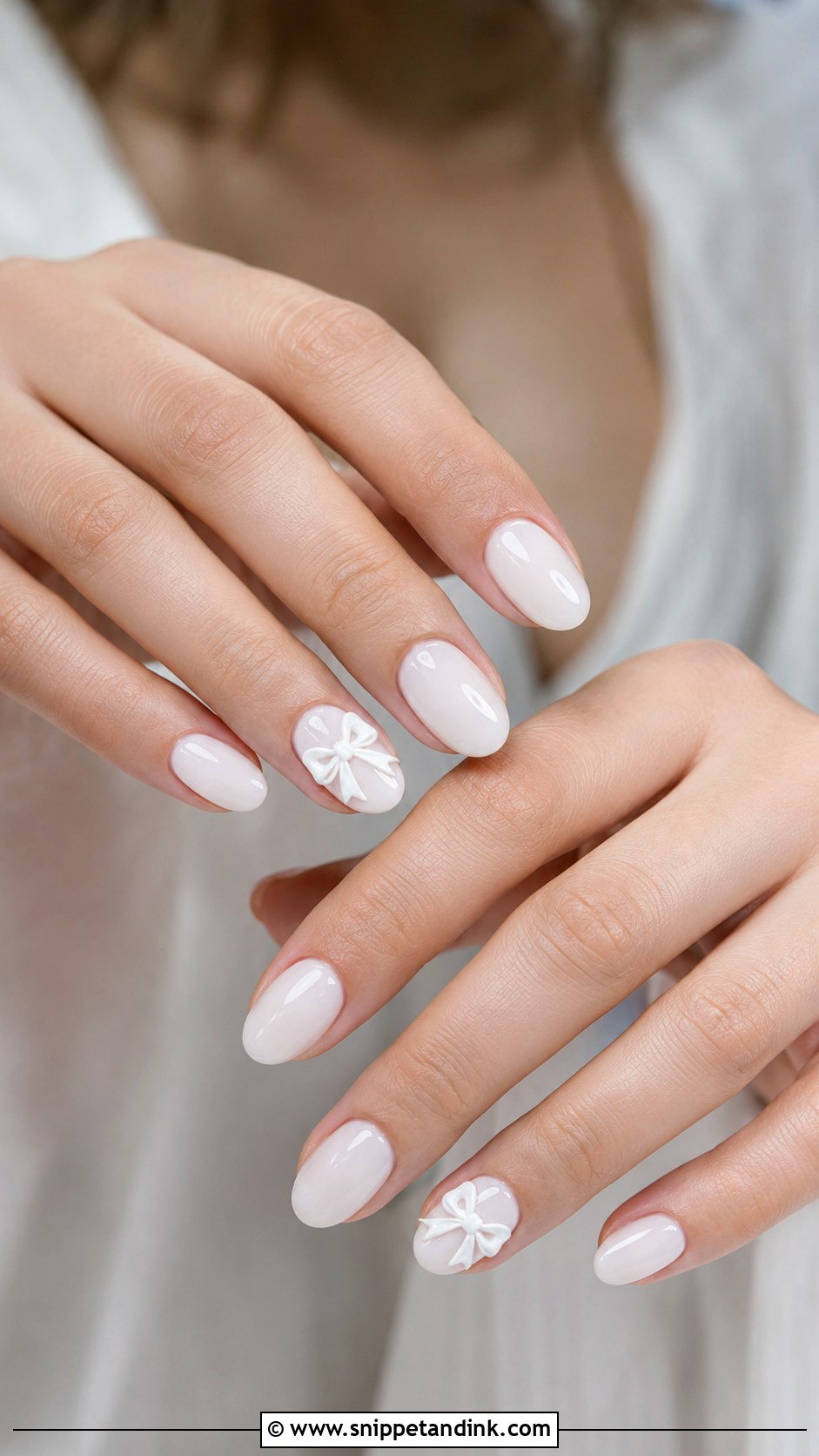
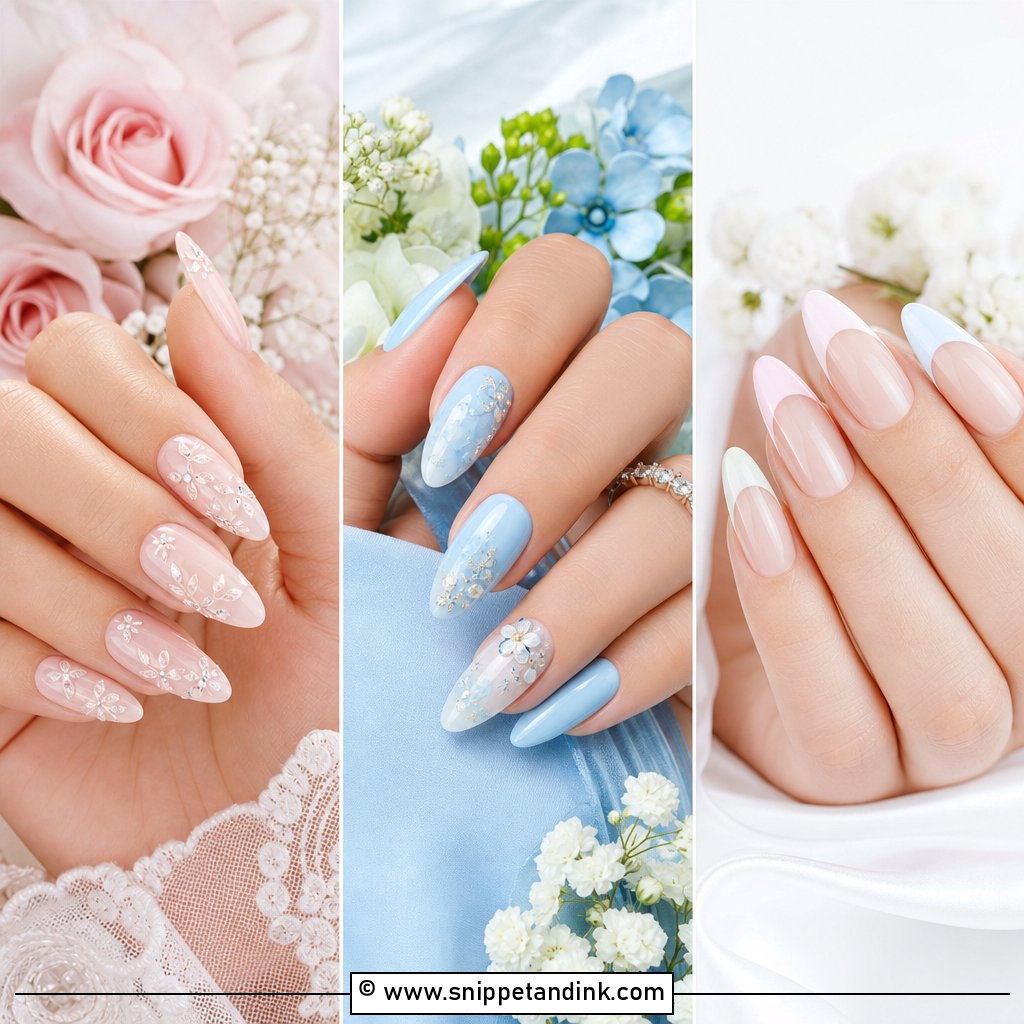
Bows can look sweet or childish, and size makes the difference. I paint them in white gel, build a tiny 3D accent or set a small charm on one or two nails. A milky base or a sheer French keeps it grown-up. Placement matters: a bow near the cuticle or centered on an accent nail looks deliberate. If your dress has bow details at the back or waist, this is a nice way to repeat them. Larger 3D bow charms snag on lace, so I keep them small.
16. White Rhinestone Wedding Nails
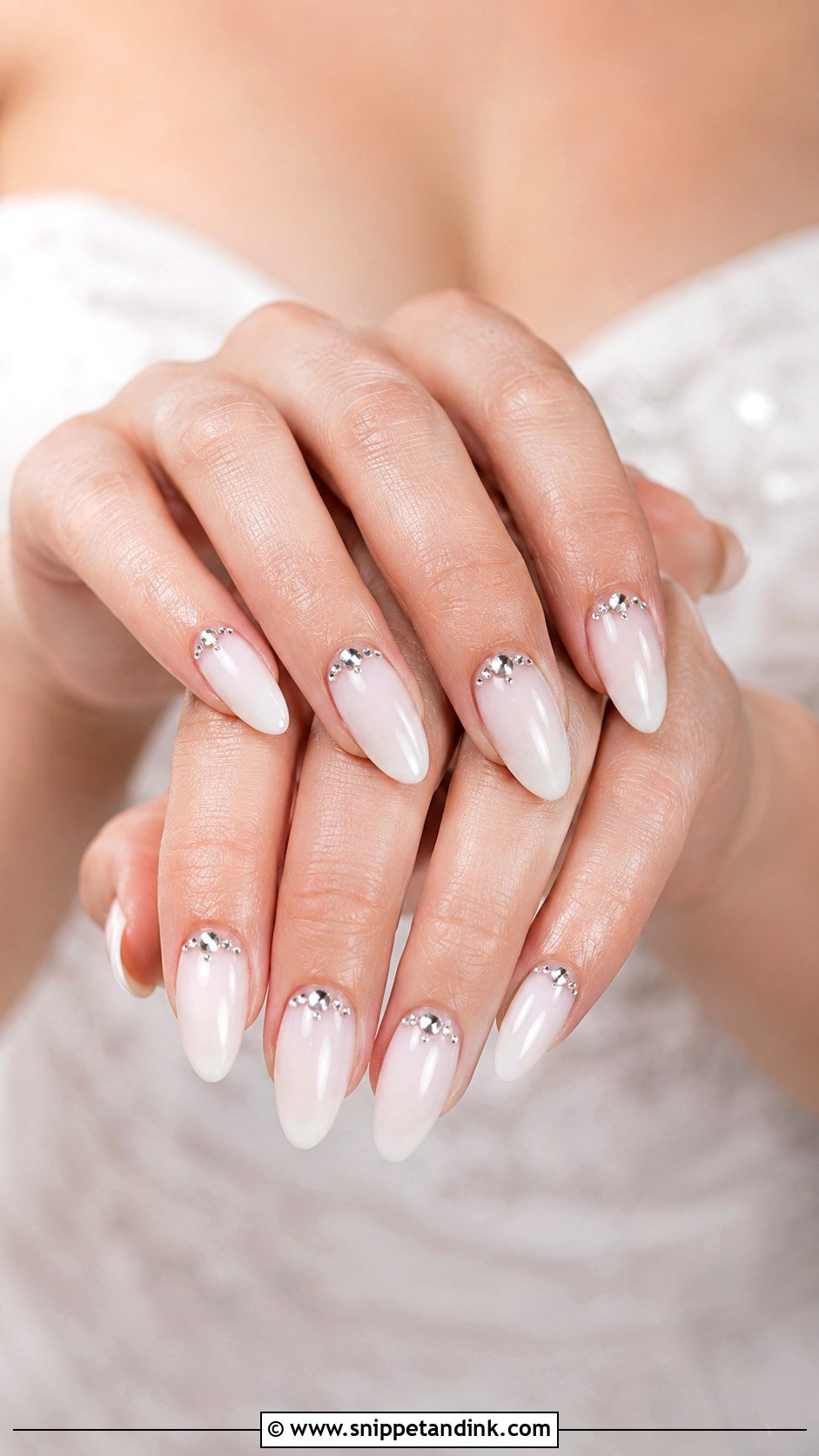
Rhinestones add shine while keeping the palette white. On a sheer or milky base, tiny clear crystals can sit around the cuticle, along the French line or on one accent nail. Small stones with spacing look refined; large ones look like costume jewelry next to an engagement ring. They catch light at evening receptions especially well. I set each stone in builder gel and run top coat around the edges, because loose crystals are the most common thing a bride loses on the day.
17. Matte White Wedding Nails
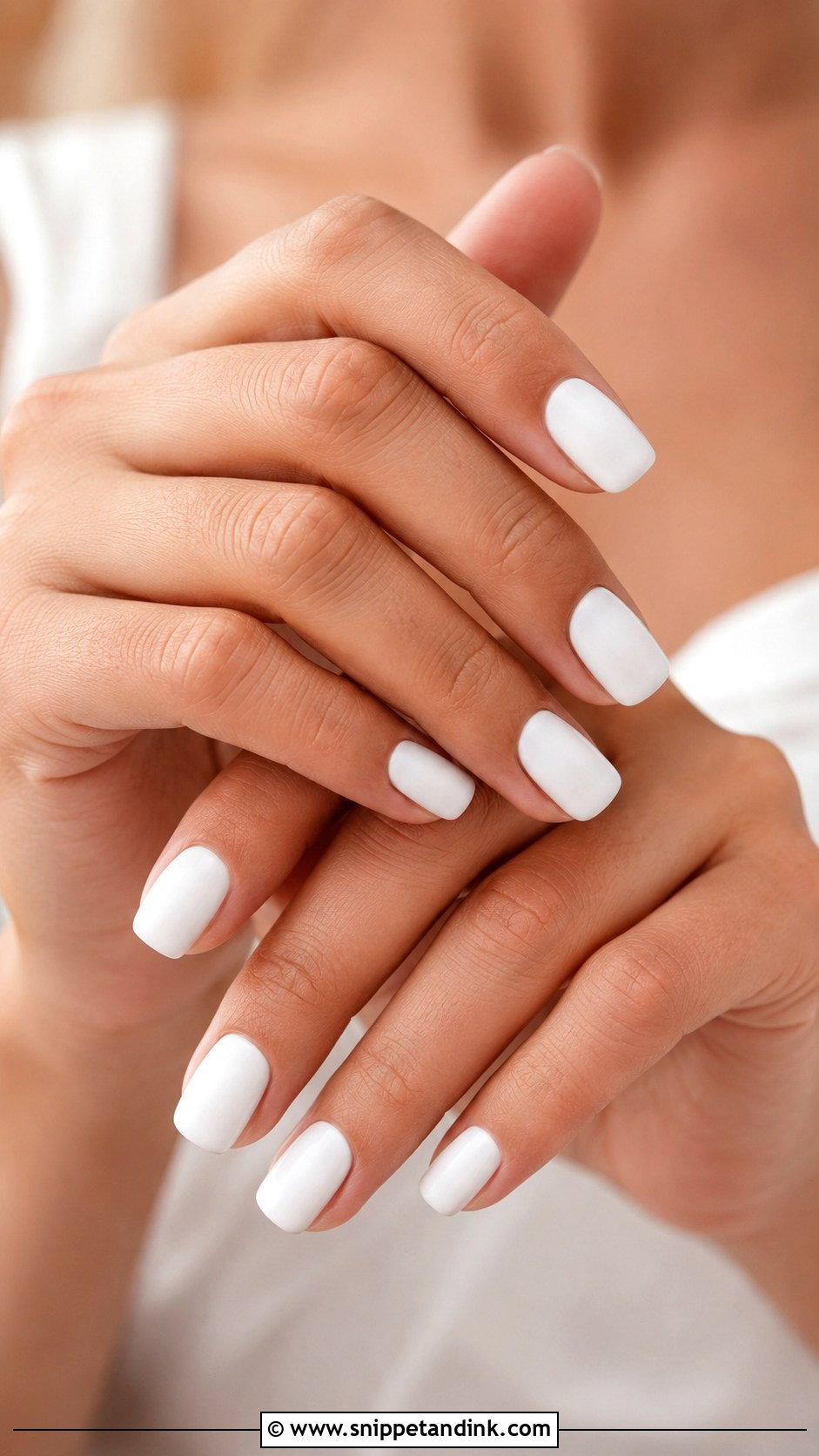
Matte white has a soft, velvety look that makes even a plain manicure feel designed. It suits a bride who wants clean nails with no shine. Matte milky white looks good on short square nails, and on almond it feels minimal. Glossy French tips over a matte base give a subtle texture contrast. Matte top coats pick up marks, oils and stains from hand cream more readily than gloss, so I’d book it close to the wedding and avoid rich creams on your nails until after.
18. White Gold Wedding Nails
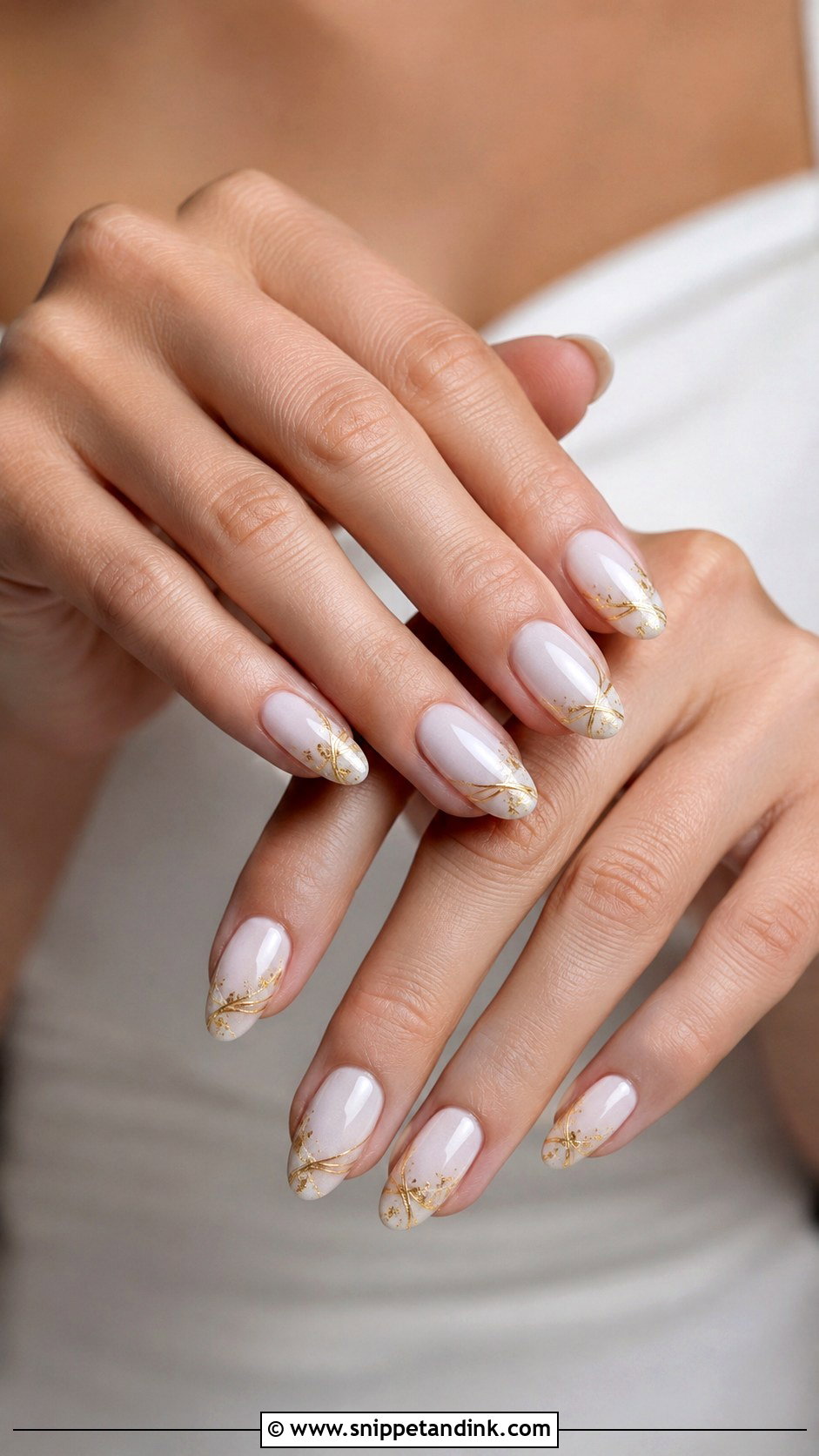
White and gold together are warmer than plain white. On a milky, pearl or sheer ivory base I add fine gold lines, foil flakes or a tiny gold French edge. It suits yellow gold rings and gold hair pieces. Use gold sparingly so the white still leads. Gold foil needs a thick top coat over it, or the edges wear and peel within a few days. A thin stripe on a French tip or a few foil pieces on one accent nail is enough.
19. White Silver Wedding Nails
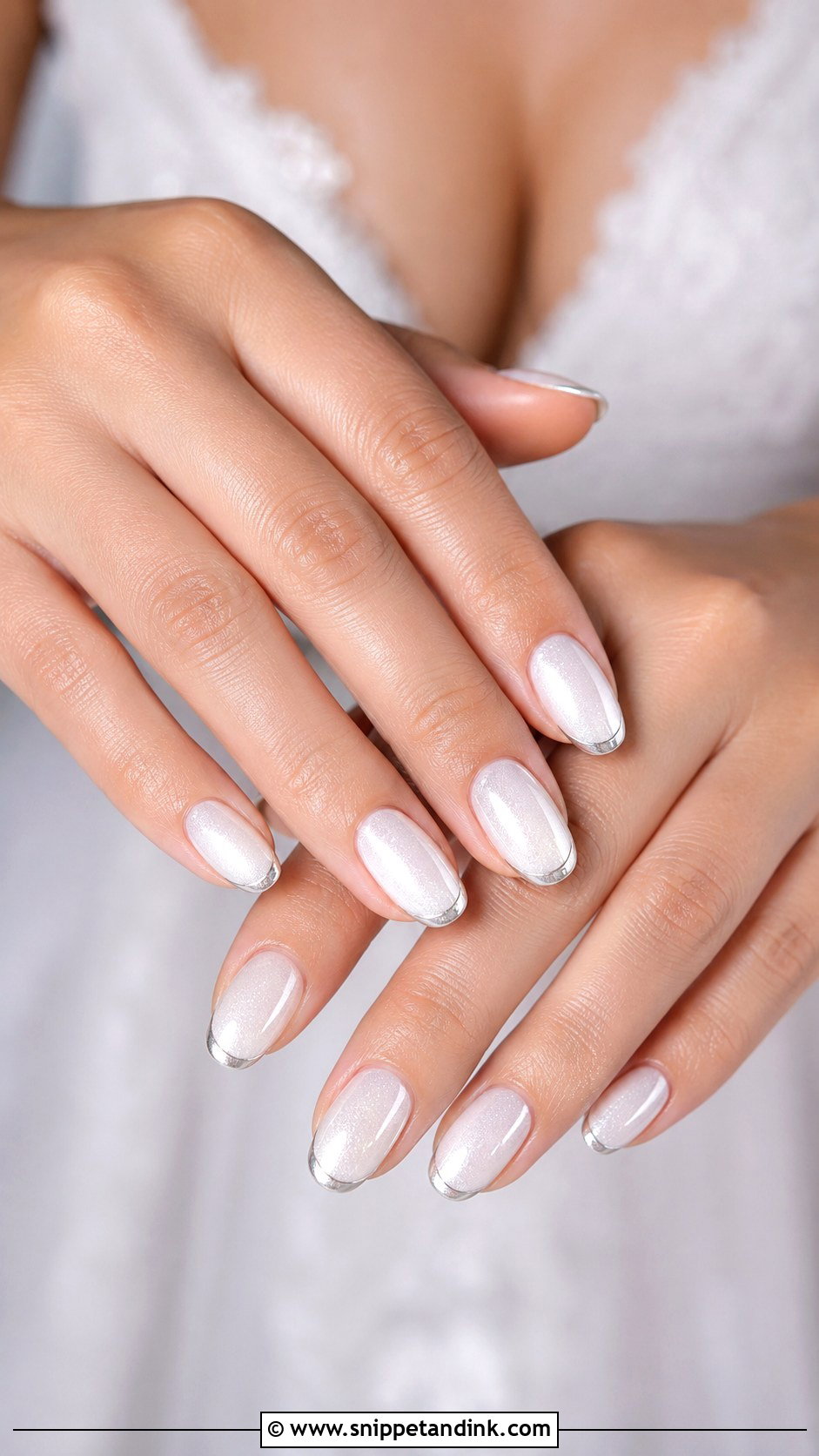
Silver keeps white cool, so I’d choose it for brides wearing platinum, white gold or silver. Silver shimmer, fine chrome accents, thin metallic lines or tiny crystals can all sit over a white base. A milky manicure with a silver micro French is subtle, while white chrome with silver accents feels more modern. Winter weddings, ballrooms and crystal-beaded dresses suit it. Keep the silver fine; heavy metallics overpower white quickly.
20. Sheer White Wedding Nails
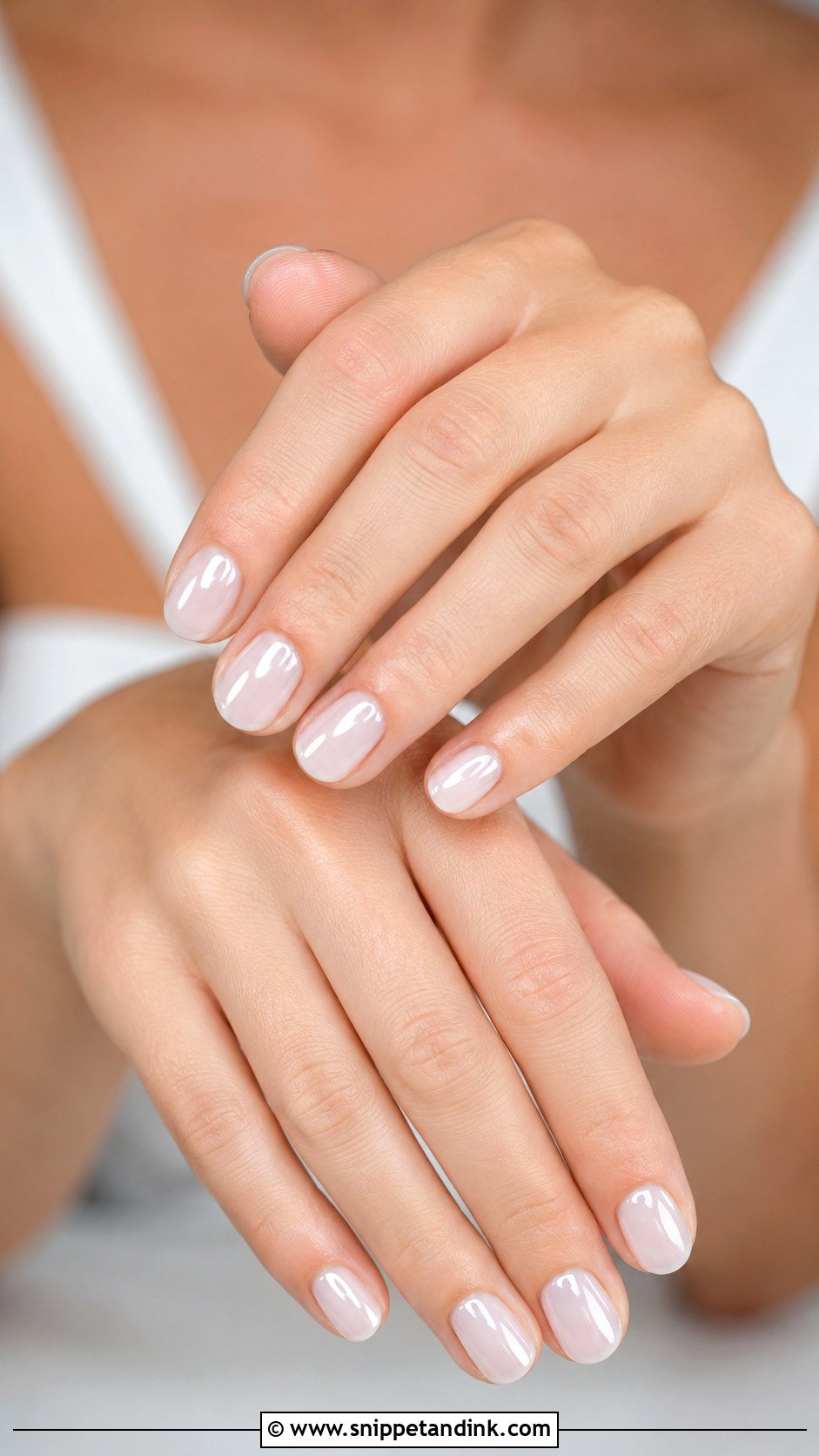
Sheer white is the closest to bare nails, and the manicure I’d pick for a bride who rarely wears polish. It gives a light wash of white rather than coverage, so the nails look clean and healthy. It grows out softly, which helps if you’re leaving on a honeymoon and won’t see a salon for a while. Short oval, squoval and natural almond shapes suit it. I apply it in very thin layers, since sheer polish streaks easily, and finish with a glossy top coat.
Why White Gel Turns Yellow in the Days Before a Wedding
White and milky gels are the shades most likely to discolor, and the wedding week is full of things that cause it. Most yellowing comes from the outside, not from the gel itself.
Common culprits
Self-tanner and spray tan are the biggest one. Hair dye, turmeric and curry, strong tea, cigarette smoke and some sunscreens can all tint a white top coat. Cheaper top coats without UV stability can also yellow under sunlight over a week or two.
How I plan around them
Book any tan and hair color before your manicure, never after. If the tan has to come later, wear gloves while it’s applied and wipe your nails with a damp cloth straight away. I get most brides’ nails done one to three days before the wedding, which leaves time for a fix but no time for stains to build. Pack a small file and a bottle of a matching shade in your bag, since a chip on white shows much more than a chip on nude.
Hold the Polish Next to Your Dress by a Window
White gives you a lot of range, from a sheer wash to French tips, pearls, lace, chrome or florals. What decides it is your dress shade, your jewelry metal, how long you’re comfortable wearing your nails and how much you use your hands. If you’re unsure, do a trial and look at the shade in daylight next to a swatch of your dress. White can read cool, warm, sheer or bright, and a small change in tone shows more on a bride’s hands than anywhere else.
You'll Like These Ideas:


Leave a Reply