
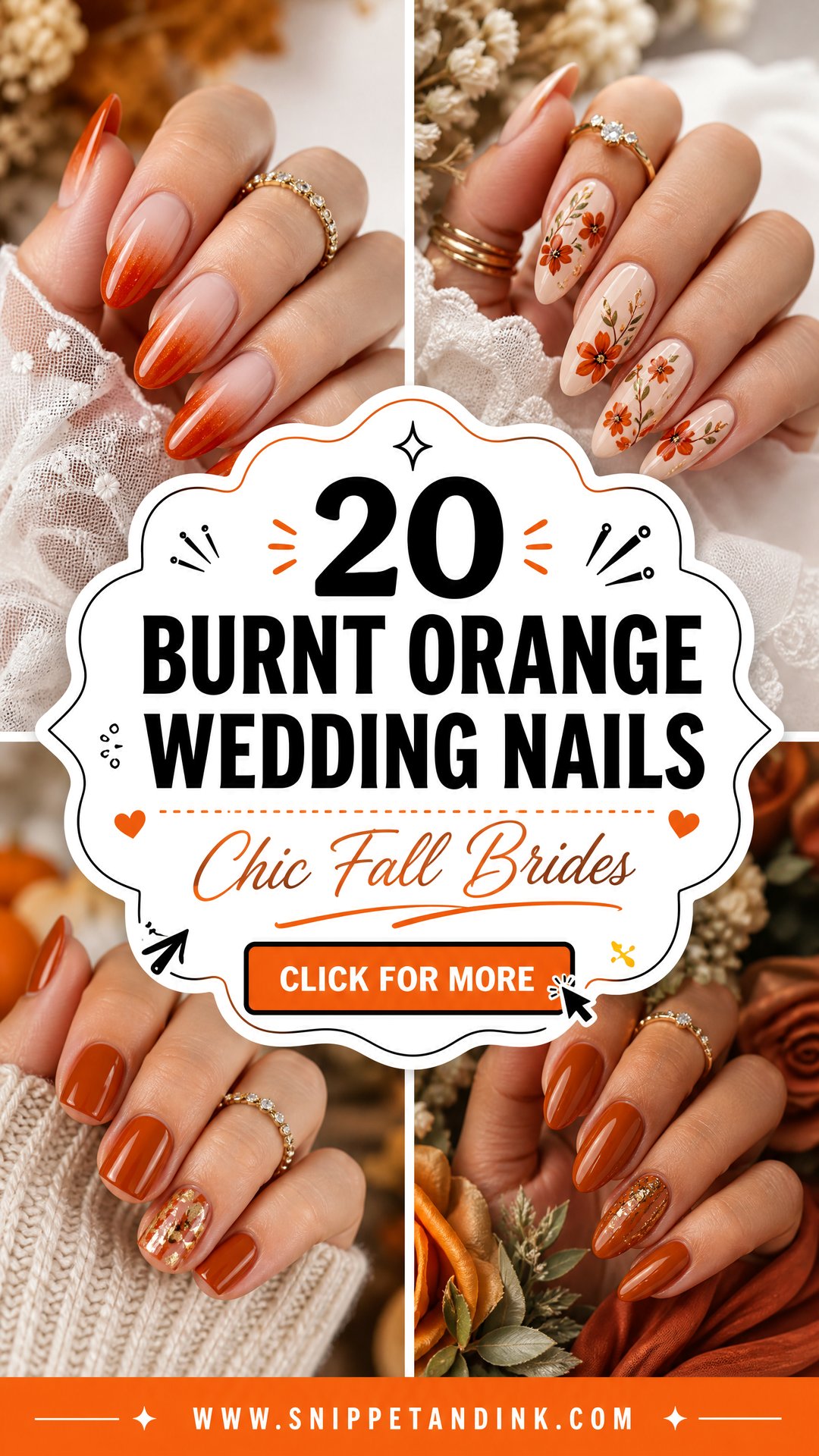
Burnt orange is a color people either light up at or flinch from, and it’s usually the flinchers who end up loving it once it’s on their hands. It sits somewhere between terracotta, rust and copper, which is why it looks at home at a barn wedding or a vineyard in October. It also calms down far more than you’d expect next to ivory, nude, gold or a milky white. I paint it as often for bridesmaids and guests as for brides, so you’ll find versions here for every role in the wedding party. Short square sets keep it crisp; almond and coffin push it toward drama.
Will Orange Clash With Your Skin in Photos?
It can, and it’s worth five minutes of testing. Orange sits right next to the red and yellow in skin, so the wrong orange makes knuckles look pinker and dry cuticles more obvious. Cameras also tend to push warm colors, and a tungsten-lit reception makes every orange look redder than it did at the salon.
Here’s how I test it with a client:
- Paint one nail in a terracotta and one in a deeper rust, then step outside or stand by a window.
- Take a phone photo of your hand holding something white. If your fingers look flushed beside the orange, go deeper and browner.
- Check against your dress color. Pure white gowns make orange look brighter; ivory and champagne pull it toward copper.
- Look at your knuckles and cuticles, not just the nail. Orange shows dry skin more than pinks do, so start hand cream and cuticle oil a couple of weeks ahead.
If you flush easily or have very fair, pink-toned skin, I usually steer you toward the brown end of burnt orange, or keep it on the tips only.
1. Burnt Orange French Tip Wedding Nails
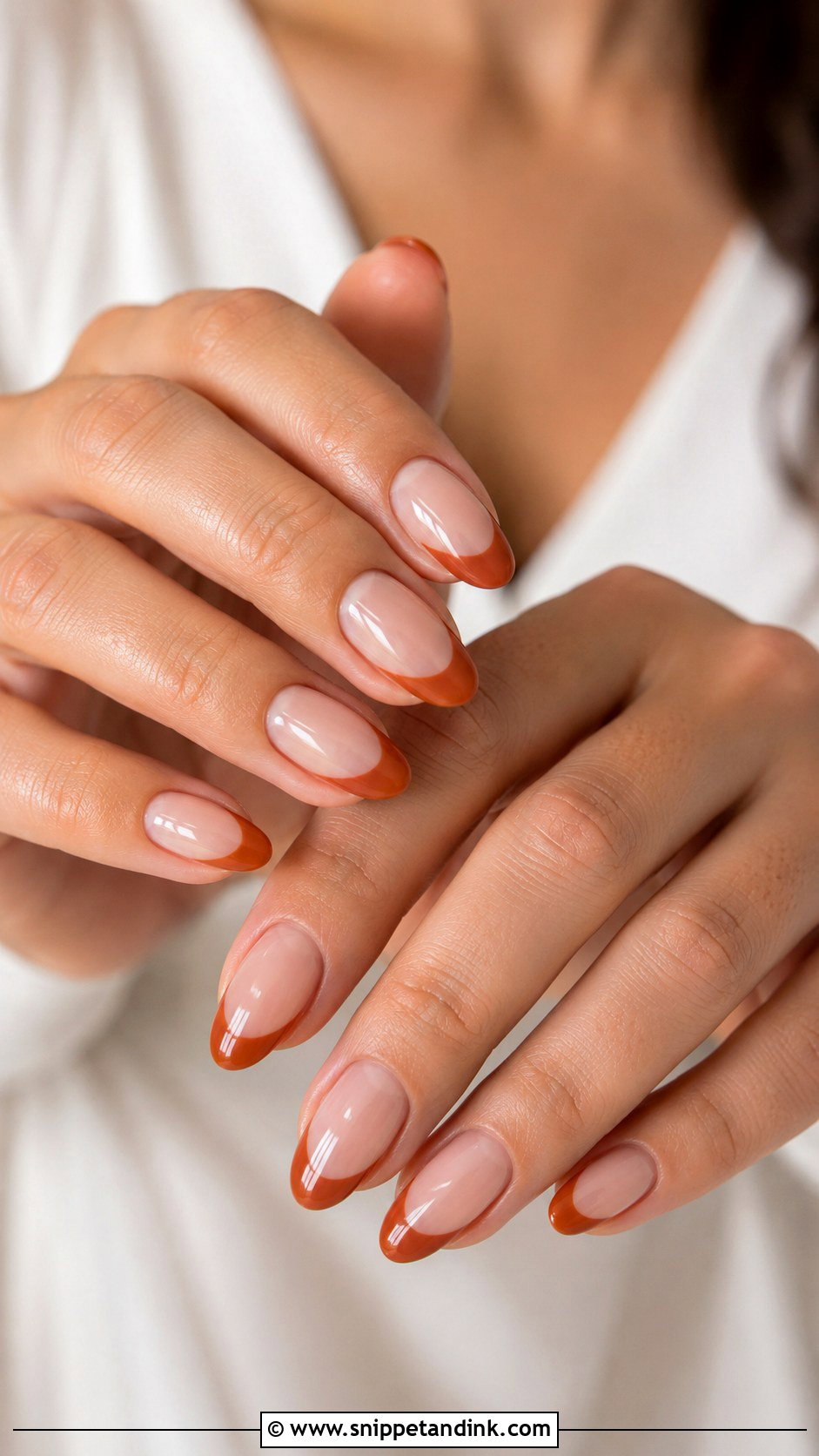
Tips are the gentlest way into the color. A sheer pink or nude base keeps the hand looking bridal, and the orange stays on the edge where it reads as an accent rather than a statement. One thing I’ve learned with this shade is that orange tips look thicker than they are, so I usually go a touch thinner than I would with white. Micro tips suit brides who are unsure; a rounded, slightly deeper tip shows up better in group photos. Gold rings and warm bouquets sit with it naturally.
2. Burnt Orange Ombre Wedding Nails
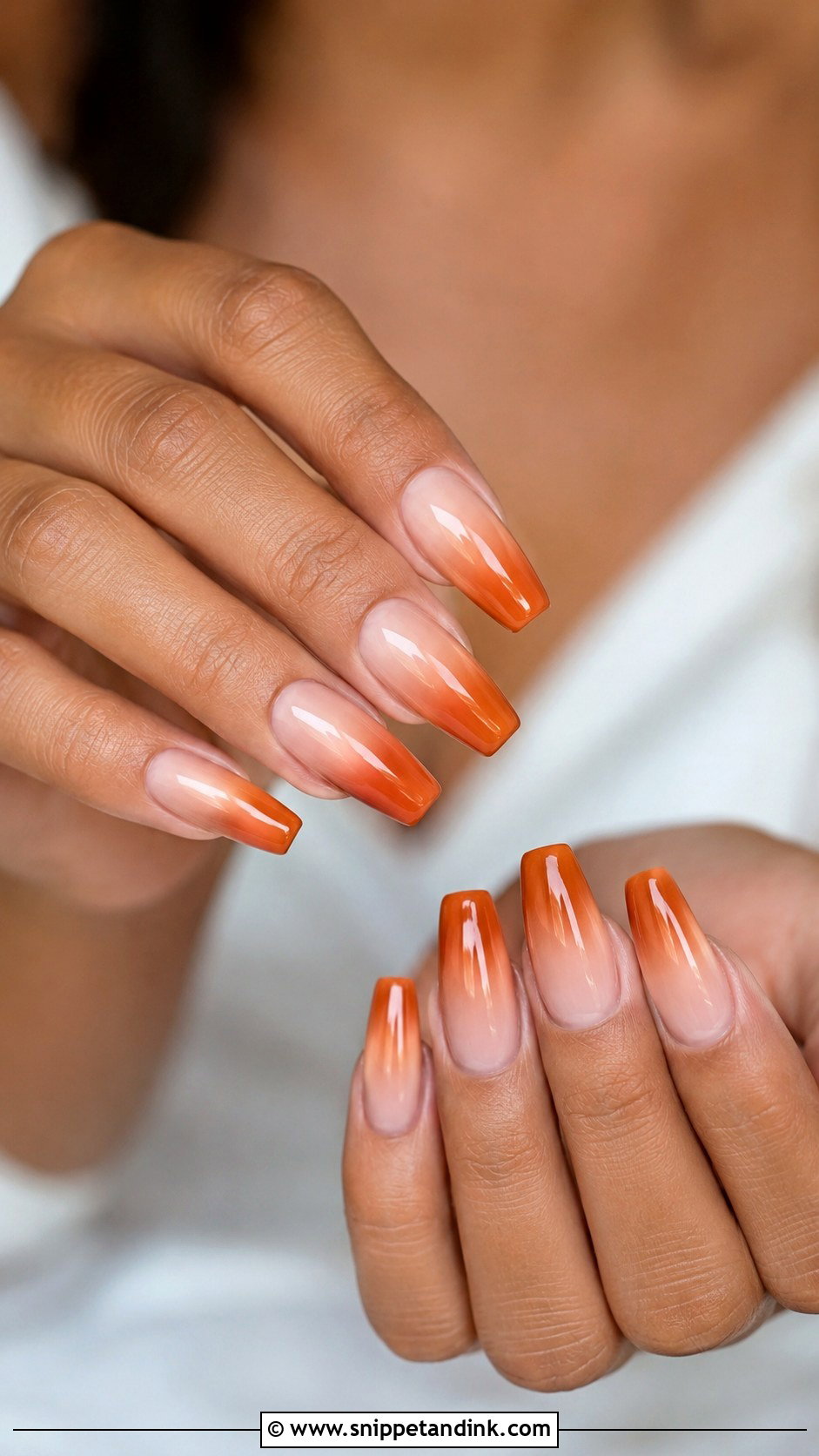
An ombre takes the hard edge off orange because nothing ever stops abruptly. I fade from nude at the cuticle into burnt orange at the tip, or from terracotta down into peach if the bride wants it lighter. It’s an easy way to tie your hands to autumn flowers, copper decor or bridesmaid dresses in warm earth tones. Orange pigment can go patchy when sponged, so I build the gradient in thin layers and cure between them. Almond, oval and coffin shapes give the fade room to breathe.
3. Matte Burnt Orange Wedding Nails
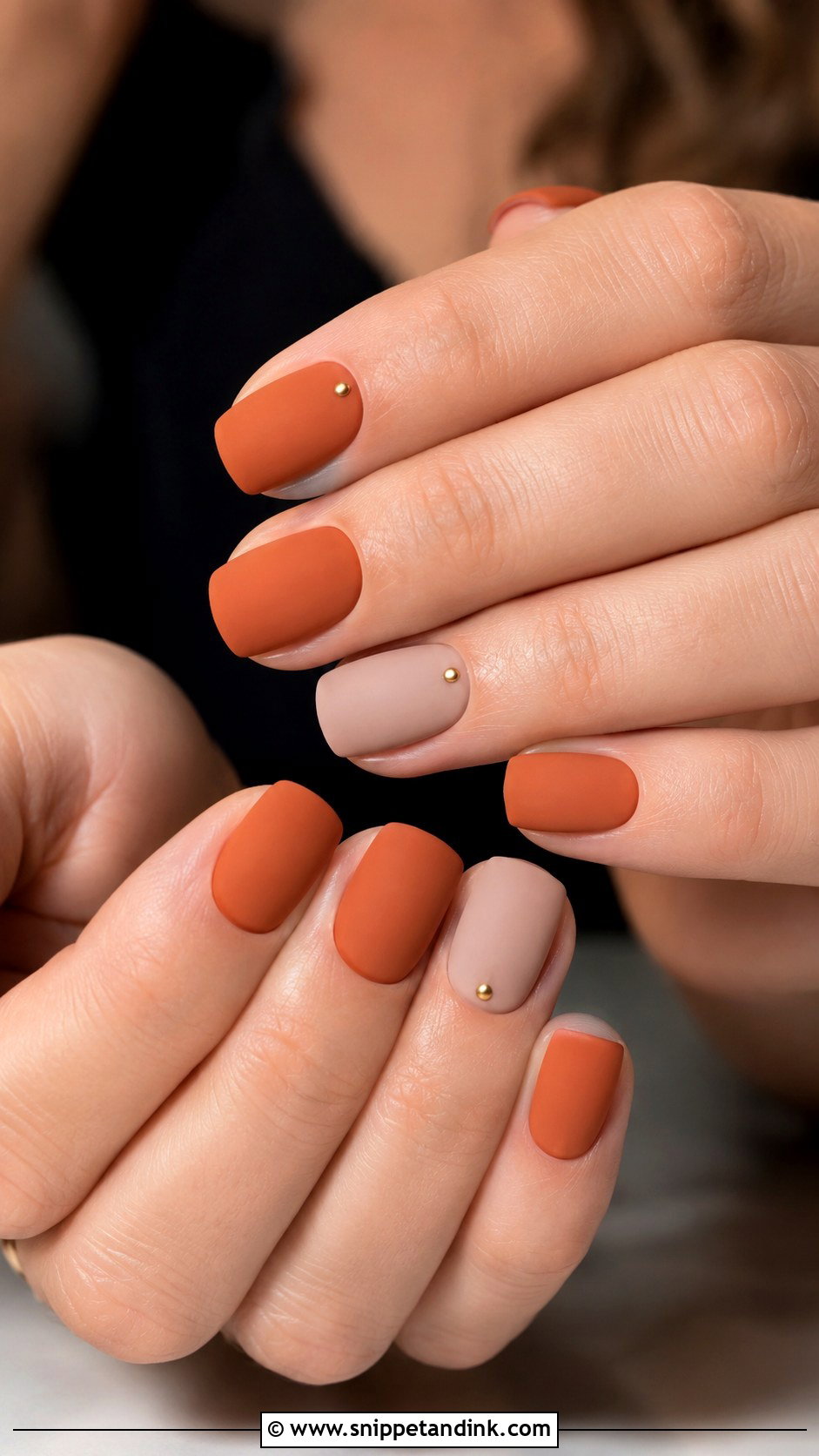
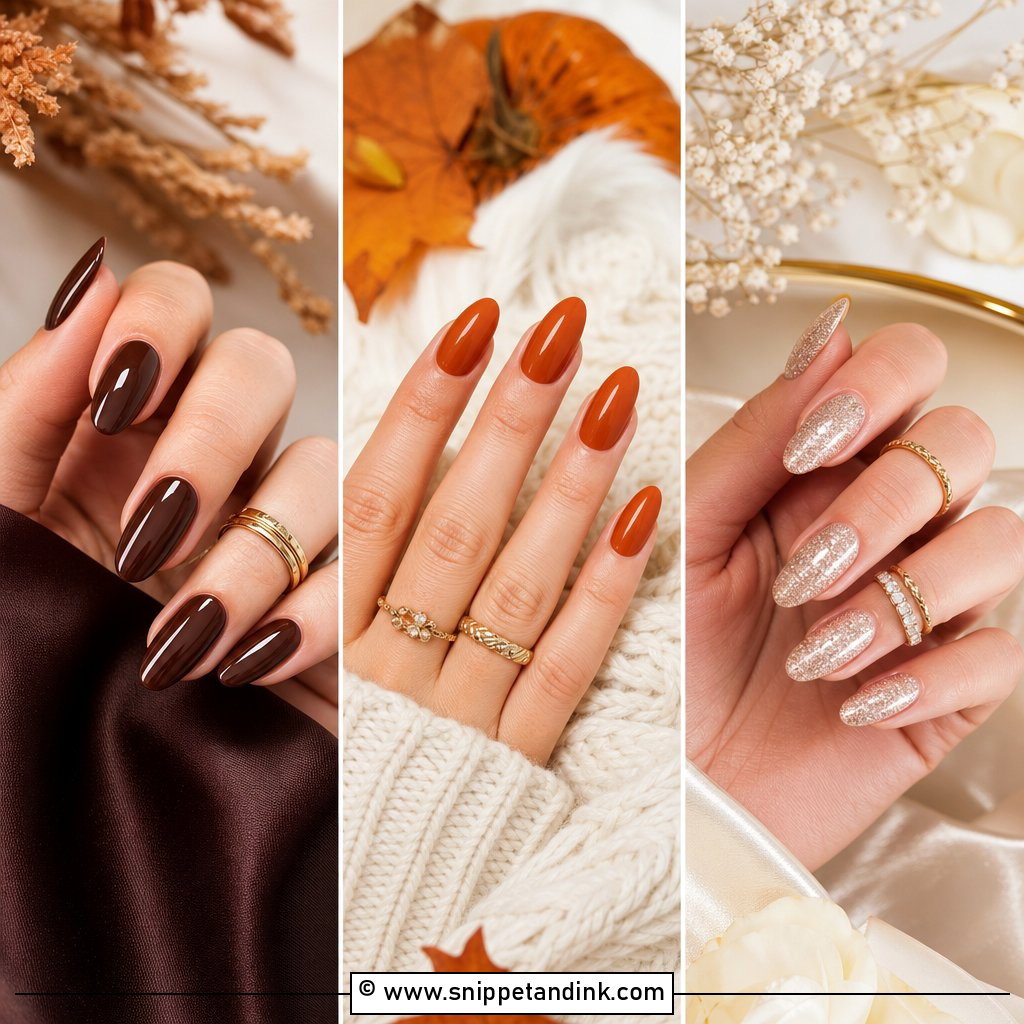
Matte changes burnt orange more than any other finish. The shine goes and the color drops toward terracotta, almost like unglazed clay. Short square nails in matte look sharp on bridesmaids; on a bride, almond softens it. Be aware that matte top coats mark easily. Hand lotion, self-tan and the oils from finger food can leave shiny patches by the evening, so I tell brides to pack a lint-free wipe with a little alcohol on it for a quick refresh. A thin glossy French line over the matte gives it a crisp contrast.
4. Burnt Orange And Gold Wedding Nails
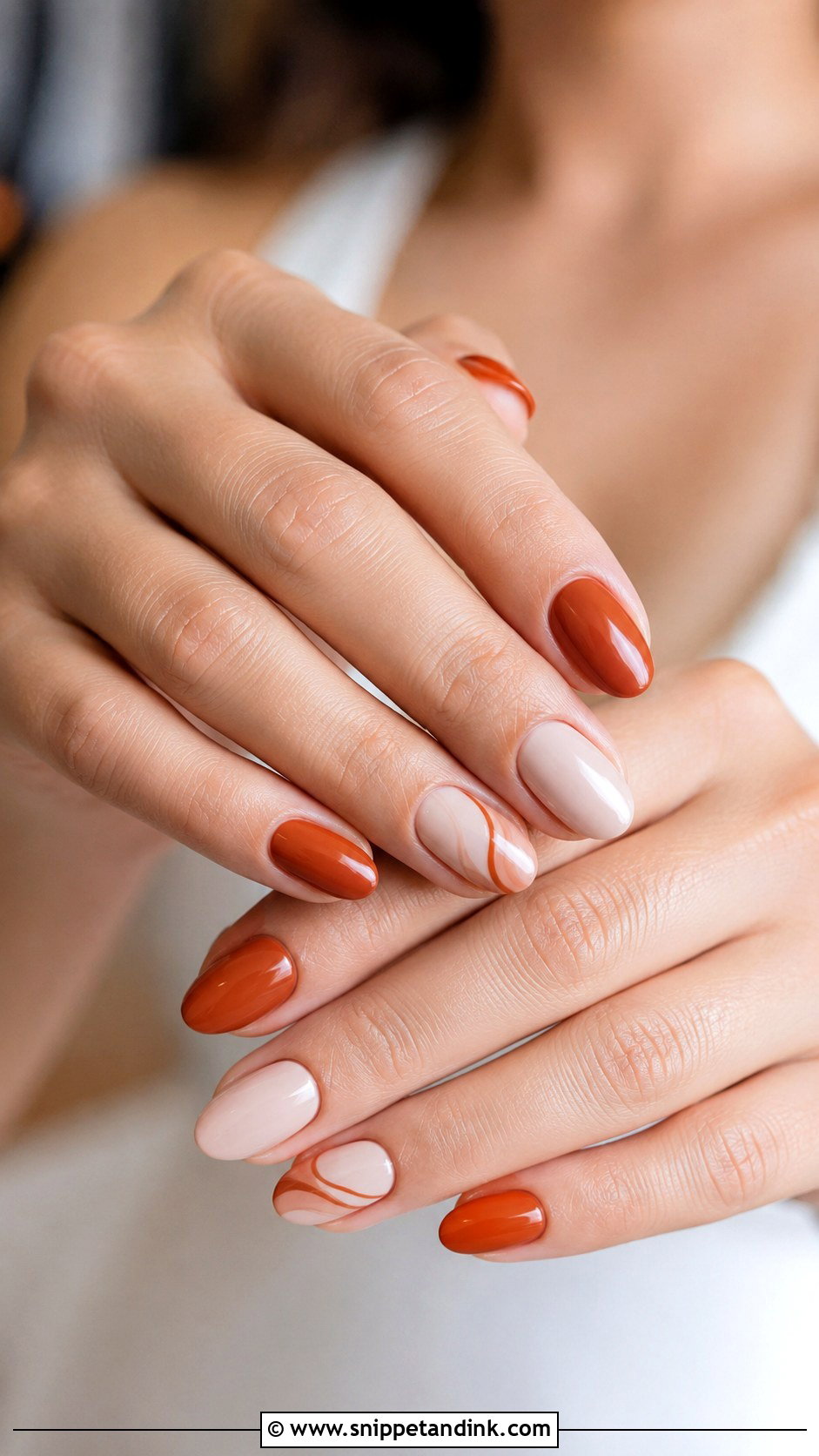
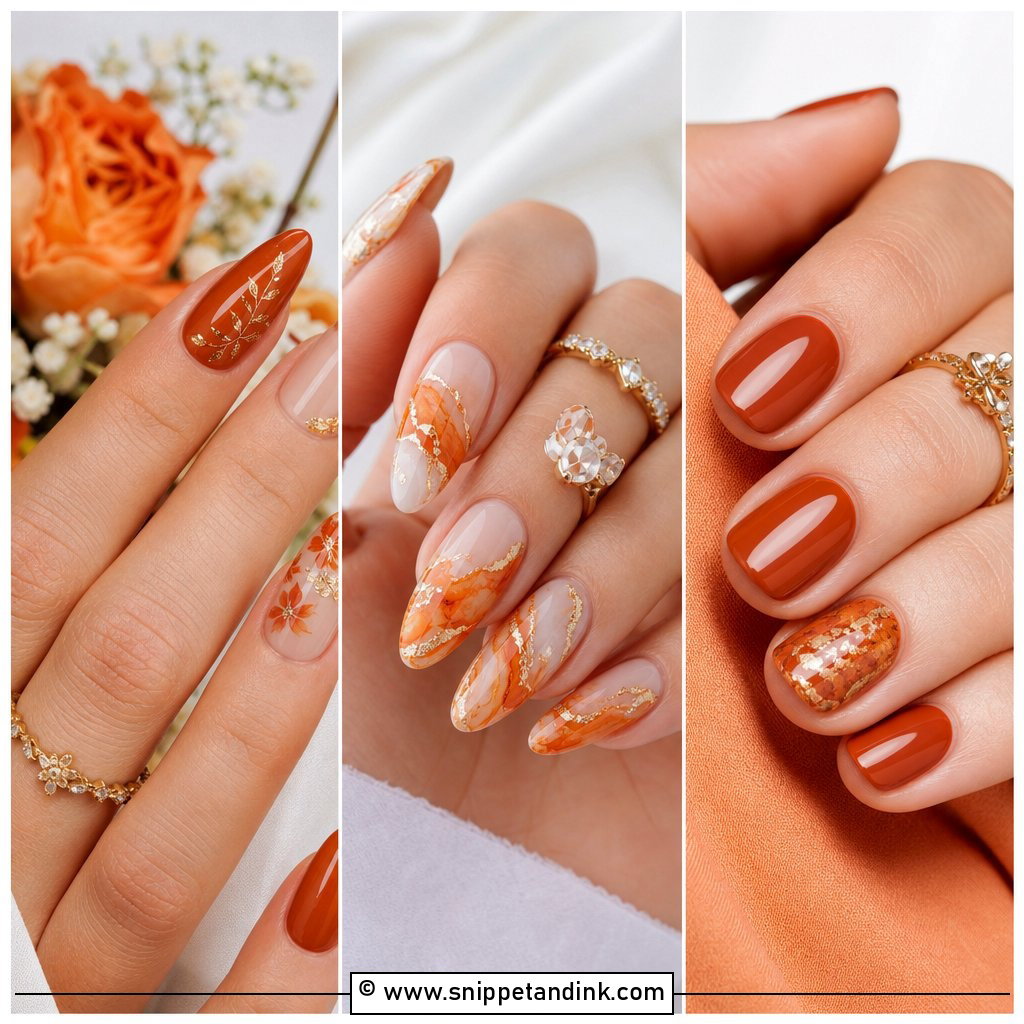
Gold and burnt orange are almost the same family, so they sit together without any fuss. I keep the gold fine: a few pieces of foil near the cuticle, or one striped line on two accent nails, with the rest in glossy orange. Heavy gold glitter on top of orange can look brassy under warm reception light. If your rings are yellow gold, this is an easy win. On almond and coffin shapes the foil has more room; on shorter nails, one gold dot per nail is enough.
5. Burnt Orange And Nude Wedding Nails
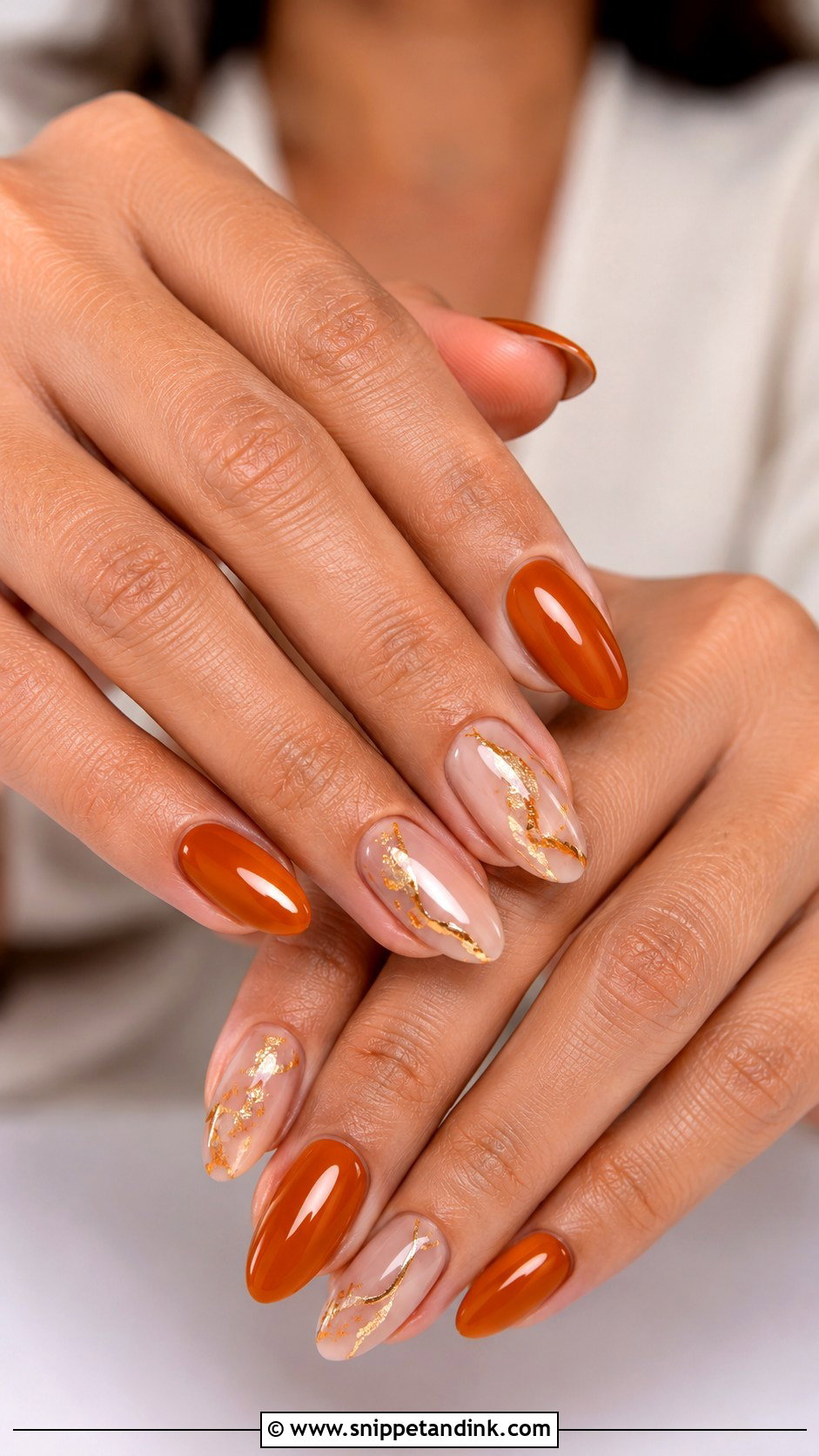
This is the pairing I suggest to anyone nervous about orange. The nude does the calming; the orange does the talking. Alternate full nails, add orange tips over nude, or float orange swirls over a beige base. Choosing the nude is the real work. I hold two or three shades against the back of your hand in daylight, because a beige that’s too pink next to orange can look slightly grubby. Caramel nudes suit warmer skin; milky taupe and sheer beige suit fairer, cooler hands.
6. Burnt Orange Chrome Wedding Nails
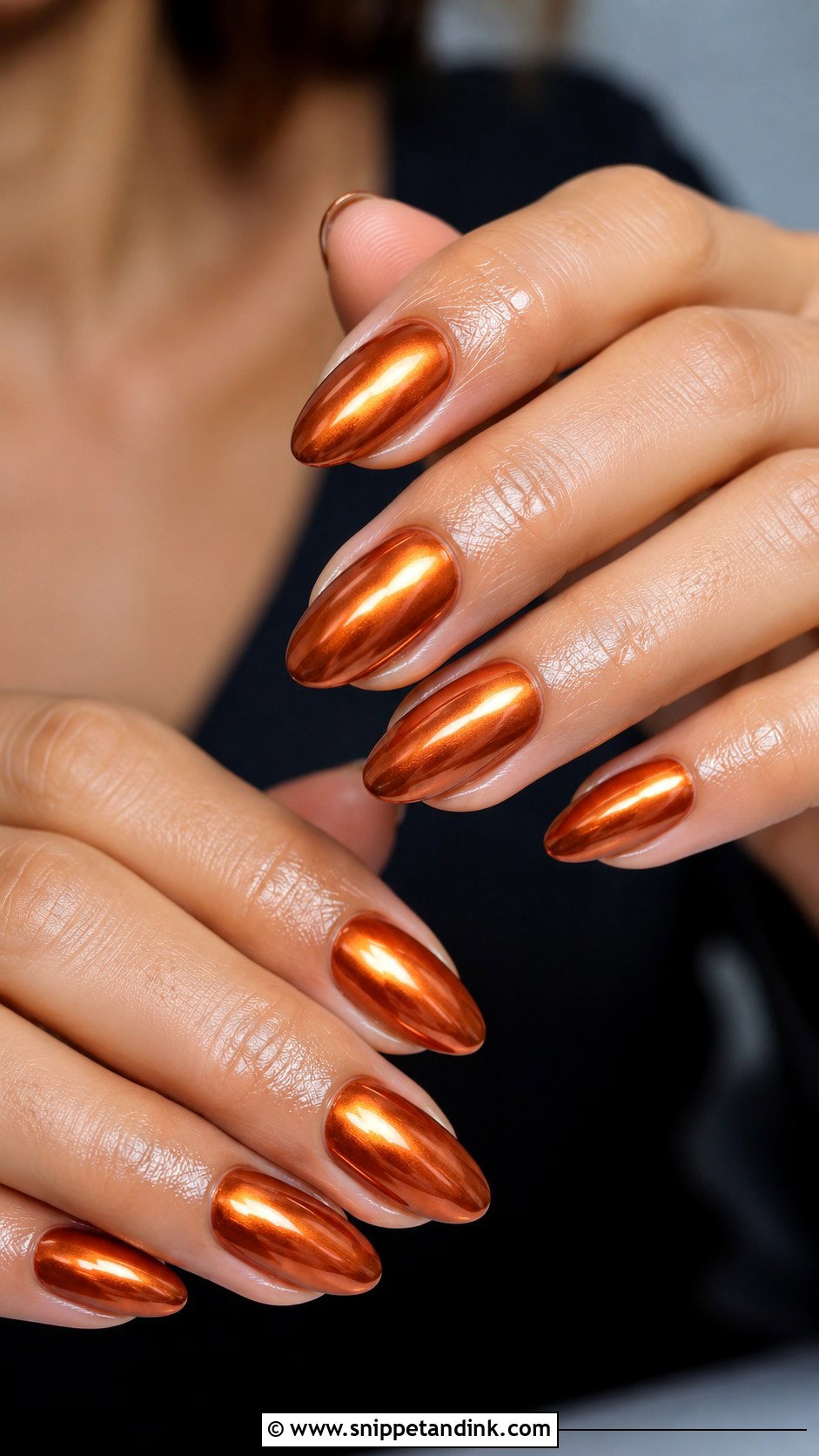
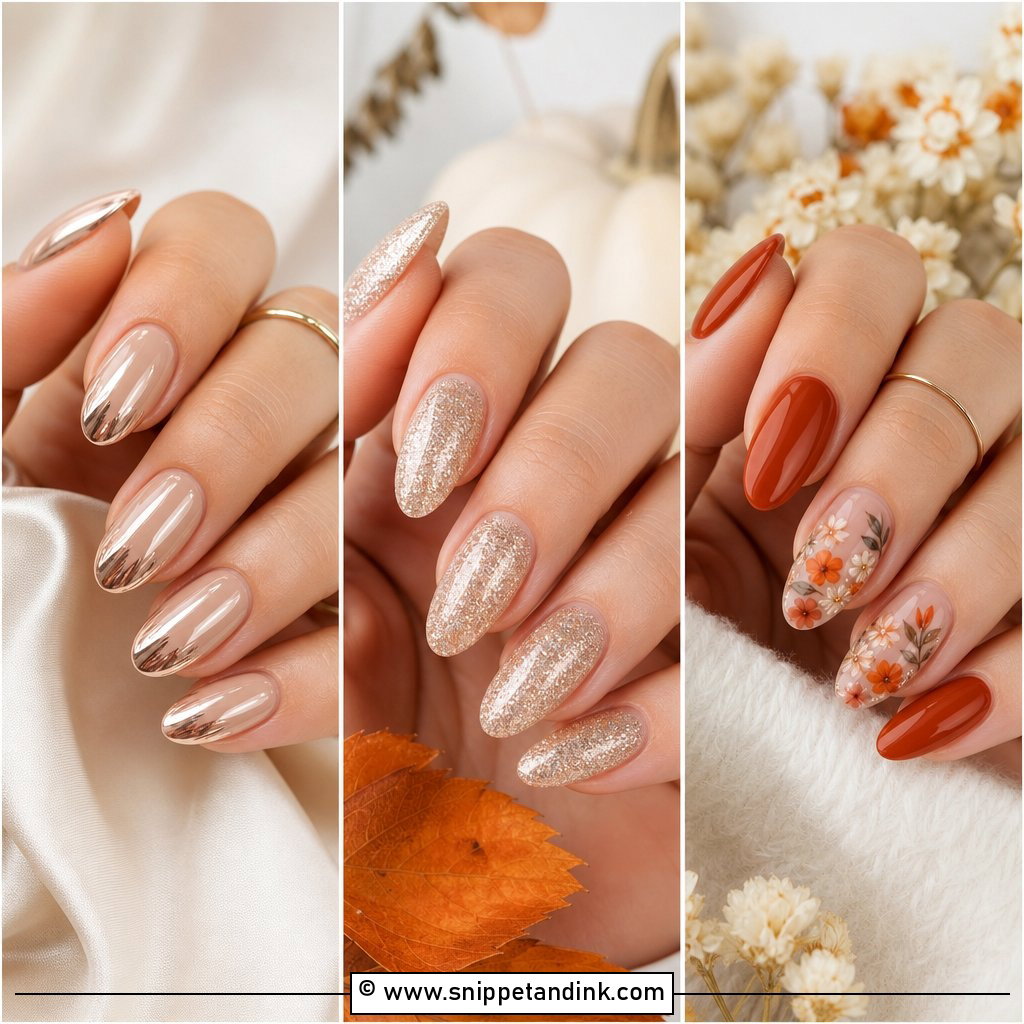
Burnt orange chrome wedding nails turn the color coppery, like a polished kettle. The powder is rubbed over a cured no-wipe top coat, so any bump in the layer below gets magnified, which is why I spend more time levelling this set than most. A sheer orange under chrome reads delicate; deep rust under chrome reads dramatic. Chrome tends to wear at the free edge first, so I cap the tips carefully. It suits satin dresses and gold jewelry, and it’s a good choice for a guest who wants to look dressed up without nail art.
7. Burnt Orange Glitter Wedding Nails
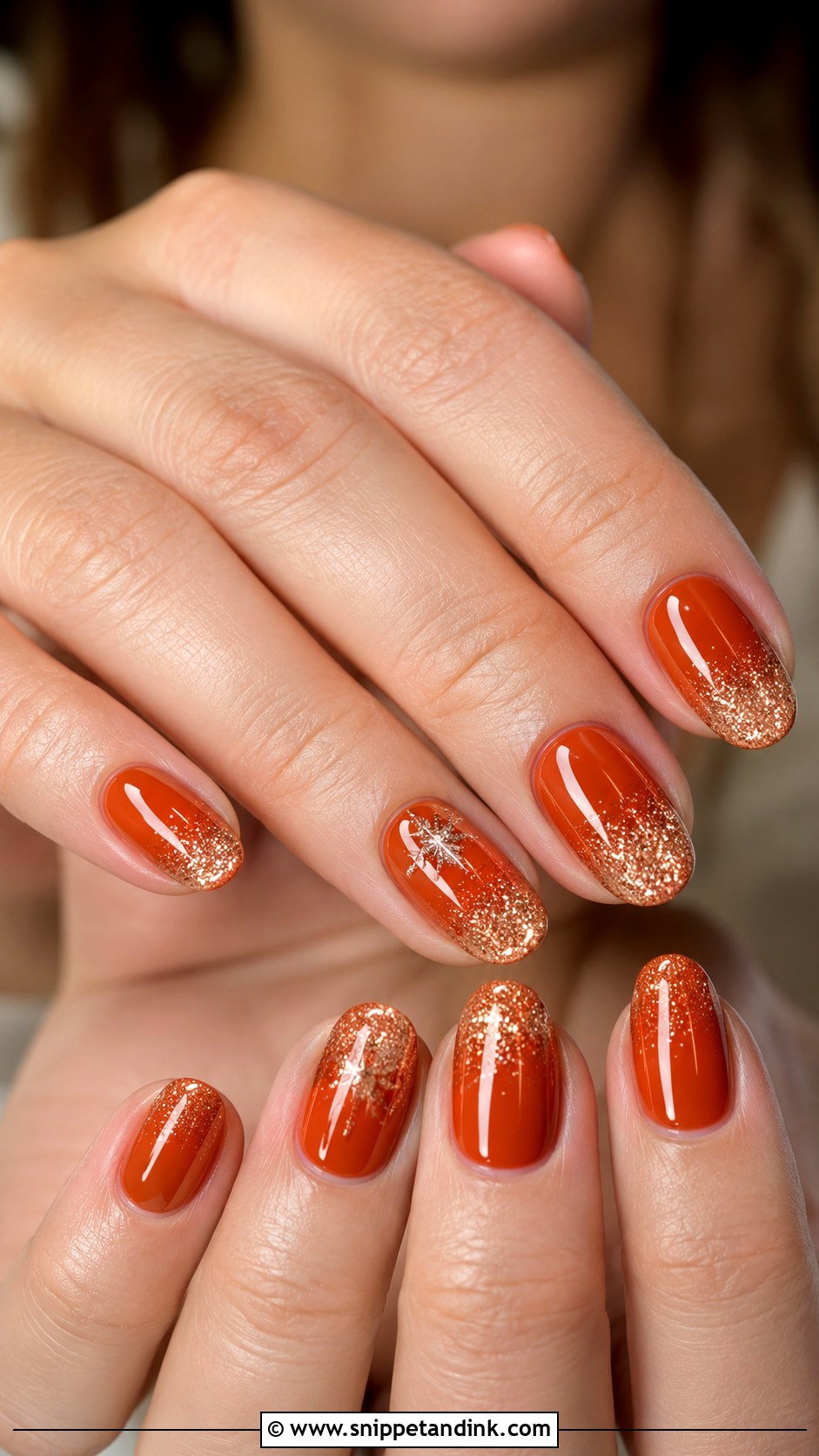
Fine glitter in copper, rose gold or champagne keeps a sparkly orange looking grown-up. Chunky glitter, by contrast, can tip into a Halloween look very quickly. I like a fade from the tip, a glowing half-moon at the cuticle, or a single accent nail. Glitter gel takes longer to soak off, so if you’re a guest who needs clean nails for work on Monday, plan that removal. Almond, oval and squoval shapes keep the overall look smooth.
8. Burnt Orange Floral Wedding Nails
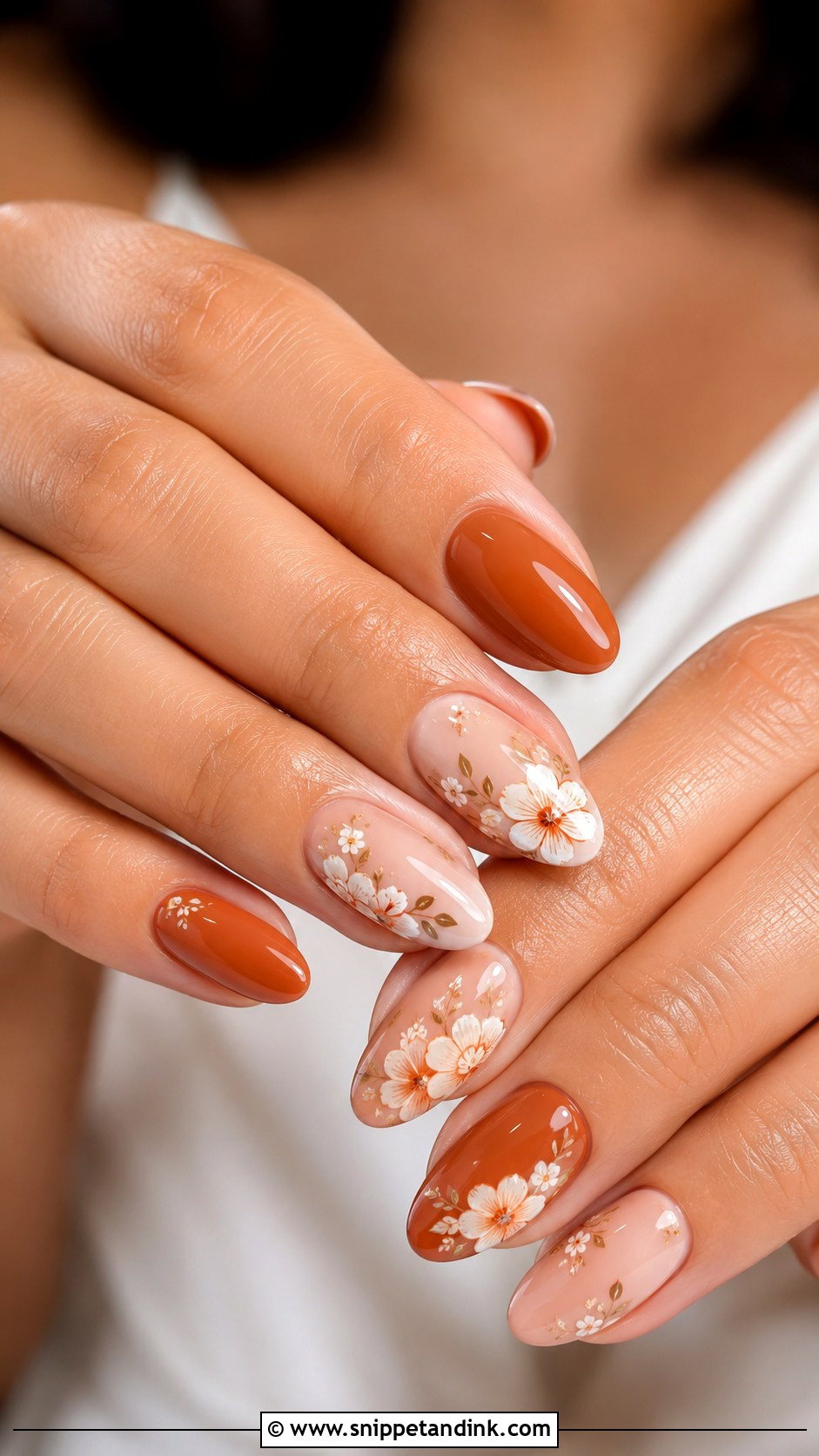
Small flowers in ivory, cream or champagne over orange look hand-painted and warm. Big flowers look like a tablecloth. I paint petals slightly translucent so they have depth, and I’d keep the florals to one or two nails while the others stay neutral or solid. Dried flower bouquets with pampas and bunny tails are a natural match. On short nails, a tiny daisy tucked into one corner does the job.
9. Burnt Orange Marble Wedding Nails
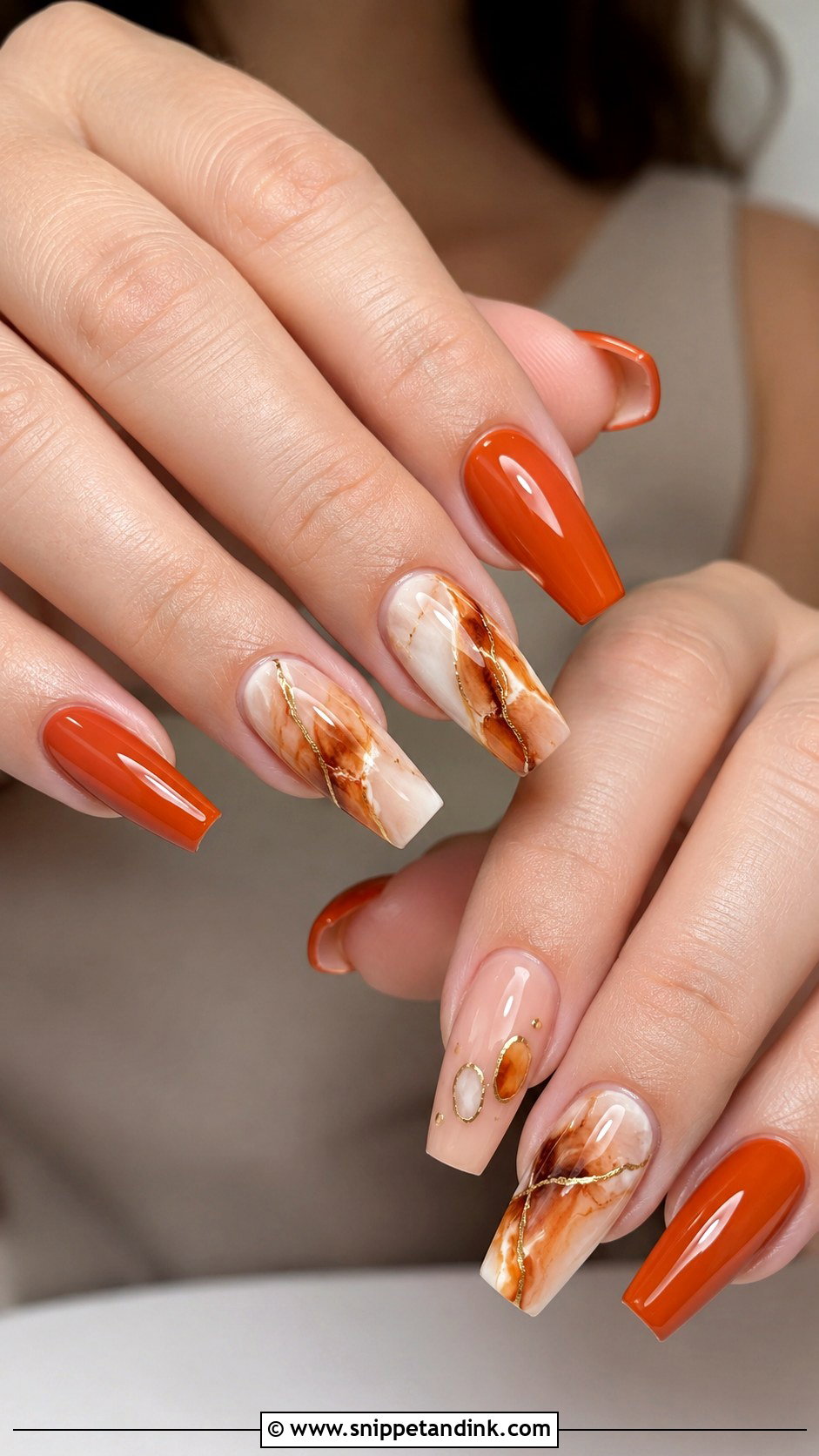
Marbling blends orange with ivory, caramel or soft brown so it looks like a slice of polished agate. A hairline vein of gold through it adds warmth. Every marble nail comes out different, which is part of the charm, but it also means ten of them can look chaotic. I put marble on two accents and keep the rest solid orange or nude. It needs length to show the pattern, so coffin and almond suit it better than short nails.
10. Burnt Orange Pearl Wedding Nails
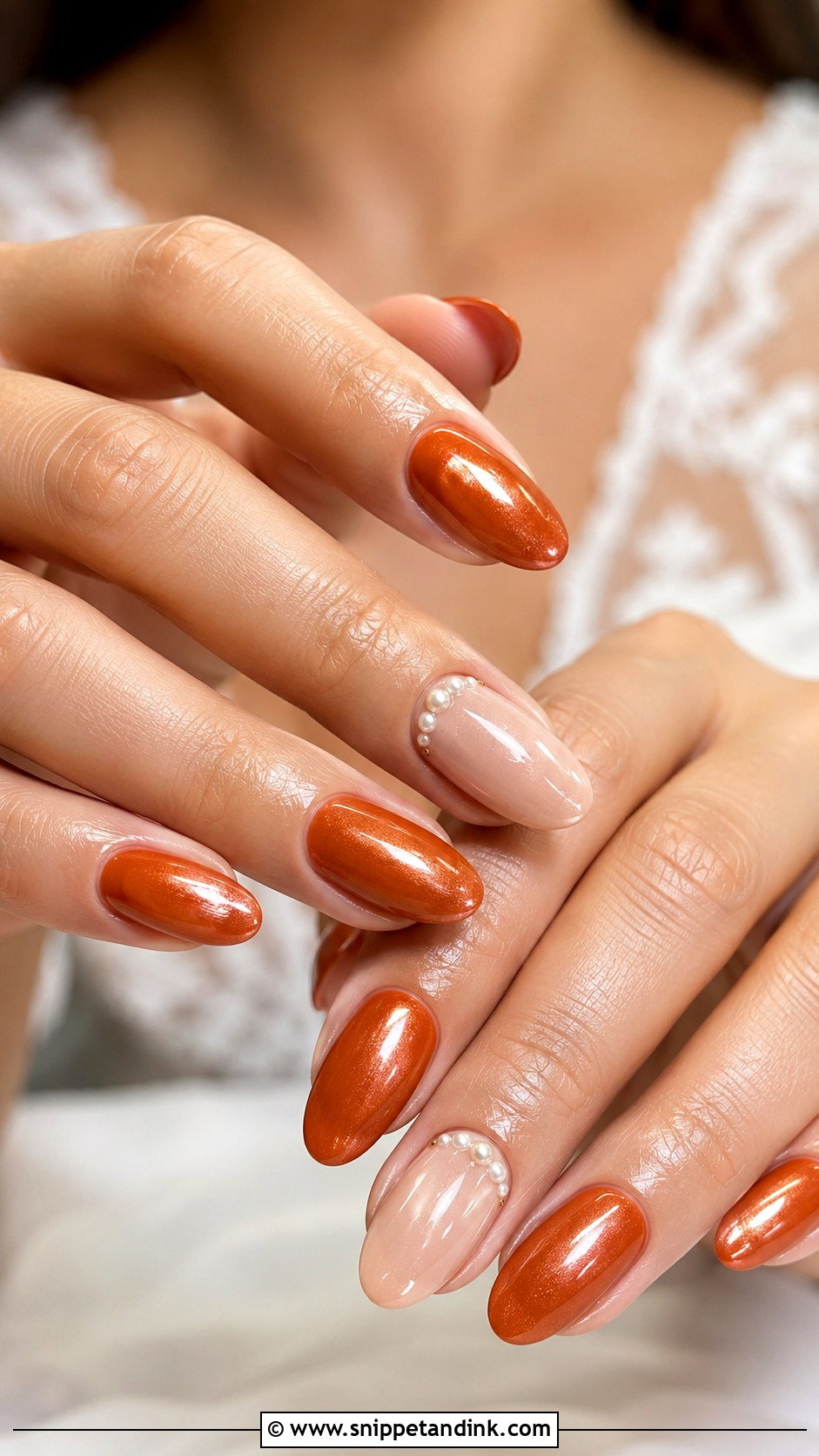
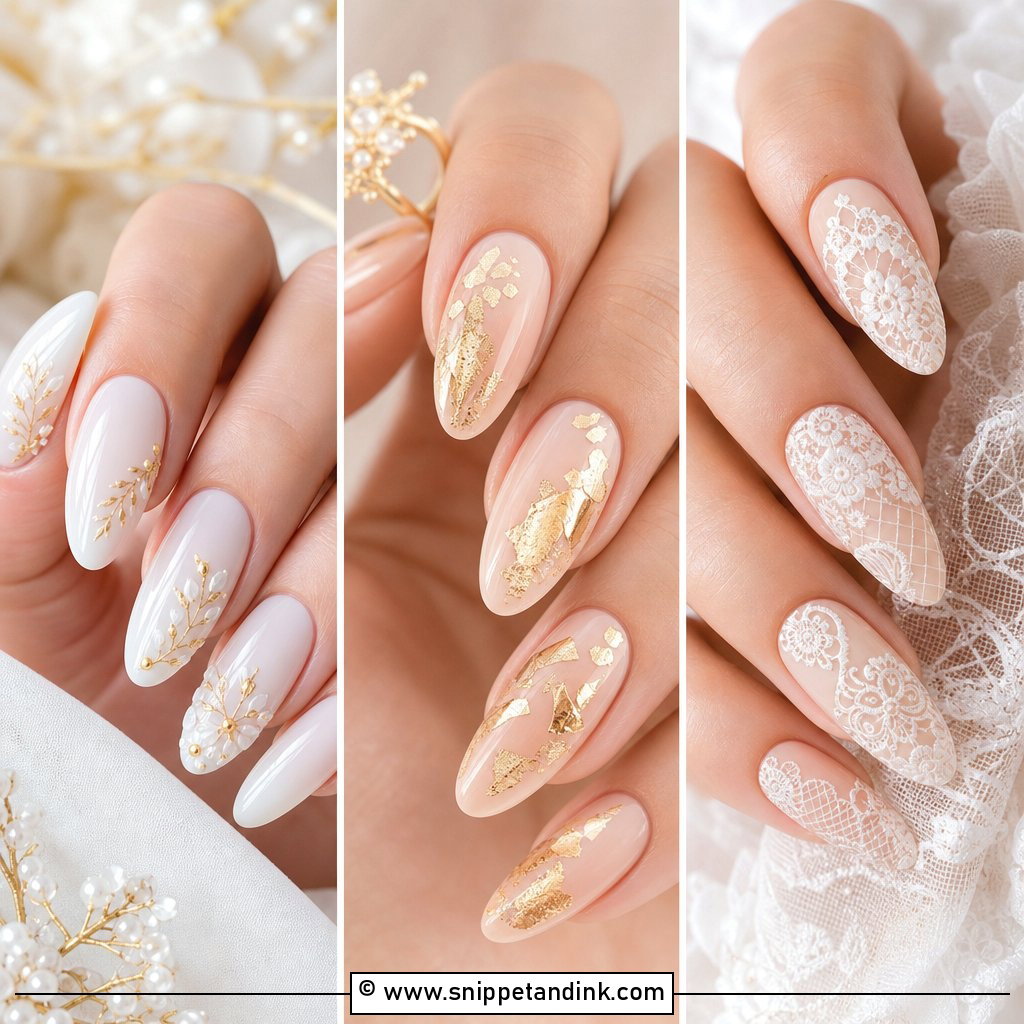
A pearly top coat over sheer orange gives a candlelit glow I really like on brides who want something warmer than classic white. Pearl sheen is quite forgiving too, since its shimmer hides small brush marks. If you’d rather have actual pearls, keep them small and set near the cuticle, sunk into gel, on nude accent nails. Large 3D pearls on every finger snag on hair and lace and tend to pop off before the speeches. Oval and almond shapes suit the softness.
11. Burnt Orange Leaf Wedding Nails
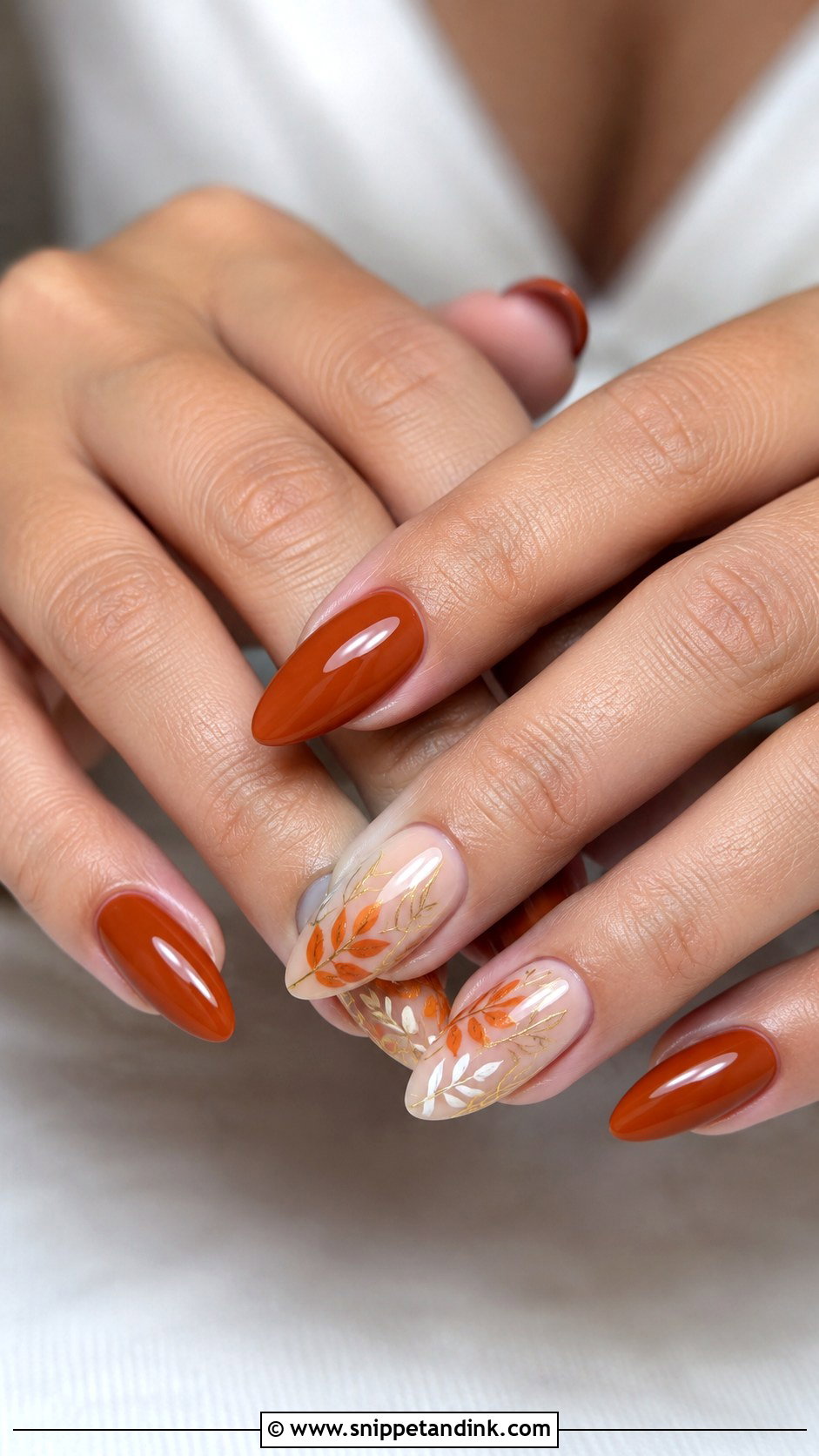
Leaves are the obvious autumn motif, and the risk with them is looking themed rather than bridal. My fix is outline only: a thin gold, ivory or brown leaf drawn over nude, with the remaining nails solid burnt orange. A filled-in orange maple leaf on every nail is a seasonal party manicure, not a wedding one. Almond nails give the leaf a soft canvas. It ties neatly into a palette of rust, sage, cream and walnut.
12. Burnt Orange Swirl Wedding Nails
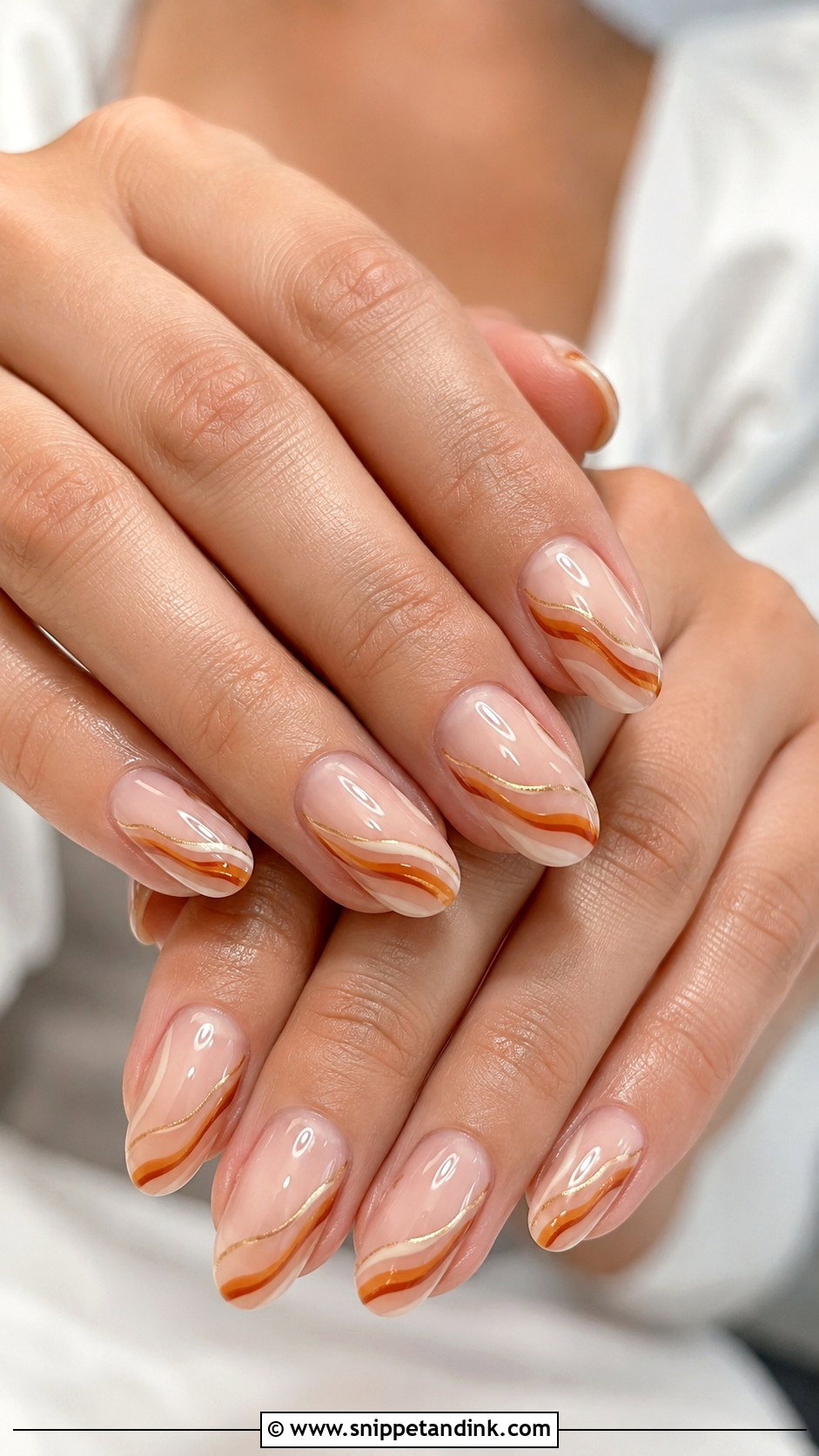
Burnt orange swirl wedding nails are the lightest way to wear the color: a milky or sheer base with thin orange lines flowing across it. The skill is in the line weight. Swirls need a long, thin liner brush and a confident single stroke; hesitation shows as a wobble. Add cream or gold lines if you want depth, but the base should still show through most of the nail. Bridesmaids can match the swirl shade to their dresses, and guests get color without a full orange set.
13. Burnt Orange Short Wedding Nails
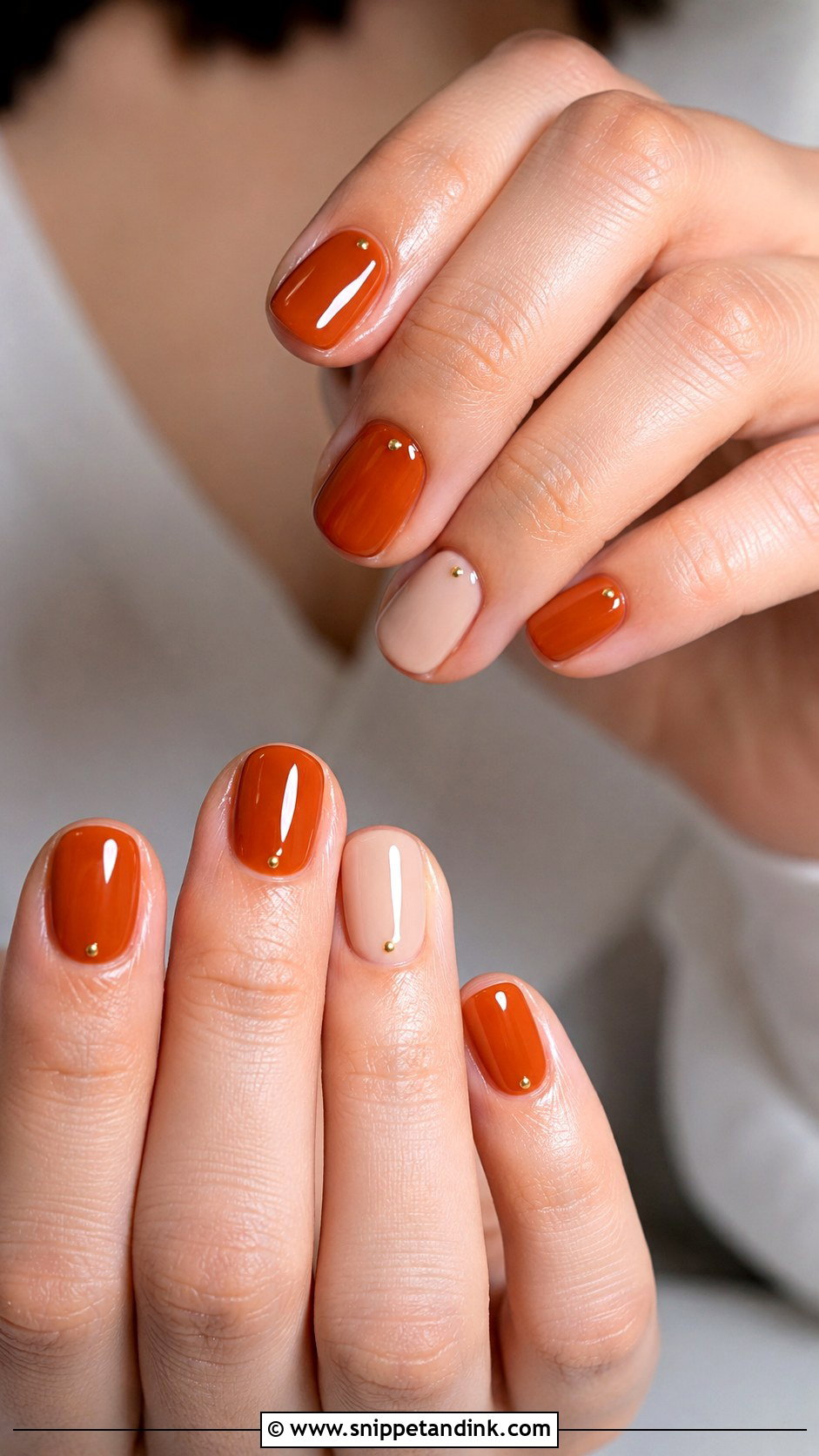
Short nails in burnt orange look rich, not timid. Squoval and soft round shapes are the practical choice when you’re travelling, carrying things, or simply want the manicure to last into the following week. Since there’s no length to distract, the quality of the cuticle work shows immediately, and orange does show a flooded cuticle. A nude accent nail or a tiny gold dot is all the detail it needs. Mothers of the couple often prefer this length.
14. Burnt Orange Almond Wedding Nails
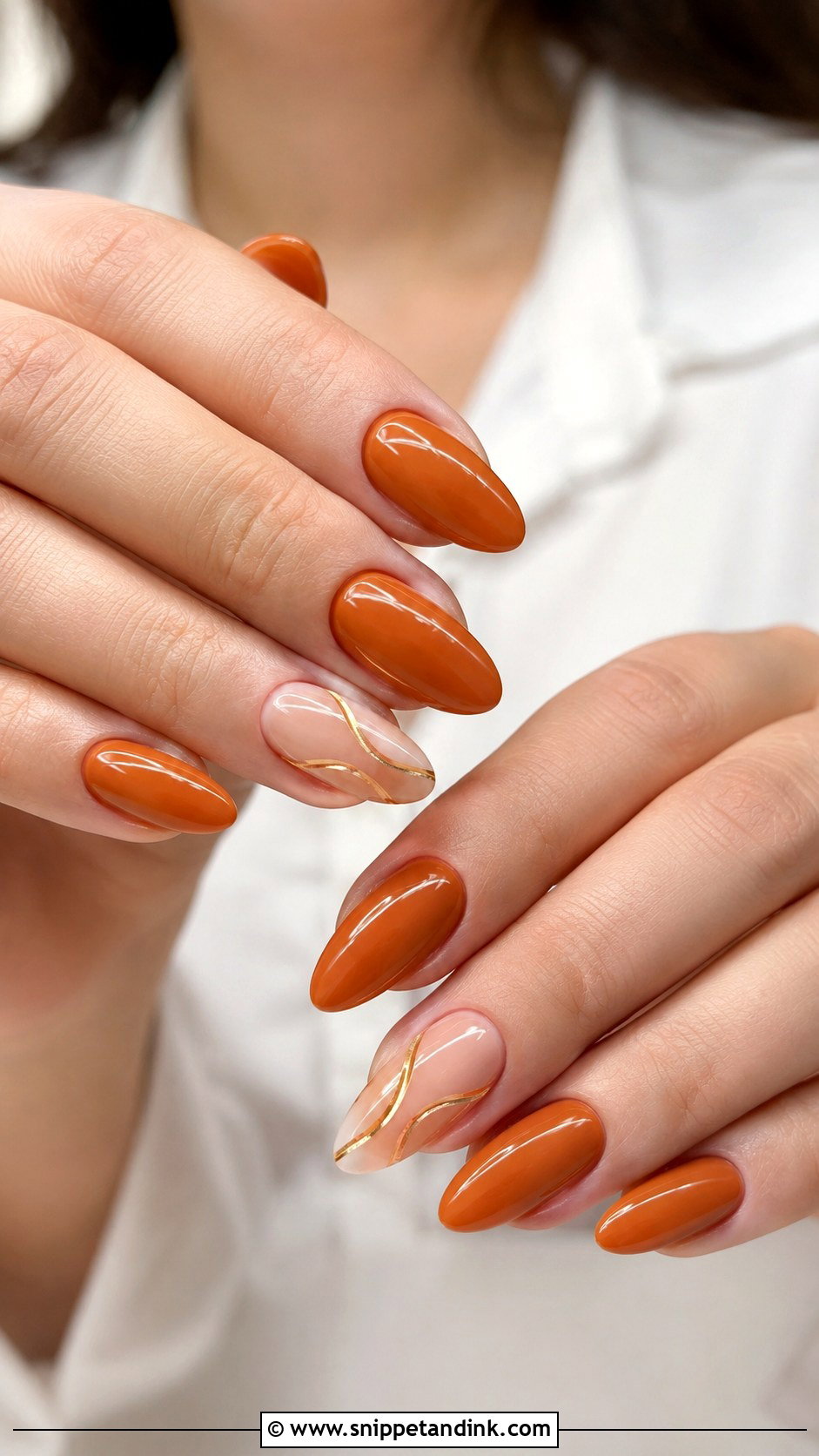
Almond is the shape that makes burnt orange easiest to love. The tapered sides lengthen the fingers and the rounded tip softens a color that can feel loud on a blunt edge. One glossy shade across all ten nails is enough, or mix in nude accents with gold lines, florals or a swirl. Almond also suits French, ombre and chrome. In ring shots, the point leads the eye to the band rather than competing with it.
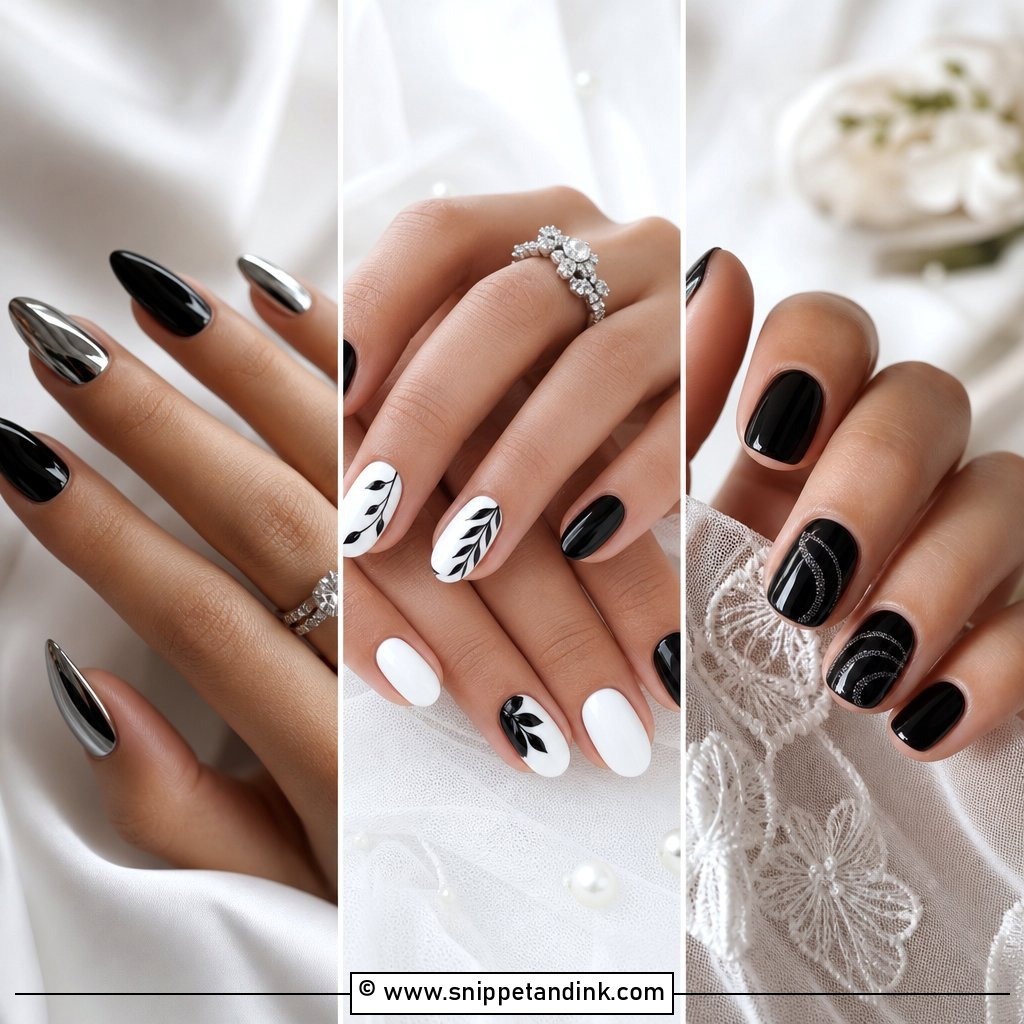
15. Burnt Orange Coffin Wedding Nails
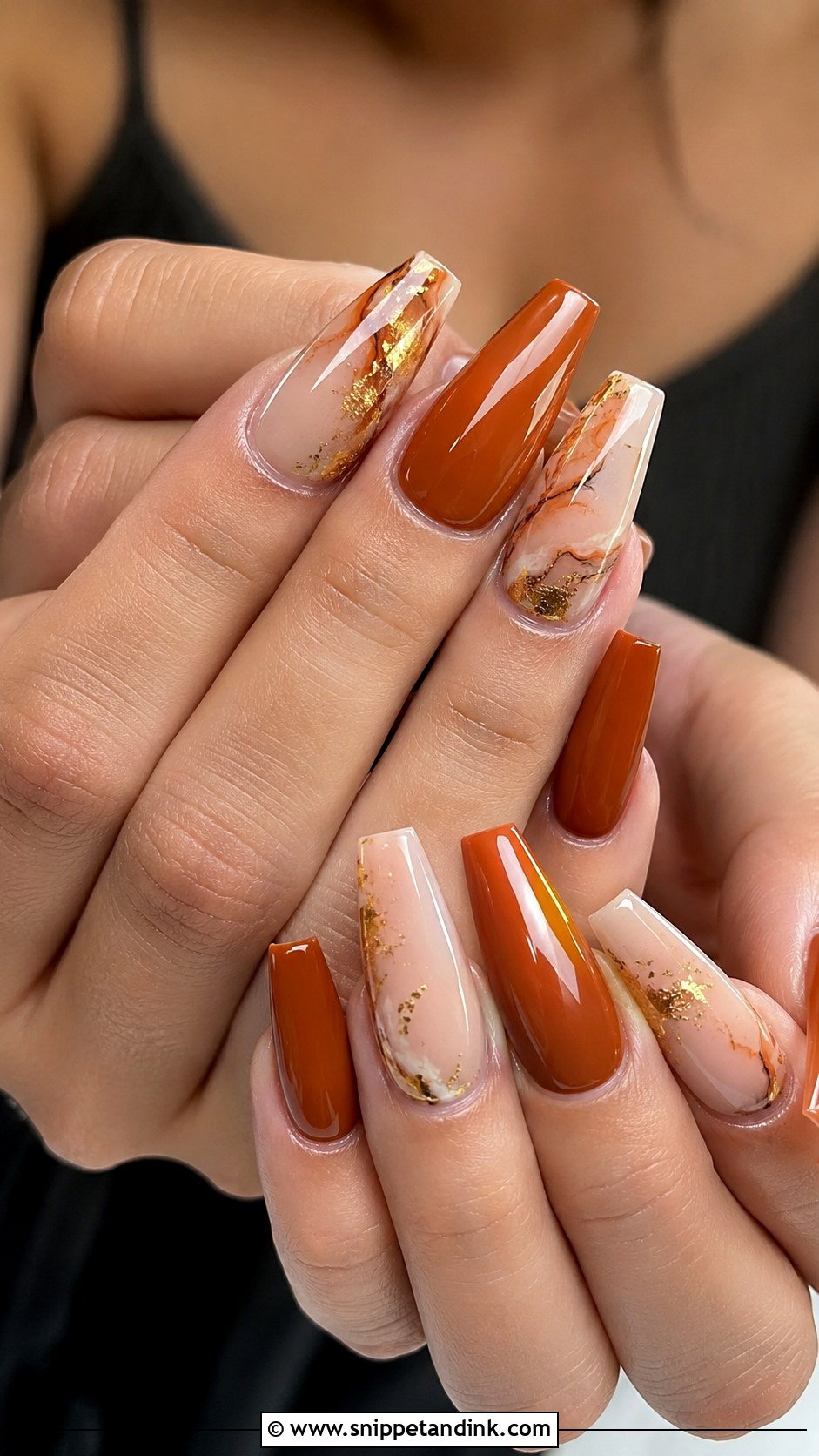
Coffin is the dramatic option. The flat tip gives orange an edge, and medium length is usually where I stop for a wedding, long enough for art but short enough to manage a zip and a phone. Gloss with nude accents, foil or marble suits it; matte on coffin feels sleek and modern. I’d only suggest coffin to someone who already wears extensions, because learning to live with that length on the morning of a wedding isn’t fun. Keep the artwork balanced so the shape stays the focus.
16. Burnt Orange Square Wedding Nails
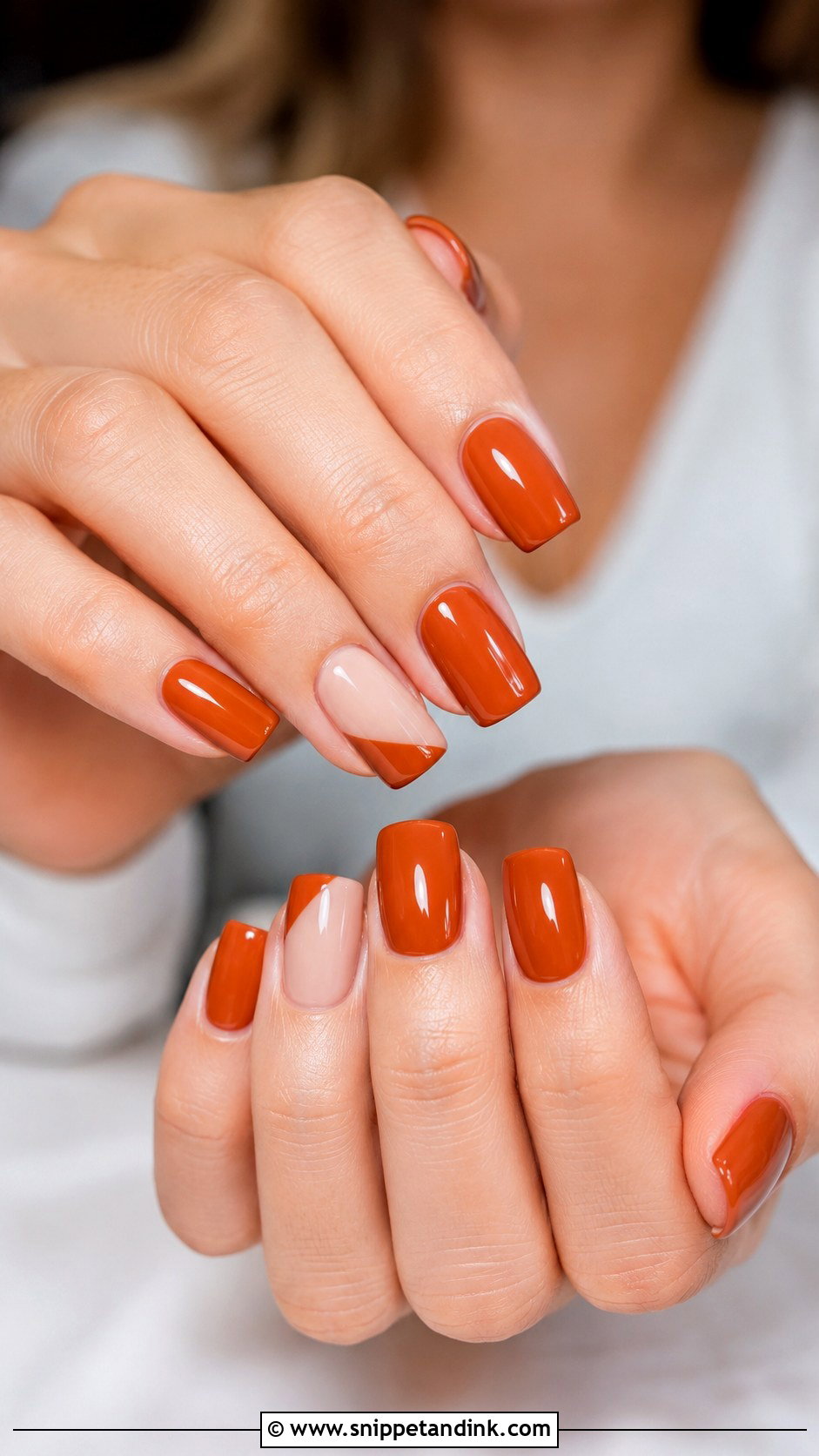
Square is neat and strong, and its flat edge suits crisp details like thin French tips, diagonal color blocks or a fine gold line. A full square set in orange is bold, so softening with nude or champagne accents helps. Shade choice changes everything here: a terracotta orange looks soft, a deep rust gives more contrast against fair skin. I file the corners ever so slightly round so they don’t catch on dress fabric, which is why square works so well for guests who want the set to last beyond the wedding.
17. Burnt Orange Bridesmaid Nails
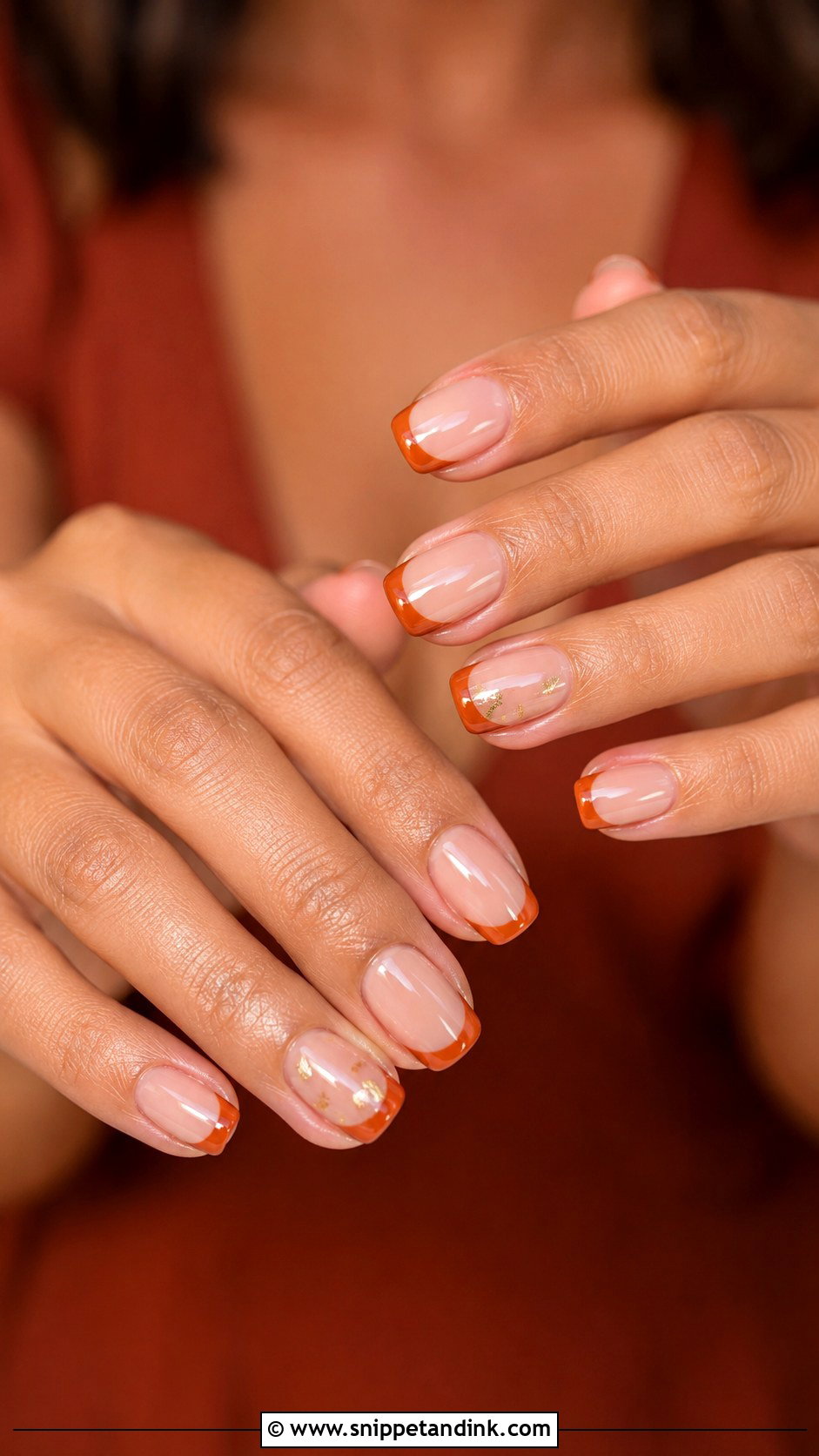
Bridesmaid nails work best when they coordinate rather than copy. If the dresses are rust, cinnamon or copper, the nails can match closely, or stay a step lighter with a nude base and orange details. French tips, plain gloss and small orange florals on nude all sit together happily in a row of hands. Short almond, squoval and oval suit most people. A touch of gold that echoes the jewelry or hair accessories is a nice finishing detail. I’d give every bridesmaid the exact shade name so the oranges actually match in the group shot.
18. Burnt Orange Bridal Nails
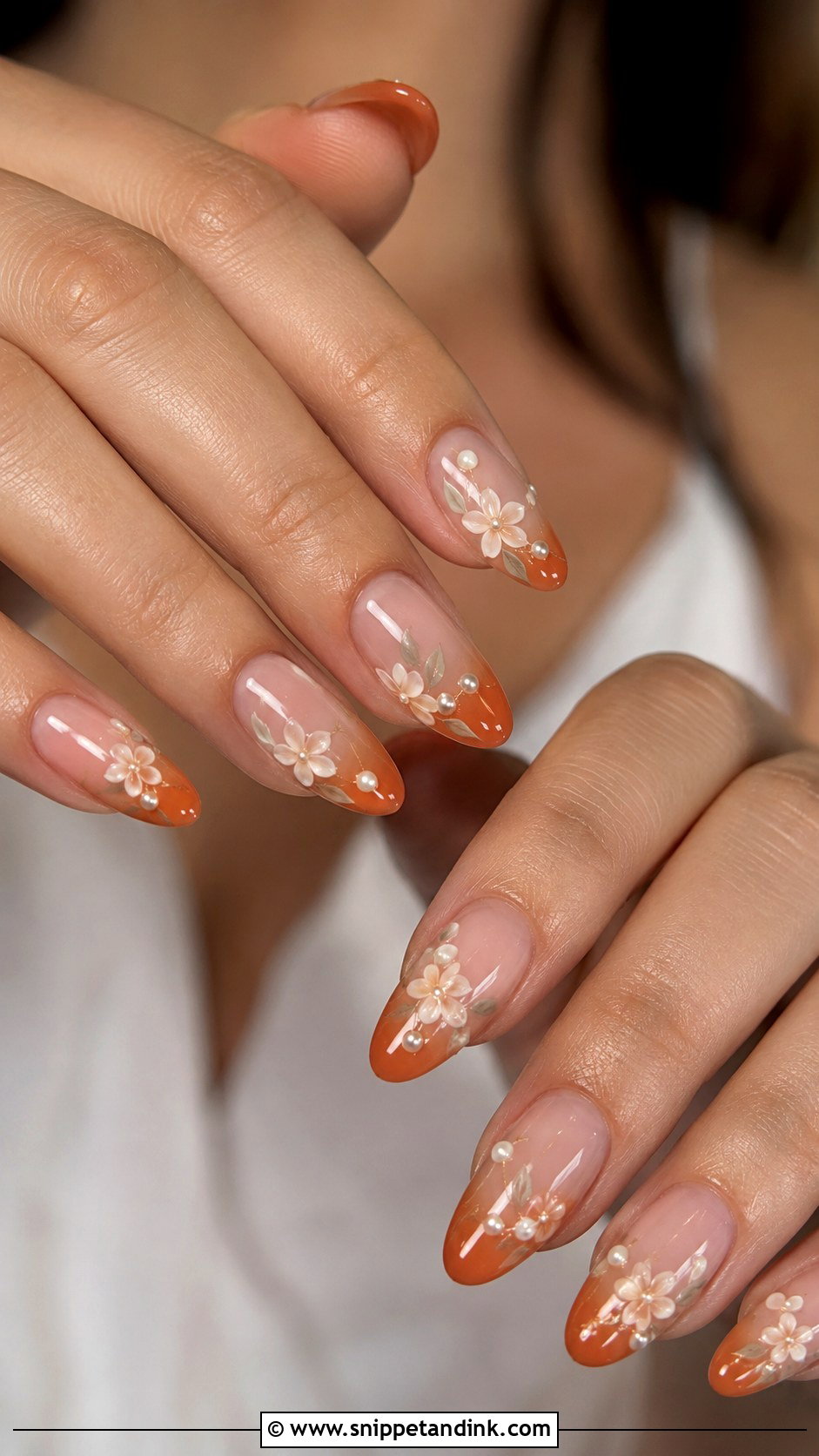
For a bride, burnt orange is a confident choice, and it reads bridal once it’s paired with something soft: milky nude, pearl shimmer, ivory florals or fine gold. A sheer orange ombre is the most delicate version; full glossy orange is the boldest. Look at your bouquet before you decide. If there’s rust, cream, blush, dried grass or copper in it, the manicure will look planned. Almond and oval shapes flatter the hands in close-ups. Let the orange be the signature and keep everything else quiet.
19. Burnt Orange Wedding Guest Nails
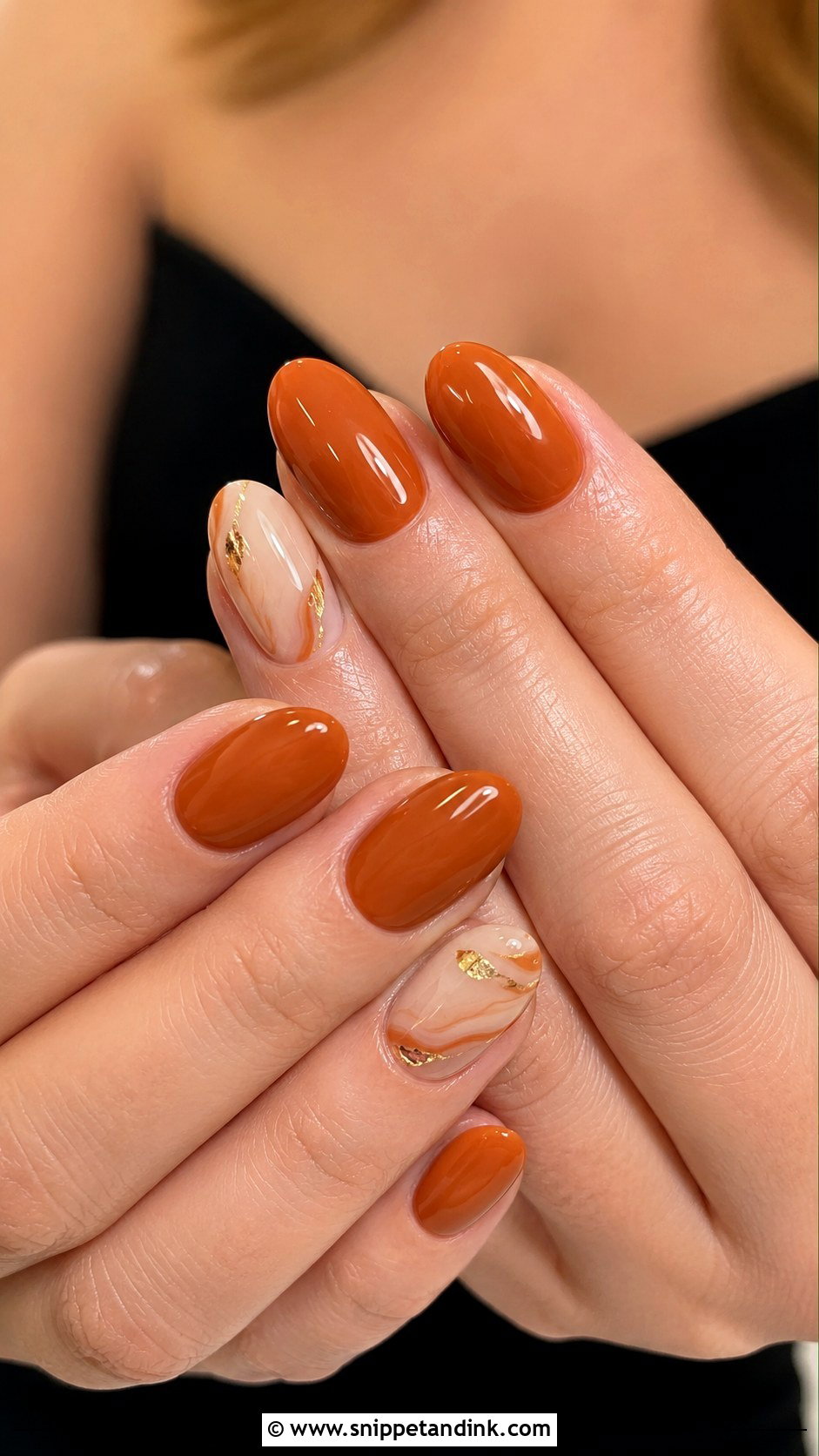
Burnt orange wedding guest nails are festive without pulling focus from the couple. A plain glossy orange works with neutral outfits and especially well with green or navy dresses, where it acts as a complementary pop. Keep any art small, French tips, gold foil or nude swirls, and leave the long, decorated sets for the bride, especially at formal weddings. Short square looks understated; almond looks dressier. Unlike pale bridal colors, it still looks right at the office the next week.
20. Burnt Orange Fall Wedding Nails
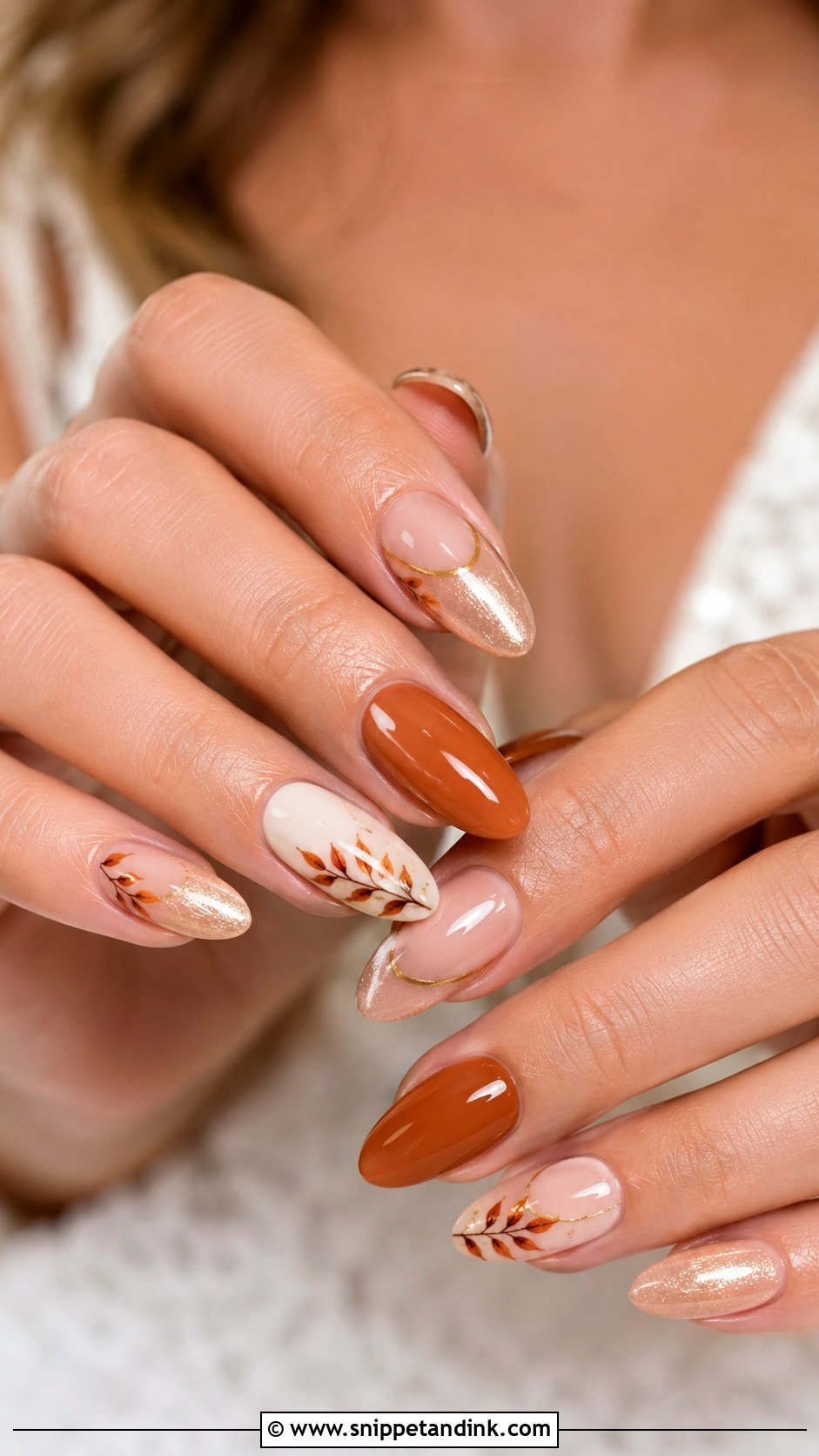
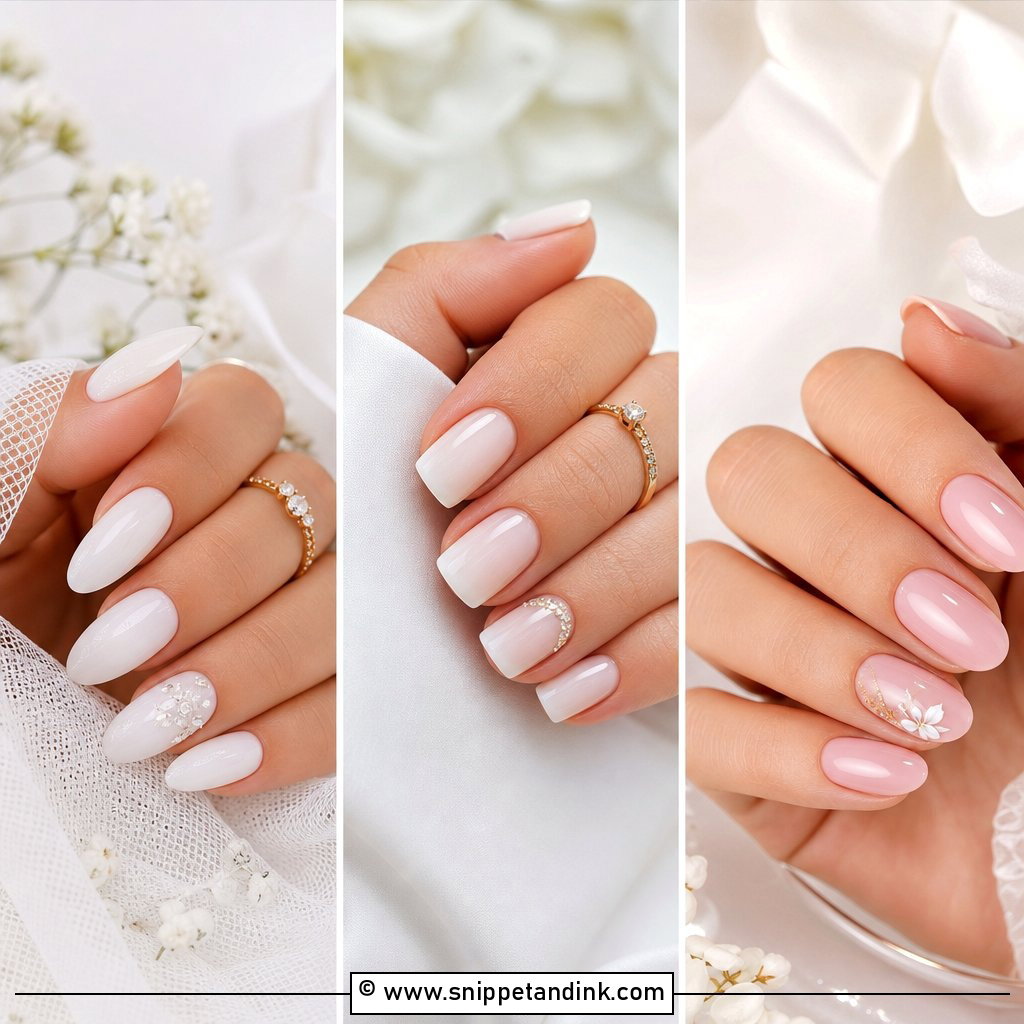
Burnt orange has always belonged to autumn celebrations, echoing turning leaves, dahlias and copper candle holders. It plays well with nude, ivory, brown, gold and champagne. A formal wedding asks for minimal art and a smooth gloss; a rustic or outdoor wedding can take leaves, matte or marble without looking out of place. Because the depth of the shade can go lighter or darker, it adapts to almost anyone at the wedding, from the bride to her grandmother.
A Streak-Free Burnt Orange at Your Kitchen Table
Plenty of guests and bridesmaids do their own nails, and orange is honestly one of the trickier colors to apply at home. Its pigment tends to look streaky in the first coat and can pool at the side walls. A few habits from the salon make a big difference.
- Push back cuticles and wipe each nail with alcohol so the base coat grips.
- Use a base coat every time. Orange and red pigments can leave a yellow tint on bare nails.
- Apply three thin coats instead of two thick ones, waiting a couple of minutes between each. Thick coats of orange wrinkle and stay soft underneath for hours.
- Keep a small flat brush dipped in remover to tidy the edges. Orange on skin looks like a mistake in close-ups.
- Wrap the tips: run the last coat and the top coat along the free edge to slow chipping.
Do it two evenings before the wedding, not the night before, so it has time to harden completely. A fresh manicure that’s still soft takes sheet marks and dents if you sleep on it.
Gel or regular polish?
For a bride or a bridesmaid in the photos all day, I’d go gel. It doesn’t chip when you’re carrying flowers and it stays glossy. For a guest at a single evening reception, a well-applied regular polish is fine and much easier to take off afterwards.
Rust, Copper and Terracotta Around the Whole Table
A burnt orange manicure works best when you match the finish to your role and the setting. French tips, ombre, chrome, florals, marble, pearls and plain gloss all suit it, and nude, ivory, gold and soft brown keep it refined. The bride can carry the most detail; bridesmaids coordinate; guests keep it simple. Short nails are practical, almond and coffin add drama. Test your shade in daylight before the day, and the color will feel like yours.
You'll Like These Ideas:


Leave a Reply