
Royal bridal fashion comes down to a few things I can name precisely: a structured fit, heavy fabric that holds its shape, measured coverage, and accessories chosen as a set rather than one at a time. Below are twenty gowns and suits styled the way I would dress a bride who wants that regal feel, from ball gowns and long-sleeve lace to embroidered silk and a tailored suit. Each comes with shoes, jewellery, veil and the finishing details, so you can picture the whole outfit. A crown and a cathedral train are the obvious route, but a plain gown with perfect tailoring often looks more majestic than one covered in crystals. Ballroom, garden, register office or old estate, there is a version here that fits the room.
What Makes a Gown Look Royal Rather Than Just Expensive
When a bride tells me she wants to look like a queen, I translate that into four things I can actually check at a fitting. None of them is about the price tag.
- Structure: a boned or corseted bodice that does not move when you breathe or lift your arms.
- Fabric with weight: mikado, duchess satin, heavy crepe or silk faille hold a shape; thin polyester satin wrinkles and shines too brightly.
- Measured coverage: sleeves, a higher neckline or a bateau line that frames the face rather than showing everything at once.
- Restraint: one focal point, either the train, the tiara, the embroidery or the neckline, and everything else stays quiet.
Hold a fabric swatch up to the window and crush it in your hand. If it springs back smooth, it will still look crisp at the end of the night. If it stays creased, think twice about it for a long day.
1. Long Sleeve Royal Wedding Dress
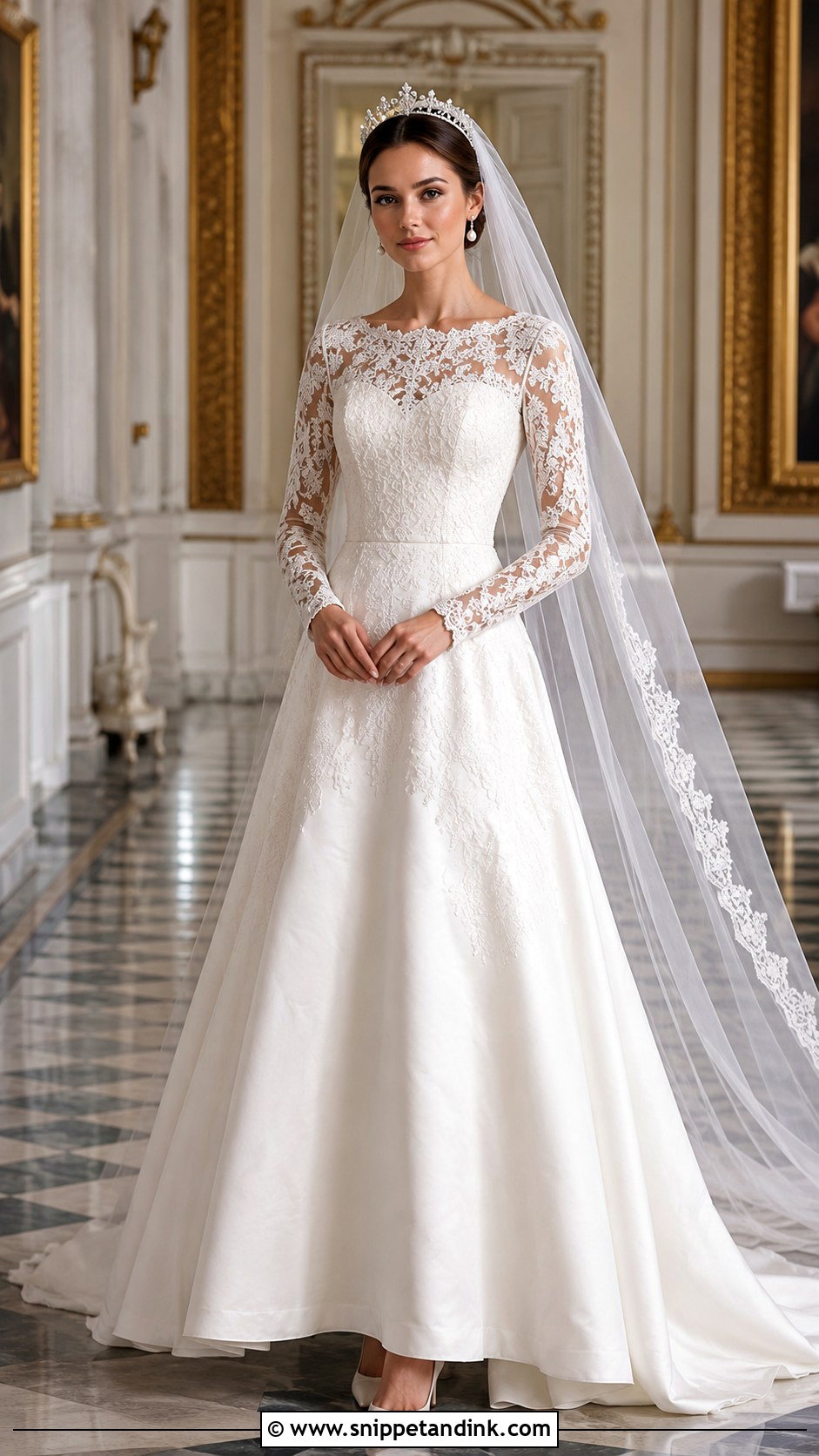
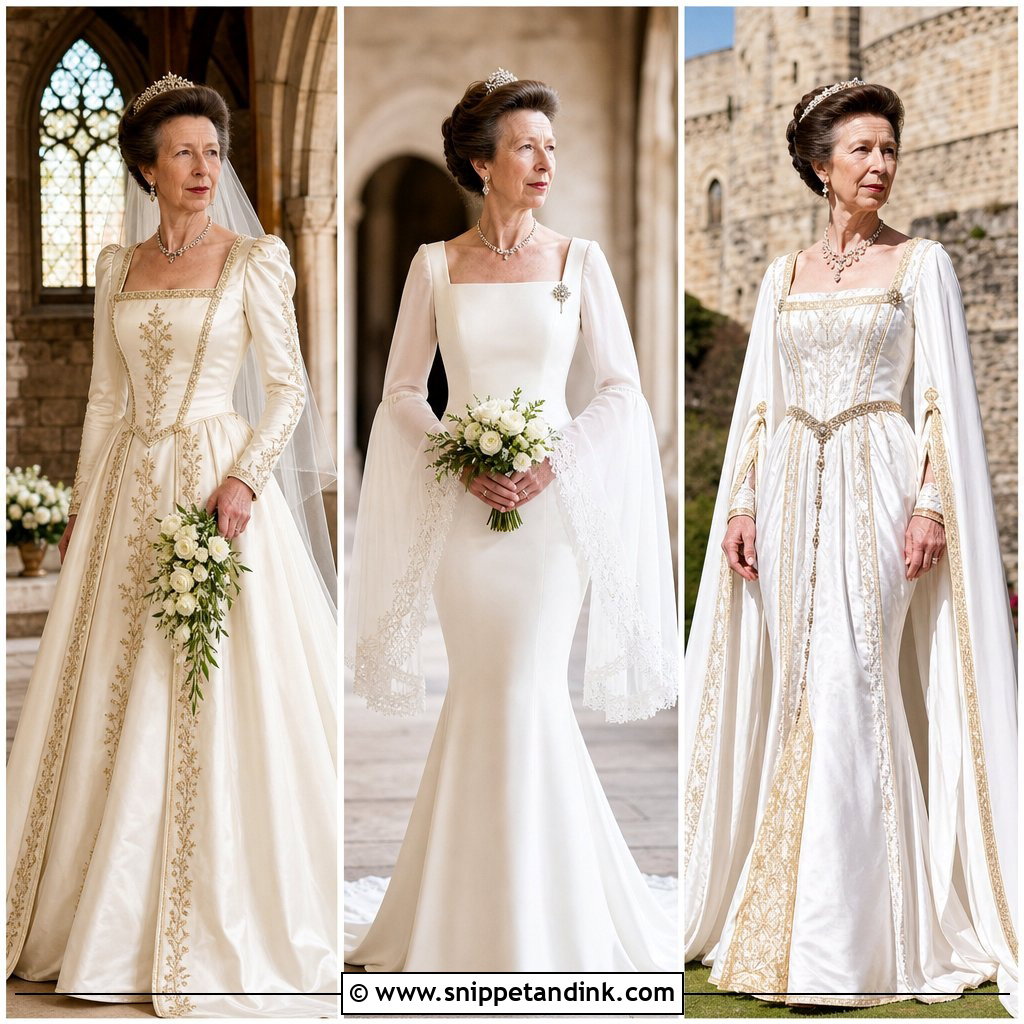
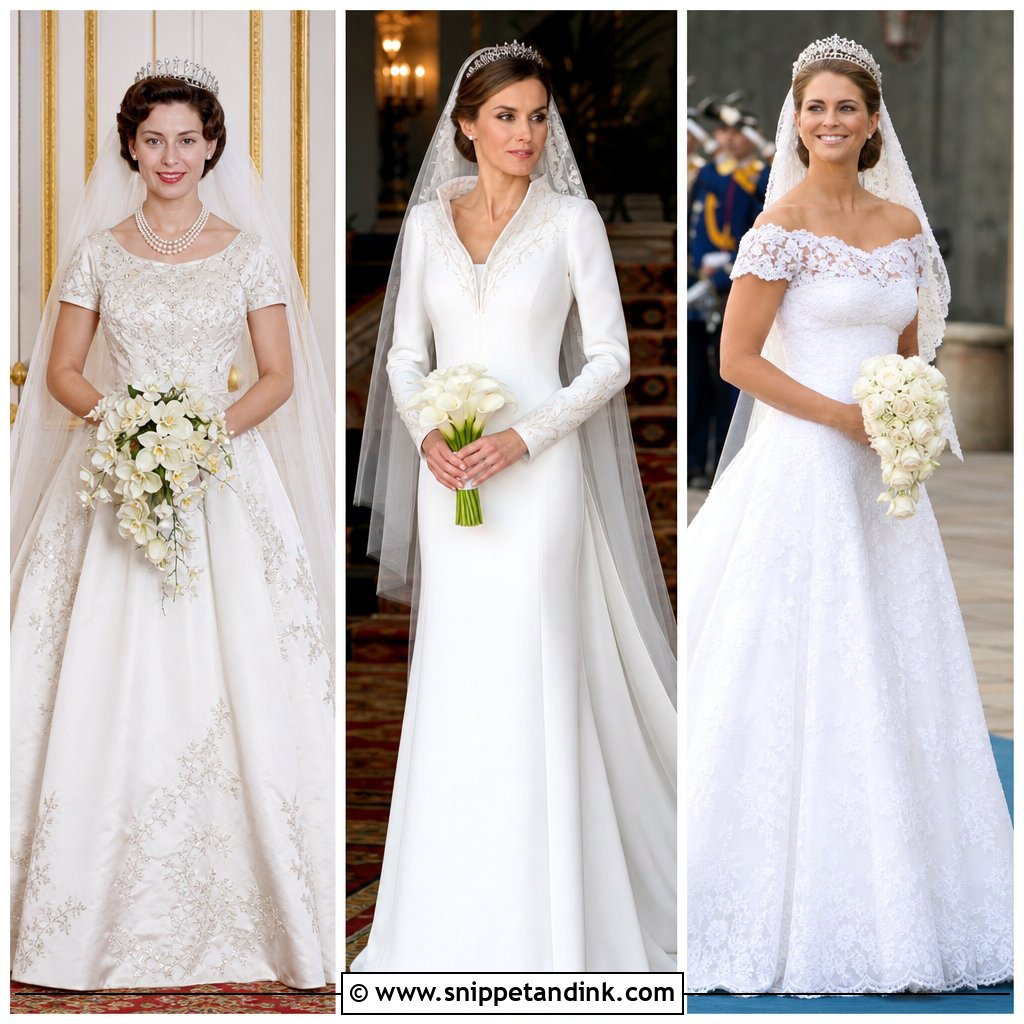
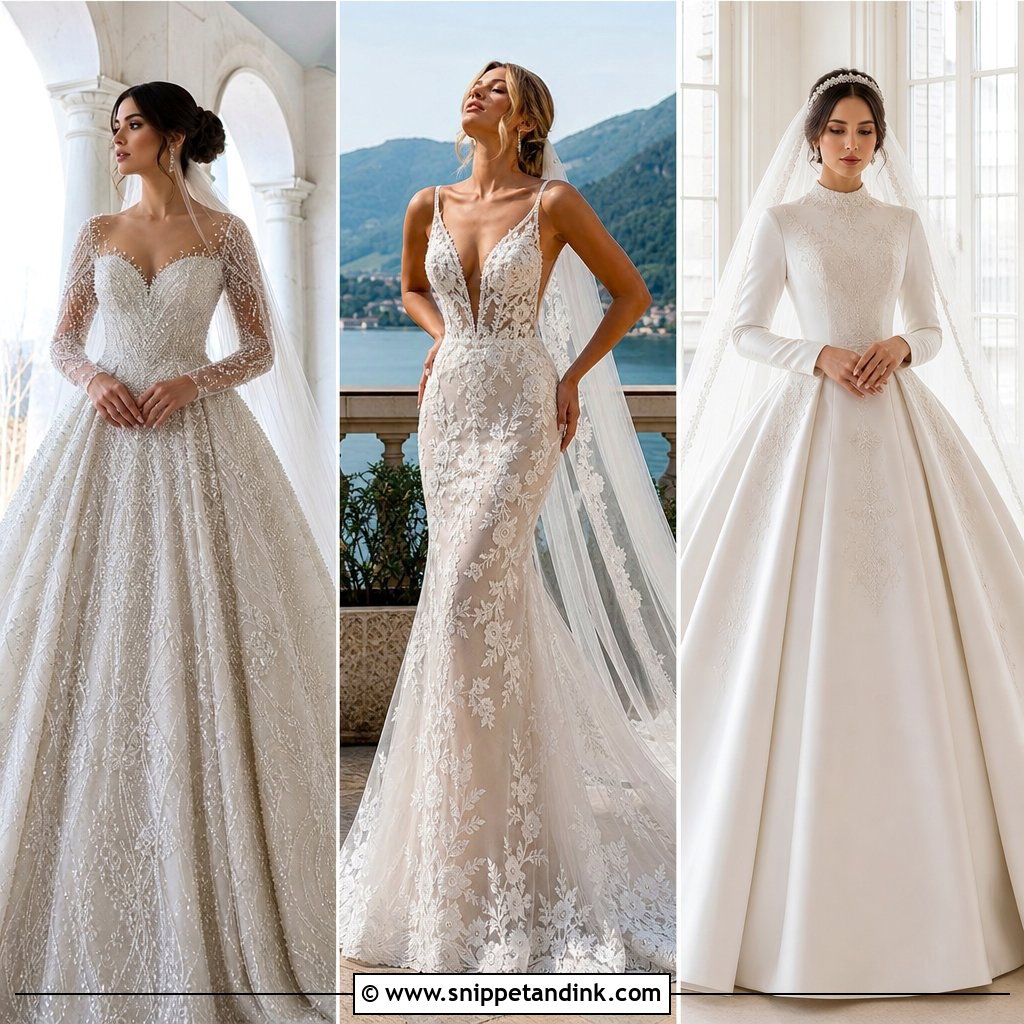
Long sleeves are what most people picture first when they think of a palace wedding. I build this look on a fitted bodice, sheer lace sleeves and a defined waist, flowing into a gently flared skirt in ivory silk or soft white satin. Have the sleeves fitted with your arms bent, not hanging straight, or they will pull at the elbow every time you hold the bouquet. Pearl drops, pointed satin pumps and a cathedral veil edged in matching lace finish it. A small diamond tiara frames the face while the sleeves stay the focus. It suits autumn, winter and indoor ceremonies, and an open bateau neckline keeps all that coverage from feeling heavy.
2. Satin Royal Wedding Ball Gown
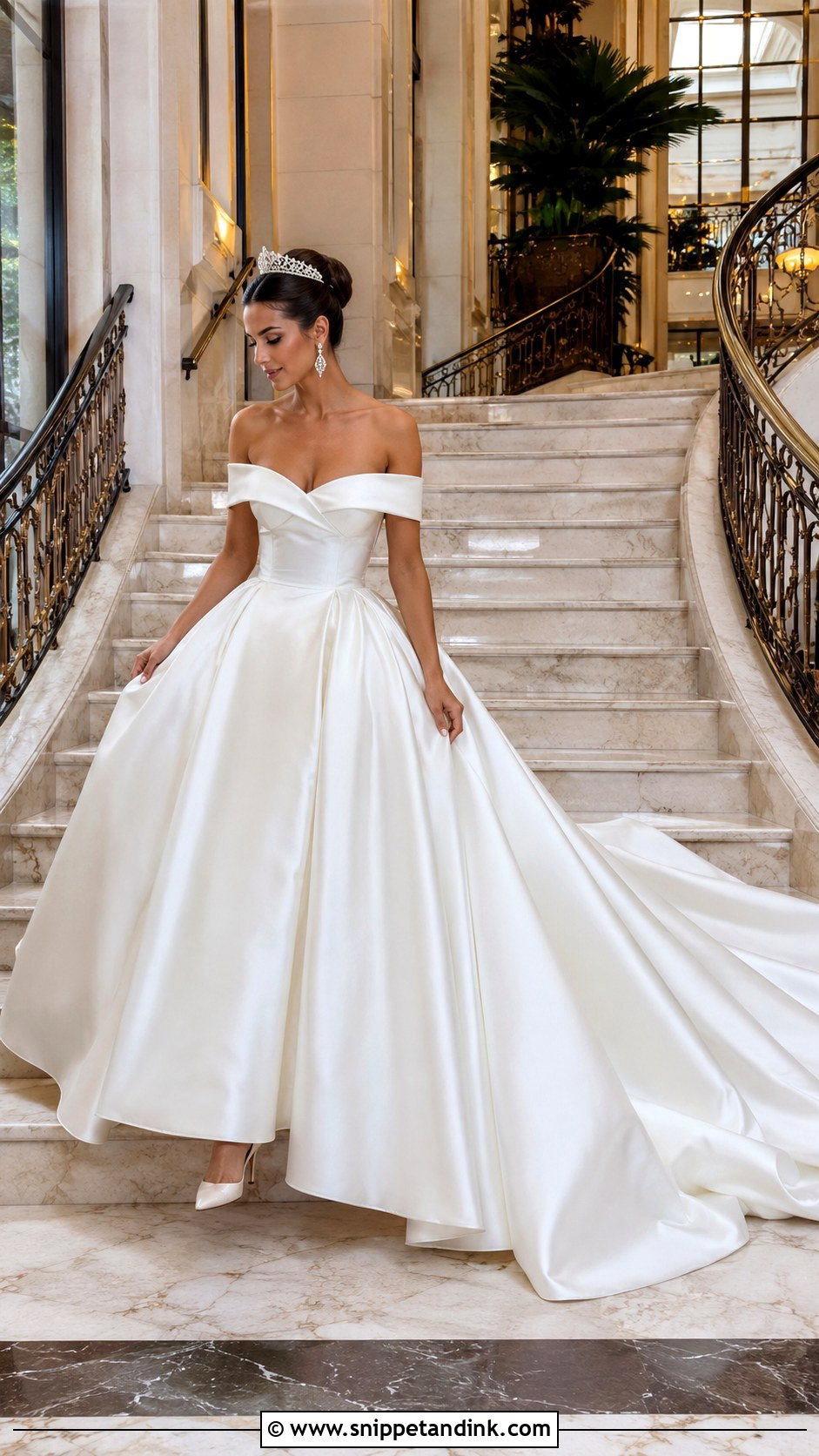
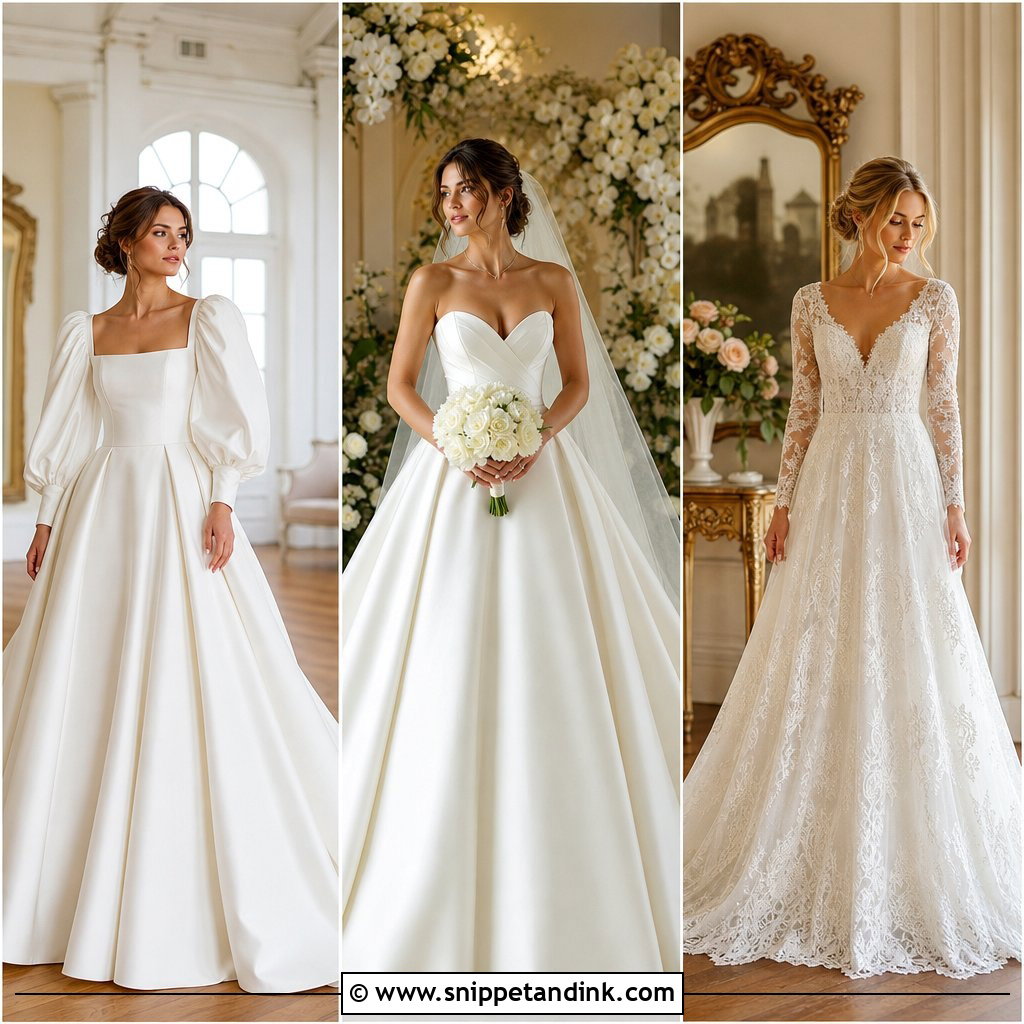
Nobody enters a room quite like a bride in a structured satin ball gown. Satin is also the least forgiving fabric to sit in: it creases across the lap within minutes and shows every fold in flash photography, so I always plan a steamer and five minutes before the portraits. Look for a supportive bodice, a fitted waist and a full skirt with a sweeping train, finished with a clean off-the-shoulder neckline. Crystal earrings, a delicate tiara, ivory pumps and a long plain veil complete it. Because satin already throws light, skip the necklace. Hidden pockets are worth asking for, and the volume needs a ballroom, a wide staircase or a large estate to look right.
3. Lace Royal Wedding Dress
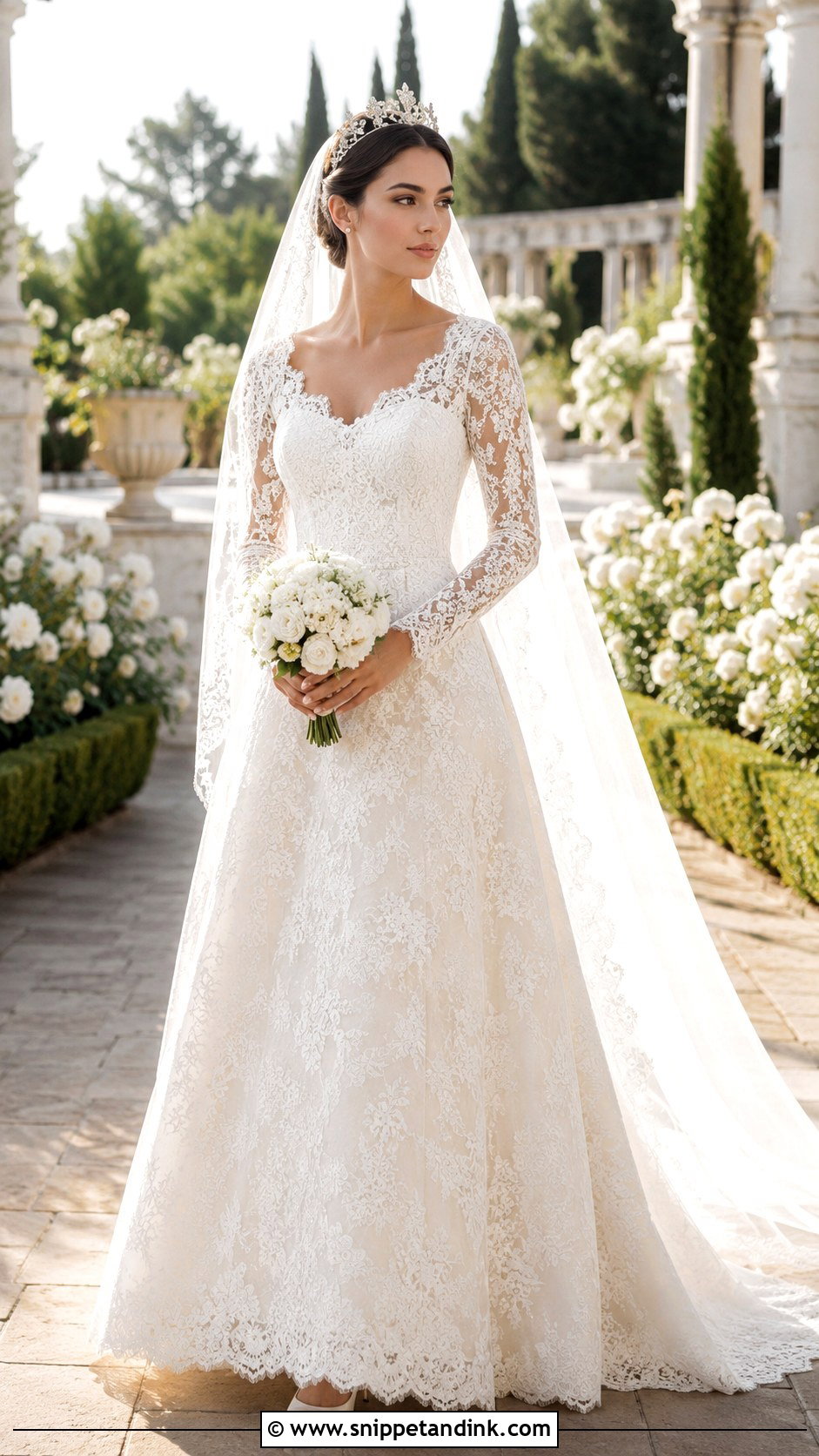
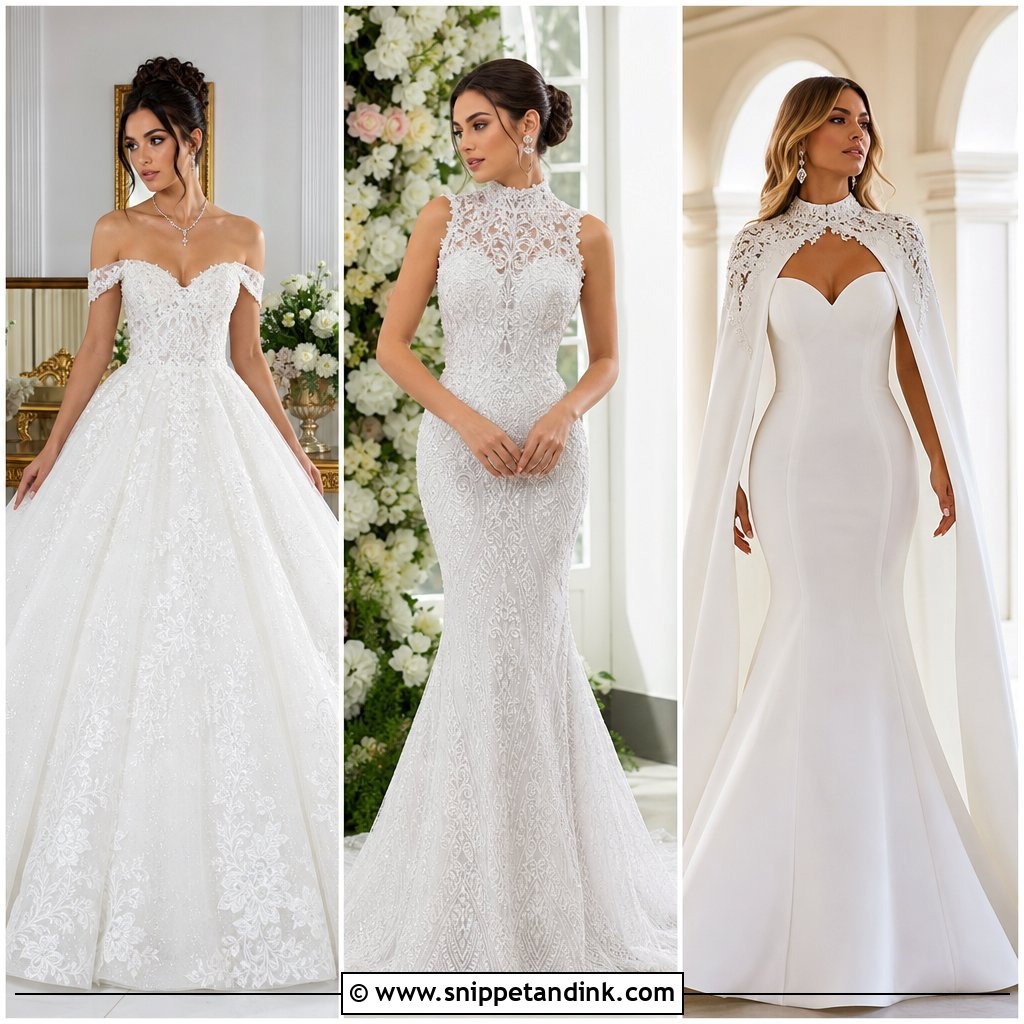
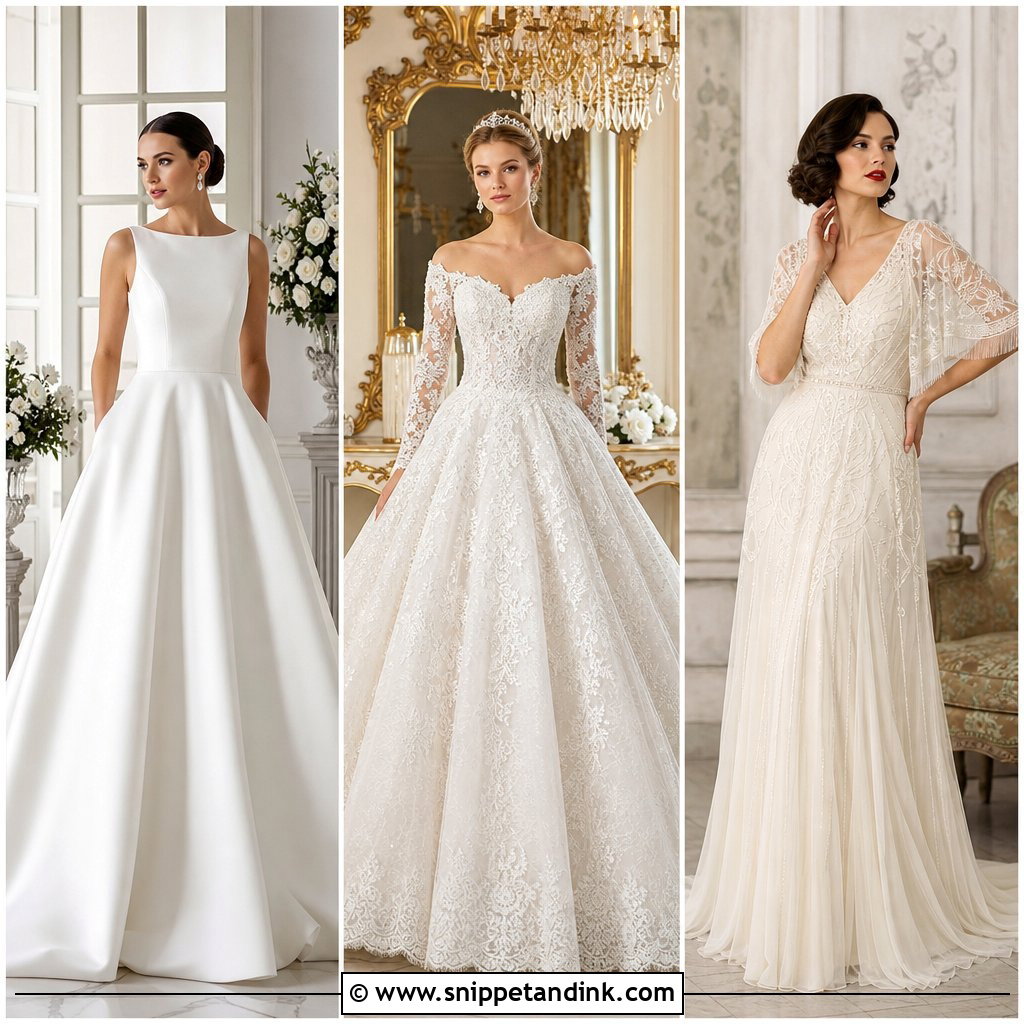
Lace carries the texture so you do not need beading. My preferred version is an A-line with a lace bodice, full-length sleeves and appliqués that drift down onto the skirt, plus a scalloped neckline and covered buttons for a careful back view. Scale matters more than people expect: small motifs suit petite brides, while large open patterns can swamp a small frame but look right on a tall or curvy figure. Pearl studs, a floral diamond tiara, closed-toe ivory heels and a sheer chapel veil are enough. Keep the bouquet compact, white flowers and greenery, so it doesn’t compete with the lace. It is formal enough for a church yet relaxed enough for a garden reception.
4. Minimalist Royal Wedding Dress
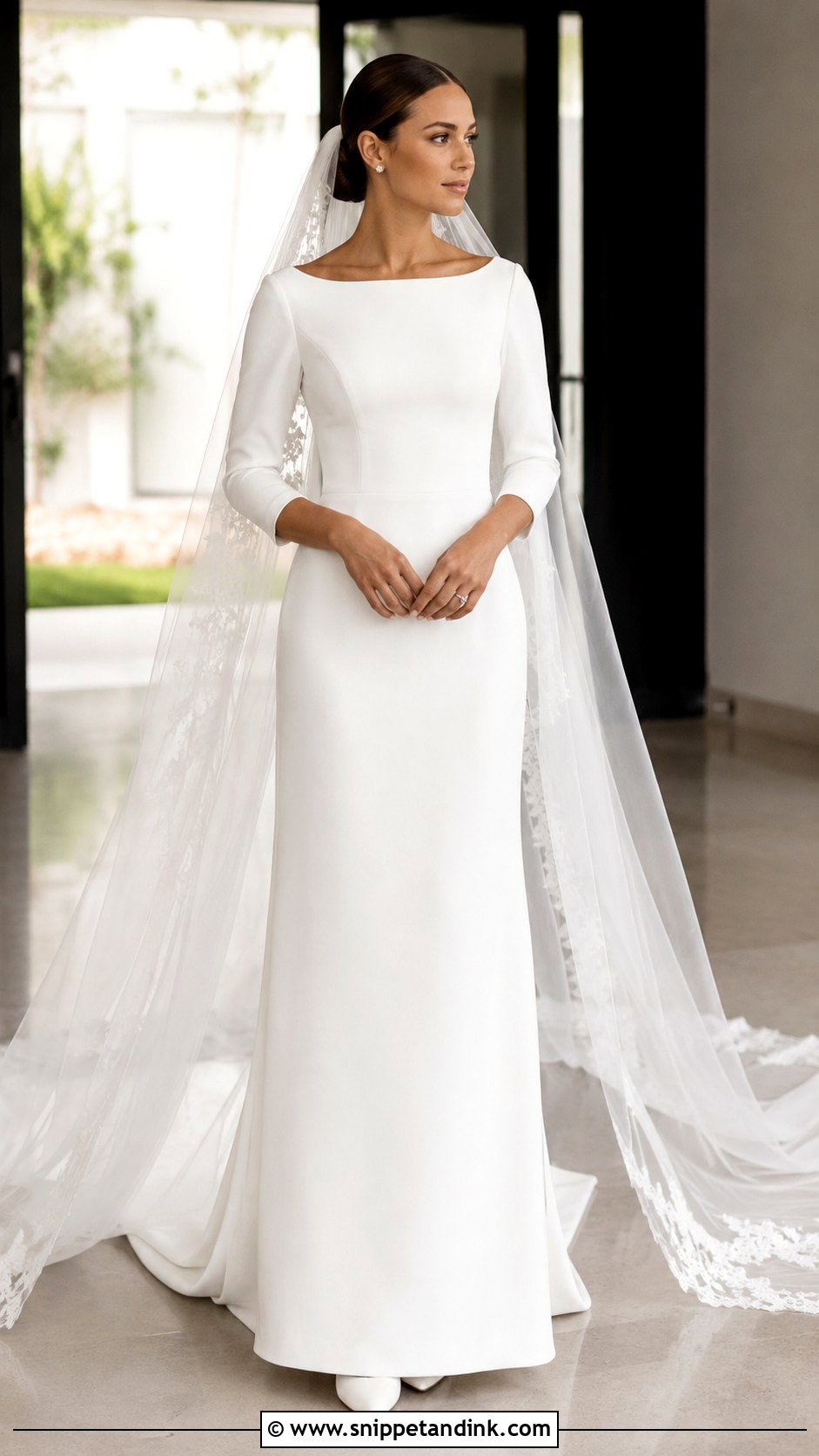
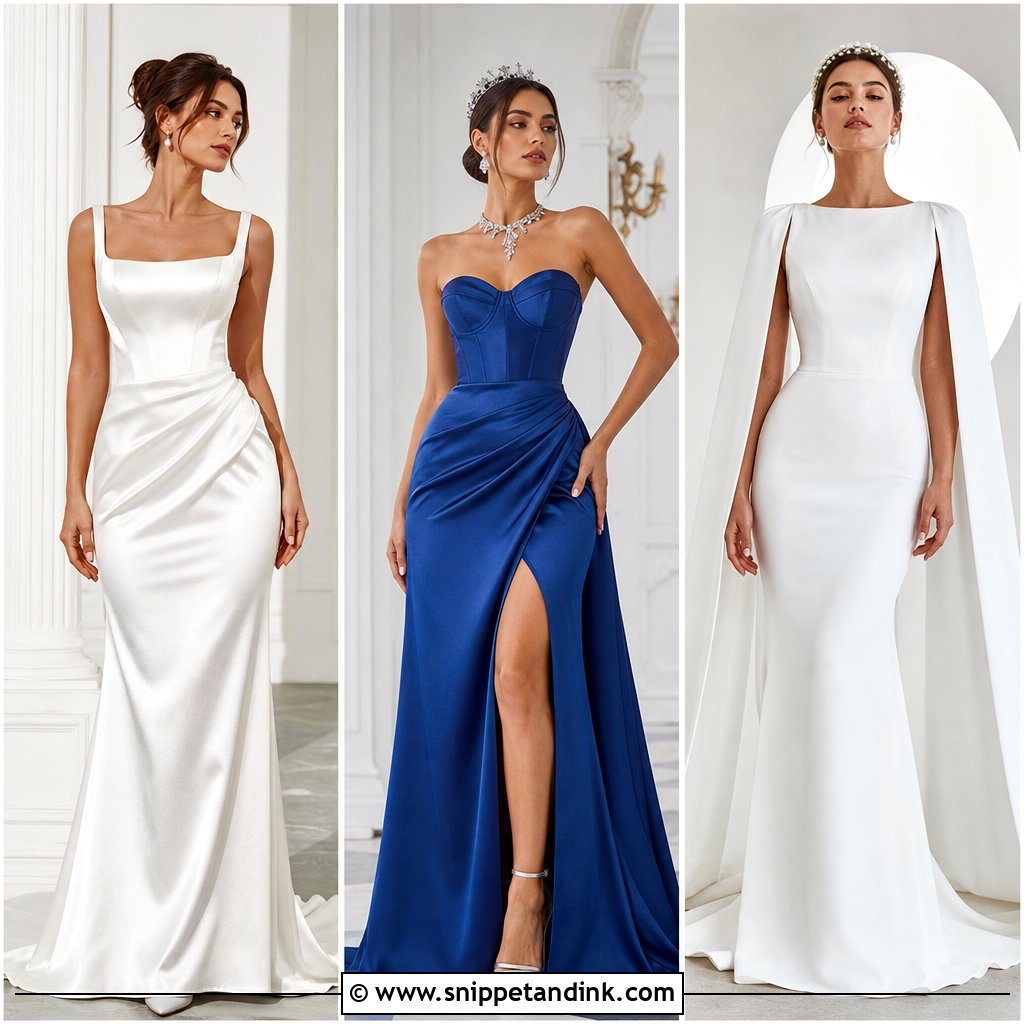
Can a simple dress still look regal? Yes, but only if the fit is exact, because a plain surface hides nothing. I start with smooth crepe or silk, a bateau neckline, three-quarter sleeves and a clean column cut. Crepe drapes close to the body and will show seams and underwear lines, so the foundation garments need to be chosen before the first fitting, not after. A removable overskirt or long train adds ceremony drama without cluttering the design. A sleek low bun, diamond studs, pointed white pumps and a wide cathedral veil complete it. Modern estates and city venues suit it best.
5. High Neck Royal Wedding Dress
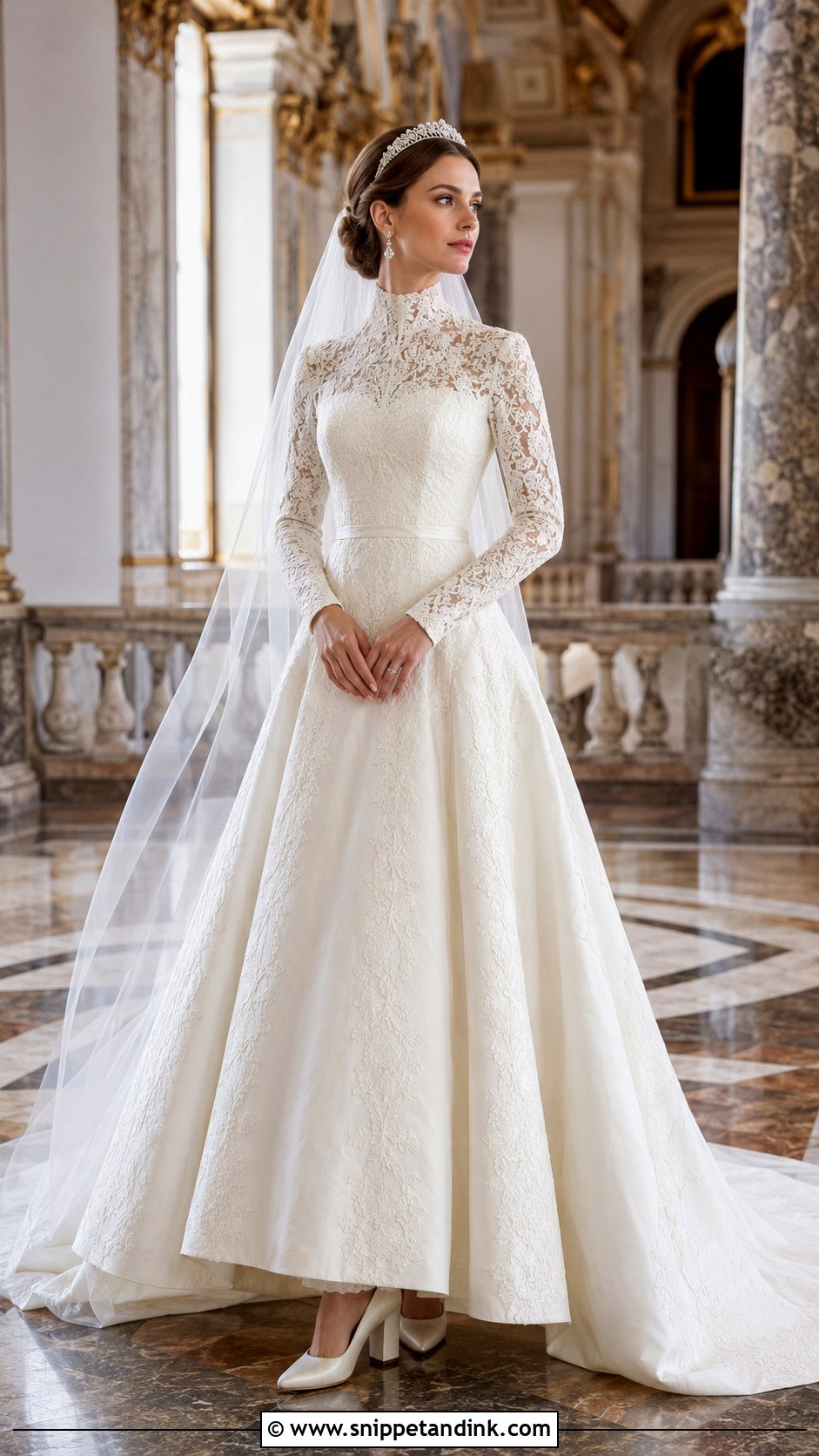
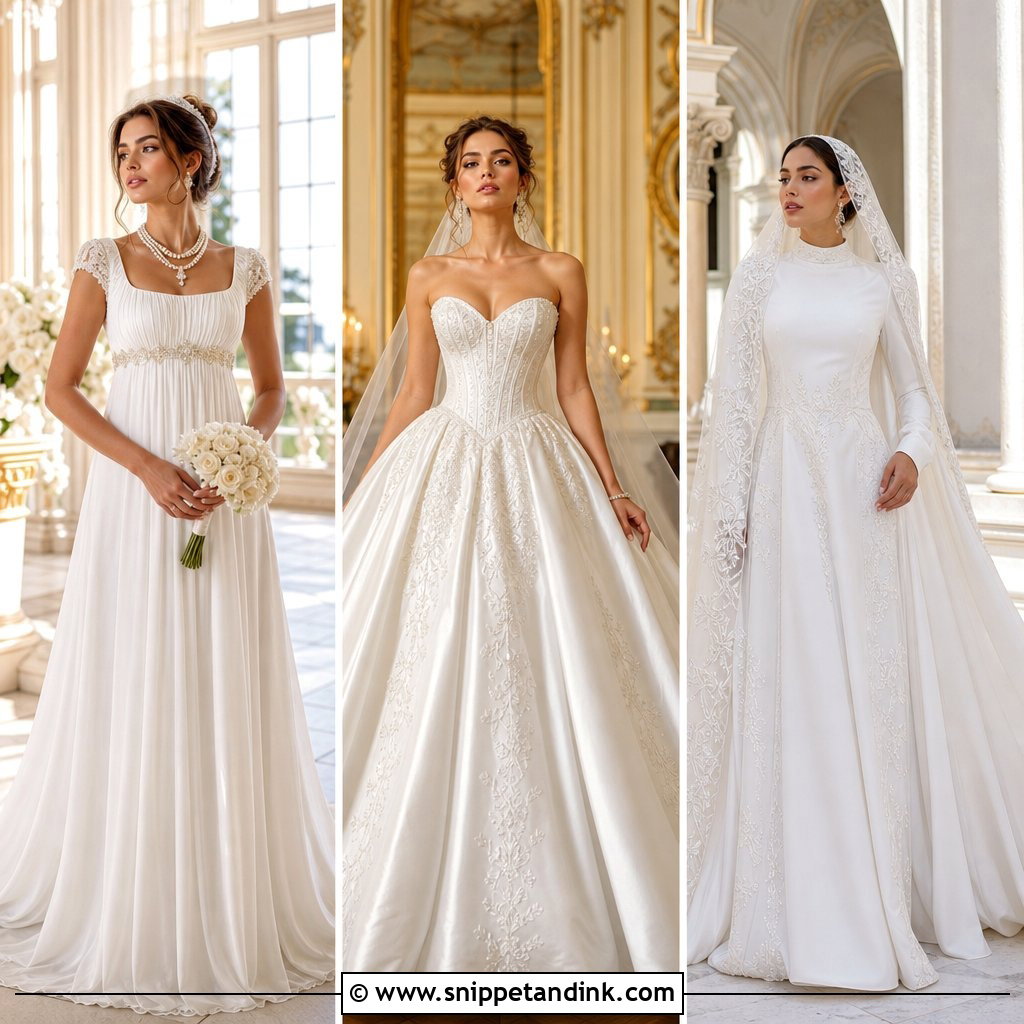
High necklines look dignified and formal, and they also change everything above the shoulders. An ivory gown with a fitted lace collar, long sleeves, a natural waist and a flowing A-line skirt is the classic version; sheer fabric across the shoulders keeps it from feeling heavy. I would steer a bride with a shorter neck toward a lower mock neck, since a tall collar can make her look as if she is tucked into the dress. Hair goes up, into a polished bun with the veil secured beneath it, and earrings should be pearl-and-diamond studs or small drops that clear the collar. A slim jewelled headband is lighter than a tall tiara here. It is a cool-weather dress.
6. Pearl Embellished Royal Wedding Dress
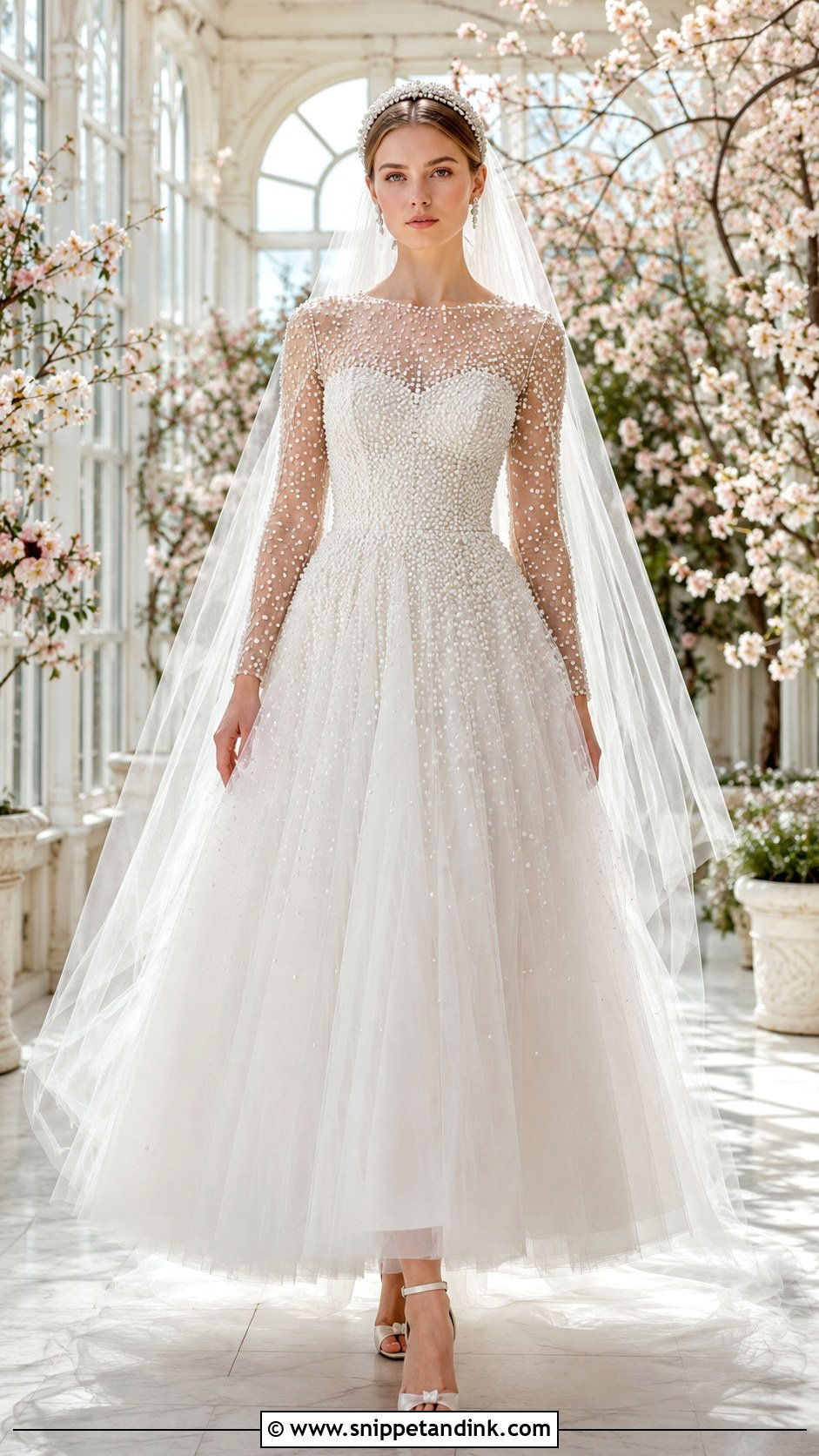
Pearls glow rather than sparkle, which gives a softer kind of regal. I like them scattered over a fitted ivory bodice with long sheer sleeves and a tulle skirt, kept light at the waist so the shape stays visible. Check how the pearls are attached before buying: hand-sewn pearls on a heavily embellished bodice can snag on lace sleeves or a veil, and loose ones should be secured by the seamstress during alterations. Pearl earrings, satin ankle-strap heels, a small clutch and a plain fingertip veil finish it, with a low pearl headband instead of a crown. On a densely decorated dress, drop the necklace and keep the bouquet to simple white flowers.
7. Square Neck Royal Wedding Dress
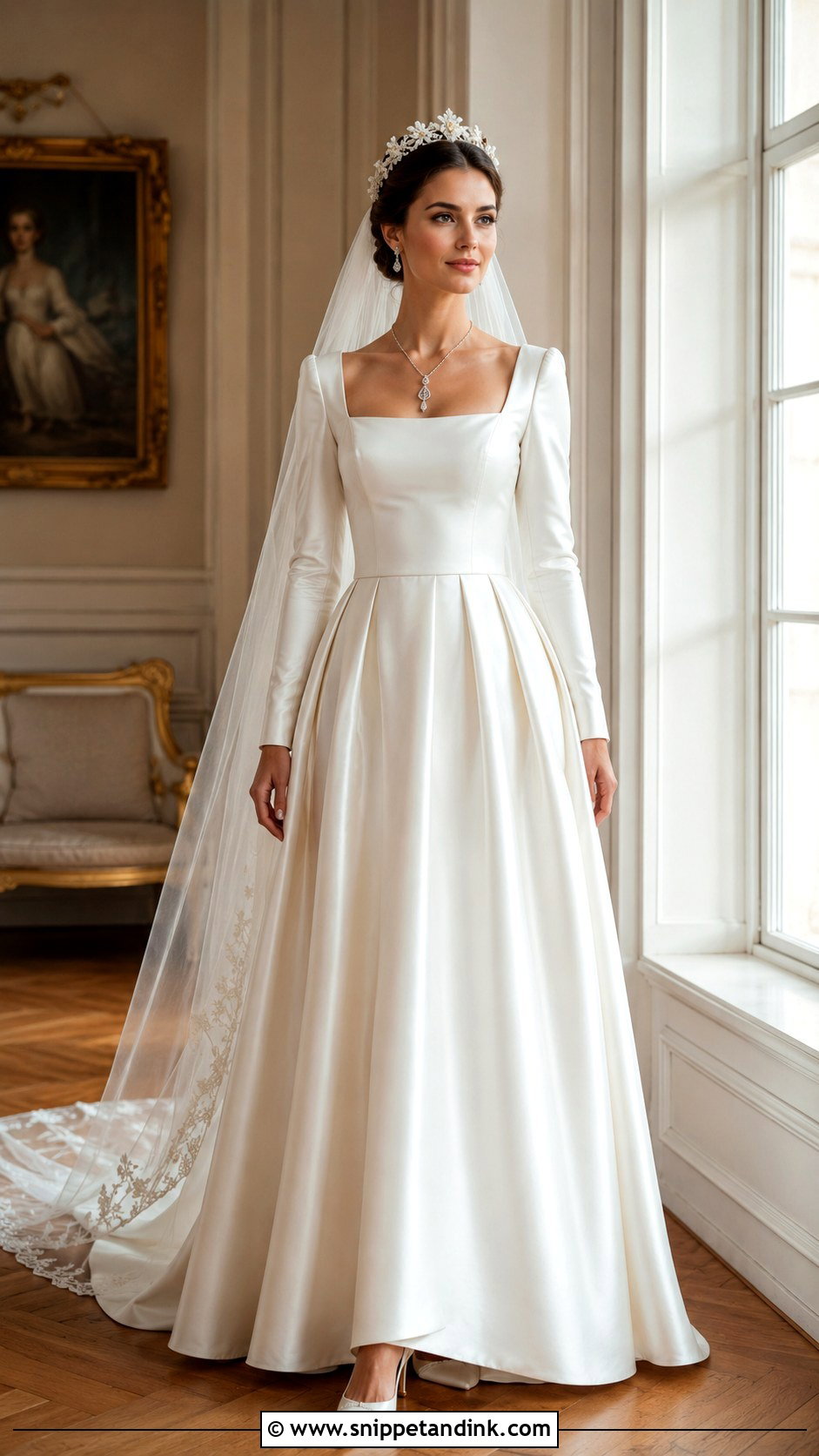
Square necklines have a historic feel but read modern when the tailoring is clean. The version I’d choose has a structured square-neck bodice, full-length sleeves and a softly pleated satin skirt, with the waist fitted closely to balance that strong horizontal line. The open neck leaves room for a fine diamond pendant or short pearl strand. Add drop earrings, ivory slingbacks, a floral tiara and a chapel-length veil anchored behind the crown. The neckline gapes if the bodice is even slightly loose, so ask for a corseted interior and slightly wider straps. Most body shapes wear it well because it shows the collarbone and marks the waist.
8. Off Shoulder Royal Wedding Dress
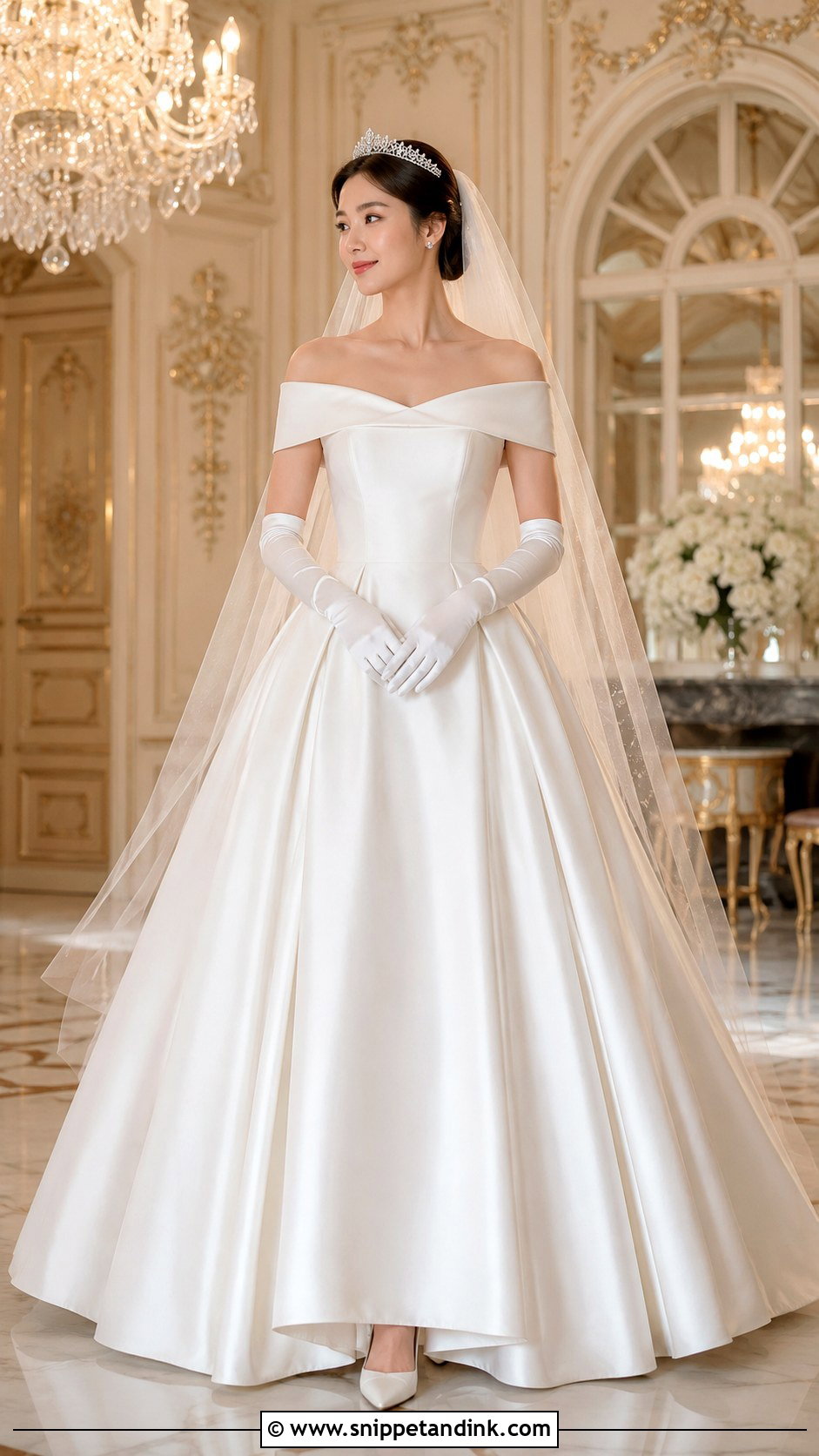
An off-shoulder gown with a folded satin neckline gives regal drama in a softer key. A fitted bodice, full skirt and medium train keep the proportions balanced, and long detachable gloves add a ceremonial note. Diamond studs, a low crystal tiara, pointed ivory heels and a sheer veil finish it; a large necklace would fight the bare shoulders. The real issue is arm movement. With the sleeves sitting on the upper arm, lifting your arms for a hug or a first dance can pull the neckline down, so I always ask for internal straps or an illusion panel. It suits evening ceremonies and formal indoor venues.
9. Royal Wedding Dress With Cape
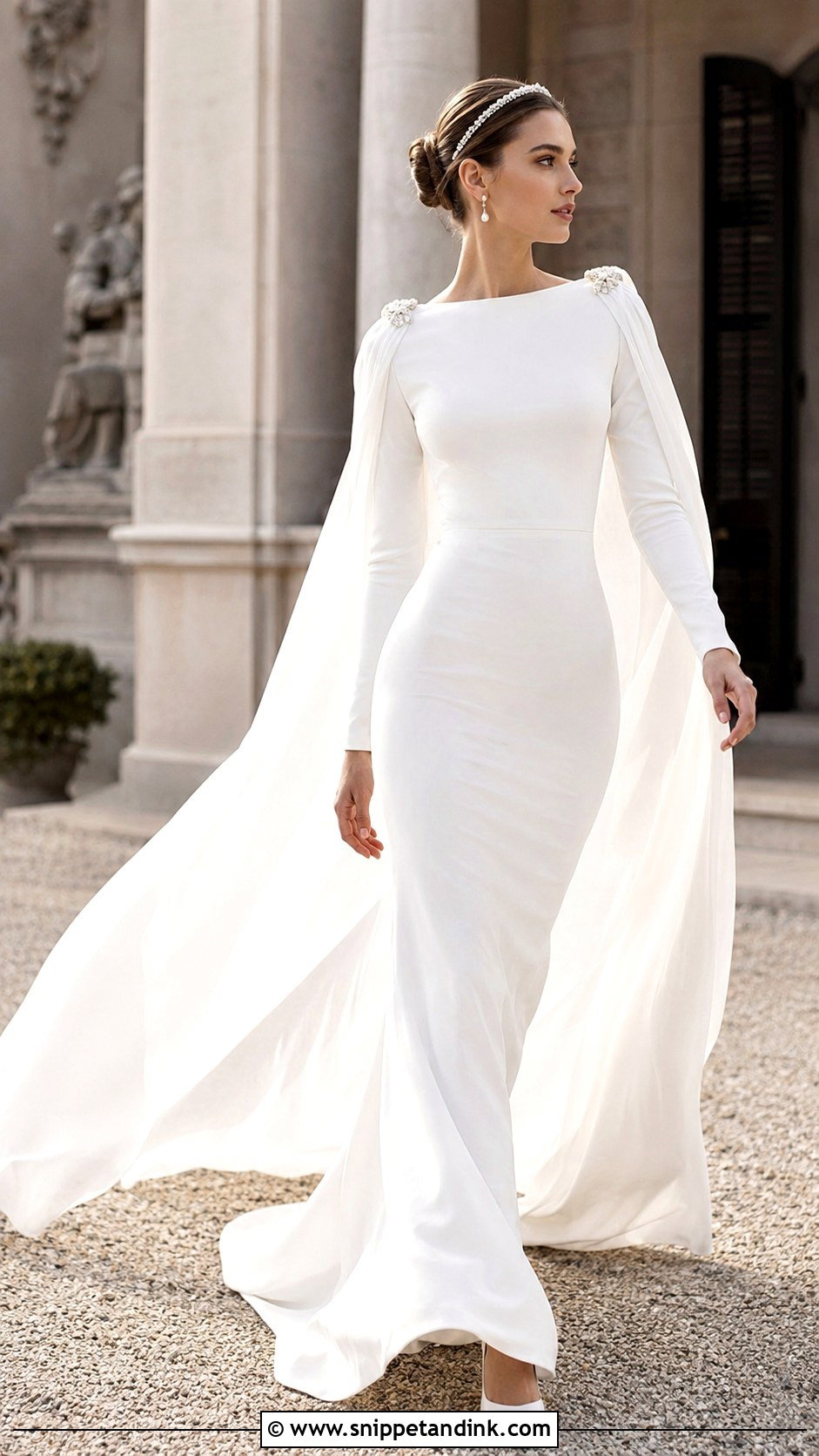
A cape replaces the veil and gives movement every time you walk. I pair a fitted crepe gown with long sleeves and a gently flared skirt with a floor-length chiffon cape fastened at the shoulders by crystal clasps. The cape should run slightly beyond the train so it floats behind you. Wind is the catch outdoors: chiffon lifts and wraps around you in a breeze, so for an estate lawn I ask for small weights sewn discreetly into the hem. Pearl earrings, white pumps and a narrow diamond headband complete it. Keep the bodice clean, and choose a detachable cape so you can dance.
10. Royal Wedding Dress With Cathedral Veil
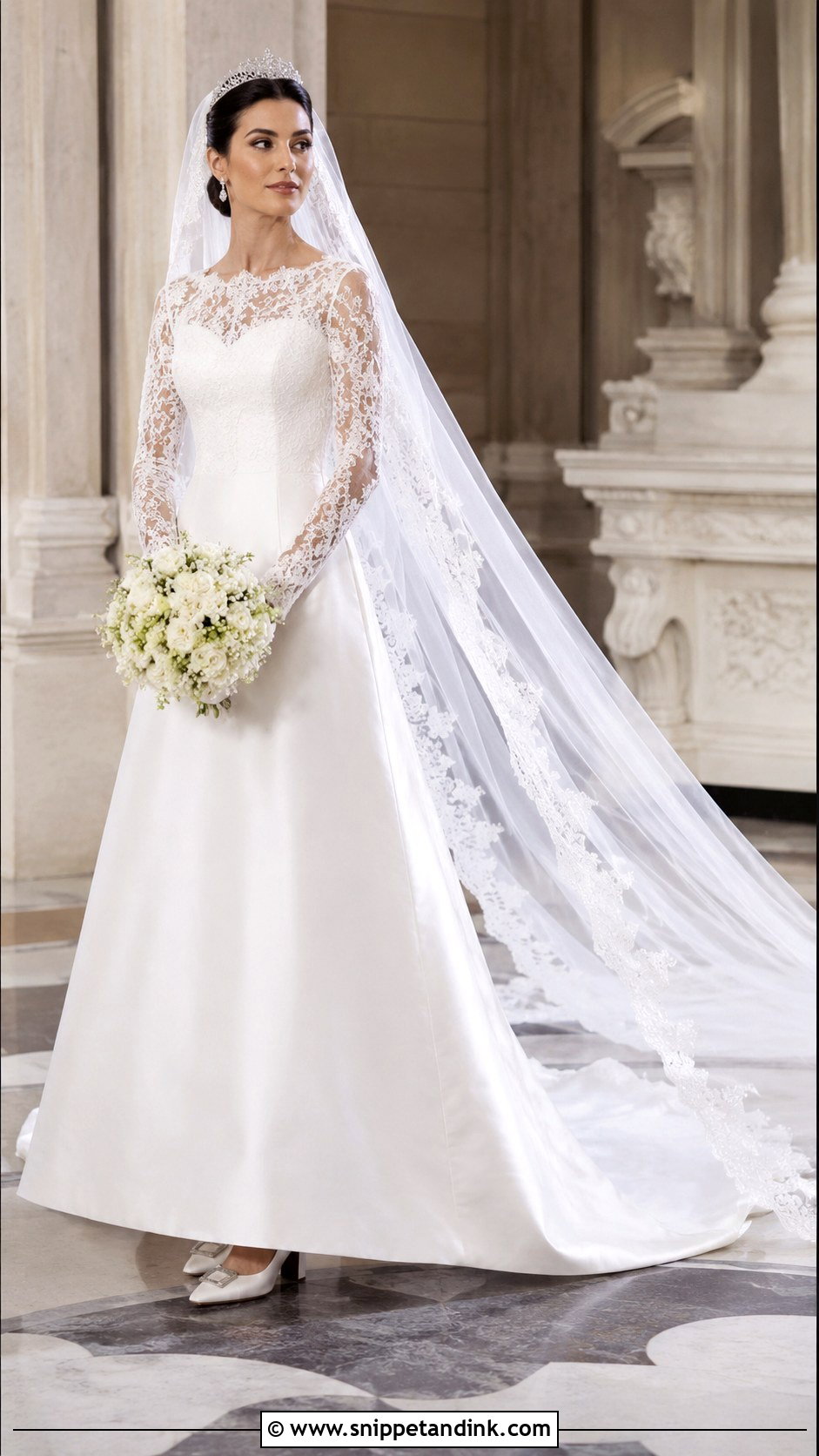
Nothing says formal ceremony more quickly than a cathedral veil. Pair it with a fitted lace-and-satin gown, long sleeves, a V-neck and a full A-line skirt, and pick a veil that extends past the train with lace edging that echoes the gown. Crystal drops, a classic tiara and satin block heels hidden under the skirt finish it. Keep the bouquet medium-sized. A veil this long needs a wide aisle and someone assigned to it: I brief a bridesmaid to lay it out before the processional and again before portraits, and to gather it before you turn around at the altar.
11. Embroidered Royal Wedding Dress
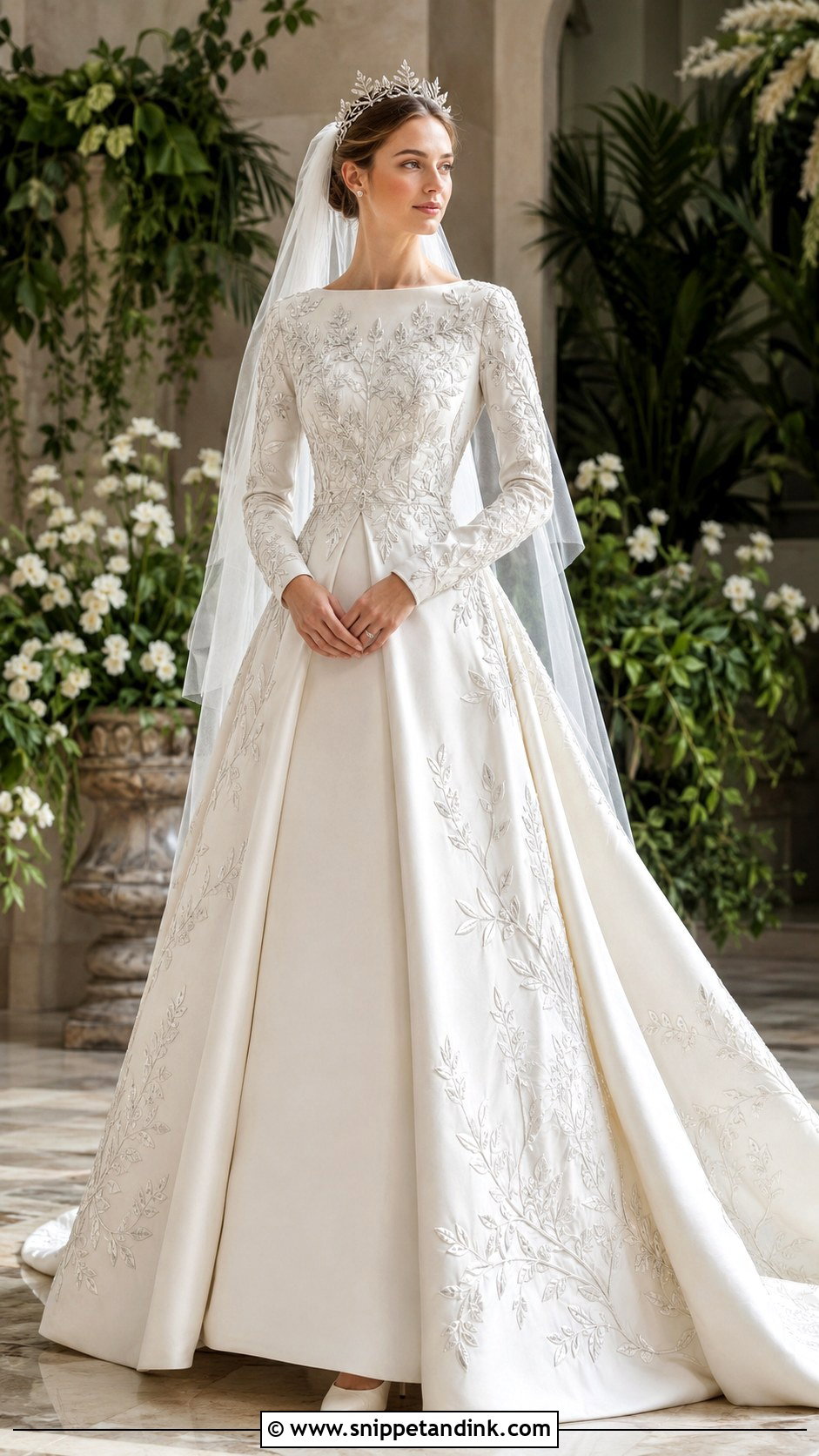
Embroidery is how I make a royal-style gown personal rather than a copy of someone else’s. Botanical threadwork across the bodice, sleeves and the outer edge of the train on ivory silk looks rich without crystals. You can ask for flowers tied to your family, your season or the place you are marrying, and good embroidery houses will adapt a motif. Keep the base simple, fitted waist and plain A-line skirt, so the surface detail does not overwhelm. Hand embroidery adds weeks to production, so raise it at the very first appointment. Diamond studs, ivory pumps, a plain tulle veil and a small leaf tiara finish it, with the palette kept to soft white, silver or pale champagne.
12. Royal Wedding Dress With Detachable Train
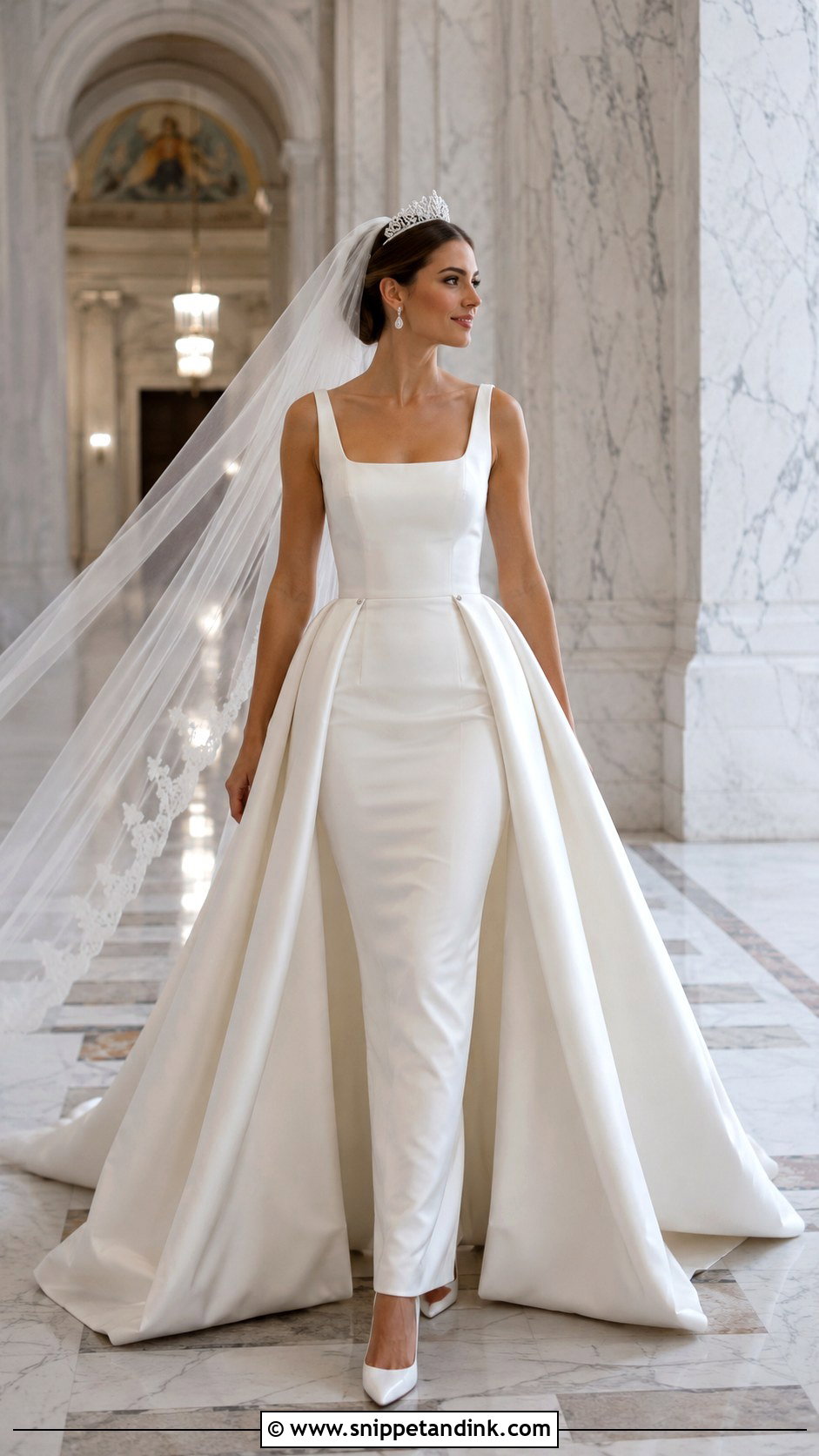
A detachable train lets you be formal for the ceremony and free for the reception. The base is a fitted mikado gown with a structured bodice, square neckline and slim floor-length skirt, with a full overskirt or train attached at the waist. Mikado has the stiffness to hold that ballgown shape, which is why I choose it here. Crystal earrings, a simple tiara, white pumps and a long veil for the ceremony; after portraits, remove the train and switch to a short veil or jewelled comb. Practise taking the train off with whoever will help you on the day, because hidden hooks and snaps are fiddly under pressure. The join should lie completely flat at the waist.
13. Vintage Royal Wedding Dress
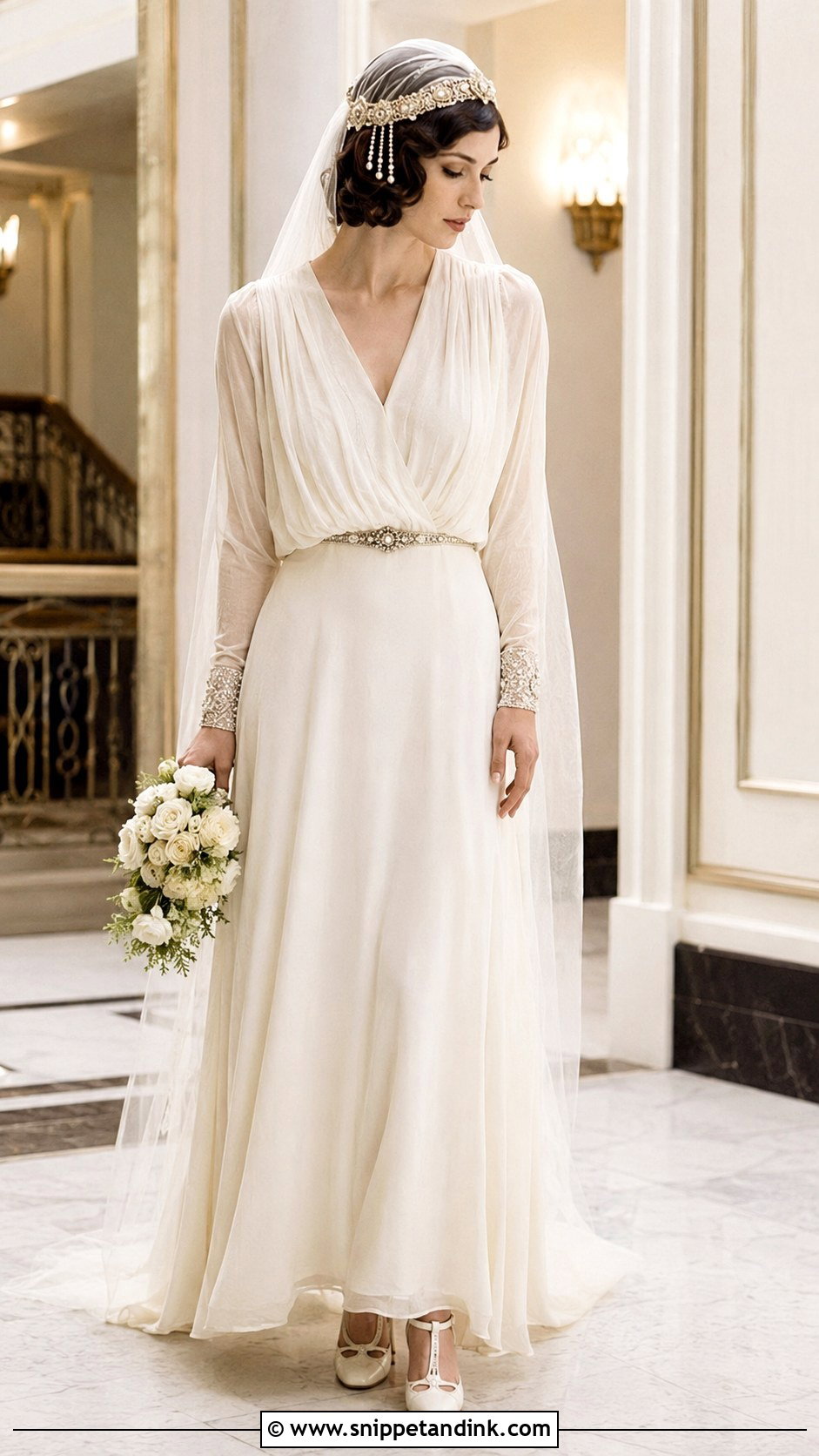
Vintage works best when you borrow from one era, not three. I’d pick a soft ivory gown with a modest V-neck, a lightly bloused bodice, long sleeves and a flowing skirt, then add Art Deco beadwork at the cuffs and waist. A pearl headpiece, drop earrings, T-strap shoes and a long sheer veil complete the look. If you are wearing a genuine vintage dress, take it to a specialist cleaner and seamstress early, since old silk can be fragile at the seams and may need reinforcing before alterations. A narrow beaded belt adds waist definition to the fluid fabric. It looks at home in old hotels, libraries and restored houses.
14. Royal Wedding Dress With Tiara
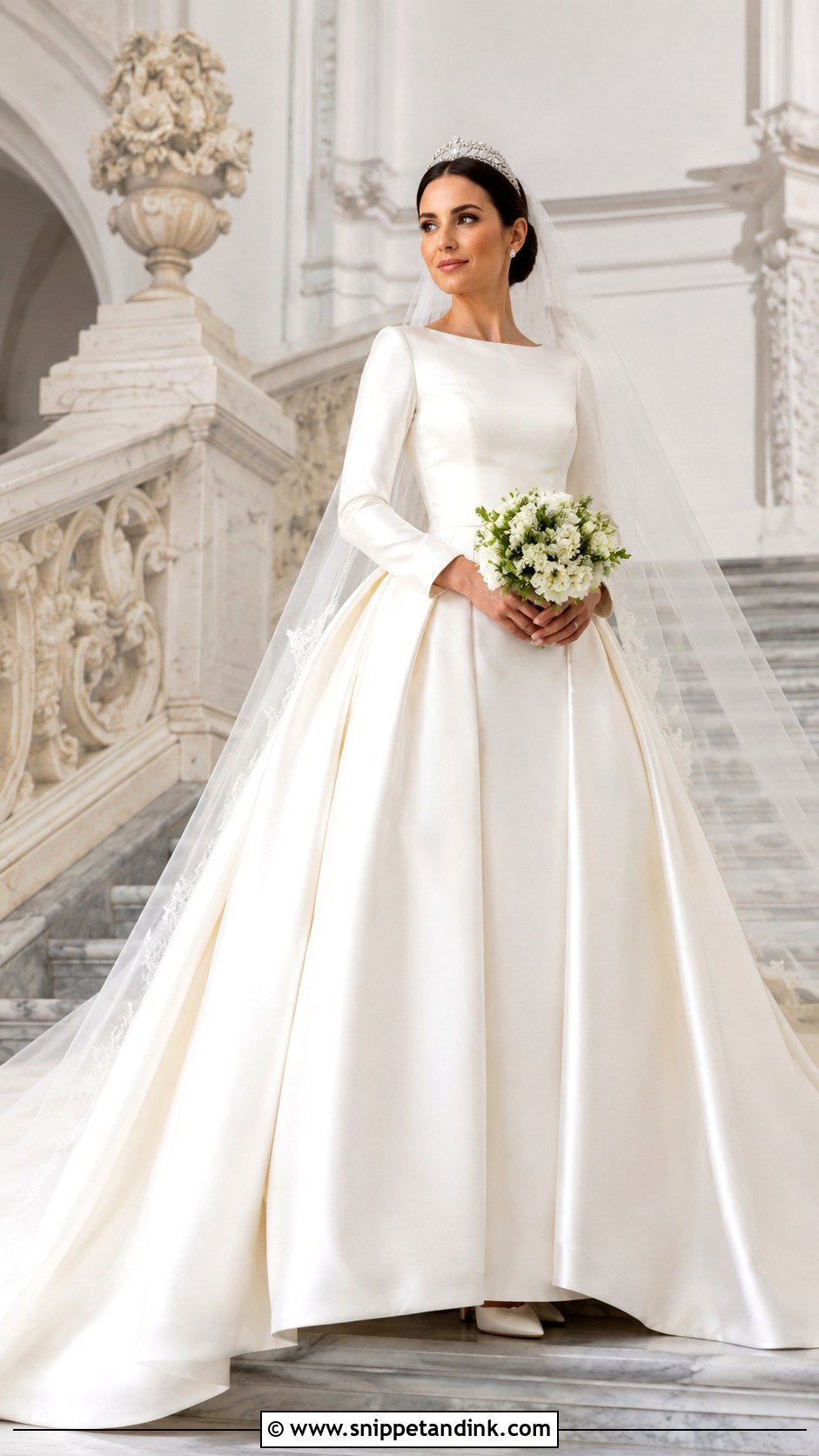
When the tiara is the star, the gown should be quiet. A clean ivory ball gown with a portrait neckline, fitted bodice and smooth pleated skirt gives the crown room. Add a medium-height crystal tiara, matching studs, satin pumps and a cathedral veil placed behind the crown. Tiaras sit best on a low bun or polished half-up style with some texture underneath; on very sleek, freshly washed hair they slide. I bring the tiara and veil to the hair trial and have the bride walk, turn and hug, because two headpieces together can pull. Skip the necklace.
15. Modest Royal Wedding Dress
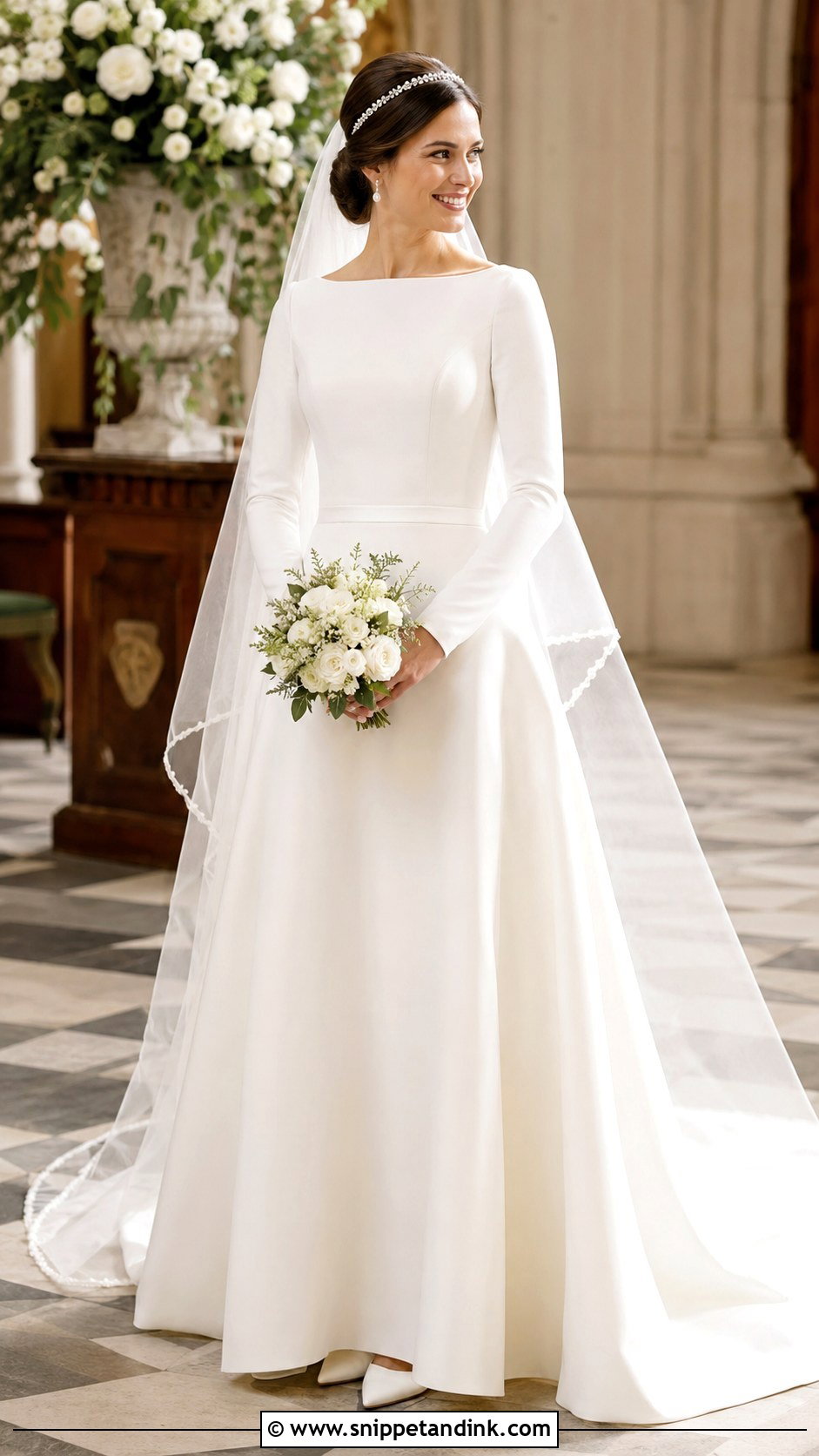
Full coverage does not have to mean heavy. I look for a lined gown with long sleeves, a higher bateau neckline, a shaped waist and an A-line skirt in lightweight satin or crepe, so the silhouette never feels bulky. Seams placed to define the waist matter more here than on any other gown, because they are what stops a covered dress from looking shapeless. Covered buttons down the back add interest to a simple design. Pearl earrings, closed-toe heels, a delicate headpiece and a long veil with minimal edging finish it. Ask for breathable lining and sleeves with a little stretch; you will be in them all day.
16. Royal Wedding Dress With Gold Details
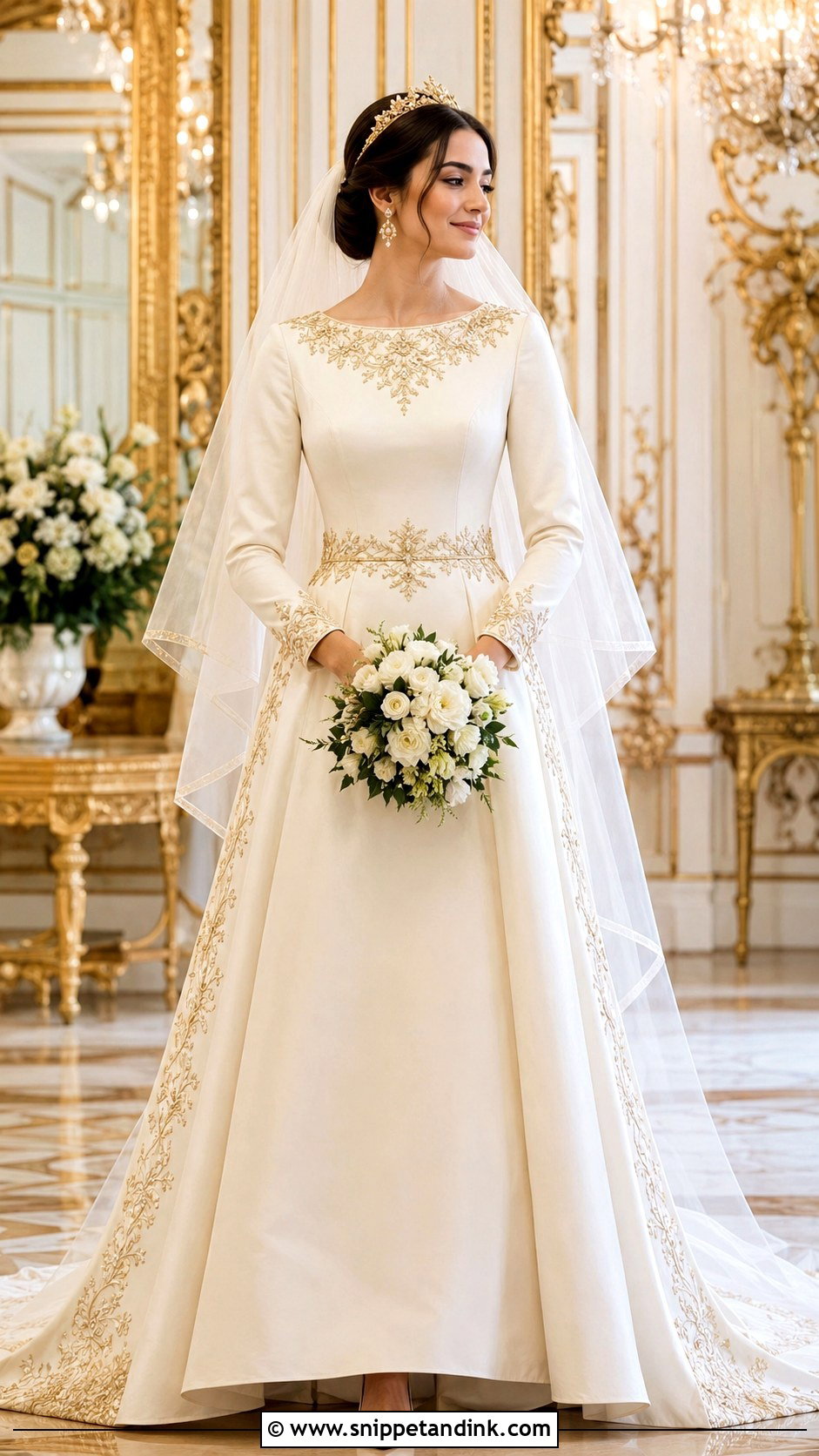
Gold embroidery warms up ivory and makes a gown feel ceremonial. Keep it to the neckline, cuffs, waist and train on a long-sleeve dress with a fitted bodice and controlled A-line skirt. The rule I hold to is one metal: gold-and-pearl earrings, a gold-toned tiara and no silver anywhere, including the shoe buckle and the bouquet pin. White flowers tied with a narrow gold ribbon pull it together, and the veil stays plain. Look at gold thread in daylight and in warm indoor light before committing, since some metallic threads read brassy under tungsten bulbs. Ornate ballrooms and old venues suit it.
17. Royal Wedding Dress With Overskirt
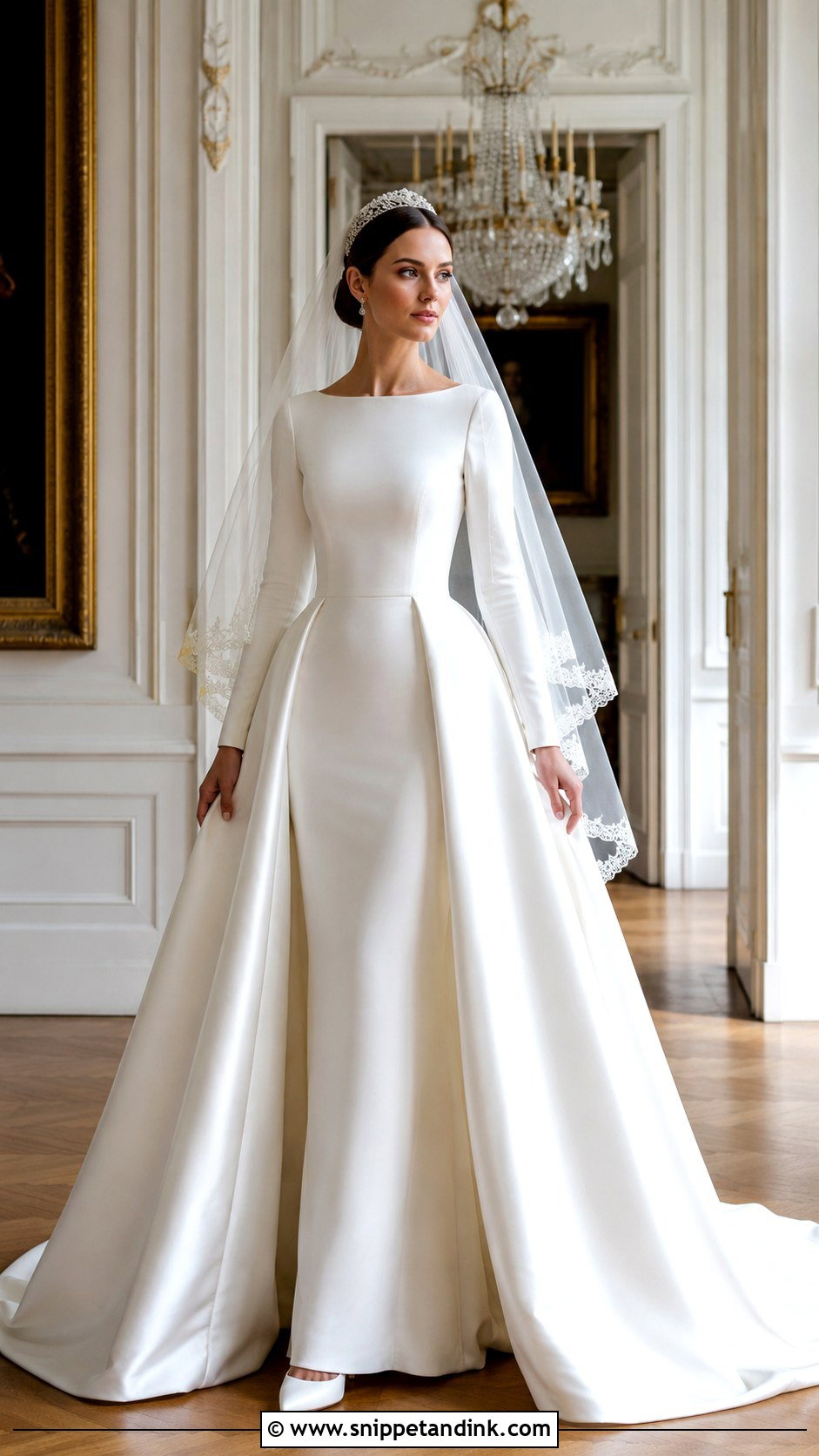
An overskirt turns a slim gown into a ceremony ballgown and back again. Underneath, a strapless or cap-sleeve crepe column; on top, a removable satin overskirt with deep pleats, a defined waistband and a sweeping train, open slightly at the front to show the dress beneath. Matte crepe under softly shining satin gives depth, though matching fabrics work too. A crystal headband, drop earrings, white pumps and a fingertip veil complete it. Overskirts are heavy, so I make sure the waistband fastens firmly and sits on the dress’s own waist seam, otherwise the weight drags the column down.
18. Royal Wedding Dress With Bow
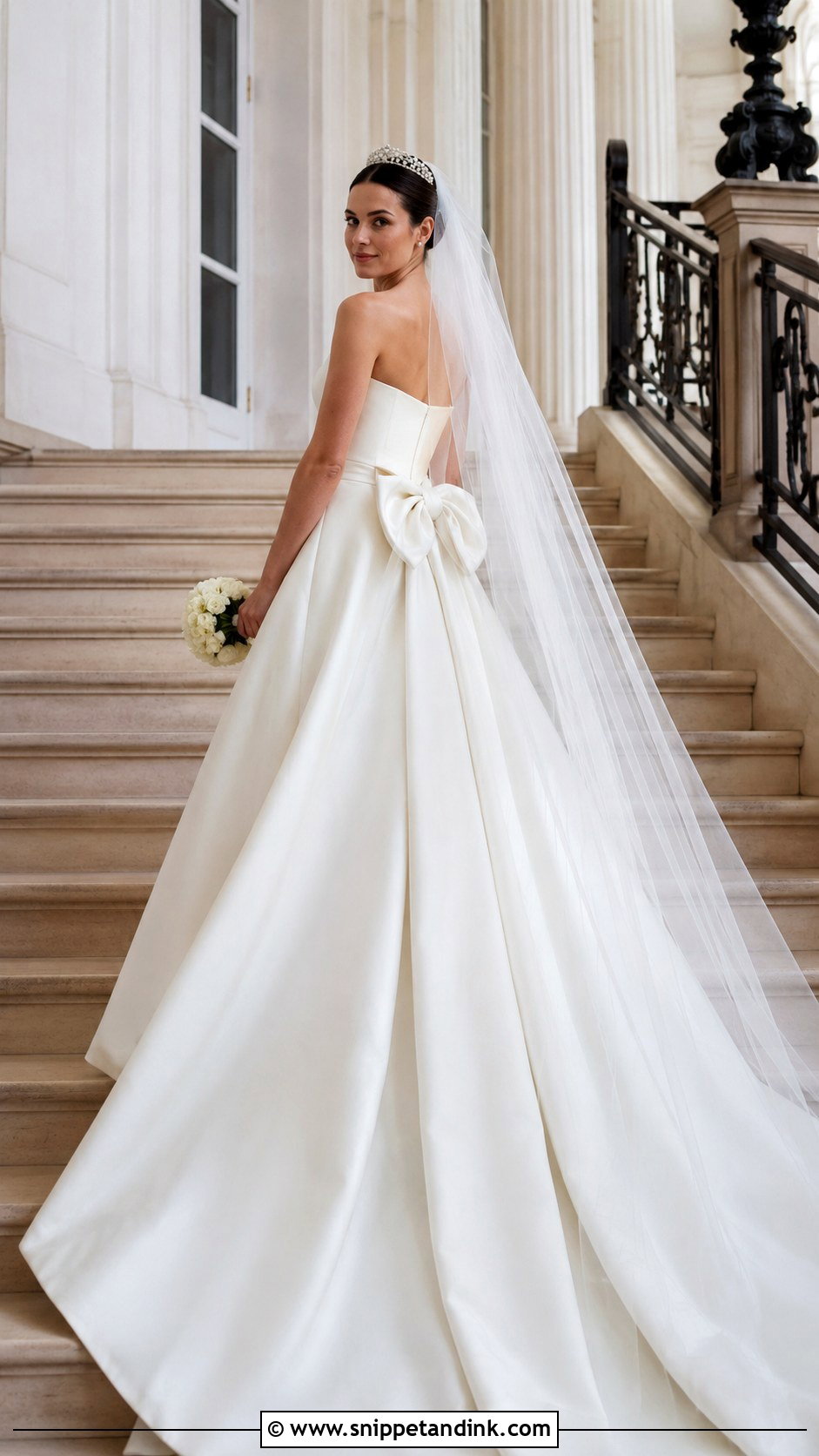
A big structured bow at the back waist is a surprise for the guests watching you walk away down the aisle. I pair it with a smooth mikado gown, fitted bodice, straight neckline and full skirt, with the bow’s tails melting into the train. Mikado is the right fabric because it holds a crisp loop; a soft satin bow wilts by the evening unless it is interfaced. Scale the bow to the bride: smaller on a petite frame, wider on a tall one. Pearl studs, ivory pumps, a narrow tiara and a clean cathedral veil finish it. Keep the front plain.
19. Royal Wedding Dress Suit
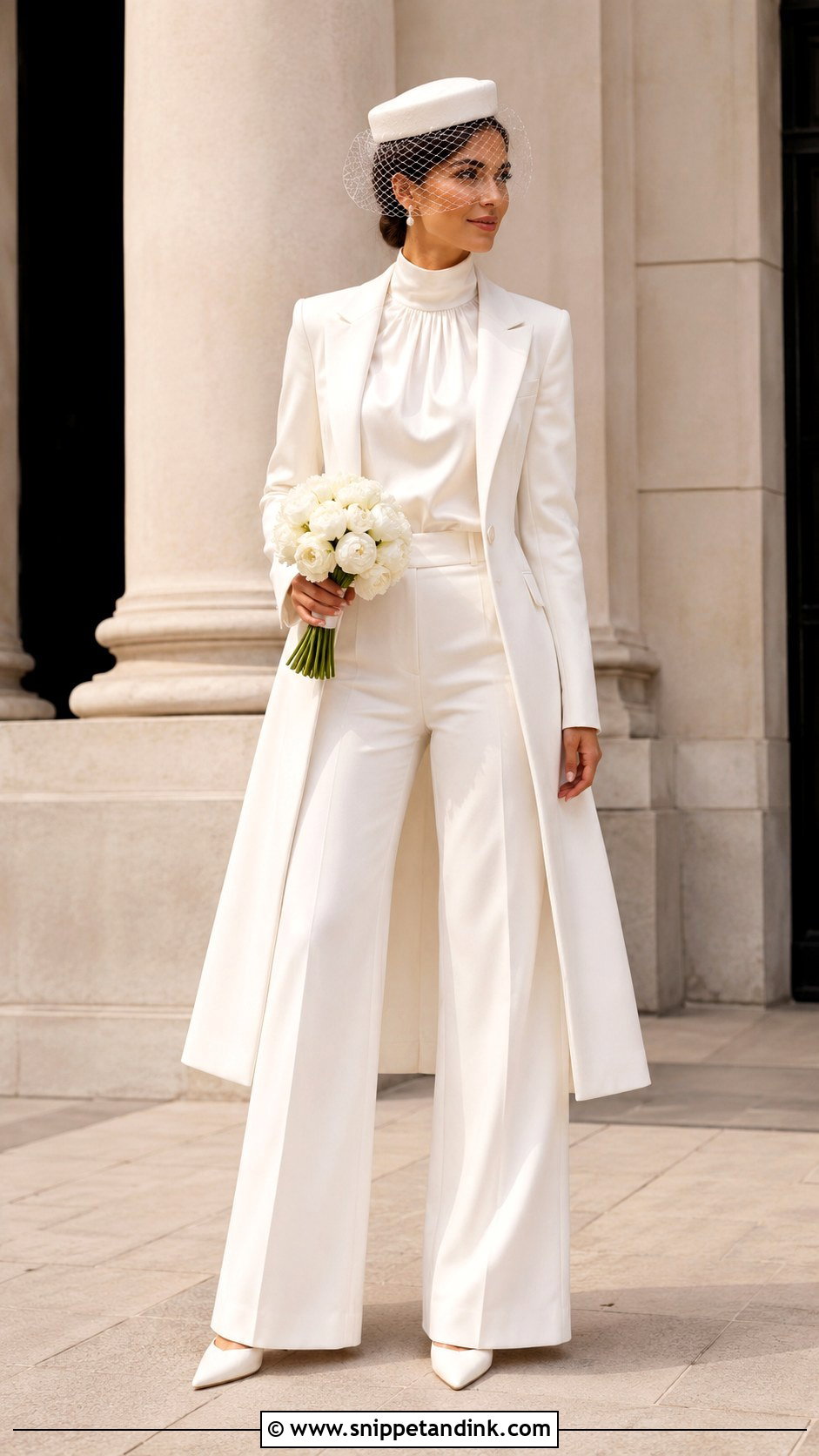
A suit can look every bit as formal as a gown for a civil ceremony, a small celebration or a second wedding. Choose a longline blazer with a defined waist over wide-leg trousers or a midi pencil skirt, and a silk camisole or high-neck blouse with a little pearl detail underneath. Fabric weight is everything: a thin suiting creases at the elbows and seat, while a heavier crepe or wool blend holds its shape and photographs crisply. Pointed pumps, pearl earrings, a small structured hat and a short birdcage veil complete it. Head-to-toe ivory lengthens the line, and satin lapels and covered buttons add the ceremony detail.
20. Royal Wedding Reception Dress
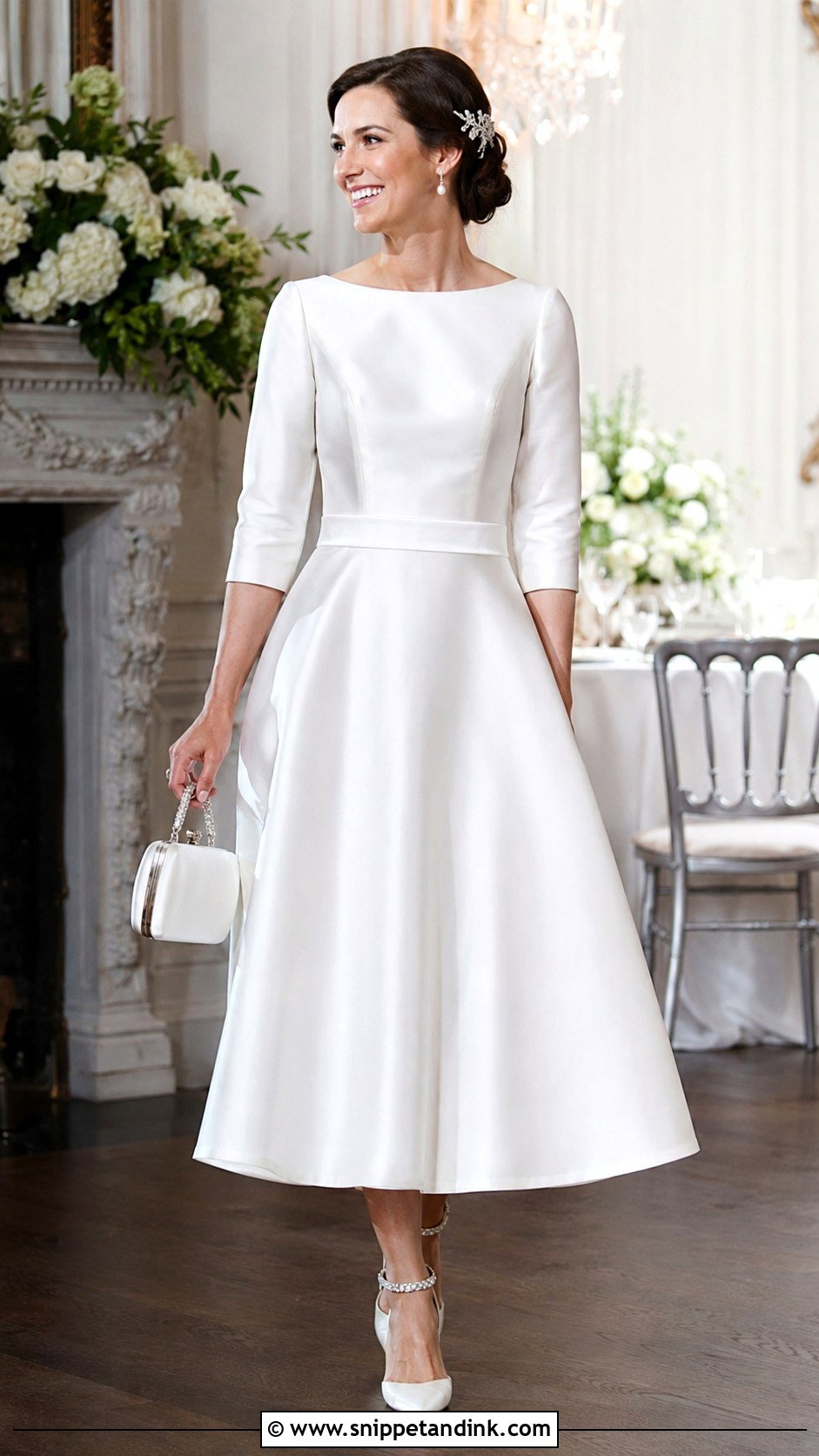
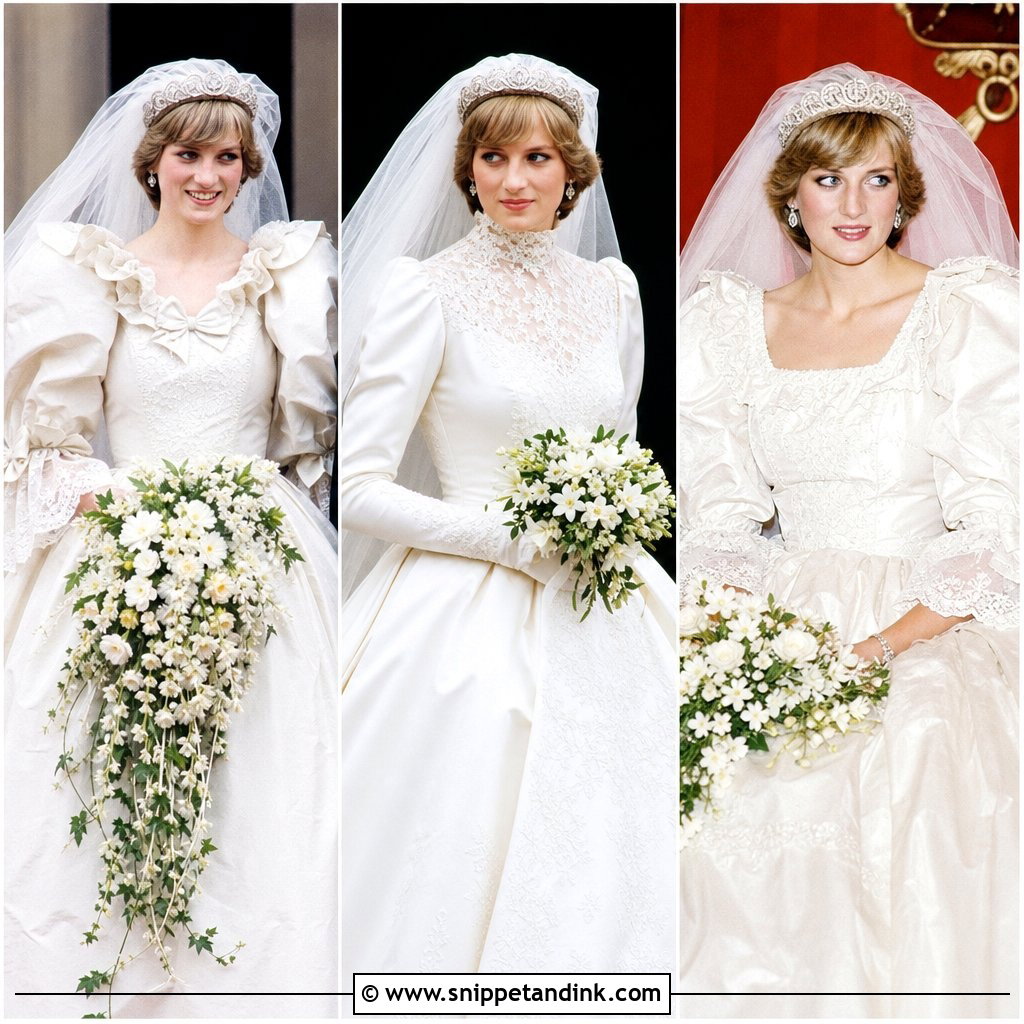
The reception dress keeps the mood but lets you move. A tea-length or floor-length satin gown with a fitted waist, bateau neckline, three-quarter sleeves and a softly flared skirt does it. Swap the tiara and cathedral veil for a crystal comb, and put on embellished pumps with a secure strap if you plan to dance. Try the dress with a few dance steps at the fitting; a skirt that looks full can still be narrow at the knee. A small white bag holds lipstick and phone. This second royal wedding dress should share the ceremony gown’s fabric, neckline or accessories, so the change reads as the next chapter.
Wearing a Tiara and a Cathedral Veil Together
Almost every look above pairs a crown with a long veil, and that combination is heavier and trickier than it looks in pictures. I sort it out at the hair trial, never on the morning.
- Place the veil first, on a comb anchored into a secure base such as a bun or crossed pins, slightly behind where the tiara will sit.
- Set the tiara in front of it, with its own small combs or loops pinned through so it does not ride on the veil comb.
- Walk, turn your head and bend forward. A cathedral veil drags backward; if the tiara tips, the base needs more grip.
- Decide in advance whether the veil comes off after the ceremony and who removes it, so the tiara can stay put for the reception.
How Satin, Mikado and Crepe Behave by Evening
Brides often fall for a fabric under shop lights and never see it after eight hours of wear. Here is what I tell them before they order.
Satin photographs with a soft shine and creases where you sit, so plan a quick steam before portraits. Mikado is stiff and holds bows, pleats and ball skirts beautifully, but it is warm and heavy for a summer garden. Crepe drapes close and moves well, though it shows every line underneath, which makes the right foundation garment essential. Lace hides small creases best of all, yet it can catch on jewellery and veil combs.
Whichever you choose, ask the shop how long the gown takes to arrive and leave enough time for two or three alteration appointments after that. A train also needs a bustle for the reception, so have the seamstress show your helper how it fastens at the final fitting.
Regal Is About Fit, Not Crystals
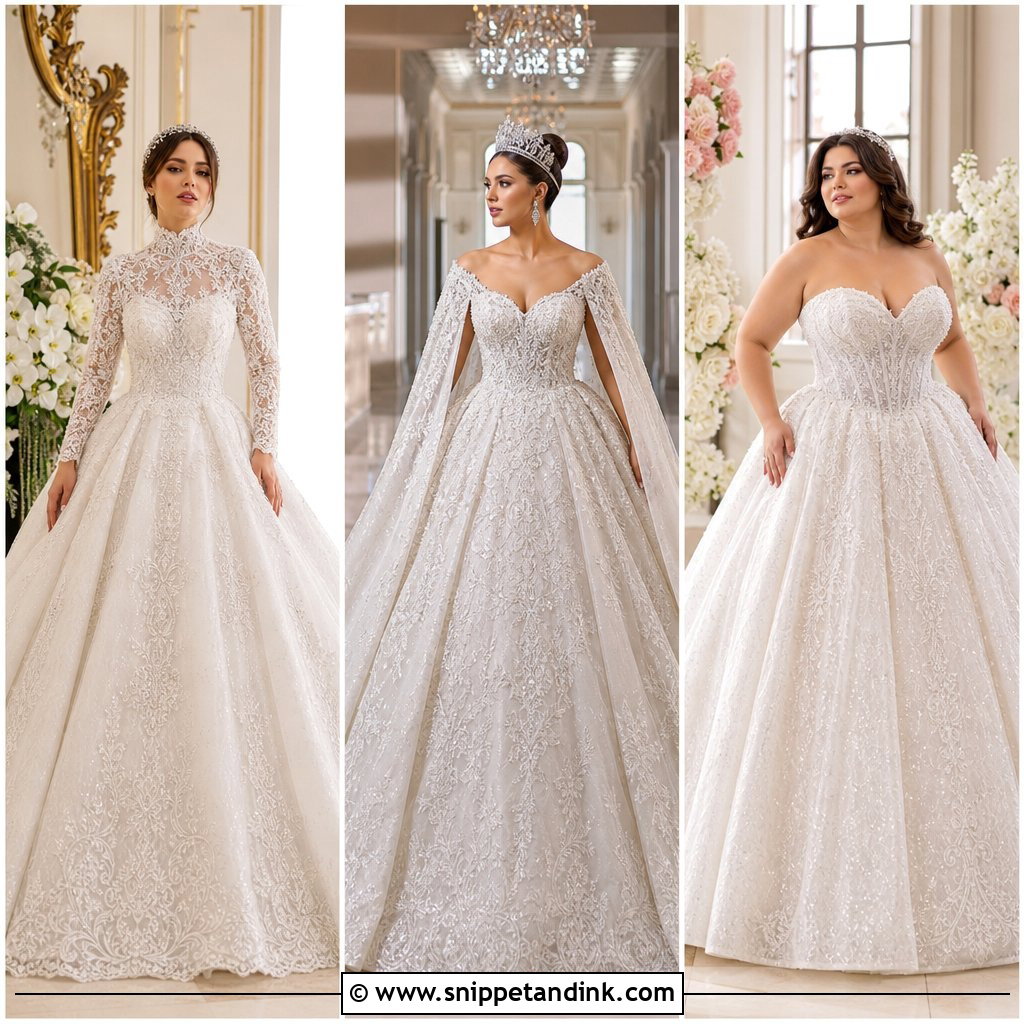
A regal bridal look comes from impact at the ceremony plus details that are yours. Ball gowns, lace, tailored suits, detachable trains, capes and reception dresses can all get you there. Start with the shape you feel most confident in, then build shoes, jewellery, headwear and veil around it as one set. Let the venue, weather and how much you need to move rule out the impractical choices early. And spend on tailoring before decoration; a perfectly fitted plain gown will always look more majestic than a loose one covered in beads.
You'll Like These Ideas:


Leave a Reply