
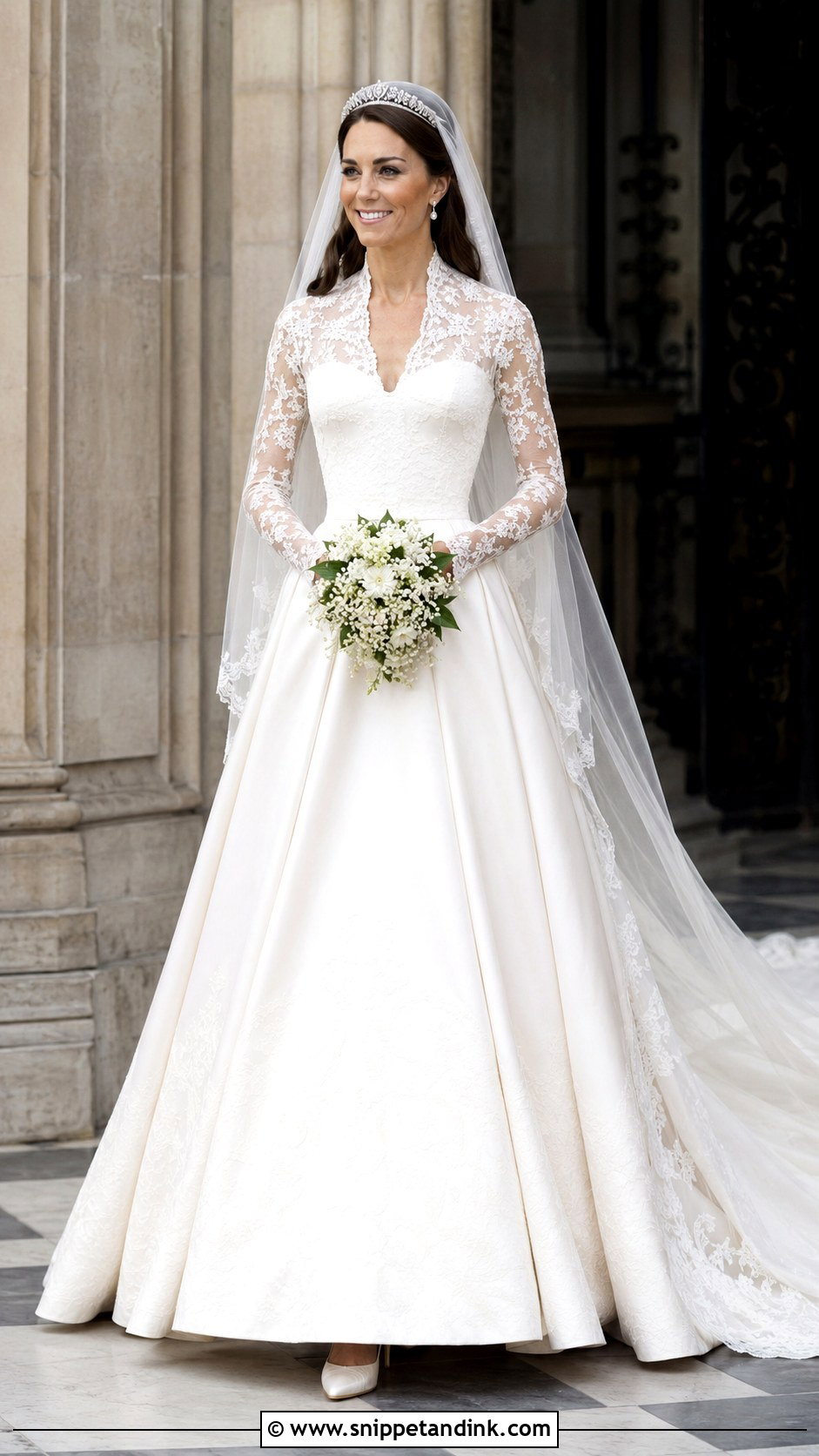
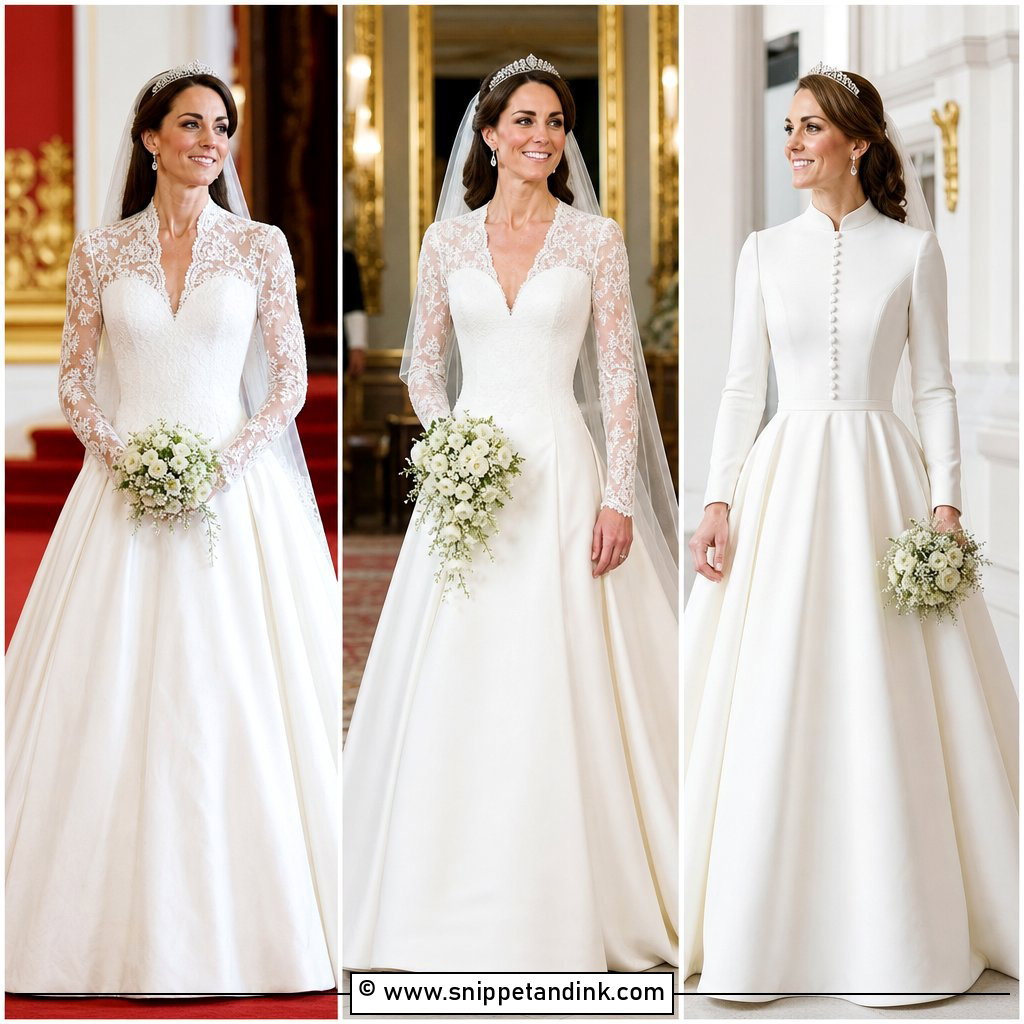
Catherine Middleton’s 2011 gown, designed by Sarah Burton for Alexander McQueen, is still the dress brides bring to me most often as a reference. Lace bodice, long sleeves, a narrow waist, a full skirt and a train: it is a short list, and that is exactly why it lasts. My job is usually to translate it. A ballroom can take the full version; a garden or a small registry ceremony needs a lighter hand, or the dress starts to look like a costume of someone else’s wedding. Below are twenty ways to wear the idea, from close tributes to pared-back modern takes, with notes on fit, fabric and the accessories that keep each one in proportion.
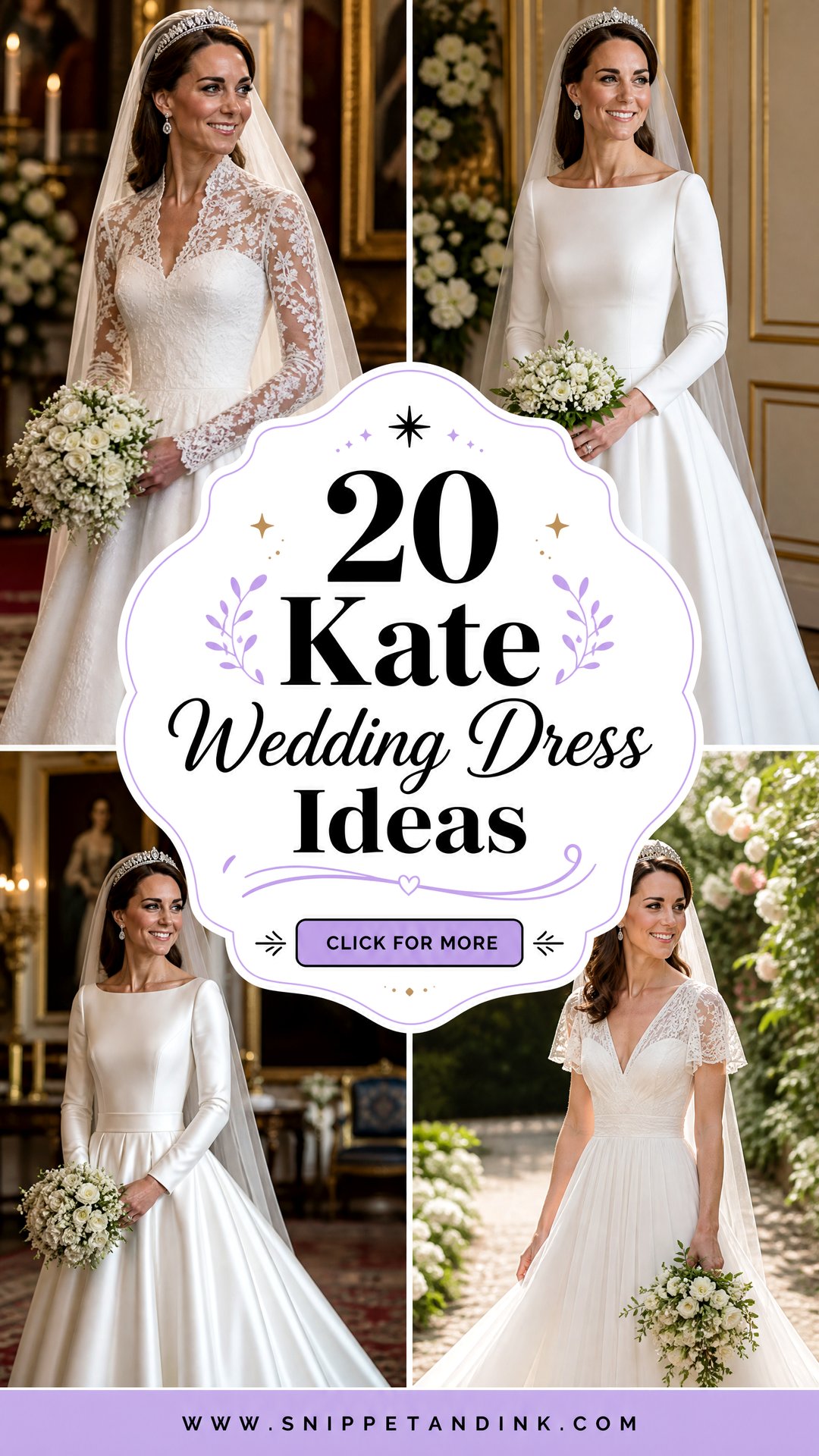
What Actually Made the 2011 Gown So Hard to Forget
When a bride shows me the photo, I ask her which part she loves, because the dress is several decisions stacked together. Knowing which ones you care about tells us where to spend the budget.
- The lace was hand-cut floral motifs appliquéd onto silk tulle, not a single lace fabric. That is why the sleeves look like flowers floating on skin. Most bridal lace sold by the metre looks flatter, and appliqué work costs more because each motif is placed by hand.
- The waist was narrow with gentle padding at the hips, an old corsetry trick that makes the skirt spring out. Ask your designer about hip shaping before you ask about extra petticoats.
- The skirt was ivory and white satin gazar, a crisp, matte-ish silk that holds pleats like folded paper. Soft satin will drape lower and rounder.
- The train was long but moderate by royal standards, and the long veil sat on a tiara rather than a comb at the crown.
If the sleeves are what you love, put money into appliqué lace and a good fit through the arm. If it is the silhouette, put it into the bodice construction and skirt fabric. Trying to reproduce all four on a modest budget usually means all four come out a little thin.
1. Kate Wedding Dress With Lace Sleeves
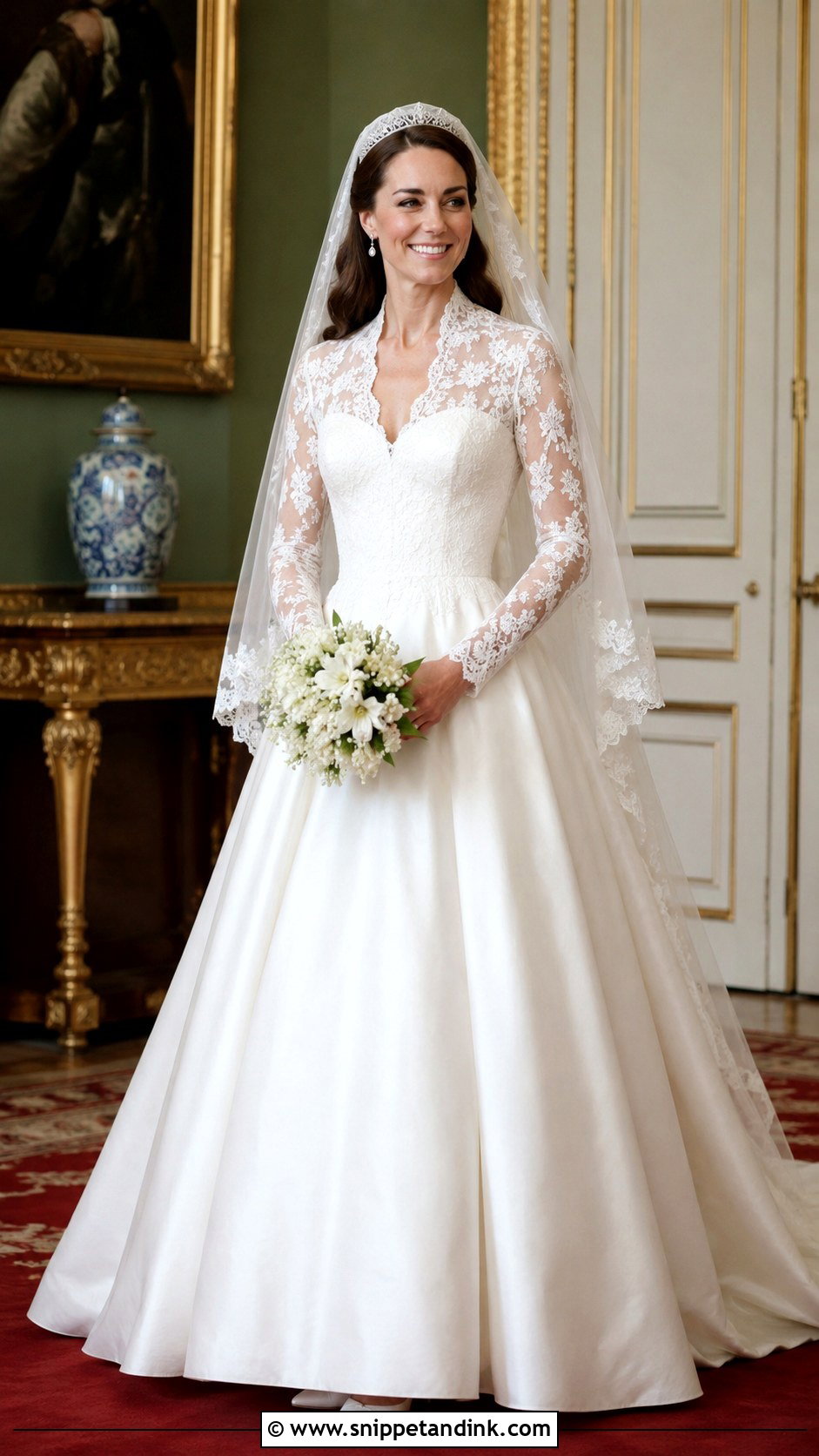
Lace sleeves are the detail people recognize first, so this is the closest you can get without copying the whole gown. I’d pair a fitted lace bodice and modest V-neck with long sheer sleeves and an ivory A-line skirt, plus covered buttons down the back. The sleeves need to be fitted with your arms moving: lift them, hug someone, hold a bouquet at your waist. Lace with no stretch pulls at the underarm seam if it was pinned with your arms straight down. Pointed ivory pumps, pearl drops and a lace-edged fingertip or cathedral veil finish it. A soft half-up style keeps the neckline in view.
2. Kate Wedding Dress With Cathedral Veil
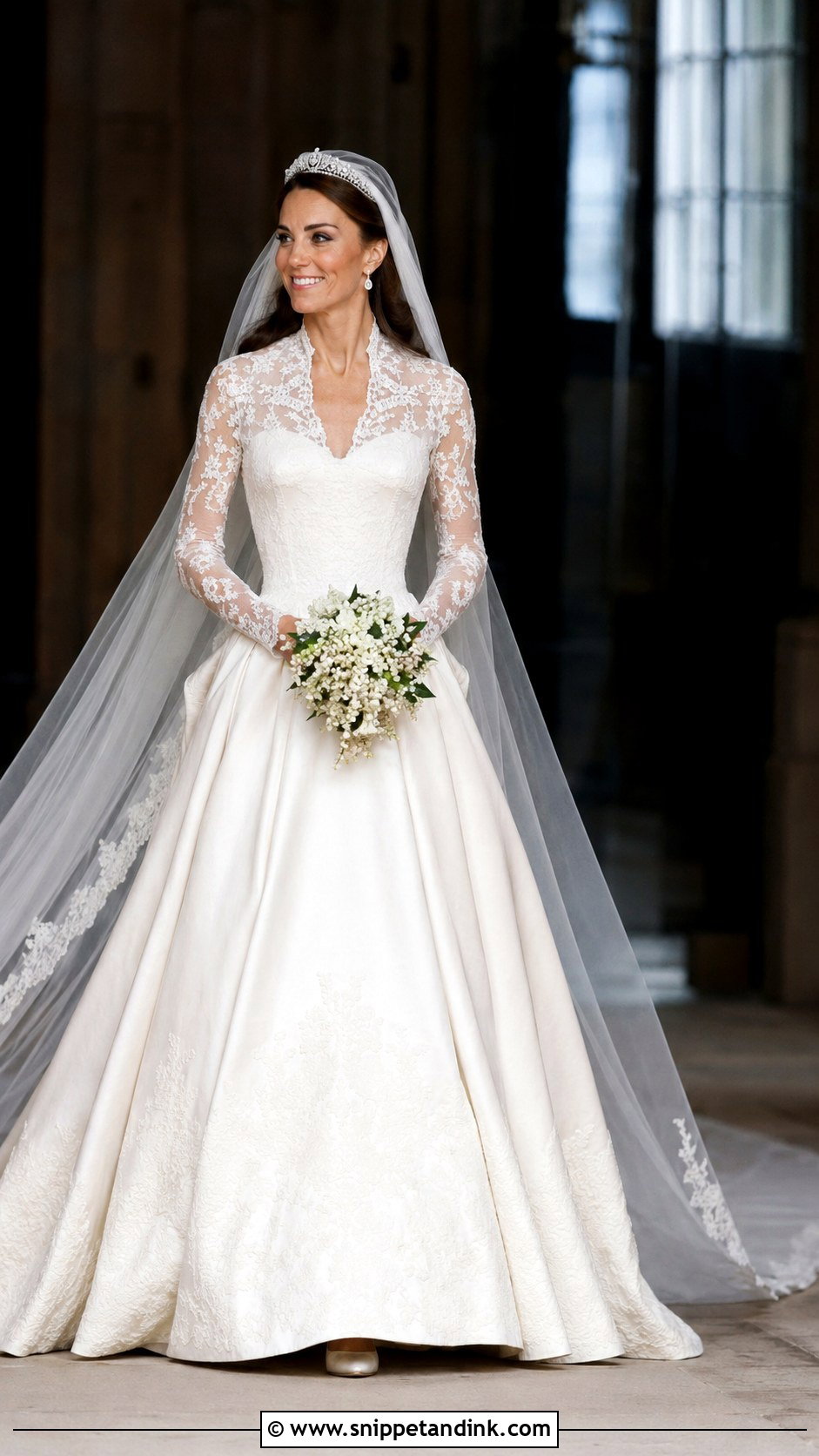
A cathedral veil changes the whole entrance. To let it lead, I keep the gown itself clean: structured ivory, long lace sleeves, a narrow V-neck, a gently flared skirt. Choose a veil with fine lace appliqué at the edge only; all-over embroidery on that much tulle gets heavy and drags the comb backward. Closed satin pumps give you grip on a long aisle. A small tiara, fine earrings and a low bun to anchor the comb complete it, with a compact white and green bouquet. Long aisles, tall windows and formal architecture give a veil this size the room it needs.
3. Kate Wedding Dress With V-Neck Bodice
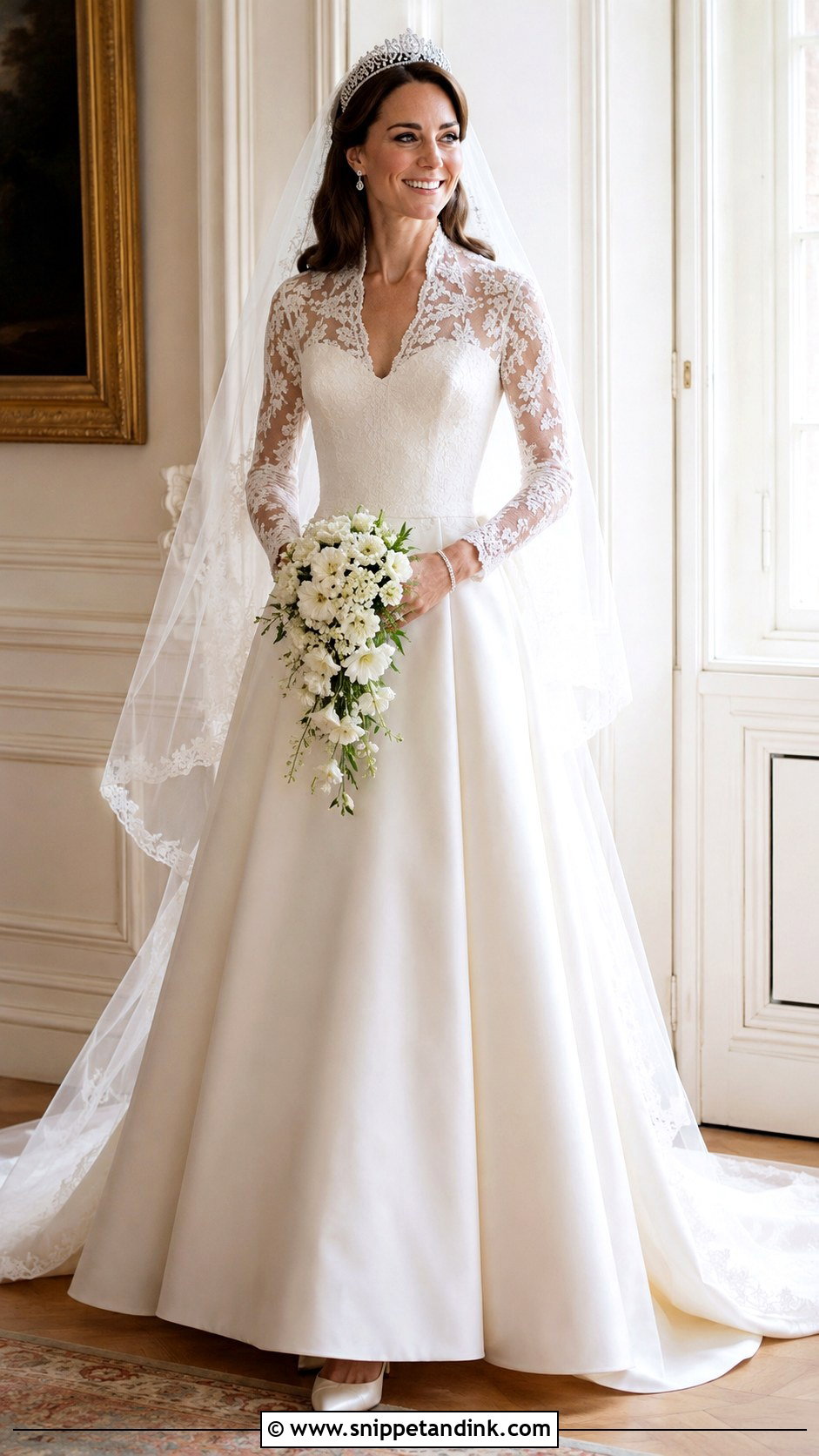
The V-neck on the original is shallow and softly shaped, and that restraint is the point. At a fitting I check that the point of the V sits above the bust line when you lean forward to sign the register, not only when you stand straight. Lace over the bodice, a fitted waist and a full satin skirt build the hourglass. A narrow waist-length veil keeps it light; a long plain one makes it formal. Pearl studs, a slim bracelet and low ivory pumps are enough. Loose curls with the front pinned back, and a small cascade of white blooms, keep it soft.
4. Kate Wedding Dress With Full Skirt
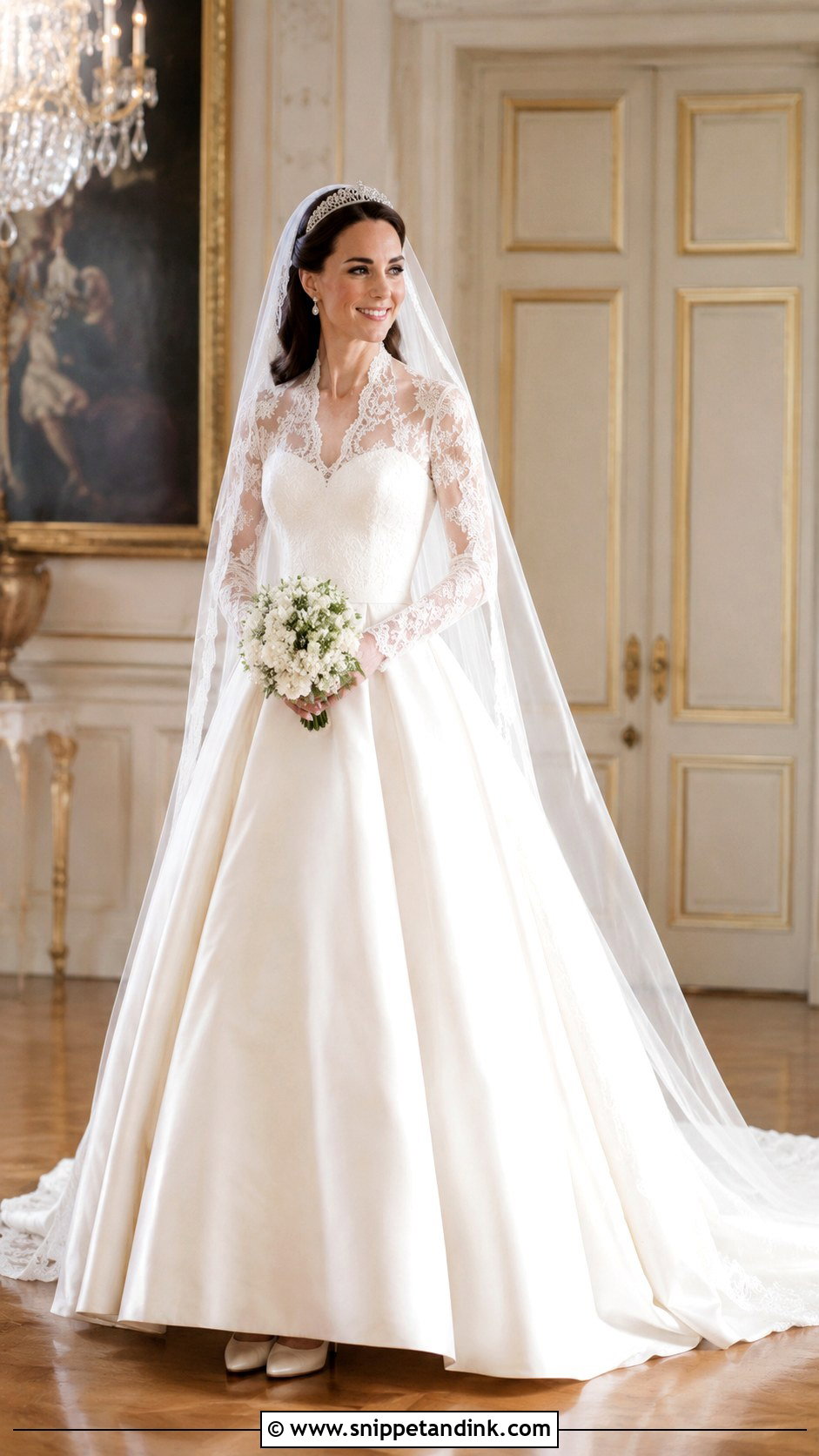
A full-skirt Kate wedding dress gets its presence from shape, not sparkle. The lace bodice meets a structured satin or mikado skirt at the natural waist, and gentle pleats give volume while keeping the front flat. Mikado is my preference here, because it holds a pleat crisply and creases less than soft satin when you sit. A chapel train and a veil just longer than the train add movement. Closed pumps, pearl earrings and a delicate tiara bring light to the face. A neat white bouquet and a half-up style balance a skirt this size in a hotel ballroom or historic house.
5. Simple Kate Wedding Dress
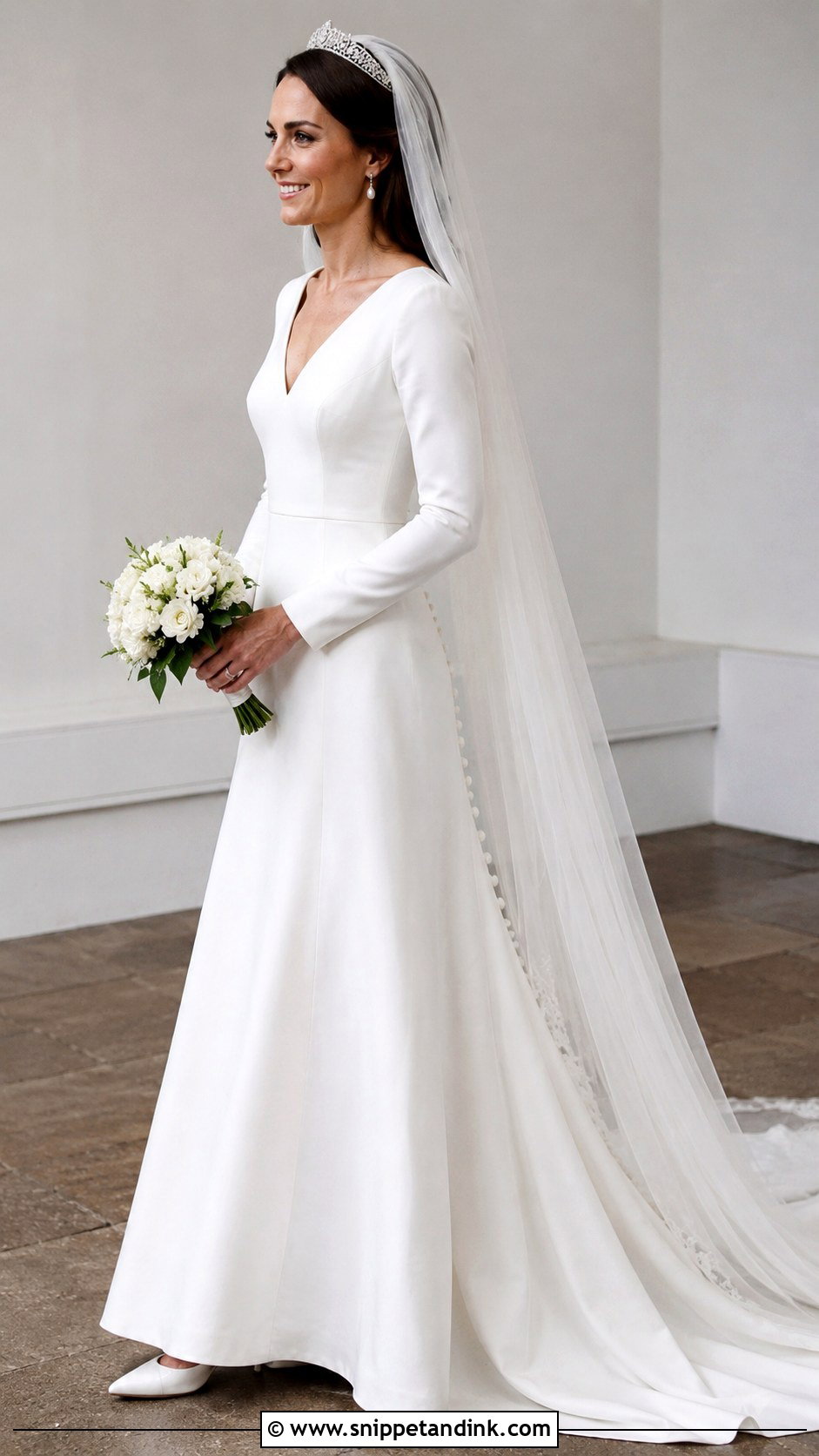
Some brides love the royal shape but not the lace. For them I suggest smooth crepe: a fitted bodice, long plain sleeves, a shallow V-neck and covered buttons down the back. Crepe is unforgiving of a poor fit, since it shows every seam that pulls, so budget for a careful bodice alteration. A plain cathedral veil, small pearls and pointed pumps go with it, plus a low chignon that frames the face. Keep the bouquet compact. In a smaller venue this reads refined rather than grand, which is usually what a bride choosing it is after.
6. Modern Kate Wedding Dress
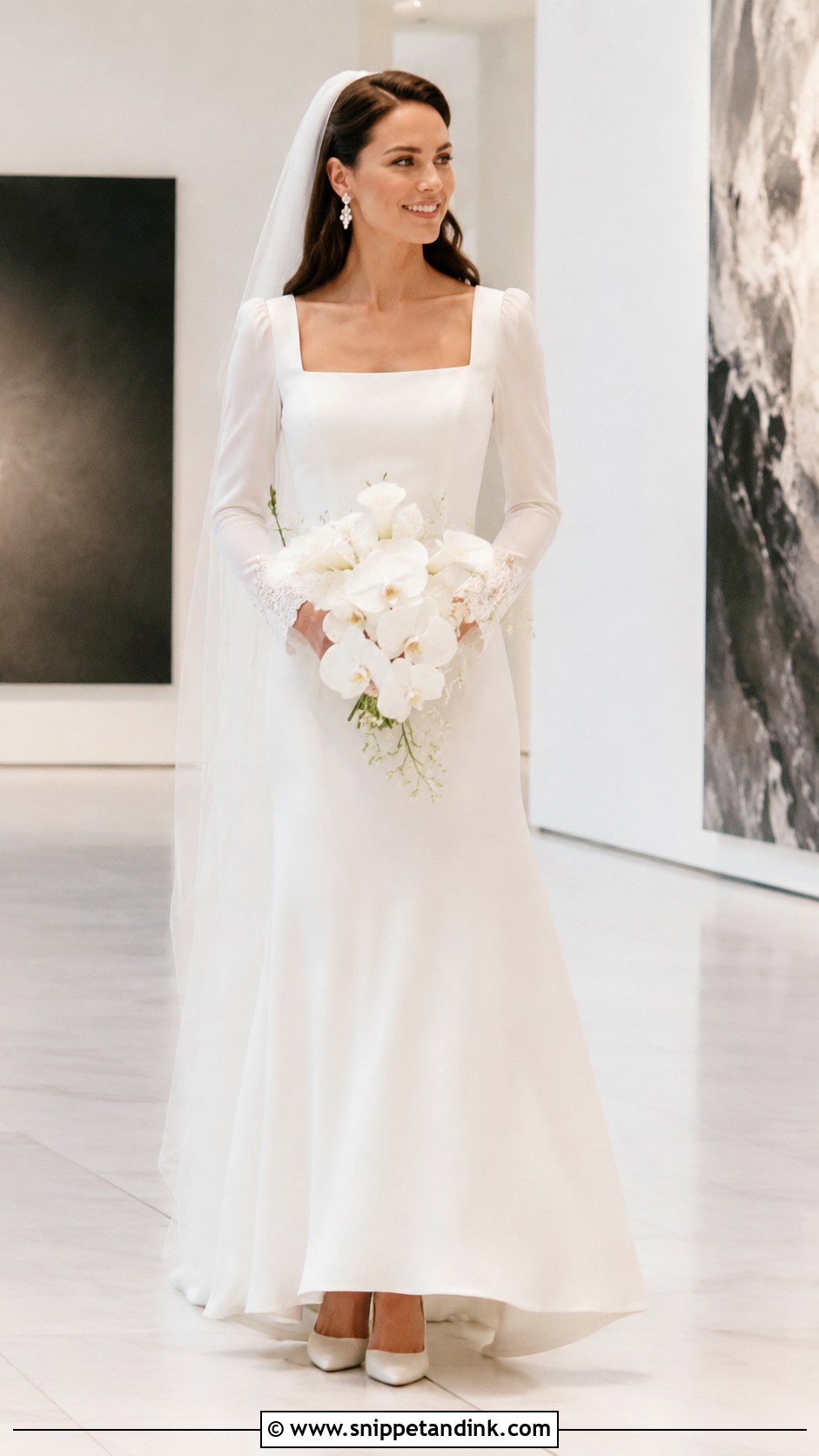
The modern version keeps the coverage and swaps the shapes. A square neck, long sheer sleeves and a softly flared skirt in matte crepe or smooth satin set the tone, with lace only at the cuffs, the upper back or a detachable overlay. Pearl and crystal earrings, sleek pumps and a borderless floor-length veil keep the lines clean. A square neck pairs better with a polished bun or soft ponytail than with loose curls, which blur its edges. Carry an architectural bouquet with very little greenery. Galleries, city hotels and minimal interiors suit it best.
7. Kate Wedding Dress With High Neck
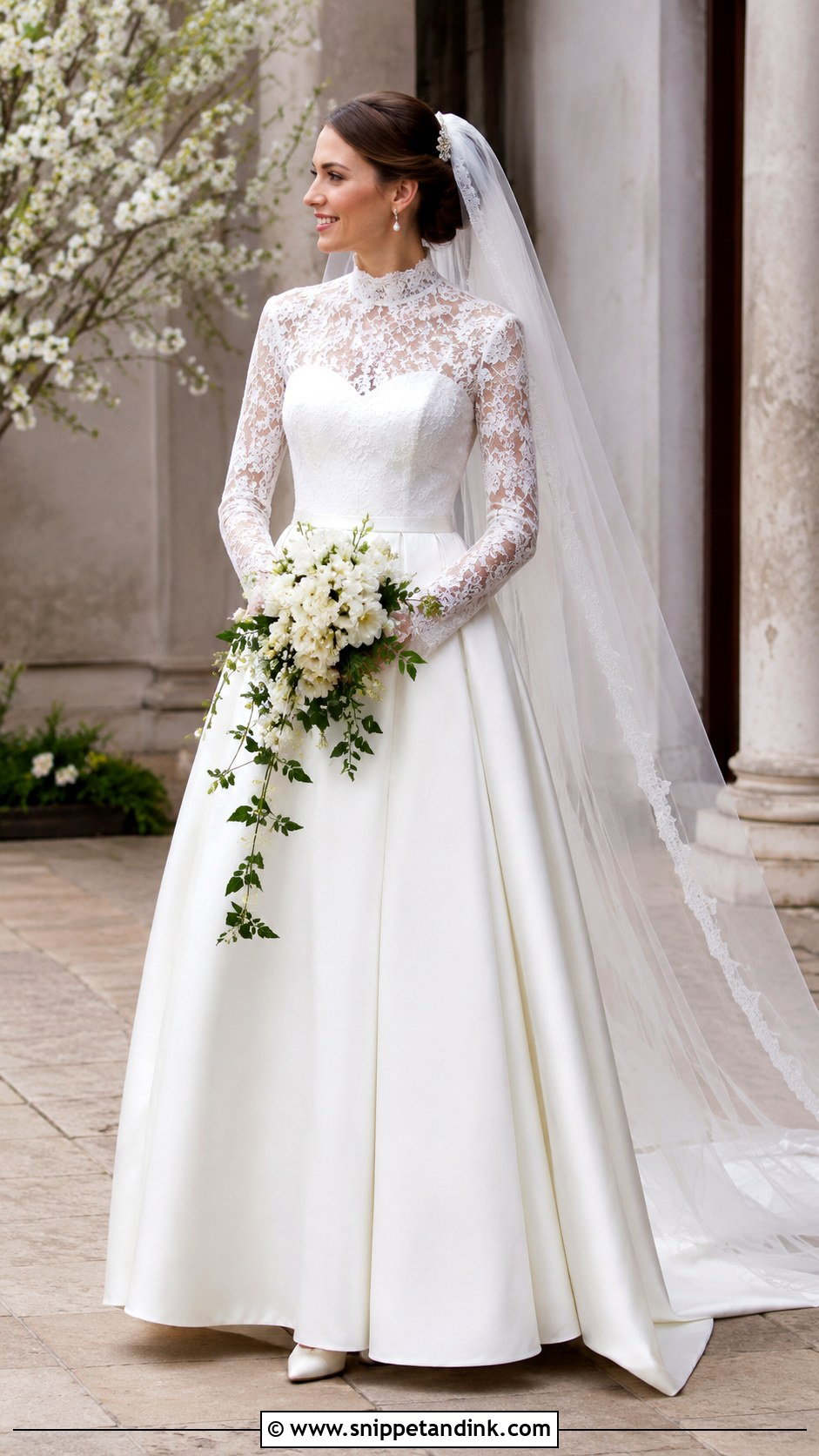
A high neck gives more coverage while keeping the delicacy of the lace. I look for a sheer lace neckline over a lined sweetheart or bateau bodice, fitted long sleeves and a full structured skirt. The illusion mesh at the neck needs to match your skin closely; a mismatch shows up as a visible band in flash photos. Fix a chapel veil below a neat low bun so the collar stays clear. Pearl drops, satin pumps and a slim crystal comb are all it needs, with white flowers and trailing greenery. Fall, winter and early spring ceremonies are where the extra coverage makes the most practical sense.
8. Kate Wedding Dress With Bateau Neckline
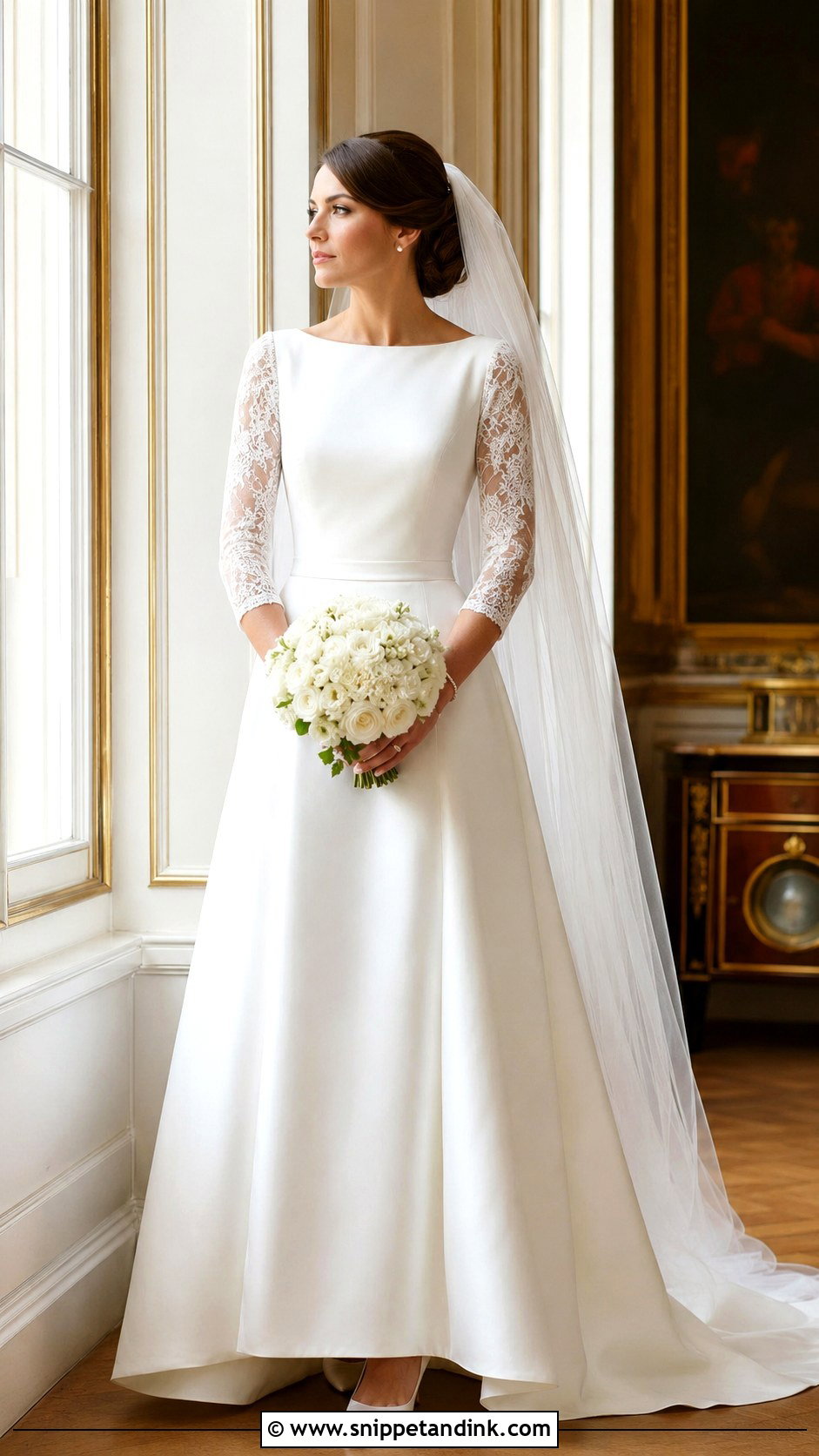
A bateau neckline runs straight across the collarbone and suits brides with wider shoulders less than you might expect; it can broaden them, so try it on before falling for it in a photo. With three-quarter or full lace sleeves, a natural waist and an A-line skirt in silk, satin or light mikado, it looks quietly formal. A plain tulle veil keeps the neckline uncluttered. Pearl studs, a narrow bracelet, almond-toe pumps and a rounded bouquet finish it. Hair stays low and smooth. It nods to the royal dress without reading as a replica.
9. Kate Wedding Dress With Detachable Train
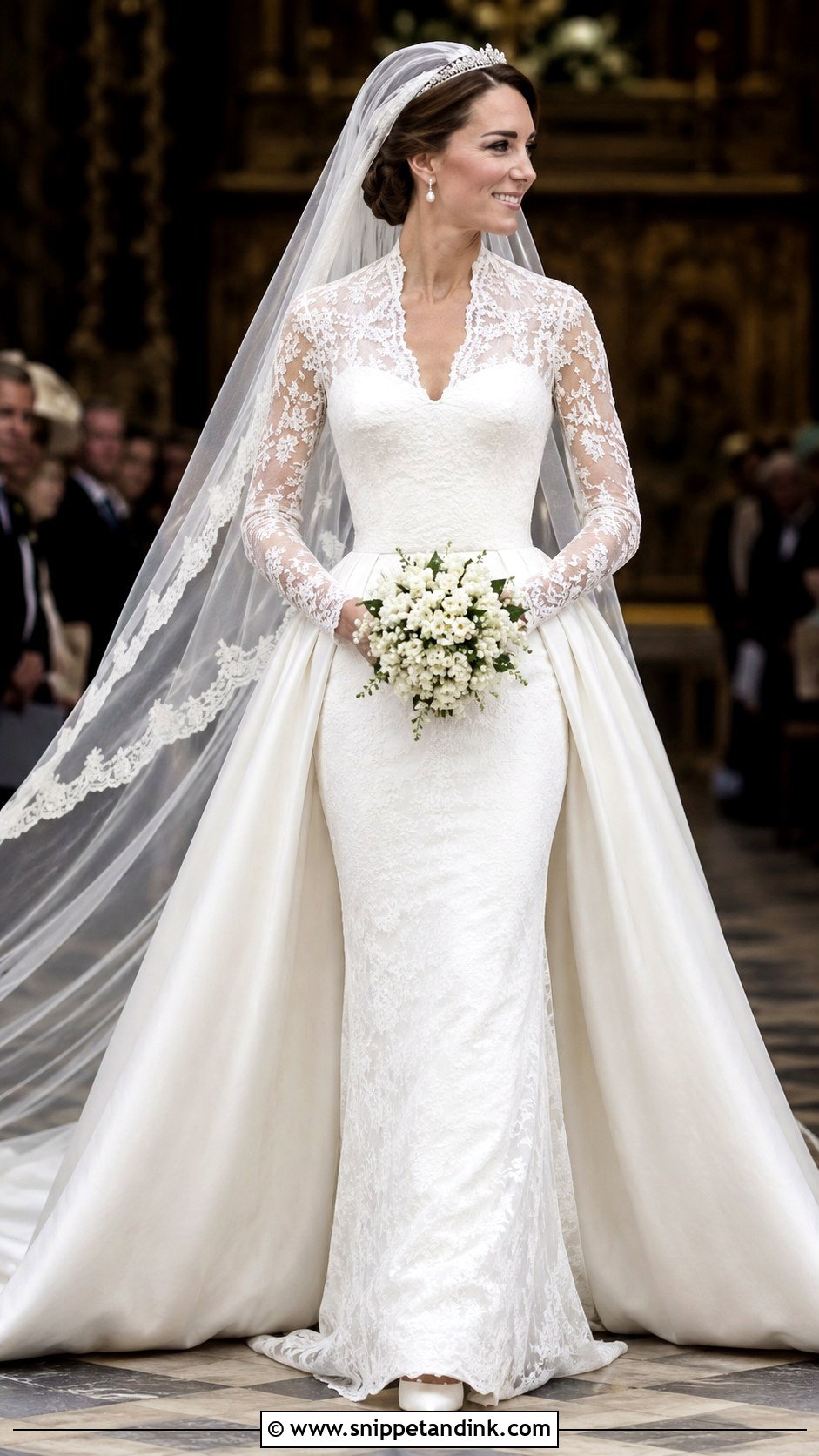
Ceremony grandeur, then a dress you can dance in: that is the case for a detachable train. Start with a fitted lace gown, long sleeves and an A-line or column skirt, then fasten a full satin overskirt or train at the waist for the ceremony and remove it after portraits. I ask to see the fastening from the inside before ordering. Hooks and a hidden waistband lie flat; large snaps or buttons leave a ridge across the hip. A long sheer veil, pearl earrings, pointed pumps, a structured low bun and a small white bouquet complete the ceremony look, and the reception look is simply the gown underneath.
10. Kate Wedding Dress With Floral Lace
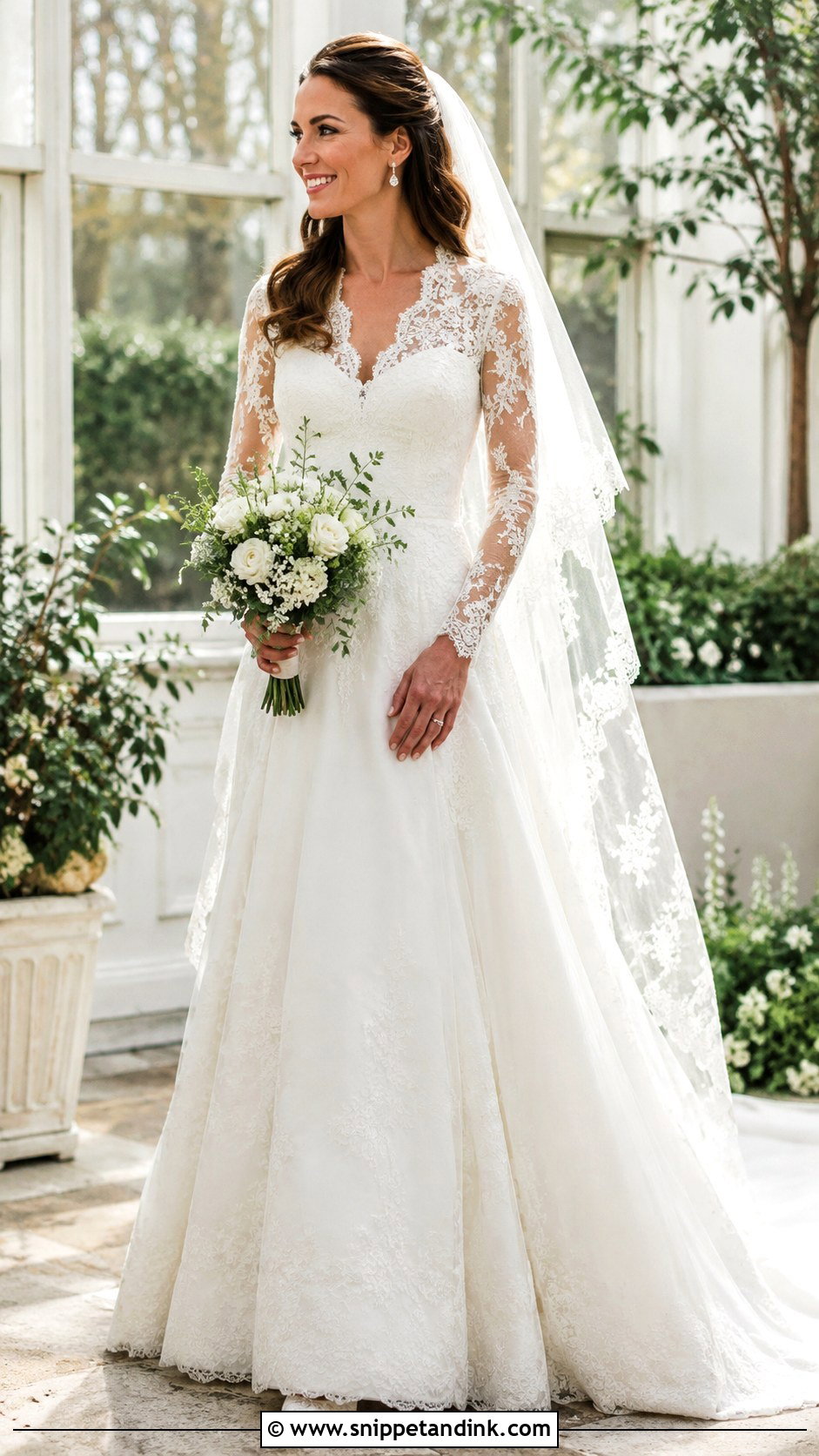
Floral lace softens the look and adds texture you can see from the back row. I keep the botanical lace on the bodice, sleeves and upper skirt and leave the lower skirt plainer, otherwise the pattern swallows the silhouette. An ivory or soft white base keeps it traditional. Lace-covered pumps, small pearls and a veil with a narrow floral border follow the theme. Loose waves pinned half-up frame the face. Choose flowers that echo the lace rather than copy it; a bouquet that matches the motifs exactly looks fussy. Spring gardens, conservatories and countryside venues full of daylight suit it.
11. Kate Wedding Dress With Satin Skirt
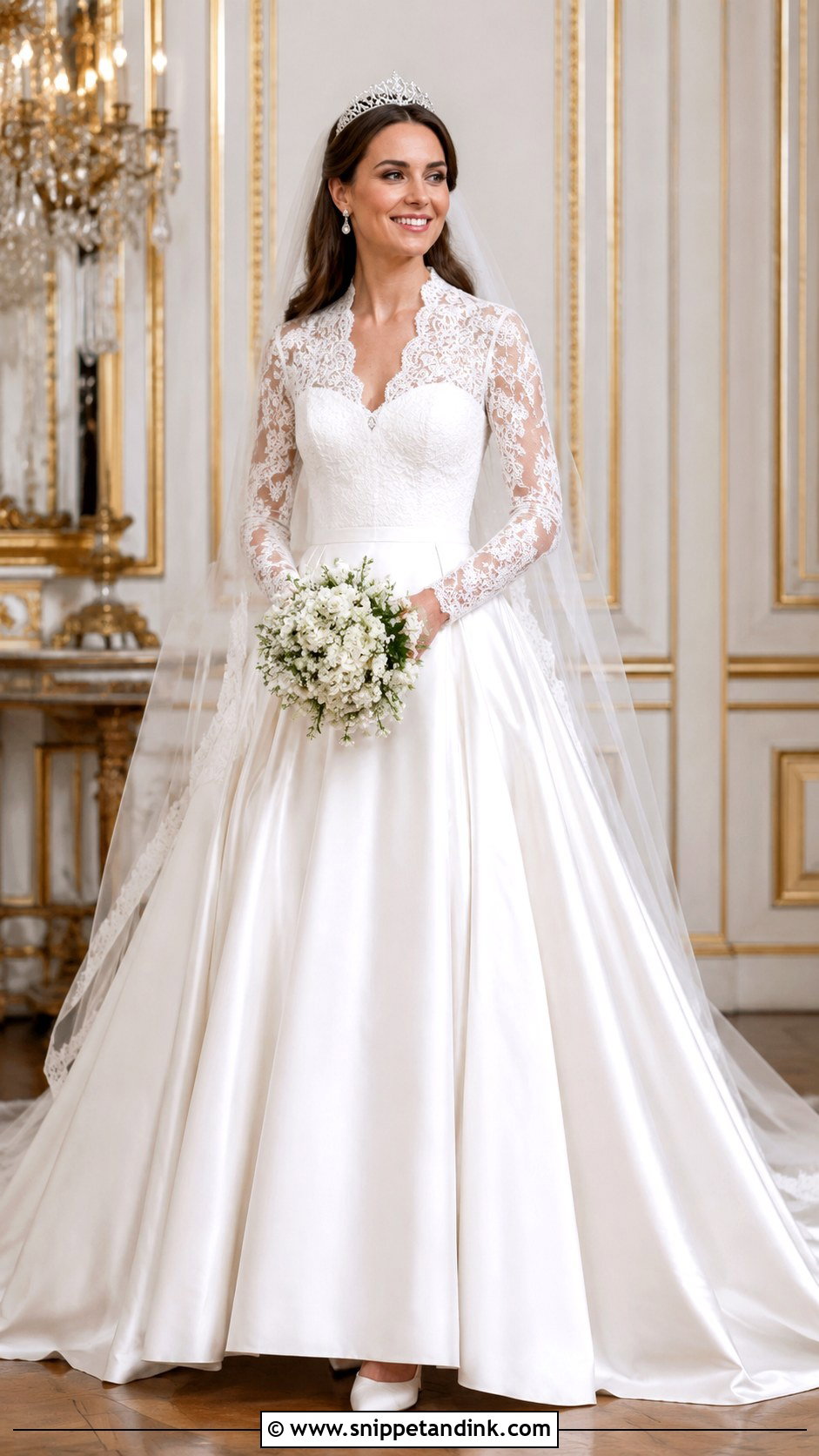
Lace above, smooth satin below: this contrast is the heart of the silhouette. I’d choose a supportive V-neck bodice with sheer sleeves and a luminous A-line skirt with pleats placed at the hips, not across the front. Satin shows every crease, so ask how the fabric behaves after twenty minutes seated; a heavier duchess satin recovers better than a thin, shiny one. A plain tulle veil keeps the skirt uninterrupted. Closed pumps, pearl and crystal earrings and a small tiara add the classic notes, with a half-up arrangement and a neat white bouquet. Grand interiors and evening ballrooms show off satin best.
12. Kate Wedding Dress With Button Back
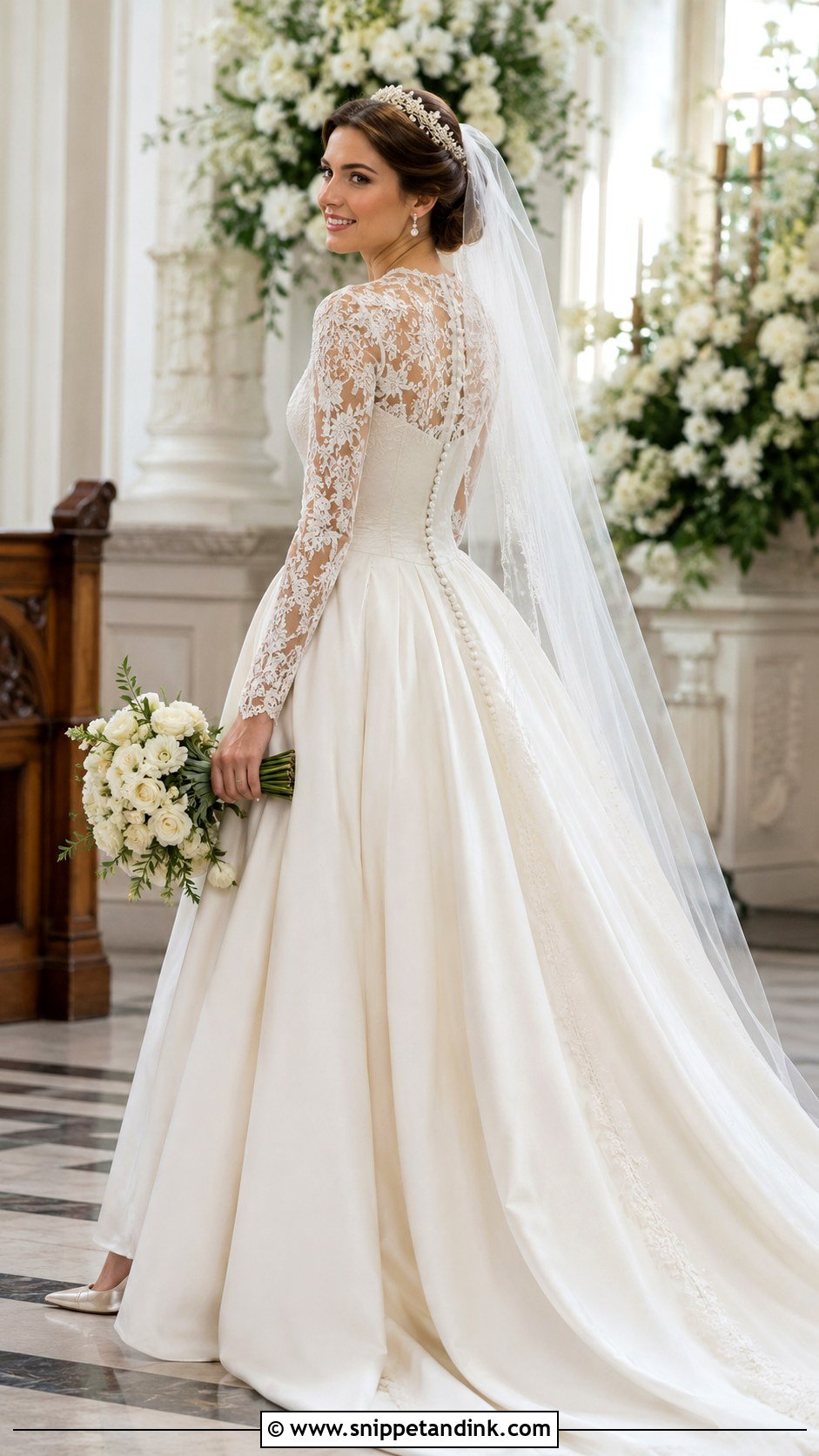
Guests spend most of a ceremony looking at your back, which is why covered buttons matter more than brides expect. Choose a fitted lace bodice with long sleeves and a row of buttons from the neckline to the waist or lower back, a full A-line skirt and a chapel train. Most of these are cosmetic over a hidden zip or loops, and I’d ask which before buying, because a long row of real loops takes a patient helper several minutes. A sheer veil keeps the buttons visible. Low pumps, pearl drops, a crystal comb and an updo set above the button line finish it, with white blooms and dark green leaves.
13. Kate Wedding Dress With Cap Sleeves
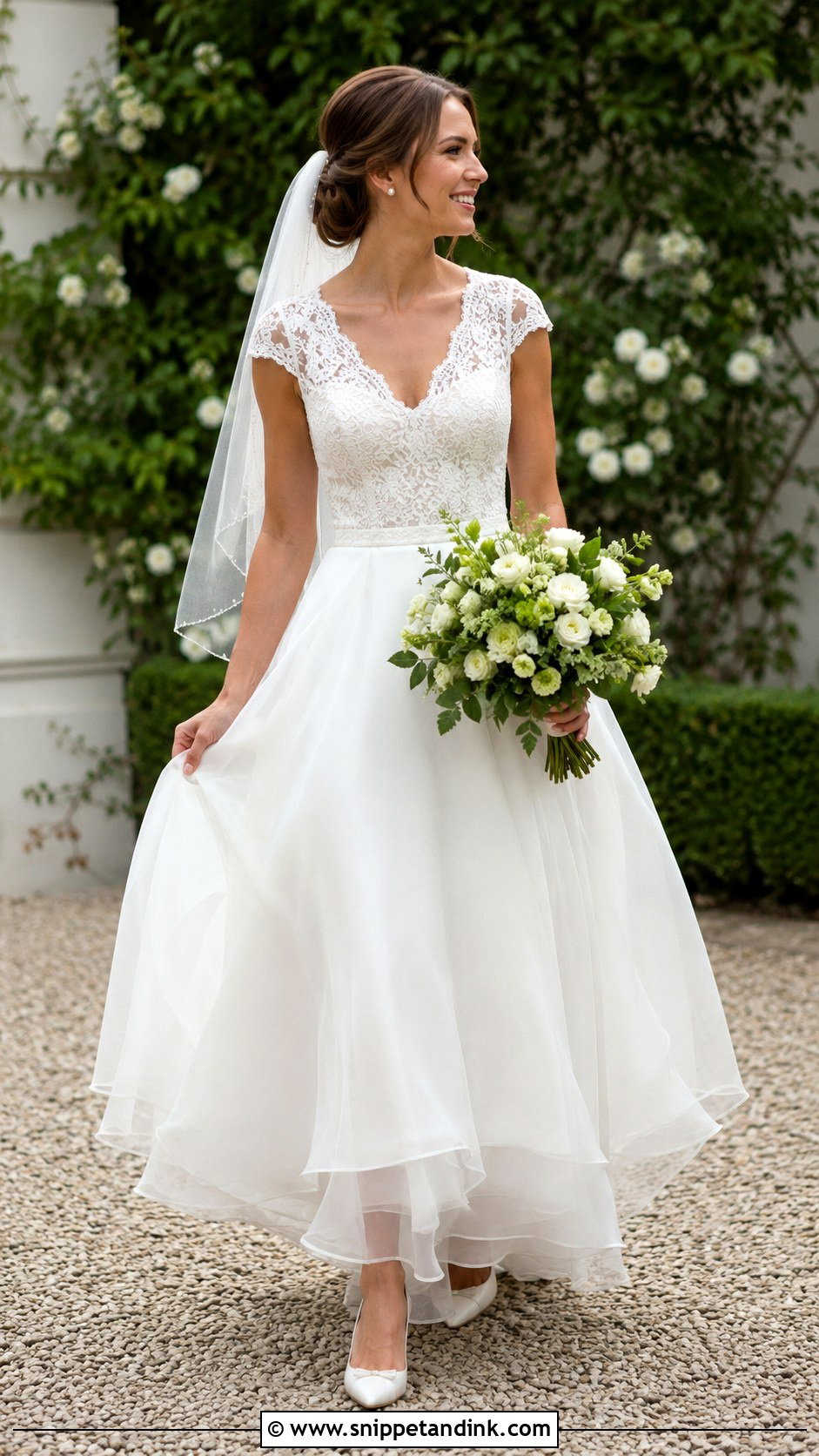
Cap sleeves give you the lace shoulder without the warmth of a full sleeve. A gown with lace just over the shoulders, a modest V-neck and a fitted waist pairs well with a full chiffon or organza skirt for heat. Watch the cap’s edge on the upper arm: if it bites in, it will mark the skin and look tight in every photo, so ask for it to sit slightly above the widest part. A fingertip veil, pointed flats or low heels, pearl studs, a loose low bun and a small floral pin finish it, with ivory flowers tied in narrow ribbon. Gardens, coastal venues and outdoor summer ceremonies are its natural home.
14. Kate Wedding Dress With Three-Quarter Sleeves
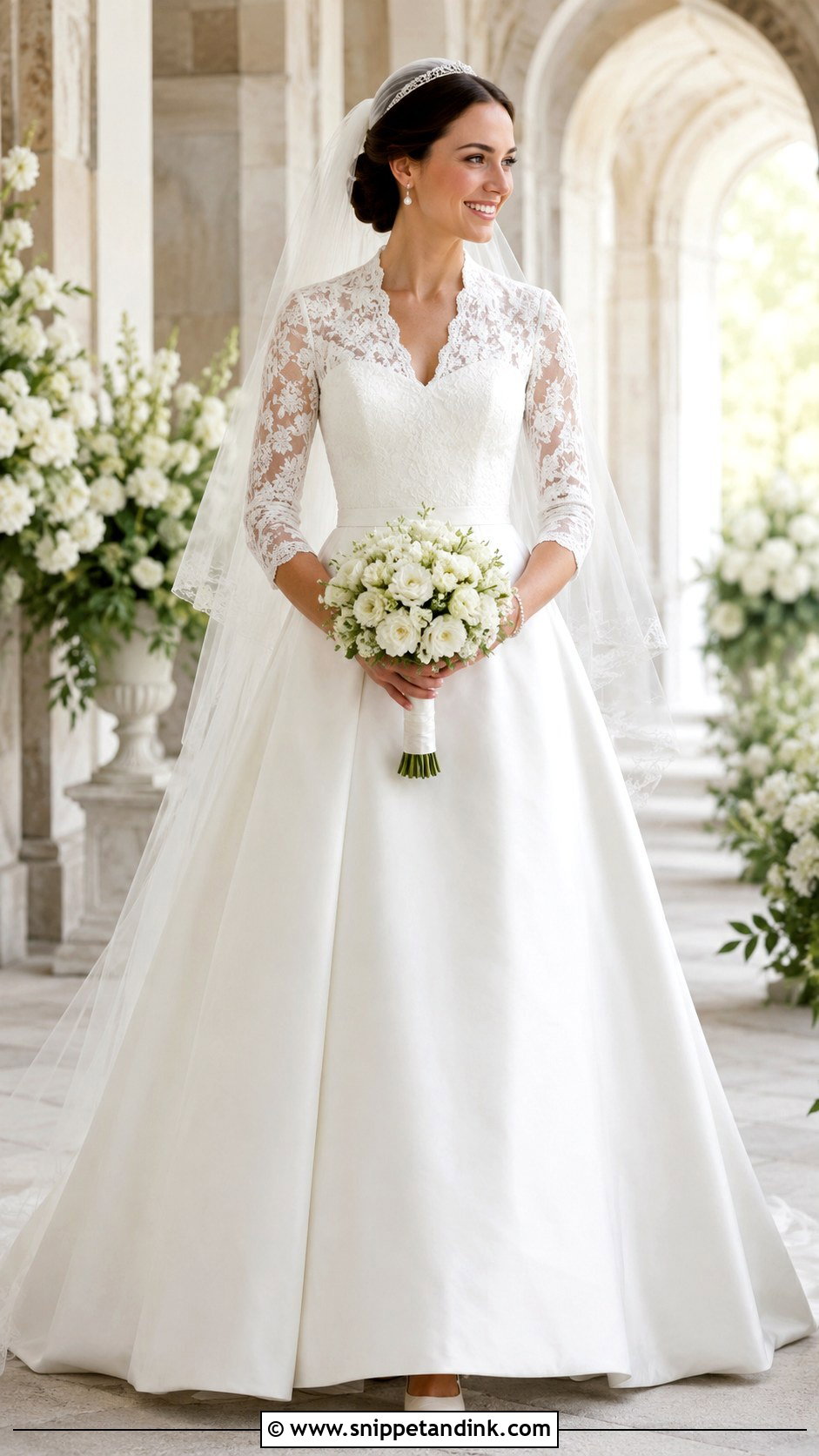
Three-quarter sleeves are my quiet favorite. They end below the elbow, leave the wrist free for a bracelet, and stay out of the cake and the guest book. Fitted lace sleeves, a V-neck bodice and a softly structured A-line skirt keep the royal shape. A chapel veil, small pearls and closed ivory heels complete the outfit, with curls swept back or a relaxed low bun. A rounded bouquet with silvery greenery stays proportionate. This length moves across seasons and venues more easily than any other sleeve on this list, and it gives your arms far more freedom.

15. Plus Size Kate Wedding Dress
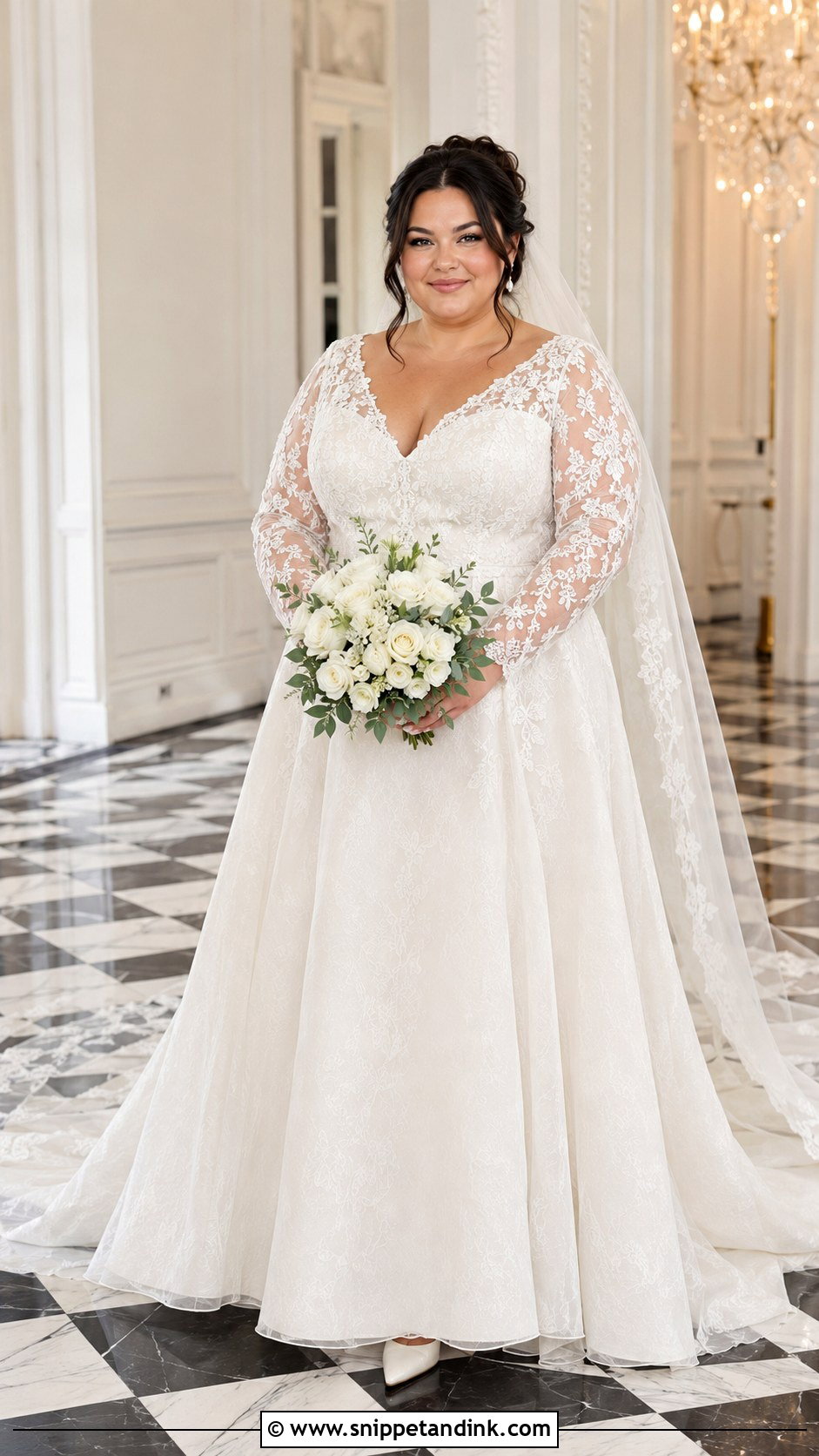
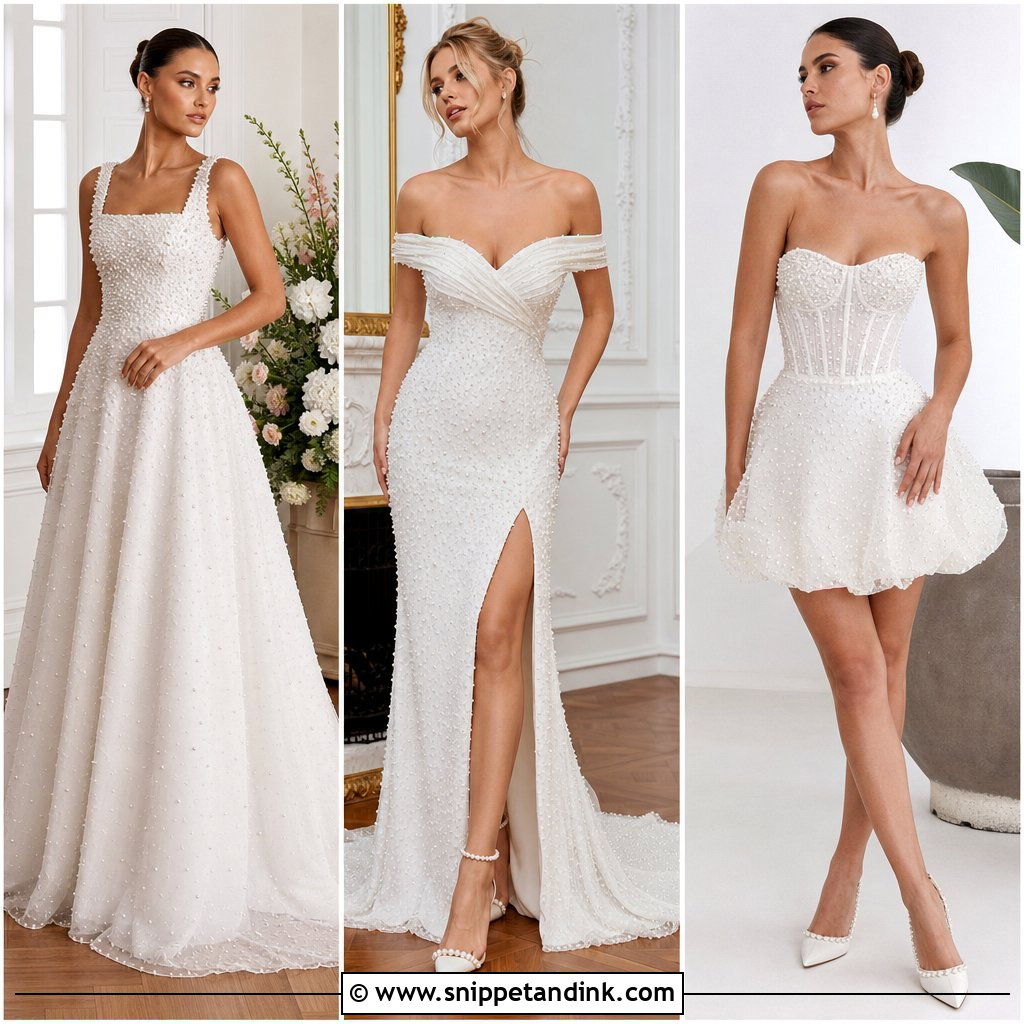
For a plus-size bride, support is built in from the inside, and that is where I spend the fitting time. Ask for a properly constructed lace bodice with a supportive lining and boning placed for your body, sleeves cut to your arm rather than a smaller pattern graded up, and a V-neck set to the coverage you like. A natural waist and flowing A-line skirt move without clinging. Cushioned pumps, pearl drops and a soft cathedral veil finish it, with a half-up style and a medium bouquet that suits the skirt’s scale. Leave time in the alteration schedule to sit, walk and raise your arms in the dress before the final fitting.
16. Petite Kate Wedding Dress
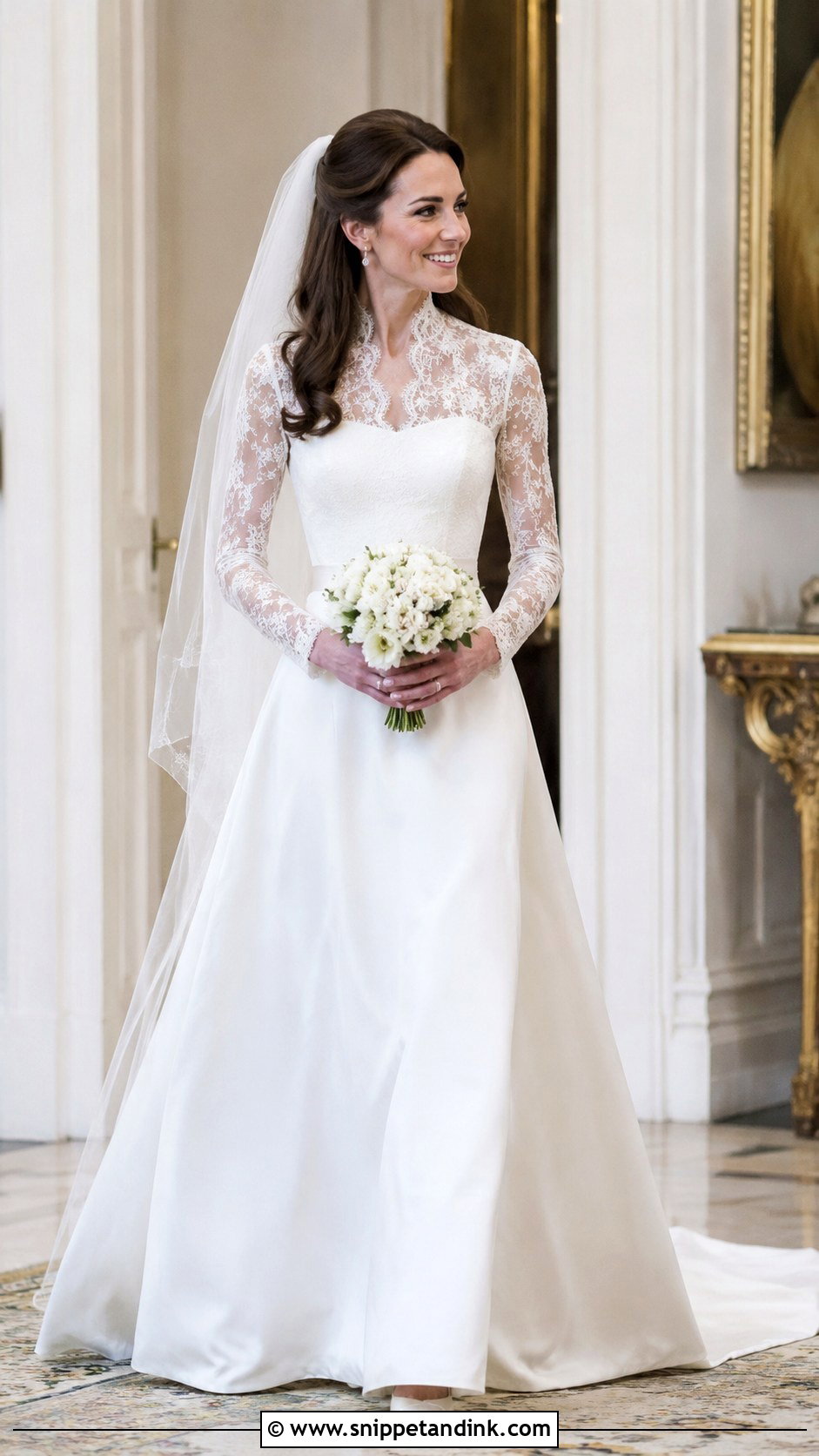
On a petite frame, the original’s proportions need scaling down, piece by piece. A slightly raised waist adds leg length, a moderate V-neck stays in proportion, and narrow long sleeves avoid overwhelming the arm. Choose an A-line with controlled fullness instead of a wide ball gown, and a chapel train rather than anything longer. Lace placement is the detail most people miss: when the bodice is shortened, the seamstress has to re-place the motifs so a flower is not cut in half at the waist. Pointed pumps, small pearls, a narrow veil, a compact bouquet and a lifted half-up style or neat bun add height.
17. Modest Kate Wedding Dress
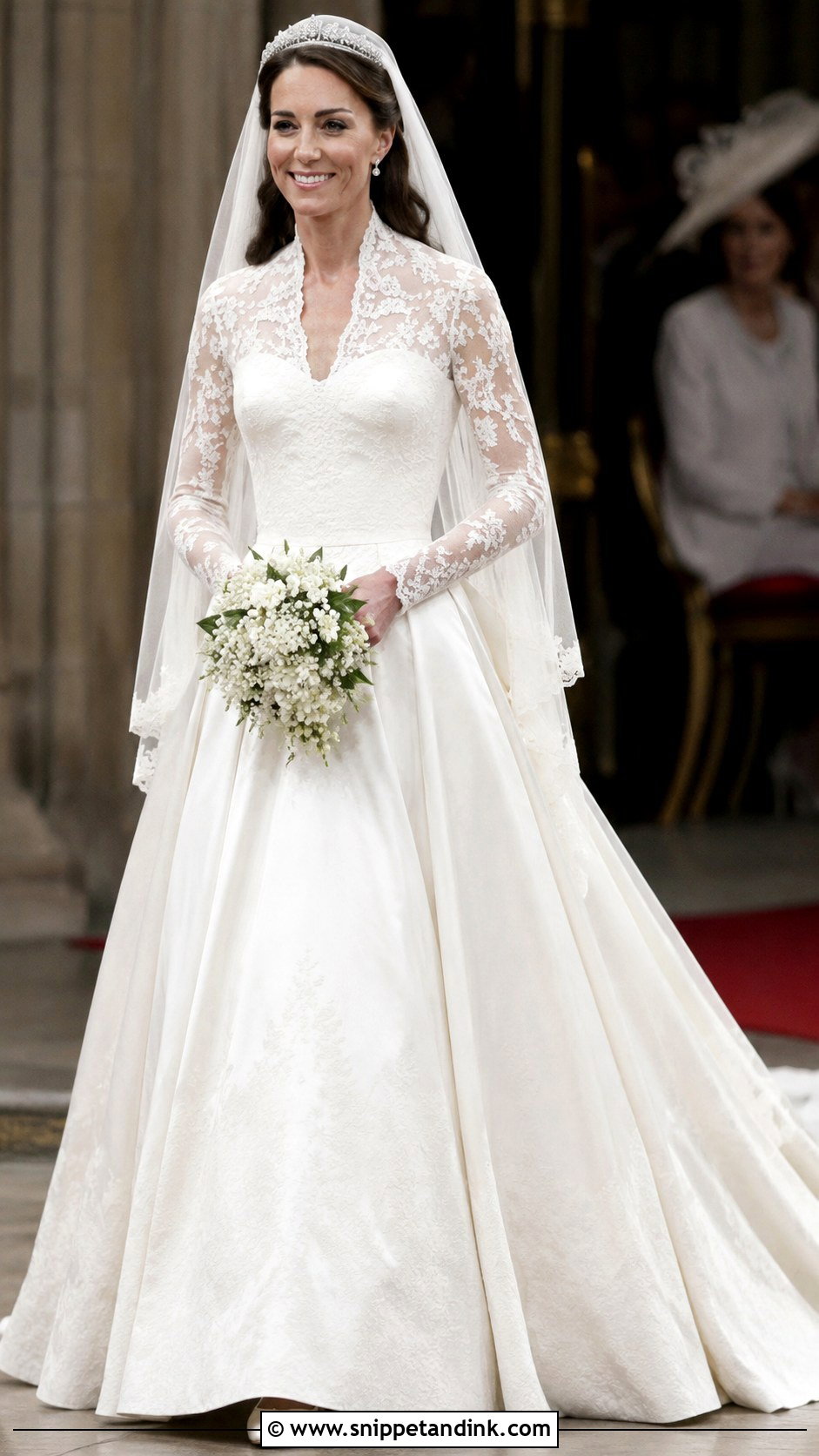
A modest version covers chest, shoulders, arms and back without losing romance. Look for a lined lace bodice, a high illusion neck, full-length sleeves and a closed or partly covered back, with a defined waist and full A-line skirt. I steer brides toward a lighter lace here, since heavy corded lace over that much coverage makes the top half look bulky. A simple cathedral veil, pearl studs and ivory pumps go with it, and a sleek low bun keeps the neckline tidy. A delicate tiara or crystal comb adds formality. It suits traditional ceremonies, cool weather and brides who prefer understatement.
18. Winter Kate Wedding Dress
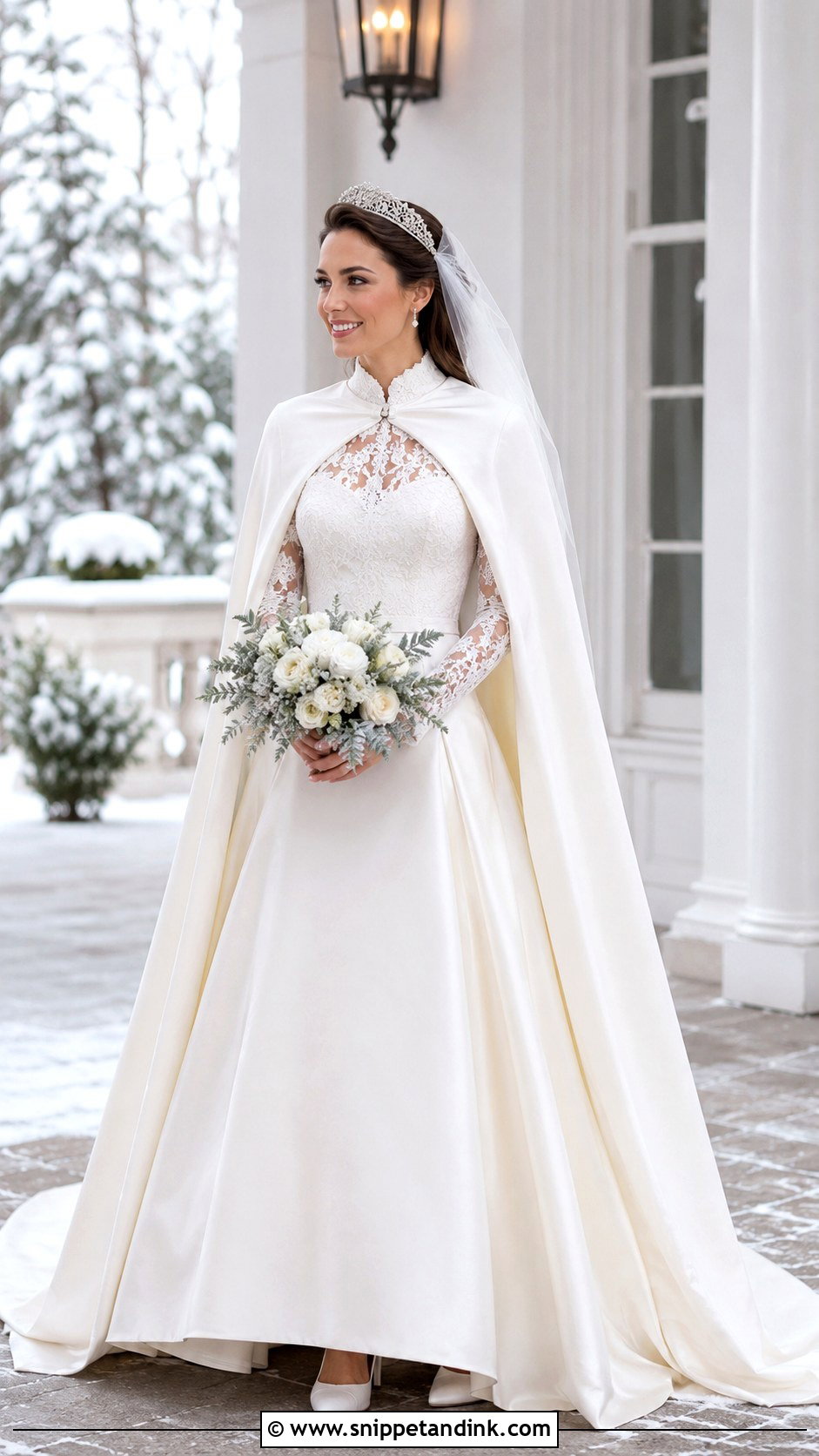
Winter is where the Kate dress feels most at home, because coverage is a help rather than a compromise. Choose a structured satin gown with a lace bodice, long lined sleeves and a skirt full enough to hide a thin warm layer underneath. A removable ivory cape or faux-fur wrap handles outdoor portraits. Closed block heels grip better on wet steps than stilettos. Pearl earrings and a subtle tiara keep things classic, and a soft tulle veil won’t fight the heavier fabric. A polished updo stands up to wind and damp, and a bouquet with silver-toned leaves suits the season.
19. Summer Kate Wedding Dress
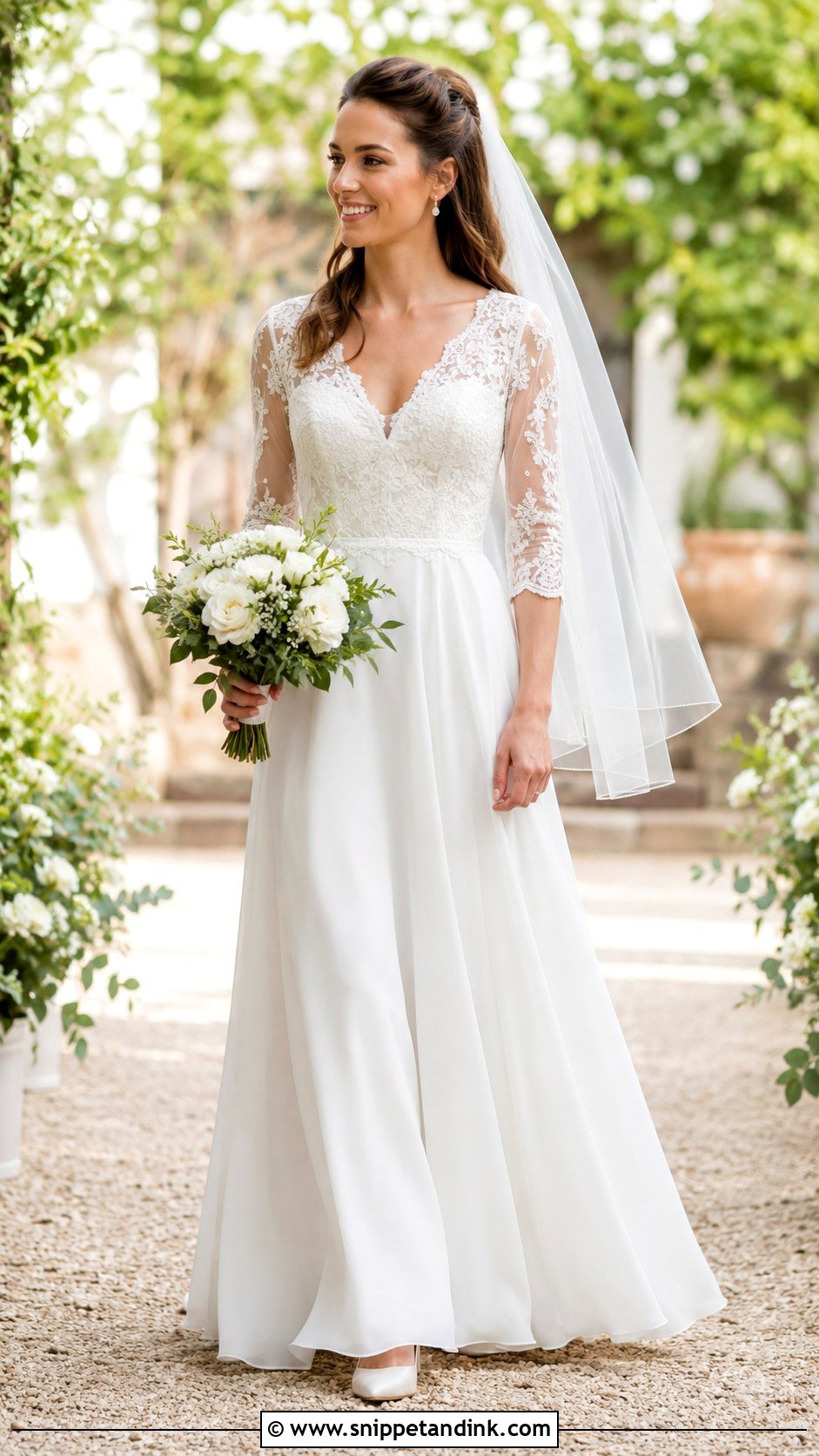
Heat changes the fabric choice, not the shape. Keep the lace bodice but switch to sheer three-quarter sleeves, an open V-neck and a flowing organza or chiffon A-line skirt, and skip stiff underskirts. I’d also ask for a breathable lining such as cotton or a natural blend under the lace, because polyester linings trap heat against the back. Low heels or pointed flats handle grass better than stilettos. A fingertip veil, pearl studs and a relaxed half-up style move with the breeze. White and pale green flowers keep it fresh for a garden, conservatory or waterside ceremony.




20. Kate Wedding Dress With Tiara And Veil
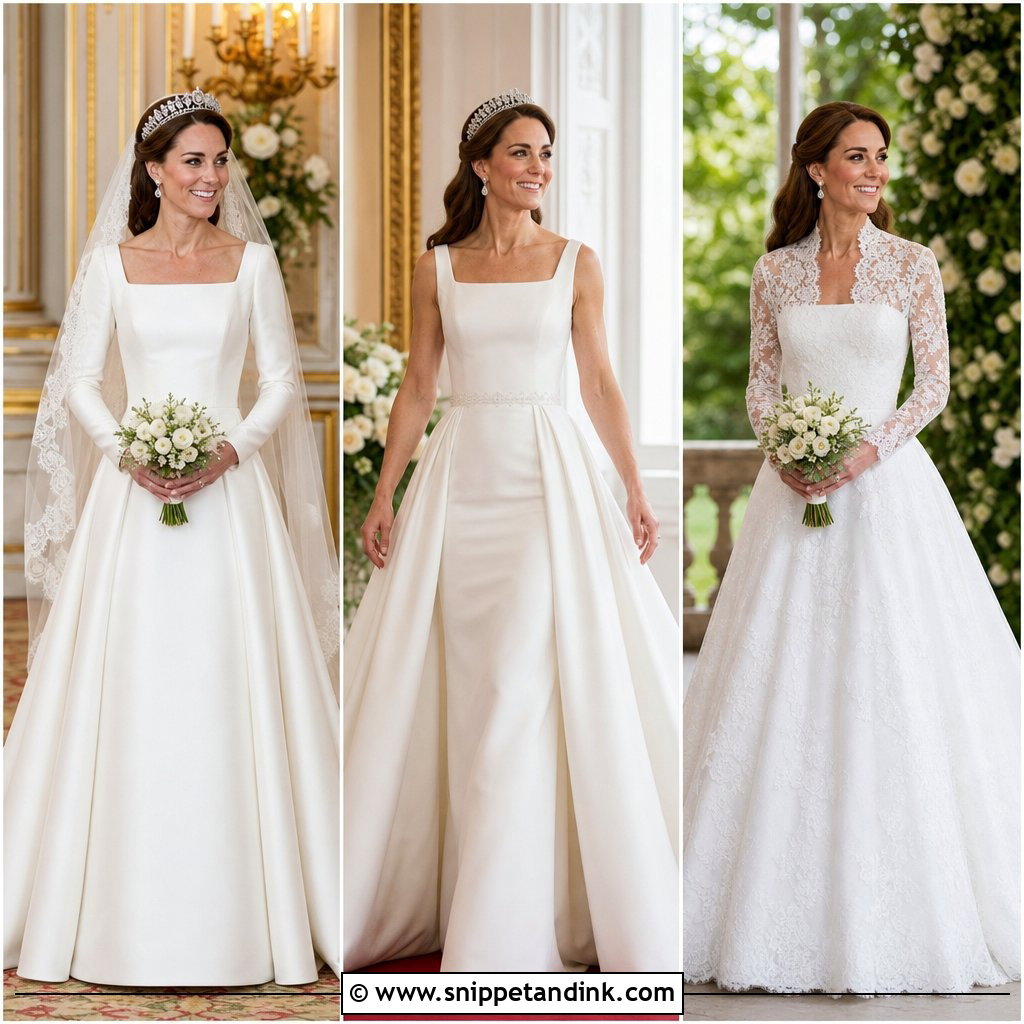
The full royal effect needs both a tiara and veil, and getting them to sit together is a hairstyling job as much as a styling one. The gown is the classic: lace long sleeves, modest V-neck, fitted waist, full satin skirt and a long train. Choose a delicate tiara with balanced crystal or pearl detail, then set a sheer cathedral veil behind it. The comb needs a firm base, so I ask the stylist for a low structured bun or a half-up style with enough grip to hold both pieces. Pearl drops, ivory pumps and a compact bouquet keep the rest quiet so the gown stays in front.
Long Sleeves, Long Trains, and the Fittings They Need
This style has more moving parts than a strapless gown, and two of them, the sleeves and the train, cause most of the problems I see in the last month.
Test the sleeves like you will use them
At every fitting, raise both arms above your head, cross them in front of you and reach for something on a table. Lace sleeves set into a fitted bodice restrict movement more than people expect, and a seamstress can add a little ease under the arm or lower the armhole only if she knows early. Check the cuff too. It should end at the wrist bone, so it does not slide over your hand when you hold the bouquet. If you have tattoos you would rather cover, bring photos; sheer tulle hides less than it seems in a shop mirror.
Plan the bustle before the wedding week
Any train beyond sweep length needs a way up for the reception. A French or under bustle tucks the train beneath the skirt and keeps the back smooth; an over bustle lifts it up with hooks or buttons and shows off more fabric. Ask for the bustle points to be marked with small colored threads, and have the person who will do it on the day attend the last fitting to practice. It takes a few minutes with someone who has rehearsed it, and much longer in a dim hallway with someone who has not.
Finally, sit in the dress for a full ten minutes before you take it home. That is when a satin skirt shows how it creases and a boned bodice shows where it digs.
Do You Need Every Royal Detail?
Not really. Lace sleeves, a fitted bodice, a defined waist, a full skirt and a veil give you the recognizable outline; beyond that, edit for your venue, your season and your body. A ballroom can carry the long train and the tiara. A garden wants lighter fabric and a shorter veil. Pick shoes you can stand in for hours and a veil that fits the room, and let the accessories stay a step behind the dress. With good tailoring, the gown ends up reading as yours, with the royal influence only in the background.
You'll Like These Ideas:







Leave a Reply