
Royal bridal fashion has less to do with how big the gown is than with how disciplined the outfit around it is. When I style a regal look, the veil, shoes, jewelry, flowers and hair each get one job, and none of them is allowed to compete with the dress. The twenty looks below run from traditional ball gowns and lace sleeves to clean column dresses and a few modern takes, with notes on which neckline suits which tiara and where an ornate detail needs a plain partner. Some suit a ballroom; others work in a garden or a historic house. All of them are wearable, which matters more than anything once you’ve been standing in a structured bodice for six hours.
How Much Tiara Your Face and Hair Can Carry
Almost every look below includes a tiara, and it’s the accessory I see go wrong most often. The problem is rarely the tiara itself. It’s the height, where it sits and what’s holding it. I bring tiaras to the hair trial rather than buying one after, because the hairstyle and the piece have to be built together.
Height and face shape
A tall, peaked tiara adds length, which balances a rounder or shorter face but can make a long, narrow face look even longer. If that’s you, a low band or a piece that runs wider than it rises sits better. Fine features also get lost under a heavy crown, so match the weight of the tiara to the scale of your face and your earrings.
Placement and anchoring
- Set it slightly back from the hairline rather than on it. Right at the front edge, it tends to slip forward and catch the light awkwardly in close-ups.
- Your stylist needs a base to anchor into, either a little backcombing or a small hidden braid. Very fine, silky hair won’t hold a heavy tiara on its combs alone.
- Crossed pins through the side loops keep it from rocking when you hug people.
- If you’re wearing a veil too, the veil comb usually goes in behind the tiara, so try both together at the trial.
1. Royal Satin Ball Gown Wedding Dress
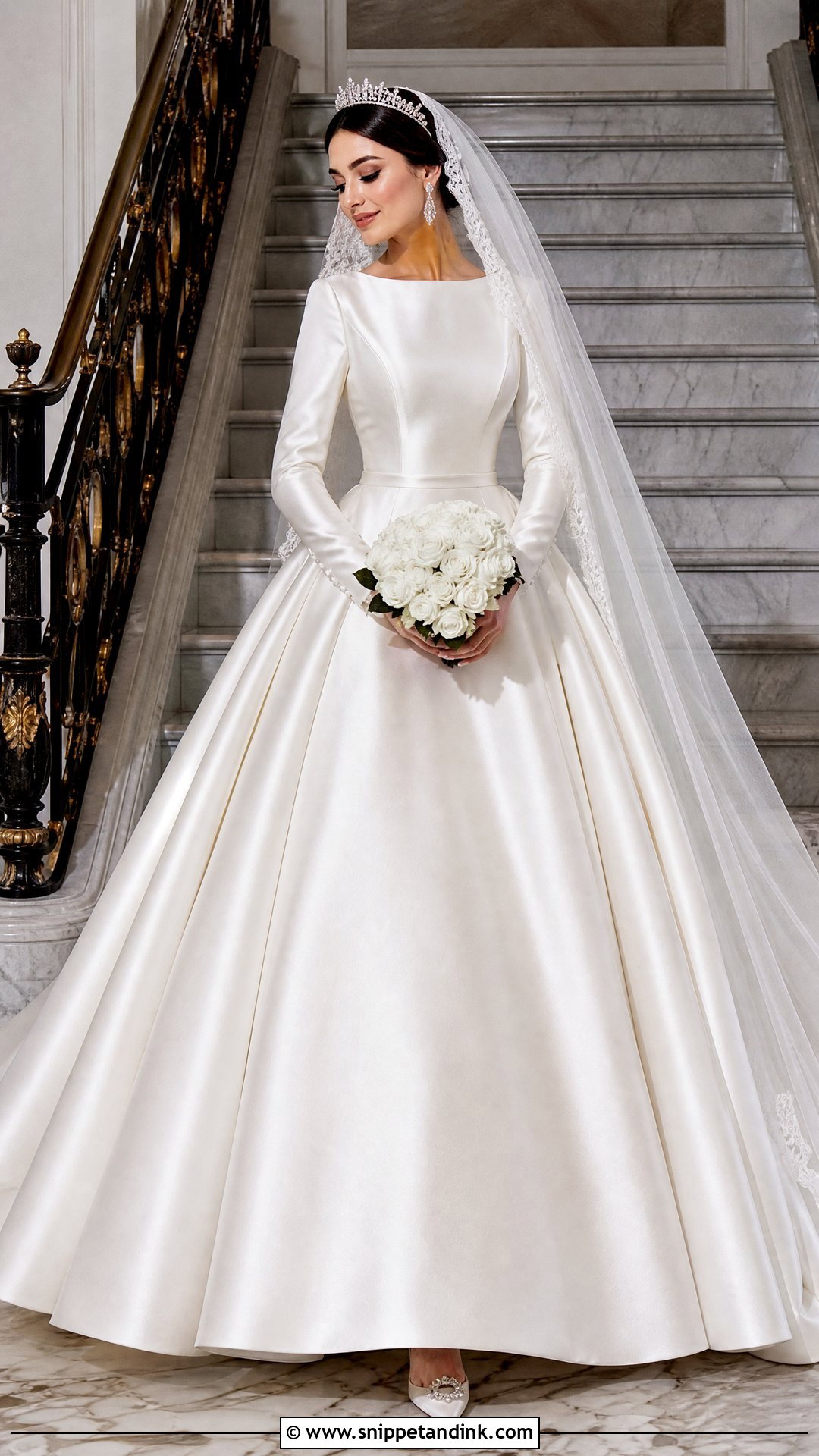
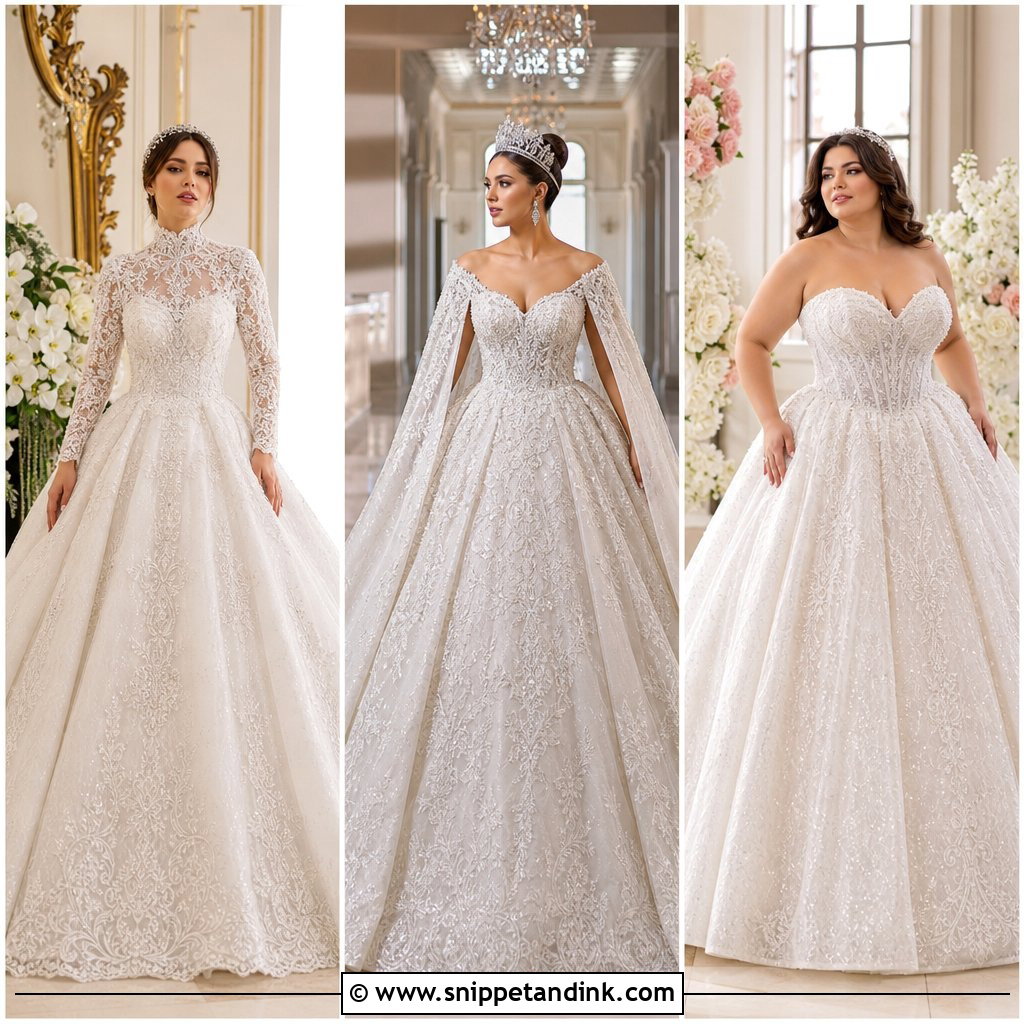
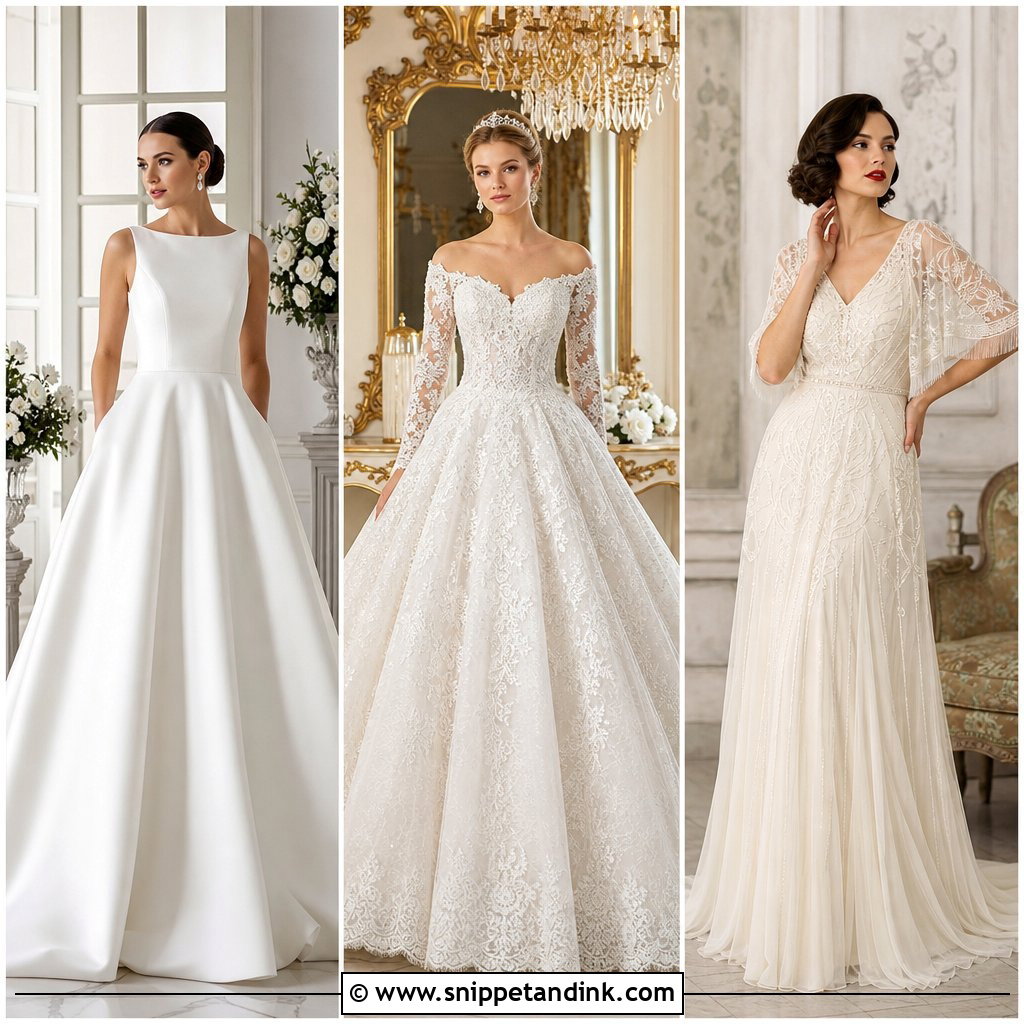
Plain satin is the hardest-working fabric in bridal. With no lace to hide behind, it relies entirely on the cut, and when the cut is right nothing else is needed. I look for a fitted bodice, a natural waist and a skirt with real structure underneath, plus hidden pockets, which brides always thank me for later. Long sleeves and a softly curved neckline make it formal, and covered buttons down the back finish it. A cathedral veil edged in narrow satin ribbon, crystal drops and a delicate tiara are plenty. Pointed ivory pumps keep the line graceful under the volume. Carry a compact bouquet of white roses and ranunculus rather than something huge, and wear a sleek low bun so the neckline and veil stay visible.
2. Royal Lace Sleeve Wedding Dress
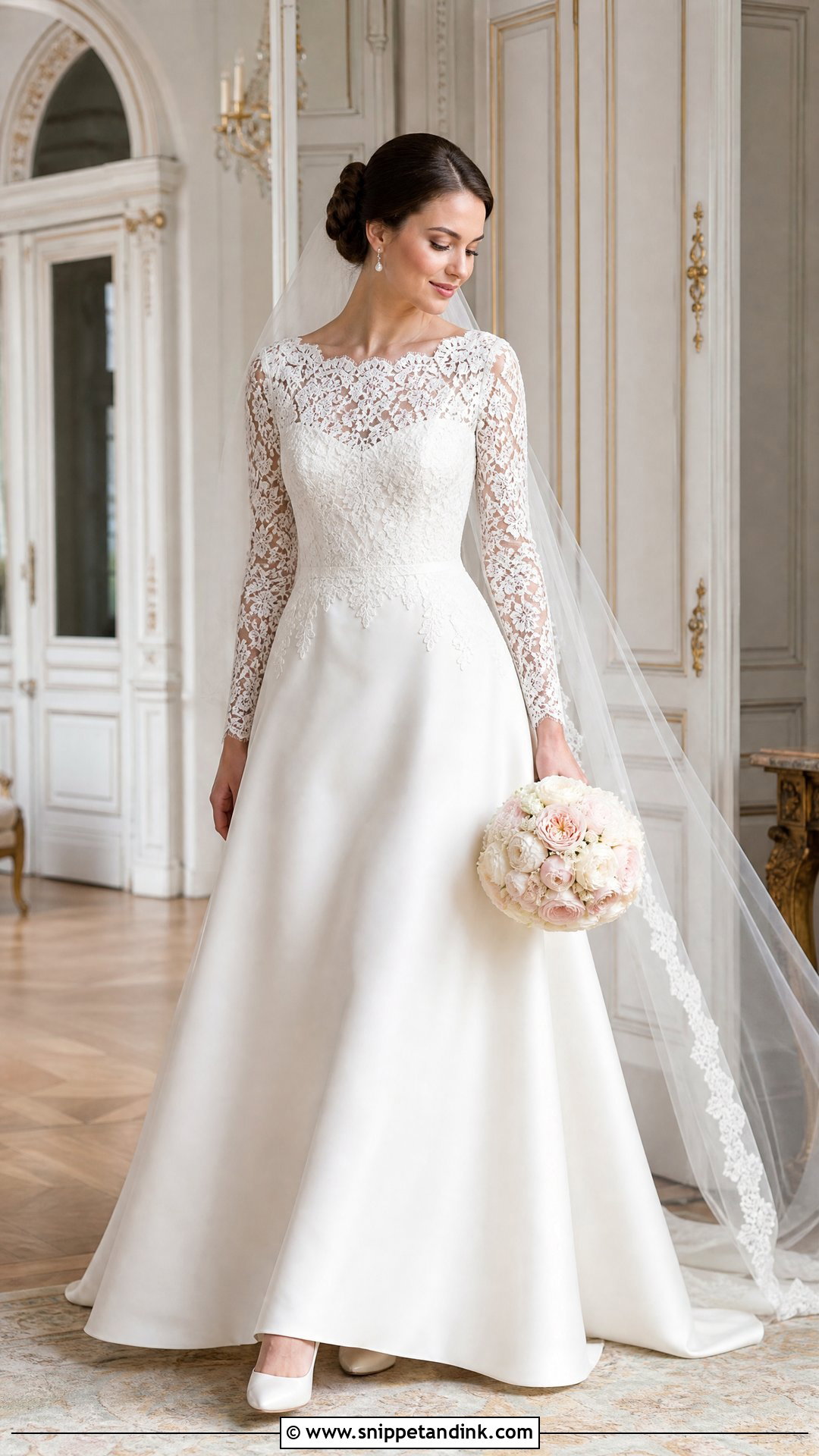
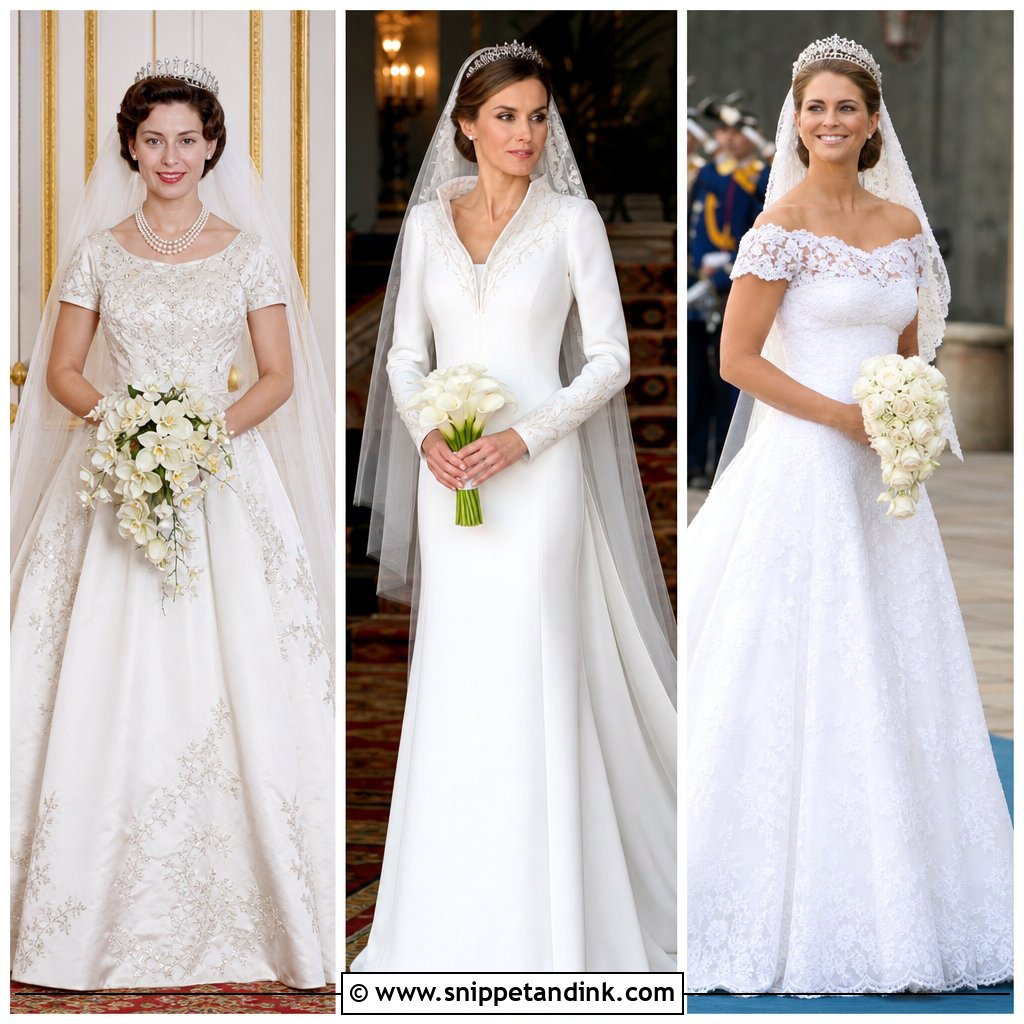
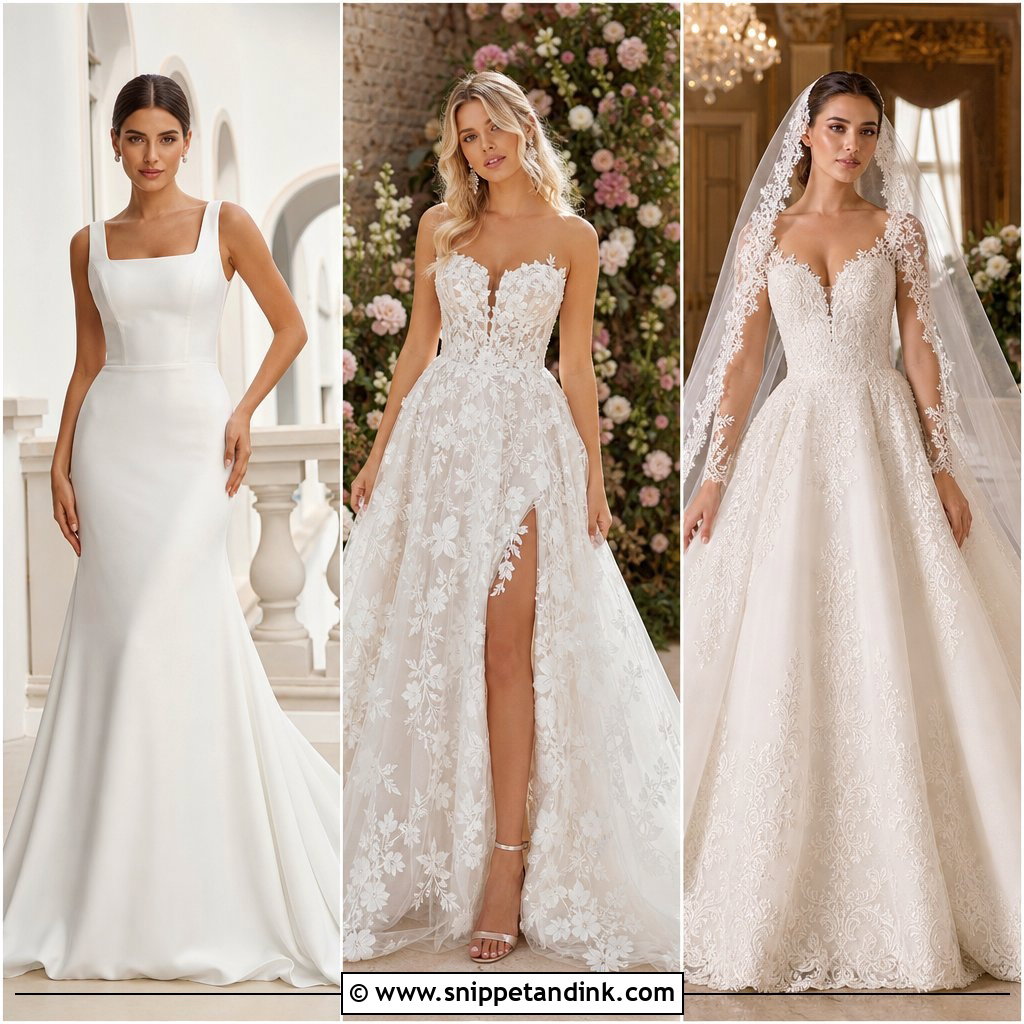
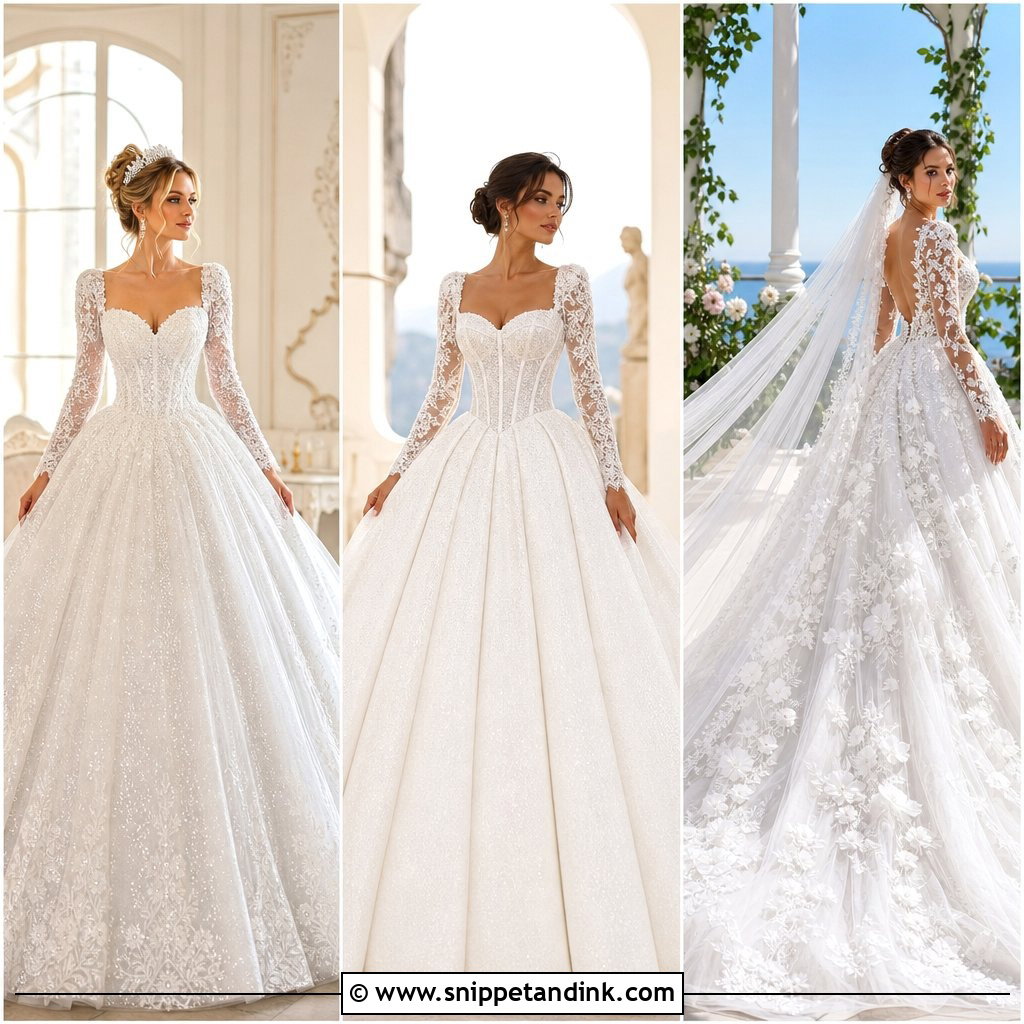
Lace sleeves soften a structured gown without making it fussy, as long as the lace stops at the bodice. My preference is an A-line with a fitted lace top, a lightly scalloped neckline and a smooth satin or silk skirt; that contrast is what keeps it from looking busy. If your veil has lace, keep it to the lower edge so nothing near your face fights the sleeves. Pearl studs, a slim bracelet and ivory satin pumps are enough. A classic chignon takes a small crystal comb or a modest tiara well. One fit note: lace sleeves have no stretch, so raise your arms at every fitting and ask for a little ease at the armhole if the bodice lifts. A rounded bouquet of garden roses and seasonal foliage finishes it.
3. Royal Square Neck Wedding Dress
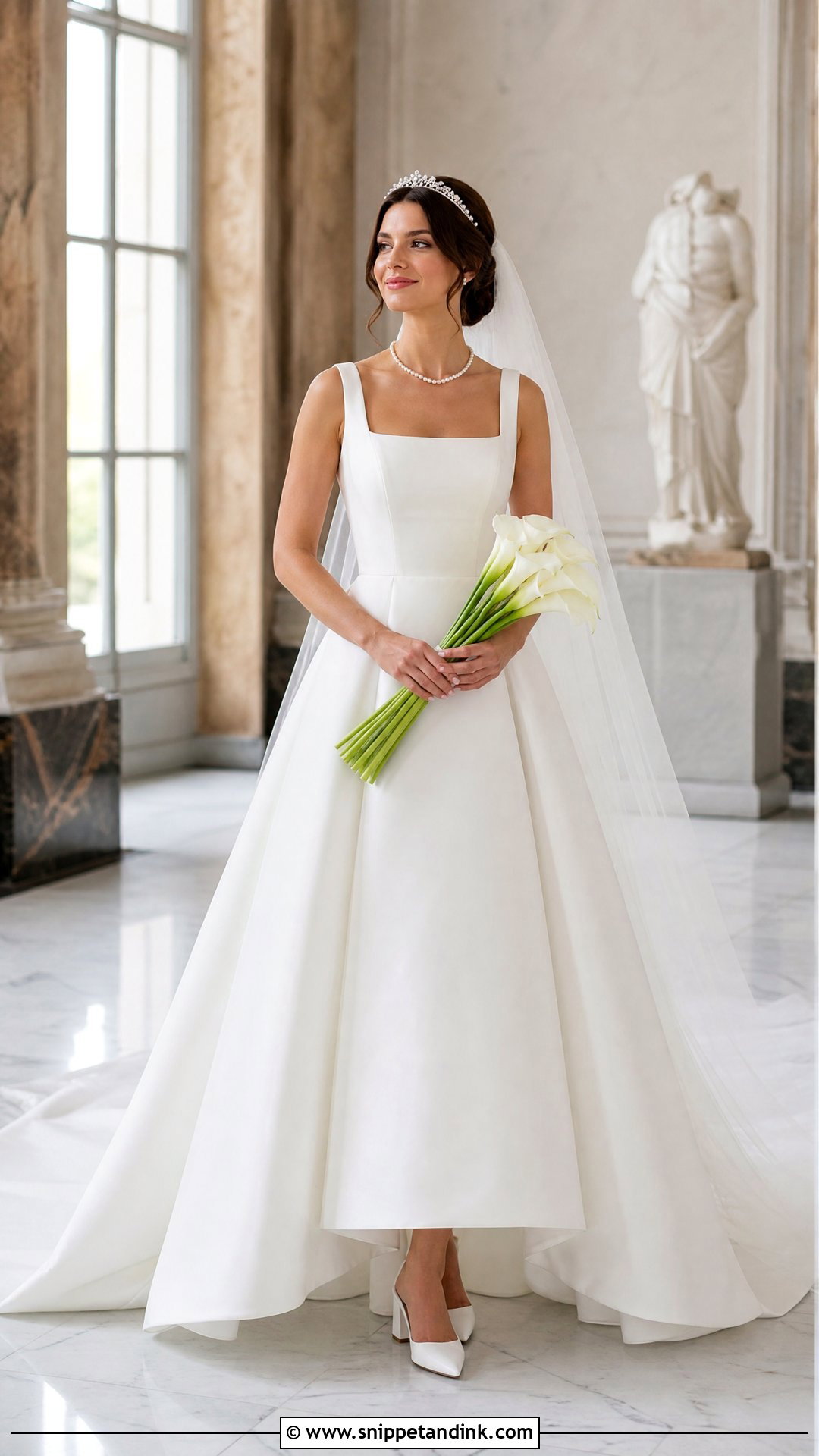
Mikado is the fabric that makes a square neckline look architectural. It’s stiff enough to hold a crisp corner at each side, where softer satin tends to collapse. Pair the structured bodice with wide straps or fitted long sleeves, a full skirt and a chapel train. The neckline frames the collarbone and leaves room for a short pearl strand or a single pendant. I’d attach a plain tulle veil below a polished bun so those straight lines stay the focus. Block-heel pumps are worth it here, since Mikado skirts are heavy and long ceremonies get tiring on narrow heels. Calla lilies or white tulips in an elongated bouquet echo the shape, and the whole look sits well in a grand room with strong architectural detail.
4. Royal Off The Shoulder Wedding Dress
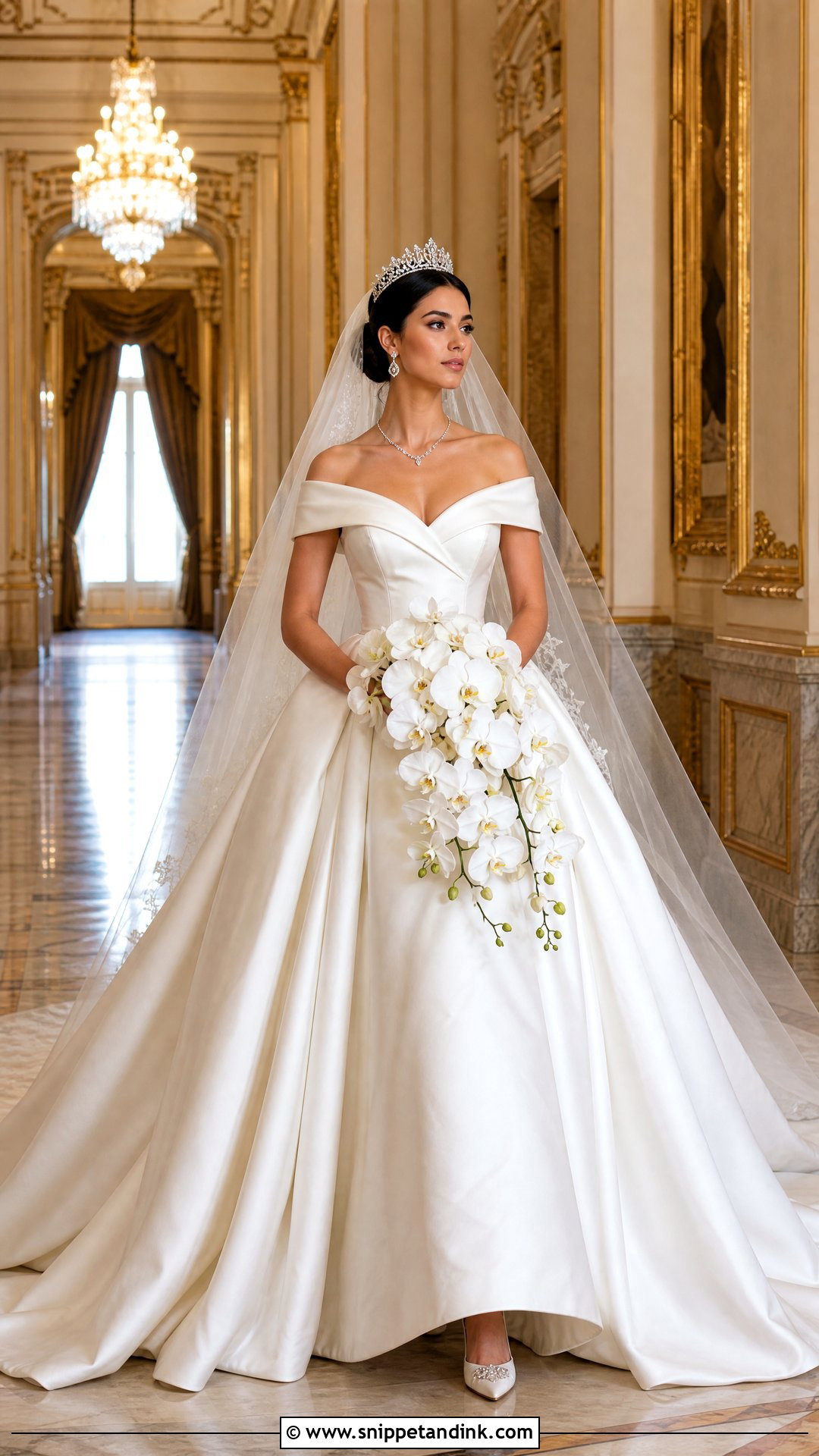
An off-the-shoulder ball gown is romantic but still formal, and the folded satin neckline needs proper internal support or it will slide every time you lift your arms. Ask your seamstress about a hidden band or boning at the top edge. Keep the skirt full but controlled; extra layers add weight without adding much shape. Teardrop earrings and a fine necklace suit the open neckline, along with a lightweight tulle cathedral veil that falls past the train. Closed-toe satin heels and a cascade of orchids, white roses and soft greenery complete it. A smooth updo with a low-profile tiara won’t fight the neckline. If you plan to dance properly, detachable off-the-shoulder straps give your arms back after dinner.
5. Royal High Neck Wedding Dress
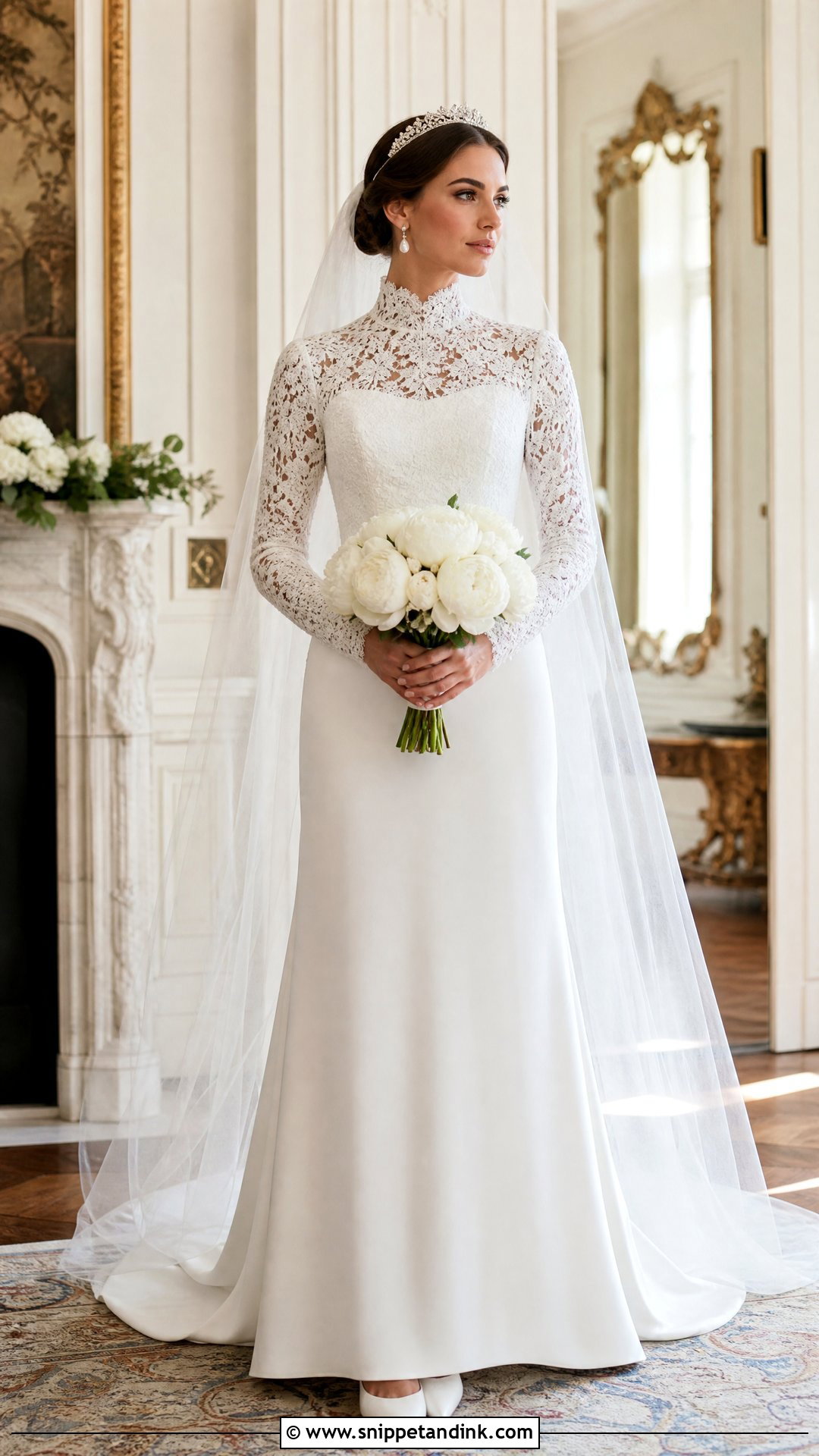
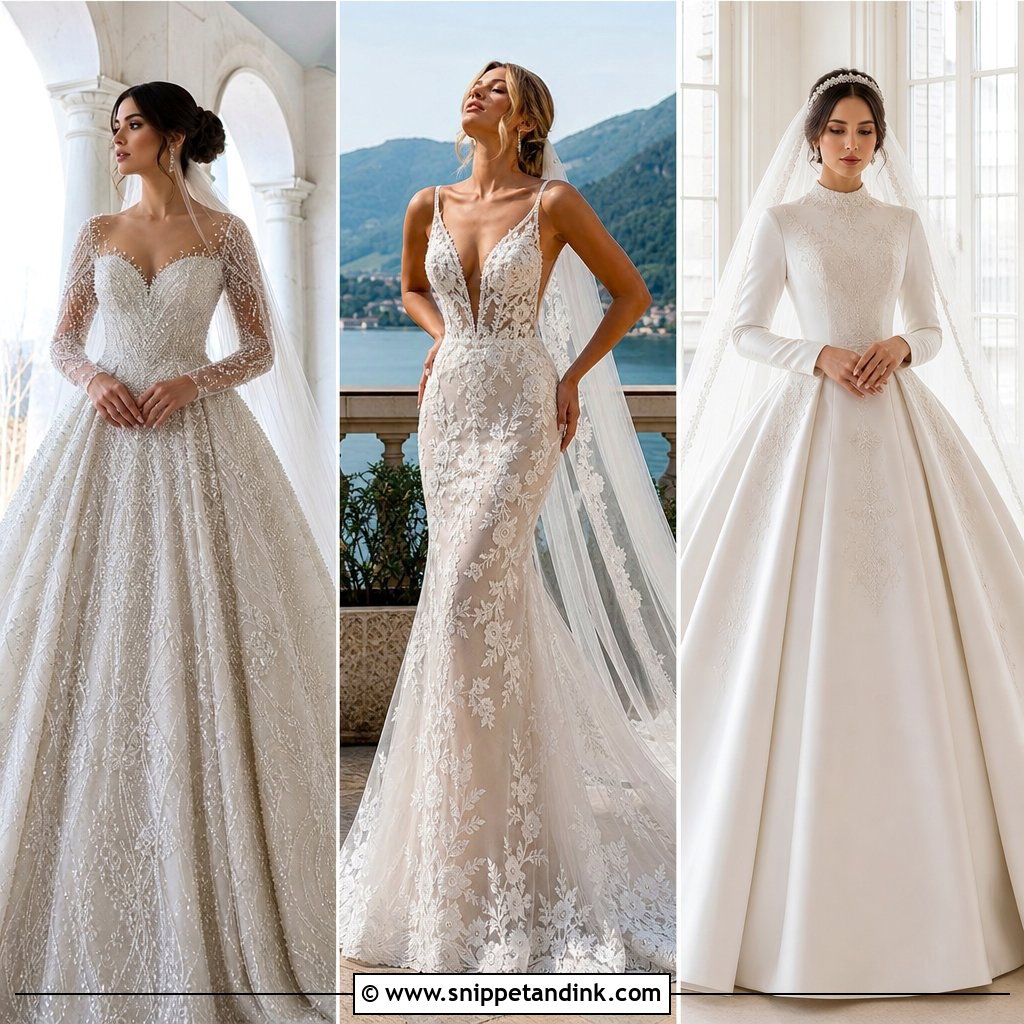
A high-neck wedding gown gives you coverage and presence at once. I’d look for a fitted lace or crepe bodice with a raised collar, long sleeves and a softly flared A-line skirt. Sheer lace at the throat keeps it light, while an opaque lining through the body gives structure. The collar is your necklace, so wear pearl drops and nothing at the neck. A smooth bun, a centered tiara and a long plain veil make a clean profile in side-on photos. Pointed satin pumps and white peonies or roses finish it. It’s a natural fit for cooler weather and formal daytime ceremonies, and it reads modest without looking heavy or dated.
6. Royal Basque Waist Wedding Dress
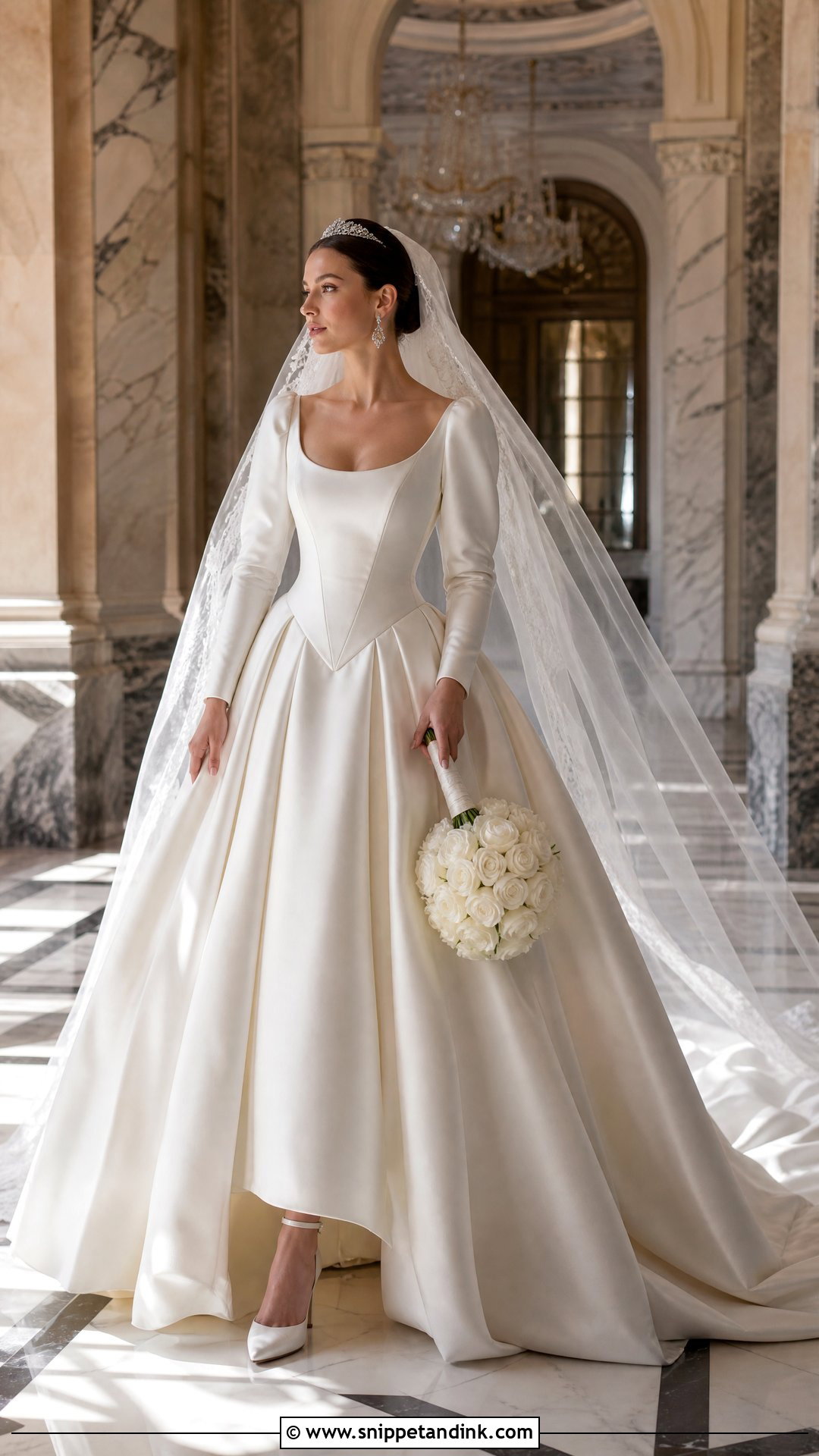
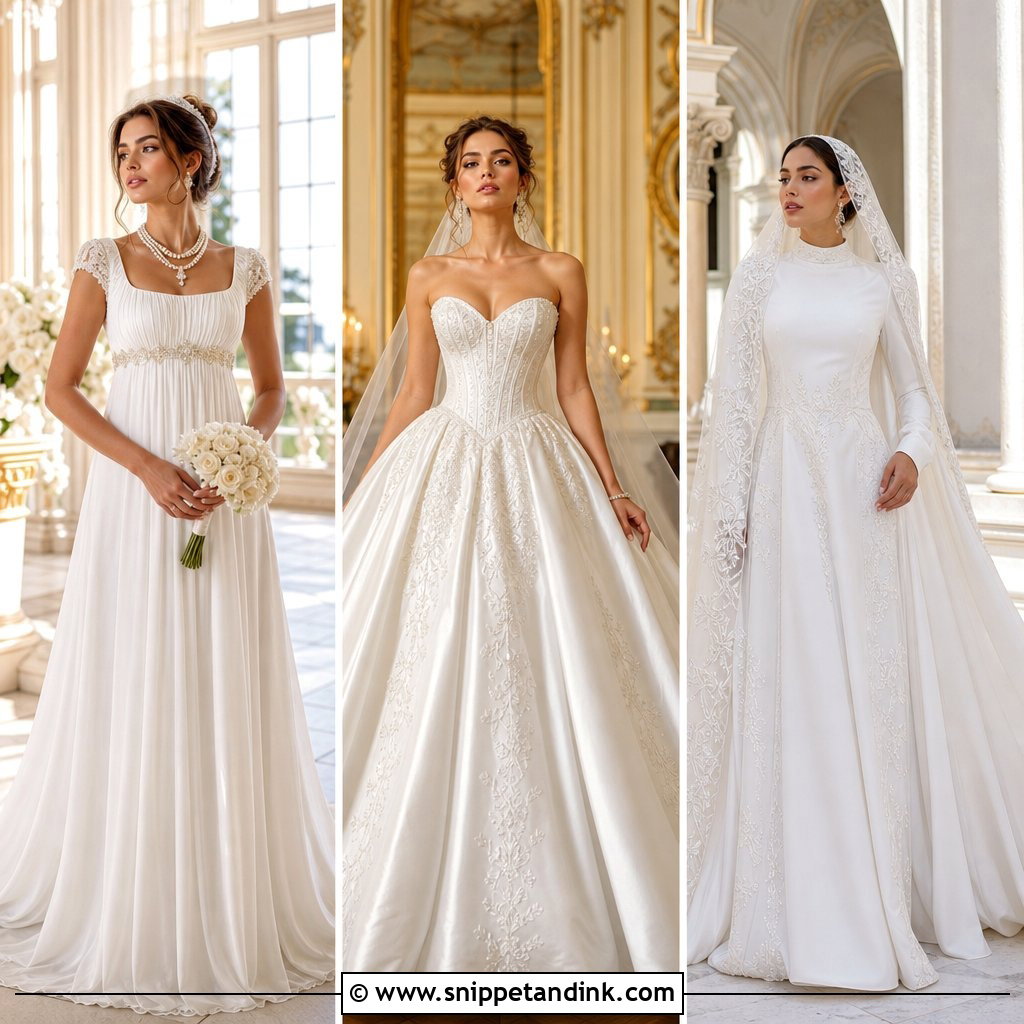
A Basque waist dips into a V below the natural waistline, which lengthens the torso and gives the bodice a sculpted, historic look. It only works if it’s fitted properly. The point should lie flat against your stomach when you sit, not fold or dig in, so I always have brides sit at the fitting before anything is finalized. Pair it with a full satin skirt, a scooped or straight neckline and removable long sleeves if the ceremony calls for coverage. A cathedral veil with minimal embroidery, crystal earrings and a slender tiara that follows the curve of the hairstyle keep it balanced. Choose ivory heels with an ankle strap, because a heavy skirt makes slip-on shoes feel unsteady. Roses and lilies in a structured bouquet suit the formal mood.
7. Royal Cape Wedding Dress
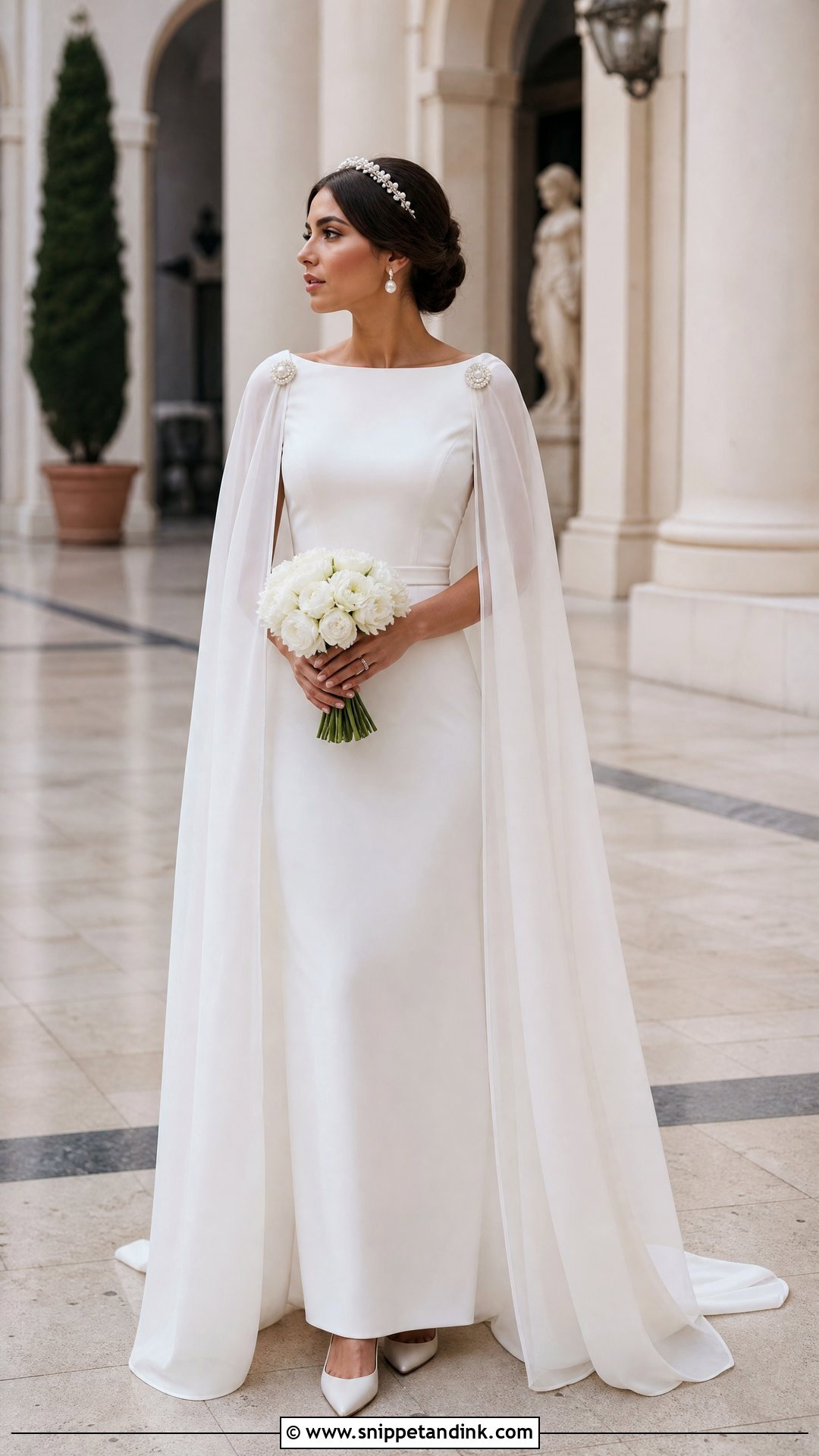
A cape changes how you enter a room. It moves behind you as you walk, which a veil only does in a breeze. Start with a fitted crepe A-line or column gown with a clean bateau neckline and a defined waist, then add a floor-length detachable cape fastened at the shoulders with discreet crystal or pearl clasps. It replaces the veil, so your hairstyle stays visible. I’d use a narrow jeweled headband rather than a tall tiara, with pearl earrings and a low bun. Choose lightweight tulle or chiffon, since a heavy cape drags the shoulders back all day. Pointed ivory pumps and a small white bouquet keep the line clean, and when the dancing starts, unclip it for a second look.
8. Royal Beaded Tulle Wedding Dress
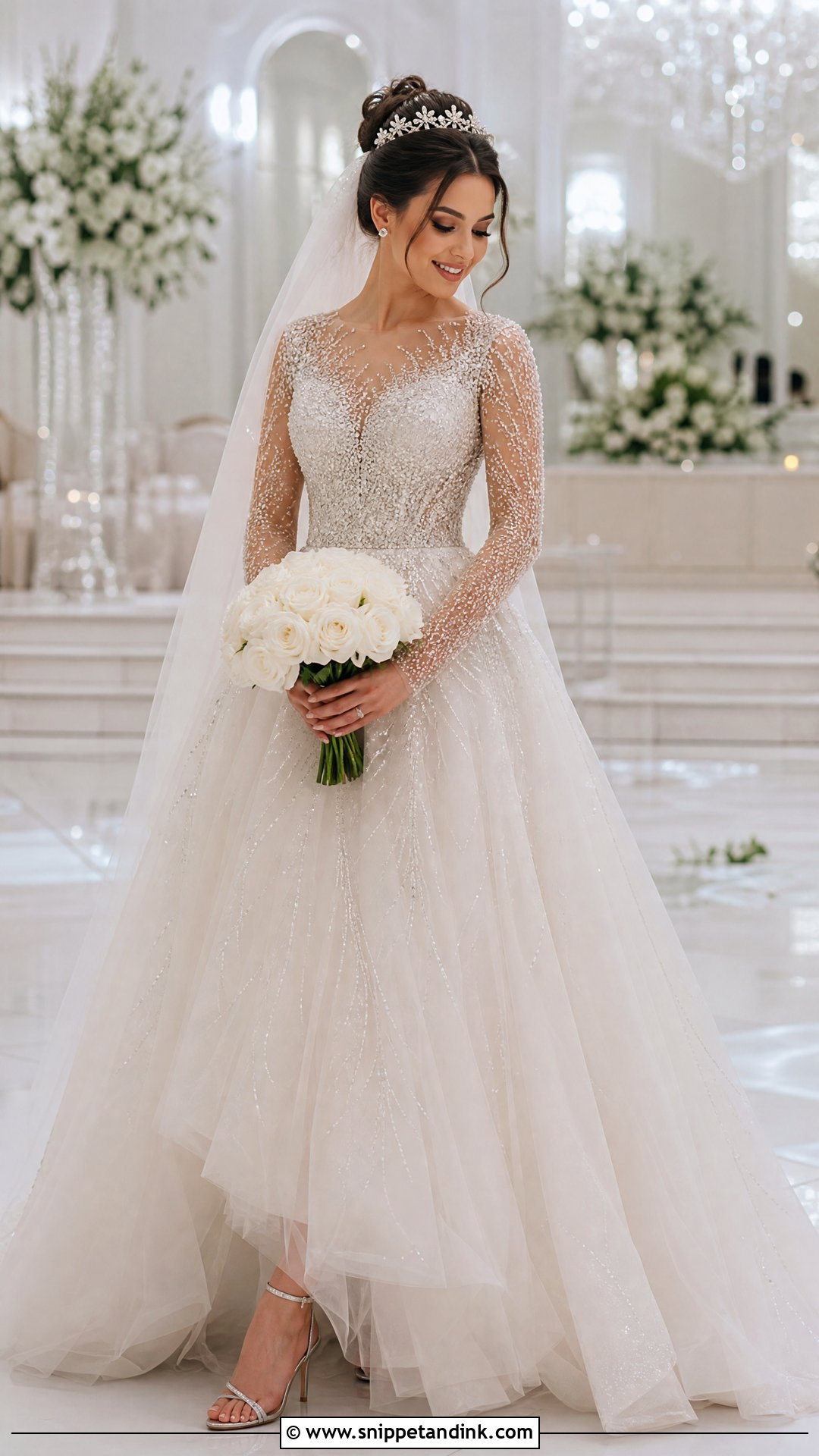
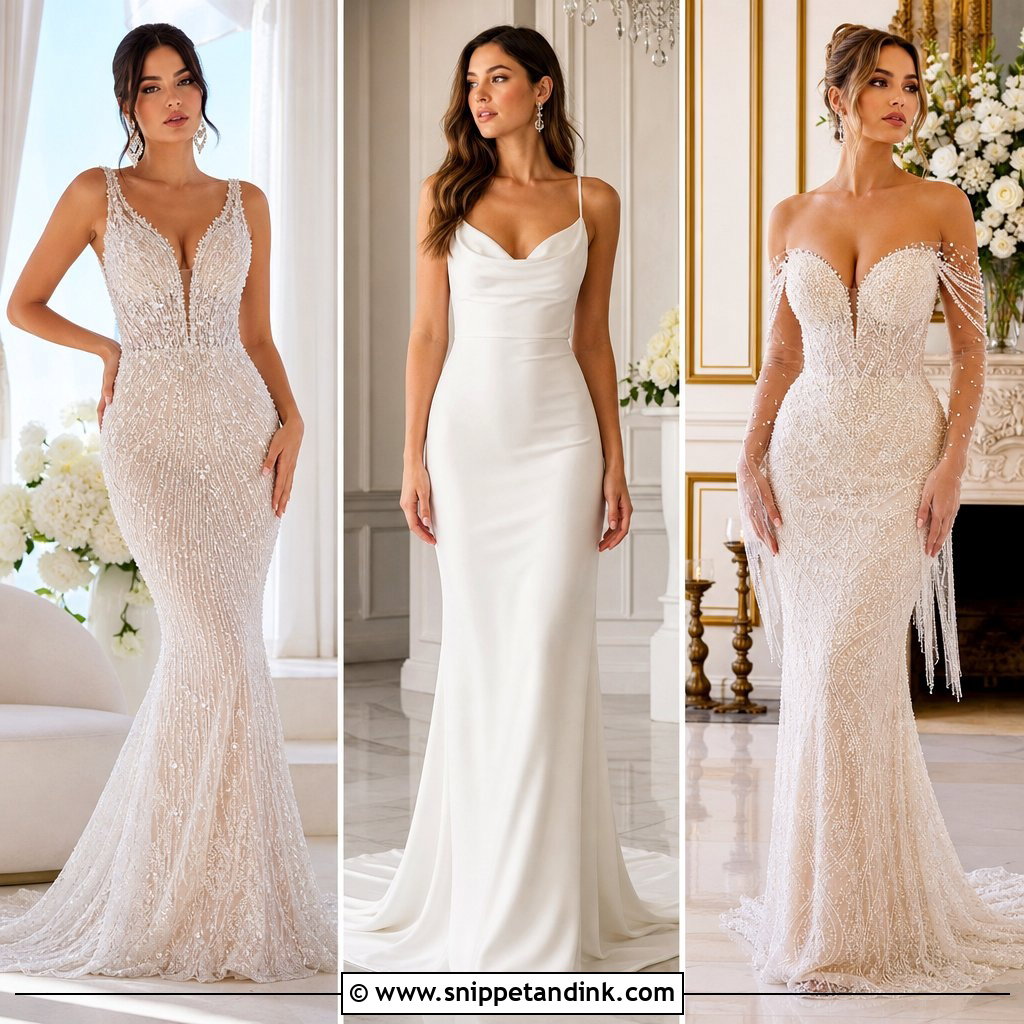
Beaded tulle sparkles without looking ornate when the beadwork is concentrated where it does the most work: the bodice, the sleeves and the top of the skirt, fading toward the hem. A nude or ivory lining shows the pattern clearly while keeping you covered. Because the dress already supplies the shine, I keep the rest quiet: a plain fingertip or chapel veil, crystal studs, silver-toned pointed heels and a small symmetrical tiara. A loose low bun and compact white roses finish it. Before the final alterations, drape your veil over the beaded areas and walk. Rough-backed beads catch fine tulle, and it’s far easier to fix that at a fitting than on the aisle.
9. Royal Floral Embroidered Wedding Dress
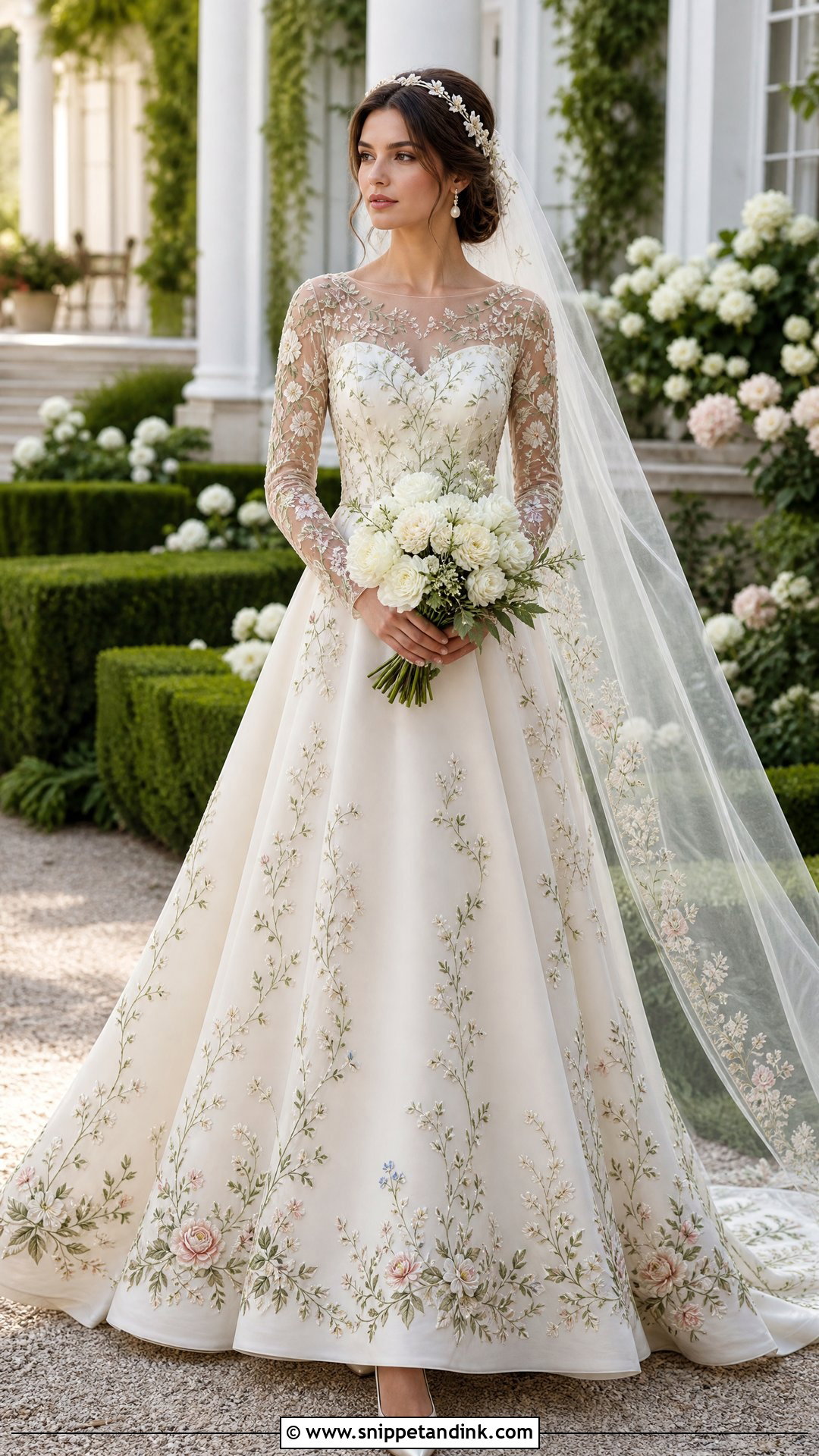
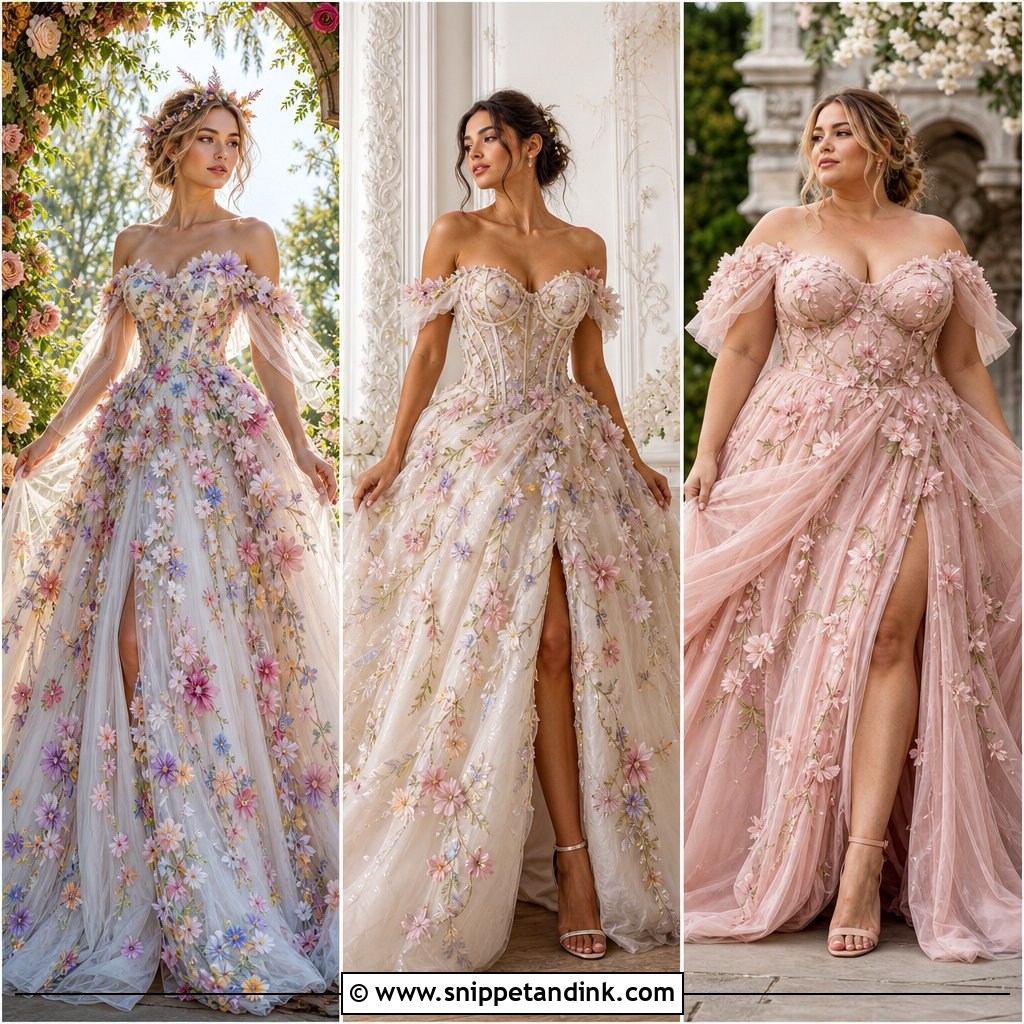
Embroidery reads more personal than lace because the motif can be chosen. Botanical designs across the bodice, sleeves and train suit an A-line best. Ivory-on-ivory is subtle; pale blue or muted gold thread adds restrained color. If the veil picks up the theme, keep it to a few matching flowers around the edge, since dense embroidery on both gown and veil turns into noise. Pearl earrings, embroidered ivory pumps and a delicate botanical comb carry it through, and a relaxed chignon keeps it from feeling stiff. I like the bouquet to repeat one or two flowers from the embroidery, which ties the whole look together without matching too literally. Estates and gardens surrounded by greenery suit it naturally.
10. Royal Minimalist Column Wedding Dress
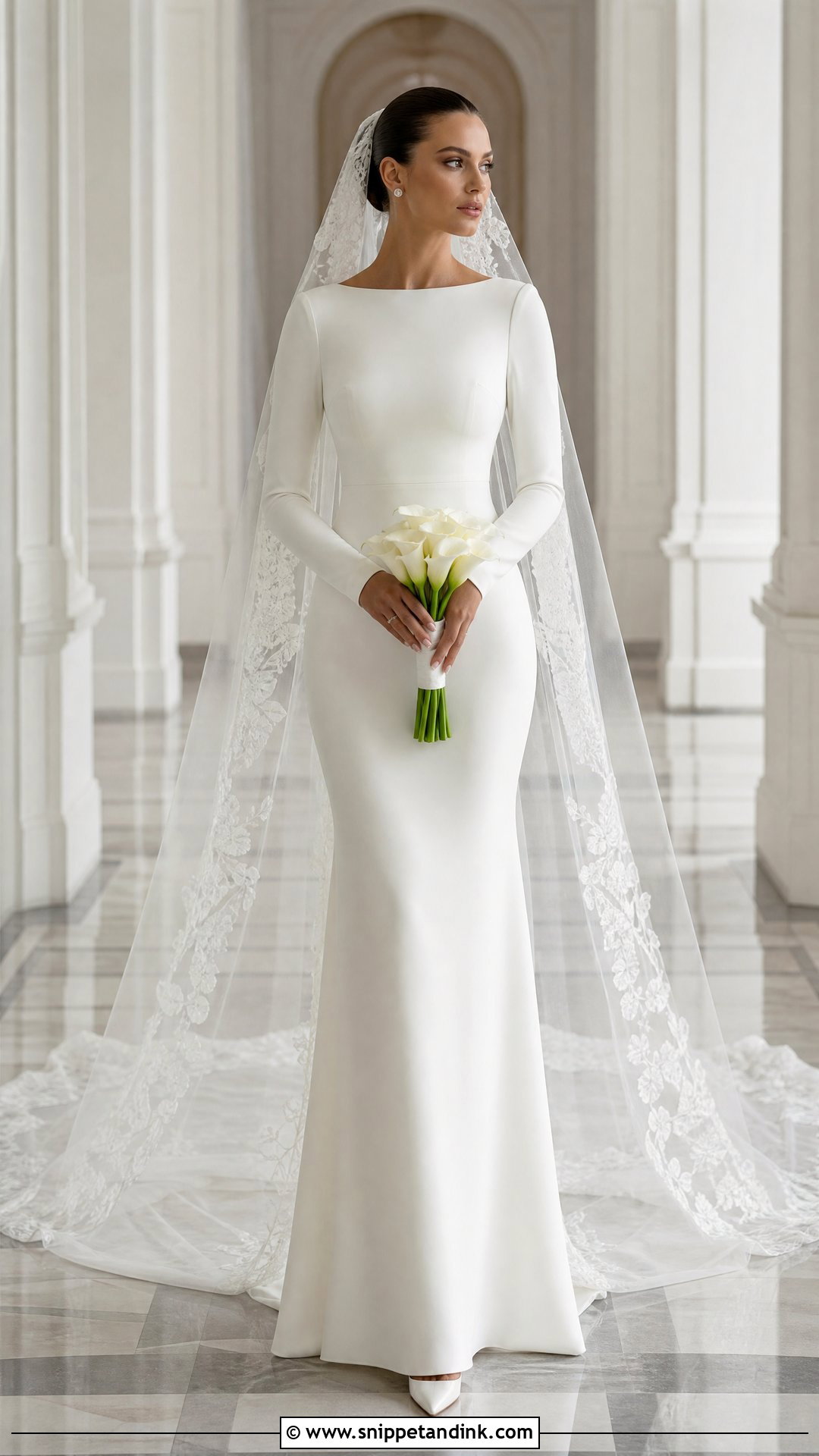
Clean lines can look just as majestic as lace or a full skirt, but a column gown hides nothing, so precise tailoring decides whether it works. Heavy crepe or silk, long sleeves, a bateau neckline and subtle waist shaping make the foundation. The fabric should skim without pulling at the hips or shoulders, and I’d check it while seated as well as standing. Put the drama into a long embroidered veil that extends well past the hem instead of decorating the dress. A diamond-style bandeau, small studs and pointed satin heels finish it. Calla lilies in a narrow bouquet repeat the long line, and smooth hair in a low bun or a neat twist suits the restraint.
11. Royal Boat Neck Wedding Dress
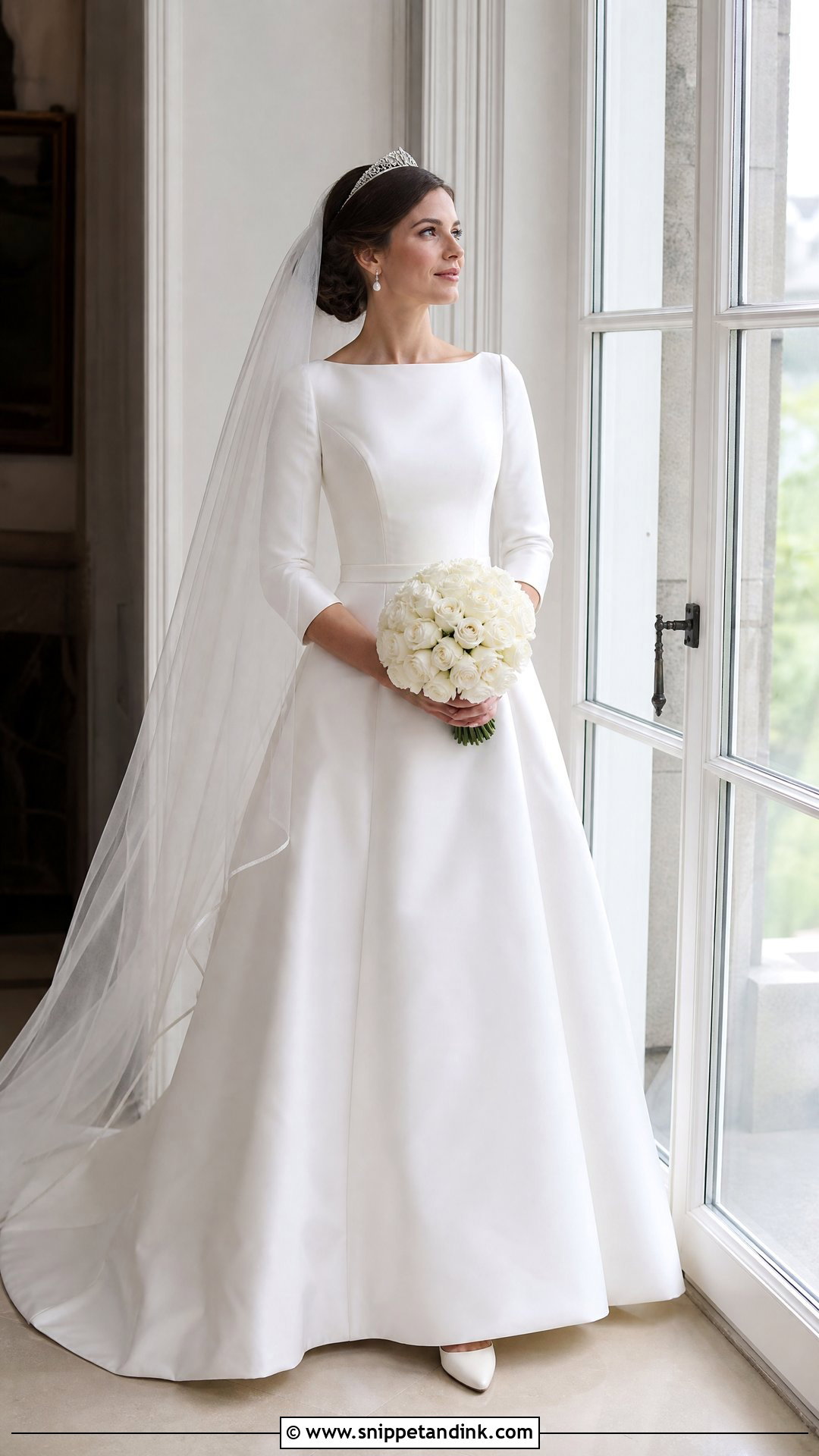
A boat neck draws a horizontal line from shoulder to shoulder, which balances wider hips and shows off the shoulders, so it’s a cut I suggest more than people expect. Choose smooth silk or satin with three-quarter sleeves, a fitted waist and covered buttons running down toward the train. The neckline sits high, so skip the necklace and wear pearl or crystal drops. A low chignon, a compact tiara and a sheer cathedral veil keep the upper body uncluttered. Closed-toe ivory pumps and white roses with minimal foliage finish it. At fittings, lift your arms, turn and sit. A boat neck that gapes or rides up when you hug someone needs taking in at the shoulder seam.
12. Royal Victorian Wedding Dress
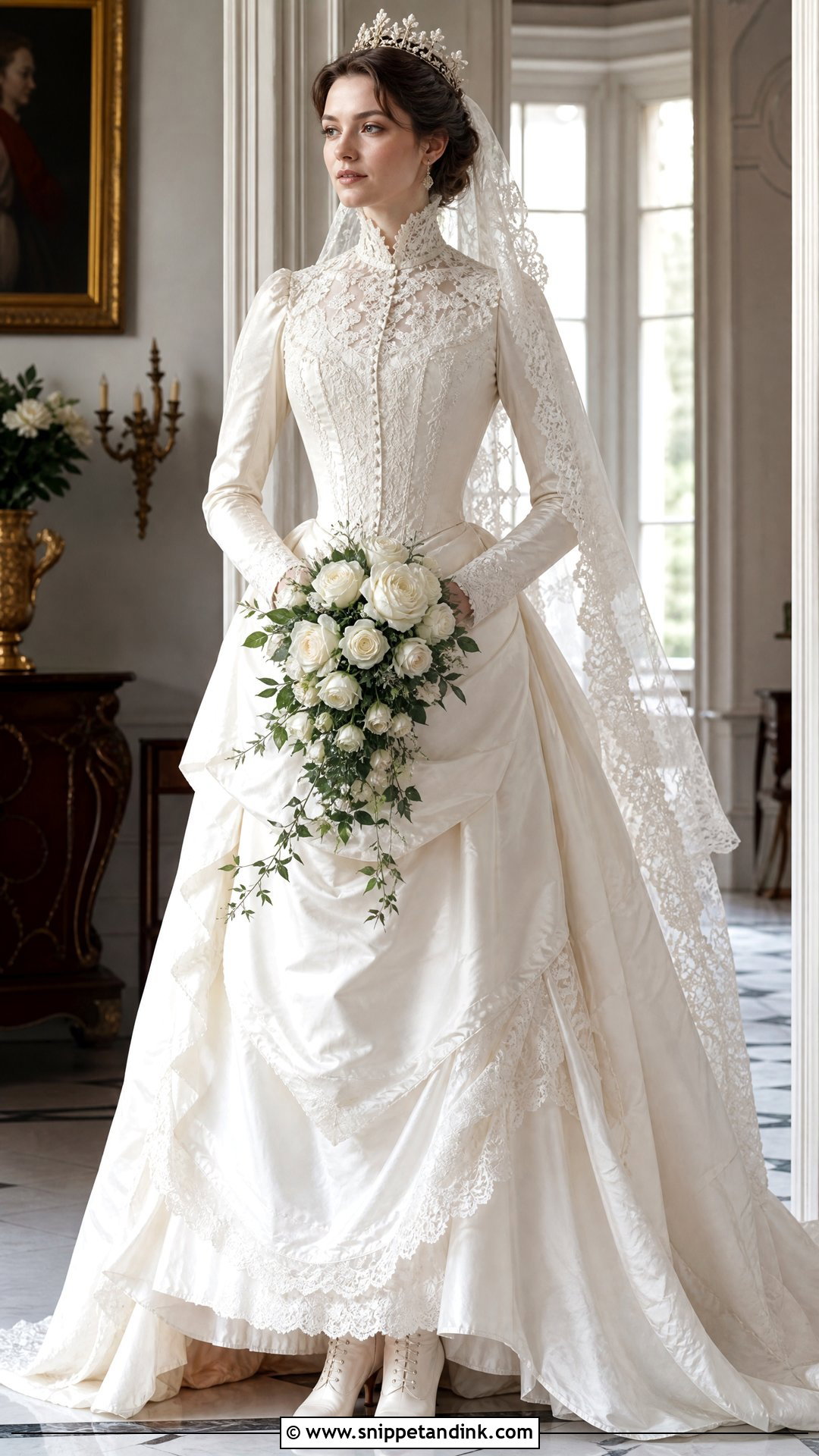
For a historical mood, a Victorian-inspired gown with a raised lace collar, fitted sleeves and a full satin skirt does the job, but only if it stays wearable. I keep the lace lightweight, the bodice built with modern support, and the train designed to bustle. Covered buttons and narrow cuffs give the period detail without tipping into costume. Add a lace-edged veil, pearl earrings and a floral tiara of white blossoms or crystal leaves. Buttoned ivory boots fit the era, though low pumps are kinder for a long day. Carry white roses with myrtle-like greenery and a few seasonal flowers, and wear a center-parted low bun, which is both authentic to the look and secure for hours.
13. Royal Detachable Overskirt Wedding Dress
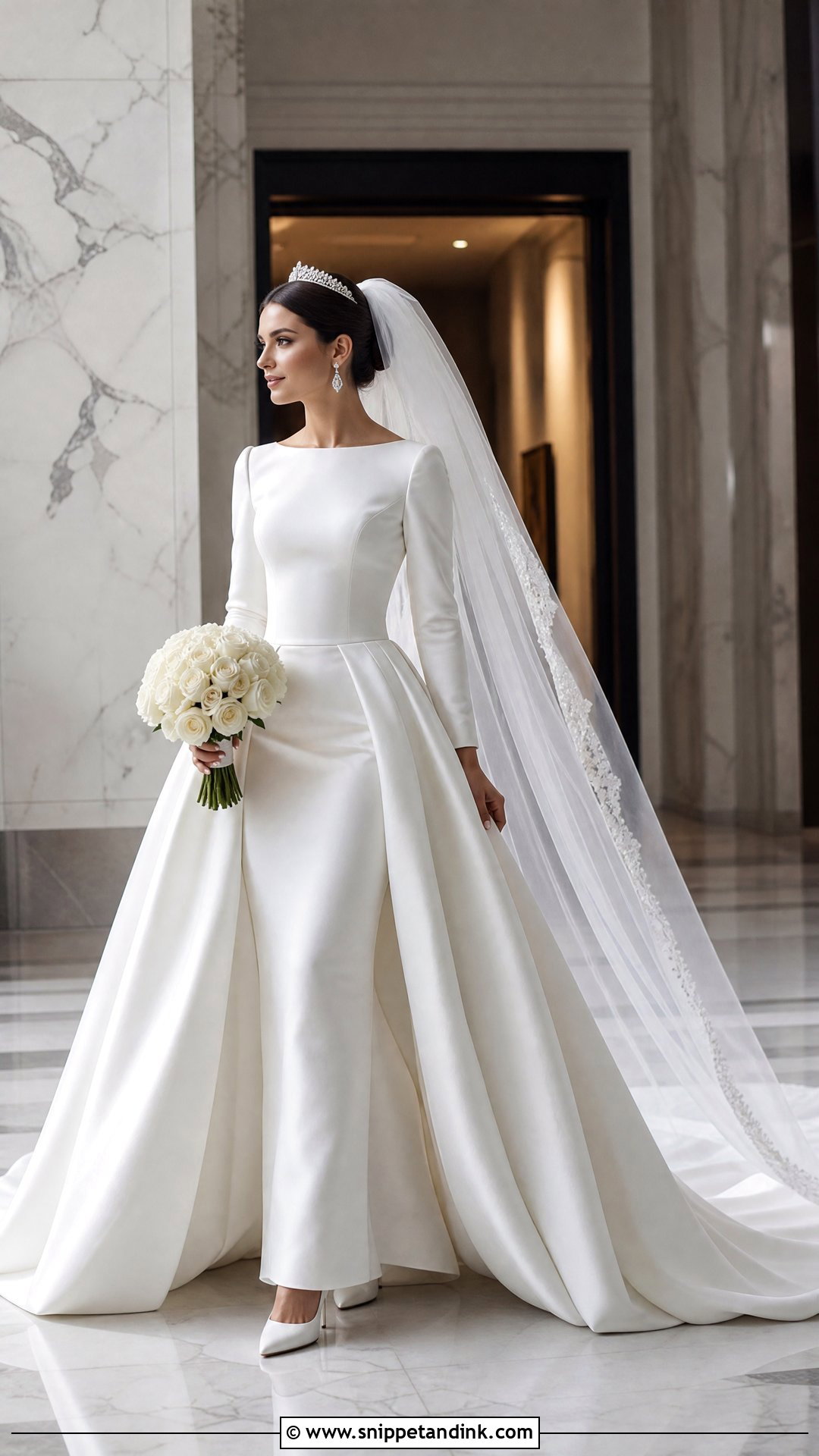
One dress, two silhouettes. Start with a fitted crepe or satin column gown with a clean neckline and a short train. For the ceremony, a full pleated overskirt attaches at the waist and turns it into a ball gown, with a longer train for the walk. Style that version with a cathedral veil, crystal earrings, a slim tiara and ivory pumps. After the formal photos, remove the overskirt and switch to a shorter veil or a jeweled comb. The part I test most is the fastening. Hidden hooks or buttons should hold through the processional, and a bridesmaid should be able to undo them in under a minute without pulling at your waistline. Practice it once at the final fitting.
14. Royal Pearl Wedding Dress
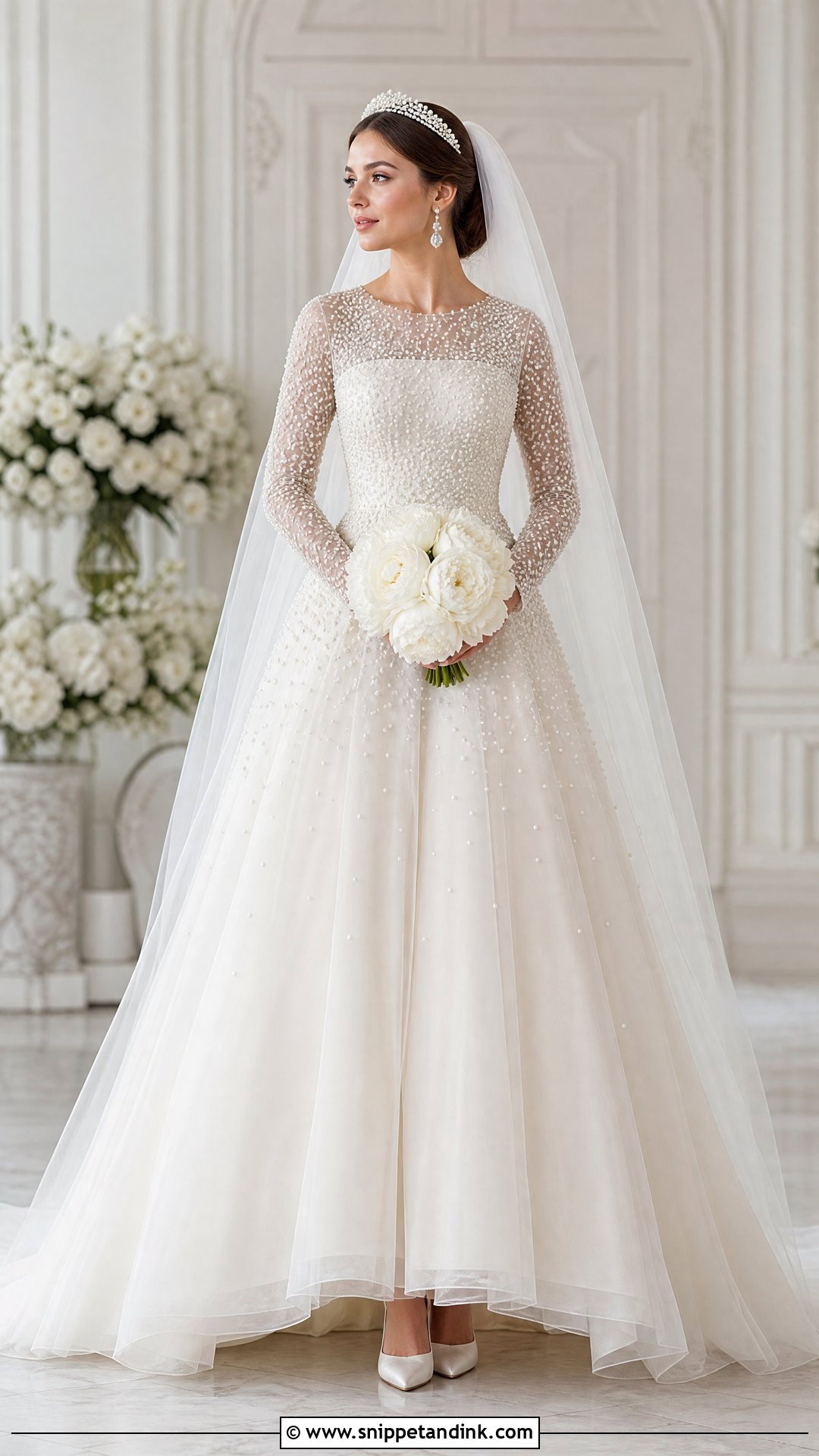
Pearls give a soft glow rather than the hard flash of crystals, which suits daylight photos especially well. Look for a tulle or satin A-line with pearls scattered across the bodice, sleeves and upper skirt, placed gradually so the embellishment looks intentional. A plain veil, pearl drops and a refined tiara with small pearl accents echo it without overdoing it. Ivory satin pumps, white peonies and a smooth low bun that keeps the shoulder detail visible complete it. Pearls are often sewn on individually, so I ask the seamstress to check every one before the final fitting. Loose pearls snag the veil and leave little holes when they fall.

15. Royal Long Sleeve Trumpet Wedding Dress
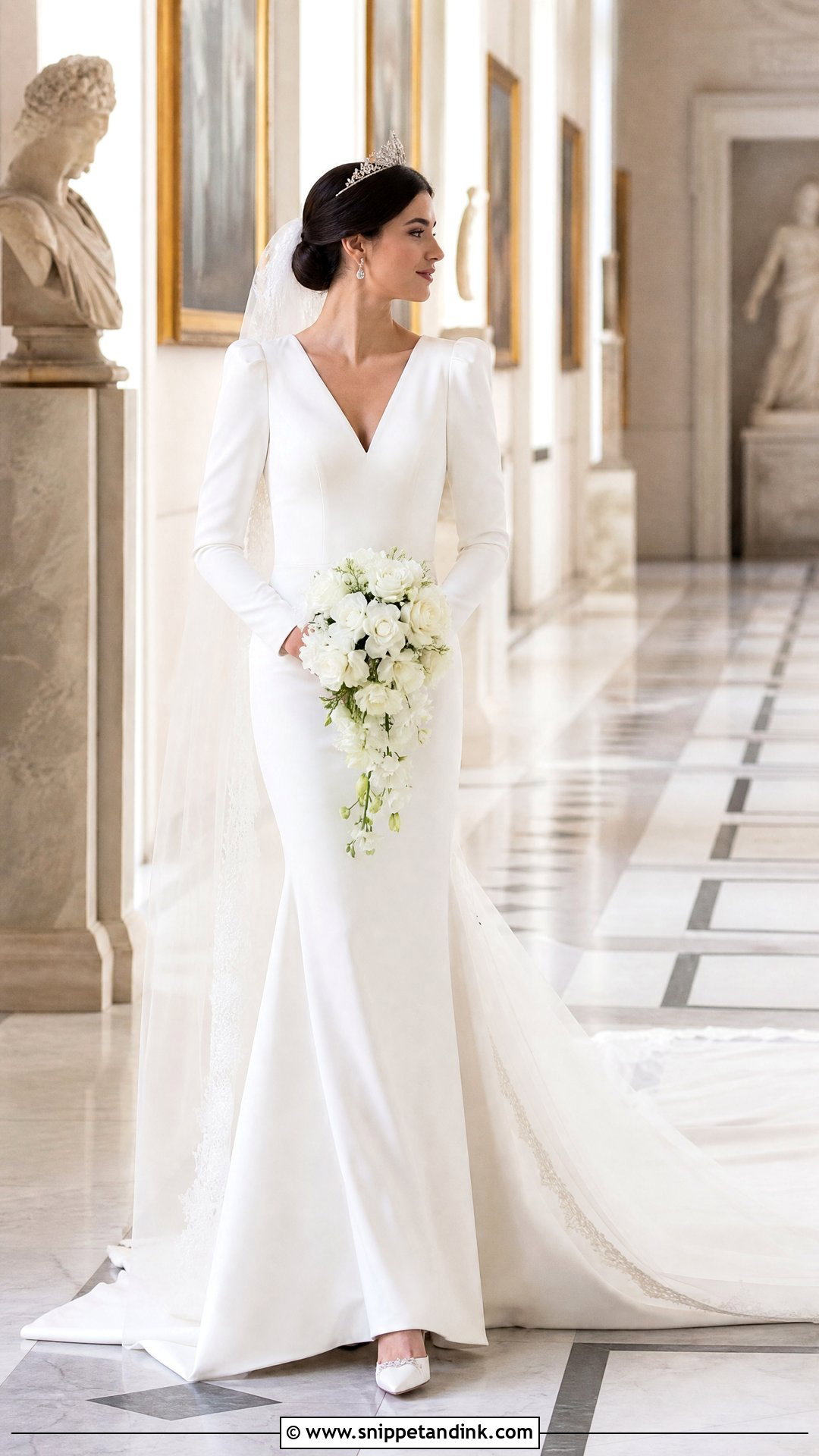
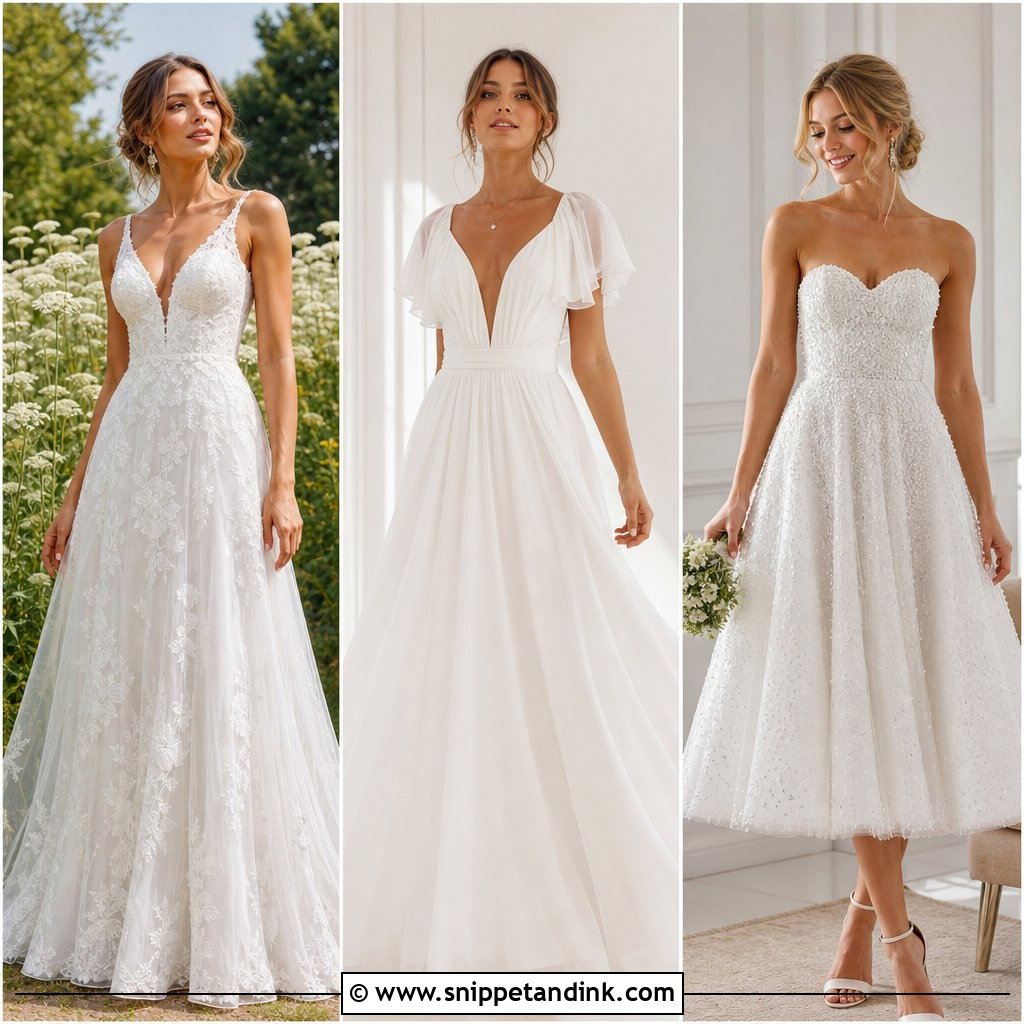
The trumpet is a close fit that flares lower down, usually around the lower thigh or just above the knee. Where that flare starts is everything. Too low and you’ll shuffle; too high and it loses the sculpted line. During alterations, I have brides walk, sit and climb a couple of steps before we pin the final position. Structured crepe, satin or lined lace holds the shape best, with a modest V or illusion neckline to lengthen the upper body. Add a cathedral veil that reaches just past the train, crystal earrings and a narrow tiara. Pointed heels preserve the long line, and a small cascading bouquet adds movement. A detachable train is worth considering if you want ceremony drama and freer movement later.
16. Royal Empire Waist Wedding Dress
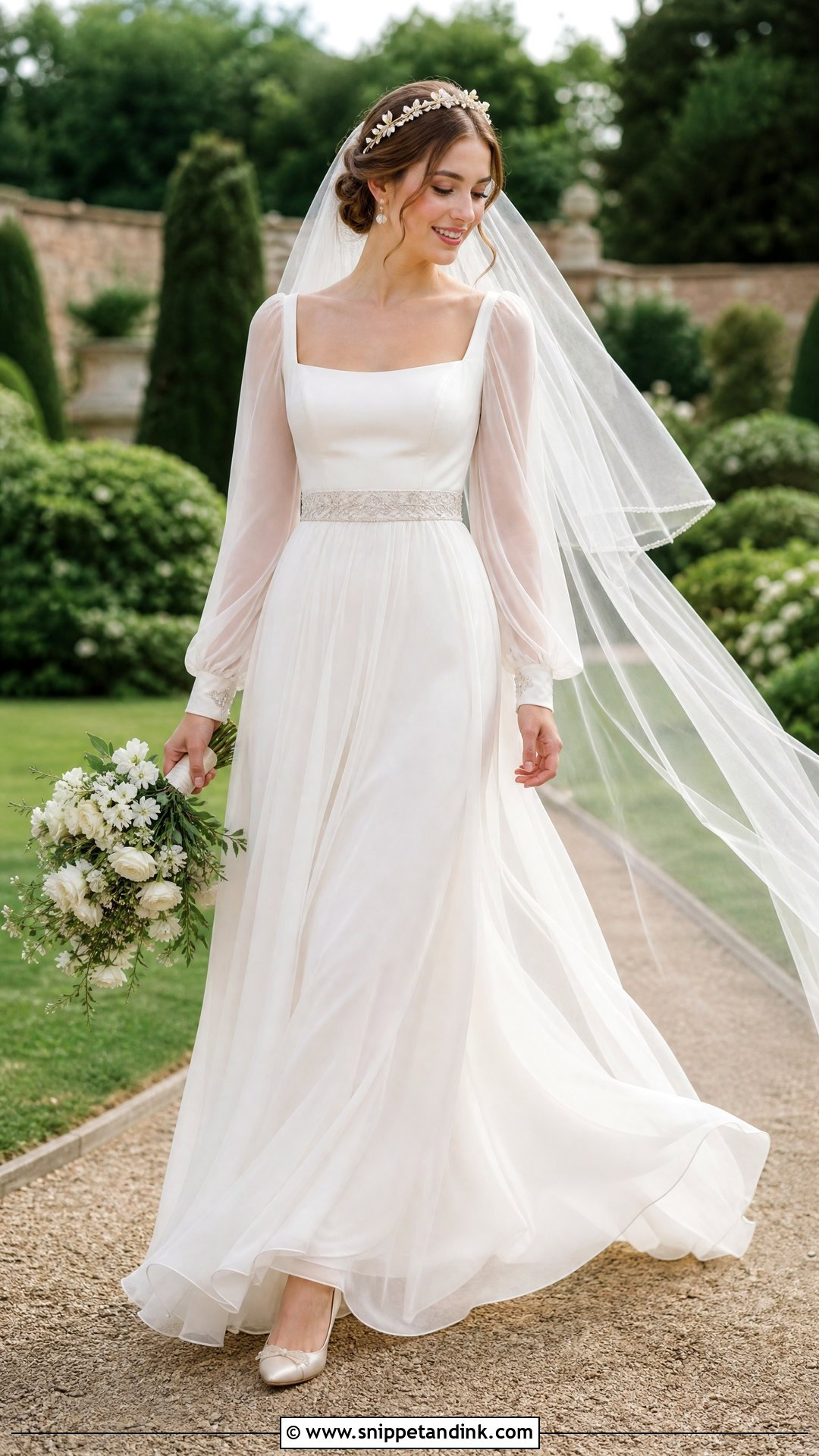
If you dread a tight waist, an empire line is the answer. Nothing presses on the natural waist, and the skirt falls straight from just below the bust. In silk chiffon with long sheer sleeves and a narrow embellished band under the bust, it still looks regal. Pick a square or softly rounded neckline. A chapel veil, pearl earrings, a delicate leaf tiara and low ivory heels suit the lighter feel, with a loose bouquet of white roses, sweet peas and greenery. It’s the most comfortable gown here for warm weather and outdoor settings. Ask for a smooth lining under the chiffon, because without one it clings to your legs as you walk.
17. Royal Jacquard Wedding Dress
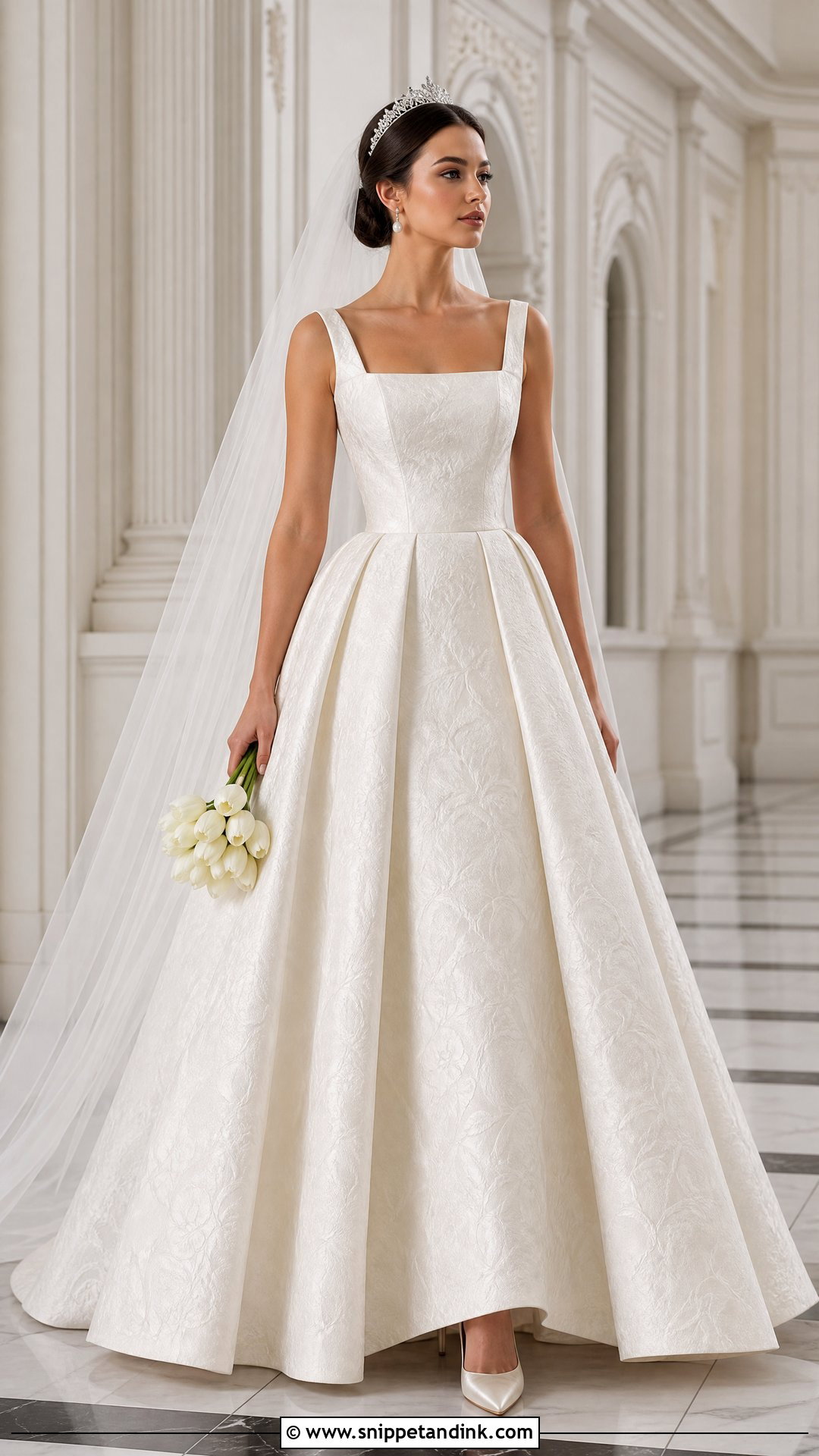
Jacquard has the pattern woven in rather than applied, so it gives texture even when everything else stays simple. Choose a structured ball gown or A-line with woven florals, a square neckline and a sharply defined waist. From a few feet away the pattern should look like texture; up close it should reveal the motif. If it reads as bold from across a room, it will dominate every photo. A plain tulle veil lets the fabric lead. Pearl earrings, a polished tiara and satin pumps with a comfortable heel are enough, along with white tulips or roses. Jacquard is heavy and doesn’t breathe much, so I’d ask for a breathable lining and a manageable train, and save it for a cooler season and a spacious indoor venue.
18. Royal Tea Length Wedding Dress
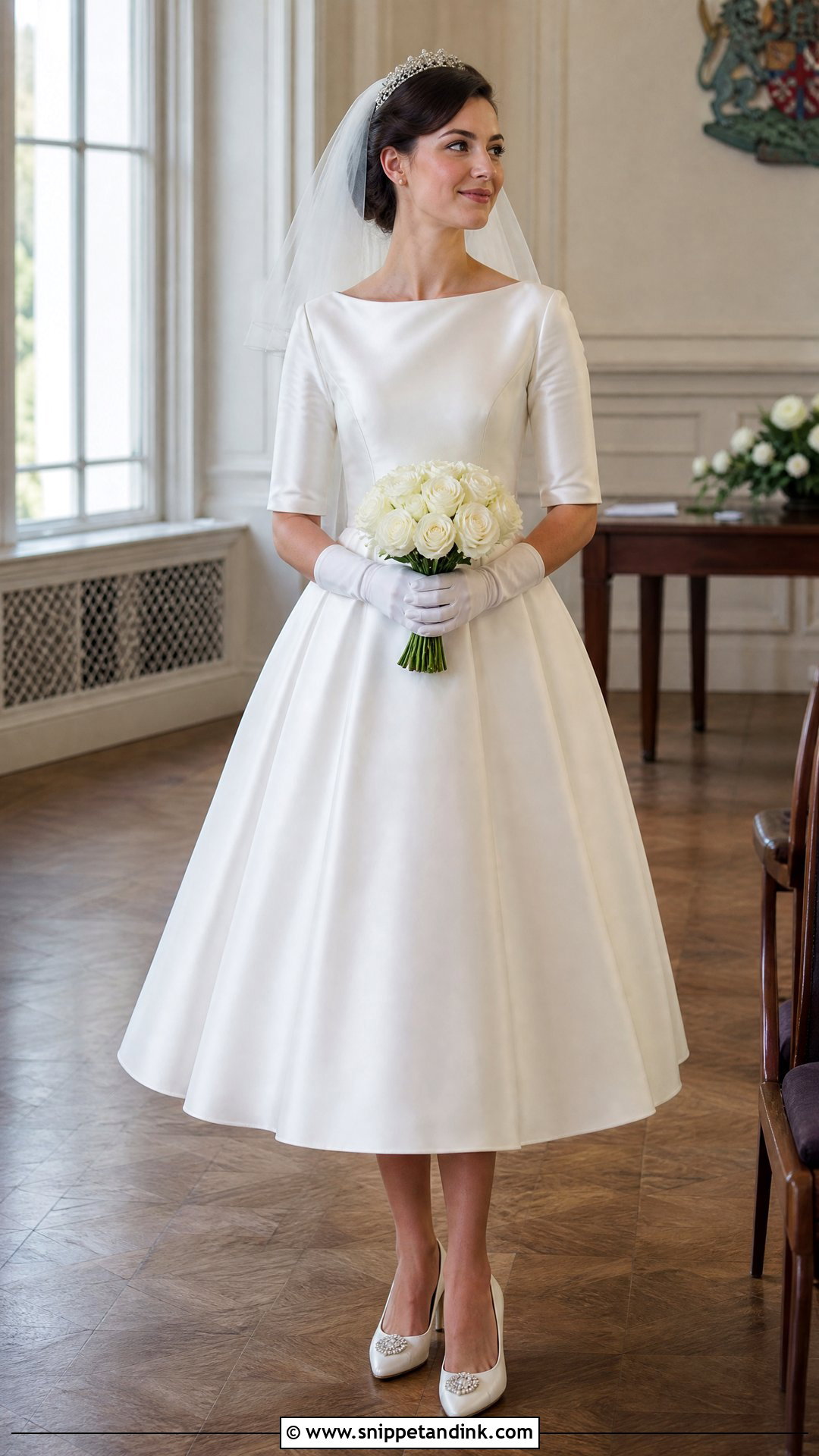
Tea length still looks regal if the construction is formal: structured satin, a fitted bodice, a defined waist and a full skirt ending between the knee and ankle. A bateau or square neckline with elbow-length sleeves gives it vintage polish, which suits a civil ceremony or an intimate daytime reception. Your shoes are on display, so choose ivory pumps with pearl buckles or a subtle crystal detail. A short veil, small tiara, pearl earrings and compact bouquet of white roses keep everything in proportion. A smooth bun or softly waved bob pairs well with the shorter skirt. If you wear wrist-length gloves for the ceremony, take them off before the meal and keep them in your attendant’s bag.
19. Royal Winter Wedding Dress
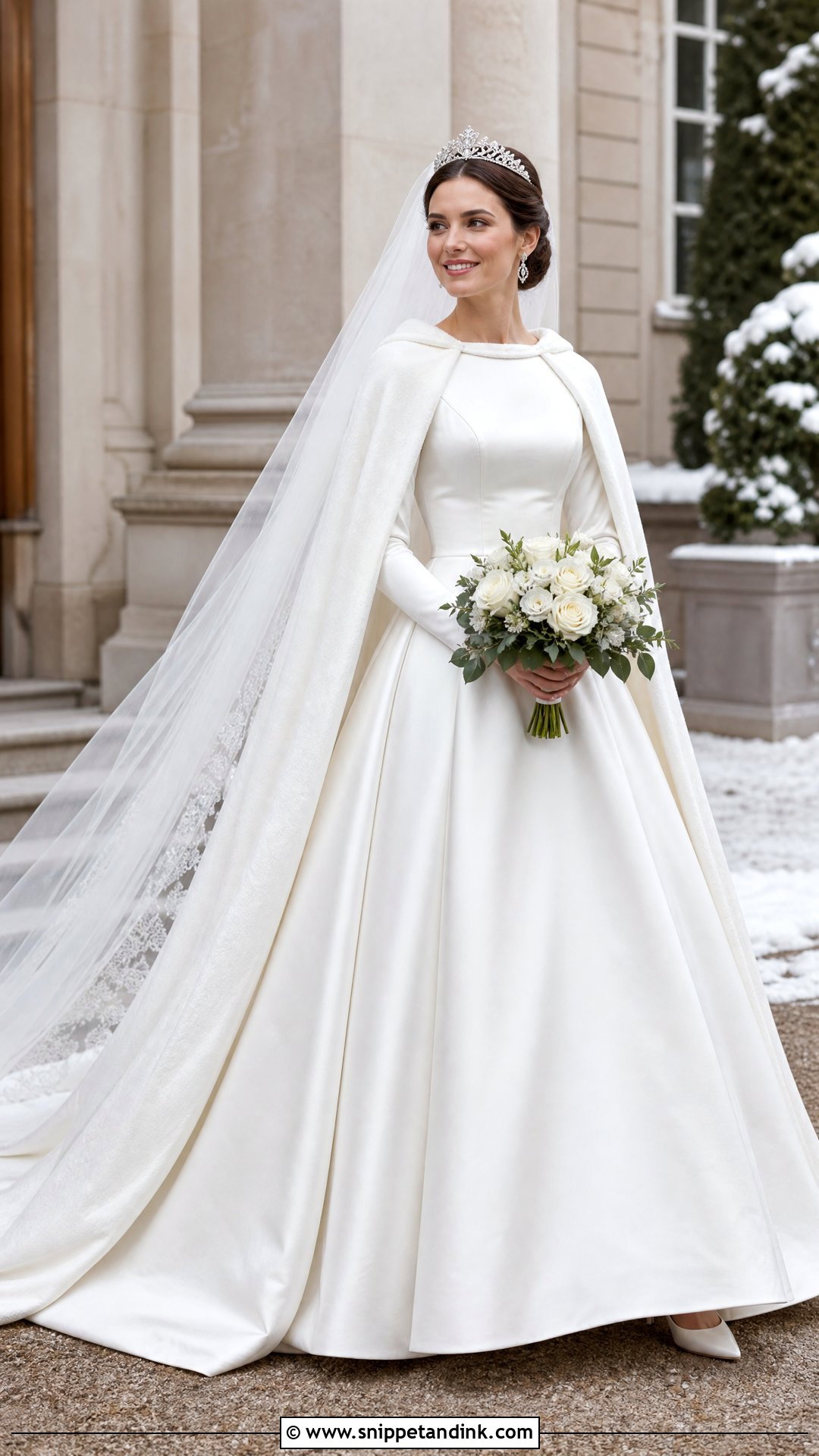
Cold weather lets you layer, and layering is where a winter bride gets her drama. Start with a long-sleeve satin ball gown with a high bateau neckline, a fitted waist and a chapel train. Add a detachable white velvet cape with a soft standing collar for arrivals and outdoor portraits. Skip bulky fur-style trim, which looks heavy in photos and fights the veil. A cathedral veil can sit under the cape and come off later. Crystal earrings, a classic tiara, closed-toe ivory pumps and white roses with deep green foliage finish it. I’d always choose a neat low bun for winter, since wind and a cape collar both work against loose hair. Make sure the cape has hidden arm openings so you can hold your flowers.
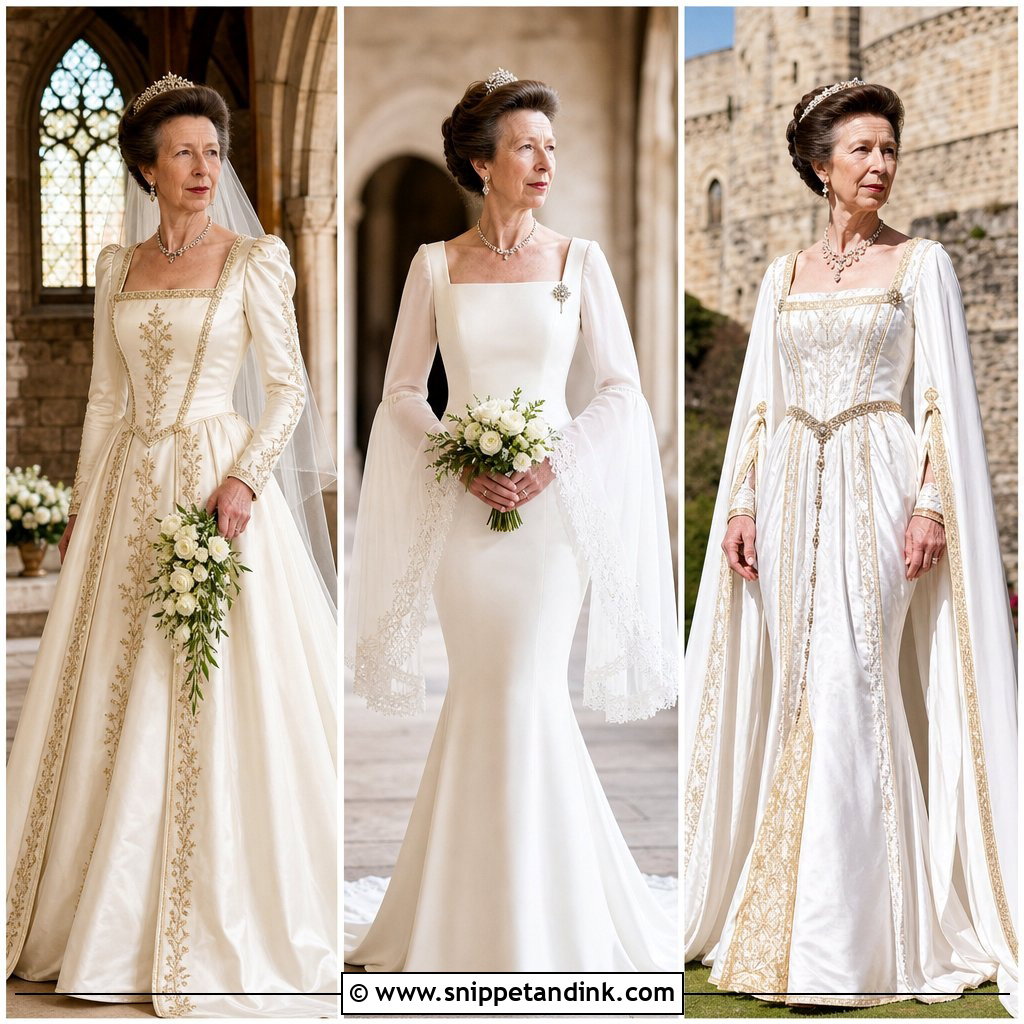
20. Royal Champagne Wedding Dress
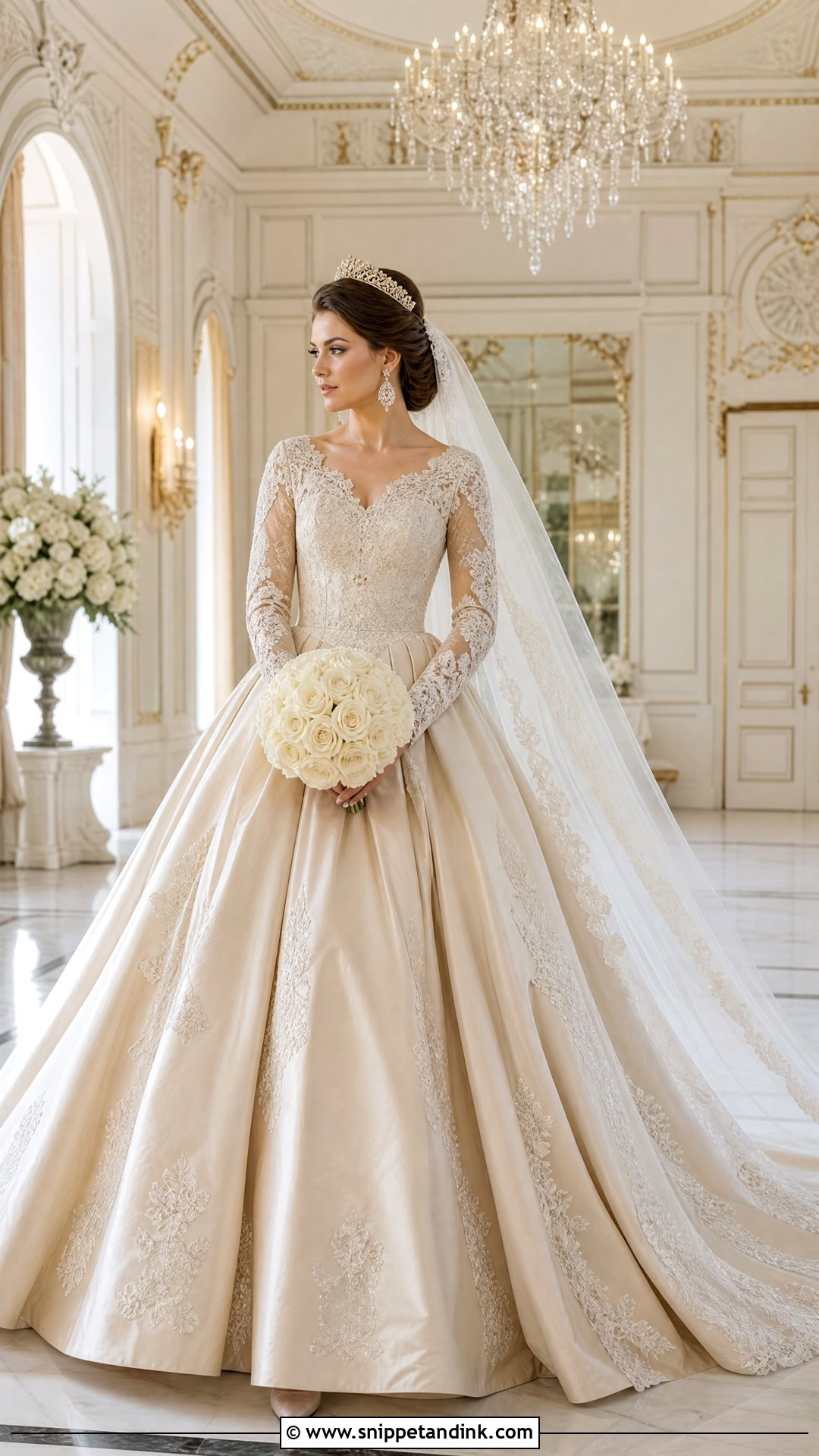
Champagne is warmer than white and suits skin that looks sallow against bright ivory. In silk satin with an ivory lace overlay or subtle gold embroidery, plus a fitted bodice, long sleeves and a full skirt, it still reads clearly as bridal. An ivory cathedral veil adds gentle contrast. Antique-style crystal earrings and a slim gold-toned tiara suit the warmth better than cold silver. Champagne satin pumps disappear under the hem, and cream roses with white orchids and pale greenery coordinate. A low twisted bun suits the palette. Look at the whole outfit in daylight and under indoor bulbs before you commit, because champagne can drift toward beige or pink depending on the light.
A Cathedral Train Needs a Plan for Steps, Seating and the Dance Floor
Many of these gowns come with chapel or cathedral trains, which are wonderful for the processional and a nuisance by the second hour. Before the final fitting, I’d walk through the day in your head: steps at the venue, a car ride, a dinner chair, a crowded dance floor. Every one of those affects how the train should be handled.
The three bustles you’ll be offered
- Over bustle: hooks or buttons lift the train up onto the back of the skirt. Quick, and it suits lighter fabrics and shorter trains.
- Under bustle: ribbons tie the train up underneath, creating a gathered fall at the back. It handles heavy satin well but takes longer to do.
- Ballroom bustle: the train is tucked in so the skirt looks floor length all round. Very tidy, though it needs the most attachment points.
Whatever you choose, bring the person who’ll actually do it to the last fitting, film the seamstress showing them, and make sure the ribbons are numbered or color coded. A bustle that nobody can fasten turns into a bride holding her train all night.
Does Your Regal Look Still Let You Move?
A regal outfit should feel impressive and still be comfortable enough to wear until the last dance. Start with a silhouette that supports your body and suits the venue, then let the veil, shoes, jewelry, flowers and hair support its strongest detail. Plain satin can carry a decorative veil; lace, pearl or embroidered gowns almost always look better with simpler accessories. Leave time for alterations and practice moving in every layer, including the bustle. Traditional, minimal or modern, royal beauty comes from that balance, and from wearing something you still feel like yourself in.
You'll Like These Ideas:


Leave a Reply