
A cathedral train is the longest standard train a bridal gown carries, and it changes everything around it: the veil you can wear, the shoes you can walk in, how your bustle is built and how much aisle you need. When I style a bride in one, I treat the gown, veil, shoes and bustle as a single outfit from the first appointment, because a train that looks right on a fitting-room platform can fight every other piece on the day. Current bridal trends still lean toward long trains, clean satin, detachable overskirts, corset bodices and square necklines, so there is plenty to choose from. Below are thirty versions, with what I’d pair with each and where each one tends to trip brides up.
How Long Is a Cathedral Train, and Will Your Aisle Fit It?
Bridal shops usually call a train cathedral length once it reaches roughly seven feet or more from the waist, which is much longer than a chapel train. That number sounds abstract until you stand at the back of your ceremony space. Before I let a bride fall in love with one, I ask how long the aisle is, how wide it is, and whether there are steps, a turn or an uneven floor.
- Short aisle: a long train can still be lying across the entrance when you reach the front. It still works, but the processional photo will crop it.
- Narrow aisle: tulle and organza snag on pew ends and chair legs. Satin or Mikado slide past more cleanly.
- Steps or a raised altar: someone needs to lift and settle the train behind you, so pick that person in advance.
- Outdoor ground: grass stains a white train quickly, and gravel catches tulle. A detachable train is often the honest answer for garden venues.
Veils follow the same logic. A cathedral veil usually runs a little longer than the train itself, so if you plan to wear both, check that whoever is helping you knows how to spread them out once you stop.
1. Satin Ball Gown Cathedral Wedding Dress
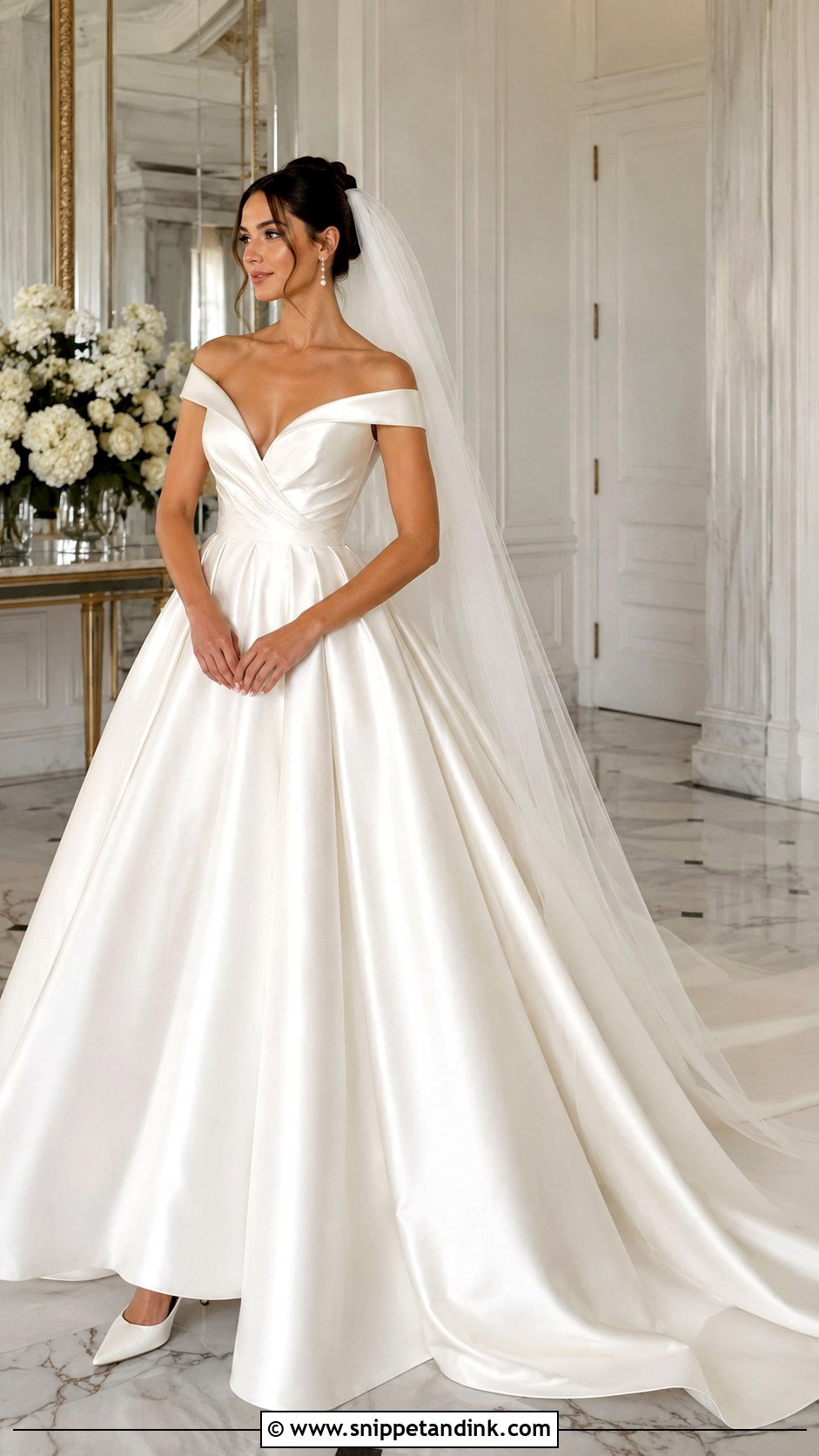
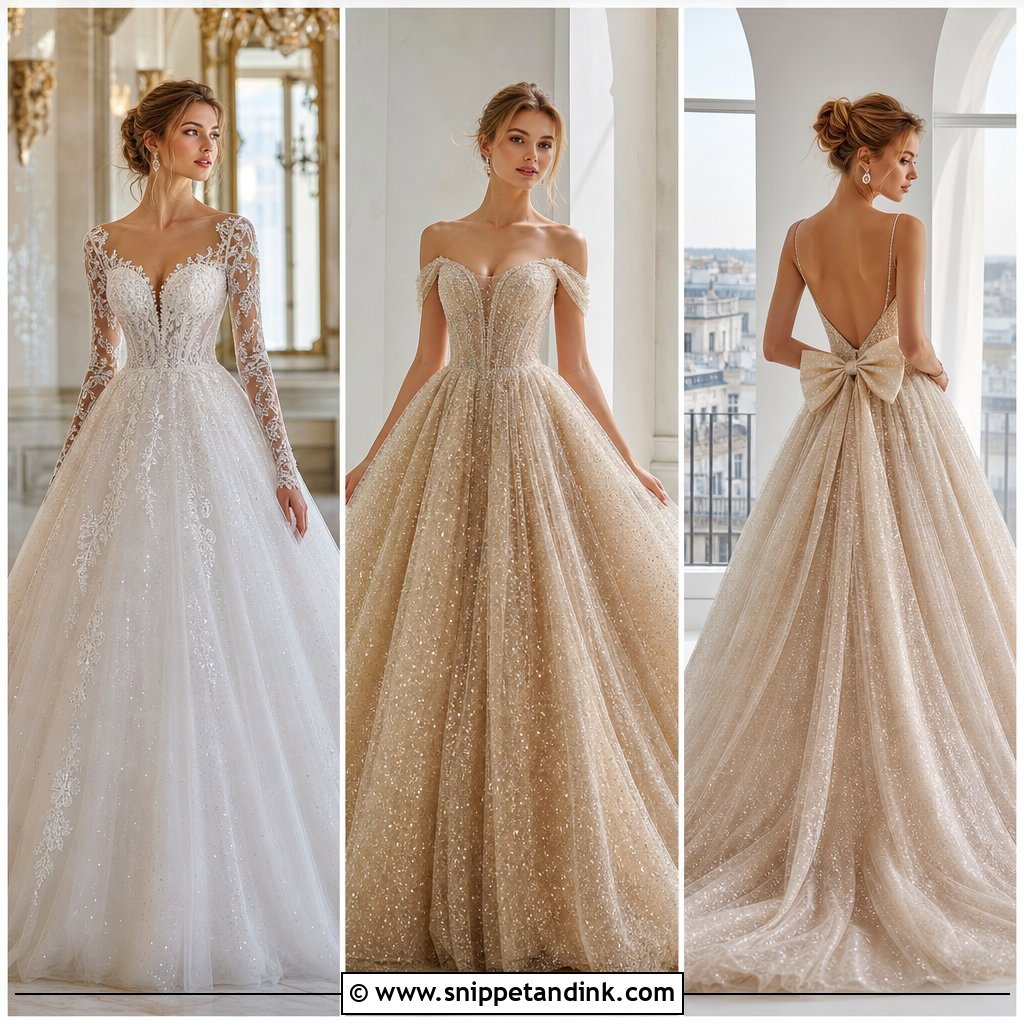
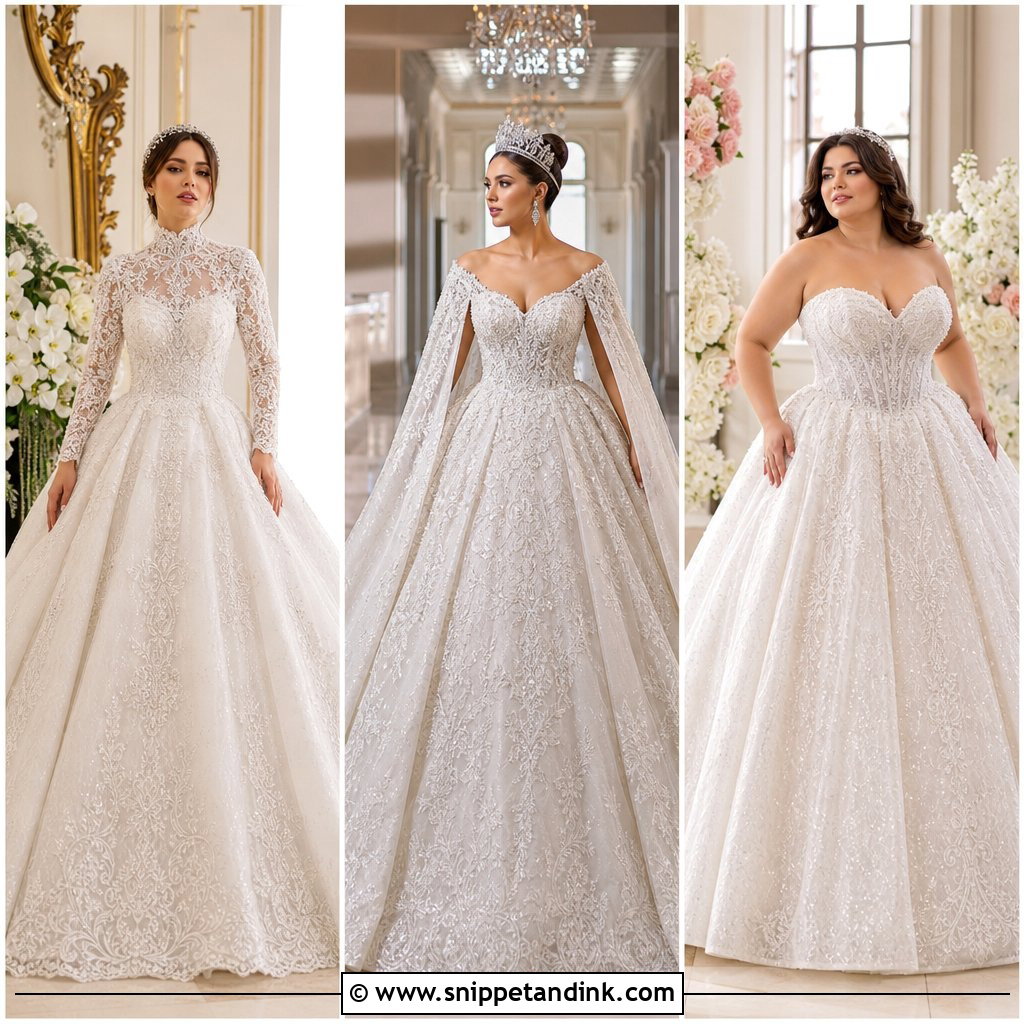
Satin and a ball gown skirt are the classic pairing for a long train, and the reason is weight: heavy duchess satin spreads out flat behind you instead of bunching. The catch is that satin shows every pull at the seams, so the bodice fit has to be exact before anything else. I keep this one plain: pointed satin heels, pearl drops and a cathedral veil with a thin edge that matches the train rather than racing it. A rounded, soft bouquet sits better against all that volume than a long cascade, which tends to visually collide with the skirt.
2. Lace Long Sleeve Cathedral Wedding Dress
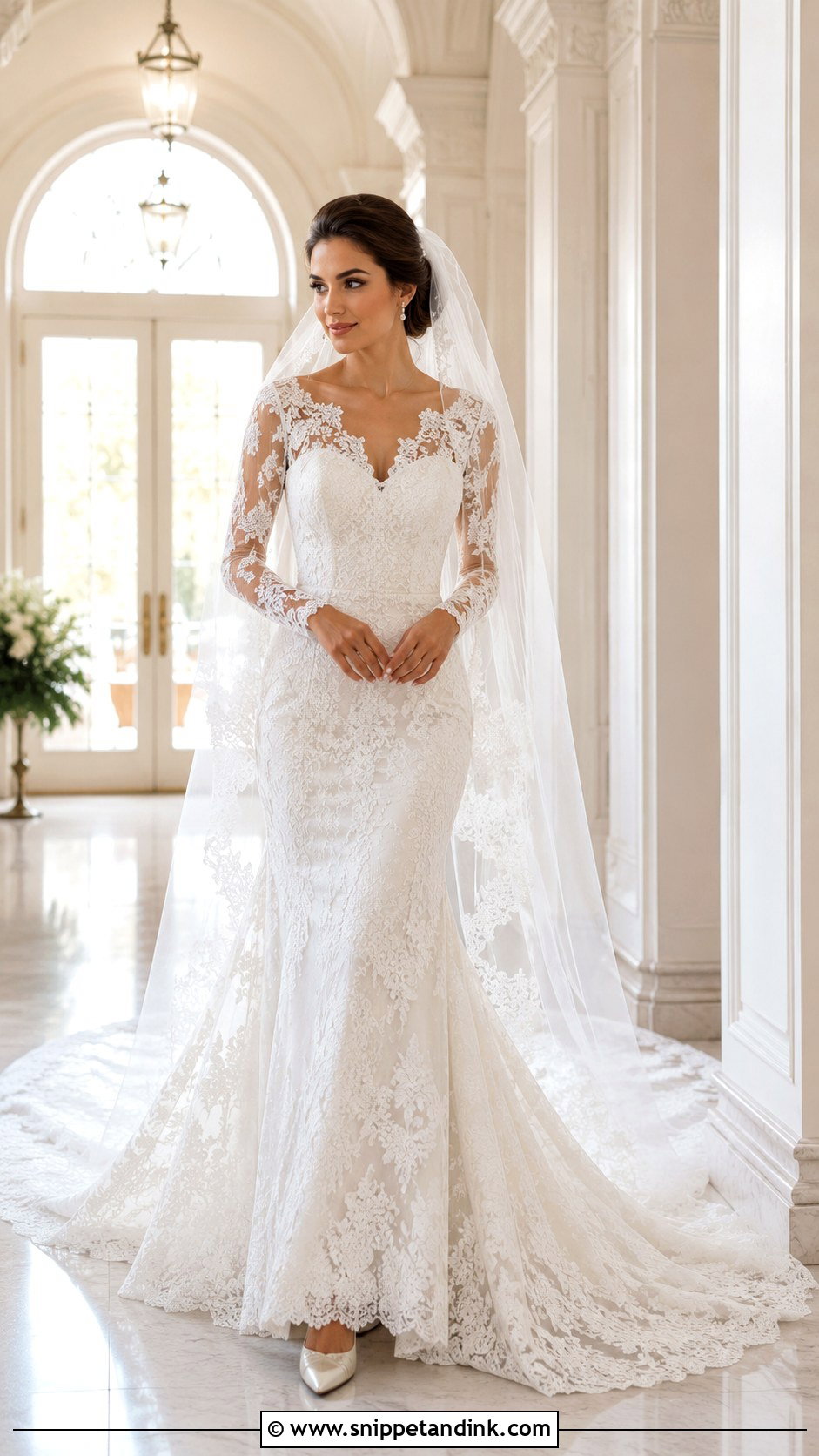
Long lace sleeves are the first thing I test for movement, because lace has almost no stretch and a sleeve set too tight will stop you lifting your arms to hug anyone. Ask the shop to raise your arms in the fitting and watch where the lace pulls at the underarm. When the appliqué continues down into the train, keep the jewelry to pearl studs and pull the hair into a low bun so the neckline reads clearly. Closed-toe ivory heels and a plain tulle veil let the lace do the talking.
3. Off Shoulder Cathedral Wedding Dress
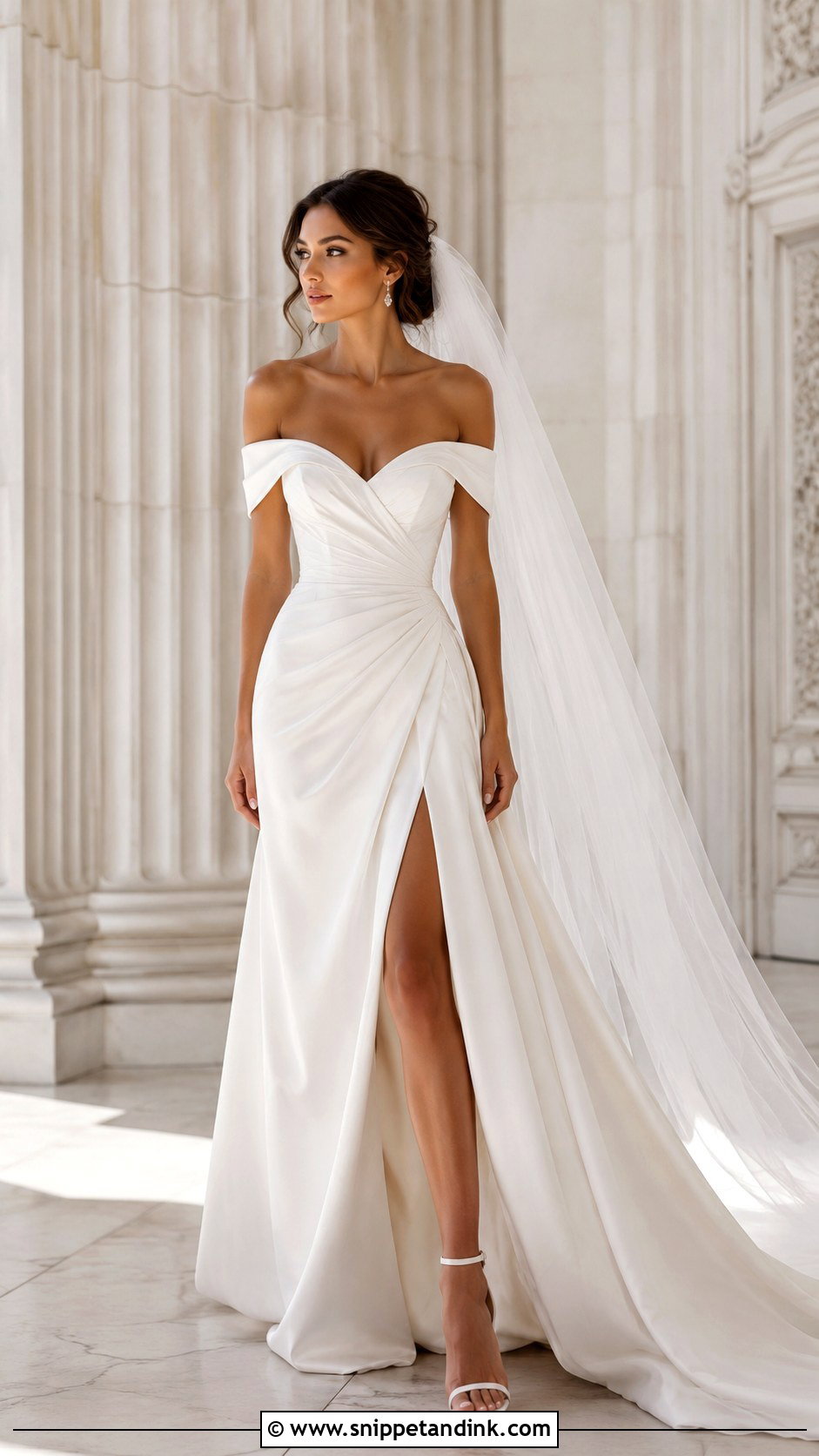
An off shoulder neckline only stays put if the bodice underneath is doing the work, so I always look for boning or a gentle corset inside rather than relying on the sleeve bands. Bands that hold the whole bodice up tend to slip by the first dance. With the shoulders on show, a smooth updo and slim drop earrings are enough; the cathedral train supplies the drama behind you. If the gown already has lace or beading at the neckline, choose a plain veil so the two don’t overlap in photos.
4. Strapless Cathedral Wedding Dress
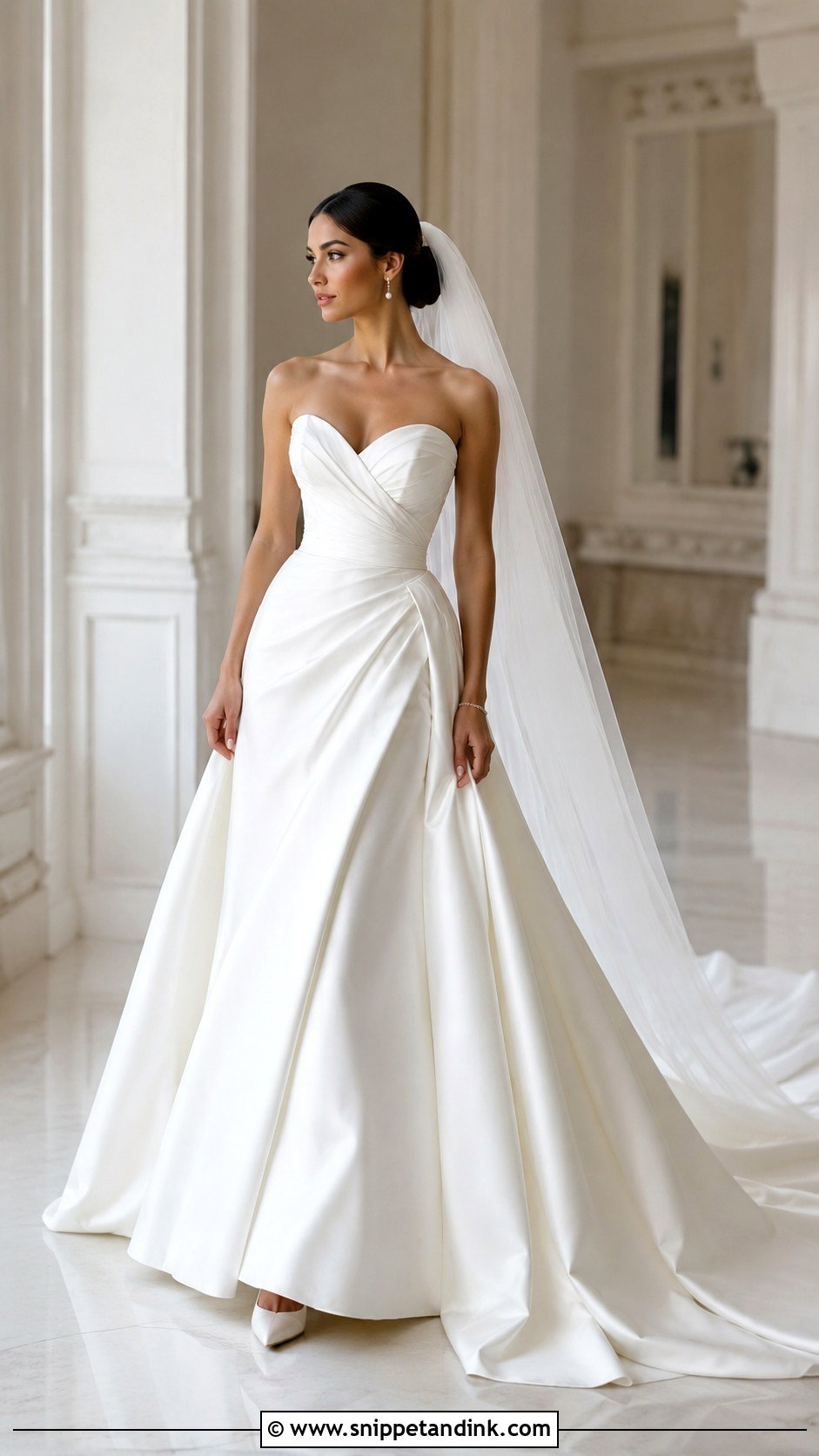
Strapless bodices are the most versatile canvas for accessories, from a pearl choker to bold earrings, but they live or die on internal structure. I ask every strapless bride to sit, lean forward and raise her arms during the second fitting; if the top edge gaps, the seamstress needs to take it in or add a waist stay. Built-in cups help more than people expect. With a straight or soft sweetheart neckline, a smooth veil and a small bouquet keep the outline clean against a very long train.
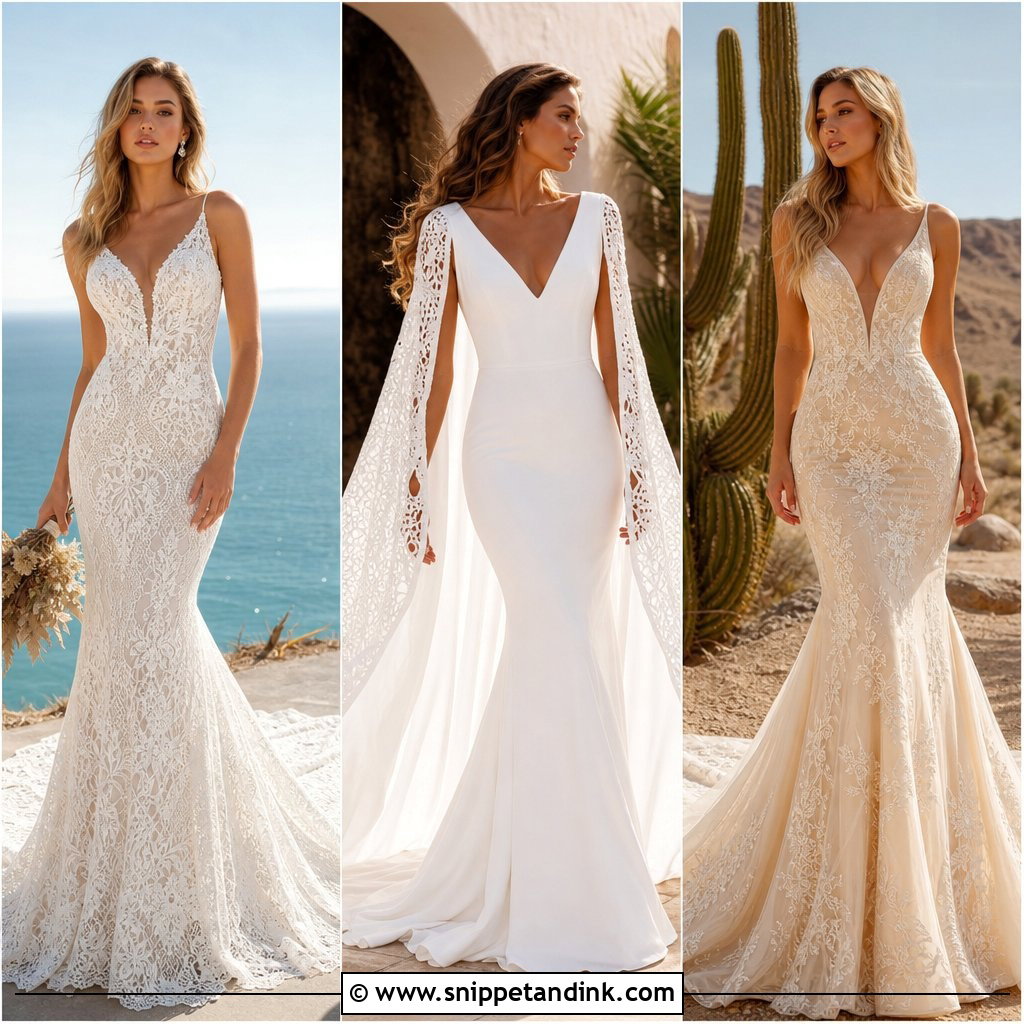
5. Mermaid Cathedral Wedding Dress
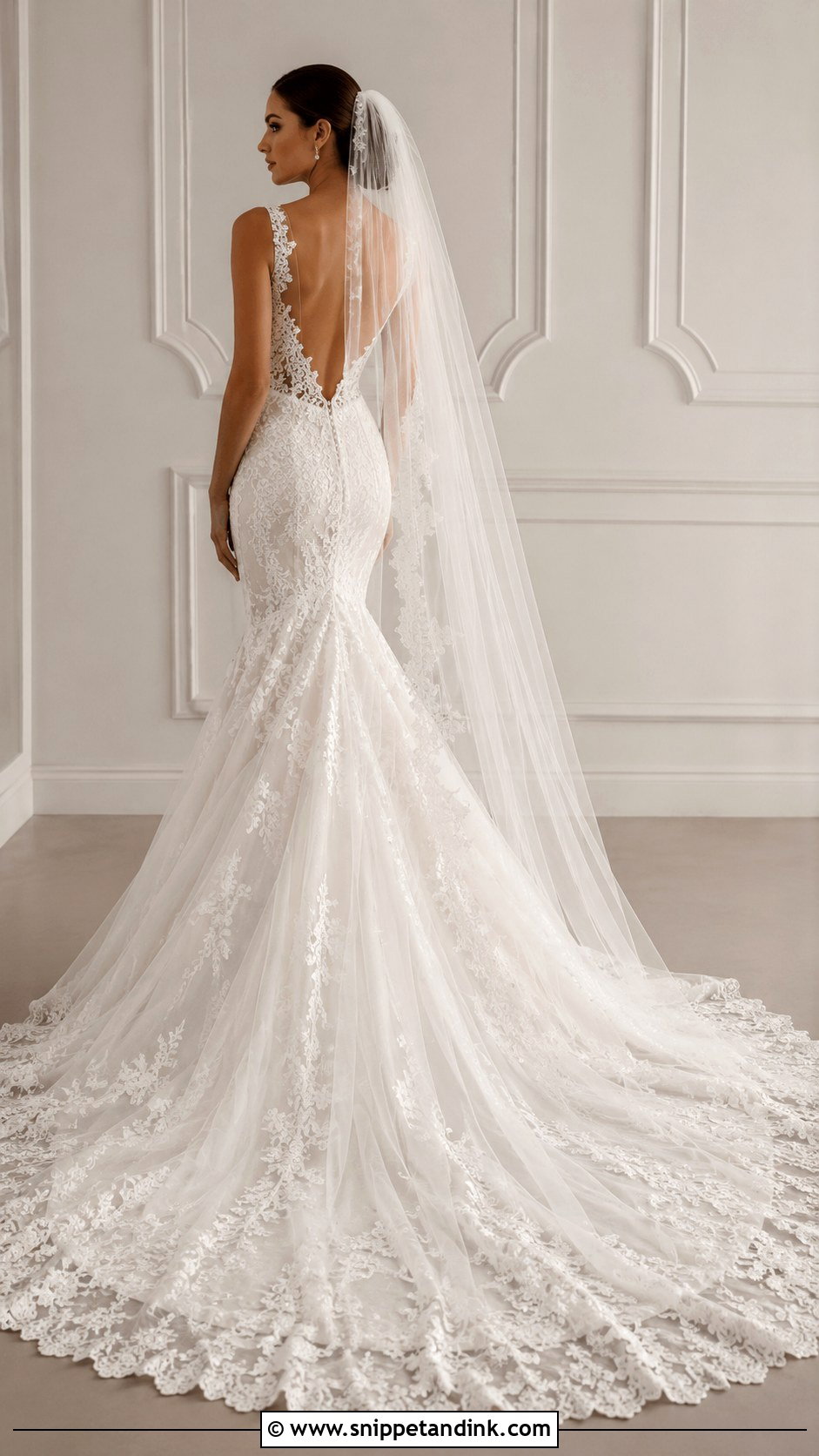
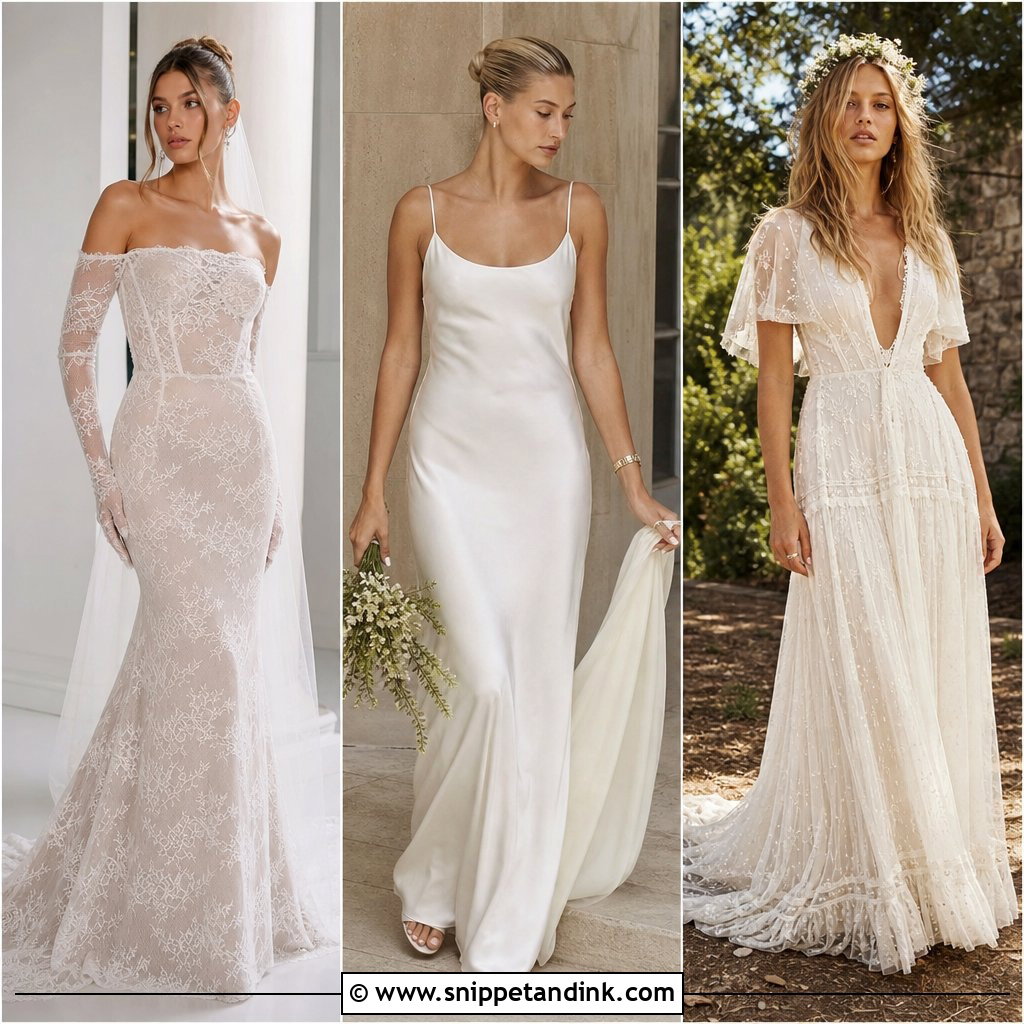
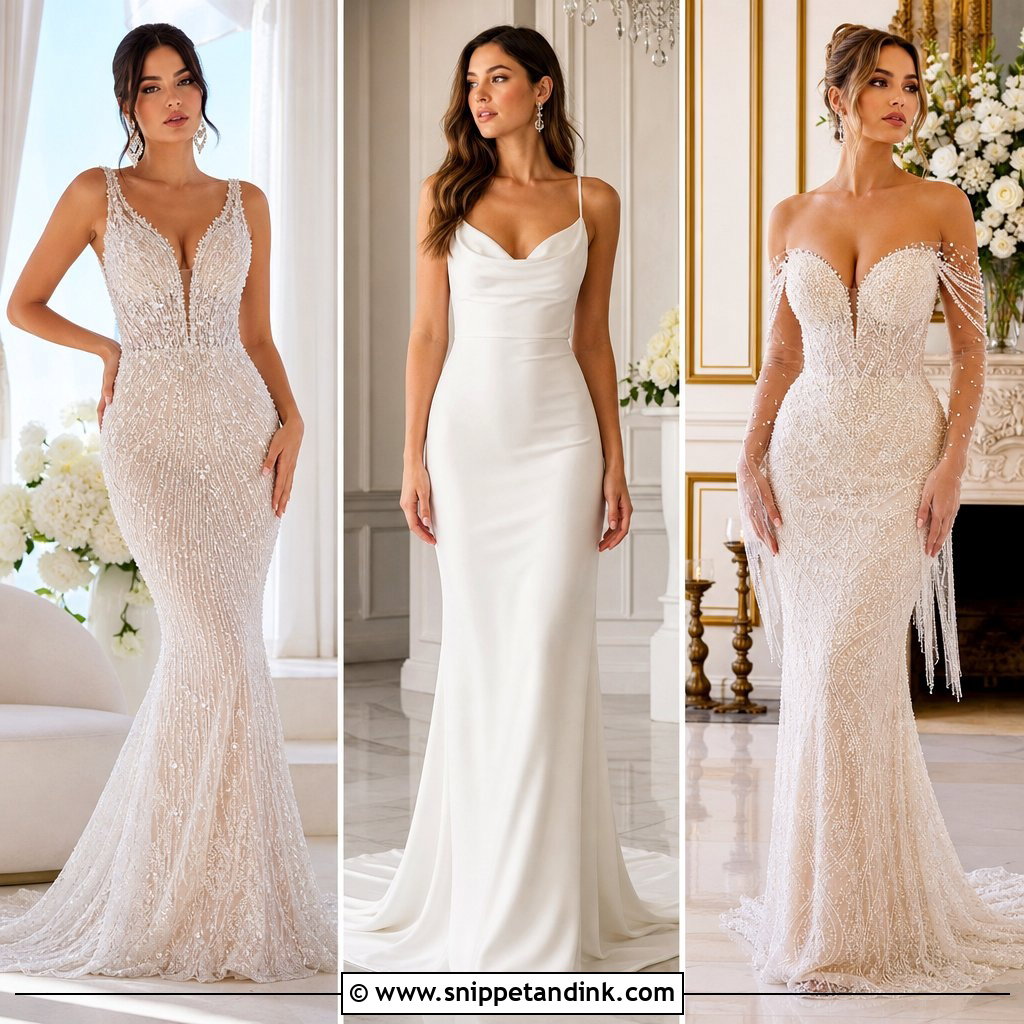
A mermaid shape holds you tightly through the hips and releases low, which means the flare point decides whether you can walk the aisle without shuffling. I have brides take ten long strides in the shop before we commit: if the knees hit the fabric, the flare needs to sit lower or the skirt needs a little more ease. The back of this silhouette gets photographed as much as the front, so covered buttons or lace that follows the curve earns its place. Sleek heels, a fitted veil and a low, smooth hairstyle keep the focus on the shape.
6. A Line Cathedral Wedding Dress
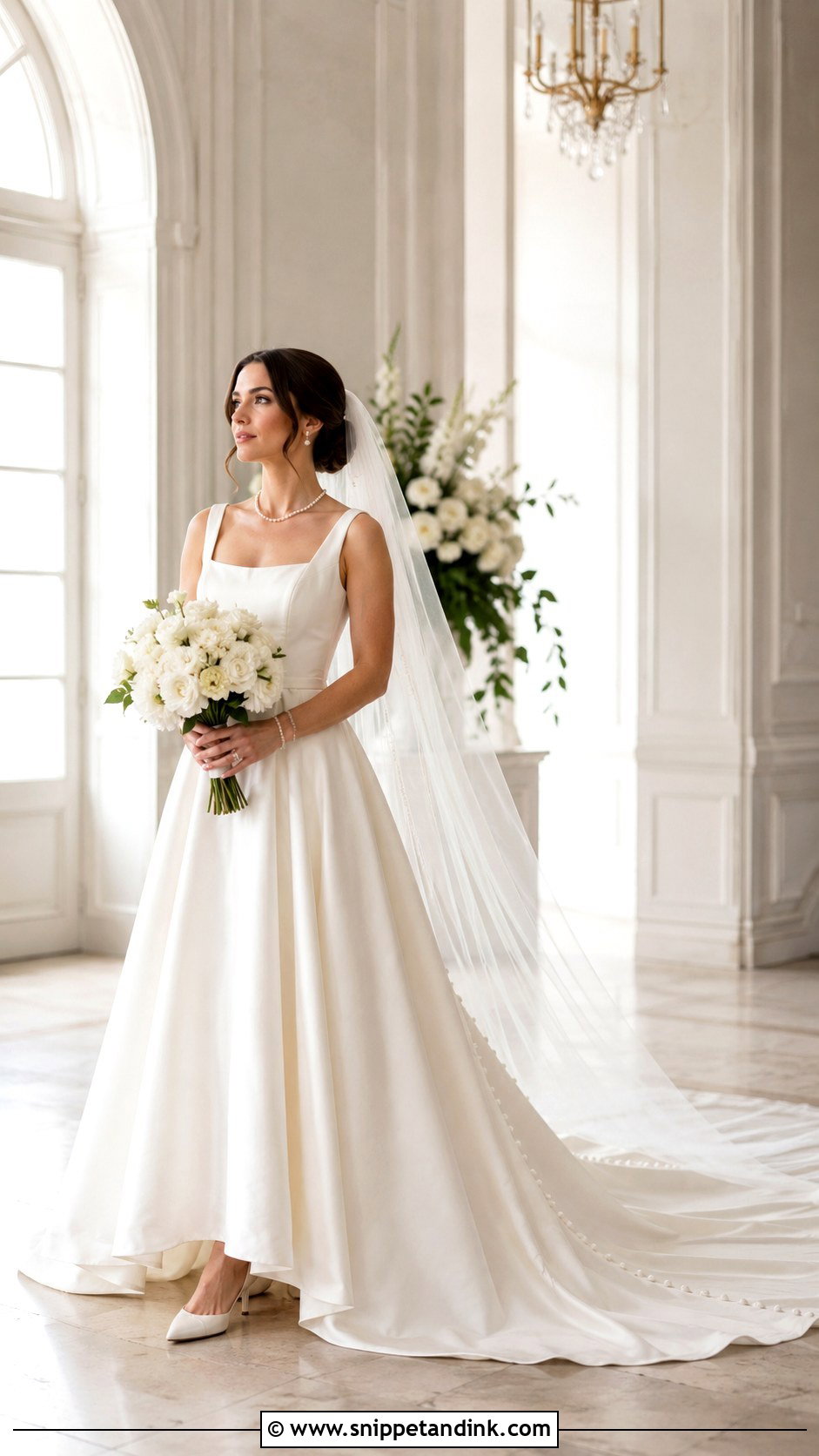
An A line cathedral wedding dress is the silhouette I suggest most often to brides who are unsure, because it fits at the bodice and then skims everything below the waist, so it suits nearly every frame. The train attaches into a skirt that already has movement, so it feels lighter to pull than it looks. Lace reads romantic, satin reads classic and organza reads soft; pick based on your venue’s light. A fingertip or cathedral veil both work here, and block heels make sense if the reception is on grass or old stone.
7. Simple Satin Cathedral Wedding Dress
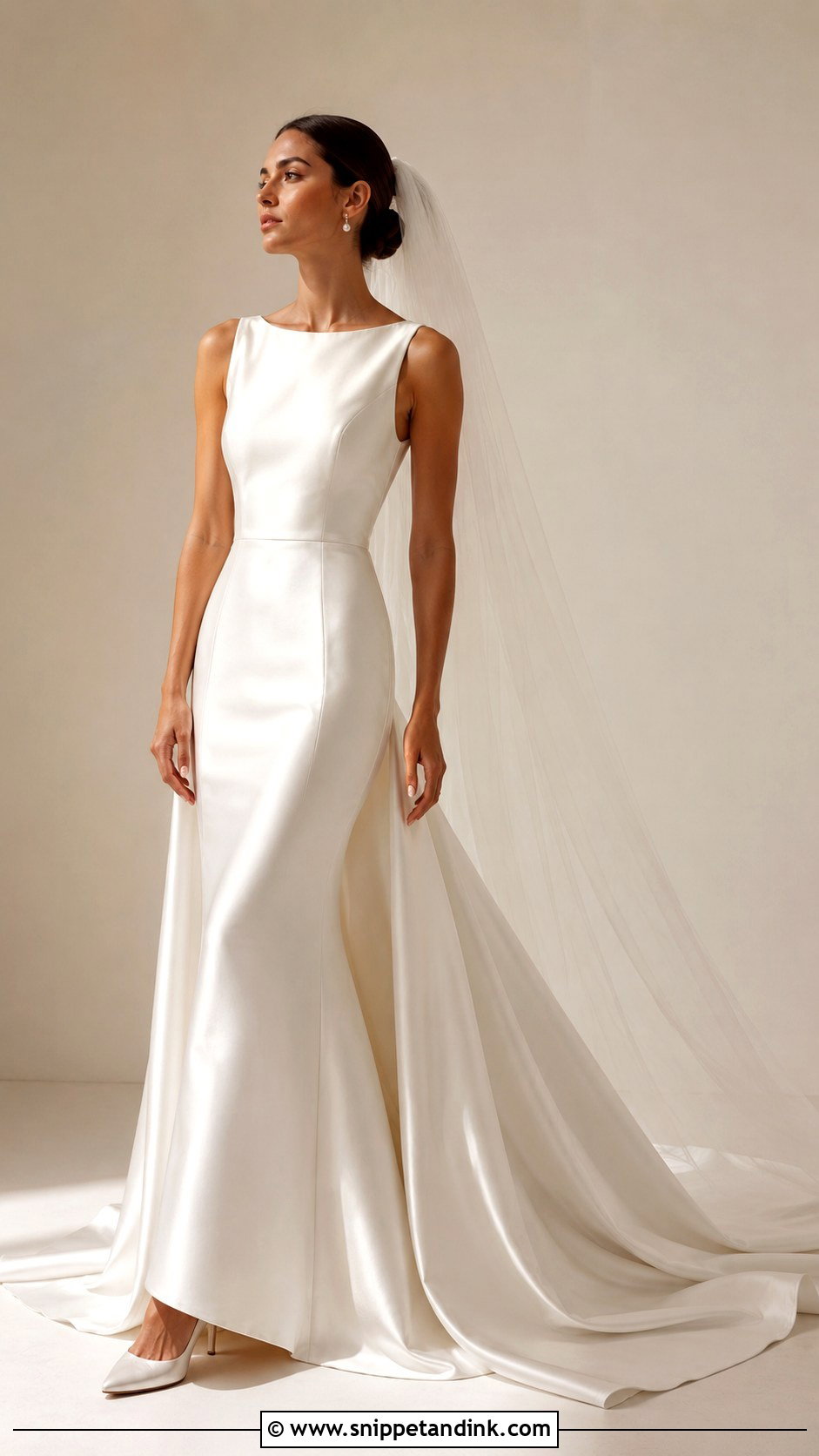
Plain satin is the hardest dress in this list to alter, and that’s exactly why it looks so good when it’s right. With no lace or beading to hide a seam, every ripple at the zip or pucker at the waist is visible from across the room. I’d budget an extra fitting for this one. Once the fit is clean, a sleek bun, pearl earrings, satin pumps and a long sheer veil are all it needs; anything louder starts to look like a correction rather than a choice.
8. Beaded Cathedral Wedding Dress
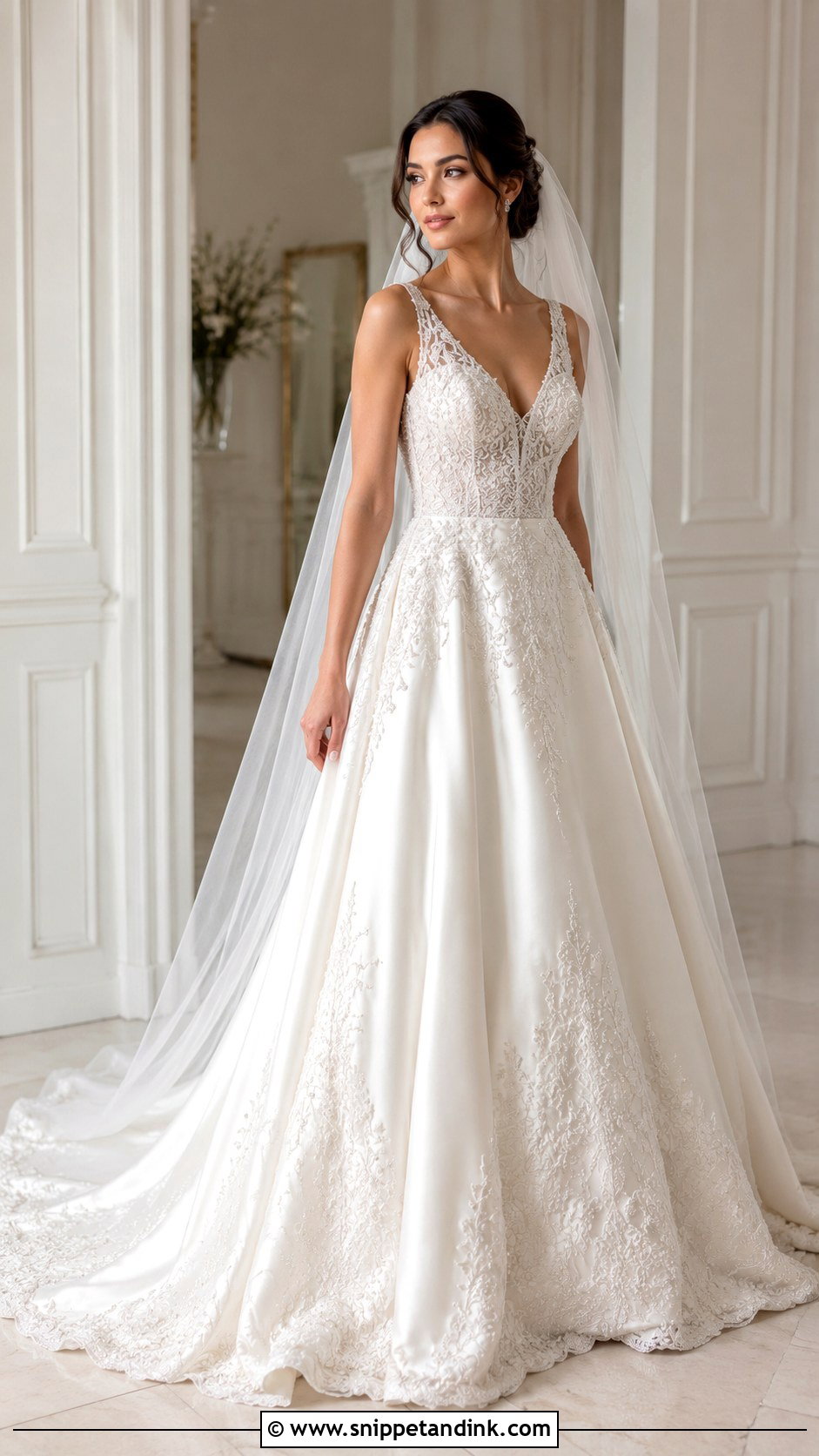
Beading adds real weight to a train, and that weight affects how the dress pulls on your shoulders by evening. I’d rather see beadwork concentrated on the bodice or scattered lightly down the train than covering the whole skirt. Under bright reception lights, a lightly beaded surface throws small points of shine as you move, which is the effect you’re paying for. Keep the earrings small and the veil nearly trimless; two sparkly surfaces stacked on each other cancel each other out.
9. Tulle Ball Gown Cathedral Wedding Dress
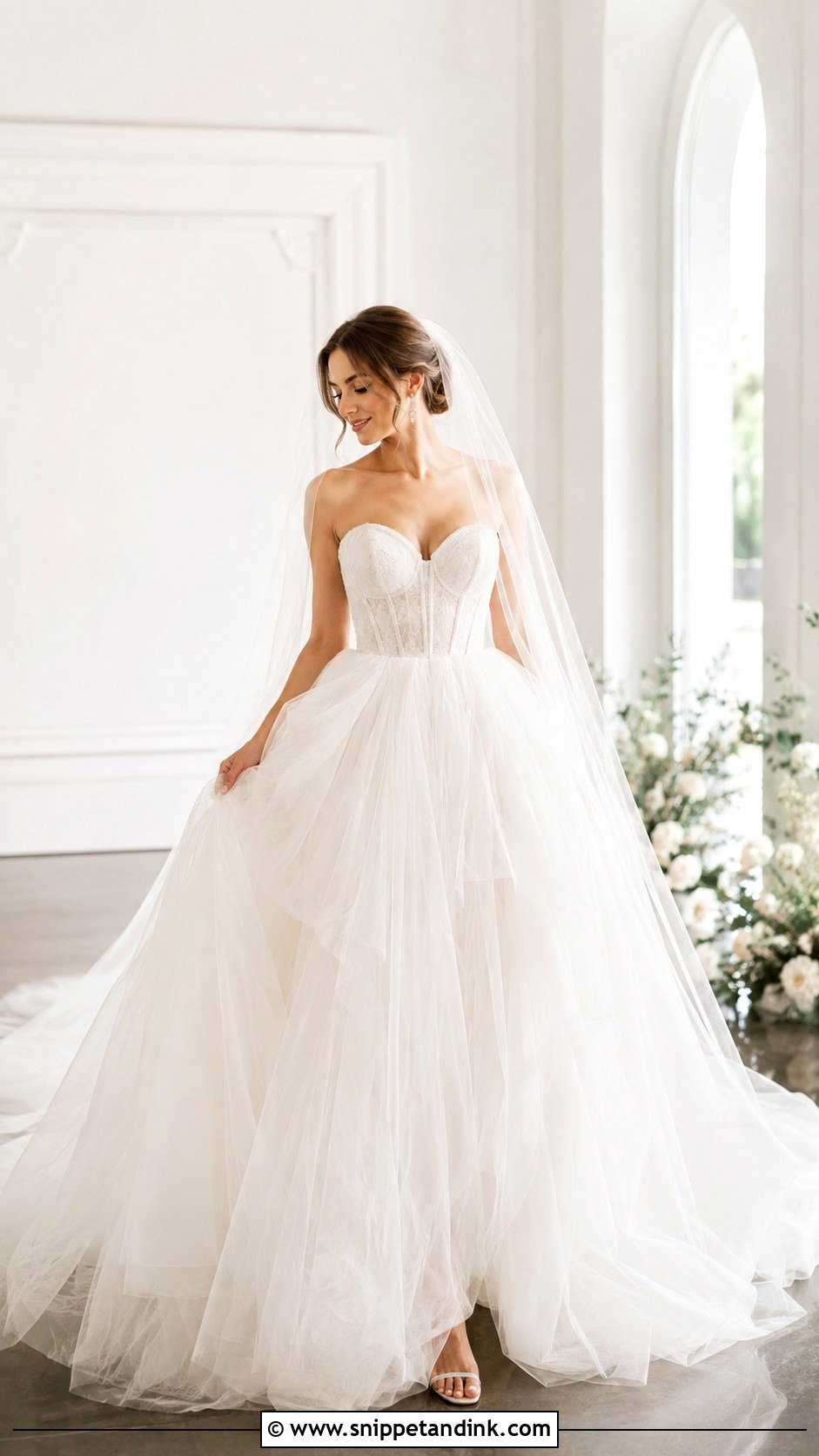
Tulle gives you the biggest skirt for the least weight, which is why brides who try a satin ball gown first often feel the difference immediately. The trade-off is that layered tulle catches on heels and snags on rough floors, so I ask about the venue’s ground before recommending it outdoors. A structured bodice stops the look tipping into costume. Count the layers before you order the bustle: a skirt with six or seven tiers of tulle needs more pick-up points than a single satin layer.
10. Corset Cathedral Wedding Dress
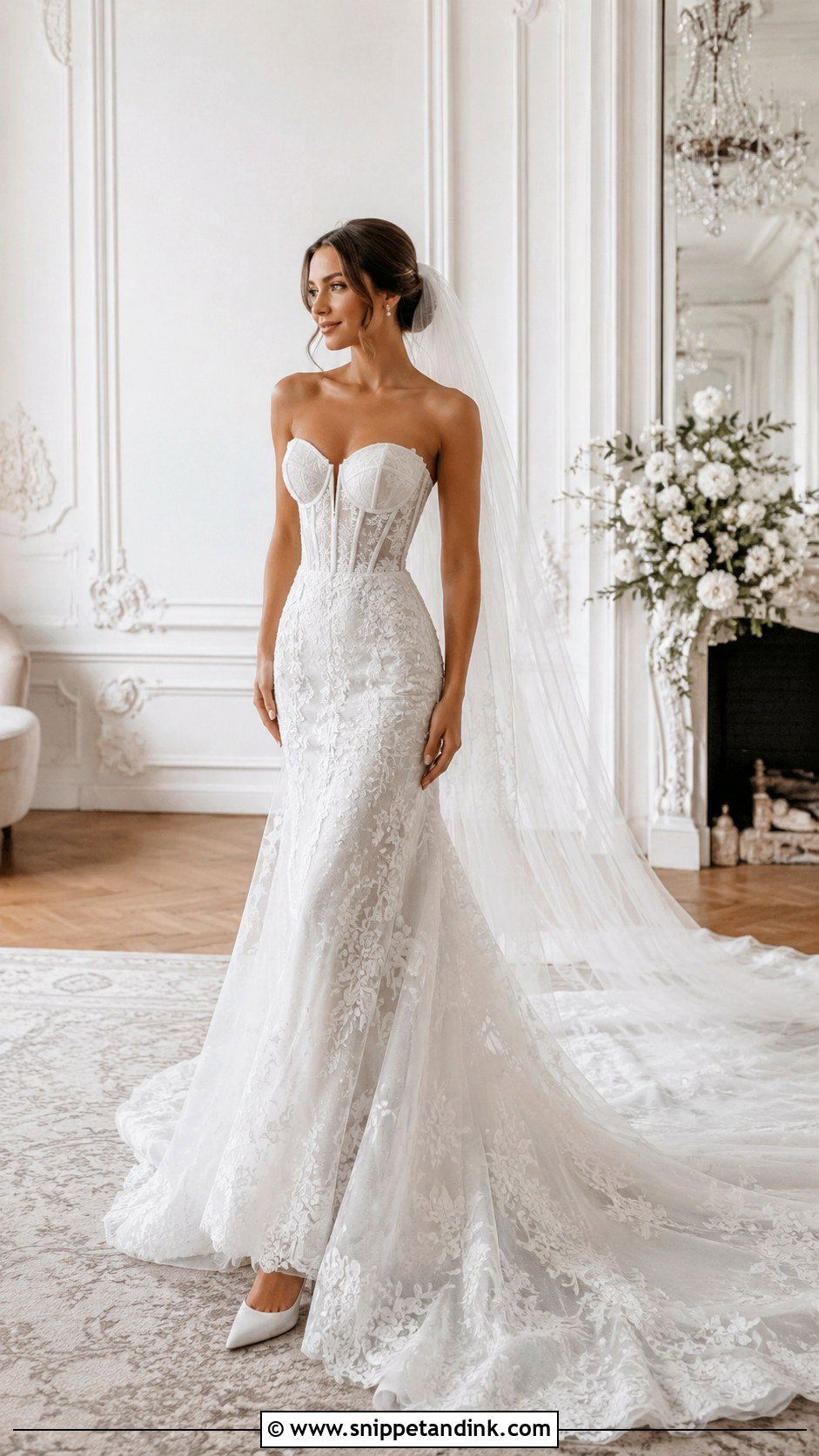
A corset bodice spreads support across the whole torso, which is why I reach for it when a strapless or off shoulder look has to stay up without straps doing the lifting. Lace corsets read romantic and satin ones read structured, so let the rest of the gown decide. Corsets need to be laced snug, not tight; you should be able to eat dinner and sit through speeches. A veil set low at the back of the head shows off the lacing, and slim heels with pearl studs finish it without competing.
11. Square Neck Cathedral Wedding Dress
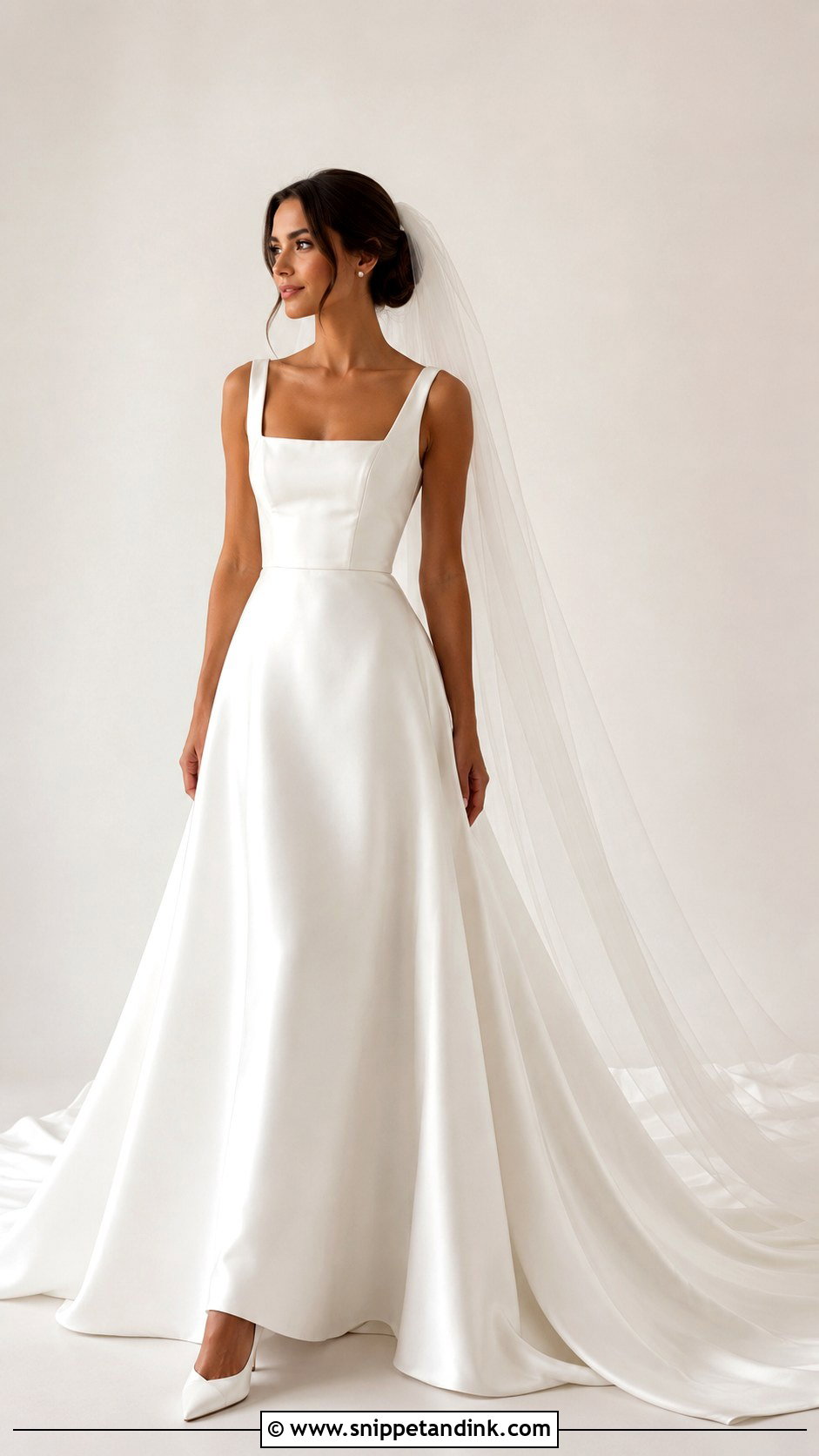
Square necklines frame the collarbones in a straight line, which suits brides with broader shoulders particularly well. I watch the corners of the neckline at fittings: if they bow outward when you breathe in, the bodice needs adjusting, because that gap will show in every front-facing photo. Pearl studs, a smooth veil and a low bun or waves tucked behind the shoulders keep the shape visible. Long gloves turn this into a more formal look, though they’ll need to come off for the ring exchange.
12. High Neck Cathedral Wedding Dress
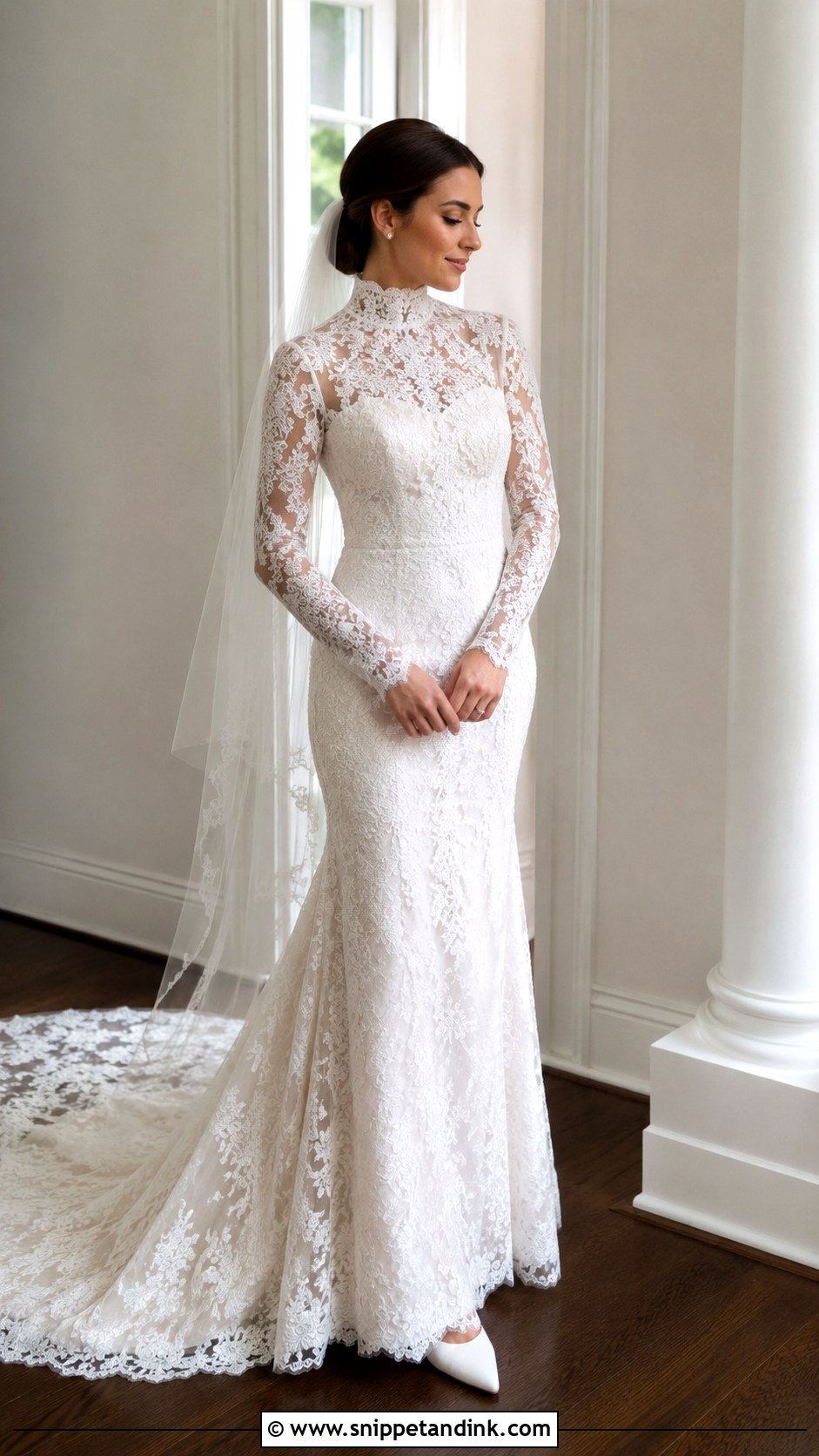
A high neck cathedral wedding dress already puts the detail where earrings would normally go, so I keep accessories small and lean on the posture the collar naturally gives you. Lace, crepe and sheer illusion fabric all suit a high neck; illusion is the coolest to wear in summer. Ask your hairstylist to set the veil comb low, below the crown, so the neckline stays clear. A fitted skirt reads sleeker, an A line skirt softer, and either balances a long train behind a covered front.
13. Illusion Sleeve Cathedral Wedding Dress
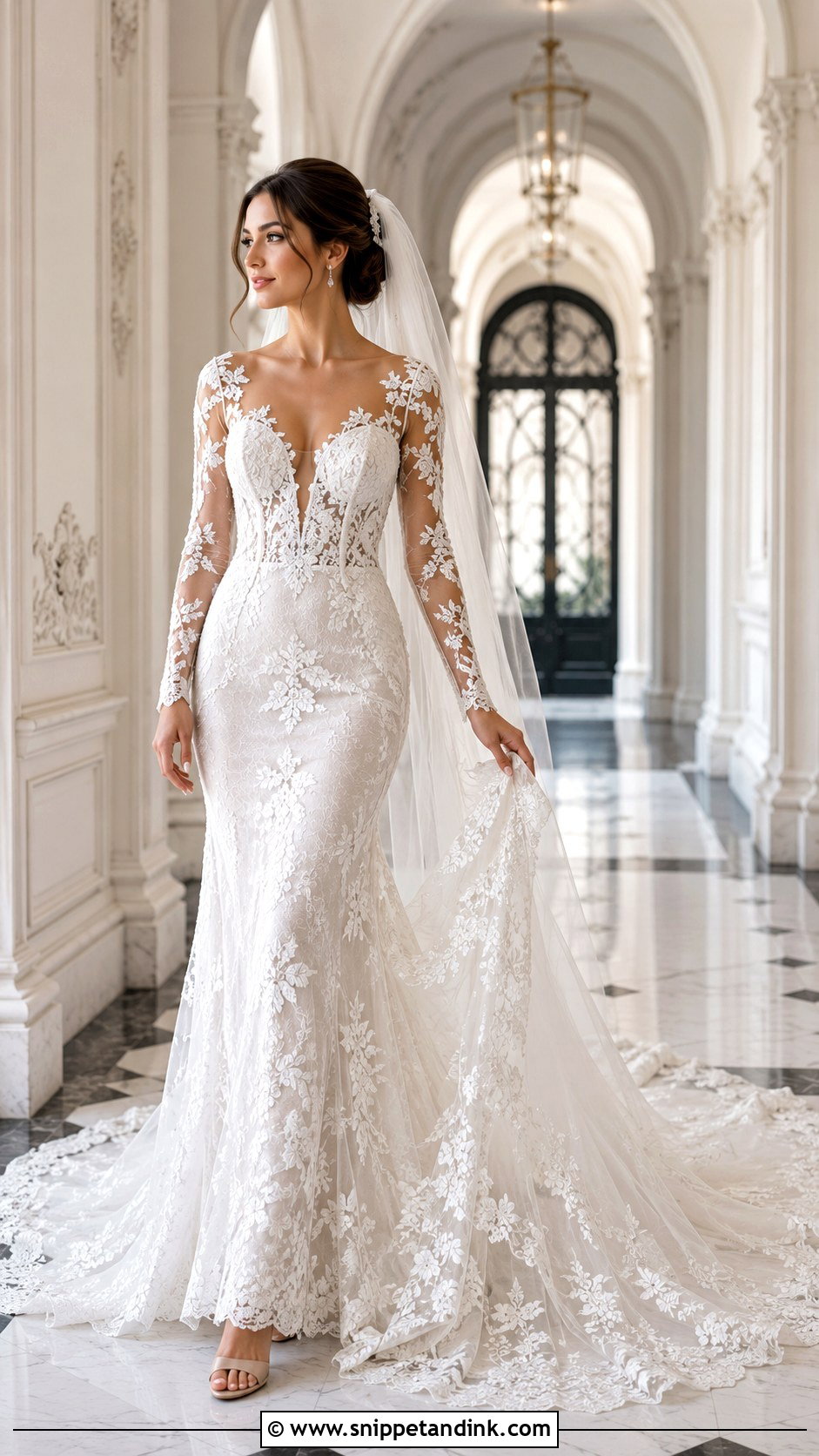
Illusion sleeves give you coverage without the stiffness of solid lace, because the appliqué sits on fine mesh that moves with your arm. The thing I check is the mesh colour against your skin; a shade off and the sleeves look grey in photos, so ask the shop to match it to your tone. Matching lace through the bodice and train ties the look together. A half-up style or soft updo keeps the sleeves visible, with neutral heels, a sheer veil and understated earrings.
14. Floral Lace Cathedral Wedding Dress
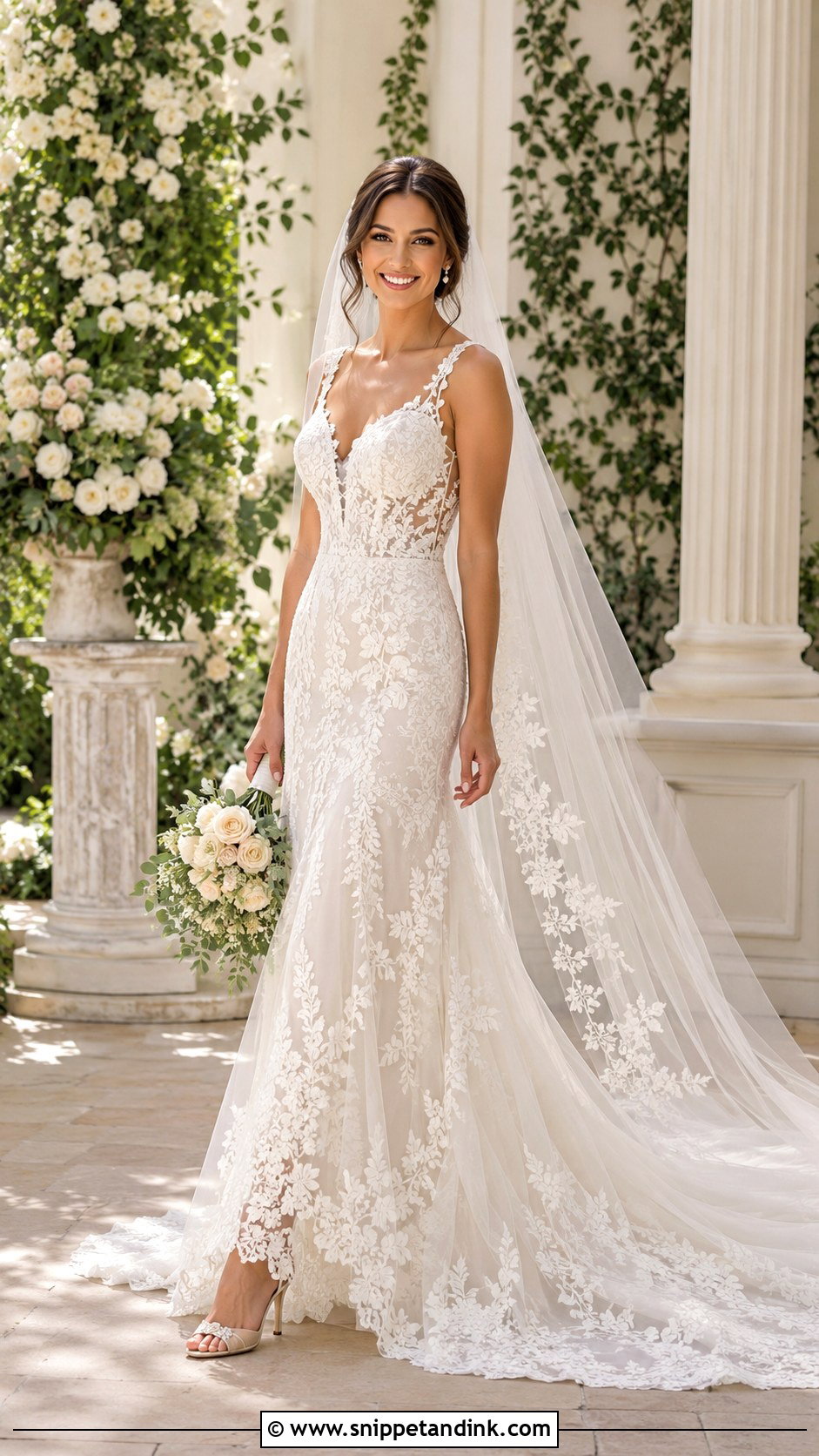
Floral lace varies enormously in scale, from large botanical appliqué you can see across a church to fine Chantilly-style patterns that only show up close. I always ask brides to stand back six or seven paces in the mirror, because that’s roughly the distance most guests will see the dress from. When the lace runs from bodice to train, skip heavy necklaces and choose pearl earrings and a soft veil. A bouquet with rounded, soft shapes echoes the pattern better than spiky, structural stems.
15. Detachable Train Cathedral Wedding Dress
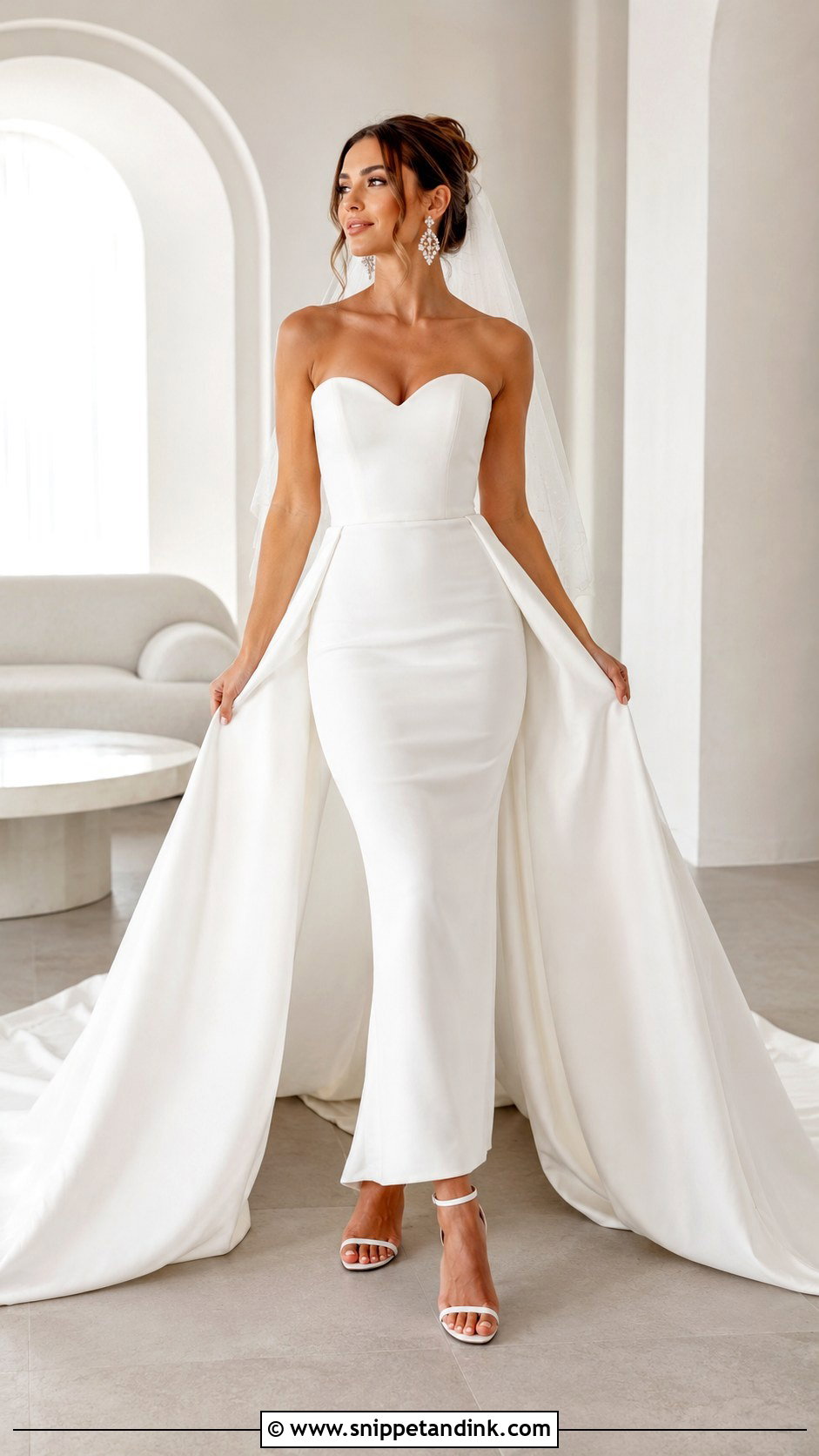
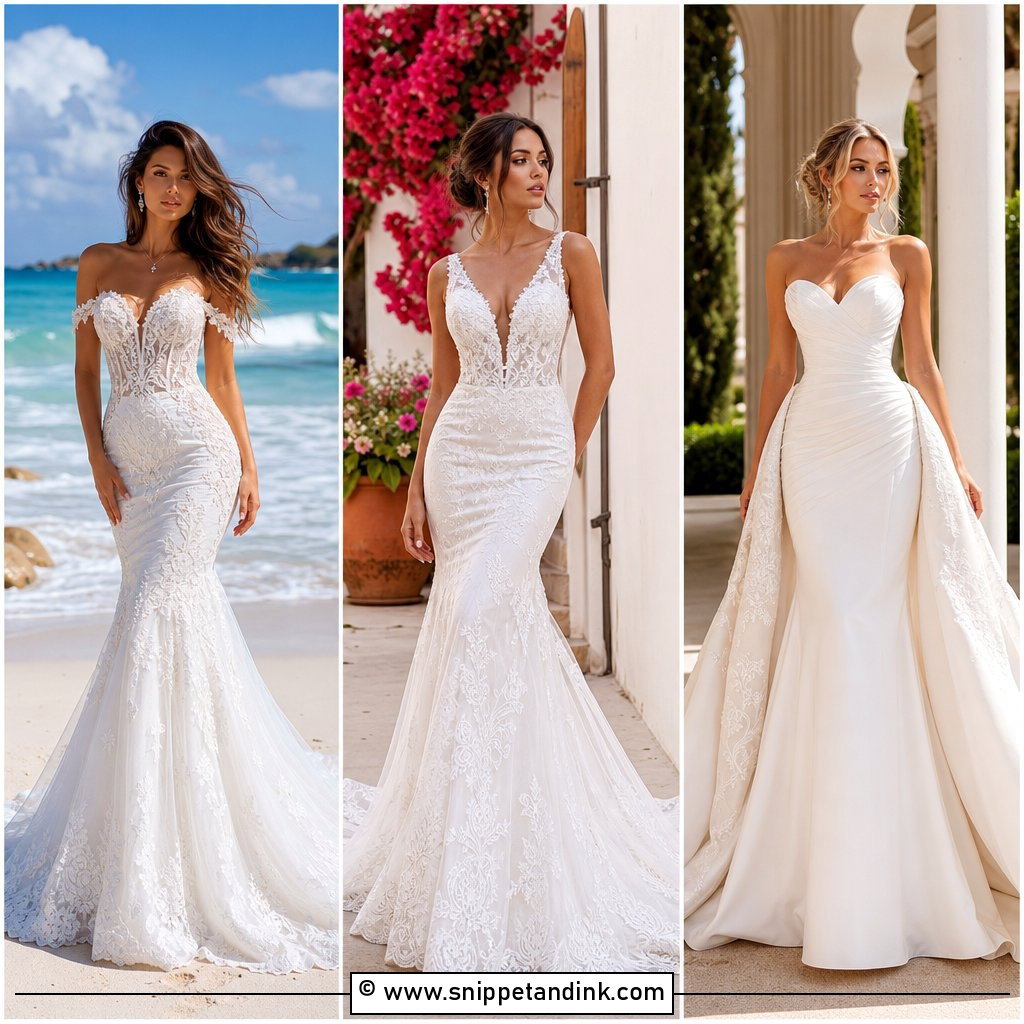
A detachable train cathedral wedding dress gives you the full train for the ceremony and portraits, then a lighter gown for dancing. Look closely at how it attaches: hidden hooks or snaps at the waist or back look far neater than a visible band. Practise removing it with whoever will help you on the day, because fiddly fastenings take longer in a crowded bridal suite than in a quiet shop. Elegant heels, statement earrings and a veil that suits both versions of the dress keep the outfit consistent across the day.
16. Cathedral Wedding Dress With Overskirt
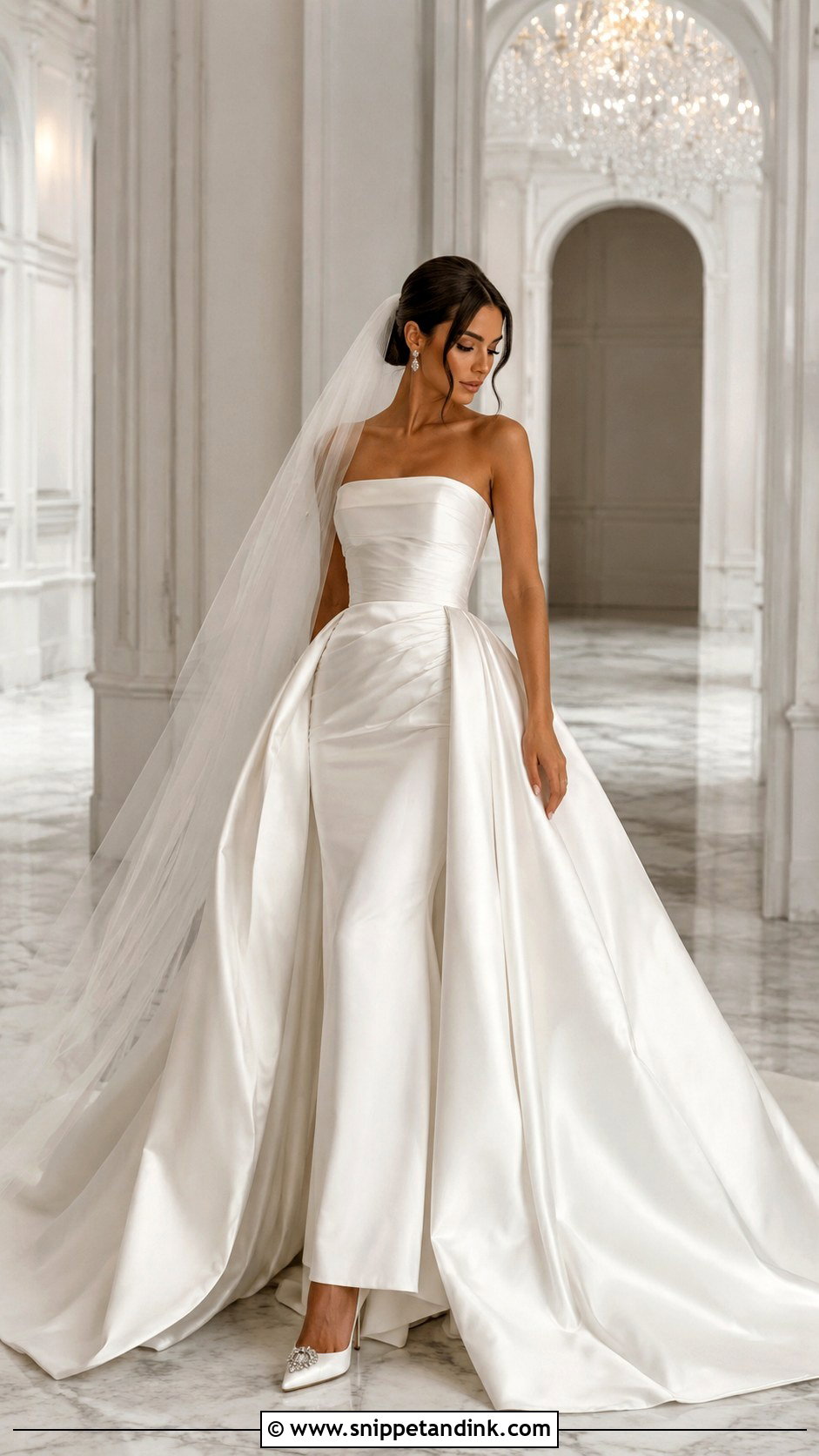
An overskirt lets a fitted base gown carry a sweeping cathedral train for the ceremony, then strip back to a slim reception look. The join is what I look at first: a waistband or belt that matches the gown’s fabric hides the transition, while a contrasting one draws the eye straight to it. Most overskirts open at the front or side, so check you can walk without the edges flapping apart. Pointed heels, a sheer veil and earrings that match the gown’s detail level work for both halves of the day.
17. Crepe Cathedral Wedding Dress
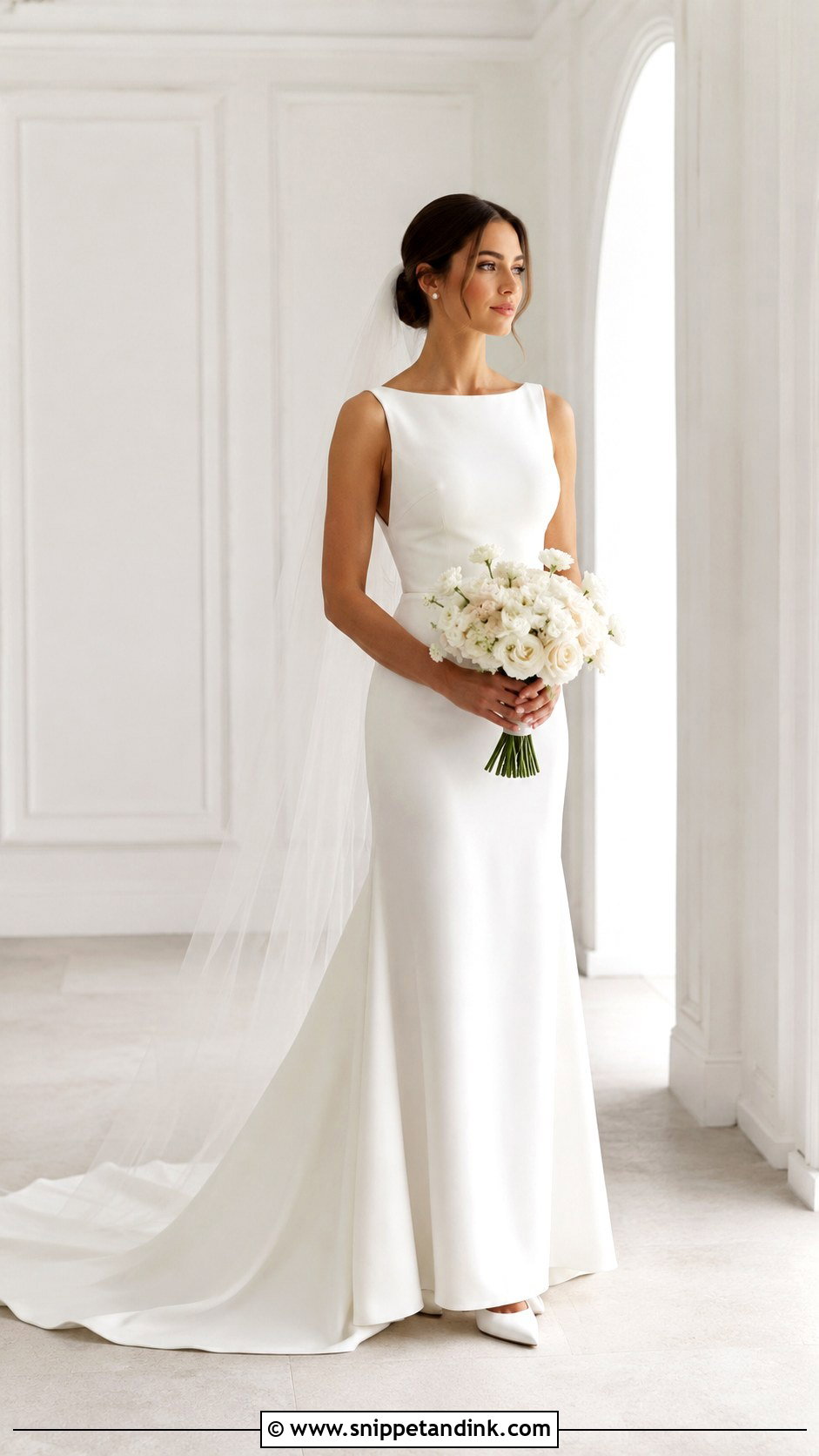
Crepe drapes close to the body and has a soft matte finish, which makes it a natural fit for sheath, fit-and-flare, and minimalist silhouettes. Because it clings, it also shows underwear lines and shapewear edges more than any other fabric here, so wear your actual undergarments to every fitting. Clean heels, small studs and a long veil with little detail suit its quiet surface. A low bun or polished waves keep attention on the lines of the gown and the train behind it.
18. Mikado Cathedral Wedding Dress
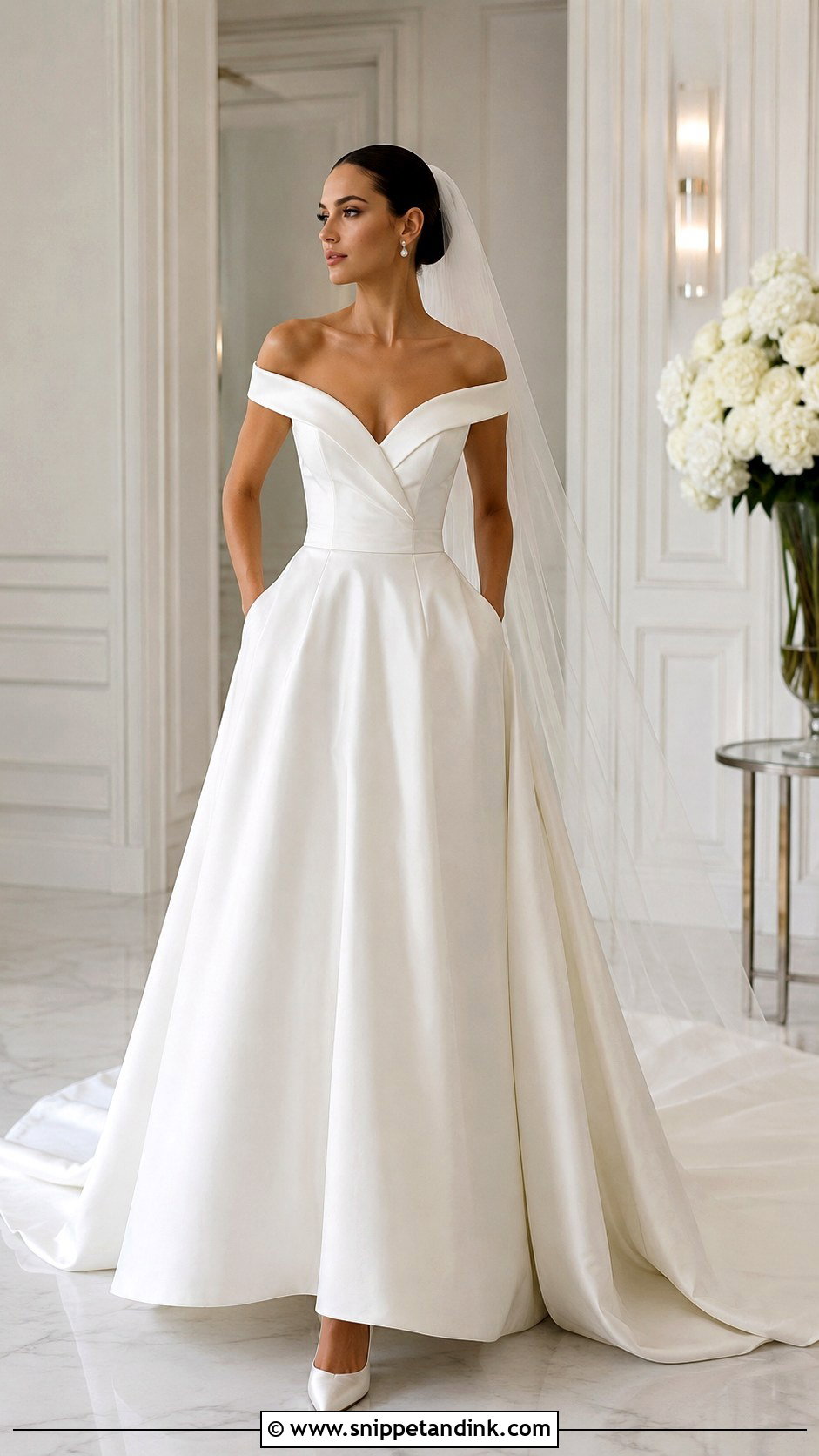
Mikado is a heavy silk blend with a slight sheen and real body, so it holds architectural shapes without layers of crinoline underneath. That same weight makes a long Mikado train noticeably heavier to pull, and warm in July. I’d steer summer brides toward organza or crepe instead and save Mikado for autumn and winter weddings. It needs almost no embellishment; satin pumps, pearl earrings and a veil with a clean edge are plenty.
19. Organza Cathedral Wedding Dress
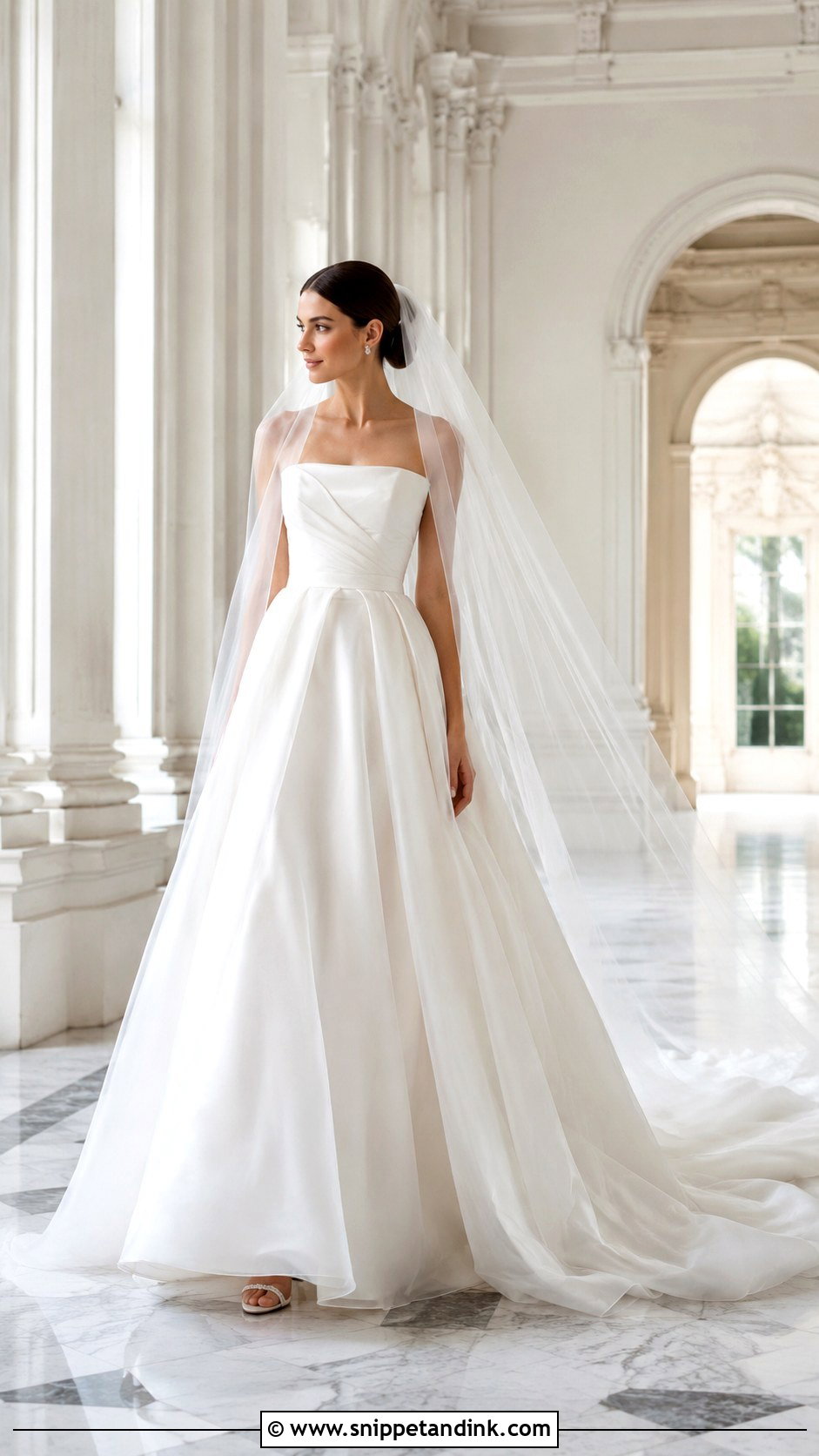
Organza sits between satin and tulle: crisper than tulle, lighter than satin, and it holds a floating train shape without much weight. It does crease if you sit on it for long stretches, so plan the car ride with the skirt spread out rather than crushed beneath you. Pick an A line or ball gown shape for this fabric. If the dress has organza floral appliqué, keep the heels delicate and the earrings small so the texture carries the look.
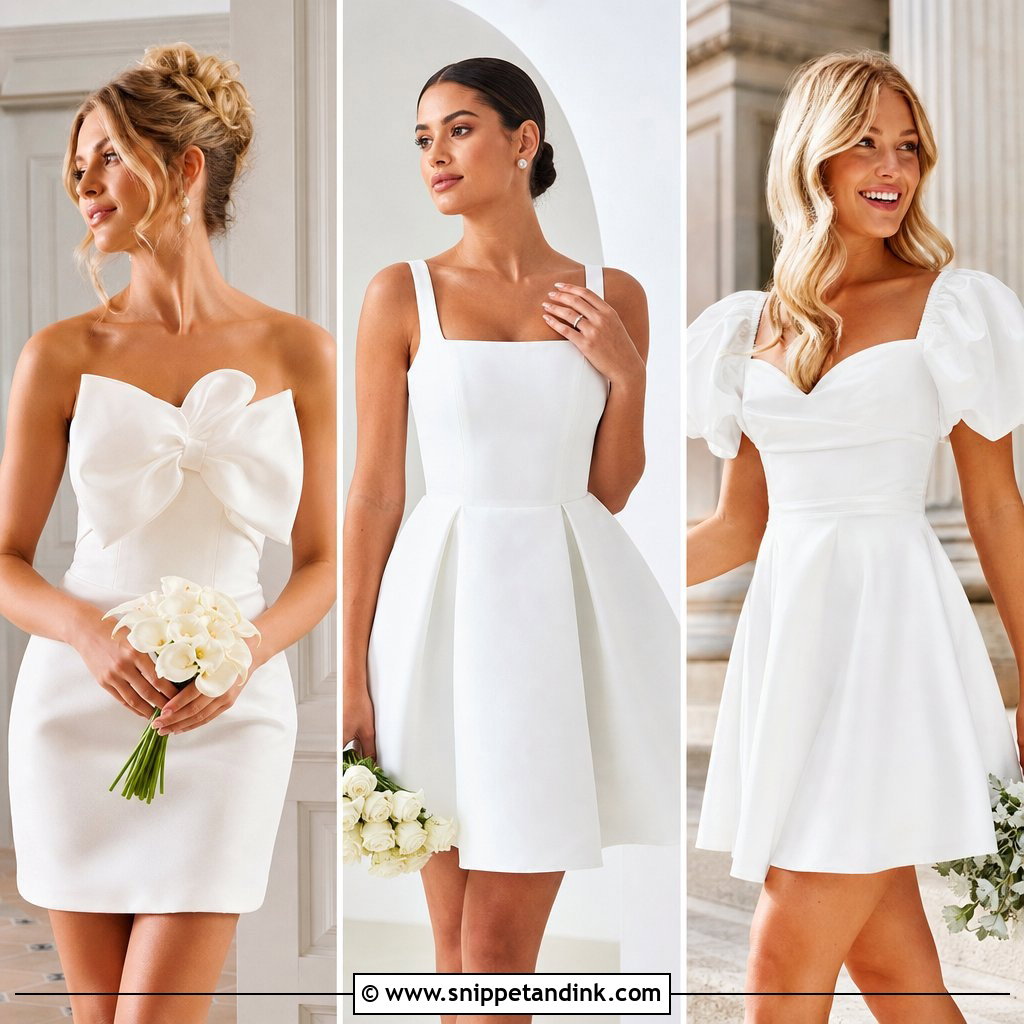
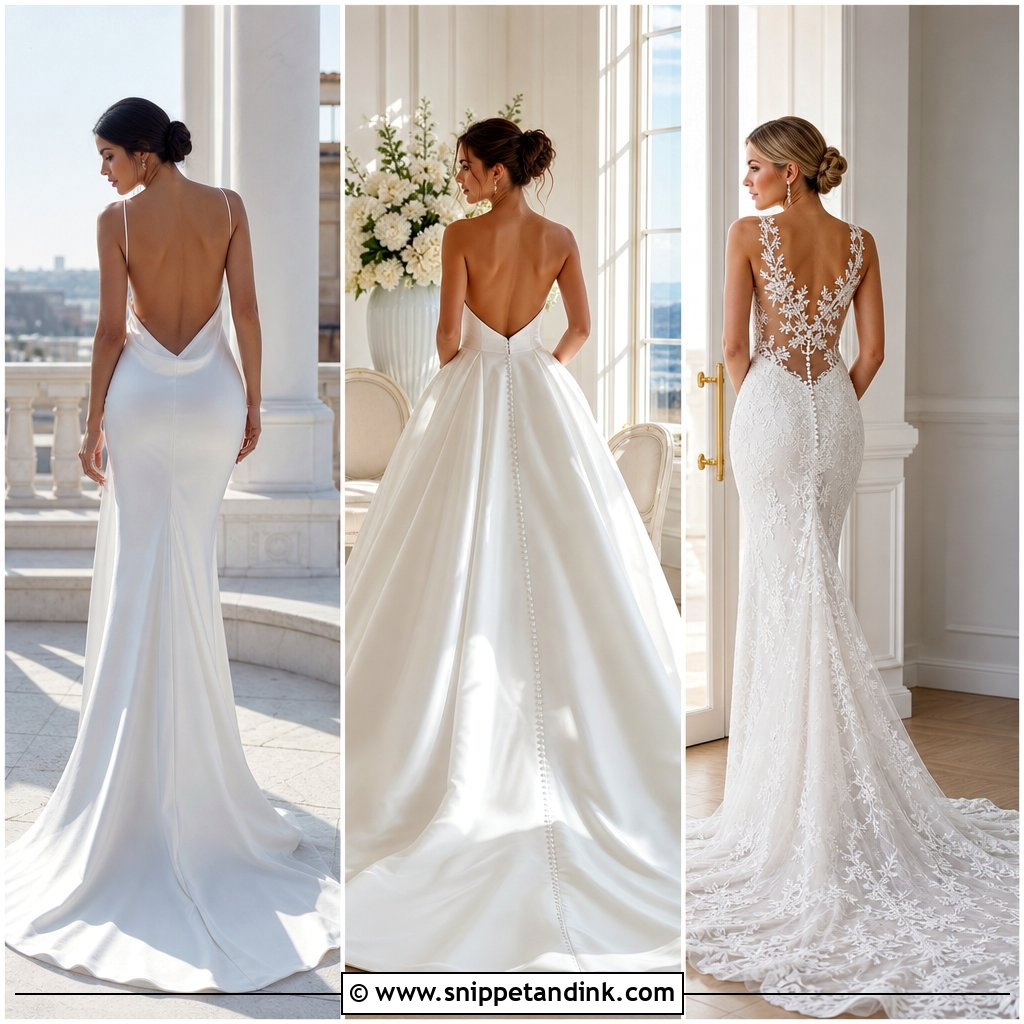
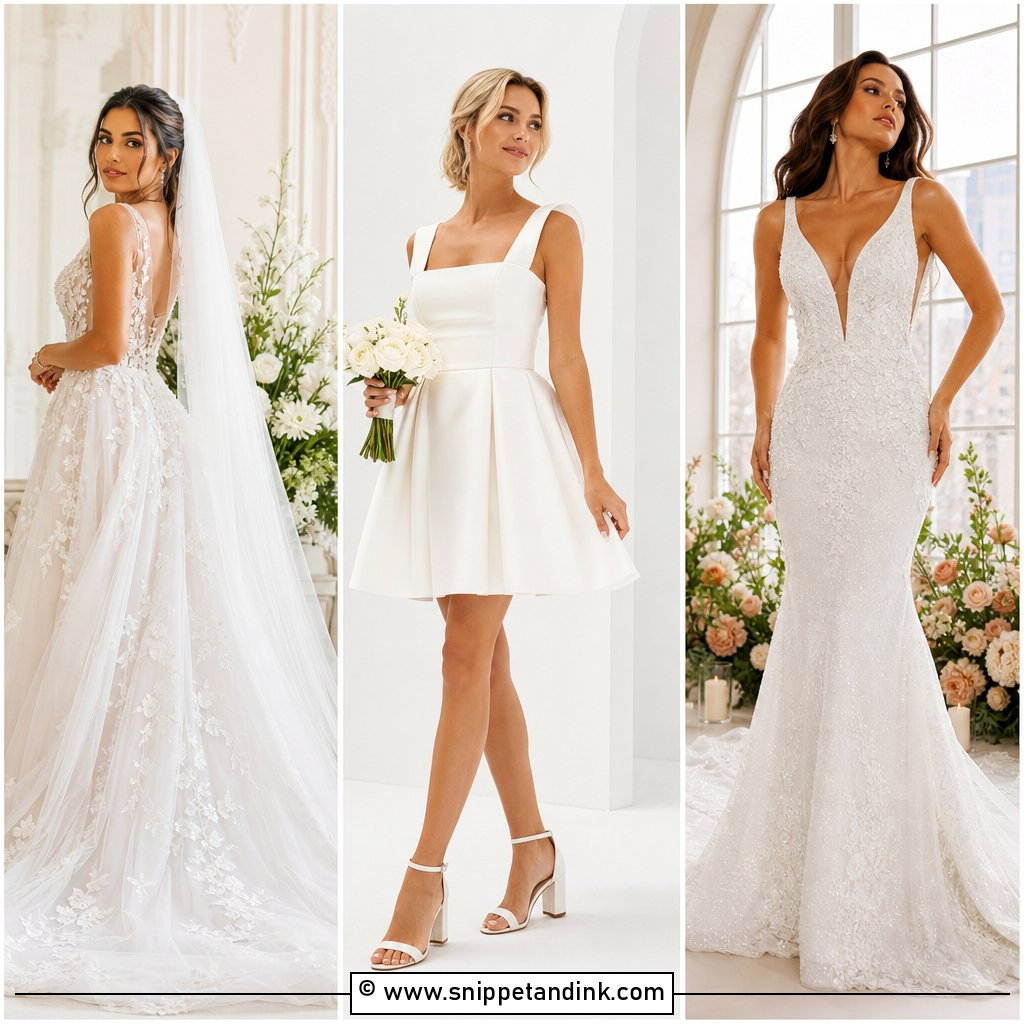
20. Long Veil Cathedral Wedding Dress
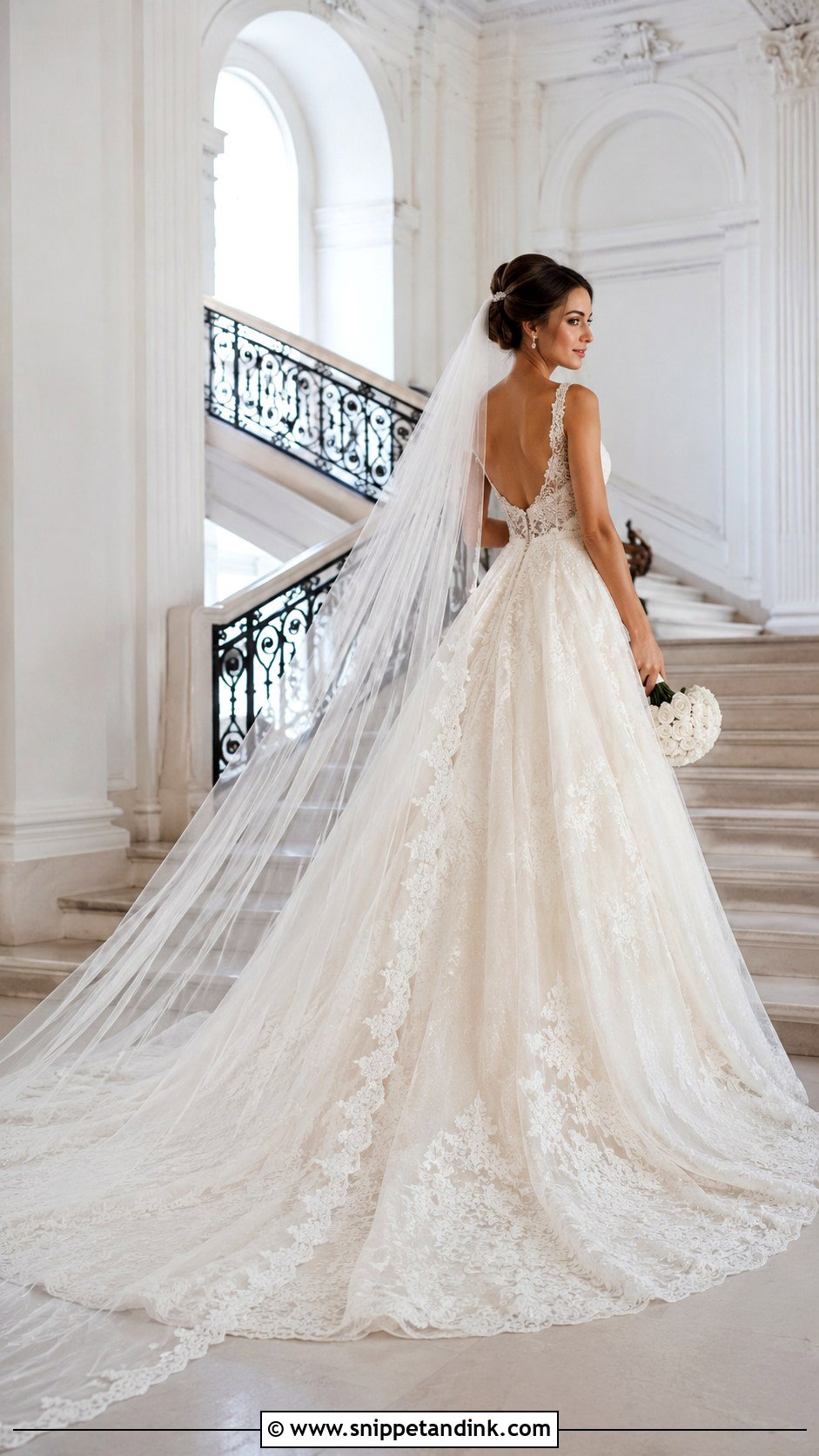
Wearing a long veil over a cathedral train means two long pieces trailing behind you, and they need to agree. My rule is simple: a busy gown gets a sheer veil with a plain edge, and a plain gown can carry lace trim or scattered pearls. The veil’s weight matters as much as its look; a long, heavy veil drags the comb backward, so your hairstylist needs to anchor it into a secure base. Wide shots with both pieces spread out are where this pairing really shows.
21. Pearl Detail Cathedral Wedding Dress
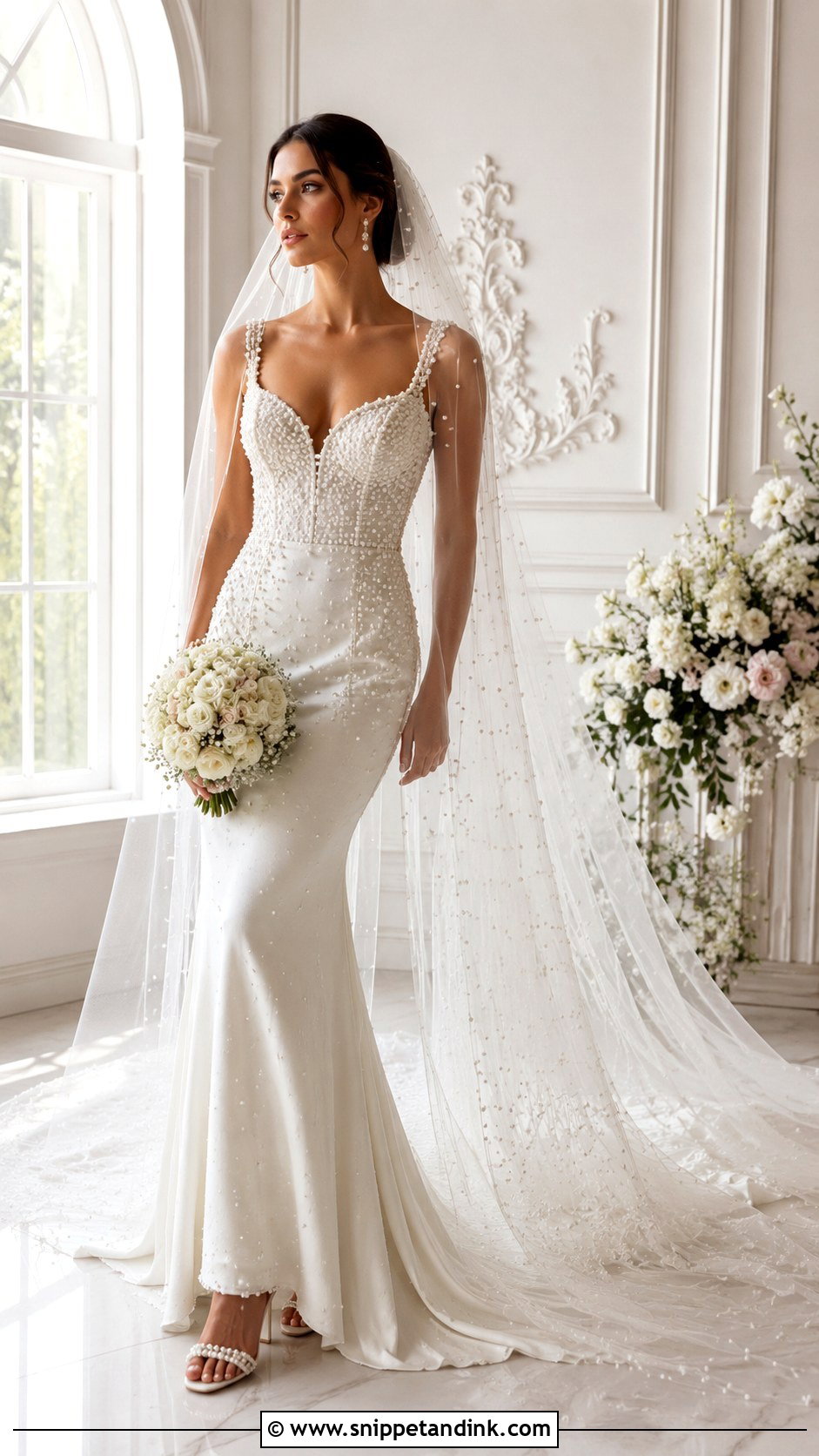
Pearls give texture with a gentler reflection than crystals, and they look far more expensive when you pick one place for them. A plain satin gown with a pearl-scattered veil reads modern; a lace gown with pearl buttons down the back reads classic. Doing both starts to crowd. Pearl earrings, ivory heels and a simple bouquet are enough, and pearls hold up well in close-ups because they don’t flare in camera flash the way crystals can.
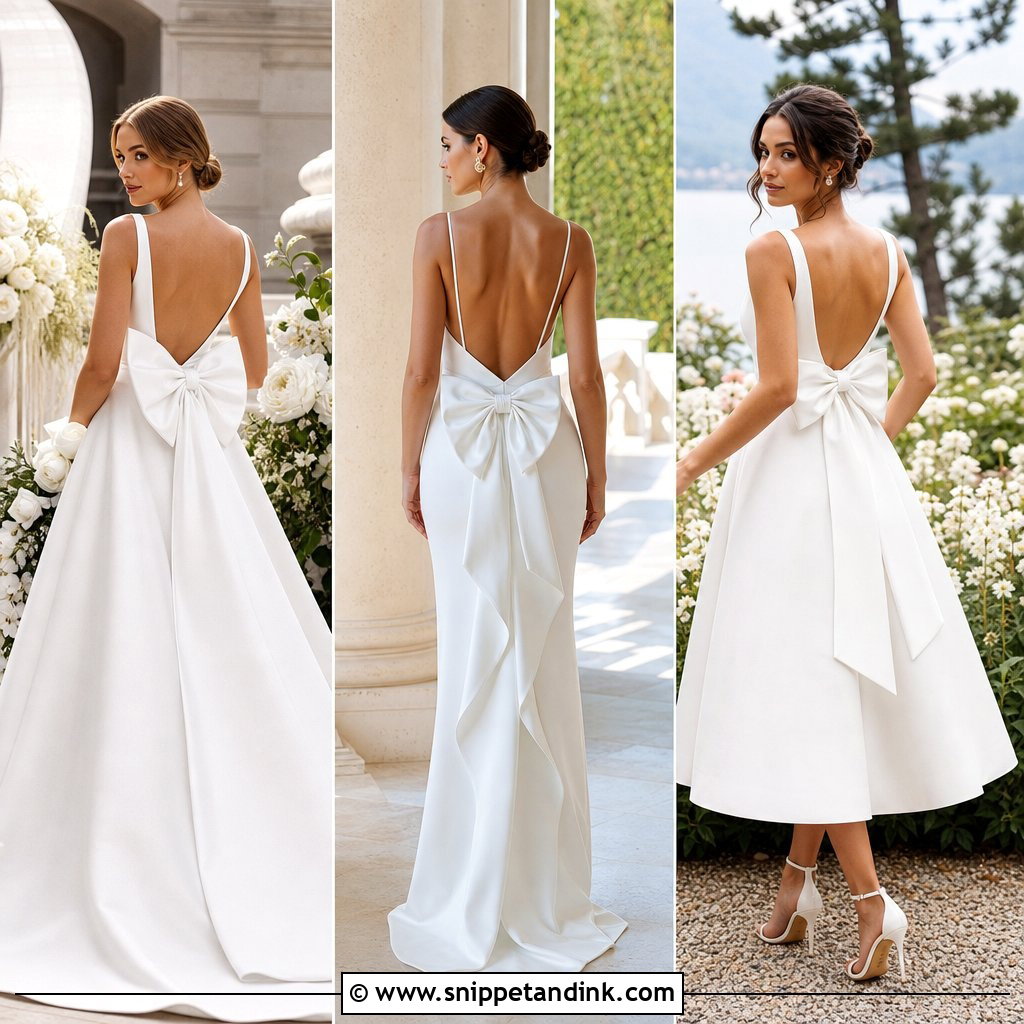
22. Bow Back Cathedral Wedding Dress
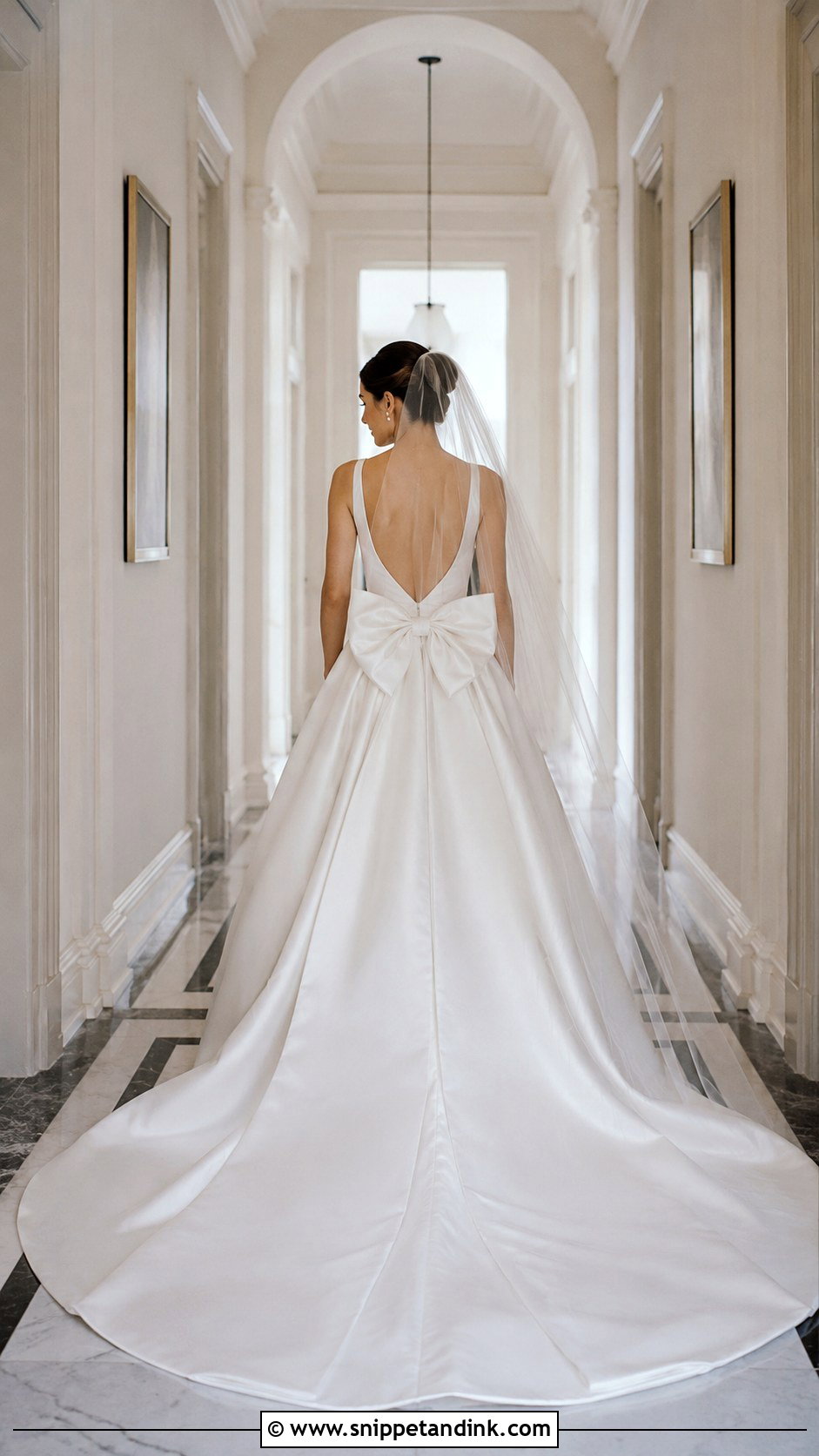
A bow at the back gives the photographer a focal point every time you walk away, and brides forget how many of their ceremony photos are taken from behind. Bows on satin or Mikado hold their shape; on soft crepe they can wilt, so ask whether the bow has interfacing inside. Choose a plain veil that doesn’t hide it completely, or set the veil comb above the bow so it falls to either side. A smooth updo keeps the line from neck to bow clear.
23. Plunging Neckline Cathedral Wedding Dress
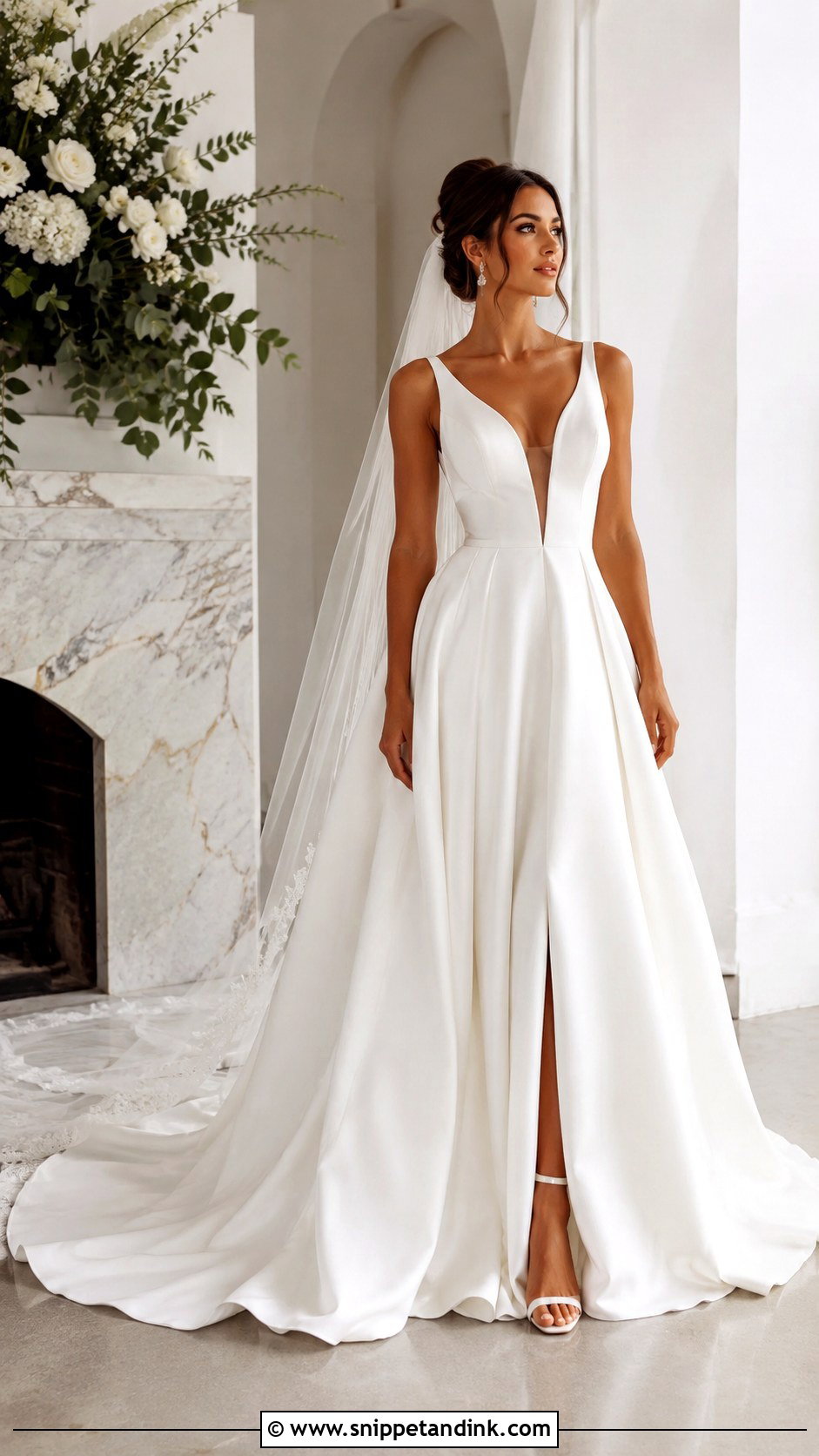
A plunging neckline needs structure more than anything else here, and I won’t let a bride commit until she’s done a full range of movement in it: bending, hugging, raising both arms. Illusion mesh, firm tailoring and fashion tape all play a part in keeping it secure. Skip a heavy necklace, because it fills the space the neckline is designed to show. Slim heels, delicate earrings, a sheer veil and a clean bouquet balance the drama at the front with the long train at the back.
24. Backless Cathedral Wedding Dress
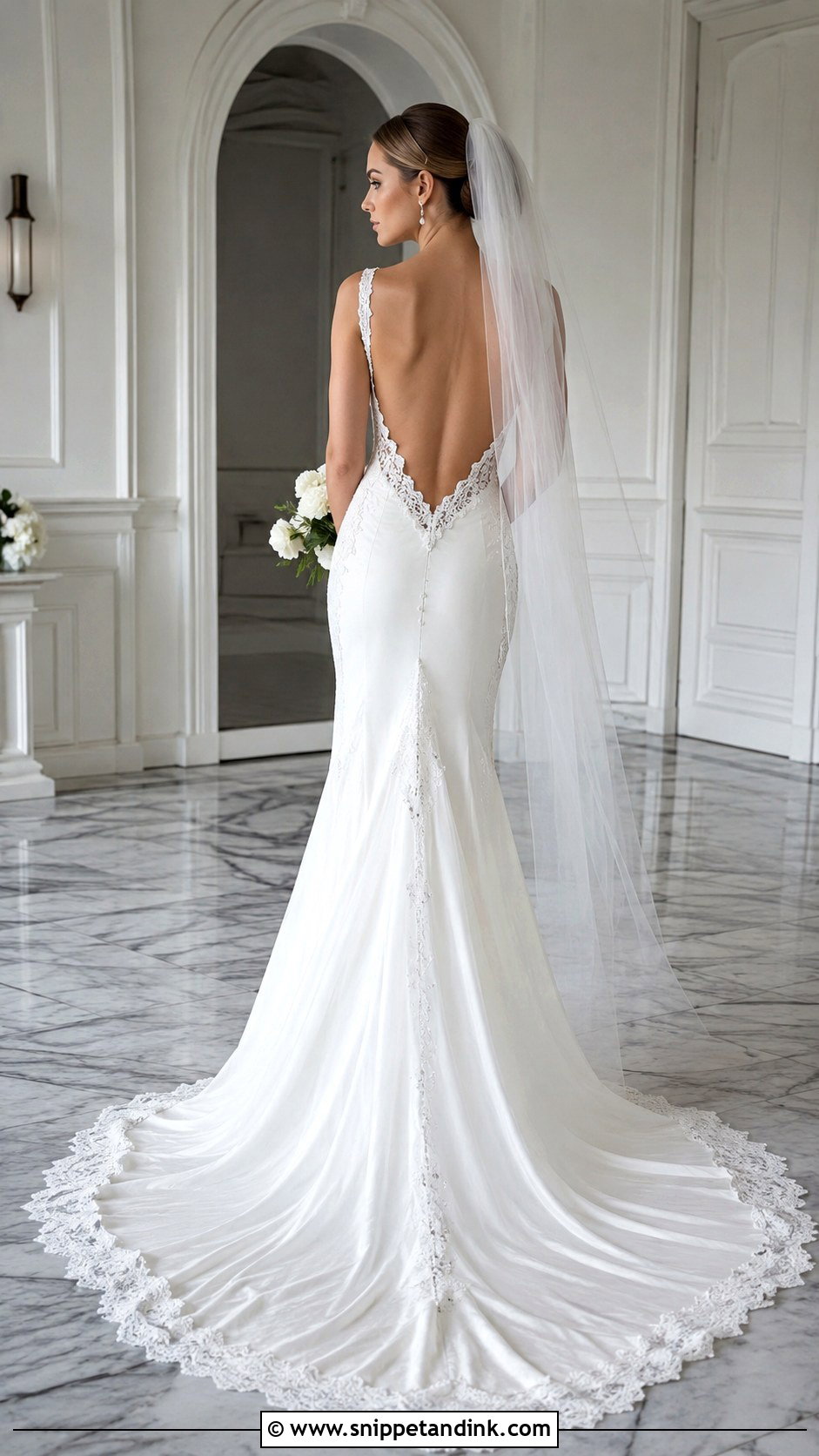
A backless gown puts the focus behind you, so the train should flow from just below the open edge without a heavy seam interrupting the line. Lace edging, buttons or a soft cowl give the opening a finished look. Plan support early; adhesive cups and low-back bras need trying on before the final fitting, not on the morning. A plain veil and a low updo let the back show in photos.

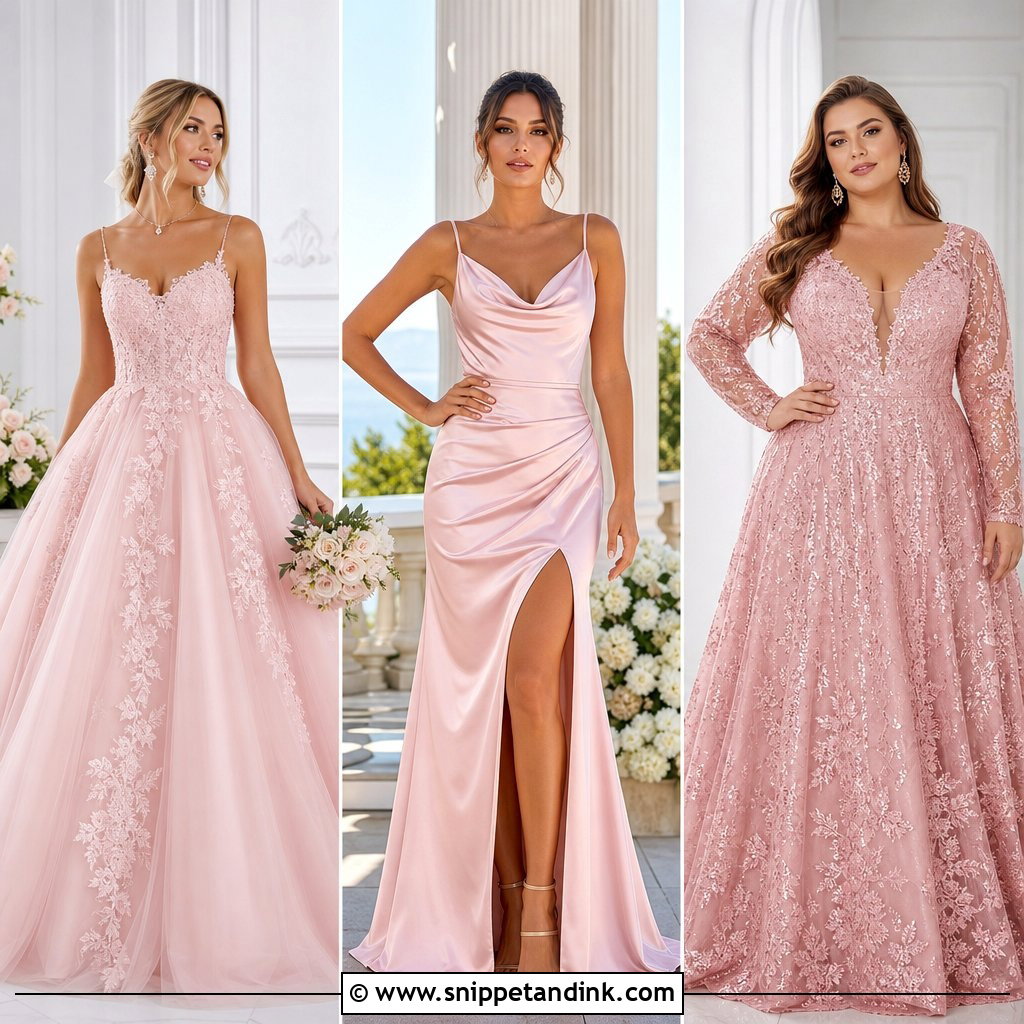


25. Plus Size Cathedral Wedding Dress
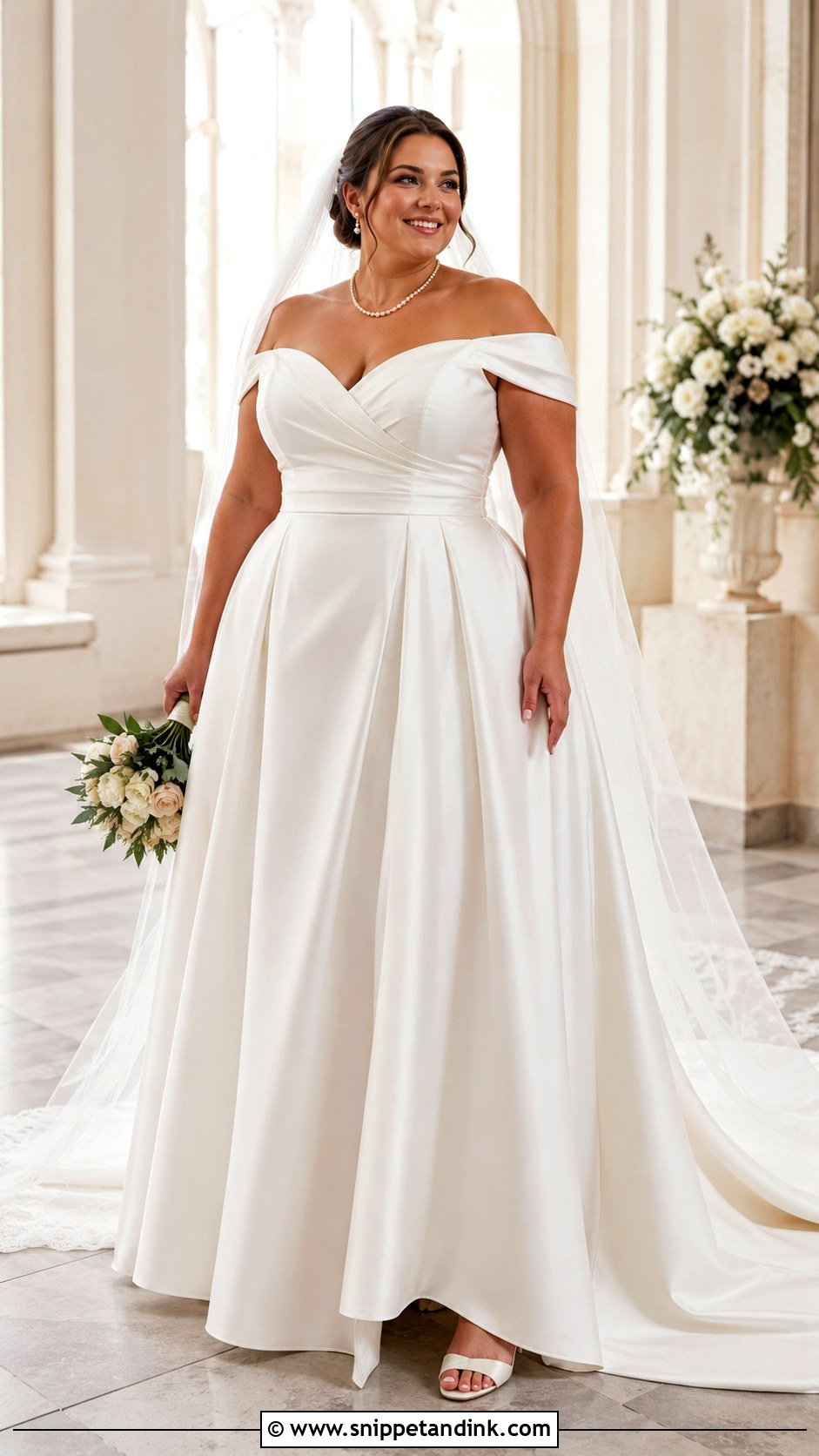
For plus size brides, construction matters more than silhouette: strong boning through the bodice, a proper lining and a waist stay to anchor the skirt. A line, ball gown, fit-and-flare and corset styles can all carry a long train well. I’d ignore anyone who tells you which shape is “flattering” and go with what feels like your style when you move in it. Choose comfortable heels and a veil anchored firmly, because the whole outfit has to work for you standing, walking and celebrating for many hours.
26. Petite Cathedral Wedding Dress
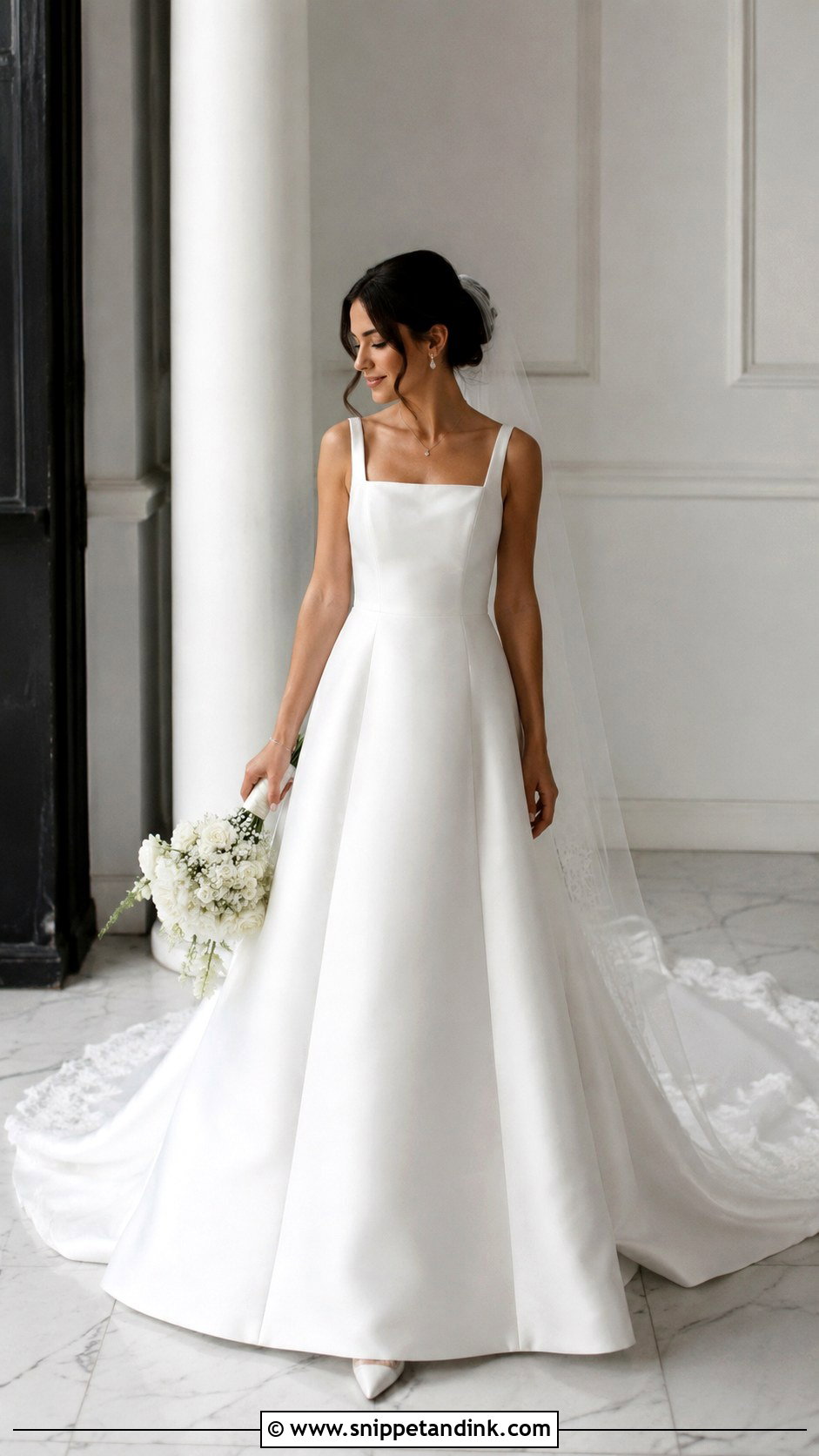
Proportion is everything for petite brides wearing a long train. A defined waist and clean vertical lines lengthen the body, while stacked tiers or a very full skirt can swallow a shorter frame. I also ask the seamstress to start the train where the skirt naturally falls rather than adding a separate panel, which keeps the line unbroken. A line, sheath and fitted shapes all work, with pointed heels, a simple veil and a small or medium bouquet that doesn’t cover the dress.
27. Modest Cathedral Wedding Dress
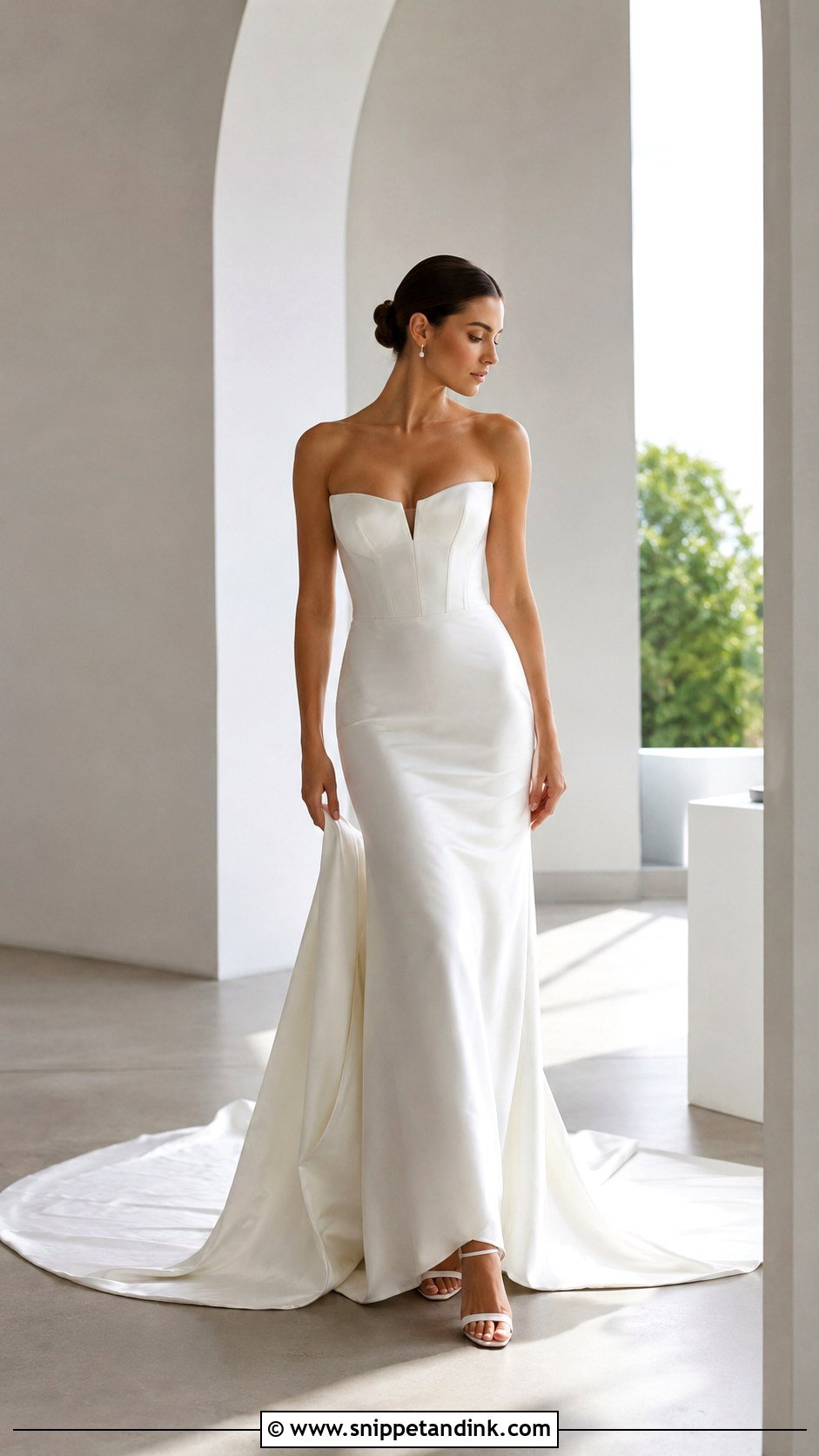
A modest cathedral wedding dress can look as dramatic as anything on this list, because the train is doing the talking rather than bare skin. Long sleeves, a higher neckline, a lined bodice or fuller coverage at the back all suit lace, crepe, satin and Mikado. If the dress is simple, buttons down the back or lace cuffs give the eye something to land on. For religious ceremonies, check whether your venue has guidance on shoulders and veils before the final fitting rather than after.
28. Vintage Cathedral Wedding Dress
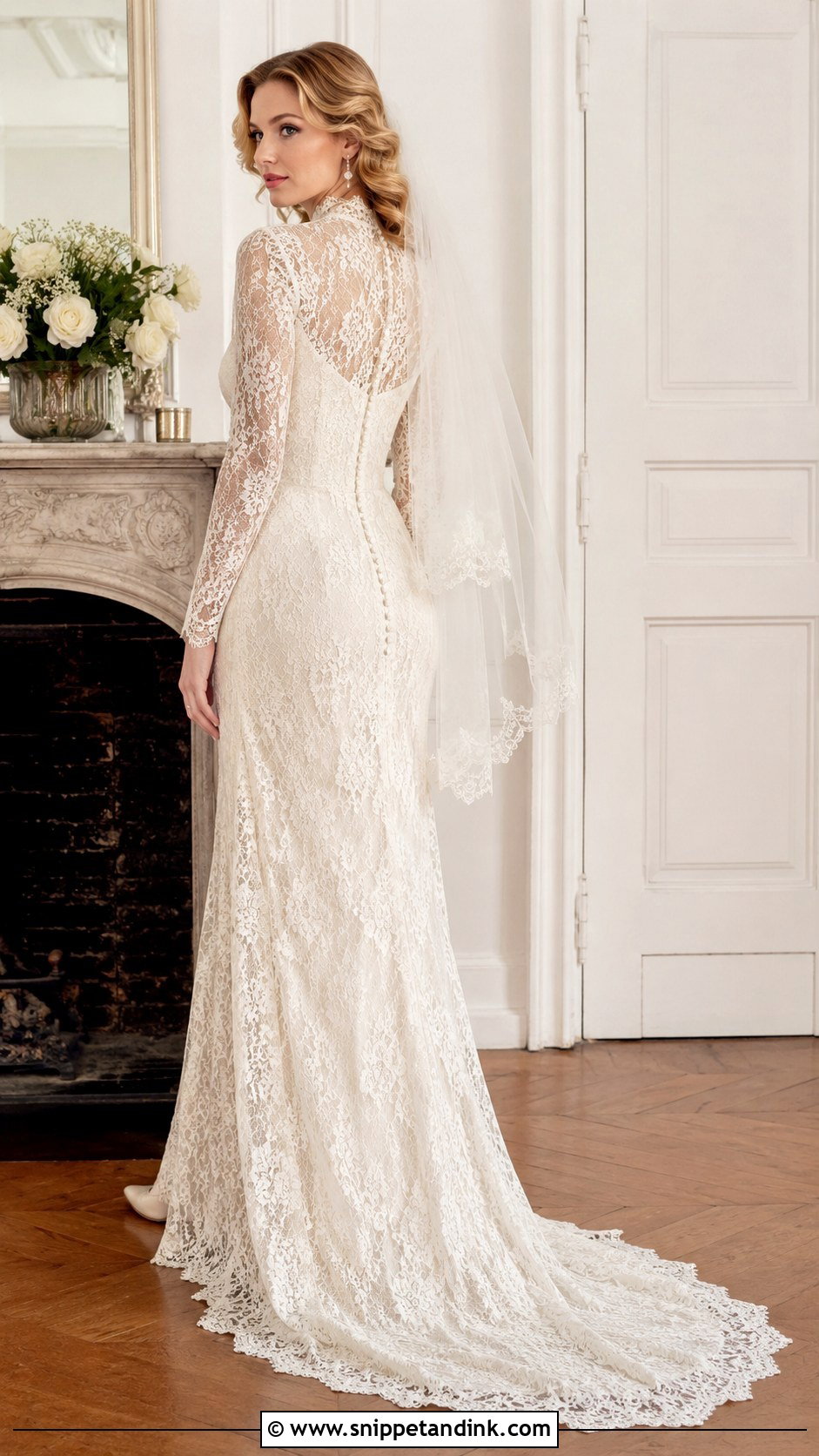
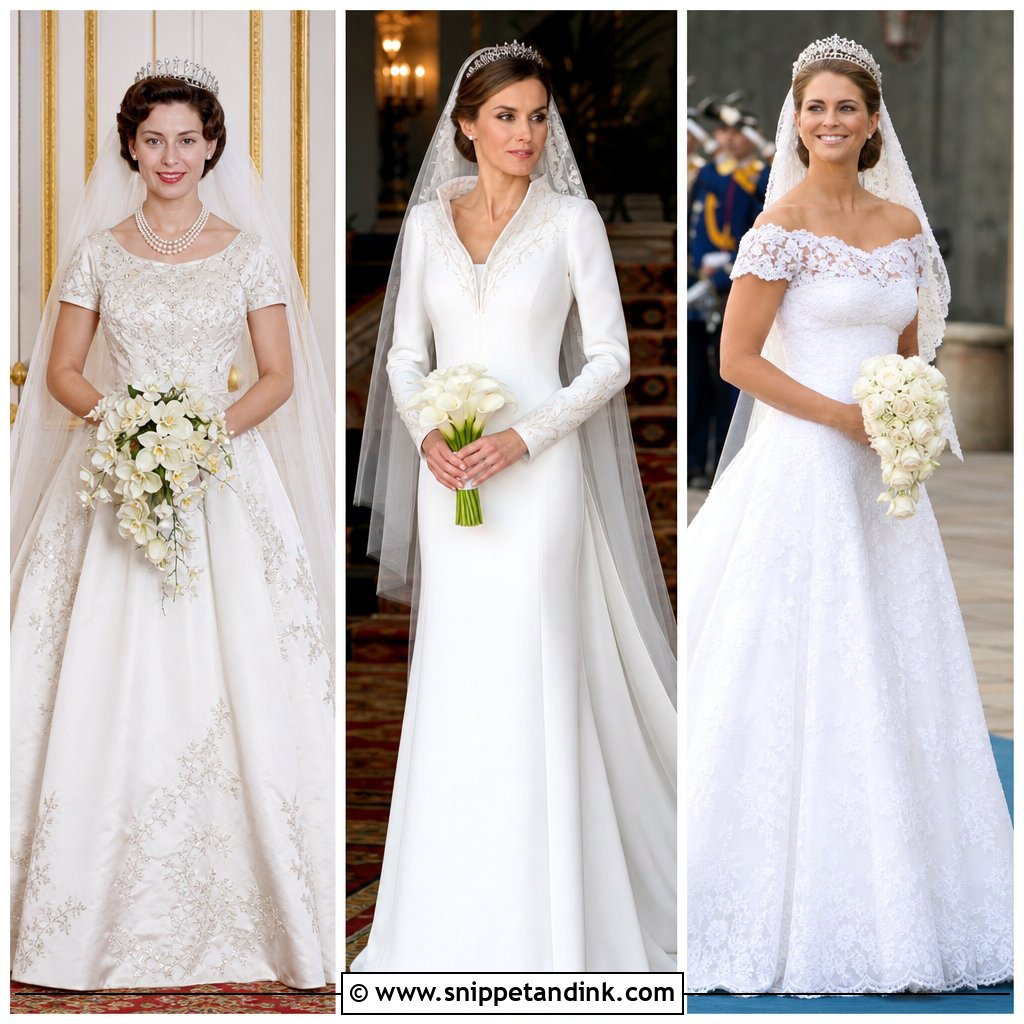
Vintage gowns, real or inspired, look right when the fit is modern and the details are old. Lace sleeves, covered buttons, a basque waist and antique-style satin all carry the mood. Original vintage dresses usually need more alteration than new ones, and old fabric can be fragile, so find a seamstress who has handled them before. Pearl earrings, ivory heels, a delicate veil and a soft updo or brushed waves keep it from tipping into costume.
29. Modern Cathedral Wedding Dress
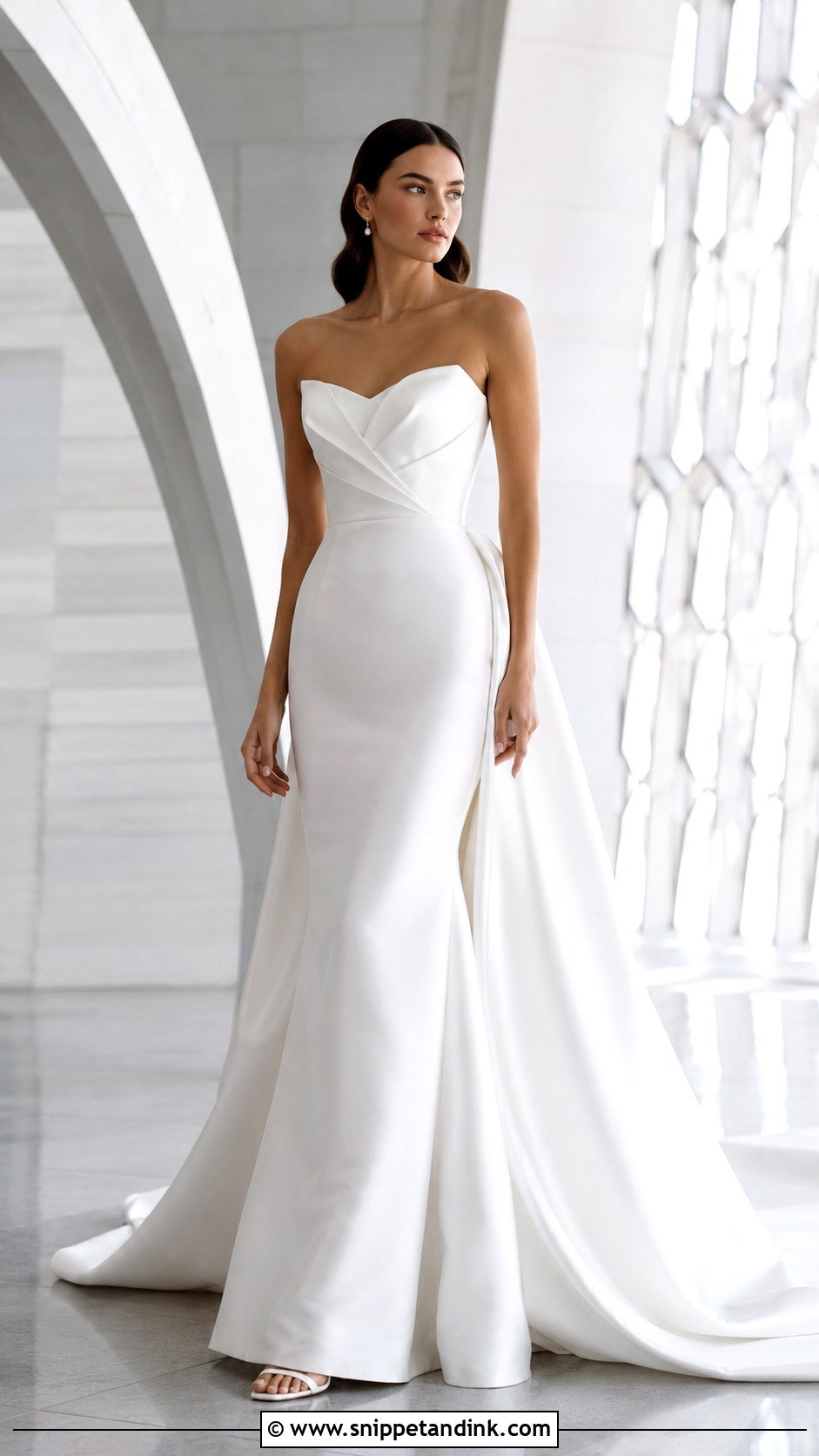
A modern cathedral gown usually has one standout feature: a square neckline, a sculpted bodice, a high slit, a dramatic bow or just a plain, very long train. I tell brides to name that feature at the first appointment and build everything else around not competing with it. Satin, crepe and Mikado give the sharpest finish. Minimal heels, smooth hair and simple earrings fit, and going without a veil is a real option here, since the train already supplies the length.
30. Black And White Cathedral Wedding Dress
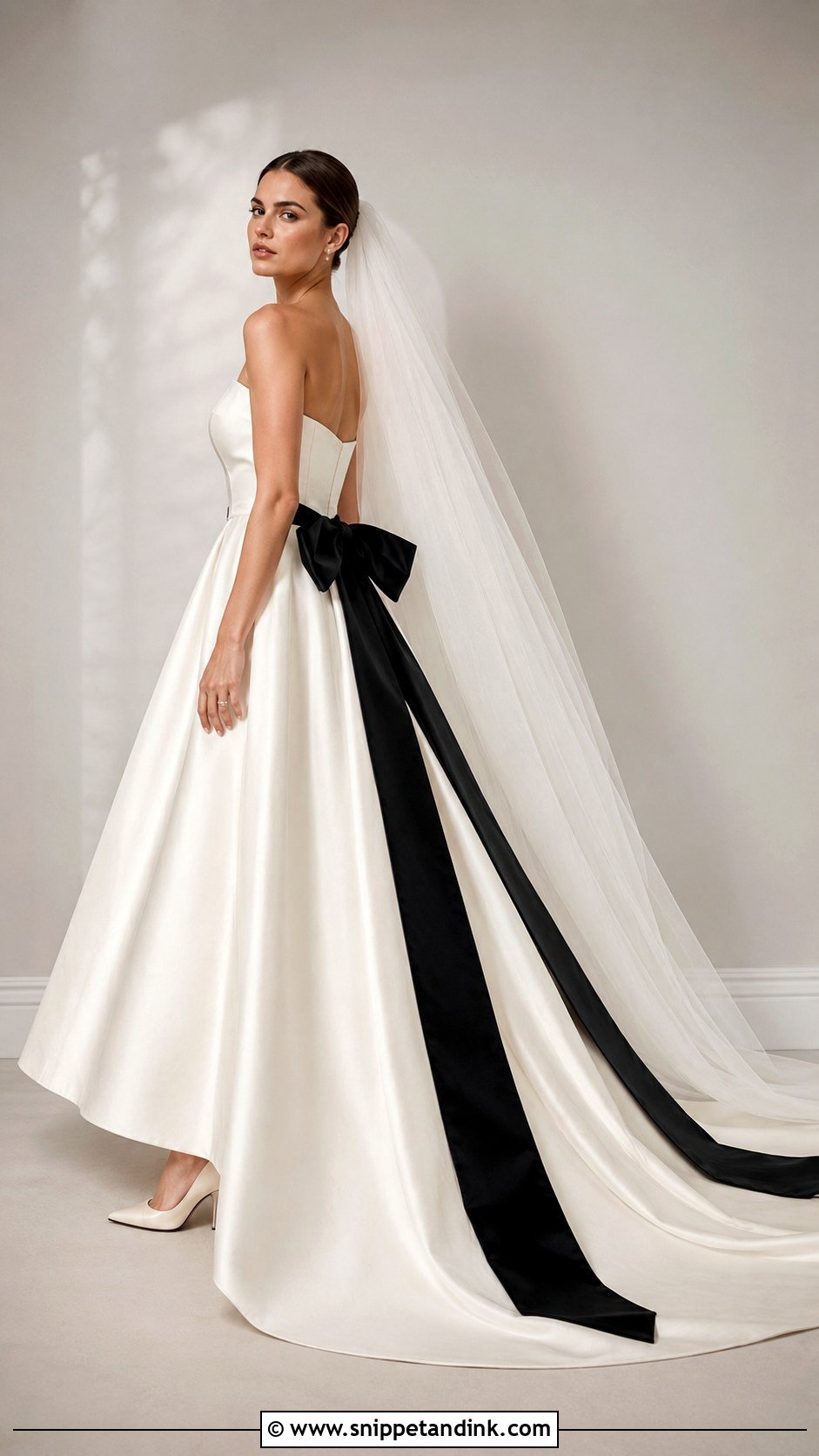
Black and white works when one element leads. That could be subtle, like black gloves or a black bow, or stronger, like black lace appliqué over ivory. I’d hold back from adding black shoes, black jewelry and a black bouquet ribbon on top; three dark accents stop reading as a design and start reading as an accident. Keep the silhouette formal, choose ivory or black heels and small earrings, and add a clean veil only if the gown suits one. A long ivory train behind black detail makes the contrast even sharper.
Bustling All That Fabric Once the Ceremony Ends
Nobody dances in a full cathedral train. The bustle lifts it off the floor for the reception, and it is the alteration brides most often leave too late. Tell your seamstress early that you want one, because it is usually fitted during the later appointments, once the hem is finished.
The three styles you’ll be offered
- Over bustle (sometimes called an American bustle): the train is hooked up onto the back of the skirt. Quick, and it suits satin and lighter trains.
- Under bustle (often called French): the train is tucked under and tied with ribbons inside. It creates soft folds and handles heavier fabrics well.
- Ballroom bustle: the train is lifted all the way round so the skirt hangs at one even length, as if there were no train at all. Good for heavy lace and full ball gowns, but it takes the most pick-up points.
A very long train can need many attachment points. Ask your seamstress to colour-code the ribbons or loops and show you and one helper how to do it. Then practise it once at home, with the lights on, before the day.
Walking, Turning and Sitting in a Seven-Foot Train
The train moves differently in every direction. Walking forward is easy, because it follows you. Turning is where brides wobble, so practise a slow, wide turn instead of pivoting on one heel, which twists the fabric around your ankles. To walk backward a step, kick the hem gently out of the way first.
For sitting, gather the train to one side and sit on the bodice end of the skirt, not the train itself, or the fabric creases and drags at the waist seam. In the car, lay it across the seat beside you. I’d also wear your wedding shoes around the house for an hour or two in the weeks before; a train is far easier to manage in shoes that already feel familiar.
Bring the Shoes, the Veil and a Bustle Plan to the Last Fitting
The right gown here is the one you can stand, walk and sit in comfortably while it still gives you the entrance you pictured. A long train makes lace, satin, crepe, tulle, Mikado and organza all feel more formal; what changes is the weight you carry and how the bustle has to be built. Bring your veil, shoes and undergarments to the final fitting so you see the whole outfit together. Plain gowns can take a bolder veil, detailed gowns want quieter accessories, and every one of them needs a bustle you’ve practised before the day.
You'll Like These Ideas:


Leave a Reply