
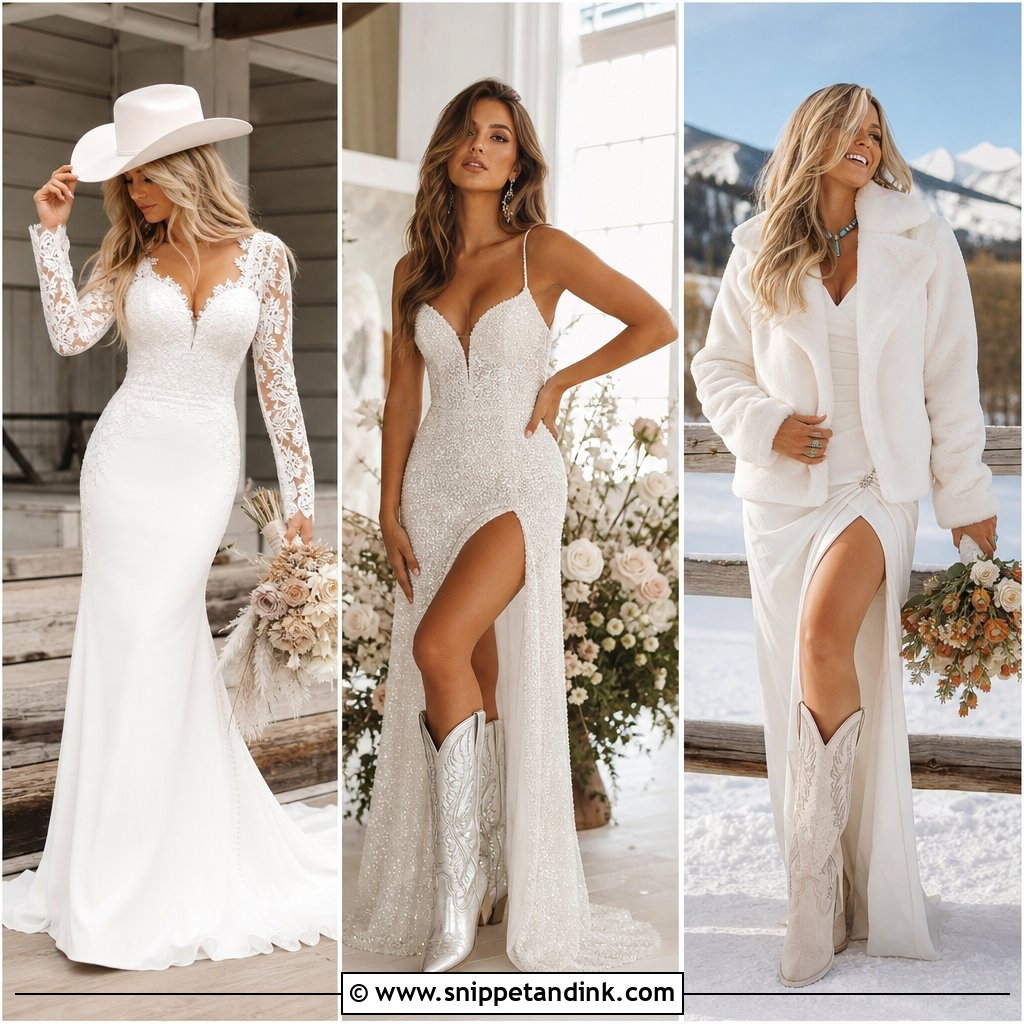
A Western wedding dress has to do two jobs. It needs to read as bridal from the back row, and it needs to make sense next to boots, a barn and possibly a horse. The range is wide, from fine lace A-lines and loose boho shapes to clean satin finished with a belt, a hat or a touch of fringe. What I look for in every case is restraint: one or two Western details carried well, so the gown looks chosen and not themed. Lace, embroidery, eyelet, fringe and fabric that moves suit ranches, barns, deserts and open fields. Below, each dress comes with boots, jewelry, accessories and the kind of venue it handles best.
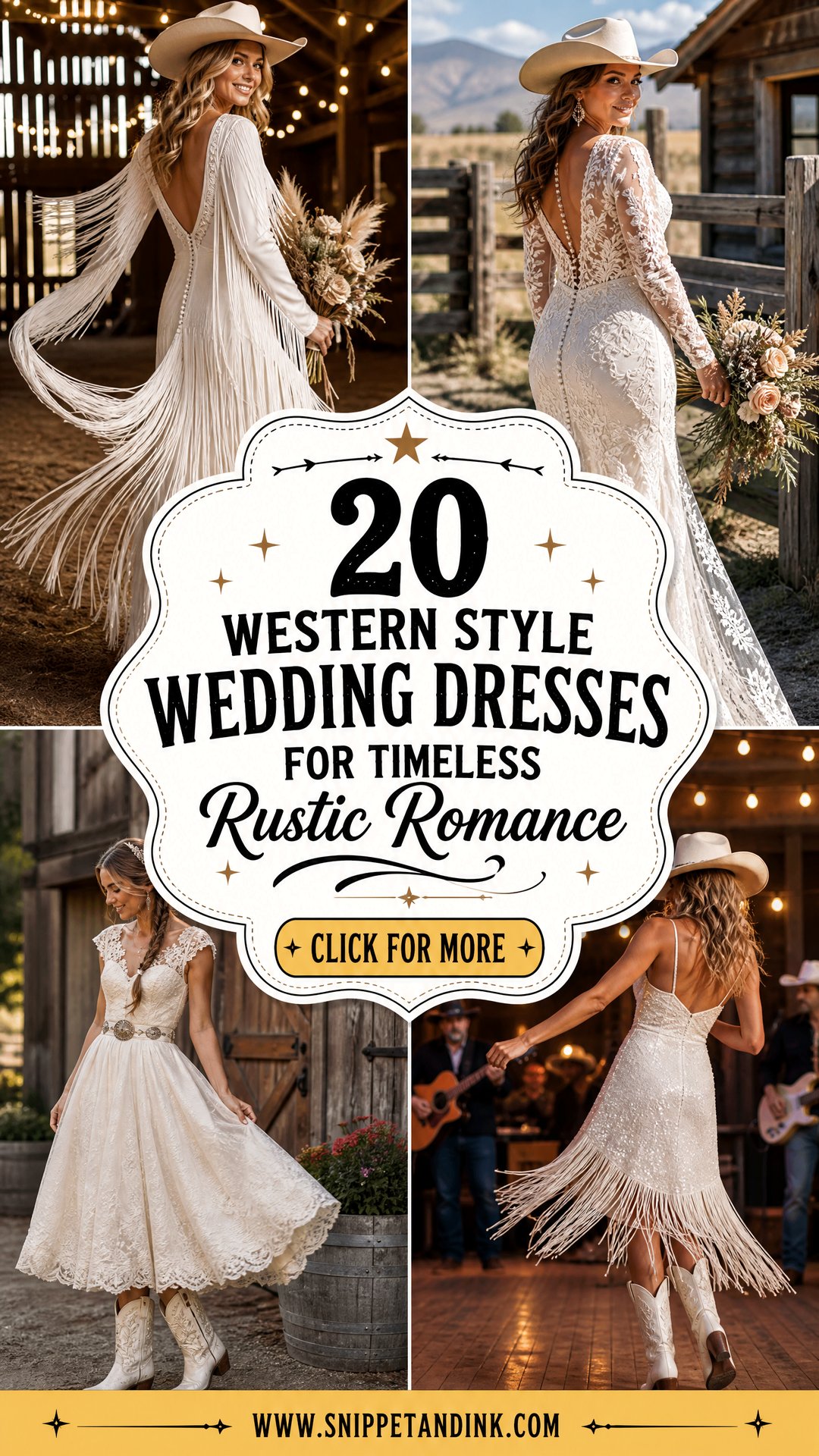
Bring the Boots to Your First Fitting
This is the single thing I wish every Western bride knew before she ordered. A gown is hemmed to the shoes you wear at your fittings, and cowboy boots behave differently from bridal heels. The heel is usually lower and stacked, the toe is longer, and the shaft can push out the skirt if it rises above your calf.
- Buy the boots before alterations start, and wear them to every fitting, not a stand-in shoe of the same height.
- Have floor-length hems set to just brush the top of the boot toe. A hem cut for heels will drag once you switch to a lower boot.
- Check the boot color against the fabric in daylight. Optic white boots next to an ivory gown look grey-blue in photos; match the shade or go tan on purpose.
- With a slim column or mermaid skirt, choose a shorter boot shaft so it doesn’t bulge through the fabric when you walk.
Alterations on a lace or beaded gown often take several weeks across two or three fittings, so plan that time in. Boots also need breaking in, and the fittings are a good excuse to start wearing them.
1. Lace A-Line Western Wedding Dress
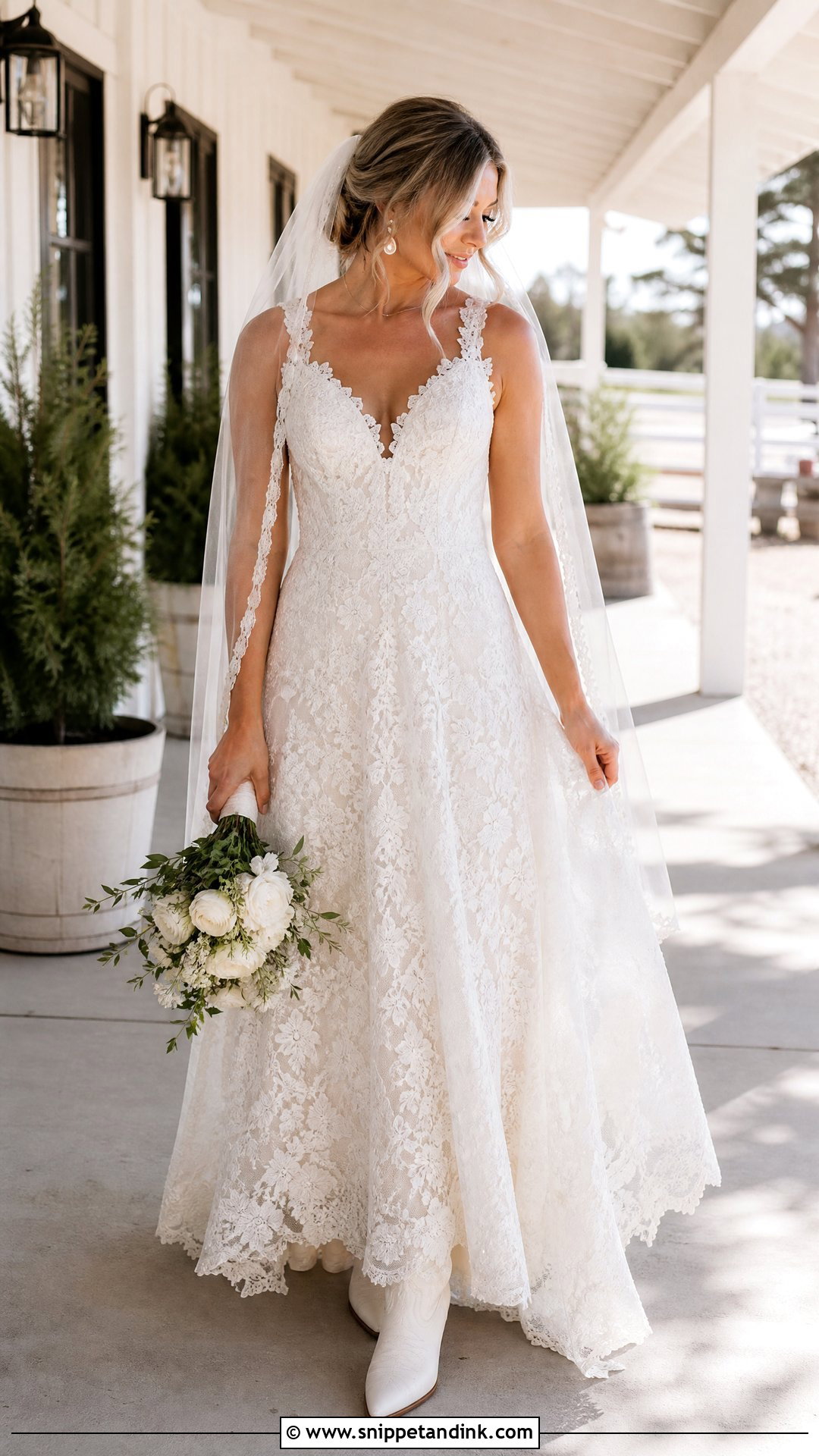
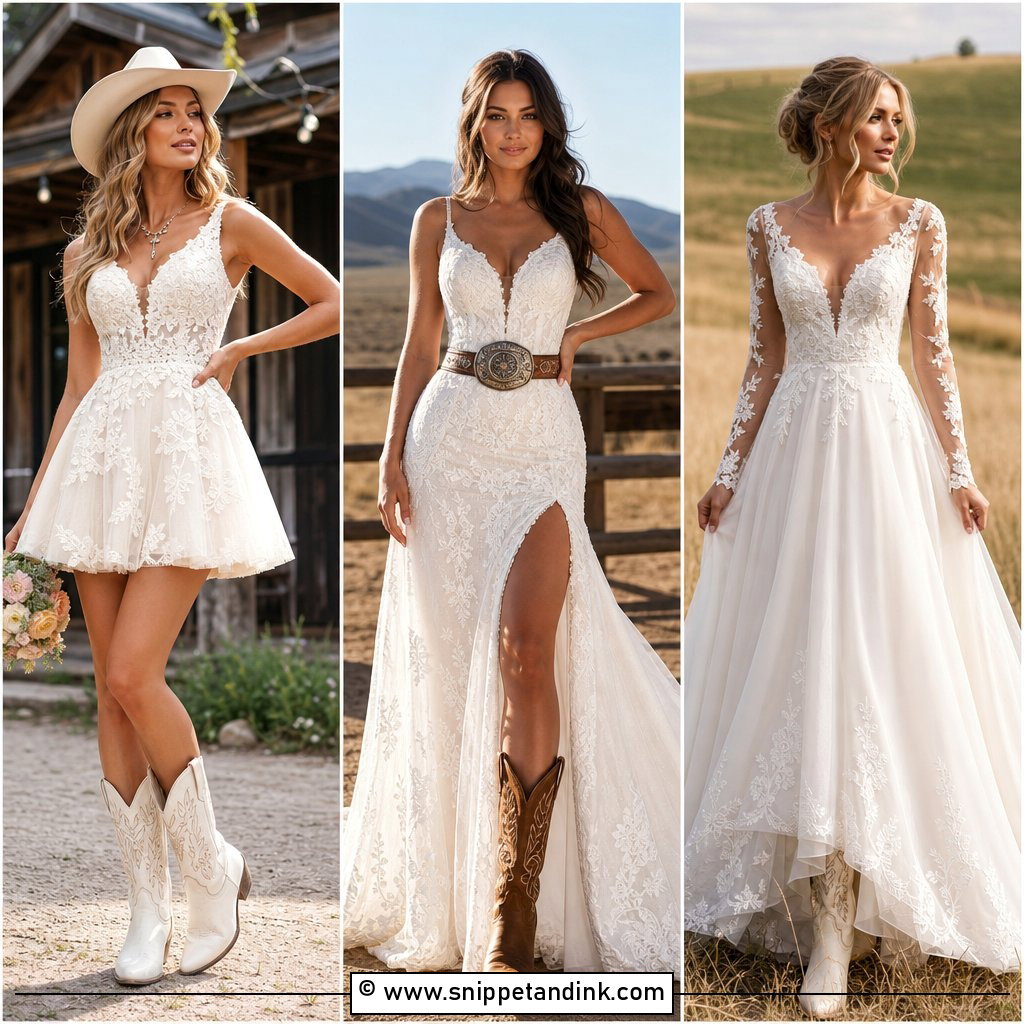
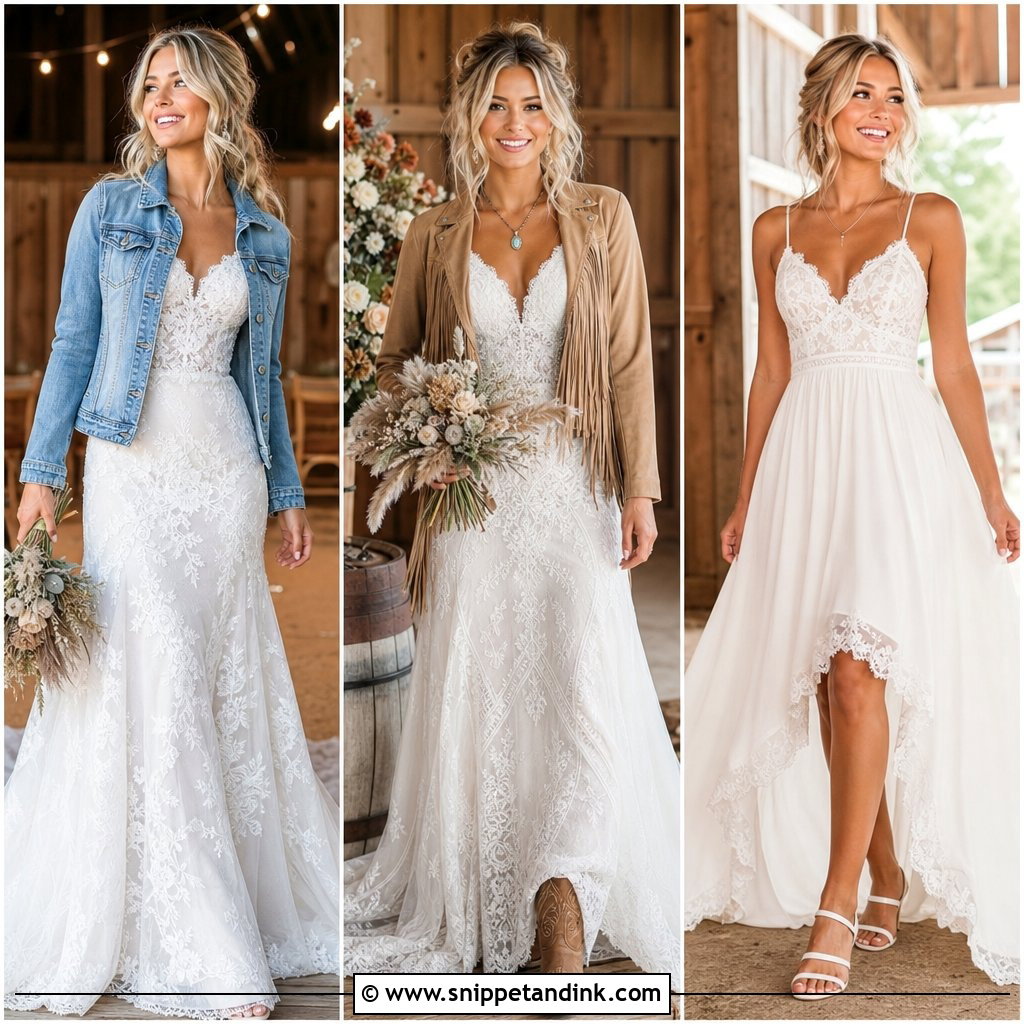
If a bride walks in unsure, this is the dress I pull first. Ivory floral lace over a light lining, a defined waist and a skirt that moves without much volume suits most figures and almost any rural setting, from barn aisles to gardens and open ranch ceremonies. Pointed ivory boots can stay mostly hidden under the hem. A thin leather belt marks the waist; pearl earrings and a simple pendant keep jewelry quiet. Loose waves, a low textured bun or a fingertip veil. With heavily patterned lace I leave the big hat off, because the brim and the lace start competing for attention around your face.
2. Boho Bell Sleeve Western Wedding Dress
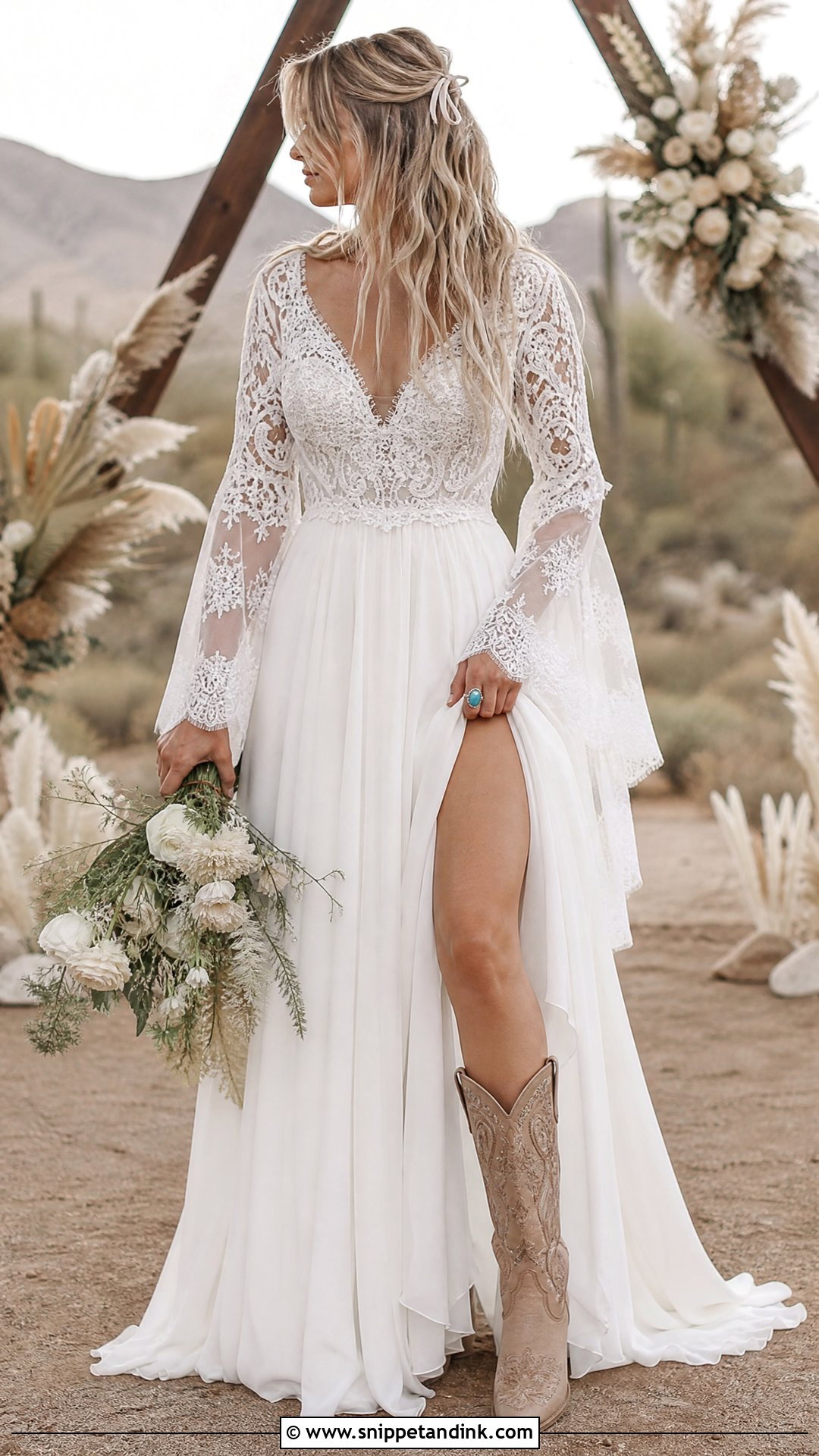
Bell sleeves are lovely in motion and a nuisance at dinner. They trail through gravy and catch on the bouquet, so I always ask brides to mime eating and holding flowers at the fitting. Choose chiffon or lace with a fitted bodice, open back and slightly flared skirt, and keep the sleeve light enough that it floats instead of hanging. Tan embroidered boots warm up ivory fabric nicely. A slim turquoise ring, small silver earrings and a little bouquet of white flowers are all you need. Soft waves or a relaxed braided updo. It belongs in a desert, a woodland clearing or on a ranch, anywhere the breeze can catch those sleeves.
3. Fringe Western Wedding Dress
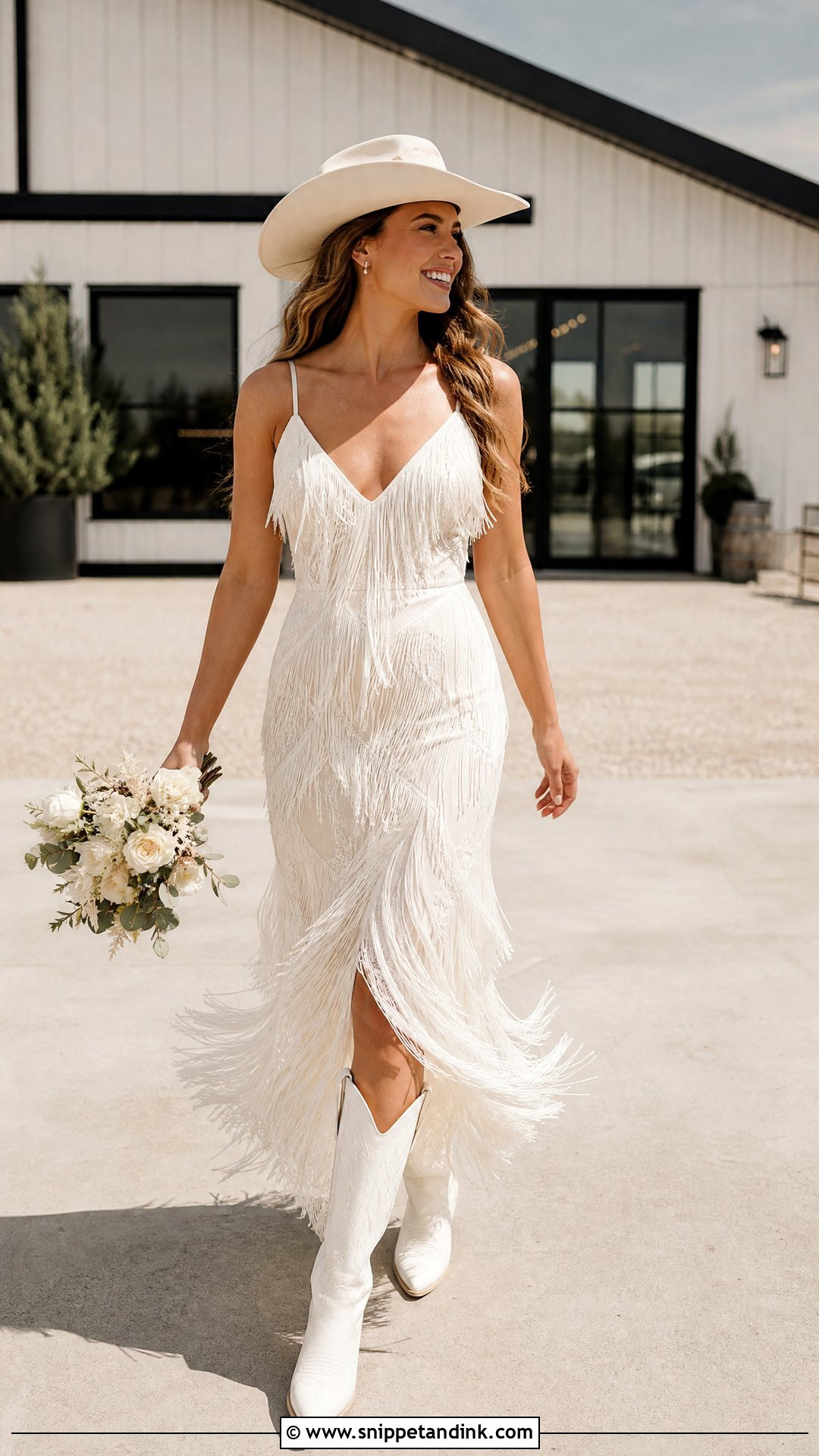
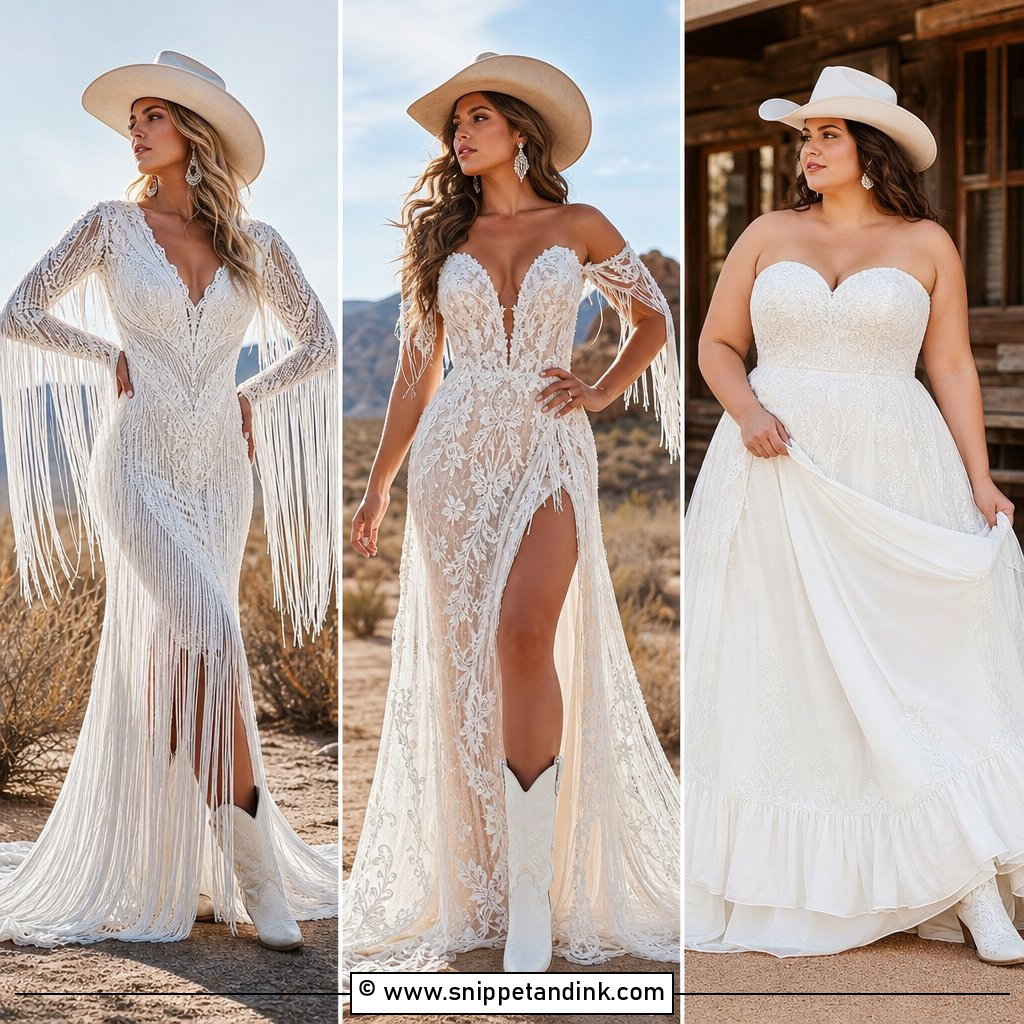
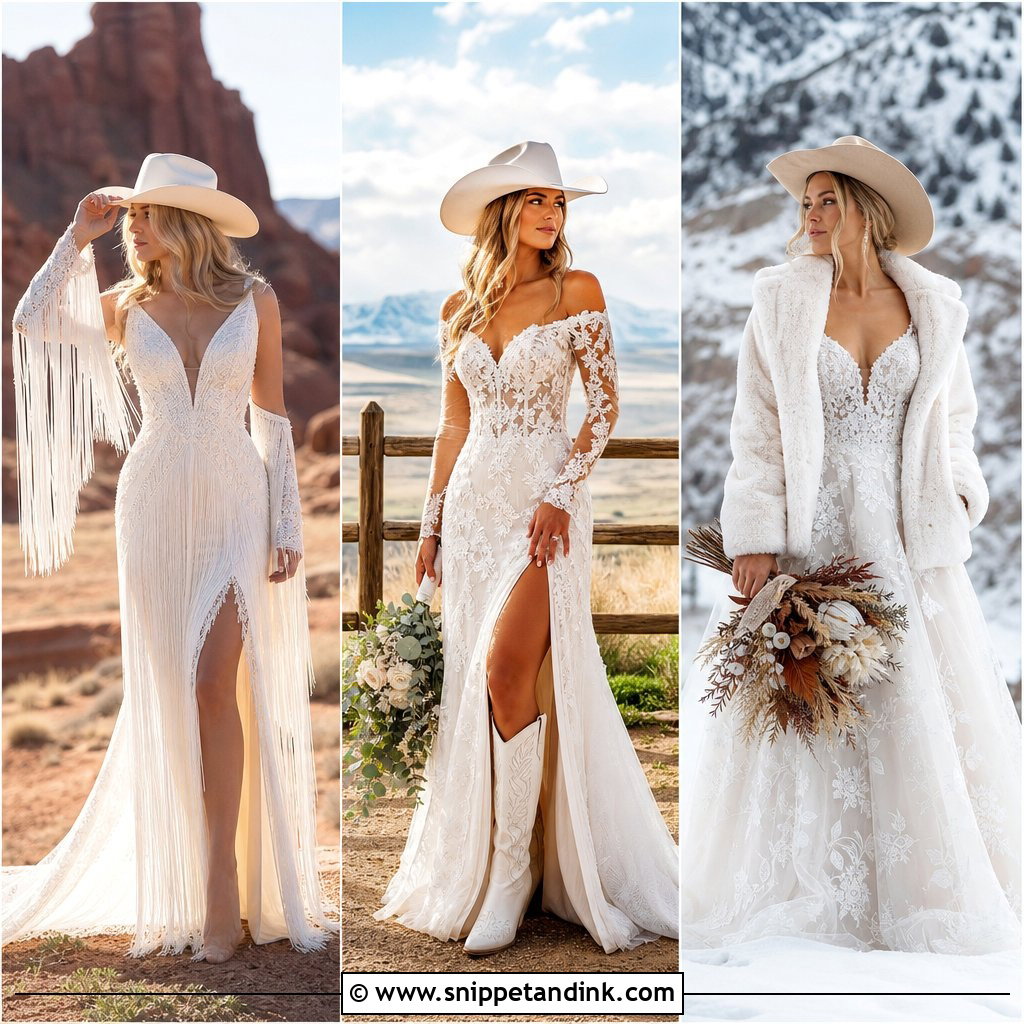
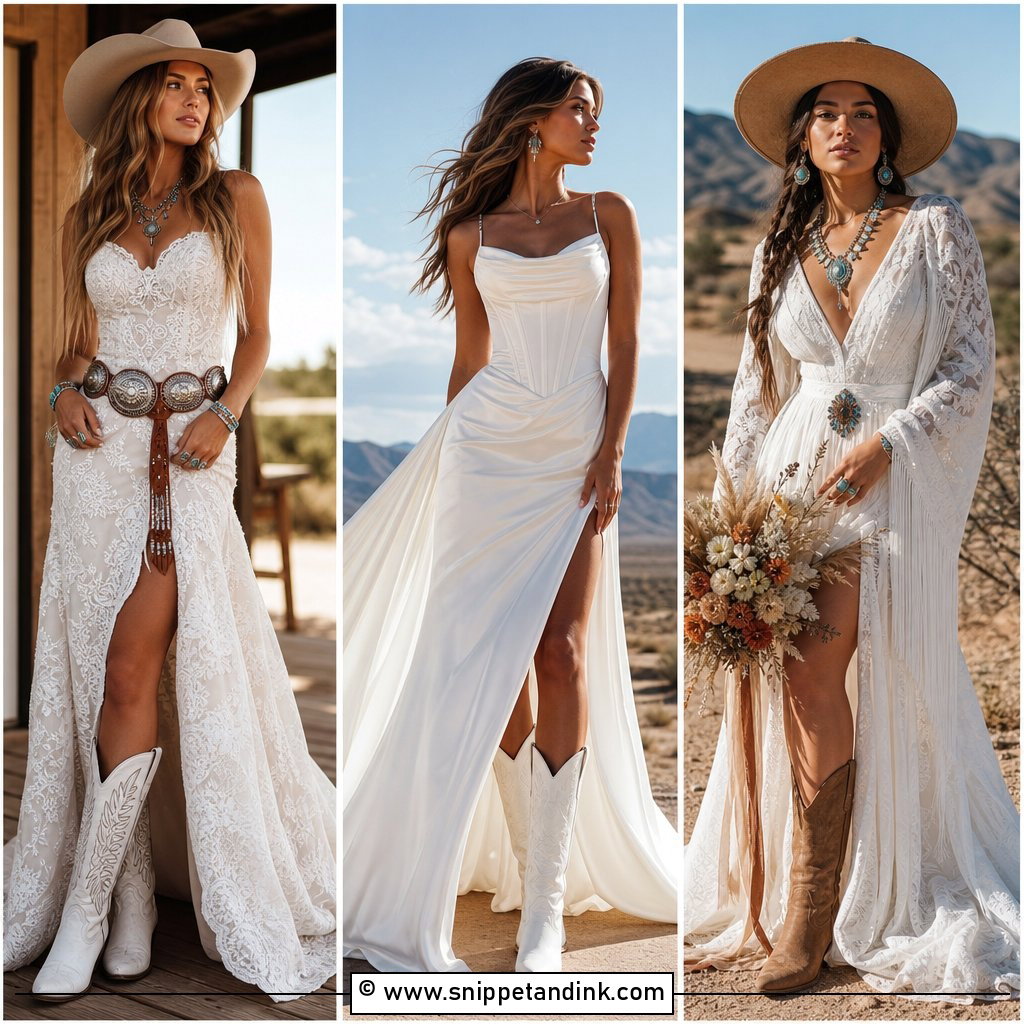
Fringe gives the clearest cowgirl influence of any detail here, which is exactly why I limit it. Put it on the sleeves, across the back or along part of the skirt, on a fitted lace or crepe dress, and leave the rest plain. A gown covered in fringe tangles with itself and with your partner’s buttons. Placed sparingly, it swings when you walk and dance. Clean white boots, simple studs and a small structured bouquet suit it. A cream felt hat is fun for outdoor portraits; take it off for the ceremony. A sleek low ponytail or loose waves. I like this one most as a second dress for a lively reception.
4. Long Sleeve Western Wedding Dress
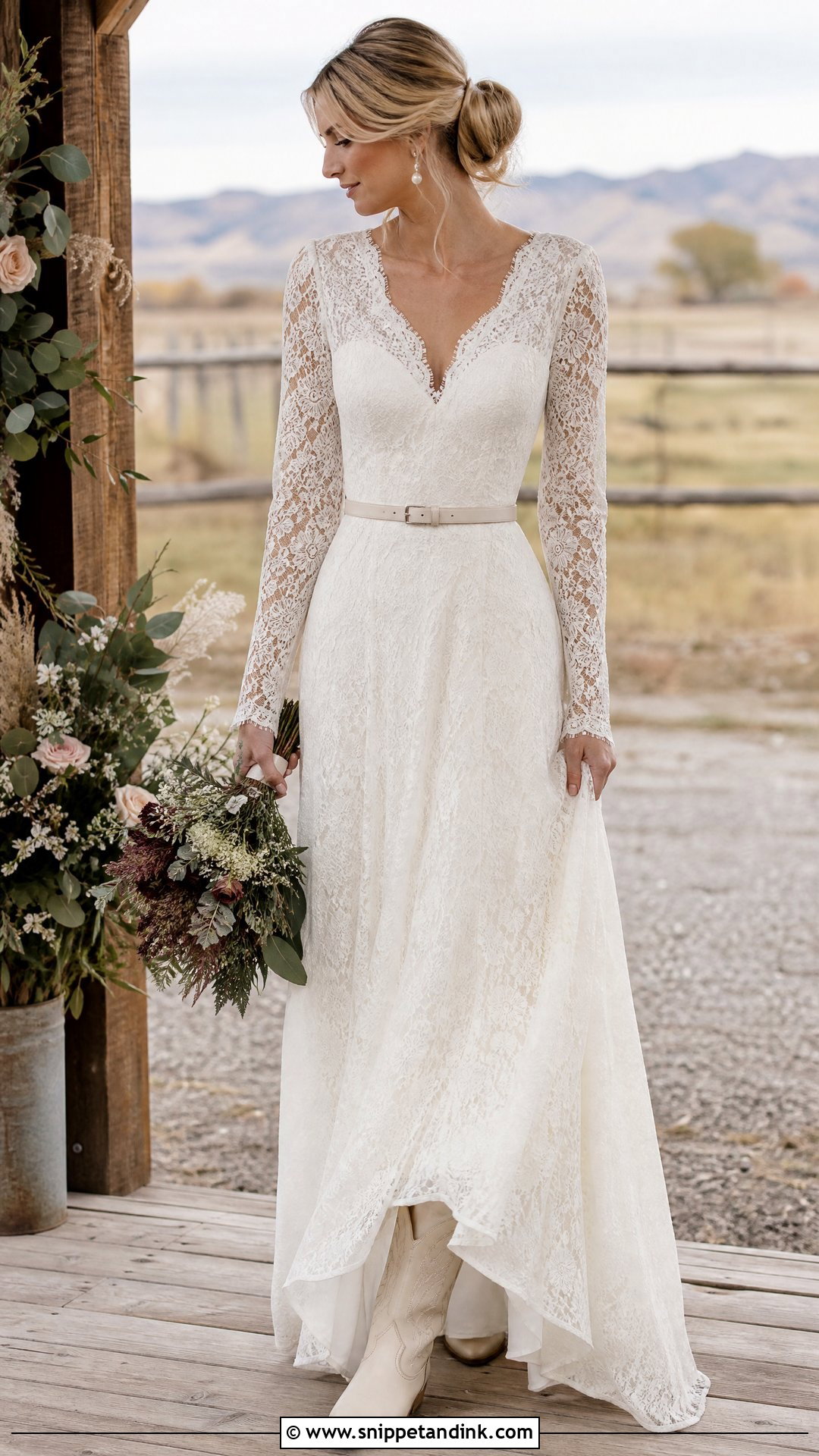
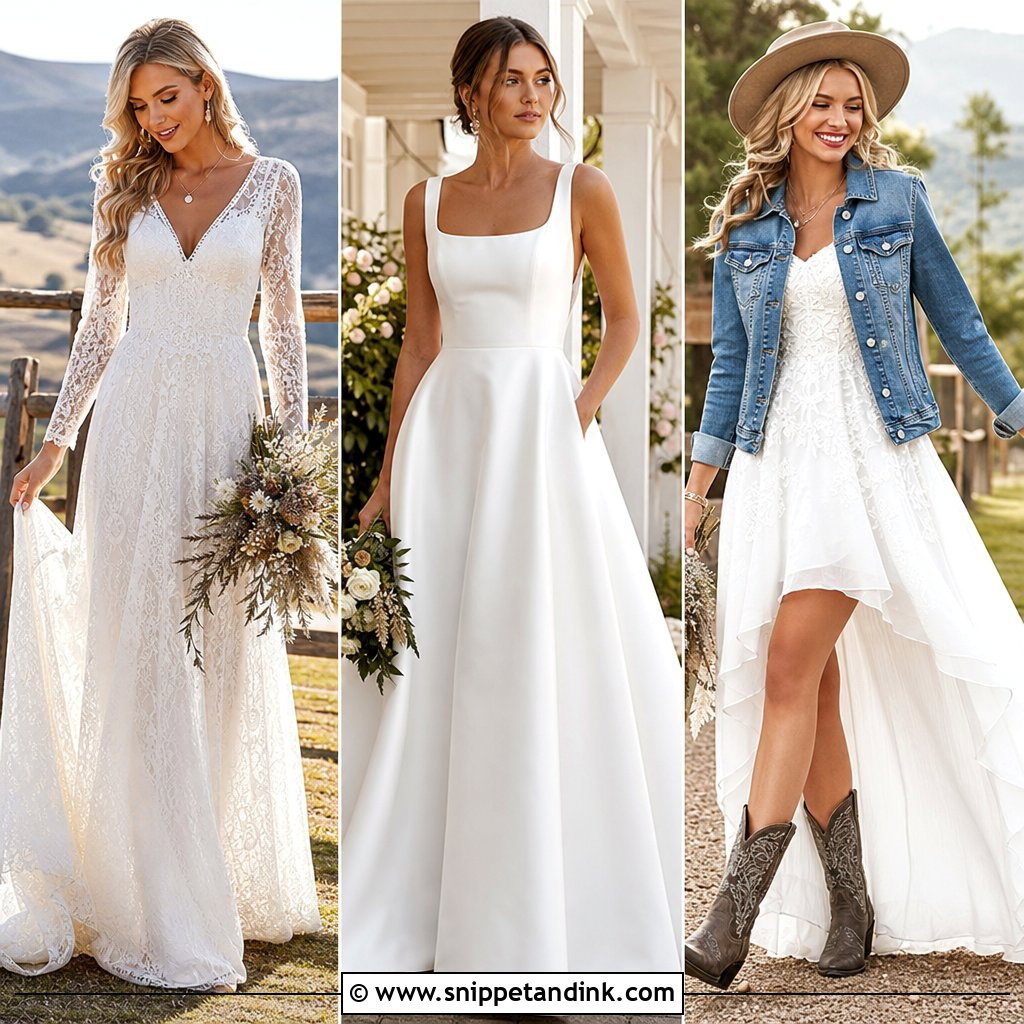
Long sleeves give coverage without losing romance, and they’re the easiest answer for a church ceremony followed by a ranch party. Fitted lace sleeves with a soft A-line or sheath skirt keep the line long. Floral embroidery, covered buttons and a modest open back add interest without weight. Ask for a little stretch or a gusset in the armhole, since fitted lace sleeves can stop you lifting your arms for a hug. Brown boots push the Western feel further, ivory keeps it subtle. Small pearl drops, a narrow belt matched to the boots, and a low bun with face-framing pieces under a simple veil. It’s my pick for fall ranches and cool mountain venues.
5. High-Low Western Wedding Dress
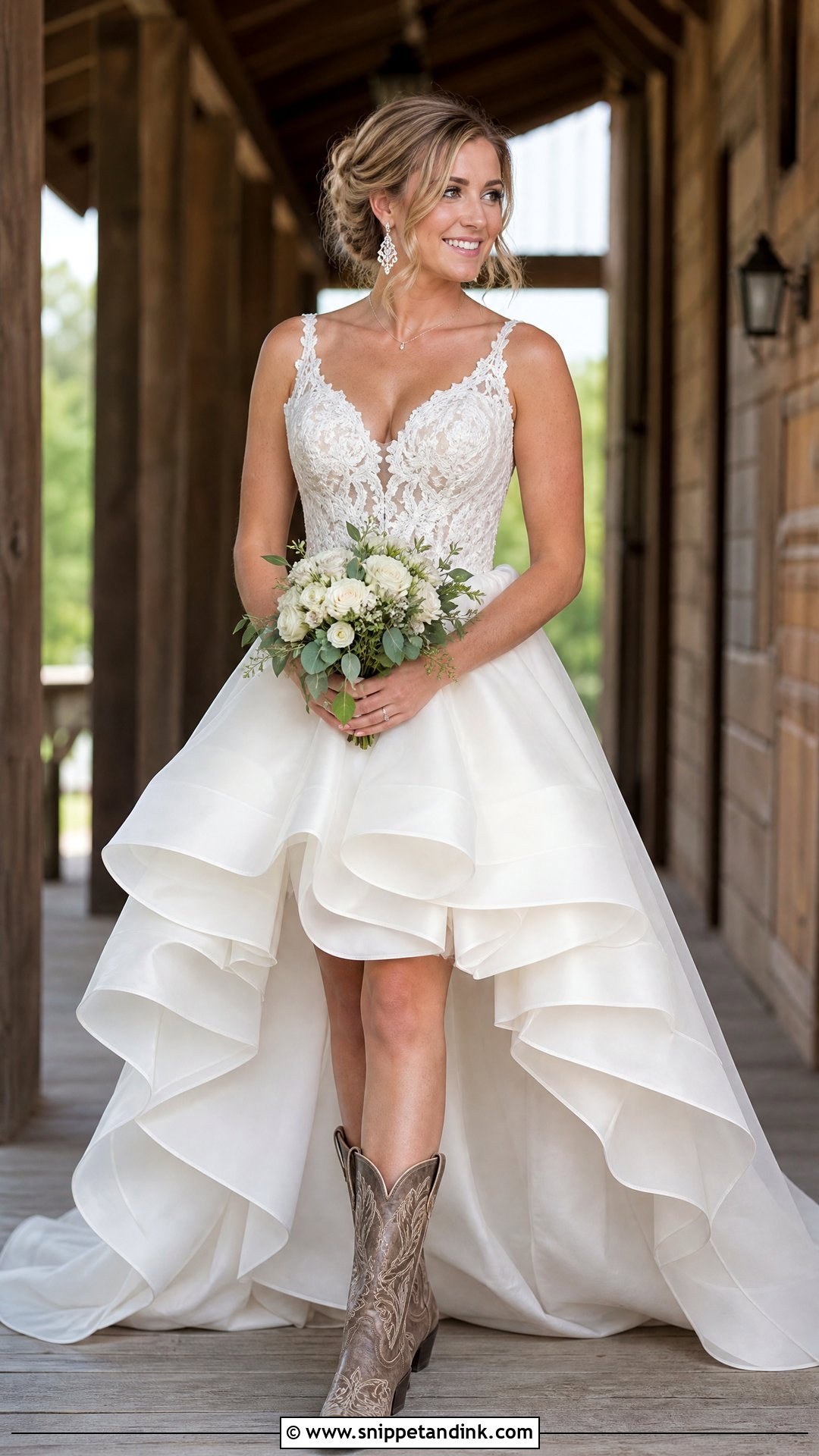
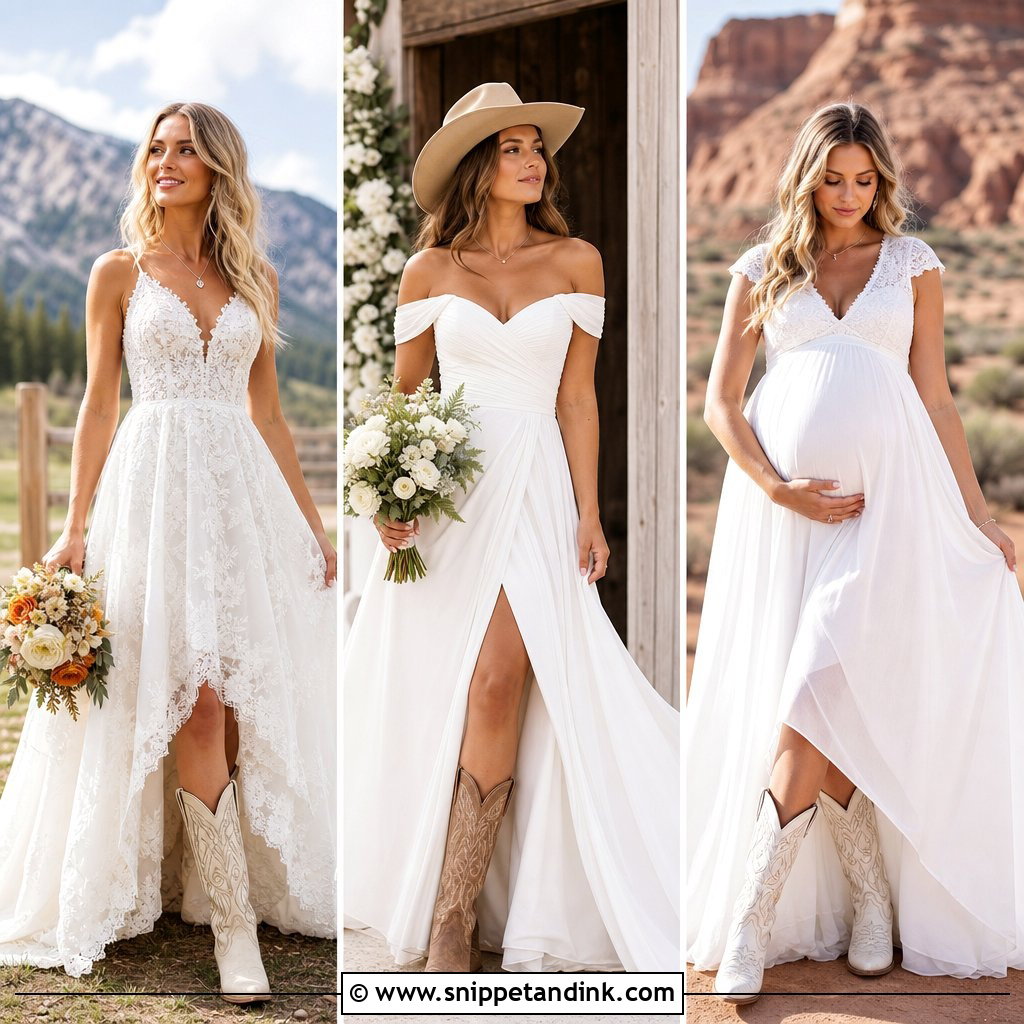
A high-low hem puts the boots on show, so buy the boots before you buy the dress. Structured lace, organza or satin with a front hem around mid-calf and a longer back gives a little drama behind you. Decorative ivory boots with subtle stitching are the right weight; a heavily tooled pair fights the unusual shape. Add a fitted belt, small silver earrings and a compact bouquet held low enough that it doesn’t block the front hem. A shoulder-length style or soft updo keeps proportions even. The short front walks easily over grass, gravel and barn boards, and you won’t need to change before the reception.
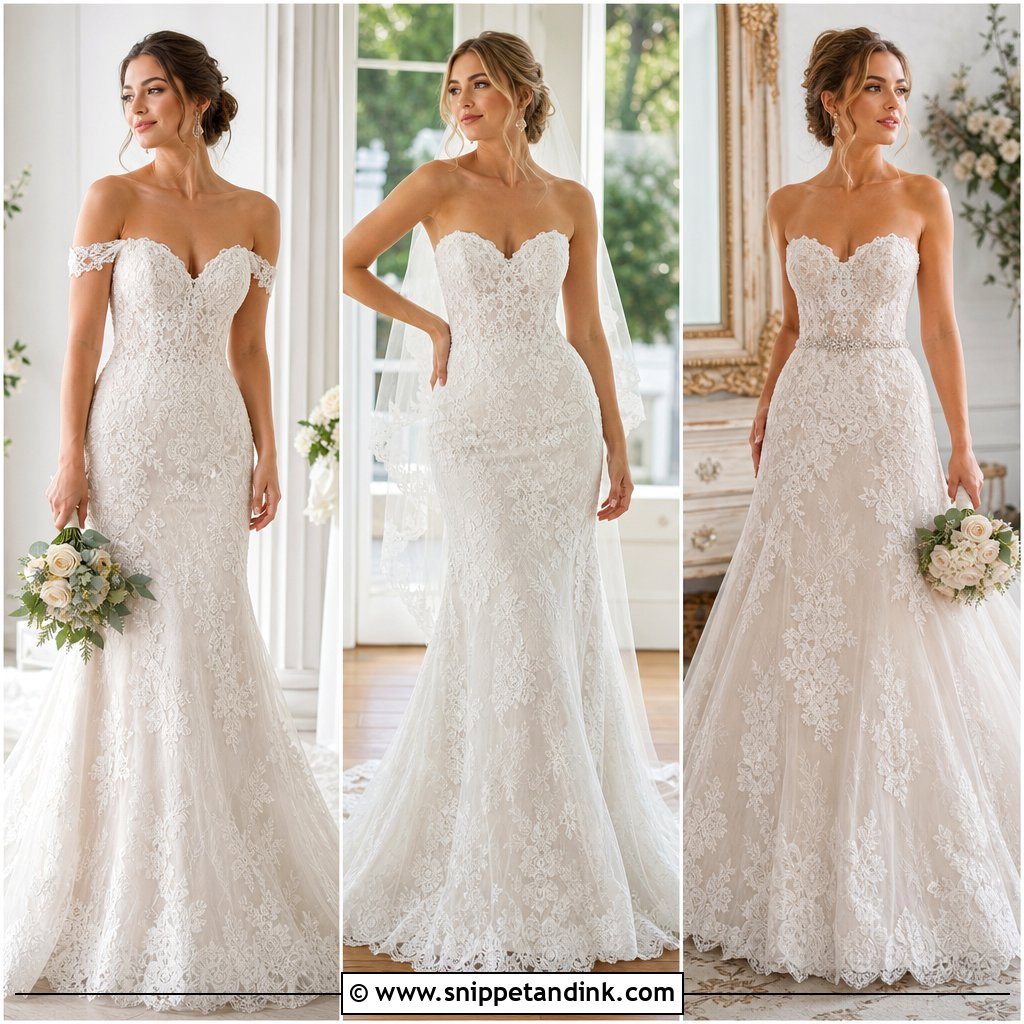
6. Off-Shoulder Western Wedding Dress
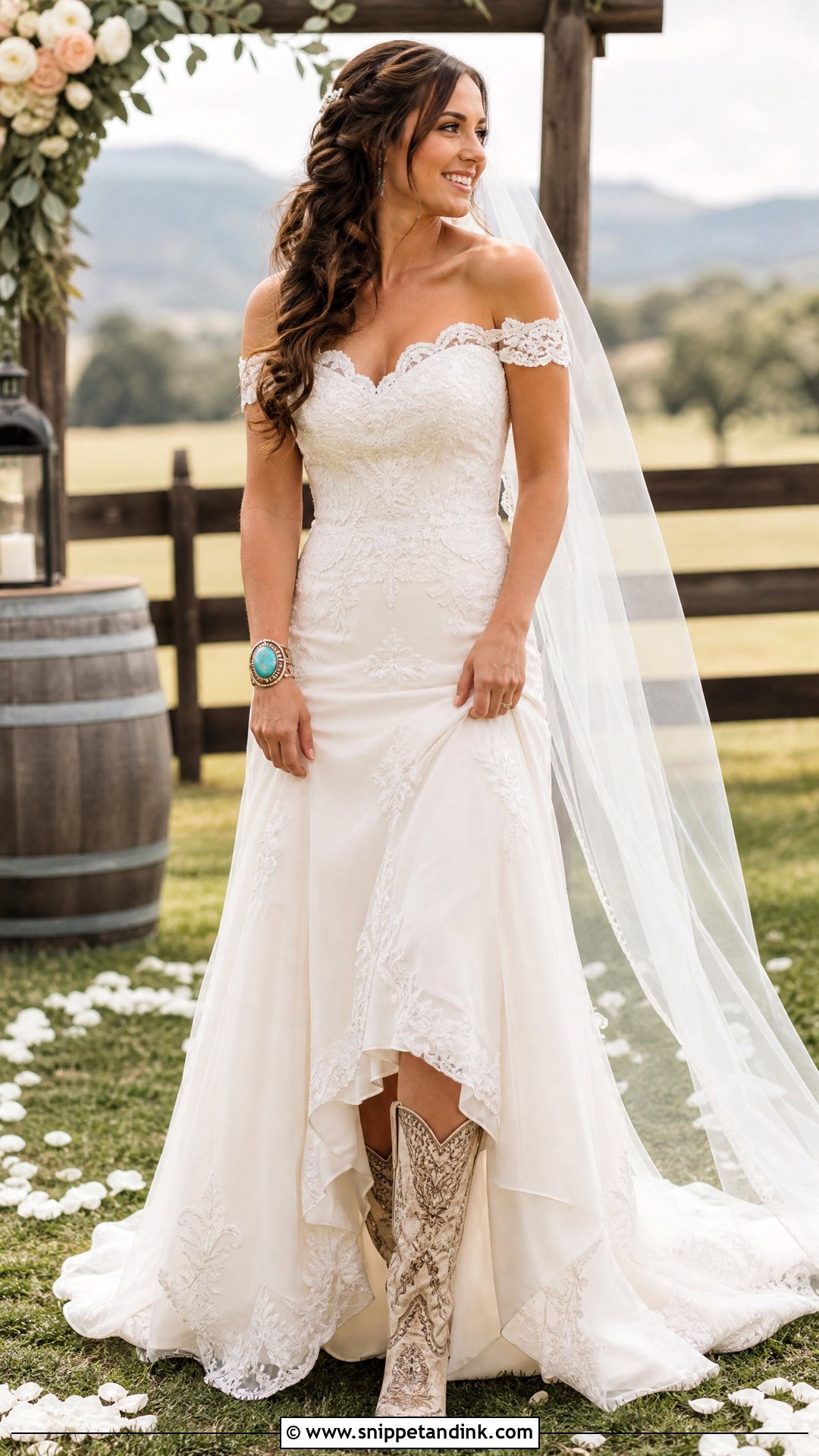
An off-shoulder neckline shows the collarbones, which leaves room for a single Western accent at the wrist instead of the neck. Choose a fitted lace bodice with a soft A-line or a gentle mermaid skirt; scalloped lace or small embroidered flowers at the neckline add texture. Ivory boots and a silver-and-turquoise bracelet, no necklace. Curls swept to one side and a fingertip veil. The thing I check is grip: the bodice needs boning or silicone tape to stay up when you raise your arms, or you’ll tug at it all night. Detachable off-shoulder sleeves are worth asking about if you want more coverage for vows and freedom later.
7. Satin Western Wedding Dress
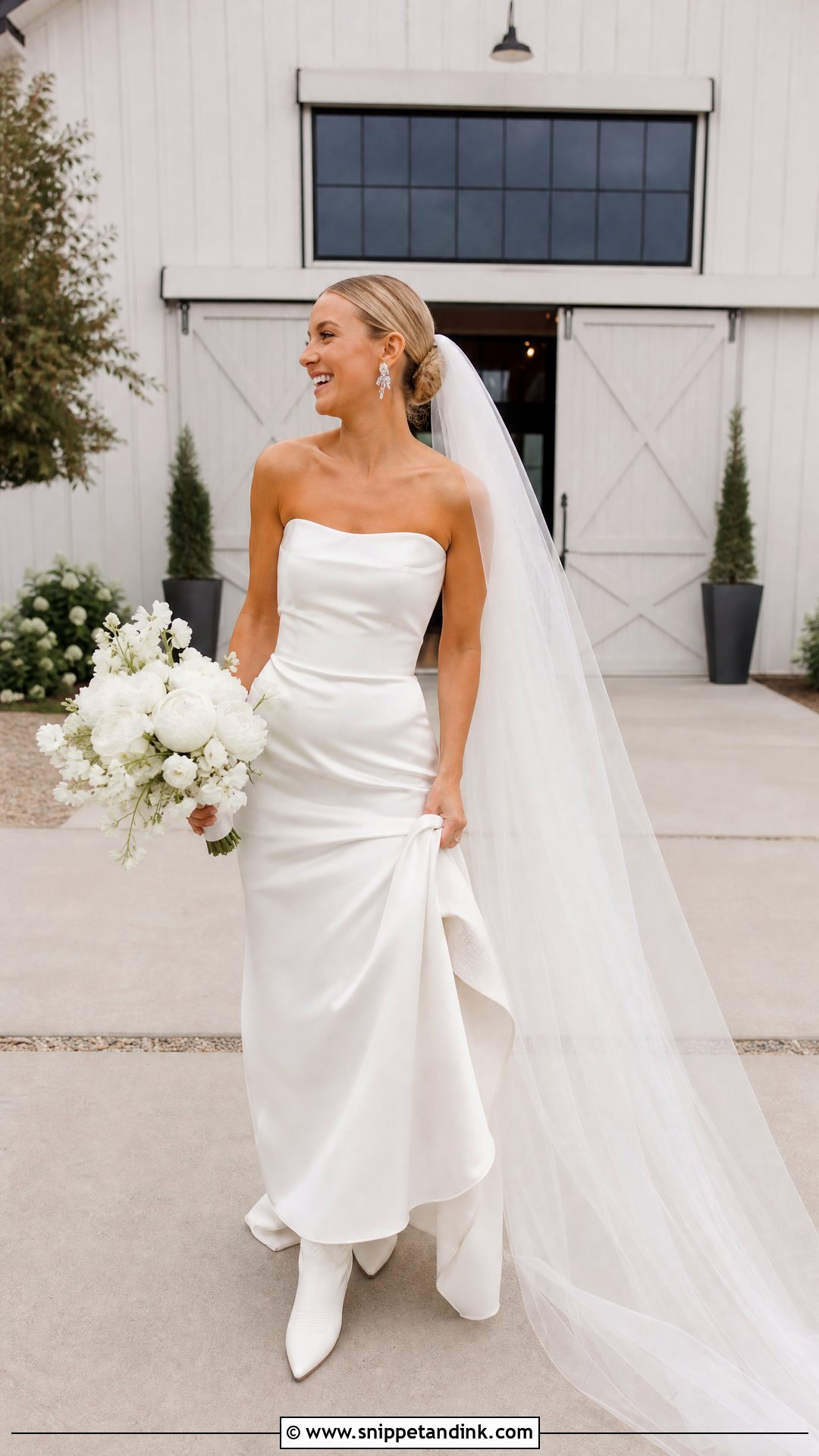
Plain satin is the most forgiving base for Western accessories because it gives them nothing to compete with. A simple slip, column or A-line with a smooth finish lets embroidered boots, a leather belt or turquoise look deliberate. White pointed boots give a tonal look; warm brown makes a stronger country contrast. A structured bouquet, polished silver earrings, and a sleek bun or waved ponytail. A long plain veil adds formality without hiding the sheen. Satin is less forgiving of humidity and creasing, so have it steamed on site. It suits modern barns, upscale ranches and minimalist venues.
8. Vintage Prairie Western Wedding Dress
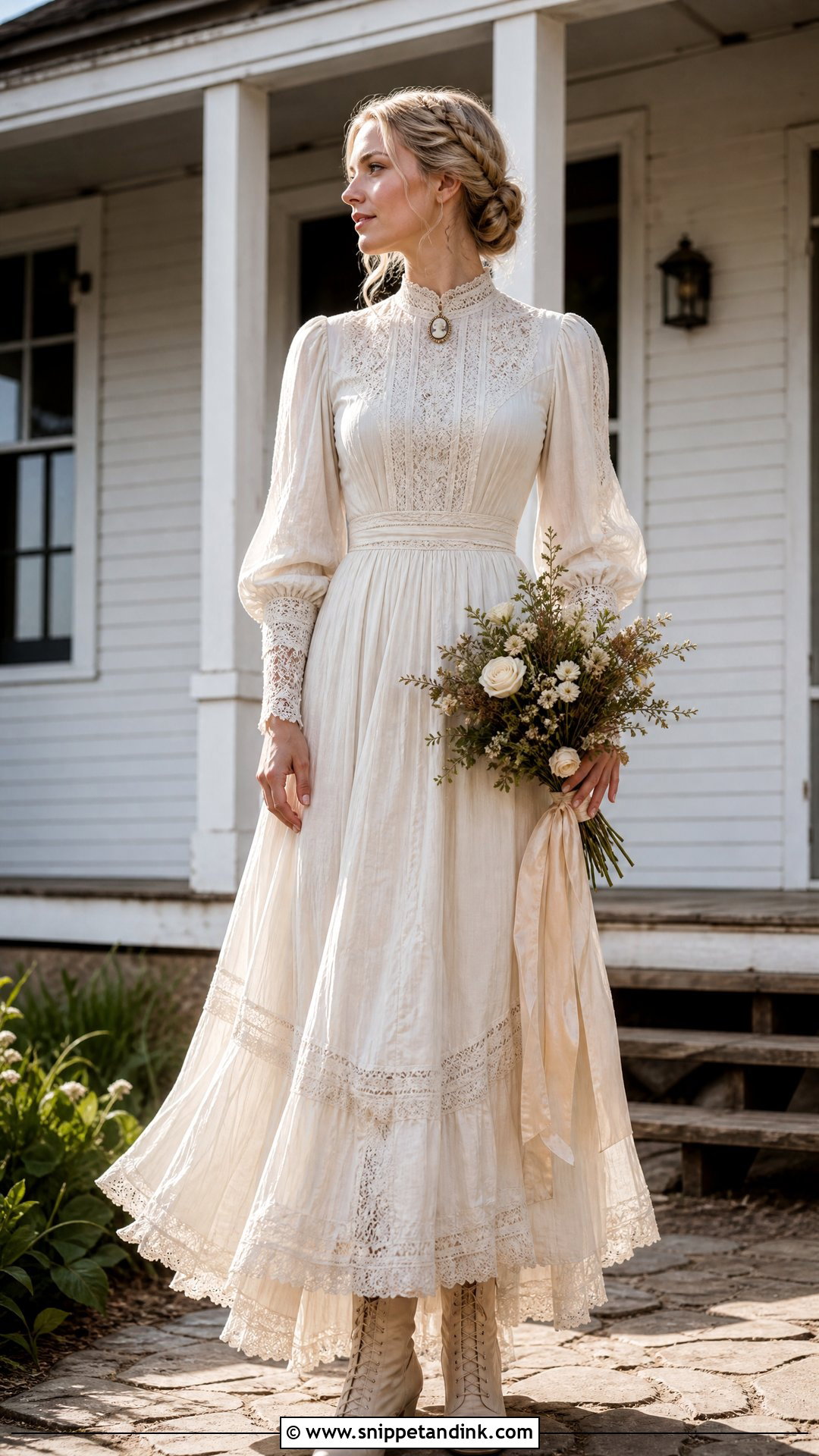
Prairie gowns win on character but can tip into costume faster than anything else on this list. A high neckline, fitted waist, fine lace panels and gathered sleeves set the style; small covered buttons down a flowing skirt hint at antique without becoming a reenactment. Cream lace-up boots or softly worn cowboy boots ground it. Then choose one vintage piece, a cameo-style pendant for example, plus small pearls and a loose bouquet tied with fabric ribbon. A braided low bun or relaxed half-up. Stack a cameo, lace gloves and a parasol together and you’ve crossed the line. Historic ranches, meadows and farmhouses suit it.
9. Embroidered Western Wedding Dress
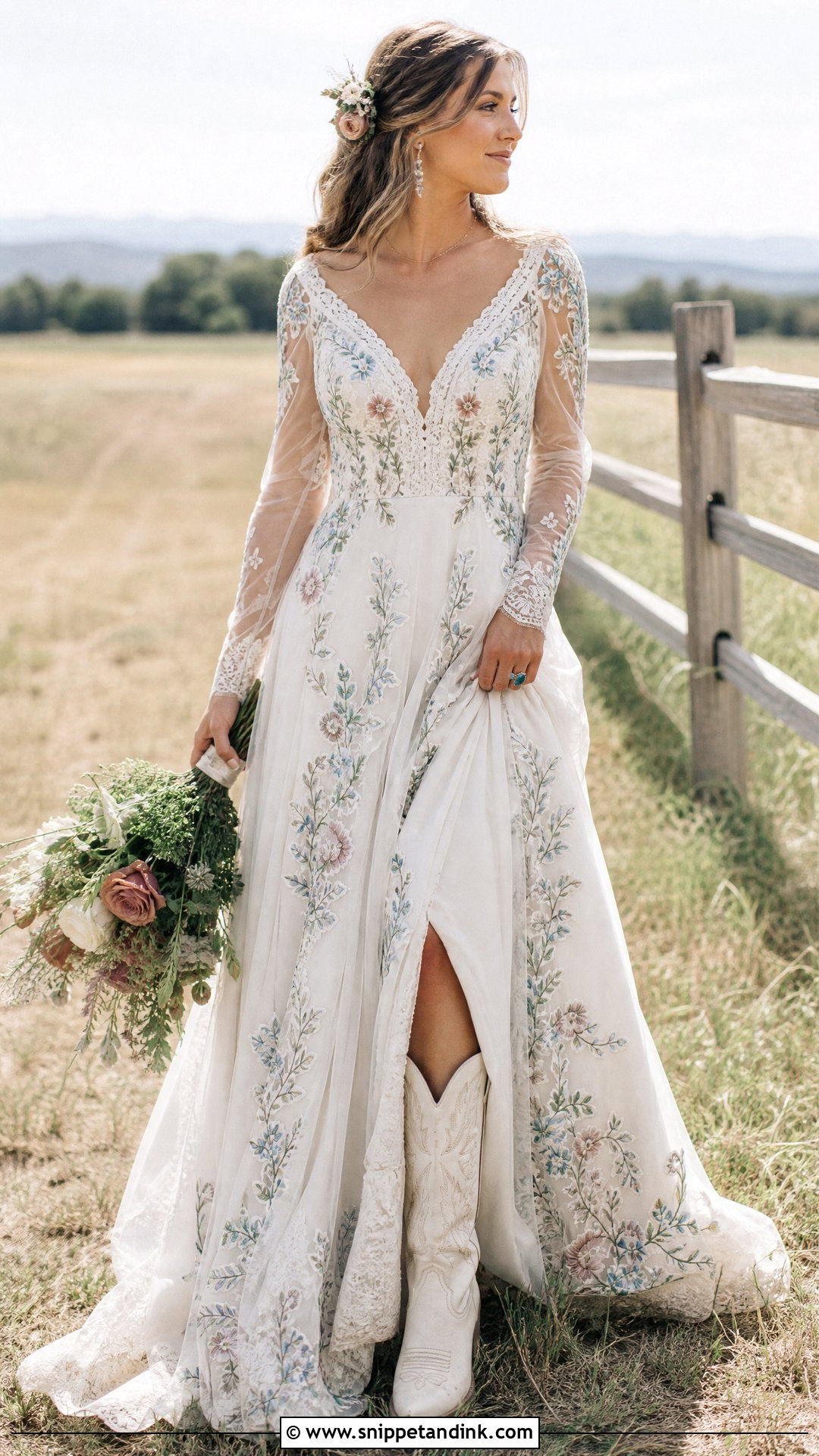
Embroidery is how I add color to a bridal look without touching the base ivory. Choose a gown with floral, botanical or quietly Western stitching around the bodice, sleeves or lower skirt, in muted blue, dusty rose or soft green. Then repeat one thread color elsewhere, perhaps a turquoise ring, a floral hairpin or the stitching on your boots, so the whole outfit connects. Plain ivory boots keep it from getting busy. A loose bouquet and simple earrings. One fitting check: heavy embroidery stiffens fabric, so sit in the dress and make sure the stitched panels don’t buckle at the hip. Against fields and weathered wood the threads read clearly in photos.
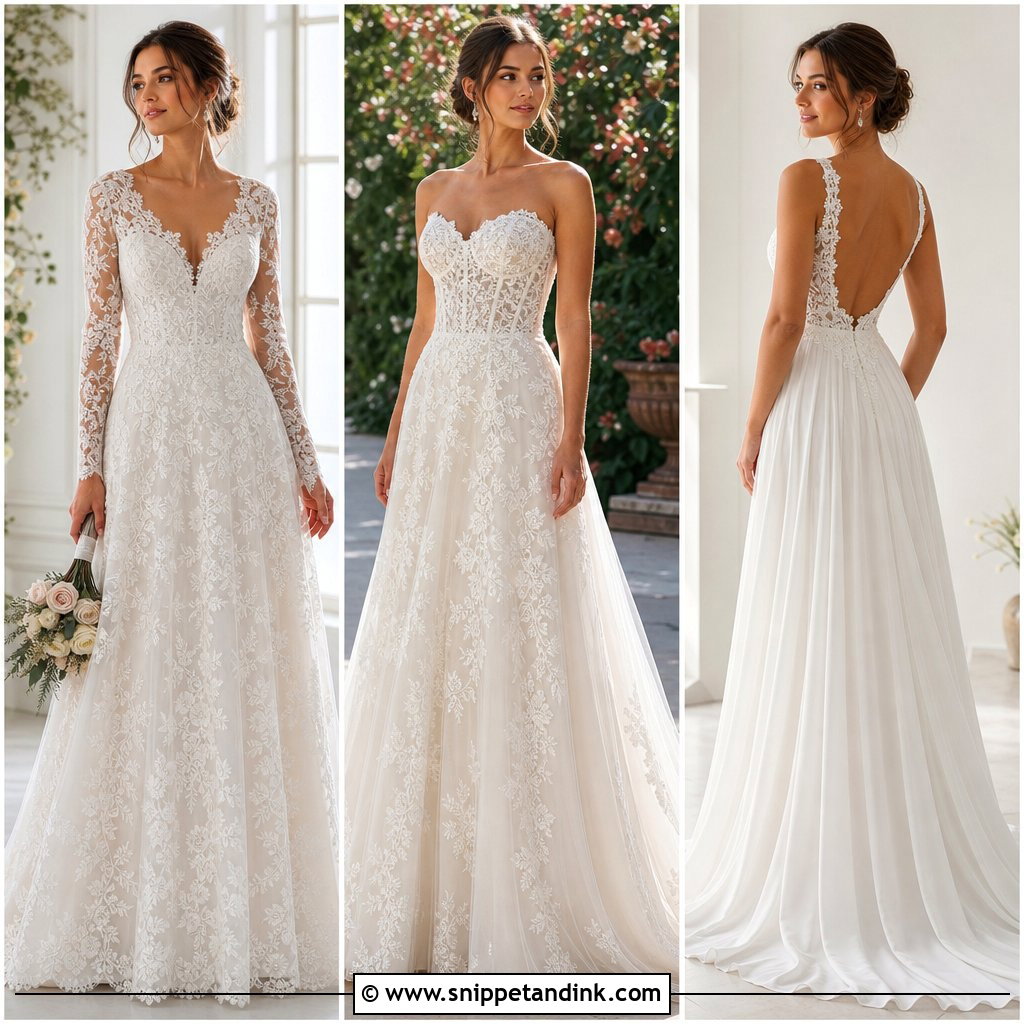
10. Corset Western Wedding Dress
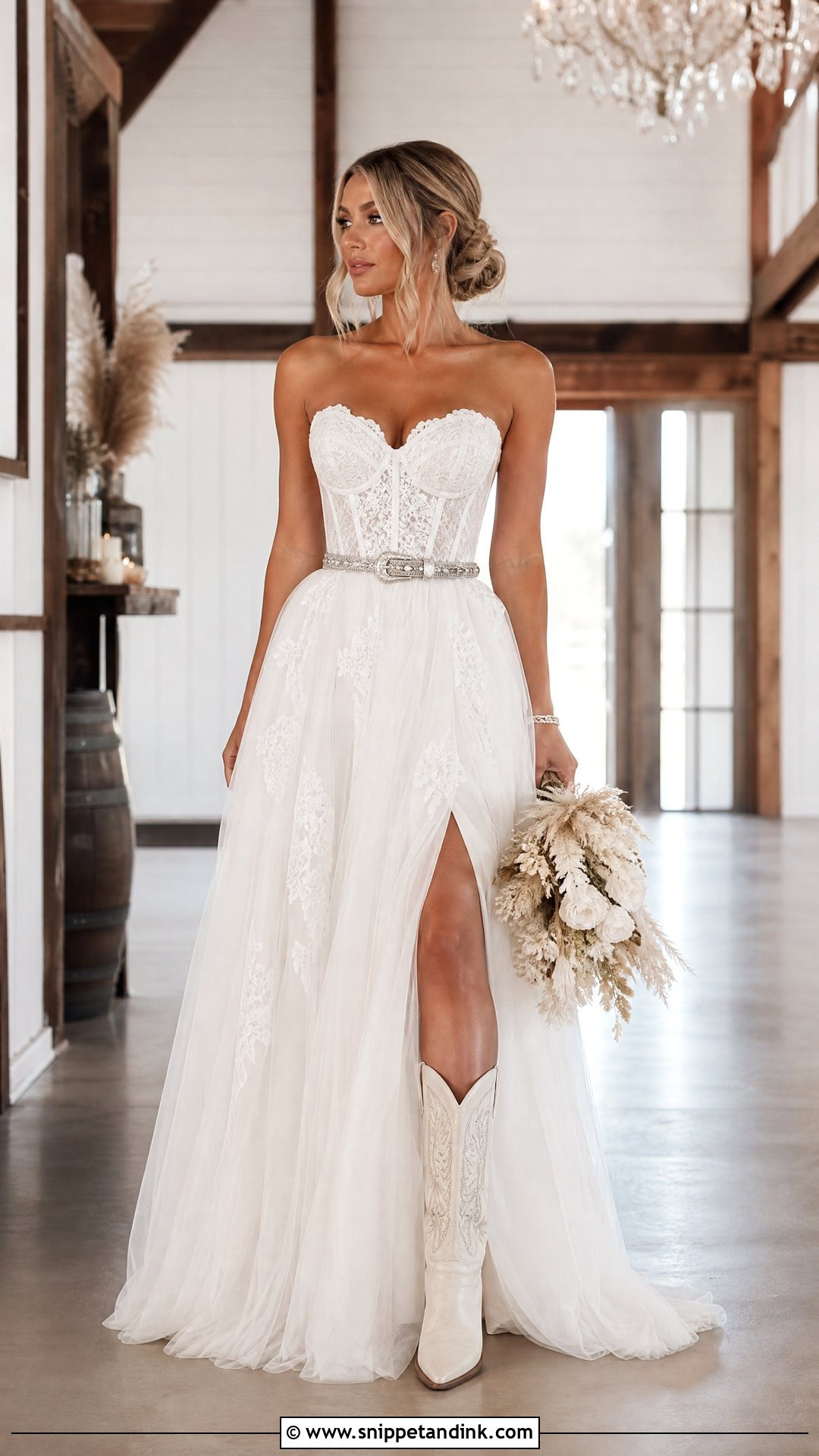
A corset bodice gives shape and real support, which matters if you’ll be on your feet for twelve hours with no bra. Look for visible seaming, built-in cups and lace or embroidered fabric. Balance it with a flowing A-line, layered tulle or soft gathered satin. Pointed boots finish it well. A narrow concho-style belt can sit at the waist only if the boning lets it lie flat, so try it on over the bodice before buying. Small pendant, simple earrings, low textured hair. A detachable overskirt adds ceremony drama and comes off for dancing. It moves between rustic and upscale settings without the stiffness of a ballgown.
11. Floral Lace Western Wedding Dress
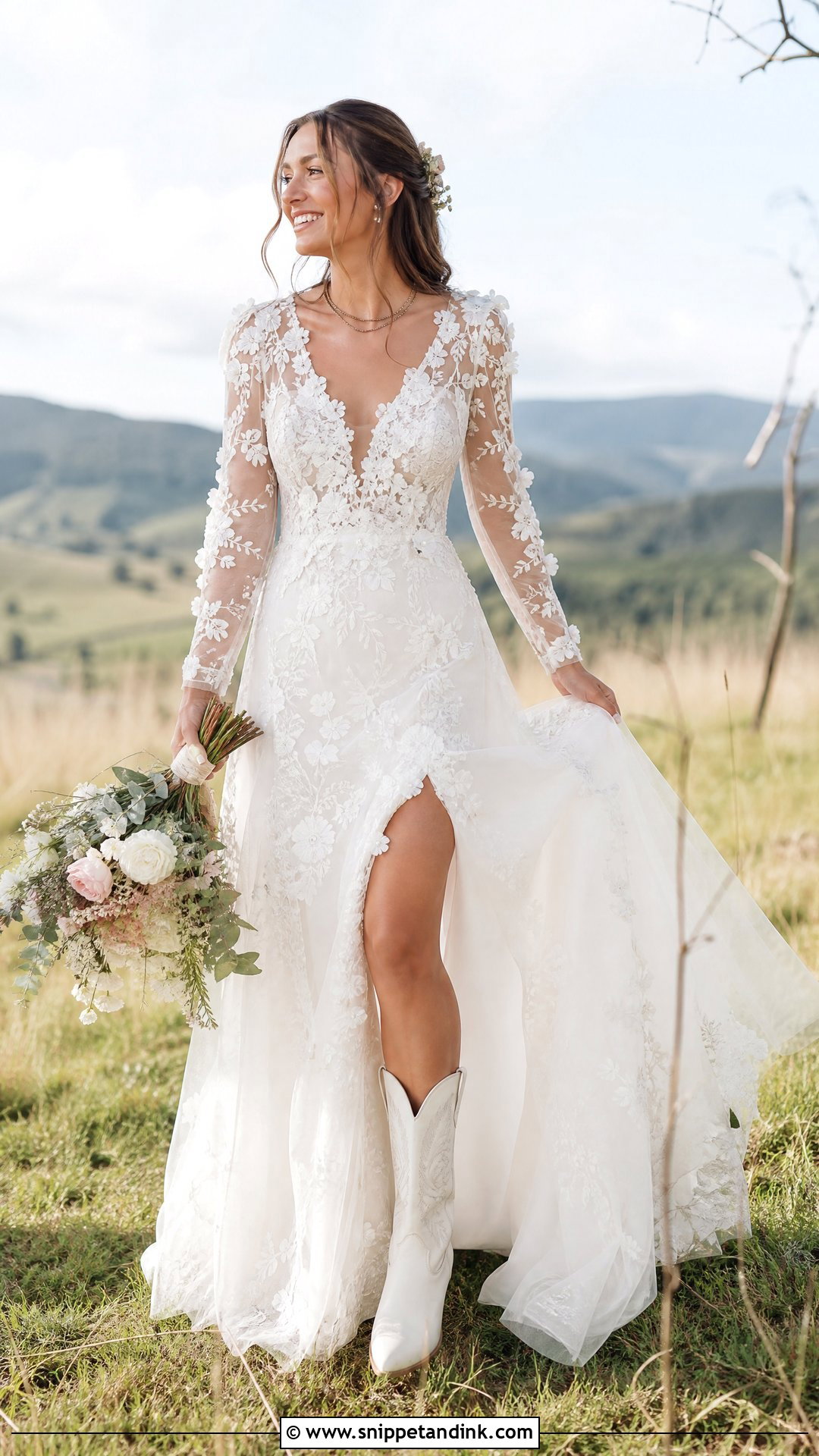
Large floral lace feels at home in the countryside because it echoes what’s growing around you. Choose a gown with botanical appliqués over sheer sleeves, a fitted bodice and a soft flare. The flowers already do the work, so accessories stay light: ivory boots, pearl studs, a fine bracelet. I like to ask the florist to repeat one shape or color from the lace in the bouquet. A half-up style with soft waves. Depending on lining and sleeve length, this dress works in most seasons. In cold weather a cropped suede jacket handles outdoor portraits; slip it off before the aisle so the appliqués are seen.
12. Short Western Wedding Dress
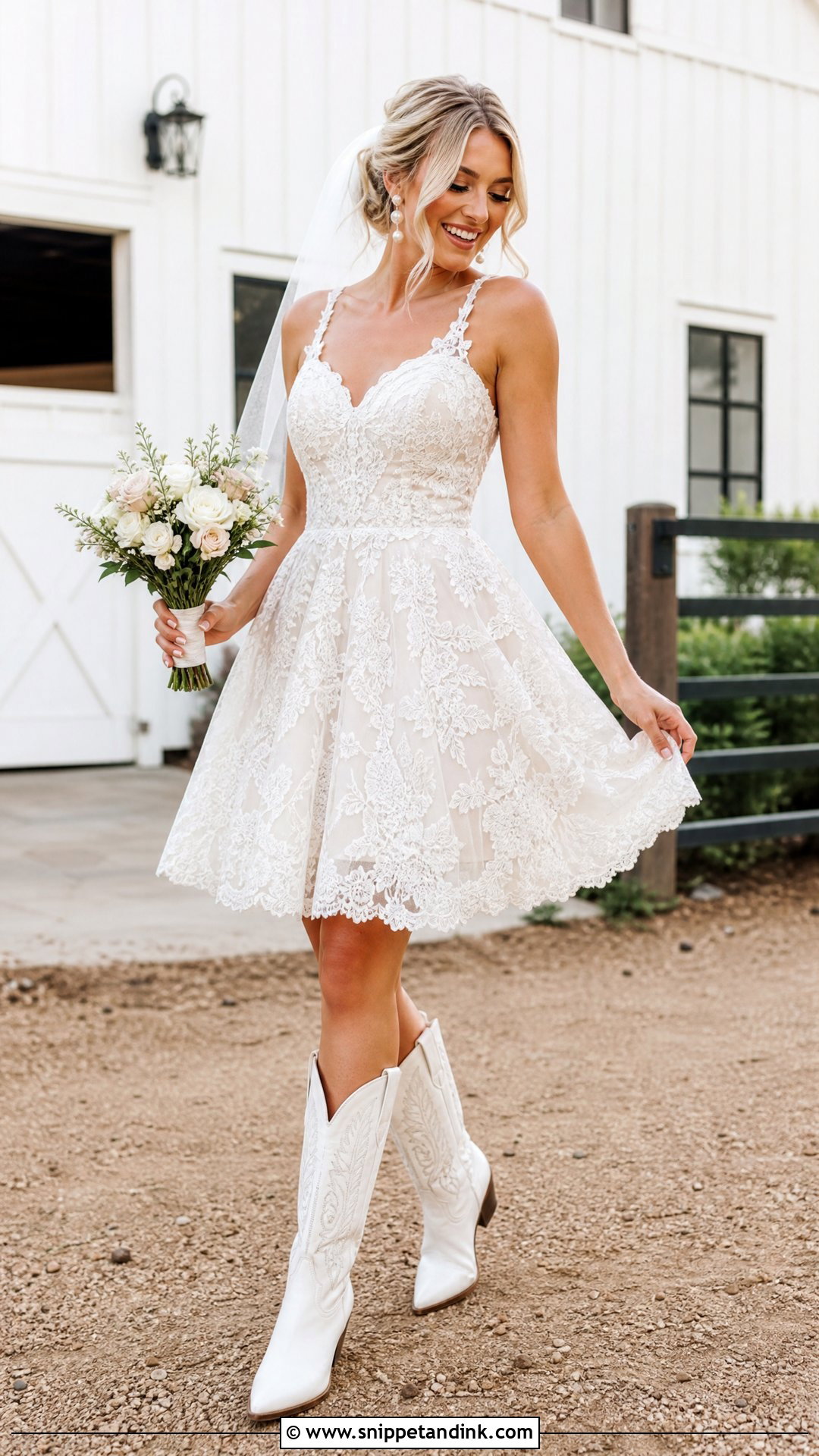
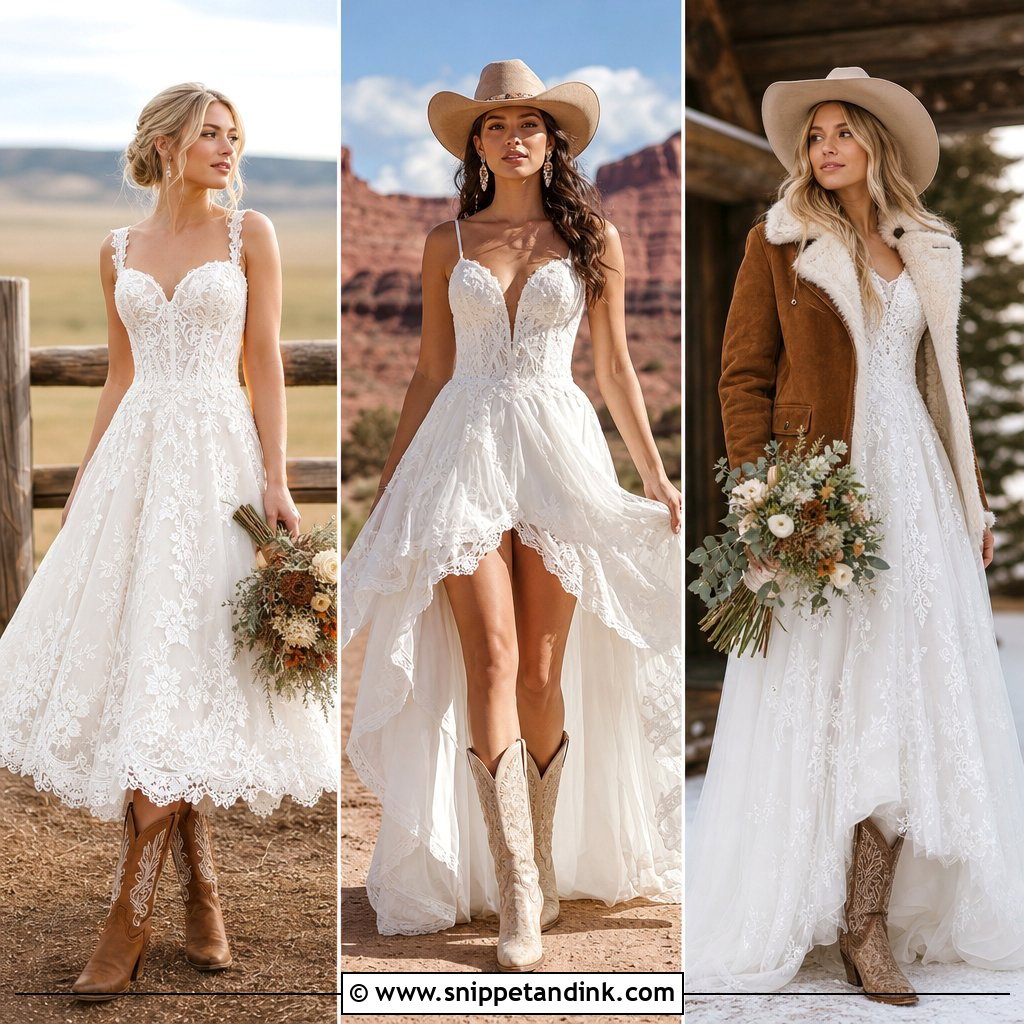
In a short dress the boots are half the outfit, so spend the money there. A lace mini or knee-length fit-and-flare with a defined waist and a good lining pairs with tall white boots that have fine embroidery or a little rhinestone detail. A small hat, pearl earrings and a short veil add personality, but pick one as the statement, not all three. A high ponytail, soft curls or a polished bob suit the shorter proportions. I suggest this for courthouse ceremonies, ranch elopements, rehearsal dinners and reception changes, and for any bride who plans to dance for four hours straight.
13. Tea-Length Western Wedding Dress
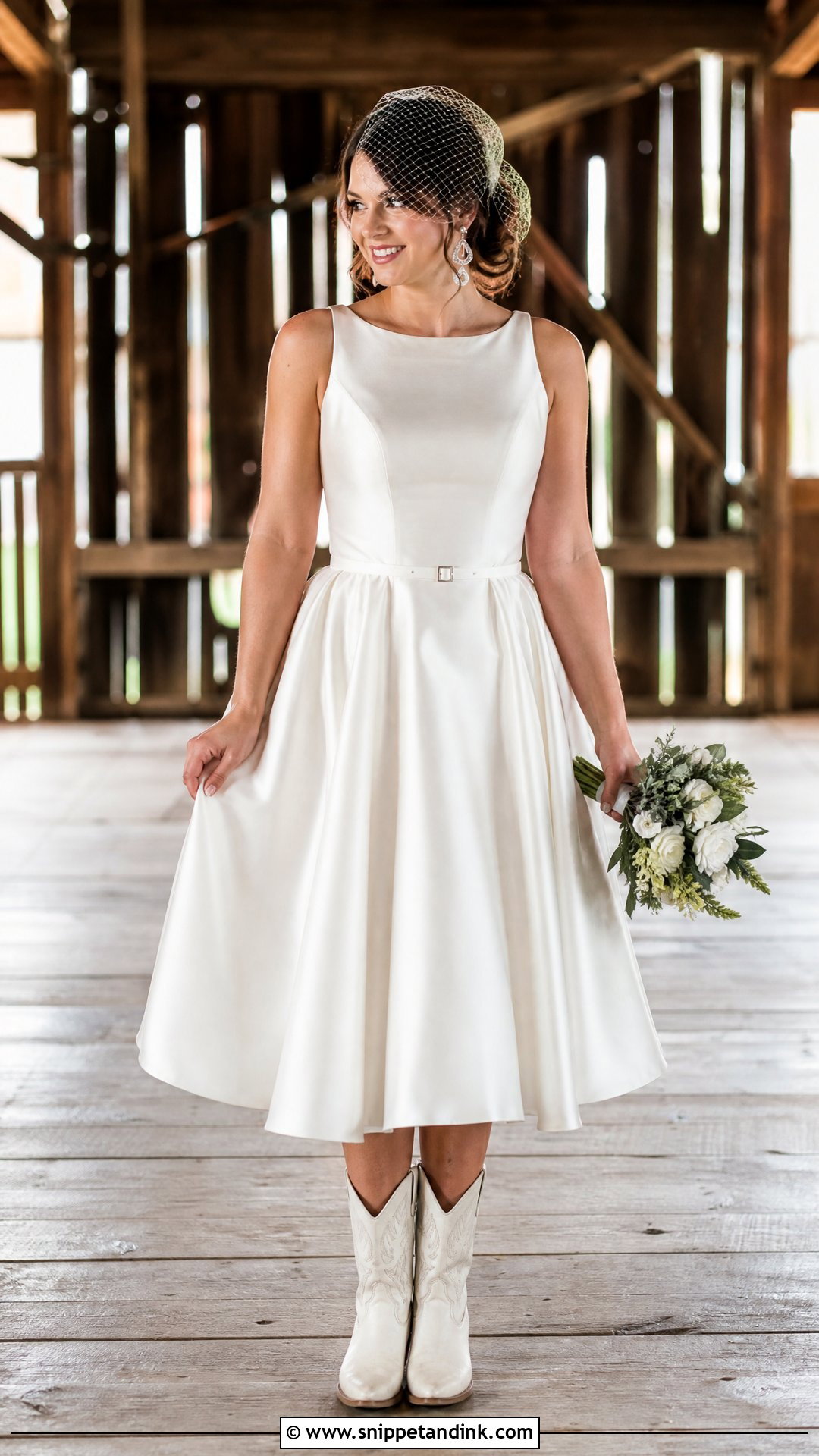
Tea length shows the top of the boot and has a 1950s feel that suits Western styling surprisingly well. A fitted lace or satin bodice over a skirt ending between knee and ankle; a soft petticoat adds lift, but if it’s stiff tulle it scratches your legs by evening, so ask for a lined one. Mid-calf ivory boots, a narrow belt and small drop earrings. A birdcage or short tulle veil keeps the vintage note without covering the dress. A compact bouquet keeps proportions right. The shorter hem never drags through grass, dirt or barn boards, which saves you from a muddy band at the bottom by the end of the night.
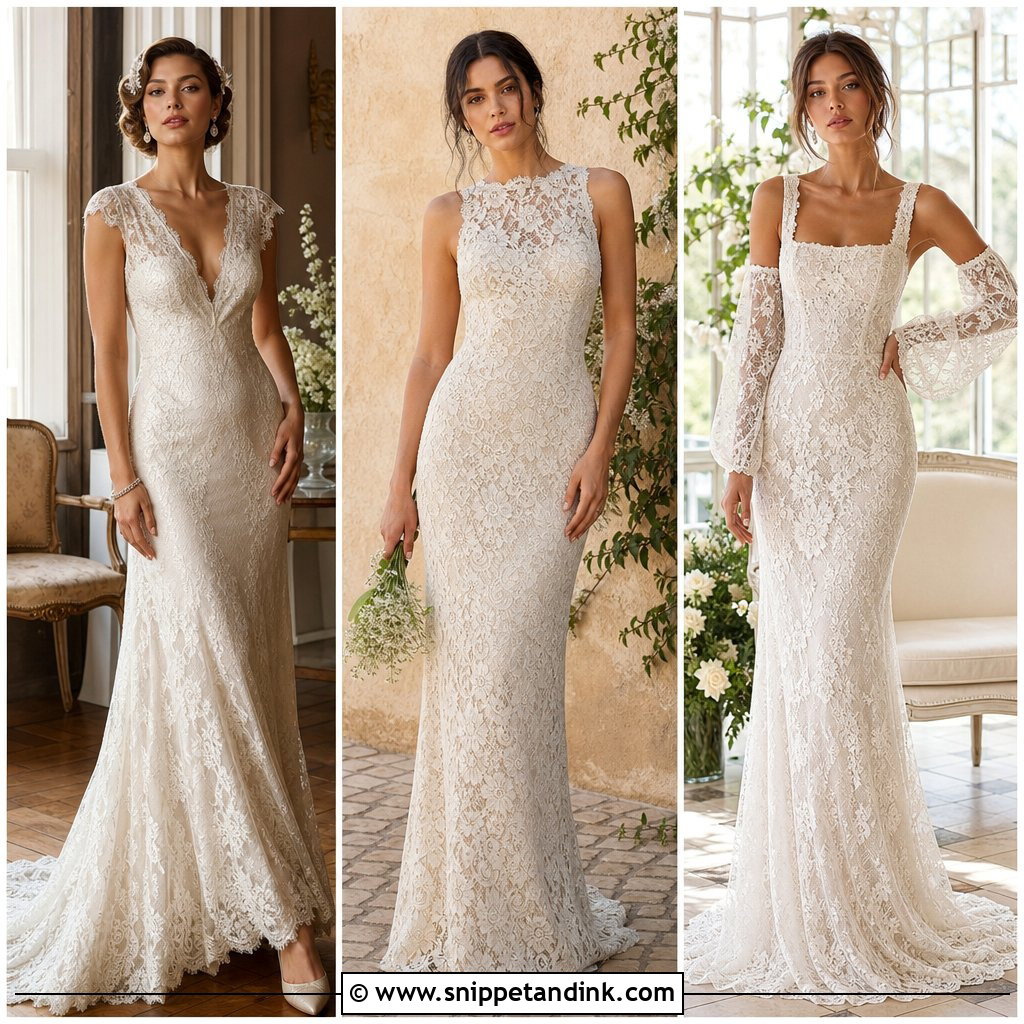
14. Mermaid Western Wedding Dress
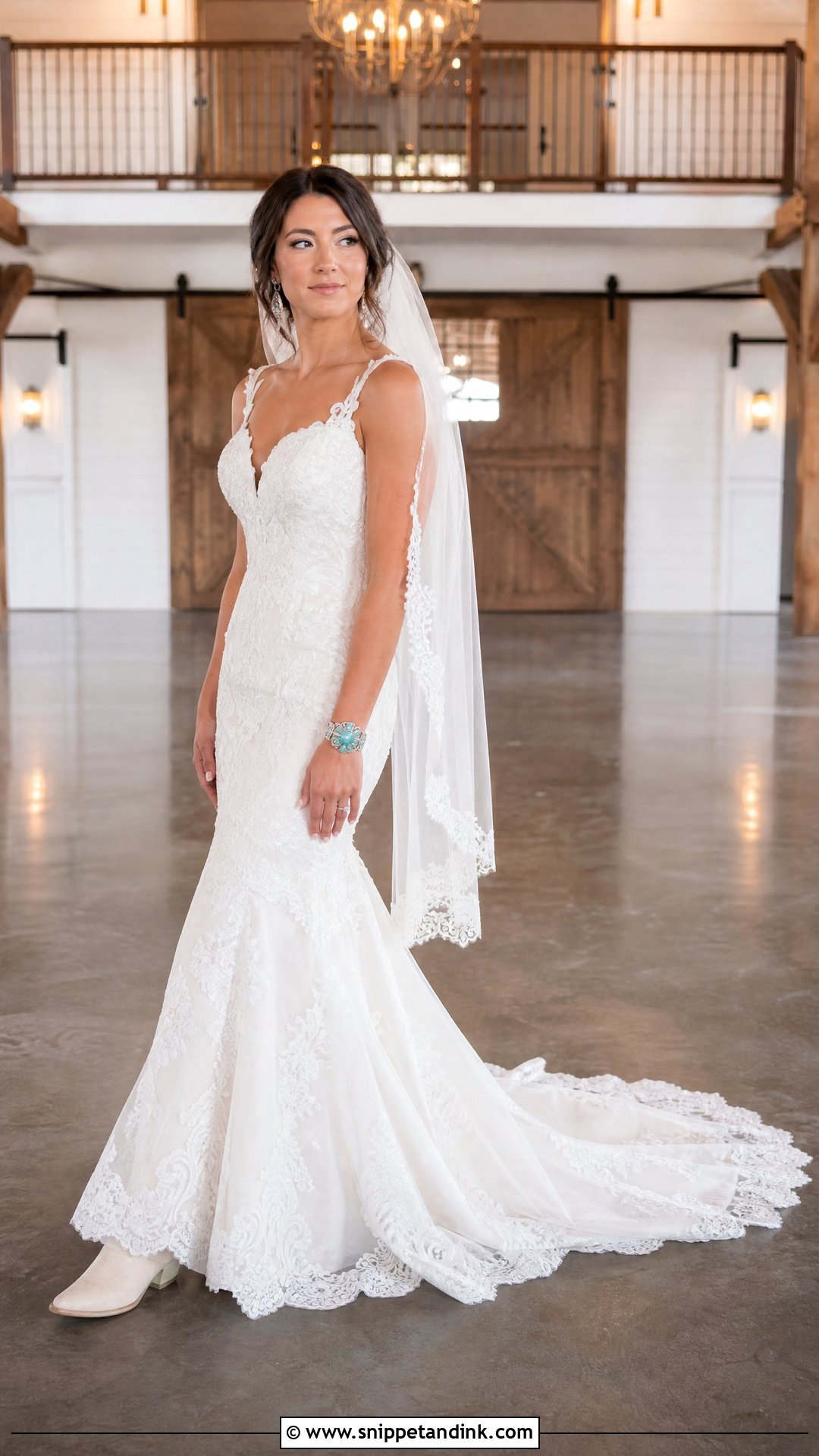
A mermaid gown can belong at a ranch wedding if you plan for the walking. The fit runs close through bodice and hips with the flare from the knee, so try climbing a step and sitting on a hay bale before you commit; many mermaids allow neither without help. Keep the train moderate, since a cathedral length on gravel is miserable. Simple ivory boots under the skirt, a turquoise bracelet or silver earrings for the Western note. A fingertip veil and smooth waves. Skip wide belts, which chop the fitted line. Lace, boots and one thoughtful piece of jewelry are enough to tie it to the venue.
15. Western Wedding Dress With Denim Jacket
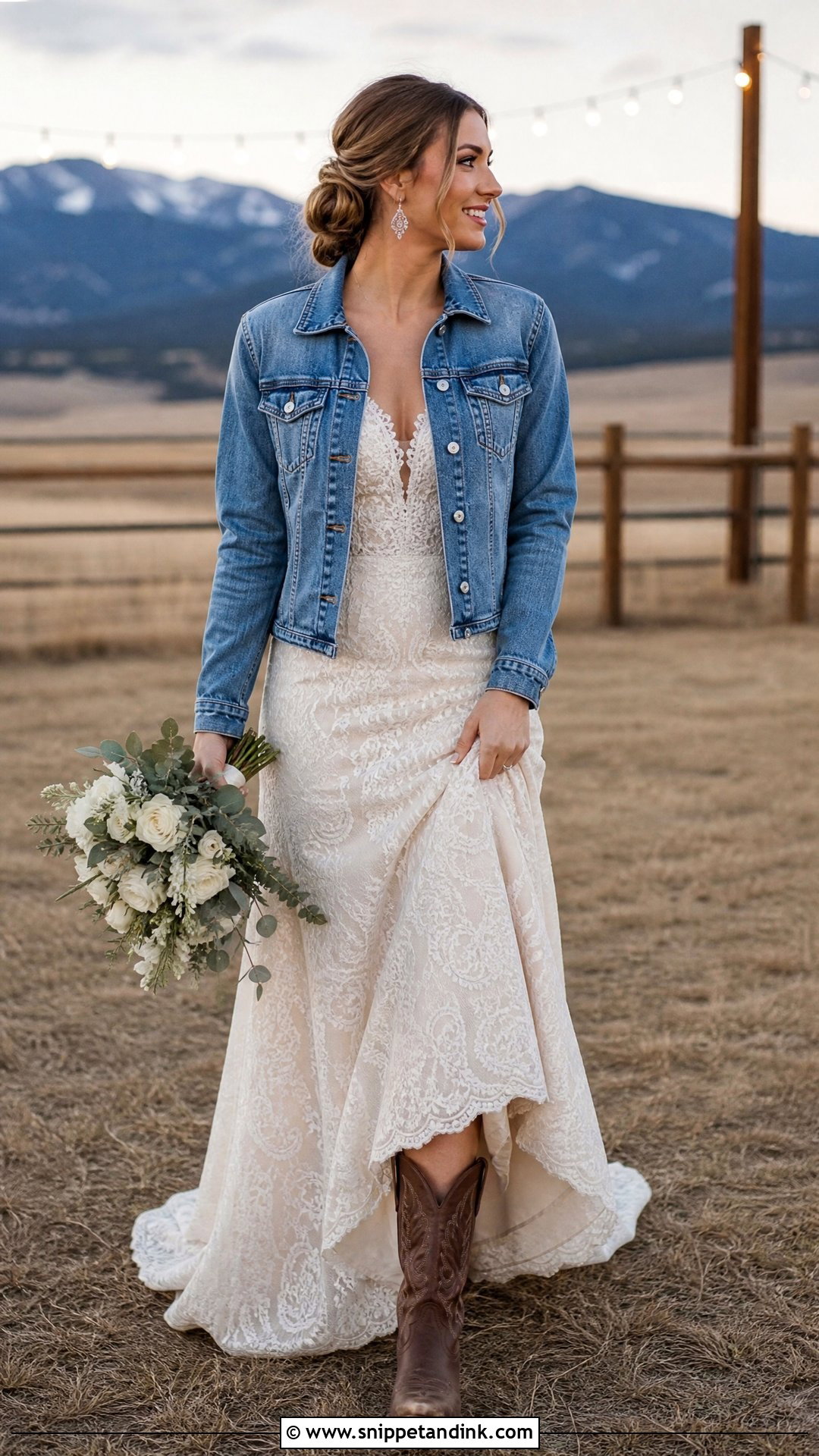
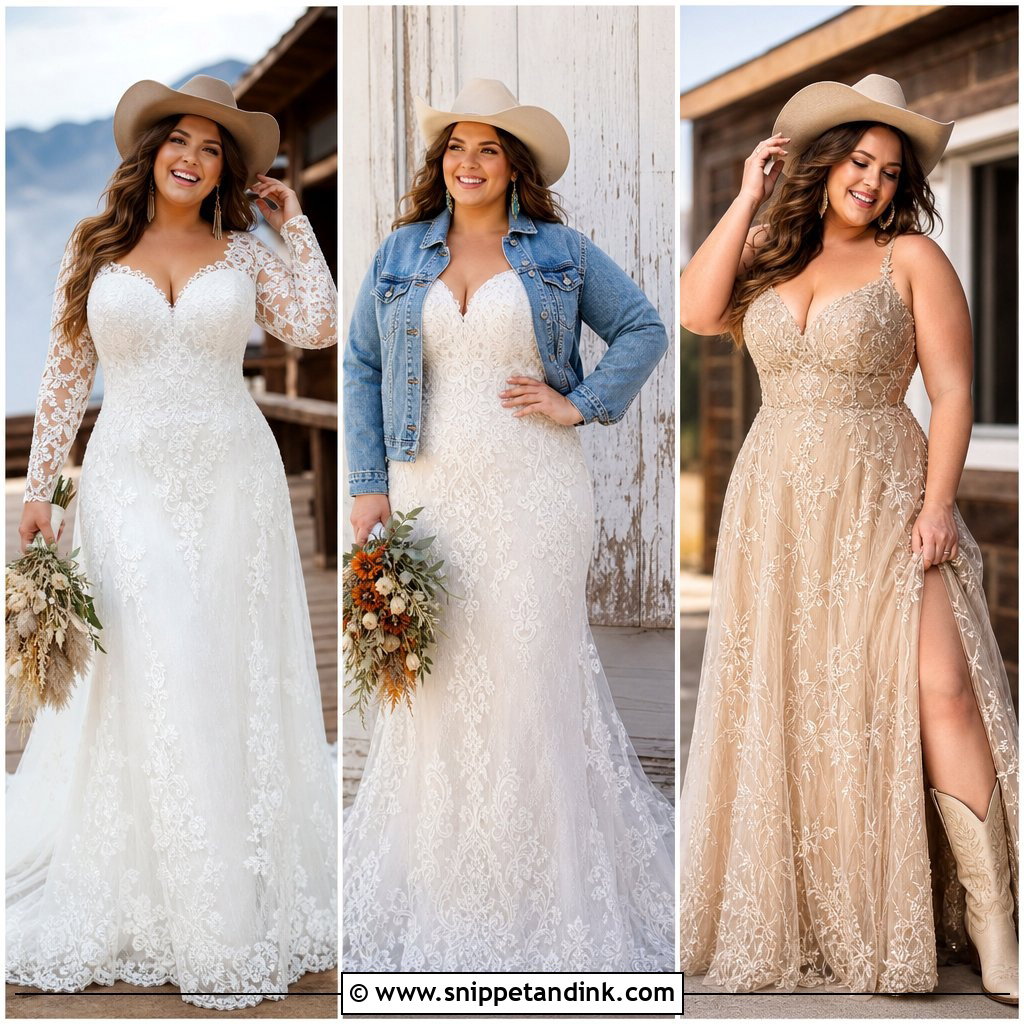
A denim jacket is the most practical Western accessory there is, warm once the sun drops and an easy outfit change with nothing to unbutton. Start with a simple lace, chiffon or crepe A-line that sits comfortably under a cropped jacket. Choose clean medium-wash denim without rips. A monogram or date stitched on the back is sweet, but keep it small. Brown leather boots, silver earrings and a loose low bun. Wear the jacket for portraits and the reception, off for the aisle if you want a traditional entrance. Check the jacket shoulders don’t crush a lace sleeve or a structured bodice underneath.
16. Western Wedding Dress With Leather Belt
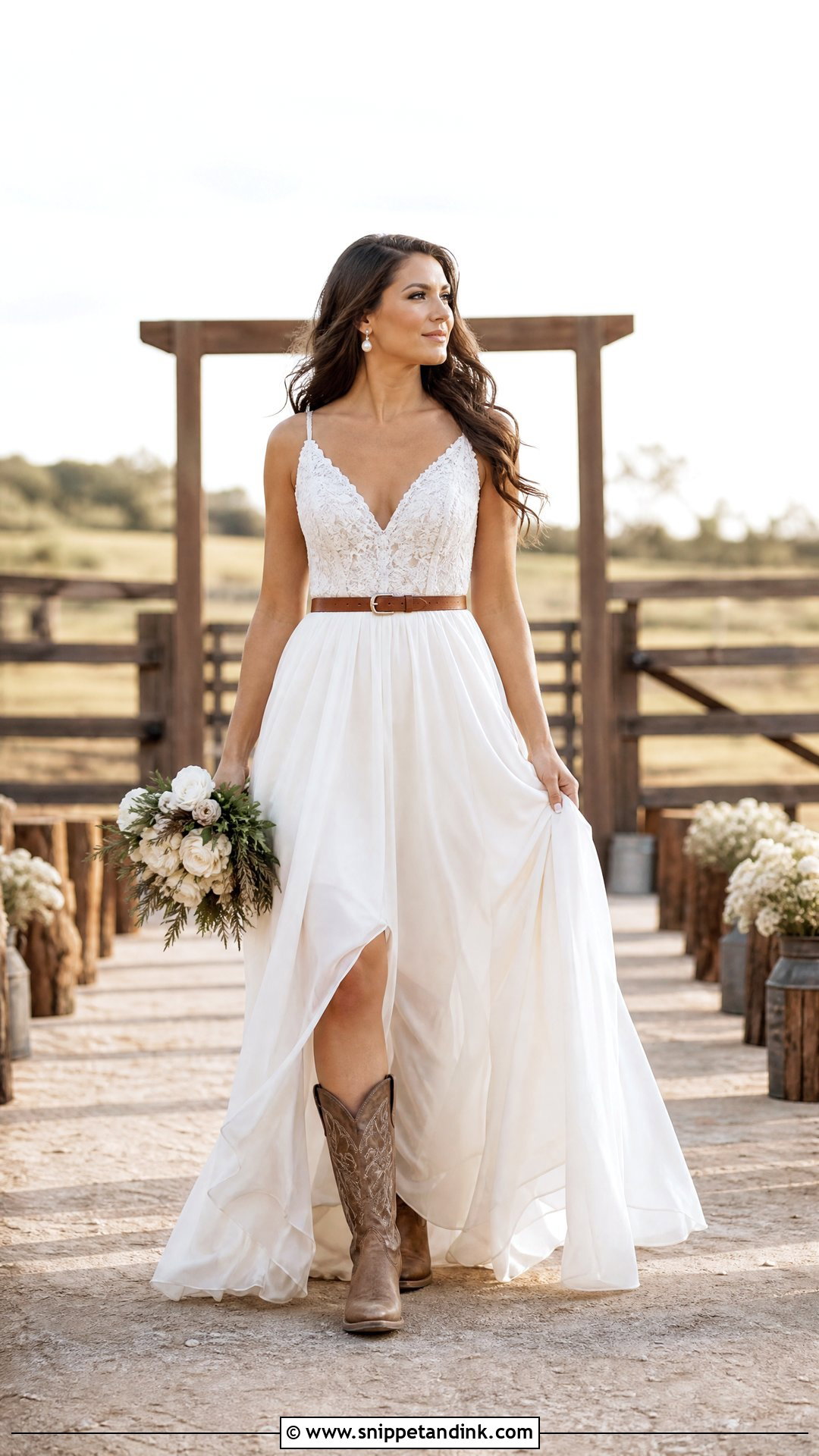
A belt is the quietest way to bring the West into a flowing gown. Start with ivory chiffon, lace or crepe with a simple waist, and add a slim tan or brown belt with a small silver buckle; leave the rodeo trophy buckles for the reception photo booth. Matching belt and boots connect top and bottom. Keep the rest light: pearl earrings, a fine bracelet, a natural bouquet. Soft waves or a low braided bun. Try the belt on over the actual gown. Leather can flatten raised lace and leave a dent in satin, and a belt sitting even an inch off your natural waist changes how the whole skirt falls.
17. Western Wedding Dress With Cowboy Hat
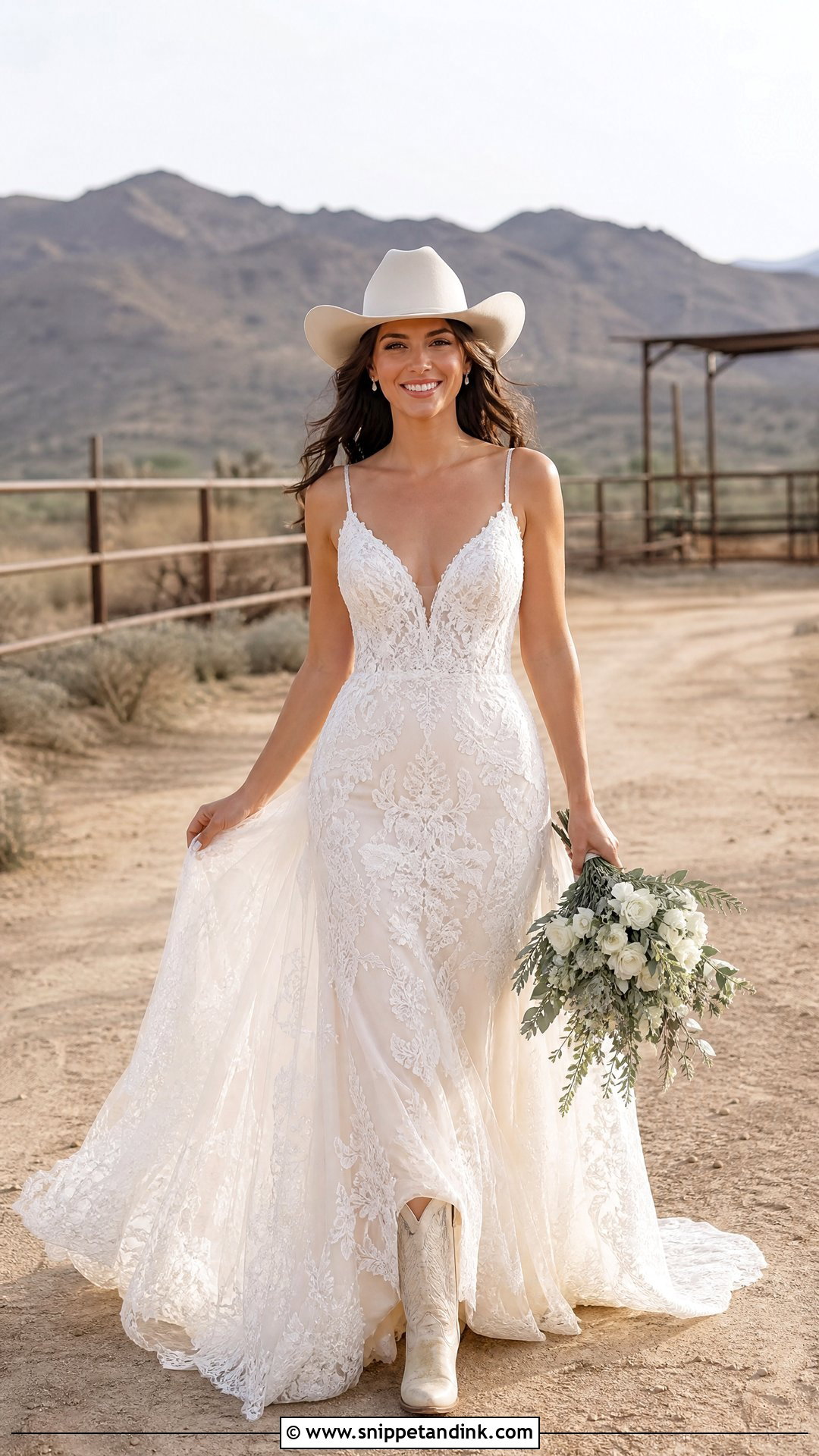
A hat is a loud accessory, so everything beneath it should be quiet. Pair it with a flowing lace A-line, a simple satin slip or a fitted crepe dress with little decoration. Ivory or cream felt reads more bridal than a dark hat and keeps your face lighter in photos. Coordinate the boots, add small silver earrings and a loose bouquet, and stop there. A big belt, heavy necklace and fringe all at once is too much. Try the hat on outdoors before the wedding: a wide brim drops a shadow across your eyes in midday sun. Wear it for ranch portraits and desert ceremonies, then take it off for vows and indoor photos.
18. Western Wedding Dress With Puff Sleeves
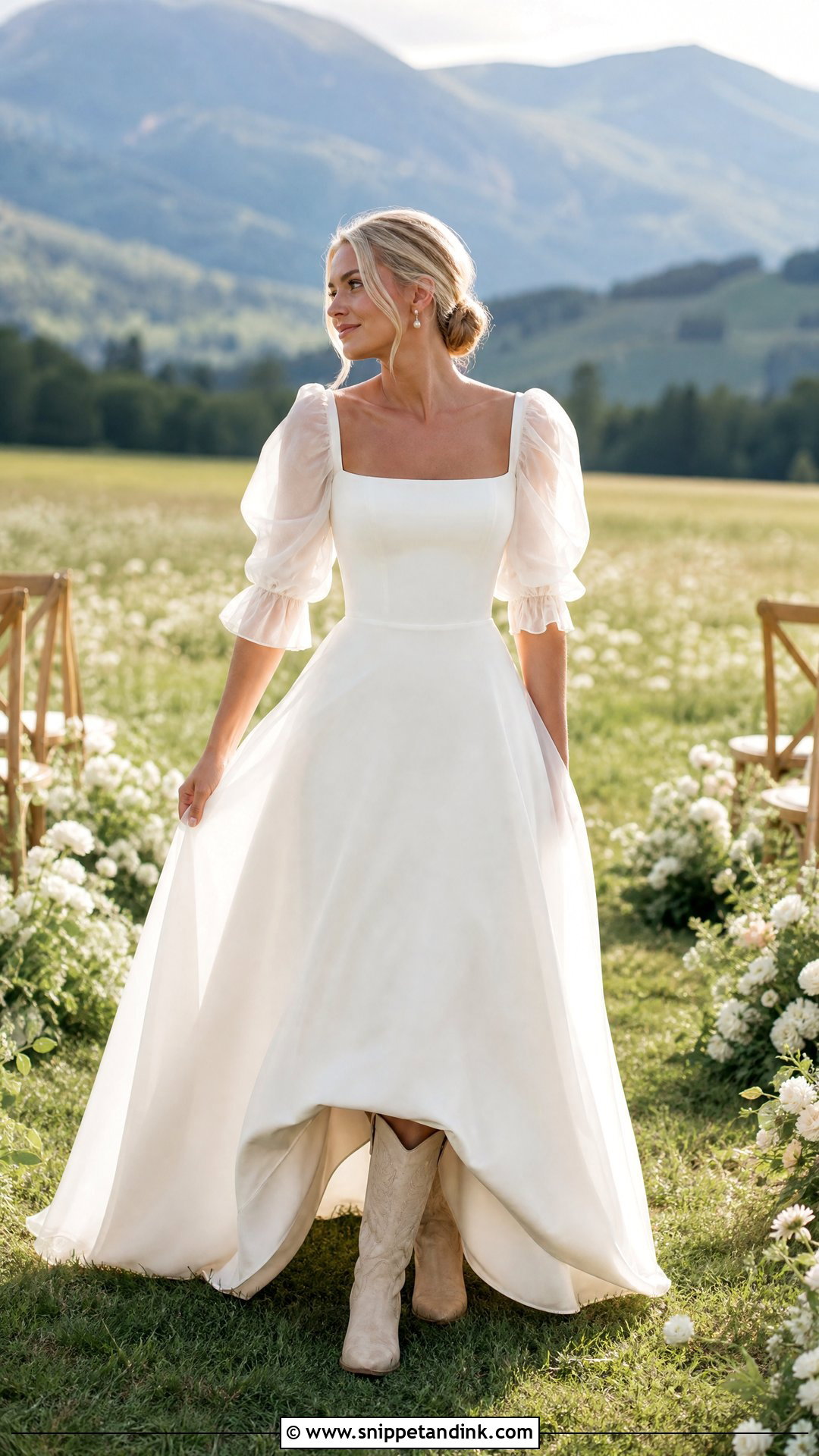
Puff sleeves add volume at the shoulder and a slight vintage air. Choose organza, dotted tulle or lace sleeves that taper toward the elbow or wrist, with a fitted bodice and a clean A-line or column skirt to balance them. Ivory boots and small pearls keep the sleeves the main event. A low bun or ponytail stops your hair crowding the shoulders. I’d steer brides with broad shoulders toward a softer, smaller puff, since large ones widen the frame noticeably. Detachable sleeves give you a second look for the reception without a new dress. Meadows, rustic estates and modern ranches all suit it.
19. Two-Piece Western Wedding Dress
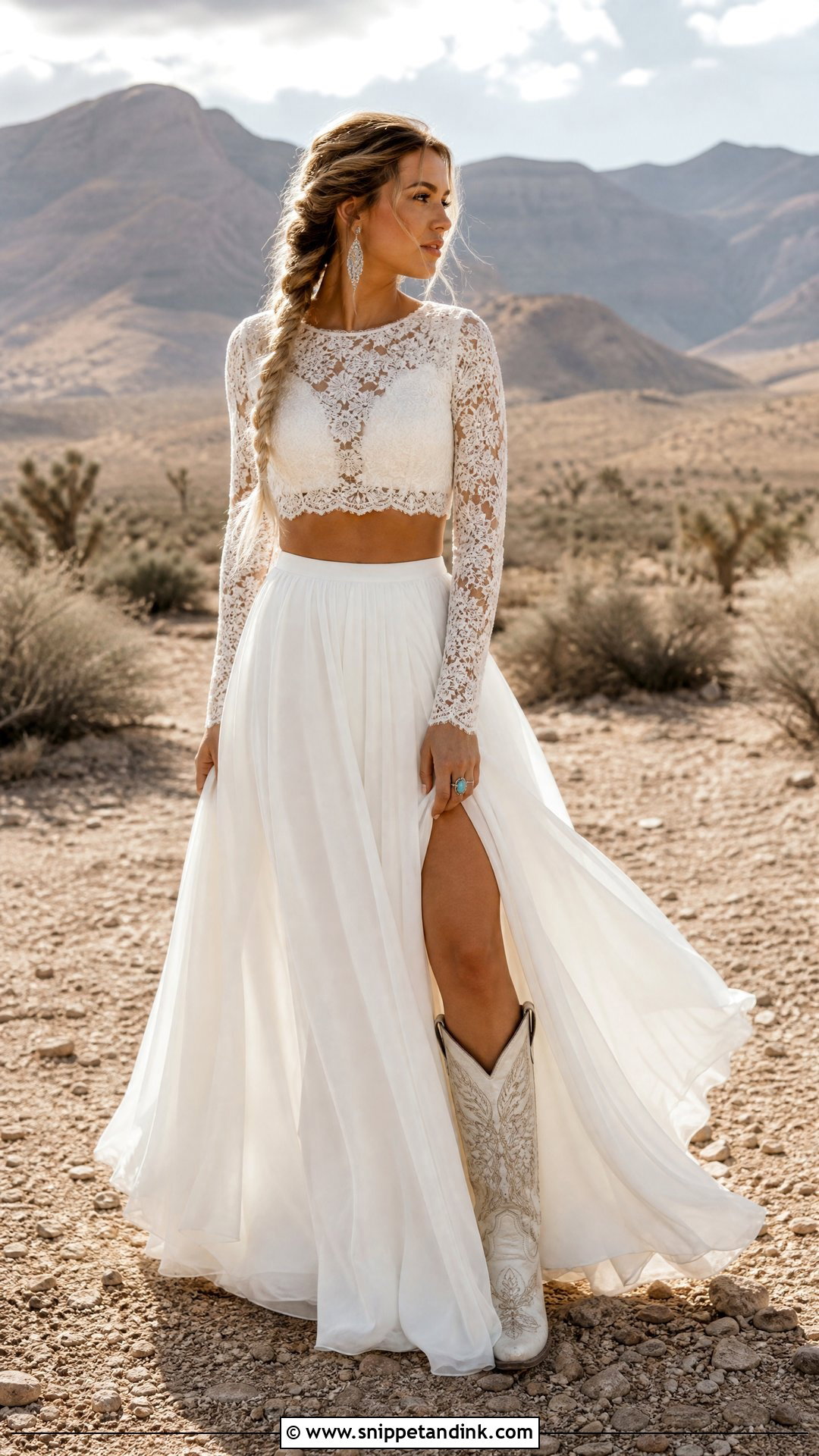
Separates are the most comfortable bridal option here and the one you’re likeliest to wear again. A fitted lace crop top with a high-waisted flowing skirt, showing only a narrow strip of skin, works for most ceremonies; long sleeves or a higher neck keep it appropriate. Embroidered ivory boots, silver earrings and a fine turquoise ring. A braid or loose ponytail. Test the gap when you sit, reach and dance, and if the top lifts, have a small hook-and-eye added between the pieces. It suits warm ranch parties, desert elopements and informal outdoor ceremonies, and either piece works later with a plain tee or a denim skirt.
20. Western Wedding Reception Dress
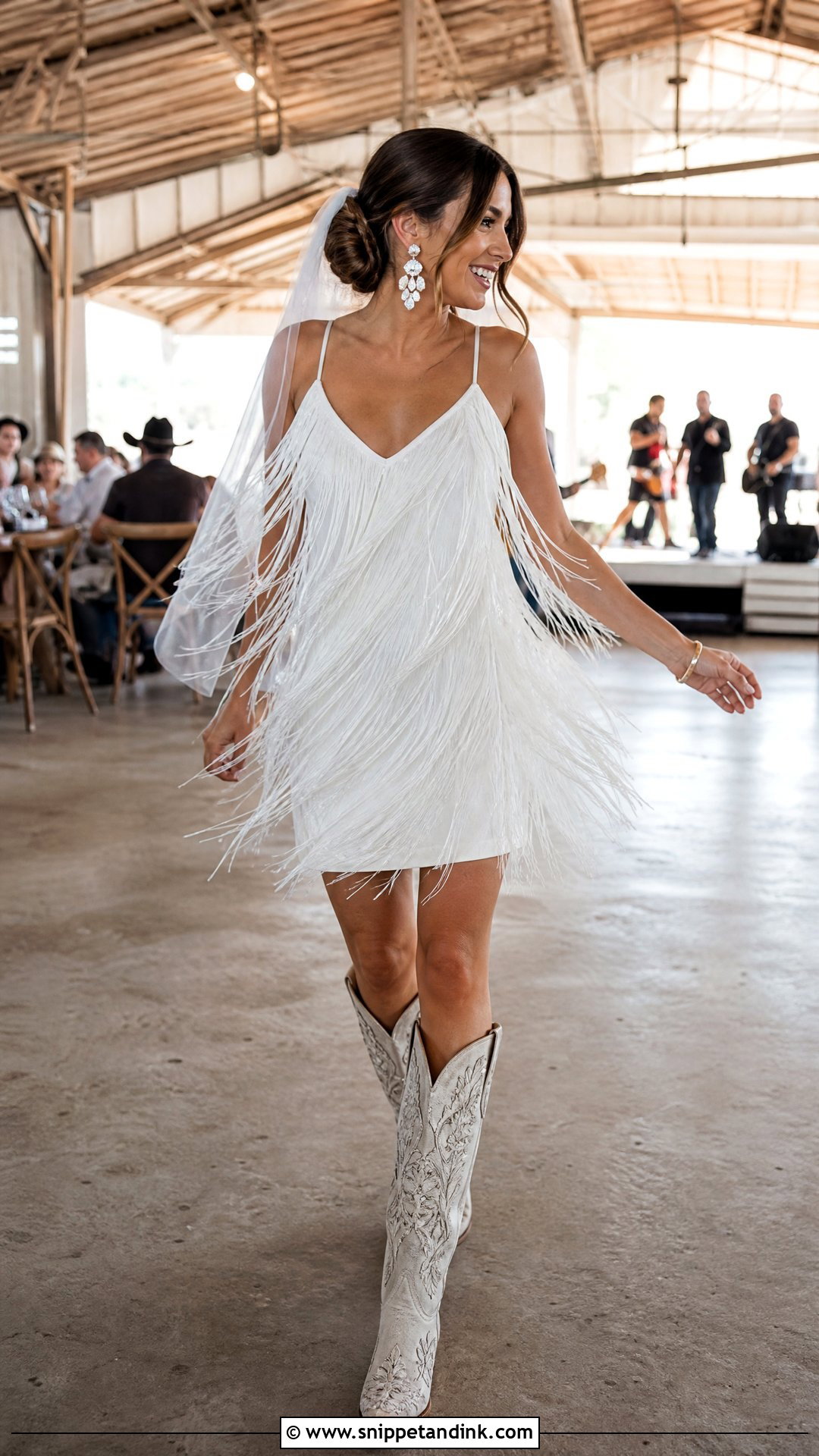
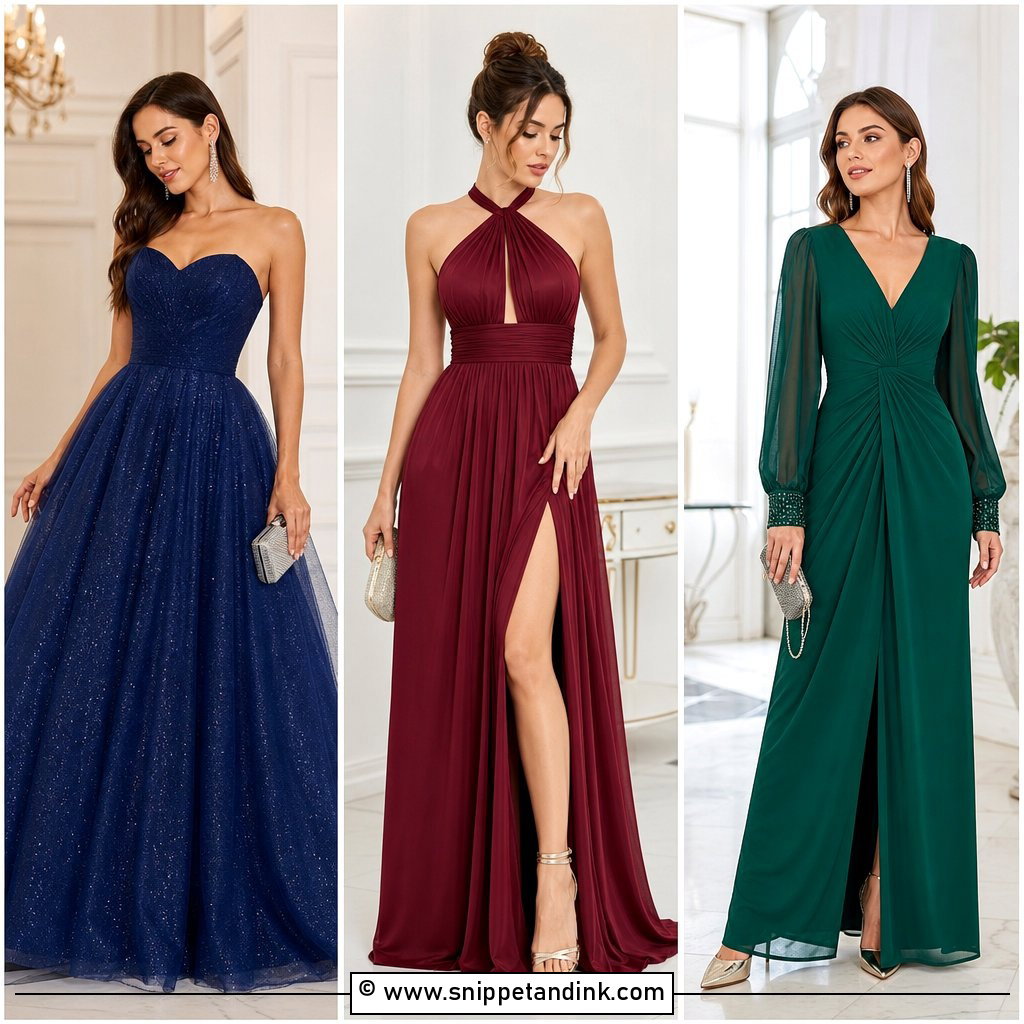
A reception dress should feel like the same bride after a costume change, not a different person. A white fringe mini, a lace fit-and-flare or a sleek satin midi, fitted securely enough to dance. Choose boots that can handle hours of standing; if your ceremony boots pinch, this is the moment to swap in a broken-in pair. Statement earrings, a small bracelet, a short veil or a small cream hat. If the dress already has fringe, rhinestones or embroidery, keep everything else plain. A high ponytail or polished waves stays tidy. Repeat something from the main gown, the lace, the embroidery or the jewelry, so both looks feel connected. It doubles as a departure outfit.
What Barn Boards and Pasture Do to a Hem
Rural venues are hard on the bottom few inches of a dress. Barn boards have gaps that catch heels and hold dust, pasture holds dew until well after lunch, and gravel shreds a dragging train. A few decisions up front save the gown.
Plan the bustle at the fitting, not on the day
Any train longer than a sweep needs a bustle. An over bustle lifts the train with hooks or buttons onto the back of the skirt, and an under bustle tucks it beneath with ribbon ties. Lace gowns usually suit an over bustle; plain satin and crepe often look cleaner tucked under. Ask your seamstress to show your maid of honor how it works, ideally on video, because she’ll be doing it in a hurry after the ceremony.
Dirt on the hem afterward
Don’t scrub mud while it’s wet; you’ll grind it into the fibers. Let it dry, brush off what you can with a soft clothes brush, and get the gown to a cleaner who handles wedding dresses within a few weeks. Sugar from spilled drinks is invisible at first and turns brown with time, so point out any spills too. For storage, a breathable cotton garment bag and acid-free tissue in the folds are kinder to lace than plastic, which traps moisture.
Start With the Gown, Then Let the West In
The dress you’ll be happiest in is one that looks like you first and Western second. Lace, embroidery, fringe, boots, hats and leather all work when you use them sparingly. Pick the silhouette that makes you stand taller, then add Western details one at a time and stop the moment it starts to feel like a theme. Think about the ground, the weather, how much arm and shoulder you want covered, your train length and how freely you can move. A romantic lace gown, a modern satin dress, a vintage prairie silhouette or a playful reception mini can all carry it, as long as the boots fit and the hem is set for them.
You'll Like These Ideas:


Leave a Reply