
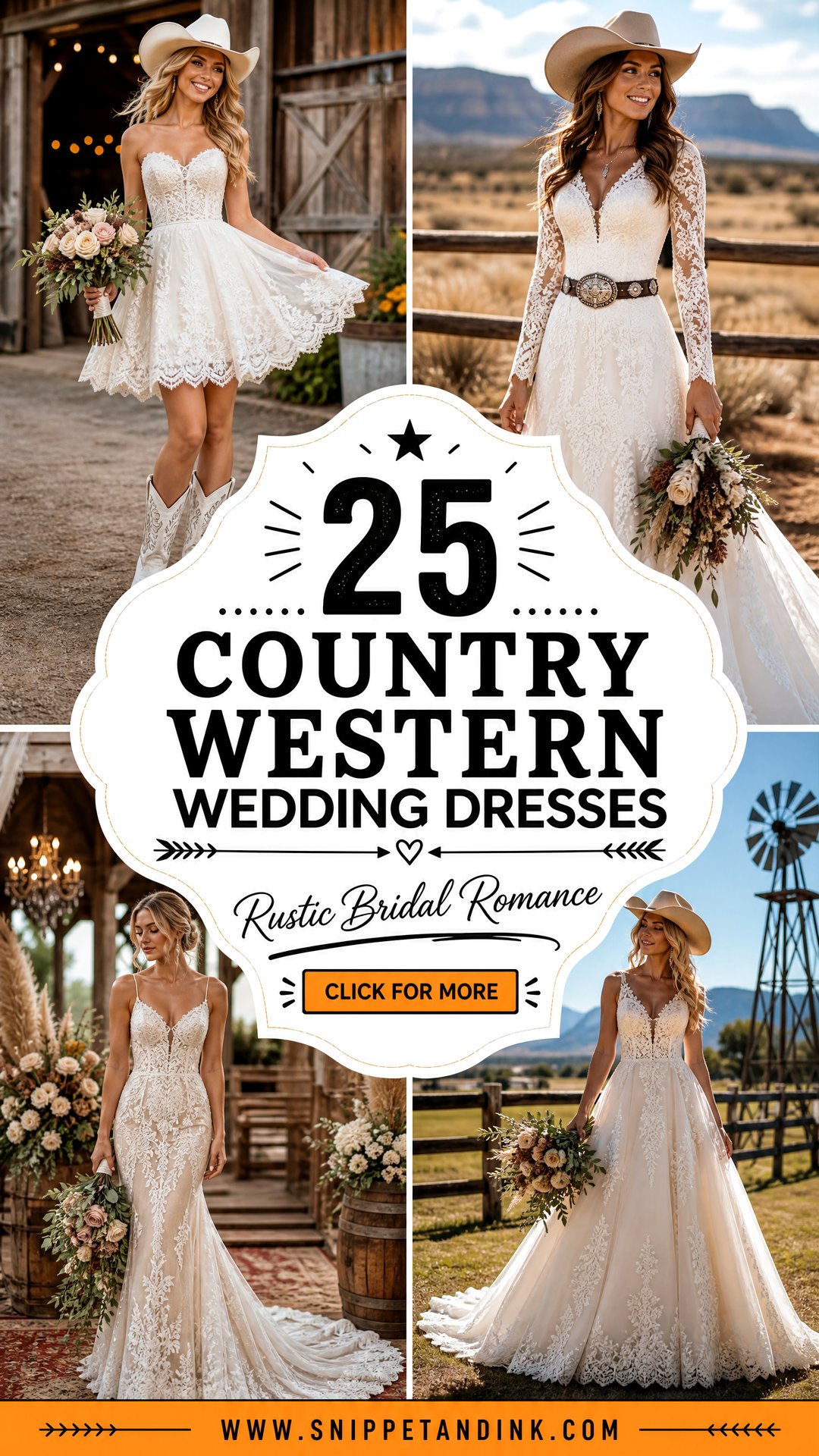
A western wedding dress walks a fine line. Push the theme too far and the photos look like a costume party; hold back too much and nobody can tell you planned a ranch wedding at all. Most of my work with western brides is deciding where the cowgirl part of the outfit lives: in the boots, the hat, a jacket, a belt, or the dress itself. Below are 25 dresses, from lace and tulle to fringe, satin, suede and short reception looks, with notes on what each one needs from the rest of the outfit. They cover boho and vintage, plus-size cuts, full ball gowns and simple slips.
How Much Western Is Too Much?
My working rule is two western pieces per outfit, three at the most. Boots plus a hat, or boots plus a fringe jacket, read as a bride at a ranch wedding. Boots, a hat, a fringe jacket, a turquoise necklace and a tooled belt read as a theme party, and the dress gets lost underneath.
The venue sets the dial. A working ranch with a hay-bale ceremony can carry more western flavor than a polished barn venue with chandeliers. If your guests are dressing in cocktail attire, keep the dress formal and let the western detail come through in one or two accessories. If they’re coming in jeans and boots, a short dress and a statement hat won’t look out of place.
Where the western piece should live
- In the boots: the most flexible option, and it works with almost any gown.
- In a layer: a jacket or bolero you can remove gives you a ceremony look and a party look.
- In the dress: fringe, western embroidery or a yoke detail. Keep accessories plain if the dress carries it.
- In the hat: the strongest signal. Wear it for portraits even if you skip it at the altar.
1. Lace Country Western Wedding Dress
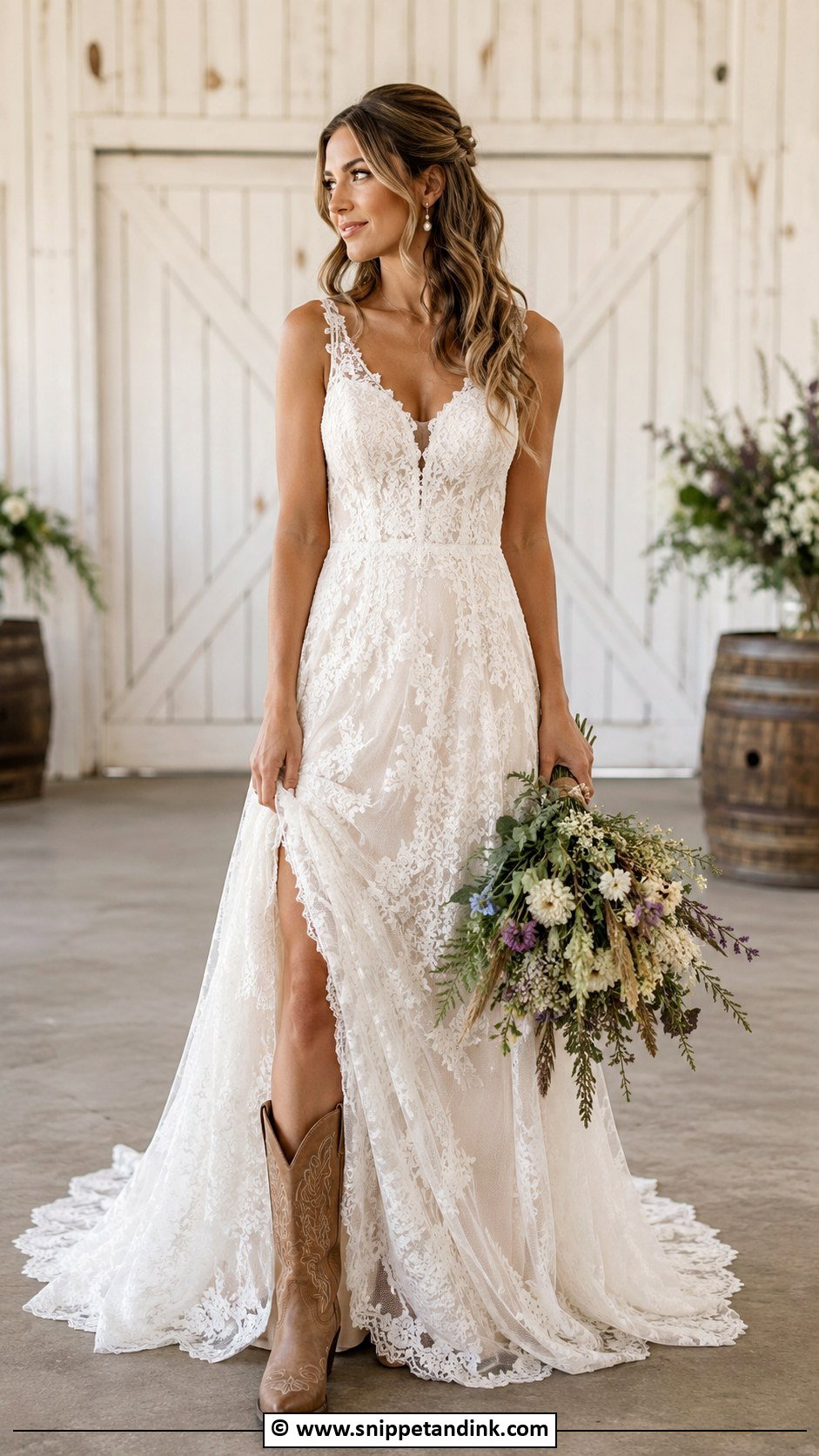
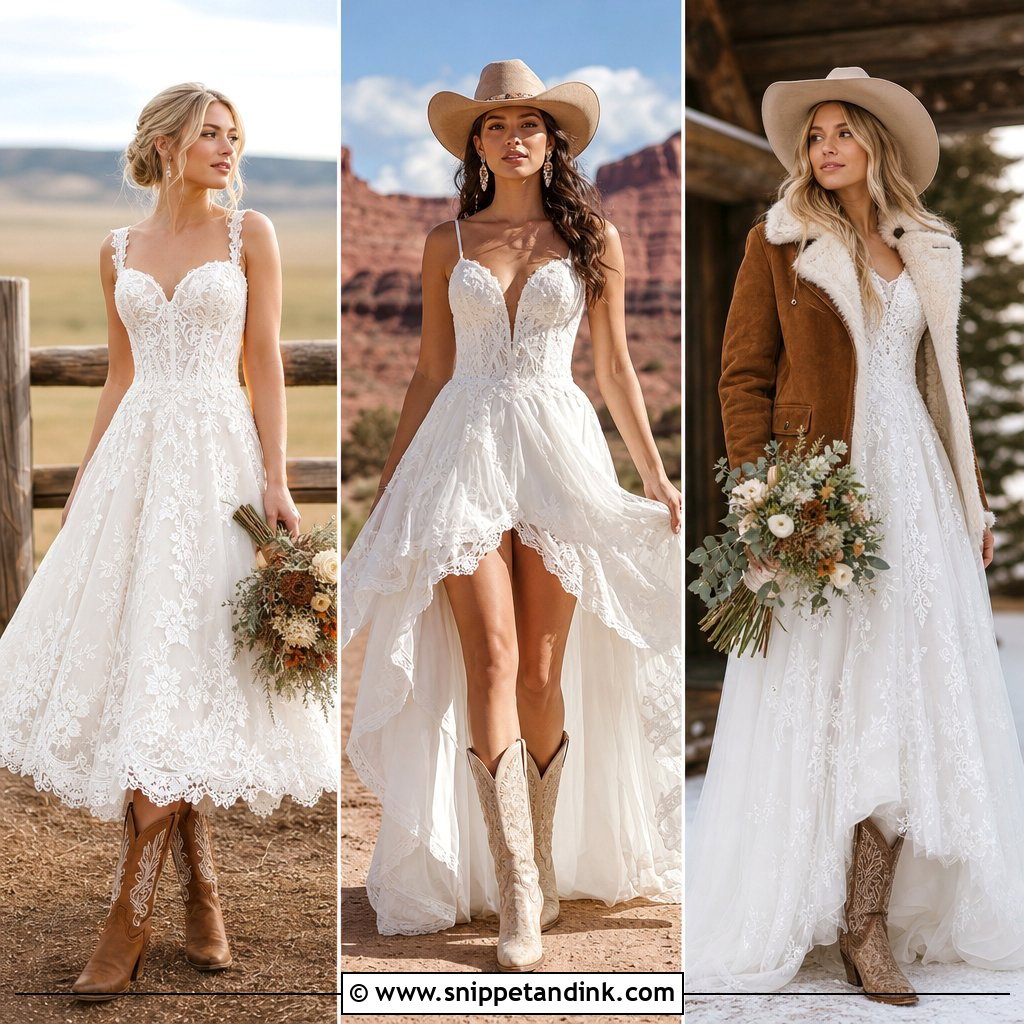
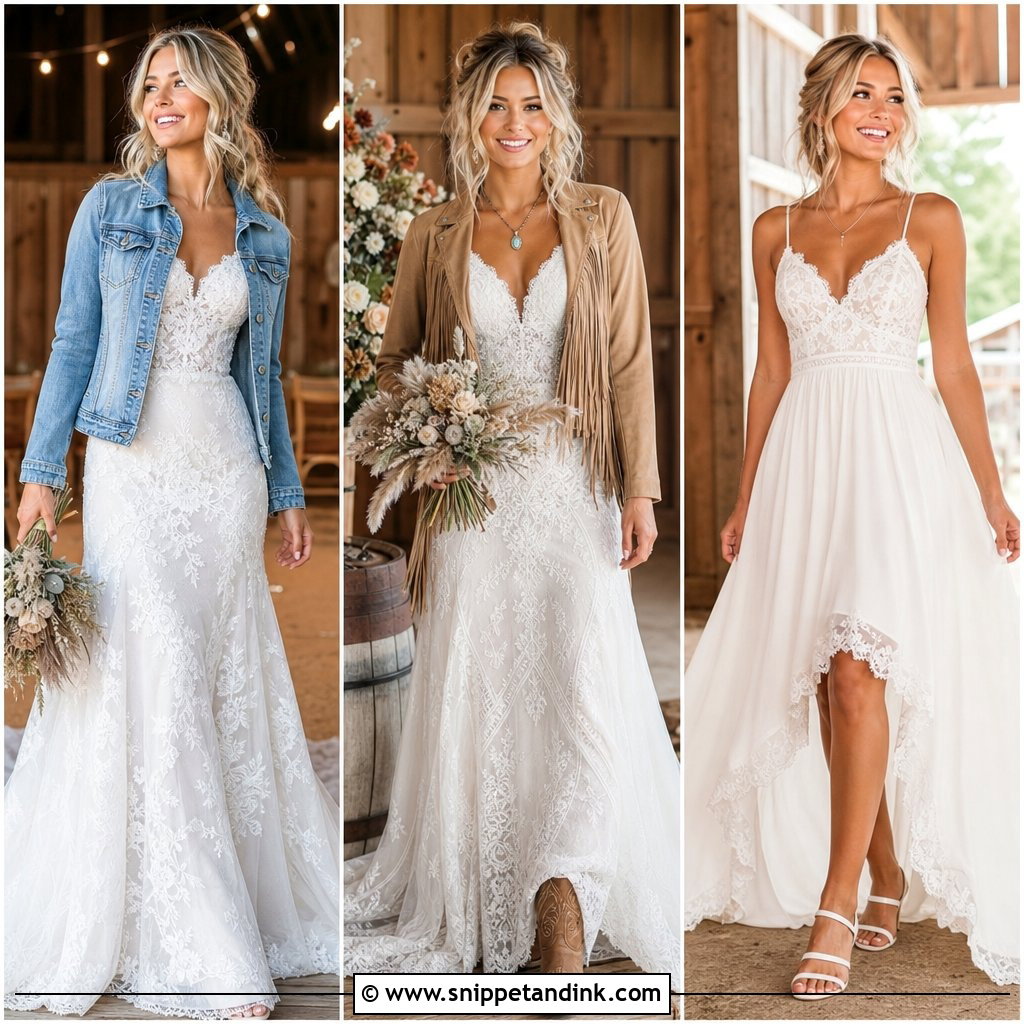
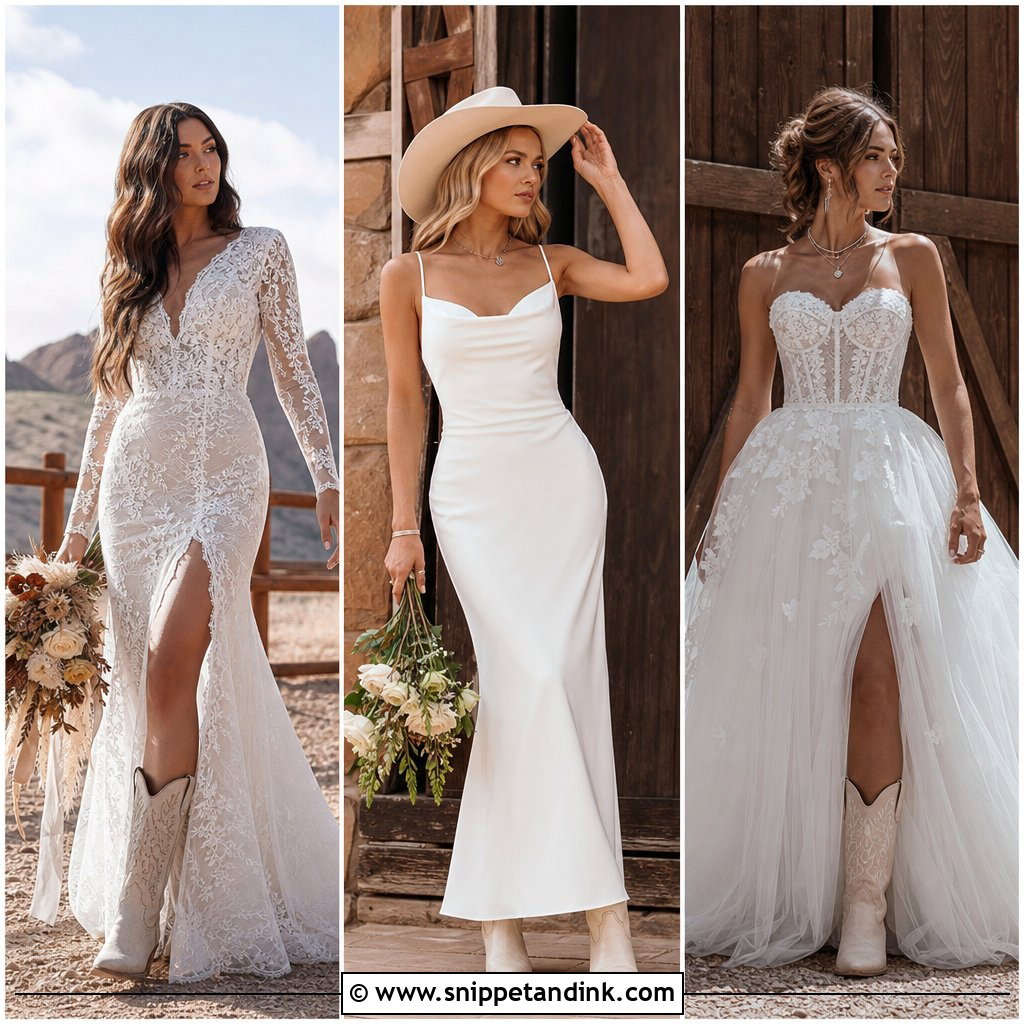
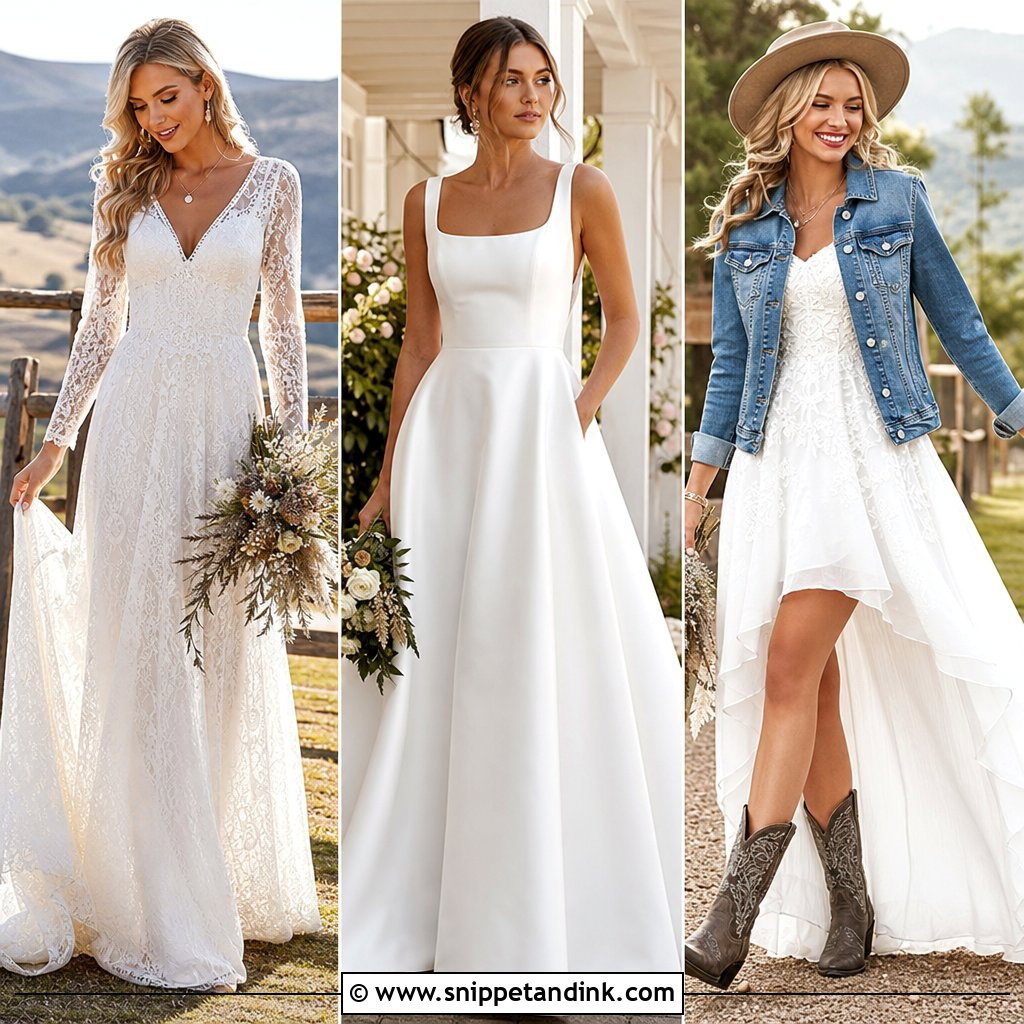
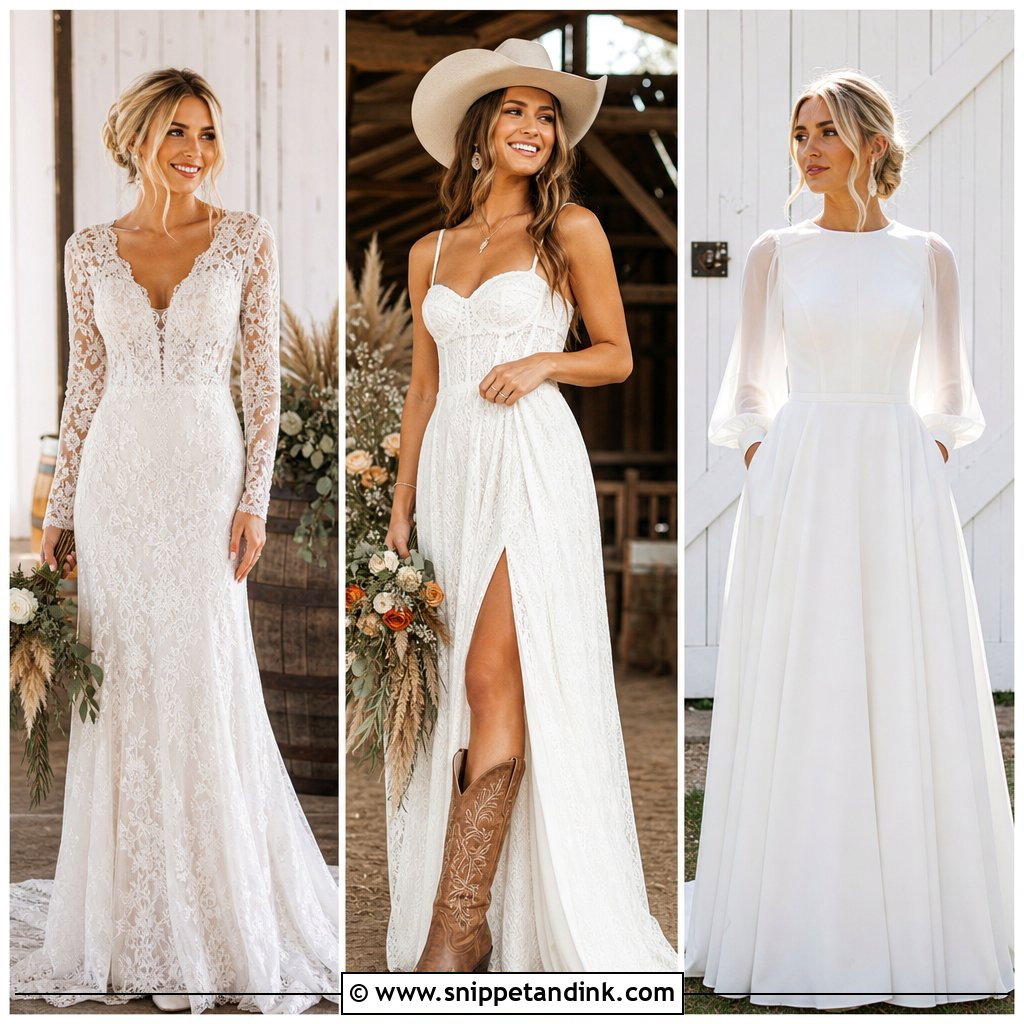
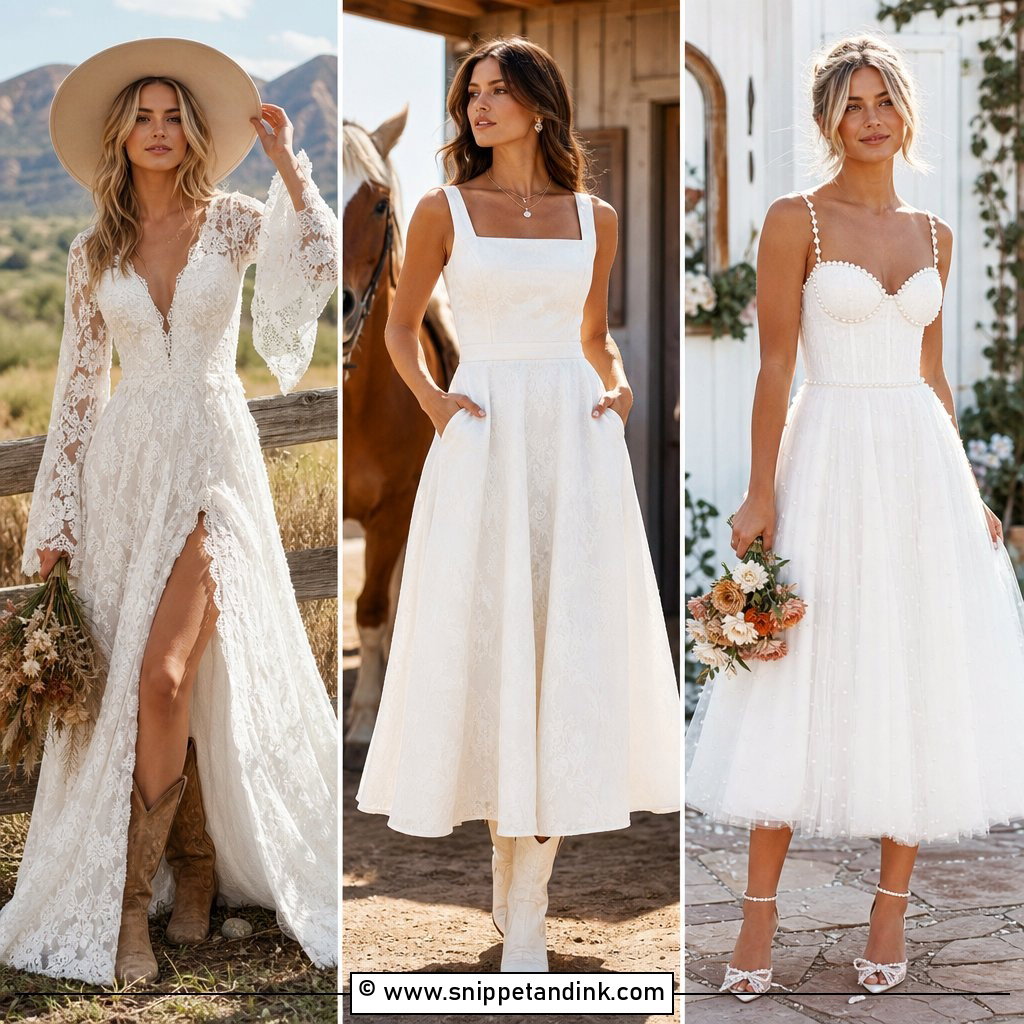
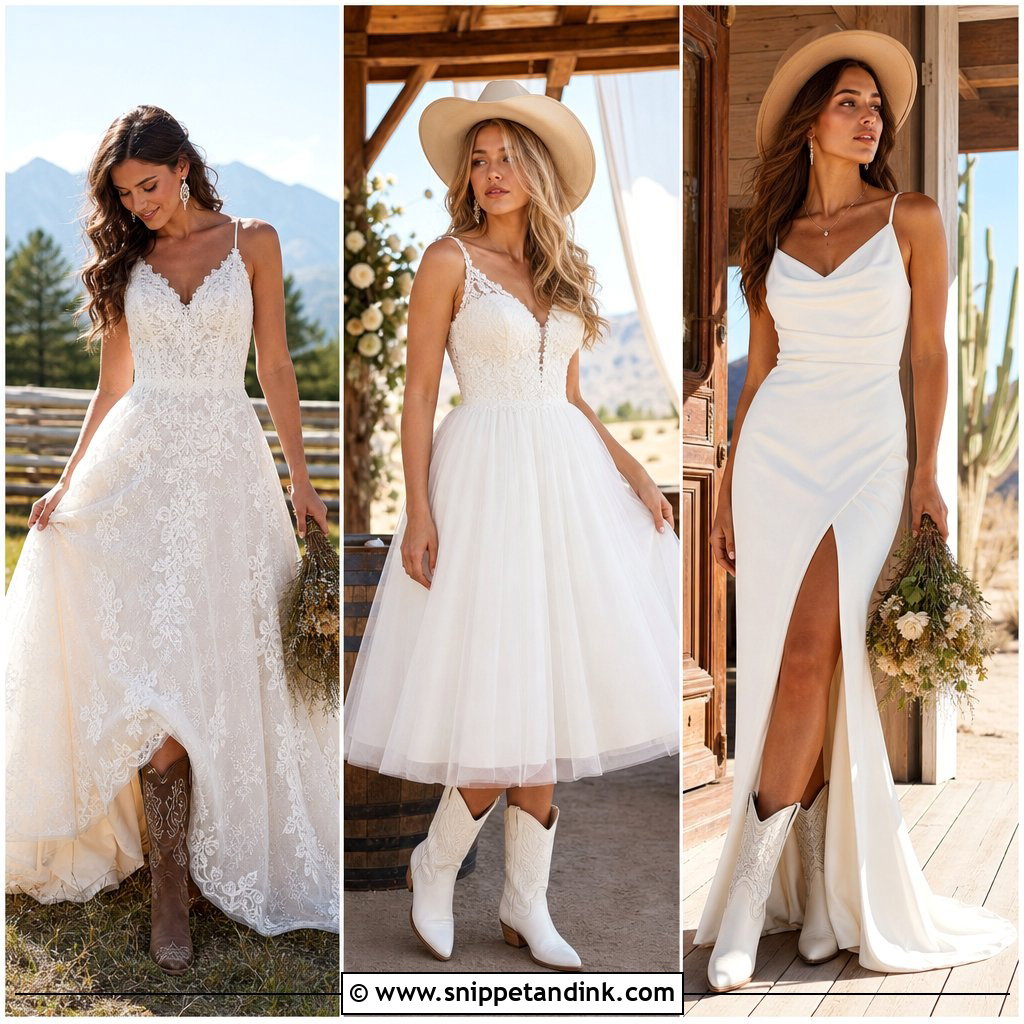
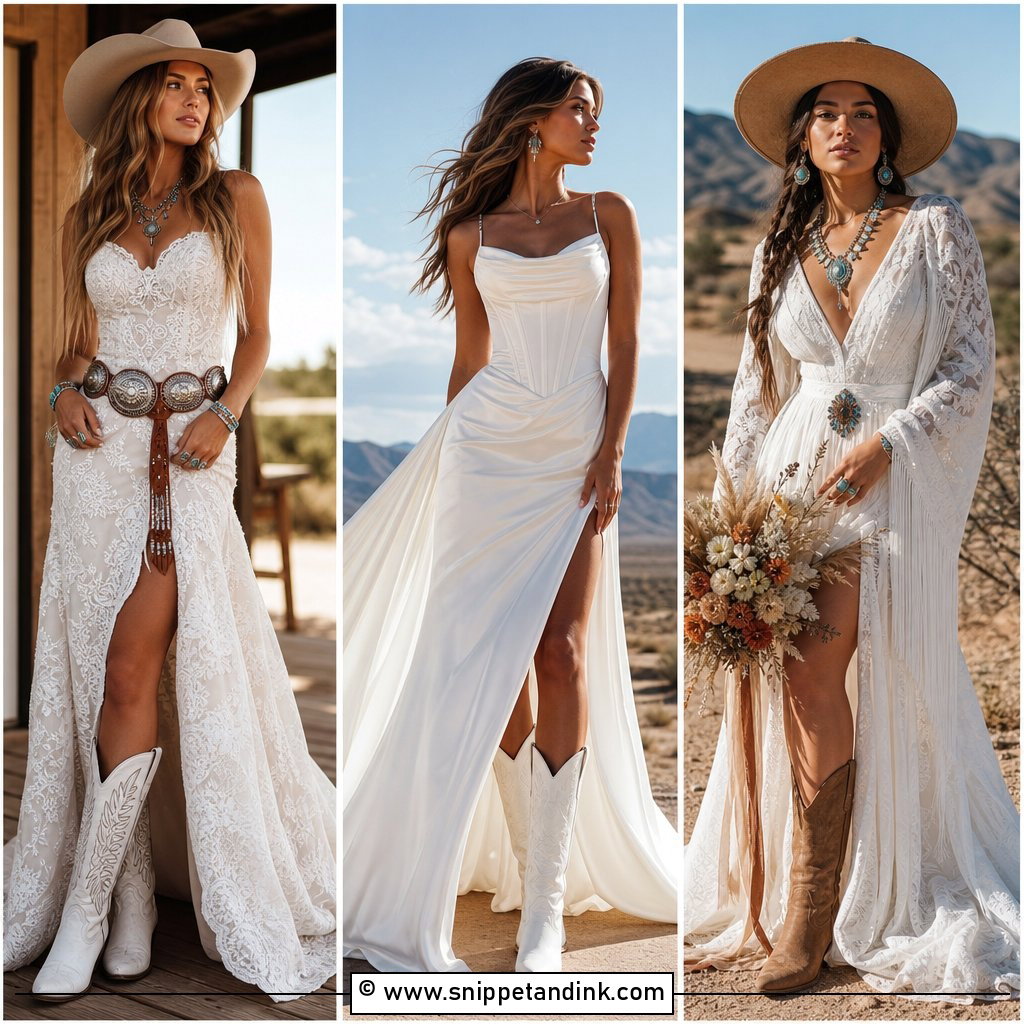
Lace is the safe starting point, and I mean that as praise. A lace country western wedding dress in an A-line, fit-and-flare or sheath shape softens tan or ivory boots and hides the scuffs a ranch day leaves behind. Look at the lining color with the lace: an ivory lace over a nude lining reads warmer in sunlight than the same lace over white. If the lace pattern is busy, either wear a plain veil or replace it with a wide-brim hat. Pearls and loose waves are all it needs.
2. Boho Country Western Wedding Dress
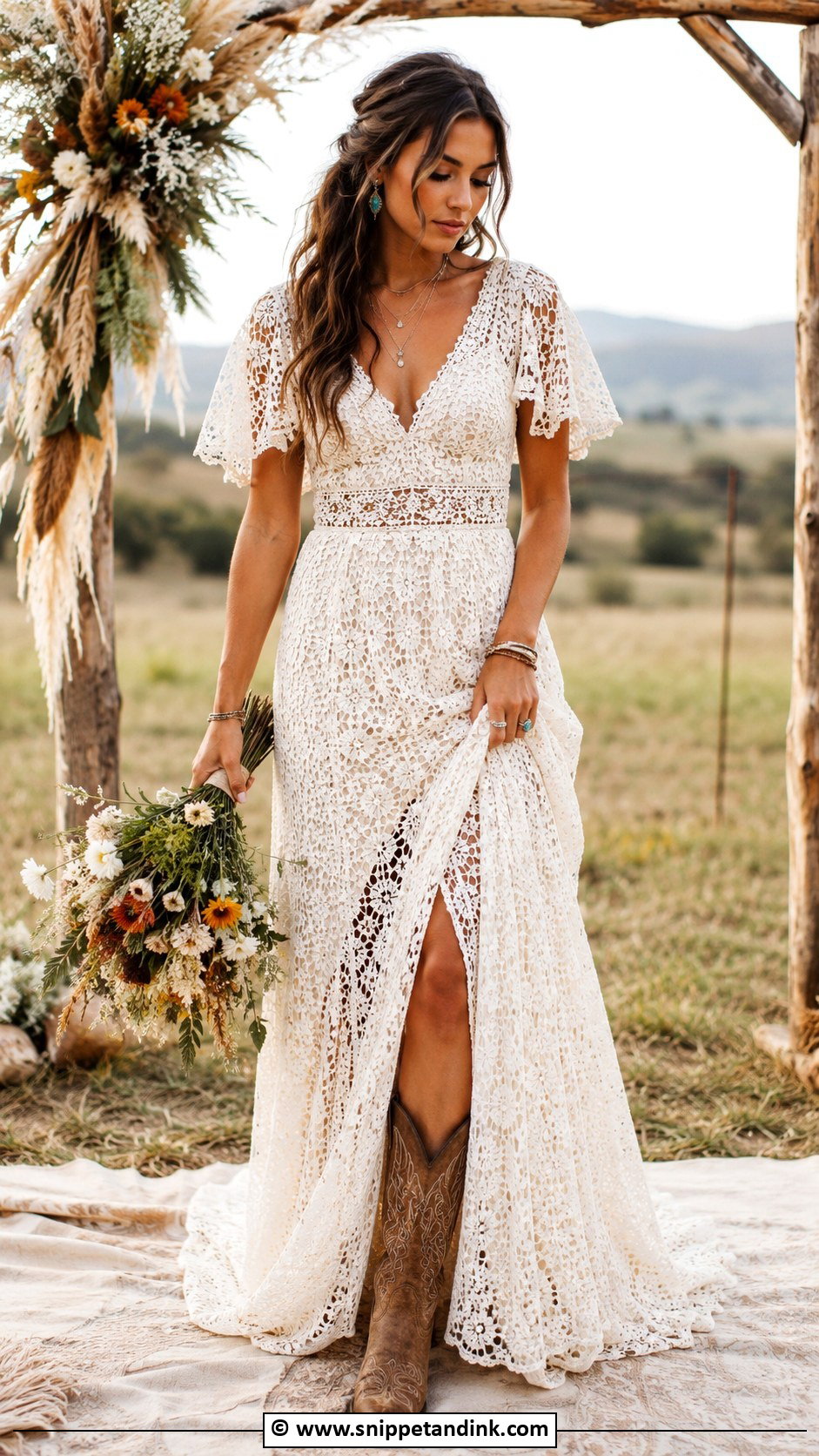
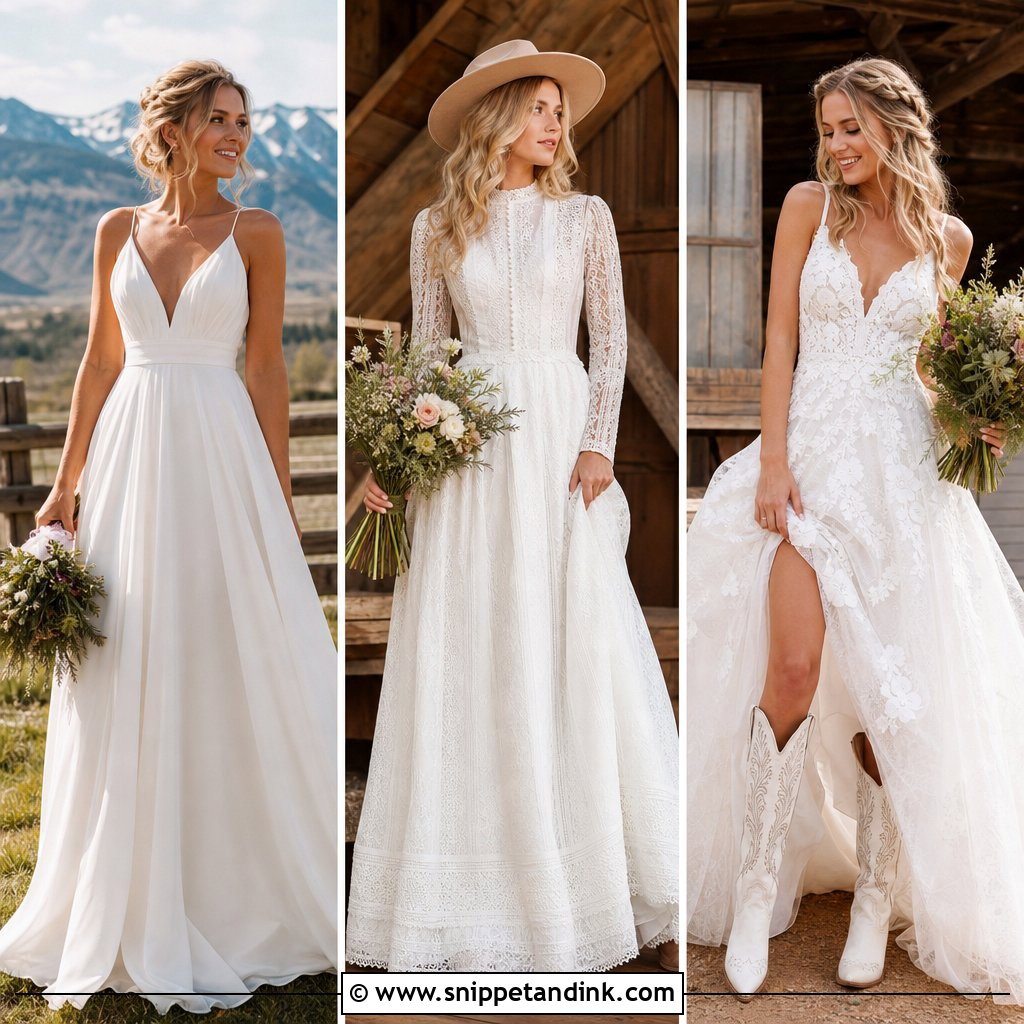
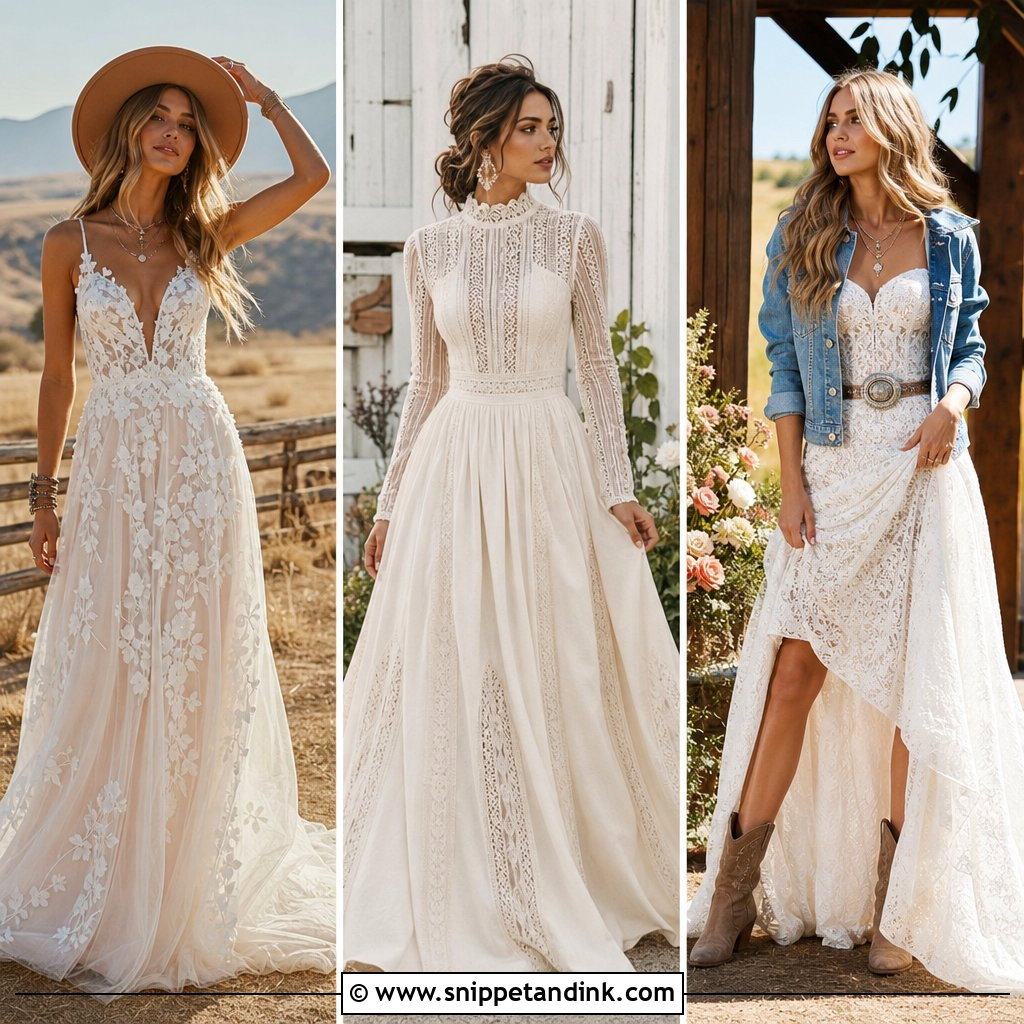
Boho dresses tend to be unlined or lightly lined, which is exactly why they feel so good outdoors and exactly why you should see them in full sun before buying. A boho country western wedding dress with crochet lace, flutter sleeves or a deep V moves well for dancing and walking photos. Deep plunges need fashion tape and a fitting where you bend, sit and hug. Suede or embroidered boots, layered fine jewelry and a felt hat for field portraits suit the mood. Braids or soft loose waves hold up better in wind than a sleek style.
3. Country Western Wedding Dress With Cowgirl Boots
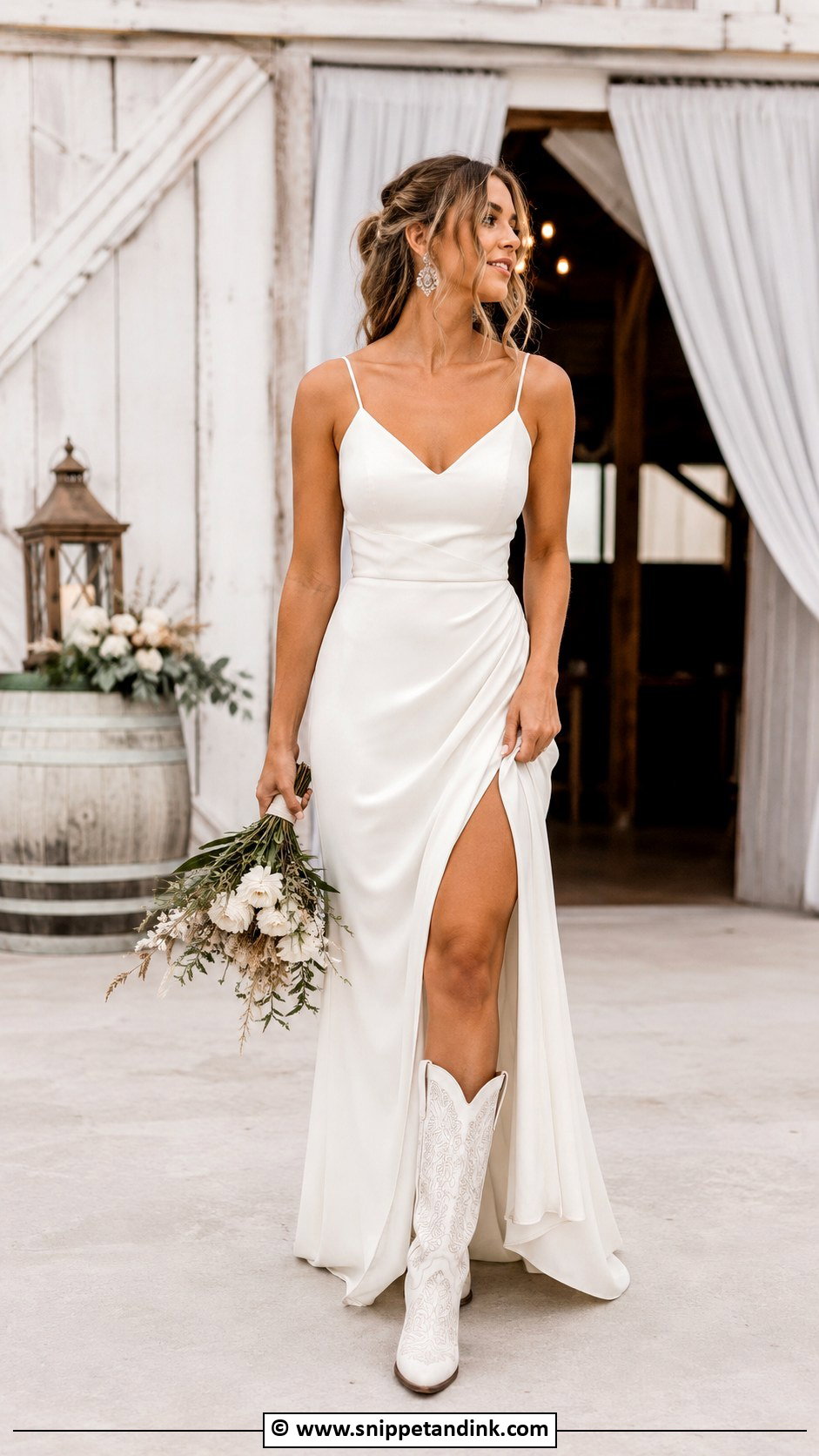
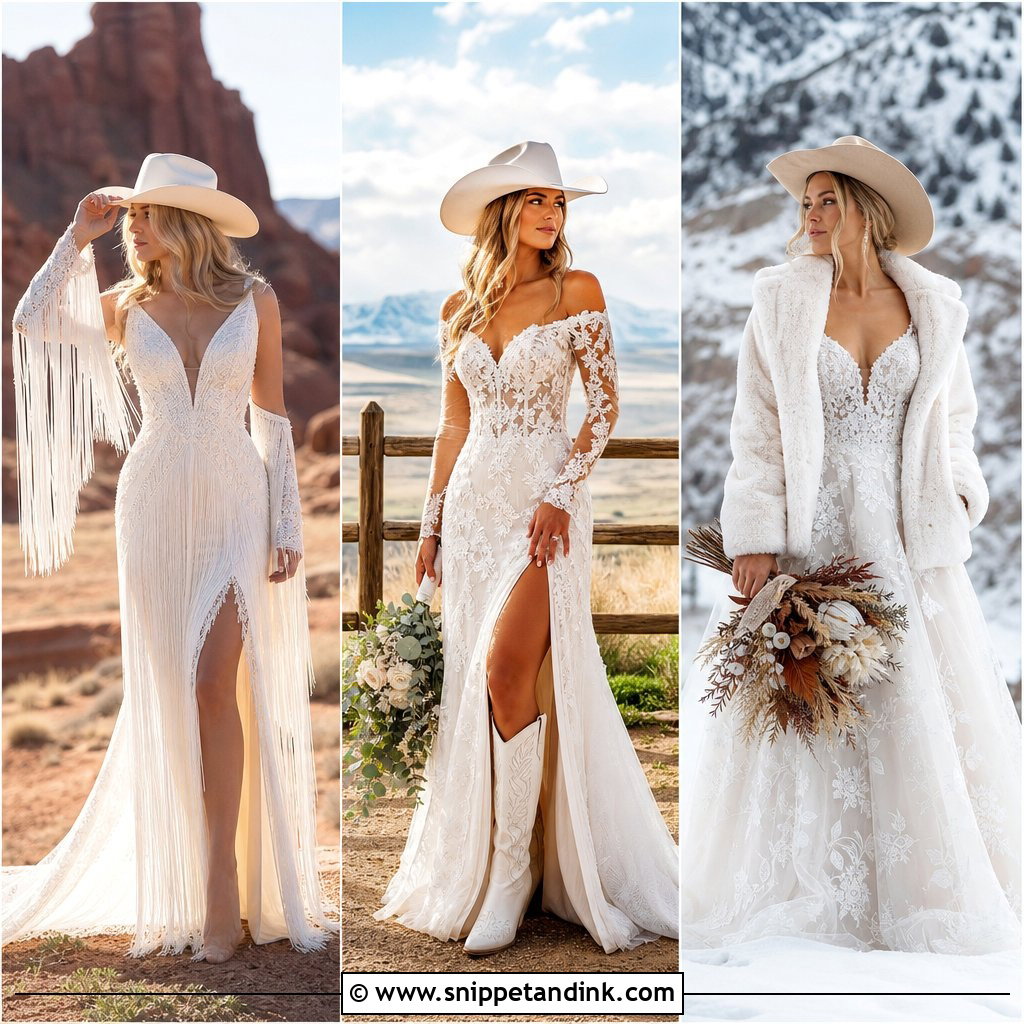
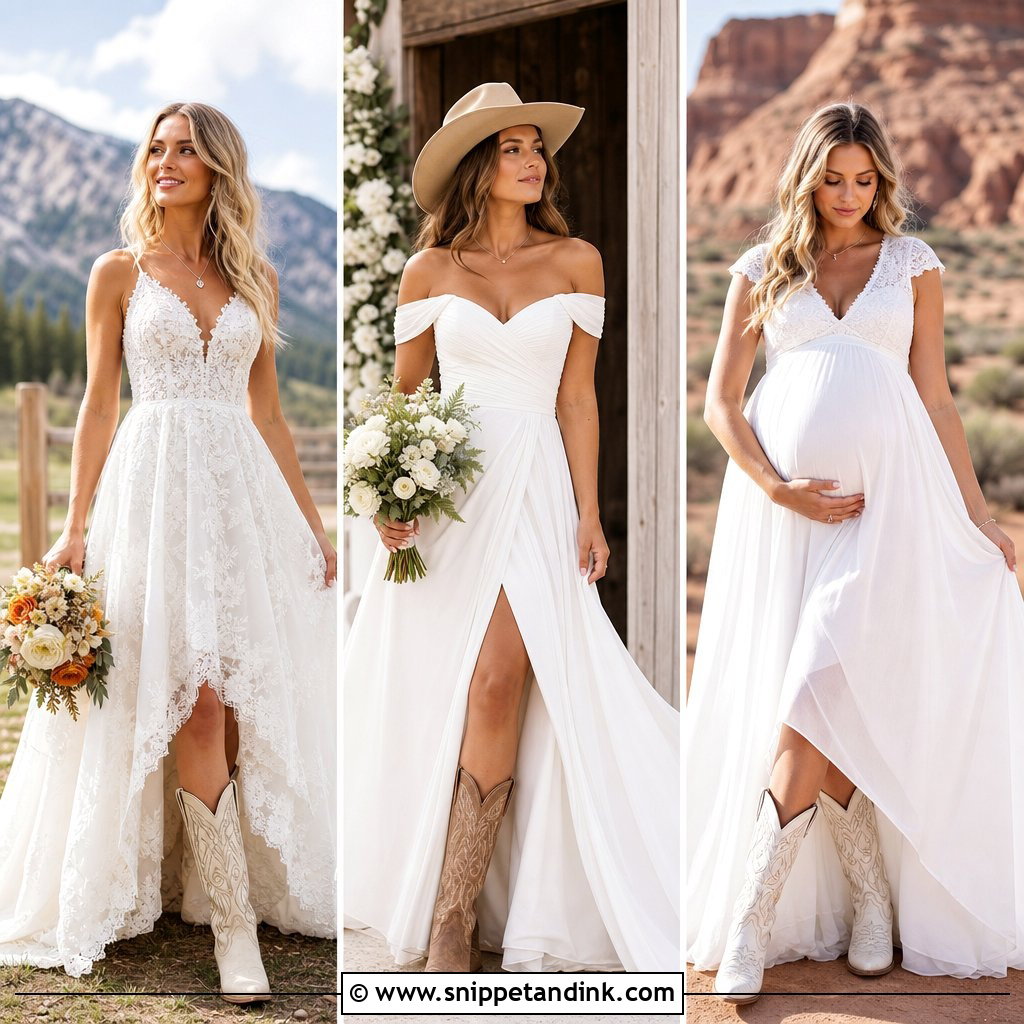
Boots are where most western brides start, and the dress follows. Lace, satin, crepe, tulle and chiffon all work above them. Ivory boots with an ivory gown give the cleanest line; tan leather warms the whole look for a ranch. The question is how much boot you want seen: a midi or high-low shows the whole shaft, a slit flashes it as you walk, and a floor-length gown hides it until you lift your skirt for the photographer. Hem the dress in the boots, never in flats you plan to swap out.
4. High Low Country Western Wedding Dress
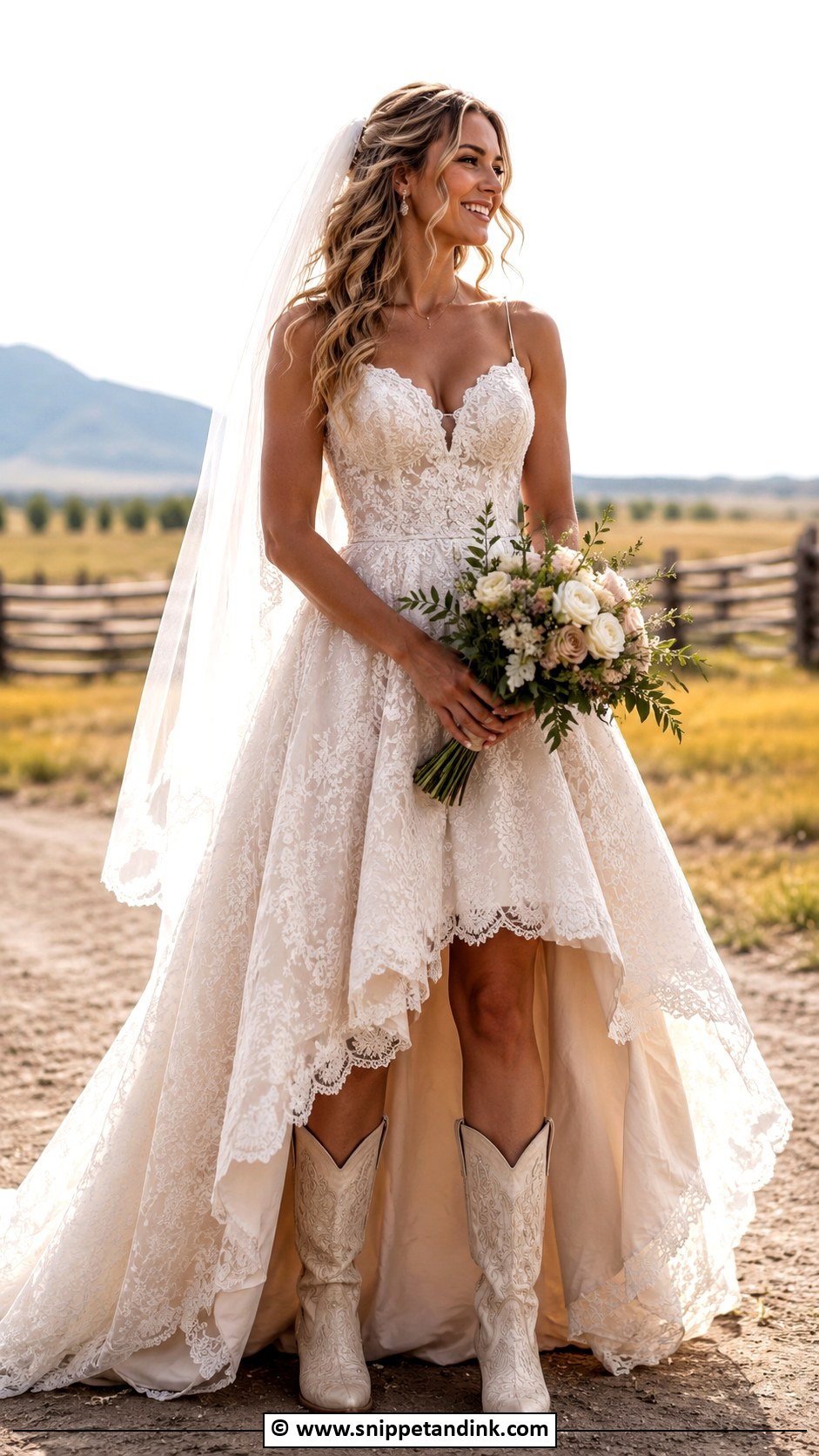
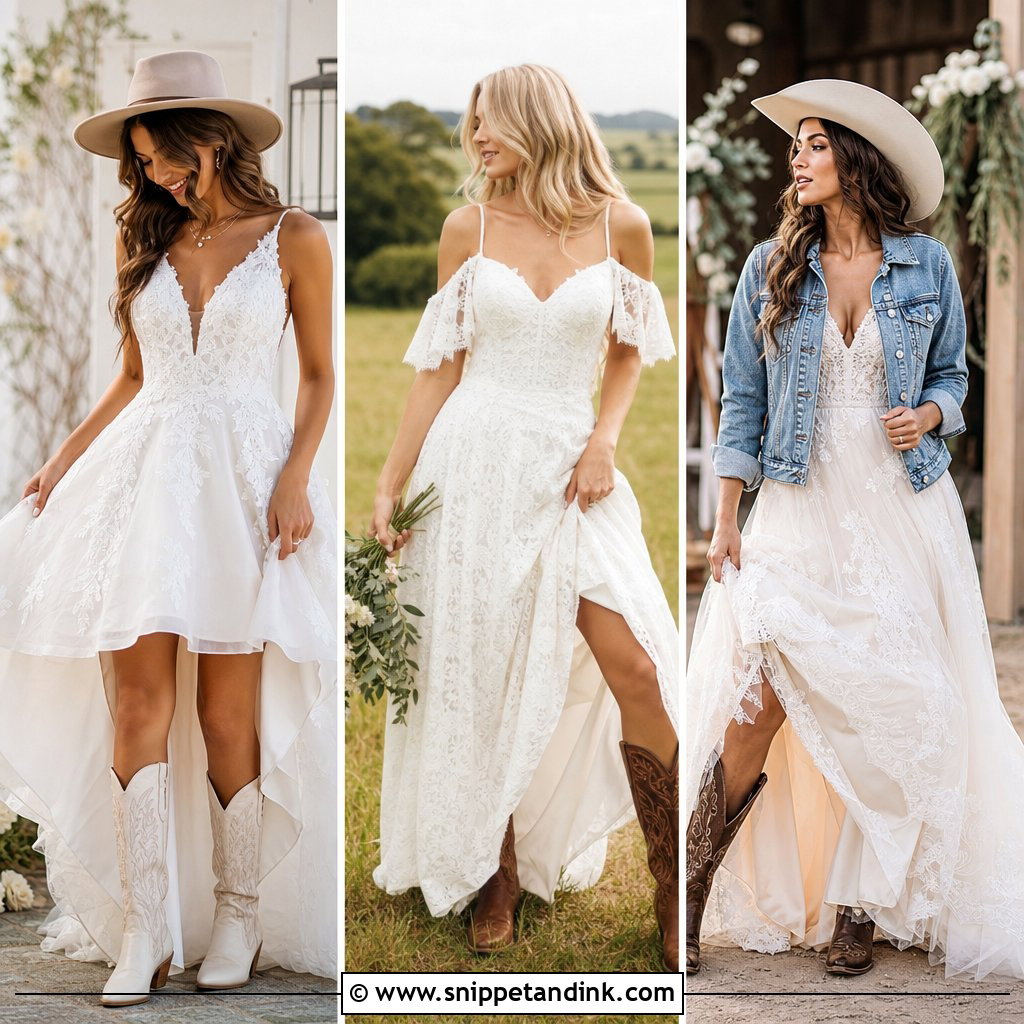
With a high-low, the front hem is the measurement that matters. Too short and it looks like a cocktail dress from the side; too long and the boots disappear anyway. I usually set it just above the boot top so the shaft and stitching show. Lace, organza and tulle drape softly at the dip, while satin holds a crisper curve. Pick a veil that ends above the back hem, otherwise two long lines compete. It’s a good fit for barn receptions and brides who plan to stay on the dance floor.
5. Long Sleeve Country Western Wedding Dress
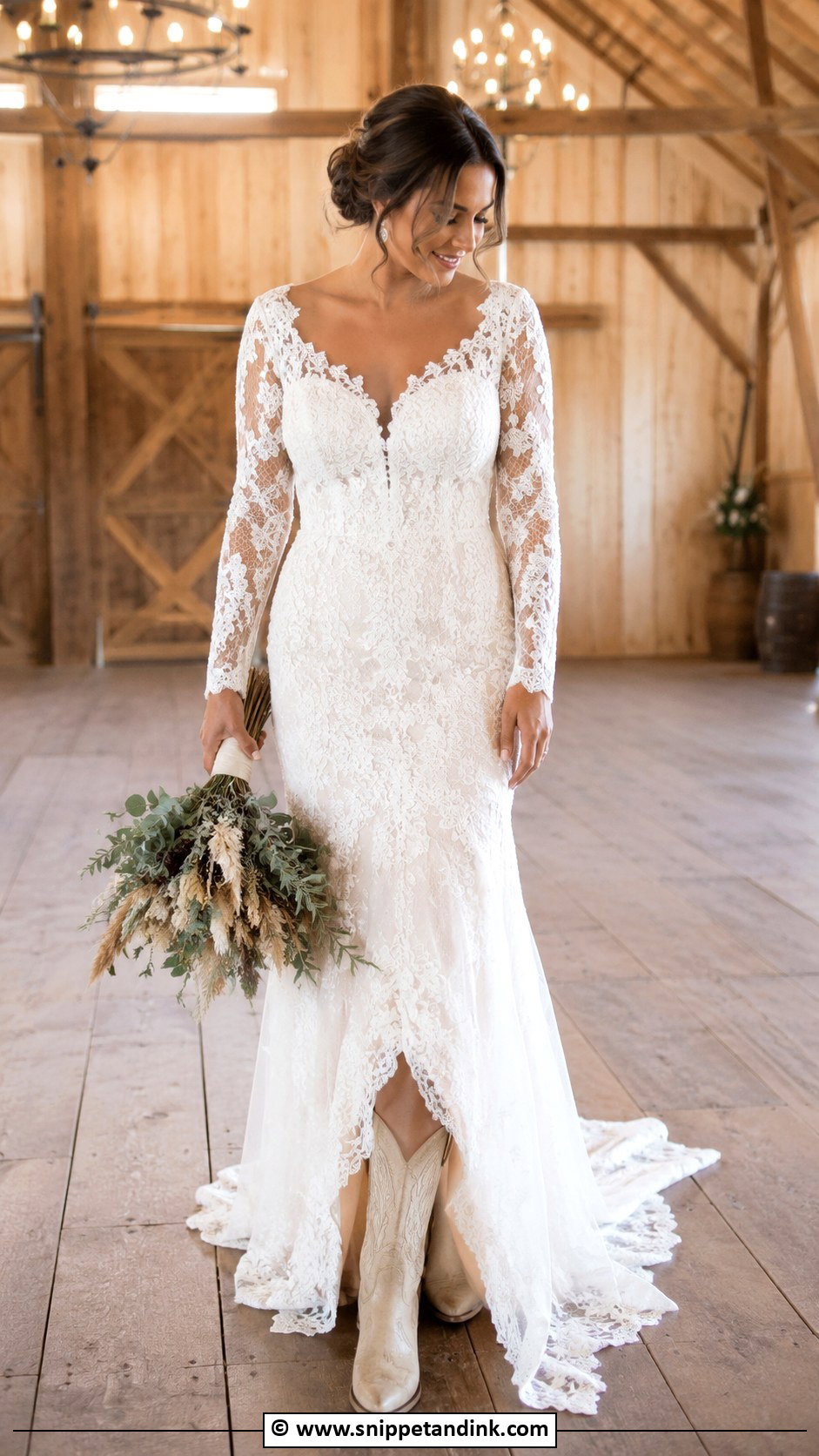
Sleeves earn their place once the sun drops behind the ridge and the temperature goes with it. Lace sleeves lean vintage, fitted crepe leans modern, and bell sleeves with floral appliqué give a softer western mood. The catch with bell sleeves is food: they drag through plates at dinner, so I’d tack an elastic loop inside each cuff to hold them back. Leather boots and a felt hat suit barns, lodges and mountain venues. You get coverage without the formality of a high-necked gown.
6. Off Shoulder Country Western Wedding Dress
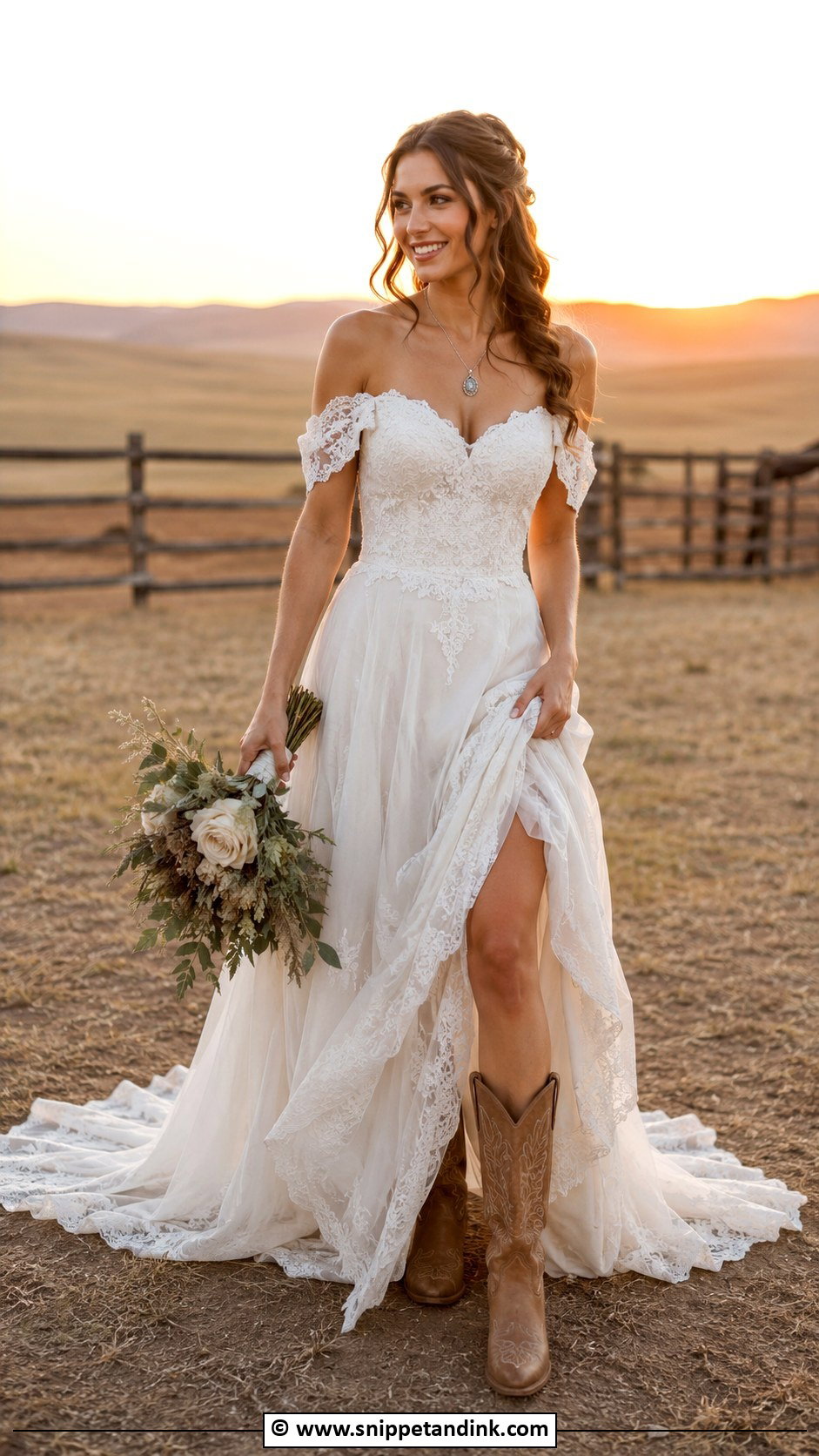
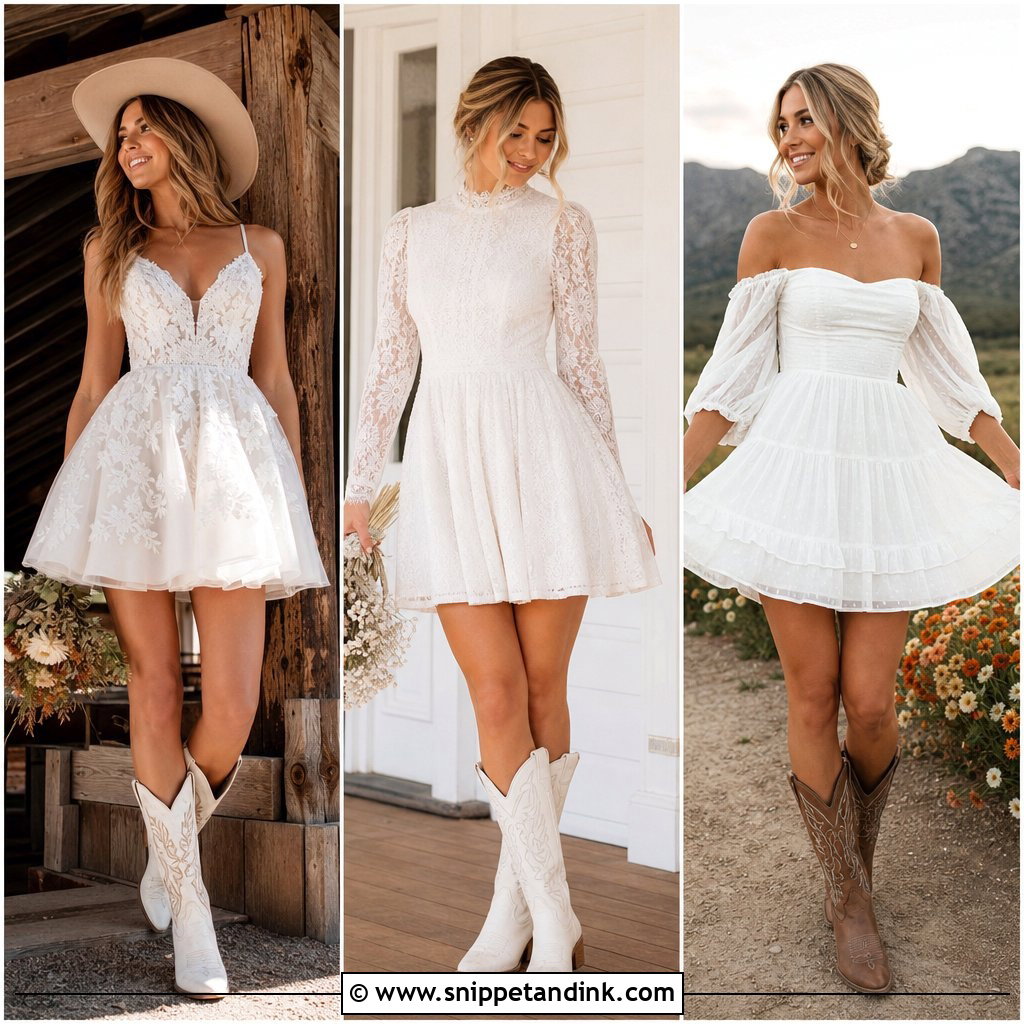
Off-shoulder necklines show off the collarbone, and that open space is what lets western accessories like a choker or a small pendant sit cleanly. Pair the neckline with lace sleeves, a fitted bodice or a flowing skirt. Choose an A-line for comfort or a fitted cut for drama. Keep curls pulled back so they don’t cover the shoulder line. A western belt works if the bodice is plain; with heavy lace or beading it starts to fight. The real test is movement, so try hugging someone in it before you buy. Sunset portraits in a field are where this one shines.
7. Short Country Western Wedding Dress
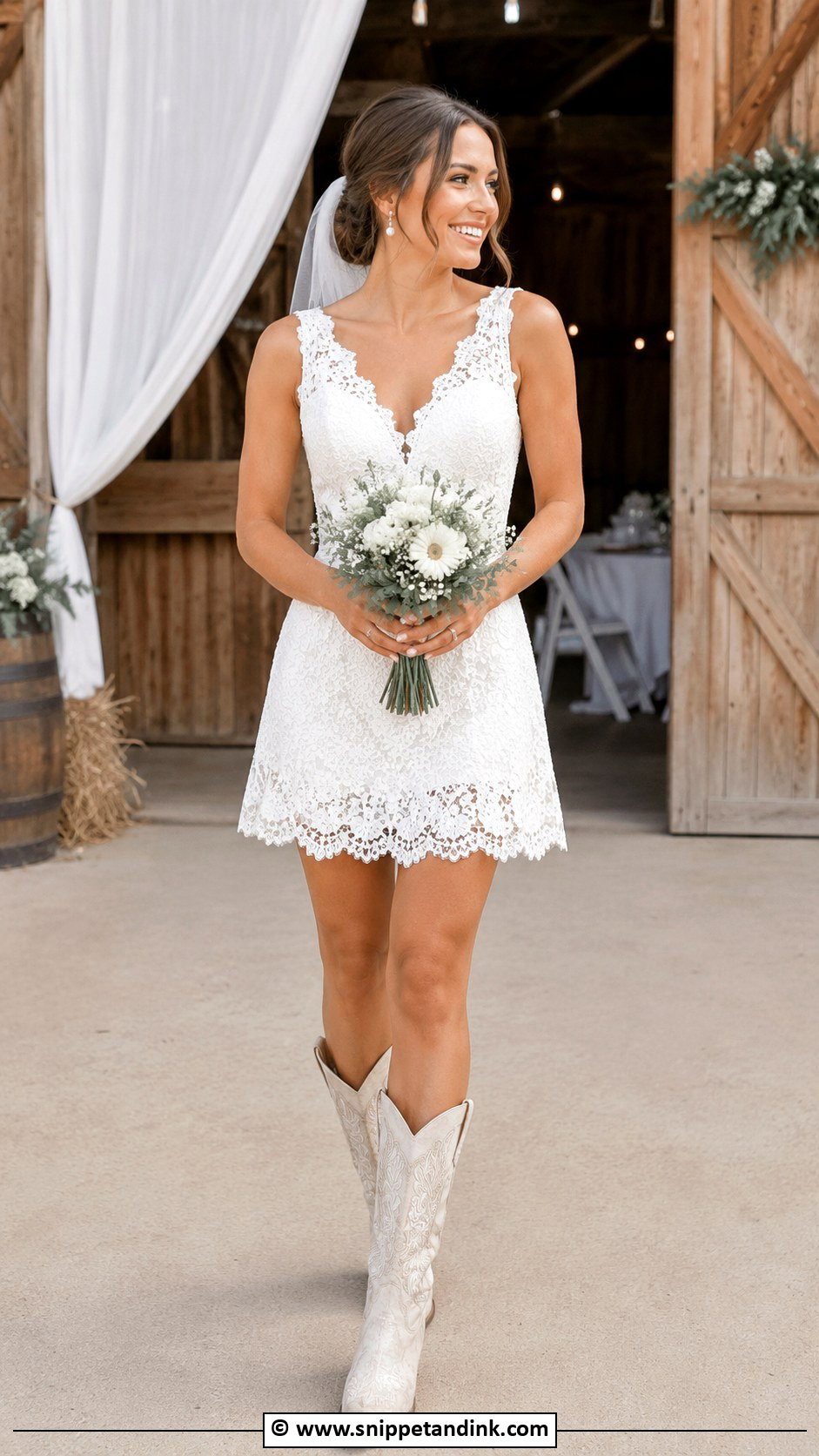
A short dress puts the boots front and center, so spend real money on the boots and less on the dress. Lace, satin, eyelet or a structured mini all work for a courthouse ceremony, elopement, reception change or casual barn day. Choose boots with embroidery, pearl studs or soft leather texture, then keep jewelry minimal because the outfit already has its feature. A short veil, a bow or a hat finishes it. Do a sitting test: minis ride up more than you think on a hay bale.
8. Vintage Country Western Wedding Dress
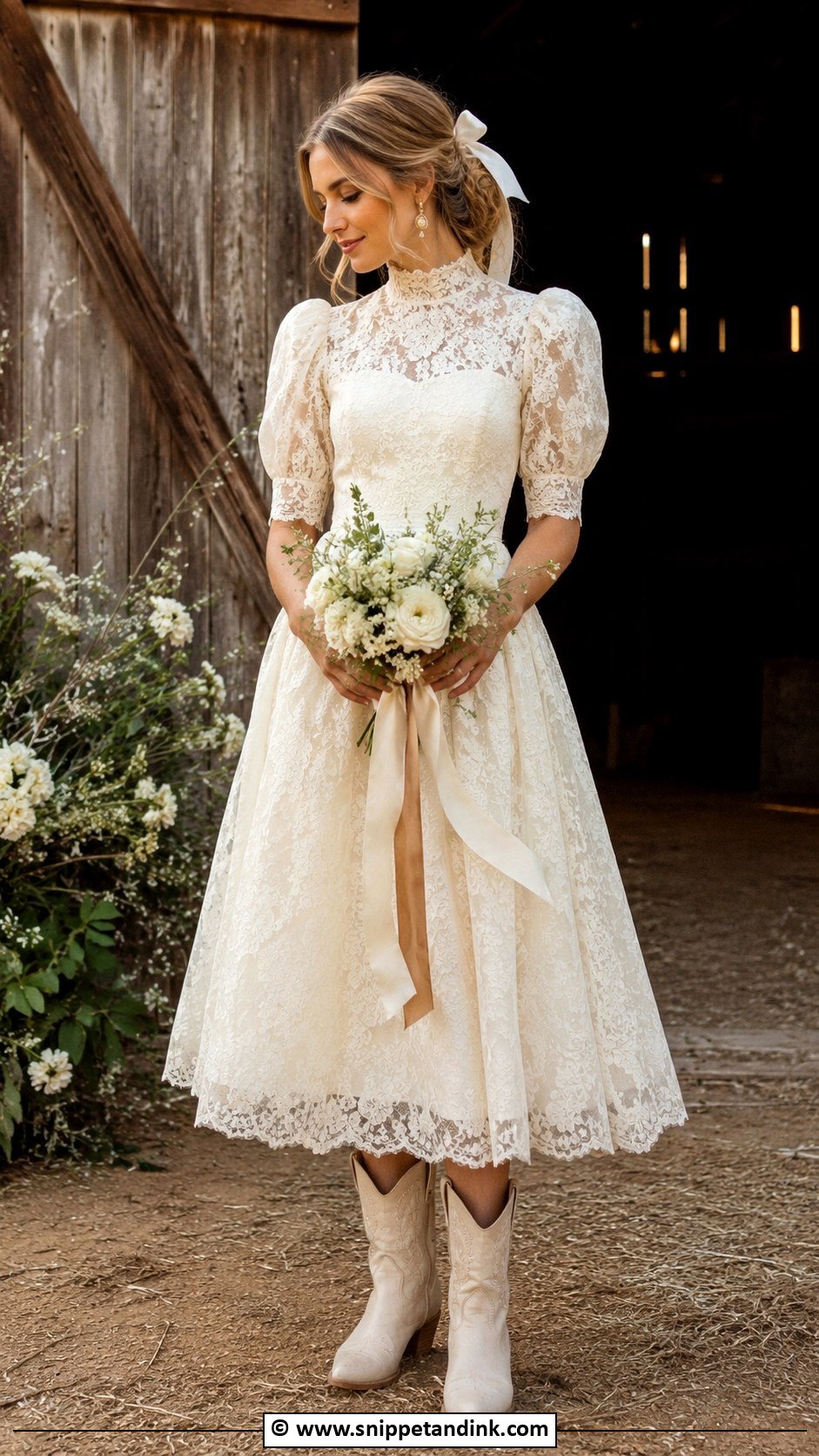
Vintage western means tea-length lace, puff sleeves, high necks and covered buttons, the prairie details that read as old-fashioned in a good way. The danger is going full period piece, so I balance one or two vintage details with a modern fit and clean leather boots. Covered buttons take a long time to fasten; make sure someone with patient hands is in the room. Heirloom-style jewelry, a small structured bouquet and a ribbon or low bun suit historic barns and family ranches.
9. Simple Country Western Wedding Dress
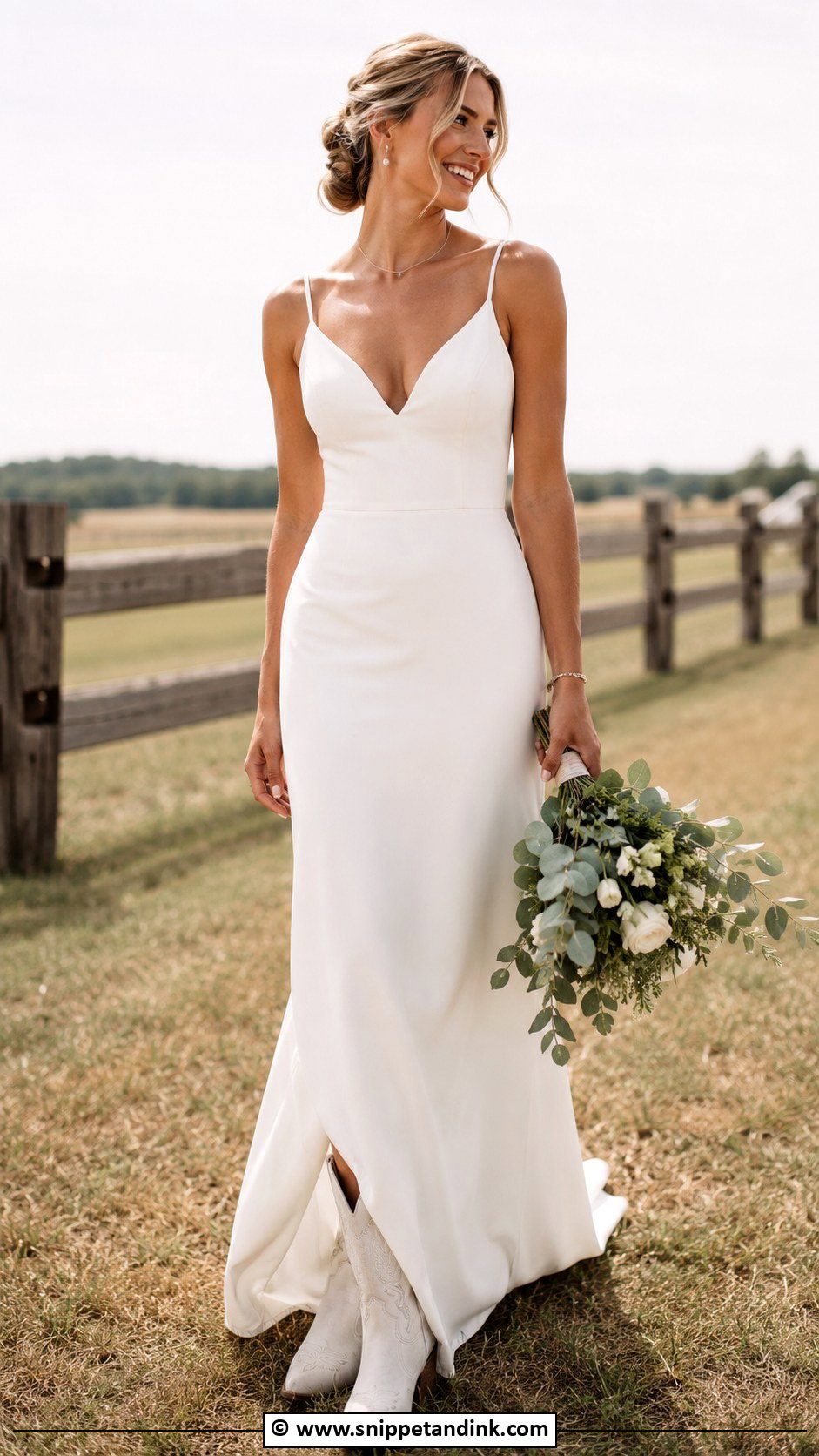
A plain dress gives the western pieces room to work. Start with a crepe sheath, satin slip, plain A-line or square-neck dress, then choose where the western detail goes: boots, belt, hat, bouquet or jewelry. Pick two at most. Ivory boots and silver earrings look refined; tan boots and a leather belt look relaxed. A simple dress also cuts through the visual noise of a rustic venue full of beams, hay bales and string lights, so you don’t get lost in the background of your own photos.
10. Country Western Wedding Dress With Fringe
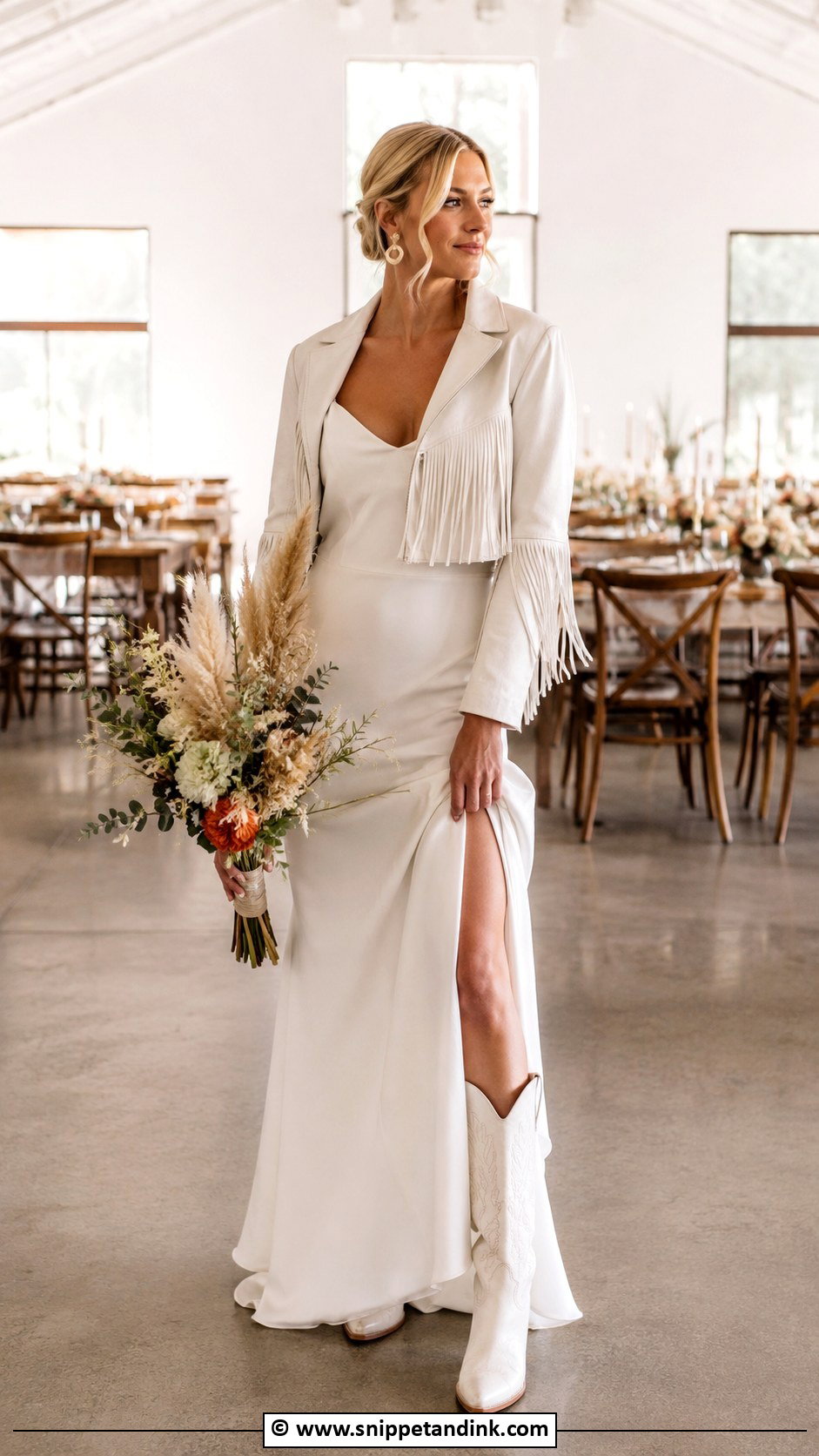
Fringe can sit on the sleeves, skirt, jacket, hem or a detachable overlay, but choose one place. A fitted crepe dress with a fringe jacket looks modern; lace with subtle fringe sleeves looks softer. Fringe tangles if it’s packed folded, so hang the dress and jacket on separate hangers and comb any knots out gently with your fingers the morning of. It comes alive in walking shots and first dances. Sleek boots and a textured bouquet keep it balanced.
11. Country Western Wedding Dress With Belt
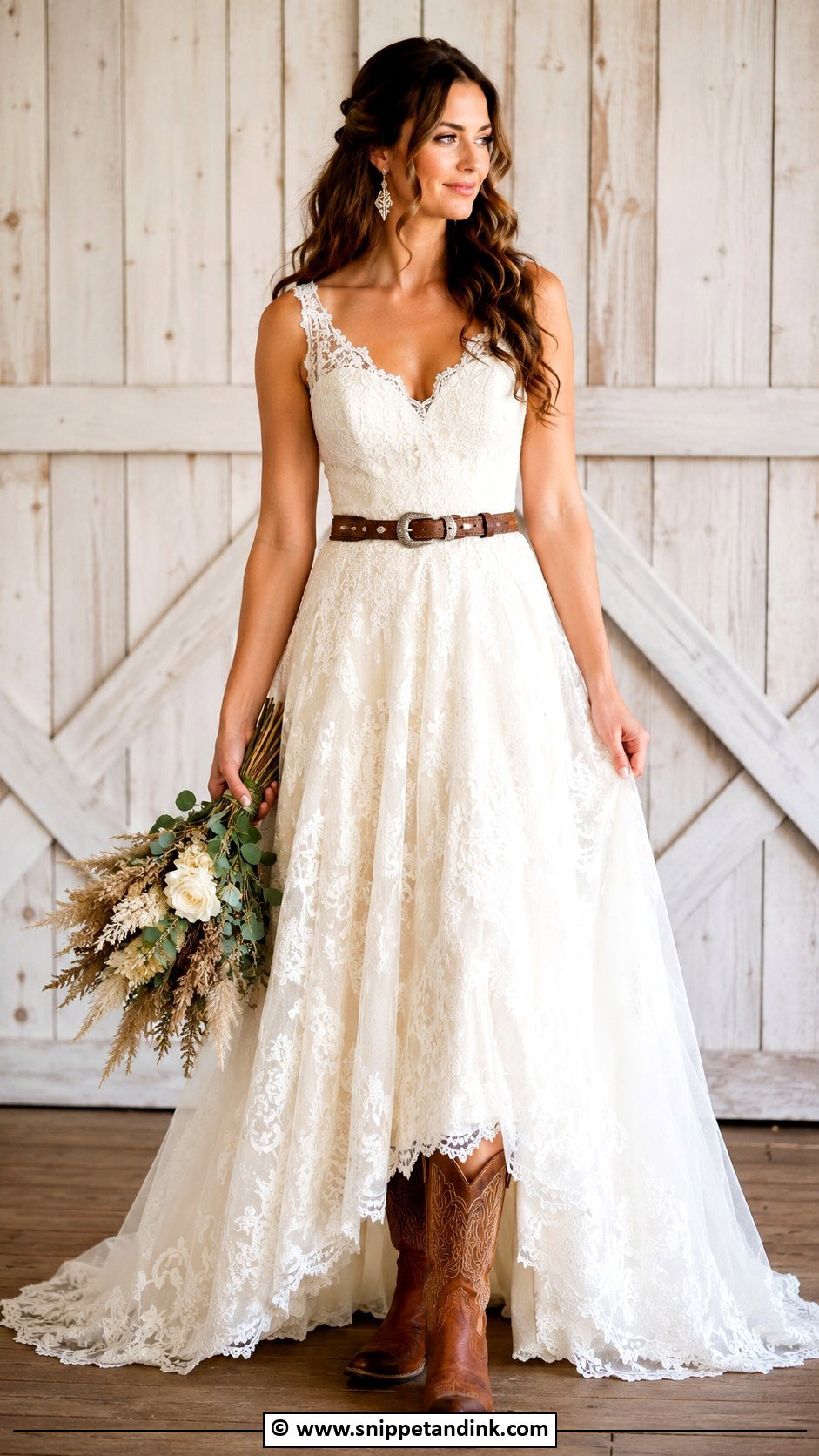
A belt is my favorite fix for a dress that’s almost right. A slim leather belt pulls a simple gown toward the ranch; a silver buckle adds more western character. On heavily laced or beaded dresses, pick the quietest belt you can find. Belts look best on A-line, sheath and fit-and-flare shapes because they mark a waist that’s already there. Have it attached at the side seams with small thread loops so it doesn’t spin around through the day. Cowgirl boots and soft curls finish it.
12. Country Western Wedding Dress With Hat
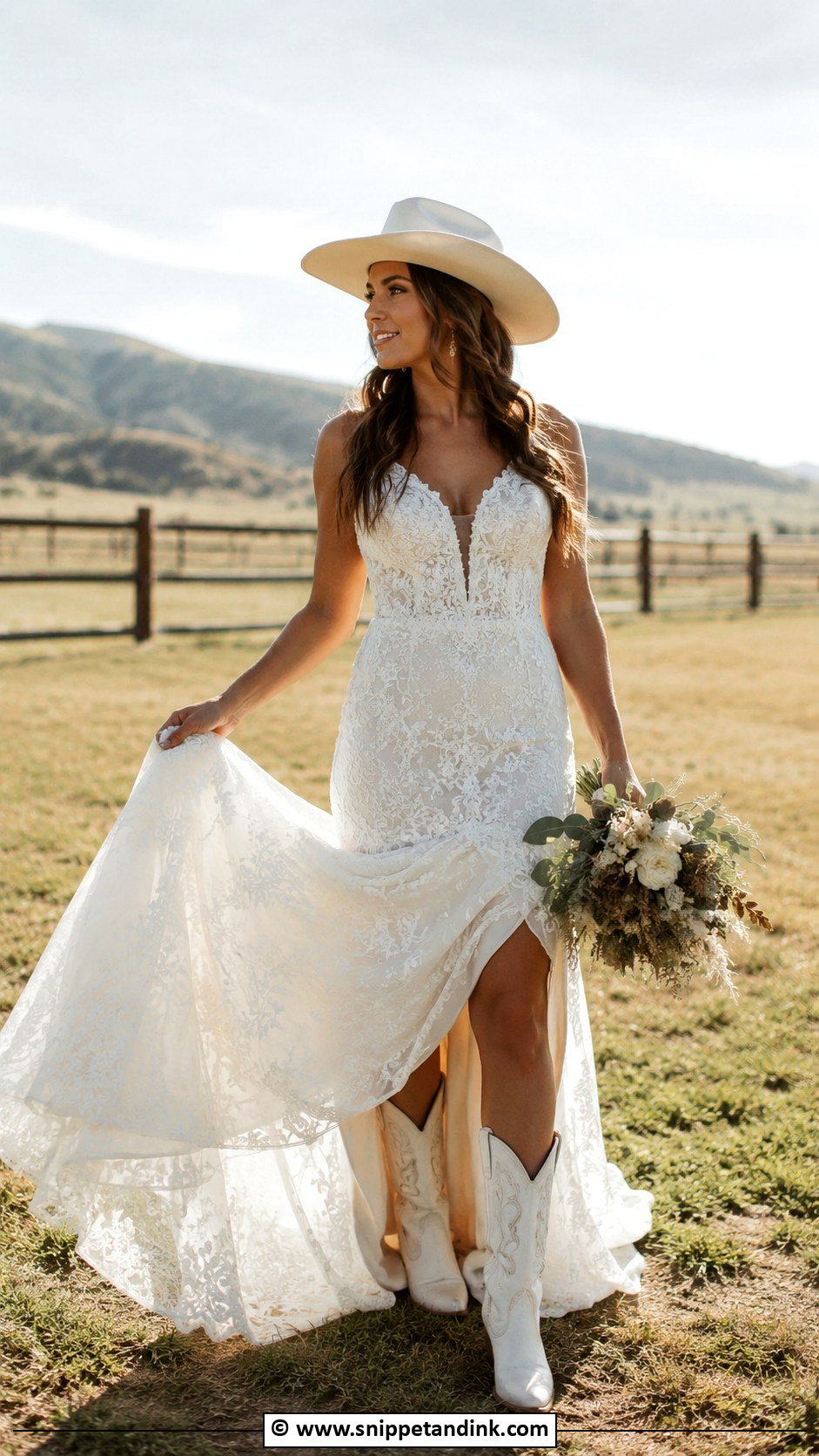
If the hat is the statement, everything else goes quiet. An ivory or white wide brim reads bridal; tan felt reads earthy and ranch-born. Coordinate boots to the hat tone rather than to the dress, because they bracket the outfit top and bottom in a full-length photo. Felt hats are warm, so in summer look at straw or a lighter brim. Plan where the hat goes during dinner and dancing, since it will be knocked off at some point. Keep earrings small and the bouquet clean.
13. Rustic Country Western Wedding Dress
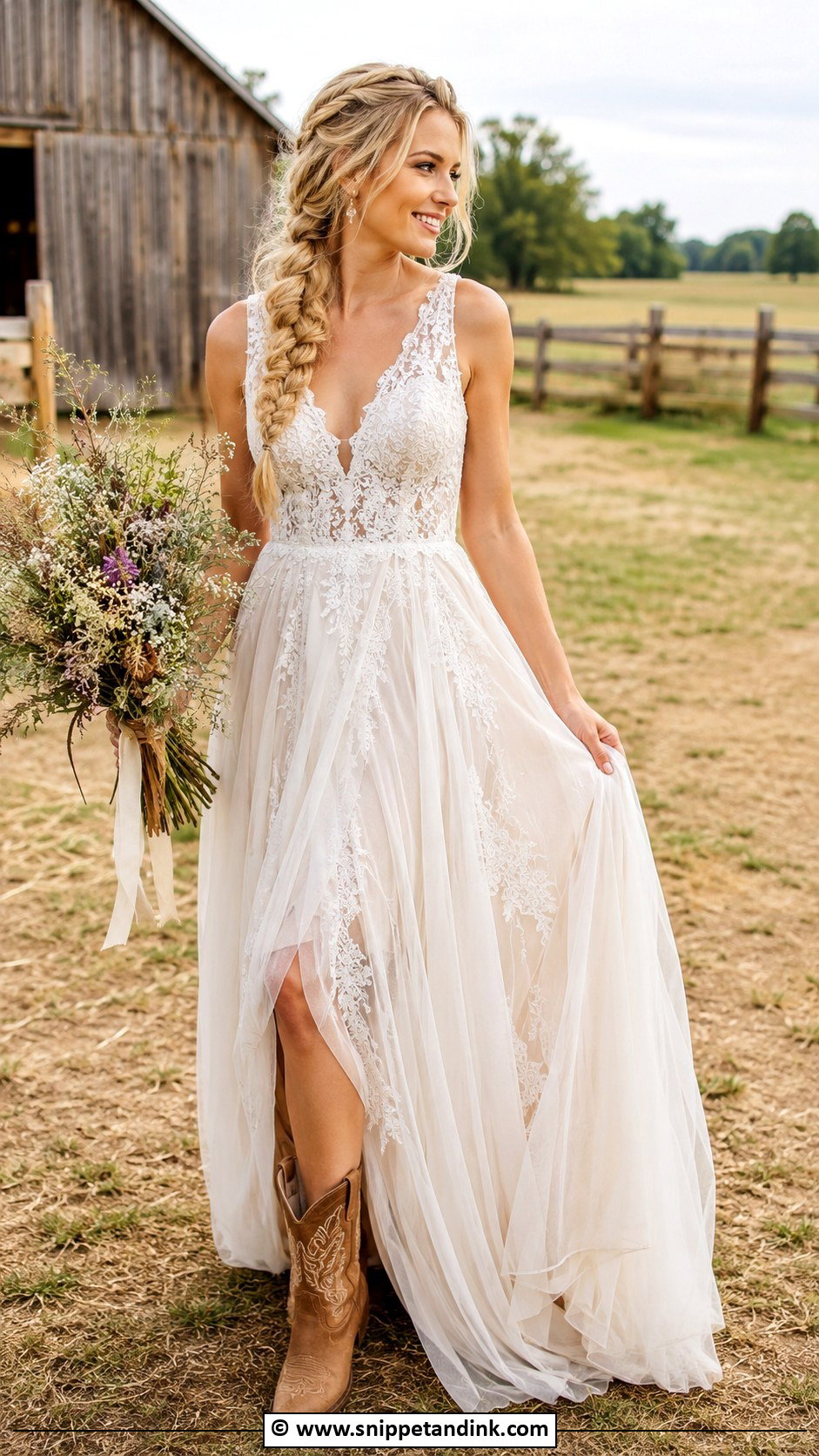
Rustic is about texture, not ruggedness. Soft lace, chiffon, cotton eyelet and relaxed tulle all sit naturally beside wood beams and wildflowers; stiff structured fabrics fight the setting. Tan boots and simple jewelry in silver, pearl or turquoise tones suit it, and a loose braid or half-up style keeps hair out of your face in the wind. I’d avoid anything that needs constant adjusting, because a rustic day usually includes walking between spaces. The aim is a dress you forget you’re wearing.
14. Elegant Country Western Wedding Dress
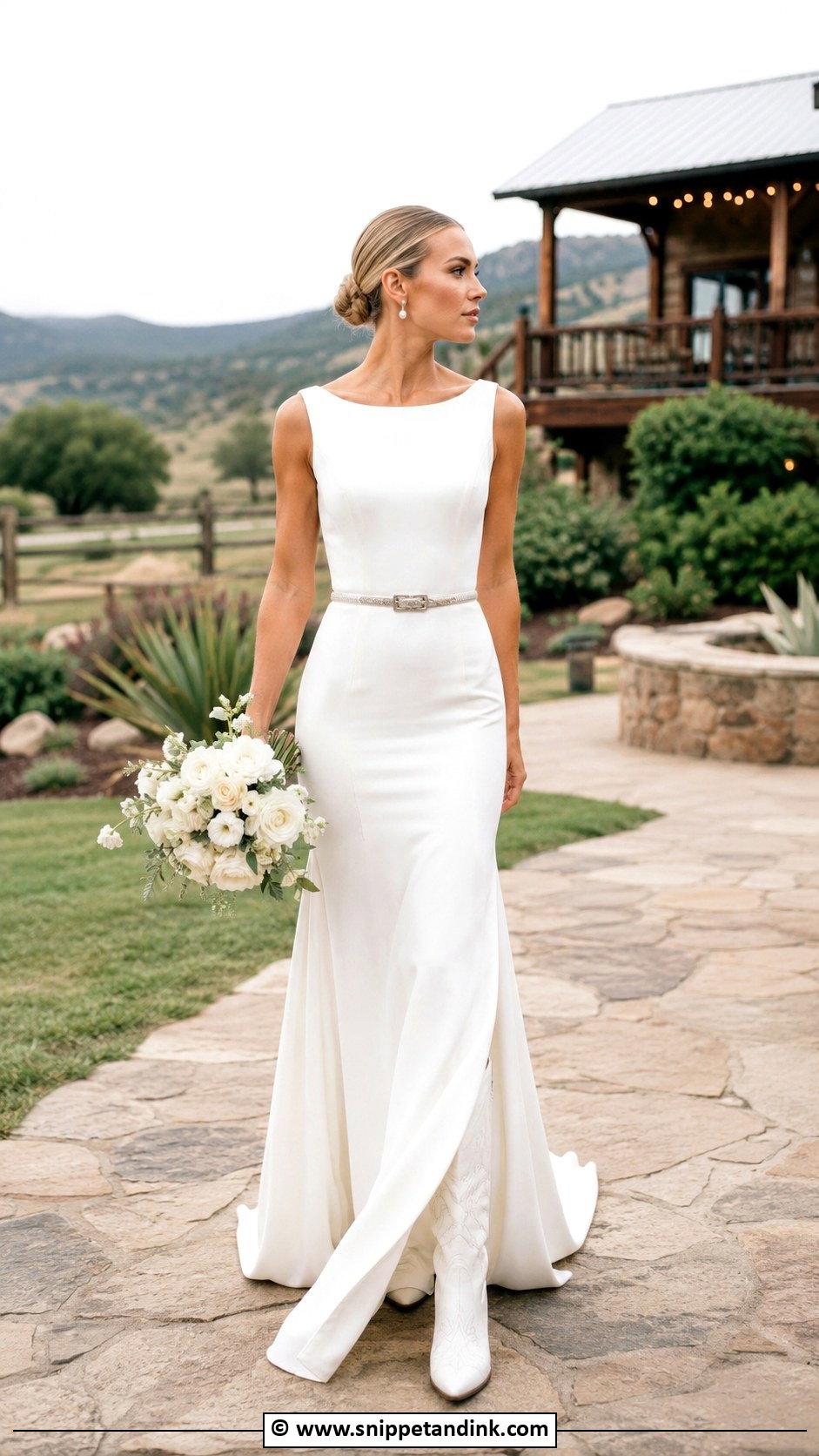
This one is for the upscale barn or ranch resort where guests arrive in suits. Start with a crepe mermaid, satin A-line or lace fit-and-flare, then add one or two western touches: pointed boots, a slim belt, silver jewelry or a structured bouquet. Ivory, cream, champagne or pale blush keeps it refined. The fitting detail I watch most is the hem, since a formal gown with boots needs the length set precisely or it pools at the toe. It reads bridal first and western second, which is the right order for a formal evening.
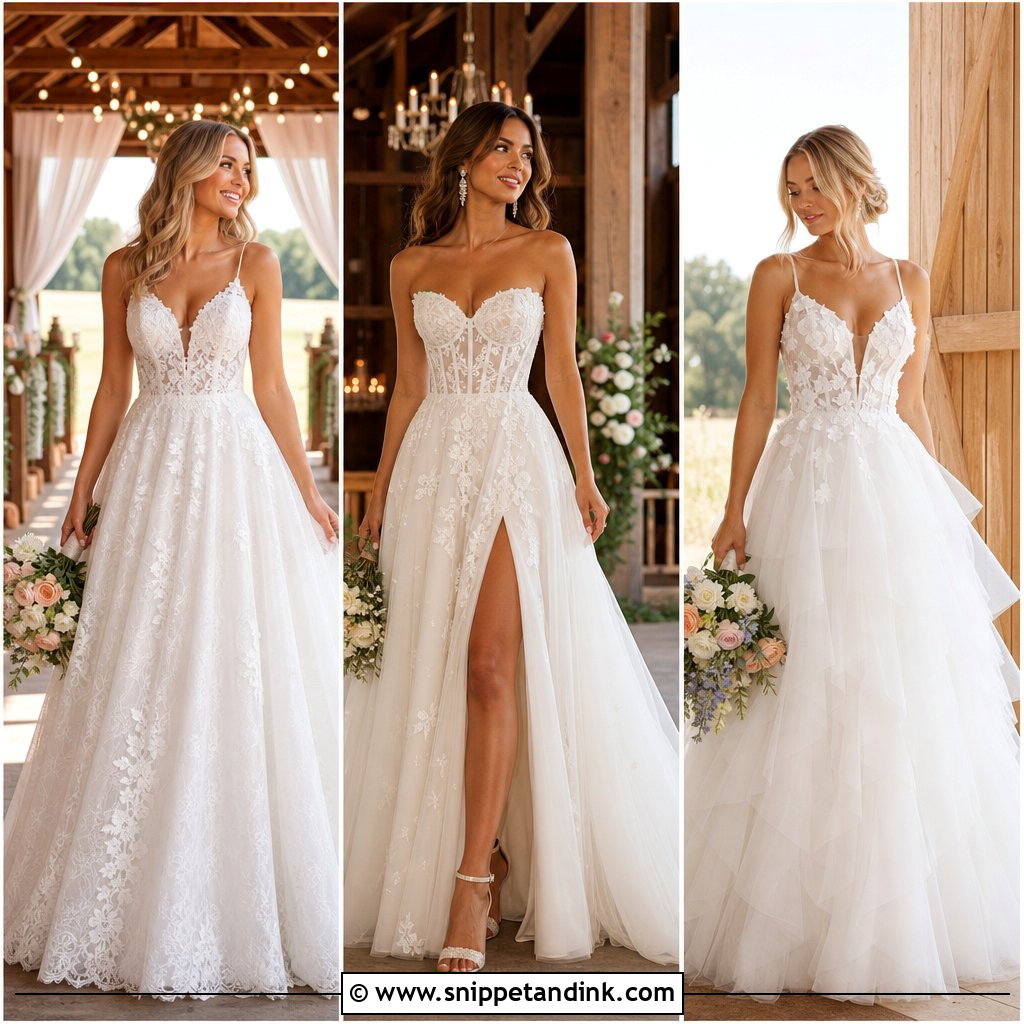
15. Plus Size Country Western Wedding Dress
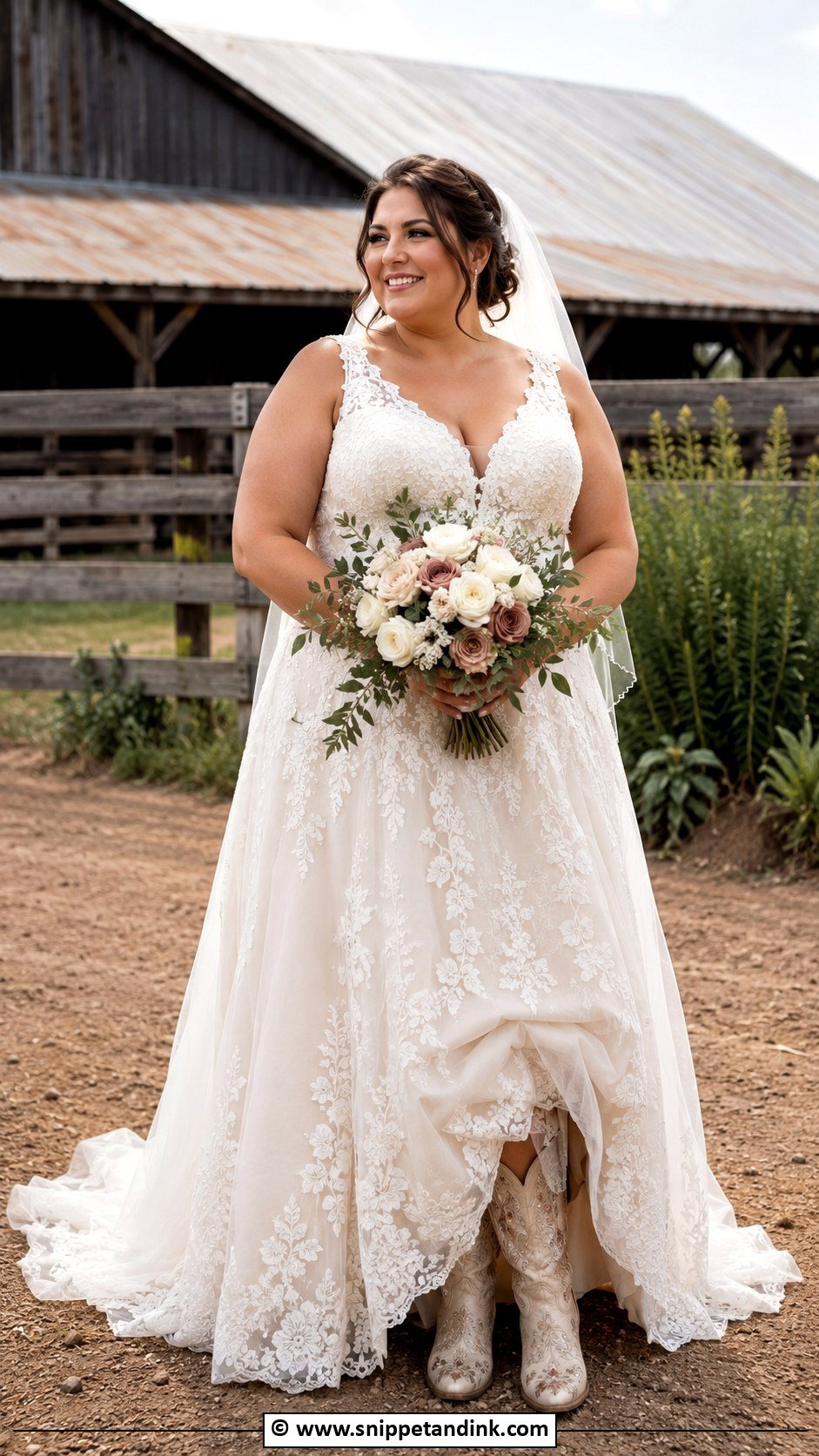
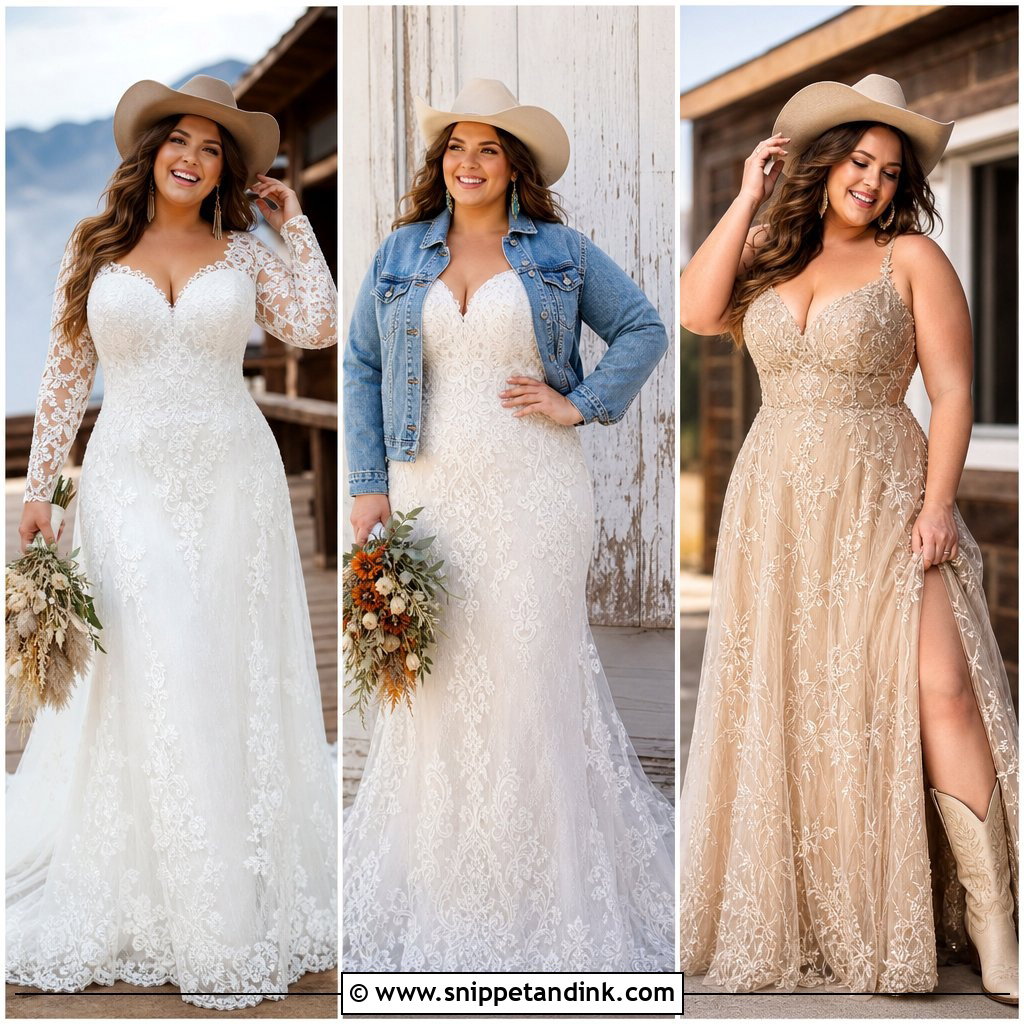
Fit and support are the whole conversation here. A plus size country western wedding dress in an A-line, corset bodice, wrap-style neckline or fit-and-flare can all work, depending on where you want structure. I look for built-in boning, a strong lining and straps or sleeves you trust, so you aren’t adjusting all day. Choose boots with a stable heel and a wider calf if you need it; many western boot makers offer them. A belt can define the waist, and a veil or hat adds the bridal detail. Nothing about this is hiding; it’s dressing your shape well.
16. Mermaid Country Western Wedding Dress
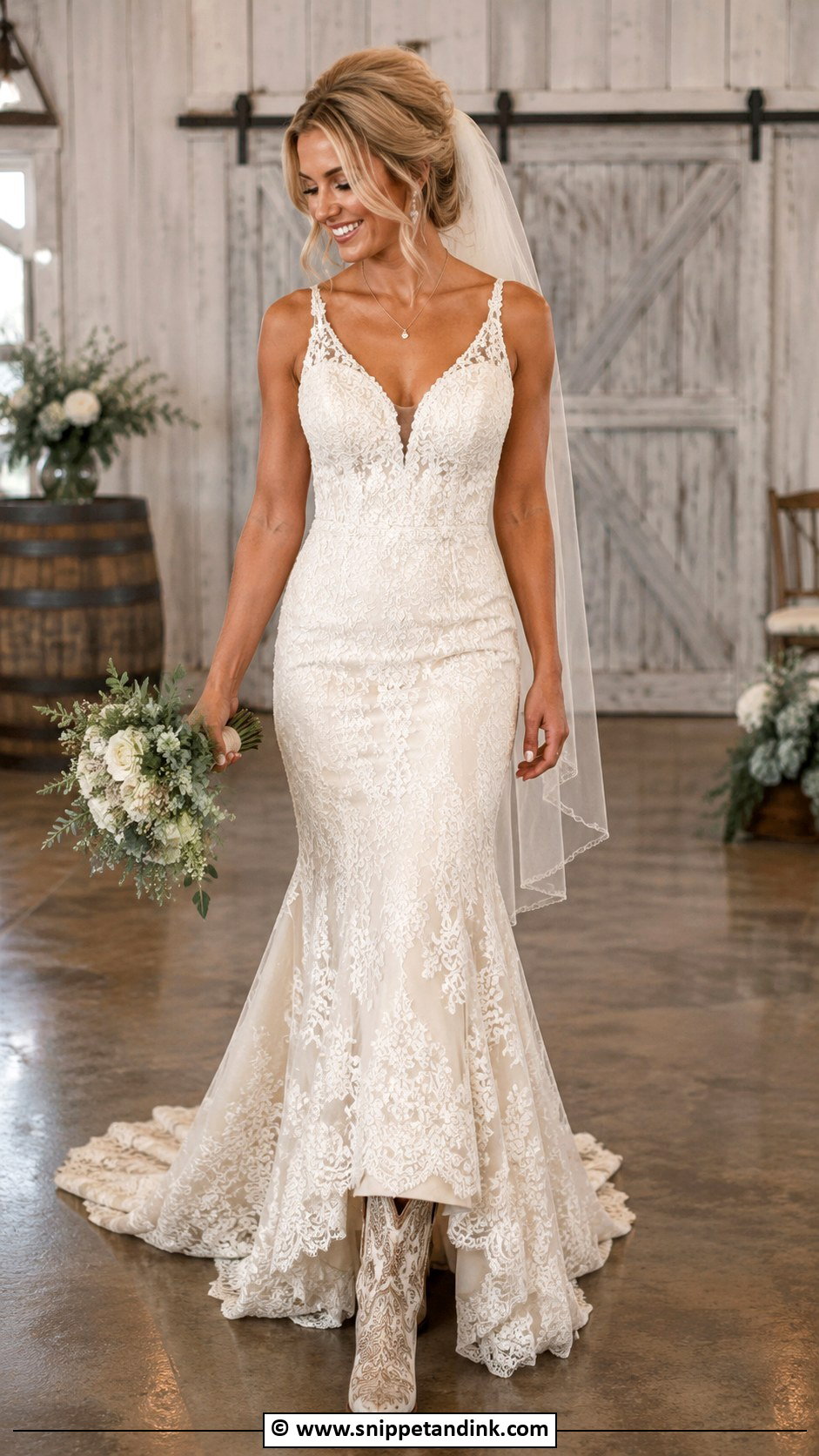
A mermaid gown hugs through the hips and flares at the knee, which looks dramatic and limits your stride. That matters on gravel or a hillside, so walk across a carpet in the dress and boots together before deciding. Lace mermaids feel romantic; crepe looks sleek. Pointed boots fit under some hems, while a narrow flare may need a western-style heel instead. A long veil balances the shape. Expect to be bustled before dancing, since a fishtail train is hard to manage in a crowd.
17. A Line Country Western Wedding Dress
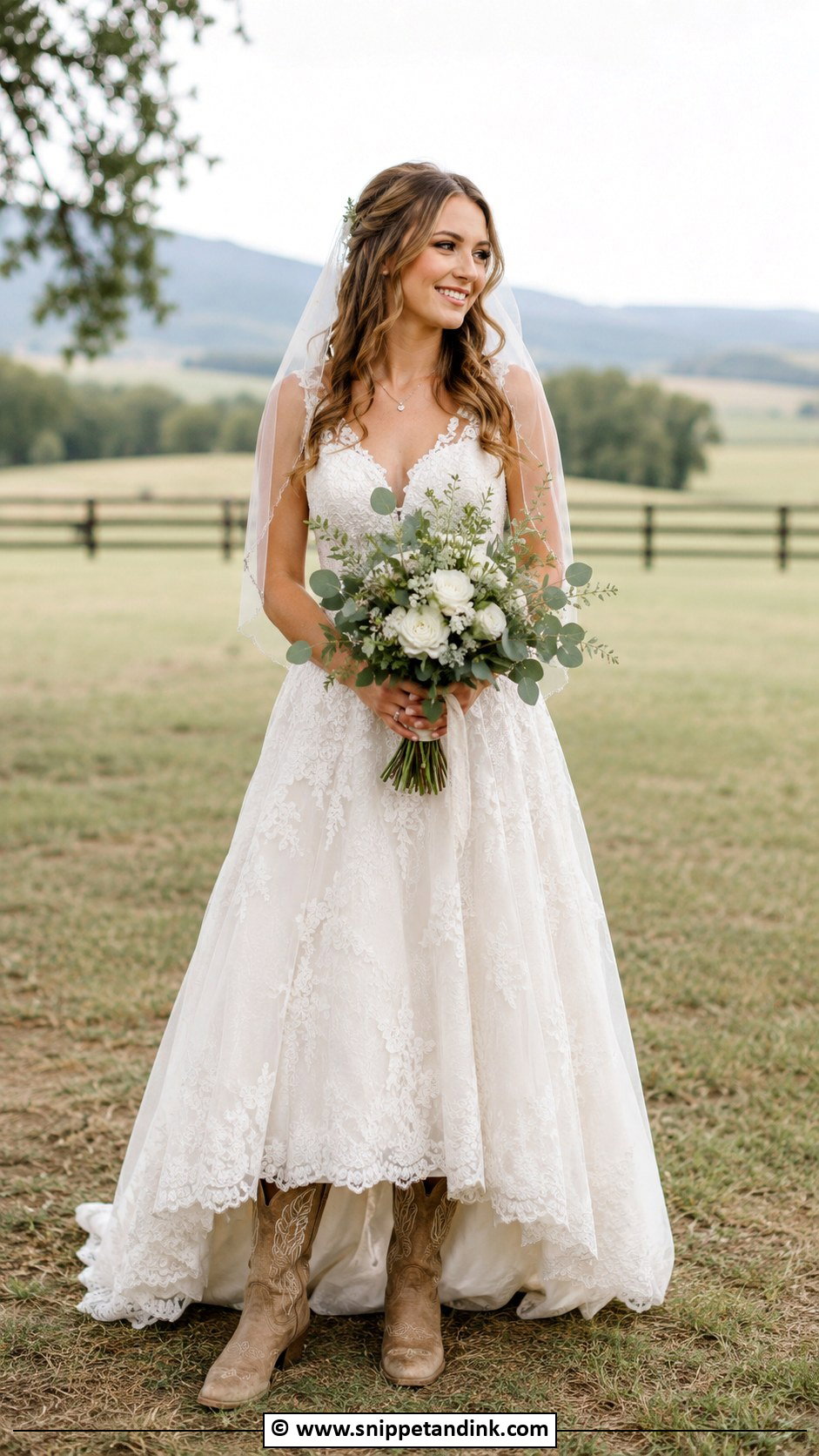
The A-line is the shape I recommend most when a bride isn’t sure, because it suits nearly every body and every venue. A fitted bodice and a gently flared skirt give you room to sit, walk and dance. Lace, tulle, chiffon and satin all hold the cut. For an outdoor ceremony, check that the skirt has enough width to step over uneven ground without hitching it up. Cowgirl boots and a simple veil or hat are enough.
18. Ball Gown Country Western Wedding Dress
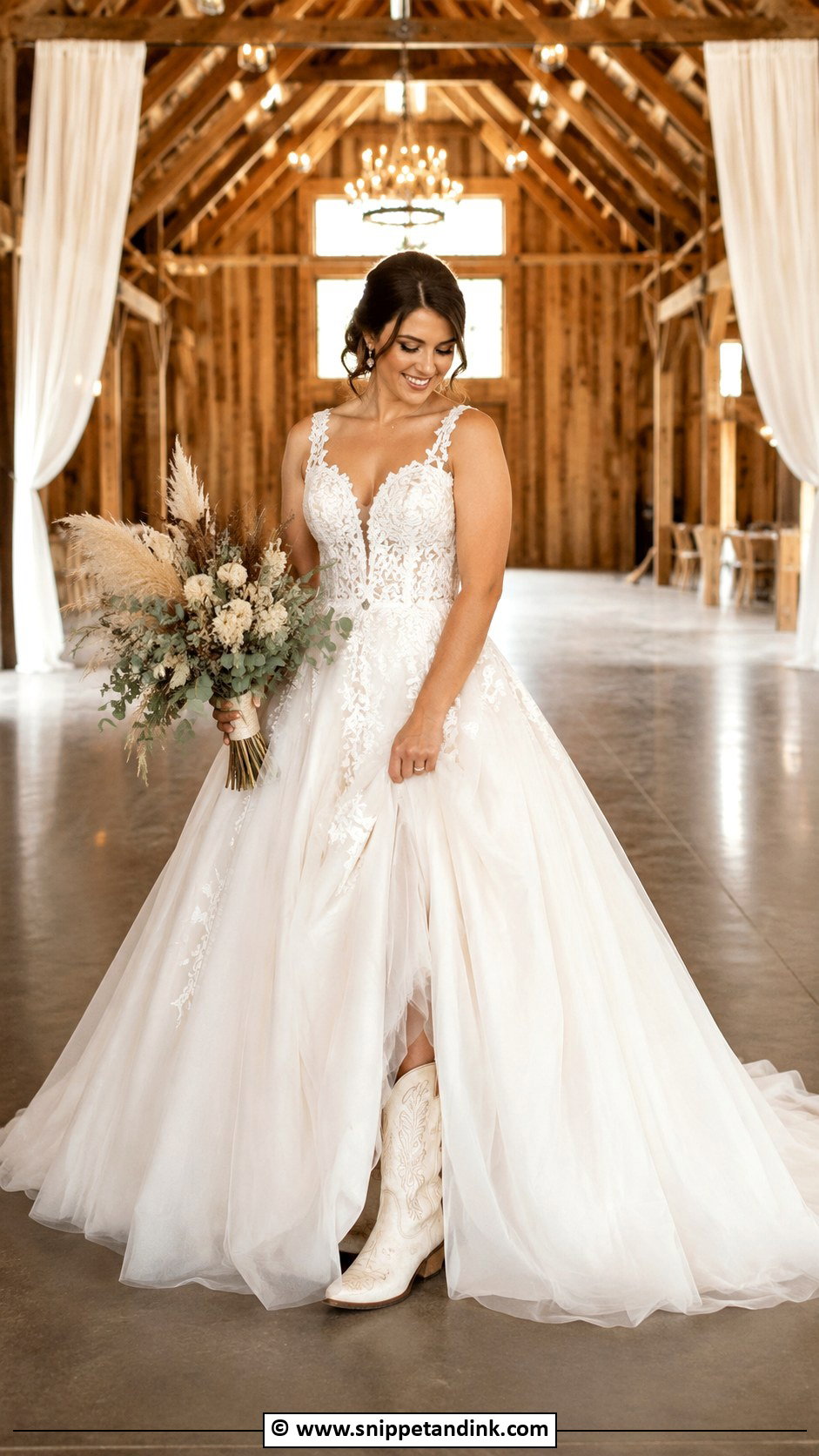
A ball gown in a barn is a bold choice, and it can work if you soften it. Lace, floral appliqué or soft tulle skirts look less royal than heavy satin with a stiff petticoat. Boots under the skirt are a comfort secret nobody sees. Measure doorways and the path to the ceremony; a wide skirt in a narrow barn aisle brushes every chair. A veil usually balances a full skirt better than a hat, which can look top-heavy above all that volume.
19. Tea Length Country Western Wedding Dress
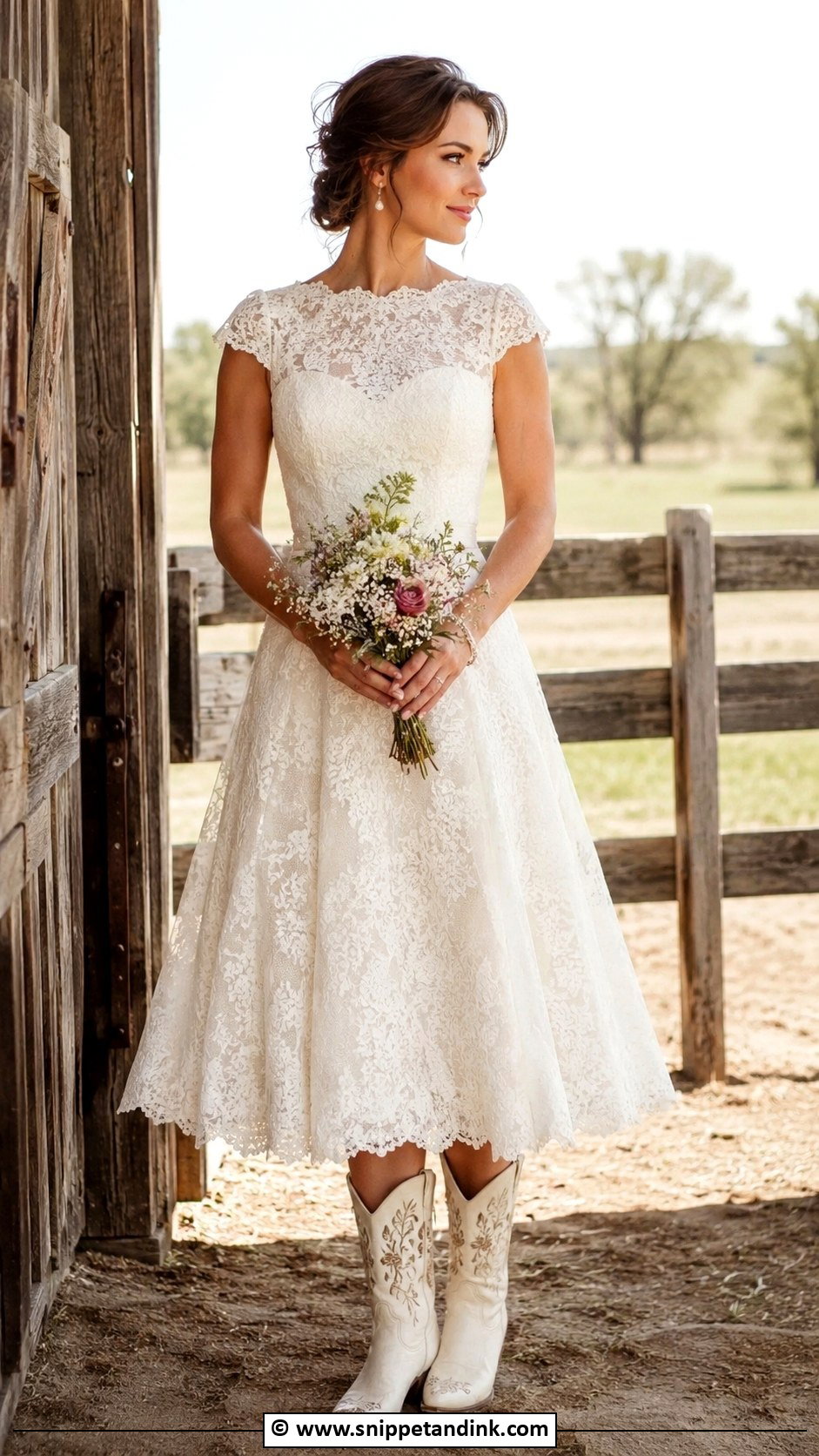
The tea length country western wedding dress stops between knee and ankle, which keeps the hem clean on grass and gravel and shows off your boots. Lace looks vintage, satin looks polished and tulle looks playful at this length. Ankle boots suit it best; tall boots can crowd the gap between hem and boot top. Embroidered boots, pearl earrings and a small bouquet finish it. It’s a smart pick for courthouse-to-ranch days.
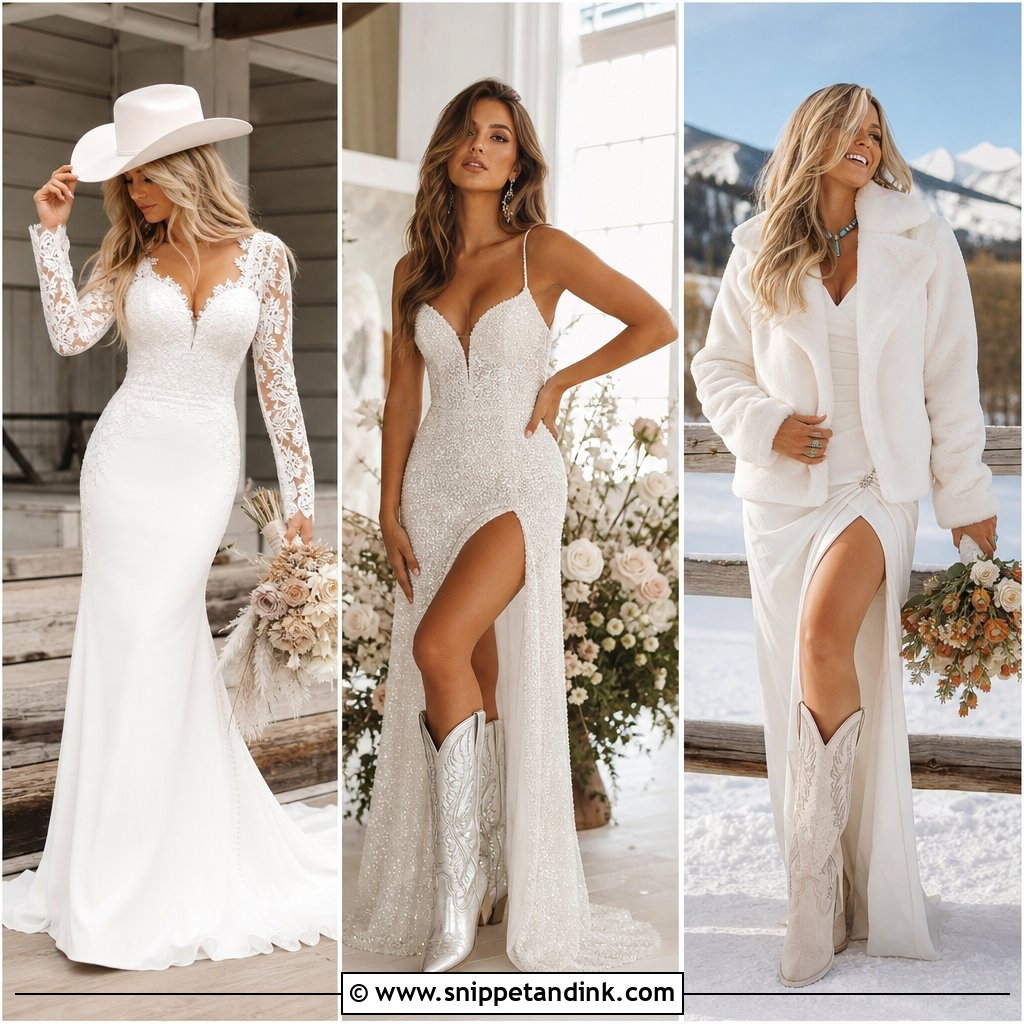
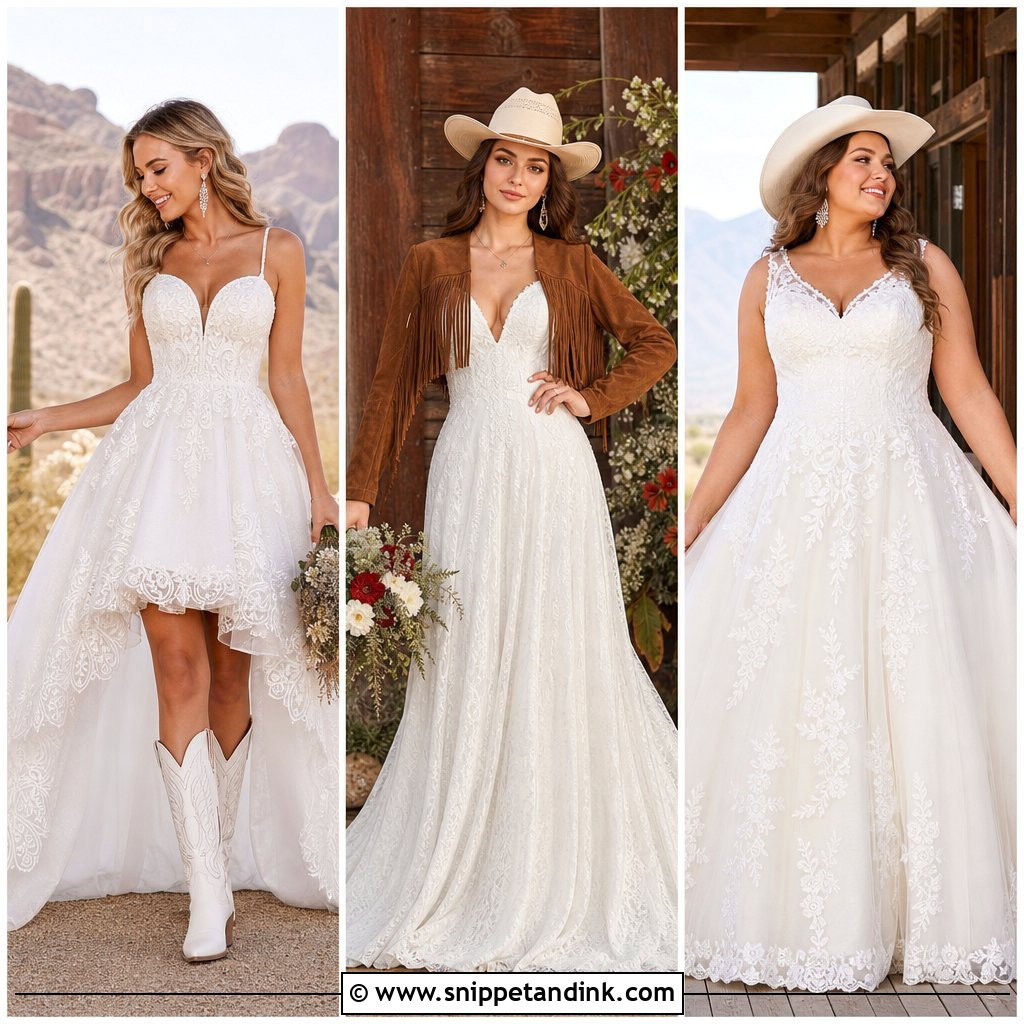
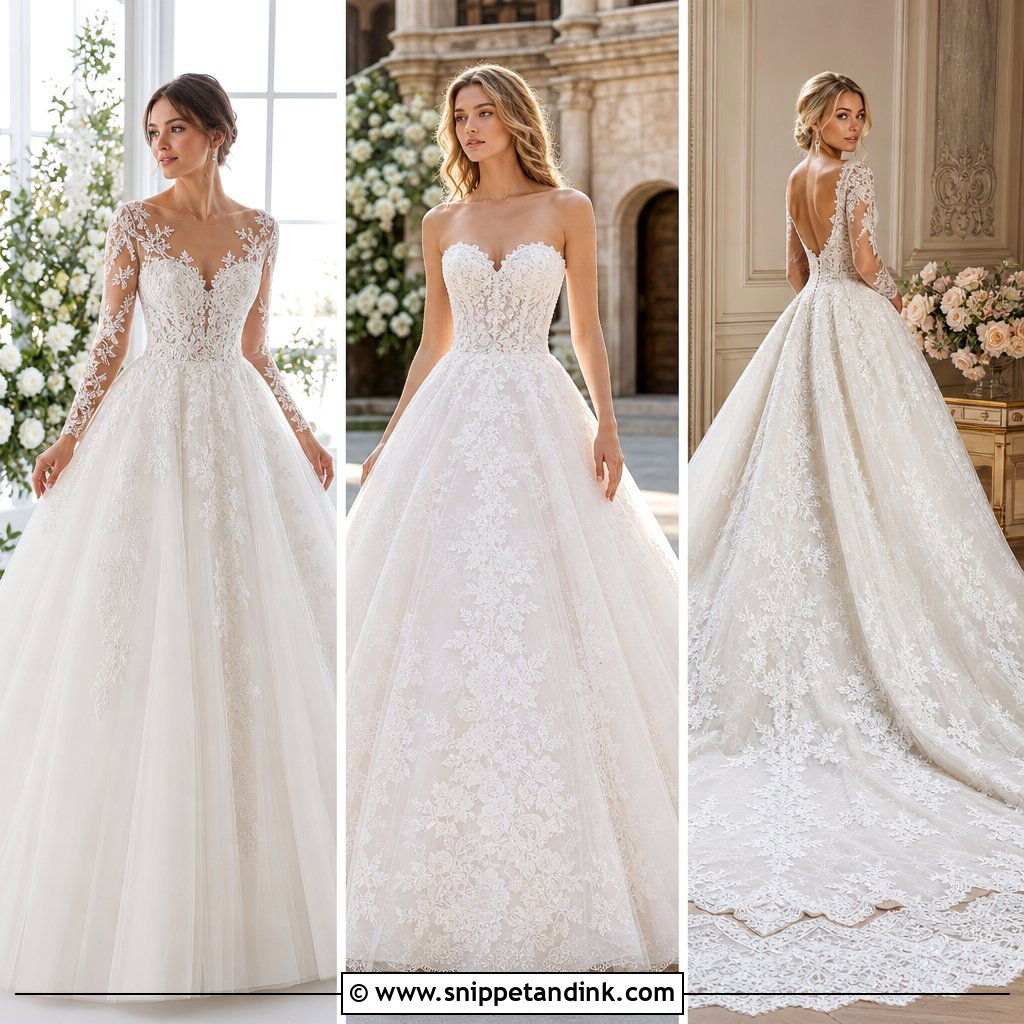
20. Satin Country Western Wedding Dress
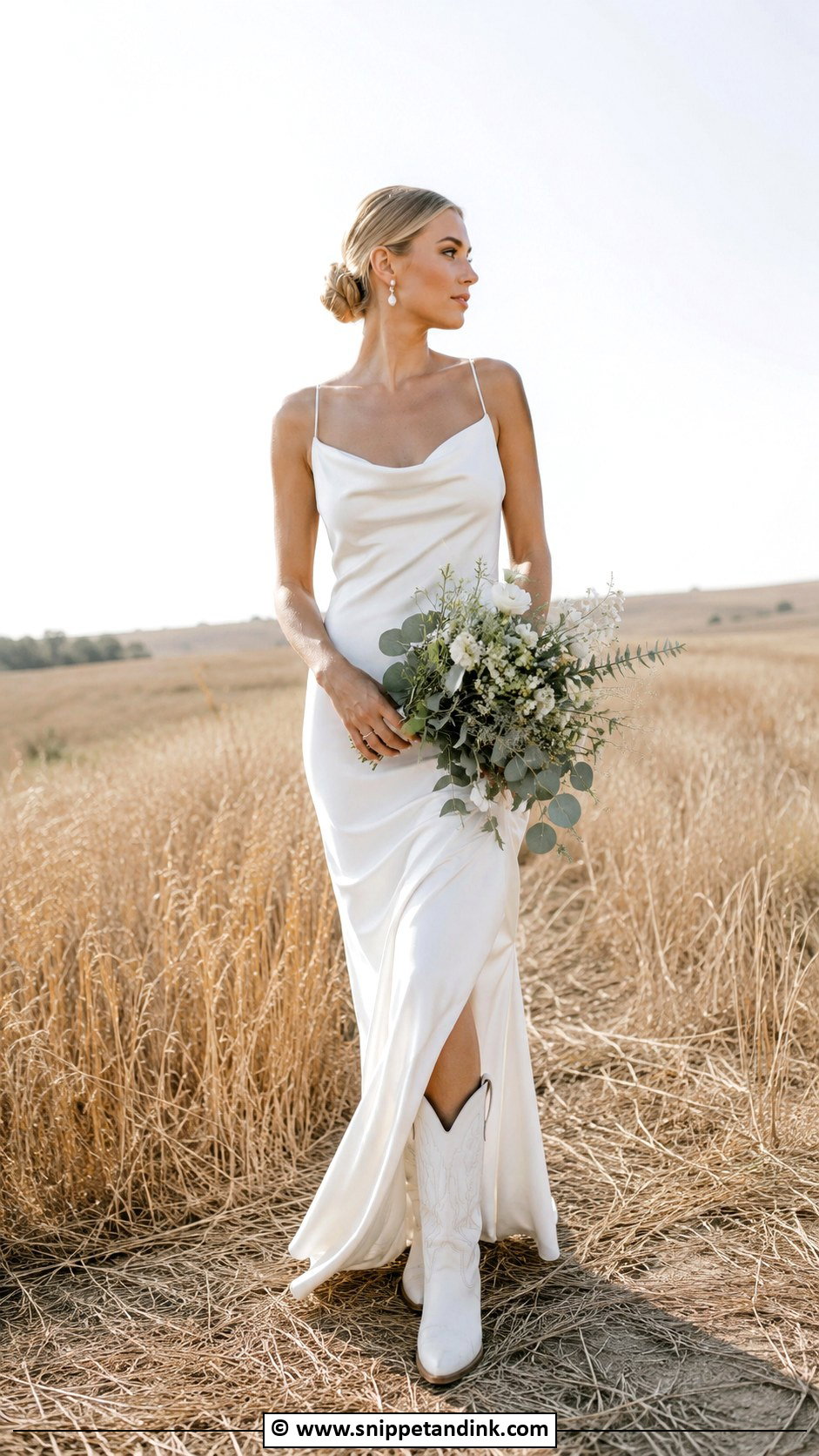
Satin reflects light, so it looks rich at golden hour and harsh in noon sun. I always suggest a matte or duchess satin for outdoor ceremonies over a high-shine finish. A slip, A-line or structured strapless all work, depending on how formal the venue is. Satin also shows creases from sitting, so plan a steam after the car ride. Ivory boots keep it clean; tan boots warm it up. A sleek low bun and pearl earrings keep the focus on the fabric.
21. Tulle Country Western Wedding Dress
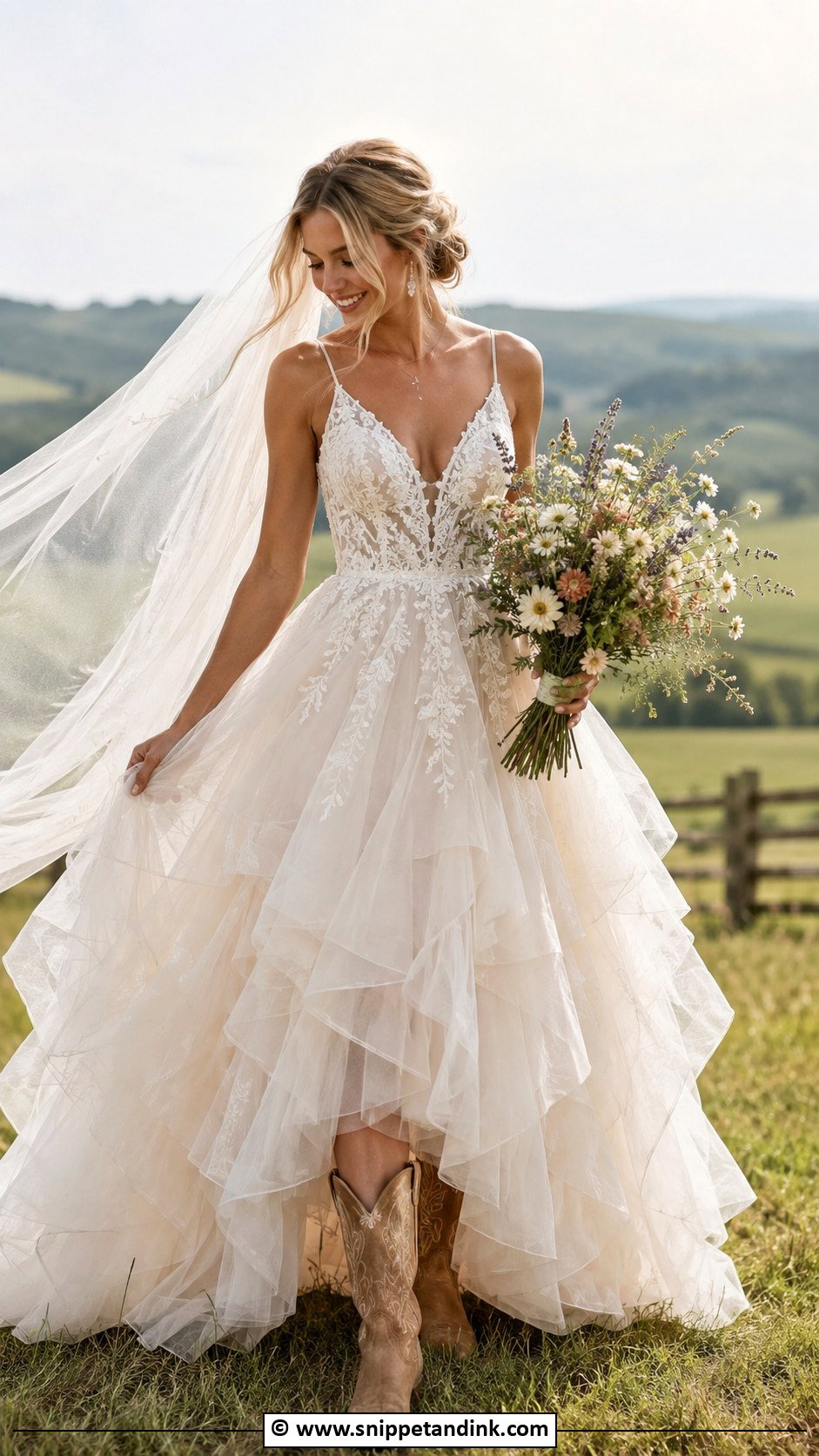
Tulle is light, forgiving and moves in the slightest breeze, which is why it suits outdoor ceremonies. Layered tulle in an A-line or ball gown shape stays soft without heavy embellishment, and lace appliqué on the bodice adds detail without weighing down the skirt. Tulle does snag on rough wood, boot buckles and Velcro, so check your boots for anything sharp. A delicate veil and a wildflower bouquet suit it, and a subtle belt or hat can come in for portraits.
22. Embroidered Country Western Wedding Dress
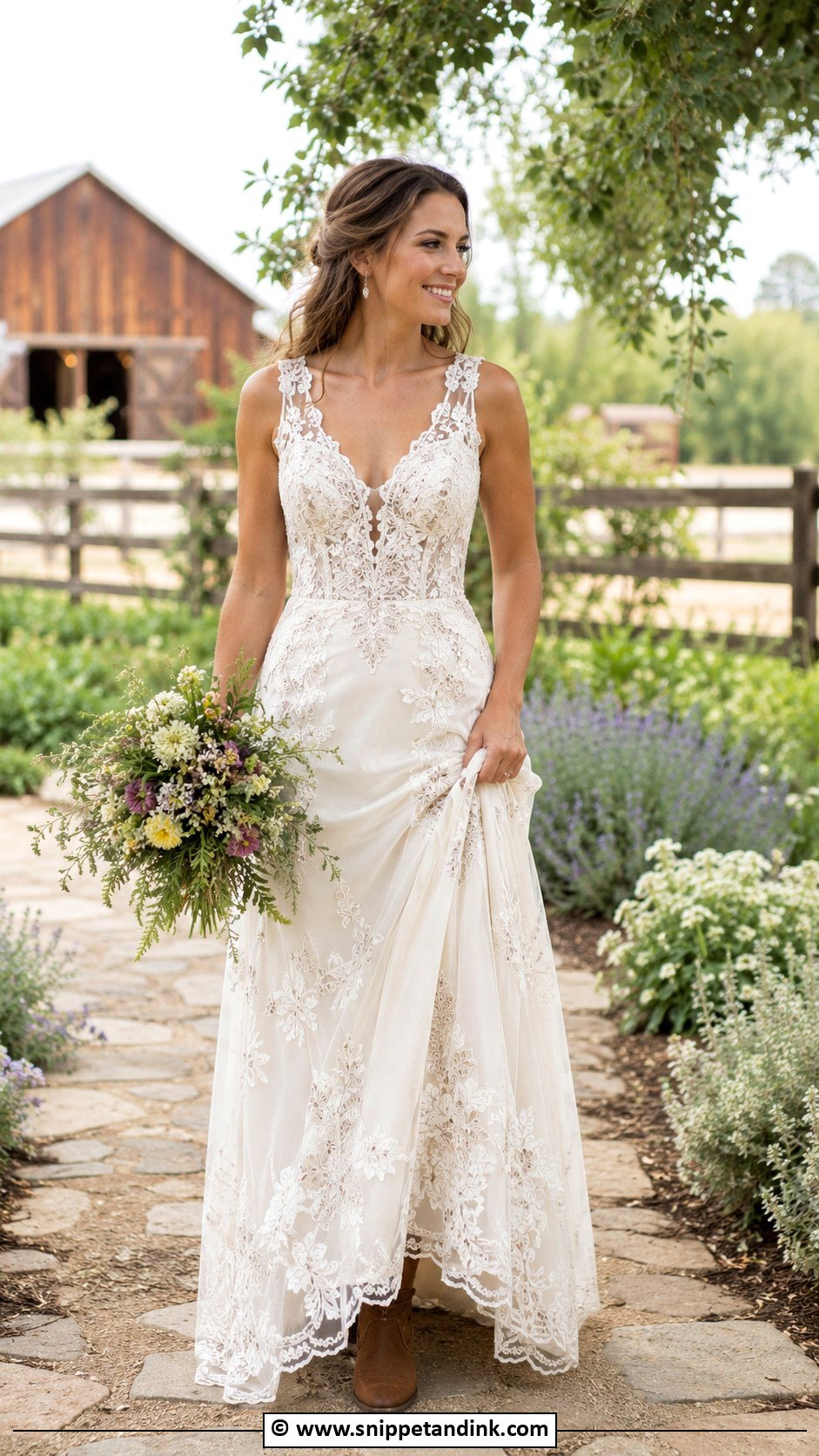
Embroidery makes a gown feel handmade. Florals, vines, tone-on-tone stitching or subtle western motifs can sit on the bodice, sleeves, hem or veil; I’d pick one area and keep the rest plain. Tonal ivory thread looks expensive in person but needs side light to show in photos, so stand at an angle to the sun for portraits. Simple boots, a clean hairstyle and minimal jewelry keep the stitching as the feature. It’s a good fit for ranch venues and garden barns.
23. Country Western Wedding Dress With Denim Jacket
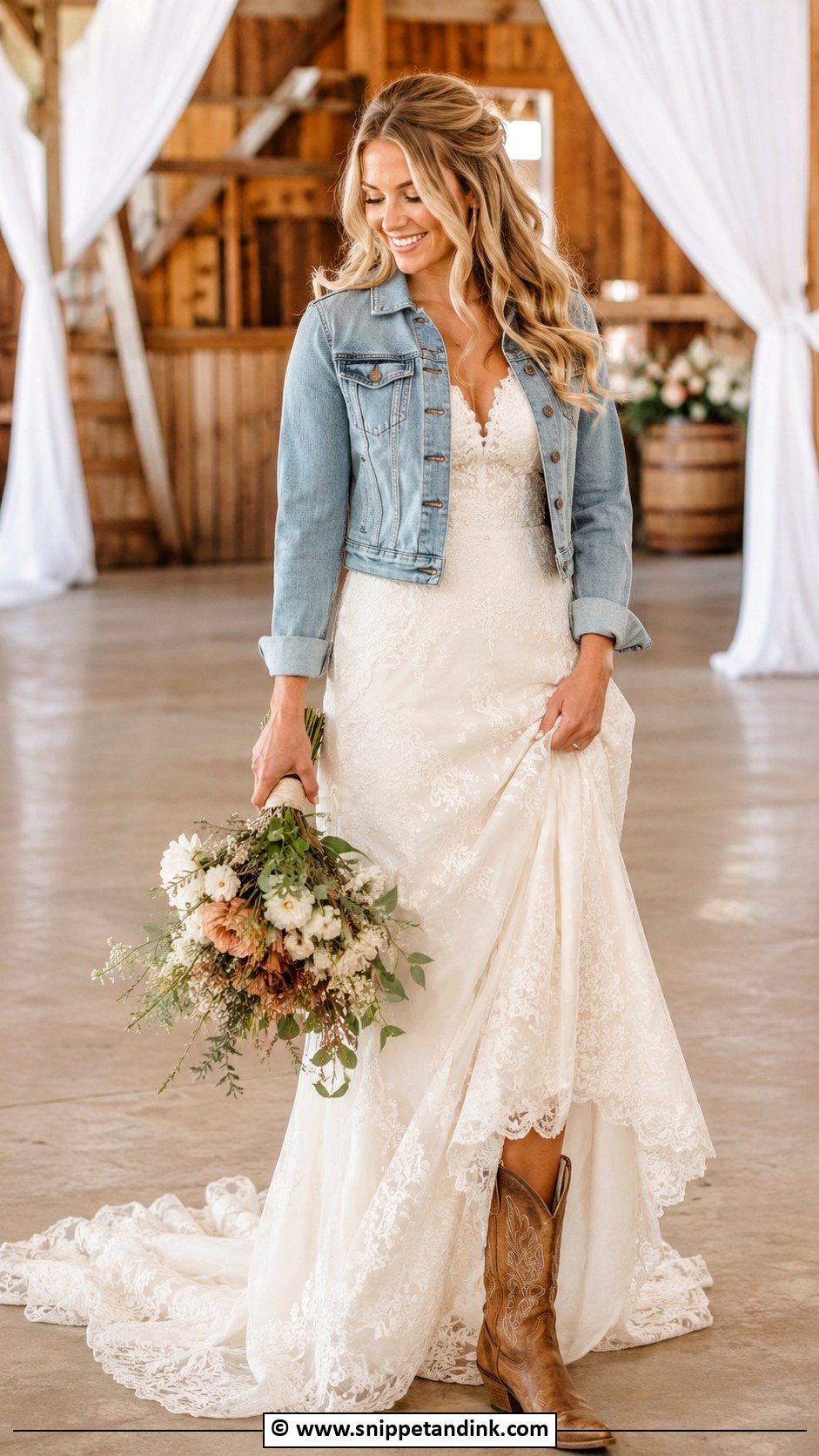
A denim jacket over a wedding dress is the easiest layer for a cool evening or a casual reception. Lace, chiffon or simple satin all take it well. Light blue denim looks classic; white denim reads more bridal and doesn’t risk dye transfer onto ivory fabric. A fitted or slightly cropped cut keeps your waist visible. Cowgirl boots and small earrings finish it. Wear it for portraits and the reception, and take it off for the ceremony.
24. Country Western Wedding Dress With Suede Jacket
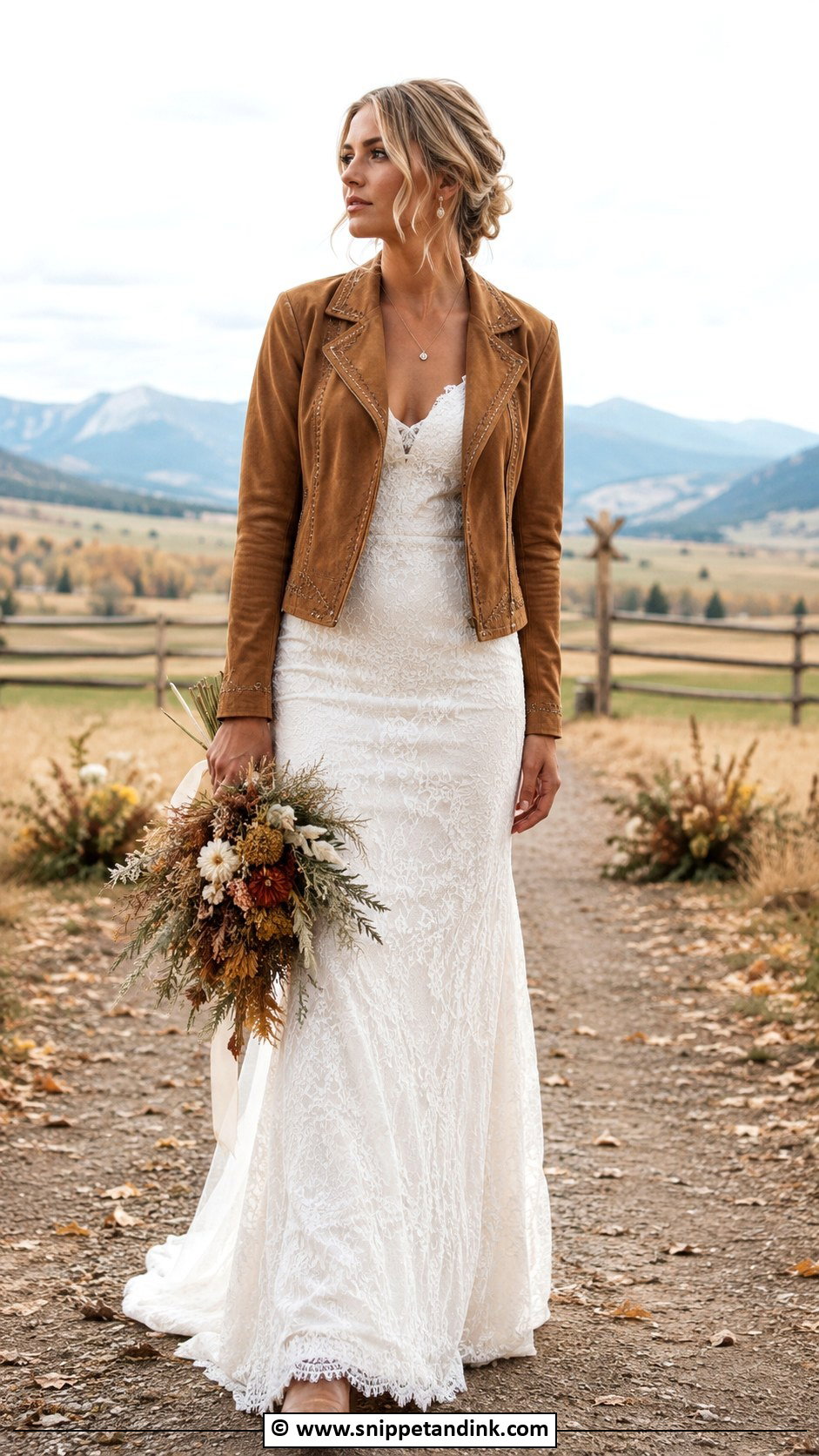
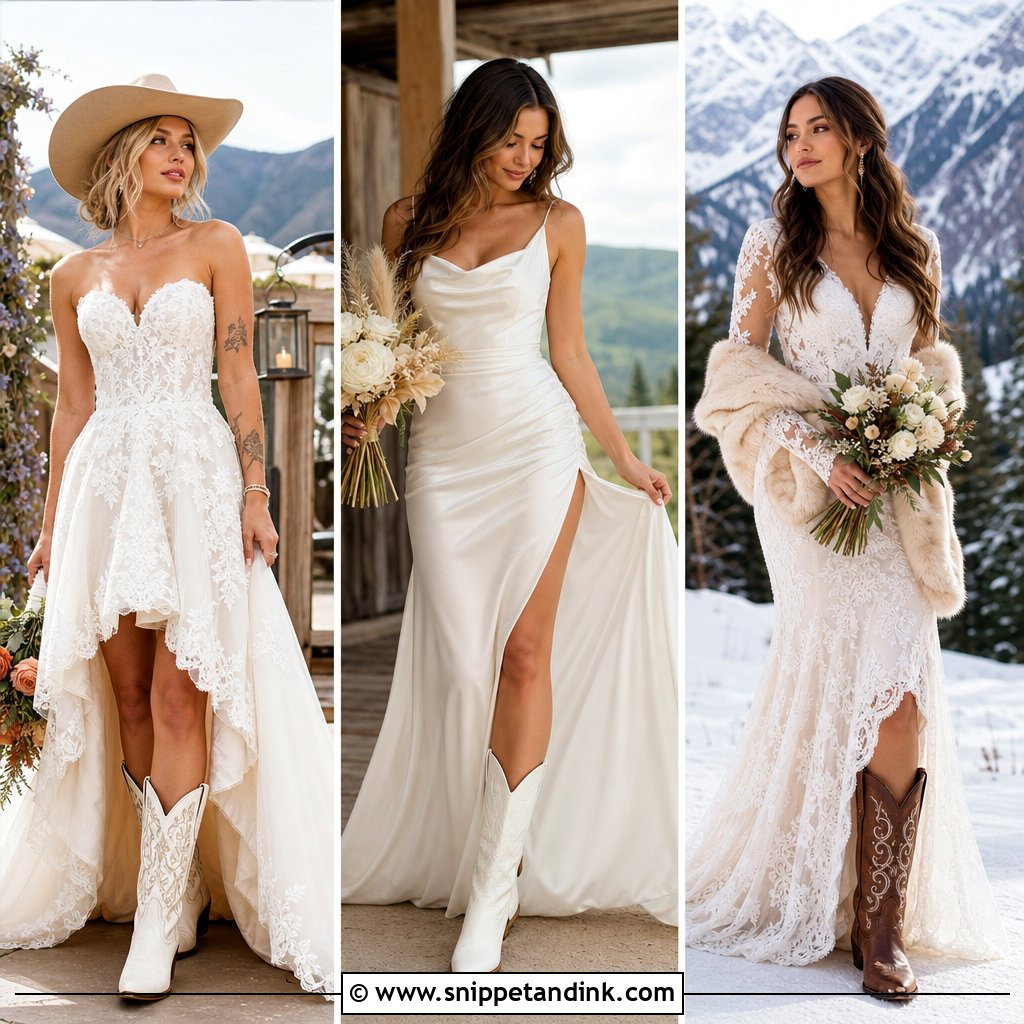
Suede adds warmth and texture, which is why it suits fall and mountain weddings. Choose a cropped suede jacket in ivory, tan or soft camel over a fitted lace or crepe dress. Fringe works if the dress underneath is plain. Real suede spots in rain and darkens where it gets wet, so a protector spray before the day is worth it, or choose a faux version for an unpredictable forecast. Leather boots and a textured bouquet suit fields and desert backdrops alike.
25. Reception Country Western Wedding Dress
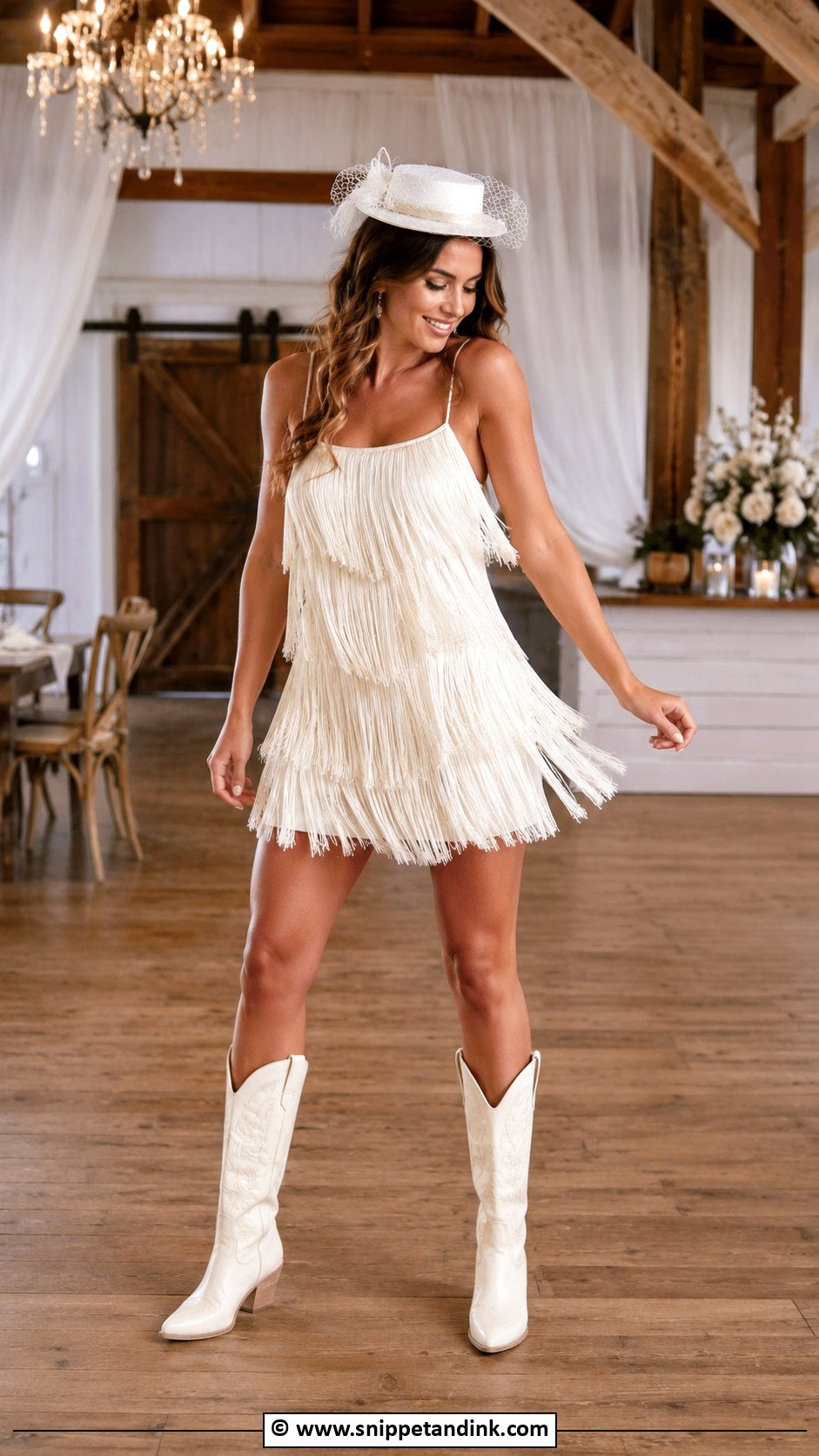
The second look is where you can have fun. A short lace dress, fringe mini, tea-length or high-low gives you room to dance after the ceremony. This is the time for statement boots, a playful hat or a sparkly belt. Stay in ivory, white, champagne or soft blush so it still reads as bridal. Plan the change for right after dinner, before the first dance, and pick a dress you can step into without help. A ponytail or a bow gives your hair a reset too.
A Fitting Calendar That Includes Your Boots
Western brides have more pieces to coordinate than most, and the boots affect the dress alterations directly. Here’s the order I’d work in.
- Order the dress early. Many bridal gowns take several months to arrive from the designer, so leave plenty of room before your date. Ask the shop for their current lead time rather than assuming.
- Buy the boots before your first alteration appointment. The hem is measured with your actual footwear on, and a western heel changes the length compared to a flat.
- Break the boots in at home. Wear them around the house with thick socks for a few weeks. Leather molds to your foot, and you don’t want blisters showing in your first-dance photos.
- Bring the hat, jacket and belt to the final fitting. Seeing the full outfit in a three-way mirror is how you catch a jacket that ends at the wrong point or a belt that fights the bodice.
- Collect the dress a week or two out and hang it in a cool spot. Keep fringe and suede pieces out of plastic so they don’t crush or trap moisture.
One more note on custom pieces. Hand-embroidered boots, personalized jackets and shaped felt hats often take weeks to make, so ask each maker for their timeline at the start and add a buffer. A late hat is easy to skip; a late pair of boots means re-hemming the dress.
Pick the Silhouette, Then Add the West
The western outfits I like best look planned from head to toe, not assembled from separate shopping trips. A lace gown with boots is classic, a satin dress with a belt is refined, and a short reception dress is pure fun. A hat, denim jacket, suede layer or embroidered boot can each change the mood on its own, so you rarely need more than two. Settle on the shape you love first, then add the western details that support it rather than compete with it.
You'll Like These Ideas:


Leave a Reply