
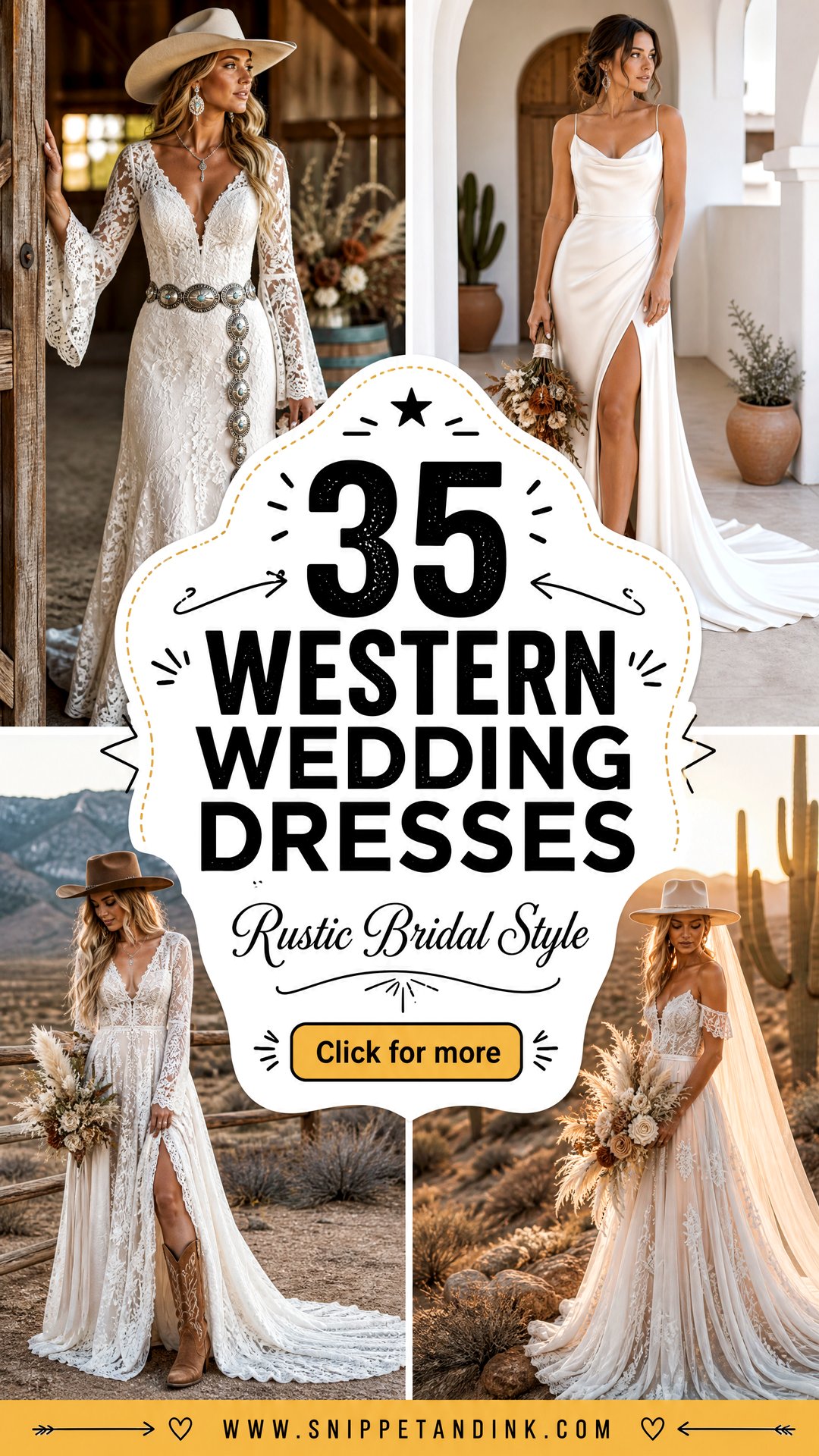
Western bridal style stopped meaning one lace gown and a pair of boots a long time ago. The brides I dress now borrow from prairie romance, ranch workwear, fringe, denim and pearls, and the trick is never using all of it at once. My first question at any appointment is about the ground, not the dress: a barn floor, a gravel drive and a desert wash each ask for a different hem, a different boot and a different amount of fabric. Below are the outfits I’d actually build, gown through accessories, with notes on where each one tends to struggle.
Hemming a Gown Around Cowboy Boots
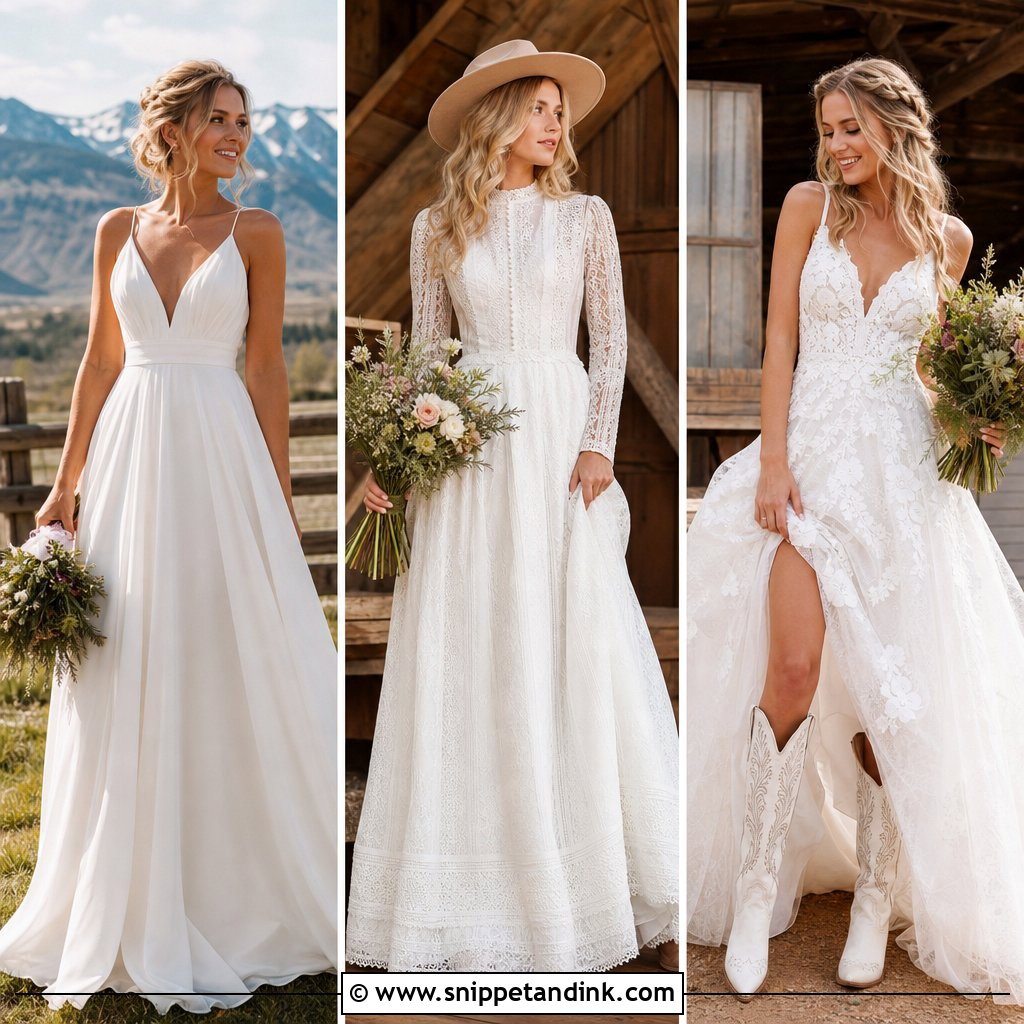
Boots change everything about how a wedding dress falls, and that is where most western fitting problems start. A cowboy boot heel is usually lower and chunkier than a bridal pump, and the toe is longer, so a hem set for heels will drag once you swap. Buy your boots before the first fitting, not after.
- Wear the exact boots to every fitting. Even two boots of the same style can differ in heel height by half an inch.
- For a floor-length gown, I ask for the front hem to just touch the boot toe while you stand. Any lower and you’ll step on it going uphill or across gravel.
- Walk the boutique on a slope or stairs if they have them. Pointed toes catch lace scallops on the way up.
- Decide whether the boots should show. If yes, a slit, high-low cut or tea length is easier than hemming a full skirt shorter.
Break new boots in early. I tell brides to wear them around the house for an hour at a time for several weeks, with the socks they’ll wear on the day. Leather boots soften at the ankle with use, and a blister by the first dance is the most common complaint I hear from western brides.
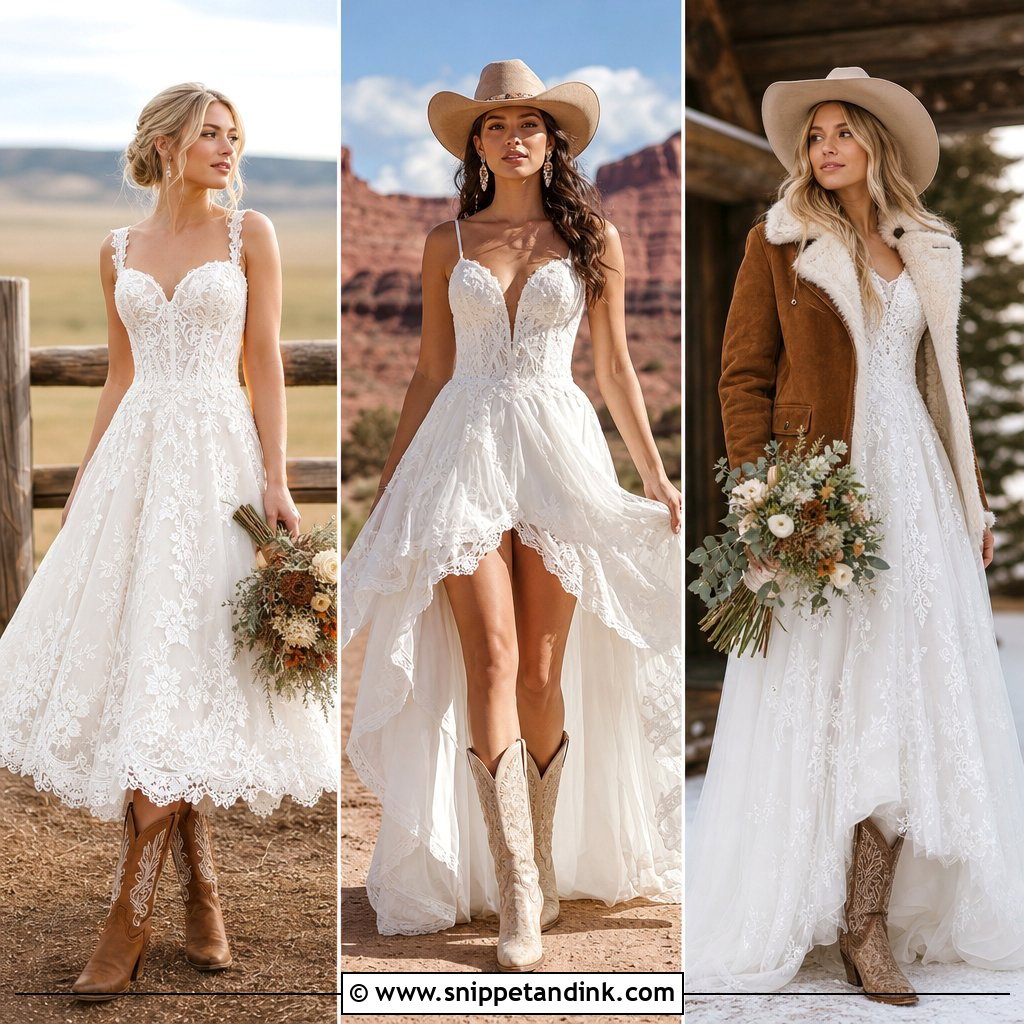
1. Lace Western Wedding Dress With Cowboy Boots
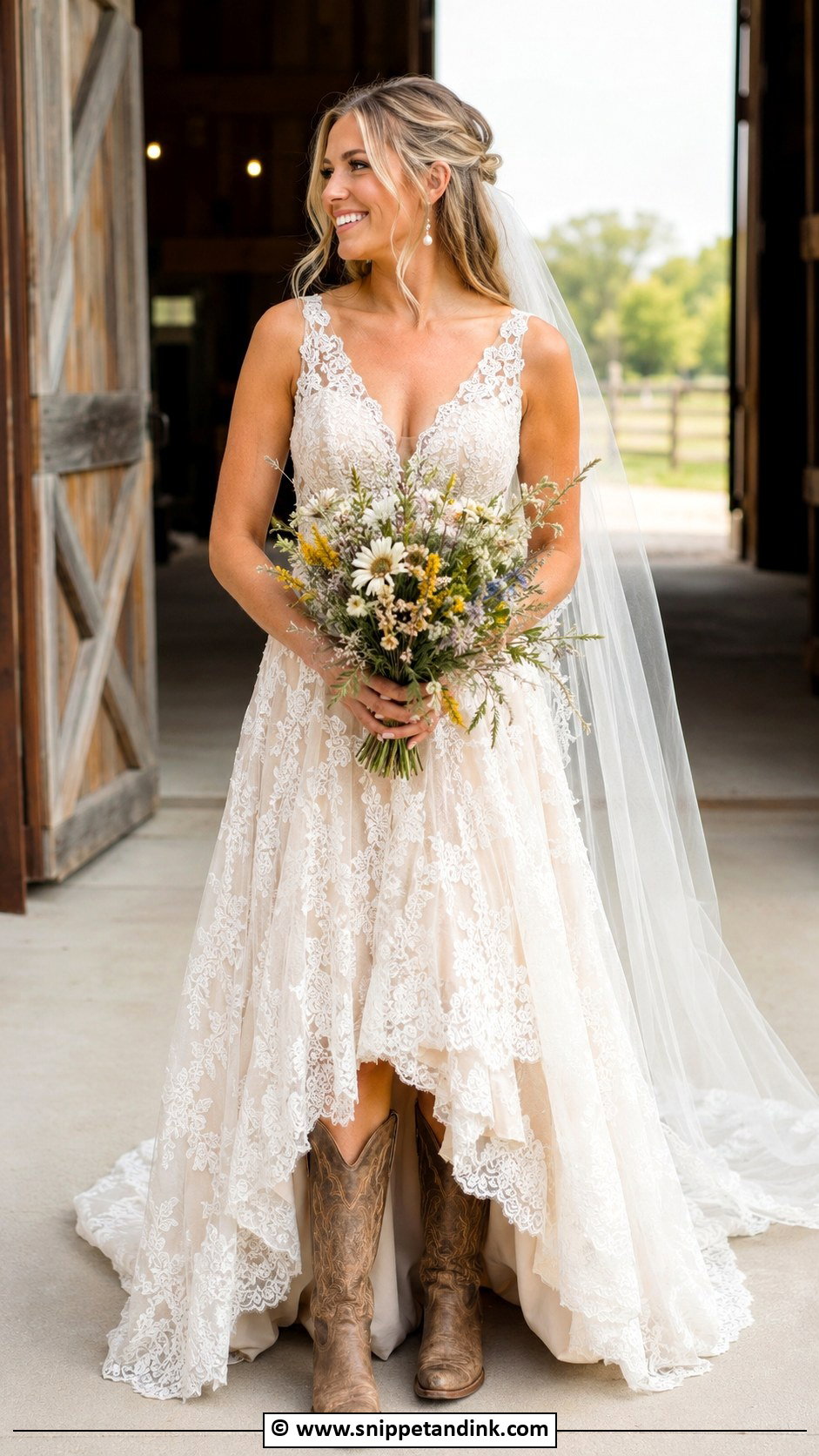
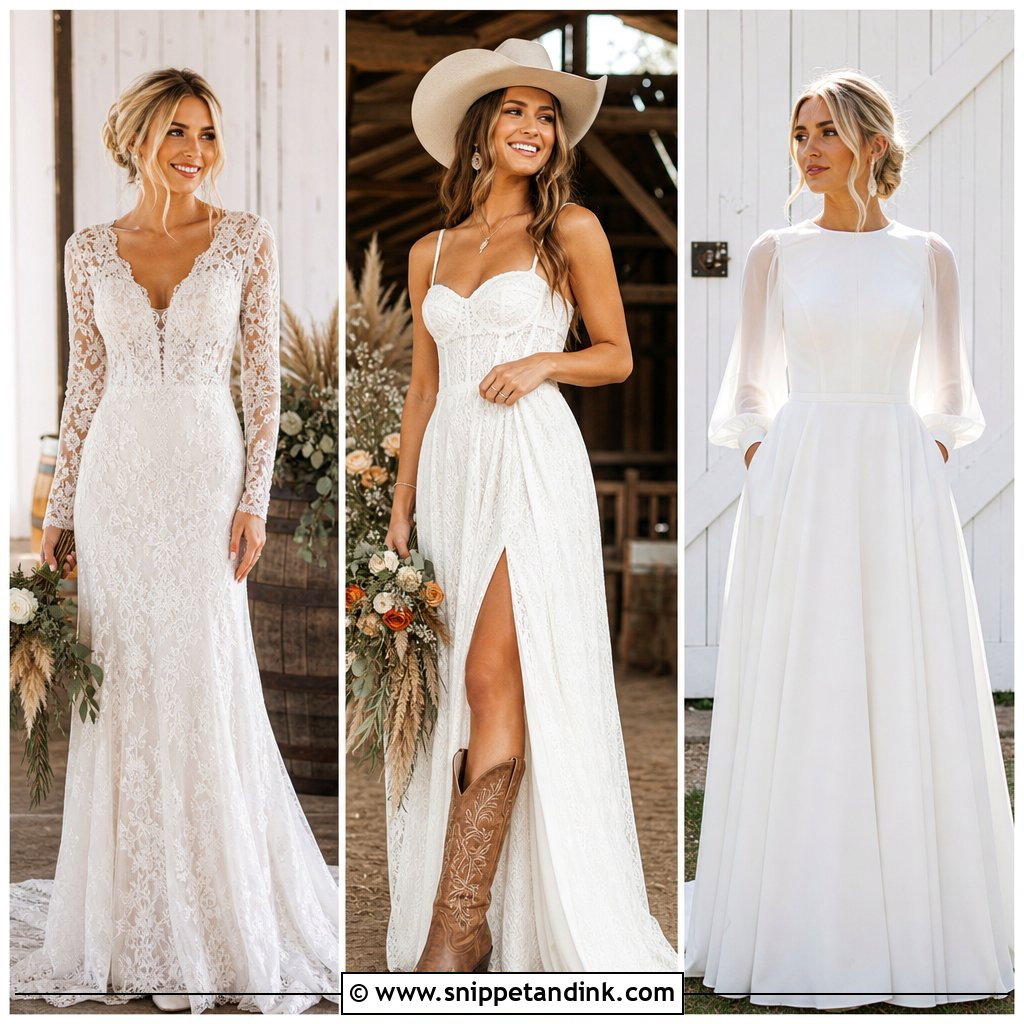
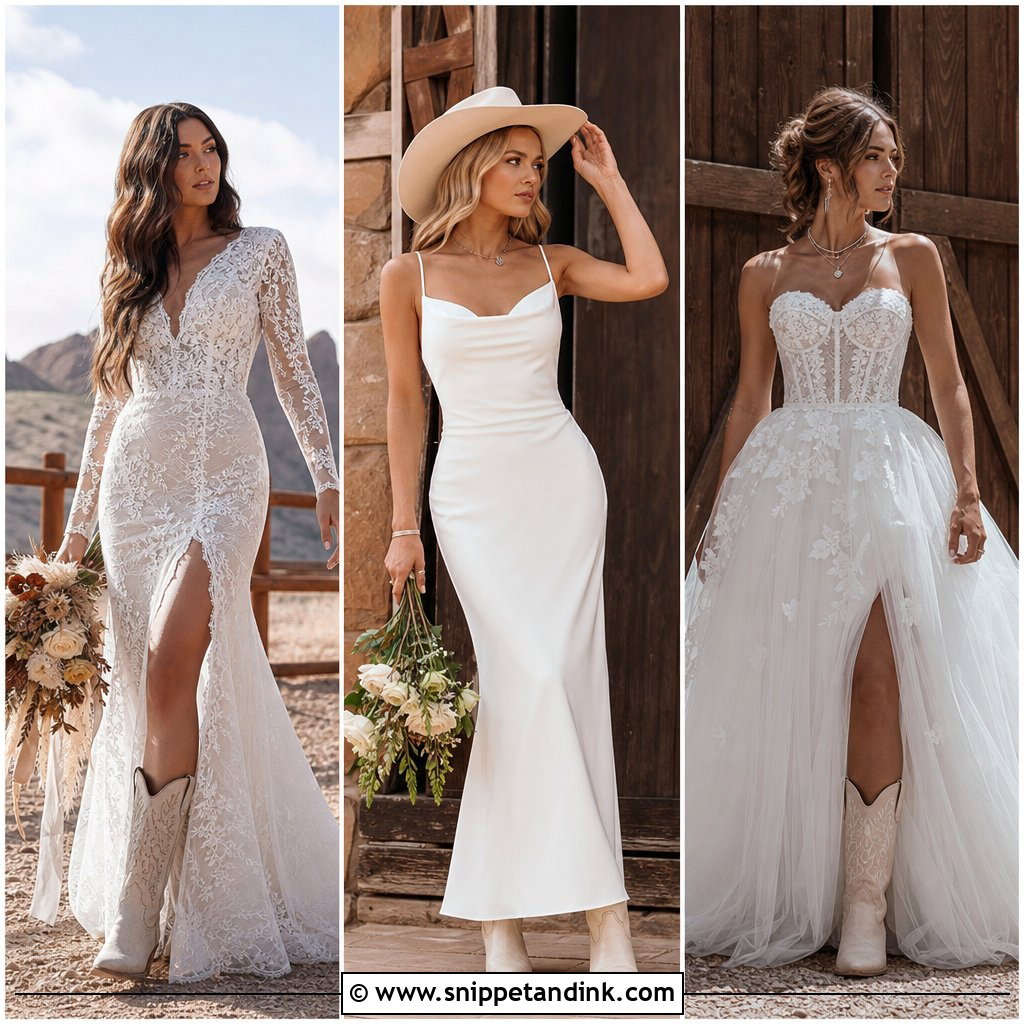
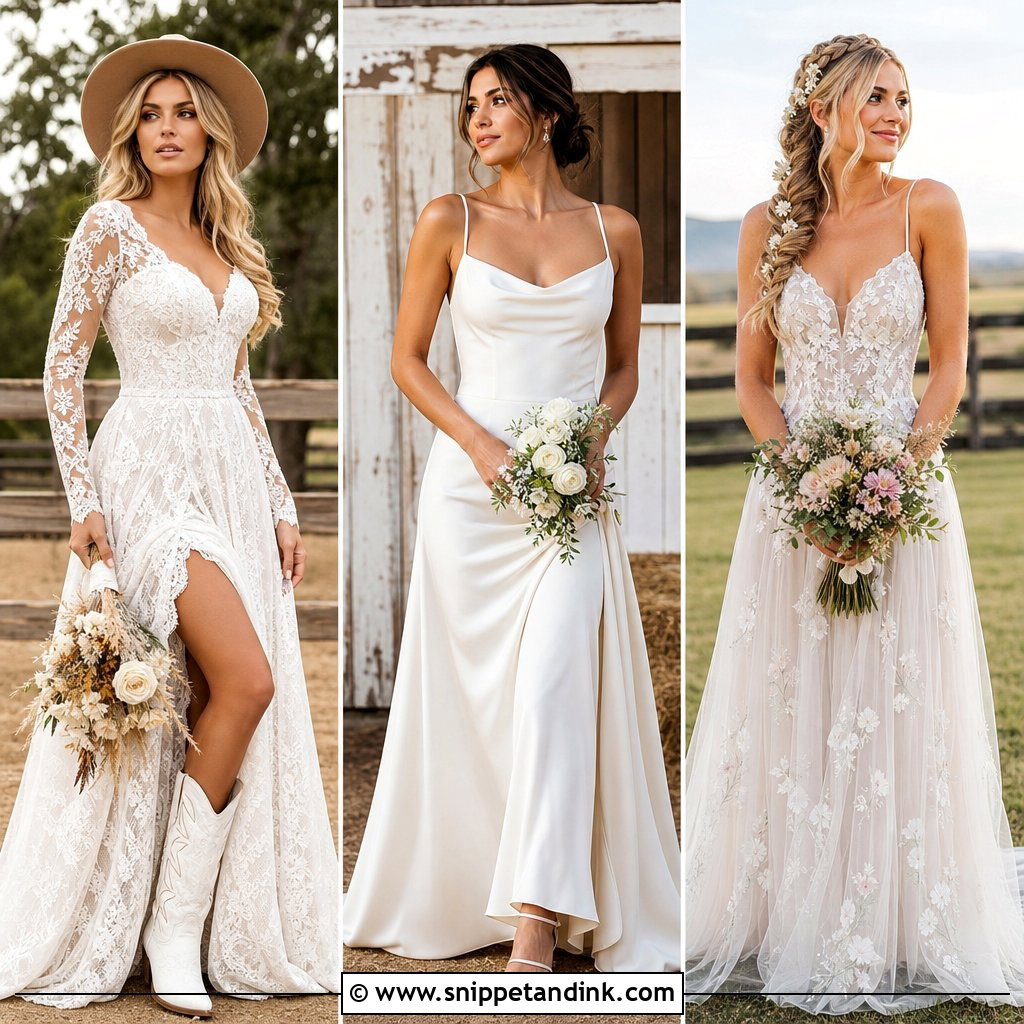
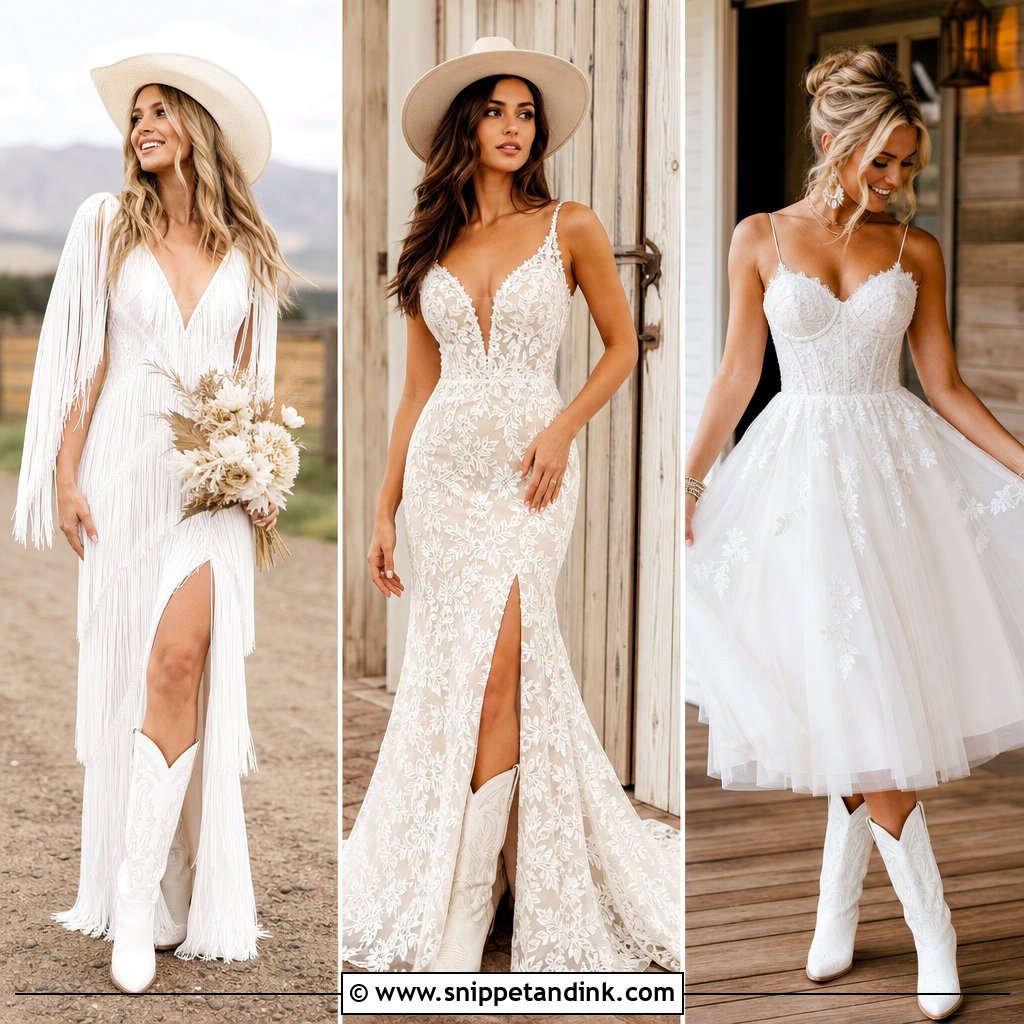
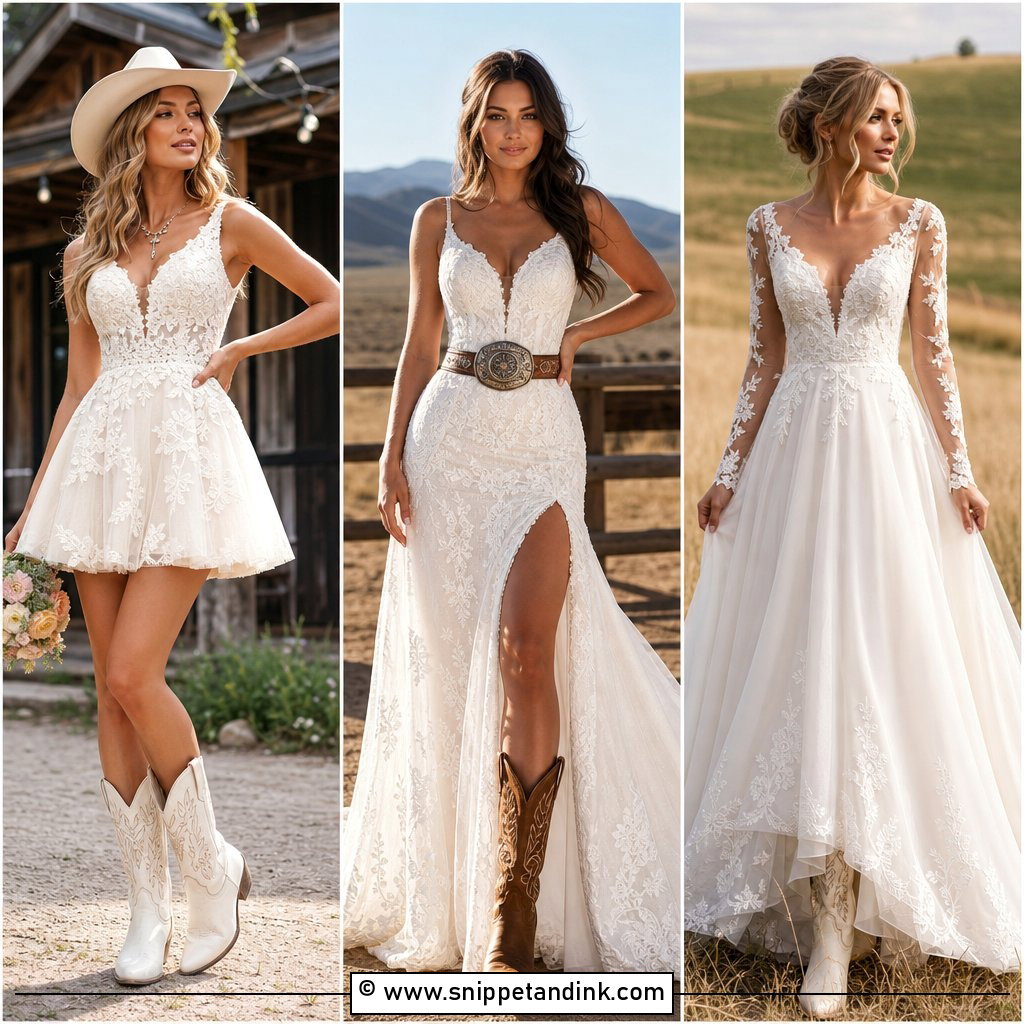
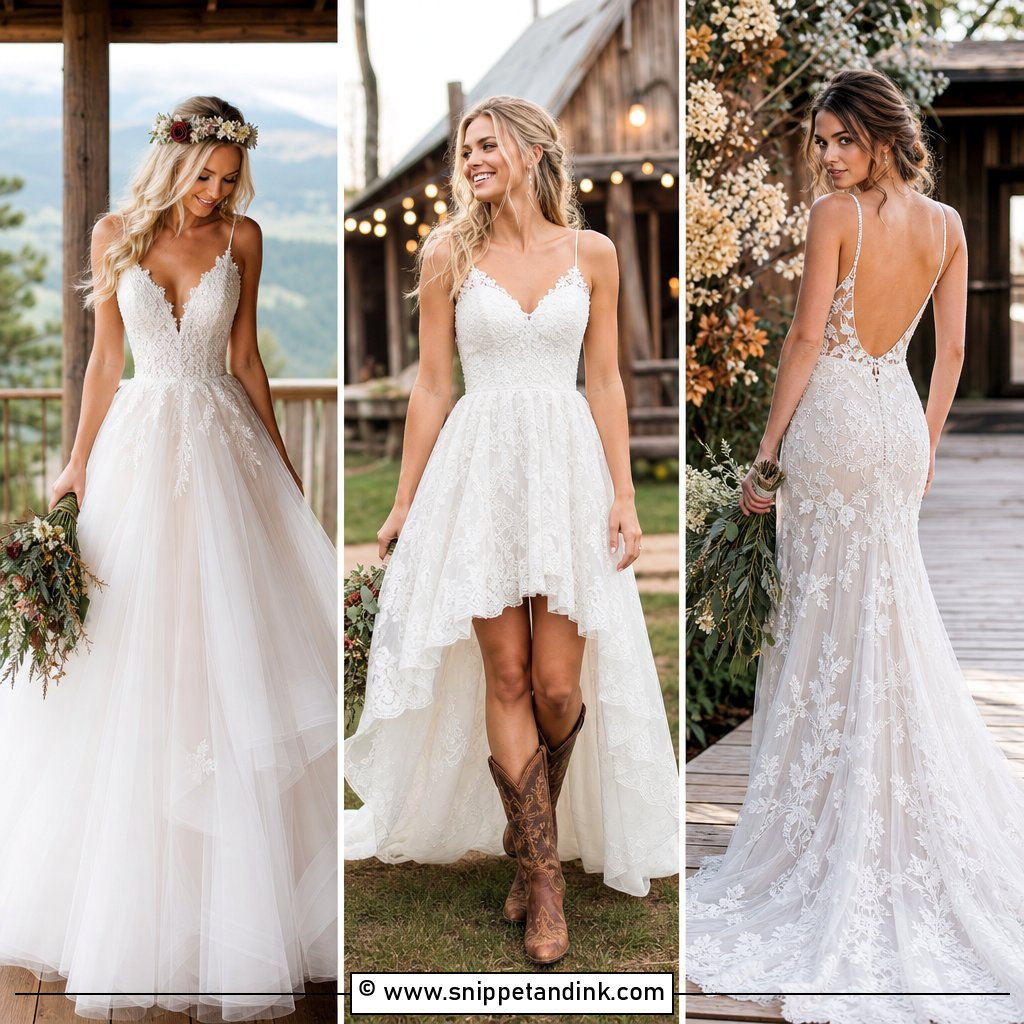
This is the pairing most country brides picture first, and it earns that spot. An A-line or fit-and-flare lace gown gives your legs room on grass and gravel, which matters more than people expect. I match ivory or cream lace to tan or brown boots, because stark white lace beside a dark boot can read harsh in sunlight. Add a pearl necklace, loose waves and a handful of wildflowers. A thin leather belt defines the waist without fighting the lace; anything wider than about an inch starts to look like a costume piece on a delicate gown.
2. Boho Western Wedding Dress With Hat
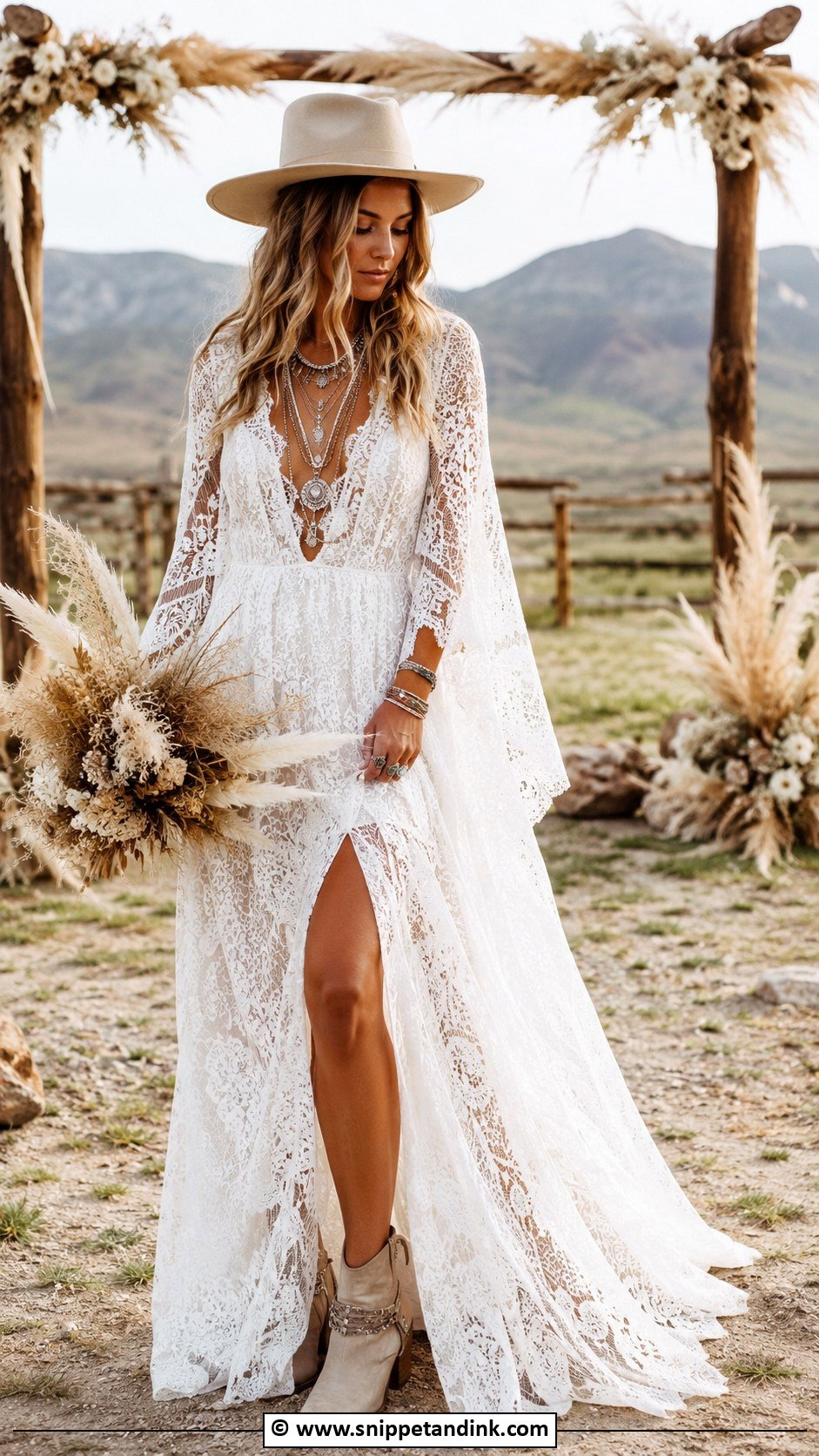
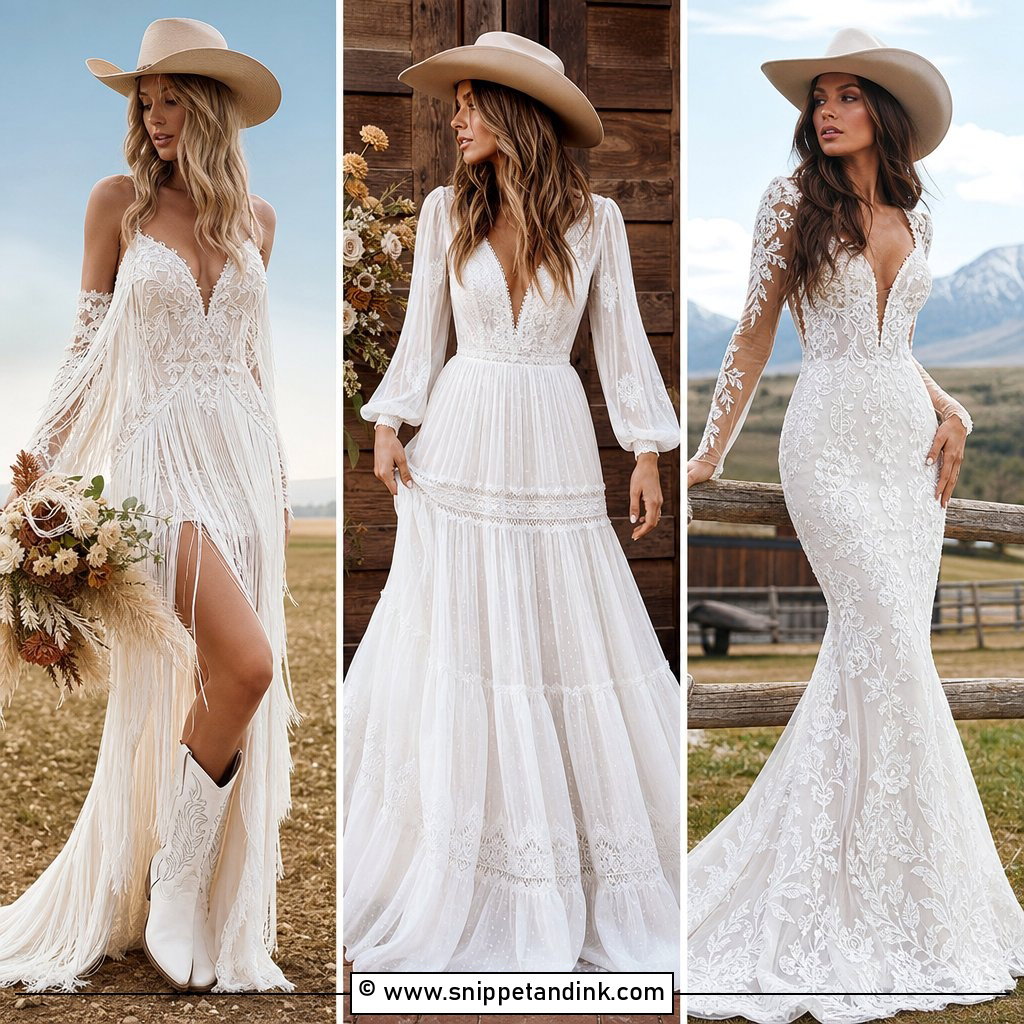
A felt hat changes how a whole outfit is read, so I treat it as the main accessory, not an extra. Pair it with soft lace, crochet detail or bell sleeves and a skirt that moves in the breeze. Ankle boots, layered silver and a loose bouquet with dried grasses keep things relaxed. My rule on the hatband: busy dress, plain band; minimal dress, you can afford pearls or a small concho. One warning from fittings: a brim and a long veil rarely sit together well, so most of my hat brides skip the veil or wear it only for the ceremony.
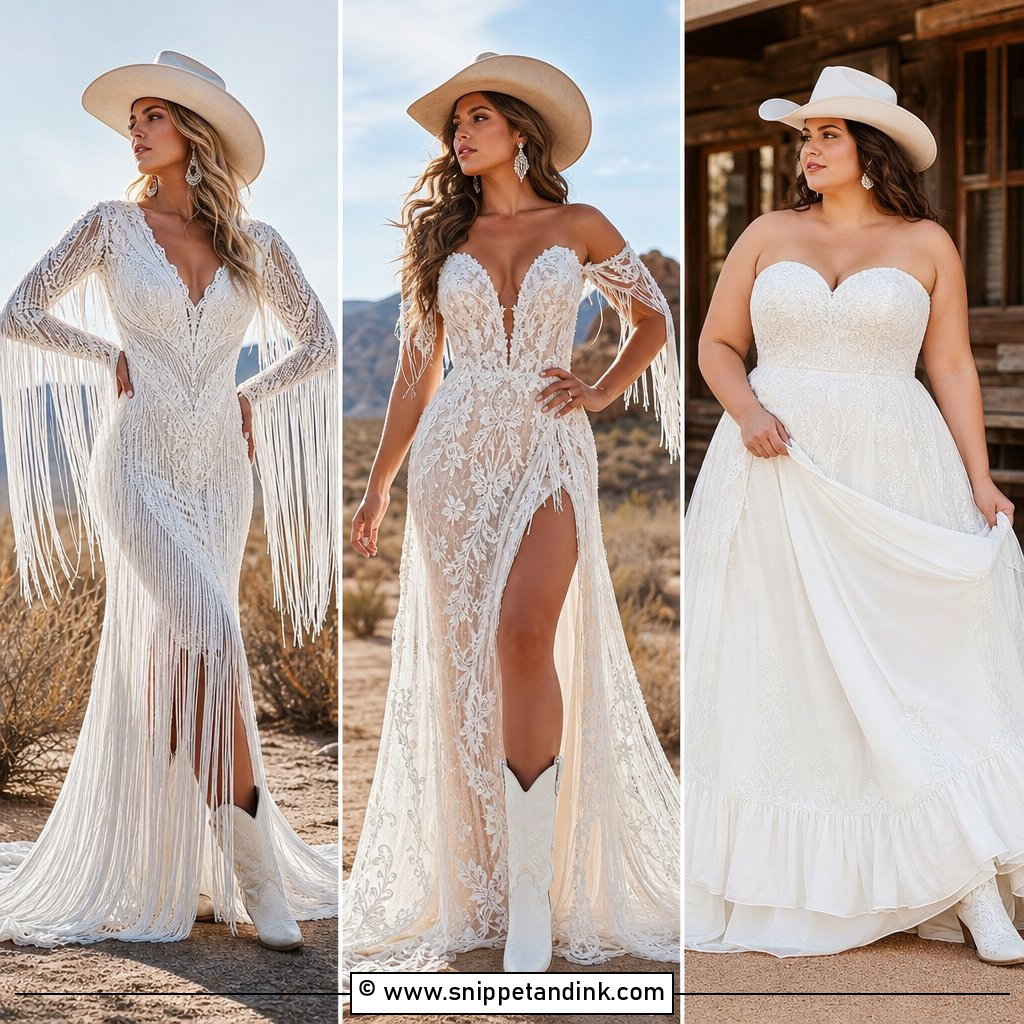
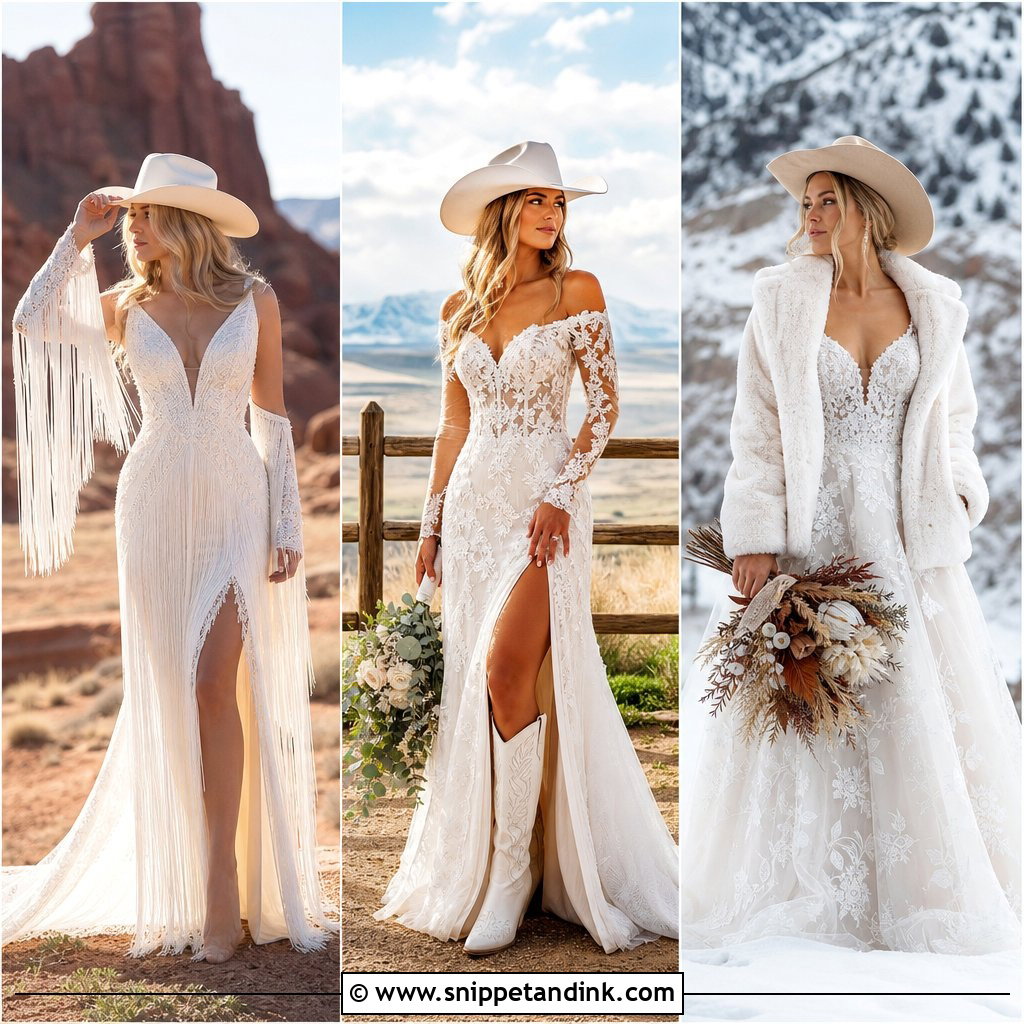
3. Fringe Western Wedding Dress Outfit
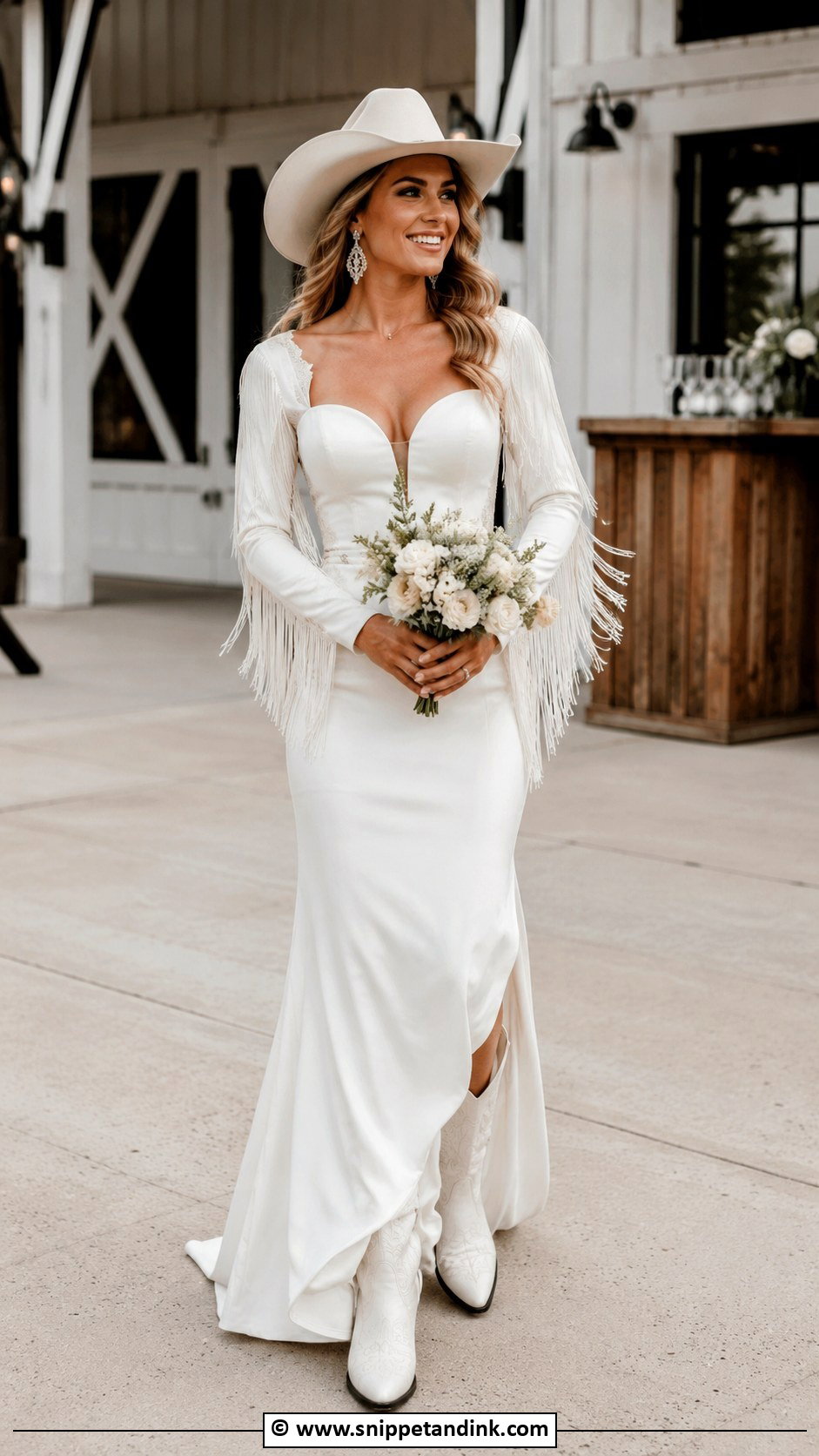
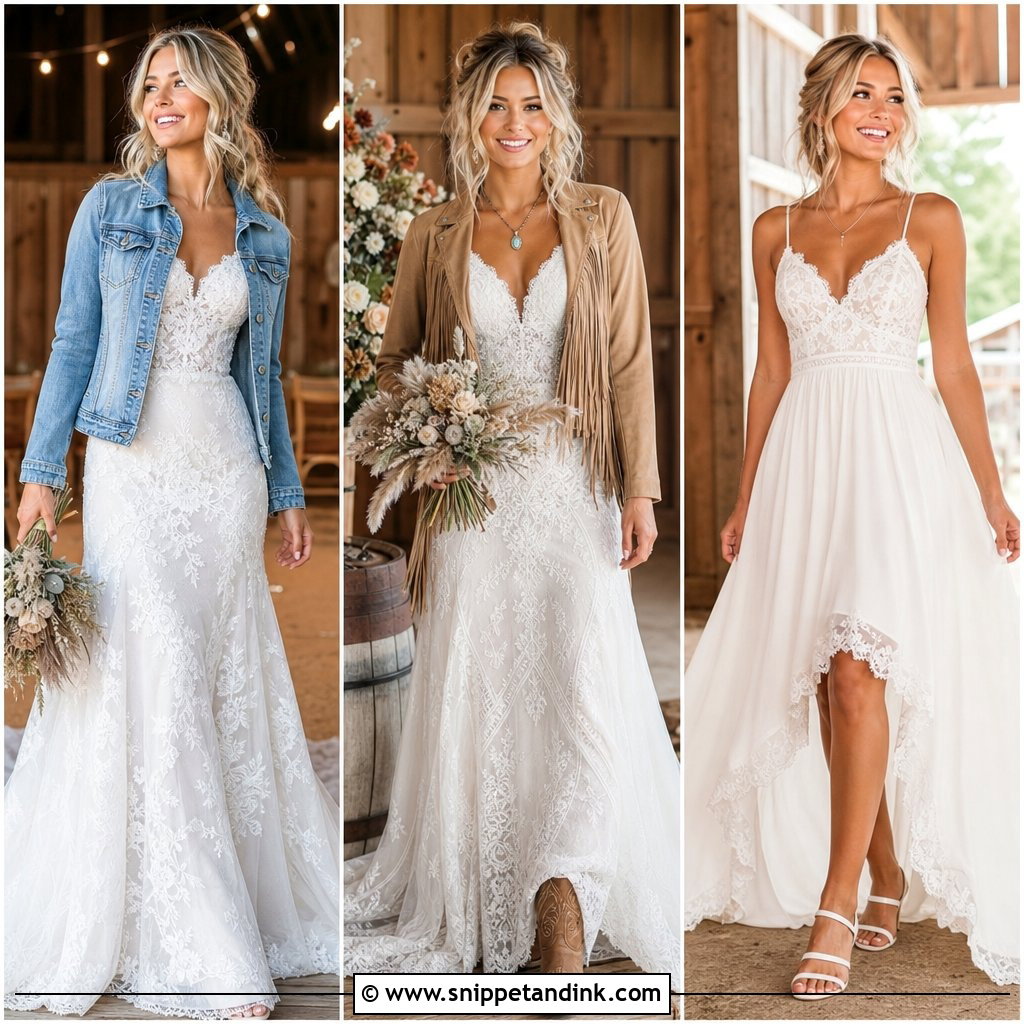
Fringe is made to move, which is exactly why I limit it to one place: the sleeves, a hem or a jacket layered over a simple gown. Covered head to toe, it tangles in the bustle and catches on bouquet stems. Sleek white boots, silver earrings and a low bun let the fringe do the talking. A fitted gown with fringed sleeves reads bold; an A-line with a fringed hem is gentler. Choose this one if you plan to be on the dance floor all night, because that’s where fringe actually earns its keep.
4. Long Sleeve Western Wedding Dress With Boots
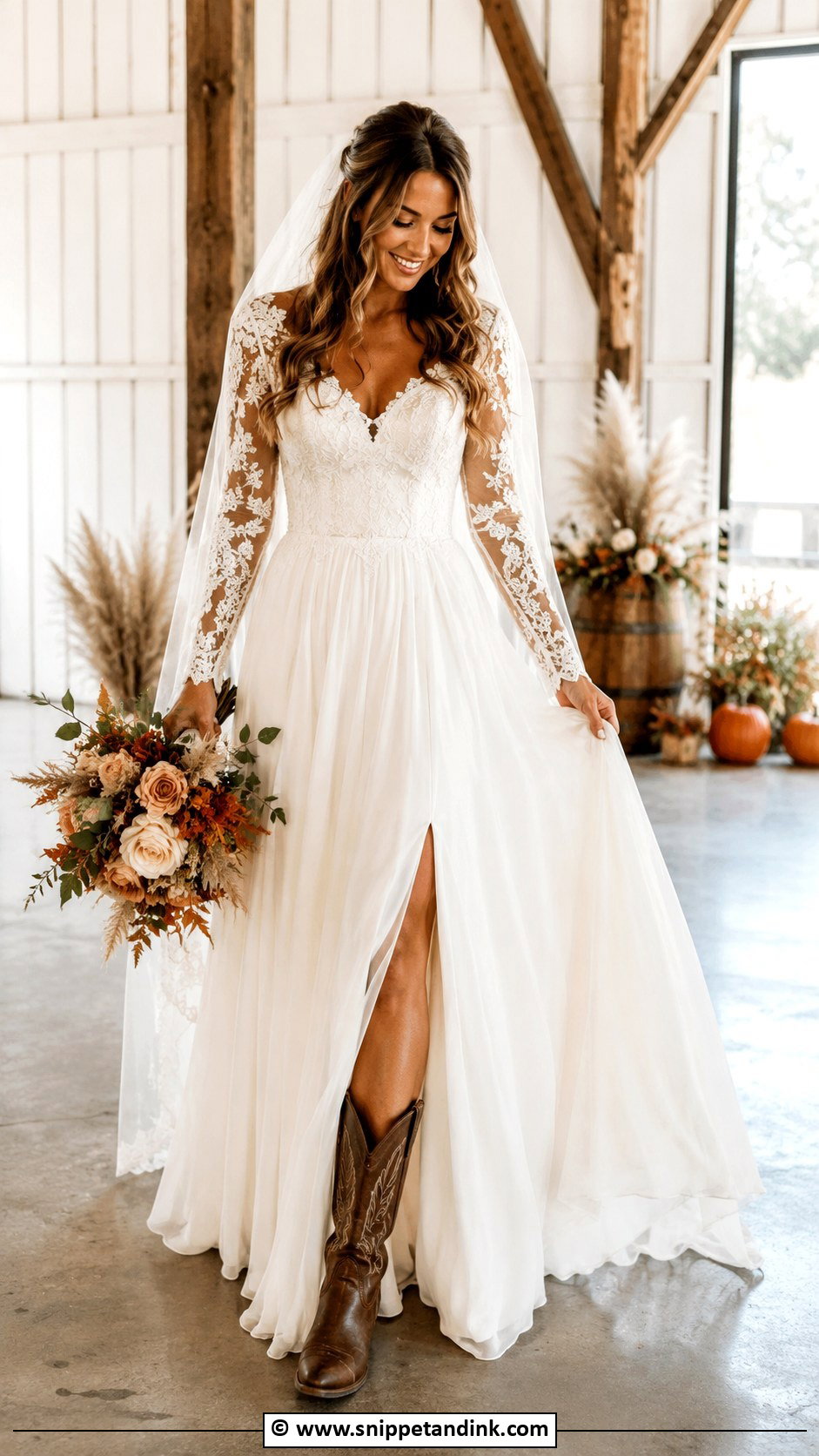
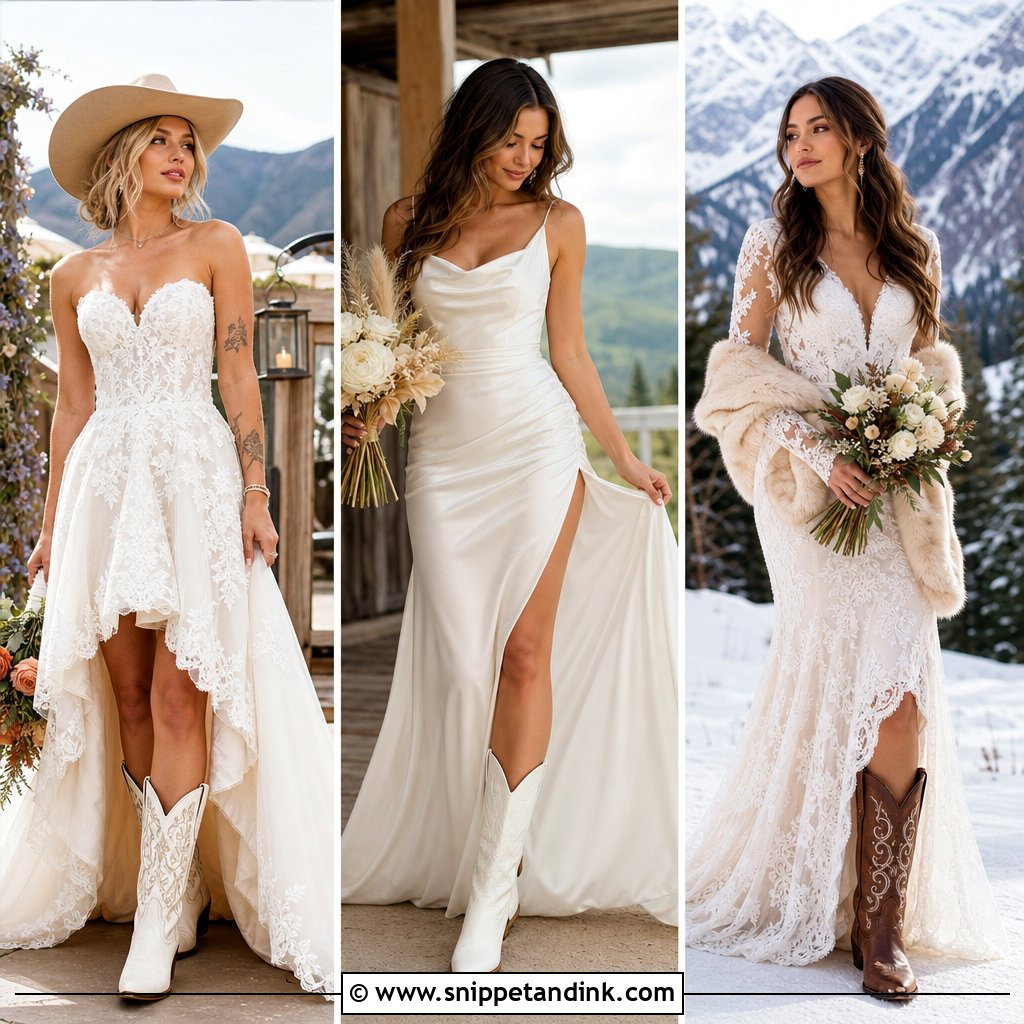
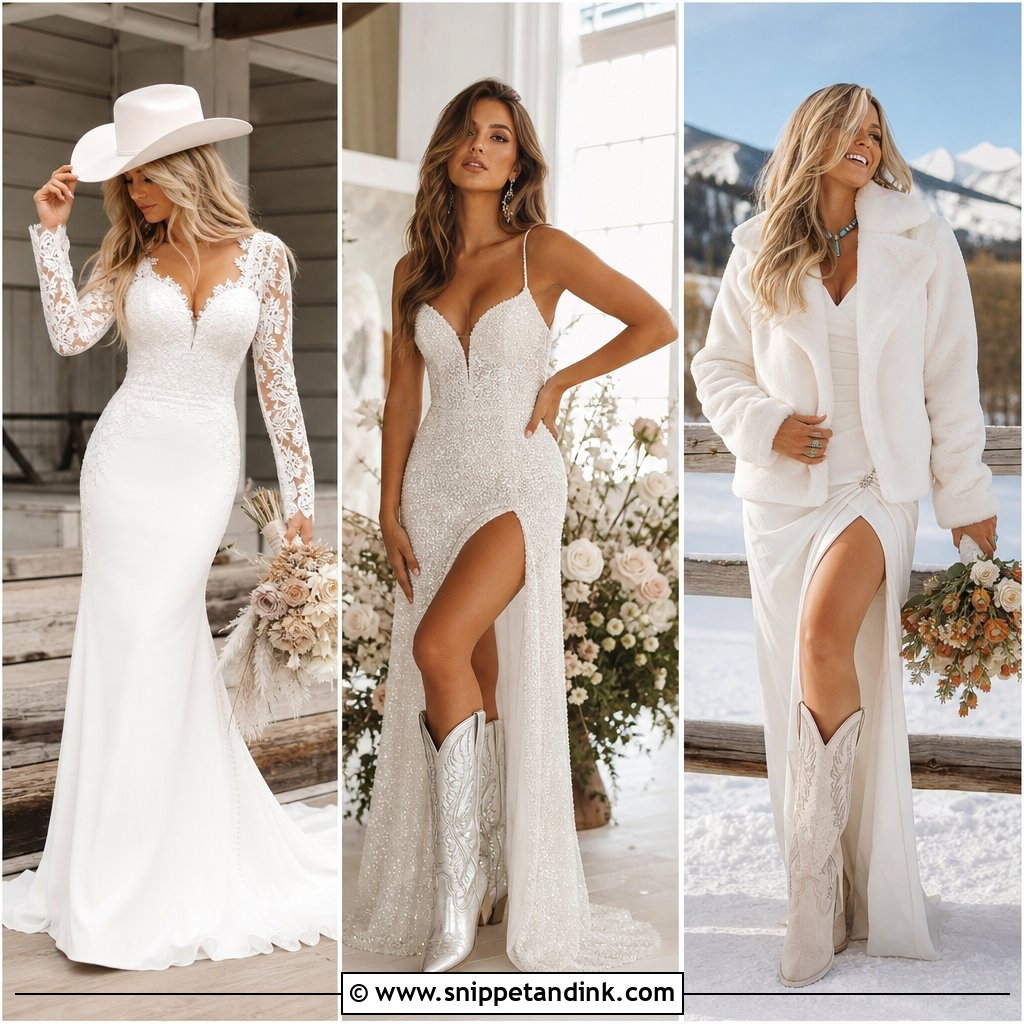
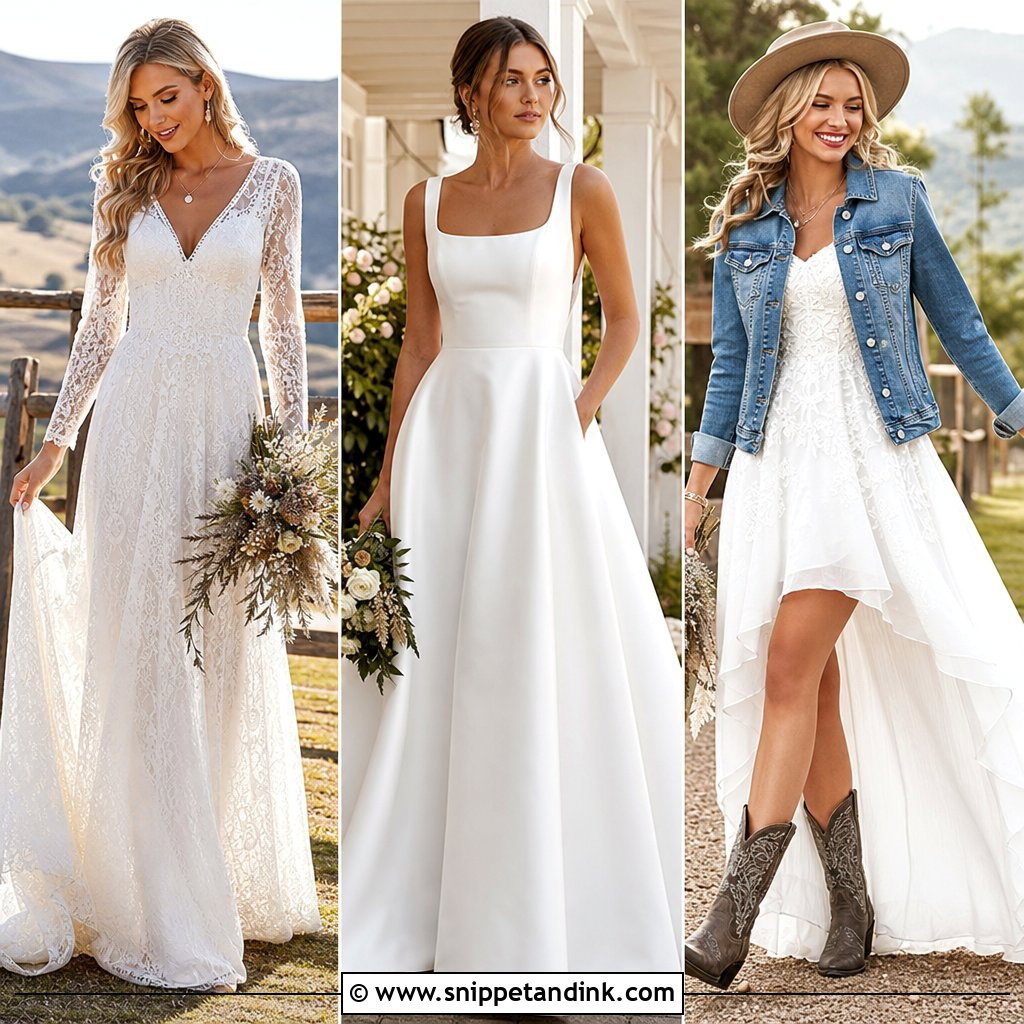
Sleeves are the most practical answer I have for fall, winter or a windy hilltop. Lace, sheer, puff and fitted crepe sleeves all add coverage, but sit down and lift your arms at the fitting, because tight lace sleeves pull the bodice up when you hug people. Pointed-toe cowgirl boots finish it. If the gown is plain, an embroidered boot carries interest; if the dress is detailed, keep boots smooth. A western belt, soft curls and a chapel-length veil round it out without crowding the sleeves.
5. Simple Western Wedding Dress With Leather Belt
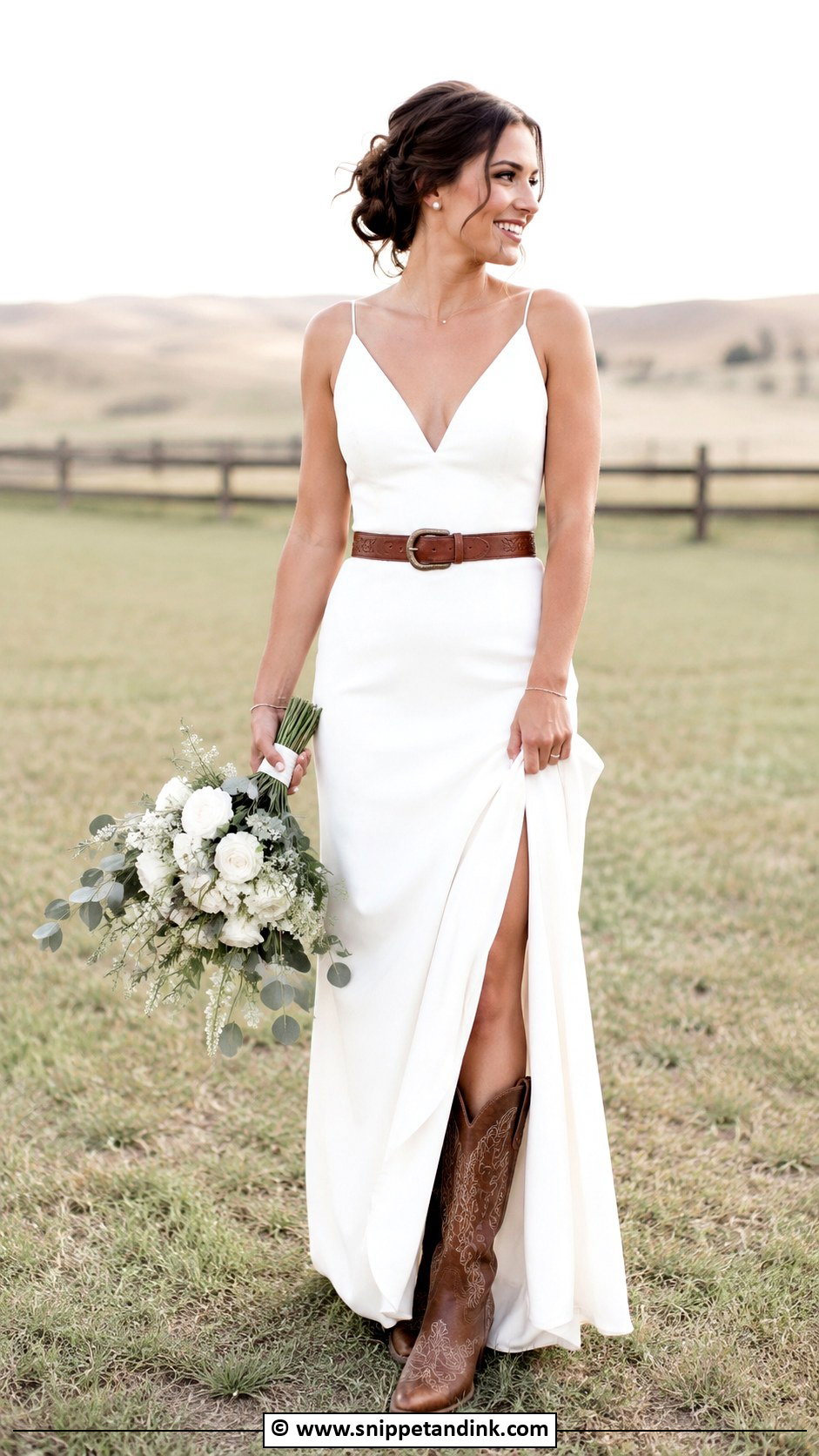
Some of my favorite western brides wear almost nothing western except the belt. Start with plain satin, crepe, chiffon or cotton lace in a shape that fits you well, then add a brown, tan or white leather belt. Try belts on at your final fitting, not before, since a fitted bodice can change shape after alterations and move the natural waist line. Classic boots, pearl studs and a soft veil or hat finish it. Because the base is so plain, you have room to spend on flowers or hair.
6. Western Wedding Dress With Denim Jacket
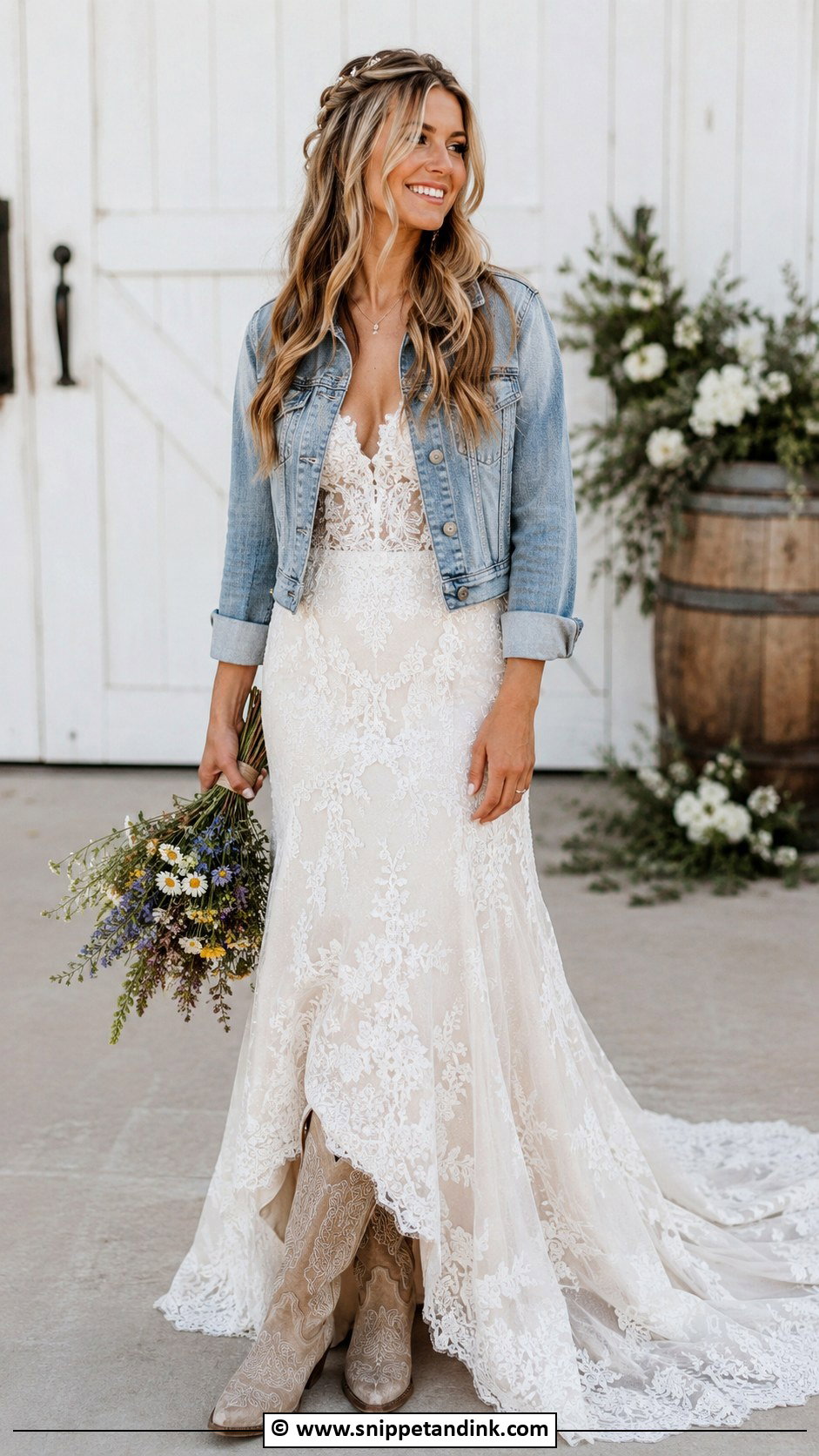
Denim is the layer I suggest most for evenings that turn cold, since it gives any gown a relaxed country feel in seconds. Keep it cropped so the waist of the dress stays visible. Light wash suits spring and summer; medium wash sits better against fall colors. Before you commit, rub the inside of the jacket against a scrap of your dress fabric if the boutique has one: new indigo can transfer blue onto ivory, so I always ask brides to wash it twice first. Embroidering your new last name or date across the back makes it something you’ll keep wearing.
7. Western Wedding Dress With Embroidered Boots
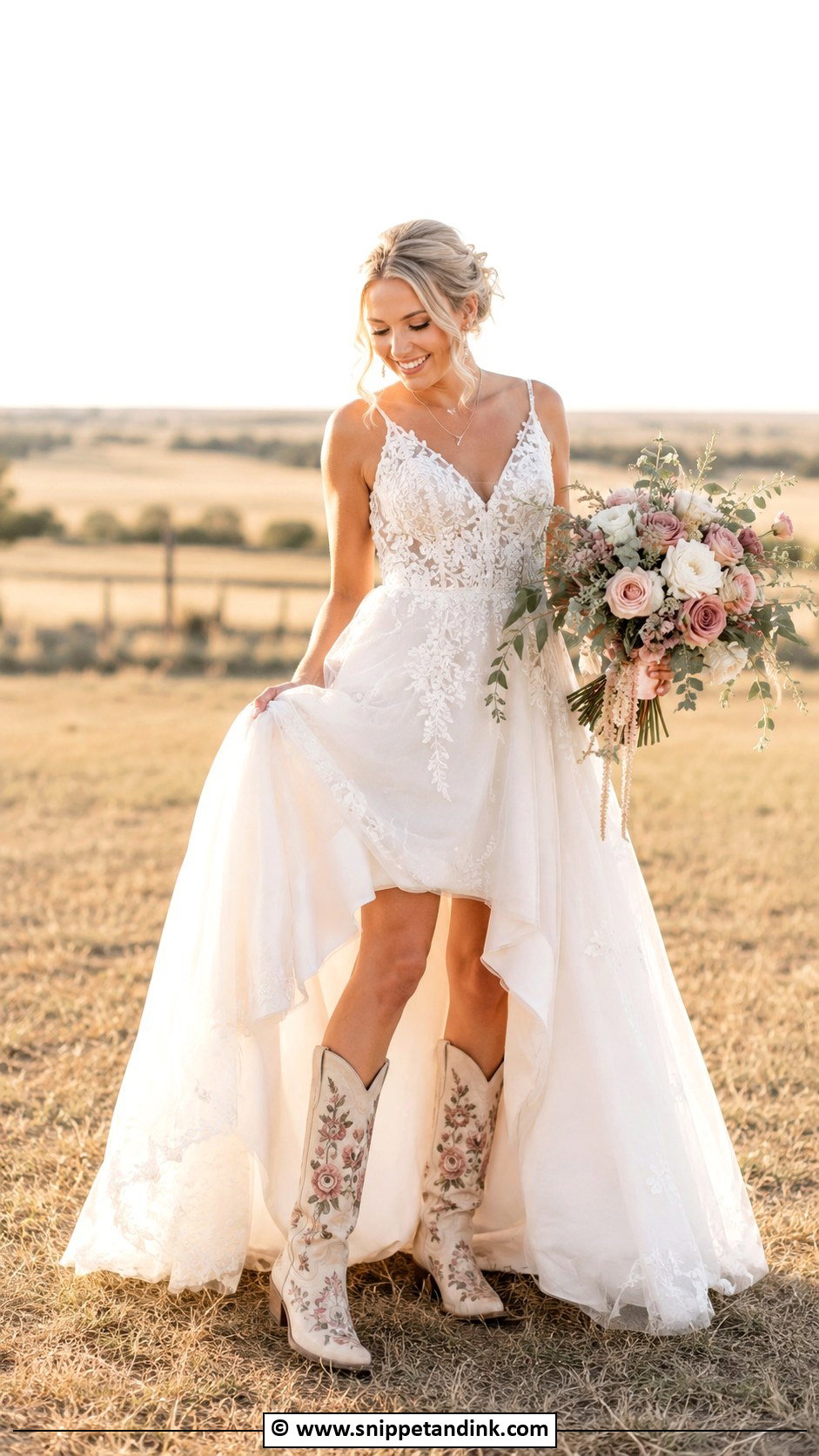
When the boots are the thing you love most, the dress has to step back. Floral stitching, blue accents or metallic thread need a hem that shows them: high-low, tea length, a front slit or a skirt that swings as you walk. I pull one color from the embroidery into the bouquet so the boots look planned rather than accidental. They also solve a real problem on lawns, where a stiletto sinks within the first few steps.
8. High Low Western Wedding Dress Outfit
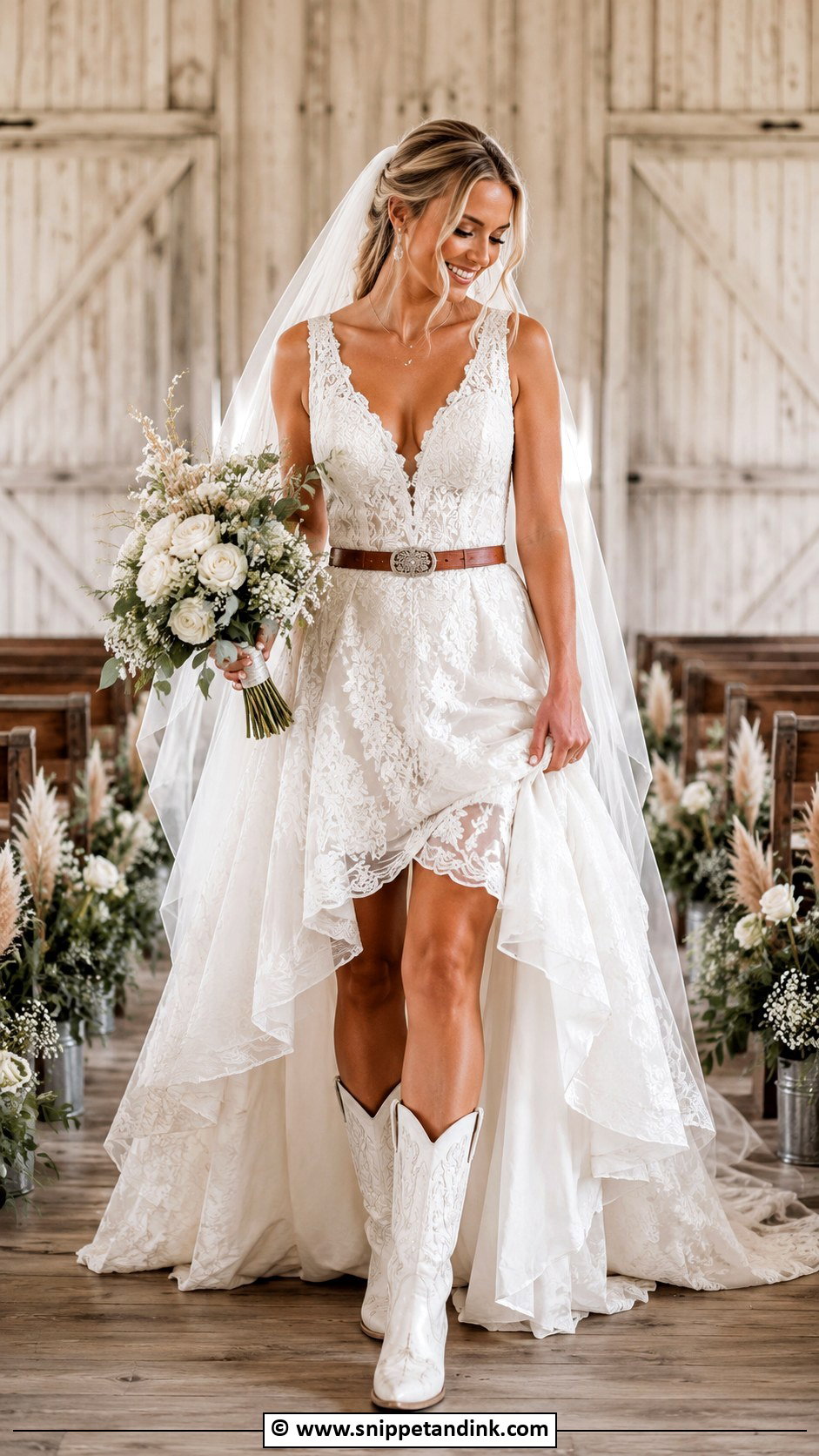
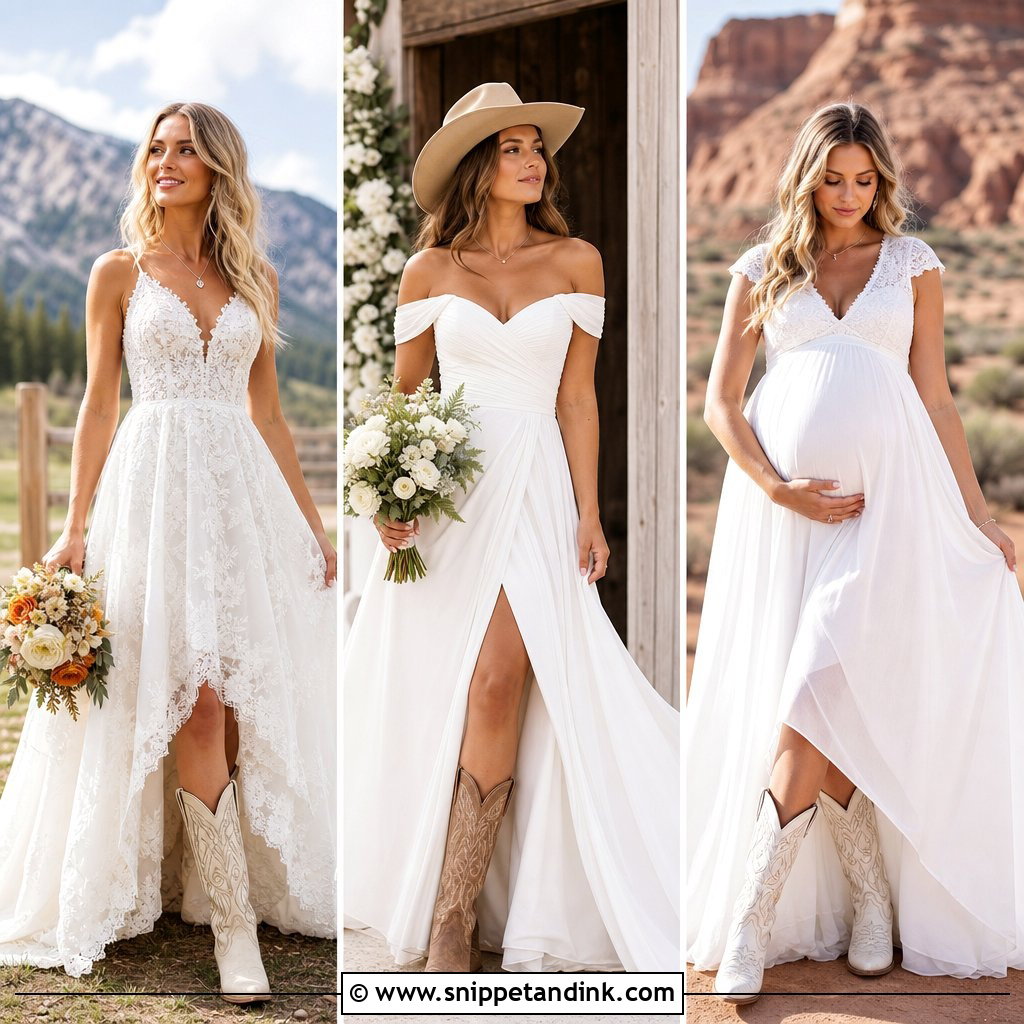
A shorter front hem means you can walk without lifting your skirt, while the long back still reads formal at the altar. Lace, organza, tulle and chiffon all hold this shape. Pair it with embroidered cowgirl boots, a western belt and a simple veil or hat. I keep the neckline quiet here, since a voluminous skirt plus heavy necklaces makes the outfit top-heavy in photos. Have your tailor check the dip with your boots on; a high-low hem cut while you stand in flats always ends up crooked.
9. Western Wedding Dress With Puff Sleeves
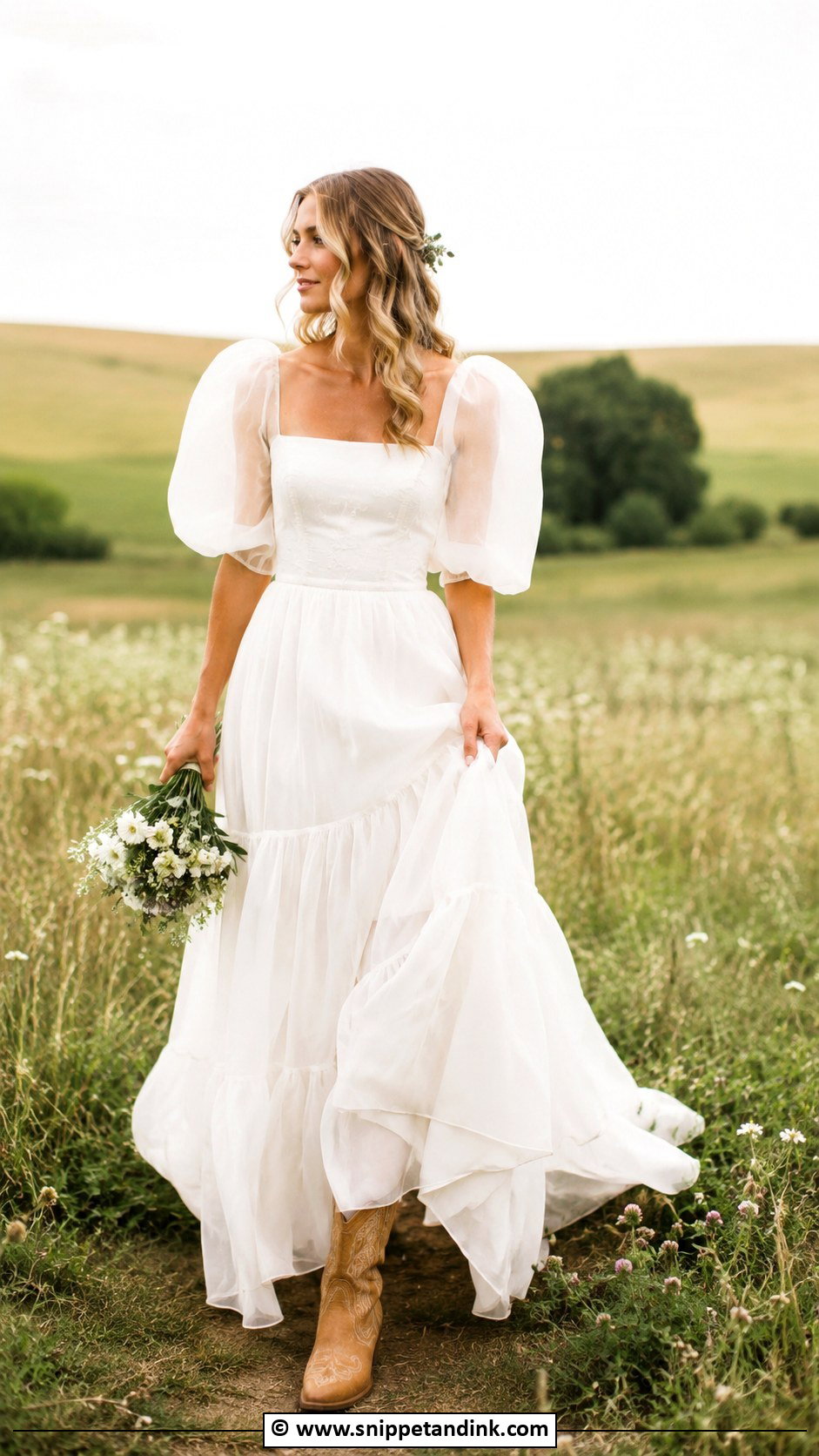
Puff sleeves lean prairie, modern or boho purely through fabric choice. Soft lace, cotton eyelet, organza or textured tulle keep them western. The proportion problem is real: big sleeves widen the shoulder line, so I balance them with a fitted waist and a plain skirt. Cowboy boots and a low bun or half-up style keep the neckline open. If you want one more detail, a slim belt with a small buckle is enough. Anything more and the sleeves lose their impact.
10. Western Wedding Dress With Slit
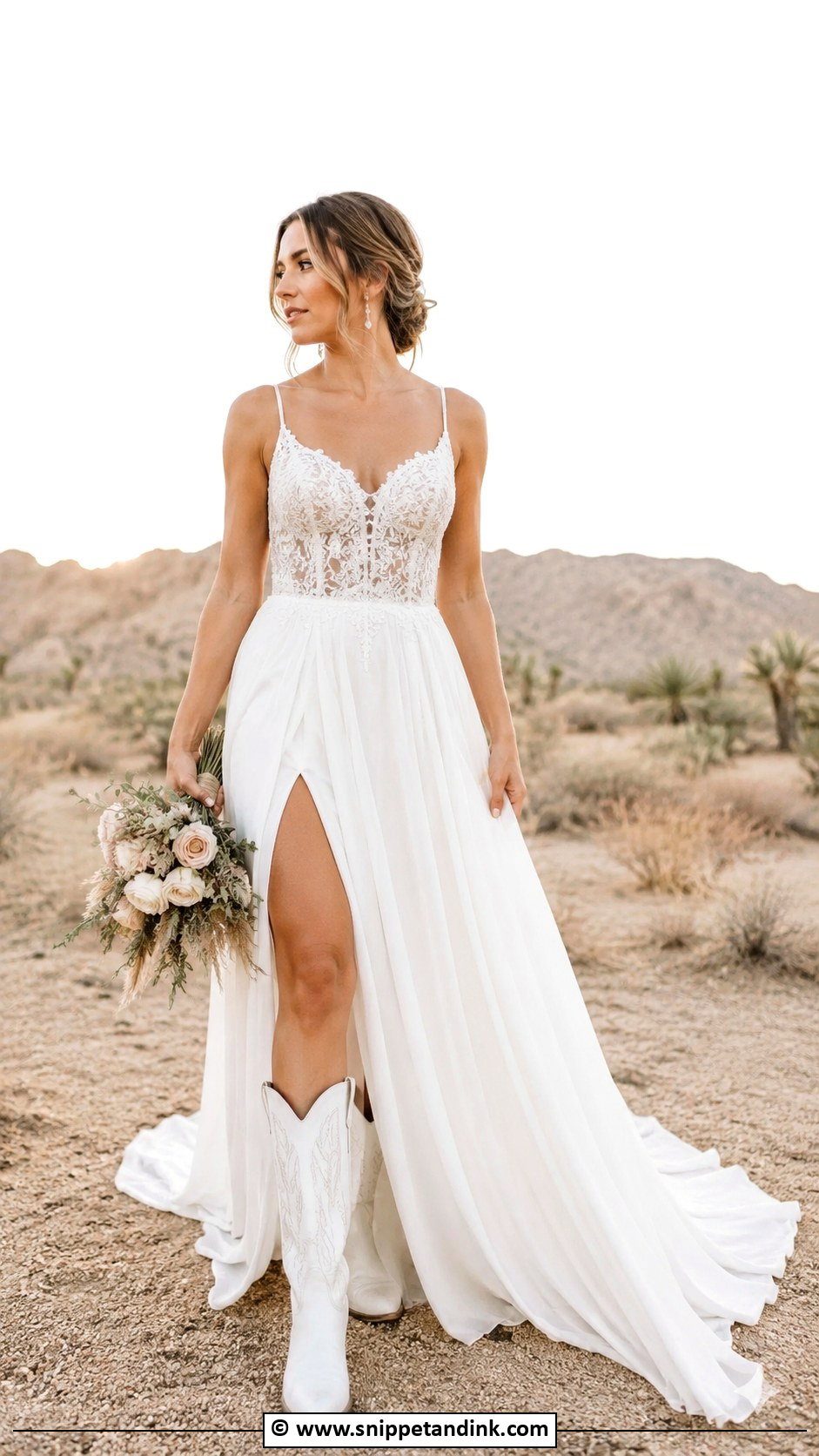
A slit is the easiest way to let boots show without changing hem length. Chiffon, crepe and satin fall smoothly when you walk; stiffer fabrics gape at the opening. Watch the height. I mark the slit with the bride seated and on steps, because one that looks modest standing can open well past the knee once you sit at the head table. A lace bodice or fitted long sleeve adds bridal detail. Boots in white, tan or a metallic finish work, and the belt is optional if the gown already has structure.
11. Off Shoulder Western Wedding Dress
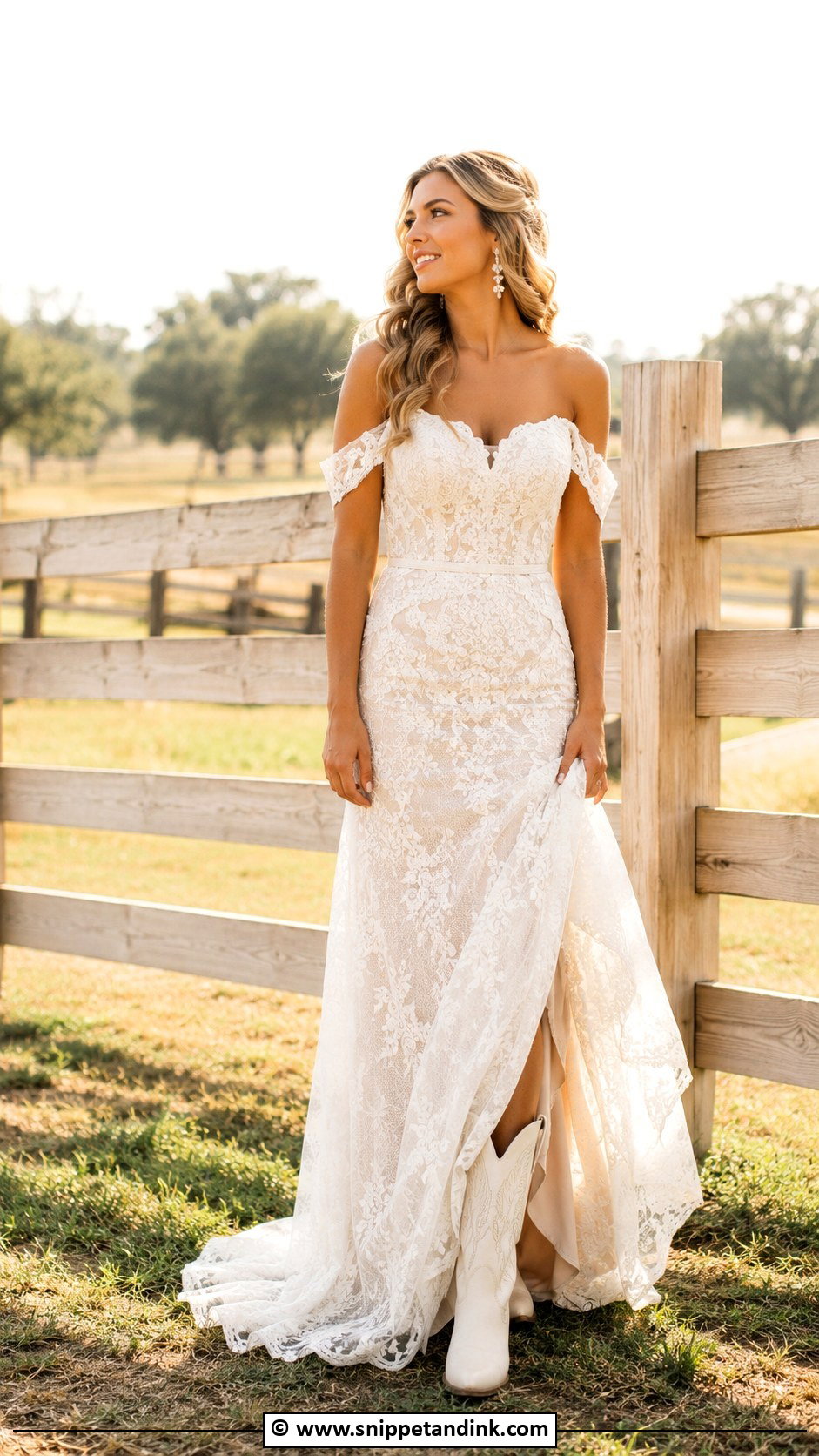
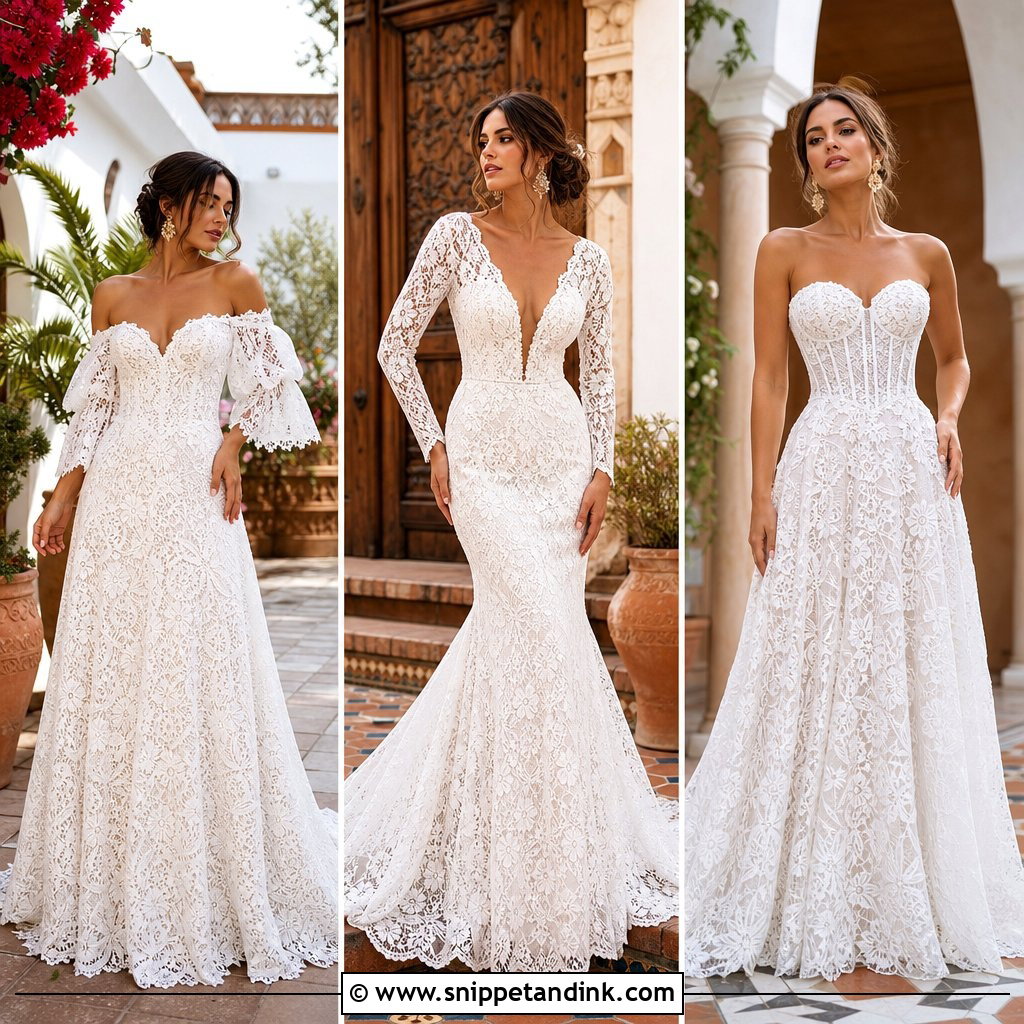
An off-shoulder neckline softens a rustic outfit more than any other bodice I fit. Lace, ruffles or flowing sleeves give it the country mood. Pointed boots, drop earrings and loose curls finish it. What I check first is whether the straps stay put when you raise your arms, since a dropped shoulder that slides up during the first dance is a common fitting issue; a silicone grip strip inside the band usually fixes it. Bring a lightweight wrap or cropped jacket for cooler outdoor moments.
12. Western Wedding Dress With Ruffle Skirt
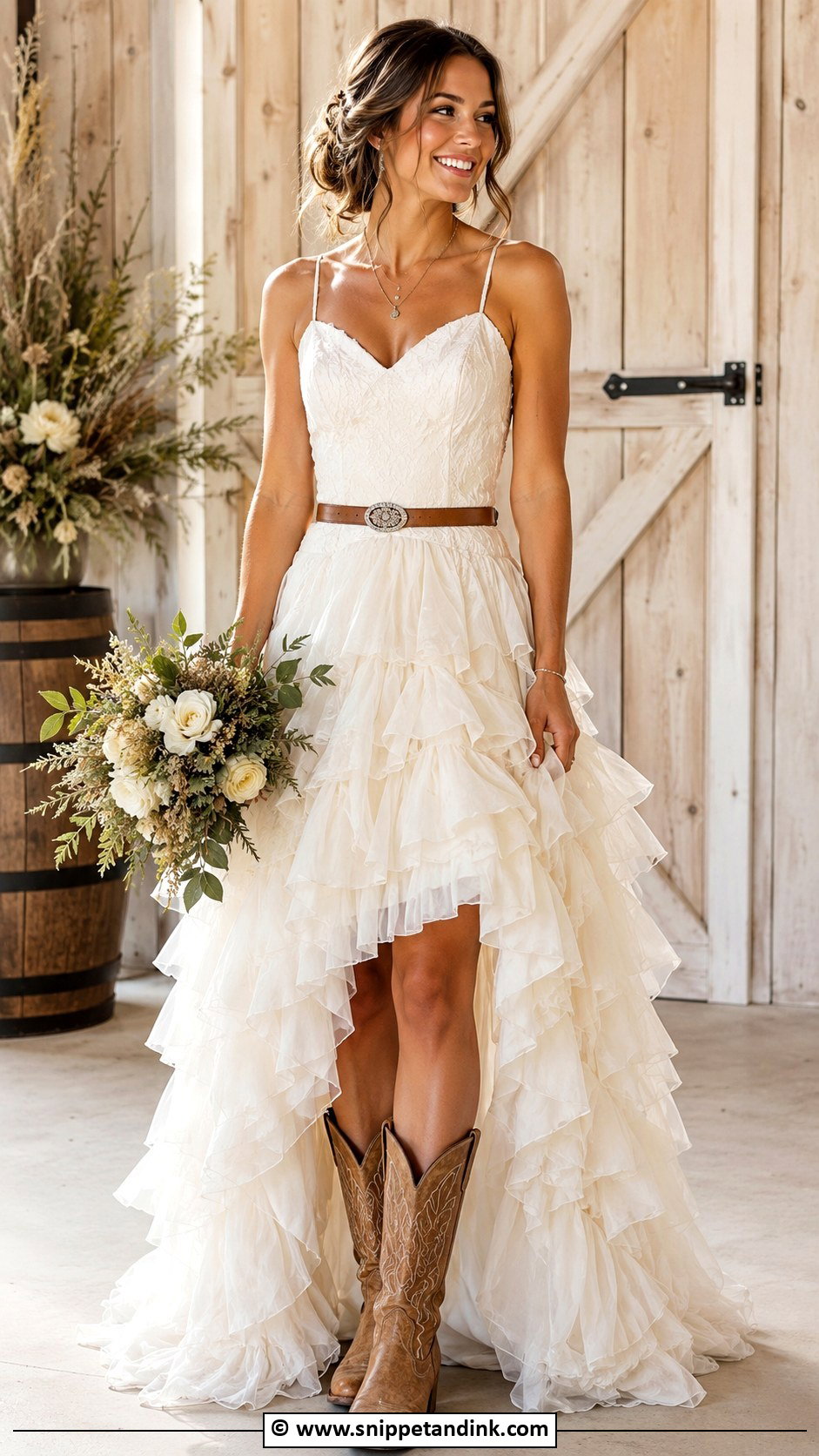
Ruffles add volume and that touch of prairie, but heavy ones can turn bulky fast. I steer brides toward tiered lace, chiffon or tulle that stays light. A fitted bodice and a small belt keep the shape from spreading sideways. This skirt looks right in barn venues and outdoor ranch ceremonies, where the ruffles catch air when you turn. Keep jewelry minimal because the skirt already carries the detail, and pick a simple veil or hat rather than both.
13. Western Wedding Dress With Corset Bodice
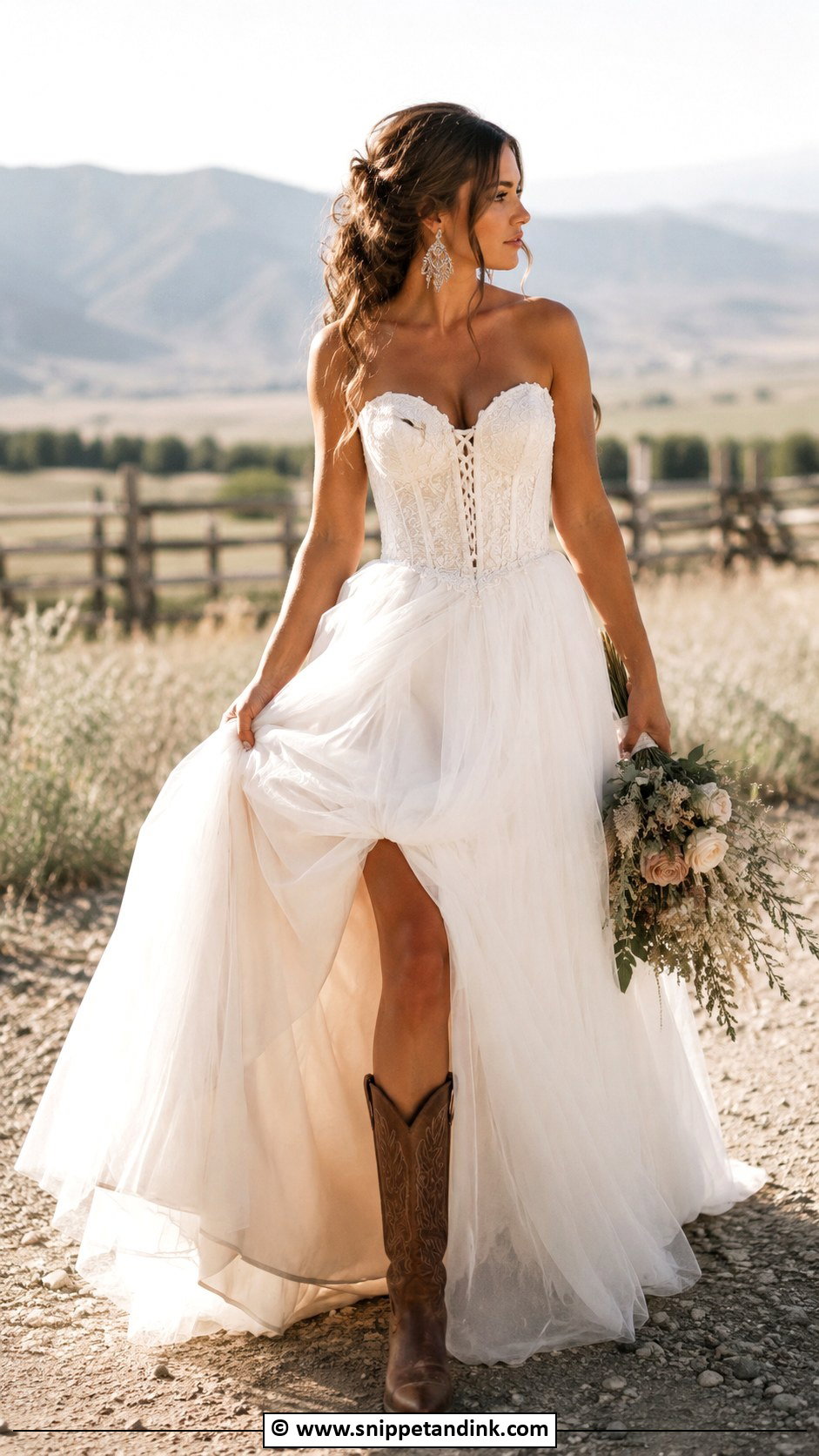
A corset bodice gives real support, which is why I suggest it to brides who dread a strapless dress slipping. Lace-up backs can be let out or tightened between fittings, a small mercy if your weight shifts before the date. Balance it with a flowing skirt, then add cowgirl boots and a western belt only if the waistline has space for one. Lace, satin and tulle all pair well. Sit, bend and eat a snack at your fitting, since a boned bodice that’s comfortable standing can dig in at the ribs when seated.
14. Western Wedding Dress With Train
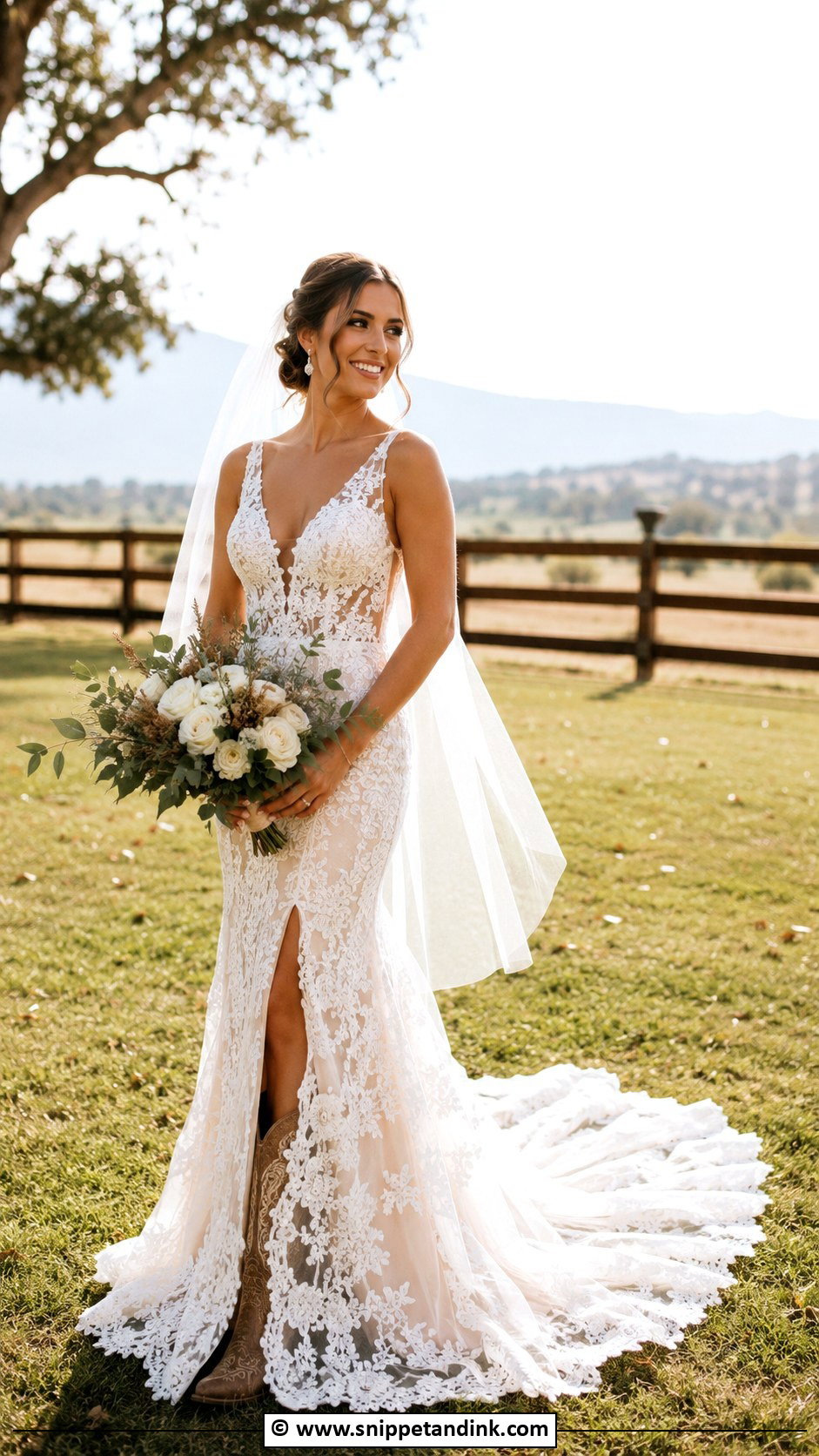
Trains and open ground need a plan. Chapel length photographs well and is still manageable outdoors; cathedral length outside collects grass, burrs and dust. Lace trains look romantic against wood floors and fields. Boots can hide under the skirt or show through a slit. I always ask the seamstress to add a sturdy bustle with more hooks than she thinks you need, because ranch dance floors are rougher on bustles than ballroom ones. A western belt or statement earrings bring in personality without competing.
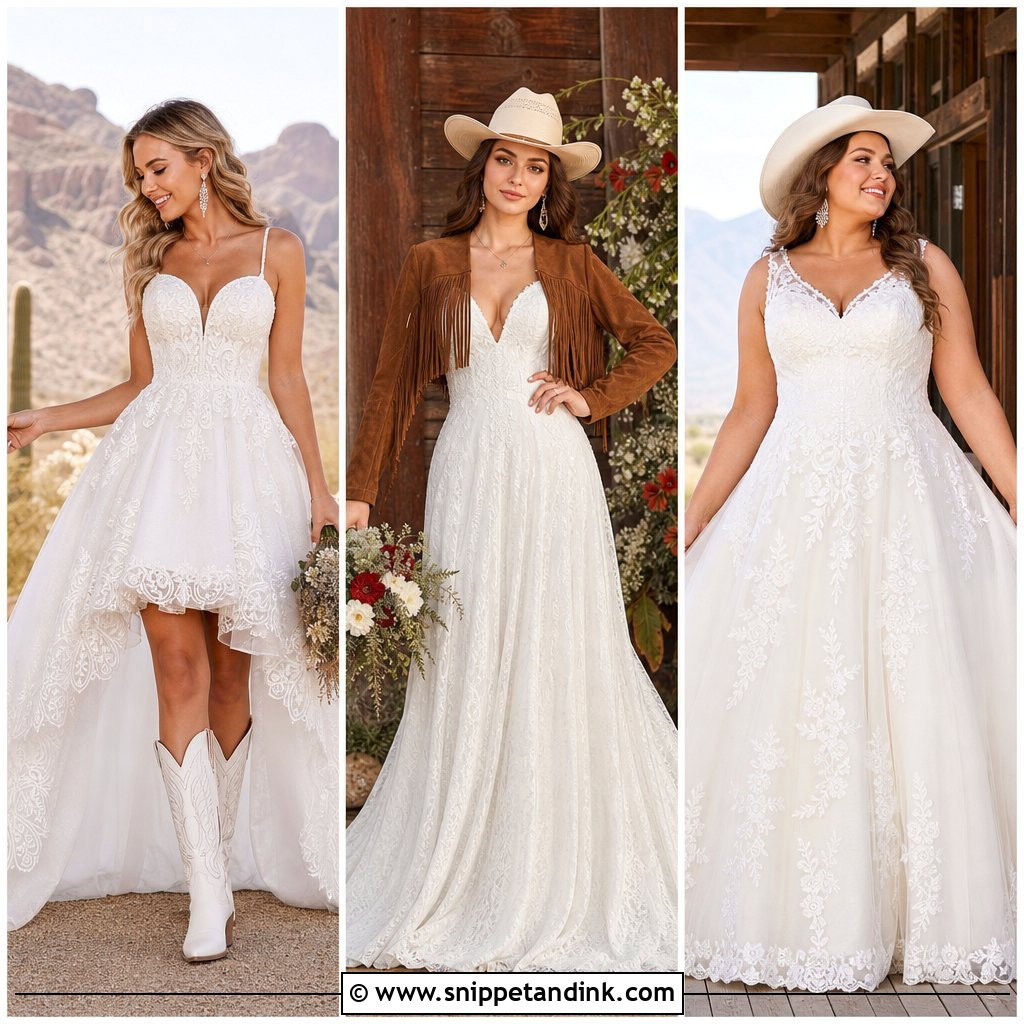
15. Short Western Wedding Dress With Boots
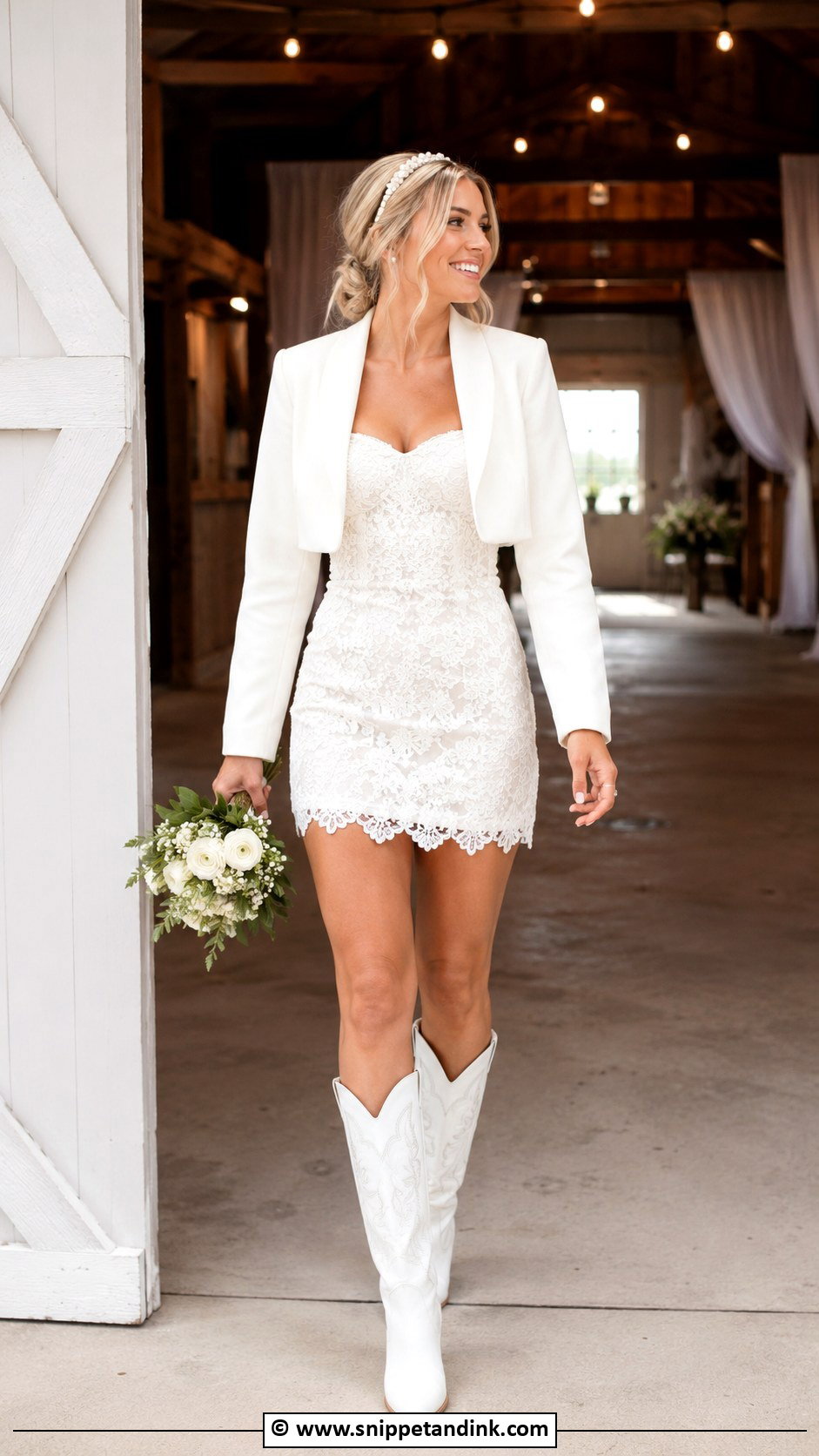
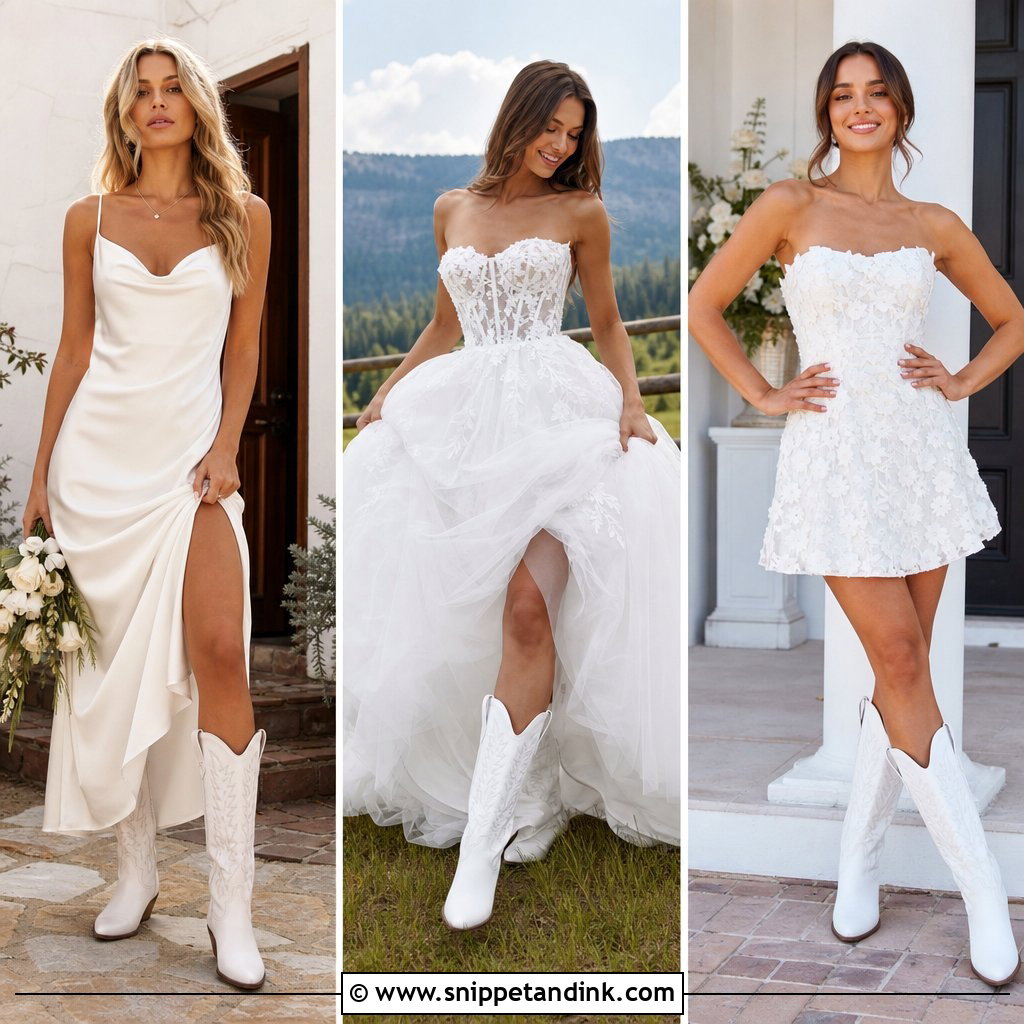
Short dresses suit courthouse vows, ranch elopements and reception changes. Mini, knee and tea lengths in lace, satin, tulle or eyelet all work. Because the hem sits high, the boots become a major part of the outfit, so I treat them as seriously as the dress: polished white for a modern feel, tan or brown for rustic. A pearl headband, belt or cropped jacket finishes it. Do a dance test in the mirror; a fitted mini rides up more than you’d guess.
16. Tea Length Western Wedding Dress
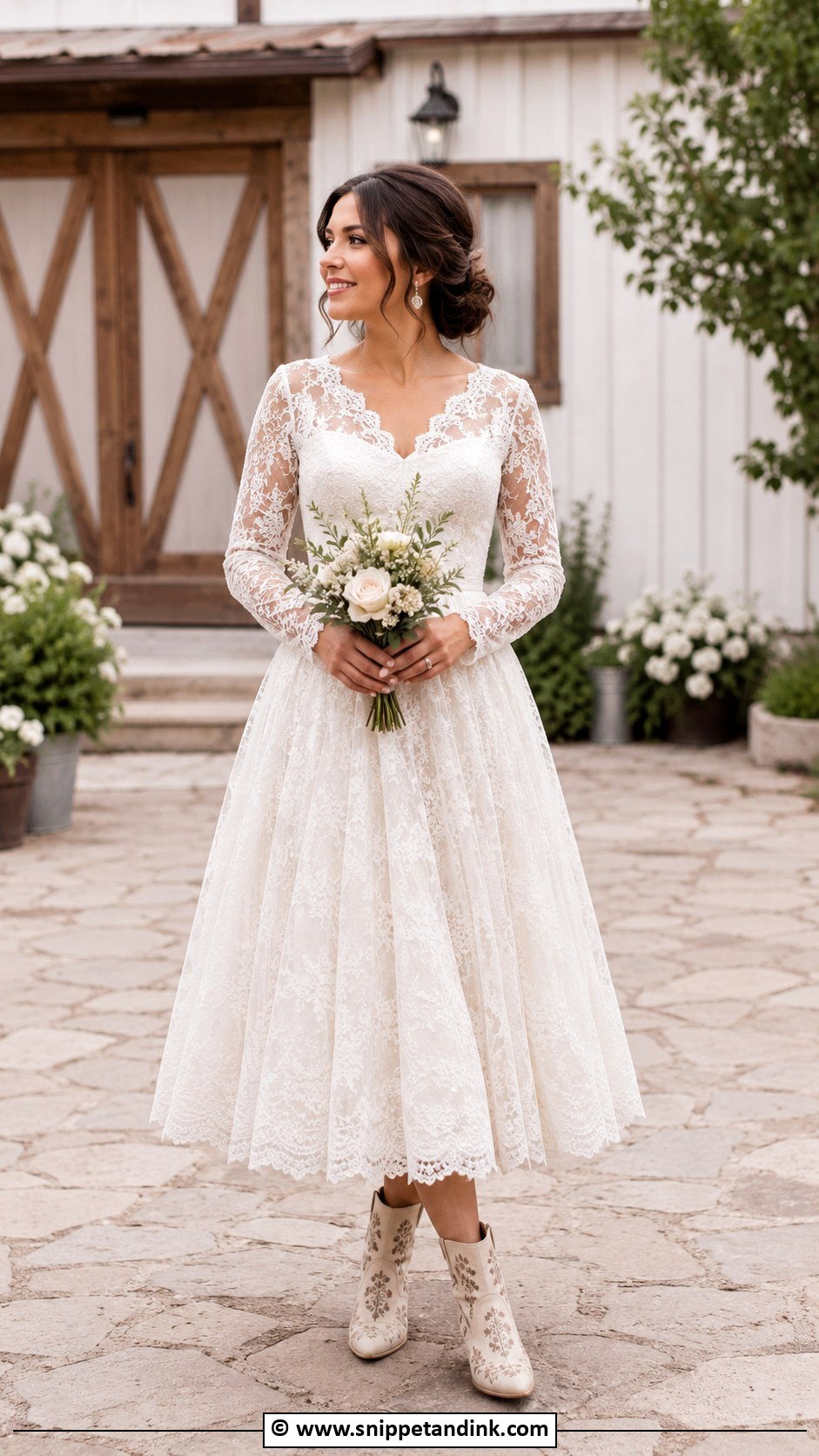
Tea length falls between knee and ankle, which is the sweet spot for showing boots without going short. Lace, tulle, satin and cotton eyelet all hold it well. A fitted bodice and fuller skirt look vintage; a slimmer cut is more modern. Embroidered boots, pearl earrings and a small bouquet keep the scale right. My one caution: tea length with a very tall boot shaft can chop the leg, so I usually suggest a mid-calf boot that ends a few inches below the hem.
17. Western Wedding Dress With Pearl Details
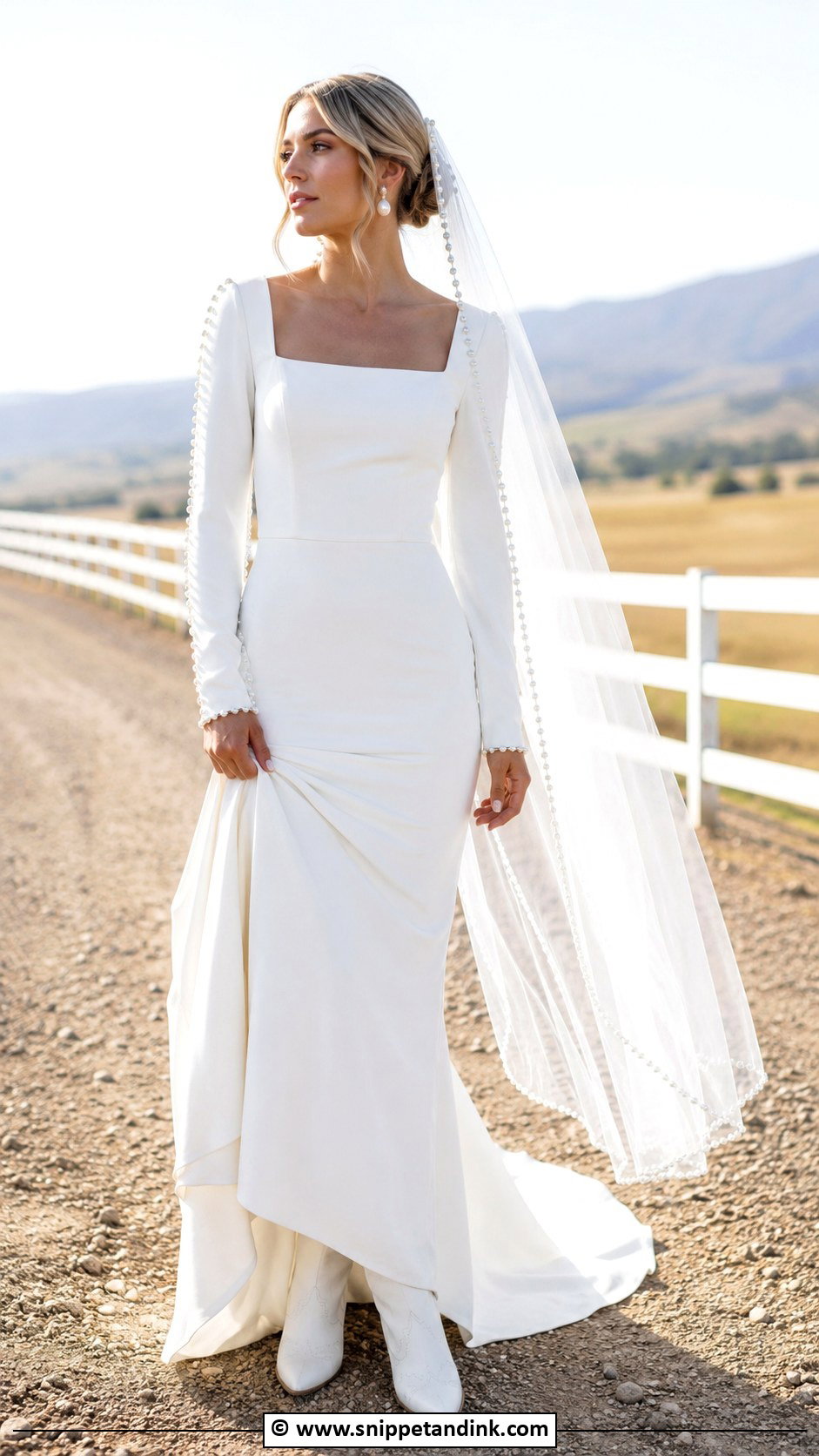
Pearls give sparkle without rhinestone glare, and they look good in harsh outdoor light where crystals can flare. They turn up on sleeves, bodices, veils, belts, boots and hairpins. To keep the outfit western, pair the pearl-trimmed gown with cowgirl boots, a simple hat or a leather belt. Fitted lace or crepe with pearls looks modern; a fuller tulle gown leans romantic. Pick one pearl tone and stick with it, because warm ivory pearls next to bright white ones make both look off.
18. Western Wedding Dress With Turquoise Jewelry
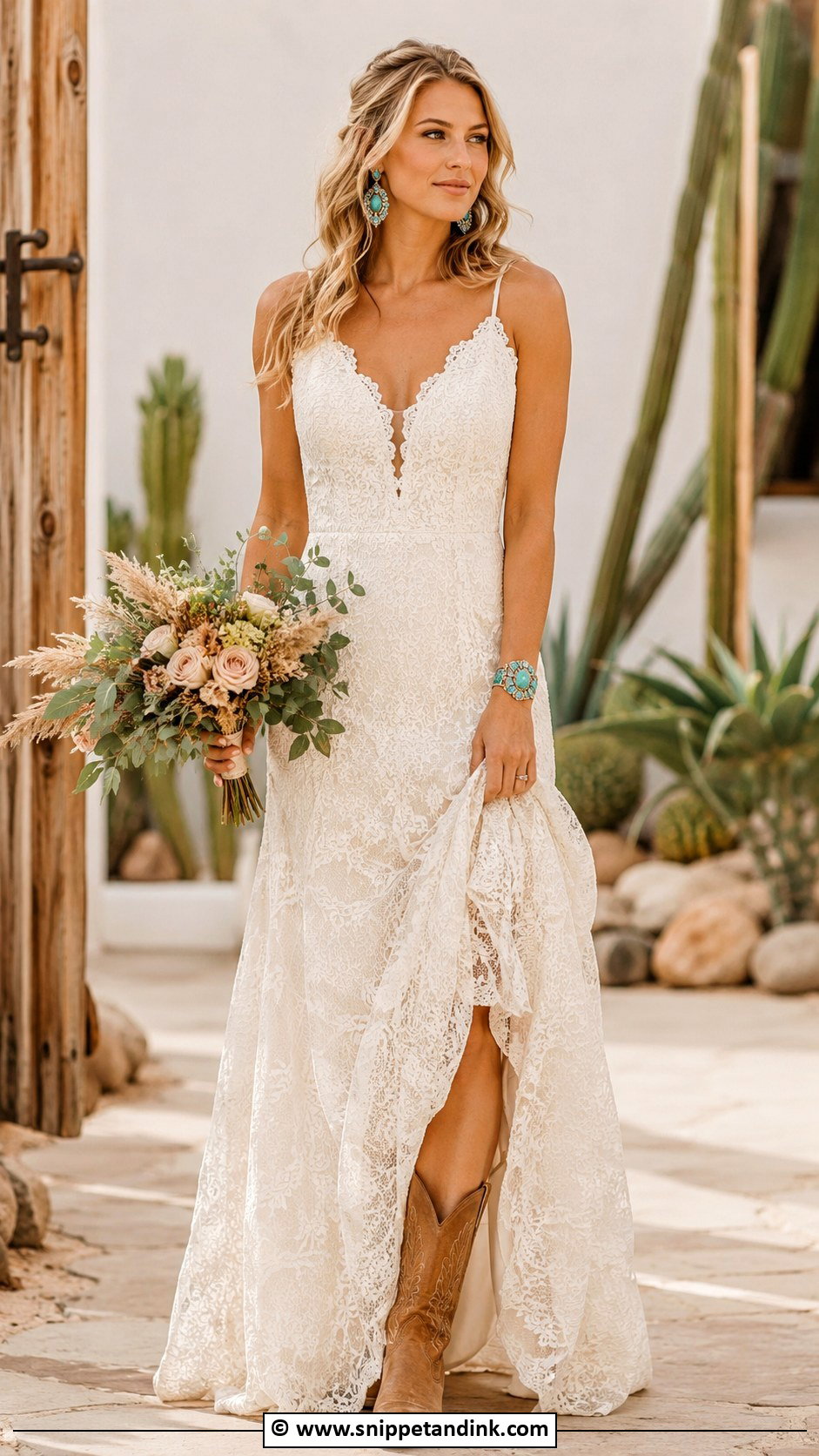
Turquoise brings color without breaking the bridal palette. Start with ivory or white lace, crepe or chiffon, then add earrings, a cuff or a necklace, but not all three. Brown or tan boots sit naturally beside the stone. If the neckline is detailed, I’d choose earrings over a necklace every time. Real turquoise varies a lot in color from piece to piece, so lay your jewelry out together in daylight before the wedding to check the blues actually agree.
19. Western Wedding Dress With Concho Belt
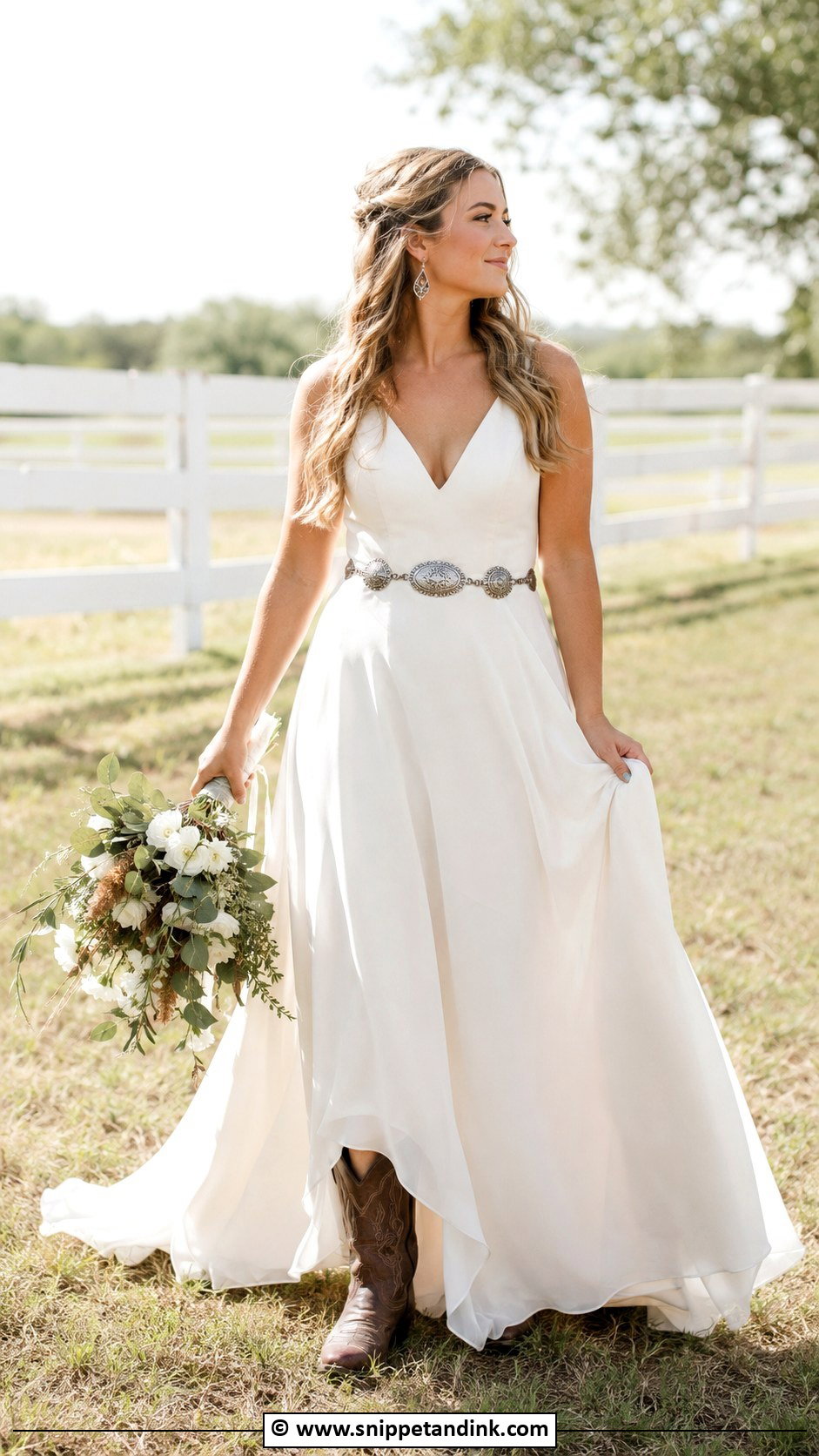
A concho belt is the most recognizably western accessory on this list, and it carries a lot of visual weight. It belongs on simple gowns, lace A-lines or flowy boho shapes. If your dress has heavy beading, choose a slim version. Silver earrings, boots and a relaxed hairstyle round it out. Conchos are metal, so try the belt sitting down; the discs can press into a soft skirt and leave marks on satin. Many of my brides wear it only for the reception, which gives them two looks from one dress.
20. Western Wedding Dress With Floral Embroidery
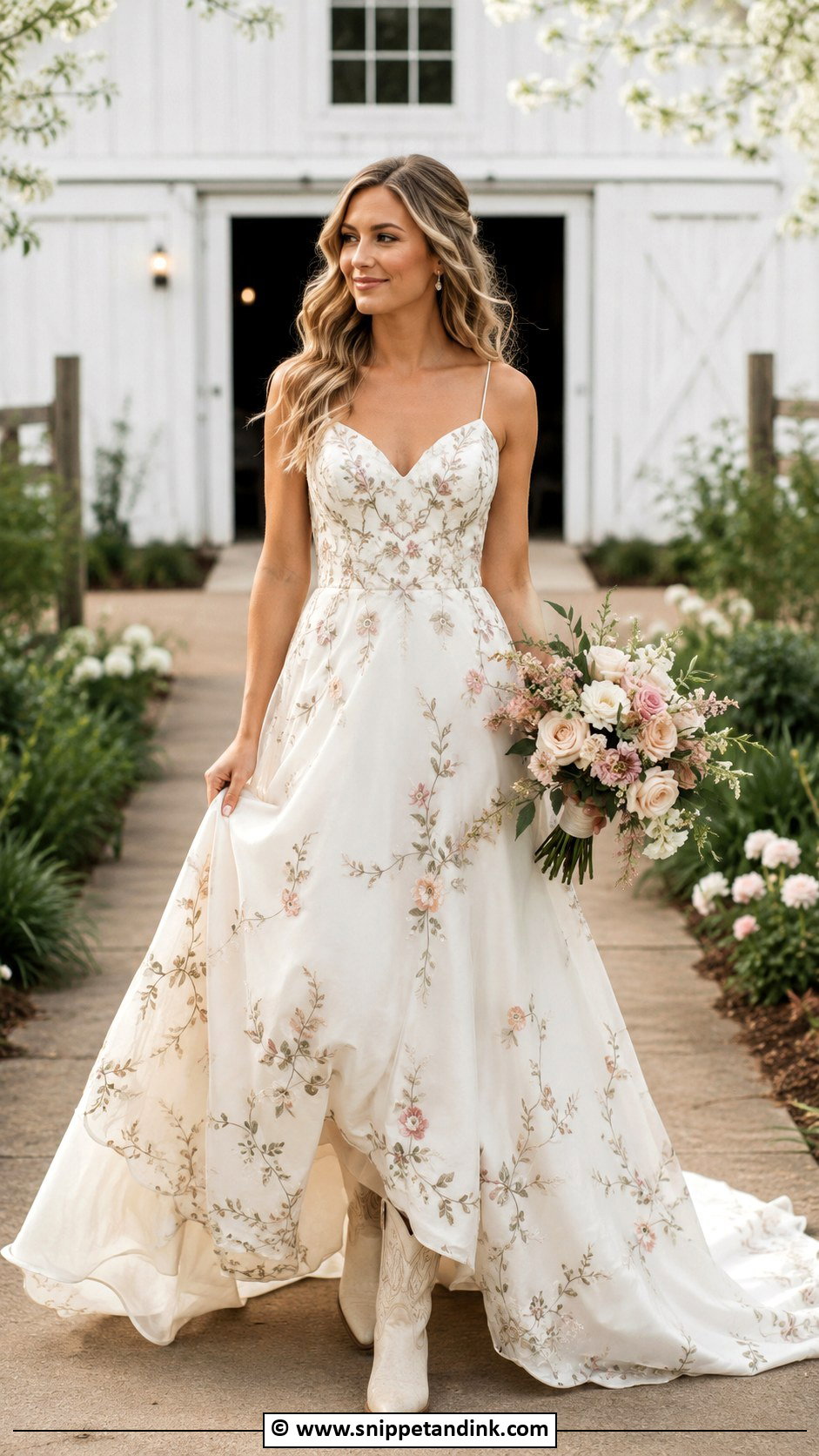
Embroidery gives texture and a handmade quality that suits ranch settings. White-on-white thread reads subtle; colored floss reads folk. Choose embroidered sleeves, bodice, skirt or train, then keep accessories quiet. Cream, tan or light brown boots ground it. Pull a flower color from the stitching into the bouquet. If you love detail but dislike sparkle, this is the alternative I’d point you to. Ask how the embroidery is backed, since loose threads on the inside can snag on lace or tulle layers underneath.
21. Western Wedding Dress With Lace Sleeves
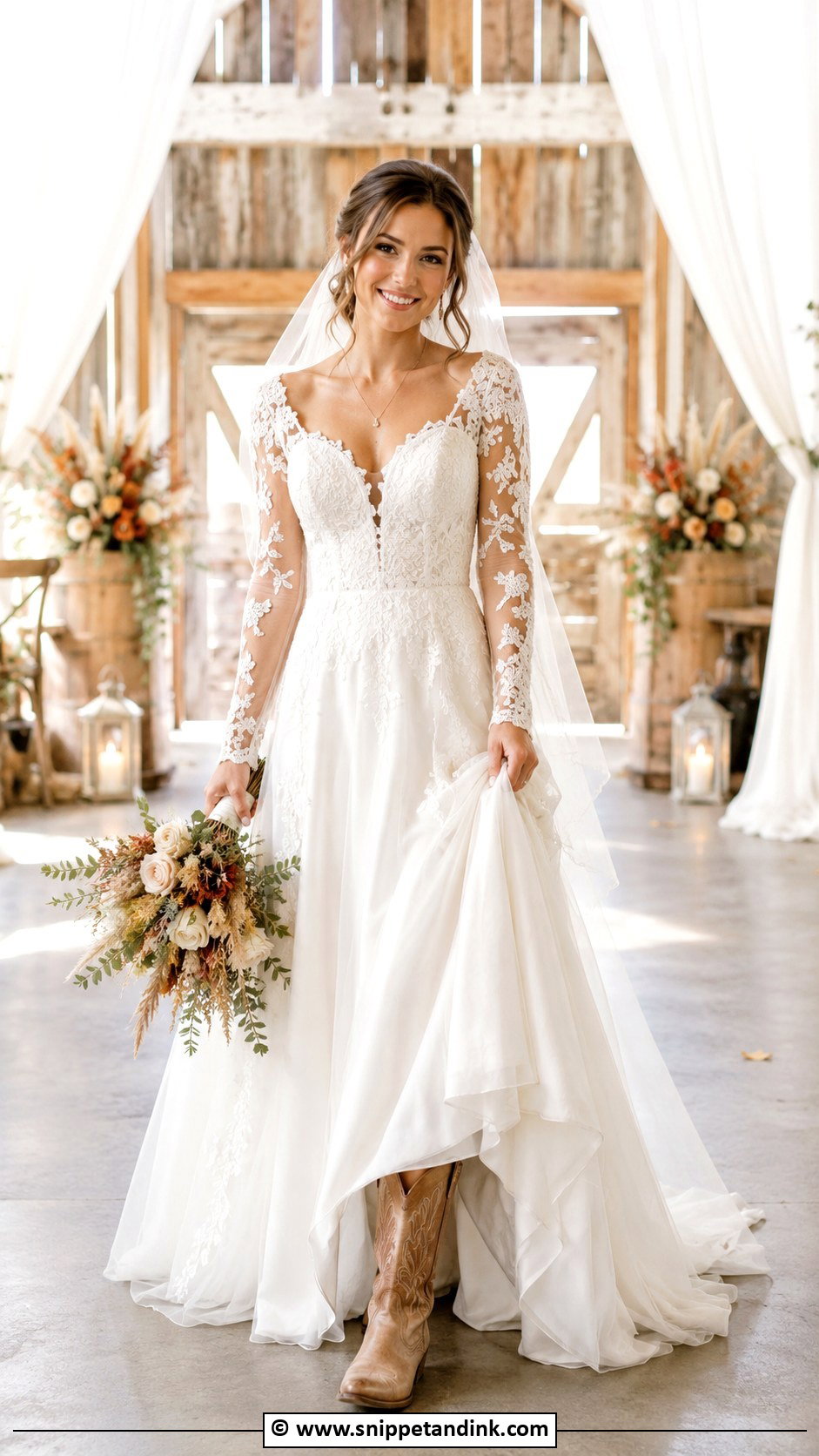
Lace sleeves are the coverage choice I recommend most for fall, mountain venues and cool barns. Fitted, flared, sheer or slightly puffed, they put texture right beside your face, which tends to read well in close-up portraits. Pair them with cowgirl boots, a soft veil and simple jewelry. A fitted bodice and flowing skirt lets you move. If the lace pattern is bold, drop the belt. And check the cuff seam on your wrist: scratchy lace edges are the complaint I hear most by hour six.
22. Western Wedding Dress With Bell Sleeves
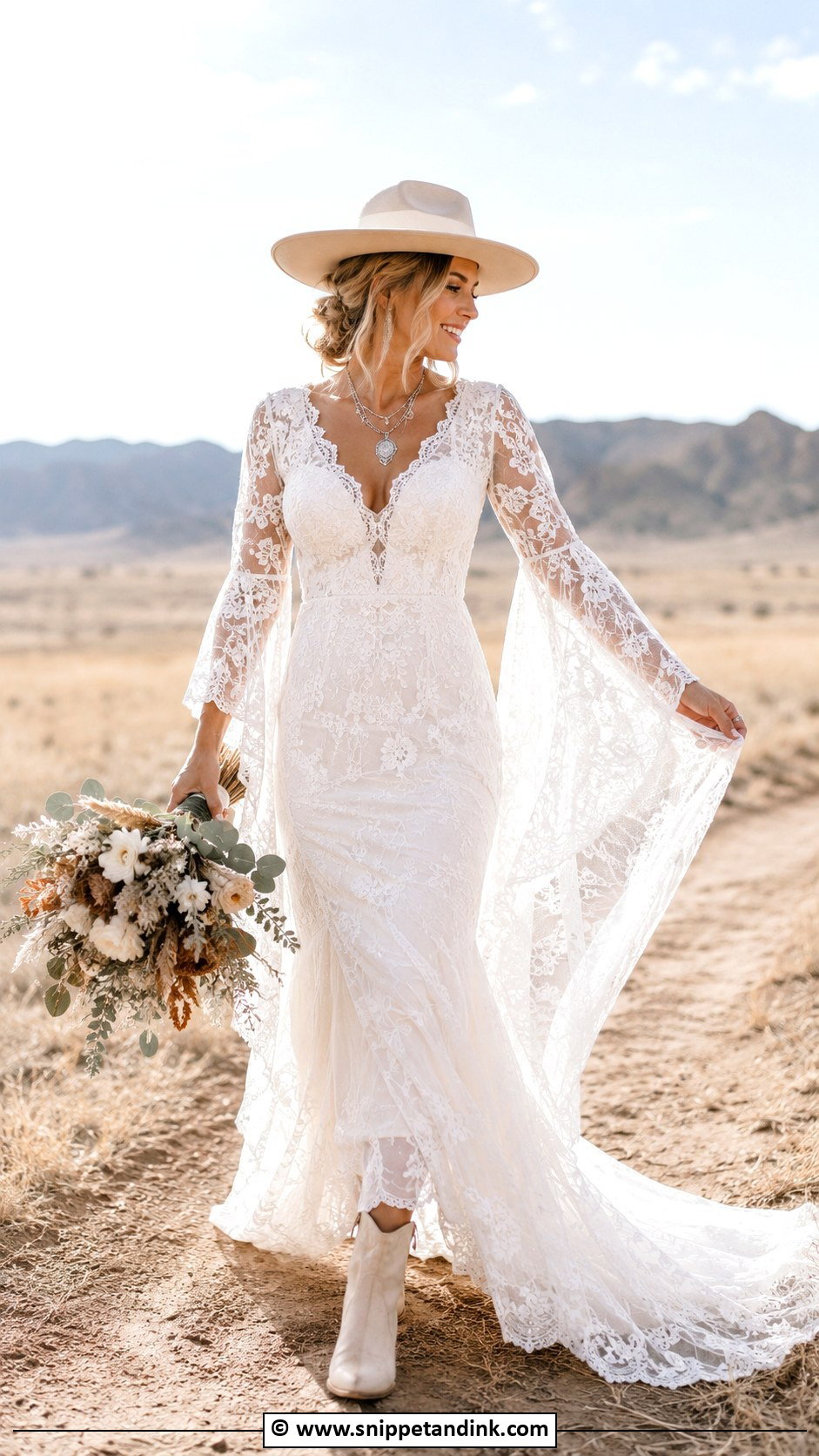
Bell sleeves give a free, boho shape that moves when you gesture. They need lightweight lace or chiffon; heavy fabric hangs limp and swallows the hands. Ankle boots, loose waves and simple silver keep it relaxed. A wide-brim hat pushes it western, a veil pulls it traditional. Since the sleeves are the statement, keep the skirt clean. Practical note: long bell cuffs drag through cake frosting and candle flames, so I pin them back for the cake cutting.
23. Western Wedding Dress With Tiered Skirt
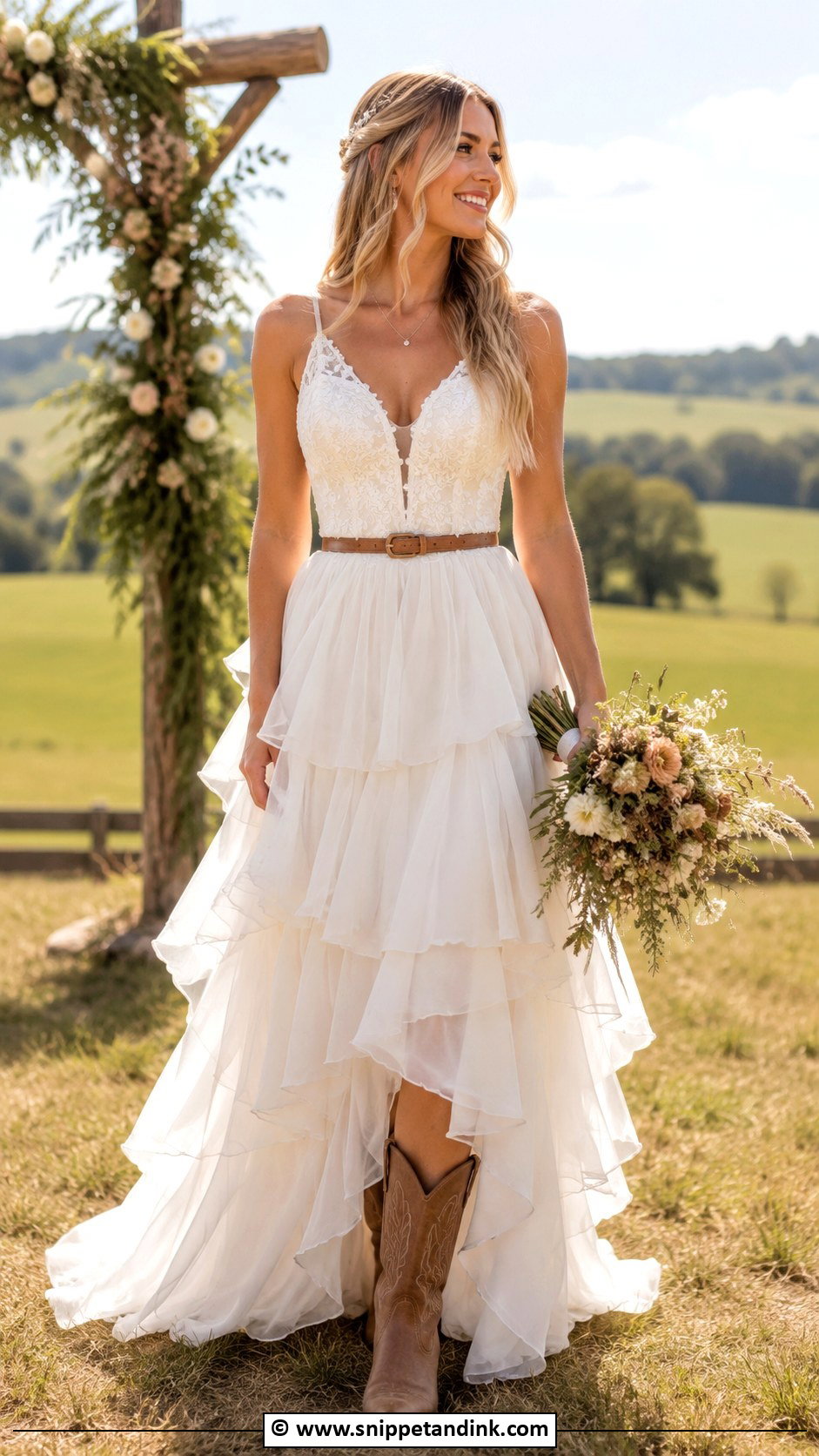
Tiers add movement and texture without needing sparkle, which gives a soft prairie quality. Chiffon, lace, cotton or tulle tiers set how formal it reads. Pair it with boots, a fitted bodice and small earrings. A slim belt helps stop the layers from looking wide. Tiered skirts can look fuller in photographs than in the mirror, so I ask brides to see themselves on a phone camera from several feet back during the fitting. Keep the bouquet natural and loose to match.
24. Western Wedding Dress With Satin Skirt
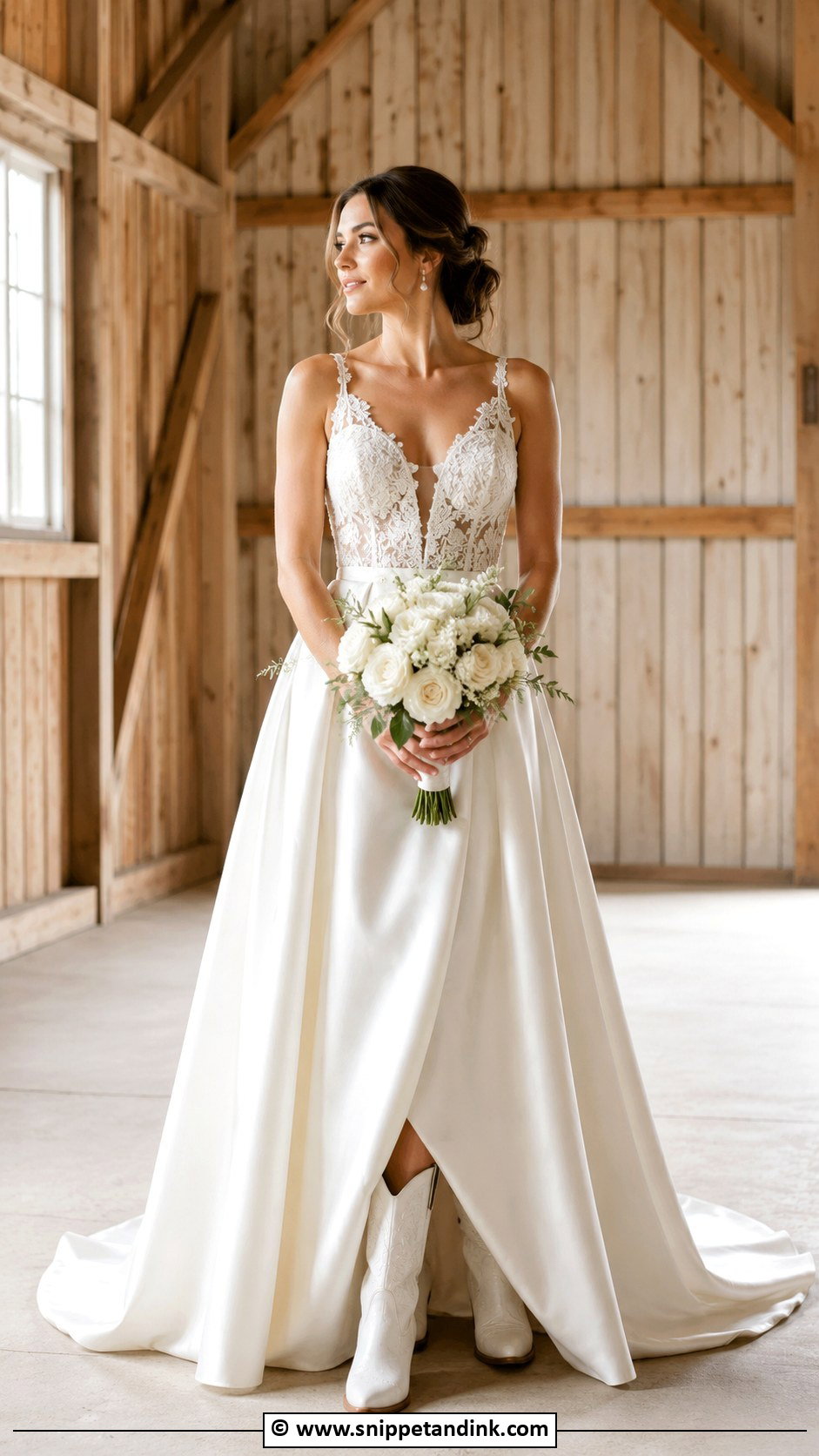
Satin is the fabric for a country wedding that leans formal. It brings smooth sheen and structure, and western accessories stop it feeling stiff. Pair an A-line or fitted satin skirt with a lace bodice, pearl earrings and white or tan boots. A leather or crystal belt defines the waist. The honest trade-off: satin creases where you sit and shows every water spot, so I keep a steamer at the venue and warn brides about damp grass. Clean lines and the fabric itself do most of the work.
25. Western Wedding Dress With Tulle Skirt
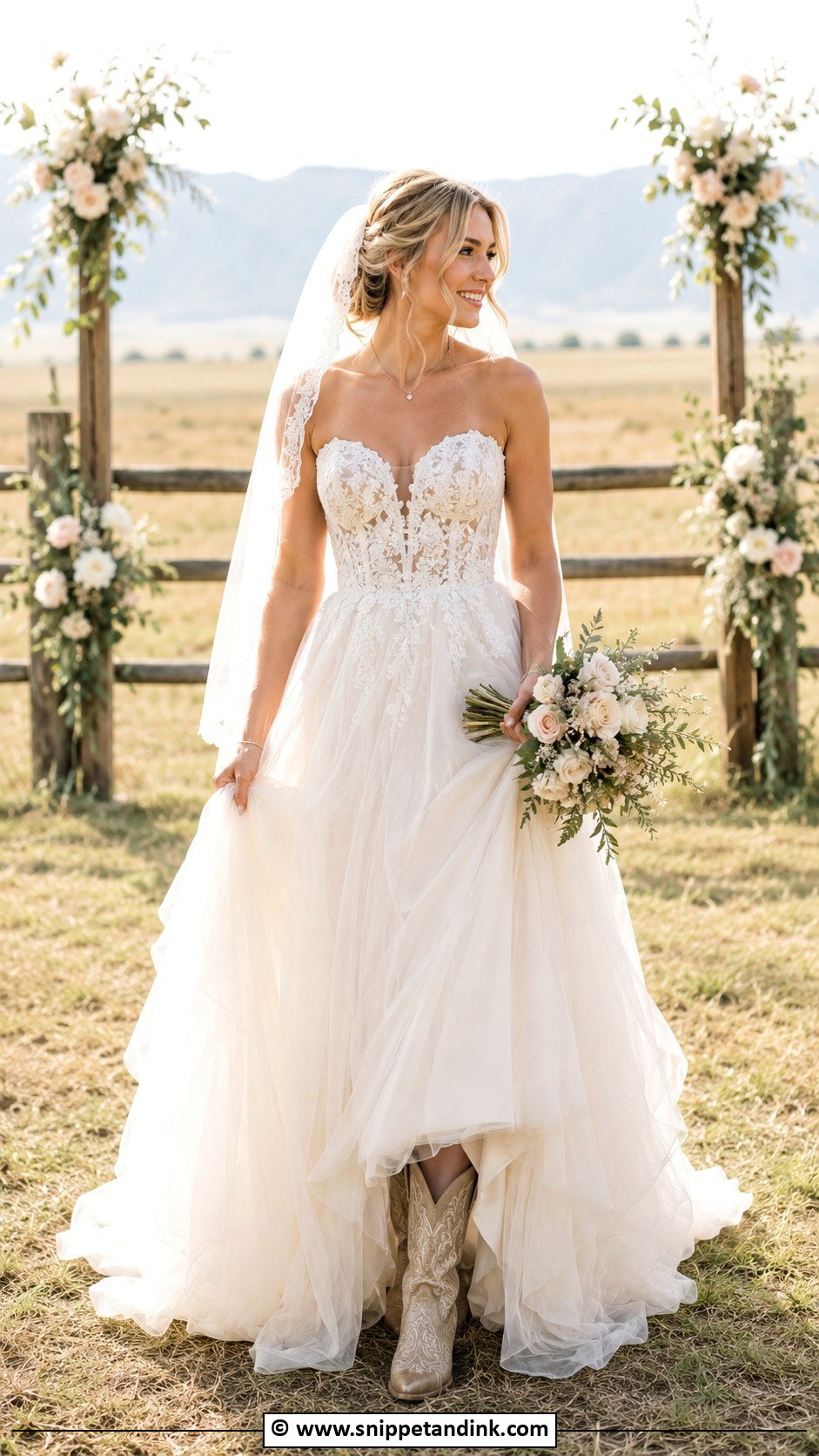
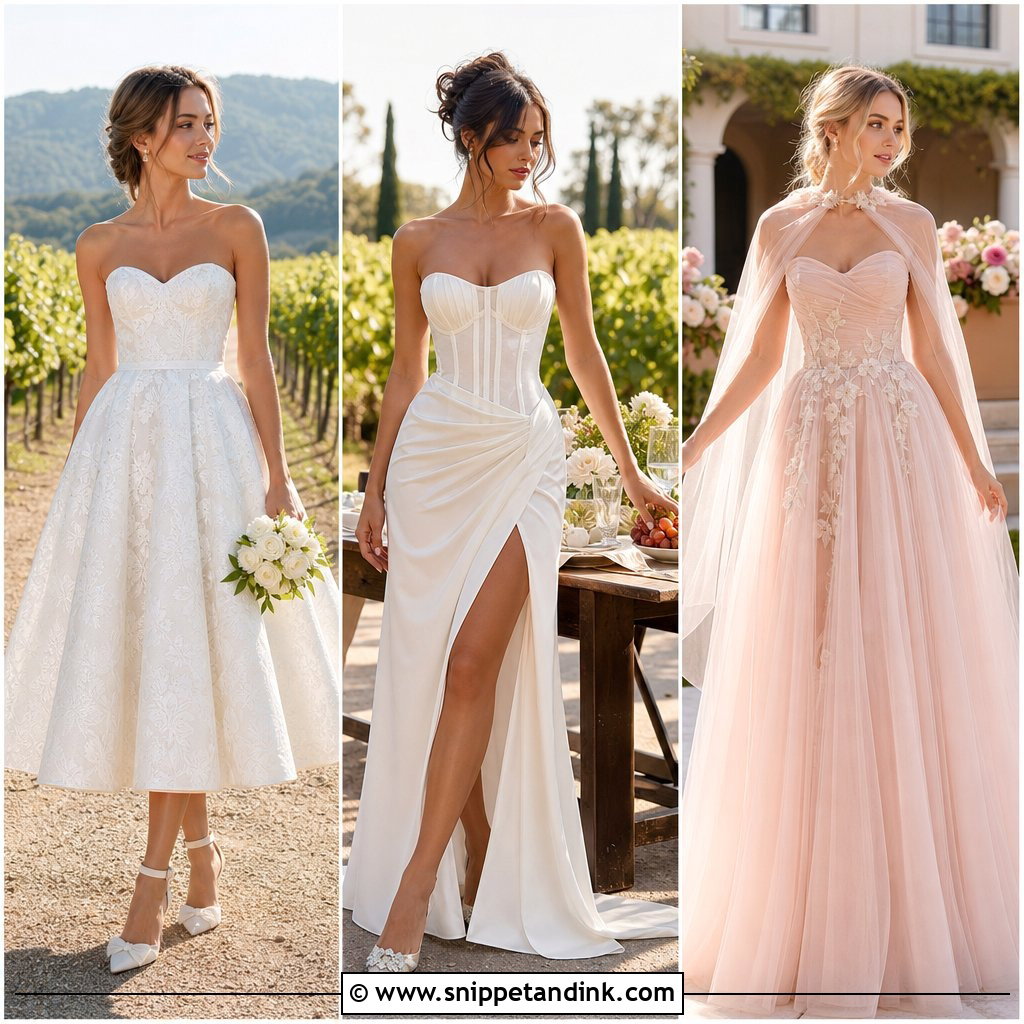
Tulle gives volume without the weight of heavier fabrics, so you get a full skirt you can still dance in. To make it western, pair it with boots, a leather belt or a denim jacket for portraits. A lace or corset bodice balances the soft skirt and adds structure. Tulle does snag on boot spurs, rough barn boards and hay bales, so I check boots for any sharp hardware before the day. Embroidered boots peeking out from under the layers add personality.
26. Western Wedding Dress With Suede Boots
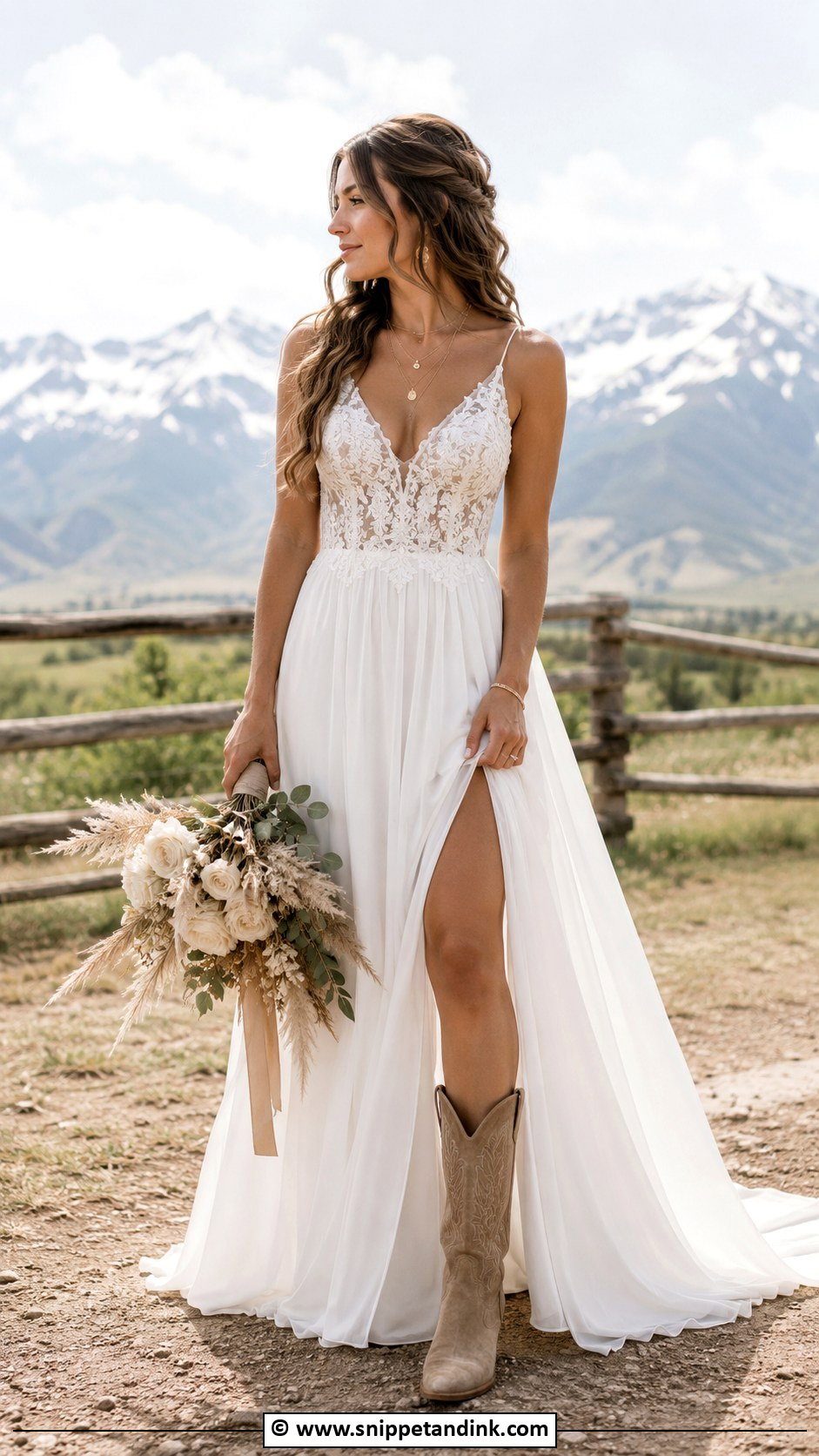
Suede looks softer and quieter than polished leather. Tan, taupe, ivory or beige suede pairs well with lace, chiffon and crepe. Pick a slit, high-low hem or light skirt so the boots show. Delicate gold jewelry, a soft bouquet and loose waves finish it. The catch is moisture: suede marks quickly on dewy grass, so I spray it with a water protector a few days ahead and keep a backup pair in the car if the forecast looks wet.
27. Western Wedding Dress With White Cowboy Boots
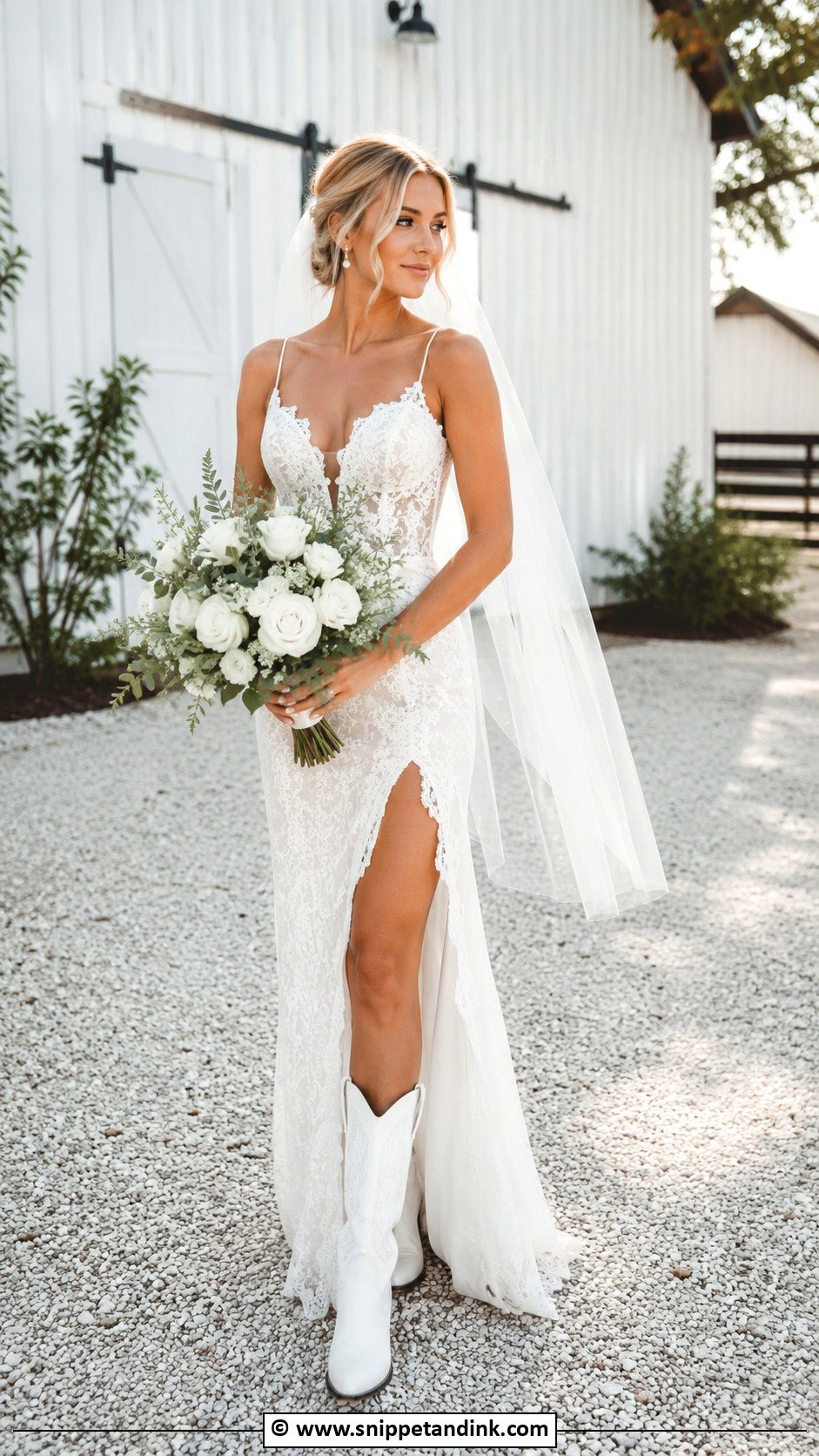
White boots blend into an ivory, cream or white gown so the line runs unbroken from shoulder to floor, which tends to lengthen the leg. Pair them with a slit dress, tea length or simple lace. Pearl earrings, a sleek bouquet and a soft veil keep it polished. Two cautions from fittings: white boots come in many whites, so bring a fabric swatch when you shop, and they scuff fast, so carry a magic eraser in your emergency kit. They also make an easy reception or after-party change.
28. Western Wedding Dress With Brown Cowboy Boots
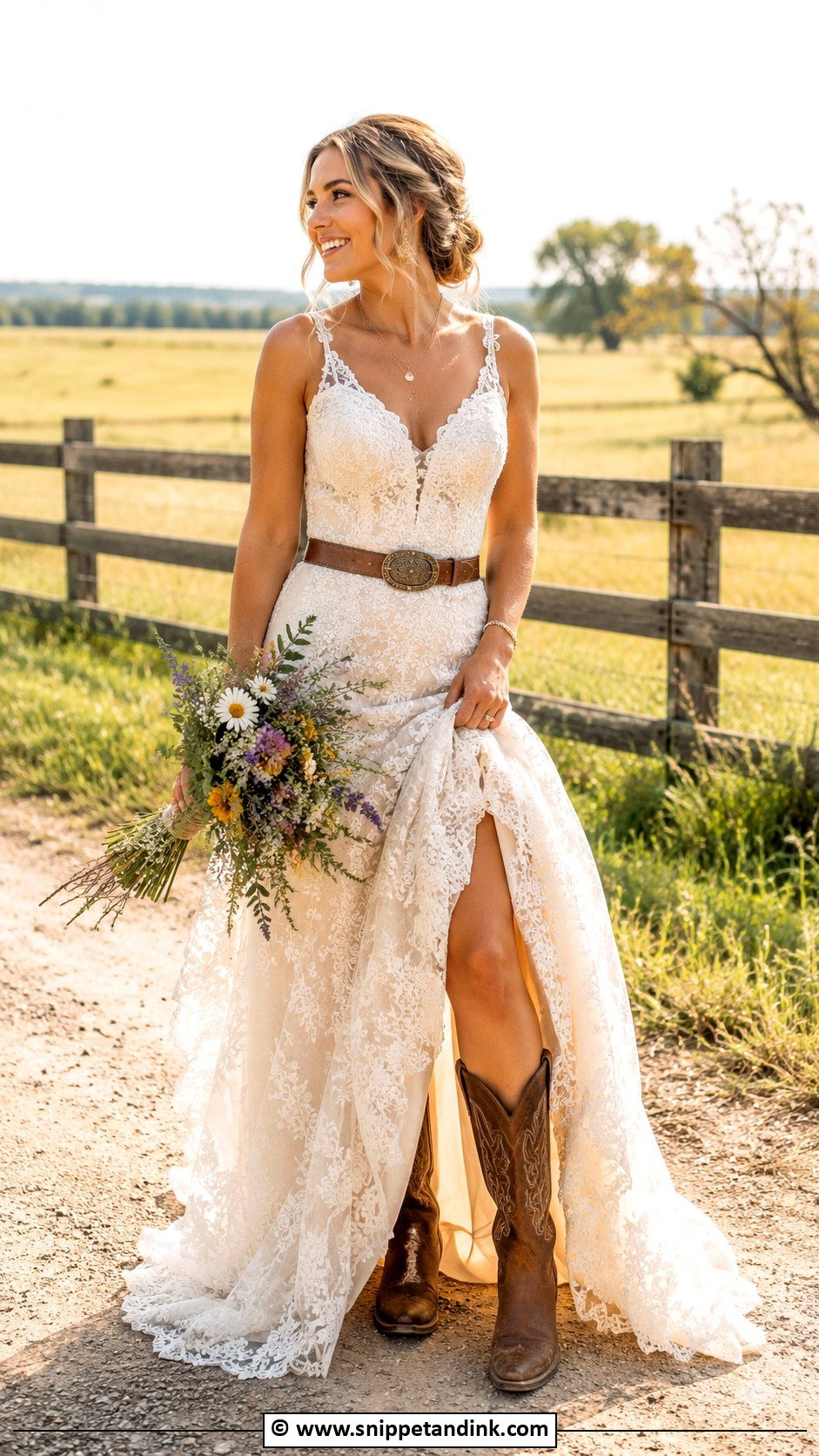
Brown boots are the traditional answer and still the one I’d give most ranch brides. They sit naturally beside ivory lace, cream chiffon and champagne gowns, adding warm contrast. A slight slit, high-low hem or swinging skirt lets them show. Match the belt leather to the boot if you want the outfit tied together. Gold jewelry and wildflowers finish it. Break your boots in for at least a few weeks; new leather boots are stiff at the ankle, and you’ll be standing for hours.
29. Western Wedding Dress With Bridal Cape
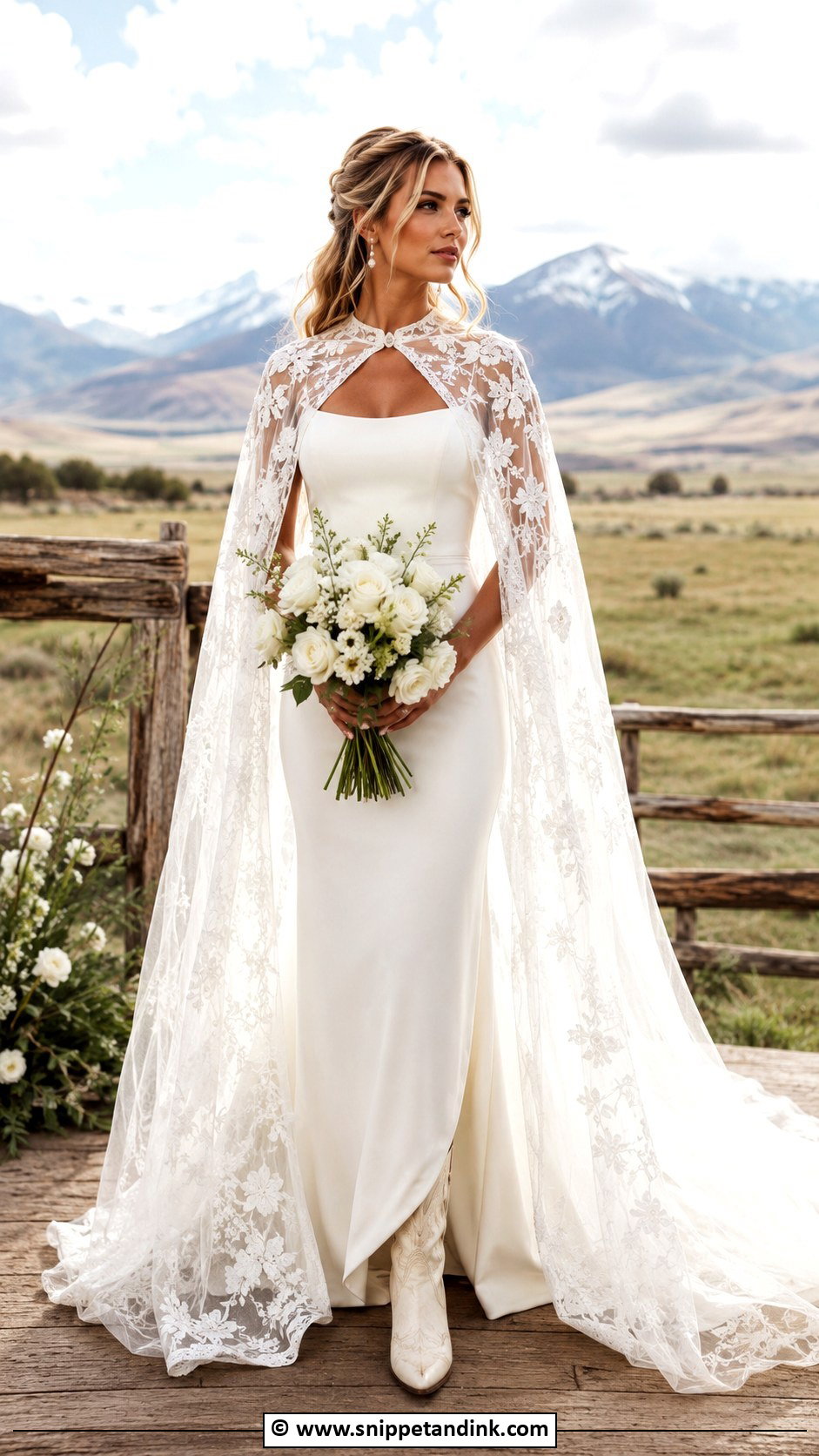
A cape replaces a veil and moves behind you in the wind, which is why photographers love it outdoors. Lace, tulle or sheer chiffon all work over a simple gown so the cape stays the focus. Boots keep it western; pearl or silver earrings add polish. I attach capes with hidden snaps or clear elastic loops at the shoulder rather than just a neck tie, since a strong gust can pull a loose cape sideways. Keep the bouquet compact so it doesn’t fight the cape’s shape.
30. Western Wedding Dress With Bridal Jacket
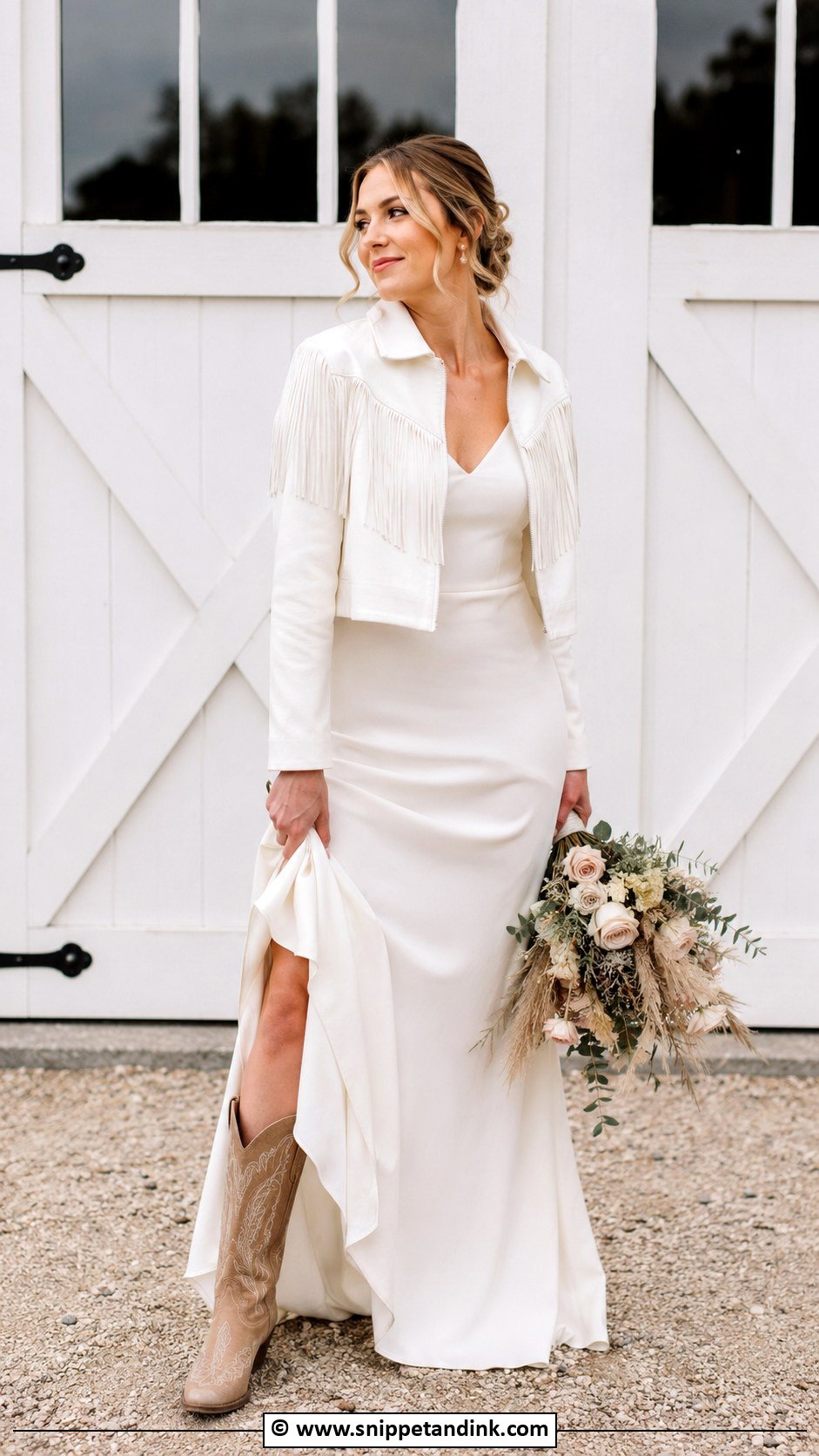
A second layer is useful for cold evenings and gives you a reception change without a second dress. Denim, suede, lace or fringe-trimmed jackets all work depending on the mood. Cropped is best because the waist of the gown stays visible. Wear it for portraits, outdoor moments or the reception. Have the jacket’s sleeve length checked against your dress sleeves, if you have any, since doubled lace at the wrist bunches. A jacket also makes a formal gown feel more relaxed.
31. Western Wedding Dress With Western Veil
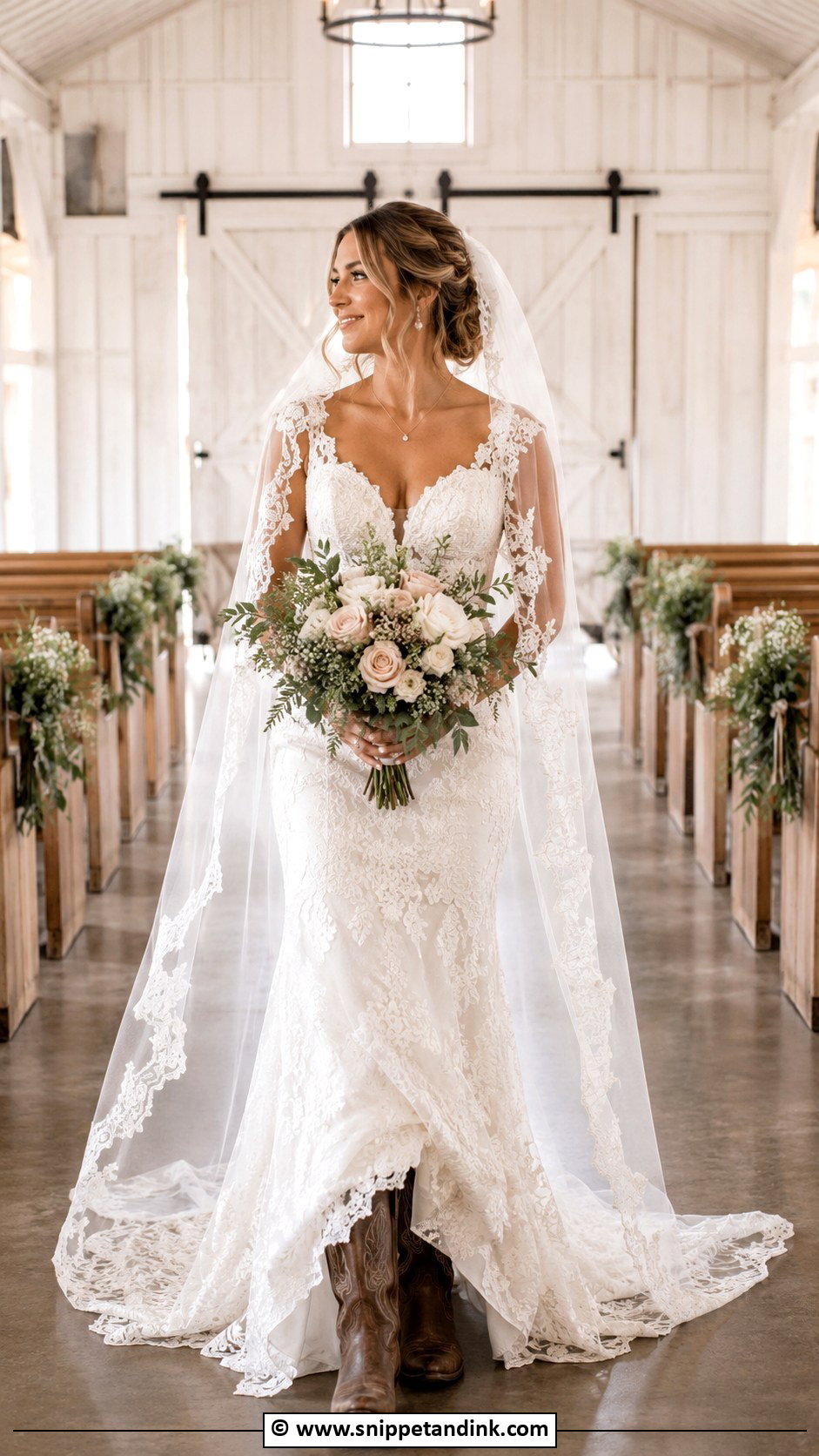
A veil with lace edging, pearls, floral embroidery or soft fringe trim carries western detail without changing the dress. Pair it with lace or crepe, boots and simple jewelry. Fingertip or chapel length is my outdoor recommendation, since cathedral veils wrap around legs and fence posts in any wind. Anchor the comb into a braid or small bun at the crown rather than loose hair, and ask your stylist to add a second hidden pin. Keep the hair soft but secure if the ceremony is outside.
32. Western Wedding Dress With Ranch Bride Look
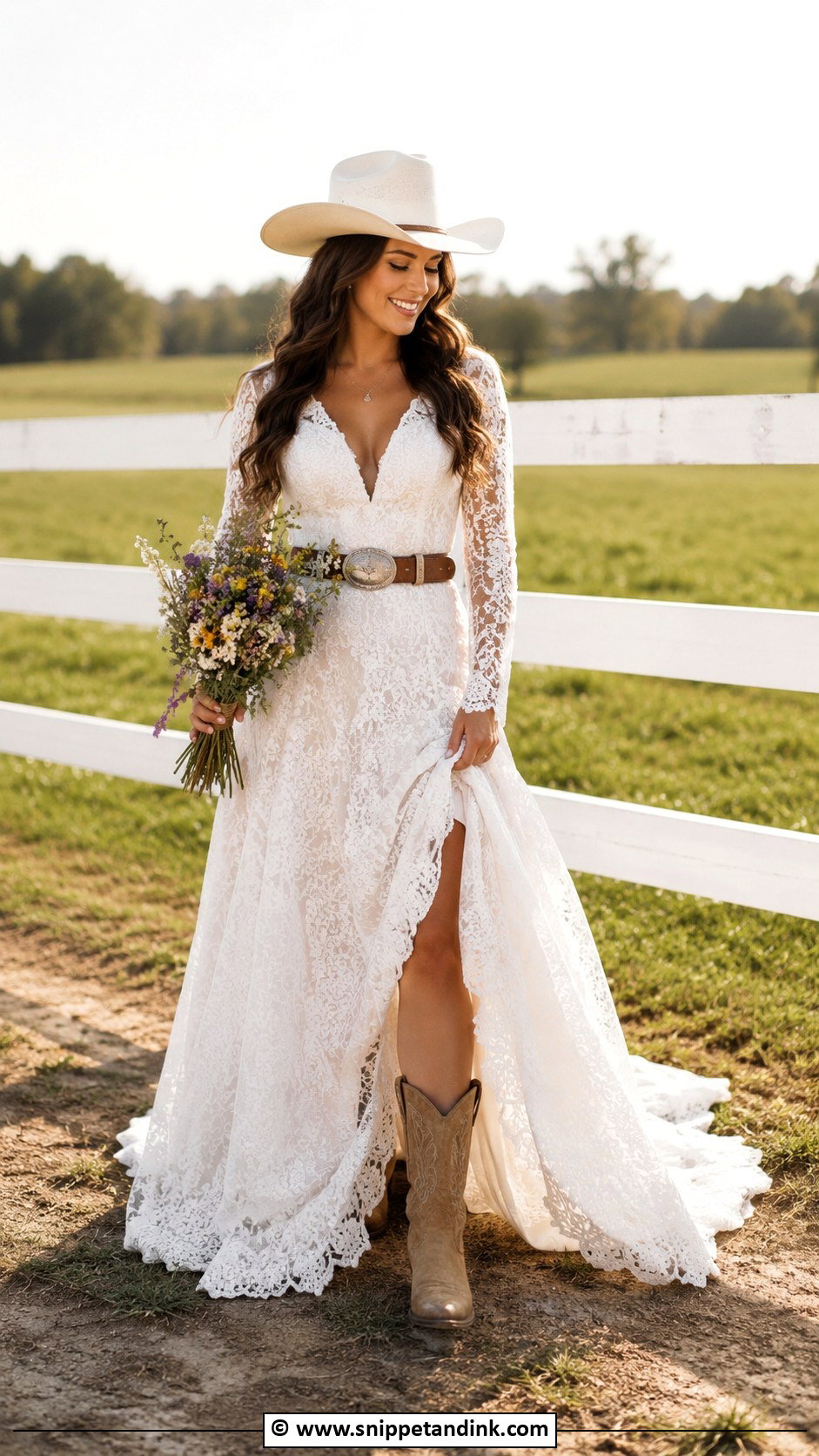
Ranch styling works when it feels like you dressed for the place rather than a theme. Choose a gown you can move in: an A-line lace dress, a slit chiffon gown or fitted crepe with stretch. Pair it with sturdy boots, a western belt and a bouquet of native grasses or wildflowers. A hat or denim jacket can come out for portraits. My formula is a clean bridal base, practical footwear and one or two western details, no more. If horses are near the photos, ask the photographer about flash; some horses spook at it.
33. Western Wedding Dress With Desert Bride Look
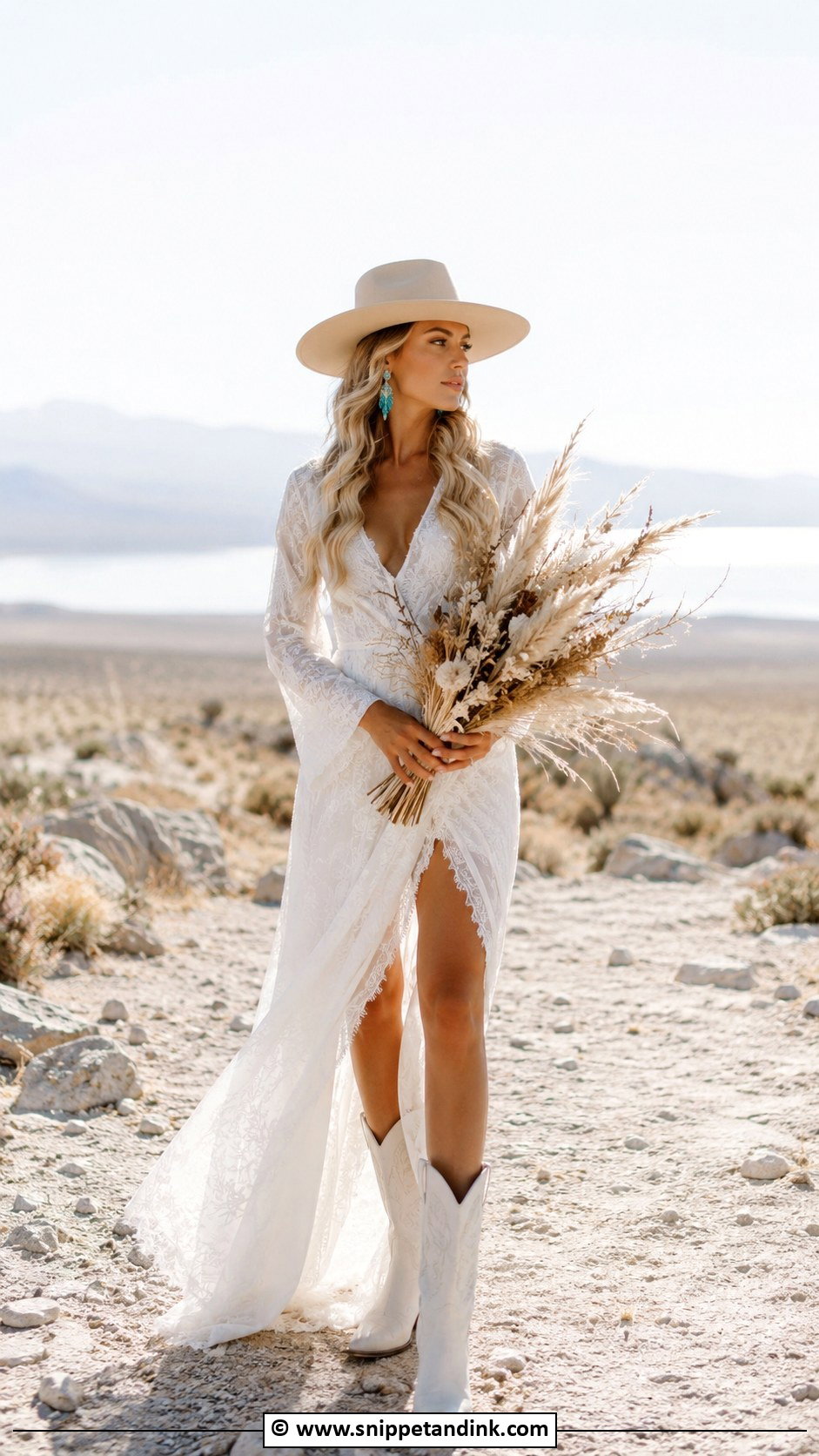
Desert heat is where fabric choice decides whether you enjoy the day. Chiffon, crepe, soft lace and georgette breathe; heavy satin and lined lace trap heat. A slit, open back, halter neckline or bell sleeves look right against desert scenery. Ivory boots, turquoise and a cream felt hat finish the outfit. Keep the bouquet to dried grasses or white blooms that tolerate heat. Sand gets into every seam, so I bring a soft brush and shake the hem out before the ceremony.
34. Western Wedding Dress With Barn Bride Look
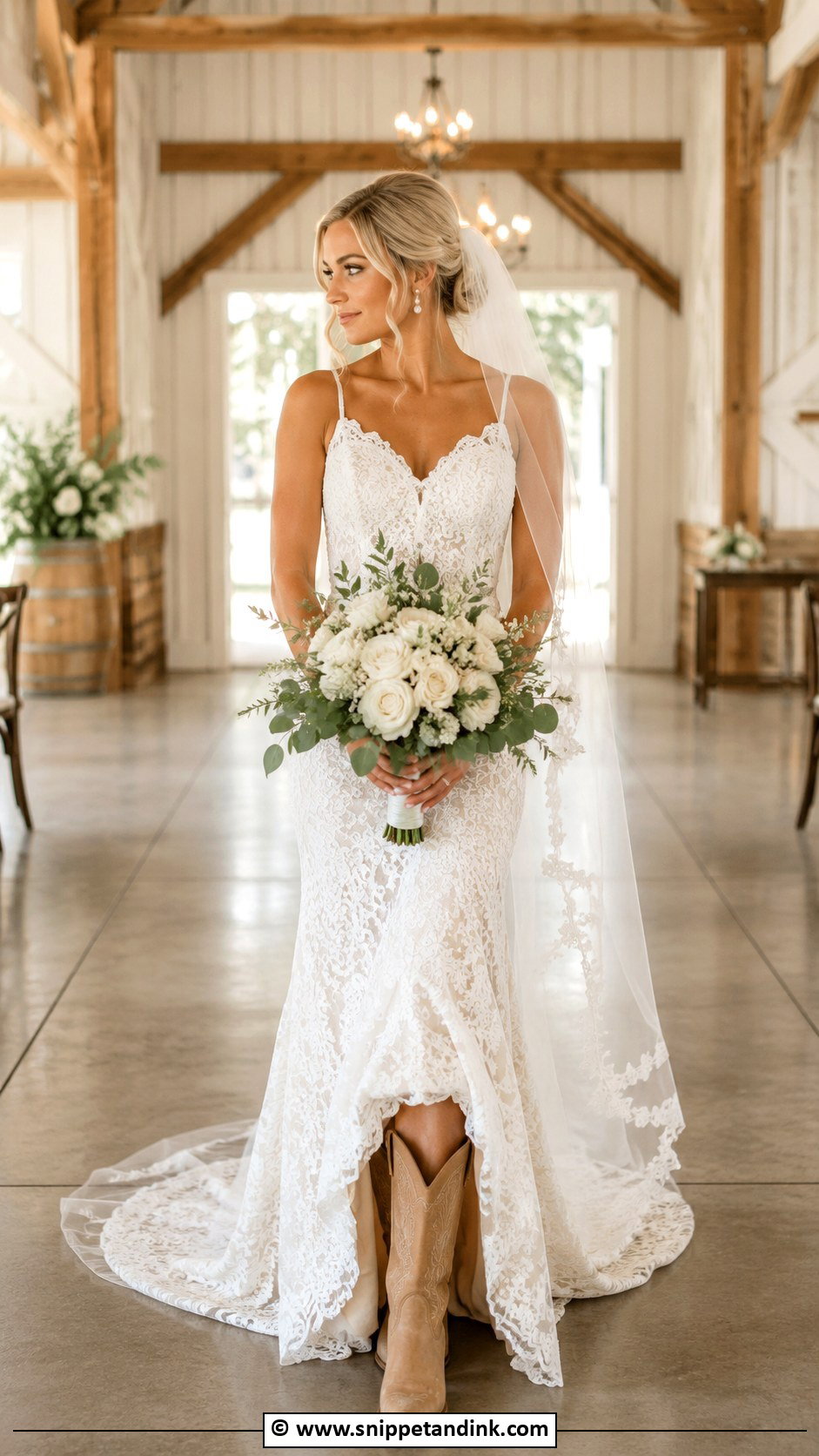
Barns are dimmer than brides expect, so a dress needs some texture to show up against dark wood. Lace, tulle, long sleeves and A-line silhouettes all suit. Your boots should handle wood floors, gravel paths and outdoor photos. Add a western belt, pearl earrings and a soft veil. Old barns often cool down quickly after sunset, so a cropped denim or lace jacket is useful. A bouquet with greenery and cream flowers finishes the outfit.
35. Western Wedding Dress With Reception Boots
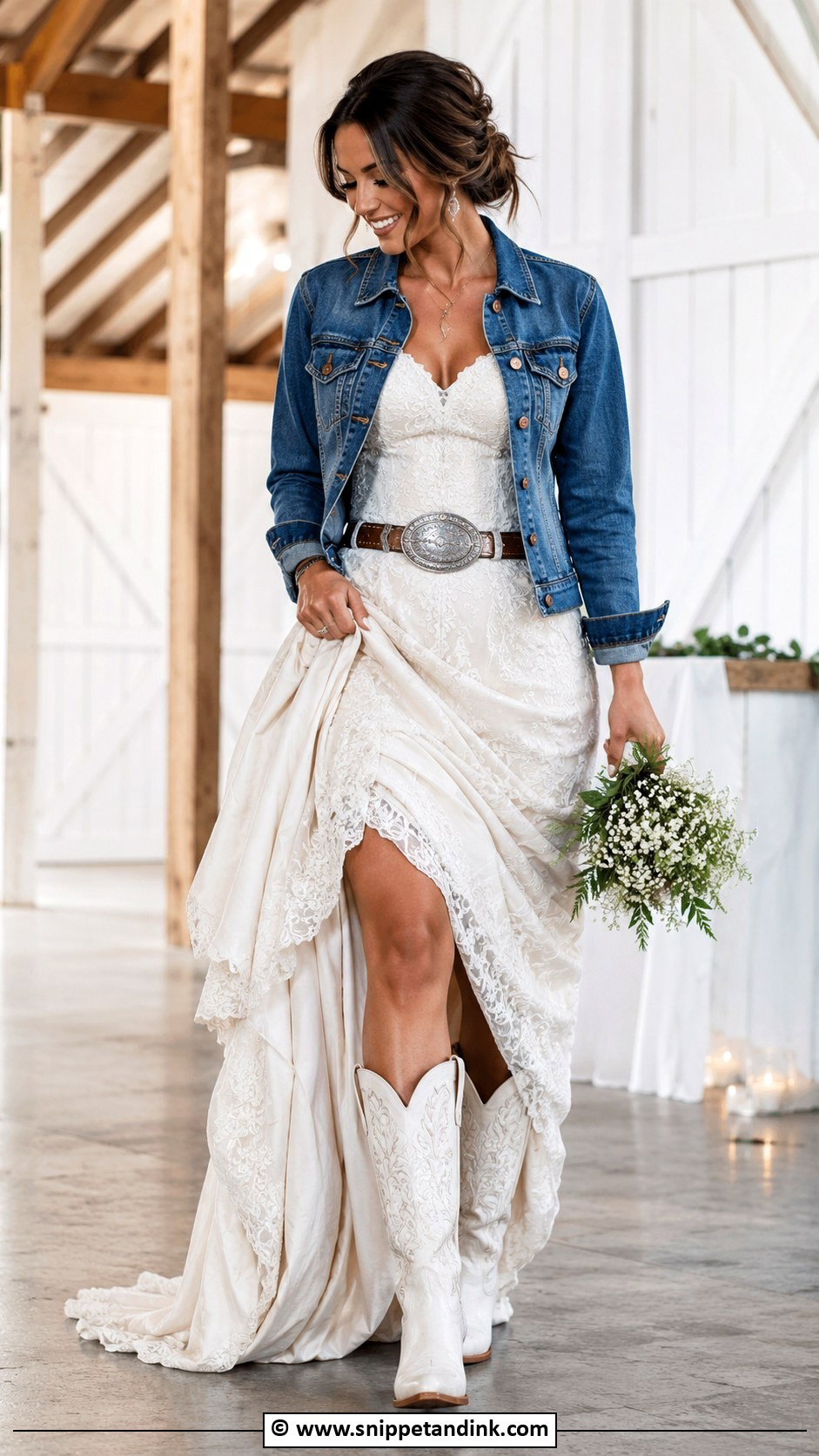
Switching into boots after the ceremony is something I suggest to any bride who wants heels for the vows. Choose a dress with a bustle, slit or shorter second-look hem so the boots are seen and practical. White boots look modern, embroidered ones add personality, brown ones feel rustic. A denim jacket, fringe jacket or statement belt can make the reception look different from the ceremony. Remember the hem was likely altered for your ceremony shoes, so a lower boot heel can drop the skirt onto the floor; bustle it before you change.
Dust, Dew and Hay on an Ivory Hem
Outdoor western weddings are hard on fabric. Expect a brown band along the hem by the end of the night; that’s normal and a specialist cleaner can usually lift it. What’s harder to fix are grass stains on silk and red clay soaked into lace, so I plan around them on the day.
- Bustle the train before you walk any distance outside, and have a helper carry it over dirt for portraits.
- Pack a small kit: a white cloth, unscented baby wipes, chalk or a white stain pen for light marks, safety pins and a lint roller for hay.
- Never scrub a wet stain on satin. Blot, then leave it to the cleaner. Rubbing spreads the water ring.
- If a bride plans to sit on a hay bale or fence rail, lay a blanket down first. Hay pokes through tulle and leaves pulls.
After the Wedding
Get the dress to a wedding gown cleaner within a few weeks. Sugar from spilled drinks is invisible at first but can yellow over months. Ask them to clean the hem and bustle loops, then store the gown flat or loosely folded in acid-free tissue in a breathable box, not plastic. Boots need their own care: brush off the dirt, use a leather conditioner, and stuff them with paper so the shaft keeps its shape for the next time you wear them, because most of my brides do.
Start With the Ground, Then Add One Western Detail
Every outfit here works when it suits the venue, your personality and your feet. Lace, boots, fringe, embroidery, hats, belts, denim, pearls and turquoise all have a place, but rarely in the same look. Pick one strong western detail and build the rest around it so the dress never tips into theme-party territory. Plan for the ground, the weather and the hours you’ll stand, and a ranch ceremony, barn reception or desert elopement will look like you on the day.
You'll Like These Ideas:


Leave a Reply