
Separates give a bride something a single gown rarely does: two pieces that can each be fitted, swapped or worn again on their own. Below are twenty pairings I’d happily put on a client, from romantic tulle skirts to sharp trousers, relaxed linen and short reception skirts. A matched top and bottom can pass for a traditional gown at ten paces, while a deliberate contrast reads as something newer. The part most brides underestimate is the join at the waist, because that is where separates either look intentional or look like two purchases. Plan shoes, jewelry and outer layers around your venue, not the other way round, and the ideas below will give you a full head-to-toe picture.
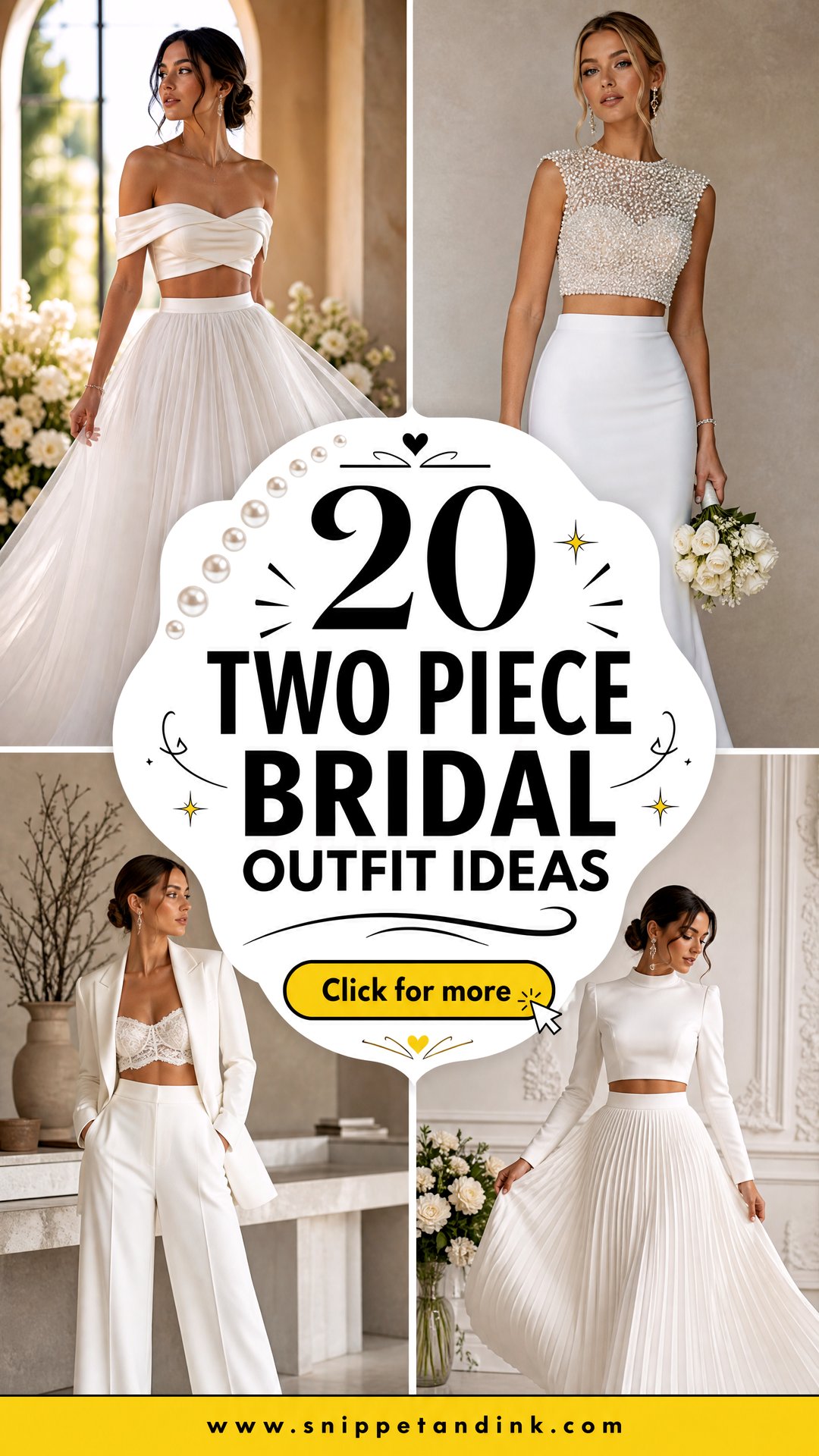
The Waistline Join Is Where Separates Succeed or Fail
When I fit separates, I spend more time on the five centimetres where the top meets the skirt than on anything else. A gown hides its waist seam inside the construction. Two pieces put that seam on display, and it moves every time you breathe, sit or lift your arms.
Decide which of three joins you want before you buy anything:
- Meeting: the top hem sits exactly on the skirt waistband. It looks gown-like but needs a tailor to match the two edges, and it can part when you raise your arms.
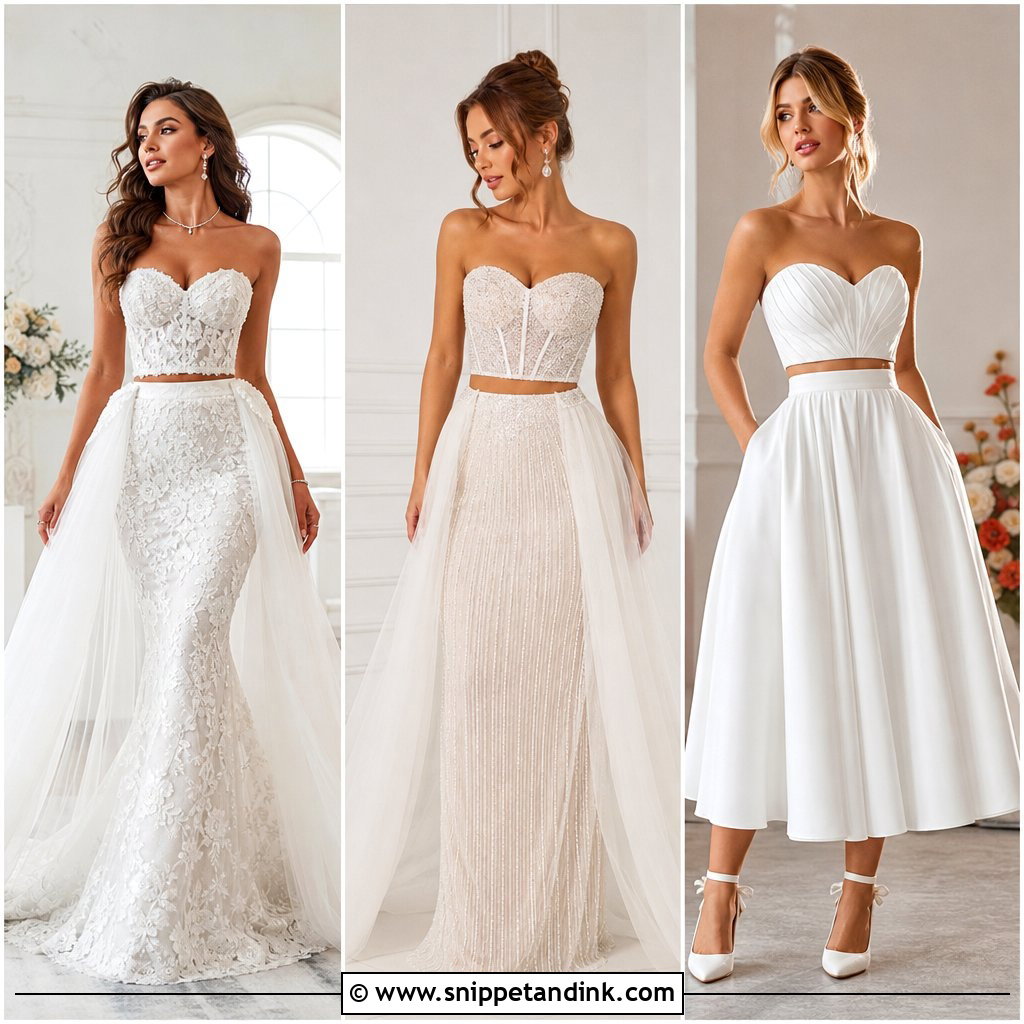
- Overlapping: the top drops a little over the waistband. It is the most forgiving option for dancing and for brides who don’t want any skin showing.
- Deliberate gap: a strip of midriff on purpose. It needs both pieces to sit firmly where they are, so the gap doesn’t grow by the evening.
Whichever you choose, the skirt waistband should be firm enough to hold its own position without the top pulling on it. A grosgrain or petersham inner band helps a lot, and so do a few small hidden hooks or a ribbon loop joining top to skirt at the back, which I add whenever a bride is worried about a gap opening during the first dance.
Buying the two pieces from different makers
Mixing makers is fine, but ivory is not one colour. Some ivories lean yellow, some pink, some grey, and two that look the same in a shop can split apart under a camera flash. Ask for fabric swatches of both, hold them together in daylight, and look at a phone photo with the flash on. If they don’t agree, pick a deliberate contrast in texture instead of fighting for a near-match.
1. Lace Crop Top And A-Line Bridal Skirt
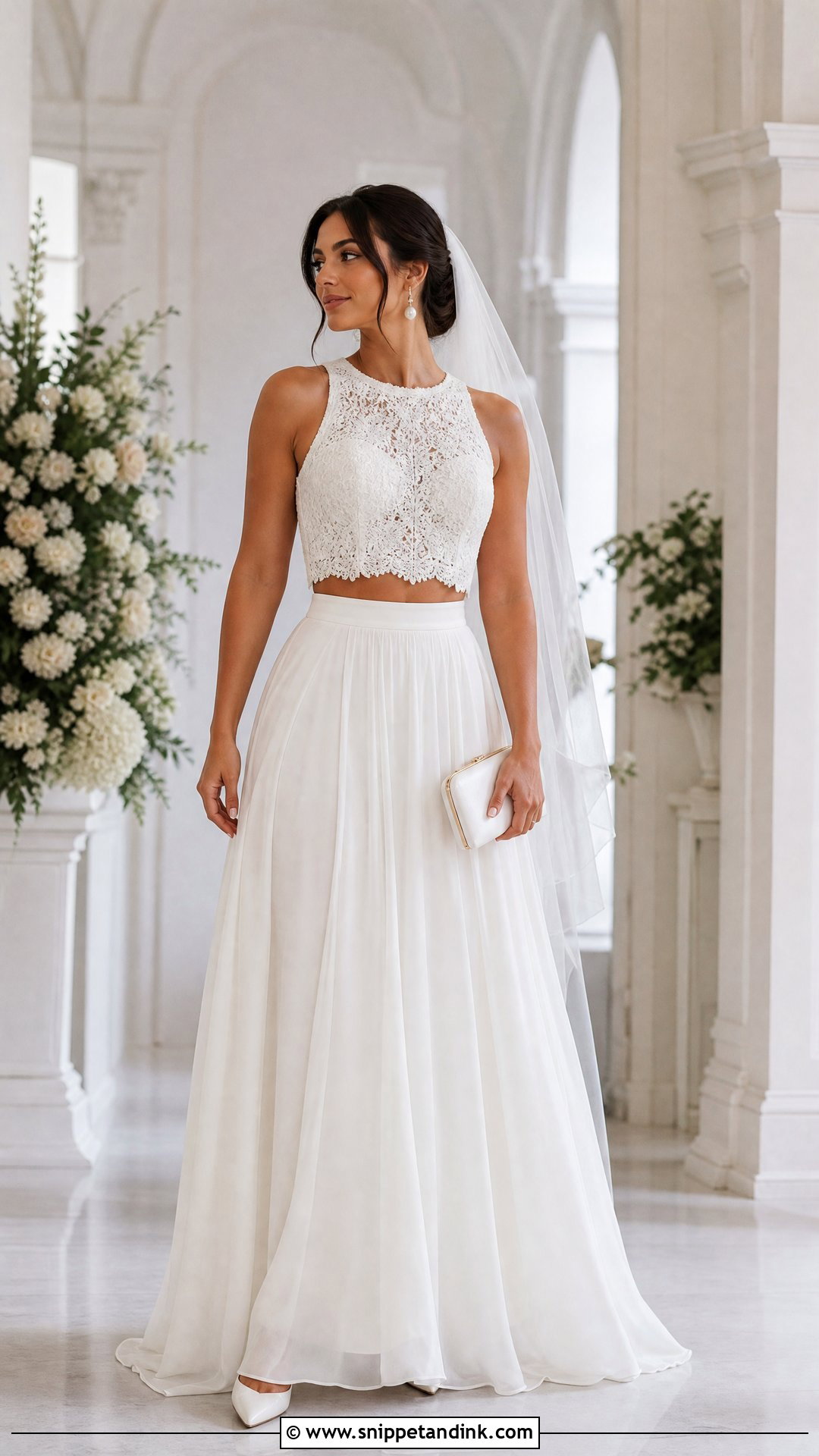
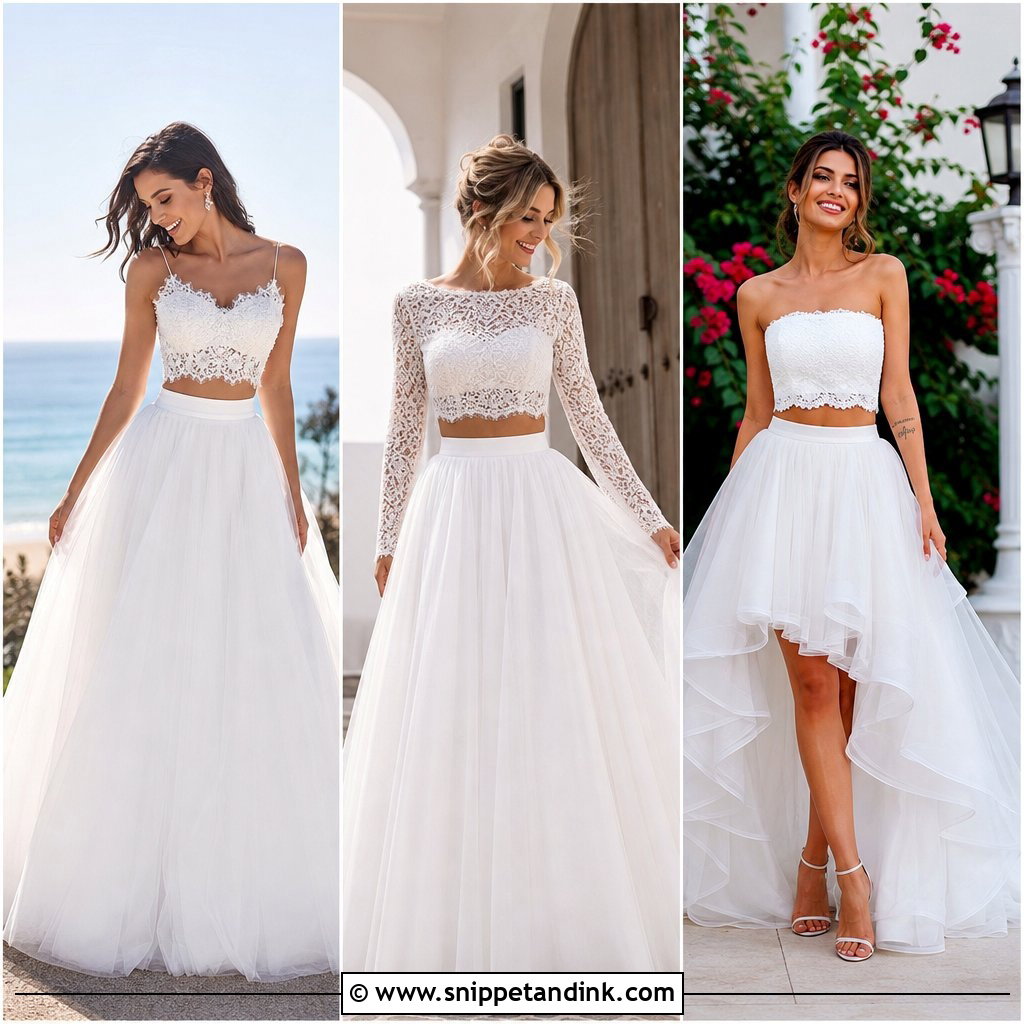
A fitted lace crop top over an A-line skirt is the pairing I suggest most often to brides who want separates without looking unconventional. Decide early how much midriff you’re comfortable showing, because a top that just meets the waistband can still part when you lift your arms for the first dance. An ivory lining under the lace stops skin from showing through in flash photos, and scalloped edges or covered buttons give the eye somewhere to rest. Chiffon or crepe skirts move better than stiff organza on a long walk. Pointed pumps lengthen the line; block-heel sandals are kinder on grass. Keep earrings and veil quiet so the lace pattern stays in charge.
2. Satin Corset And Full Bridal Skirt
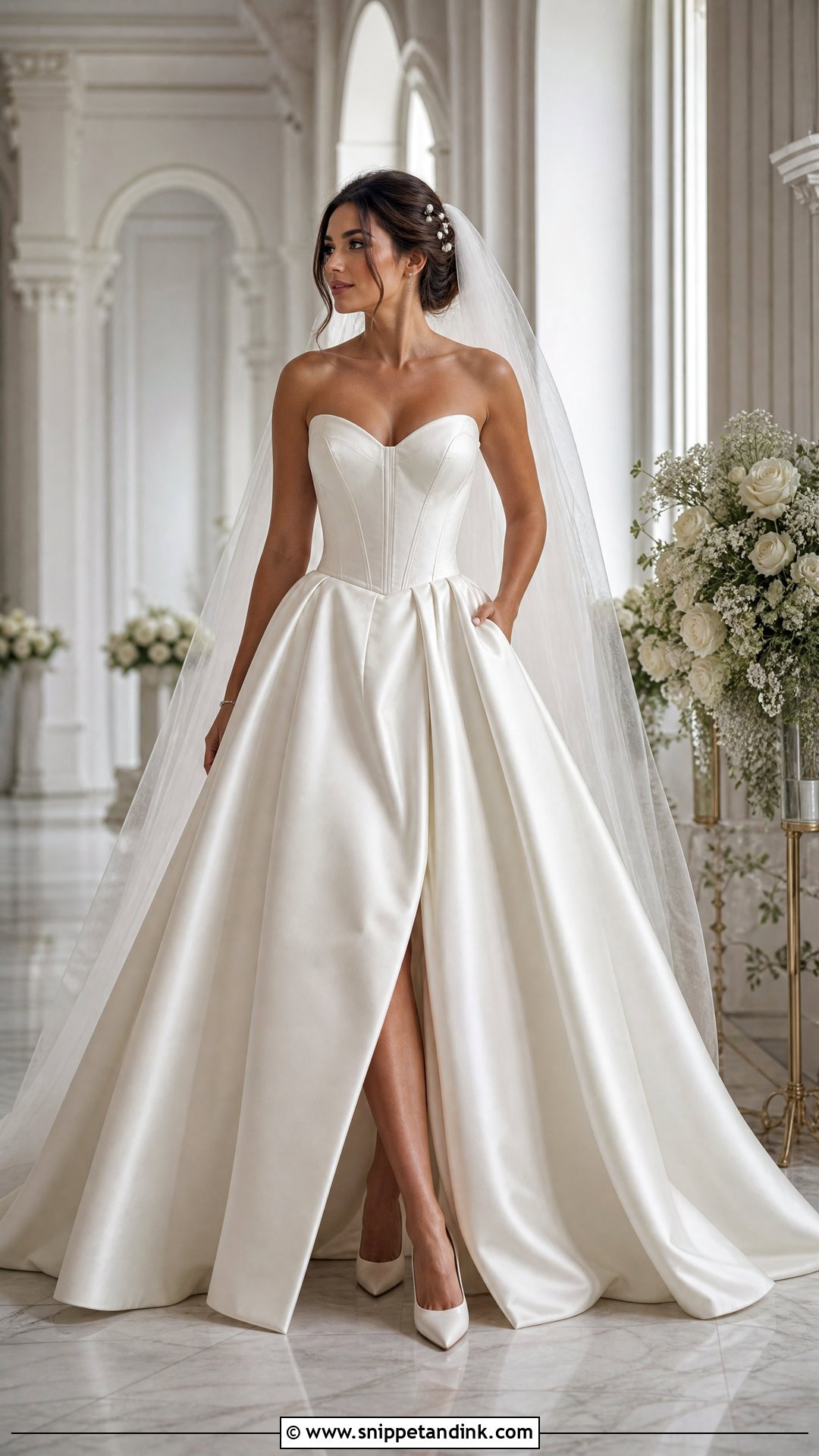
This is how you get ball-gown drama out of two pieces. A boned satin corset over a full skirt with box pleats or gathers gives a sharp hourglass, and a slightly higher skirt waistband covers the join neatly. The thing I watch at fittings is the sheen: two ivory satins from different mills can look identical on a hanger and visibly different in daylight, so hold them together by a window before committing. A cathedral veil suits a formal ceremony, pearl pins a lighter one. At every alteration appointment, sit, walk and raise both arms. A corset that rides up when you reach for a glass will do the same in every reception photo.
3. Long Sleeve Lace Top And Crepe Bridal Skirt
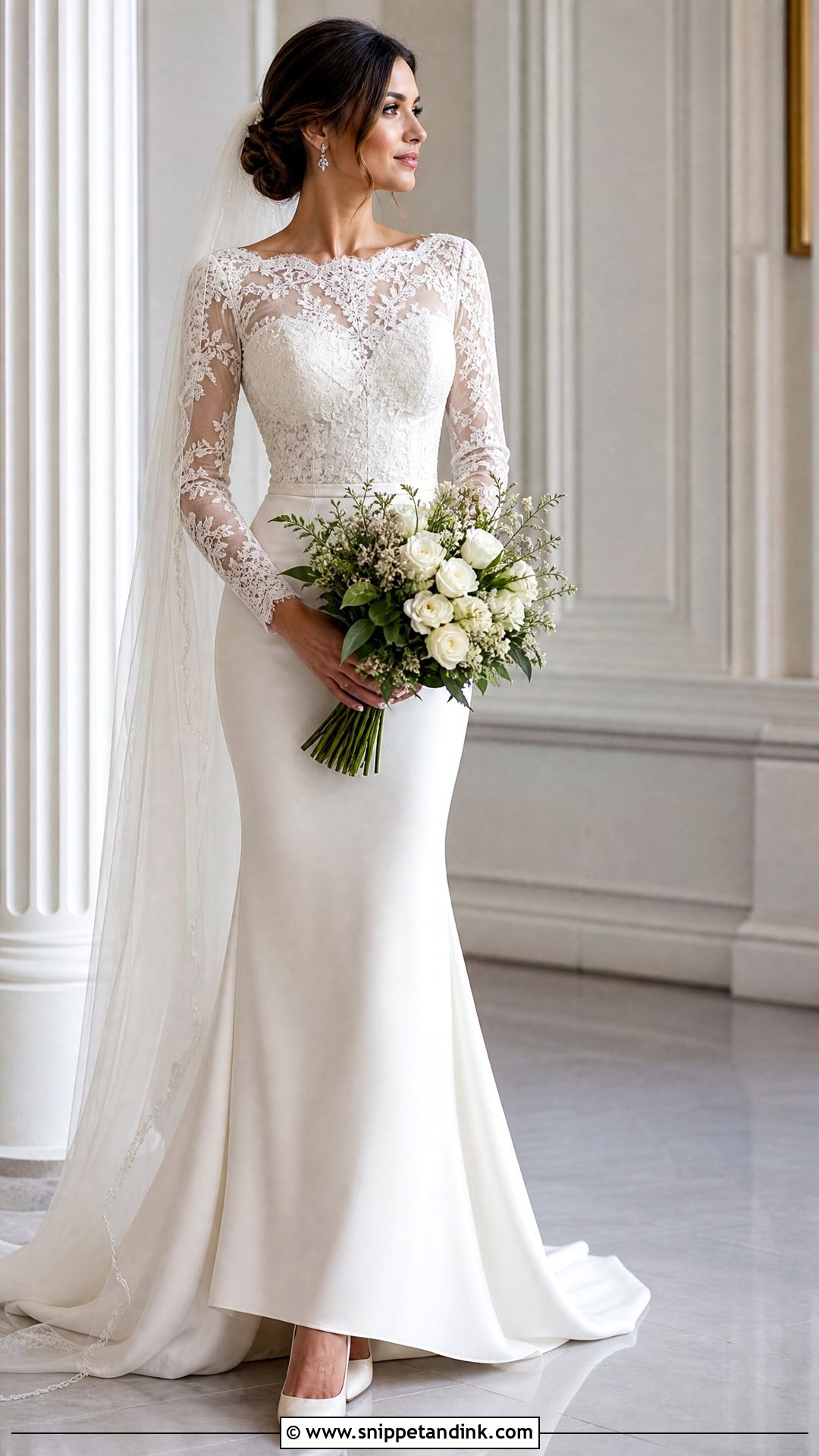
For a cold-weather wedding I like a long-sleeve lace top with a smooth crepe skirt, because the coverage comes from the sleeves rather than from bulk. A lined bodice with sheer sleeves keeps the lace pattern legible against skin. Let the skirt be the plain half: a high-waisted column or soft fit-and-flare balances a busy top. Closed-toe pumps, crystal earrings and a low bun keep it tidy, and a raw-edge veil won’t fight the lace at the hem. Back buttons look lovely and take ages, so name the person who will do them up before the morning. Bring a faux-fur wrap or tailored coat for the walk between car and venue.
4. Halter Top And Bias Cut Bridal Skirt
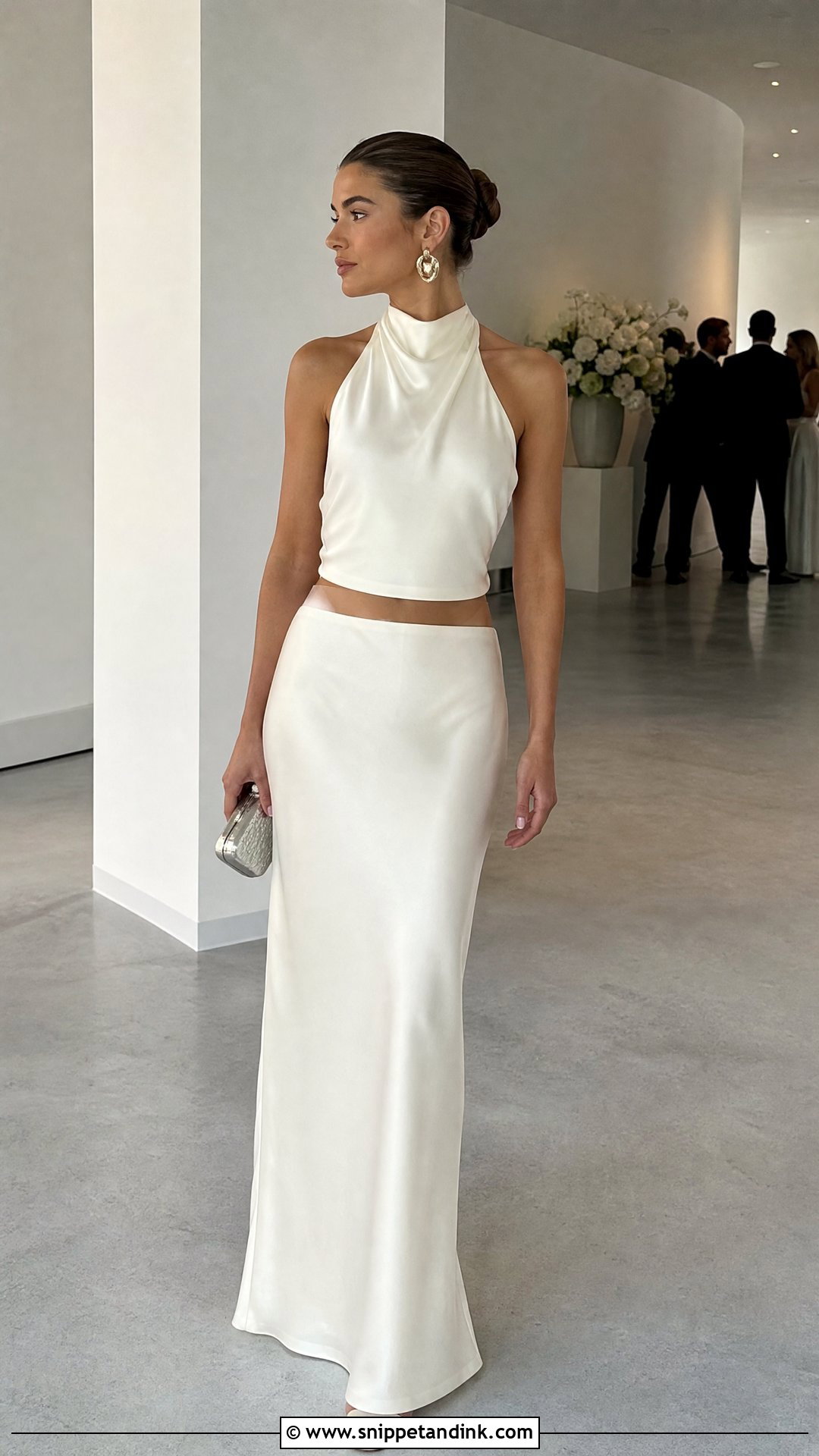
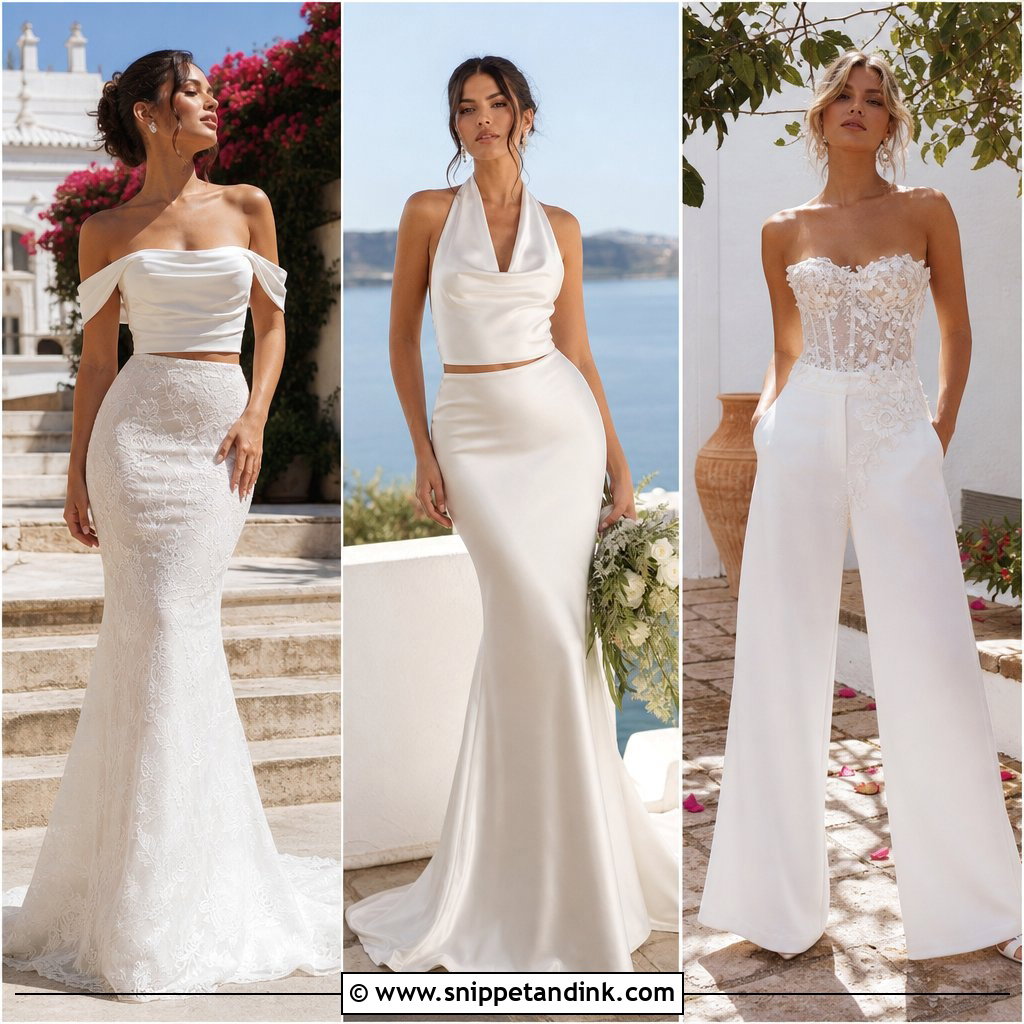
Bias-cut satin is honest fabric: it follows the body and shows everything underneath it. That is exactly why a silk halter with a bias skirt suits a minimalist bride, and why I’d steer a bride away from it if she hates thinking about underwear. Cut both pieces from the same fabric so the undertone matches, and check undergarment lines under daylight and under warm indoor bulbs, since each shows different ridges. Barely-there sandals keep the line clean, though low slingbacks are steadier. Choose sculptural earrings over a necklace; the halter strap already frames the neck. A long plain veil adds ceremony weight without cluttering the shape.
5. Off Shoulder Top And Tulle Bridal Skirt
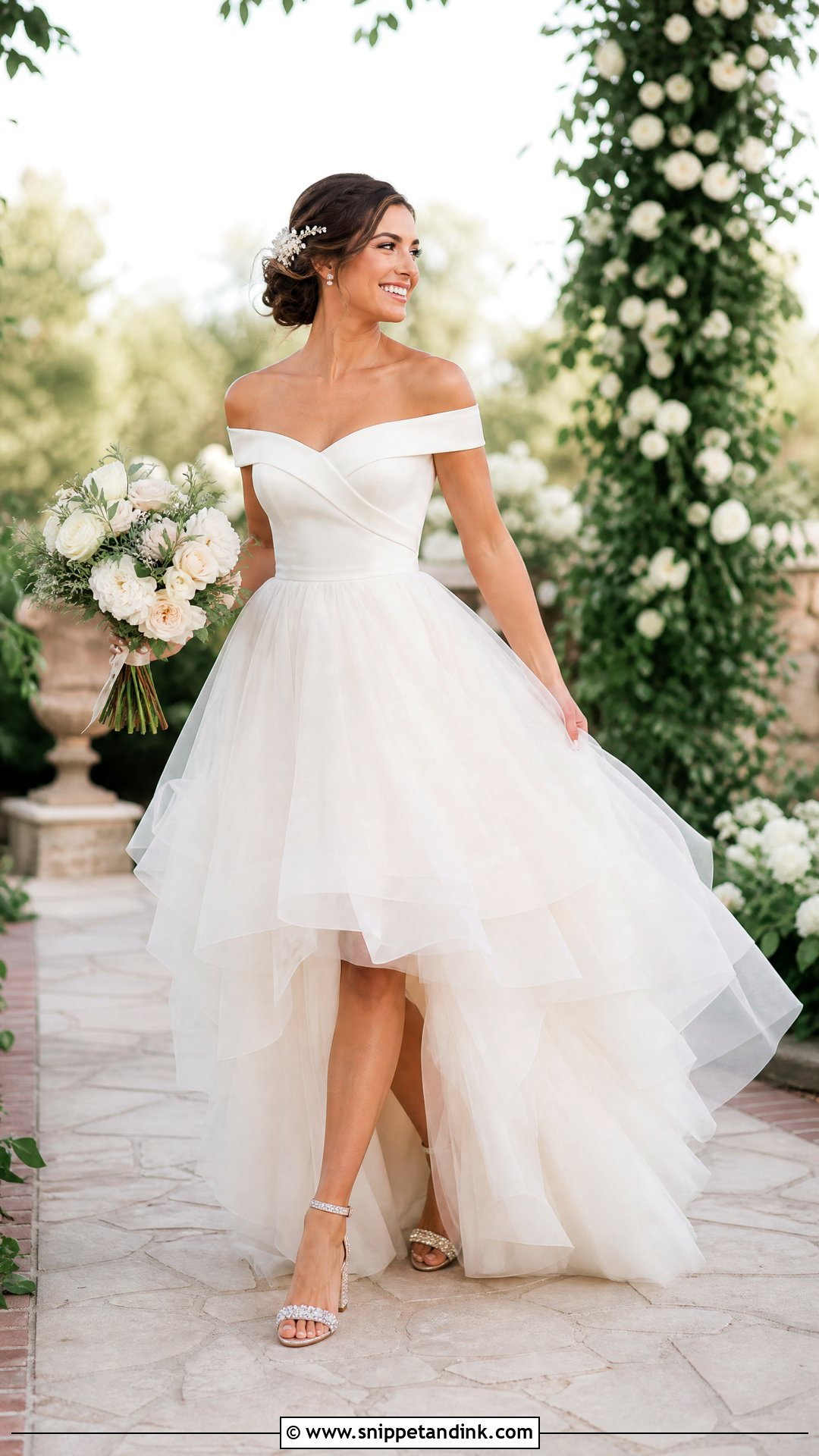
An off-shoulder top only works if it is built to stay put. I look for internal boning and a silicone gripper along the neckline, otherwise you’ll spend the day hitching it up. A layered tulle skirt brings the movement, and a flat, clean waistband keeps the volume from starting too high. Pairing a matte crepe top with airy tulle is a nice textural contrast if a perfect match feels flat. Embellished block heels are wise under a long hem you can’t see your feet through. Set the veil beneath a low updo rather than on top of the head, so the bare shoulders show from the front and from behind at the altar.
6. Pearl Beaded Top And Column Bridal Skirt
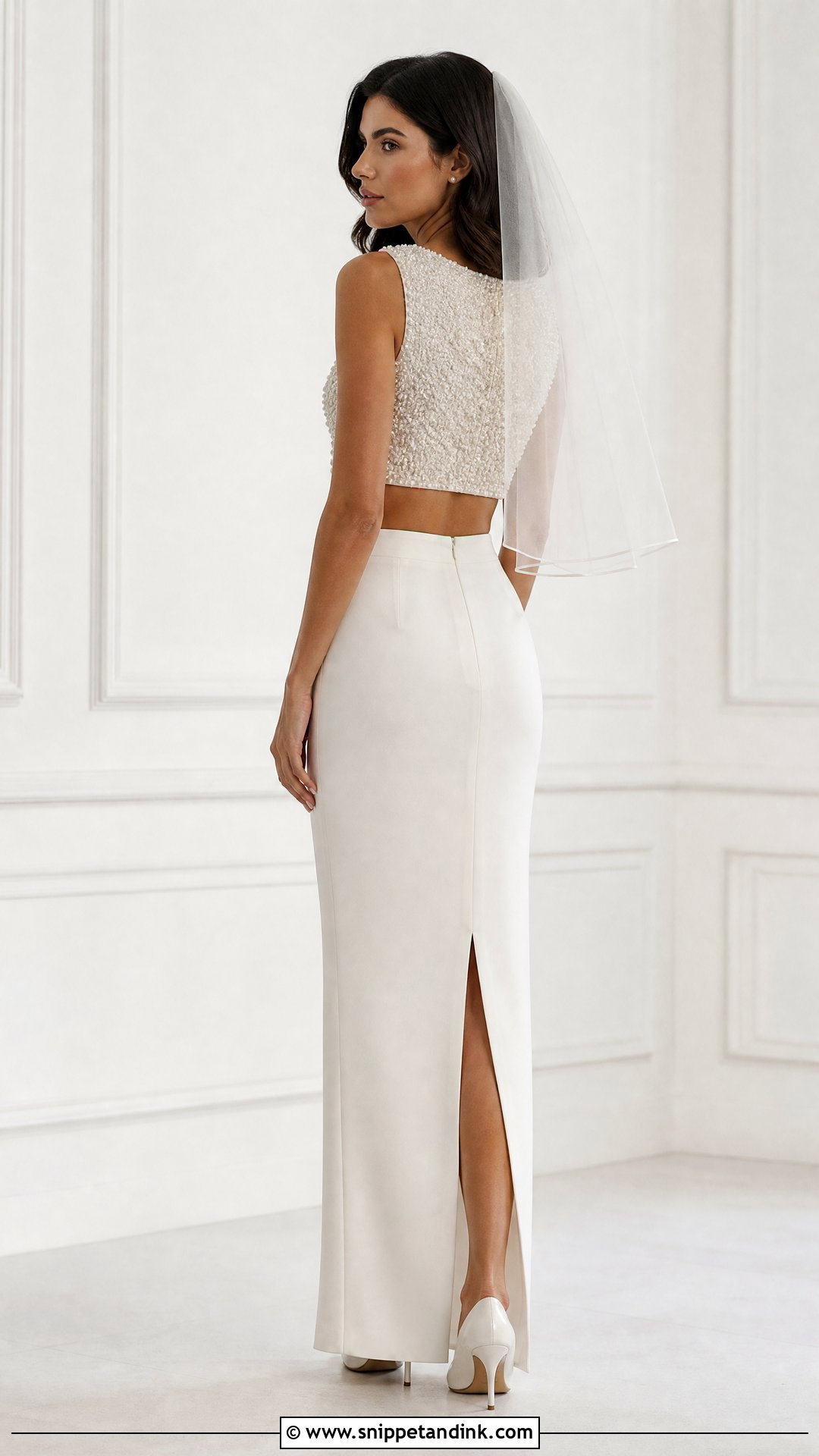
Pearl beading catches light softly rather than glittering, which is why it reads so well in photos. Put the beading on a cropped top and keep the skirt as a plain crepe column, and the outfit stays sophisticated rather than busy. Wide straps or short sleeves carry the weight of real pearls better than spaghetti straps, which can dig in by the evening. A back slit in the column is not optional if you plan to dance. Pointed ivory pumps and pearl studs are plenty. One fitting detail I always check: beads at the lower edge of the top can snag the skirt fabric, so ask your seamstress to back or cover any rough ends.
7. Bridal Blazer And Wide Leg Pants
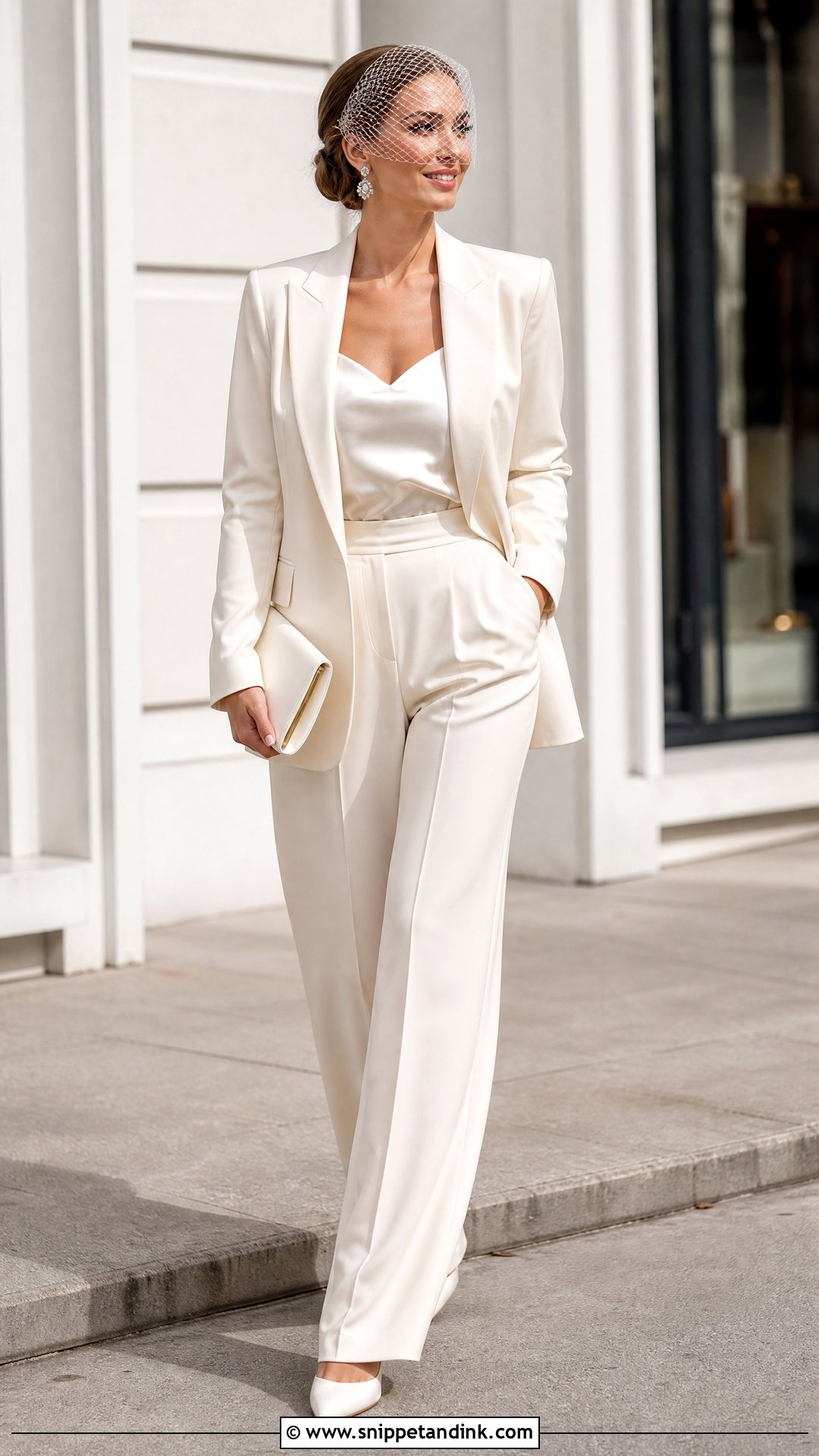
A bridal suit lives or dies on tailoring. Pair a fitted or slightly oversized ivory blazer with high-waisted wide-leg trousers in the same cloth, and wear a silk camisole, bandeau or corset underneath depending on how open you’d like the lapels. The trouser hem should brush the floor with your exact wedding shoes on, which means bringing those shoes to every fitting. Pointed pumps keep the leg long; polished loafers are a perfectly good flat option. Statement earrings and either a birdcage veil or a hair bow add the bridal note. Sleeve length matters more than people expect: a cuff that hides your hand hides the ring too.
8. Strapless Peplum Top And Bridal Trousers
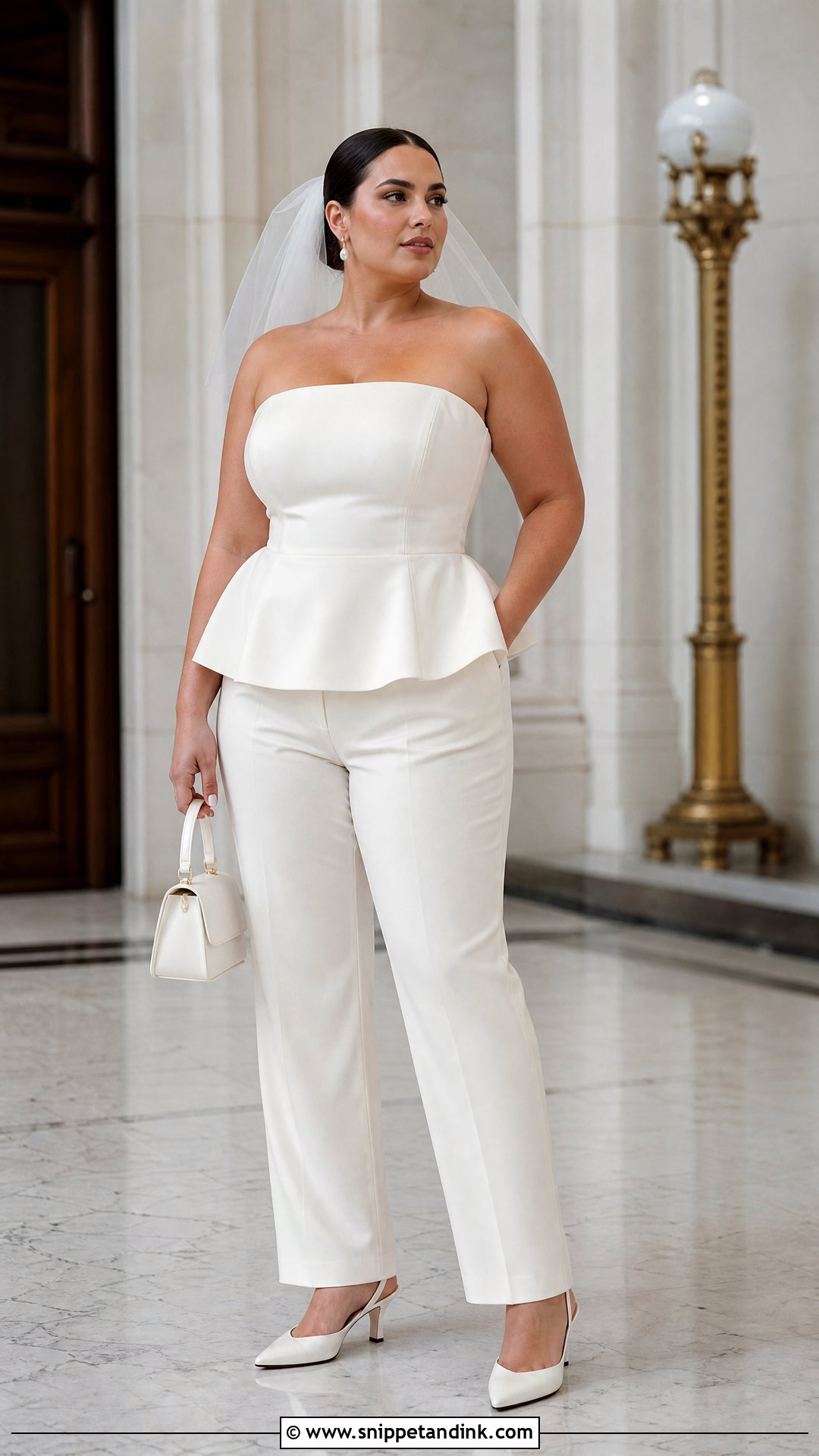
A strapless peplum top softens trousers and pulls the waist in at the same time. The peplum should fall flat from the seam rather than flare outward, which adds width where most brides don’t want it, so look for a boned bodice with a lined, fairly weighty peplum. Straight-leg trousers give a crisp line; wide legs push it toward drama. Keep both pieces in exactly the same ivory or the join will announce itself. Slingbacks, a small top-handle bag and drop earrings suit it, and a short veil or bow is better proportioned here than a cathedral length. Dance in it at your last fitting to make sure the peplum settles back over the waistband.
9. Bridal Vest And Tailored Pants
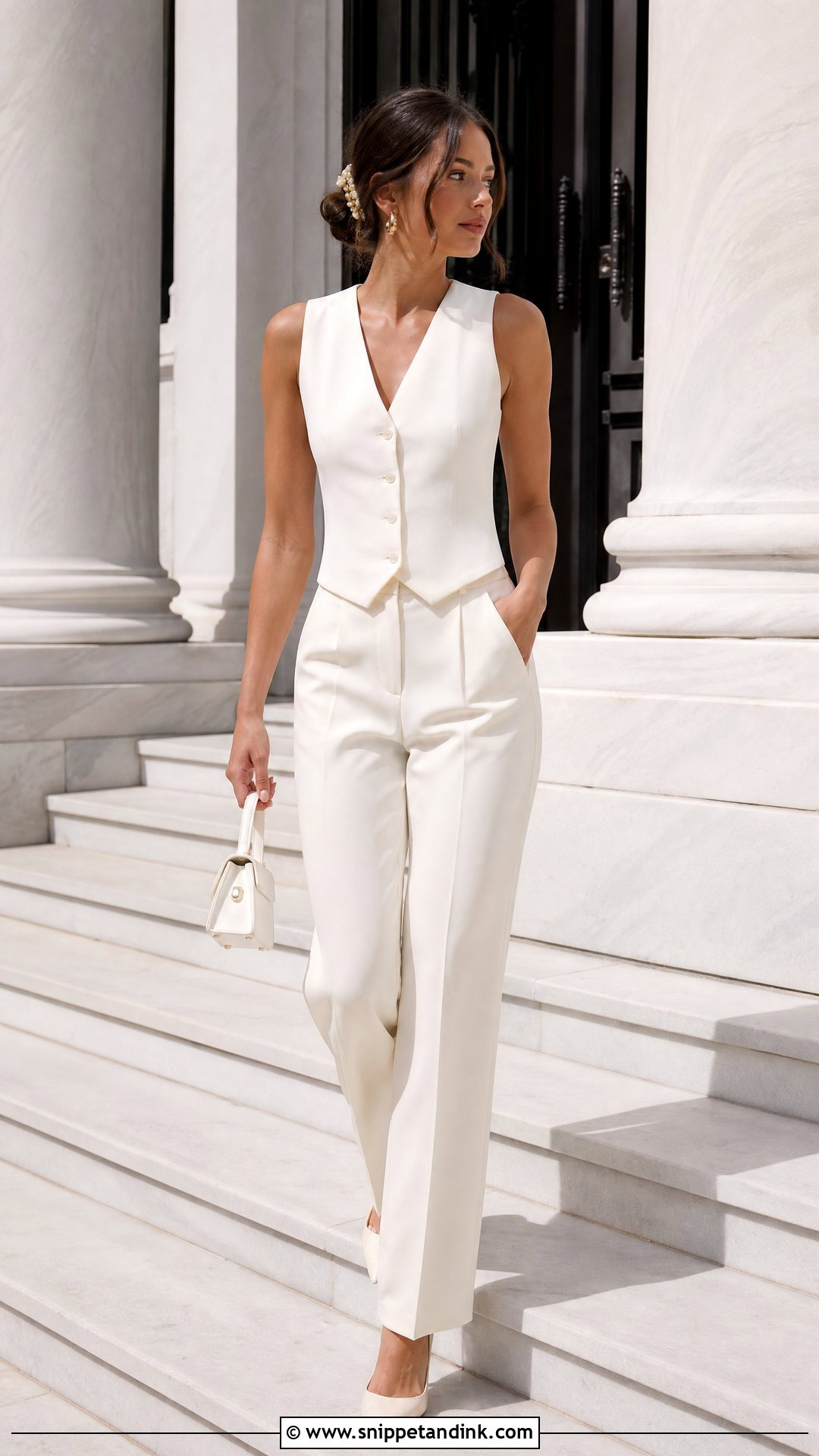
An ivory vest with matching tailored pants is one of my favourite answers for a courthouse ceremony or a reception change. Worn buttoned as a top, the vest needs armholes cut close enough that nothing shows when you lean to sign the register; that is the alteration to ask for first. High-waisted trousers with a straight or gently flared leg keep the proportions long. You can add the matching blazer for the ceremony and take it off later. Pointed heels, polished hoops and a structured mini bag suit the clean lines, as does a low ponytail. A shoulder-length veil or pearl clip gives it the bridal signal.
10. Cape Top And Slim Bridal Skirt
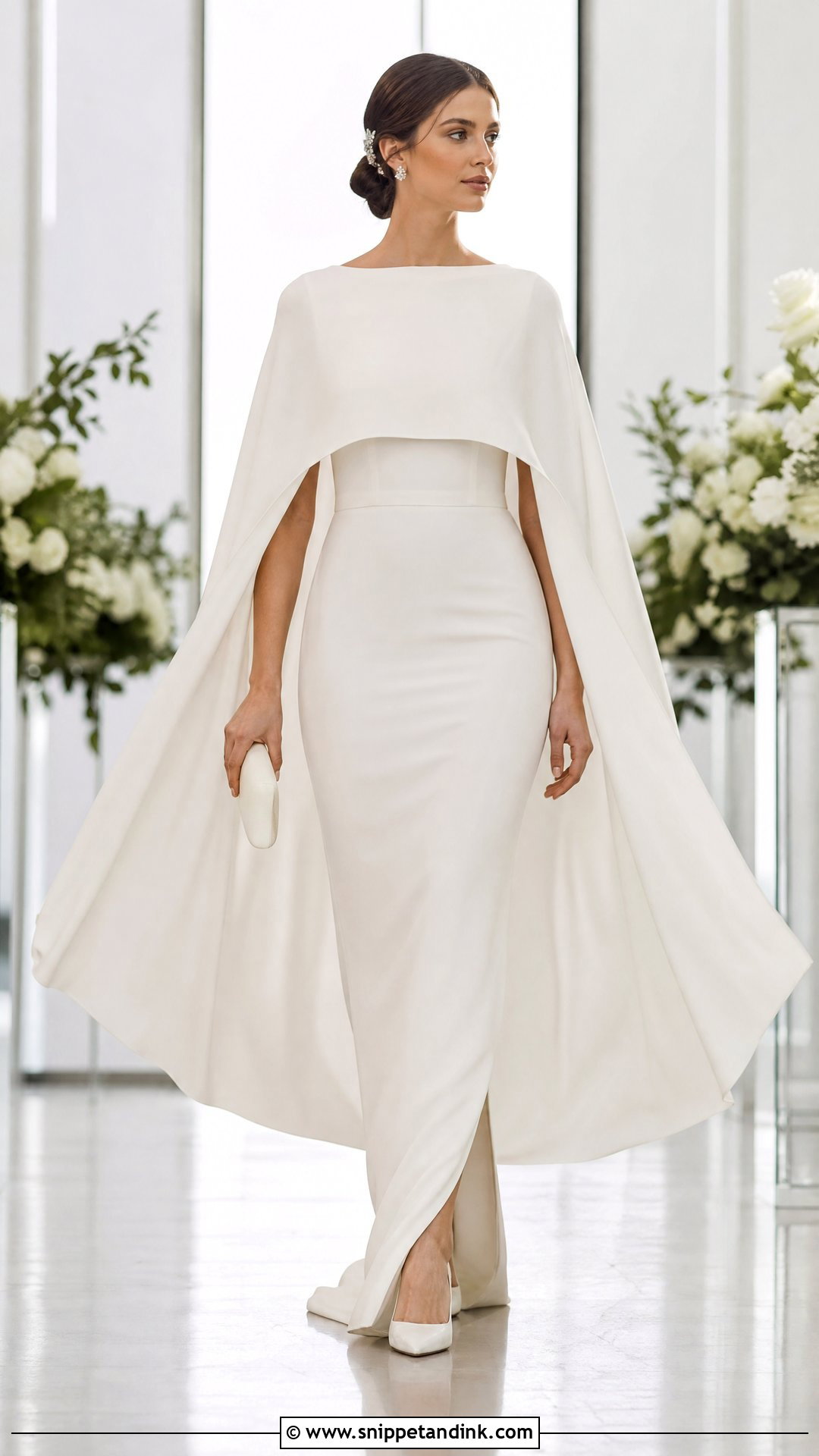
Capes look serene in still photos and behave like sails outdoors. Before you fall for a cape top over a slim crepe or satin skirt, ask whether the cape edge is weighted, because a light chiffon cape with no weight will blow across your face in any breeze. Attached to a fitted bodice, it leaves your arms free and gives a tall, statuesque line. A back slit in the skirt makes walking possible. Most capes and long veils compete, so I usually swap the veil for a jeweled comb or a slim headband. Walk around outside in it at least once before the wedding to see how it moves.
11. Puff Sleeve Top And Tea Length Bridal Skirt
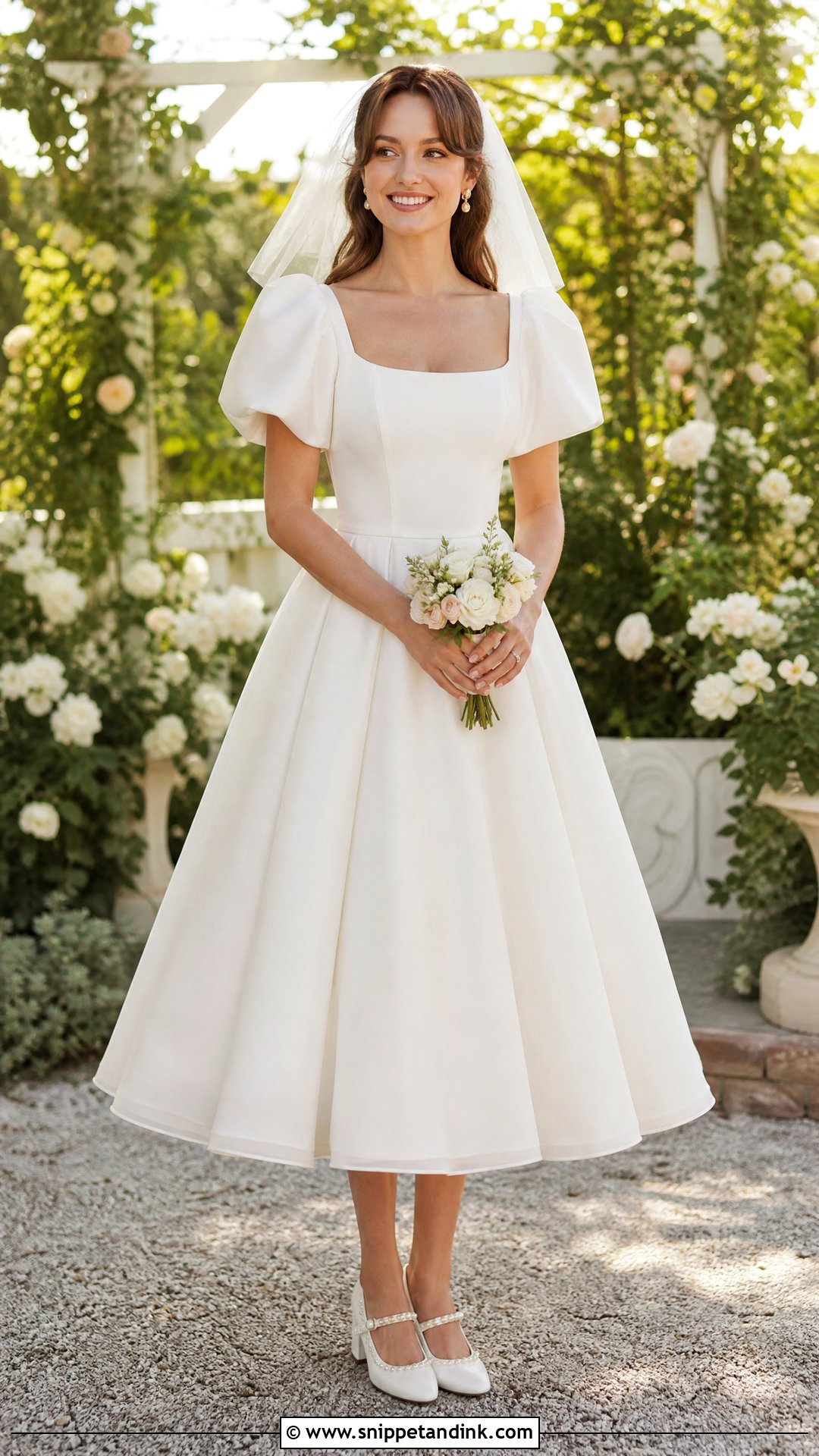
Tea length shows your shoes, so the shoes stop being an afterthought. A puff-sleeve top with softly structured sleeves, rather than extreme volume, over a full skirt ending between knee and ankle has a vintage feel without looking like costume. Pearl-trimmed pumps, Mary Janes or satin block heels all earn their place. If the top and skirt don’t meet cleanly, a narrow belt hides the join and defines the waist. Choose one retro accent and leave the rest modern; a pillbox, gloves, a birdcage veil and cat-eye liner together tip into dress-up. Fresh makeup and a simple hairstyle keep it current indoors or in a garden.
12. Embroidered Top And Tiered Bridal Skirt
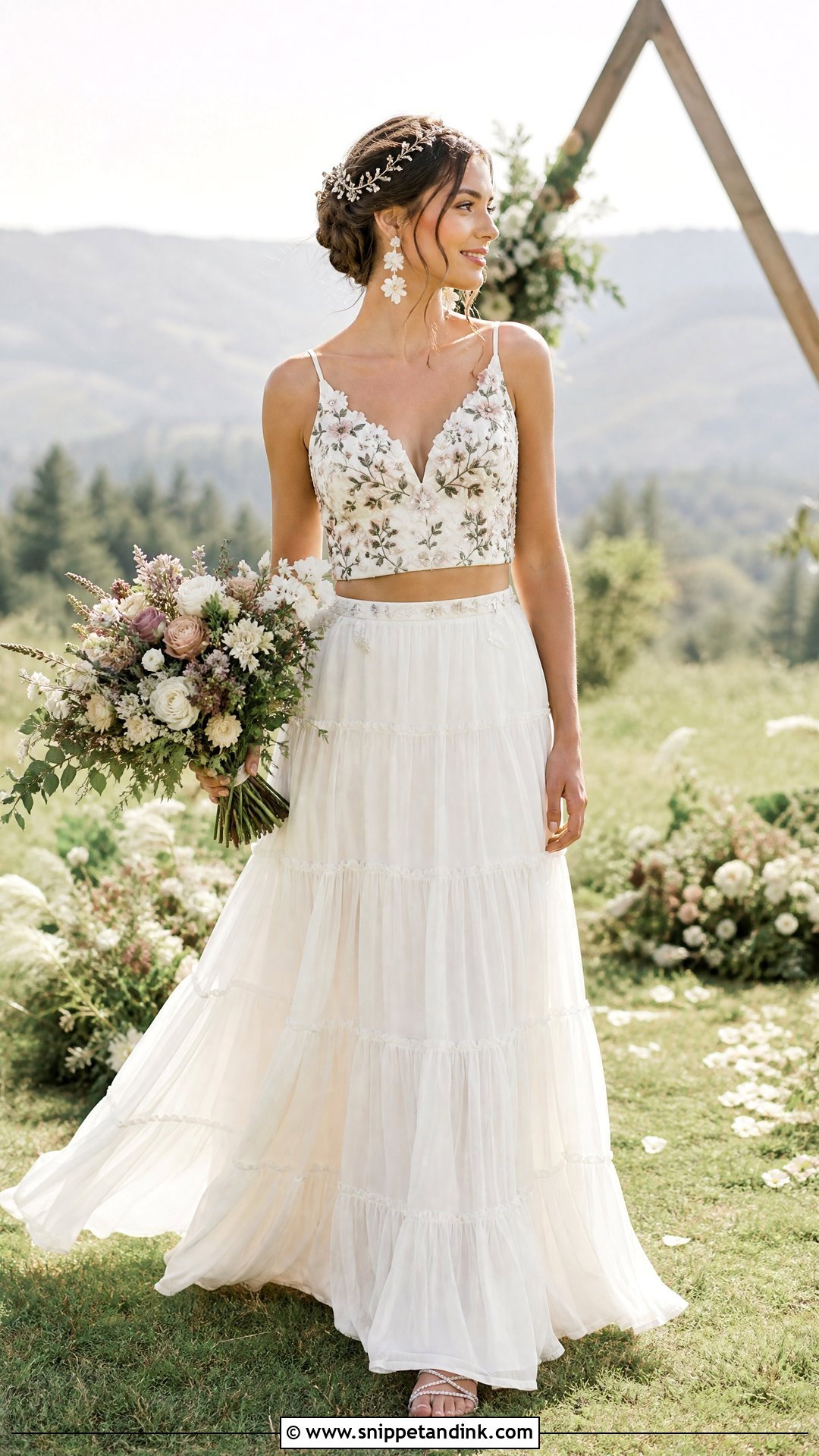
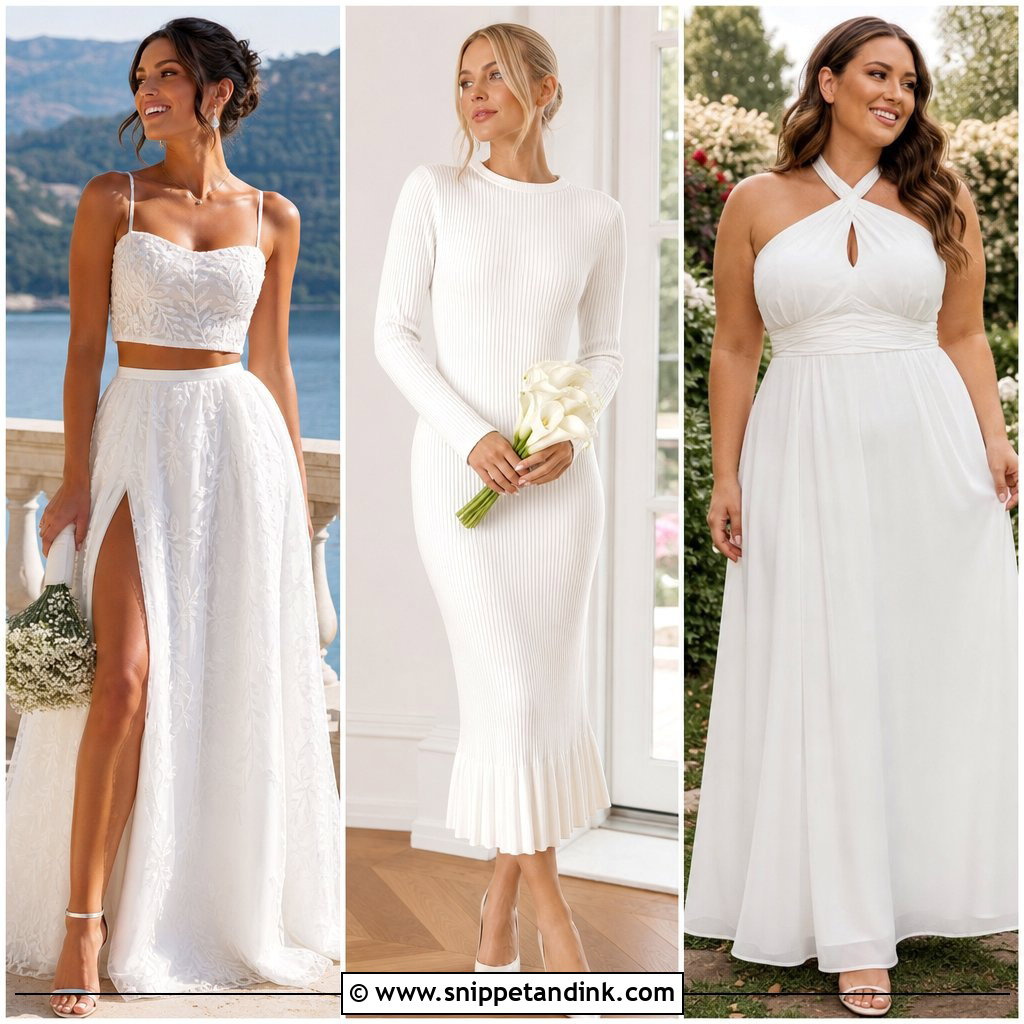
For an outdoor wedding I like an embroidered top with a light tiered maxi skirt, provided the tiers are soft. Stiff organza tiers stand away from the body; chiffon or soft tulle drops and swings. Floral threadwork or small appliqués make the bodice special without much weight. Neutral lining under both pieces matters more outside than in, because direct sun turns unlined chiffon see-through. Block-heel sandals or dressy flats won’t sink into a lawn. A loose braided updo, small floral earrings and a fingertip veil or flower comb fit the mood, and a slightly structured bouquet keeps all that softness from going shapeless.
13. One Shoulder Top And Draped Bridal Skirt
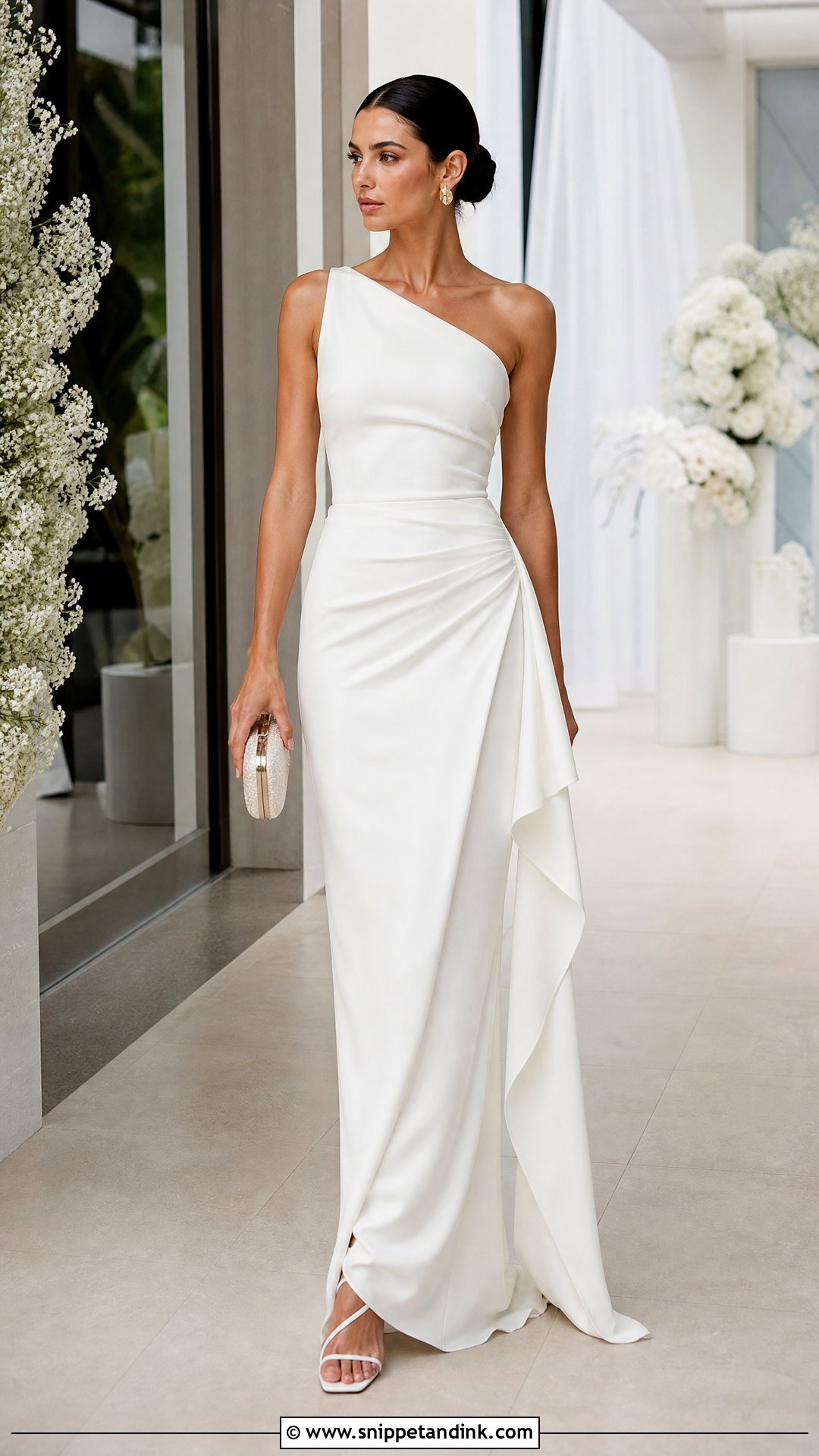
One-shoulder tops need more support than they look like they do, since all the tension runs across one strap and one side seam. Ask for internal structure and a grip strip, then check the fit from behind and from the bare side at your fitting. A high-waisted skirt with side gathering, a wrap or a cascading panel continues the asymmetry downward. Crepe gives a matte, refined finish; satin brings more shine for evening. Wear one statement earring on the open side or a balanced pair of small drops, and skip a necklace. A sleek bun keeps hair off the neckline. Watch the underarm on the strapless side; that edge rubs if it’s cut too high.
14. High Neck Top And Pleated Bridal Skirt
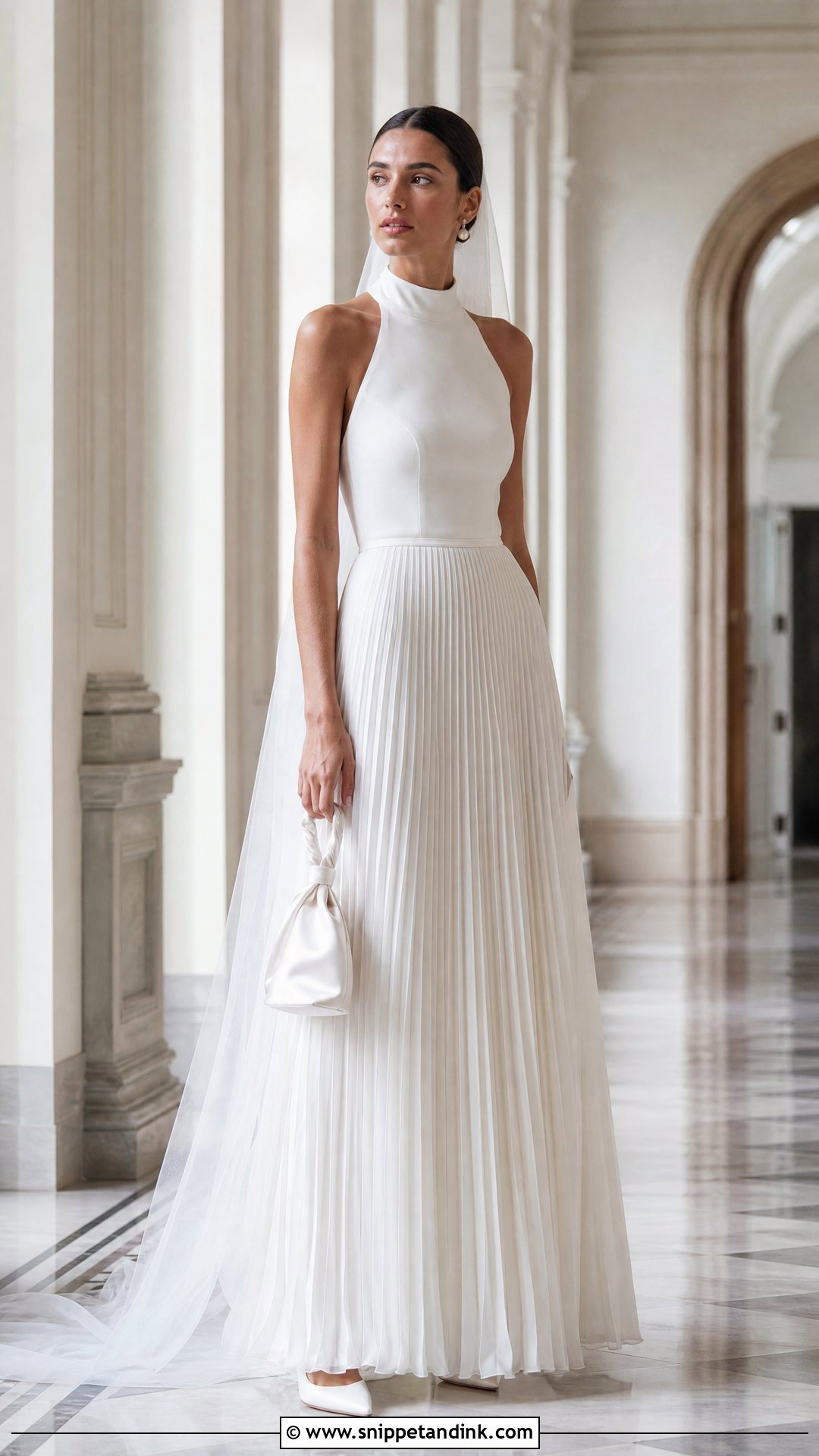
A high neck is modest coverage that still looks modern, especially over a sunray-pleated chiffon skirt. Matte crepe, lace or light satin all work for a sleeveless or cap-sleeve bodice. The waistband should sit flat and fitted, so the pleats start below the narrowest part of your torso rather than above it. Pearl earrings and a small satin bag are enough, because anything at the neck crowds the line. A low chignon or polished ponytail shows the top’s shape. Sunray pleats are heat-set, and they can flatten if you sit for a long dinner; sit in the skirt for ten minutes at a fitting and see whether they spring back.
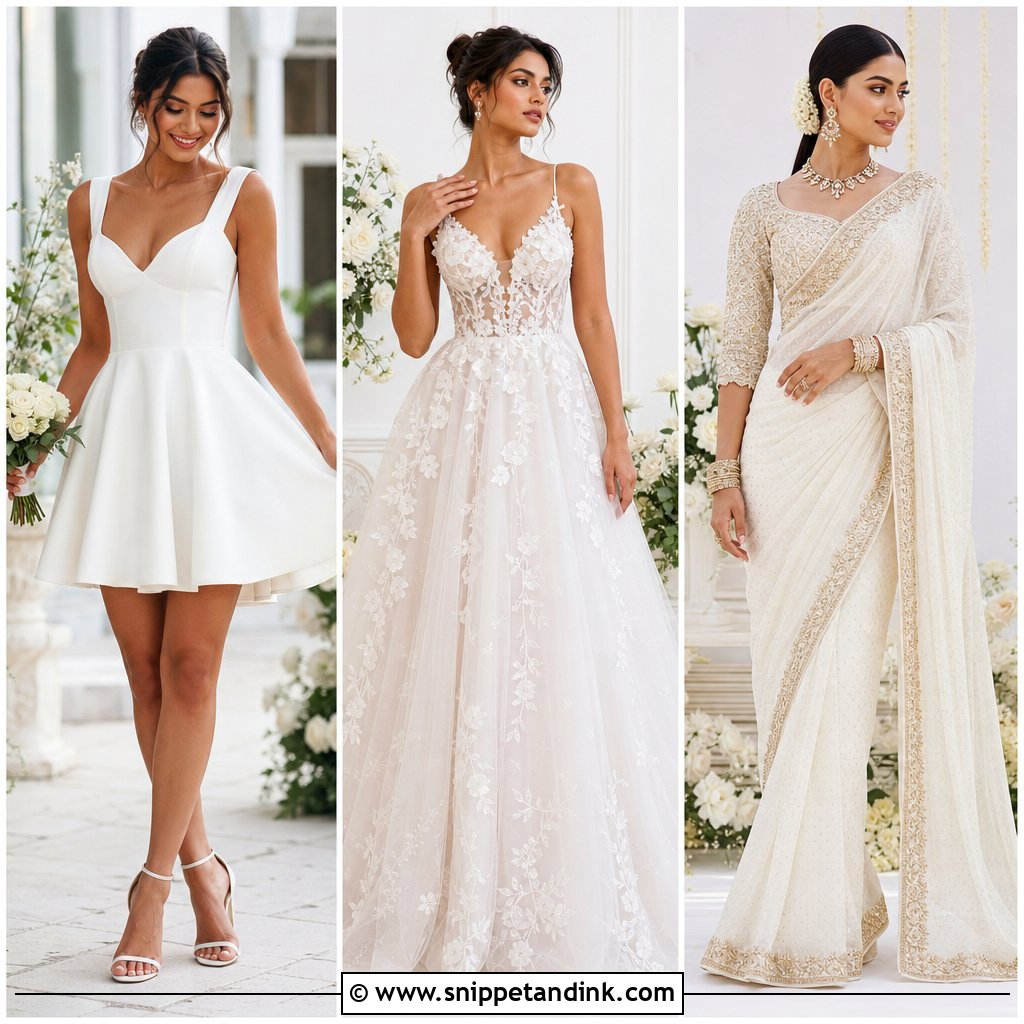
15. Square Neck Top And Satin Bridal Skirt
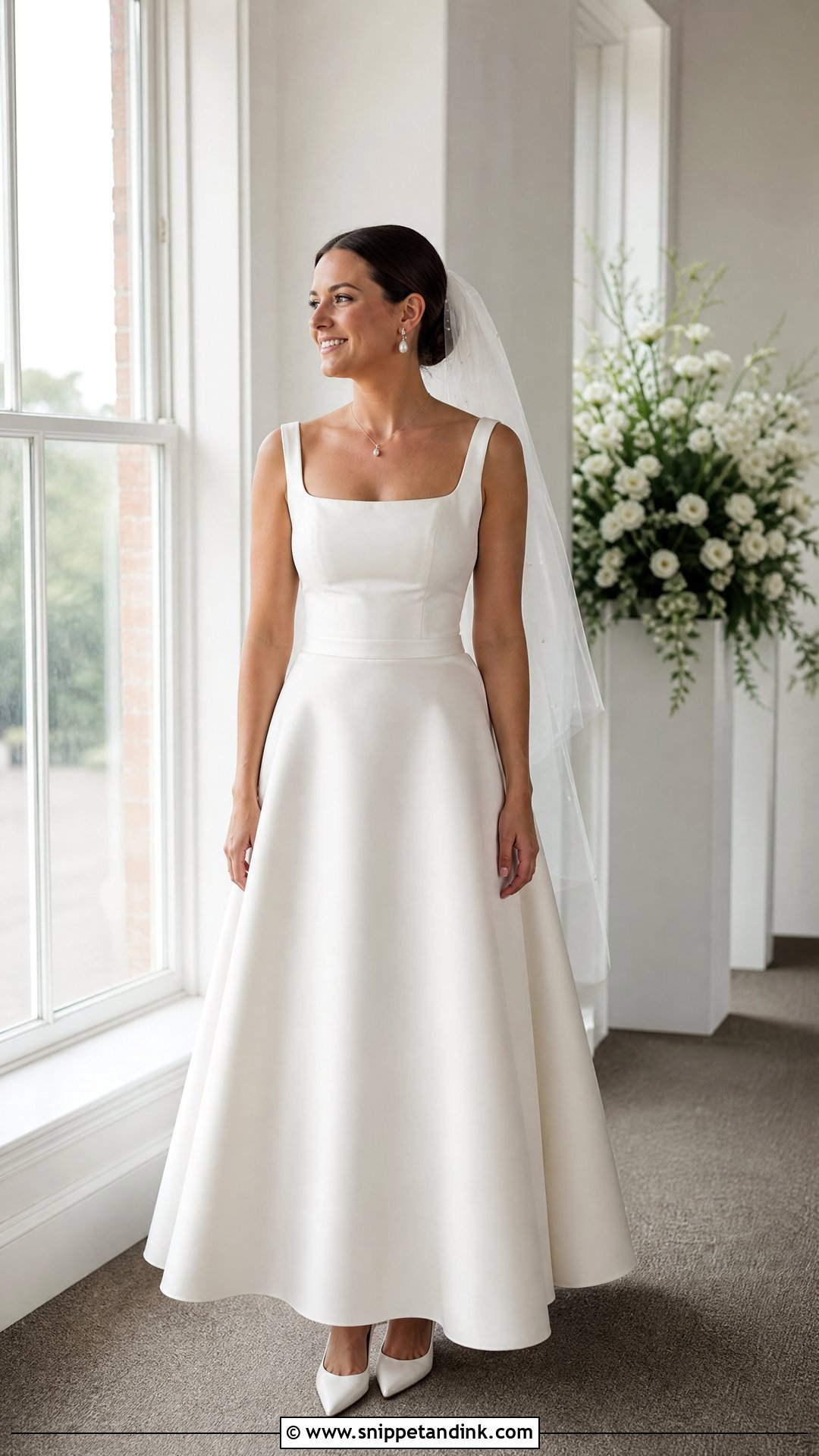
A square neckline frames the collarbones in a way few necklines do, and wide straps make it one of the more supportive strapless alternatives. Pair it with a high-waisted satin maxi: a full A-line for formality, a slimmer bias cut for an easier ceremony. A pearl pendant and drop earrings suit the open neckline. Satin shows every crease, so I steam both pieces on the morning and transport them in breathable garment bags, never plastic. Ask your tailor to line the top hem up with the skirt waistband precisely. Even a centimetre of gap or overlap should look planned from every angle the photographer might use.
16. Bridal Sweater And Chiffon Maxi Skirt
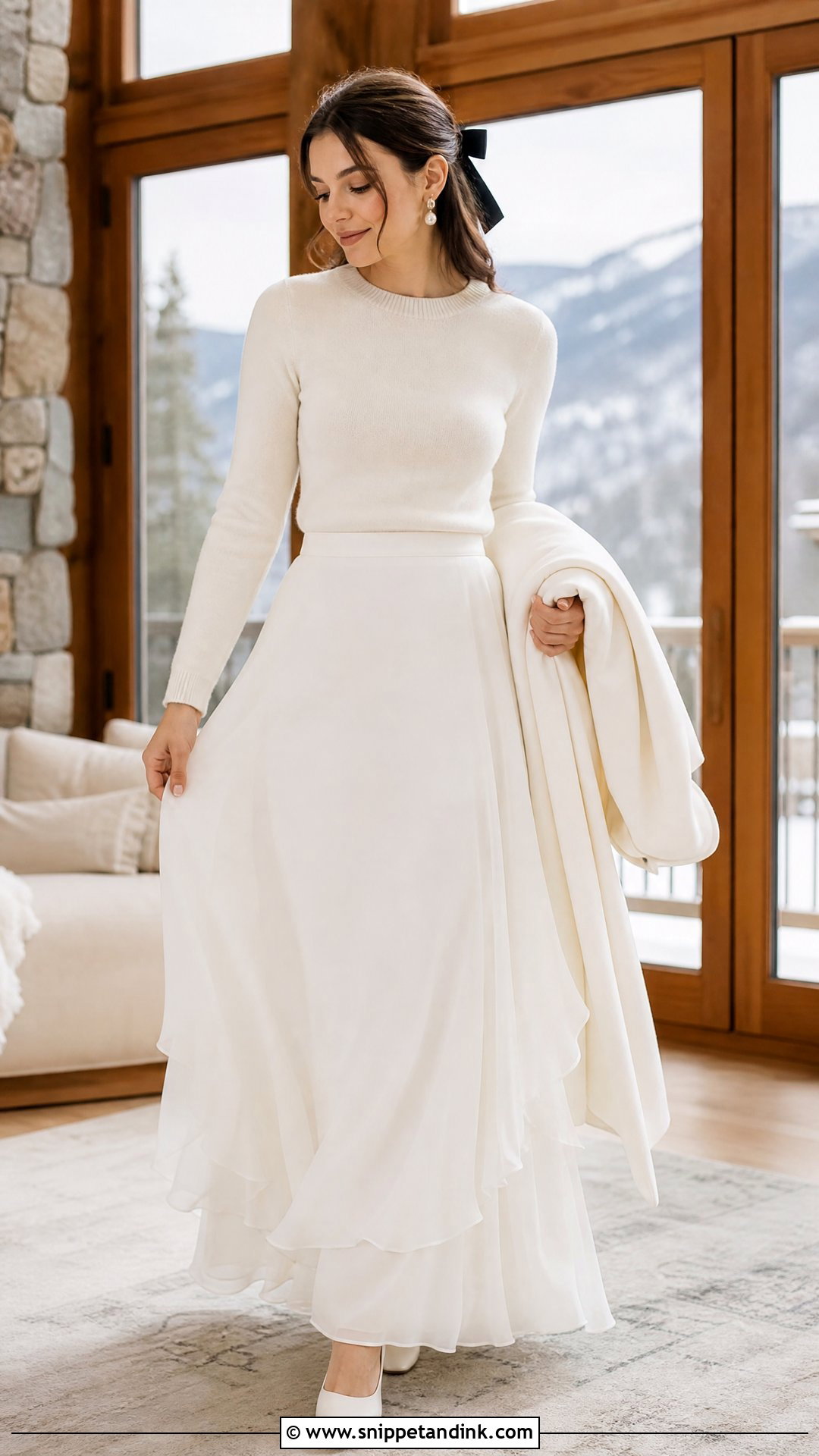
A fine-knit ivory sweater with a chiffon maxi skirt is the coziest bridal outfit I know for a fall, winter or mountain wedding. Use a fine-gauge cashmere or merino with minimal ribbing; chunky knits bunch at the waist and print through a light skirt. Tuck it into a layered chiffon skirt with a firm high waistband so it stays put. Closed-toe block heels, pearl earrings and a velvet bow or small comb finish it. A tailored wool coat handles the outdoor cold. Fine knits show undergarment lines readily, so wear the exact bra and shapewear you’ll use on the day to every fitting.
17. Linen Crop Top And Wide Leg Bridal Pants
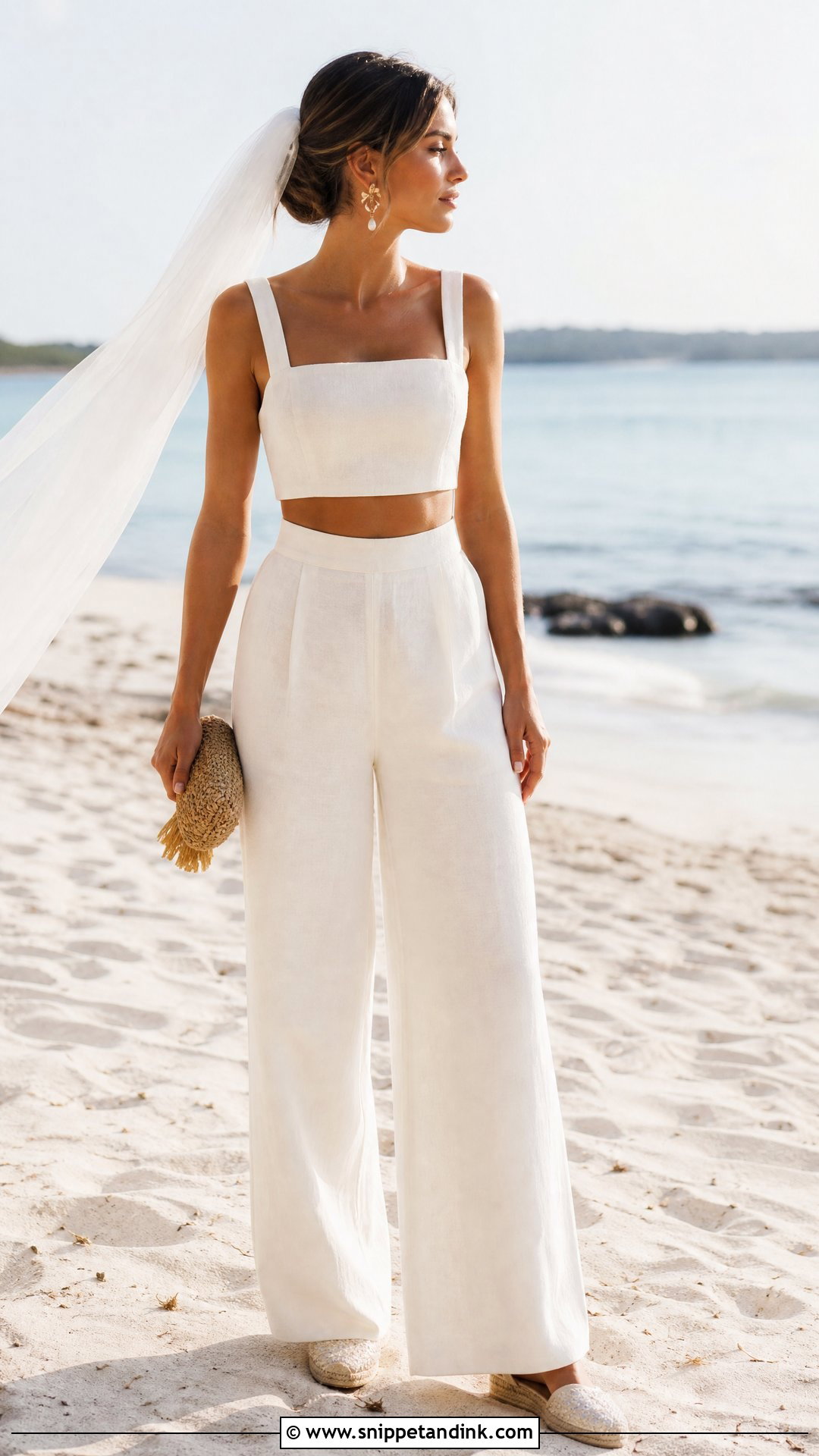
Breathable linen separates are my default for beach, destination and casual summer ceremonies, with one condition: you have to make peace with creases. A structured linen crop top and high-waisted wide-leg pants give airflow and easy movement. Line the top and at least part of the trousers, because linen is more transparent than it looks. Pick one shade, off-white, ivory or cream, and buy both pieces in it; bright whites from different makers rarely agree. Flat leather sandals or espadrilles suit sand. Steam everything right before dressing, then accept that a few soft wrinkles are how linen is supposed to look by the speeches.
18. Sequin Top And Bridal Midi Skirt
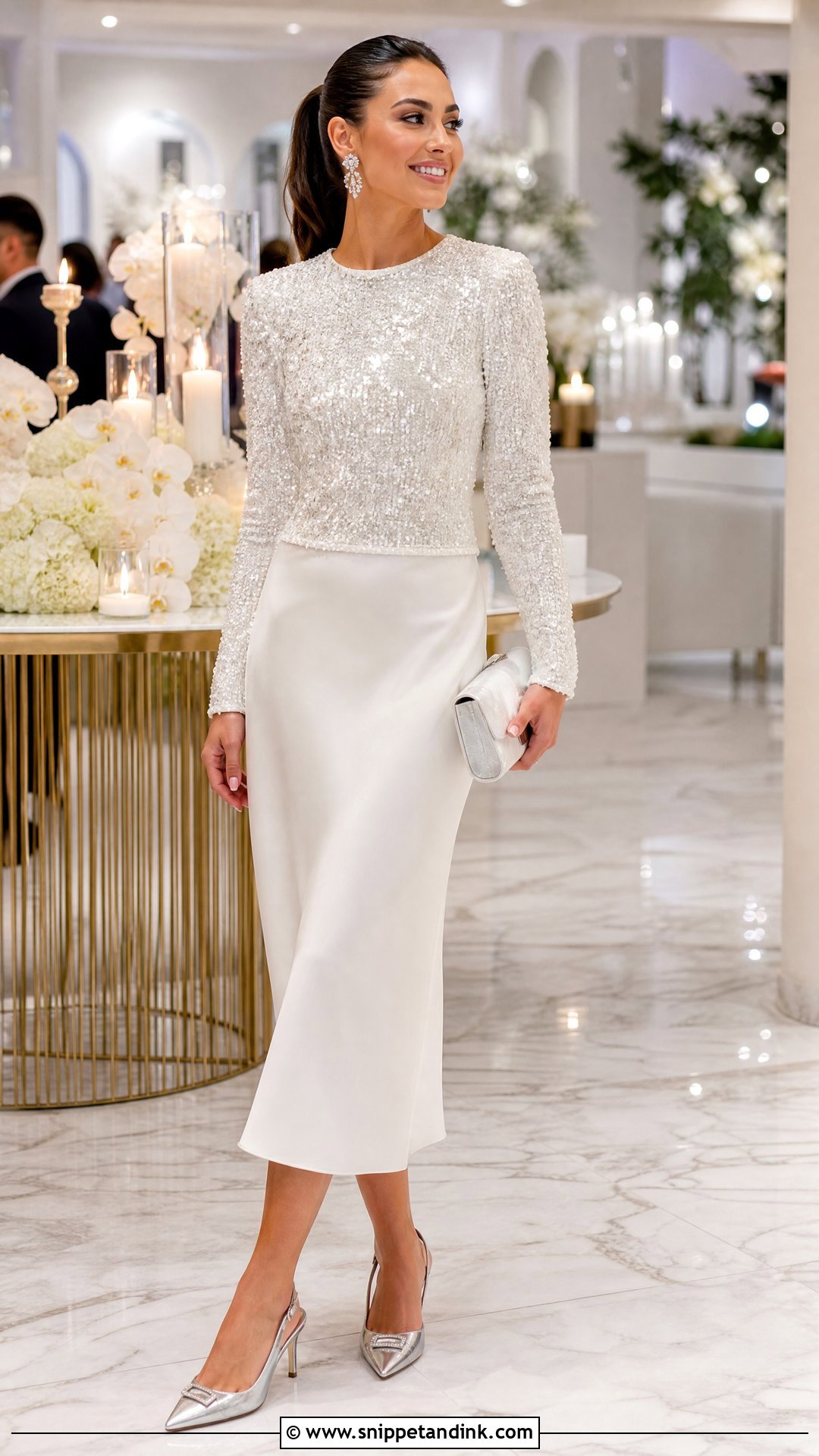
A sequin top over a bridal midi skirt is a reception change I often recommend, because it lets the ceremony outfit stay calm. Stick to ivory, silver-white or pearl sequins; high contrast colours fight the bridal palette. A clean satin, crepe or organza skirt ending below the knee balances the sparkle, with a fitted top over a fuller skirt or a slightly looser top over a slim midi. Sequins have sharp edges at the seams, and I always run a hand along the inner arm and the hem to check for scratches before the bride does. Metallic slingbacks and small crystal earrings are plenty.
19. Feather Trim Top And Mini Bridal Skirt
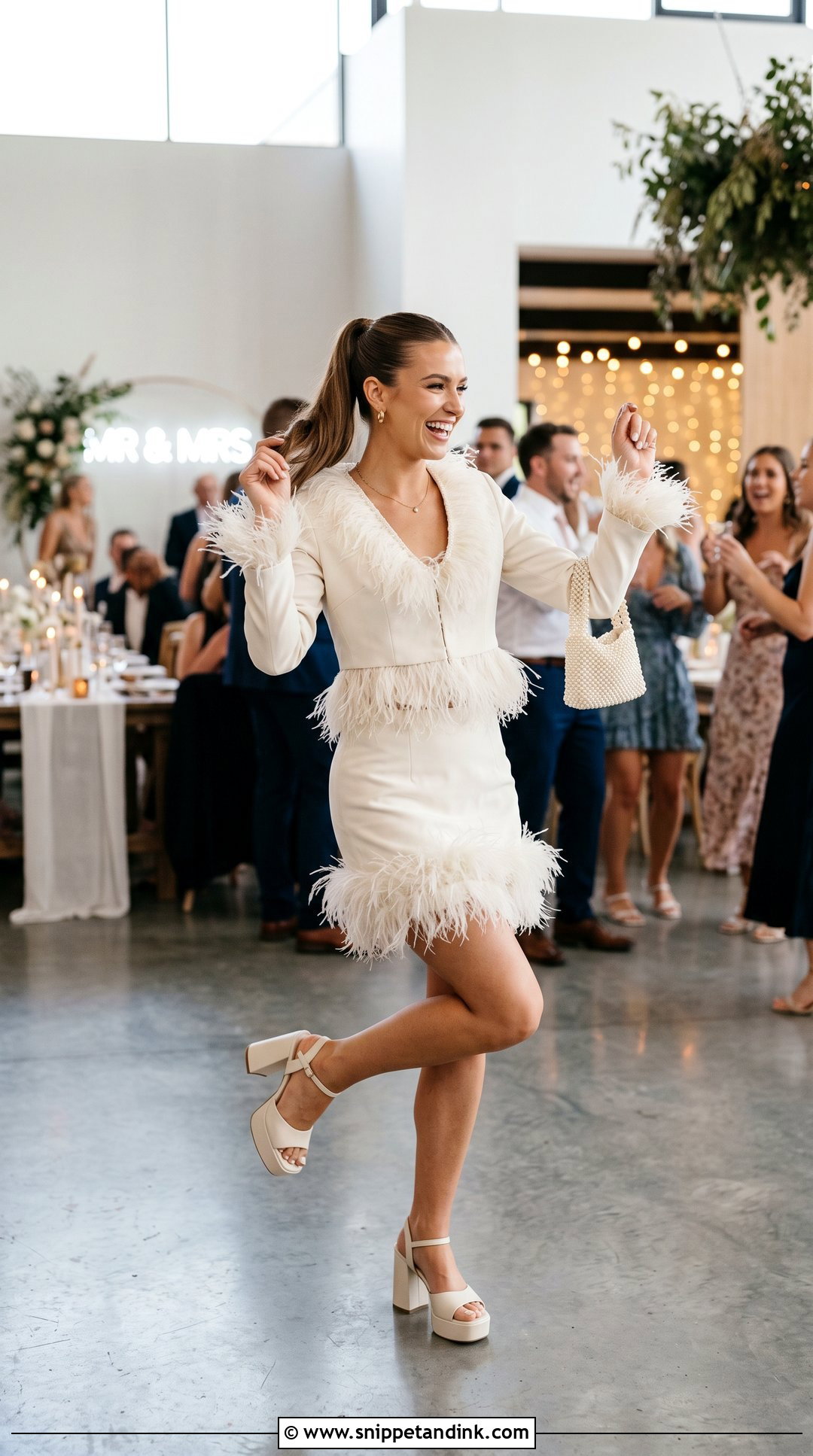
Feathers are a reception piece, full stop. Keep them to the neckline, cuffs or hem of the top so they move without getting in your mouth while you eat. A matching mini needs built-in shorts or a firm lining for dancing, and the hem should be checked sitting down, since minis ride up several centimetres when you sit. Platform sandals or supportive block heels add height without wobble. Small earrings and a high ponytail or sleek bun keep things uncluttered. Store the top hanging loosely, never folded in a bag, so the trim stays fluffy rather than crushed flat.
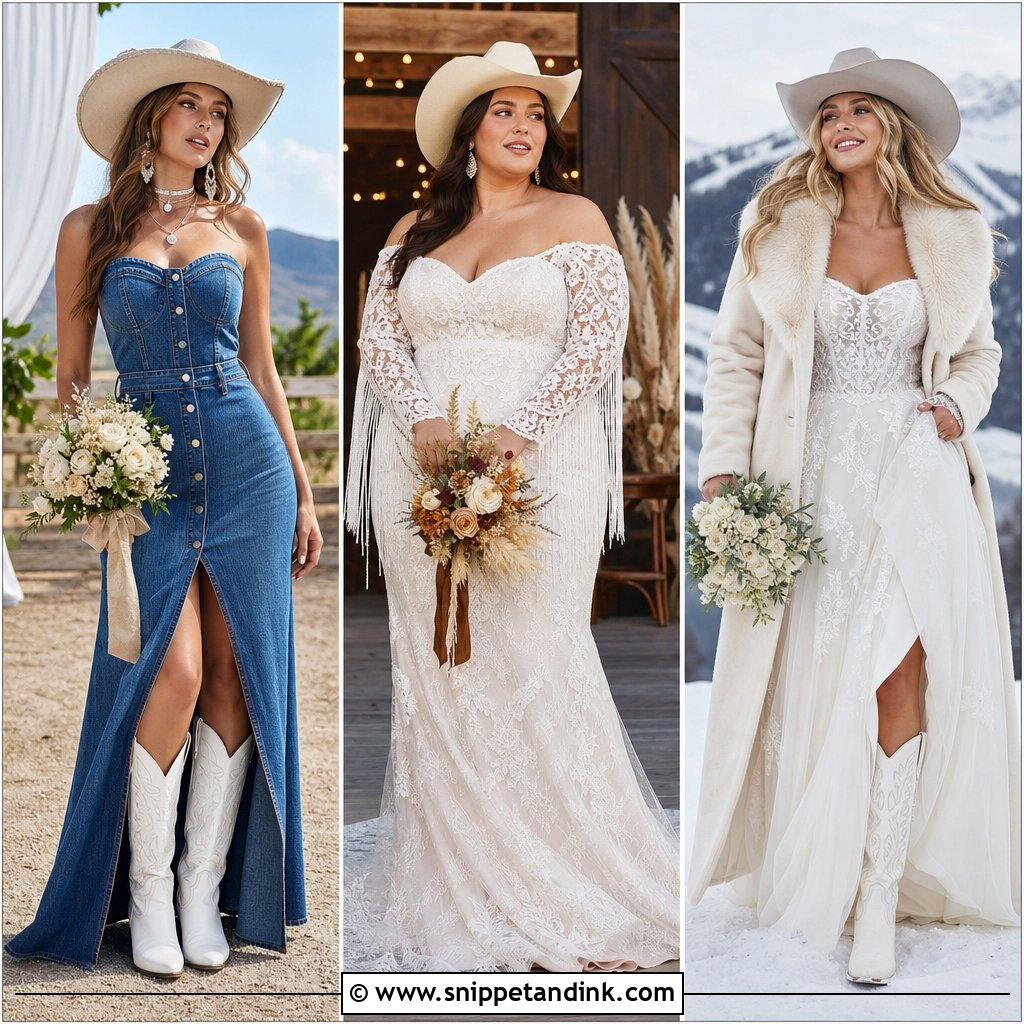
20. Silk Camisole And Wrap Bridal Skirt
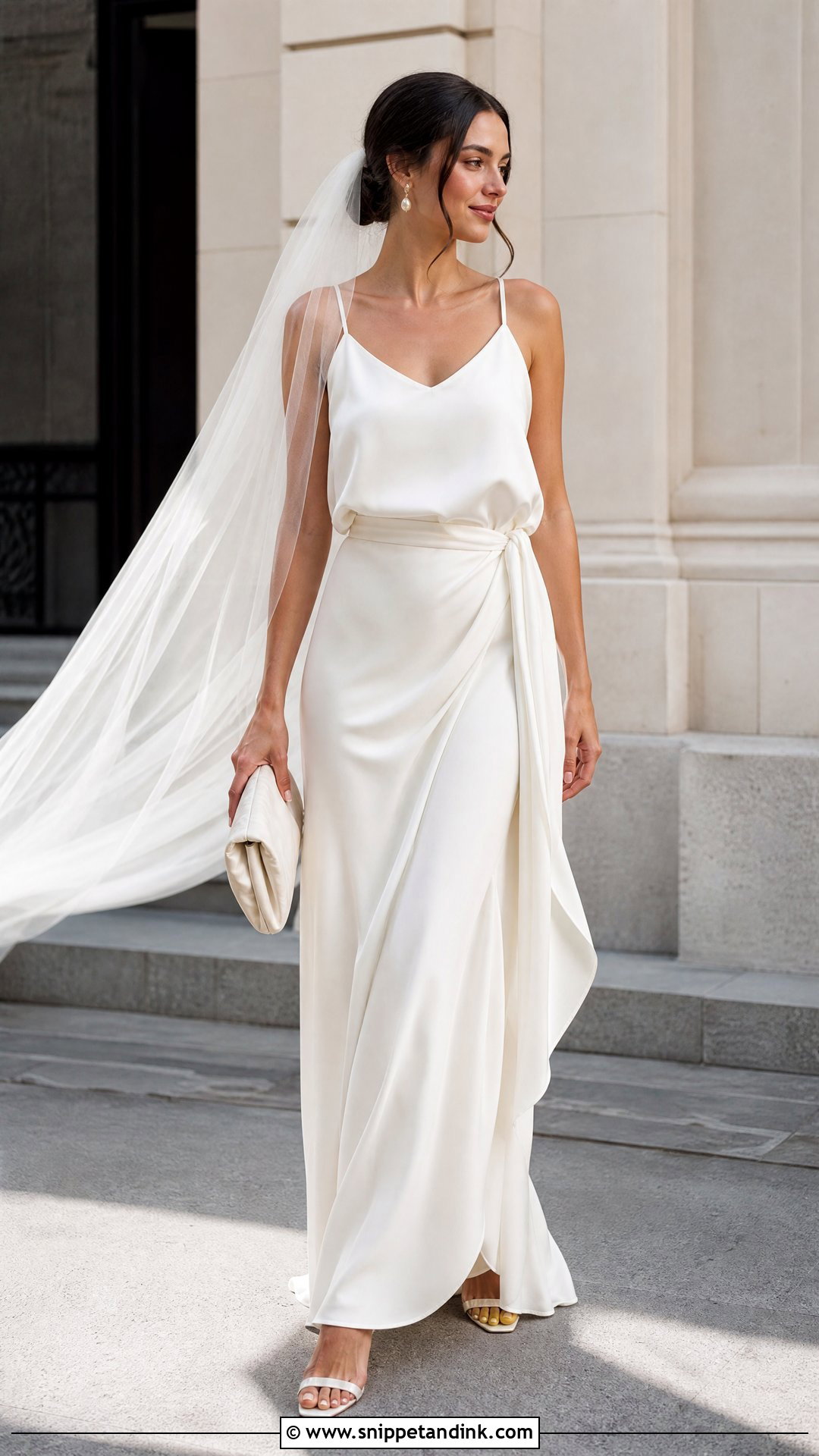
A silk camisole and wrap skirt is understated enough for an elopement and light enough to dance in. Look for a double-layered cami with adjustable straps, and lean forward in the mirror to check the neckline. The wrap skirt should have concealed snaps or hooks beneath the tie, because an unsecured wrap opens when you walk briskly or climb steps. Minimal heeled sandals and pearl drops suit the fluid line, with a cropped blazer for travel. Silk shows every edge underneath, so smooth undergarments and a little fashion tape do a lot of work here. Loose waves or a low bun, plus a plain veil, finish it.
Wearing the Pieces Again Once the Wedding Is Over
Rewear is one of the best arguments for separates, and it works best when you plan it before the alterations, not after. A satin skirt hemmed for heels can still go to a black-tie dinner. A lace top cropped to meet a high bridal waistband may not sit right over everyday jeans, so think about what you’d actually pair it with later.
- Ask your seamstress to leave seam allowance at the waist and hem where possible, so the pieces can be let out or lengthened later.
- Tailored trousers, blazers, vests and sequin tops rewear most easily. Tulle skirts and cathedral-length pieces rarely leave the wardrobe again.
- Have both pieces professionally cleaned soon after the wedding, even if they look fine. Sugar from champagne or cake dries clear and turns brown months later.
- Store silk, satin and lace in breathable cotton bags, away from plastic and light. Fold knits flat and pad them with acid-free tissue.
One honest caution: dyeing an ivory piece afterward is less predictable than people hope, especially on mixed fibres and beaded fabrics. Treat dye as a bonus, not the plan, and choose pieces you’d happily wear again in ivory.
Two Halves That Read as One Outfit
Start with the silhouette you feel most like yourself in, then work outward: matching undertones, balanced proportions, and alterations done in the actual shoes and underwear you’ll wear. Separates reward that extra care at the waist, because the join is the one thing a single gown never has to think about. Sit, walk and dance in the full outfit before the day, and let accessories support the clothes rather than compete with them. Romantic tulle or a sharp trouser suit, a well-fitted two-piece looks deliberate, moves with you and leaves you with pieces you can wear again.
You'll Like These Ideas:


Leave a Reply