
A convertible bridal look gives you a full ceremony silhouette and a lighter outfit for dinner and dancing, without a second dress to buy and fit. Most of the two-piece and detachable gowns I dress brides in work the same way: a fitted base you can live in all night, plus an outer skirt that does the dramatic work for the aisle. Below are twenty ways to build that pairing, from satin and lace to a jumpsuit and a beach version. As you look, judge the base on its own first. If you wouldn’t happily wear it with nothing over it, the transformation will feel like a downgrade rather than a reveal.
Hook Bars, Snaps or a Hidden Belt Under the Skirt
Every detachable look depends on the fastening you never see. Before I fall in love with a silhouette, I turn the overskirt inside out and look at how it attaches, because that decides how secure it feels, how fast it comes off and whether it leaves marks on the base.
- Hook and bar fastenings sewn into a waistband are the most common and the most secure for heavy satin or a long train. They take a minute or two to undo and are easier with a helper.
- Snaps release quickly and suit light chiffon or tulle. On a heavy skirt they can pop open if someone steps on the train, so I only trust them on lighter layers.
- A separate belt or waistband that closes at the back, with the overskirt hanging from it, is the cleanest option for a smooth base because nothing is stitched to the dress underneath.
- Buttons and loops look pretty but are slow, and loops can remain visible on the base unless they are tucked or removable.
Ask whoever sells or alters the dress which method it uses, and try the removal yourself at the first fitting. If it takes two people and five minutes in the shop, it will take longer at the wedding.
1. Satin Detachable 2 Piece Wedding Dress
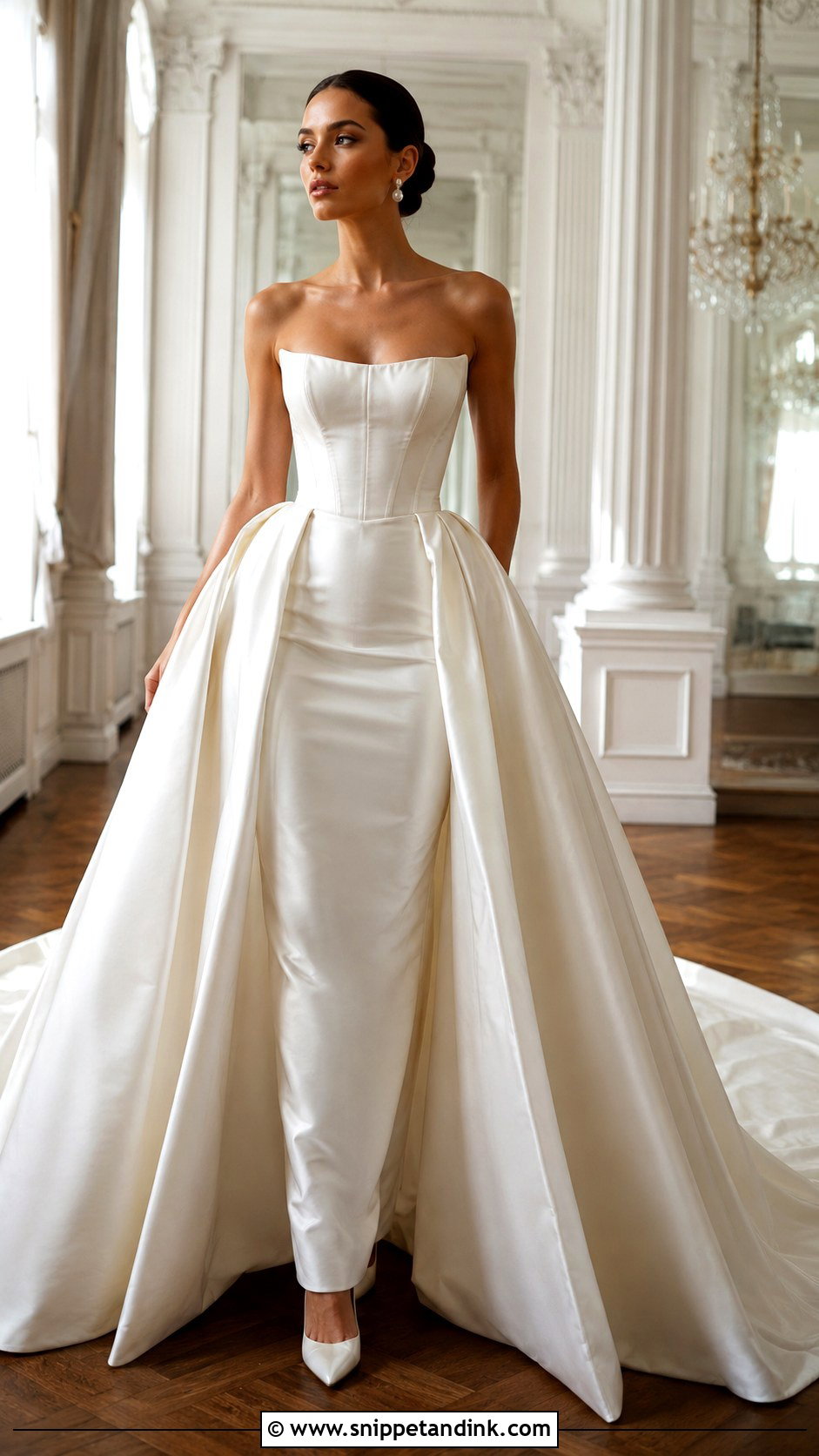
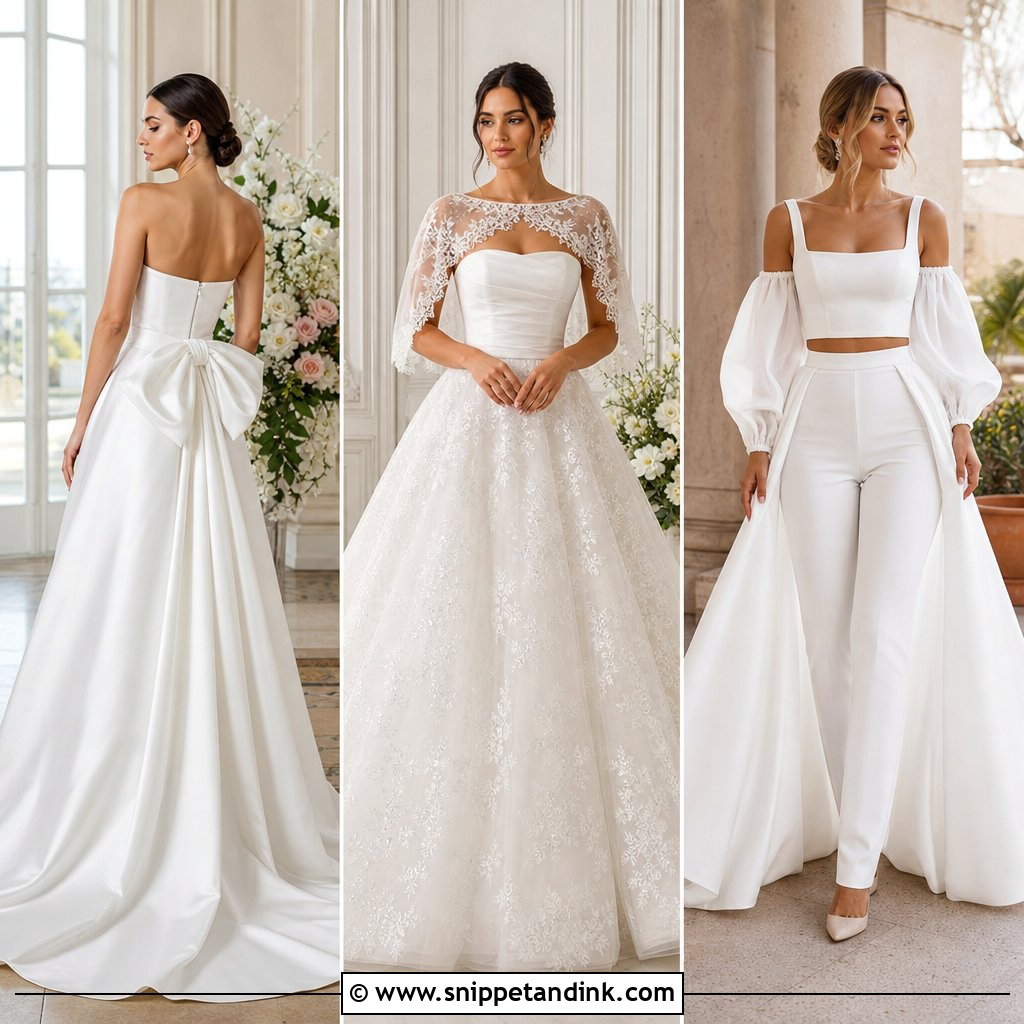
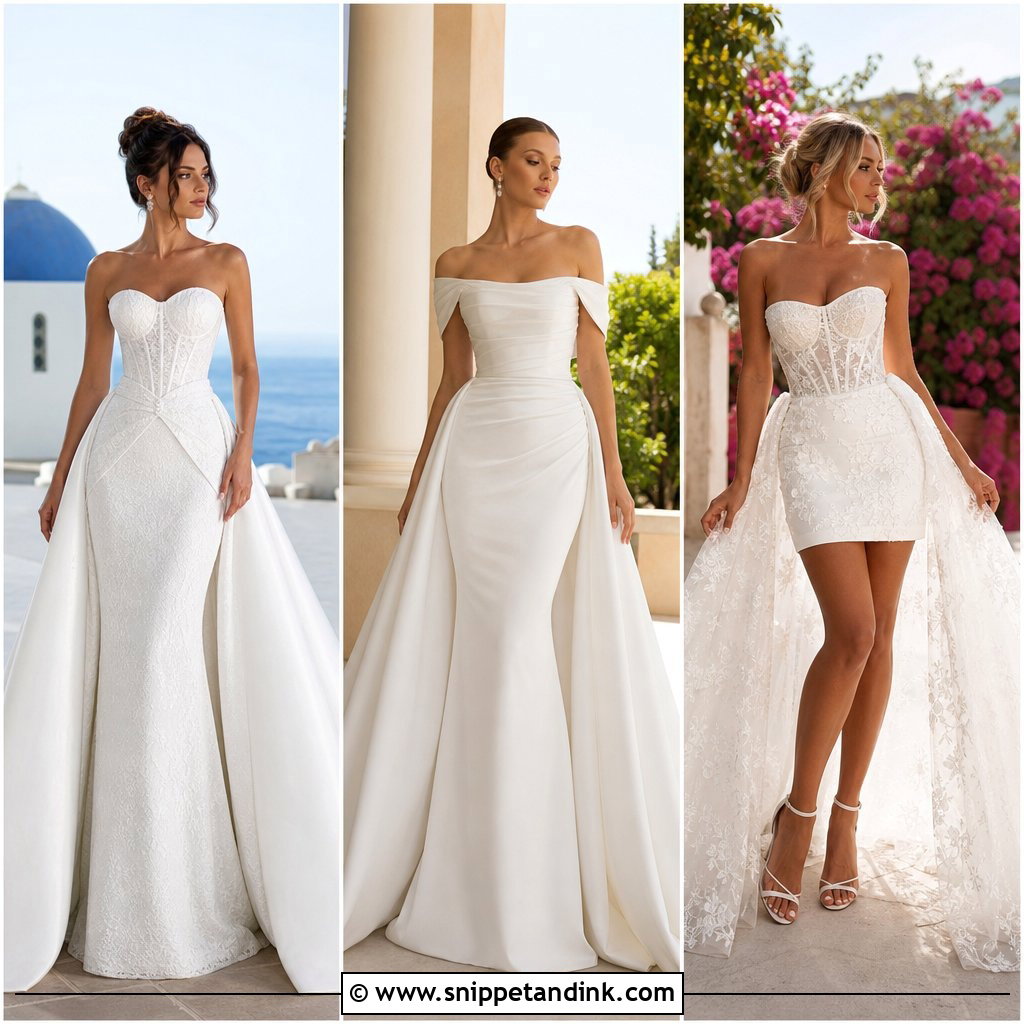
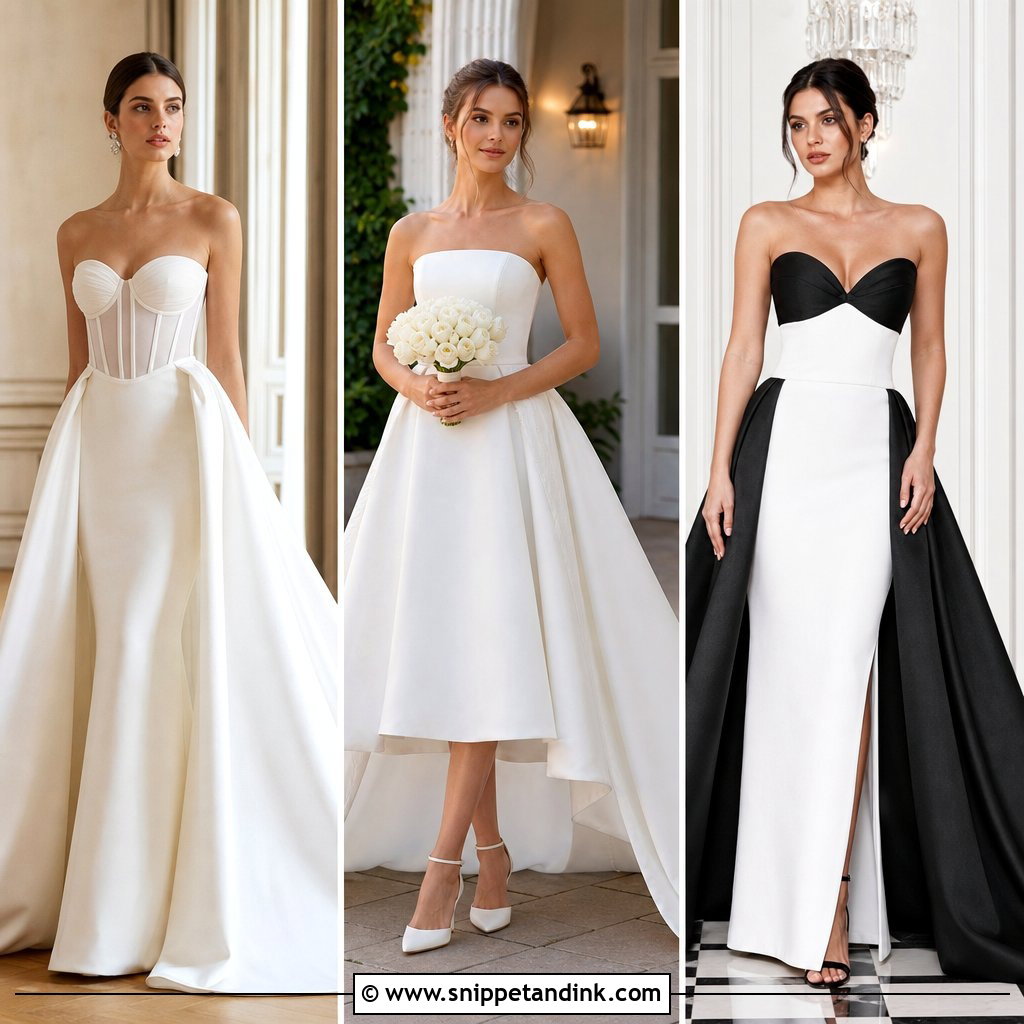
Satin is the fabric I reach for when a bride wants the overskirt to read as one gown with the corset, because satin from the same bolt reflects light identically on both pieces. A structured strapless corset over a slim satin column, with a pleated ball gown overskirt and chapel train on top, gives you the big entrance and then a clean line for dancing. Keep the accessories quiet: pointed ivory pumps, pearl drops and a low bun. The detail that decides whether it looks expensive is the overskirt waistband. It needs to lie flat against the corset with concealed fastenings, because satin shows every ridge underneath it. I’d put this one in a ballroom or a pared-back hotel space where the sheen has room.
2. Lace Detachable 2 Piece Wedding Dress
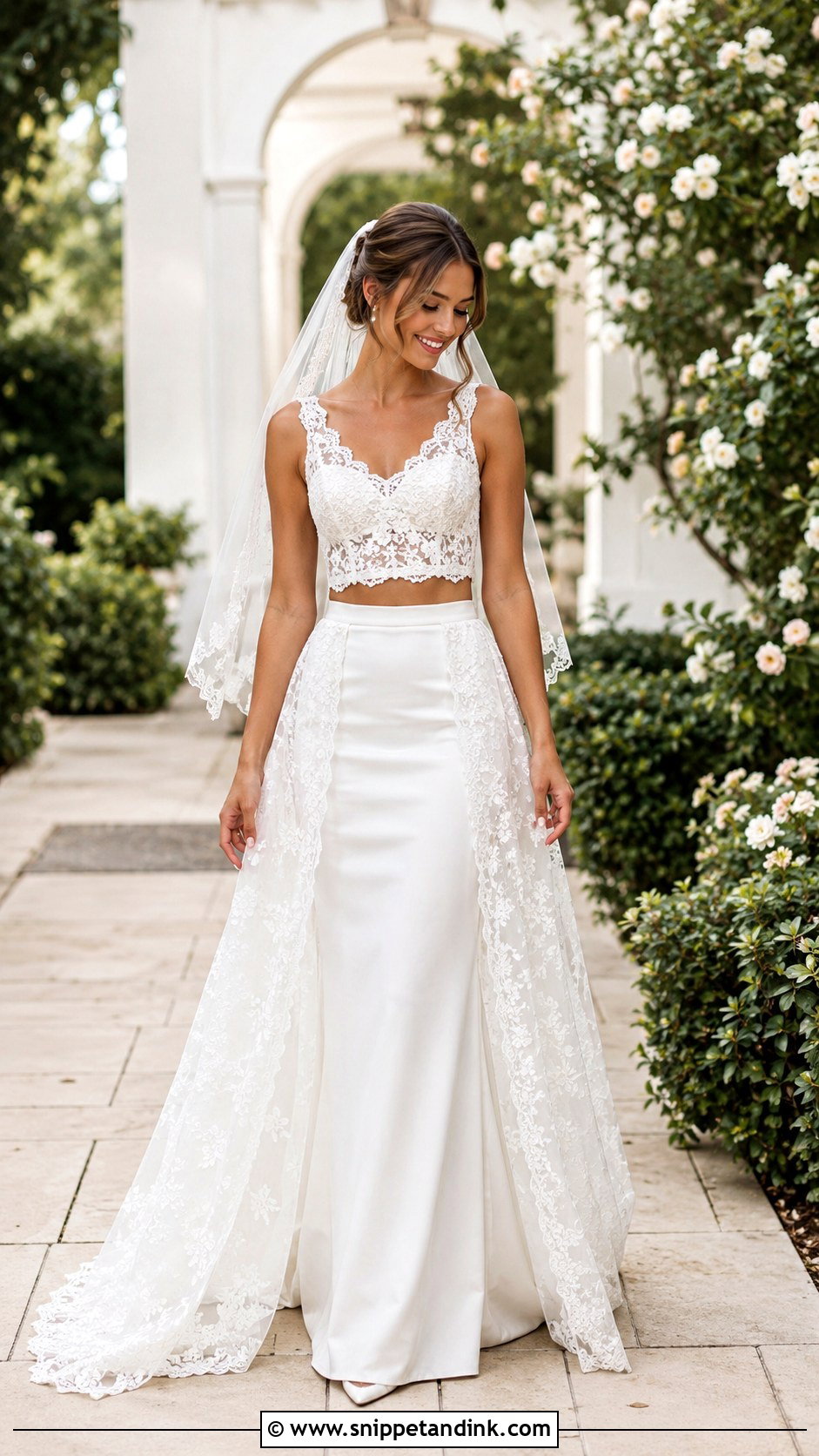
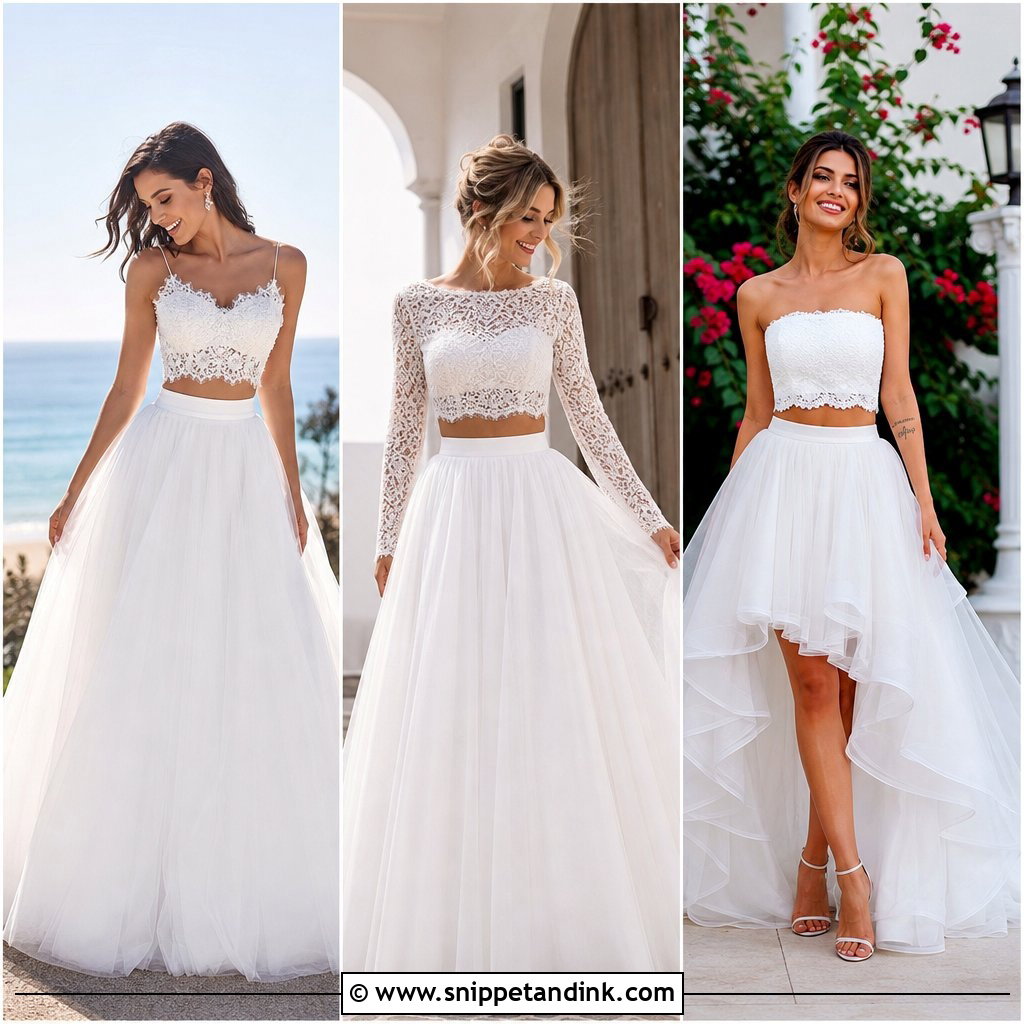
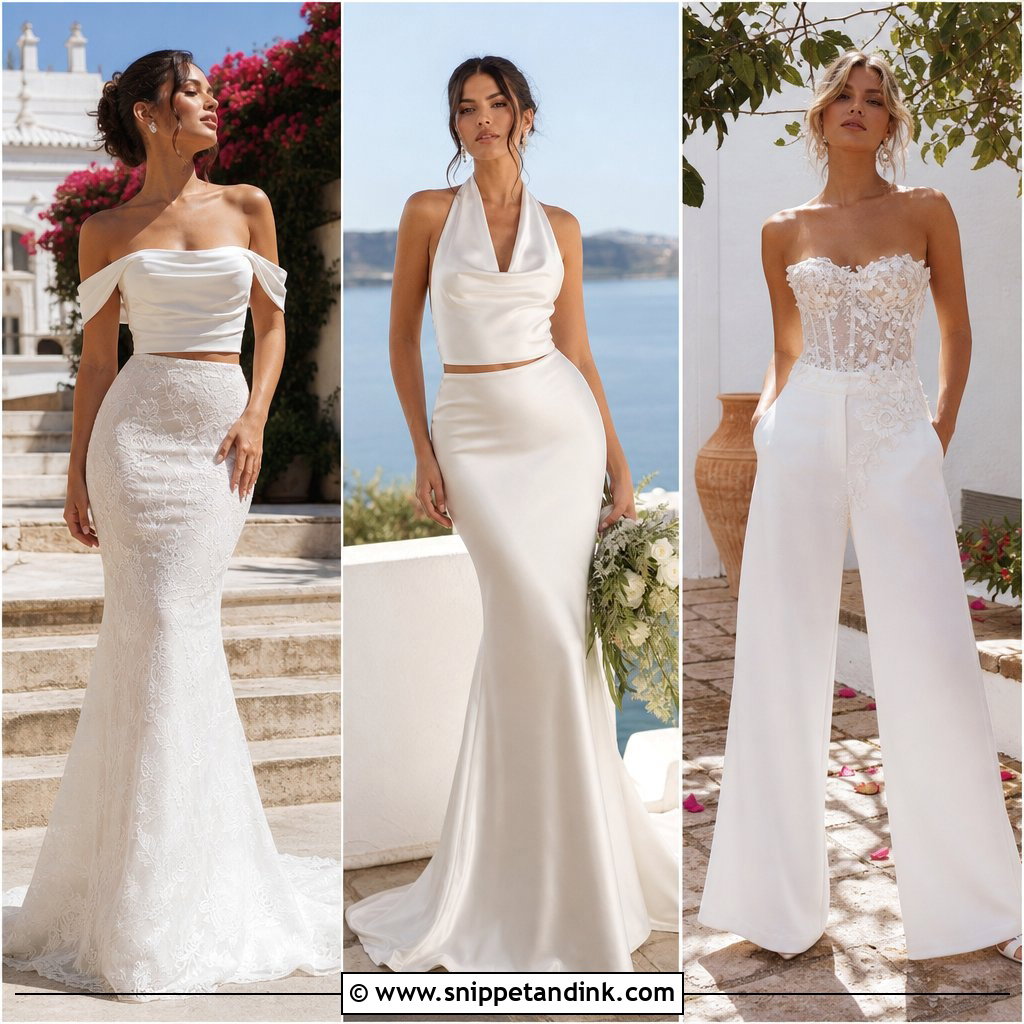
Lace is the easiest way to make bridal separates look like a single gown, as long as the same lace appears on the top and the removable layer. Go for a lined crop top with a scalloped hem and cap sleeves or fine straps, over a high-waisted crepe or satin skirt, with the lace overskirt on top. When I fit this, the gap between top and skirt is what I watch. Standing still it looks fine; the moment a bride sits or reaches for a hug, a cropped top can ride up an inch. I pin it with her seated and arms raised before anything is sewn. A fingertip veil and closed-toe heels keep the ceremony version soft, and the bare inner skirt carries the evening.
3. Mermaid Detachable 2 Piece Wedding Dress
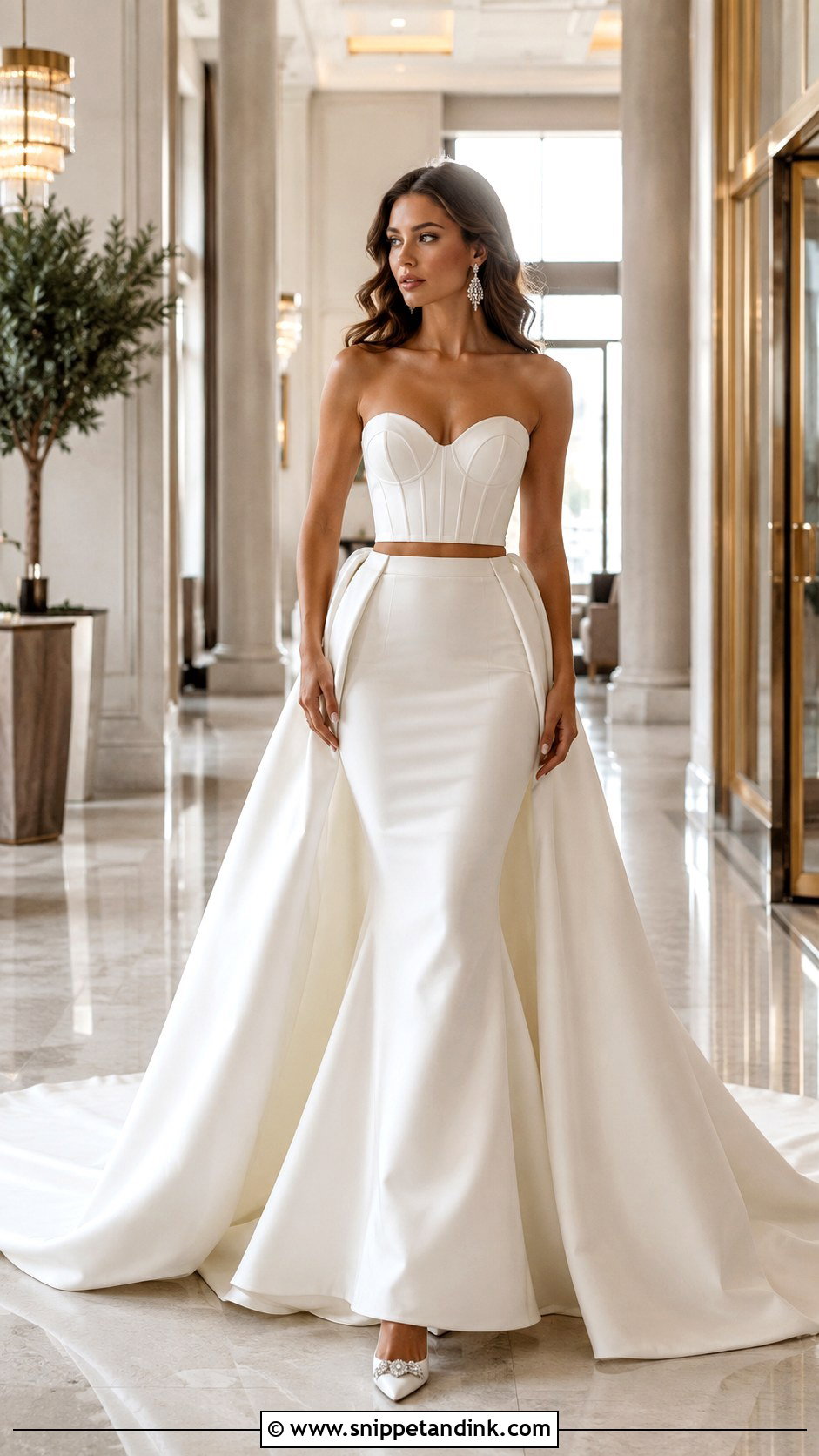
Two very different shapes come out of one outfit here: a sculpted mermaid underneath and a full skirt over it, attached through a removable overskirt at the natural waist. An open front lets the fitted hip line show through as you walk, so the mermaid isn’t completely hidden during the ceremony. The catch is weight. A full satin overskirt hanging off a fitted crepe base can drag the waist down and twist the seams, so at fittings I have the bride walk the length of the room and turn quickly. If the base shifts, the attachment points need moving or adding. Choose a smooth veil that stops above the waist so the join stays visible and clean.
4. Mini Detachable 2 Piece Wedding Dress
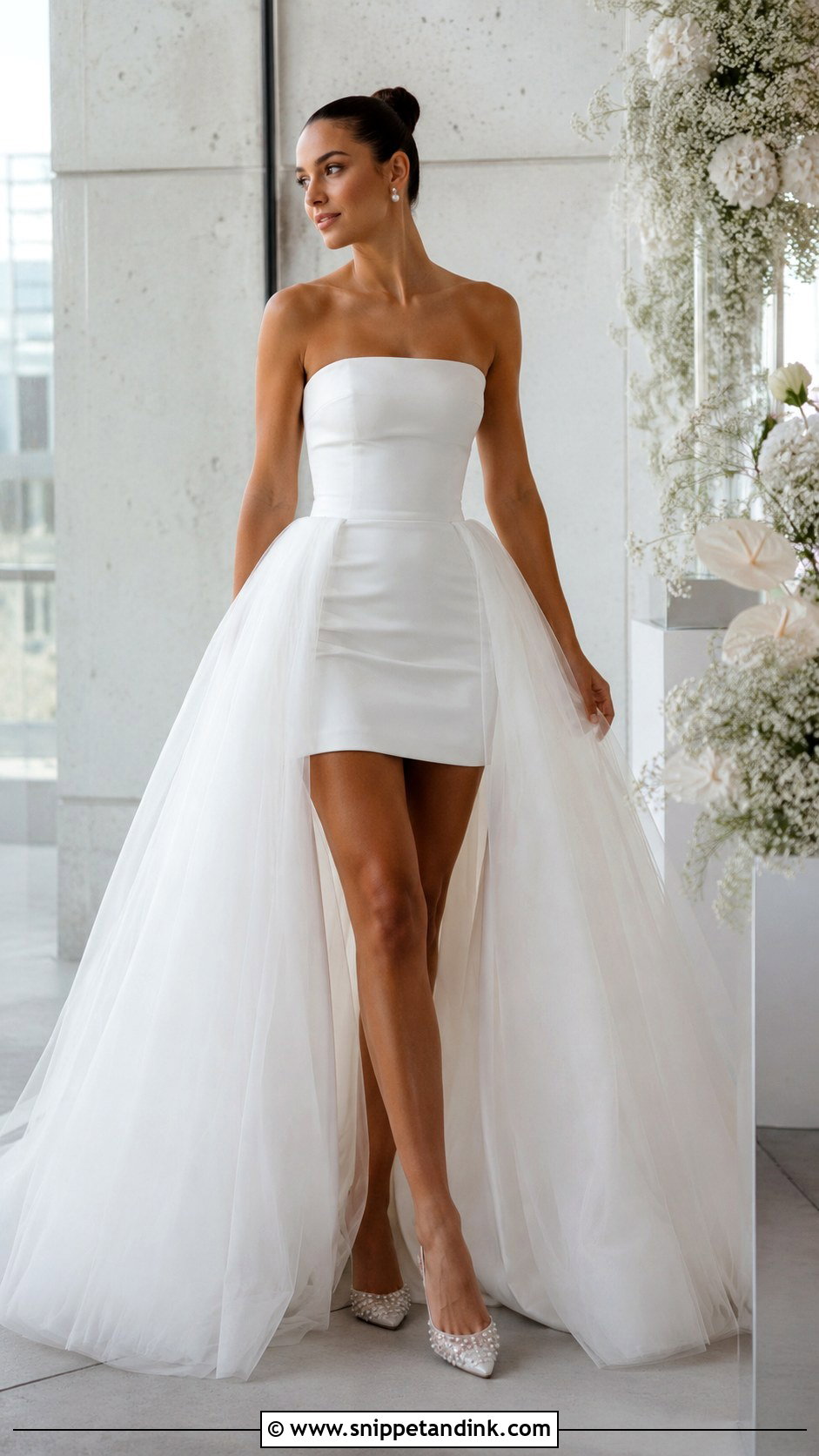
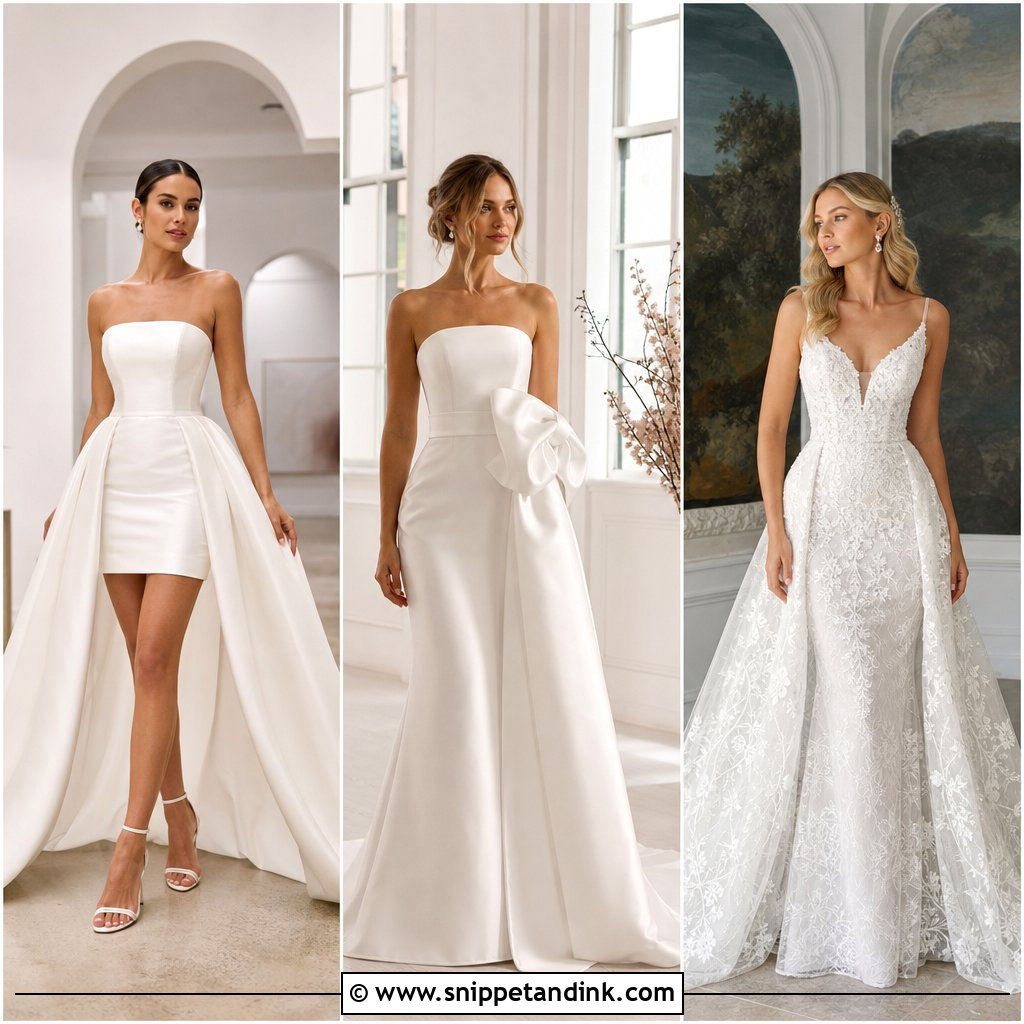
This is the biggest reveal on the list: a structured mini under a floor-length tulle skirt. The mini has to be properly built, with boning, a full lining and a square or strapless neckline that won’t slip once you start dancing. I always check the hem from behind and seated, because a mini that looks right in a mirror can sit much higher in candid photos from the back. Over it, a tulle overskirt with a firm waistband and a generous train gives a completely traditional aisle look, and it must fully cover the short hem from every side. Embellished slingbacks and a small satin clutch take the second look straight into a city reception.
5. Crepe Detachable 2 Piece Wedding Dress
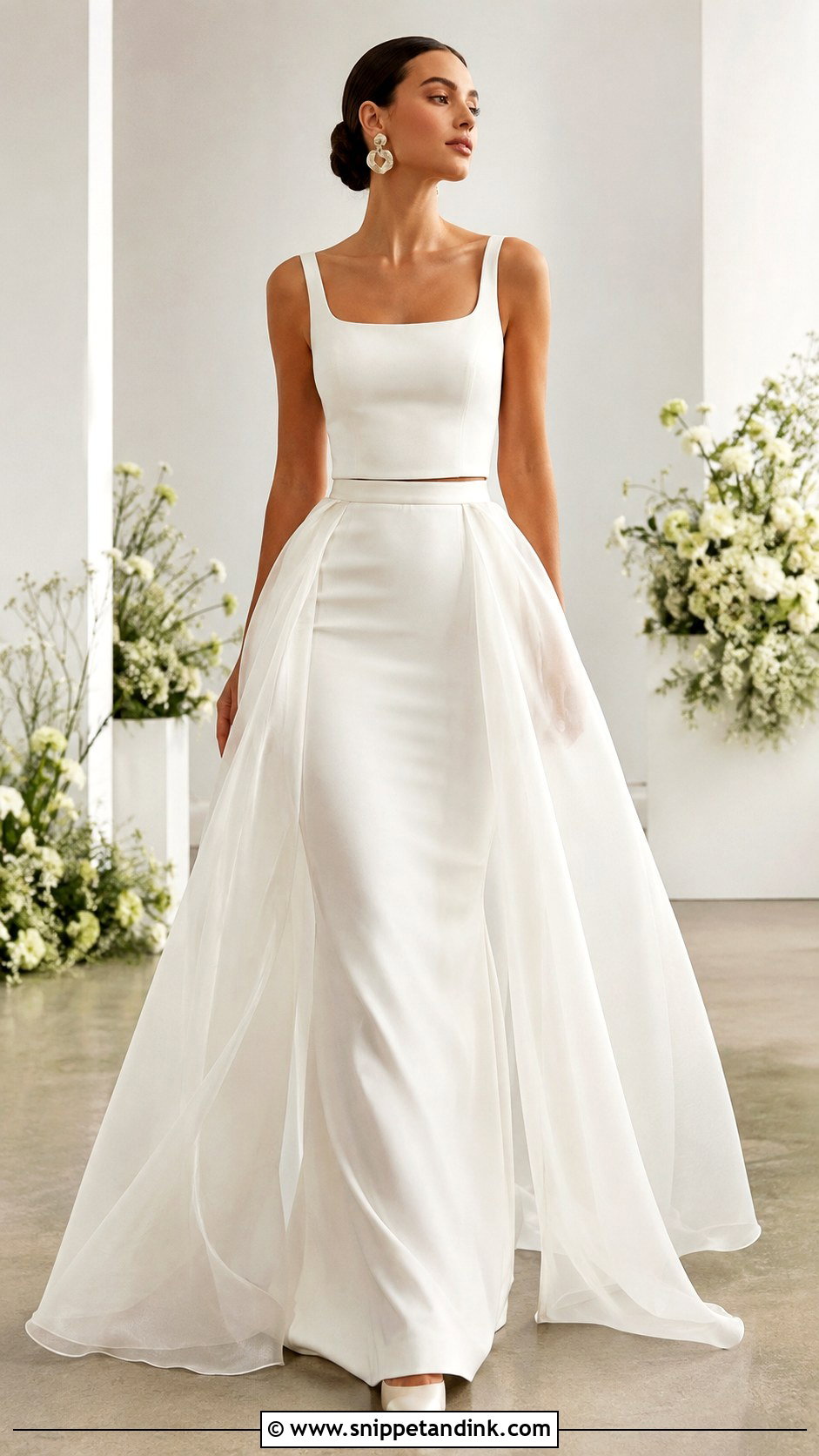
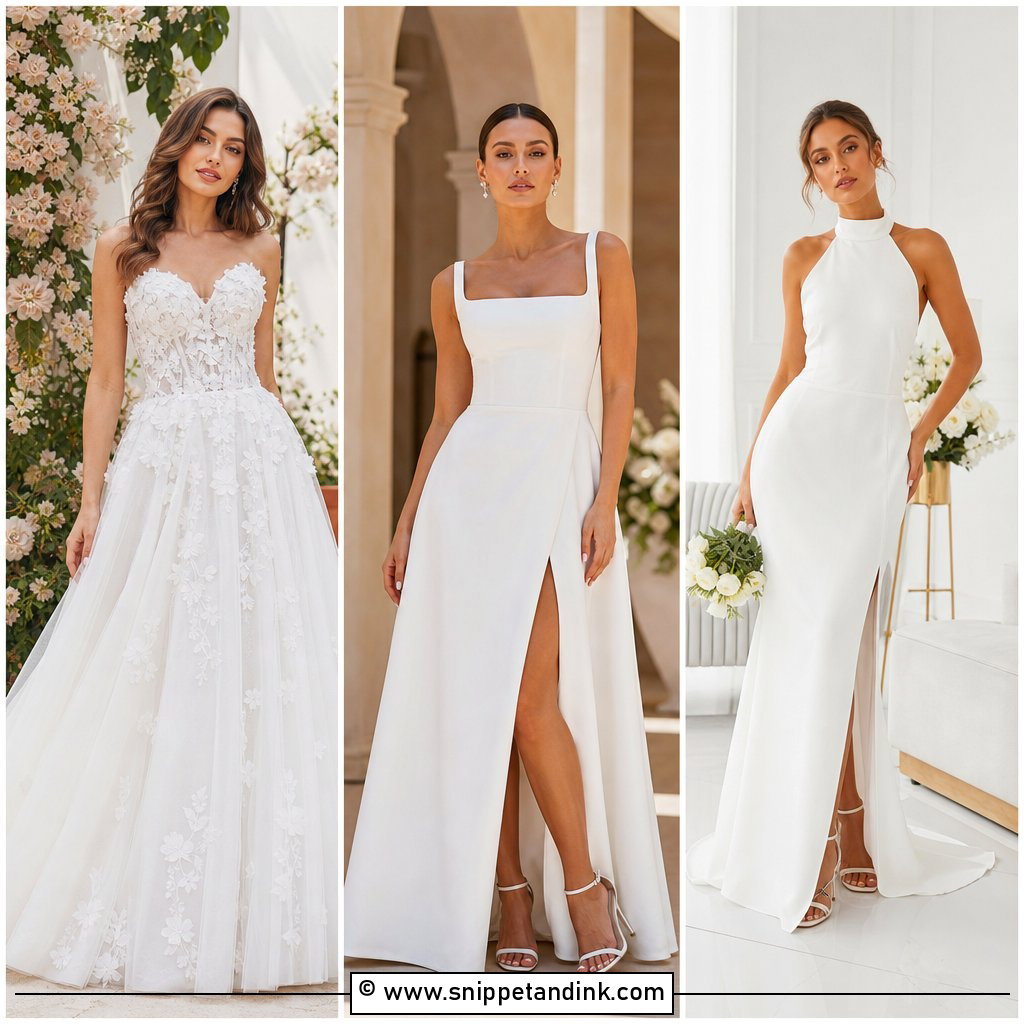
Crepe suits a bride who wants tailoring to do the talking. A sleeveless square-neck bodice over a fitted sheath skirt with a back slit makes a sharp base, and a sheer organza overskirt adds volume while letting that outline show through. A wide crepe waistband hides the hooks and visually ties the two pieces together. Organza choice matters more than people expect. Too soft and it collapses against the crepe; too stiff and it stands away like a lampshade. I ask to see the overskirt on a moving body, not on a mannequin, before agreeing to it. Sculptural earrings and a neat chignon finish it.
6. Long Sleeve Detachable 2 Piece Wedding Dress
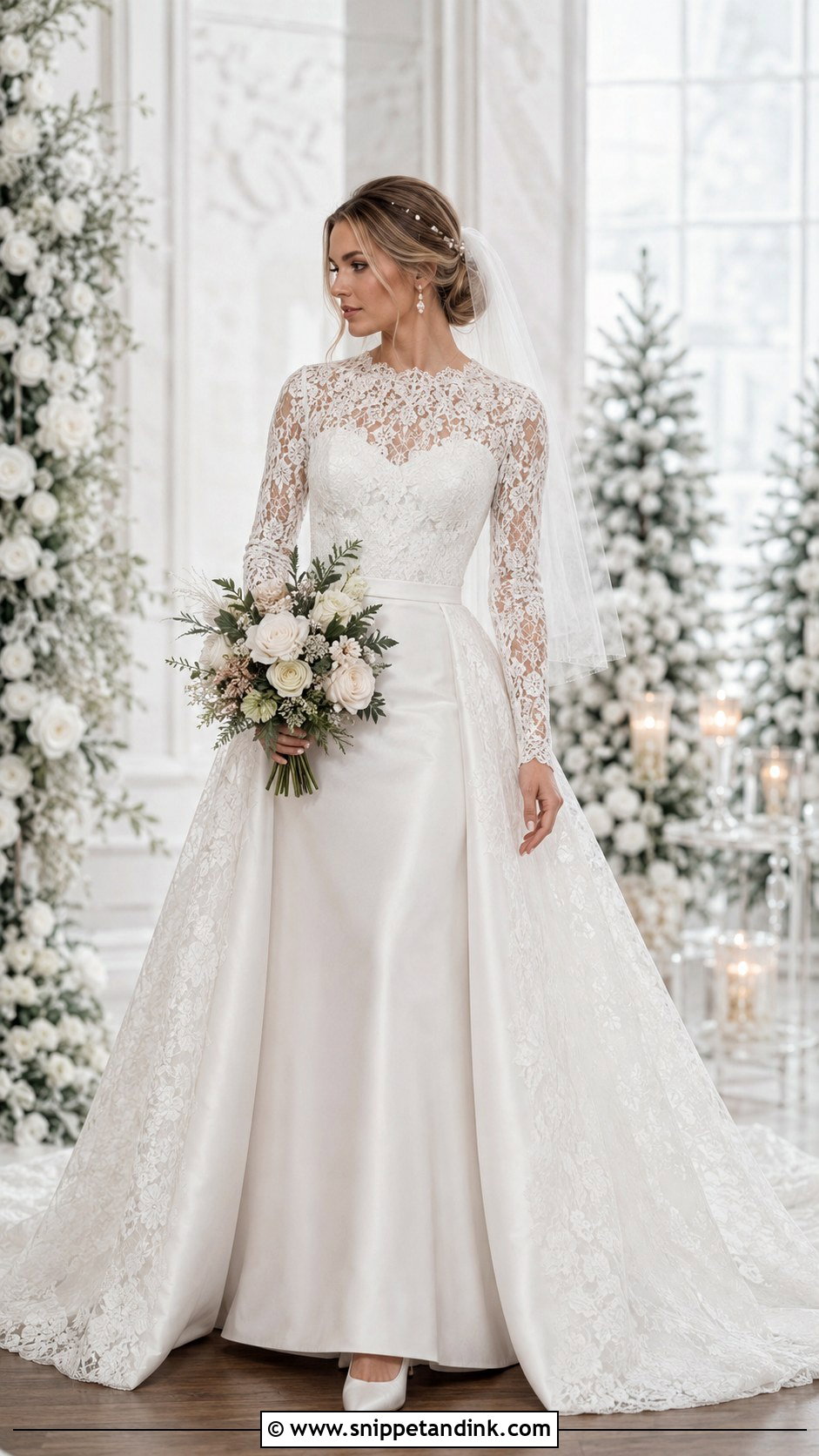
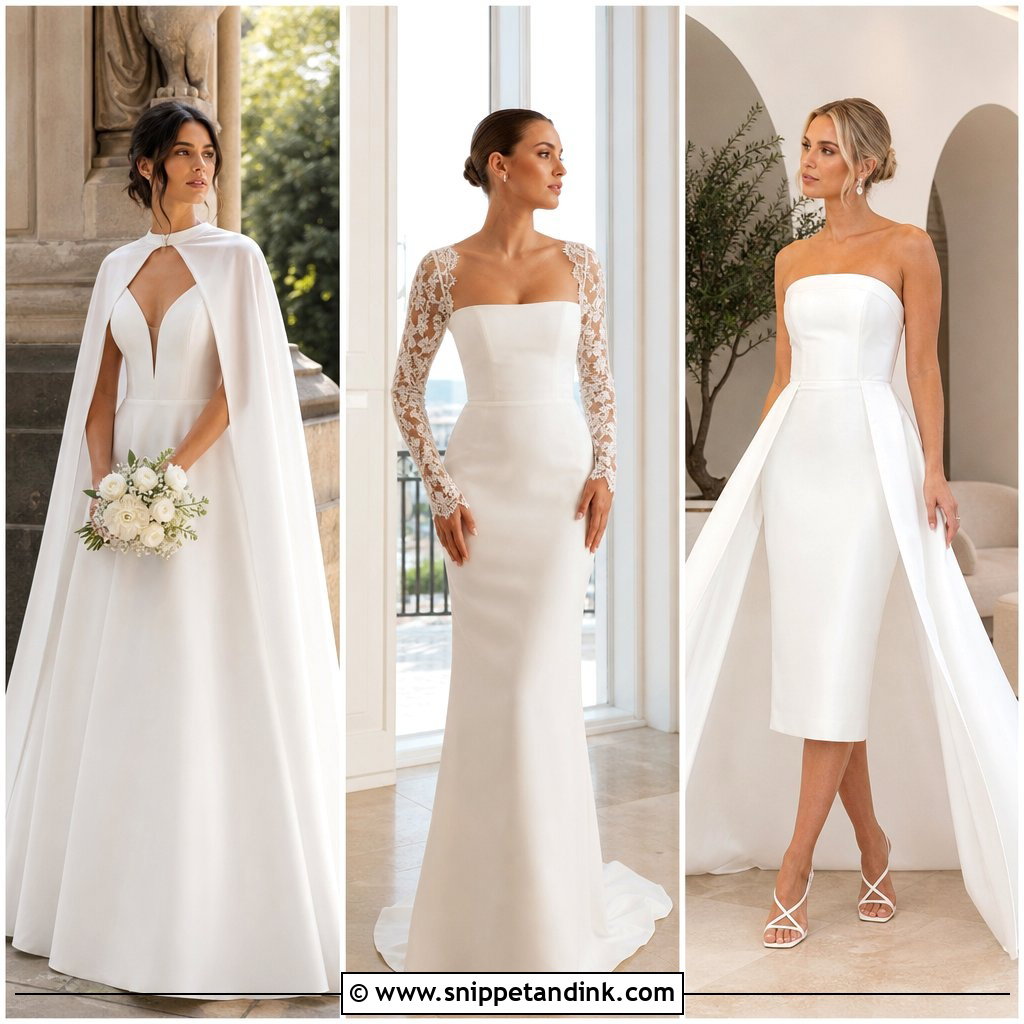
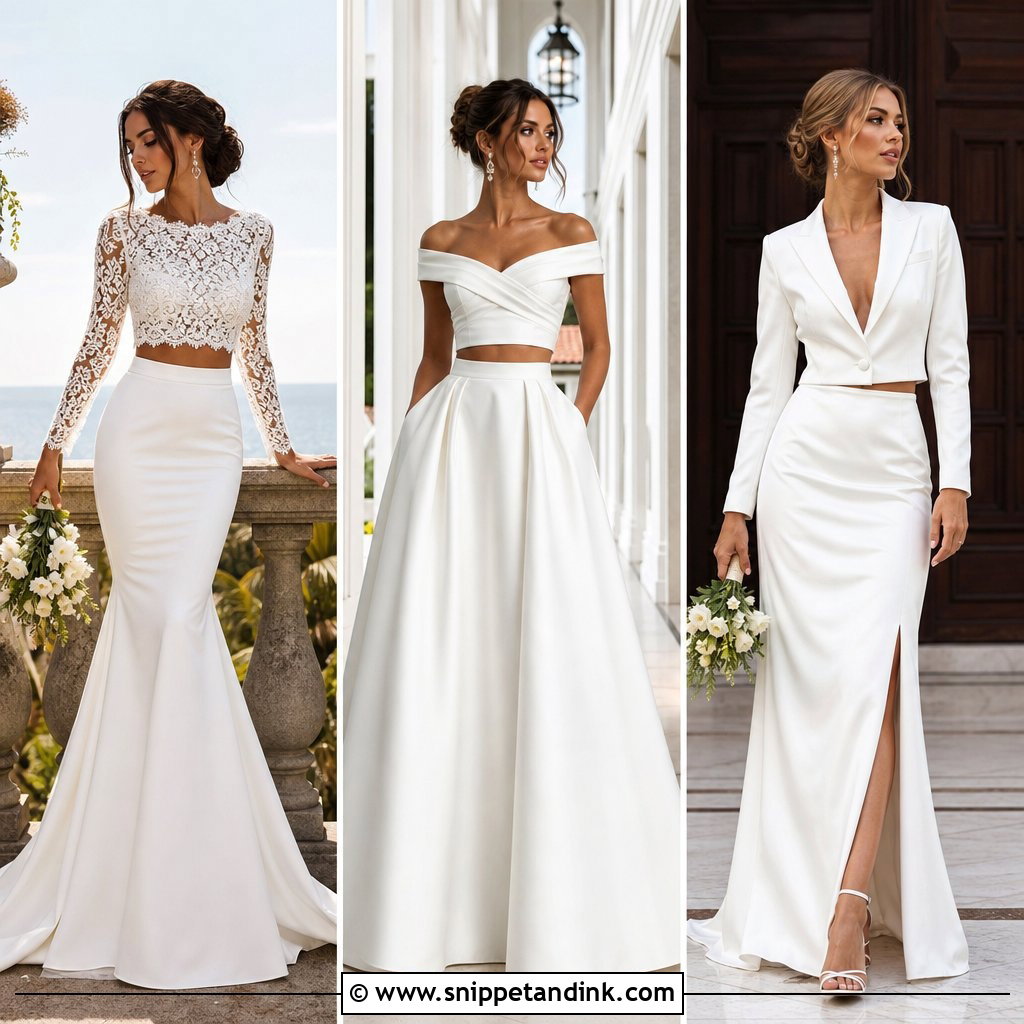
For autumn and winter weddings, a long-sleeve lace top over a high-waisted satin A-line, with a removable cathedral overskirt, gives coverage without looking heavy. Look for a lined front, sheer sleeves, covered buttons and lace that continues onto the waistband so the join disappears. Long sleeves on a separate top have one weakness: lifting your arms pulls the whole bodice upward. At the try-on I have brides raise both arms, sit, and hug me, and if the top lifts clear of the skirt we add a hidden grosgrain stay or hooks to anchor it. Pearl hairpins and a fingertip veil keep the sleeves in view.
7. Strapless Detachable 2 Piece Wedding Dress
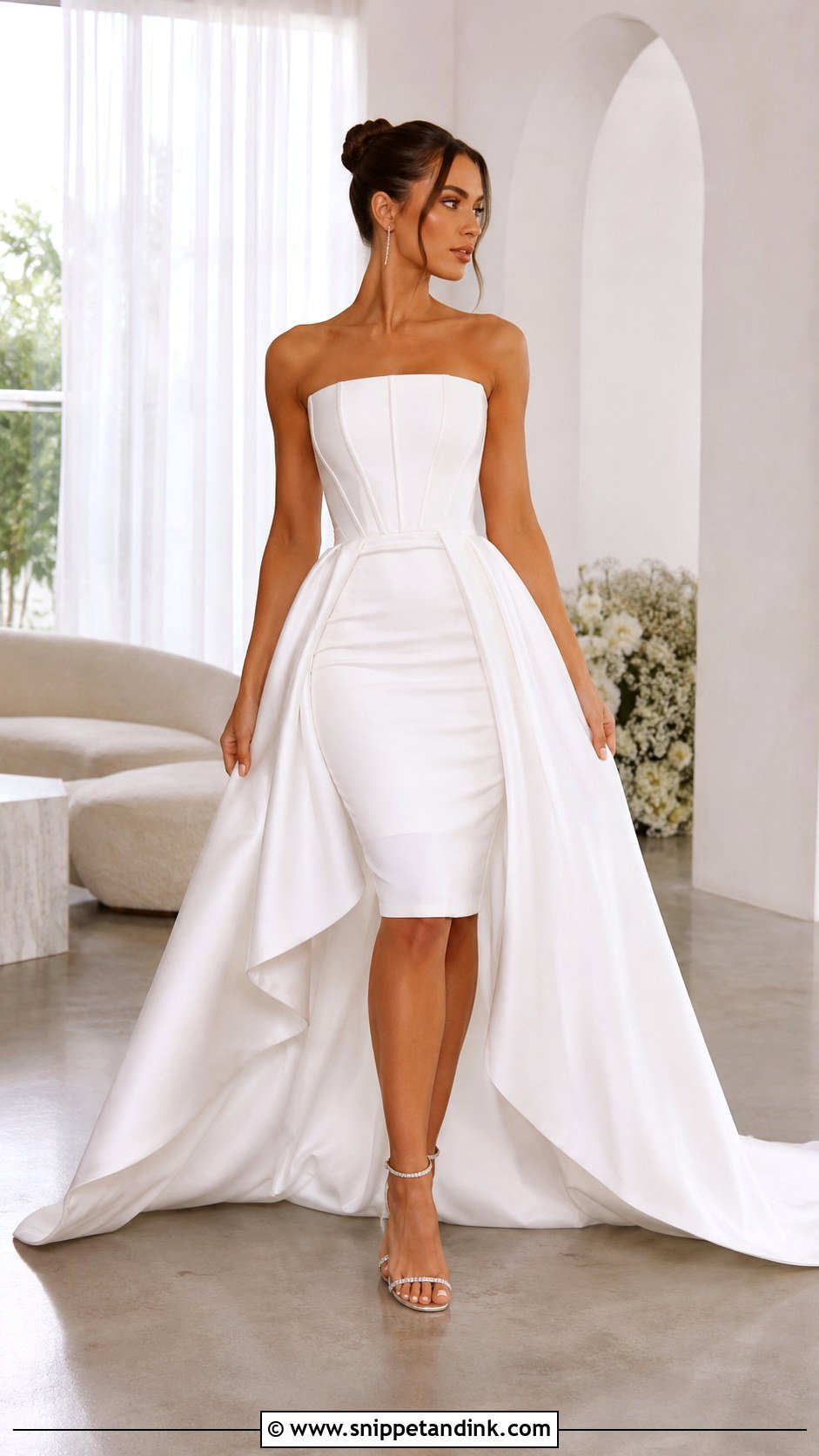
A high-low detachable skirt over a strapless corset is a modern choice that shows off the shoes. The base can be a midi or column with a straight neckline and real internal structure; the overskirt sits shorter at the front and sweeps into a train behind. I’m strict about the corset on this one. If you’re tugging it up during the ceremony, every photo of the vows will show it, so the fit has to hold without your hands. The other thing I test is where the waistband lands, since a heavy high-low skirt can press the corset’s lower edge out of shape. Crystal ankle straps and a sleek bun suit the sharp lines.
8. Pleated Detachable 2 Piece Wedding Dress
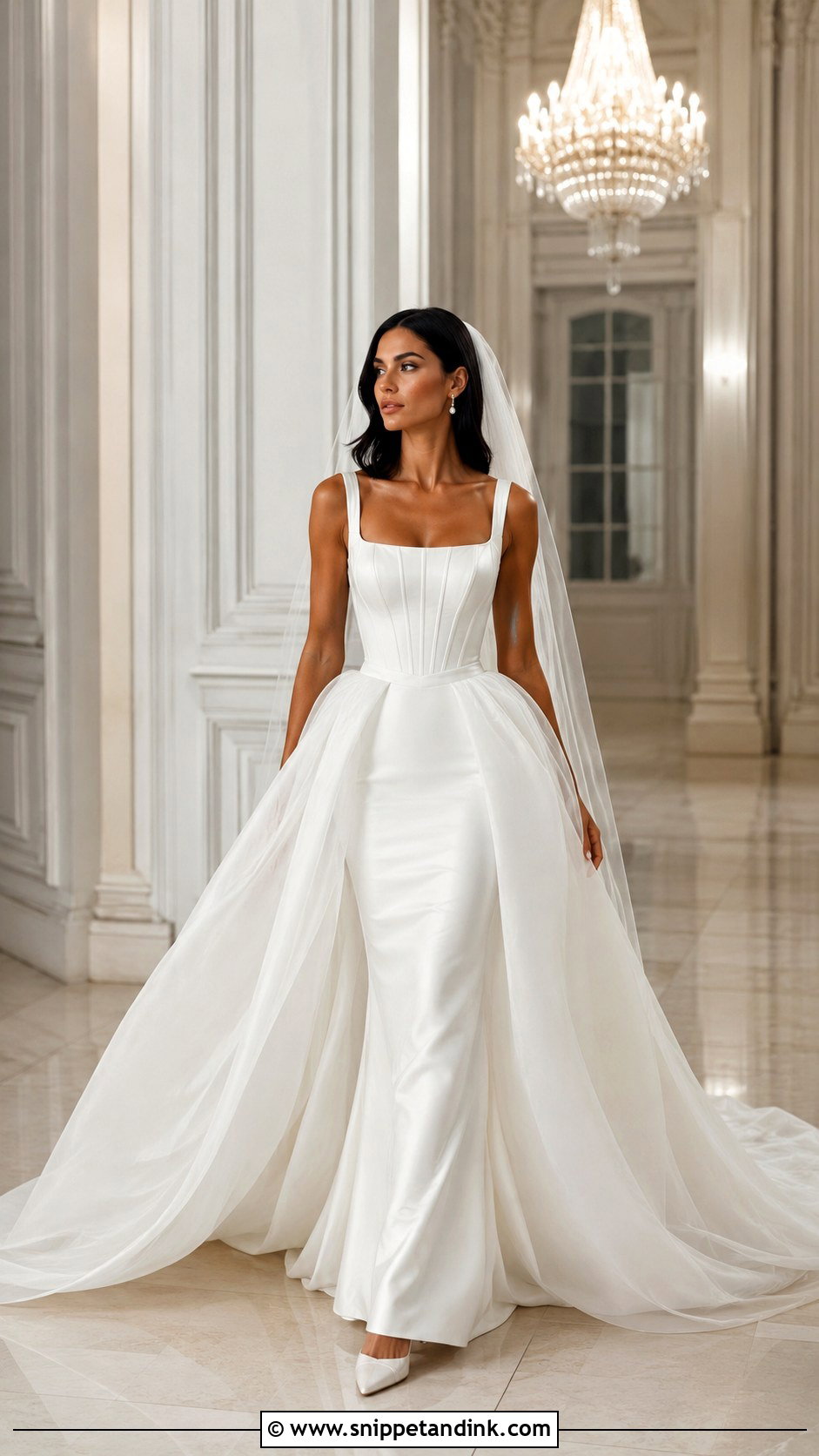
Wide pleats in organza give real architecture to the ceremony look. Pair a square-neck corset with a fitted satin skirt and add the pleated overskirt, open at the front if you want the slim base visible, with a cathedral hem for formality. Pleats bring one practical problem: bulk at the waist. I ask for a flat attachment band with concealed hooks and for the pleats to start just below that band, never gathered straight onto the corset, or the waist reads two sizes larger in profile shots. Once the overskirt is off, the satin base looks clean and current with pointed heels and pearl earrings.
9. Beaded Detachable 2 Piece Wedding Dress
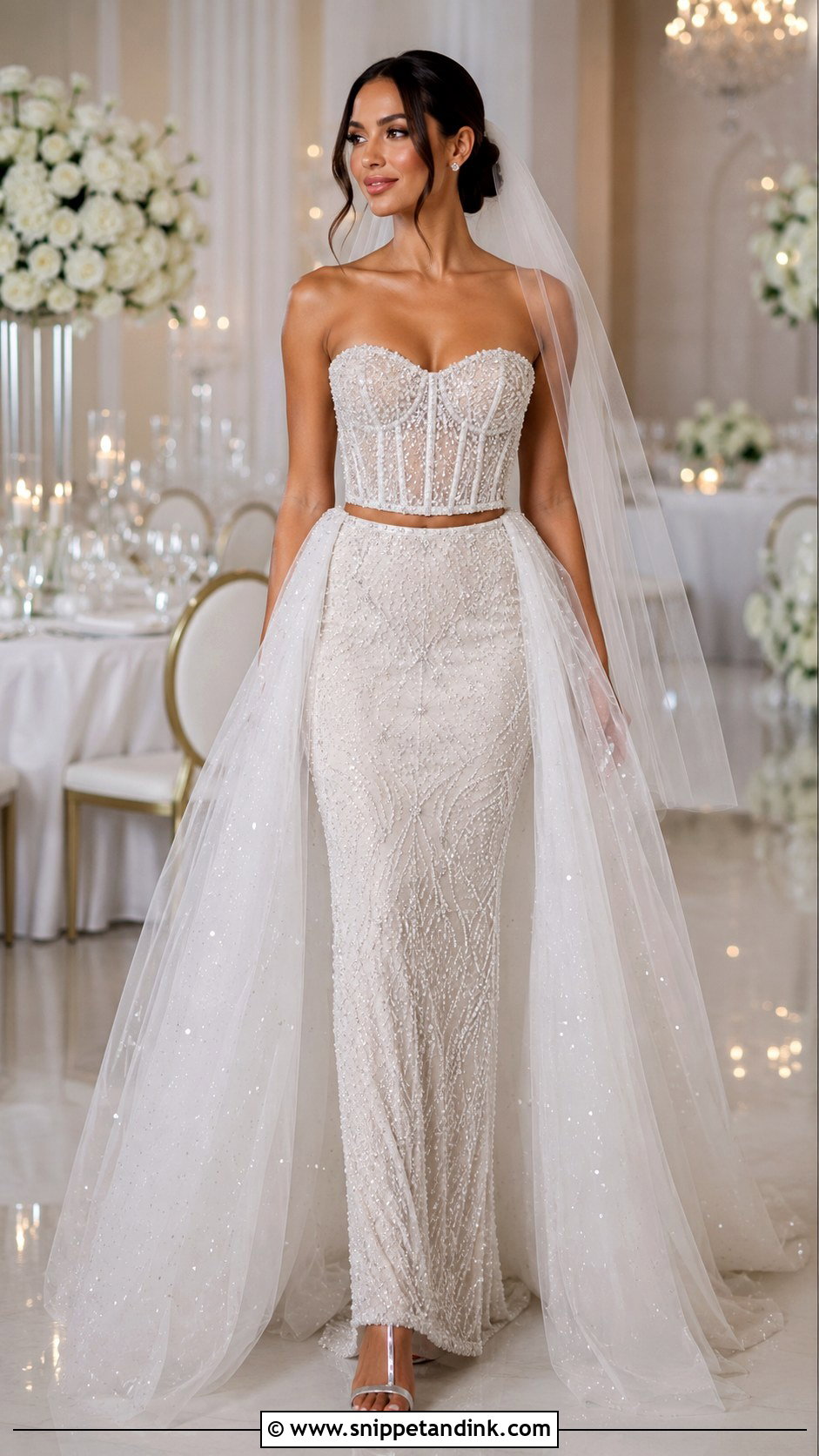
Beading on the base and a scattering of crystals on a sheer tulle overskirt lets the detail show through during the ceremony and then take over at the reception, where venue lighting makes it sparkle. Start with a beaded sheath or an embellished corset with a narrow skirt. What goes wrong here is snagging: raised beads catch tulle as the overskirt is lifted off, and one pulled thread is visible all night. I keep a smooth, unbeaded band at the inner waist and place the fasteners away from the heaviest beadwork. Simple metallic heels and crystal studs are enough; the dress has the shine covered.
10. Off Shoulder Detachable 2 Piece Wedding Dress
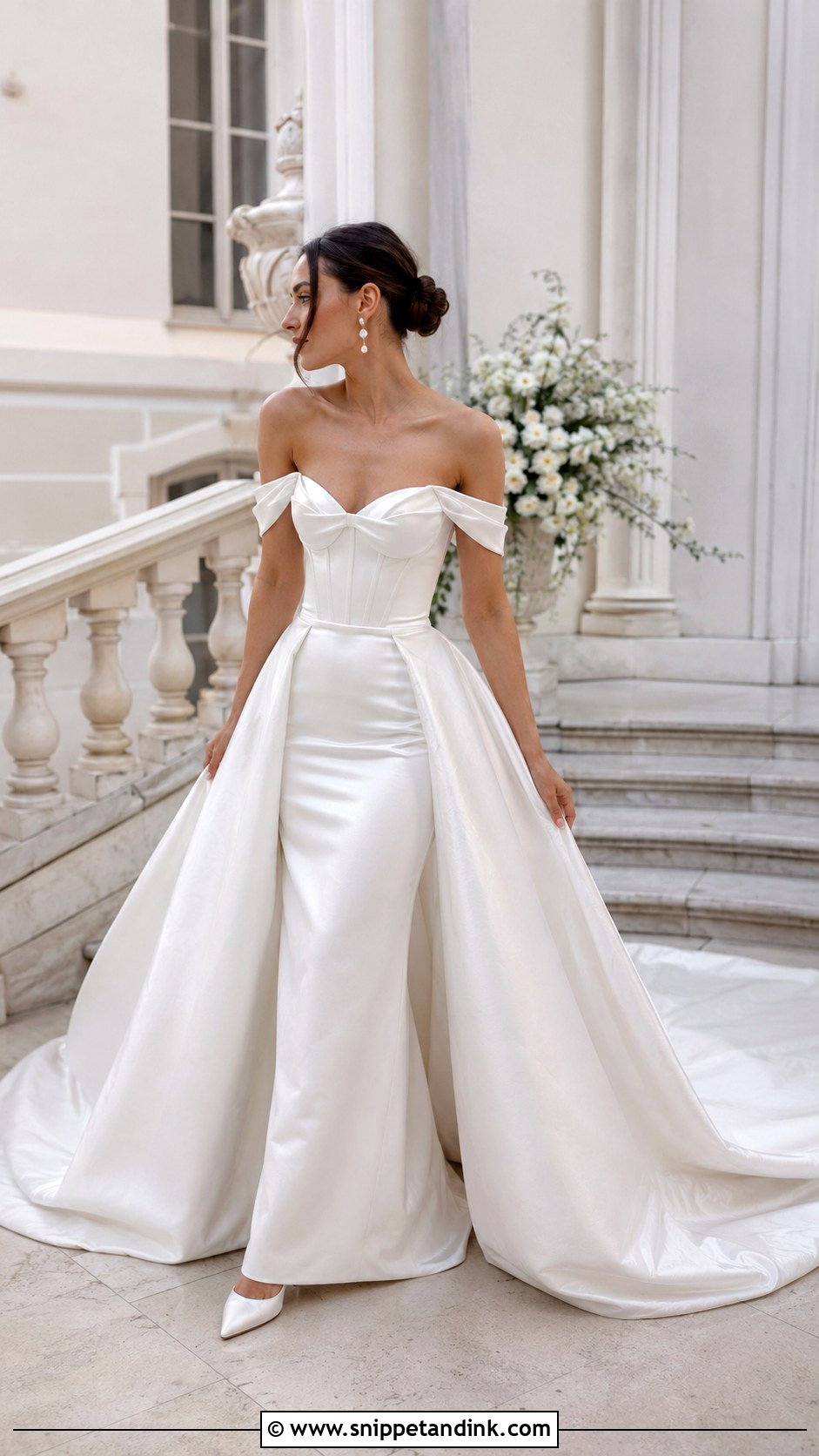
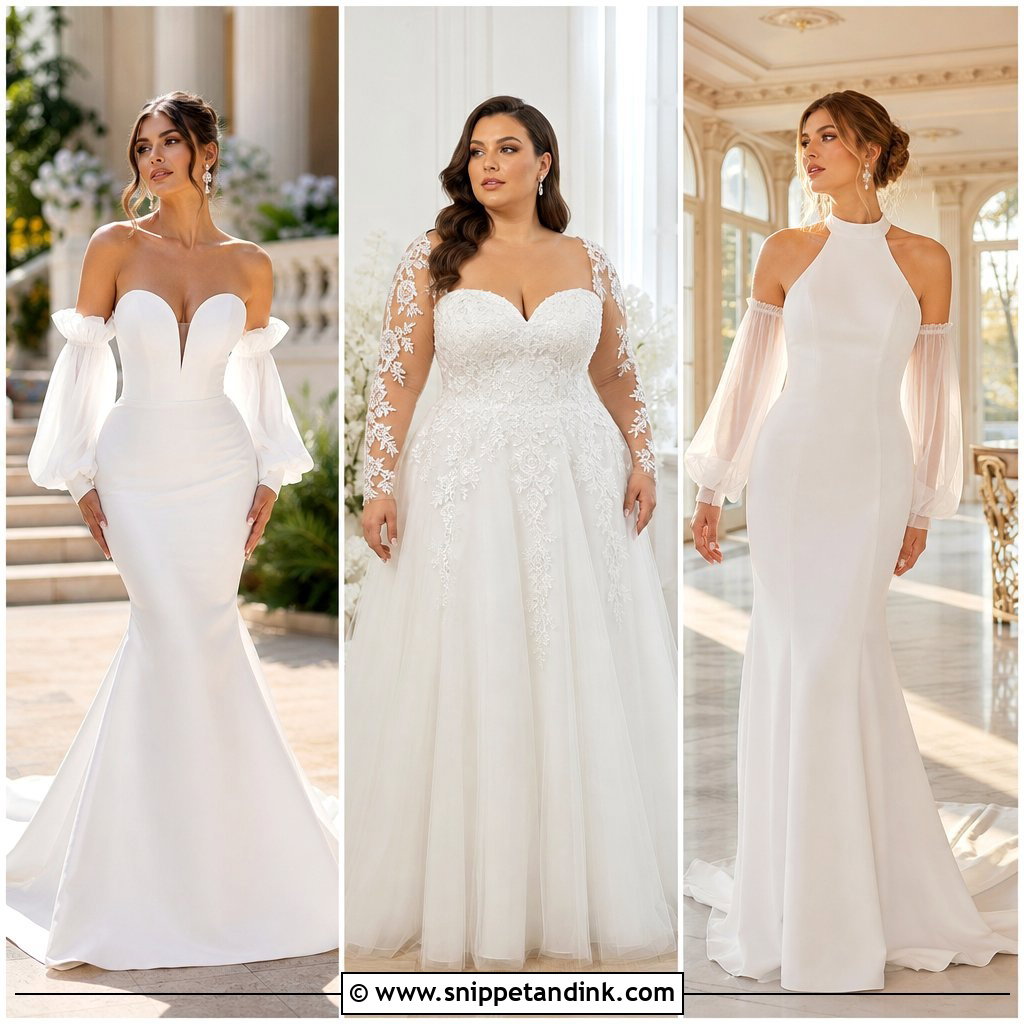
Off-shoulder bands soften a full detachable skirt and balance its width. A supportive corset with folded satin or light tulle across the arms, a fitted inner skirt and an A-line overskirt with a chapel train will manage the aisle without becoming a burden. I’d be careful if you plan to dance a lot or hug every guest, because shoulder bands can pin the arms. The corset must hold everything up on its own; the bands are decoration, and if they are carrying weight you’ll feel it within an hour. A low twisted bun keeps the neckline open.
11. Chiffon Detachable 2 Piece Wedding Dress
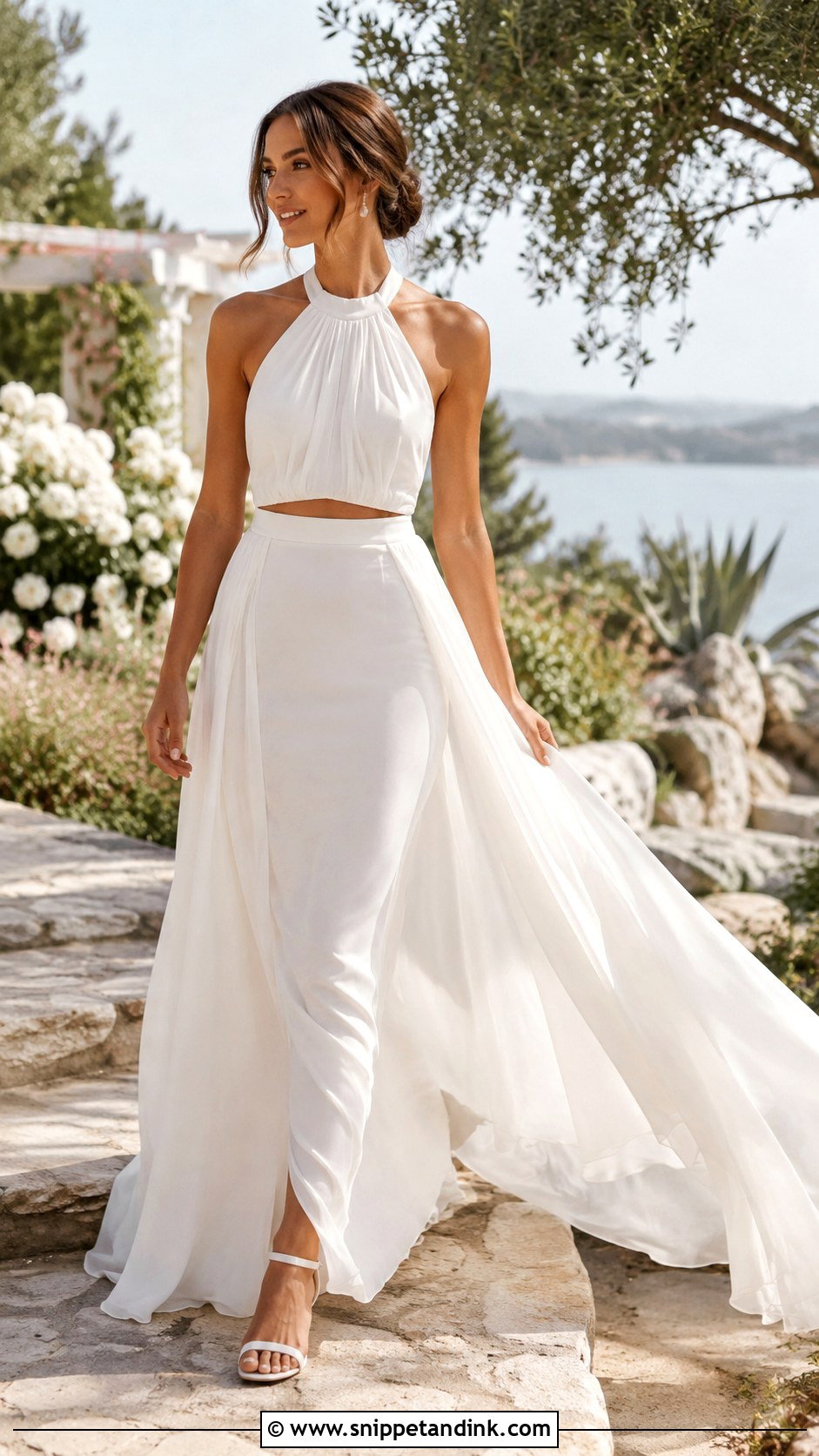
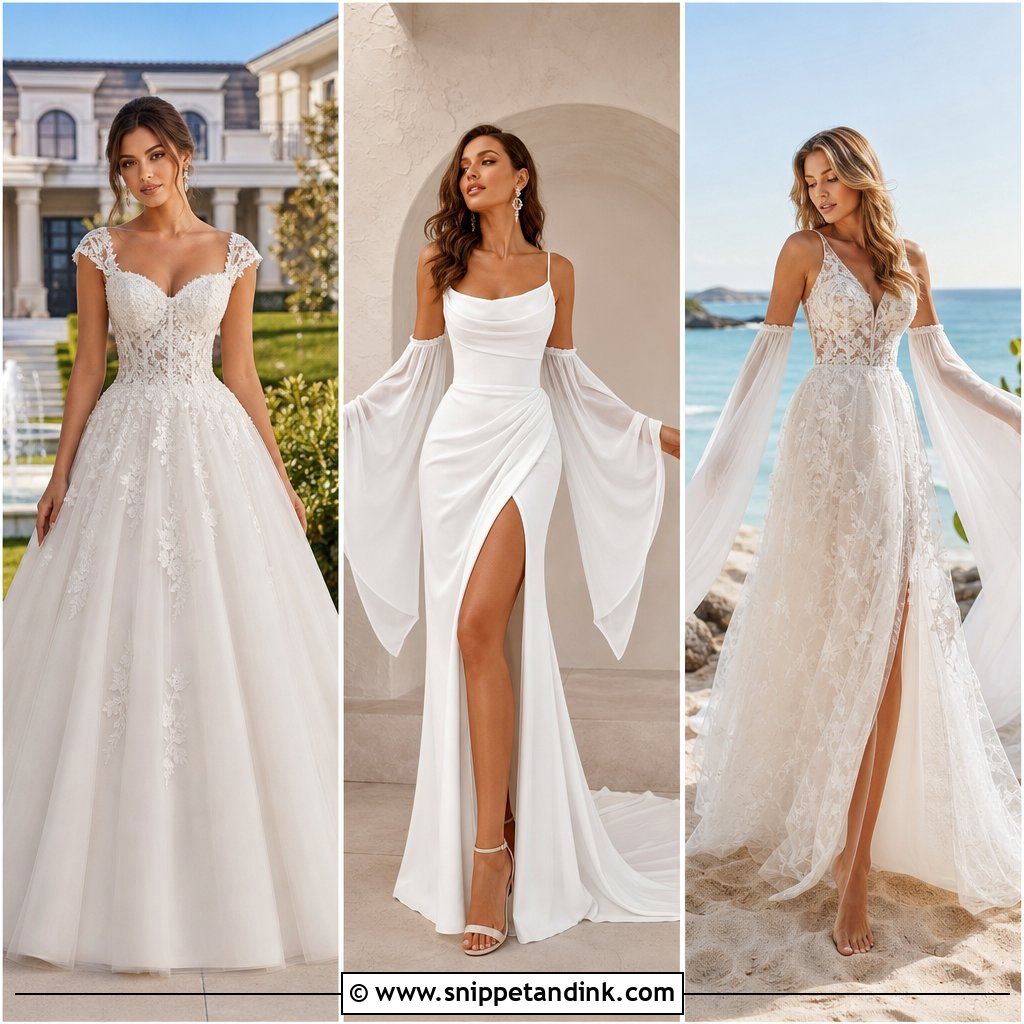
Chiffon is light enough for gardens, coastal venues and hot afternoons. A draped halter or sleeveless bodice over a narrow chiffon skirt, with a layered A-line overskirt and a subtle train, moves nicely in a breeze. The fabric also slides, so chiffon overskirts tend to creep around the waist as you walk. I fix that with secure hooks on a stable waistband and sometimes a lightly weighted hem so the layers hang evenly. Check the layers in daylight too: one layer too few and the base shows through more than you intended. Block-heel sandals stop you sinking into the lawn.
12. Pearl Detachable 2 Piece Wedding Dress
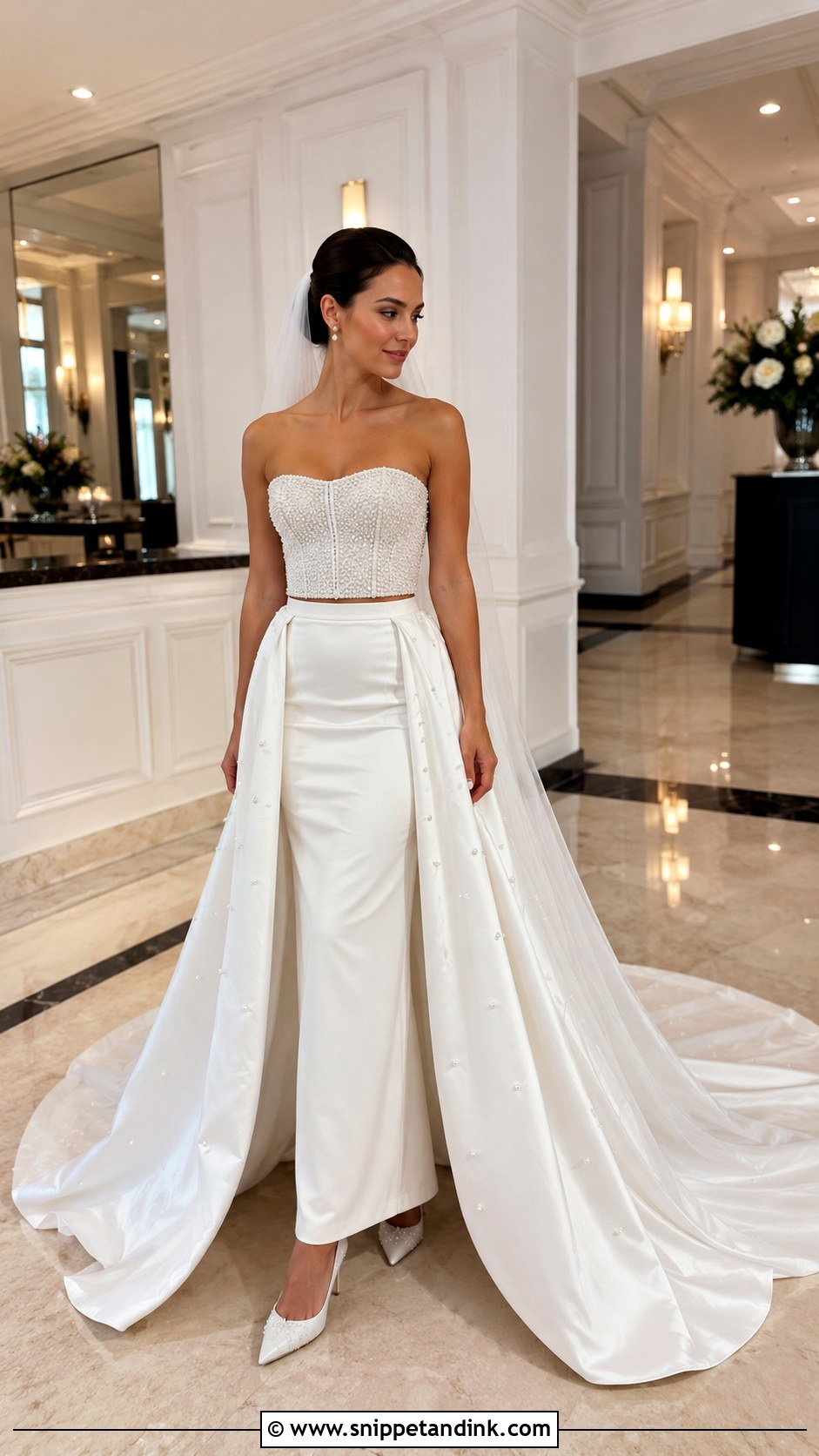
Evenly spaced seed pearls on a structured corset, with a smooth fitted satin skirt and an overskirt carrying a few pearls near the waist, give a classic finish without the two pieces competing. Restraint matters; pearls covering the whole overskirt make the base look plain once it’s removed. Raised pearls catch fine fabric, so at fittings I run the overskirt on and off several times and look for pulls. The fastening should sit under a smooth decorative band that protects the corset and finishes the waist. Pearl studs and a plain veil are all you need.
13. Floral Detachable 2 Piece Wedding Dress
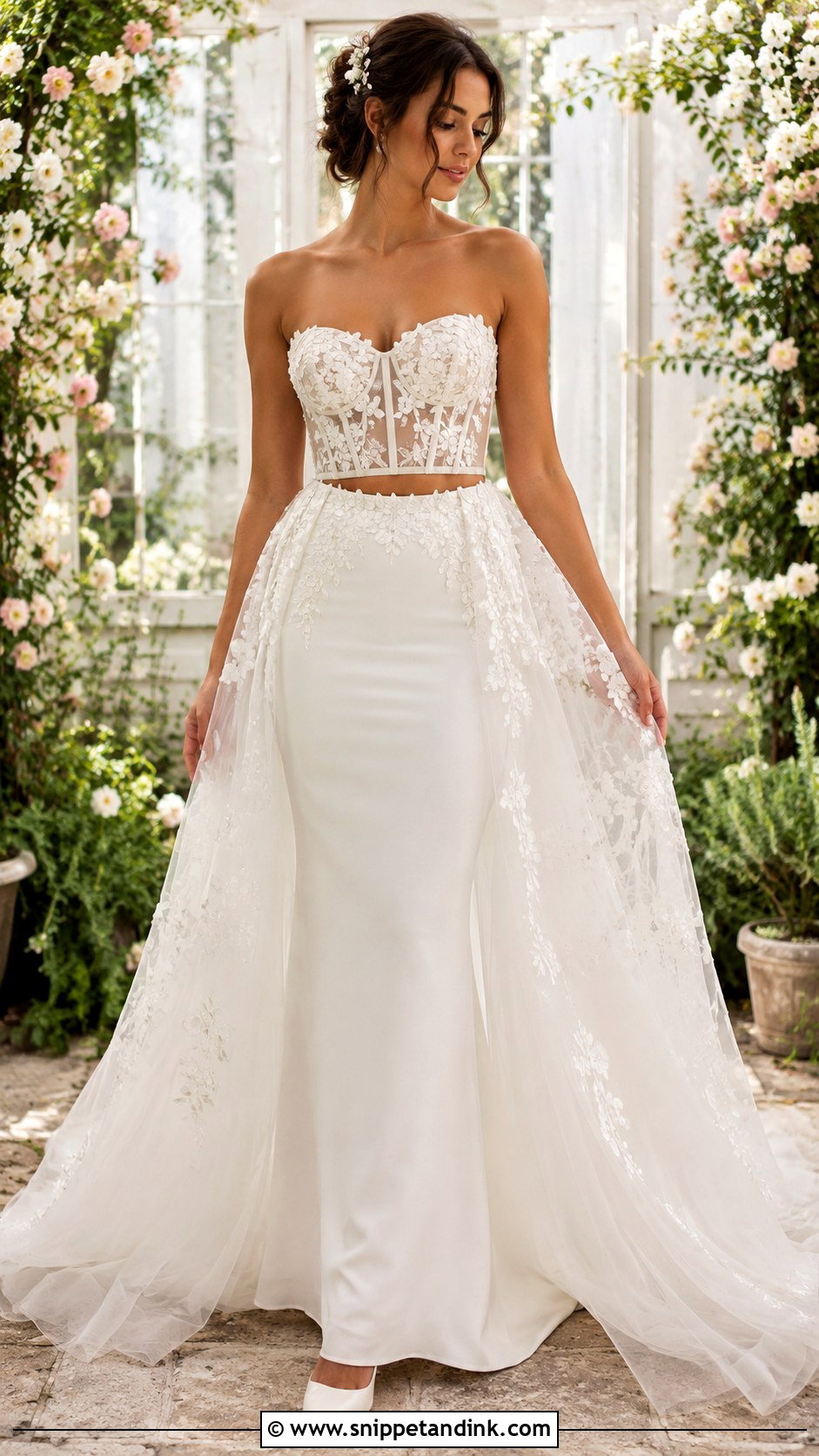
Floral appliqués that seem to drift down from the bodice onto a layered tulle overskirt give the most romantic version of this idea. Keep the flowers dense around the waist and lighter toward the hem so the eye travels down. The join is where I spend fitting time: the seamstress needs to place appliqués across the attachment line so the flowers continue over it rather than stopping at a visible edge. Underneath, a narrow lined skirt keeps the reception silhouette clean while the embroidered top stays the focus. Spring and garden ceremonies suit it well.
14. Minimalist Detachable 2 Piece Wedding Dress
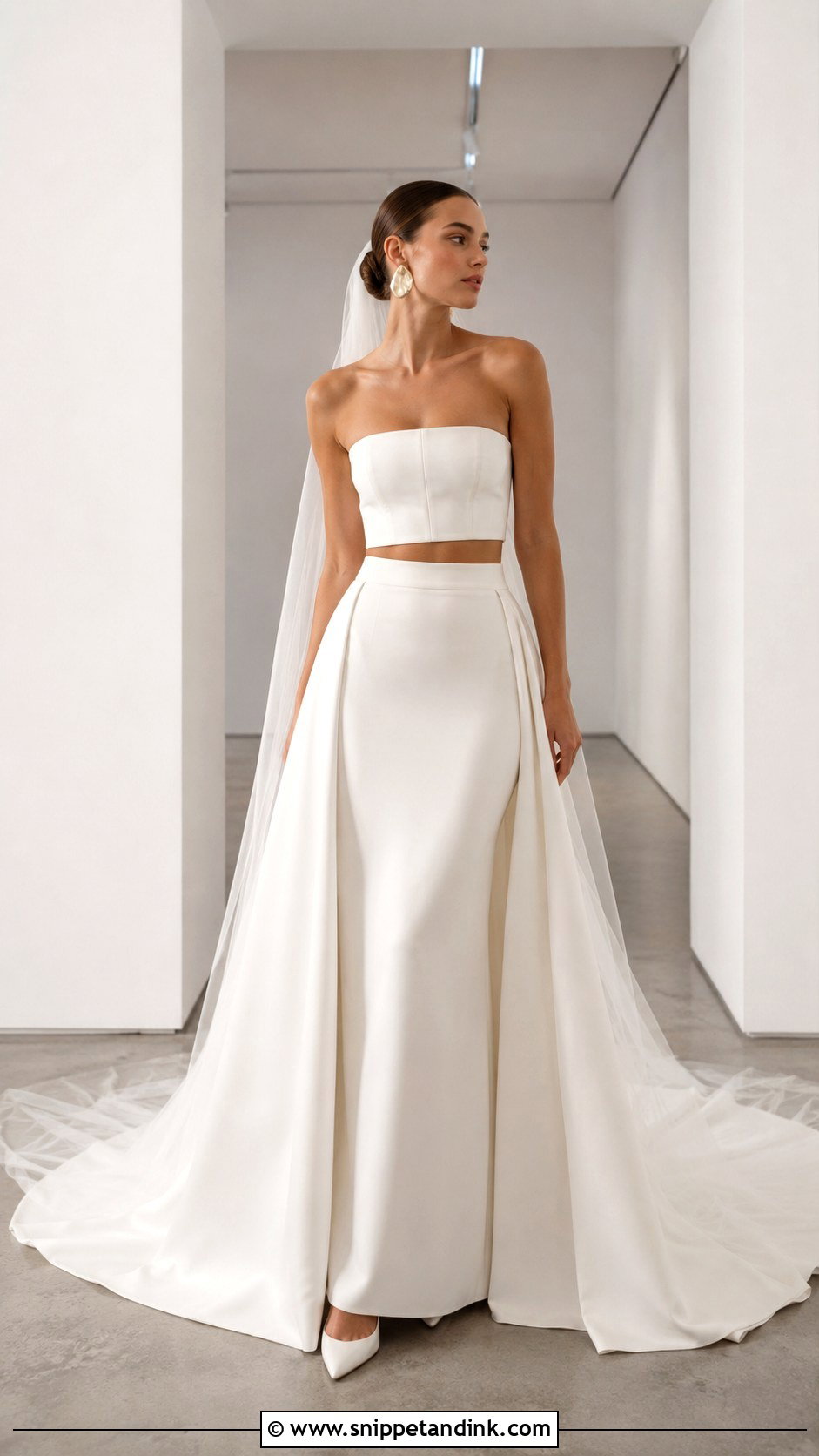
Minimal dresses hide nothing, so fit and fabric quality carry the whole look. A straight-neck corset with clean seams over a high-waisted column in matte crepe or silk satin, plus a plain overskirt with deep pleats or an open front, is all there is. The trap I see most often is colour. Two ivories from different mills can look identical in the shop and clearly different in daylight photos, and with no lace or beading to distract, the mismatch shows. I hold swatches of both pieces together by a window before ordering. A plain cathedral veil and a smooth low bun keep the lines uninterrupted.
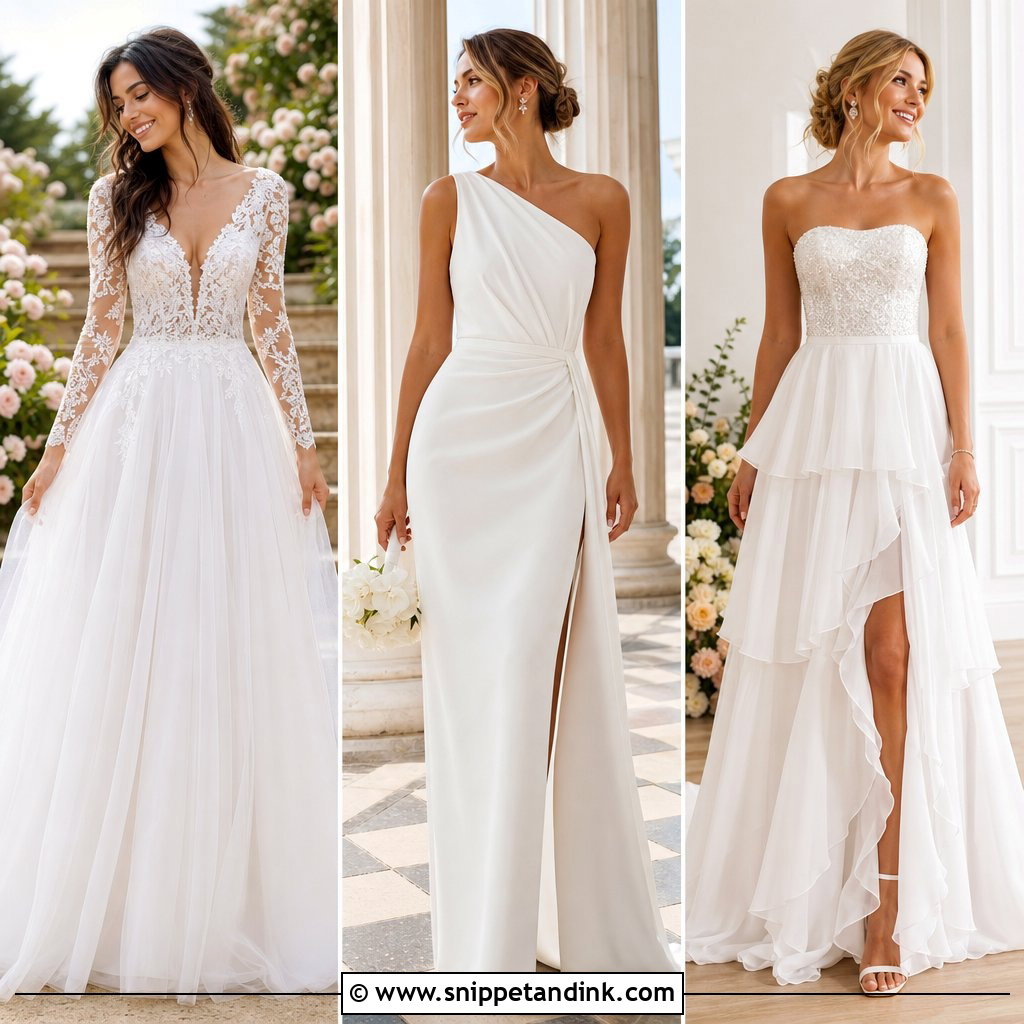

15. Jumpsuit Detachable 2 Piece Wedding Dress
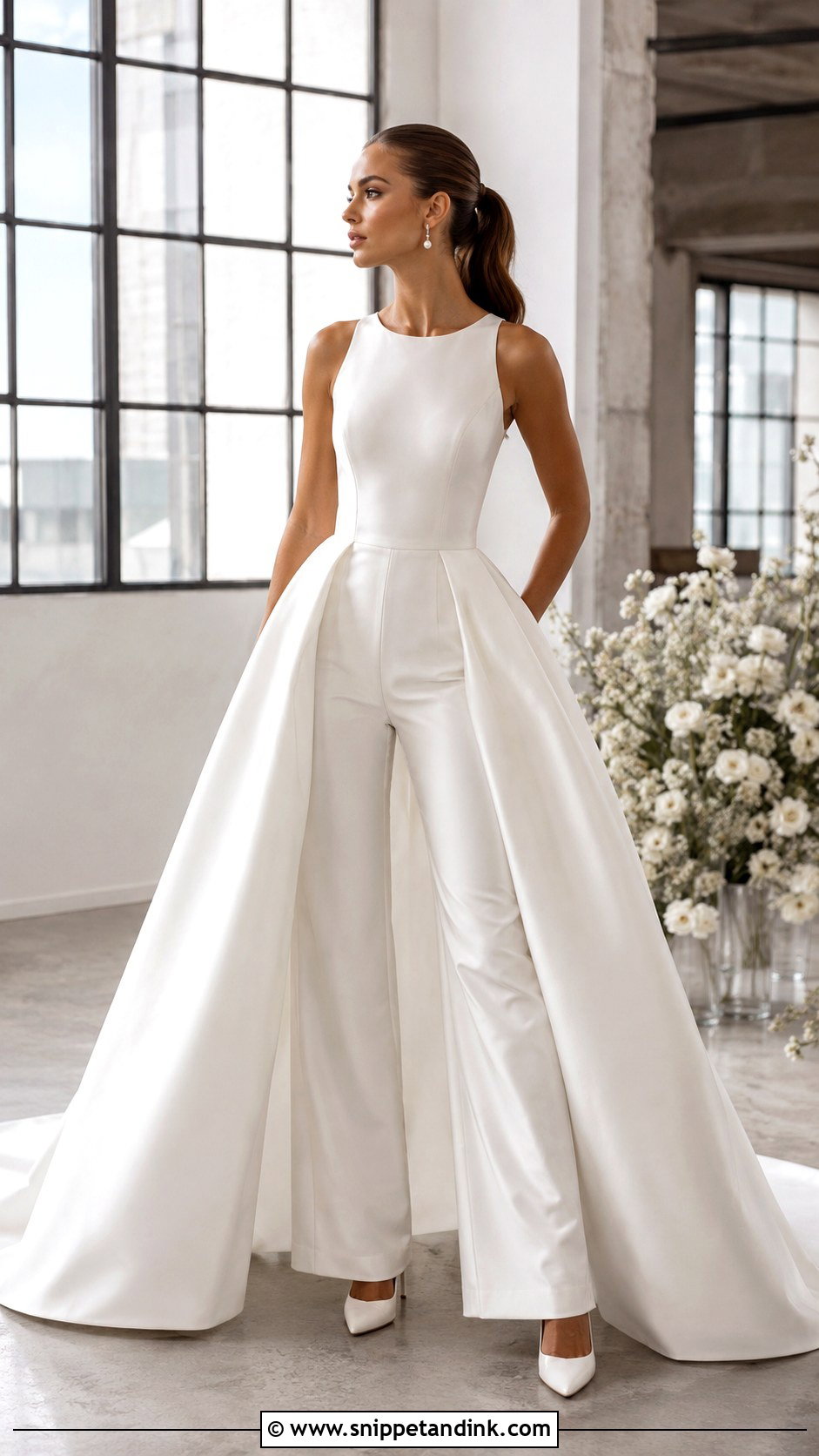
A bridal jumpsuit with a removable overskirt looks like a ball gown during the ceremony and turns into tailored wide-leg trousers after the formal portraits. The overskirt should close fully at the front so nobody sees trousers until you choose to show them. Hem length is the detail I fuss over. The trouser has to skim the floor in your reception shoes without dragging, and that means hemming with the exact shoes on, not a similar pair. Ask for a discreet attachment with no loops left showing at the waist. Modern hotels, lofts and courthouse weddings suit this one, with a sleek ponytail and pointed heels.
16. Tea Length Detachable 2 Piece Wedding Dress
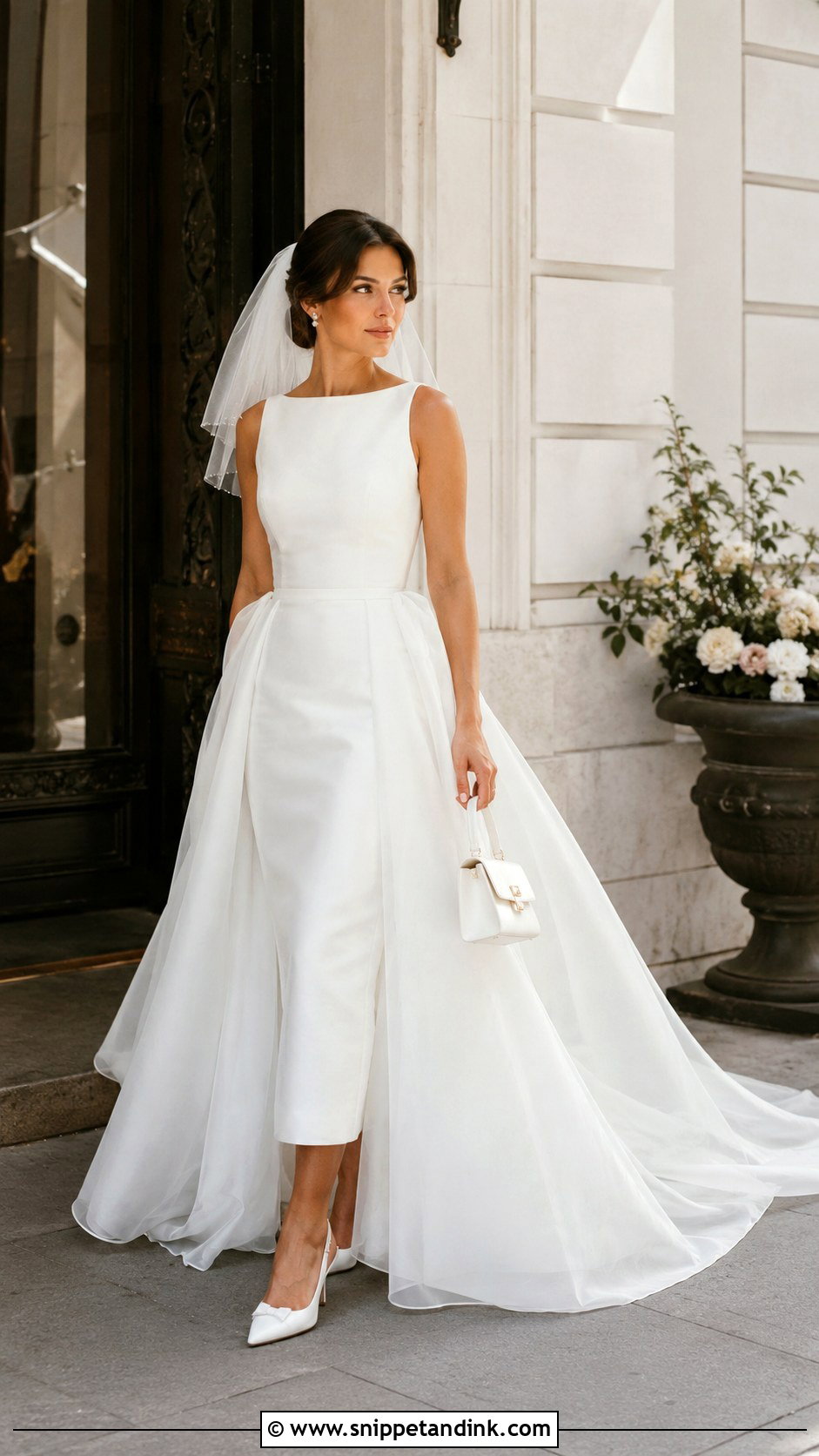
A tea-length base, ending somewhere between knee and ankle, has a mid-century feel that a full overskirt turns formal for the aisle. Satin, organza or layered tulle all work for the chapel-length outer skirt, provided it covers the shorter hem completely from the front and both sides. When it comes off, slingback heels and a short veil come into their own. I’d point petite brides to the lower end of the tea-length range, since a hem that lands mid-calf can cut the leg at its widest point. A structured mini bag works well for later photos.
17. Asymmetric Detachable 2 Piece Wedding Dress
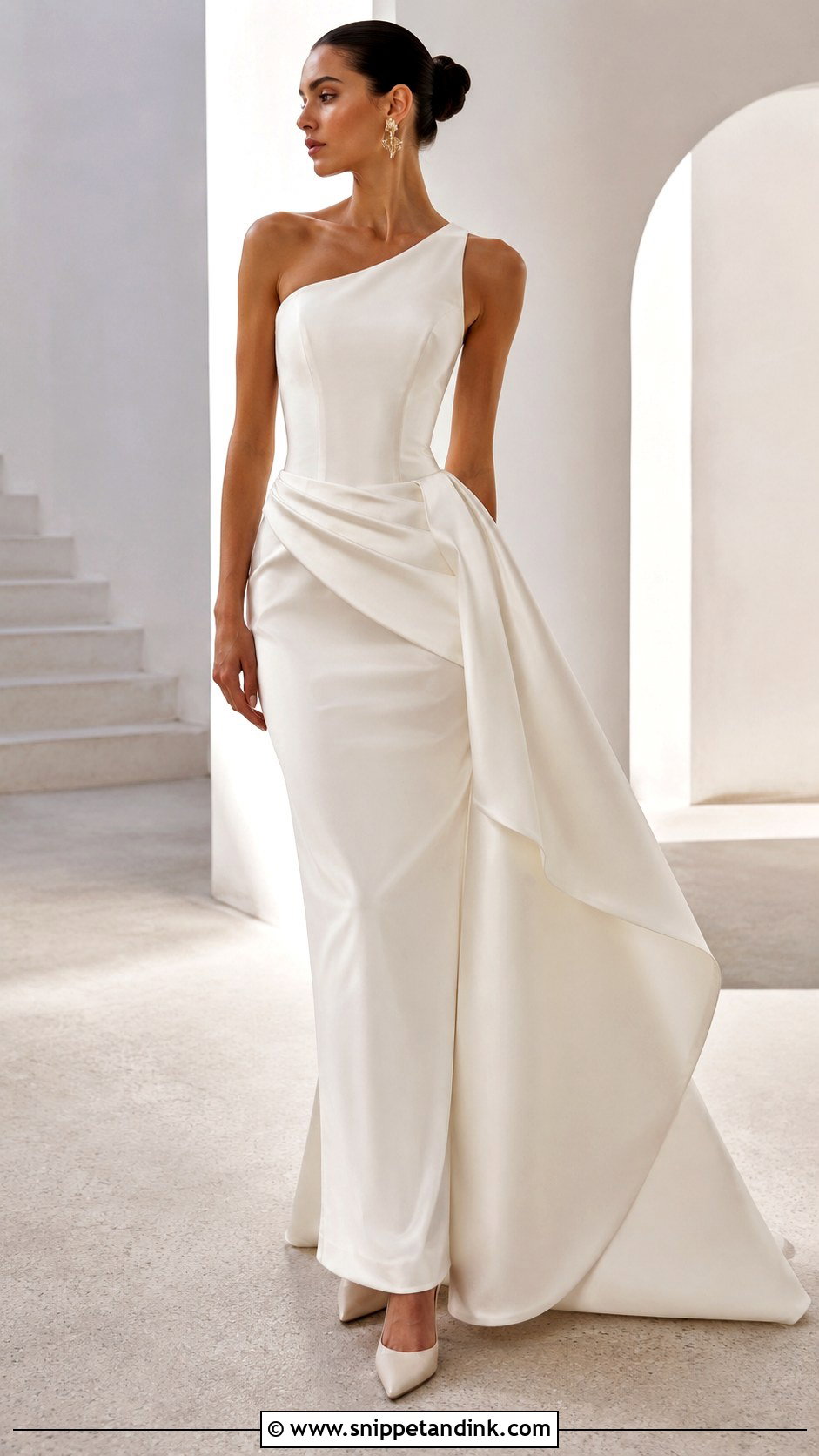
Asymmetry gives this idea a fashion edge: a one-shoulder or draped top over a fitted column, with a sculptural overskirt opening at the side or draped on the diagonal to echo the neckline. Use the same fabric on both layers, mikado or structured organza for a crisp finish. One-shoulder bodices want to tip toward the bare side as you move, so I check that the top stays level when the bride lifts the strap-side arm and when she bends. Keep the waistband plain so the neckline leads. A single statement earring on the bare side is enough.
18. Modest Detachable 2 Piece Wedding Dress
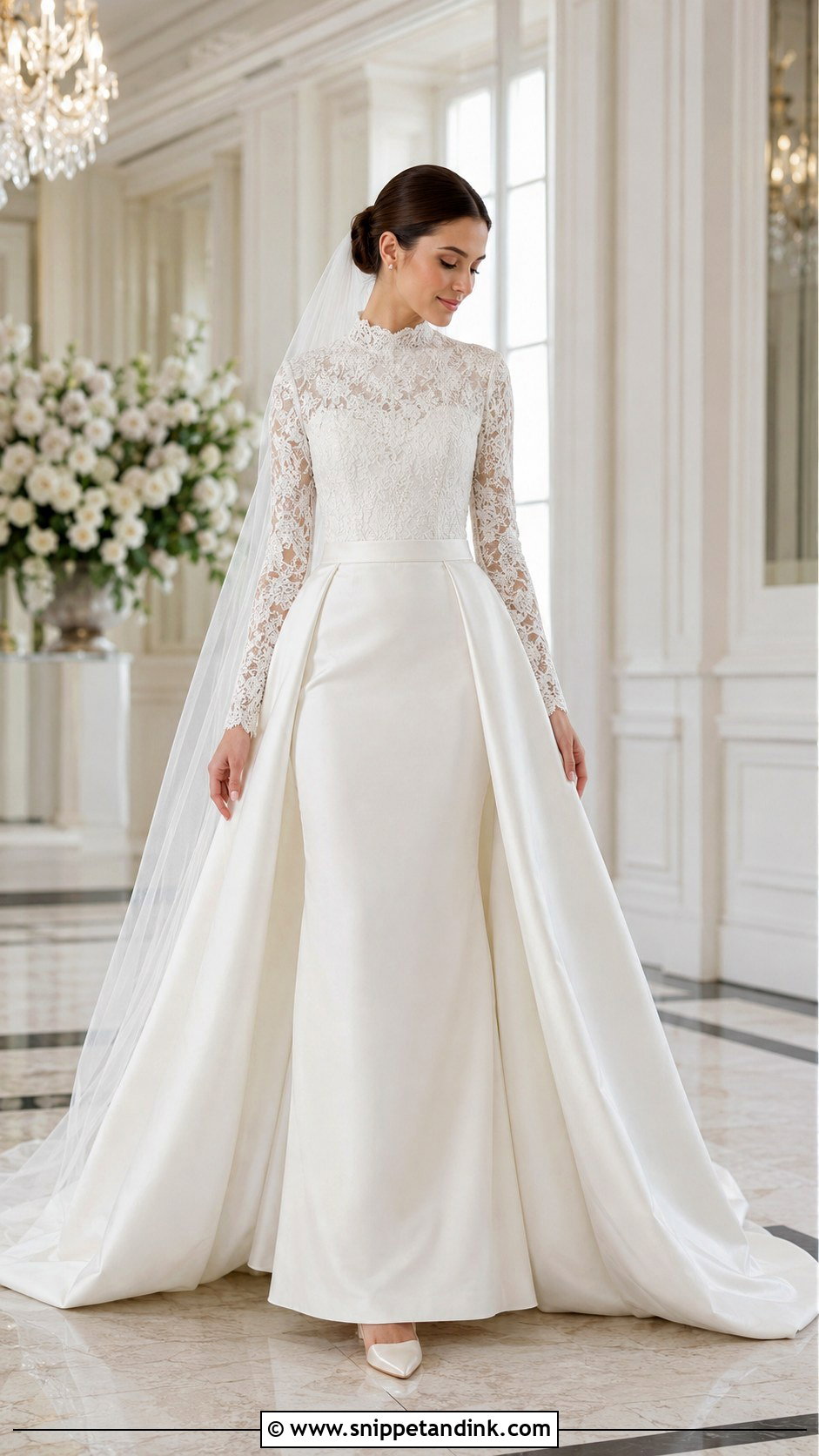
Coverage doesn’t have to mean one fixed silhouette. A lined lace or crepe bodice with long sleeves, a high neck and covered buttons, over a slim A-line skirt, can carry a fuller satin or tulle overskirt for the ceremony and still look complete without it. A matching waistband ties the pieces together. High necklines rub if they sit even slightly tight, so I check the neck with the bride turning her head fully both ways. If the wedding is in warm weather, ask for a breathable lining such as cotton or silk, since long sleeves and a high neck in polyester lining get hot quickly.
19. Plus Size Detachable 2 Piece Wedding Dress
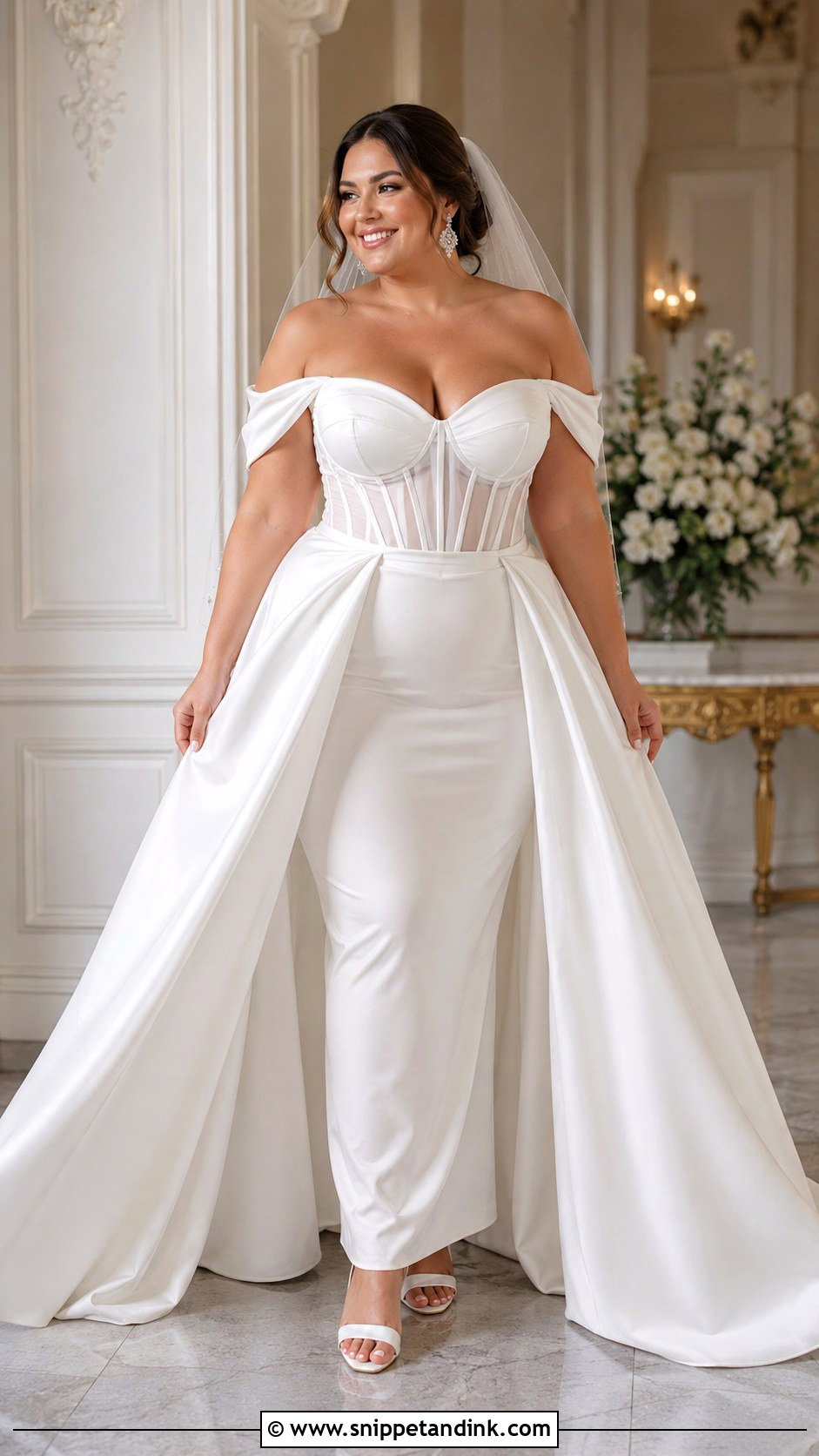
For curvier brides, a detachable gown can define the waist and give proper support while leaving room to move. Start with a boned corset with wider straps or a secure off-shoulder neckline, a fitted crepe or satin skirt, and an A-line overskirt that falls cleanly without heavy gathers at the waist. An open front keeps the outer layer from feeling bulky. I tailor this to the bride’s own proportions rather than using fabric to hide them, and I ask for strong interior fastenings because an overskirt pulls harder on a fuller hip. Movement tests at every fitting are not optional. Block heels help over a long day.
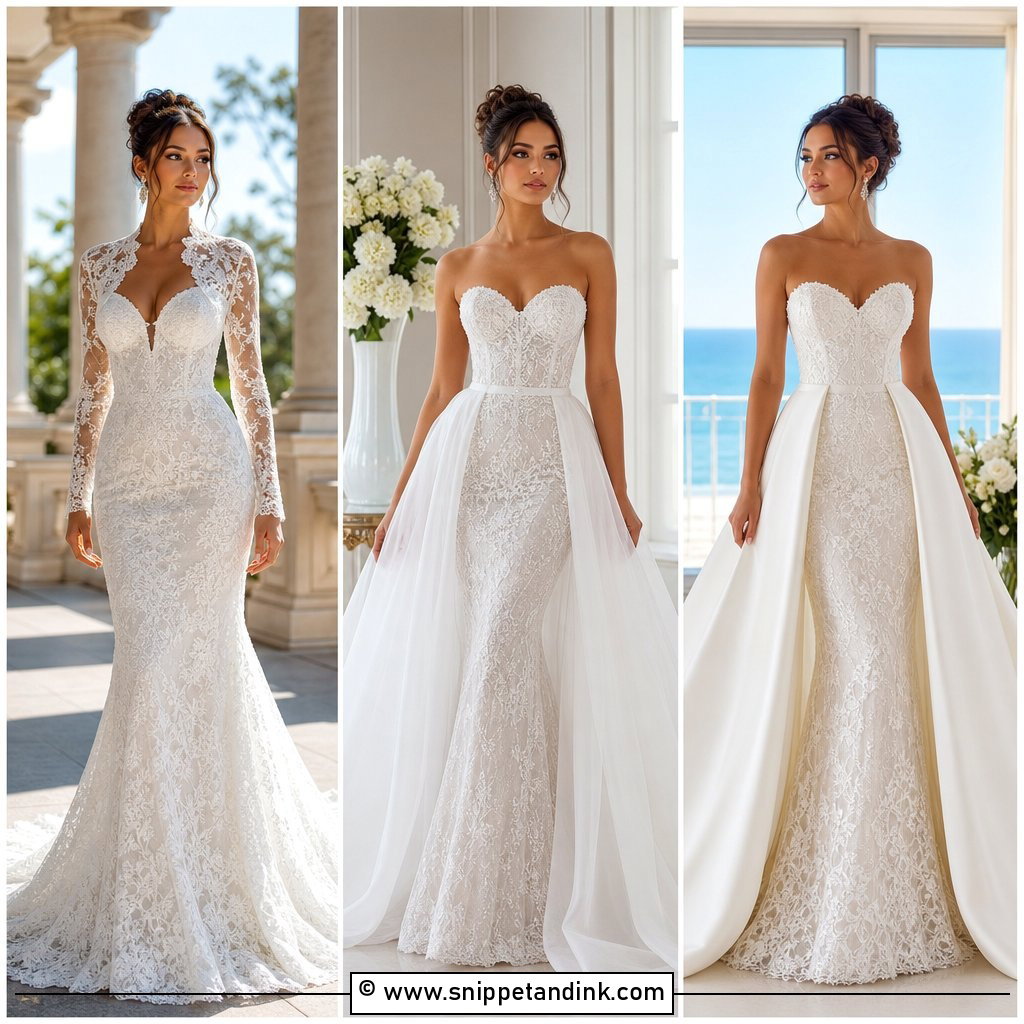
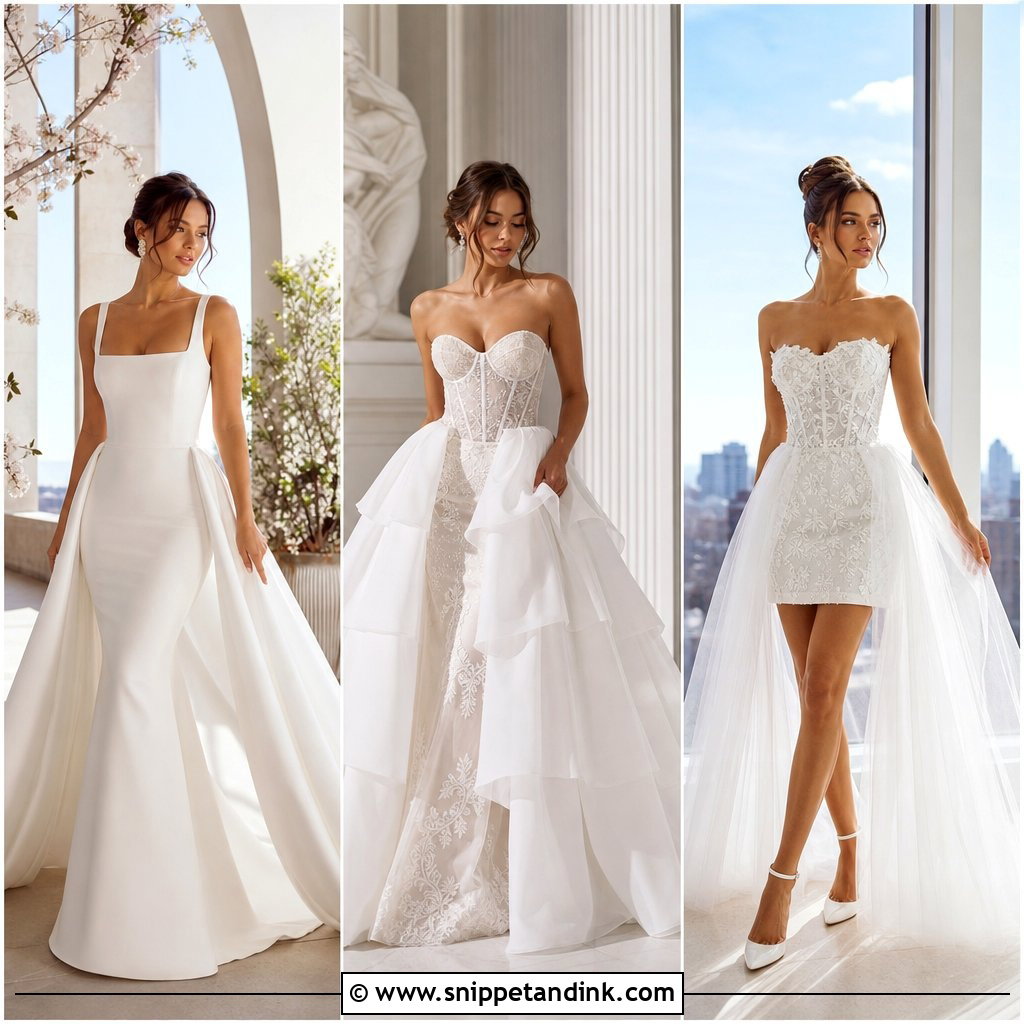
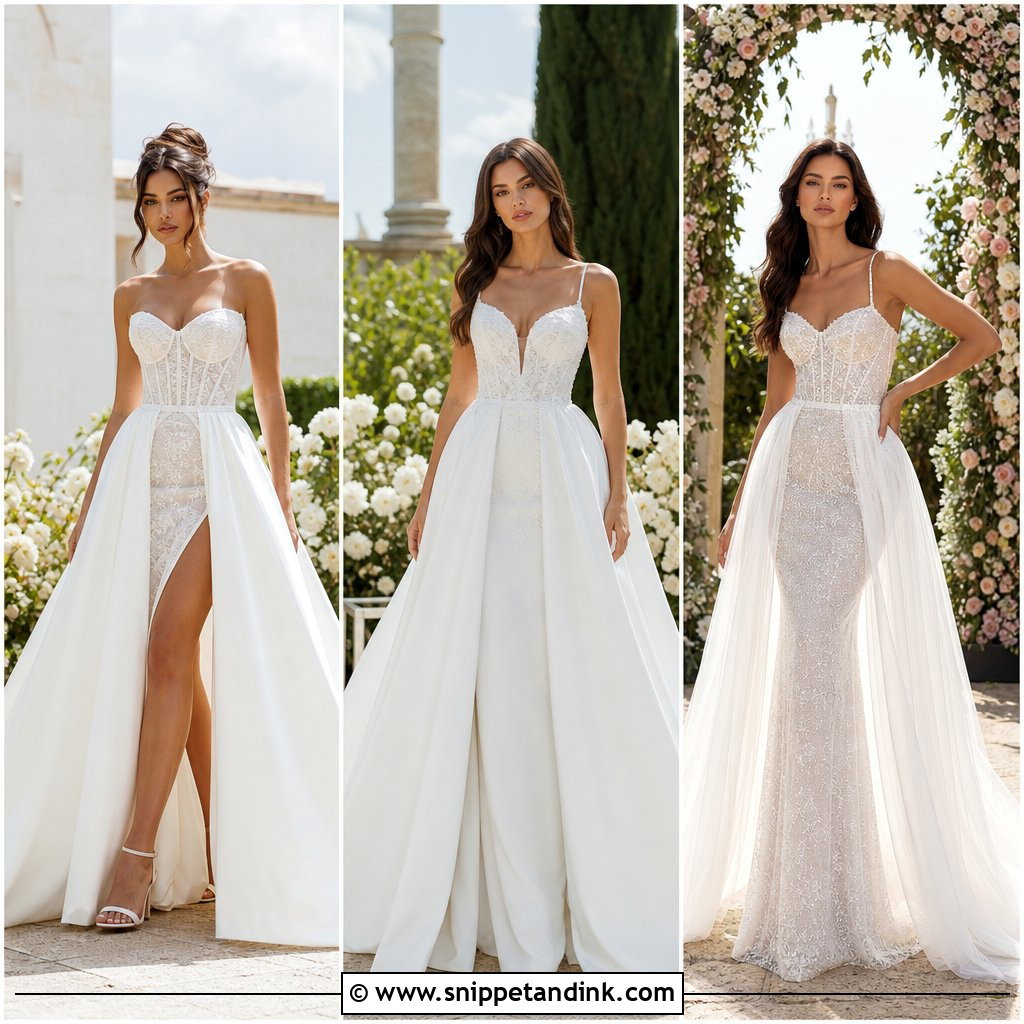
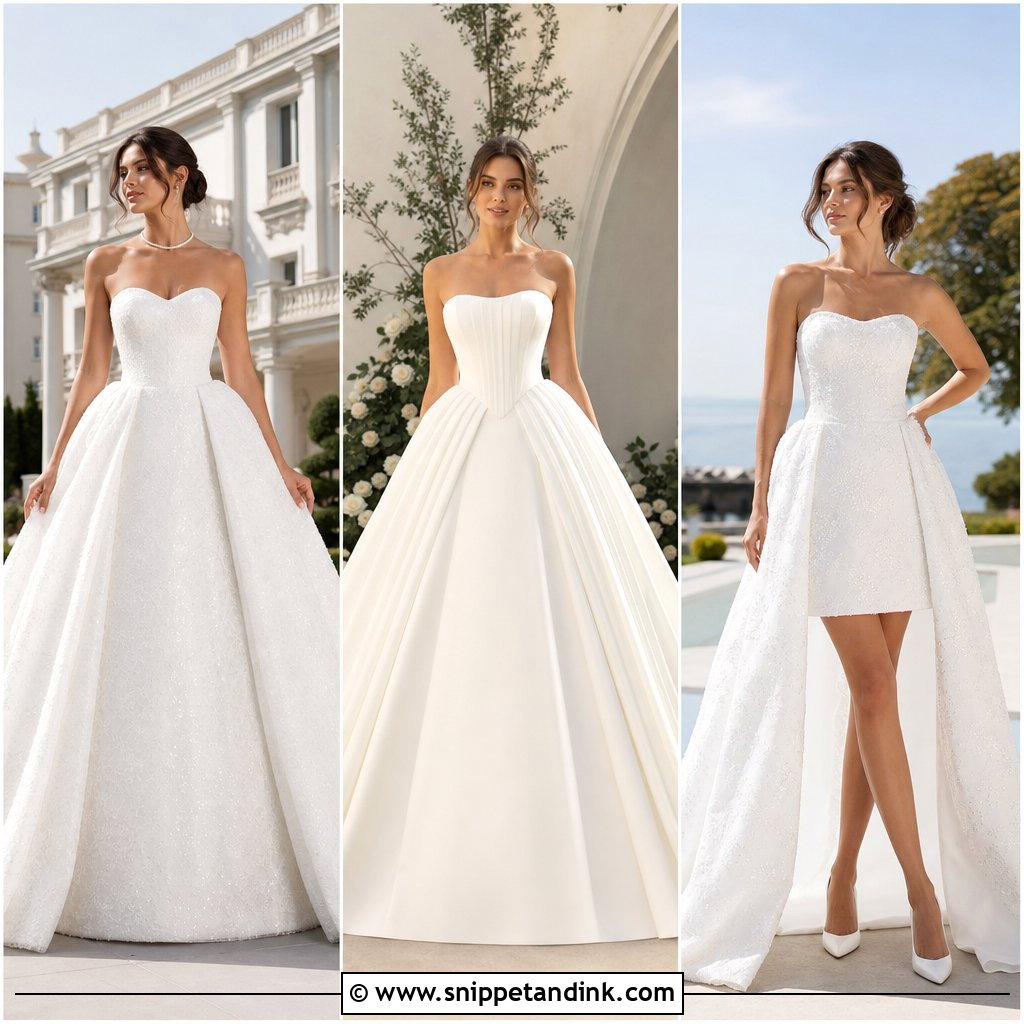
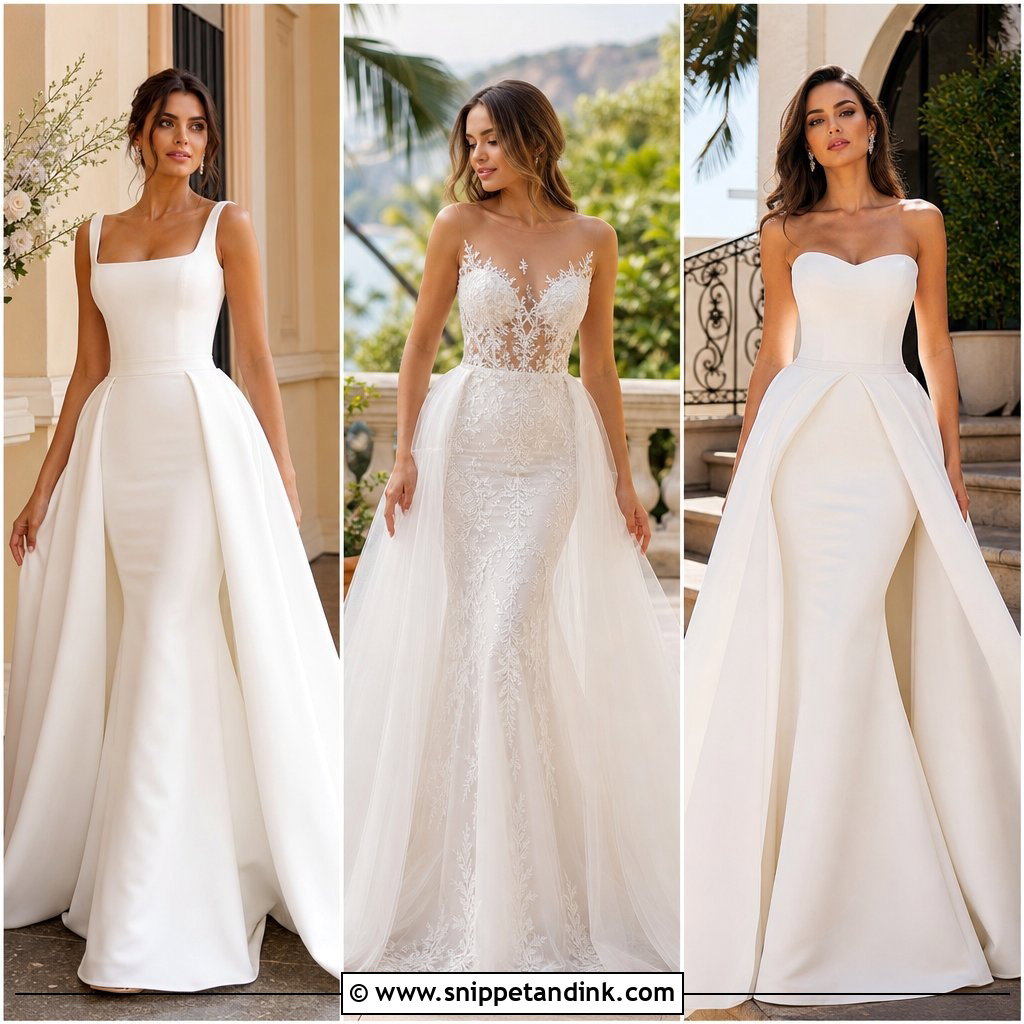
20. Beach Detachable 2 Piece Wedding Dress
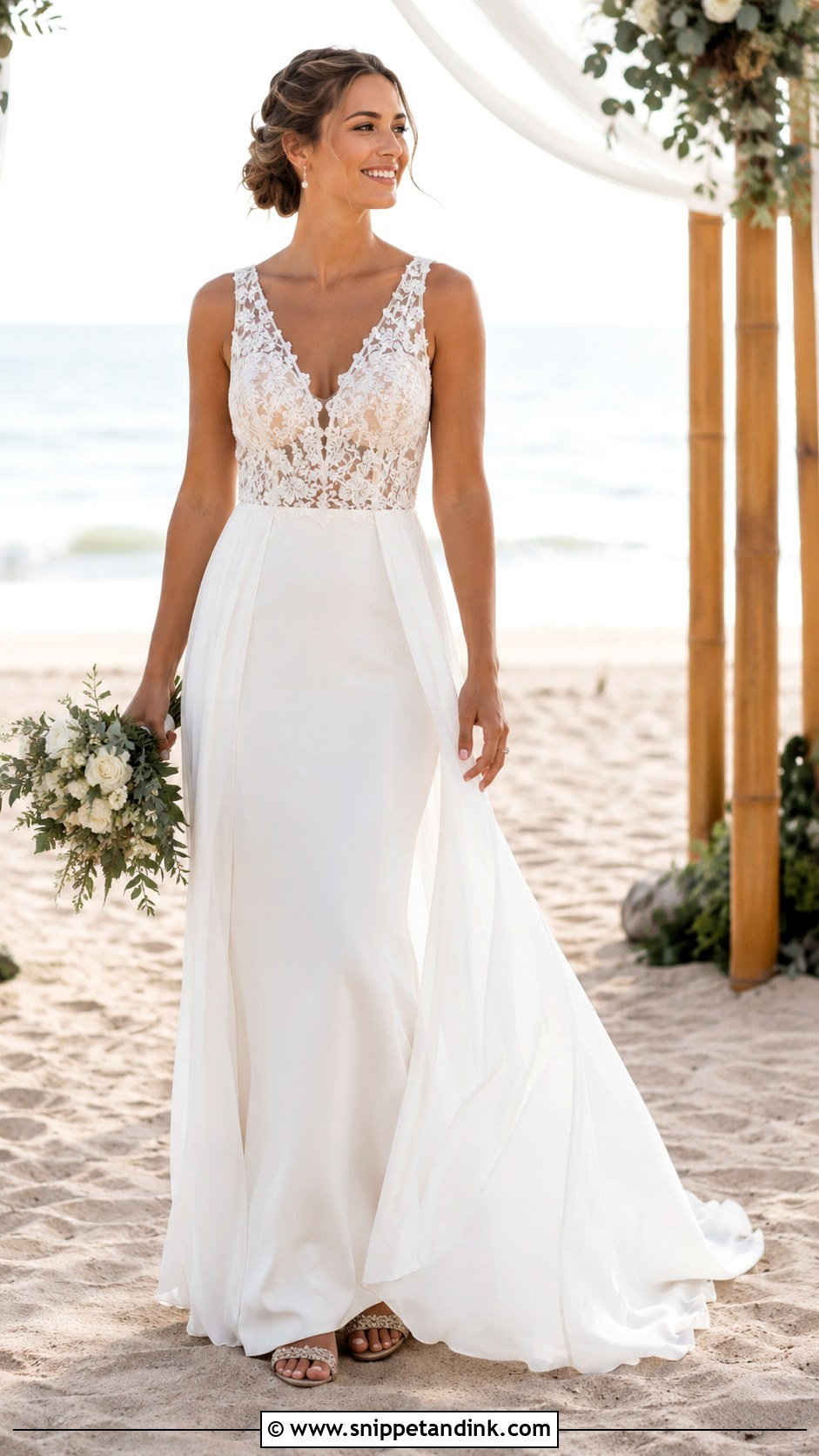
Sand, heat and wind decide what works at a beach ceremony. A lace camisole or supportive sleeveless bodice over a simple chiffon column, with a light open-front overskirt and a short sweep train, moves well and doesn’t collect half the beach. I’d skip stiff tulle and heavy beading here: tulle traps heat and grabs sand, and beads weigh the hem into it. Snaps on a reinforced waistband hold better than hooks when the wind catches the outer skirt. Flat embellished sandals and a relaxed updo suit the setting.
The Ten Minutes Between Portraits and the Reception
The change itself is where a plan falls apart, so I treat it as a scheduled event. Agree on a time, usually after the formal portraits and before the grand entrance or first dance, and choose one person who has practised undoing the fastenings with you at a fitting. A bridesmaid who has never seen the inside of the waistband will struggle under pressure.
Find a private room close to the reception, with a mirror and somewhere to hang a long skirt. Bring a padded hanger, a breathable garment bag and a few safety pins in case a hook catches. Don’t drape the overskirt over a chair; satin and organza crease where they fold and will still show the line when you pack it away.
What happens to the overskirt afterwards
Hand it to someone you trust before the party starts so it doesn’t end up in a pile under the gift table. For cleaning, give both pieces to the same specialist at the same time. Pieces cleaned separately can come back in slightly different shades, which matters if you ever plan to wear them together again or pass them on.
Will It Still Look Finished With the Overskirt Off?
That question is the one I ask every bride who wants a two-piece or detachable gown, because the base is what you’ll wear for most of the day. Any of the ideas above work when the attachment is secure, the fabrics truly match and the inner layer stands up on its own. Test sitting, walking, hugging and dancing in both versions at your fittings, not just the ceremony one. Then pick the pairing that suits your venue and how you plan to spend the evening, and leave the rest of the decision to how it feels when you move.
You'll Like These Ideas:


Leave a Reply