
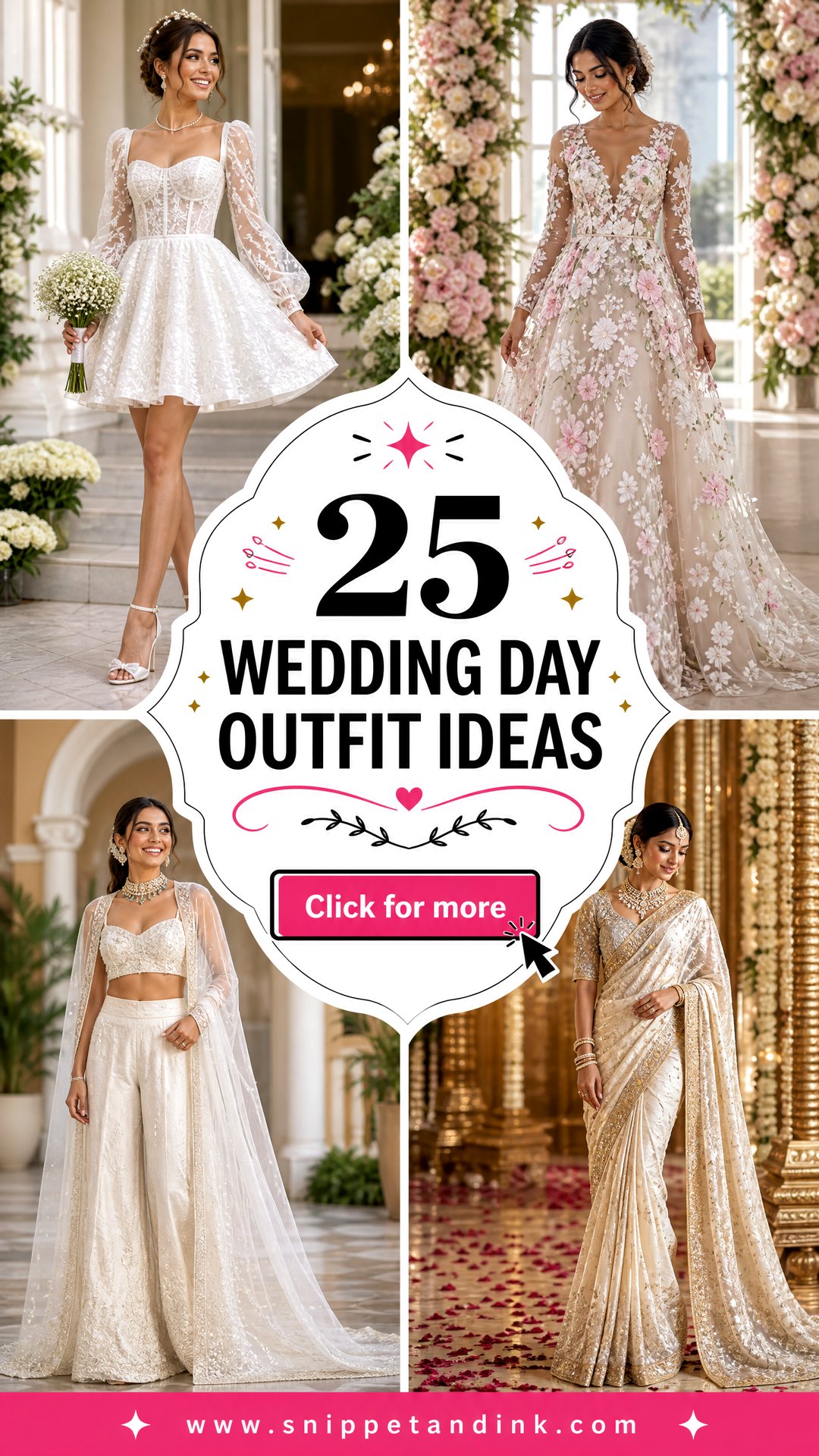
A wedding outfit has to work for about twelve hours: through hugs, a long dinner, portraits on uneven ground and a dance floor. In the fitting room I see brides fall for a dress standing still, then find out at the reception that they can’t sit in it. Today’s options run far past one classic gown, from bias-cut satin and suits to removable overskirts, saree drapes and short dresses for the party. I’ve grouped twenty-five complete looks below, each with the fit and comfort notes I’d give you at an appointment, so you can judge them by how they’ll move, not only by how they photograph.
A Realistic Timeline From First Appointment to Final Fitting
The most stressful calls I get are from brides who found the dress three months out. Most bridal gowns are made to order after you choose a size, and production often takes several months before alterations can even start. Timelines vary by designer and shop, so ask for the expected delivery date in writing when you order.
- Start shopping roughly nine to twelve months ahead if you want a made-to-order gown. Suits, separates and ready-to-wear dresses can be found much later.
- Plan two or three alteration fittings, beginning about two to three months before the wedding.
- Bring your actual shoes and undergarments from the first fitting. Hem length and bodice fit both change with them.
- Keep the last fitting close to the date, about two to four weeks out, so changes in weight or posture are caught.
- At that fitting, learn how the bustle works and show the person who will do it on the day.
For a saree or lehenga, the blouse is usually stitched to measure, and embroidery can take a long time. Give your tailor more time than you think you need, and plan one trial drape with whoever will dress you.
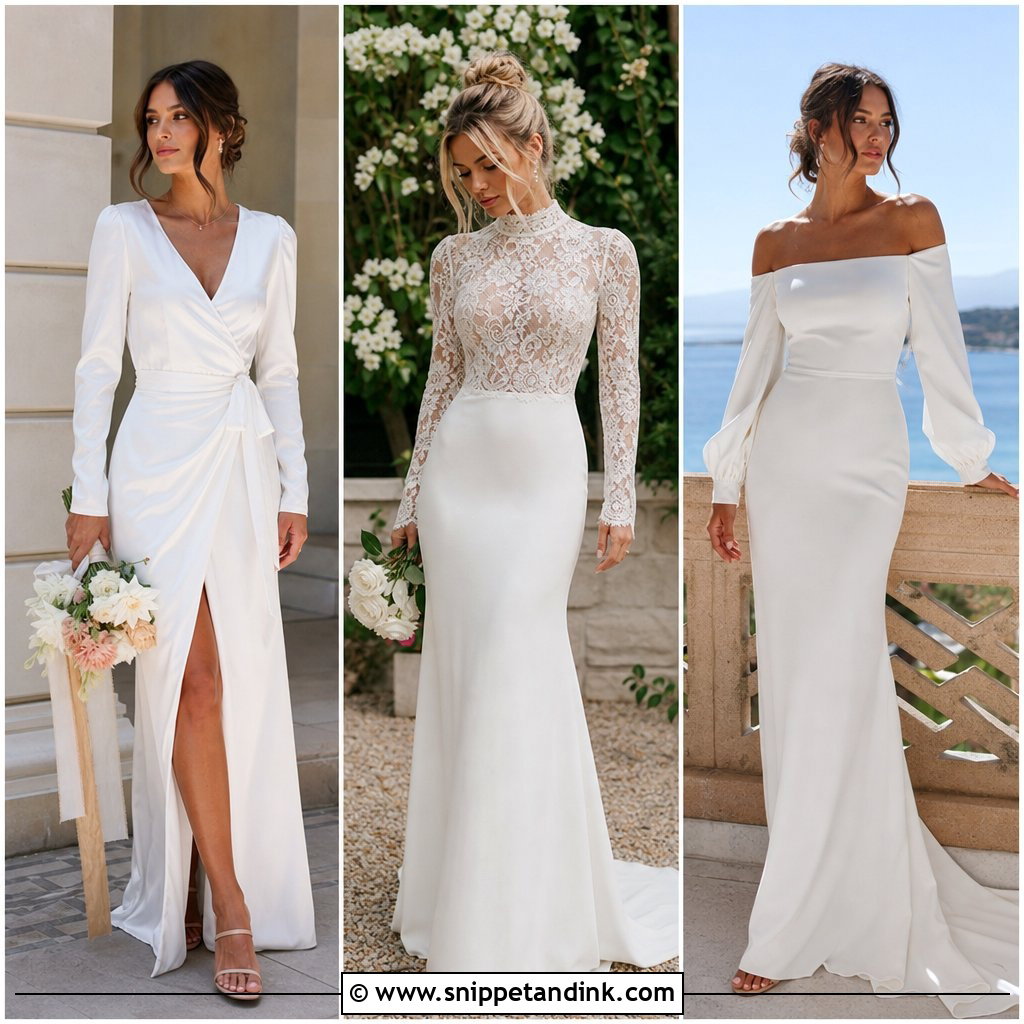
1. Satin Slip Wedding Dress Outfit
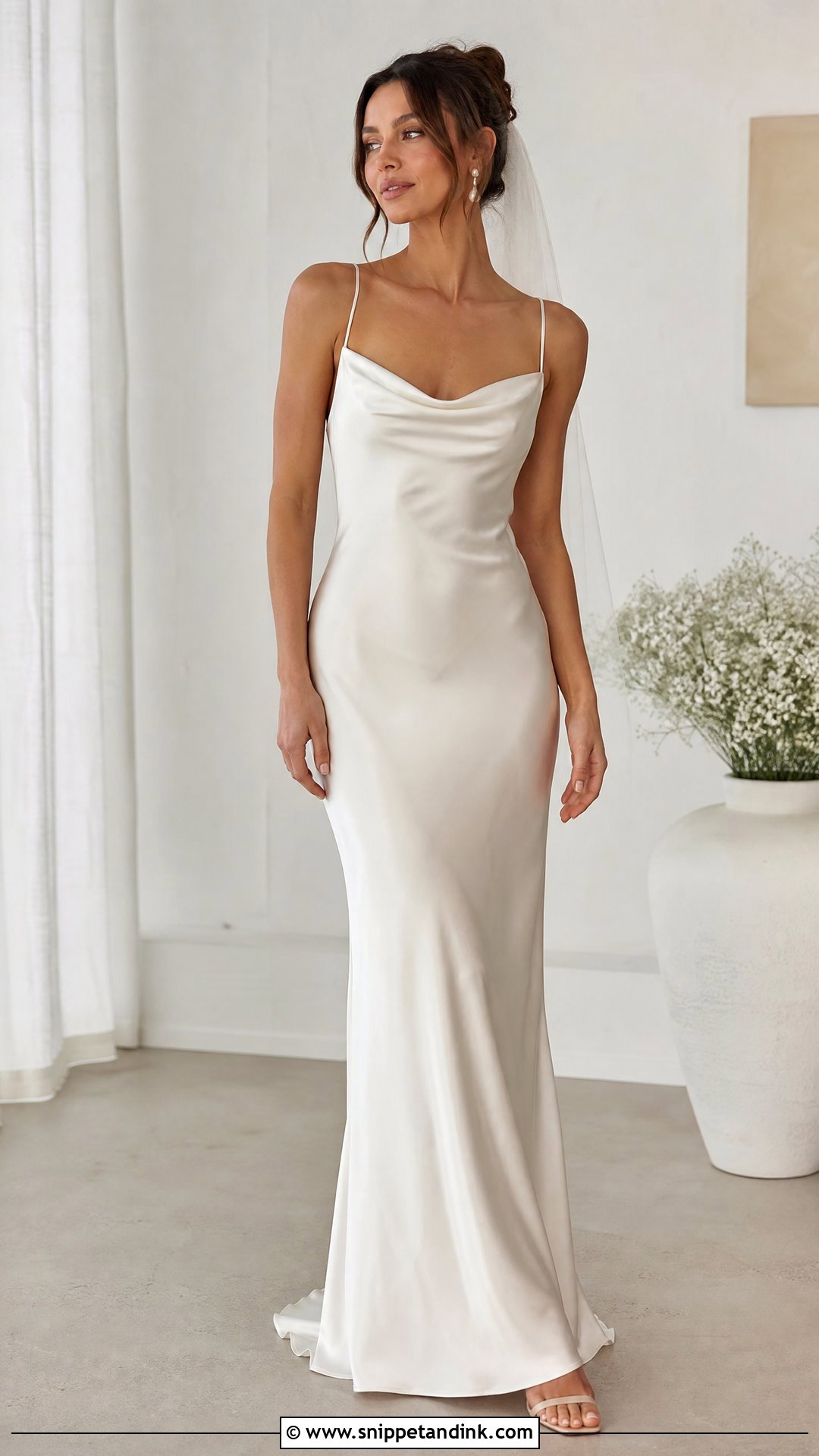
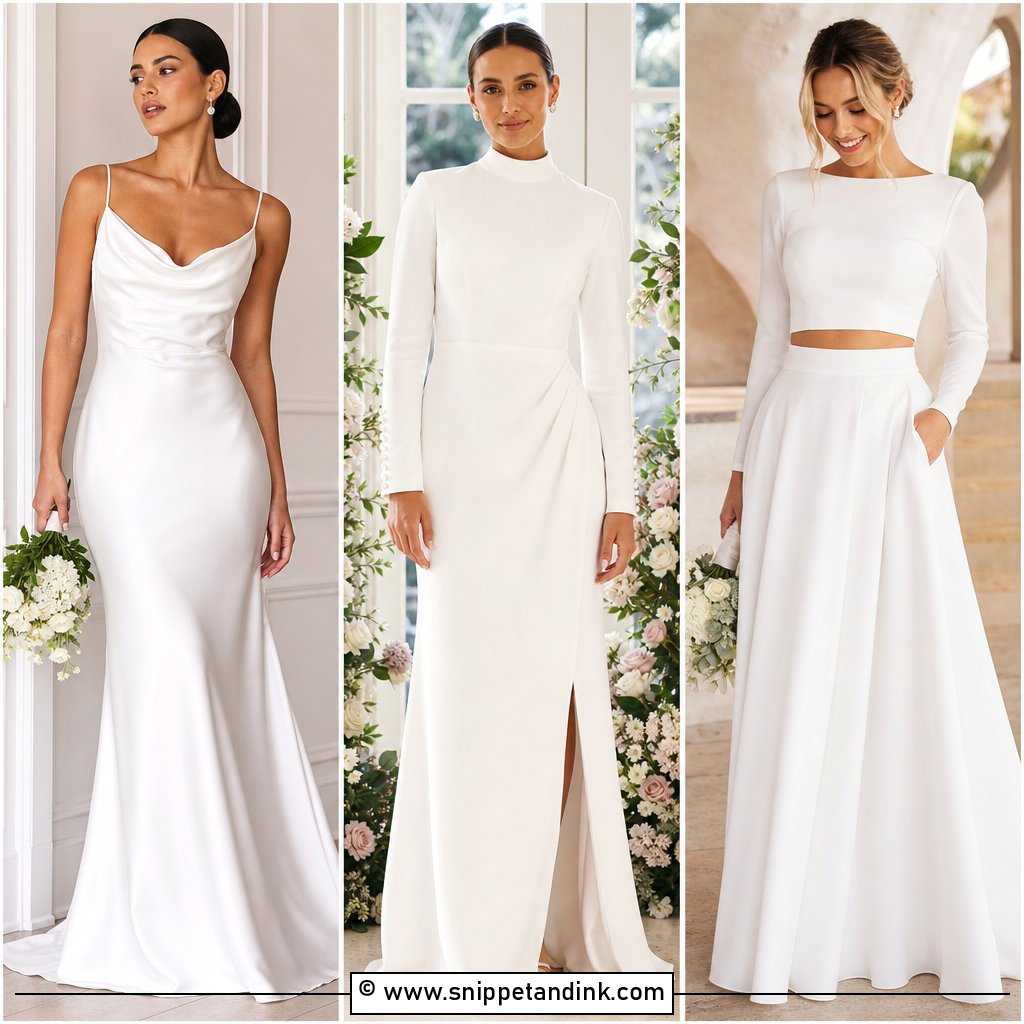
Bias-cut satin skims the body, which is flattering and unforgiving at the same time. It shows everything underneath, so I’d plan smooth, edge-free shapewear or a slip before the first fitting rather than after. Choose ivory or champagne that suits your skin, and keep the extras simple: pearl drops, a plain veil and barely there heels. A cropped feather jacket or tailored blazer covers a cool evening. Satin also creases where you sit, so a steamer in the getting-ready room is worth packing.
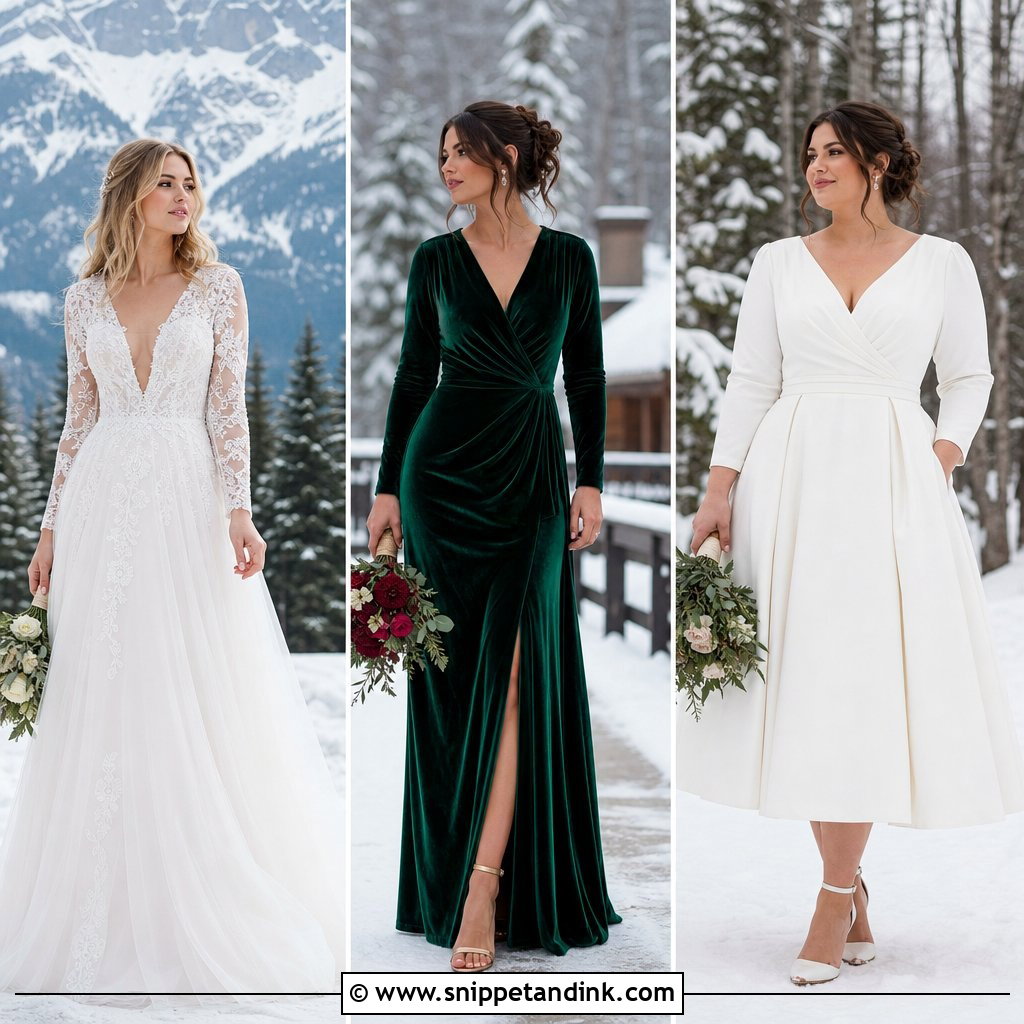
2. Lace Long Sleeve Wedding Dress Outfit
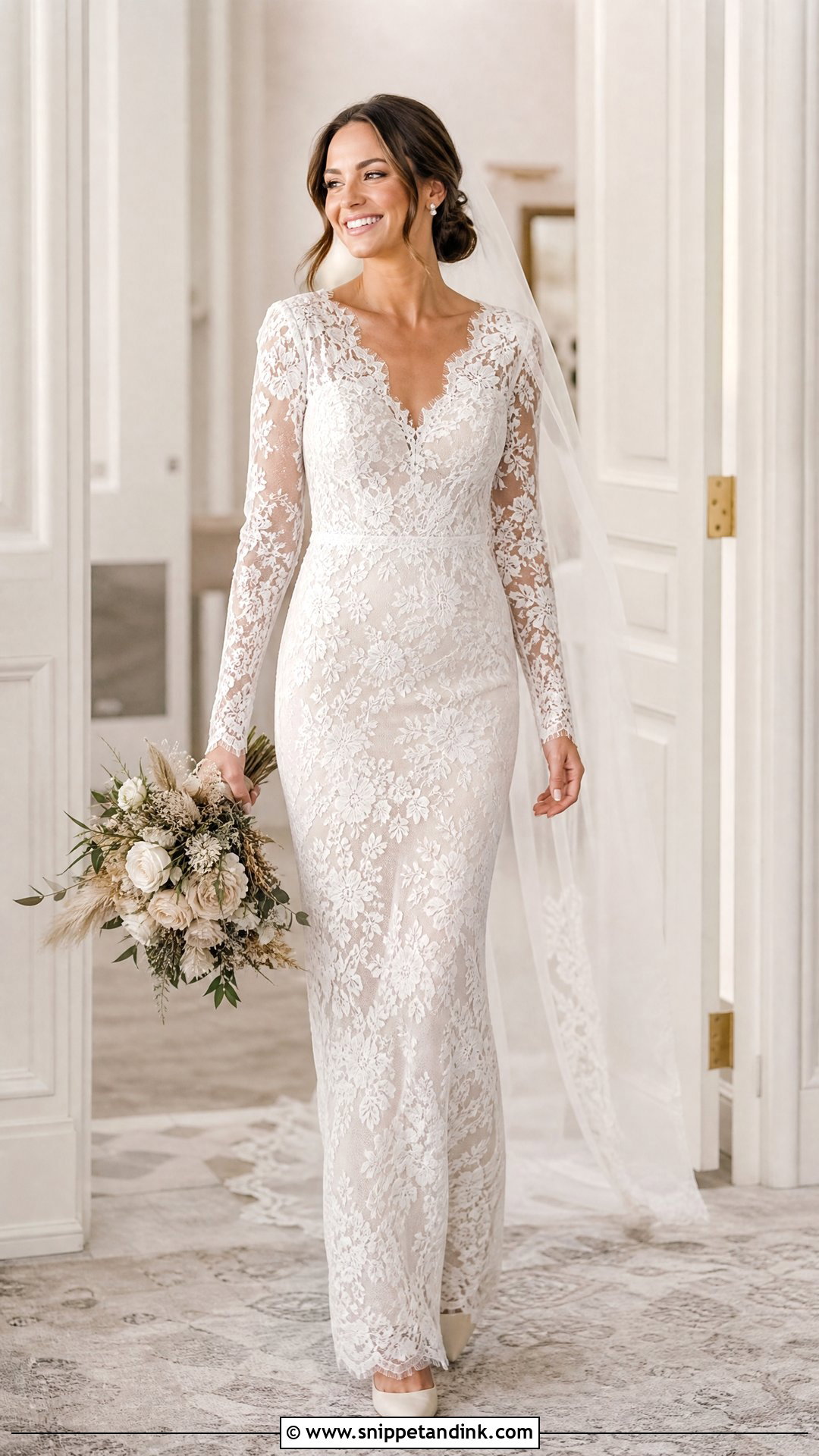
Lace sleeves give a dress its romance before you add a single accessory. Look for soft floral lace, sheer sleeves, or delicate scalloped edges that frame the neck and wrists. The thing I test first is arm movement: fitted lace sleeves can bind when you reach up to hug someone, so raise your arms and cross them in the fitting. Pointed pumps, pearl studs and a thin cathedral veil finish it, and a chignon keeps the neckline in view. Busy lace needs very little jewelry.
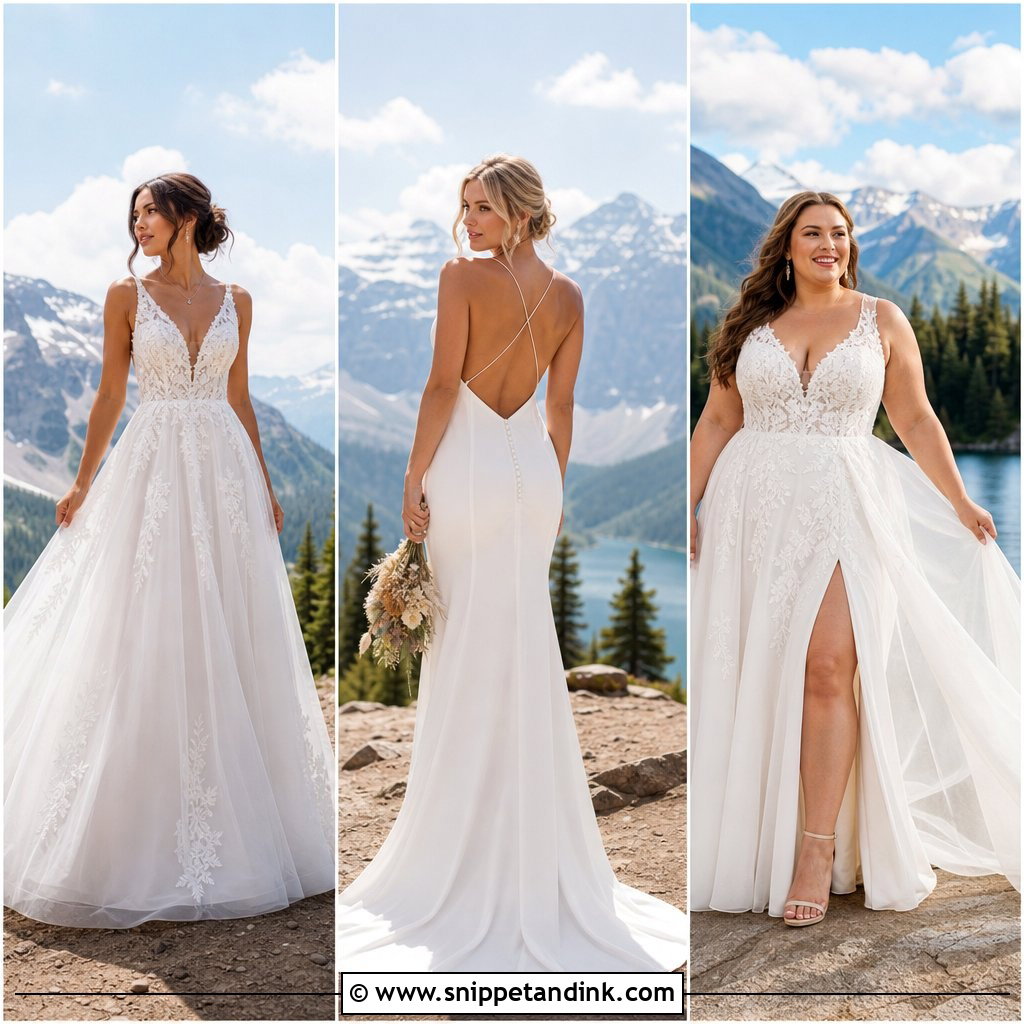
3. Strapless Ball Gown Wedding Outfit
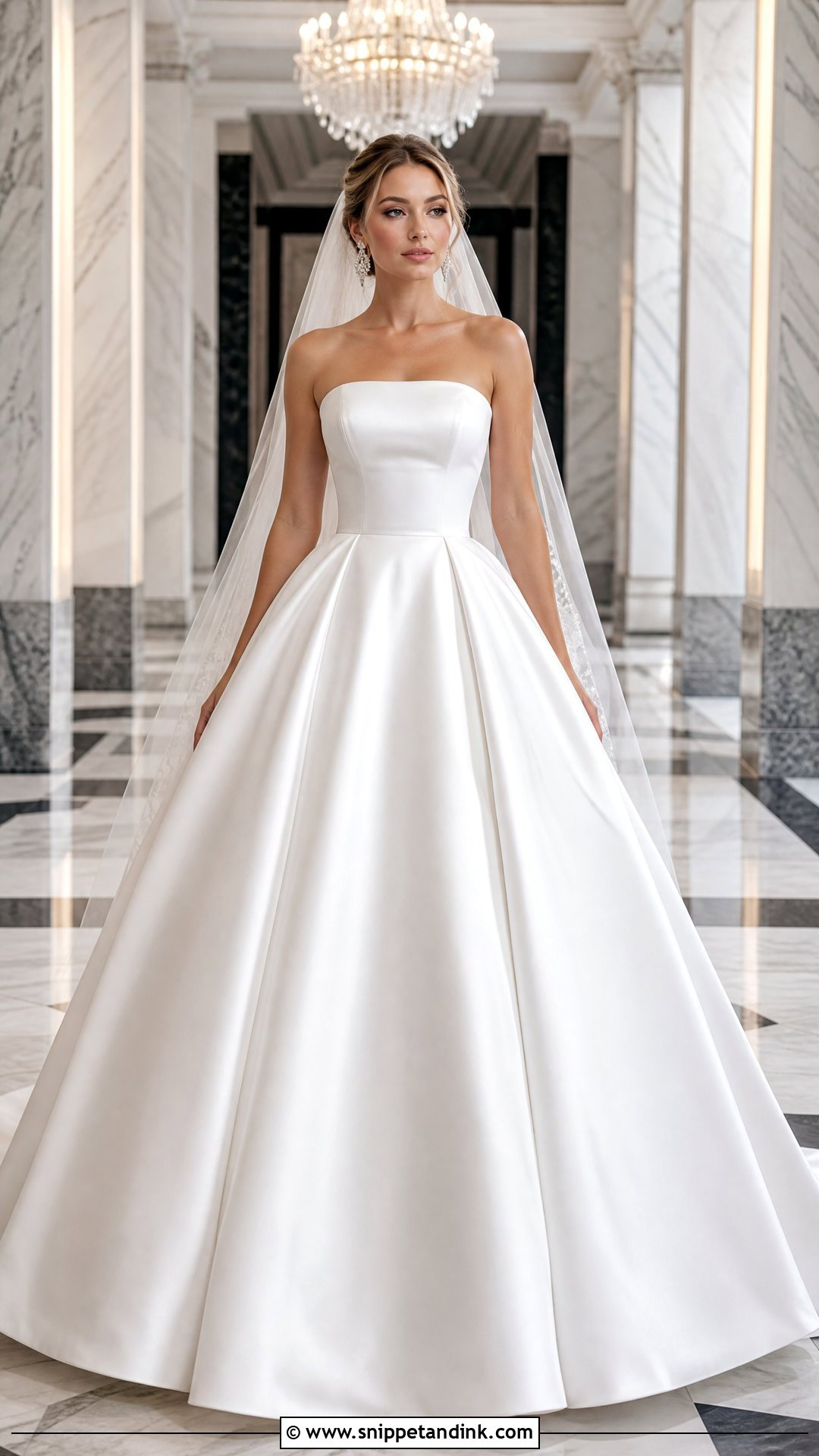
A strapless ball gown is all about the bodice. A structured top with proper boning holds itself up; a loosely fitted one gets hitched up all night, and you’ll see it in every candid. Mikado and satin hold the skirt’s volume best, while organza and tulle feel lighter. A classic veil and crystal earrings keep the line strong, and heels can stay plain since the hem covers them. Detachable gloves or a sheer wrap give coverage for a religious ceremony and come off later.
4. Drop Waist Wedding Dress Outfit
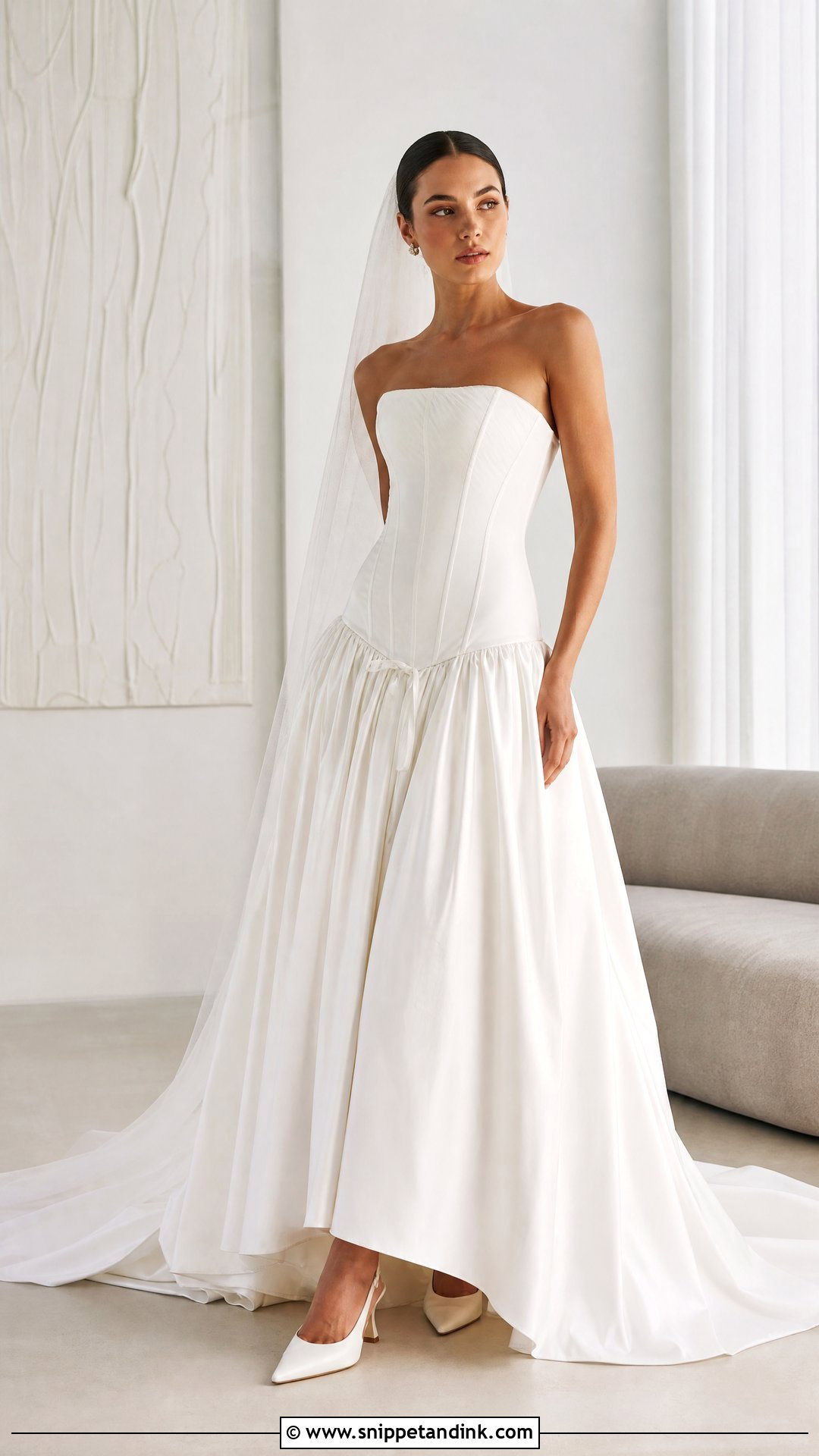
The lowered waistline lengthens the torso and lets the skirt flare from the hip, which reads as fashion-aware without trying too hard. A corset-style bodice over a full skirt leans romantic; a sleek drop-waist column looks more modern. It suits longer torsos most easily; on a short torso, I’d have the seam placed with care so your legs don’t look cut short. Slingbacks, a clean veil and minimal jewelry let the shape lead. The side profile is its best photo angle.
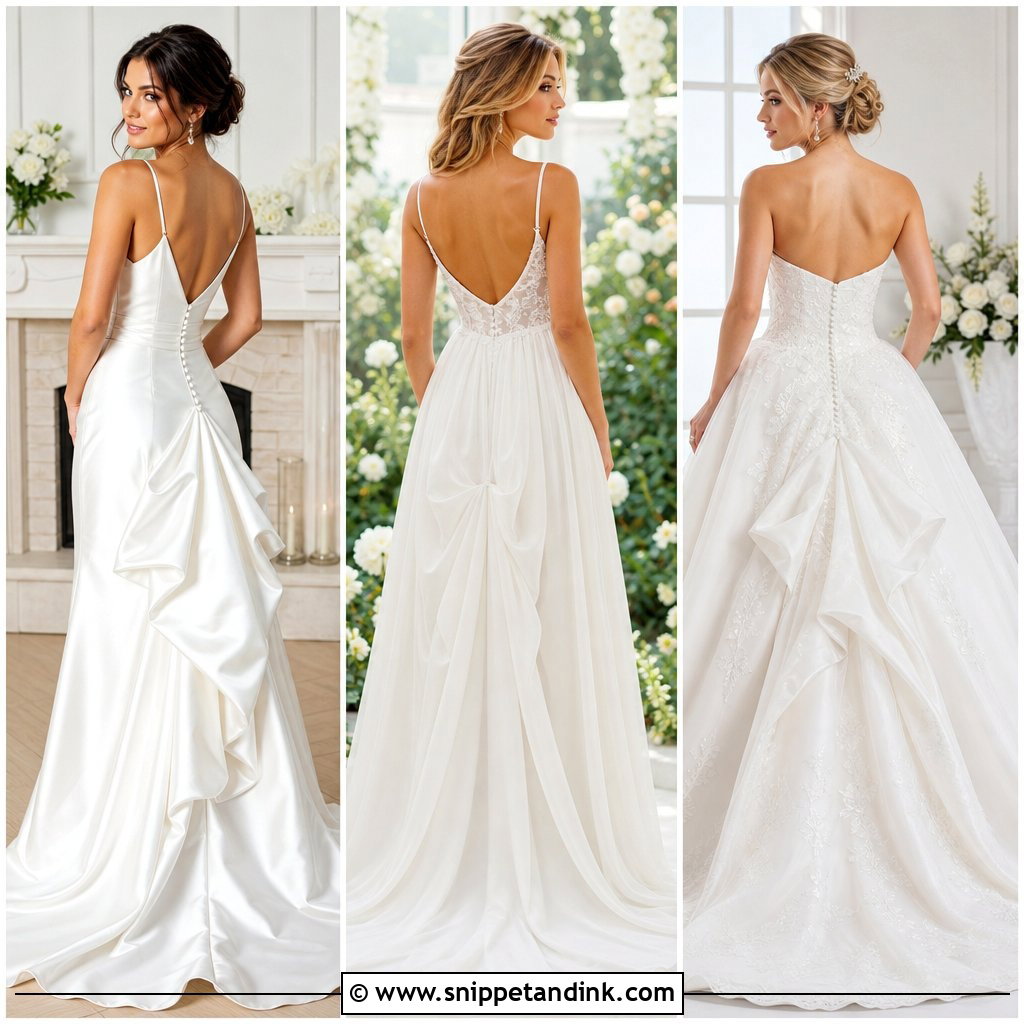
5. Wedding Dress With Overskirt Outfit
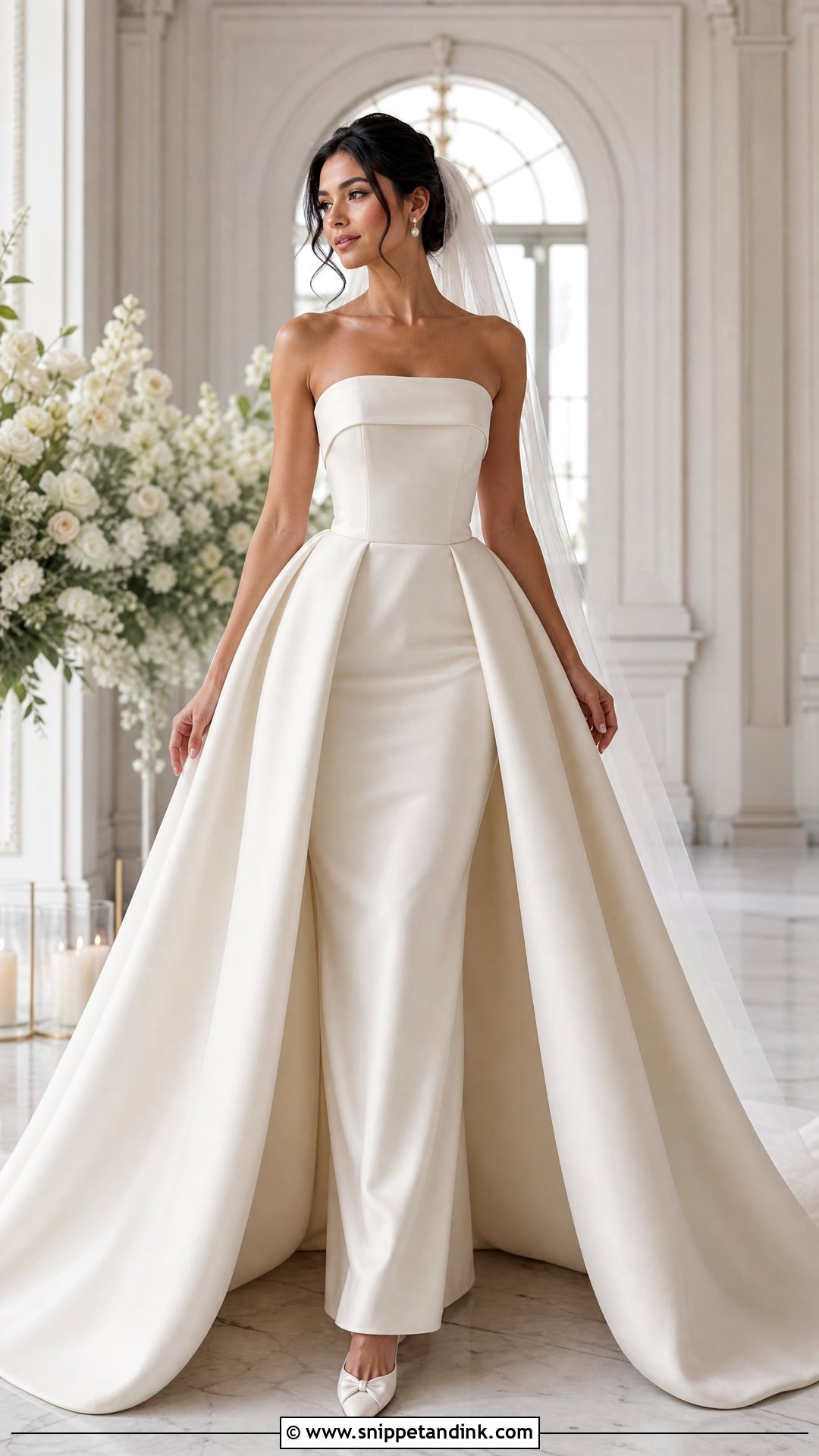
A removable overskirt gives you two looks with one zip. Underneath goes a fitted column, mermaid or even a mini; the overskirt adds volume and movement for the aisle, then comes off for the reception. Practise the removal with whoever will help you, because some fasten with hidden hooks or snaps that are fiddly under pressure. Swap the veil for a sparkly clip and the ceremony look becomes a party look in a few minutes.
6. Bridal Suit Wedding Outfit
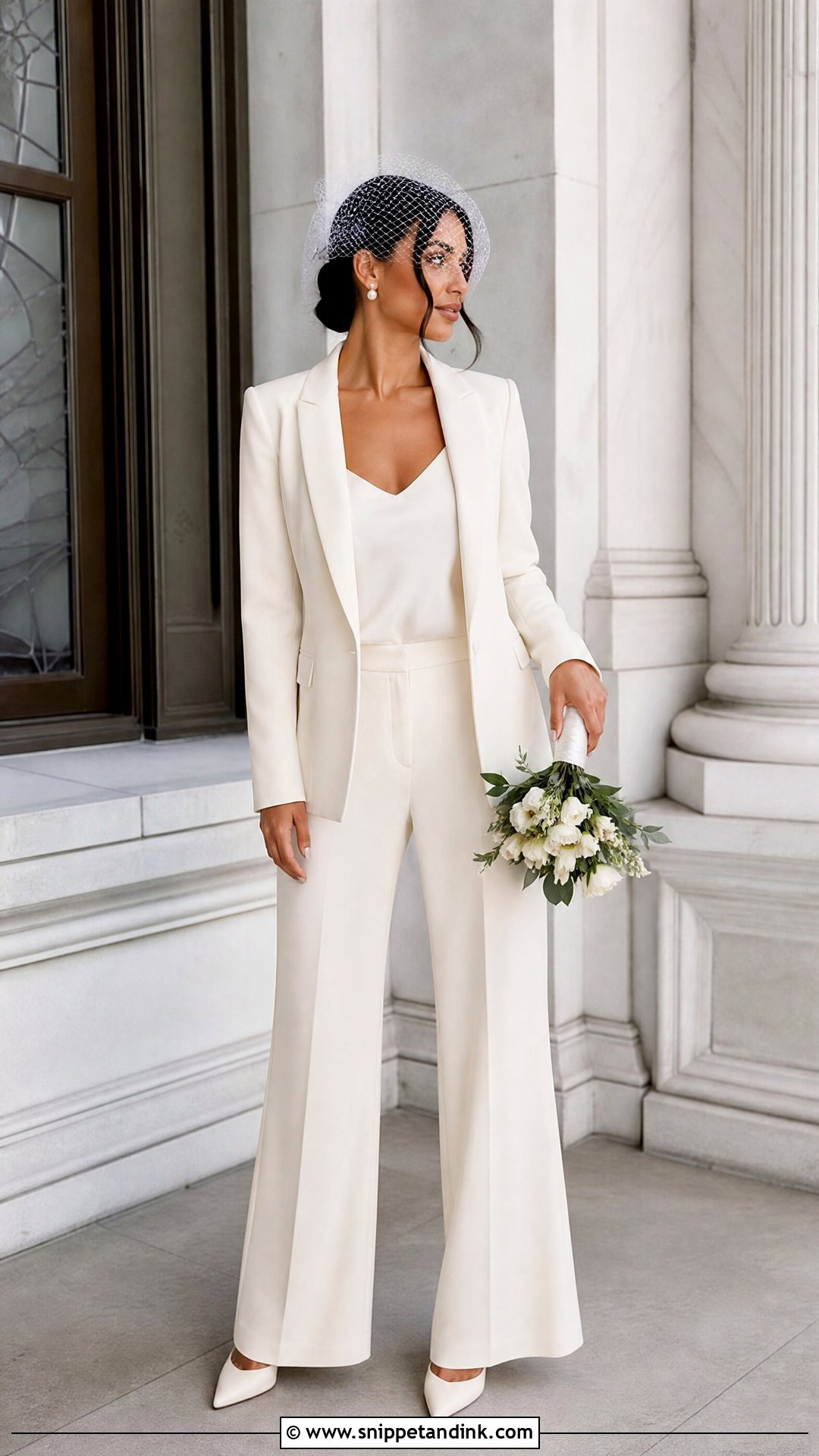
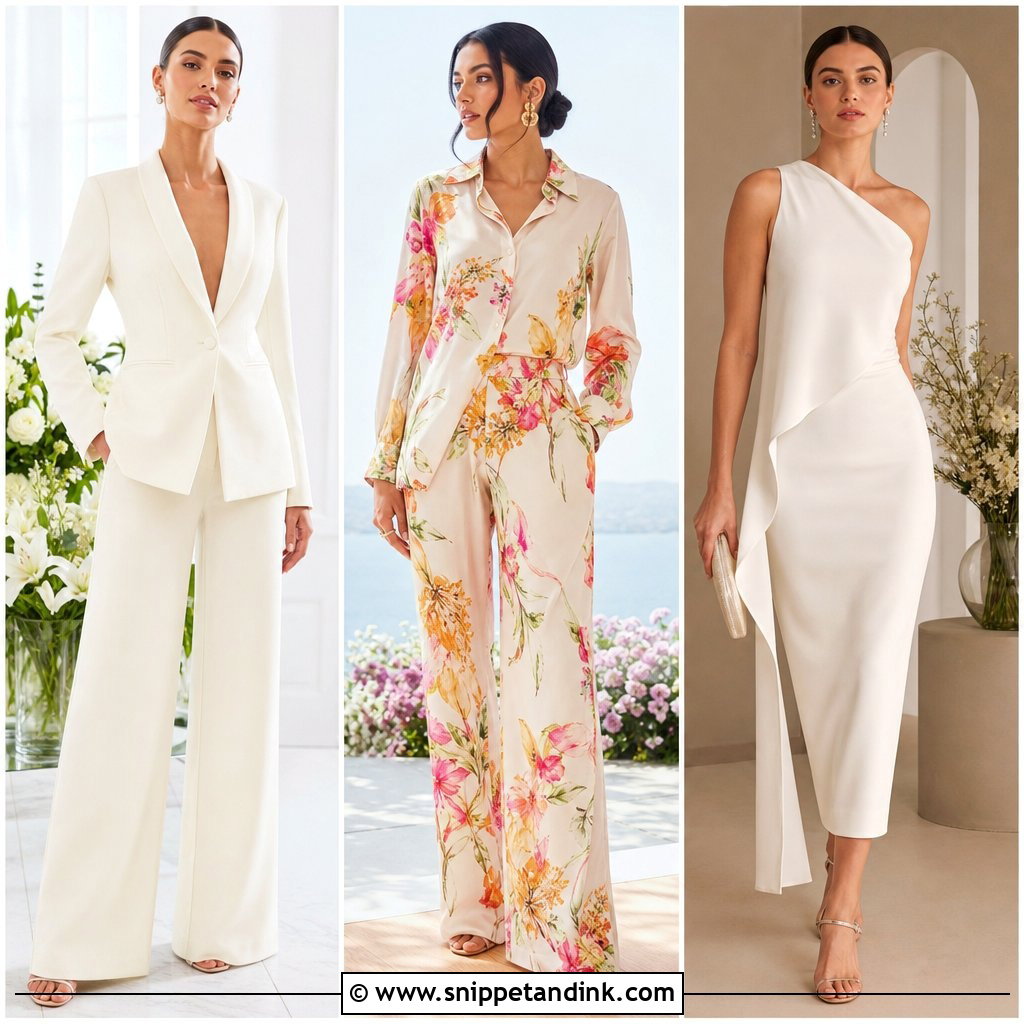
Suits come down to tailoring. Choose ivory, white or soft cream with tailored trousers and a structured blazer, and budget for alterations, since off-the-rack shoulders and sleeve lengths rarely fit perfectly. A silk camisole, lace bodysuit or buttoned vest underneath sets the level of coverage. Pointed heels, a mini veil and pearls make it read as bridal rather than office wear. Wide legs feel softer; slim tailoring looks sharp. Hem the trousers to the exact heels you’ll wear.
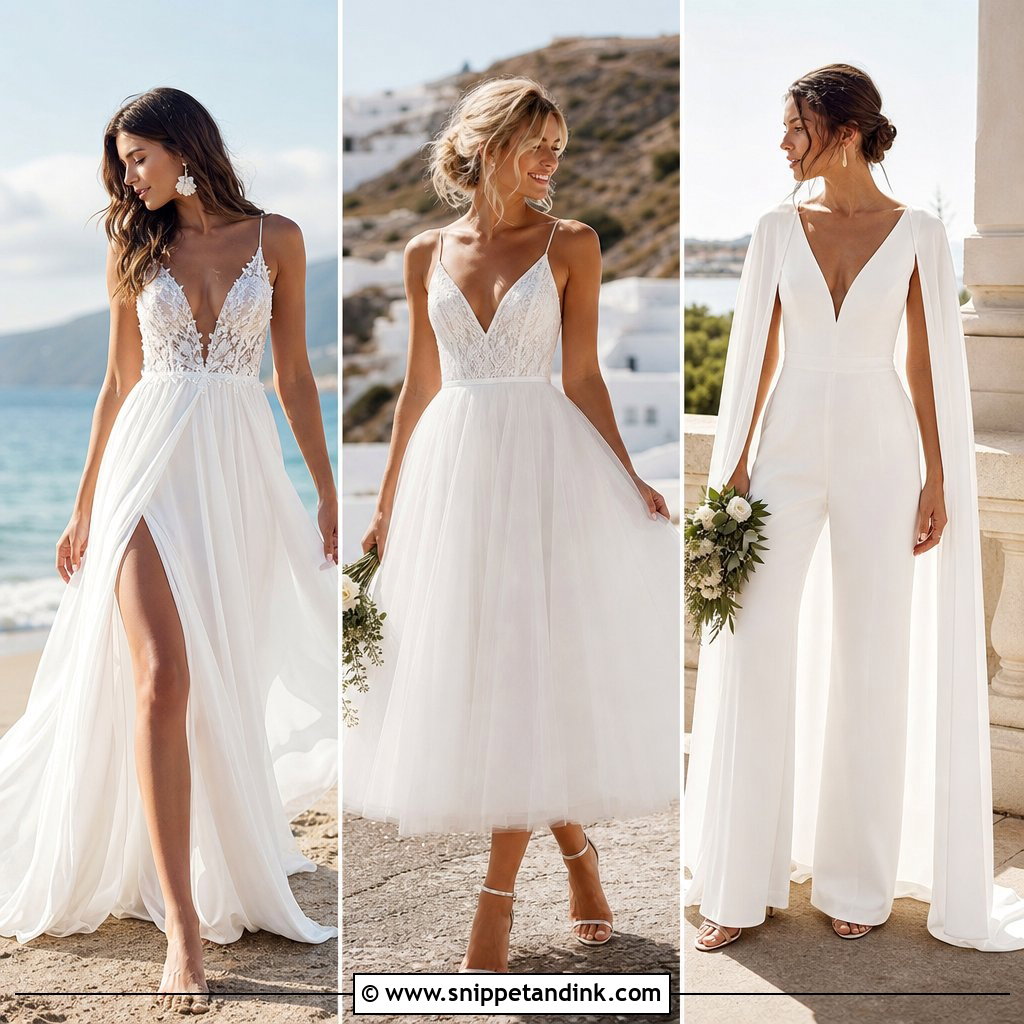
7. Bridal Jumpsuit Wedding Outfit
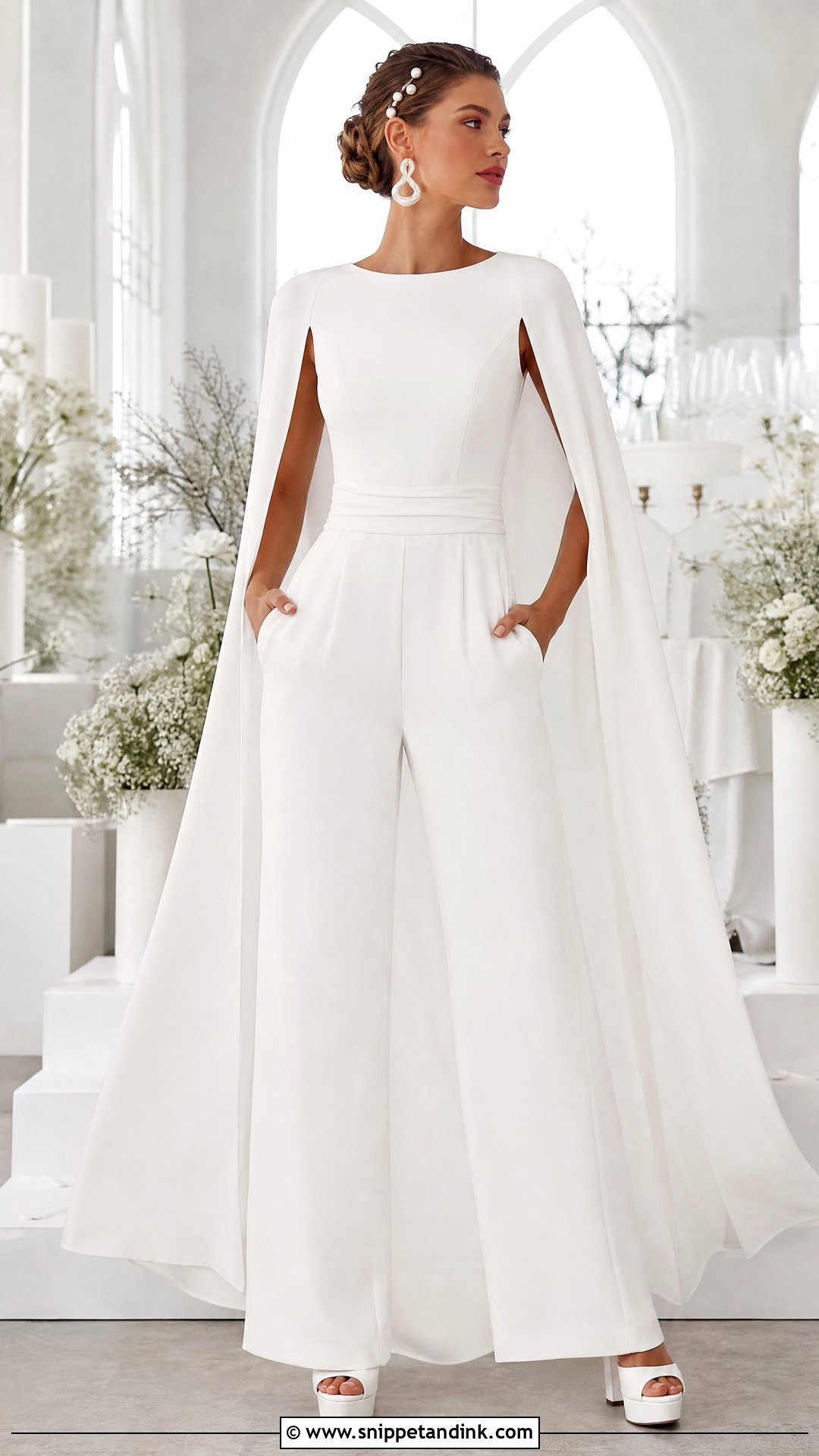
A bridal jumpsuit wedding outfit gives you full movement, but it has one practical catch everyone forgets: the bathroom. Ask about the closure before you buy; a long back zip means you need help every time. Choose crepe, satin or a silk blend with a defined waist and a wide leg. Platform heels or pointed pumps lengthen the line. A short veil or pearl hair pins makes it ceremony-ready, and a cape or bow back adds drama if you want it.
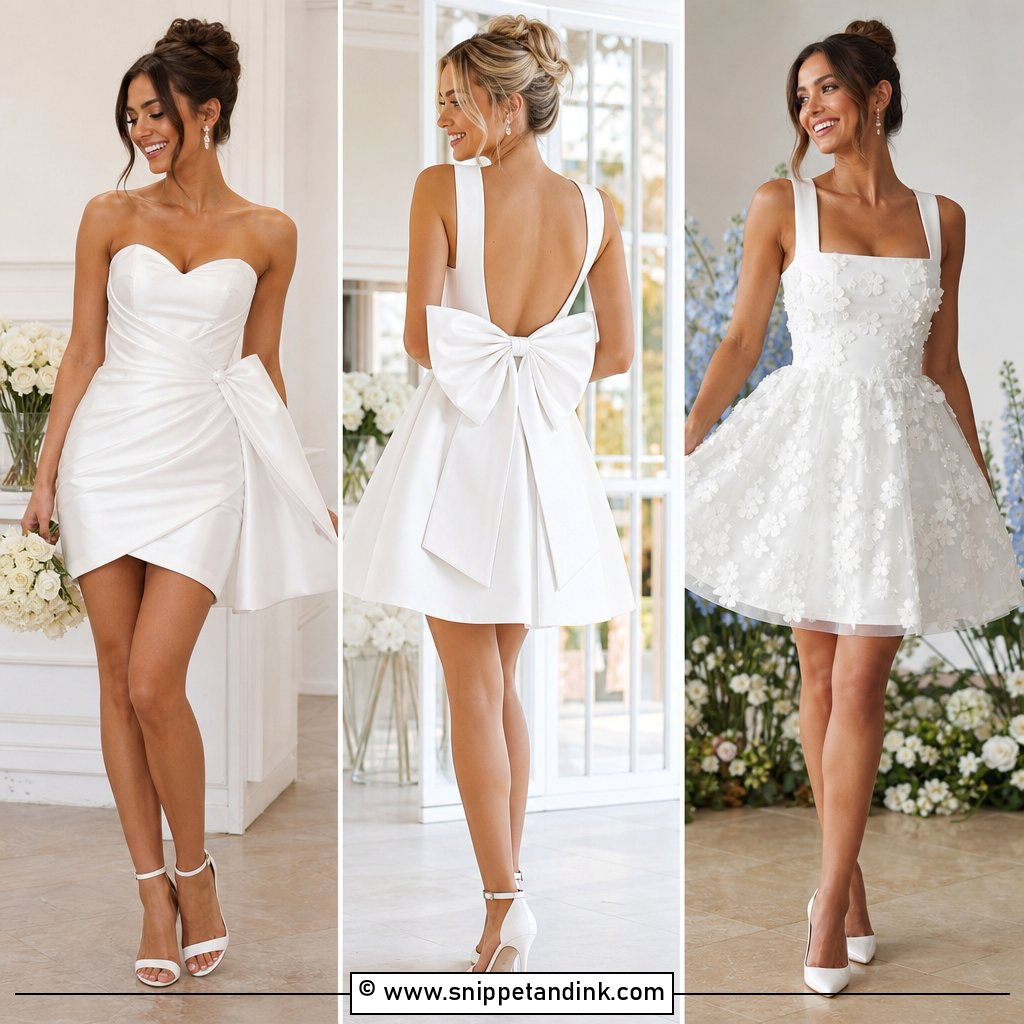
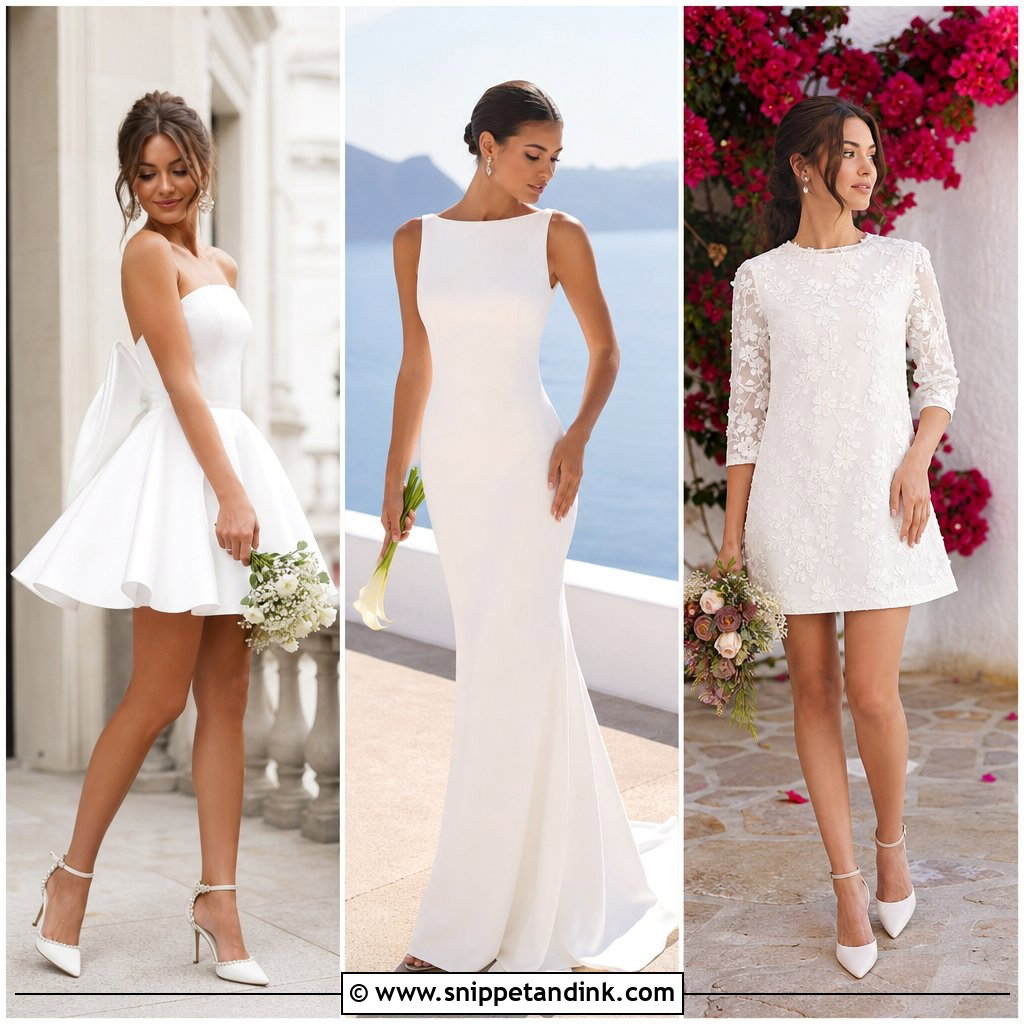
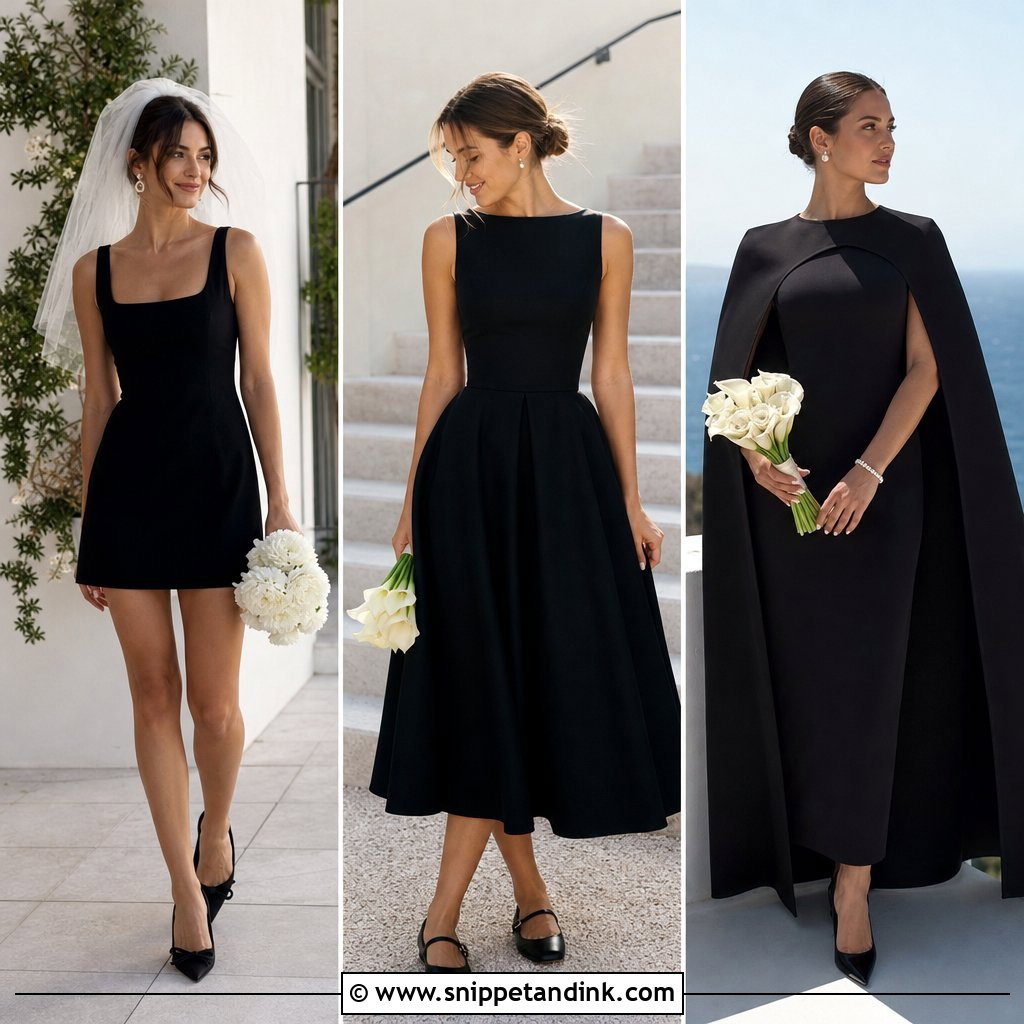
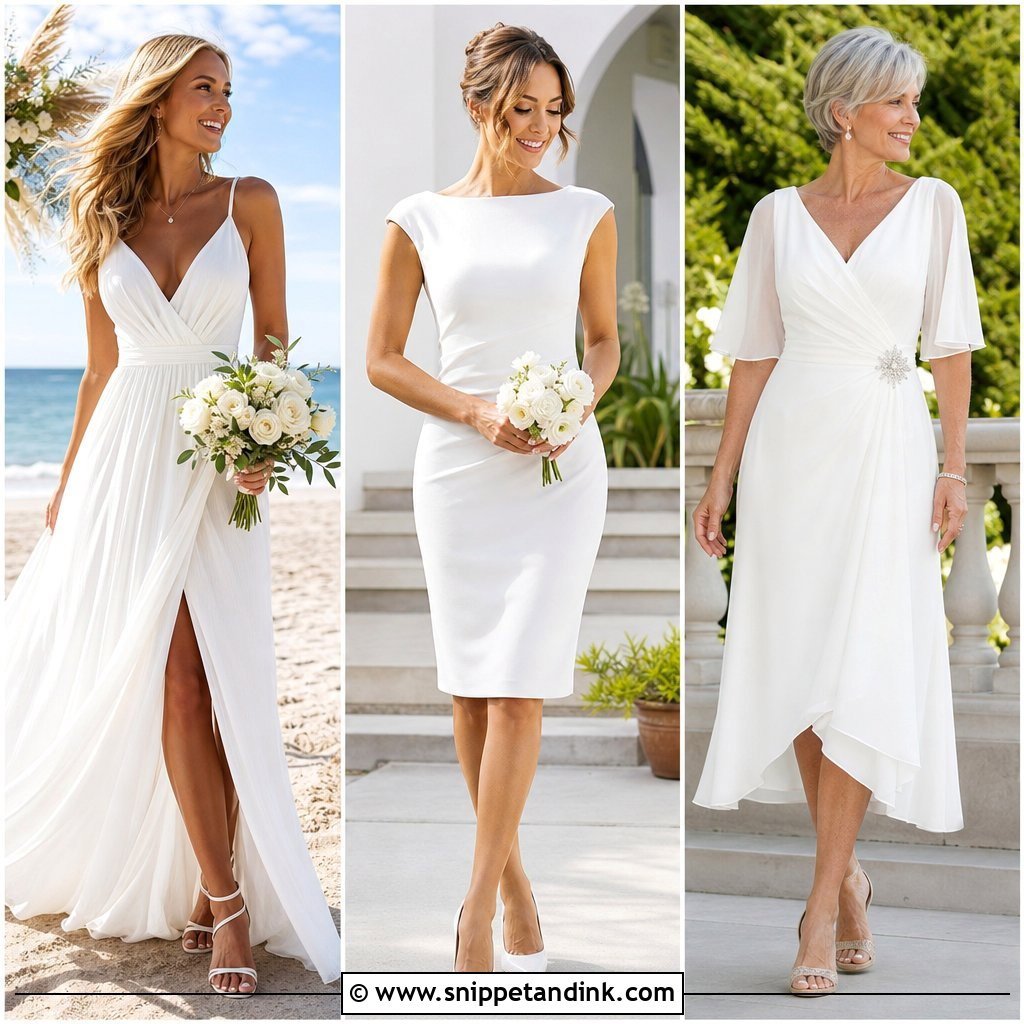
8. Short Wedding Dress Outfit
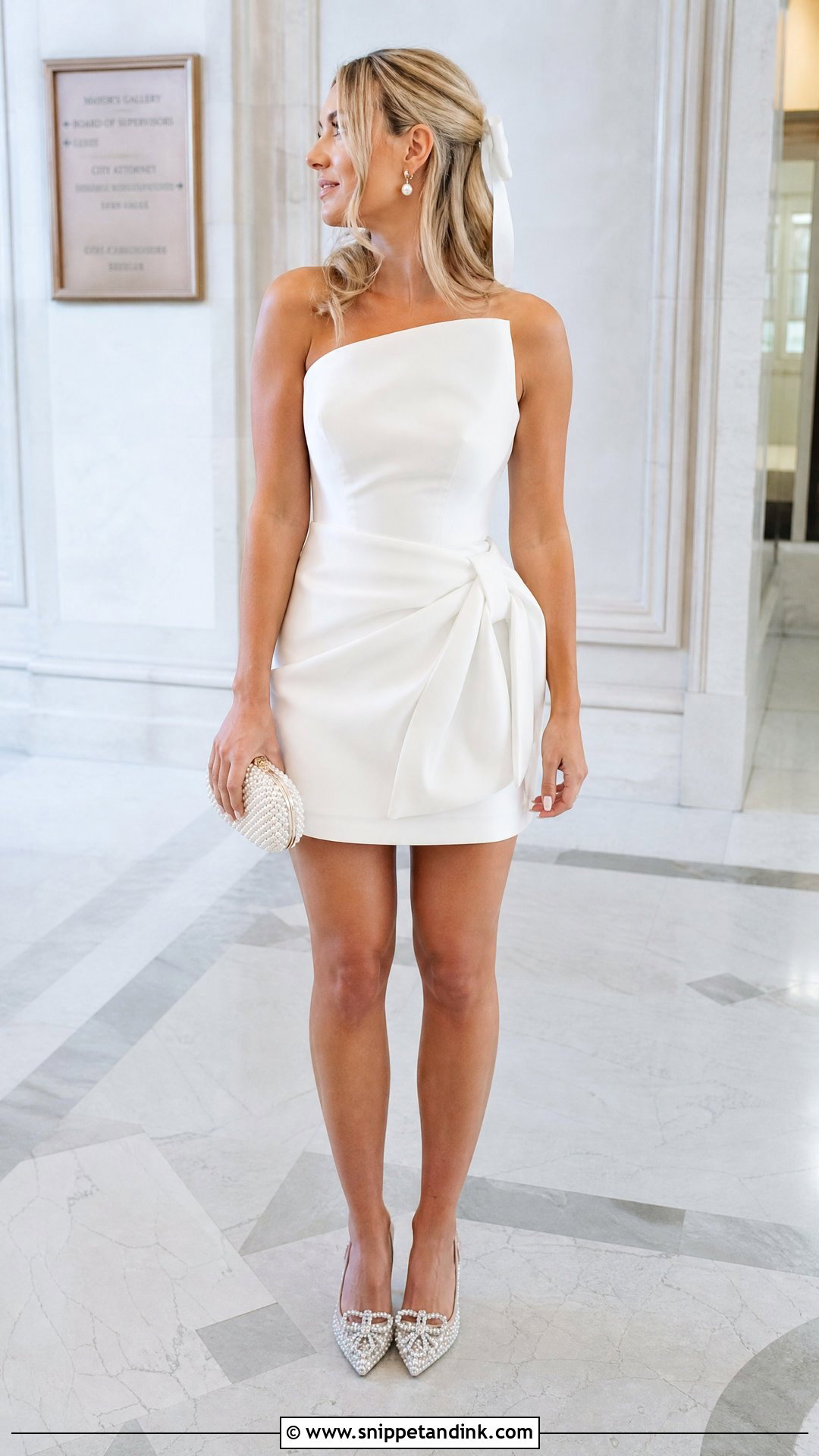
A short dress needs a detail to keep it from looking casual: a bow, lace, pearls, feathers or a sculpted skirt. I’d pay the most attention to length when you sit, since a mini that’s fine standing can ride very high in a chair at a long dinner. Block heels, slingbacks or embellished pumps all work. A short veil, headband or satin bow adds the bridal signal. If the dress is very plain, statement earrings or a beaded bag carry it.
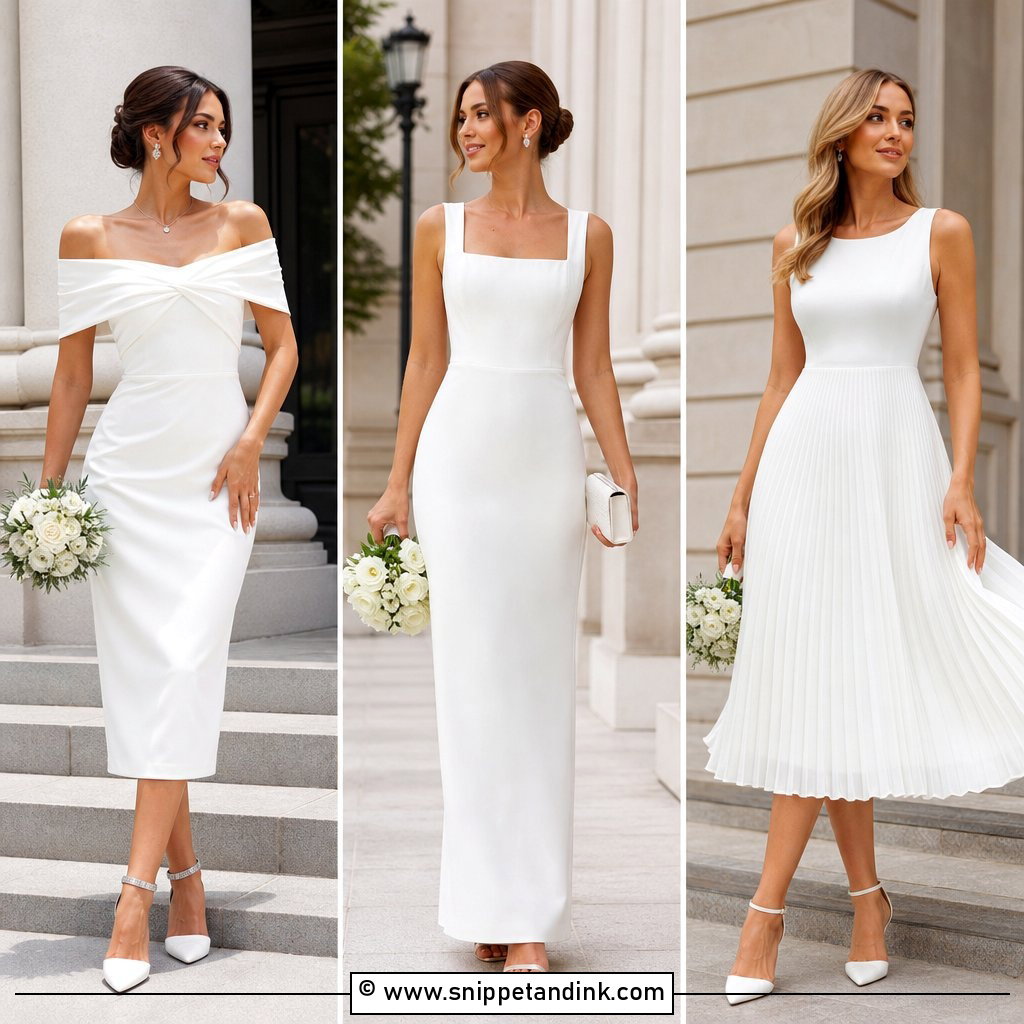
9. Tea Length Wedding Dress Outfit
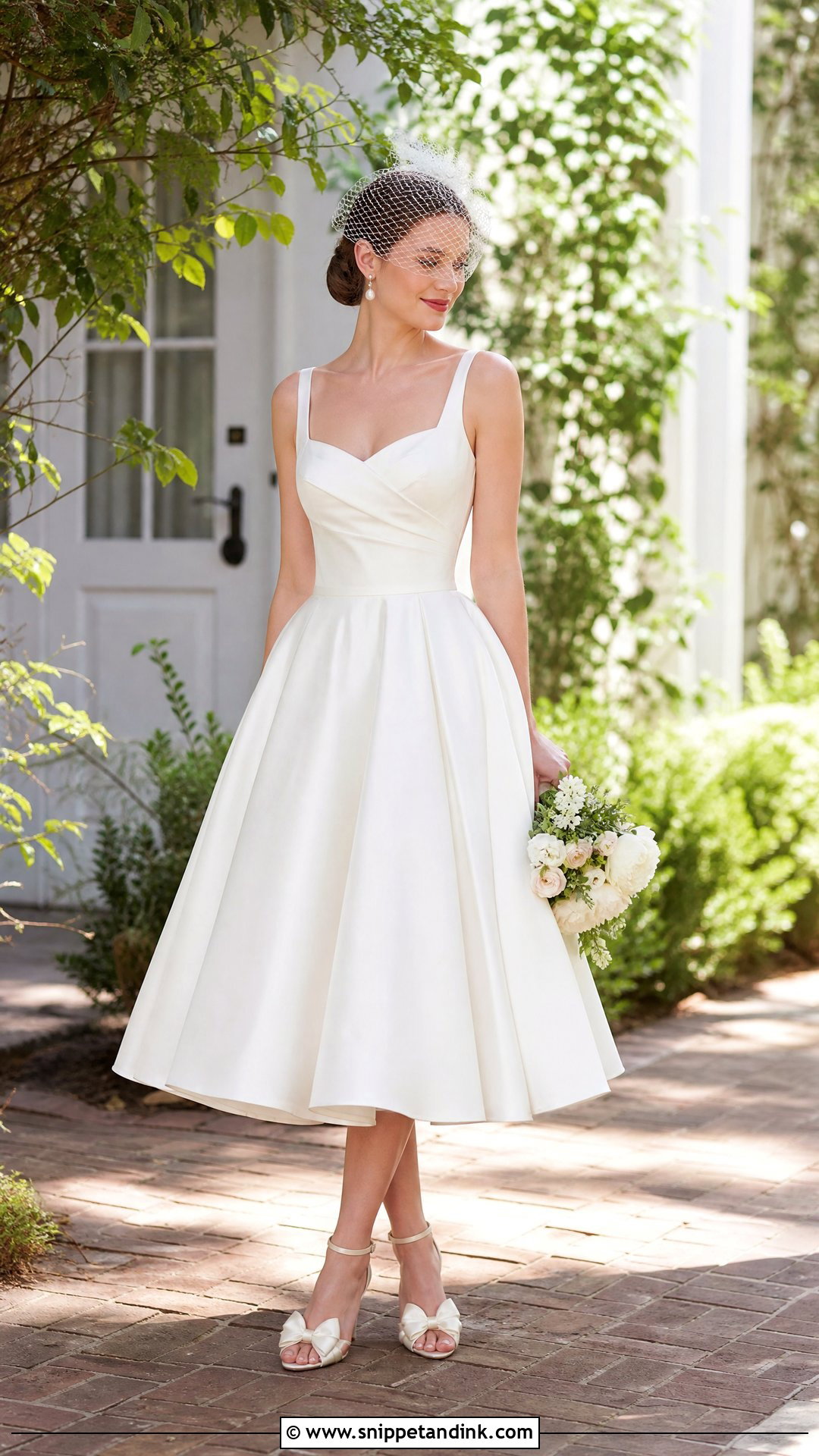
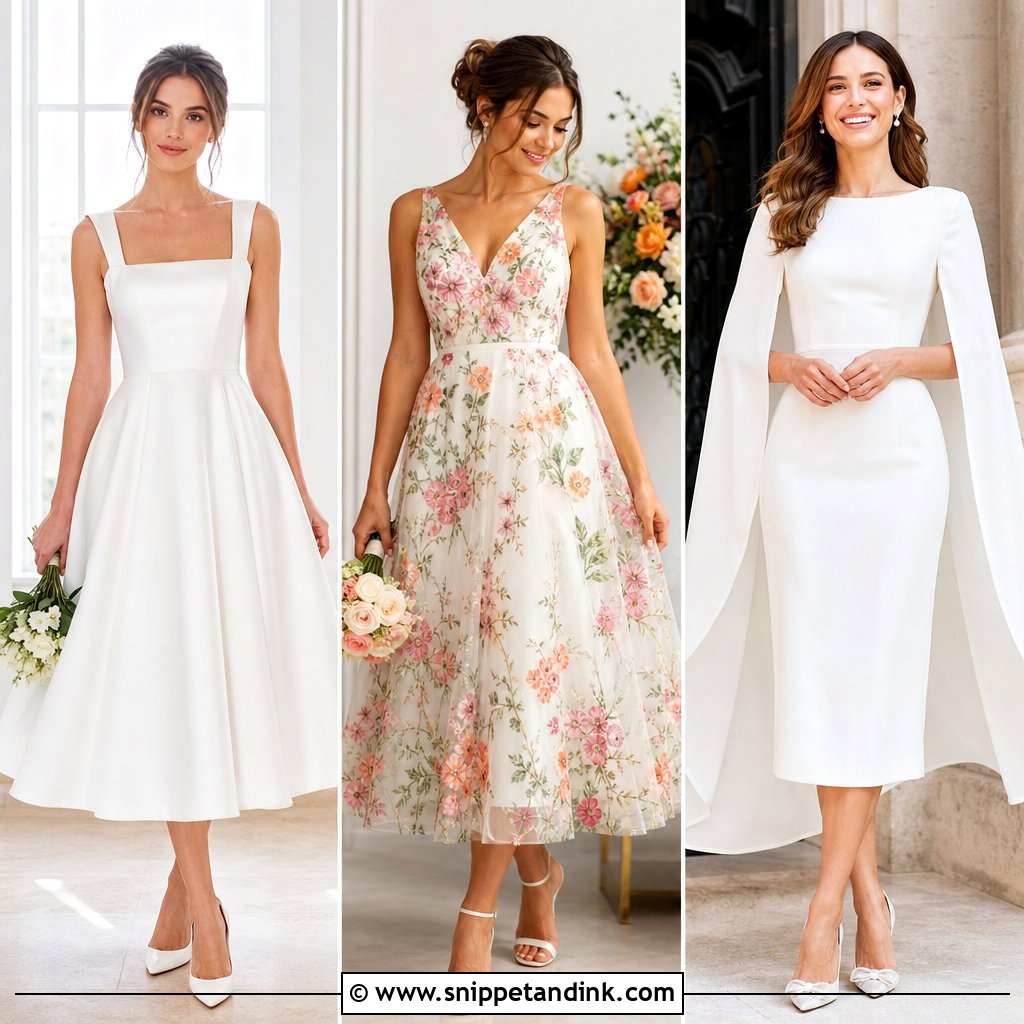
Tea length falls between knee and ankle, so your shoes become part of the outfit. Satin pumps, bow heels or pearl ankle straps finish it. A fitted bodice with a flared skirt gives shape, and a tulle petticoat underneath helps the skirt hold its swing all day. For a stronger vintage mood, add gloves and a birdcage veil. It’s an easy choice for garden or courthouse ceremonies and brunch receptions.
10. Off Shoulder Wedding Dress Outfit
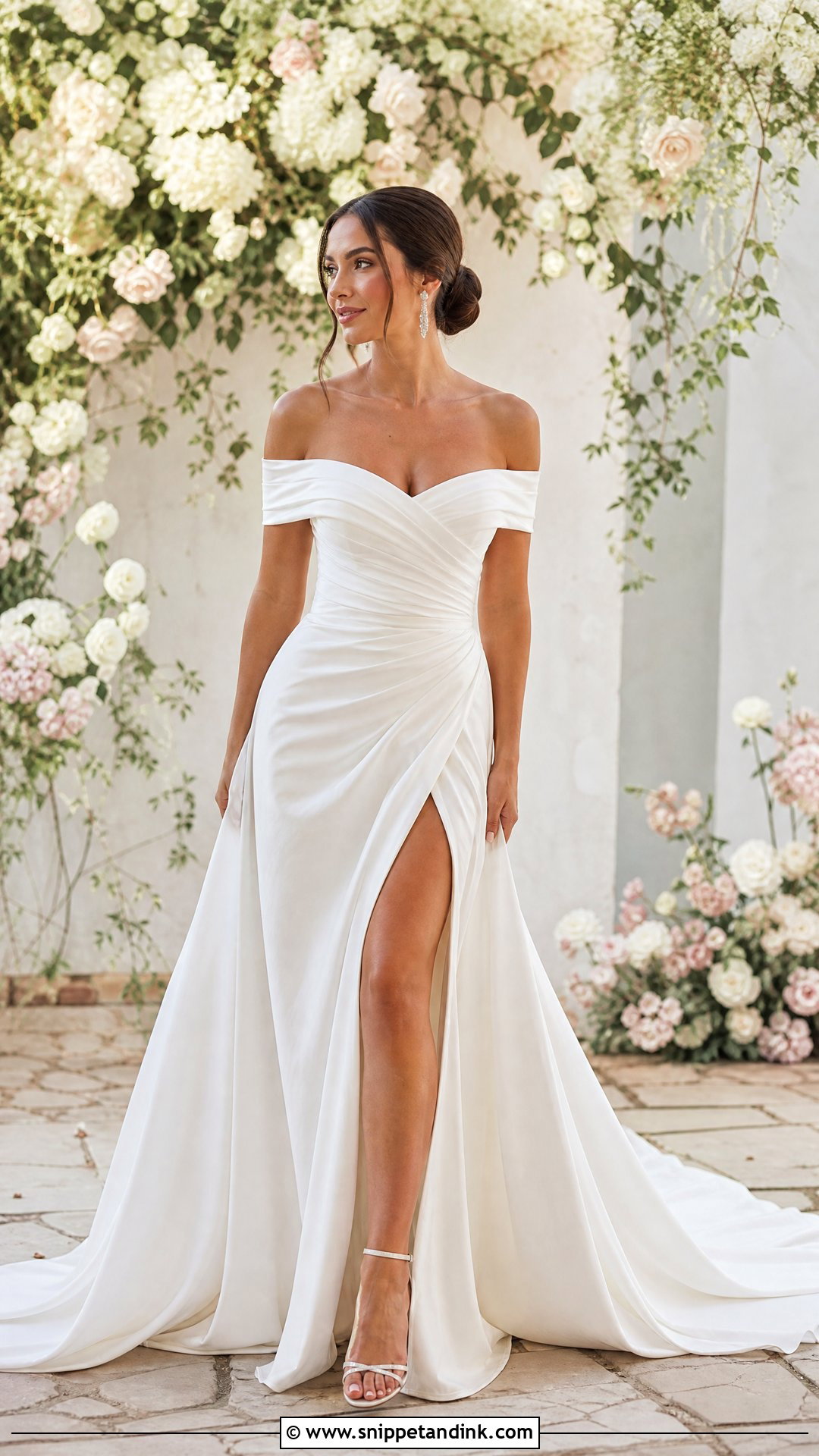
Off-shoulder necklines have one honest drawback: they limit how high you can lift your arms. At the fitting, reach forward as if to hug, and check that the band doesn’t slide. Elastic or boned bands stay put; loose drapes slip. With the shoulders on show, choose a delicate necklace or statement earrings, not both, and wear a low bun or swept-back waves. Satin pumps or slingbacks suit most venues. Detachable sleeves give coverage for the ceremony.
11. Pearl Wedding Dress Outfit
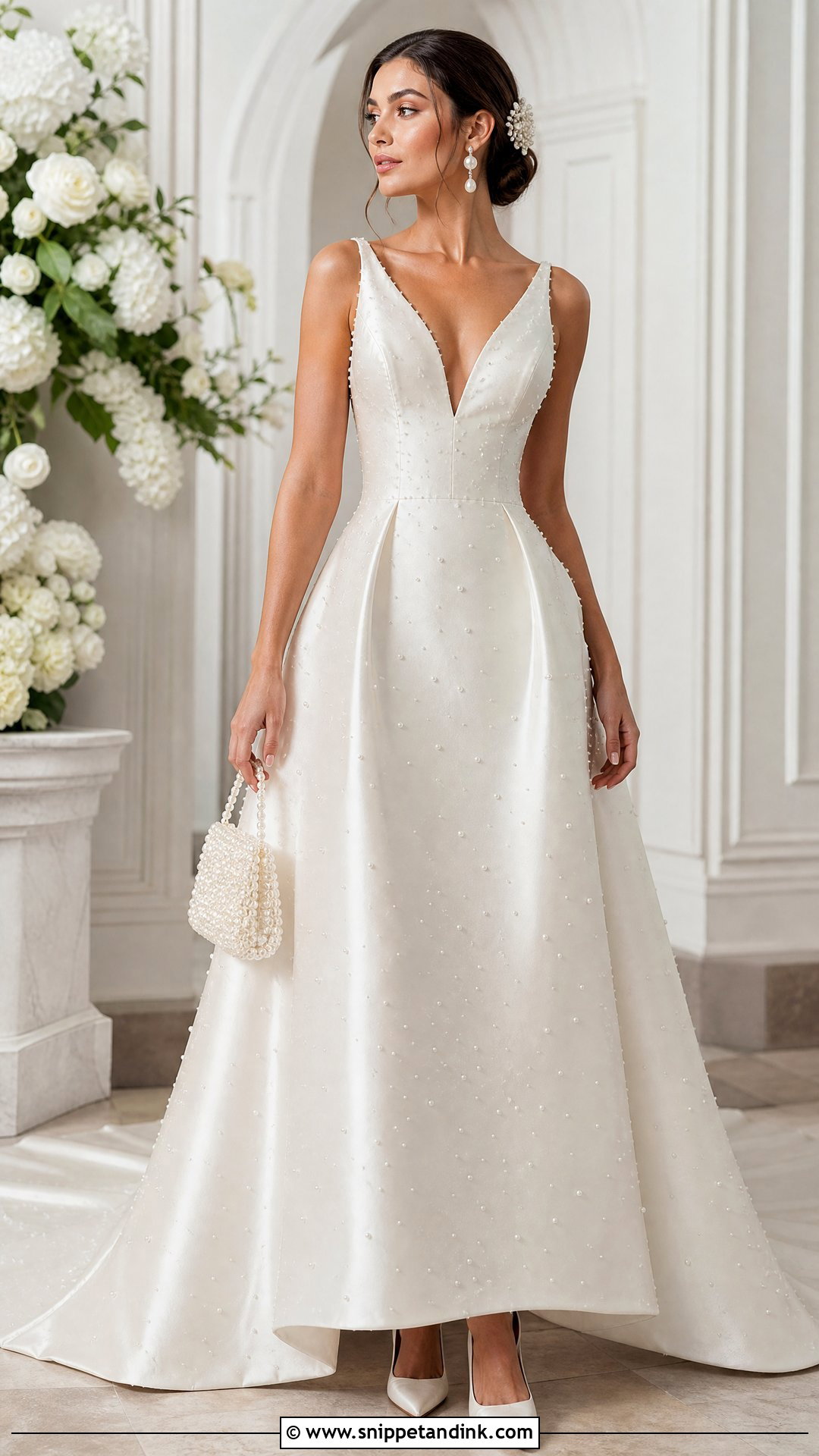
Pearls give texture without heavy sparkle. Choose a gown with pearl beading or pearl straps, then repeat the detail once, in earrings, a hair comb or a small bag, not all three. Before buying, check how the pearls are attached: hand-sewn pearls stay put, while glued ones can pop off when the gown is bustled. Keep shoes plain. Clean makeup and sleek hair stop pearls from looking old-fashioned.
12. Bow Back Wedding Dress Outfit
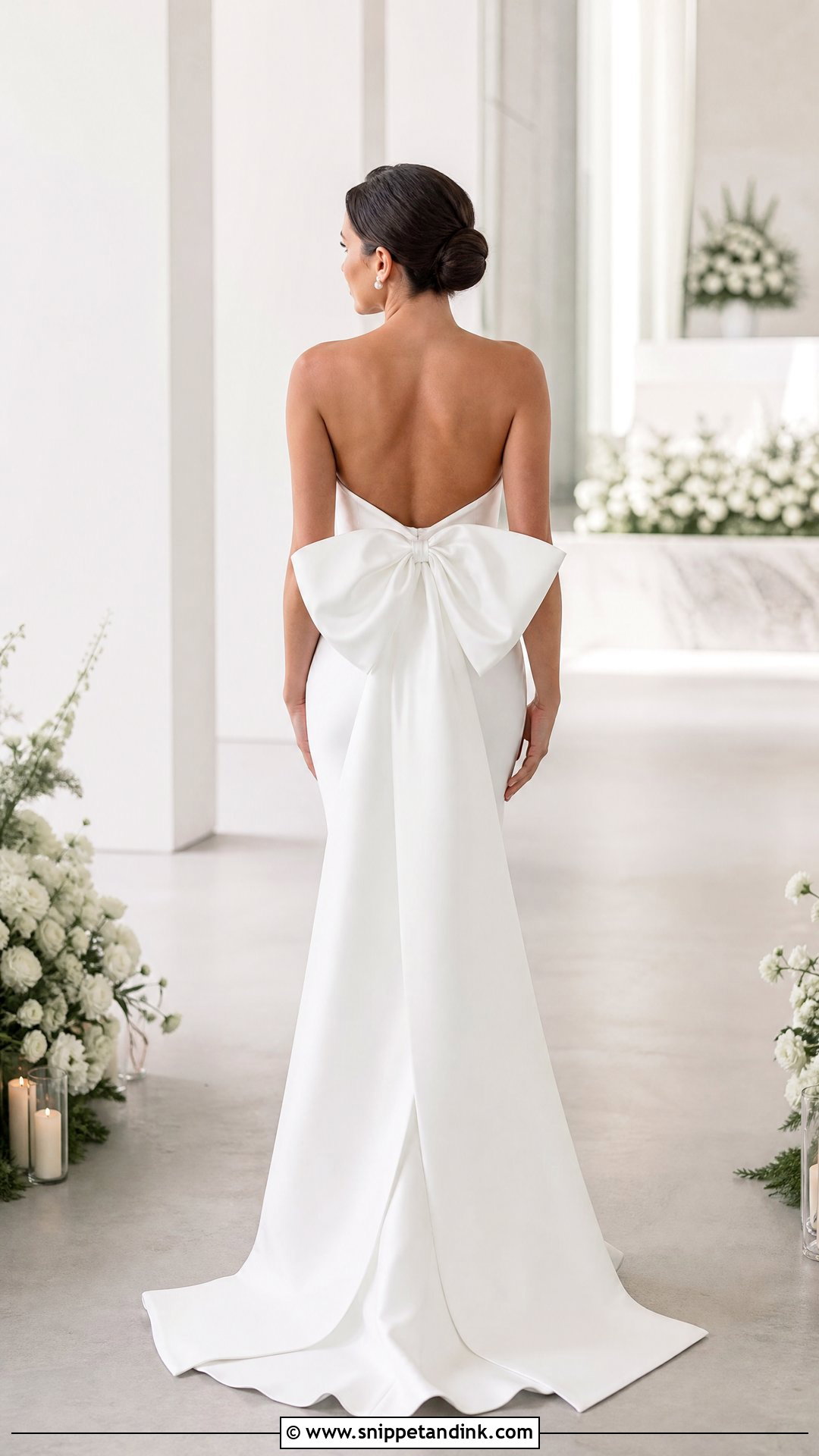
A bow at the back gives the dress its moment as you walk away from the altar. Oversized bows look dramatic; slim ones look romantic; detachable ones give you a second look. I’d ask whether the bow is structured with interfacing, because unstructured satin bows flatten after an hour of sitting. A clean dress shape, low open back and pearl studs let the bow lead. Remove the veil after dinner for a lighter version.
13. Minimal Column Wedding Dress Outfit
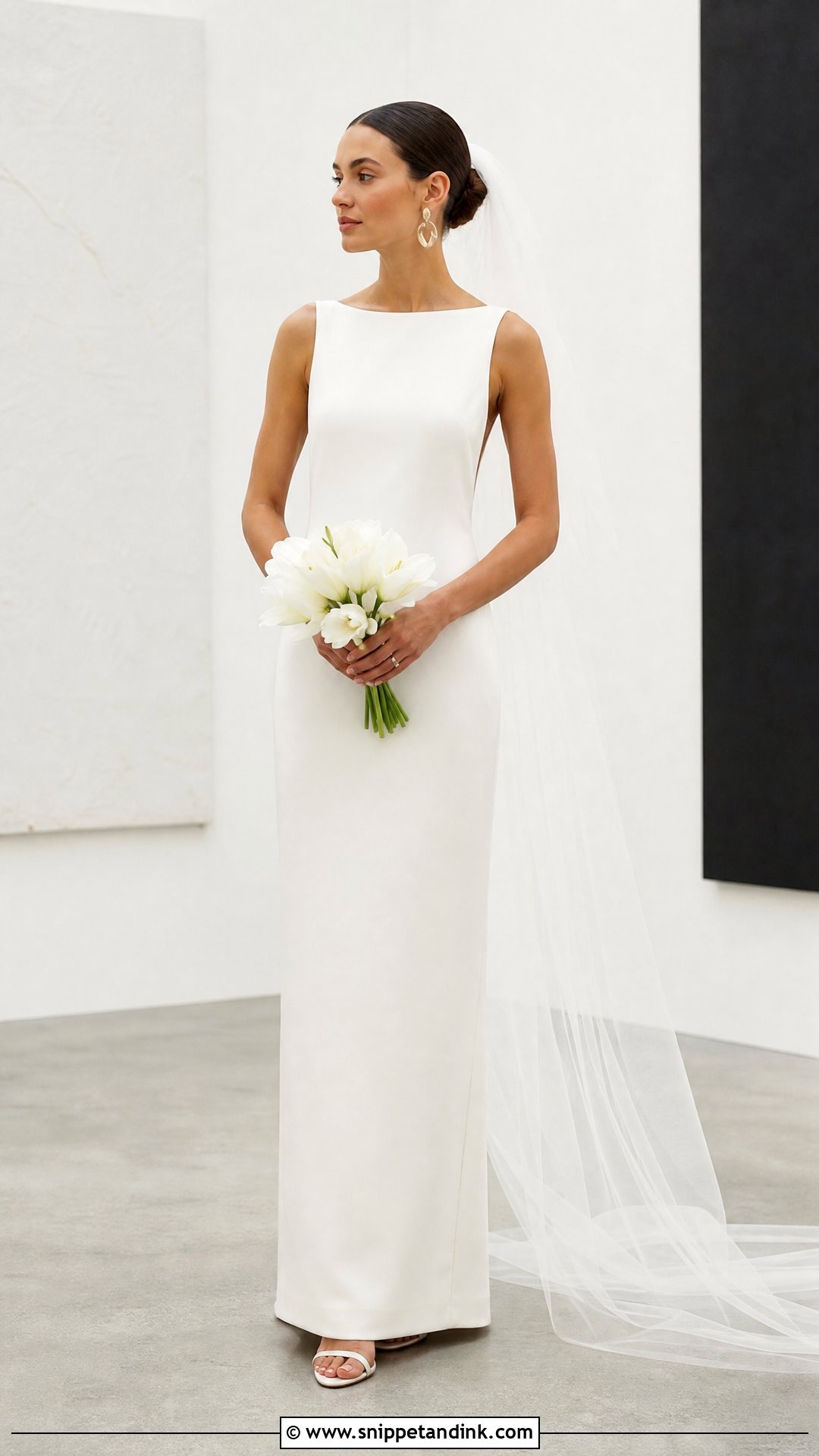
Column dresses depend on perfect tailoring because there’s nothing to hide a pulled seam or a gaping neckline. Choose crepe, satin or matte silk, then budget fittings for the side seams and the hem. A long column can limit your stride, so check for a slit or kick pleat before the dance floor finds out for you. Slim heels, sculptural earrings and a simple veil complete it. It’s also easy to wear again later, which many brides appreciate.
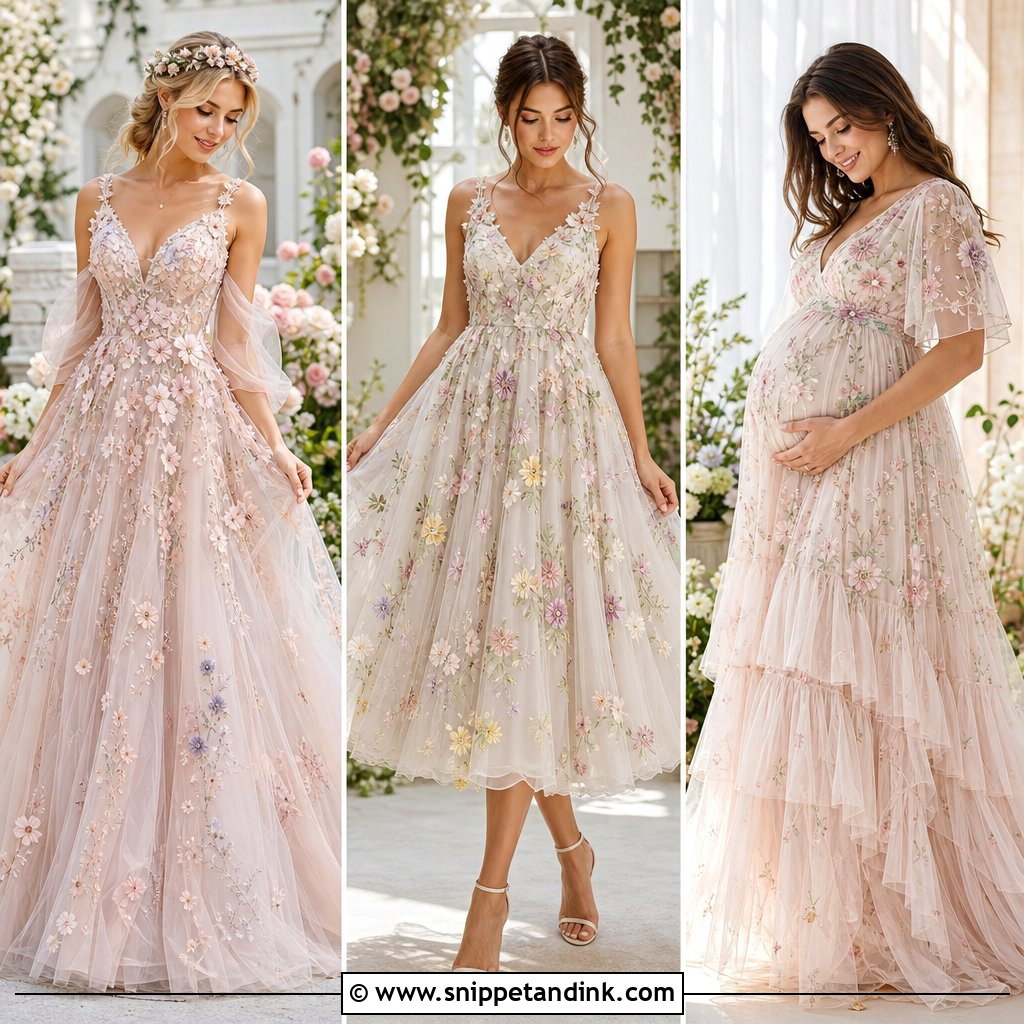
14. Floral Applique Wedding Dress Outfit
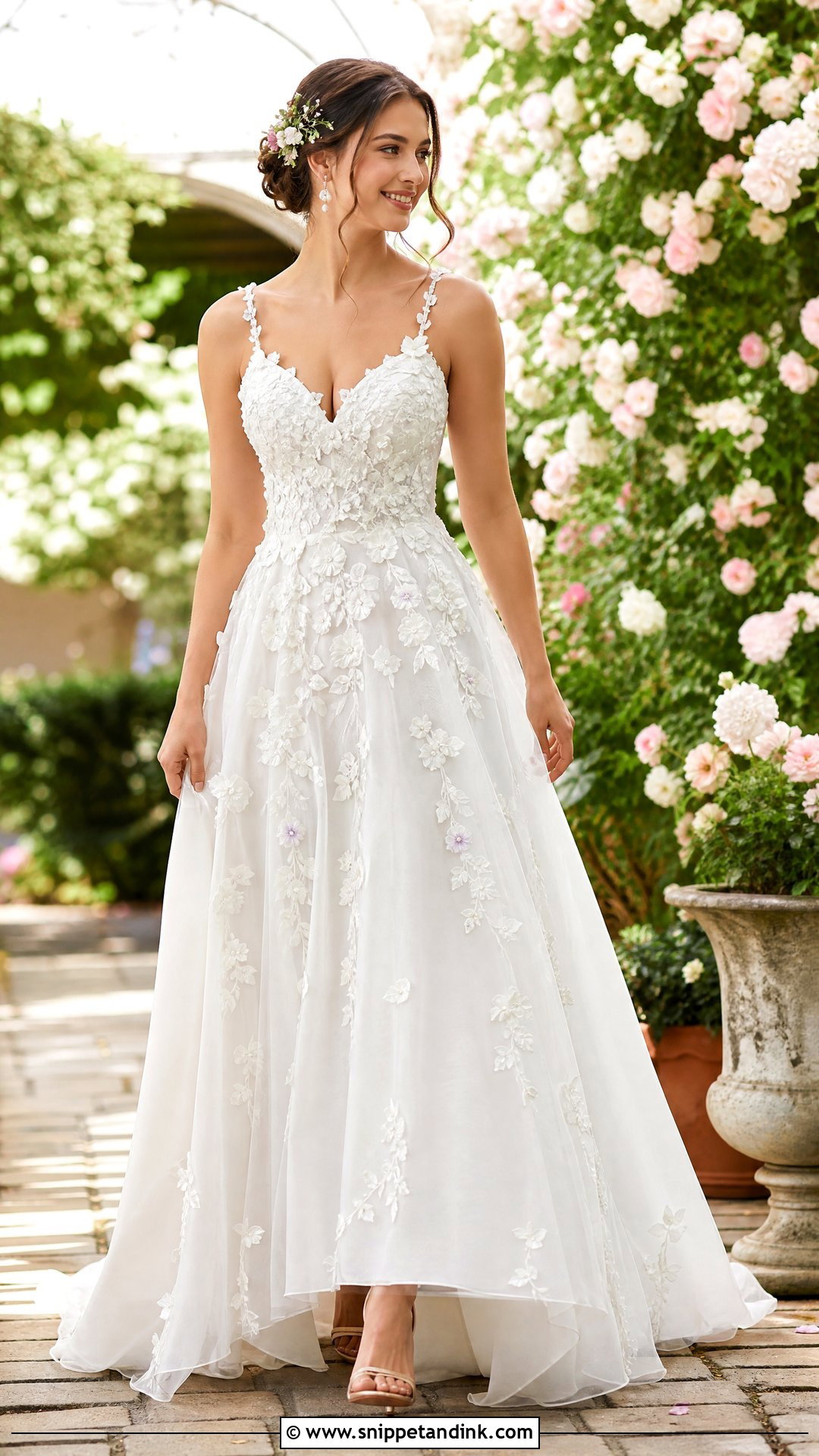
3D floral appliques give a dress depth that flat lace can’t. Placement is what I check: scattered flowers look graceful, while dense clusters at the hip add bulk in photos. Appliques on the skirt can catch on a bouquet or your heels, so have the hem flowers set slightly higher. An A-line or fitted gown suits spring and garden weddings. Delicate heels, floral pins and simple earrings are plenty, and a soft-colored bouquet completes it.
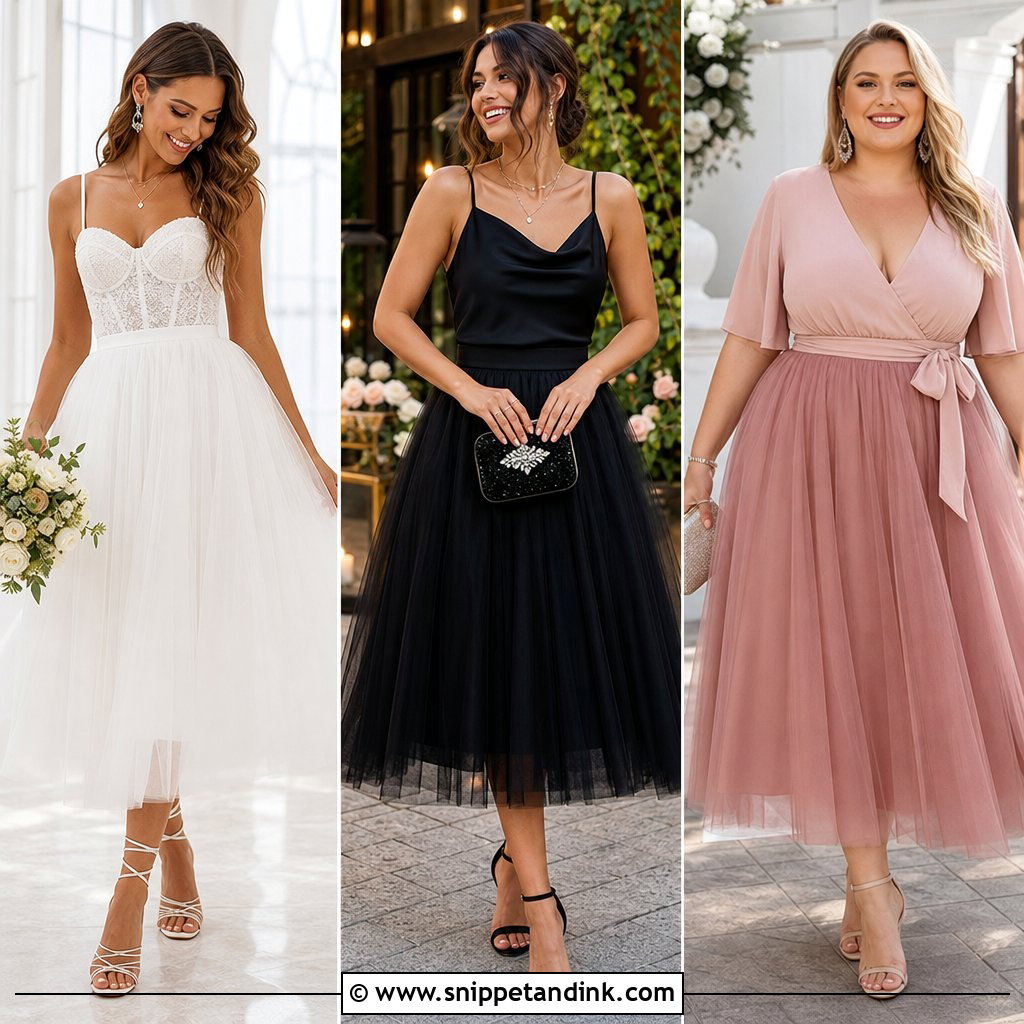
15. Corset Wedding Dress Outfit
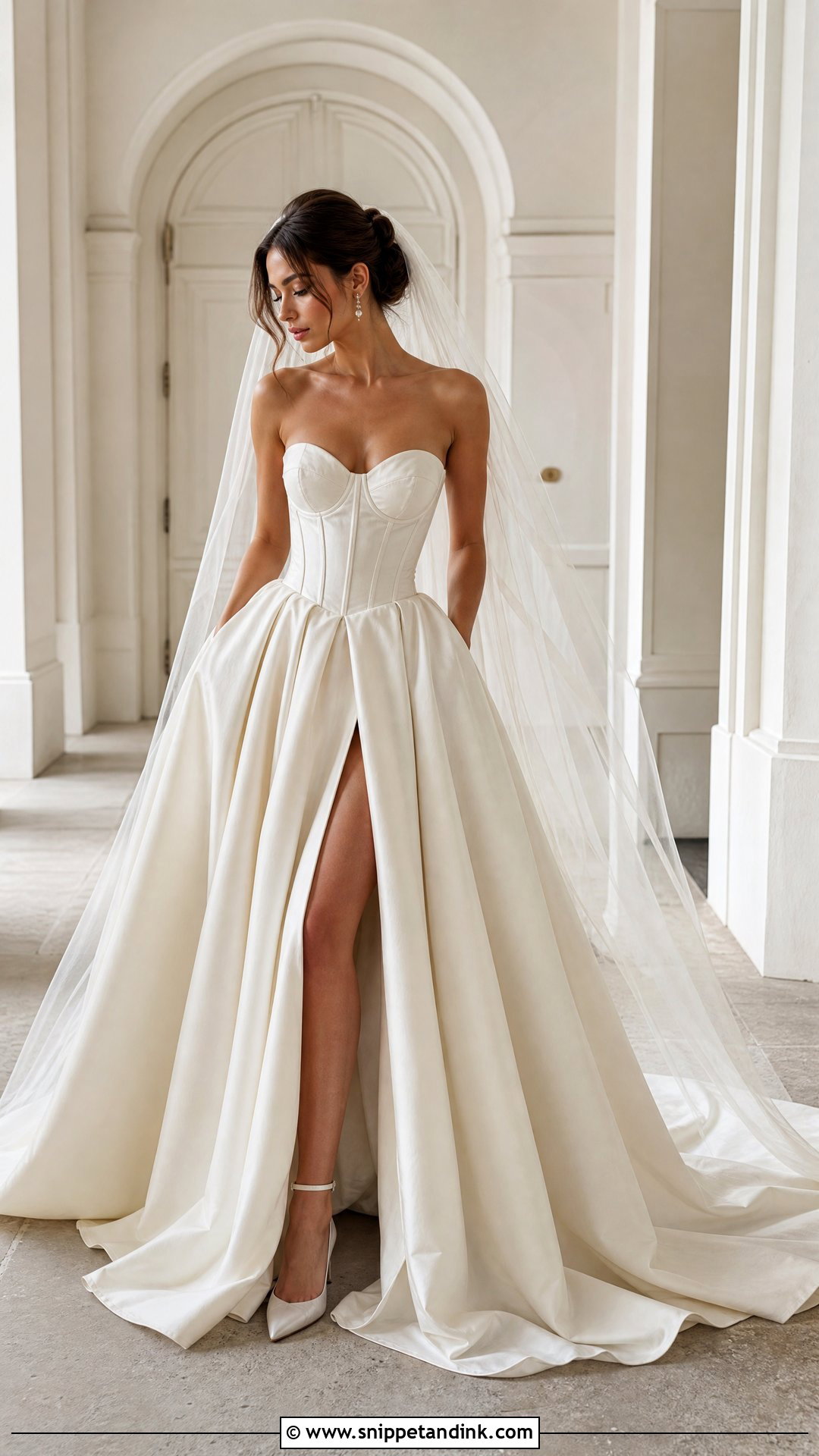
A corset bodice gives a secure fit for a long day, as long as the alterations are precise. The boning should sit flat at the ribs without digging in when you sit; test that in every fitting. A full skirt reads romantic, a fitted one modern. Pointed heels, a sheer veil and delicate earrings suit it. Visible seams or boning are part of the design, so keep accessories plain.
16. Two Piece Wedding Outfit
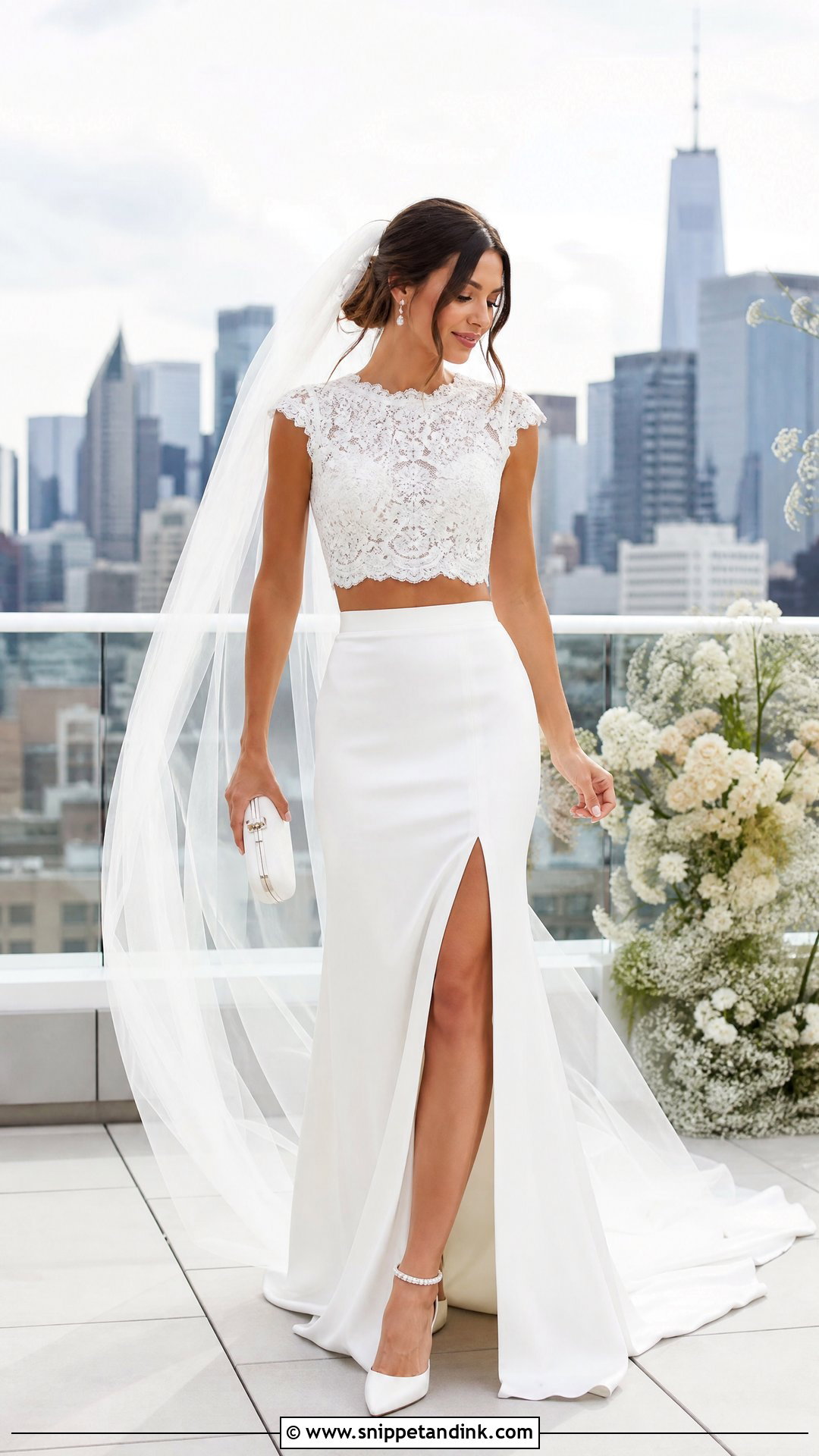
A two piece wedding outfit lets you size the top and bottom separately, which helps anyone who’s a different size above and below the waist. Try a cropped top with a high-waisted skirt, a satin cami with wide trousers or a beaded top with a column skirt. Matching fabric makes it read as one look. Delicate heels, a veil and a clutch finish it. Afterward, each piece can be worn on its own.
17. Cape Wedding Dress Outfit
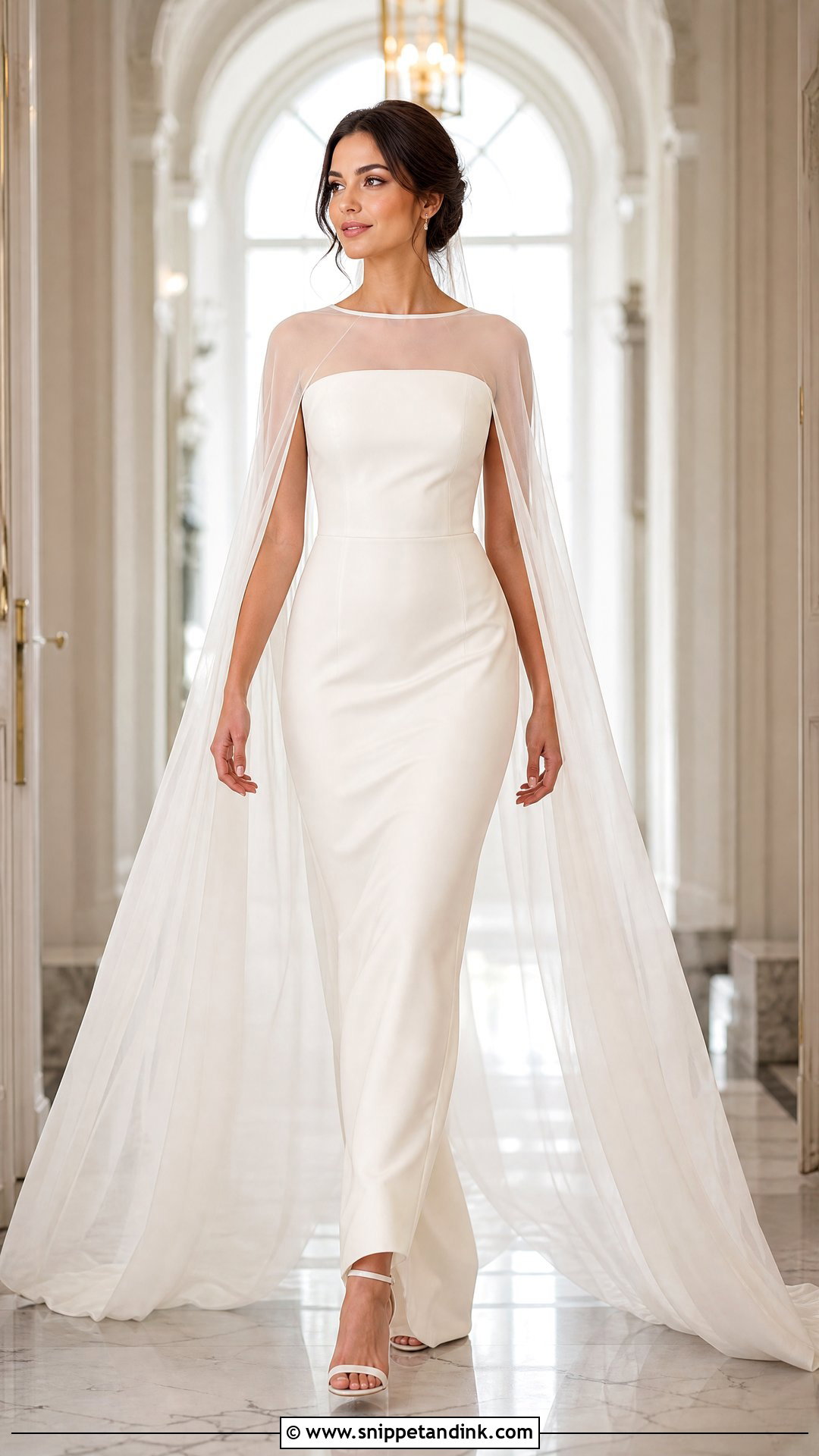
A cape gives drama without the weight of a long veil, and it moves well in photos. It attaches at the shoulders, so check how: snaps can pull a delicate neckline, and a cape fixed to the dress straps sits more securely. Underneath, a column or clean A-line keeps the outline simple. It covers your arms without sleeves, and it comes off after the ceremony for a lighter reception look.
18. High Neck Wedding Dress Outfit
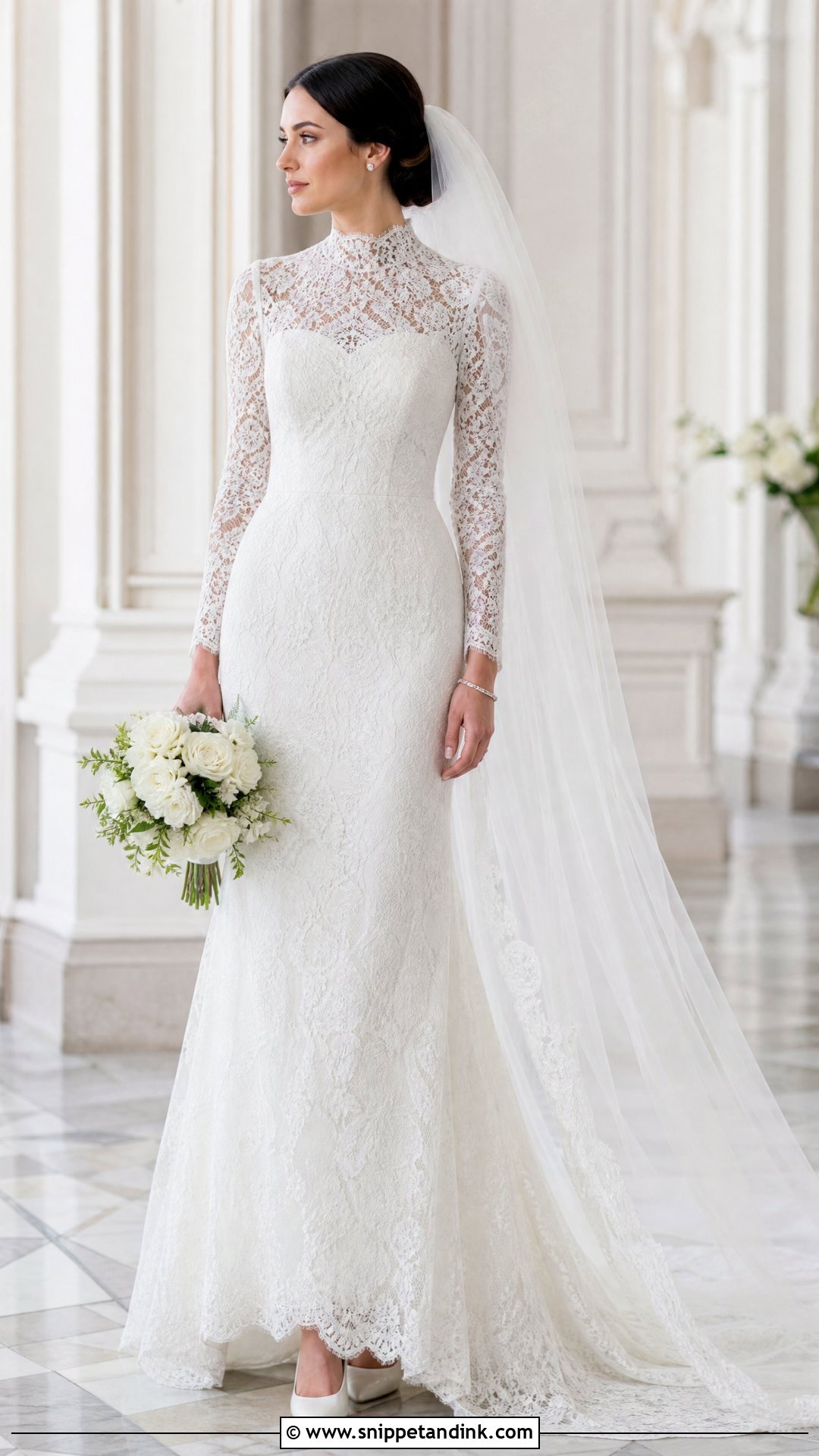
A high neck covers the area where a necklace would sit, so skip it and focus on earrings, a bracelet or a hair accessory. A sleek bun keeps the neck clear. Lace, crepe, satin or illusion fabric all work. The fit at the collar is what I watch: too tight and you’ll feel it all day, too loose and it wrinkles. An open back or defined waist keeps the look current, and classic pumps with a long veil suit a formal ceremony in cooler months.
19. Square Neck Wedding Dress Outfit
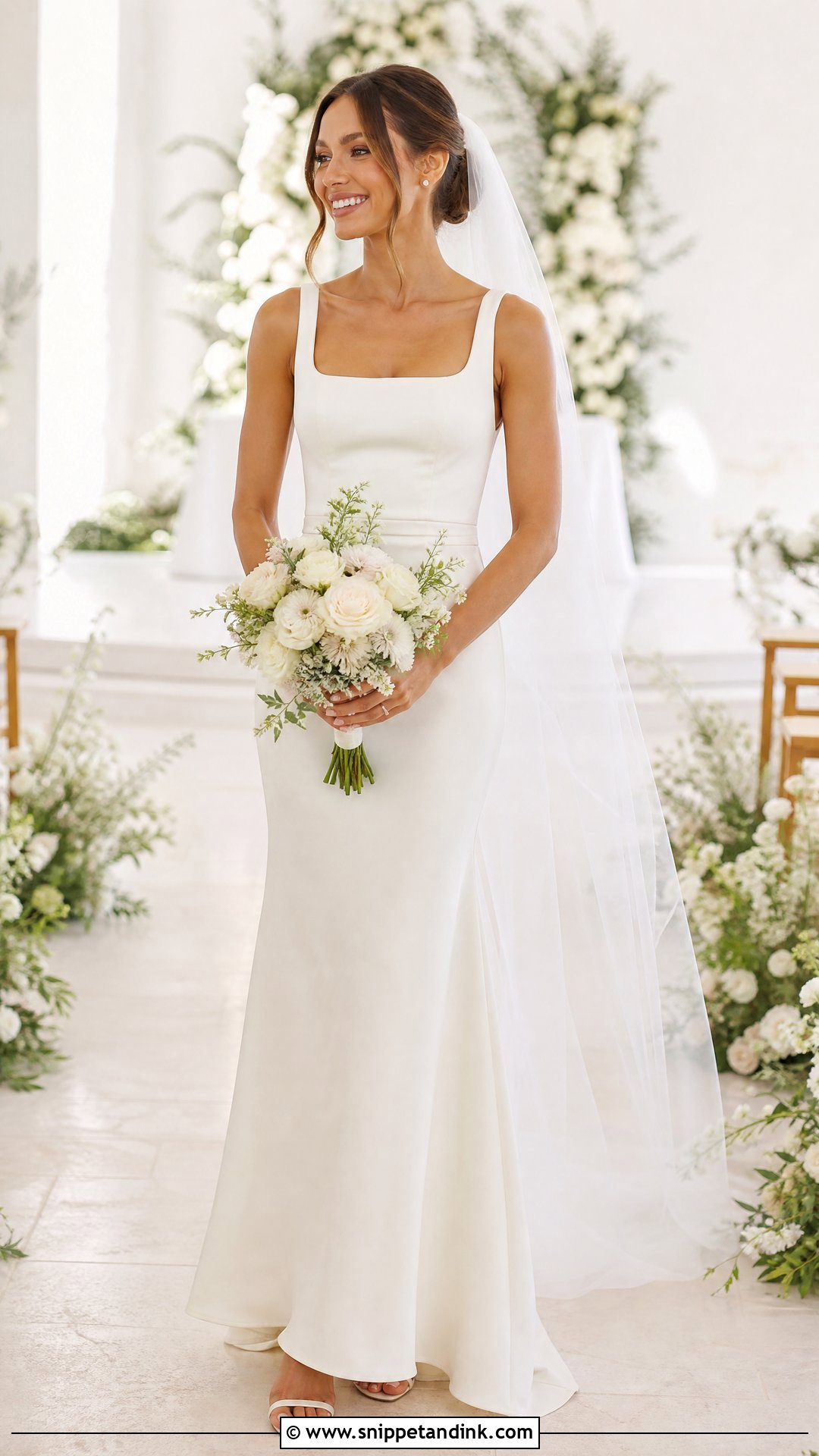
Square necklines frame the collarbone and sit well on most bust shapes, which is why I suggest them so often. Pair one with a delicate pendant, pearl studs or small hoops, depending on how detailed the dress is. Clean straps and structured bodices keep the corners crisp; soft fabrics can let them sag. Slingbacks and a neat veil suit it. Lace sleeves or a tulle skirt give a romantic version.
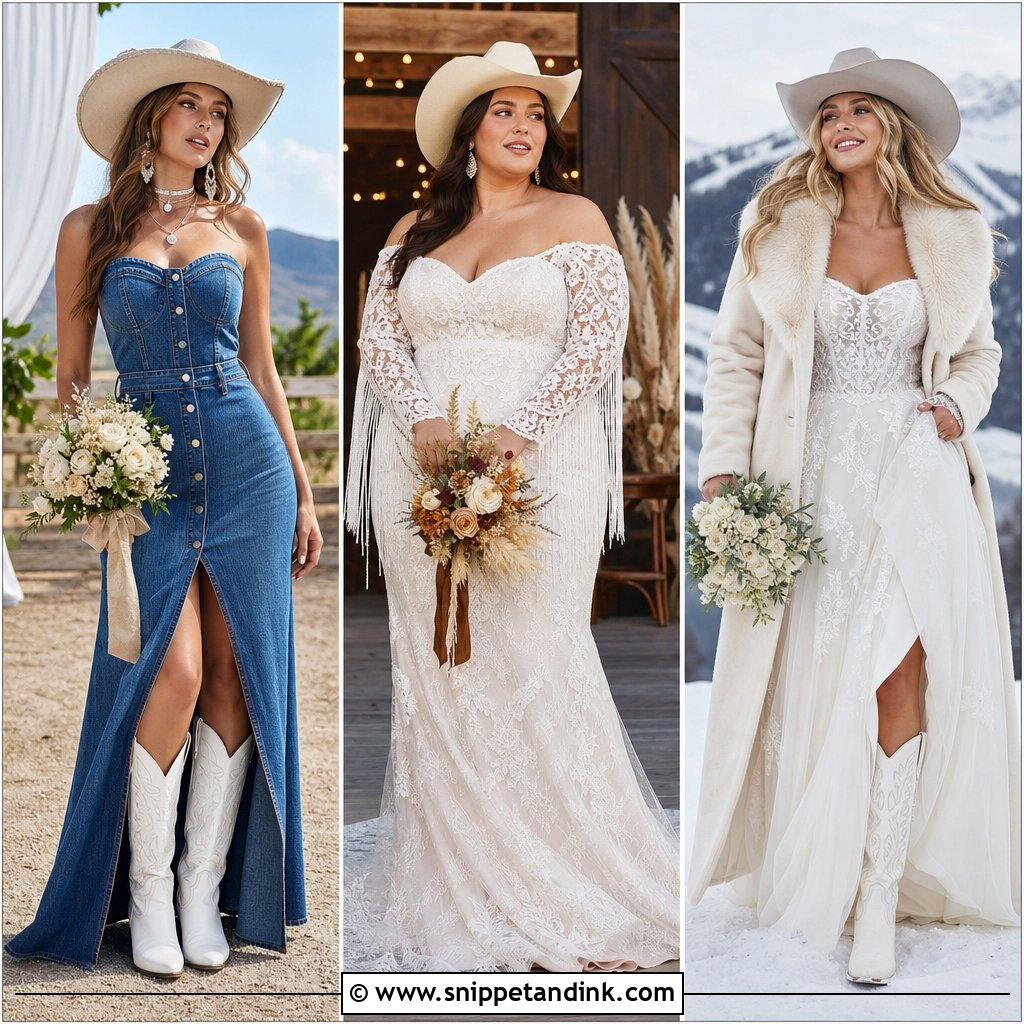
20. Sheer Sleeve Wedding Dress Outfit
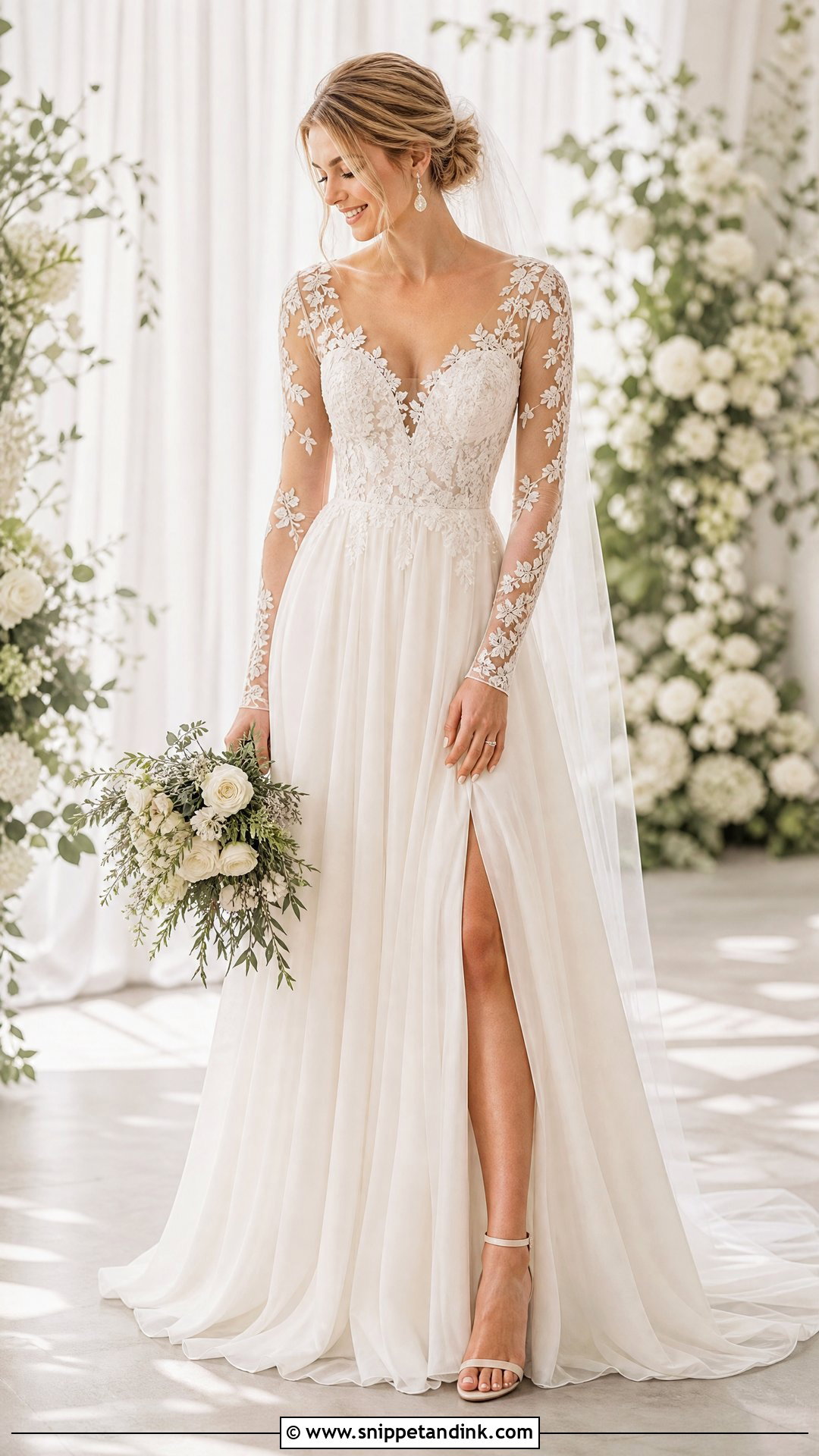
Sheer sleeves give coverage without weight. Organza holds a puff shape; tulle and chiffon fall softer, and lace adds pattern. Bishop sleeves are full at the wrist, so check they don’t drag through dinner. Detachable sleeves solve the change between a formal ceremony and a warm reception. If the sleeves are embroidered or beaded, keep the jewelry minimal. Simple heels, drop earrings and a soft veil finish it.
21. Champagne Wedding Dress Outfit
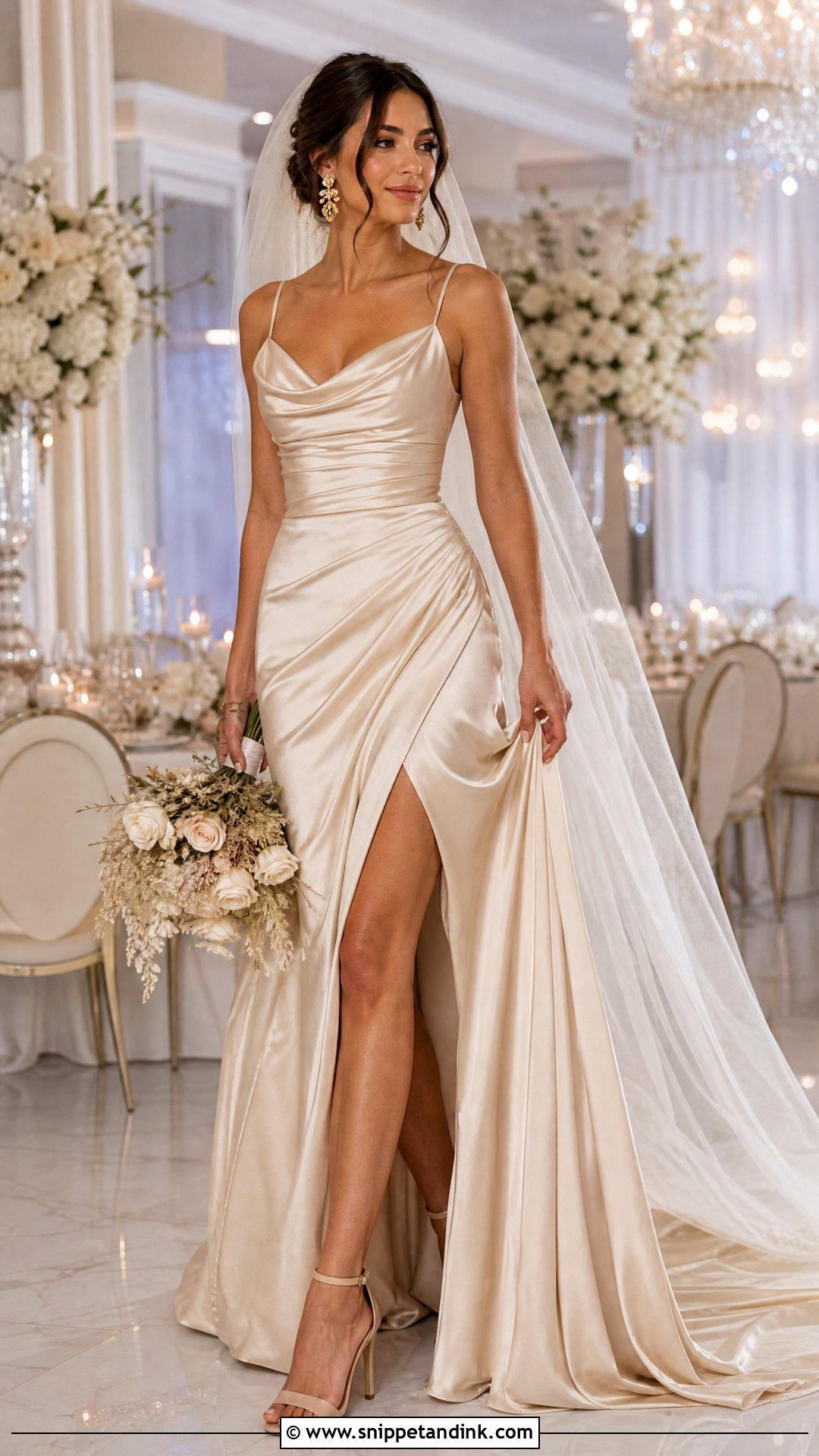
If bright white doesn’t suit you, champagne, ivory or soft gold can warm your skin. I hold fabric samples to the face in daylight, because champagne can wash out very pale or very warm skin, while ivory flatters most people. Pick the veil to match the dress undertone; a white veil over champagne makes the dress look dingy. Nude heels and gold jewelry complete it for evening receptions, vintage venues and fall.
22. Floral Print Wedding Dress Outfit
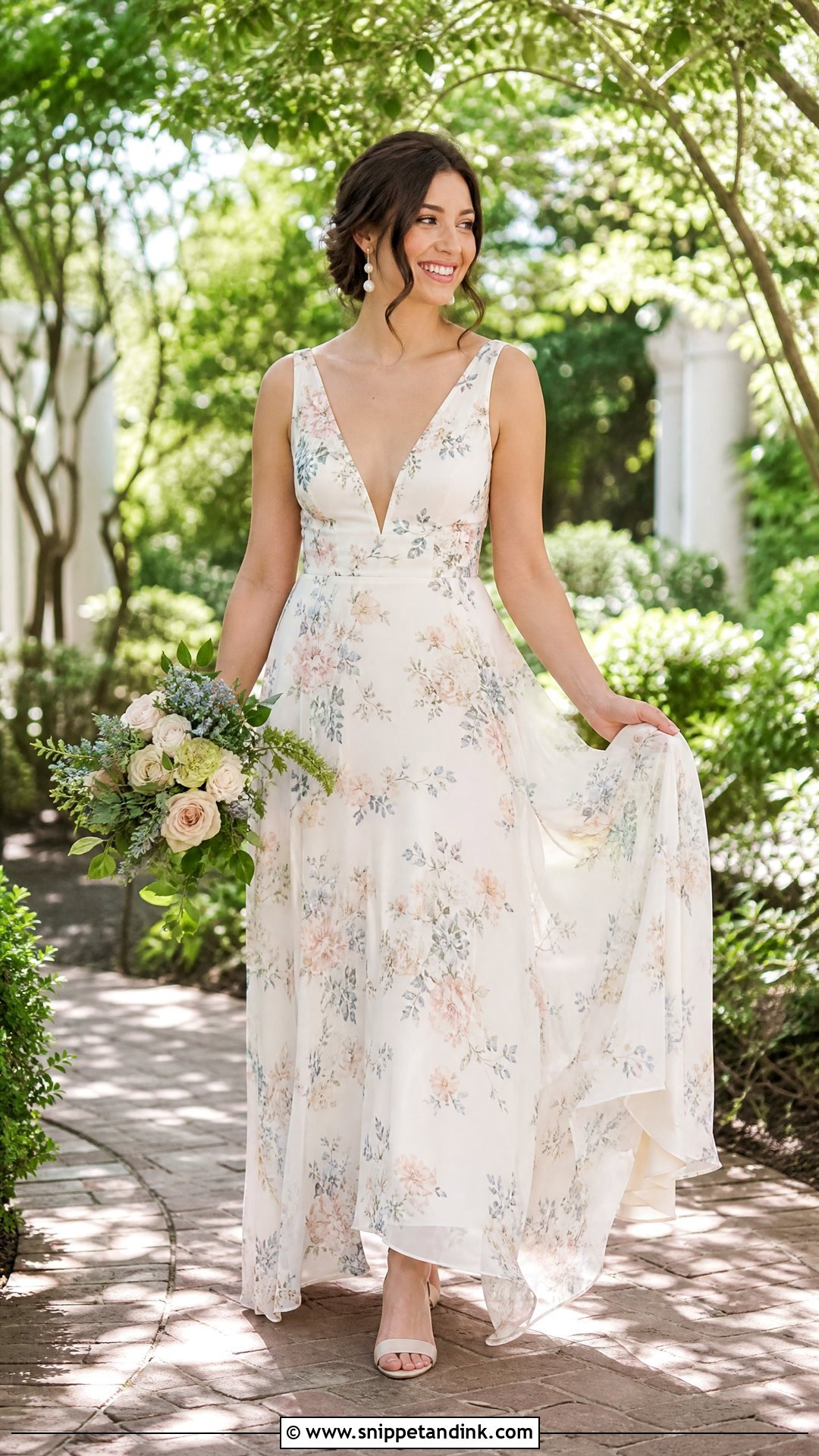
A floral print brings color into a bridal look gently. A white, ivory or pale base with blush, blue, lavender or green flowers keeps it bridal. With a busy print, a plain veil or no veil looks cleaner. Fresh makeup and understated jewelry are enough. Tiny florals look subtle; watercolor blooms are bolder. Garden and destination weddings suit it best.
23. Saree Wedding Day Outfit
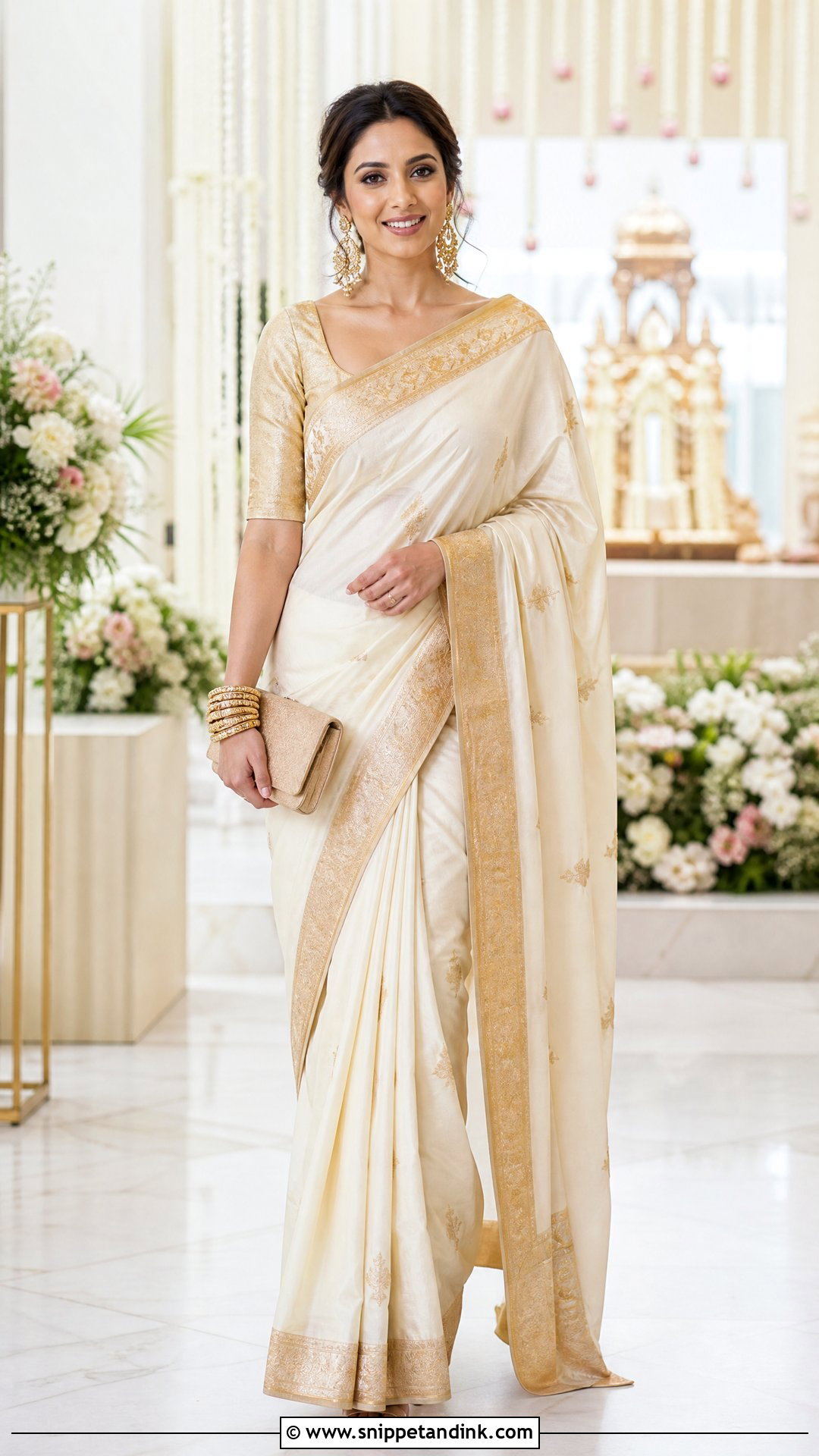
A saree is graceful when the drape is planned for movement. Choose silk, organza, chiffon or an embellished saree in ivory, gold, blush, red or pastel tones. Heavy silks hold pleats crisply; chiffon flows but needs more pins. Drape it in the exact heels you’ll wear, since the length is set from the floor, and secure the pleats and pallu with small safety pins hidden in the folds. A well-fitted blouse, statement earrings, bangles and a sleek bun with flowers complete it.
24. Lehenga Wedding Day Outfit
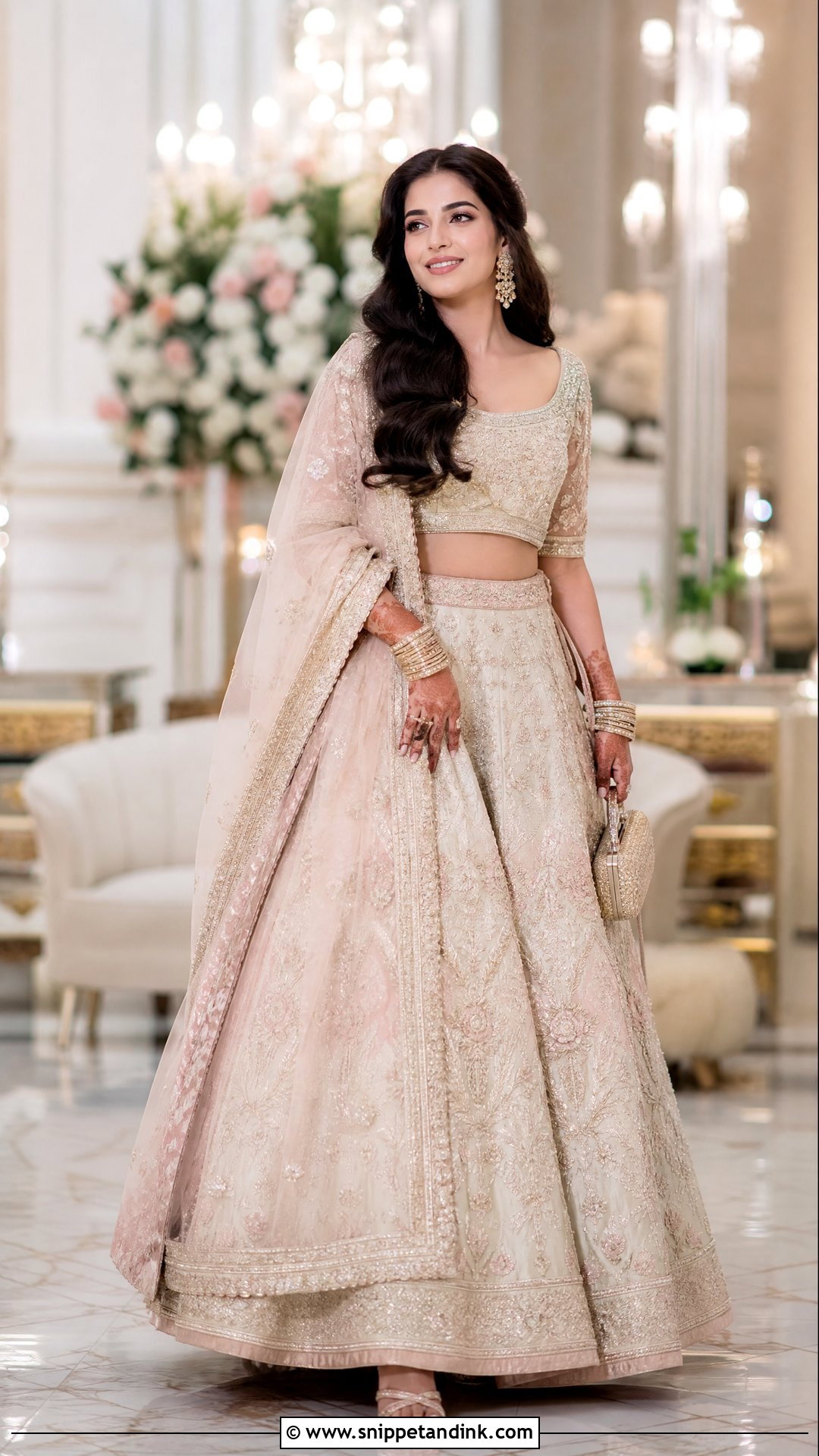
A lehenga makes a full, festive entrance, and its weight is the thing to plan around. Heavily embroidered skirts get heavy over hours, so I ask brides to wear theirs for a long stretch at the final fitting. Silk, brocade and organza all work. Ivory and gold feel modern, while red, blush, emerald, or pastel tones look richer. Set the skirt length with your shoes on, choose comfortable embellished heels, and pin the dupatta well at the shoulder and the waistband so it stays put when you dance.
25. Reception Mini Wedding Dress Outfit
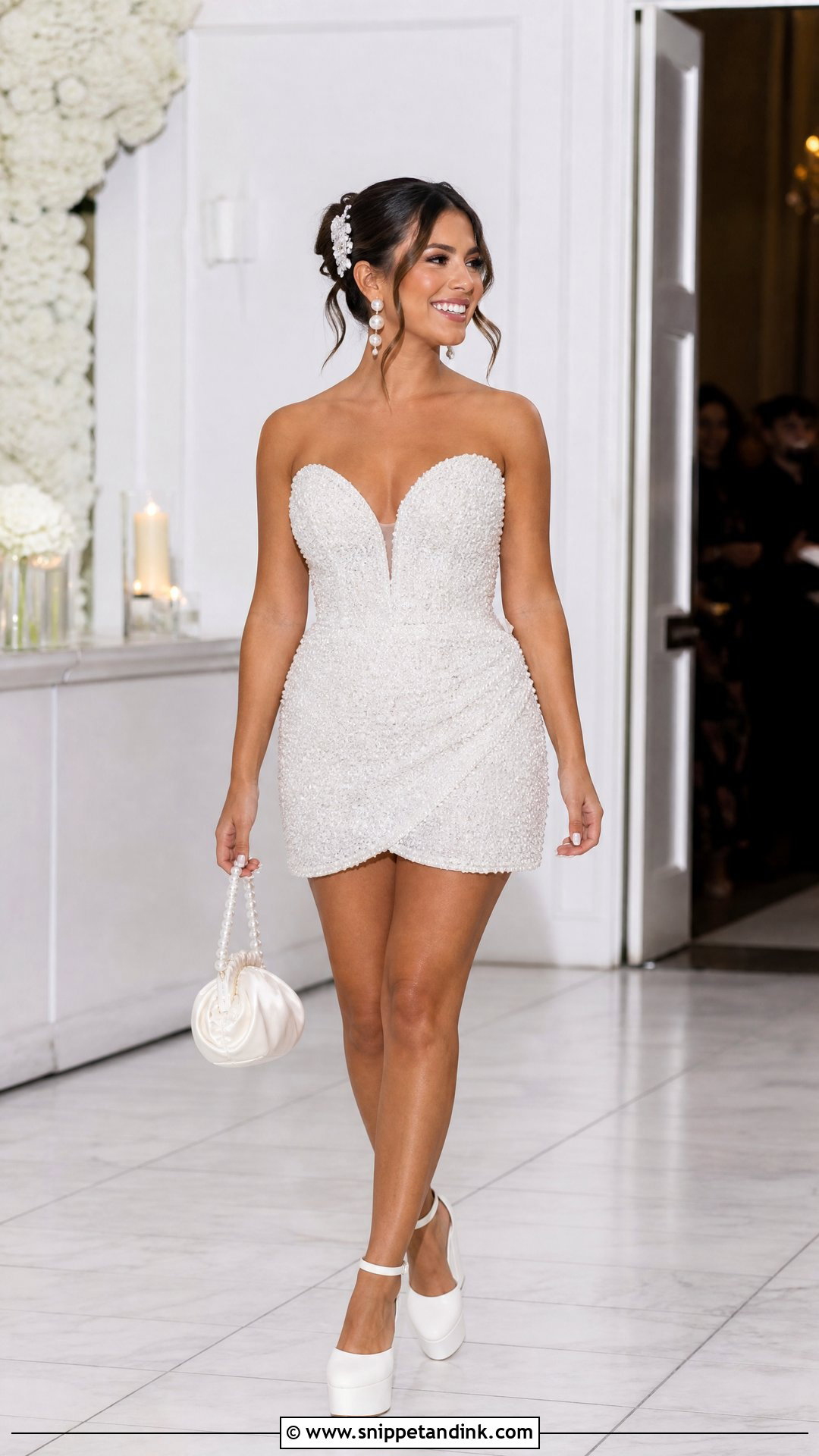
A mini for the reception gives you a second entrance and the freedom to dance. Feathers, pearls, sequins, bows or a sculpted skirt keep it bridal. Choose shoes you can actually stand in for hours: platforms and block heels beat thin stilettos on most floors. Statement earrings and a small bag finish it. It makes most sense when the ceremony gown has a long train or heavy skirt. Quality fabric keeps it from looking casual.
How a Second Look Actually Fits Into the Evening
Several looks above, from the overskirt to the reception mini, depend on a change, and it takes longer than people expect. Getting out of a corseted or buttoned gown and into a second outfit, then fixing hair and touching up makeup, usually takes at least twenty to thirty minutes. I plan it with the coordinator so it falls during a natural pause, often after dinner and before the first dance, when guests are busy.
- Ask the venue for a private room near the reception, not a restroom.
- Hang the second outfit, its shoes and accessories in one bag, labelled, before the ceremony.
- Choose one helper who has practised the gown’s buttons, loops or lacing.
- Plan where the first gown goes afterward. A garment bag and a hanger keep it from being crushed in a car.
If you’re unsure whether a change is worth it, an overskirt or detachable sleeves gives you a new outline in a few minutes, with no second dress to store.
Dress for Hugs, Dinner and the Dance Floor
The right outfit fits your actual plans, not only your mood board. Picture yourself walking, hugging, sitting through dinner, posing and dancing in it, then test each of those at a fitting. A dramatic gown can carry the ceremony while a jumpsuit or mini handles the reception. A suit, saree, lehenga, slip dress or lace gown can all look bridal when the shoes, accessories and hair support it. Pick the one you forget you’re wearing by the second hour.
You'll Like These Ideas:


Leave a Reply