
Separates have become one of the most personal ways to dress for a wedding. Instead of one fixed gown, bridal separates let you combine a corset, crop top, blouse, skirt, trousers or overskirt into an outfit that suits your venue, your body and how you want to move. Satin and lace read classic, tulle romantic, crepe minimal and tailored trousers bold. Many brides also like that a single swap takes the look from ceremony to reception. Below are thirty combinations I’d happily style, with the fitting details that make each one work.
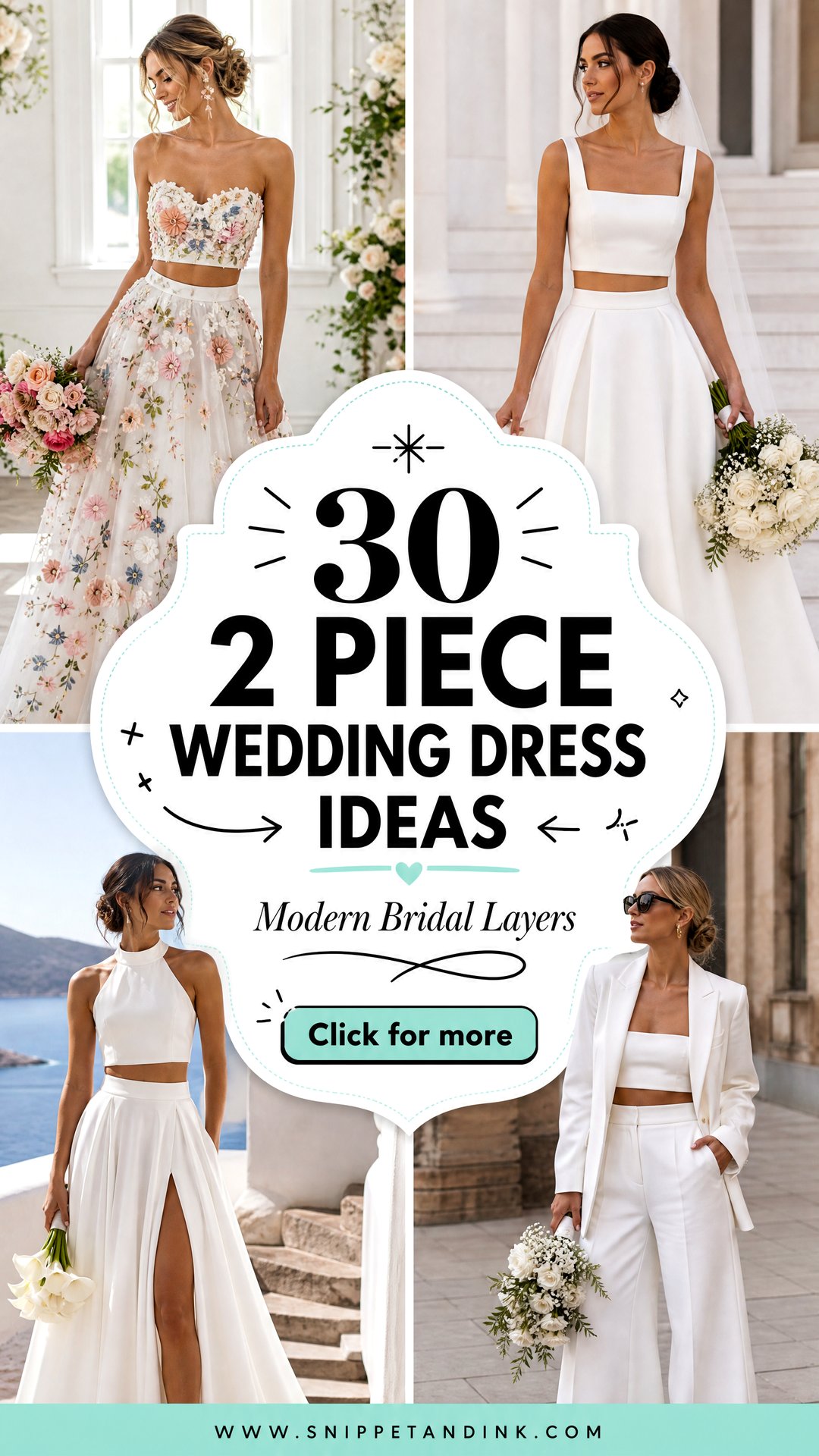
Your Top and Skirt Can Be Different Sizes, and Should Be Fitted Together
The quiet advantage of separates is sizing. Very few people are the same size on top and bottom, and with two pieces you can buy each one to fit instead of altering a whole gown down from the larger measurement. The catch is that the pieces still have to be fitted as one outfit.
The order I fit them in
- Settle the bra or built-in support, then fit the top. Its hem decides where the skirt’s waistband should sit.
- Fit the skirt’s waistband to that point, usually the narrowest part of your waist, then set the length with your wedding shoes on.
- Wear both pieces together for the last fitting and move in them: sit, raise both arms, hug someone and turn.
How much skin should show?
A strip of midriff that looks tidy standing still can double when you lift your arms for a hug or the first dance. Check the mirror with your arms up before you settle the gap. If you’d rather show nothing, ask for the top to overlap the waistband slightly. If you like a visible gap, keep it narrow and even all the way round; an uneven gap looks like a fitting mistake rather than a choice.
Separates also make bathroom trips simpler, and a top can go on over finished hair without dragging a whole dress over your head. Both are worth weighing if you’re torn between a two-piece and a heavy one-piece gown.
1. Lace Crop Top Wedding Dress
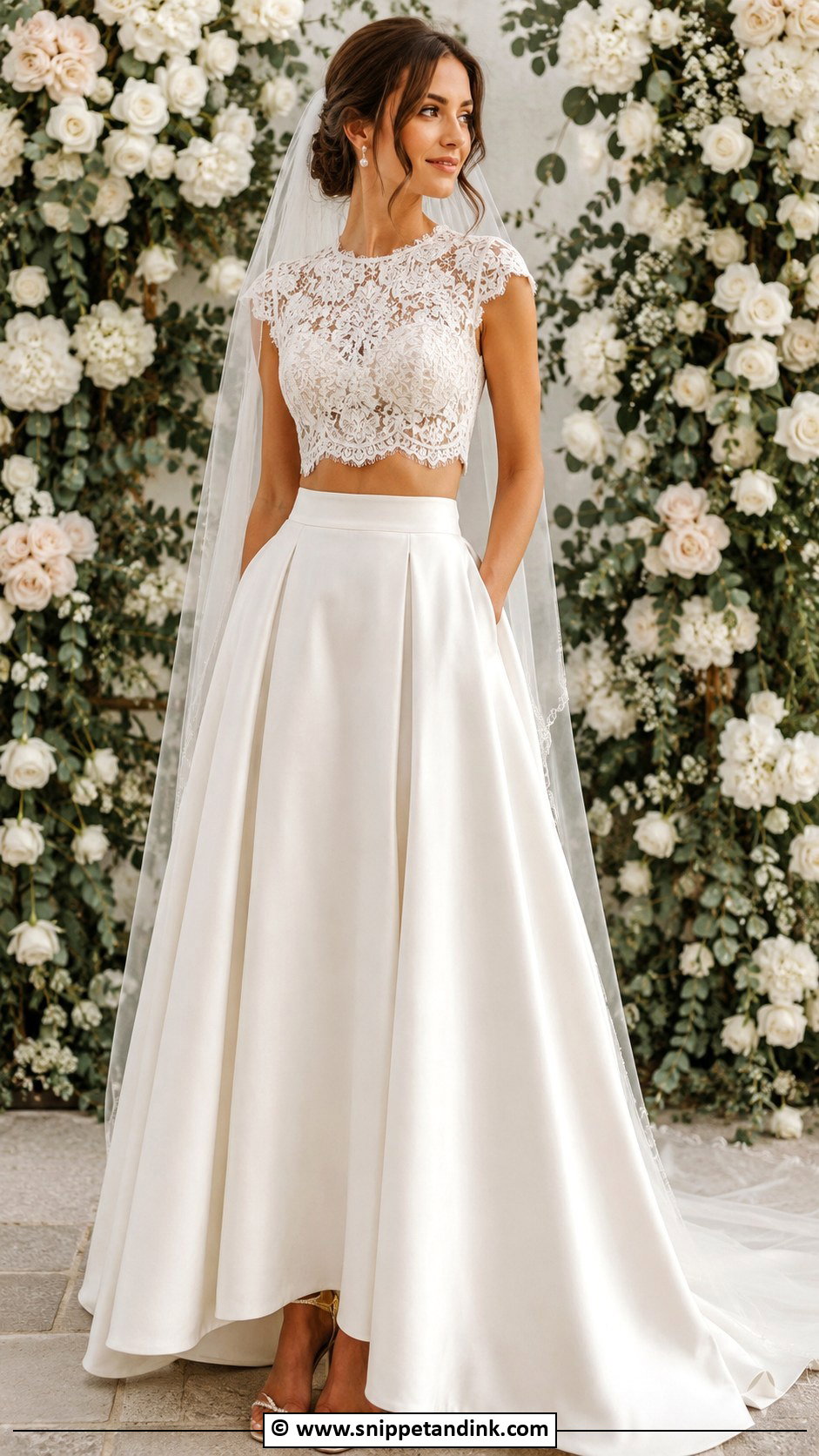
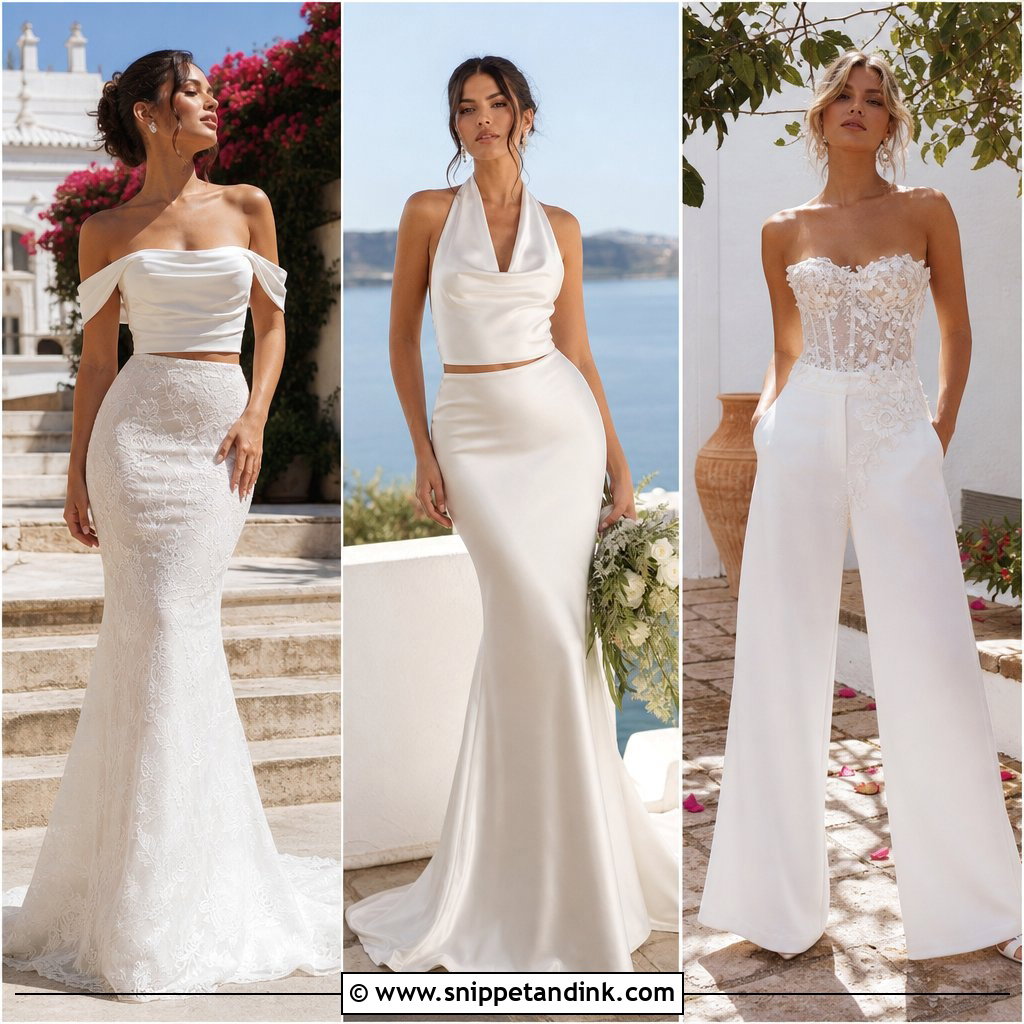
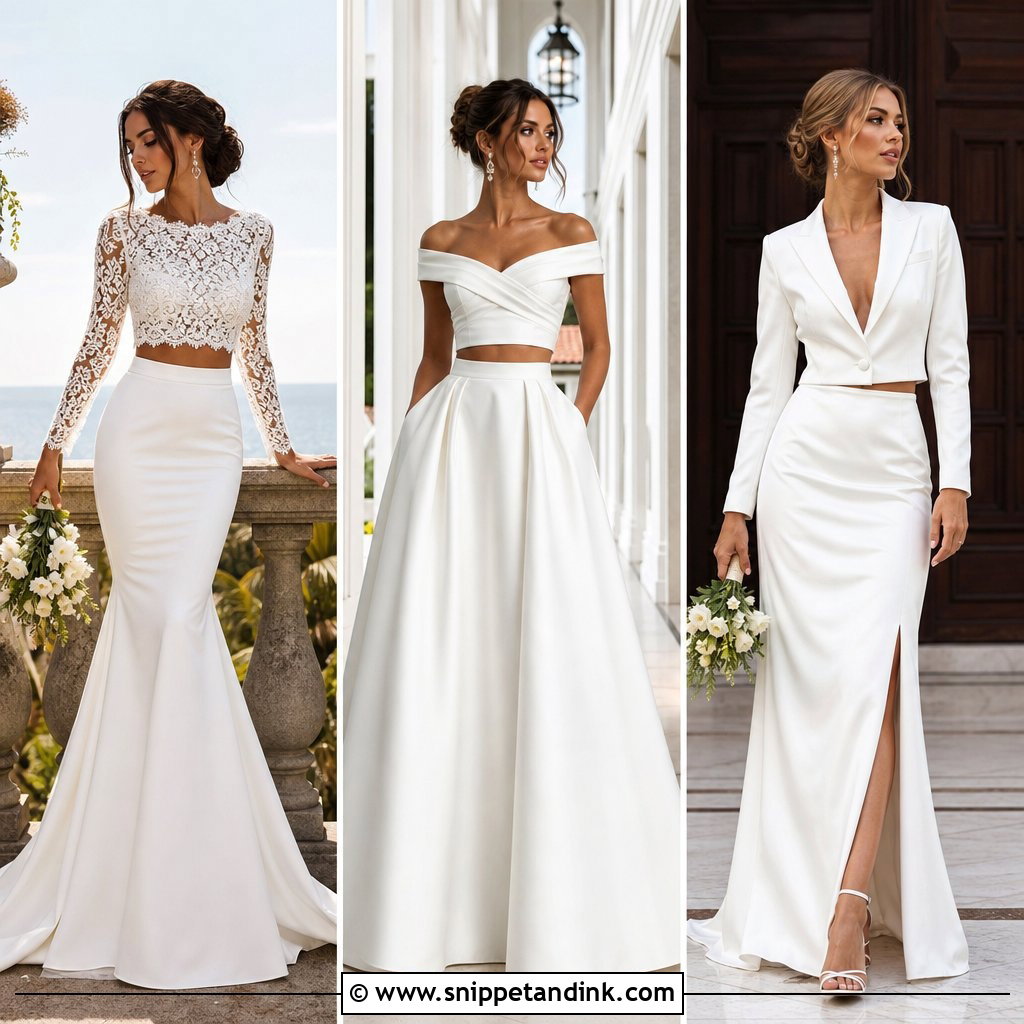
Lace on top, a smooth high-waisted skirt below in satin, crepe or tulle, and only a sliver of skin between them: that’s the version that stays bridal rather than casual. Long lace sleeves suit cooler months, while a sleeveless top suits spring and summer. Pearl earrings, a soft veil and simple heeled sandals keep the focus on the lace. When I fit a lace crop, I look at the hem edge first. A scalloped border finishing the top looks deliberate, whereas a turned hem tends to flip up as you move.
2. Satin Corset Wedding Dress
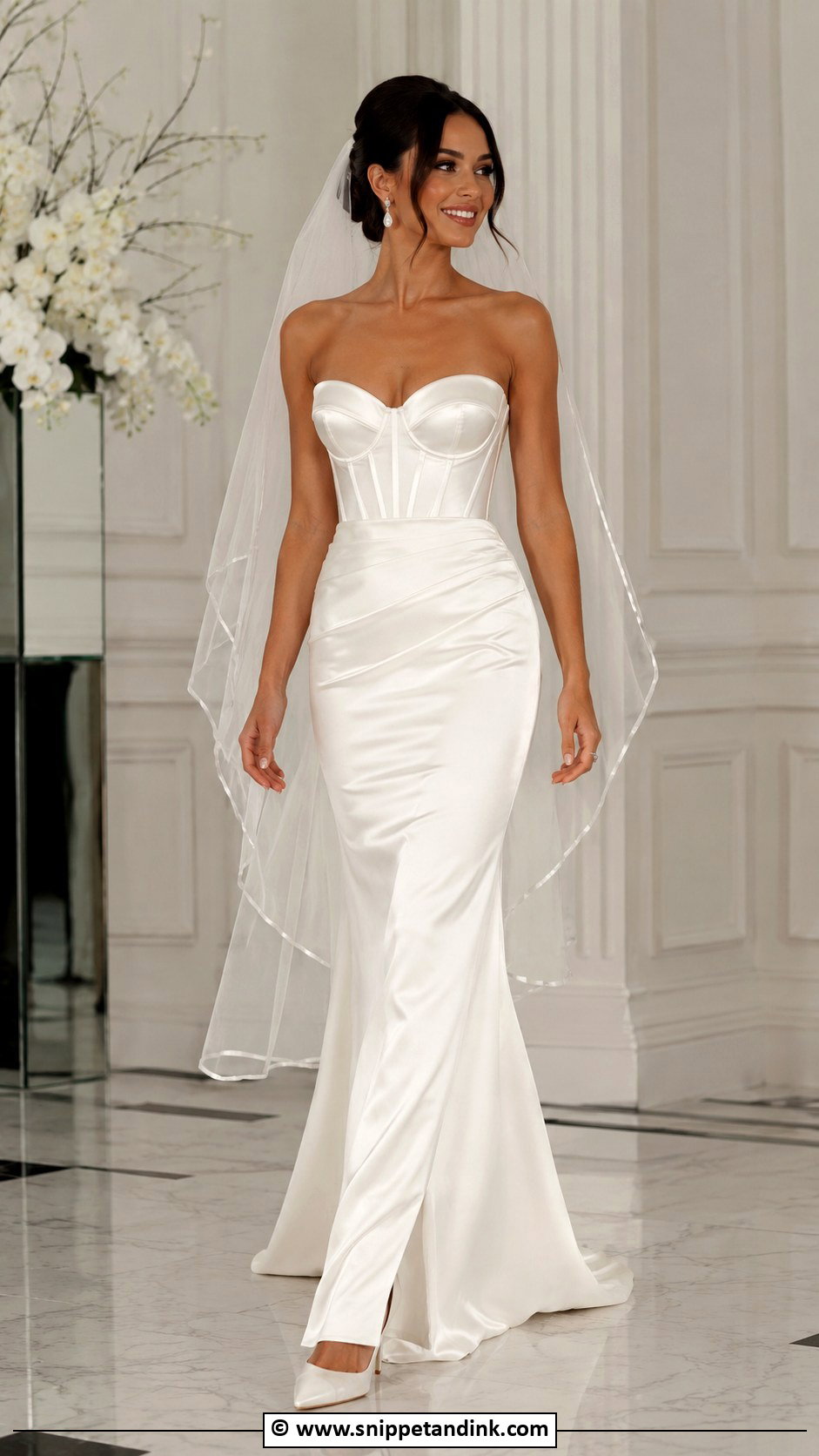
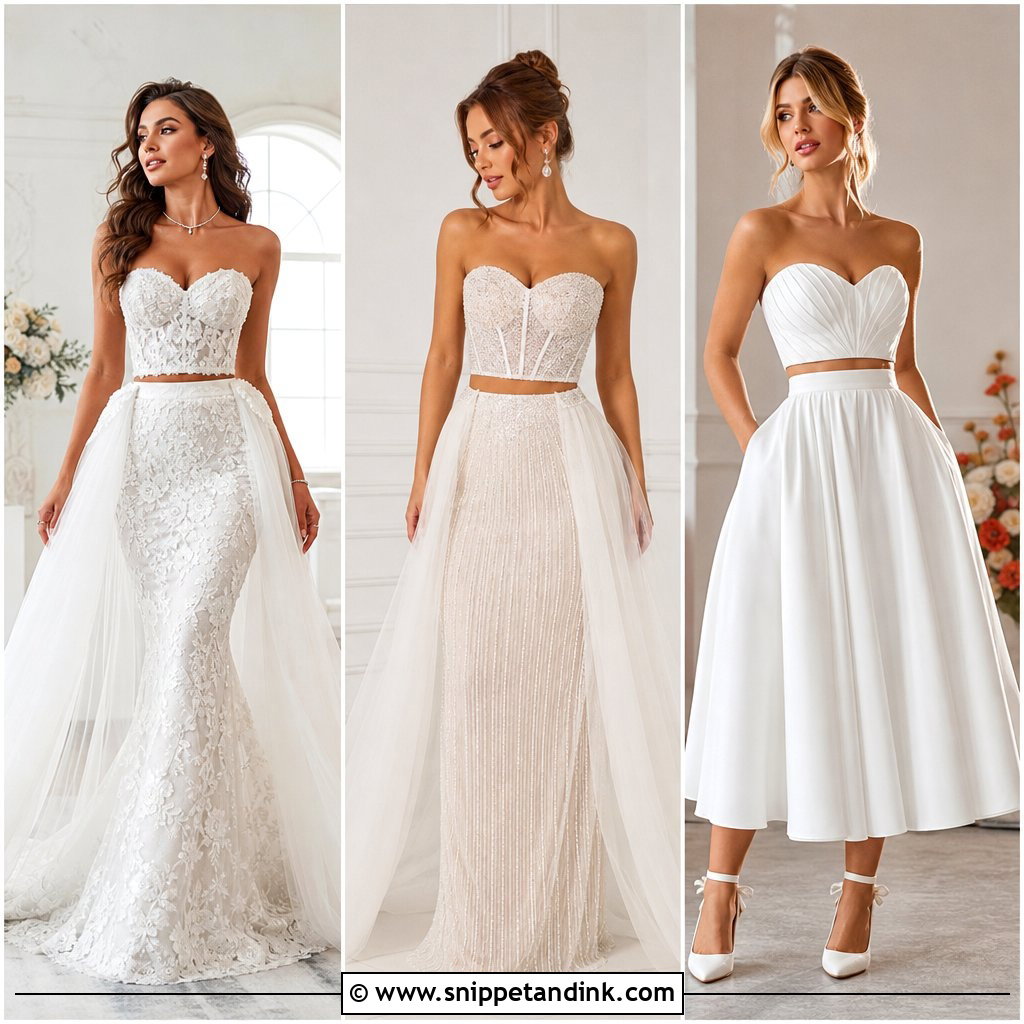
A boned satin corset over a smooth high-waisted skirt looks classic from a distance and modern up close. The skirt can be straight, A-line or a full ball skirt, depending on how much drama you want. A low bun, drop earrings, pointed heels and a cathedral or fingertip veil keep it refined. Have the corset fitted while you’re seated as well as standing. One that feels fine upright can dig hard into the ribs once you sit down to dinner.
3. Tulle Skirt Wedding Dress
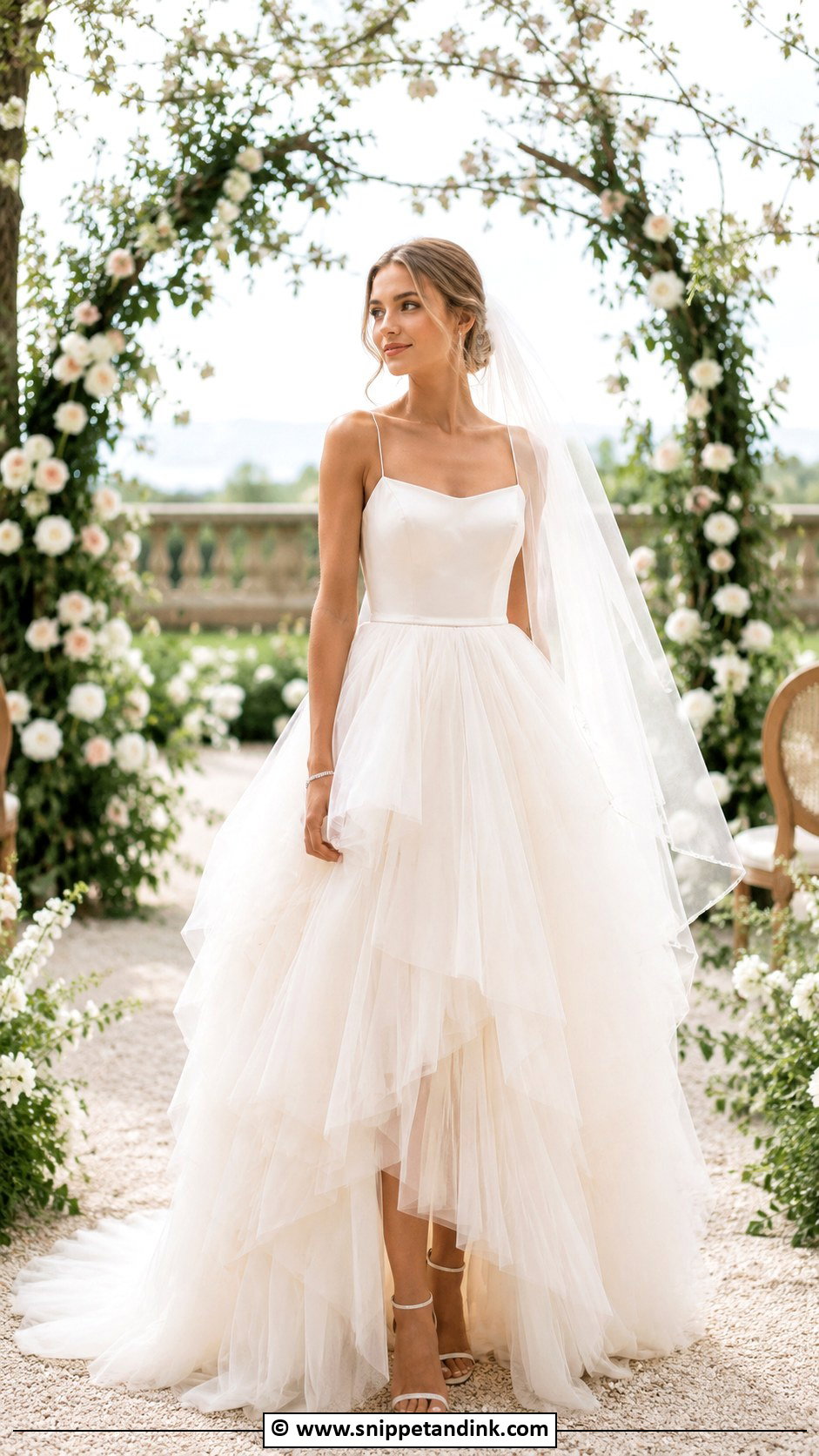
Layered tulle brings soft movement and a dreamy mood, balanced by a fitted bodice, lace top or simple satin crop. Keep the waist high so the separates look intentional. Ivory, blush, champagne or pale nude lining under the tulle shifts the tone more than you’d expect, so compare swatches in daylight. Delicate heels, a sheer veil and a small bouquet finish it. A full tulle skirt gathers a lot of fabric into its waistband, so I make sure the top ends exactly where the skirt begins; otherwise the gathers bunch up underneath it.
4. Crepe Top Wedding Dress
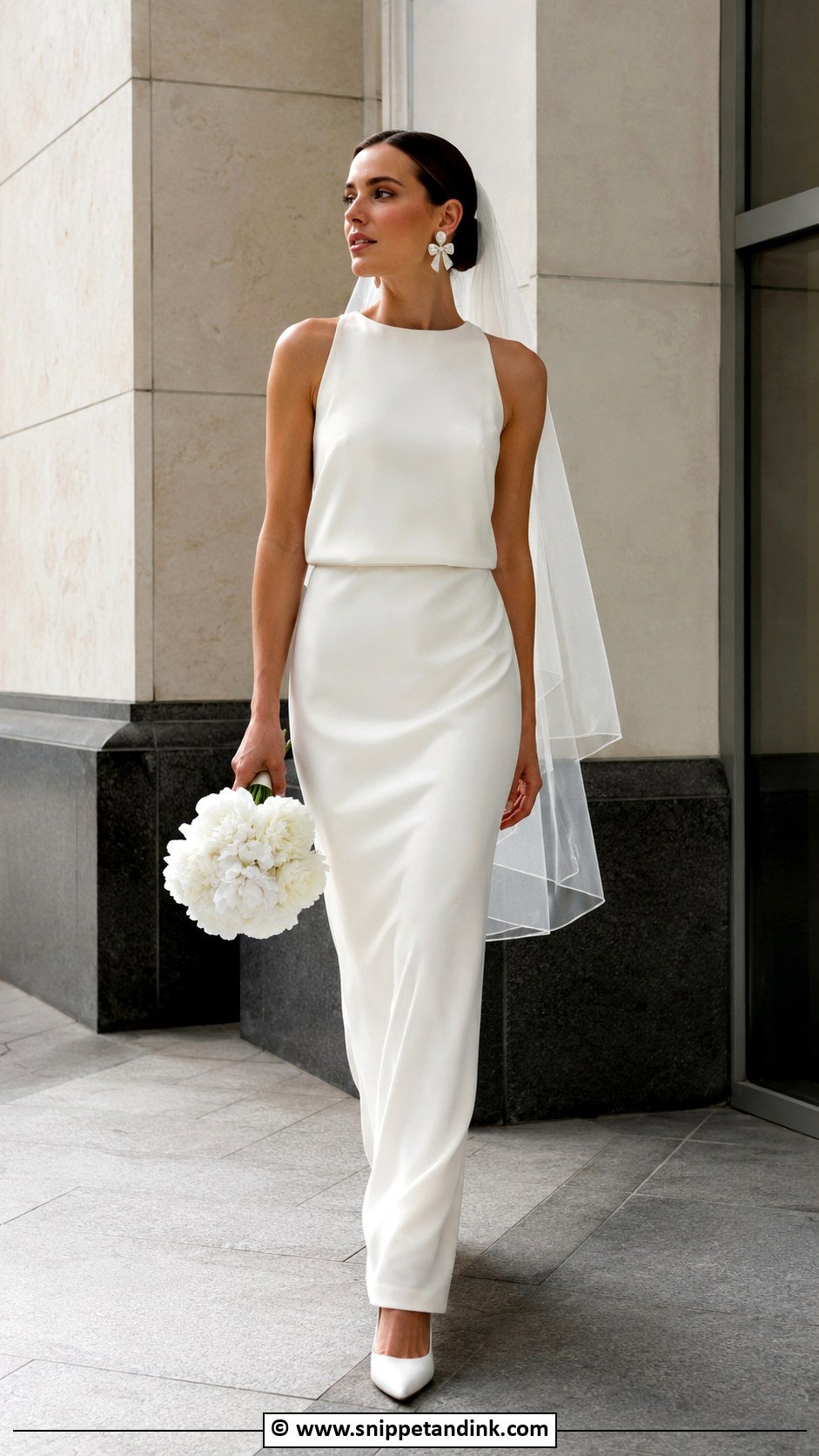
Crepe has a smooth, slightly weighted finish that looks refined with almost no decoration. Pair a fitted crepe top with a matching column, slim A-line or soft mermaid skirt and the tailoring does all the work. Sculptural earrings, a low chignon, pointed pumps and a simple veil finish it for city weddings and modern venues. Ask for both pieces cut from the same bolt. Two ivories from different batches can show a faint difference in a matte fabric, and crepe has no texture to hide it.
5. Long Sleeve Wedding Dress
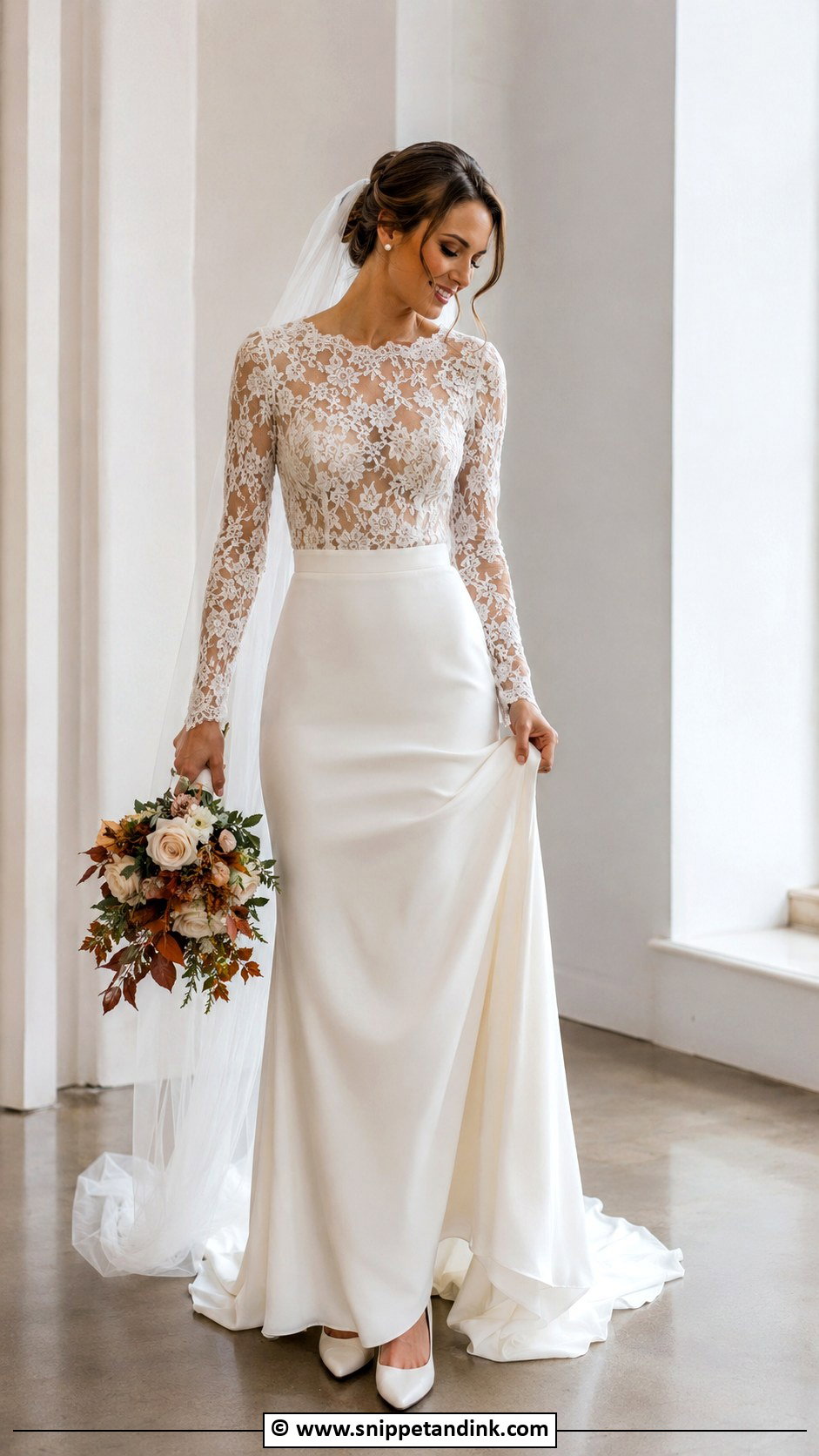
A lace, mesh, satin or crepe long-sleeve top over a high-waisted skirt that meets it cleanly looks almost like a single gown, with the flexibility of separates. Sheer sleeves are softer; fitted satin ones are more formal. Closed-toe heels, pearl studs and a veil with light edging complete it, and lighter fabrics stretch it into warmer months. Long sleeves on a short top pull the hem upward when you raise your arms, so I add a little length or a small waist tab to stop it lifting during the first dance.
6. Off Shoulder Wedding Dress
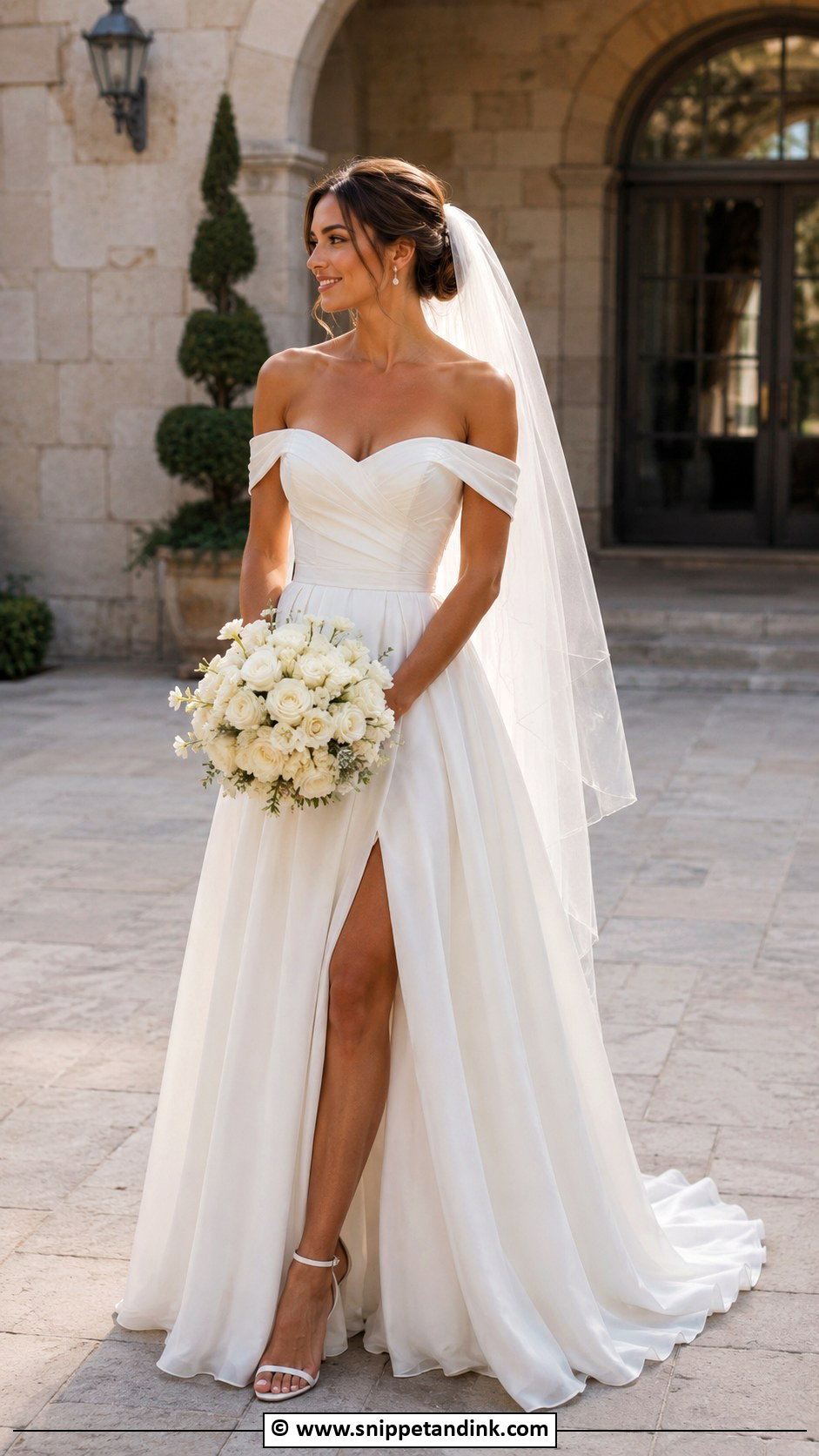
An off-shoulder corset, ruched bodice or lace top over a high-waisted skirt frames the collarbones and shoulders. A full skirt reads princess; a fitted one is sleeker. Since the neckline is the focal point, studs or small drops are plenty, with a soft updo or loose waves that leave it clear. An off-shoulder top in separates has no gown below to anchor it, so it needs its own boning and a grip edge, or it creeps down every time you lift your arms.
7. Beaded Top Wedding Dress
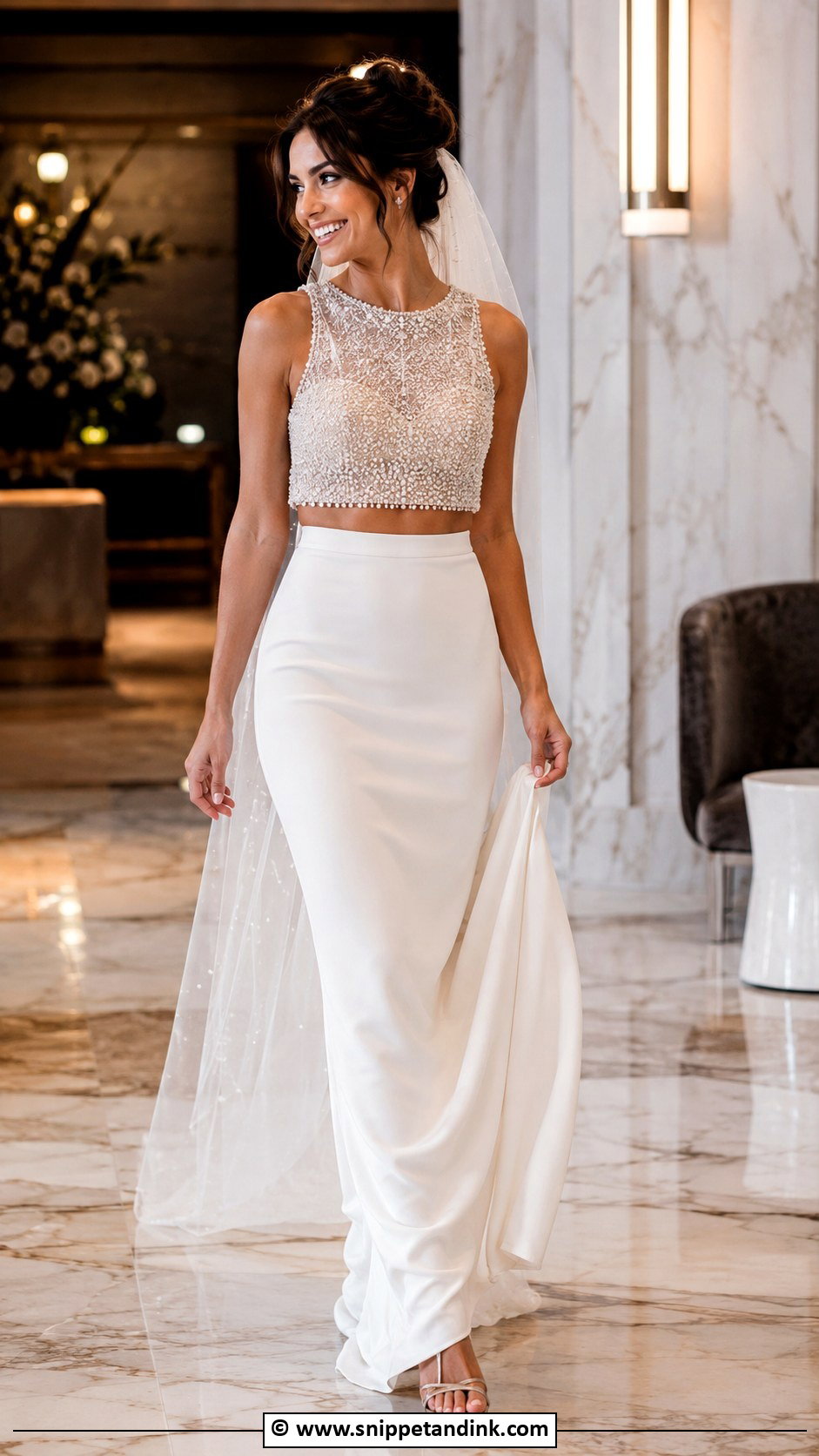
Let the top sparkle and the skirt stay quiet. An embellished crop or bodice over plain satin, chiffon or crepe keeps the shine balanced, and fine beadwork, pearls, sequins or crystals can all work as long as the effect stays delicate. Metallic heels, a smooth veil and understated earrings complete it for evening and hotel venues. Heavily beaded tops weigh down at the hem and can drag a light chiffon waistband with them, so a lightly structured waistband on the skirt is worth asking for.
8. High Neck Wedding Dress
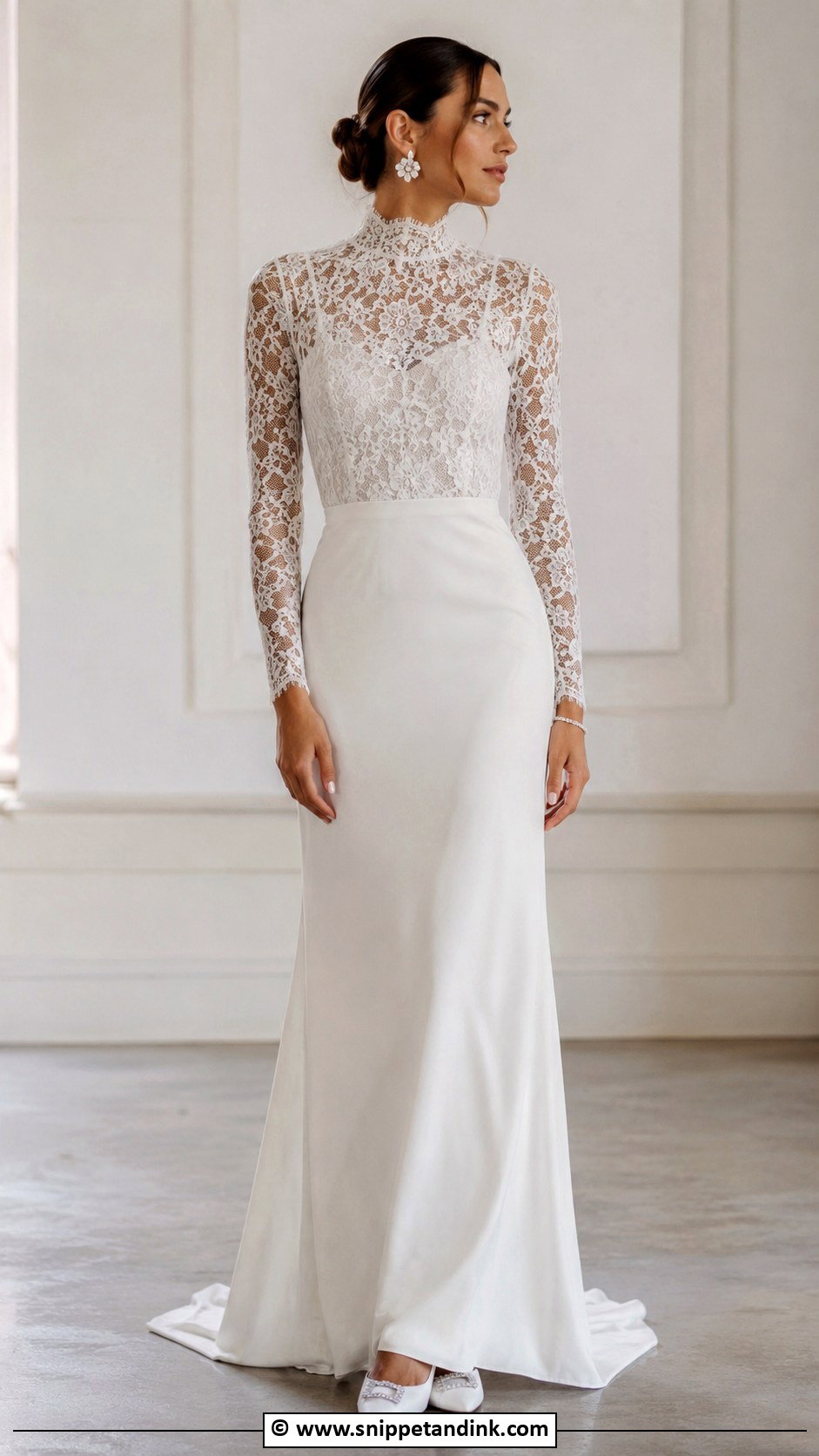
A high-neck lace top is romantic; a crepe or satin one is minimal and modern. Over a long skirt sitting at the natural waist, it lengthens the body and keeps the outfit graceful. With the throat covered, skip the necklace and move to earrings, a bracelet or a detailed hair piece, with a sleek bun or soft ponytail. Separates make a high neck easier to wear than a gown, because a top with a back zip can go on last, after hair and makeup, without hauling a whole dress over you.
9. Boho Wedding Dress
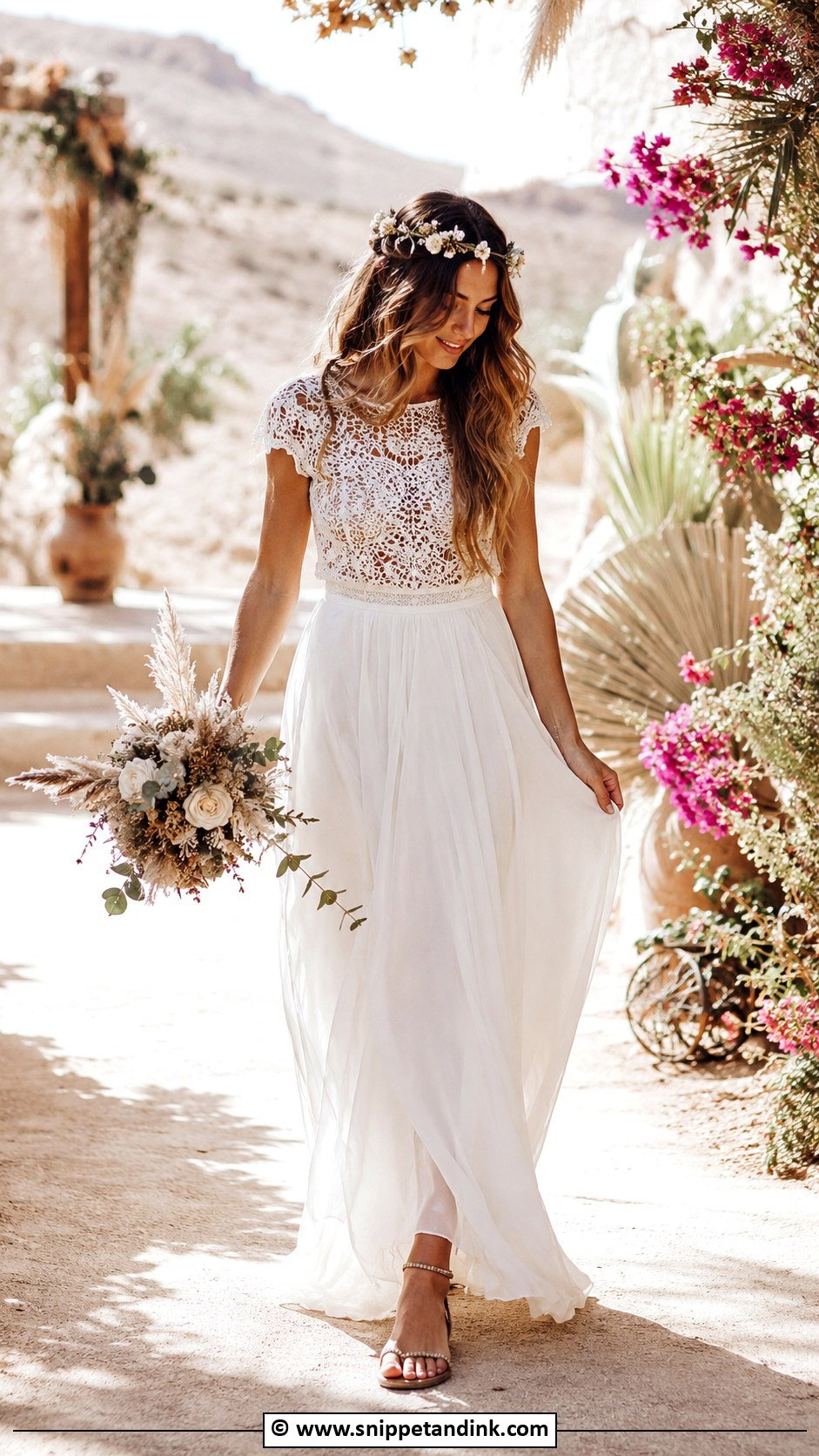
Crochet lace tops, flowing chiffon skirts, soft bell sleeves or a delicately embroidered bodice give a relaxed, textured look. Movement matters most, so choose fabrics that drape. Flat sandals or block heels, loose waves and natural makeup suit it, with a floral hairpiece or simple veil. Beach, desert, backyard and garden weddings are its natural home. Crochet lace relaxes as it warms against the body, so I fit a crochet top slightly snug; after a few hours it eases to the right size.
10. Ball Gown Wedding Dress
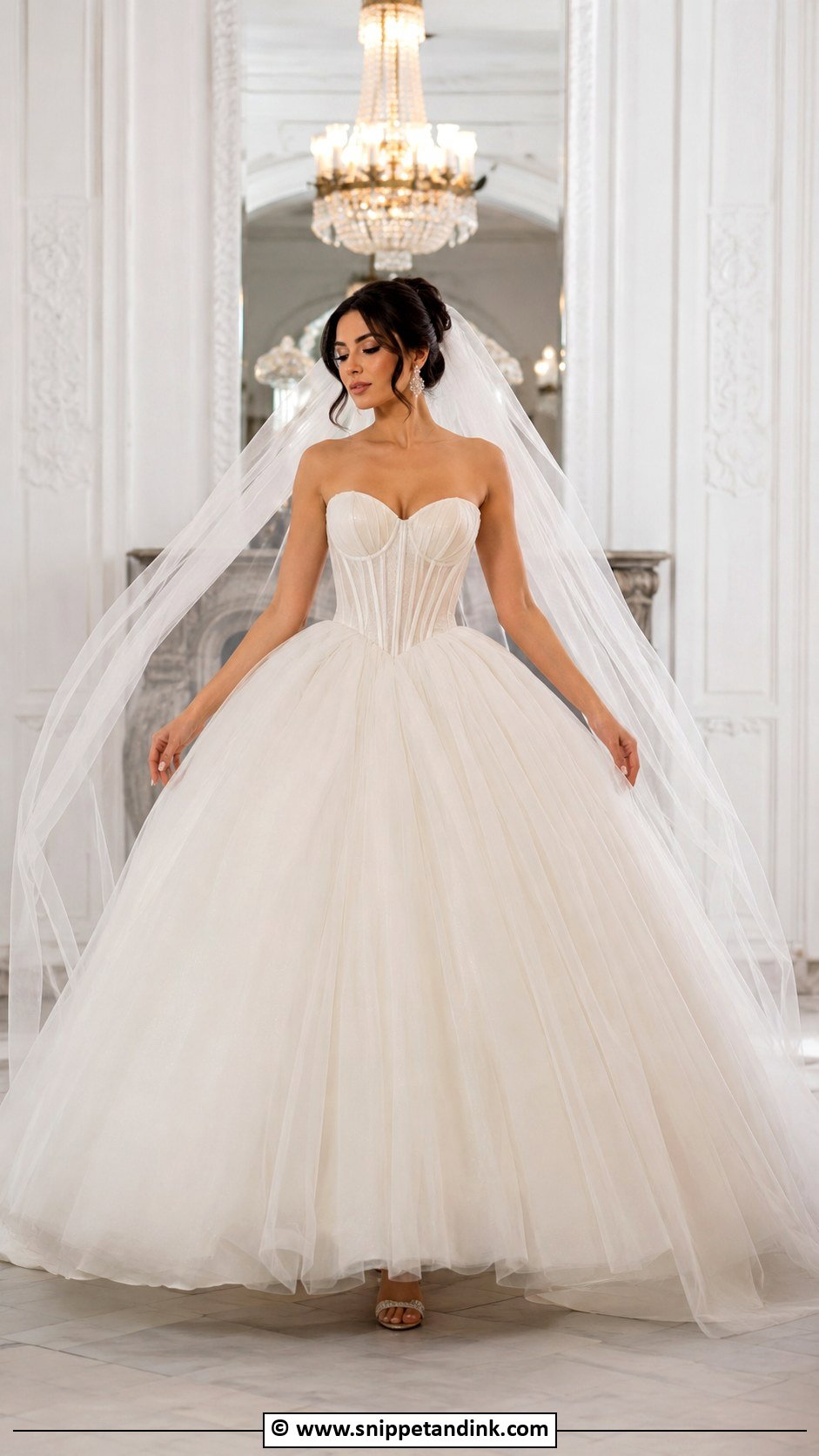
Yes, a ball gown works as separates. A structured corset, satin bodice or lace top over a full high-waisted skirt gives you the grand silhouette, and the separate top makes it feel more current. Choose organza, tulle, mikado, or satin for a skirt that holds its shape. A veil, statement earrings and elegant heels complete it. In this setup the whole weight of the skirt hangs from its own waistband, so I ask for a firm, interfaced band with a hook-and-bar closure rather than a single button.
11. Mermaid Wedding Dress
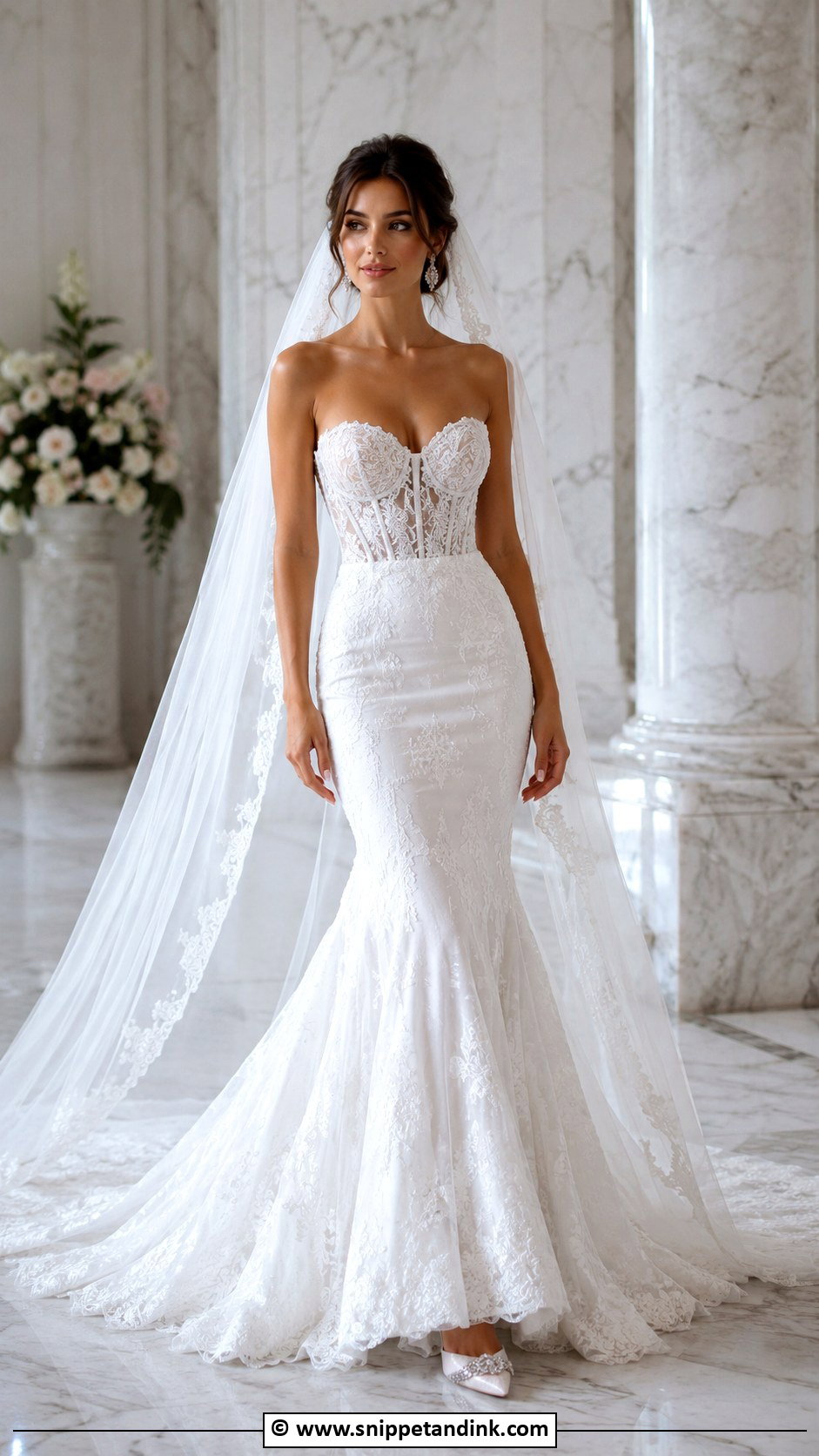
A fitted corset, lace top or satin bustier over a high-waisted mermaid skirt that flares below the hips or knees refreshes the body-hugging silhouette. A small gap at the waist looks modern; a top that meets the skirt looks more classic. Pointed heels, a long veil and smooth hair keep the line clean. The skirt has to be fitted with you sitting down too, since hips widen when seated and a skirt cut tight while standing will strain at the seams through dinner.
12. A Line Wedding Dress
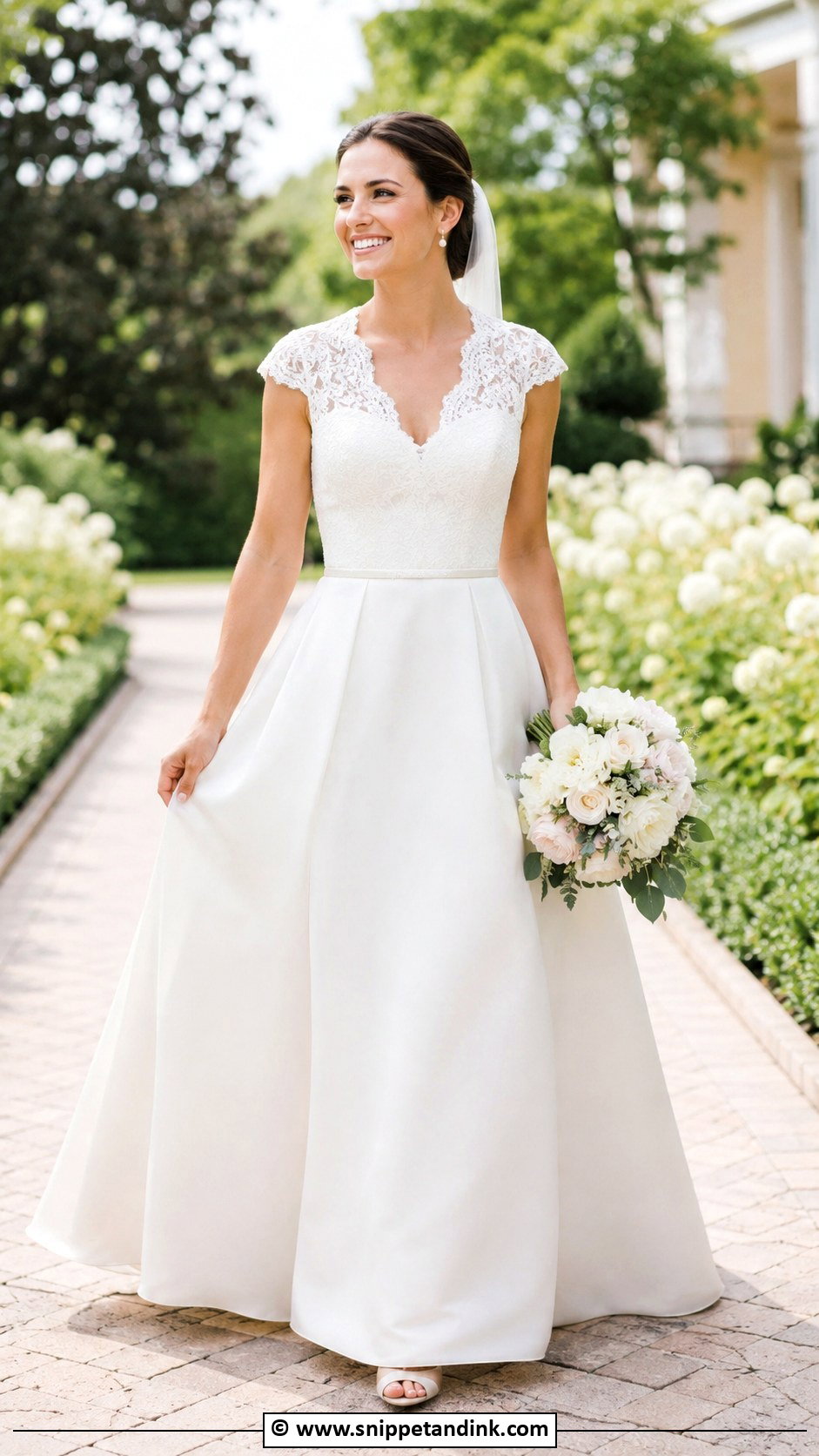
A fitted top over a skirt that widens gently from the waist is one of the easiest outfits to wear, and it suits most figures. Lace, satin, crepe and organza all work. Matching fabrics feel classic; a lace top with a plain skirt adds texture. Simple heels, a veil and delicate jewelry finish it. If a bride is unsure about separates at all, the A-line skirt is the piece I’d suggest first, because it pairs with almost any top she might add later.
13. Minimalist Wedding Dress
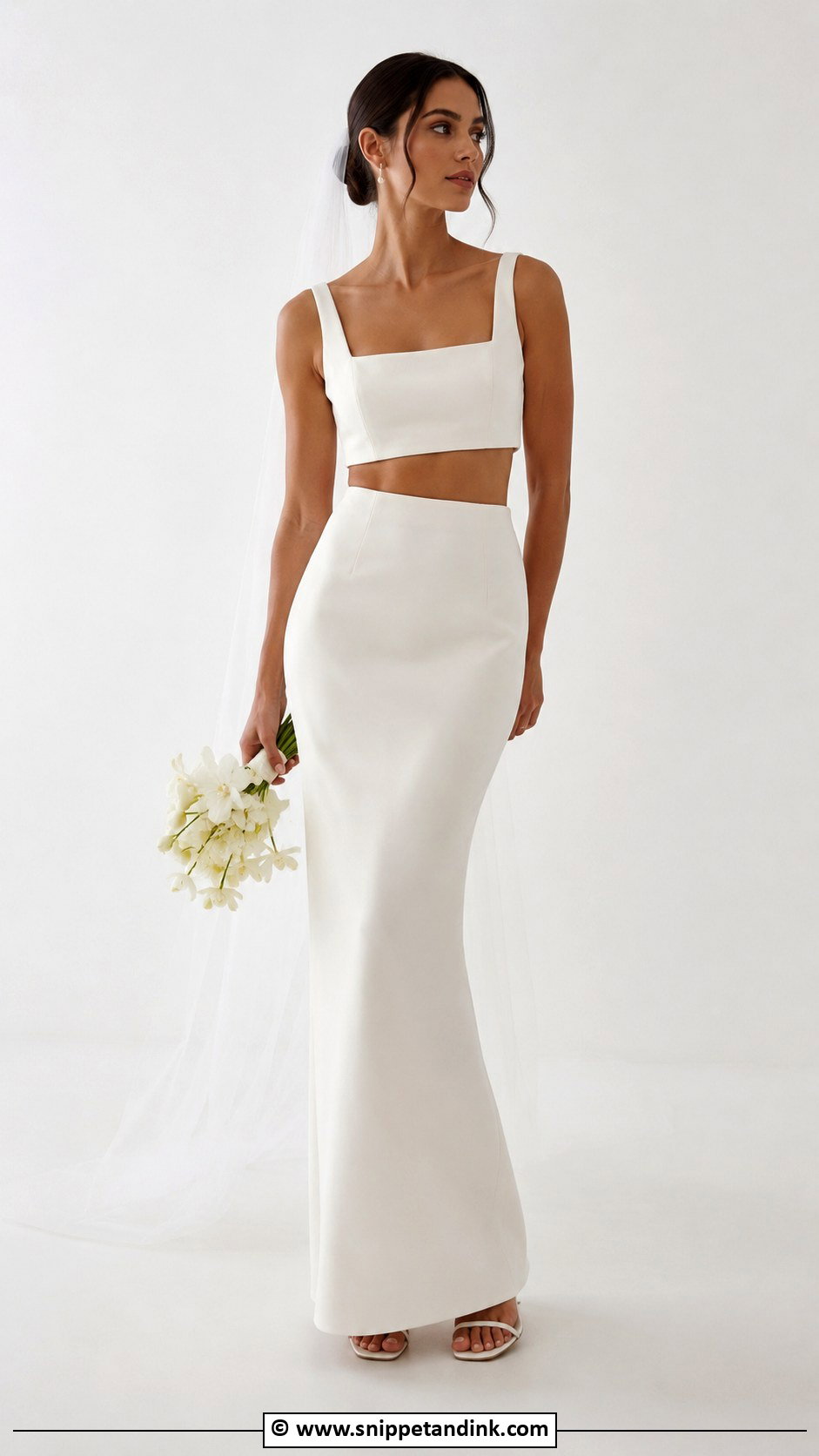
Fit, fabric and restraint carry this one. A simple square-neck top, strapless bodice or sleek crop over a matching column or A-line skirt in satin, crepe or a silk blend looks polished without extra detail. Pick soft ivory, bright white or warm off-white according to your skin tone; the wrong white can make a complexion look gray in photos. Modern pearl earrings, slim heels and a smooth veil finish it for courthouses, city venues and galleries.
14. Floral Wedding Dress
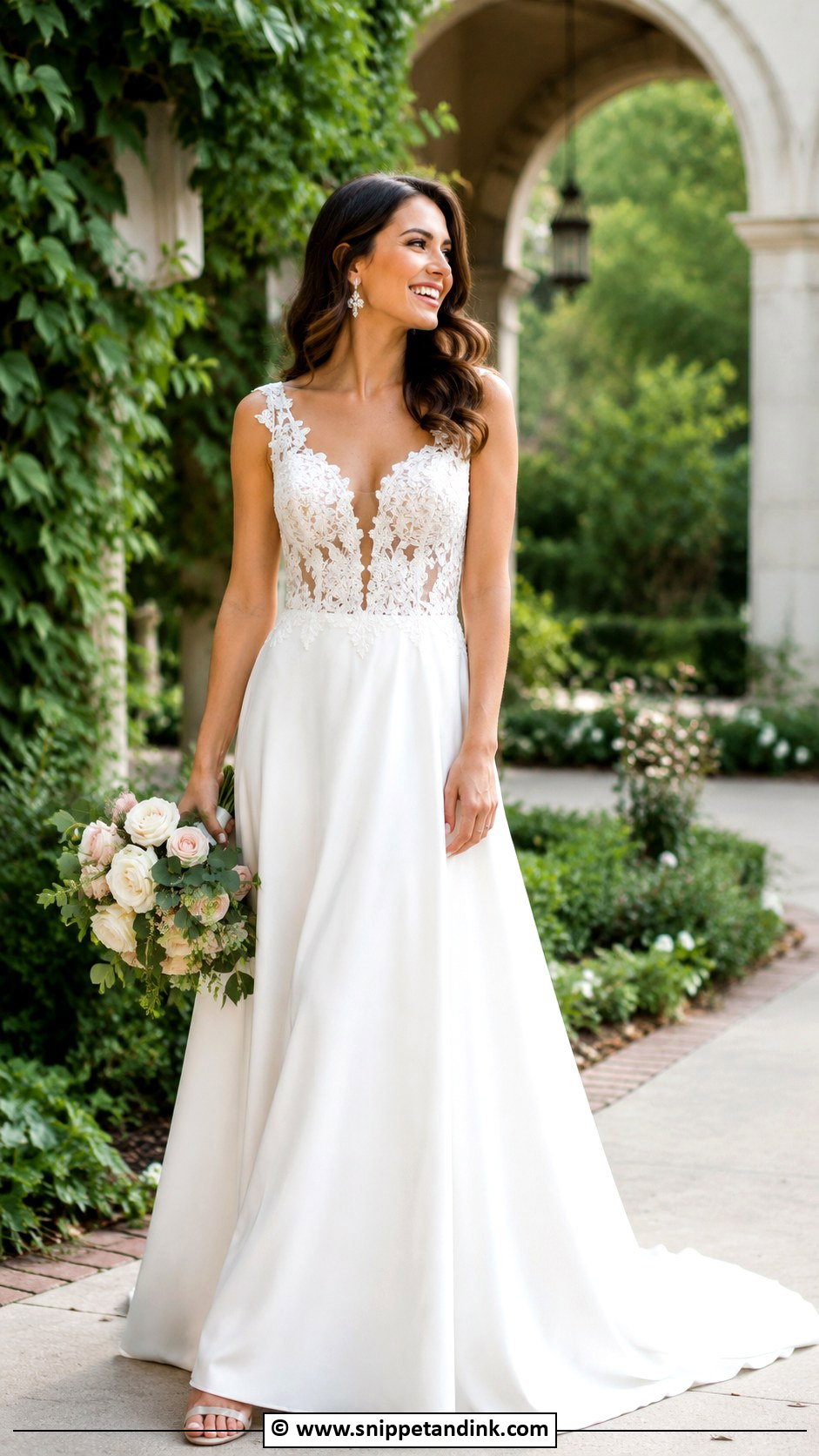
Floral lace tops, embroidered bodices, applique skirts or subtle 3D flowers all add dimension. Pair one detailed piece with one cleaner piece: a floral bodice with a plain satin skirt, or a simple top with an applique tulle skirt. Small earrings, soft curls and light heels keep the florals in focus. Raised 3D petals crush when you’re hugged or lean back in a chair, so I keep them to the skirt or shoulders rather than the front of the bodice.



15. Pearl Wedding Dress
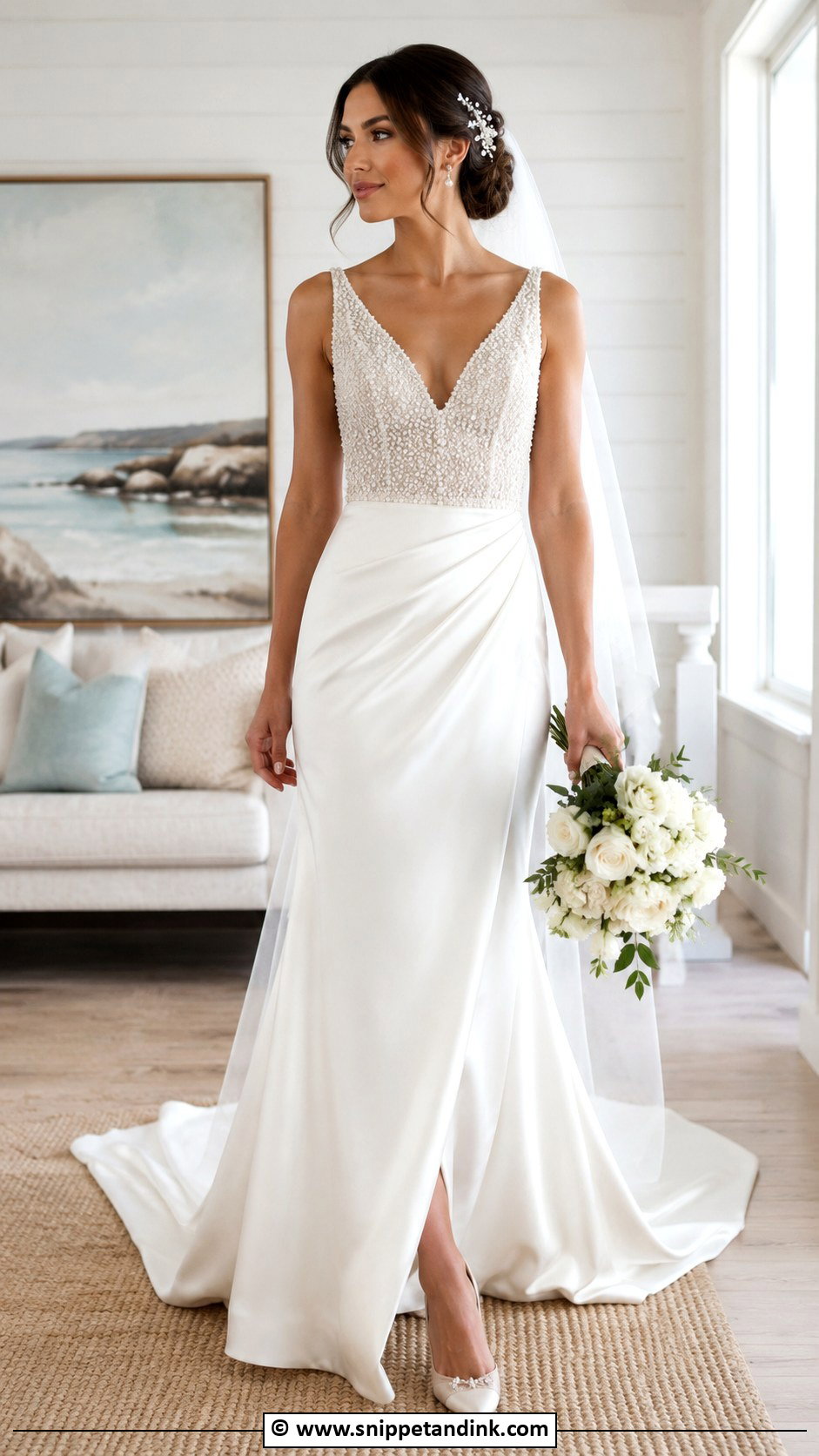
A pearl-embellished bodice over plain satin, or a clean top with a pearl-dotted tulle skirt, gives soft shine without the flash of crystals. Coordinate with pearl earrings, a pearl comb or a veil with pearl accents, but don’t stack several large pieces. Formal venues and coastal weddings suit it. Sewn-on pearls can work loose over a long day, so ask how they’re attached and keep a few spares, a needle and matching thread in the emergency kit.
16. Chiffon Skirt Wedding Dress
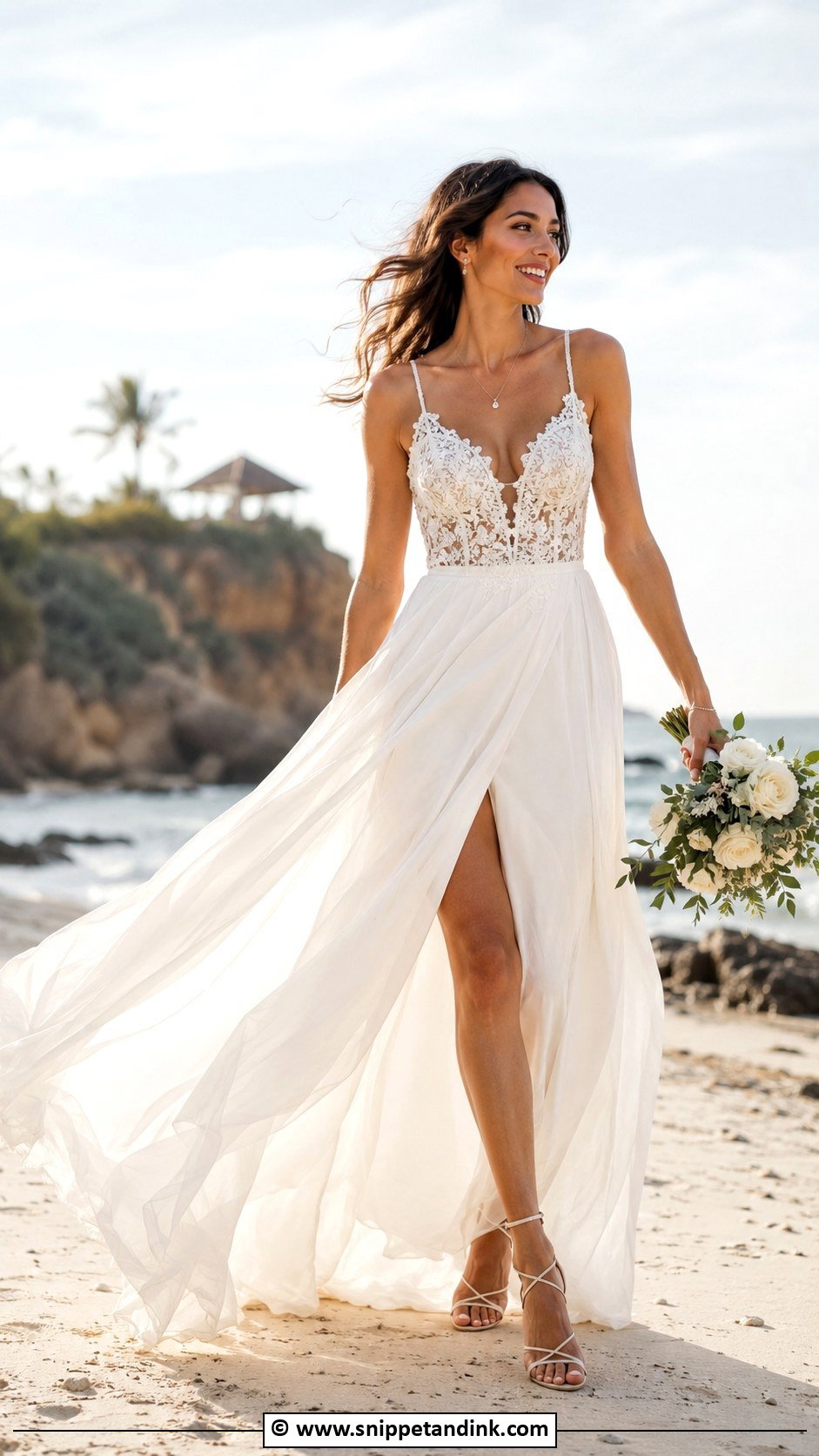
Chiffon floats instead of weighing you down, which makes it the warm-weather skirt. Pair it with a lace top, satin cami or fitted crepe bodice. A high slit adds movement; a fully lined skirt stays classic. Strappy heels, natural waves and delicate jewelry finish it for beaches and destinations. Chiffon frays at the cut edge and snags on rough surfaces, so I check the hem finish and keep it clear of wicker chairs and rough wooden boardwalks.
17. Square Neck Wedding Dress
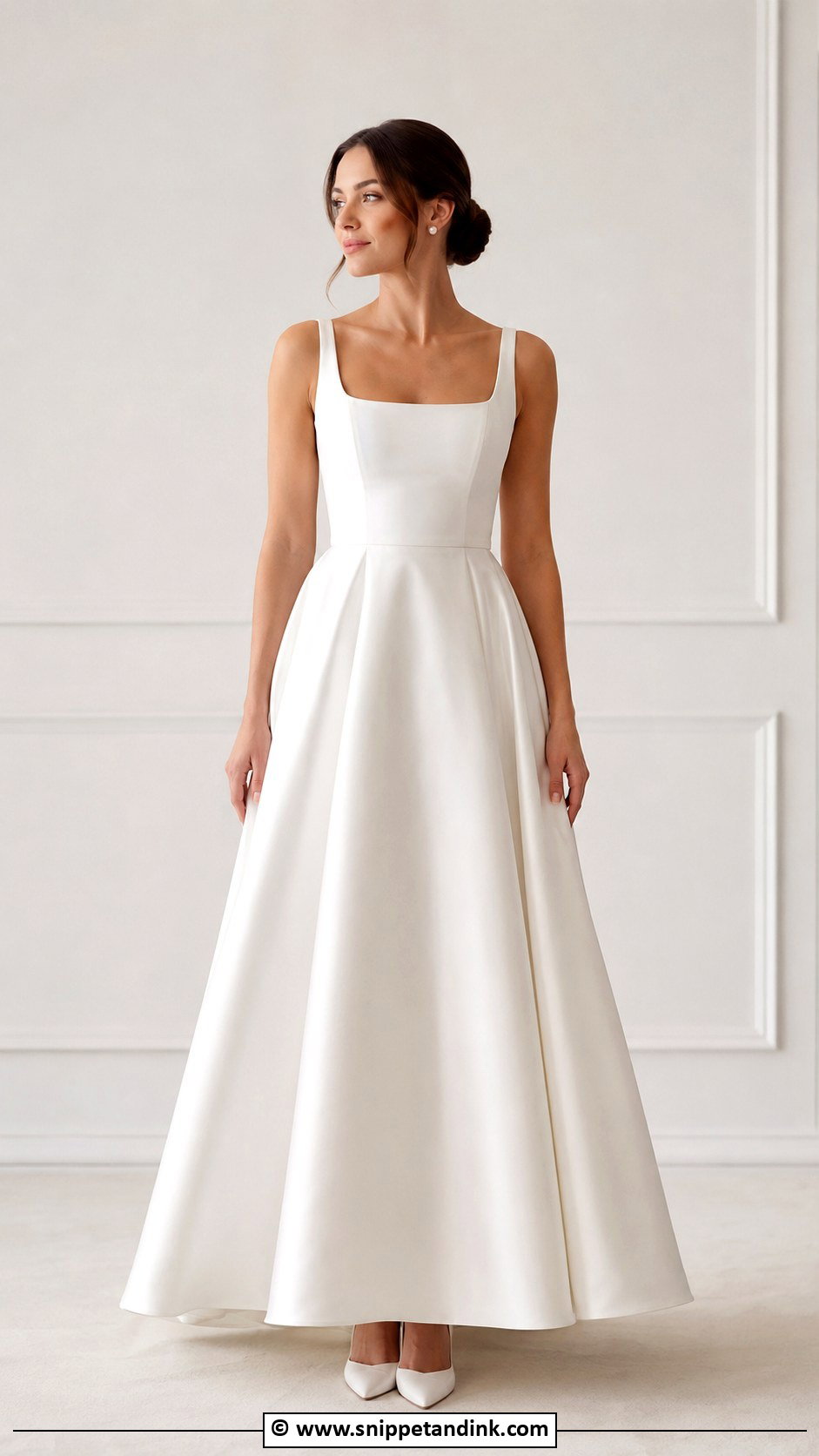
A square neckline gives separates a clean, structured frame. Satin is smooth, crepe minimal and lace romantic, and it works over both fitted skirts and fuller A-lines. Pearl studs, a low bun and block heels or pointed pumps complete it. The straight edge suits many figures. On a short top, though, a square neck can look boxy if the hem is also cut straight across; a slightly curved or pointed hem softens the whole shape.
18. Halter Wedding Dress
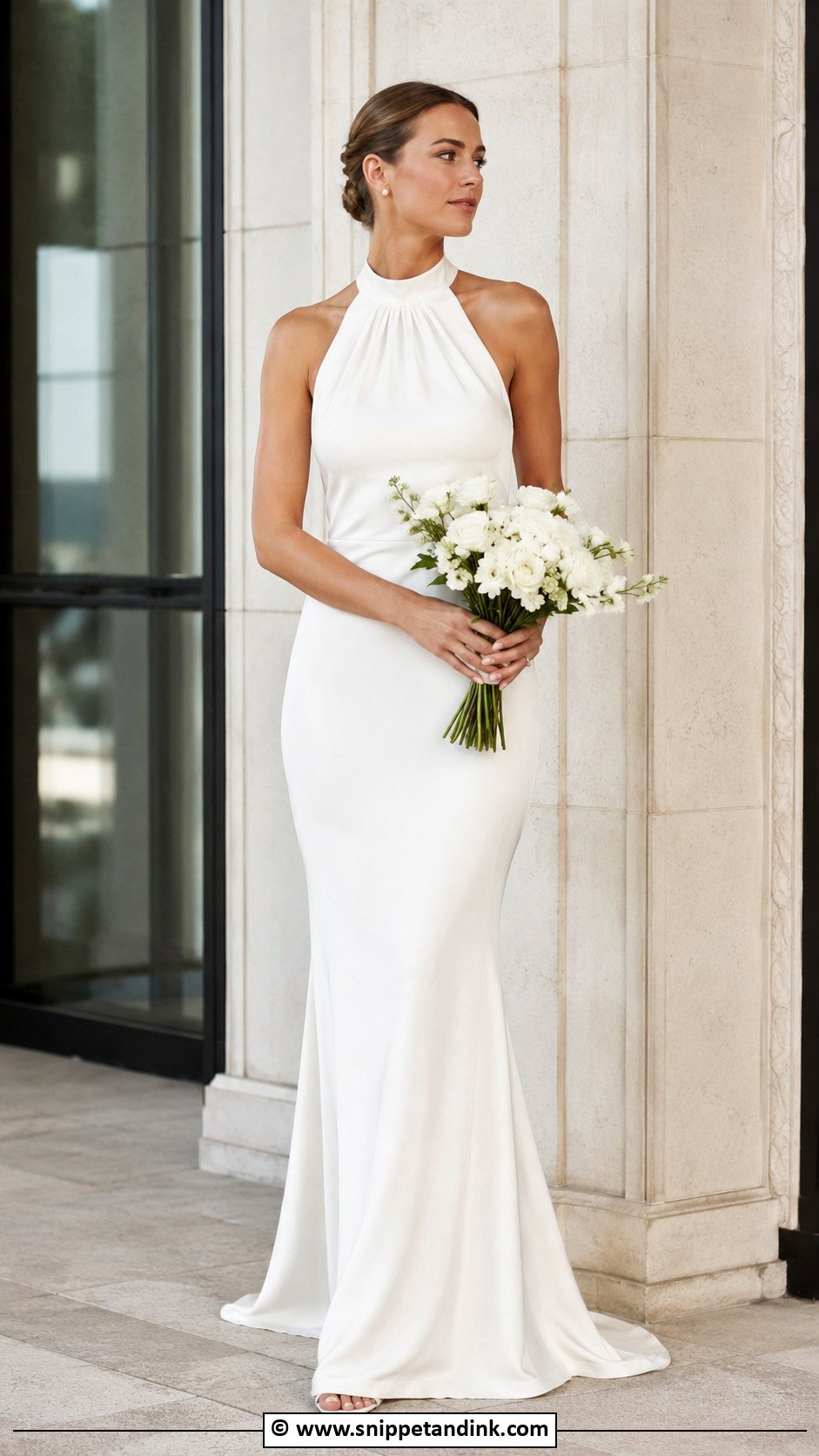
A halter top with a slim crepe skirt, satin column or soft A-line feels sleek and slightly sporty. It shows off the shoulders and pairs with an open back or a clean high neck, and it gives support without thin straps. Minimal earrings, a smooth updo and simple heels keep it streamlined. With no shoulder seam to hold it, a halter has to be fitted with your arms down and then raised; one that’s perfect standing still often gapes at the sides when you reach.
19. Short Skirt Wedding Dress
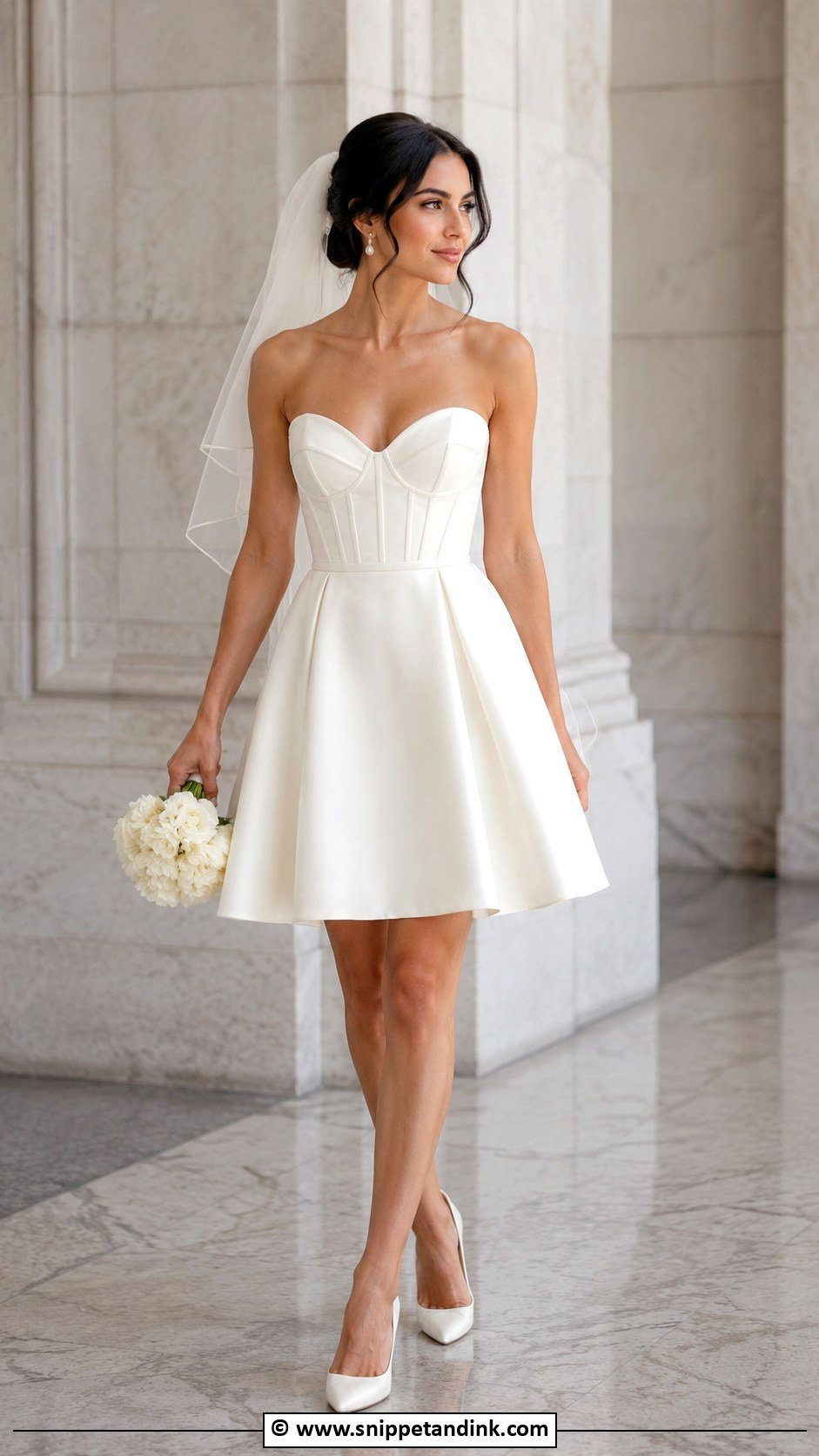
Practical and playful. A bridal mini or knee-length skirt with a structured corset, lace top or satin blouse makes a complete look, and pointed heels, pearl earrings and a short veil keep it chic. For more ceremony drama, start with a removable overskirt and reveal the short skirt later. Courthouse weddings, elopements and receptions suit it. Fabric weight is what keeps a short skirt bridal; a thin, light fabric quickly reads like a party outfit.


20. Overskirt Wedding Dress
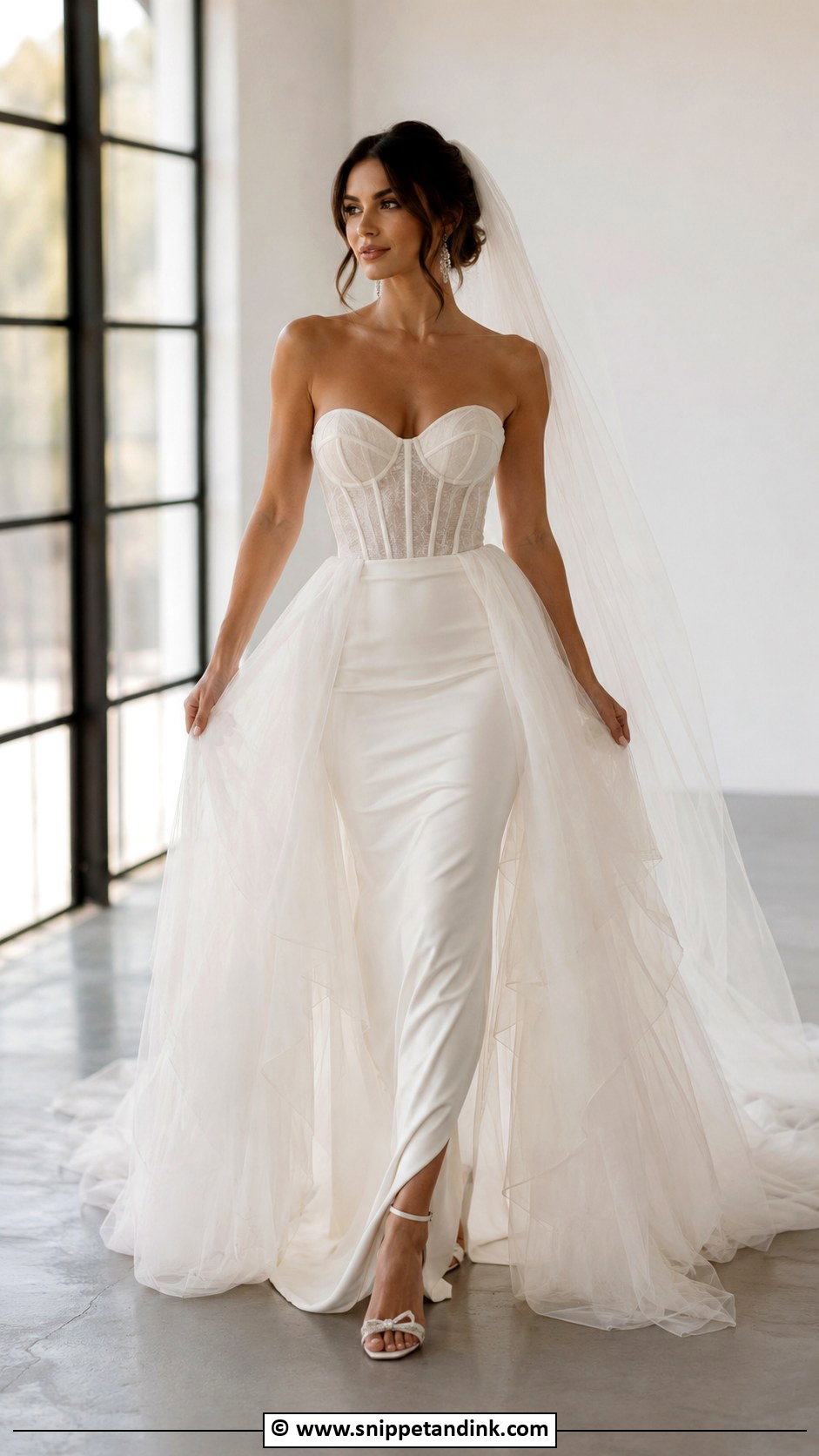
Two looks, no full change. Start with a fitted two-piece base, such as a corset and slim skirt, then add a removable tulle, organza or satin overskirt for the ceremony. The volume is for photos; the base is for the reception. With separates there are now three edges meeting at your waist, so I fit all of them together and ask for the overskirt band to sit just under the top’s hem. Veil for the ceremony, statement earrings later.
21. Pants Wedding Dress
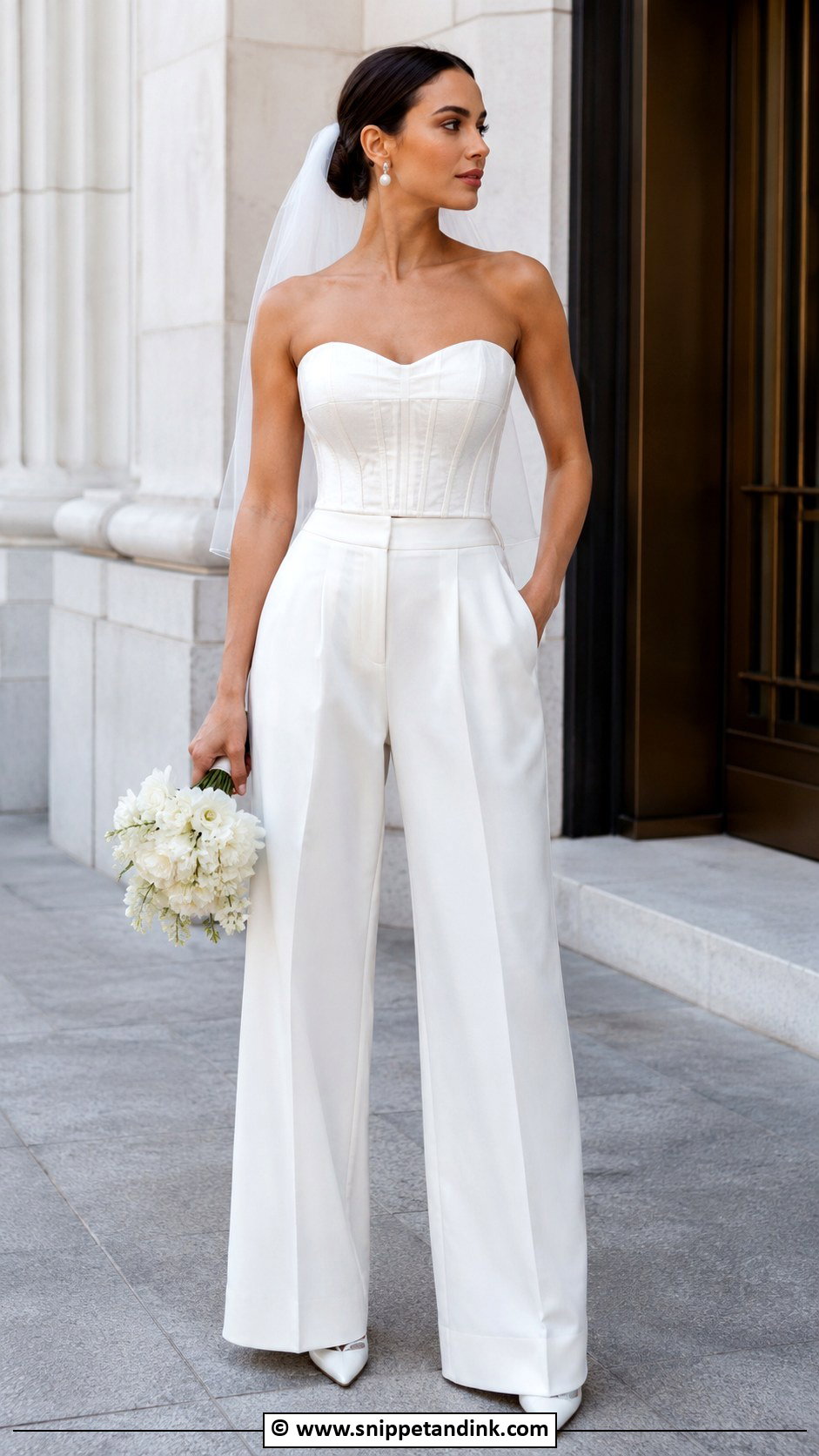
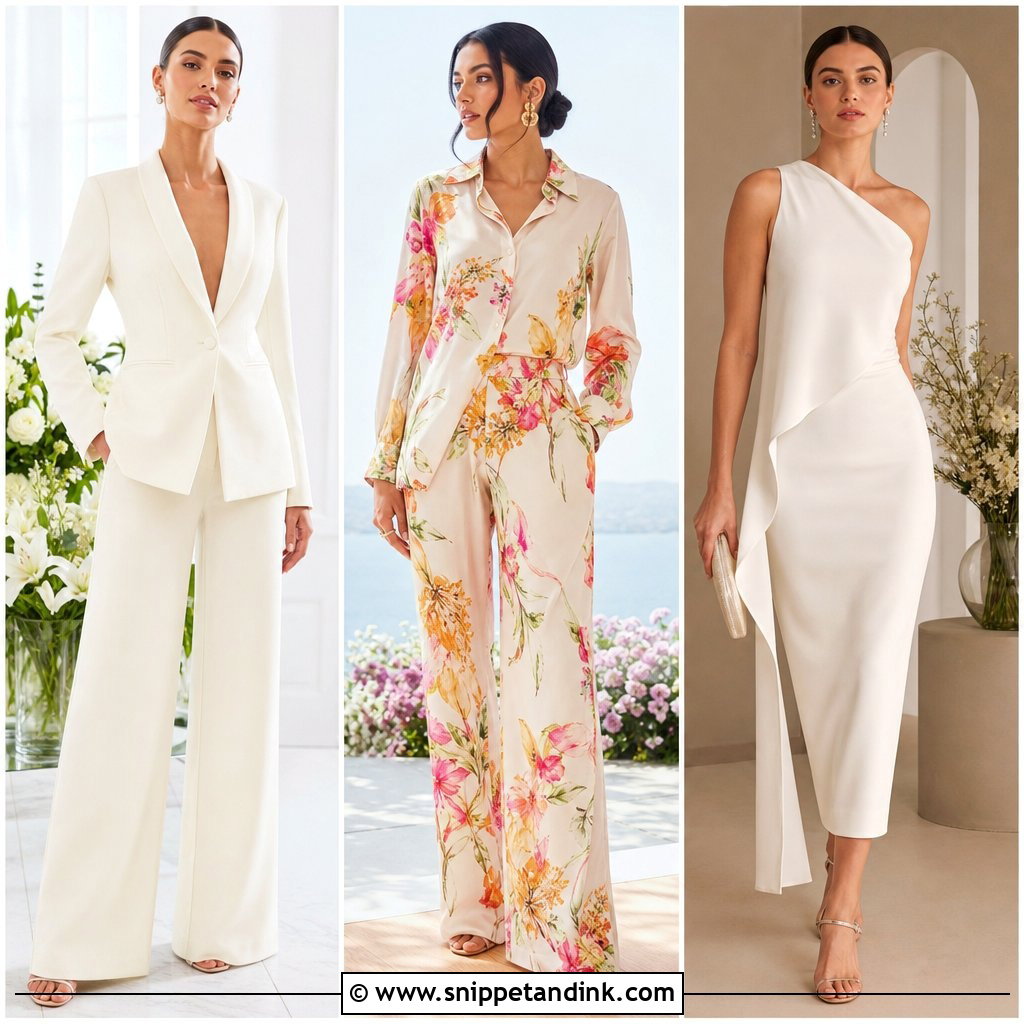
Trousers are a strong, modern alternative to a skirt. Pair tailored ivory trousers with a corset top, lace blouse, satin tank or structured bodice. Wide legs lengthen the body; slim ones look sharp. Pointed heels, a veil, pearl earrings and a small bouquet keep it bridal, and a detachable train or overskirt adds ceremony impact. Hem wide-leg trousers with your wedding shoes on so they just skim the floor; any longer and you’ll tread on them all night.
22. Blazer Wedding Dress
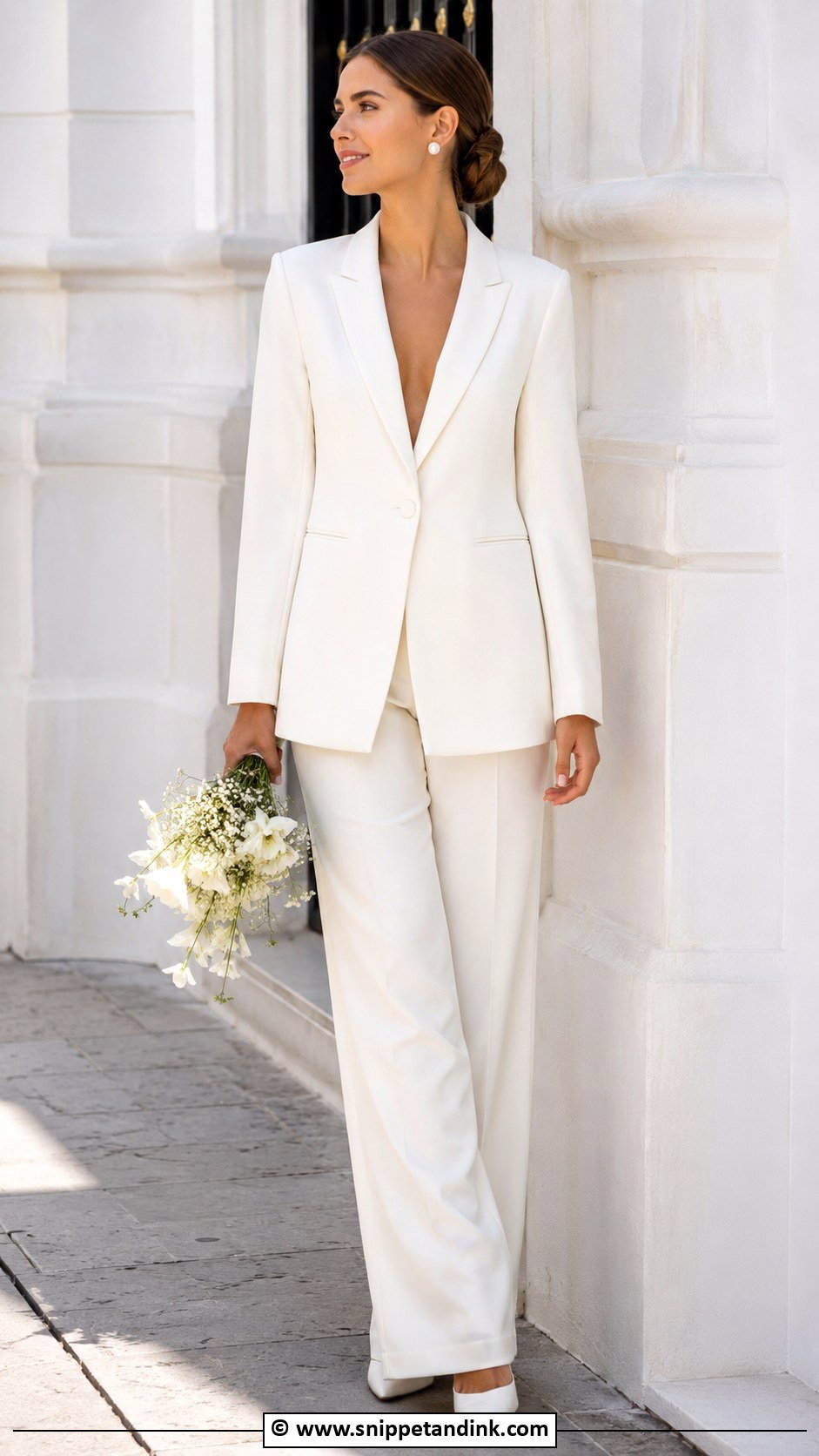
Tailoring, made bridal. Style an ivory blazer with matching trousers, a satin skirt or a fitted bridal mini. A cropped blazer suits a high-waisted skirt; a longer one looks sharp with trousers. Clean lapels, good fabric and a soft ivory shade keep it bridal, with sleek heels, pearl studs and a low bun. The shoulders are the hardest part of a blazer to alter, so I buy for the shoulder fit and let the tailor handle sleeves and waist.
23. Slip Skirt Wedding Dress
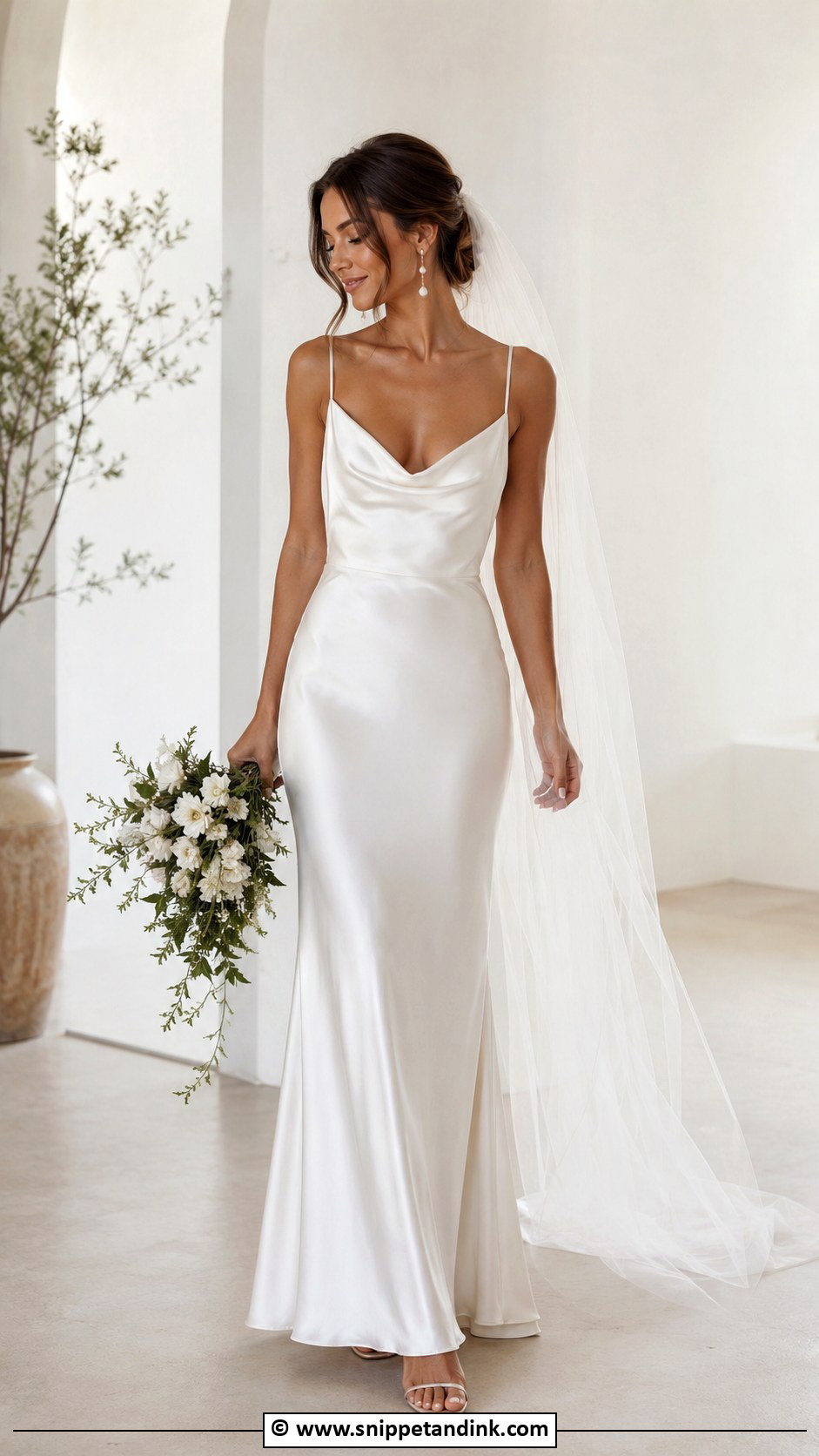
A satin or silk-style slip skirt with a matching cami, cowl-neck top, lace blouse or soft corset is fluid and understated. It should skim without clinging, which usually means a bias cut. Barely-there heels, drop earrings and a light veil keep it delicate for warm weather and intimate weddings. It’s also the piece brides most often wear again, with a knit or a plain tee. Bias-cut satin shows underwear lines, so settle what goes underneath before the final fitting.
24. Ruffle Skirt Wedding Dress
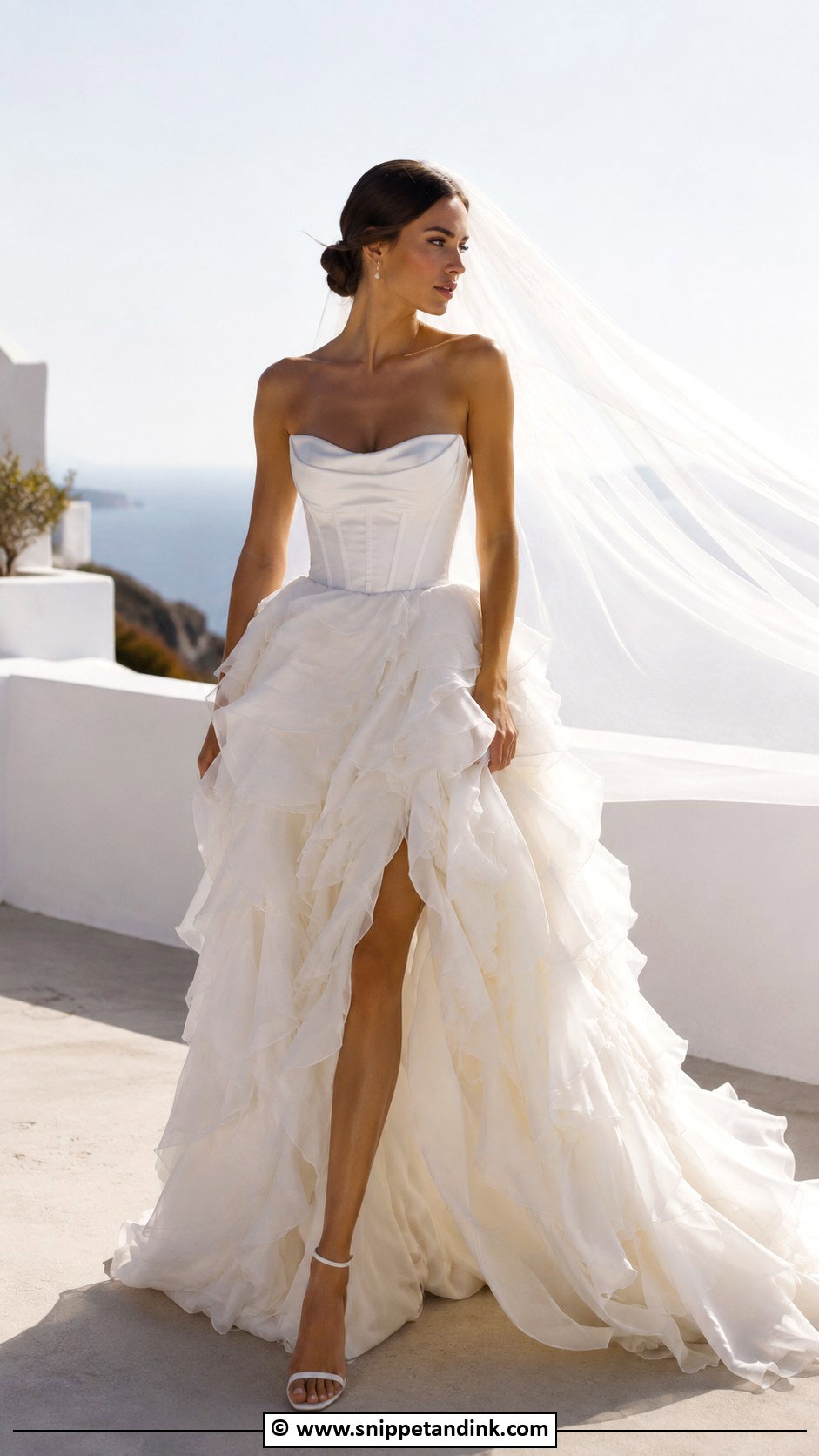
Cascading ruffles feel romantic; tiered ones make more impact. Balance either with a simple top, such as a satin bandeau, fitted corset or clean crepe bodice, and keep the waist high so the outfit stays long. Simple heels and delicate earrings let the skirt lead. Outdoor and destination weddings suit it. Big ruffles add bulk at the hip, so if you’re curvy through the hips, I’d look for ruffles that start lower down the skirt.


25. Embroidered Wedding Dress
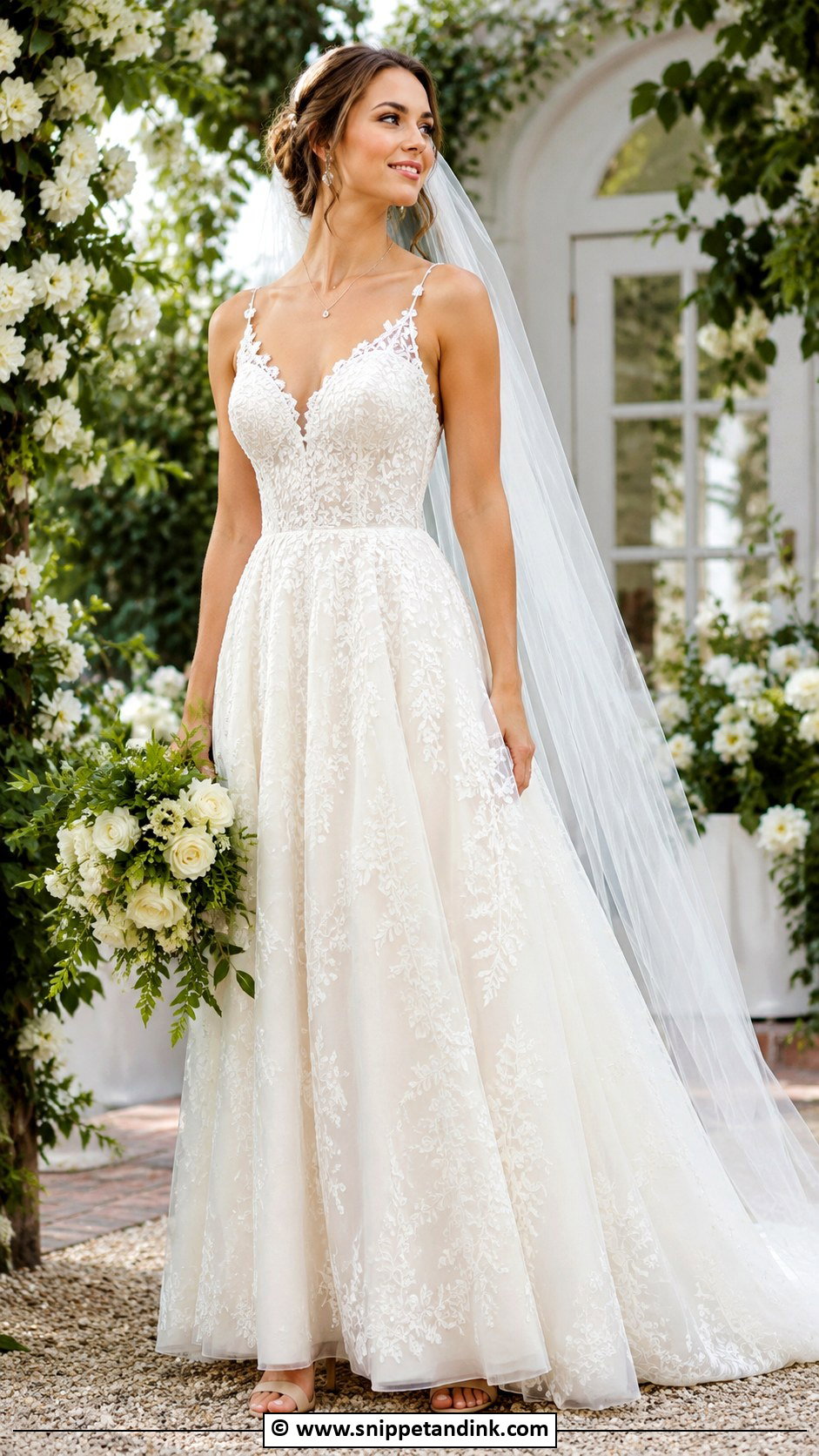
A floral-embroidered top, a skirt with subtle vine patterns or a matching stitched set brings handcrafted detail. Scale and thread color decide the mood: ivory-on-ivory is the classic, while pale blush, champagne or soft silver thread adds depth. Neutral heels, a smooth veil and simple jewelry keep the embroidery clear. Turn the top inside out before buying. Knotted thread on the back of embroidery can scratch on a fitted top, and a soft lining is the fix.
26. Basque Waist Wedding Dress
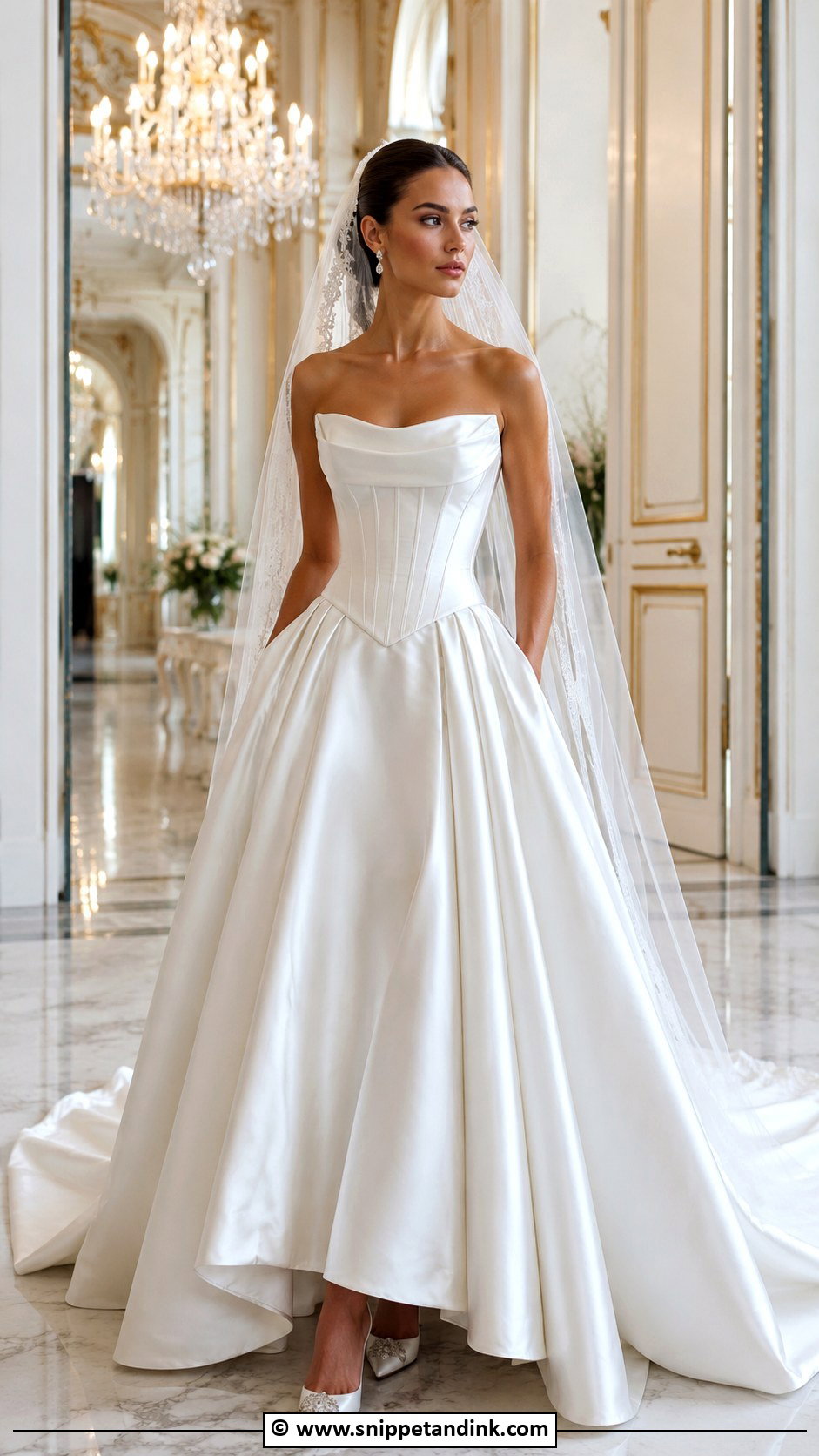
A basque waist wedding dress translates well into separates: a corset-style top with a pointed or dipped waist that overlaps slightly onto a full skirt. You get the long, sculpted torso with the flexibility of two pieces. A satin, mikado or tulle skirt balances the strong bodice, with a long veil, elegant heels and classic earrings. The point must sit centered over the skirt, so I mark the skirt’s center front with a small thread tack and line it up every time.
27. Drop Waist Wedding Dress
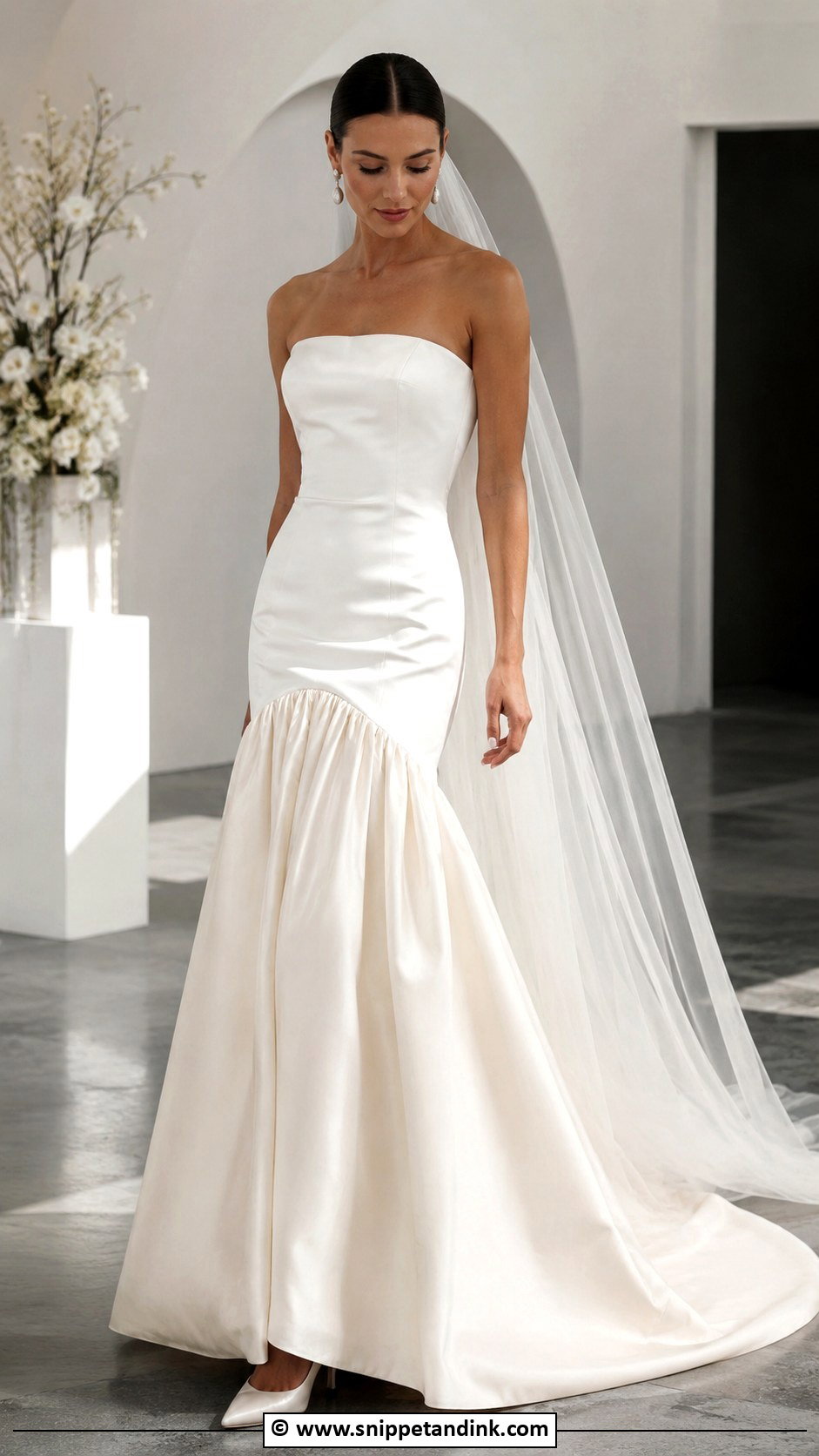
Here the top extends past the natural waist toward the hips and meets a skirt that starts lower, which creates a long torso and a sculpted shape. A fitted crepe, satin or corset-style top with a soft flare skirt balances it. Keep the accessories plain, a sleek veil, pointed heels and clean jewelry, because the silhouette is the feature. A low waist can shorten the legs on petite brides; a heel and a skirt that flares gradually rather than abruptly help.
28. Reception Wedding Dress
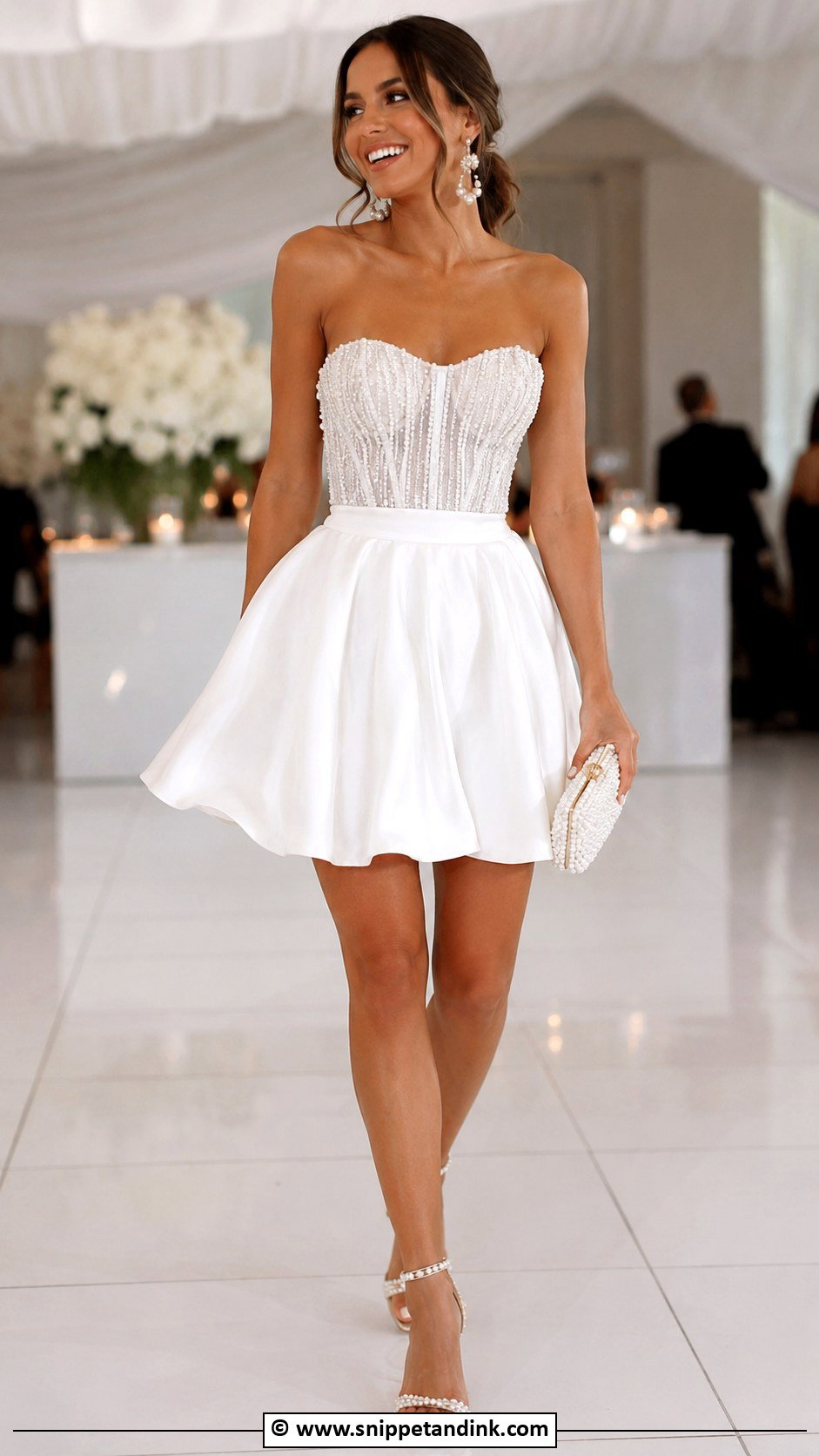
After the ceremony, ease of movement matters most. A short skirt and corset, satin trousers with a crop top, or a slim skirt with a beaded bodice all keep you bridal while letting you dance. Lighter fabrics and shorter hems help, and statement earrings, comfortable heels and a small clutch shift the tone toward celebration. This is the moment for sparkle or a bolder shape. If you’ve worn separates all day, you can often swap just one piece, which is much faster than a full dress change.
29. Beach Wedding Dress
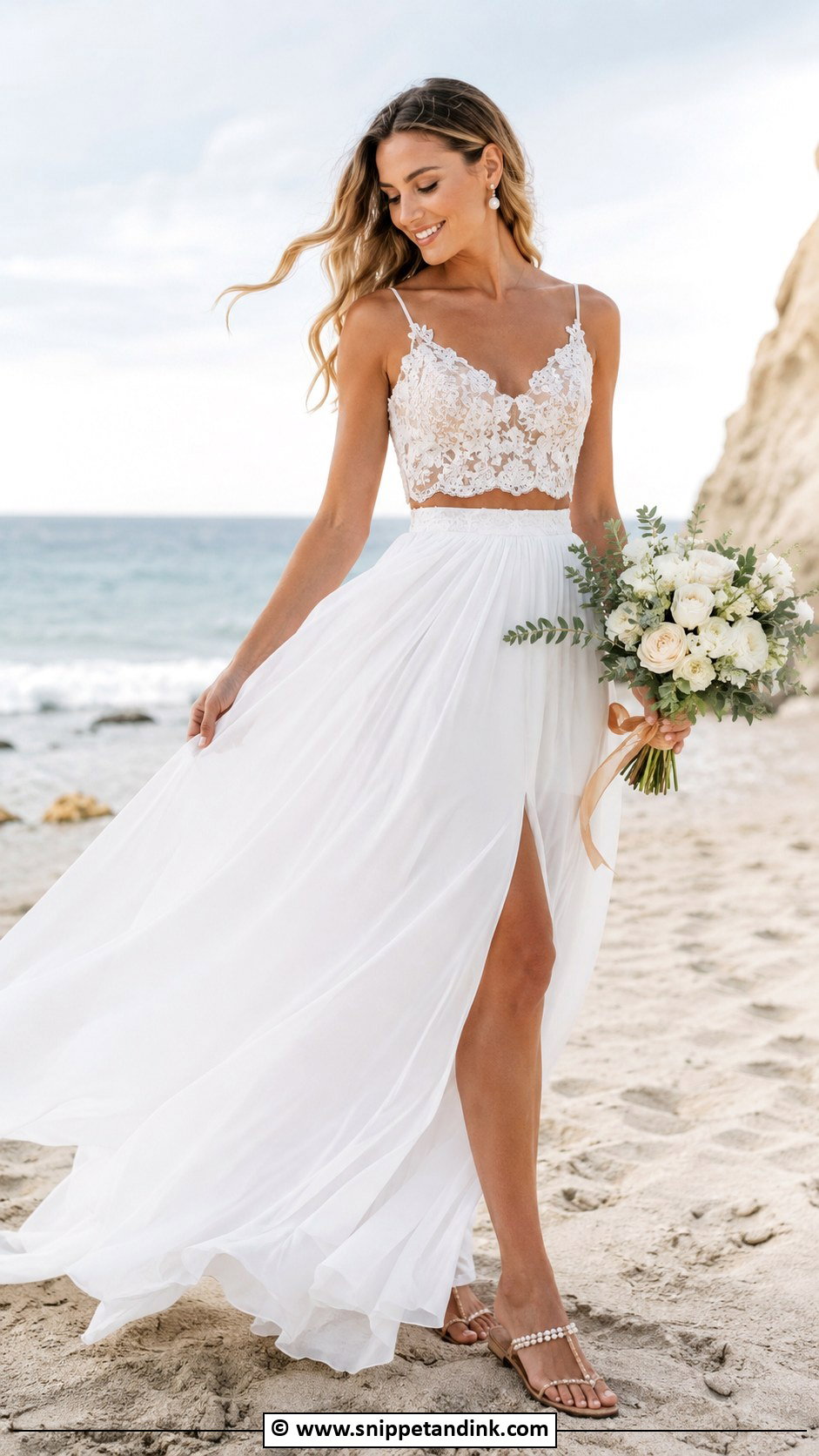
On the coast, light and breathable wins. A flowing chiffon skirt with a lace crop top, soft halter or simple satin cami suits the setting. Choose a hemline that clears sand or a platform walkway, and skip stiff, heavy fabric. Flat sandals or block heels, pearl earrings and loose waves complete it, with a short veil or hair accessory that won’t fight the wind. Apply sunscreen well before dressing and keep it off fabric edges, since some formulas leave yellow marks on ivory.
30. Plus Size Wedding Dress
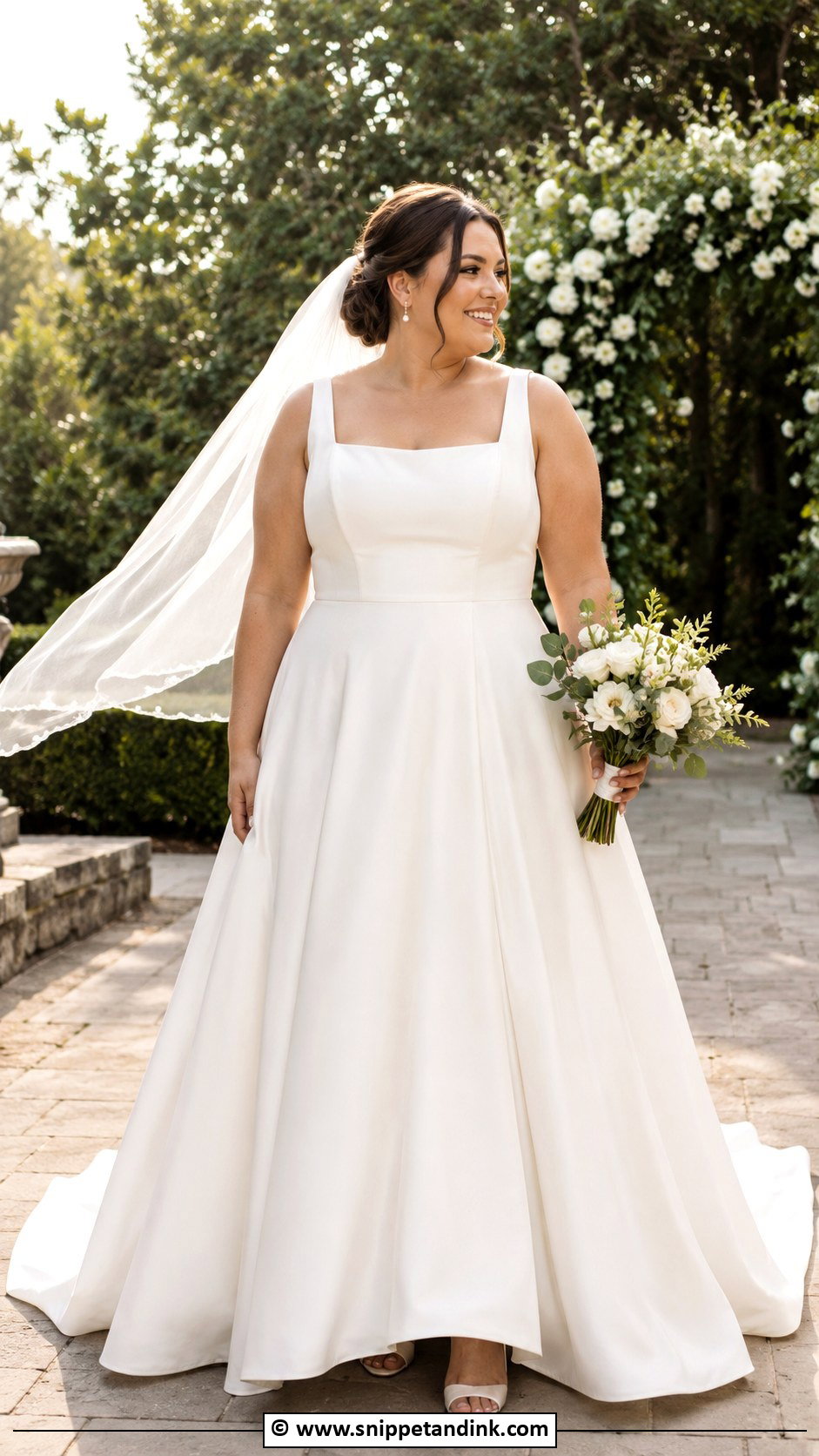
Fit, support and personal style matter far more than hiding anything. A structured corset, supportive lace top, wrap blouse or square-neck bodice pairs well with an A-line, ball gown or flowing chiffon skirt, and high-waisted skirts often feel secure and smooth. Look for quality lining, comfortable closures and tailoring that lets you sit, walk and dance. Separates have a real advantage here: you can buy top and skirt in different sizes, so neither needs heavy alteration. Finish with whatever suits you, pearl earrings, a soft veil or bold shoes.
Second Lives for a Bridal Top and Skirt
Separates are the bridal pieces most likely to be worn again, and that’s worth thinking about while you shop. Some rewear far more easily than others.
- Slip skirts, satin trousers and blazers go straight back into an everyday wardrobe with a knit, a tee or a crisp shirt.
- Lace and beaded tops work with dark trousers or jeans for anniversaries and dinners.
- Full tulle and ball skirts are hard to wear again as they are, but a seamstress can often shorten one to a midi.
If you think you’ll dye a piece afterward, check the fiber before you buy. Silk, cotton and other natural fibers take dye well, while polyester satin and most synthetic tulle barely change with ordinary dyes. Have everything cleaned soon after the wedding rather than months later, because sugary drink spills that look invisible can turn brown over time. Store the pieces flat or on padded hangers, out of plastic, somewhere cool and dark.
One Focal Point Per Outfit
Separates give you more control over the outfit, from shape and fabric to how much drama and comfort you want. Soft and romantic, clean and minimal, bold and tailored, or something built around your venue: all of it is possible. My rule is one focal point, then balance. A detailed top goes with a simple skirt, and a dramatic skirt wants a cleaner top. Lace, satin, trousers, tulle or corsetry can all look fresh and still feel bridal when one piece leads and the other supports it.
You'll Like These Ideas:







Leave a Reply