
A bun is the safest bridal style I know, and that’s not a backhanded compliment. It keeps hair off your face through vows and hugs, gives a veil comb something solid to grip, and survives a hot room far better than loose curls. The variety is wider than people expect, too. Placement, texture and what you pin into it change the whole mood, from a glassy chignon to a loose twist with flowers. Here are 25 bridal buns, with my notes on which hair each one suits and where each one tends to fail.
Low, Mid or High? Let the Back of Your Dress Decide
Most brides choose a bun from the front, but guests spend the ceremony looking at your back. So the first thing I ask about is the dress. The neckline, the back, and where the veil sits decide the bun’s height more than your face shape does.
- High necklines and lace collars: keep the bun mid-height or higher so it doesn’t rub against the fabric and flatten.
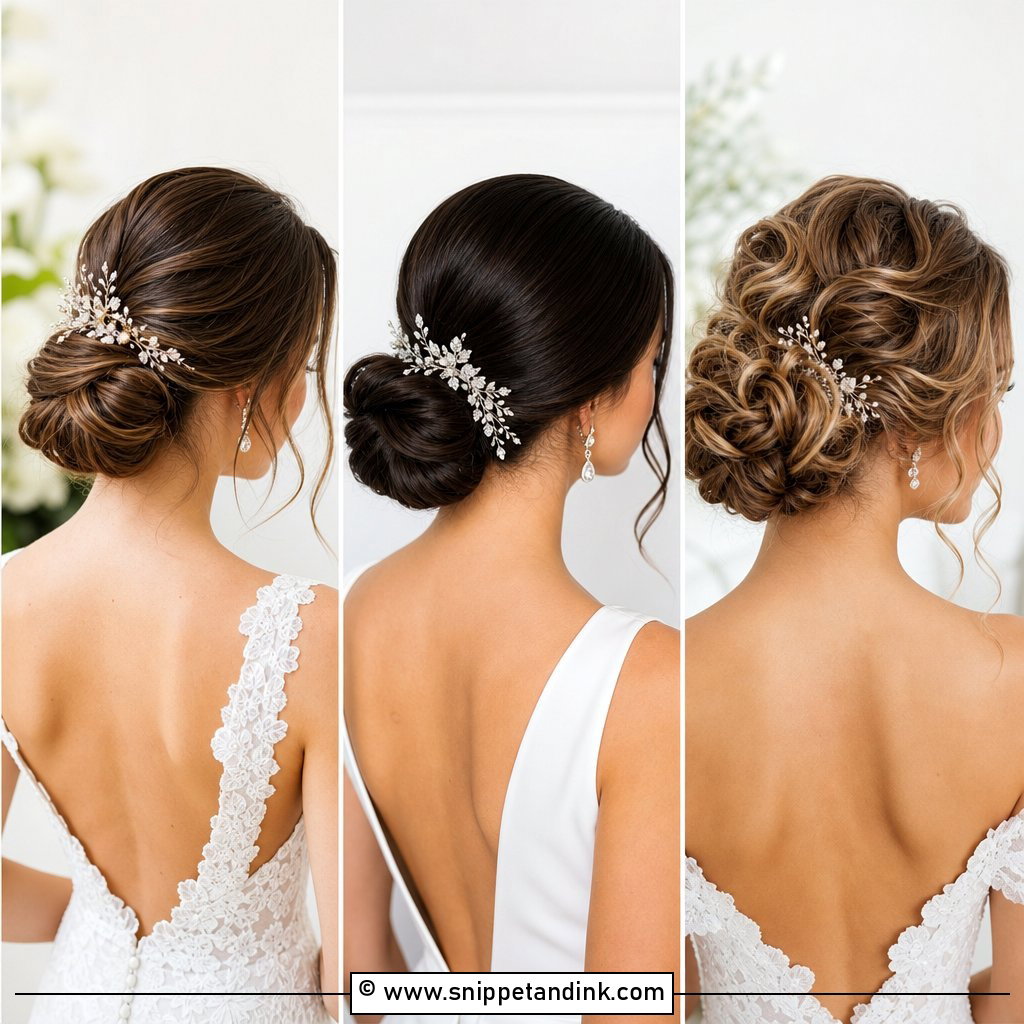
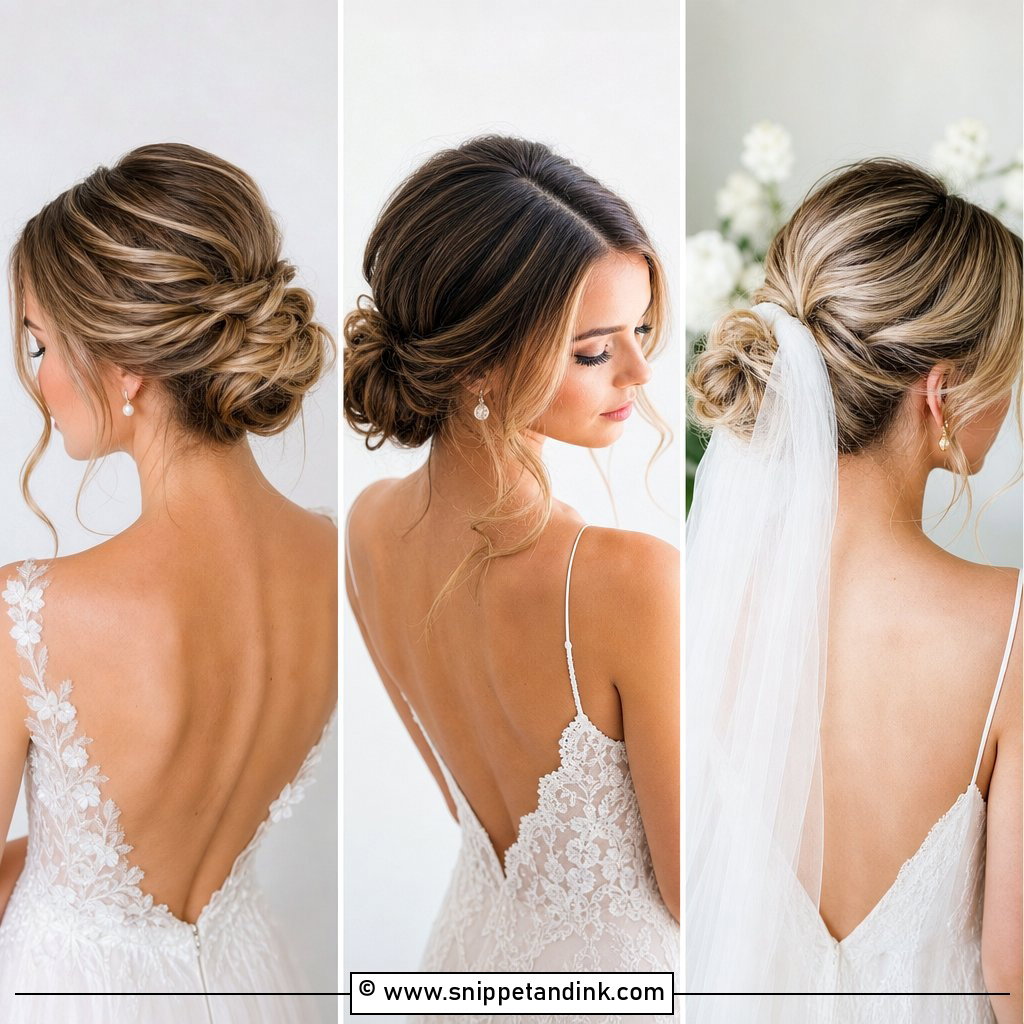
- Open or low backs: a low bun at the nape frames the bare skin and leaves the line of the back visible.
- Strapless gowns: almost any height works, but a bun placed too high can make the shoulders look broader.
- Long veils: plan the comb’s position and the bun together, since a high bun lifts the veil and a low one lets it fall close.
I’d ask you to wear a top with a similar neckline to your trial, or bring a photo of the dress from behind. It sounds fussy, but it’s the quickest way to see whether the bun belongs at the nape or the crown.
1. Low Sleek Bridal Bun
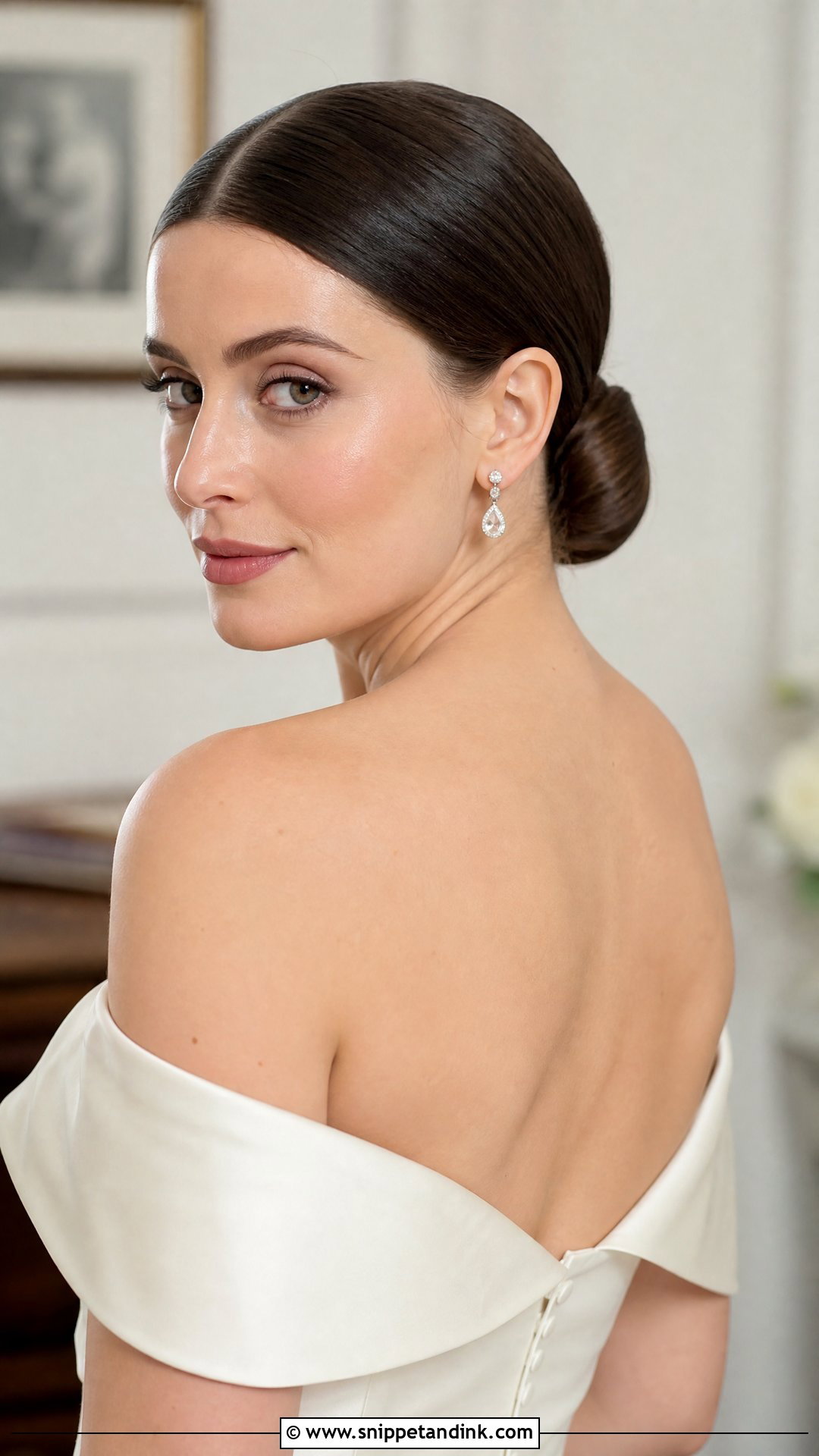
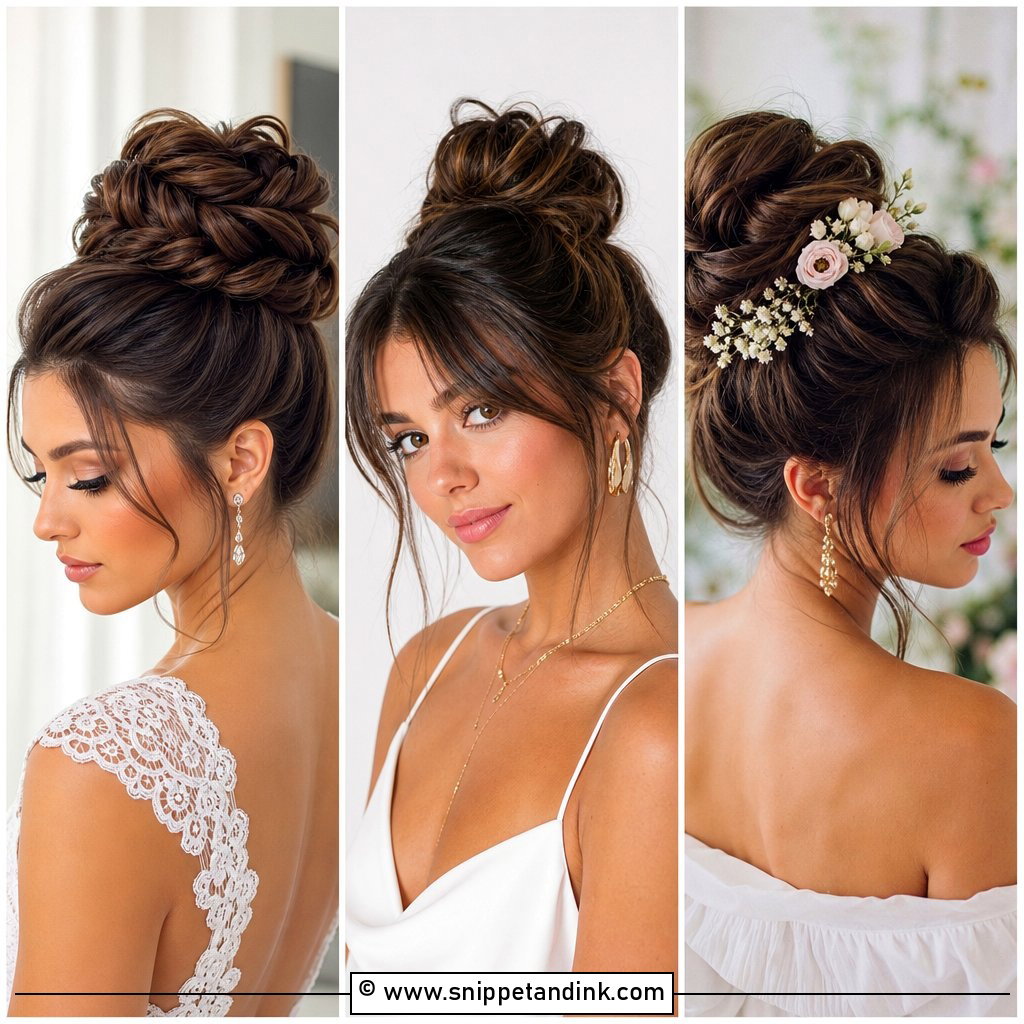
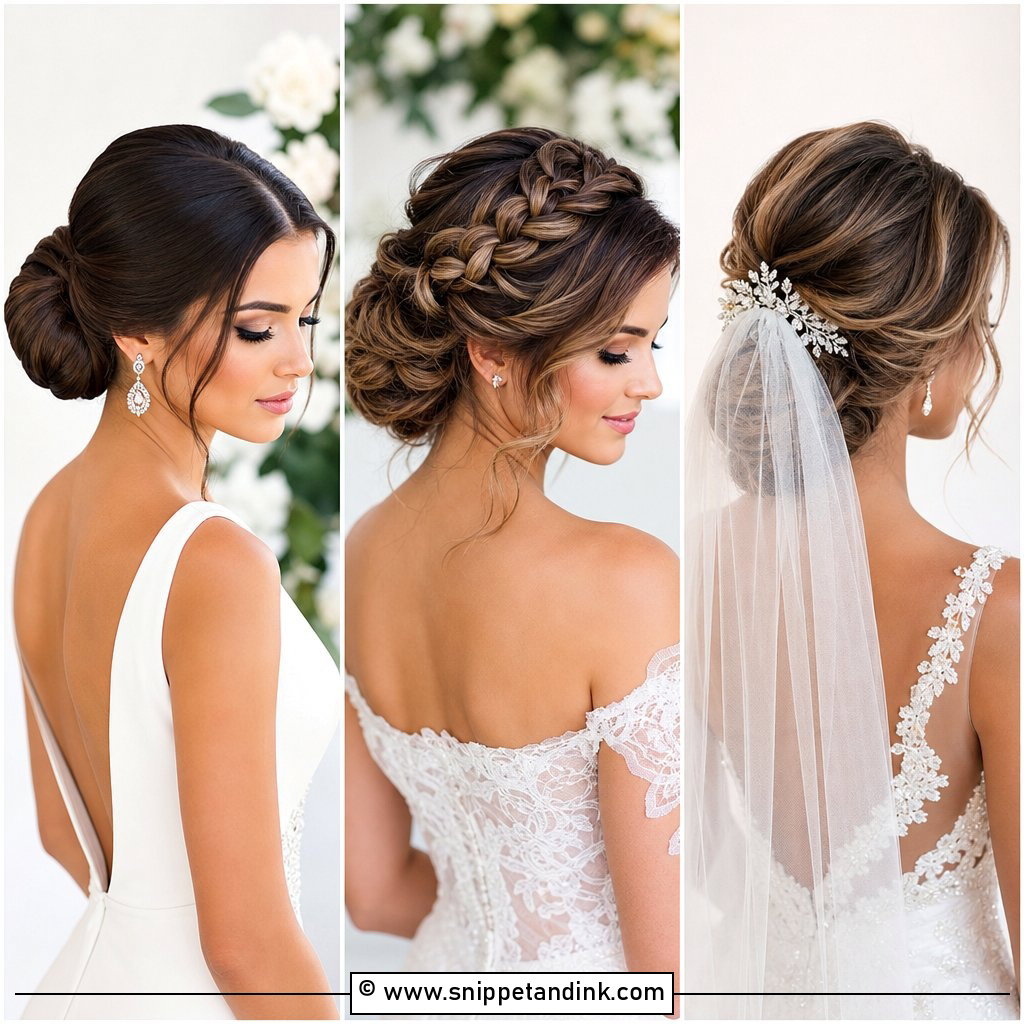
A smooth, glossy knot resting at the nape is the cleanest look in bridal hair, and the hardest to fake. Every flaw shows: a bump at the crown, a fuzzy hairline, an uneven part. I blow-dry the hair completely straight first, brush it back with a boar bristle brush while it’s still warm, and set the elastic before I touch the bun itself. A light shine serum on the palms, not sprayed, keeps it glossy without making roots look greasy by evening. It shines next to a structured gown and a cathedral veil, and it’s the style I’d steer away from if your hairline has lots of short regrowth or cowlicks.
2. Messy Bridal Bun With Loose Strands
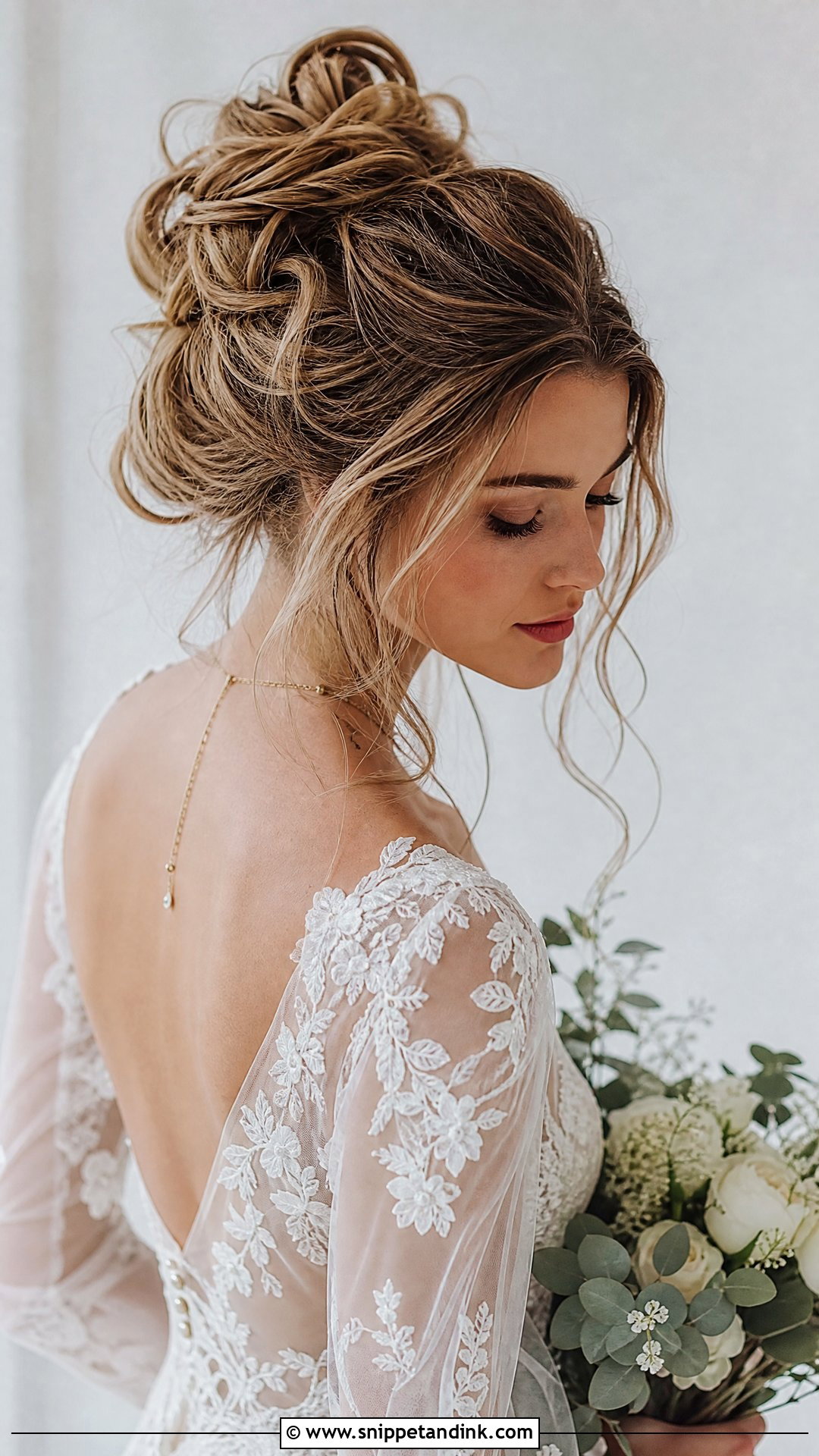
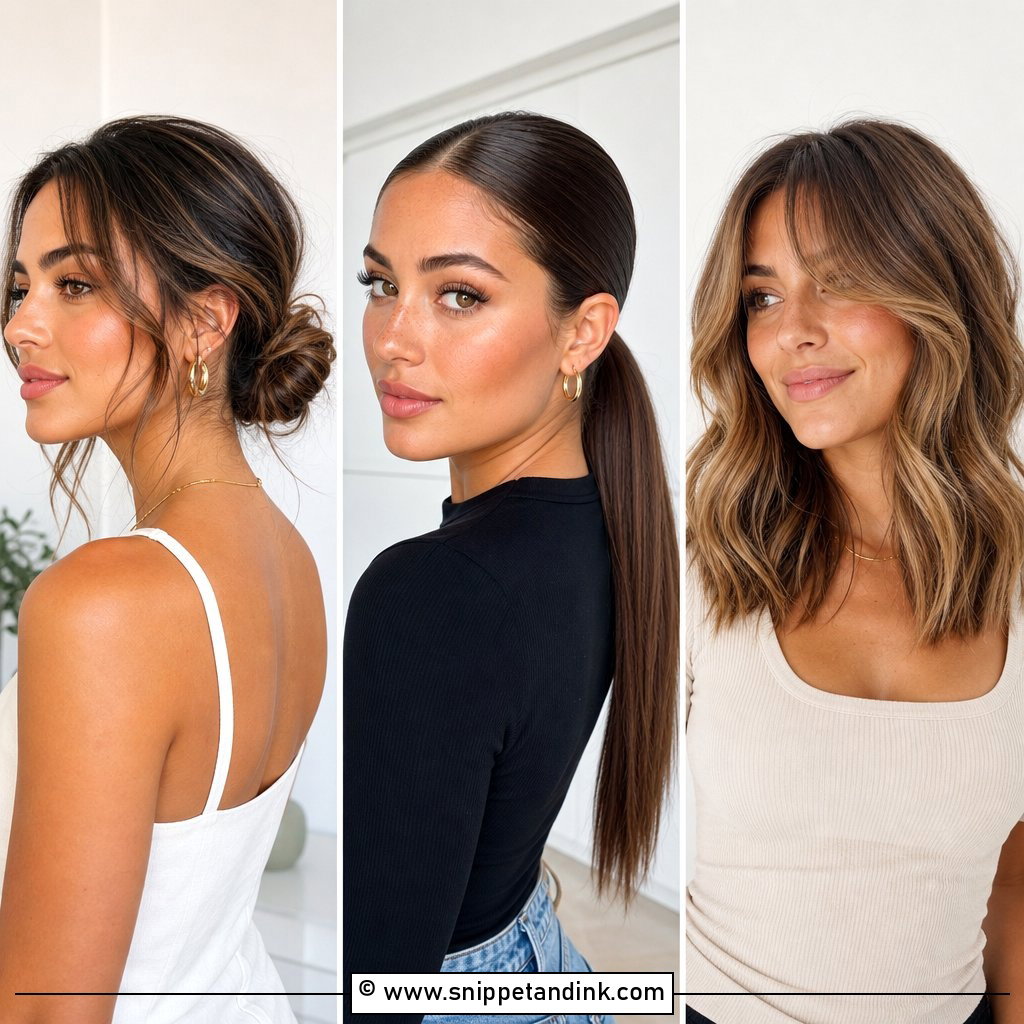
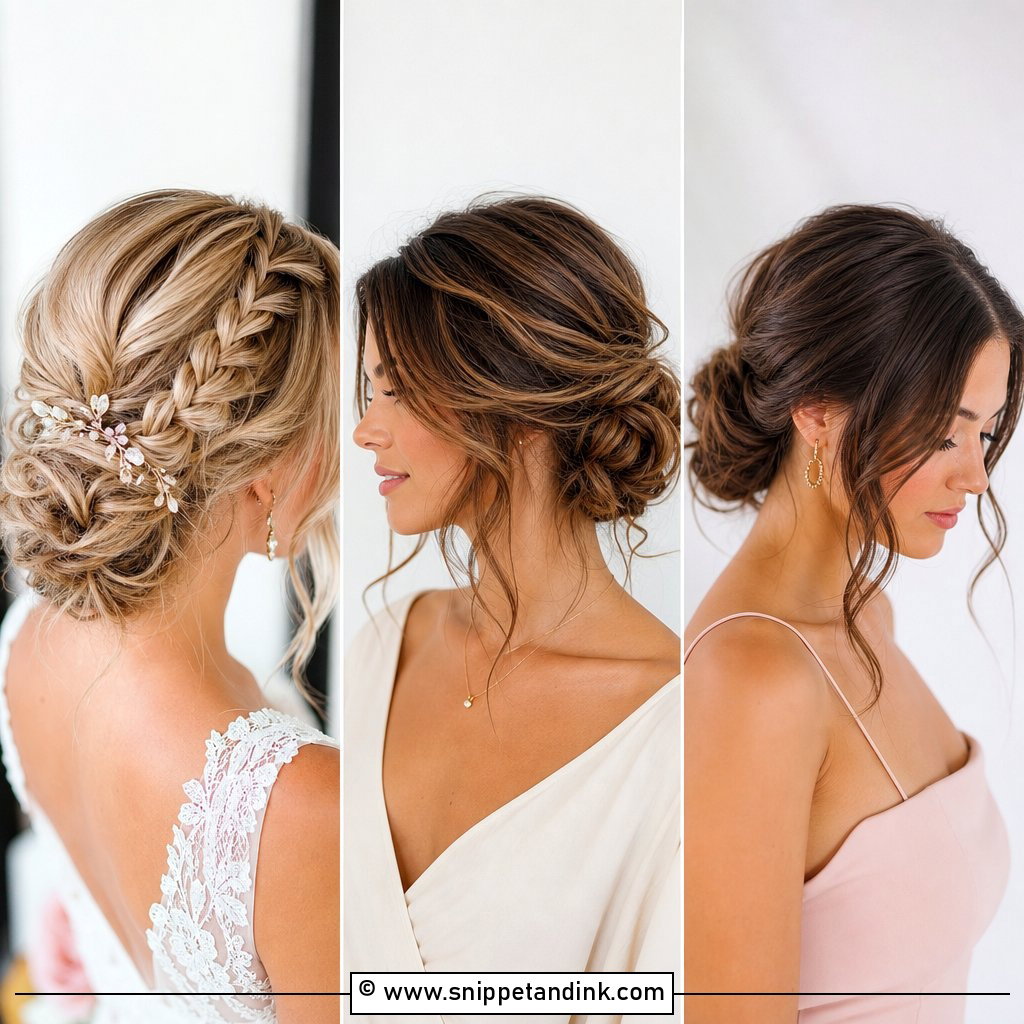
A messy bun is built, not thrown up. I curl the whole head first so there’s texture to work with, gather it loosely, then pin sections into the bun one at a time and leave a few face-framing strands out on purpose. That’s why it takes as long as a sleek bun. Garden and outdoor weddings suit it, and wavy hair gets there with the least effort. Flowers or delicate pins slip neatly into the folds. The thing I check is the back: undone at the front is charming, but a collapsing bun at the back reads as a long day, not a style.
3. Classic Low Chignon
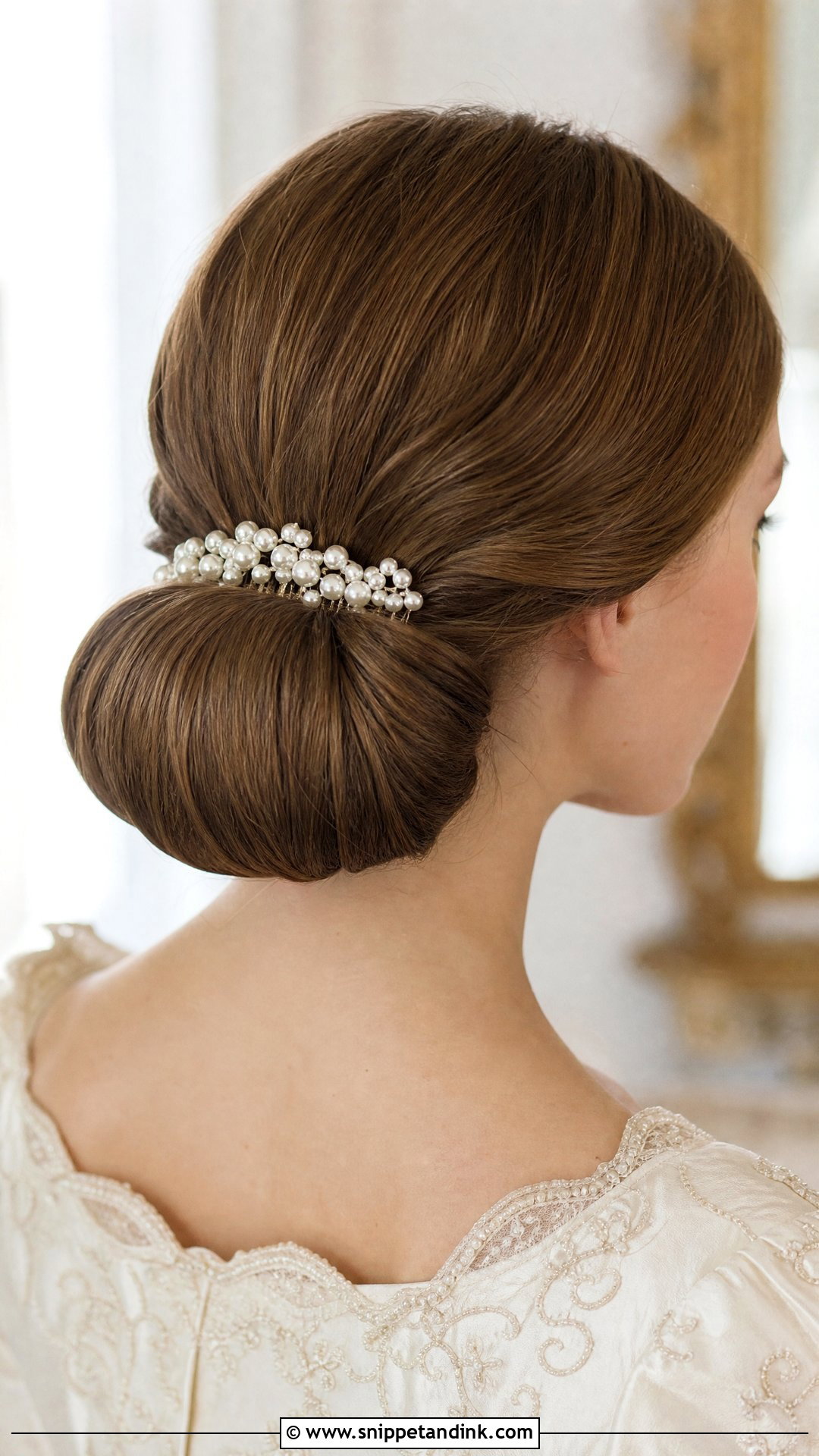
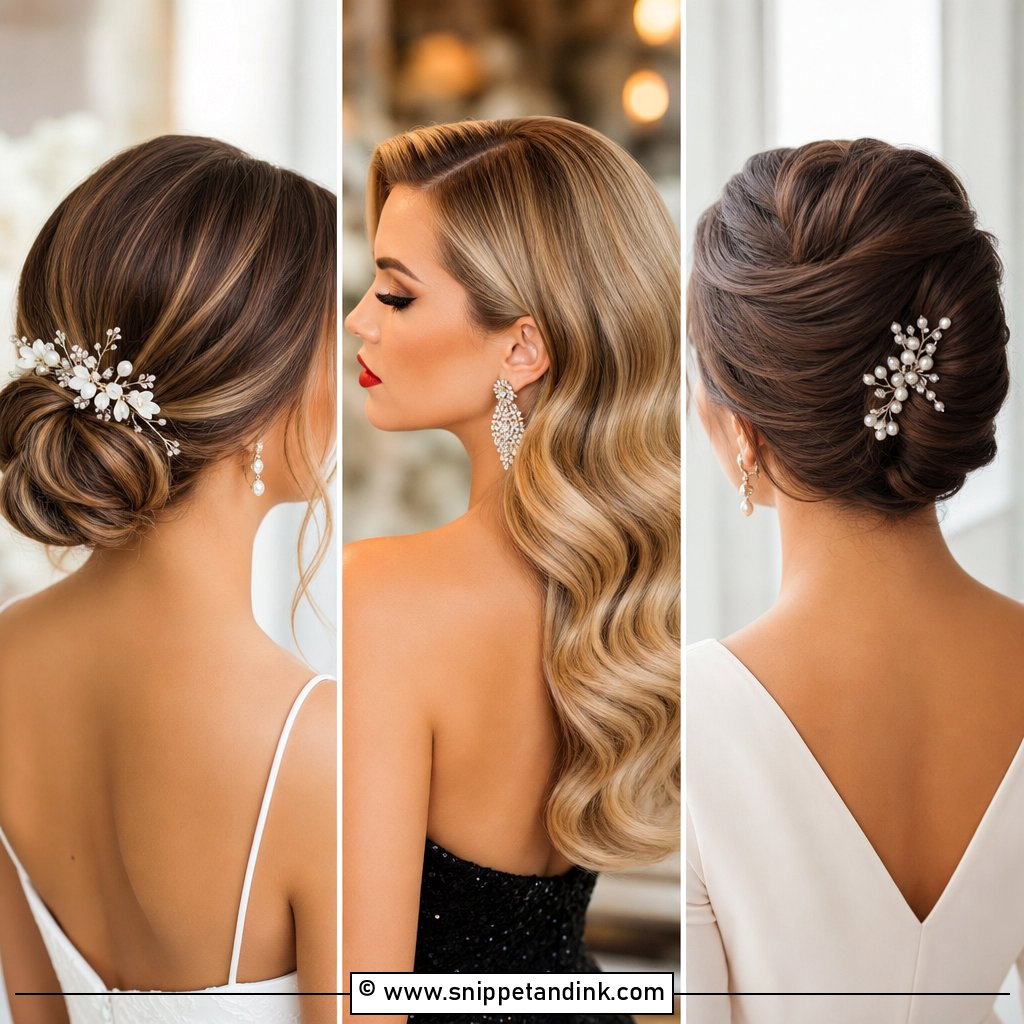
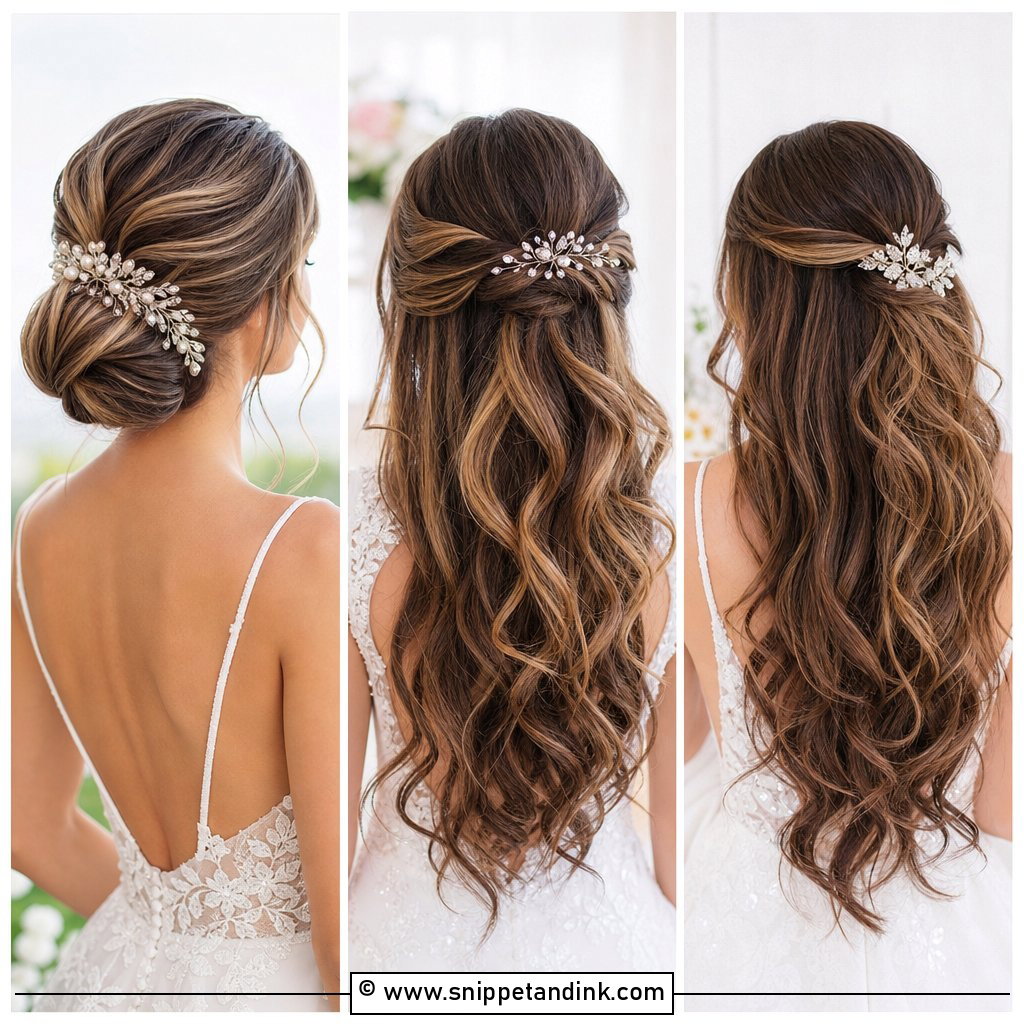
Hair is coiled into a smooth, rounded shape at the nape, and that’s the whole trick of the low chignon. Its quiet shape works with vintage lace and modern crepe alike, and it gives pearl combs and crystal pins a firm base. Sleek or softly textured, I build it on a small criss-cross of pins first so the coil has something to sit on. Too heavy a chignon on fine hair sags toward the collar after a few hours, so for fine hair I add a little backcombing at the base before I roll it.
4. Braided Bridal Bun
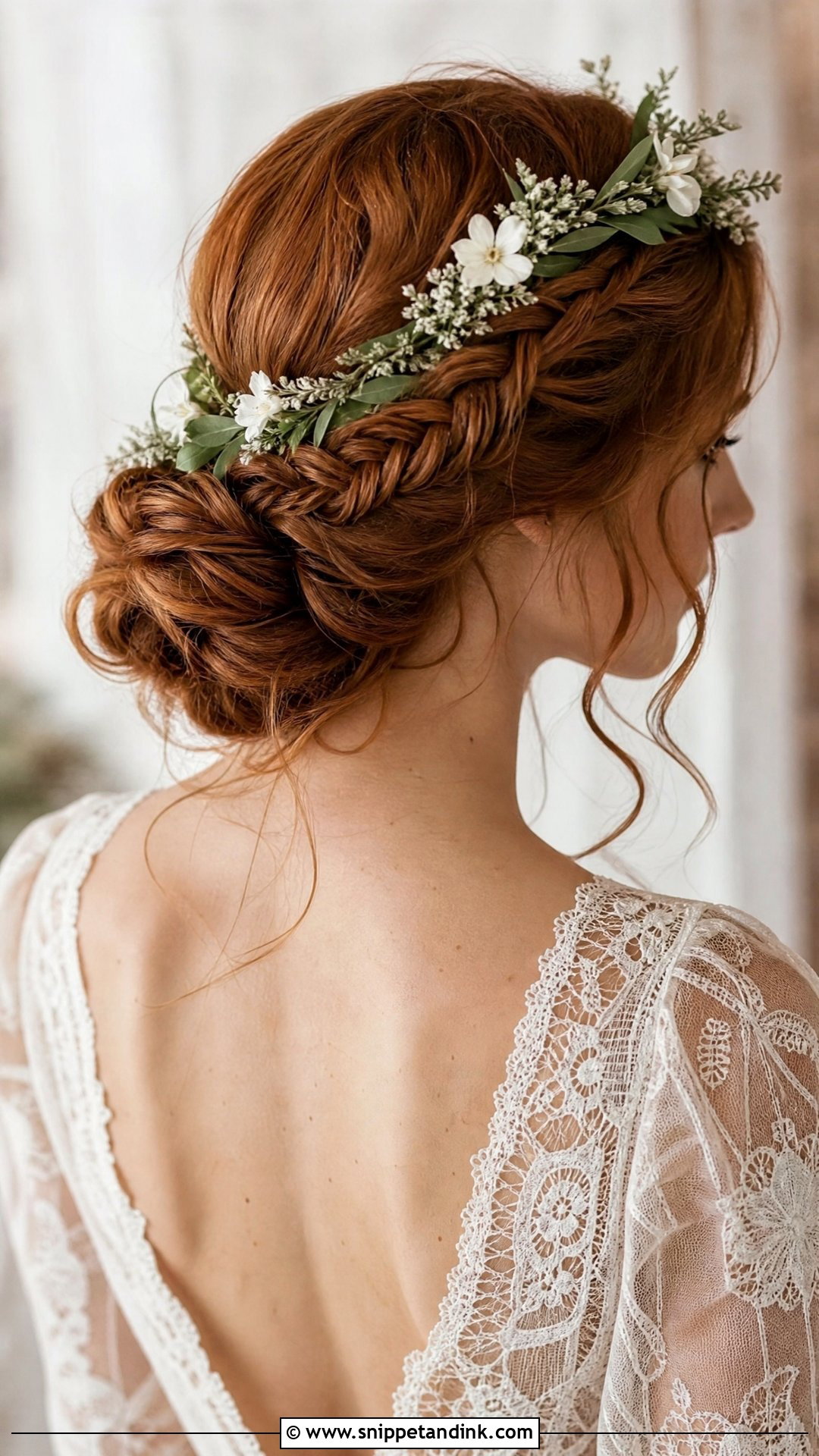
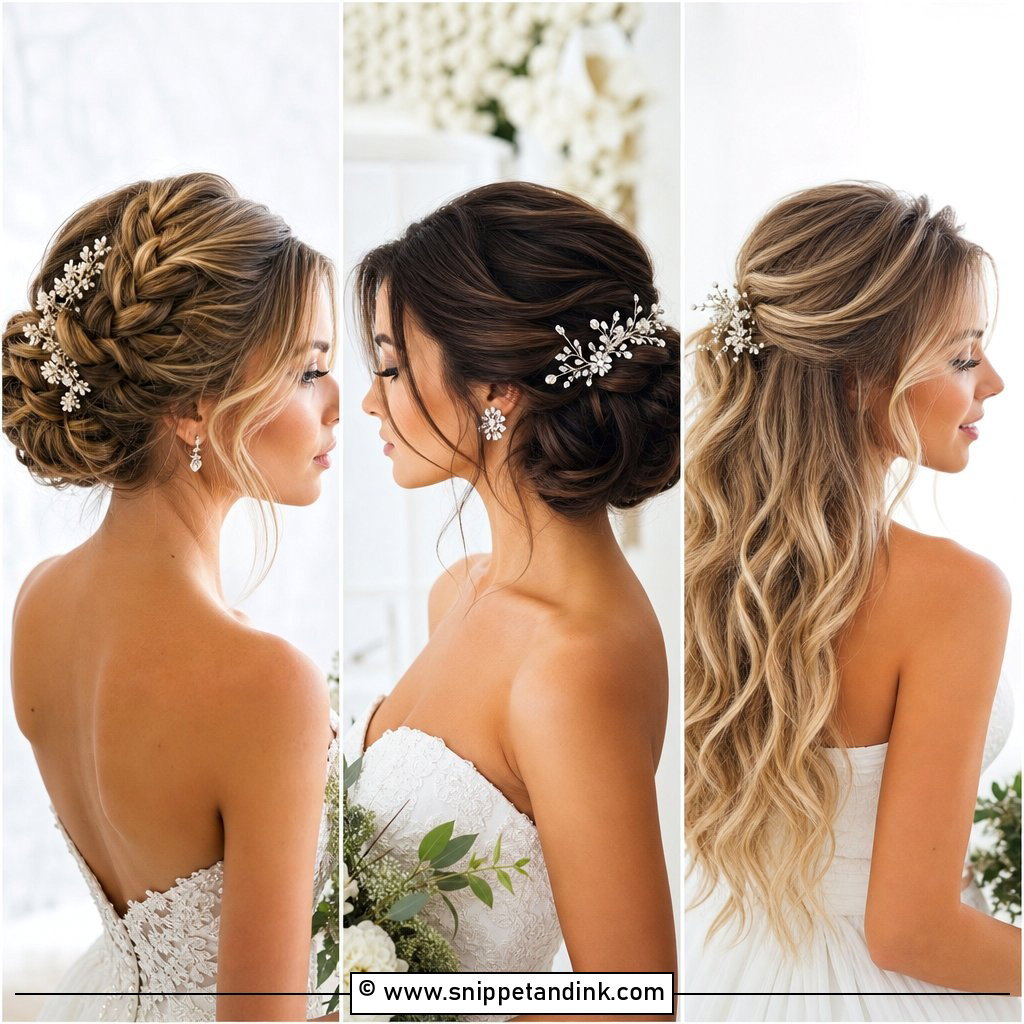
Wrapping a braid around the bun adds texture and a bit of handmade detail. A fishtail, French or Dutch braid can circle the knot or run up into it from the nape. Rustic and boho weddings suit it, and the woven edge looks sharp in close-ups. Braids also help keep everything secure, because each crossing grips the pins. You’ll want at least shoulder-length hair for a braid long enough to wrap. Flower crowns and small pins pair well, and I tuck stems into the braid rather than the smooth bun, where they slide out.
5. Twisted Bridal Bun
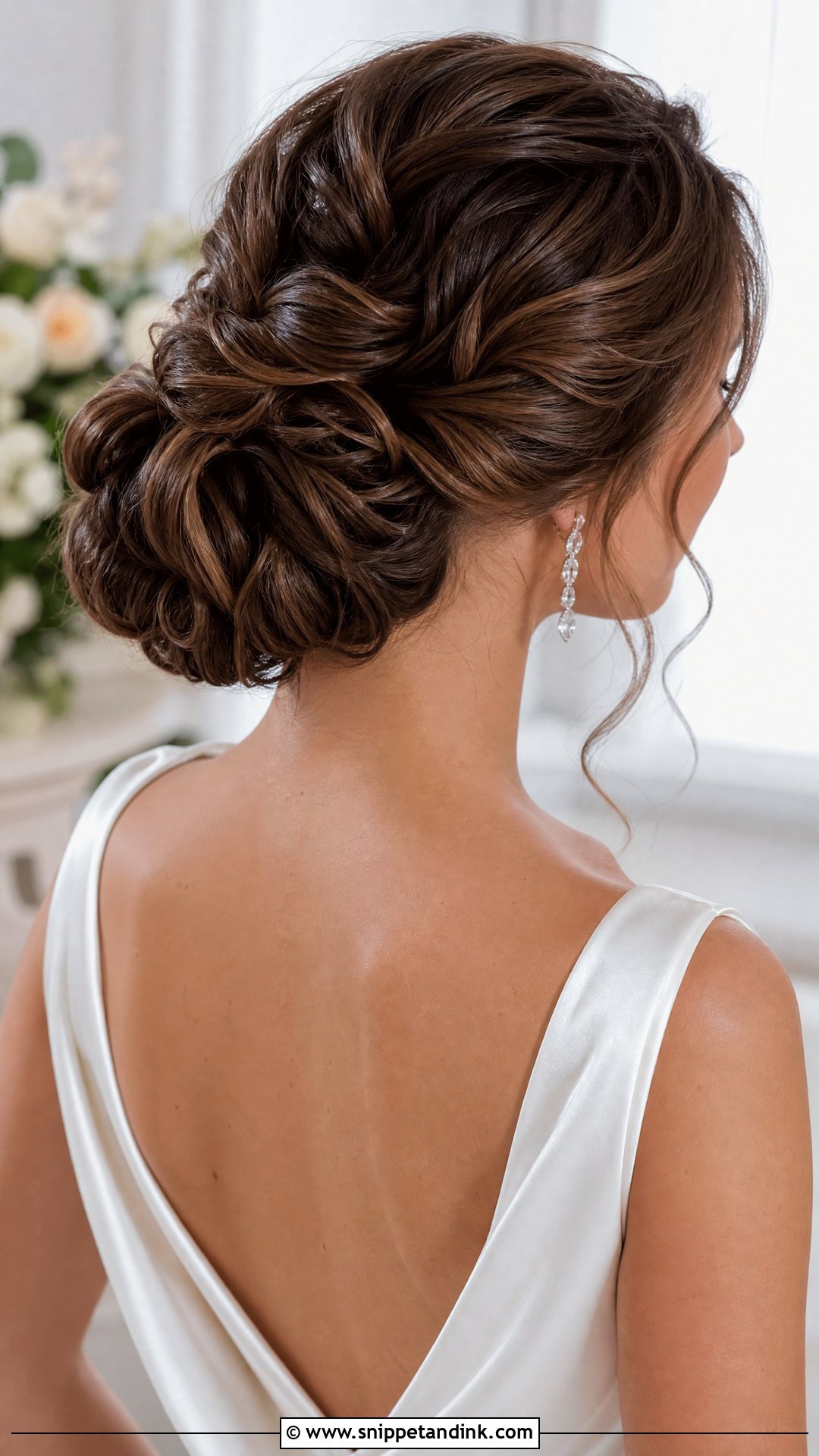
Sections are twisted gently and pinned one by one into a structured shape, which gives the bun ridges of light and shadow. I find it more forgiving than a sleek knot on hair with layers, since short ends hide inside each twist. Wear it low for a classic look or mid-height for something bolder. It pairs well with a veil and sparkling accessories. My only warning is about silky, freshly washed hair: twists unwind, so I prep with a texture spray and pin each one at both ends.
6. Floral Adorned Bridal Bun
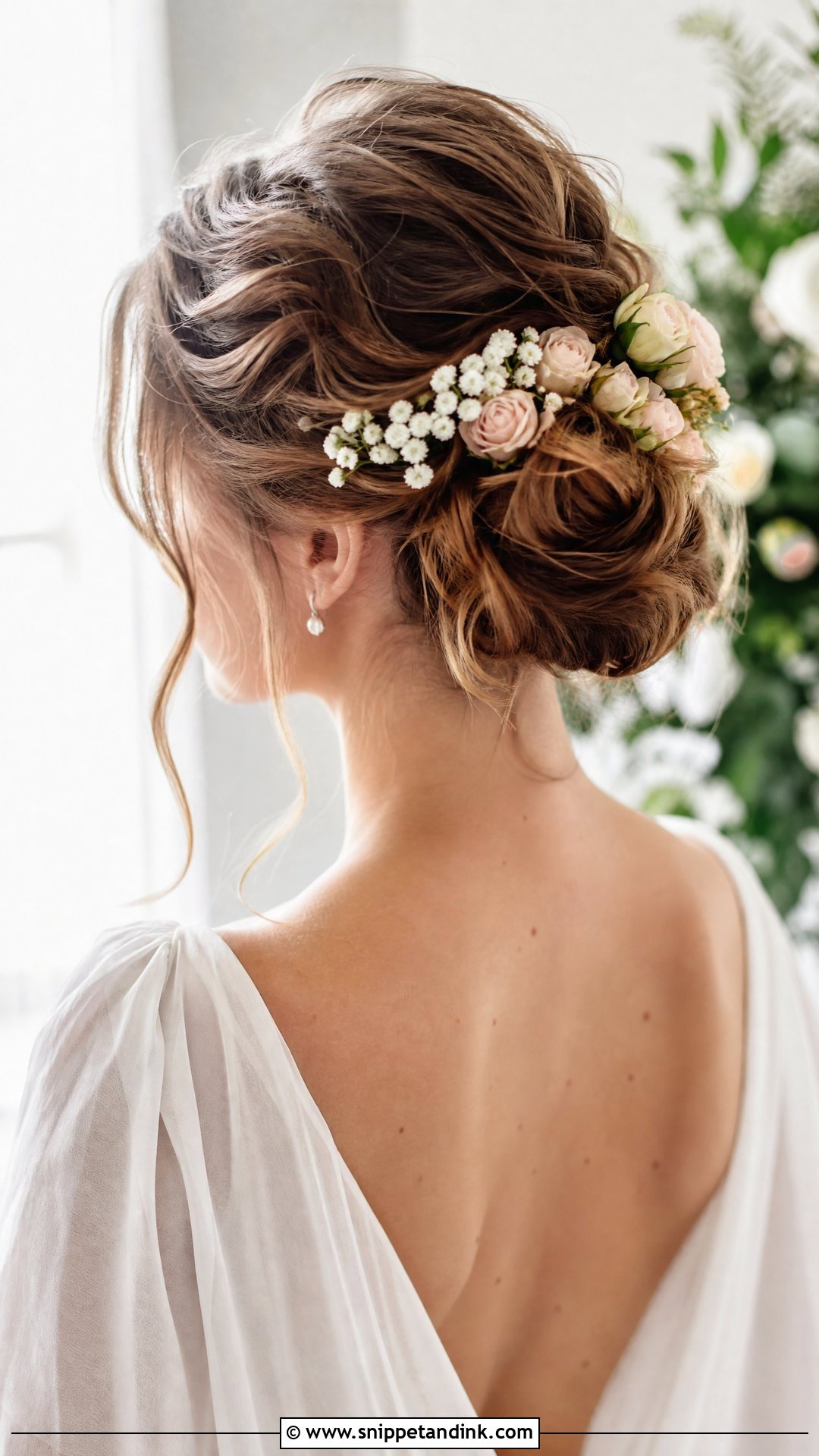
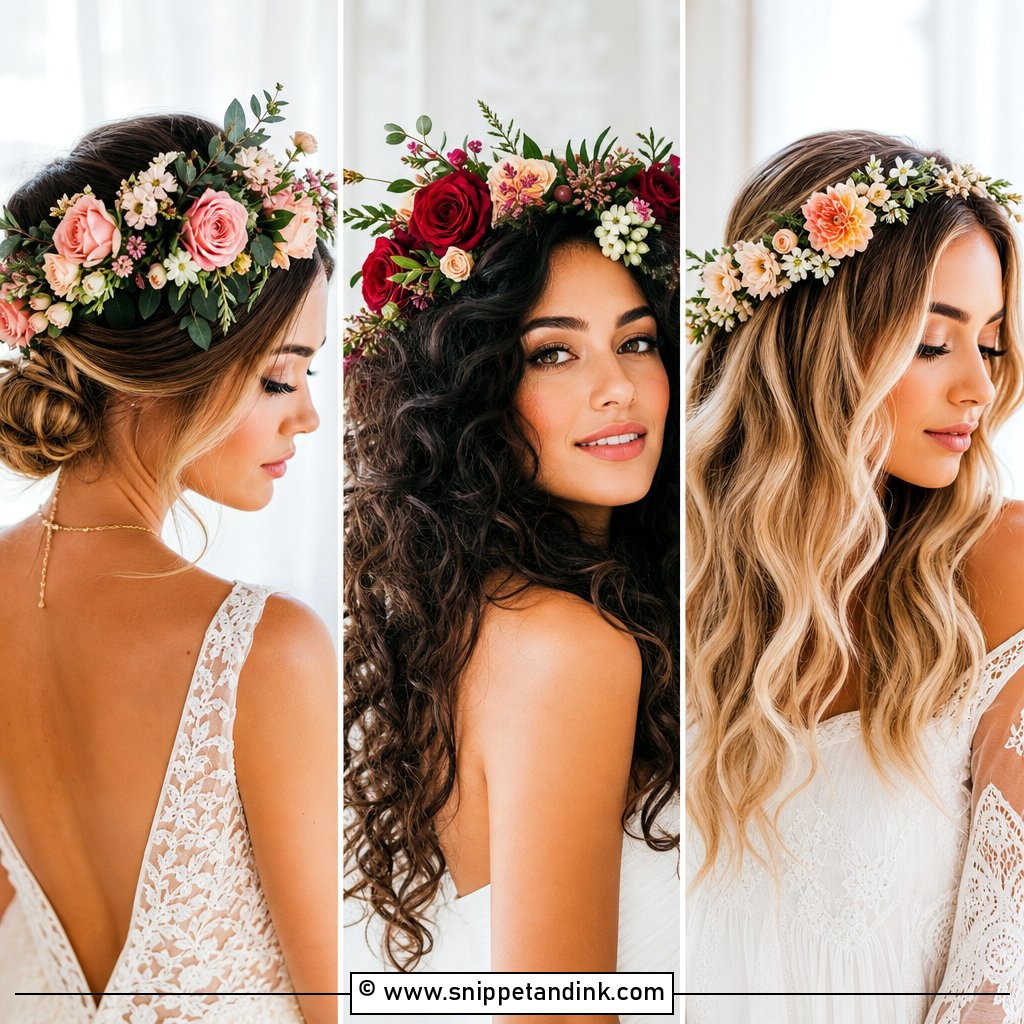
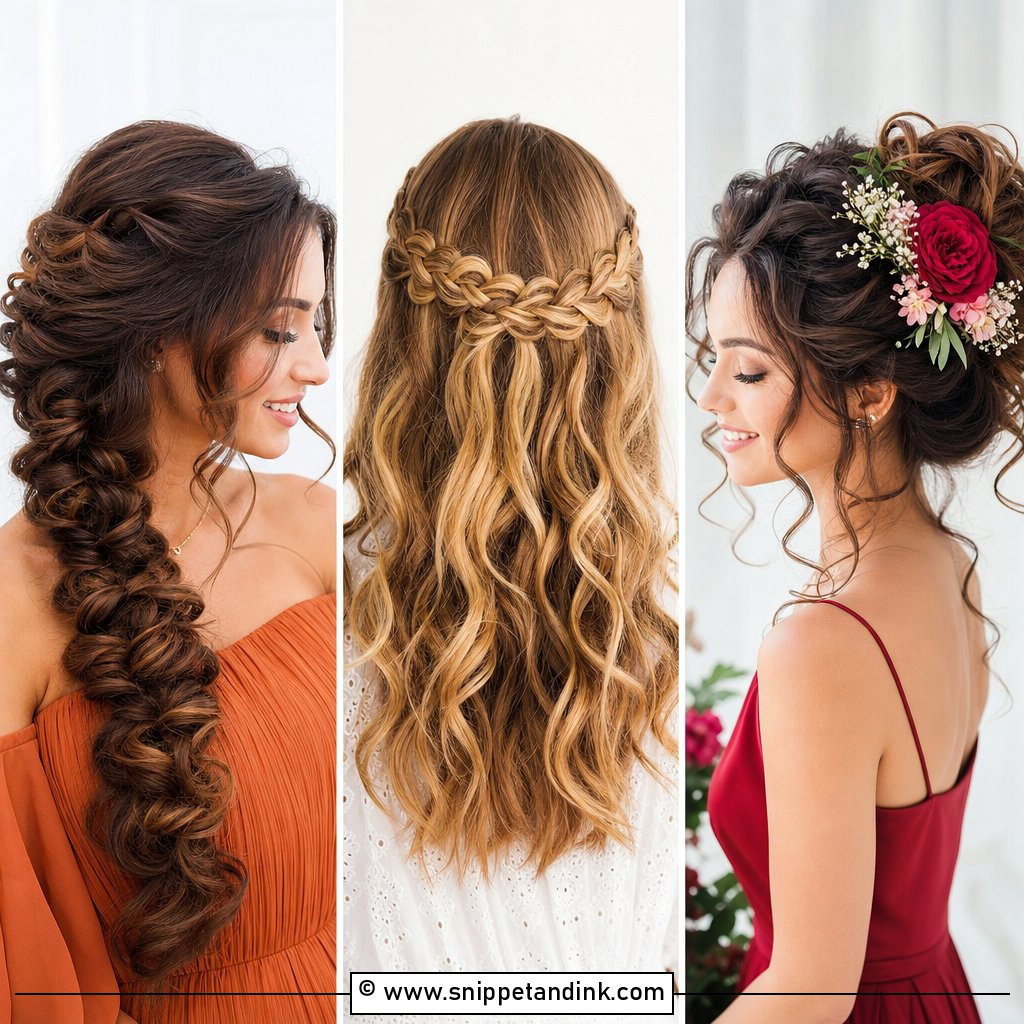
Fresh flowers tucked into a bun make a romantic picture, and they match your bouquet if you plan it with the florist. Baby’s breath, spray roses and small wildflowers nestle into the folds of the updo. Spring and garden weddings suit this style best. Practicality matters more than people think: fresh flowers wilt out of water, so I ask florists for hardy, small-headed blooms, wired or glued to pins, and I place them last, after the hairspray has dried. Fragile flowers like gardenias brown quickly against warm skin and hair.
7. Bridal Bun With Side Bangs
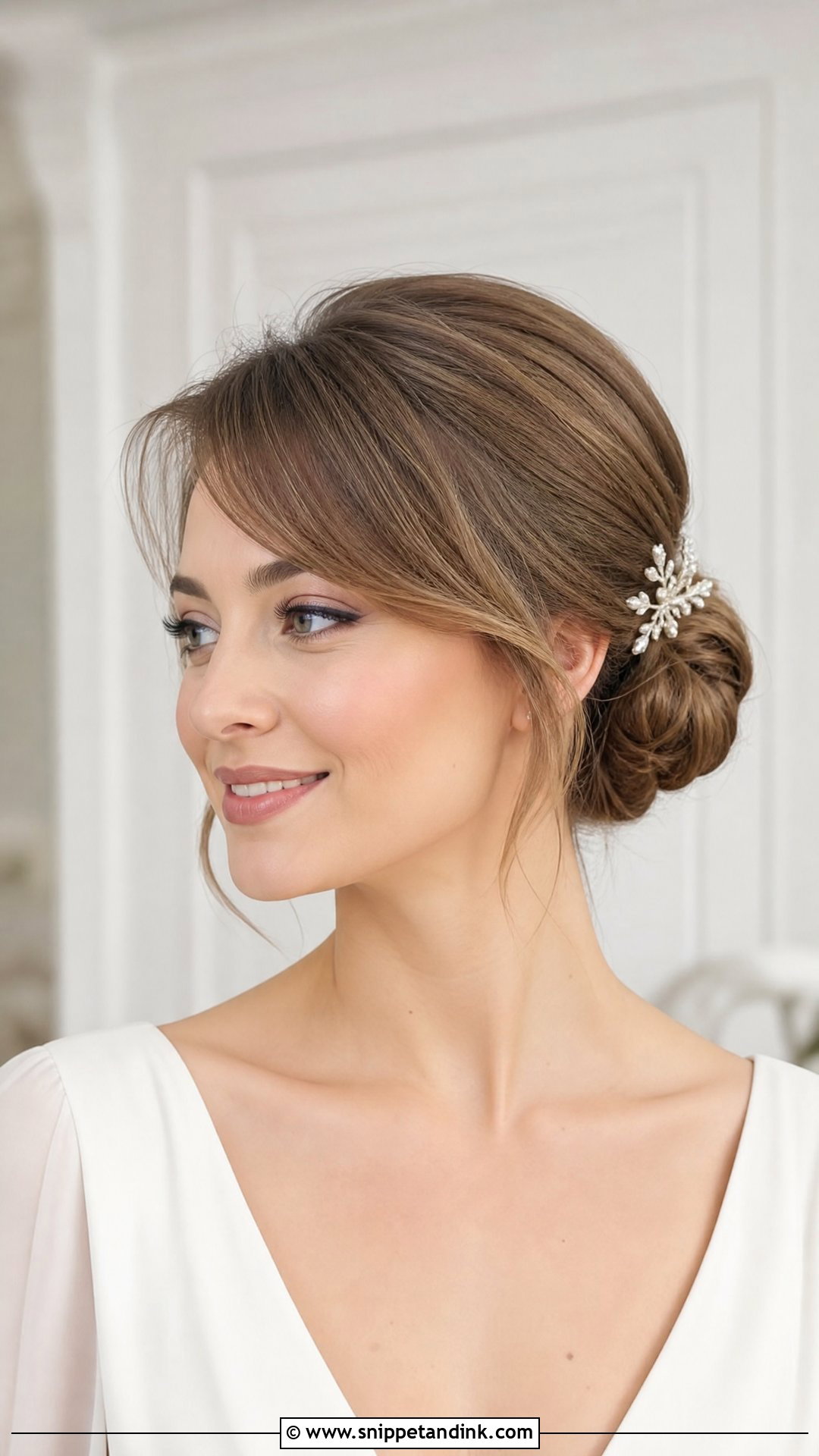
A soft, sideswept fringe frames the face while the bun stays neat behind. It works best for brides who already wear a fringe, because a fringe you don’t usually style tends to flip the wrong way at the worst moment. I blow-dry it in the direction it’ll sit, pin it flat while it cools, and set it with a light spray. It suits round and heart-shaped faces by breaking up the width at the cheeks. A sparkling pin just behind the fringe gives it a polished point to end on.
8. Bohemian Bridal Bun
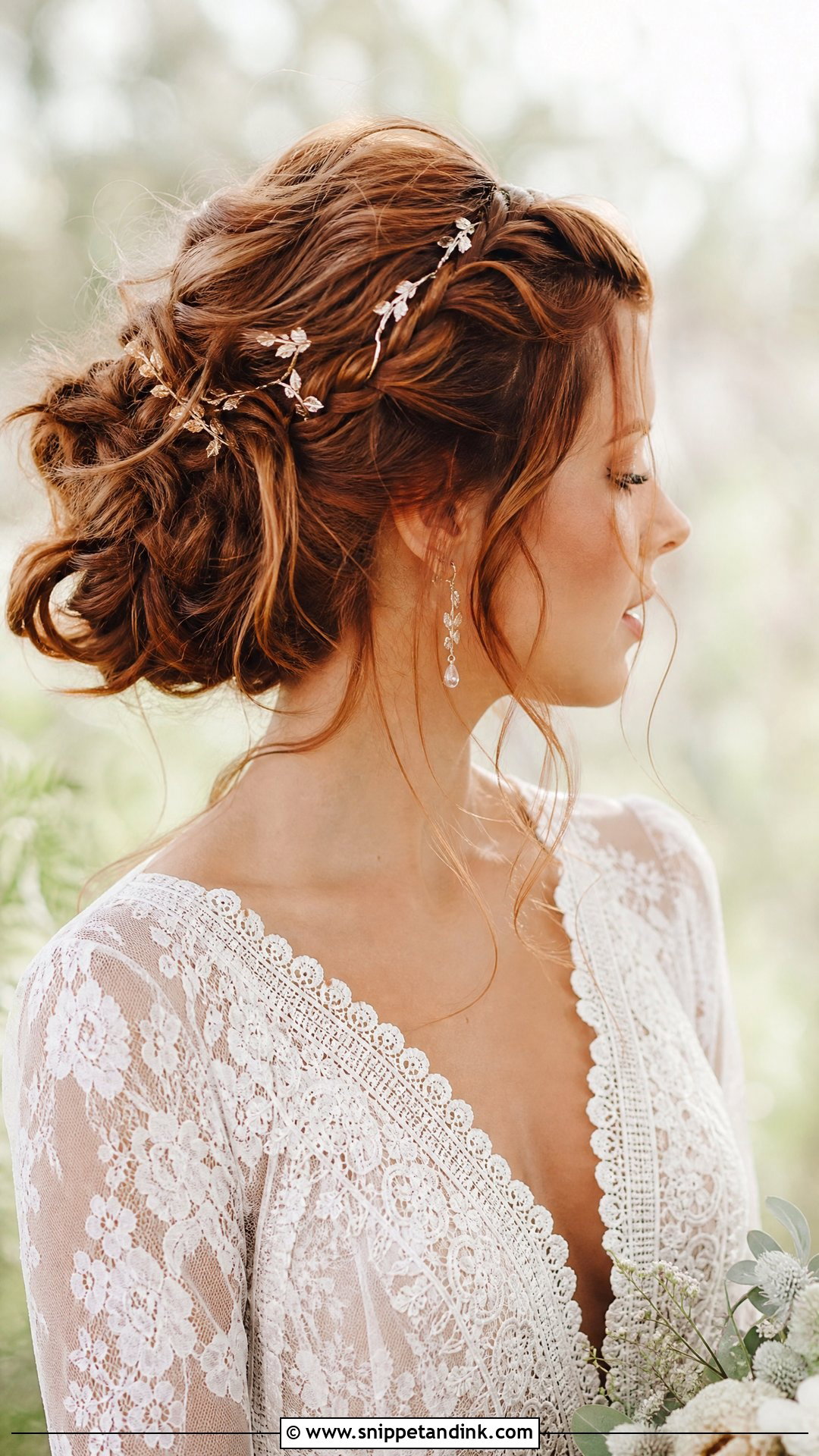
Free-spirited brides tend to land on this one: a relaxed bun built from braids and twists with a slightly undone finish. Outdoor, beach and woodland settings suit it, and it sits happily under a flower crown. Wavy and textured hair comes together most naturally here. Small flowers or vines can go in for extra detail. The mistake I see is too many loose strands. Three or four well-placed pieces read as boho; a dozen read as windblown, so I leave out fewer than you’d think and curl the ones I do.
9. High Bridal Bun
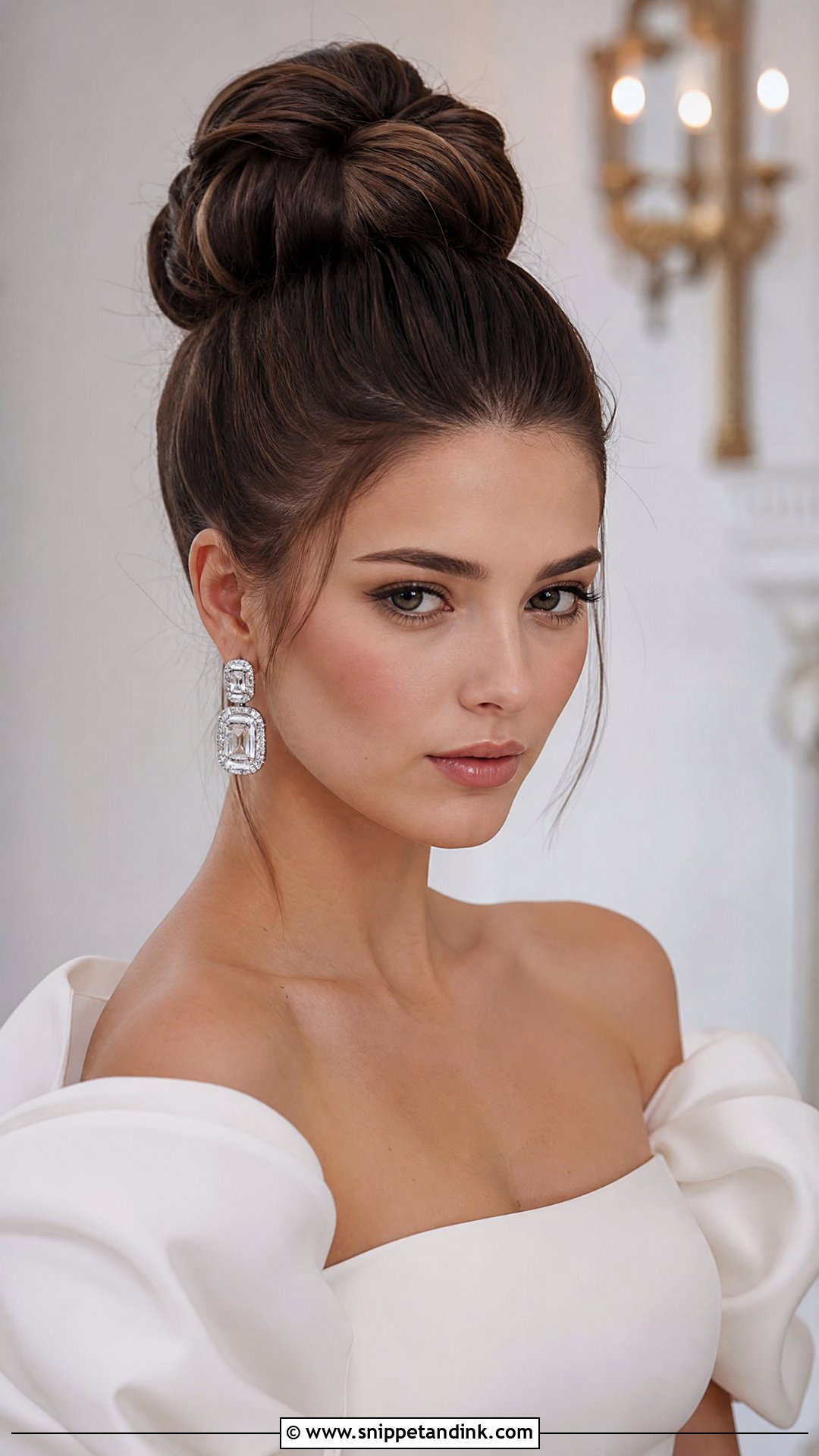
A high bun sits at the crown, lengthening the neck and putting your face and earrings front and center. It’s a fashion-forward choice and pairs with dramatic gowns and a birdcage veil. Keep it sleek for polish or add volume for drama. What I watch for is height combined with a long veil. The veil comb has to go under the bun, which makes the veil sit higher and stiffer, and on a tall bride or a short groom that height shows in every side-by-side photo. Do a test photo at the trial.
10. Bridal Bun With Curls
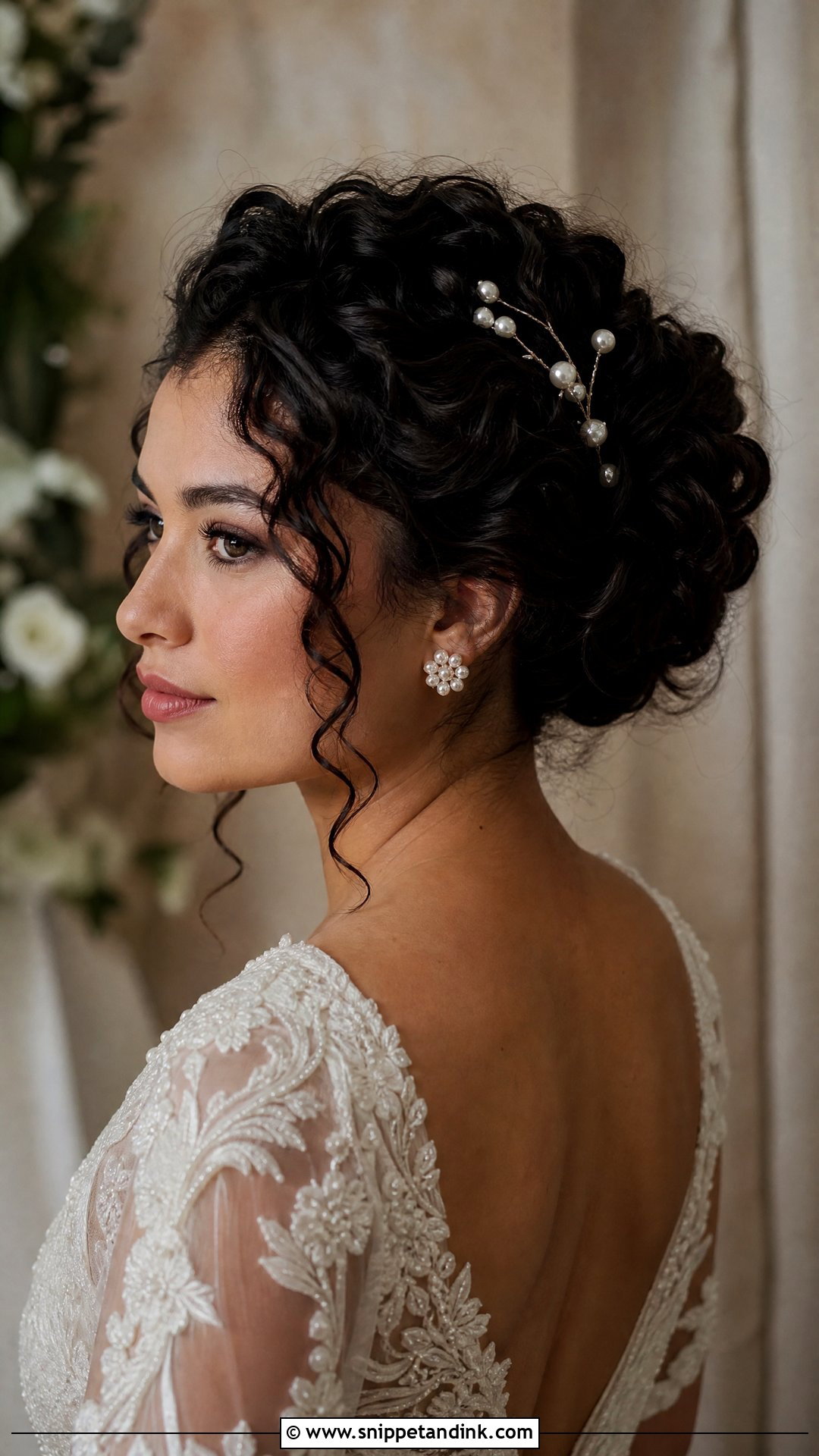
Soft curls cascading around a bun keep a structured updo from looking severe. A few curls are left out to frame the face, while the rest is pinned up into the knot. The balance between polished and playful suits vintage-inspired gowns. Naturally curly hair gives the best result, and I work with your own curl pattern rather than ironing it into something else. Pearl pins add an extra touch. If your curls drop quickly, I set them with pins while they cool before releasing them.
11. Bridal Bun With Veil
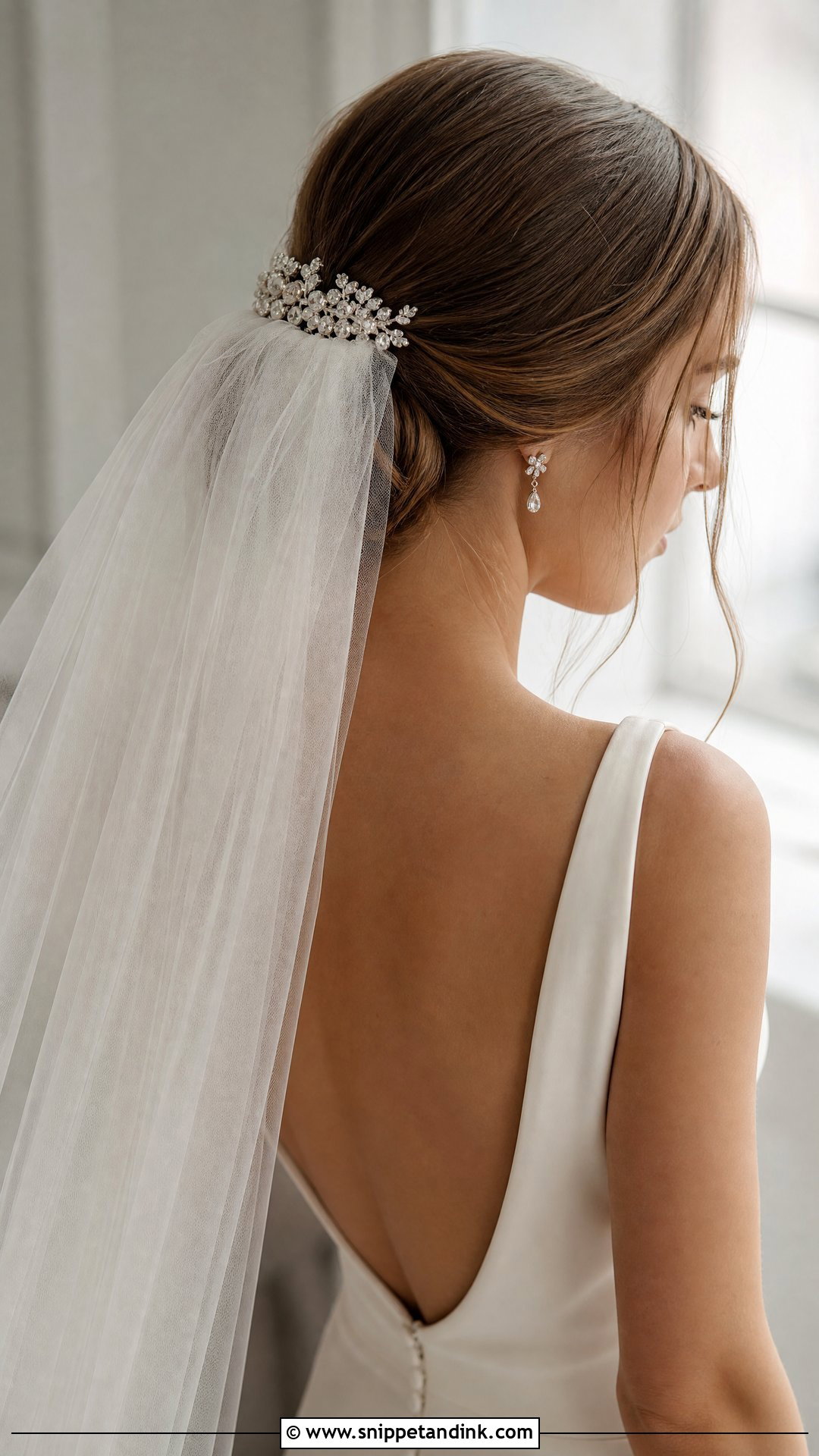
A bun is the best anchor a veil could ask for. Whether you choose a cathedral, fingertip, or birdcage veil, the comb grips the base of the bun far better than smooth hair. Putting the comb above the bun gives the veil more lift; below it, the veil falls straight and close. I always tell brides that the heavier the veil, the lower and more securely pinned the comb should be. A sparkling comb where the veil meets your hair finishes the look nicely from behind.
12. Bridal Bun With Pearl Accessories
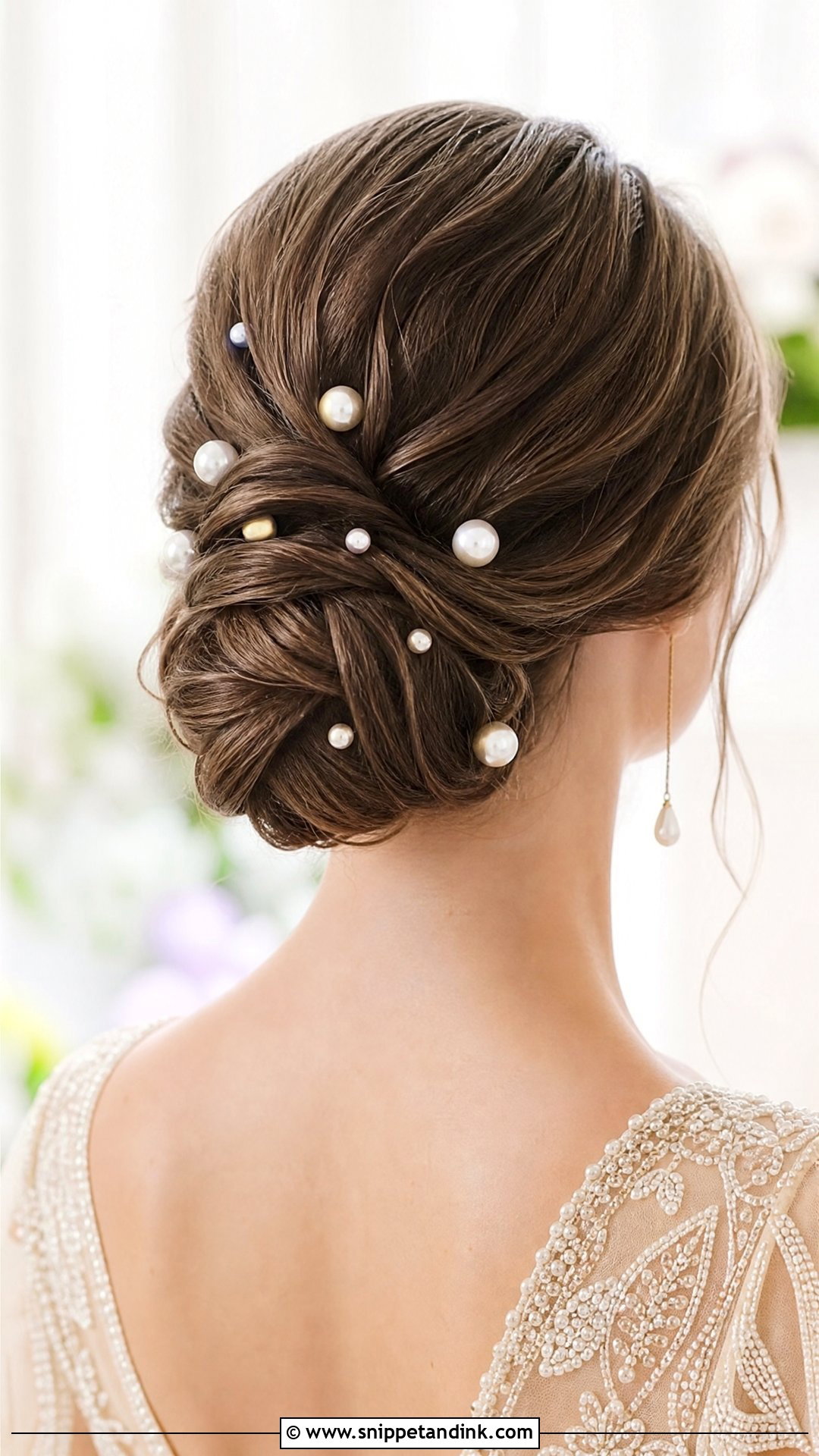
Pearls add a vintage note to any bun. Scattering pearl pins through the updo gives a soft, luminous effect rather than sparkle. A pearl comb or individual pins both work; the comb is quicker, pins look more organic. They suit ivory and champagne gowns especially well, since bright white pearls can make an ivory dress look yellow. Check your pearls against the dress fabric in daylight before the day. I scatter them in odd numbers, following the bun’s curve.
13. Low Bun With Center Part
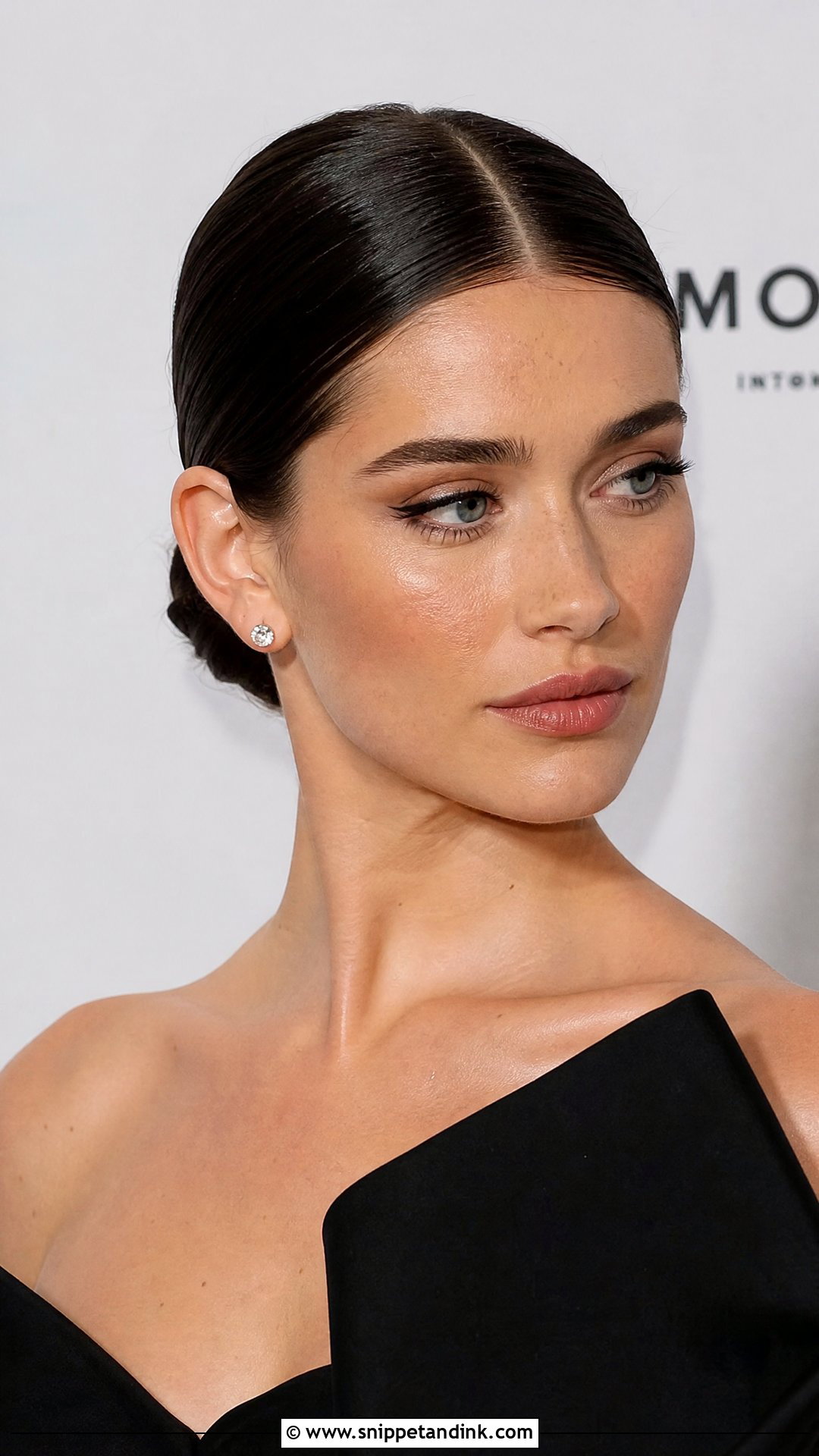
A clean middle part pulled back into a low bun is strictly modern. The part has to be perfectly straight, so I draw it with a tail comb against the light and press it flat with a little gel. Oval and heart-shaped faces look best with a middle part. It pairs with sleek gowns and minimal jewelry, and a single delicate pin adds subtle sparkle. A center part is also honest, though; if one side of your hairline is thinner, it’ll show, so a slight offset can be kinder.
14. Bridal Bun With Hair Vine
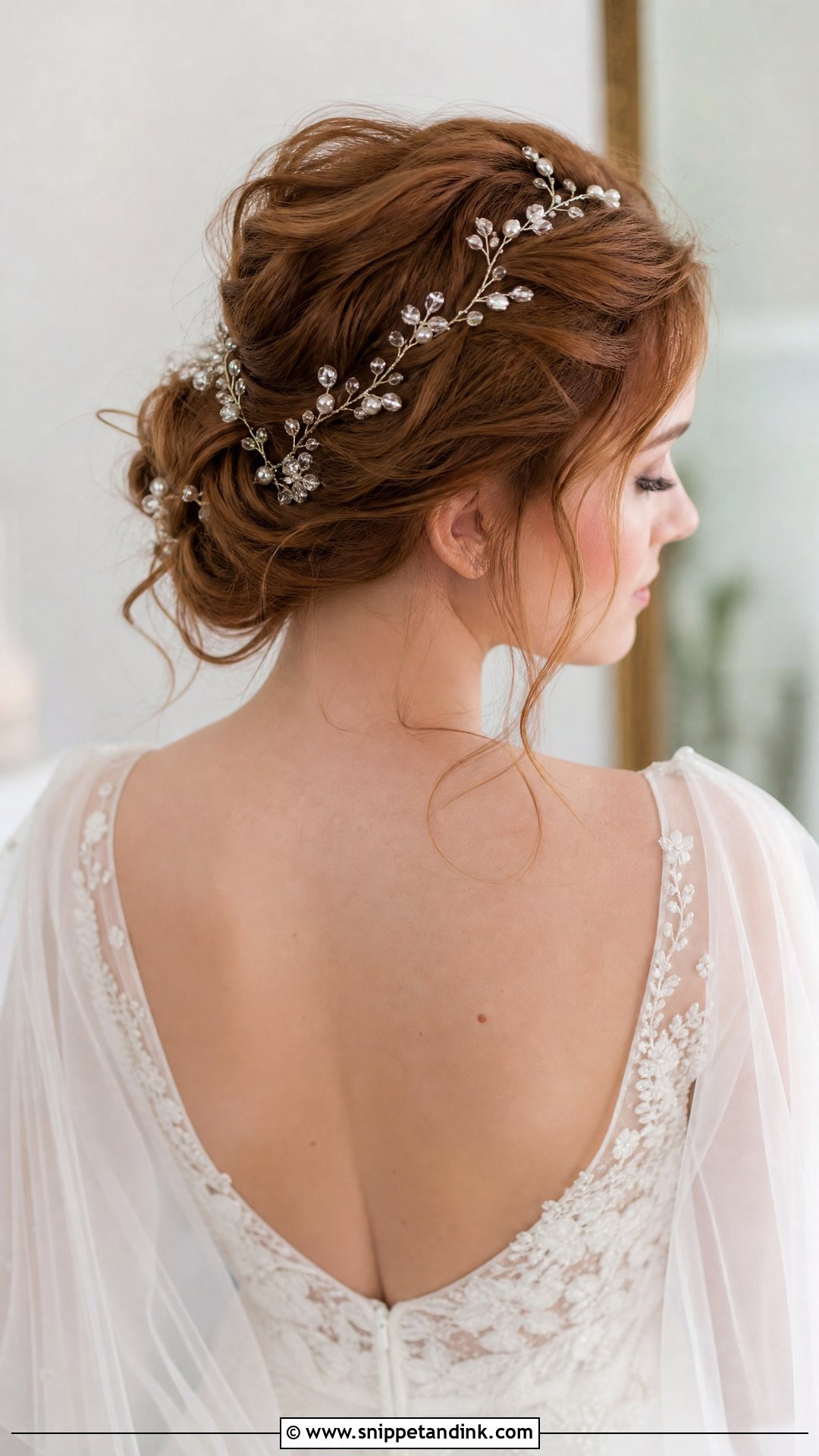
A hair vine is a flexible wire set with tiny crystals, pearls or flowers, and it bends around the shape of the bun. It can be wrapped around the knot or woven through braids, which gives a delicate, fairytale feel. Garden and boho weddings suit it well. My practical note: a vine needs to be pinned every couple of inches with pins that match your hair color, or it slides as you move. Thread the pins through the vine’s own loops if it has them. Small shimmering details look subtle in person and lovely on camera.
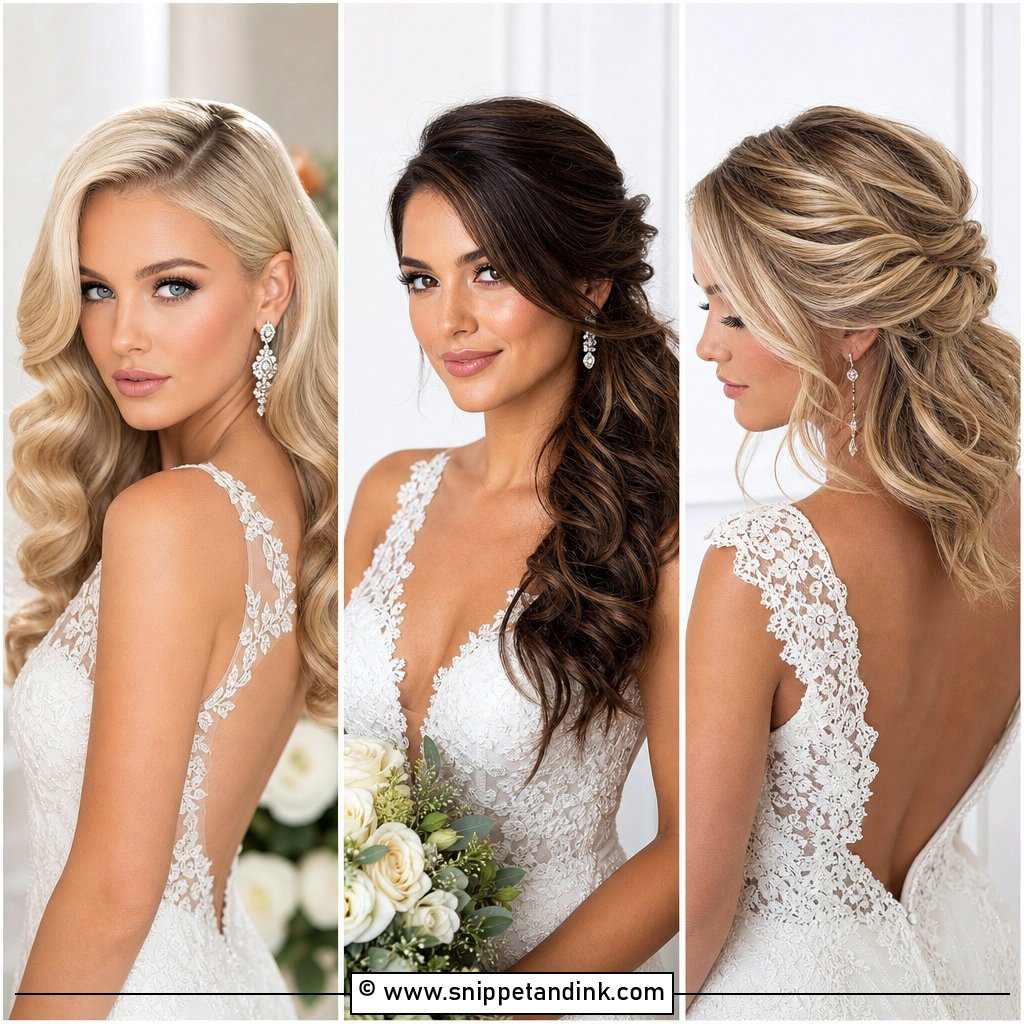
15. Textured Bridal Bun
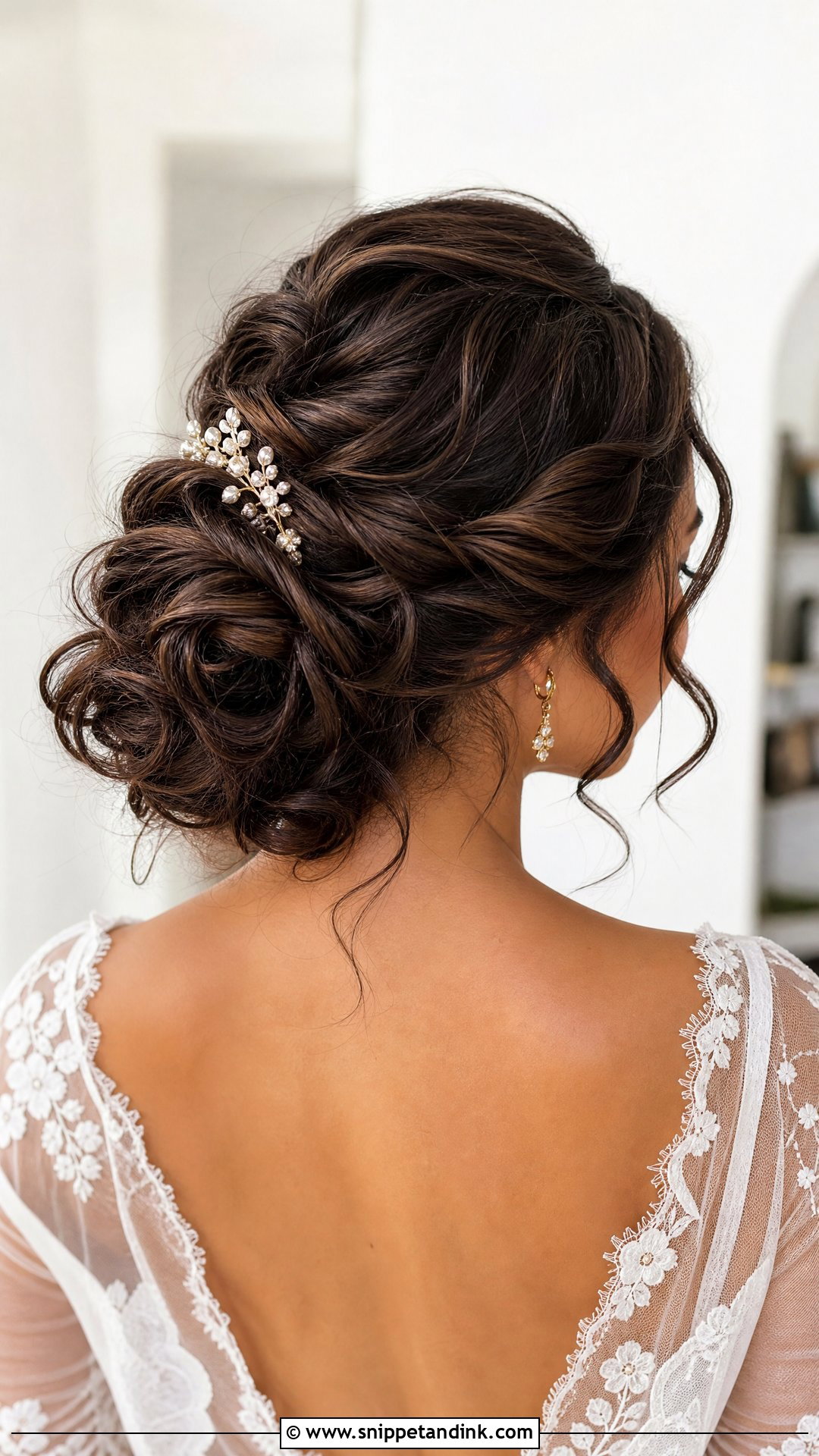
This is a bun built from waves and twists with real volume, the opposite of glassy and sleek. Wavy and curly hair suit it naturally. It hides layers well and looks deliberately soft in photos. Pins or flowers can be added for extra flair. I curl the whole head first and let the curls cool fully before I touch them, because hot curls pinned into a bun fall flat within an hour. It suits both modern and boho gowns.
16. Bridal Bun With Tendrils
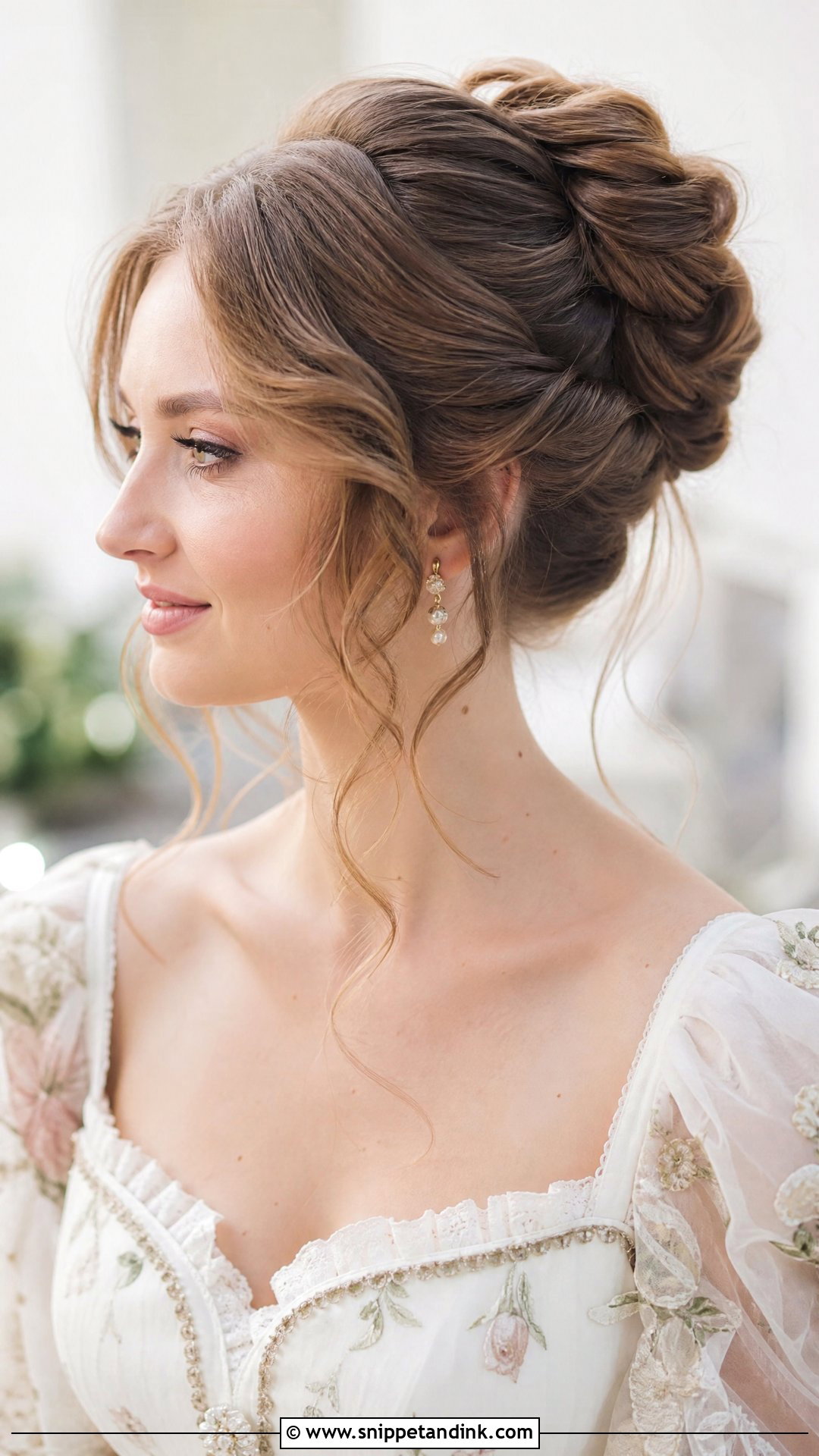
A few strands left loose take the edge off a polished bun. Which strands, though, matters more than how many. I pull them out from the hairline before I build the bun, so they fall naturally instead of being dragged out of finished work. Tendrils lose their curl faster than the rest, so they get a smaller iron. They suit garden and vintage weddings and soften a strong jaw or a high forehead. If your hair hates holding a curl, keep tendrils short and few.
17. Double Bun Bridal Style
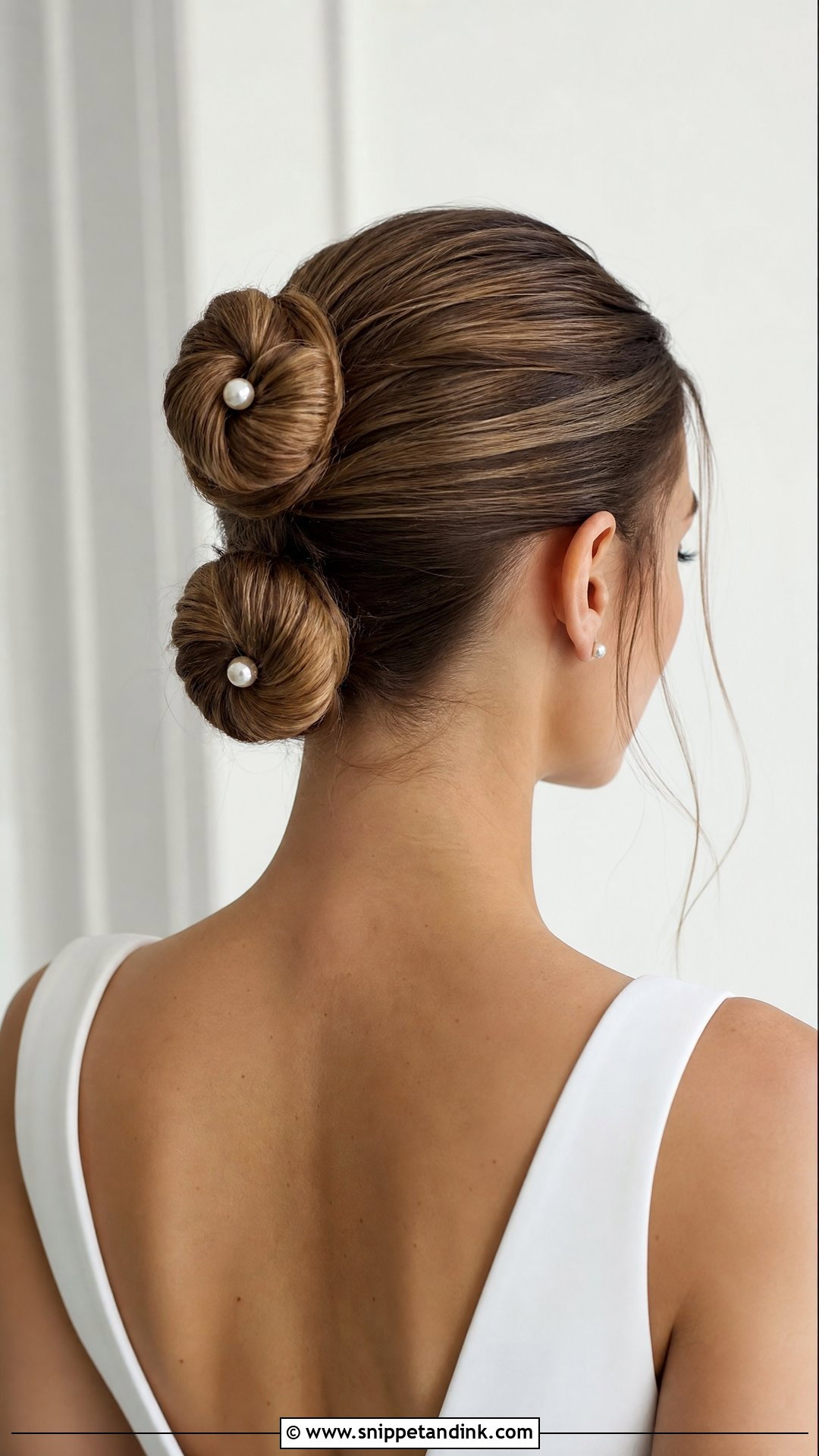
Styling the hair into two coordinated buns makes a playful, modern look. Brides who want to stand out love the symmetry. Keep them sleek for polish or loosen them for softness. They suit minimalist gowns and statement accessories, and pearl pins or small flowers add a bit of charm. The tricky part is symmetry, so I part the hair with a tail comb and check both sides in a hand mirror from behind. Veils are awkward with two buns; I’d usually skip the veil or set it below both.
18. Bridal Bun With Crystal Pins
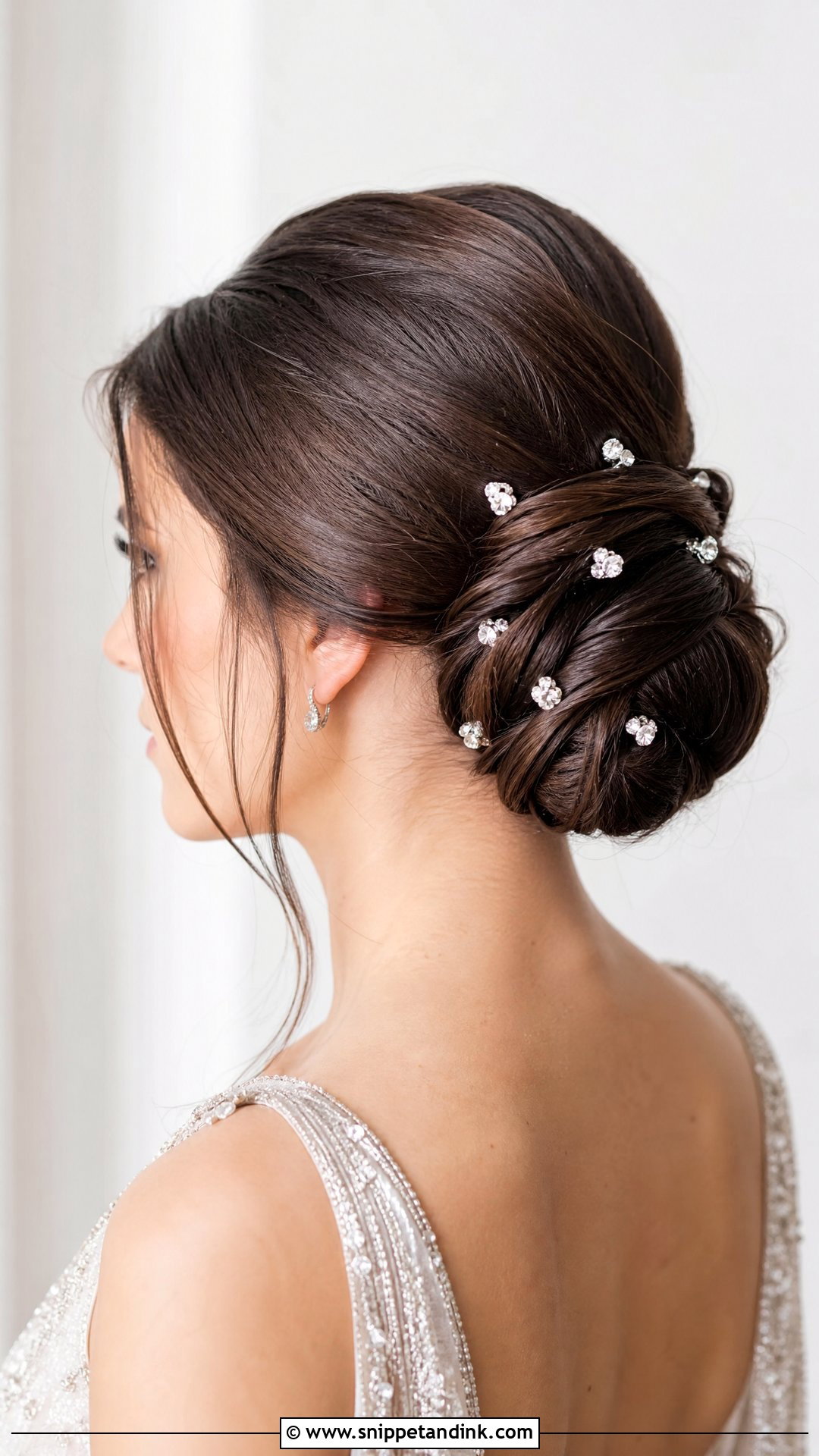
Crystal pins catch the light every time you turn your head. Scattered through the bun, they add sparkle without the weight of a full headpiece. Clustered, they act like a small brooch; spaced out, they twinkle subtly. They suit evening weddings, beaded gowns and formal rooms. My tip: fewer, larger crystals read better in a big room than many tiny ones, which turn into faint glitter from the back rows. Buy a few spares, since one or two will always slip out.
19. Romantic Updo Bun
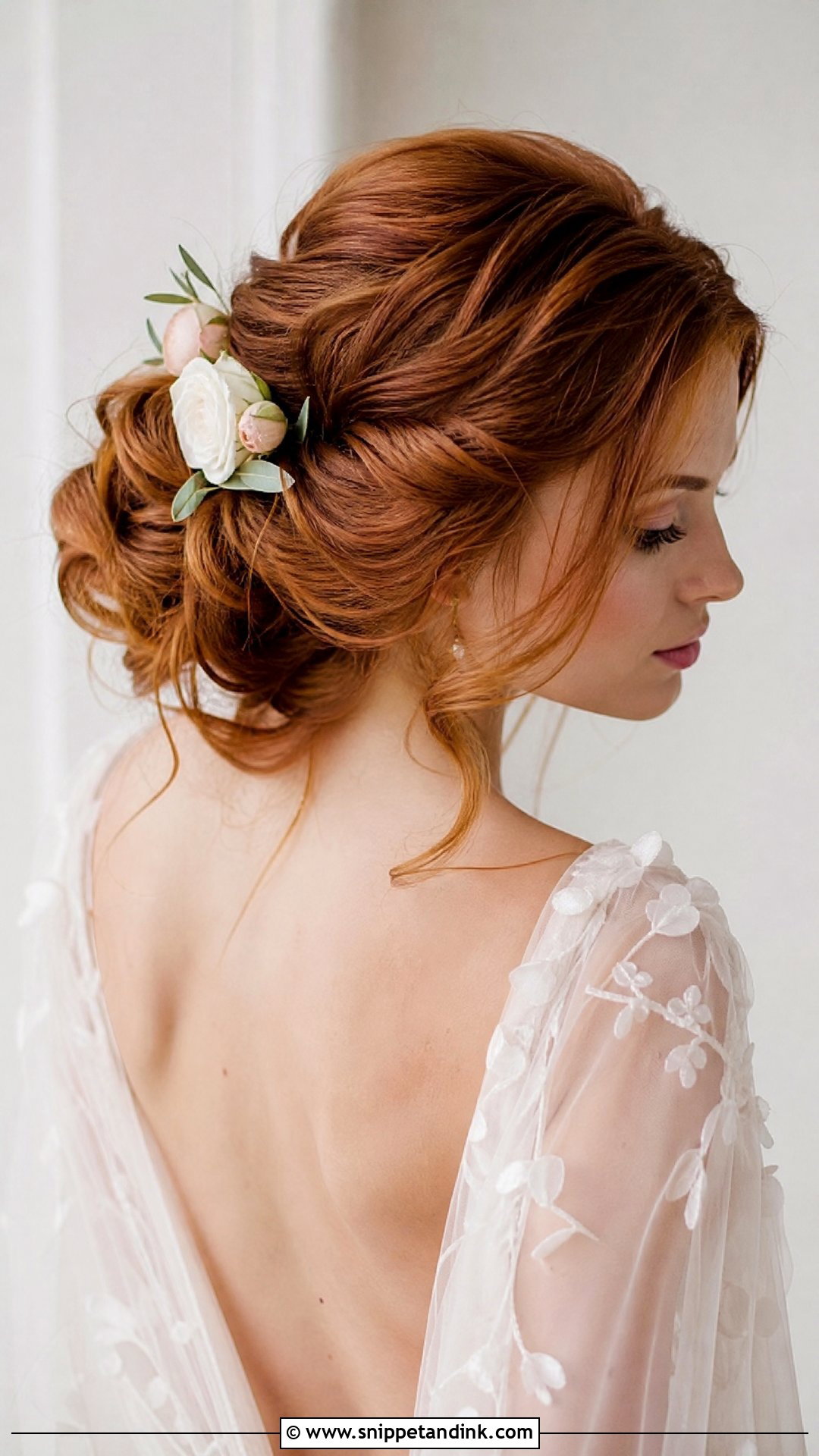
Loose waves, gentle twists and a soft, structured knot come together here. It flatters most face shapes, which is why it’s the one so many brides land on. Flowers, pearls or a hair vine can be added. It suits garden, vintage and classic weddings. This style relies on curls that hold, so I set them with pins first and brush out only after they’re cold. It’s softer than a sleek bun, and so a little less sturdy in humidity.
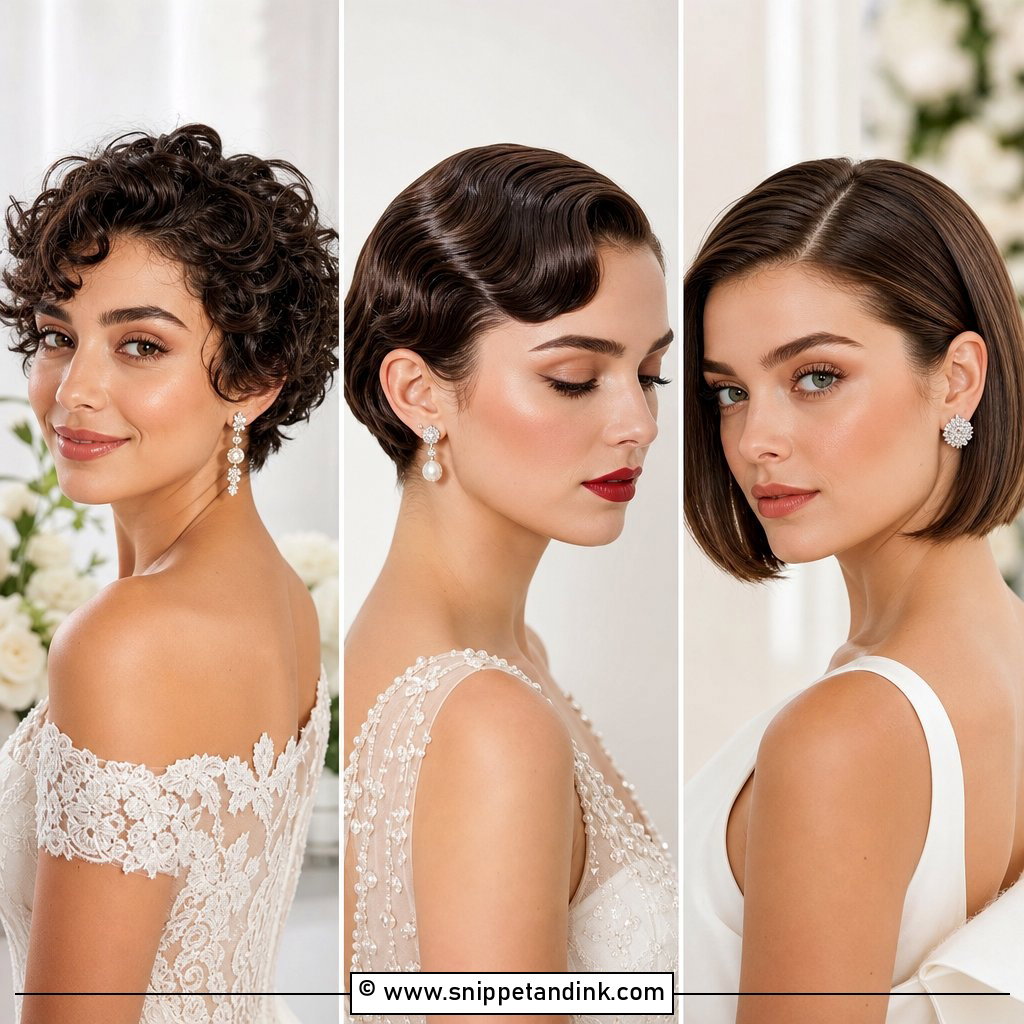
20. Bridal Bun With Headband
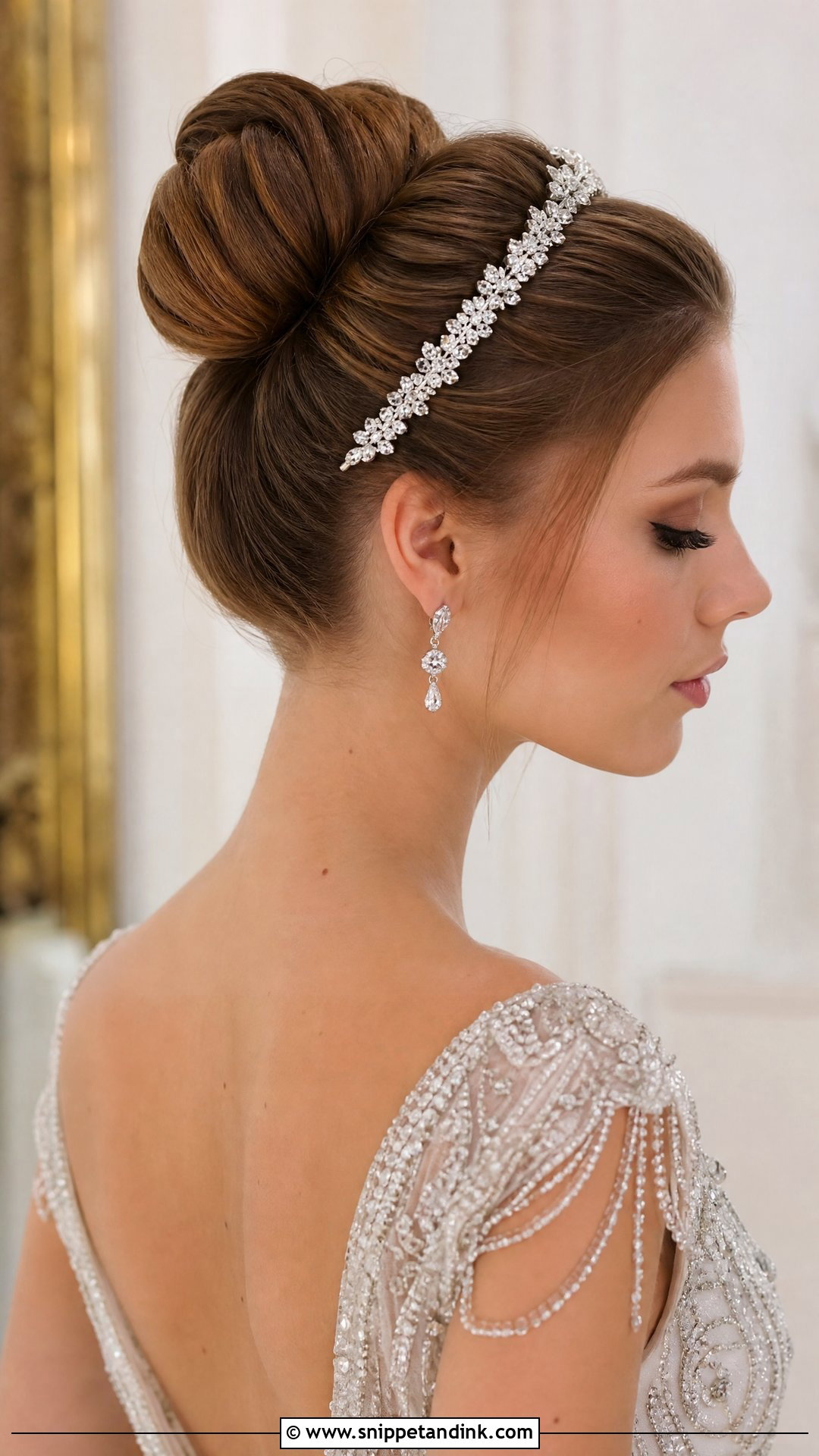
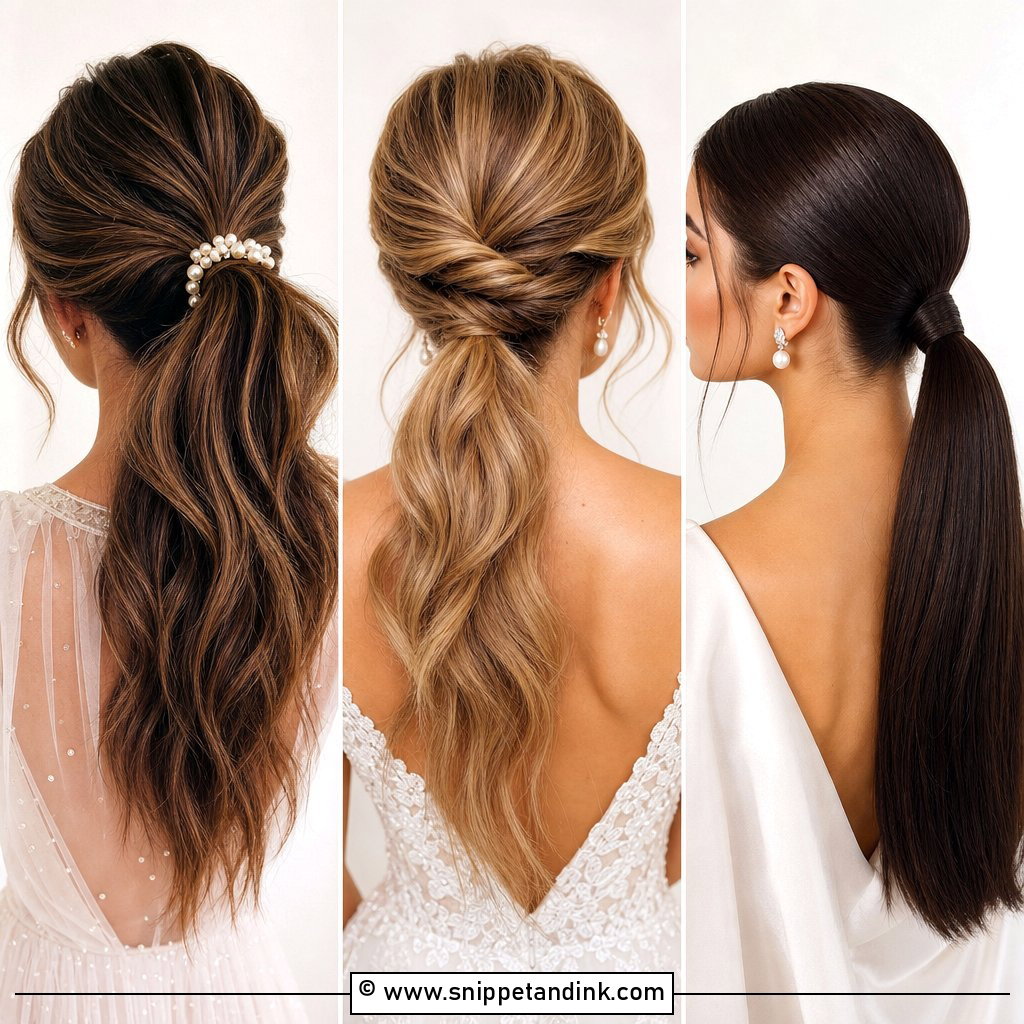
A headband frames the bun and the face, whether crystal, pearl or floral. It’s a lighter alternative to a tiara and easier on brides who don’t like anything high on the head. Worn across the crown it frames the face; set further back it reads more modern. Headbands press on the area behind the ears, so I check comfort at the trial; a band that pinches at noon becomes a headache by 8 p.m. I also pin each end to the hair underneath so it can’t slip forward.
21. Side Swept Bridal Bun
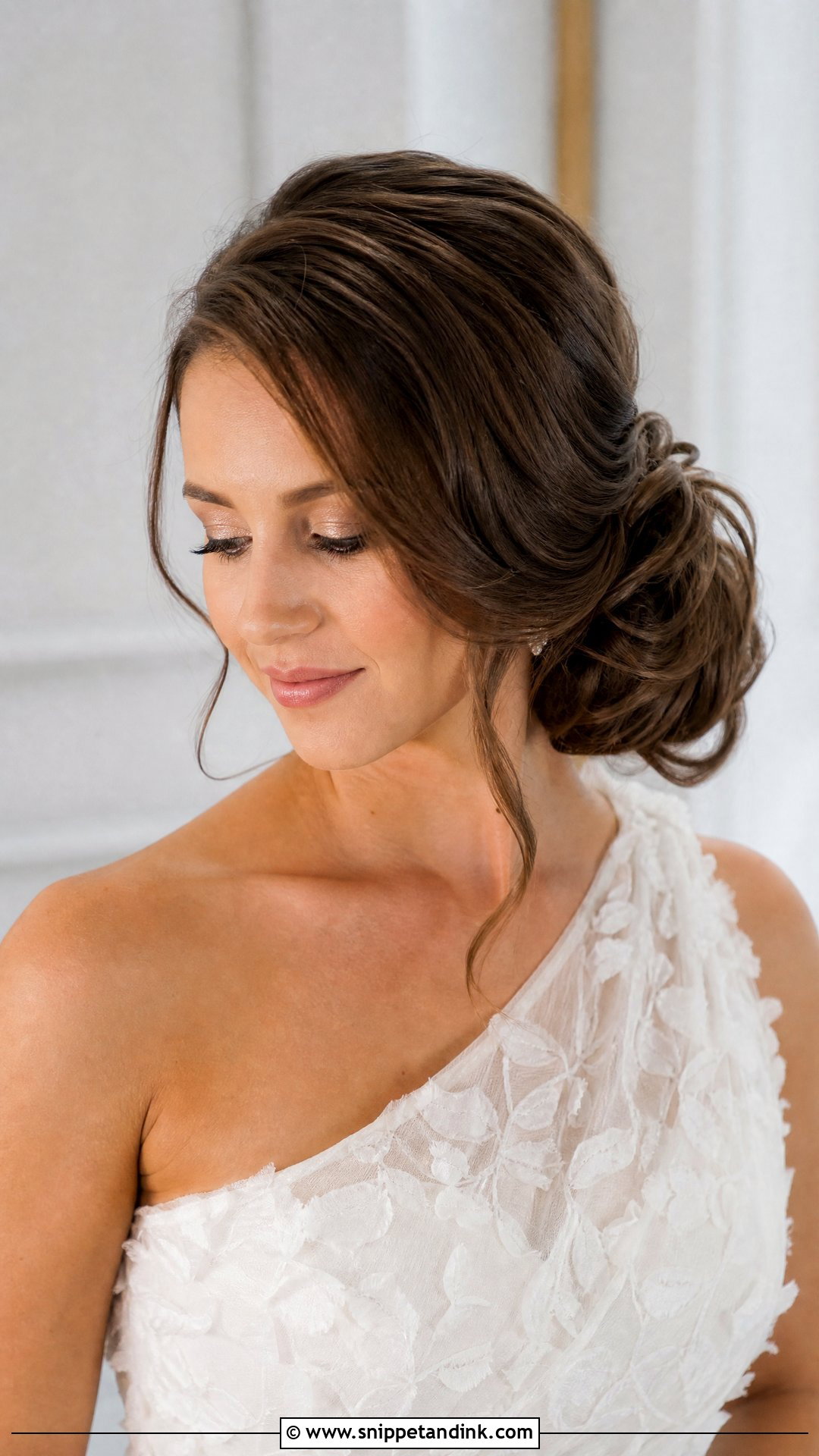
Gathering the hair to one side creates a graceful silhouette and draws the eye to the neckline. The bun sits softly behind one ear, and the asymmetry adds movement. It suits one-shoulder and off-shoulder gowns especially well, with the bun on the side opposite the bare shoulder for balance. Curls or flowers add romance. I’d ask your photographer which side is your better profile, then set the bun on the opposite side so it’s visible in ceremony shots.
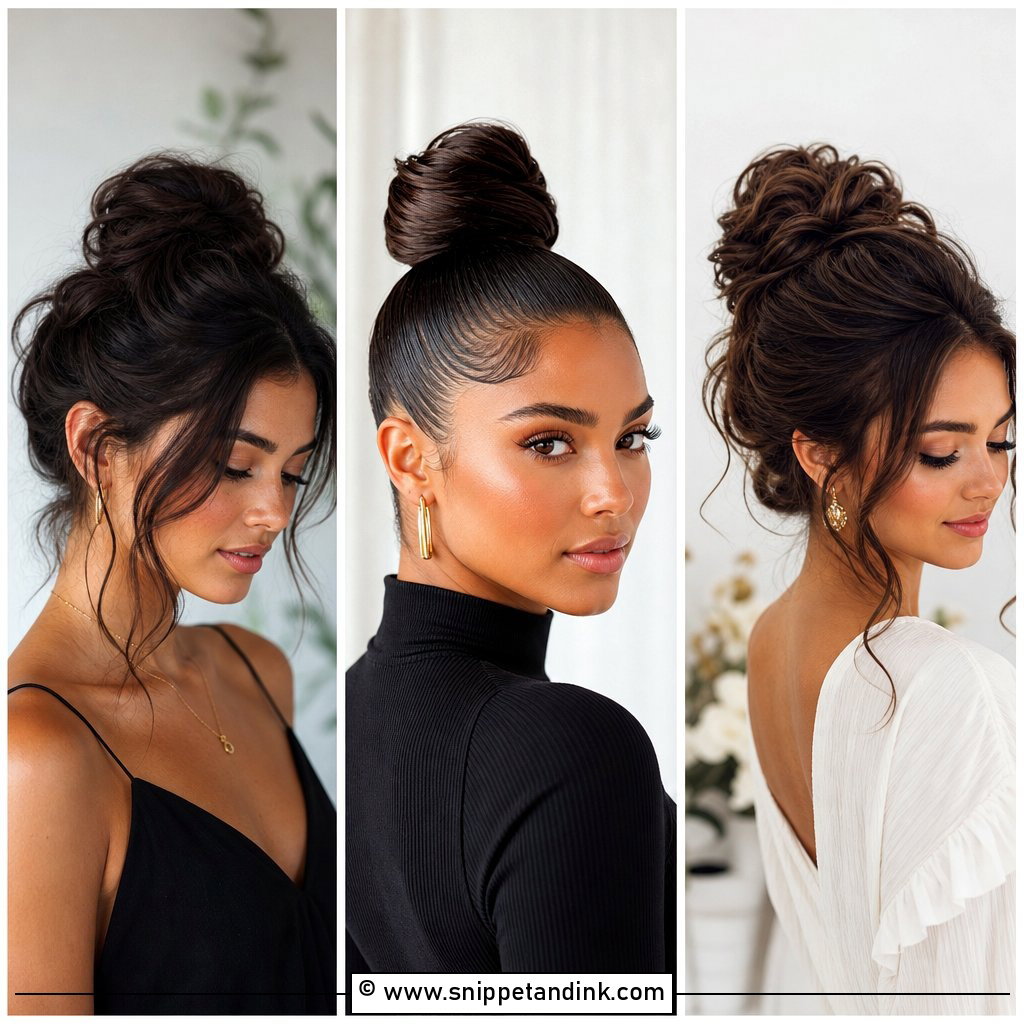
22. Sleek Top Knot Bridal Bun
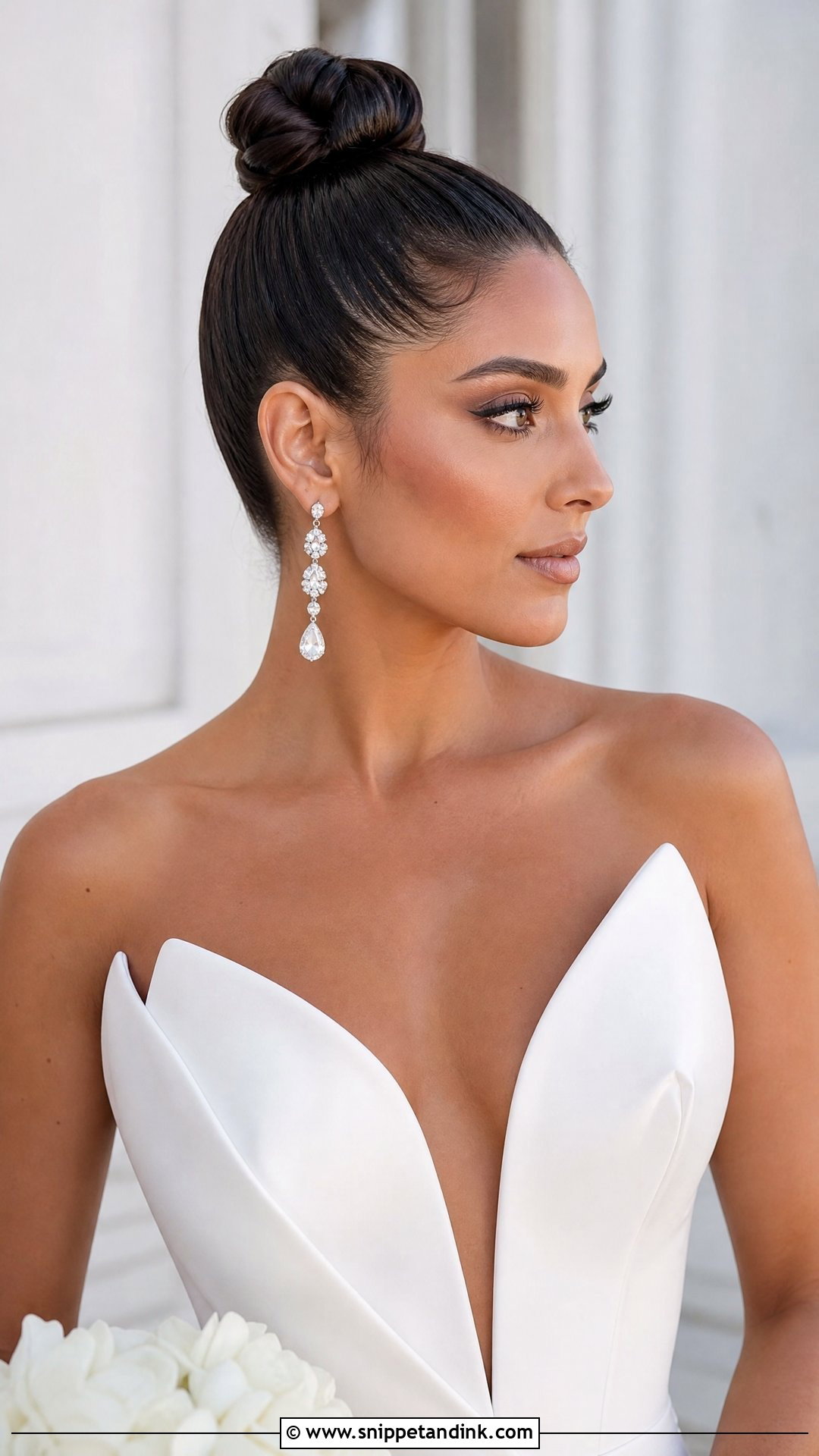
Hair is gathered into a smooth knot at the crown, the most fashion-forward of all bridal buns. It lengthens the neck and works with minimalist gowns and statement earrings. Keep it ultra-sleek or soften it slightly. High, tight buns pull on the scalp, though, and after a long day some brides get headaches. I secure the ponytail base with two crossed pins rather than a very tight elastic, which spreads the weight. It’s a confident, sharp look that suits strong features.
23. Bridal Bun With Loose Waves
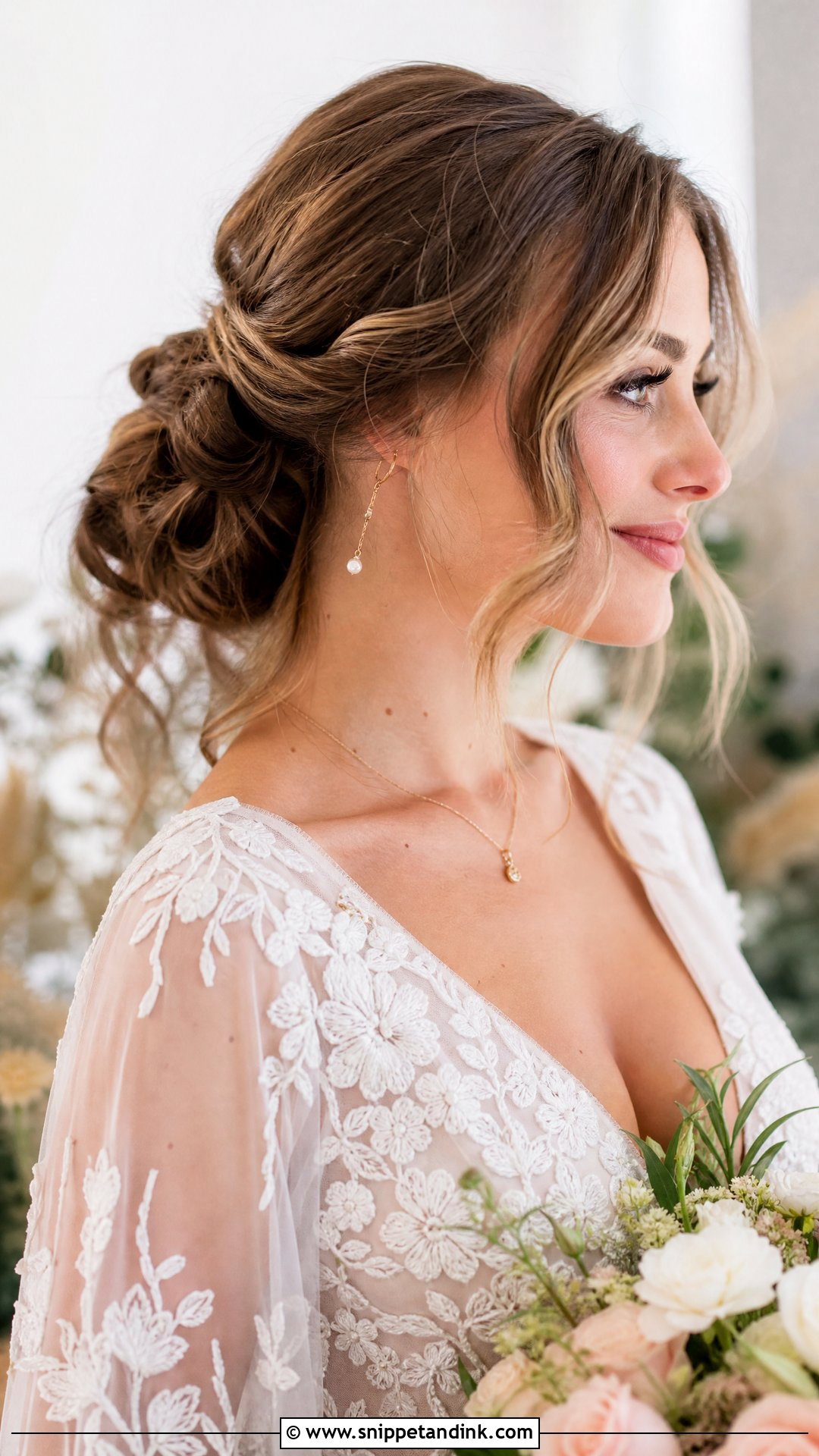
Part of the hair is pinned into a bun while waves frame the face and fall at the back. It’s soft and relaxed with some structure, and it suits boho and garden weddings and flowing gowns. Naturally wavy hair comes together easily. Small flowers or delicate pins add detail. The waves that hang loose carry most of the look, so if your hair drops its curl quickly, plan for a quick touch-up with a small travel iron before the reception photos.
24. Vintage Bridal Bun
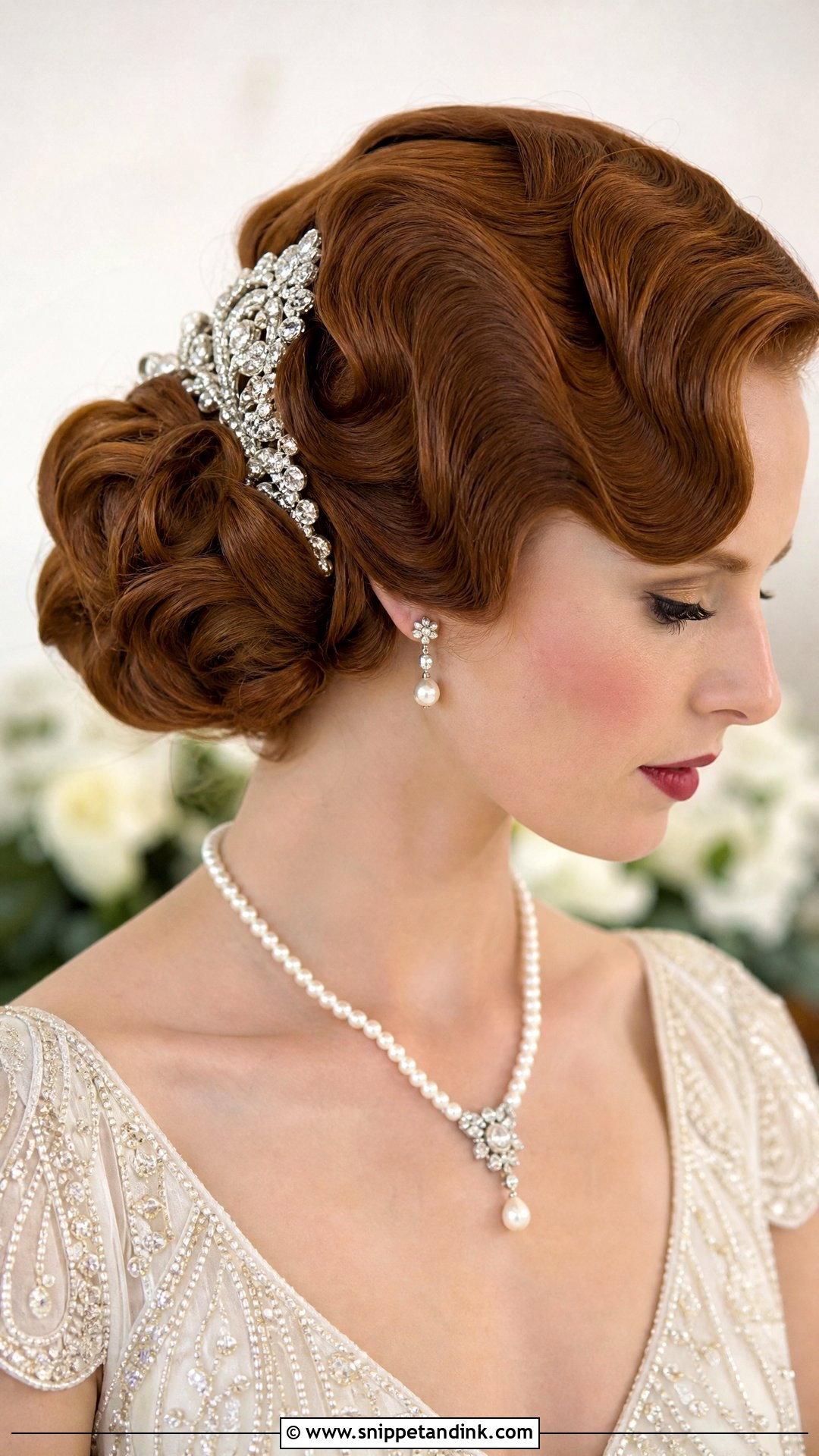
Old Hollywood is the inspiration: structured curls, soft waves and a polished knot. Retro-inspired gowns, birdcage veils and pearl jewelry suit it. Finger waves at the front or a sparkling comb make it feel authentic. This one relies on a proper set, so I use a firm-hold setting lotion and let the curls cool fully before brushing them into waves. It takes longer in the chair than most buns, so allow extra time on the morning.
25. Bridal Bun With Gold Accessories
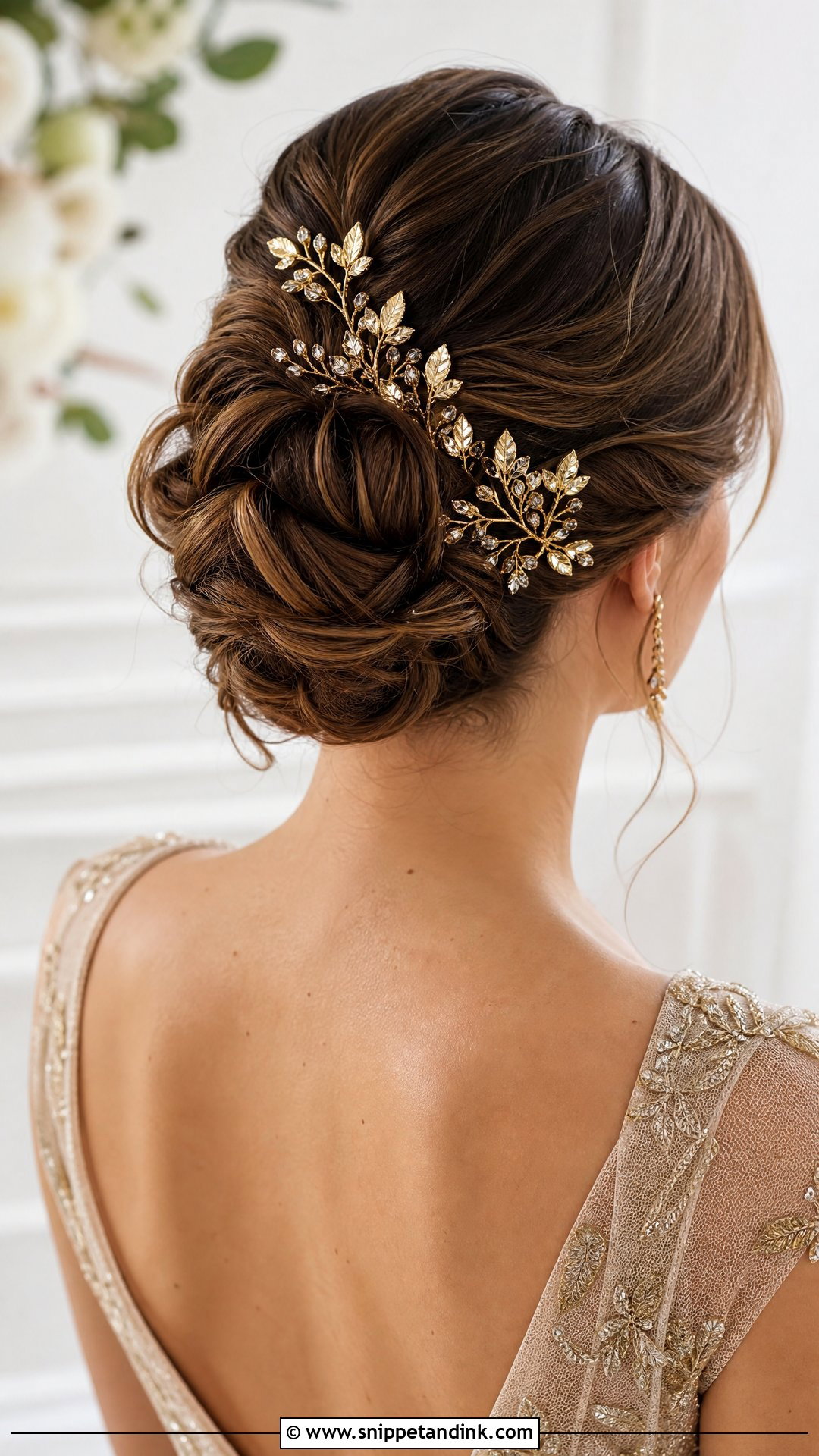
Gold pins, combs or leaves add warmth and richness to a bun. They catch the light warmly and suit champagne and ivory gowns better than silver. Leaf motifs give a natural touch, and this look suits autumn and formal weddings especially well. I’d match the gold tone to your jewelry and ring; mixing yellow gold in the hair with rose gold earrings looks accidental up close. Keep gold accessories in proportion to the bun.
Fine, Heavy or Bob-Length Hair Can Still Wear a Bun
No hair type rules out a bun, but each needs a different build.
Fine or thin hair
The bun ends up small, so I add volume underneath with gentle backcombing at the base, a small padded insert or a matching clip-in weft. A mesh donut in your hair color is the easiest fix, and nobody sees it once hair is wrapped around it.
Very thick or long hair
Weight is the problem here, not volume. A heavy bun pulls on the scalp, so I divide the hair into two or three smaller sections and pin each separately, which spreads the load. I’d also lower the bun a little so gravity isn’t working against it all day.
Bobs and shoulder-length cuts
Short layers escape at the nape. I braid or twist the bottom section up first, then build the bun over it, or I add a few clip-in wefts to give enough length. If you’re growing your hair for the wedding, a light trim of split ends a few weeks out is better than a big cut, since blunt ends hold pins better than wispy ones.
Which Bun Will Your Hair Actually Hold?
A bun gives you more control than almost any other bridal style, and the right one depends on your hair, your neckline and your veil as much as on mood. From sleek chignons to loose boho twists, the options here cover most hair types. Personal touches like fresh flowers, pearl pins or a sparkling hair vine make it yours. Bring a few photos to your trial, wear a top with a similar neckline, and let your stylist tell you honestly which of them your hair will hold.
You'll Like These Ideas:


Leave a Reply