
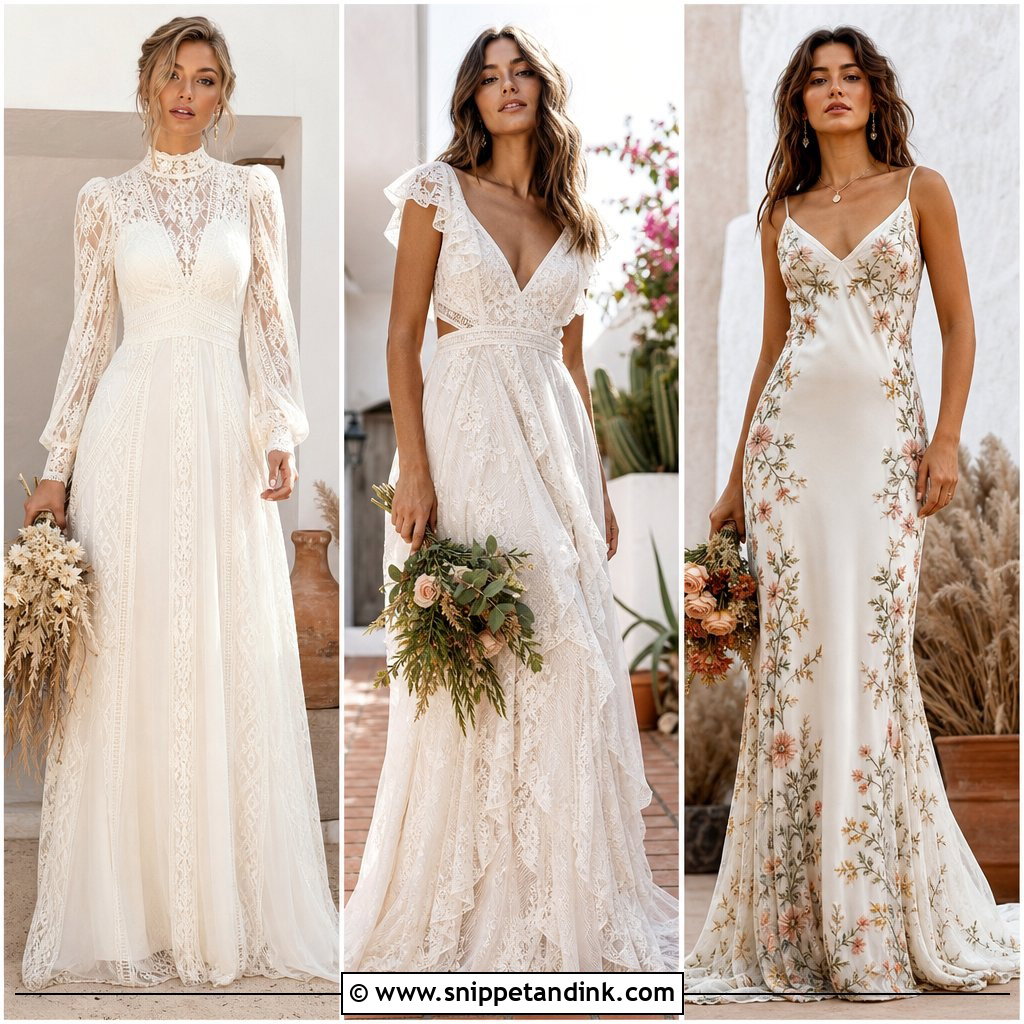
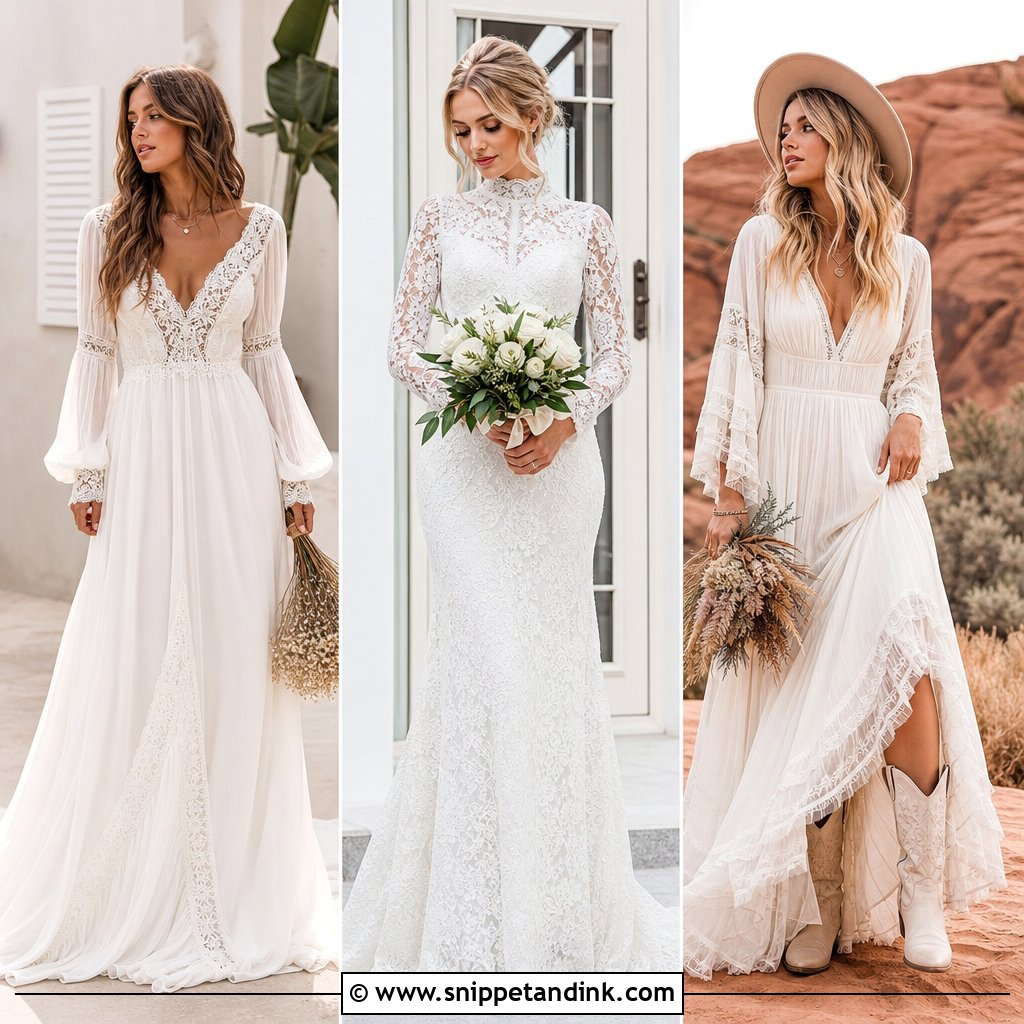
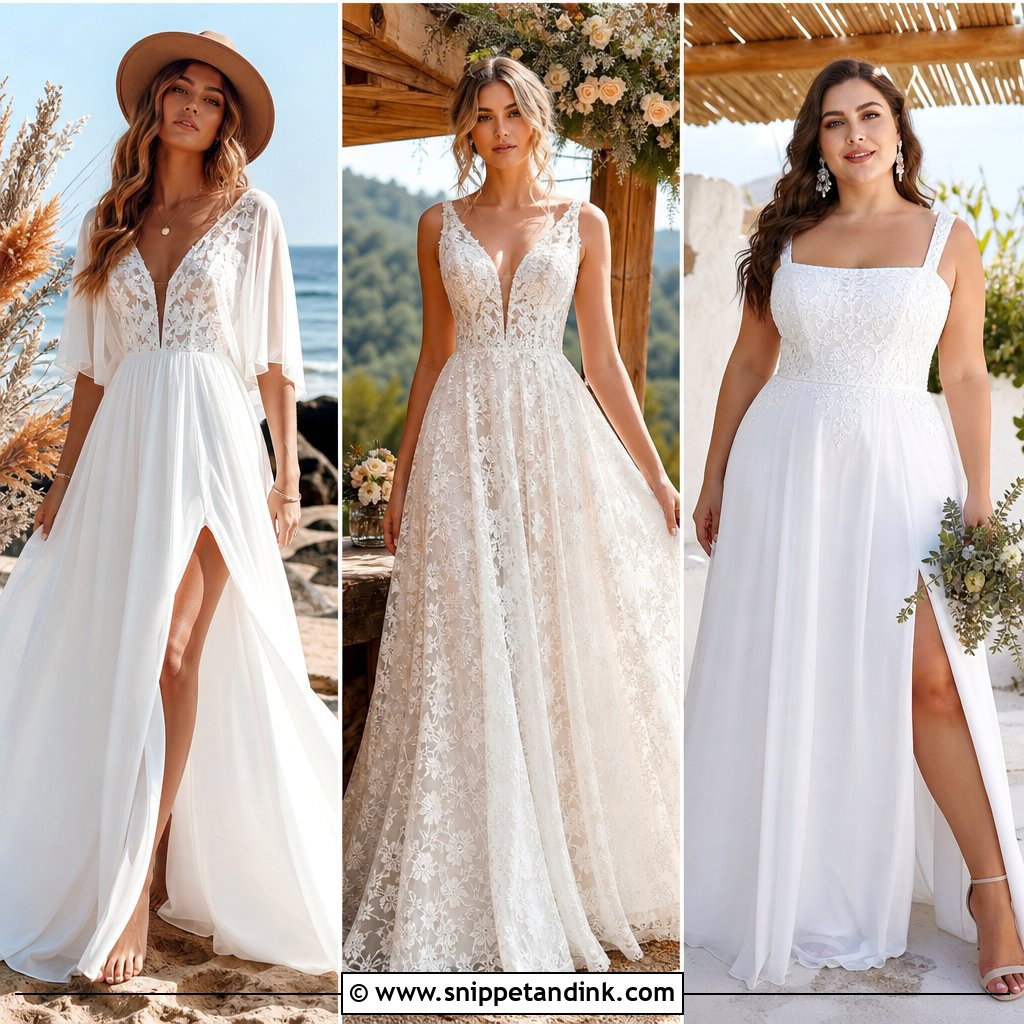
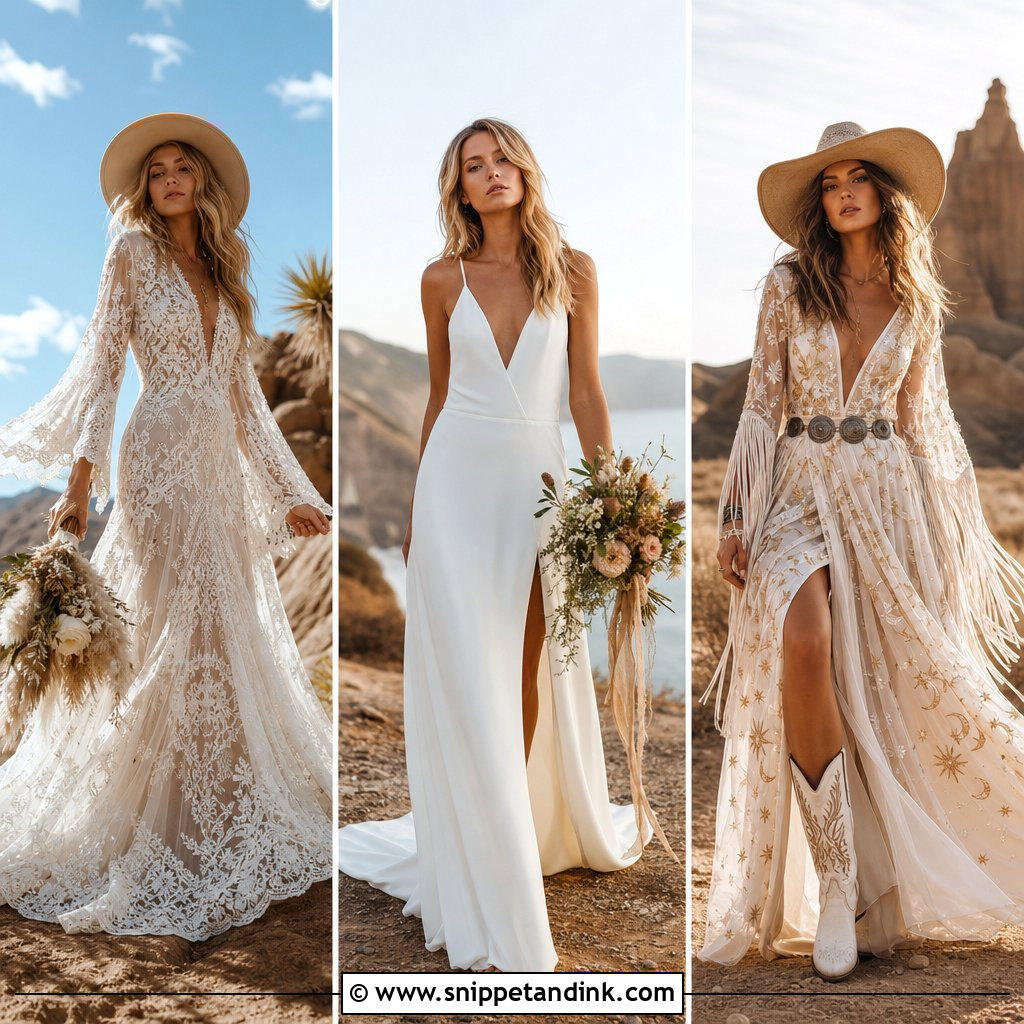
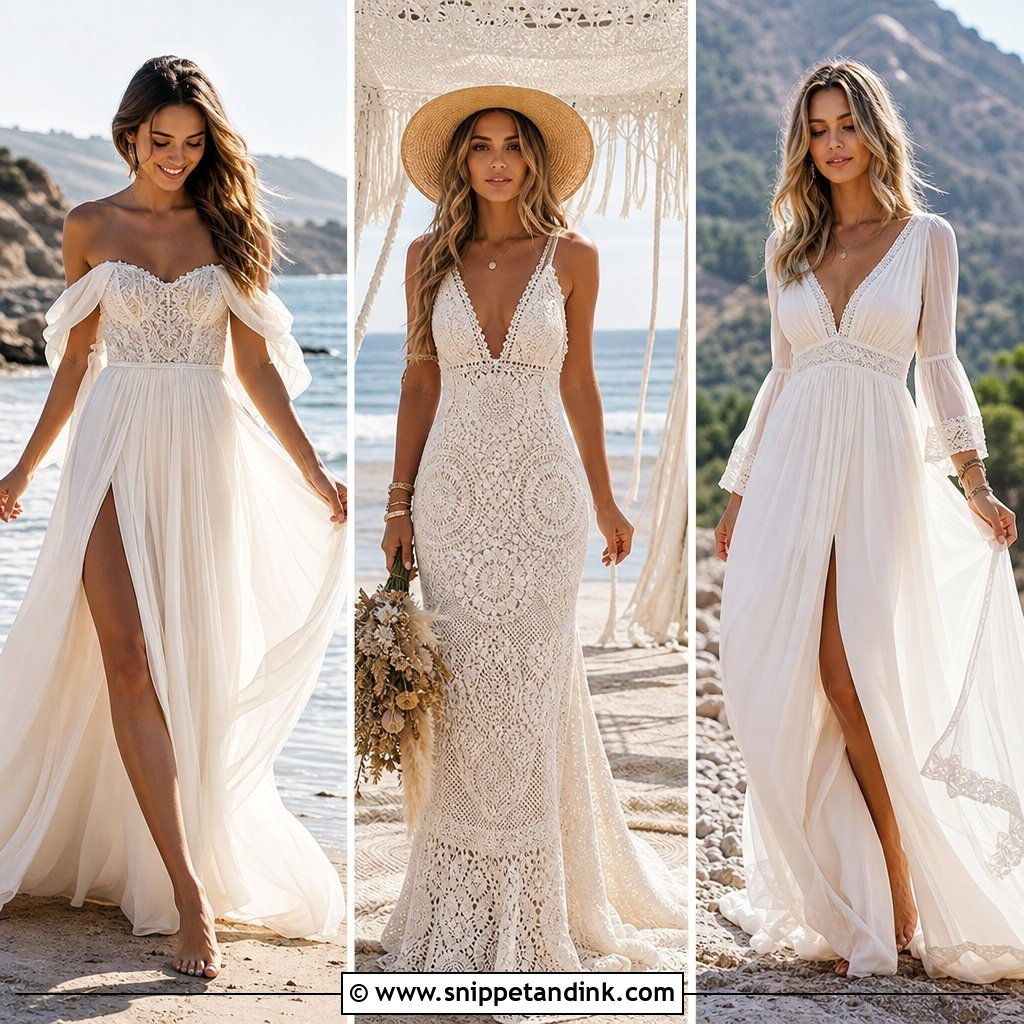
Flowing skirts, botanical lace, crochet panels, bell sleeves and soft ivory: that’s the vocabulary of the boho gown. Most of it borrows from three periods, the 1920s, the Edwardian years and above all the free-spirited 1970s. I’ve styled twenty dresses below for different seasons, figures and levels of formality, each with hair, jewelry and shoes chosen for the ground you’ll be standing on. Comfort comes first in every one. A boho bride who can’t sit, hug or walk on grass has lost the whole point of the style.
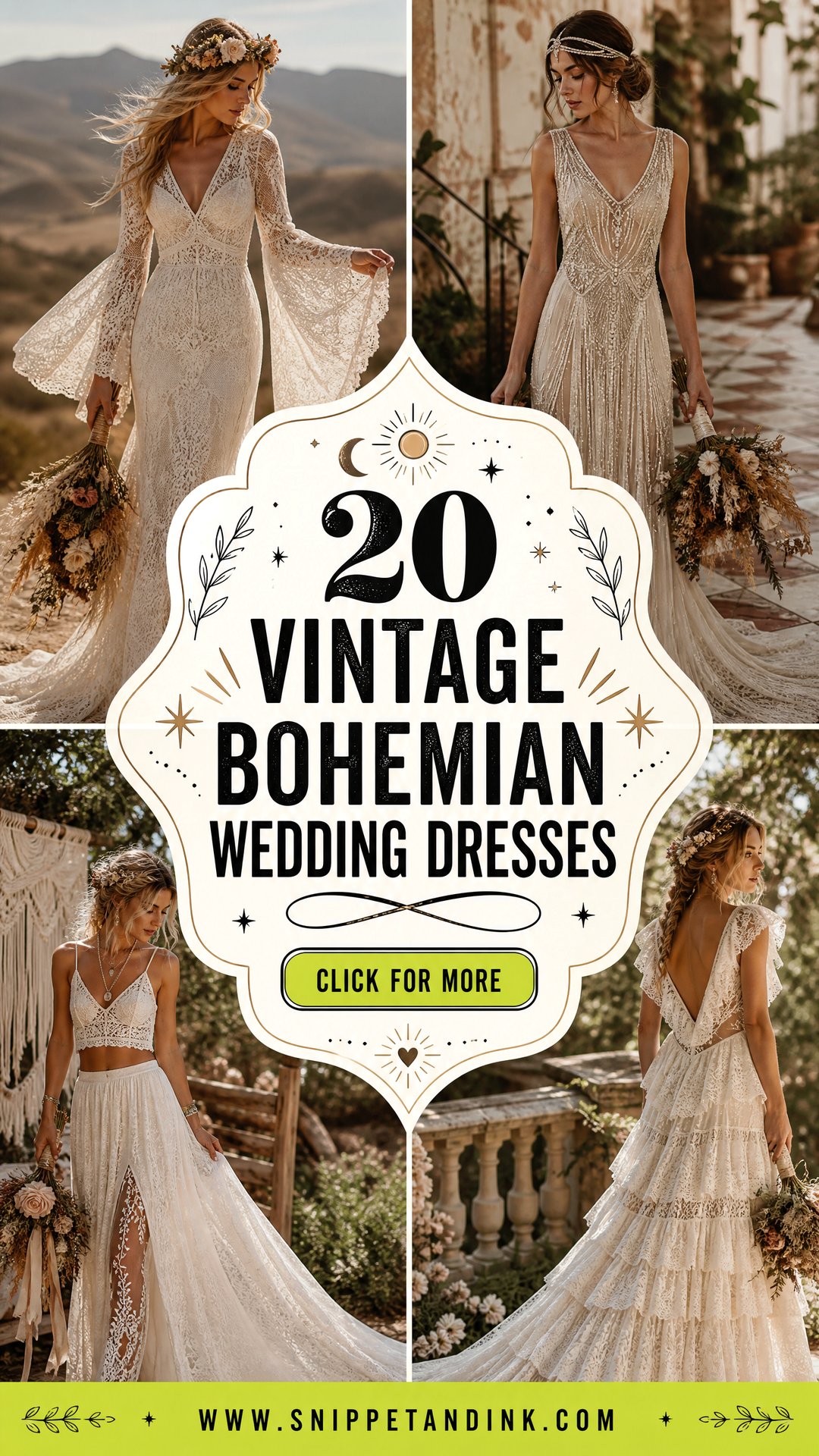
1920s, Edwardian or 1970s? Reading the Decade in a Dress
Brides often fall for a boho gown without realising which era it borrows from, and the era tells you a lot about who it suits and where it works.
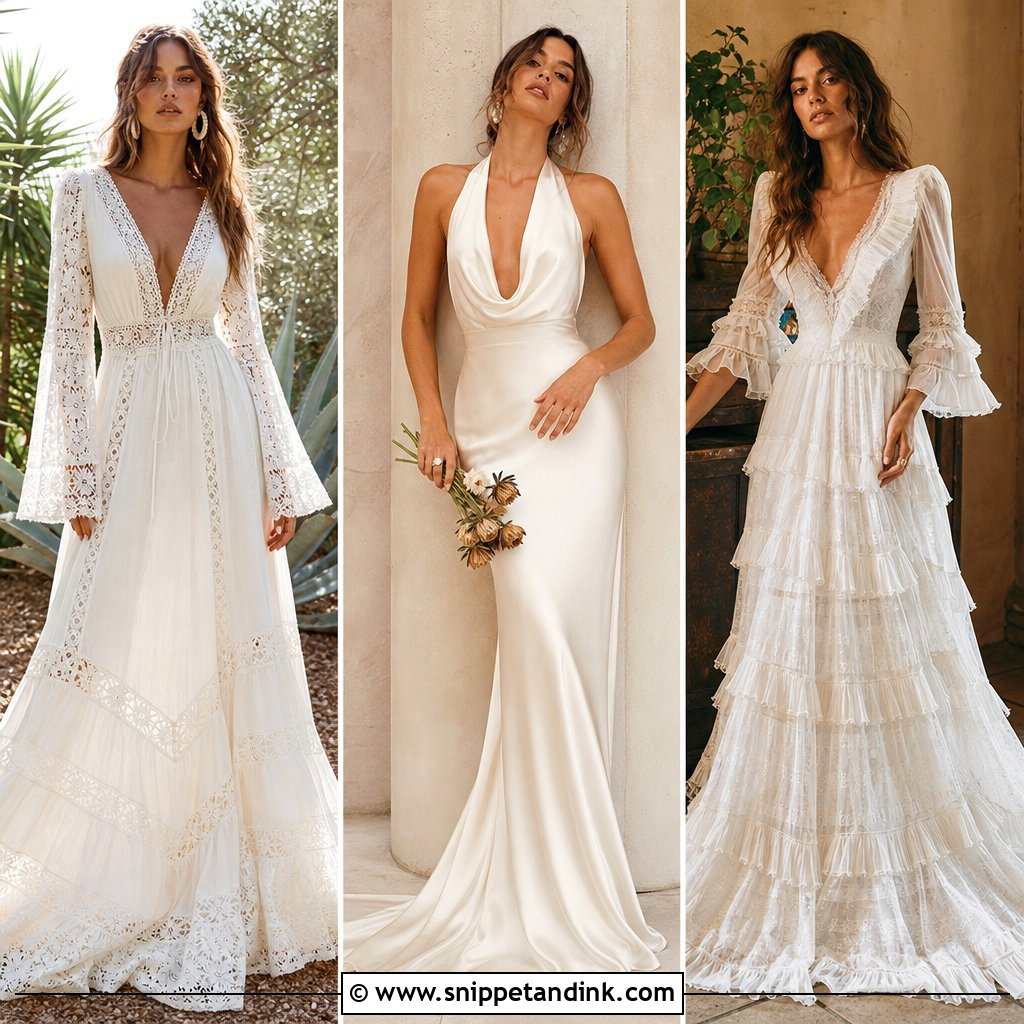
1970s is the loosest of the three: bell sleeves, crochet, fringe, open necks and long hair. It’s made for outdoor, daytime weddings and suits nearly every figure, because nothing is tight except perhaps the waist.
Edwardian means high collars, pintucks, long sleeves and a soft S-curve. It feels formal and modest, works well in cooler months and historic houses, and suits long necks best; on a short neck, a high collar can feel close.
1920s is straight and low-waisted, with beading and a lot of back. It flatters straighter figures, moves well on a dance floor and looks most at home in city venues and old hotels. On curvier hips, look for a version with some shaping at the waist.
Mixing eras is fine, but pick one to lead. A 1920s beaded dress with a 1970s flower crown and prairie boots usually looks confused rather than eclectic.
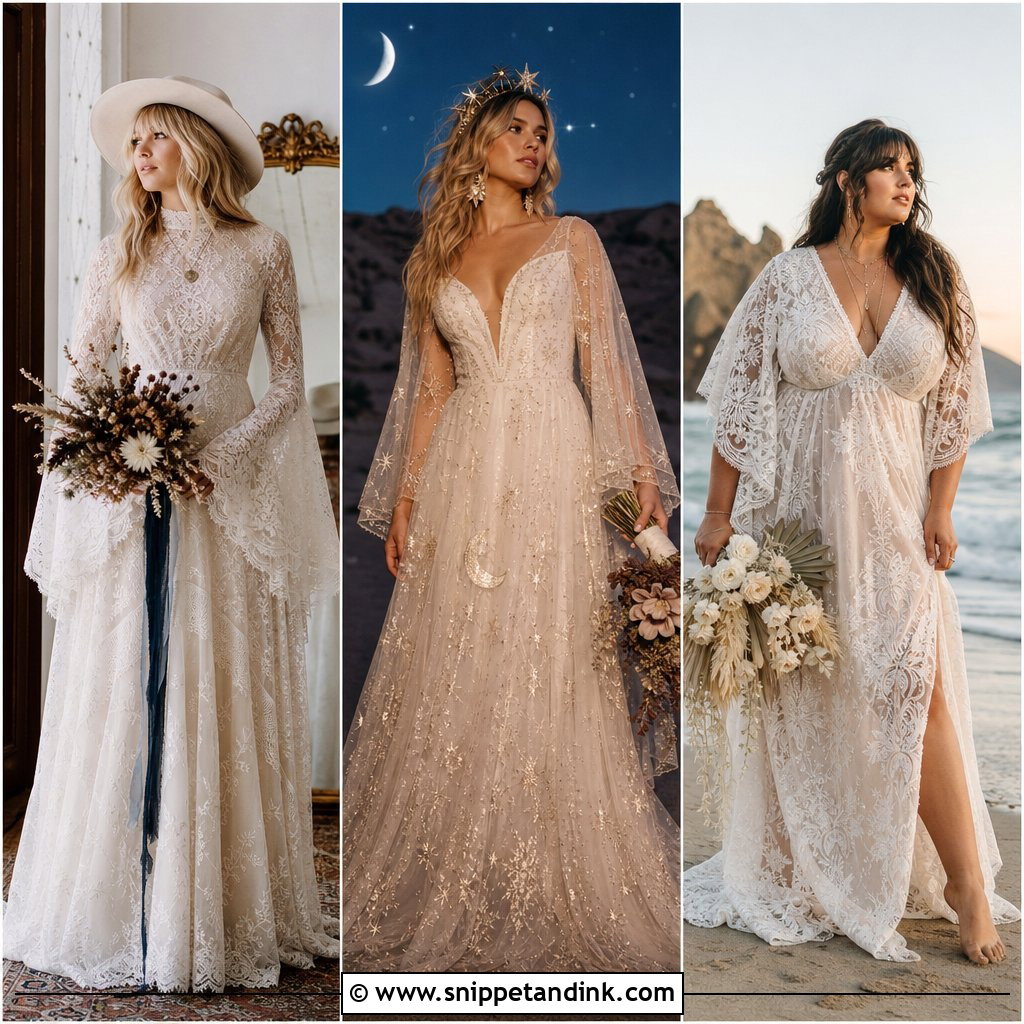
1. 1970s Bell Sleeve Lace Wedding Dress
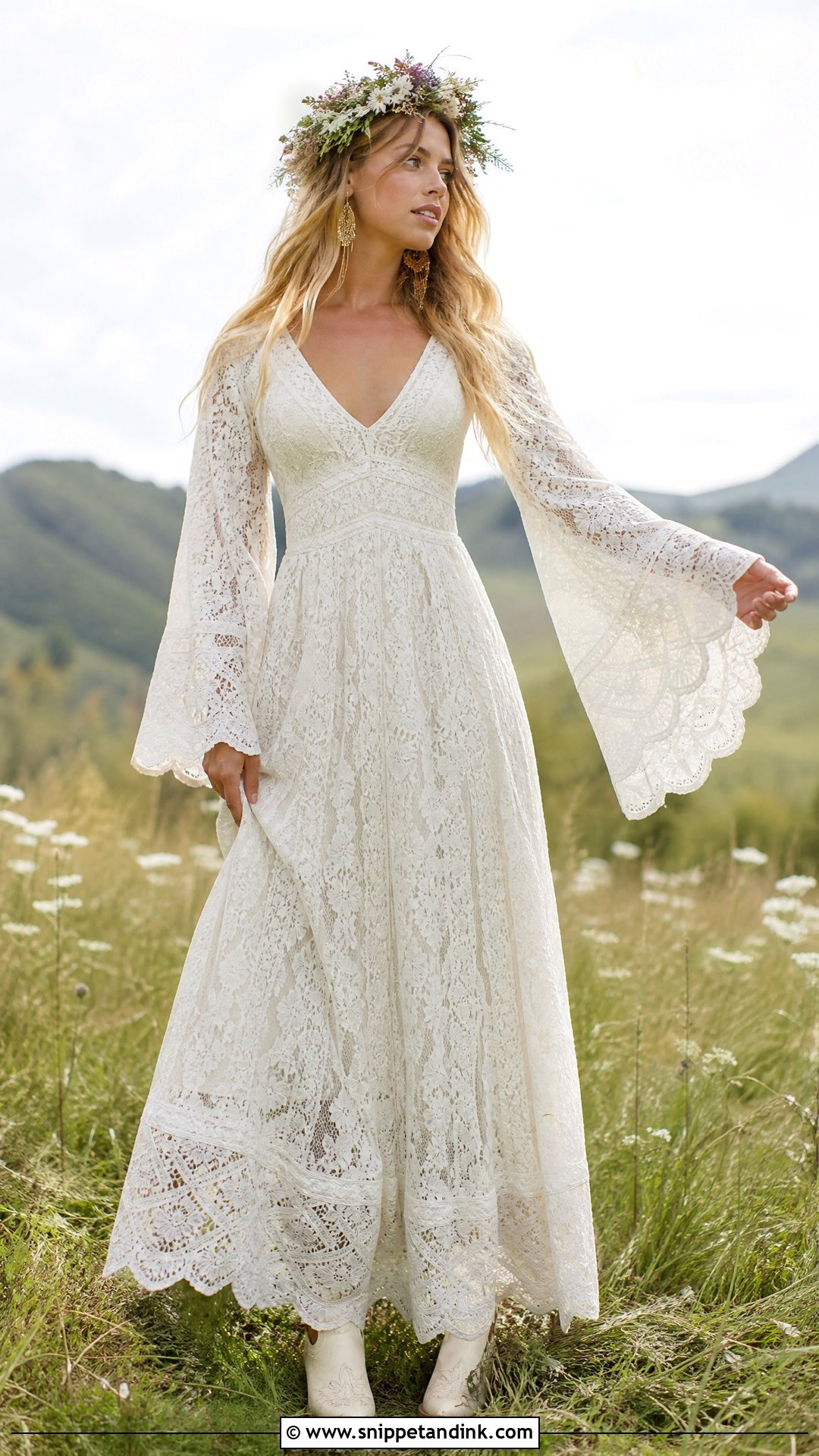
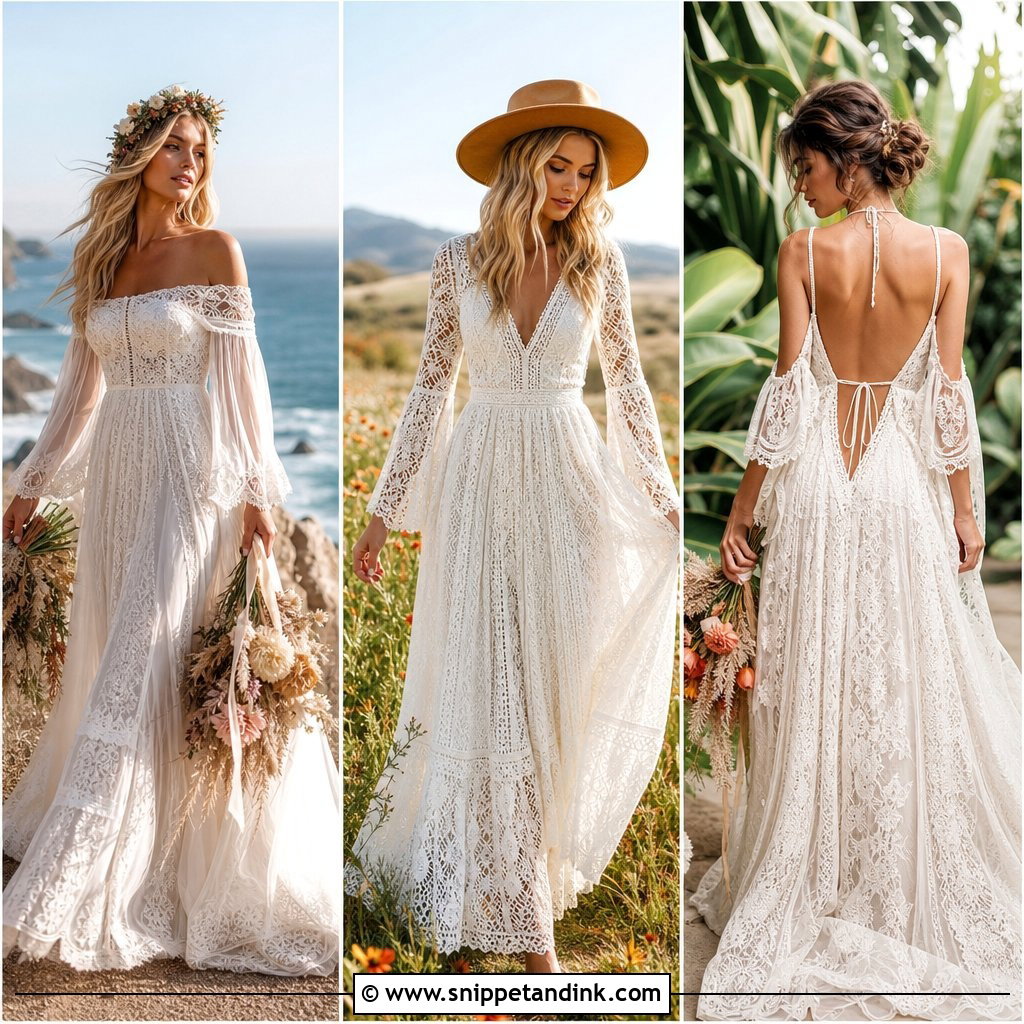
Floor-length lace with wide bell sleeves is the dress most people picture when they hear 1970s bride. I’d choose an A-line with a gently fitted waist, a V-neck and a light lining, so it stays comfortable rather than costume. Scalloped edges at cuff and hem soften it, and a keyhole or open back keeps it current. Bell sleeves flare most when your arms hang, so check in photos taken mid-gesture, not only standing still. Loose waves, a narrow floral crown and small gold earrings suit it; suede block-heel sandals work indoors, ivory ankle boots outdoors. Keep other accessories minimal and carry trailing greenery.
2. Crochet A-Line Wedding Dress
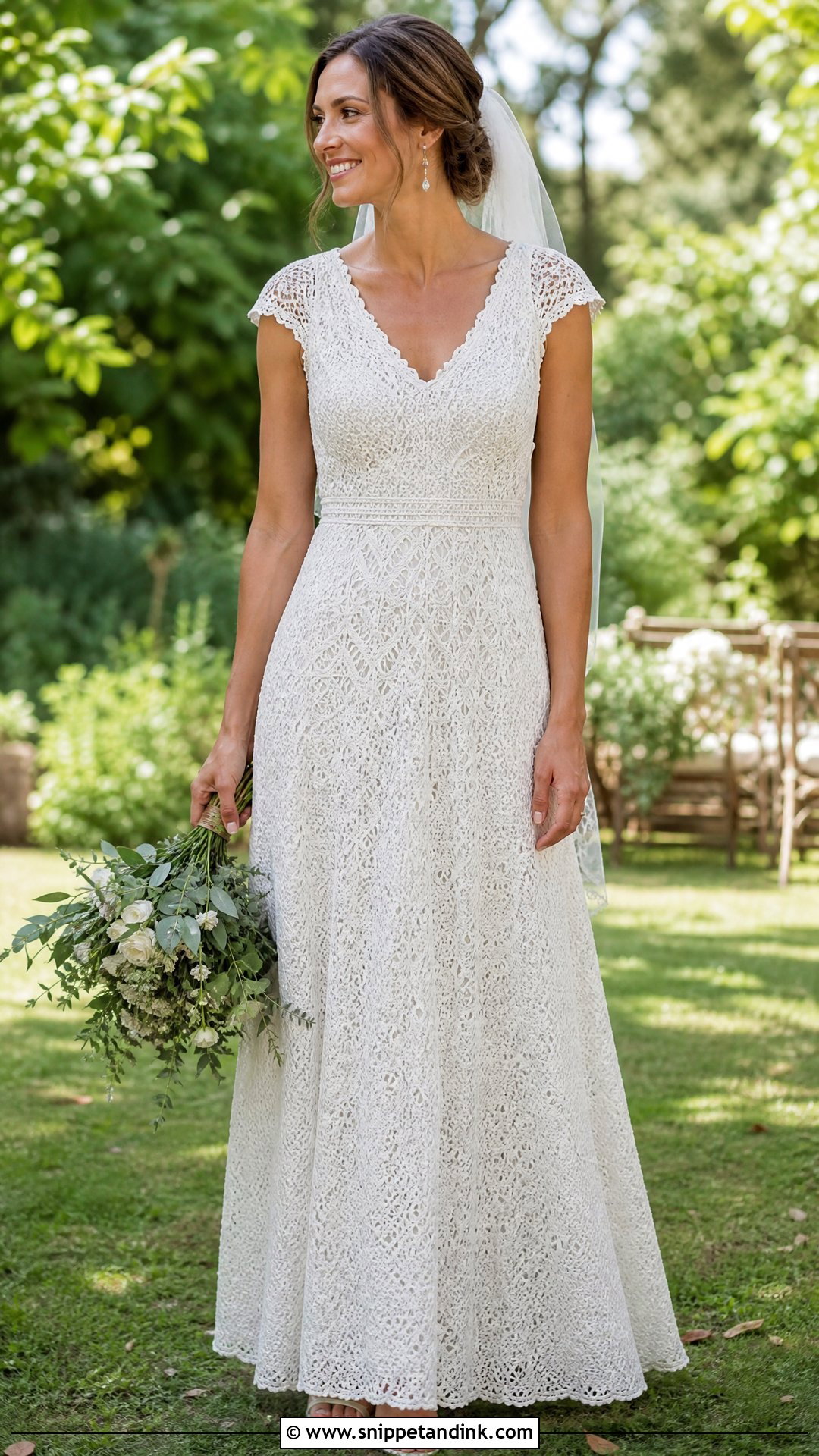
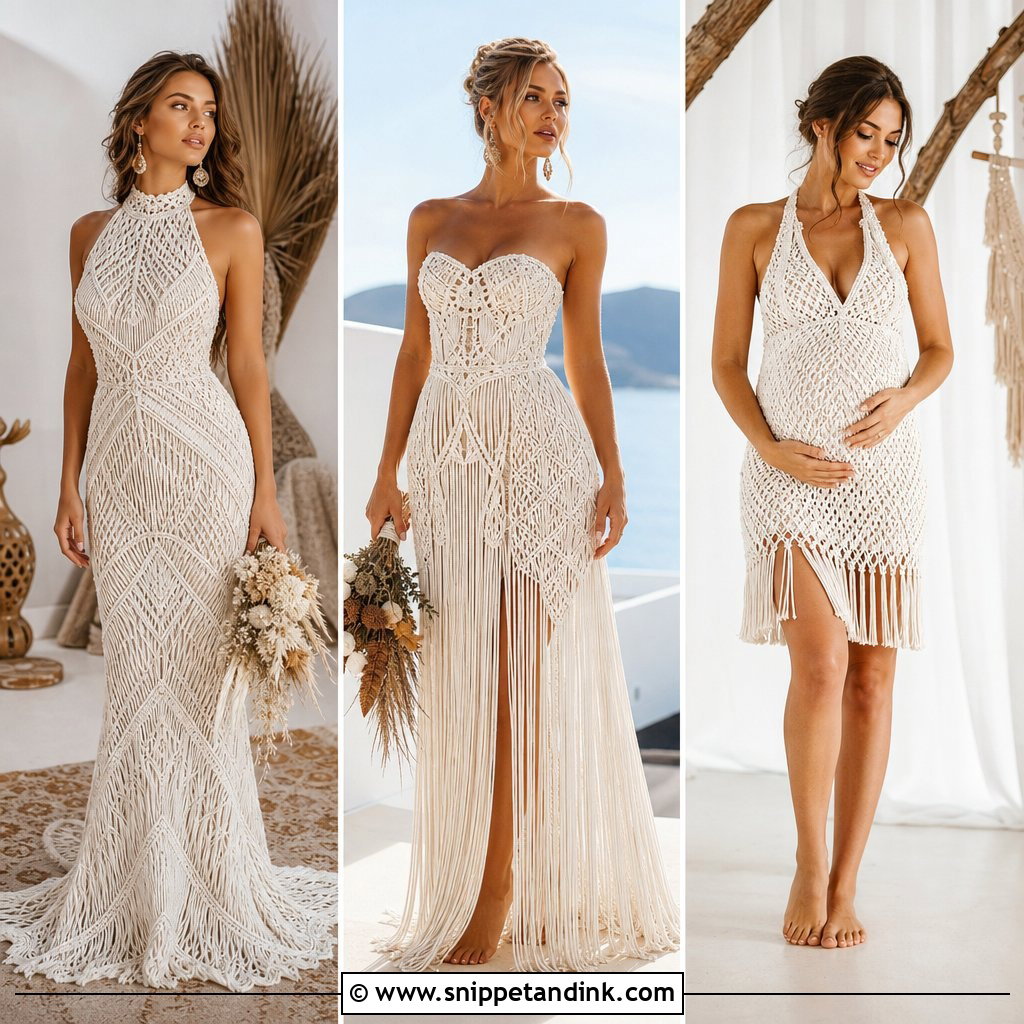
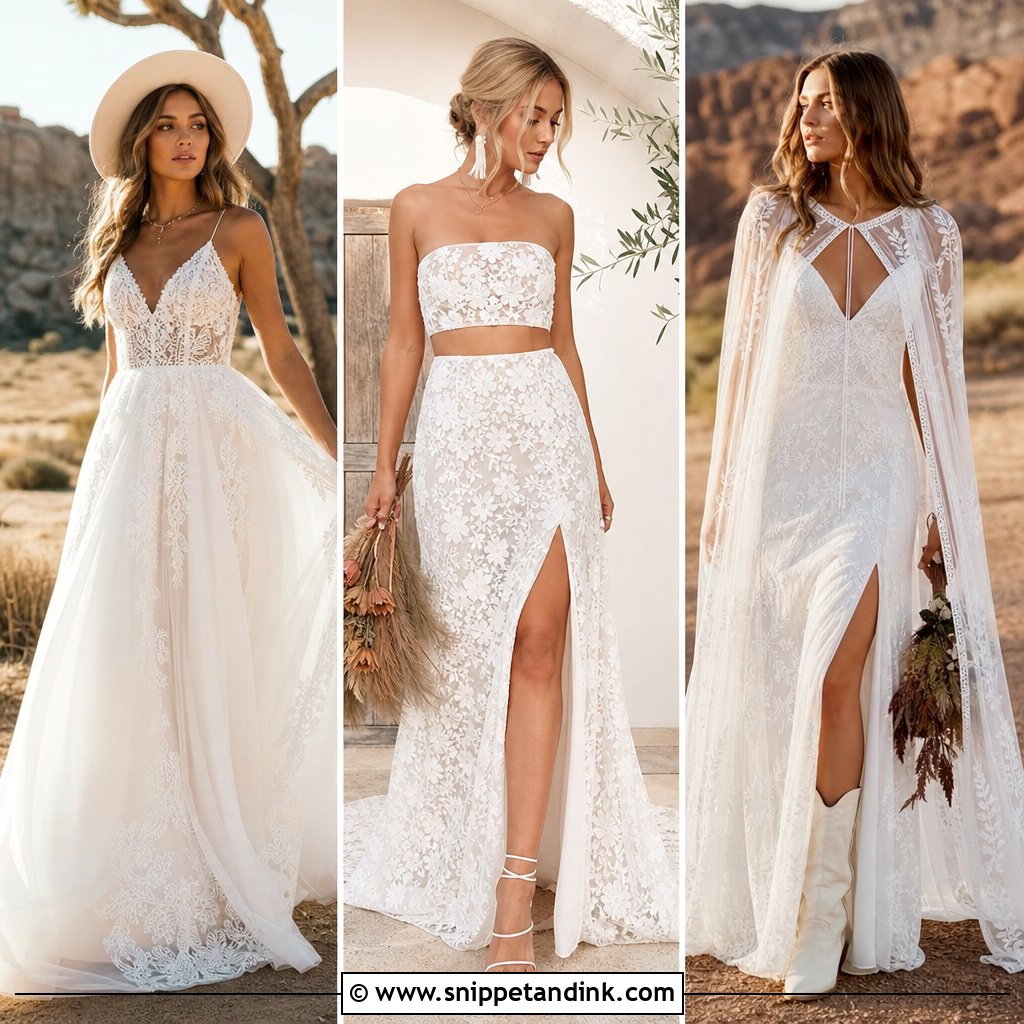
Crochet can show far more skin than you expect. Hold it up to a window before buying, and wear your actual underwear to the fitting to check it disappears under the lining. Beyond that, a lined bodice, defined waist and softly flared A-line skirt balance the texture well; cap or slim three-quarter sleeves and a V-neck keep it light. Cream leather sandals, pearl drops and a fingertip veil finish it, with a softly twisted low bun. For a casual ceremony, swap the veil for a few dried flowers pinned into loose waves.
3. Vintage Prairie Wedding Dress
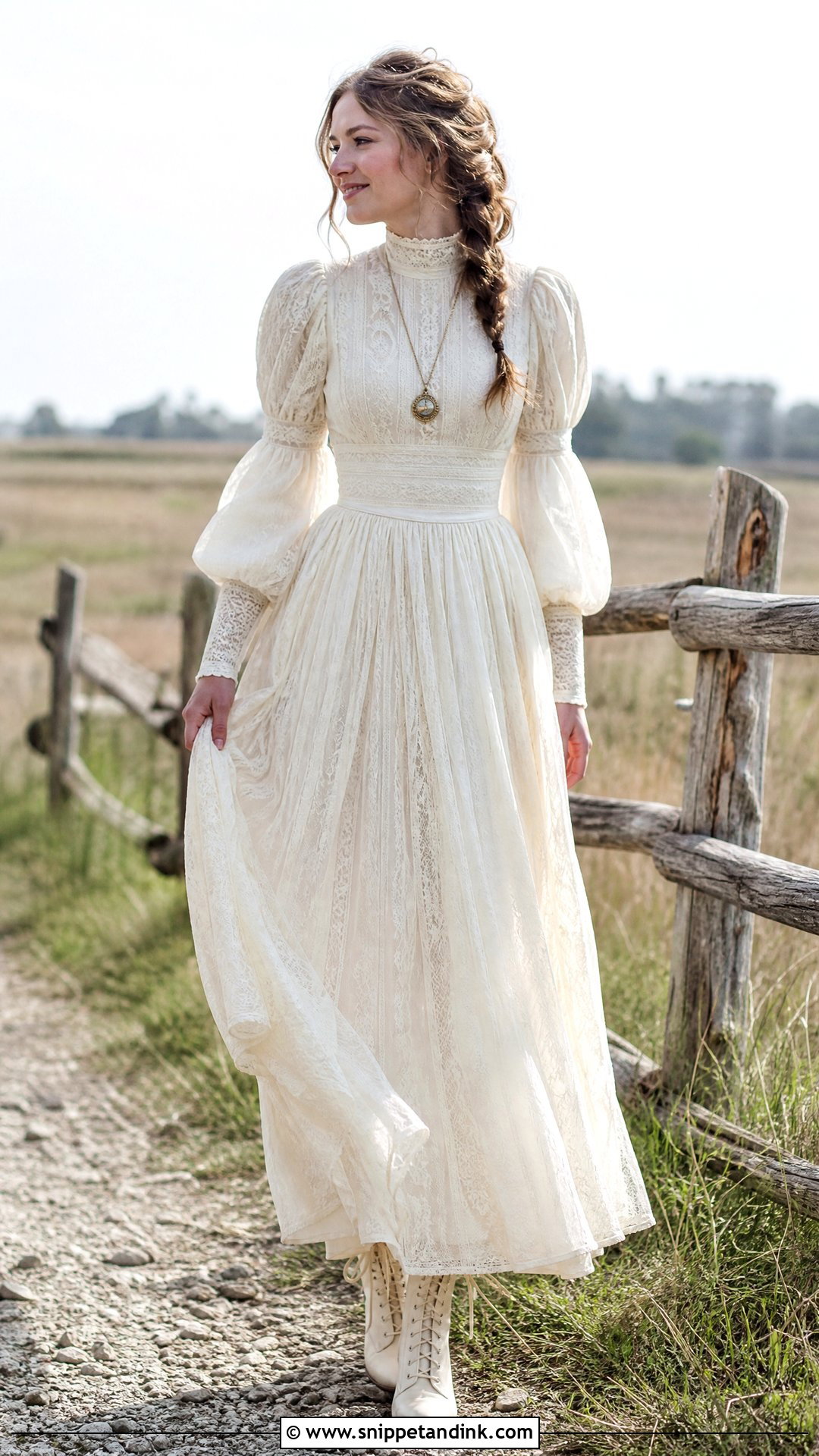
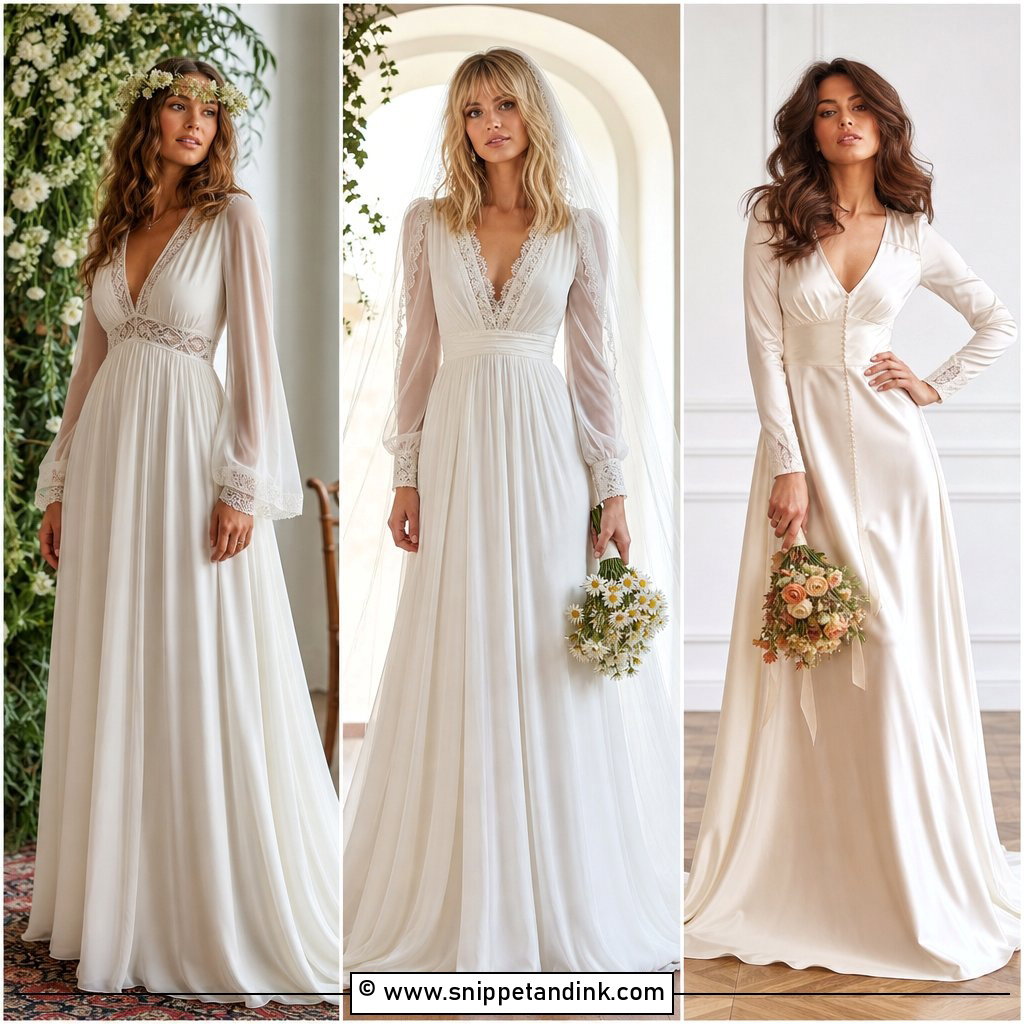
A prairie wedding dress is modest by design: high neck, gathered waist, long flowing skirt. Fabric is what stops it feeling heavy, so I look for breathable cotton lace or light chiffon. Small puff sleeves, narrow cuffs and a few ruffles add period detail, and a fitted waistband keeps your shape. Lace-up ivory boots, an antique-style pendant and a loose braid suit it. A felt hat can work outdoors, but not with a detailed veil; pick one. It’s my go-to for cool woodland or countryside weddings because it covers you without restricting movement.
4. Edwardian High Neck Wedding Dress
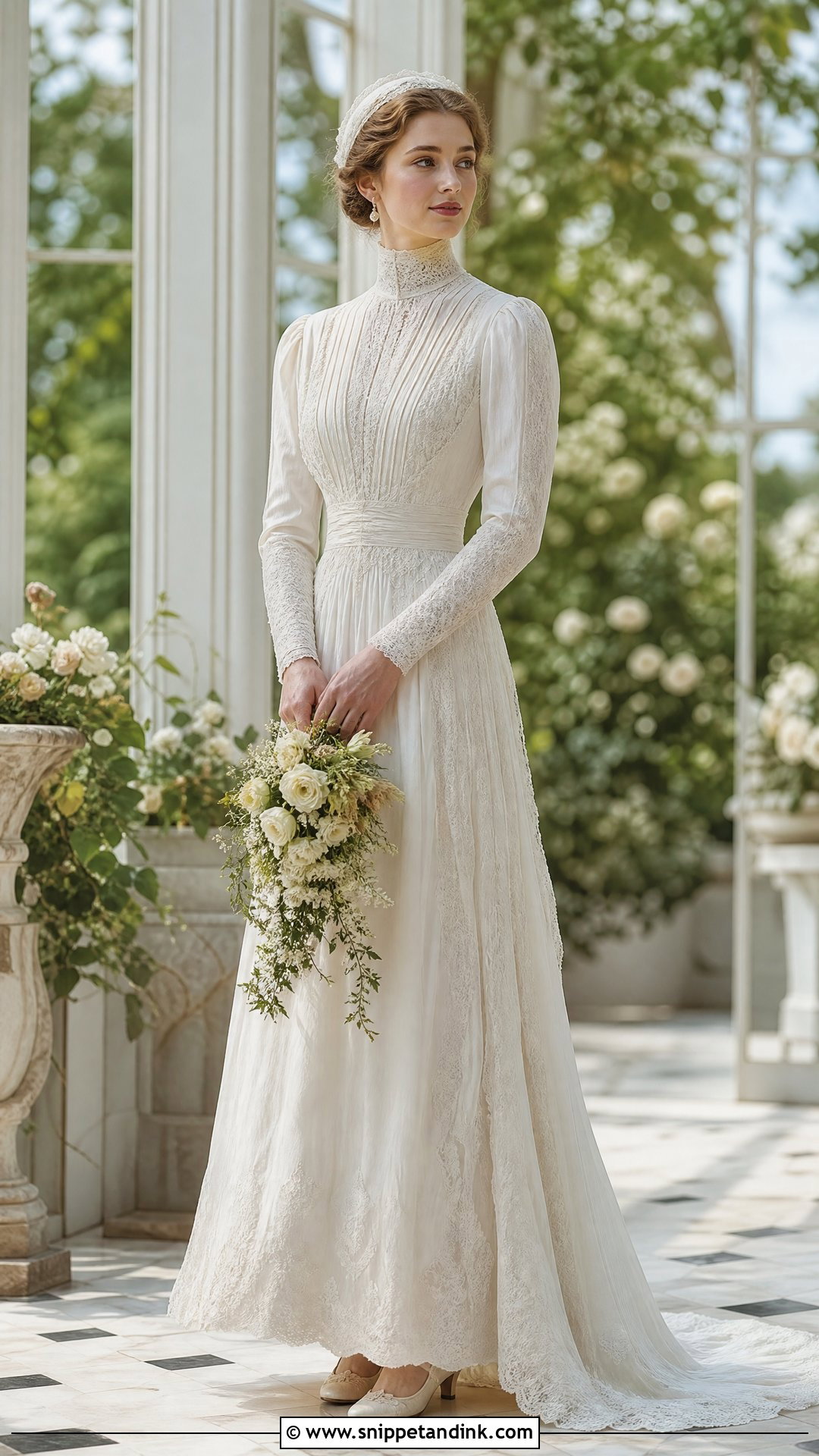
High lace collars, long sleeves and a fluid skirt are the backbone of an Edwardian-inspired wedding dress. Keep the waist softly defined rather than corseted, or you lose the boho ease. Pintucks, covered buttons and floral lace panels give period detail. The collar is the thing to test: sit, turn your head and look down at your bouquet; a beaded or stiff embroidered edge can rub the skin raw by evening. A softened Gibson-style bun, low ivory heels and pearls suit it, and a plain chapel veil or lace headpiece beats a cathedral veil, which fights the neckline.
5. 1920s Beaded Boho Wedding Dress
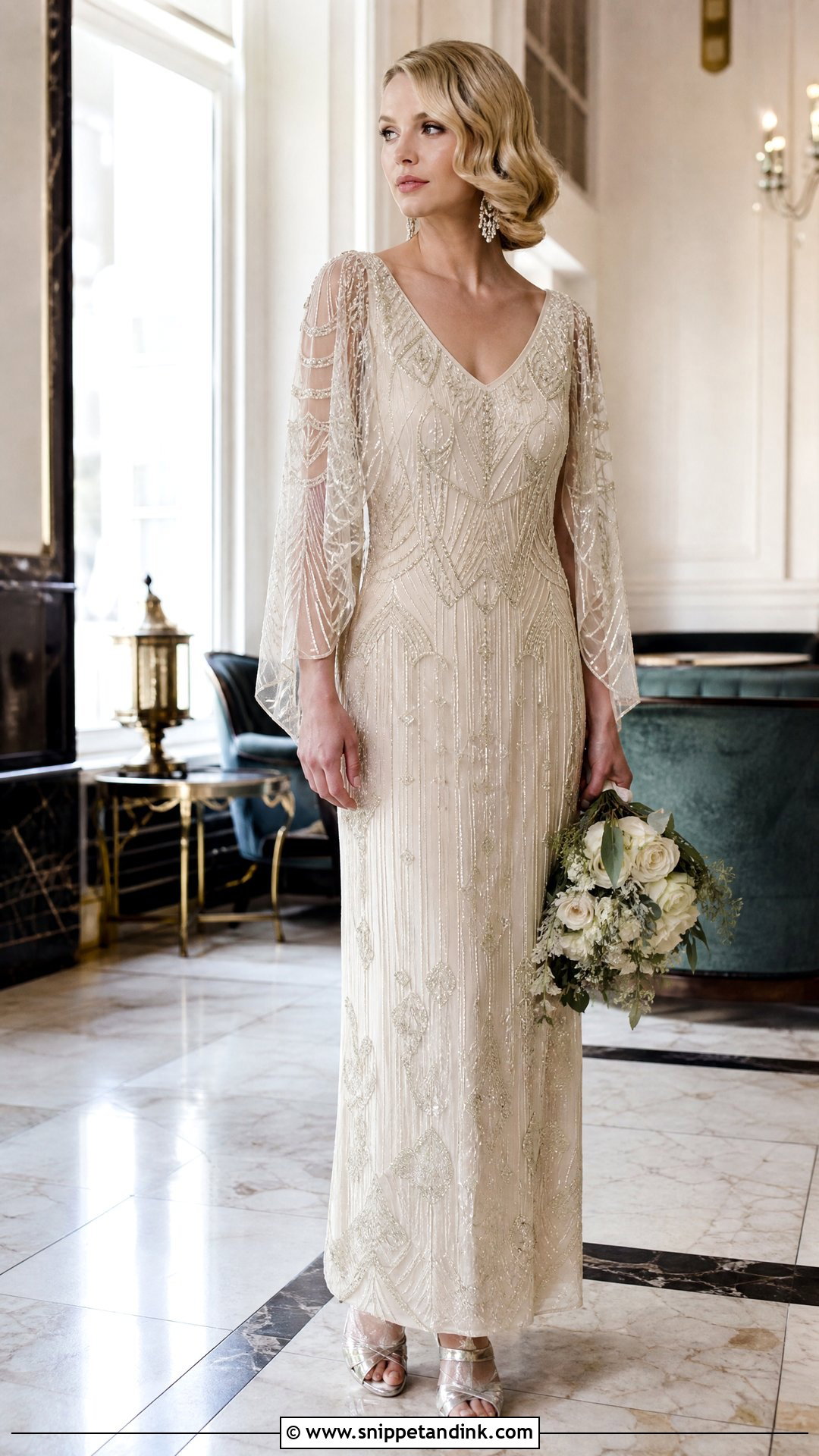
Beading on a 1920s column needs restraint to stay boho. I’d go for scattered geometric beads, a soft V-neck and a skirt that skims without gripping, with a low back or sheer cape sleeves for drama. Beaded fabric is heavier than it looks and pulls a narrow column downward, so make sure the straps are strong enough. Metallic low heels, art deco earrings and a small beaded clutch suit the period. Side-swept waves or a relaxed bun with a crystal comb work, and the veil should be plain tulle: a beaded veil on a beaded gown is too much texture.
6. Off Shoulder Lace Wedding Dress
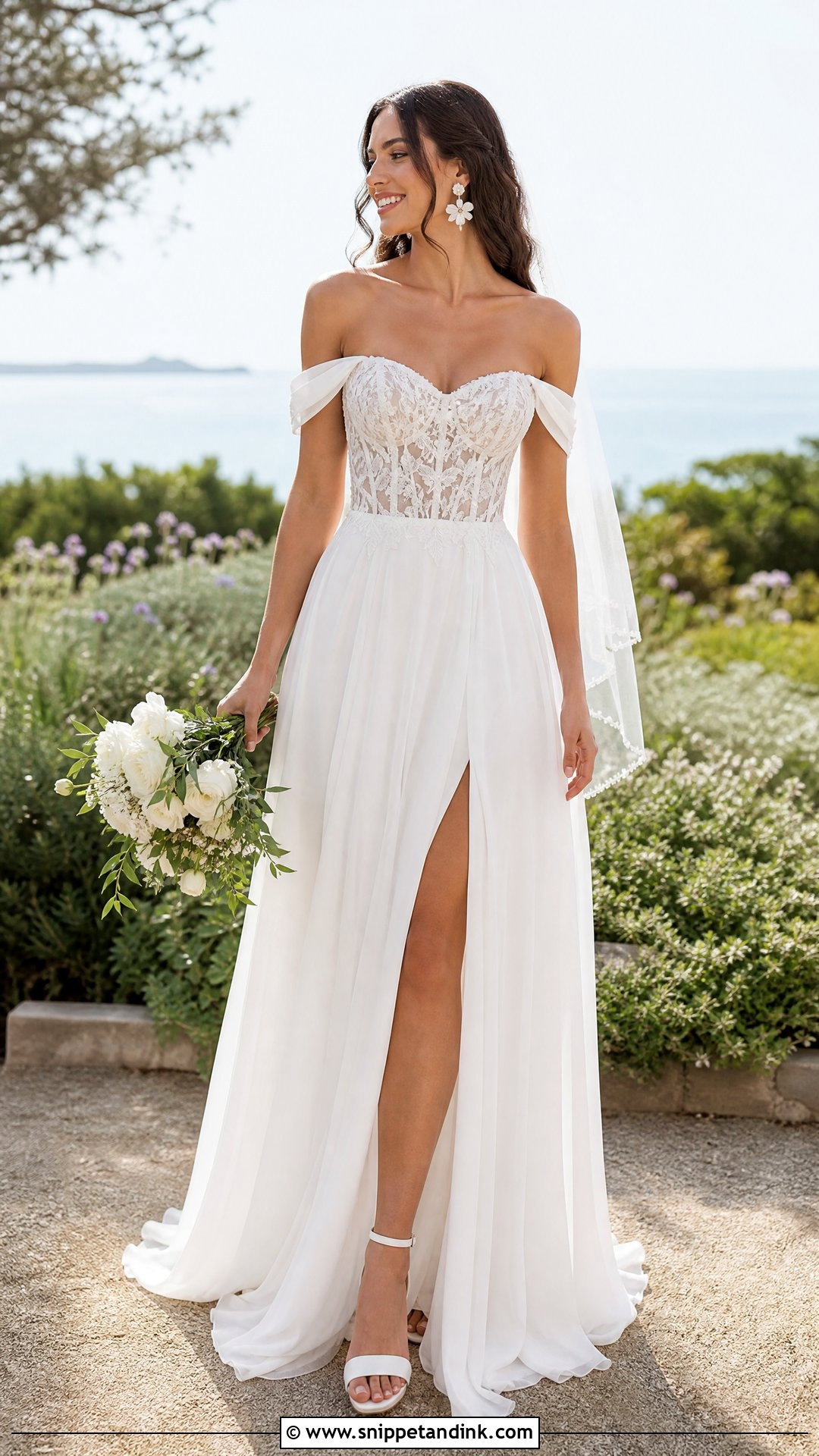
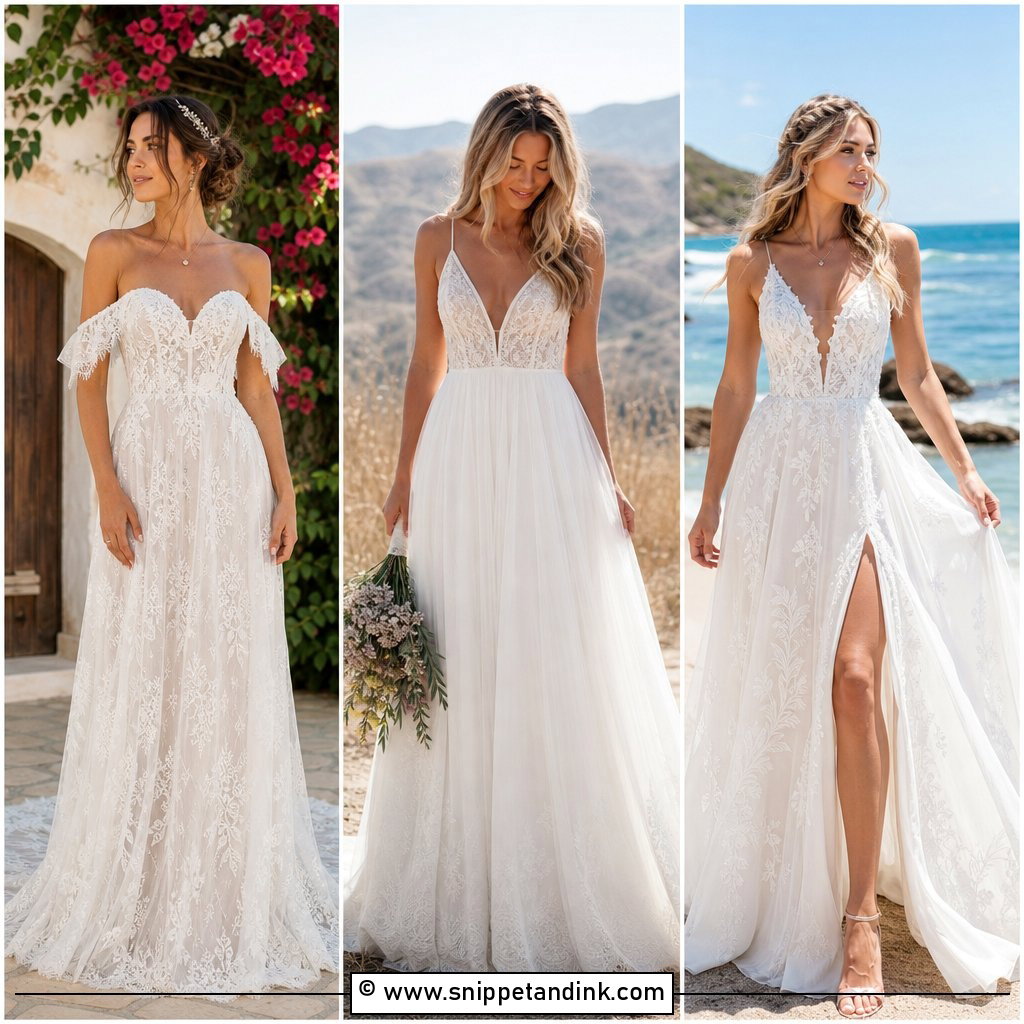
Off-shoulder lace belongs at warm-weather weddings. The bodice needs real internal support so it doesn’t slide, and a chiffon or tulle skirt keeps you moving. Raise your arms, hug someone and dance a few steps before the final alterations; draped sleeves that pin your arms down will annoy you all night. Block-heel sandals, a small pendant and floral studs are enough, with a loose updo or half-up style and a fingertip veil. A light lace wrap in a matching shade handles the evening chill outdoors, and an asymmetrical bouquet keeps the look natural.
7. Empire Waist Chiffon Wedding Dress
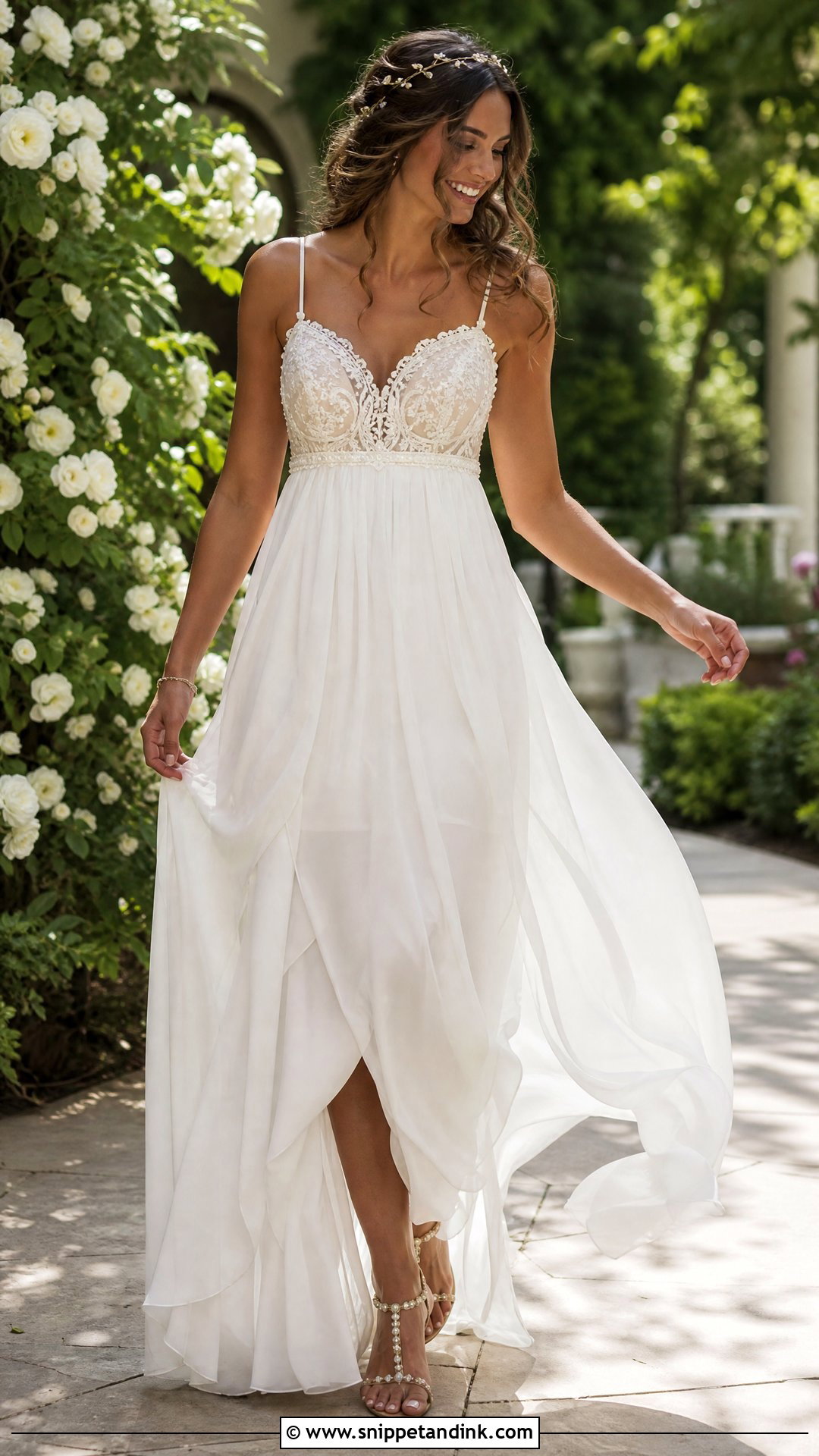
Chiffon from an empire waist is the coolest and most forgiving shape here. The raised seam leaves room through the middle, so it suits many figures and pregnancy too. Look for a lace or embroidered bodice with secure straps and a softly layered skirt. Chiffon goes see-through in strong sun; stand by a window at your fitting and ask about an extra lining layer if needed. Jeweled flat sandals, a fine bracelet, a thin vine hairpiece and loose curls or a textured braid suit it. Start a short veil or cape veil below the hairstyle.
8. Lace Cape Sleeve Wedding Dress
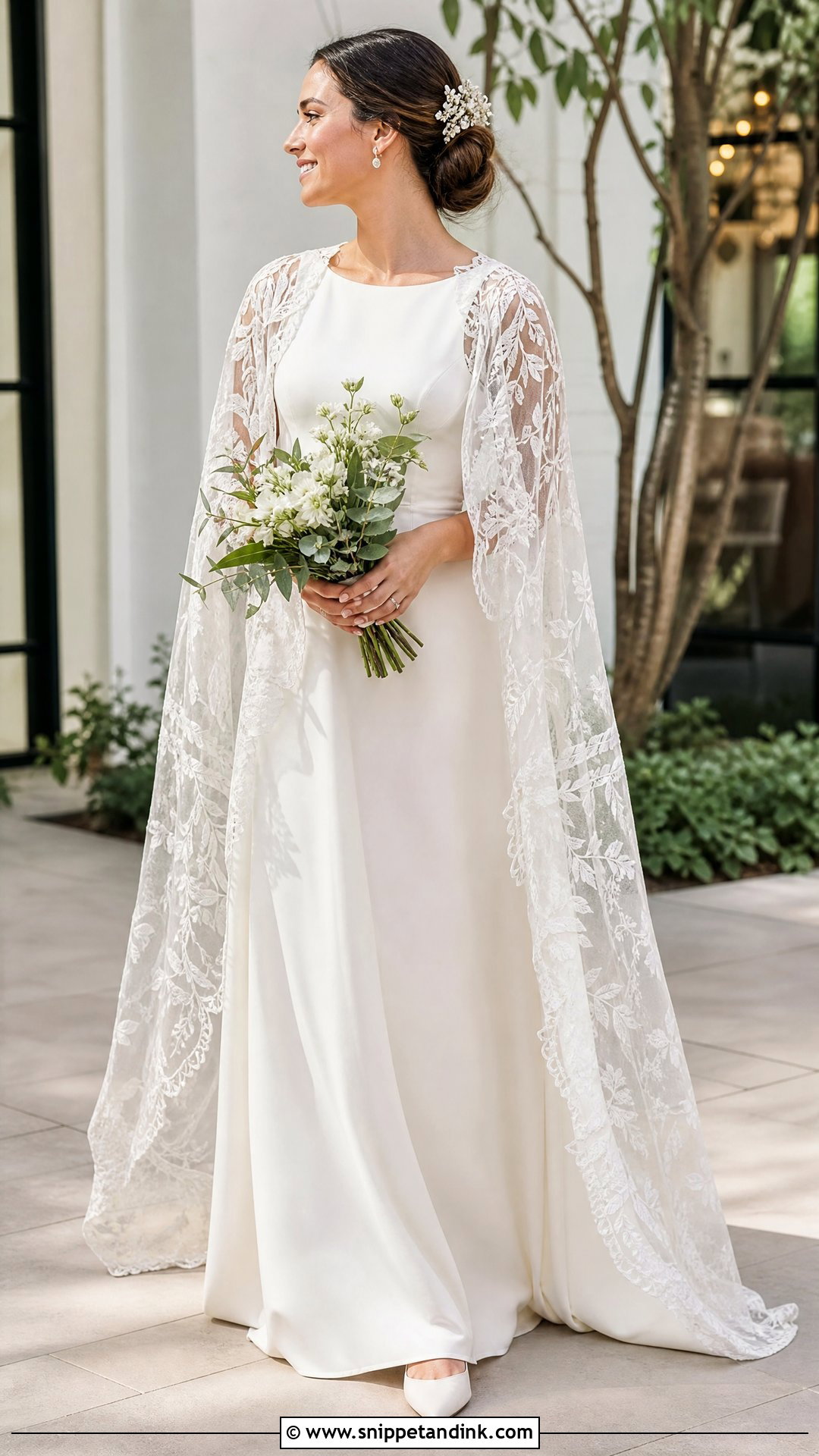
With a lace cape sleeve wedding dress, your shoulders are covered but your arms stay free to move. Choose a fitted sheath or soft A-line with a cape from shoulder to elbow or wrist; botanical lace over a plain crepe or chiffon base is the balance I like. The cape replaces a veil, so a decorative comb or small floral piece is all you need. Lace snags on bracelets, ribbon and beading, so keep those plain. Pointed ivory flats, subtle studs and a polished low bun complete it.
9. Fringe Bell Sleeve Wedding Dress
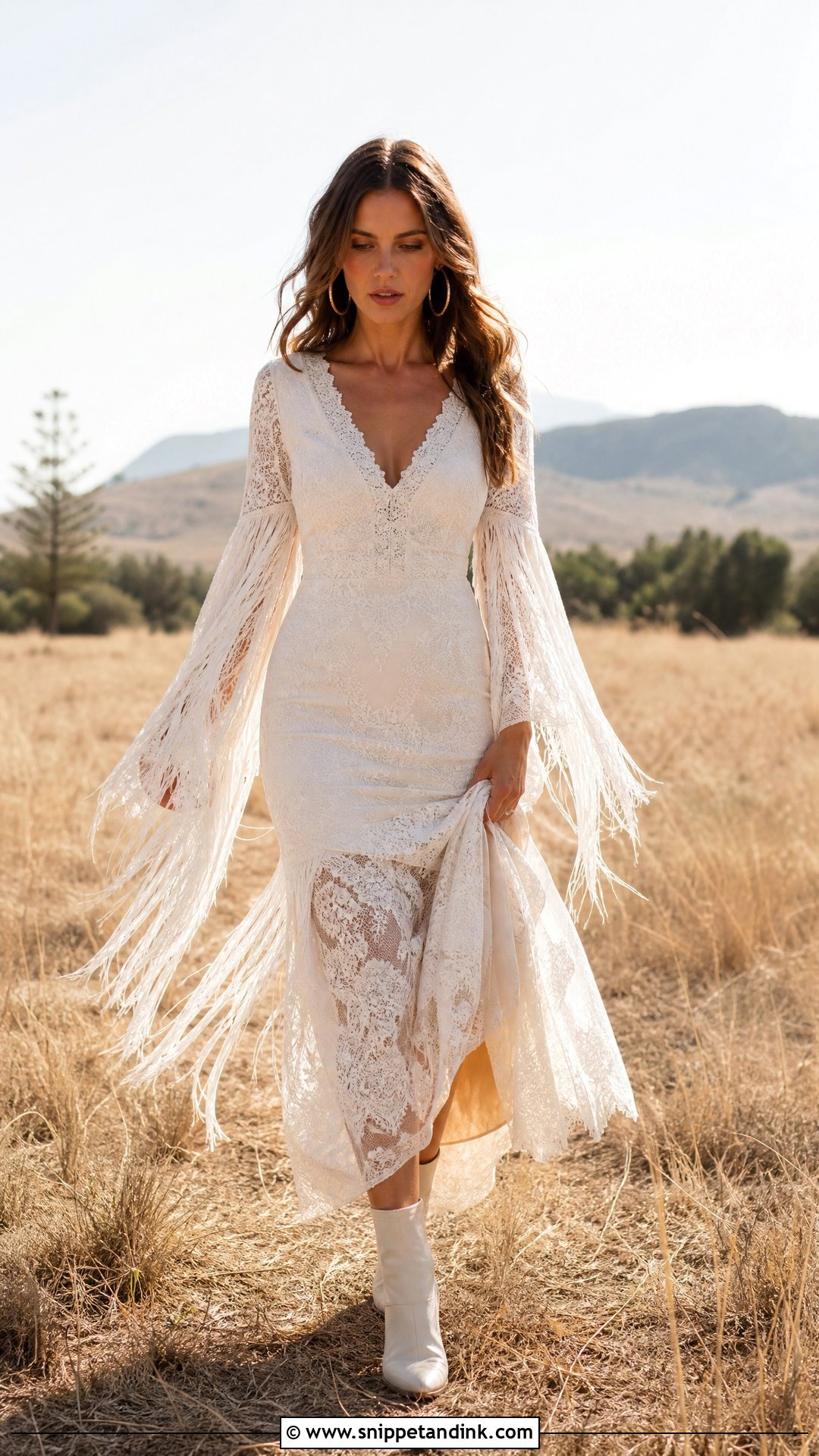
Fringe hanging from lace bell sleeves is pure movement and pure fun. Keep the gown softly fitted with a plain skirt, so the fringe is the one statement; a V-neck, open back and floral lace back it up. The practical point is length. Fringe should end above your fingers, or have your seamstress shorten it, so you can hold flowers and shake hands without tangling. Skip chunky rings and bracelets for the same reason. Cream ankle boots, slim hoops, centre-parted waves and a flower crown suit it better than a formal veil.
10. Floral Embroidered Wedding Dress
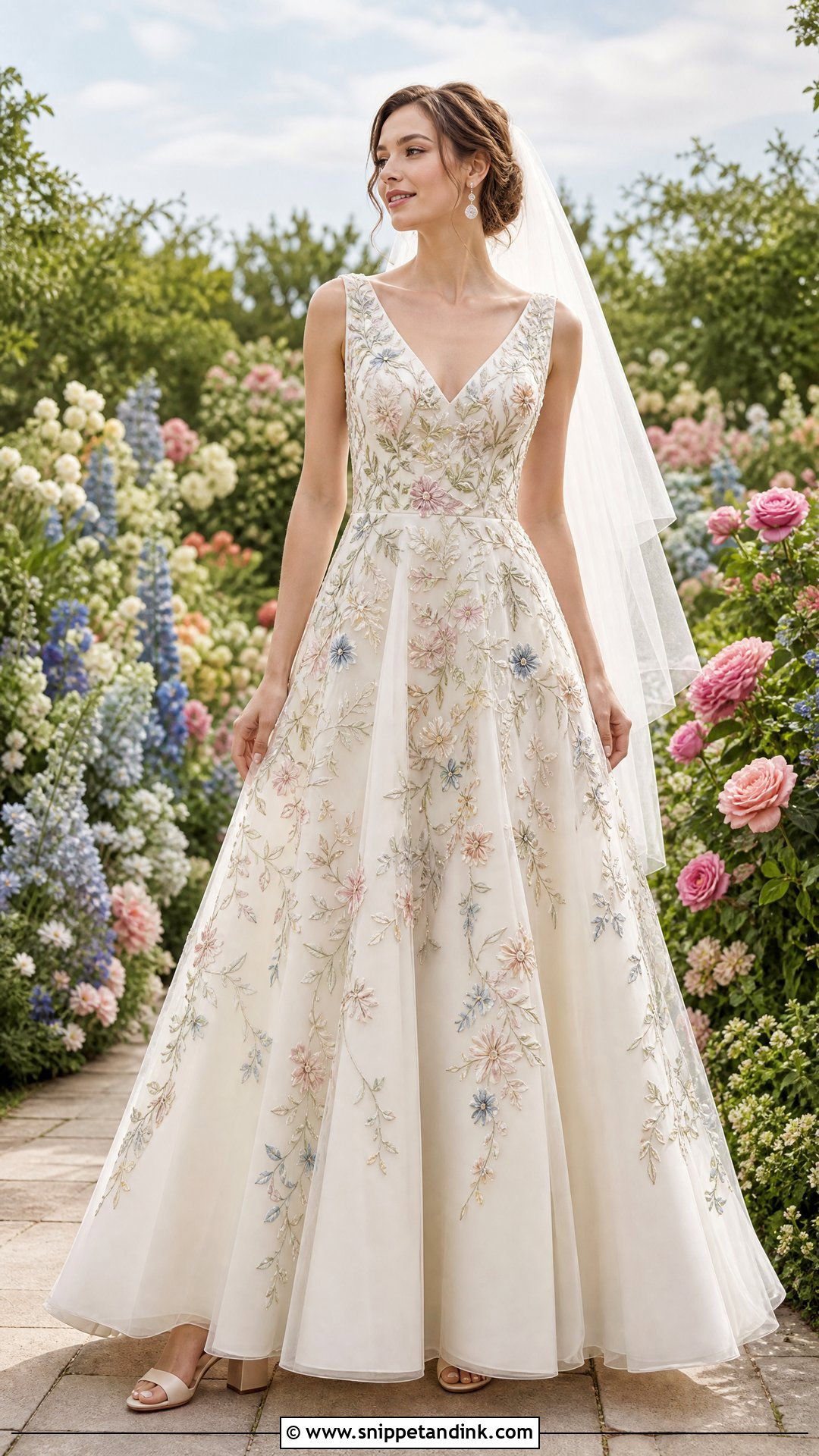
Embroidered flowers on a sheer overlay turn a simple dress into something botanical. I’d choose a fully lined bodice and skirt so the flowers show without losing coverage. Muted blush, green, blue or gold on ivory sit quietly; brighter thread makes a louder statement. Coordinate the bouquet with one or two embroidery shades, not all of them. Neutral block heels, small gemstone earrings, a plain tulle-edged veil and a loose bun or braid keep the rest calm, so the embroidery reads clearly in photos.
11. Cotton Lace Wedding Dress
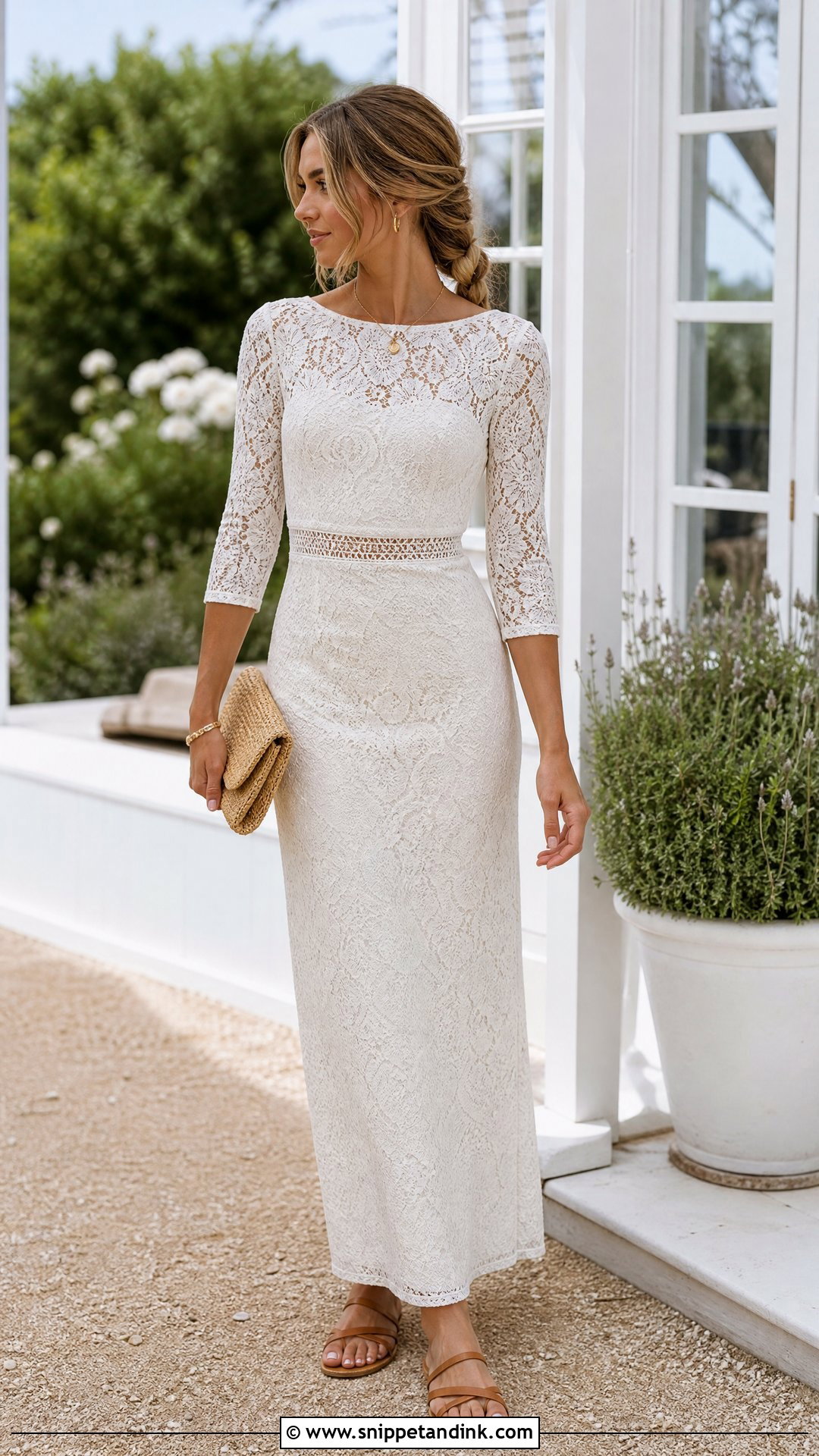
Cotton lace breathes, which is why it suits outdoor and casual weddings. Choose a comfortable A-line or sheath with a lining, a defined waistband and sleeves you can move in. Big patterns look handmade, small ones more delicate. Cotton reacts differently to synthetic lace; it creases when you sit and can stretch a little as it warms, so wear it for a good half hour at a fitting before final alterations. Leather flat sandals, simple gold jewelry, a woven clutch, a plain fingertip veil and loose waves or a low braid keep it informal.
12. Open Back Lace Wedding Dress
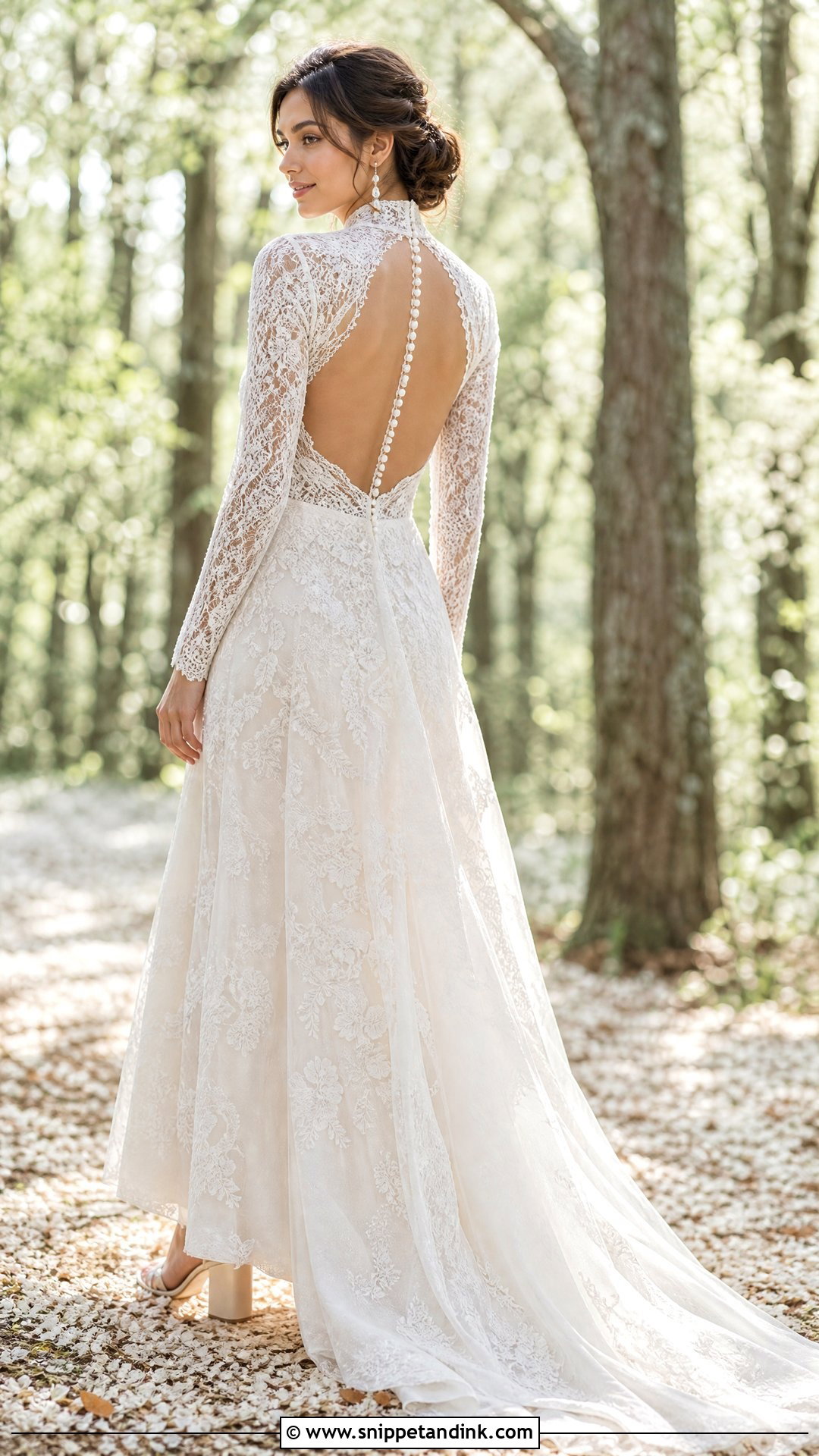
An open lace back is soft from the front and dramatic from behind. Balance it with a high neck or long sleeves, and make sure the back is held by buttons, ties or illusion tulle you trust. Undergarments are the thing to sort early: ordinary bra straps will show, so talk to your seamstress about built-in cups before the first fitting. A flowing A-line, low block heels, drop earrings and an updo that clears the back finish it. Pick a sheer or shoulder-length veil, then sit and bend in the finished dress to make sure the opening stays put.
13. Bishop Sleeve Wedding Dress
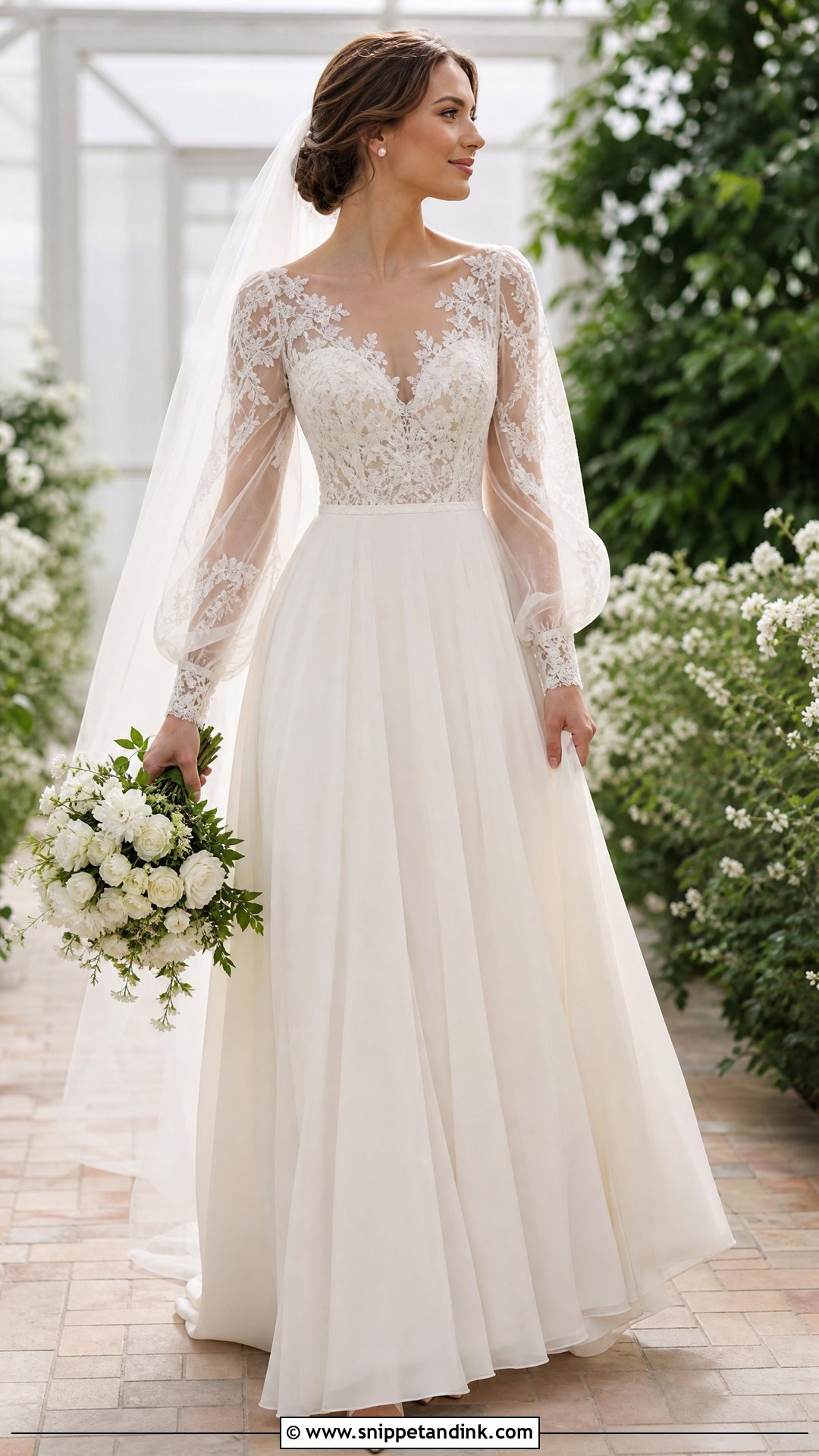
Bishop sleeves give you volume without the width of a bell, and your hands stay free for rings and flowers. Gather them into fitted cuffs over a simple lace bodice and a flowing skirt; light organza or lace keeps them cool. The cuff should close snugly without pressing into the wrist, which matters if your hands swell in heat. Ivory pumps, pearl studs, a soft low bun with a botanical comb and a plain chapel veil suit it. Outdoors, switch to block heels or flats.
14. Boho Two Piece Wedding Dress
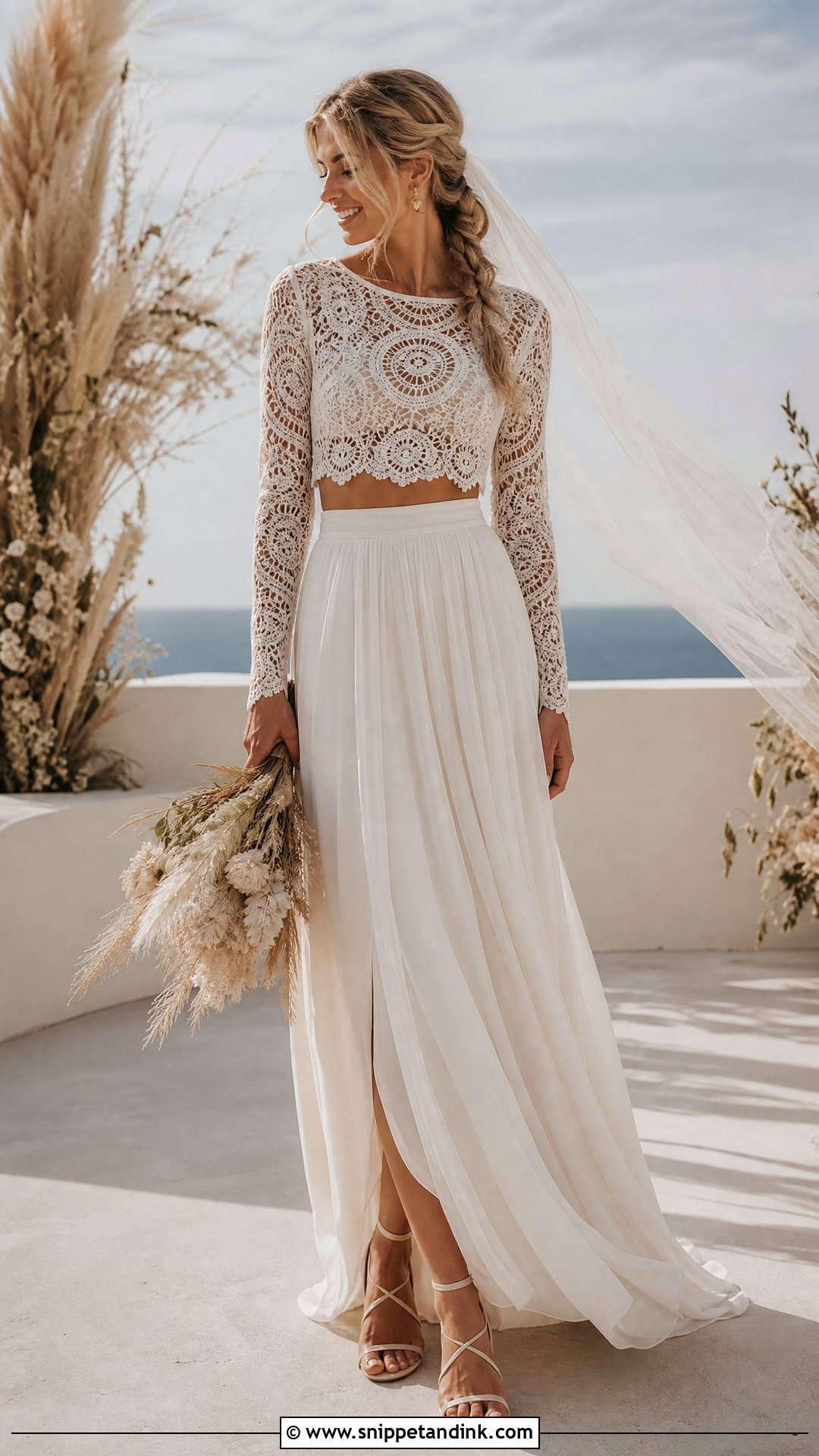
Separates are the most modern take on vintage bohemian bridalwear. A lined crochet or lace top meets a high-waisted chiffon skirt, either at the waist or with a sliver of skin showing. Long sleeves and a bateau neck keep it refined. Lift your arms, sit and dance in it; if the top creeps up, ask for hidden snaps to join the pieces. Strappy ivory sandals, small gold earrings, a textured ponytail or braid and a light veil beneath the hair finish it, and you can wear both pieces again.
15. Tea Length Lace Wedding Dress
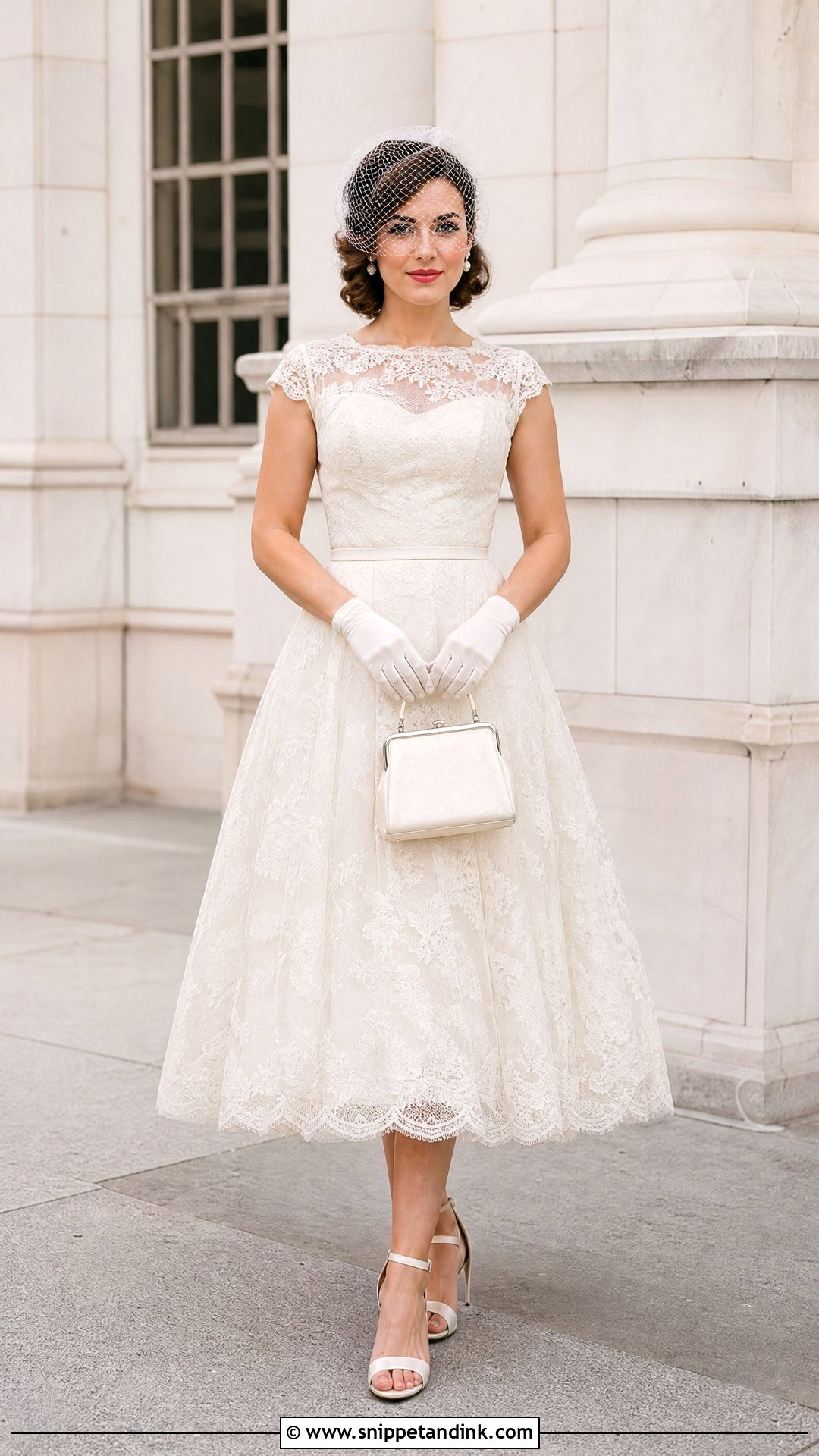
Your shoes become part of the outfit with a tea-length lace dress. Choose a fitted bodice, natural waist and skirt ending between knee and ankle, with a light underskirt for movement. Buy the shoes before the hem is cut, because the length is set to your heel height. Ivory ankle straps, pearl drops, a small structured bag and a birdcage veil lean retro; a floral comb keeps it informal. Shoulder-length waves balance the shorter hem. It’s the most convenient choice for courthouse ceremonies or a day moving between locations.
16. Satin Slip Wedding Dress With Lace Cape
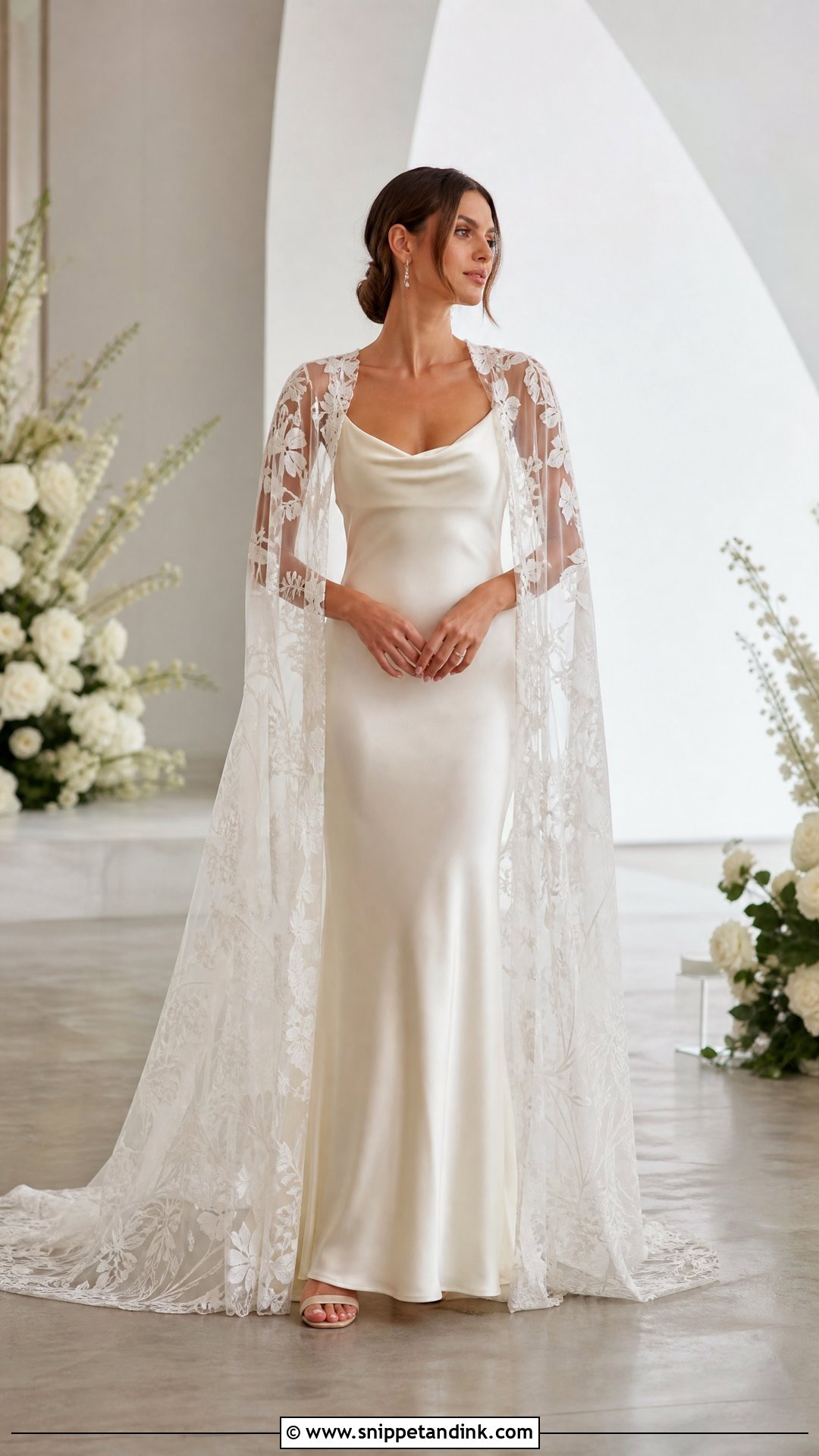
A bias-cut satin slip under a removable lace cape gives you two looks with no outfit change. Choose a softly draped neckline and minimal seams, then a floral cape to the waist or floor for the ceremony; take it off for the reception. Matte or soft-lustre satin looks more understated than high shine and is kinder to every lump and bump. Bias satin clings, so smooth, no-line underwear is essential. Simple heeled sandals, delicate earrings and a low knot are enough, and you won’t need a veil.
17. Tiered Lace Wedding Dress
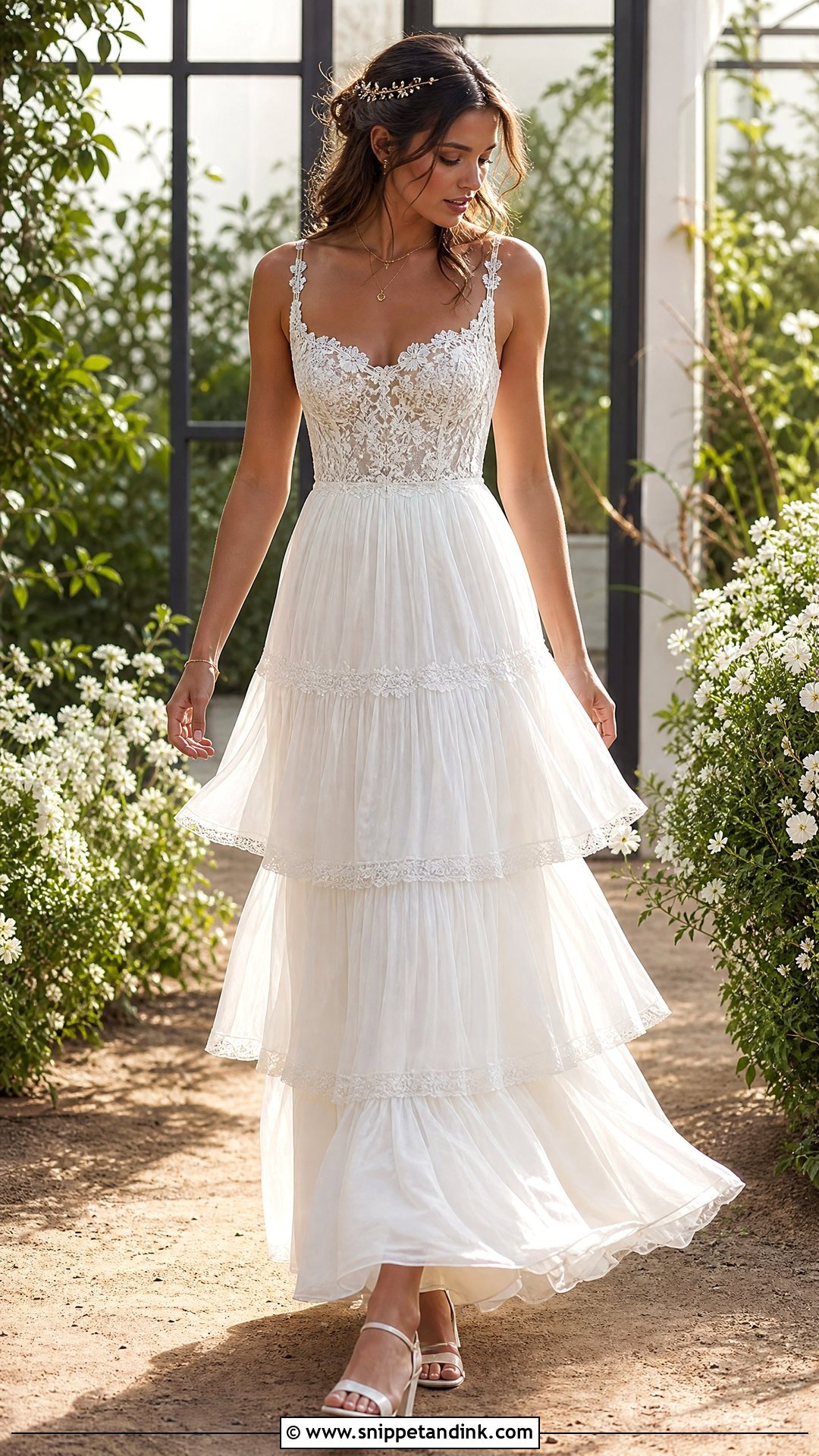
Tiers give movement and some volume without the stiffness of a ball gown. A fitted lace bodice over two or three gathered layers of chiffon, tulle or embroidered fabric is the shape, and the layers should stay long and fluid. During alterations, wear your actual shoes and walk on a surface like your venue’s; the lowest tier should clear the ground just enough not to catch. Block-heel sandals, fine gold jewelry, a half-up style and a fingertip veil or floral vine suit it, with a compact bouquet to balance the skirt.
18. Plus Size Lace A-Line Wedding Dress
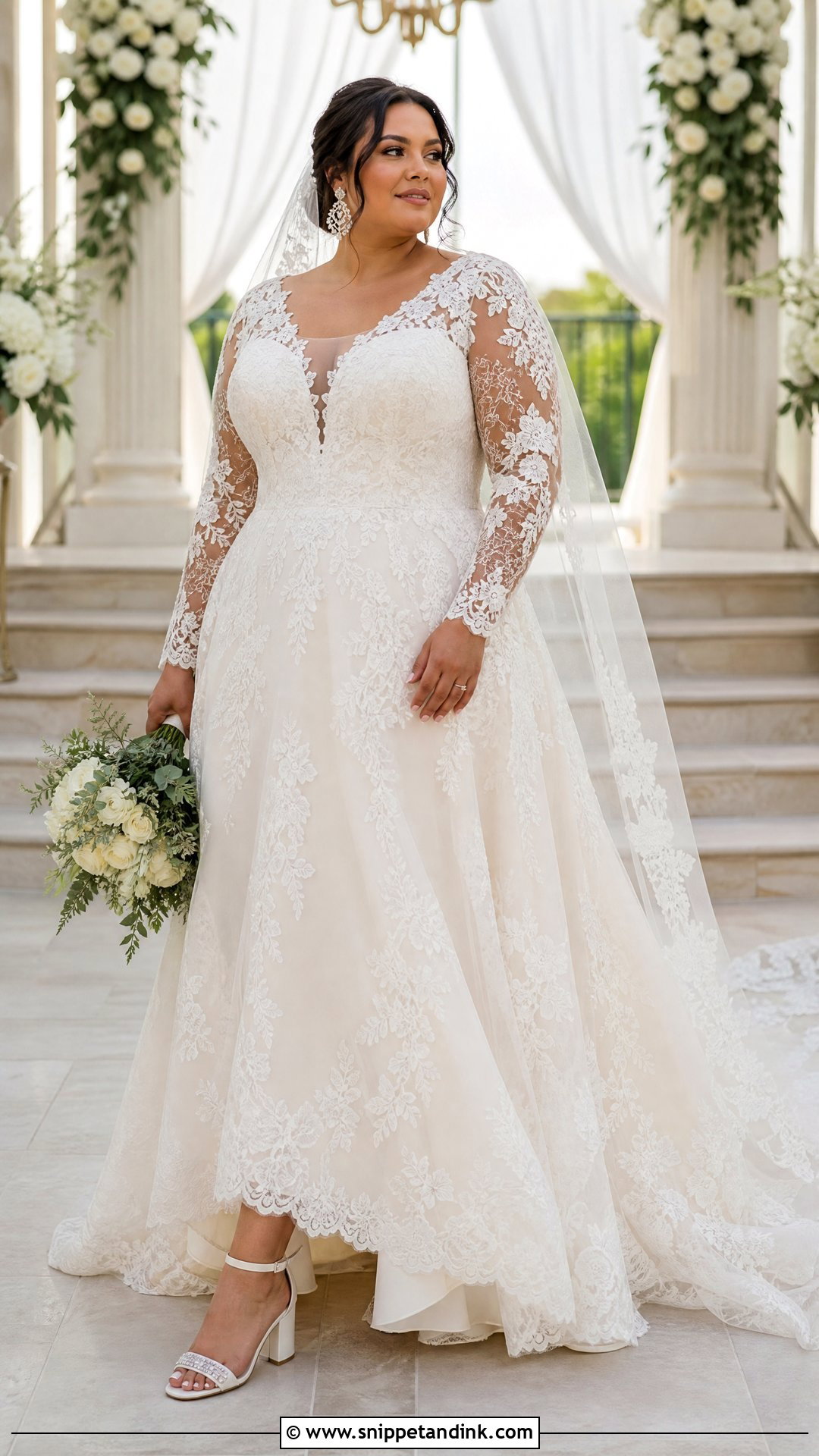
A lace A-line works across sizes when it’s built well inside. Look for a supportive bodice with wide straps, a waist seam placed exactly at your waist and a skirt that falls over the hips without bulk. A plunge filled with illusion mesh gives coverage you can rely on, and long lace sleeves finish the vintage side. Ignore the size label. Waist, bust, sleeves and hem may each need different work, so budget time and money for proper tailoring. Cushioned block heels, statement earrings, side-swept hair and a chapel veil complete it.
19. Crepe Wedding Dress With Vintage Lace Sleeves
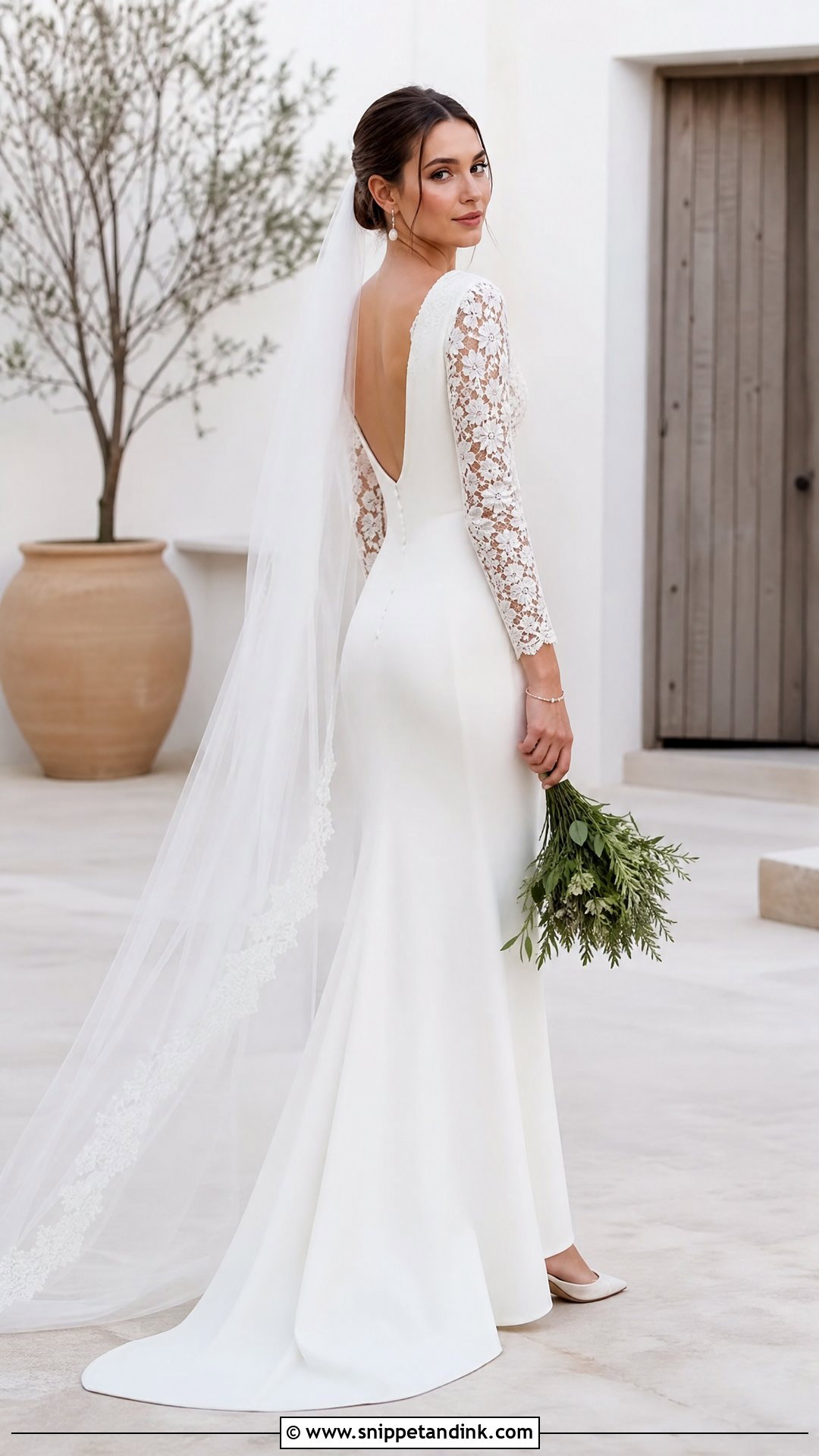
Plain crepe with lace sleeves is the simplest dress here, and the hardest to fit. Crepe shows every line, so tailoring and smooth underwear matter more than with lace. A fitted or softly flared body, floral lace sleeves, a modest V and a low back give contrast without clutter. Ask the seamstress to match the lace tone carefully; bright white sleeves on warm ivory crepe look like they came from another dress. Pointed flats, a slim gold bracelet, pearl earrings, a neat low bun and a sheer cathedral veil you can remove later keep it refined.
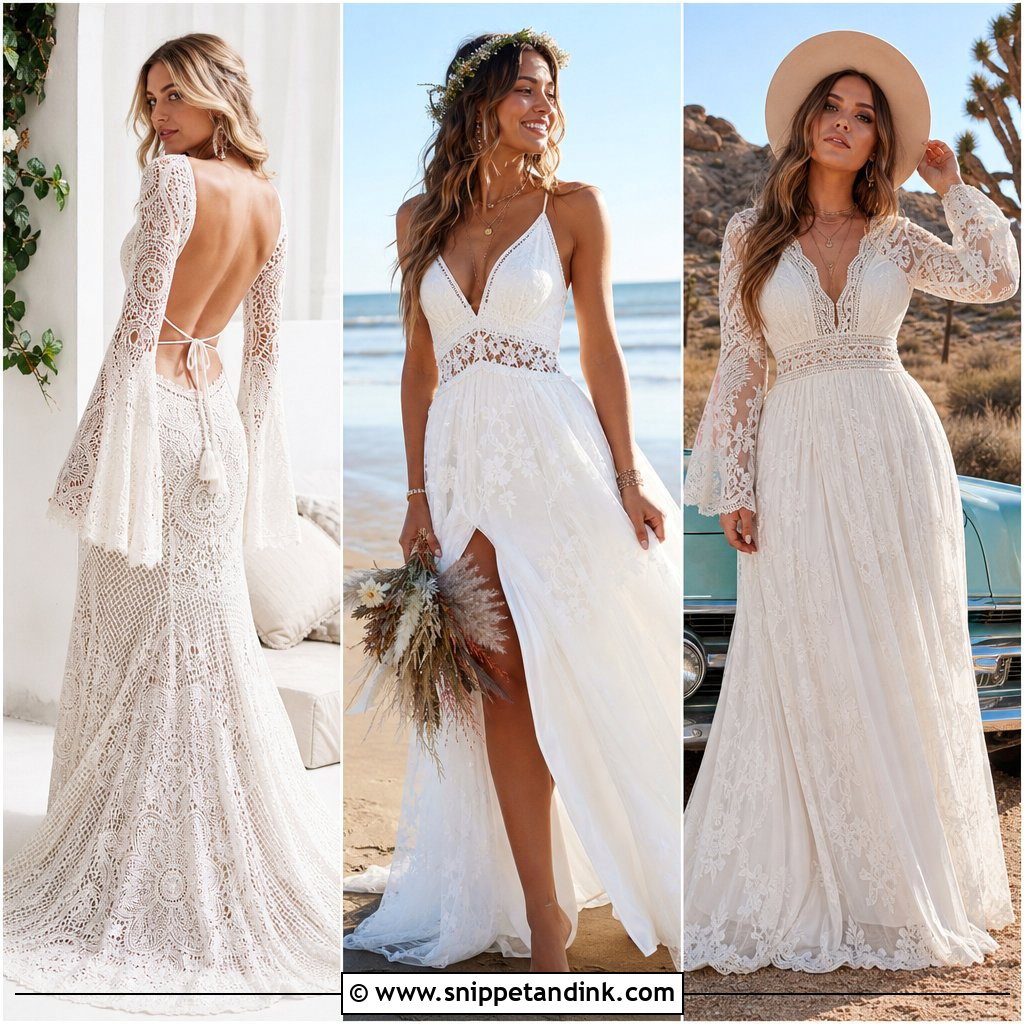
20. Champagne Lace Wedding Dress
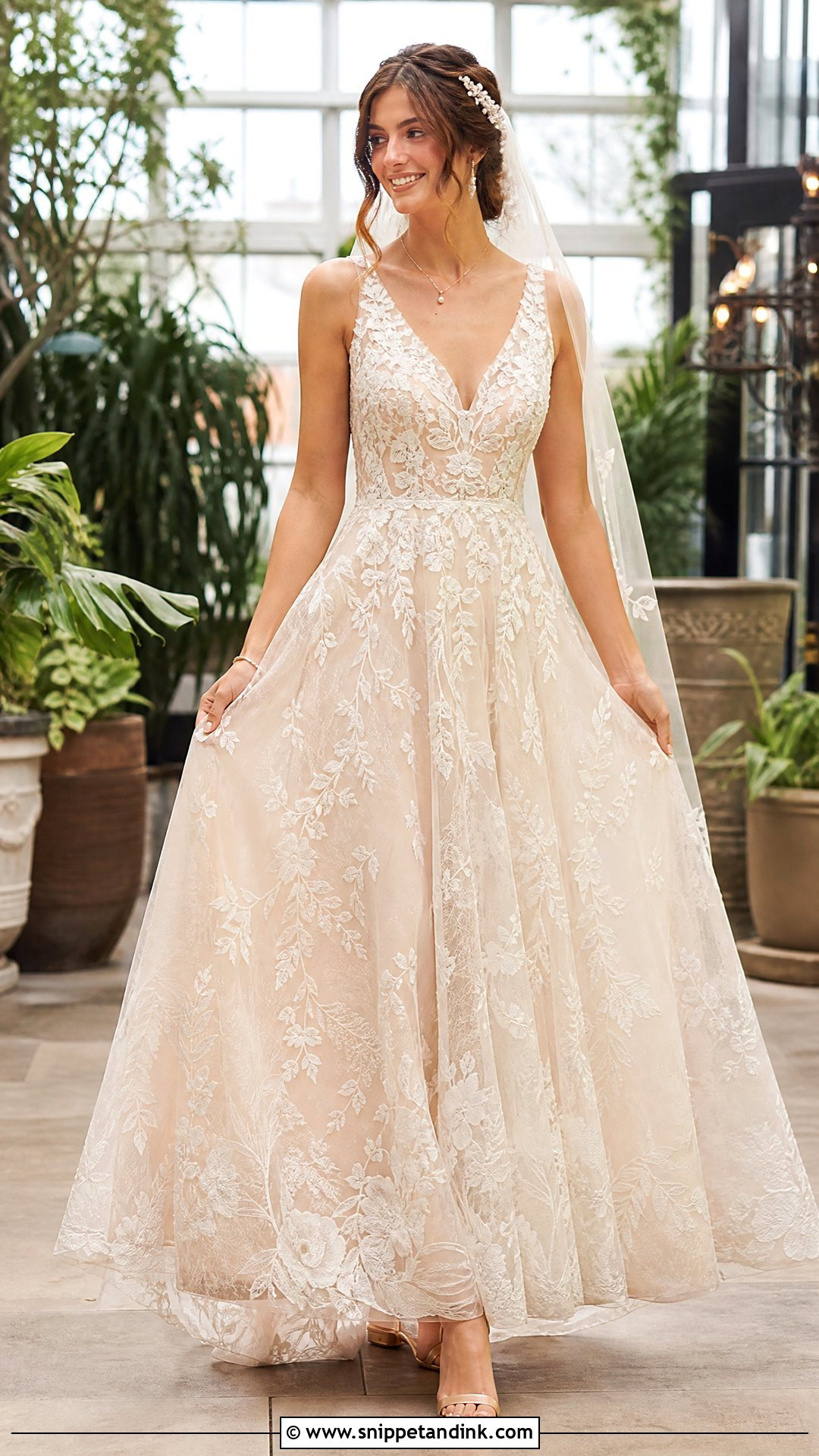
Champagne lace is warmer than white but still reads bridal. Choose a flowing A-line with a neutral lining, a botanical lace overlay and a softly defined waist; bell sleeves or a low illusion back add the boho side. Champagne shifts colour with light, from cream to beige to gold, so look at it in daylight and in your venue’s lighting before choosing accessories. Match the veil to the champagne or soft ivory; stark white makes the dress look dingy. Nude or muted gold shoes, gold jewelry, a pearl comb and a soft rose lip finish it.
Ordering a Boho Gown Online Without Regret
A lot of boho dresses are bought online, from small makers or ready-to-wear labels rather than bridal shops. It can work well, but the lead times and return rules are different, and I’d plan around them.
- Order fabric swatches first. Lace, crochet and chiffon look very different on a screen, and ivory varies a lot between makers.
- Measure yourself in your intended underwear, and send bust, waist, hips and hollow-to-hem measurements, not just a size.
- Check the return policy before paying. Many made-to-order gowns can’t be returned, so ask about sizing help before you commit.
- Allow time. Made-to-order pieces can take several months, and you’ll still need roughly six to eight weeks for alterations after it arrives.
- Book a seamstress who works with lace before the dress arrives, since a lace hem or crochet sleeve needs more care than a plain one.
When the parcel arrives, open it straight away, hang it and check every seam, button and bead. If there’s a fault, the sooner you report it, the more likely it’ll be fixed in time.
A Small Kit for Lace, Fringe and Crochet
Delicate textures need a few things on hand. I pack clear thread, a fine needle and safety pins for a pulled loop of crochet, a lint roller for chiffon, fabric tape for a slipping neckline and a soft brush for dry dirt on a lace hem. Snip any loose thread on fringe or crochet rather than pulling it, because pulling unravels it further.
Two Defining Features Are Plenty for One Boho Gown
Lace, crochet, embroidery, open backs, statement sleeves: you don’t need all of them in one gown. Pick one or two defining features and build around them. Think about your season, the ground you’ll walk on, how much coverage you want and how much you’ll dance before alterations start. Let shoes, jewelry, hair pieces and the veil support the dress. Edwardian, 1920s or 1970s, the version you can wear comfortably from ceremony to last dance is the right one.
You'll Like These Ideas:


Leave a Reply