
Brides who come to me asking for vintage usually want the same thing: a dress with a bit of history in it, rather than one they’ve already seen on every feed this year. That can mean lace sleeves, a drop waist, a basque bodice, a bias-cut silk slip, a tea-length hem or a row of covered buttons. None of it needs to look like fancy dress. The trick is choosing the decade that suits your body and your venue, then styling it with a light hand. Below I’ve gathered 25 complete vintage bridal looks across a century of fashion, from 1920s beadwork to a courthouse midi, with notes on fit and fabric for each.
What Each Decade Asks of Your Body
Every era cut clothes for a particular ideal, and that still shows up when you try the dresses on. Before brides fall in love with a picture, I walk them through what each decade does on a real body, because the comfort of your whole day depends on it.
- 1920s: straight and loose through the waist. Comfortable, though beaded versions are heavy, so look for enough ease at the hips to sit.
- 1930s: bias-cut and close to the body. Kind to long, lean frames; anyone who wants support will need a well-built inner slip or a heavier fabric.
- 1940s and 1950s: a defined waist, either tailored or with a full skirt. Flattering on most figures, especially hourglass and pear shapes.
- 1960s: short, structured and A-line. Easy to move in; it shows the legs, so think about the season.
- 1970s: soft, loose and high-waisted. The most relaxed decade to wear for a long outdoor day.
- Victorian and Edwardian: boned bodices and coverage. Dramatic, but they need careful fitting and are warm in summer.
Try at least two decades on before you decide. Brides are often surprised that the era they loved on a screen isn’t the one that feels best in a mirror.
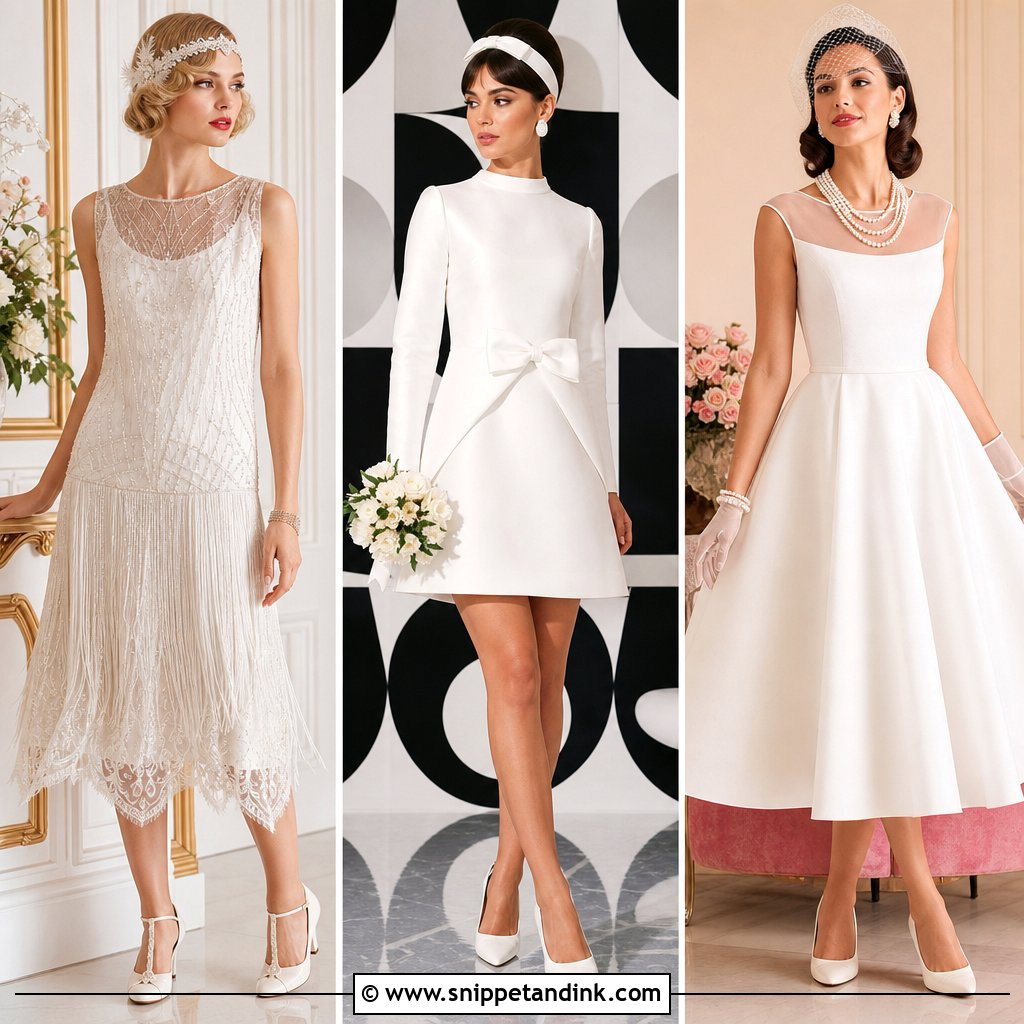
1. 1920s Beaded Bride Dress
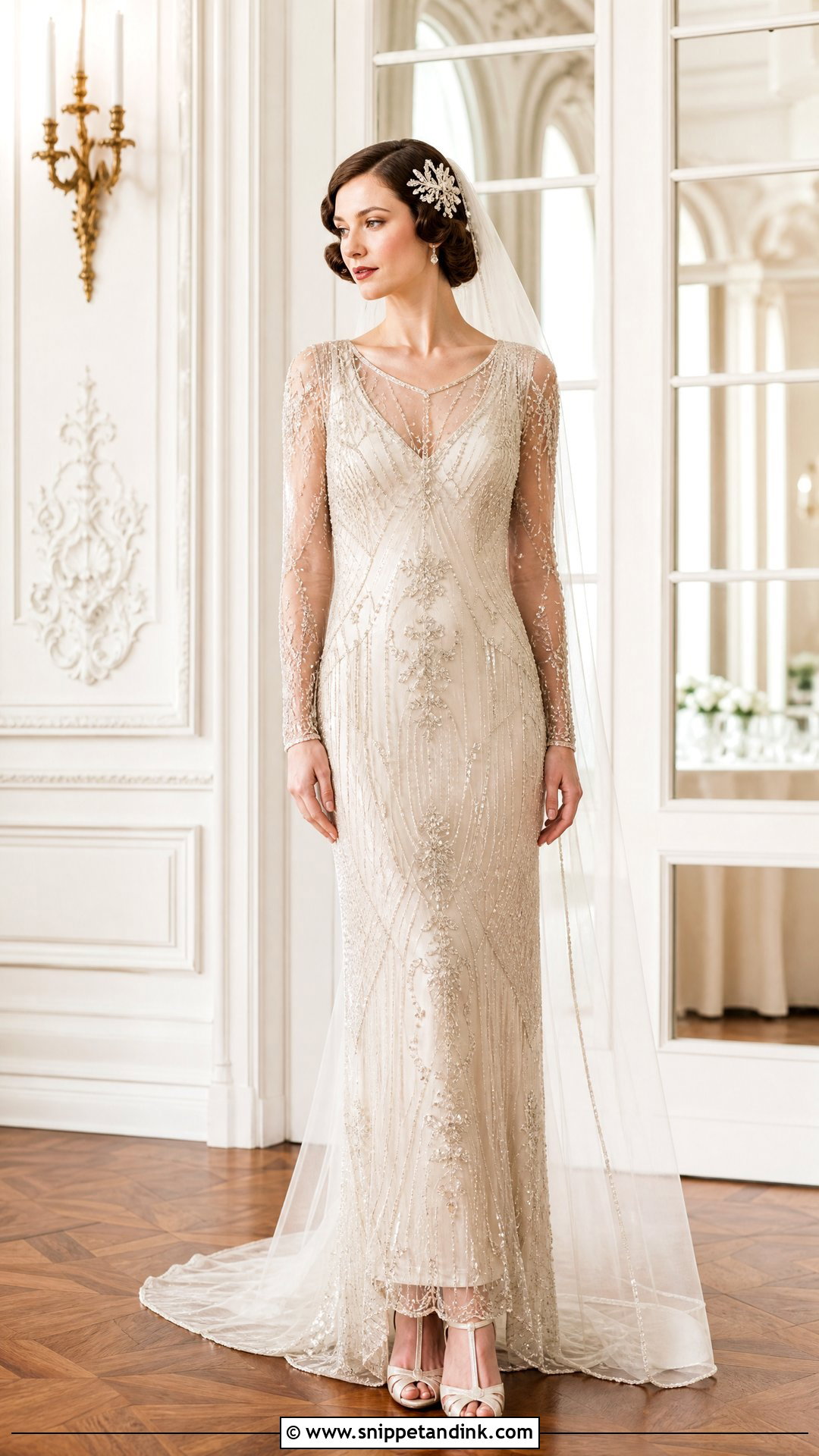
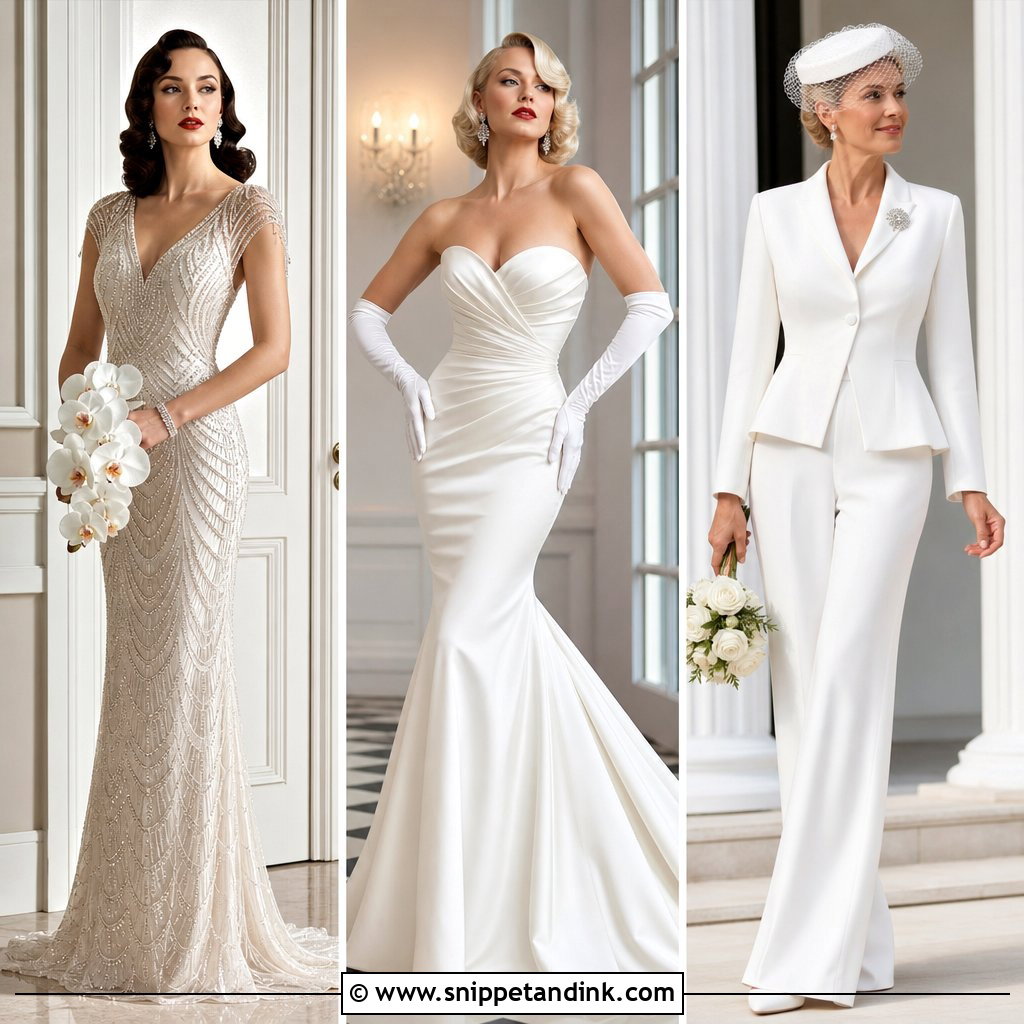
Beaded 1920s gowns shimmer because every bead moves with you, and that’s also their catch: a fully beaded dress is heavy. The weight hangs from the shoulders, so I check that the straps or sleeves are reinforced and that there’s enough ease through the hips to sit. A column or slightly relaxed shape with sheer sleeves or a bateau neck is true to the period. T-strap heels, a crystal comb and a slim veil that doesn’t hide the beadwork finish it, with plain ivory flowers. It suits a ballroom, a city ceremony or an evening reception.
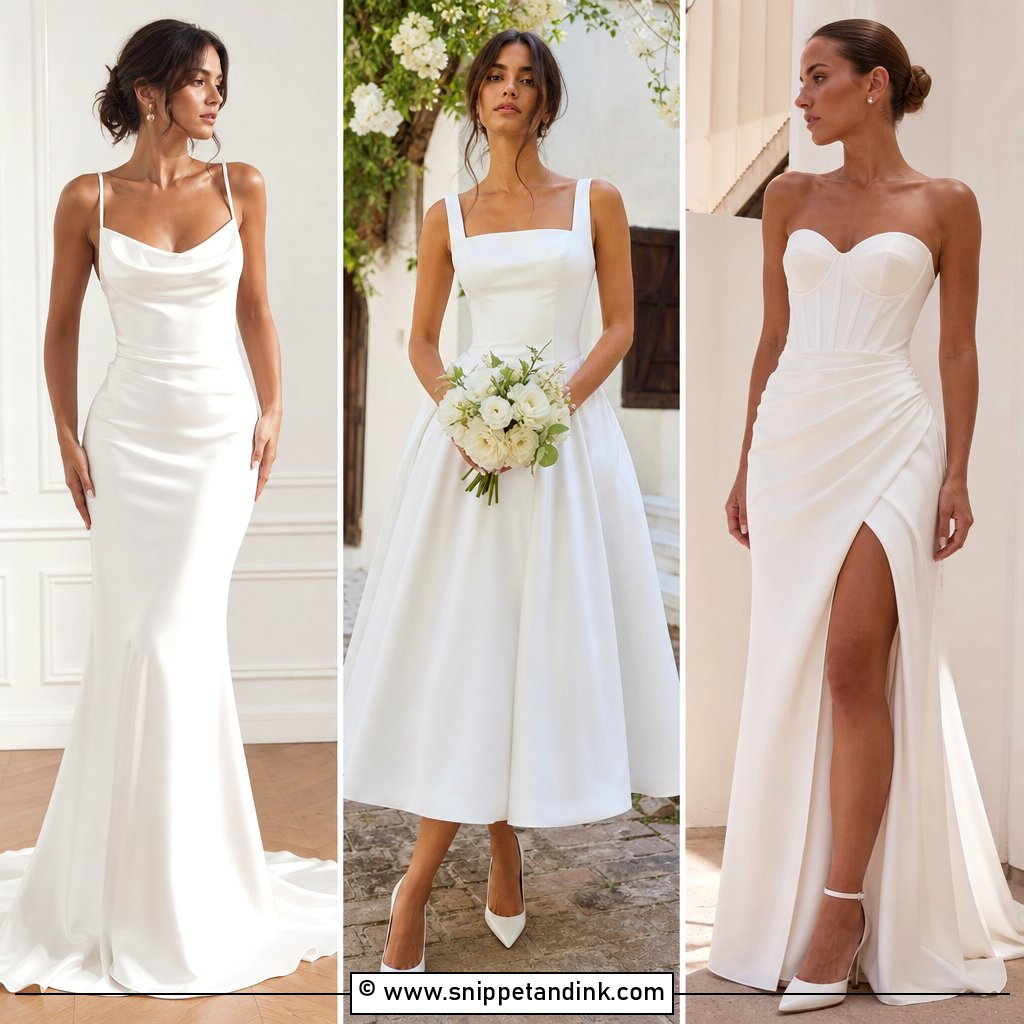
2. 1930s Silk Slip Bride Dress
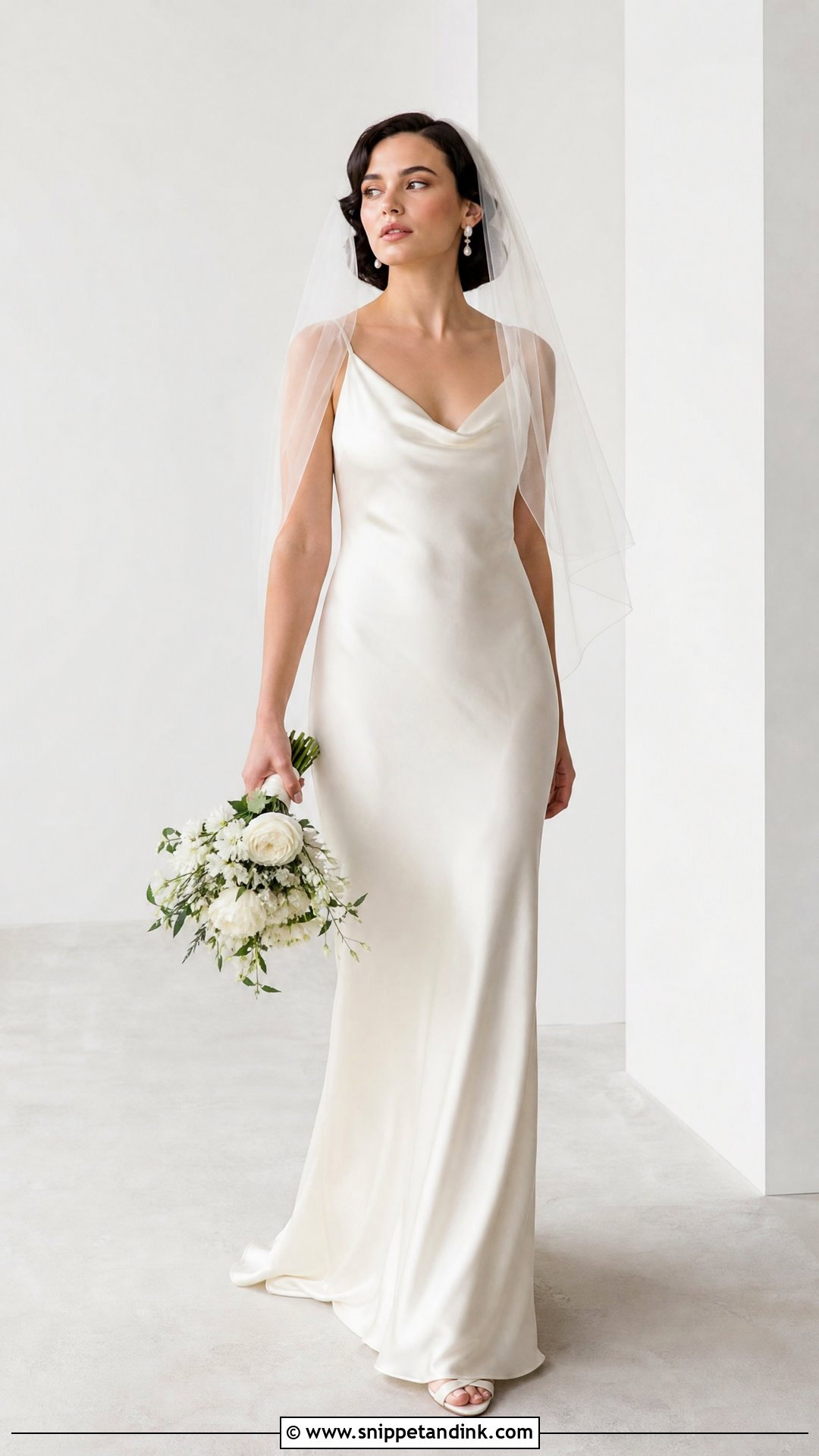
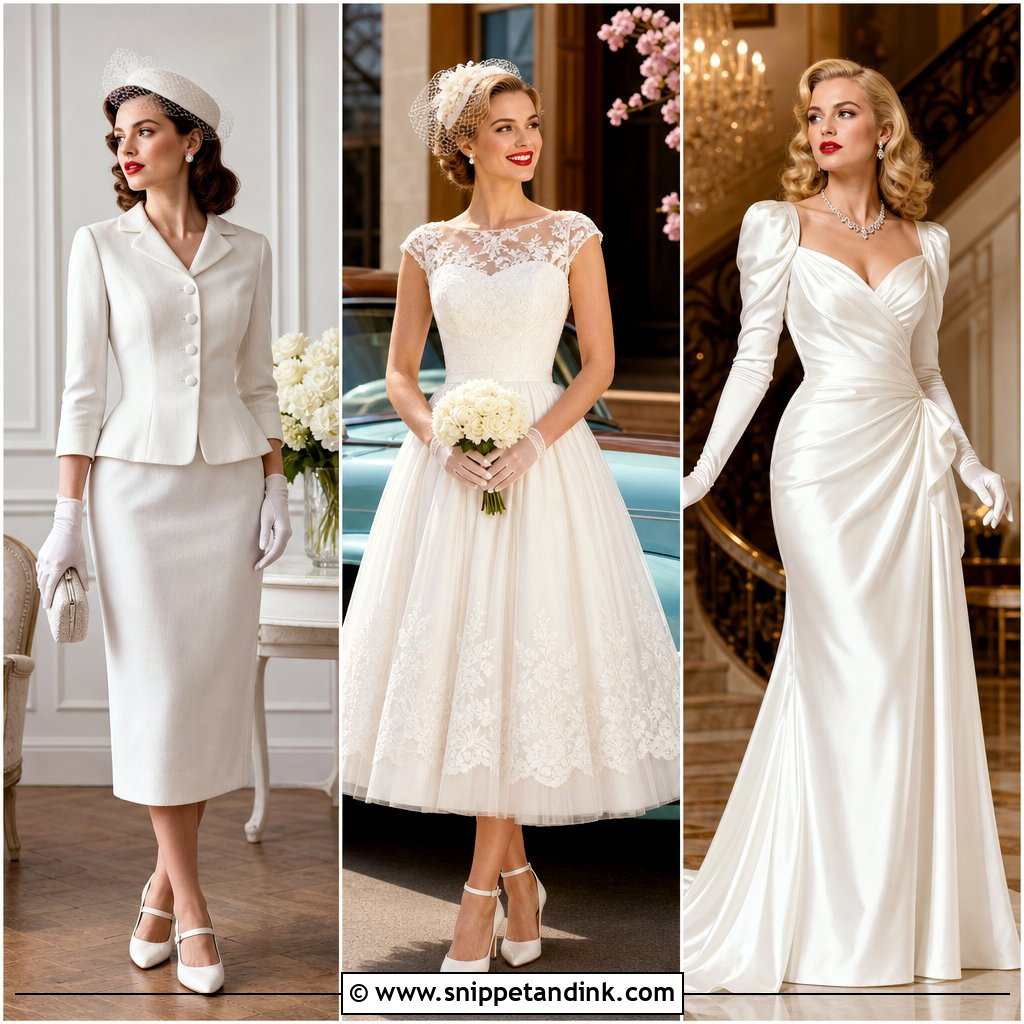
With a 1930s silk slip bride dress, everything depends on the cloth and the cut. Silk charmeuse or satin cut on the bias drapes over the body, and a cowl neck or low back gives the only decoration it needs. Bias silk marks easily with water and perspiration, so I keep a dry tissue handy rather than wiping anything. Satin sandals, pearl drops, a fingertip veil and a sleek bun, soft waves or a deep side part suit it. A feather-trimmed wrap or sheer cape adds coverage for the ceremony.
3. 1940s Satin Bride Dress
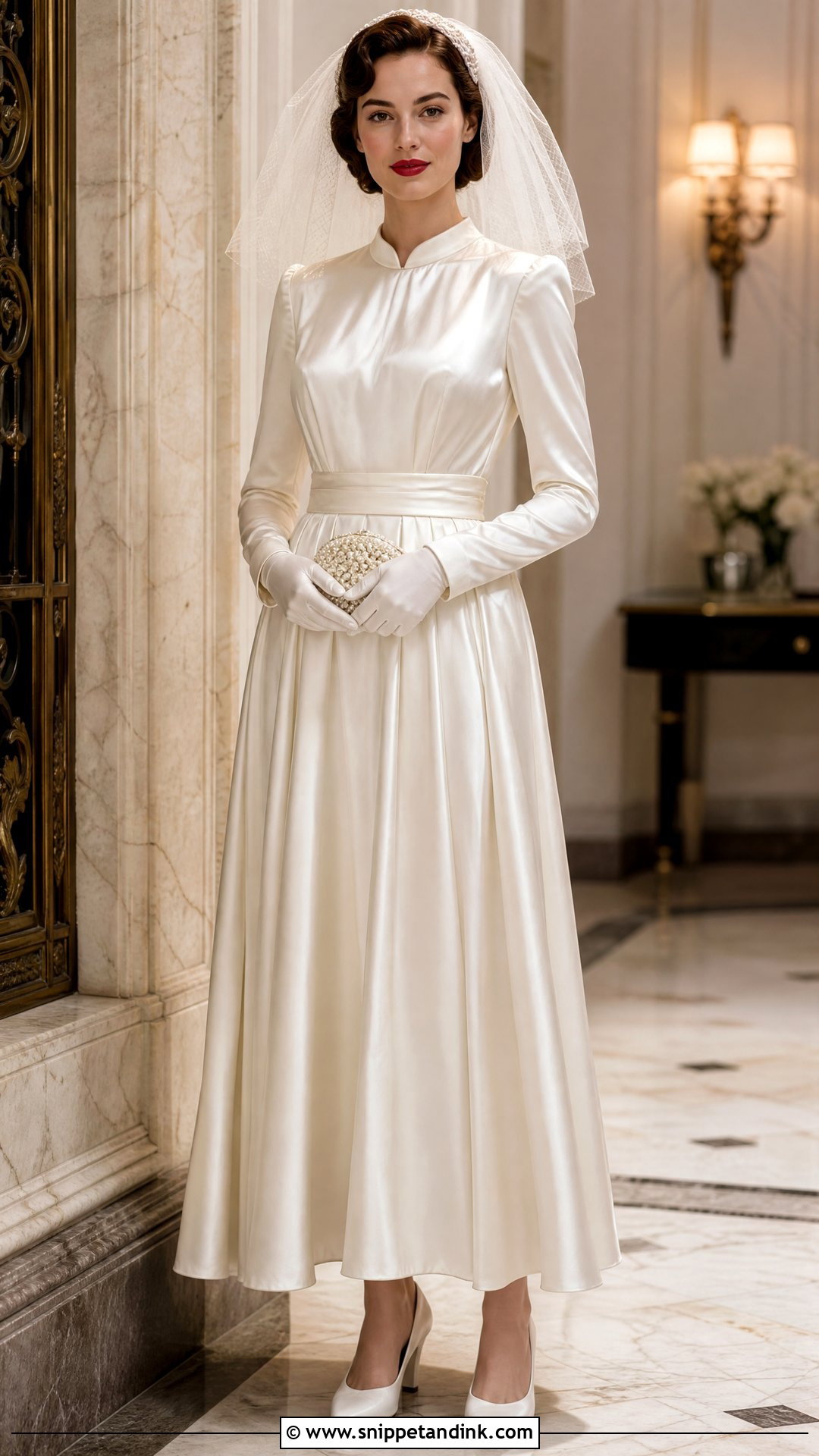
A 1940s satin bride dress is restrained and tailored: long sleeves, a defined waist, a high neck and gentle gathers at the bodice. Wartime gowns were often cut from limited fabric, which is why the shape feels so economical and neat. Heavy satin holds those gathers best. Closed-toe pumps, a small pearl clutch and a short veil or hat-style headpiece complete it, and a red lip is a classic choice if the rest of the face stays fresh. Courthouse, hotel or family ceremonies suit it.
4. 1950s Tea Length Bride Dress
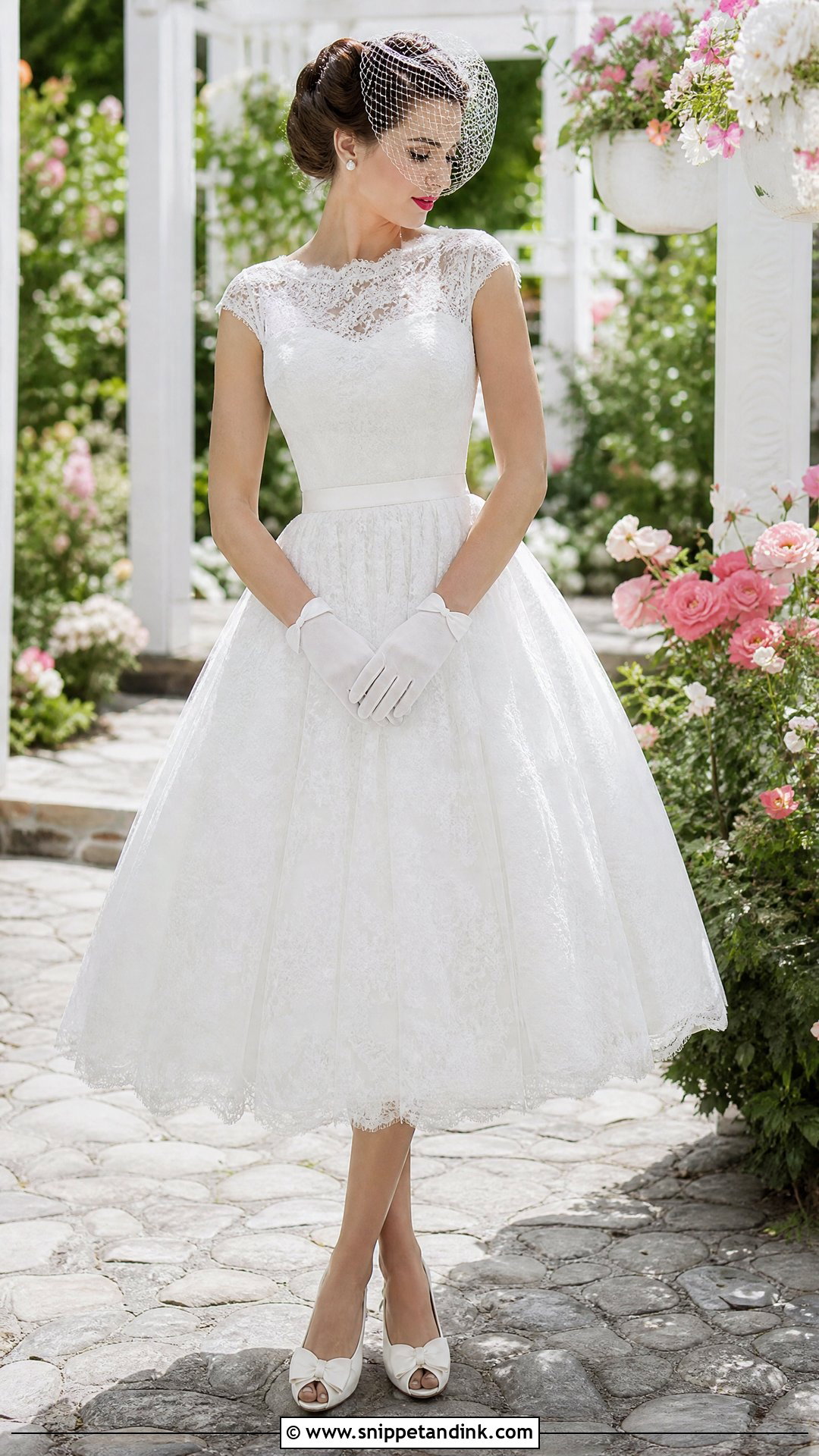
Tea length is the decade’s gift to brides who like to dance. A fitted bodice over a full skirt gives the classic 1950s shape, and lace, tulle or satin changes the mood from sweet to polished. The full skirt needs a petticoat to hold its shape; without one it collapses and looks like a day dress. Because the hem shows your feet, the shoes matter: ivory pumps, bow heels or Mary Janes. Short gloves, pearl studs and a birdcage veil finish it for a garden party or city hall ceremony.
5. 1960s Mini Bride Dress
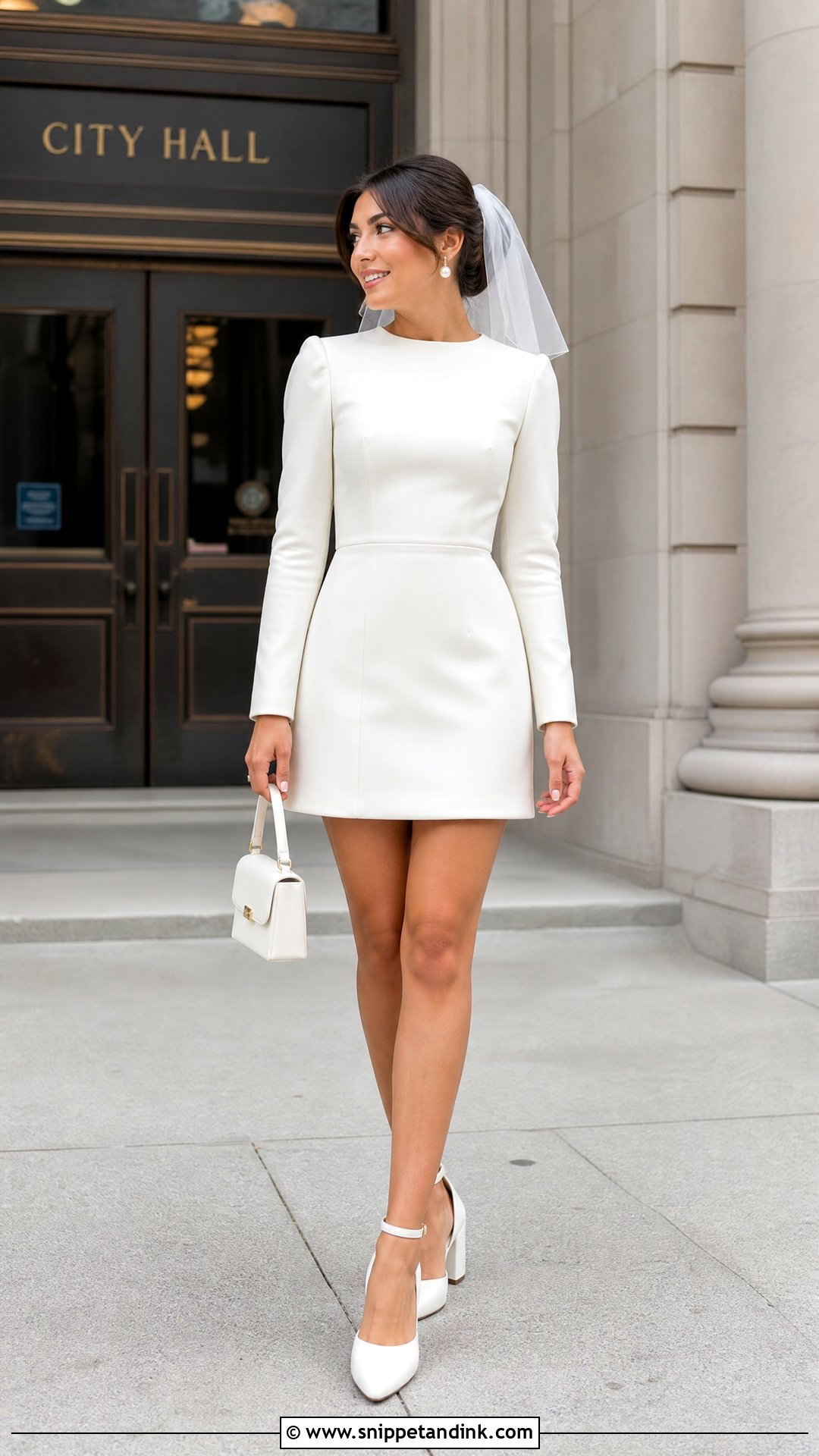
A 1960s mini bride dress works for a civil ceremony, a relaxed reception or as a second look. Clean lines, a high neck, long sleeves and a hem above the knee define it. Structure is what keeps a mini bridal: textured crepe, lace or a firm satin holds the A-line shape, while soft jersey looks like everyday wear. Sit down in it at the fitting to check the hem length. Block heels, sheer tights if you like, pearl earrings and a short veil or padded headband suit it, with a small bouquet and neat bag.
6. 1970s Lace Sleeve Bride Dress
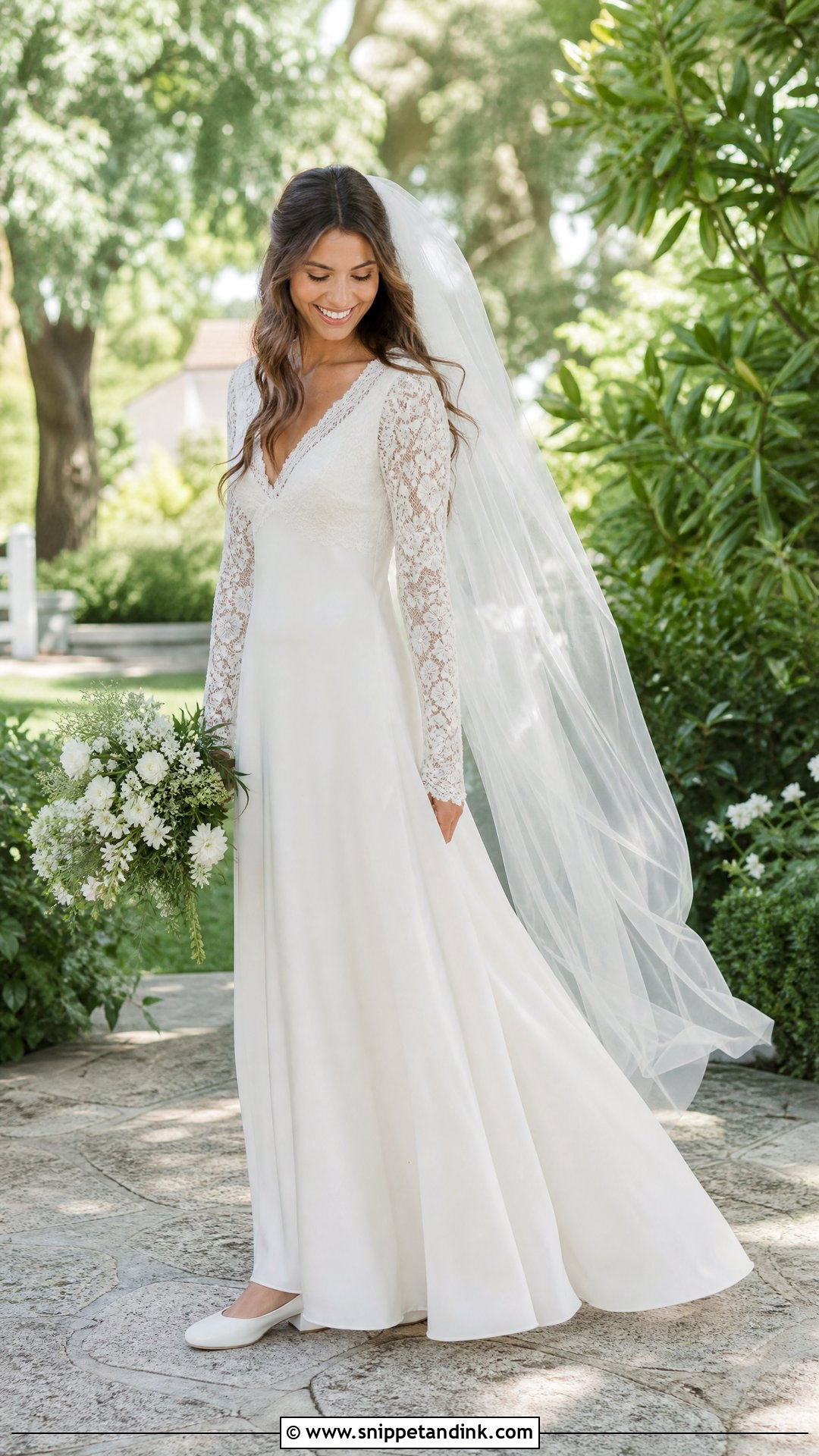
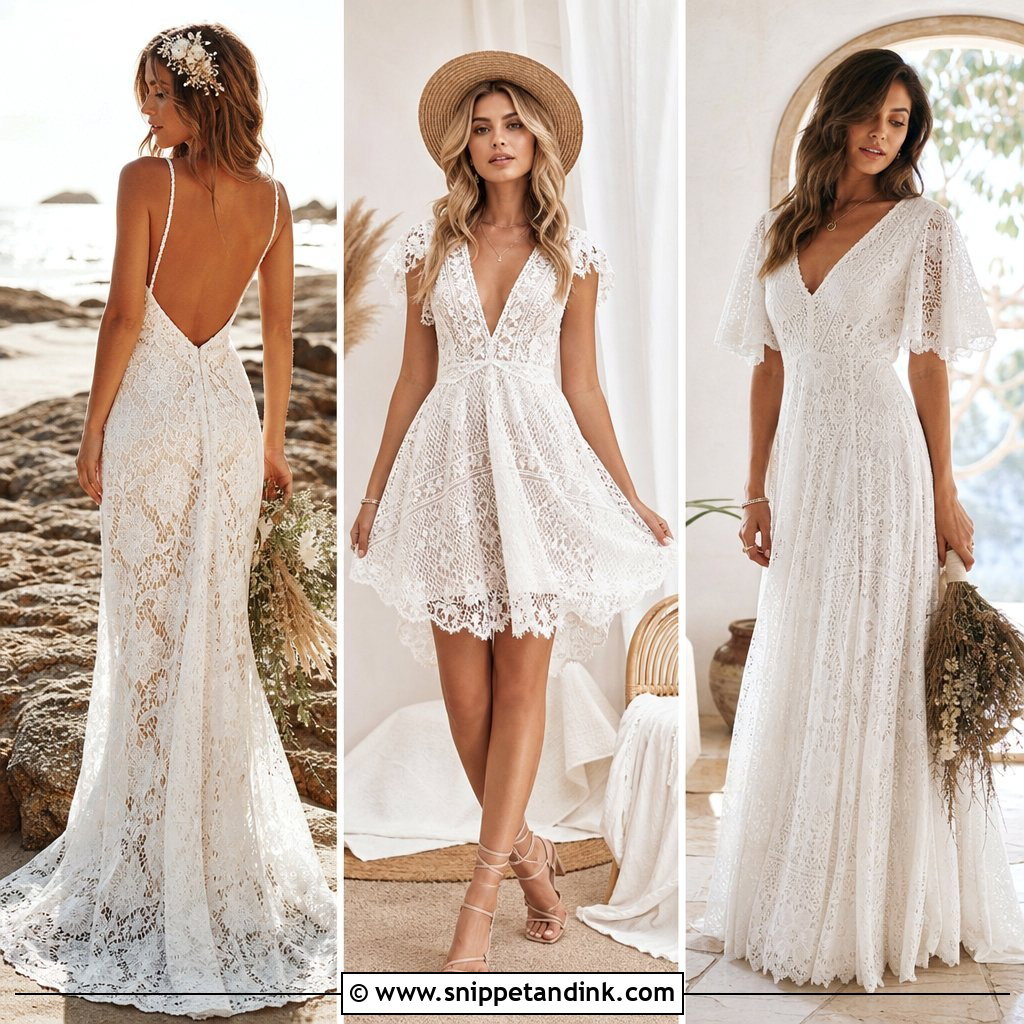
The 70s lace sleeve dress is made for the outdoors. Long lace sleeves, a high or square neck, a fitted waist and a flowing skirt, with cotton lace, crochet details or gentle ruffles, give the mood. Cotton lace is cooler than the nylon laces used in many modern gowns, which matters on a warm afternoon. Low block heels, loose waves and a long veil that moves in the breeze suit it. Keep jewelry to small pearls or gold hoops. It’s at home in a garden, the countryside or a relaxed estate.
7. Edwardian High Neck Bride Dress
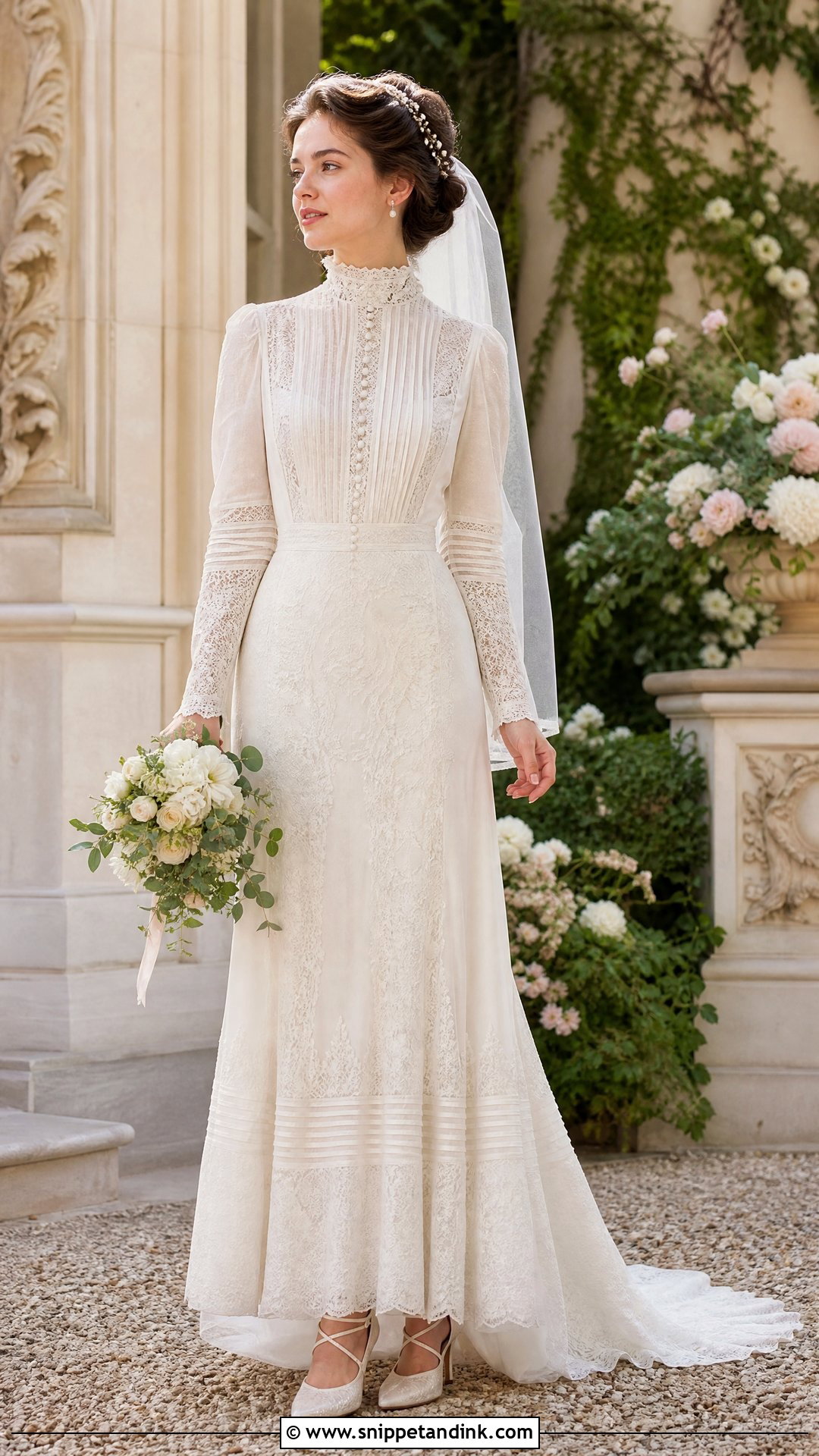
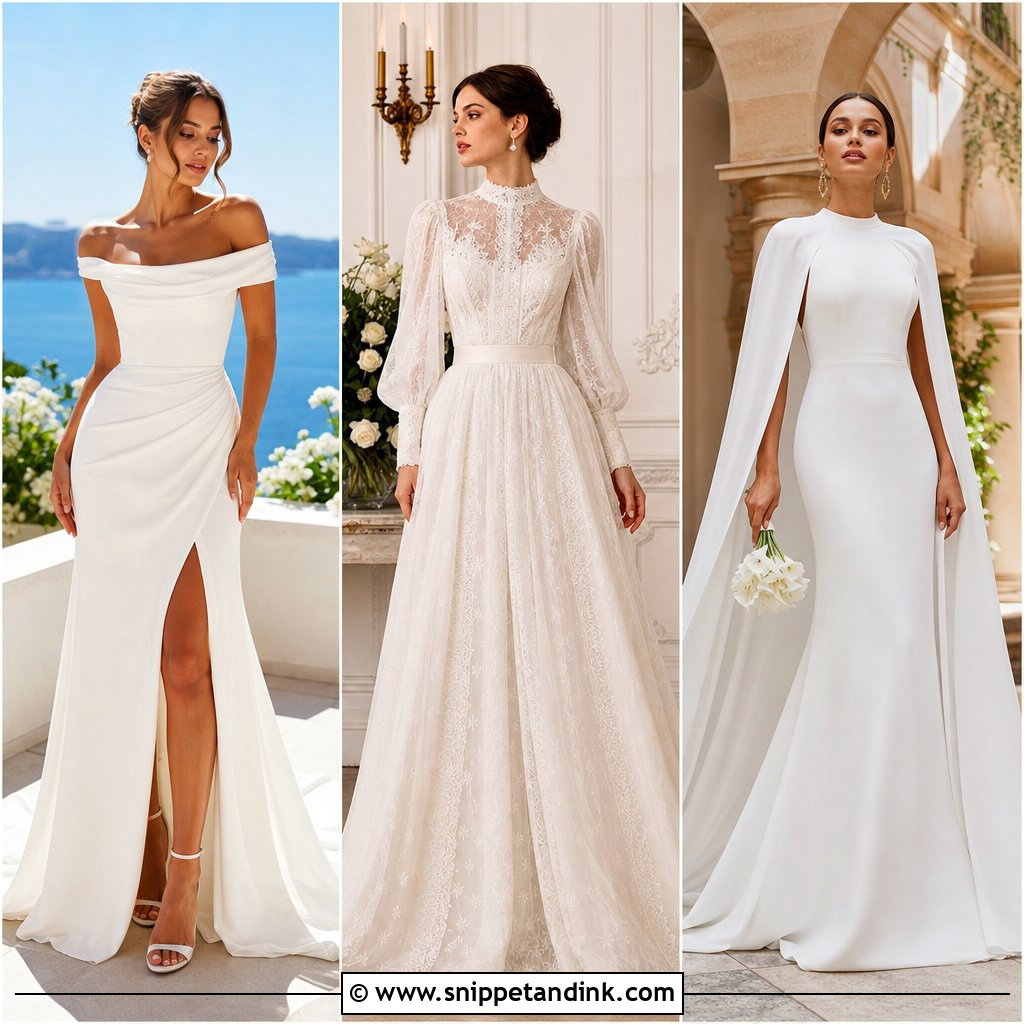
Edwardian gowns are about fine handwork: lace panels, pintucks, covered buttons, long sleeves and a softly defined waist. Ivory or warm cream reads more authentic than bright white. Pintucks and fine lace crush easily, so this is a dress to steam gently on the morning and never iron. Lace-up heels, a low bun, pearl pins and a simple veil at the crown suit it. The neckline is already detailed, so skip the necklace. Historic houses and gardens suit it, and it gives coverage that still looks soft.
8. Victorian Corset Bride Dress
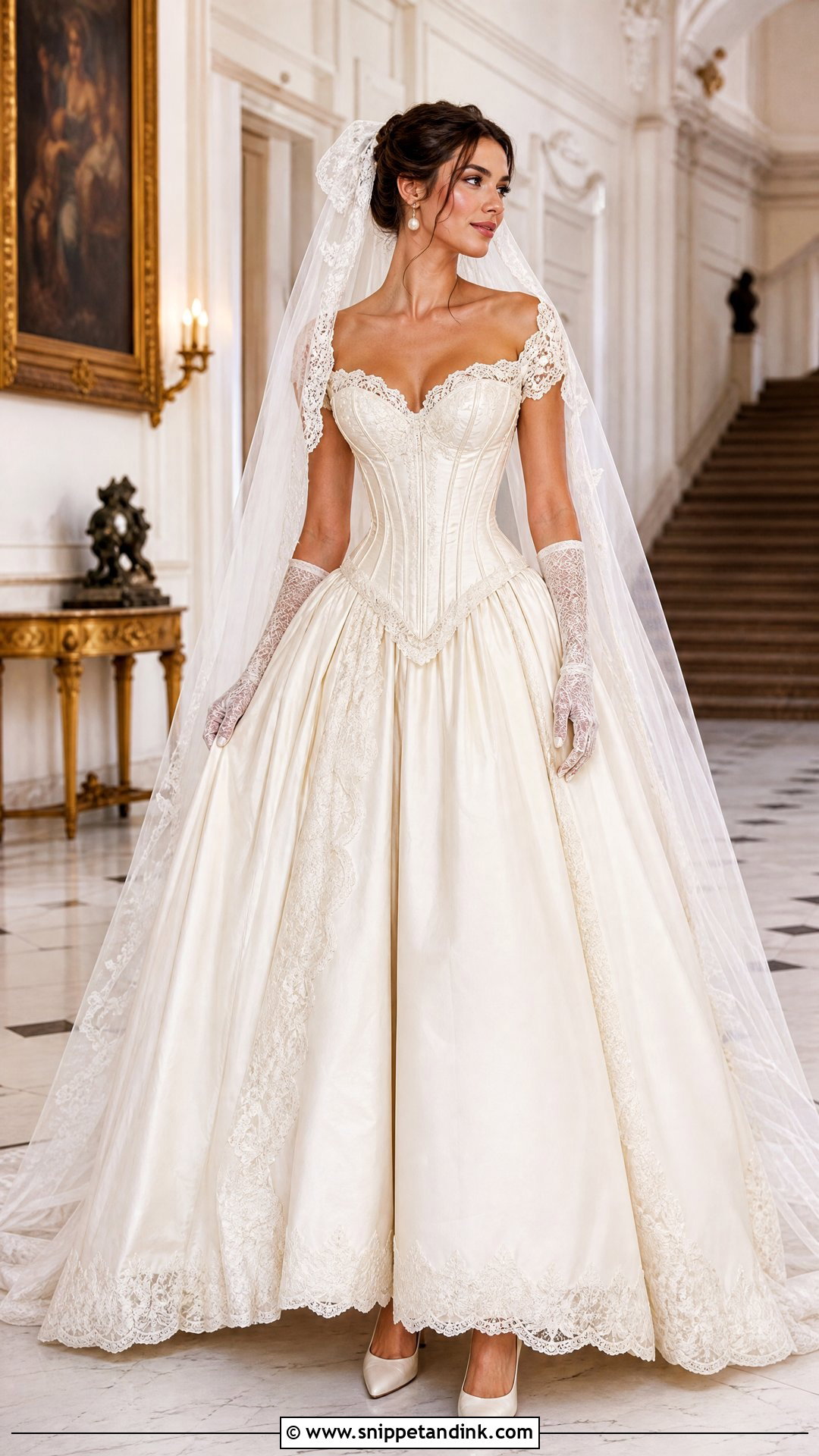
A corseted Victorian gown gives you a strong waist and real volume. Choose a corset-style waist with lace trim, puff sleeves or a full skirt that stays balanced. Modern construction matters here: boning placed in the right channels and a waist stay take the strain so the laces don’t. At fittings I ask brides to sit and breathe deeply; if either is hard, it needs adjusting. A long veil, lace gloves, pearl earrings and ivory heels complete it, with white roses or soft greenery. Estates and formal ceremonies suit it best.
9. Drop Waist Bride Dress
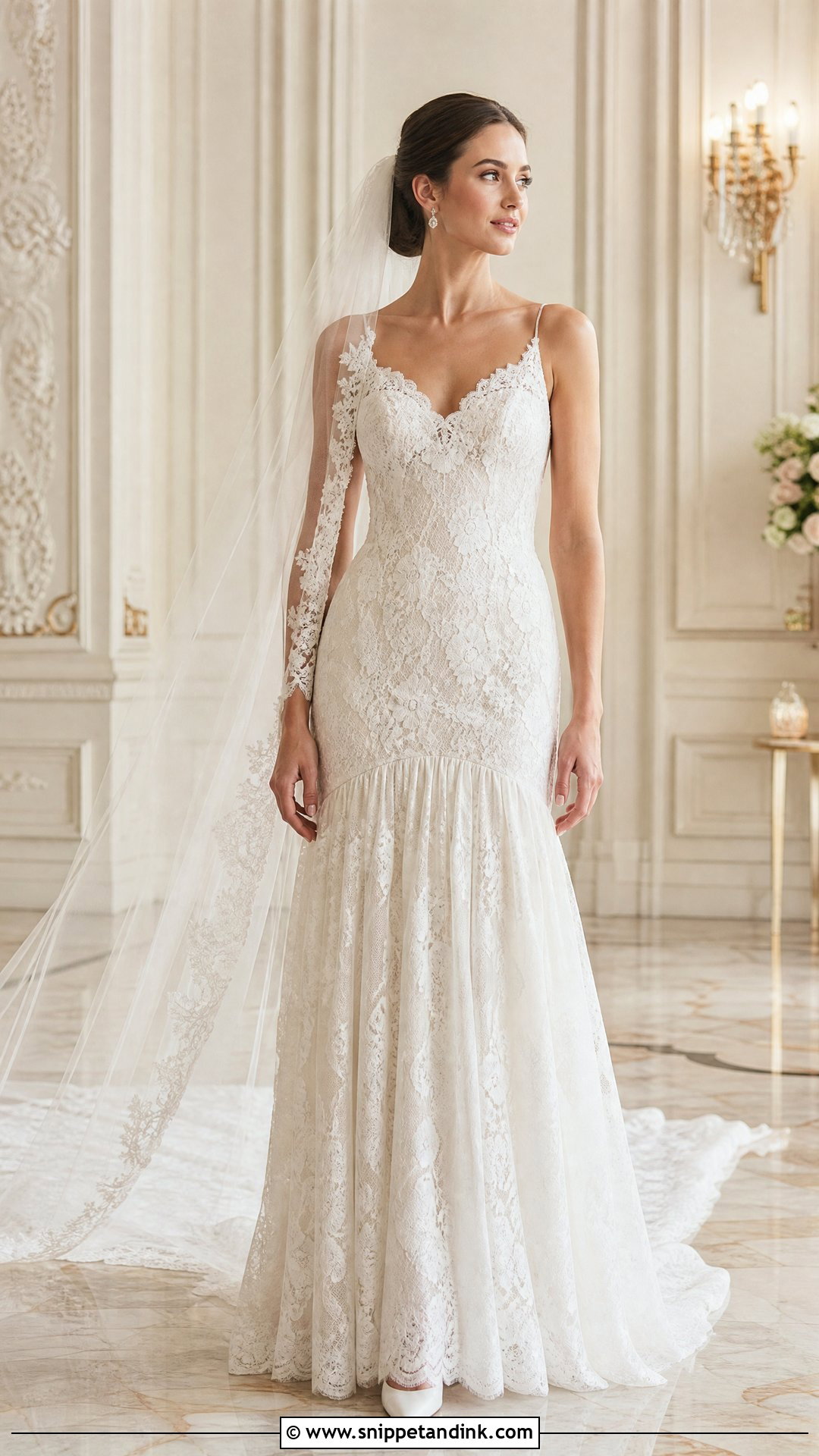
A dropped waist sits low on the hips and lengthens the torso, which is why it feels both old-world and fashion-forward. Lace, satin, tulle or beading all suit it. Fit is everything here: if the seam lands at the widest part of your hips, it adds width, so I place it a little above or below that point. Pointed heels, a cathedral veil and delicate earrings keep it clean. It can look striking in a ballroom, in editorial bridal photos or for a bride who wants a fashion-led vintage dress.
10. Basque Waist Bride Dress
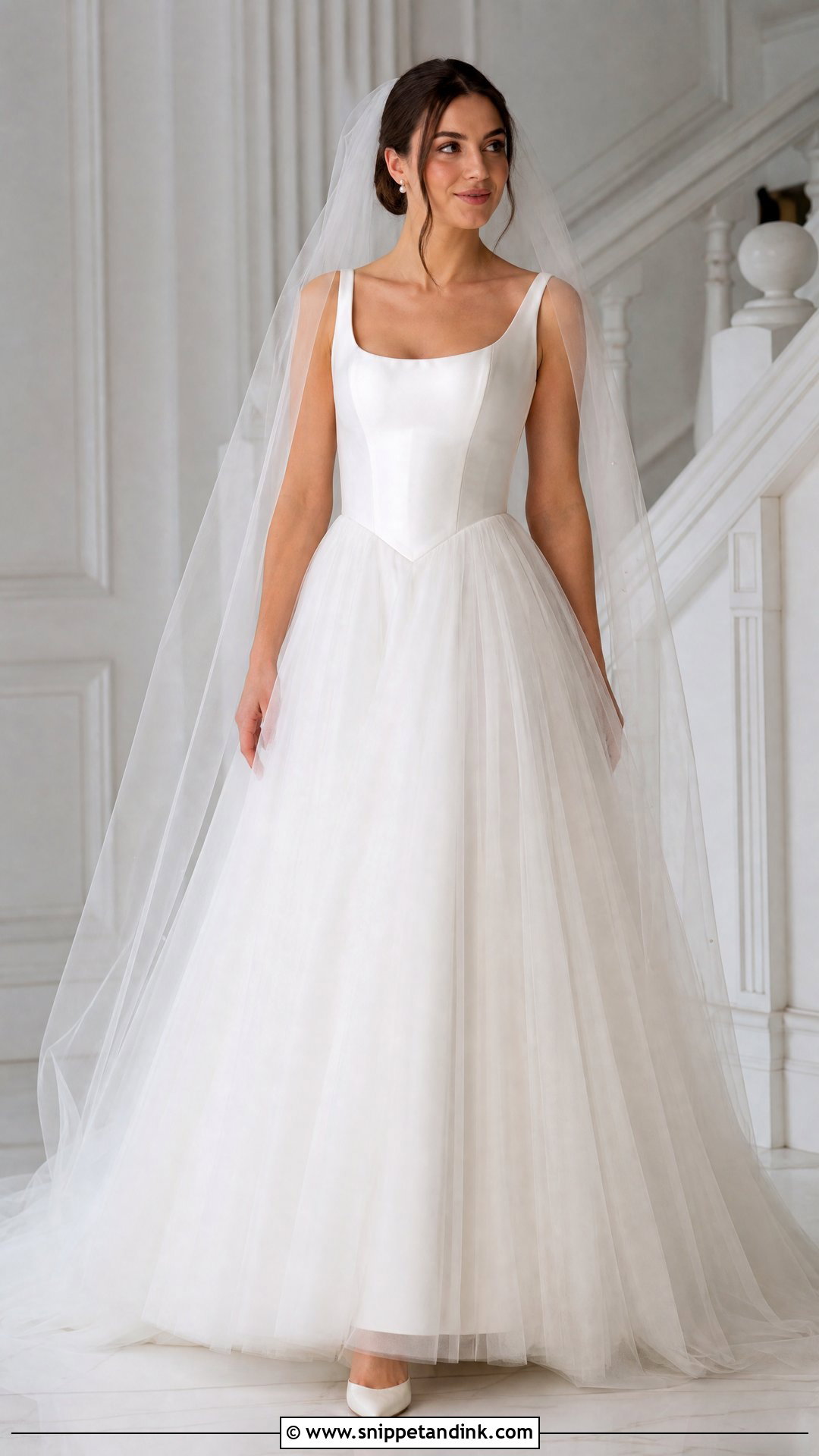
The pointed basque waist dips at the front and visually lengthens the body. It recalls royal and old-world bridal silhouettes but is still widely made today. Satin, mikado, lace or tulle with a structured bodice and full skirt suit it, and it works strapless or with long sleeves. The point must sit flat and centered, so I check it while the bride sits; if it lifts, the front needs more support. A long veil, pearl studs and elegant pumps finish it for a formal venue or a staircase entrance.
11. Juliet Sleeve Bride Dress
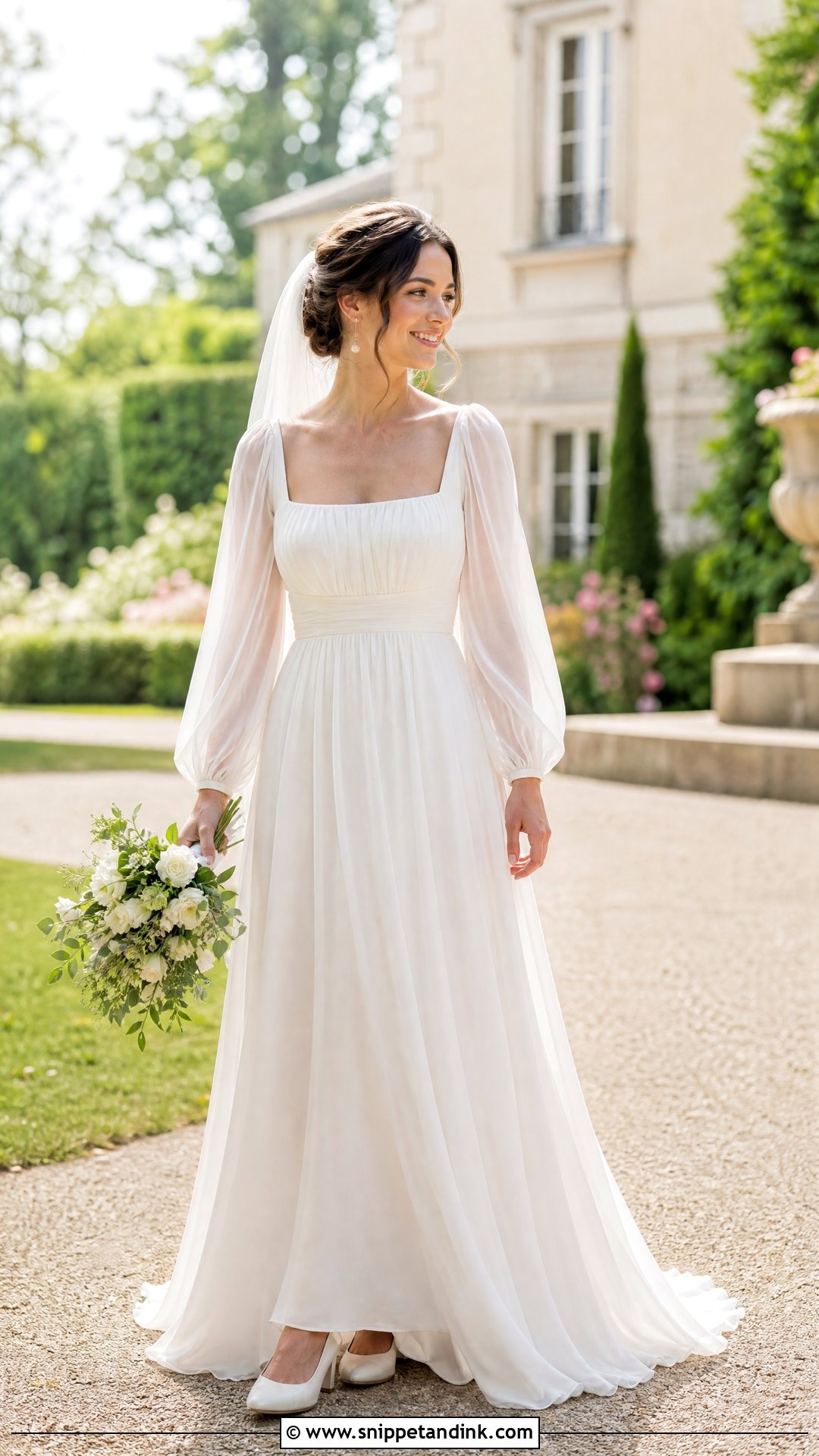
A Juliet sleeve is full at the shoulder and narrows tightly toward the wrist. It suits chiffon, lace, satin or crepe. The fitted lower sleeve is the part I check: it should still let you bend your elbow fully to hold a bouquet or a glass. Keep the veil simple, the heels low and the updo loose so the overall look stays airy, and choose minimal jewelry if the sleeves are dramatic. It suits gardens, historic estates and candlelit ceremonies without needing heavy embellishment.
12. Puff Sleeve Bride Dress
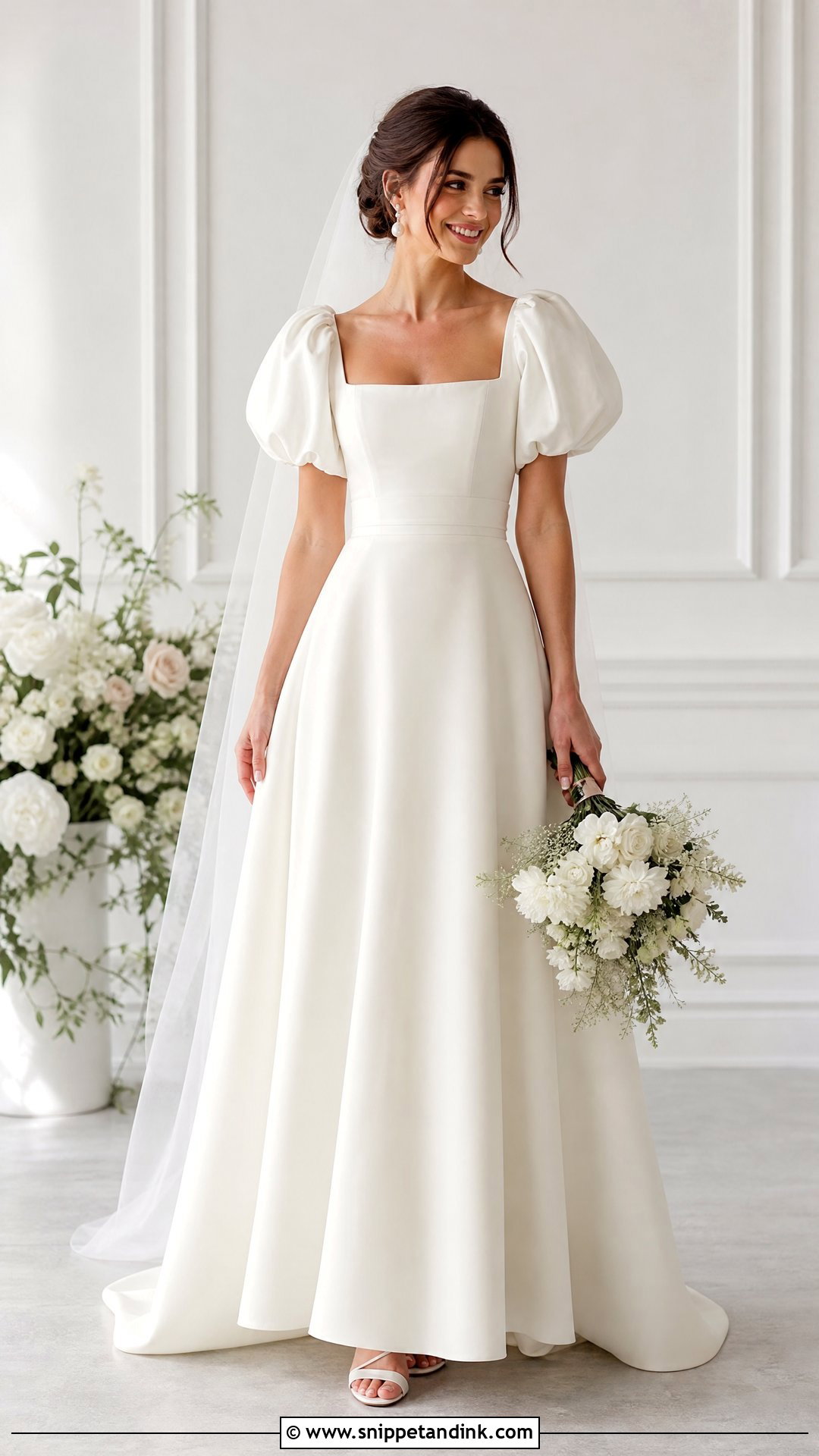
Sleeve size should match your frame and the room. Small puffs look sweet; large ones are dramatic and can overwhelm a petite bride in a small venue. A square neckline, fitted waist and soft skirt balance the shape. Puff sleeves hold their shape with a layer of stiff tulle inside, so ask about it, since cheaper versions deflate after a few hours. Pearl earrings, simple heels and a clean veil suit it, and spring or summer gardens and intimate receptions are where it shines.
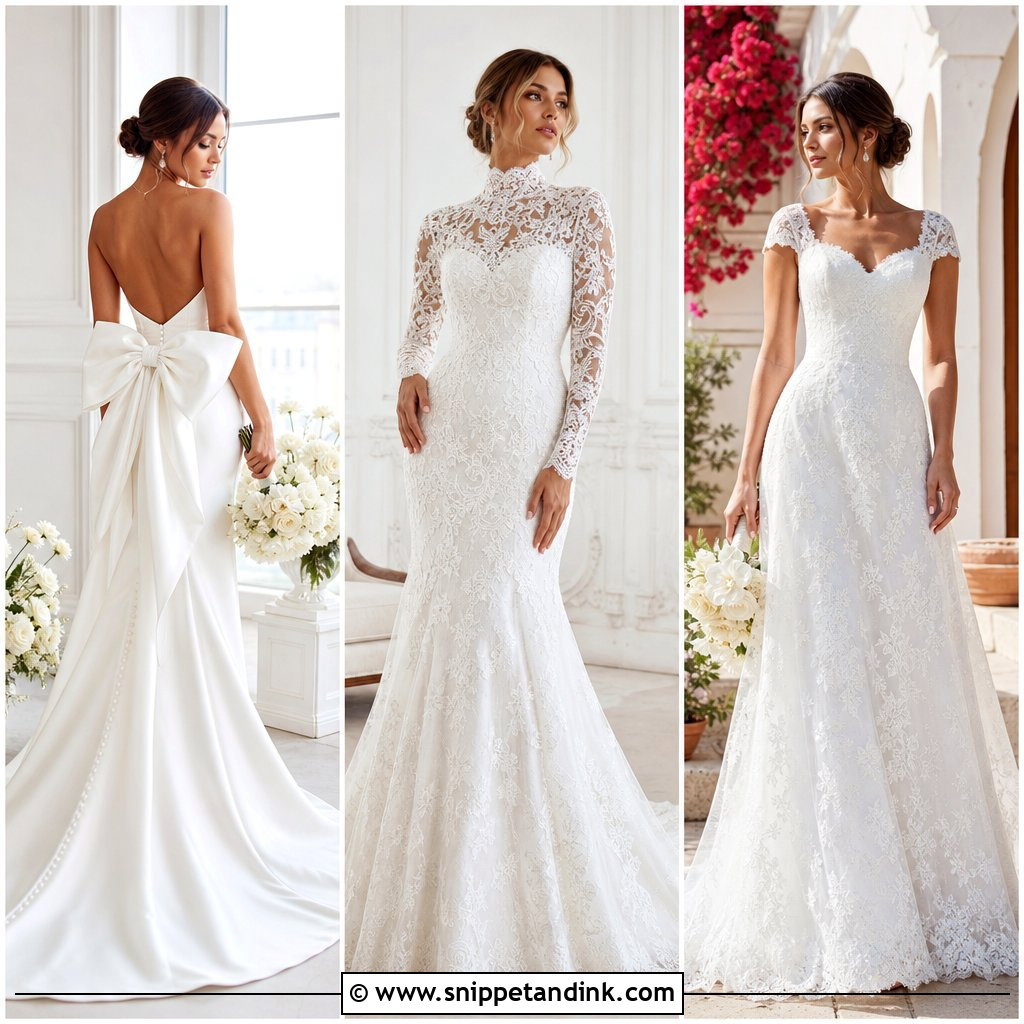
13. Lace Turtleneck Bride Dress
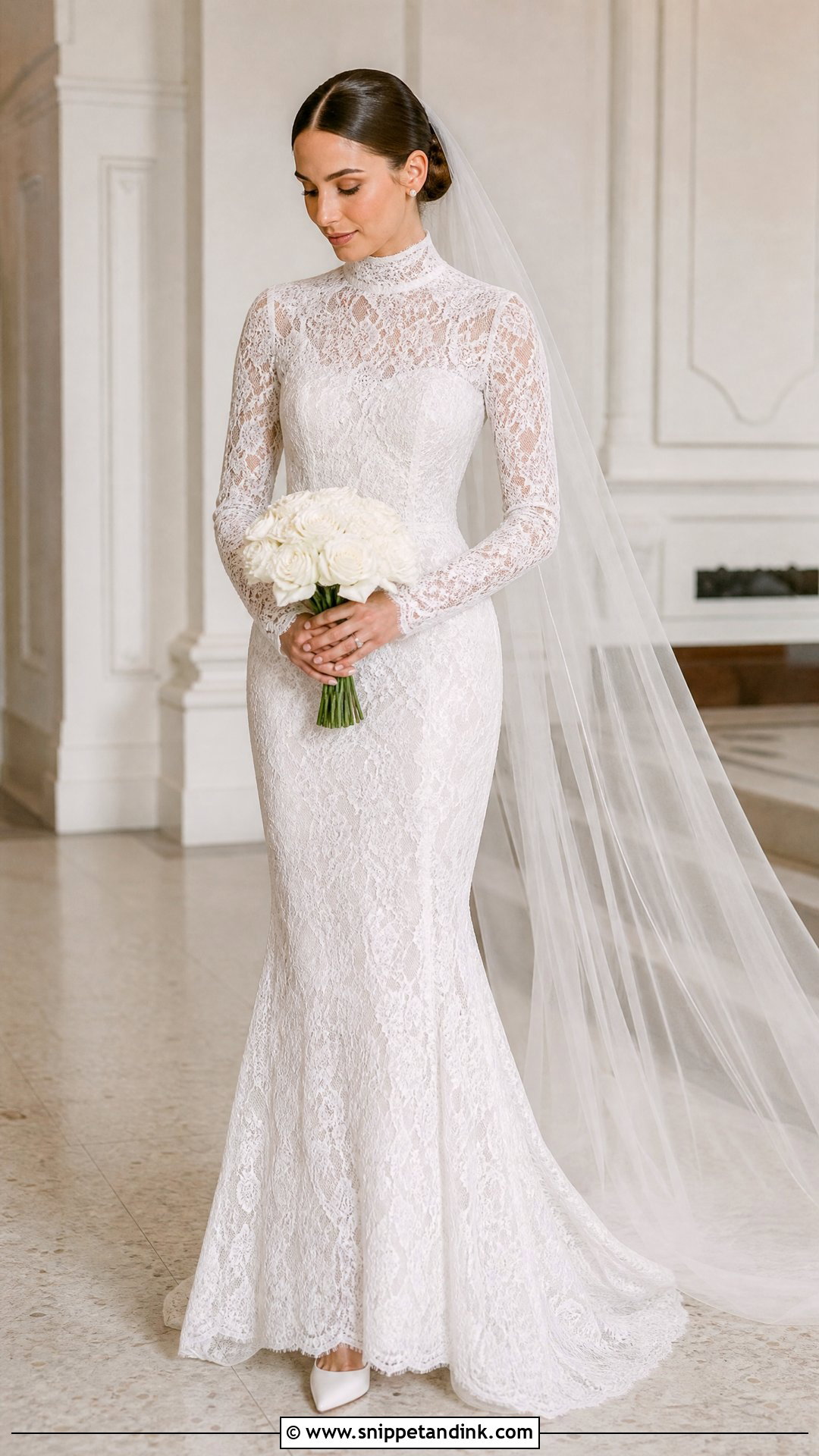
A lace turtleneck covers the neck completely, so lace keeps it soft rather than severe. A fitted column feels sleek; an A-line feels traditional. Lace at the throat can itch, so I ask for a fine silk or mesh lining along the inside of the collar. A low bun, pearl studs and closed-toe heels keep the focus on the neck, and a long veil adds drama without crowding it. It suits cooler weather, formal indoor venues and brides who want full coverage.
14. Long Sleeve Lace Bride Dress
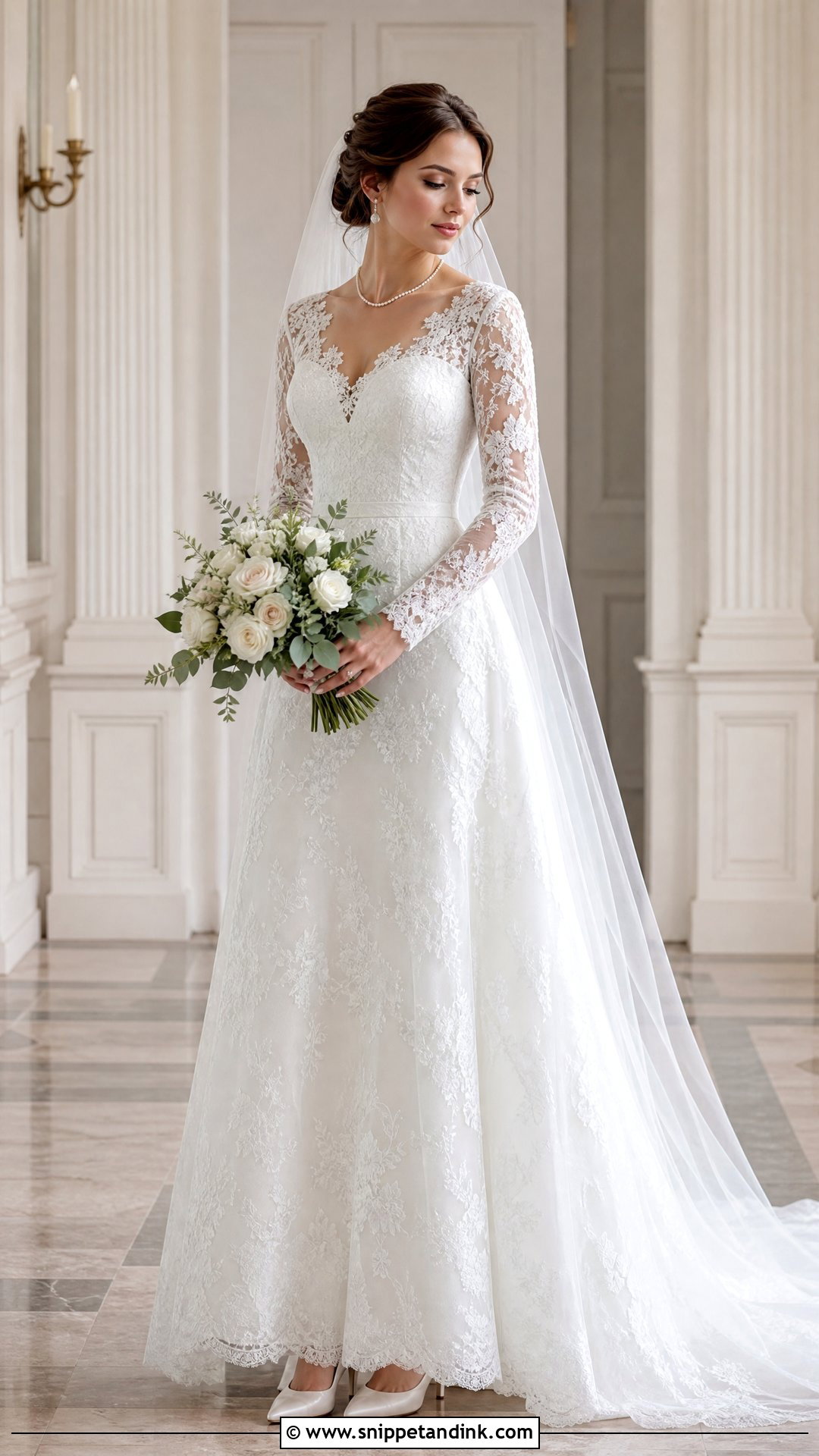
Long lace sleeves can look romantic, modest, regal or bohemian, and the lace pattern decides which. Fitted sleeves with a defined waist and flowing skirt are classic; sheer sleeves in lightweight lace feel softer. Heavier corded lace holds its shape but adds warmth, which I factor in for summer weddings. Satin heels, a fine veil and simple pearl or diamond-style jewelry suit it. Lace already gives texture, so keep the bouquet and accessories clean. It works in any season.

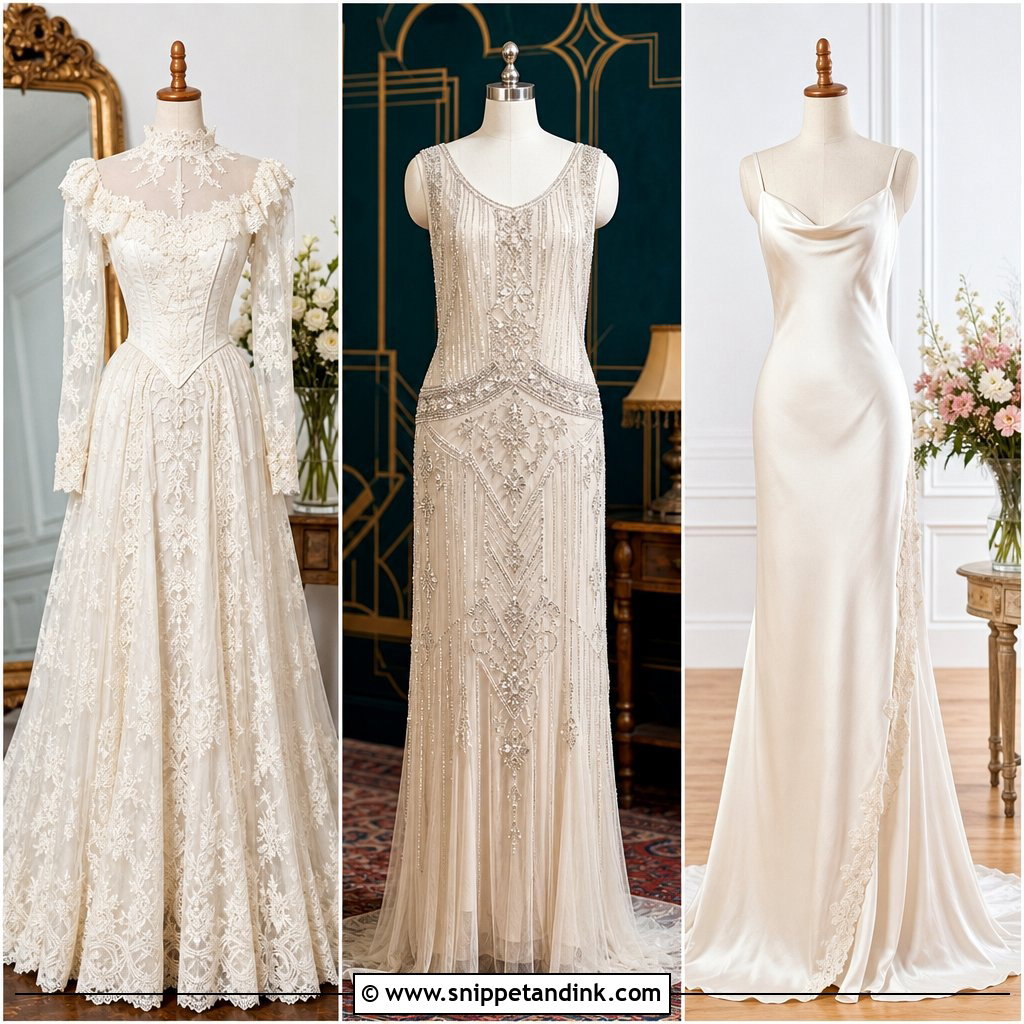

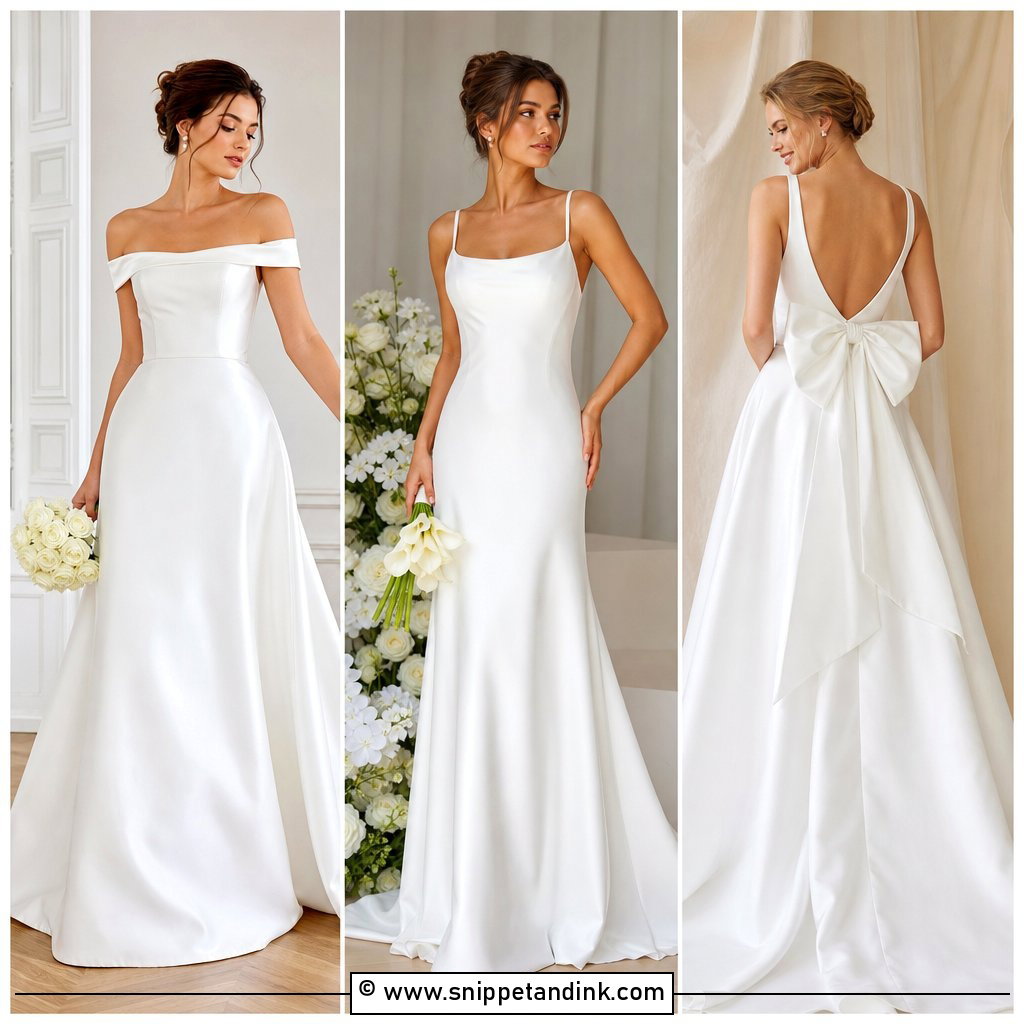
15. Off Shoulder Vintage Bride Dress
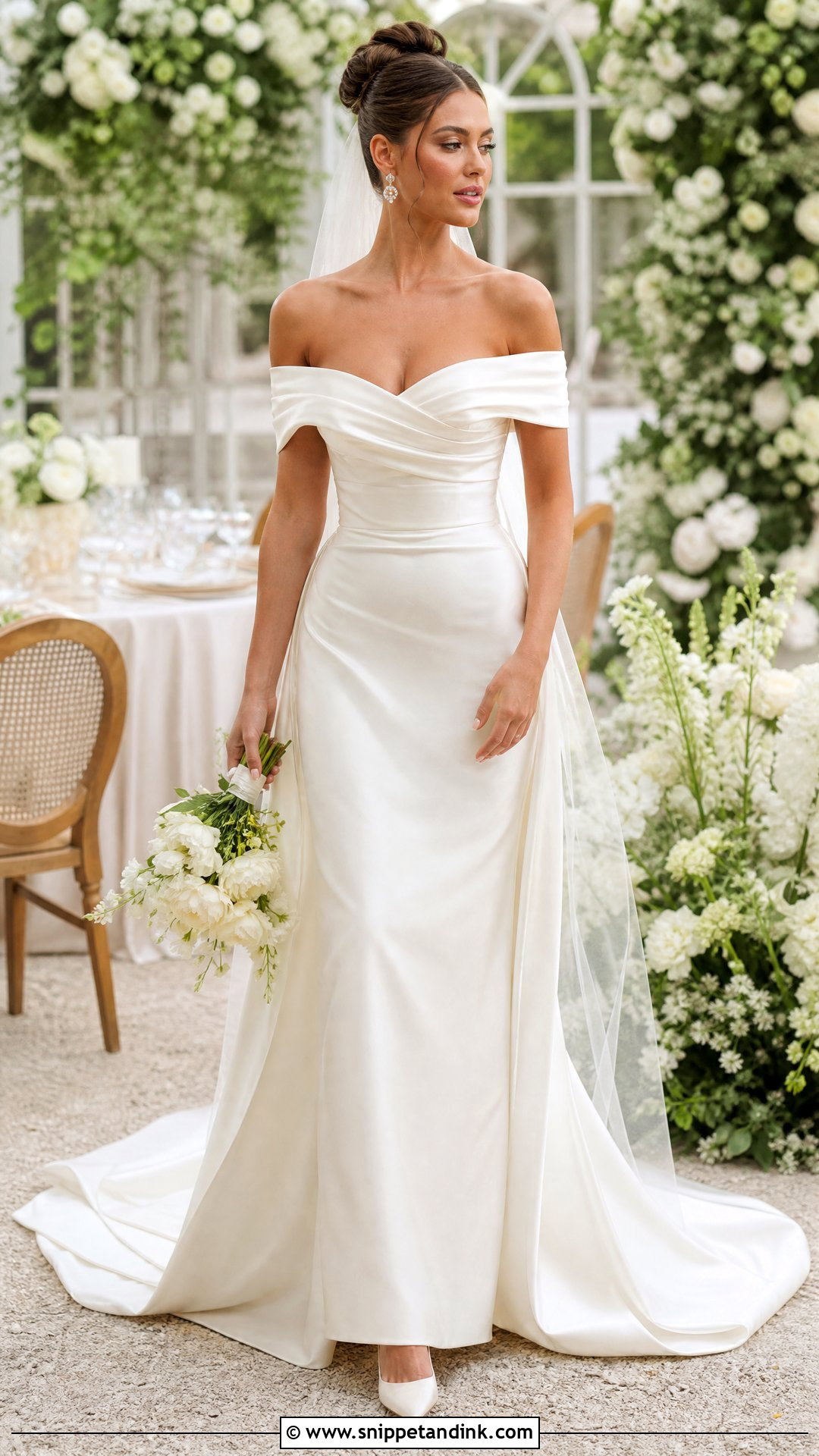
An off-shoulder neckline highlights the collarbone and softens the whole dress. Satin, lace, tulle or crepe all suit it, with a fitted bodice and full skirt for a classic look or a slim silhouette for old Hollywood. Lifting your arms is the test: if the neckline rises off your shoulders, it needs a firmer inner bodice or silicone tape. Small earrings or a delicate pendant, pointed heels, a smooth veil and a polished hairstyle finish it for formal ceremonies, gardens or indoor receptions.
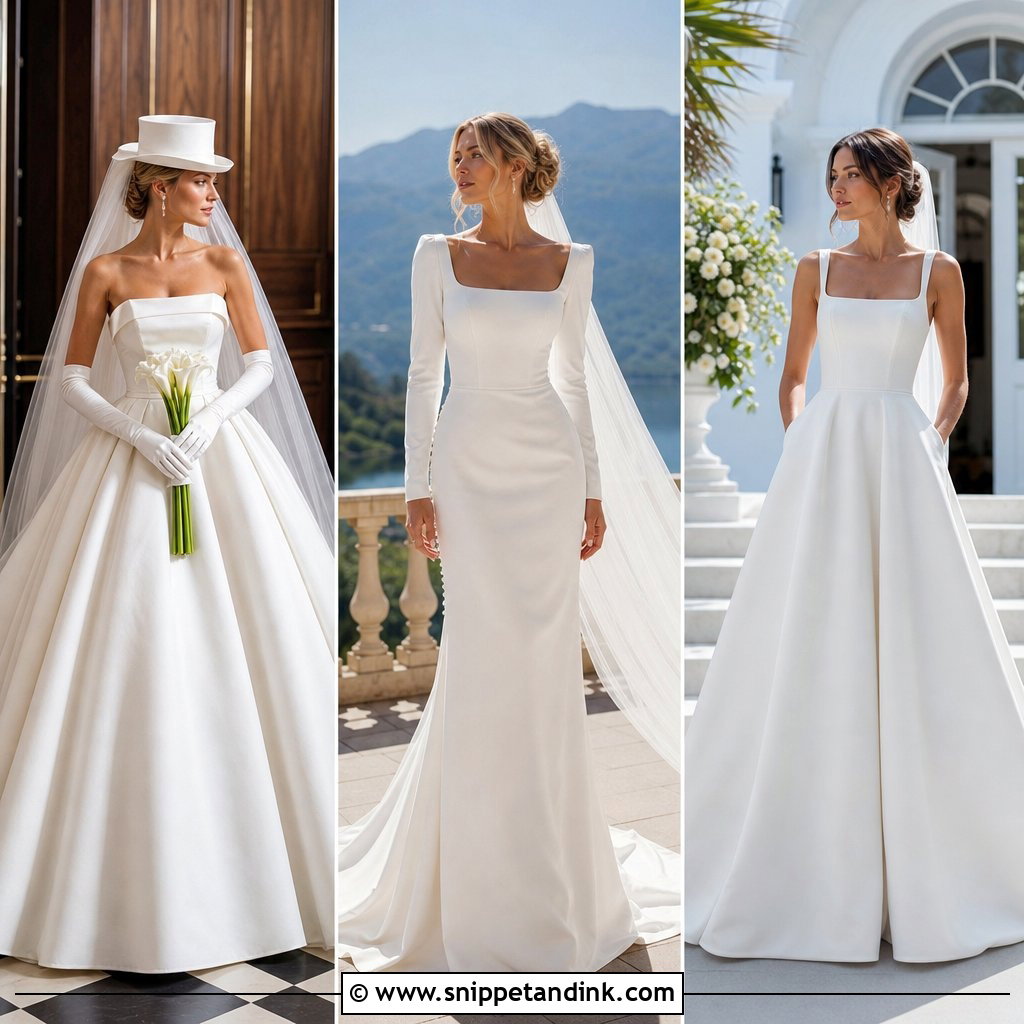
16. Square Neck Bride Dress
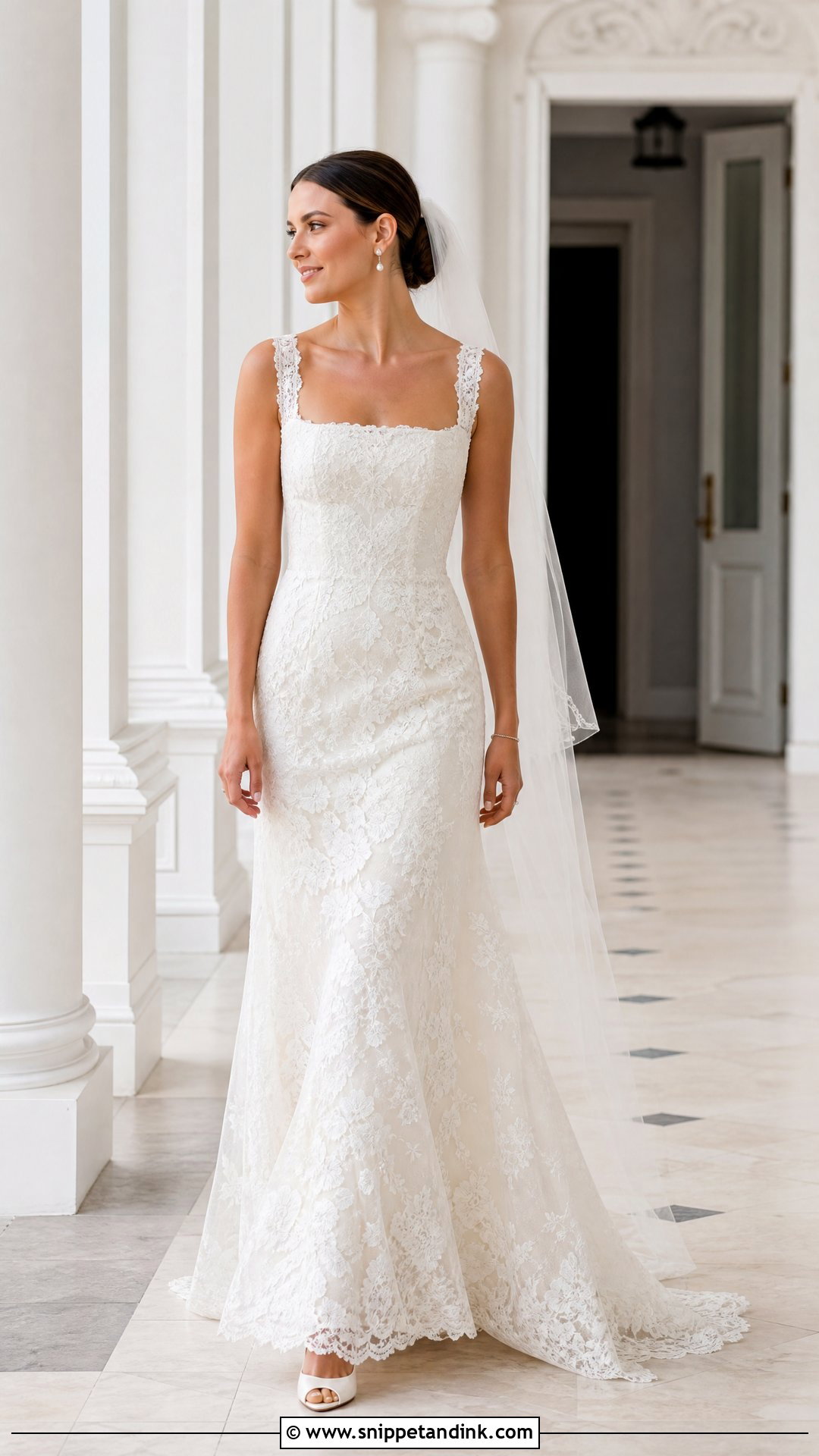
A square neckline gives structure without severity, which is why it suits many body types. Lace looks romantic, satin polished and crepe simple. It pairs with puff sleeves, long sleeves or wide straps. Wider straps also mean a regular bra often works, which makes the day easier. Pearl earrings, a low veil and classic ivory heels finish it; skip the necklace so the line stays crisp. It photographs well in gardens, estates and small ceremonies.
17. Peter Pan Collar Bride Dress
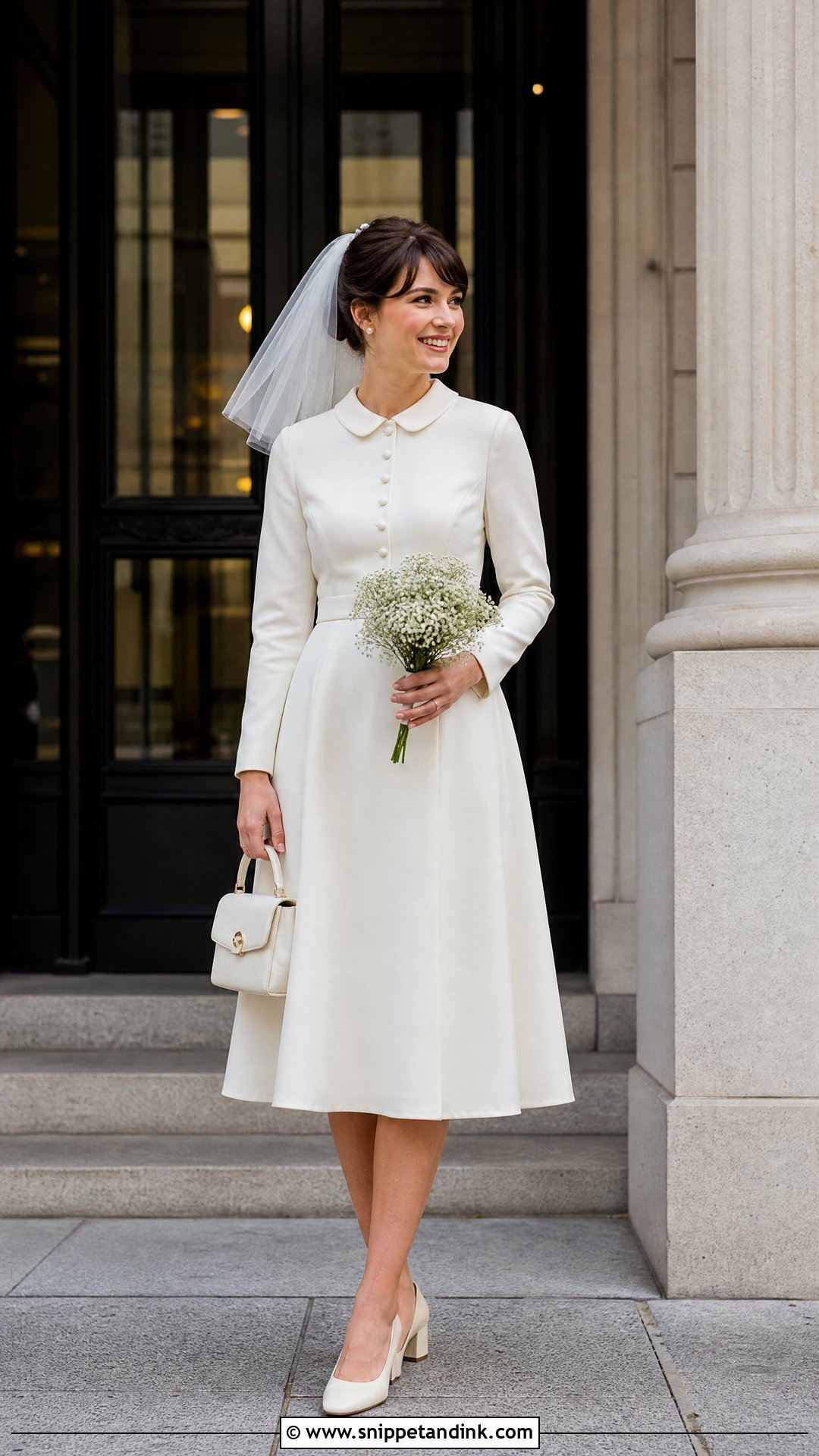
A Peter Pan collar bride dress has a sweet, rounded collar that suits civil ceremonies and daytime weddings. A mini, midi or tea-length shape in lace, crepe or satin all work. The risk is looking young rather than bridal, so I keep the fabric refined and the fit precise, especially through the shoulders. Block heels, pearl studs, a small veil and a structured bag finish it. It’s a modest, practical choice for a smaller wedding.
18. Vintage Ball Gown Bride Dress
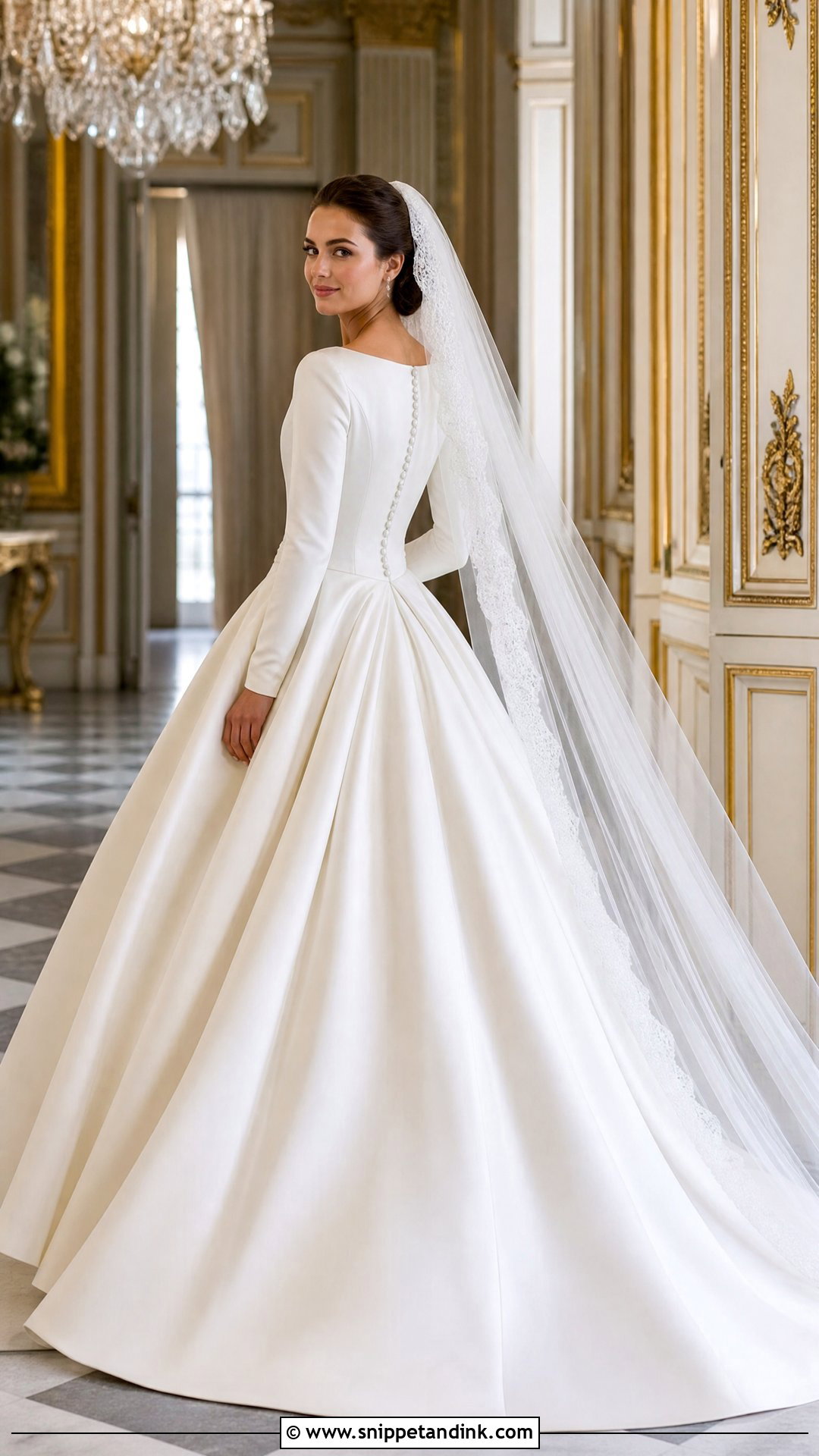
A vintage ball gown is about the entrance. A fitted bodice, full skirt, covered buttons, lace appliqué or satin with a soft sheen give it its character. If the skirt is large, keep the neckline and accessories clean. Practicality matters too: check doorways, car doors and the width of the aisle, and plan who will help you into the bathroom. A cathedral veil, elegant pumps, simple earrings and a structured bouquet suit ballrooms, historic hotels and large ceremonies.
19. Vintage A Line Bride Dress
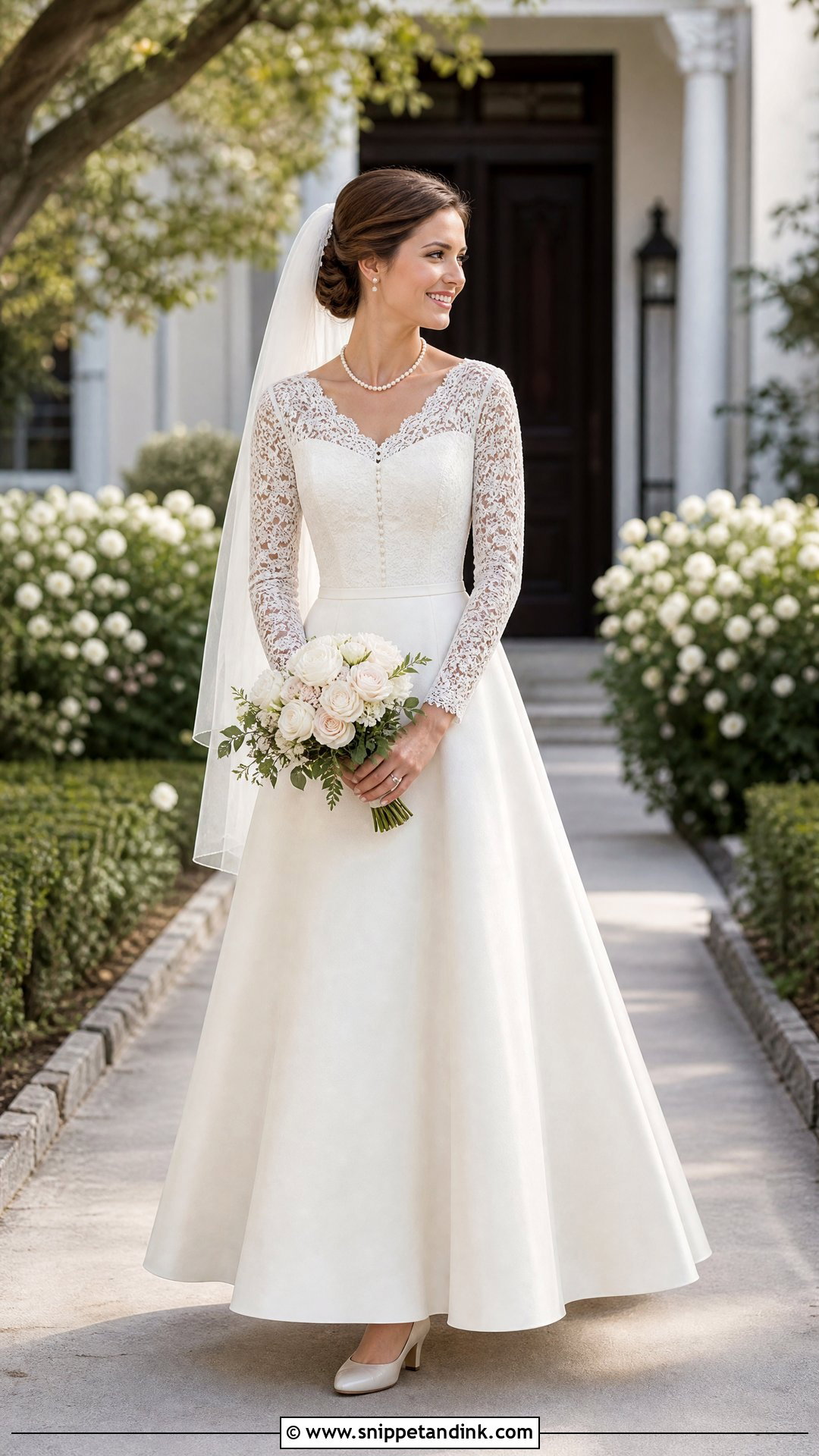
The A-line is the dependable shape in any era. It fits through the bodice and widens gently from the waist, giving shape without much volume. Lace sleeves, satin, covered buttons or a sweetheart neck bring the vintage feel. It’s the shape I recommend to brides with a long day of standing, walking and dancing, because nothing restricts the legs. Comfortable heels, a classic veil and soft jewelry finish it for gardens, estates, hotels and simple indoor venues.




20. Vintage Mermaid Bride Dress
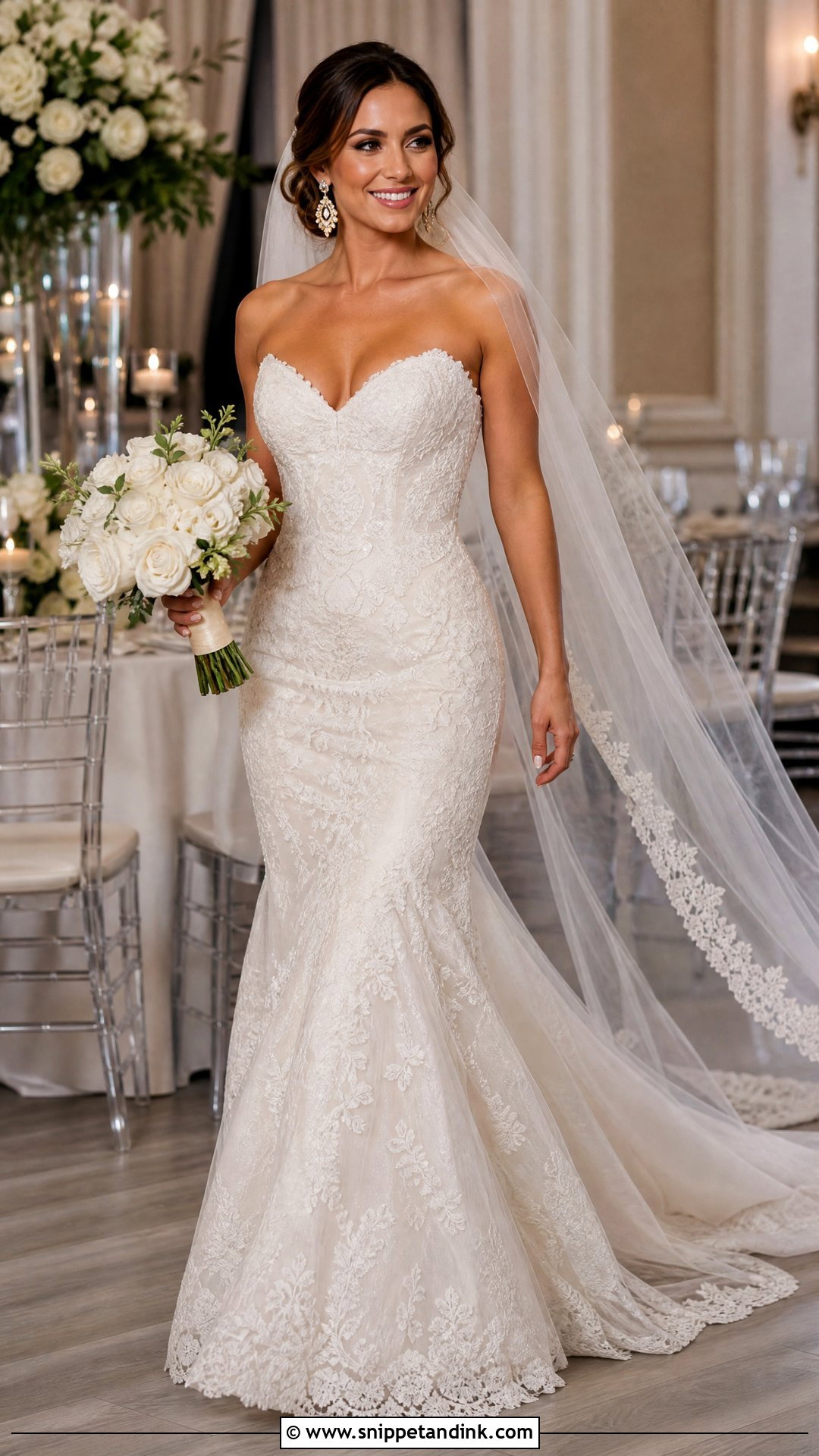
A mermaid hugs the body to the knee and then flares, which gives drama and limits stride. Lace, satin or crepe all work, and the flare point is the decision that matters: lower is more dramatic, higher is easier to walk in. A sweetheart, off-shoulder bodice or long lace sleeves keep it vintage. Sleek heels, a long veil and earrings with some shine finish it. I always have brides climb a step at fittings in this cut. Formal evening venues suit it.
21. Vintage Empire Waist Bride Dress
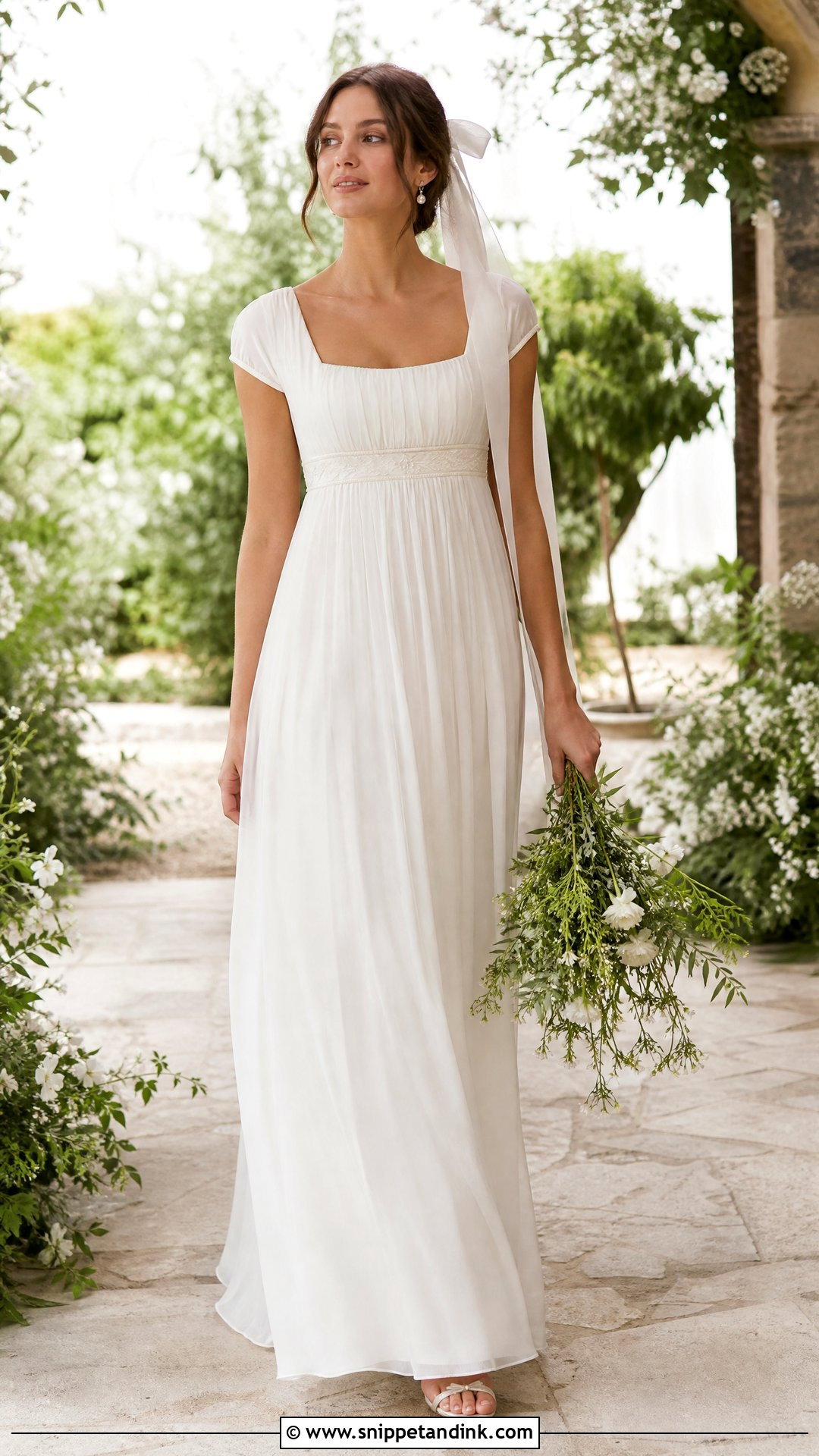
The empire waist sits just under the bust and then falls softly, so it never clings to the waist or hips. That makes it especially comfortable in warm weather. Chiffon, silk, lace or soft tulle give the best movement. A well-fitted bust is essential, or the waist seam slips down. Delicate sandals, a ribbon veil, small pearl earrings and a loose bouquet suit a garden or outdoor wedding. It feels vintage without being heavy or formal.
22. Vintage Crochet Bride Dress
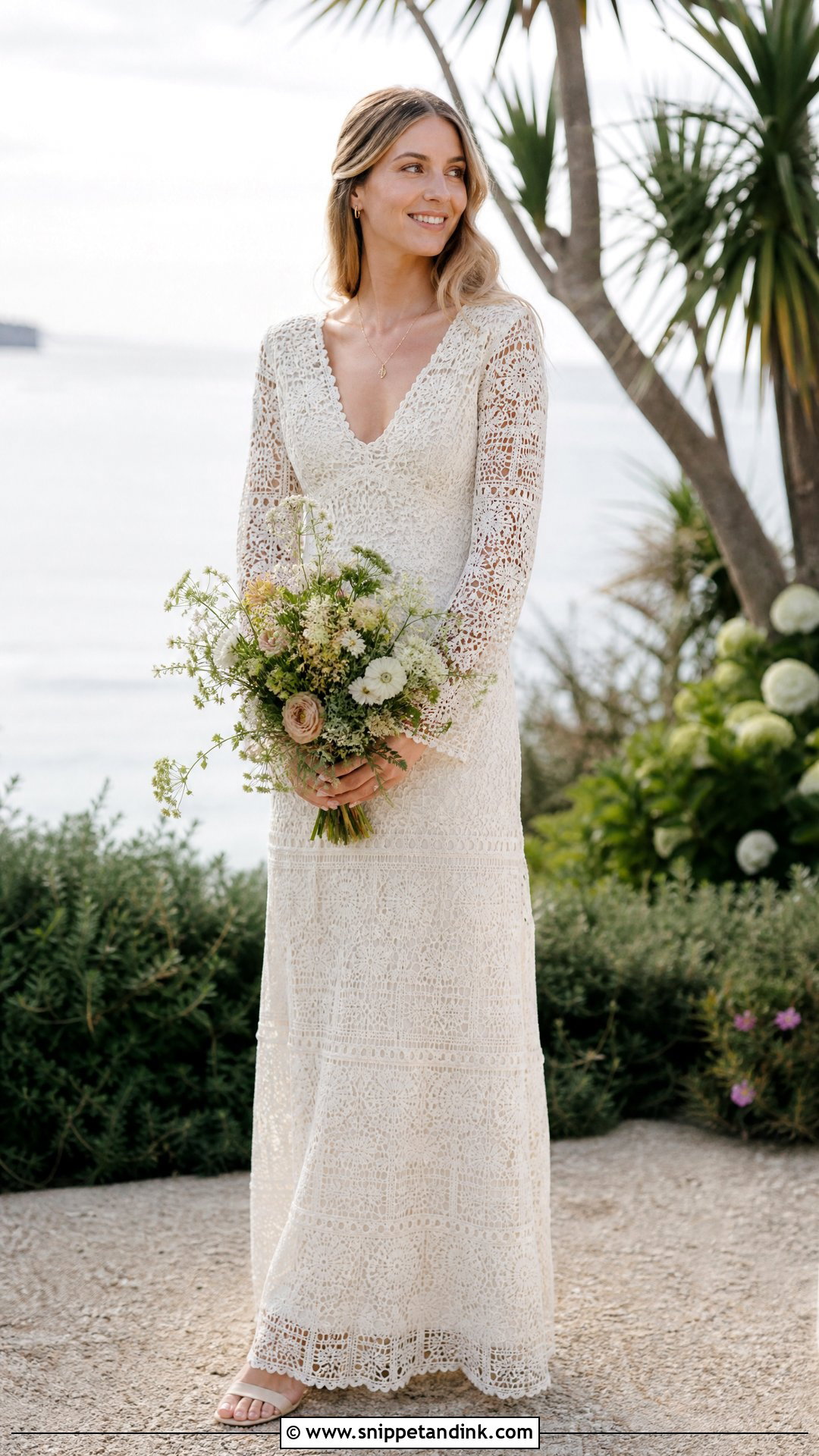
Crochet suits a relaxed bride who loves texture. It’s at home on a beach, in a garden or at a laid-back outdoor ceremony. A good lining and a flattering shape make it bridal; without one it can look like a cover-up. Crochet is heavy and stretches if it hangs for long, so store it folded and have it hemmed while you wear it. Low sandals, soft waves, simple gold jewelry and a natural bouquet are enough, with a short veil or flower pins. It suits warm-weather and destination weddings.
23. Vintage Pearl Bride Dress
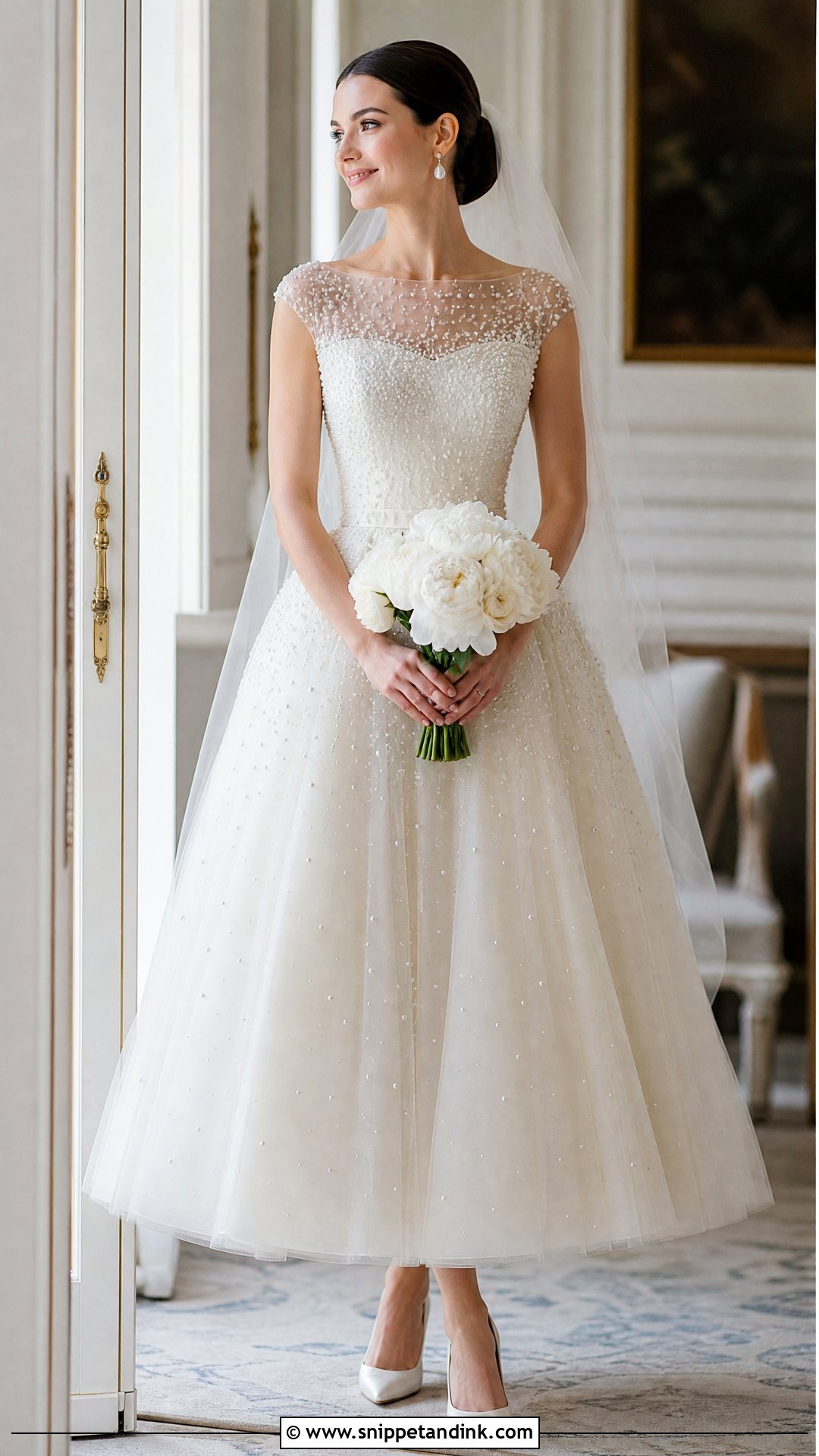
Pearls give a soft glow rather than the sharp sparkle of crystals. They can be scattered over tulle, run along sleeves, sit on the bodice or trim a veil. A simple silhouette keeps them feeling elegant. Sewn pearls do come loose, so I ask the maker for a few spares and pack a needle and ivory thread. Satin heels, pearl earrings and a smooth hairstyle finish it; with many pearls on the dress, skip the necklace. It suits formal indoor and evening weddings.
24. Vintage Courthouse Bride Dress
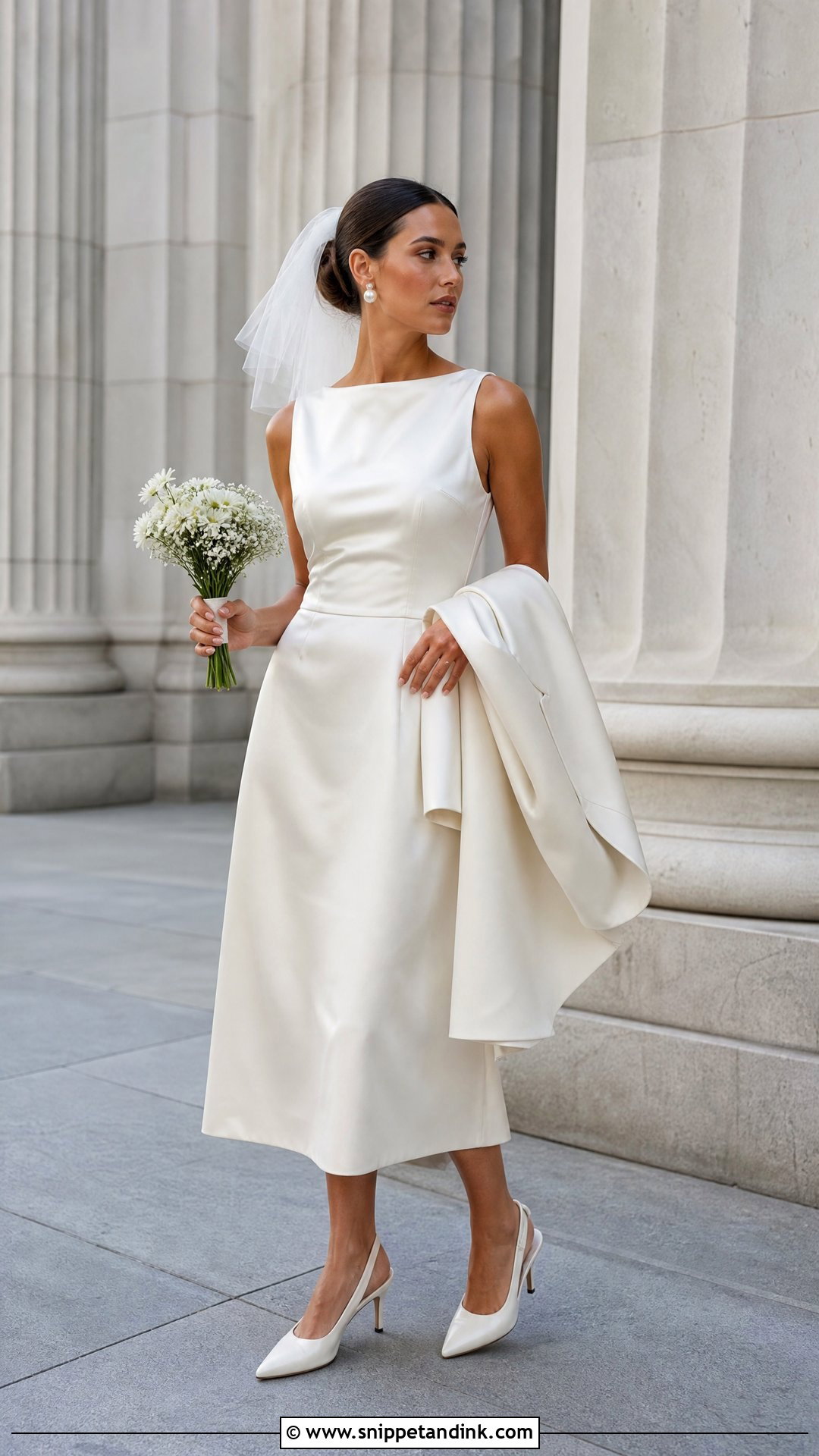
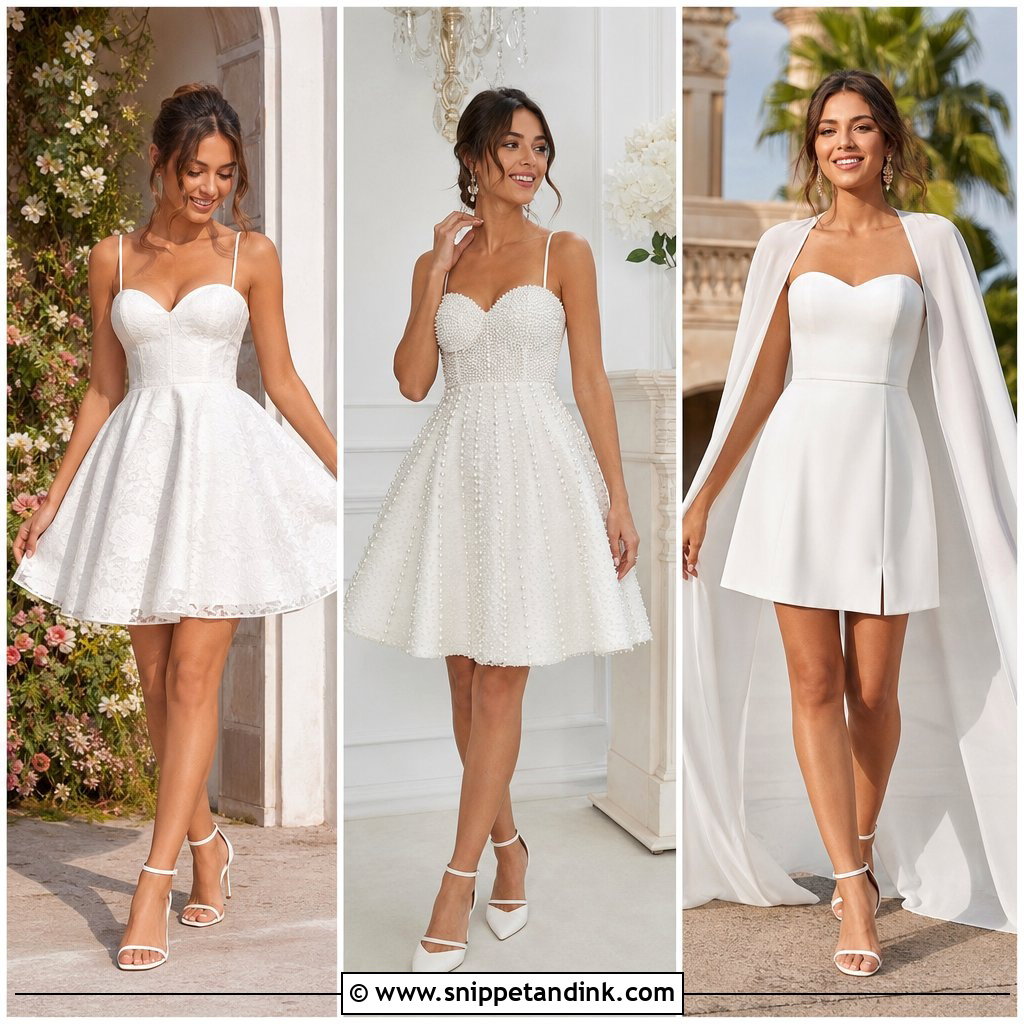
For a courthouse wedding, the outfit has to look polished and still be easy to wear around a city. A tea-length dress, satin midi, lace mini or structured crepe dress all work. Block heels or slingbacks, a small bouquet, pearl earrings and a short veil or bow suit it. A tailored coat or cropped jacket helps on cold days and gives city photos a finished look. Courthouse backgrounds are usually plain, so neat, intentional styling matters. It suits elopements and small family celebrations too.

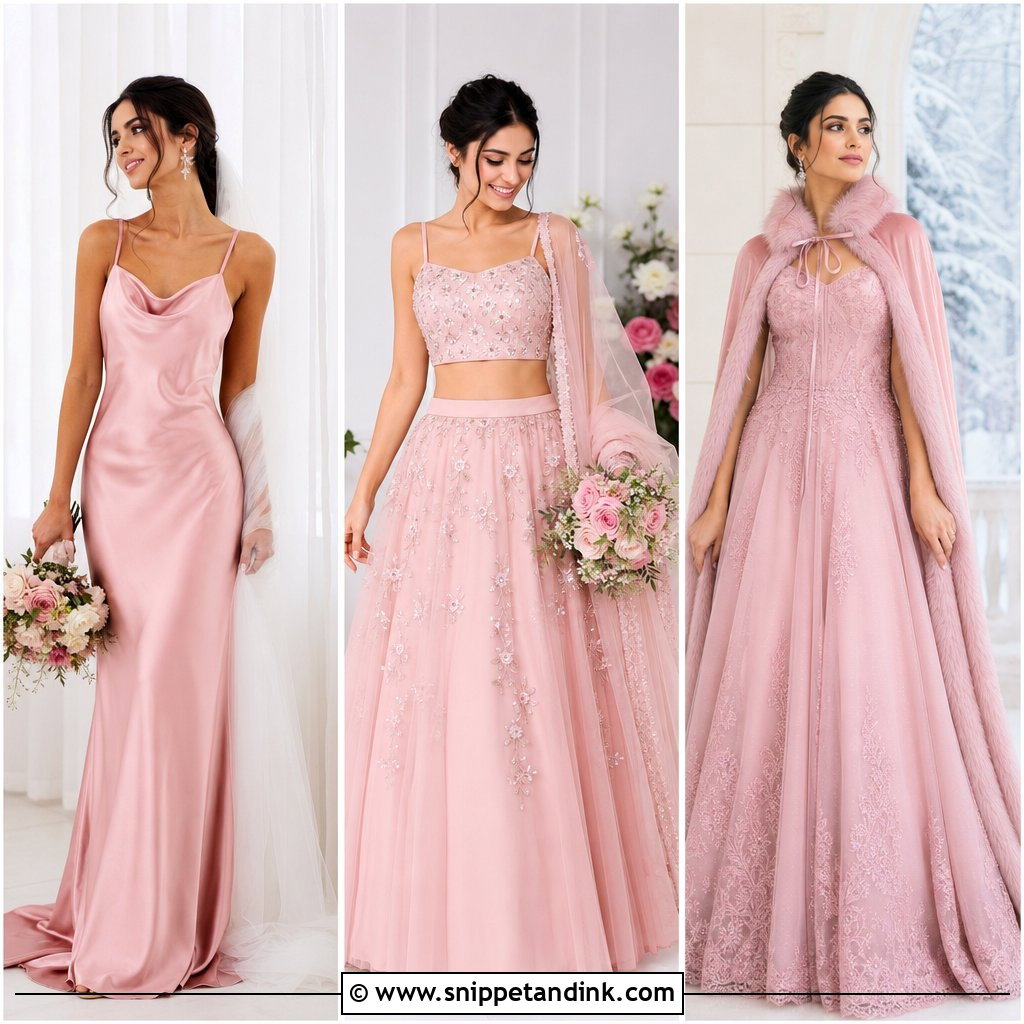
25. Vintage Reception Bride Dress
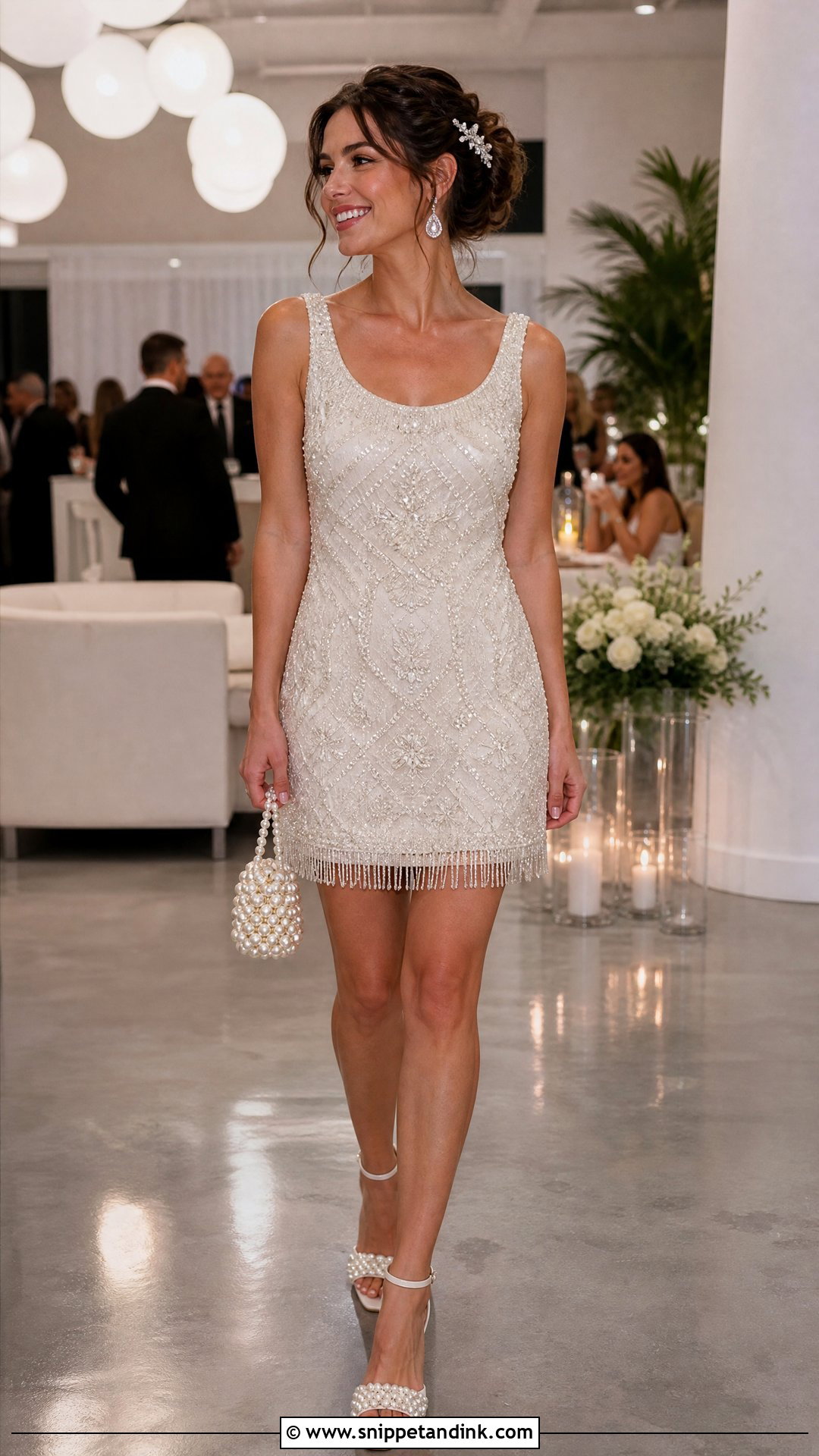
A reception dress should let you dance without worry. A beaded mini, a tea-length lace dress, a satin slip or a feather-trimmed midi keeps the vintage feel and frees your legs. If your ceremony gown is formal, the second dress can be more playful. Feathers shed, so expect a few on the dance floor and choose ostrich trim over cheaper marabou if you want it to last the night. Comfortable heels, a small hair accessory and earrings that catch the light suit it, and gloves or a pearl bag add personality.
Your Grandmother’s Dress, Restored or Remade?
Many vintage brides have a real family gown waiting in a box. Wearing one is a lovely way to carry someone into the day, but it needs an honest assessment first, ideally a year before the wedding.
Have it assessed before you get attached
Take it to a specialist cleaner or a seamstress who works with vintage textiles. Old silk can split along folds, yellowing may or may not clean out, and older seams often have very little fabric to let out. They will tell you what is realistic before you plan around it.
Three ways to wear it
- Restore and alter: clean it, repair it and adjust the fit, keeping the design as it was.
- Redesign: change the sleeves, neckline or skirt so it feels like your own dress while keeping most of the original fabric.
- Borrow a piece: use the lace, veil or buttons on a new gown, or have a small panel sewn inside your dress where only you know it is there.
Agree with your family which of these they are comfortable with before any scissors come out. After the wedding, have it cleaned again and stored flat in an acid-free box so it’s in better shape for the next person who wants it.
The Era You Keep Coming Back To
With so many eras on this list, the real decision is which decade, shape and details feel most like you. Some brides will love 1920s beadwork; others will prefer a 1930s slip, 70s lace or a polished courthouse dress. Whichever you lean toward, put fit, comfort and fabric first, then look at the full outfit from head to toe. The right shoes, veil, jewelry and hair can make a simple gown feel special. Wear something that lets you forget about your dress and enjoy the people around you.
You'll Like These Ideas:



Leave a Reply