
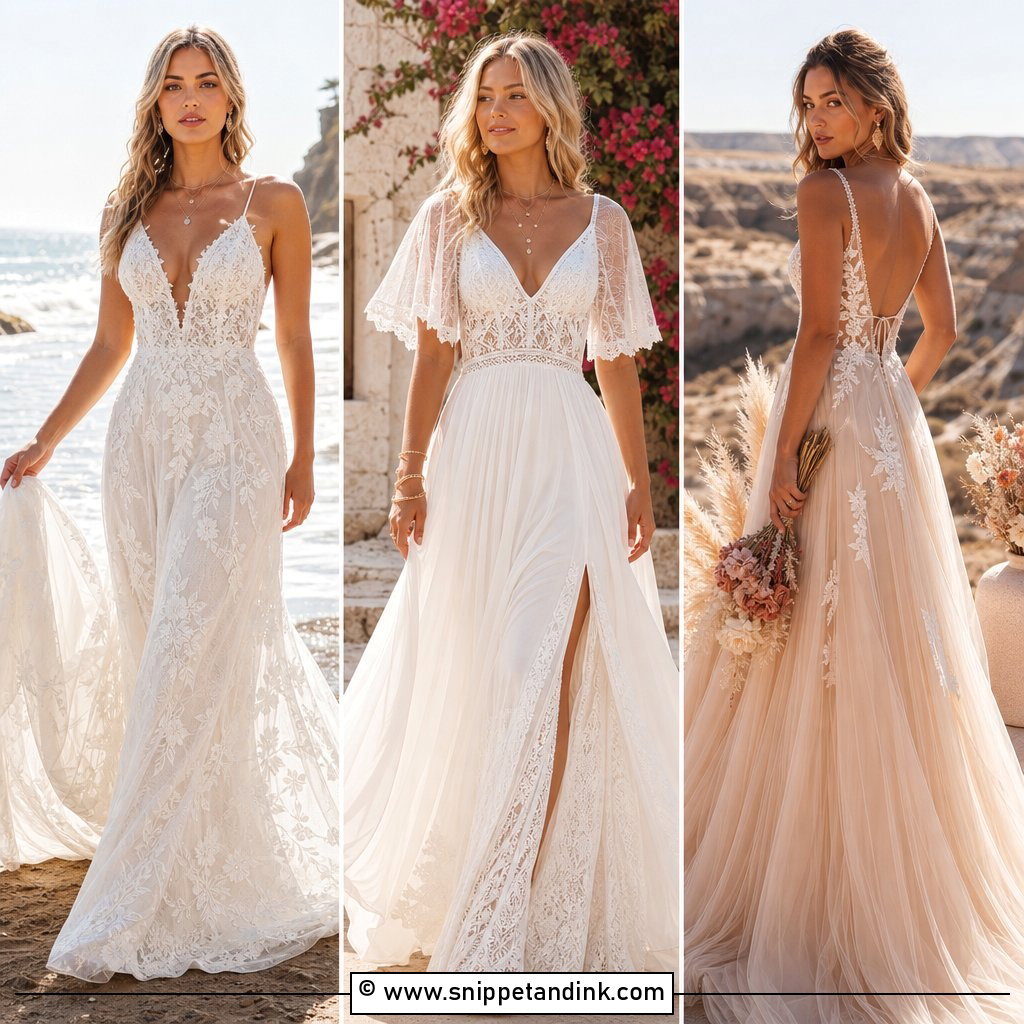
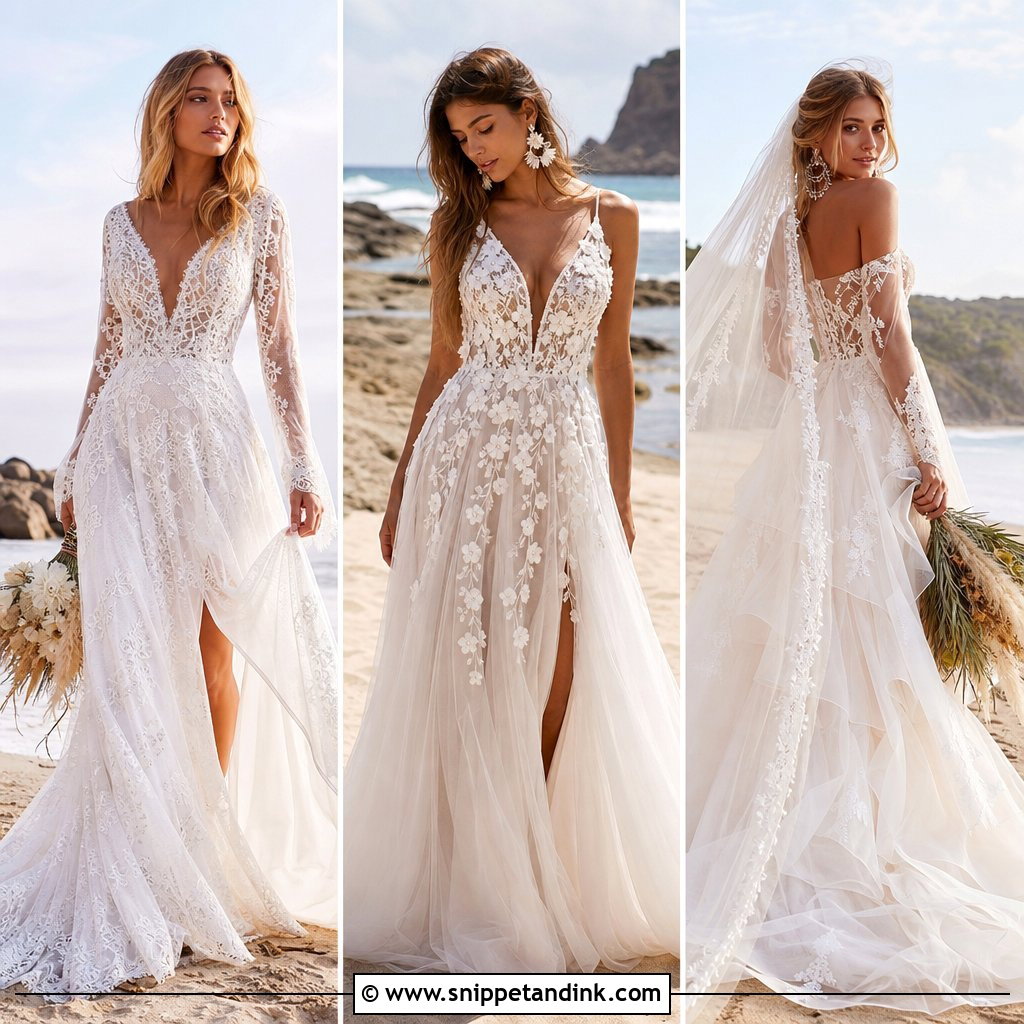
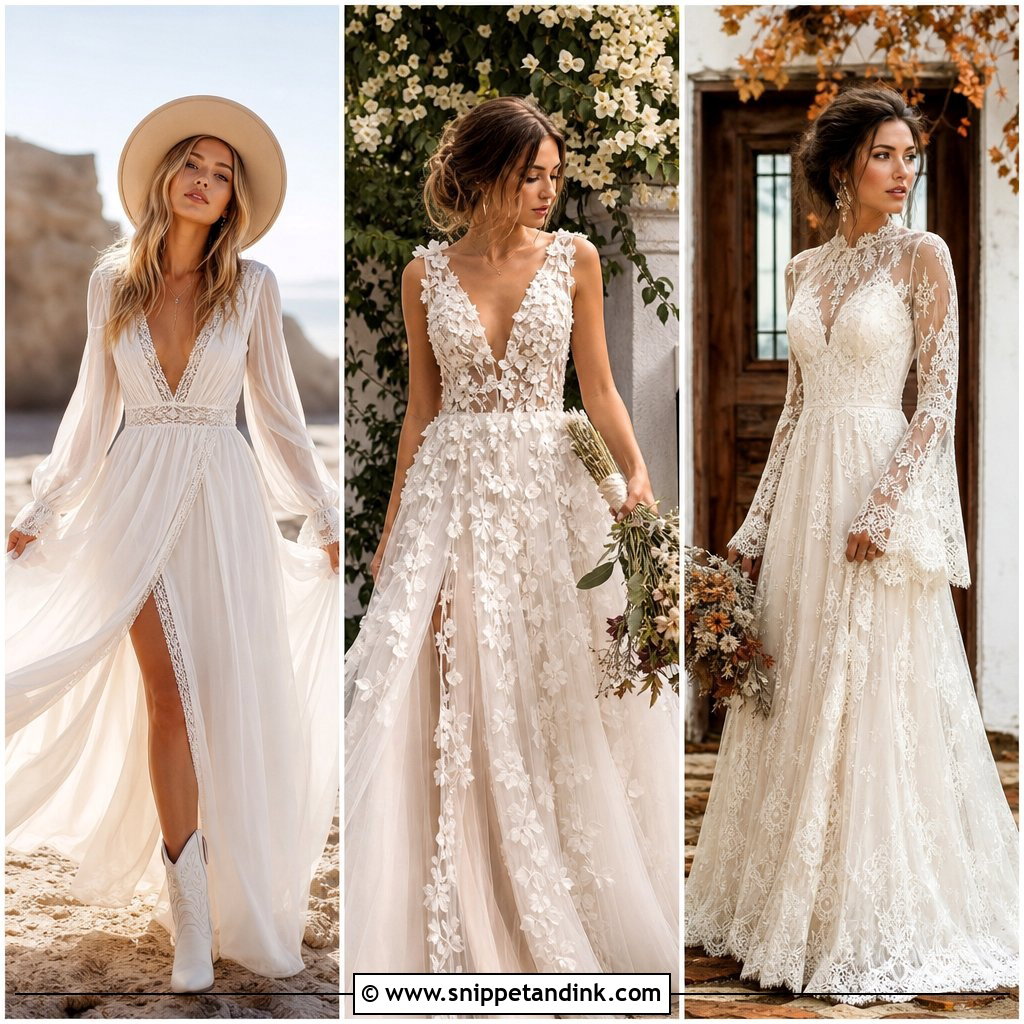
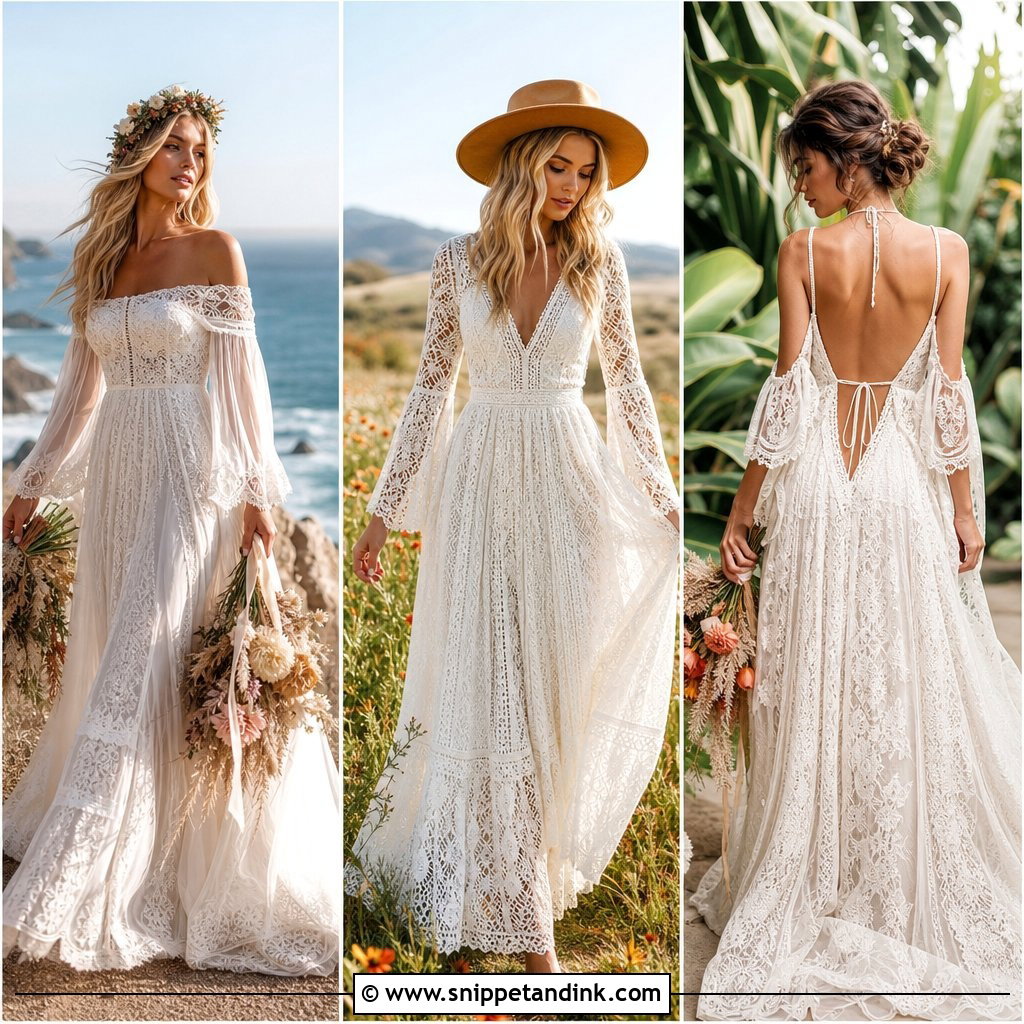
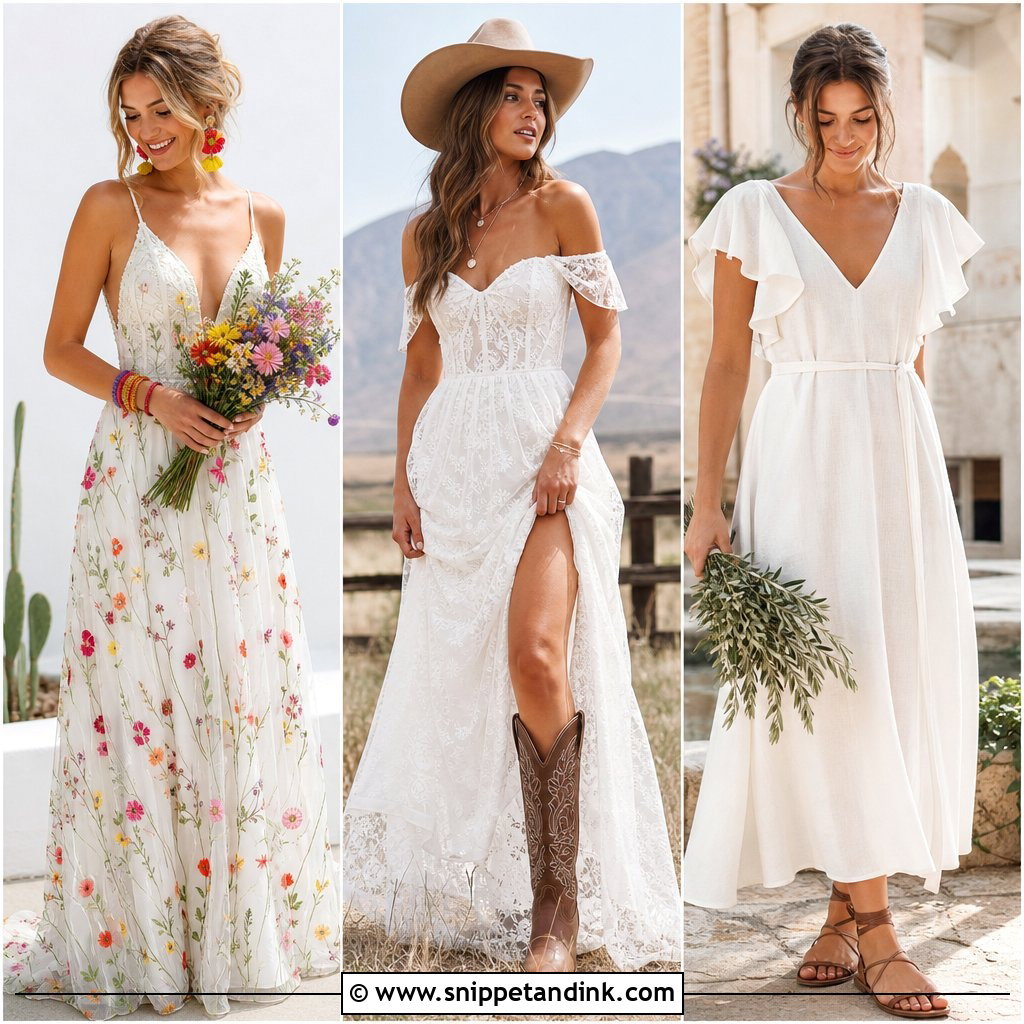
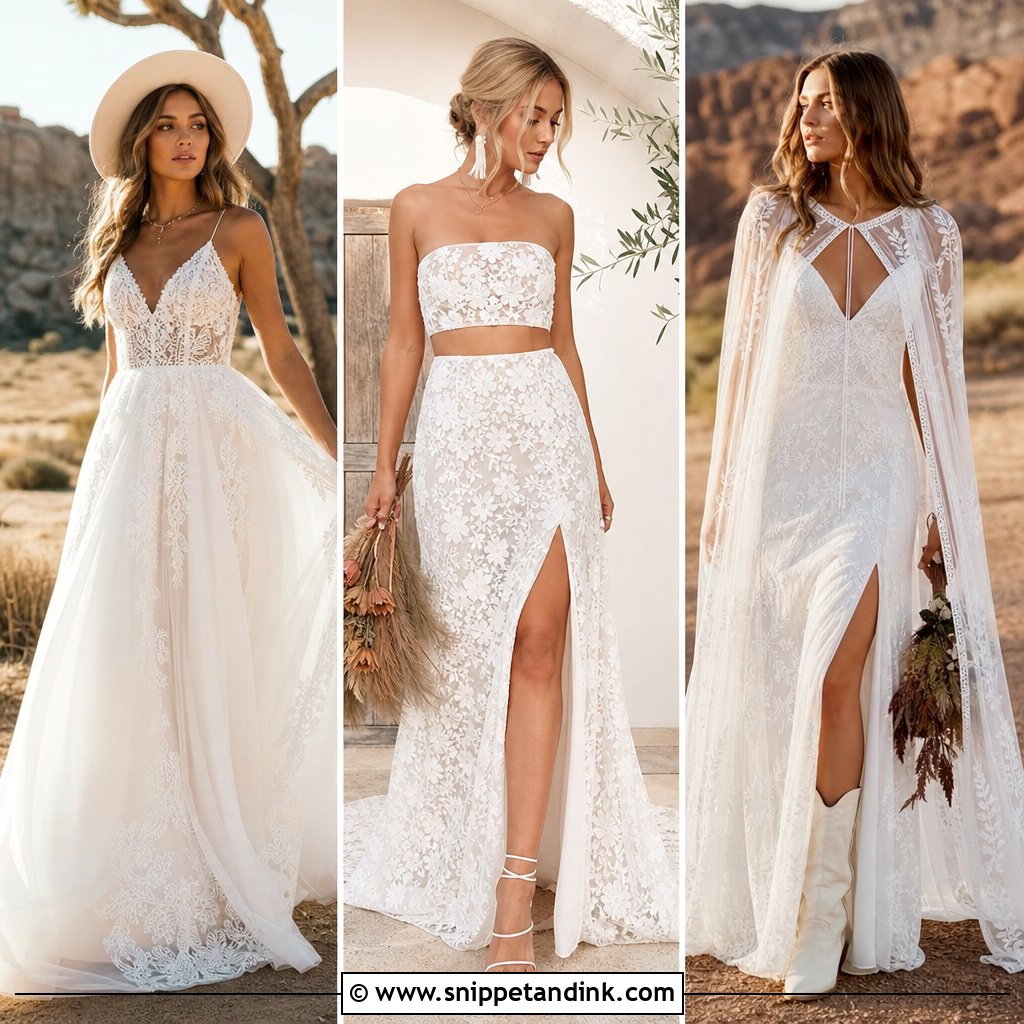
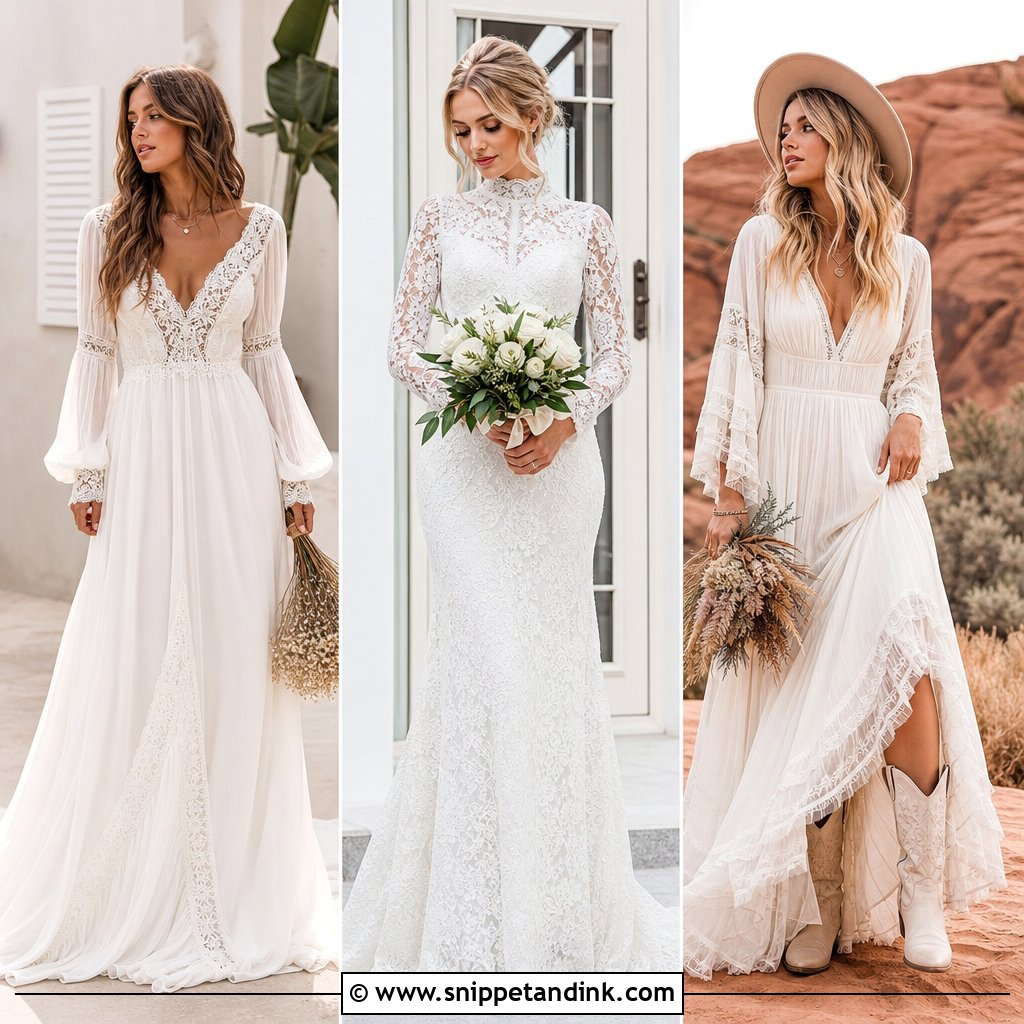
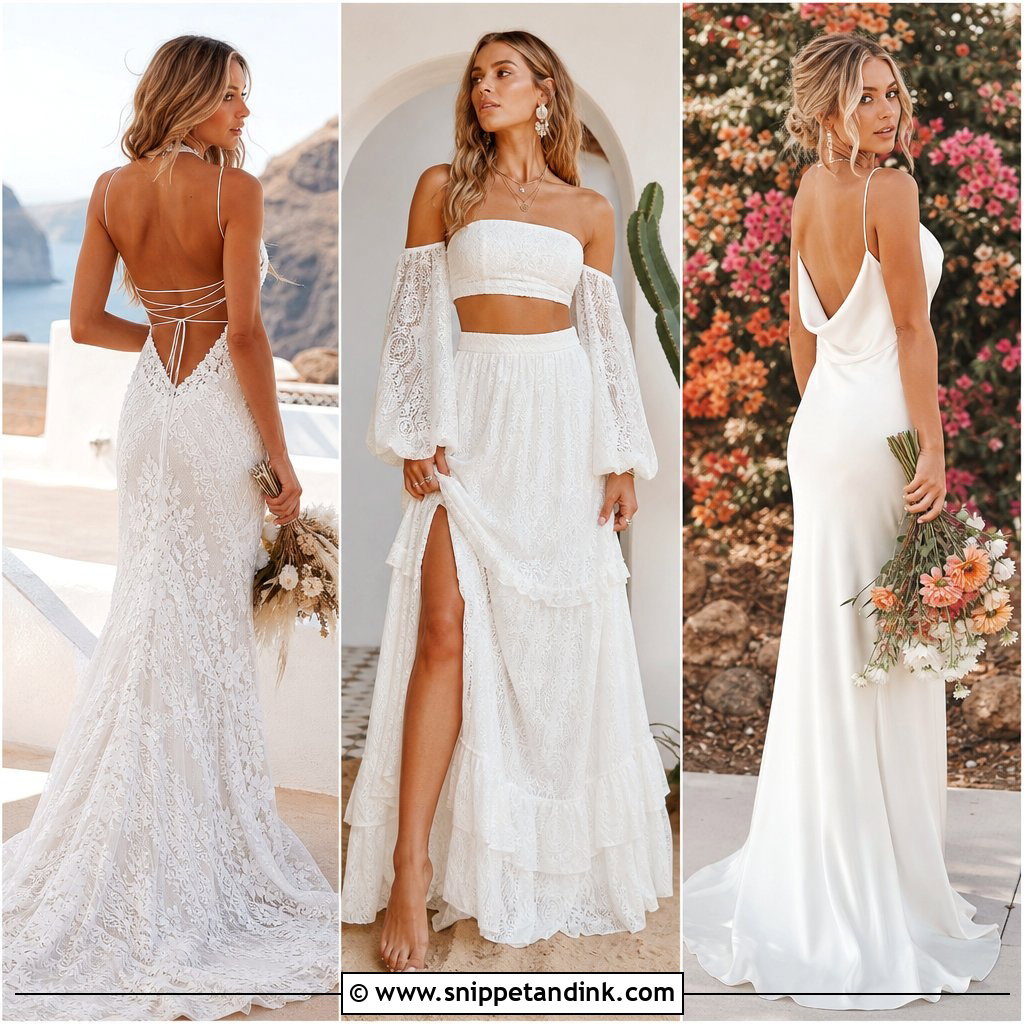
Seventies bridal is back because it lets a bride breathe. The dresses from that decade lean on bell sleeves, high necklines, empire waists, crochet lace, soft chiffon, prairie details and easy bohemian silhouettes, and almost none of them involve a corset. They suit garden weddings, beaches, courthouses, vintage venues and anyone who finds a traditional gown too stiff. What makes or breaks the look is how the whole outfit hangs together, from veil to shoes to bouquet. Here are 25 seventies-inspired dresses, with the fabric and fit details I’d want you to know before you fall for one.
Lining Crochet and Gauze So Nothing Shows Through
Most seventies fabrics are open or light: crochet, gauze, voile, cotton lace and single-layer chiffon. They look airy on a hanger and can turn surprisingly sheer in sunlight or under a camera flash. The lining decides whether the dress works.
- Hold the dress up to a window in the shop. If you can see your hand clearly through the skirt, it needs a lining or a slip.
- Pick the lining color against your skin, not against the dress. Nude linings make crochet look like it floats on you; ivory linings make it look solid and more bridal.
- Ask for a slip that is a separate layer rather than stitched flat to the lace, so the lace keeps its movement.
- Wear the actual underwear and lining together at the fitting, then ask someone to photograph you with flash. Phone flash shows what a professional camera will.
I’d rather spend a little on a well-cut slip than on extra trim. It is the difference between a dress that looks expensive and one that looks unfinished in photos.
1. 1970 Bell Sleeve Wedding Dress
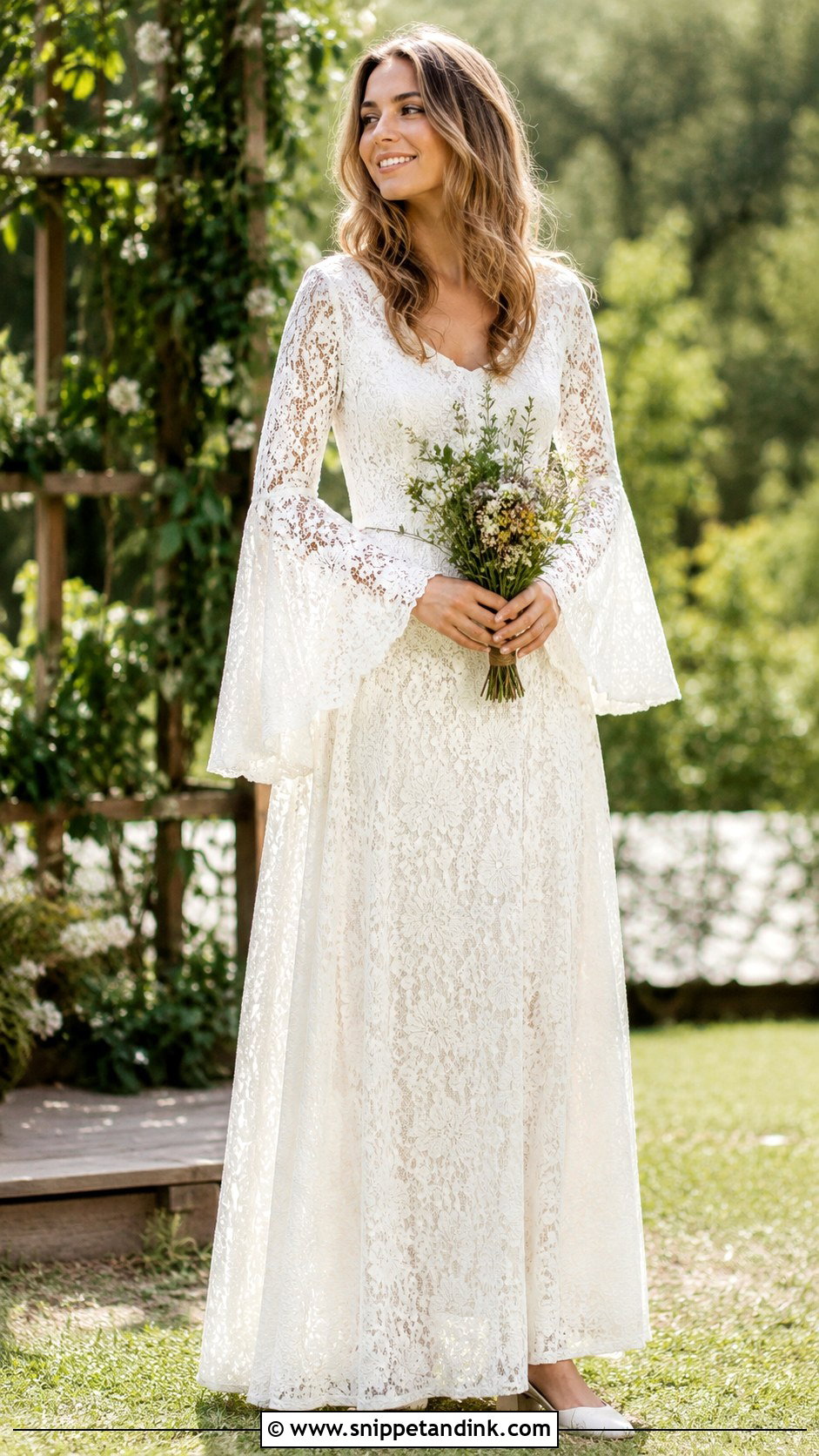
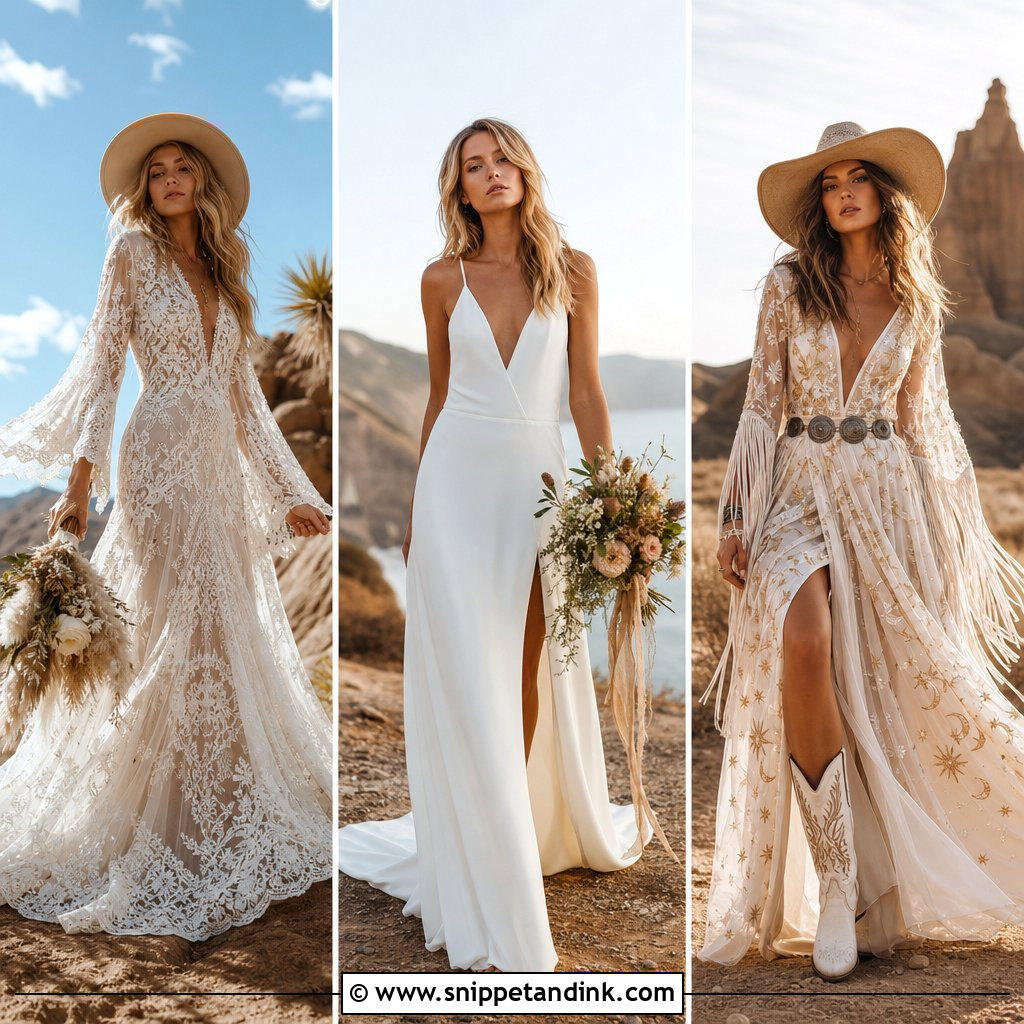
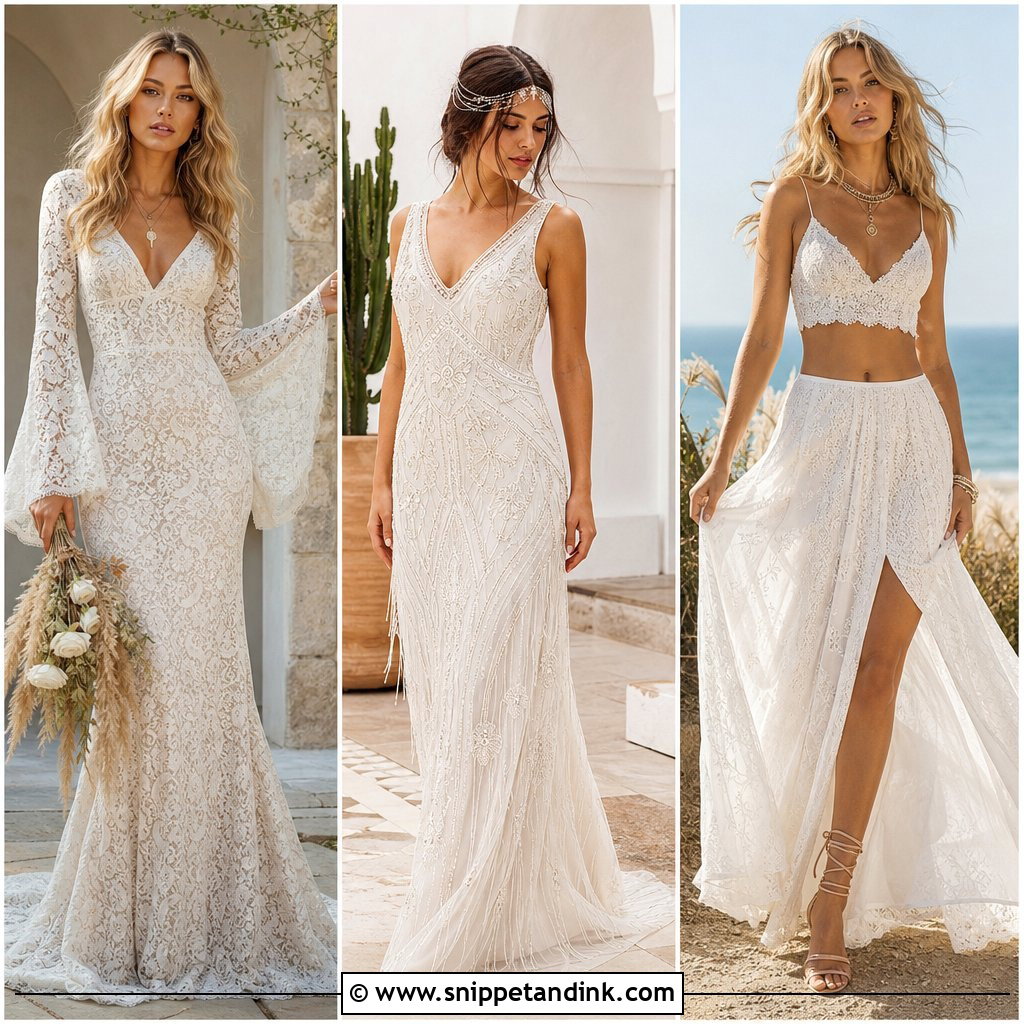
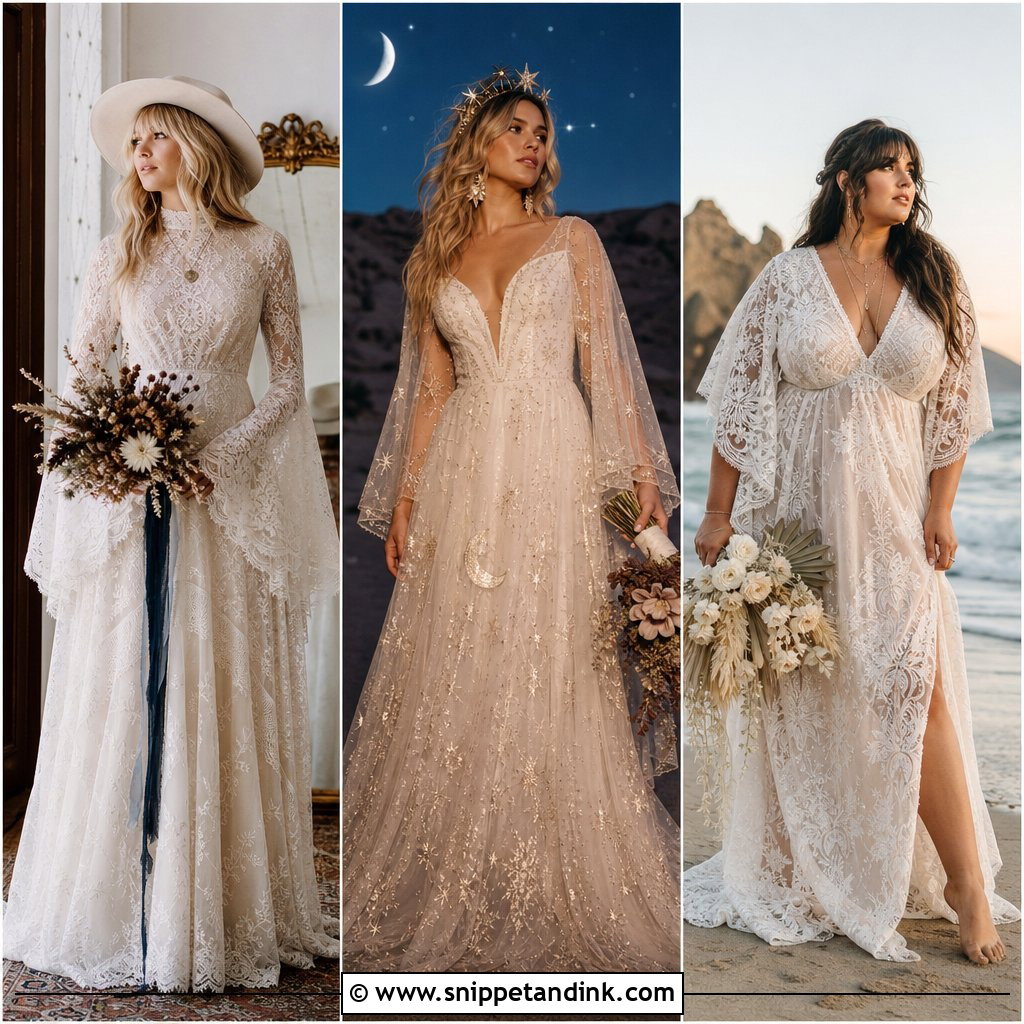
Bell sleeves are the shape everyone associates with the decade. They bring movement and drama with no heavy embellishment, over a fitted bodice with lace trim and a flowing A-line skirt; the sleeves can skim the wrist or flare past the hand. Ivory, cream or soft white keeps it authentic. Loose waves, a simple flower crown, low block heels and a small wildflower bouquet complete it. Sleeve length is the thing I fuss over. A bell that falls past the fingertips drags through every plate at dinner, so I usually stop it right at the wrist bone.
2. 1970 Lace Wedding Dress
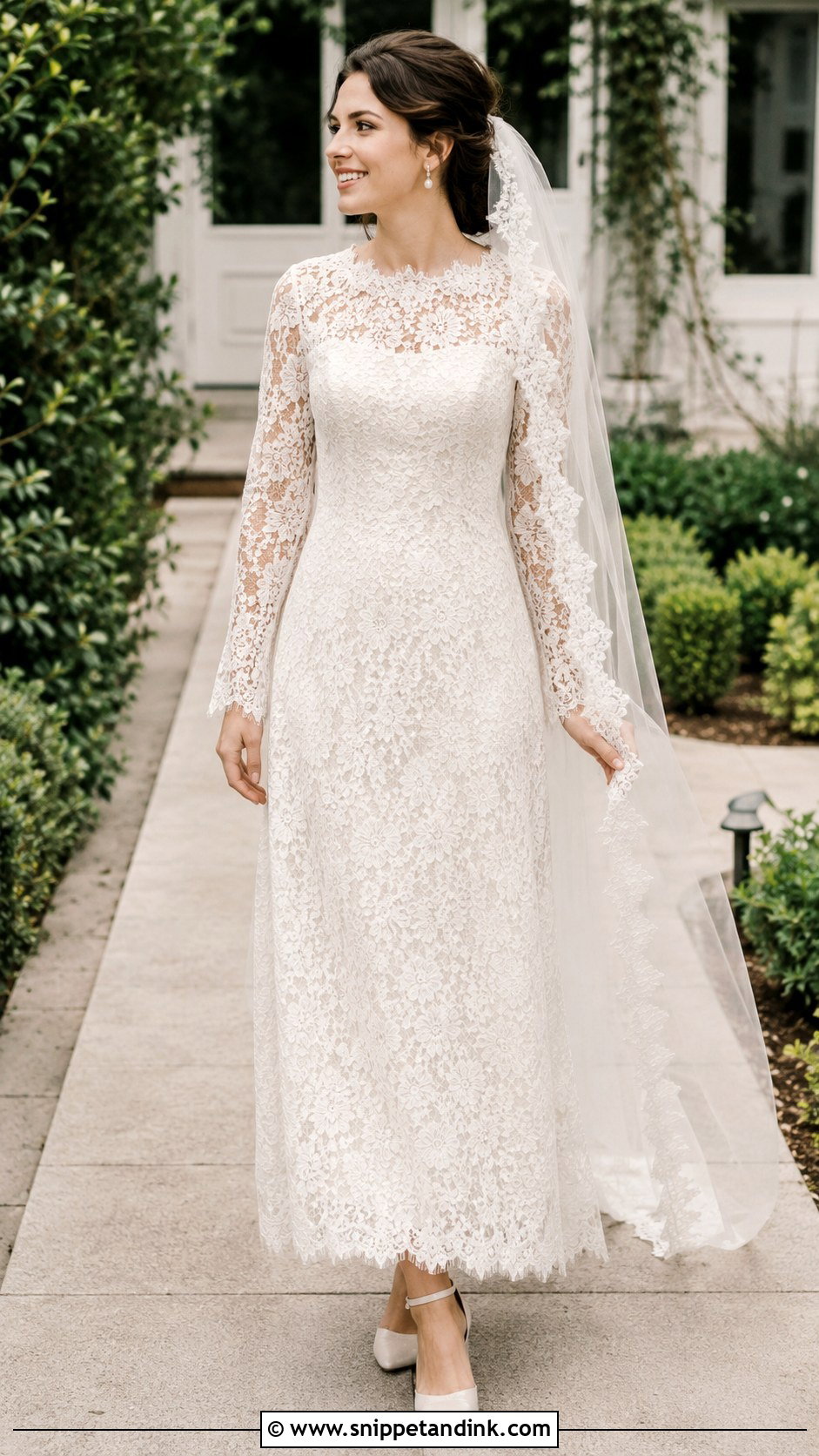
Lace from this era is looser and more floral than the fine lace of earlier decades. Look for allover floral lace, sheer lace sleeves, a softly defined waist and a skirt that moves rather than stands. High necklines and scalloped edges feel more vintage; a slim slip lining keeps it modern. Pearl drops, soft makeup and ivory ankle-strap heels finish it, and a lace veil or lace-trimmed cape adds texture if you want more. I’d check the slip color against your skin before choosing, since a nude lining and an ivory lining change how the lace reads.
3. 1970 Empire Waist Wedding Dress
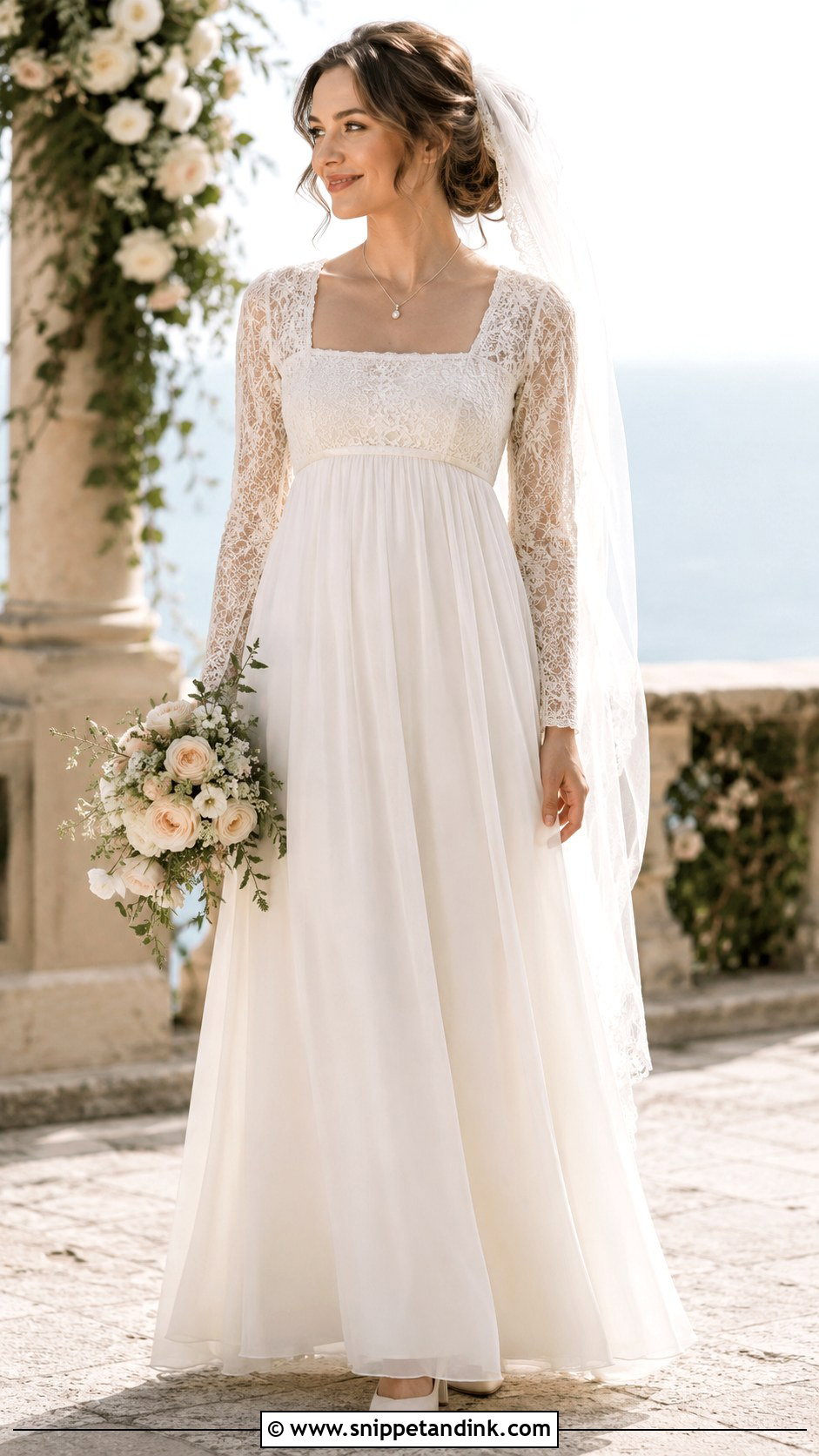
Comfort is why the empire waist was everywhere. The seam sits just under the bust and the skirt falls long and fluid, so nothing presses on your stomach through dinner. Chiffon, cotton voile or lightweight satin is the most authentic; a square neckline, lace bodice or flutter sleeve adds charm without tipping into costume. Add a long veil, a delicate pendant and simple sandals or low heels. On a fuller bust, I look for a bodice with a little internal support, because the high seam otherwise rides up as the day goes on.
4. 1970 High Neck Wedding Dress
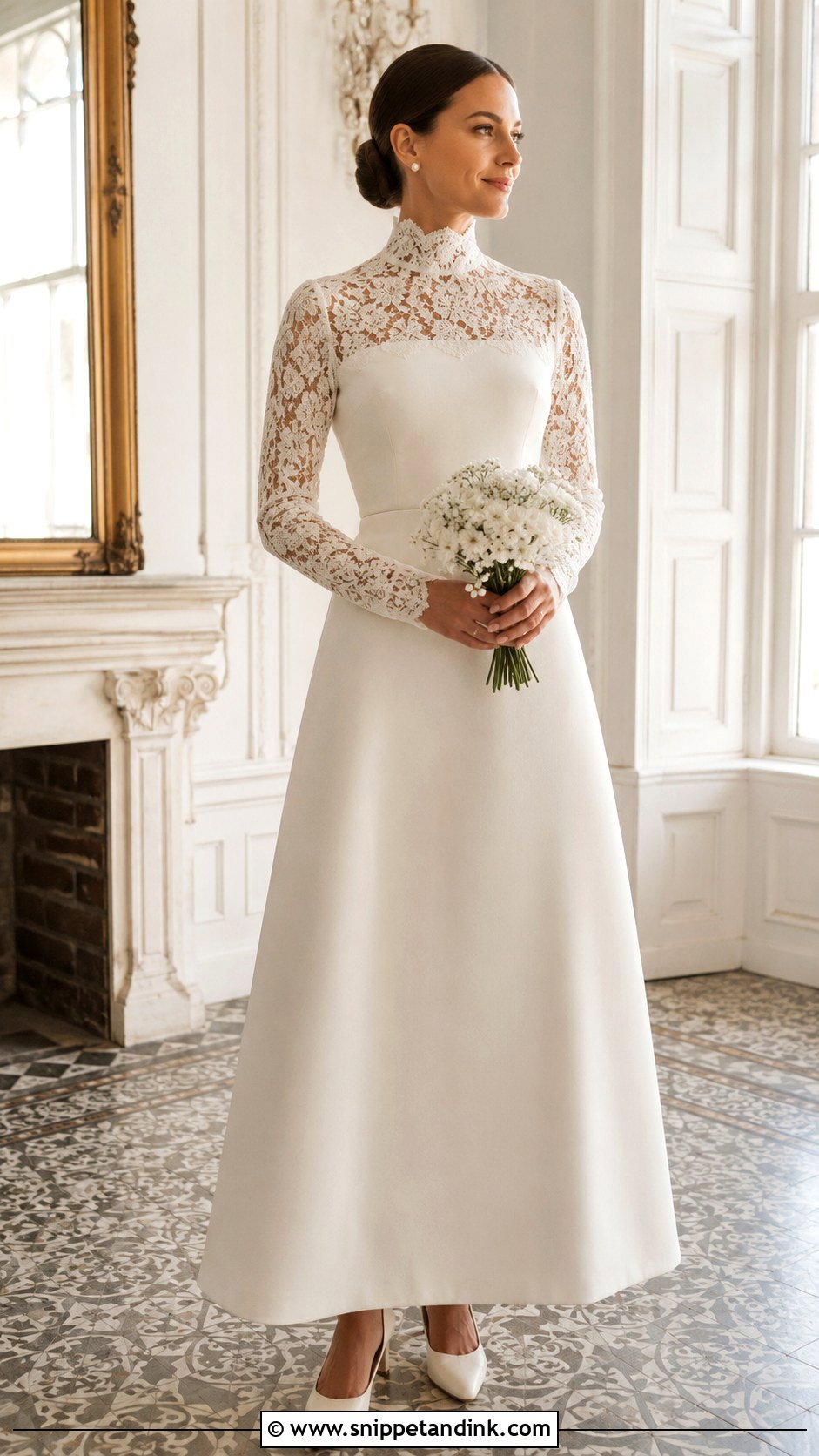
A high neck brings modesty and drama at once. The neckline pulls focus to the face while long sleeves and lace panels set the vintage mood; a sheer lace yoke, covered buttons and a soft A-line skirt keep it balanced. Refined accessories suit it: pearl studs, a sleek low bun and ivory pumps or heeled Mary Janes. A small floral bouquet won’t compete with the neckline. Tip from the fitting room: a sheer yoke needs to sit flat with no wrinkles across the chest, and a tiny dart or a better lining fixes most gaps.
5. 1970 Prairie Wedding Dress
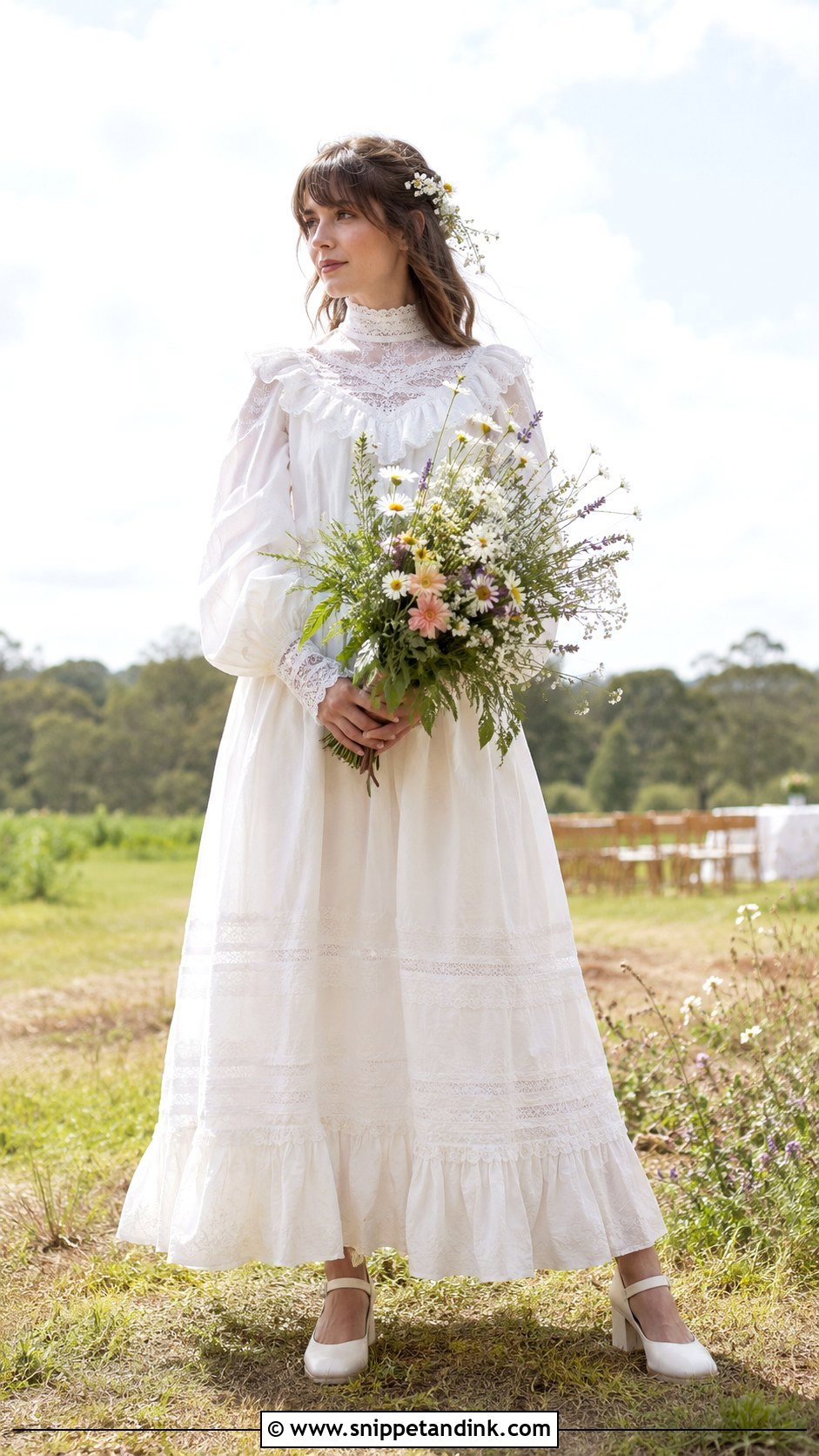
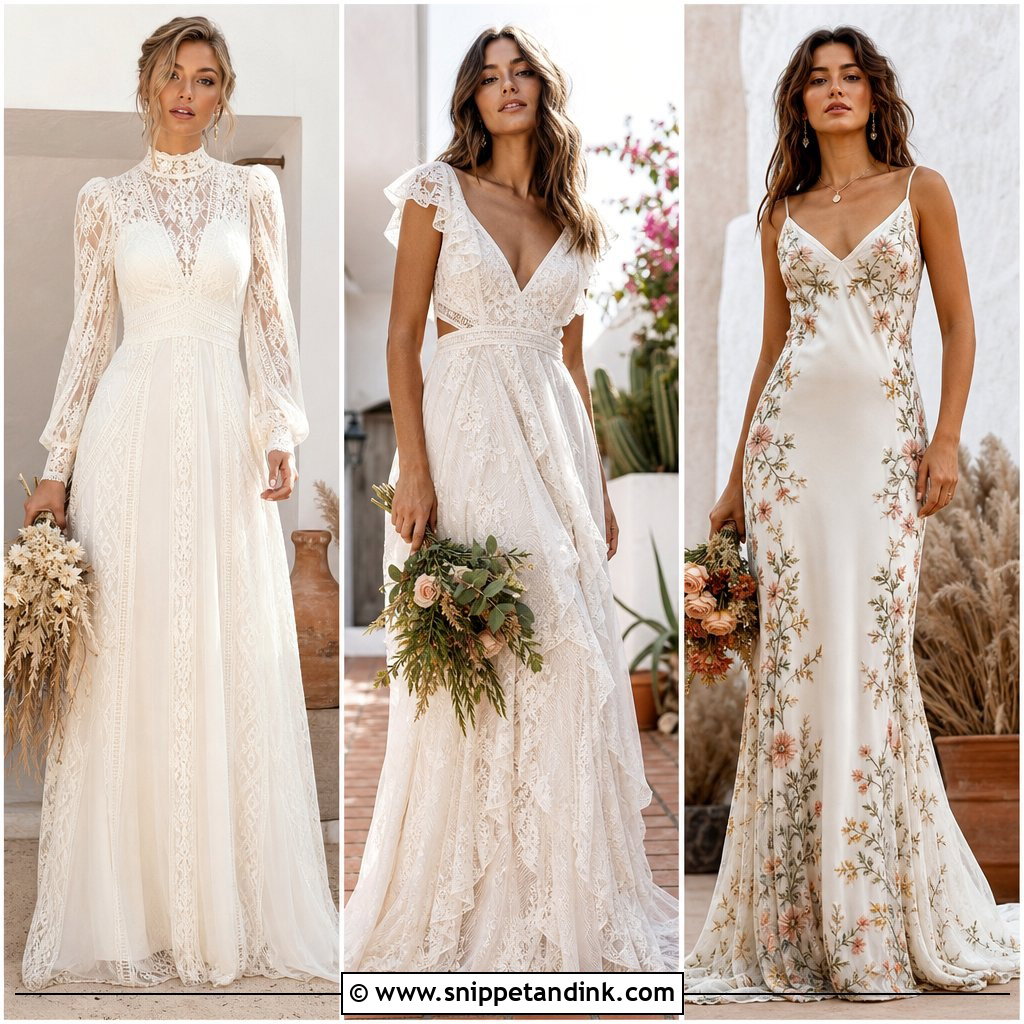
Prairie dresses carry soft, countryside romance. Expect a high collar, ruffle trim, puff or bishop sleeves and a gently gathered skirt, ideally in cotton lace, eyelet or lightweight voile, which look authentic without weight. Style it with a loose braid, tiny floral pins and simple leather or ivory block heels, plus daisies, baby’s breath and soft greenery. Cotton eyelet wrinkles from the first car ride, and I’d embrace that rather than fight it with heavy pressing. Gardens, barns and meadows are its natural home.
6. 1970 Crochet Wedding Dress
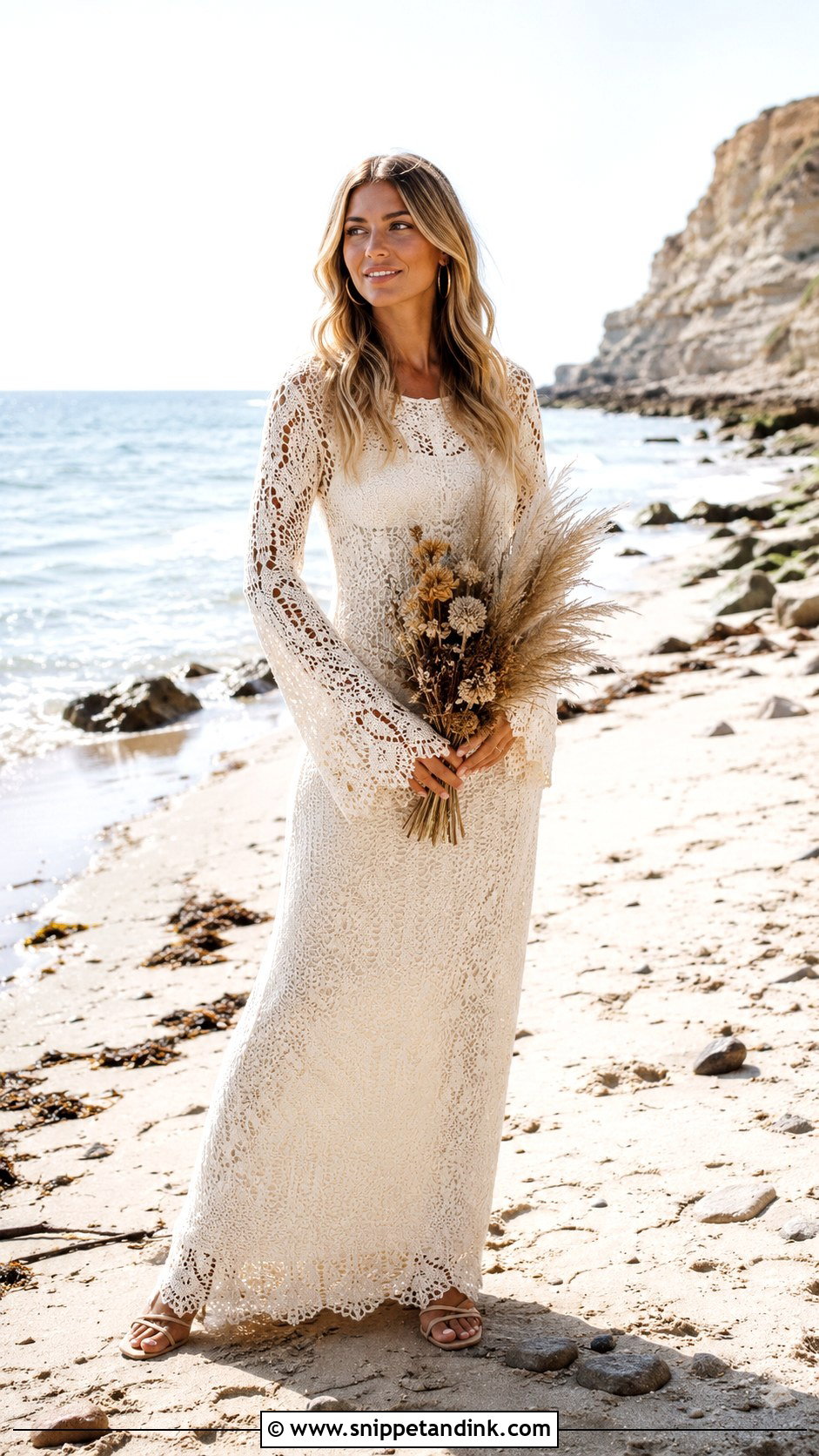
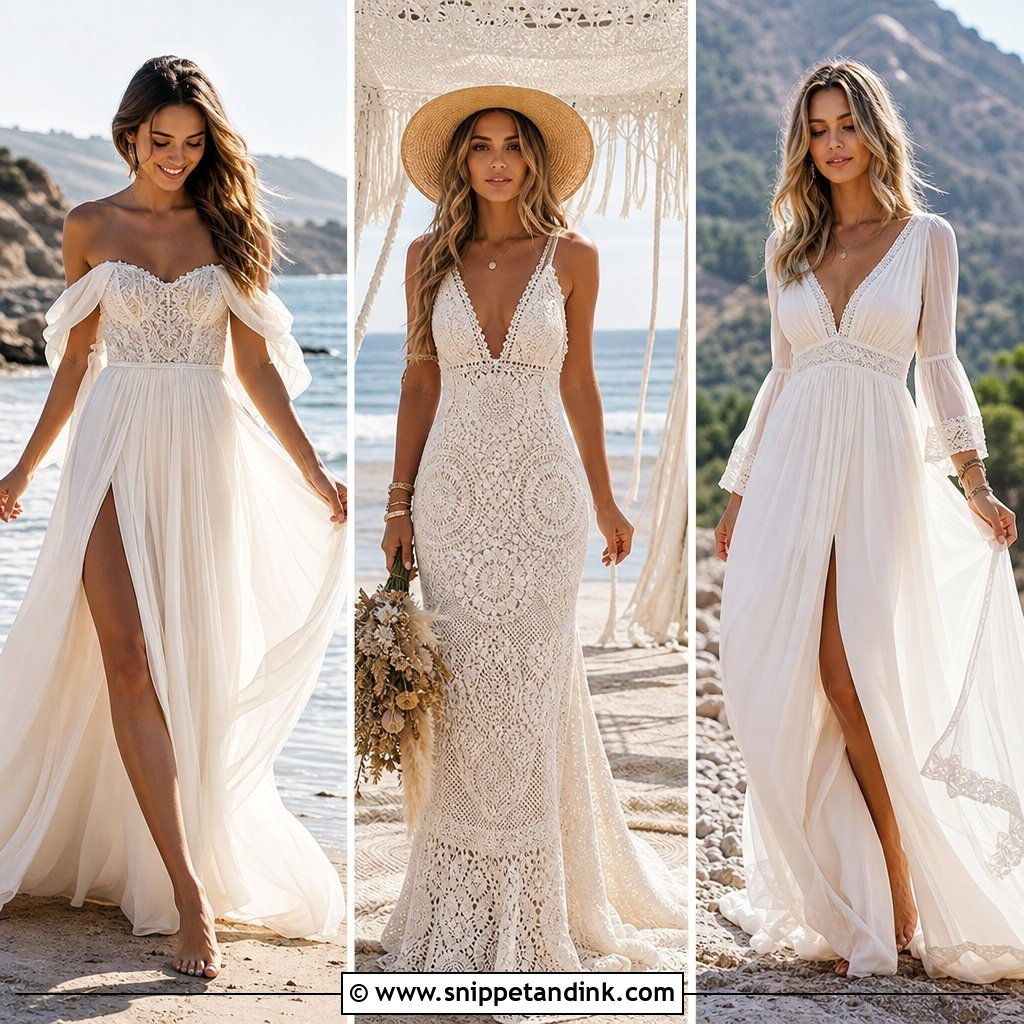
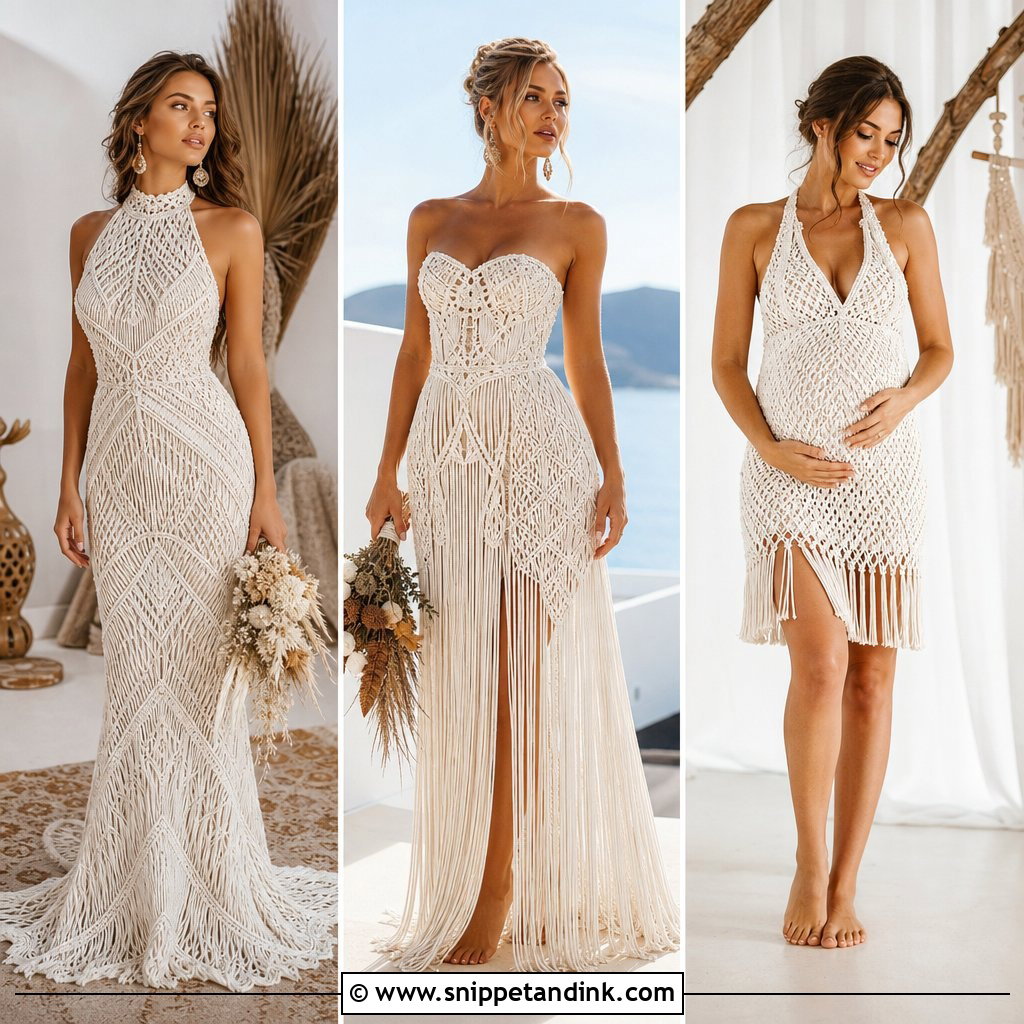
Crochet feels handmade, which is exactly its appeal. Crochet panels, openwork sleeves and textured bodices give interest while staying relaxed. For a bridal version, choose a lined cream or ivory crochet dress in maxi length with a slightly fitted waist, then add simple gold hoops, a center part, strappy sandals and a woven clutch for a beach or destination wedding. Dried grasses and soft white flowers keep the bouquet natural. Crochet stretches as it’s worn, especially when it’s heavy and hanging, so I’d fit it slightly snug and never store it on a hanger.
7. 1970 Boho Wedding Dress
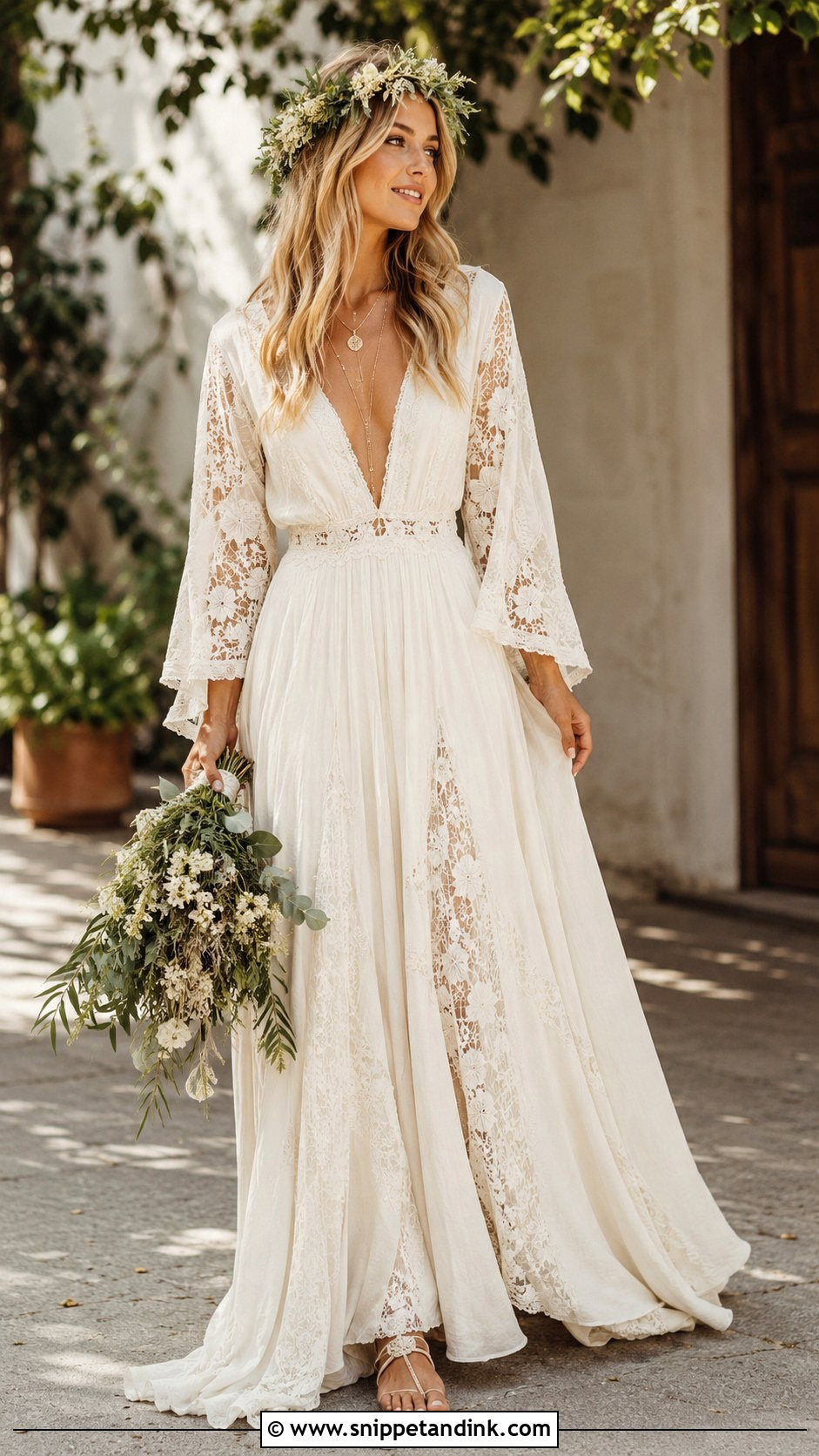
Boho is the most relaxed shape here, and it prioritizes movement over formality. Look for flowing fabric, lace insets, flared sleeves and a skirt that drapes instead of holding a shape. A plunging neckline reads modern; a high neckline reads more true to the decade. Tousled waves, a floral crown, fine layered necklaces and comfortable sandals or suede-look heels finish it. With a plunge, double-sided fashion tape and a built-in cup are what keep it in place through hugging and dancing, so ask about both at the fitting.
8. 1970 Chiffon Wedding Dress
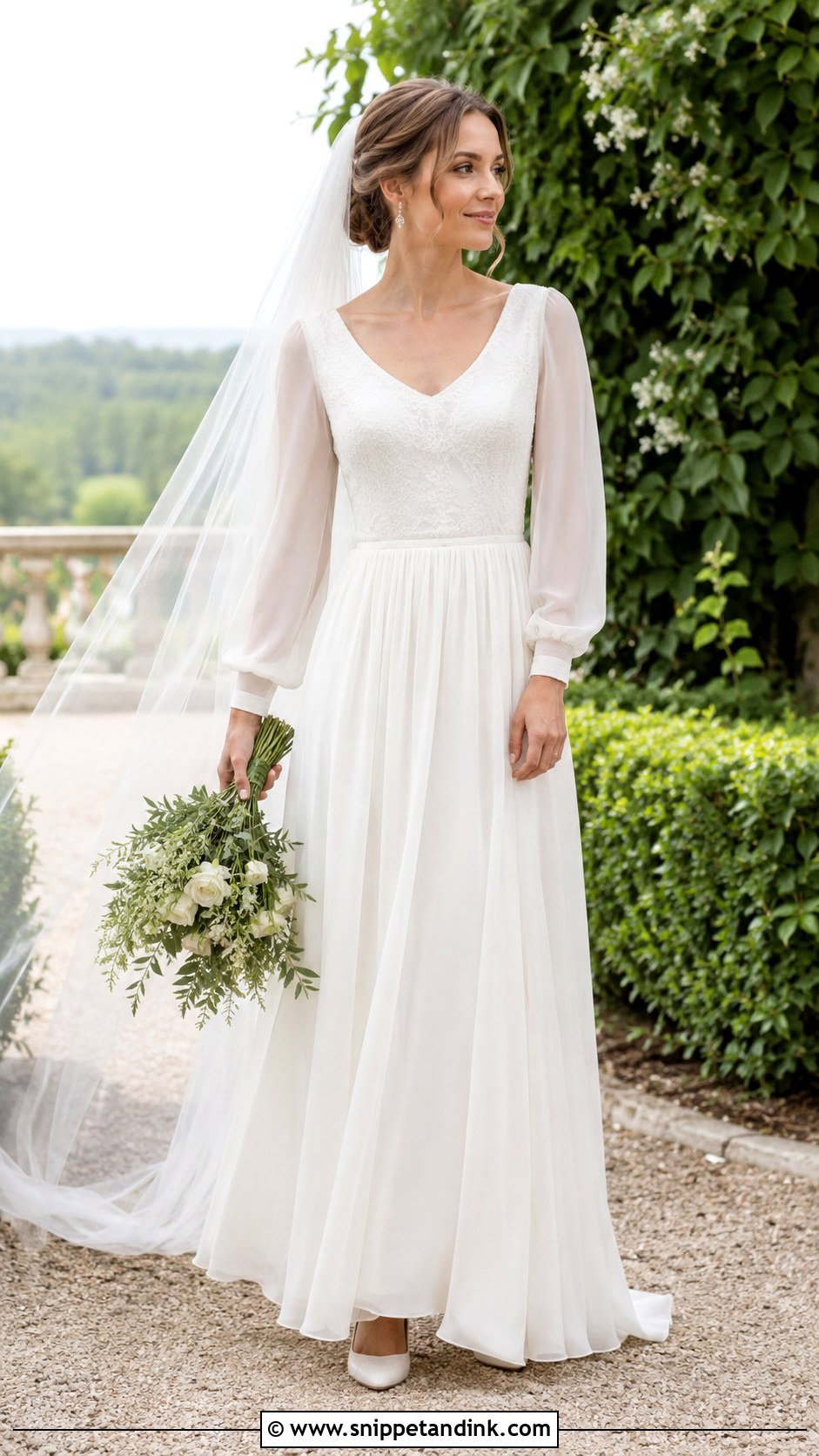
Chiffon moves with every step, which is why seventies brides loved it for long sleeves, flowing skirts and empire silhouettes. Choose sheer sleeves, a softly gathered waist and a floor-length skirt, with a subtle lace bodice or ribbon tie if you want definition. Delicate earrings, a chapel-length veil and low ivory heels finish it. It’s a spring and summer fabric. Chiffon is also very sheer in layers of one, so a good dress has at least two layers or a lining in the skirt; hold it up to daylight in the shop.
9. 1970 Bishop Sleeve Wedding Dress
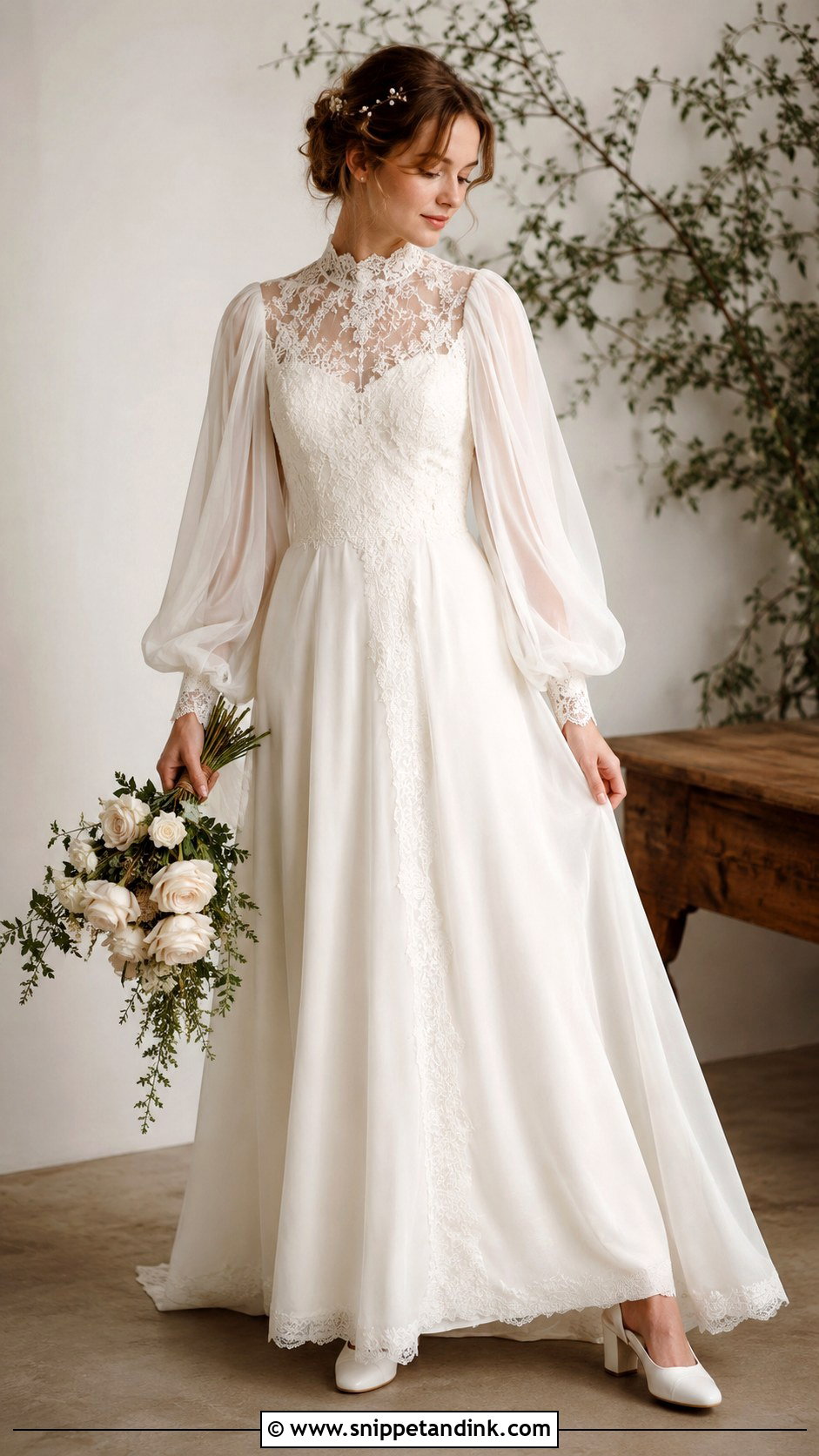
Bishop sleeves give volume more quietly than a full bell. The sleeve is roomy through the arm and gathered into a cuff at the wrist, so it moves without dangling. A lace bodice, flowing skirt and sheer sleeve fabric keep it light. Pair it with a middle part, pearl hair pins and satin block heels, plus a small bouquet of roses and greenery. The cuff is where comfort lives or dies: I make sure you can slide a finger under it, and that the buttons or elastic don’t dig in after a few hours.
10. 1970 Satin Wedding Dress
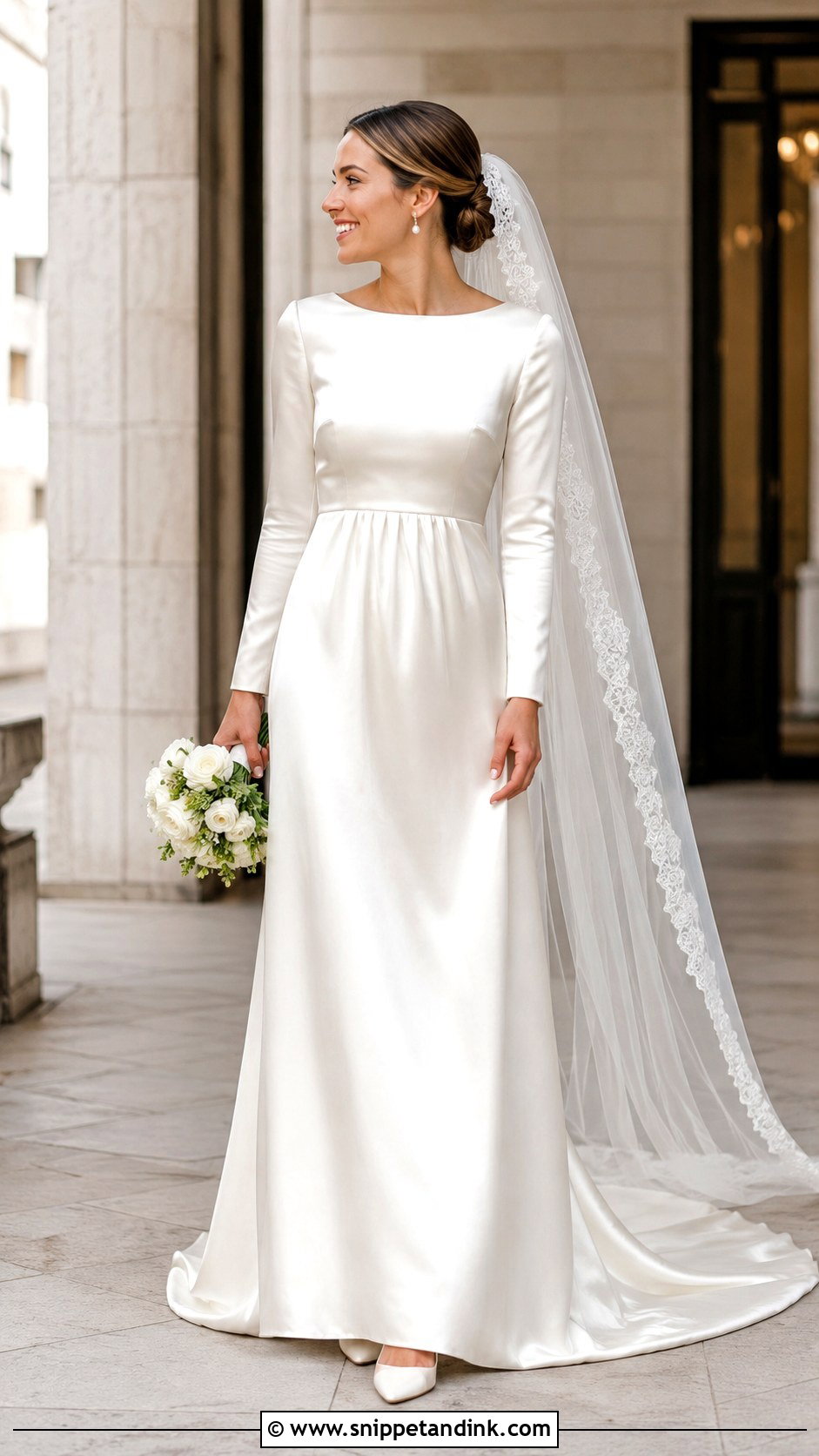
Seventies satin is fluid, not stiff. Instead of ball gown satin, look for one that drapes softly over the body, with a high waist, long sleeves and a simple train. A long veil, sleek low bun, pearl earrings and closed-toe ivory heels give it polish, and a lace-trimmed veil adds texture to a minimal gown. Fluid satin shows the body underneath, including every seam and edge of your underwear, so I’d plan smooth shapewear before the first fitting. Formal venues and city weddings suit it.
11. 1970 A Line Wedding Dress
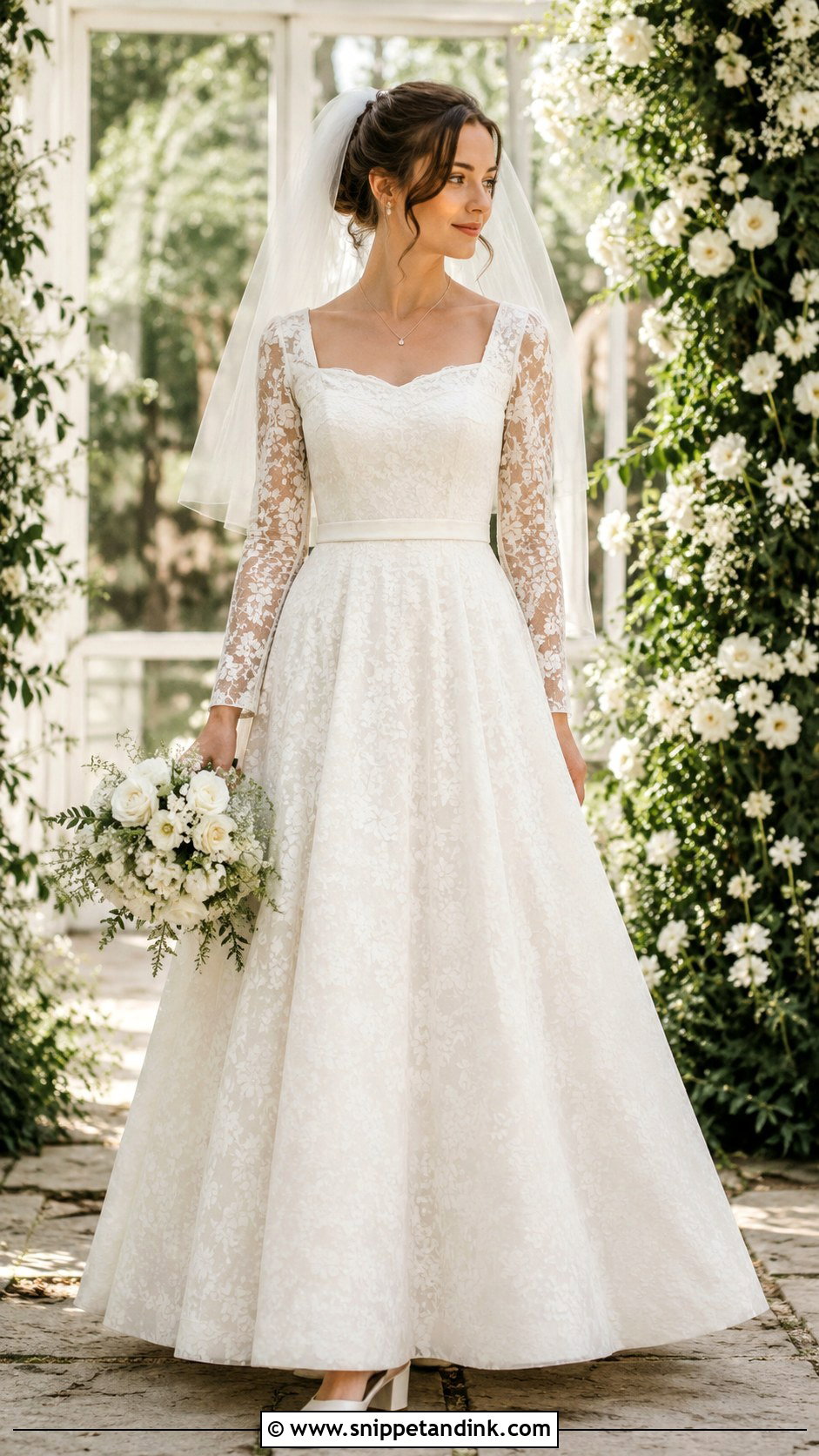
An A-line is one of the easiest vintage shapes to wear, fitted through the bodice and widening toward the hem. To make it read seventies, add lace sleeves, a high neckline, an empire waist or a soft floral print in the fabric. A simple veil, a dainty necklace and comfortable block heels finish it. I suggest it to brides who are torn between eras, because the A-line works anywhere from a garden to a classic reception room and takes personal details well.
12. 1970 Peasant Wedding Dress
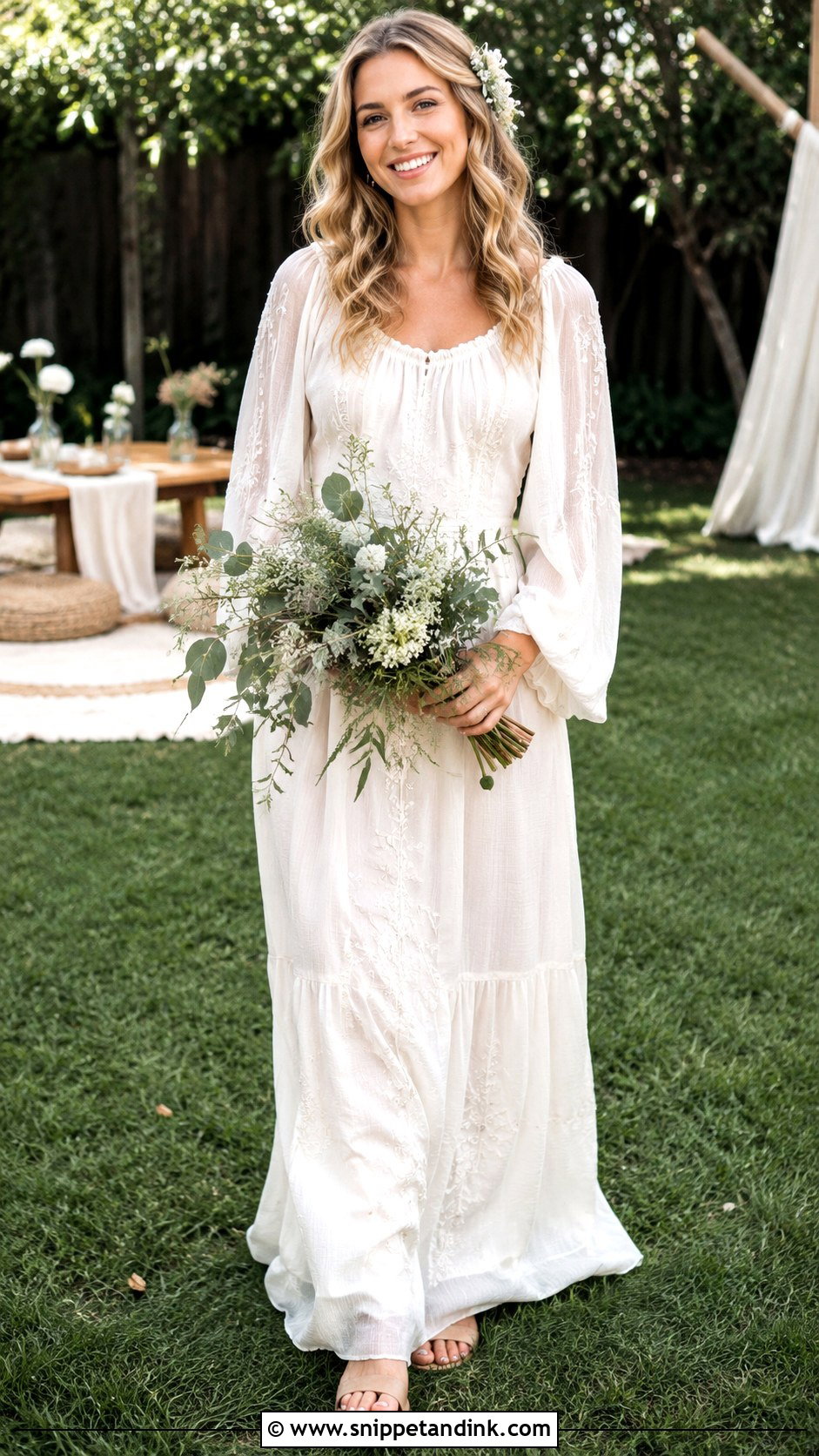
Peasant dresses come from folk dress: a loose bodice, gathered neckline, embroidery and flowing sleeves. The silhouette should feel soft and unfitted. Ivory cotton, gauze and lace trims keep it authentic, styled with loose curls, a floral hair comb, flat sandals and a bouquet of wild greenery. A gathered drawstring neckline slips off one shoulder as you move, which is part of the charm until it’s in every photo, so I have a small clear strap or a hidden tack added. Beaches, backyards and outdoor ceremonies suit it.
13. 1970 Halter Wedding Dress
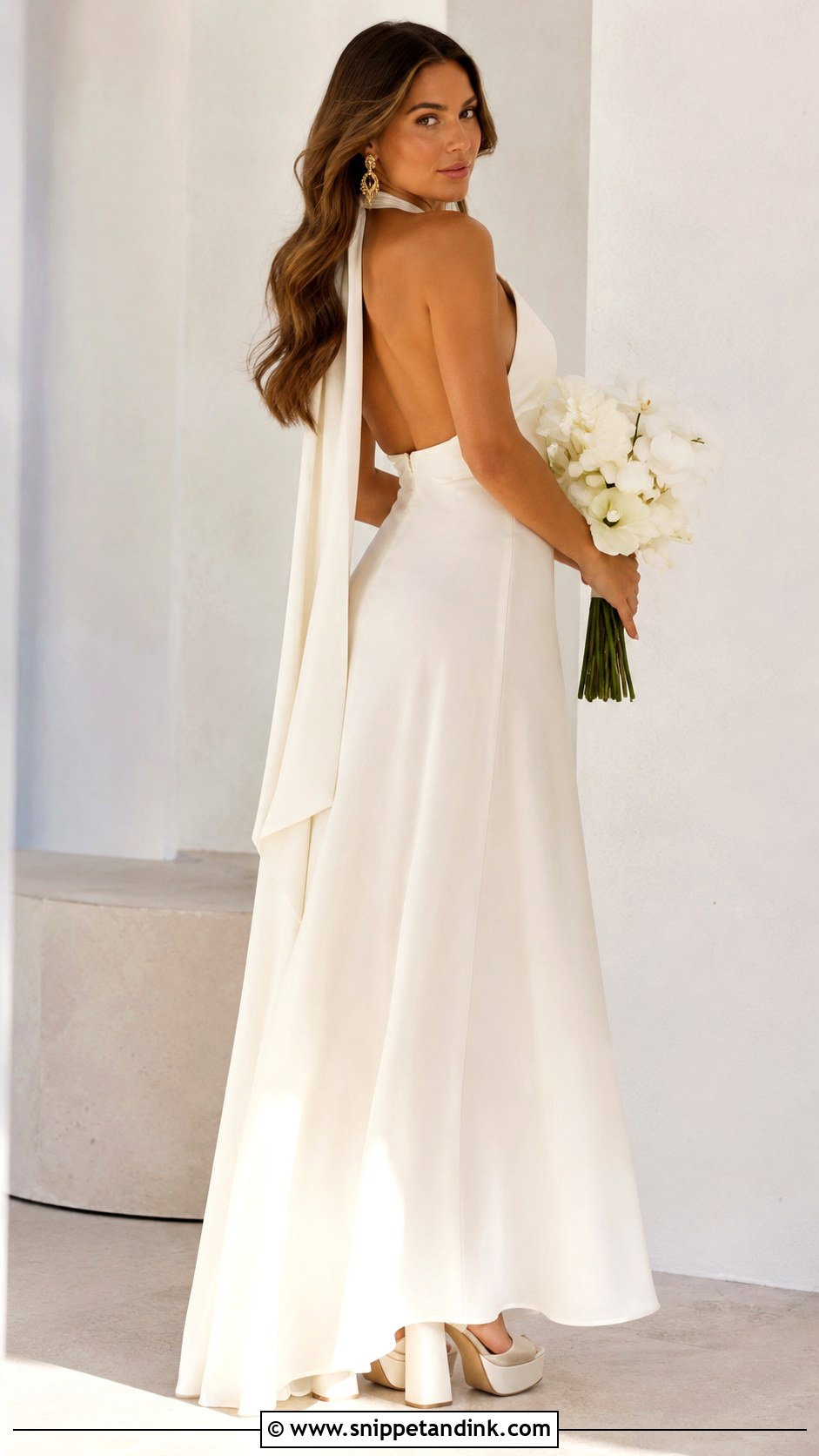
Halters were popular in the seventies and still look sleek. Choose a soft column or flowing A-line with a high halter, an open back and minimal embellishment, then add smooth waves, gold earrings, stacked bangles and platform-style bridal sandals. A clean bouquet of white blooms polishes it. An open back changes what you can wear underneath, so I’d sort out a backless bra or built-in cups first, and the halter tie needs to be secured with a hook rather than a bow if you want it to last until midnight.
14. 1970 Maxi Wedding Dress
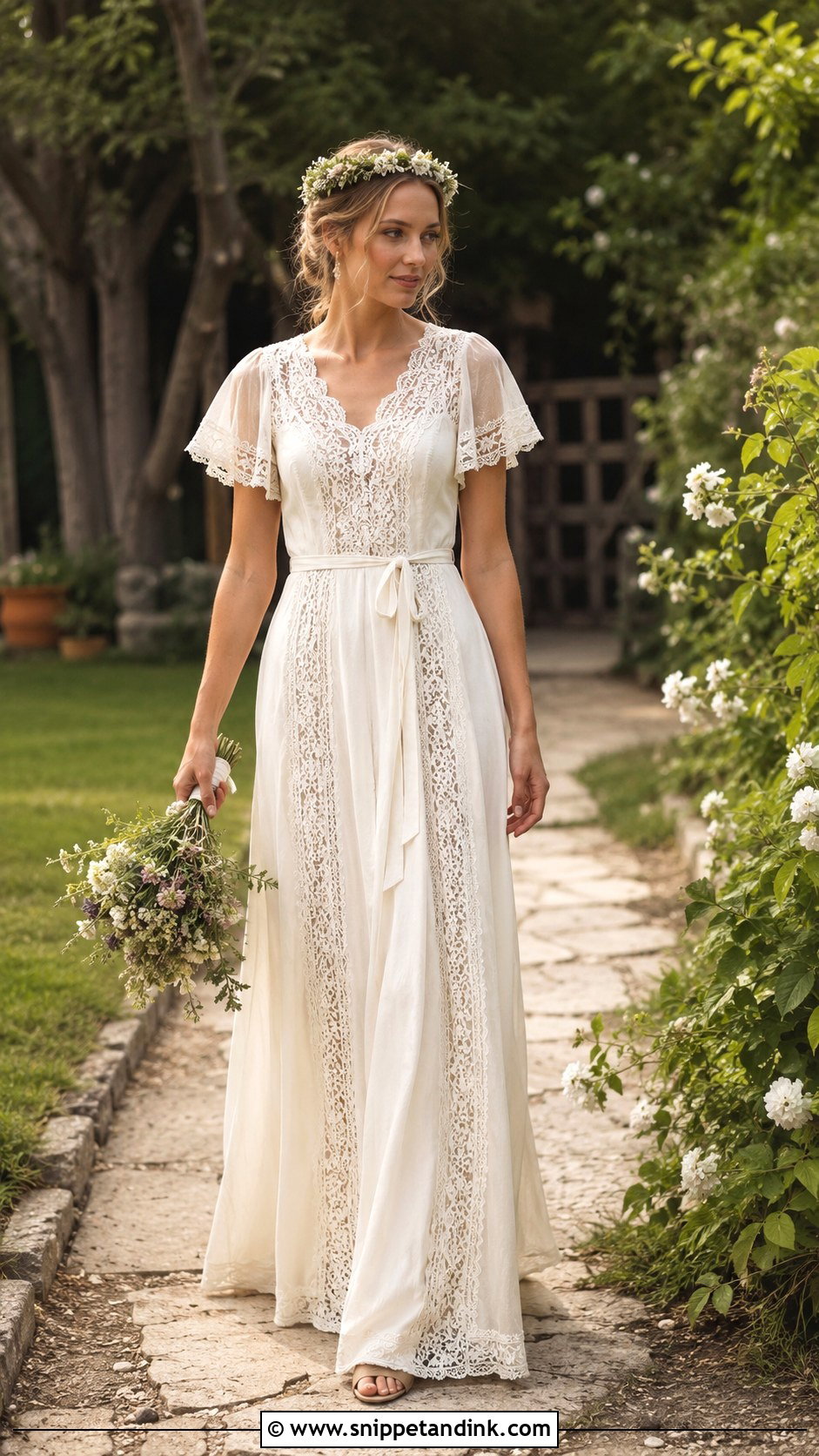
The maxi is the simplest dress on this list. Its long length makes it bridal while soft fabrics keep it relaxed, and lace panels, flutter sleeves, a tie waist or a gathered skirt add detail. A veil or floral crown decides how formal it reads; low heels, delicate earrings and a natural bouquet complete it. Many maxis are sold with the hem cut for flat shoes. If you’re wearing heels, check the length with them on, since a maxi that hovers above the ankle loses its line.
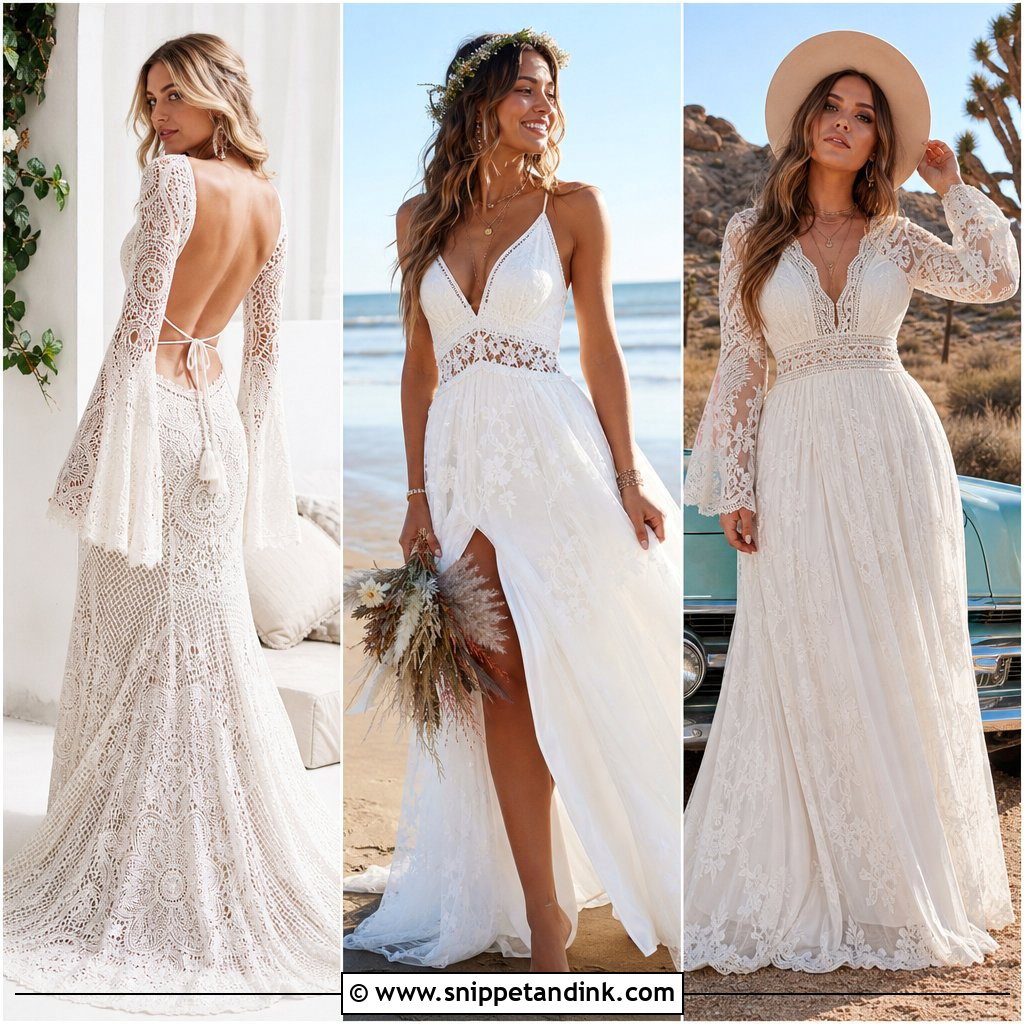
15. 1970 Ruffle Wedding Dress
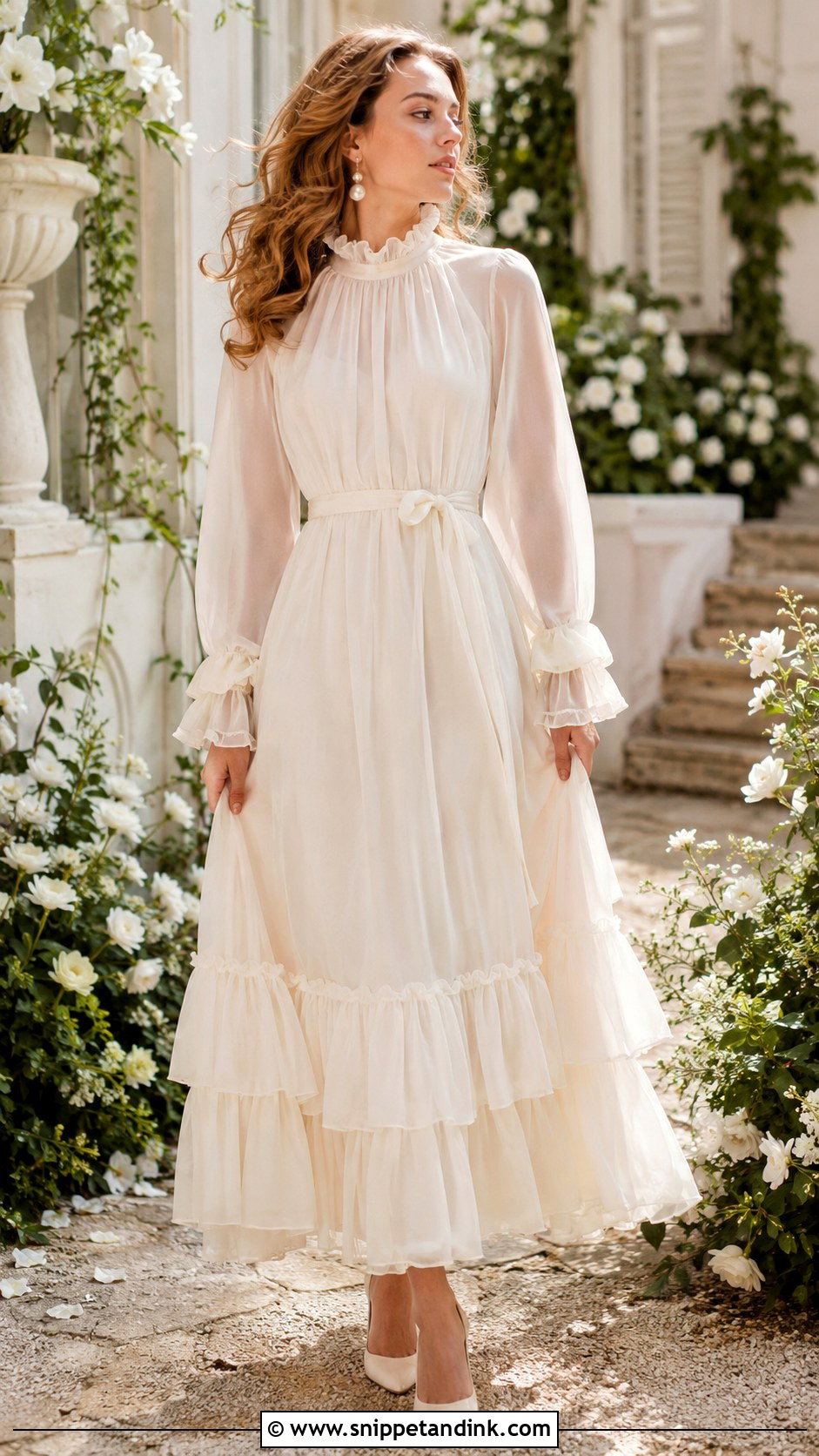
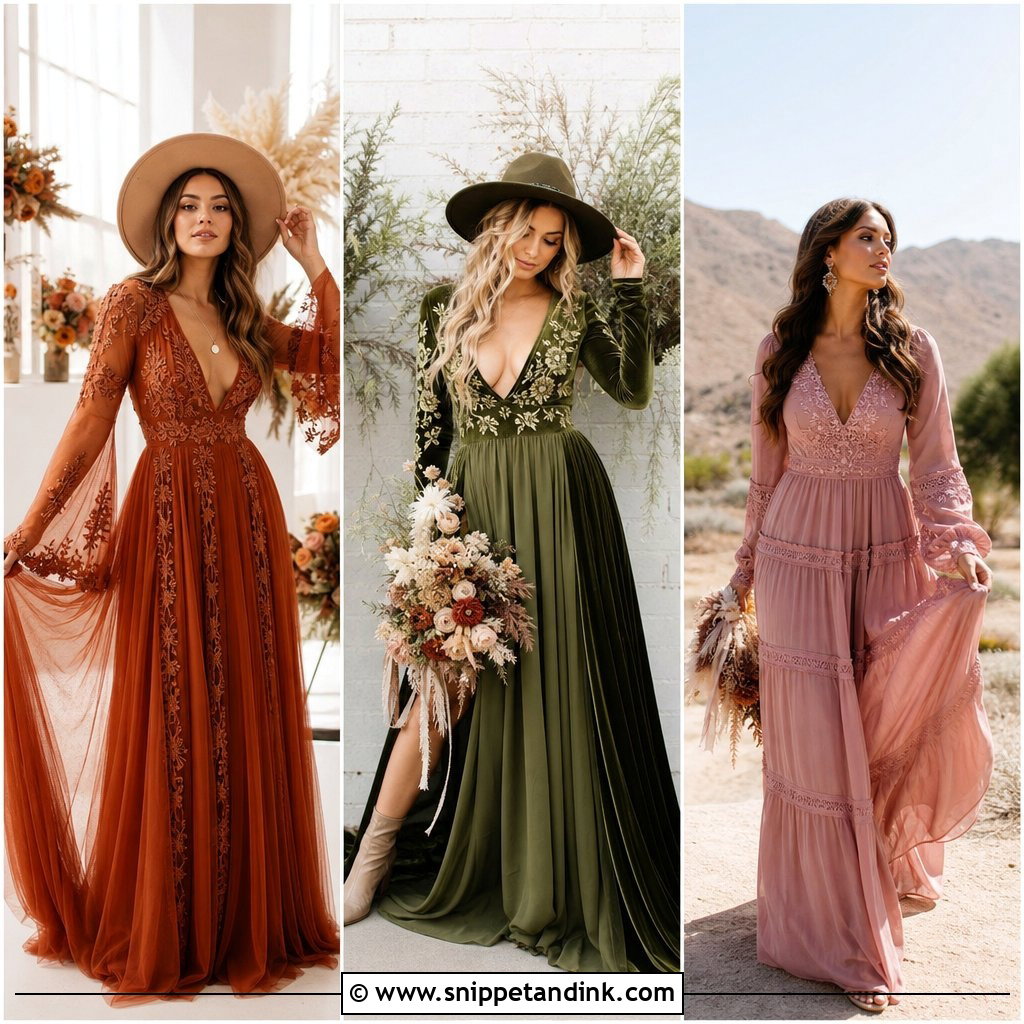
Ruffles should be soft, never stiff layers. Ruffle cuffs, a ruffled hem, a high neck with trim or a tiered chiffon or lace skirt all suit the decade, with pearl earrings, soft curls and ivory heels keeping the rest simple. A ribbon belt defines the waist. Count where the ruffles sit on your body: a ruffle at the hip or bust adds visual width there, and I’d move it to the hem or cuffs if that’s not what you want.
16. 1970 Tiered Wedding Dress
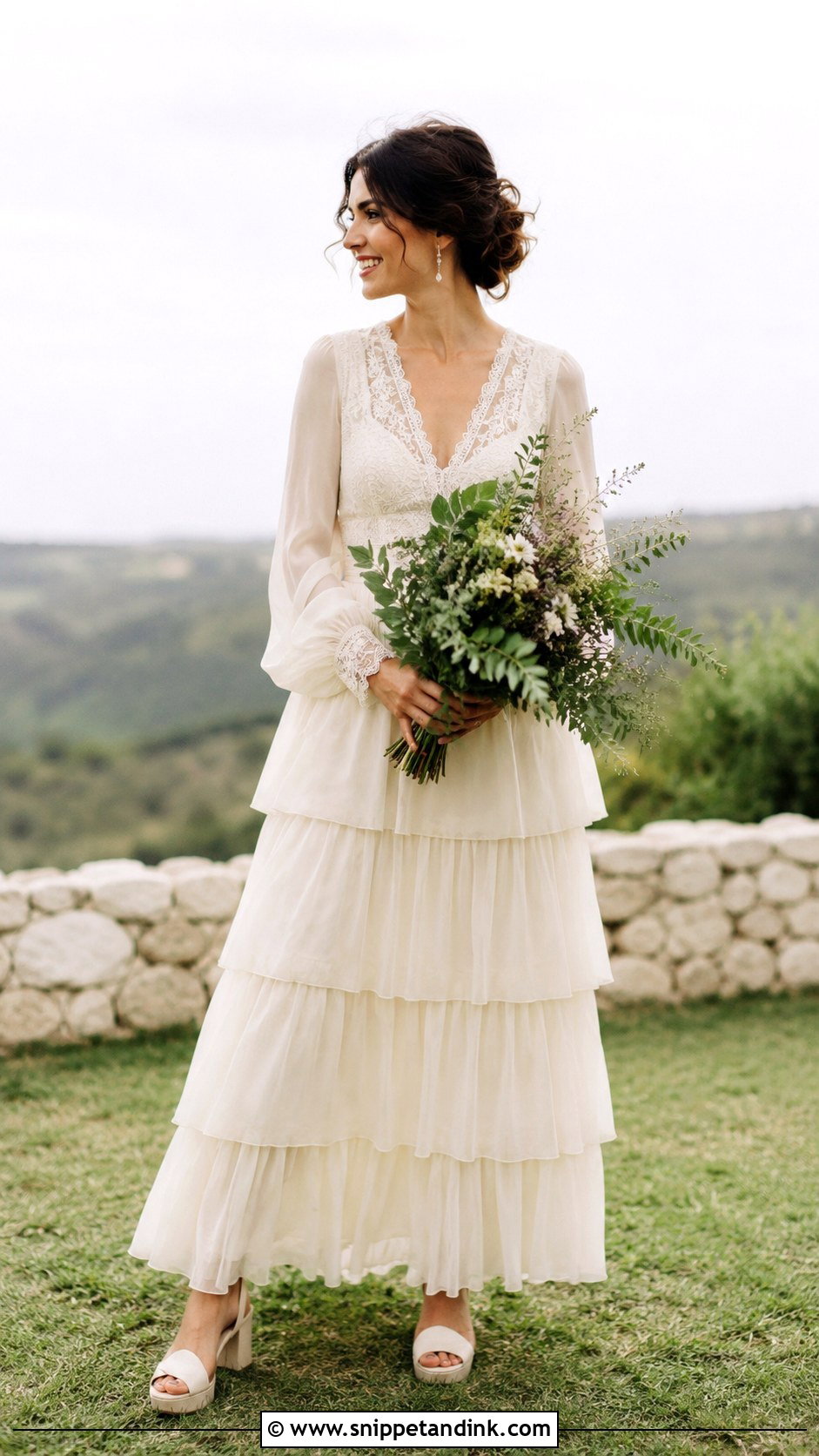
A 1970 tiered wedding dress gets its movement from layers that fall one over the next. Tiered skirts were common in prairie-inspired dresses, usually in chiffon, cotton or lace. Choose gentle tiers that drop smoothly rather than add bulk, balanced by a fitted bodice or empire waist. A loose updo, small drop earrings and block heels or sandals finish it, with soft flowers and textured greenery. Each tier needs its own hem, which makes hemming a tiered dress slower and dearer than a plain one. Factor that into alterations.
17. 1970 Off Shoulder Wedding Dress
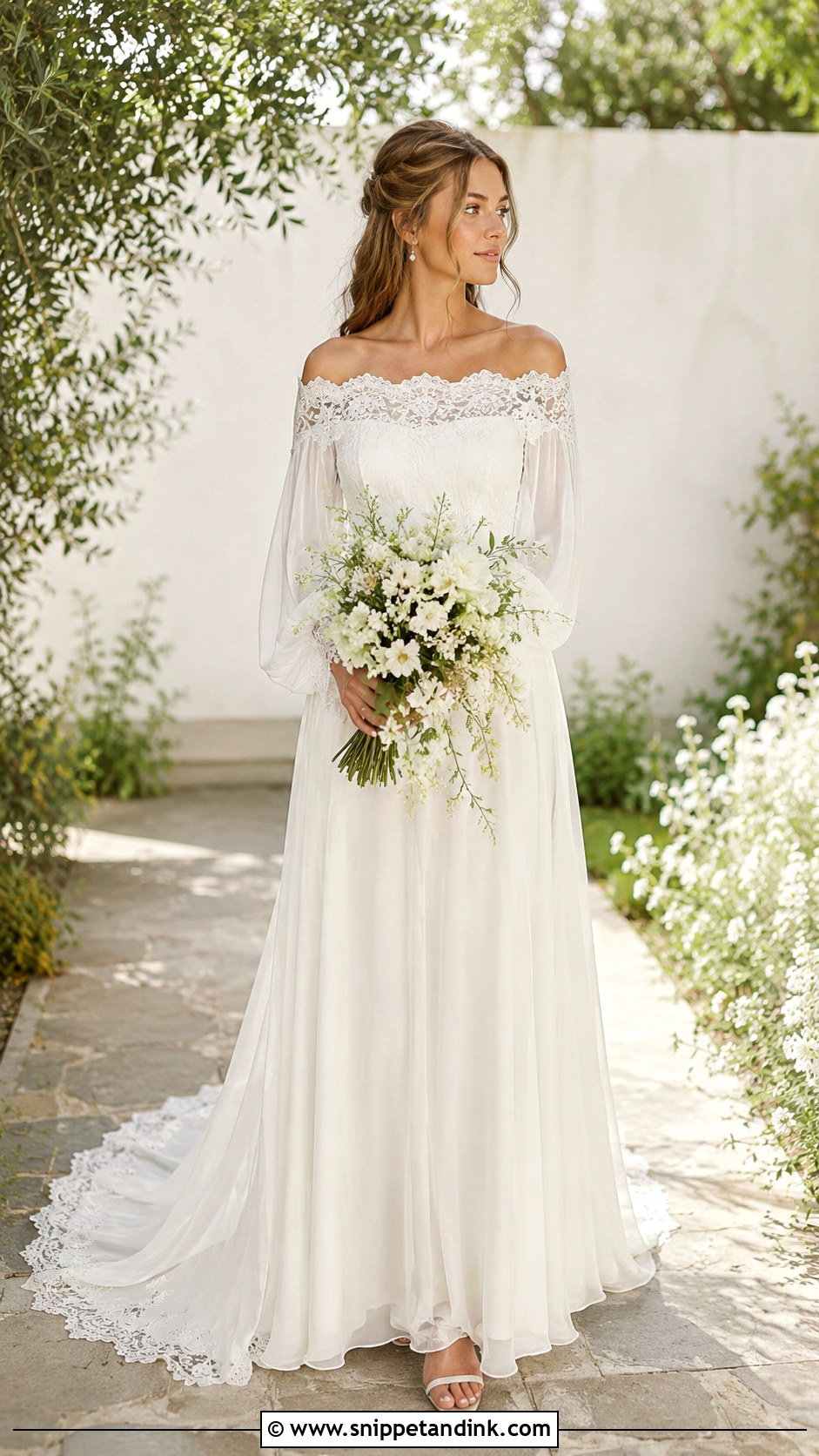
Off-shoulder necklines make seventies romance a little more relaxed. The neckline should sit softly across the shoulders, paired with long sleeves, lace trim or a flowing skirt, and it looks best in chiffon, voile or soft crepe. A loose half-up style, delicate earrings and simple heels or bridal sandals finish it, with an airy bouquet. Elastic off-shoulder bands creep up toward the neck as you move your arms, so I look for a neckline with a stay or light boning to hold it down.
18. 1970 Floral Lace Wedding Dress
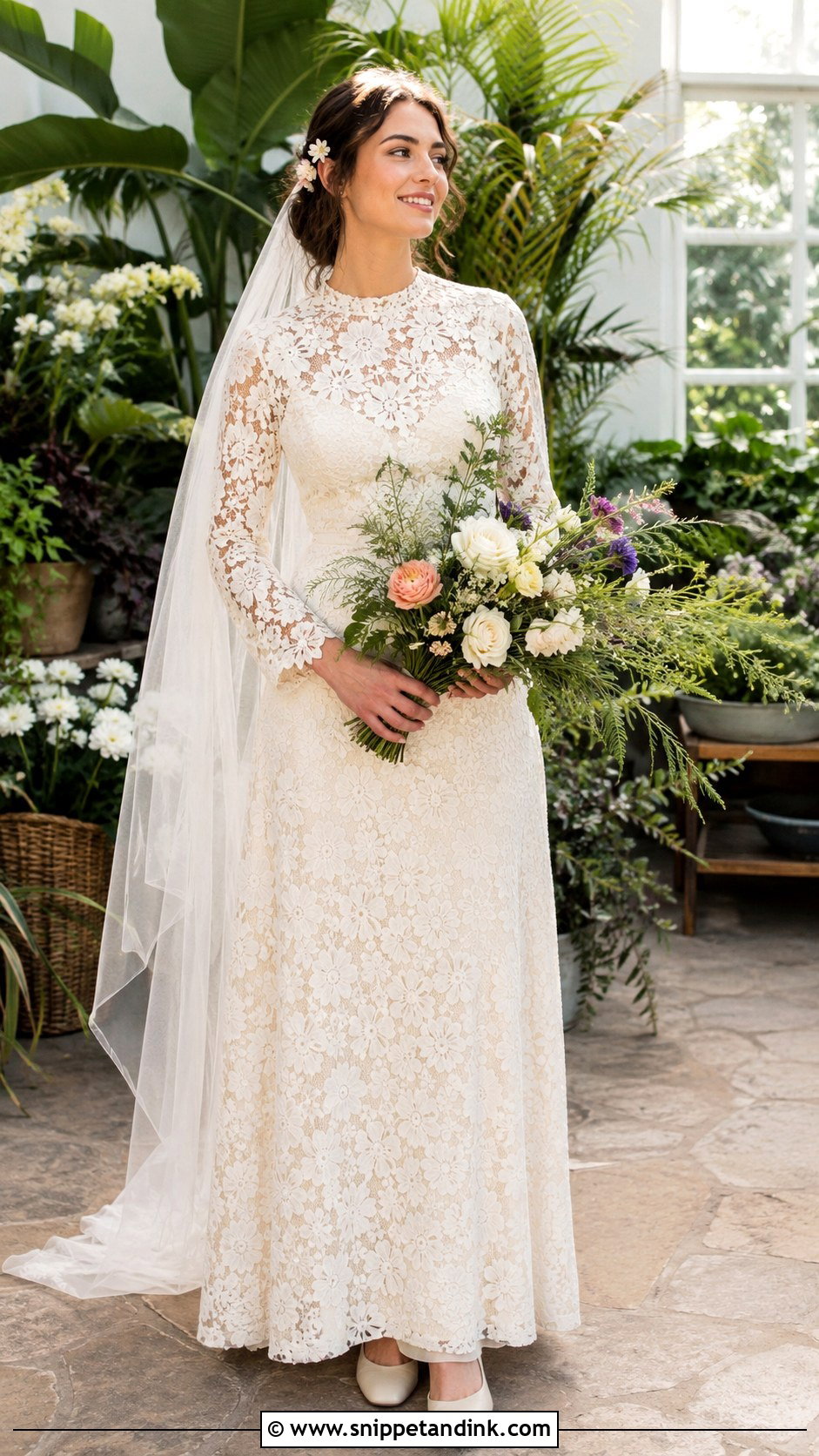
Floral lace from this decade uses larger patterns, vines and appliqués that look organic rather than formal. A long-sleeve gown with a soft skirt, shaped by a fitted bodice, gives the classic version. Add a sheer veil, floral hair pins and comfortable ivory heels, and keep jewelry minimal so the lace stays the focus. Big motifs need placement. I check that a large flower isn’t landing squarely on the bust or the hip, which a good dressmaker can shift during cutting on a made-to-order dress.
19. 1970 Sheer Sleeve Wedding Dress
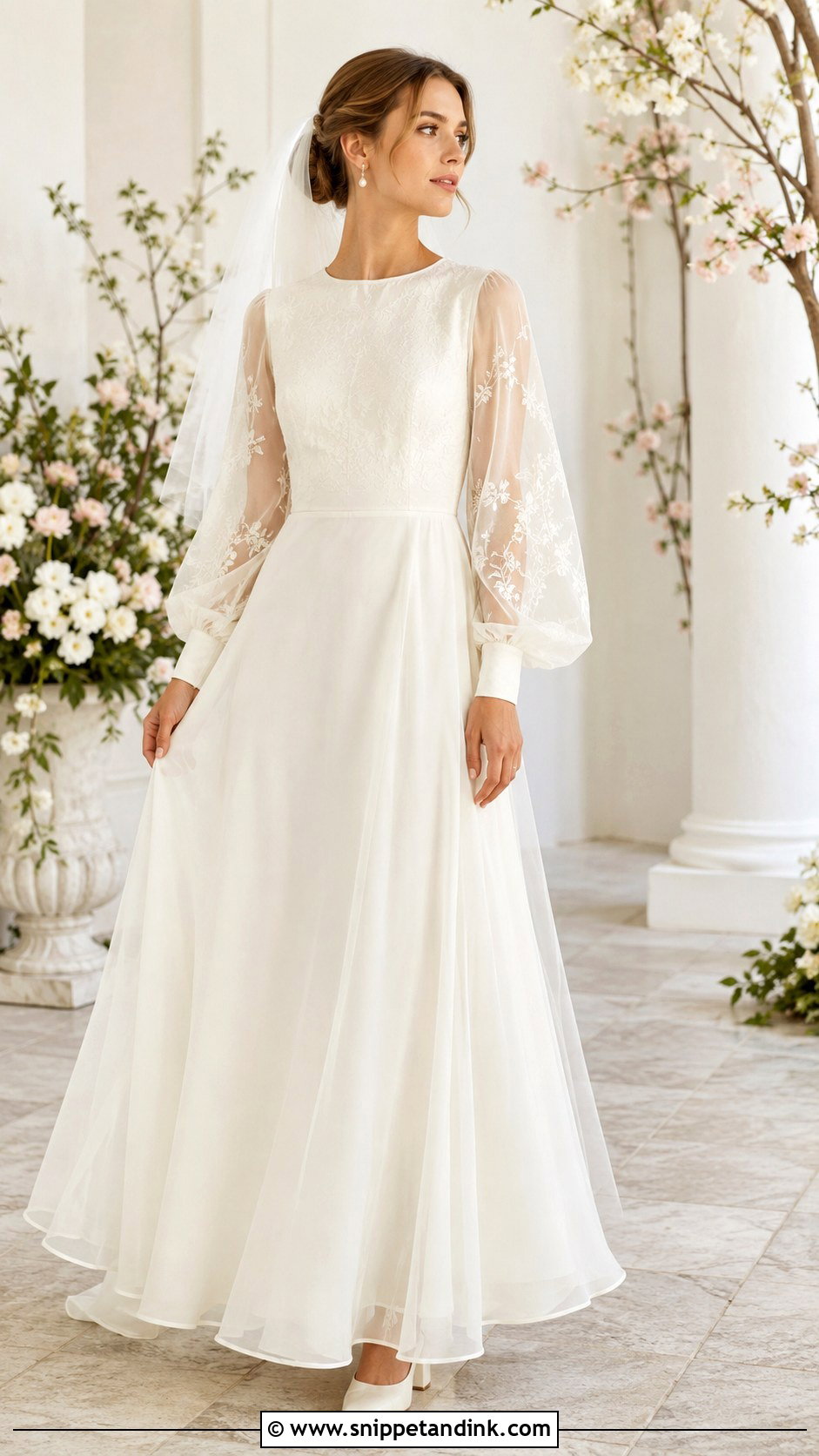
Sheer sleeves give coverage without weight. They can be lace, embroidery or soft chiffon, cut as bishop, bell or slim sleeves depending on how much drama you want. A lined bodice and flowing skirt keep it balanced, styled with pearl earrings, a soft bun and ivory pumps or block heels; a simple veil is enough. Spring and autumn suit it. Sheer sleeves show anything underneath, including a bra strap that slips, so I like a bodice with built-in support for this one.
20. 1970 Drop Waist Wedding Dress
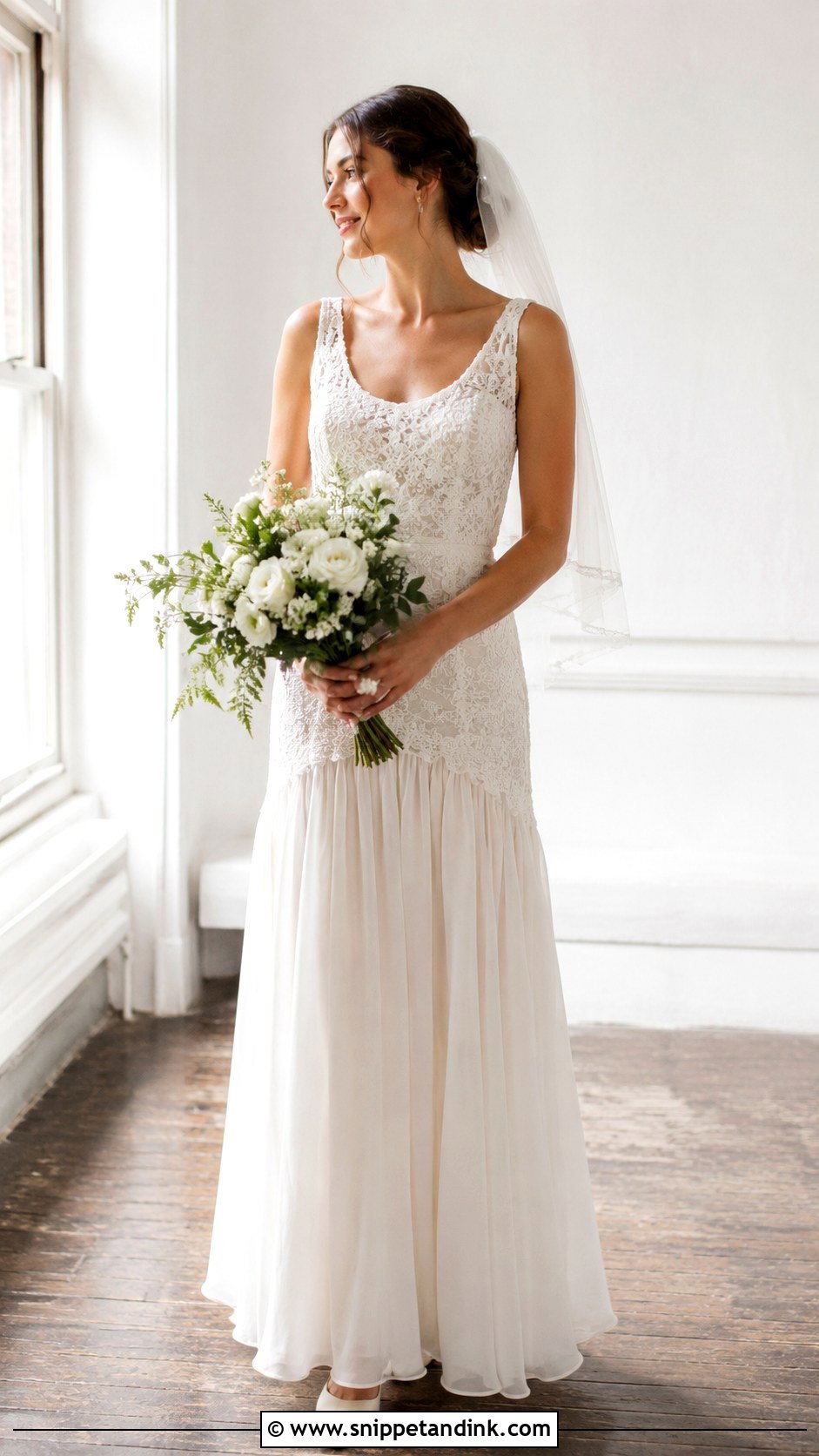
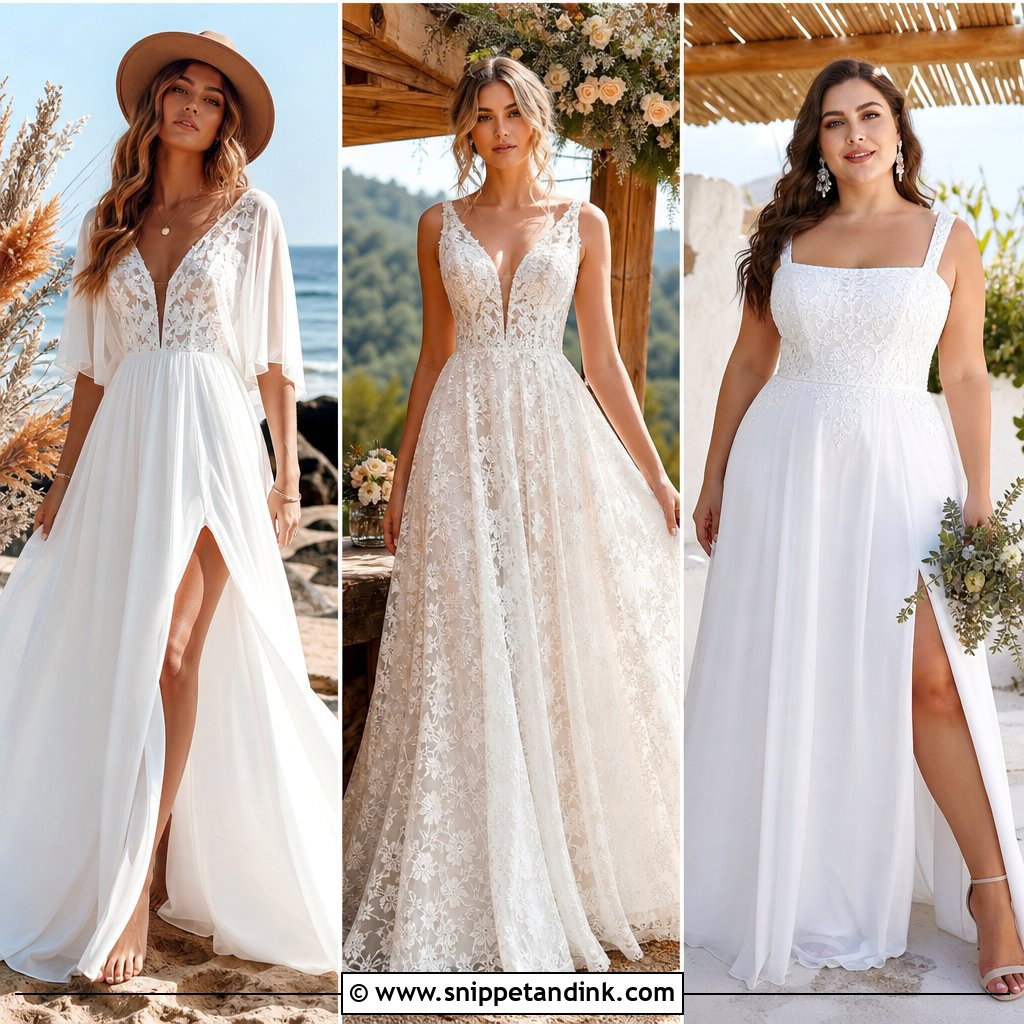
Drop waists are the unusual choice. The waistline sits lower on the body, creating a long torso before the skirt flows out. Soft fabric, gentle shaping and lace or embroidery on the bodice keep it flattering; a simple veil, low heels and natural greenery finish it. Honest note: a drop waist shortens the leg line, so on petite brides I’d look for one that sits just at the high hip rather than lower. It suits small weddings with a retro setting.
21. 1970 Two Piece Wedding Dress
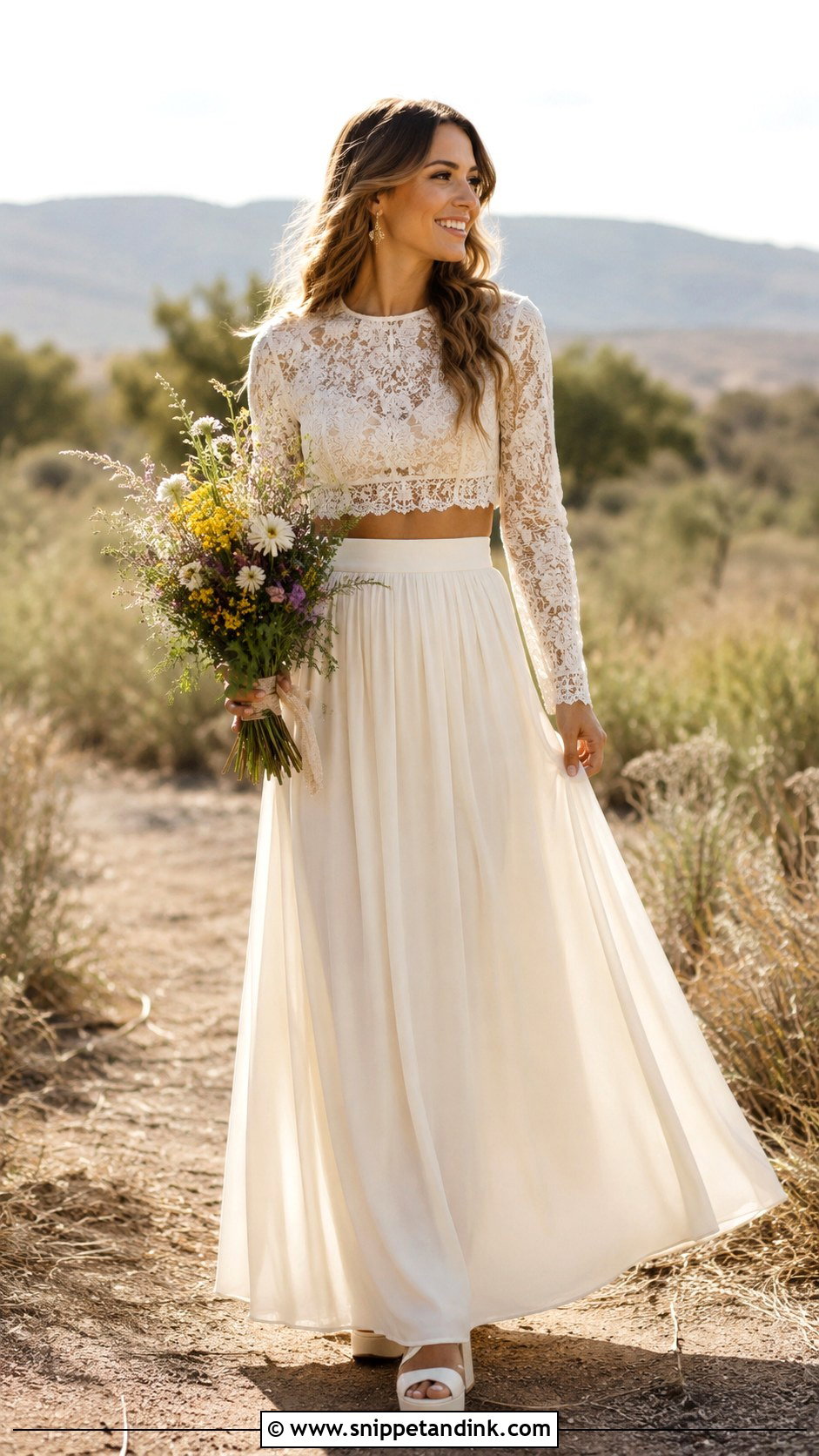
Two-piece looks feel modern while still honoring the decade. Try a lace crop-style top with long sleeves and a high-waist flowing skirt, or a modest blouse-style top with a maxi skirt. Ivory keeps it bridal; crochet or floral lace adds the vintage touch. Loose waves, platform-style sandals and a small wildflower bouquet complete it. Separates are practical too, since each piece can be sized and altered on its own. Make sure the two ivories match in daylight, as tops and skirts from different makers rarely do.
22. 1970 Cape Sleeve Wedding Dress
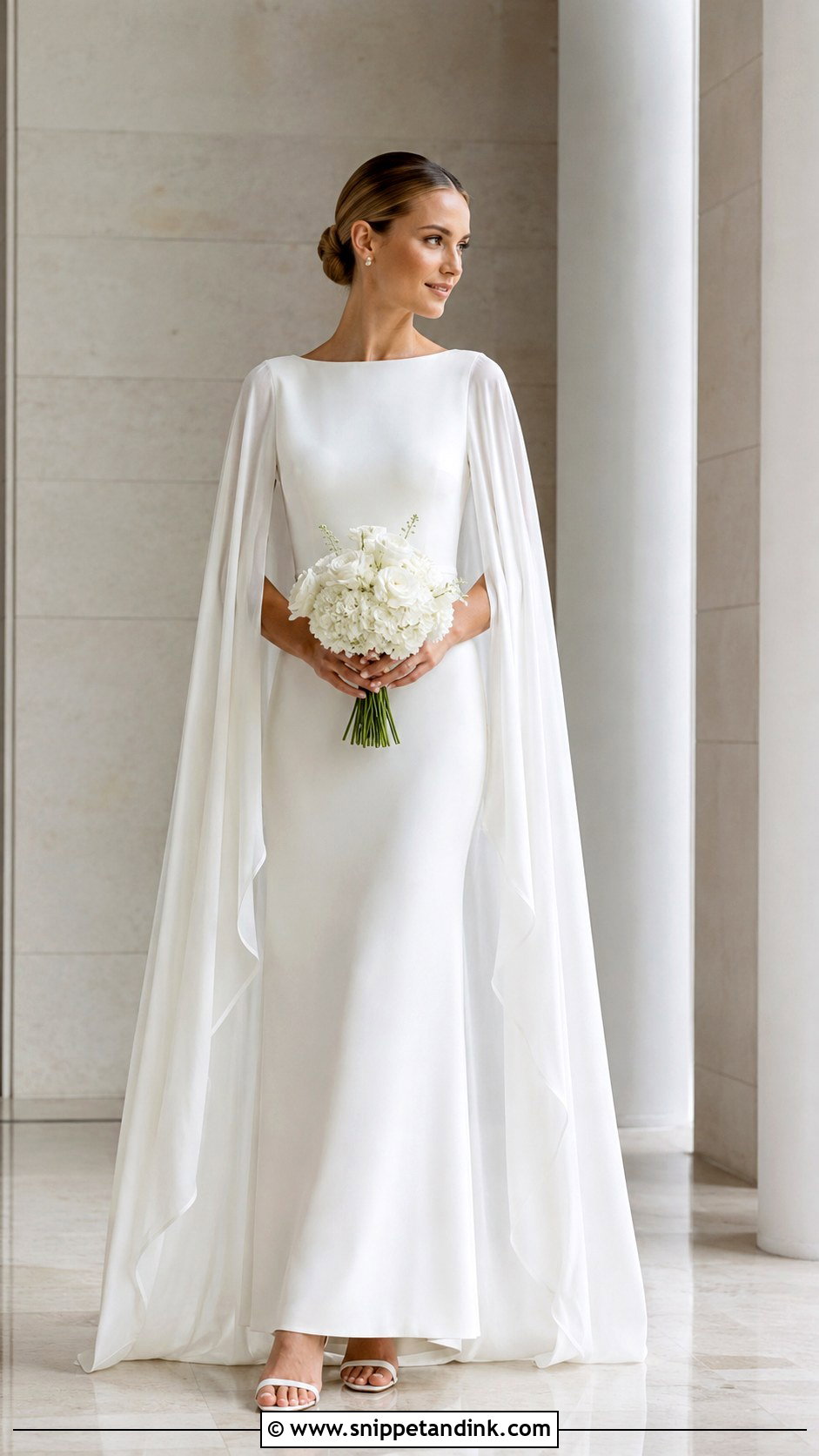
Cape sleeves give drama without a train or long veil. They drape from the shoulders and move as you walk, in chiffon or lace over a simple column, sheath or A-line. Pearl studs, a sleek hairstyle and simple bridal heels keep it elegant, and a clean bouquet stops it getting busy. Cape sleeves cover the arm from the side but leave it bare underneath, so raise your arms in the mirror before deciding. They also catch the wind outdoors, which looks lovely in portraits and less so during vows.
23. 1970 Embroidered Wedding Dress
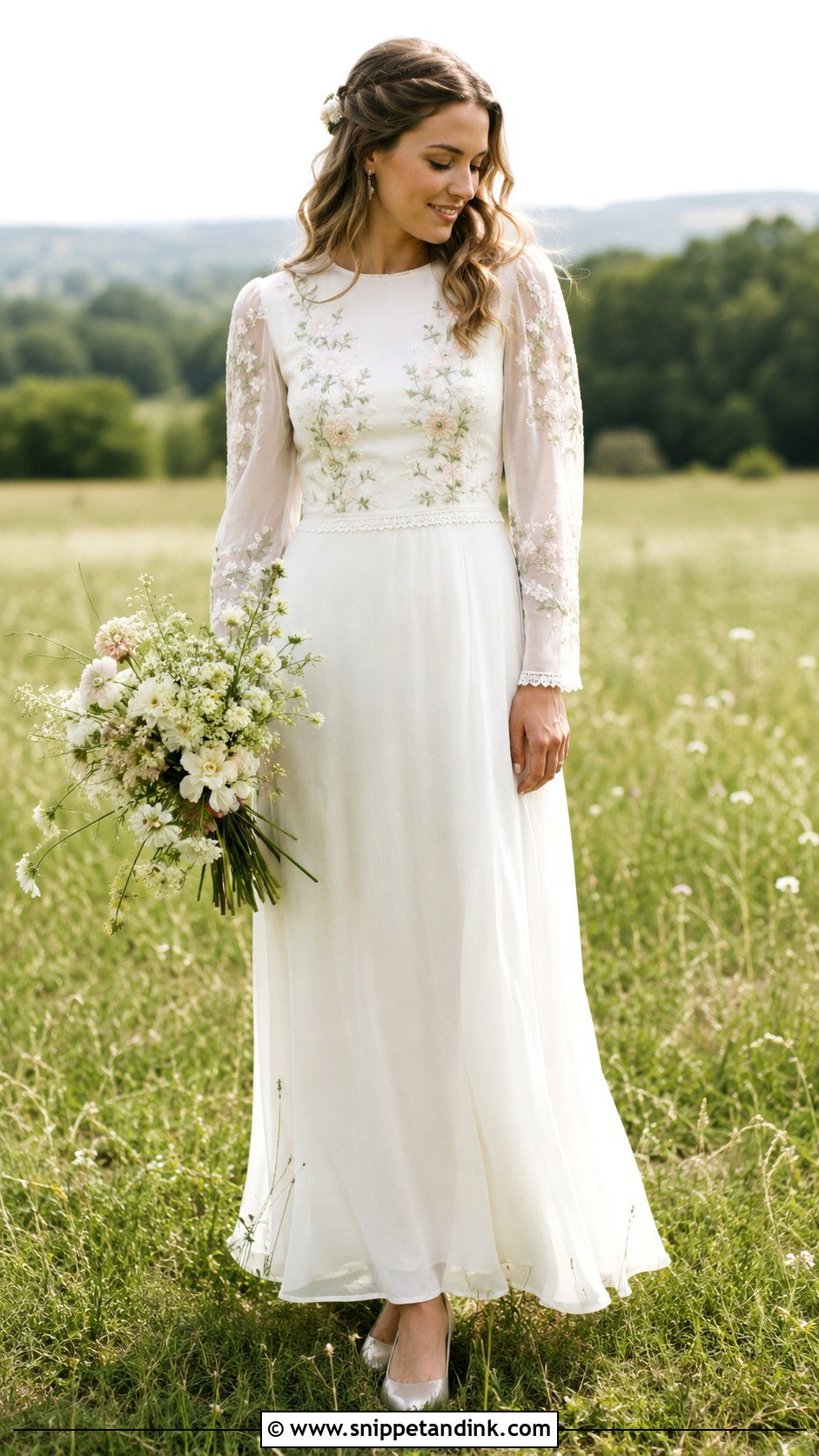
Embroidery gives a dress handmade detail. Floral work can sit on the bodice, sleeves, hem or veil; cream thread on ivory is soft and classic, while subtle pastels lean folk. Natural waves, dainty earrings and low heels or sandals complete it, and a bouquet in matching tones pulls it together. Look at the reverse of the embroidery. Hand or careful machine work lies flat, while dense cheap embroidery puckers the fabric around it and can feel stiff against skin. Gardens and meadows suit it.
24. 1970 Minimal Wedding Dress
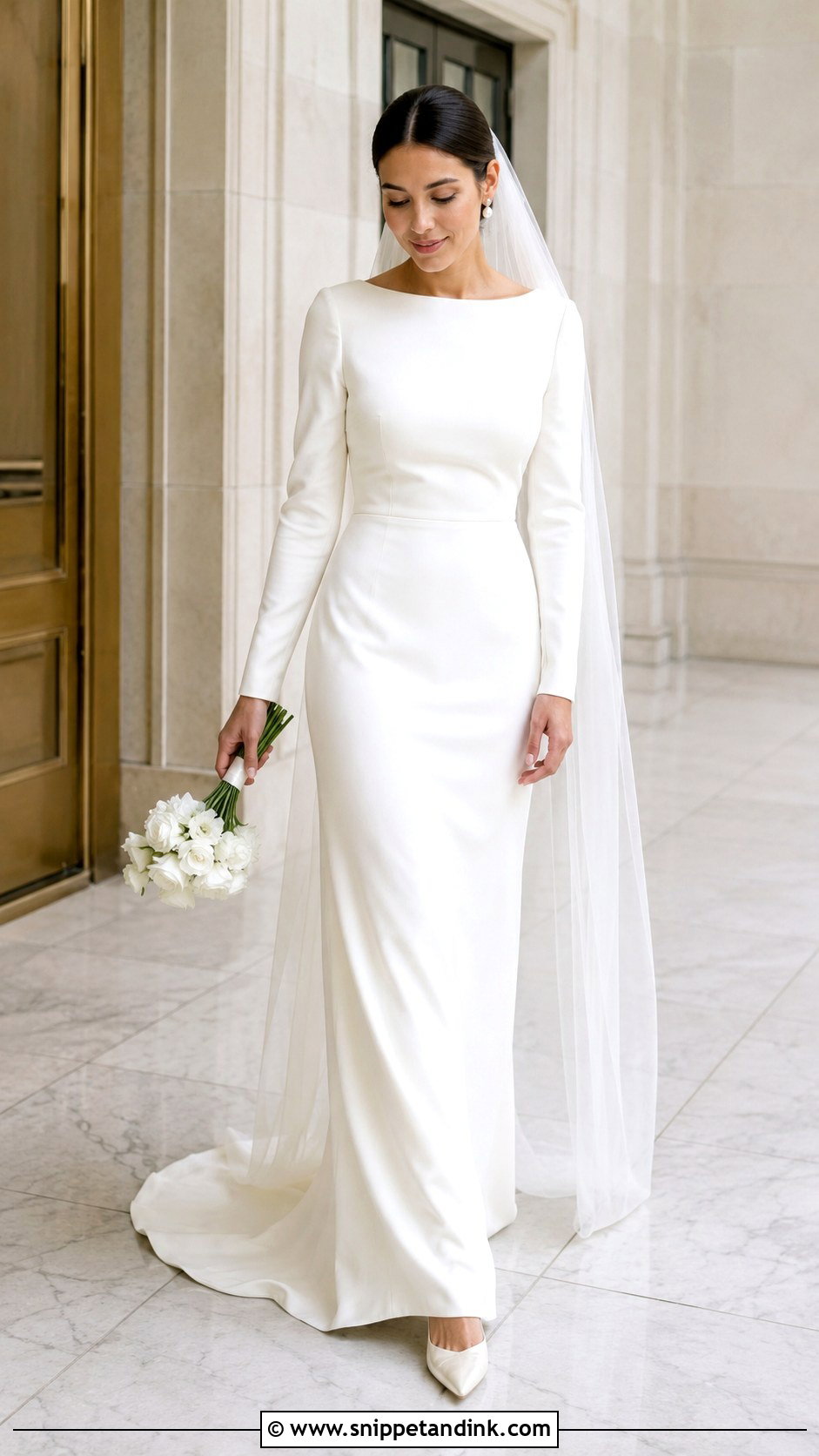
Minimal suits a bride drawn to the decade who still wants clean lines. Choose a simple crepe, satin or chiffon gown with one vintage detail, such as a high neck, long sleeves, an empire waist or a soft cape, and let the restraint carry it. A long veil, smooth hair, pearl earrings and classic ivory heels finish it, with a small bouquet of white flowers. With so little decoration, fit and fabric are fully exposed, so I’d spend the budget there. Courthouses, city ceremonies and modern venues suit it.
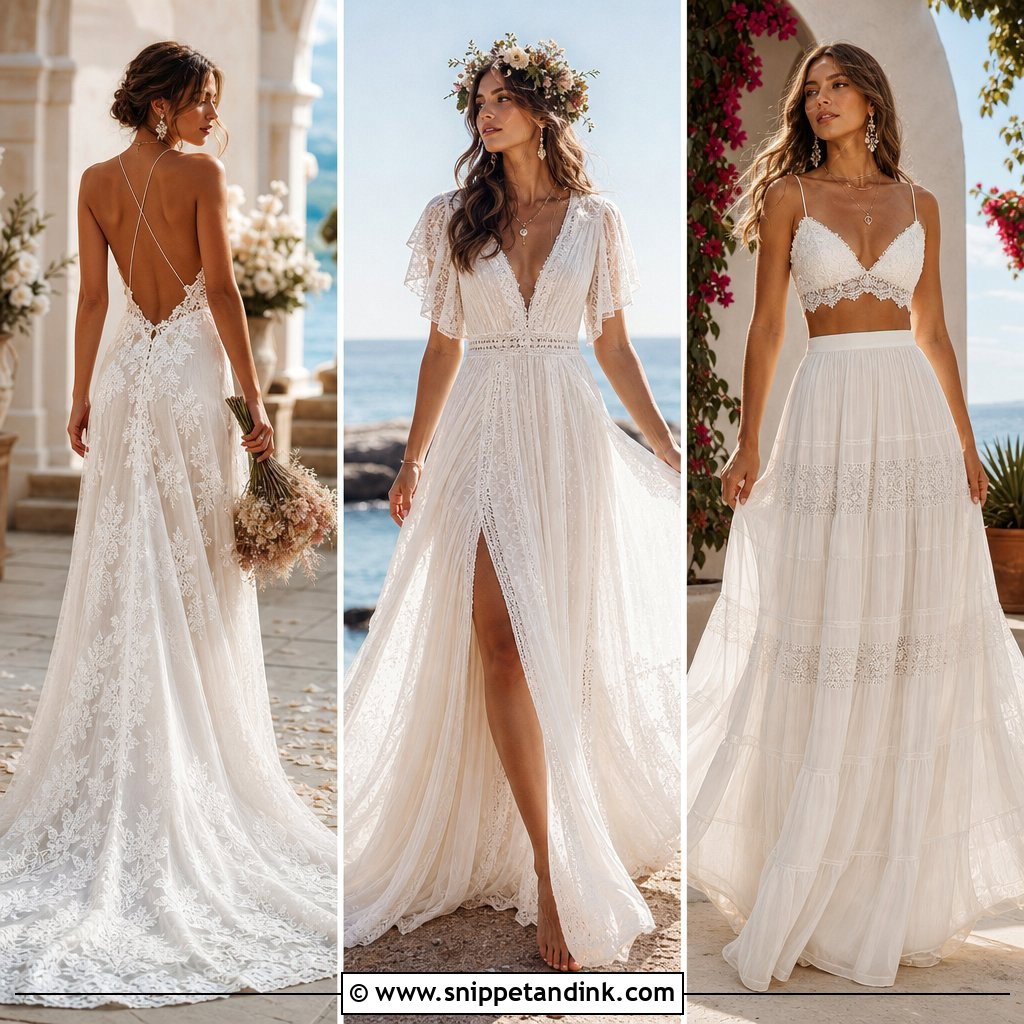
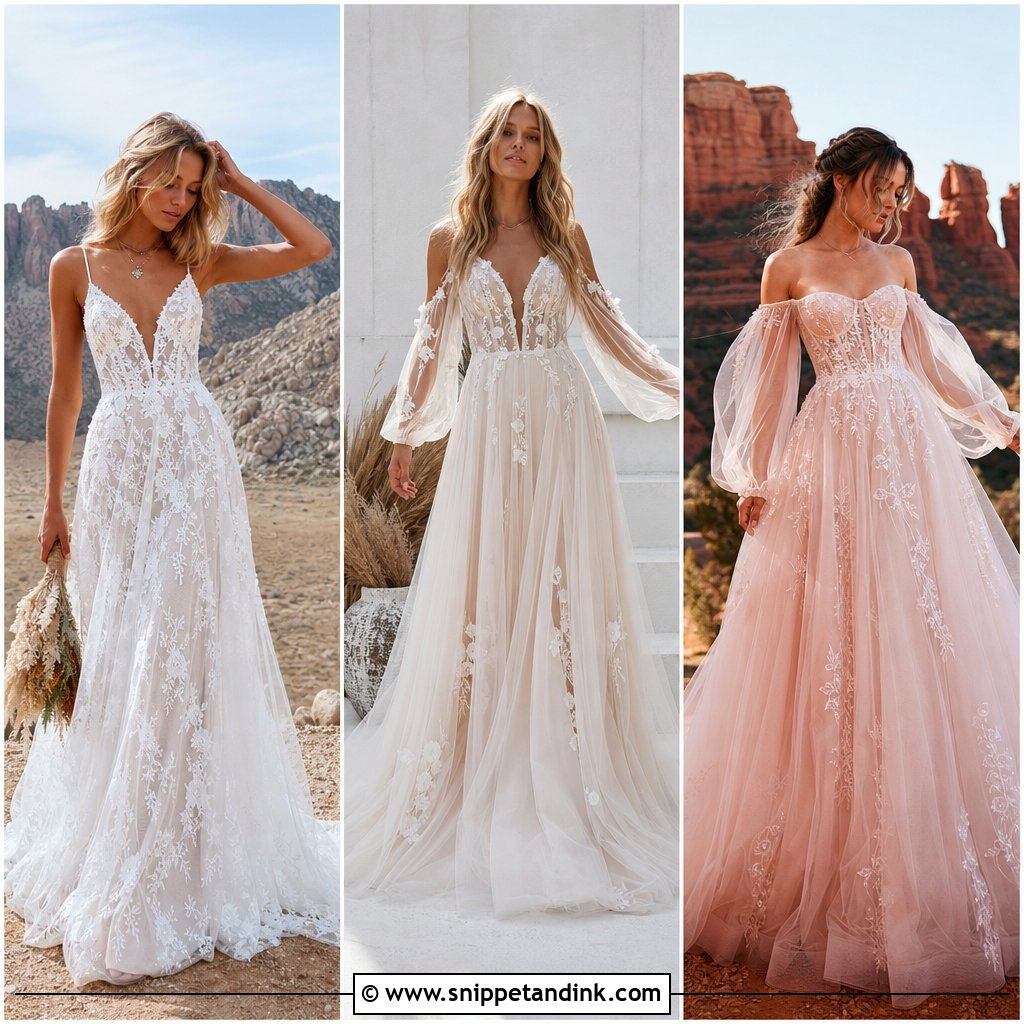
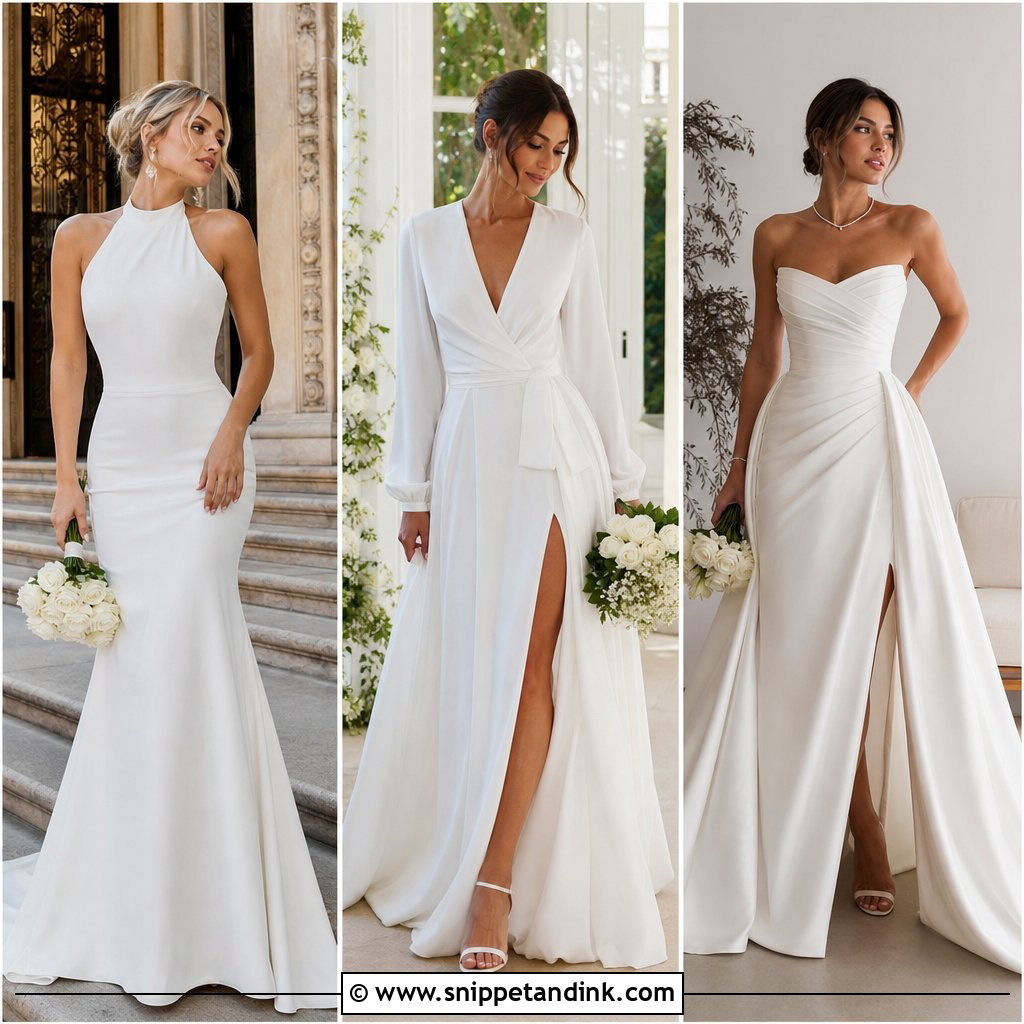
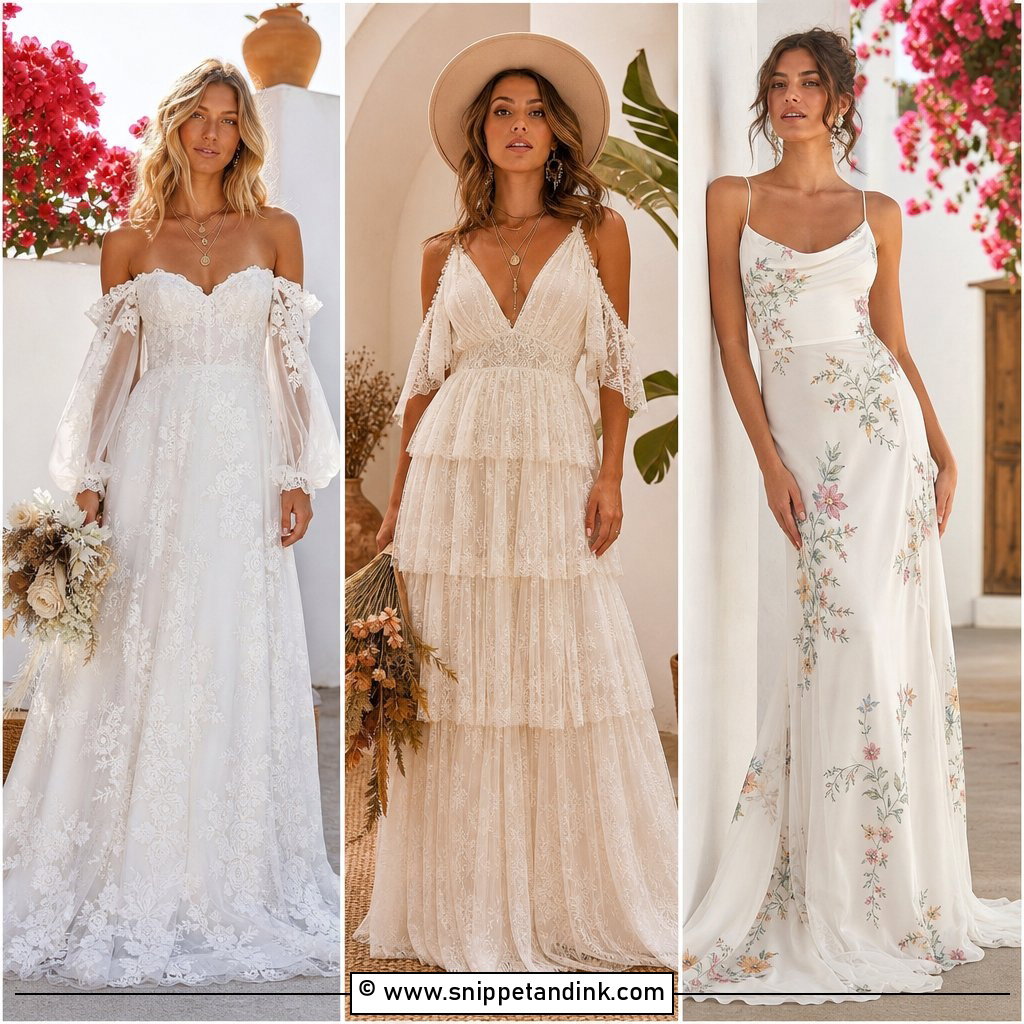
25. 1970 Beach Wedding Dress
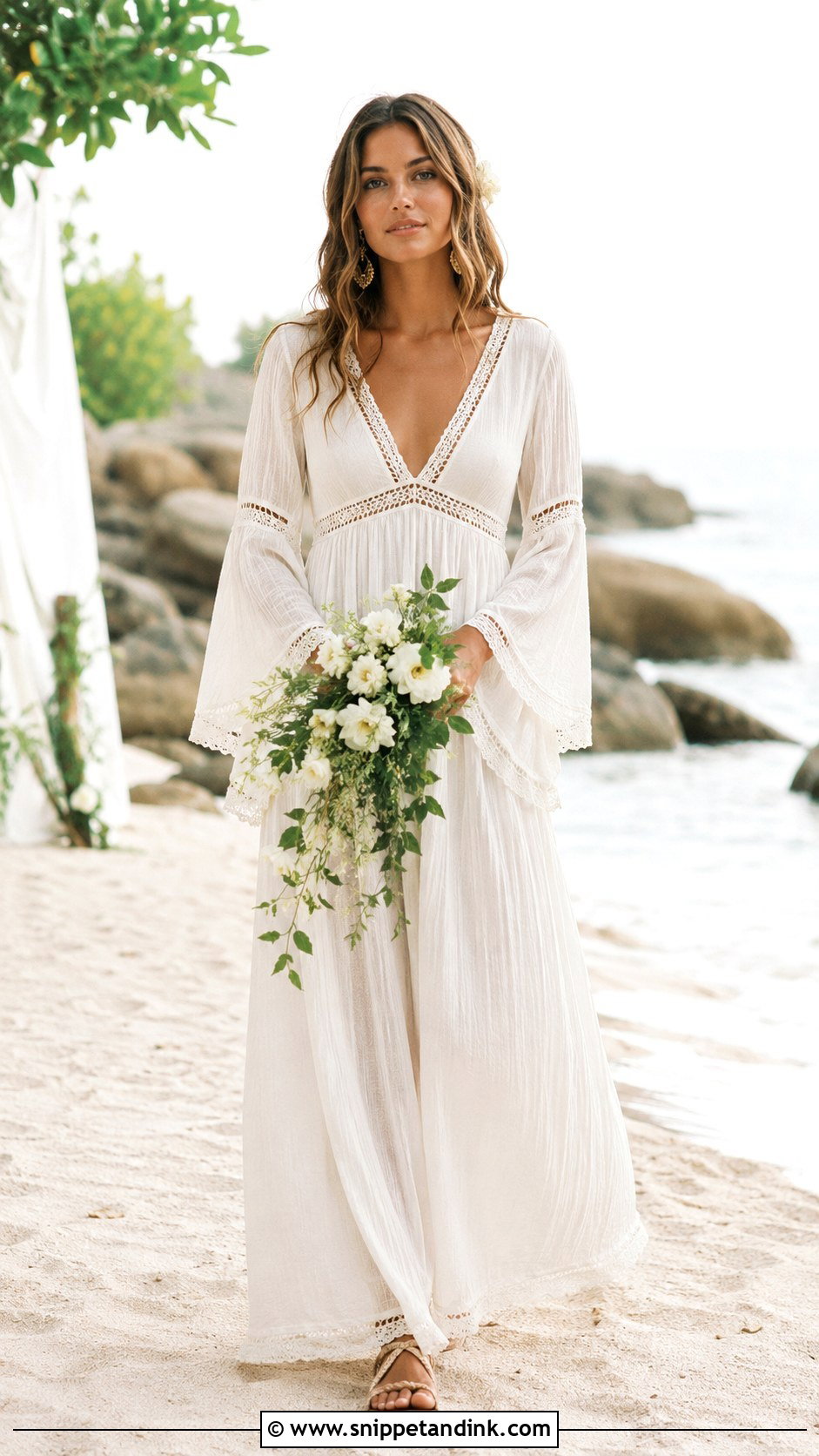
A 1970 beach wedding dress has to breathe. Gauze, chiffon, crochet lace or cotton voile in ivory or cream work best, with bell sleeves, a loose empire waist or a simple maxi shape. Flat sandals, soft waves, gold earrings and a relaxed bouquet of white flowers and greenery finish it. Skip a heavy train, which turns into a sand rake. I’d also have the hem taken up enough that it skims the sand rather than lying on it; a wet hem soaks up water and grows heavier through the day.
Sand, Grass and Wind Are Hard on Light Fabrics
These dresses are built for outdoor weddings, and outdoors is exactly where they pick up damage. Planning for it keeps the dress photographable until the last dance.
Grass stains and soil show on ivory cotton within minutes, and a dragging hem collects both. I usually take outdoor hems up so they just clear the ground in your wedding shoes. On sand, a light hem flicks grains up into the lace, so shake it out before portraits rather than after.
Wind lifts chiffon, capes and long bell sleeves. A few small weights sewn discreetly into the hem calm a skirt, and a veil anchored with a sturdy comb plus a couple of hidden pins won’t sail off during the vows.
Afterward, don’t let anyone scrub a stain on the day; blot it and leave it. Cotton and gauze clean well with the right care, but a wet rub spreads dye and dirt into the fibers. Get the dress to a specialist cleaner within a few weeks, and store crochet folded flat in tissue, never hanging.
Bell Sleeves or Bare Shoulders, Lace or Crochet
Seventies bridal fashion gives you room to feel like yourself. Bell sleeves, soft chiffon, floral lace, crochet, prairie details or a clean satin line can all capture the decade. Start with your venue and how much you want to move, then choose the fabric that will handle both. Keep the hair and makeup natural, wear shoes you can walk on grass or sand in, and the outfit will look lived in rather than styled.
You'll Like These Ideas:


Leave a Reply