
Seventies bridal fashion was soft, loose and a bit rebellious after the stiff gowns that came before it. Brides wore high necks, lace sleeves, empire waists, prairie ruffles and fabrics that moved when they walked. Most of those details translate easily to a modern wedding, which is why I get so many requests for them. The danger is piling on too many at once until the look turns into a theme party. Below are the shapes and details I fit most often, with notes on how each fabric behaves, what it needs underneath, and which settings it really suits, from a garden ceremony to a courthouse.
What Goes Under a Sheer, Floaty Seventies Gown
Most of the dresses below rely on sheer lace, chiffon or crochet, so the layer beneath matters as much as the dress. The lining decides how much skin seems to show, and the wrong one can make an ivory gown look grey or pink in photos.
- Nude linings make lace look like it sits on bare skin; ivory linings keep the dress reading bridal. Look at both in daylight.
- Open backs and sheer yokes usually need cups sewn into the dress rather than a separate bra.
- Bias-cut satin and crepe show every line, so try the dress with the exact underwear you’ll wear.
- A half slip under a chiffon skirt stops it clinging to your legs when the air is dry or the room is warm.
Bring your underwear and shoes to every fitting. A seamstress can only take in a bodice correctly if she sees how it sits on the day.
1. 1970s Boho Lace Wedding Dress
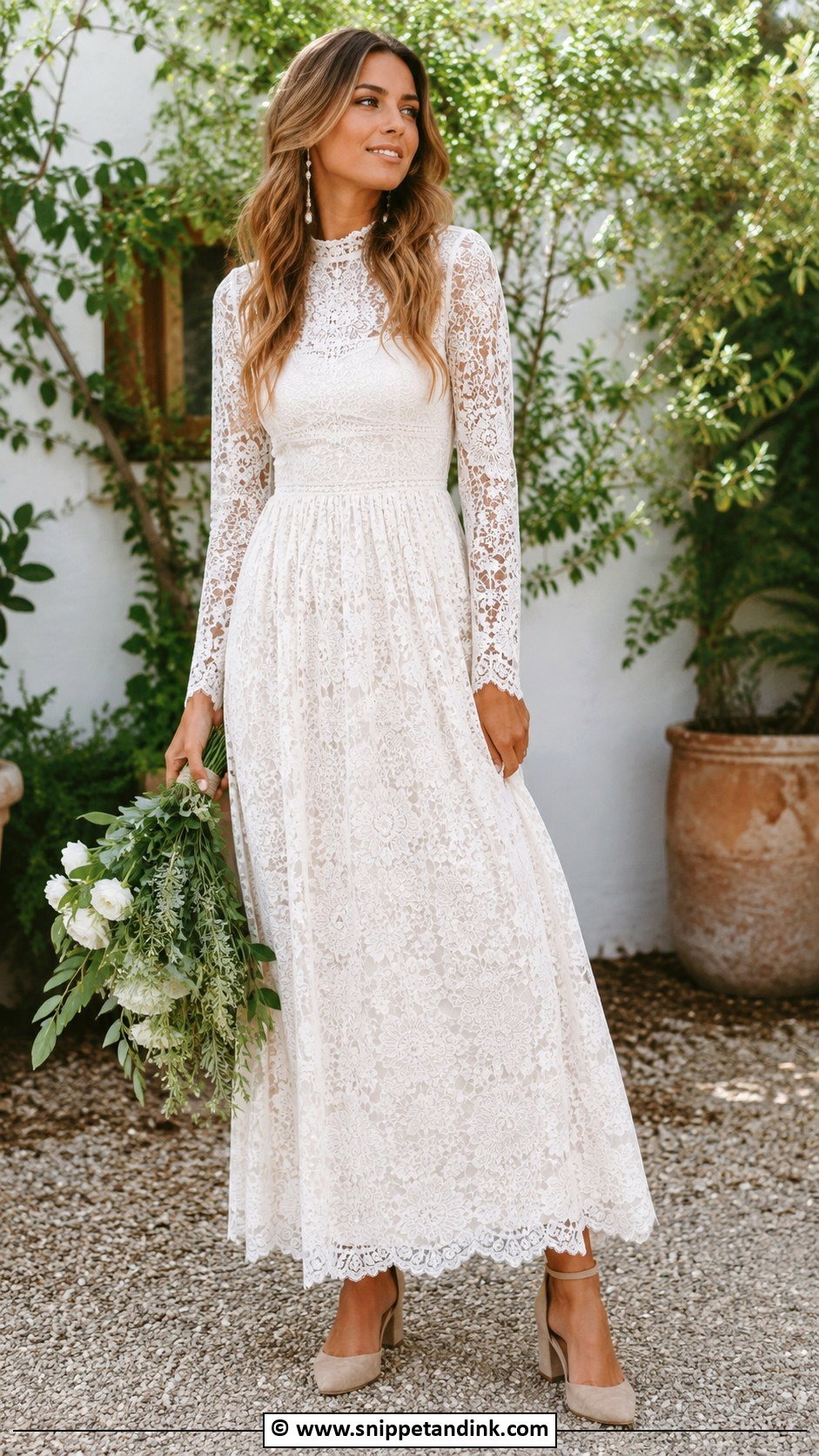
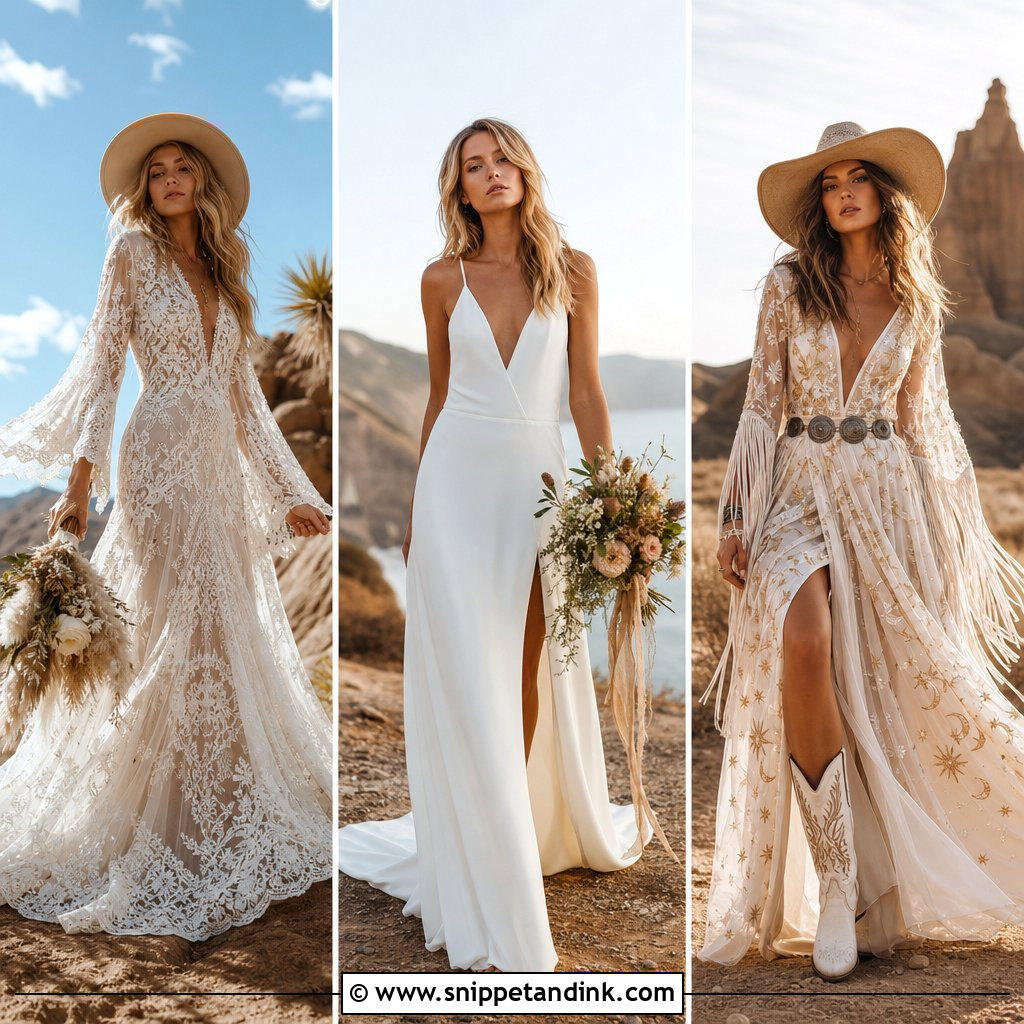
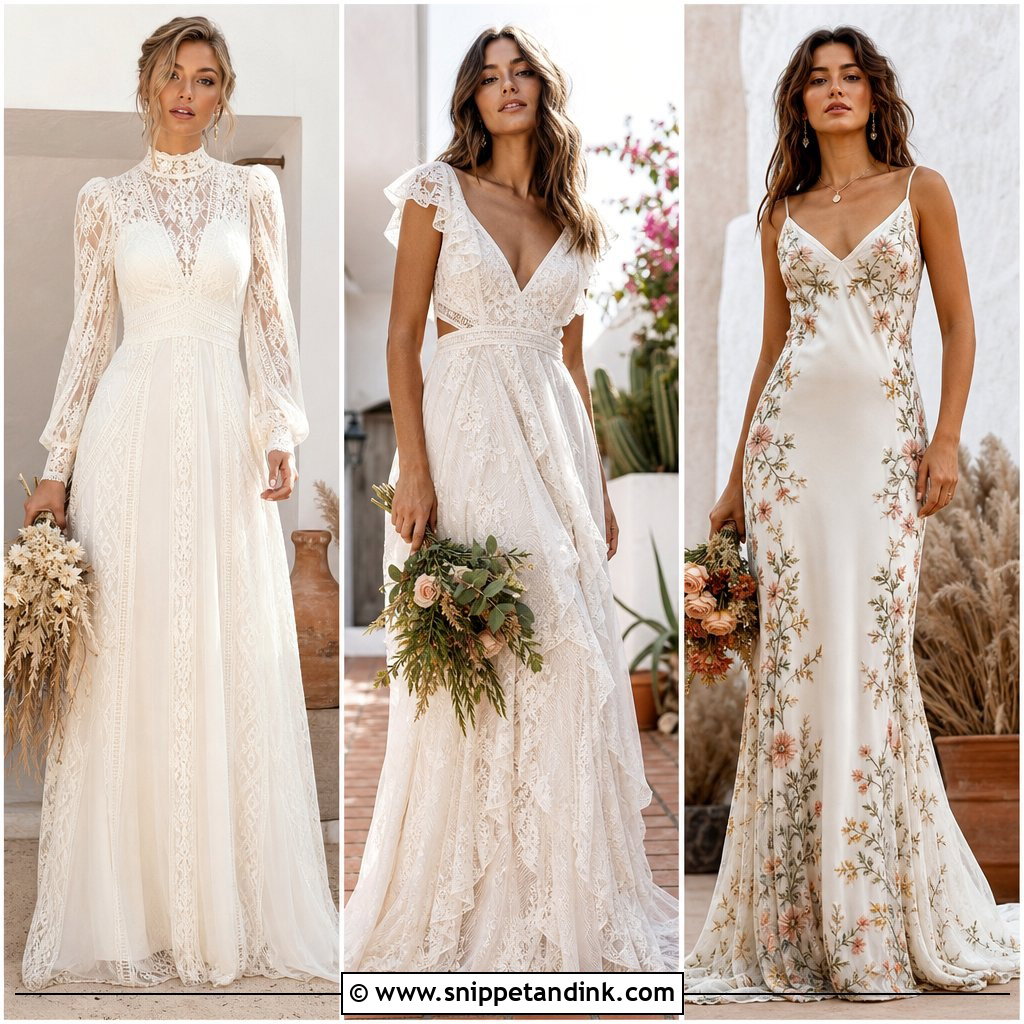
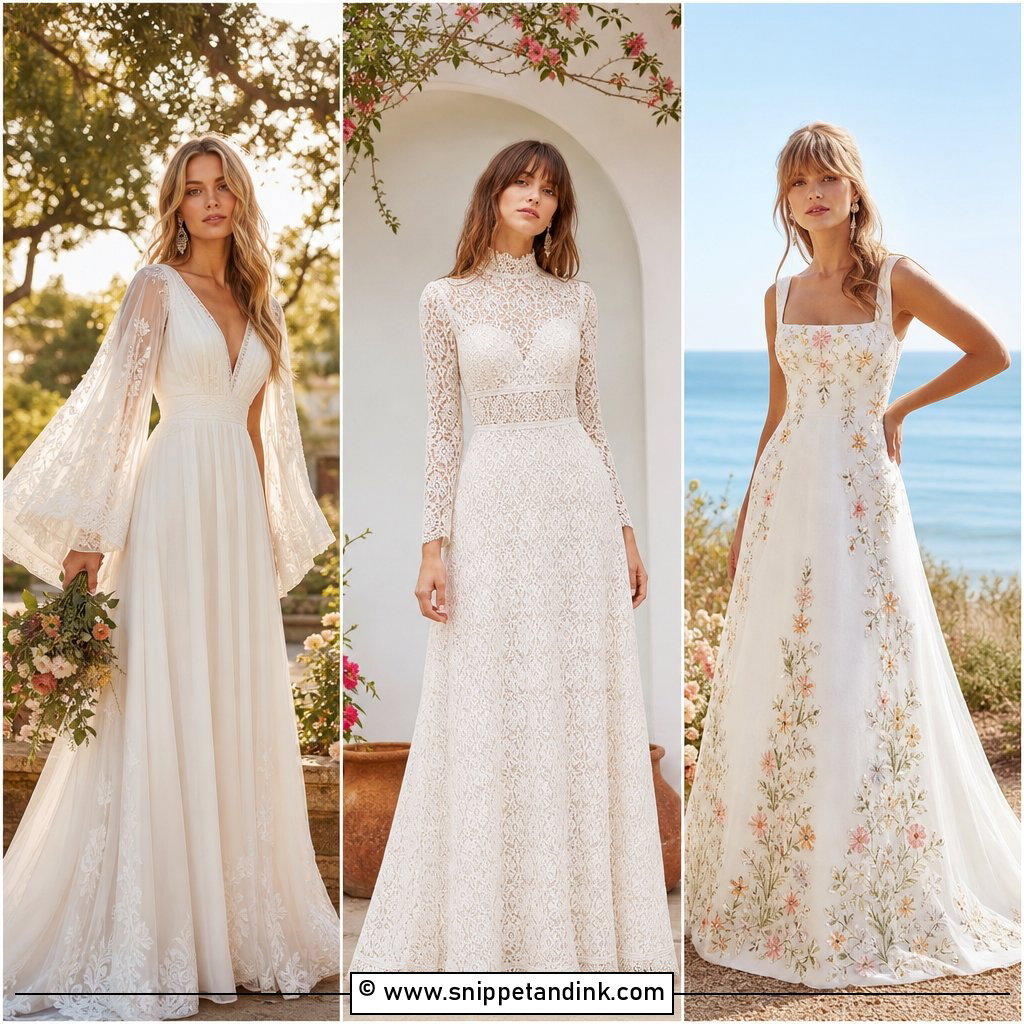
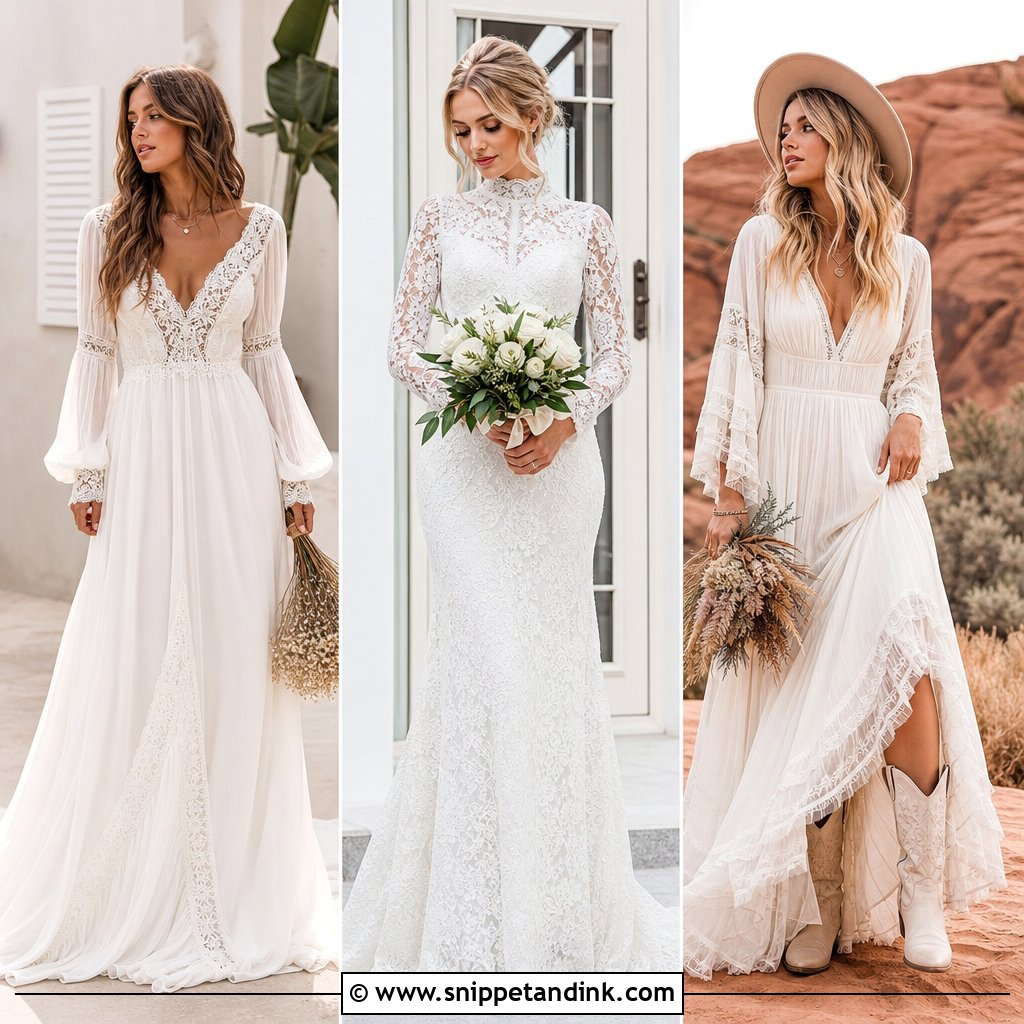
Allover lace with long sleeves is the dress most people mean when they say seventies boho. A soft A-line or sheath lets the skirt move as you walk. My first check at a fitting is the sleeve: lace has little stretch, so a tight sleeve pulls at the shoulder seam when you hug. A high neck keeps it vintage; a slightly open back makes it current. Suede block heels, pearl drops and loose waves suit it. A flower crown is fine if it’s small; a huge one turns the outfit into a festival costume.
2. 1970s High Neck Wedding Dress
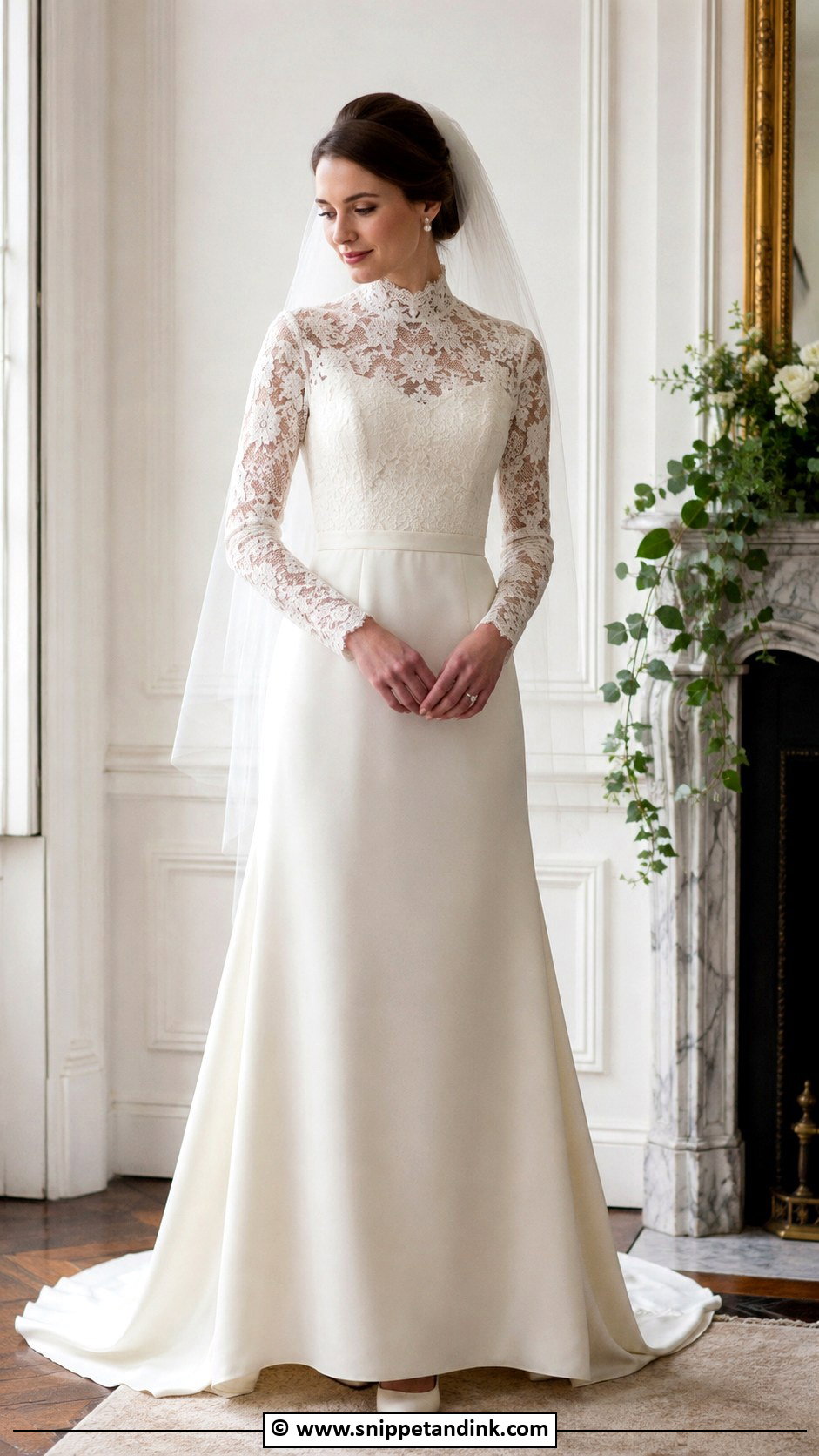
High necks with sheer sleeves and a softly fitted bodice look modest and warm, which is why I suggest them for autumn and winter. Lightweight chiffon or crepe in the skirt stops the covered top from feeling heavy. Watch the fit at the collar: lace at the throat should sit flat with a finger’s width of room, or it’ll itch by the reception. Low satin heels, pearl studs and a simple veil let the neckline lead. For more drama, a long veil with lace trim echoes the collar.
3. 1970s Bell Sleeve Wedding Dress
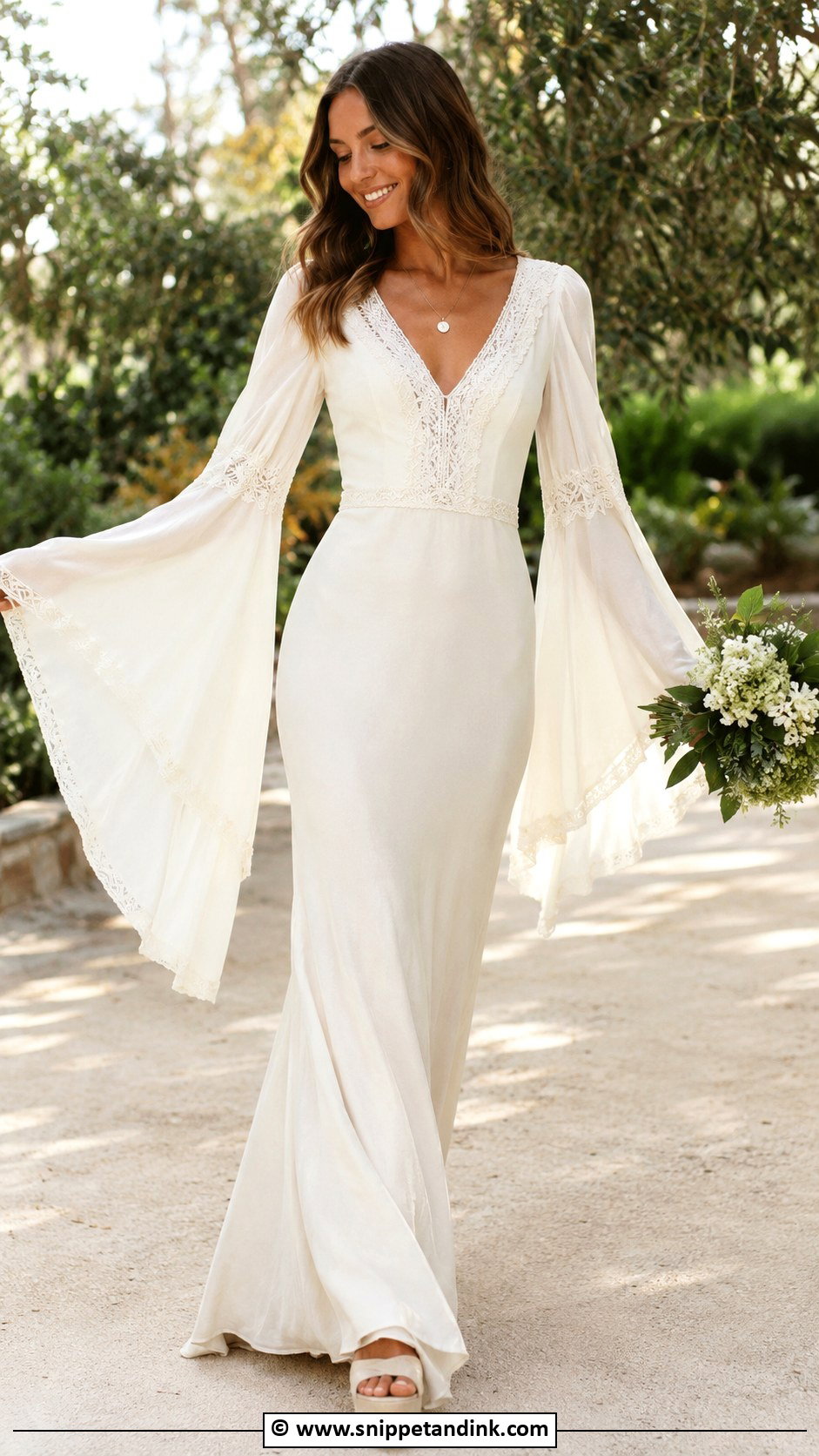
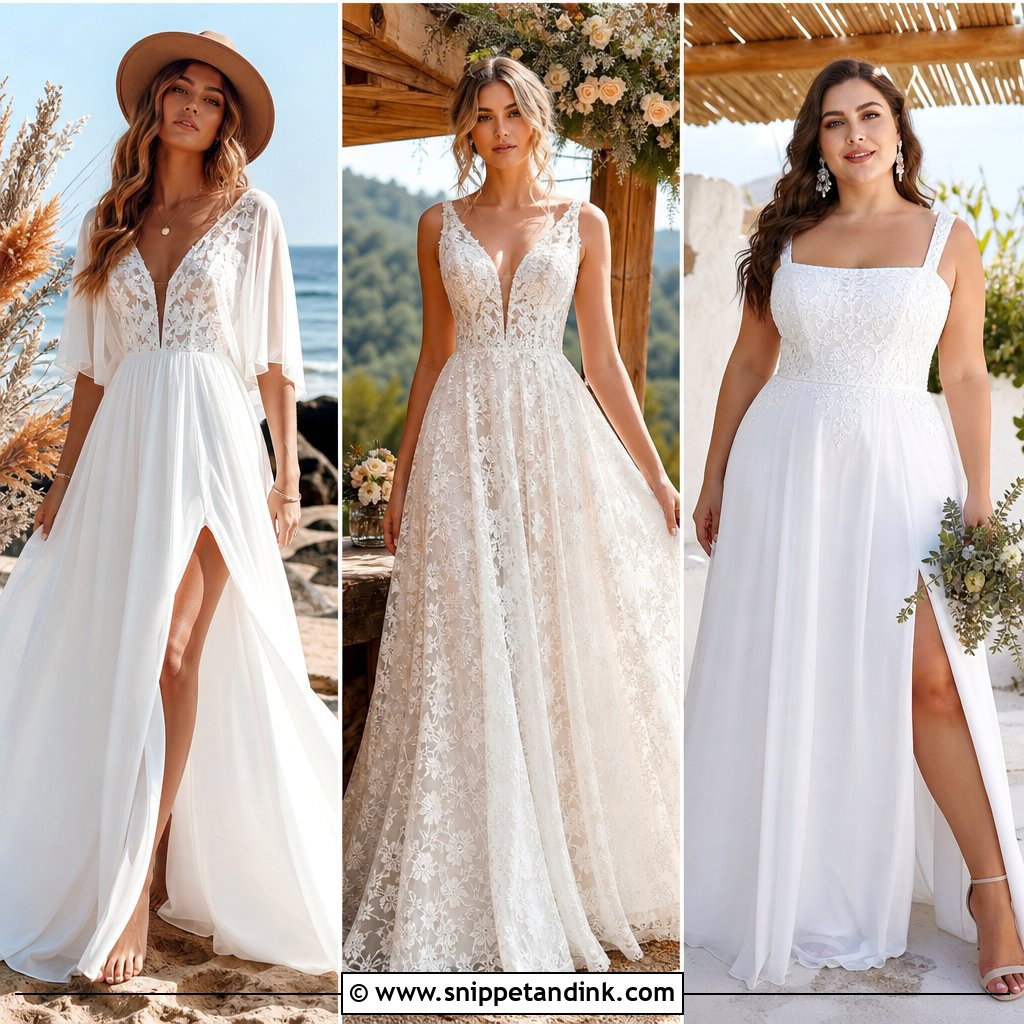
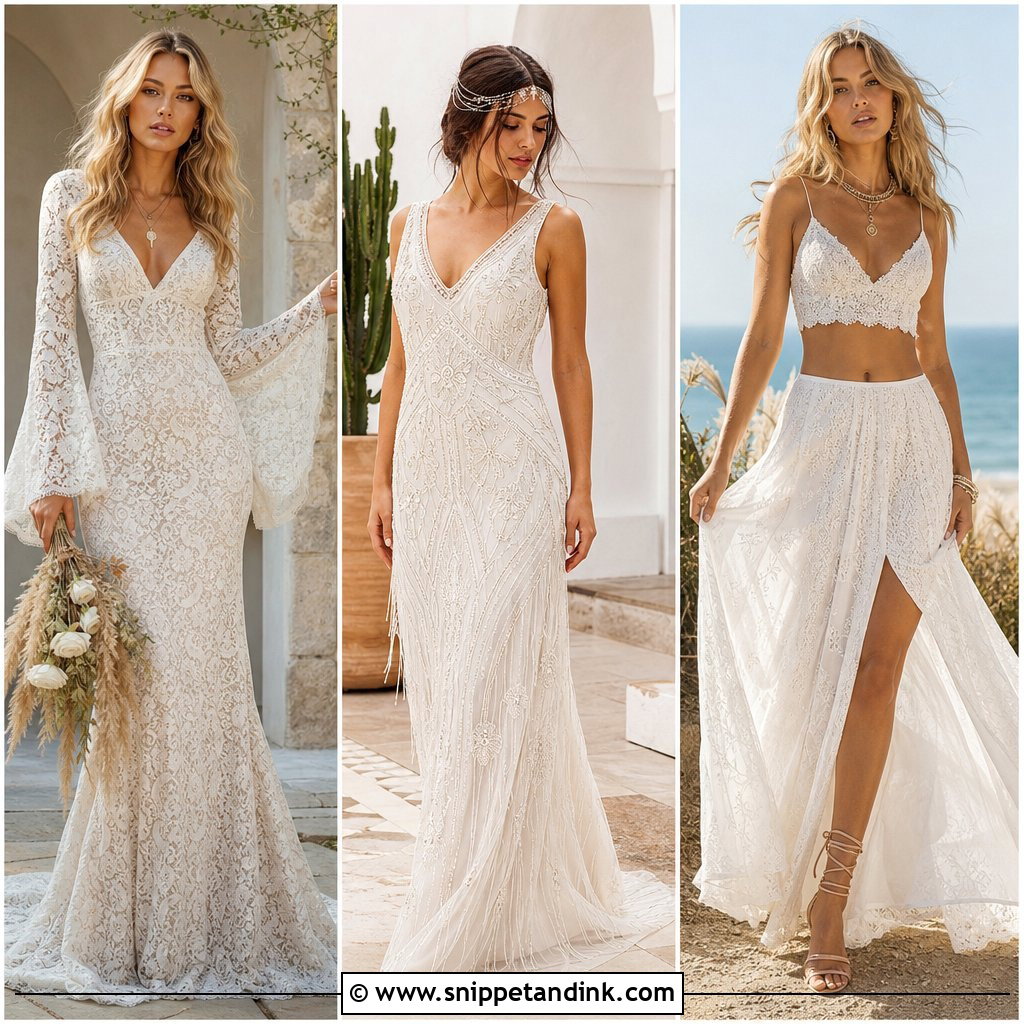
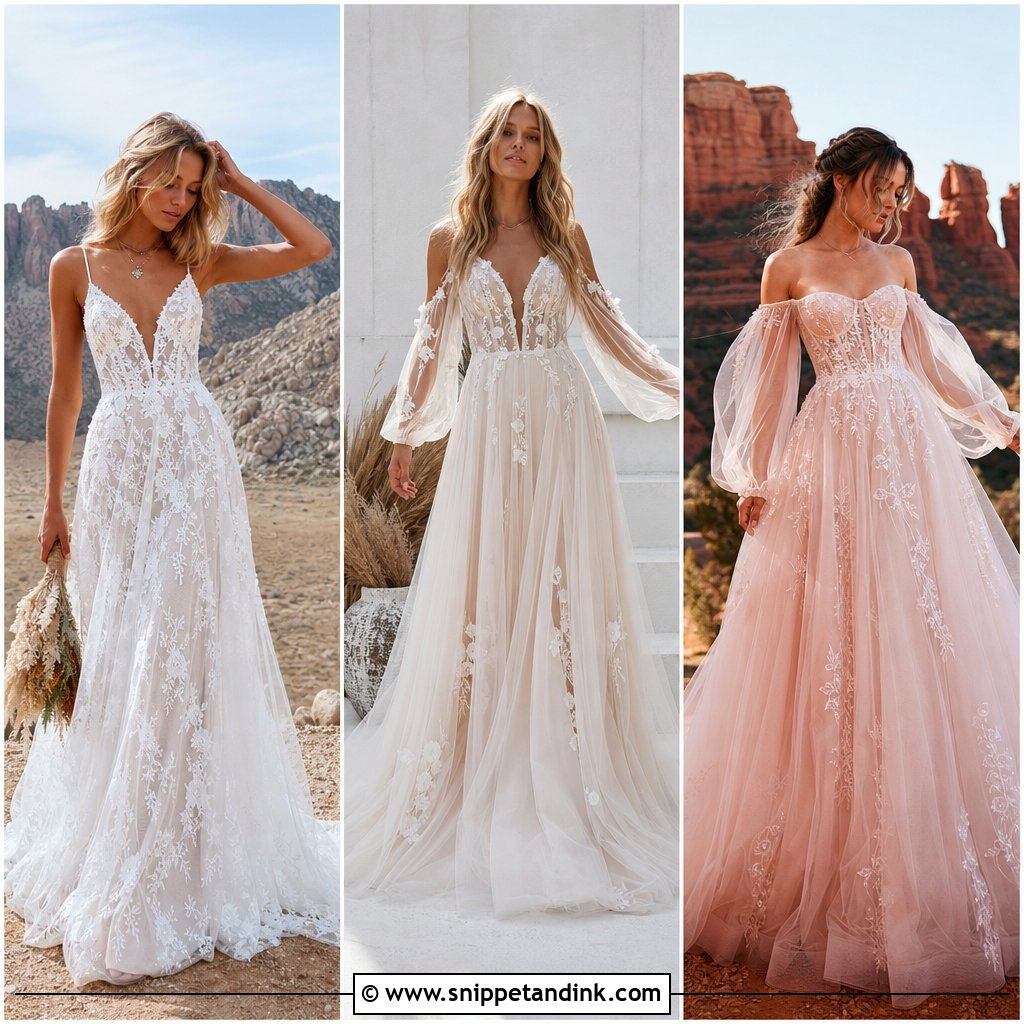
Soft, flowing bell sleeves are the fastest way to signal the decade. They need fitted shoulders and should widen gradually from the elbow or the wrist. Keep the rest of the dress simple: a column skirt, empire waist or soft A-line. Practically, wide sleeves drag through cake icing and catch on chair backs, so I pin them up at the reception or choose a version that ends at the wrist. Platform sandals, a middle part and a slim pendant finish it without crowding the sleeve.
4. 1970s Empire Waist Wedding Dress
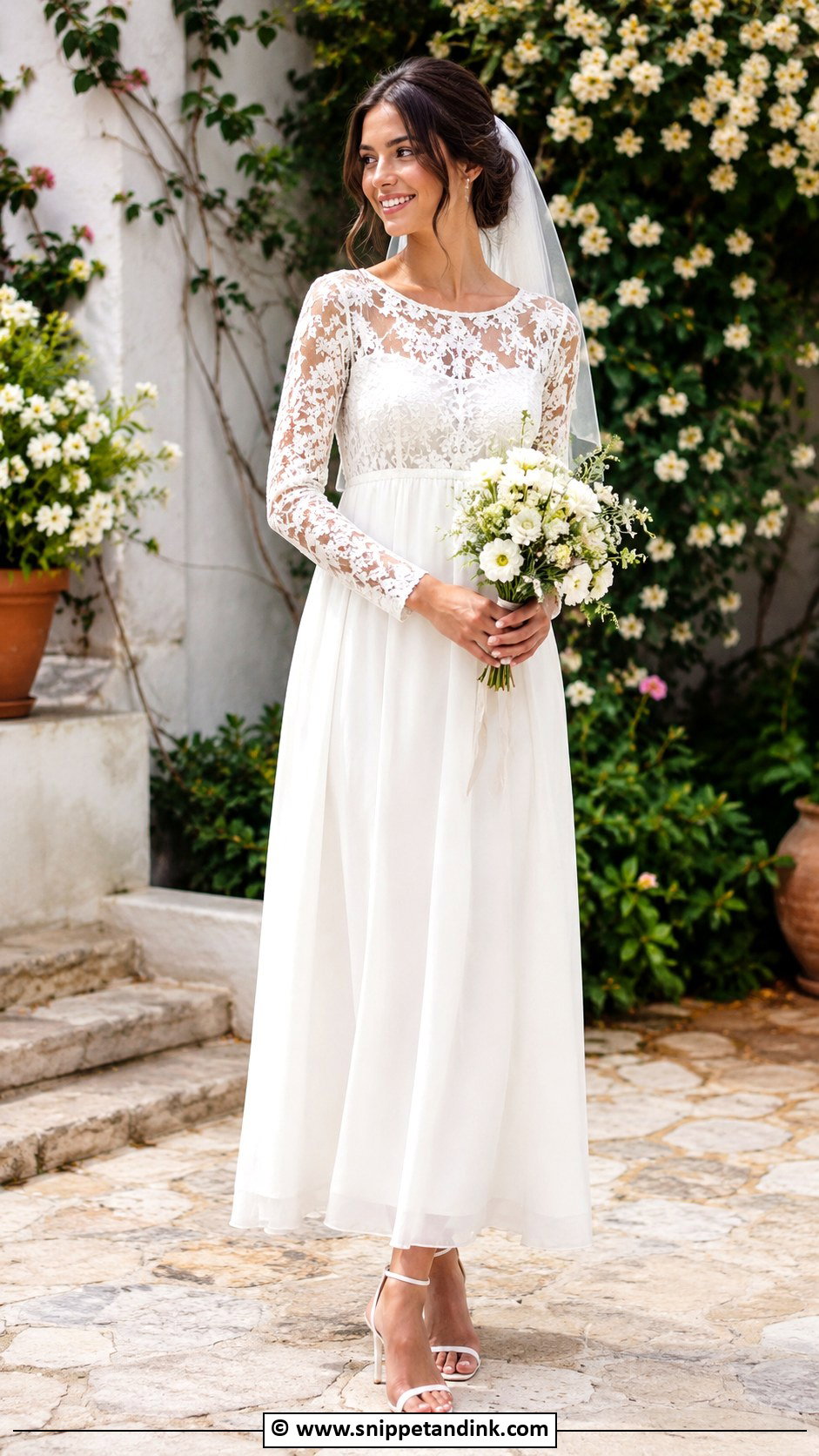
An empire waist wedding dress puts the seam just under the bust and lets the skirt fall from there. Nothing presses on the stomach, which is why pregnant brides and anyone who dislikes a cinched waist reach for it. In chiffon, voile or soft lace it stays light. One fit point: the seam has to sit exactly under the bust; a little too low and it cuts across the chest. Ankle-strap heels, a narrow veil and a small bouquet balance it, and a square neckline or lace yoke makes it feel more authentic.
5. 1970s Prairie Wedding Dress
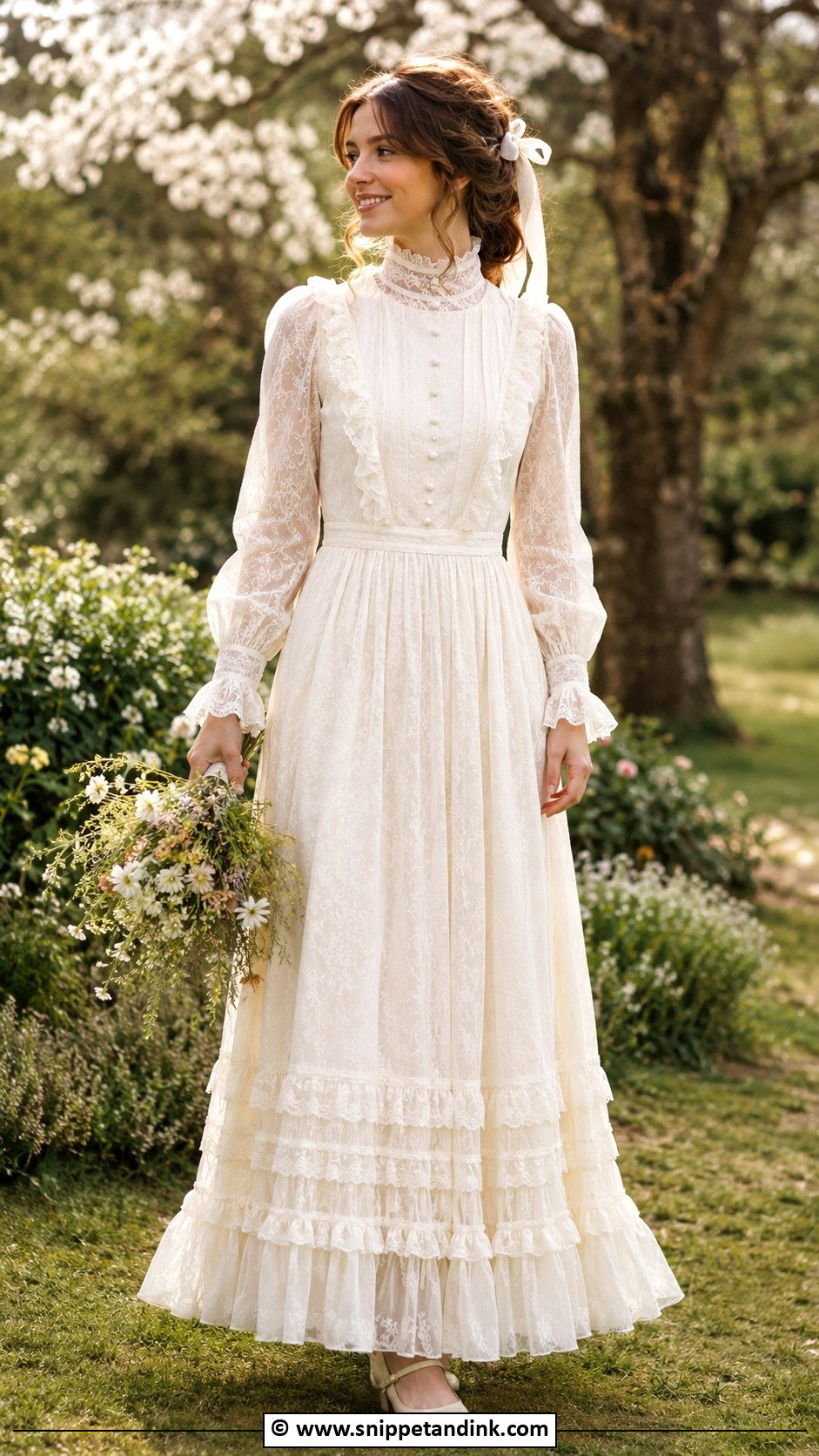
Prairie dresses lean sweet, with ruffles, lace trims, covered buttons and a gathered skirt. A refined bridal version uses ivory cotton lace, sheer sleeves, a high collar and a gently gathered waist. Ruffles at the collar add bulk under the chin, so keep them narrow if you have a short neck. Low block heels or Mary Janes and a simple ribbon in the hair suit it; jewelry can be tiny pearls or a fine gold bracelet. It settles naturally into a countryside venue.
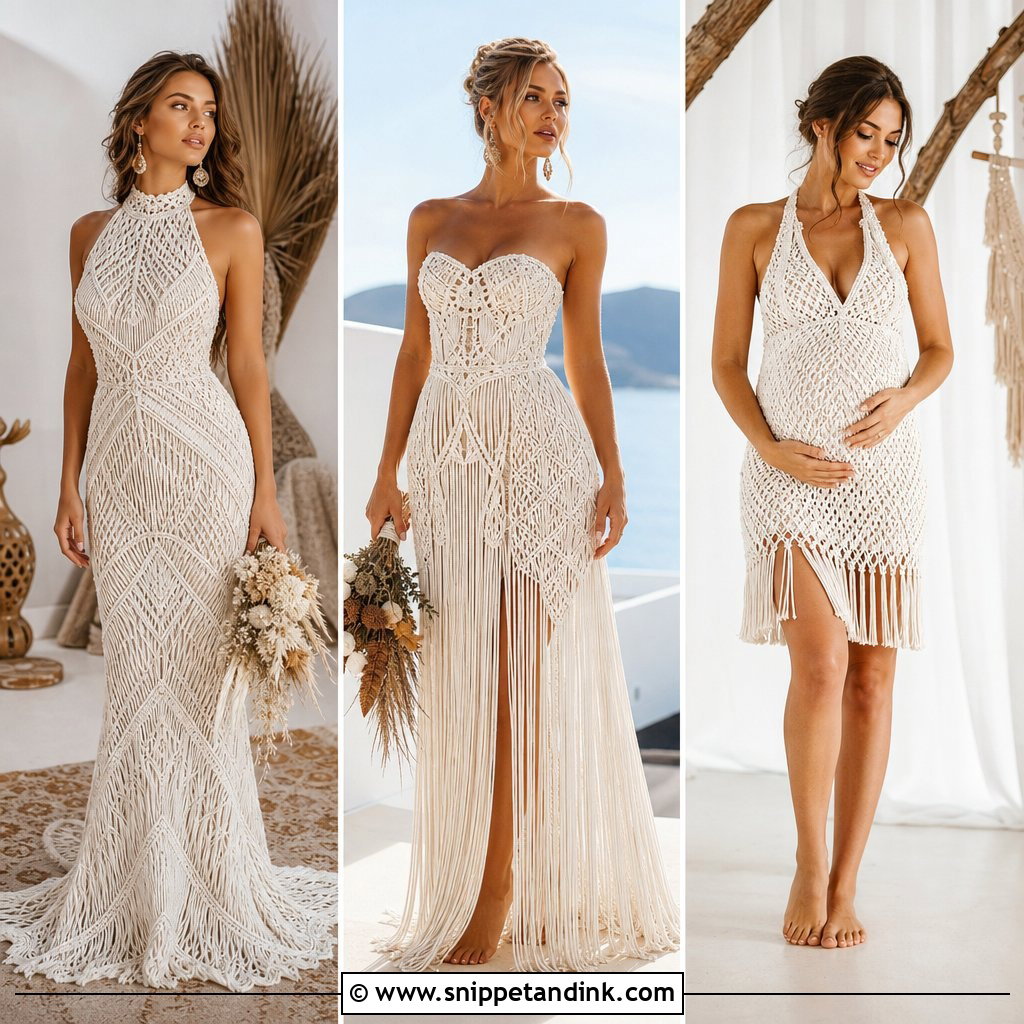
6. 1970s Crochet Wedding Dress
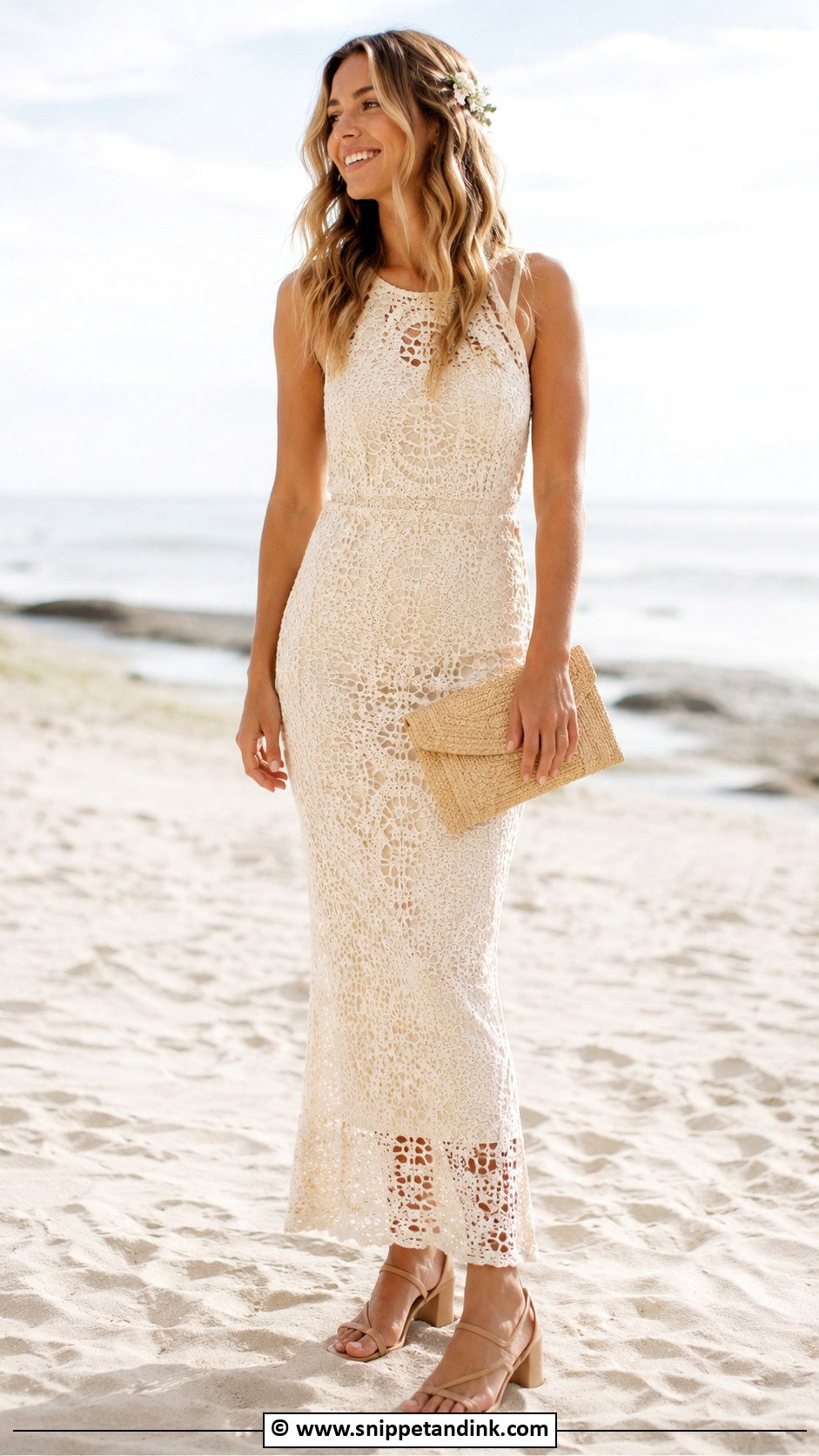
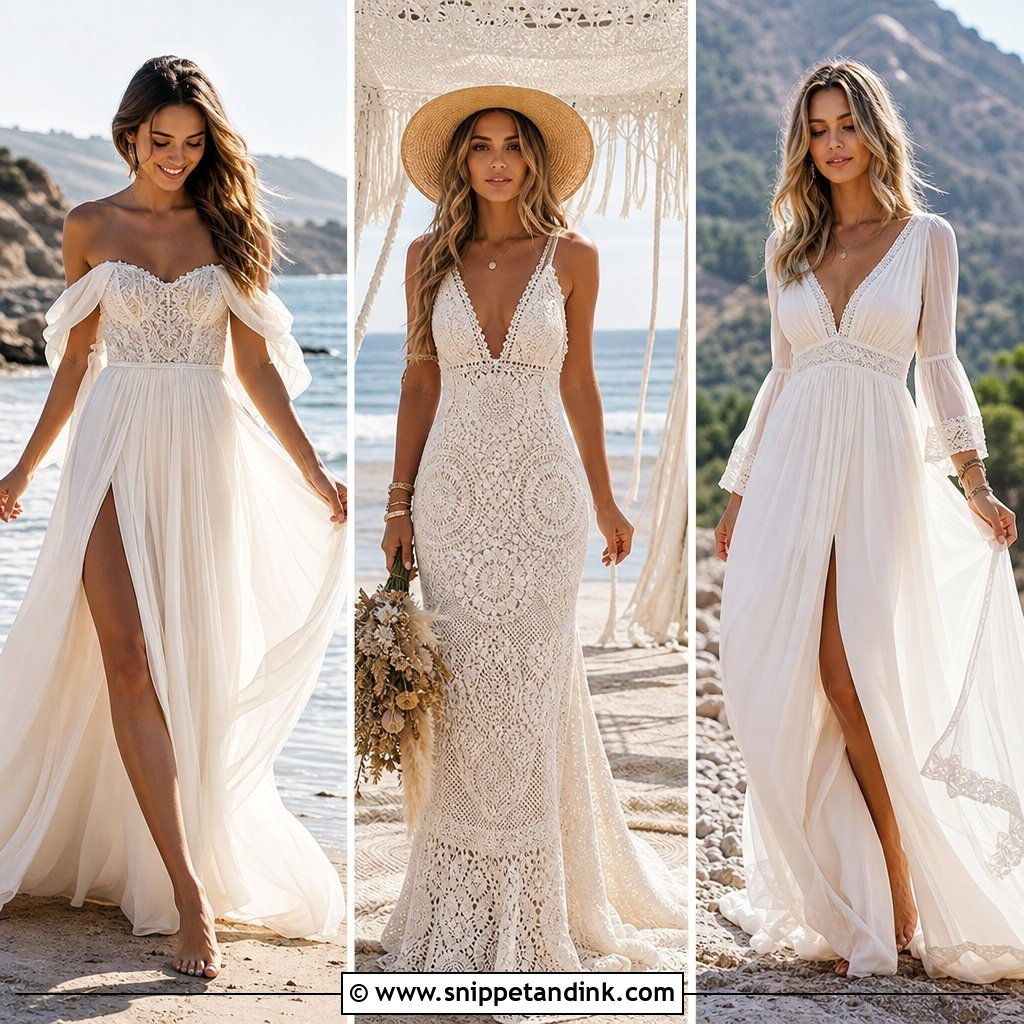
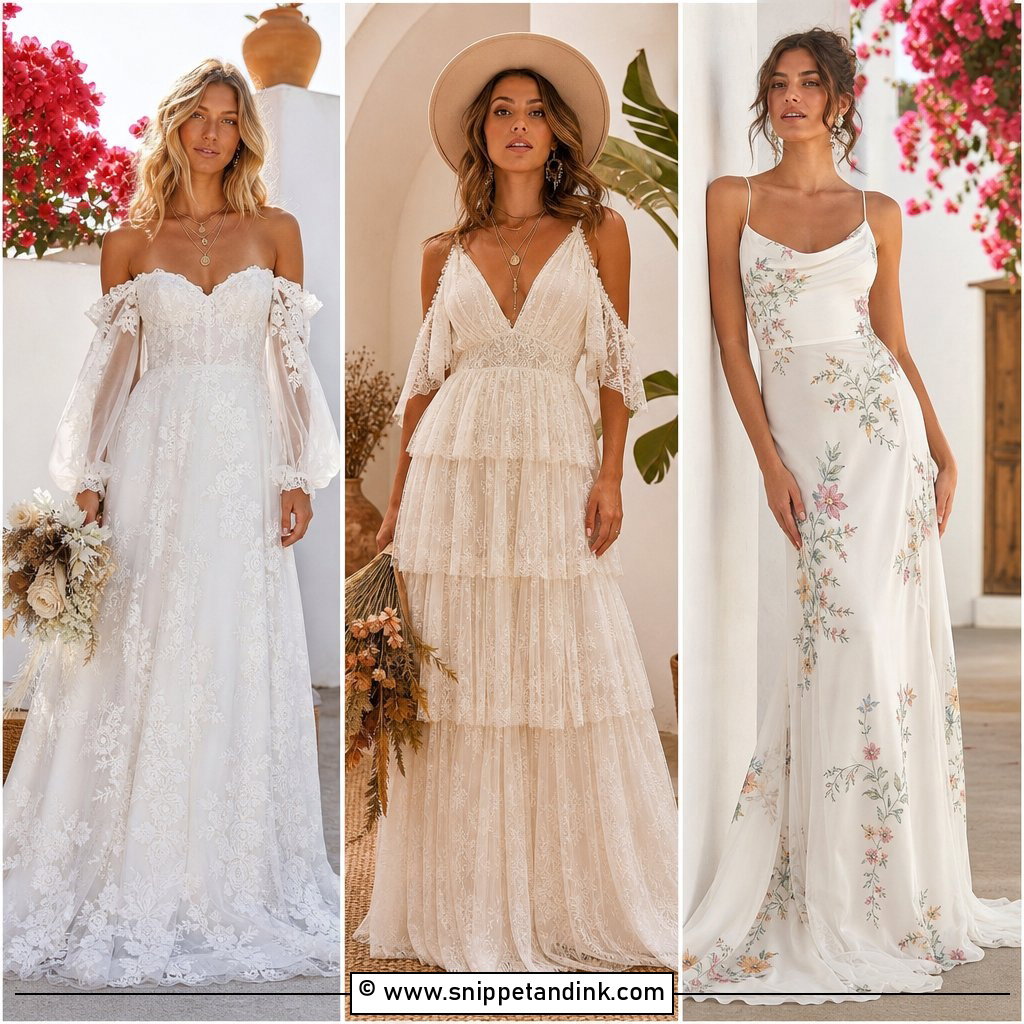
Crochet is the most handmade-looking option of the decade. Modern versions use openwork lace, cotton crochet or crochet panels over a smooth lining. The lining color decides how much skin seems to show, so I always look at it in daylight. Choose a slim sheath or relaxed A-line so the texture looks intentional. Heavy crochet stretches downward over a day of wear, so hang it for a few days before the final hem is set. Nude block heels, a woven clutch and loose waves suit it, with a floral comb instead of a veil if the pattern is bold.
7. 1970s Chiffon Wedding Dress
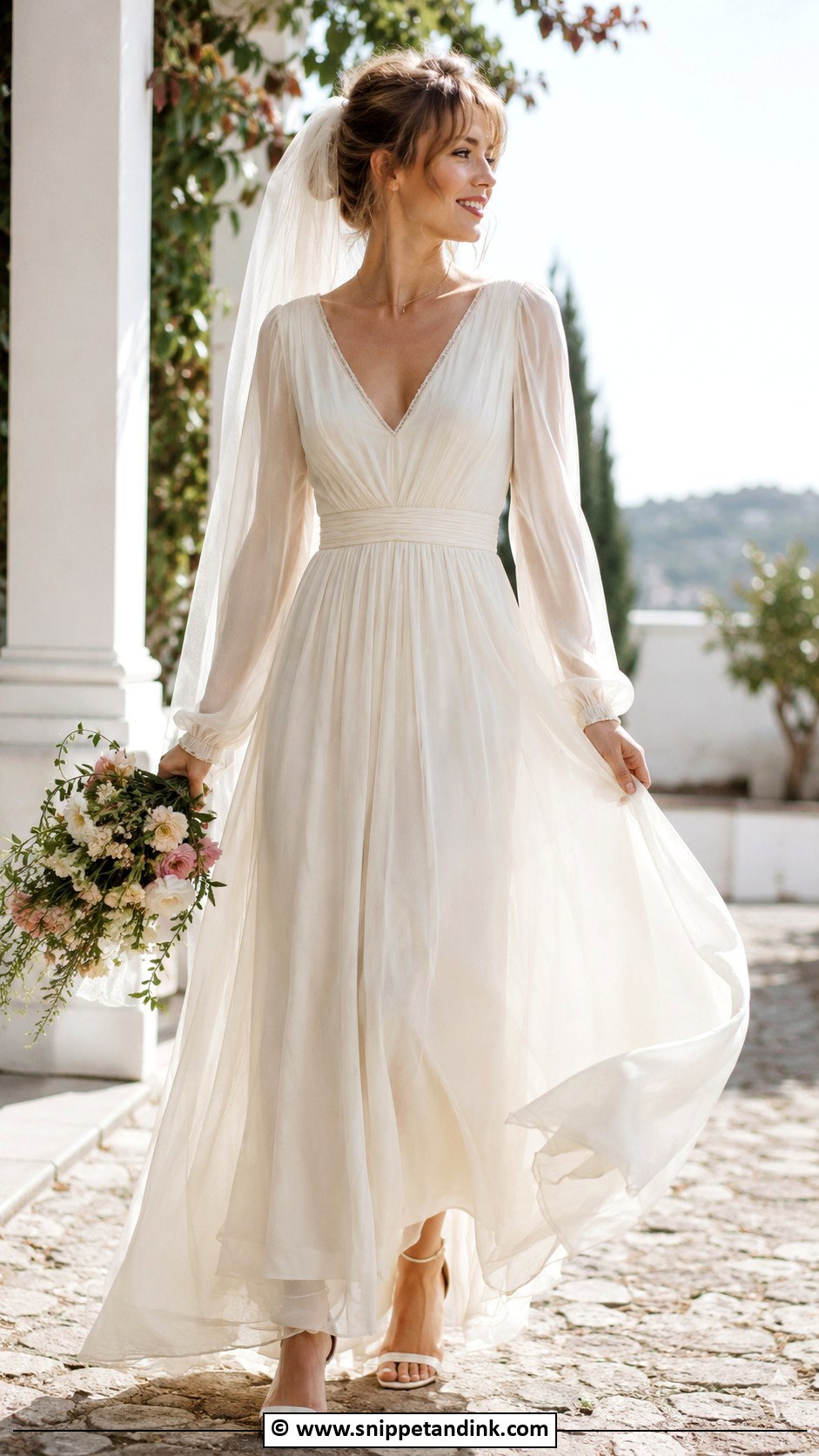
Chiffon floats. Paired with long sleeves, a gathered waist or a cape-like overlay, it gives the dreamy movement you see in old photos. It’s also fragile: chiffon snags on beaded bracelets and pulls on rough stone, so keep jewelry smooth. Ivory, cream or soft white suit it better than stark white. Satin sandals, a fine chain and a sheer veil that moves with the dress complete it. For more shape, add a slim satin belt. It breathes well in spring and summer heat.
8. 1970s Peasant Sleeve Wedding Dress
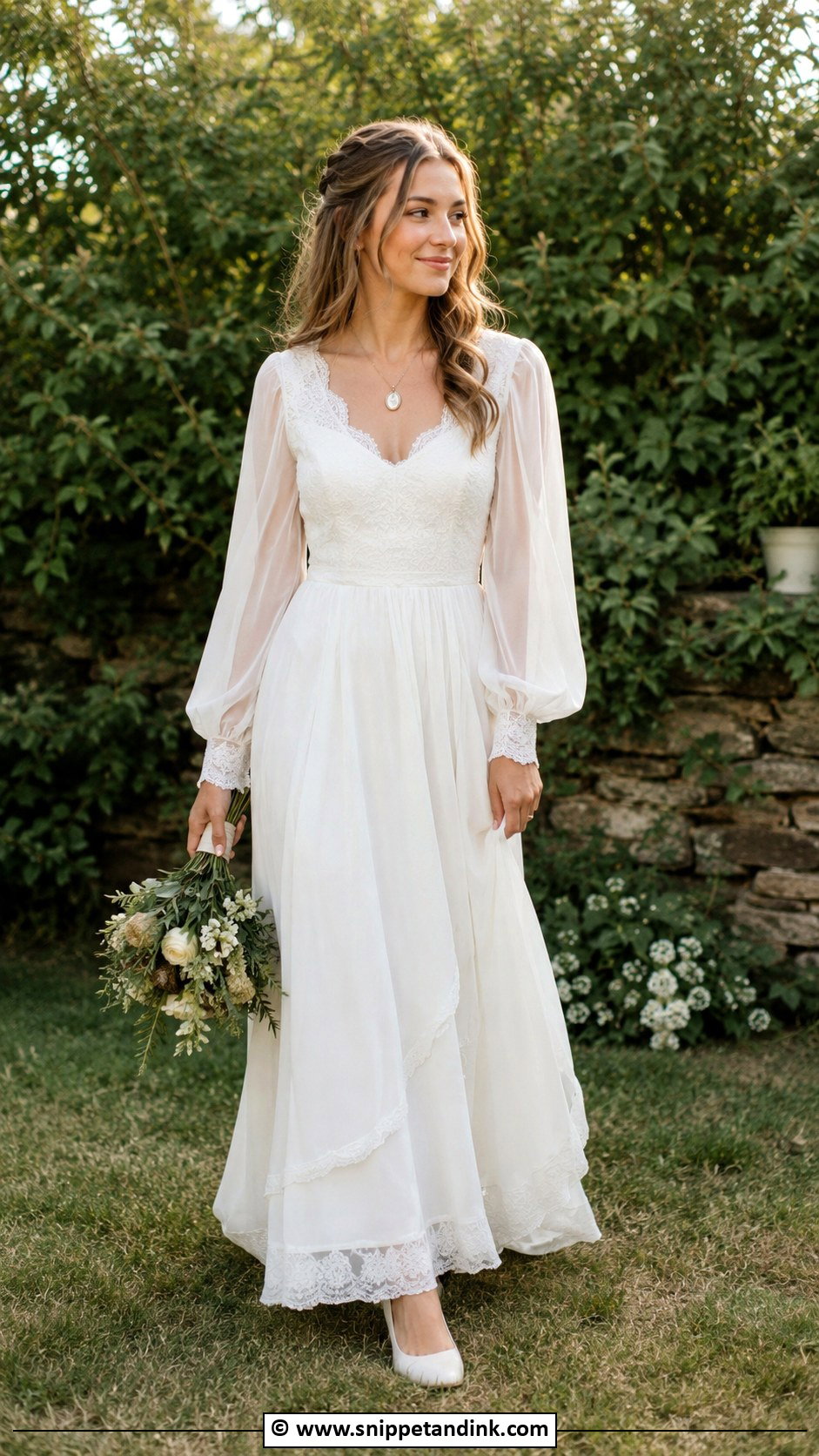
Peasant sleeves are gathered and airy, full through the arm and caught at the wrist or elbow with elastic or a band. They feel relaxed but not casual, especially with a fitted bodice and lace inserts. Check that the elastic at the cuff isn’t tight; it leaves marks and turns the hands pink in photos. Low heels, natural makeup and a half-up style with soft waves suit the shape, with a small pendant or vintage locket.
9. 1970s Maxi Wedding Dress
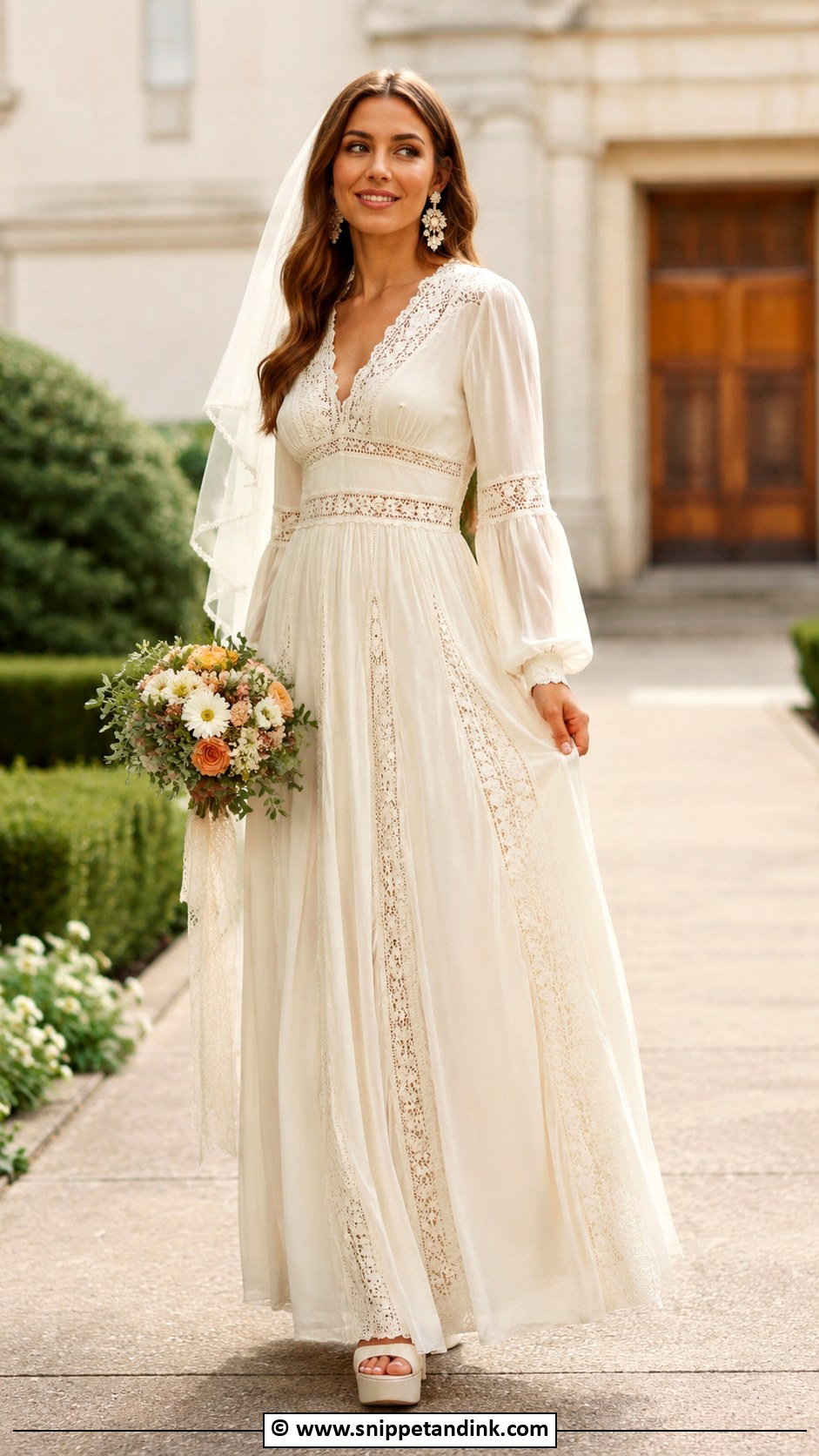
A maxi dress is the simplest shape here and the easiest to make your own. A long, straight or gently flared skirt, soft sleeves and minimal structure are the base; lace panels, embroidered trim or a subtle empire waist add character. Platform sandals change the hem length, so wear them at every fitting. A floor-length veil or a bouquet heavy on greenery adds bridal weight. It’s at home at a courthouse or a relaxed reception.
10. 1970s Satin Wedding Dress
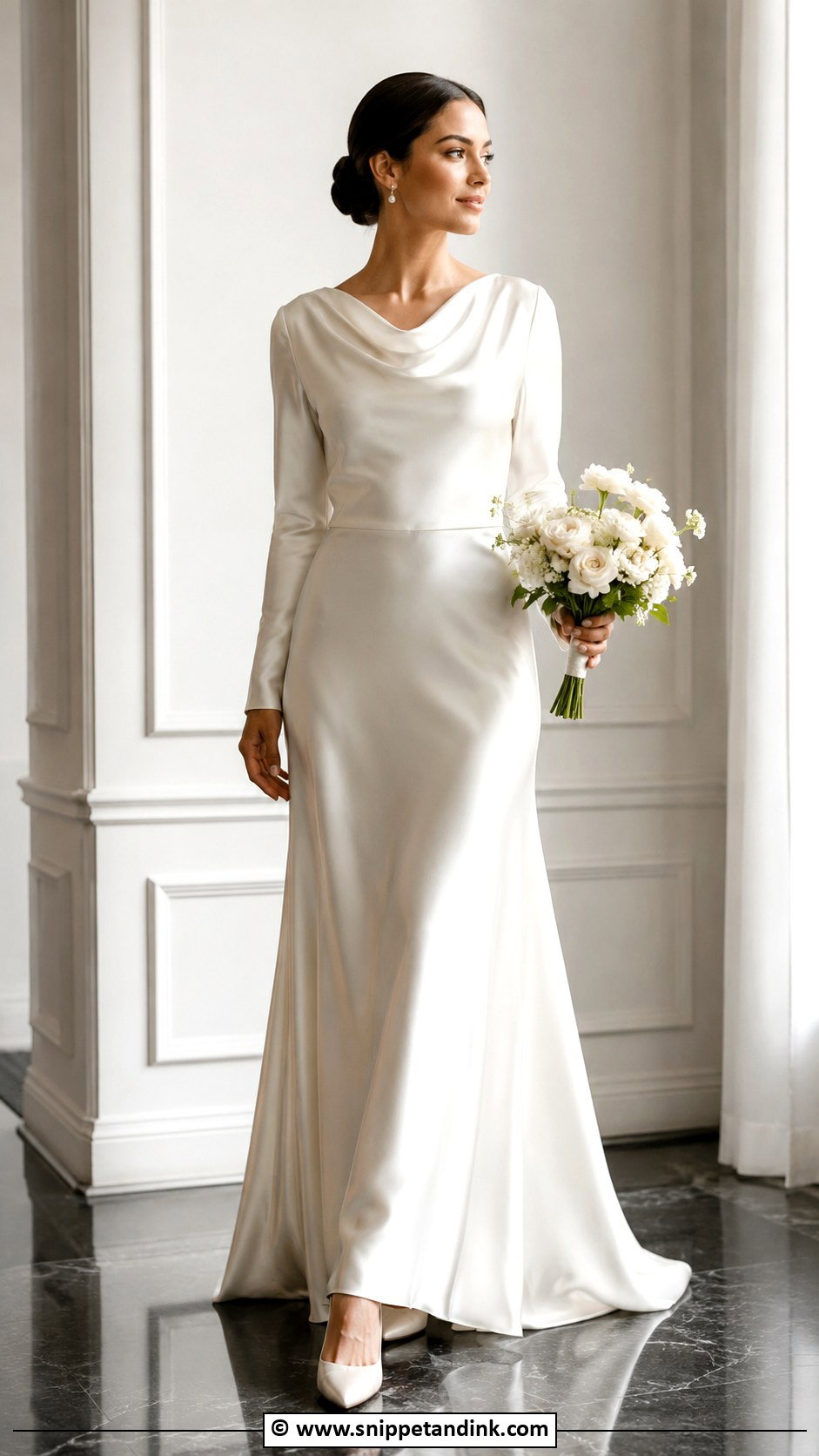
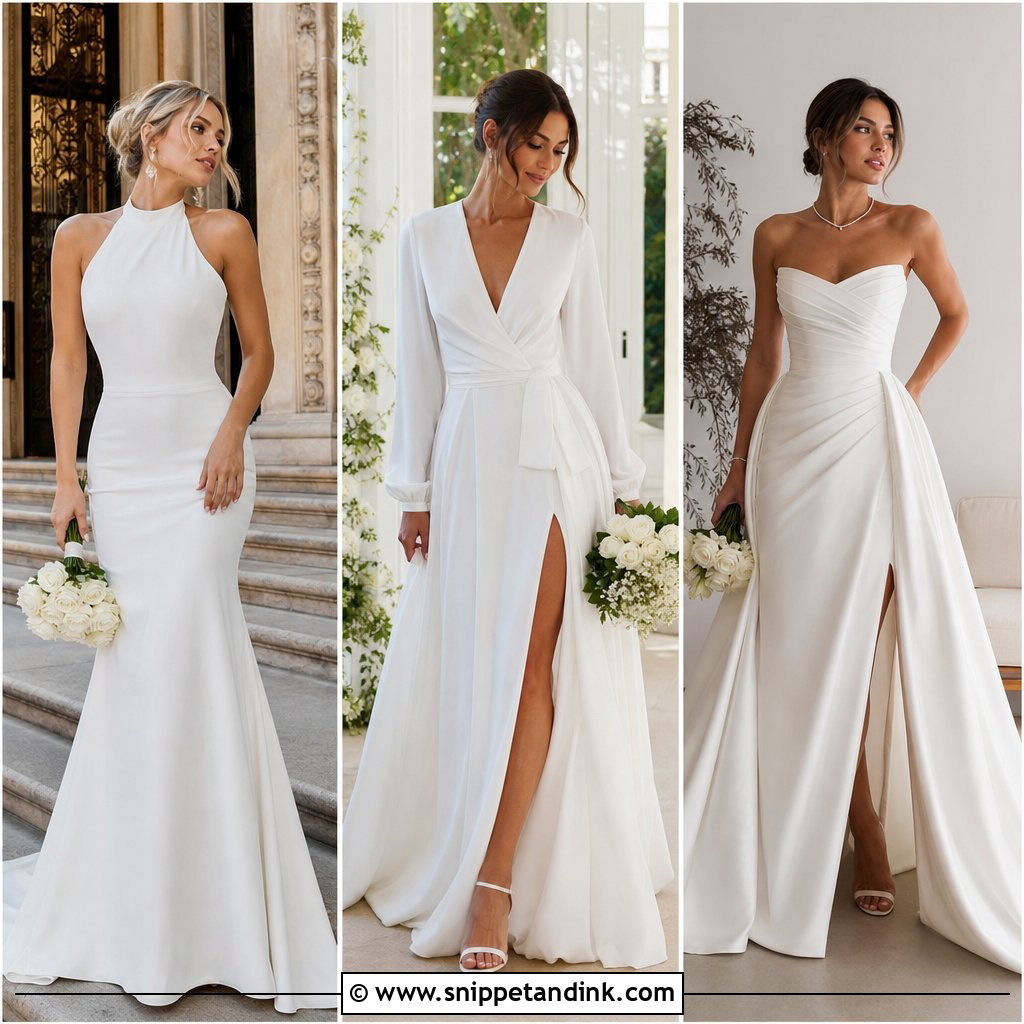
Fluid satin gives the decade a sleeker side: think long sleeves, a soft cowl neckline and a gently flared skirt rather than a ballgown. Satin cut this way clings, so I fit it over the exact underwear the bride will wear, because any line shows. Keep styling quiet: ivory heels, pearl earrings and a smooth low bun. A fingertip veil softens it without hiding the shine. It’s my pick for a city wedding or a formal evening reception.
11. 1970s Lace Sleeve Wedding Dress
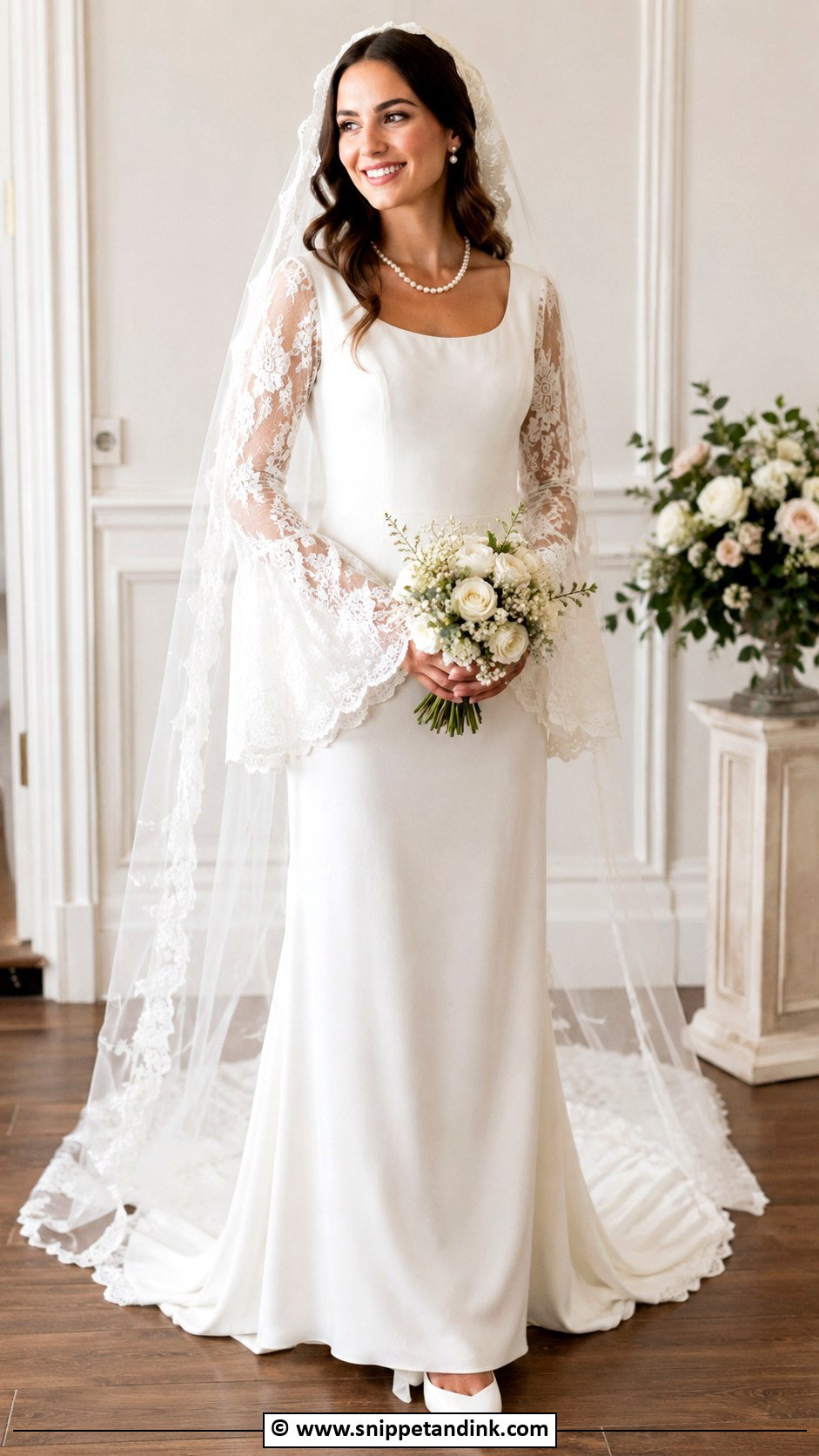
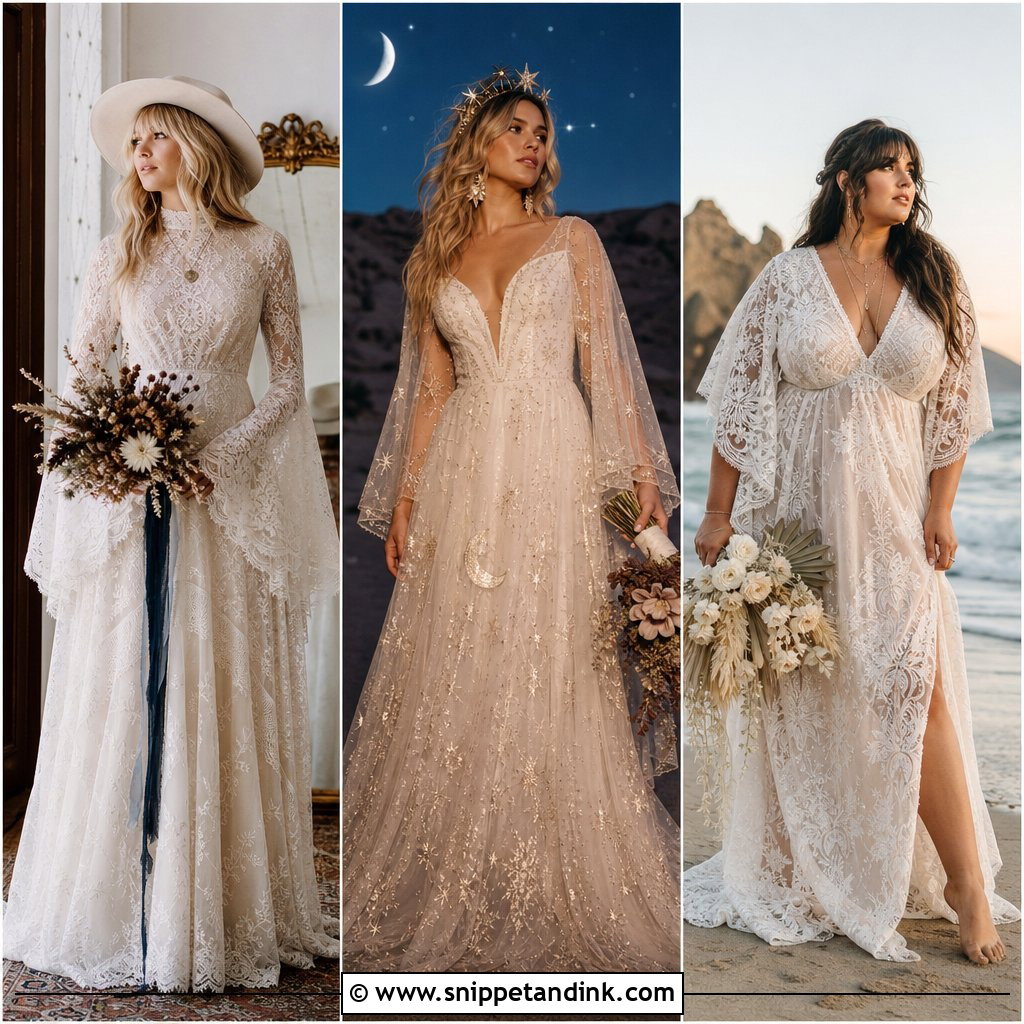
Lace sleeves can be sheer and fitted, flared at the cuff, or full lace arms over a smooth crepe or chiffon skirt. That mix of textured top and plain skirt keeps the dress balanced. If the sleeves are ornate, the hair should be clean, such as a low bun or a soft ponytail. Pointed heels, a lace-trimmed veil and small pearls finish it. Ask for the cuff to end at the wrist bone so the lace doesn’t catch on your ring or bracelet.
12. 1970s Floral Lace Wedding Dress
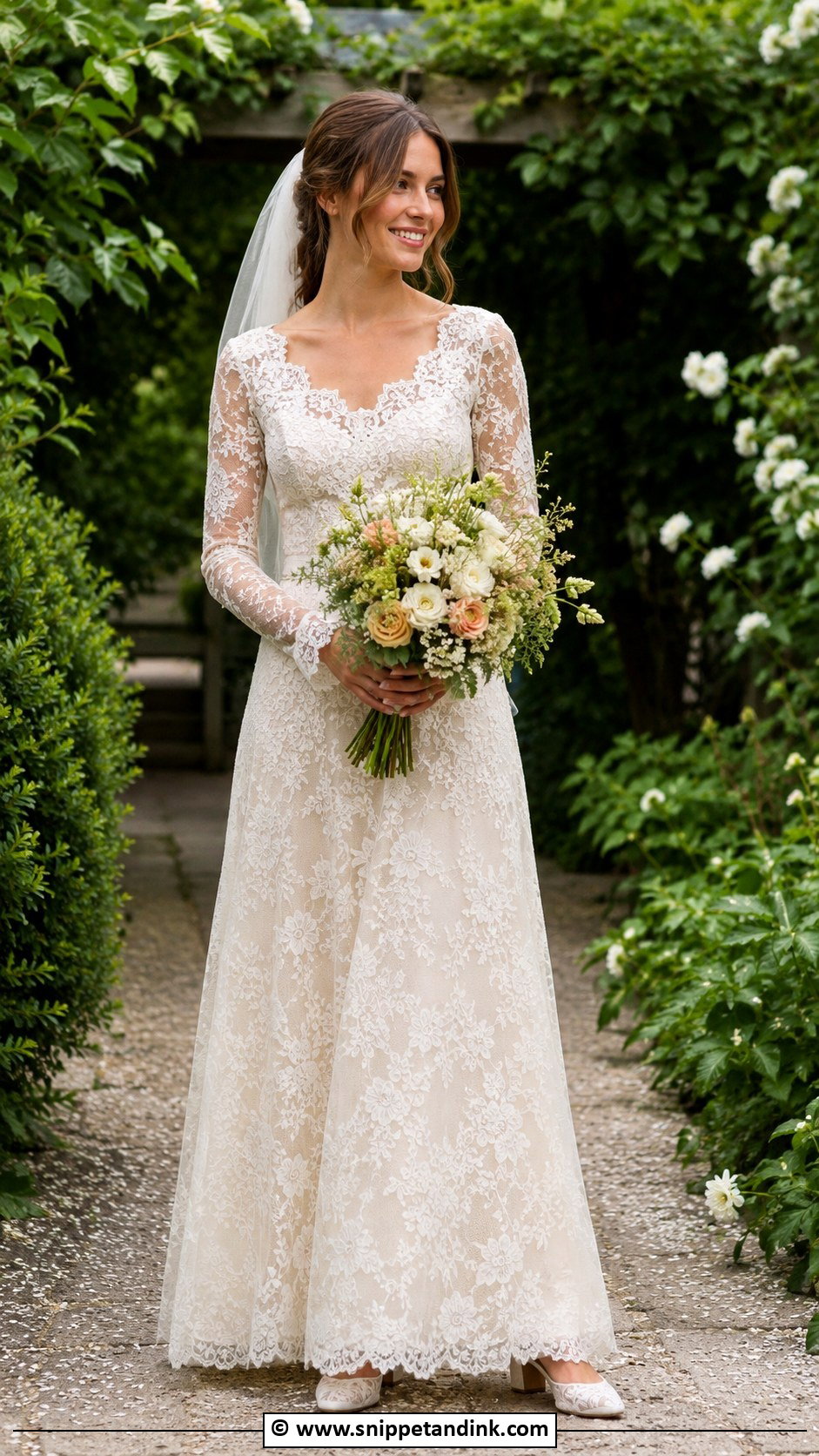
Larger floral motifs feel more seventies than tiny delicate patterns. Fitted bodice, flowing skirt, long sheer sleeves or a scalloped neckline: that’s the shape. With bold lace, I place the biggest flowers deliberately, so one doesn’t end up sitting awkwardly over the bust. Block heels, a simple veil and a loose, textured bouquet suit it. Modern hair and makeup stop it from looking dated, and it fits greenhouse venues and spring gardens naturally.
13. 1970s Off White Wedding Dress
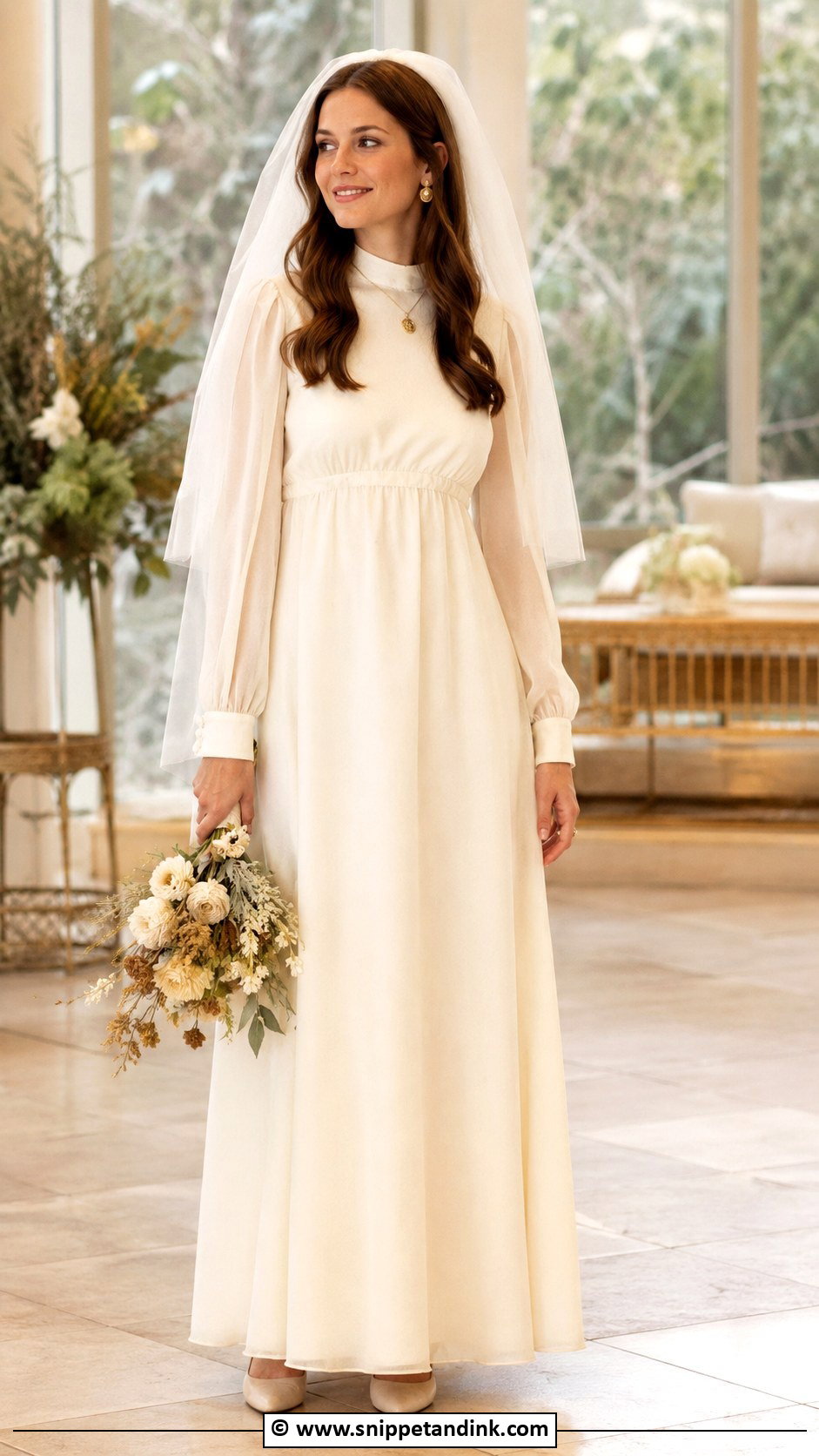
Off-white is closer to how the decade actually looked. Ivory, cream, vanilla and soft champagne flatter lace, chiffon and satin, and they’re kinder than bright white to most skin tones. Pair them with a high neck, long sleeves or an empire waist. The catch is matching: a bright white veil next to a cream dress makes the dress look dirty, so take a fabric swatch when you buy the veil and shoes. Gold jewelry and neutral heels finish it.
14. 1970s Ruffle Wedding Dress
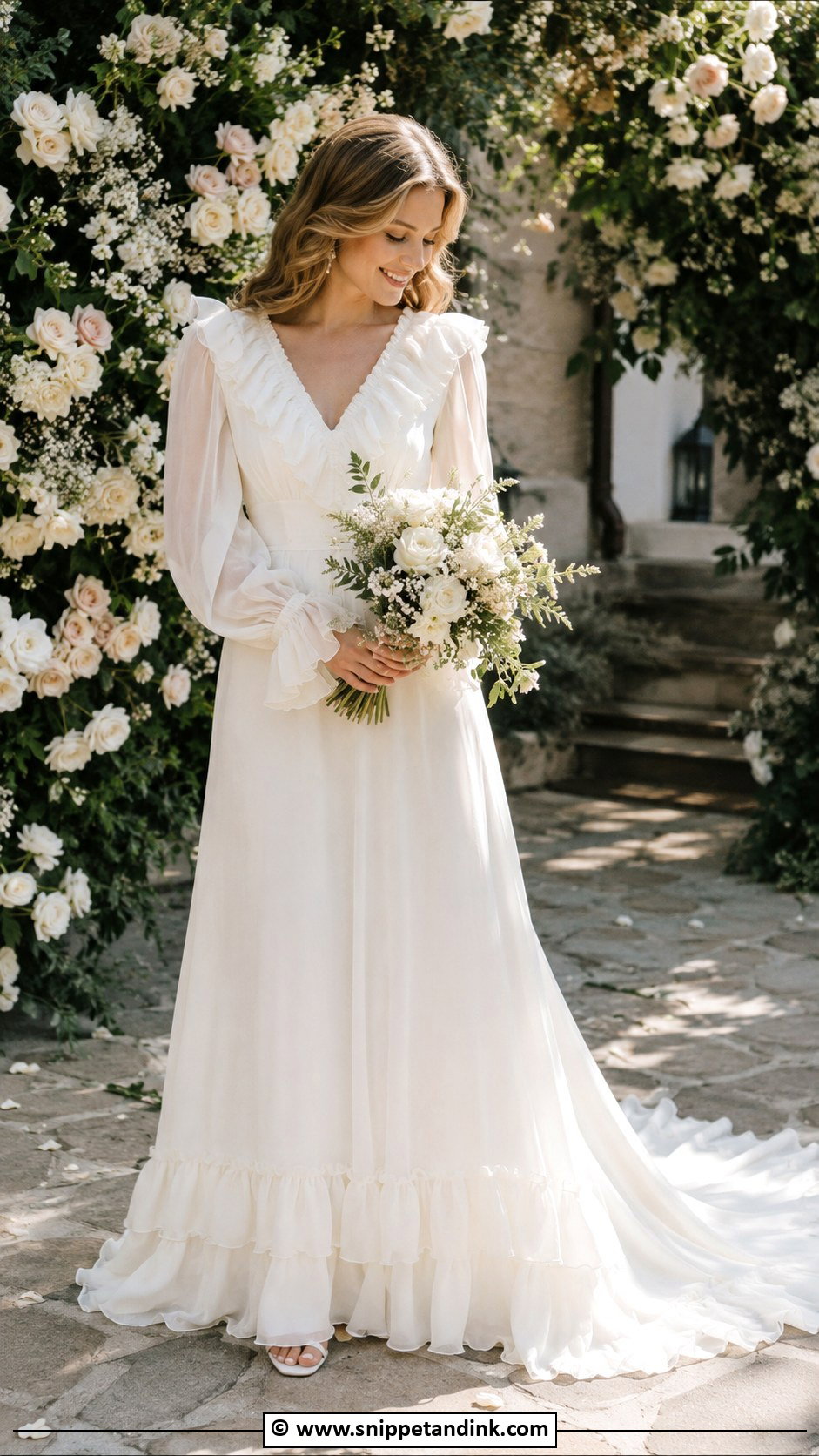
A seventies ruffle wedding dress works when the ruffles float rather than stand. Place them at the neckline, cuffs, hem or in soft skirt tiers. Chiffon and organza let them move; stiff tulle ruffles add bulk. Ruffles at the hip widen the figure, which some brides want and others don’t, so try both placements. Simple heels, a clean veil and delicate earrings keep it from looking busy, with softly waved hair.
15. 1970s Two Piece Wedding Dress
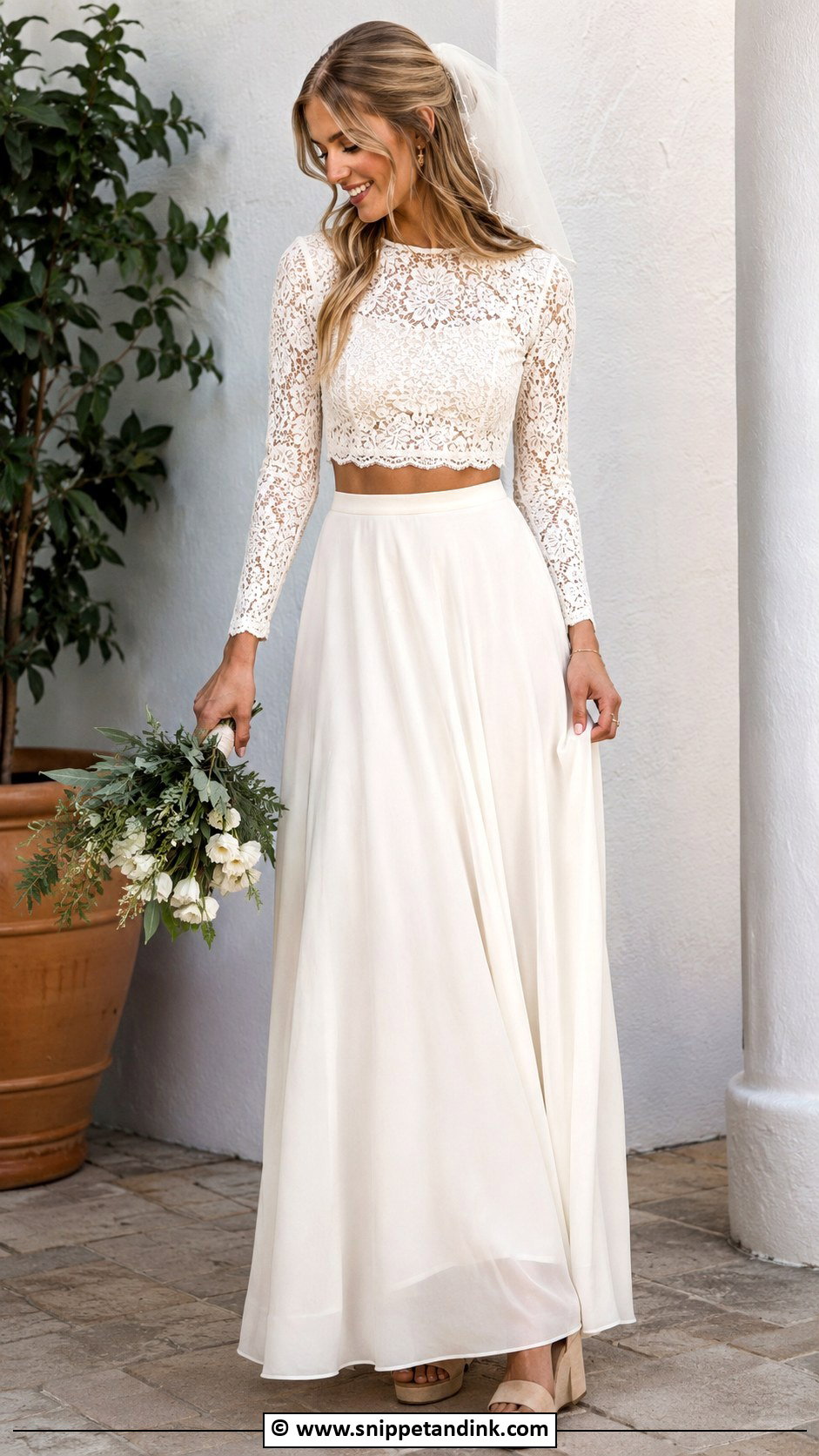
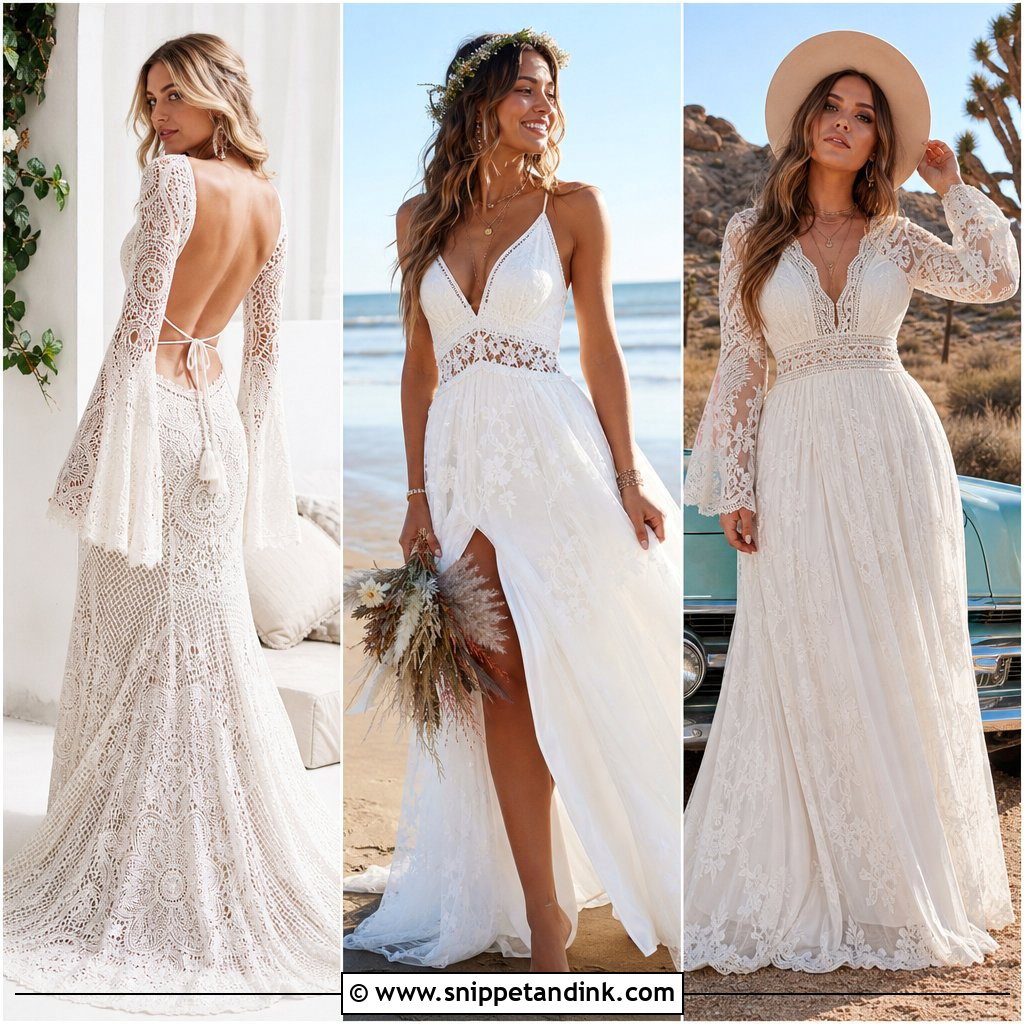
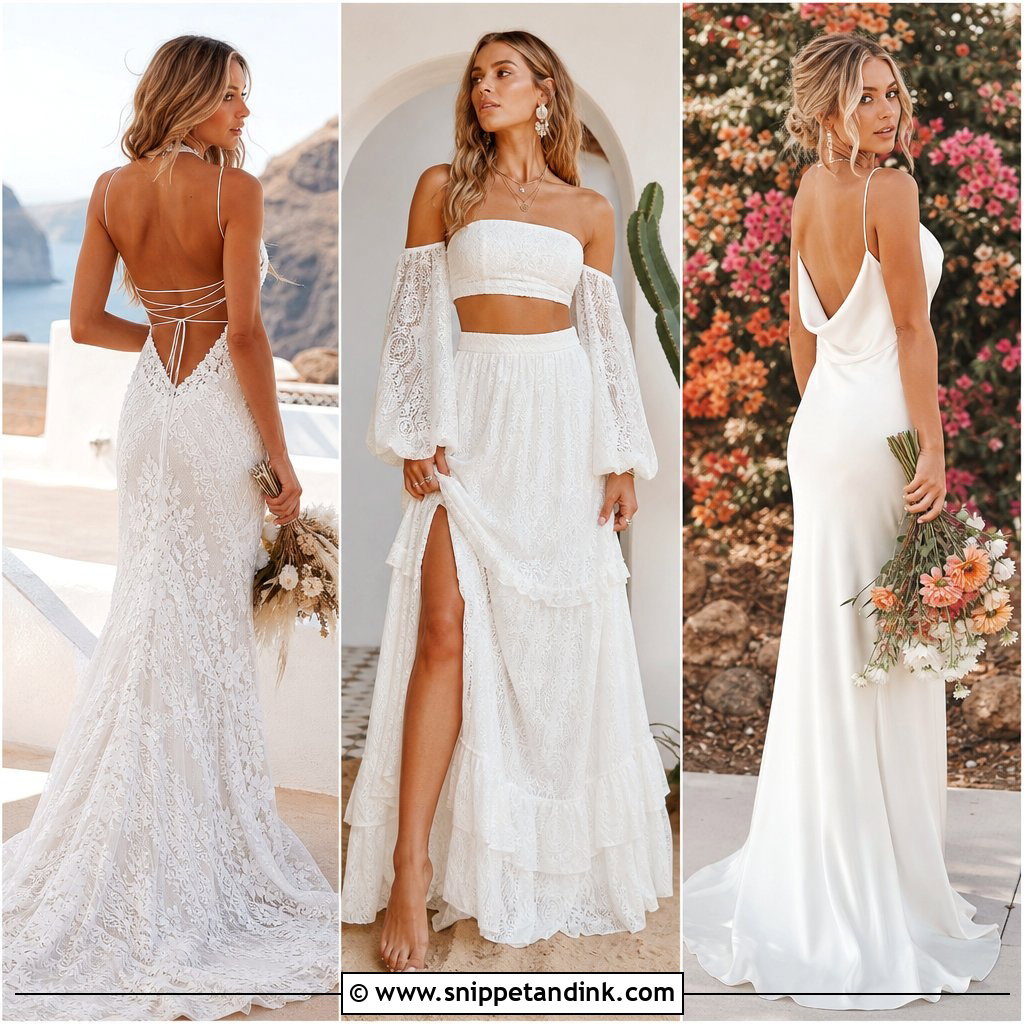
Separates give you a relaxed outfit and an easier fit, since the top and skirt are altered on their own. Try a lace bridal top with a high-waisted maxi skirt, or a long-sleeved blouse with a flowing chiffon skirt. The two pieces need to match in tone and weight, or the join at the waist looks like an accident. Ask for a small elastic gripper inside the skirt waistband so the top stays tucked. Platform sandals, a small veil or hair scarf and simple gold jewelry suit it, and you can dance freely.
16. 1970s Sheer Yoke Wedding Dress
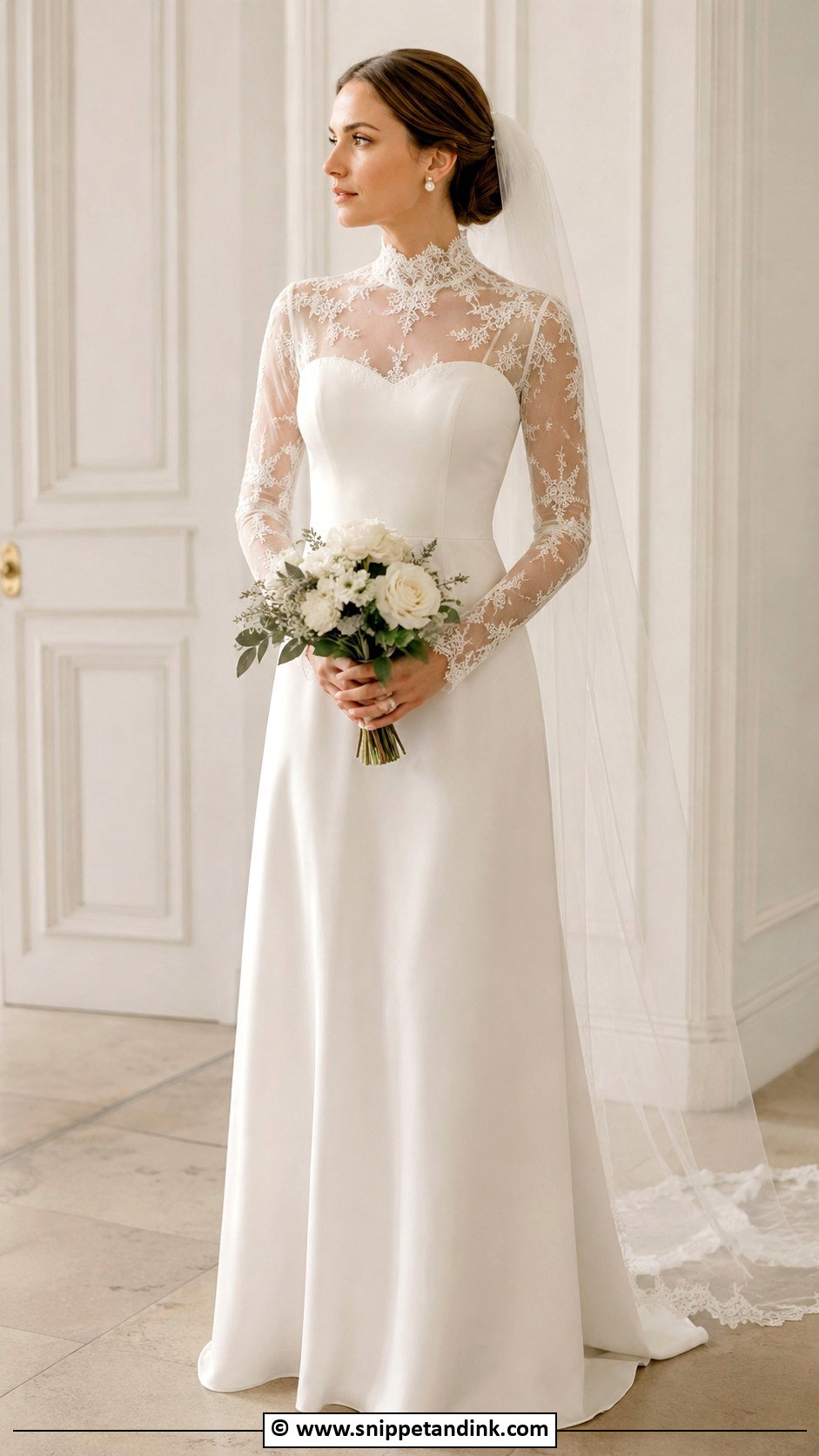
A sheer yoke covers the chest and shoulders in fine mesh, often with lace appliqué, so the neckline looks open while you’re covered. It pairs naturally with a high collar and long sleeves. The trickiest part is the bra: a standard bra shows through, so the dress usually needs built-in cups below the yoke line. Keep the bodice smooth and the skirt soft. Pearl studs, a low bun and a veil set behind the crown finish it; skip necklaces.
17. 1970s Victorian Wedding Dress
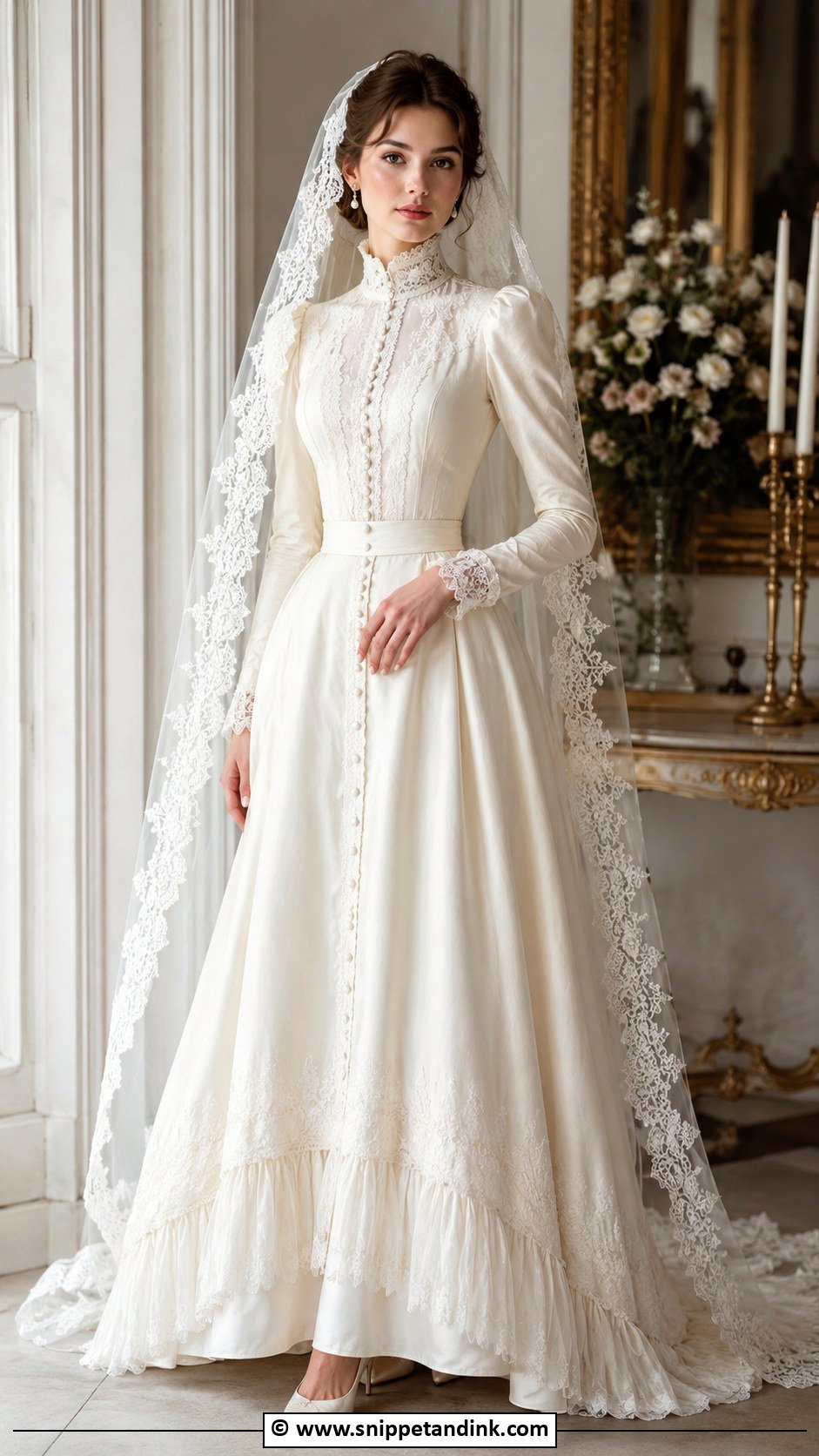
The decade loved borrowing from the Victorians: high collars, puffed or fitted sleeves, lace trims, covered buttons and a defined waist. To keep it wearable, use soft fabrics and a lighter skirt rather than layered petticoats. Covered buttons up the back take time to fasten, so allow for that when you plan getting-ready time. Ivory heels, a lace veil and vintage pearl earrings complete it, with a smooth updo to clear the collar. It suits historic indoor venues and cooler months.
18. 1970s Halter Wedding Dress
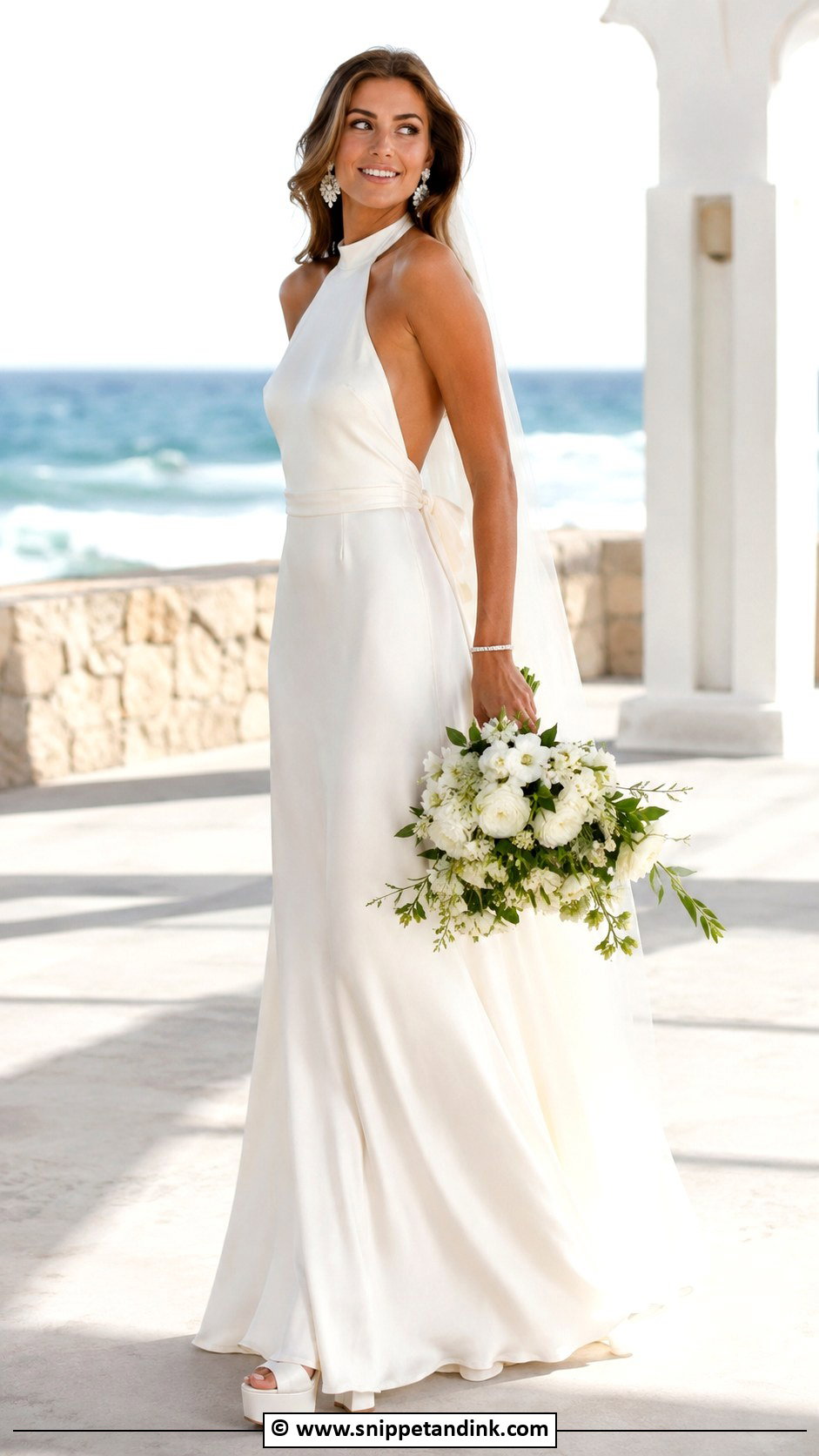
The halter brings out the disco side of the decade. A flowing skirt, an open back and soft satin give a confident, slightly glamorous outfit. The halter strap carries weight from the neck, so a heavy fabric can ache by late evening; lighter satin or crepe avoids that. Skip a necklace and wear statement earrings, platform heels and a smooth blowout. For a religious ceremony, add a sheer cape or light shawl you can take off for the party.
19. 1970s Cape Wedding Dress
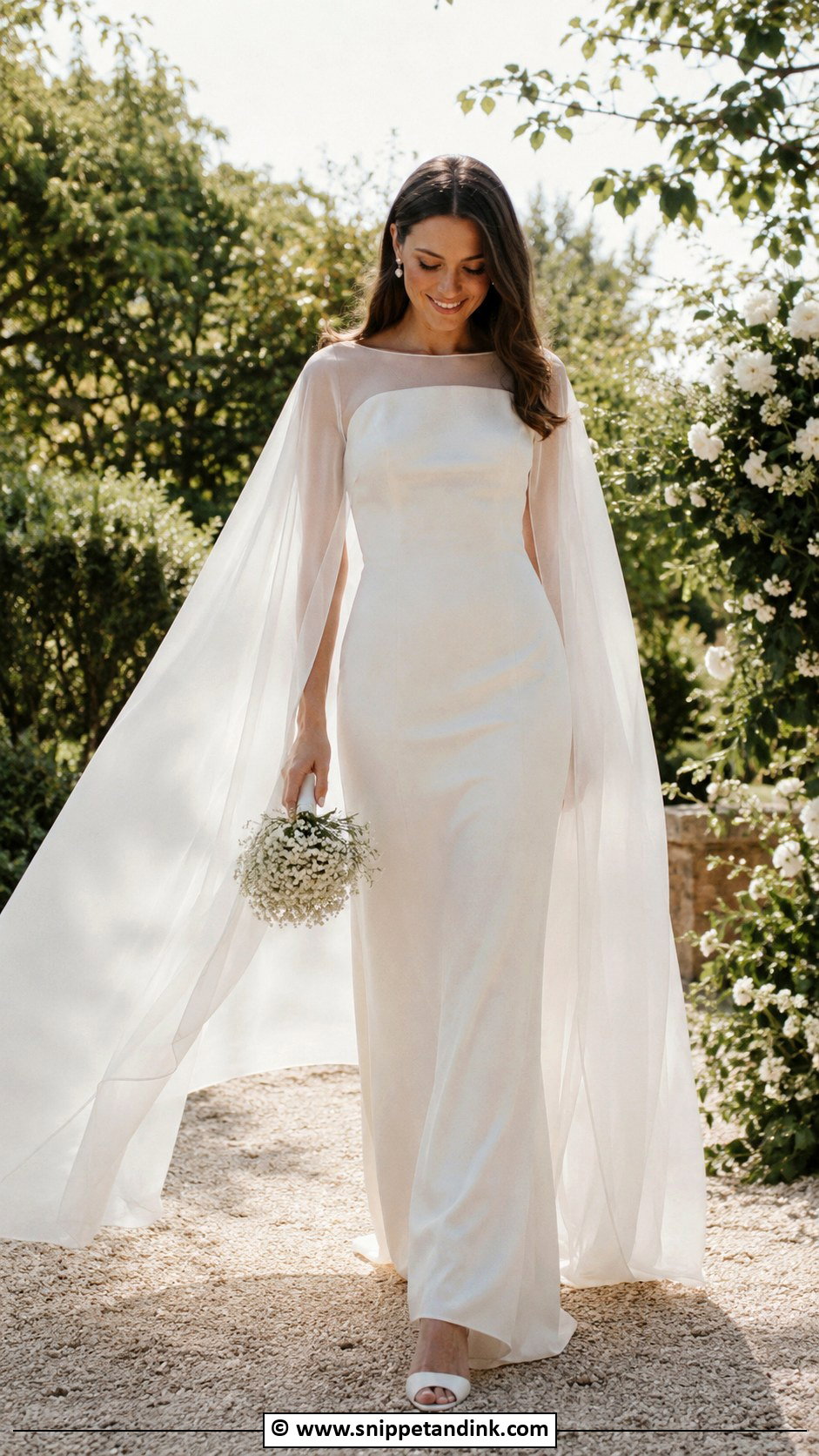
Capes add drama without a veil. A simple sheath or A-line with a chiffon cape, lace capelet or sheer shoulder overlay looks light and unusual. In wind, a long chiffon cape can wrap around you, so have it attached at the shoulders and the back, not only at the neck. Clean heels, pearl earrings and smooth hair let the fabric move. It catches breeze and light outdoors, and it covers the arms without fitted sleeves.
20. 1970s Tiered Skirt Wedding Dress
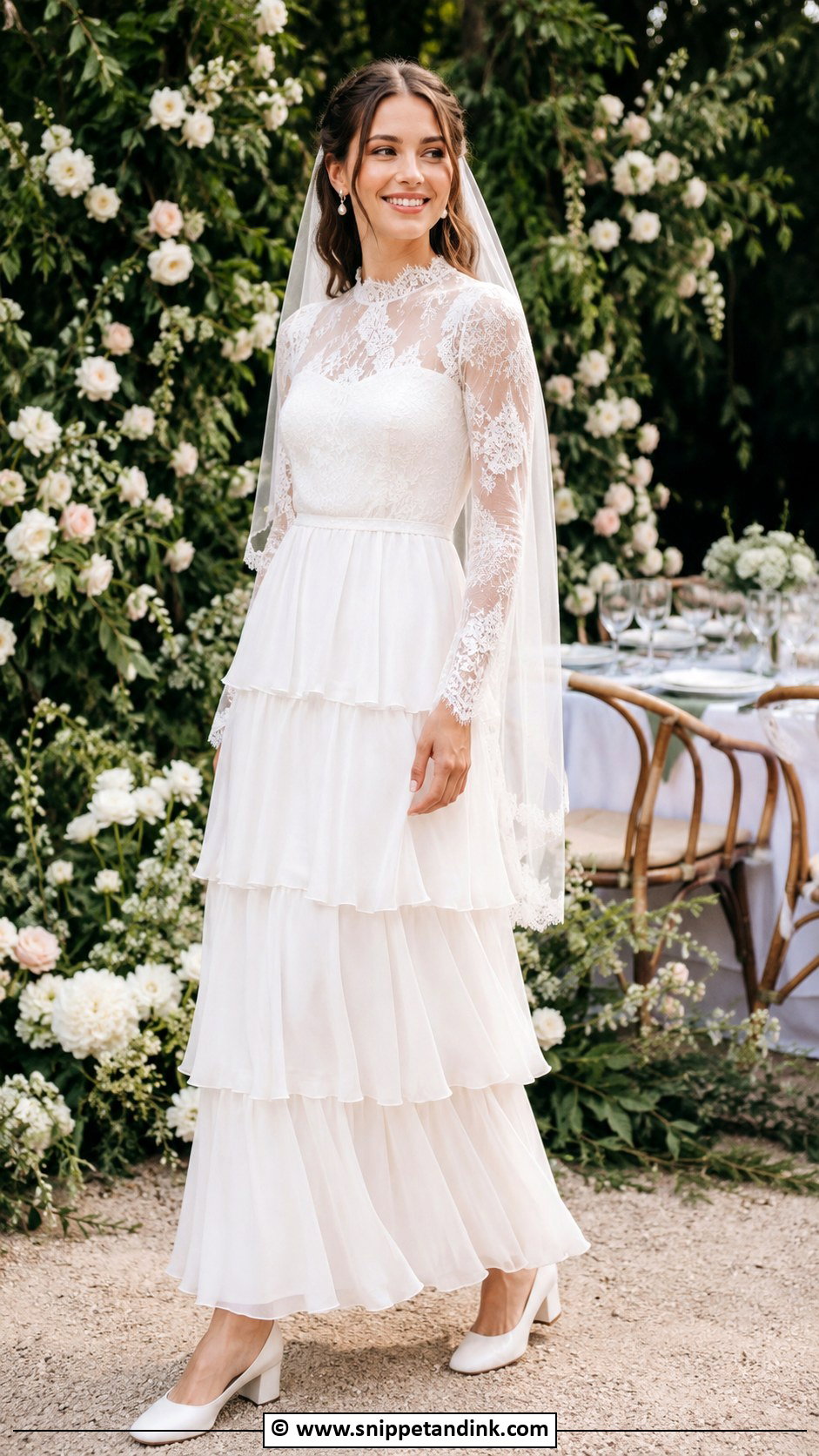
Tiers give a skirt soft volume in stages. In chiffon, lace or organza they move; in stiff fabrics they stand out like a lampshade. Balance the fuller skirt with a fitted bodice, a high neck or long sleeves. Each tier seam adds a little weight, so a tiered dress can feel heavier than it looks; walk around in it before you buy. Block heels, a narrow veil and delicate earrings suit it, with a simple bouquet if the tiers are trimmed in lace.
21. 1970s Embroidered Wedding Dress
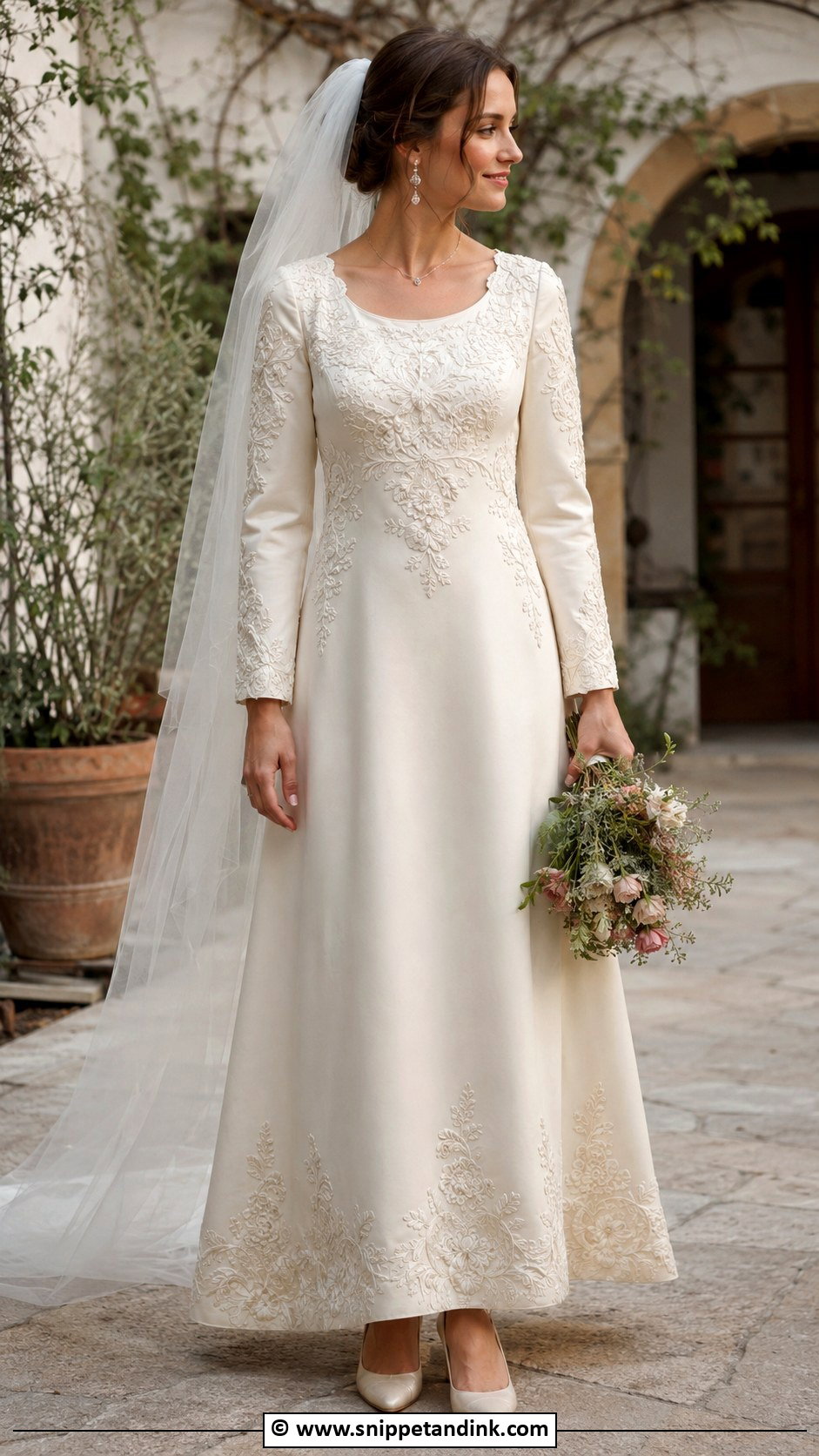
Embroidery feels personal, and in the seventies it was often visibly handmade. Look for floral embroidery, vines or tonal stitching on the bodice, sleeves or hem. The shape should stay soft: an empire waist, maxi skirt or relaxed A-line. Raised embroidery can be scratchy against the skin on the inside, so feel the reverse of the bodice before you commit. Low heels, a simple veil and minimal jewelry let the stitching lead, with a bouquet that complements rather than copies it.
22. 1970s Cotton Lace Wedding Dress
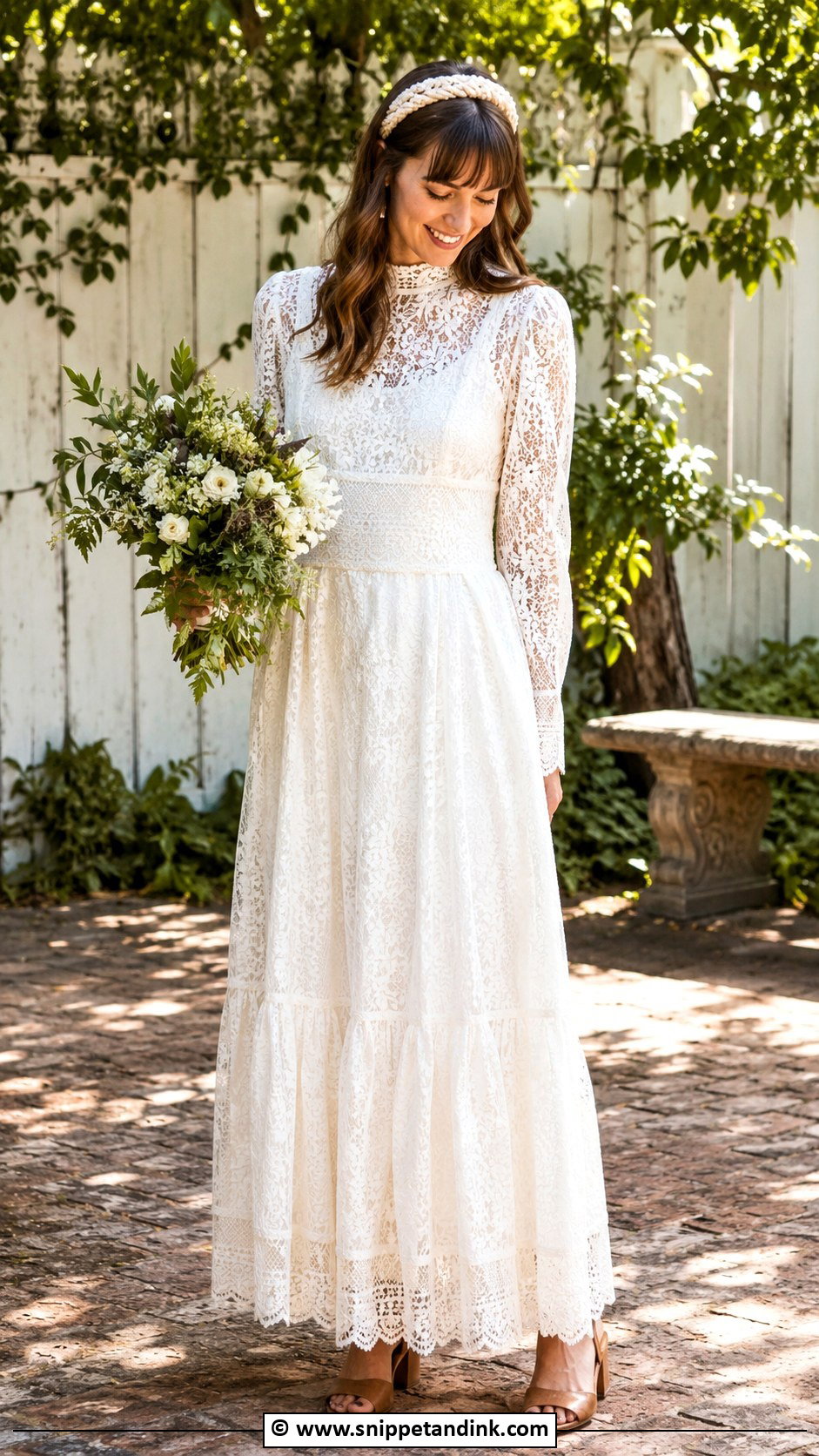
Cotton lace is matte and breathable, which makes it a relaxed alternative to glossy bridal fabrics. It suits long sleeves, a high neck or a simple maxi shape. Because the texture reads casual, the tailoring has to be sharp, with clean seams and a precise fit at the shoulder. Leather or suede block heels, a woven hair accessory and natural makeup suit it. Cotton breathes in heat, so it’s comfortable at a daytime ceremony, outdoor wedding or backyard celebrations in high summer, though it creases more than synthetic lace.
23. 1970s Simple Slip Wedding Dress
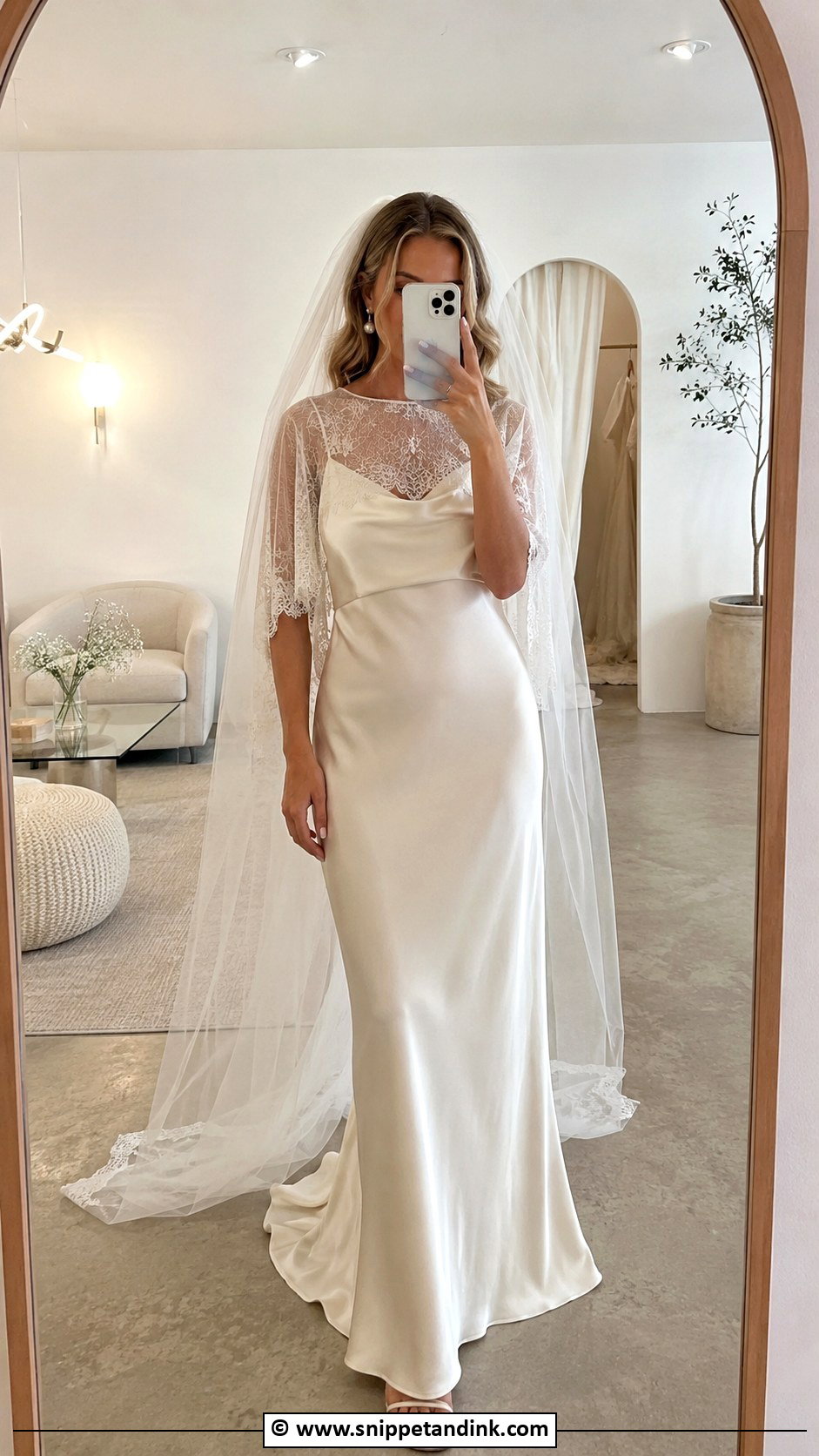
A bias-cut slip in satin or crepe is the most minimal version of the decade: thin straps, a soft drape, a relaxed column. Bias cut clings and shows everything, so a well-fitting slip and smooth underwear are not optional. Add a sheer lace topper, a long veil or a crochet shawl for the ceremony. Strappy heels, pearl earrings and soft waves complete it. It also doubles as a reception change.
24. 1970s Short Wedding Dress
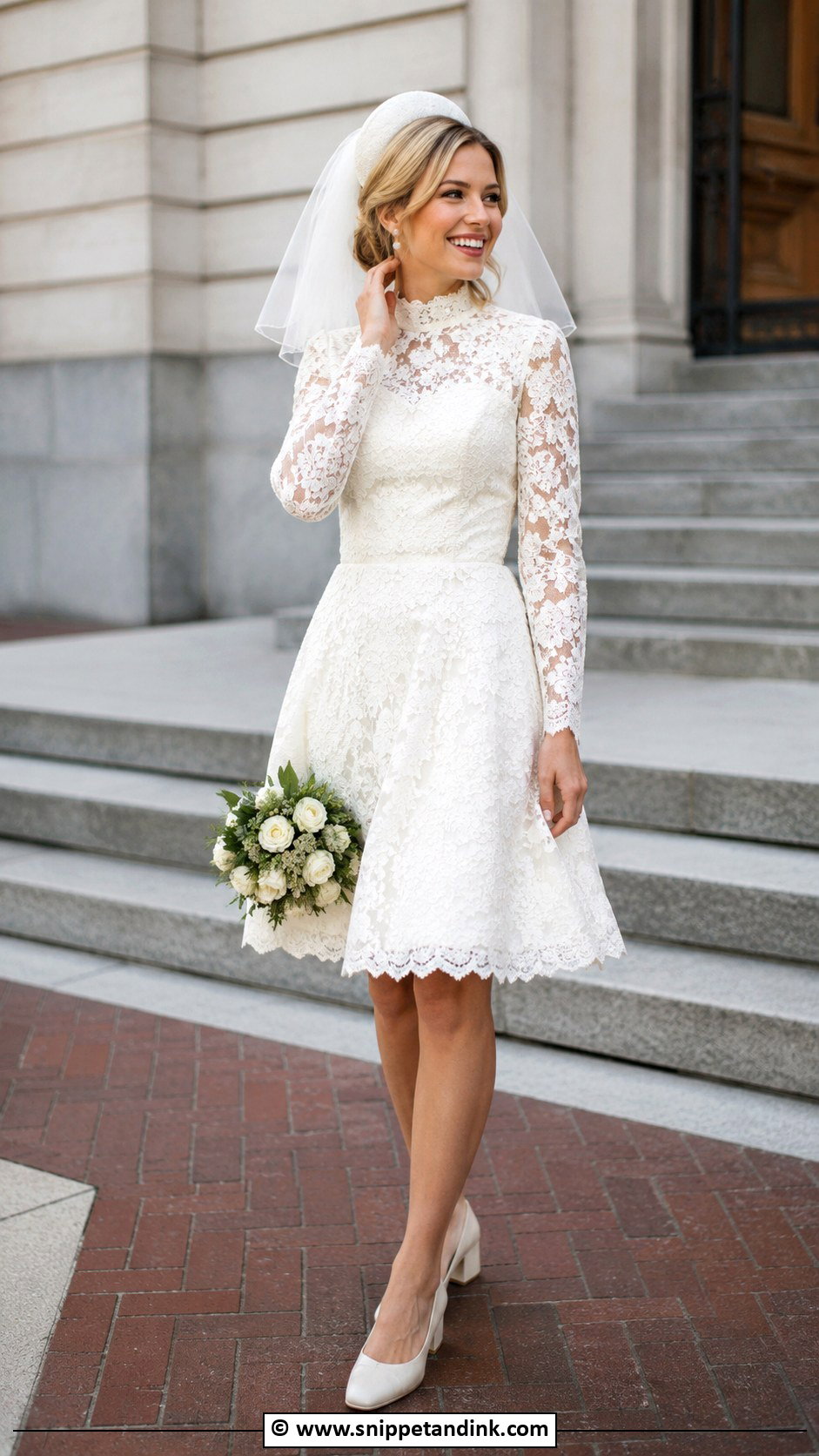
Short hems were common in seventies registry-office weddings, and a mini or knee-length dress still feels playful. Lace sleeves, a high neck or a soft A-line keep it bridal. Sit in it in front of a mirror before you buy; very short hems ride up when seated, and you’ll be sitting for photos. Block heels, a short veil and pearl earrings complete it. For more drama, choose flared sleeves or a lace overlay.
25. 1970s Hooded Wedding Dress
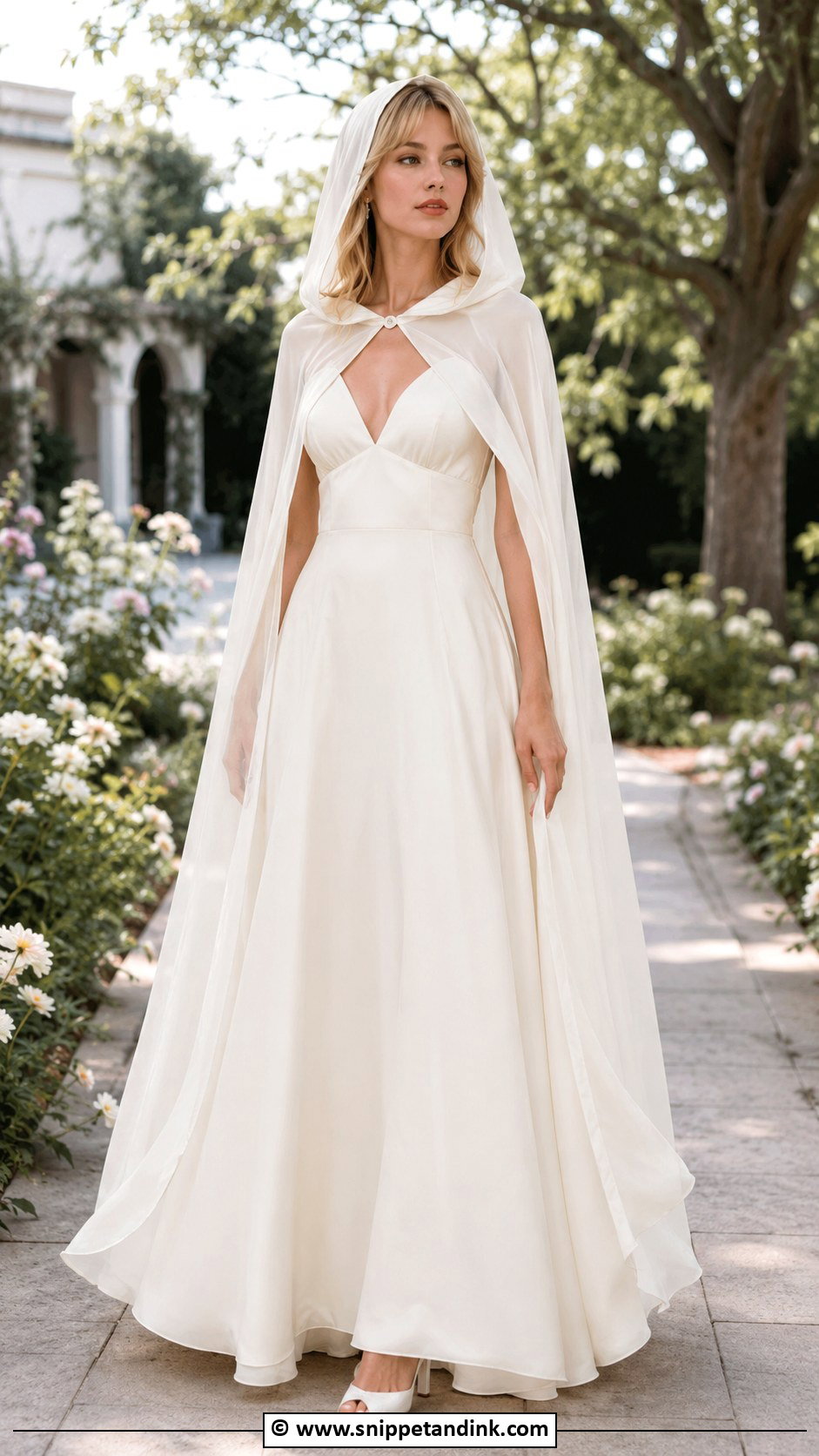
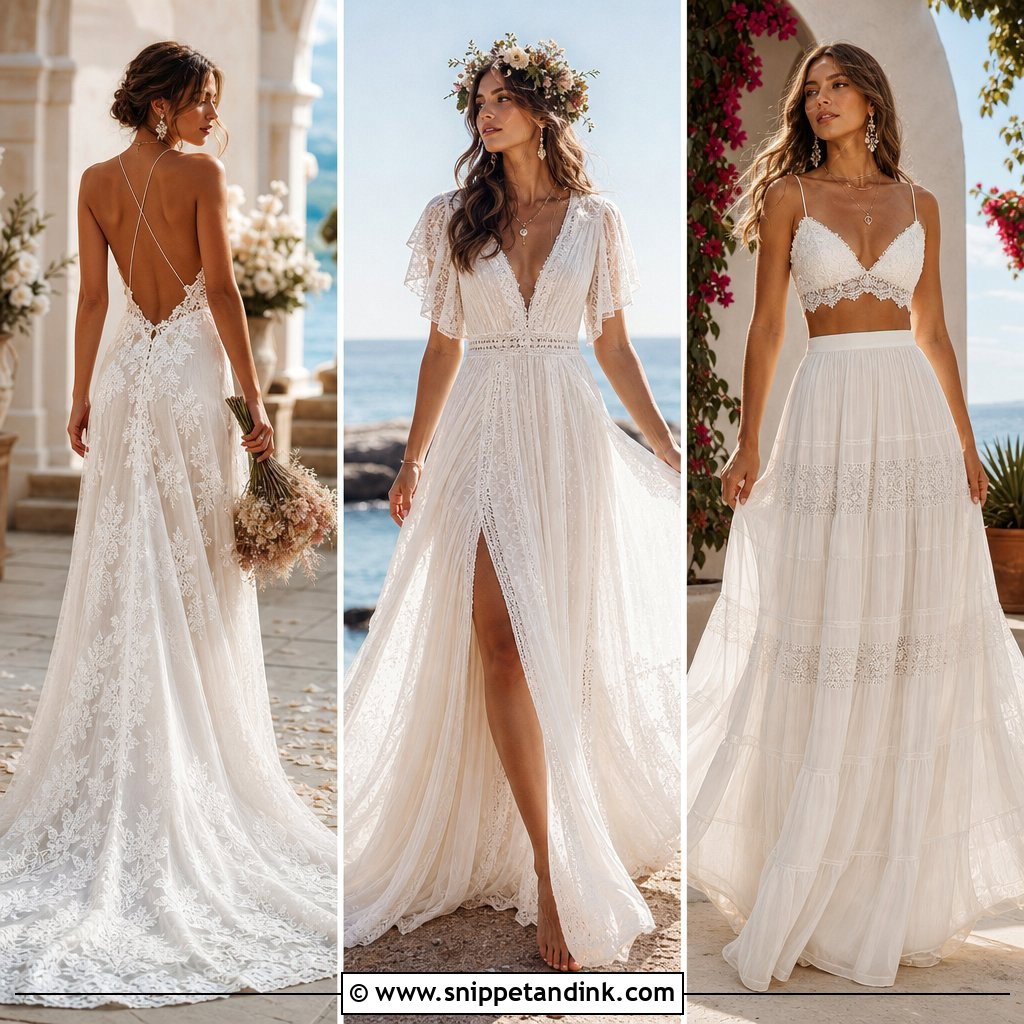
A hooded wedding dress is the boldest look here, with the hood attached to a cape, a veil or a chiffon overlay. Keep the gown underneath simple: a sheath, empire waist or fluid A-line. Hoods slip back easily, so ask for a small comb sewn inside the front edge to anchor it in your hair. Sleek heels, small earrings and soft makeup let the hood frame your face. When the lines are clean, it reads elegant rather than theatrical.
Long Hems, Grass and Platform Shoes on the Day
Floor-length flowing skirts pick up dirt fast at an outdoor wedding. By the end of a garden reception, the back hem of a maxi dress will usually be marked with grass and dust, which is normal and cleans out in most cases. If that worries you, hem the front to just clear your shoe and leave a little extra length only at the back.
Wind is the other surprise. Chiffon skirts, capes and long sleeves all lift in a breeze, which looks romantic in a few frames and chaotic in the rest. Ask your photographer to shoot with the wind behind you, and keep a couple of safety pins in the emergency kit for a cape that needs anchoring to a bodice seam.
Platforms change the hem by an inch or more, so never let a seamstress set the length while you’re barefoot. Walk on grass in your shoes before the day too; thin heels sink, and a platform with a wide heel is far steadier.
Afterward
Have the dress cleaned soon rather than months later, since sugar and sweat stains darken with time. Cotton lace and crochet are best stored folded in acid-free tissue in a box, not on a hanger, because their own weight stretches them out of shape.
A Bell Sleeve or a Cape Is Enough to Say Seventies
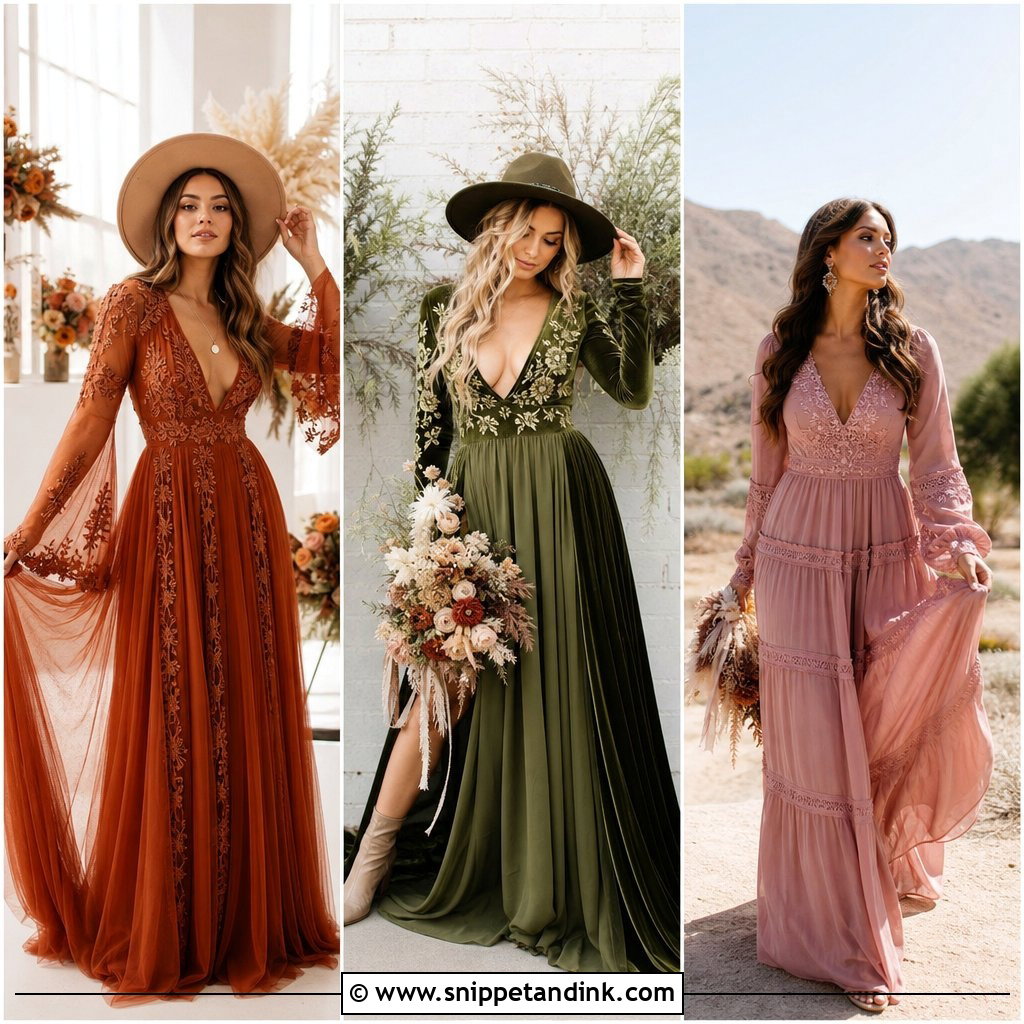
The decade gives you plenty of moods, from boho lace and prairie ruffles to sleek satin and minimal slips. You don’t need all of them. One or two strong details, such as a high neck, a bell sleeve, an empire waist, crochet texture or a cape, create the feeling on their own. Balance them with simple shoes, light jewelry and natural hair, and the dress will feel like yours rather than a period costume.
You'll Like These Ideas:


Leave a Reply