
A vintage manicure is mostly about restraint. Sheer pinks, faded French tips, a few seed pearls, a thread of antique gold: none of it is new, and that is the point. What makes it read as heirloom rather than dated is the finish and the scale of the detail, which is where I spend most of the appointment. Below are twenty designs I’d happily put on a bride, from a plain French to a 1920s fan pattern, with notes on which nail shapes and lengths each one actually suits.
Matching the Decade of Your Dress to the Decade of Your Nails
Vintage covers about eighty years of very different manicures, so I always ask which era the gown leans toward before I suggest anything. A bias-cut satin dress and a 1950s tea-length skirt want different nails, and mixing eras is what makes a bridal look feel slightly off without anyone knowing why.
- 1920s beaded or fringed gowns: art deco linework, half moons, champagne shimmer. Almond or oval shape, medium length.
- 1930s and 1940s bias-cut satin: half moons, deep red or soft rose, short to medium ovals with a glossy finish.
- 1950s full skirts and tea lengths: blush, dusty rose, pearl accents, a rounded shape.
- Victorian or Edwardian high necks and lace sleeves: lace art, pearl framing, ivory chrome, matte accents.
- 1970s boho lace: sheer nude, small florals, a faded French.
Then look at your ring. Yellow and rose gold warm a manicure up and suit champagne foil; platinum and white gold sit better beside milky whites, silver details and cool pinks. Bring the ring to the trial if you can, and a fabric swatch from the dress if the shop will give you one.
1. Vintage French Wedding Nails
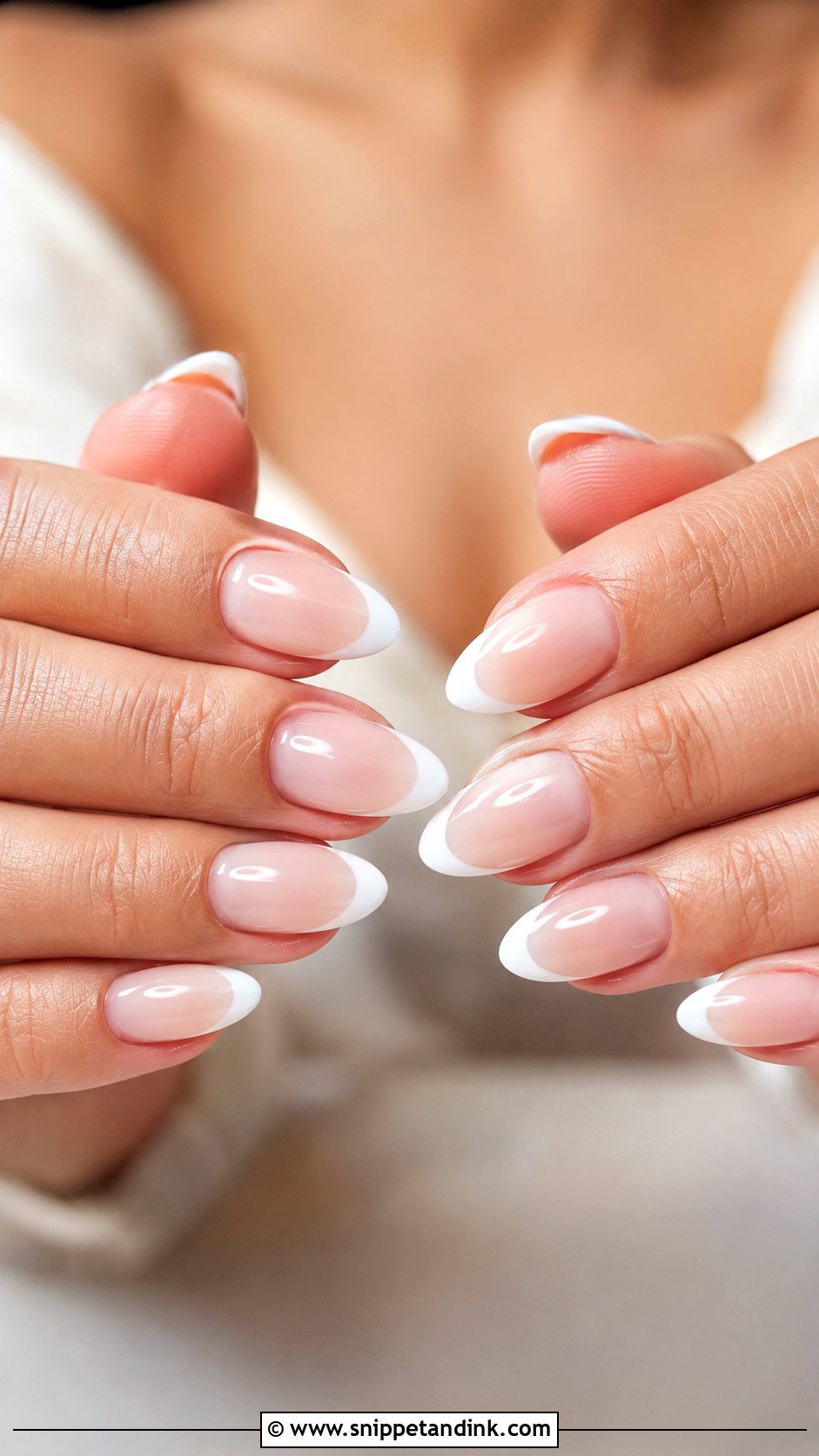
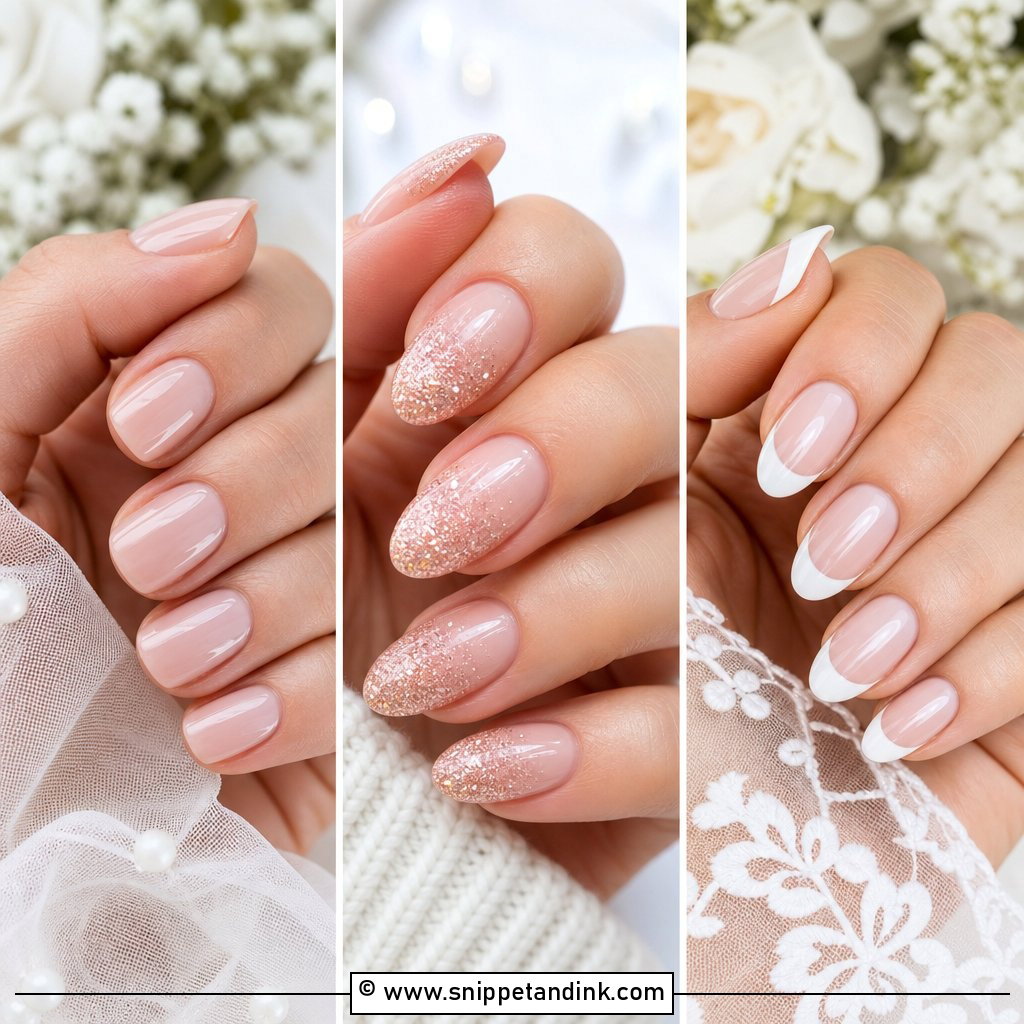
A classic French manicure is where most vintage requests begin, and it rarely lets anyone down. What dates a French is a stark, opaque white tip on a squared edge. I file to a soft oval or almond, keep the smile line a touch thinner than modern trends, and finish with a milky sheer over the whole nail so the white melts back slightly. It sits quietly next to a ring and never fights lace or a cathedral veil.
2. Pearl Vintage Wedding Nails
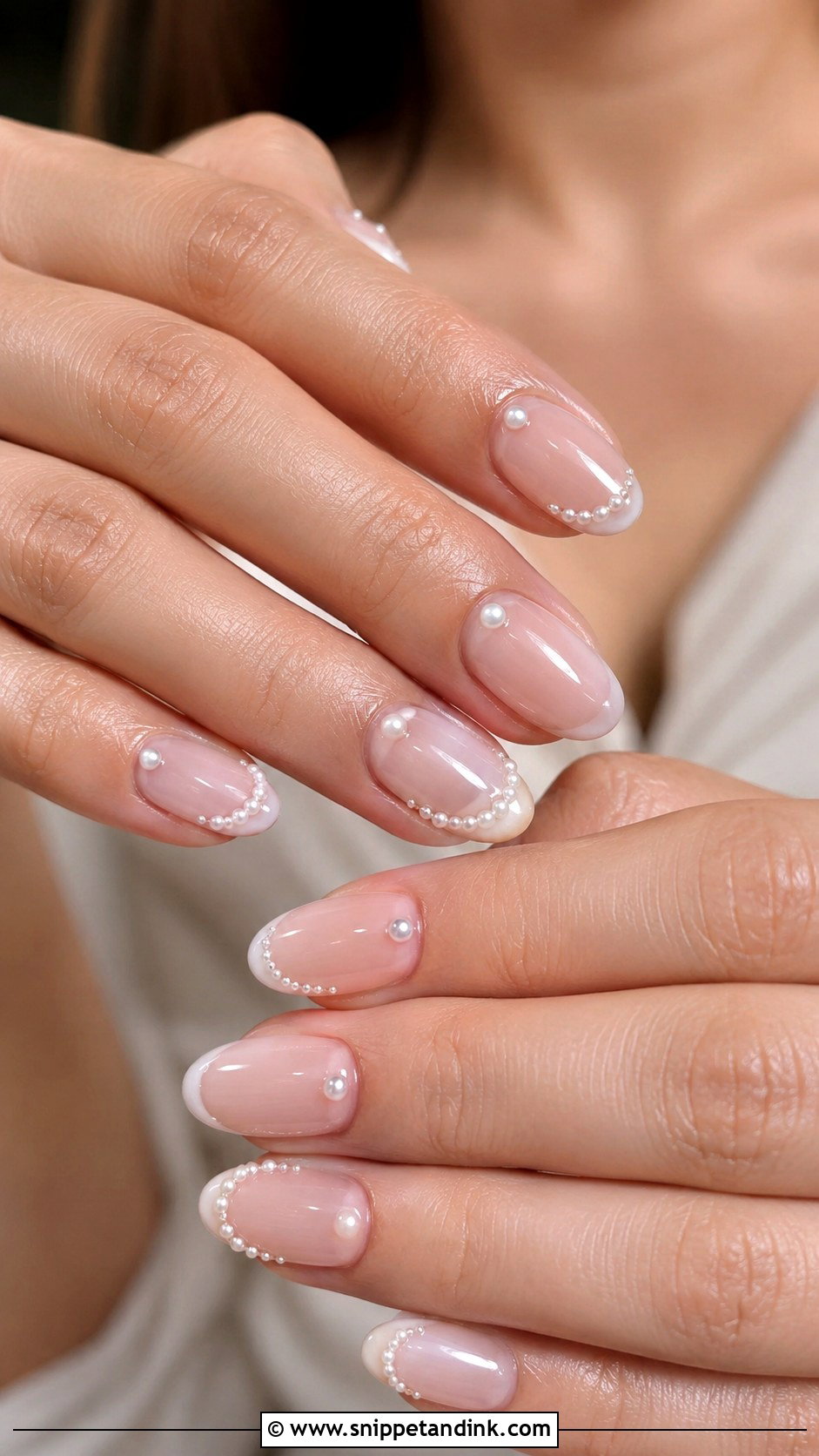
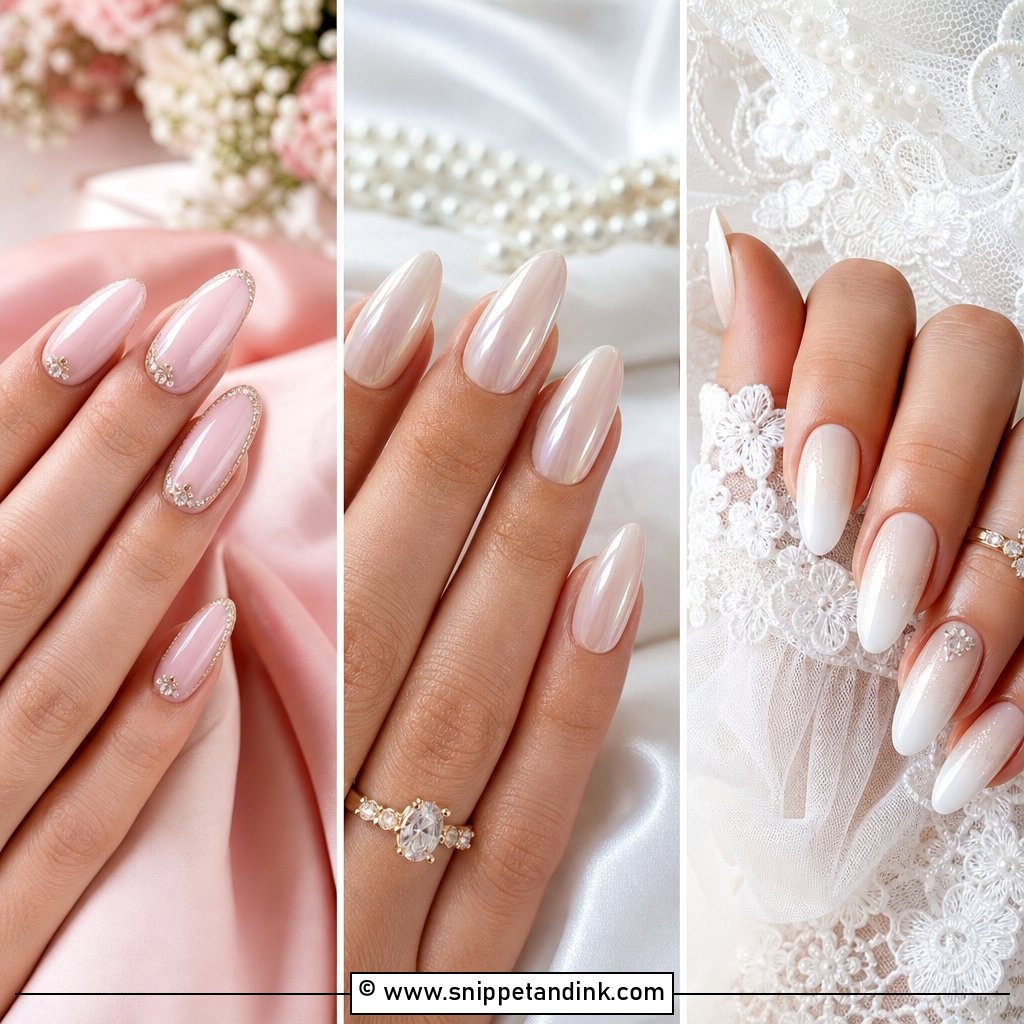
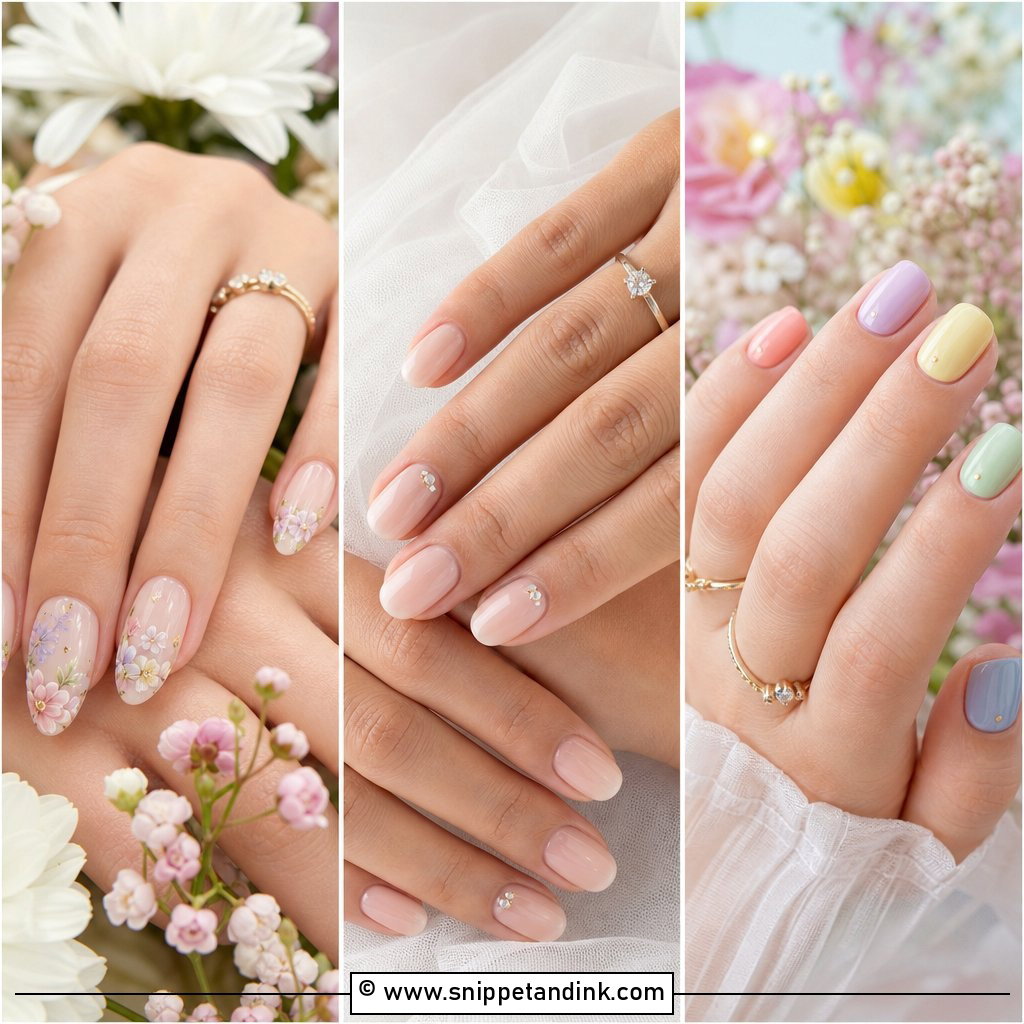
Pearls are the detail brides ask for most and the one most often overdone. I start with a sheer nude, pale pink, or milky white base and set flat-backed pearls no bigger than two millimetres, either at the cuticle or tucked along the smile line. Anything larger catches on veil tulle and lace sleeves. Two or three pearls per accent nail is plenty; the camera picks them up in ring close-ups without them looking like costume jewellery.
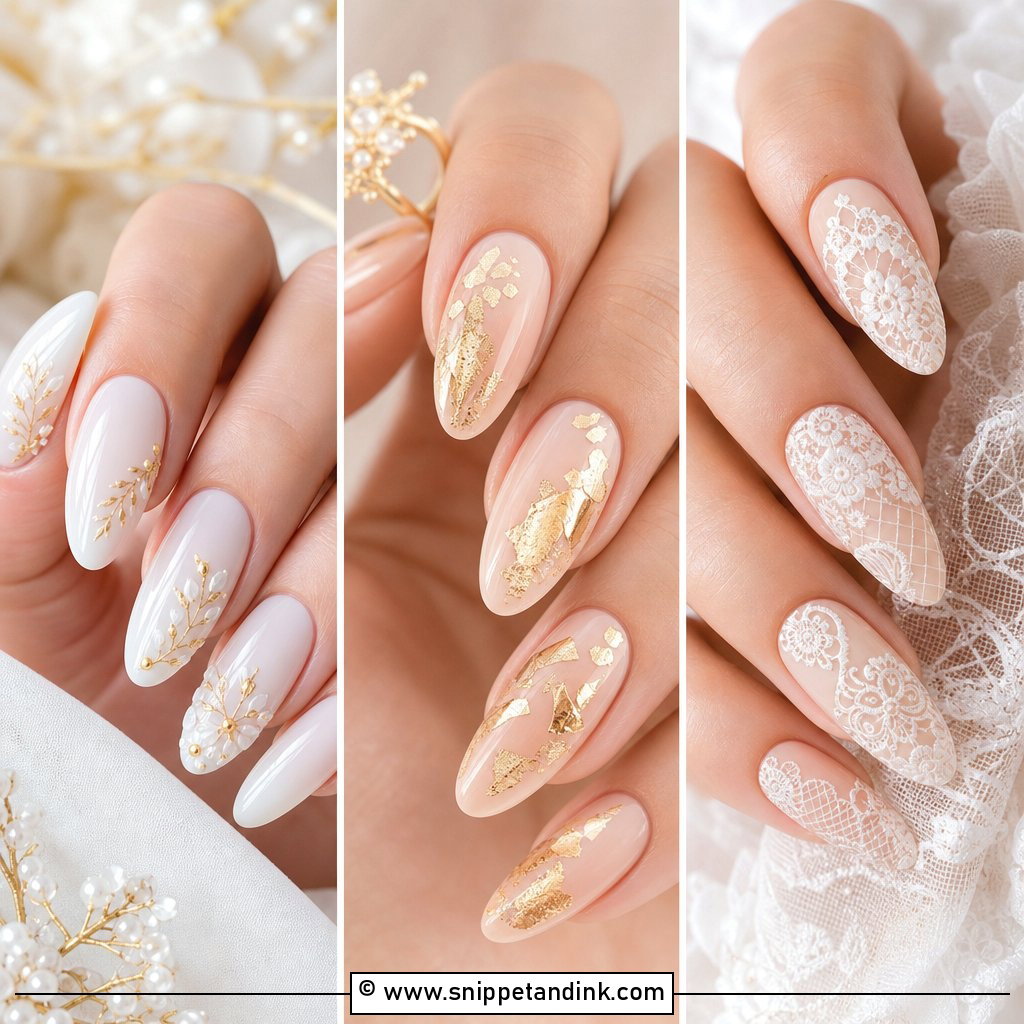
3. Lace Vintage Wedding Nails
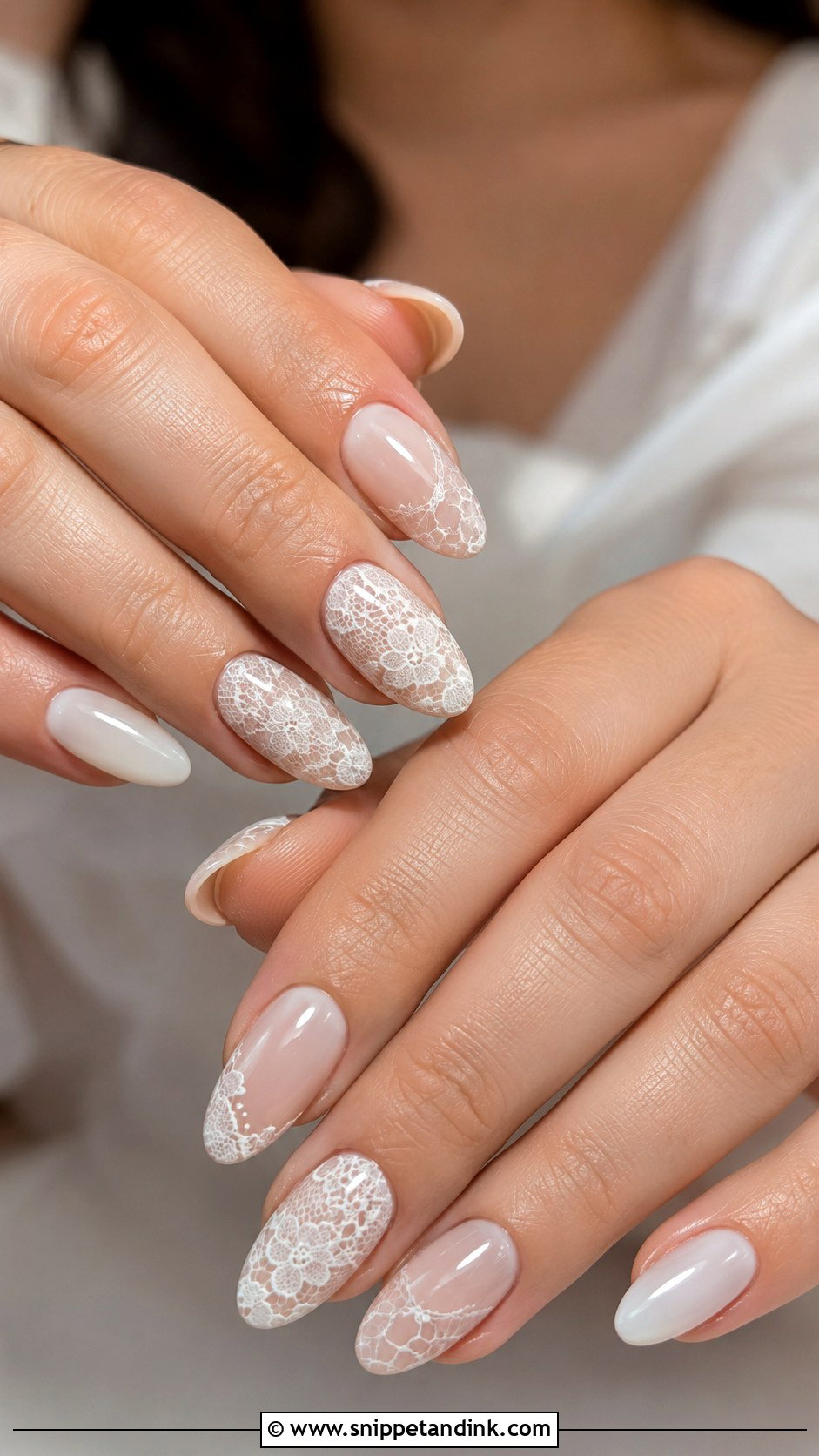
Lace art is worth doing if your gown actually has lace, because then the manicure quietly echoes the sleeve or bodice. I paint it freehand with a long liner brush in thinned white gel over nude, ivory, or soft pink, and I keep the lines finer than you’d think, since thick lines read as stamping from a metre away. Full lace on every nail gets busy, so I usually put it on two accents. Matte top coat makes it look like old fabric; gloss keeps it crisp and modern.
4. Milky White Vintage Wedding Nails
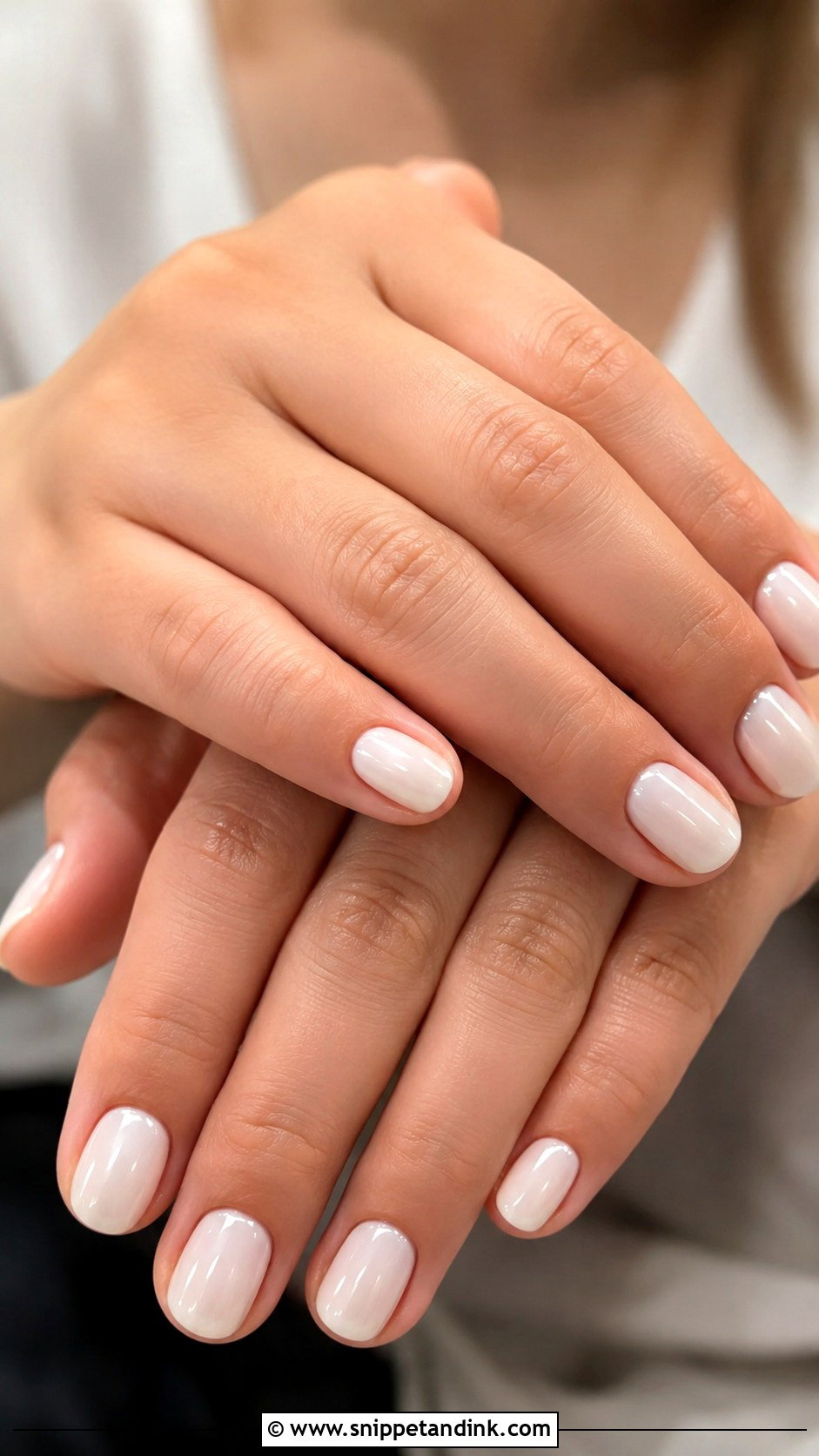
Milky white is the shade I reach for when a bride says she wants clean but not plain. The trick is a semi-sheer, creamy white built up in two or three thin coats, never one thick opaque coat, which looks like correction fluid under flash. It suits short ovals and medium almonds best. If you want a little more, a whisper of pearl chrome layer over the top or one tiny crystal at the cuticle is enough.
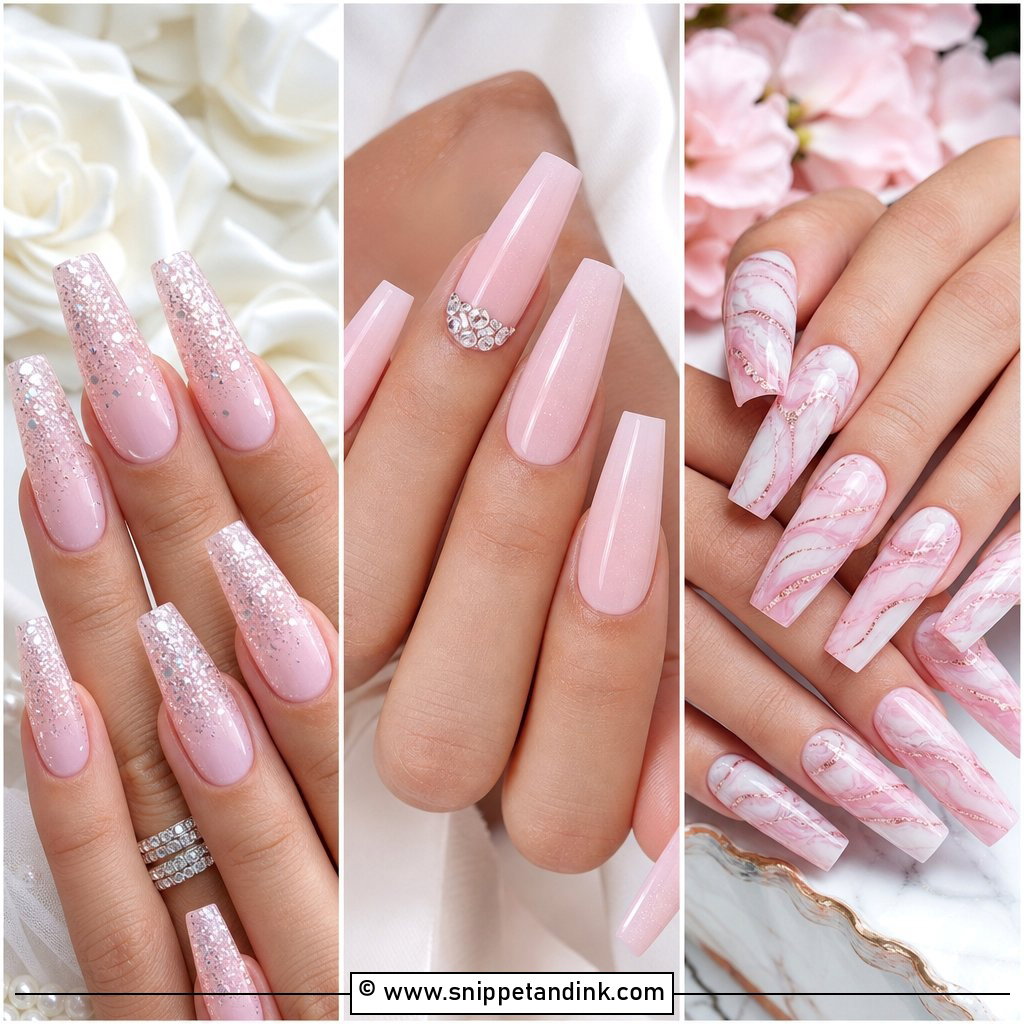
5. Blush Pink Vintage Wedding Nails
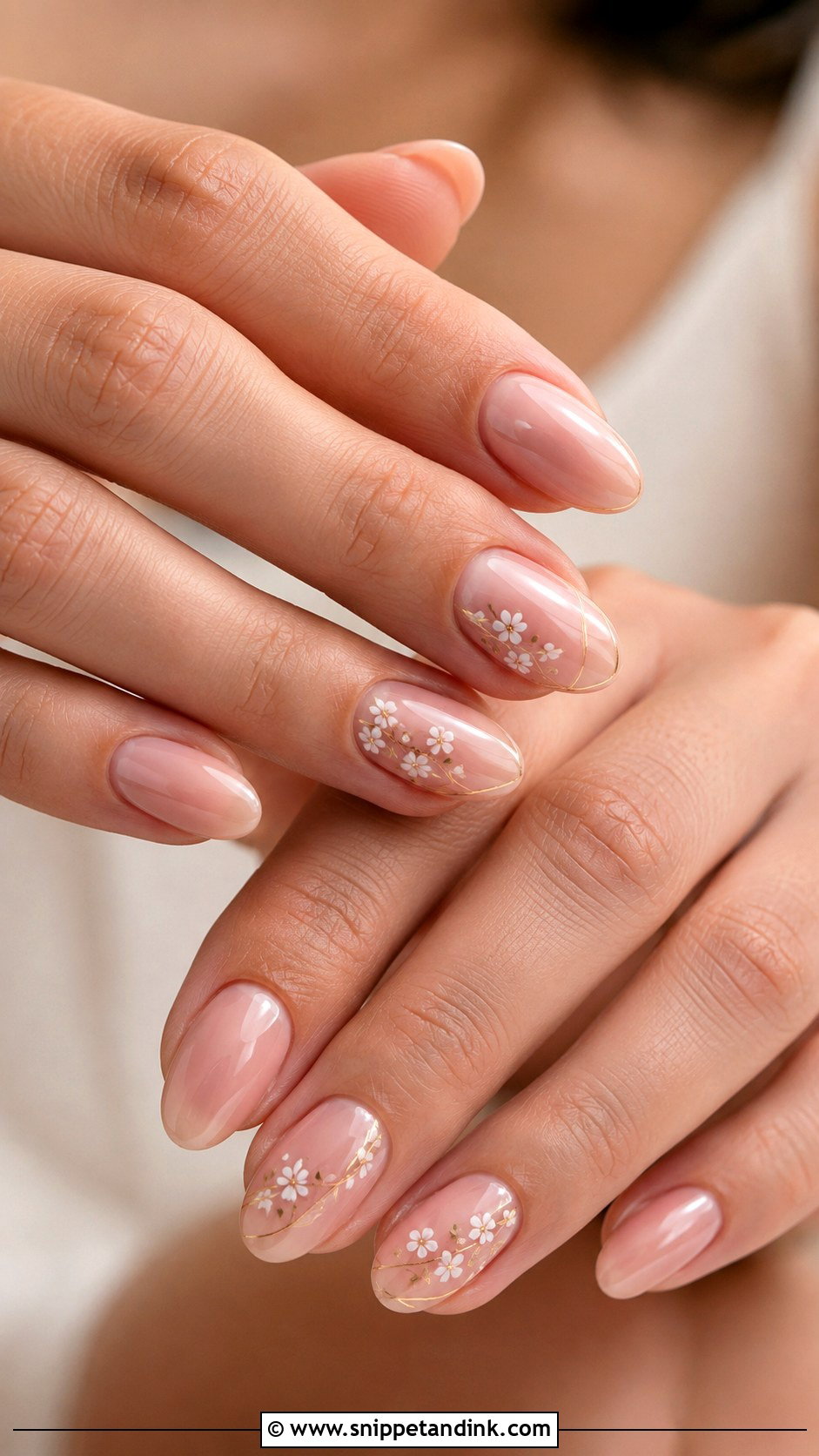
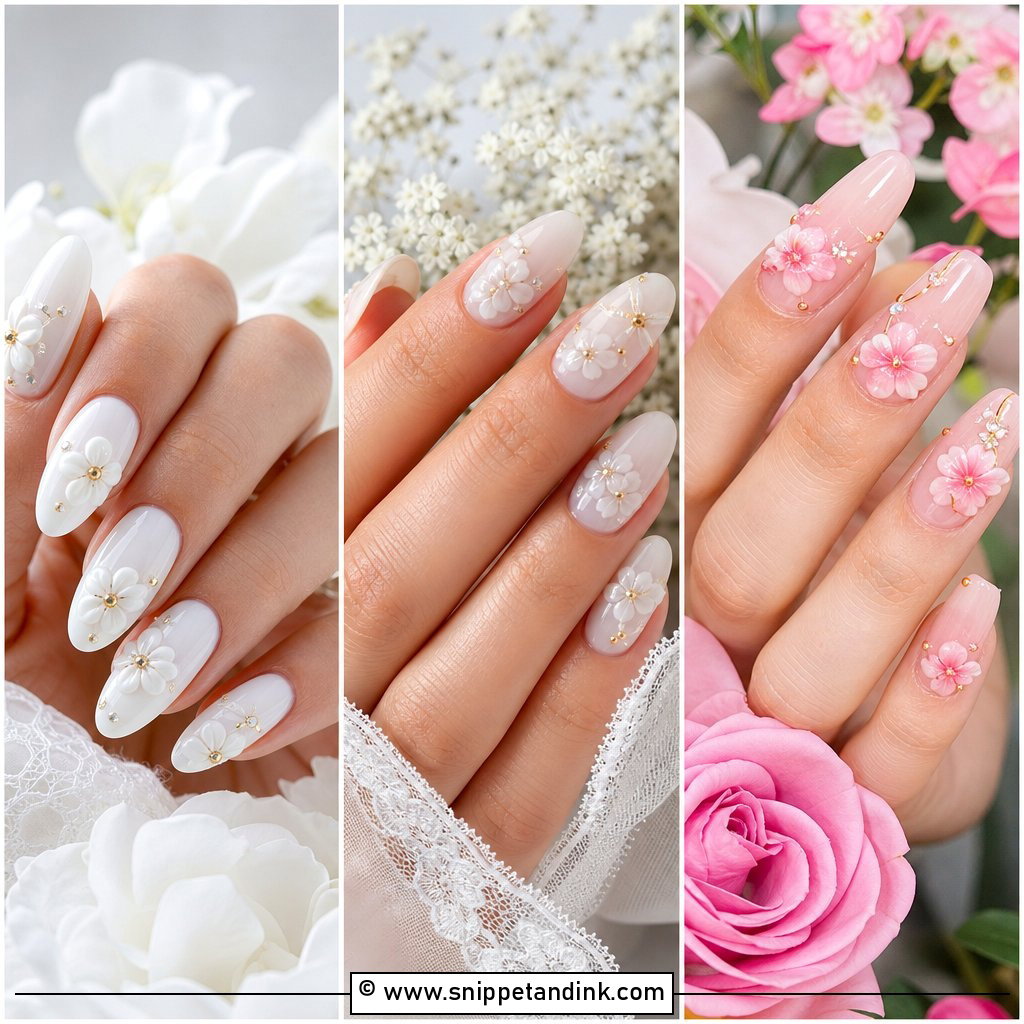
For blush, I steer brides toward a jelly pink or sheer rose rather than anything creamy. Jelly formulas let a little of the natural nail show through, and that softness is what reads as vintage. A fine gold line or a couple of hand-painted white blossoms will dress it up for the ceremony. It’s also the design I most often repeat on bridesmaids, because it flatters nearly every skin tone in the row.
6. Ivory Chrome Vintage Wedding Nails
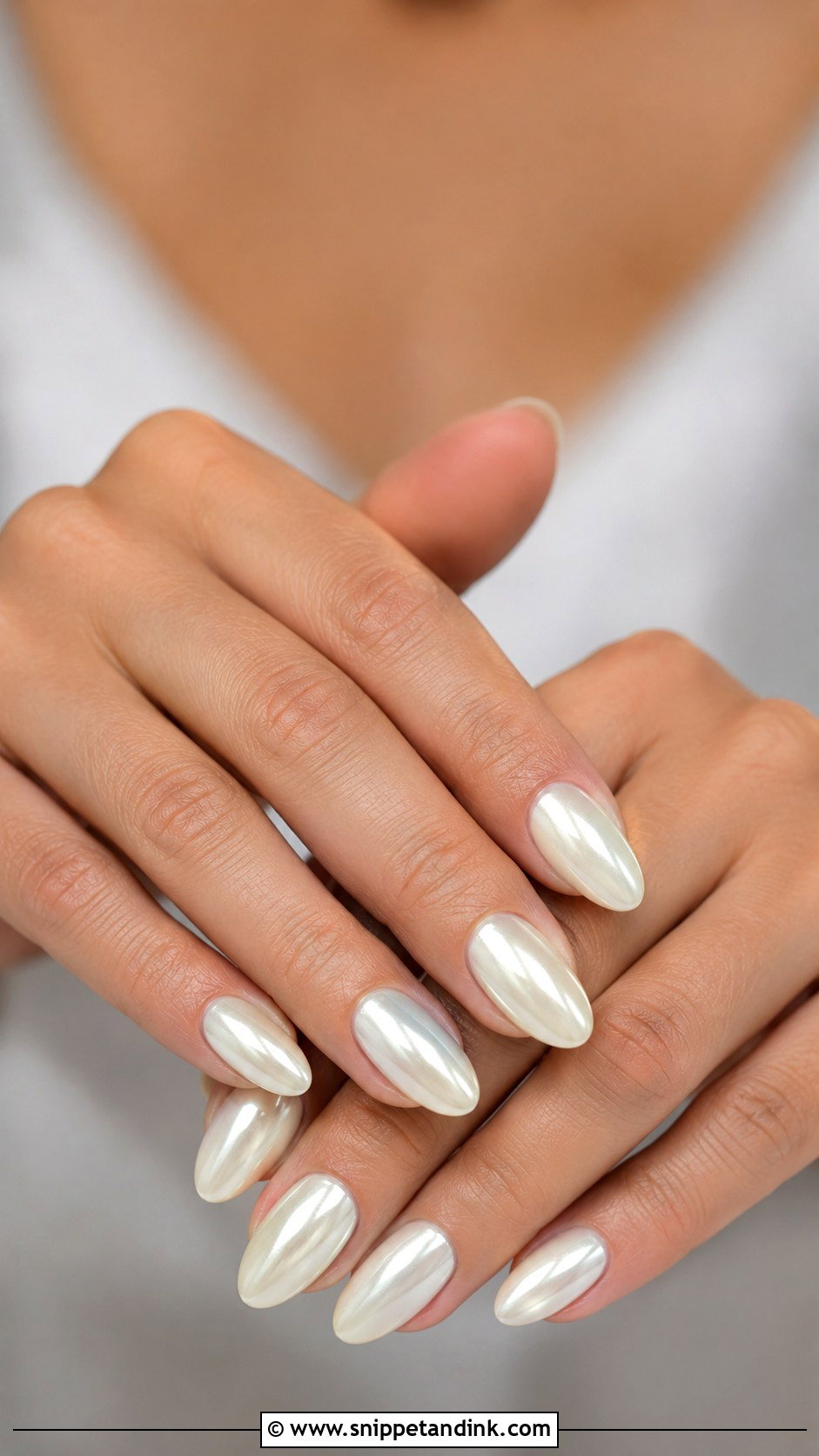
Ivory chrome sits between old-world and current. I lay down a warm ivory or cream gel, cure it, then buff a very light pearl powder over the no-wipe top coat. Press too hard or use a silver-based powder and you get a mirror finish, which is the opposite of what we want here. Done gently, it looks like mother-of-pearl and moves with the light against a silk gown. Almond and oval shapes suit it; short squoval keeps it practical for anyone who types all day.
7. Antique Gold Wedding Nails
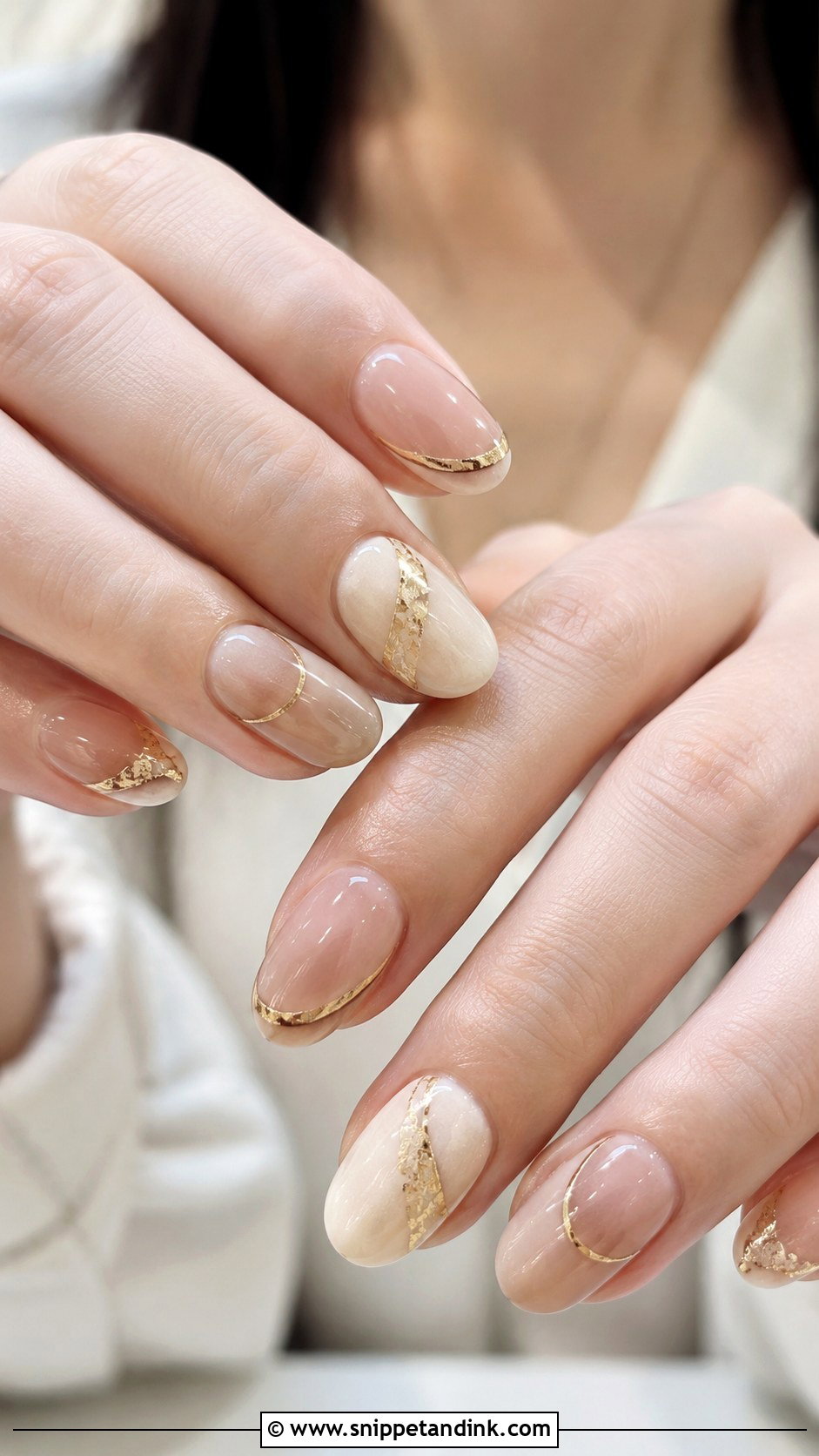
Bright yellow gold looks like costume jewellery on nails, so I work with champagne gold, brushed foil, or a thin antique-toned line instead. Over a sheer nude or milky base, a scatter of foil near the tips or a fine gold French edge gives that inherited-ring feeling. Foil has one quirk: it needs to be fully sealed under top coat or the edges lift and catch on hair within a day. Keep the placement small and it looks expensive rather than flashy.
8. Rose Gold Vintage Wedding Nails
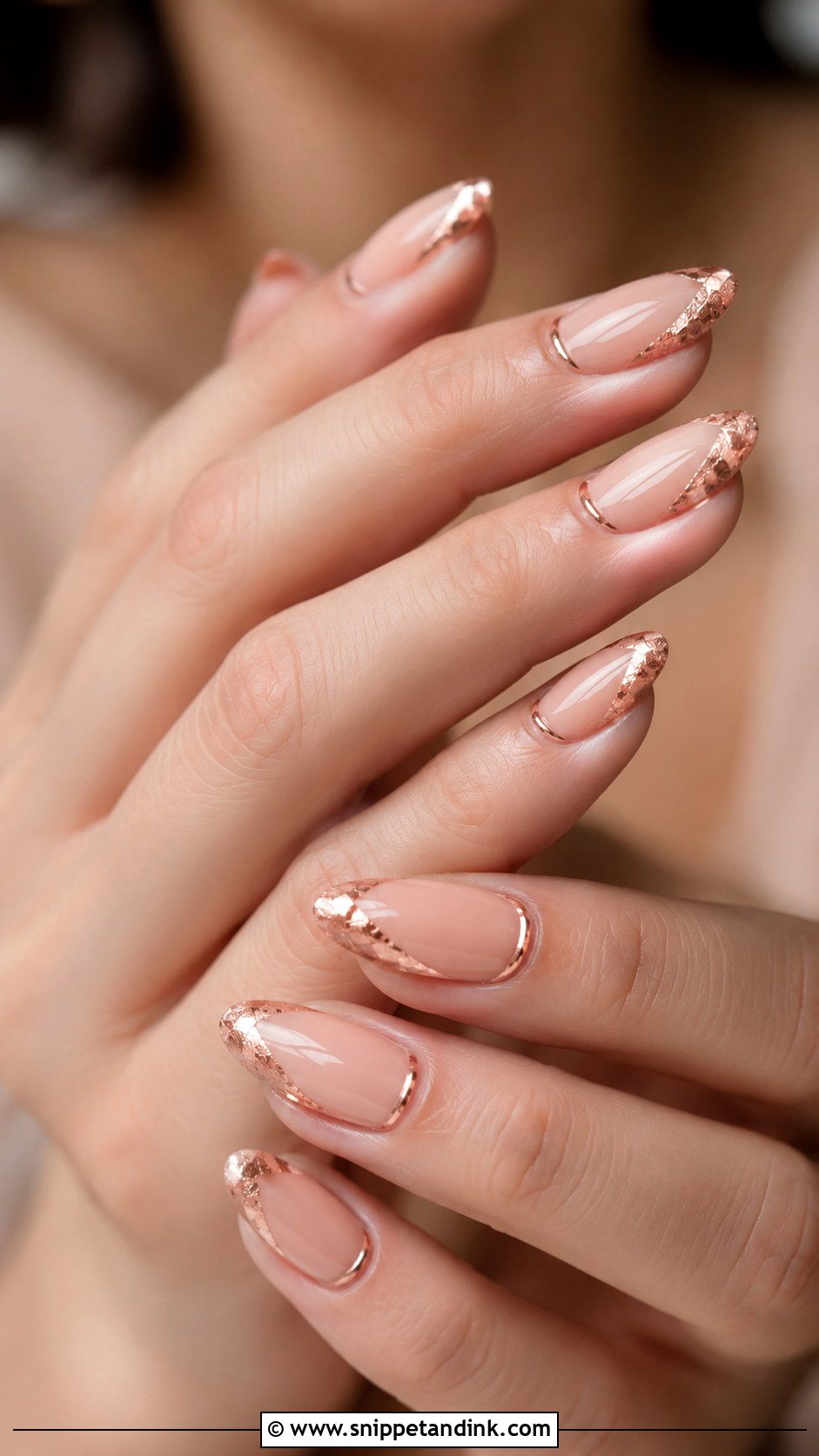
Rose gold suits brides whose band or setting has warm metal in it. I pair a sheer pink base with rose gold micro French tips, a few foil flakes, or a curved line near the cuticle. The one thing I avoid is chunky glitter, which instantly pulls the look toward prom. Fine shimmer or a single metallic stripe keeps it period-correct and sits nicely on almond and oval nails.
9. Art Deco Wedding Nails
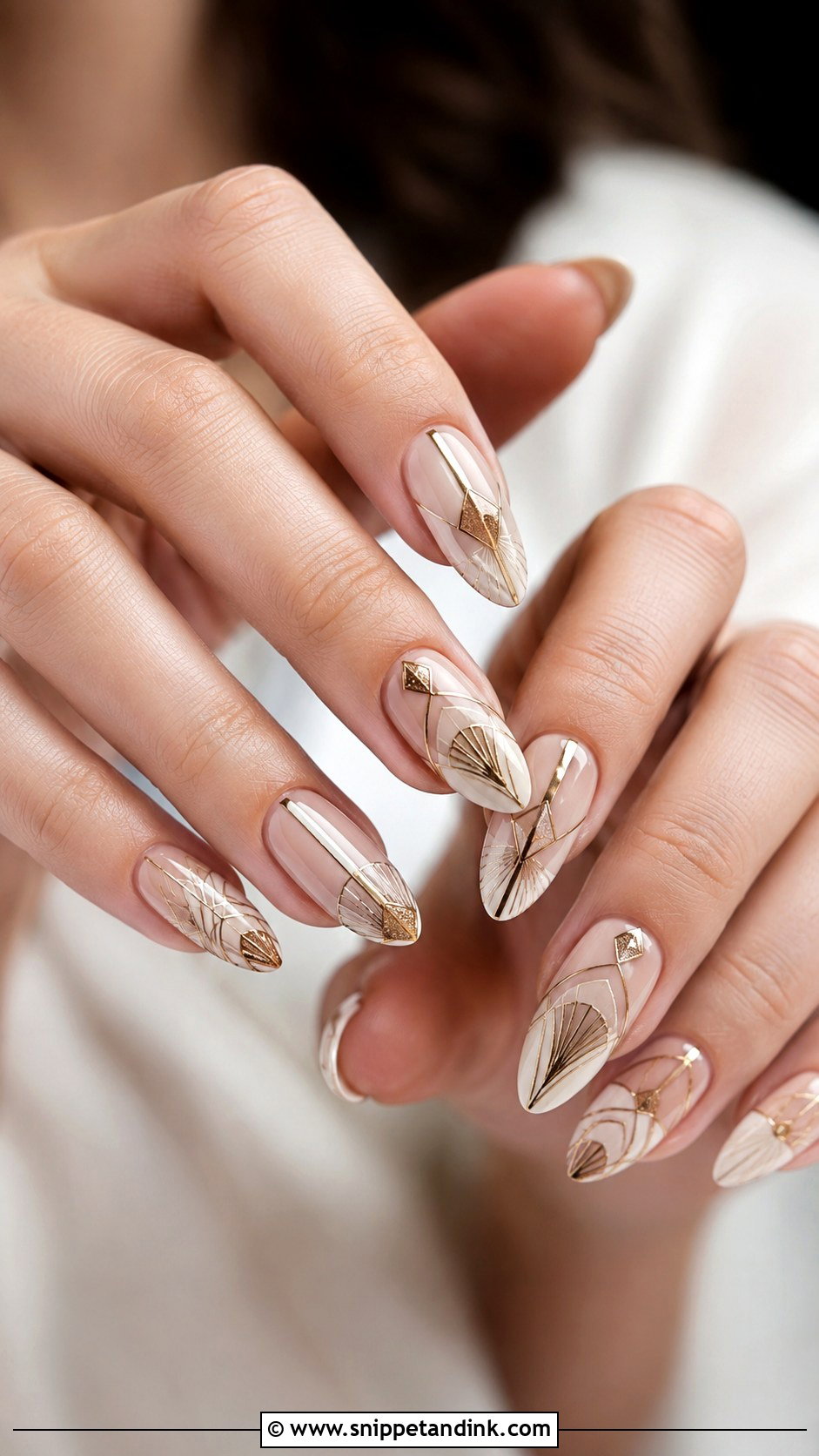
Art deco is the most structured design here, and it lives or dies on symmetry. Fans, small arches and stacked lines in gold, silver, or white over nude or ivory need steady hands and a striping brush, and I map the pattern on both hands before committing because a fan that leans on one ring finger is all you’ll see. Almond and coffin shapes give the pattern room. On short nails I simplify to one or two fine lines at the base. It’s the natural partner to a beaded gown and finger waves.
10. Half Moon Vintage Wedding Nails
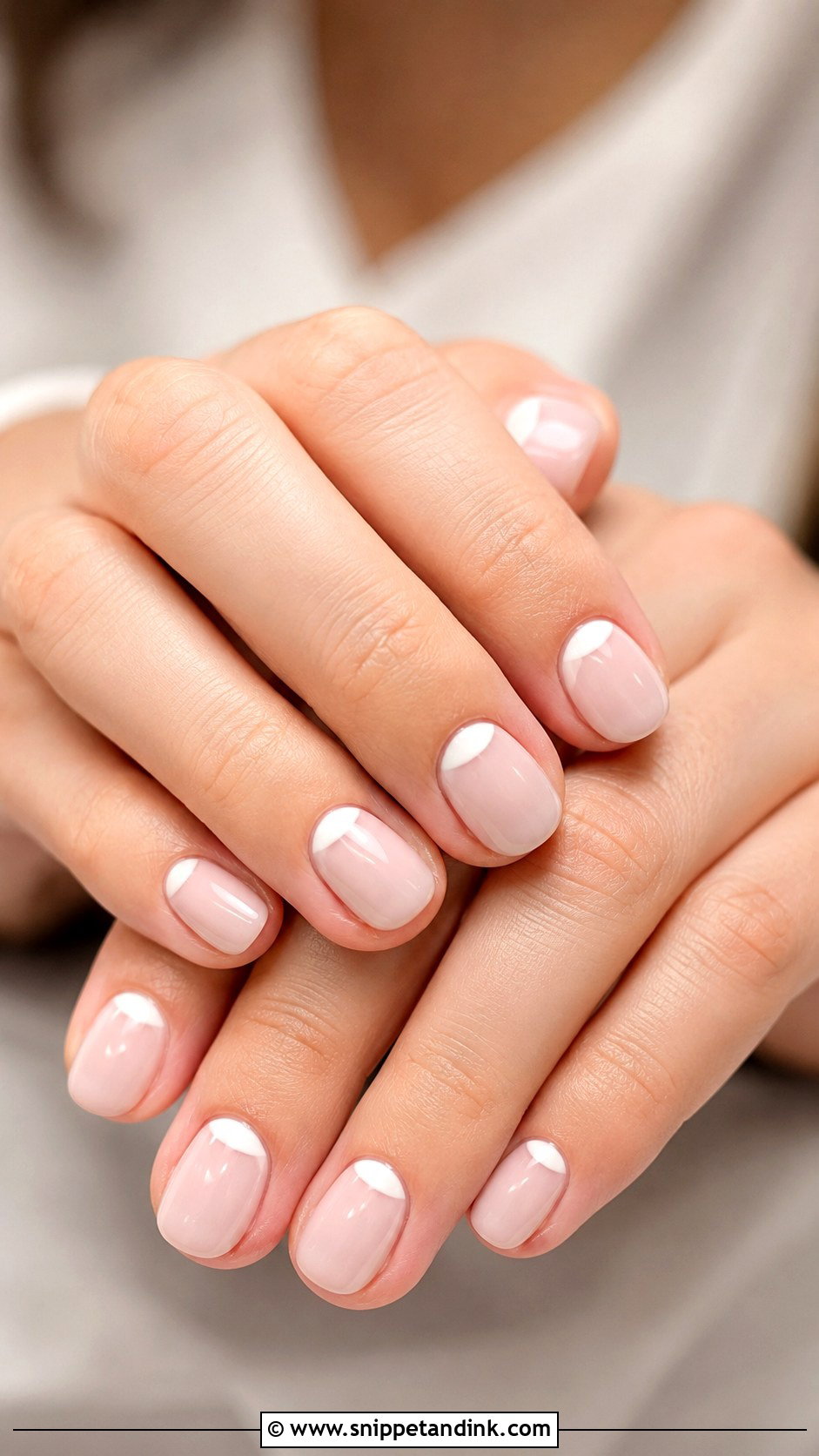
Half moon nails are genuinely period: the 1930s manicure left the lunula bare and painted the rest. For a bride, I’ll do a sheer pink base with a white crescent, or a milky base with a thin champagne crescent at the cuticle. The shape gives short and medium nails a sense of length without extensions. One caution: the crescent shows regrowth quickly, so book this one close to the wedding.
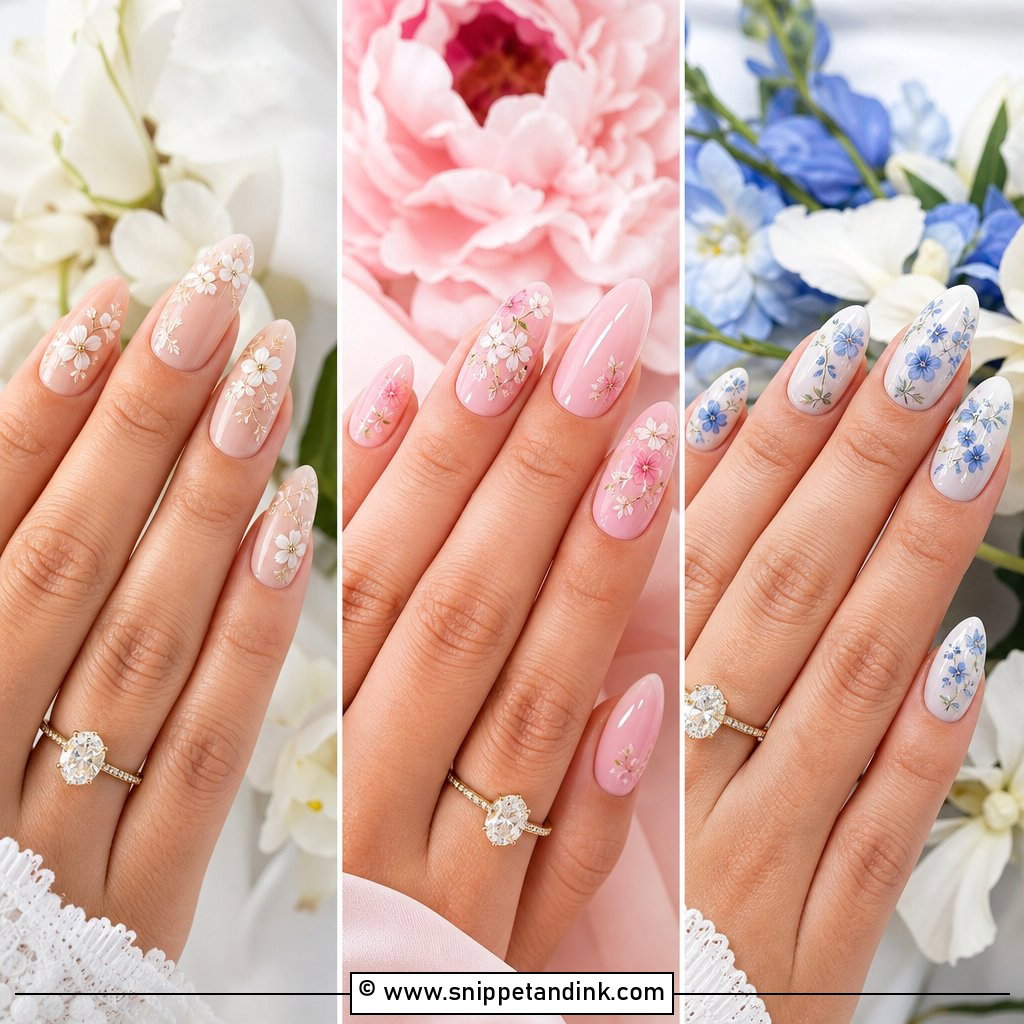
11. Vintage Floral Wedding Nails
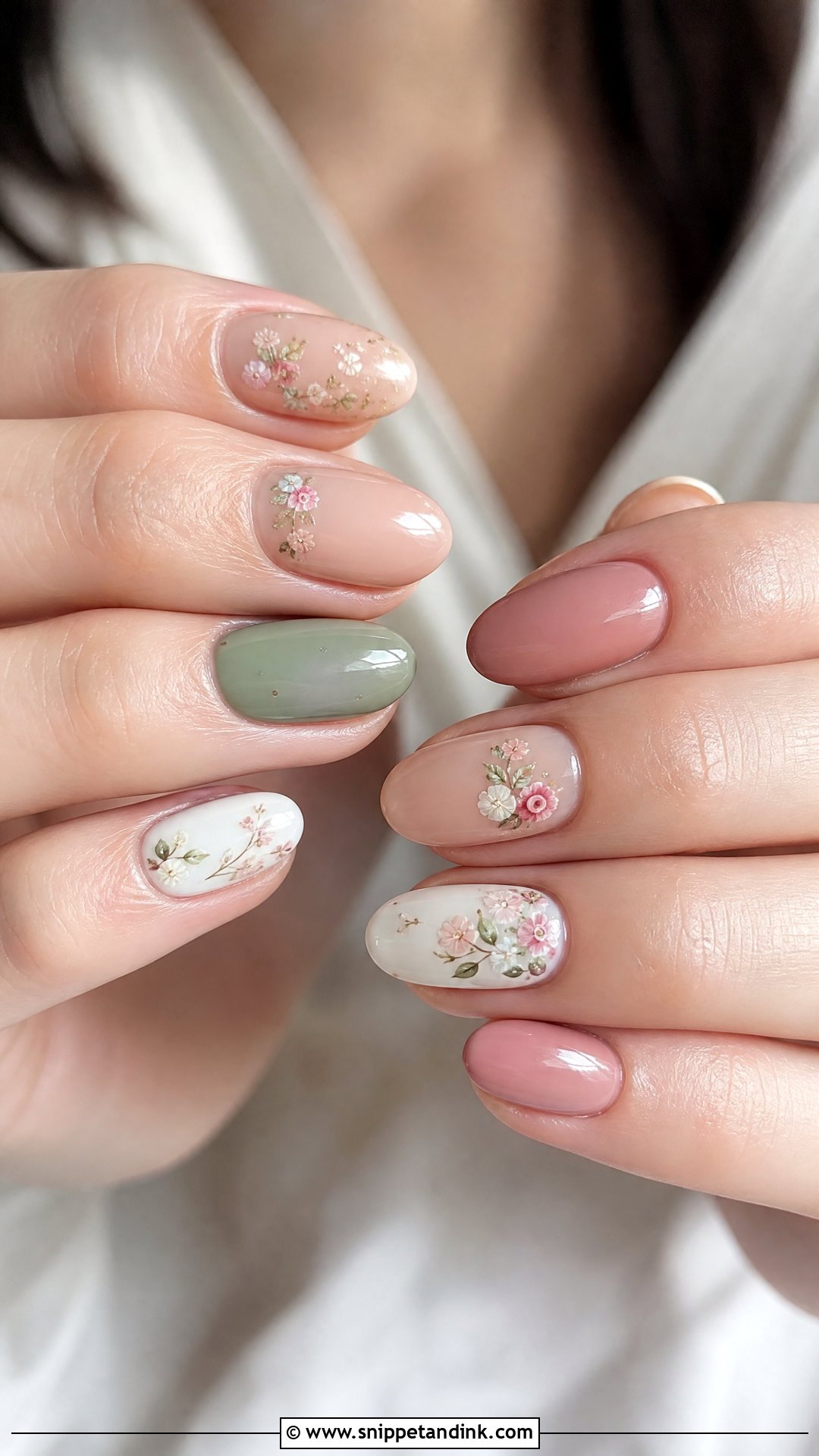
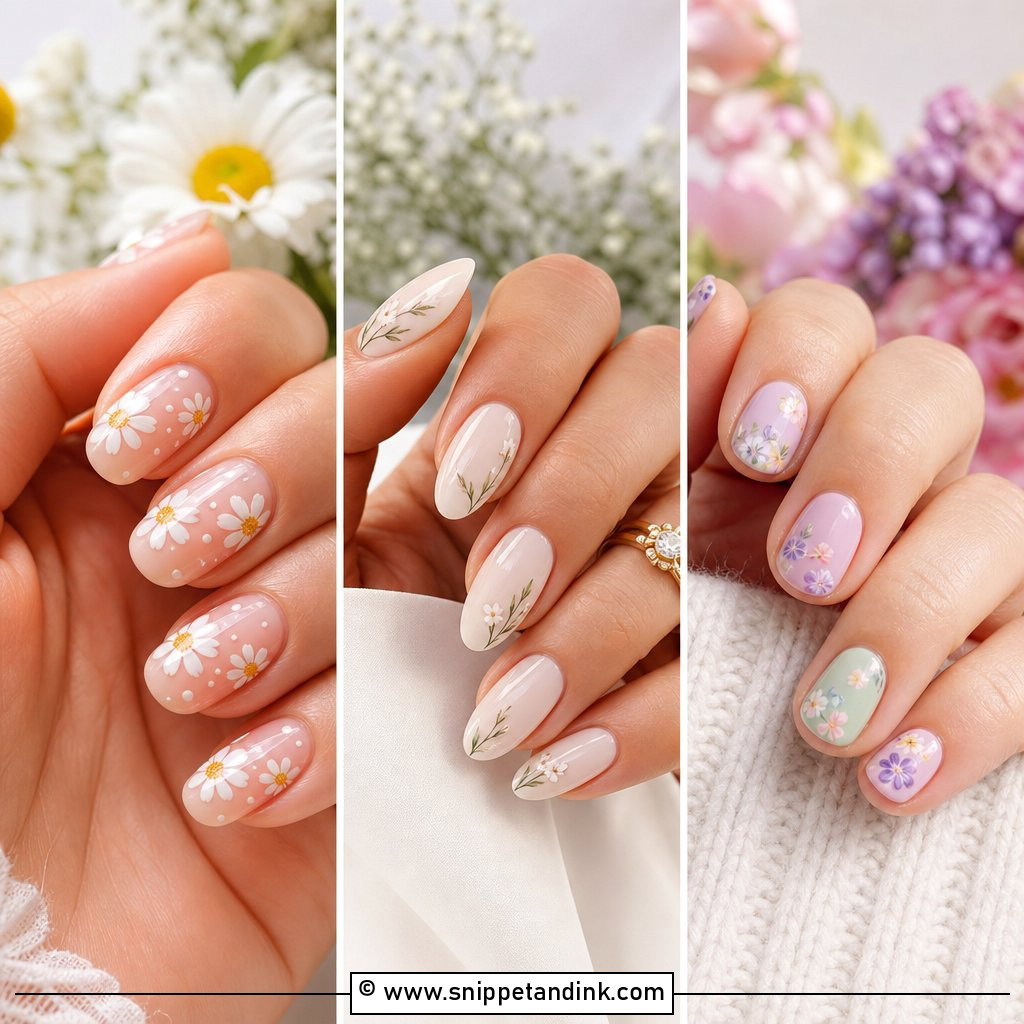
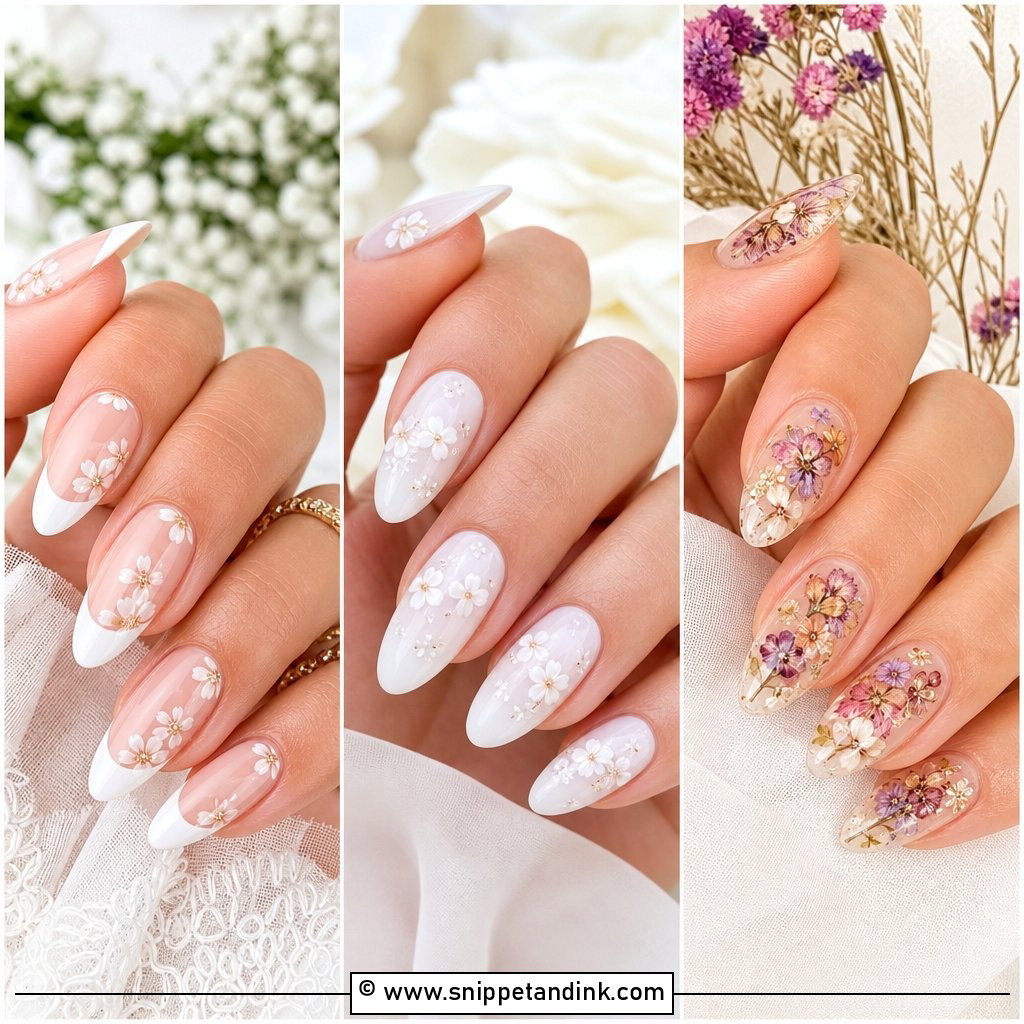
Hand-painted florals in white, blush, dusty rose or muted sage over sheer nude feel like old embroidery when they’re small and spaced out. Crowd them and the nails look like a tea set. I usually paint two accent nails per hand and leave the rest in plain pink, which also keeps the appointment to a reasonable length. For spring weddings and garden ceremonies, I’ll often pull a flower colour straight from the bouquet sample.
12. Dusty Rose Wedding Nails
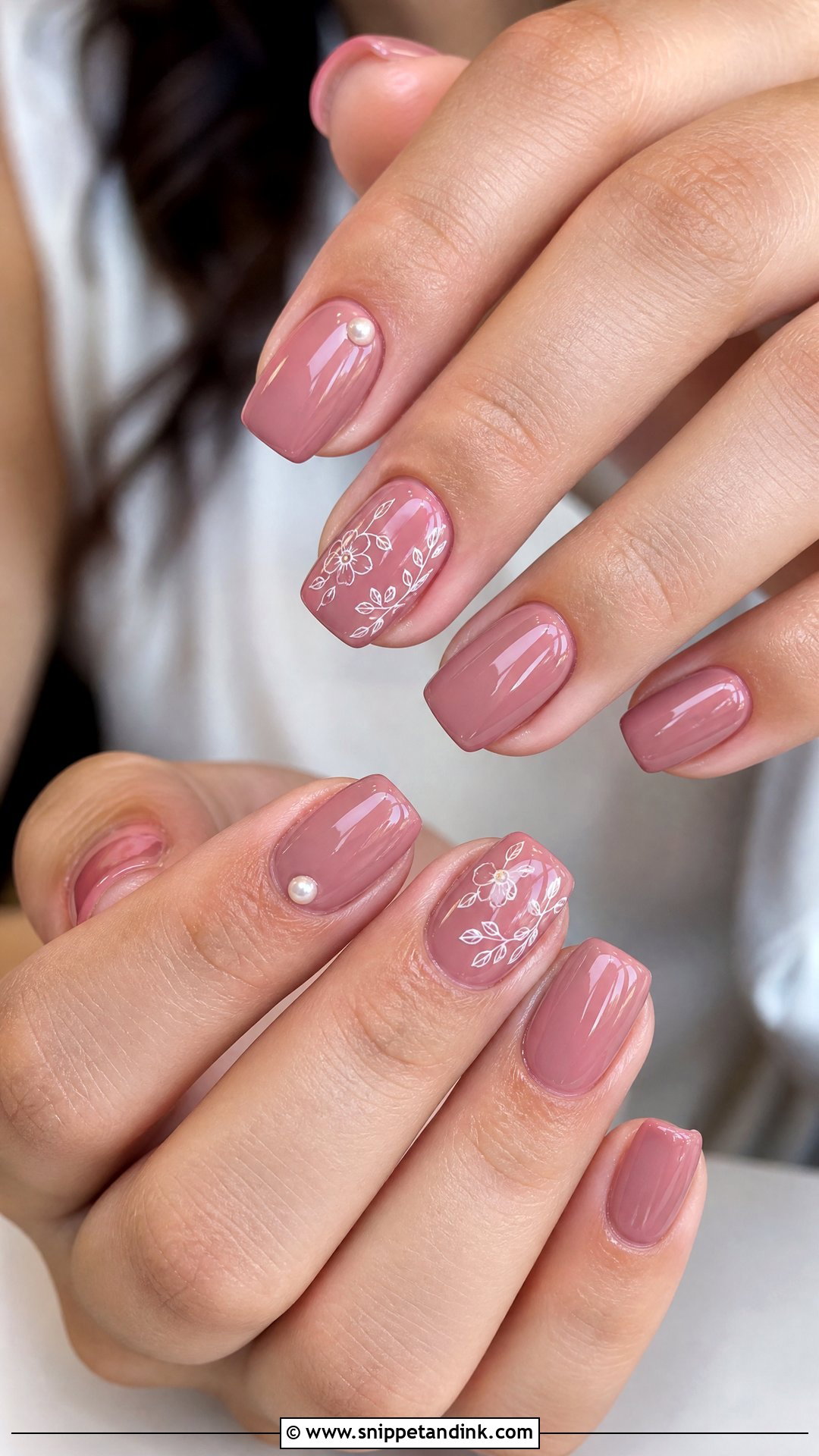
Dusty rose gives you colour without losing the vintage softness, and it’s very forgiving next to ivory, champagne, or blush gowns. A glossy rose with one detail, such as a pearl at the cuticle, fine white floral linework, or a faded French, is all it needs. It flatters short square, oval and almond shapes alike, and I find it suits autumn weddings especially well because it echoes deeper florals without going dark.
13. Champagne Glitter Wedding Nails
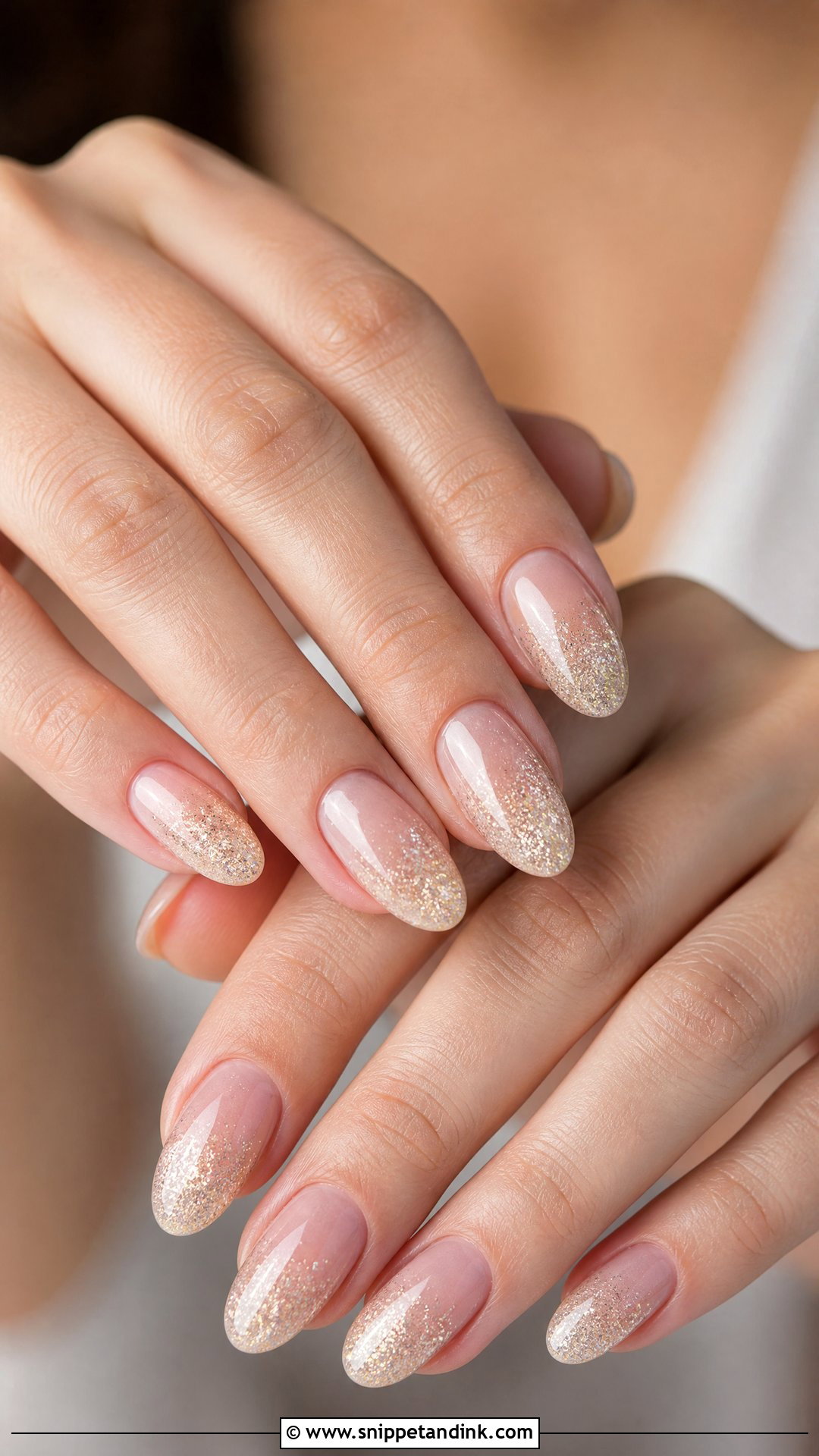
Glitter only reads as vintage when it’s fine. I use a champagne micro-shimmer over sheer nude or ivory and blend it as a gradient from the tip or the cuticle, so it catches light rather than covering the nail. Evening receptions and beaded dresses suit it best. Glitter is textured, so I always float an extra layer of thick top coat over it; otherwise it feels rough and snags tights and lace.
14. Soft Ombre French Wedding Nails
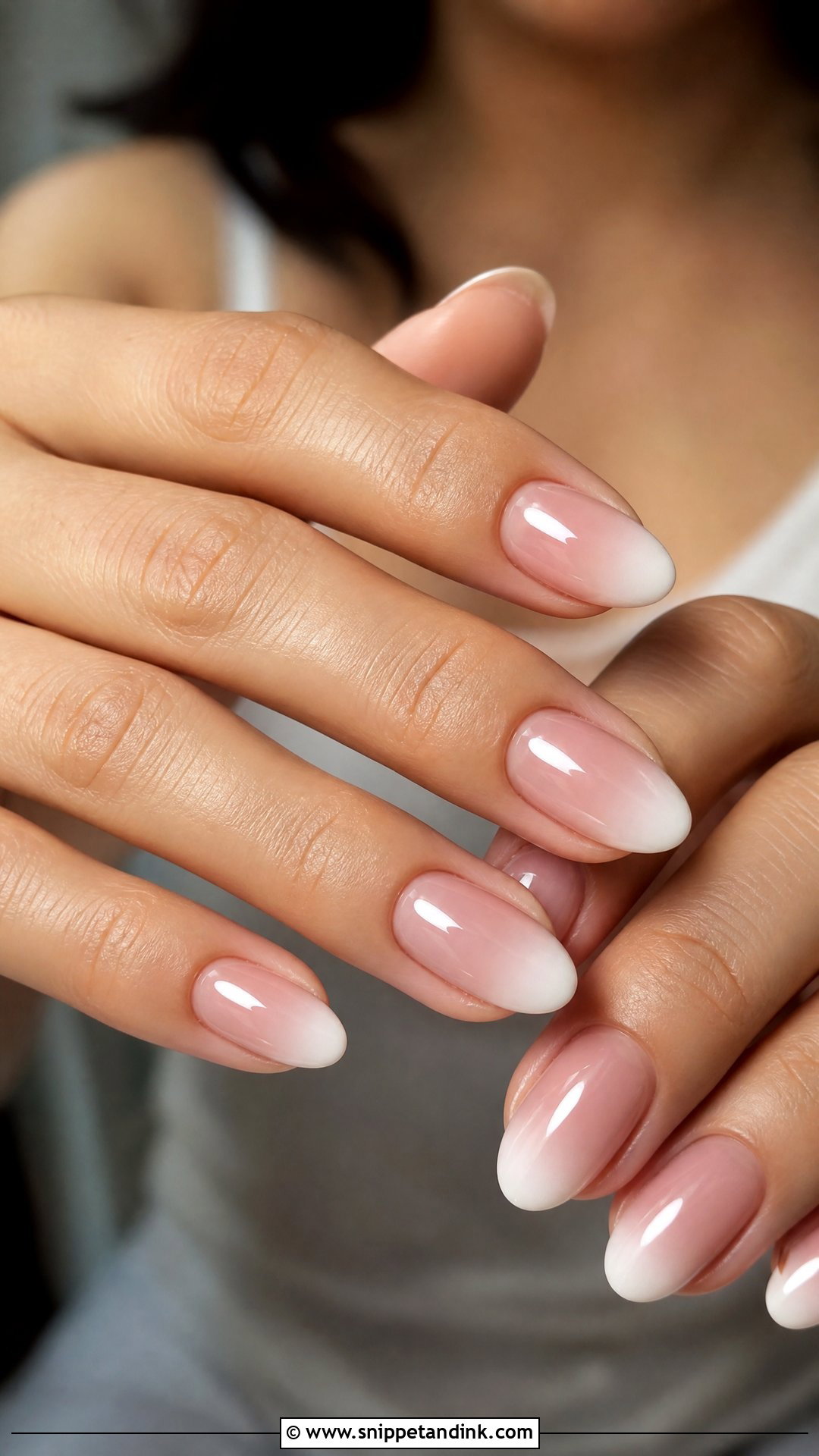
An ombre French blurs the line between pink base and white tip, and that soft focus is what makes it feel old-fashioned rather than crisp. I build it with a sponge or a fine airbrush layer in thin passes, because one heavy pass leaves a stripe where the colours meet. It works on almost any length. A sheer pink top layer warms it up if the white looks too cool against your skin.
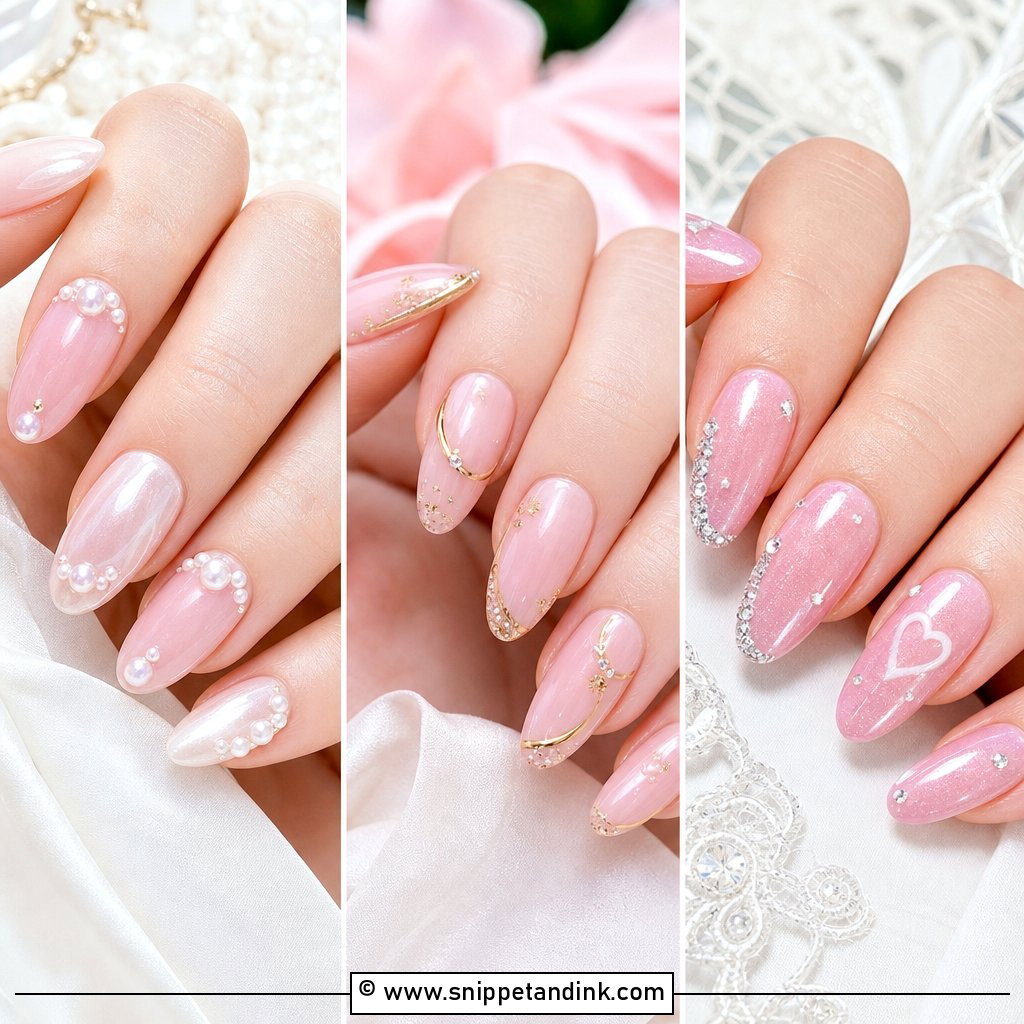
15. Vintage Red Wedding Nails
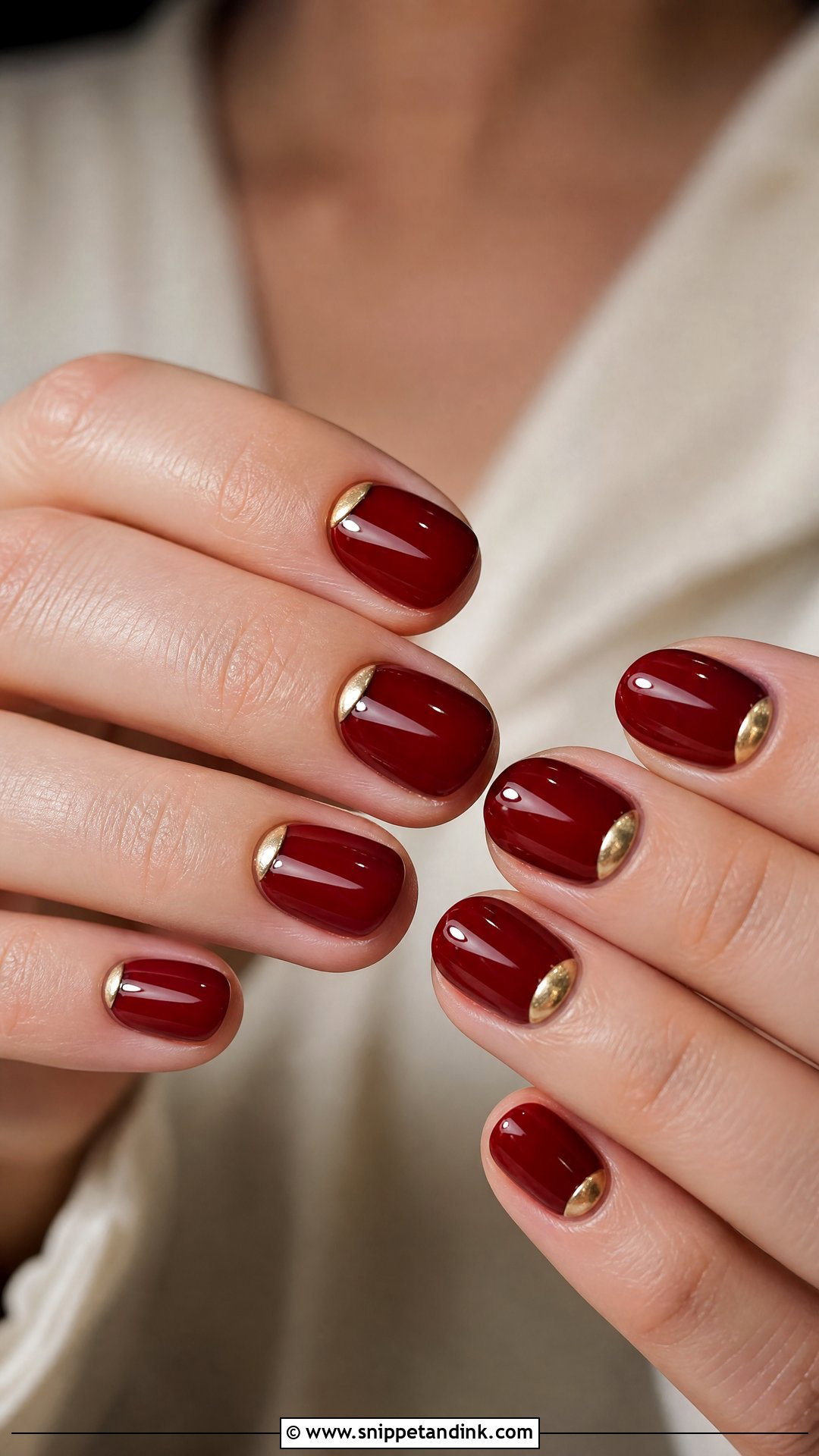
Red is the old-Hollywood choice: deep cherry, blue-red, or soft crimson in high gloss on short ovals or medium almonds. It’s confident, and it’s unforgiving. Red shows every wobble at the cuticle and every chip, so I take extra time on clean-up and recommend gel for the wedding. A blue-red makes teeth look whiter in photos, while orange-reds can clash with pink-toned skin. A single pearl or a thin gold half moon softens it if pure red feels too much for the aisle.
16. Sheer Nude Vintage Wedding Nails
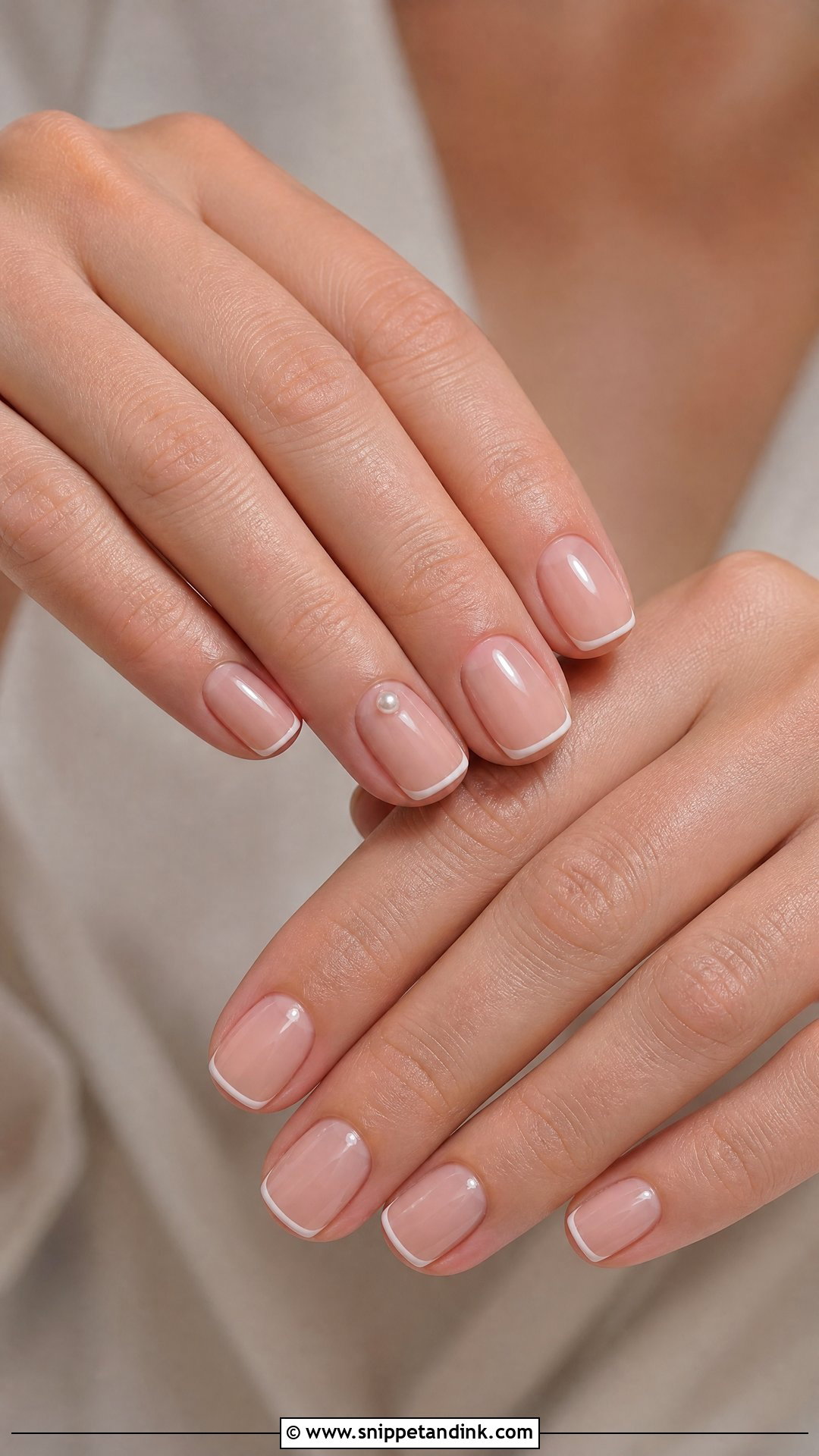
The hardest part of a sheer nude is the shade, not the art. I hold two or three bottles against the back of your hand in daylight and choose by undertone: beige or peach for warm skin, rosy nude for cool. A sheer formula lets the natural nail show, so any staining or ridges need buffing first. A micro French, one pearl at the cuticle, or a single floral accent keeps it bridal while the ring stays the focus.
17. White Floral French Wedding Nails
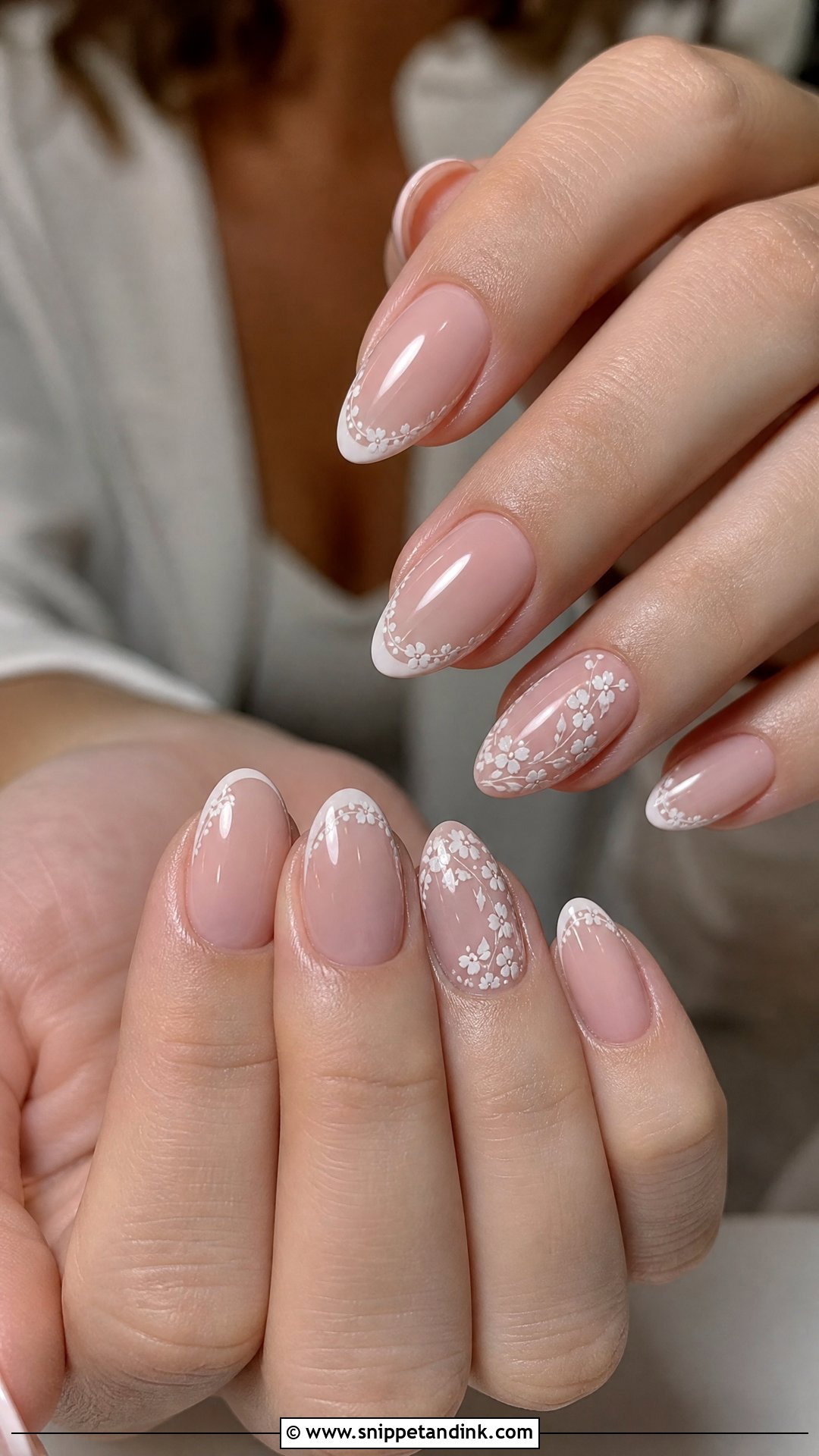
This one combines a slim white French with tiny white flowers along the smile line or on one or two accents. I paint the blossoms with dots and a detail brush so they look stitched rather than stickered. It suits a bride who likes the French but wants a little personality, and it sits well on almond, oval and squoval shapes. Next to tulle or a pearl veil, it looks coordinated without matching too literally.
18. Victorian Pearl Wedding Nails
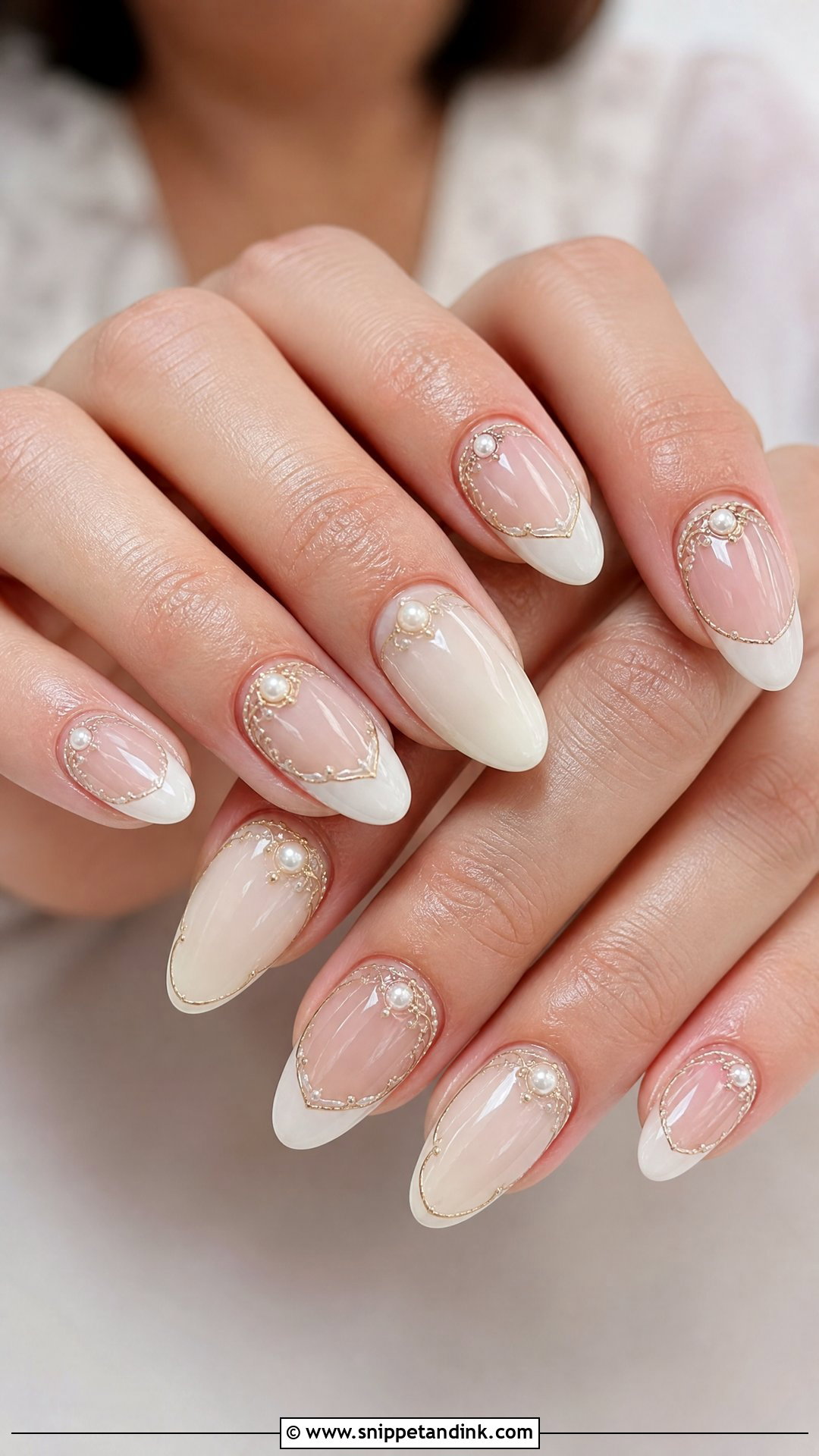
Victorian detail is ornate by nature, so I keep it to the frame of the nail: pearls, tiny metallic dots and curved lines around the cuticle or down the sidewalls, with the centre left as clean ivory or sheer pink. That spacing is what makes it read as jewellery rather than decoration. Almond nails carry it best. Pair it with a high neck, lace sleeves, or an antique-cut ring and it looks deliberate.
19. Something Blue Vintage Wedding Nails
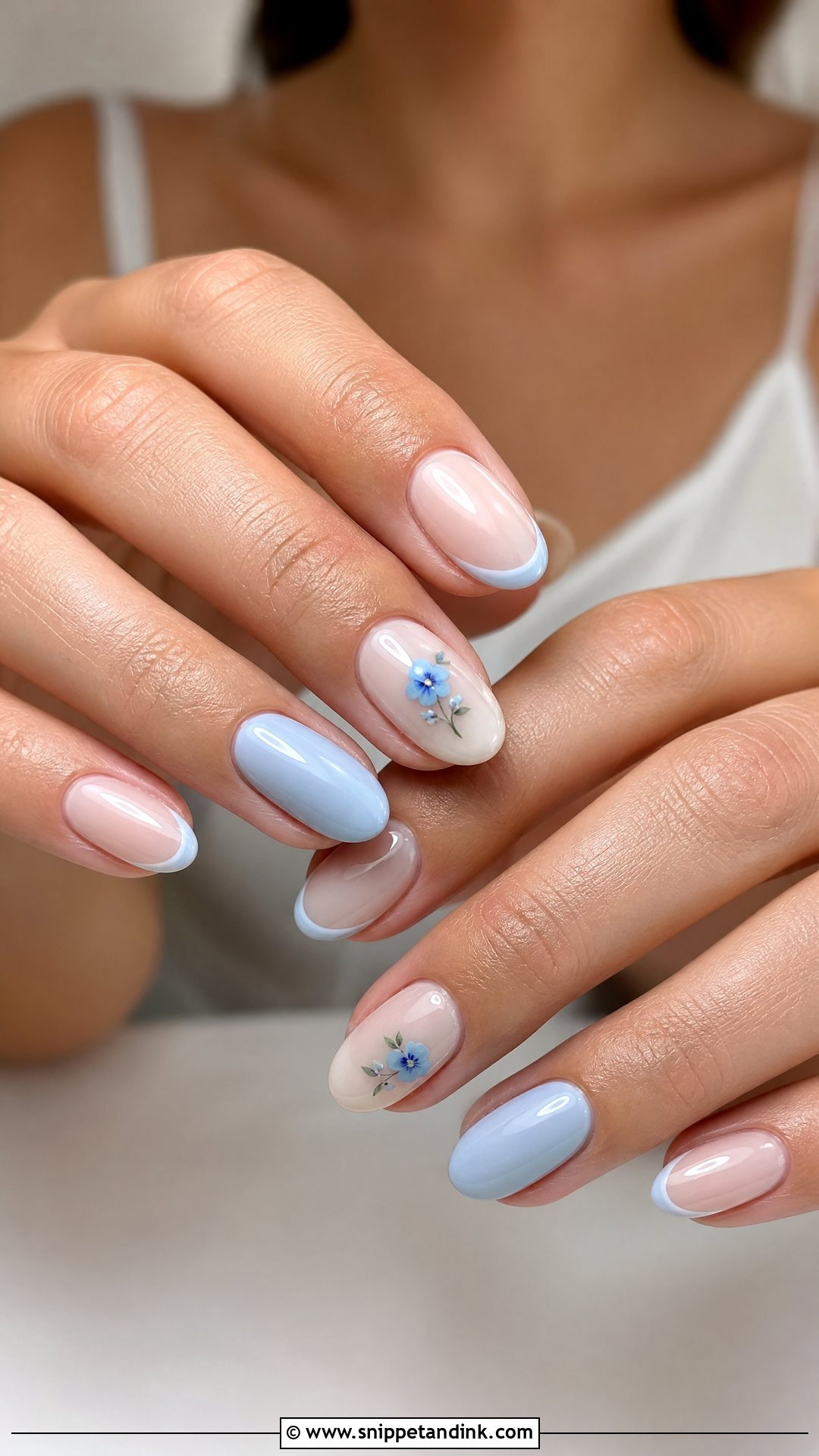
If you’re adding something blue, I’d keep it pale: powder blue, cornflower, dusty blue or blue-gray. Bright blues look like a holiday manicure in photos. A micro French tip, one small flower, or a tiny half moon over sheer pink, nude or milky white is enough. It’s a private detail, and it sits especially well with silver jewellery and cool-toned whites.
20. Short Vintage Wedding Nails
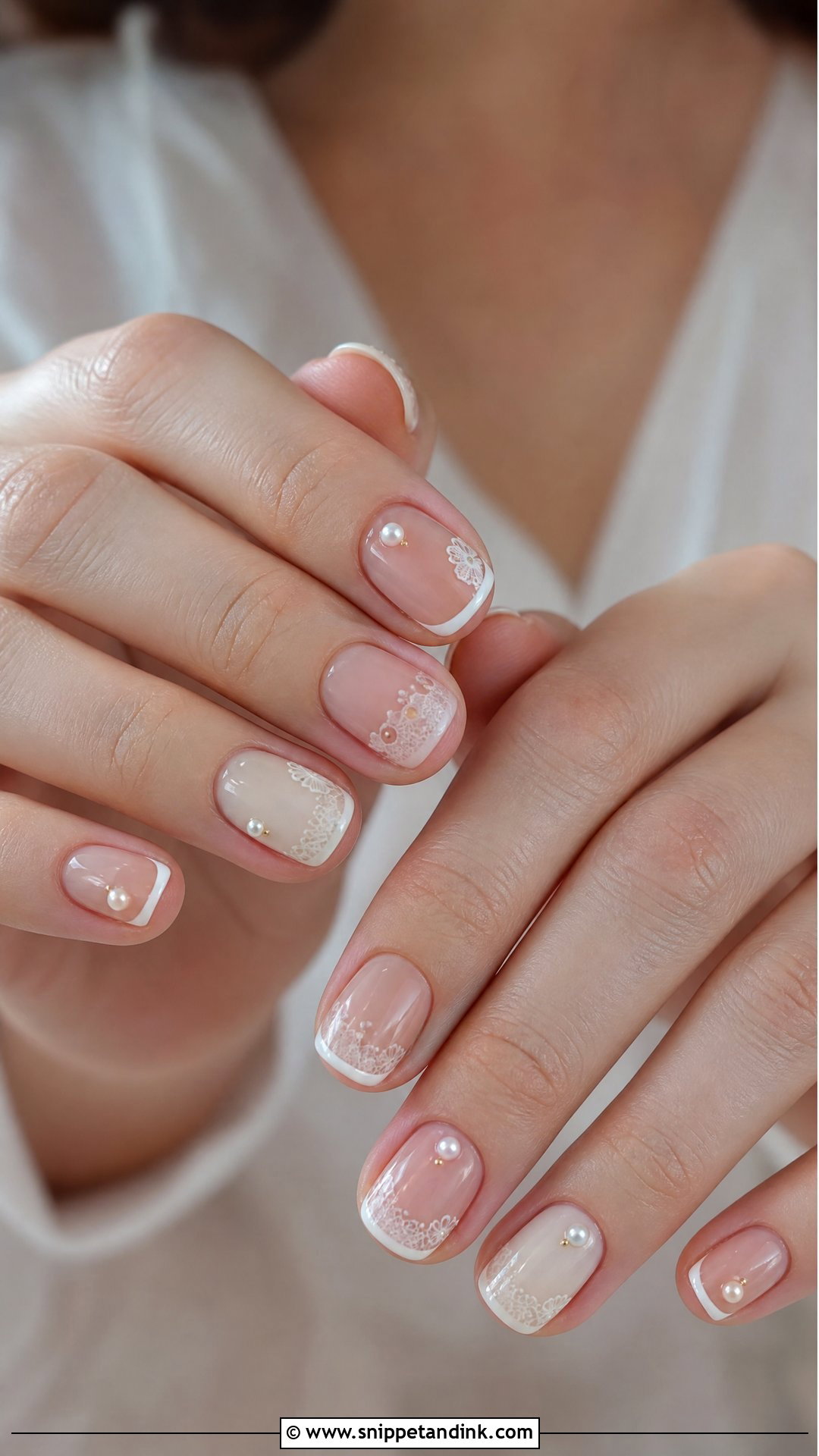
Short nails carry vintage designs very well; arguably the 1940s manicure was short. Keep the shape clean (oval, round or squoval) and pick one detail rather than three: a sheer pink French, tiny pearls, a lace accent, or a nude half moon. Short is also the sensible choice if the manicure needs to last through the wedding day and honeymoon, since there’s less free edge to chip on luggage and sand.
Why Sheer Bases Streak and Pearls Pop Off, and How I Prevent It
Vintage designs are mostly sheer, and sheer polish hides nothing. Ridges, old staining from dark polish and uneven cuticle work all show through, so the prep matters more here than with an opaque colour. I lightly buff ridges, clean the cuticle area carefully a day or two ahead rather than on the morning, and apply sheer colour in thin layers. A single thick coat of jelly pink pools at the sidewalls and shows streaks in close-up ring shots.
Keeping 3D details on through hugs and bouquets
Pearls and crystals are glued into gel, then the gel is cured with a top coat built up around the edges so nothing sharp sticks out. If you can feel a ridge when you run a finger across the stone, it will snag on lace or veil tulle. Flat-backed pearls hold far better than round ones, and keeping them near the cuticle rather than at the tip protects them from zips, hairpins and bouquet wraps.
When to book, and what to pack
Gel looks freshest two to three days before the wedding: long enough for any lifting to show so I can fix it, close enough that regrowth isn’t visible on half moons. Regular polish needs a full night to harden, so book it the day before, not the morning of. In your getting-ready bag, keep a small bottle of the exact top coat, a nail file and a tiny tube of nail glue. Most day-of damage is a lifted pearl or a dull tip, and both take two minutes to fix if the right bottle is in the bag.
The Manicure Should Be the Quietest Heirloom You Wear
Vintage nails work when they balance romance with restraint. Start from your dress and ring, then your nail length, and let one idea lead. A detailed lace gown usually wants a simple sheer French or milky white; a plain silk slip can carry pearls, foil or an art deco fan. Book a trial with the actual design, wear it for a few days, and notice whether you stop seeing it. That’s usually the right one.
You'll Like These Ideas:


Leave a Reply