
Brides who ask me for vintage nails usually show me a photo of a grandmother’s wedding portrait or a lace sleeve, not a nail trend. That’s a good starting place. Old manicures were short, glossy and sheer, with detail used sparingly, and the designs below keep that spirit: sheer pinks, ivory, lace work, pearls, muted gold and soft chrome. Some are almost bare; a few are properly ornate. I’ve noted the shapes and finishes that make each one hold up in a ring close-up and still match the dress, bouquet and hair.
Gel, Dip or Press-Ons Under a Sheer Vintage Finish
Most of the designs below rely on sheer colour and fine detail, and the product you pick changes how they look and last. Here’s how I’d weigh them for a wedding.
- Gel polish is my default. It cures hard, holds pearls and foil well, and stays glossy for around two weeks, which covers a honeymoon. Sheer gel colours also layer more evenly than most regular polishes.
- Builder gel or a structured overlay suits brides with thin, bendy nails. It adds strength under the colour so a sheer French doesn’t crack at the free edge.
- Dip powder is very durable but tends to look thicker, which works against the delicate vintage look. I’d only use it on short, plain designs.
- Press-ons are useful if you can’t get to a salon near the date or want long almonds without extensions. Have them custom-sized and attached with glue, not adhesive tabs, for a full wedding day.
- Regular polish gives the most authentic gloss and is easy to remove, but it can chip within a couple of days and needs a full night to harden.
Whichever you choose, wear the exact product at your trial, because a sheer pink can look quite different in gel than it does in a regular bottle.
1. Vintage French Wedding Nails
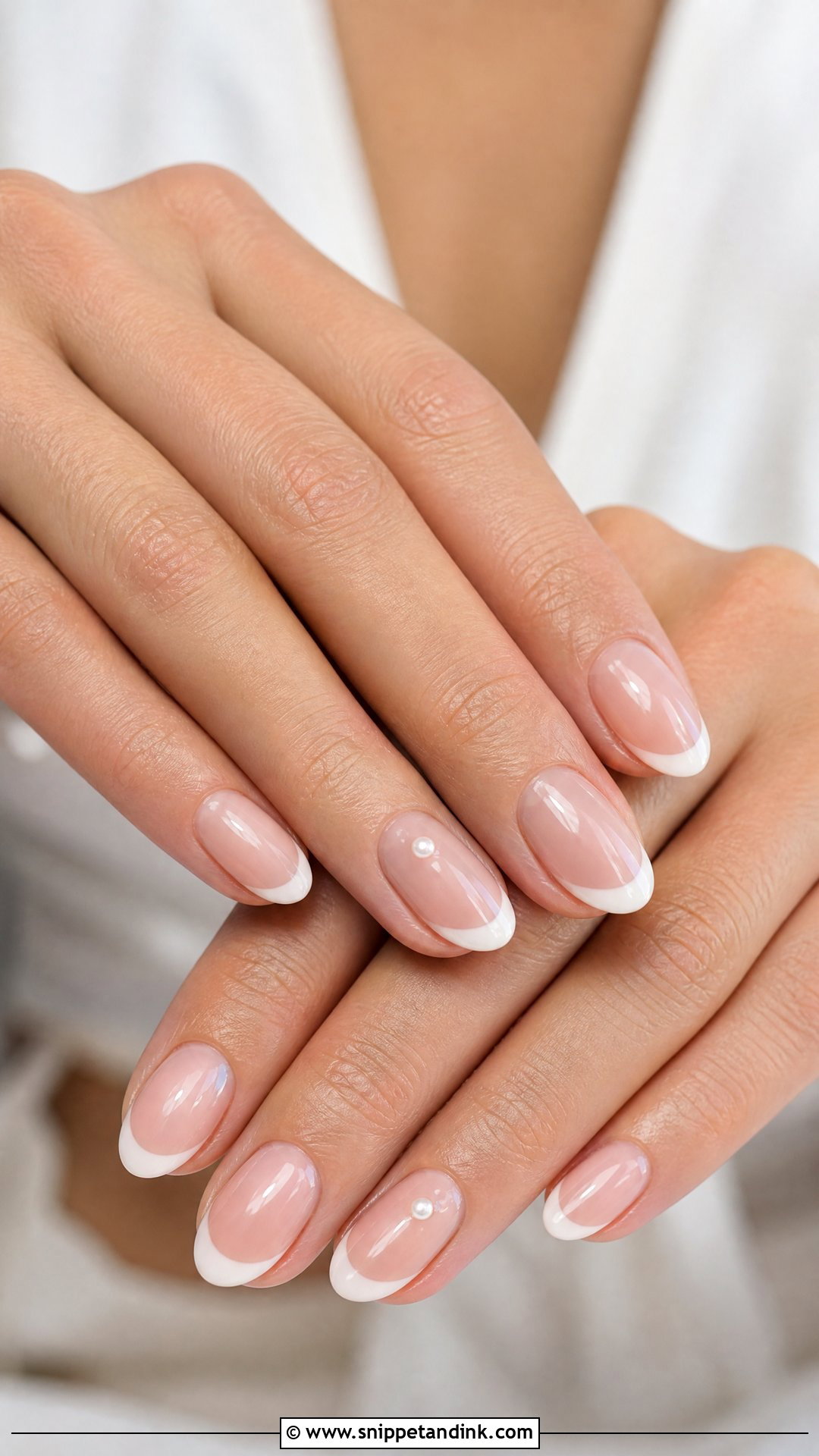
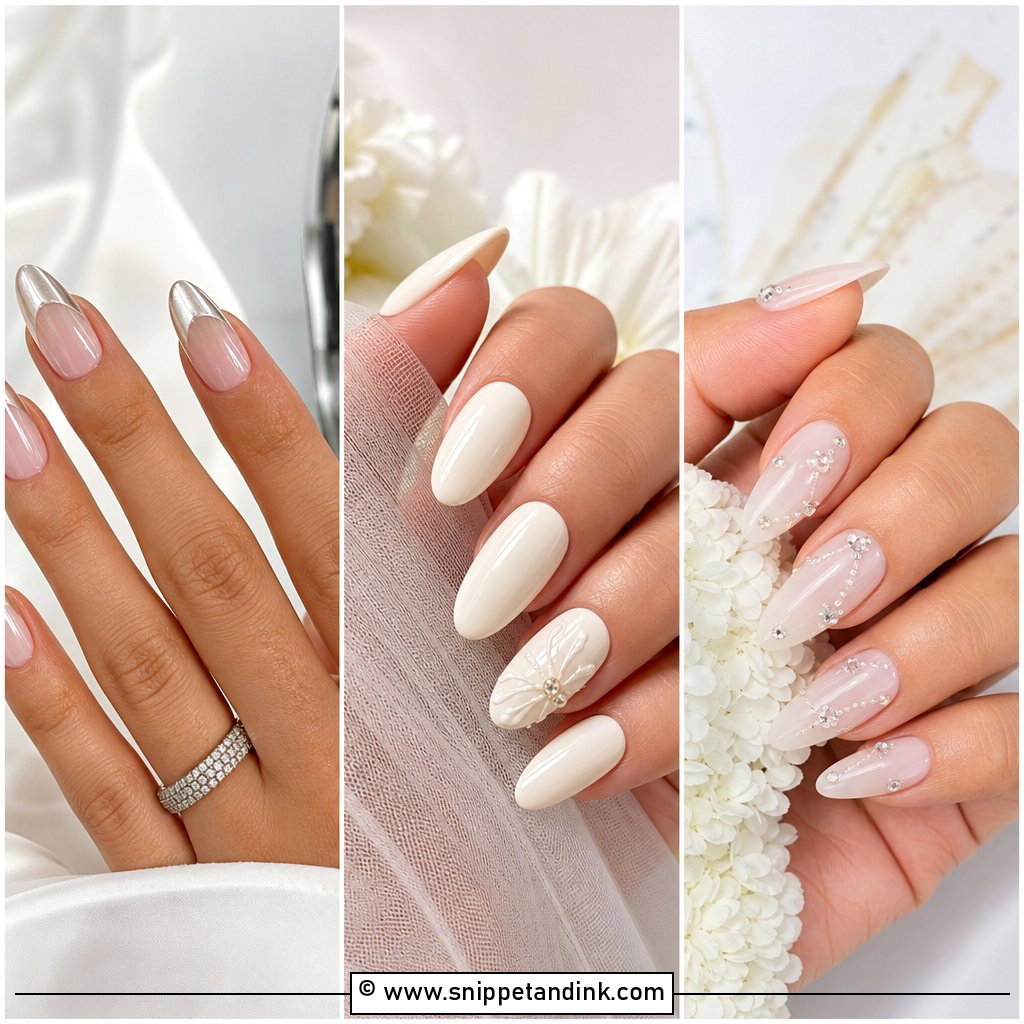
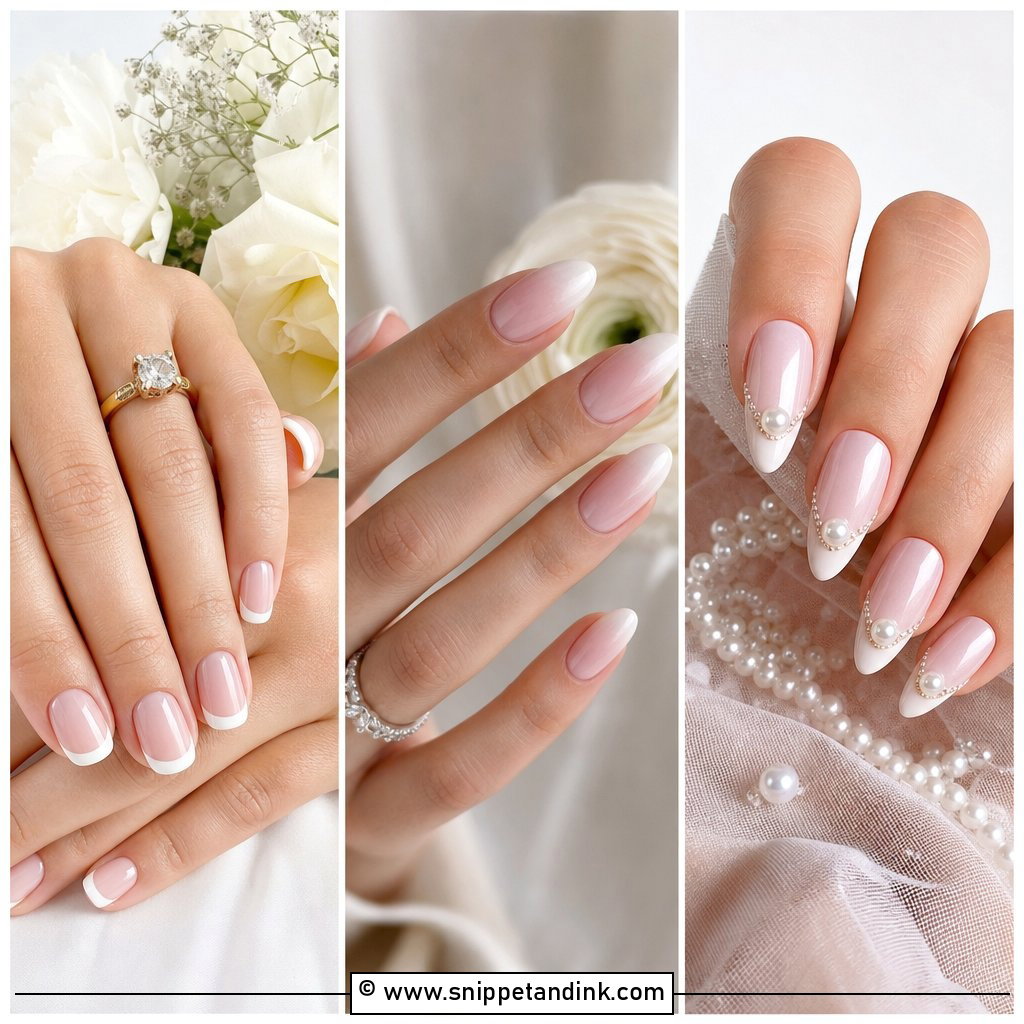
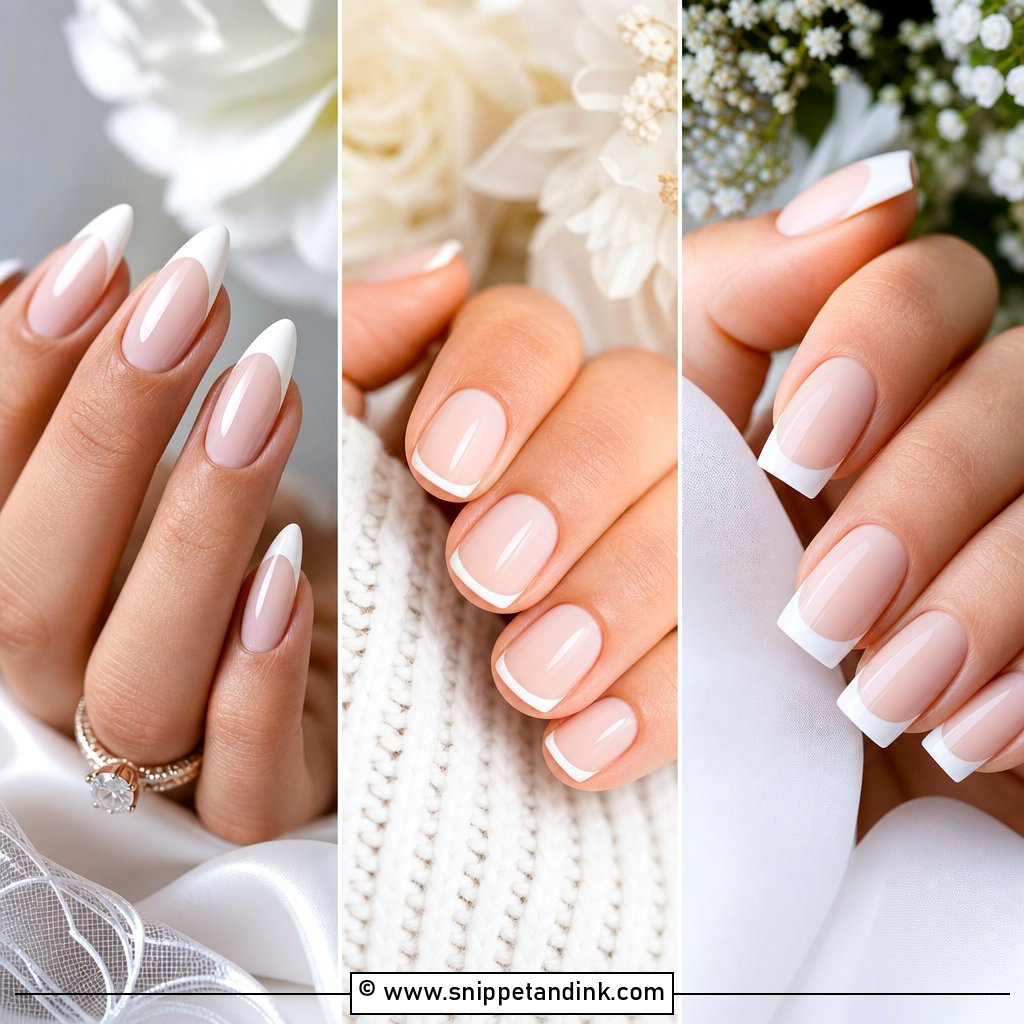
The vintage French differs from a modern one in two small ways: the base is milky or sheer pink rather than clear, and the white is narrow and slightly diffused rather than a bold graphic band. I file a soft almond or oval to go with it. If you’d like one extra touch, a couple of tiny pearls or a hairline of silver on one accent nail is enough. Lace, satin sleeves and a long veil all sit comfortably beside it.
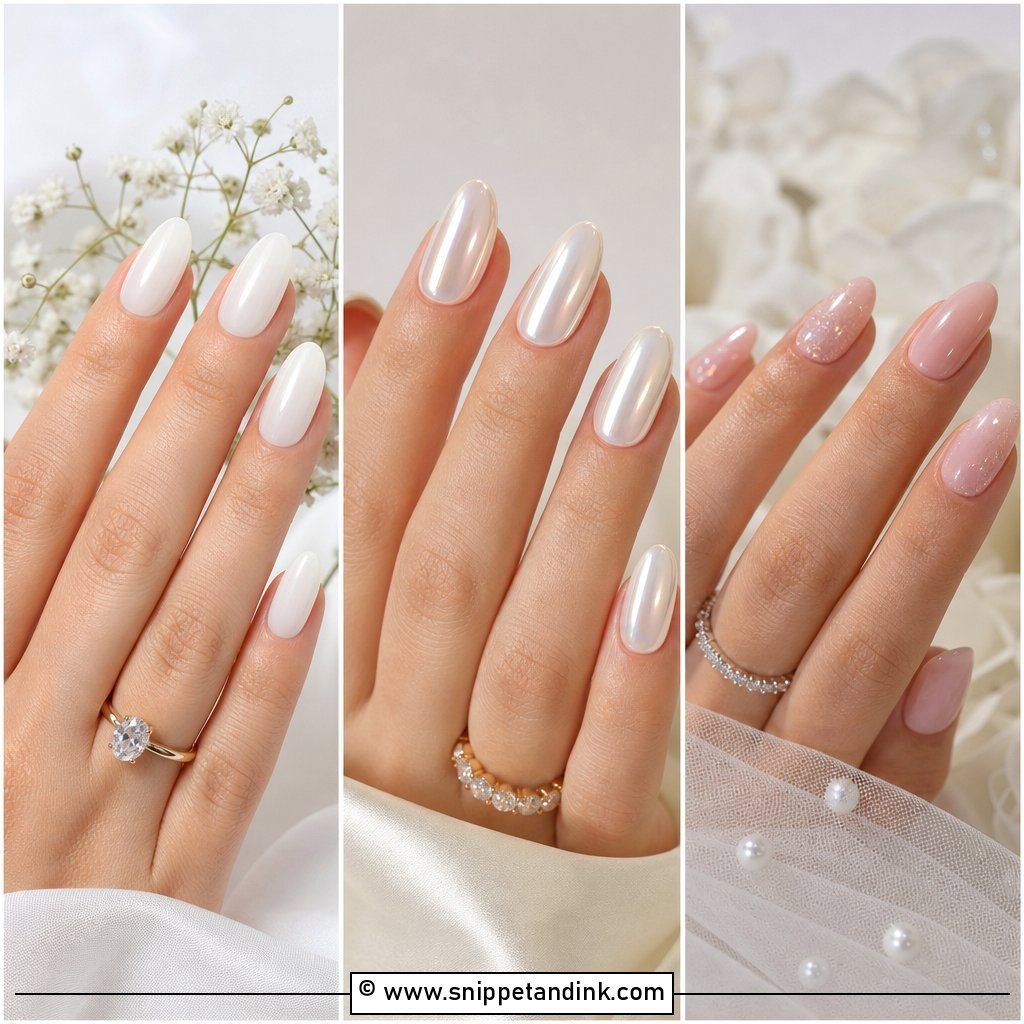
2. Pearl Vintage Wedding Nails
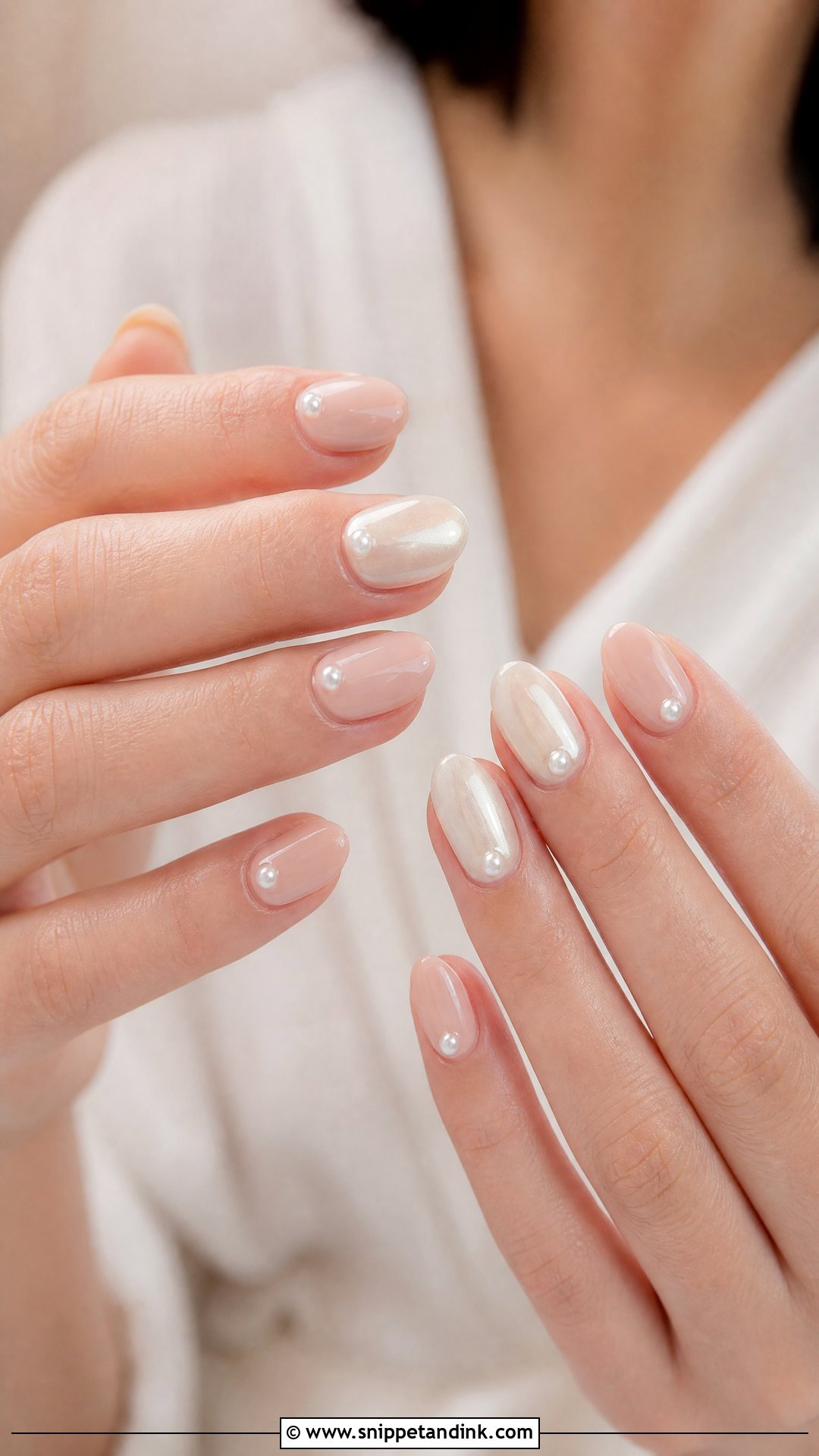
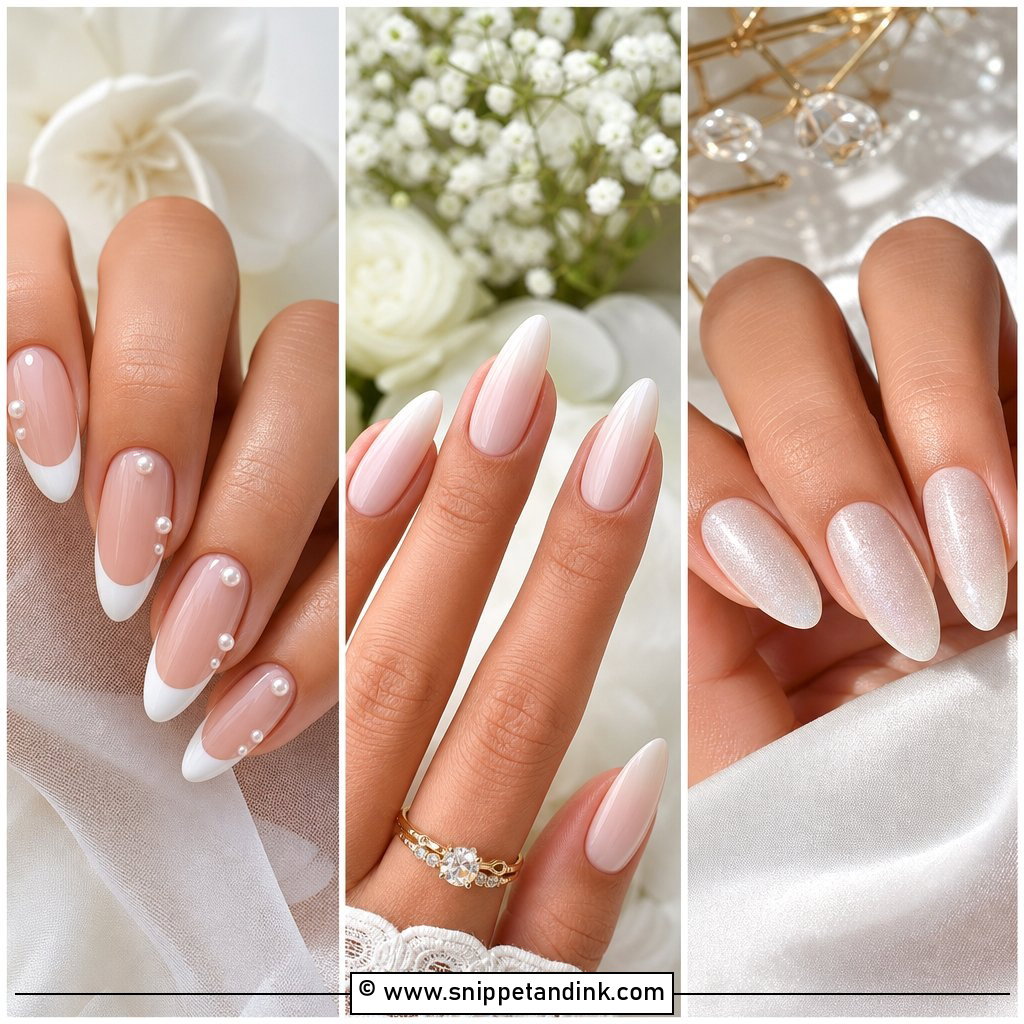
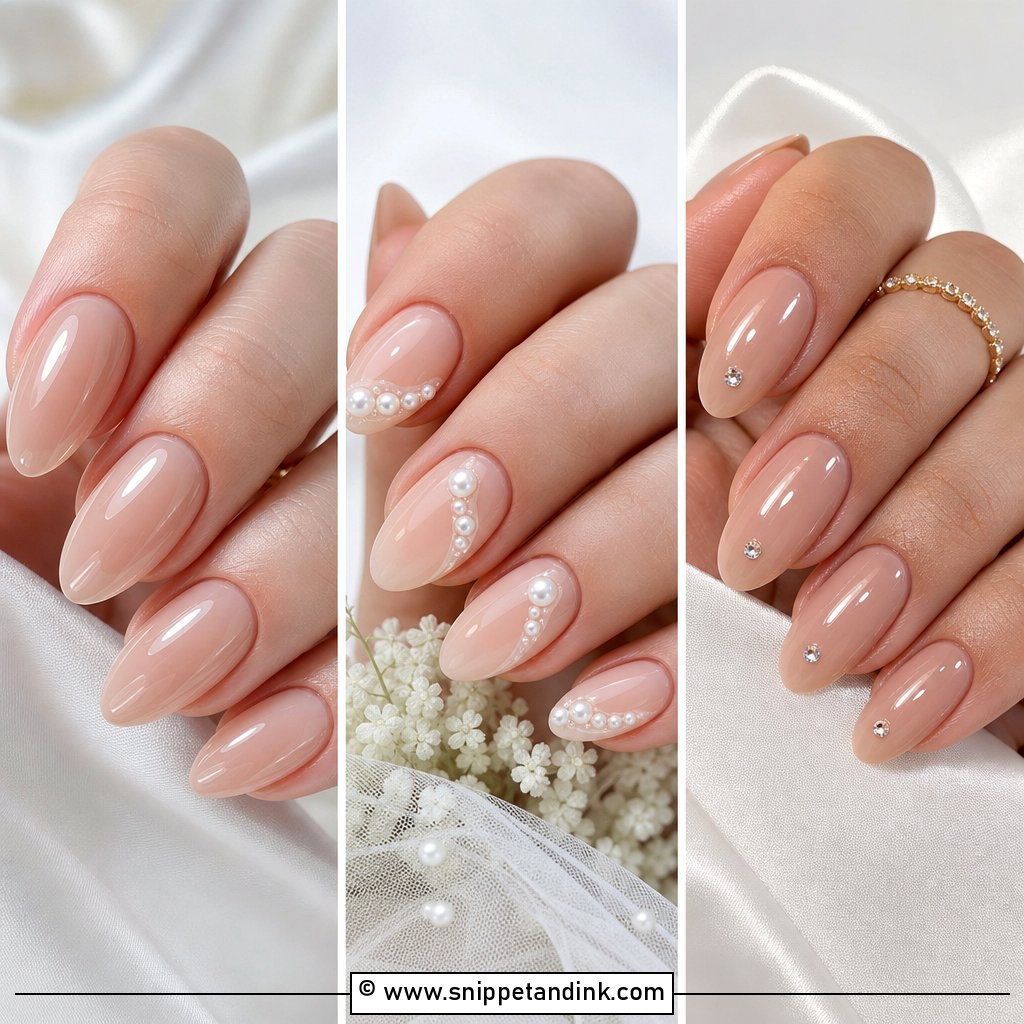
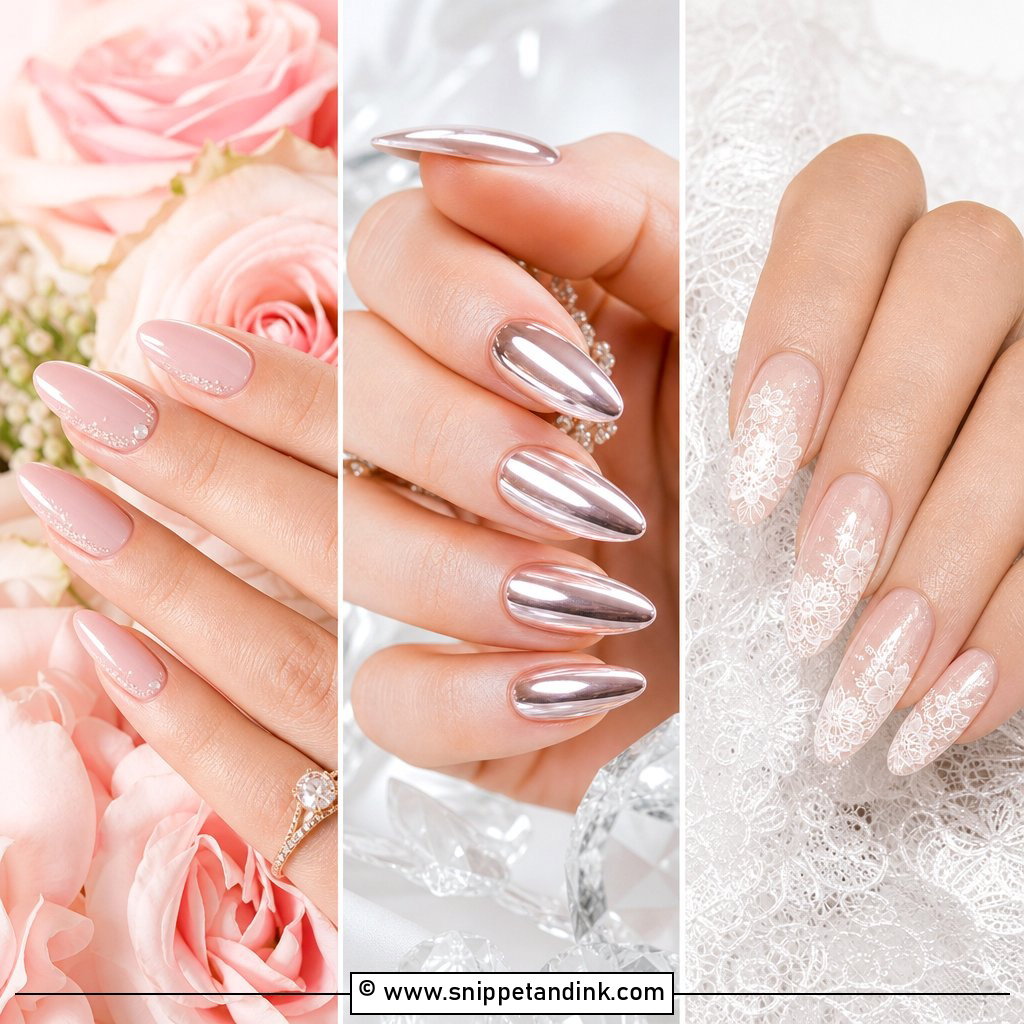
Too many pearls and the hand starts to look like a costume. I set small flat-backed pearls over a sheer ivory, blush or milky base, either in a short row at the cuticle or down one sidewall of one or two nails. Rounded shapes like short oval, medium almond or squoval echo the curve of the pearl, which is why they look right together. If your veil has a pearl trim or your gown has pearl buttons, this is the design that ties it together without anyone noticing the effort.
3. Lace Vintage Wedding Nails
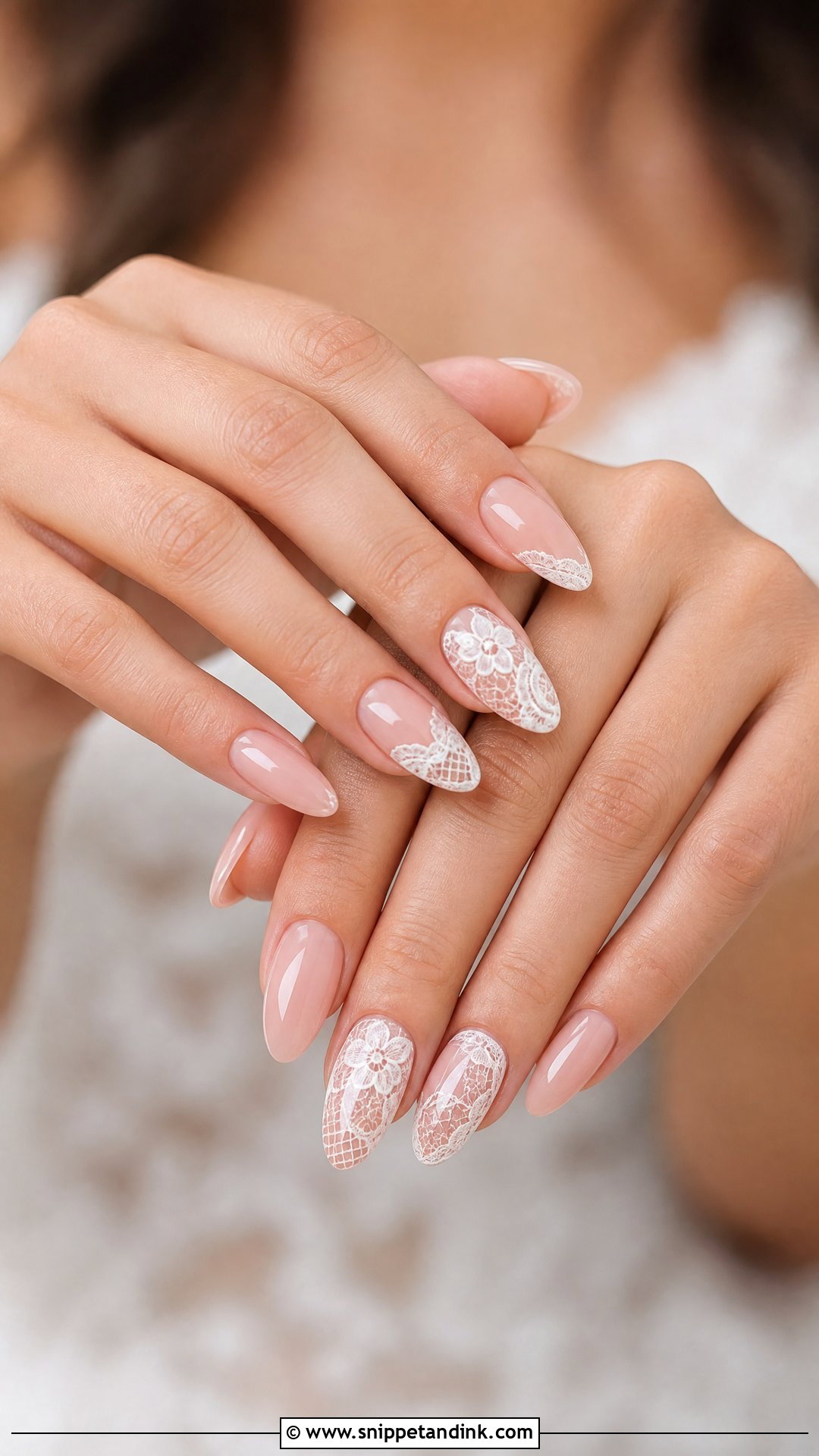
Lace comes in three techniques, and they look different up close. Hand-painted lace is the softest and most bespoke; stamping is quicker and very crisp; decals give the finest detail but can show an edge if they aren’t sealed well. Over a sheer nude or soft pink base, I’d keep lace to two or three nails and leave the rest glossy. On shorter lengths the pattern reads as fabric; on long coffins it can start to look like tights.
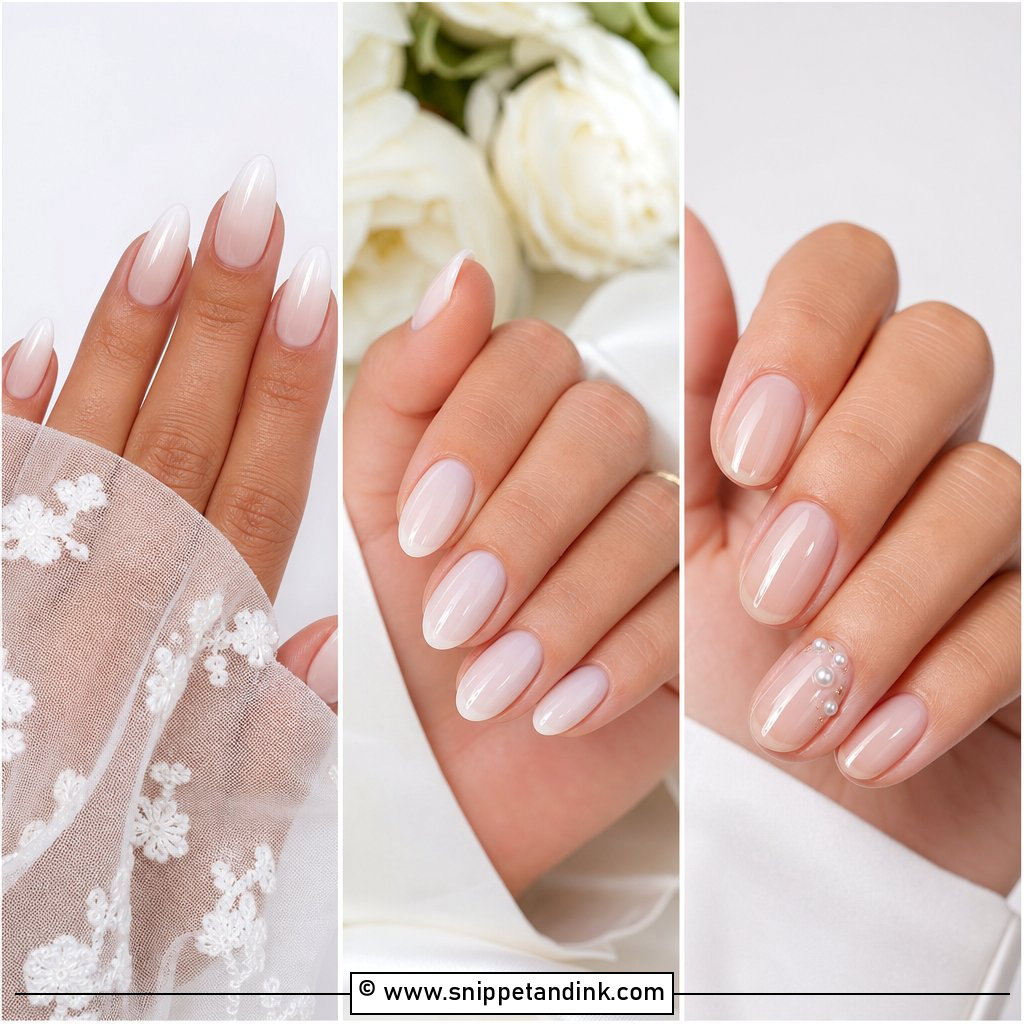
4. Milky White Vintage Wedding Nails
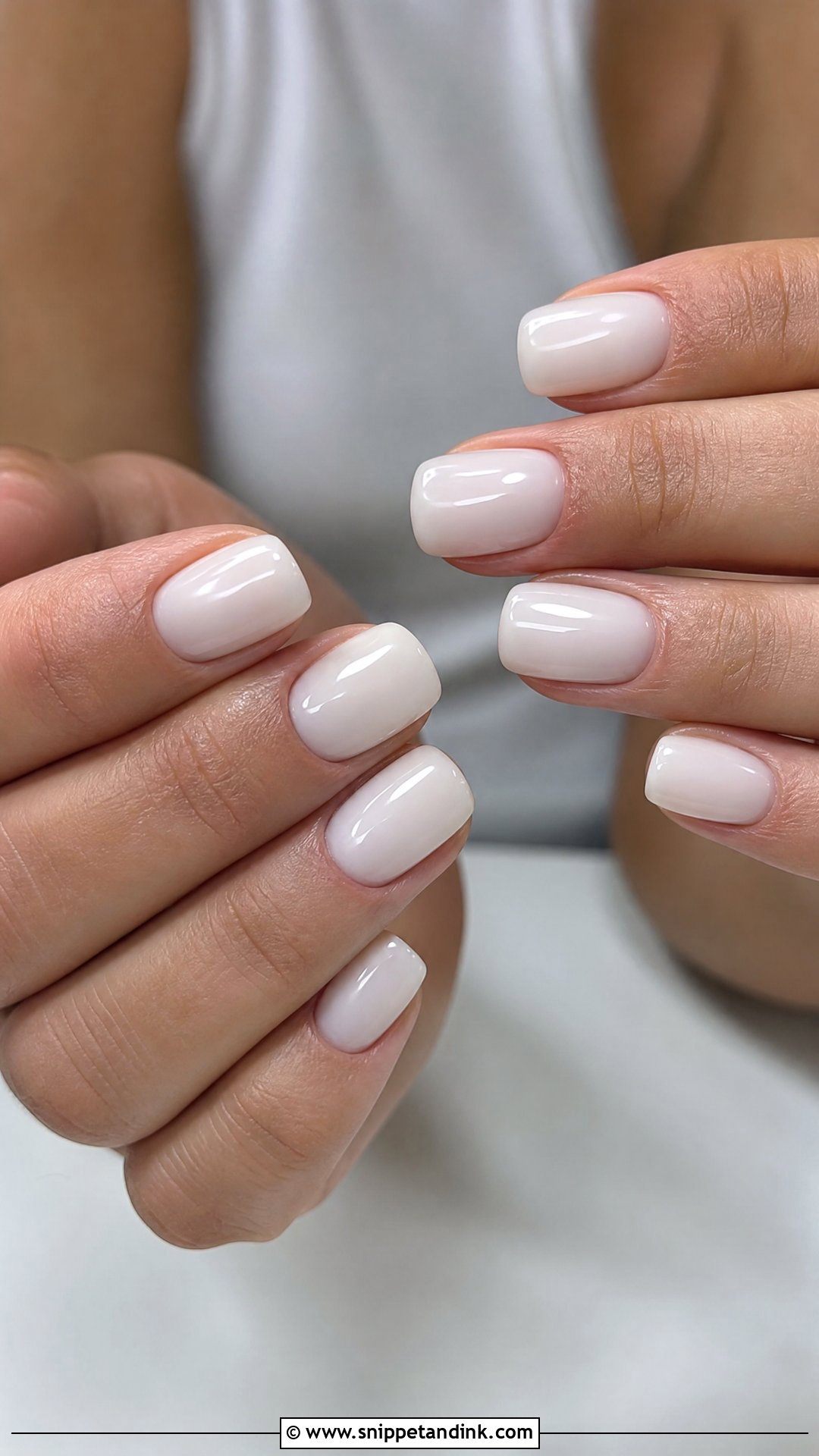
Translucent white is my answer for brides who can’t decide. The natural nail shows faintly through, so the finish looks creamy and veil-like instead of flat. I build it in thin coats because thick white tends to streak at the free edge. It goes with satin, tulle, crepe and lace alike, and works from bare short nails to long almond tips. A fine shimmer top coat gives it a pearly glow if you want one.
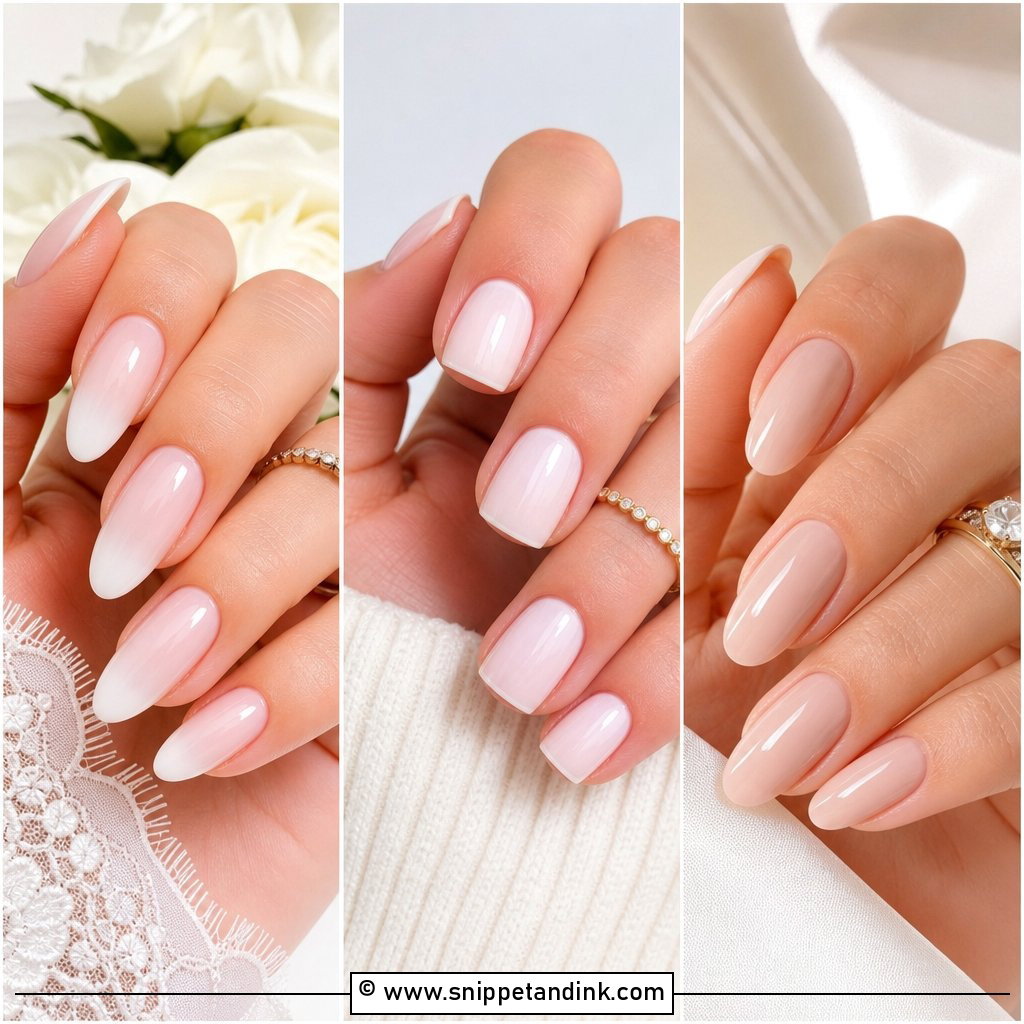
5. Blush Pink Vintage Wedding Nails
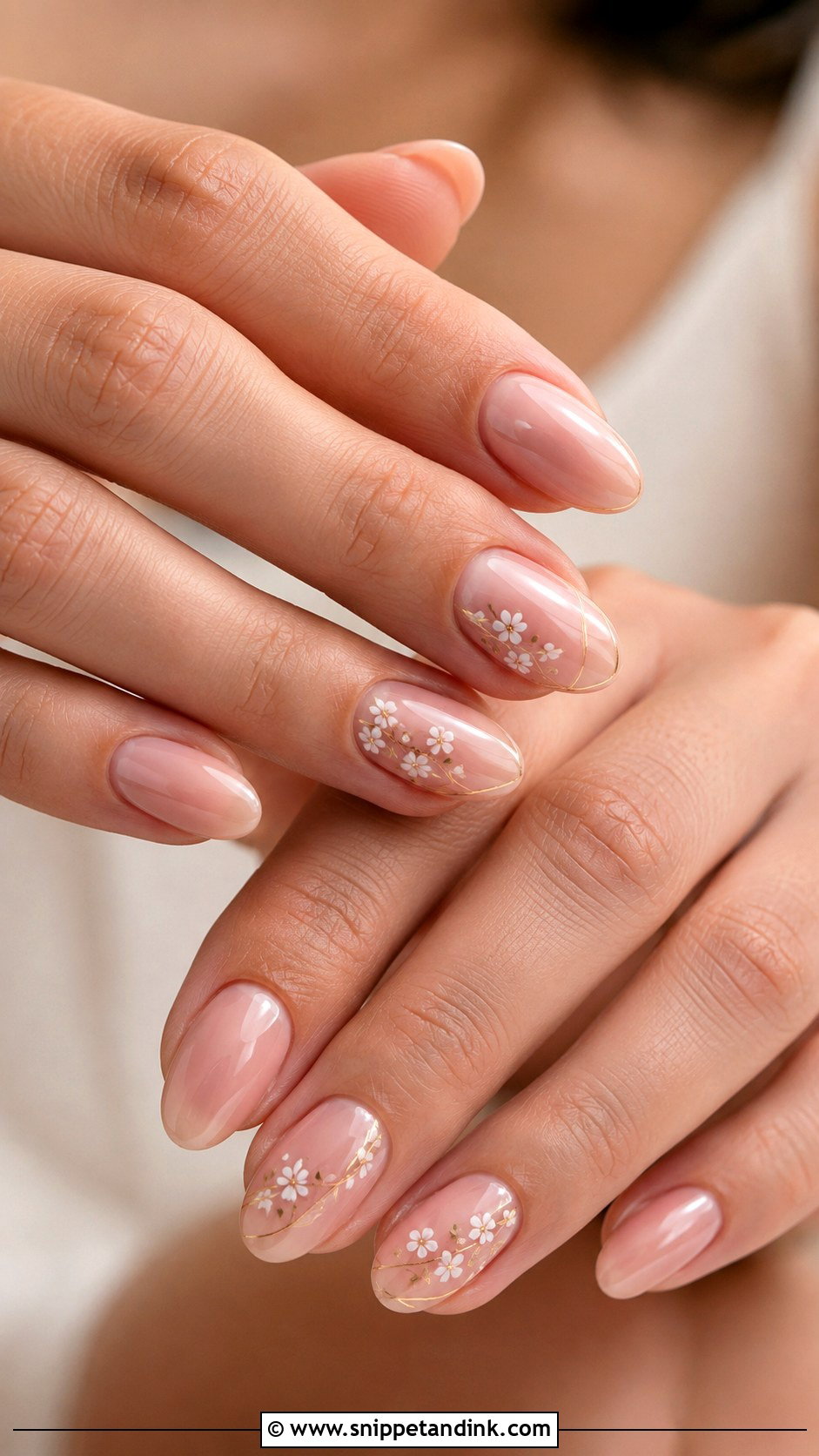
Match the pink to your nail bed, not to the bridesmaid dresses. When the shade sits close to your natural colour, the hands look healthy and polished, and any small chip during a long wedding weekend practically disappears. I add white blossoms, a thin French or one pearl at the cuticle to make it bridal. Blush works with gold, silver and pearl jewellery, so it’s a safe pick if you’re wearing borrowed pieces.
6. Antique Gold Wedding Nails
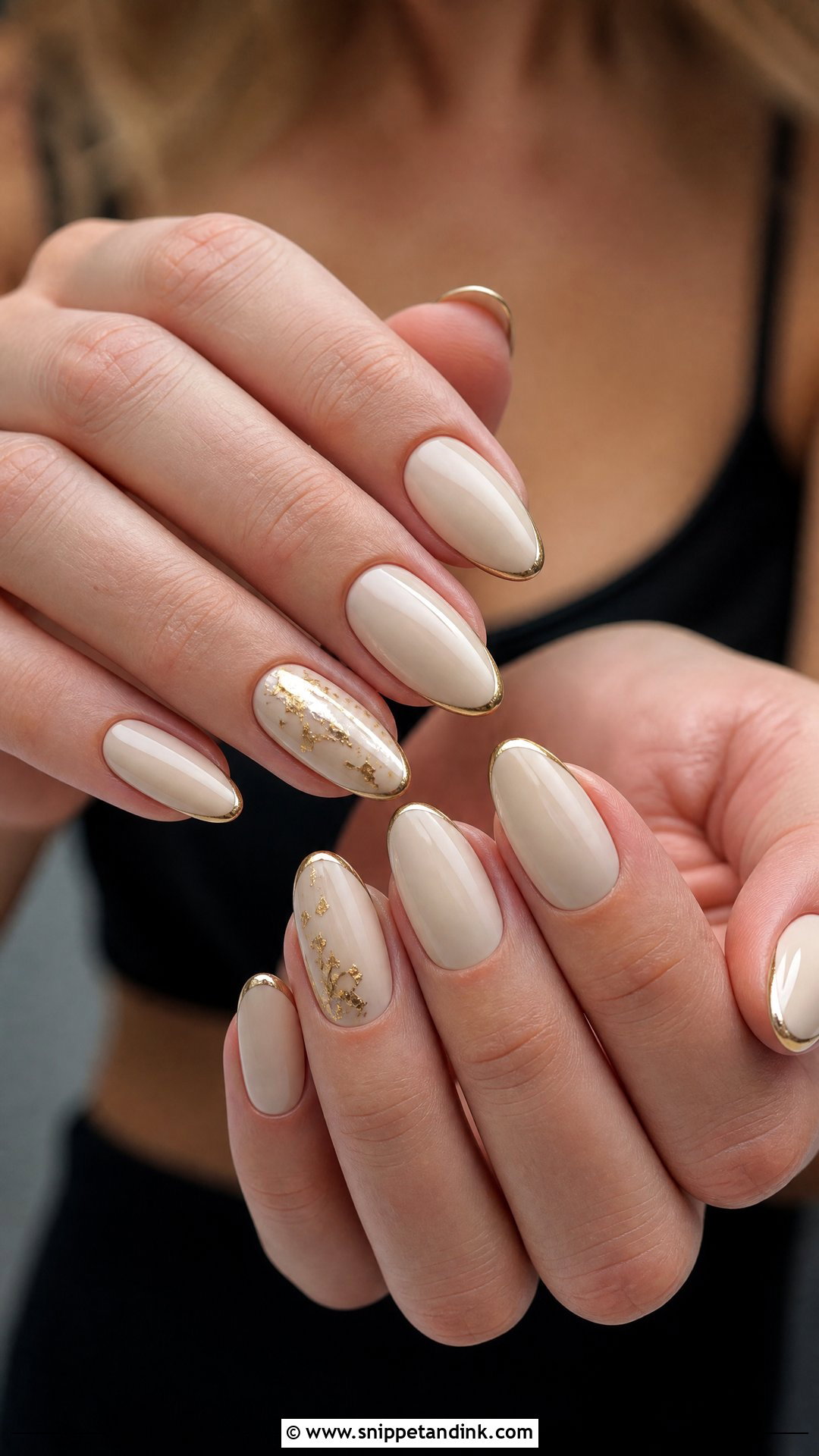
Gold on nails goes wrong when it’s too bright. Muted, brushed or champagne-toned gold over nude, ivory or pale pink is what reads as antique. I use it as a thin French edge, a few foil fragments, or a fine outline on one or two nails, and I skip chunky glitter entirely. It suits warm-toned rings, champagne and ivory gowns, and hair pieces with an aged brass finish.
7. Vintage Rose Wedding Nails
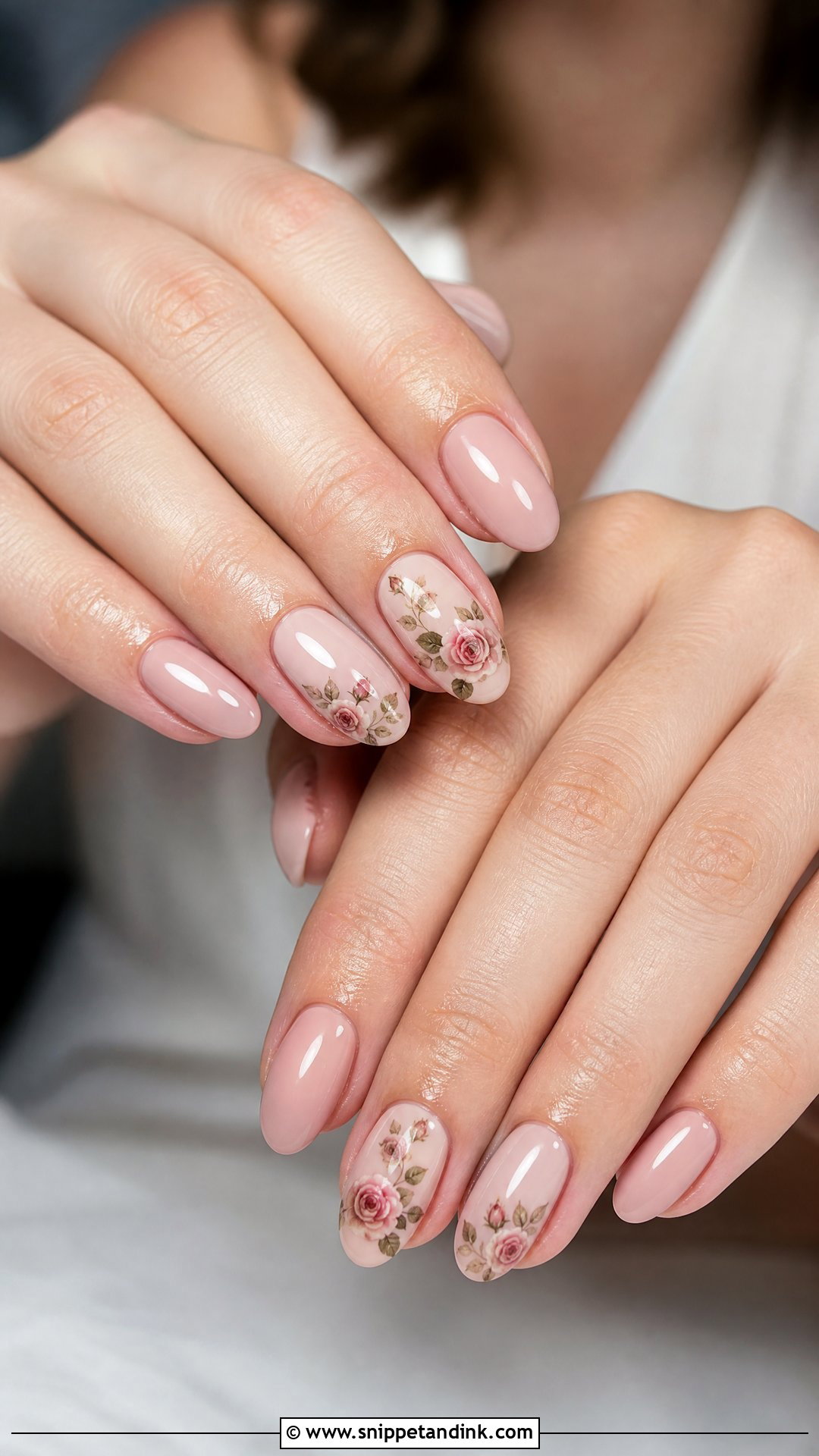
Painted roses take practice to keep small. I build each one from a dot of dusty pink, then add two or three curved strokes of a lighter shade for the petals, and stop before it gets fussy. Over sheer nude, blush or ivory, two accent nails with roses and the rest glossy looks balanced. Oval and almond shapes give the petals room. Garden weddings and lace dresses suit it most naturally.
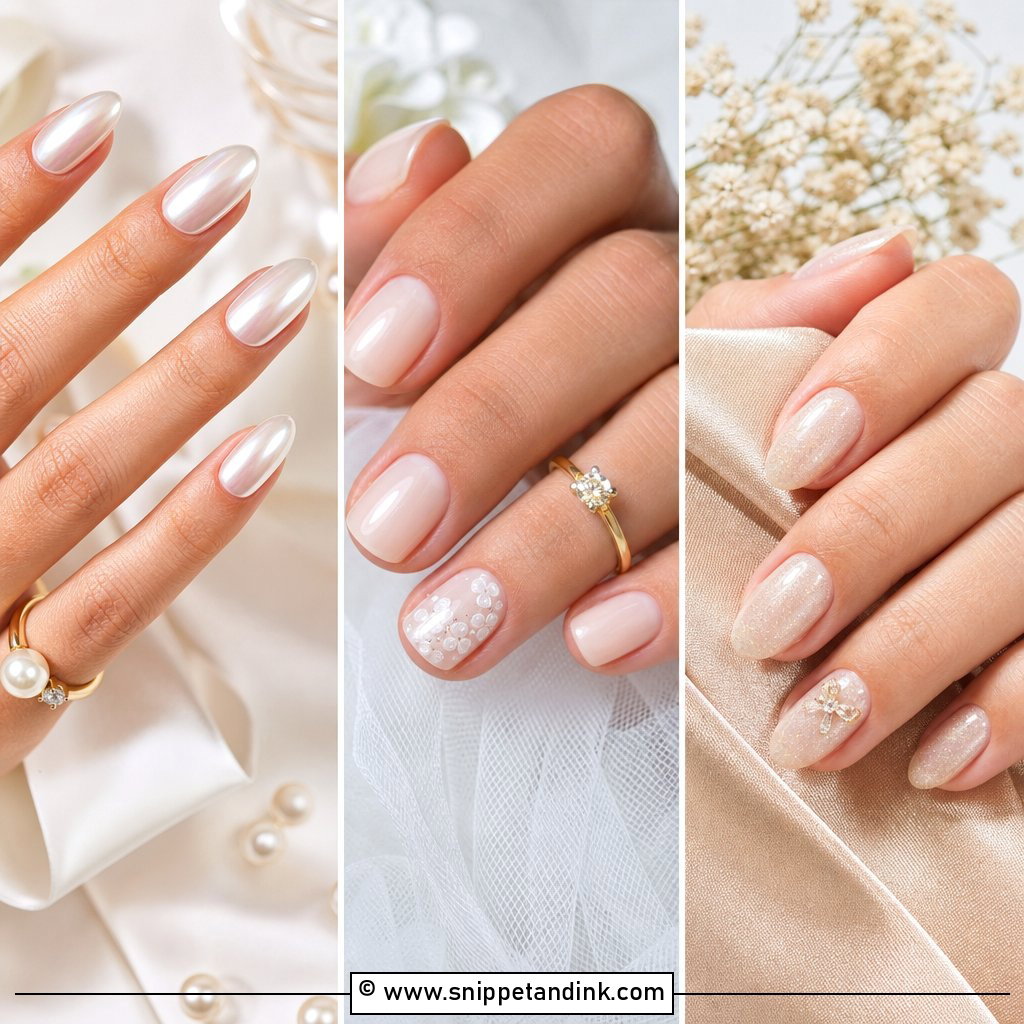
8. Ivory Chrome Vintage Wedding Nails
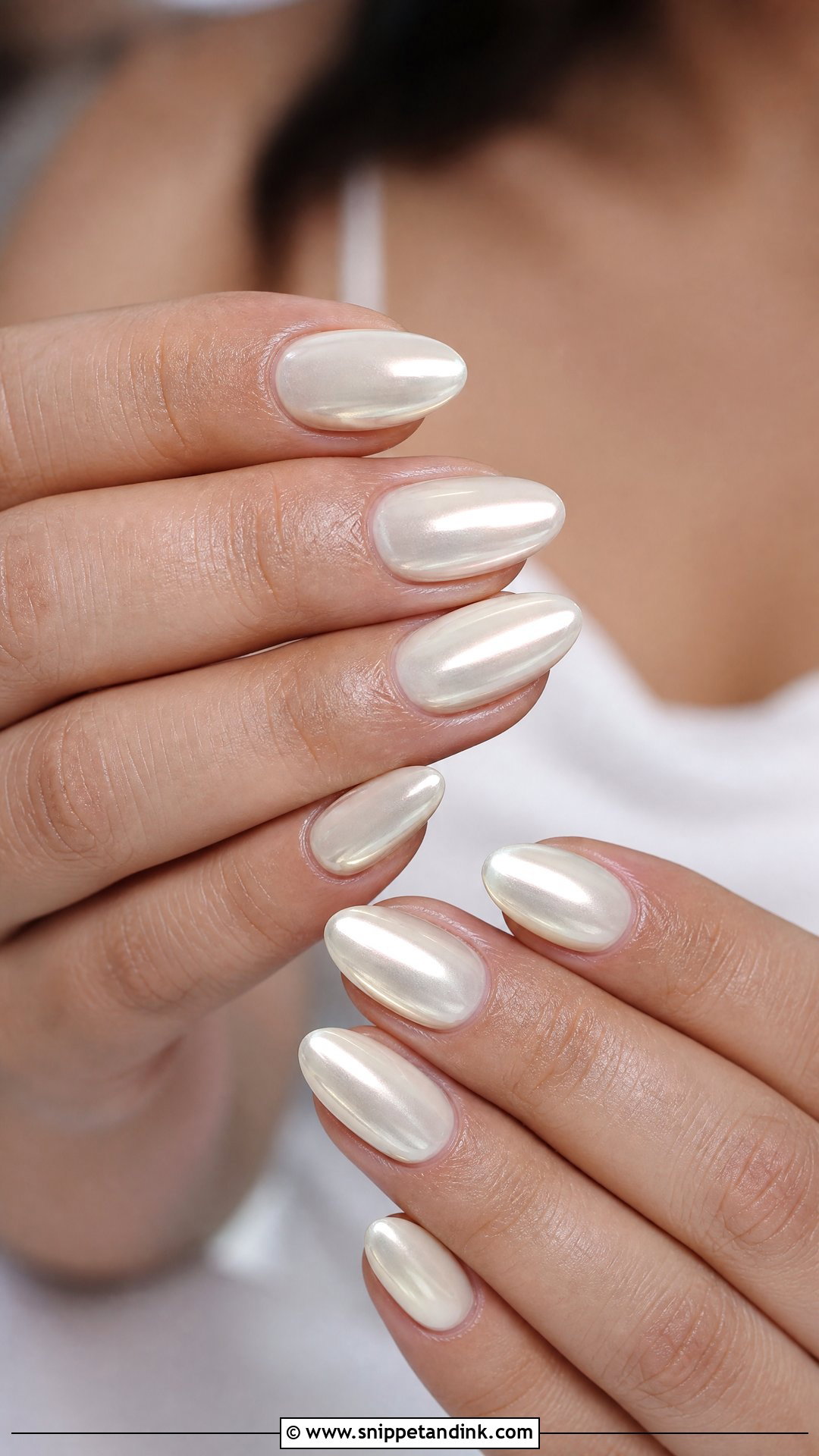
Chrome powder over a creamy nude-white gel gives you a satin sheen that changes as your hand moves. The powder colour matters: pearl or ivory chrome looks like the inside of a shell, while silver chrome looks like a mirror and loses the vintage feel immediately. In daylight it’s subtle; under reception lights it glows. Medium almond, oval and short square nails all carry it. It pairs naturally with satin gowns and minimal styling.
9. Vintage Half Moon Wedding Nails
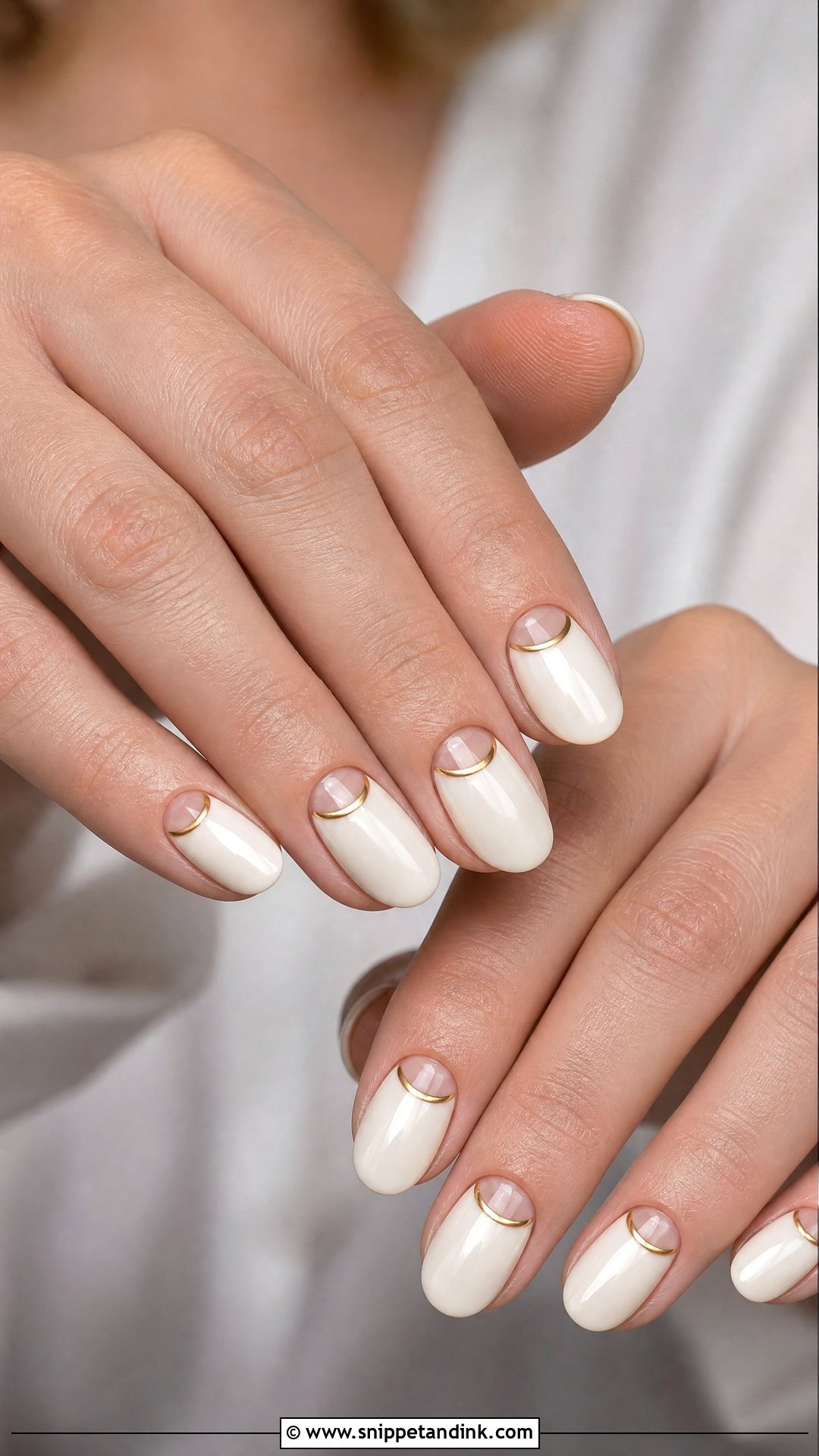
Half moon nails leave a crescent at the base bare or tinted while the rest of the nail is painted in ivory, blush or pale beige. I keep the crescent following the natural lunula on almond and oval nails, which is why those shapes look most convincing. A fine gold or pearl outline around the moon adds an antique finish. Plan it close to the wedding, since regrowth shows at the crescent within a week or so.
10. Sheer Nude Vintage Wedding Nails
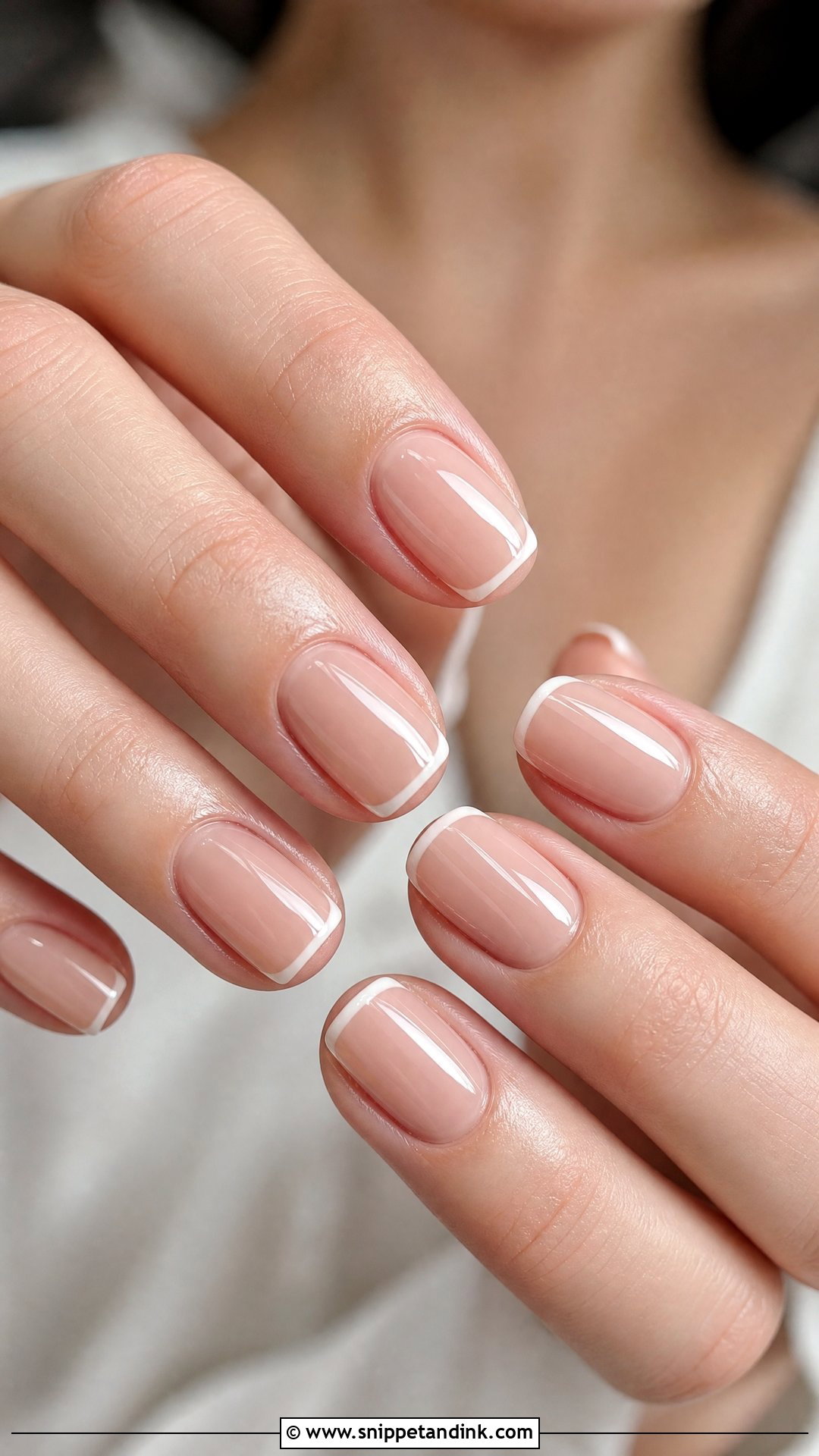
A good sheer nude looks like your own nails on their best day. I choose by holding shades against the skin: soft beige, pink nude, peach nude or warm taupe depending on undertone. Gloss is non-negotiable here, because a satin finish on nude can look unfinished. A thin ivory French, tiny pearls or a barely-there shimmer gives it the bridal hint. It’s the design I recommend most to brides who never normally wear nail art and don’t want to feel unlike themselves.
11. Vintage Floral Wedding Nails
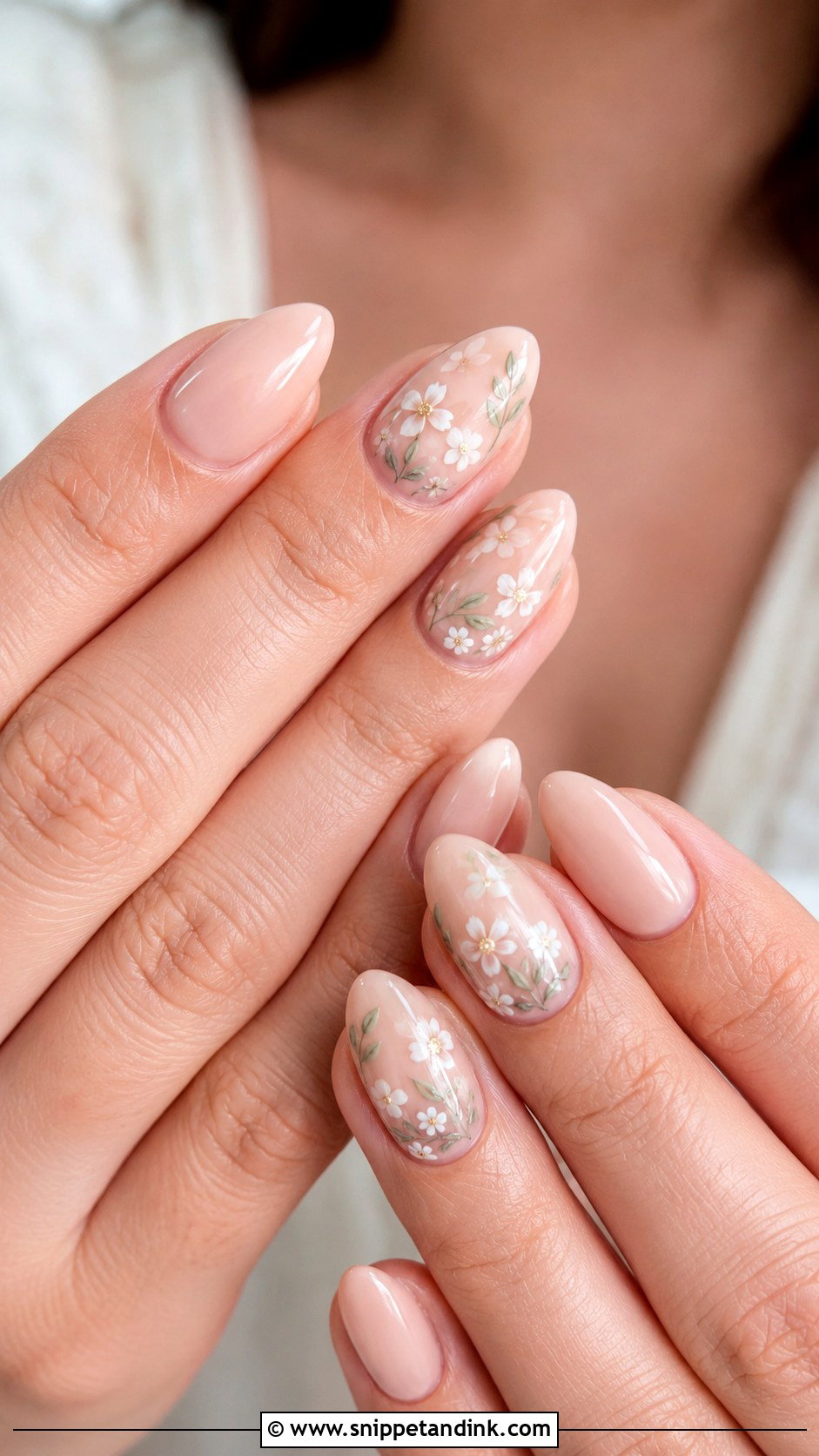
Airy is the word I keep in mind for florals. Tiny white blossoms, rosebuds or a sprig of muted greenery on a few accent nails, over a pale pink, nude or ivory base, should look like embroidery. Bright colours pull it out of the vintage range. If your lace has a floral motif, I’ll often try to echo the shape of its flowers in the art. It sits naturally with spring and summer outdoor weddings and still looks formal enough for portraits.
12. Champagne Vintage Wedding Nails
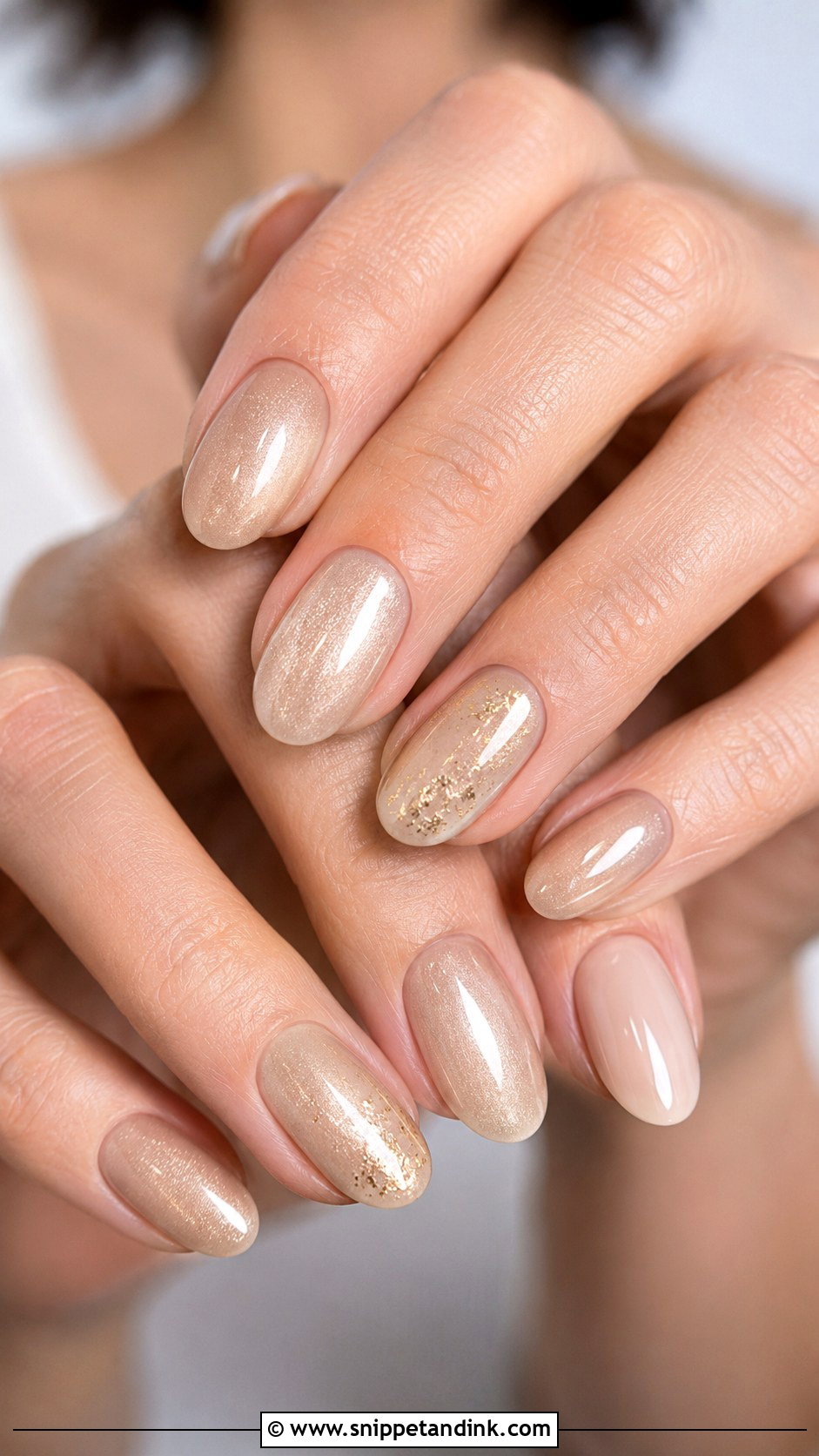
Champagne is the shade I suggest when the dress is ivory rather than bright white, because a cooler white nail can make an ivory gown look yellow beside it. A pale champagne shimmer, a beige nude with a golden pearl finish or a warm sheer ivory all work. For detail, a fine French, a few pearls or delicate gold foil on one accent nail. Keep the shimmer finely milled; heavy glitter feels like a party manicure.
13. Vintage Ombre Wedding Nails
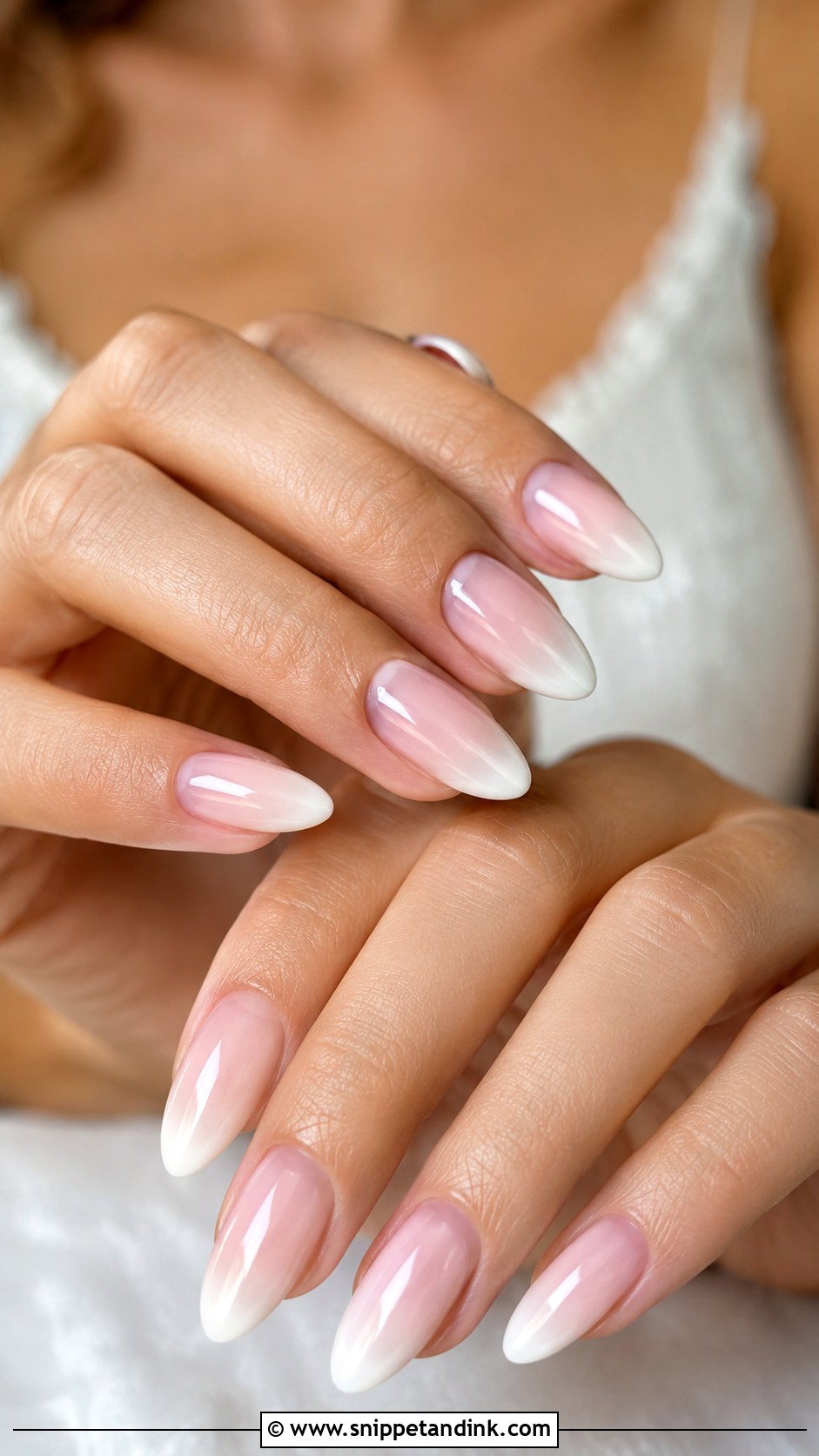
Ombre replaces the sharp white tip with a gradient from sheer pink or nude into creamy white. The fade visually lengthens the nail, which is why almond, oval and coffin shapes look longer with it. I apply the white in several light sponge passes to avoid a visible band in the middle. A pearl chrome top coat or a single tiny flower makes it feel more period. It’s the softer cousin of the traditional French.
14. Matte Vintage Wedding Nails
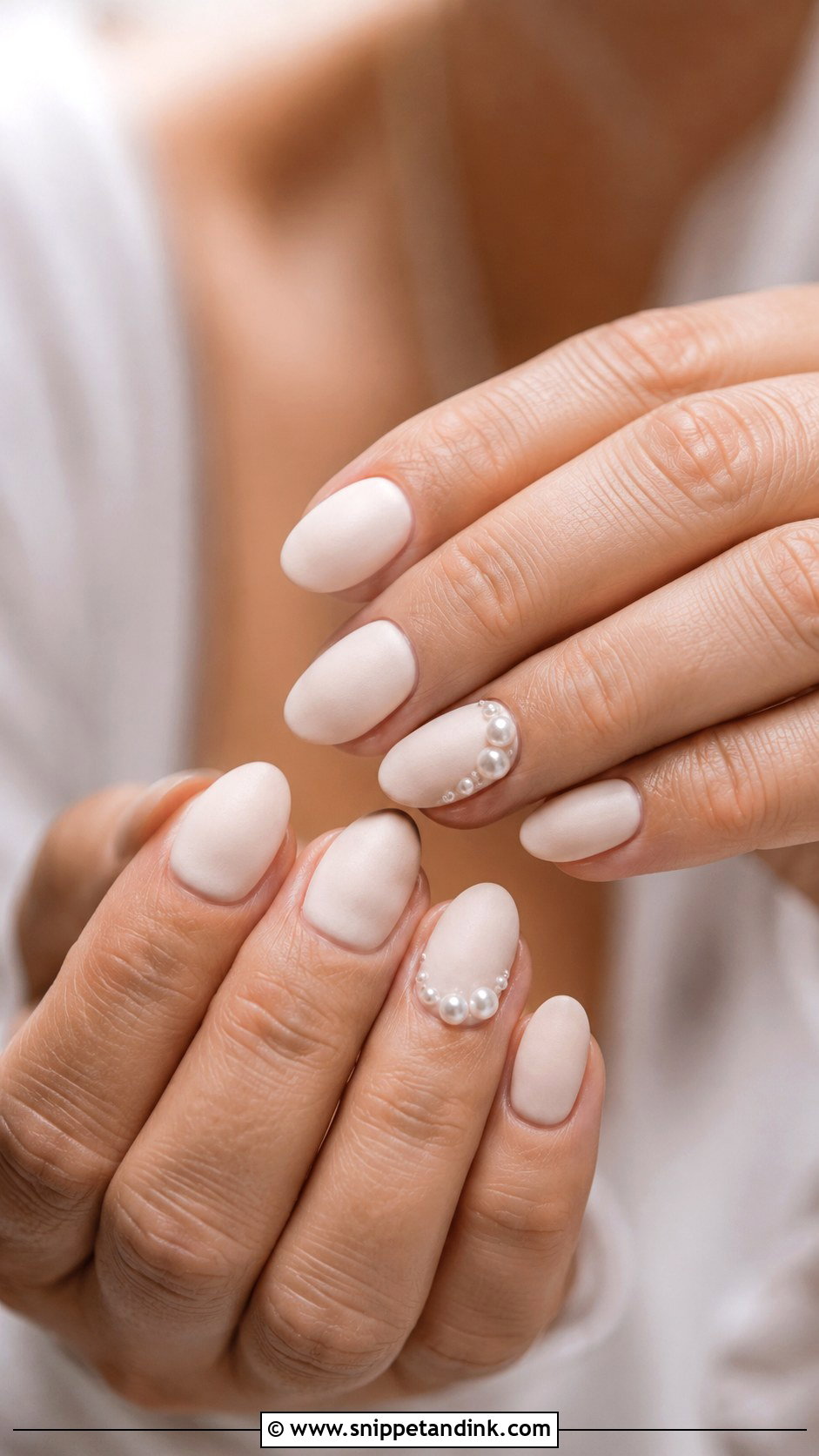
Matte gives a powdery, velvety finish that looks lovely next to lace, but it has a practical downside: matte top coats pick up makeup, self-tanner and hand cream more readily than gloss. I’d apply it in pale shades like ivory, blush, beige or soft rose, and break it up with one glossy detail such as a pearl or a shiny French on one or two nails. Short ovals and medium almonds carry the finish best. Bring a cleanser wipe on the day.
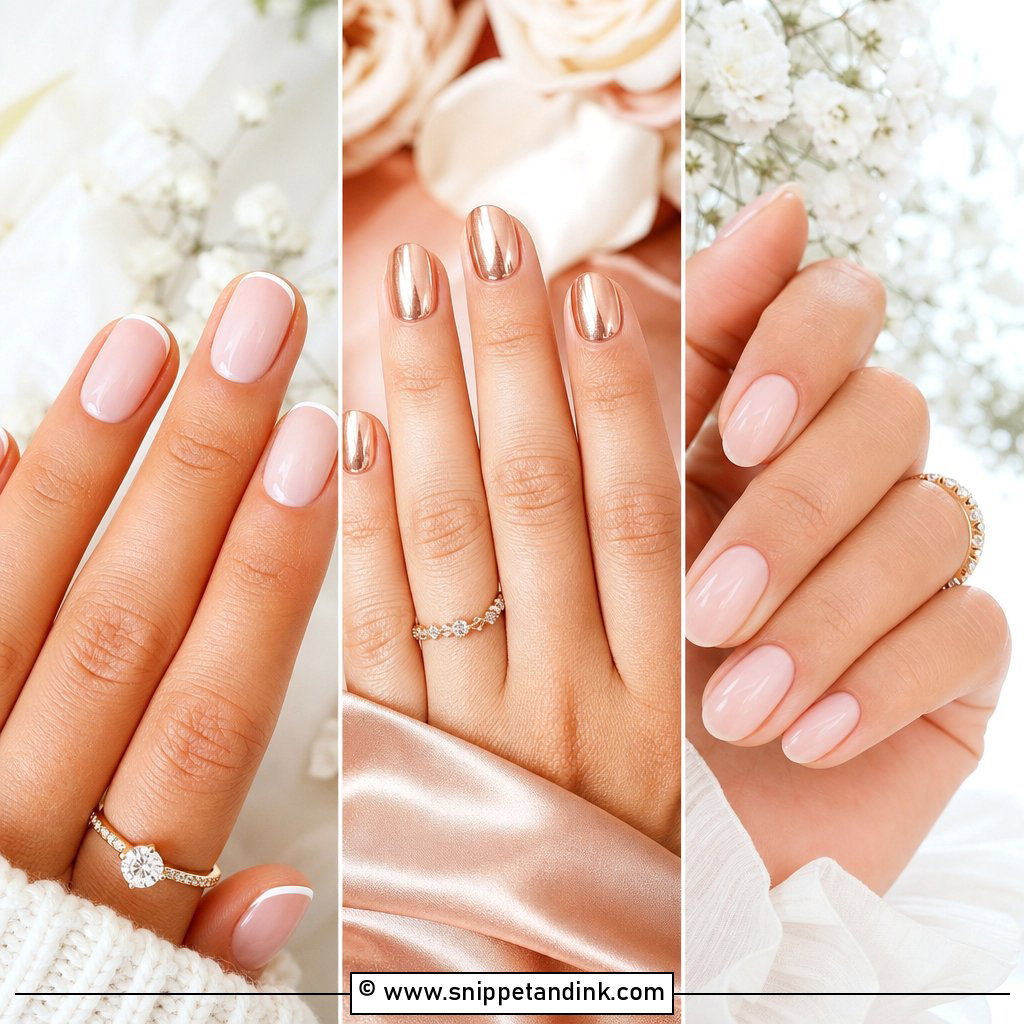
15. Vintage Silver Wedding Nails
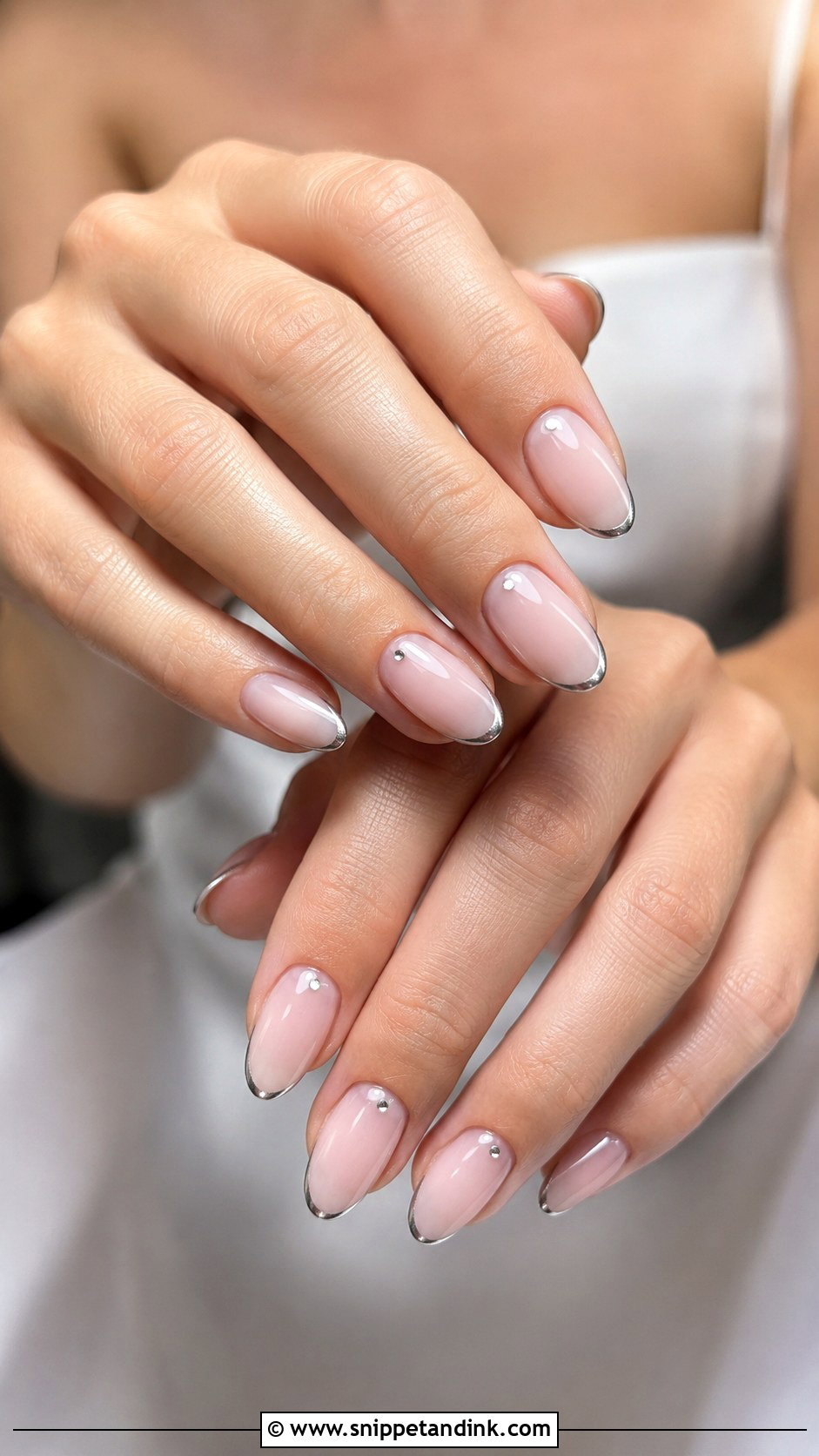
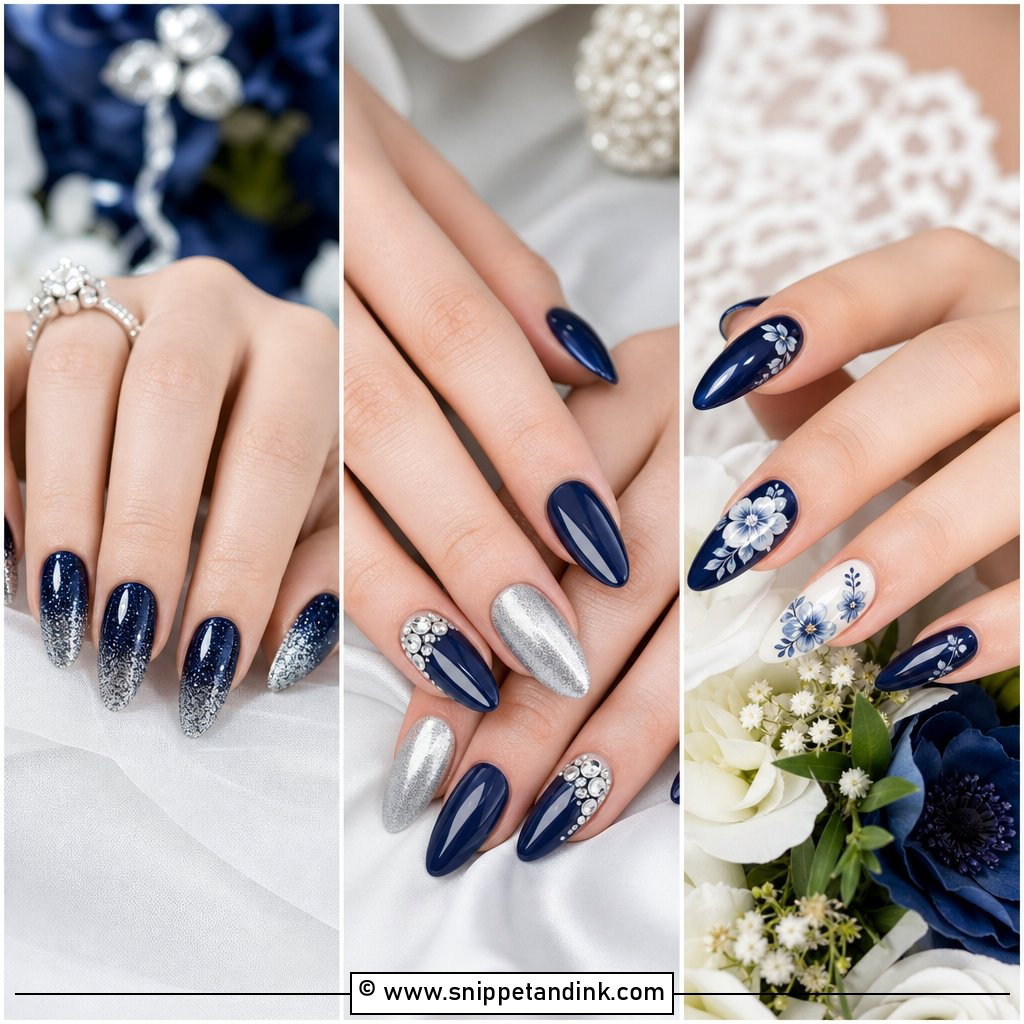
Silver belongs on cool-toned brides with platinum or white gold rings. Rather than painting nails fully silver, I put thin accents over a sheer pink, ivory or nude base: a micro French, a sliver of foil, or a single silver dot at the cuticle. It looks right with crystal hair clips and bright white dresses. A light shimmer top coat softens it so it reads as bridal and not as a New Year’s manicure.
16. Vintage Pearl French Nails
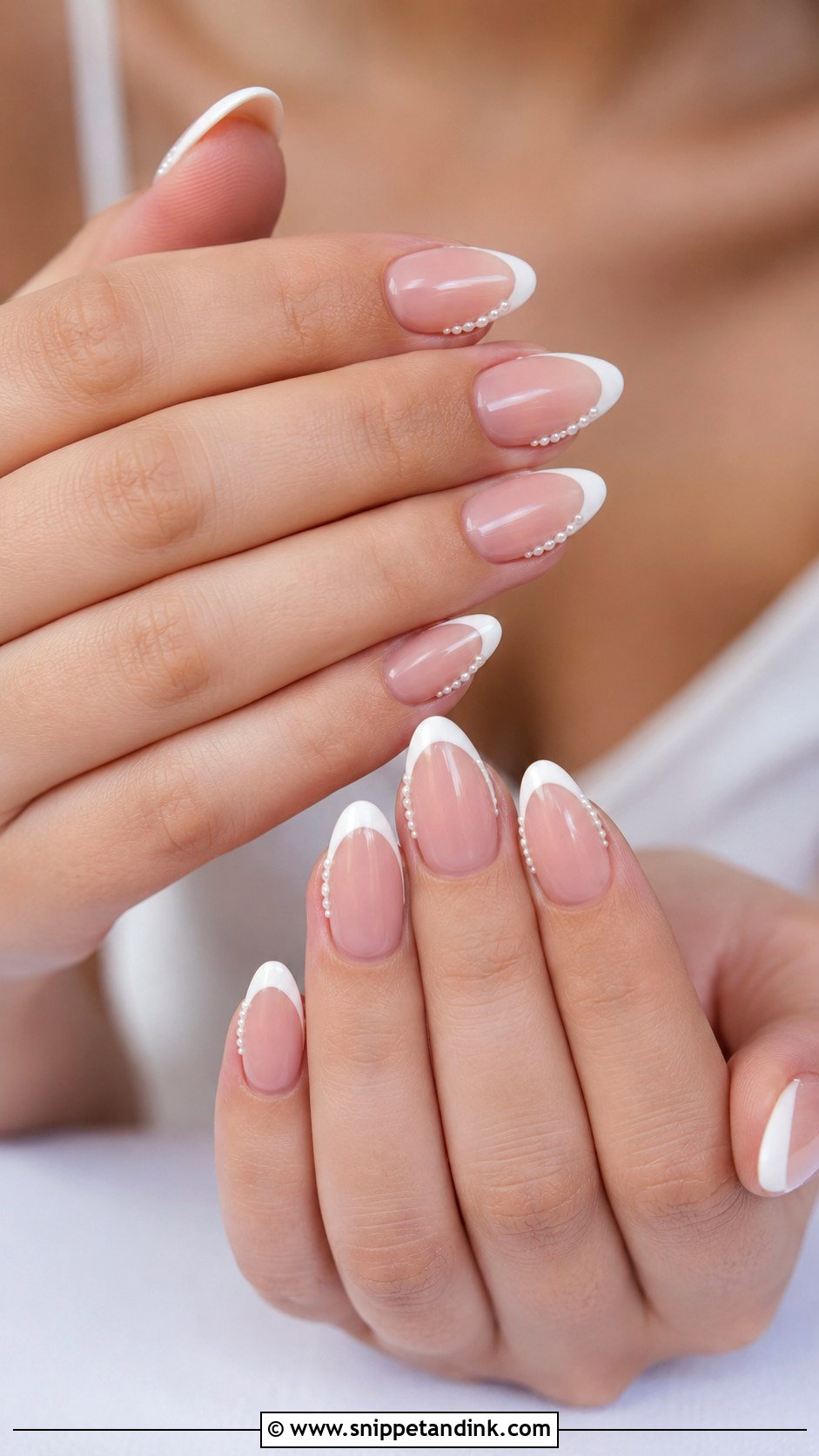
Pearls placed along the smile line of a French tip need to be evenly spaced, or the line looks wobbly. I mark the spacing with dots first, then place the pearls. A sheer pink or nude base with soft white tips gives them a clean backdrop, and medium almond length shows the line best. If you’re wearing a pearl veil or pearl earrings, this links them up. A sheer pearl top coat adds a faint glow over the whole nail.
17. Vintage Satin Wedding Nails
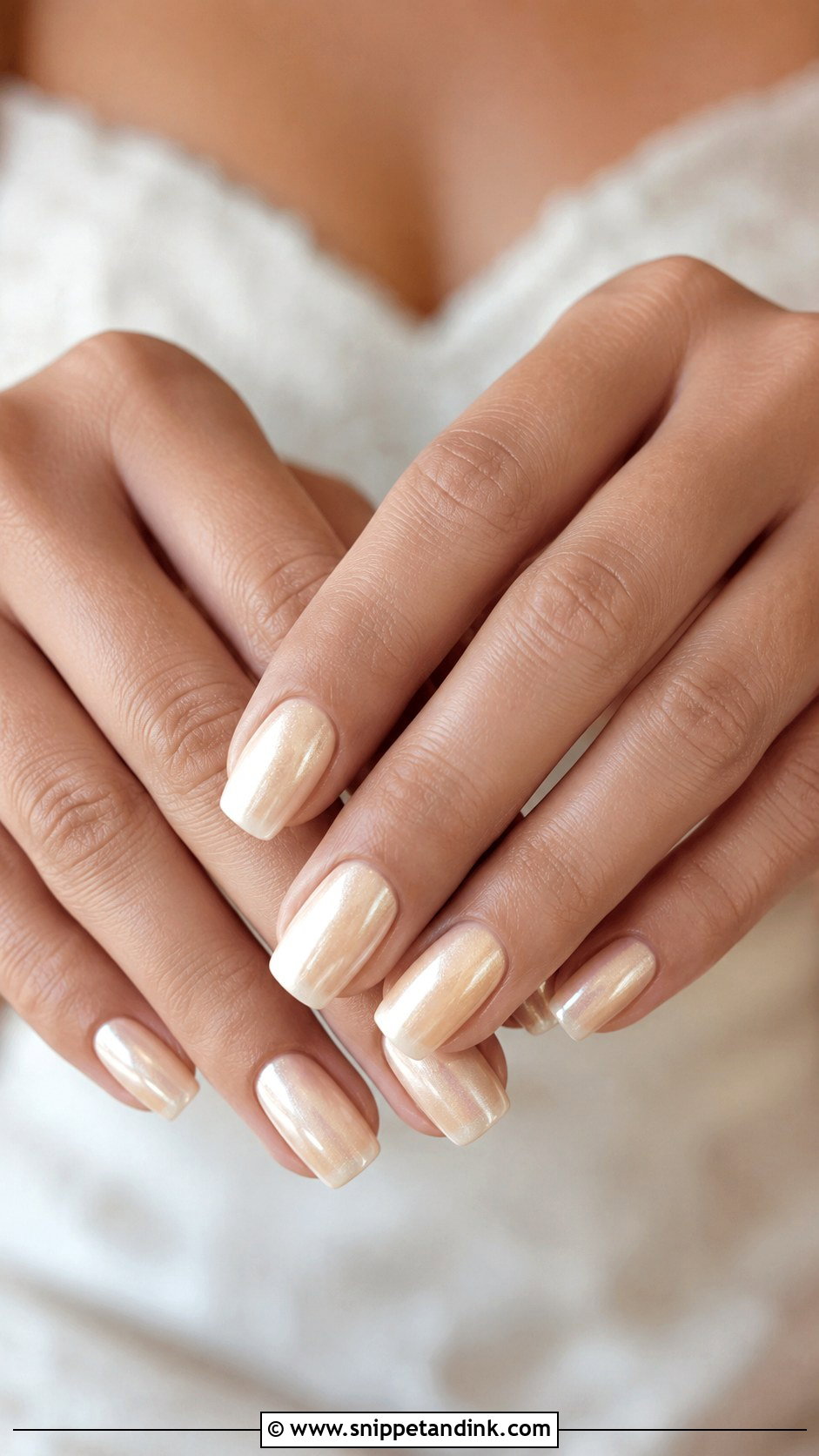
Satin nails are about imitating the sheen of the dress fabric rather than adding any art. I lay down a creamy ivory, pale beige or soft pink base and buff a fine pearl shimmer or soft chrome over it so the surface looks luminous, not glittery. Next to a satin gown or a structured silhouette with a simple veil, it matches quietly. Short square, oval and almond shapes all suit it.
18. Vintage Dusty Pink Wedding Nails
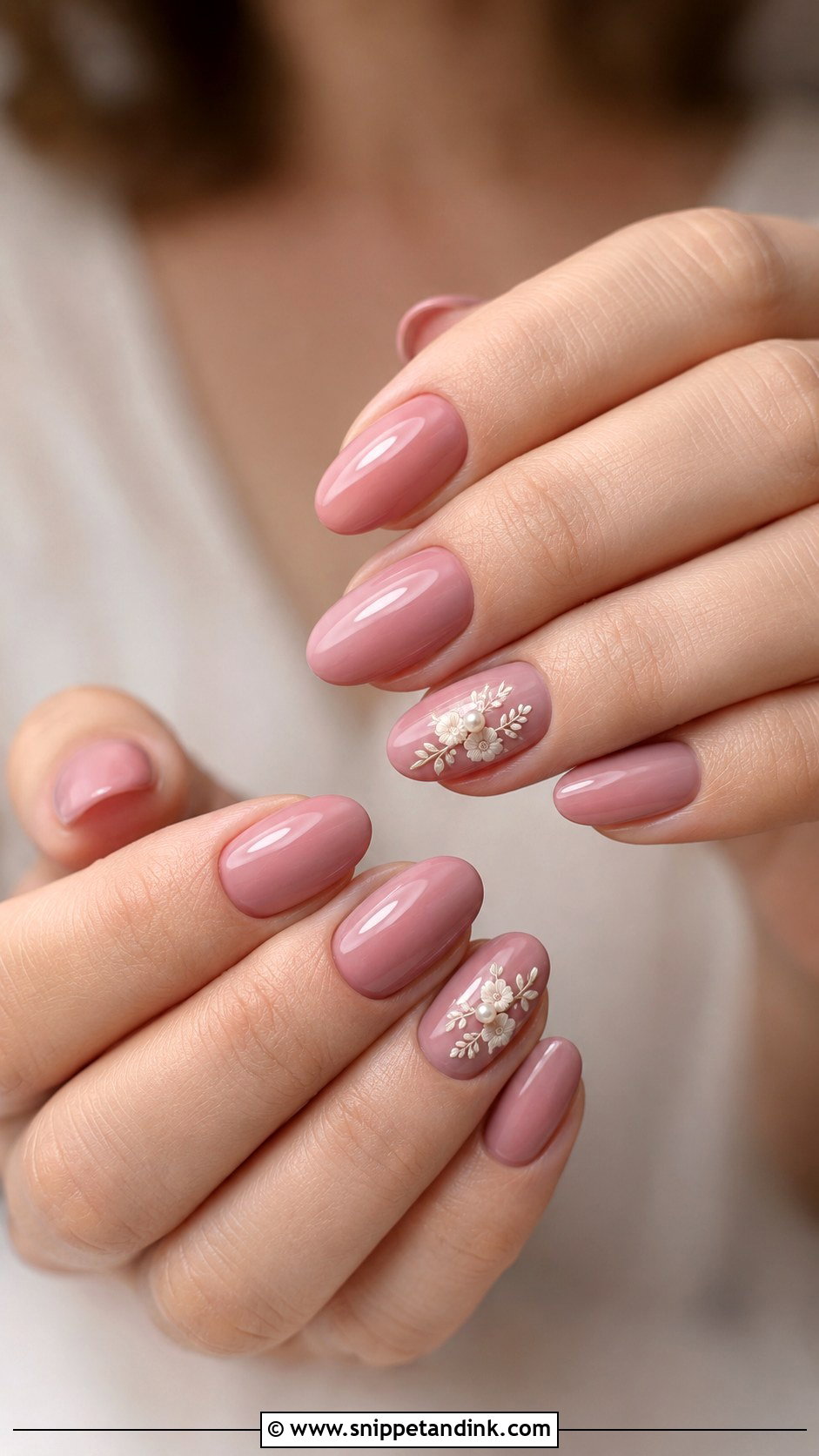
Dusty pink sits somewhere between blush, mauve and rose, which makes it look more grown-up than a candy pink. I use it creamy or sheer with a glossy finish, and add small ivory flowers, a thin white tip or one pearl if you want detail. Because it’s muted, it shows up clearly on many skin tones without looking loud. It sits easily beside ivory dresses, rose-toned makeup and bouquets with garden roses.
19. Vintage Short Wedding Nails
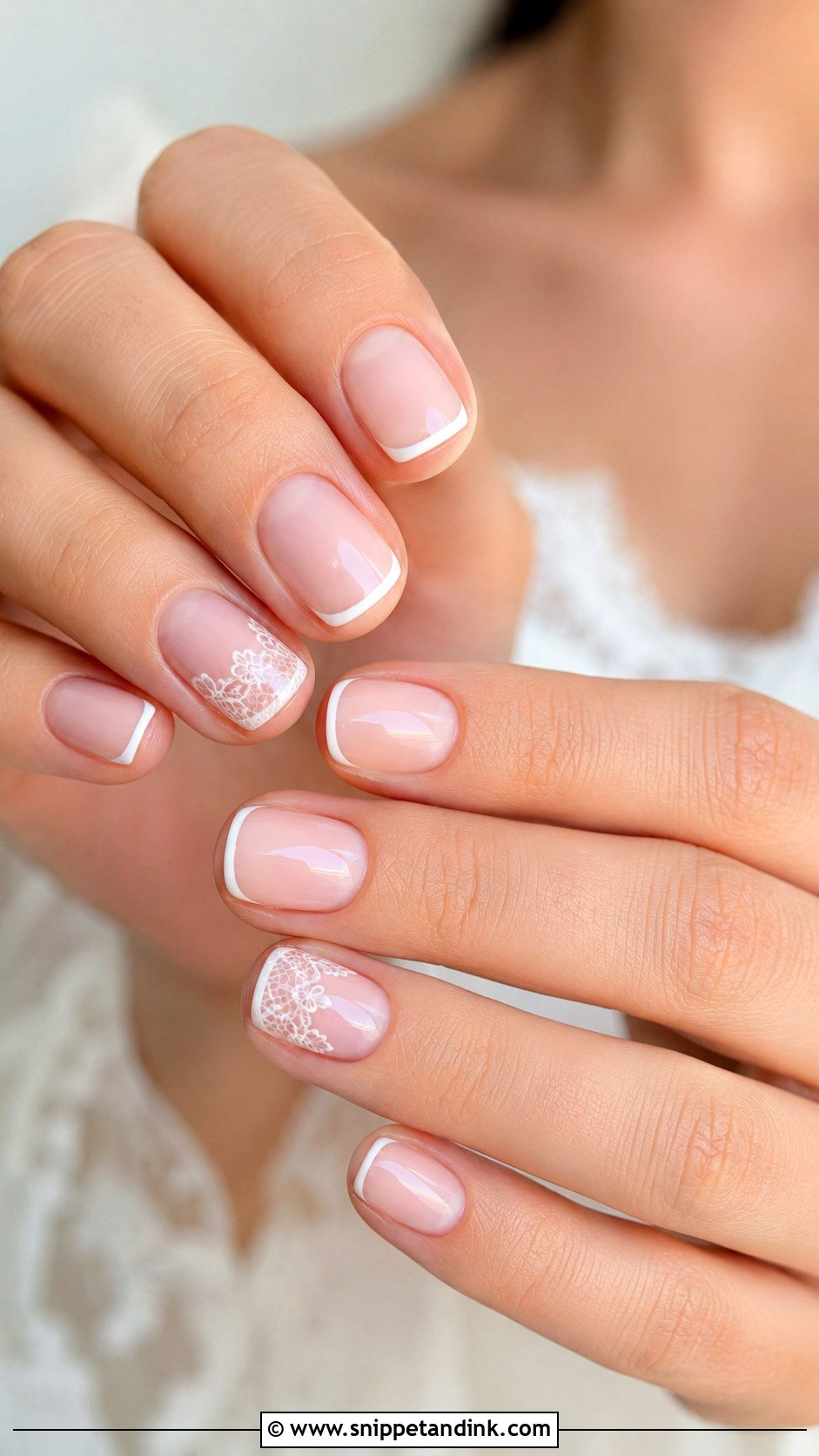
Short nails lose nothing in a vintage design, as long as the shape is clean and the cuticles are tidy. Soft oval, rounded square or squoval look neat with sheer pink, milky white, ivory or nude. One small vintage detail, such as tiny pearls, a micro French or lace on an accent nail, is plenty. Short is the comfortable option if you’ll be pinning a veil, holding a heavy bouquet or tying a bustle, and glossy short nails look tidy in ring close-ups.
20. Vintage Almond Wedding Nails
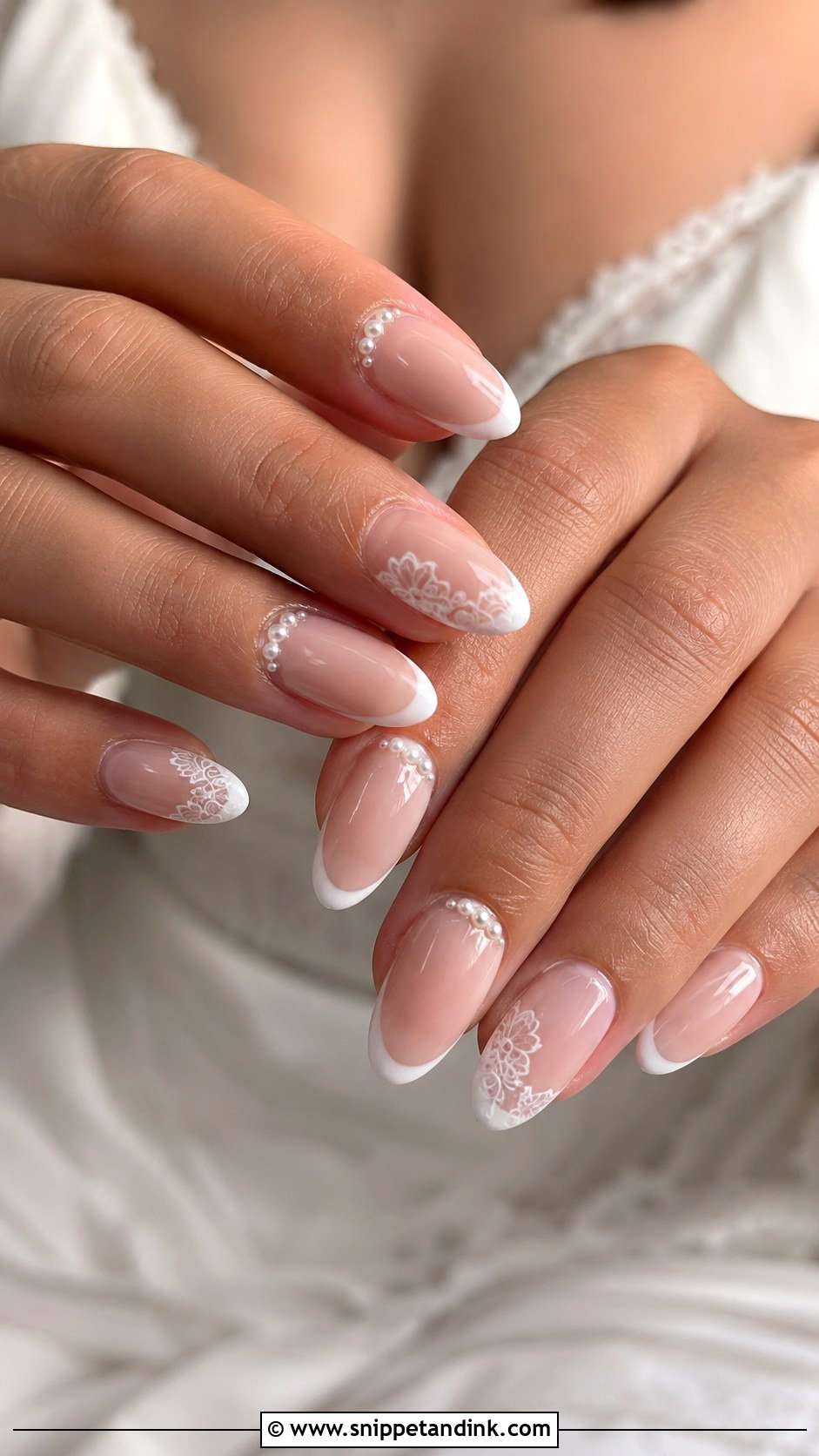
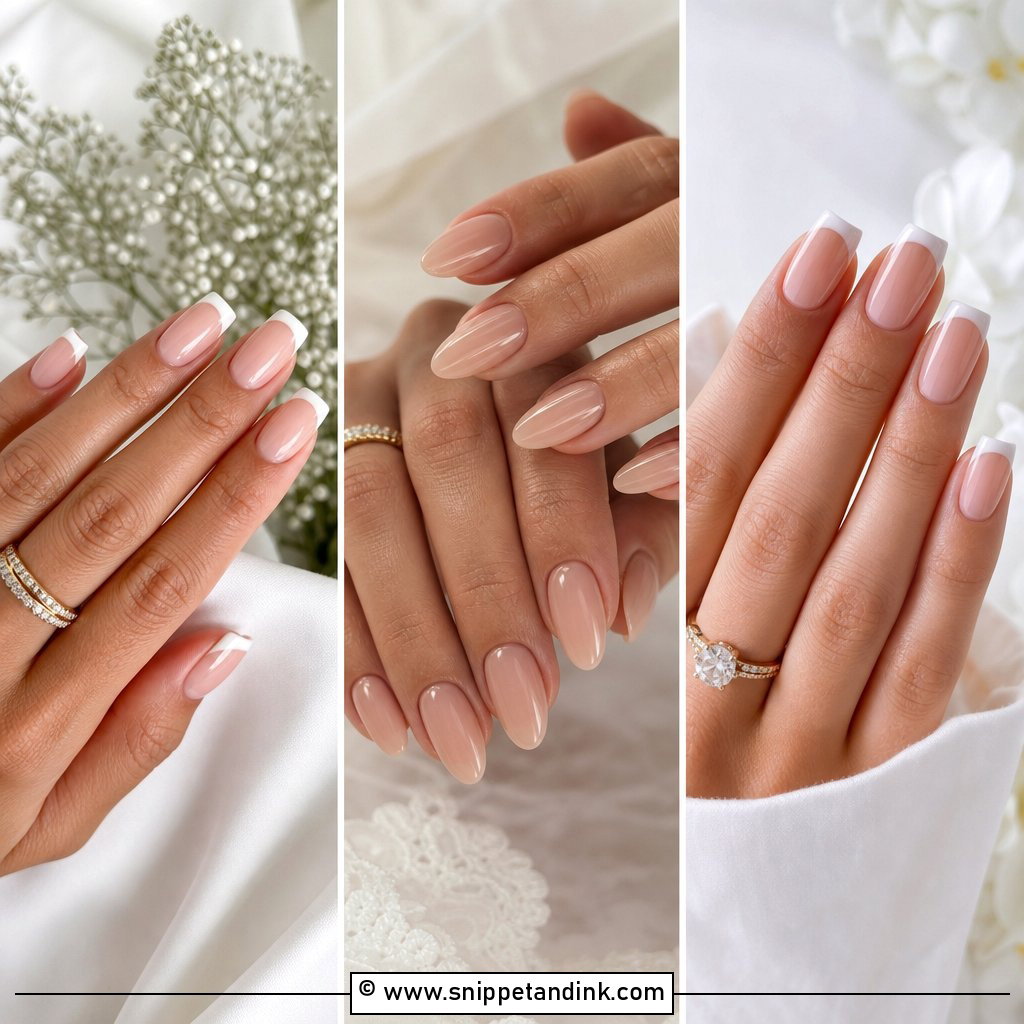
Almond tapers the finger without the sharpness of a stiletto, which is why I suggest it to brides who want room for art but not much length. Milky nude, ivory, blush or champagne all work as the base, then a soft French, tiny pearls, lace or a light chrome finish depending on the dress. Almond sits well next to heirloom rings with raised settings. Keep the tip slightly blunted so it doesn’t catch on lace.
Hands Get Photographed More Than You Expect
Between ring shots, the bouquet, signing the register and holding hands at the altar, your hands appear in a surprising number of photos, and a sheer vintage manicure shows the skin around it. The nails themselves are only part of the picture.
The weeks before
If you’ve been wearing gel or acrylics, ask for a gentle soak-off rather than having them prised off, since peeled nails are thin and patchy under sheer colour. Use cuticle oil every night; it softens the skin around the nail far more than any treatment on the day. Avoid cutting your own cuticles, which tend to look ragged a few days later.
The days before
Self-tanner and nail colour don’t mix well: tan collects around the cuticles and can stain a milky or white finish. Tan first, then book the manicure. Hand cream with a light sheen looks better on camera than a matte, dry knuckle, so keep a small tube in your getting-ready bag, and wipe the nails afterward so the gloss stays clear.
Start From the Dress Fabric, Then Let the Nails Follow
None of these designs look dated if the finish is clean and the detail is small. Think about your dress fabric, your jewellery metal, your nail length and how much art you’re actually comfortable seeing on your own hands for a week. A milky manicure will be the right answer for one bride; pearl French nails or tiny florals will suit another. The aim is a manicure you forget about by the first dance and still like in the photos years later.
You'll Like These Ideas:


Leave a Reply